Voices Are Nourished by Fear

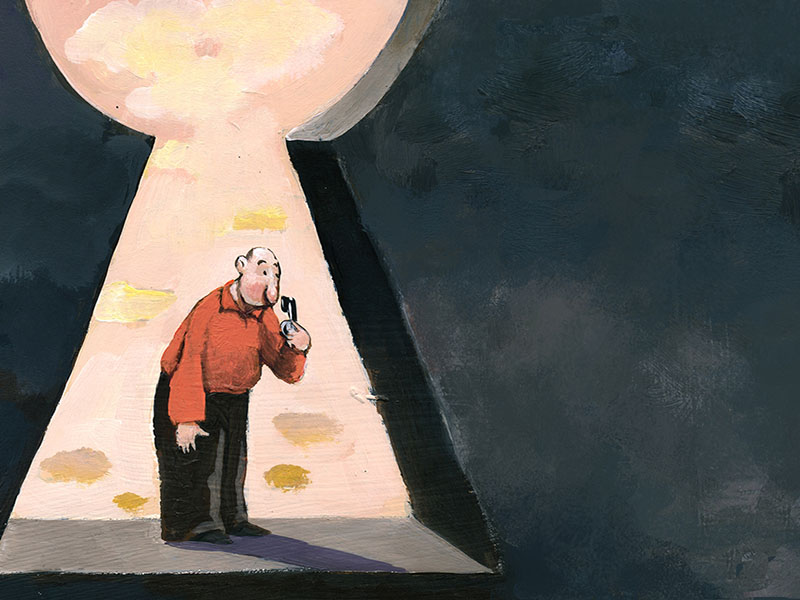
Laura and I would like to share some of our experiences and considerations concerning voices or energies that we have wondered how best to understand. Were we dealing with a meaningless illness or perhaps a spiritual phenomenon? And regardless of which they may be, how does one manage them? Particularly if they are extremely transgressive and frightening. Early on, Laura arrived at the realization that “fear is something that voices eat. It makes them stronger. Instead, one must practice curiosity. That leads to a positive feeling”. This is an understanding which Laura put into practice on her own and we also made such a curiosity as she recommended the leading principle for our common exploration.

Our conversations took place at Aalborg Psychiatric Hospital (Denmark) between August 2019 and February 2023. The present paper is based on our collective recollections, notes written underway and a number of sound recordings of our conversations in 2019 and 2020. Laura had asked to consult with me in order to better understand her voices and in order to share her own experience. Word had reached her of the work of documenting knowledges concerning voices that I was then engaged in. She desired to contribute to this and some of her voices had also encouraged her to do so.  

The Voices Make their Appearance

Laura began to be able to hear voices when she was 19 years old and found herself in difficult life circumstances. She had been orphaned at 16 and had been in a poor romantic relationship for a few years, while also busy attending school. She occasionally smoked cannabis during this time. Then it happened that a number of voices began to speak to her and comment on her appearance. This was also associated with a sudden experience of being observed. Suddenly a private life no longer existed for Laura.

Christoffer: Being constantly, invisibly observed and hearing voices commenting on you and having nowhere to hide would have many people end up sitting in a corner, rocking back and forth! 

Laura: I did. I wasn’t able to do anything. I couldn’t undress. I couldn’t shower. I showered fully dressed sometimes. I knew there was no turning back. I had cried so many times. There was nothing I could do. I couldn’t put a blanket over myself; they were still there. Then they would be in my head. No matter what, they were there. I recall one day I was wearing a summer dress and waiting by a traffic light, and I could feel someone looking up under my dress, but no one was there! I went home and got in front of the mirror and undressed. Then I said to myself “they are looking at you because you are a pretty girl”.

Christoffer: Was that a seminal event? 

Laura: Yes. Every time they would say “oh, you naughty girl” or something, I would say to myself, “they say that because you are a pretty girl”. I made it who I am. I also felt that actual people looked at me and then I would hear their thoughts. I also made that into “they are looking at me because I am a pretty girl. They think that because they are human, and you think that way too and that is okay”. Every time I felt they could hear my thoughts, I would think “they think that way too”.

Christoffer: Amazing.

Laura: You look positively stunned.  

Christoffer: Experiencing something that frightening and such a loss of control and privacy, and then doing what you did. It sounds paralyzing. And maybe the reason I am sitting here wide-eyed is that as far as I can tell, it seems you went through this alone and figured this out by yourself.

Laura: I did. I am immensely proud of myself. Changing how you look at yourself—that is gold.

In addition, Laura had the experience that the voices were able to take control over her body. She strove to come to terms with that as well and to see it in a positive light. It required her to accept not being in charge of her own body; otherwise the recurring losses of control would constitute a destruction of her reality every time it happened. Instead, she opted for a kind of permanent destruction of her reality so that she could rebuild herself from there.

Christoffer: A permanent destruction of your reality—was that what you did?

 Laura: Yes. Incredibly hard, but that is what I did. I then existed in a world where someone controlled me. I could do anything because nothing was impossible now. I made it a positive thing once again. I was suddenly able to draw like I never could before. And paint like I never could before. Everything just flowed. It was the sensation of being taken by creativity and the feeling that everything is just beautiful. Everything could be painted on.

I painted the underside of my table, lying on the floor, and I painted the top of the table. There was also something with mirrors. My voices would sometimes see through my eyes and show me what they saw. They can see me as being incredibly beautiful, or fat or something else. Then I see myself that way, like you would see me. Or how someone else would see another person. I said to myself “see the world with new eyes”.

Laura did other things to handle these phenomena as well. Around the time of these events, she developed a spiritual approach to life, and consequently it was also meaningful for her to view these speaking entities and influences on her body as being spiritual in nature. She oriented herself by an understanding of spirits as being the souls of the deceased that for some reason cling to the physical reality and influence the living. Her understanding of such spirits was that they were really supposed to move on in their spiritual development and let go of physical reality, but spirits that are insufficiently evolved may struggle to realize this and experience difficulty letting go.

She intuitively sensed that these voices perhaps needed to learn something from her. She developed a strategy on this basis: If the spirits perceive the physical world through Laura, then perhaps she could contribute to their development by means of what impressions she provided them with? She began to frequent beautiful places and go for walks in natural surroundings so that the voices could share in beautiful and edifying sensory experiences.

However, some of the voices were very violent towards Laura. During a period of time, whenever she went to bed to sleep, voices would approach and molest her. This was extreme and Laura discovered that she was powerless against these nocturnal attacks. She attempted to wrap herself up in blankets, sleeping fully dressed, keeping her legs pressed tightly together, but this did not prevent the assaults. When the attacker is not physical, it is no use to lock the door. They could always reach her. One night she desperately prayed to God for help, and suddenly she heard a voice that was different from the others. It said to her that God told her to do two things:

To fix her auditory attention to the sounds of the radiator and to spread her legs as far apart as possible. She did this and the assault stopped immediately for the night! She attempted this strategy several times and it was effective for several weeks, but less effective than the first time. Around this time, some of the voices became involved in protecting Laura. Some voices assaulted her, while others were concerned with expressing themselves through her and teaching her things, and finally, some wanted to protect her. She positioned these protective voices around her body, and consequently they served as a guard against attacks.

Having An Illness

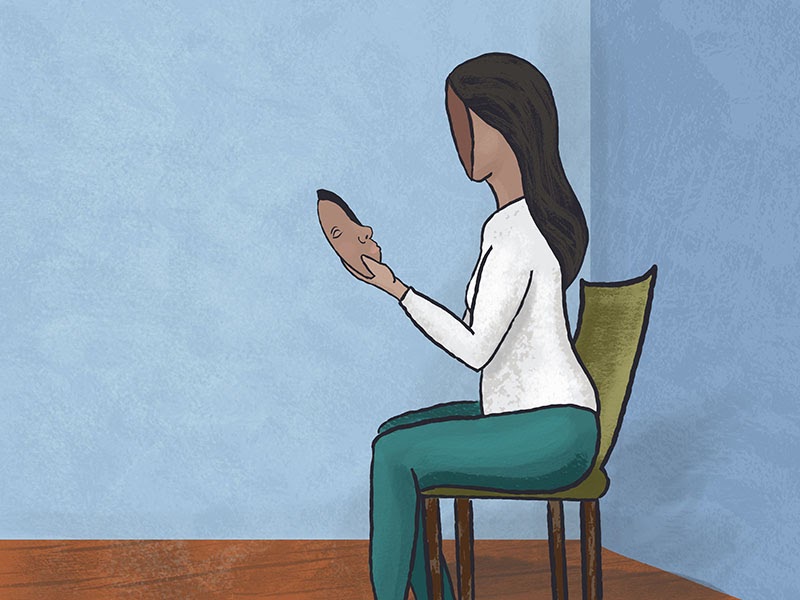
These overwhelming experiences finally led to Laura being hospitalized at the psychiatric hospital. Here, she was told that her experiences were due to schizophrenia, and she was administered an antipsychotic. She continued to be able to hear voices and experience her body being taken over by them. She would allow them to temporarily control her body so that they could use it for dancing, writing or painting. Her perception of herself changed. She was divided into present and past selves and there was a prominent sad self which she did not experience as being her own conscious identity. Her core was covered by layers of voices and on top of all those layers was Laura’s consciousness. Well-meaning voices took it upon themselves to protect Laura's body and core and to take over control because Laura herself was unable to do so. To Laura this was an experience of letting go of herself due to intense emotional pain.

This new understanding of her experiences as being the result of an illness also changed Laura’s relationship with herself and the voices:

Laura: I discovered that I myself was important. The voices can be whatever they want to be. They weren’t as important anymore after I found out I have an illness. Now I was important. I could help the rest of the world rather than them being the ones to do so. I could before as well because I did believe that I had a message to deliver. That is what I believed in. I still do, really, because everyone has messages to deliver, but it is not about the voices all the time. Now it is more about me.

It was after this that she began to deal with them as “voices” rather than “spirits”.

The violent attacks ceased over time and the experiences of being controlled by the voices became less frequent and intense. The voices did not disappear, however, and Laura continued to experience a division of herself into multiple selves, surrounded by different voices, some of which were unpleasant, possessive and sexually transgressive, while others were protective and guiding, or just kept her company. She also experienced her mind differently after receiving psychiatric treatment in the form of an absence of thoughts. She used to have a creative and active inner life, but this was now significantly reduced. Likewise, she began to distance herself from the spiritual world view she had before. Some of the voices were displeased with this.

Brazilian Associations

Our collaboration began in 2019, six years after the voices first appeared. Laura told me her story as described above. The first thing that occurred to me when I heard all this was that it reminded me of Spiritism! This spiritually oriented approach that she had initially taken, her attempt to help the spirits to evolve and the sexually transgressive behavior of some of the spirits, as well as the experiences of them taking control of her body for dancing and writing reminded me of phenomena described in the anthropological literature that I was familiar with. I asked her if she was spiritually inclined. She confirmed that she certainly was earlier, but less so now that she considered it to be schizophrenia.

Asking about any prior knowledge of Spiritism, she denied any formal involvement or training in anything of that sort. I silently considered whether it might be helpful to consider conceptual possibilities and structures that might be available to us in spiritual frameworks. Such an approach has been suggested by a number of psychologists (1-4). I therefore inquired with Laura whether she would be interested in considering spiritual conceptual frameworks. Indeed, she was. I now shared with her the associations that had coming to me regarding her story:

(I) Her understanding that the spirits needed to learn through her, which she strove to provide by means of positive impressions, reminded me of Spiritist practice. Spirits of the deceased may lack sufficient spiritual insight and moral integrity to let go of the physical world. They then try to fulfil their desires by attaching to a living person and attempt to sway that person in the direction of what the spirit wants. The solution is moral teaching and spiritual insight called ‘doctrination,’ which intends to evolve the spirit so that it may move on to its destination in the afterlife. Similarly, more evolved spirits may function as guides and helpers to the living in order to promote their own evolution through moral work. Laura’s intuitive practice appeared to have something in common with the Spiritist concepts of doctrination and spiritual/moral evolution (5, 6).

(II) Laura’s experience of spirits controlling her body reminded me of possession phenomena in both Spiritism and Afro-Atlantic religions such as Santería and Candomblé. For example, Spiritists make use of automatic writing where a spirit controls the hand of a medium and thereby delivers messages (5). In Brazilian Candomblé, possession by a spirit is desirable under the right circumstances, and these African spirits enjoy dancing through the bodies of their worshippers (6, 7, 8).

(III) In the worship of spirits like Exú and Pomba Gira in Brazil, there is a tendency for strong erotic expressions and desire for bodily sensuality from these spirits. Sexual intercourse is also a metaphor for spirit possession in Candomblé (6). Might the sexually oriented attacks and desire from the spirits that Laura described be meaningful in such a light?  

I also told Laura that while Spiritism and these Afro-Atlantic religions have common features and have influenced each other, they do also tend to differ in some regards: Spiritism aims at assisting spirits to let go and move away from the physical towards transcendence, while Candomblé rather strives to help certain spirits to obtain a stronger connection to the physical world. Such understandings and practices are a prominent part of the culture in some places in Brazil, and there are even Spiritist psychiatric hospitals (8, 9).

Then something remarkable happened! Laura now informed me that a number of her voices were quite interested in what I was describing and that indeed they desired for Laura to travel to Brazil. She did not share that desire, however, nor was it what I had in mind. I suggested that these understandings might inspire some ideas as to how Laura might establish a more acceptable relationship with the voices. It is common for spirits in Brazil to be initially violent or cause trouble in people’s lives until the right relationship is established (10, 11). Perhaps it all had some meaning?

Laura had surprising news when we met one week after this conversation. An entire group of voices had informed her that they would now leave her and go to Brazil. And so, they did. They were gone now. Many other voices remained, but a whole group had disappeared! I found this to be indeed puzzling, and I was curious to know how this was possible! Some of Laura’s remaining voices were likewise interested in this question and even asked during our conversation; “how do we go to Brazil?” Laura’s own impression was that it is something voices may choose to do, but probably only voices that have reached a sufficient level of awareness – something Laura believed she had contributed to developing. During the following couple of weeks, more voices similarly said farewell to Laura and told her that they were going to Brazil. It was very mysterious.

However, one voice reacted differently to these considerations. A couple of weeks after our discussion about Brazil, Laura paid a short visit to the psychiatric emergency room. She was not hospitalized on this occasion. The reason was that she had become concerned about a voice that had attempted to control her body and wanted her to call him/her god. Considering how our perception of the voices seemed to have the capacity to affect them, just as Laura had experienced them being affected by the shift to a psychiatric perception of them, I became worried about our considerations. Might it pose a risk to Laura to consider various possibilities for what voices may be and how to interact with them?  

Might we risk shaping them in problematic ways? Laura assured me, however, that it was okay and that she wished to explore different ways of perceiving things. She wanted knowledge of as many understandings as possible in order to better make up her own mind about it. In addition, she told me that so much had happened since we started that she definitely wanted to continue.

Over the coming weeks and months, we explored the connections between voices and selves and how Laura had developed certain systems for managing the voices. These systems proved rather difficult to put into words, however, and difficult for Laura to even recall clearly. She was able to describe a system for dismantling the voices’ control of her body, and she employed this system during part of our collaboration: First she had to notice subtle shifts in the body that indicate that a movement is not her own but controlled by voices.

Then she would consciously allow the voices to perform this control and then interfere with it by making a deliberate action contradicting theirs. By doing so, she nonverbally communicated to the voices that this was something she wanted to control herself. Over time, some voices learned in this way to step back and transfer control to Laura, a control that they had initially assumed in order to help her when she was unable to do so herself. We discovered that some voices were associated with particular selves that were in turn associated with particular periods in Laura’s life.

They were cut off from the present Laura and for that reason not necessarily up to date concerning her present situation. Laura had the feeling that they were listening in on our conversations, but as someone occupying a separate room and putting their ears to the wall to listen. Some of the voices turned out to appreciate tea and coffee, which I started serving them. Laura sensed how the voices, lacking hands, would suck the beverage from the edge of the cup.  

Assault and Mana

In early 2020, Laura and I considered whether a reduction in antipsychotic medication might alleviate her experience of being detached from her thoughts. She worried about reducing the dose for fear of the voices that wanted to touch her to once again becoming violent like they were leading up to her hospitalization.

I suggested two ways of understanding voices: 1) They are external entities that come to you for some reason. 2) They have their origin inside yourself and reflect something in your life. Laura inclined towards the second option. If the voices that desired her sexually reflected something in herself, what could it be? Was there something related to love, intimacy or sexuality that Laura was not on good terms with? Laura didn’t immediately think so.

Christoffer: Perhaps some of the voices know something about this? Voices, do you know anything about this desire to touch Laura? 

Laura: A voice says “yes”.

Christoffer: Why do you have this desire to touch her? What is the meaning of it?

Laura: A voice says, “you have been raped.” But that isn’t true. I have never been raped.

Christoffer: Are any of the voices that have been involved in touching you, and who have this erotic attraction to you, present today? Are they listening in?

Laura: Yes.

Christoffer: Why do you want to touch Laura?

Voice: I want Laura.

Christoffer: Why?

Voice: I want her to become sexually aroused.

Christoffer: Why?

Voice: Because she likes it.

Laura told me what she thinks of erotic desire, trust and consent and I informed the voice that Laura did not appreciate being touched without consent. The voice said it didn’t care. Laura went on to describe how she felt when that group of voices assaulted her while she desperately and despairingly tried to cover herself up to prevent it, and how she had to conclude that she could do nothing to stave them off. She never spoke to anyone about this while she was hospitalized because it was too intimate. Her attempt to see it in a positive way was a desperate survival strategy.

Christoffer: This sounds like traumatic events to me, and as far as I can determine, it constitutes rape. Voice who touches Laura, you have to stop this. Do you understand? You cannot do this to Laura anymore.

Voice: I don’t care.

Laura: Now my sad self is sort of over here to the one side and the voice is over at the other side and the sad self is screaming at the voice and saying, “you raped me!”

Christoffer: How is the voice responding to that?

Laura: He looks sad and he is crying. He says, “that wasn’t my intention”. But then he dries his eyes and says, “but I still don’t care”.

Christoffer: Was he actually affected, but then he puts on a hard face like a tough guy?

Laura: Maybe.

Christoffer: We have to find a way to stop this. Make a deal with these voices or convince them to change their minds.

Laura: He isn’t interested in any deals.

Christoffer: Right. Nonetheless, we have to find a way. I wonder what the circumstances were that led up to all this. Back when these voices started gaining access to your body, what went on at that time? Was your personal power to resist or spiritual barrier damaged, allowing them to enter? Does that make sense—the idea that you have an inner power that protects you and that it can be damaged?

Laura: Well, I smoked cannabis at the time.

Christoffer: Yes, but there was more. Your mother died when you were a teenager, and your father wasn’t around. And difficulties even before that.

Laura: Yes. My mother died and I moved away from home before I was 18. I lived with a guy who was hard on me and made threats to leave me. The thought of being abandoned was like being left behind in a black hole.

Christoffer: I imagine you had to adapt to him and submit yourself?

Laura: Yes, I did that. I couldn’t bear the thought of being alone.

Christoffer: I wonder if your personal power and barriers were weakened by these circumstances.

Laura: I don’t quite follow you.

Christoffer: Right. I am reading a book about a collaboration between a psychiatrist and a Māori healer in New Zealand. This healer talks about ‘mana’—that personal power and spiritual authority that a person possesses. It can be weakened, and then you become receptive to negative spiritual influences. For example, influences that try to corrupt a young person’s talents and contributions to life. The healer uses certain prayers to separate these influences, but that is not sufficient. He focuses on supporting the person to build her or his mana so that you are protected and able to push away negative forces. I can’t help but think of the concept of ‘mana’ in relation to your story. If your mana was stronger, maybe these voices could not reach you.

Laura: Oh, this is really strange.

Christoffer: What is strange? These ideas?

Laura: It is as if everything just changed. As if I stepped into another dimension. There is a wall between me and the voices, and it is like they are at a distance. I can still contact them if I want to, but I am separate from them.

Christoffer: Wow! What is happening?! Is this a good state to be in?

Laura: Yes!

Christoffer: How did that happen? This is fantastic! Was it something we were talking about? Something I said?

Laura: I don’t know. Sometimes these shifts occur.

Christoffer: Such uncanny things have happened. It is as if we sometimes push a button without knowing it. Like when all those voices went to Brazil. I wonder what it is this time. Was it something to do with mana? Or prayer?

Laura: I am interested in this mana.

Christoffer: Shall we try to find a way to restore your mana?

Laura: I would really like that, but I don’t know how.

Christoffer: Let’s give it a try.

The following week, Laura told me that this different state had faded after this conversation and that there had been no reactions from the voices. She was unable to point to any particular trigger for the event, but stated that she sometimes had experiences like that, seemingly out of the blue.

Guardian Spirits and Dreams

During our collaboration, we often discussed spiritual conceptual frameworks and particularly wondered how to make sense of the violent voices in such a light. Laura understood the spiritual realm to be full of love and in light of that, the voices’ assaults were difficult to comprehend. She also had an understanding that the souls of some deceased people could cling to the living and attempt to satisfy their own desires—for example, a desire for intoxication. Such spirits really ought to let go of this world. I made reference to widespread ideas in many cultures that the spiritual realm contains both helpful as well as dangerous forces, and that the individual often enjoys the protection of a guardian spirit. Perhaps some spirits are damaging, and humans may be particularly vulnerable to them if there is a problem with your guardian spirit or if something has happened with your mana? While we were entertaining such ideas, Laura had a recollection:

Laura: Actually, I had a strange dream. A long time ago, I dreamed that I was running along a path and a giant grey wolf was chasing me. I turn around and look into its eyes and see that… I get a feeling. I just can’t remember what it was, but then the wolf throws a fit. I get the feeling it doesn’t want to hurt me, but then it does anyway. It has an outburst of rage. Then I run down a path and a big green hill in bare feet and wearing a soiled white dress. I reach a rampart made of stones. I run past it and can feel the wolf hot on my heels. It is gigantic. Twice, thrice the size of a normal wolf. Then I reach a group of farmers holding pitchforks and torches. I run through the crowd, and they shield me from the wolf. Then I think I woke up. And the funny thing is that just recently I had another dream about this wolf. The head was on a spike, and it was blue. The eyes were still yellow. It was in a castle or something. I could see the spike through its mouth and then it spoke.

Christoffer: It was separated from the body?

Laura: Yes, it was only the head. And then it spoke.

Christoffer: Could you hear what it said?

Laura: No, I don’t remember it, but it said something. It was as if it was too far away for me to hear it, but I saw its mouth moving.

Christoffer: That means something!

Laura: The first dream felt extremely real, as if I was really running. I had the first dream just when I started hearing voices.

She didn’t know what to make of the dream, but it seemed intriguing that the dream of being chased by a wolf occurred just as the voices had started to speak to her. The second dream happened shortly before this conversation. We did consider the possible meaning of it at the time, for example whether it might reflect the bad relationship she was in leading up to the arrival of the voices, or if it had something to do with fear. It is also notable, however, that Laura recalls these dreams precisely in the context of speaking of guardian spirits.

One may interpret such a dream in several ways, whether one is partial to Freudian or Jungian frameworks. Nonetheless, I find the connection to guardian spirits particularly interesting, not least because Laura dreamed of a supernatural wolf again at a later time and because Laura received a message that the wolf was her guardian spirit while in an altered state of consciousness in connection with a meditation practice in 2022. In that case, her interaction with the wolf in these dreams should perhaps be understood very differently than as a metaphorical expression of her own fears.

Something Else for the Voices to Desire

In March 2020, Laura and I had arrived at a perception of her selves as being connected to various periods of her life, and that various voices co-existed with these selves in partially compartmentalized mental spaces. The violent voices who had assaulted Laura were now contained together with one of her past selves. It was all the pain and suffering at that time that had caused the compartmentalization as a way for Laura to protect herself. Thus, the attackers had been encapsulated. Our hypothesis was that a reunion of the selves could put Laura at risk of new attacks. We therefore needed a way to manage this group of voices before a reunion and healing was possible.

We now endeavored to solve this problem. Speaking about this, some voices opined that they had no interest in any deals and that I should mind my own business. This made me think of my collaboration with Alice (12). Alice’s voices were preoccupied with violence and gore, but Alice and I discovered that their bloodthirst could be sated by having them watch gory movies. We didn’t even have to watch it with them. I asked Laura; “would you say that these voices are attracted to things sexual or erotic?” which she confirmed. I described the experiences with Alice’s voices and continued,

Christoffer: As you have said, the problem with these voices is that you cannot lock the door on them or call the police. What to do, then? May I be frank here? This idea is forming in my head, but it may be outrageous or just far out. Would it be okay if I say something that sounds crazy, and if it doesn’t make any sense, then we just drop the idea?

Laura: You just go right ahead.  

Christoffer: Well, bloodthirsty voices like gory movies, so maybe voices with sexual interests like… erotic material? Not for us


A More Compassionate Approach to Juvenile Evaluations

During a recent question-and-answer panel discussion I was asked, “What do you consider the most important qualities for therapists entering the forensic field?” It dawned on me that, while providing psychotherapy is in stark contrast to performing forensic evaluations, in terms of requisite clinical skill, it’s not so different.

Sure, it’s quite a change going from a therapy dynamic to meeting strictly for assessments. Then, of course, there’s the weight of your work having legal consequences. And the work is pretty sedentary and often solitary, as a lot of time is spent sifting records and writing long evaluations. However, if you can perform therapy well, and you’re open to learning to navigate the mental health/legal nexus and style of writing it demands, you’re more than halfway there.

I’ve worked in the forensic arena for 22 years, which is the bulk of my career. My graduate school internship was at a local house of correction, which attracted me because it sounded much more interesting than doing therapy in an outpatient office or inpatient unit. Within the correctional environment, I was quickly immersed in performing crisis assessments, psychotherapy, and diagnostic assessments. Coupled with the fact that many inmates suffered from chronic and severe mental illnesses presented significant characterological disturbances. It was a baptism by fire.  

After nine years of the correctional work, and moonlighting in my private psychotherapy practice, an opportunity arose for me to apply my enjoyment of assessment work within the forensic arena I had developed quite an interest in. In 2012, I had the good fortune of transitioning to the juvenile courts where I went on to provide psychological evaluations that help the court work more effectively with troubled kids and their families.

From their inception in Victorian era England, juvenile courts have viewed children as more malleable and therefore more “correctable.” Before there were mental health courts, and even mental health care in jails, juvenile courts maintained a focus on rehabilitation while also holding children accountable.  

Juvenile Court Evaluations

In juvenile courts, psychologists provide competency to stand trial and criminal responsibility evaluations, while master’s level clinicians perform a range of diagnostic assessments. In this case, diagnostic doesn’t necessarily mean providing a DSM or ICD diagnosis, though that is not unusual when second opinions are requested, but rather diagnostic in terms of understanding the dynamics that contribute to the child’s problematic behavior and what might help remedy them. Other evaluations might be for aid in sentencing, such as suggestions the judge might consider for the type of setting best suited for rehabilitation while holding the child accountable.

Still other evaluations could regard specific dangerousness assessments, such as when problematic sexual behavior or fire setting is involved. There is also the occasional psychiatric crisis assessment a judge may order, like if a child unravels in the court, is presenting acute symptoms, or makes threats during the proceeding. Evaluations for involuntary commitment for substance abuse treatment, known in Massachusetts as “section 35,” also arise.

All evaluations have similarities, but eventually veer into their respective, specific territory. There are always interviews with the kids and parents/guardians, about not only the present concern, but developmental matters, family, mental health, medical, substance abuse, educational history, and current mental status. The court clinician then collects data from collateral sources like mental health and medical providers, schools, and social service agencies. Years worth of these documents are reviewed, their information added to the material from the interviews, and recorded into a document wherein the information is first categorically organized, then synthesized into the evaluator’s clinical formulation/opinions and recommendations to the court.  

How this all gets pulled together relies on skills any good therapist is familiar with, as it involves solid rapport building, interviewing and listening skills, and a great dose of curiosity.

A considerable hurdle to overcome for some therapists entering the forensic evaluation arena is that, unlike practicing therapy, there’s not a lot of time to develop a relationship with interviewees. Breaking the ice and getting to business happens quickly when you only have a couple of hours, but it can’t be too businesslike. We want an interview, not a regimented interrogation that’ll leave the person feeling defensive. Keeping it business-casual and starting with a social tone is likely to build faster rapport, like with Danielle (conglomerate identity), whom I visited in a juvenile detention facility for her evaluation.

Danielle’s Interview

“Did you have to wake up early for this?” I asked Danielle as she entered the interview office.

“Nah,” she clucked, looking me over.

“I’m Tony, from the Court Clinic. Did anyone tell you I’d be coming to see you?”

“You’re the guy for my psych eval?”

“That’s me.”

“Cool. My lawyer said you’d be coming. It might help me get out of here.”

“Well, I can’t really speak for that. That’s up to your attorney and the judge to work out, but the good news is you have court again next week, so you’ll find out soon. Is this your first time in a place like this?” Danielle, forlornly, said it was. “Wow. Must be quite a change. How have you been managing being away from home like this?”

Danielle explained she kept it together knowing she could talk to home on the phone, and she was to get a visit from her grandmother and sister that weekend.

Edging towards the more formal interview, I transitioned with, “It sounds like you’re in pretty good shape for the shape you’re in for such a big shift from home,” I smiled at her.

Then, I explained to her that the evaluation was meant to help the court effectively work with her and her family, and not because she was in any extra trouble, as some have wondered. Danielle nodded her understanding.

“Danielle, before we really jump in, there’s a few things I need to fill you in on, so I’m going to ask you to listen carefully, and then to repeat back to me your understanding of some of the stuff, OK?”  

She was then provided with details about how the information would be used, along with her right to refuse to participate and matters of confidentiality. Specifically, confidentiality is not the same as in a therapy relationship, as the purpose is to inform the judge, attorney, and probation officer so they can better work with the kid/family. Also, given the pretrial nature of the case, I informed her not to give me details about the current accusations.

“Do you have any questions about all that?”

With a shake of her head, Danielle fired the starting gun for the evaluation.   

Like most initial meetings, it makes sense to start slow, asking basic information to keep the tension down. Sitting in front of a therapist for the first time can be nerve-racking for anyone, never mind when someone is evaluating you for the court. Picking up where the small talk left off to merge into the interview more naturally, I began, “Earlier we were talking about it being your first time in a place like this. Tell me about where you were living before you got here.” Leaving the questions as open ended as possible makes for a more comfortable conversation where someone doesn’t feel interrogated, and I’ll likely get a more detailed picture.

Danielle laid out a complicated history, bouncing between her parents’ respective houses early on, then, for the past couple of years, in residential programs after her mother’s whereabouts were unknown and her father relapsed. Danielle revealed that she was “always pissed” during this time because her mother would be high, and her father would say he’d come get her and half the time he didn’t. Danielle recently landed at her grandmother’s house, with whom she always got along, and who was now retired and had the time to help.

“How was it being able to live with your grandmother after all that moving?” I asked. Danielle explained that she felt more connected to someone, but that her grandmother couldn’t handle her.

“Couldn’t handle you, like . . .”  

“Look, she’s old and just retired. She dealt with my mom’s shit all these years. She deserves a break. I know I’m not an angel and she worries about me.”

“Fill me in about that last part, not being an angel and she worries about you.”

Looking away, Danielle revealed she is prone to getting in trouble at school.

“The school calls her very time I fart because the school hates me. Yup, I might have a fight or be mouthy with a teacher sometimes, but they just remember my mother who was worse than me. One even says, ‘apple didn’t fall far’ when they accuse me of ‘acting up.’ I hate it. I’ve got enough to deal with, so I just leave sometimes.”

“What do you do when you get home?”

“Not much. I might call my friends when school gets out and they come over.”

“Do you ever go out into the community with them, or to their houses?”

“Sometimes. I’d rather be home.”   

After some probing, it came to light that last school year her grandmother fell and damaged a knee, requiring serious surgery and a long recovery. Danielle shared that she was worried about her and did everything she could. At the same time her mother, in a period of sobriety, visited off and on, and she enjoyed getting to know her mother in a different light. Unfortunately, Danielle’s mother began stealing her grandmother’s pain pills, and once outed, was not welcomed back.

“Ouch,” I sympathized. “This might sound like a silly question, but how did that affect you? What did it mean to you?”

“It seemed I might have a relationship with my mother, and I lost my chance.”

“I couldn’t help but notice the way you worded that. ‘I lost my chance,’ makes it sound like how it played out was somehow your fault.”   

Danielle, in an air of confession, reflected, “I was the responsible one for my grandmother. I should’ve been watching her medications. I knew my mom was an addict, but I didn’t know those pain pills were almost the same as heroin. If my mother couldn’t have gotten to them, she wouldn’t’ve have relapsed, and she maybe would still be OK.”

“Thanks for explaining,” I went on. “I’m not clear how that has to do with why you’d rather stay home now, though.” 

“Ugh. I don’t know. I don’t like leaving her. What if she falls again, or my mother comes around looking for pills? She threatened my grandmother when she was kicked out. I don’t think she would do anything, but, like, what if she did come around?”

“Correct me if I’m wrong, but what I’m hearing is you feel like you need to protect her?”

“I guess,” said Danielle.

“It’s sort of like if you get sent home you can be there for her, and if you don’t get sent home, you can send yourself by walking out?”

“I never thought of it that way, but I feel a lot less nervous when I’m home with her. I also don’t have to feel like an idiot trying to concentrate and not get anything done.”

Somewhat ironically, given her wish to protect an elderly person, Danielle was in a juvenile detention facility for shoving a teacher over 60 years old who tried to get in her way as she exited the classroom. It was noted in the police report that the teacher felt the full load of an incensed, athletic-statured teen’s shove, and sustained injuries. When the police caught up with Danielle as she walked home, she was arrested and charged with assault and battery on 60+ with bodily injury. The school also filed a child requiring assistance (CRA) habitual truancy petition as her unexcused absences were piling up since the start of the new school year. In Massachusetts, a CRA, a civil matter, renders a child to have court oversight to get them back on track.  

At the time, Danielle was accused of being a delinquent and assumed to be an “angry kid with problems at home,” but school is where Danielle’s story became more three-dimensional, delivering just the kind of information that can get overlooked in helping a troubled child.

“Danielle, part of what I like to know about is peoples’ learning experience in school. You mentioned you can feel like an ‘idiot’ about academic work. Without talking about the incident that got you here, tell me about your general school experience.”

“Not great,” she replied. “I mean, I like my friends, and even some classes, but doing the work isn’t my thing.”

“Not your thing? Like keeping up with class lessons or homework, or . . .”

“Yeah. All of the above.”

“How so?”

Danielle answered, “I get irritated because I can’t remember the lessons well, then I don’t do great on homework. I used to get good grades, but the past couple of years, 7th and 8th grade, I just don’t focus.”

We talked about a variety of other topics, including any history of mental health care. Danielle said she took an antidepressant from her pediatrician, which seemed to just help with sleep. Her only other treatment was a dialectical behavioral therapy (DBT) group her grandmother enrolled her in at the school’s urging and she was on a wait list for an individual therapist for the past couple of months.   

Upon review, Danielle’s academic records indeed reflected better grades. The picture became clearer, however, about what was contributing to her global downfall.

Collateral Information

Danielle’s grandmother, Emma, was a gracious lady and eager to help.

“The girl has had her share of difficulties,” said Emma. “Even though I’ve not always had custody of her, I’ve been there for just about everything.”

Emma was able to give me details about Danielle’s gestation and birth, early development and family dynamics. “Despite her parents’ neglect, she actually seemed OK until the last couple of years,” Emma reflected.

“What do you think accounted for that earlier resilience?”

“Well, I can’t take all the credit,” Emma laughed, “but she looked up to me and I encouraged her to be educated. She used school as a respite from that house. She got praise from teachers for being a bright kid. Danielle got the good attention she wasn’t getting at home.”

“So, what happened?” I wondered aloud. “Did she start really struggling when she was removed and placed in residential settings?”

“It certainly correlates,” Emma replied. She detailed how Danielle was placed in settings where she had to be around other troubled kids, couldn’t stay after like she had been because of the program’s transportation schedule, and didn’t have as much access to Emma.

“Emma, Danielle described that you got hurt last summer and needed surgery, and her mother came around at the same time. What can you tell me about that?”

Emma replied, “I did take a spill tripping on a low branch in the yard. It was two months of getting back on my feet after the knee surgery. Her mother got wind of it and wanted to visit. I saw she was clean; she came after work, wearing her uniform. She seemed OK.”

“How did Danielle get along with her?”  

“It had been some time since she saw her mother stable, and I could tell she was trying to forgive her and finally have something with her,” said Emma, her tone trailing off in a pregnant pause. “Danielle probably told you, however, that her mother discovered the pain pills I was prescribed, and she couldn’t resist. I told her to never come back around us.”

“What was her mother’s reply?”

“I know she was high and would never hurt me, but she said, ‘You’re killing my relationship to my daughter. Maybe I’ll kill you someday.’ Danielle heard it.”

As we talked further, I asked if, given Danielle’s abrupt downturn in performance with everything going on if the school ever provided psychoeducational testing or if Danielle had an individualized education plan (IEP).

“No. Her mother had that years ago, so I asked if the school could do it for Danielle. They said, ‘Look at her achievement history. She’s too smart. She doesn’t have a learning disability. She just doesn’t want to cooperate these days and would rather walk out.’”

Upon obtaining records from the school and talking to personnel, the sentiment was indeed that Danielle was smart and given to “acting out” as she aged. Because Danielle was understandably defensive, she was stubborn and didn’t talk to the counselor or administrative staff; Danielle thus remained a bit of an enigma.

Emma unfortunately didn’t know that she could request psychoeducational testing and that the school legally had to oblige. Some school districts, struggling with resources, may keep mum on making suggestions that could increase their workloads in the areas they are lacking. Knowing the struggles this district experienced over the years, I suspected that was the case. Nonetheless, they also were likely making things more difficult for themselves. An IEP could improve Danielle’s outcomes and de-escalate her challenging activity.  

The Clinical Formulation

As readers are probably seeing in the case of Danielle, more often than not, there is more to it than a kid simply trying to be a problem. It is a court clinician’s job to illustrate this not only for specific recommendations to help keep them court-free, but helping tell the child’s story can be conducive to generating an empathic lens through which the court decides to work with them, whereas they may just know the child otherwise through school rap sheets and parental or police complaints.

To provide such a three-dimensional experience of the child to the court, evaluations are written in a data and formulation section, similar to an “intake” form at a provider’s office, but more detailed. While documenting data to inform clinical decisions is generally important, in a legal arena, which operates on evidence, communicating data collected is a particularly meticulous process. In Massachusetts, court clinicians undergo two years of training, complete with supervision, mentoring, and an exam, to master collecting and conveying data and creating effective clinical formulations and recommendations to satisfy the court’s needs to better work with the child/family.

The court clinician creates a detailed narrative, drawing from, and referencing, the data, which helps answer the question(s) the court poses about the child’s psychological profile, behaviors, needs, or other opinion requests. Cour clinicians then pull all of this information together in as ordinary a manner as possible given the vested parties requiring it are not going to be psychology. While in general clinical settings a formulation may be a large paragraph or two, usually to justify a diagnosis/treatment plan within that clinical setting, court clinic clinical formulations are pages long given the need to clearly explain, cite data, and paint the bio-psycho-social-legal nexus picture.

In this case, it was explained to the court that Danielle’s attachment anxiety made it hard to be at school. Add to this that she felt stupid given that the anxiety pervaded her and she couldn’t focus, and that some staff compared her to her mother––what incentive did she have to attend? Being at home assuaged her separation anxiety. For Danielle, her mental resources were spread thin tending to everything else going on outside of school, and clearly she didn’t have the ability to apply herself.  

Acting out and walking out sheltered her from tasks that reminded her she wasn’t as academically capable as she once was, and once she was off school grounds, she could avoid being compared to her mother which, while not to justify her violent reaction to the teacher, is what led to her court clinic evaluation.

The court was informed that Danielle required psychoeducational testing to work towards accommodations that could help her successfully learn despite her emotional impairments. It is a fact that children can receive an IEP not only for specific learning disabilities like dyslexia, but also for social-emotional complications that make learning difficult. Further, it was recommended that Emma reach out to an educational advocate to help navigate any challenges the school might present along the way. Lastly, suggestions were made for specific therapists that might work well with Danielle, so she was not beginning work with one only find out it was not a good fit and have to move to another––never good for a child with attachment complications.   

The Effects of Court Clinic Evaluations

Being neither loyal to prosecution nor defense, court clinicians provide an unbiased opinion that can provide another level of intervention for more thorough growth, to both to the child/family and the community. The uniqueness of court clinicians is not only in them being mental health professionals that provide assessments for legal proceedings, but also that help expose barriers that community providers, including schools, may not have realized or acknowledged. This could be due to anything from it being impossible for therapists to review years’ worth of records and interview other parties to sift for details for missing links, or because of schools towing the district’s agenda and walking careful lines with budgetary and staffing matters.

Understanding these limits, court clinicians sometimes suggest, in the recommendations, that the evaluation be released to a certain provider or school if they feel it will help accelerate the child/family’s gains. While I can only speak for Massachusetts, providers, if they are aware of a court clinic diagnostic evaluation, can request a copy from the court if they feel it might help in treatment or education. While the evaluations are HIPAA protected, they are also considered legal documents and thus owned by the state. Therefore, parents/guardians cannot simply sign a release of information form or provide a “third party release” of the document if they happen to have a copy.

Providers seeking copies must contact the clerk’s office or judges’ lobby of the particular juvenile court and completed paperwork as to the reason they want to review the document. This in turn is reviewed by a judge, who, if they feel it is appropriate for the requesting party to read the evaluation, may order portions redacted, and send other instruction such as forbidding third party release, that it cannot be copied, and/or ask for its return to the court after a certain amount of time. 

***

Danielle’s case may seem starkly in contrast to popular culture ideas of court psychology work, full of interrogations and profiling ostensibly for maximum accountability. The truth is, even the criminal allegation-related evaluations such as for competency and responsibility have a human side. They’re meant to understand the accused three-dimensionally and what struggles may have contributed to the allegation(s) or what struggles might keep them from participating in their own defense. 

Courts aren’t only judicial, but part of the correctional system. Without evaluations to understand the dynamics of the accused, whether civil or criminal, there would only be punishment and no corrections. Consequences alone do not serve to correct. Without addressing the issues that kindled the court involvement, and providing guidance on resolving those issues, there would be no rehabilitation.

Imagine if Danielle was before the court, accused by finger wagging officials about struggles that she didn’t even understand and being expected to somehow learn to act more constructively by being told to “behave, or else!” She would be back in the same classrooms without special education accommodations, utilizing the same defenses, for that’s all she knows. The same behaviors would continue, creating a revolving door of “bad kid” accusations, reifying her already poor image, potentially leading to dropping out or self-medicating, and the inherent complications of each.

If that was to occur, what’s the real crime?

Ultimately, court involvement can truly be an opportunity as there is not only more understanding of dynamics and what’s needed, but with court oversight, steps to obtain what is needed are more likely to be carried out.  

Losing the Atmosphere, A Memoir: A Baffling Disorder, a Search for Help, and the Therapist Who Understood

[Editor’s Note: The following article begins with an excerpt from the author’s book, Losing the Atmosphere, A Memoir: A Baffling Disorder, a Search for Help, and the Therapist Who Understood, followed by a portion of the Afterword by her therapist, Jeffery Smith.]

The Saddest Present

“Do you got anything to tell me?” Wendy asked, her custom at the start of a session. It was late October, 1998. I looked at Jeffery trustingly, expecting his usual No.

“Yes,” he said softly, reluctantly.

“What is it?” Not Wendy’s confident voice, but someone’s who felt she was about to be dropped.

“I’m going to be away from December sixteenth to January fifth.”

Three weeks. A long moment of silence. Then Wendy again. “You know dose doll-babies I cut up with scissors a few years ago? I need to see them.”  

Jeffery lifted the couch seat and rummaged through the storage chest beneath. That was where he kept my blanket and pillow, crayons, and drawing pad, what made his office my special place for four hours — two double sessions — each week. I looked away, not wanting to see what else he stored there.

Hearing the lid close, I faced him. He handed me a small paper bag. I turned it upside down and tiny plastic body parts fell to the floor.

AlmostVivian had bought the dolls several years before, when I was still seeing both Sarah and Jeffery. It was during the time the babies on the bottom level were coming out often in sessions, alternately moaning and screaming. I listened and was amazed because I didn’t feel any torment. Sometimes, I tried to stop the sounds by choking the babies in me, putting my hands around my neck and squeezing so tightly I coughed. Jeffery would pry my hands off so I could breathe, telling me to let the sounds happen, that even though I didn’t know what they were about, someone in me did, and eventually I would, too.

But outside of session, I felt their neediness coursing through my veins, a hunger and yearning that could never be satisfied. I was sure that monster neediness would repel Sarah and Jeffery and I would lose them forever. I hated the babies and wanted to bash them out of me. I needed Sarah and Jeffery to know about the hate. It was too big for me to handle alone. On the walk home from work one evening, AlmostVivian got the idea of using dolls instead. She stopped at a toy store and bought their entire stock of miniature plastic babies, 12 of them. Each was about four inches tall, sealed in its own cellophane package, with dimples and blue eyes.

In my next session, which was with Sarah, I took the dolls and a pair of sharp scissors from my backpack. Laughing diabolically, I held the closed blades like a dagger and plunged them into a doll’s stomach. “I’m going to kill you!” I said, as I began cutting through the waist. It was a voice like that of TheOneWhoCursesCars but raging at the Inside babies instead of Outside people. The plastic was hard, and the scissor loops dug into my fingers. I kept cutting. When the doll’s body was severed, I pulled on her head. It came off with a popping sound. I tossed the three pieces aside and attacked the next doll.

At the same time that one part of me was gleefully plunging scissors into the guts of the dolls, another part was aware of Sarah, sitting silently on the floor with me. As if I were in her head, I knew she was uncomfortable. I also knew it troubled her to be uncomfortable, because she felt that as a therapist, she should understand and accept what I was doing. I didn’t want her to be uncomfortable. I needed her to talk in her gentle Mommy voice and look at me with the soft eyes that were ordinarily filled with love for me. I needed her to understand the desperation behind my lunatic laughter. But the more I butchered the dolls, the more uncomfortable she seemed.

Suddenly I felt dirty. Unacceptable. Sarah was good and pure. She believed in God and went to church. I stopped cutting, threw everything back into the paper bag — the three dolls I had mutilated, the nine still sealed in cellophane, the scissors — and stuffed the bag into my backpack. For a minute I looked at Sarah, not saying anything, trying to win her back with my eyes. She regarded me dubiously.

I felt my face get soft and my body relax. Then I heard Emily’s whisper. Young, trusting, shy. “Sarah?”

Sarah cocked her head and looked at me from a different angle.

“Sarah?” I whispered again.

The warmth came back into her eyes. “Emily?”

I slid my hand toward her along the floor. She took it in hers, and we locked eyes. “Hi, Sarah,” I said.

“Hi, Emily.” She smiled kindly at me. All was well again.

The next day, in my session with Jeffery, I continued the massacre.

“Somebody’s really angry at the babies,” he said.

Once I saw I didn’t repulse him, I let go, stabbing and cutting. “Now you’re going to die!" I growled.

Theoretically, I knew this killing spree wouldn’t free me from the babies. I also knew I was supposed to embrace and care for them, because they were part of me and needed to heal. But I didn’t want them to be part of me. Shrieking and giggling, I dismembered all but one, then stopped. If I destroyed the whole lot, how would I get them back when I was ready for them to heal? I tossed the last cellophane-wrapped doll to safety on the other side of the room, then snatched one of the severed heads off the floor and cut it into tiny slivers.

Several years had passed since then. The bottom level was less dominant, and I less needy. I had forgotten about the dolls until now, with Jeffery’s three-week absence looming. Looking at the body parts on the floor, I knew I had to fix the most broken baby — the one with her head in slivers — before he left, so I could take her home and care for her myself while he was away.

“Do you got any glue?” Wendy asked.

So began our routine for the next few weeks. At the beginning, middle, and end of each session, I glued one sliver of the baby’s face in place, allowing time for it to set, all the while joking about my pediatric trauma unit. It was painstaking work. I wouldn’t let Jeffery help but was glad he was there, watching each piece make the baby more whole.

I also asked questions.

“Are you going to be in another time zone?”

“Yes.”

“What airline are you taking?”

“I think it’s Tower.”

I had been expecting something like United or American. Those flew to many places in the United States. Tower went mostly across the Atlantic Ocean. Best not to ask where. “Make sure you’re careful.”

“I’ll be very careful.”

Things could happen even if he was careful. Dr. Welch died while he was on vacation in Europe. “Are you going to come back?”

“Yes.”

In our last session, before Jeffery left, I worried that I wouldn’t be able to hold onto the reality of his existence for three weeks. He said some of us knew he existed when I couldn’t see him. Others didn’t. “You need to set up a bucket brigade, so the ones of you who do know can pass the information to the ones who don’t.”

I liked that idea and sprawled on my stomach, crayons in hand, to draw 21 tiny buckets. I cut them out, wrote one date on each, and heaped them, like a pile of multicolored confetti, on top of the mended baby. She had scars on her face that would never go away, but she was whole.

Jeffery drew me a coupon: two stick figures, big and little, him and me, holding hands. There was a dotted line connecting their hearts, and a border around the whole picture.

“Is dat border because you and me are in the same world together, even if you can’t see me and I can’t see you?”

“That’s exactly right.”

“And even if you’re in a different place, you’re still the same person?”

“That’s exactly right. I’m me, and I never change on the inside even if I wear different clothes, or my voice sounds different, or I’m in a different place.”

When it was time to leave, I put everything into my backpack: mended baby, paper buckets, coupon. As I stood in the doorway, I realized Jeffery’s office would be empty for three weeks. That was scary. I hoped he wouldn’t die.

Atmosphere people never died. People in bodies did.

“Be very careful,” I whispered.

He nodded and waved.

We said goodbye three times and I backed out, holding him with my eyes until I closed the door.

For the first time since Jeffery started becoming more of a flesh-and-blood person than an Atmosphere person, all of us believed he existed, even though he was away. Every few days, we mailed a letter to his office, along with the cutout paper buckets for the days that had passed since the previous letter.

On the day he was scheduled to fly back — three days before my session — I visualized him in his body. He orders a drink when the flight attendant comes down the aisle. He rests it on his tray table while he reads a magazine. He gets in line for the bathroom. All day, I listened to the radio — for plane crashes. I worried that he wouldn’t be able to land because of the snow, even though most of it was in the Midwest.   

The phone rang late that evening.

“Hi, Vivian. It’s Jeffery. I’m back.” We had prearranged that he would call.

“Thank you for telling me,” I said, and we hung up.

I played his words over and over in my head. Was his voice different? Was he the same person?

Tuesday came at last. To avoid seeing the patient before me leave, I walked through the waiting room to hide in the kitchen, as had long been my custom. Soon I heard the first in the usual sequence of sounds. The door to his office. Next, the hall door. He or she was gone. Now the noise of the sliding-door closet in the waiting room. I peeked out. He was standing in front of the closet. In a body-shape; Jeffery, yet not Jeffery. He took off his shoes and put on another pair. So that’s where he hid the new ones that upset me. I knew I should step back, because he would pass the kitchen door on his way to the next sound: the bathroom. But I ran into the waiting room.

“I saw you!” I laughed, jumping up and down. “I saw you go into the closet and change your shoes.”

Jeffery looked momentarily surprised. Then he smiled, a wide smile that deepened the crinkles in the corners of his eyes “Hi, Vivian.”

“Are you really back?”

“Yup. It’s me.” His smile got bigger.

He’s obviously happy to see me. I’m glad he’s happy. I’m devastated he’s happy. His happiness is proof that he wasn’t with me in the atmosphere all along. I hate him. I love him. I hate him. I punched him in the arm.

Still, he smiled.

“So, how are you?” I said, a little girl trying out sophisticated talk. It sounded funny. I giggled and tried another phrase. “Nice to see you.” Oh my god. That’s what you say to someone who has been away. The scary words kept tumbling out of me. “How was your trip? It’s been a long time.” He smiled. I wanted to cry. I punched him again and giggled some more.  

I tried to frame him in a familiar context, but nothing fit. He wasn’t the Atmosphere Jeffery because he didn’t know everything I thought and felt and did while he was gone. Yet he connected eyes with me in the old way. But he was in a physical body and his body had probably been across an ocean. Could the Jeffery who smiled at me now be continuous with the Jeffery who had waved goodbye three weeks ago?

I spent the entire session trying to merge the before and after Jefferys; I looked for the mole he used to have on his forehead. It was still there. Most of all, I kept checking his voice and eyes. The old Jeffery was in both. Yet I couldn’t settle and never got to tell him all the things I had saved up. I left feeling empty and cheated.

When I got home, I wrote a letter that I mailed the following day.

You think you came back, but you didn’t. Your smile came back, but not your insides to our insides… You can’t expect to take up from where we left off….  

Over the next few months, as Jeffery’s presence in the Atmosphere continued to fade, the entire Atmosphere began to lose potency. Though Sarah and Marybeth were still in it, their essences were weak, not enough to sustain me. There were major upsets over minor events. Jeffery forgot to call when he said he would, or he remembered to call but his voice was ever-so-slightly hurried; either way, I was sure he hated me, and I had lost him forever. Jeffery wore a new sweater; this evidence that he went to a store or received a gift meant he was gone from the Atmosphere, and I had lost him forever. Jeffery changed my session from Fridays to Thursdays so his weekends could begin earlier; it was clear I was a burden to him and had lost him forever.

With each incident, I felt betrayed anew. “I HATE YOU!” the angry ones screamed. The hurt ones whined. “You said you would call, and you forgot. You shouldn’t say something if you can’t do it.” The abandoned ones became paralyzed and mute. Each time, Jeffery reassured me that I hadn’t lost him, and he hadn’t changed. Only my perception of him had changed. Each time, I would feel better. Until the next time.    

The more Jeffery became real as a flesh-and-blood person, the more self-conscious I was about the nonsense syllables and noises that had seemed natural and acceptable before. But I was unable to talk about Inside concerns in regular English words, so I filled long stretches of my sessions with prattle about Outside happenings: my boss was being fired; the traffic on the way to his office had been horrendous. All the while, Inside yearned for the kind of connection I used to have with the old Jeffery.

I brought a computer to a session and found I could type what I couldn’t say out loud. Jeffery answered either by typing back or talking, depending on what I indicated I wanted. This became our new method of communication. Often, I didn’t know what I was going to say until I saw the words appear on the screen. It was as if they flowed from my fingertips, bypassing my brain.

One day I wrote about what I considered Jeffery’s shortcomings as a skin-container person, and how much I missed his Atmosphere version. I finished typing and handed him the computer. When he lowered his eyes to the screen to read, I took the opportunity to scrutinize his body. Who was this person trying so hard to reach me? I looked for things that would make him real and found them in comforting imperfections: a small hole in his sock, one unruly gray hair sticking out of his thick black eyebrows, an ink spot on his shirt pocket. He typed something, then held out the computer to me.

I’m a skin person, but I’m a lot more like an atmosphere person than what you think of as a skin person. Because you think of a skin person as somebody who drops you. Somebody who breaks the connection with you. I’m not the kind of skin person who does that.   

I looked up to see a sincere face that matched the words. His eyes met mine and held them, and I felt a tiny bit of the connection I used to feel with the Atmosphere-like Jeffery. At the same time, I was aware that he was not in the Atmosphere. The eyebrow hair was still sticking out.

Only Wendy could report in out loud words about anything that mattered to Inside. Before I had this new conception of Jeffery, she used to appear just at the beginning of sessions, a scout checking for potentially dangerous skin-world manifestations in the otherwise Atmosphere-like Jeffery. But with Jeffery rarely in the Atmosphere anymore, Wendy now stayed out for most of the session, a lone soldier on the front line, and no one else got a chance to be with him. At first, because Wendy was perky and chatted freely, Jeffery thought I was adapting well to my new perception of him.

“Wanna hear a joke I heard on the radio?” Wendy asked one day in her saucy little-girl voice.

“Sure,” Jeffery said.

“What’s the difference between an HMO and the PLO?”

“I give up.”

“You can negotiate with the PLO.”

Wendy was delighted when Jeffery laughed.

“I know a joke, too,” he said.

Jeffery had never told us a joke before. Atmosphere people didn’t joke. “What is it?” she asked, trying to maintain a cheerful voice

“How can you recognize a happy motorcyclist?”

“I give up.”

“He’s the one with dead bugs on his teeth.”

Wendy managed the required giggle, but there was an earthquake Inside. Jeffery had violated a boundary, crossed further into skin territory than Wendy could protect us against. Her giggle stopped abruptly, and she punched him in the arm. “You’re not supposed to tell jokes,” she said angrily. “Only we’re allowed to tell jokes.”  

His face turned serious. “I’m sorry. I won’t do it again.”

“And don’t smile! Don’t act glad to see us when you first come in.” She punched him in the other arm. “That’s just to make it even,” she said in a more gentle voice, “so your arms will be balanced.”

We had had the conversation about smiles many times. Jeffery knew we saw his smile as proof that he was seeing us for the first time after a break. If he had been in the Atmosphere, there wouldn’t have been any breaks. “It’s good to remind me,” he said.

I did keep reminding him — about his smile, his tone of voice, his mannerisms — in an attempt to preserve what little remained of the Atmosphere. I still needed it for time-outs from the real world, though it wasn’t as soothing as it used to be.

Atmosphere people were no longer pure essences, so completely mingled with mine that I never felt self-conscious about anything I did. Now they were separate, looking down on me from someplace near the ceiling, where they hovered in invisible bodies. “Alone” in my apartment, I was embarrassed when I pulled my pants down to sit on the toilet, because they could see me. Once, when I was cooking fish, I opened the window to get rid of the smell — not for me, but for them. I felt foolish whenever I did things like that, yet I kept doing them.

The only times I felt satisfyingly connected to Jeffery were when we had toast, my ultimate comfort food. He let me keep supplies in his kitchen: a toaster on the counter, a loaf of artisanal white bread and a stick of butter in the refrigerator. We developed a ritual of having toast at the beginning and end of each session “Breaking bread together,” Wendy called it. She was usually the one who ate with him, chatting, using big words, playfully comparing the designs his bites and hers made in our slices. Jeffery and I may have been separate people, but we were having the same sensations of taste, smell, and crunch.

Four months after his Tower Air Christmas vacation, in the last week of April 1999, Jeffery and I were sitting on the floor in the kitchen at the start of a session.

“Do you got anything to tell me?” Wendy asked.

“Yes.”

I stiffened and waited.

“I won’t be here next Thursday.”

I felt a stab. “Did you forget it was my birthday Friday?” We had planned to celebrate during our Thursday session. The stab went so deep, I couldn’t even punch him. I inched backward until I felt the wall behind me, then slumped forward, head between my knees.

“I’m sorry,” Jeffery said.

He did sound sorry. I looked up to see him sitting cross-legged on the mat.

“I hate you!” screamed an angry voice. “You forgot my birthday,” whispered a devastated one. I punched his arm several times. He pressed his arms into his sides but didn’t flinch.

It suddenly struck me that all this was ridiculous. My body would be 57 next week and I was carrying on like a three-year-old having a tantrum. Jeffery wasn’t an Atmosphere that had deserted me. He was an ordinary human being, the kind you might see in the supermarket, but a very wonderful human being. It was rare that he missed a session. He must have something he really needed to do, and I was making it so difficult. Part of me was still upset. Another part felt a surge of love for him.

While one voice was whining, “It was gonna be my birthday,” another voice, grownup and calm, interrupted with, “Wait. I think it’s time to give you a present.”   

Jeffery looked at me quizzically. I reached for my computer and began typing.

…When you are a baby, you would never think of giving your mother a present, because your mother just IS. She is part of you, and you are part of her. But when you get a little bigger, you realize your mommy is a separate person, and she can get glad at you, and she can get mad at you. That is very scary. Now you have to do things to make her like you, or you will use her up. When you realize, you are supposed to buy your mother a present for Mother’s Day, you cross into a whole different dimension. You lost something you will never get back.

I passed the computer to Jeffery. He read. But before he could type an answer, I took it again and continued writing.

We never thought of you as someone we needed to give a present to. But last weekend, something made us know that now we did. We remembered when you used to say you needed to be seen. And we knew you would be seen if we gave you a present. So, we walked up and down the booths of the Columbus Avenue crafts fair, and then we saw a very special puzzle box with a secret compartment… When we were packing up the shopping bag to come here tonight, we put the box in, and we were very depressed about it. Then we forgot it was there — until we just got so upset when you asked us to change the session next week when it is our birthday. We realized we were right. It’s time to give you a present. It’s the saddest present we ever gave. But it’s also a very nice present.

I handed the computer to Jeffery. This time, when he finished reading, I reached inside the shopping bag and passed him a small package wrapped in white tissue paper. Jeffery held it in his hand and looked at me, as if he didn’t know what to do.

“Open it!” I commanded.

Rigid with anticipation, I watched him unwrap the layers of tissue. When at last he held the round box in his hand, he still didn’t say anything. He just turned it over slowly examining the top, the bottom, the side. But I saw that he was admiring the graceful streaks of dark brown grain running through the blonde wood, polished as smooth as satin.

“Take it apart,” I instructed. “The side piece first.”

He fingered the side, then slid it up. It came off in the shape of a crescent moon. He slid the top off sideways to reveal another cutout piece underneath. I watched his face and was thrilled to see his appreciation deepen as he lifted the last piece and discovered the hidden compartment, lined with dark brown felt. It was a truly magical box, small enough to fit in the palm of your hand, large enough to hold a secret.

“Thank you,” he said, looking up. “It’s a very beautiful box.”

I felt powerful — and grownup. I had given Jeffery a present that made him happy. I had let him know I saw him. But underneath, a deep sadness started to roll over me. Before it completely engulfed me, Wendy, always close to the surface, popped out. “I think it’s time to have some toast,” she said gaily.

“Good idea,” Jeffery agreed.

Retracing the Human Journey of Attachment

from the Afterword by Jeffery Smith, MD- Vivian's Therapist   

Losing the Atmosphere is more than an account of living with multiple personalities. In telling her story, Vivian opens a window into the drama of early attachment: how, during our first three years, we become connected to our caregivers and, through those connections, gain awareness of ourselves and begin to forge the capacity to cope with strong emotions.  

The best way I have of understanding Vivian’s Atmosphere is to think about the experience of birth. After existing in the insulated, warm, muffled environment of the womb, humans are suddenly ejected into a world with loud sounds, sharp sensations on the skin, and cold air. The shock must be enormous. Now imagine a protected childlike Vivian facing the emotional equivalent of birth. The Atmosphere was ever-present, existing in the form of molecules intermingled with hers, so there was total, immersive contact. This womblike protection kept her from ever experiencing aloneness. Any fear was met with a reassuring presence; emotional pain was instantly understood and thus barely felt. After years of being surrounded by this protective Atmosphere of benevolent beings with no needs of their own, constantly attuned to the feelings of one small girl, she is suddenly subjected to the harshness of raw emotions.

Losing the Atmosphere is about encountering, for the first time, fear, pain, and separateness. We have all gone through these very experiences but so long ago that they lie beyond the reach of memory. Because Vivian’s self was split into separate parts, and because some parts were shielded from these universal experiences until adulthood, she is able to give a firsthand account of a journey we all make on the way to becoming attached and emerging as social beings.   

This material is excerpted from Losing the Atmosphere, A Memoir: A Baffling Disorder, a Search for Help, and the Therapist Who Understood, by Vivian Conan, and re-printed here with explicit permission of the publisher, Greenpoint Press.  

Finding Ways to Communicate with Clients About Their Symptoms

Some nursing homes tend to have few, if any, residents with major mental illnesses. There are other facilities that have many residents with a mental illness, and those are the nursing homes where I prefer to work.

Like what you are reading? For more stimulating stories, thought-provoking articles and new video announcements, sign up for our monthly newsletter.
Many of the clients I see for psychotherapy have a long history of mental illness. Few, though, report having been educated in helpful ways about the symptoms of their condition. When education has been presented, it may have been in technical language that might be perplexing or off-putting for the client. Finding ways to communicate effectively and sympathetically with a client requires artful attunement to the inner experiences of that person.

A 50-year-old lady with a diagnosis of anxiety, described her symptoms as “sweats, shaking, very nervous, and feeling pulled away from things.” A 72-year-old lady movingly described depression as “a heavy something that weighs on your brains, and you can’t think beyond that feeling — until someone helps bring you out of it.”

Asking someone to describe the symptoms of a mental health condition can be a helpful way to begin the process of deepening and clarifying their self-understanding. It can also be helpful to use some of the language and concepts of the client as a starting point, while avoiding sole reliance on technical jargon about mental illness. I’ve found that many clients have developed a defensive deafness to such language, anyway.

Helping Clients Understand their Symptoms

One way that I approach conversations with clients about their conditions and symptoms is through an exploratory series of questions:

How do you know when you are experiencing depression, (anxiety, bipolar symptoms, difficulty telling the difference between things real and unreal)?

How do others know when you are feeling depressed (anxious)?

Do you sometimes feel depressed, anxious, or have mood changes, or have maybe unreal experiences and others don’t notice?

What might others need to pick up on to recognize when you feel depressed, anxious, or afraid?

In general, individuals experiencing anxiety and/or depression may be interested in and receptive to education and discussion about their symptoms.

Yet many persons with a schizophrenic illness might deny the condition and rationalize the symptoms — due to stigma and shame, and due to limited capacity for logical reasoning. “I don’t have schizophrenia, I’m psychic; I get psychic attacks,” suggested Martha, who, nonetheless, is sometimes willing in therapy to directly acknowledge her schizophrenia, and her peculiar experiences as being symptoms.

Therapeutically educating a client about symptoms of schizophrenia might start with distinguishing things that are subjectively real from those that are objectively real. We might discuss inner perceptions and beliefs that may be real subjectively but may not be objectively real. Some already feel as though they live in a separate and inward world, somewhat apart from others.

Recently, I have begun experimenting with using a Venn diagram of three overlapping circles to illustrate differences between subjective and objective experiences. The first circle, on the right, is labeled as the client’s inner, or subjective world. In that circle are listed several of the specific symptomatic experiences already discussed in therapy, that the person might confuse as being real. The second circle, on the left, is labeled as the outer, or objective world. The overlapping middle circle represents the client and me in therapy, looking into each world to make connections and distinctions. Here is a compilation of some selected items from the right-hand circle for five clients: psychic attacks, mind-boggling thoughts, curses and accusations made by voices, paranoid thinking, anger, depression, anxiety, my make-believe world, messages received from the TV or radio or unseen persons. The list in the left-hand circle would include the facility, medical and psychiatric diagnoses, and related care and treatments.

I draw arrows to show, for example, how the experiences in the inner world circle are symptoms of the psychiatric diagnosis in the outer world circle, and how medications and psychotherapy from the outer world circle are intended to address the symptoms. Clients have shared poignant responses to lessons learned from this approach.

Cameron said, “This helps me understand mental illness. I feel relieved when we talk like this. I get it mentally, about what’s going on.”

Betty said that “Nobody ever told me this. It makes me understand what’s going on in my head better.”

“That means we’re on the same page, I appreciate that,” suggested Martha. “You understand what it’s like for me.”

Richard said, “Sometimes I think it’s real, and sometimes I don’t; it’s hard to tell. It relieves my mind when we talk about it.”

Donald said that “I’ve gotten a lot more mature and rehabilitated talking to you, Tom. I just don’t know what to say sometimes. It’s a big thing for me to get up to this level of reality. It’s your words that make me feel I’ve turned.”

For multiple reasons, it can be difficult to educate people with schizophrenia about the psychiatric nature of their subjective experiences. I had the impulse to try the Venn diagram with one client, and his response encouraged me to try it with a few others, as well.

***

I don’t use this approach with all clients, as some may be too delusional at the time to experience benefit. The people I have tried this with each showed some willingness to question the validity of their unusual subjective perceptions and beliefs. So far, I have only tried this approach with these five clients, and I have been pleasantly surprised, and touched, by their responses. Other therapists may wish to experiment, as well, with this simple, yet promising technique.

Questions for Thought and Discussion
What is your reaction to this therapist’s approach to explaining symptoms to clients?
What methods have you used to help clients understand their psychiatric symptomatology
With which clients might this approach be effective? With which others might it not?

Therapy as a Means of Balancing Loss with Acceptance

Arlene felt dismayed by the arrival of her 71st birthday. “It’s not the same as when I was young and carefree, now that I’m getting older,” she said during a psychotherapy session at a nursing home. She has a long history of schizophrenia with mild autistic features, obsessive features, social anxiety, and a chronic yet stable blood condition. Arlene mostly stays in her room, wears hospital gowns, and dresses only on rare occasions, such as when a family member takes her for a shopping and lunch outing.

Like what you are reading? For more stimulating stories, thought-provoking articles and new video announcements, sign up for our monthly newsletter.

Nurses point out to me that she sometimes refuses her meals or her medications. “I always take my medicine if I know the nurse who is giving it to me,” Arlene said. When approached by a new clinician or caregiver, she might clam up, make few or no remarks, or raise her voice and order the person to leave her room, due to paranoid thinking. Arlene clarified to me that she was not purposefully avoiding eating, and that she had no intentions of harming herself or worsening her medical condition. “I’m embarrassed to say it, Tom, but it’s my teeth. They’re broken, you see, and it can hurt if I eat something tough. I just look at the food they bring me, and right away I know if I can eat it or not,” she remarked. “Oh, no, I don’t want them to know about my problem with my teeth.”

After further discussion, though, she agreed that it might be helpful if her care providers understand the reasons for her occasional avoidance of meals. Arlene allowed me to speak with other team members at the facility, and then worked with nursing and speech therapy on the types and textures of foods she might better tolerate and enjoy, but she did not want to have dental care.

Therapy as a Road to Acceptance

In psychotherapy one day, Arlene said, “I thought I was depressed because I’m stuck in a nursing home, and that’s true. Then I thought I’d be happier if I went to a different nursing home, but then I would miss my nurse Jane and my aide Jamie, and the other people and things I like here. Even my fan on the table there, I love that fan. So, I decided to look around and notice the things I do like, and let it be good enough.” I spoke with Arlene about the wisdom of her idea, and about ways we might seek to implement that outlook in her daily life.

Arlene had touched upon a wise and simple conundrum of human life. If you substitute the words nursing home in the above quote with family, marriage, relationship, school, home, job, car, town, etc., you notice the universal applicability of the idea of letting what one has be good enough. Why is it so hard, so much of the time, for many of us to simply look at the things and people we do have in our life and let it be good enough? Is the purpose of psychotherapy always to aspire for more than one already has, or to accept more reasonably and gratefully the people and things and abilities one already has?

Many clients I work with in nursing facilities refer to the well-known Serenity Prayer, and some post it on the wall of their room, as they strive for serenity, courage, and wisdom. The ability to distinguish between what can and cannot be changed might be impacted by cognitive deficits, as well as by psychological denial, or simply the anguish of tolerating an unacceptable situation that must be borne.

Some of the clients I work with in nursing homes suffer from severe medical illnesses or major disability conditions, in addition to psychiatric and mood disorders. They might understandably wish for a return to how things once were in their lives, yet not be able to attain those wishes.

Martine, for example, asked a hundred times why she could not go home from the facility, and a hundred times staff and her husband, Mike, answered her questions with careful explanations of her current conditions and needs (dementia, incontinence, fall risks, bipolar illness, and emotional dyscontrol), yet to no avail, as she would persist in the ineffective mental loop of questions and refusals — or inability — to absorb the answers.

Psychotherapy did help Pamela come to tolerate and accept her needs for daily care at the nursing home. She initially suffered a depressive reaction to the loss of her home, her former roles, and a reduced sense of control over her life. But over time she came to recognize and reconcile to the situation as it was, rather than as she might wish it to be. “As long as I know my kids are okay, I can be okay with this place,” Pam said.

Walter, who is debilitated by the effects of Parkinson’s disease, had suffered many losses in his life and was now learning to adapt to residential care. “I’m lucky to have what I do have. It’s not as wonderful as what I did have before, but I’m still lucky,” he said.

A Requiem for All That Was Lost

Education about medical and psychiatric conditions must be balanced with emotional support to assist understanding and tolerance of the knowledge, and guidance to learn to adapt to changes and limitations.

Many clients focus intently on What This Isn’t. “Living in a nursing home, being dependent on others for daily care, isn’t what I want, what I expected at this time of life or what I can easily tolerate,” they might say. All those things, I point out in therapy, may be true, but intense and sustained attention on the disappointments might simply magnify the realistic distress associated with the situation. To help moderate some of that distress, I therapeutically suggest attending as well to What This Is. While this is not home, and the others are not family, this situation is safe, a place of shelter, with meals, medicine, nursing care, rehab, and some socializing with others.

During a recent therapy conversation with Arlene, I referred to her prior remarks about letting her situation be good enough. “Oh, I said that? I don’t remember,” she said. Progress in therapy with my clients might involve small steps towards goals, or might simply be aimed at sustaining reasonable stability, depending on the disorders and capabilities of the nursing home resident.

Therapy is sometimes provided to persons with fully intact mental and physical capabilities, yet other times psychotherapy is needed to help individuals with varied degrees of impairments and functional limitations, who still need to find ways to cope, tolerate losses and limitations, and still be themselves — even under adverse and challenging conditions.

Meaning and a sense of purpose and security are needed not only by those most self-sufficient, but by all people — even, or most particularly, those groping their way through circumstances they don’t want yet cannot overcome. Psychotherapy can provide a relationship for addressing those existential human needs.

Sometimes psychotherapy can be viewed as striving for the highest and best of human capacities. Yet it can also be a humble undertaking, joining in the depth of troubles to help someone get through a day that will be difficult for them.

Questions for Thought and Discussion

How does the author’s notion of acceptance resonate with you personally? Professionally?

What might you have said to Arlene, or the others mentioned in this essay when they expressed their losses?

How do you work with elderly clients around loss and acceptance of “what is?”   

Using Psychotherapy to Heal a Lifetime of Pain and Shame

As a child, Darlene would change to lower-watt light bulbs in the small bathroom attached to her bedroom so that the light would be dimmer. “How can you see anything in here?” her mother would ask in dismay. But Darlene preferred to brush her hair, and later apply makeup, in subdued lighting.

Like what you are reading? For more stimulating stories, thought-provoking articles and new video announcements, sign up for our monthly newsletter.

As a young adult Darlene had lived for several years in a state psychiatric facility. One day the psychiatrist and a nurse sat with her and suggested that she apply to nursing school. She thought she was in trouble when the doctor asked to speak with her, and was surprised when he spoke of her potential — and the possibility of her living outside of the hospital. Darlene became a licensed practical nurse (LPN), got an apartment, and enjoyed a career working at a state school for persons with developmental disabilities.

Darlene had weathered a very brief and turbulent marriage that ended when her husband was physically abusive to her. “I don’t know why I ever married him,” she said. “Partly, my parents thought it would be good for me, and partly I was at least hoping I’d be loved.”

Now, as an elderly woman at the nursing facility, she mostly stays in bed, and typically prefers that the shades be down. While she attends a few group activities, Darlene feels relieved when she can finally get back into her bed and the low-lit security of her room.

Therapy as Sanctuary

One day as I sat next to her in her room during a psychotherapy session, Darlene asked that I raise the shades because she could hear it was raining outside. “This is the only time when I feel good, when the weather outside matches the weather inside me," she remarked.

Dim and dreary weather conditions had always matched Darlene’s moods, and provided a sort of comfortable retreat for her, whereas sunshine and groups of people could be anxiety provoking for her. Her Poe-like melancholy was matched by an attraction to poetry, and she would recite to me verses of poems she had long memorized.

Darlene also had a lifelong struggle with bipolar illness that mostly involved depressive episodes, and rare manic periods with grand persecutory delusions (“I’m being nailed to a cross, everyone’s looking at me!”). Oh, what could be more distressing for Darlene than to be under the glaring and judging eyes of others!

As she aged, Darlen suffered from macular degeneration with progressive loss of sight. She ate meals sitting up in bed, and often felt increasingly frustrated and embarrassed by the messy results. She was helped when her meals were changed primarily to finger foods, and she could be guided by touch more than by sight.

Dignity in the Shadow of Shame

Darlene also experienced problems with bowel and bladder incontinence. The need for someone to witness and attend to her humiliating problem felt horrible and shameful to her. She inadvertently made the matter worse, though, by her ineffective effort to clean or hide the results of a bowel accident — causing a staff person to come to me stating that Darlene was “playing with her feces.” After a conversation with Darlene, I could explain her predicament and her sense of shame to the staff, and they were then more helpful with keeping her clean while protecting her dignity.

One day at the nursing facility as I was pushing Darlene in her wheelchair through the hallway, we encountered a new female resident who loudly exclaimed, “Darlene, Darlene, it’s me, it’s Ellen!” With a panicked expression, Darlene looked at me and said, “Get me out of here, now!” Darlene explained that she knew Ellen and that they had both lived at the psychiatric facility at the same time. Darlene did not want anyone to know that she had once lived there, because she felt it was yet another source of shame.

Over the course of several therapy sessions, Darlene and I explored her reactions, and her underlying thoughts, feelings, assumptions, and beliefs as they related to her encounter with an old friend who had resided along with her at a chronic care psychiatric hospital many years ago.

We focused on reframing her story of time at the hospital from one of self-perceived shameful illness to a story of triumph. We discussed ways she had achieved many significant and meaningful successes: through her trust in her psychiatric care providers while at the hospital, through her education and attainment of a nursing license, with her subsequent career providing valued care to her patients, and by living in an apartment on her own during her working career.

Darlene was praised for the many triumphs in her life story. We spoke of how others might be impressed by and applaud her achievements, rather than look poorly on them, if she might be willing to share her story, to raise the shades, and let in the light!

Questions for Thought and Discussion

In what ways does Darlene’s story resonate with you personally and professionally?

How might you have addressed Darlene’s dilemma of encountering her “old friend?”

What clinical experiences have you had with the elderly and how have they impacted you?  

How Mental Illness Protects Clients Wounded by Trauma

All persons, those with and those without a mental disorder, exhibit both conscious and unconscious defense mechanisms. Conscious defense mechanisms are organized by, and act in service of the ego and seek to preserve the integrity of the person’s self-image. Unconscious defense mechanisms are organized by the unconscious mind — the mind’s mind — and serve the integrity of the whole person.

Like what you are reading? For more stimulating stories, thought-provoking articles and new video announcements, sign up for our monthly newsletter .

Rationalizations and Reflections

Rationalizations about the symptoms of a mental illness (for one with a mental illness), or about the vagaries of one’s actions (for one without a mental illness), are a form of conscious defense. Reflect briefly on the excuses you make, and you can see examples of a conscious defense in service of your projected or preferred self-image.

In my clinical experience, some persons with a mental illness devise alternate explanations for their diagnosis in ways that help preserve a sense of personal integrity. “I don’t think I have schizophrenia, I am a psychic,” said one female resident at a nursing facility where I provide counseling. “I don’t use the word schizophrenia, I think I have time-travel and mind-travel,” said a male resident. “It’s not right to say I have schizophrenia,” said another woman. “I have PTSD because of the things I’ve heard and seen being done by the government and the mafia.”

If the person admits to the disorder of their mind as an illness, it could imply that they cannot rely on their mind for coherence or integrity, and so feel like a kaleidoscope of fragments without coherence. That would truly be terrifying.

The defensive rationalization might provide an explanation that bestows a special significance to the person—I am gifted; set apart from others, unique, contending with things others know nothing about. Such rationalizations exist in a borderland between the conscious and unconscious mind; they are partly delusion and partly ego repair. Rationalizations are at least partially conceived by the conscious mind, while delusions are sensed as received, and incontrovertibly true; they have the authority of otherness.

Delusions, like defensive rationalizations, tend to serve a purpose yet they may originate from a deeper element of the psyche. Delusions can sometimes offer a glimpse into the working of a broader intelligence within the psyche. Fortunately, we are more than the contents of our conscious minds. We each are served by a deeper source of intelligence and creativity, the unconscious mind that envelopes the ego and seeks to broaden its understanding and foster its wholeness.

Manifestations of the individual unconscious can be seen in dreams, and the power of the archetypes of the collective unconscious can be seen in large social situations—witness the power of the archetype in the world-wide response to the recent death of Queen Elizabeth, for example (I think it is important, though, to view Queen Elizabeth as a rare living exemplar of the four Cardinal Virtues: Prudence, Justice, Temperance, and Fortitude).

Dream-Digging as Archeology of the Soul

Many years ago, I wrote a master’s thesis entitled “Dream-Digging: Archeology of the Soul,” in which I excavated through a stack of journals in which I had been writing my dreams over a 17-year period, examining the appearance and actions of a particular recurring image, that of a snake.

As part of my preparation for practicing psychotherapy, I had undertaken a two year long Jungian dream analysis. Each week I would type — on a manual typewriter with a sheet of blue carbon paper between two sheets of paper, so that I would have a copy — the dreams I had collected that week in my journal and would explore their meanings with the analyst.

Noticing the sometimes-ingenious incursions of the unconscious mind into daily life is not limited though, to dream analysis or to the study of archetypes. One can even notice the protective functioning of the mind's mind in the tragic consequences of trauma with dissociative features. Consider the following examples from my clinical work in nursing facilities.

Hazel’s Front Line Defense

Hazel was a 94-year-old lady living in a nursing facility. She was alert and quite talkative and actively wheeled through the building daily in her wheelchair—and always wore a red terry cloth bathrobe over her clothes. In childhood, she and her sisters were repeatedly sexually assaulted by their father who eventually went to prison for his crimes.

Hazel had an encapsulated psychosis with delusions involving possible threat from demons. She believed that many years ago demons had entered her childhood bedroom through hidden doors, and she claimed that one time while brushing her hair, she saw in the mirror that Satan was in her bedroom doorway. She felt the need to be perpetually on guard to notice and defend against any re-occurrence of demon activity.

Through the unconscious and protective functioning of dissociation, she split off awareness of her father sneaking into her room or looming ominously and projected it as having a supernatural source from which she might thereafter protect herself, if adequately vigilant. Her omnipresent red bathrobe also pointed symbolically as a sort of alarm, a warning about the earlier scene of the crimes.

Lucy’s Isolation as Protection

Similar in many ways to Hazel, Lucy was serially raped by her father and uncles over several years in her early adolescence. Lucy described leaving her body and floating at the ceiling and watching what was happening to her body below during assaults.

Due to severe trauma, she subsequently suffered from mental illness with dissociative features. She rarely chose to tell others of her thoughts and feelings because, “they’ll think it’s just all schizophrenic stuff.’ She isolated herself in her room at the nursing facility, wearing only hospital gowns, and kept the curtains drawn around her bed. She complained periodically that something had gone wrong with her mattress, and that she needed another one or it would make her ill. Lucy believed that she was supernaturally ordered not to wear clothes, and that they would make her ill if she did.

Lucy told me that the men who assaulted her were not actually to blame, because they were under the control of an evil spirit who made them do what they did. Again, we see how the symptoms of wearing only nightclothes and the sometimes-sickening mattress point to the earlier scene of the crimes. Her unconscious dissociative and psychiatric symptoms allowed her to imagine that her persecutors were not responsible for her abuse, and that she might be safe now if she lived within restrictive parameters.

Her goal in psychotherapy was simply to sustain her daily stability with as little change as possible in her daily routines. Lucy described living in her own world, which was more satisfying for her because the outer world had been so painful for her. She viewed psychotherapy conversations as a kind of visiting at the doors of our different worlds, where she could greet me and offer a report about how she was doing in her world.

***

The symptoms of mental illness can sometimes seem chaotic, yet while irrational, they may still be filled with meanings, and can point to their origins and to the unconscious strategies that help sustain a broken psyche. As a psychotherapist, I have come to notice and work with the often-clever manifestations of the “mind’s mind” as I have tried to decipher the hieroglyphic language of disordered thinking and acting that has been brought about by trauma, and by the creative efforts of the unconscious to try and manage the destruction.  

Questions for Clinical Thought

Can you think of clients with whom you’ve worked where this perspective might have helped, or may help?

How useful or not are the unconscious mind and ego defenses as therapeutic concepts?  

The Encounter at the Doorway

Francis Thompson was born on December 18, 1859, and died on November 13, 1907. He is the author of the great mystical poem “The Hound of Heaven.”

I fled Him, down the nights and down the days;
I fled Him, down the arches of the years;
I fled Him, down the labyrinthine ways
Of my own mind; and in the midst of tears
I hid from Him, and under running laughter.
 

So begins the first verse of the poem that is considered a spiritual autobiography of Thompson’s attempted flight from God, and the gentle and persistent presence that always pursued him no matter how much of a mess he made of his life. Francis Thompson was often homeless on the streets of London and addicted to Laudanum (alcohol with a tincture of opium).

Like what you are reading? For more stimulating stories, thought-provoking articles and new video announcements, sign up for our monthly newsletter.

One day Francis went to the office of Wilfred Meynell at the Merry England magazine. At his desk, Mr. Meynell saw the office door open slightly and close, then open and close again. In the doorway, Francis had no shirt beneath his coat, bare feet in his broken shoes, and a soiled and wrinkled manuscript in hand. He was scared. Thankfully for Francis Thompson and for the history of English literature, the impeccably dressed Mr. Meynell looked beyond the surface of Thompson’s broken-down appearance. He read the manuscript with mounting astonishment, helped Francis get into a hospital, and gave him a job. Francis relapsed into addiction several more times between periods of rest and recovery at a monastery in the countryside and bursts of literary productivity, until his death that resulted from the effects of addiction and tuberculosis.

I have personally witnessed dramatic and counter-intuitive ways in which demographics have changed in skilled nursing facilities over the past several years. The general population may be aging, yet the trend nationally has been one of younger adults increasingly being admitted to nursing facilities. A dearth of funding for home-based services, and a lack of available and appropriate residential programs for psychiatric and substance abuse issues are among the factors that contribute to these changes, and those that most directly impact the clinical work I do with these populations.

In the nursing facilities where I work, I have encountered relatively young residents with complex medical and psychiatric and substance use disorders. I can attempt to prepare for these doorway encounters, as did Mr. Meynell all those years ago when first meeting Francis Thompson. But as Meynell’s first impression of Thompson was skewed by his streetworn and drug-addled presentation, so, too, might be our own first impression of a younger person whose substance abuse and psychiatric history has taken a toll on their body and mind. Their need to be seen fully as a person is no less than was Thompson’s when he first appeared in Meynell’s doorway. And, like Thompson, each of the residents who present in my clinical doorway is so much more than their respective psychiatric and substance abuse histories.

Every person wants his or her life to turn out well. The person with a substance use problem yearns to be recognized as someone who wants their life to turn out well, and who needs the help of others to rebuild that life. The person we meet might be a creative genius, but that doesn’t matter; they are always an individual human person of infinite value.

Residents I spoke to with a history of addictive illness have offered insightful comments that have guided me in my clinical role at these various nursing facilities.

“Staff make negative assumptions based on a person being homeless and self-medicating,” according to Casey. “It’s hell out on the streets; you get overcome and paranoid sometimes, and you use again,” Rod said. “Don’t tell them ‘Just get off drugs,’ but help them to get a job, a home, and social contacts,” he added. “You know, they once had a job and they were in society once; they need programs to help get back in society.” Casey said that staff should realize that for the newly admitted resident “their body is going through a metamorphosis because they are not drinking or using drugs.”

Trent pointed out that “you’re not relaxed and calm when you come into a nursing facility.” He suggested that too often caregivers have a negative attitude: “You’re busy and irritated, and it makes me irritated and angry.” Trent suggested that “it should be up to the patient if they want to talk about it [addiction].” “Too much pressure and they close up. You feel pressured by people always on your case, and telling you what to do, when you have to figure out what to do; it can be overwhelming, and you can clam up and want to be left alone,” he said.

The individual with a substance use illness will “need a little love; something like a Big Brother program for grown-ups,” said Rod. “Help them get to a place where they can at least have hope,” he said. “It’s going to take love and patience to help them rebuild themselves.” Casey suggested that nursing facilities might offer practical and age-appropriate group activities, and not simply Bingo or crafts. She suggested bringing in persons from the community to offer life skills training on how to budget, how to use the internet, how to interview for a job, how to prepare food, find an apartment, or apply for disability income. “You’ve got to help open doors to encourage people to want to do better: Give someone a reason to get up in the morning; you’re never too old to love to do something new,” she said.

I think we cannot reasonably say, “Let someone else deal with this; I’m not trained or qualified to deal with this kind of problem.” The residents I spoke with pointed out occasional shortcomings of the inpatient addiction treatment programs where they sometimes fruitlessly sought help. Frank was impressed by the practical advice and suggestions he heard during his first alcohol detox admission. He was surprised to hear the same points during his second admission, and then disappointed to find during repeated subsequent admission that “they just talk from the textbook, and they don’t really have something new to say to you.” Frank spoke of a 19-year-old woman who had been through 30 detox admissions—citing the evident insufficiency of the specialized treatment offered. The residents spoke to me about the perceived limited knowledge and understanding of some professionals with specialized credentials for treating persons with addiction. The residents stated that they could encounter negative judgmental attitudes and unhelpful advice as often in specialized in-patient treatment programs as in skilled nursing facilities.

In my own experience working with these residents, I have found it important to encourage fellow clinicians and nurses to acquire additional training and certification, yet not discount the array of skills, knowledge, and personal qualities that they already bring to bear in the service of these residents. Residents with addiction and/or psychiatric disorders tend to have developed acute BS-detectors; they observe us with an X-ray type of vision. The person with an addictive illness has a refined intuitive ability to notice the underlying attitude of the nurse or clinician who encounters them. That capacity typically emerges from the deep emotional wounds of shame that accompany an addiction. The person with the addictive illness feels under a cloud of suspicion and judgment from the first encounter. We should strive to receive that person with a wise and open heart, as well as with a wily awareness of the risks of manipulation that can also be an unfortunate part of the picture. We cannot hide or disguise attitudes of fear or revulsion or judgment from the awareness of the persons we meet and work with.

***

The encounter at the doorway is a two-way process: I encounter my personal attitudes and values and beliefs about illness, addiction, and homelessness as I also meet with a person in need of kindness and patience and practical encouragement. My own genuineness and authenticity and humility have often made the critical difference as I greet the other at the doorway of despair or new opportunity.

Thomas Insel on Science, Zip Code, and Future-Proofing Psychotherapy

Return on Investment

Lawrence Rubin: Hello, Dr. Insel; it’s an honor to be with you, the former director of NIMH, the leading federal agency on research into mental health and illness and author of the recently-published Healing: Our Path from Mental Illness to Mental Health. It’s a rare opportunity for our readers, largely practicing nonmedical therapists, to gain a glimpse into some of the critical issues impacting the assessment and treatment of those with behavioral and mental health challenges. Thank you so much for joining us.
Thomas Insel: It’s a pleasure to be here, and I’m glad that we’ll have a chance to talk about some of the nonmedical aspects of mental health care, which have not received enough attention.
LR: Why do you think that’s the case?
TI:
we have bought into a medical model for how we think about mental disorders broadly
There are two parts to that. I think the first part is that we have bought into a medical model for how we think about mental disorders broadly. And the second part is that the medical model is part of a large healthcare industry, at least in the United States. I don’t know if this is true in other places, but in the United States, healthcare is a massive business, a $3.5 trillion business.

A lot of that business is driven by a particular model which says that illness is due to a singular, often simple cause, whether that’s a bug or a gene or a particular endocrine factor, and that the solution is a relatively simple intervention, often a drug. And that has proven to be really a good business model for the pharmaceutical industry and, to some extent, the medical industry, which has done pretty well over the last four or five decades.

And I must say that for a lot of people with medical problems, this has worked pretty well. I think if you had gotten HIV in the 90s, you certainly were better off than if you got it in the 80s. And if you have cardiovascular disease today, you’re certainly much better off than you would have been 30 years ago. And that’s true now, fortunately, for some forms of cancer as well, where we’re seeing remarkable progress with new diagnostics and new treatments.

the simple bug-simple drug model that has been so effective in the world of infectious disease is really not so effective for the millions of people who have a mental disorder
I just don’t see the same sort of breakthroughs and the same opportunities yet for people who have PTSD, depression, OCD, a range of mental disorders. It feels to me like that medical model has helped some but not enough in the mental health field. Part of why I wrote the book was to try to understand why we haven’t made more progress. And part of that “why” goes right to that issue that the simple bug-simple drug model that has been so effective in the world of infectious disease is really not so effective for the millions of people who have a mental disorder.

A Crisis of Care

LR: You began your time at NIMH shortly after the end of the decade of the brain, when so much research funding was going into genomics and neuroscience. Do you think that we got the bang for our therapeutic buck under your stewardship there?
TI: In some ways! It’s a mixed bag. I think that we learned an enormous amount, but I would say that it’s still very much in process. I don’t think we’ve fully gotten the return on the investment. I think we will, and that science is going to be really critical for us in trying to go deeper into understanding these disorders.

The problem for me was that—and this is just a personal reflection and is not in any way an indictment of the NIMH—but when I look at this state of care and what’s happening for most people, particularly those with severe mental illness, with schizophrenia, bipolar illness, severe depression, severe PTSD, it’s not a scientific problem these people face.

They face incarceration. They face homelessness. They face this massive injustice in a kind of crisis-driven system that actually leads them out of the care system and into these other pathways that are often deadly and certainly unfair, generally punitive, and not compassionate. So, that’s not a NIMH problem.

what we are seeing is this egregious set of policies that lead to people with mental illness going everywhere except into compassionate care because there’s no capacity for that
For me, so much of the sorts of public health problems that we’re facing aren’t really about genes or neuroimaging or the science. It’s more of an almost, and I loath to use the term, but really a social justice issue. And what we are seeing is this egregious set of policies that lead to people with mental illness going everywhere except into compassionate care because there’s no capacity for that.

So it actually had nothing to do with NIMH. I left NIMH and kind of never went back because if you want to address those issues, you’ve got to go someplace else with a very different army. And it’s not the army of neuroscientists and those who are brilliant in the fields of genomics and data sciences. It’s an army that is really willing to take on those big social problems and begin to deal with them.

And I think we know what to do. I think we know how to do that, and that’s beginning to happen. But my goodness, it’s not going to happen through NIMH funding. It’s just not their job. That’s something very different from the world that they’re focused on.
LR: Is that why you said in your book that “there’s a crisis of care for the mentally ill in this country?”
TI: That’s right. A crisis of care. It’s not really a crisis of science. It’s not because we don’t have good research or that we’re not spending the research dollars correctly. I argue, actually, that we probably need more research, more science, more funding for NIMH.

You know, we always need better treatments; we always need new diagnostics. But let’s get real here. We haven’t been implementing the things that we discovered 30 years ago. NIMH spent a huge amount of money in the 80s and 90s on the Nurse Home Visitation Program. I write about this a lot in my book because I think it was just a brilliant investment.

But it’s not a research question anymore. We don’t need to put a lot more NIMH dollars into that. We need to implement this for millions and millions of families who are disadvantaged and who need that kind of support, because we know it works.

At some point, you have to try to solve the problem and not just study it
I don’t want to see us get caught up in this academic cycle of “let’s keep studying this problem.” At some point, you have to try to solve the problem and not just study it, and that was what led me moving from this kind of research career to a career that was much more about advocacy, policy change, about making sure that we were starting to invest in the kinds of services and broad social supports that we need and sadly lack in this country.
LR: Is that related in part to what you also said in the book that for therapists, whether researchers or applied clinicians, that zip code is more important than genetic code?
TI: Yeah, exactly. I think where I ended up, and it’s so interesting when you write a book like this; you think you know what you’re doing, but you have no idea. You usually end up someplace very far away from where you started, and that was exactly the case here.

I started this book when I was working at Google, where I was trying to develop really interesting ways of digital phenotyping. I was convinced that technology was really going to transform mental health care, and I still think that’s probably true. But I ended the book by realizing that the problems that we’re focusing on are really problems of mental health. That’s very different from mental health care. And I have to say, I don’t think I understood that.

When I started the book, every conversation I had about health or mental health was about health care or mental health care. And it wasn’t until I was two-thirds of the way through this, and in this odyssey that I took around the state of California to try to understand why we hadn’t seen more improvements in public health measures like morbidity and mortality, that I began to realize, like, wait a minute, this is not a health care problem.

All this stuff, incarceration, homelessness, poverty, health disparities, is happening way outside of healthcare. It’s actually something very different. We could probably fix healthcare. We could probably do so much better on health care, but barely move the needle for morbidity and mortality.

most of the disparity in race- and gender-based mortality in this instance is really about your zip code
As an example, I was just looking at this over the weekend: the chances of turning 70 years old or living to 70 in terms of life expectancy are at about 82% for White females and about 54% for Black males in the United States. That 82% to 54% disparity is not really a function of what medications they’re on or how many clinic visits they have, or even what health insurance they have. That contributes a little bit, we think it accounts for maybe 10% or 20% of that disparity. But most of the disparity in race- and gender-based mortality in this instance is really about your zip code. It’s about your lifestyle, your exposure, your environment. It’s about a lot of other stuff that’s not really in the healthcare system.

I guess the really hard question to ask, and the one that I’ve been thinking a lot about lately since the book came out is, do we need to rethink what we mean by health care? And specifically, do we need to rethink what we mean by mental health care? Is it really just about medication and psychological treatments and maybe some rehabilitative care? Or is there something more essential that has to do with recovery, has to do with thriving, has to do with wellness? Does that need to come into focus, and does that need to be within the scope of what we mean by healthcare?

Making Psychotherapy Better

LR: Within this context of health care, certain models of psychotherapy have been proven empirically to be effective. So why is there such a disparity between what we know and what we do?
TI: I struggled with that in the book. I start from a perspective that psychotherapy is a really powerful intervention and that we have specific, skill-based therapies that have been demonstrated to work. I also understand that outcomes may depend more on the therapist and the therapy, and that’s always a challenge in any kind of randomized clinical trial that one does on these interventions. But the evidence is pretty compelling for both the safety and ultimately the effectiveness, which is quite different from the efficacy of psychotherapy.

we need to look closely at the training of psychotherapists, how we do it, where we do it, and also when we do it
So the question is, with a treatment that’s so powerful, why have we seen this gap, and why has it become so difficult to actually get it delivered in the way that it should be? I think there are a couple of things. One is, we need to look closely at the training of psychotherapists, how we do it, where we do it, and also when we do it. We’ve had this notion that you train, and then you have supervision for a period after graduate school, and then you’re kind of on your own until your next licensure comes up.

I think we want to look more carefully at how we make sure people get the kinds of skills and the feedback to get better and better. I’ve been fascinated by a company with which I have no connection but am really intrigued by, called IESO. It’s not in the United States, it’s just in the UK, but they’ve really focused on, how do we help our therapists who are online to get better and better?

They’ve built this natural language processing engine so that every interaction between therapist and client is captured. It goes through this engine, and they have a dashboard that shows them levels of therapeutic rapport, levels of effectiveness of their comments, and also the state of play for the client; better, worse, what’s the emotional tone in the interaction? It’s really fascinating to watch.

But what’s amazing about it is that by getting this kind of real-time feedback, therapists have gotten better and better. And when you look at outcomes, they went from 49% recovery to 67% recovery just by providing this real-time feedback, not just to patients and clients, but to therapists themselves. It was actually more useful for the therapist than the client. But ultimately, the clients enjoyed that impact.

So I think part of what we need to do is to think about how we help our therapists to navigate and to improve what they do. The other part is we have to ask, what do we pay for? Are we paying for a number of hours spent, or are we paying for outcomes? Basically, are providers being rewarded for how long somebody stays in treatment, or for getting people out of treatment and getting them well? We need to begin to look at the incentives that are built into the system and ask, are we incentivizing for the right things?
LR: Does this IESO program also include biological markers embedded in the therapist/client interaction, like heart rate, blood pressure, and brain wave activities, to get a complete picture of the reciprocal impact of the interaction? Or is it a glorified electronic satisfaction survey?
TI: No, it’s neither. There’s nothing biological here. It’s really taking language and decoding it. If you think about what we do in psychotherapy, it’s listening, it’s observing, it’s communicating. And through that, we hope that there’s understanding and trust and change ultimately through the relationship.

That process of using language to communicate is a process which has really been revolutionized by artificial intelligence and very good data science through this thing called natural language processing, which was created to try to understand how words got glued together and what coherence looks like in language.

But over time, it’s been used to measure sentiment, like mood, and is now being used to measure how well people are connecting and if they’re communicating effectively. This is a multi-billion dollar industry that’s been taken over largely from the call centers. Call centers are now far better than they were five years ago because of the ability in real-time to decode the communication between two people.

Let’s provide objective evidence about how a therapist and client are communicating and relating and actually literally measure things like trust and measure therapeutic alliance
What IESO has done is to take that same kind of effort and said, “Let’s provide objective evidence about how a therapist and client are communicating and relating and actually literally measure things like trust and measure therapeutic alliance.” And they found ways to define that, which I think are really interesting.

It may not be for everybody, but it is fascinating to me that by capturing that kind of data objectively, they have been able to provide a source of feedback that actually helps people do what they’re trying to do, which is create trust, create the therapeutic alliance, build that rapport. Who would have thought that you would actually do that through technology?

And yet, they’ve demonstrated that this can work without any burden on either the provider or the client. It doesn’t take any extra time. It’s kind of like the speedometer in your car, you know, it’s a part of the dashboard, it tells you as you go how fast you’re going and how you’re driving.
LR: There is extensive research on what we call common factors in therapy, those aspects of the therapeutic relationship that contribute to a positive outcome. This process that you’re talking about sounds like it’s algorithmically mediated. Rather than just asking the client, was trust built or how safe did you feel or how effective do you think your therapist was, you’re interjecting elements of AI into it to give more specific data beyond just the self-report of the client.
TI:  It is. I guess I would just push back with the word “just,” because I think we need both. We need both that subjective experience, like, how was this for you? And then, you know, the objective readout of what does the algorithm say? And it may be in the gap between those two that there’s a lot we can learn.

There’s this really interesting new science that is just beginning to shine a light on our behavior, and particularly on our language in a way that I think will revolutionize psychotherapy
There’s this really interesting new science that is just beginning to shine a light on our behavior, and particularly on our language in a way that I think will revolutionize psychotherapy; it will revolutionize the study of mood, behavior, and cognition. I really think we’re just beginning to see that happen.

One kind of untapped example of this, which I’ve been so intrigued by but haven’t yet seen really developed, is that you can use this natural language processing approach to measure the coherence of speech, because every two words have a vector that attaches them. So if I use the word “dog,” it’s not unlikely that the word “bone,” or the word “cat,” or the word “food” would come up in the same phrase, right?

But the word “algorithm” or the word “church” may not be as easily associated as that. And so by measuring what we call semantic coherence, the likelihood that words could come together or maybe wouldn’t be found together, you get a sense of how people are thinking and how things get put together. In contrast, great poetry often has longer vectors, less coherence.

But as people become psychotic, for example, this is a very sensitive way of picking up thought disorder. And you could say, “Well, yeah, but you could just listen to them and know that’s happening.” Maybe, but how helpful would it be to be able to say, “Well, their coherence moved from 0.6 to 0.74.” Or to be able to provide a tool so that a nurse in an emergency room in a rural community, who really isn’t trained to do a lot of the assessment of thought disorder, would be able to say, “Well, according to this tool, this person’s semantic coherence is about 0.68.”

In understanding thought disorder and psychosis, for example, it provides an objectivity that we’ve come to expect for assessing diabetes or hypertension. It gives us a number which is reproducible and which ties back to something that’s truly actionable because based on that number, you might decide “this person is, in fact, currently psychotic and needs to be treated along this pathway,” versus “this person is a very good poet who tends to put ideas together that are very creative and that are different, but this is not necessarily pathological.” So I think we’re at the beginning of a revolution in our ability to add objective measures to what we are currently and have traditionally done just subjectively.
LR: I can see how that can really be useful in working with people with serious mental illness, like schizophrenia and other disorders with psychotic features. But what about with what we might call more garden variety emotional, mental, or behavioral problems, or even subclinical presentations, where the person is not going to necessarily come to the attention of an emergency room clinician or an algorithm?
TI: Actually, the subjective experience may be what really counts or is far more important. But that’s why I brought up the IESO example, because I think there is an opportunity for technology to improve the quality of what we provide in the psychotherapeutic relationship.

there is an opportunity for technology to improve the quality of what we provide in the psychotherapeutic relationship
It may turn out that we don’t need that. But I think the data would suggest that there’s room for improvement. And, to be fair, there are people who are just naturally gifted as clinicians and who just have the ability to do this without a huge amount of training and without needing many years of experience and probably won’t need that kind of a tool.

But there are a lot of us whom I think would benefit from getting that continual feedback in a way that’s passive and ecological, because it’s done within the hour. It’s not, you know, in a supervisory hour. And it gives you a sense of something that is probably fundamental to the treatment process, which is the development of a therapeutic alliance.

People, Place, & Purpose

LR: This focus on strengthening the therapeutic alliance sounds fascinating and important, but I wonder how, in the shadow of the expanding medicalization of mental disorders, these two pathways can work in parallel. Can they coexist?
TI: I think that’s a really key question, and it’s one that I also struggled with in working on the book. I’ve spent four decades making the argument that these emotional and behavioral problems are medical problems. And I ended up in the book saying, yeah, these are medical problems, these are brain problems, and they deserve the same reimbursement, the same rigor, the same science that we would expect for any other medical problem.

But the solutions are much broader and much different. The solutions are relational, they’re environmental, they’re political. We have to really widen the lens here if we want to begin to have the impact that I think all of us care about, particularly at a population level, and the medical model just isn’t really built for that.

the recovery model, to me, is really defined by these three P’s that I talk a lot about in the book: people, place, and purpose
I talk a lot in the book about—and to be fair, you’re right, this is more about serious mental illness—but I talk a lot about recovery. And I have to say, I was not the person pushing the recovery model. I sort of see there’s a medical model and a more recovery relational model. I think we need them both, but the recovery model, to me, is really defined by these three P’s that I talk a lot about in the book: people, place, and purpose.

If we really want to think beyond just symptom relief and we want to see people thrive, we want to see them recover, we want to see them have a life, then we have to be thinking about more than the medical model. We have to be thinking about, how does someone with a mental illness have a shot at getting the things that all of us want? Social support—that’s the people, a safe environment—that’s the place, and a purpose—a reason to recover, something that they wake up for, something that they see as a mission.

We don’t do that in the medical model. That is not what we mean by mental health care in 2022. And what I’m arguing for in the book and in trying to start this kind of new social movement around mental health is that we just take on a broader perspective that says, actually, we should reframe what we mean by care, and the care should include the three P’s, that providers ought to be able to write a prescription for housing, and we ought to expect Medicaid to pay for a clubhouse which provides the three P’s every day for people with serious mental illness.

We need to think about how we get beyond this simple idea that there’s a magic bullet intervention
We need to think about how we get beyond this simple idea that there’s a magic bullet intervention, that if we get just the right pill to just the right molecular target in just the right patient, we’ll solve this problem, because that’s probably not ultimately the way we solve this problem. It’s going to be actually from multiplexing the problem or thinking about people, place, and purpose and providing a much broader range of care, not a more narrow focus on medication.

Best of Both Worlds

LR: So the medical model doesn’t necessarily, in your thinking, preclude interventions that are social and even moral. You can spend money doing research on biomedical markers and the neuroscientific basis of mental disorders, but you can’t let that steer the car to treatment necessarily. Because if you don’t provide people with these three P’s, then it doesn’t matter what part of their brain or what part of their genome has been somehow disrupted. It won’t matter.
TI: I guess the argument is we need both. I think about psychotherapy as learning to play the violin. You’re learning a skill. It takes time, it takes practice, and it often usually takes a really good teacher. But that’s really hard to do if you have a bad tremor. So, I’d start by treating the tremor so somebody has a decent opportunity to be able to actually learn how to play the violin, but I wouldn’t stop with treating the tremor. I think that is a part of it. You need both, and you need to be able to do both over a long period of time.

our field has been, unfortunately, very fragmented between medical approaches and psychological approaches
And I guess what I feel really strongly about is two things. One is that our field has been, unfortunately, very fragmented between medical approaches and psychological approaches. The science says that the two of them together are better than either one alone. And yet in practice, we rarely see them combined in a way that’s most effective for patients or clients. I think that’s something we need to fix.

But the second part of that is, we often don’t pay for this in a way that it merits. There’s a tendency, I think, by both public and private payers to undervalue the treatments. It often is easier to pay for the medication because, by the way, they’re almost all generic, super cheap, it’s easy to write a prescription, and payers are very comfortable with that. It’s harder to require the combination and to be able to pay for the combination.

It’s so funny, I was just in a conversation about the use of psychedelics. And if there’s one area today where everybody is thinking, “Oh, this is the new…” you know, it’s very hyped. “This is the new magic bullet,” that psychedelics are really going to matter. Again, it’s just one more pill that you can take, and you’ll be able to play the violin.

And yet, what’s so interesting is when you talk to people in that space, they talk about psychedelic-assisted psychotherapy. It’s so refreshing. It’s the first time in 40 years I’ve heard people committed to combining medical and psychological approaches in a way that’s really thoughtful and potentially very impactful. It’s such a paradox, with all the hype around taking the magic pill. That is actually the place where we may find and understand the importance of combining the two therapies.
LR: You said in your book that the term “psychotherapy” is a misnomer.
TI:
the process of change is also a process of neuroplasticity
I don’t remember saying that, but one of the things that I tried to convey in the book is that the process of change is also a process of neuroplasticity. And the idea that there are medical treatments that affect the brain, and then there’s psychotherapy that affects behavior, is really probably grossly simplifying. It’s very likely that the change that occurs with medical treatments partly relates to opening people up to behaving in different ways and exposing them in new ways.
LR: Which changes the brain.
TI: Which changes the brain. And likewise, that going at this from a psychological perspective also changes the way people think, changes the way they behave, which also changes the brain.

behavior and the brain are inextricably linked together in ways that we can’t often see, but we have to accept
To go back to my violin analogy, when you learn to play the violin, you wire your temporal cortex. There’s no way around that. We have to begin to think a little more mechanistically about what actually happens with behavior change and to realize that behavior and the brain are inextricably linked together in ways that we can’t often see, but we have to accept.
LR: So when we consider both the biomedical bases for and psychosocial treatment of mental illness, the brain inevitably changes, hopefully for the better, which then starts the cycle all over again. Complex, yet simple at the same time.
TI: I like that idea, Lawrence. We have to get out of our sort of tribal approach to this. It’s so frustrating, and I kind of understand it, you know, it’s where people come from, it’s their identity, but what if we flip the narrative and say, “What’s most helpful?” What actually helps a 14-year-old with anxiety or a 24-year-old with psychosis? It’s not about our role. It’s not about our skill set, necessarily. I mean, we have to think much more broadly about putting all of the tools in the toolkit together in a way that serves that person in a way they will want and accept it.

Only about 50% of people who should be in care or could be in care and would benefit are actually buying what we sell
We haven’t been very good at that. I mean, even the very fact that we built a care system that’s really built for payers, to some extent, for providers, but not for the consumer. And it’s one of the reasons why I think we get very low engagement. Only about 50% of people who should be in care or could be in care and would benefit are actually buying what we sell.

Bridging the Divide

I think the next decade is an opportunity to say, “Can we meet them where they are?” Particularly for young people. They’re not likely to show up at a brick-and-mortar office. They are likely to be on TikTok or Discord, or now maybe even Twitch. I mean, there are lots of places where you find them. Is there a way to meet them there? Should we rethink the mental health care that we want to deliver so that it’s much more person-centered, more culturally sensitive and adapted, and begin to understand that what we’ve been doing hasn’t really worked for a lot of what we had hoped it would? Yeah, we have great treatments, we have great skills, we have something that really is useful, but it’s not getting the people in the way they want it. Particularly, I would say, for communities of color, LGBTQ communities, I mean, there are just lots of people who feel on the outside and who see mental health care as we built it as not friendly and not matched to what they’re looking for.

This is a place where I think technology can make a big difference. It can help us to democratize care and give people choices that they haven’t had, particularly people who are in rural areas and underserved communities. People who feel that, for whatever reason, they’re part of a small niche in society that’s been underserved. I think now is the time we can say, can we create a different platform, meet people where they are in the ways that they would want to be engaged, and give them something useful?

I guess in some ways, helping people with mental illness is a little bit like what we learned with COVID, where there was this gap between creating vaccines and delivering vaccinations
I guess in some ways, helping people with mental illness is a little bit like what we learned with COVID, where there was this gap between creating vaccines and delivering vaccinations. I think NIMH and others have done a spectacular job of creating the equivalent of vaccines for psychological treatments, for medical treatments, and for people who struggle with emotional and psychological issues. We haven’t been so good at delivering the vaccination part, actually delivering these in a way that people want them and can use them and can benefit. I think that is the challenge for the next decade.
LR: Some psychotherapists work in private practices while others work in community mental health centers. How can psychotherapists, irrespective of where they’re delivering service, be part of this movement you envision over the next decade?
TI:  I think it’s already happening. In my career, I’ve never seen the kinds of transformations we’re now witnessing—and I don’t think that’s too strong of a word, it really is a transformation of this workforce and care system. You have the aggregation of large numbers of private practice psychotherapists into these massive groups, and there are companies that have gotten very wealthy through doing this. Lifestance and Uplift Health are doing a piece of this in several states. It’s very interesting. It’s changing the culture of how people practice. It ultimately will provide them with resources, as they get in group practices that will make their jobs in some ways more effective and hopefully easier.

You also have the advent of teletherapy on a big scale. Last year $5.1 billion was being invested in mental health startups. How amazing is that? You’ve got hundreds of new companies starting off. Eight of them are already unicorns, meaning they’re valued at over $1 billion. You have a company that I find really interesting, Cerebral, that’s a little more than two years old. It started at the beginning of the pandemic. It’s arguably one of the largest mental health care providers in the United States today. They have many, many thousands of providers. They talk about having served 350,000 clients in the last two years.

So, we’re going through this massive change. I don’t know where it’s going to end up, but I would imagine many of the people who are listening, who are in private practice, are thinking about, should I (and maybe they already do) work for Talkspace or Cerebral or Lyra or Ginger or Modern or Better Help. I mean, there’s so many of them that are hiring. In a way, it’s sort of an invitation to a new economy, a gig economy, just like we saw for Uber. People are having opportunities. They have a lot more possibilities of what they can do and how they can spend their time and work.

I don’t know how this is going to end up, but I guess the question I’m asking myself, again, going back to what does this mean for the 14-year-old with anxiety or the 24-year-old—
LR: The kid of color who’s struggling with sexual or gender identity issues, or the suicidal Native American. We have to reach them.
TI: So, are they better off or worse off at the end of this? Or is there no change? I do know that there are now startups that are just for African American male therapists so that African American male clients who are looking for that can find it.

this whole transformation of mental healthcare delivery is probably a play in five acts, and we’re in Act 1
So I think it’s early. I always say this, Lawrence, this whole transformation of mental healthcare delivery is probably a play in five acts, and we’re in Act 1. In Act 1, we’re getting to see who the main characters are; we’re trying to solve the problem of access. And by the way, we’re starting to address some of the conflicts and some of the problems that are coming up.

I think Act 2 is going to be really interesting. I think it’s going to be more about improving quality and starting to find ways of measuring outcomes and all of that. We’re not there yet. It’ll be really interesting to see how that works out.

But what a fascinating time to be in this field! It’s all changing very quickly. In 2027, you know, five years from now, I think we’ll be having a really different conversation. I think the access issue may be largely fixed through the democratization of care and through the fact that it doesn’t matter where you live or what your race or ethnicity or zip code might be, you’ll be able to find someone who can help or someone who has at least signed on to help who looks and talks and maybe even understands you in a way that might be hard to do today. The question will be, can they teach you to play the violin? Do they have the skills and the experience to be able to do this well?
LR: It seems that in order for this revolution, as you describe it, to take hold, to democratize access to care, to reach people technologically, you’d require funding on a massive scale that only seems possible at the federal level. So do you envision that the NIMH 20 years from now will be dedicating itself to this parallel track of implementing what medical science has told us?
TI: Well, the NIMH in 1970 or 1980 would have done that. But in 1990 or 1991, there was a fissure and the federal government created SAMHSA, the Substance Abuse Mental Health Services Agency, and they said to NIMH, “Going forward, you’re like any other NIH Institute. You’re just like NIAID or NINDS. Your job is science. You’re a research agency. We don’t want you to get involved in service delivery. You shouldn’t be thinking about that. That’s SAMHSA’s job.”

The reality is that SAMHSA is still a fairly small agency. The federal government still, it’s changing a little bit, but largely has delegated to states and counties the provision of mental health services. So what you get for mental health care is going to be very different depending on where you live, what state, which county—
LR:  Politics, huh?
TI:
I look at what we’re doing here in California, with $4.4 billion now dedicated to youth mental health
Yeah, but there’s still a large investment. I look at what we’re doing here in California, with $4.4 billion now dedicated to youth mental health, the transformation of the Medicaid system, the development of the Mental Health Services Act—it’s this millionaire’s tax that pays for mental health care. This year that will generate about $3.7 billion for mental health care in the public sector. There’s a lot of stuff you can do and a lot of stuff that’s happening.

I wouldn’t lay this on NIMH. Really none of this is their job. On top of all that government spending, last year we had $5.1 billion coming from the venture capital industry invested in startups. That’s two and a half times the size of the NIMH budget.

So there’s a lot of investment, a lot of money being pushed into the system right now. We just need to make sure it’s going to the right things and that we’re holding funders and beneficiaries accountable for results. So that it’s not just pouring money in and not actually seeing changes in outcomes, which, at the end of the day, that’s what we care about. We want to make sure that, in fact, the rate of suicide is coming down, the rate of employment is going up, kids are finishing their education. It’s not just measuring PHQ-9s [a depression questionnaire]. It’s actually knowing that people are beginning to recover and function in a way that we haven’t been measuring and we certainly haven’t seen over the last 30 years.
LR: As we close, I’d like to know, if such a thing even exists, what do you want your plaque in the NIMH Hall of Directors to say?
TI: Gosh, I have to think about this for a moment. It probably should say something like, “He Served in the Golden Age,” because this was just an extraordinary moment to be leading this research effort and to see where the science could take us in terms of understanding the brain and health and disease.
LR: Thanks so much for sharing your time, experience, and insights with our readers, Dr. Insel.

The Practice of Behavior as Medicine

Unintended Effects

Medicine can have intended and beneficial impacts which alleviate target symptoms, or unintended and detrimental ones. The latter may be referred to as iatrogenic effects, a type of adverse outcome directly attributable to treatment, more traditionally defined as one brought about by the healer. Medications, even those designed to treat even the most innocuous conditions are not neutral—even placebos exert observable and measurable effects.

Like what you are reading? For more stimulating stories, thought-provoking articles and new video announcements, sign up for our monthly newsletter.

In the nursing facility that I work at, some of the symptoms displayed by the residents are labelled “behavioral.” In such cases, the psychiatric consultant might be asked to intervene—either with medication, a behavior plan, or with psychotherapy—to change or to eliminate the problem behavior. But shouldn’t the first question be “What exactly is behavior?” And for what reasons should a specific behavior be changed, and how?

Very often, patterns of current behavior often have roots extending back to the earliest stages of an individual’s life. Behaviors have purpose—one of which is to solve problems.

Behaviors may be directed to obtain or achieve a goal or to aid the person in avoiding or escaping a situation—but irrespective, their aim is purpose-oriented. If the psychiatrist or physician simply tries to change the surface of a behavior with medication, or with psychotherapy without understanding its purpose, we might more likely simply bring about a different type of behavior that serves the same purpose or makes it worse. So to change behavior, I as a clinician need to knowingly address the purpose or aim of that behavior.

Behavior is communicative, as well as purposive. Behavior communicates or reflects social meanings. Behaviors do not occur in a social vacuum—they always have an interactive component to them. I may notice that behavior X is bothersome or disruptive to the milieu but fail to notice that I may have contributed to or participated in the occurrence of that behavior. I have found that it is far more productive to attempt to identify (as best I can) the purpose of a behavior, and to then consider the kinds of circumstances in which that behavior X is more or less likely to occur. I must also consider how my own response to that behavior may actually make it more disruptive to the milieu or disturbing for the patient.

My reaction has equal power to displease, calm, excite, reassure, or aggravate the patient. How quickly, how abruptly or loudly, or how calmly, deliberately, and gently I act or react will have a direct and immediate impact on the wellbeing of both the patient and others nearby. I have noticed that even patients with dementia can still “read” the language of the caregiver's tone of voice and behavioral communication.

I have been most effective in my work with these patients when I intervene through purposefully calm, pleasant, and comforting actions and by avoiding loud, harsh, critical, or demeaning types of actions. Demonstrating those unpleasant types of actions tends to excite and provoke symptoms such as fear, anger, sadness, or mistrust in others. This is behavioral iatrogenesis.

Residents of a nursing facility do not simply demonstrate pleasant behaviors or problem behaviors. Simply labeling patients such as these “behavioral” diminishes them and reduces the complexity of their behavior to what is seen on the surface by those who tend to them. Each individual may exhibit some pleasant behaviors or some disruptive or problem behaviors under different conditions and circumstances. The key point for clinical staff persons is to learn to notice the specific circumstances or conditions under which a particular person will be more or less likely to display positive—or negative—behaviors.

The heart and art of behavioral management is therefore the management of my own behavior. I must constantly consider how my actions serve as good medicine or as bad medicine. In any interaction with a patient, whether it is through casual or informal conversation or within the therapeutic moment, I must consider whether I am contributing to the anxiety or sadness or embarrassment or anger of the person I am ostensibly trying to help.

Max

Max was a 59-year-old, single gentleman with a complex history of medical and psychiatric illnesses. He reported active bereavement over the death of his father. He also reported distressing anxiety over medical ailments—to the point of panic; and he reported auditory hallucinations. Max had a diagnosis of Schizophrenia and cognitive impairment associated with intracerebral aneurysm, meningioma, and encephalopathy; dysphagia with prior placement of G-tube; and decreased renal function. Two types of target behaviors had been identified for Max: repetitive questions and moaning or yelling vocalizations (“Can I have a glass of water? Can I have a glass of water?, OOOH, OOHH, OH OH”). What internal experiences motivated those actions for Max? While it might have been far easier to attribute these behaviors to his cognitive impairment and mental illness, it was more productive (and humane) to ask, “What do these actions help him to avoid or to acquire?”

Max was beset daily by significant feelings of anxiety, and he felt burdened as well by feelings of loss. He experienced acute feelings of vulnerability about his body, his well-being, and his prognosis. Sensations of bodily discomfort such as pain, thirst, or hunger triggered bouts of sharp anxiety for Max. Those target behaviors served as a barometer of the current level of obsessive anxiety he was experiencing. He tried to find relief and solace, and to communicate his distress, through those target behaviors.

During psychotherapy sessions Max had verbalized awareness that when his anxiety built he found it difficult if not impossible to curb his actions, even when he knew that he should, and that others might be annoyed by his actions. Indeed, his awareness of the frustrations of others added to his anxiety and further diminished his ability to stop or control those actions. He could not (unaided) comfortably tolerate the tension of frustration as he waited. If a care provider became annoyed or impatient with his actions, Max would notice it, his anxiety would be fueled, and the target behaviors intensified. Giving corrective attention to the surface of his actions (“Stop it, Max,” “I already gave you a drink”) would only cause then to increase—so we want to instead give supportive attention and praise to his efforts at waiting calmly and quietly (“Good job, Max, thanks for waiting”).

Nurses and nurses aides were responding with understandable yet counterproductive frustration to Max’s questions and moaning. I observed tongue clicking, eye rolling, head-shaking, and sarcastic remarks—“Oh, there he goes again”—even when Max was ten feet away from us.

I met with the unit manager, social worker, and Max’s brother/guardian to discuss the situation, and I then had three in-service training sessions with the three shifts of unit staff. After one session a nurse approached me and said, “I see now, I was getting mad at him and that made it worse.”

***

When I returned the following Wednesday, the nurse said, “Oh, Max, he’s fine; that’s not a problem anymore.” Max was quietly engaged in a craft project in the activity room.

Enhancing understanding of the problem-solving nature of the behaviors and awareness of how our actions might increase or decrease the frequency of a “problem behavior” helped to change the dynamic and direction of interactions between Max and his caregivers.