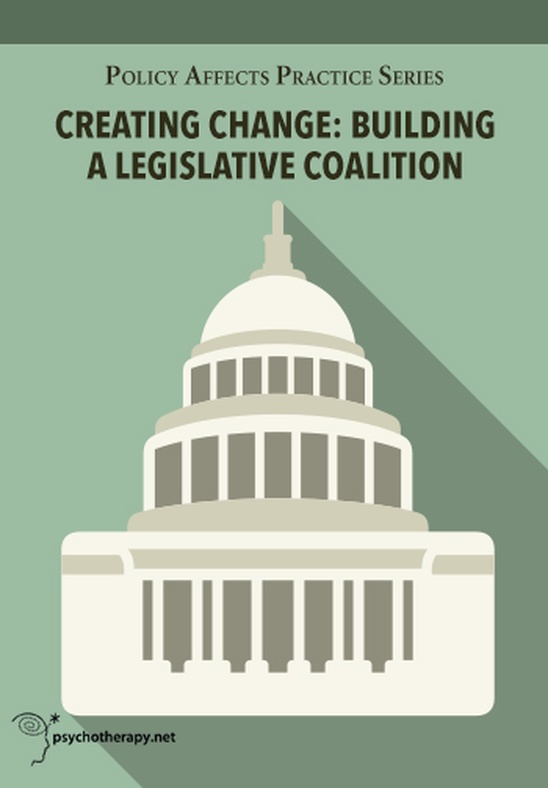
Each of the six videos in the series, Policy Affects Practice, takes on the social work student’s fears of getting involved in state policy—whether that means calling their representative, testifying at a hearing, or becoming involved in the state budget. The sixth, and final, video illustrates how social workers form legislative coalitions.
Commitment of time, money, and resources are all needed to form coalitions, but the effort is necessary if social workers want to effect real legislative change. This video illustrates the skills, like consensus building, that are needed not only to start, but to sustain coalitions to take on the complex tasks of engaging with legislative bodies.
You can’t be a “soloist” at your state’s legislature. If you want to have your voice heard and make a difference you need to create a coalition. Learn how in this engaging and instructive video.
After watching this series you’ll be able to:
- Describe how a budget is formed.
- Understand the legislative process and describe the steps for enacting legislation.
- Understand the importance of building coalitions with other social workers and learn how to do this effectively.
- Explain how direct practice experience can be an effective tool when advocating on the macro level.
- Illustrate the ethical dimensions of lobbying Congress for social workers using the National Association of Social Worker’s Code of Ethics.
This video is part of the 6-video series, Policy Affects Practice. Other self-study videos in this series include:
- Creating Change: Building a Legislative Coalition
- Social Workers Effecting Change: Legislative Advocacy
- Making a Difference: Influencing State Policy
- Social Work Advocacy: The State Budget
- Policy Affects Practice & Students/Practitioners Affect Policy
- Social Work: Practicing in a Century of Change