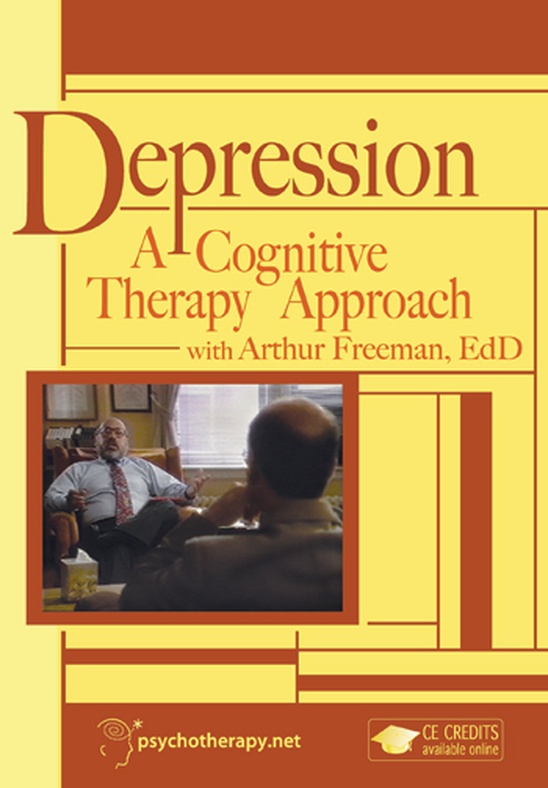
Depression: A Cognitive Therapy Approach
Video
with
Arthur Freeman, EdD
Video

Depression: A Cognitive Therapy Approach

Arthur Freeman illustrates the foundations and key techniques of cognitive therapy in a way that’s enriching and easy to follow.   Video length: 1h 10m
Buy a Membership
COURSE DETAILS

Overview

Cognitive Therapy comes to life in this reenactment of a 20-session course of therapy. Arthur Freeman illustrates the foundations and key techniques of cognitive therapy in a way that’s enriching and easy to follow.

Edward Crane blames his depression on his wife, who he says abandoned him by going back to school. “I shouldn’t feel this way!” he exclaims to Freeman in moments of frustration. Freeman begins by helping Edward focus on short-term, workable goals instead of outward blame. Through the 20-session course of therapy, Edward learns to distinguish between situations, thoughts, and feelings, and to reframe his belief of “I need to be taken care of,” to instead “I get angry when I feel incompetent.” Freeman works with Edward to develop ways to feel independent and self-sufficient so that he can begin to enjoy time by himself and not feel so angry and abandoned when his family is not around.

About the Experts

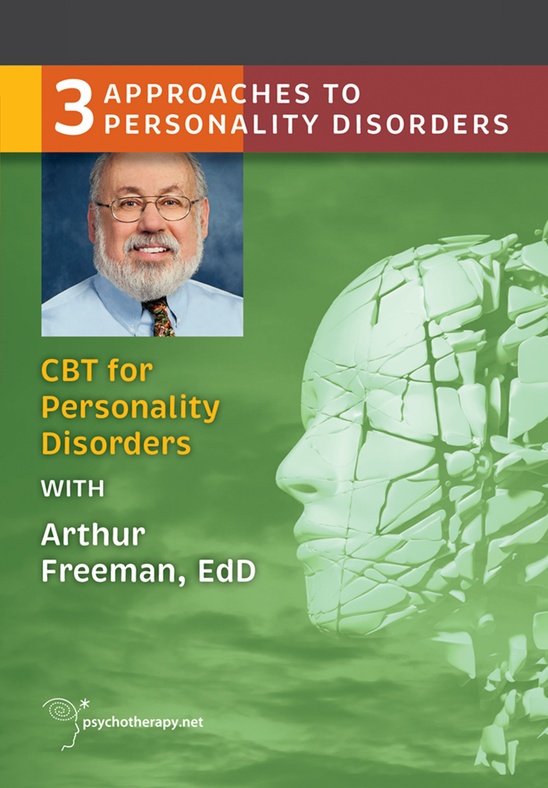
Arthur Freeman, EdD
Expert

Arthur Freeman, EdD

Arthur (Art) Freeman, EdD was Professor Emeritus of Psychology at the Philadelphia College of Osteopathic Medicine until his death in 2020. He was a past president of the Association for Advancement of Behavior Therapy and of the International Association for Cognitive Psychotherapy. Dr. Freeman's research and clinical interests included marital and family therapy and cognitive-behavioral treatment of depression, anxiety, and personality disorders. He has published 63 professional books including Cognitive Therapy of Personality Disorders, Clinical Applications of Cognitive Therapy, and…

View full profile

Disclosures

Arthur Freeman was compensated for his contribution. None of his books or additional offerings are required for any of the Psychotherapy.net content. Should such materials be references, it is as an additional resource.

This Disclosure Statement has been designed to meet accreditation standards; Psychotherapy.net does its best to mitigate potential conflicts of interest and eliminate bias in all areas of content. Psychotherapy.net offers training for cost but has no financial or other relationships to disclose. Additionally, there is no commercial support for this activity. None of the planners or any employee at Psychotherapy.net who has worked on this educational activity has relevant financial relationship(s) to disclose with ineligible companies.

Psychotherapy.net defines ineligible companies as those whose primary business is producing, marketing, selling, re-selling, or distributing healthcare products used by or on patients. There is no minimum financial threshold; individuals must disclose all financial relationships, regardless of the amount, with ineligible companies. We ask that all contributors disclose any and all financial relationships they have with any ineligible companies whether the individual views them as relevant to the education or not. Each experts’ specific disclosures can be found in their biography.

Psychoanalytic Psychotherapy
  • Video

Psychoanalytic Psychotherapy

Scott Miller on Improving Psychotherapy Outcome
  • Video

Scott Miller on Improving Psychotherapy Outcome

Irreconcilable Differences: A Solution-Focused Approach to Marital Therapy
  • Video

Irreconcilable Differences: A Solution-Focused Approach to Marital Therapy

Effective Treatment of Violent Individuals
  • Video

Effective Treatment of Violent Individuals

  • Premium
Irvin Yalom and the Art of Psychotherapy
  • Course

Irvin Yalom and the Art of Psychotherapy