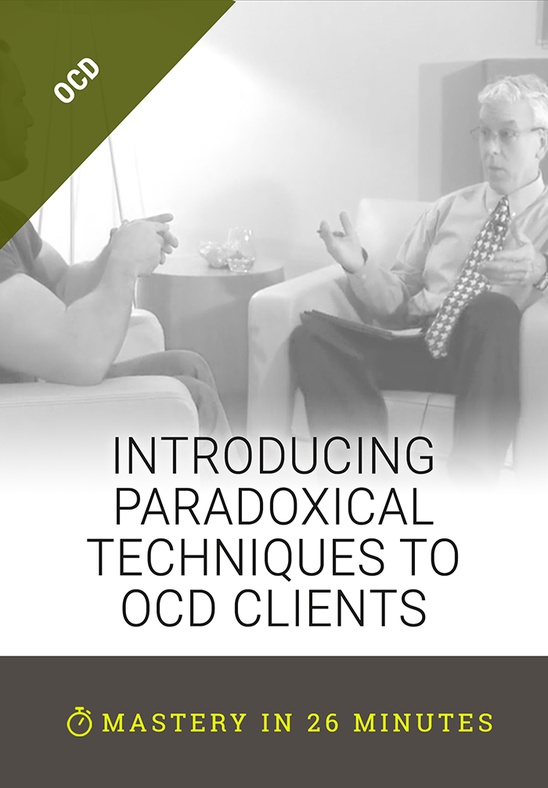
Introducing Paradoxical Techniques to OCD Clients
Obsessive-Compulsive Disorder or OCD is notoriously hard to treat. Although for most psychological disorders, common factors such as the therapeutic alliance are more important than the particular approach, in the case of OCD there is substantial evidence that cognitive-behavioral approaches are the most effective treatments we currently have.
Watch renowned anxiety disorders expert Reid Wilson work with Bob, a client whose OCD is severely impacting and limiting his life. Although Reid’s approach is similar to the popular model of Exposure and Response Prevention, he presents a subtle but significant variation of ERP: rather than helping the client to tolerate the anxiety associated with OCD, he urges the client to move towards the anxiety, to want it.