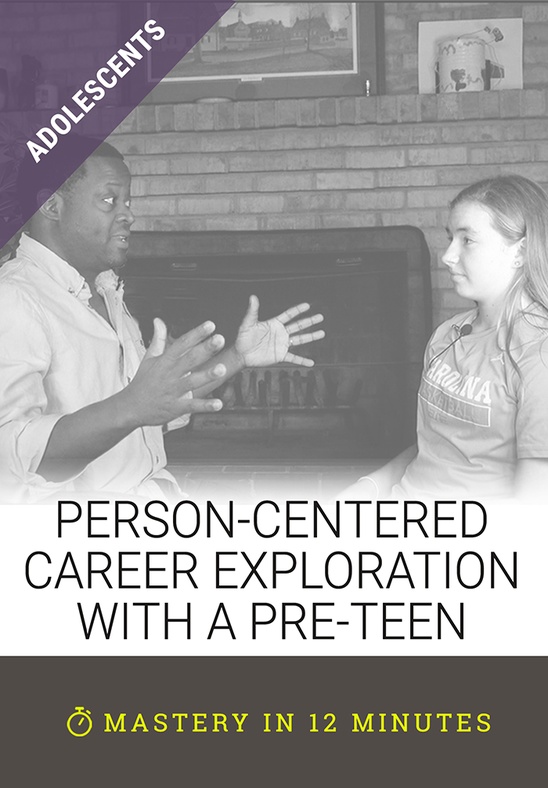
In this demonstration, Sam Steen engages 12-year-old Ella in a thoughtful, person-centered conversation about career exploration. Rather than approaching the discussion as an exercise in choosing a future profession, Steen uses the topic of careers as a vehicle for self-discovery, helping Ella reflect on her interests, motivations, concerns, and developing sense of identity. The conversation takes place in the context of Ella’s experience as a seventh grader navigating adolescence during the COVID-19 pandemic, balancing school, sports, family expectations, and uncertainty about the future. From the outset, Steen creates a warm and nonjudgmental environment that invites curiosity rather than pressure, allowing Ella to explore ideas openly without feeling compelled to arrive at a definitive answer.
As Ella discusses possible careers—including becoming a doctor, veterinarian, or interior designer—Steen demonstrates a hallmark person-centered approach by reflecting her thoughts and feelings back to her rather than directing the conversation toward a specific outcome. He helps her identify both the appeal and the reservations she has about each option, such as concerns about extensive education requirements or discomfort with caring for sick animals. Instead of evaluating her choices or providing advice, Steen gently explores where her ideas originate, encouraging her to consider the influences of family stories, personal experiences, books, media, and television. Through open-ended questions and empathic reflections, he helps Ella recognize that her uncertainty is not a problem to solve but a natural part of developmental exploration. The session illustrates how career conversations with young people can focus less on decision-making and more on understanding interests, values, and emerging self-awareness.
This video offers an excellent example of how counselors can facilitate career exploration with preteens without contributing to the pressure many young people already experience around academic achievement and future planning. Rather than seeking immediate clarity or commitment, Steen models how to support developmental exploration, encourage self-reflection, and foster resilience in the face of uncertainty. The session demonstrates that meaningful career counseling with children and adolescents often involves helping them understand themselves more deeply, trust their developmental process, and recognize the strengths they are already cultivating.
What to Watch For
- Person-centered counseling skills: Notice how Steen relies heavily on reflection, paraphrasing, and validation rather than advice-giving or problem-solving.
- Use of open-ended questions: Observe how his questions encourage exploration and self-discovery rather than seeking “correct” answers about future careers.
- Exploration of influences: Pay attention to how Steen helps Ella identify where her career ideas come from, including family experiences, media, personal observations, and social messages.
- Normalization of uncertainty: Notice the ways he reassures Ella that not having a clear career goal at age 12 is developmentally appropriate and common.
- Strengths-based reframing: Watch how Steen shifts the focus from “figuring out a career” to recognizing the strengths, habits, and experiences Ella is already developing that will support future decision-making.
- Addressing achievement pressure: Observe how he gently explores concerns about grades, educational demands, family expectations, and comparisons with siblings without increasing anxiety.
- Developmentally appropriate pacing: Notice how Steen respects Ella’s desire to live in the present rather than pushing her toward long-term planning before she feels ready.
- Building self-efficacy through encouragement: Pay attention to how affirming feedback helps Ella move from questioning whether she is “behind” to feeling reassured about her developmental journey.