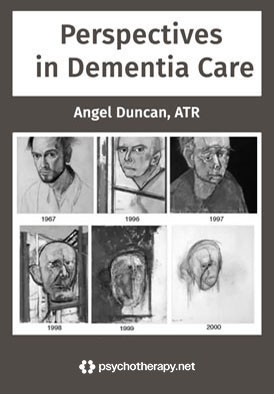
Perspectives in Dementia Care: Art Therapy, Identity, and Consciousness
Video
with
Angel Duncan, ATR
Video

Perspectives in Dementia Care: Art Therapy, Identity, and Consciousness

Art therapy provides a non-verbal avenue for accessing thought and memory, even as dementia diminishes language. This lecture explores how creativity supports brain health, strengthens dementia care, and reveals the person behind the disease. Case studies and research show art therapy’s impact across all stages of dementia, reducing dependence on medication and enhancing quality of care. Video Length: 56m 22s
COURSE DETAILS

Overview

Art therapy offers a way to access conscious and subconscious thought, allowing memories once thought lost to surface, even as dementia impairs language. This lecture examines the brain’s interplay between these thought processes and how art therapy enhances dementia care, and focuses on Alzheimer’s and related dementias, the partnership of arts and neuroscience, advances in art therapy technology, and debunking myths about self-awareness in dementia. It underscores the critical role of creativity in maintaining brain health, especially as we age. Both healthcare professionals and caregivers gain insight into how art therapy strengthens clinical interventions and dementia support. Above all, it celebrates the individual’s presence and humanity, despite the challenges of neural decline.

This video was formerly included in the Expressive Media Arts Therapies Films Collection distributed by Expressive Media Inc.


About the Experts

Expert

Angel Duncan, ATR

Angel Duncan was compensated for her contribution. None of her books or additional offerings are required for any of the Psychotherapy.net content. Should such materials be referenced, it is as an additional resource.

View full profile

Disclosures

Psychotherapy.net offers trainings for cost but has no financial or other relationships to disclose.

This Disclosure Statement has been designed to meet accreditation standards; Psychotherapy.net does its best to mitigate potential conflicts of interest and eliminate bias in all areas of content. Psychotherapy.net offers training for cost but has no financial or other relationships to disclose. Additionally, there is no commercial support for this activity. None of the planners or any employee at Psychotherapy.net who has worked on this educational activity has relevant financial relationship(s) to disclose with ineligible companies.

Psychotherapy.net defines ineligible companies as those whose primary business is producing, marketing, selling, re-selling, or distributing healthcare products used by or on patients. There is no minimum financial threshold; individuals must disclose all financial relationships, regardless of the amount, with ineligible companies. We ask that all contributors disclose any and all financial relationships they have with any ineligible companies whether the individual views them as relevant to the education or not. Each experts’ specific disclosures can be found in their biography.

Treating Alcoholism in Psychotherapy: A Live Workshop
  • Video

Treating Alcoholism in Psychotherapy: A Live Workshop

Empowerment Family Therapy
  • Video

Empowerment Family Therapy

Meth Inside Out: III. Windows to Recovery
  • Video

Meth Inside Out: III. Windows to Recovery

Voices of Suicide: Learning from Those who Lived
  • Video

Voices of Suicide: Learning from Those who Lived

Evidence-Based Treatment Planning for Panic Disorder
  • Video

Evidence-Based Treatment Planning for Panic Disorder