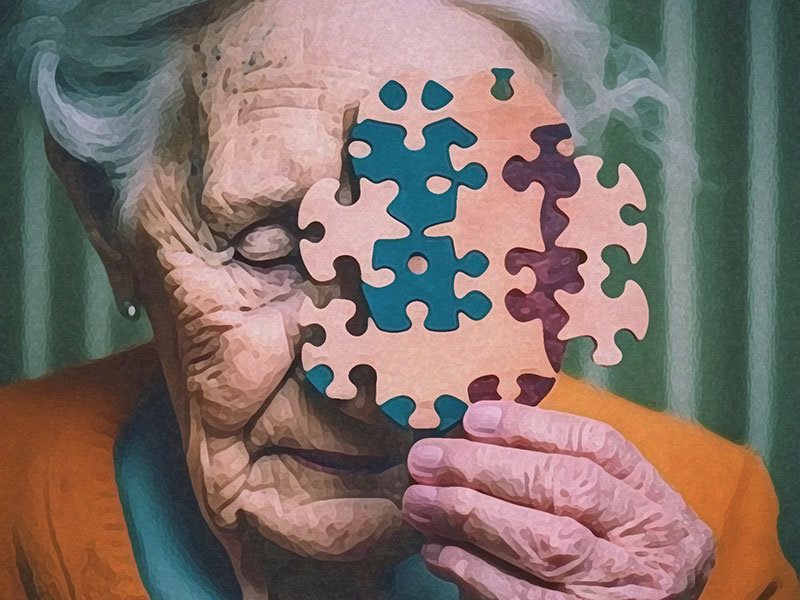
Critical Counseling Tips for Guiding Parents of Gifted Children

Jimmy is seven. He started reading on his own when he was 4 and is now devouring the Harry Potter books. He asks his parents questions about death they cannot answer. He knows the states and their capitals and the differences between dinosaurs. He loves numbers. In second grade, they are teaching addition and subtraction while he is already multiplying and dividing. Jimmy loves learning but is disappointed in schooling. While he was so excited to start school, he now comes home feeling angry and defeated. Jimmy is longing for friends, but the other boys are not interested in his love of the dictionary. He is very sensitive, empathetic, emotional, and lonely. He is showing signs of anxiety and having meltdowns after school. Jimmy is gifted. His teachers do not know what to do with him. His concerned parents are anxious and do not know where to turn. They come to you. What do you tell them?

The Drama of the Gifted Child

I have been working with gifted children and adults since the mid-1970s, first in education and now as a psychotherapist. Starting as a teacher of middle school gifted kids in a pull-out program, then providing classes for teachers and parents, I have learned over the years that these kids and their families often have certain traits and experiences in common. Certainly, there are many differences and much complexity among the gifted. There is even very little agreement over what giftedness actually is and how to define it.

Even so, there are some obvious characteristics we can identify and specific ways to help parents navigate the school system and negotiate life while raising a gifted child. These parents are struggling and feel misunderstood by a world that assumes having a gifted child makes parenting easy. It doesn’t. If you have some basic knowledge of the needs of these children and their families and can provide specific resources, clinicians can have an important impact on a population that is often overlooked and surprisingly underserved.

The controversy over how to define giftedness has existed since before I entered the field in the 70’s and it continues to this day. For our purposes here, I will briefly share my understandings based on my years working with these students and clients, and also share details of a recent case.

We might all agree that giftedness in children starts with advanced intellectual capacities. This is often measured by an IQ score but there are other, sometimes more reliable, clues. Usually, these kids reach typical milestones early. The easiest developmental step to notice is early verbal ability and an advanced vocabulary. Parents often report these children learn to read before school starts. The kids are extremely curious, ask complex questions, and are eager learners.

Typical gifted children also have many sensitivities, a range of intense emotions, creative thinking skills, and deep empathy. You see many of them speaking out at an early age for fairness, justice, and environmental issues. These children may feel pressure to be very high achievers if they have been praised too much for their “smartness.” A paralyzing perfectionism can then become an issue. They may never feel good enough or smart enough if they keep raising the achievement bar to not disappoint parents and teachers, or if parental expectations are inappropriate. Even if they are not over-praised, they may naturally set high standards for themselves. This intrinsic desire for excellence is not always problematic or unhealthy. It can be what provides our world with its symphonies and cathedrals. But if the drive comes with too much self-criticism, it can become problematic.

Granted, not all gifted children fit this description. Some are linear-sequential thinkers, and some are highly competitive. There are gifted children who perform well in school and others who don’t. Not all of them deal with perfectionism. Some gifted children have what is called “twice exceptionality”, which means they have learning differences or disabilities along with the giftedness, which adds to the complexity of parenting, teaching, and helping them in counseling. The concerns parents of younger gifted children bring to me are usually around schooling, anxiety/emotional regulation, and finding meaningful relationships.

The Case of Jimmy

There is so much pressure on teachers these days and so many needy children in the schools. It was easier to be an educator back when I was in the field. So how can we, as clinicians, both understand the stresses teachers and parents experience while also finding ways to provide an appropriate education and home environment for gifted children? As you can imagine, these kids are often sitting in their classes being taught material they already know. In many cases, this is true day after day and year after year. The expectation is often that these children will be fine on their own because they are “so smart,” but inappropriate schooling experiences can have long-lasting serious consequences.

Jimmy’s mother, Joan, contacted me because her son had been identified as gifted in first grade and she was noticing some issues with increasing anxiety, emotional regulation, self-esteem, and difficulty making friends. She was wanting to find solutions and learn how to approach his teacher because Jimmy would come home from school agitated and complaining of boredom and loneliness. His frustrations would often be expressed in emotional outbursts at home.

Jimmy was already reading in first grade, and in second grade enjoyed chapter books. His math abilities were also quite advanced. They were teaching addition and subtraction while he was excited by division and fractions. Like many educators, his teacher was not trained in differentiating instruction for gifted children and so Jimmy was made to complete the same assignments as his classmates. In the beginning, he was compliant and completed the required work, but the tension he felt in school would explode at home.

Jimmy also had trouble finding friends who had similar interests. No one else in his class was reading the books he loved or had the interests in astronomy, mathematics, and so much more. Luckily, he did have some athletic ability so he was able to find other boys to play with at recess and could experience the joys of teamwork on an after school soccer team. But his anxiety and emotions were getting harder to handle, and his sense of being inadequate and an outcast were growing.

What I suggested to his mother, Joan, will hopefully be helpful to clinicians working with parents of gifted children:

1. Look for the teachers who are more sensitive, flexible, and creative. Ideally, they have some training in gifted education. But even if they don’t, some will teach in ways that work better for these kids. Methods that work better? Project-based learning. Independent reading programs. Interdisciplinary approaches. Open-ended assignments. Acceleration. Flexible deadlines.

2. Volunteer in the classroom if you can. Be supportive of the teacher and share your concerns directly. Offer to work with a small group of the more advanced kids. Run a book club in the class or after school. Start a chess club or find one in the district. When he is older, debate is often an activity these kids love where they can find others like them.

3. Suggest to the school administrator which teacher is the best fit for your child, and that you will be a very agreeable and grateful parent if your child gets placed there. It is good educational practice to match a child with a particular teacher. Get support from the school or district gifted coordinator.

4. Learn about curriculum compacting, which is a way to allow a child who already knows the material to test out of or skip the regular assignments and work on projects that are more appropriate for his rate and level of learning. Look into teaching materials designed for gifted kids in the classroom. Prufrock Press is one publisher of curriculum. Gently suggest his teacher check them out. Provide samples.

5. Suggest to the school administrator that they use cluster grouping. This is the practice of placing the gifted children of a certain grade together in one class. This gives the kids a chance to find intellectual peers and provides them with a buddy so that they are not off alone doing a different assignment. It also allows the teacher to design curriculum for more than one student so it will be easier to plan.

6. Consider acceleration to the next grade level or for a particular subject. If your child is extremely advanced, consider home schooling.

7. Look for friends outside of school in different activities if there is no one in his class. Friends can be older or younger. Arrange play dates with potential friends and get together with the families.

8. Find mentors who have interests similar to your child. Mentors can be high school students, neighbors, and family friends. A good mentor will be an important support for developing his interests. Parents may not have the same interests or abilities to answer the many questions these kids ask.

9. Teach him self-soothing techniques such as deep breathing, visualization, drawing, exercise, and mindfulness. Tapping or Heartmath can also be useful. Remind him that his deep, intense feelings are a wonderful part of who he is and learning how to manage them in certain situations will help him in his relationships and in life.

10. Use active listening to validate his feelings. Reflect what you hear so he feels understood. This will reduce the intensity of a meltdown. Once he is calm, problem solve with him. Brainstorm solutions together. His frustration in school is real. It makes sense he will feel angry some of the time. Let him know you are working on solutions. Thank him for his patience.

11. Explain to him what it means to be gifted, including the fact that it does not mean advanced in all areas all the time. Talk about his strengths and weaknesses. He may feel rejected or like something is wrong with him, so these conversations are important. Help him understand that other kids may not have similar interests or abilities, but they all also have strengths and weaknesses. Include explaining sensitivity and empathy. Understanding giftedness won’t make him arrogant. It will help him feel more comfortable in his own skin.

12. Role play how to make friends. You may need to give him some basic skills for talking to other kids. He is more likely to tell you how he feels if you are doing an activity together, using puppets/artwork, or if you are in the car. He may be very smart in certain areas but need lots of guidance in others.

13. Take time for yourself and your partner. Find good childcare and take breaks from parenting. Make time to rest, relax, and pursue your own interests.

14. Find a therapist for yourself if parenting is bringing up your own unresolved issues. If you are also gifted, how did your parents understand or misunderstand you? What was school like? How are you similar or different from your child?

Joan met with the classroom teacher and the district specialist in gifted education. It took a few meetings, but the school made accommodations for math with a third-grade teacher who was warm and welcoming. Although the scheduling was not ideal and the math was still too easy, Jimmy was happier at first. A sensitive and creative teacher can make a big difference even if they do not make big changes in the curriculum. That said, Jimmy was uncomfortable leaving his class to go to the third grade. This is often the dilemma for these kids. They need advanced material but going to another class can result in bullying or missing more appealing subjects. I was hoping Jimmy might just move to the third grade full time since the teacher was better equipped to handle gifted children, but Joan was concerned about friendships, which is also a real issue. It is important to consider multiple factors with acceleration.

Joan planned to get to know more of the teachers at the school and started doing research in other schools to see if there would be a better fit for the next year. She volunteered in the classroom and started a book club for interested students. Jimmy began to find a few friends for recess and after school activities. His mom arranged play dates with a couple of boys who had some similar interests. She continued to look for a mentor for his science and math interests and a reliable babysitter so that she and her partner could get time away.

To manage Jimmy’s anxiety and emotional outbursts, Joan started practicing active listening and teaching him some self-soothing techniques. I think she was surprised at the positive impact. I often explain this tool to parents, and they can be skeptical at first. They may think that they are already deeply listening! But this method which we all know as counselors may still not be understood well or practiced by many parents.

Joan began to feel some relief when Jimmy was less reactive at home. I continued to support her as she navigated the school system. For these parents, being engaged in the schooling process is necessary throughout the child’s K-12 education. This is often exhausting and discouraging. Getting support is critical. Along with this support, we also began to look at her own experiences as a gifted child and the effects of her family of origin on her own sense of self. Often giftedness has a genetic component, and it can be quite therapeutic for parents to examine their own experiences of growing up gifted.

***

Parenting gifted children brings a particular set of challenges that are often misunderstood or overlooked by educators, therapists, and the general public. If therapists understand the complexities that come with giftedness and provide guidance for these parents and families, it can make a big difference. Not only for your clients, but really for us all.

Resources

Bright and Quirky

Empowering Gifted Families

National Association for Gifted Children

Northwest Gifted Child Association

Your Rainforest Mind  

Laughter and Humor Can Be the Best Therapy

A client once burst into my office for his first session and collapsed onto the couch. A little startled, I began with my usual protocol, asking what he had come for help with. “I’m a teepee,” he said. I stared at him, unfazed. “I’m a wigwam,” he continued. I nodded. “I’m a teepee,” he repeated. “I’m a wigwam!” I took a deep breath. “Obviously,” I explained, “you’re two tents.” This story didn’t happen, but it’s my favorite therapist joke. (If you haven’t gotten it yet, read it again aloud). People who know me outside the therapy room tend to think of me as a comedic fellow. The reason being, I surmise, is that I am in fact a comedic fellow — if I must say so myself. Some of them wonder how I could possibly be a therapist as well. Often, they do this aloud and in my presence. People generally regard therapists as serious professionals helping people with their serious problems in a calm, soft-spoken, (non-comedic) manner. It’s a fair question, and one answer is that I actually do have a serious side. It comes out mostly when I’m asleep, but it also makes appearances in the therapy room. If you wanted to psychoanalyze me, you might discover that my powers of humor derive from a sincere desire to spread joy, happiness, and empathy — which I maintain is foundational to all therapy — and is consistent with that desire. The other answer is that humor can be a powerful tool in the therapy room. Many people come for their clinical visit feeling terribly nervous and uncomfortable. This is especially true in my area of expertise, couples counseling, in which two people come to meet with a complete stranger to share their most personal moments (especially the most personal failures). Can they be blamed? Who’s excited about discussing their sexual dysfunction with anyone, let alone someone they just met? In this particular venue of counseling, I have found humor helps loosen us all up. It helps chip away at some of the discomfort and the shame and the resistance that clients bring with them. Donna and Dwayne As an example, consider Donna and Dwayne, an African American couple from Baltimore City who came in for help with their relationship. She walked in looking timid but hopeful. He followed behind looking P.O.’d from the get-go. He literally sat back on the couch, crossed his very muscular, tattooed arms, and glared at me. I started off with the usual pleasantries and asked them what brought them to therapy today. Donna looked at Dwayne, who didn’t move his gaze from me. She began to explain that they were having problems in their relationship. I listened for a few moments, nodding. When Donna finished the broad overview, I looked at her, then at him, and replied (mostly to him), “Uh-huh. So let me see if I get what happened: she’s unhappy with you, so she said, ‘hey, let’s go talk to a scrawny white Jewish guy about our problems and that’ll make everything better,’ and you were like, ‘that sounds GREAT!’” He did a very subtle double-take when I tagged myself as a scrawny white Jewish guy, then cracked a smile. That loosened things up enough for me to get a foot in the door with a client who was clearly not excited to be there to begin with. Humor has been a great connector for me, inside and outside of the therapy room. Someone somewhere said, “Everybody laughs in the same language.” (I just Googled it — turns out it was Yaakov Smirnoff, another comedic scrawny white Jewish guy. Go figure). Research tells us that the single most important factor in the outcome of therapy is the relationship between the client and the therapist. Nothing helps build relationships like a good shared laugh. Clients know when they come see me that it’s not going to be an interrogation or a kumbaya circle. It’s going to be a real conversation between real people. It’s going to be deep, but it’s going to be fun. It’s going to be us connecting to help them manifest change in their lives. I don’t think that can be accomplished by the clinician being a detached professional. At least not this clinician. But you can’t do that as a friend either. The sweet spot shares some features of both extremes. Pete Pete was a young man who I was seeing for depression. He started off one of his sessions with a new concern: “I think I may have some short-term memory loss,” he suggested. “I know,” I replied. “You told me that five minutes ago.” He looked concerned for a moment, then he broke out in a grin. Pete “got better” in due time. Not from that joke, you understand. But the camaraderie that undergirded our intense conversations, and the jokes that peppered them, certainly helped. Poking a bit of fun at the problems can also make them less menacing. “I need help with my procrastination,” said Avi, the husband of a couple I was working with. “We can talk about that later,” I replied. Of course, you have to know your audience. You don’t make a joke about memory loss with a senior. You don’t make off-color jokes or (do I need to say this?) racist jokes. Self-deprecating jokes are usually a safe bet. Puns likewise are not terribly risky, but let’s be honest, also not terribly funny. Sure, some of my jokes fall flat. But that happens in real life too. I’d say that just makes the therapeutic relationship all the more genuine. You know what I think? Laughter is love. And love is the most buoyant of human experiences. If you’re coming to me for help, I’ll use whatever tools I’ve got to lift you up. Comedy is just one of them. But yeah, it’s my favorite. Questions for Thought and Discussion How does the author’s premise about humor in therapy sit with you? How do you use humor in your own clinical practice? Have there been instances when humor facilitated therapy? Hindered it? If you appreciate humor in your life, do you bring it into therapy? If not, why?

Radical Listening is the Secret Ingredient to Successful Psychotherapy

I recently woke up feeling sick. I had a sore throat and could hardly utter any words beyond a whisper.

Like what you are reading? For more stimulating stories, thought-provoking articles and new video announcements, sign up for our monthly newsletter.

“I need to immediately call and reschedule all of my private practice clients,” I instinctively thought. However, I began considering how frustrating it is when my clients cancel on me at the last minute. They were expecting to see me, so I decided to work. I work virtually so there was no risk of getting anyone sick. I also felt as though I had enough energy to actively engage with clients as I regularly do. The only problem was my raspy voice.

Despite my attempt at fortitude, my mind wouldn’t quite let me off the hook. I became flooded with a barrage of critical thoughts about whether my clients would view me as being “less than” if I communicated with them through a hoarse voice. At one point, I conjured up a fantasy of being fired by one of my more critical clients. Further, I even imagined that if my voice was only at 30% of its capacity, I should only charge 30% of my rate. This flurry of thoughts helped me to empathize with many of my clients who struggle with overthinking.

As I proceeded throughout my day, I quickly became aware that most clients interacted with me as usual. Either they didn’t notice or didn’t care. I did have one teen ask if I had been practicing ASMR (Autonomous Sensory Meridian Response) — a pleasurable sensory experience — and another client asked if I was sick. Two out of ten clients wasn’t too bad. In the days that followed, I noticed a similar trend of clients being more concerned about their own problems than they were about me sounding a little different.

However, the experience offered a great lesson in self-awareness. Though I pride myself on “active listening,” I tend to talk way too much in therapy. I guess that I enjoy hearing myself speak. After all, I worked so hard to get a Dual Master’s in Counseling Psychology and I deserve to be heard, right? Talking makes me feel brilliant, but it is not always effective when getting clients to tell their stories.

Having a sore throat forced me to shut up more often than I wanted to. At times, I felt enraged with myself for not being able to point out patterns in my client’s distress or offer carefully planned interventions. Fortunately, over time, I accepted my fate as a somewhat voiceless therapist and stopped trying. To my surprise, clients did well with more space. They even made connections on their own without the imposition of their self-aggrandizing psychotherapist. Perhaps Carl Rogers would be proud of me.

But, how about the client that I fantasized about firing me? Towards the end of our session, I shared this fantasy with her. She had been talking about struggling with intrusive thoughts and I thought that this disclosure might be appropriate. She found my concern humorous, and I used it to help her understand how she could accept negative thoughts without necessarily having to change or challenge them.

Now that my voice has mostly recovered, I still find myself utilizing the lesson I learned from when it was hoarse. I remind myself to have clients lead and be the main experts in the room. As a therapist, we can sometimes be speechless and still have a voice.

Questions for Thought and Discussion

Did the author’s plight resonate with you? If so, how?

Do you tend to talk more than you think you should with clients?

Are there particular clients with whom you tend to talk more? Less?

What could you do to improve your presence with clients?   

Travis Heath on Psychotherapy as an Act of Rebellion

An Act of Rebellion

Lawrence Rubin: Hi Travis, thanks for joining me today. I first became aware of you and your work after reading “Reimagining Narrative Therapy” that you co-edited with Tom Carlson and David Epston. There you said that therapy is, or at least should be, an act of rebellion?
Travis Heath: I wrote that, huh? It’s always interesting to reflect on one’s own words. Should it be an act of rebellion? Maybe it shouldn’t be in every case. Yet, I think there could be therapeutic advantages to therapy being an act of rebellion. What I mean is that sometimes, usually unwittingly, therapy can become an act of reinforcing normative ways of being. What we might describe as “mentally healthy” may actually be a normative societal way of behaving. So then, an act of rebellion is when people move against the norm, right? To go against the status quo. And there could be — whether it be in therapy or elsewhere — immense therapeutic value when that rebellious act is consistent with who the person most knows themselves to be. Now, I’ll say that an act of rebellion for the sake of rebellion, like a contrarian act of rebellion around every turn, may not always useful. But one that is truly consistent with who a person is can have a positive impact on one’s mental health.
LR: And sometimes people come to therapy not sure of who they are, or which story is the one that is the healthiest for them to live by. Are you suggesting that for some people a therapeutic relationship allows them to rebel against norms that are oppressing them or holding them down?
TH: I think a therapeutic relationship can help with that, although I don’t know if that is enough alone. As someone who is informed by narrative ways of working, therapeutic questions are very important to me. Most of my questions are average at best and probably don’t lead to much change in people’s lives. But all I need is one really good question. Not one that I’ve conjured up, but one that just comes up quickly in the moment from the relationship I am having with the person that I just throw out there. A good question can open up a way of living that a person hadn’t articulated in a particular way before. Maybe they felt it somewhere or tried to imagine it, but now they’ve put words to a particular direction.
LR: This may be a tough one to pull out of your hat, but can you give me an example of a client that you recently worked with, or that stands out in memory, where you came up with the right question at the right time?
TH: Yeah, that’s a good question. I was working with a women-identified person in her 40s. In our culture, there are certain ideas about bodies — how they should look, and how bodies should and shouldn’t be shaped. I think this is especially so for women. That pressure seems to be increasing for those of us who are male-identified as well, but it’s been very tough for women for some time. She was really distressed when she came to me and was talking about eating peanut butter. Like, “I’m really distressed because I’m eating peanut butter.” And I remember saying to her, “Okay, I hear you and I want to understand what’s distressing about this?”
I remember saying to her, “Can I share something with you? I eat peanut butter too sometimes.” And she kind of smiled, but added, “No, I mean I eat too much peanut butter.” And I said, “Okay, again, I hear you. Help me understand. What’s too much peanut butter?” She said, “Well, I might eat a spoonful or two spoonfuls of peanut butter.” And I said, “Hey, I won’t want to tell you how to eat or what you should or shouldn’t be eating. I’m just really trying to understand. And I wonder, is it possible that you could eat a spoonful or two spoonfuls of peanut butter and that might in some way be okay? Now, if you told me you ate the whole jar or something and you were doing this nightly, I would understand how that would be distressing. But do you suppose it might be okay that you eat a spoonful or two of peanut butter?”
With that question, she burst into tears. It was a simple question, not something you’d see in a textbook as an exemplar. But it was really just a question that in some small way, maybe larger than I initially realized, invited her to think about how she came to understand what’s too much peanut butter and what’s not enough peanut butter. The question was asking her to consider how she came to understand that eating peanut butter might begin to define her as not a good person. How did she come to understand that process? And we really had a session just about peanut butter, which sounds sort of wild, but it wasn’t initially an act of rebellion. It became an act of rebellion for her because she was resisting some of these discourses about food and about her body.
I remember asking her, “Okay, so how often do you do this?” She said once or twice a month, so I said, “All right. Let’s just say that you stopped doing that. Do you then think your body would, over time, or maybe quickly, begin to conform to this body that you’ve been told you should have?” She really thought about that and said, “No, it probably wouldn’t.” “Well, what kind of acts of torture or anything else could you put your body through to make it look like these bodies you’re telling me would make you a good person?” In that moment, with that question and the questions and answers that followed, it was essentially about, “If I looked this way, I’d be a good person.” But she couldn’t initially articulate that. It was the question about “peanut butter” which enabled her to communicate those feelings of insecurity that she constantly experienced yet couldn’t ever explain. In that way, our conversation about eating, and even just existing in her body, became an act of rebellion against normative prescriptions of what society tells women is a good body.  
LR: You know, Travis, I would imagine at one level you were very aware that you weren’t really talking about a spoonful of peanut butter. Instead, you were creating a space in which she could really question the legitimacy of her rigid thinking, and maybe even dive more deeply into a conversation about self-worth, body image, and perhaps gender with its discontents.
TH: Lawrence, I might say it just a little bit differently. Not so much her own self-talk, but the talk of the culture that she had adopted and the cultural meaning of “self-talk.”. Because when people say “self” in front of anything — self-talk, self-esteem — I get skeptical. Self-talk isn’t really her talk, although it may feel like her talk because Lord knows how long that talk has been kicking around. But she didn’t come out of the womb with that talk. That talk came from someplace, and now it’s become a part of her. So, I think that this act of rebellion you’re talking about, when it is really shining, can help people see that and say, “Oh gosh, I didn’t come out of the womb with this. Actually, these aren’t my ideas.” Then that can lead to, “And I don’t even have to subscribe to these ideas,” which can be very liberating.  

Confessions of an Anti-Manualist

LR: So, you created a space in which she was given permission to rebel against certain language that has been forced on her or force-fed to her. Shifting gears a bit, has traditional therapy’s search for the grail of evidence-based techniques enhanced or diminished the craft of psychotherapy?
TH: I like the question, and I think it’s an important one. Without trying to be too long-winded, I do think that historically the idea of “evidence-based techniques” came from a good place. By that, I mean hey, there was a time when psychotherapy was viewed in a certain kind of way—the work of charlatans. Hell, there were psychologists, not clinical psychologists, but there were psychologists — I think Cattell and some of those other folks — that weren’t necessarily huge fans of psychotherapy. And so, I think there was a time when it was important to show that there was some kind of scientific evidence base, that therapy wasn’t just akin to palm-reading. Maybe I shouldn’t dismiss that out of hand, but that’s a different conversation. The point being, there was a real reason for attempting to create psychotherapeutic techniques with evidence as their primary foundation.
At some point, this idea of evidence-based practice got tangled up with late capitalist ideas, and people discovered that you could sell a hell of a lot of workbooks. You could also bring a hell of a lot of legitimacy to what you were doing, and it helped your personal brand that was tangled up with the brand of your therapy. That’s where I think it started to become problematic. So, the idea of having evidence is not necessarily bad. But when it’s done for these sorts of capitalist reasons, I become concerned about it.
Now to your question of the art, if you will, of psychotherapy. I’ll share a quick story from a class I was teaching probably 10 years ago. It was an undergraduate intro to clinical and counseling class, and as we discussed I have never been too keen on these evidence-based models. So, I started the class by bringing in treatment manuals and handing them to everyone. “All right class let’s look these over. What do you think about them?” Most of the students, and I think this says a lot, were comforted by this. “Oh, great. I could do this. I could follow this script.”
Then one intrepid young woman who sat in the front of the class asked, “Well, what happens if you’re using this and it doesn’t work with someone?” And I said, “Well, okay, that leaves us at a bit of an impasse, doesn’t it? I personally don’t believe there are just two ways to do therapy. But let’s just look at two possibilities. So, one possibility is we use this manualized approach that we’re looking at. And it works to a certain degree for some people, maybe even most people. And you do a mediocre, good enough job, your whole career. And then, every now and again, you find someone it really doesn’t work for, and I guess you just abort mission. Or another option — it’s not the only other option — is that we learn how to do this on sort of a moment-to-moment basis. We’re really being in touch with the other person.” I said some other shit, too, but the students almost universally agreed that one sounds better, but it also sounds scarier. It sounds like a lot more work. And how do I know if I’m doing it right? They had all these questions, which were all very fair.
My worry is that somewhere, usually early on in people’s formal training, without even realizing, without even really being presented it, they’re nudged to make the choice of one manualized treatment over another. They’re nudged to go down one of these pre-determined roads — and they’re sort of nudged often. And then if you’re trained in that way, it’s hard to put the genie back in the bottle. It’s not really that one way of doing therapy is superior, but if you’ve worked with enough people, you come to understand that you aren’t going to be able to take the same damn thing and apply it to everyone who walks through the door, or even most people.  
LR: So, would you say that you are an anti-manualist, or that you practice an anti-manualized form of therapy? I know Narrative Therapy is, by definition, an anti-manualized intervention.
TH: I have never heard it put that way. I like the term. I accept the term. I don’t know if I always live up to that as much as I could. I mean look, there are certainly patterns to my work. And people who know my work well and who have watched it behind mirrors or whatever they’ve done over the years, could point to patterns in my work. I don’t know if patterns are manuals because I’m not necessarily adhering to a prescriptive one, two, three, four, this is the order of how you do things. But there’s a certain soul to the way that I work. And there are patterns in how I work. I won’t deny that. At one point, however many years ago, I said, “Well, I never do the same therapy twice.” That feels a little self-aggrandizing. Like why am I saying that? Yes, there are elements that overlap. So, to be an anti-manualist, yes. I like that idea. And, I have to acknowledge that not everything I do with every single person is completely new and creative. There are some patterns that you see.

De-Colonializing Therapy

LR: There are likely many clinicians in our audience who are really into manuals. It seems that once a therapy has an acronym, a workbook, and a “seal of approval” by some credentialing body, it becomes the stuff of grail. In this vein, and based on our conversation and my reading of your work, are we speaking about detraditionalizing therapy practice?
TH: Thanks for asking these questions. To detraditionalize, for me, is something that if it doesn’t happen, then a therapy dies. But let’s get outside of therapy for a moment. I think almost anything dies. Maybe some of the folks who would frequent this interview may not be sports fans, so excuse the sports analogy, but I’m a big basketball fan — played basketball my whole life. And people will watch the modern NBA and they’ll say, “these guys shoot too many three-point shots. Back in my day, we never shot 30-foot shots.
That may be true enough, but the game has to evolve. It must evolve. It cannot stay stagnant. Now, did it have to evolve in the way it did? Maybe not. But it must evolve, or it dies. And I think it’s the same with therapy. So, to detraditionalize, it’s not that we can’t do it with intention, we can. But I think for an approach to therapy to remain viable over the years, it must change and evolve. A lot of psychoanalytic psychodynamic approaches are probably misunderstood in the modern world. But the best practitioners I know who appreciate and look through that lens, they’re not doing the same shit Freud was doing. They might have taken some of those ideas and some of those cues, but they’ve detraditionalized them. In a way, they’ve modernized them. So, that’s the first thing I want to say.
The second is, like in my work, I think traditionally there is a healer and a person to be healed. And then the person that’s the healer is somehow supposed to have the answers or write the prescription. And to meI’ll take a line from my mentor friend and colleague David Epston — a lot of Narrative Therapy is about elevating the knowledge of the other. And so much of my practice, and a part of it that I think is maybe detraditionalized, is not to rely on psychological knowledges, or psychiatric knowledges or descriptions, but to try to elevate the knowledge of the other.
And the other doesn’t just include the person who’s in front of you. There’s a whole ancestral presence that often comes with that person who sits in front of you. Whether they realize it or not, it travels with them, it informs them with insider knowledge about how they may approach distress or problems that they’re up against in the world. And even so with therapists that would make the claim, “Well, I’m client-centered, I focus on the client.” Yes, but if you actually watch it unfold, it’s still based on a counseling prescription or a psychiatric or psychological prescription about how the session should go. It isn’t necessarily elevating the knowledge of the other. 
LR: You said something earlier, and I don’t necessarily want to skip around too much, but it seems like we’re entering a cross-conversation about multiculturalism. When we talk about “elevating the other,”, are we getting at your ideas about working with “the other,” and what you have referred to as “decolonializing” psychotherapy?
TH: The phrase I’ve liked most recently is “anti-colonialize.” De-colonialize is fine, but I don’t like post-colonial, because post-colonial implies that somehow, we’ve moved past colonial logic, which we haven’t. Anti-colonial to me just seems like a little bit of a stricter stance against past, present, and future colonial logic and colonial attempts at living. So, I’ll start with that. But de-colonial is fine. I like that word, too.
You’ve heard me use the phrase “colonial logic,” but I’d like to weave in yet another term here: “multicultural.” If we look at the term “multicultural,” and a multicultural approach to therapy or counseling, often what that is saying is, “Hey, those of you from non-European descent, you can come, we welcome you. You can come and heal in these Eurocentric mediums of healing.” On the surface of it, that’s a nice offer. But it doesn’t make a ton of sense. And really what it’s doing is replicating colonial logic in that, “Hey, these European ways of being, behaving, and these European standards of living, these are the right standards. And we’re going to help you through therapy live up to these standards and these ways of being.”
To me, an anti-colonial approach would seek to first try to find the colonial logic that’s at play. And nobody bats a thousand at that, I would argue. But because it’s so embedded in the culture, we don’t think to critique it, although that has been happening more in the last couple of years. Anti-colonial, then, talks about culturally democratic approaches to therapy. A friend of mine, Makungu Akinyela in Georgia, has a type of therapy called “Testimony Therapy” which he equates to being next of kin to narrative therapy and African-centered therapy approaches. He says that a culturally democratic approach is to invite people to speak on behalf of their own healing.
And so, if we hope to practice an anti-colonial approach, which to me is like the big umbrella term, then a culturally democratic practice seems important because people are allowed to speak on behalf of their own healing. Speak in their mother tongues. Speak through the cultural knowledges that they have come up with.
One thing about psychiatry and psychology, if we’re not careful, is we can get a little too big for our britches. We can think that healing’s only taken place in the last century-and-a-half, or whatever it’s been. No, it’s like, hey, come on, you think just because we’ve now labeled these things as depression or anxiety or PTSD, people haven’t been up against these things throughout time? 
LR: Like we invented these afflictions.
TH: Right. And did these people with depression and anxiety all just curl up in a ball and not live their lives? No, people have experience with healing. And they have knowledge about healing. It doesn’t have to exist in a Eurocentric way. And often what therapists are doing — almost always unwittingly — when they’re reproducing colonial logics in their practice is recolonizing people. And often the therapist doesn’t realize this is happening, nor does the client. And yet, this process is playing out. It’s assimilation. We talk about, should people assimilate when coming to a new country…Well, really that’s what therapy has often been doing, again unwittingly. I don’t think this has been done with malice.
LR: This is psychiatric assimilation.
TH: Right, exactly. And so traditional therapy reproduces this colonial logic, which then sometimes — again, completely unwittingly almost always — is reproducing internalized racism where people might already experience feelings of inferiority. It doesn’t always have to be around race, of course. It could be any number of other factors. So, I hope that there’s some justice to your question.
LR: So, traditional multicultural counseling, if I’m hearing you right, is, “Sure, come into my session, wear your native garb, let me learn a couple of buzzwords that are unique to your culture. And sure, tell me your story. But in the end, I’m going to lay some ACT on you.”
TH: Yeah. And again, almost never is this done with malice. But that’s some of the demanding work I think we have to do. And another thing is like, okay, I am of mixed racial background. I have the blood of the colonizer and the colonized that runs through me, which is a complicated place.
One of my colleagues out here in San Diego now, Vid Zamani, he was the first one I heard say that if we are reproducing traditional Eurocentric ways of doing therapy, then we are a de facto White. And I really appreciated that, because it was like, well, just because of my own background, that doesn’t make me immune from practicing colonial logic. And he said, of course, that makes total sense.
But if we’re not careful, then what happens is in the field’s attempt to diversify—sure, we might look diversified on the surface, but our practices aren’t that diversified—we’re still practicing the same colonial logics. The practice really isn’t changing, even if superficially the people doing the practice look different.   
LR: So, until the psychotherapist recognizes that they are colonializing their clients, until the traditional colonializing psychotherapist rebels against their own inherited narratives of what psychotherapy is, they will continue to colonialize their clients. And colonialize the psyches of their clients.
TH: Yes. And this is, I’ve found, a largely unpopular idea. Especially among folks who have been doing this for a while. I’ll share this story that I think drives home your point. I was doing a job interview. Not for the institution I’m currently at, but for a past institution. I was doing a presentation that talked about some of this stuff that we’re talking about now. And when I got to the end of it, a dude says to me — an older white man in his 60s, “Hey, I’m going to throw you a softball question.” And right away I was like, okay, yeah, what’s this guy up to? And then he says, “Well, what am I supposed to do when you tell my students that I am practicing a therapy that’s colonizing folks?” And I thought about it for about five seconds, and then respectfully I said, “Well, if I can share something with you, I can guarantee you I’m practicing in colonizing ways. And in fact, I can guarantee you I’m doing it in ways I’m not yet aware of. So, in that sense, I wouldn’t be asking you to do anything that I am not practicing myself.” But I found that there are folks that are resistant to the fact that their work could be colonizing at all.

Communities of Care

LR: In the context of this thing called multicultural practice and colonization, what do you mean when you talk about the dignification of the client? I think that was your word.
TH: No, it’s David Epston’s word, although I might have used it. What’s interesting about that, Lawrence, is that I met David in 2015, so that’s seven or so years ago. I had been out of graduate school a good six, seven years at that point. I had been practicing in the community for the same amount of time. I had been a university professor for seven or eight years. I had been around this a minute, and I had never — and I mean literally never — heard a person use the word “dignity” regarding clients in therapy. I was taken aback by the word the first time I heard it in this context. Dignification is even a little better than dignity.
When someone’s up against something, some kind of distress — I’ve worked with a decent number of people in the criminal legal system — they are often stripped of their dignity. And so, dignification is really an effort to afford the person that dignity within the conversation. And when we engage in dignification and people can feel that they have dignity, that helps to open additional stories in their lives. And maybe those stories were already there, but if they don’t feel as though they have dignity, then those stories are inaccessible to us. Even if they’re there someplace.
I noticed this with people in the penal system—it doesn’t happen after one meeting and could actually take months — but when they really started to feel dignity, and that they were living a life with dignity, and respected as a person with dignity, we would start to see a turning point in what we were doing. Because there aren’t many systems that are practicing un-dignification more than the criminal legal system. And so, it was actually a great place for me to see that juxtaposition of when people are afforded dignity. And these probation officers would ask me, “Hey, how did you get this young man to take responsibility for his actions?” And I said, “Well, first by never mentioning the term ‘personal responsibility.’ That’s probably not a great way to go, even if that’s what you’re hoping for. And secondarily, by taking them seriously. Treating them with dignity. Listening to their ideas. Taking that insider knowledge they have and really using it as something that could move us forward in a way that would make sense in their lives.
LR: Your dislike of the notion of “personal responsibility” brings me to something you said about the difference between self-care and communities of care. What is that difference?
TH: Well, it depends. What’s the goal? If the goal is to make money and sell lots of products, then we’re not moving in the wrong direction at all. I think Ronald Purser is the dude’s name, he wrote the book “McMindfulness.” He articulates this as well as anybody I’ve heard. It’s worth the read.
Look, self-care is another one of those things I feel like came from a good place. And when I talk about my issues with self-care, I preface it by saying, if you want to take a bubble bath, that could be lovely. If you want to watch a movie or do whatever, great. I’m not against that. Where I find this to be problematic, and our field has done this as much as any that I’ve seen, is a student, for example, in a master’s or doctoral training program in our field starts struggling. And often the response by those in charge has been, “Well, are you doing your self-care? What are you doing to take care of yourself?” But then you look at a PhD student. They come here, work 18 hours a day, doing all their school stuff. We don’t pay them enough to survive, we give them a small stipend. Now they have to go work another job. But we remind them “please don’t forget to take care of yourself.”
Essentially and systemically, we outsource the responsibility for the oppressiveness of the system and then turn around and say, “It’s your responsibility.” As opposed to a community of care — and this is something I try to think about in my role as chair now of an academic department — which is, “Okay, if we have faculty that are drowning or students that are drowning, what are we doing to do to help, rather than lay the responsibility on the student to adapt to a system that is rather oppressive?” So, do we need to scale back some of what we’re requiring? Do we need to change the ways that the system operates? What can we be doing, other than once a school year bringing puppies in? “Hey, that’s lovely.” Or they’ll have a little massage chair set up. Fine.
I was talking to someone this morning, and the language that she used was so passive. We say, “I’m experiencing burnout.” And my thought about that is, no, you’re being burned out. That’s not the same thing. It’s about experiencing burnout versus being burned out. Our systems are burning us out. And so,  if our systems are burning us out and we’re asking people to handle this individually while the system that’s doing this for its own gain takes no responsibility, well, then this is just going to keep repeating.
And I’ll come full circle to say that I think, not individual people, necessarily, but folks with something to sell don’t mind that. Because if the person is continually being burned out, guess what? They’re going to consume more of the product that we want. So, the system is actually set up beautifully for making money. I don’t necessarily think it’s set up good for quote-unquote “mental health.” 
LR: So, in a sense, graduate trainees, like therapy clients, are typically colonized and oppressed by structures of authority. What do you mean when you say that therapy — and graduate education in the context of this conversation — should be an act of shared humanness?
TH: Yeah, I think again, the culture that we’re in is so ruggedly individualist, that often the human experience gets defined solely within the individual. And I worry about that. And to me, therapy at its best is shared humanness. I used to do this early on when I was a therapist. I came up for my first master’s class in 2002 with all these journals under my arm. I was going to save the world by going into these communities in South Los Angeles. And it didn’t take me long to figure out that shit wasn’t going to work, and I had to do something else. I learned that quickly.
The way I think about the shared humanness now is, we can’t be doing what we’re doing right now in this conversation without shared humanness. The same goes for a therapeutic conversation. When there is shared humanness and it comes together, something exponential is possible. But I would not be able to say everything I’m saying today during our time together without your questions. Your question takes me somewhere that I couldn’t have gone just by myself. Maybe I could have generally gone there, but something about your questions and the give–and-take transports us there. And the shared humanness in therapy is exactly the same. You bring these two people together. And what we could each accomplish on our own could be fine, or even good. But what we can accomplish in this shared human way is exponential.    

Wholehearted Therapy

LR: Very similar to what Irvin Yalom refers to as the hereandnow—that the therapeutic relationship is lived in the moment the fruits of psychotherapy grow from the back and forth. Is this related to what you describe as “wholehearted therapy practice?” And what does a therapist look like when they’re practicing halfhearted therapy?
TH: I think halfhearted therapy, or quarterhearted, or two-thirdshearted could happen for a lot of different reasons. But to me, wholehearted therapy is bringing all of yourself to the practice. One of our students asked a fair question just a couple of weeks ago; “How do I know how to be in therapy relative to how and who I am out in the world?” They asked it a little differently, but basically what they were asking was based on their feeling, “I don’t know how to not bring all of who I am into the room.”
And so, I think halfhearted therapy can happen when we think that there are parts of us that somehow can’t come into the room. Now, what I’m not saying is that there are certain topics we might not talk about in the room. Now, I would even question some of those and whether they are truly off limits, and I do frequently. But obviously there would be some topics that would be off-limits for us. Therapists could decide that. But I’m not so much talking about the topics of discussion. I’m talking about how much of themselves that they’re bringing. And I fear that therapists are often taught not to bring important parts of themselves.
With regard to halfhearted therapy, they could be doing therapy in a system in which they’re chronically underpaid and overworked, and their spirits are just really sucked dry. And then they just don’t have that spirit to bring. In no way would I blame the therapist for that. But if I think about the times when I’ve engaged in halfhearted or quarterhearted, or however much hearted therapy practice, it’s often been for those reasons. Now, earlier on in my career, it was because I was asking myself, well, can I be this in the room? And of course, that’s a ludicrous question, because I am this. So, one way or another, the person that I’m in conversation with starts to deduce that anyway.
LR: In the recently released “Reimagining Narrative Therapy Through Practice, Stories, and Autoethnography,” you wrote a chapter entitled, “Maybe We Are Okay: Contemporary Narrative Therapy in the Time of Trump,” in which you narrated the therapeutic interaction you had with a person whose political views, specifically, their Republican views, clashed very dramatically with your Democratic views. So much so that the conversations about who you voted for 2016 became part of the therapeutic relationship. And in that relationship, you nicely demonstrated how you can disagree with someone’s political views, but still respect them as a person. Was that an example of wholehearted practice?
TH: It was interesting how that chapter came about. You know how therapists can get together and start talking in between seeing clients. Well, I noticed a lot of my colleagues saying something like, “Well, if Trump came to therapy, would you work with him?” I didn’t say anything when my colleagues were saying, “NO, I would never do that! Who could do that?” But then, I thought about it, and I was like, yeah, I think I’d work with him. I don’t know if he’d want to work with me. Maybe he’d tell me to get lost, but I think I’d try.
I just remember how outraged they were. And when they asked the question of how I would do that, I would say, “Well, I haven’t worked with Trump, but I’ve worked with plenty of people who have views that are very different than mine.” So, that was the inspiration for this, to try to explain shit to myself. Even after writing the chapter, I’m not sure I understand how I always engage in this work. But, to go back to bringing one’s full self into the room, we didn’t get deeper into the party politics in that chapter. But if we happened to in our sessions, I wasn’t super-enthused about voting for Hillary. I felt like a lot of people — like I have to decide between two people that I’m not really enthused about. Okay, I’ll take the one that I’m a little more enthused about. I’ll engage in a minimization-of-harm vote, is kind of how I felt.
But clearly, in the chapter you’re describing, my client and I voted for different people. When that moment came up, the question was, “Do I talk about it or do I not?” And the thing about that is, okay, I could decide not to talk about it. I could decide to do the thing as, “Oh, that’s an interesting question. I wonder why you’re asking?” But she knew. She had a sense of this, of who I voted for. And I’ve heard people say this kind of thing who haven’t read the chapter, but have said, “Well, you know, you’ve got to be careful. You’re pressing your political views on them.” But I disagree. What I’m doing in therapy is I’m simply showing up as I am, and she can show up as she is. And then we have to figure out how that meshes, and how we do the work together that we’ve been charged with doing with one another.
And that doesn’t require me being neutral. And by the way, I’m not neutral. It’s just a matter of whether I admit I’m not. I’ve seen a lot of discourse around this lately about neutrality and people debating what it means and all this kind of stuff. But to me, it’s an impossibility. We are not neutral. And so rather than try and pretend as though I am — not unsolicited would I share such a thing, but when it works its way into the session — when she brings this up, it’s like okay, let’s talk about the shit that we’re not supposed to talk about. Let’s talk about religion. Let’s talk about politics. To me, therapy seems like a great place to do that. And not just in the sense of me just passively listening or looking for pathology in the patient and how they talk about this. But rather, let’s have an actual conversation with two wholehearted human beings about the thing that we’re not supposed to have a conversation.
 
LR: In a sense, you are co-rebelling against the mandates of traditional therapy with a client by self-disclosing and by being fully present.
TH: And neither of us has to change our political party. Although for me, I’m not that enamored with the Democratic Party, either. But I’m not sure I have a party that represents my interests, to be honest. I certainly wouldn’t say I’m an Independent. That has its own set of connotations. But I don’t feel like I have a party that represents my interests. And I didn’t say that explicitly. At least I don’t recall saying that in my work with her. But perhaps it came out. Perhaps this is more complicated than we give it credit for.
And to me, probably these last two or three years, I’ve constantly been on the lookout in my therapeutic work for people with binaries. Because our culture relies so heavily on them. And I often find that when people bring those up, that’s at the root of something that they’re really struggling with. And it’s built into our language, Lawrence. We say, “Well, I need to hear both sides of the story.” And to me I’m like, I’d like to hear all the sides of the story that I could hear. I’d like to hear many sides of the story. I found that often people are thrust into these binaries, and it almost feels like there’s not another option. So part of my job is to have these discussions and then look outside of those binaries for what could be there. And I don’t think therapists do this on purpose, or clients do it on purpose. It seems to be a real cultural thing.  
LR: I used to joke with my classes — sorta — by saying, “There are two types of people in the world. Those who believe there are two types of people in the world, and those who don’t.” Does this wholeheartedness, the kind you described in your work with this particular client involve what you refer to as “radical respect?”
TH: I can tell you the story about where that term came from. I don’t know if we mentioned it in the book, but it came from Art Frank, a brilliant writer. He’s not a therapist but when he would read transcripts of sessions or watched sessions, he said, “When I see David [Epston] practicing, Tom [Stone Carlson] practicing, what I see is radical respect.” And so that term actually came from someone outside of the therapeutic community altogether, which I think is worth noting.
I think part of what he’s getting at is there is that no matter where the person moves, no matter where they might take the conversation, no matter what the stories are that they might wish to live through, or that are living through them, that narrative therapy endeavors — it isn’t always successful — but endeavors to hold this deep respect for people and why they are behaving the way they are. Why they’re living through the stories that they are. Why they’re feeling the way they are. And that radical respect then to me promotes curiosity.
So, in the chapter that you were referencing, the Trump chapter as it’s getting to be called, I hope there were some examples of radical respect in there. I’ll give you an example from the chapter of my attempt at it. When I came to realize that by completely dismissing her perspective — which I don’t think I did, but I could have because I found a lot of things Trump did objectionable — I might have been engaging in some sort of erasure of her family. And that would have been highly disrespectful. And so even when it was something that I fundamentally disagree with, there was still a way I could practice respect. This was opposed to going, “Well, but you’re on the wrong side of history.” I also think radical respect is a feeling that both the therapist and client experience, sometimes without words.
Art Bochner talks about “evocative autoethnography” which is not about the therapist simply being a fly on the wall, but instead being moved by the client’s story, their narrative. Let’s say you were reading that chapter about me and the woman, and you had never seen either of us before, and then you see us walk out of a room. You’d know it was us. But the point is, that’s what we’re endeavoring with autoethnography. We get out of the world of jargon so both partners in the therapeutic moment can feel and experience it.  
LR: As we near the end of our time, Travis, I want you to know that I’ve had a lot of fun in this interview. Do you have any questions for me?
TH: No, but I will say one thing quickly, though. If therapy is really an act of rebellion, then there has to be something at stake, there has to be risk involved. It has to mean that you could be out of compliance in some way — with tradition, with certification standards, with accreditation expectations. And if we’re not doing anything, if what we’re doing is completely devoid of risk, or we’re afraid to take any of that, then we won’t move any of these things forward. And I know plenty of people who are, in their own ways, challenging these different systems. And this is not to knock the accrediting bodies. They have their role. But we have to take some of these risks. To detraditionalize, as we were talking about earlier. Risk is inevitable, right?
LR: On that note, I think I’m going to say goodbye. I thoroughly enjoyed this conversation, Travis. It reignites me.
TH: Stay in touch. Holler at me with whatever.

QUESTIONS FOR CLINICAL THOUGHT

  • How does Dr. Heath’s description of his work resonate with your own therapeutic approach?
  • Which of his concepts strikes a particular chord with you and why?
  • How might you have worked with the client who struggled with peanut butter consumption?
  • How do you engage in radical respect with your own clients? Do you have difficulty doing so with a particular type of client?
  • Can you think of a client with whom you have worked, or continue to work, wholeheartedly or halfheartedly?
  • What about Narrative Therapy interests you and challenges you to learn more about the model?

Storytelling in Counseling Is Often the Key to Successful Outcomes

Clients come in all shapes and sizes, seeking services for a wide range of reasons. No two clients are alike. But I have noticed something that many of my clients seem to share when they first come to counseling: they all want to tell their story.

I mean, it makes sense. When I visit my medical doctor about my aching lower back and they want to know about physical symptoms, I, on the other hand, want to tell them the story of how my aching lower back came to be. When a client comes to counseling and I want to hear about mental health symptoms, they, on the other hand, want to tell the story of their mental health. People think in terms of stories. People live their lives in terms of stories. Memories are organized around stories, and hopes and dreams travel along narrative lines too. It’s no wonder why a client would want to tell their story when starting out therapy.

My Early Experiences

I didn’t always hold stories in high regard. When I first started out in counseling, I became rather annoyed with clients when they launched into what felt like a long-winded story. “Just answer my question” or “Just tell me the facts” I would think to myself. Stories, in my mind, were just ways for clients to frustrate me and drag out the process. I didn’t realize or capitalize on the therapeutic power contained within stories until I realized that stories are more than straightforward vehicles for communicating information.

Stories are a way for clients to share who they are. They are doorways for connecting with a client. They contain feelings, hopes, dreams, desires, fears, worries and more, all wrapped up in a narrative about the client’s major life experiences. I’ve come to realize that listening to a client’s story is incredibly important. As a counselor, I have slowly learned that I should not allow myself to feel rushed, or hurried by the demands of billing insurance, scheduling, lunch breaks, consultations, supervision, records requests, and the mounting unwritten therapy notes that await completion of the client’s story. Slowing down and listening to the client’s story is the key to exploring their intricacies.

The Therapeutic Power of Storytelling

There’s another dimension to storytelling, though, that I’ve haven’t mentioned. Storytelling is a two-way street. The client tells me their story, but I also tell the client their story back. Telling a client’s story to them allows them to reflect, to take perspective on aspects of their experience they may not have considered. Furthermore, I may highlight certain aspects of a story that the client often neglects or avoids. By listening with intent and curiosity, I can shine the spotlight on a client’s resilience and fortitude, even in the face of tremendous suffering and challenging circumstances.

But telling a client’s story doesn’t always have to be a matter of sunshine and roses, and may instead reflect the dark parts of a client’s narrative and life. It can be deeply affirming and validating for a client to hear their pain acknowledged, to know that what they went through mattered, and that it played a crucial role in shaping them. Storytelling is life-affirming. It coheres disparate elements of a client’s life into a continuous narrative that imbues them with a sense of purpose and meaning.

Storytelling in Practice

My perspective on the importance of storytelling’s role in counseling isn’t just theoretical. I’ve come to this view by working through the trenches of clients’ heartbreaking, tragic, bitter stories. One case in particular stands out. I remember working with a single mother of an especially challenging child. For his age, this child was very angry, aggressive, and prone to violent outbursts.

The mother attributed much of the behavior she saw in her child to the abuse and violence he witnessed from his father who was no longer in the picture. I worked with the family for some time, but it always seemed as though little progress was made. The mother, however, possessed an indomitable and unwavering belief in her son. Despite the family’s difficult past and her son’s concerning behavior, she saw strength and potential in him. She viewed their past as an opportunity to grow and develop in new patterns that would not resemble the abusive father.

“Defender of the Weak”

At particularly difficult moments with her son the mother would say, “This is not who you are. You are a kind, strong, caring young man, who will grow up to be a defender of the weak.” This was a powerful narrative the mother was giving her son, one that allowed him to conceptualize his behavior in such a way that he knew it was wrong, but not representative of who he was. Instead, it gave him a sense of who he could be.

After an especially bad week marked by multiple setbacks, I took a moment with the mother to share with her the story she had told me. “I see a strong mother, who despite her circumstances, is relentlessly committed to her son. I see a mother who believes the best in her son; whose every action slowly pours goodness and kindness into him. And one day, all that hard work will pay off. With each investment of time and love, your son will grow to be a kind and caring man before your very eyes.” As I shared this story with her, I could see her eyes well up. She said, “Thank you.”

After our professional relationship ended and several years had passed, I bumped into her at a coffee shop. Doing my best to protect her confidentiality, I proceeded to order my coffee and not disturb her. Having apparently seen me, she stopped me and shared that her son was an entirely different person than the young boy I knew. He was doing better in school, no longer violent, and treated her with respect and kindness. To say I was shocked would be an understatement. This case was one that always stood out in my memory. When working with them, I had very little hope that the young man would come around.

***

Many factors played an important role in the young man’s journey. But from my perspective, a great deal of importance should be attributed to his mother’s strength-based, life-giving, love-fueled narrative that she willed into existence. I also believe that the affirming and hopeful narrative sustained her just as much as it did him. The kinds of stories clients construct and tell about themselves shape the kinds of lives they live. The journey of the mother, her son, and myself are living proof of that.

How to Resurrect a Dying Relationship One Emotion at a Time

In my practice, I have borne witness to many romantic partnerships that have failed with time —often to the shock and dismay of one or both partners. For many of these couples, it is a stunning development that was mostly or even completely unforeseen. This downward relationship spiral is most poignantly captured in the phrase, “death by a thousand cuts.”

Like what you are reading? For more stimulating stories, thought-provoking articles and new video announcements, sign up for our monthly newsletter.

Retrospective analyses or “relationship autopsies” of these deteriorating ties often evince what I have come to call an “erosion of affection.” When hotbed issues between partners are not adequately or amicably addressed or resolved, chronic grievances fester and lay the foundation for irreparable damage. Affection is diminished and negative perceptions replace whatever positive ones might have previously existed.

Case Study: Amy and Mark

Exemplary of this point is the case of Amy and Mark. Amy had been after Mark, her husband, for over a year to put his dirty socks in the hamper. Mark had repeatedly promised to cooperate, but rarely if ever did so. This exchange between Amy and Mark went on nightly and eventually both became angry with each other. Amy felt disrespected and powerless. and Mark, who came to think of and eventually call his wife “a nag” for her constant pursuit of his compliance, seemed even less inclined to cooperate with her incessant badgering over something that seemed so insignificant to him.

Perhaps at an unconscious level, Mark became disinclined to “give her” what she had been asking him for. More importantly, the stalemated issue of the socks had changed the atmosphere in the relationship. Amy’s frustration had grown into resentment both because of the socks on the floor and being called a name as “punishment for my persistence.”

It was helpful to learn — and apparently for the first time — that Mark had been diagnosed with Oppositional Defiant Disorder earlier in life and had a history of troubled interactions both personally and professionally. In his individual and marital treatments, he came to understand and accept his role in what he subsequently referred to as “the absurd socks situation that I created.”
 

Unresolved Issues Lead to Erosion of Affection

Therapeutic work with Mark and Amy benefited enormously from a rather unusual collaboration between me and the clinicians who were working individually with each member of the couple. The continuous informational exchange enhanced everyone's understanding of the historical antecedents to their difficulties with each other and provided valuable guidance for each therapist as the three treatments simultaneously continued. Initially, the level of anger about this and other unresolved issues between the two marital partners were causing considerable damage to their relationship.

An important effort was to help them to use their anger to strengthen their communication and accomplish stated goals rather than to continue to cause possibly irreparable damage by their verbal abuse toward each other. Once the anger eased and the overall emotional climate improved, I often had Mark and Amy replay their earlier troubled interactions. The “before and after” provided an important opportunity for them to see the differences and enjoy the benefits of their overall improved manner of relating to each other.
 

The Spotlight Shines on Negatives

An often-unrecognized consequence of unresolved issues like this one is that they infiltrate the marital system and lead to other accusatory and blameworthy exchanges. This pattern sets the stage for lower tolerance for the partner's other quirks, foibles, and irritating behaviors that earlier had been either trivialized or ignored. The spotlight shines with increasing brightness on the negatives since they might be the new focus, especially if there has been little or no conflict resolution.

In the case of Amy and Mark, the idea of dirty socks “laying around” unattended seems an apt metaphor for the degradation of their relationship. Cleaning up this mess seemed an equally powerful and positive metaphor for their improved relationship.
 

Seeking Counseling When the Erosion Has Passed the Breaking Point

Many couples who eventually seek my counseling assistance for their troubled relationships arrive at my office when the erosion of affection has already passed the couple’s breaking point, causing irreparable damage. This makes the therapeutic enterprise a more complicated, if not doomed, endeavor.

It certainly helps if both partners have, or can be helped to have, sufficient reflective awareness to acknowledge responsibility for the now troubled union and be willing to do the necessary work of restoration and repair. It is especially helpful if neither partner has quietly consulted an attorney and if the subject of separation or divorce has not been part of the recent dialogue between them.
 

***
 

I did not write this piece as an advertisement for couples therapy. However, I suppose I am recommending that couples and individuals seek help to avoid creating a collection of unresolved issues and unaddressed grievances that carry the potential to ruin their relationship. Much like knowing when to consult a physician if a worrisome physical symptom appears, partners in a relationship need to be reasonably alert to the development of potentially harmful issues that can subvert the quality of their relationship. This is especially true if those issues threaten to erode their affection and make their bond difficult if not impossible to repair.


Final Questions for Thought

What therapeutic strategies do you employ with couples like Mark and Amy?

What feelings did the case of Mark and Amy provoke in you?

How do you address your own feelings when working with couples destined to separate?    

How to Help Veterans Haunted by War Reclaim Their Humanity

“I try to not fall asleep, because then I’ll just have another nightmare.”

Rick was a sniper in the Vietnam War. He was sent on “high-low” missions in which he was taken by plane at night to a “high” altitude (above radar) where he would jump out with his rifle, and his parachute would automatically open at a “low” altitude of 1000 feet. He was given a photo of a high-level North Vietnamese commander who was his target on the mission. After completing his mission, Rick would run through the jungle, then swim down the river where he was picked up by an American patrol boat. Rick successfully completed six of these incredibly dangerous missions. He subsequently suffered recurrent nightmares in which he would see the dreadful sights in his rifle scope at the moments of successes, and then be chased through the jungle by groups of North Vietnamese soldiers.

After returning from war Rick became alcoholic, lost his marriage and relationships with his two young daughters, became homeless, and suffered degradation to his health. Now, in the nursing facility, Rick was gaunt, wheelchair-bound, with straggly hair and beard, and largely mute, rarely speaking to anyone. He did begin to speak with me after a few months of my quietly and patiently talking to him.

Rick talked of how he and his sister grew up with alcoholic and abusive parents. To escape, he would shoot tin cans for hours at a local quarry. In our therapeutic work together, Rick was willing to explore the associations with his recurrent nightmares. Even though Rick knew he had acted under the command of superior officers, had skillfully fulfilled his military duties, and was viewed as a hero, he had deep feelings of guilt and shame about his role as a sniper. In part, his guilt stemmed from fantasies he had as a teenager that involved shooting his parents as he took aim at the tin cans. Rick felt remorse over the killing of targeted enemy commanders, even though he knew they were directing their own troops to kill him and his comrades. Rick had imaginary conversations during therapy with the men he had shot.

Rick felt deeply ambivalent about being labeled a “hero.” We considered if it was heroism to jump repeatedly from a plane over enemy territory at night, or to fulfill six sniper missions, or to overcome his trauma and recover his human concern for others, or to begin communicating with others at the nursing facility, or to have a meeting with one of his now-adult and long-estranged daughters, or to reconnect lovingly with his sister.

Rick came to laugh as we speculated that maybe it should be the North Vietnamese soldiers having nightmares after an invisible American sniper jumped from the sky six times and killed their commanders then escaped unseen. As therapy continued over the next two years, Rick reported gradual reductions in the frequency of nightmares from nightly, to once weekly, to “only once in a while now.”

In working with Rick, and others who shared similar trauma, I have come to learn that war is truly hell on earth, and that while heroism surely revolves around the strength and valor to fight, it also includes the courage to reclaim one’s humanity and one’s relationships, and to regain some degree of peace within a wounded soul.

McMindfulness: How Mindfulness Became the New Capitalist Spirituality

What Mindfulness Revolution?

Mindfulness is mainstream, endorsed by celebrities like Oprah Winfrey, Goldie Hawn and Ruby Wax. While meditation coaches, monks and neuroscientists rub shoulders with CEOs at the World Economic Forum in Davos, the founders of this movement have grown evangelical. Prophesying that its hybrid of science and meditative discipline “has the potential to ignite a universal or global renaissance,” the inventor of Mindfulness-Based Stress Reduction (MBSR), Jon Kabat-Zinn, has bigger ambitions than conquering stress. Mindfulness, he proclaims, “may actually be the only promise the species and the planet have for making it through the next couple hundred years.”

So, what exactly is this magic panacea? In 2014, Time magazine put a youthful blonde woman on its cover, blissing out above the words: “The Mindful Revolution.” The accompanying feature described a signature scene from the standardized course teaching MBSR: eating a raisin very slowly indeed. “The ability to focus for a few minutes on a single raisin isn’t silly if the skills it requires are the keys to surviving and succeeding in the 21st century,” the author explained.

I am skeptical. Anything that offers success in our unjust society without trying to change it is not revolutionary — it just helps people cope. However, it could also be making things worse. Instead of encouraging radical action, it says the causes of suffering are disproportionately inside us, not in the political and economic frameworks that shape how we live. And yet mindfulness zealots believe that paying closer attention to the present moment without passing judgment has the revolutionary power to transform the whole world. It’s magical thinking on steroids.

Don’t get me wrong. There are certainly worthy dimensions to mindfulness practice. Tuning out mental rumination does help reduce stress, as well as chronic anxiety and many other maladies. Becoming more aware of automatic reactions can make people calmer and potentially kinder. Most of the promoters of mindfulness are nice, and having personally met many of them, including the leaders of the movement, I have no doubt that their hearts are in the right place. But that isn’t the issue here. The problem is the product they’re selling, and how it’s been packaged. Mindfulness is nothing more than basic concentration training. Although derived from Buddhism, it’s been stripped of the teachings on ethics that accompanied it, as well as the liberating aim of dissolving attachment to a false sense of self while enacting compassion for all other beings.

What remains is a tool of self-discipline, disguised as self-help. Instead of setting practitioners free, it helps them adjust to the very conditions that caused their problems. A truly revolutionary movement would seek to overturn this dysfunctional system, but mindfulness only serves to reinforce its destructive logic. The neoliberal order has imposed itself by stealth in the past few decades, widening inequality in pursuit of corporate wealth. People are expected to adapt to what this model demands of them. Stress has been pathologized and privatized, and the burden of managing it outsourced to individuals. Hence the peddlers of mindfulness step in to save the day.

But none of this means that mindfulness ought to be banned, or that anyone who finds it useful is deluded. Its proponents tend to cast critics who hold such views as malevolent cranks. Reducing suffering is a noble aim and it should be encouraged. But to do this effectively, teachers of mindfulness need to acknowledge that personal stress also has societal causes. By failing to address collective suffering, and systemic change that might remove it, they rob mindfulness of its real revolutionary potential, reducing it to something banal that keeps people focused on themselves. 

A Private Freedom

The fundamental message of the mindfulness movement is that the underlying cause of dissatisfaction and distress is in our heads. By failing to pay attention to what actually happens in each moment, we get lost in regrets about the past and fears for the future, which make us unhappy. The man often labeled the father of modern mindfulness, Jon Kabat-Zinn, calls this a “thinking disease.” Learning to focus turns down the volume on circular thought, so Kabat-Zinn’s diagnosis is that our “entire society is suffering from attention deficit disorder — big time.” Other sources of cultural malaise are not discussed. The only mention of the word “capitalist” in Kabat-Zinn’s book Coming to Our Senses: Healing Ourselves and the World Through Mindfulness occurs in an anecdote about a stressed investor who says: “We all suffer a kind of A.D.D.”

Mindfulness advocates, perhaps unwittingly, are providing support for the status quo. Rather than discussing how attention is monetized and manipulated by corporations such as Google, Facebook, Twitter and Apple, they locate the crisis in our minds. It is not the nature of the capitalist system that is inherently problematic; rather, it is the failure of individuals to be mindful and resilient in a precarious and uncertain economy. Then they sell us solutions that make us contented mindful capitalists.

The political naiveté involved is stunning. The revolution being touted occurs not through protests and collective struggle but in the heads of atomized individuals. “It is not the revolution of the desperate or disenfranchised in society,” notes Chris Goto-Jones, a scholarly critic of the movement’s ideas, “but rather a ‘peaceful revolution’ being led by white, middle-class Americans.” The goals are unclear, beyond peace of mind in our own private worlds.

By practicing mindfulness, individual freedom is supposedly found within “pure awareness,” undistracted by external corrupting influences. All we need to do is to close our eyes and watch our breath. And that’s the crux of the supposed revolution: the world is slowly changed — one mindful individual at a time. This political philosophy is oddly reminiscent of George W. Bush’s “compassionate conservatism.” With the retreat to the private sphere, mindfulness becomes a religion of the self. The idea of a public sphere is being eroded, and any trickle-down effect of compassion is by chance. As a result, notes the political theorist Wendy Brown, “the body politic ceases to be a body, but is, rather, a group of individual entrepreneurs and consumers.” 

Mindfulness, like positive psychology and the broader happiness industry, has depoliticized and privatized stress. If we are unhappy about being unemployed, losing our health insurance, and seeing our children incur massive debt through college loans, it is our responsibility to learn to be more mindful. Jon Kabat-Zinn assures us that “happiness is an inside job” that simply requires us to attend to the present moment mindfully and purposely without judgment. Another vocal promoter of meditative practice, the neuroscientist Richard Davidson, contends that “wellbeing is a skill” that can be trained, like working out one’s biceps at the gym. The so-called mindfulness revolution meekly accepts the dictates of the marketplace. Guided by a therapeutic ethos aimed at enhancing the mental and emotional resilience of individuals, it endorses neoliberal assumptions that everyone is free to choose their responses, manage negative emotions, and “flourish” through various modes of self-care. Framing what they offer in this way, most teachers of mindfulness rule out a curriculum that critically engages with causes of suffering in the structures of power and economic systems of capitalist society.

If this version of mindfulness had a mantra, its adherents would be chanting “I, me and mine.” As my colleague C.W. Huntington observes, the first question most Westerners ask when considering the practice is: “What is in it for me?” Mindfulness is sold and marketed as a vehicle for personal gain and gratification. Self-optimization is the name of the game. I want to reduce mystress. I want to enhance myconcentration. I want to improve my productivity and performance. One invests in mindfulness as one would invest in a stock hoping to receive a handsome dividend. Another fellow skeptic, David Forbes, sums this up in his book Mindfulness and Its Discontents:

Which self wants to be de-stressed and happy? Mine! The Mindfulness Industrial Complex wants to help you to be happy, promote your personal brand — and of course make and take some bucks (yours and mine) along the way. The simple premise is that by practicing mindfulness, by being more mindful, you will be happy, regardless of what thoughts and feelings you have, or your actions in the world. 

Of course, this is a reflection of capitalist norms, which distort many things in the modern world. However, the mindfulness movement actively embraces them, dismissing critics who ask if it really needs to be this way. 

The Commodification of Mindfulness

Mindfulness is such a well-known commodity that it has even been used by the fast-food giant KFC to sell chicken pot pies. Developed by a high-powered ad agency, KFC’s “Comfort Zone: A Pot Pie-Based Meditation System” uses a soothing voiceover and mystical images of a rotating Colonel Sanders sitting in the lotus posture with a pot pie head. The video “takes listeners on a journey,” says the narrator: “The Comfort Zone is a groundbreaking system of personal meditation, mindfulness and affirmation based on the incredible power of KFC’s signature pot pie.”

Mindfulness is now said to be a $4 billion industry, propped up by media hype and slick marketing by the movement’s elites. More than 100,000 books for sale on Amazon have a variant of “mindfulness” in their title, touting the benefits of Mindful Parenting, Mindful Eating, Mindful Teaching, Mindful Therapy, Mindful Leadership, Mindful Finance, a Mindful Nation, and Mindful Dog Owners, to name just a few. There is also The Mindfulness Coloring Book, a bestselling subgenre in itself. Besides books, there are workshops, online courses, glossy magazines, documentary films, smartphone apps, bells, cushions, bracelets, beauty products and other paraphernalia, as well as a lucrative and burgeoning conference circuit. Mindfulness programs have made their way into public schools, Wall Street and Silicon Valley corporations, law firms, and government agencies including the US military. Almost daily, the media cite scientific studies reporting the numerous health benefits of mindfulness and the transformative effects of this simple practice on the brain.

Branding mindfulness with the veneer of hard science is a surefire way to get public attention. A key selling and marketing point for mindfulness programs is that it has been proven that meditation “works” based on the “latest neuroscience.” But this is far from the case. As many prominent contemplative neuroscientists admit, the science of mindfulness and other forms of meditative practice is in its infancy and understanding of brain changes due to meditation has been characterized as trivial. “Public enthusiasm is outpacing scientific evidence,” says Brown University researcher Willoughby Britton. “People are finding support for what they believe rather than what the data is actually saying.” The guiding ethos of scientific research is to be disinterested and cautious, yet when studies are employed for advocacy, their trustworthiness becomes suspect. “Experimenter allegiance,” Britton worries, “can count for a larger effect than the treatment itself.” There is a great deal of momentum in the mindfulness movement to override the caution that is the hallmark of good science. Together, researchers seeking grant money, authors seeking book contracts, mindfulness instructors seeking clients, and workshop entrepreneurs seeking audiences have talked up an industry built on dubious claims of scientific legitimacy.

Another marketing hook is the distant connection to Buddhist teachings, from which mindfulness is excised. Modern pundits have no qualms about flaunting this link for its cultural cachet — capitalizing on the exoticness of Buddhism and the appeal of such icons as the Dalai Lama — while at the same time dismissing Buddhist religion as foreign “cultural baggage” that needs to be purged. Their talking points frequently claim that they offer “Buddhist meditation without the Buddhism,” or “the benefits of Buddhism without all the mumbo jumbo.” Leaving aside the insulting tone, to which most seem oblivious (although it’s the same as saying: “I really like secular Jews without all the Jewishness… you know, all the beliefs, rituals, institutions, and cultural heritage of Judaism — all that mumbo jumbo…”), they are stuck in a colonial mode of discourse. They lay claim to the authentic essence of Buddhism for branding prestige, while declaring that science now supersedes Buddhism, providing access to a universal understanding of mindfulness.

Some Buddhist responses make challenging points. To quote Bhikkhu Bodhi, an outspoken American monk, the power of meditative teachings might enslave us: “Absent a sharp social critique,” he warns, “Buddhist practices could easily be used to justify and stabilize the status quo, becoming a reinforcement of consumer capitalism.” While I could argue whether mindfulness is a Buddhist practice or not (spoiler alert: it’s not), that would only distract from what is really at stake.

As a management professor and a longstanding Buddhist practitioner, I felt a moral duty to start speaking out when large corporations with questionable ethics and dismal track records in corporate social responsibility began introducing mindfulness programs as a method of performance enhancement. In 2013, I published an article with David Loy in the Huffington Postthat called into question the efficacy, ethics and narrow interests of mindfulness programs. To our surprise, what we wrote went viral, perhaps helped by the title: “Beyond McMindfulness.”

The term “McMindfulness” was coined by Miles Neale, a Buddhist teacher and psychotherapist, who described “a feeding frenzy of spiritual practices that provide immediate nutrition but no long-term sustenance.” Although this label is apt, it has deeper connotations. The contemporary mindfulness fad is the entrepreneurial equal of McDonald’s. The founder of the latter, Ray Kroc, created the fast-food industry. Like the mindfulness maestro Jon Kabat-Zinn, a spiritual salesman on par with Eckhart Tolle and Deepak Chopra, Kroc was a visionary. Very early on, when selling milkshakes, Kroc saw the franchising potential of a restaurant chain in San Bernadino, California. He made a deal to serve as the franchising agent for the McDonald brothers. Soon afterwards, he bought them out, and grew the chain into a global empire. Inspiration struck Kabat-Zinn after earning his doctorate in molecular biology at MIT. A dedicated meditator, he had a sudden vision in the midst of a retreat: he could adapt Buddhist teachings and practices to help hospital patients deal with physical pain, stress and anxiety. His masterstroke was the branding of mindfulness as a secular crypto-Buddhist spirituality.

Both Kroc and Kabat-Zinn had a remarkable capacity for opportunity recognition: the ability to perceive an untapped market need, create new openings for business, and perceive innovative ways of delivering products and services. Kroc saw his chance to provide busy Americans instant access to food that would be delivered consistently through automation, standardization and discipline. He recruited ambitious and driven franchise owners, sending them to his training course at “Hamburger University” in Elk Grove, Illinois. Franchisees would earn certificates in “Hamburgerology with a Minor in French Fries.” Kroc continued to expand the reach of McDonald’s by identifying new markets that would be drawn to fast food at bargain prices.

Similarly, Kabat-Zinn perceived the opportunity to give stressed-out Americans easy access to MBSR through a short eight-week mindfulness course for stress reduction that would be taught consistently using a standardized curriculum. MBSR teachers would gain certification by attending programs at Kabat-Zinn’s Center for Mindfulness in Worcester, Massachusetts. He continued to expand the reach of MBSR by identifying new markets such as corporations, schools, government and the military, and endorsing other forms of “mindfulness-based interventions” (MBIs). As entrepreneurs, both men took measures to ensure that their products would not vary in quality or content across franchises. Burgers and fries at McDonald’s are predictably the same whether one is eating them in Dubai or in Dubuque. Similarly, there is little variation in the content, structuring and curriculum of MBSR courses around the world.

Since the publication of “Beyond McMindfulness,” I have observed with great trepidation how mindfulness has been oversold and commodified, reduced to a technique for just about any instrumental purpose. It can give inner-city kids a calming time-out, or hedge fund traders a mental edge, or reduce the stress of military drone pilots. Void of a moral compass or ethical commitments, unmoored from a vision of the social good, the commodification of mindfulness keeps it anchored in the ethos of the market.

A Capitalist Spirituality

This has come about partly because proponents of mindfulness believe that the practice is apolitical, and so the avoidance of moral inquiry and the reluctance to consider a vision of the social good are intertwined. Laissez-faire mindfulness lets dominant systems decide such questions as “the good.” It is simply assumed that ethical behavior will arise “naturally” from practice and the teacher’s “embodiment” of soft-spoken niceness, or through the happenstance of inductive self-discovery. However, the claim that major ethical changes intrinsically follow from “paying attention to the present moment, non-judgmentally” is patently flawed. The emphasis on “nonjudgmental awareness” can just as easily disable one’s moral intelligence. It is unlikely that the Pentagon would invest in mindfulness if more mindful soldiers refused en masse to go to war. 

Mindfulness is the latest iteration of a capitalist spirituality whose lineage dates back to the privatization of religion in Western societies. This began a few hundred years ago as a way of reconciling faith with modern scientific knowledge. Private experience could not be measured by science, so religion was internalized. Important figures in this process include the nineteenth-century psychologist William James, who was instrumental in psychologizing religion, as well as Abraham Maslow, whose humanistic psychology provided the impetus for the New Age movement. In Selling Spirituality: The Silent Takeover of Religion, Jeremy Carrette and Richard King argue that Asian wisdom traditions have been subject to colonization and commodification since the eighteenth century, producing a highly individualistic spirituality, perfectly accommodated to dominant cultural values and requiring no substantive change in lifestyle. Such an individualistic spirituality is clearly linked with the neoliberal agenda of privatization, especially when masked by the ambiguous language used in mindfulness. Market forces are already exploiting the momentum of the mindfulness movement, reorienting its goals to a highly circumscribed individual realm.

Privatized mindfulness practice is easily coopted and confined to what Carrette and King describe as an “accommodationist” orientation that seeks to “pacify feelings of anxiety and disquiet at the individual level rather than seeking to challenge the social, political and economic inequalities that cause such distress.” However, a commitment to a privatized and psychologized mindfulness is political. It amounts to what Byung-Chul Han calls “psycho-politics,” in which contemporary capitalism seeks to harness the psyche as a productive force. Mindfulness-based interventions fulfill this purpose by therapeutically optimizing individuals to make them “mentally fit,” attentive and resilient so they may keep functioning within the system. Such capitulation seems like the farthest thing from a revolution and more like a quietist surrender. 

Mindfulness is positioned as a force that can help us cope with the noxious influences of capitalism. But because what it offers is so easily assimilated by the market, its potential for social and political transformation is neutered. Leaders in the mindfulness movement believe that capitalism and spirituality can be reconciled; they want to relieve the stress of individuals without having to look deeper and more broadly at its social, political and economic causes. 

Some might wonder what is wrong with offering mindfulness to corporate executives and the rest of society’s dominant 1%? Aren’t they entitled to the benefits of mindfulness like anyone else? The more relevant question is what sort of mindfulness is actually on offer. Corporate executives get the same product as anyone else, and what it provides is an expedient tool for assuaging stress without wisdom and insight about where it comes from. A truly revolutionary mindfulness would challenge the Western sense of entitlement to happiness irrespective of ethical conduct. However, mindfulness programs do not ask executives to examine how their managerial decisions and corporate policies have institutionalized greed, ill will and delusion, which Buddhist mindfulness seeks to eradicate. Instead, the practice is being sold to executives as a way to de-stress, improve productivity and focus, and bounce back from working eighty-hour weeks. They may well be “meditating,” but it works like taking an aspirin for a headache. Once the pain goes away, it is business as usual. Even if individuals become nicer people, the corporate agenda of maximizing profits does not change. Trickle-down mindfulness, like trickle-down economics, is a cover for the maintenance of power.

Mindfulness is hostage to the neoliberal mindset: it must be put to use, it must be proved that it “works,” it must deliver the desired results. This prevents it being offered as a tool of resistance, restricting it instead to a technique for “self-care.” It becomes a therapeutic solvent — a universal elixir— for dissolving the mental and emotional obstacles to better performance and increased efficiency. This logic pervades most institutions, from public services to large corporations, and the quest for resilience is driven by the dictum: “Adapt — or perish.” The result is an obsessive self-monitoring of inner states, inducing social myopia. Self-absorption trumps concerns about the outside world. As Byung-Chul Han observes, this reinvents the Puritan work ethic:

Endlessly working at self-improvement resembles the self-examination and self-monitoring of Protestantism, which represents a technology of subjectivation and domination in its own right. Now, instead of searching out sins, one hunts down negative thoughts. 

The marketing success of mindfulness often makes it seem seductively innocuous. Besides, it appears to be helpful, so why pick holes? Isn’t a little bit of mindfulness better than none? What’s wrong with an employee listening to a three-minute breathing practice on an app before a stressful meeting? On the surface, not much, but we should also think about the cost. If mindfulness just helps people cope with the toxic conditions that make them stressed in the first place, then perhaps we could aim a bit higher. Why should we allow a regime to usurp mindfulness for nefarious corporate purposes? Should we celebrate the fact that this perversion is helping people to “auto-exploit” themselves? This is the core of the problem. The internalization of focus for mindfulness practice also leads to other things being internalized, from corporate requirements to structures of dominance in society. Perhaps worst of all, this submissive position is framed as freedom. Indeed, mindfulness thrives on freedom doublespeak, celebrating self-centered “freedoms” while paying no attention to civic responsibility, or the cultivation of a collective mindfulness that finds genuine freedom within a cooperative and just society.

Of course, reductions in stress and increases in personal happiness and wellbeing are much easier to sell than seriously questioning causes of injustice, inequity and environmental devastation. The latter involves a challenge to the social order, while the former plays directly to its priorities, sharpening people’s focus, improving their performance at work and in exams, and even promising better sex lives. Pick up any issue of Mindful, a new mass-market magazine, and one finds a plethora of articles touting the practical and worldly benefits of mindfulness. This inevitably appeals to consumers who value spirituality as a way of enhancing their mental and physical health. Not only has mindfulness has been repackaged as a novel technique of psychotherapy, but its utility is commercially marketed as self-help. This branding reinforces the notion that spiritual practices are indeed an individual’s private concern. And once privatized, these practices are easily coopted for social, economic and political control.

As originally argued in “Beyond McMindfulness,” this is only the case because of how modern teachers frame the practice:
Decontextualizing mindfulness from its original liberative and transformative purpose, as well as its foundation in social ethics, amounts to a Faustian bargain. Rather than applying mindfulness as a means to awaken individuals and organizations from the unwholesome roots of greed, ill will and delusion, it is usually being refashioned into a banal, therapeutic, self-help technique that can actually reinforce those roots.

***

This book explores how that occurs, and what might be done about it. There is no need for mindfulness to be so complicit in social injustice. It can also be taught in ways that unwind that entanglement. This requires us to see what is actually happening and commit ourselves to trying to reduce collective suffering. The focus needs to shift from “me” to “we,” liberating mindfulness from neoliberal thinking.

To that end, the critique that I offer is uncompromising, intolerant of unfairness, selfishness, greed, and the delusions of empire. It seeks to bring to light the unmindful allegiances in the mindfulness movement that obscure the relationship between personal stress and social oppression. It provides a much-needed critical counterbalance to the celebratory and self-congratulatory presentation of mindfulness by its boosters. I seek to illuminate, and thereby bring to mind, a shadow side that has been buried under the hype and anti-intellectual sentiment of much of the mindfulness movement. This process combats the social amnesia that leads to mindful servants of neoliberalism. The true meaning of mindfulness is an act of re-membering, not only in terms of recalling and being attentively present to our situation, but also of putting our lives back together, collectively.

Copyright © 2019 by Ronald Purser. Used with permission of the publisher, Repeater Books, a Division of Watkins Media Ltd. All Rights Reserved. [Editor’s note: References for the cited material in this excerpt can be found in the above-referenced book].

Using the Power of Play Therapy to Free a Frightened Child

Play is the child’s language and toys are their words

Garry Landreth   


Play therapy hasn't always been taken seriously in academic and clinical settings. After all, it has play in its name. However, those who regularly use it in their clinical work and/or are trained as registered play therapists fully understand its healing power. I have always been attracted to play as a natural medium for self-expression in which the child can address and work through complex and often painful feelings, conflicts, and experiences in a place of safety and security, free of judgement and pressure. I have been particularly drawn to the non-directive approach to play therapy pioneered by Virginia Axline and later Garry Landreth, which relies on building a trusting therapeutic relationship with the therapist and letting the child lead the play without adult direction.
 

Like what you are reading? For more stimulating stories, thought-provoking articles and new video announcements, sign up for our monthly newsletter.

Jasmin

Four-year-old Jasmin* was referred for play therapy to the children’s hospital outpatient clinic in Dubai, United Arab Emirates where I work. She was struggling with severe anxiety and was unable to tolerate being around other people, including family members. She experienced panic attacks if someone spoke to her and was unable to play in crowded areas. Jasmin’s mother was deeply concerned that, because her daughter had missed her chance to start school, she would not be able to live a normal life or have friends.

I gathered from her history that Jasmin’s life journey had begun in the shadow of severe separation anxiety. Her parents were immigrants from a neighboring Arab nation and had extended family living nearby, ultimately settling down in Dubai where Jasmin was born. Jasmin experienced many medical complications directly after her birth: she spent almost four months in the neonatal intensive care unit (NICU), with only one day out of 100 with skin-to-skin contact. Jasmin’s mother became highly protective of her fragile infant daughter, shielding her from other people and giving her anything she wanted. This was likely related to guilt from the experience that they shared ever since Jasmin’s birth.

In our earliest play therapy session, Jasmin’s mother was fearful and pessimistic that her daughter could be helped to overcome her — or perhaps I should say “their” anxiety and fears. Jasmin arrived for that session crying, screaming, and saying she wanted to go home while hiding her face and clutching her mother in intense fear. She did not accept any direct communication from me.

In the coming weeks I maintained a consistency in my quiet and patient presence, with hopes of reducing Jasmin’s fear and providing a predictable environment for her. Eventually her crying stopped, and Jasmin seemed more comfortable in my presence, showing a burgeoning interest in some of the toys and materials in the playroom. Perhaps the seeds of trust were being sown.

In the following five to ten sessions, she once again began hiding her face and regressed to avoiding any direct speech on my part, instead choosing to hold on to her mother. I’m not sure what changed this early course of “progress” for the better, but after a few more sessions in which I was consistent, respectful of her need to withdraw, and validating in small verbal and non-verbal ways, Jasmin once again shared eye contact with me. However, she continued to only communicate non-verbally despite this progress.

After a few dozen sessions — which may seem like a lot to those who have not relied exclusively on a non-directive approach — there was a breakthrough. Jasmin spoke! She seemed to slowly accept my presence, engaged in play, grew more visibly comfortable in our relationship. From that session onwards, she laughed, giggled, asked me to draw, commented on my drawings, and shared her toys with me. She began speaking openly about her thoughts and feelings, and at one point, even gave me a high five! Yet, while these were indeed huge steps for Jasmin, she was still speaking only through her mother, telling her what she wanted to play instead of asking me directly. It’s important to note that during the initial sessions, Jasmin used the sand tray to explore and express her thoughts and feelings.


My Play Therapy Room


Puppets


Musical Instruments

As our time together went on, Jasmin slowly solidified her confidence, using puppets to speak for her so that she might maintain a safe distance from her problems. Similarly, she became increasingly comfortable using the creative arts materials, paint, and messy play to work through the difficult feelings she was experiencing, mostly around fear. After four months of attending play therapy, Jasmin felt safe enough to physically separate from her mother and join me unaccompanied. She was testing the limits of her coping skills and taking a brave step towards a new level of security and developmentally appropriate autonomy. Towards the very end of our work together, Jasmin used the baby doll to role play the nurturing mother, while also addressing her feelings around friendships through parallel enactments of shared play in the playground/school yard.  

Jasmin now attends our sessions and often proclaims that she is the teacher, stating that “it is now time for a music lesson!” She plays the instruments, sings, dances, and performs with confidence. It has been such an incredible transformation! At the beginning of this journey, Jasmin’s mother did not think it was possible for her daughter to change or live a normal life. But with the right environment, trust in the process, and using play as a medium to bring us together, alongside clear communication and teamwork between the parent and child, such seemingly unattainable goals became achievable. 

 Testimonial

Jasmin’s mother wanted me to share some words about her experience of play therapy:

“Play therapy simply took me out of the darkness into the light. At the beginning of the journey, I was not completely sure that I would reach my goal and that my only daughter would be like the rest of the children. But I had faith in Allah that made me take the risk. In my first meeting, I saw everything that was said like a dream that was difficult to achieve. The therapist told me that in a year from now, Jasmin will be in school. I muttered to myself ‘just a dream. Allah, please help me to achieve it.’ My child was diagnosed with severe anxiety.

The next day, the journey began with the therapist, Gemma. When I looked into her eyes, my eyes filled with tears. I waited for her to confirm what the doctor had said; that the diagnosis was anxiety and not something else. Gemma greeted me with a smile that gave me hope that my daughter would be cured of that anxiety. Every day while she was assuring me that we would arrive at that goal, my patience was tested.

On our daily trip for the whole year, I saw the light coming from a small gap, and that gap started to widen more, and I saw that light growing stronger. It was a challenge getting to the sessions every day at nine in the morning, on time and in the same chair awaiting victory.

I believed in play therapy. I stuck to it, as a child clings to her mother, and I held onto it with all my strength. Gemma's whispers of confidence never left me. Her support, clarification and understanding were so important. While she was treating my child, she did not realize that she was doing so in a very culturally sensitive and experienced manner, embracing the mother and child together.

Yes, there were many challenges, with those many moments of Jasmin closing her eyes and crying when she saw Gemma (therapist), ending with her running towards Gemma. Yes, it's play therapy but don't underestimate the word. It’s a new hope for every child who is suffering.

And now, after a year, I am looking at the end, exactly as they promised me. My child is now entering her first school year. It is an amazing treatment that is not based on the use of chemical medicines, especially with such young flowers.”   

*Names have been changed for anonymity  

Healing Conversations: Giving Life to the Life of a Person Who Died by Suicide*

If you or someone you know is struggling or in crisis, help is available. Call or text 988 or chat 988lifeline.org 

Rushing to work for an early start at the Shriners Hospitals for Children–Canada, I decided to listen to my messages in the event an important call had come in. I often have young people consulting me at 7 am, either because of an operation that day and a child needing help facing ‘fears’, or because a conscientious young person does not want to miss school. I knew I had one such conscientious person that morning. There was a call from the mother of a young woman I was to meet that morning. She had called late the night before.

Linda, can you call me back as soon as possible; this is an emergency.”  “Oh, no,” I thought to myself. I only gave the number to Shriners patients who talk of suicidal ideas because other calls could be screened by the hospital.

This young woman had expressed such ideas but had felt certain she would not act on them. As she was 21 years of age, and had assured me they were only ideas, not to be put into action, I had not informed her parents. We had worked out a list of people she could call if she felt unsafe, and she had said she would go to emergency if uncertain she could control such ideas. We had discussed vulnerabilities, as well as reasons to stay alive. “What could this emergency be?” I tried calling back, but there was no answer.


When I arrived at work, feeling extremely worried, I saw the young woman. She asked to speak to me immediately. “Linda, I want to give up my appointment this morning for Trevor’s parents”. She then hesitated before adding: “Trevor took his life early Sunday morning, and they really need your help”.

Trevor – Prologue

My thoughts flew back to the few consultations I had had with Trevor, a lovely and talented young man who had been so sad and disturbed about falling away from the Christian beliefs of his parents. He had just gone through an extremely complex and quite perilous chest surgery for a deformity. He had assumed such risks in order to live a better life. He was booked to see me the next day.

I was in shock and soon realized that I would have to immediately pull myself together for his parents. I urged myself on with deep breaths; “Be strong, be brave,” I instructed myself. Although I did not know Trevor’s parents, I could only imagine what they had been through these past weeks with Trevor so very despondent while not understanding what led to such despair in their son.

“They must be wondering why he had chosen to have this surgery if he had not wanted to improve his life and to live,” I thought to myself. I reminded myself to be curious about what they were thinking and feeling, to ask them how they were living through this experience and not assume that my thoughts were their thoughts.

The young woman introduced his parents to me in the waiting room. I told them how very sad and sorry I was. I asked myself, “What does one say in such a situation?” I made sure not to say that I was sorry for their loss. 

That was said to me when my sister had died, and at the time it felt very wrong, “Does that mean I can soon find her?” I had thought at the time. Little did I know that, yes, I could find her in a new re-membered way(1). I reminded myself to keep that in mind. 

I have accompanied parents through the death of a child in my work in palliative care(2,3) and also in oncology with unexpected deaths(4) but I had never accompanied parents through a death of a child by suicide. This had never happened to me.

My thoughts immediately went back to Trevor. I had helped so many other children make legacies when they knew they were dying, and I knew they were dying(2)  but I really had come to believe that Trevor was planning to live. I did not think from our conversations that he was planning to die. Yes, he had told me about feeling suicidal and even about those two weeks of desperation a month or so ago during which he made some attempts, but more recently in our sessions, he spoke so fervently about living.

He explained to me that when he tried to suicide, first by pills and alcohol, that combination made him feel terribly sick. His next attempt a week later by carbon monoxide poisoning involved driving into a garage on a cold Montreal night thinking he would just fall asleep. However, he began feeling so sick and dizzy that he abandoned his car. It was then, he informed me that he decided this was a message from God. He was fated to live!

He told his parents of his attempts and assured them that he had work to do in this world and must live. He was going to help other young people. His parents told the young woman, who had generously given up her session for them, about the suicide attempts and that was when she suggested he meet me for help.


Reading the medical notes in his file, I felt extremely sad since it was clear that he had had a very strong psychological reaction to his deformity, that had been expressed to the surgeon. This contact and discussion about his negative psychological reactions had occurred eight months prior and no one had made a referral for psychological support.

I regretted that we could not have met earlier. “If so, might he have found a way to keep on with his life?” I wondered. “Did I miss something? Did I do something wrong?” We had spent some of the first session talking about warning signs that a crisis might be developing. He talked of memories of his ex-girlfriend, who had said that she was Christian but was behaving in ways that he found immoral. He said certain smells, senses, and even songs might bring up the memory of her which could lead to suicidal thoughts.

This young woman was finding worrisome ways, according to Trevor, to secure money. Trevor was trying so hard to assist her to find another way to resolve her financial needs. He prayed at length as well as read the Bible. He told me that under these circumstances he was reluctant to consult his pastor as he might have for other matters to protect her confidentiality.


When God did not answer his prayers for a way to assist this woman, he began to doubt his God. The more he lost his faith, the sadder and more desperate he had become.

We also talked about what he had been doing to manage the thoughts recently. He mentioned running, playing video games with his best friend, watching movies, drawing and playing his guitar. I referred him to art therapy because of his interest in drawing.

At the end of that last conversation, he had stated categorically, “However, I will not try. Period! This is over”. When I asked what was over, he replied, “This trying to take my life is over.” 


He stated that he had felt very sad and hopeless after trying to bring this young woman, whom he felt in love with, to believe in Christianity in the way that he had been taught to believe in it. His decision for surgery had been because he had decided that he needed surgical correction to live and to help others, including his ex-girlfriend. 

Trevor did not know how to tell his parents that, although he still believed there was a God, he did not believe in the way they believed. “I am a theist,” he said. “There is a lot of good to follow in my previous learnings, being kind, forgiving, learning from mistakes.

Seeing the best in this world is something that I will not follow.” Trevor’s family belongs to a very close-knit religious community. He felt that leaving this faith would mean losing his family and friends. We discussed the subject of love and wondered together whether the love might be great enough to outlive a change in his beliefs. He decided it was a possibility.

Trevor did believe that he was loved. He related a story of another young man of his community who had left the faith and was still part of his family. However,
Trevor was still certain that he would disappoint his parents greatly with this loss of faith

He felt that his ‘deformity’ now with scars from the corrective surgery, (“deformity” was Trevor’s own word regarding his chest difference), would not be accepted by others. Thus, he felt with the loss of faith he also lost an accepting community regarding ‘deformities.’ We explored the possibilities that there are others in this world who accept ‘deformities’ even if they were not of his faith.

We wondered together what he might be able to do for Shriners Hospital for example, where every patient has a ‘deformity’ of some kind? We explored the implications of ‘deformity’ and how his negative feelings about having a different body from others might be culturally developed from our Canadian society and did not have to be taken for granted as true. That even the word ‘deformity’ is a culturally created word. He thought maybe he could be of help to other Shriners patients.


Regarding accepting deformity, I contemplated inviting a past colleague as an outsider witness(5) to speak with us. She is a young woman who is wheelchair bound, due to what is known colloquially as ‘brittle bone disease.’ She is currently studying to become a clinical psychologist.

As a prior Shriners’ patient and later part of our employee community, she had assisted me several times previously, telling her story of how she managed to escape from shame of deformity and fear of others’ judgements. Those consulting her had found these conversations helpful. She is such an inspiration and has many humorous stories. But now, he had died. Taking his own life. None of these ideas could be put into action. 


When Trevor and I had further conversations together we spoke at length about his plans for life and for living. We explored the idea that even with his altered faith, he was creating his own but slightly different moral code.

These discussions seemed to give him hope for finding a new life without his former religious beliefs. I had written in his notes that he had said, “I can take what I have learned and try my best to be a good person”.
When I asked how he thought he could use this new moral code he replied with, “I have to find new hopes.”

I learned that Trevor was a musician, an artist and a writer. He had planned to use his talents to promote his past faith and now he had lost his goal in life. I remembered in detail his creativity. “I was writing a book trying to get through my current life story troubles. My character had to redeem himself for mistakes he had made. That person is really me.”  “Are you thinking that you have made some mistakes for which you need redemption?” I asked. Trevor answered, “Maybe I could go and take fine arts at Concordia University.” I realize now that he did not answer the question of redemption and mistakes.

I now think that in a manner of speaking, I had been doing palliative care practices with him as might all narrative therapists in that we are always creating legacies. The book he was writing might now become a legacy that his parents could appreciate. Trevor had planned that his main character, really himself, who lived in a completely different Trevor-created world, would die. We talked of what the ending might be now that he planned to live.

He stated when he left this last session; “I have some ideas that I can use to write a new ending to this book. Do you want me to bring this to our next session?”  I replied with a hopeful, “Yes.”  Maybe I was too presumptuous. I truly expected to see him another time.


All these memories were going through my head in a whirlwind as I invited Trevor’s parents into the room. I felt that it was probably too soon to discuss legacies with his parents, even though Trevor and I had discovered resources, hopes and dreams, which could now allow him to leave legacies. He had written a book, he had his art, and he told me that he had recorded music with his guitar. There were the plans of finding a way to use these arts to help others.

However, in this beginning of our journey together with his parents, I needed to listen to their pain, listen to their story. We were challenged that morning, because at least three times there was a knock at my door. This was very unusual because when my door was closed, most of my colleagues knew I was with someone.

Finally, I answered the door since the knock was so insistent and persistent. I discovered my lovely supervisor standing just outside. She explained that she and my colleagues wanted me to know that they were there to support me at any time. This knowledge gave me strength to return to the room and have courage to start my uncharted journey with Trevor’s parents.


How does one start such a journey on the day after a child has died by suicide?

Linda and Brian – First Session

LINDA:
Again, I want you to know how sorry I am. How do you feel that I might be of help to you?

Trevor’s mother (MANDY): I need you to hear what happened. We were so sure he had decided to live. (I identified with that). He had made an appointment with you for tomorrow, and also made an appointment with the art therapist.

Trevor’s father (BRIAN), interjected: I asked him how strong the suicidal thoughts were, just Saturday morning, the day before he died. He died in the middle of the night sometime between three and four am. Trevor reassured me by saying, ‘Dad, you know I have decided to live’. And he went to the church youth group.

LINDA: It sounds like you were working really hard to be sure that he was safe. Is that so? (This felt like such a feeble response).  

However, Trevor’s dad’s answer seemed to suggest appreciation of this question:

I don’t know what else I could have done! He was sleeping in our room for the first few nights after he told us about his suicide attempts; then he asked to sleep back in his room. He had his computer set up there and he liked to play both games and his guitar late into the night, and we thought he was better. He seemed better. We had taken him to see a psychiatrist a few weeks ago and they kept him over night and then discharged him the next morning.

We figured if the psychiatrist thinks he can come home, he must be OK. Actually, two psychiatrists sent him home, first from our local hospital, they sent him home with medications, then we took him to the city psychiatric hospital, and they sent him home. We asked for a diagnosis and they said, ‘Well, here we are not big on diagnoses. They just suggested he keep seeing the psychologist.


LINDA: Would you say that you were trying your best to get professional help for him and thus thought you could relax a little and let him sleep in his own room?

BRIAN: He was almost 19 years old and had confided in us. We had to trust him at some point, though we would both wake up in the middle of the night and go down to his room and check on him. I asked him almost daily, ‘On a scale of 1 to 10…’ and every time Trevor answered with ‘Zero’. The local counseling center would call him every day and ask him how he was doing. His youth pastor contacted Trevor regularly and took him out to coffee to talk with him. I took him out a few times for coffee to talk to him outside of the home. We couldn’t keep him in our room forever.

MANDY: I woke up about three am that morning. I prayed and prayed to God to guide me in how to keep him safe. I prayed for nearly an hour. Then I got up. I thought of checking Trevor’s room and then I felt, no, he went to the church group last night, he said he was fine, so I decided not to check. In some ways I am so glad I did not check. I do not think I could have stood it, to find his room empty and know that he was dying while I was praying.

I thought it might be helpful for her to understand more about this.

LINDA: Mandy would you be willing to help me understand what it means to you that you prayed that whole time? 

MANDY paused as she considered my question, she seemed to want to think about this question: 

God was telling me that it was his time to go. Trevor had been suffering so. He could not stand it. That is what he said in his note. He told us not to blame ourselves, that we were good parents, but that he was suffering too much, so he had to go. The file where he wrote the note was called, ‘I am sorry’. I know that he is no longer in such pain, but I am in so much pain now. If only he had known how much I love him. 

I worry for my husband, Brian, who found him hanging in the garage and had to cut him down. He dropped Trevor because he was so heavy. I worry that my husband will not be alright.

BRIAN: I didn’t know how I would tell my wife. How will she stand this? She is not so strong physically and has many family members not so strong psychologically. I went to try to gently tell her and she insisted on seeing the body. She wanted to see him before we called the police. I didn’t want her to remember him like that.

MANDY: I had to see my son. I had to hold him one last time. 

LINDA: Does that mean you were showing him your motherly love or were you trying to figure out how your heart would not break, how to hold your heart together or something I totally could not even think of?

MANDY: I think it was a bit of it all. I didn’t want the police touching him and moving him but now I don’t know what to do because I cannot get that image out of my mind. That was not my son lying there on the floor. 

LINDA: Sooo that was not your son lying on the floor. What are your thoughts about what your son is like now, or where he is now?

MANDY: I know that he is with God. He is no longer in harm’s way; he is safe.

I tried to formulate my next question.

LINDA:  So, (so is a word I realized I use as I try to organize my thoughts and think of what I want to ask), if you wanted to replace the image of something that is not your son with another image that is your son, what image would you want to be thinking of?

Mandy paused and then she actually laughed. What a lovely sound for this moment. I truly felt it was not that the situation was in anyway lightened, but I could see her eyes go off to the side and she was for a moment somewhere else.

MANDY: He used to say, even sometimes recently, “Mum, look at me, see how fast I can run”. That is the image I want to hold on to. That was a bit of the Trevor that we lost when he was about 12 years old. He changed then. He withdrew from us, isolated himself in his room. Maybe something about his deformity at a time when boys care so much about their bodies. But sometimes he would come out of his room and say, “Mum watch me”. Just like that lovely little boy he used to be. That is my ‘true boy’. 

I do not know whether you know or not, but we have a lot of mental illness in my side of the family. I was especially concerned about his hatred of his brother. I thought he had experienced some trauma he was too afraid to share with us that kept him isolated and angry. He denied it when I asked him. I kept searching for anything else I could think of and asking everyone I could think of like doctors, counselors, social workers, other people who had sibling hatred in their family.

Yes, he had this deformity and I know that for teens that can be terrible. But it seemed to me to be something more. Then we found you, and I felt hope, he was coming for therapy; he was even going to start art therapy; he had seen a psychiatrist; he was going to get better. But then, it was too late.

LINDA:   If you could hold that image of that little boy, your ‘true boy’ and that young adult who is saying, “mummy watch me, see how I can run”, what difference might that make to this horrible pain that you are experiencing now, and that horrible image of something that is not your son? 

MANDY: Yes, it would make a big difference. That is what I need to remember.

LINDA: Would you be interested in having some more conversations so that we could re-member Trevor as Trevor used to be before he withdrew from you and to learn what you appreciate about him?

Mandy responded with a strong “yes.” Brian said that he felt that Mandy was the one who really needed the help.

BRIAN:  I think I will get the help that I need from my community and from my pastor.

I asked Mandy if she might want to bring some pictures, or other memories of Trevor to the next session, cautioning her to do so only if she wanted to and thought it might be helpful to her.

LINDA:    I don’t know that person who asks his mum to watch him run, your ‘true boy’, and maybe the pictures could introduce him to me.

After this session, I reviewed the chapter that Michael White(6) had written called ‘Engagements with Suicide’ to get some ideas regarding how best to work with this family. Michael stated that often the person who took his or her life could become invisible, and the suicide could be cloaked in shame. I did not want this to happen.

I thought about how I could discover from the parents the values or skills required of Trevor to both live and to take his life? What kind of decision would this have been to make? Was the suicide mindful of what Trevor gave value to throughout his life? And thereby, we could try to link his living life and the decision to take his life to what he stood for so these parents could still feel connected to Trevor.

I also remembered Michael saying that some cultures think differently than ours about death by suicide. I remember the old Japanese Samurai movies where suicide was considered an act of honour. And as Michael had suggested, perhaps it would be possible to investigate and honour the ‘insider meaning’ of suicide. 


I also wondered if a book I had co-authored with parents whose child had died of a medical condition, might provide helpful ideas for the family(7).


Trevor’s Created World

The next session, both parents arrived for our therapeutic conversation together. They wanted to know what Trevor had told me in our sessions together. Again, my thoughts went into a bit of a whirl. “Do I let them know that it was a change in faith that was troubling him? What about what he had told me about this girl who he was so worried about? They may know her.”

I decided to begin more generally and to refrain from discussing the information about the girl that Trevor did not want to tell the pastor about. I did not know whether they would have the right to read his file because we are a children’s hospital even though he had turned 18. I had given no such details. (I always work out with the adolescent I am consulting regarding what they agree can be placed in the medical file, after explaining the limits of confidentiality and the way we, at the Shriner’s Hospitals for Children, work as a team). I was conscious that this was all new to me.

I had never, even after many years of working with those who expressed suicidal ideas, experienced someone who had consulted with me end their life by suicide
. “How do I navigate this? What are Trevor’s rights? What difference does it make if I do not tell them about his change in faith? Could telling cause them potential harm?”  
 

However, I soon found out that they had read what was on Trevor’s computer. They knew about the young woman in Trevor’s life and how he felt so hurt because of decisions that she was making. They also knew that he questioned their faith. I decided to discuss the potential legacies that Trevor and I had discovered together. In particular, I thought of the book he told me he was writing. 

LINDA:   Did you find the book that he was writing, and the ‘Trevor-created new world’?

MANDY: No. We did not find that on his computer. I wonder where he put that book. I would love to read it. However, what I really want to know is what diagnosis you gave him. Did he have a mental illness?

It was evident that Mandy was interested in other things than legacies right now. In narrative therapy, we want to follow the lead of the person who is consulting us.

This question, however, produced another dilemma for me. I wondered what it meant to them to have a diagnosis.
Psychologists have the right to diagnose mental illness, but this is not my usual way of working and I had not been thinking in diagnostic terms but in therapy terms. When working with a young person I am aware of how diagnoses can make it hard to distinguish the young person from the problem(8). I wondered if a diagnosis could help these parents heal from their grief.

LINDA: What would it mean to you if there had been a mental illness? 

MANDY: Well, I have a sister who has been diagnosed with bipolar, an aunt and my grandmother had agoraphobia and my father may have had depression, so it runs in the family. Having a diagnosis would mean a lot to me because someone else who met with Trevor would have insight into his life and I so desperately want to know everything about my son, especially now that there are no new things to ever learn about him.

LINDA: Well Trevor and I named the problem ‘Trauma’. He felt that some of his experiences with his ex-girlfriend were very traumatic, and he felt that having a deformity was traumatic. When his ex-girlfriend did not want anything more to do with him after he tried so hard to help her, that felt like trauma for him. But he also told me in our last session, “It seems pretty amazing with all that ‘trauma,’ I still want to try to live”. Do you think, ‘trauma’ just got too strong for him? 

BRIAN: I think that trauma got stronger when he was playing his videogame with his best friend and the game died. His friend whom he was playing with said that the last thing Trevor said to him was that on his screen it said, ‘Fatal Error’. He then wrote a letter to the girl asking her if it was worth it not changing her life and doing wrong actions. He actually used much stronger language. That also was so unlike him.

We have another letter he wrote this girl that was just beautiful. Then he wrote us a most beautiful letter. He can write beautiful letters. In his goodbye letter he said he was only trying to survive so that he could join the military and die in battle. But he was too ‘tired of fighting’ and gave up and that is why he committed suicide. He had to have had the idea of hanging because we discovered that he had studied knots on his computer and he had a rope, so I don’t know if trauma was what it was or not?


LINDA: Might it help to think that ‘trauma’ had gotten too strong, and that the game ‘dying’, and ‘fatal error’ somehow gave trauma its hold on him and these ideas of suicide or something different?

Brian thought that this would be better than thinking he had planned suicide all along and was being devious to them all in making them believe he planned to live.

MANDY: The letter we have that he had written before is of grace and love and kindness and mercy. 

LINDA: Could it be a bit helpful to remember how he was able to write such beautiful letters? Could that be more helpful than trying to understand whether he was planning this or not? Or maybe, do you think Trevor was a ‘mindful’ young man? A ‘true boy’ of grace and love and kindness and mercy? It seems that ‘mindful’ might be a word to describe the beautiful letters and the having a rope and studying knots?

MANDY: I actually have his note here to his friend. He just said there was some sort of error. At 2:57, the game ‘died’ – I do not like that word anymore but that is what they use. At 3:08 he wrote to this girl. And at 3:21 he wrote to us. I think he was going through a spiritual battle. It was Trevor’s own will to go through with the decision of death. Yes, I think he was mindful all his life. But I think his death was really something like depression trapping much of him inside a sick mind. Maybe that was trauma caused.

LINDA: Might it be helpful to find your own term for this feeling of Trevor being trapped – trauma caused or something different?

MANDY: I woke up at three am that night and I prayed and prayed for Trevor. I prayed for angels to circle him wing to wing. Angels are ministers sent to help. I wanted them to help break the chains that bound him. I realize now that the angels were also for my benefit. The breaking of the chains I thought were to free him from pain. I just did not know that this freedom would be for him to die. I do need some help with the memory of his body and how it looked after the hanging. It haunts me.

LINDA:  Well might that be something that we can work on next session if that is something you would want? 

The Issue of Diagnosis

Mandy came to the next session with a photo book. She had created a photo book of her family every year and wanted to show me the year that Trevor changed. She also wanted me to see some of the pictures of the beginning of that year when he was the happy little, ‘watch me run mummy’ boy, her ‘true boy’.

There was a note to Mandy written by Trevor saying, ‘I love you the most in the hole world’. Written exactly like that. I discovered from Mandy that even his voice changed that year. He would speak, either in a robot voice or in a kind of baby voice when he was asking, ‘Mummy, come see me’. She discussed how she so much wanted to help her son. She had searched and searched for help. Mandy said that she and her husband had telephoned the psychiatrist from the psychiatric hospital which had kept Trevor overnight. The psychiatrist
stated that Trevor had been diagnosed with ‘major
depressive disorder’. Both Mandy and Brian seemed relieved to get such a diagnosis.  

(Trevor’s dad later explained the meaning of diagnosis for him:

Trevor’s suicide provoked not only trauma and grief, but an investigation. Suicide was not something we, in our wildest nightmares, would ever think our family would struggle with. Trevor was so talented, so full of life and self-confidence. He was the first to get a full-time job on his own, buy a car, buy his own cell phone, get a bank account.

When we got the diagnosis from the psychiatrist that he had a Major Depressive Disorder we felt that it explained so much to us. In his last weeks I saw his feelings of worthlessness and inappropriate guilt. He felt he was a failure. Suicide presents multiple layers of trauma and inquiry that are not present with a simple tragic death. 

During this session Mandy explained that she was feeling very upset having to live in this world where her son had hanged himself. She wished she had a chance to get help for him early enough. 

(Brian later recounted that he felt similarly: 

This has been hard for me too. Now that we have a diagnosis, every fatherly instinct in me craves the chance to go back in time to help him through this illness, and to explain it to him. He suffered all those years thinking he was just a jerk. He couldn’t help it. He was suffering and didn’t know it had a name. This had to play into his perception, somehow attaching to his deformity. He suffered alone, in my home, under my care, without any help. That destroys me inside. This is an added layer of severe grief in my heart, almost unbearable).

Mandy and I did some work around the image of seeing her son dead and how it made her feel that she failed because she could not save him. She also, in times of great distress, would feel that she was not loveable enough because it felt at times that Trevor did not love her. We discussed the possible relationship of this, ‘I am unlovable’ thought to her thoughts as a young child when her mother left the family for another man. 

Mandy wanted the little boy Trevor, who needed her to watch him run, to stay with her. She remembered again praying for her son during the time that he was organizing to take his life. She believed that praying was for God to protect him and to protect herself. She kept going over and over what Trevor must have done that night. But she came to the realization during our conversations, that she was praying him out of this life and into another life without pain and with God.

She stated that this realization was helping her feelings of panic reduce in intensity. She also explained that she believed it was Trevor’s responsibility to make his own decisions now that he was almost nineteen, and it was her responsibility to pray for him. 


When I arrived at work the next week, I had a telephone message from Brian. He was concerned that Mandy might have the same diagnosis as Trevor. She had been very upset that morning and wanted to climb on the roof to be closer to Trevor. Brian restrained her and asked her if she was feeling suicidal. She said that she was feeling sixty percent suicidal.

I phoned him back and suggested that Mandy might be feeling intense grief. I told him of other parents I had worked who had a child die explaining to me such very strong feelings, especially at first. It had only been a few weeks since Trevor died. I also stated after talking to Mandy, that
if either of them were worried about being suicidal they could go to the same psychiatric hospital where Trevor had been admitted. They did decide to go. 

God’s Peace

Mandy came to her next session saying that the psychiatrist told her that she was having a normal grief reaction. I was beginning to like the psychiatrists at this hospital who were not so ready to think of DSM diagnoses and medications. Mandy had been given Ativan by her family doctor after Trevor’s death and Mandy believed that maybe these medications were making her have suicidal ideas. She therefore had decided to take no medications for now and was feeling better. 


LINDA:  Mandy, are you worried for your life now?

MANDY:  No, I am not worried that I will actively do something, but I sometimes wish that I would get the Coronavirus and die. I have weak lungs and I could just die. I miss my boy so much.

LINDA:  Does that mean that you feel that you do not have reasons to live anymore?

MANDY:  That is exactly what my pastor said. He reminded me that it is not my time. That my work is not over here on earth. I have three other children and many other reasons to live. I am reminded that Mary, mother of Jesus, suffered too. She had to watch her son be tortured and to see him die tragically. I was watching my son in a different sort of torture. I just need peace. I just need God’s peace and I find that in scripture.

LINDA:  How can you live God’s peace?

MANDY:  Knowing that Trevor is in heaven with God, and I will be there with him some day, but he will be waiting so long, too long. I can read the Bible and it brings me peace. But that long time of waiting hurts me. However, I will see him again.

LINDA:  Do you believe that the time in heaven will be the same as the time on earth? Might it be that Trevor will only feel it as minutes when you feel it as years, or something at least differently than here?

MANDY:  Yesss. Time would be different. He is in heaven after all. And here I am and here I will stay, even if it will be hard to live in a world without Trevor. I know I tried. At least I do not feel guilty.

LINDA:  Do you see this as a gift, knowing that you did the best you could and tried so hard to help him?

MANDY: It IS a gift. I never thought of it that way. It is truly a gift; I tried so hard.

LINDA:  Mandy, what are some of the many ways that you think the pastor was thinking of when he told you that your work on earth is not over?

MANDY:  Well, we have decided to help others who might have problems like Trevor’s and use his life and him taking his life as an example and a message for others. We want to help parents to find help for their children. We are working on suicide prevention. Thank you for giving us that document that can be used in the youth group. We plan to have his funeral as both a homage to Trevor and as a message about youth problems and ideas for how to get help.

LINDA: Do you think this is showing some of your heart’s concern that you showed for Trevor now being used to help other young people in difficulty? Trevor wanted to help others as well.

MANDY:  Yes, I must not forget that this is my plan for life, and this was Trevor’s plan. I need to help other children to get the services that they need. 

Sun on Wood

Our fifth session started just after isolation for the coronavirus began. Mandy was having the telephone session in Trevor’s room where she could have privacy and thoughts of Trevor’s death felt very close to her heart. 


MANDY: I am having a lot of incorrect thinking. I wake up every night at the time he died. I am so sad. 

LINDA: Mandy, could you help me understand something? When ‘incorrect thinking’ tries to take over, what is it saying to you and how do you respond to it?

MANDY: It is that coronavirus idea thing. I could easily go into public and expose myself to the virus. ‘Incorrect thinking’ keeps saying, this could be good, this virus. I would probably die with my lung problems. 

LINDA: Might ‘incorrect thinking’ be kind of ‘missing Trevor’ thinking? You said last week, ‘I am here to stay’, but staying might still be pretty challenging? 

MANDY: Yes, I AM here to stay. I just don’t like a world that I have to stay in when my son died by suicide. We were looking for the book and for notes about it. We did find some little notes and a long letter. I printed them out. They are precious. That was my ‘true boy’- those notes and letters.

LINDA:    Mandy, I wonder if you would be so kind as to describe that precious ‘true boy’ for me?

MANDY:  I remember two-year-old Trevor with his red tennis shoes. He had a scooter, and he was so agile that even at that age, we put him on the scooter, and he rode in circles, his little shoes so eye catching. His bright blue eyes so sparkling. I always wanted a fair boy who looked like my side of the family, the others are dark haired. I began praying, asking God specifically if my next baby could please have blonde hair, and blue eyes, and if it weren’t too much to ask, curls on top of all that. God gave me it all!

He had a yellow and black coat. He was so happy and thoughtful then. He asked such hard questions about God. I am so blessed to have been his mum.

LINDA:  Is that one of Trevor’s legacies to you, to give you the opportunity to be so blessed to be his mum? Do you have some ideas how to get even closer to the reasons why you are so blessed to be his mum, while still living in this world that you have decided to stay in and find the precious ‘true boy’?

MANDY (very tearfully): I blogged daily, writing little stories about all my children. I was recording it for my family who were far away. They are invaluable now. I sleep with his two stuffies (soft toys) called Nache and Thunder that he always slept with. I kiss them on the nose and tell Trevor that I will take care of them for him. 

LINDA: Mandy what do the tears speak to?

MANDY:  That I forgive him. I am in his room and his smell is disappearing. That frightens me.

LINDA:   Do you have some ideas how you can keep his smell closer to your heart and soul?

MANDY:  I have no idea; it scares me. I am losing him.

LINDA:     Could you describe the Trevor smells?

MANDY:  The smell is a bit of outdoors, like sun on wood; it is warm skin, Trevor’s warm skin. Independence.

LINDA:  We are creatures of words. Would it be helpful if I write this down on a separate paper that I can give to you when we are out of this coronavirus isolation or mail to you now?

 (I always make notes during the session that usually those consulting me can take with them, but I am doing these sessions by telephone, and I wanted to write these beautiful ways of re-membering Trevor very carefully. I thought I might type or send all our re-membering in a written narrative letter 9-13 .

LINDA: Mandy, I am curious, what does independence smell like? 

MANDY:  It smells like sun on wood. That’s my ‘true boy’, independence. Oh yes, please write it all down.

LINDA: I am writing this, ‘sun on wood, a bit of outdoors, warm skin, Trevor’s skin, independence’. 

Do you think he can feel that forgiveness?

MANDY (very softly): Yes, he knows that I forgive him.

LINDA:   What do you think that would mean to Trevor to hear you saying that you will look after Nache and Thunder for him?

MANDY: He would know that there is nothing he could tell me that would make me love him any less. But it is a bit painful to think of bringing him back to hear what I am saying. I don’t want him to know that pain I feel of his loss. You know, a mother is only as happy as her saddest child.

LINDA:  You don’t want him suffering through knowing the pain that you feel. Do you believe that he is suffering now?

MANDY: No, he is at peace. His body and mind are healed, in the presence of God. HE NO LONGER IS SUFFERING. His place and his job is in heaven. But he left us with a job on earth.

LINDA: What is that job on earth?

MANDY:  My job now is, as is part of his job, to help others who suffer like him. I was reading Genesis 50:20. It is the story of Joseph. His brothers wanted to kill him, and he managed to escape and save Egypt. He said to his brothers when he saw them again, ‘You meant evil, but God meant it for good to bring this about’. 

LINDA:  Mandy, can you help me understand your meaning of Genesis 50:20?

MANDY:  Well, we are going to help others benefit from Trevor’s experience and his death. God meant it for good. I hope he knows now that what he did was not him but the illness, and we will help other young people who are suffering like he was. 

LINDA: If he were to hear you now, even though it is a bit painful as you told me, what might he think of your idea of carrying on his wish to help by helping other young people who might be suffering like he was?

MANDY: He would feel relief that he did not ruin our lives. If he could have stayed on this earth longer, he would have been able to turn around the voice of depression, he would have had more tools in the toolbox. If he only will know that his dying was not for nothing. That we are going to use his life and his way of dying to help others. He would know that he didn’t ruin our lives, and his life had meaning. He actually is going to help others live a better life than he was able to live.

LINDA:  Mandy, I can’t imagine a better legacy for Trevor than the one you plan to bring to us all. I am so curious about your ideas, how are you going to make Trevor’s life and death be helpful to other young people who are suffering. (I realized that in my role as a narrative therapist, I need to lead people to find their own legacies of their child. This was a much more powerful legacy than what I had first considered, which was the book Trevor was writing).

MANDY:  Well, we have developed this website. It is to help others find hope. We are discussing what tools he had and what tools we wish he had. We are going to give resources, where you might go. 

LINDA:  Yes, you told me about how you organized his service to be both a memorial to Trevor and a help to others. Would you be willing to describe this in a bit more detail?

MANDY:  Well, we had twelve counsellors come to be there for the young ones of our congregation. They are all so close we were concerned about them. The counsellors talked to the young ones on an individual basis and gave them ideas of where to go if they need help. We had moved here from another country and did not know what services existed.

The surgeon who did Trevor’s chest surgery asked if he could have Brian’s talk at the memorial service. Brian talked about what it was like to be a parent of someone with such problems that Trevor had suffered from. The surgeon hopes to use this in some way to help other children at the Shriners with deformities as a way to try to prevent such an outcome as happened to Trevor. 


LINDA:  Oh, I am very interested in how he might use this. I will talk to him, perhaps I can be of some assistance to your ideas and to his, in relationship to the Shriners Hospital for Children. 

What would you like to do about appointments?

MANDY: Well, I know you are so busy, Linda.

LINDA:   It is truly up to you.

MANDY:   I think I would be OK for two weeks. 

Keeping Her True Boy

Mandy called and cancelled her next session. I had planned to spend our last few sessions exploring ideas about how she and Brian could help other young people. We were still in isolation for coronavirus isolation when we began to co-write this article.

Mandy told me again about blogs when Trevor was so happy and living what she called a wonderful life. She was reading books to understand suicide and discussed them with me. She would still question the cause of Trevor’s challenges. She talked some more of all that she had done to try to find the cause when he was alive and to get help for him. With a few questions she came to the conclusion that Trevor died to protect his parents from more pain, pain that he lost his beliefs, pain that he couldn’t feel better.  

She also talked of her ‘true boy’ who could be around even later in life. For example, she mentioned how he wanted to be so independent, he wanted to pay for his own counselor. He even wrote in his ‘I’m sorry’ note that they could sell his car, perhaps to pay for his funeral.

She suggested this was his warmhearted way of showing that he did not want them to be in debt by his death. And most importantly she discussed how she believed Trevor had a healed mind and a healed body and that now he is free. She read to me his wonderful, kind letters. She told me beautiful stories of navigating the parenting journey as Trevor developed from childhood into adulthood and of walking alongside him even when he was making choices she would have preferred that he not make.

But mostly Mandy described her hopes and dreams for being of service to other youth, to follow Trevor’s hopes and dreams. She understood better what Trevor stood for. Mandy believed that God has a purpose for every life, and both her purpose and Trevor’s purpose was to call greater awareness to youth challenges and help youth with this calling. There was no more talk of catching the coronavirus and meeting Trevor sooner.

Mandy felt that she and Trevor now had a common, earthly goal that her husband and her complete congregation were getting involved with. She felt that this was keeping her ‘true boy’ in her heart and soul. Mandy requested that we do one last bit of work together when the isolation due to the Coronavirus was over.

This was to work to help her manage better some of what might be called day and night dreams of the last image of ‘her boy who was not her boy’. She planned to replace these images with her ‘true boy’ and with other young people who were living instead of dying. Finally, Mandy explained to me, that somehow, Trevor did not disappear but will live on in the helped lives of others.

Brian wrote to me when I asked him to edit this paper. In his letter he expressed words similar to those I have heard from others who have had a child die. They were so poignant and heartfelt that I wanted to honour his thoughts here. This is Brian’s perception of his particular experience of having a child die by suicide.

“I am not the man I was before February 8, 2020. When Trevor died my life changed. My wife changed. My family changed. I changed. And I’m trying to come to grips with the new me and my new world. Life has a different meaning. My faith has more gravity. My perspective on my life in this world has been elevated beyond the temporal in a way it has never been before.

When I walk beyond the curtains to grief and back into life where my heart and mind are released from the shadow of my son’s suicide, who will I see when I look in the mirror? My grief is not just grief. A transformation is occurring. A lot of people who lose children have a very difficult time getting past the loss, as if their legs have been cut off from under them, and they will never stand on their two feet again. I have been in the depths of these waters, but I will not stay there. I know that these ashes that cover me now will be redeemed by God.”

I feel so honoured to be a part of such conversations which could explore what Trevor gave value to and then to witness Mandy and Brian finding ways to use what Trevor gave value to help others. I was able to assist them to develop Trevor’s legacy and to carry it forward with their family and others who loved him. I feel that this journey that we took together was also a healing journey for me.

I got to know both parents so much more through our co-creation of this paper. I have co-written papers before with those who consult me and am always so appreciative of the experience. I am happy to add Mandy’s final remarks when she returned this final draft to me:

“I also just want to say thank you again. As I was reading through the paper as a whole, it helped to be ‘counseled’ again. In grief, your mind so quickly forgets what you've determined, or learned. Now I will have this paper to get a quick reminder of the progress and conclusions you've helped me with. Brian wants to say he really enjoyed working with you on this paper. Me too! Blessings.   

All names are changed at the request of the parents. The young man’s parents have read this version of the paper and feel comfortable for it to be published so others can learn how they managed to survive the almost unsurvivable and to carry on their son’s legacy wishes.

Reprinted with the consent and express wishes of the parents, Linda Moxley. and the editors of the Journal of Contemporary Narrative Therapy

[If you or someone you know is struggling or in crisis, help is available. Call or text 988 or chat 988lifeline.org]  

References 

(1) White, M (1988). Saying hullo again. The incorporation of the lost relationship in the   

            resolution of grief. Selected papers (pp. 37-46). Dulwich Centre Publications. 
 

(2) Moxley-Haegert, L. (2015a). Leaving a legacy. Using narrative practice in palliative care  

           with children. The International Journal of Narrative Therapy and Community Work, 2,  

           58-69. 
 

(3) Moxley-Haegert, L & Moxley Haegert, C. (2019). Little steps toward letting the legacy live: Fine traces of life to accompany families grieving the death of a child. Journal of Narrative Family Therapy, 28-53.  
 

(4) Moxley-Haegert, L. (2012), Hopework. Stories of survival from the COURAGE progamme: Families and children diagnosed with cancer. Retrieved from narrativetherapyonline.com/moodle/mod/ resource/view.php?id=577  
 

(5) White, M. (1995). ‘Reflecting teamwork as definitional ceremony.’ In M. White: Re-Authoring Lives: Interviews and essays (pp.172-198). Dulwich Centre Publications.  
 

(6) White, M. (2011). Narrative practices: Continuing the conversations. Engagements with suicide. (pp.135-148). Chapter 10. David Denborough (Ed). W.W. Norton  
 

(7) Moxley-Haegert, L. (2015b).  Petit Pas/Little Steps. www.hopitalpourenfants.com/patients-et-familles/information-pour-les-parents/petits-pas (French) and www.thechildren.com/patients-families/information-parents/little-steps (English)  
 

(8) Marsten, D; Epston, D., Markham, L. (2016). Weird science, Imagination lost. In Narrative Therapy in Wonderland; Connecting with children’s imaginative know-how. (Chapter 7, pp. 157-173). W.W. Norton & Company.  
 

(9) Bjoroy, A., Madigan, S., & Nylund, D. (2016). The practice of therapeutic letter writing in Narrative Therapy, In B. Douglas, R. Woolfe, S. Strawbridge, E. Kasket, & V. Galbraith (Eds.). Handbook of Counselling Psychology, 4th Edition. Sage Publications. 
 

(10) Epston, D., & White, M. (1992). ‘Consulting your consultants: The documentation of alternative knowledges.’ In D. Denborough (Ed.). Experience, Contradiction, Narrative and Imagination (pp. 11-26). Dulwich Centre Publications. 
 

(11) Ingamells, K., (2018) My romance with narrative letter: Counter stories through letter writing. Journal of Narrative Family Therapy, Special Release 4-19. www.journalcnt.com 
 

(12) Pilkington, S.M. (2018). Writing narrative therapeutic letters: Gathering, recording and performing lost stories. Journal of Narrative Family Therapy: Special Release 20-48.  
 

(13) Palijakka, S., (2018) A house of good words: A prologue to the practice of writing poems as therapeutic documents. Journal of Narrative Family Therapy, Special Release, 49-71. 


* Dedicated to the young man who chose to take his life and to his parents who chose to survive

his death.


Author Note: “Parents I worked with in palliative care co-wrote a resource document with me and the nurse practitioner in palliative care at the Montreal's Children's Hospital in Montreal. This might be a resource that could be added for reference if you thought it might be helpful to the readers.  


Questions for Reflection

How did this clinical narrative impact you?

What are your thoughts about the therapist’s approach?

Which techniques might you use in your own clinical work?

What about the way the therapists worked with Linda and Brian would you change? How?

What are your own strengths and challenges when working in the shadow of suicide?