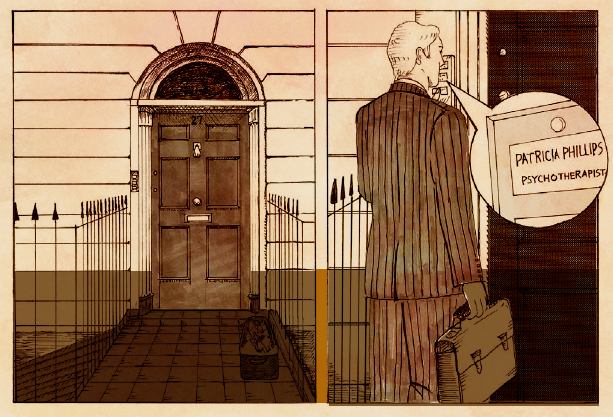
Methinks Jay Haley Hit the Bulls Eye

My client began her session with an interesting saga. In an attempt to improve her health she began each day by ingesting a nutritional drink that was loaded with nearly 100 superfoods. Since I personally take enough vitamin and mineral supplements a day to capsize a small battleship, I was all ears. Unfortunately, my client lamented that the supplement seemed counter-productive. That is to say, instead of having unlimited energy, she was nearly falling asleep at the wheel on the way to work. The client was quite savvy when it came to nutrition and therefore hypothesized that the product was excellent, but it needed more protein.  In other words, the high carbohydrate formula was the problem.

Truth is always stranger than fiction and the very next week — as if the supplement company had a bug or a webcam in my office — they released the identical drink in a high protein low carb version. Problem solved? Well to use the oft-quoted phraseology of our times: not so much. The client reported that she was dragging through the morning just as bad as ever. Her dilemma was solved quite by accident when one day she discovered she was out of her superfood protein drink and thus she began the day with a banana and a slice of white devitalized bread and a low-tech multiple vitamin. (Sheer blasphemy, incidentally, for nutritional zealots like myself or my poor client.) The verdict: She had boundless energy and felt terrific. After that day she continued with the banana/bread regiment with excellent results.

Along these same lines another client was telling me about how he became very serious about his golf game.  The golf pro felt his swing was sound but he almost fell over laughing when he saw my client's antiquated clubs. The pro promised to set him up with some serious equipment. The irony, however, was that his his golf game suffered markedly when he began using the new high-tech, super high price tag, custom fit clubs. My client became somewhat obsessive and in the years that followed and he secured club recommendations from golf pro after golf pro and purchased set after set to no avail. Finally, one day, just as a joke, he pulled out his early 1970s aluminum shafted clubs and shot the best round he had in years.  He decided to stick with the zero tech clubs of yesteryears and his game continued to improve.

Like most therapists, I have literally heard hundreds of stories like this including:
• Men who gave their wives flowers or compliments based on the recommendation of some self-improvement expert, an Oprah approved bibliotherapeutic work, or a well-credentialed psychotherapist, and the relationship deteriorated.
• Parents who followed the behavior modification instructions to reinforce their child's behavior and saw the behavior stay the same or perhaps get worse.
• Clients who were told to wear orthotics in their shoes to take their comfort to a whole new level and now had pain in their feet or legs that never existed prior to wearing the devices and
• People who jogged extremely long distances every day to "do something good for themselves and to ward off old age" and now look considerably older than their peers (yes, there is even some scientific research that seems to be backing up this one) . . .  to name a few.

So what in the world is going on here? At least for me, the riddle was solved in an instant when I attended a lecture of Jay Haley's several years before he passed away. An audience participant asked Haley to spell out what caused most people's discord and Haley remarked, "The solution to the problem is the problem." I'll leave it up to historians of psychotherapy to discern whether Haley really came up with this on his own or whether he lifted the idea from the great Milton H. Erickson or perhaps Gregory Bateson.

In any event, the key point is that often, the very strategies that the client is using to make his or her life better are at the root of the problem. But I ask you: How often as therapists do we investigate this dynamic? In all probability, it is not nearly enough. We like it and get excited when clients seemingly do good things. Nevertheless, the message to take back to the therapy room is that something that appears positive is not always positive. The protein shake, the orthotics, and giving a spouse flowers could be the culprit. Most of us would never suggest that the client give up the protein shake, or perhaps stop complimenting a spouse. Instead, many therapists will gloss right over these behaviors and look elsewhere for the root of the problem. In essence, The solution to the problem — even when it appears to be a good one — can the problem. Jay Haley hit the bull's eye. Now it's your turn.


How Therapists Fail: Why Too Many Clients Drop Out of Therapy Prematurely

Depending on which study you read, between 20 and 57 percent of therapy clients do not return after their initial session. Another 37 to 45 percent only attend therapy a total of two times. Although many factors contribute to premature client termination, the number one cited reason by clients is dissatisfaction with the therapist. The problem of the “disappearing client” is what Arnold Lazarus has called “the slippery underbelly to the successful practice of psychotherapy that is almost never discussed in graduate programs or medical schools.”

As clinical supervisors of interns at a university community clinic, we are painfully aware of the high rate of client dropout, and thus the idea for our book How to Fail as a Therapist was born. What we found in doing the research for the book is that high dropout rates are not just common amongst interns, but are equally prevalent among experienced therapists regardless of training and clinical orientation.

When clients drop out early, everyone loses. We clinicians lose a chance to help someone in need and our wallets and reputation suffer as well. The consequences for clients are even more dire. Those clients who drop out early display poor treatment outcomes, over-utilize mental health services, and demoralize clinicians.

Now the good news (after all, therapists should be optimistic): there are a number of well-researched strategies which have been proven to reduce dropout rates and increase positive treatment outcomes. For example, in one study a simple phone call to confirm a client’s first appointment resulted in a two-thirds reduction in dropouts. Unfortunately, it is often labor intensive to seek out and review much of the relevant research because it is scattered throughout the literature–a journal article here, a chapter in a book there. And, unfortunately, most mental health clinicians, with and without a PhD, rate reading research as a very low clinical priority.

Thus, a major task in writing the book How to Fail as a Therapist was to assemble, organize and condense the vast body of research addressing therapeutic effectiveness. Of the 50 therapeutic errors described in the book, here we present five of the most common ones made by clinicians–both beginners and “master” therapists.

The “Infallibility Error”

One of the most distinguishing characteristics of therapists who have low dropout rates is that they actively seek feedback–both positive and negative–regarding the effectiveness of their clinical work. On the other hand are those therapists who believe that after years and years of study, comprehensive exams, postgraduate supervision, and licensing exams, they do or should have all of the answers to clinical matters. So when their clients voice concerns about their progress, or worse yet, when they drop out or deteriorate under the therapists’ care, there is a tendency to avoid accepting responsibility for committing a possible therapeutic error. It is easier to point the finger elsewhere: “maybe the problems were too severe”; “the patient was not ready or willing to change”; there was too much transference operating.” The possibility for rationalization and denial is endless. These explanations, even when partially valid, may soothe the ego, but they protect clinicians from engaging in an honest and comprehensive exploration of what might have gone wrong in a particular case.

A group of interns were asked to describe a case in which a client of theirs terminated early in therapy. One intern described the case of a 10-year-old male client, who had been referred by his teacher because he seemed disconsolate over his parents’ divorce. When, in the first session, the intern probed about the effect of the parents’ separation, the client became emotional and wanted to change the subject. The intern persisted, however. The client stood up, tears falling, and refused thereafter to return to therapy. The supervisor responded to the case presentation by emphasizing the need for therapists to be very cautious during early sessions, particularly when eliciting difficult material from clients. Before the supervisor could get very far, the intern interrupted by stating: “I am already discussing this case with my other supervisor, so I probably shouldn’t get input from both of you.”

Clearly, this intern was desperate to avoid facing the possibility that he did not handle the case as delicately as perhaps he should have. None of us really relishes the idea that we may have blundered, but if we deny this possibility, we deny ourselves the chance to grow as clinicians.

One way to avoid the infallibility error is to seek feedback from clients who have dropped out prematurely. Arnold Lazarus describes in his book, Multimodal Behavior Therapy, how he has gained great insights by writing “early terminators” and suggesting that they come in for a “feedback session” for which he doesn’t charge. In one such case, a client reported that she felt the therapist had not been sympathetic when she was recounting the loss of a beloved pet. The therapist apologized for the insensitivity and the client decided to continue in therapy.

One crucial statistic to keep is mind is that the majority of clients who drop out do so after the first or second session. Thus, we must elicit client feedback, positive and negative, early on to head off any misunderstandings or negative feelings about the therapist, the therapeutic process or the therapists. Clients can be asked directly at the end of the first session if they feel therapy is on track and if they feel liked, understood and respected. “Asking for direct feedback may feel a little awkward; however, a little awkwardness is better than losing a client before he or she can be helped.”

The “Pathology Orientation” Error

In the field of psychotherapy, the term “The Bible” has become synonymous with the publication known as Diagnostic and Statistical Manual. This definitive compendium of emotional disorders was first published in 1952. Since that time, the Manual has gone through a number of revisions (four major and several minor ones) and has continued to add new diagnostic categories. In addition, it has really bulked up over the decades, growing from a mere 138 pages at the outset to over 800 pages in its most recent incarnation.

Currently every student entering the field of psychiatry, psychology, social work or counseling is required to virtually memorize the DSM-IV-TR, and thus professionals in our field have greatly increased their knowledge base of diagnostic criteria, demographics and prognoses of emotional disorders. Alas, these advances have a downside as well: it has created an overemphasis on pathology to the near exclusion of what is healthy, resilient, and capable in the clients that we treat.

At the same time that the fields of diagnosis and assessment were becoming more sophisticated, an alternative view of human potential was also advancing. Theorists such as Carl Rogers, Abraham Maslow and Victor Frankl were among the forerunners of those who tended to take a broader view of the client, looking beyond pathology toward human capability. Milton Erickson’s work, which emphasized client resources, was in the vanguard of this new perspective.

Following Erickson’s lead, a number of other clinicians and researchers have explored the idea of utilizing client strengths as a resource in the treatment of emotional problems. Narrative Therapy avoids the exclusive focus on problems and pathology by instead exploring clients’ alternative stories–occasions in which healthy, productive behaviors were enacted instead of the usual counter-productive responses.

Ryan was described as “incorrigible” by his teachers. He spent as much time in the principal’s office as he did in the classroom. His main transgressions revolved around aggressive and bullying behavior. Ryan’s counselor applied a narrative approach by first asking Ryan about his “problem story”–the things that get him in trouble. They then gave a name to his problem story–“Mr. Trouble.” In addition to gathering the nasty details of his misbehavior, the counselor also inquired about occasions when a different Ryan, a kinder Ryan, surfaced. The question itself seemed to shock the 10-year-old. However, after reflection he confessed that on occasion he had shown care to his younger brother when he was ill, or was lonely and needed a playmate. The counselor then asked follow-up questions to explore the way “Kind Ryan” felt after demonstrating care to his brother.

“What did you think of yourself for being helpful to your brother?”
“How did your brother respond to your help?”
“What did your parents think of you?”
“What does it say about you that you show care to your brother?”

Unfortunately, despite the advent of “positive psychological” approaches to therapy, we have been programmed to look more at what clients are lacking and less at client strengths. Most intake forms have a space in which the client’s clinical diagnosis is supposed to be entered. To avoid the pathology orientation, we need to expand the initial interview to include a thorough assessment of clients’ skills, talents and resources. We need to know what challenges they have surmounted, what kinds of accomplishments they have attained, what special abilities they have developed. When therapists and clients shift their focus from the pathologized victim to the heroic victor, therapy becomes a much more creative and productive process.

Emphasizing Therapeutic Techniques Over Relationship Building

One of the best things about attending continuing education seminars is learning about the latest therapeutic interventions. And every year or so, such new “breakthroughs” arrive—EMDR, DBT, ACT—you name it. We rush home from the seminars, and can hardly wait for the first patient that we can try out our newfound knowledge on. Many of these innovations do have credibility, but there is one glitch in all of the focus on techniques. Decades of research have consistently demonstrated that the most powerful predictor of positive therapeutic outcome depends less on what type of therapeutic interventions you employ, and more on what kind of therapist-client bond you develop.

An intern related to her ever-patient supervisor that she had been learning about the use of “paradoxical intentions” in her advanced counseling class. She was hoping to try out this new dramatic technique with one of her clients, and did so with a patient during their very first session. The patient had returned to school after a recent divorce, and complained of being totally overwhelmed. She couldn’t get herself to do any homework and was no longer the organized housewife she used to be–failing to do even the simplest of chores like laundry or dishes. The intervention the intern tried was to “ join the symptom” and prescribe the homework assignment to do “absolutely no work at all this week,” then report back at the next session about how this went.

Unfortunately, there was no next session–the client was never heard from again. The lesson here is one that is all too commonly missed: the therapeutic relationship trumps technique. To be more precise, no other single factor affects therapy outcomes more than the quality of the client-therapist relationship. Although exact percentages of therapeutic effect are difficult to ascertain, one study did attempt to do just that. After reviewing over a hundred outcome studies, Lambert and Barley1 derived an estimate of the relative contribution of the myriad factors which have been studied in outcome research. Surprisingly, the specific techniques employed by therapists (cognitive, psychodynamic, etc.), accounted for only 30 percent of therapeutic outcome. However, the quality of the client-therapist relationship predicted results 40 percent of the time.

In the case discussed above, the paradoxical intervention might have proven effective in the long run, if the therapist and client had developed enough rapport and a trusting relationship before implementing the approach. The tendency to rush into the therapist tool kit and resolve the problem quickly is of course exacerbated by the current emphasis on brief or time-limited therapy. Suffice it to say, this bottom-line, time-is-money orientation is not always in the patient’s best interests. Relationship building begins with the first hello and handshake. In fact, in one study of medical doctors, the handshake was cited by patients on an exit questionnaire as the most positive factor in the office visit.

One of the best (and least utilized) methods to ensure that the therapist and client are on the same page is to employ a relationship assessment tool such as the Working Alliance Inventory developed by Horvath and Greenberg. This user-friendly tool predicts with a high degree of accuracy whether or not a client is at risk of dropping out of therapy. It also points to the areas of disconnect which can be addressed sympathetically with the client.

The Homework Assignment Trap

Providing clients with opportunities to apply what they have learned in therapy is one of the keys to therapeutic effectiveness. This makes good sense, given that clients spend only an hour or two per week in therapy and 165+ hours in the real world. So it would stand to reason that the majority of therapists would regularly utilize out-of-session activities as part of their therapeutic arsenal. However, the sad truth is that the majority of therapists report never using such assignments. Why would there be this disconnection between what the research shows and what most therapists do?

What the research doesn’t show is that creating homework assignments that clients actually comply with is a tricky business–and there are a multitude of therapeutic errors that can interfere with the process.

A case history will help illustrate:

Dr. Doom was working with Sabrina, whom he diagnosed as socially phobic. Sabrina had particular difficulty in her college classes, worrying excessively about bringing attention to herself. To avoid the possibility of embarrassment, she always arrived early to class, sat in the last row, and never raised her hand. After several weeks of therapy in which he gave her no assignments, Dr. Doom decided it was time for action and suggested that Sabrina arrive five minutes late to her next class meeting. At her next session, Sabrina at first told her therapist that she forgot to do the assignment but later admitted that she was able to comply with the first part of the assignment–being late–but could not muster the courage to actually enter the classroom, so she ended up cutting class.

Was Sabrina’s case just another example of client resistance, lack of commitment, or lack of readiness to change? In fact, a careful analysis of the approach the therapist used reveals several therapeutic errors that greatly decrease the likelihood of compliance.

Unilateral Assignments (“Here’s what you need to do…”)
For starters, Dr. Doom “decided” on his own, without input from his client, that it was time for action, and then he chose what that action should be. This one-sided approach helped guarantee noncompliance. Just as the entire therapeutic process should be collaborative, each assignment needs to be arrived at by a joint meeting of the minds. Thus, the term “assignment” is not really appropriate at all because it connotes one person doing the assigning and the other person complying. Far better are concepts such as “experiments,” “activities,” or “tasks.” Therapists certainly can take the lead in developing possible strategies, but clients must be encouraged to provide their input and feedback as the tasks are developed. Clients who feel they have participated in the process of generating the activity are more likely to attempt it, complete it, and maintain whatever they have learned from it. Leaving the client out of the decision-making process increases the likelihood that the task may be beyond the reach of the client’s capabilities. In this case, suggesting the client arrive late to class was an attempt to hit a home run with one pitch instead of moving gradually toward the ultimate goal.

Failing to Prepare Clients for the Assignment
All too often, clinicians employ a “take two aspirin and stay out of drafts” approach to therapy. That is, they act as if mental health work is identical to the medical model in which clients ask the all-knowing physician for a diagnosis, prognosis, and treatment recommendations. In reality, most therapy clients need information about the efficacy of specific interventions. In the course of Dr. Doom’s assignment-giving, he neither sought Sabrina’s input nor gave her even a clue what this fear-inducing activity was supposed to accomplish. What might have seemed obvious to the therapist was probably not at all clear to the client. For those with phobias such as Sabrina’s, education about the efficacy of gradual exposure should have preceded any specific homework recommendations.

Failing to Provide Backup Support to Increase Compliance
As any therapist quickly learns, just because clients say they will perform an activity outside of session, this does not mean they will actually follow through with the commitment. Getting clients to comply with homework (even those assignments they have helped design) is about as difficult as getting students to complete school assignments on time. Understanding this, successful therapists utilize a wide array of approaches designed to overcome the numerous obstacles to completing out-of-session activities.

1. Use Post-it notes. At the conclusion of a session, suggest that the client write down the assignment and then post it at home in a convenient location. The therapist should also make a note of the assignment so it can be reviewed at the next session.

2. Encourage the client to tell a trusted individual about the task, asking the friend to check back and see how the assignment is going. This person should not be a guilt inducer or have any vested interest in the activity other than the welfare of the client. Typically spouses, children, and parents are not useful choices.

3. Determine whether the client has a buddy who is also willing to engage in the desired activity. This can be especially helpful with assignments such as increased exercise or attending classes or support groups.

4. Frame the assignments as a way to learn about oneself while trying new things. Emphasize the possibility of enjoying the opportunity to develop new skills that could be beneficial for a lifetime.

5. Leave little or nothing to chance by carefully clarifying the how, when, and where components of the assignment.

6. Do a thorough assessment of any an all obstacles which might prevent the client from following through with the assignment. Make no assumptions. For example, one client committed to doing an online search for employment during the week. However, an inspection of barriers revealed that the client had never used the internet and in fact did not even have an internet connection for his computer!

Underutilizing Clinical Assessment Instruments

Assessment tools, used early in therapy to measure the type and intensity of the initial problem and occasionally during the course of treatment, can aid in treatment effectiveness, client morale and reduction of termination by resistant clients.

Despite this, clinicians by and large are often skeptical about the value of utilizing assessment tools. For example, one clinical supervisor described a case where a postdoctoral intern was not following agency policy to administer a well-known and highly validated instrument. The trainee stated that she did not “believe in” the assessment because it was not particularly useful and took a lot of time to score–despite the fact that the specific instrument had proven its validity and utility in dozens of studies.

There are a number of factors that contribute to the effectiveness of utilizing assessment instruments:

1. The therapist gains information from a source that allows comparisons to other clients regarding the severity of the problem.

2. Repeating the test at periodic intervals can help demonstrate to the therapist and client whether treatment is being effective.

3. If the results indicate improvement, positive expectations are reinforced. If there is no improvement, the client and therapist can adjust the treatment approach appropriately.

4. Clients tend to see assessment utilization by the therapists as an act of caring, and it enhances client regard for a clinician’s expertise.

All of this and more–and yet clinicians often ignore assessment tools like the plague. Two common reasons for the underutilization of these instruments involve the perception that they require a lot of time to take and score, and that they cost an arm and a leg. To counter this problem we have compiled a list of short, easy-to-score tests which are in the public domain–meaning they are free for the taking. (These are listed at the end of this article.)

While utilizing assessment tools is a good starting point for improving therapeutic outcome, there are two other factors which can enhance their use. First it is crucial to explain to clients that just like medical doctors, therapists utilize assessments in order to pinpoint possible problem areas. Lastly, results of assessments should not be kept secret from the client. It would seem quite odd if your medical doctor did not provide any feedback after a patient had a series of tests such as blood work or X-rays. Similarly, several studies have shown that an open discussion of the results of psychological tests enhances therapeutic outcome by increasing client engagement in the therapeutic process.

A Final Note

All clinicians have no doubt experienced something like the following scenario: You provide your client with some helpful information–“for all the reasons we have discussed, maybe now is not the time to start a new romantic relationship”; your client nods his head in agreement; and at the following session the client announces that he has fallen head over heels in love. The helpful information somehow went in one ear and out the other. Our hope in writing this article and the book upon which it is based is that it will actually impact clinician behavior, that readers will not just nod their heads in agreement, but also put one or two concepts into practice.

To help clinicians move beyond the conceptual to the behavioral involves some self-assessment. This assessment involves taking a few minutes to answer the following questions: What is your clinical batting average?—or conversely, what percentage of your clients are dropping out prematurely? What type of clients are the dropouts? What is it about those clients that makes them more difficult to work with? What type of clients do you tend to do well with?

Addressing questions such as these enables us to take stock of our clinical strengths and weakness and can help us locate the therapeutic errors we may be making with clients – errors such as the ones discussed in this article. This in turn can lead to the implementation of new therapeutic practices and better outcomes for clients and ourselves.

Public Domain Assessment Tools

Following is a list of just a few of the many public domain assessment tools available:
Depression: Center for Epidemiologic Studies. Depression Scale (CES_D)

Eating Disorders (Anorexia Nervosa): Eating Attitudes Test (EAT)
Social Anxiety: Fear of Negative Evaluation (FNE)
Post-Traumatic Stress Disorder: Impact of Event Scale – Revised (IES – R)
Substance Abuse (Alcohol): Michigan Alcoholism Screening Test (MAST)

While utilizing assessment tools is a good starting point for improving therapeutic outcome, there are two other factors which can enhance their use. First it is crucial to explain to clients that just like medical doctors, therapists utilize assessments in order to pinpoint possible problem areas. Lastly, results of assessments should not be kept secret from the client. It would seem quite odd if your medical doctor did not provide any feedback after a patient had a series of tests such as blood work or X-rays. Similarly, several studies have shown that an open discussion of the results of psychological tests enhances therapeutic outcome by increasing client engagement in the therapeutic process.

1Lambert, M., J. & Barley, D., E. (2001). Research Summary on the therapeutic relationship and psychotherapy outcome. Psychotherapy, 38, 4, 357-361.

Duped and Recouped

A Business Venture

As a young therapist in a solo practice, I routinely met a colleague for breakfast and peer supervision. I arrived at the neighborhood deli to find my former group therapy instructor waiting for me; his broad, toothy grin and Pacific-blue eyes were electric with anticipation. We had met during my doctoral studies.

I laughed. “What’s up?” “I thought you’d never ask!” blurted a very excited Jeffrey Kottler.

He then proceeded to explain that he had answered an ad for a clinical therapist. When he went to the interview, he convinced the clinic owner to sell him two-thirds of a Blue Cross–approved outpatient psychiatric clinic (OPC). Jeffrey and another therapist/ friend would operate its satellite, located in a busy Detroit suburb. This was a rather significant coup since there was a moratorium on the opening of any new clinics and the only way to own one was to purchase an existing clinic for a great deal of money.

“What?” I screamed. “Why didn’t you ask me to be your partner?” “I thought you were so happy in your little practice that I didn’t think you’d consider…” “Well, I do consider,” I interrupted petulantly. “Your other friend’s out; I’m in!” I declared.

And in that split second, Jeffrey and I committed to each other with complete trust and confidence to be partners in this venture. Were we merely trusting souls by nature, or was there something in our training as therapists that encouraged us to blindly trust people without reservation? Perhaps it was a shared personality trait that drew us into the profession originally and, likewise, into this partnership wherein we simply trusted what others say and how they characterize themselves.

There we were, Jeffrey and I, about 30 years old, masquerading as businesspeople, skipping due diligence, moving the satellite to new digs, signing a lease, buying furniture, hiring support staff, and interviewing dozens of therapists for positions in our new enterprise. We decided to hire only those professionals who seemed to be not only good clinicians but also fun people to hang out with at work.

We each paid a significant amount for our share of the business and began billing Blue Cross and other insurance companies for services rendered. Eventually we hired close to two dozen other therapists to work with us, all of whom met our criteria. In purchasing the clinic, we also inherited a few therapists and Dr. Jolly, our medical director. Dr. Jolly seemed competent enough and awfully amiable. What did we know?

Two months later, Dr. Jolly was caught soliciting sex in an airport men’s room. That was obviously the end of him! But the euphoria of owning our own business carried us through that initial setback. We justified our lack of judgment by claiming that we didn’t actually hire Dr. Jolly. And there were certainly other concerns to distract us.
The most pressing concern was the apparent snag in the money flow from Blue Cross to our third partner and then to us. With each passing week, we became increasingly more anxious about our bottom line.

Our daily calls to the partner, who was handling our billing, were met with sympathy and reassurance that these delays were quite normal in the industry. That seemed logical to us. After three months without payment, we suggested to him that we meet with Blue Cross to try to expedite the cash flow. “No!” he stressed emphatically and cautioned us that contact with Blue Cross would trigger an unwanted audit, which typically resulted in disastrous consequences. He asked us just to remain patient because his bookkeeper was receiving treatments for a brain tumor, immediately eliciting our sympathy.

At the end of the fifth month without payment, Jeffrey and I decided to take decisive action and confront this man who sold us the clinic. Alas, we discovered that all along he had been billing Blue Cross fraudulently. It also turned out that he didn’t actually own the clinic he sold us! It had all been a scam. We poured our hearts out to the executive at Blue Cross who agreed to hear our case, admitting that we had been duped but convincing him that we were honest and trustworthy professionals who were only trying to help people. Much to everyone’s surprise, he rewarded our honesty by assigning the provider number to Jeffrey and me. We were the first recipients of a new authorized clinic in many years.

Trusting souls that we were, we got back on our horses and rode into the sunset believing that enough had happened to us for a lifetime. At last we must be safe from all future peril. And now that we had lost our innocence, we were much better prepared for dealing with unexpected chaos running and operating a clinic. Little did we realize that our innocence and gullibility to deceit had only just begun.

Over the next year, we fired another medical director for inappropriate sexual conduct with his patients. Our part-time book- keeper was caught in a sting operation soliciting sex in a freeway men’s rest stop. One therapist went to jail for fraudulently billing Blue Cross; another therapist went to jail for practicing with a forged license and the malpractice insurance of a dead person; and still another therapist made an out-of-court settlement with a female patient with whom he had been having sex in the clinic after hours.

As therapists, Jeffrey and I erroneously thought that because we were skilled diagnosticians and experienced clinicians, we were inherently good judges of character. Yet time and again, we were duped by people we trusted. In truth, I think we projected onto everyone we encountered our own need to believe that all people are basically good. We refused to imagine that we were actually vulnerable.

It took at least three earth-shattering fiascos before I actually began to consider that I was somewhat responsible for the series of misfortunes that were raining upon us. For a while I became hypersensitive because I no longer trusted myself. I was suspicious of everyone around me, fearing that there were secrets lurking behind the facades of those I thought were loyal friends and colleagues. I was actually paranoid waiting for another shoe to drop. It was like walking through a minefield every day. I hated the feelings and retreated to my office where, ironically, I felt safe in interactions with my patients. After all, I expected them to have secrets under the surface and to be less than authentic with me since they were struggling to be authentic with themselves.

I had a very difficult time accepting that I was unable to fore- see the consequences of my gravitational pull toward people who would eventually fail my litmus test. My rose-colored glasses now had a double edge: While it had been wonderful to always see the good in people, I realized that I had been ignoring signs of trouble to preserve my need for everything to be okay. Challenging my inner belief system shocked me to the core. I had to ask myself, What am I supposed to be learning from these painful and frightening experiences?

To make sense of this episode in my life, I resorted to the only path I thought would yield any answers, self-exploration. And the first question to ask myself was, “What am I getting from this turmoil?” In every fiber of my being, I know that in all of us a self-healing power exists. I just had to figure out why it was so important for me to be telling myself that everything will be okay. After a rather difficult and circuitous route, I realized that the childhood trauma of having a terminally ill mother was the motivation to adopt the mantra everything will be okay. No matter what happened in my life, during childhood or during the years as a clinic owner, I had to believe that everything would eventually be okay. So when each betrayal occurred, I quickly resumed my position as sentinel for my inner belief system and continued to guard the hell out of it.

The personal lesson in all of this is not in the failings of judgment but rather in the repetition of the failings. If I had ruminated on each betrayal and become stuck in the quagmire of details, I would not have heard my inner voice beckoning me to attend to a significant piece of unfinished business. My echoing mantra held the key to the reason for it all. I was duped over and over because I needed to find my own place in the drama.

Once I acknowledged my role, I no longer felt vulnerable or paranoid. My trust in the basic goodness in people returned. I was again unafraid of the goodness of my own heart. In truth, I have made only a very slight change in myself; I am no longer surprised when my expectations for others are dashed. But I consciously refuse to surrender my eagerness to seek the best in people. In the end, I would rather suffer the occasional betrayals than cut out my own heart.

The many episodes of being duped during my ownership of the clinic resulted in an amazing gift to me as a therapist. I learned to help my patients honor their own inner voices. I became better able to observe the ways they guard their inner beliefs and became better skilled at diagnosing why. Ultimately, I learned that, inherent in the repetition of turmoil and struggle, there is always an unfinished piece; when addressed, confronted and honored, calm and balance can be restored.

Jeffrey’s Personal Commentary

Reading Nancy’s story about the trials and tribulations we experienced during our sojourn as clinic directors reminded me of how deeply I buried this chapter in my life. Over the years I’ve talked about the incredible lies, deception, manipulation, intrigue, and immorality that took place under our roof. Like Nancy, I blamed myself for my naïveté and innocence, and for our collective inclination to believe the best in people, even in the face of contradictory evidence. As psychologists, we deluded ourselves into thinking that because of our sensitivity, caring, and clinical acumen, we could tell when people were trying to fool us.

I felt both surprised and moved by Nancy’s confession and acceptance of responsibility for our plight. Nancy describes what she considers “the key to the reason for it all,” as if there was a single mistake or misjudgment on her part that led to the debacle and serial betrayals. Yet in my version of the narrative, or at least my remembrance of what happened, I have also accepted full responsibility for our innocence and misplaced trust in others. Like Nancy, I also found it easy to be forgiving, not only of those who crossed the line, but mostly of ourselves. We were inexperienced in the domain of business. We applied the trusting attitude that serves us well as therapists to another context in which different rules operated—and I see that as our biggest error.

Speaking for myself, I learned some hard lessons about the limits of my ability to read people and uncover so-called truth. Yet these therapists were our friends; they were people we trusted; they were professionals with track records and sterling reputations among their colleagues. Even more disturbing, they were also good therapists and had very successful practices.

Whereas Nancy talks about this repeated deception as a gift, an important lesson learned, it took me many years to come to terms with my lapses in judgment. Eventually, I did rekindle trust, enough so that I still prefer to give people (clients and colleagues) the benefit of the doubt.

As I read over Nancy’s version of the story, and then consider my own narrative, I find it interesting that each of us blames ourselves (instead of the other) for the crazy things that took place under our watch. We mistakenly assumed that because we operate from a position of transparency and honesty, that our colleagues, whom we carefully screened and supervised, would do so as well. That was a huge mistake, one that changed the way I function in some arenas in that I am more cautious and skeptical at times. Yet I think we have both been able to maintain a deep faith in the ability and willingness of most people to do the right thing.

Mark Epstein on Mindfulness and Psychotherapy

Buddhism and Psychotherapy

David Bullard: Mark, I am very grateful and thankful that you found the time for this interview in the midst of a wonderful three-day workshop on Buddhism and Psychotherapy, which you are presenting in tandem with Tenzin Robert Thurman at Menla Mountain Institute. I’ve probably done this interview 40 times in the last couple of weeks, but this will be different because you are actually here this time! In preparation, I’ve considered a series of questions which led into more questions, and have already gotten a huge gift from the anticipation of having this time together. On the other hand, this interview should probably be organic and free-form, and grow from our being in the present rather than from a pre-selected list of questions.
Mark Epstein: Well, it’s great that you’ve been thinking about it so much, and to have really thoughtful questions formed could be very helpful.
DB: It could be, and that’s my desire. You’ve written a lot about the nature of desire and disappointment—we’ll have to see which this will be!
ME: Trust in your desire. We’ll get into that.
DB: Let’s begin with a brief review of your extensive writings on the integration of Buddhism and psychotherapy from psychoanalytic and psychodynamic perspectives, which include wonderful examples of your own process and journey. You have published five very influential books, as well as many articles and chapters; you have taught at NYU and have participated in many workshops, and, of course, continue your private practice. In Open to Desire: The Truth About What the Buddha Taught, your acknowledgement section lists 60 people, so you are certainly well connected in your professional and personal lives. I personally have also enjoyed your chapter “From Eros to Enlightenment” in Brilliant Sanity: Buddhist Approaches to Psychotherapy. So shall we begin the interview with your first exposure to Buddhist teachers and how they were helpful to you?

Buddhist and Psychotherapy Teachers

ME: I came to my first Buddhist teachers after a very short experience with psychotherapy; so those first encounters were framed with a beginning attempt to seek therapeutic help for myself at the student health services at Harvard, where I was given a practitioner of short-term psychodynamic psychotherapy. This therapist met me three times and told me not to worry—my anxieties were just a result of my Oedipal complex and once I understood that, I would be fine.I went from there to a Buddhist summer camp in Boulder, Colorado where I met my first Buddhist teachers: Joseph Goldstein and Jack Kornfield. They taught me mindfulness meditation, in which I learned how to actually be physically with my emotional experience. They refused to name it or to encourage me to name it, but really taught me how to dig down into it and know it, with less fear. So that was the first great gift that I got from Buddhism.

DB: Can you contrast that with any particular gifts received from your psychotherapy teachers and mentors?
ME: The insights from my psychotherapy teachers were many but came later, after, to my dismay, I realized that what I was learning from Buddhism still left me sometimes struggling, especially in my relational life. So I went back to psychotherapy informed by Buddhism, and then was touched by how deftly certain of my therapists worked with my relational self in the actual interactions with them in the moment. It seemed very Buddhist to me, only active and engaged. I have examples I have written about in my books, that crystallize for me what I think I learned from these interactions.In one, a therapist suddenly interrupted me as I was clumsily trying to explain what I wanted to get out of therapy, and asked me if I was aware of how I was sitting. I found this annoying. What was wrong with the way I was sitting? But he pointed out that I was sitting on the edge of my seat. “You give yourself no support,” he said.

In another, a therapist waited patiently for me to begin a session. I sat there wide-eyed, staring at him but with nothing to say. I was remembering how a spiritual teacher of mine, Ram Dass, used to begin our private sessions that way. “Blink!” my therapist broke in. He made me see how my efforts to prolong contact with him actually diminished it, that when you stare too long at someone or something, you actually lose touch with it. He was showing me something about the rhythm of intimacy and the pull of addiction.

In a third example, I was speaking to my therapist about how ‘”part of me” was angry and “part of me” understood that I didn’t need to be angry. He looked at me with barely disguised disdain and said, “Mark, you don’t have parts.” This has served as a koan for me over the years. “I don’t have parts? What am I, then?”

DB: Could you tell us what particular thoughts you like to convey both to beginning students and experienced therapists, eager to learn or deepen their understanding of the art and science of psychotherapy through Buddhist psychology?
ME: A lot of therapists come to me with an interest in how to use Buddhist psychology to enhance their work. And often they are thinking much more concretely about “should I teach my patients to meditate,” “how can I use Buddhist wisdom to help my patients feel better and help them resolve their neuroses,” etc. I always feel that the most important way Buddhism can impact psychotherapy is by helping the therapist.
What Buddhism teaches very practically is a psychotherapeutic attitude: how to deploy psychotherapeutic attention both intrapsychically within the self and as well as interpersonally. When you are training as a psychotherapist you don’t necessarily get specific help in how to deploy that kind of attention, but Buddhism is all about that. So I try to turn it back: “Here, this is for you.” If you get something from it, maybe you will be able to make it come alive for your patients.

Evidence-Based Buddhism?

DB: I’m smiling because I know that is your emphasis, in an era that is technique-oriented or theory-driven. Which brings us to the current hot topics of “evidence-based psychotherapy” and “empirically supported psychotherapy.” It is being greatly debated with some divisiveness in psychology organizations. Can you offer us your perspective on that?
ME: I think there is a huge need to increase the cost-effective delivery of health care and to make psychotherapy understandable to the general population in terms of weighing the economic costs. In terms of doing research in what is therapeutic and isn’t, I completely appreciate that way of thinking. And yet there is something to be said for the old-fashioned, psychoanalytic “not knowing” and groping around blindly in the unconscious—being able as a therapist to create an interpersonal field in which one doesn’t know what will emerge, and yet trusting that what does emerge will potentially be therapeutic. Whether that turns out to be cost-effective or not, or operationalizable or not, we don’t know yet, but is certainly worth the study.
DB: But are there other kinds of evidence, from the accumulation of thousands of years of Buddhist teachings that have survived, together with the Buddha’s injunction that each person must explore deeply the applicability of the teachings, rather than to accept them on faith? Is this a kind of empiricism, a kind of “single case study” that Buddhism encourages?
ME: I think one has to be careful with this kind of reasoning. Just because something has survived for centuries doesn’t necessarily make it right. War has survived, for example. People thought the earth was flat for longer than they’ve accepted it being round. Buddhism has cultivated an introspective method over the centuries. It could just be a sophisticated kind of brainwashing. The scientific method is certainly capable of holding it up for study. That is already starting to happen.
DB: Yes, as we see from the labs of Richard Davidson and of Dan Siegel, among others, increasing our understanding of the impact of meditation on the brain. Many exciting issues are emerging from this collaboration between Buddhist psychology and neuroscience.In another vein, therapist Michael Yapko recently said that he counted over 400 forms of psychotherapy. The vast majority of these, even if they are helpful, won’t be studied or validated by research. So what is psychotherapy?

ME: I think there is both science and method to successful psychotherapy, depending on the character structure and issues of the person needing psychotherapy. There are clearly different methodologies that are more or less effective, which a trained therapist will have some understanding of. And how these methodologies are deployed matters a lot—the fostering of a relationship that is beneficial or potentially destructive, or that could do nothing. So I think there is a lot to learn from all of the 400 schools—they probably all have something to teach. What I remember being impressed by, in terms of the research of the efficacy for a rather healthy population, is that the type of psychotherapy is less important than the relationship which ends up being fostered between the patient and therapist. And the quality of that relationship probably contains much of whatever it is that is healing in any kind of therapy. How to define that quality, other than using worlds like “love,” and so on, I think will prove difficult, but clearly people know when there is a positive or trusting relationship, and when there isn’t.

Safety in Psychotherapy

DB: You’ve expanded a lot on Winnicott’s idea of safety as a primary issue in psychotherapy.
ME: At least the possibility of safety. One finds in psychotherapy, even working with someone where there is a positive and good relationship, that there are things that people still don’t want to talk about or don’t feel safe talking about, that might emerge after many, many years into a given treatment. So even safety is a relative concept.
DB: So safety allows you to get to the edge of what they can talk about.
ME: There is always an edge to where someone feels safe, even with a therapist with whom one feels safe.
DB: No absolute safety.
ME: Yes, no absolute safety, and some fear, some trepidation, some insecurity. Pushing into that, playing with the edge of that, is something that can happen in a working psychotherapy that keeps it alive and vital and interesting.In talking about Winnicottian issues like safety, holding environment and good-enough mothering and so on, it’s easy to conceptualize the therapist’s role as being nothing but facilitating—psychotherapy as being primarily an empathic relating. But I think that that misses what the therapeutic task actually is. Therapists, in my view, have to be very clearly themselves, to be able to come from an authentically individualized place so that they are not just emoting or communing or sympathizing, not just providing a field. They have to be really there, and at the same time have to be able to not be so present that they are filling a space too much or intruding. Winnicott is excellent about talking about the middle ground or balance between impinging or intruding and abandoning. It’s easy to misinterpret the kind of presence that Winnicott encourages as being more selfless than a good therapist has to be. Therapists have to be very clear about who they are, and be able to use their own responses and opinions, their own techniques and methods.

At the same time, a therapist has to primarily be able to wait, and wait, and wait, and wait, and not be so anxious to display his or her intelligence or understanding or insights into what they think is going on, and to trust that there will be a time when it is obvious that what needs to be said can be said.

DB: In being authentic in the way I think you are speaking, the therapist doesn’t have to be perfect, and a client or patient’s reacting to the therapist’s imperfection can be a very deep part of the therapy work, providing for relational depth. For some, it can be very important to be able to challenge one’s therapist.
ME: Yes. Well, perfection is impossible, so one will always be failing one’s patients. But if you fail too much you do them no service, so there is a balance there, too. Using the word “authentic,” however, has become a cliché—the authentic therapist being too authentic becomes inauthentic. It is their image of what an authentic person should be.

DB: Maybe you are also speaking along the lines of a quote from Jung, who was asked how one learns to become a great therapist. My recollection of his comment is: “Go and read everything written about the art and science of psychotherapy, but then forget it all before you first peer into the human soul.
ME: We should be able to have them and not have them at the same time. I’m not sure you have to learn them and forget them. I think once you learn them they are there, but you don’t have to be restricted by them. You can use them when you need them.

Should We Desire To Have Desire?

DB: I like your modification of my paraphrase! This might be a good time to segue into issues you discussed in your book, Open to Desire. Would you like to start with the story of Nasrudin eating the peppers?
ME: I wrote the book about desire because in Buddhism, desire has a bad name. One of the shortcuts in understanding the Four Noble Truths is that the First Noble Truth is the truth of suffering—that all experience, even pleasurable experience, has a hint of unsatisfactoriness or dukkha or suffering, because we are conscious of its transience. The Second Noble Truth, the cause of suffering, is sometimes given as desire. A deeper reading of the word the Buddha used translates better as thirst, craving or clinging, but we confuse our idea of desire with the Buddha’s notion of clinging. So I think that a lot of confusion has arisen about desire. Is desire okay? Is it evil? Is it bad? Is it wrong? My sense is that even within a Buddhist framework there is desire—the desire for liberation, the desire for enlightenment. That is obviously a desire. The Buddha’s solution to the predicament of suffering wasn’t to stamp out desire per se. It was to not cling to it, or to not cling to the object of it, more to the point.I remember a phrase that came from an Indian teacher: “It’s not desire that’s the problem, it’s that your desires are too small.” I use that as a jumping-off place because the problems many people have with desire are that their desires are too small. They are locked into the seeking of pleasures that once provided a huge relief but that now, over time, repeatedly provide only a shadow of the relief that they once did. To our minds, they seem to be the only sources of relief. The Buddhist teachings are all about opening up the seeking to find other kinds of pleasure.

The story that you were referring to is where Nasrudin, who is a kind of amalgam of wise man and fool, is sitting in the marketplace eating handfuls of hot, red chili peppers and tears are weeping from his eyes. His friends come to him and they ask, “What’s with you? Why are you always eating peppers that are making you sick?” And he says, “Oh, I’m looking for a sweet one!” So the small reading of the story is that desire is the source of suffering, “so why don’t you just stop eating the peppers?”—the idea that stopping acting on desire will stop suffering. The more nuanced reading of the story is that Nasrudin, in the guise of the fool, is demonstrating the potential of desire to ultimately find something sweet for his soul. I’m not sure which reading is right.

Disappointment and Relationship

DB: I came across a quote from Soren Kierkegaard you may know from the Western philosophical tradition: “Perfect love means to love the one through whom one becomes unhappy.”Can you share some thoughts about relationship and desire, the real world of living in a relationship, and disappointments?

ME: Disappointment in love relationship is often taken as the exit door, especially in our culture where it’s become more acceptable to actually exit. In many cases, that might be the right thing to do. And it’s impossible even for a therapist to be able to say for any given person. Often as therapists we are put in the position of “should I stay or should I go,” but that is a tough call, even for the individual in the relationship. But certainly from the Buddhist perspective, and I think from a psychodynamic perspective also, there is no love without disappointment. Even in what appears to be a true or perfect love, the idea that one could rest forever in that state, and that it would last unchangingly, clearly that is too much to ask of love. So then the question arises: Should we take disappointments as a defeat, or take them as an obvious shadow of love? A lot of that is in the attitude and the ability of both partners to continually reconnect without necessarily solving those aspects of a relationship that lead to frustration, disappointment or anger. I think there is something to be learned from both the Buddhist side and the psychoanalytic side. Instinctively, not too many people know how to do that easily.
DB: At last year’s workshop on Integrating Buddhism and Psychotherapy, Columbia University Professor and Buddhist scholar Dr. Robert Thurman reported that his wife once advised him: “Bob, you are going to disappoint people, so you might as well do it sooner rather than later.” I think that embodied a lot of wisdom! A week after Bob said that, a colleague of mine who is a longtime Zen priest and psychotherapist reminded me that disappointment is a major Zen teaching.
ME: In relation to this question I always read Winnicott, who talks so beautifully about both how important it is for a mother to be able to fail her child, and how normal it is for children to hate their parents and parents to hate their children. The “good-enough” mother doesn’t need to be taught, but intuitively knows her task, in relation to her child’s anger: to simply survive, not to retaliate or abandon, but simply to survive. And I think there is something in that intuitive sense that one needs to survive, without the need to abandon. To stay in that place allows an experience of both separation and union, so that it continues to unfold in an ongoing way.

Further Reading in Mindfulness and Psychotherapy

DB: Given the current emphasis on mindfulness in psychotherapy and its recently fashionable use in our culture (even in the speeches of politicians!), are there particular books that you recommend to therapists with a beginning interest in mindfulness or meditation?
ME: I would recommend Zen Mind, Beginner’s Mind by ShunryÅ« Suzuki. While not being an operational manual in mindfulness or cognitive behavioral therapy, it gives you the flavor or taste or feeling of what it is to look at life from that perspective.
DB: One of Suzuki-Roshi’s quotes that my cognitive-behavioral friends will love is: “It is not the thoughts that create problems for us. It is our harboring them.”
ME: I would also recommend The Psychoanalytic Mystic
by the psychoanalyst Michael Eigen. It is not very well known, but is a beautiful synthesis on his part of both psychoanalytic wisdom and compassion drawn from various of the world’s religious traditions and from the point of view of a working psychotherapist, showing how he brings these threads together in a very alive and helpful way.
DB: In the 10th-anniversary edition of Thoughts Without A Thinker: Psychotherapy from a Buddhist Perspective, your preface highlighted the evolution of your understanding of both Buddhism and of psychotherapy over those years. You cite the work of Stephen Batchelor in highlighting the shift in our understanding of meditation as being interpersonal rather than solely intrapsychic. This parallels the movement from an intrapsychic and individual model to the interpersonal or intersubjective understandings of relational psychotherapy. You also mentioned that the way Joseph Goldstein taught you to observe your own mind in meditation is how you had always tried to listen to your patients. You wrote:“This does not mean that I do not respond, that I am not myself when I work, that I do not care, or that I do not sometimes need to probe. But by not having a personal agenda in my therapeutic interactions, by putting my self on hold, I can make room for whatever appears on its own. We practice meditation when we listen to the feelings of another, to their pain, their distress, and their suffering. In this sense, psychotherapy and meditation are one.”

ME: Joseph always says it’s not what you’re experiencing that matters, it’s how you relate it. I always try to remember that.

The Joy of Meditation and of Psychotherapeutic Work

DB: Is there any additional question or issue you would like to address in this brief interview?
ME: It is a little hard to talk about, because I haven’t thought it through completely, but what I have been exploring a lot lately is the Buddha’s understanding of joy or happiness that is derived not from seeking after sensual pleasures but from non-sensual or non-worldly experiences. The Buddha, in that language, was talking specifically about experiences that come in meditation, when the usual seeking after pleasure or rejecting of unpleasure is suspended and one’s experience can withdraw, though that might not be the best word—that one’s experience can relax into the nature of mind. There’s an inherent joyfulness, an inherent balance, one could say loving or shining nature, to the mind that becomes available through the deliberate renunciation of the usual attempts at maximizing pleasure.So taking that seriously, I’ve been thinking about how some aspect of that is actualized in the psychotherapeutic relationship, as well. Which also involves a tremendous amount of renunciation, both on the part of the therapist and the person in therapy.

Joy, I think, is a good word to describe the feeling tones that can be opened up in the psychotherapeutic relationship, which I think therapists have been aware of since the time of Freud but have been scared of, and which people have continually tripped over because it can lead to the suspension of renunciation and the acting out of the feelings that are evoked. But one dimension that the Buddha’s world gives to us is this sense: not of the unconscious being only a whirlpool or cesspool of destructive feelings, but also a background of joyful and loving energy that is here if we are willing to look for it, or is even here if we are receptive to it.

The Courage To Create

DB: It sounds like another book is percolating: The Joy of Therapy, perhaps!Non-therapist acquaintances of mine sometimes remark: “Oh, I could never listen to people’s problems all day!” I often reply that, although I certainly hear painful, difficult and tragic life issues, I also hear of the courage in people’s struggles, and they also share their joyful moments of delight, aliveness, and triumph. It is a privilege to be able to learn deeply about the astonishing varieties of human experience. And at times, at its best, it is a form of I-Thou relationship.

I also wonder if you would feel it appropriate to describe your current personal meditation practice, if it can be so described, other than the meditation-like experience of psychotherapy?

ME: My current meditation practice? I try to sit whenever I have time for it. In the morning if I can, in the evening before bed if the time is available. After reading the New York Times. And I try to go away on retreat (for a week if I am lucky) every year or two.
DB: In ending this talk with you, I am remembering Rollo May, who was another much-admired author I was honored to talk with many years ago. Of his many books, one of my favorites was The Courage to Create. So on behalf of all of your readers and all of the people who have been touched by you and your writing, I want to thank you for being willing to put all of these compassionate, thoughtful and wise explorations out there for us to read because it really does take courage to create.
ME: Thank you.

Working with the Unemotional in Emotionally Focused Therapy

It is pretty clear from research that focuses on how change happens in therapy, that emotional engagement is essential for significant change to occur. This is true in individual therapy (for example, research by Castonguay and by Beutler ) and it is certainly true in couple therapy (research by EFT therapists like myself). So what happens in an intervention like Emotionally Focused Couple therapy when one person emphatically denies or avoids emotion? The Boy Code insists that men are at their best when they are strong and silent. So, it is not surprising that male clients tend to deny their emotions a little more often than their female partners.

Process of change research and over 30 years of the clinical experience of numerous EFT, suggests that in fact, this does not seem to be a problem in EFT. Men who are described as “inexpressive” by their partners at the beginning of therapy seem to do very well in EFT. Now why is that?

First, it’s because as EFT therapists we have a map for emotions. For example, there are only 6-8 emotions that everyone on this planet can read on another’s face and assign a similar meaning to. The main difficult emotions that come up in couple therapy are reactive anger, sadness, shame and fear of rejection and abandonment. If you understand emotions, you can help people make coherent sense of them. Once you and your client find the order and logic in an emotion, it is much easier to deal with and work with. Emotions are the most powerful music in the dance called a love relationship and EFT therapists learn how to shape that music and use that music to guide partners into new dance steps.

Second, EFT therapists are emotion detectives. They know emotions are wired into our brains and they have simple, safe, systematic ways of helping folks access and explore them. So, Jim will say in session 8 of EFT, “I used to think I was just frustrated, angry in these fights with my wife; but now I see that mostly I am afraid. It’s a relief to get this – to understand my own feelings and to be able to ask my wife for reassurance rather than stomping around the house in a huff or zoning out and withdrawing into my loneliness.”

Third, tuning into your emotions, especially your fears and longings and shaping these into new messages to your partner WORKS. It is what securely bonded folks naturally do. It pulls our partner close to us and this connection sparks little floods of the cuddle hormone, oxytocin, in our brain. The calm contentment and a sense of belonging that oxytocin induces is the ultimate reward for our kind – little bonding mammals that we are.

When folks tell us, “I don’t have emotions”, we know that this person is working very hard and stressing out his body to suppress his feelings, so we gently explore how and why he does this. He always does it out of fear to avoid being overwhelmed, feeling helpless or ashamed, getting rejected or abandoned. The trouble is that when you shut down your emotions, you shut others out and then you are ………… all alone. No-one wants that. So if you show folks another path to take and support them, they will take it. Even people who do have to shut down as part of their jobs, firefighters, policemen, marines and surgeons respond to EFT. Even traumatized partners who swim in the turmoil of emotional storms learn to order those storms and use their emotions to tell them what they want and need and so find direction in their lives and with their partner.

The traditional route to change in psychotherapy is the haloed “corrective emotional experience”. Without this, any therapy is just an intellectual mist that evaporates once a strong emotion hits. The EFT experience is that even the most seemingly “unemotional” among us respond to corrective emotional experiences of being reassured and treasured. Who can resist this ? Who wants to?

Why a Therapist Should Care About a Clients Favorite Brand of Shampoo

When I was a youngster my father owned a company that manufactured shampoos and hair conditioners.  His bestseller was the original Rum & Egg Shampoo, a product he invented himself.  Now here’s where the story gets a little humorous (or perhaps not so humorous depending on your vantage point).  We would routinely receive correspondence from folks who just loved the Rum & Egg . . . heck, they thought it was the best darn shampoo on the face of the planet.  In fact, they’d go a step farther and trash another brand or two of Rum & Egg and say something like, “Why can’t Brand X or Brand Y make Rum & Egg like yours? The product they manufacture is pure junk.”

These folks wanted the original Rum & Egg. Anything else was a poor copy of the real thing. Now you might be thinking that we were patting ourselves on the back for making such a great product. Well if that’s what you thought then hold onto your horses because I haven’t gotten to the punch line yet.  Moments after the first call we receive another telephone message. This time it would be from an irate customer who would be ranting and raving about how inferior our product was, “Why in the heck can’t you guys make a decent Rum & Egg Shampoo like Brand X or Brand Y?  I’ll even send you a bottle of their brand so you can see how good the competition’s product really is.” 

These folks had invariably seen the Brand X or Brand Y advertisements that stressed that their rum and egg products clearly surpassed the original formula. And send us a bottle, they did!  Now what the aforementioned dummies (um excuse me, I mean customers) didn’t know was that most of the time it was the exact same stuff!  Let me put it in a different way.  We’d fill a thousand bottles to the brim with Rum & Egg and some bottles would get our label, others Brand X, and others Brand Y, Z or whatever.  We never had a clue which bottles received which labels. Hello folks: you’re all buying the same stuff . . . it's called a private label product. Often the same shampoo or conditioner would even be made under the same name with ten different colors, ten different brand names and ten different perfumes.  (Sorry to disappoint you, but in cosmetics generally the most expensive part of the product is the package and the perfume, in that order.)

But this principle goes way beyond hair care products. At one time made in Japan meant junk, but that’s hardly been the case for the last twenty years.  Now Japanese always stands for superior quality . . . or does it? A few years back researchers took models of automobiles and VCRs that were sold either with US nameplates (Dodge or RCA) or Japanese badges (Mitsubishi or JVC).  Like the shampoo saga, the products were actually identical. Customers were given the Japanese brand and the American issue and told to rate them. Perhaps you’ve already guessed that the products sporting a Japanese label – never mind that in reality they were the same – were rated much better.  Consumers made comments like, “The Japanese model just rode quieter,” or “the picture and the sound were markedly better.” Had you performed the experiment in the early 1950s the products with the US nameplate would surely have won by a landslide. 

Now what does all this have this do with the art and science of psychotherapy?  I thought you would never ask. A number of years ago I was at a conference where one of the top-guns in the world was not only lecturing but was going to perform therapy with a real client for the audience. Since I was the program coordinator for an agency I brought several of my therapists with me. Anyway, Mr. Hot Shot top-gun therapist was kind enough to perform a therapy session for the audience. He spent most of the session yelling and screaming at the poor client. One of my therapists leaned over and said, "You'd fire us if we ever talked to a client like that. Well, wouldn't you?" I didn't answer.

When the brief session ended a counselor in the audience raised her hand and asked the client a question, "What would you think if you walked into an agency or private practice and the therapist treated you like this?" "Well," the client admitted, "I would think it was a bit odd or perhaps totally crazy." The counselor in the audience was now extremely perplexed. "But I don't get it. You seemed perfectly happy and even impressed when Dr. so and so just did it." "Oh that's different," replied the client. "I know he's one of the greatest therapists in the world. He did it for some complex theoretical reason. He knows what he's doing."

I leaned toward the therapist at my agency and whispered, "Yes, I would have fired you." So here's the quintessential question: If you said exactly (I mean precisely word-for-word) what a well-known therapist said to the same client would you get the same results? Since a world famous therapist is one heck of a placebo the best answer is: not on this planet.  Therapists, quite frankly, are a lot like brands of shampoo, electronics, and  automobiles.

Receiving Gifts in Psychotherapy

What does your ethical code say about accepting gifts from clients? Is it ethical to do so? If you’re a psychologist, social worker, or marriage and family therapist, you’re probably not sure. That’s because your official code doesn’t address it. Surprisingly, there’s not a word about gifts in any of the codes pertaining to those disciplines. And yet, virtually every mental health practitioner has, or will, face a situation where some client offers a gift of some sort at some time in the course of their treatment. So what do you do? Do you have a well thought out approach or policy to guide you when a client is standing in front of you with an offer of a gift?
 
The truth is that most practitioners don’t have a clear idea of what type of gift would be acceptable, if any. Those who work in an agency or hospital setting might simply adopt the policy their employer already has in place, but those in private practice need to develop their own guidelines or they might find themselves one day standing face to face with a smiling client who is offering a small, or large, token of their appreciation, and who is wondering why there is a such a long pause going on.
 
Would you accept a poinsettia plant at Christmas time that your client brought as a gift for your office waiting room? How about a plate of cookies at Easter for you and/or your staff? Or a packet of special seeds for your garden since you once talked about growing and nurturing in an earlier session? Or a picture a child client drew for you, or a lanyard she made for you in her crafts class? How about frequent flyer miles? Or cologne? Or an item of clothing for your birthday? Or underclothing?
 
Surely you drew a line somewhere along that list of choices. Maybe right at the beginning or maybe at some point along the way. But why? What went into your decision to say, “That one’s not acceptable”? Why did you reject it? What factors did you consider?
 
The one major code that addresses the issue is the American Counselor Association Code of Ethics. It advises counselors to consider the therapeutic relationship, the cultural context, the value of the item and the motive of both the client and the counselor involved in the transaction when dealing with the issue of the appropriateness of the gift (ACA Code Section A.10(e)). Those are all excellent considerations that should bear on your decision of whether to accept or reject the offer.
 
We might, however, add to those factors at least three more: age and gender of the client, and the timing of the offer. For example, if a six year old boy brings a bouquet of flowers he’s picked for his 40 year old female therapist the situation is markedly different from the same bouquet coming in the hands of a 45 year old male client. Motive and intent would not appear to be the same in those two instances.
 
Also, the timing of the offer can be critical. Is it at the end of a successful treatment regimen, or is it at the outset? Saying goodbye with a token of appreciation would seem more straightforward at the end than at the beginning treatment in terms of motive, intent and the therapeutic relationship.
 
So putting together the ACA list of factors of therapeutic relationship, cultural context, value and motive, and adding the age and gender of the client along with the consideration of timing, should give you enough to think about when deciding whether a gift is appropriate or not. But it would be wise to do your thinking before you hear your client say, “Here, I brought this for you”.

Memories of Stonehenge, 1984: Conference of Women Family Therapists

In the summer of 1981 I was traveling around Ireland with Lynn Hoffman who was at that time- and for a great many years- a tremendous supporter of the work of a numerous others in family therapy. She was at that time especially supportive of therapy teams in many different places in the world and was telling me a good deal about all the creative women she had run into in her travels. I began to think about the need of women mentors in our field and what a good mentor she was to so many others herself, including two Irish women to whom I became very close: Nollaig Byrne and Imelda McCarthy. By the end of our trip I had hatched a plan to bring together women family therapists for a conference. I approached my friend Betty Carter, who agreed it was a great idea and asked if we could present it to her group: The Women’s Project (in which her compatriots were Marianne Walters, Olga Silverstein and Peggy Papp). I agreed and soon met with them to discuss the idea. They were, much to my surprise, not enthusiastic and decided against the idea. For some reason, they could not see the value of a meeting of women in the field. They were not the only ones. Virginia Satir, Mara Selvini, and Cloe Madanes were all negative about the concept when invited, and Lynn herself said she could not see the value of it and did not in the end participate.

In any case, I went to my handy-dandy sisters, Froma Walsh and Carol Anderson, who I knew would support the concept and we decided to do the conference together. I knew of a wonderful hotel in Ridgefield Connecticut called Stonehenge and we decided that would be our venue. It had space for a meeting of about 40 people so that was the number we decided on. We then began the planning through networking. We contacted women we knew or whose work we knew of and asked them to recommend others they knew and through that method of networking we eventually had a wonderful group of very impressive women family therapists who agreed to come to Stonehenge to share work, personal experiences and ideas for 3 days in September of 1984. It was a most impressive group of women- the outline of presentations and discussion emerged pretty organically as I remember from different ideas presented by various women. One that stood out particularly for me was Ellen Berman’s presentation of the “Glory-Work Ratio,” a presentation in which she proposed that we as women often under-sold ourselves when invited to do a presentation and would agree to meager terms, happy to be included and not realizing how much work, time, and energy were entailed in such presentations. She recommended that we always sleep on any invitation and not agree to it for at least 24 hours, by which time we might have had a chance to decide how much effort should be expended for what return. We all laughed, recognizing how many times we had found ourselves traveling to faraway places for micro-fees, while the men in the field commanded much larger honoraria, even when they did not prepare for the presentation.

Another highlight for me was a comment by, I think Kitty LaPerriere, still one of the unsung heroes of our field, who said at dinner on Saturday night how amazing it was that for so much of our lives we women always wanted a “date” on Saturday night–which meant with a man—and here we were and we all seemed to want to be where we were at that time and in that place and were so fine with it! We had amazing experiences hearing new voices from the field and also from experienced senior voices. the Women’s Project had decided to participate and even sponsored the welcoming cocktail party on the opening night of the conference and all of them shared many of their experiences as women breaking the glass ceiling of our field.

There were also difficult issues and discussions about why our group was almost all white and how could we do it differently—how could we change our thinking so we could become a more diverse group of women. For me the struggles with how to deal with the intersection of race and gender took many more years—many years to appreciate that we could not discuss gender without taking race into account at the same time. And the intersections of race and gender , along with class and sexual orientation—which have become such important parts of our conversation in the decades since that time—were just in their infancy and not well understood or dealt with. In the years since I have learned a lot about the naiveté and inaccuracy of trying to consider gender by itself rather than within the larger cultural contexts of race, ethnicity, religion, class, and sexual orientation.

At the same time that we made many mistakes in our efforts, there was something amazing that happened for many of us at that meeting, I think. From that point on when we saw each other at other meetings there was a sense of solidarity and of collaboration and support:we had acknowledged to each other at that meeting how isolated we often felt, competing with each other for the attention of the men in the field, and how much of our sisterhood we lost in that competition process. And we came to stand by each other better, to help each other out informally with writing and presenting and thinking about the research and clinical practice of the field. I think wee listened better to each other after that—I know I did, realizing how often I had not really appreciated the other women in our field.

In the years after that we held one other Stonehenge networking meeting (1986) and then an international networking meeting of about 100 amazing women in Denmark a few years later, where, once again, we relied on networking as the organizing principle, learning from each other about other voices in the field. And at that international meeting with women from as far as Israel, Japan and Africa, I remember being totally in awe of the amazing women presenters, one after the other, who taught us about ourselves and each other and how to think more creatively about families and about their experiences trying to be family therapists in different contexts. I think these meetings helped many of us develop our voices in the field and I am grateful to all the women who participated and shared their stories and their work in those earlier days of our field.

Its the Psychiatric Meds, Stupid!

I was getting ready to close up shop and leave my practice for the day when my secretary announced that one of my clients was in the waiting room in a hysterical panic pleading for a session with me. This came as somewhat of a shock to me inasmuch as I felt this client was actually progressing quite well.  I told my secretary to send her right in.

The client was crying so hard I could barely understand her verbalizations, but strangely enough the precipitating incident was a visit to her psychiatrist's office. As she calmed down I got the gory details. The client told her psychiatrist that she was doing extremely well.  That's a good thing, right? She then went on to explain that her therapy sessions with me were very helpful and thus she had turned her life around.

Her psychiatrist responded with a sinister chuckle and told her in no uncertain terms that her that the therapy sessions with me had done nothing. Instead, he suggested, she had been the victim of a nasty chemical imbalance and that the psychiatric medicines he prescribed had made all the difference. My client balked at the idea, stating that she made some cognitive and behavioral changes as a result of the psychotherapy and that his biochemical explanation was totally negating her work in the process. The psychiatrist's anger then began to escalate and he became louder and more belligerent. He insisted that the therapy and the client's volition had nothing to do with it.

The session reached a point of no return when the psychiatrist took her chart and physically hurled at her (wasn't that professional?) as he yelled, "If you really believe it was the therapy and not the psychiatric medication then go find yourself another psychiatrist." He then stomped out of the room. Since I'm a card carrying therapist in good standing please indulge me as I paraphrase the good doctor, "It's the psychiatric meds stupid!" This served as the trigger for my client breaking down and coming to see me. (Hmm? If you have a gander at one of your behavioral science dictionaries, I've got this uncanny notion the term iatrogenic illness will ring a bell here.)

I agreed with my client that counseling and therapy had been very valuable to her. Nonetheless, since I was the therapist at the center of this battle royale I just I had to know how she knew for sure—I mean 100% sure—that the medicine didn't make all or part of the difference.

"Oh that's easy," said the client as her face instantaneously blossomed into an ear-to-ear grin, "he's been giving me those pills for three years and I've never swallowed a single tablet."

Empowering Clients in Couples Therapy

When I do couple therapy, I bring partners in on my concerns about what is happening in the session. If I am concerned that one partner might feel I’m siding against him or her, I might say, “Ben, I’ve just realized I spent more time today developing Lisa’s position today than I have yours. Is that your sense, too? And if so, do you feel left out or sided against or ganged up on?” The person (here Ben) often responds with something like, “Well, I was wondering when someone would start getting interested in what I have to say” or “Lisa doesn’t talk about any of these things at home. I’m just happy it’s all coming out.”
 
If I’m concerned that the partners are not getting at what they need to get at, I say, “Are we talking about what we need to talk about or are there other things we should get to today?” or “Will you suddenly remember on the way home that there was something you wish you’d brought up?” I am trying to decrease the likelihood that they will raise important issues as they walk out the door, that is, when there is no time to talk about them.
 
If I can’t tell whether the partners are repeating the frustrating conversation they have at home (in which case I need to do something about it) or are covering new ground, I ask, “Is this the kind of conversation you have at home or are you saying some new things?” or “Are you getting something out of this fight—a chance to say a few things or hear a few things? Or is it frustrating and the kind of fight that you’ve come to therapy to stop?" or “In what ways is this conversation useful and in what ways is it not so useful?” 
 
If I’m concerned that they are going to leave the session angry and alienated, I might say “We have only 5 minutes left and it looks like you are going to leave the session angry and alienated. What is it going to be like on the way home? How long is the bad feeling likely to last and how are you likely to work out of it?”
 
I get the partners’ help in figuring out what the session is about. At the end of each session, I ask, “What are you taking away from this session that’s useful, if anything, and what has been not so great about it?”
 
Some years ago Lynn Hoffman wrote about putting clients on the board of directors. That’s what I’m trying to do. I’m appealing to the partners as consultants in dealing with the problems I am having conducting the therapy. By appealing to them in this way, I am creating a perch (a platform, a metalevel) from which the three of us can look at what is going on in the therapy, providing a sense of safety (they’re not left wondering what I’m thinking; I’m telling them), modeling how they could confide in each other (a goal I have for them is to develop such a platform with each other), and doing something for myself (it’s relieving to be able to share the problem with the couple).