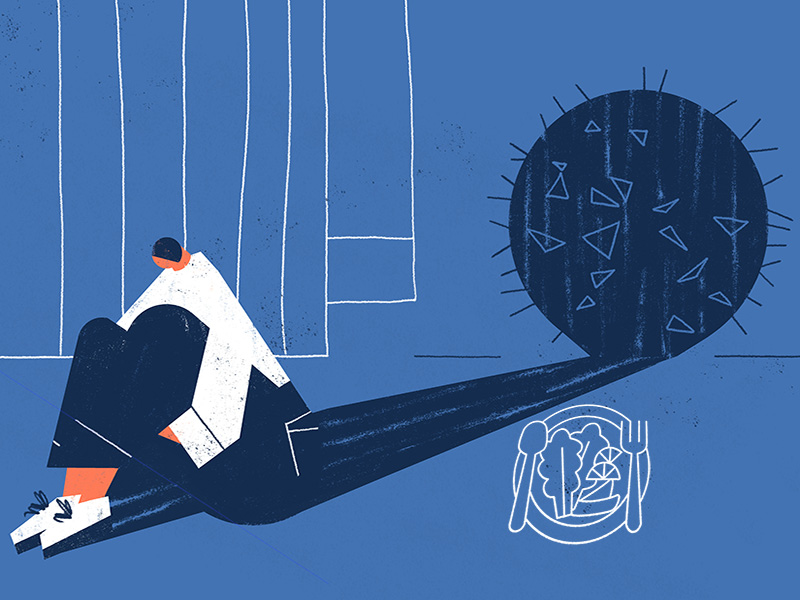
How an Anti-Tech Group Therapist Became a True Believer

Therapists’ offices have always intrigued me. Much like the artwork on the jackets of old vinyl records, they secure my memories with pleasing visual touchpoints. Pre-and post-session rituals marked my weekly appointments: stopping off at the same deli for a coffee, sitting on a park bench, browsing the poetry section in the corner bookstore; such places served as footholds for the different phases of my psychological awakening.

First Wave

After twenty-three years in my own cozy therapy office, it was time to say goodbye. The downtown institute that housed my practice went bust, and the landlord heaved dozens of veteran therapists out onto the cold winter streets of Manhattan.

As I packed up my books, rolled up my oriental rug and wall tapestry, and wrapped my Buddhist knick-knacks in newspaper, everything in my office took on meaning; the spider-cracks in the plaster ceiling that I had planned to paint, the well-worn grooves in the carpet from my trusty Aeron chair, the slight sag in the center of the couch that held so many stories.

I considered my attachment to my cozy therapy office as I closed the door behind me for the last time. Walking home that night, I realized that all my personal therapists and their offices were gone too. Soon after, the pandemic hit.

Second Wave

When New York City shut down, I thought that I had no choice but to shut down, too. As a group therapist, I couldn’t see how my groups could survive. Individual patients would have phone sessions—but therapy groups? Over the years, I had amassed ten weekly, ninety-minute groups, consisting of over 100 individuals. What would happen to them?

So I phoned a fellow group therapist and asked if she planned to shut down. She guffawed:

“Why on earth would I do that?”

“But how will your groups meet?”

“I moved them to Zoom.”

I paused and asked in all earnestness: “What’s a ‘Zoom?’”

When Worlds Collide

Could therapy exist without walls? Would I be able to sense unspoken feelings from patients from a flat two-dimensional image? Could a screen transmit subjective and objective countertransference, induced feelings, subtle body movements, and the endless emotional tics and hiccups that appear in face-to-face sessions? I bristled at the thought of moving my practice online. But the pandemic forced me to face a stark reality: evolve or face extinction.

When I told my group members that we were moving online, their reaction was mixed. The older patients responded with cranky disapproval.

“How could you degrade the group in this way?” one asked me.

“I share your concerns, Alan. Let’s give it a try and see how it goes.”

I left out that I had two college tuitions to pay, a home mortgage, elderly in-laws to support, insurance premiums, and countless other monthly expenses that the pandemic wasn’t shutting down. To my great relief, the younger people accepted the proposal enthusiastically. “What’s your URL?” they asked.

“I’ll get it to you soon,” I replied. I immediately searched “URL” on the internet and discovered that it meant “uniform resource locator.” What the hell was that?

Boomer to Zoomer

With the help of my teen daughters and a nine-year-old MacBook crammed full of family vacation photos, I learned the basics of Zoom and patched together a weekly schedule.

Next, I had to consider the background for my sessions. Visually, my home presented a minefield of challenges. Every wall and bookcase overflows with family pictures, children’s artwork, and cardboard boxes containing my old office and my daughters’ dorm rooms. So, I dragged an old film projector screen out of storage, erected it behind me, and turned on my computer video camera.

It was my first visit to my cyberspace office—me floating in a wall-less white space.

The big day finally arrived. I sat in front of my computer, took a deep breath, and logged on to Zoom. My anxiety kicked in, and I found myself forgetting nearly everything my daughters taught me. Messages like “Samantha is in the waiting room” popped up, and I clicked. One by one, group patients began to appear in their square “Brady Bunch” boxes.

“It’s so good to see everyone.”

“I missed group!”

“I’m glad we can still meet.”

I immediately pleaded for patience with my computer skills; the group members delighted in my vulnerability. “Don’t worry, we’ll get you through this.” Soon everyone was chatting and catching up like old friends.

To my surprise, the group was flowing—disjointedly, yes, but flowing. I discovered that many members were scattered throughout the country, unable to travel back to the city. One woman was participating from the Czech Republic, which wasn’t allowing flights in and out of the country. I marveled that online sessions make it possible for members to attend from nearly anywhere.

“Hey, where’s Steven?” a younger group member asked. “He never misses group.”

Steven, a grey-bearded father figure with a sunny disposition, was the oldest and longest-running group member. Anxieties about his health were being expressed when a message popped up: “Steven is in the waiting room.” I clicked on it quickly. I was getting good at that.

When Steven’s gaunt face appeared, group members gasped; his eyes were sunken, and his usually bright outlook was dimmed beyond recognition. He had COVID.

“I’m so…happy…to see you all,” Steven wheezed. As he related his journey from a mild cough to high fevers and the ER, the group hung on his every word. “I’m so scared, Stephen said, “I don’t want to die. Not now.”

Soon tears were flowing, and cyber hugs were being dished out. By the end of the session, Steven managed to smile again. “You guys…are a…miracle, ” he said as he gulped air, “This is the first time I felt hope since…this nightmare…began. Thank you. Thank…you all.”

As we signed off, another miracle occurred: I had become a true believer.

New Standards

After a few weeks, I could feel the online groups start to lose vitality. Immediacy, the beating heart of group, was waning. Instead of an exhilarating experience that challenged ingrained characterological traits and inspired emotional intimacy, the online groups devolved into lackluster support sessions. Members stopped relating to one another and were monologuing about themselves. Energy dwindled, attendance ebbed, and newer members dropped out.

My office was gone, and my groups would be, too, if I didn’t take action. To succeed in cyberspace, I had to reinvigorate my leadership skills and set new standards. I needed more energy, focus, and clarity.

I launched an entirely new set of pre-group rituals. Thirty minutes before every session, I set aside time to review each group members’ development. I reviewed their histories, revisited their goals, and considered new ways of challenging them. I even incorporated group members into my daily Buddhist practice. Every morning, I reviewed my groups, targeted each group’s member’s emotional growth in my daily meditation, and considered new ways to engage them.

I became determined, from the moment I signed onto Zoom, to hit the deck running. I pushed members to take more risks and focus. I scanned their faces constantly for any emotional shifts and evidence of unexpressed feelings. I confronted any signs of repression.

“Samantha, what was that thought?”

“Steven, you seem distracted.”

“Alan, can you put that frustrated look into words?”

No sooner had my groups slowly jump started to life than I realized that they were suffering from another problem: a loss of boundaries. Group members became voyeurs. During sessions, members gave tours of their homes and showed off their living spaces, partners, pets, or children. Such distractions ran wild and fueled resistance to relating. During the first few weeks, members also signed into the group while snuggling in bed, eating meals, feeding their dogs, smoking cigarettes, baking bread, or casually sipping a tumbler of whiskey.

One young woman greeted her group from her bathroom, fresh from a shower. As she towel-dried her hair, her bathrobe fell open, revealing her bare shoulders and the tops of her breasts. “Oops! Sorry!” she crooned as group members ogled her.

It was time to reassert boundaries. I firmly reminded everyone that the group rules applied online: no eating, no walking around, no texting. Anything that distracted from relating to one another was banned. I also instructed members to pick a spot in their homes and sit for the entire group, no more multitasking.

And finally, I requested that every member prepare for group by revisiting their intentions and considering the following three questions.

  • Why did I join the group?
  • What are my feelings toward my therapist and fellow group members?
  • What emotions am I holding back?

To my surprise, group members expressed relief. The reassertion of boundaries lowered everyone’s anxiety and quickly brought the relationships in the group back into play.

A Cure Through Love

As of this writing, it has been ten months since my groups began meeting online, and I’m delighted to report that they are bustling with new members. Yes, my cyberspace therapy office isn’t cozy, but I have learned that therapy isn’t about places—it’s about relationships. As long as relationships remain the central focus, therapy can thrive nearly anywhere.

Freud suggested that in essence, psychoanalysis is a cure through love. The pandemic continues to test my mettle as a psychotherapist but doesn’t quell my love of the work, a love that I’ve learned can transmit through a computer screen. Not only is love limitless—it’s officeless, too.
 

Whose Metaphor Is It, Anyway?

No one had ever questioned his work ethic. No one had ever questioned his loyalty and willingness to do whatever it took to protect and serve his family—especially his family. Everyone who knew him knew they could rely on him to be there for them, even before they asked or realized they needed help. He was everyone’s early threat detection system, combing not only his own horizon for hints of danger, but theirs as well. No one ever doubted Trev, except Trev.

Like what you are reading? For more stimulating stories, thought-provoking articles and new video announcements, sign up for our monthly newsletter.

Somewhere early in life, Trev had co-authored a script (with an unknown ghostwriter) for a one-man performance featuring him as the “go to” guy. “I’ve got it,” was his mantra and motto, as evident in his behavior as if it were emblazoned on his chest. He was a man with a mission; always thinking, always planning, always one step ahead of whatever came or might. But somewhere along the path from childhood to adulthood, worry had hopped aboard, burrowing deeply into his psyche and taking on the unsolicited role as navigator. Always sitting, always watching, always sending up warning flares, doing what it thought it needed to do to help Trev through the hardships and challenges, worry was there.

By the time Trev realized how committed worry was to the success of his mission, it was too late, and he couldn’t quite shake it loose. Or perhaps he really didn’t want to, because worry also kept him on his toes, preparing him not only for the possibility of threat and danger, but also for everyday challenges and obstacles.

Years later, when a pandemic hit, Trev’s steady companion, as always, was right there by his side, ready to help him make sure that all his bases were covered, all protections had been put in place, and all efforts had been made to ensure that he and his family would be safe and healthy. Together, they hunkered down to do whatever it took to keep the ravages of the pandemic from their door.

But it came at a cost, and that’s when I entered the picture as his therapist. While I initially had it in my mind that this was going to be individual therapy, it soon became evident that couples work was to be done to help Trev manage the painful separation from his companion, who had grown tiresome and burdensome to him.

Our work was a blend of cognitive reframing and narrative therapy, with just a bit of psychic- surgery aimed at carefully excising worry without harming the highly effective problem-solving skill center of Trev’s threat-detection system. But these are not the metaphors I alluded to in the title of this essay.

As our work progressed and Trev became better able to understand the toll worry had taken on him, he also began to feel freer to live in the moment and to appreciate the small moments of joy that worry’s dark shadow had so effectively obscured. He realized that the heavy psychological lifting he had done in and for his life that had gotten him and his family to a place of security and safety was behind him. He finally understood at a deep and impactful level that he had earned the right to enjoy those small moments of joy that came with playing with his children, buying a few un-needed but highly desired jazz LP’s, (safely) enjoying small family get togethers, and strolling through the garden center at the local home improvement store.

He was finally emerging from a state of hibernation of sorts (my metaphor, not his) having shed the worrisome winter weight of worry. He thought it was a mid-life epiphany. I thought epiphany sufficiently described his awakening because “mid-life” is a socially constructed marker, the manifestation of someone else’s or a collective notion of how long a life is or should be and the need to place arbitrary signposts along the way…you know, “steep developmental curve ahead…midlife, 5 years….last exit before death.” But again, those are my metaphors, not his.

Trev’s metaphor was a bit darker and less comedic than mine, so perhaps that’s why I struggled to contain myself from sharing it with him. Following a medical visit where Trev learned that he had lost 20 pounds over the last several months, roughly coinciding with the impact of the pandemic, he was horrified, or perhaps scared—no doubt worry’s lingering legacy. He attributed the weight loss to the lack of physical activity and worry that came with months of fear and isolation. Trev perceived the weight loss as a breaking down and weakening. I, on the other hand, preferred the metaphor of shedding the unwanted weight of worry and trimming down psychologically in preparation for a lighter and more fulfilling journey through life…free to live.

I must confess at this point that I am a metaphor junky who falls in love with his own metaphors. So, it makes sense that my metaphor for Trev’s metamorphosis was more attractive to me than his was. And I was bursting at the seams (metaphoric pun intended) to share it. After all, aren’t analysts obligated to share their interpretations and cognitive therapists compelled to point out irrational thoughts and offer corrective ones in their place? So didn’t I have that same therapeutic license or imperative to share my metaphor? It was as if the damn thing was sitting on my shoulder poking me, saying, “Tell him, tell him, tell him.” But I refrained.

Back to the title of this essay. “Whose metaphor is it, anyway?” What might have happened in that moment were I to have inserted my metaphor in place of his? Might he have accepted it? Might he have rejected it? Would doing so have advanced his progress or slowed it? Might it have reinforced his insight or created the impression that my insight was more important than his? Might I have diminished him in doing so? Was my role to have been active and directive in that moment, or supportive and non-directive?

In my lighter moments when I am not quite as hard on myself, I believe that our work together brought him to the point of clarity and a metaphor that made sense to him, and him alone.

The Story is Everything

For many of us, our early experiences with language came through the stories read to us by our parents, caregivers, and teachers. Even nursery rhymes tell a story. This is important for therapists to understand because as language is acquired in the brain, it is inextricably paired with a narrative structure. Language is one of the primary mechanisms by which we understand our universe and process our various and continuing sensory experiences. All the sciences are our best attempts to create a story about the universe in which we live. We have observed that gravity pulls objects towards the center of the earth, so it makes sense to us when our phones fall out of our hands and smash on the ground by our feet. Were our phones, upon being dropped, to fly upward and into space, we would truly be disoriented. It is not random; there is an explanation for the phenomena we encounter, and that is the core function of story—it is everyone’s explanatory language.

Storytelling as an approach in and of itself dovetails quite nicely with such popular approaches as Cognitive Behavioral Therapy (CBT), Dialectical Behavioral Therapy (DBT), Narrative Therapy, and Eye Movement Desensitization and Reprocessing (EMDR), to name a few. Regarding DBT in particular, aside from its documented effectiveness, Dr. Marsha Linehan’s life story is intimately connected to how and why she developed the approach.

As you read, I’d like to tell you a story about some of my own thinking that went into this piece. I do not present myself as an expert on this subject, but rather as an excited student. My hope is that you find these concepts energizing and useful in sessions, and they increase your ability to help your clients deal and heal. The story I’m telling myself is that if you know I am writing with humility in my heart, even if any hubris shows up on the page, you’ll give me the benefit of the doubt. Ok (deep breath)…that felt good to write. I’m also telling myself that you will be very sick of the word “story” by the time this is over.

Understanding through Stories

We understand everything under the sun in more or less a linear fashion, proceeding in time from past to present, with a clear beginning, middle, and end. Most of our stories, real and imagined, are populated by heroes, villains, allies, and red herrings, and they follow fairly predictable rules in terms of plot development, character arcs, climaxes, and resolutions. There are exceptions in narrative form, of course, and many great works of art have played against the observer’s expectations. Think of Salvador Dali’s paintings, the films of David Lynch, or any number of time-travelling scenarios depicted in literature and film. Works of art without clear linear narratives are often stimulating, if confusing, because we are very accustomed to viewing things through this narrative lens. They challenge our ingrained perceptions of how things are supposed to play out.

Just as it is difficult to imagine watching a movie with no coherent plot, character arcs, or resolution approaching (I’m looking at you, Lynch), imagine living your own life under similar conditions. This is to imagine a life without progress, goals, structure, or narrative cohesion. Many of our clients come to us in this state, whether it is recognized as such or not. It is common for clients who have experienced trauma, for instance, to show up in session with a fragmented narrative, reflecting perhaps not only literal missing information but also an unconscious belief that the universe itself is chaotic and unpredictable. They are not quite sure how or why the traumatic event happened, or how to prevent it from happening again. These narratives can contribute to feelings of fear and powerlessness. It is also common for trauma survivors to show up in session with a finely crafted, fixed narrative—one that puts themselves in the position of blame. These stories can contribute to feelings of shame and resignation.

One of the great strengths of approaches like CBT, DBT, Narrative Therapy, and EMDR is that they compel us to admit that there are several ways to look at any one event in our lives, even if they achieve this feat through differing approaches. Fortunately, we have been doing that on our own for millennia, well before these approaches existed. These disciplines discovered something new about humanity while tapping into something very old within us. We can help our clients access this endless reservoir and capacity for reflection when life presents with challenging events. This is one of humanity’s true superpowers—deciding how we see something.

Viktor Frankl understood this well as he developed logotherapy, which is focused on making meaning in life. Meaning springs forth from narrative. In Dr. Frankl’s case, his ability to make meaning helped him to endure the Holocaust rather than give in to despair. He had a reason to live, and this gave him purpose. Part of that purpose included telling the stories of those who perished in the concentration camps. The crafting of a compelling story was central to Frankl’s own survival and success after the war. He was not tinkering with his thoughts myopically; he was looking at the grand, sweeping current of his entire life. His frame was large, not small.

Our work with clients must include helping them to shape a coherent narrative that promotes health and mastery within their lives, and it must by necessity also keep the large arcs of their lives in mind, even as we address the smaller phenomena of their daily experience. If my client gets mugged on the street, is the story built around how they should never walk down that street again, or is it built around how they should study martial arts after that event? Will this story close possibilities or open them? When a loved one passes away, do the loved ones construct their story around the missed opportunities or the wonderful times that were experienced with that person? Does this narrative focus on what is missing or what was present? If my client is rejected by a potential partner, does it mean they are unlovable…or is the other person missing out? Does the story provoke a shame response or result in ego integrity? It is not difficult to see how certain narratives tend to arrive at certain conclusions, and those conclusions are accompanied by a series of decisions and behaviors that will have very real impacts on any person’s life. Using a storytelling approach in therapy considers that a narrative must be crafted, or in many cases altered, before a person’s outward reality can be improved.

Anticipating Resistance

Anecdotally, I have encountered some resistance in my clients to the rubber-meets-the-road work of CBT: identifying negative cognitions and self-limiting beliefs and building awareness of when those thoughts show up, so they can actively replace them and practice thinking in new ways. Once I had experienced the work as a client myself, I understood…it just seemed small. When we are dealing with powerful internal and external realities that are shaping our lives, it can feel somewhat uninspired to be examining the tiny and ethereal thoughts that flit through our minds like innumerable hummingbirds through the hedgerows. It can be hard to even catch one sometimes. A similar resistance can arise when attempting to utilize narrative therapy techniques with clients; it is not necessarily evident or intuitive to everyone that changing one’s story can result in the reduction of suffering. We must be able to demonstrate and then apply this concept to their real lives.

Before this resistance shows up, we can utilize the power of human storytelling by doing some simple psychoeducation, encouragement, and proactive framing. When conducting our intakes and assessments, we can already begin to introduce elements of storytelling and narrative structures with our clients. This could be as simple as saying “I am very interested to hear your life story,” or “Tell me about how your journey brought you into this office.” Such statements are already starting to prompt the client to see life through a narrative lens, which means that there will be a story with some coherence no matter who walks in the door. This gets them thinking about when the problems started, the times before there was a problem, and how their behaviors or choices have changed in relation to or because of the problem. It gets them thinking about other things besides the problem, such as their joys, their successes, the love they have had in their lives. Because all of that is part of the story.

We must have a story to understand our relative universes. In terms of what we find helpful as a species, this tendency in us predates the field of psychology by tens of thousands of years. The field of psychology is the quaking autumn leaf in the aspen grove that is human storytelling. Before we developed symbols to write and record language, the only way human beings passed on any intergenerational information was via storytelling. People are good at this, and it has been working to soothe primate psyches for, well, a long time.

Encouraging Storytelling

There is a truth that I have naturally come to understand myself: For better or worse, in the absence of a coherent, explanatory narrative, the average person will craft one.

We know there is going to be a story. I see storytelling and meaning-making as powerful tools in facing whatever the malady may be. I want clients to understand it is in their DNA to create and interpret stories, so we are accessing an inherent human strength immediately. Most people show up to therapy as strong storytellers, and we are doing incredible clinical work if we slow down enough to hear the story…to listen to the themes, to identify the allies, the mentors, the heroes, and, more often than we would like, the villains.

If you are with me so far, then you have heard three main ideas by now. The first is that we understand the known universe through stories. Science is a story. The universe is composed of planets and stars made up of various elements that sit all together in a big stew we are all in, and a part of. That is comforting, right? It sure beats my saying “Nobody has any idea about anything.” The second is that there are any number of stories a person can tell about one singular event. A past tragedy can be the reason a person is struggling now, or it can be the source of their strength. The third is that people will create stories to explain their experiences, even if those stories are inaccurate or damaging. Trauma survivors will often blame themselves for incurring the trauma, even if the outside observer can plainly see that they bore no fault. In the absence of a coherent explanation, we will certainly craft any explanation so as not to be left in the emotional purgatory of narrative nihilism.

Accessing Imagination

It has taken me many years to even begin to understand the role that our imaginations can play in relation to our experience of suffering or thriving. I think Mark Twain may have captured this best when he said, “I've lived through some terrible things in my life, some of which actually happened.”

Most of us can easily recognize the absurd validity of this statement; so much of what torments us is generated in our imaginations. We are somewhat prone to believe in the more negative aspects of our imaginations and discredit some of the more positive aspects. People ruminating on worries often believe they need to do this to be ready or prepared for a bad outcome. The same person may feel incredulous if you ask them to visualize positive outcomes, even though this is fundamentally the same exercise in reverse. Some of this is adaptive; we need to be prepared for threatening or uncertain outcomes, whereas we do not always need to prepare for positive outcomes. If it’s going to rain, I’ll need to bring a raincoat. If it’s going to be sunny, I don’t really need to do much ahead of time. Our prefrontal cortexes are always running simulations for us so that we have good information available when we need to make decisions. We are evolved to give our perceived problems more real estate in the grey matter.

To communicate the power of imagination to clients, there is a simple way to have them practice calling on this resource to produce very short-term, minor distress or calming properties and regulation. With their permission, and for clients who can tolerate some distress, we can have them visualize the last time they got into an argument or a conflict and report the sensations they feel in their body. Unsurprisingly, they tend to report feeling their heart beats faster, maybe getting hot, and feeling tension in their chest, neck, or back. All they did was imagine something, and then physiological changes showed up. Next, we can ask them to take a couple of deep breaths, settle into the chair, and describe their favorite place on earth in detail. Usually, they report feeling calm and pleasant at the thought, with more or less an associated reversal of those physiological changes. Doing these exercises together in this way helps to illustrate that, depending on how we employ and deploy them, our imaginations are quite effective at both increasing and decreasing our suffering. Having had the visceral experience, it becomes easier for clients to integrate the idea that our imaginations can be harnessed for positive outcomes that support their goals. We can use our imaginations to reduce our distress and create powerful emotional connections to the imagined lives we have for ourselves.

I have more than once pointed out to clients that they seem to have no reservations about using their imaginations to be miserable, but they seem hesitant to use them for joy. I communicate my curiosity about why they have come to believe in this one-sided relationship. This can help to motivate clients who sometimes believe that positive thinking or visualization is somehow naïve or unrealistic. We know intuitively that people feel better when they believe they did the best they could (control, finality, resolution) when compared with thinking that they should have done more (overwhelmed, unresolved). The vast difference in these two mental postures, and eventual behavioral outcomes, comes down to how they are imagining themselves in that situation.

A Brief Case Study

Martin (not his real name) was a 37-year-old man who came to counseling to grieve over his mother’s death and address powerful feelings of shame and anger, and what he termed a “budding alcoholism.” Martin was highly intelligent and sensitive to those around him. He had grown up in a family full of addiction, conflict, broken trust, and insecurity. He was grappling with the legacy of his mother, who was both very dear to him and alternatively a source of great pain.

Martin’s story was that he had come from poor genetic source material, as evidenced by his family’s struggles with addiction and the broken home to which he was accustomed. Martin believed he was destined to be an angry alcoholic, like a few people in his family. We discussed much of the arc of his life, from early memories to current events. He could easily recall that when he was a child, he still believed in himself. He was able to recognize that as a teenager, this confidence began to slip, and as he accumulated the large and small traumas of adolescence, the story he told himself began to change. He began to lower his expectations of himself as his awareness of his family’s dysfunction became clear. As the story changed, so did his behavior in the world. He began to skip school more often, which resulted in his grades suffering. His parents’ addictions further alienated him from them, despite his attempts to stay in relationship with them. He was physically abused at times.

When Martin came in, he believed he was no good, and that just by having born into the family he was, he had no chance of happiness or success. A large part of our work involved rewriting his story and bringing his adult life experience and perspective to bear on his upbringing. Ten-year-old Martin had a very hard time understanding why his parents were unreliable and alternatively loving or abusive. In many ways he blamed himself, crafting a very damaging narrative for himself in the absence of a more obvious one…one that the older Martin could grow to see. The grown version of Martin spent significant time in sessions contextualizing his experience, taking numerous incidents from his past and processing them. I would ask him things like, “What if that ten-year-old kid was your nephew? Would you blame him for the dysfunction of his parents?”

Like so many of our clients do, he was able to conclude that kids aren’t responsible for what their parents do. His work then became about telling versions of his origin story that incorporated his present insights. He started to believe that despite his suffering, he had done the best he could, and his tumultuous upbringing became a source of connection with others. He was capable of a very deep level of empathy based on his experiences, and his peers sensed and valued this. He also desired connection with people; having been deprived of it for much of his life, he was a ready and willing friend to most. The difficulty of his early life had instilled these qualities, and hard-won as they were, he came to appreciate them.

What Does It All Mean?

It is important to help our clients from the very beginning of therapy to craft meaningful stories that assist them in regaining control or that foster some sort of learning, and therefore adaptive behavior. In Martin’s case, the story he ultimately crafted was that his difficult upbringing had helped him develop into a better human being in relation to others. He could have easily landed on any number of conclusions that would have fostered healing in him. There are in fact innumerable adaptive options to almost any problem. Adaptive learning weaves in with healthy changes and progressions in narrative quite beautifully, and this can all occur when our clients understand what conditions were present and how sequences of events in their lives have played out. I am fond of diagramming aspects of any story or event with clients, as once an event is thoroughly examined, numerous opportunities for learning and growth present themselves organically. Anything with a beginning, middle, and end can be comprehended. Patterns can be interrupted, future mistakes can be avoided, future opportunities can be seized.

EMDR makes great efforts in the direction of making sure the client lands on a healthy story, which is healing in and of itself. It is critical that clients actually change their beliefs (story) about how the trauma happened and what it means for them to successfully reprocess it. We can wave the wand around all we want, but if the client still thinks “I am unlovable” at the end of the session, not much healing is going to take place. We simply must get to “I am lovable,” and other positive cognitions ad infinitum.

Conversely, we need to be vigilant and cautious to not overinterpret our clients’ narratives or inject too much of our thinking and biases into that process. This can be a very fine line indeed. Our desire to help can become its own blind spot, and managing our own countertransference is critical to fostering positive narrative outcomes in therapy. Clients do not need to overcome our traumas as clinicians, nor do they need to satisfy our own narrative expectations. I really like my own ideas, but they may not be the best for my client. I will often ask how my clients come to the conclusions that they do, and inevitably, the answer comes back in story form. This provides a wonderful opportunity for strengthening therapeutic alliance, as we acknowledge and validate the client’s experience. Our empathy for our own clients is deepened as we encounter more and more of their story. We can understand how a person who experienced x can easily end up believing y and, significantly, engaging in behavior z as a result. This also provides ample opportunity to put those CBT and/or Narrative Therapy caps back on and start to draw connections between the clients’ thoughts, feelings, behaviors, and decisions.

For example, I might say to a client, “I’ve noticed that every time you think [x], you tend to feel [y], and then you often go and [z] to try and get some relief. From where I’m sitting, I am wondering about what if you decided to think about [a], and then feel [b], which would likely lead you to go do [c]. People mostly come in because of their [z]’s and [c]’s, so it’s important to make sure those are good.”

Or, “Ok, so the story is you can’t walk down that street anymore. Some people would conclude they should study martial arts, or that walking down the street on Tuesday is the real problem, or that they should only go if they are with friends. Tell me more.”

I am putting the client in a position to give external voice to their internal reality, where we can examine it together in a safe and supportive way. I’ve also not-so-sneakily thrown in the possibility that there could be several ways to interpret whatever they are about to tell me, which might prompt some reflection prior to the tale’s coming out.

Bringing it Home

What’s really exciting about utilizing a storytelling approach in therapy is at least partially that it is easy, and it works. Personally, I find the following question to be layered and motivating: What story do I want to tell about my life?

It really should not be too hard for us to help anyone become interested in the story of their own lives. The complexity captured in that question is unmistakable, but it is also imminently attainable. Because we humans are all good at stories, therapists have a natural, inherent strength to draw on from the first minute of the first session. People are desperate and willing to rewrite their stories; they are positively crying out for it. As one of the oldest known mediums for communication that we have, story is beautifully layered with significance, feeling, and memory. It is infinite in the sense that there is no limit to how many ways it can be interpreted or integrated…even if it has a grand finale, as all our stories do.

I believe therapists do exceedingly well in how they continually draw out their clients’ stories, week after week. Where I aim to orient the reader is this: perhaps we should not think of storytelling as a smaller intervention to use in the course of CBT, or Narrative Therapy, EMDR, and DBT. Rather, we should think of those disciplines as interventions to use during the course of storytelling.

 

Standing Up to Microaggression: A Clinician’s Experience

Microaggressions (noun)—Definition: Everyday verbal, nonverbal, and environmental slights, snubs, or insults, whether intentional or unintentional, which communicate hostile, derogatory, or negative messages to target persons based solely upon their marginalized group membership. (1) Looking back, a racial enactment between myself, a person/clinician of color, and my white therapist seemed inevitable. In our very first session, my therapist made some statements that revealed what I perceived to be her “White Savior” complex. I was taken aback by my therapist’s apparent lack of awareness of her own racism, as she had explicitly advertised herself as working through a critical post-colonial lens, and so I called her out on it. My therapist was quick to own her racist statements and take full responsibility. Despite the initial wounding and because of the subsequent repair, I continued to work with her because she did model a good relational and clinical holding style in following sessions, and I felt that she was helping me with the issues for which I was seeing her. Towards the end of our sixth session, I was sharing with my therapist how someone had explicitly sought me out for clinical supervision, mentioning familiarity with some of my work and writings, and how that had filled me with professional pride and confidence. My therapist’s exact reply is now hazy, but she said something along the lines of, “I think they chose you to be their supervisor because, as a white person, they can learn how it is for you—from your experiences as a person of color”. These words landed on me like a bolt out of the blue, and I instantly felt objectified. My therapist had unnecessarily racialized my experience, my whole identity reduced to that of “a person of color.” I had a vivid mental image of Black and Indigenous people literally being put in cages and zoos to be “observed,” and another of a laboratory rat being poked and probed—an object to be studied, “an other” whose experiences (painful or not) were being observed. A part of me still wanted to deny that it was I who was feeling the pain—to mask it as simply identifying or empathizing with those who have suffered racism. My heart began to beat fast, while my mind was trying to digest what I had just heard. Knowing very well that I have historically tended to minimize or deny micro-aggressions committed against me in the past, I resolved to be present to this current painful experience. Curiously, my heart wasn’t pounding but rather flapping—like a weak fledging trying desperately to fly away, but not having the strength or ability to do so. Instinctively, I put my hand to my heart to calm and hold the young, hurt thing, a part of me afraid that it was actually going to fly away. Anger has always been easier for me to own, so I told my white therapist with visible anger, “I am trying to calm myself before I speak.” My heart was ready to flee—and escape the pain—the pain of the blow which was multiplied in its effect, having come so hard and unexpectedly in a place that was supposed to be safe. The rest of my body, however, was ready for a fight—“I will not back down!” For the whole week, I allowed myself to fully stay and experience what had occurred in that painful therapy session. Paradoxically, this experience of staying with the pain of the micro-aggression pushed me into a spiral of transformative growth and healing, with the words of Rumi now resonating with me:

“If you desire healing, let yourself fall ill let yourself fall ill.”

It broke through my thick wall of defenses which had protected me from feeling or expressing my painful feelings in the past—especially those feelings when I had been “put down” or been the target of hate. Until then, I had vehemently denied and protested ever being cast in the role of a “victim.” Now I owned and allowed myself to feel them ALL—the feelings of indignity, humiliation, sadness, hurt, and fear—some of which were being held by very young parts of me. I became my own therapist, healing these young parts, unburdening them from the pain and hurt they had carried for years—simply waiting to finally feel acknowledged and validated, but more importantly, to be held and healed with self-compassion.

“We are healed of suffering only by experiencing it to the full.” Marcel Proust

In the next session, I clearly let my therapist know how her racist words and projections had negatively impacted me. To her credit, she took full responsibility for her racist remarks without trying to defend them in any way. This time we agreed that this was not a rupture that could be “worked through” or repaired to allow the therapeutic relationship to survive or grow stronger. Basic trust and safety had been violated by my therapist’s unexamined racist views and beliefs, and we agreed to terminate our relationship. However, having my therapist witness and listen to the impact of her words on me and take full responsibility for it was healing to me, and I did communicate that to her. In those moments, I recognized that as a therapist, irrespective of race, I have an ethical obligation not to perpetuate individual and systemic modes of oppression and racism, especially with my clients, and to pay attention to asymmetric power dynamics and intersecting identities to provide a safe relational context in therapy. I see how I have been guilty of protecting the status quo of white supremacy in my defensive denial of acts of aggression towards me (within and outside therapy settings) in the past. I have now vowed to directly challenge and dismantle oppressive thoughts and systems of power by speaking up against such micro-aggressions. Here is a list of defenses based on Internalized Racial Oppression from the People’s Institute for Survival and Beyond workshops shared with me by Nalini Kuruppu, LCSW, that I have found useful in my own self-reflections. My own defenses are highlighted. Defenses of Internalized Racial Superiority (for white-identifying people): White = Normal (unconscious understanding that white is the standard of humanity), White Denial, Intellectualizing, Individualism, White Distancing, Perfectionism, Entitlement, “Professionalism”, Expect Comfort, Rationalize, Minimize, Dominance, Demanding, Tokenism, White Saviorism, Self-Congratulations, Appropriation/Theft, Color Blindness, Addictive Behaviors, Defensive White Anger, Paternalism, White Tears, Dismissive, Arrogance/Expertism, Silence, Indifference, Need to be in control Defenses of Internalized Racial Inferiority (for Black-Indigenous-Persons-of-Culture BIPOC): Distancing (from race/ethnicity), Mimicking, Assimilation, Code Switching, Denial, Shame, Worthlessness, Fear/Hypervigilance, Guilt, Self-hate, Hopelessness, Ethnocentrism, Colorism, Protectionism (of whites), Tokenism, Invisibility, Exaggerated visibility, Addictions, Tolerance, Avoidance, Exceptionalism (the “model minority” myth). What about you? Do you directly speak to the asymmetry in power and the dynamics due to intersecting identities in sessions? Can you identify how you may be perpetuating oppression and racism? References: (1) Sue, D. W. (2010). Microaggressions in everyday life: Race, gender, and sexual orientation. John Wiley & Sons Inc.

Snatching Defeat from the Jaws of Victory

After several tries, Jim, age twenty-five, was finally accepted into a prestigious bank management program. Once in the program, however, Jim found it difficult to make time to study. Assignments were handed in late, if even completed at all, and Jim developed severe headaches, all of which eventually led to his being the only trainee to leave the program, just days before he would have been forced to withdraw.

Alice, a first-year student in the Ph.D. program in psychology at a northern university had a similar experience. An otherwise unusually hard working and effective person, she found it easier to help others than to help herself. A cherished friend, colleague, and fellow student, Alice consistently failed to handle the demands of the graduate program, despite a well-demonstrated ability for academic work. While ably helping fellow students with their work, she neglected or mishandled her own papers, and her presentations were neglected to the point where her status in the program became jeopardized.

Like what you are reading? For more stimulating stories, thought-provoking articles and new video announcements, sign up for our monthly newsletter.

Both Jim and Alice exhibit a pattern of self-defeating behaviors—clusters of thoughts, ideas and actions that sabotage success at work and in relationships. Self-defeating behaviors include a broad spectrum of self-imposed handicaps and other ploys and tactics that may suggest emotional trouble. Simply stated, a self-defeating behavior is any behavior that keeps someone from reaching their goals or sabotages their ability to be successful in ways that matter to them.

The obvious questions that arise in situations like these are “Why exactly do these people become their own worst enemies?” and “What would make bright, upwardly mobile, and ambitious individuals self-sabotage?”

Many explanations have been proposed for these behaviors. The most traditional analysis claims that people who repeatedly “shoot themselves in the foot” fear success, feel guilty about their behavior, or simply suffer from low self-esteem. Other explanations include the possibility that self-defeatists have inflated opinions of themselves, and that they use self-defeat to take control of a fear of failure. Perhaps Jim had serious doubts about his ability to successfully make it through the bank management program, so his being “too busy” to find the time to study, as well as his headaches, provided excuses that justified his exit without having to risk failing in the actual program.

Alice might have been handling her anxieties about the graduate program by developing a praiseworthy excuse for her own self-doubts and conflicts about her performance. If her sacrifices on behalf of her fellow students led to her inability to successfully complete the program, she could take comfort in the belief that she would have succeeded if only she would have finished. Her self-defeating handicap protected her from the risk of failure.

I have had success working with self-defeating individuals like Jim and Alice by helping them to learn to reflect rather than react and by identifying the negative self-beliefs that were partly responsible for their propensity to self-sabotage. With Alice, these beliefs caused low expectations for success and, hence, little motivation to try for better performance in future endeavors. This precipitated additional failure and helped to create a cycle of self-defeating behaviors for which she constructed defenses (e.g. rationalization) as her only means of coping. Therapy consisted of eliminating the irrational negative beliefs associated with self-defeat and replacing them with positive and rational alternative ones that she could gradually accept as valid. In addition, Alice was encouraged to consider alternative explanations for her failures. This was accomplished by considering hypothetical explanations for various events in which she was unable to succeed. With Jim, we were able to shift his attribution for failure from his claim that he lacked the ability to succeed to the realization that his failure in the bank management program had more to do with his insufficient effort. This enabled him to develop an expectation of possible success and helped him to imagine that he could, in fact, succeed if he was willing to try, and try differently, a second time.

A question that has had a great deal of traction with clients like Alice and Jim has been, “If you could do this over again, what would you do differently?” This helps them to begin a conversation that allows them to consider a different pathway, one that takes them to success rather than defeat.The satisfaction I was able to enjoy with both Jim and Alice had a great deal to do with their ability to tolerate the insights that illuminated their histories of self-defeat.

Gradually, they were able to relinquish the distorted beliefs and rationalizations that camouflaged and perpetuated their self-sabotage. Both of them were good examples of how insights become a blueprint for change in the course of a psychotherapeutic experience. Too often, the people I work with become "insight rich and change poor," which is why, for some, therapy feels moderately helpful, but not sufficiently productive and fulfilling. Good therapy has both therapist and client keeping a careful eye on the extent to which insights are implemented and identifiable and measurable change is able to occur.
 

Working Towards Therapeutic Solutions with Men

In my experience, men typically and stereotypically really don’t like opening up about their feelings and prefer not to admit there’s a problem in the first place. So how to help get them into therapy becomes a compelling challenge.

Like what you are reading? For more stimulating stories, thought-provoking articles and new video announcements, sign up for our monthly newsletter.

Many years ago, I read a report that found that one in three of the young men polled within it would rather smash things up than talk about their feelings. It was a tad extreme, I thought, but there you go. Thankfully, things have moved on a bit since then. However, men are still reticent. For instance, it turns out that they would rather talk to their barber about their problems than talk to their doctor, which is why the Lions Barber Collective exists. An international organisation that recognises the unique bond formed between a man and the bloke who clips his hair, it trains members up as mental health first aiders. Not only do they listen to the guys who sit in their chairs, but they can also spot the early warning signs of a developing mental health condition and then point them in the right direction for help. This usually means a psychotherapist. Which means we are back to talking about feelings. Which, as we know, men are not wont to do.

The problem is complex. But a big part of it is that talking about their feelings is still seen as a sign of weakness among many men. And despite the prevalence of metrosexual men in our media, the strong and silent male myth still pervades. Also, when men do talk, because of said stereotypes, what is more than likely depression can often be written off as a “bit of a low mood” instead.

Another problem, to my mind at least, is that when a man who doesn’t like talking about his feelings goes looking for a therapist, he goes looking online. And practically every single therapist’s opening statement will say something along the lines of “I offer a safe and non-judgemental space in which to explore your feelings.”

Egad!, as the exclamation goes. Are you trying to scare them away? Do you want men to come to see you for help? And, if you do, how do you reel them in? (Big hint: male-orientated metaphors help.) Enter then, any form of solution-oriented therapy.

I’m a rational emotive behaviour therapist (REBT) and have found that as a form of cognitive behaviour therapy (CBT), its philosophy and structure are easily explained and understood. As an active and directive approach, it offers me a way of being actively involved in the therapeutic process rather than sitting back and offering a safe space in which my client can talk whilst I sit passively by. As a form of solution-oriented therapy, I can even discuss SMART goals from the outset. And, before it starts exploring all the emotional consequences of a person’s dysfunctional beliefs, REBT can challenge them empirically, logically, and pragmatically.

I explain REBT to prospective clients in a very matter-of-fact way. My webpage is plain and straightforward. It attracts a large proportion of potential clients (including men) who want their therapy delivered in a similar style. This has been very helpful to anybody who is nervous about, or unable to, talk about their feelings.

Many years ago, a highly anxious man was brought to my clinic. In fact, he was so anxious that he was having a panic attack in the waiting room and was breathing deeply and slowly into a brown paper bag. It wasn’t having much effect, and it was clear his anxiety was not going to go away any time soon. I brought him into my clinic room anyway.

“Would it help if you just sat there breathing into the bag while I explain what this therapy is all about?” I asked.

He nodded. And so I discussed both REBT and the ABCDE model of psychological health, as well as the roles played by dysfunctional and functional belief systems. After a while, I simply asked him if he had noticed anything. He nodded slowly.

“What have you noticed?” I asked.

“I’ve stopped panicking,” he said.

I asked him why that was.

“Because I can see a way out,” he replied. “I’ve not been able to see one before.”

Fast forward a few years to a man who came to see me for psychosexual dysfunction, a tricky subject at the best of times. In my initial telephone consultation, before I engaged with him for therapy, this man described himself as a typical alpha male type who didn’t like all that touchy-feely stuff. He’d been living with his particular form of anxiety for over five years, hadn’t had any form of sexual contact with his wife for over three years, and was only speaking to me because his wife had delivered him an ultimatum. He’d had several courses of therapy already, including sessions with a sex specialist.

“I didn’t like it,” he said. “They were all sympathetic, but I wasn’t looking for sympathy. And they were all trying to get me to open up about my feelings, but I either couldn’t or didn’t want to.”

“So, what’s going to be different this time?” I asked.

“I really liked your website,” he said. “It was very direct. I know I will have to speak about how I feel at some point, but there’s a format there that appeals to me.”

Studies have shown that men aren’t averse to therapy per se, but they are averse to therapy that is loose, conversational, and exploratory. One study found that the best treatment styles for engaging the menfolk were, “collaborative, transparent, action-orientated, goal-focused” (Seidler, 2018).

When delivered in the correct way, I have been able to encourage men to talk about their feelings. I haven’t had to get all stoic and blokey myself, I just have to explain myself in a clear and concise way, preferably without mentioning either safe spaces or feelings. In my experience, if a man phones me up for therapy and I ask him what his goal is, he will usually commit to the process. And together, we venture forward on a journey of change

References

Seidler, Z. E., Rice, S. M., Ogrodniczuk, J. S., Oliffe, J. L., & Dhillon, H. M. (2018). Engaging Men in Psychological Treatment: A Scoping Review. American journal of men's health, 12(6), 1882–1900. https://doi.org/10.1177/1557988318792157 

Some Thoughts on What Makes A Relationship Successful

It’s distressing when a patient tells me that they have never observed nor experienced what they would define as a successful romantic relationship. Statements like “Maybe good relationships just don't exist” or “No one in my family ever had a good relationship” usually follow. Many of my patients enter psychotherapy because of relationship-based difficulties, and some of them eventually feel that they are doomed to continuously have trouble or fail in their efforts to enjoy a successful romantic partnership.

Like what you are reading? For more stimulating stories, thought-provoking articles and new video announcements, sign up for our monthly newsletter.

I am often told by clearly disheartened patients that the trajectory of their romantic lives has been downhill. Frustrations and disappointments are said to develop as early as a few years, sometimes even a few months—after the honeymoon ends and “normal life” resumes. One patient told me that he and his wife suffered from the marital equivalent of a “postpartum depression that never ended.” Frequently, to comfort themselves, they suggest that this downward trajectory is “standard,” “everyone's experience.” These assertions, I fear, while primarily designed to self-soothe, also seem to firm up the belief that any long-term romantic relationship is likely to be a doomed enterprise. When I comment that while relationships may change over time, that change does not necessarily imply that a relationship turns from positive to negative, or when I mention that some relationships have been known to deepen and improve with age, some patients look at me in disbelief.

Through my work, I have had the satisfaction of seeing positive outcomes when two people work hard at relationship self-improvement. This enables me to work with a perspective and a conviction about what may be possible that patients in distress—especially in the beginning of the therapeutic process—often lack.

The following are some of the ingredients that I believe help to make and sustain a positive and successful romantic partnership, and that I have sampled in my clinical work.

Handling anger and avoiding arguments: One of the major problems with anger and the arguments that result is that neither partner does much, if anything, to avoid them. Perhaps motivated by the need to prevail or be “right” about the conflict-arousing issue, one or the other person in the couple “takes the bait” and gets hooked into an argument that could have been avoided if one of them had seen to it that the conversation—however emotionally-charged—had remained conversational or been postponed until calm was restored. This is not always easy, but certainly possible.

Listening to each other: Couples in conflict often are so busy preparing their indictment of the other person or their defense of themselves that they simply do not listen and hear what is being said. Thus, their responses are often not responses at all, but their next statement—perhaps entirely unrelated to what was just said to them. This is one of the main reasons, I believe, why too many couples recycle the same issues and arguments over and over and rarely if ever feel as though any conversation (or “attack and defend” exchange) accomplishes anything. Couples often need help to learn to listen to each other so that the dynamic between them changes to one that is productive. That is the goal of good therapy to which I aspire in my couples work.

Saying “I'm sorry”: I continue to be amazed at how difficult this is for so many of the people with whom I have worked both in and out of romantic partnerships. I often hear statements like “I know it's the right thing to do, and I feel sorry…I just can't say it!” Such responses suggest the likelihood that the person might feel “weak” or “defeated” if they publicly acknowledge their sorrow or regret.

Expressing Gratitude: When partners in a couple feel and express their gratitude or appreciation for each other, each of them feels cherished and valued, and it enhances the relationship. Expressions of appreciation do not have to be confined to major gestures or actions. “Thank you, honey, for feeding the dog” or “I really appreciate your picking up my prescription” can be just as meaningful as a thank you for a monumental gift or kindness.

Changing: By this I am referring to what might be considered the “little things” that become big when they persist over time. These are the kinds of changes that, with some effort, might be easy to accomplish with far greater dividends than the investment required to achieve them. If a wife tells her husband, for example, that she really appreciates getting a greeting card on her birthday and her anniversary, I am bewildered by the husband’s seeming refusal to gratify her, regardless of whether it means anything to him. If a husband informs his wife that he would not like to be interrupted by phone calls during his gym workout unless there is an emergency, I am similarly bewildered by her not cooperating and calling about nonessential matters during that time. When people feel ignored or, worse, devalued by their partners, resentments develop that can become toxic to the relationship.

Treating each other as special: A wife with whom I worked complained that upon leaving a party, her husband helped every other woman guest with her coat—except her. When she questioned him about this, his reply was “Well, that's because you're my wife!” Her response: “That's the point!” That she felt taken for granted was not surprising. Moments like this may be insignificant if they are infrequent, but if they typify an attitude or are common in the relationship, they have the potential to cause diminished regard and affection for the offending partner.

Hurting with words: The damage potential of comments made in the heat of battle is extremely high. There is a tendency on the part of the offending partner to dismiss or trivialize those remarks afterwards. Saying “I didn't really mean it, I was just angry,” often makes things worse, especially if there is no sincere apology attached. Words can cause wounds and may not easily heal when calm is restored. They are often referenced when a subsequent argument occurs, i.e. “I'll never forget the time you told me to ‘drop dead.’”

***


In my work with couples, these are but a few of what I consider to be “ingredients” of a successful romantic relationship—aspirational for some couples, attainable for others, and sadly out of reach for still others. I have worked most successfully when some or all of these ingredients have been utilized by both partners and when they remember that the person with whom they are having conflict may be the very person whom they love the most, and who loves them similarly.
 

Eating Disorder Triggers and COVID-19: A Guide for Psychotherapists

“I don’t know why, I just feel more like using symptoms lately. There’s no particular reason,” Margaret said*. “Um…,” I ask, endeavoring and likely failing to keep my tone neutral, “…can you brainstorm anything that might be contributing?”

“Well, I haven’t seen my friends in several months. I’m not working right now. I don’t have anything to do all day. Except check Insta, where everybody’s on some kind of weight loss or exercise plan. I can’t go anywhere or do anything, and I have no idea how long this is going to last. It’s not too far-fetched to wonder if we’re all going to live in some horrible Mad Max dystopia. And, oh yeah, I might contract a lethal virus and die.”

Chris had a similar dissociative response to our collective trauma: “Ever since March or April, I’ve been really dissatisfied with my body. Maybe because of springtime, with the beach season on the way? Except of course this year I won’t be going to any beaches…so there’s that whole thing.”

Like what you are reading? For more stimulating stories, thought-provoking articles and new video announcements, sign up for our monthly newsletter.

Acknowledging Eating Disorder Triggers

As therapists, our job is often to connect dots that aren’t readily apparent to our clients. It might seem obvious that they will be affected by the events in the world but, as one of my clients put it, “It’s hard to remember that you’re actually human sometimes, and that you’re vulnerable to the same stuff everyone else is.” And so, when working with people who have eating disorders it is important to know that almost every aspect of this pandemic is rife with potential triggers. By understanding the multiple ways in which COVID-19 can affect our clients with eating disorders, we can help them to plan for healthier ways to make sure that their needs get met in this difficult time.

Dealing with Unstructured Time

Many of my clients with eating disorders have the sense that they just don’t know what to do with themselves. Without normal routines to rely on, the days have begun to feel like an endless void. For these clients, eating disorder symptoms offer a way to be engaged in something. For some, this might mean over-exercise and calorie counting. For others, overeating. Still others will cycle between back and forth between overeating and attempting to “compensate” for the intake. One college student I am working with has been using food to break up the time to give it more structure by eating on a very rigid schedule. Unfortunately, for her this means getting out of sync with her natural body rhythms and being able to listen to her hunger and fullness cues.

Helping clients to schedule their day can give them a sense of groundedness and prevent filling up the time with unhealthy behaviors. With Sara, we sat down with her day calendar and plotted out a week’s worth of activities. Sometimes the structure was as loose as “Thursday morning—TV in the living room”; “Thursday afternoon—reading in the bedroom.” Other times when she was really struggling, we went hour by hour—including meals. If you do this, be sure to include changes in location as a part of the schedule, and outside time if at all possible.

Addressing Role Overwhelm

For many other clients, unstructured time is not a problem at all. In fact, there may be a sense that there is no time at all. This is particularly true for parents who will no longer have the support of the school environment and are being asked to take a role in their child’s education that is outside of their expertise. Many are also attempting to care for their children while working from home, guaranteeing that they will be able to do neither effectively—a client of mine recently described a morning in which her three-year-old emptied all her kitchen cabinets while she was on a Zoom meeting. When she was done with the meeting, she had 8 or 9 follow-up tasks—plus an entire kitchen to sort out, all while entertaining her child. While moving quickly from meeting to caretaking to schooling and back, clients with eating disorders may leave their own needs on the back burner, forgetting to eat, cook nutritious foods, or take time for themselves.

Fighting Toxic Cultural Expectations

In our compulsively productive culture, having some time on your hands mandates you to do something with it to “improve yourself.” More benign manifestations of this drive include educational tasks such as reading the classics or learning to knit. For our clients with eating disorders, though, this train typically runs down the “perfect your body” track. They are reinforced by a spate of “COVID workout plans” and a social media frenzy of fears about the COVID-19 (as in, the nineteen pounds one can supposedly expect to gain during quarantine). “If I’m not getting thinner, I’m not getting better,” one client said to me. As therapists we can provide a counterpoint to toxic cultural messaging—by what we say, and through what we do.

Addressing Perceived Lack of Activity

Perceived lack of physical activity is very triggering for lots of people with eating disorders. They worry that if their routines change, they might gain weight. This in turn is correlated with immense shame and fear of being unlovable, lazy, or worthless. Some with eating disorders will restrict their food intake to supposedly “make up” for lack of activity, often wildly overestimating how much caloric cutting back would be equal to the actual amount of energy unspent. Others, because of black and white thinking, will begin to have difficulty caring for themselves in any way if they are not able to follow their previous routines. Helping clients to reality-check how inactive or active they really are can be tremendously helpful, as can helping them to sit with and manage the anxiety it brings up.

Avoiding Isolation

It’s difficult for anyone not to have access to their support systems. For people with eating disorders, this includes access to a treatment team and peer network that help to fight the eating disorder “voice” by providing context, reassurance, and normalization. Without this support it can be easy for someone with an eating disorder to be overwhelmed by their own thoughts. As therapists, we can provide an important counterbalance, but it’s also more important than ever that we encourage our clients to participate in healthy groups and online forums.

Ameliorating Anxiety

Whether or not somebody qualifies as having an anxiety disorder, this is a time of heightened anxiety for everyone. None of us knows whether we or our loved ones are going to get sick. None of us knows how this will affect our society or how long it’s going to last. Many people with eating disorders deal with anxiety by converting it—rather than feel uncertainty and dread about things that are outside of their control, they channel their uncertainty into worrying about food and body issues. Helping clients with concrete tools such as diaphragmatic breathing and progressive muscle relaxation can help them to better cope with these uncomfortable feelings and distressing concerns.

***


COVID-19 is very triggering for everyone, but our clients with eating disorders will be triggered in specific ways. By keeping this in mind we can help them to maintain their gains, avoid or minimize relapse, and continue to learn to nourish their bodies and spirits.


*All names are changed, all quotes are compilations 

The Therapist and the Marriage

A Marriage Fable

One bright morning, as the therapist was sitting by his window watching the clouds, in walked a marriage. It had one body with two heads. This was not the first marriage the therapist had seen, as he had been working at his craft for some time and had met many marriages with many different forms.

“Hello,” he greeted the marriage, inviting it to sit, watching as it shifted in its seat, straining to get comfortable. “What brings you in?”

One of the marriage’s heads mumbled under its breath, sighed, and then the other one began to talk. Moments later, the marriage became distraught, each head trying to speak over the other.

The therapist reminded himself that these marriages will devour anyone who tries to fix them or tell them what to do. They are sensitive in that way.

Each of the heads began to blame the other, asking how they could get the other to change, declaring what the other did wrong… As it argued with itself, the marriage kept growing and growing, beginning to press against the therapist.

The therapist wanted to push the marriage away, tell it to stop. But he knew that doing so would only make it grow larger, and that he would then be lost forever.

He anchored himself to his own thoughts, to his curiosities about the marriage, and raising his inquisitive pen, said, “I have a question.”

The marriage shrank slightly at the sound of his voice, allowing him to take a deep breath. He recalled everything he knew about the origins and histories of marriages, and he focused on it.

“Was there ever a time,” he asked one of the heads, “when you had your own body?”

The other head jumped in immediately and started to speak, and the marriage started to grow again. But the therapist spoke up, “Actually, I was speaking to this head, and would like to hear what they have to say.”

As the one head began to talk, the marriage shrank again, further this time. Then the therapist spoke to the other head. And as the therapist addressed each head, one at a time, the marriage began to shrink, until it was smaller than the form with which it entered. As the therapist stood, the marriage noticed for the first time since the day it was born that it had two bodies as well as two heads.

“Well,” said the therapist, “it was nice to meet you.” He brushed off some of the dust that had fallen from where the marriage had earlier scraped against the ceiling.

“Goodbye,” said the marriage, “Goodbye.” And, noticing its separateness, the marriage felt closer and more open than it had ever been.

The therapist smiled and went to write down his latest encounter with a marriage.

A Bowenian Paradox

In the emotional closeness of marriage, the two partial “selfs” fuse into a common “self.”
 Kerr & Bowen, 1988, p.473

A marriage with one body and two heads is a marriage where each person has lost “self” to the relationship.

But what is self? Let’s begin by saying what it’s not. It is not rugged individualism, nor is it isolation or being an island; it is not denying connections to others or to one’s environment, nor is it selfishness. The idea of “self” has more to do with the ability to stay in your own skin while being connected to important others. None of us are as good or adept at this as we think we are. We all fall prey to relationship pressures, which are ever-present and in constant operation. When confronted with the pressures and tensions inherent in all relationships, we tend to react in automatic ways to alleviate those very pressures and tensions. The irony is that those automatic reactions serve as fuel that helps drive the pressures they are attempting to relieve.

So the problem is that the things we do to relieve relationship tensions often exacerbate them. This happens because our automatic reactions emerge from the instinctual part of us, with little to no clear thinking attached to them. Those reactions are driven by emotions and feelings. In fact, much of the time we will tell ourselves we are thinking clearly, when in actuality we are thinking the thoughts our emotions and feelings suggest. In other words, it is often our emotions and feelings that drive and guide our thinking, rather than our thinking governing our emotions and feelings. When we react emotionally, guided by feeling, it tends to add to the relationship pressures to which others are equally reactive. Both people end up reacting to the pressures and tensions each helps to create. The more intimate the relationship, the more potential for intensity to increase and stimulate our reactivity. This happens because human relationships are reciprocal; each person contributes to what happens, as each person influences and is influenced by others.

The degree of our reactivity is connected to the degree to which we are able to be a self in relationship. The less defined we are as a self, the more reactive we tend to be. The more defined we are as a self, the less reactive and more thoughtful we can be.

Being a self in a relationship has little to do with what you say, i.e. communication, and has a lot to do with your ability to separate your clear and principled thinking from thinking clouded and governed by the emotionality of the moment. The ability to be a self will be communicated by what you do, not what you say. If you can work on being clear, calm, and thoughtful in the intensities of a relationship, the other person will respond to that. Reciprocity works in both directions; it can work to increase tensions, or it can work to calm things down.

The less defined we are as a self, the more of ourselves we trade in relationship to others. Borrowing and trading of self is a way people adapt to each other to reduce anxiety. In a marriage, people tend to be in relationship to those of the same emotional maturity, and so each has about the same amount of self to give up to the relationship. That giving-up, however, is not a thoughtful and principled support of the other, but is, rather, a reactive attempt to mitigate the anxiety generated by relationship pressures and tensions. That giving-up is automatic and reactive. This is not to say that people do not thoughtfully support their spouse in certain ways, but that much of what we do in relationships is more automatic and driven more by our reactions to perceived pressures than we think.

This is how a marriage can become a monster with one body and two heads. It happens slowly over time, as two people give up more and more self to the relationship through their automatic reactions, which begin as attempts to stabilize the relationship tensions and manage their own anxiety. This process can begin with people in radiant love and end with people feeling war-torn and distant. This has less to do with whether the marriage is “the right one” or whether it’s “good or bad,” and more to do with how each person has managed the tensions and anxiety that are present in the relationship. The more of the self that people give up in reactive ways to the relationship, the less flexible and adaptable they will be, and the more rigid and inflexible the relationship will become.

People are drawn to the comfort, support, and affection of intimate relationships. The desire for closeness pulls us together. That togetherness can be the source of both satisfaction and anxiety. We desire closeness and togetherness with others but can be allergic to too much of it.

For instance, in the beginning of the marriage, one spouse was viewed by the other as a good listener, but over time, that “listening” becomes viewed by the other as passivity, and the “listener” begins to be pressured to talk, to say something, anything. Perhaps they will be accused of never having an opinion. What the “listener” does not realize is that a large part of their listening was emotional distance they employed to manage their own anxiety over the relationship intensity. What the “talker” does not realize is that their intensity had more to do with the off-loading of anxiety than about thoughtful sharing with the other. In the beginning, this off-loading of anxiety, and the listener’s passively distancing from it, managed the intensity of the relationship. It was the desire for closeness in the relationship that enabled the pattern to be successful for the length of time it was. Thank goodness it happens that way, or we might never enter into marriages. Over time, however, the initial pattern becomes less effective. Neither partner has an awareness of this deeper emotional process of off-loading and distance. What drew them toward a comfortable togetherness in the beginning, now pushes them apart.

This couple will often come to therapy each believing the other is the problem. One thinks the other is passive, while the one labeled “passive” believes the other is too “intense” and needs to calm down.

The reality is that each person is overly sensitive to the emotional state of the other and is reacting to the pressures of the relationship by automatically focusing more on the other. Under stress and pressure, our focus shifts toward others because we are threat-assessing creatures. This can be useful if it is used to plan and adapt to difficulty. It becomes problematic when our thoughtfulness is overrun by our emotions. It loses its adaptive quality and will inevitably exacerbate the issue that makes us anxious. When we react automatically to relieve the anxiety of the moment, we further entrench ourselves in problematic patterns.

In the example above, each partner reacted to relationship pressures by off-loading on one side, and distancing on the other. Initially this process managed the anxiety, but over time it added to the degree of anxiety in the relationship.

A marriage with one body and two heads is an instinctual creature, tuned in to threat, and ready to react by fighting, running, or becoming static. Each person has become absorbed in their reactivity to the other, and neither is doing any clear thinking for self. Because the marriage has two heads, each person believes they are thinking clearly, but they do not realize the degree to which they are bound-up and fused emotionally as one body.

“Fixing” a Marriage

As a therapist, you cannot do surgery. It is not your job to try to pull each person back into their own body. That attempt will surely end up in the marriage’s absorbing you. Nor does improving communication fix the issue; rather, this enables two heads to talk about their one body more efficiently without anything changing.

So what can you do? I believe that question begins with thinking differently about who is in your office. When you are sitting with a marriage, are you finding yourself siding with one spouse over another? Do you see the “problem” as being isolated within one individual? If so, you are thinking in a cause-and-effect framework and not in terms of reciprocity. Cause-and-effect thinking will inevitably lead a therapist to the position of “fixing” a marriage. At best, a cause-and-effect framework keeps the therapist focused on behavioral dynamics. But helping people shift their behavior or dynamics doesn’t address the emotional process underlying a relationship issue. When the therapist is bound up in cause-and-effect approaches, the end result will always be an involvement in the dynamics the therapist is trying to help the couple shift.

Thinking reciprocally means leaving cause-and-effect behind when it comes to relationships. Reciprocal thinking means seeing the mutual influence of the relationship; that each person contributes to the creation of a relationship atmosphere to which both respond or react. This isn’t just about behavior. Behaviors are only markers of a person’s degree of self. Behaviors point to an underlying emotional process. That emotional process is not isolated within the individual, it is alive in the interactions between people. We are born into a multigenerational emotional process, and each time we enter a relationship, we carry that inheritance with us as we attempt to define ourselves in that relationship. Our inheritance determines the baseline of our ability to define a self in those relationships.

Thinking in terms of reciprocity is a broad-view perspective in which the therapist is focused on the interactions between people rather than what occurs within an isolated mind.

From that perspective, a therapist can ask questions about the interactions, helping people to think about what they are doing rather than to react to the emotions generated by the other. Getting people to think about their contribution to the reciprocity in a relationship is perhaps the most important step toward making a deep and lasting functional shift in that relationship. That shift however comes from observing, focusing on, and managing one’s self, not the other. Helping people think reciprocally presents the idea that improving a relationship comes from improving one’s own functioning in that relationship, regardless of the other. If one person in the relationship takes on the challenge of defining their self more thoughtfully, they will begin the process of separating themselves emotionally from the fusion in the relationship. That definition is not emotional distance, nor is it selfishness. It allows one person to be more thoughtful about what they do in that relationship. In fact, a marriage with two heads and two bodies means each person is thinking and acting for self in ways that improve and grow the relationship. That marriage will be more open, flexible, and equal, each person free to be themselves and bring their thoughts and feelings to the other.

In order to help people think reciprocally, the therapist must maintain a broad view of whomever is sitting with them. If the therapist can maintain that perspective and focus on reciprocity, they will be of more use to their clients. From that position, the therapist is less likely to get caught up in the emotional dynamics of the relationships that walk into their office and will have a greater freedom and openness in their position to ask questions that help others think about their part in the relationships that make up their life.

Working on self is an idea that translates to all relationships. Just as working on the marriage means working on one’s own part, being effective therapeutically increases with the ability of the therapist to manage themselves.

References

Kerr, M. & Bowen, M. (1988). Family Evaluation. NY: W. W. Norton & Co.  

Reflections on a Year Soon Gone

One of the perennial questions children ask their parents is “Who’s your favorite?” And if you are a parent like me, you have lied. You’ve looked them straight in the eye and said, “You are, of course, but don’t tell the others.” And off they go, satisfied that they hold a singular place in your heart. And off you go, breathing a sigh of relief and hoping they don’t ask again, but they do! And in the answering, you hopefully pause for a moment to reflect on just what it is about that one child, or each of the children, that you admire so.

Like what you are reading? For more stimulating stories, thought-provoking articles and new video announcements, sign up for our monthly newsletter.

And so it is as this year approaches its end and I my third year with Psychotherapy.net, that I pause to reflect on the blogs, articles, and interviews I had the privilege of ushering into the world. But I don’t struggle over which ones are my favorites, nor do I need to lie when I say, “Yours is!” I am truly proud of all the fine essays from and conversations with clinicians, clinical educators, and researchers that I have had these months. I look upon the body of written work to which many of you have contributed, and I am thankful for the wisdom, insights, and experiences you’ve shared. And for that I am deeply grateful.

While the range of topics covered this year has been impressively broad and far-reaching, the content of each of the essays and interviews has been intimate and personal. Transference and countertransference, challenging pathology, traditional and non-conventional treatments, aging, mortality, and systemic treatment issues were among the rich and insightful reads. With each, I have deepened my appreciation for the fascinating nature of the human condition, its tricky and sometimes unfathomable twists and turns and the therapeutic challenges of addressing them.

But this year was different, and so too was the content it inspired.

It was a year of all-too-familiar and volcanic social upheaval rooted in the seemingly never-ending and painful reality of racism. But there you were, clinicians working at the cutting edge of racial unrest and discomfort as it unfolded in the microcosm of psychotherapy, sharing the intimacies of uncomfortable yet necessary conversations.

It was a year ushered in by a global pandemic that sunk its unforgiving and undiscriminating teeth into American society with a vengeance born of nature and perpetuated by its populace. Many died and are still dying, many more suffered and still do, families were separated, individuals isolated, and the medical system still strains to breaking. But there you were, clinicians tending to mental health needs of victims and survivors alike who struggled to make sense of the physical and financial upheaval alongside the deeper despair and wounding that comes with fear, powerlessness, isolation, and existential angst. And in the midst of it you also found your way to writing about resolve, resourcefulness, and repair.

It was also a year when telehealth finally caught on in a grand way, not by choice in most cases, but of necessity. Those of us familiar with virtual counseling made the transition with relative ease, while many others struggled to leave safe and familiar carpeted office confines behind to venture into unfamiliar digital domains. But there you were once again, clinicians demonstrating the flexibility and resourcefulness necessary to help those in your charge to respond to the many crises in their lives. You saw both sides of telehealth, and as frontline correspondents, brought the challenges and benefits of remote counseling to your colleagues.

So which were my favorites? Yours, of course. And I look forward to more, many more.

Thank you all, we appreciate you and the hard work you do in and out of therapy.

Lawrence Rubin, PhD, ABPP
Editor