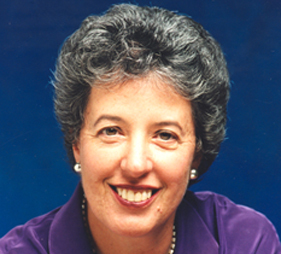
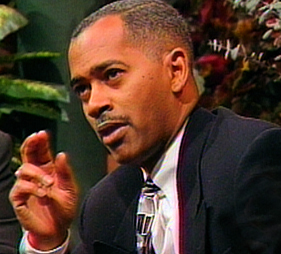
Zerka Moreno on Psychodrama

“Don’t tell me. Show me!”

Victor Yalom: You look wonderful. You’re really 83?
Zerka Moreno: Next month. 13th of June. I remember when I was 8, thinking, "I'll be 13 on the 13th of June. Won't I be old?"
VY: I’m so happy that you agreed to be here with us and to share with our readers your life and your work in Psychodrama which was originally founded by your late husband, J.L. Moreno. It’s hard to believe you’re 83; you’re so full of life. You have a lot left in you.
ZM: Thank you. I'm happy to be here, too. I always like to talk about my work.
VY: And your life.
ZM: And my life. The two are interwoven.
VY: I think the best place to start would be to tell me a little bit about what psychodrama is.
ZM: The easiest way to think about it is "the mind in action." Instead of talking about your concerns, we come from Missouri and say, "Don't tell me. Show me!" Showing means to act it out. Show me an action-in that way you show me what your concern is. That's the shortest way to describe it.
VY: And the reason?
ZM: Life produces its own constraints. Many of us can't deal with these very comfortably. I'll tell you why.
We claim that the most central thing about the human being, is spontaneity and creativity. There's no culture that lays stress upon spontaneity and creativity of the individual.
We claim that the most central thing about the human being, is spontaneity and creativity. There's no culture that lays stress upon spontaneity and creativity of the individual. Children have a lot of it, and they get squelched somewhere along the way, distorted, pushed under, rejected. We greatly believe in teaching children to have good motor control, memory, and we measure their intelligence. But what about their spontaneity? There are people who are very highly intelligent and yet have very little spontaneity and creativity. It's a twin principle:   the child represents for us spontaneity. Saying "yes!" to life. Wanting to live life. If you watch a small child, they're full of life. We stop them from making noises, from stamping, from laughing, even though this is the way they live. But we don't understand it very well. We want them to conform and to behave and to be like all the other nice people in the world. And so what happens to many of us is that we have to work very hard as we get older, to recapture that beginning of our selves.

VY: And psychodrama can help with that?
ZM: Yes, it helps you to express yourself in a new way. In a way that life doesn't usually permit. In a way, we live in two worlds, you know. We live in the world of reality, of objective reality. You and I can agree we're here, right? But you have another world, and I have another world that's invisible. Psychodrama makes that other world visible.
VY: And for what end?
ZM: To make you a more complete person. To make you more productive, to make you more integrated. We believe in the integrated personality.
VY: What are some ways that you go about doing that? How is psychodrama used? What is the structure of psychodrama?
ZM: Well, I first want to say that it's not only used as a form of psychotherapy. That's just one application. A very useful way of using psychodrama, as you probably know, is in role-playing. It's used in education, in administration, in many, many fields today. It comes from psychodrama originally. But the source is your mind, whatever roles you play in your life; that's where we start.
VY: How do you go about doing it?

Psychodrama Explained

ZM: Ok. Let's say someone comes and says, "I'm having a terrible problem. My husband drinks, he beats me, he gambles, he's irresponsible, and he doesn't want to change." Bad situation all around. "What do I do? I can't divorce him, I'm Catholic. I'll be thrown out of the church, and will be isolated altogether. What do I do?" Well, that's very big, very serious problem. "Show me what your husband is like, since we don't have him here. Would he come?" "No, probably not. He doesn't believe in any of this stuff." So I have to assess:   what can I contribute to the welfare of this woman? Is there something in this relationship that's still viable, or not? . But I may have to help her, unfortunately, to see that it's not a viable relationship, if she wants to stay sane.
VY: Stay sane, or stay alive?
ZM: Absolutely. So, I would begin by saying, "I don't have your husband here; all I have is your perception of your husband." By the way, that perception may be distorted, but that's the only one we have. That's the one she lives with. So then I ask her to reverse roles and become her husband. I usually make them sit in a different seat, so that the body is moved as well. That's important. Because we're not just working up here in the head. We're working with the whole body; we're actors. We say that the human being is an improvising actor on the stage of life. Unlike in the theater, you don't have a script; I don't have a script. We have to interact on the spur of the moment, here and now. With whatever we have between us.
VY: And your late husband, the founder of Psychodrama, Jerome Moreno, coined the term, “here and now?”
ZM: Right. He coined the term and later many others used it, Perls and his Gestalt theory, Irv Yalom and the Existentialists.
VY: Yes, the phrase continues to express the immediate moment of human interactive experience.
ZM: So then I interview her as if she is her husband. And, by the way, she's learning a lot about her husband that she didn't know before. She comes very much closer to the reality of this man.
VY: How so?
ZM: The philosopher Wittgenstein said something like "To learn about the self, step outside the self." So what she's doing is, in the role of her husband, she's perceiving herself. I ask her what's wrong between them. "What do you think is going wrong between you. I've heard what your wife says. Now I'd like to hear what you think." Now you begin to find out the way they interact with one another.
VY: So she takes on the role of her own husband talking back to herself?
ZM: Eventually, she might. If there's someone else available to be an actor, then we bring in that person. If not, I keep role reversing her back and forth. She plays both roles. Sometimes, as this goes on, I may take the role of the patient and she may take on the role of the husband.
VY: Does that help her then to empathize more with the husband?
ZM: Let me explain what we're dealing with. We're dealing with two people, but three entities. Husband, wife, and the relationship between. We postulate that you cannot influence a psyche directly, except through a significant relationship. And so what we're dealing with, is that we're not only exploring the relationship, but trying to heal it. Can this be healed or not? That's the crucial decision to be made. It's also very possible that in the role of the husband, she suddenly learns-although he's told her about his miserable childhood, and how he was abused–, she suddenly begins to see and feel him in a different way. His humanity comes through. And because she sees and perceives in a different way, when she goes back in her own role, she has to change how she relates to him. What we're talking about here is behavior change. Not only cognitive insight. We don't really think that intellectual insight cures so well.
VY: Not cognitive insight by itself.
ZM: Not by itself. It needs to be coupled with an emotional part. Psychodrama deals with both. People use it often for insight-giving. I think that's only half the job. I'm not so concerned about what's going on up here [points to her head]. Because what's going up here is…
VY: If you experience in your body, or emotionally, then it’s much more powerful.
ZM: For instance, when she sits over here, I'll say, "How do you sit? Show me with your body how you sit." And he may sit half-turned away from her, rejecting her in a way. Or he may be sitting very close to her because he wants to re-establish contact with her. So you get all kinds of information, simply by making a role reversal. Now, later on, it may be possible that I do actually get to see him. You know, Moreno, way back in 1957 wrote an article called, "Psychodrama and the Psychopathology of Interpersonal Relationships," in which he used himself as a mediator between husband and wife. He didn't treat them together to begin with. They each had a complaint about the marriage. He saw the wife alone, and the husband alone. That was an entirely new way of proceeding. Freud never did that. He analyzed husband and wife, but never in reference to each other, but only in relation to their own life.
VY: Dr. Moreno wouldn’t see them together?
ZM: Not yet. He would interpret the wife to the husband, and the husband to the wife.
VY: With their permission, of course.
ZM: Of course. They were both working at the relationship. Sometimes he was able to create a new bridge between these people. Sometimes it became clear that what they really needed, for both of them to stay sane, was to separate.
And then he might produce what we called a "divorce catharsis," and that was a new idea. That you can produce a therapeutic divorce, without mangling the people involved. To bring them to the point of recognition that there's no return.
VY: Back then, divorce was much less accepted. Was he successful in doing that?
ZM: Yes, a number of times. Also a number of times he was able to resuscitate the relationship.
VY: Did he do anything resembling traditional psychotherapy?
ZM: He began to discard traditional practice. Eventually, he developed psychodrama and put it into an interaction with each person.
VY: But was he trained in traditional psychoanalysis?
ZM: No, he was never trained in it. He was anti-analytic. He did not believe in Freud's model?Freud came from biology. Moreno was inspired by the great religions of this world. Freud was atheistic. Moreno was not. He said that the great religions of this world, and the prophets of this world, inspired him. It's an entirely different approach. Also, he did not believe, for a good scientific reason. He said that from the view of the individual, and the point of view of the human race, speech is a fairly late development. You learn to sit up, you learn to crawl, you learn to walk-all this before you speak. That means that for approximately two to three? years, you have lived very intensively pre-verbally.
VY: In the body.

The Double Life and Surplus Reality

ZM: With the body, in the body, and in interaction with other people. We're in interaction with other people from the moment of birth on. Obviously that influences us. But let's face it:   words can lie. Look at TV. Look at the politicians. They are lying through their teeth. And we're supposed to believe that? So, there's a more primordial level, beneath the level of speech, and that's the level of the act and the interact. And that's why he picked drama. But not the legitimate drama, but a new form of drama:   improvisational drama. Which is the way we live in life. I don't know if you saw in my book, the patient that says to me, "I know what psychodrama is:   it's the double of life." That's a very interesting, profound statement.
VY: How so?
ZM:
The double life! In other words, you can have one life, and have another life in psychodrama.
VY: You're referring to your new book that just came out. Congratulations, by the way. A very interesting title: Psychodrama: Surplus Reality and the Art of Healing.
ZM: What is surplus reality?
VY: You took the question right out of my mouth!
ZM: Yes, I saw where you were going. What this woman was doing, was she was entering her husband's reality. She's in surplus reality. Role reversal is a surplus reality technique-it's the reality beyond everyday reality, which is not visible, but very real. See, it's the not-visible-but-very-real that we're dealing with a great deal. That could be mythical. It could be almost anything. I t can be a fairy tale. It can be your life as you want it to be. The old movie, The Secret Life of Walter Mitty had a psychodramatic idea, right? So, what are we reaching for? What is it that's crucial in catharsis? Well, we believe it is those scenes, those interactions, those realities, that life does not permit us, but which we need in order to be fulfilled. I call it the "If onlys!" Think of all the "if onlys" in your life. If you could lift those all out-you know how much time and energy you spend on these?
VY: A lot of energy, that’s for sure.
ZM: A tremendous amount. Which deviates you from what you should be doing in actuality, here and now. In your mind you're somewhere else, with the "if onlys.".The phone calls you didn't make, the phone calls you did make where you're thinking, "If only I hadn't made that phone call." The letters you should have answered. The email you should have sent.
VY: It’s amazing we can attend to anything!
ZM: (laughing) Yes, well. You can really almost translate every aspect of life into a psychodrama, and use this to explore how you would have liked to change your childhood or your adolescence or your professional life. It's an attempt to find yourself in a new realm, in a new way. To be spontaneous and to be creative in a way that you weren't before. That's a way of healing the self, too. It may not always work. I often think that in psychodrama we're dealing with the fringes of life. This is a new idea that I'm just getting now, really.
VY: Isn’t it amazing how we
ZM: Over 60 years.
VY: And you’re having a new idea about it right now.
ZM: Yes, it's an interesting thing:   new ideas keep coming up. Creativity is like that.
It's the twin principle:   spontaneity is defined as a new response to an old situation, or an adequate response to a new situation. Creativity, which is its twin idea, is creating something that wasn't there before.
It's the twin principle:   spontaneity is defined as a new response to an old situation, or an adequate response to a new situation. Creativity, which is its twin idea, is creating something that wasn't there before. Think of this guy Bill Gates. He's created a whole new world! It wasn't there before.
The whole idea that "things don't change" in this world is nonsense! Things are constantly being created.

Who could have dreamt about the internet 20 years ago?
VY: Very few apparently.
ZM: So that's a particular form of creativity. I mean, of course, he's a good businessman, too. He likes to make money. I don't know that his ways of making money are so benign, but that's not the issue. The issue is here is something creative-someone creating something entirely new, and we had no idea how important it was going to be for the world.
VY: So, speaking of creating lives?
ZM: We need to recreate our life?

Meeting and Loving Dr. Moreno

VY: I’d like to hear a little more about your life. And how you met Jacob Moreno.
ZM: I brought my psychotic older sister to him to be treated. I had brought her from Europe.
VY: You brought her all the way from Europe to be treated? How did that come about?
ZM: I first came here by myself, from England, just after the Second World War was declared. I was 22 years old. I knew nothing about Moreno or psychodrama. I had studied art and psychology. My sister became psychotic when I was 19. I was going to be an artist, a fashion designer, especially for the stage, costumes and scenery. You know, London is a wonderful place for theater. Then my sister became desperately ill, psychotic. And somehow I knew; I understood what had gone wrong. And I thought, "Oh, I must look into this," and began to study psychology. But none of the classic psychology taught me what my sister was like. And the fact that I grasped her so well, understood it, without speech, I thought that there is something here. There was no combination possible. When I met Moreno, the combination was possible.
VY: And how did you meet Moreno?
ZM: The war broke out. My sister was living 25 kilometers from the German border in Belgium. Very dangerous.
VY: Not a good place to be.
ZM: Terrible. But I came to this country. I said to my mother and father, "Let me go. I may be able to save my sister." My only sister, five years older. The war progressed also on the continent and I finally managed to collect the money to bring her over in1941. And she was again psychotic. And she needed hospitalization, because she was not without suicidal ideation. This time she had a small child to take care of. So my brother-in-law found a home for the little boy, and I found a hospital for my sister.
VY: Where was this?
ZM: In Beacon, New York. It's about 60 miles north of New York City on the Hudson River.
VY: This is where you live now?
ZM: Yes, where I live now. I tell my students, "My life is a fairy tale. I came here as a helpless little refugee, unhappy because of my sister's illness. I came here to find a new life for my sister. I found a new life for me. You know what the lesson was?
In this lifetime Zerka, don't look for anything for yourself. Look to help other people, and you shall find happiness. It was a profound lesson.
In this lifetime Zerka, don't look for anything for yourself. Look to help other people, and you shall find happiness. It was a profound lesson. It really became the basis of my life; that's where my happiness comes from.
VY: Your happiness comes from??
ZM: I'm very content with my life. The older I get, the more content I get. We live in a nutty world, let's face it. Absolutely crazy! In my young days, I would be infuriated with this and that. Now, no matter how crazy the world is, I feel fine. I'm doing what I can, what I'm best at. How can anybody be happier than that? Anyway, Moreno discovered my talent.

Belgium to New York City

VY: Your talent for??
ZM: For his work. He tested me. When my sister was well, I became his student. I lived in New York city and worked as his private secretary in Beacon, New York. yHe offered me a scholarship. I said, "Yes, but I want to work for it." Because I was a great, fast typist. I had always wanted to work with a creative writer, and he said, "Fine." So I worked for my scholarship, my training. The war progressed; all the males on the staff disappeared into the army. He opened his Institute in New York, and I became his research assistant and lived in New York.
VY: New York City?
ZM: One Park Ave., just one block away from Grand Central Station. I commuted five days a week, and then eventually he asked me to come and live in Beacon because he needed the help there.
VY: When was this?
ZM: August, 1922. My sister was sick again the next year after having a second child. Ten days after her second child, she's back in Beacon. Now I have two children to take care of. So, my whole life was taking care of someone, you know? I don't have to do that anymore. Imagine, I'm now almost 83, and all I have to take care of is me. Isn't that wonderful?

I Did All the Wrong Things.

VY: All the Shalt Nots!
ZM: Anyway, eventually I became his wife. He was married at the time, and had a child.
And, since confession is good for the soul, I did all the wrong things. I did all the things a nice, middle-class Jewish girl doesn't do. All the "thou shalt nots."
And, since confession is good for the soul, I did all the wrong things. I did all the things a nice, middle-class Jewish girl doesn't do. All the "thou shalt nots." Getting involved with a man who's the father of a child, who's married. It was a very complicated situation. And he wasn't willing to let me go. I tried to break it off, and he said he couldn't. That he would follow me wherever I would go.
VY: He fell for you.
ZM: Absolutely. I'll tell you what he said when we met. When we walked into his office to present my sister as a patient, sitting behind his desk-I even remember the color of his shirt-I looked at him and thought, "I know this man." My inner voice was saying, "Zerka, you're really crazy."

You're getting into my history, and not into psychodrama, although it's all connected together-is that what you want?
VY: You’re doing fine.
ZM: Ok. I walk in there; I look at him and I think, "Wait a minute. He looks familiar. I know this man." And my inner voice is saying, "You're as crazy as your sister. You've never been in Beacon before."
Moreno gets up from behind his desk, spreads his arms and says, "Yeeessss." And I think, "That is the strangest greeting I have ever heard."
VY: I heard he wore a cape.
ZM: You know what? Later on, he told me that he had thought, "This is she." He was looking for a muse. And I became his muse.
VY: What do you mean?
ZM: A muse, an inspiring goddess. You know, the muses? The muse of music and dance. All his life he was looking for a muse. A muse who would be an inspiration to him. The extraordinary thing was, I was 24 years old, I didn't think I was particularly well-educated. I would make some kind of throw-away remark about something that was happening in the world, and he would say, "What did you say?" Would you repeat that? That's very important." And I would repeat it. And he would say, "Great. Come," and we would go to the typewriter. And out would come so many pages of dictation. Now, I defy any young woman not to be absolutely tied to a person she could inspire with some off-handed remark.
VY: It makes you feel very important.
ZM: I never had anyone listen to me like that, who thought I was important. I was the youngest of four; my mother was much too busy to think that what we were saying was terribly important. And even if she did, European parents didn't pat you on the back like American parents, because that might make your head blow up.
VY: Were you attracted to him right away?
ZM: Absolutely. To his mind, especially. He was a very exciting person to be with. And he was a fun person. He also had a dark side, of course. Don't we all? But that you only get to learn gradually, don't you, the dark side.

The Master's Dark Side

VY:
What were some of the crazy, flamboyant, things he did? His dark side, as you say.
ZM: He would fight people. I thought he spent a lot of energy fighting. But some of it is motivated because he was so anti-Freudian-and at the time, everybody was Freudian. So that anybody who was anti-Freudian was an enemy, or an outcast. And they would pooh-pooh his ideas. But they would take them, just the same, without giving him credit. That is still happening today. And that would hurt him, and he would get very obstreperous about that. I think he spent a lot more time and energy that might have been saved to do other things. But that was the way he was. Some of his concern was correct. Some of it may have been a little bit magnified in his mind, because he had so little support. I think he got quite frantic at times that he wasn't being really heard. There was another problem. When I heard him lecturing, I knew that he wasn't being heard. He was talking above people's heads. I made up with mind when I first saw him working with psychotic patients. No one was working actively with psychotic patients at that time. I'm talking about early '40s. And I remember thinking to myself, "I'm never going to be able to be a director. I'll never know enough, I'll never be smart enough."
VY: A psychodrama director?
ZM: Yes. Never. I'll be a therapeutic actor, that's all. But I'll also be his interpreter, because he needs interpretation. He needs to be brought down to a level where people can understand. He has an important message, and it's not getting through.
VY: He had a hard time communicating to the common folk.
ZM: And that's really what happened. My writing, they tell me, is more cogent. His writing is very dense, very heavy, very charged, very Germanic. Every sentence is loaded with ideas.
VY: So you were translating his ideas into a form that could be better understood.
ZM: Yes, the more I learned, the more I got into the work, the more readable his books became.
VY: And you became more involved in directing yourself.
ZM: I became more involved, and finally married him in 1949.
VY: How long did that take?
ZM: Eight years.
VY: And you were in love with him all that time.
ZM: You know, I've often thought, I was not "in love" with him. I loved him. There's a difference. I adored him. I loved him. I don't think I was "in love" with him. That's an entirely different feeling. I know what the difference is. I've been "in love." This was more important than being in love. My older brother used to say, "I know what love means; it's the thing you fall in and out of." It was not like that. It was a very steady love. He said to me one day, "Our relationship is largely built on faith:   faith in each other." And I think that was true.

So I began to learn to the method. I had seven years of apprenticeship. And that's what you had in the old days when you went to a master, as an artist. You studied for seven years.
VY: Really? What was it about seven?
ZM: I don't know. But you went and had at least seven years of apprenticeship before you could become an actual artist.
VY: That’s about what it takes many people to get a Ph.D.
ZM: That's right.
VY: After you get that, at least in our field, then you start learning a little bit about therapy.
ZM: Well, I learned it as I went along, fortunately. What struck me about psychodrama was the combination of science and art. That's what I loved about it.
VY: Where was the science? The art is obvious.
ZM: Well, there's a lot of technical stuff to learn, obviously. Method, theory, ideas.
VY: You have learned it well, really. The student has turned instructor.
ZM: To become passionate about such learning, to immerse oneself in such a path, has made life a wonderful journey for me.
VY: Thanks for letting me and those who read this in it. Your passion and energy for your life and work are infectious.
ZM: Thank you, I have enjoyed it.

Donald Meichenbaum on Cognitive-Behavioral Therapy

The Interview

Victor Yalom: Dr. Meichenbaum thanks for meeting with me today.
Donald Meichenbaum: I welcome the opportunity to be part of your interview series.
VY: I am interested in knowing what got you into the field of clinical psychology.
DM: I started my undergraduate career at City College of New York and from there I went to the University of Illinois in Champaign where I obtained my Ph.D. in Clinical Psychology. I started out in graduate school as an industrial psychologist and I was hired as a research assistant to conduct group observations at a local veteran's psychiatric hospital. I became fascinated with the patients and decided to switch to clinical.
VY: Why did you go into psychology?
DM: I grew up in New York City where one naturally becomes a "people watcher." I was always fascinated by the process of trying to understand human behavior. As a youth, I was interested in how people come to engage in destructive aggressive acts like the Holocaust. On the other side, I grew up in a home where caring for others was important. These two influences led me to choose psychology.

VY: How did you end up at the University of Waterloo in Ontario Canada?
DM: From Illinois I went to Waterloo, in part because they offered me a job. Waterloo was a new University and it had much promise. Also, the Chairman of the Psychology Department was Richard Walters of Bandura and Walters fame. He was a brilliant psychologist and I had an opportunity to work with him. Unfortunately, he died soon after I arrived, but Waterloo turned out to be a wonderful setting and I have stayed for 33 years until I took early retirement a few years ago.
VY: What are you doing now?
DM: If you live in Ontario, Canada, and you retire, one of the things you do is go to Florida for the winter (with a large percentage of the Canadian population). Besides the weather, the main activity that brings me to Florida is that I have become the Research Director of The Melissa Institute for Violence Prevention and the Treatment of Victims of Violence, in Miami, Florida.

Trauma and Hope: The Melissa Institute

VY: Can you tell us about The Melissa Institute? How did it emerge? What does it do? Why Melissa?
DM: Melissa was a young lady who grew up in Miami and she was going to Washington University in St. Louis. A tragic thing occurred. She was car jacked and murdered. Now when such a tragedy befalls a family, their relatives, friends and neighbors, one of the ways people try and "cope" is to transform their pain.
There is no way to allay the emotional pain of such trauma, but rather they try and find some meaning in the tragedy.
There is no way to allay the emotional pain of such trauma, but rather they try and find some meaning in the tragedy. Hopefully, some good can come out of such a profound loss.

As you know, one of my areas of specialization is studying the impact of trauma (as I discuss in myClinical Handbook on Treating Adults with PTSD). A friend of Melissa's parents read the handbook and attended one of my workshops. She put me in touch with Melissa's parents and one thing led to another and with the friend, Dr. Suzanne Keeley, we established an Institute in Melissa's name.

VY: What does The Melissa Institute do?
DM: The Melissa Institute is designed to bridge the gap between scientific findings and public policies, clinical and educational practices. The Melissa Institute is designed to "give psychology away" in an effort to reduce violence and to treat victims of violence. It is not a direct service Institute. Instead, it provides services in three areas. First, it provides graduate student scholarships in support of doctoral dissertation work in the areas of violence prevention and treatment of victims. Second, it provides training and education in the form of workshops and conferences. We hold an annual May conference, (next year will be a conference in New York on the aftermath of September 11), and conduct other trainings for various members of the community, as well as school children (e.g., on bullying). Third, and most importantly, The Institute provides consultation to various public agencies in the area of violence prevention.

On a personal note, it has been fascinating for me to consult to the Mayor's office, the Public Defender's Office, the District Attorney, the Juvenile Assessment Center and to other agencies. After some 30 years of research and clinical practice, I have been struggling with how I can have a larger impact. How could I use all that I have experienced and learned to make the world less violent for my new grandchildren? (For more information on The Melissa Institute activities, please visit the website www.melissainstitute.org).

As you can see, I have not fully retired. I do not just spend my time on the beach.
VY: What do you miss about the academic setting, if indeed you do?
DM: I do spend the summer months in Waterloo, so I have maintained contact with the University. I miss my colleagues and the daily research activities with my graduate students. I also cut back on my clinical practice and I now spend my time engaged in consultations with a wide array of clinical populations in various settings including psychiatric facilities, residential programs, centers for treating individuals with brain injury and individuals with developmental delays. I am still a "people watcher."
VY: You mentioned that you also are involved with trauma patients.
DM: Yes, I was involved in consultations on an array of traumatic events including the Oklahoma City bombing, the Columbine school shootings, and now the aftermath of the September 11 events. These various forms of violence have led me to write a Clinical Handbook on Treating Individuals with Anger-control Problems and Aggressive Behaviors. This practical therapist manual fits well with my efforts as Research Director of The Melissa Institute.
VY: Your work sounds both gratifying and intellectually stimulating, but it doesn’t sound like you’re retired.
DM: It is rewarding. I cannot think of a more important problem to focus my attention on than the reduction of violence.

The Desire to Help and a Story about Mom

VY: Getting back to your desire to help people. Therapists often go about helping people in ways that are based on their own experiences in life. Do you have a sense of how personal experiences in your life have affected your clinical work?
DM: A couple of years ago, I wrote a chapter entitled "A Personal Journey of a Psychotherapist and His Mother". In it, I began with an anecdote that may answer your question. My mother, who lived in New York, came to visit me in Canada soon after I took early retirement. I had to tell her the news about my early retirement. My mother looked a bit puzzled upon hearing of my retirement and then paused and asked, "What am I supposed to tell my friends? I'm still working and my son, the Professor, is retired!"

Now when my mom visits she comes with stories. She is a big "story teller". But, she has a special way of telling stories. She not only tells you about an incident in her life, but she also tells you about the feelings and thoughts she had before, during, and after the incident. Moreover, she provides editorial commentary on what were useful thoughts and what were stress-engendering thoughts and moreover, what she could have done differently. On one recent visit, it dawned on me that I ate dinner with my mother each day of my formative years and listened to such stories. For example, my mother would say:

"I said to myself, Flo, so you moved the heavy box? I knew I shouldn't have done that. Then, I got down on myself for making such a foolish decision. 'What will I tell Donny?' But, then I thought why get down on yourself, because all you were doing was trying to help."  And so the story continued.
VY: What did you learn for this story with your mother?
DM: I came to realize that the form of cognitive-behavioral therapy that I have been working on for my entire career was in some sense a way to validate my socialization process.
As my mom would say what you do is "New York Therapy". You try and teach people (schizophrenics, hyperactive children, aggressive individuals, traumatized individuals) to talk to themselves differently, to change the stories they tell themselves and others. "For this you get paid?"
VY: I didn’t realize your mom was one of the originators of Cognitive-Behavior Therapy (CBT).
DM: I think she would be willing to share credit with others. I could give a scholarly answer about the origins of CBT ranging from Immanual Kant to Freud to Dubois to Adler to Kelly to Ellis and to Beck. But, I like to give credit to my mom who recently died of cancer. You can trace the scholarly lineage in my Handbooks.
VY: I know the intellectual roots of your inspiration also run deep, but it is particularity refreshing to hear you speak outside of the traditional academic jargon and learn of your personal connection to your work. That is what we expect of our clients, namely, their ability to learn from their lives, so why not therapists.

Paradigm Shifts in Psychotherapy

DM: I have become fascinated with the nature of story telling that patients offer themselves and others and how their stories change over the course of therapy.
VY: It sounds like this relates a lot to the ideas of narrative constructions.
DM: If you look at the evolution of cognitive behavior therapy you can find a shift in the models employed to explain the nature and role of cognitions. In 1960's and early 1970's, I (and others) was viewing cognitions within the framework of learning theory. Cognitions were viewed as "covert behaviors" subject to the same so-called "laws of learning", as are overt behaviors. Now, I don't believe that there are laws of learning" that explain overt behavior, let alone cognitions. In the 1970's and 1980's, the computer metaphor became prominent and cognitions were viewed within the framework of social information processing. Concepts of decoding, mental heuristics, attributional biases, self-fulfilling prophecies, and the like were used to explain the role of thoughts and feelings played in overt behavior.

These first two conceptual stages were heuristically useful, as they yielded the development of self-instructional training, stress inoculation training, and various cognitive restructuring procedures. (See Meichenbaum's Cognitive-Behavior Modification : An Integrative Approach for a discussion of these origins.) More recently, as the role of meaning, with all of its developmental and contextual-cultural influences, has come to the fore, I (and others) have begun to explore the usefulness of a constructive narrative perspective. I have written about the importance of this theoretical shift in various places, including the two Clinical Handbooks.
VY: In terms of theoretical shifts, you are one of the few writers to directly confront how to treat co-existing anxiety and depression, which is so common in clinical practice. Indeed, in the video training film you demonstrated how CBT can be applied when these clinical conditions co-occur. What were you attempting to illustrate in this video?
DM: This teaching film was an interesting exercise because the producers wanted me to demonstrate short-term CBT intervention (12 sessions) with a patient who experienced both anxiety and depression. Not only that, they wanted me to reduce all 12 sessions into a one hour film. If you had to make such a one-hour film, what would you put in it? What exactly would an "expert" therapist demonstrate? What does the research literature suggest as being critical to include?

I should note, parenthetically, that the area of "expertise" interests me a great deal. With a colleague, Andy Biemiller, we wrote a book called Nurturing Independent Learners (Brookline Books Publishers) in which we reviewed the literature on expertise in various areas such as athletes, musicians, teachers, students and clinicians.

People Have Stories to Tell

VY: Can you speak more about nature of stories and change in therapy?
DM: If you work with people who have been victimized as a result of having been raped or sexually abused, or exposed to intimate partner violence, or some other form of violence, you soon come to see that the nature of their "stories" changes over the course of therapy.
VY: How so?
DM: One of the things that becomes apparent when you work with people who've been victimized is they have a story to tell. One of the things we know is that people who have been victimized and have shared that story do better than those who have not. Moreover, if you work with those clients over a period of time, as I have, one of things you come to realize is that the nature of their story changes.

At the outset of therapy, they may view themselves as "victims", as "prisoners of the past", as "soiled goods". This is more likely if the individual has been repeatedly victimized. At the outset of therapy, they may see themselves as "unlovable and "worthless" and view the world as being unsafe and their situation as being "helpless" and "hopeless". As one patient observed, "My life is a glob of misery, a total personal tragedy." The patients' beliefs in themselves and others have been "shattered".
VY: That reminds me of a song by Sting to this effect: “I’ve been shattered, I’ve been scattered I’ve been knocked out of the race, but I’ll get better.” As you describe patients’ feelings as expressed in their stories, it becomes clear how important the therapeutic alliance is to this change process.
DM: Very much so. In the safety of the therapeutic alliance, the therapist listens compassionately, emphatically, and in a nonjudgmental manner to the patient's accounts. One of the things that becomes very interesting is that collaboratively, in the safety of the therapeutic relationship, you start to see the story of the trauma change.

But more is involved as the therapist can help the patients attend to features of their "stories" that are often overlooked. What did the patients do to endure and survive the abuse? In short, the therapist helps the patients tell the "rest of the story" and to consider the implications of such survival skills for coping in the future.

The therapist helps the patients move from viewing themselves as a "victim", to becoming a "survivor", and even to the point of becoming a "thriver", as patients come to help others and transform their pain into something good that may come from their experiences. The therapist can use a number of clinical skills and the "art of questioning" to help nurture the patient's sense of personal agency in this transformation process. The "thriver" is someone who still remembers, but can use that pain more effectively. Patients learn to develop their own voice and not repeat the "stories" that were conveyed by victimizers.

Change in Trauma Clients

VY: Can you give an example of this change process?
DM: Take Melissa's parents as an example. Their daughter was victim of a senseless brutal murder. The emotional pain and loss that surviving members experience do not go away as attested to by the survivors of the events of September 11. The question for patients is how to muster the courage and to transform their emotional pain into something good that will come of it. As I discuss in some detail in the PTSD Handbook, the adage that "thou shalt not forget", becomes a personal directive; for forgetting would dishonor the memory of the lost one. Instead,
how individuals use the memory of the loss to make changes is a task of therapy.
how individuals use the memory of the loss to make changes is a task of therapy. In Melissa's case, her parents helped establish an Institute in her name. If they could prevent one more Melissa from dying, then maybe she did not die in vain. Patients do not need to create an Institute to heal. Their Institute may be a small personal way to "find meaning". This constructive narrative perspective that I am advocating is not unique to cognitive-behavior therapy. A number of psychodynamic therapists such as Schafer and Spence have been strong advocates of a narrative perspective, as has the developmental psychologist Jerome Bruner.
VY: How does your concept of narrative construction fit in with the narrative therapies of Michael White and David Epston?
DM: I think there is some overlap theoretically, but there are also differences in terms of specific interventions. My commitment to cognitive-behavioral interventions highlight the role of behavioral change, namely, the value of helping change the nature of the "stories" patients tell themselves and others as a result of personal behavioral experiments they engage in. As a cognitive-behavioral therapist, there is still a critical role for skills training and relapse prevention in the therapy regimen. So the focus of therapy is not delimited to just trying to have patients change their stories. There is also a need for the therapist to collaboratively address the other clinical needs that patients experience, especially in those instances when comorbid disorders occur. Since PTSD often co-occurs with such additional problems as anxiety, depression, substance abuse and anger, there is a need for therapists to attend to these clinical areas.
VY: You mention anger in passing yet I know you have spent quite a bit of time and study on anger which resulted in your writing new book, Clinical Handbook in Anger Control.
DM: Yes, in a number of settings in which I consult the patients (children, adolescents and adults) have a history of victimization (up to 50%) and they evidence problems with emotional dysregulation, where anger comes into play. I am often called upon to help frontline staff and therapists to deal with potentially violence and aggressive patients. The Anger Handbook provides practical examples of how to assess, and treat such patients.

The Search for “Expert” Therapists

VY: What did you learn about what works in therapy from you research and study of expert therapists?
DM: In general, three features characterize experts.
Experts know a lot, and moreover, their knowledge is organized in an efficient, retrievable fashion.
Experts know a lot, and moreover, their knowledge is organized in an efficient, retrievable fashion. They have a good deal of knowledge – declarative ("knowing what", strategic ("knowing how") and conditional ("knowing if – then relationships"). Secondly, they use this knowledge in a strategic flexible fashion. Third, expertise develops as a result of deliberate practice – practice that is designed to achieve specific goals. In fact, there is some suggestion that expertise does not develop until you have been at an activity for several years.

One very interesting thing that comes out of the literature on expertise: -whether you study chess players or chefs- you are unlikely to become expert until you're at it for several years. Why should it take so long to become an expert? Or, for some, they might say "so little." So a good, expert therapist has a lot of knowledge about patterns, about strategies. And they hang in there.
VY: So I get a sense of what the qualities of an expert therapist are, but in your view what do they attend to or do differently in the session?
DM: Let me enumerate what my research has shown to be the core tasks of therapy. I have discussed them in detail in the Anger-Control Handbook. First, the "expert" therapist needs to establish and maintain a therapeutic alliance. This is the "glue" or key ingredient for nurturing change. Second, inherent to all forms of therapy is some form of education. I don't mean didactic instruction, but rather Socratic interactions. I spell out the innumerable ways that therapist can engage in the educational process over the course of treatment. These include the "art of questioning", the use of patients' self-monitoring, modeling films, the use of "teaching stories", and the like.

Other core tasks of therapy include nurturing patient's hope, teaching skills and ensuring the likelihood of generalization. I have included in the Anger-Control Handbook a checklist of how to increase the likelihood of generalization, as well as ways to engage in relapse prevention and self-attribution training (i.e., making sure that patients take credit for change).

The therapist needs to ensure that not only do patients have intra- and interpersonal skills, but also that they apply them in their everyday experience. Patients also need to come to see the connections between their efforts and resultant consequences. Moreover, given the high likelihood of patients re-experiencing their problematic behaviors and given the episodic nature of chronic mental disorders, there is a need to help patients develop relapse prevention skills.
The expert therapist attends to these core tasks in a consistent, creative manner, tailored to each patient's needs.

VY: Are there additional core tasks that need to be considered when working with patients who have been victimized?
DM: If the patient has been traumatized, then there are five additional core tasks that need to be considered. These include addressing the specific needs in terms of safety and the specific PTSD or complex PTSD symptomatology, as well as any comorbid features. There is also a need to help patients share their stories and consider not only what they experienced, but also what are the implications, what are the conclusions they draw about themselves and others as a result of having experienced trauma. What is the nature of the "story" that patients fashion as a result of having been victimized?

It is not just that "bad" things happen to people, but what people tell themselves and others as a result of having been victimized that is critical.
It is not just that "bad" things happen to people, but what people tell themselves and others as a result of having been victimized that is critical. Out of the sharing of these accounts, the therapist helps patients co-construct "meaning" and transform their pain into some activity that permits them to continue functioning. Other core tasks include helping patients develop strategies in order to avoid victimization. Patients also have to be encouraged to associate with and nurture relationships with prosocial non-victimized others. Not delimiting their life to being a "victim".
VY: Can these same core tasks be applied to other clinical populations besides individuals with PTSD?
DM: Yes. For example, in the recent Handbook on Treating Individuals with Anger-Controls Problems, I discuss various ways to establish a therapeutic alliance with aggressive angry individuals who may be persistent perpetrators. There is a need to understand the "mind-set" of individuals who engage in such aggressive behaviors. There is also a need to educate clients about the distinction between anger and aggression. By use of collaborative goal-setting, the therapist can nurture hope. There is a need to teach self-regulating skills and interpersonal skills and to take the steps required to increase the likelihood of generalization or transfer. I enumerate a variety of skills that may be taught including relaxation, self-coping skills, relapse prevention skills, and the like.

In the Handbook, as I noted earlier, I have included a behavioral checklist so therapists can assess how "expert" they are in implementing these core tasks. Moreover, since a percentage of individuals who engage in violent behavior have been victimized themselves, there is a need to address therapeutically the impact of such experiences on the development of their belief system.

How Meichenbaum’s Work Has Grown

VY: Do you think you are a better therapist now than say 20 years ago?
DM: I would like to think so. Remember it takes about seven years to become an "expert" at any activity.
VY: In what ways do you think you are a better therapist?
DM: Before answering, I wish I had hard data that the patients outcomes are better now than when I began. The data on level of therapists' experience and treatment outcomes may give one pause in drawing any conclusions. On the other side of the equation, I believe that the patients I am now seeing are more distressed than those I saw 20 years ago. They also have fewer resources and supports.

In terms of specific changes in my approach, I believe I have become more strengths-based in my therapy approach.
I now focus more on what patients have been able to accomplish in spite of the exposure to multiple stressors and how patients can use such resilience to address present needs.
I now focus more on what patients have been able to accomplish in spite of the exposure to multiple stressors and how patients can use such resilience to address present needs. I have come to appreciate the value of having patients be collaborative, and in fact even one step ahead of me, offering the advice I would otherwise offer. I have written a book (with Dennis Turk) on Facilitating Treatment Adherence that convinced me of the need for the "expert" therapist to anticipate and address issues of noncompliance, resistance, and barriers to generalization throughout therapy. One cannot "train and hope" for transfer, but must build these issues into treatment from the outset.
VY: I can see that many things have changed in your work. What has stayed the same in your work?
DM: I have still maintained my desire to help and to respect my patients. I have always had a commitment to integrate empirically-sound treatment approaches with a clinically sensitive compassionate approach. I have tried to be sensitive to the role of racial and cultural factors and the need for an ecologically sensitive treatment approach. I have always been hopeful about human behavior and the ability of psychology to make a difference. My current involvement with The Melissa Institute provides me with an opportunity to implement that dream. For example, The Melissa Institute recently had a conference on ethnic diversity and the implications for assessment and treatment. I became supersensitive to the issue of culture when I taught at the University of Hawaii on several occasions. The "expert" therapist needs to be sensitive to how culture impacts on the expression, course and treatment receptivity of patients. For example, research indicates that depression looks different cross-culturally – a lesson I learned in Hawaii. Or what constitutes risk and protective factors among delinquent youth in the Miami Juvenile Assessment Center varies by age and gender. I believe it is crucial for the clinician to develop an appreciation of the role of culture and a questioning of what makes someone an "expert" therapist.
VY: I am really struck by the scope of your work. To take a wide angle view of your career paints quite a picture, so please indulge me for a moment. Your studies range far and wide covering varied clinical populations of psychological trauma, head injury, medical and psychiatric patients. You have pushed the field ahead in terms of developing new cognitive behavioral treatment approaches such as stress inoculation training and self-instructional training. And now you are in the midst of refining cognitive therapy from a cognitive narrative perspective. Professionally, you have extended yourself to influencing public policy and clinical and educational practices with The Melissa Institute. You may be “retired”, but your curiosity and passion still seem very much alive.
DM:
The sense of inquiry and the desire to help that were there when I began this journey in the 1960's are very much alive in the year 2002.
The sense of inquiry and the desire to help that were there when I began this journey in the 1960's are very much alive in the year 2002. The urgency for social action is even more pressing.
VY: It has been a pleasure speaking with you and thanks for sharing your thoughts with our readers.
DM: Thank you very much.

Madeline Levine on Psychotherapy with Adolescents

Working with Teens

Keith Sutton: I’m very pleased to be speaking with you today about working with adolescents. Many therapists are trained to work with children or adults, but really, adolescents fall in between. How do you work with adolescents? Is it child therapy? Is it adult therapy?
Madeline Levine: I'm always slightly embarrassed or hesitant to talk about the way I actually work with teenagers. I think working with teenagers demands a degree of fluidity and flexibility very particular to teenagers. One of the things you need to do with adolescents is really enter into their world, because it is so profoundly different, both cognitively and emotionally, than the world of children or adults. I may take them out, feed them ice cream, go to their house and hang out in their rooms. I incline to bring in friends and boyfriends, and the people who matter in a teenager's life—something I wouldn't do ordinarily if I were seeing adults or children.
KS: So you really try to enter the teenager’s world in a much more concrete way than you would with an adult or a child. Some people think of teenagers as a very difficult population to work with. What do you think?
ML: Well, they're my favorite population to work with, mostly because a lot of them are really angry. Give me an angry teenager any day over a depressed child, or a depressed teenager, for that matter, because they have the energy to help themselves. And I think one of the things you want to do is not necessarily pathologize their anger, but enlist it in the service of being used in a healthier way.

For example, a kid who's doing some dangerous risk-taking—that's worrisome. On the other hand, I think there is a healthy risk-taking that's imperative for adolescents. Usually the kid who's doing dangerous things sees no opportunity to do some risk taking. So we can take the anger that a kid brings in and try to turn it into part of the developmental task, which is to get out there and try new things and push your boundaries—and that often includes pissing a few people off, particularly your parents, from time to time. But that's okay — as opposed to doing meth behind the school gym.

KS: So channeling that energy into more appropriate or safer activities?
ML: Yes. I think one thing that's misunderstood about teenagers is that all this risk-taking is an indication of pathology. I think, in general, teenagers are horribly pathologized. And this started long ago with Hall's concept of Sturm und Drang — Anna Freud basically said it was a period of pathology and you could be diagnosed as having adolescence. I don't think that's true—I think it's just another developmental stage with very major psychological tasks to be accomplished, and that if we could start looking at it and normalizing some of what adolescents do, making sure they're safe, then you'd have adolescents who are much more willing to talk to you. So this issue of, "How do you see teenagers? They never talk"—I don't find that really a problem at all in my practice.
I think teenagers are hungry to talk to adults who truly are interested in their internal lives.

Trouble or Normal Development?

KS: I think often some parents want their kids to get through adolescence on a straight and narrow kind of line, and actually the normalcy of adolescence actually is not so straight and narrow. So can you talk a little bit about what is “normal” adolescence?
ML: That's like, "What's normal adulthood?"
KS: How can a therapist tell between a teenager that’s got some big problems or big issues, and a teenager who is just going through the normal development of adolescence?
ML: Well, teenagers as a group do not have higher rates of pathology than any other group—so we think that they're more depressed and they're not. Are they moodier? Are they a little more labile? Sure. And I actually think we missed the boat a little bit about when that happens developmentally. My observation is that we think teenagers are going to be really difficult toward the end of adolescence when they can drive and have sex and stuff like that. But I actually think the height of their struggle with autonomy happens a lot earlier than that. So what I see is much more likely to be a 12-year-old who's running into trouble with their parents, and their parents are completely freaked out because they were waiting for the kid to be 15 or 16 before they were anticipating having autonomy problems. I think when we talk about it, we need to move down a little bit in terms of, is a 12-year-old who is saying, "Leave me alone and don't tell me what to do" and sneaking out and doing those kinds of things, is that way out of line? And I actually don't think so, because, like I said, I think the struggle for autonomy starts earlier than the popular perception.

But I want to answer a little more clearly your question of, "How do you know if a kid is really in trouble or not?" Aside from all the obvious things—you'd want to look for the same things you'd look for in anybody, which would be severe depression or an eating disorder, self-mutilation, or anxiety disorders, or a family history of bipolar; none of that is any different for teenagers than it would be, I think, for adults. I think what is different is that, in spite of the fact that, in early adolescence, cognitively kids are at the stage of abstract reasoning—they actually can think more or less the way an adult does, which gives the impression that they're older than they actually are, so they have the cognitive skill, but they don't have any experience.

So a parent comes in and says, "Well, my kid argues all the time, and he's rude." But that's what a young teenager's supposed to do, because how do you go from having the cognitive skill with no experience to having the cognitive skill and some experience, if you don't get it by being out in the world and trying things out and banging up against parents? So I always tell parents, "That's a great thing that your kid is arguing. Think of it in the same way you would think of practicing pre-calc or soccer—that it's a skill that needs to be honed and not pathologized." And I think the parent's job is to stay reasonably calm, which can be very difficult because kids want the argument—it's their way of expressing their growing autonomy, so they want it to be an argument. And they're like Jedi masters at knowing where to get you.

So the fact that a kid is arguing, the fact that a kid is moody, the fact that a kid is doing some risk-taking that doesn't endanger them in any way—none of those things are particularly worrisome to me.
I'm most worried about a kid who has really retreated into themselves and has no capacity for self-reflection.
I'm most worried about a kid who has really retreated into themselves and has no capacity for self-reflection. With all the demands for academic and athletic success, the standard task of adolescence — which is solidifying a nascent sense of self — tends to get lost because you don't have the time to daydream and you don't have the time to hang out and all that kind of stuff. I think kids are absolutely overwhelmed with the amount of structured activity and the demands for academic excellence, particularly in upper-middle-class communities. And I don't think you can forgo the period of time of learning how to think about oneself.

Developing a Sense of Self

KS: In your book, The Price of Privilege, you talked about developing that sense of self. Can you talk more developing that strong sense of self that as a developmental task in adolescence?
ML: If we go back and think in our own lives about the experiences that added to a sense of self, I mean, what comes to my mind is very visual— lying out in the backyard with my dad and looking at the clouds, and making up… The Rorschach test of childhood is looking at the clouds. The teachers who I had a relationship with who actually encouraged me to write. The hundreds of hours spent listening to Bob Dylan records and trying to figure out what he was saying. These were all sort of slow, internal activities without any particular evaluation.  My parents might have said once or twice, "Shut off the Bob Dylan," because I listened to him obsessively. But in general, they were internal, they were tolerated, because adults weren't in teenagers' lives all the time—not in the way they are now, and I'd like to be clear about this particular point.

I think we're way overinvolved in the wrong things and underinvolved in the right things.
I think we're way overinvolved in the wrong things and underinvolved in the right things. So moms stand at the door when their kids come home from school and want to know how they did on their math test that day. We know every teacher, every grade, every pop quiz, but we don't provide the space or the container for that kid to come home, sit at the kitchen table, have a glass of milk and a couple cookies, tell you or not tell you what their day was like. And I think that those are the spaces in which an internal sense of self develops. And it's much harder to develop if you're constantly being evaluated. So the kid down the block is smarter, or somebody has better grades, or your sister's daughter got into Harvard. What I hear in my office over and over again is, "I'm only good as my last grade." And that is an incredibly sad comment on the internal life of the kid. You know, kids walk into the office and I say, "Tell me a little bit about yourself," and they rattle off their metrics: "I get an A in this, and I get a B in this, and my parents are really mad because my SAT scores…" It's like, "No, tell me about yourself." I think one of the things that work pretty successfully with teenagers is absolute boredom with their metrics. You know, I look at my watch, I look out the window. I'm not interested in that. And every therapist knows the line where the kid says something that's really authentic. "I was so pissed, I went to my room and I listened to Sublime," or, "I took out my drawing pad…" And that's the moment you want to jump all over. You're not interested in the metrics—you're very interested in the part of the kid that feels authentic. And I think kids are a little suspicious of that at first, but very quickly get that you're interested in something entirely different about them than what they're used to adults being interested in.

Building Rapport

KS: How do you build rapport with teenagers? How do you approach them? It sounds like this is one approach, where you’re interested in some authentic part of themselves rather than the metrics. What else?
ML: I think in order to be an adolescent therapist, you have to really like teenagers, and you have to have a pretty good relationship with your own adolescent self. So I'm real knowledgeable about the culture, and I'm real knowledgeable about the music, and I'm real knowledgeable about the language. I'm not so good on the technology because it goes faster than I can possibly keep up with. But I'm knowledgeable and not in the least dismissive of adolescent culture. Your own authenticity is incredibly important.
The standard classical therapeutic position of not revealing about yourself, absolutely does not work with teenagers.
The standard classical therapeutic position of not revealing about yourself, absolutely does not work with teenagers. They want to know, and from their position, rightfully, so: "Who the hell are you? Why should I tell you anything? I tell my teacher at school and he tells me to work harder. I tell my parents and they tell me they're disappointed in me."

I would say the majority of the teenagers who come to see me really want to be in therapy. They're desperate to be in therapy. And talking, for them, is no issue—which is just surprising to me, and is still surprising to me. Then you have the kid who's dragged in by a parent who's worried, either appropriately or not so appropriately, about some kind of bad behavior. With those kids it takes a period of time of hanging out.  I had this one teenage boy who just was really difficult, but he had a passion for tropical fish, and we ended up doing—I saw him for about three years—we did his whole therapy through tropical fish. I went to his house, and I saw his tropical fish, and I learned about tropical fish, and we talked about the habits of tropical fish. It's a mistake to push teenagers into the model that most of us were most comfortable with, which is, "Well, what do you think about that?" Because I think when a parent says to a child, "What were you thinking?" the real answer is, "Nothing." I mean, nothing like what the parent wishes the child was thinking. It's kind of like a freight train going on in there.
KS: Things are moving so fast they’re not really paying attention to what they’re thinking.
ML: That's right. Now we have the neuropsychology, and we know a lot about how active the adolescent brain is. You have to take that brain where it is and be respectful. The other thing is adults aren't respectful of teenagers. Things they would never say to another adult I hear all the time in my office. A parent will come in and say, "Look at what he looks like." You wouldn't say that to your spouse or your best girlfriend, but it's kind of okay to be disrespectful towards teenagers. And that same parent turns around and is shocked when the child is disrespectful to them. So I try to stay very respectful, and very curious. I talk a lot more than I do with an adult patient. They know a lot more about my life. I have a hard time bringing out some of it in case conferences, but I think it works. I think they need to know that you're the real deal. And that can take a while.
KS: How do you deal with the issue of self-disclosure? Because in general, in children, adults, adolescents, people approach that very differently.
ML: I think it depends on the case. So there are kids who know absolutely nothing because I don't think it would be helpful to them. I use self-disclosure when kids have really become convinced that, and are treated as if, there's something incredibly wrong with them that isn't.

For example, I have three sons – two of whom are very academic and one who is less so. I will use the notion that people are good at different things. "Yeah, well, what do you mean by that? I'm not good at anything except noodling around in my car." And that's your way in to this client. I'll show that I want to know about cars; I want to come up with anything I can remember about cars; I'll  want to engage them in cars. And then I might say, "Well, it's interesting, because one of my kids is at a hands-on college because that was how he learned." It becomes not only normalized but valuable. For a lot of kids, especially in a community like ours, that experience of somebody saying, "You know, being a mechanic—everybody needs their car fixed. What a great skill. You must be good with your hands, you must really be able to see things…." And I may add something like "My spatial relations are absolutely awful." Teenagers, are like children in that they look at adults and we appear incredibly confident. That's because we get to do what we're good at. There's a whole bunch of stuff that teenagers don't see that we're not good at. So often I'll say to a kid like that, "You know, I have a trip coming up and I really can't visualize where I'm going. Can you help me?" The whole notion that there are things I'm good at and things I'm not is just a revelation for some of these kids.

Nobody’s Perfect

KS: Pointing out that you’re not perfect.
ML: That nobody's perfect. I do a tremendous amount of speaking at the Young Presidents Organization — these are the Young Turks of business, they have big corporations. If you talk to them and ask them how they did in high school, they, for the most part, were average students who went to state universities. I'm very interested in dispelling the notion that there's this one way that people get successful. It just isn't true.
KS: That’s an interesting area that I’m looking more into, which is around resilience. On the one hand, in working with adolescents, oftentimes I’m trying to help them better their family relations. But I also know extremely successful people who went through a lot of hardship. What do you think about that, especially how that translates to the work we’re doing as therapists with adolescents, trying to decrease the hardship in their lives?
ML: So this is the topic of the new book I'm writing, and I'm very interested in it. If you look at who's successful where they went to school, what their grades were, what their IQ is, none of that stands out. But someone said, "Success is how high you bounce after failure." I think that's true. I think what people forget is that we all hit terrible bumps in our lives. There are losses, there are deaths, there are divorces, there's heartbreak. That's life. So parents run around like crazy trying to make sure that their kid isn't kicked off the team, and if it was a B- it should really be a B and they're going to go up and talk to the teacher, and they're going to help them write the essay to get into the college they want them to get into, thinking that they're giving their kid a leg up.

Bad stuff is going to happen to you in life. And it's going to happen no matter what you do with your kids. Instead of all this focus on protecting kids from age-appropriate challenge, stay out of your kid's grade in the fourth grade or the sixth grade or the eighth grade. Teach them to talk to the coach if they're not getting enough playing time. We're really busy protecting kids in that way, which is a tremendous loss for the kids, because then they don't know. And side by side with that, by the way, I think we're not busy enough saying to our 16-year-old, "It's Saturday night and I want you home by 1:00 or midnight because nothing good happens after midnight," or, "Where are you going?"

So what are the components of resilience? I'm interested in this. I think things like perseverance, self-management, autonomy, self-reflection are all part of becoming resilient. But if I had to pick the most important one, it's the ability to tolerate mistakes. And I think that's exactly what we're not tolerating in kids.
KS: Can you give me an example of what you mean?
ML: I was speaking in New York, and I'm walking down Fifth Avenue, and there's a mom with a very well dressed four-year-old boy, and he jumps in a puddle of water right in front of Bergdorf Goodman. And it's kind of muddy and he's splashing. And the mother has an absolute meltdown on Fifth avenue, just a meltdown—she's screaming at the kid and crying. And of course with the grandiosity of a famous psychologist, I walk over and go, "Hi, I'm Madeline Levine, I'm a psychologist. Are you okay?" And what happened? They were on their way to a preschool interview, and now she couldn't decide, did she have enough time to get him home and spiff him up again, or would she be late and would that be a strike against him? It sort of breaks your heart because now the four-year-old looks like a four-year-old instead of like little Lord Fauntleroy. But she's yelling at him—"How could you make a mistake like that? How could you get dirty?" So it's a little bit of a dramatic example, but I think that goes on all the time. The normal parts of mistake making aren't tolerated.

Collaborating with Parents

KS: How do you decide whether to do individual therapy or family therapy? Because a lot of your book is geared toward parents — helping parents change their thinking or behavior.
ML: Again, this is just how I work—I wouldn't think of seeing a teenager without their parents. Not necessarily together, but parents are — and should be — a really big part of an adolescent's life. The research is that teenagers want more, not less. They may not tell you that, and they may roll their eyes when you say, "It's family day," but all the research is pretty consistent, that kids want more contact with their family.

What's the reality of working with the family and a teenager? About two-thirds of the families I see, I continue to see the parents—we're collaborative. You have to be pretty good at boundaries and at issues around confidentiality, and those have to be clear up front. And I would say with maybe a third of the parents, the reality is they're not going to collaborate with me, they don't especially like what I'm doing with their children, they don't like being told, "Back off." I had one dad who had this really nice daughter, very mild level of difficulty, and she wanted a small nose piercing. A very wealthy guy. And he said, "If you encourage her in that, I will cut her out of my will."

I'd love to tell you that all the families come around and they're really helpful. Some of them aren't. And then part of what you do is, you never really diss the parents, but you're allied with the child's perception that there's something crazy here. Those can be really tough cases. But most of the time there is enough of a good parent in there, which is what you're always calling for: "I know you want to be a good parent. I know that you've been a great mom. I know you want to do best. But this is how I see it" So
in a best-case scenario you work collaboratively with parents, mostly trying to teach them some really basic skills about adolescent development
in a best-case scenario you work collaboratively with parents, mostly trying to teach them some really basic skills about adolescent development—not to flip out at the wrong things, and not at the right things. I still will get calls from time to time that say, "I found cocaine in my daughter's room. Should I do anything?" That's when you flip out. Well, you don't flip out, but that's when you do something. The parent who says, "My kid keeps coming in ten minutes late and why won't they listen to my authority"—that's the not-flip-out stuff.
KS: How do you manage the different relationships and the rapport with both parent and adolescent at the same time, especially if they have very competing interests?
ML: Good question. I don't see the teenager and the parent together frequently. Maybe I'll see them together twice a year. But I'll see the parents once a month, because, again, it's an hour a week or two hours a week, and you're trying to make some systemic change in the house around things like chores. You know, none of these kids have chores. They're supposed to have chores. There's good reason for kids to have chores. Optimally you get buy-in. But I don't see them in the same room more than once or twice a year for a very particular reason, and that is that I think the teenager has to feel that your alliance is primarily with them, that you don't have this split alliance. And you can run into some of that when everybody's in the room together. And, again, as a point for therapists, I think the fastest—I don't know how good this will sound—but the fastest way to get buy-in from a teenager is to get something for them. You want a teenager to come back the next week. It doesn't matter if it's ten minutes on their curfew. It doesn't matter if it's just a quarter on their allowance. You get something, you can be useful to a teenager in some way, you at least have a beginning relationship. So I don't bring them all in together that frequently, and I bring friends in but not that frequently. It has to be very clear that your main allegiance is to your teenage patient and that you use other people selectively to be helpful, to provide a better environment, and things like that.
KS: I’m wondering about countertransference with the adolescent and the parent. I know a lot of young therapists tend to identify with the adolescent over the parents, and I’m wondering, as you became a parent of adolescents yourself if that changed your experience with your teenage clients and their parents?
ML: Did I change when I had teenagers of my own? Not so much. I mean, I always liked teenagers, and if I have to really think about it, it's probably somehow related to the fact that I was one of those really, really goody-two-shoes teenagers. I didn't lie and I didn't do any of those things. So there's something about the spiritedness of adolescence that intrigues me. And my own kids' adolescences were not particularly difficult. So I think certainly I have a greater tolerance or more empathy for parents. I had three boys. That's a challenging period of time.
KS: Did you change how you worked with the parents after gaining that greater empathy?
ML: I think I use a tremendous amount of humor in working with parents. Maybe what I learned in having teenagers is that they grow out of it—and they grow out of it really pretty quickly. It seems interminable in the middle of it, but it's not. We think of these kinds of things in young children as kind of dear. You have young children, right? Your child starts to learn how to walk, and they totter and they fall down, and they totter, and we love it. We don't get mad at them and we don't say, "If you keep falling down, you're going to be flipping burgers for the rest of your life." We don't do that. We find their motions toward independence and autonomy…the word that comes to mind, is "dear." And I think that's how I found my own kids' adolescence—the stories in The Price of Privilege, of mistakes and times my kids got in trouble and stuff like that. But if you frame it as kids really trying to do their best and they're not out to get you, that the tasks of adolescence are so multiple… When I talk to parents, and it's usually about college and grades and all this stuff, and what they've forgotten in their pursuit of all of this is these kids have to learn how to talk to each other, they have to learn social skills, they have to learn how to ask a girl out, they have to go to school in spite of the fact that they've got acne all of their face or a boner when they go up to the blackboard, or one girl's bust… I mean, just all the physical, physiological and social changes and all that is happening, and you want your kid to get straight A's also? So I think that what changed for me in having teenagers of my own was seeing on how many multiple fronts they had to deal with change, and that instead of being pissed at some of it, I started to see it more like the two-year-old who's stumbling.
KS: That’s a good metaphor for it. In your book, you write about the authoritarian, authoritative, and permissive parenting styles. How do you deal with the issue of one parent that’s over-involved? I find, at least in my practice, that the parent who’s very strict is a little bit easier to slow down. But the parent that’s so worried if they step back that everything’s going to fall apart—how do you work with that?
ML: That's our toughest dilemma, isn't it? That, or the divorced family where there are entirely different sets of rules. I don't have any magic words for that, because I think it really is very difficult. In my experience, it's usually the mother that's over-involved. Sometimes I'll have a session or two with Mom alone. My take on mothers is this: I'm practicing thirty years. I've never, ever had a mother come to therapy and say, "Would you help me screw up my child?" That's just not what moms want to do. So I think usually a mom's over-involvement is coming out of anxiety.

There's usually something in that mom's background that needs some exploration, and if you don't get to it, you can say over and over, "It would be better for your kid if you backed off," but I think the anxiety becomes so overwhelming that it's really impossible. If you can bring that mom in—and I've never had a mom not do that, because mothers in communities like this are very lonely and are very eager for connection—and if you can find out what the anxiety is about, that's your best chance at effecting some change with the mother.

Here's a personal example of what I'm talking about. My youngest kid was a hands-on, nonverbal kind of kid, and I found myself, in spite of knowing so much better, giving him a hard time with English—that was where his learning disability was. So I went, "I know better, what the heck am I doing?" I really had to think long and hard about it, but what I came up with was my father died when I was the age that Jeremy was when I was giving him a hard time, and we had no money, and I got to college on my verbal skills. I had a scholarship. So when I was yelling at him about his English grades, it wasn't him. I was just remembering my own sense of whether or not I was going to make it at all.

So I think it's like those ghosts in the nursery—Selma Fraiberg's ghosts in the nursery kind of stuff—that if you can get to with the parent, you can, first of all, strengthen your relationship with that mother because she feels understood and I think you have a better chance.

Dangerous Issues

KS: How do you deal with the dangerous issues that you run into with adolescents in therapy, like drug or alcohol abuse? Or other issues like cutting, or suicidality, or sexual acting out. How do you deal with these?
ML: That's the hard part. It's not just stressed-out kids that we see. We see some sick kids and some kids who are doing very dangerous things. I probably have a divergent point of view about some of this, and I think along some of what you're talking about, I'm as much a mother as a psychologist. If my kid was in danger and was seeing a therapist and I didn't know about the danger, I would be really pissed. Now what constitutes real danger? Is smoking marijuana real danger? Not if the kid's experimenting and he's 15 or 16 years old. If he's high all the time, yes. Is cocaine a real danger? Well, you think you're going to say yes, because it's a much more dangerous drug, but if the kid's tried it twice as experimentation and they're done, then no. So I think you look at several things. You look at the age of the child, because we do know that the younger kids experiment with drugs and alcohol and sexual relations, the more at risk they are. There's a huge difference between an 18-year-old smoking a couple of doobies and an 11-year-old doing that. That's one thing you look at. The other thing you look at is whether or not it's being used for experimentation or self-medication. So the kid who's self-medicating is at much greater risk than the kid who's out with their friends and they're 12 years old and somebody has a beer.

If I have a kid who's actively suicidal, I have to tell the parents. And because teenagers are so sensitive to issues of trust, those things have to be laid out really early. "If I feel that you're a danger to yourself or others, I will tell your parents. Do you still want to do this with me?" Clearly, you want the teenager, if possible, to be the person to say, "I'm having a problem." I think for me, personally, the hardest moments as a therapist have been when I've had to decide whether or not I'm going to give the kid the week — when I'm worried about them — to talk to their parents themselves. I tend to keep in a lot of contact with the kid over that week. If somebody's actively suicidal in my office, I take them to the hospital. If there's a clear and immediate threat, obviously I know what to do. But I think there's this little bit of a grey area where you're worried about a kid, you think they're going to be able to talk to their parents, but you're not sure. You have to know the kid you're treating really well. And for me if I'm going to err, I'm going to err on the side of involvement.
KS: What about sexual acting out, especially for male clients versus female clients?
ML: Well, I see almost all girls, so I can talk more about girls than boys. I think the thing that I find troubling for girls is disengagement of sexual activity and affect—you know, the twelve-year-old girls who have given blowjobs behind the gym at the middle school here. So as a therapist, once you get over the shock of that—because it is shocking the first couple times you hear it—what you find is an incredibly frightening lack of being there. They don't feel much of anything—they don't really care much about whether what they're doing is right or wrong or a good idea or a bad idea. For most of them, depending on the status of the boy, it accrues to either their popularity or sense of self.I see that as really quite troublesome, as one of the more distressing things about the kids I see.

Look, I grew up in the sixties. There was a lot of sexual activity, but it was "make love not war"—it was in the context of relationships. I think if I had to pick one thing that troubled me about young kids now, it is this kind of friends-with-benefits, very early sexual acting out. Kids going to school dressed sort of like hookers. Is some of this the media? Absolutely, some of it's the media. Why are parents tolerating it?
Why does the mother of a 12-year-old let her kid go to school dressed looking like a whore?
Why does the mother of a 12-year-old let her kid go to school dressed looking like a whore? So part of it is the community. But part of it, I think, is symptomatic of a de-emphasis on the value of relationship. Look at the times we live in. Our grandest people have no morals, and kids will say that all the time. Like, "What are you giving me a hard time for? I didn't steal money from my grandmother or anything like that." So we have to work extra-hard because these kids have grown up in a period, starting with Enron, of terrible disconnection between people. I mean, how do you steal all that money without being psychopathic and not really being connected to people?

So the work—and I see a fair number of these girls—the work with them is to start to restore some sense of self, because these girls have awful self-esteem. They have a very poor sense of self, based entirely on their sexuality, and for somebody like me, it's challenging. Anybody who went through the women's movement and has a girl in her office saying, "All I want to do is give head to the cutest boy because then maybe he'll marry me and I can lie back and be rich," and it's kind of like, "What?! You want to do what with your life?" I'd have to think about whether this is fair to say or not… Anecdotally, a fair number of these kids come from divorced homes, so I don't know if it's true or not, but the whole issue of a father's involvement with an early adolescent girl's sense of sexuality is really, really important. So if Dad's out of the picture or hanging around with young girls… Again, it's purely anecdotal, but I do have a sense that it's an issue for these kids in the same way that work can be an issue for adolescent boys.
KS: In the same way as what?
ML: It seems to me, at least in my practice, that girls have issues around trust and sexuality, and boys seem to have issues around work.

The Price of Privilege

KS: Interesting. Now, the premise of The Price of Privilege is that kids of affluent, upper-class and very affluent families, have more mental health problems than middle-class or poorer adolescents.
ML: Yes.
KS: And that seems against common sense—
ML: Counterintuitive.
KS: Yes, counterintuitive. Especially, working in my internships and practicum in Richmond, which is one of the most dangerous cities in California, with very poor families and adolescents and all those issues, I have a hard time wrapping my head—
ML: Buying it.
KS: Yeah, buying it.
ML: Well, okay. So, first of all, they don't have higher rates of mental illness across the board. They have higher rates of depression, anxiety disorders, and substance abuse. They do not have higher rates of the acting-out disorders—behavioral disorders.
KS: Yeah, that’s what I was wondering. I imagine PTSD and things like that, too.
ML: Right. It's a perfectly legitimate question that comes up a lot. It's like, "What are you talking about? How could you possibly be more impaired coming from Kentfield than from Richmond?" You're impaired in different ways. And also I worked in Harlem when I lived in New York, so I had a lot of trouble with it, too. But the numbers are pretty consistent. And substance abuse among inner-city kids is a lot lower than among suburban white kids. But the big ones are the depression and anxiety—upper-middle-class adolescent girls have three times the rate of depression of the general population, and just slightly higher than inner-city girls. And what the research says is that their pressure to be successful and to be perfect is intolerable. I think girls have tremendous pressures on them. I think they have the wrong kind of supervision, and I think they don't feel known at all. My experience is that these kids come in and just don't know themselves. Now, teenagers aren't supposed to be done knowing themselves, but they're supposed to be starting to know themselves. And these kids have developed astounding facades. They look great, they…
KS: It sounds like especially for the girls, it’s more on the outward appearance, either the metrics or the physical appearance, rather than the inward self.
ML: Right. There's not much value on going off by yourself and playing the guitar—unless you're a really cute boy and you can bring it to the party or something like that—just those kinds of experiences that nurture the internal sense of self. So there's this issue of academic pressure, there's this issue of appearances. And there's disconnection from adults. And you ask upper-middle-class parents if they're close to their kids, they overwhelmingly say yes, and you ask the kids, and they overwhelmingly say no. Because the parent says, "I took you to lacrosse and I took you to your coach, and then I took you to Kumon [Learning Center]," and the kid is going, "And so? You don't know anything about me." So certainly poverty has a huge range of different pressures and stuff on it, but there tends often to be more of a community. I grew up very working class. You didn't buy your way out of anything. Somebody had a problem in the neighborhood, every door was open, everybody came over. You didn't go down to the Woodlands and buy the frozen lasagna, you had to make the lasagna. So I think there are a lot of problems, clearly, and I think the issues of involvement are actually the opposite—inner-city kids, you want more involvement from their parents, not less, which we're trying to do. But I do think there's a broader net.
KS: So it sounds like it’s different issues than the low-income areas or middle-class.
ML: It is different issues, but I thought it was really important to bring that information forward, because it is so incredibly counterintuitive. And I think a lot of upper-middle-class kids were not getting the kind of attention and the kind of services that they needed. You talk to counselors in schools around here, and they're afraid to refer a kid to therapy because they're afraid the parents are going to be angry and threaten to sue the school and all that kind of stuff. So I think the assumption has always been, "Well, these kids get services left and right," but I don't think that's entirely accurate.
KS: So they’re somewhat neglected in that way, too.
ML: I think they are, yeah.
KS: Do you have any other words of wisdom or thoughts to pass on for therapists of adolescents that could be helpful?
ML: I think to be an adolescent therapist, like I said, you have to really like teenagers, and you have to have a pretty good capacity for uneven progress. So just when you think you've got that teenager stopping the blowjobs behind the gym or the cocaine or something, they get really stressed and they're back doing it. That's true in therapy in general, but I think kids are not very good drivers of their own cars yet, both literally and metaphorically. So
I think an important trait for an adolescent therapist is to be able to tolerate disappointment reasonably easily, because if you don't, you become just like everybody else in the teenager's world.
I think an important trait for an adolescent therapist is to be able to tolerate disappointment reasonably easily, because if you don't, you become just like everybody else in the teenager's world. And that's not to say that you don't have an authentic relationship. If that kid has really done something and you're disappointed, I think you get to talk about that with the teenager. But I think you save it for things that are critical in terms of their development, and you have to be able to take pleasure in the fact that these are really works in progress and not treat them like adults. I think people make a mistake when they treat teenagers like adults. You've got to be more forthcoming, you've got to be more fun, you've got to know something about the world in which they live. You don't look like them and you don't talk like them—that's not the point. You absolutely have to be the adult. So you walk a very different line. You're knowledgeable, but you don't come in dressed like they do or talking like they do. And I think, like any psychologist, you have to be really curious, because what you want is the development of that ability to reflect, so you have to value curiosity.
KS: Well, great. Thank you so much for the interview. I appreciate it.
ML: My pleasure.

Ronald Levant on Psychotherapy with Men

“I was the father without a clue.”

Randall C. Wyatt: Your work has focused on gender, the psychology of men, the problems with traditional masculine socialization, psychotherapy with men, and fatherhood, in addition to your work as APA (American Psychological Association), President and the evidence-based practice of psychology. Let’s start with the psychology of men and your upbringing. What was your upbringing like?
Ronald Levant: I was raised in a really tough neighborhood, and where I grew up, if a boy starts to show vulnerability, he's also so violated the male code as to warrant severe punishment.
RW: Typically, if a boy shows he cannot withstand or deal with the teasing it does not bode well for him as a kid.
RL: Yes, I witnessed scenes as a child where boys were beat up by other boys for crying.
RW: You grew up in Los Angeles? Whereabouts in LA?
RL: Southgate. South Central Los Angeles. No, I wasn't a member of the Crips and Bloods.
RW: But it was a tough neighborhood?
RL: Yes. At that time, South Gate was all white and it bordered Watts, which was all black. Southgate was pretty much a blue collar town. There were two major factories in the town then, Firestone and General Motors, and most of the fathers of my friends worked on the line. So it was a working class, tough neighborhood.
RW: Did these early experiences spark your interest in men’s psychology and psychotherapy with men?
RL: Actually, it was being a divorced, semi-custodial father. My wife and I lived in California. Then she moved to New York, and I moved to Boston, and we worked out an arrangement where I had my daughter for the summers. And I would travel several times a month to visit her in New York.

But the visits when she lived with me did not go well and I felt like I was the father without a clue. I didn't really have a good idea of what a father was supposed to be, because when I thought about my own dad, his idea of having quality time with me and my brother was to have us do some work and he'd supervise.

As a psychologist, young assistant professor at Boston University, responsible for teaching the courses in family psychology and having a research program on parent training,

I felt like I was a fraud, because here I am an expert in parenting and family stuff, and yet, I'm so ineffective with my own daughter.

And like most men, I didn't talk about it with anybody. Again, I was a fairly traditional masculine guy and I didn't talk about it. Just sucked it up and tried to keep doing it, until I saw the movie Kramer vs. Kramer (1979).

RW: I remember that film; it was talked about a great deal, with Dustin Hoffman and Meryl Streep. Did it hit you right away?
RL: Not right away. I had to think about it for a few days, frankly. It led me to realize that it wasn't a case of my personal inadequacies, though I might have been inadequate is some ways. It was more of a case that this was really a shift in roles for fathers, in that men of my generation were doing things that our dads never did. And maybe we weren't really well-prepared for it. Maybe we could get prepared for it. And so that led to a whole chain of thinking that was the proverbial fork in the road in my career.
RW: And then you began to focus on the study of fathering?
RL: I shifted from parent training to fathering. I started the Boston University Fatherhood Project a few years later. I discovered this lack of emotional self-awareness in my fatherhood work. I used to run these fatherhood courses where we would get six or eight guys to meet together for eight weeks and we would teach them a little bit about fathering. We had a grant that allowed us to purchase an incredible amount of video equipment. Video was very cool in the early '80s, and we had a big room lined with video decks, monitors and special effects generators, microphones hanging from the ceiling, and three tripods with cameras in the middle of the room; so when the guys would come into the room for the first time, they would be just blown away. They'd say, "Wow, these guys have some really cool equipment."

And we'd tell them, "We'll teach you how to be a better father the same way you might have learned how to play a sport like golf or tennis. We'll videotape it, do the instant replay, analyze how you could do it better, and try it again. And we'll practice." A very hands-on approach.

RW: One thing I have really appreciated about your work is that you join with the men and use sports metaphors, which many men can relate to. On that note, one of my early supervisors used to say to men in couple’s therapy, “If Michael Jordan only dribbled with one hand; they’d be able to figure him out really quickly and be able to defend him easily. You’ve got to be able to dribble with both hands. And you know how to think and be logical but you’re ignoring the other side of it, your emotions, which can be learned too.”
RL: That's excellent.
RW: Instead of forcing these men into some therapy-contrived way to express emotions, as in, “How do you feel now,” you really join with the men and say “we.” A lot of men are ashamed or embarrassed to come to therapy since they think it won’t relate to their way of thinking. The traditional therapist says “How do you feel? What are you feeling now?” The traditional male replies, “I don’t know” and leaves feeling more inadequate or that therapy is just not for them.
RL: Right. And then, "What's wrong with you?" From what I've said about my background, you can see that it's not that hard for me to empathize with traditional men. A lot of my friends growing up, myself and my family were traditional men, so it's not a stretch for me. I don't have to imagine it, I lived it. Having been trained in the Rogerian tradition, I want to start off by being as empathic with their experience as I possibly can be.
RW: Did getting into the psychology of men and fatherhood change your relationship with your daughter?
RL: Not right away because the fact that I got into this work didn't have an immediate impact on me. I probably didn't really fundamentally change until later when I went into analysis, which would have been in the later '80s. I went into psychoanalysis for four years and, regardless of what the empirical research says about it, it worked wonders for me.
RW: How so?
RL: Psychoanalysis helped me kind of get through a lot of my own constraints as a human being, some of which were about masculinity and some of which were unique to me, but it was a marvelous experience. I'm really glad I did it. And I think it obviously helped me and my relationships.

You know, I have a good relationship with my daughter now. I have a great relationship with my grandsons. So it didn't work out too badly.

A New Psychology of Men

RW: Let’s talk about your work on the psychology of men and gender. Where have we been and where are we now?
RL: When we talk about gender and men in particular, where most of my own work lies, we were pretty blind. Most of the key, long term studies on personality development were done on boys and men at Berkeley and Harvard. And that basic personality development, personality theory, and developmental psychology was the psychology of boys and men until the feminists came along in the '70s and said, "Whoa, women are not simply a deviation from male development. Let's study females, too." So there was a period in time where psychologists thought it reasonable to study only men.
RW: You make another point in your work: that psychologists in their research were studying men a great deal, but in the clinical world, psychoanalysis, it was men studying and treating women, who were the patients. Such irony.
RL: That is a very ironic thing. I'm working with a group in Division 51 of APA, the Psychology of Men and Masculinity, writing guidelines for the psychological treatment of boys and men. We just met a few days ago at the University of San Francisco— we were writing the preamble— and we had to focus on that very same irony because personality and developmental psychology really was based on male samples, but the whole approach of the psychotherapeutic endeavor was, as you pointed out, based on the idea of men treating women.

Like Freud and Breuer with their female patients they considered hysterical. And it pretty much continued that way through the '60s. So our models of psychotherapy have to be revised, really have to be revised radically.

RW: Even the most famous videos in the psychotherapy field… what video do you think of?
RL: Well, the one that would come to mind for me would be Rogers, Perls and Ellis with Gloria.
RW: Exactly. And that’s what a lot of psychologists and therapists were trained on in their graduate programs.
RL: Your mention of the Gloria video makes me think about something related, it's a bit of trivia. I was trained in the client-centered school. My advisor and professor was John Shlien, who trained with Rogers. Shlien and I put together a book in the '80s called Client-Centered Therapy and the Person-Centered Approach in which Carl Rogers contributed two essays, one of which was a story of his continuing relationship with Gloria. Gloria contacted Rogers after the filming and they developed a lifelong relationship as a result of that half-hour interview. She became very attached to him. She died tragically in her 50's of cancer, but she became friends with Carl and his wife, and would visit. And so it's a remarkable essay on what a 30-minute interaction can create.

Traditional Masculinity is Hazardous to Men’s Health

RW: Now let’s jump into the psychology of men. For a long time, in the ’60s and ’70s in particular, the whole idea of men and women being different was frowned upon, that the sexes were not so different after all. Now we see books and studies on Mars and Venus, on gender communication differences. It seems the pendulum goes back and forth in our culture with politics playing as much a role as the research itself. Where can we begin with this discussion without getting lost?
RL: The bottom line to it all is that men and women are really not that different. We're talking about biology here. Sex. You know, male, female.

Going back to the 70's, when Maccoby and Jacklin did the first kind of major synthesis of the psychology of sex differences, all the way up to Janet Hyde's recent article in the American Psychologist (The Gender Similarities Hypothesis). If you look at any kind of behavioral, psychological, or cognitive traits, what you will find is that there are only a handful of small mean differences, and you will find overlapping distributions. And you'll find within those distributions that, say, males are higher in this trait than females, and you'll find lots of females who are higher than lots of males. Imagine two bell curves with the means very close together, you can see that there's just lots of overlap. So Hyde says, "Let's talk about gender similarities," and that's really true.

But she's misusing the term "gender." It's really sex similarities. It's about biology. Males and females are not that different.

RW: Ok, how are you using gender?
RL: Gender is masculinity and femininity, actually, and in many ways they are like polar opposites. Masculinity and femininity are the ways in which we socialize boys and girls and the ways in which we relate to adult men and women that reinforce or punish certain behaviors. Masculinity is the antithesis of femininity. Whereas men are socialized to traditional masculinity, which would have men be tough and aggressive, women are expected to be nurturing and caring.

We have an ideology about gender that varies within subcultures and societies and is something that I've spent 15 years studying, actually, looking at masculinity ideology. And there tends to be a certain amount of adherence to what my colleagues and I define as traditional masculinity ideology, which is the notion that

men should avoid anything that hints of the feminine, restrict the expression of emotions, be aggressive and dominant, be extremely self-reliant, be studs and always be ready for sex.

RW: The strong cowboy and the Marlboro man.
RL: Yes. The traditional, macho version of masculinity is still adhered to in varying degrees within societies and subcultures. I developed the Male Role Norms Inventory when I was at Rutgers back in the late 80's. It measures seven norms of traditional masculinity ideology and nontraditional masculinity ideology. I used that to study African American males and females, European American males and females, and Latino males and females in this country and abroad. We looked at Russians versus Americans, Chinese twice, before and after the NGO Conference on Feminism in Beijing. And my collaborators have studied it in Japan, South Africa, and Pakistan. So we have quite a bit of data, and we've recently developed a parallel measure for women called Femininity Ideology, a scale which we're just now studying that looks at five norms of traditional femininity ideology.

So ideology or the belief about how men and women ought to behave is a very powerful construct. There are a number of masculinity constructs that have been derived from this paradigm. One is the endorsement of traditional masculinity ideology, the second is conformity to male norms, the third is gender role conflict, and the fourth is gender role stress. And these four constructs—all of which are measures developed by myself and my colleagues — have been used in hundreds of studies, and one of the things that you find is that the higher the level of masculinity, the more the problems.

RW: The more masculinity, the more the problems? Say more about that.
RL: In my scale, the greater the endorsement of traditional masculinity ideology, the more likely it is that the person is alexithymic, which means they have an inability to put emotions into words.

They are more likely to endorse coercive and harassment attitudes towards females. For boys, using a similar measure to mine, they're more likely to have drug and alcohol problems, have early sex and drop out of school. Using Jim O'Neill's measure, The General Conflict Scale, they're more likely to be depressed and have relationship issues.

The long and short of it is that traditional masculinity is hazardous to men's health.

RW: It’s not uncommon for a man to come into therapy and say something like, “I was taught not to show my feelings. I was taught to be tough, to ignore those things. I don’t really think I need to be here, therapy is not for me.”
RL: When a man comes into therapy that man could be anywhere on a scale from one to 100 in terms of where they are in their masculinity and I think one of the first messages I would say to clinicians is: think about that. A man is not a man is not a man, but a man may be hypo-masculine, hyper-masculine or somewhere in between, and that's going to be a big difference in how they're going to respond to therapy.

I've created an instrument, the Normative Male Alexithymia Scale, which is available free in the journal Psychology of Men and Masculinity. It's a 20-item scale that you could administer relatively easily to your clients that would give you an indication of whether or not they are likely to be alexithymic. It's a good instrument, only twenty items, with strong reliability and validity, so it's a fairly easy way to assess it.

The fact is, you can assess how traditional a man's view—your client's view—is of masculinity. That's going to make a big difference in how you're going to want to approach him.

RW: In your video, Effective Psychotherapy with Men, you assessed, in session, how your male client made sense of his emotions.
RL: You can probably get a good sense just from the initial encounter by how the man responds to questions, and you might ask him to describe how they felt in certain circumstances, to see whether they're capable of describing how they felt. And men do vary. Again, we have to think of masculinity, not men. There are some men who have not been reared to conform to traditional masculinity or have gotten over it and are fully capable of experiencing and expressing a wide range of emotions. There will also be men who are harshly socialized, maybe even punished for any deviations to the male code. They might have even been traumatized for showing non-stereotypical feelings and have a really hard time answering your questions and will feel ashamed of themselves for even trying to express vulnerability.

Mistakes Therapists Make Working with Men

RW: Let’s focus on that traditional man, because it is that man with traditional masculinity that’s difficult for many therapists. Therapists are used to clients that come in talking about their feelings. They want a verbal, expressive client.
RL: They want a client who's more like a stereotypical female. A man that exhibits the kind of openness to emotions that is ascribed for women and that's an essential core component of femininity. And some men are indeed like that.

But as you point out, you don't need a special training video to learn how to work with those men. You can apply what you already know, and it will work. But the man who doesn't want to be there — his wife forced him to be there. His boss said, "Look, if you don't do something about your lateness" or, "If you don't do something about your aggression." Or the man runs into a few DUIs and has a substance abuse problem and is forced in. Oftentimes, those men don't come voluntarily. They're forced in by circumstances. And so it's a very delicate act to get them engaged.

RW: Can you tell us some of the things you think about when trying to get these traditional men engaged?
RL: I want to connect with what brought them there. Their wife told them to come but they didn't have to come. Okay, you came. So therefore, you must want to preserve your marriage, and you probably want to figure out what you can do about it, right? So I try to start building the alliance with their motivation for being there. There's some motivation. Let's find out what it is. How can we build on it? I try to connect that to my assessment of where they are, if this man is also alexithymic, as I did in the video.
RW: And what if they are alexithymic?
RL: If the man is alexithymic, as Raymond is in the video, I will give a little introduction to masculine socialization: "We men were raised in such a way that we felt it was really inappropriate to express vulnerable emotions, to even dwell on them too much. But the fact is, for you to resolve these problems, you're going to have to learn a lot more about your emotions than you've ever known. The good news is there's a short way to get there. We have a structured method for teaching men how to learn to identify and process their emotions."

You'll encounter lots of resistance along the way. In the video, I am going over the emotional response log with the client and he says, "I can identify 10 emotions but I've still got a problem to deal with."

I came back and I said, "Well, yes, indeed. You do. But I think you're going to be in a much better position to deal with the problem if you kind of know what you're feeling and process that rather than stay stuck in being angry, say, at your shop for delaying the repair of your car."

RW: What kinds of reactions do you get from that, or what resistances emerge?
RL: They might come up with other kinds of resistance, like a common thing I've heard men say is that if they learn how to express their emotions they'll have no choice but to express them. And I say, "Well, actually no.
You're going to have more choices than you have now. You only have one choice now, which is not to express your emotions."

And in Raymond's case, to somaticize it, you get a headache or a stomachache. Or in some other man's case, to numb himself by drinking or chasing women, or whatever the maladaptive method that has evolved in that man's life for dealing with psychological distress. And so, "You really have limited choices now. If you can identify and think about your emotions, that is, route it through your cortex rather than simply have it go from your limbic system to your musculoskeletal system, you can choose."

RW: From your emotions to your body, use your mind in between.
RL: That's it. You said it more simply than I did. (laughter)
RW: Reframing.
RL: But that's exactly what it is. If you think about what happens in the socialization of boys, a lot of boys really are humiliated around the expression of vulnerable emotions. "Big boys don't cry," or worse, somebody teases them or picks on them and they show vulnerability and their friends laugh at them or beat up on them, depending on the kind of neighborhood they live in.
RW: What mistakes have you found that therapists commonly make in working with traditionally masculine men, and what can therapists do to work better with these men?
RL: The mistake both male and female therapists make is to really not be aware of how the differences in men and how masculinity affects men's functioning. I think that it's really a knowledge thing. Unless you've taken a course in gender issues in psychotherapy, you're probably not likely to know about this. So to not stop and think, "What kind of man am I dealing with? To what extent has he been affected by masculinity? How alexithymic is he? How am I going to work with him? How much shame does he have about just being here?" If he's very traditional, he's going to be feeling very ashamed. So just simply not knowing some of these front-end issues and that really have to factor into the very initial minutes of your meeting. I think that's one of the first things.
RW: Instead of, “This guy’s annoying. He doesn’t talk about his feelings, doesn’t say anything emotional or immediate, why is he here, what is his problem?”
RL: Exactly. Just like a lot of wives find men annoying and they think that they're just being obstinate:
"I told you I want to talk about your emotions. What's wrong with you? Please share your innermost feelings with me. What the heck's wrong with you? Why aren't you doing that?"
RW: And do you find when you work with men that they can change on these things and are they grateful that they have?
RL: Yes, and I actually now have some hard data. I did a pilot study of a flexible, manualized treatment and we did a pilot study with a group that received that treatment and another group that did not. We used the Normative Male Alexithymia Scale and the Male Role Norms Inventory. We showed that after six sessions, we were able to significantly reduce the men's scores on alexithymia and on the endorsement of traditional ideology.

So not only do I have clinical, anecdotal case study evidence from treating dozens of such men when I had my practice in Boston, but now I actually have at least pilot study data—not a randomized clinical trial, just a comparison group—that show that this kind of treatment does help men reduce their alexithymia and reduce their adherence to strict male norms.

The Three-Legged Stool of Evidence-Based Practice

RW: To switch to another important part of your work as the President of the American Psychological Association in 2005, you were instrumental in creating the APA Presidential Task Force on Evidence-Based Practice in Psychology. Could you tell us how that all came to be?
RL: Sure. In 1995, APA Division 12, the Division of Clinical Psychology under the leadership of David Barlow, established a task force on empirically validated treatments, and took a rigorous scientific approach to practice focused on empirically validated treatment. The treatment had to be subjected to two randomized clinical trials using a manualized treatment, using measures that had good reliability and validity. They had a list of criteria, which would be considered the highest standard for experimental clinical research, and as a result of that, they generated 8 treatments, most of which were cognitive-behavioral or behavioral. This task force identified 18 specific disorders that met this criteria and could be treated with manualized treatments. And this was disseminated as a list of empirically validated treatments. It was updated a couple of times.

People had problems with that approach because those treatments were really validated on a narrow band of the clinical population. For one thing, the randomized clinical trials that they were based on largely excluded patients with two disorders, virtually excluded people of color, and thus were basically an artificial population. Like many clinicians, I have yet to see many patients who have only one diagnosis. I couldn't find an empirically validated treatment that had two randomized control trials that fit the population I treated, which was a combination of Axis I substance abuse and Axis II problems. And that's true for many clinicians, especially when you rule out co-morbidity.

RW: Then there is the question of using manualized treatments.
RL: Now there's a spectrum of views on manualized treatments. The most narrow view reduces the role of clinician to that of technician and allows very little deviation from the manual. The manuals that were personified in the Division 12 lists were the really rigid manuals. And then there are much more clinically sophisticated versions, like Steve Hollon's work that recognizes that therapy does have to be tailored to the needs of the person and that you do have to attend to the relationship.

So you know, it's not like a manual is always a manual.

RW: Not all manuals are created equally.
RL: So getting back to your question about why we set up the Presidential Task Force on Evidence-Based Practice. We did so because we felt we needed a much broader look at the role of evidence in practice, and we were inspired by the Institute of Medicine's approach to evidence-based medicine, which basically said that evidence-based medicine rests on a three legged stool. One leg is the research evidence, but we took a much broader approach to defining research evidence. We didn't say that only randomized clinical trials should be looked at. Certainly, they are the only way to determine causation, but they're not the only kind of research evidence. Correlational studies can help, too.

We said there's another variable, the second leg, that's ignored in the Division 12 approach, and that's the experience of the therapists. That was dismissed.

RW: Clinical judgment, clinical impressions.
RL: And clinical expertise. And it was dismissed because of the Kahneman and Tversky article about heuristics, essentially showing that clinicians could make errors. Well, guess what? Researchers make errors, too. We all make errors. Humans make errors, but that doesn't mean that there isn't data that supports the idea that there's such a thing as expertise. In fact, there is a lot of data that shows that expert clinicians behave differently than neophyte clinicians.

We said part of clinical expertise is really knowing the research literature enough to know how best to serve your patient.

RW: And then there is the patient and what they bring to the equation.
RL: Yes, the third leg of the stool is the patient because
psychotherapy is not an approach where a technician does something to a person and then they go off and essentially live with it.
psychotherapy is not an approach where a technician does something to a person and then they go off and essentially live with it. It's not like surgery. It's a collaborative process. The clinician and the patient work together. The patient has to participate. They have to bring in the material. They have to apply the techniques. Patients have preferences for how they'd like to work. They have values. Patients of different cultures have different cultural understandings of the word, of the concepts of healing.
RW: Alright, to go over my sense of this, the three legs are: one, the best research evidence on psychotherapy and assessment broadly defined, including randomized trials, the alliance, case studies and so on; two, clinician expertise including the use of the alliance and the interpersonal relationship, clinical judgment, self-reflection, understanding of culture, and so on; and three, patient characteristics, values, and context which takes into account patient motivation, support, readiness to change, preferences, culture, functioning level, presenting problem and so forth. The lists are longer but does that seems to be the gist?
RL: Yes, those are the basics. To see the details people can look at a recent article published in the American Psychologistin May-June, 2006 which focuses on evidence-based practice. We define that broadly to include all psychological practices; not simply treatment, but also assessment, consultation, prevention and a whole range of things. And we said that when psychologists practice, they really should take into account the research evidence, broadly conceived clinician judgment, and work to improve their own judgment and expertise.
RW: Including, it must be added, the importance of case studies, which was excluded in early versions of empirically-based work.
RL: Yes, that's very much a part of the research evidence. The Division 12 excluded everything except for randomized clinical trials.
RW: If medicine only included randomized clinical trial, we wouldn’t have much medicine, right?
RL: Quite correct. Certainly you have to assign relative weights to different kinds of evidence but if you were to simply follow the Division 12 approach, you'd probably have to turn away 68 percent of the people who came for your services because you wouldn't have randomized control trials to back-up an approach for them.
RW: How did all these researchers and psychotherapists from different positions work together?
RL: We tried to get people on all sides of the spectrum, drawing on the task force, to essentially debate and dialogue on a wide range of issues. I think it would be hard to find an issue that doesn't come up in our debates. Norcross, Beutler, and I brought out a book on evidence-based practice, (Evidence-Based Practices in Mental Health: Debate and Dialogue on the Fundamental Questions) which opens up the discussion.
RW: Now did the folks who were advocating for the earlier view of evidence-based therapy, stricter manualized treatments, and randomized trials, how did they participate in these task forces? Was there a meeting anywhere in the middle?
RL: Yes, they were invited and did participate, including Dave Barlow and Steve Hollon. Barlow is the one that created that Division 12 Task Force. And we had Drew Westen, John Norcross (see Norcross' Stages of Change for Addictions video), Bruce Wampold, and people from just a broad range of perspectives.
At the very first evidence-based practice meetings, we gave everybody an opportunity to put their stuff on the table with three PowerPoint slides. No more!
RW: I like that; a psychologist having to limit themselves to three slides and be very concise.
RL: What is the kernel? What is the essence of what you're about? Really forcing them to think about what's most important. Then we put them into breakout groups where we mixed them up. So we had people like Carol Goodheart and David Barlow in the same group.

Now these two individuals—Carol's a well-known clinician, David's a well-known researcher—normally wouldn't attend each other's convention programs. But here they're kind of forced to listen to each other's perspective. And so Carol had to really understand why David thought that randomized clinical trials was an adequate basis for this, and then David had to understand why Carol felt hamstrung by that because so few patients would fit into those narrow criteria. And they had to then address the middle ground in between them.
They had to address the vast unaddressed part, because what we were dealing with was extreme views. And that's really what the Evidence-Based Practice Report does—it sketches out the middle.
They had to address the vast unaddressed part, because what we were dealing with was extreme views. And that's really what the Evidence-Based Practice Report does—it sketches out the middle. The report is lengthy but basically says, "When you're a clinician and you're trying to provide services in good faith to your clients, here's a good way to use the evidence and where there is no evidence, here are other things you can do." Or, "Here is the best work to date on psychotherapy research, the contributions of the psychotherapist, and the contributions of the patient."
RW: This is a real contribution to the field, instead of succumbing to the pressure to get more narrow about practice, it was opened up to every meaningful avenue for the growth and value of psychotherapy. And I’m sure you heard, but for ground floor therapists and colleagues and professors, this has been something I think people can join with, psychologists and psychotherapists of different theoretical orientations, because it’s fairly comprehensive and it’s inclusive. And it values the relationship. It values randomized trials. It values what we’ve been doing to better the lives of people, so it really is a godsend. Of course, this is not the end, but it is a testament to brilliant people putting aside their differences, and making a meaningful contribution. People really rose above the typical turf battles, this time, at least.
RL: Well, we haven't solved all the problems, but we've created a different format for the debate. I don't think anybody would, at this point in time, think of just simply, "Let's get a group of people who only agree with us, and let's just talk amongst ourselves." We've also got to get practicing clinicians in on designing these studies if they're going to be useful to them.

And clinicians like Steve Ragusea have started to create these practice research networks among themselves, networking with scientists. So he was networking with some people at Penn who were advising him. He's not a researcher. He's a very good clinician. And he and his colleagues created a practice research network.

So I think what we've done is we've populated the middle ground and taken the emphasis away from the extreme positions. You know, you had your extreme positions 10 years ago: "Only randomized control trials" vs. "I want to do long-term psychoanalysis, and I don't care if there's any evidence."

RW: Psychoanalysis, my psychoanalyst friend Lee Rather used to say, is based on the “case study method, which is part of the scientific method.” It is systematic and it is the way analysts test hypothesis in clinical practice. And the CBT folks were saying, “Let’s do a pre-test, during-test, and post-test. Let’s do the Beck Inventory, let’s control client selection.” Luborksy and Strupp, of course, did some work on researching outcomes for psychodynamic therapy in a systematic way.
RL: Right. And when I mentioned that, I was not trying to mischaracterize people, but in '95, people thought it was legitimate to stay in your camp and I don't think any more people see that as legitimate. You have to address the middle ground and continue the dialogue in a way that includes both sides of practice.
RW: Well, that’s good, because that’s what psychologists have been preaching particularly in politics. Psychologists are always out there saying, “Why can’t people and countries make peace? Why can’t they talk? Why can’t they negotiate?” You always hear psychologists saying that in the press. But if we don’t talk to each other then our methods don’t amount to much.
RL: We need to apply it to ourselves.

What were we thinking?

RW: Let’s dig a bit into something you’ve emphasized, which is the importance of clinical judgment and the clinical relationship in outcomes research.
RL: Well, I think Norcross' book (Psychotherapy Relationships that Work: Therapist Contributions and Responsiveness to Patients, Edited by John Norcross), which is based on the Division of Psychotherapy 29th Task Force, did a great service. This preceded my presidential initiative but it was an important stepping stone, and it was after the Division 12 lists of empirically validated treatments. His book and his task force brought together—essentially assembled—all the evidence for the therapeutic relationship.


And the evidence that he assembled shows that the quality of the therapeutic relationship outweighs the influence of the model of therapy you're using. And the book went further to delineate and really look at specific evidence for different aspects of the relationship, from working alliance to empathy to some of the conditions that were described by Rogers back when he was doing research on empathy and conditional regard, and so on. It's hard to dispute that the therapeutic relationship accounts for a large percentage of the variance in therapeutic outcome, which can be viewed as part of clinician expertise. We really have to know a lot about how to build that relationship. We have to know about stages of change, the Prochaska model, and understand what stage our clients are in and tailor our interventions accordingly.

Also, there are important cultural variables. We have to become multi-culturally competent.

RW: Multiculturalism is clearly part of everything psychology does these days, and rightly so. APA considers it an important part of accreditation, and in practice and research. So psychotherapy, of course, requires attention to a client’s culture vs. one-size-fits-all therapy techniques.
RL: I don't know why our field got away with this for so long, but so much of our earlier clinical research virtually excluded people of color, and looking back on it now, I just have to scratch my head. What were they thinking? Are we not going to treat people of color? Are there not people of color who need our services? I mean, I just don't get it. But evidently, the zeitgeist of the time was that you could ignore that. Maybe the progress of civilization can be measured by the realization of the need for inclusiveness.
RW: Let’s hope we are headed in that inclusive direction for good. Thanks so much for taking the time to speak with us on these most important issues.
RL: Thank you.

Ron Kurtz on the Hakomi Method

“Who are you?”

Serge Prengel: A lot of people in our audience know Hakomi, and many have been trained in it, but some people may not know. Would you define what Hakomi is?
Ron Kurtz: Hakomi uses several particular, unique approaches to helping people study themselves.
We believe–or I believe, anyway–that self-study, as it’s practiced even in the East, is about reducing the unnecessary suffering that comes from not knowing who you really are.
We believe–or I believe, anyway–that self-study, as it’s practiced even in the East, is about reducing the unnecessary suffering that comes from not knowing who you really are. In fact, Hakomi means, “Who are you?” So, the way we do it is to establish a safe relationship–a “bubble,” we sometimes call it–within which the therapist helps the client feel comfortable, safe, and cared for. That’s done by training therapists to be in the right state of mind when they work, and that state of mind is very similar to what Buddhists might call compassion. We call it a loving presence: to have a loving feeling about the person, which you actually practice developing, and to be totally present.

To be totally present is to be aware of the fact of the moment, to be aware of what’s happening–actions, physicality. That relates us to body psychotherapy; we’re constantly aware of the bodily signs of the client’s present experience, and we’re interested in accessing the client’s implicit beliefs–the beliefs that are operative through the client’s habits. We see the signs of those behaviors; we even see the signs of some of those beliefs in the person’s present behavior.

We don’t generally think about taking a history; we don’t listen very much to what people try to explain to us about themselves. We just use this method to help the person realize who they are and how they organize their experience.
SP: So it’s really “Who are you?” in the sense of how you organize your experience.
RK: Yes, and how you do it unconsciously, automatically—things that go on, as John Lennon would say, while you’re doing something else. There are wonderful new books about the adaptive unconscious, and that’s an essential part of my thinking.

SP: That most of the processes happen unconsciously, and that there’s a reason behind that.
RK: Yes. There’s usually a habit that was learned as an adaptation to a situation, and these habits are not necessarily verbalized or even made aware; we have to bring them into consciousness. Sometimes they come in as a memory or an emotional reaction, and then we have to spend a little time getting the verbal descriptions of it. A child will learn the grammar of its native tongue by the time it’s 18 months old. It could not tell you about nouns and verbs, but it uses them perfectly. That’s the kind of adaptation I’m talking about.

And we work with the surface indications of those adaptations. I’ll give you a very simple example: there are people who interrupt themselves when they’re speaking, as if they had an editor who was watching what they said and would stop them and make them change their words. Well, that’s an indicator; that’s immediate behavior that happens with this person all the time. It’s an indicator of something like trying to avoid making a mistake because they were punished for making mistakes. So we can go right to that. If I can just listen to a person for a minute or two, I can see that behavior.
SP: So really what’s happening is you’re not paying a lot of attention to the story of people’s lives, but focusing on how they are and tracking what you call “indicators.”
RK: Indicators, exactly. [Wilhelm] Reich said that the client’s history walks in with him; it’s the way he shakes your hand and holds his body. The adaptations are written in the posture; they’re written in the muscle tension. The kind of posture where a person looks at you with a slight angle of their head, they don’t look directly at you–that’s an indicator, a postural indicator. As in Bioenergetics and Reichian work, locked knees are an indicator of orality, or a puffed-up chest is an indicator of a psychopathic personality. So all the character patterns, to me, are a subset of indicators. And these indicators are indicators of implicit beliefs, like the puffed-up chest: “I have to be tough, I can’t let people in, I can’t be honest with people.” All those things are written in the posture; you just have to know how to read it.
SP: So what the posture tells you, it’s an embodiment of the belief.
RK: Yes, but the belief doesn’t come first. The adaptation comes first. The belief may not even be conscious. It may never have been verbalized. When I give feedback, they’re shocked that these beliefs are there, but they recognize them.
SP: So this unconscious belief is a result of this unconscious adaptation, and it takes a special kind of attitude on the part of the therapist to notice it.
RK: And the client.
The client has to be devoted to this idea of self-study. They have to be willing to allow the therapist to experiment, which will evoke some of these early, painful situations.
The client has to be devoted to this idea of self-study. They have to be willing to allow the therapist to experiment, which will evoke some of these early, painful situations. They will just come up as emotions first, where the person will get very emotional and not know why, and then a little while later they start to have a memory that fits that emotion. It takes courage to be a client.

Assisted Self-Discovery

SP: You used the word “experiment”–do you want to talk a little bit about this concept of “experiment”?
RK: Absolutely. For example, I was giving a talk at a psychology conference in Vienna one year, and there were maybe two or three hundred people, Germans and Austrians, in the audience. I asked them to become mindful; I gave them some time, and I helped them work themselves into mindfulness. First, though, I told them that I was going to give them a statement while they were in mindfulness, and I told them what the statement would be. I was going to tell them that each was a good person–in German, “a Mensch.” And I asked them, “Tell your neighbor what you think your reaction will be when I say that to you when you’re in mindfulness.” So they talked about that, and then they got mindful. And out of two hundred people, 80 percent or more had incorrectly predicted it–they hadn’t known what their reaction would be. About 60 percent of them got suddenly sad; some got teary-eyed; some felt relief.  It’s because there’s an implicit belief in those cultures that “we’re not good people.”

So that’s an experiment. I study a person, I study their indicators, and make a guess about what their beliefs are. From that guess, I create an experiment that I hope will evoke a reaction that has significant information for that person about who they are.
SP: So that’s very much related to that notion that Hakomi is about, “Who are you?” And by creating the experiment, you give the person a chance to actually realize the belief that they carry inside.
RK: Sometimes they call it “self-discovery.” Assisted self-discovery–that’s how I like to think of it.
SP: That’s a very different approach from the more medical-oriented model of pathology.
RK: Yes, it’s totally not a pathological model. It’s a model of, “You want to study yourself? I’ll help you.”

Teaching Mindfulness

SP: You mentioned several times the word “mindfulness,” and that it’s very much a part of the experiment function. Could you talk a little bit more about mindfulness?
RK: Traditionally, mindfulness is the method for self-study and meditative practices.
Mindfulness is a state where you’re focused and concentrated on the flow of your experience moment-to-moment, and, as much as possible, without interfering with it.
Mindfulness is a state where you’re focused and concentrated on the flow of your experience moment-to-moment, and, as much as possible, without interfering with it. For example, it takes years of practice, but some people can watch their breathing without interfering. That’s mindfulness. And the smart way they train mindfulness is to have you pay attention to your breathing. The idea is that there’s no organization around controlling it. You’re not controlling it, so if I say something while you’re in that state, it directly evokes a reaction. You’re not protecting yourself against it; you’re allowing these things to happen. And that’s one of the reasons that there has to be this connection with the client, where the client understands and feels the compassion of the therapist.
SP: So in the example you were giving earlier of this talk where you had asked a question to the audience, and their inability, in most cases, to predict how they would feel, the reason is that they had not been connected to themselves, and in mindfulness, they suddenly had the raw experience.
RK: Yes, you could say that. That’s true. And the reason I chose that statement, “You’re a good person,” is I understand that culture doesn’t promote that. The culture promotes original sin, and “You’re the bad guy,” so I just guessed that that would work.
SP: Yes, and as you said, when you’re dealing with the client you pay attention to who the client is through these indicators.
RK: Absolutely. And then the statements I offer to clients, or other kinds of physical experiments I do, are designed particularly for that client at that moment.
SP: You mentioned that in order to reach that moment where the client is able to be in a mindful state, the attitude of the therapist includes compassion and a loving presence. How do you help somebody who is not trained in mindfulness to become mindful for these experiments?
RK: Well, almost everybody can do it for a moment or two. Almost everybody. You’d have to be quite wired up and nervous not to notice something, and so most people can do it. Of course, it gets easier for clients once they have practiced a little bit. The key to it is what you might call “limbic resonance”–by timing and pacing, by being silent when the client needs you to be silent, by noticing simple things.  
What I train my students to do is, when you sit down with somebody, study them for what you like about them, for what makes you feel good, and that will be reflected in everything you do.
What I train my students to do is, when you sit down with somebody, study them for what you like about them, for what makes you feel good, and that will be reflected in everything you do. So they’re trained to do that: to look at somebody and know to just start liking this person and see how beautiful they are. They’re all beautiful, somehow. Everybody was somebody’s baby.
SP: So what I’m hearing is that if we are making mindfulness something that’s intimidating, it’s going to be difficult. But if we focus on the fact that most of us can access mindfulness for a few seconds, then it’s much easier. And what happens is that the therapist actually eases the client into that mode by limbic resonance–by focusing on what they like about the client.
RK: Yes, that’s true. And I may not even mention mindfulness to the client. I may just say, in a very soft voice, something like, “Well, why don’t you just get as calm as you can get, and I’ll say something and you notice what happens when I say it.” Just as simple as that, and it works. They don’t have to know about mindfulness; they just have to get calm and study their experience.
SP: Very much that sense of just being in the moment and creating the present experience.
RK: Yes, exactly–studying reactions for information, what it tells you about who you are. And there are people who are too nervous–they had too much coffee or something like that–and they can’t get into mindfulness right away. So they have to get a massage, take a hot tub, something like that. But I’ve only run into maybe two or three people in a 30-year career who couldn’t. That’s how easy it is.
SP: Maybe it’s a testament to how wired we are to resonate with other people, that the therapists themselves are able to create some of that.
RK: Absolutely. Sometimes we’ll trigger a traumatic memory, because you have no idea what’s going to pop up when you do an experiment–you’ve got an idea about an indicator–and the person can go right into a traumatic memory. And in times like that, I talk very softly and gently and calmly to the person; I have them look right in my eyes, I hold them with my vision and my softness, and I talk to them, this human hijacked by a memory, and I say, “You know you’re really safe right here, right?” It’s an appeal to the rational mind. And that seems to help them come around, quite a bit.
SP: So instead of talking about relationships, you are in a relationship at a very basic, limbic level.
RK: That’s true.

Building Loving Presence

SP: What is it that helps therapists practice being able to offer this kind of loving presence?
RK: That’s a good question. For me, it popped up many years ago when I was working in Germany. I had done nine straight days of therapy sessions in a group, over and over, and I was exhausted. I was so tired I couldn’t think very well, and I just stopped thinking for a while, even though I couldn’t tell the client. I didn’t interrupt the client; they were just talking and I sort of went blank.
In this blank state, looking at this person, I saw a certain kind of beauty in them. And I realized if that person knew that I was seeing this, they would feel it.
In this blank state, looking at this person, I saw a certain kind of beauty in them. And I realized if that person knew that I was seeing this, they would feel it. And I realized, “It shows. I’m looking like I’m feeling this.” And I had the person look at me (he had his eyes closed). He looked at me, and immediately his process changed into something deeper and emotional. And that’s when I realized, “Oh, yeah, that’s the basic engine of the relationship: it’s just appreciating this person to the point where you feel compassion and you feel loving towards them. And that will move the process by itself.”

I get plenty of that for myself, too. I have a wonderful family that supports and sustains me.
SP: So, in other words, it would be very difficult to offer this sustaining sort of presence to clients if you didn’t experience it yourself and in your own life.
RK: Yes, you have to find a source for all that. You have to find a beauty in everything. You have to be really careful about getting hung up on what’s wrong with the world, because there’s a lot.
SP: Maybe that’s also related to mindfulness, in the sense that it’s about the ability to focus or not focus on some things.
RK: Right. Sometimes it’s called “concentration training.” It’s the ability to focus in the present.

The Missing Experience

SP: So you, as a therapist, have this sense of loving kindness; you are tracking the client’s reactions, discovering indicators, conducting experiments. What is it like for the client to go through that? You mentioned earlier there is a certain sense of courage, and it must take a certain kind of client to take this–or is it something that’s applicable to everybody?
RK: I think almost everybody. But in self-study, there has to be a willingness to take an honest look at yourself. The experience for clients–we think of it this way: if they adapted to a situation that is still painful to them in some way, or still running them in some way, defensively, compensating, they didn’t get the kind of emotional nourishment that they needed. There was something missing. We talk about the “missing experience”–and “missing” because either they don’t believe it’s possible, or they feel like they have to defend against it.

For example, we can do an experiment where I ask a person to be mindful and to watch me as I move my hand very slowly towards them and touch them, and then to notice their reaction. Well, that will trigger a memory; if they have been abused, this typically will trigger that. What’s missing for them is this perfectly gentle, sweet touch. When they realize that, they become emotional, and then they can allow the hand to touch them and they can feel the sweetness; they can feel what’s been missing for years and years. That missing experience is so delicious, and so healing, that once you experience it–or even if you just see it happening with somebody else, like when I do therapy intensives and there’s 25 people out there watching me, five of them are going to be crying in somebody’s arms when I’m done. The people watching get moved because they have similar issues; these issues are very general. The nourishment that was missing is just like the Germans.
SP: That’s something that I want to make explicit: we’re talking about something like an experiment and using an analogy with a scientific process, but at the end of it, the moment of change, the moment of healing is the emotional healing that happens when people connect to that missing experience.
RK: Exactly.
SP: The emotional healing you just described happened in a workshop. Could you give some experiences and other recent examples of an experiment and the kind of missing experience that it revealed?
RK: Very often, I’ll tell somebody, “There’s a little bit of technique involved here, to invoke these memories and to invoke these emotions.” I remember working with somebody–a psychiatrist, or I think she was just a medical doctor–who had been severely abused. We worked together for several sessions until she reached a point where she was containing her rage and couldn’t release it. It would just choke her up in her throat. And I said, “Okay, why don’t you come back tomorrow, and I’ll have people here to assist me, and we’ll contain you.”

So she came back; we brought her right to the same edge, and they were holding her very tightly because she would contain herself if she was alone. But when she reached a point the second day, I had people hold her very tightly so that she could feel safe enough to compress herself. She went into this rage, and I don’t know how long it lasted. I have a tape of it; it probably lasted at least five or ten minutes. Afterwards, after this explosion, she lay down with her head on one of my assistants’ laps, and she was feeling really great. She had released the anger and went into kind of a sweet melancholy about it all. Then she looked at me and said, “I never did this before.” She had never let herself be comforted; she had never rested her head in somebody’s lap before. That’s delicious, it’s wondrous. I forgot the question, but that was the answer.
SP: Yes. I was asking you to relate an example of that, and what’s become very apparent in this example is the role of containment and support, including physical support.
RK: Exactly. It’s still part of the body-centered aspect of it.

Taking Over

SP: So, where other people see things in terms of resistance, you actually support people.
RK: Yes, I see it as emotional management behavior, experiential management behavior. So I’m going to help them manage it. I’m going to support their behavior so that they can relax a little bit, let me help them. Then what they’re managing has a better chance of coming through as expression.
SP: In other words, you don’t go into a battle with the clients, describing a behavior as dysfunctional, but you see it as a way they are managing their behavior. And as you help them, something else happens.
RK: Absolutely. It’s amazing. We call that technique “taking over.” We take over a person’s management behavior. For example, if I give somebody a probe that says, “You’re a good person,” and they have a thought that says, “No, I’m not,” we’ll have somebody take that over because that’s a management behavior. They’re managing their fear of thinking of themselves as a good person, and that’s not a good idea. I have somebody take that over by saying a few times, “You’re a good person,” and having an assistant of mine say, “No, I’m not.” Then the person is again in mindfulness. And as we do this two or three times, there’s a memory; a memory comes up about where they learned this adaptation. And
once you’ve got it in memory, it’s changeable. Once they see why they did it, they have some more control; they can change it, they can change that behavior. But they have to understand it first. You can’t force it to change. It changes through insight and practice.
SP: The words “insight” and “practice” are very evocative also of Buddhist practice.
RK: Absolutely.
SP: And I assume that is an area where some of that wisdom, some of that approach, has permeated your approach and your methods.
RK: It was there from the beginning. I was enamored with and studied Buddhism and Taoism long before I started doing Hakomi. It’s part of the inspiration for the method.
SP: I would like to use the word “inspiration” to say that this has been an inspiration. Unfortunately, we’re coming to the end of the interview, but I would like to suggest to people who are hearing this to carry with them some of this compassionate and experimental attitude in their work.
RK: A loving presence.
SP: Thank you, Ron, for your loving presence.

Otto Kernberg on Psychoanalysis and Psychoanalytic Psychotherapy

The Interview

Chanda Rankin: I’m Chanda Rankin, and it’s a real pleasure to have you here for this interview today with Psychotherapy.net. Earlier you mentioned you were born in Vienna, Austria. I wanted to know how much sociocultural influences at that time affected and influenced you to go into the field of psychotherapy and analysis.
Otto Kernberg: To begin with, I left Austria when I was ten years old. My parents and I had to escape from the Nazi regime. We did so at the last moment and immigrated to Chile. I trained in psychiatry at the Chilean Psychoanalytic Society. I came to the States for the first time in 1959 on a Rockefeller Foundation fellowship to study research in psychotherapy with Jerry Frank at Johns Hopkins. Then in 1973 I moved to New York, where I was at Columbia. Now, I'm Director of the Personality Disorders Institute where we're carrying out the research of personality disorders.

Certainly my cultural influences are Austrian, German, and that has influenced me in many ways. But my psychiatric training was integration of classical descriptive German psychiatry and psychoanalytic psychiatry/psychodynamic psychiatry. Later I became immersed in ego-psychology and Klein's work. I also visited Chestnut Lodge where I became acquainted with the culturist orientation, Sullivanian, Frieda Fromm-Reichman as well as the ego/object relations psychologists, Edith Jacobsen and Margaret Mahler. So it was natural to try to synthesize an object relations approach between the great ego psychological Kleinian and so-called British 'middle group' or independent approaches. Then many years later, to this was added a certain influence from French psychoanalysis.

Kernberg’s Gold Mine

CR: I’ve always been very curious about what is it about working with personality disorders do you find so compelling that you’ve made this the focus of your life’s work?
OK: It was a combination of various influences. First of all, perhaps the most important one was that the psychotherapy research project at the Menninger Foundation that I joined and eventually directed consisted of the treatment of 42 patients—21 treated with various types of psychotherapy from a psychoanalytic basis, and 21 patients were treated with standard psychoanalysis. Now, it so happened that many of the patients sent to the Menninger Foundation suffered from severe borderline conditions. Severe personality disorders, right now called Borderline Personality Organization…the concept had originally been developed there by Robert Knight and his coworkers. Many patients with severe personality disorders were included in that project, and the diagnosis was made very, how shall I put it, tentatively or fleetingly. When the project started in 1954, there were no clear-cut criteria being used. It was very helpful because it turned out that half of the patient population on the therapy side, and half of the patient population on the psychoanalysis side suffered from severe borderline conditions.
CR: How fortunate for the researchers.
OK: Yes. And each of these cases had typed process notes of each session, of treatment over many years. Big fat books. So by the time I got there, I had 42 cases studied in detail, and it was just a gold mine! I noticed regularities about what happens in the treatment, what would have facilitated the diagnosis, so I combined my interest in object relations theory with the interest in clarifying this group, to develop some hypothesis about treatment. We then did the statistical and quantitative analysis of the project. It provided me with important confirmations and disconfirmations of the hypothesis.
CR: And this population was not well understood at the time.
OK: No, so I was very lucky to have this patient population. And when I started out, I wasn't aware myself that I was getting into a very interesting subject.
CR: How did you become involved with the study of narcissistic personality disorders?
OK: Just by chance. One of the patients who I saw in a controlled analysis while I was a student at the Psychoanalytic Institute in Santiago, Chile, had been diagnosed as an obsessive-compulsive personality. I was unable to help him—he didn't change one inch over years and his memory persecuted me. Then, I perceived that he was very much like other patients I saw at the Menninger Foundation. Hermann Van Der Waals, who had written an important article on the narcissistic personality told me, 'These are narcissistic personalities.' Nobody had described these characteristics in the literature well.

I then took another patient into analysis, exactly like my previous one, and on the basis of my then-developing psychoanalytic knowledge, I developed a particular thesis on how to treat that patient. And this is how I developed the treatment of narcissistic personality, the diagnostic observations, the differential diagnosis between narcissistic and borderline typology, the generalization of the concept of borderline personality organization. So it was a combination of luck and interest.

CR: A very rich time, and a confluence of things coming together to make that happen. What or who influenced your clinical style which seems to be neutral in many ways but not passive or impersonal?
OK: One individual who I have not yet mentioned, who is very little known at this point, although he was a leader of American psychiatry, is John White, the Chair of Public Psychiatry of Johns Hopkins when I was there. He developed a method for clinical interviewing that inspired me for developing structural interviewing. He was the best interviewer I've ever seen. He would start talking with the patient, and the interview would go on until he had a sense that he knew what he wanted to do. It went on for two or three hours. John White had a way of putting himself into the background, disappearing, so to speak. He was very direct, very honest, and understood something about people, in depth. No showmanship. Just raising questions that permitted the development of the patient. He had a tremendous capacity to permit the patient to develop his present personality, rather than asking what happened 50,000 years ago. That also influenced me in interviewing. Sharpened my approach to the study of the present personality.

But, perhaps also what has been very important to me is the excitement with the fact that there you have these patients with severe distortions, that ruin their lives. No doubt about it. This is not phony pathology for wealthy patients who have nothing to do but to go to a psychoanalyst. These people have not been able to maintain work, a profession, a love relation. And with the psychoanalytic psychotherapy and psychoanalysis you are able to change their personality, improve their lives. I think that is an extremely important contribution of psychoanalysis. And we need to do empirical research on this. One of the things that I have been very critical about is the lack of systematic and empirical research within the psychoanalytic world.

How People Change!

CR: Do you think that there’s any one specific thing, if at all, that contributes more than any other thing to change with a personality-disordered patient?
OK: People change in many ways with common sense, with friends, with help, with luck, with good experiences in life. I think that psychoanalytic psychotherapy and psychoanalysis are probably the methods that promote the best changes in case of severe personality disorders, through the mechanism of analyzing of the transference, the split off, dissociated, primitive object relations that determine and are an expression of identity-fusion, bringing about normalization of the patient's identity, integrating his self and concept of significant others. In that context, permitting the advance from primitive to advanced defense mechanisms, and strengthening of ego function in terms of increased impulse control, moderating affective responses, and facilitating sublimatory engagements.

So I think that's probably the best approach nowadays to bring about fundamental personality change. There are indications and contra-indications; not all patients can be helped. I think that the prognosis depends on the type of personality disorder, on intelligence, on secondary gain, on the severity of anti-social features, on the quality of object relations, on the extent to which some degree of freedom of the sexual life has developed or not. So there are many features that make indication, contra-indication and prognosis for the individual cases different. We are in the middle of trying to spin all of these out.

“Psychotherapy Training is Going Down the Drain”

CR: You often emphasize the importance of training, really making sure that the therapists know what they are doing and what they are dealing with in terms of the patient. Can you speak to that issue?
OK: First of all, yes, I am very critical of chaotic gimmickry in treating patients based upon chaotic theory. Each person who invents a treatment method invents his own ad hoc theory for treatment. I find that this damages the field, the treatment, the patients. It's bad science, on top of it. One thing I like about psychoanalysis is that it's an integrated theory of development, structure, psychopathology, that lends itself to develop a theory of technique of intervention. I'm not saying it's the only one, but that's one of its strengths.

I think that when people apply various techniques from different theoretical models, they cannot but end up in a chaotic situation in which transference and countertransference is going to drive the relationship in one direction or another. I'm not saying that you can't help patients with this. But you cannot learn how to develop a certain approach. I've seen so many bad consequences from that. Because then you don't match technique with the needs of the patient. And you don't give patients as much. So I prefer to have a cognitive-behavioral therapist, let's say, a well-integrated general theory that applies to his field, rather than one of these esoteric schools everybody has. In this field there is so much voodoo and so much fashion and quackery. It's paid for, and of course, it requires research. Now, unfortunately, most of the research that's been done on short-term psychotherapy done by non-therapists with non-patients in university settings, to grind out papers… so the real treatment that is done clinically has only been researched in a limited way… I think that's our major task. And I believe that we need to develop manualized treatments for long-term psychotherapists, whatever their background. And test them scientifically.

So, regarding training, I think that training should focus on theory of personality, personality change as a basis of technique. And then, apply it to clinical situations.

CR: What do you think of the impact of managed care on psychotherapy?
OK: Psychotherapy training is going down the drain in this country, under the corrupting effect of managed care, this terrible system for profit that goes under the mask of 'managed care,' but really it's managed cost. Under its pressure, long-term psychotherapy is now reserved for those who can pay for it privately. So we are depriving a significant segment of the population of treatment. I trust that that system is going to explode by its own corruptive effects and structure. This is already occurring. And that in the long run, our knowledge and our scientific development of psychotherapy will restore an optimal level of psychiatric practice and psychotherapeutic practice. I think that in the meantime we live in a happy-go-lucky, democratic fashion in which everything goes. Which creates distrust in the public, cynicism in the profession, and is not healthy to patients.
CR: Have you considered ways to reverse this trend?
OK: I think the solution is, in the long run, scientific research.

In my own Institute of Personality Disorder, we're trying to contribute in a modest way by carrying out empirical research. We have randomized three groups of 40 patients each, all of them with the diagnosis of Borderline Personality Disorder. One group to be treated with transference-focused psychotherapy, which is a psychoanalytic psychotherapy that we have developed and tested. The second group by DBT, Dialectical Behavioral Therapy, developed by Marsha Linehan for suicidal Borderline patients. And third, supportive psychotherapy based on psychoanalytic principles. We're going to compare these treatments, not simply in a kind of horserace, but we're trying to study what process mechanisms are connected with what mechanisms of change.

I don't believe that one treatment is 'better' than the others, but there are specific types of patients who respond better to one or another or that treatments may be equally good on the basis of different mechanisms of change. In this regard, I'm very critical of the assumption that non-specific aspects of psychotherapy are by far the overriding cause of its effectiveness. Because all the studies on which these conclusions are based are short-term psychotherapists of very questionable nature. Nobody has studied yet the comparison of long-term psychotherapists from the solid bases, as I have tried to define.

Critiquing the Media and Pop Culture

CR: To go back to something we were talking about earlier, I was wondering if you could say something about psychotherapists portrayal in the media? What are your thoughts on how psychotherapists are portrayed in movies and television? Along those same lines, you have noted how eclecticism in the field is leading to a diffusion and misrepresentation.
OK: In general, psychotherapists are portrayed in simplified and almost caricatured ways in movies. What is very fashionable in this country right now is the so-called intersubjectivist approach, in which the therapist lets 'everything hang out' and people are impressed with how real the therapists are. I think that reflects a dominant culture of doing things quickly, immediately, the culture of faith, good faith, warmth, belief in the human being helps everybody along. Which is different from the reality when we treat patients who suffer under severe regressive conflicts, whose major need is to destroy the therapeutic relationship, who envy the therapist's capacity to help them—those kinds of cases we don't see in the movies, except that by the time we see that kind of patient, they are shown as monsters and people get horrified. And there is a strong cultural critique of psychoanalysis that is not new, but now takes the form of "psychoanalysis is lengthy, expensive, hasn't demonstrated its efficacy and effectiveness, and patients can be helped by brief psychotherapists." Often they present psychotherapy as shamanism.

At the same time, the combination of the important development in biological psychiatry, the financial pressures reducing availability of psychotherapeutic treatment, the cultural critique of subjectivity and wish for quick solutions, adaptation—all that has tended to decrease the participation of psychodynamic psychiatry and psychodynamic psychotherapy and the training of psychiatrists. It has brought about the old-fashioned split between biological psychiatry (centering on basic research and psychopharmacological treatment) and psychotherapy (pushed off to other professions and being disconnected from medicine and psychiatry). I think that's unfortunate. That leads to a kind of mind/body divide when they should come together.

CR: Can you say more about this mind/body divide?
OK: The impact of the new neurosciences on psychotherapy is very misunderstood. I think there is a lot of premature, reductionist excitement with all these new findings. We have important new findings of the central nervous system, as an effect of psychotherapy, correlations between psychiatric disorders and brain functioning. But these new developments do not, as yet, have any practical implications in terms of both theory and technique, technical interventions, so we have to keep that in mind.
CR: How do you view issues of the mind/body applying in the clinical situation?
OK: Of course you could say that it applies insofar as psychopharmacological drugs derived from our better understanding of neurotransmitters. That is certainly true for the case of schizophrenia, major affective disorders, syndromes of depression and anxiety in general, but it's not true for personality disorders, the many sexual difficulties and inhibitions that go with them. And, to the contrary, there, medication has a very limited symptomatic effect on anxiety and depression, but not at all on the basic psychopathology. The illusion that eventually everything is going to be cured by a pill is an illusion that has existed for a long time, and I think that there are good theoretical as well as practical, clinical, reasons to question it.

The Question of Love

CR: I want to turn to a different interest of yours which you explore in your new book Love Relations: Normality and Pathology. I was very curious how that came about, and in the body of all your other work to be writing a book on love seemed like such a drastic change. What was the impetus for this book?
OK: As I mentioned in the Introduction to the book, I have been accused of being only concerned with hatred and aggression, so I thought it would be fun to write about love!
CR: Was it fun to research and write this book?
OK: It was fun, but it was also difficult, because when I got into the subject, I realized how complicated it is, and how I had to renounce exploring many areas that I would have loved to explore. So the book has important limitations. I observation that the degree of pathology of the personality disorder, of one or both participants of the couple, does not permit us to establish a prognosis of how the couple would do. Two perfectly healthy people get together and it's like hell on earth; two extremely troubled people get together and have a wonderful relationship! So that clinical observation created my curiosity, because of course it's a problem that borderline patients face—establishing couples, getting married.

I also became interested in the subject of sexual relations, because I found out there were two types of borderline patients—I'm using the term loosely to mean severe personality disorders. One with an extremely severe primary inhibition of all sexual capacity, no capacity for sensual activation or enjoyment, no sexual desire, no capacity for masturbation. These patients had a bad prognosis because in the treatment, as everything was consolidating, more repressive mechanisms inhibits that sexuality even further. On the other hand, you had those with wild promiscuous sexuality—polymorphous perverse, invert, pan-sexuality, with masochistic, sadistic, voyeuristic, exhibitionistic, fetishistic, homosexual, heterosexual, everything…those with such a chaotic sexual life seem to have a terrible prognosis, but the opposite was true. These patients did extremely well, once their personality was functioning better. So it raised my interest, why this extremely severe sexual inhibition, what could be done about this? And, also, a more basic question about how much a couple can contribute to inhibit each other or to help each other to free themselves sexually. That's it, in a nutshell.

What are Good Therapists and Analysts Made Of?

CR: Do you have any thoughts about personality characteristics that an analyst or a therapist needs to have in order to work with severe personality disorders, or even mild personality disorders?
OK: That's a good question. As I look at our experience, we've trained many therapists. We've had 20 years of training and supervision. I think that people with very different personalities can become very good therapists. I don't have anything deep or new to say about this that couldn't be said by anybody with some experience in this field. I think it's important, first of all, that the therapist be intelligent, it helps. Second, that they are emotionally open. That they be a personality that is sufficiently mature, on the one hand, and open to primitive experience, in contrast to someone who is extremely restricted. It helps not to be excessively paranoid, infantile, or obsessive-compulsive. Although, I'm saying excessive because we have all kinds of therapists—all basically, honest with themselves and others, with a willingness to learn. Therefore, it helps not to have too much pathological narcissism. If you are too narcissistic, you don't have the patience to work with very troubled patients, and your capacity for empathy is limited.
CR: But it also seems like you need a healthy dose of those things.
OK: Yeah, some of us are exploring that. I really don't have a good answer to that. But there are some people who have a talent for it, like people have talent for playing piano. I don't know whether experts would say, what personality does it take to play the piano? There are some people who have the talent. Some people are able to do it almost without any training. It's almost frightening that they know things before we teach them. It's bad for our self-esteem! I've had therapists with whom I've had a sense that there is such an inborn capacity that with little…they would flourish. And others who never learned, even though they were intelligent and hard-working. And I'm not able, at this point, to spin out what it is. But, we can discover it.

Very simply, we tell people who want to train, "Bring us a tape. The best tape you have, of any session that you are carrying out, a videotape with a patient in treatment." And we have developed methods of the psychotherapeutic interaction by which we can sort out who does have the talent for doing it. We can evaluate very quickly with manualized treatment whether the therapist is able to adhere and whether the therapist is competent. Competence is seen by the therapist talking, focusing on what is relevant, focusing on what is relevant with clarity, doing it relatively quickly and in depth. Relevance, clarity, speed, depth. The combination of them tell us who is a good therapist. It's terribly simple, and it works.

And I'll tell you, some experienced psychoanalysts are terrible; and some young trainees are very good. This creates the problem: does one have to be a psychoanalyst to do this kind of treatment? I would say it helps to have psychoanalytic training, but it's not indispensable. There are some people who have so much talent they can do it without psychoanalytic training, although, a personal psychotherapeutic experience always helps, particularly if people have a kind of "blind spot" in a certain area. Sometimes a psychoanalytic treatment or psychoanalytic psychotherapy helps.

CR: You have written about the importance of therapist safety. It really hit home with me, and I had not actually heard anyone articulate that clearly before. The ability to be able to sense when safety is an issue seems so primary. So all the things that you’re talking about—your own self-awareness, to be able to have the insight into these areas, to know when something is a problem. It’s very important for safety as a therapist and also the amount of safety you can provide for your patient.
OK: Exactly right. It permits you to maintain the frame of the treatment. It's absolutely essential. The therapist has to maintain the control over the therapeutic situation. The therapist has to be in charge. There is a realistic authority of the therapist that has to be differentiated from authoritarianism, namely, the abuse of that authority. There is kind of a cultural move toward "democratization" of the psychotherapeutic relationship. I think that's just silly. Because patients come to us because of a certain expertise, otherwise they wouldn't come to us, and they shouldn't. There's a difference between authority and authoritarianism. And part of the authority of the therapist depends on the therapist's being able to maintain the frame of the treatment. And our own safety is essential in this regard. When you treat severe personality disorders it becomes crucial…physical, psychological, legal safety, in this country which is so litigious. It's the most paranoid culture that I know within the civilized world. I've not been in the jungle…
CR: We might be close!
OK: Perhaps so, we live in a very paranoid culture.
CR: Thank you so much for your time.
OK: You're most welcome.

Michael Hoyt on Brief and Narrative Therapy

The Interview

Victor Yalom: I’m really pleased you agreed to join me today for this conversation. I’m going to try to pick your brain in the short time we have, to really find out about you as a therapist and as an innovative thinker in this field.
Michael Hoyt: I appreciate the opportunity to meet with you. I wanted to start by asking you a question, if I could: What was your particular interest in inviting me to participate in this exciting series?
VY: My vision for this interview series for Psychotherapy.net is to present therapists that are doing really innovative yet practical work, despite the pressures that we are all facing on various fronts. I’m most interested in those who are finding a way to be excited about what they’re doing. I’ve had a sense from your work that you fit in that camp.
MH: Thank you. I’m delighted to be included. I’m very excited to participate.

Narrative Constructivism: Is it All in the Mind?

VY: So, you’ve written a new book.
MH: Yes, it’s called Some Stories Are Better Than Others. It was just published two weeks ago by Brunner-Mazel Publishers.
VY: How did you come up with that name? Obviously, it has a lot of meaning for you.
MH: It does have a lot of meaning. I’ve become, in the last several years, more and more interested in what is sometimes called narrative constructivism, how people put their story together. Rather than having the idea that we discover our reality, or that it’s an objective thing that we find, we are oftentimes creating it. How we look at things affects what we’ll see; and what we see affects what we’ll do. I think that as people live their lives, they may generally be doing fine, but when they get stuck it’s often because they’re telling themselves a story or constructing a world view or a narrative that isn’t satisfying to them—it isn’t self-fulfilling in a good way, but instead it’s frustrating. And people will come to therapy looking, in essence, for a new story, a new way of understanding, a new perception—which can lead to new behaviors and new outcomes. So some stories are better than others—because some stories give people more of what they want in life, where other stories will be more self-limiting. My recent influences include the work of Don Meichenbaum, Michael White, and Steve de Shazer, and other constructivist thinkers going back centuries.
VY: Just this morning, I was reading a book by Zerka Moreno about her late husband Jacob Moreno. That’s what he said about psychodrama—that it’s used as a way for people to construct their life. Existentialists thought the same thing: we’re here, we have to create our meaning, we create our lives with the resources we have. In that way, you’re following yet another tradition.
MH: It’s a long tradition. As I begin to say a few names of the people who’ve influenced me recently, I begin to think of all the people I haven’t mentioned, including Irvin Yalom, George Kelly, and a whole host of people. I think it’s important to realize, though, that this idea of narrative or story is not the entirety of people’s experience.Some people have misunderstood constructivism as meaning “it’s just in your mind” or “that’s your opinion.” Yet, it’s very important to recognize the realities that people are living in. To use the title of one of Michael White’s books, Narrative Means to Therapeutic Ends: the narrative is a means, it’s a vehicle

VY: There is a quotation in your book; something to the effect that social constructivism does not mean that external reality is irrelevant.
MH: Yes. As obvious as that is to say, there’s been a lot of misunderstanding, I think, and it’s become a kind of tiresome argument. We’re not saying that there’s nothing outside. We’re saying the knower has to know the reality, and that knowing involves construal, construction, mean-making, and so on. It gets filtered, mediated through our consciousness, and that we can affect consciousness The situation that people are in can be very significant.Existence determines consciousness as well as consciousness determines existence. Salvador Minuchin has spoken a lot about this. Take the example of people in terrible situations of oppression and poverty—a radical constructivist might say it’s all in the way they’re looking at it—but that would be an absurd position to take, not really appreciating the horribleness of their situation. So obviously we have to take into account social and economic issues, not just internal, intrapsychic processes.

VY: What you are saying, and relating it to the current reality of the therapy world, and what’s driving the idea of this website, is exactly this. Many therapists feel very oppressed, very disillusioned by the phrase, “realities of practicing therapy today”—managed care, a glut of therapists in many urban areas, lower fees. And the story that some therapists tell about themselves is that “we’re in the wrong profession at the wrong time, and there’s not much opportunity.”
MH: I’ve seen and experienced some of that personally as well. There’s a lot of demoralization. I think at the extreme psychotherapists are somewhat of an endangered species. On the one hand, there’s the pressures of managed care: Get it done real quick, keep it on the surface and get it done quickly. Then there’s the pressures of biological psychiatry: Use medication and you don’t have to talk too much about it. It’s a very hard time. It’s an interesting coincidence that we’re meeting here at the Evolution of Psychotherapy Conference. “Evolution” requires pressures in the environment, and some kind of genetic variability, and then some new things can emerge. You don’t want to become extinct; you want new things to emerge.I wrote a different book, in 1995, called Brief Therapy and Managed Care. At that time, I expressed the view that there are ways of working with managed care. And I still think there are ways of working with some managed care, but more and more I’ve heard too many horror stories that have impressed me with how much difficulty managed care—especially in the for-profit sector—has been thus far in the world of psychotherapy. Managed care has not yet produced the promise we were hoping for, of being more efficient and distributing services to more people.

It seems managed care has mostly been cost containment, which has meant cutting people off, rather than finding new ways to help people.

The Archaelogy of Hope

VY: How does your recent book shift your focus?
MH: Well, the reason I called my new book Some Stories Are Better than Others is because I think we’re going to need to have a real shift in the field, in many directions, including looking more for clients’ strengths and resources, not just focusing on their problems, pathologies, and pain. The “archeology of hope” (to borrow the subtitle of the 1997 book Narrative Therapy in Practice, edited by Gerald Monk et al.) involves looking for competencies, strengths, overlooked possibilities, latent joy, and other little nuggets that we can pluck and bring forward. So when I say Some Stories Are Better Than Others, I think it’s going to be incumbent upon therapists more and more to see the whole person, not just the problems. I think it’s going to be much better if we’re competency-oriented, more collaborative, somewhat more future-oriented.
VY: I think, going back to Freud, the model is “what’s unconscious is usually bad.” A seething pit of conflict and aggression. While those things certainly exist, my experience has been that some of the most powerful changing moments in therapy are when people discover positive things about themselves that they didn’t know, that may have been repressed, or forgotten, or dismissed. Often therapists are looking for problems, they’re looking for pain and conflict, rather than helping the client develop the capacity to sit with positive feelings which is no easy feat either. If a client comes in with something happy or joyful, the therapist may redirect them into the pain, rather than help them sit with it and explore and really experience something positive, at a deeper level–almost running from the joy. Yet, staying with the positive can lead to profound awareness shifts and life change.
MH: As one of my colleagues quipped, most of the people in this field have been trained as “mental illness professionals,” not mental health professionals. We spend so much time pursuing illness and pain. Somebody will say, “I had a couple of good days, but then some bad things happened.” “Well, tell me about the bad things.” If somebody mentions pain, or sorrow, or looks sad or angry, we feel that’s where the meat is. We’re supposed to go for that. It would be interesting to me, not just to take a history of the present problem, but to take a history of the person recovering. “What in your past, what little clues or keys might help you deal with this better?”
VY: Or simply, “How have you overcome difficult circumstances in the past?”
MH: “How have you dealt with difficult circumstances? How have other people? Role models? Parents? People in your ethnic history? Are there examples you can draw upon? Ancestors you can call upon? Can you project yourself into a time in the future when things will be better? Imagine that time, and how are you going to get to that time? Thinking of times when things are better, a time that inspired you, can that give you some energy, some courage to go toward that?”

Some Stories Are Better Than Others

VY: Can you think of your work with a client where you helped them get to a better story?
MH: I’m thinking of a woman, I’m thinking of how to respect her privacy and confidence, thinking of how to say this – OK, a woman I’ve known for some time who developed a terrible case of multiple sclerosis. Over a number of years she became very incapacitated, to the point where she’s barely able to speak, incontinent, bed-bound. At one time she had been a fashion model—quite a lovely young woman.
VY: Pretty heartbreaking.
MH: Very heartbreaking, but that’s not the whole story. There is a lot of sorrow there, and we cried together over that. But if we see her as only an “MS victim,” then she’s really stuck. Then she’s been terribly delimited. I began visiting her in her home when she couldn’t come to the office. She has cats all over her house. So we started talking about the cats—they’re sitting in my lap—and I found out that even though she’s very limited, she’s doing animal rescue. She’s a phone counselor and helps place animals. I also discovered that she has a whole world of artistic and aesthetic interests. So we were able, over time, without denying the medical reality, to at least enlarge the picture. That she’s not just somebody with MS, but that she’s an animal lover/activist, she’s an art appreciator.She sent me a Christmas card last year—her condition has even worsened—in which she said—if I could think of the exact words it would be better—I’m so choked up thinking about it that I’m blocking on it. It will come back to me.

VY: What’s the feeling of being choked up?
MH: he feeling is that of being deeply moved. I love heroism, and heroine-ism. People triumphing over adversity. People who somehow, despite the odds, find a way to be happy. I met a kid recently down the street, a little boy who had some serious medical problems and he was in a wheelchair. In one way, you could look at him and see all the physical problems he had. And this little boy was laughing, and he had a balloon, playing. He was, at that moment, in a certain way healthier than I was. I was fussing and worrying about something, and he was experiencing the joy in life. I’m very interested in finding ways to bring out that joy for people.And sometimes it’s very hard. And it’s getting harder for therapists. Most of us, I think, went into this crazy business—this wonderful, strange business—for very good reasons. We want to make the world a better place, we care about people. And oftentimes we get suspected: “You’re doing this out of some neurotic need,” “Aren’t you co-dependent?” or “You’re on a power trip” or something like that. The term “countertransference” has gotten to the point now where therapists are sometimes concerned about themselves too much. (See references for Hoyt, 2001a, 2001b, 2001c 2002.) I think it’s very important for us to keep remembering the positive reasons we’re in this field. Otherwise, I think it’s a sure burnout.

VY: I think one way of doing that is to really be able to celebrate the triumphs with our clients. Were you able to emotionally share that joy with the woman you just so movingly described?
MH: Yes, and we both experienced it as a natural, genuine human encounter, not as a technique It’s very important for us to anchor, reinforce, praise, acknowledge, celebrate—whatever terminology you like—our clients’ successes and forward movements. In this case, our relationship has become very important to both of us. She had sent me a note and I wrote back thanking her for the session. I told her that there had been a couple of times that I had been very worried about something, and I thought of her example and it gave me courage.She inspired me: if she could find a way to live her life meaningfully and have joy in it, given the challenges she has, then that inspires me to do the same in my life. And for me not to tell her that would have felt inauthentic and incomplete.

VY: That’s wonderful! I think one way to avoid burnout is to give yourself permission as a therapist to really be human. So much of the training in our profession runs counter to this and teaches us to hold back so much of ourselves.
MH: It’s a fine line. Because I don’t want her to feel that she has to take care of me, or “I can’t tell him I’m having a problem because he’ll be disappointed,” so I think we have to be judicious.
VY: Yes, we don’t want to self-disclose simply because it feels good. You always ask yourself “Is it for the benefit of the client?” In this case it seems like a no-brainer that sharing your joy about her triumphs is a good thing to do.
MH: Yes. I can see ways it would not be if it became her obligation; if she needed to prop me up somehow. But most of the time I think we’re much too invisible; if we’re a blank screen then we’re not real. A colleague of mine, David Nylund, and I have developed an interesting exercise. It’s in my new book. We interview therapists, but we interview them as if they were one of their patients. So, you would interview me as though I had been this patient. And you would ask, “What was it like working with Michael Hoyt? What was helpful and what wasn’t helpful? What did he do that was really good for you? Did you ever let him know that you appreciated him?” There’s a whole series of questions which are useful in evoking the internalized client that we all carry around. We’ve used this in a lot of workshops, and people often say it’s a breath of fresh air, or “it’s like getting a different take on myself.” Particularly if we make it very real, if we start to ask a lot of specific questions. We all internalize our parents, our clients, our friends—all sorts of people. And I think they’re a source of revitalization. You can be reinvigorated if you can find a way to access what inspires you. And this particular young lady really inspires me.Hey, now I remember what the card said: “Memory is what God gave us that we might have roses in December.”

VY: My – how very sweet.
MH: Yeah!

Goals and The Discovery Process

VY: I want to go back to some of the other things in your work, in the brief /strategic/solution-focused types of therapy. One of the concerns I have involves the emphasis on goal-setting. How the hell can you set a goal with a client in the first session, when it is often the case that clients don’t really know what they’re there for? Their presenting problem is often so vastly different than what you’re working on four sessions later.
MH: I think that most clients do know what they’re there for, at least initially. And so I might say, “What’s your goal at this time?” or “As we start today, what do you think would be helpful? What would you like this to be like? How will you know this has been useful?” And then, now and then in the course of the therapy—whether it’s one-session therapy or 10 sessions or 100 sessions—I’ll ask “How’s this going for you? Where are you at now? How have we done in terms of the initial things we were talking about? What should be our focus now?”
VY: “How are we working together?”
MH: Yes. And “What’s next? Do you feel this has been adequate and sufficient? Do you think there are other things?”I think there’s a danger that we can act as though we know more about the client, or what’s best for the client, in ways that actually dis-empower the person. Jay Haley wrote a great paper many years ago called “The Art of Psychoanalysis.” You can keep saying to the patient, “You think that’s the problem, but there’s a deeper level.” Oral interpretations trump. You can always go “deeper.” You can say it was pre-Oedipal: “You’ll have to have years to absorb me, because we can’t even talk about it.” And you can kind of undermine the patient’s sense that they really have autonomy, and they really know what’s best for them. I think sometimes people come in and it’s not the goal I would pick; it seems to me too superficial. Or it’s just skimming the surface. And I’ll ask them, “Does that work for you?” And if they say it really does, I’ll say it’s fine. I might say—if I think they’re taking a solution that’s not really in their best interest — “I was thinking some other things that might be of some interest to you. Does that sound like something you might want to look at?” I might try to open some space. If the person says, “Nah, I don’t think so” or “Maybe someday,” I’ll say, “I just want to let you know it would be available. I’m not necessarily saying it’s good for you, or even true for you, but it might be something to consider.” I don’t want to give people the message, “You think you’ve dealt with this, but you really haven’t,” where you keep undermining their sense of self-control and autonomy.

Often times I think we’ve had the idea that we somehow have superior knowledge. And even if in some ways we know a lot, I think by following the client closely, rather than leading the client, in the long run, the person will become more empowered and more of a person.

You become a “person” by making “personal” decisions.

VY: I agree with a lot of what you say. We can’t know more about our clients, regarding the content of their lives, or in terms of what their actual goals should be. What we bring to the table is that we’re process experts. We can see ways that they’re holding themselves back, how they’re defending themselves. And we have real skills to help deepen their awareness, to deepen their inward searching abilities.
From another angle, one limitation of the question, “What are your goals?” is that it’s a cognitively framed question, and you’re going to get a cognitive response. A few sessions later the goals and the awareness can get larger if they’ve explored new territory and are starting to think and feel differently about themselves or their body.
MH: Yes. We’re using certain metaphors: “superficial vs. deep,” “cognitive vs. in your heart.” And they can be useful metaphors, sometimes. So my deconstructive mind says, “What do we gain and what do we lose?” I’m familiar with the “deep” concept, and I sometimes think that way. I might, even in a brief therapy, say, “Does that solution fit all the way through? I know it sounds good in the ‘top of your head,’ but how does it set in your gut?” or “Does it fit all the way in your life?” or “Is there any part of you that doesn’t feel right with that yet?” We have all sorts of language—we say “the tapes are playing,” there’s an “unconscious,” and all these different metaphors. They all can be useful. I think it’s critical, to try and stay as much as I can in the client’s frame, in the client’s phenomenology.I am not an expert at everything by any means. But I am something of an expert at asking questions. We want to help create a discovery process, and we can ask questions that will open vistas, that will get people to look at things differently, without necessarily directing them. Not “You should do this and this and that.”

For example, you might say to a depressed client: “What you call depression, what else might you call it? Some people would call that sadness. Or some people would call that oppression rather than depression. Is something putting you down or holding you back?”

Managed Care… Or is it ‘Mangled Care’?

VY: Let’s switch to some practical issues. You’ve worked at Kaiser, a large HMO that gets a lot of bad rap from psychotherapists, as any HMO or managed care company does. How have you dealt with that? Obviously you care passionately about the field, and it’s clear from this conversation that you do deep, meaningful work. And yet I’ve heard so often that at Kaiser you have to average 5-6 sessions or less per client. Also, you might see them for the first session, and then your schedule is so booked you can’t schedule a follow-up session for three weeks. How do you work within such a system?
MH: I’m not here as a Kaiser spokesperson, but let me respond to several things you said. It’s true I’ve worked at Kaiser for 20 years, and I’m certainly aware of people’s comments, that it’s “get them in and get them out.” I think the pressures of managed care are affecting everyone, unless you have private pay patients and their income is such that they don’t have to worry about the economics of it and can come as often as they want. There is a major distinction between the for-profit HMOs, who generate most of the complaints, and the not-for-profit HMOs, of which Kaiser is one. No system can be everything for everyone, but it’s the for-profits that rake a large profit off the top rather than putting it back into services. Many years ago I coined the phrase “mangled, not managed care” to describe what some companies often wind up providing. According to all the polls—Time andNewsweek and U.S. News and World Report and various newspapers—Kaiser has actually gotten excellent ratings within the HMO world.There’s also a conflating or confusion between the idea of length of treatment and depth of treatment. There are some patients that I have seen once or twice or three times and it was “deep” or “heart” work or whatever one would call it. And other patients I’ve seen for long periods, it never really had much soul or passion in it. So I don’t think that length of treatment is always the indicator of what is better.

What I have tried to do is a number of things. I’m fascinated with people, and I’m almost an anthropologist at times. I’m curious how people got to be who they are, what makes them tick, what their hopes are.

VY: How does that work in your brief therapy?
MH: For me, the hallmarks of brief therapy are the development of a collaborative alliance and an emphasis on clients’ strengths and competencies in the service of an efficient attainment of co-created goals.In brief therapy, people can get unstuck, or get back on track, get their process going, but I usually don’t get to hear the whole story. I might get to hear one or two chapters or an interesting pivot or turn and then they carry on and do their work without me. I think it’s one of the differences between more traditional longer-term versus briefer treatment. At the risk of oversimplifying it, with the former, the therapist goes well down the road with the patient, around lots of turns, with this shared idea that, “eventually we’re going to terminate.” Whereas the brief therapist, as soon as things really start moving, they’re saying, “We’re only going to meet a couple more times, let’s talk about relapse prevention.”

VY: So you can do some very useful things within the constraints of the system. And certainly it is better than no progress at all. But in terms of what feeds the soul of the therapist, and prevents us from getting burnout, that may be harder. We have a lot of difficulties in our professional life. We’re dealing with lots of people with pain. We’re not making as much money as a lot of other equally intelligent professionals. So we want the emotional gratification/satisfaction that the work brings.
MH: Freud said somewhere that the therapist should have the most satisfying personal life that he or she can have, so they won’t look to their patients to make their life meaningful, to give them satisfaction. And I think some therapists have a strong need—I don’t quite call it “addiction” or “co-dependency”—but there’s some emotional reliance on the experience of getting close and being trusted. It’s beautiful when it’s happening. But sometimes I would ask, “What and whose needs are really getting served? Is it my need to be a long-term therapist for the gratifications—maybe not financial ones—
VY: —or maybe financial.
MH: Yes, maybe financial. I think there are some monetary incentives as well.
VY: Of course it cuts both ways. Clearly, as a private practitioner, there are financial incentives to keep patients long term. There’s no way around that. And, conversely, in managed care, where someone has a pre-paid health plan, or a capitated contract, it’s to the institution’s economic incentive to keep the treatment shorter. So the economic incentives are there; we live in a free market economy; we know the impact of prices and money. And I think private practitioners need to be aware of the point you just raised, just as managed care needs to be aware of the converse dilemma.
How do managed-care therapists and companies deal with this? Weren’t you in the management end at one point? How do you deal with that? To know that you’re doing that right thing, and not being coerced by economic pressures from up above?
MH: As well as being a full-time clinician, I was the director of adult services at a large Kaiser facility for many years. I stopped being the director a few years ago because I had some other interests I wanted to pursue. I think it’s a complicated question. I address it at length in two chapters on likely future trends and attendant ethical dilemmas in my book, Some Stories Are Better than Others. There are lots of thorny issues, and 40 or 50 pages of discussion. I think we have to find ways to continue to function as professionals, with the intertwined implications of competency, autonomy, responsibility and ethicality.
VY: We certainly have to try to.
MH: As much as we can. And there is the fact that “he or she who pays the piper calls the tune,” to some extent. Although it’s true that that we are economic animals, that we’re trying to make a living, we have to safeguard what we think is best for clients, whether we’re working in fee-for-service, managed care, or in whatever arena.This long pre-dated the managed-care issues. Imagine if a patient came into a private practitioner’s office with a long list of issues and problems that obviously required long-term intensive treatment. And imagine he or she says “But I don’t really have any money—I can only pay you $300 total.” Many well-intentioned practitioners would say something to the effect of, “Well, I can see you two or three or four times.” They might do sliding scale, and maybe pro bono for awhile. But sooner or later they would also say, “If you can’t pay, I’m not going to be able to give you professional services on an ongoing basis.” So sometimes I’ve wound up in a situation discussing with patients—whether it’s in an HMO or in a private setting—”How do you propose to pay for this? This is a professional service. For consideration of a certain amount of money you’ll get a certain amount of service.” It becomes a very complicated thing, because you don’t want to just cut people off—but you also need to make a living

Hoyt Under Pressure

VY: Let me put the pressure on you a little bit more.
MH: Good!
VY: I know that at HMOs like Kaiser, and others, in their benefits they give up to 20 sessions per year, and then if you read the fine print, it says, “As needed per medical necessity” Where do you draw the line? Five sessions versus 17 sessions? And what’s “medical necessity”? It’s not really a medical treatment to begin with.
MH: I have a big objection to the term “medical necessity.” I much prefer to call it “clinical necessity.” And they have defined clinical or medical necessity in terms of four dimensions, in general: One is a legitimate DSM-IV Axis I diagnosis. A second is “likely to show significant improvement,” meaning “it’s necessary because it will really help.” A third is “necessary to avoid a worsening,” meaning that if we don’t do it, the patient is going to wind up worse. And the fourth, which has a lot of slimy politics around it, is that some companies are using the DSM-IV, Axis V, the Global Assessment Functioning, just setting a number: they have to be below a 55, or below a 50, or below a 60.
VY: Whatever that means!
MH: Whatever that means. It’s semi-operationalized. But, how low do they have to go? How sick do you have to be? It’s counterproductive and, in my mind, stupid, to say that you have to really fall apart, and then we can start therapy.
VY: There’s an incentive for therapists to make the person look worse! An incentive to game the system.
MH: Right. What happened a long time ago is that we, as a field, made an alliance with the medical model. And insurance has been treated as an entitlement: “I’m entitled to my 20 sessions,” or “I’m entitled to as much as I want.” Whereas it has been written, in contracts, that only if it’s a diagnosable “illness” and a “necessity” will treatment be covered.
VY: By doing that we signed a pact with the devil, if you want to call it that. But whoever bought into that is saying, “I’m going to agree that this is the illness model, the medical model.” I agree with you: If we’re going to go for that, we play by those terms.
MH: And then we’re in the language of DSM pathology, the language of the medical model, and then we’re into “Axis I,” “presenting complaint,” and “symptom resolution.”
VY: And all that jazz.
MH: I do think it can be useful, to a point, at times. It depends what we’re doing therapy for. When people are having panic attacks, and it’s turned into panic disorder, it’s a fairly circumscribed thing. Sometimes diagnosis is not a bad thing. Other times, people want to come to therapy for a kind of growth therapy, or personal enhancement. I’ve been in therapy for those reasons, more than once. It’s a question about whether insurance should pay for it. “I wasn’t there to treat DSM IV, I was there to grow Michael Hoyt.” Insurance is for one thing, but this was a different process. HMOs and other managed-care companies are needing to specify what will and will not be covered, and for how long. (Hoyt, 2000, Some Stories Are Better than Others, Ch. 4, “Likely Future Trends and Attendant Ethical Concerns Regarding Managed Mental Health Care” and Ch. 5, “Dilemmas of Postmodern Practice Under Managed Care and Some Pragmatics for Increasing the Likelihood of Treatment Authorization” (with Steven Friedman); and Hoyt (2001d). Also see “The Squeaky Wheel: Don’t Let Managed care Shortchange Your Clients.” Family Therapy Networker, 25(1), 19-20.)
VY: But that’s such a hazy line. When you talk about the woman with MS, you talk about despair and hope and inspiration. Where is the line between treating illness and symptoms, and growth?
MH: Yes, and one of the ways that treatment was justified to the insurance company was that there is some well-known research, with 50 or 60 replications, that good psychotherapy services reduce unnecessary medical utilization. That’s one of the ways to sell it to the HMOs, showing them the bottom line. And so, if she could have some visits with the psychotherapist, there weren’t going to be so many visits to the internist and the emergency room and the internist. We may have to be “bilingual,” so to speak.I could articulate “symptoms” and “enhancing coping” when I had to, but when I was with her, I wasn’t doing medicine, I was doing humanity.

Words of Wisdom

VY: Before we stop, any words of wisdom or advice or inspiration to the hordes of therapists, many of whom are feeling disillusioned with the field? What do you say to them?
MH: hope these are words of wisdom; they’ve been wise for me, and they may fit for somebody else. I think it’s good to get more training and read books and go to workshops. I think that’s helpful, but what we really need to do is remember why we came into the field, and honor it. We need to come from our heart. We need to come from our soul. We need to follow our passion, as Joseph Campbell used to say. Sometimes there is a lot of pressure and unpleasantness. That’s true. But don’t let the bastards get you down.Don’t let them define your reality completely. Work hard and keep hope alive—right livelihood is worth it.

I think another word of wisdom is that it’s important to be multi-theoretical, to have different lenses you can look through. The other word is “eclectic,” but I don’t like that word because it sounds like “chaotic” and “electric” in the same breath, like when you throw techniques at someone and you don’t know why. But I think it’s important to be “multi-theoretical.”

We’re in this wonderful, strange business: we go into small rooms with unhappy people and we try to talk them out of it, so to speak. We’re here at the Evolution of Psychotherapy conference. The first speaker was brilliant and right on. And the second speaker was brilliant and right on, and completely contradicted the first. And the third said something really brilliant and right on and had a very different perspective—and each of them and their proponents have helped thousands of clients. Not everything is equal, but there are different ways to go, and nothing works all the time.

I think when you’re stuck — and we all get stuck every day — we don’t quite know what to do or the therapy isn’t going anywhere—the first thing I’d do is consult my client. “How is this working for you? What am I missing? I don’t think we’re looking at this the right way. What are your thoughts and ideas?”

VY: Instead of peer consultation?
MH: Yes, I would start with the client, rather than assuming the resistance is in the client.The first place resistance exists is in the therapist. We have a resistance—we are looking at things a certain way that doesn’t let things go forward. I would start with the resistance being in me, than I would look at the resistance in the interpersonal field, that is, something not working between us right. And finally, and only finally, I might ask, “Is the resistance in my client?” Too often, when it’s not going where we want it to go, we say “”Oh, they were Axis II,” ‘or “There’s secondary gain,” or “They didn’t really want to change,” or “They really like suffering,” or “They’re too attached to their negative affect because of their early experiences with abuse.” We’ve come up with something to explain it, as though the other person is the problem rather than the difficulty is in our understanding them better.

VY: “If it doesn’t work, it’s their fault.”
MH: Right.
VY: “And if it works, it’s our doing.”
MH: Yes. There’s an old saying, “When you point a finger at someone, there are three of them pointing back at you.” So I would take this and say, “What’s going on with me? What am I missing?” That’s one thing I would do.I would also suggest talking to people who have a different theoretical orientation than oneself. If you’re psychodynamic, go talk to a cognitive behaviorist. If you’re a cognitive behaviorist, go talk to a Jungian. If you’re a Jungian, go talk to someone who does biological psychiatry, and so forth. Because the way you’re looking at it, your lens, your frame, your conception, may not allow you to see the client and to see solutions in a way that’s going to be helpful for this person. We often want to go talk with someone we really trust, someone we went to school with, because we had the same professors and the same books are on our shelves. Sometimes it’s like talking to a mirror. You almost know what they’re going to say; they’re going to confirm your pre-existing beliefs, because they have the same frame. It’s OK to do that, because sometimes you get ideas. But if you’re not getting the ideas that are going to move the therapy forward, it’s time to talk to someone from a different orientation. How you look influences what you see, and what you see influences what you do. And if you’re not seeing something helpful, get some new glasses. Some stories are better than others.

VY: Thanks, you’ve helped expand my perspective and greatly enriched my understanding of what your work is all about.
MH: I really appreciate your interest, trying to follow some passion and bring some energy and life into the field by interviewing different people about what turns them on. I would encourage people to look at this whole set of interviews, not just the people they may already be acquainted with. All the people who are going to be interviewed have something to say; if you can hear it. It’s important to stay curious.I used to think that if something didn’t turn me on, it meant that it wasn’t good. I have now discovered that if it doesn’t turn me on, and (especially) if it turns lots of other people on, maybe it’s something I’m not hearing.

VY: Again, the three fingers are pointing backwards.
MH: Thank you for the opportunity.
VY: Thank you so much.

Susan Heitler on Couples Therapy

The Interview

Randall C. Wyatt: Dr. Heitler, it’s good to have you here. Let’s start with how you first got into conflict resolution and marital therapy work?
Susan Heitler: I think this is a profession I have been in since I was 3 or 4 years old. When I was just a child, my parents would battle and I would be the one that would step in and bring some calm or reason to the situation.
RW: Were your parents a high conflict couple?
SH: My father was a high conflict individual and my mother would react but was somewhat clueless about what to do.
RW: So what did you do? How did you intervene as a 3-year-old?
SH: I have a sense of myself as having my two hands up – one facing him, one facing her, standing in the middle like, "Cut it out." Cut it out would be too strong; "enough," "calm down," "Stop, listen, listen!" would have been more like it. (Laughter…)
RW: As you grew up did your parents listen to you much? Did you get them to stop or quit arguing so much?
SH: I think on the whole they did. It is a little bit amusing now that they are elderly, 91 and 86. And when my mother introduces me, she will typically say, "This is my daughter, but she thinks she is my mother." I must say, though, that she was a marvelous, marvelous mother.

RW: Wow! That’s pretty amazing. We have interviewed several master therapists of all stripes on Psychotherapy.net and that is the earliest beginning we have heard. What began to influence you to get into couples work?
SH: I don't recall a single course in couples work being offered at NYU graduate school ('75) nor at my internships, where I got otherwise excellent training. The phenomenon of couples work just didn't exist like it does now. I was fortunate to work with a doctoral fellow from Israel who was studying at Denver and he knew a lot about family therapy and the beginnings of couples work. He suggested readings and we did cases together. And then the rest of my training has been either from seminars and workshops or from listening very closely to couples. Also, conflict resolution theory and techniques have mainly originated in the realms of business negotiation, international relations, and legal mediation, which I have incorporated into my work.

Conflict Resolution and Marriage

RW: When did conflict resolution enter the picture?
SH: I had the notion that what I was doing seemed to be about helping people to resolve conflict, both intrapsychic and interpersonal.

Yet the only time I heard about it was from a one-hour lecture by an organizational psychologist who talked about the new literature on conflict resolution in the world of business. It stunned me that here we were helping people resolve their conflicts and yet not a single therapist that I had met seemed to know squat about conflict resolution. So I filed it in my mind that maybe, someday, I would learn all I could and one day write a book about it, which I did – From Conflict to Resolution.


RW: In the business world, conflict resolution and communication skills are much different then when people are in love or married. Lovers and married folks can be very touchy and can quickly regress, suddenly losing all the communication skills they have ever learned
SH: Yes, I think it's a sad state of affairs that most people behave far more maturely at work than they do at home. Now, the good news is that means most people are bilingual. They do know how to talk in a civil way and, even if they are beginning to get agitated, they will calm themselves down and resolve conflict in a fairly cooperative way. The bad news is how sad it is that we use a lesser language – the language of arguing – at home.
RW: Why do you think it is that lovers, married folks – who begin with such caring and consideration – find they can’t talk about hard things without arguing or withdrawing? They become their worst selves.
SH:
Why do people become more degenerate, more argumentative, more agitated, and more aggressive at home than at work?
Why do people become more degenerate, more argumentative, more agitated, and more aggressive at home than at work? Early on we see the difference. Many children fight a lot with their siblings and yet when they go to school virtually never have a fight with anybody. Even in abusive situations, many abusive spouses handle work conflict in a more collaborative way. There are three main realms where we learn the language of interaction: interacting with siblings and parents, and watching our parents interact. And, there are many more decisions that need to be made in a family.
RW: At home, it becomes a matter of the heart too and the stakes seem that much higher.
SH: Well, the stakes are higher and decisions need to be made about so much: money, whether to have kids, where to live, intimacy and sex, how to treat in-laws, how to treat children, how to spend leisure time, do we watch the football games on TV or do we have people over for dinner, or do we spend a lot of time going out together. Multiply that over and over again about all the decisions involved in making a life as a team, yoked together as partners. Those decisions are not only more quantitatively frequent but they are qualitatively different.

At work, you know for the most part who has power and what the expected roles are. At home, that needs to be negotiated. So, in families where everything becomes an issue, there are often underlying issues about how much power do I have, how much am I listened to? Or does he love me? Does she really care about me? We know that the more emotional intensity there is, the more likely people will regress in their collaborative dialogue skills.

RW: Clearly, as you point out, love is not enough since most couples love each other to begin with.
SH: Shall I give you the good news?
RW: Yes, the next question is: What can be done about that? What can you offer them?
SH: That's exactly what I was thinking about. I have come to see maturity as a function of skills. For example, as a tennis player, I have observed that there are plenty of people who just go out and play tennis. They never raise their skill level. There are others who go out and get some instruction or watch good players on TV or play with better players. Those people are definitely elevating their skills. It's much more fun for me to play tennis when I play better.

Living well as a couple means living with an excellent skill set – a skill set for dealing with conflicts, for dialoguing and sharing information effectively, for relaxing and enjoying life, and also skills for emotional self regulation. So, instead of getting agitated and angry, people stay calm and are able to use their skill sets to deal with difficult issues.

RW: It is nice when someone can communicate directly and calmly, but this seems unrealistic to expect people to just talk so directly and rationally. Some people tend to be more passionate, emotional, and some people are more private, more casual, shy, and some are super rational. People seem to have different ways of arguing and different ways of solving problems. Plus, there is a great deal of cultural variation in communication styles. How does your approach account for all these different ways since a lot of therapies want people to “speak directly, be clear, be rational,” yet that does not seem to fit everyone’s style so well.
SH: Right, there are certainly cultural variations, many of which are harmless. They are like the multiple flavors of ice cream. There are other cultural variations that have a major impact on how collaborative a couple is going to be or how likely they are going to be split off into separate realms. In some cultures, the roles between men and women are more defined and problems are dealt with indirectly instead of through direct communication. In most American couples, however, there is a lot of necessity for husband and wife to be able to make shared decisions, to function as a team. If the goal is to have a collaborative relationship, then there are certain principles of information flow.

I like to tell my patients I work on flow. A good analogy is traffic flow. Cars crash if the traffic is flowing too fast which is the equivalent to too much emotional intensity. Cars also crash if people don't follow simple traffic rules and guidelines.

RW: I have read that if traffic is going less than 30 mph there will be a traffic jam.
SH: This is exactly right. If you never get on the roads at all, you are not going to get where you want to go which is a mistake that many people make. They never even bring up the issues and talk about what is concerning them.
RW: Going another step: people seem to use communication skills and I-messages when they are calm but lose it when stressed out.
SH: The pivotal factor is that the more important the issue, the higher the level of agitation and emotional intensity, and the harder it is to have good communication.
It is just like driving a car, where speeding takes more driving skills but someone with excellent driving skills can still manage 90 mph. In terms of communication skills, most of us can go up to 30-40 mph with ease but we are in trouble when we go faster.
RW: So what should we do when our emotional speed is too hot and we are traveling out of control?
SH: I teach couples that as soon as they are beginning to get out of their effective zone, just take a break and get a glass of water, learn to calm oneself, and then we go through this step by step. I teach each person this shared choreography so they don't feel like the other person is walking out on them. The agreement ahead of time helps monitor their emotional intensity. And, each person is responsible for calming themselves down and rejoining the discussion.

Heitler takes on Gottman’s Unresolvable Problems

RW: And what has your success been in working with couples to teach them these skills and resolve their problems?
SH: A significant proportion of my clients are referred by divorce lawyers. I also get newlyweds and people who are beginning to have some problems. I really like getting the 'last chance' cases. That's what I am known for in Denver, I am sort of the court of last resort. I would say, of those cases, the vast majorities end up with great marriages; they just never had the skill set.

What I hear over and over again is, "I wish someone had taught us these skills when we first got married. All those years and all that dreadful modeling we have done for our children wouldn't have happened. All those years of suffering, all those years of portraying how to make each other miserable wouldn't have happened if we had just known how to interact more maturely, more effectively."

Now does everybody do better? The reality is some people would rather stay how they are. My approach is a kind of a coaching approach to therapy and just like some people will prefer to stay beginners on the tennis court, some people aren't interested in learning in their marriages.

RW: So is learning the skills the whole of it for these couples?
SH: What you said earlier is very true. Once there are deeply felt issues, it evokes strong emotions even if people take breathers, that when they return they become so emotionally reactive on those issues or to each other that they will have a hard time using the skills. So a combination of skills training and therapy is really important.
RW: How and where does therapy enter into your couples work?
SH: In therapy, as people are getting hot, I would be more likely to help them see where their initial issue came from, their own marital issues or family issues from their past. I agree with the research that says skills alone won't work with difficult couples. First, the guidance of a coach who knows the skill set and, secondly, also knows traditional therapy skills of accessing family-of-origin material.
RW: You have questioned Gottman’s findings that often there are certain interpersonal problems couples have that will not be resolved, rather that over the years they will come to manage or work around these repetitive problems. How do you differ from this view?
SH: Yes, Gottman and I have had some dialogue in this regard and I have given him my books From Conflict to Resolution and The Power of Two. He has looked at them and said, "Yes, that's very interesting." I have been told by others that he refers to my work on conflict resolution in a positive way.
I have continued to hear Gottman say that some conflicts can't be resolved, that conflict resolution is an unrealistic goal. I take great exception to that.
RW: Let’s hear it.
SH: Gottman and others have contributed excellent research on marital communication skills, but his writings do not include the advances in the conflict resolution theory that enable fights to transform into cooperative problem-solving and conclude with mutually satisfactory, win-win solutions – this is where my work is focused.

If there are conflicts between two people who have the cognitive flexibility to really listen to each other and work together till they can come out with win-win solutions, then those conflicts can be resolved. Of course, I would say that we all know some people aren't willing to learn the skills of win-win conflict resolution, but that is the exception. For example, I get conflicts about whether to have children or how many children to have. I have had a number of those cases in my practice and they have always come up with excellent win-win solutions. You would think either we are going to have a baby or not have a baby and that should be a zero-sum game, right? Wrong! It's how you decide to have a baby or if you decide not to have a baby. So even that is quite amenable to a win-win conflict resolution.

Hot Buttons: Geography and Religion

RW: You and Gottman seem to agree that some couples don’t solve their problems, but you emphasize that with the motivation to learn, most issues can be worked through. I would like to see this debated with Gottman, but, for now, what are the most difficult conflicts that you find couples having?
SH: There are some conflicts that are inherently more difficult, the two most difficult issues being geography and religion.
RW: I thought it was politics and religion.
SH: Right now, politics – I have found, that if people have very good skills, that most people can listen to the underlying concern and let it go after awhile.
RW: So then what about geography and religion?
SH: There are deep attachments that people often form not only to their family that might live in a certain area but also to the land. Now, I do think the more mature and more flexible people are, the easier it is.

I am thinking of one poignant couple, for instance, where she was rather a brittle person who felt very much of a New Englander. Now, myself coming from New England, I can identify with that. She grew up in an old small subculture there and she felt safe there, she felt she belonged. Unfortunately, her husband, a lovely fellow who had been very successful in business, went through 3 or 4 years where he was unemployed. It was terrifying for him since he wanted to support his family. Finally, he got a job in the Southwest and she tried to move with him but just couldn't do it. She wasn't able or willing to make new friends. She strongly missed being away from her parents and felt they needed her since she was the only child. It was multi-dimensional and a very difficult issue to find a middle ground on.

Now, remember conflict can be at a shared decision making or conflict resolution level. Shared decision making is what we call the process if it's going smoothly. We call it conflict resolution if the couple is getting oppositional. In this case, they were going beyond oppositional to desperate because they each felt so strongly wedded to their own concerns and unable to embrace it in a broader way to take into account the concerns of their partner.

RW: A very difficult situation, certainly. I saw a couple recently where the man felt strongly that they should move to the country so the kids could have a more peaceful life in a small community. And his wife felt they should stay in the suburbs near her friends and family. They both believed strongly that God was leading them to follow their own path in this matter and they went round and round on it.
SH: With religion too, that is double trouble.
RW: Since they were so adamant, I said, “Maybe God wants you to get divorced, the way things are going.”
SH: And then that would pose problems for me because I see myself very much as a pro-marriage therapist.
RW: My comment was tongue in cheek, said to make the point that they were falling into a trap of using God to support their personal preferences as a fixed solution that they had both become entrenched in; yet it was not merely an either-or solution.
SH: So this situation is extremely difficult.
RW: They actually share many of the same values and goals, but have different ideas about how to accomplish them. Understanding their shared values brought the conversation to a manageable level.
SH: Excellent! And again, if they are flexible, they would find some way to go to the country for the summers and live in the city during the school year.
RW: Yes, they are going in that direction for now at least – they live in the suburbs and go hiking and camping more often.
SH: And that takes both cognitive flexibility and financial flexibility that some people realistically just don't have. So, are there always options? Yes. Are they always within what the couple realistically can do? Once in a while, you find a real difficulty.
RW: Can you speak briefly on religion and marriage?
SH: Religion brings on non-negotiables. For instance, if you are an orthodox Jew, you just don't drive on Saturdays. You don't eat certain foods in certain places. You don't bring certain kinds of food into your home. As a reformed Jew, you can have greater flexibility in these matters. Basically the choices are doing things the more religious person's way, or finding someone whose lifestyle is more like your own. Now even that's not 100% true because there are plenty of orthodox Jews who think flexibly and creatively, who have married less observant spouses, and they find some way to accommodate each other's needs.

Changing the Argument Cycle

RW: You have done lots of consultations with therapists and trainings. What do you find are common mistakes therapists make in working with couples
SH: I see the same pattern everywhere. First, even experienced therapists are quite clueless about how to do conflict to resolution approaches. Second, virtually everyone takes too long to intervene with couples. So when I demo a case or when people watch my video that demos a case, one of the first comments I virtually always get is…
RW: I have seen the video, so it is striking to see how quickly you intervene and interrupt the arguing.
SH: If I am on my toes, they would never argue in my office because I intervene preemptively. Do you intervene after a car has rolled off a cliff or do you intervene when it begins to hit the soft shoulder? In fact, I intervene when they are just beginning to cross the line where there is still a little place before they go on the soft shoulder.

If a couple is accustomed to arguing, that means a lot of intervention. Intervention not just after they have argued but lots of setting them out to do it right. So, for instance, one person starts to says something… I can see the "b" of the word "but" forming on their mouth so I would interrupt them right there and offer alternatives.

RW: What is your thinking behind interrupting them and stopping their argument? Many couples therapists and writers will let them go on but try to help them argue better?
SH:
Well, I don't know what they mean by "argue better." It's an oxymoron from my point of view. Effective dialogue is almost always collaborative. Emotion and passion are fine but only up to a point.

I am referring particularly to what I call crossovers when people are labeling others or speaking for the other person versus people speaking for themselves. Are they listening to take in information or they are listening like a hockey goalie to bat it away? Did they digest what the other person said out loud or do they just move on to their own thought? So there can be a perfectly civil collaborative tone but each person ignores what the other says rather than what I call breathing the dialogue. The couple needs to have a positive experience versus just repeating what goes on at home.

Also, many people don't know how to ask good questions. In other words, the alternative to you-messages is not just I-messages, it's good questions. Good questions almost always begin with "What?" or "How?" and many people don't know how to ask those questions. Lastly, many couples lock into a tug-of-war over "I want X," – "No, I want Y." Many people don't know how to switch levels to the underlying concerns that fuel such tensions.

Sharing Therapist Reactions in Couples Work

RW: Couples therapy involves the couple’s relationship and you have a relationship with them too. Are there times when you share your own reactions, personal feelings, your own life stories with clients?
SH: Well, I assume you might have noticed already I get tearful easily, so when I am touched, I am not going to fight it – it shows. And couples have often given me feedback later that my getting tearful in response was meaningful to them.
RW: What about anger coming out or other emotions that are not so tender?
SH: I do have anger. I am a human being and anger is very, very important as a feeling to know when something is wrong. So I use my feelings of anger to validate for myself when I feel that a couple or an individual is getting off track. For instance, I recently found myself getting very angry with a teenager in a family session with her parents. Did I act in an angry manner towards her? No! Did she hear some built-up tension and the firm manner of my voice? Yes! You could label her borderline or you could just say she had real difficulty self-soothing, very quickly misinterprets what is going on, and becomes angry and provocative; she had controlled her parents forever in this way.

So I used my anger in service of the work by allowing myself to feel my own anger and express my experience with her parents… that this girl evoked that response in me and does so with others as well, but the parents continued to enable this oppositional behavior. I essentially told them they needed to address it, talk quietly with her about this, and help her learn skills so she would not continue to be provocative in that way. But I showed them how anger could be used well instead of just going head-to-head with her.

RW: That is nice. It seems more and more therapists of various orientations are using their own reactions to bring about more immediacy in the session, which seems to lead to a more real and effective therapeutic engagement.
SH: That is a very good question for therapists: when and how do you share aspects of your life? The technique I most often use is if there is something in my own life that is relevant to them, I will talk about it in the third person or from a general perspective. At the same time, it's a little too complicated and risky to talk about oneself. But I don't have that as an ironclad rule. There are times when being able to share something about my own world facilitates the normalization of what they are experiencing. At the same time, it's their therapy, it's not my therapy. So that's got me wondering: do I not want to talk too much about myself?
RW: Too much or too little would be a problem.
SH: I think one can't err very often on the side of too little. If you never talk about yourself, I think that's fine. There are moments when something in my own experience could be very relevant and very helpful.

Saving Marriages

RW: Let’s go back to what you meant by pro-marriage. You said that you are pro-marriage and your website states that you specialize in saving marriages.
SH: Correct. Marriage happens to be good for people and there is very good research now out. For example, Linda Waite and Maggie Gallagher summarize the research very well. The research shows that people who are married are more fortunate than those who are not in terms of money, sex life, happiness, as well as physical and mental health. Now there are some exceptions to that. In general unmarried women do better than unmarried men. But, on the whole, marriage – particularly a good marriage – is a great blessing in people's lives. I think it's important to therapists to be unequivocal that marital health is good for people and marriage is a great blessing. And even the average kind of marriage seems to be far better for couples for the most part and particularly for men than a divorce.
RW: How does getting divorced or being single play into it?
SH: It's one thing to be single and it's another to be divorced. It turns out that people who have always been single adjust fairly well in life. More and more research is coming out showing not only negative consequences of divorce for the children, but also physical consequences for the couple as far as 20 years down the road. So, you can see why I am pro-marriage. 'Marriage friendly therapist' is the going term now. There is a new website at marriagefriendlytherapist.com.
RW: Marriage friendly therapist?
SH: Yes, my approach is friendly and supportive of marriage and I am dedicated to teaching people how to do it better. At the same time, nothing is simple. It is one thing to be rigidly against divorce and I certainly would not put myself in that category. There are definitely marriages that should be terminated. All people have the right to be safe in their marriage.
RW: So that’s what I was going to ask you, do you ever see couples and think, “Why did they even get married?” or “They should get a divorce.” What do you then?
SH: I lay it on the line to them. For instance, I remember one couple that I worked with over a period of months. She was a very fast-talking, highly energetic woman from New York, a very successful entrepreneur. He was a slow-moving guy, nice looking but kind of laidback Appalachian kid who had grown up in a dirt-poor environment. They had economic clashes plus educational, lifestyle and income differences. She was doing fabulously. He could barely hold a job. They used to argue a lot about everything since his way was radically different from her way.

Yet I was able to teach them some skills and help them to see their family of origin and cultural roots in context. But no real progress was made,
and at some point, I said to them, "I hate to admit this but I truthfully can't see how I can help you make a real marriage out of this. I can't see how to bring the two of you together. I see on each issue that we discussed such radical differences. I don't see how it can work."
and at some point, I said to them, "I hate to admit this but I truthfully can't see how I can help you make a real marriage out of this. I can't see how to bring the two of you together. I see on each issue that we discussed such radical differences. I don't see how it can work." I apologized to them.

To my surprise, they came back the next week and said, "Thank you so much. That was so helpful. We have stopped fighting." They came a few more times and I did not see them for years. I ran into her downtown one day and she told me an amazing story. She said that about three months after they finished therapy, she was diagnosed with breast cancer and he was an angel to her. His real mission in life… this story still makes me cry when I tell it now…was to care for her. And he was so loving, so marvelous. That's really why she made it through. It makes me tear up just to think of them.

RW: It seems you’re admitting how difficult their situation was and your sense of helplessness gave them a way to look at reality and do something about it. Plus, they rose to their life crisis in a way that transformed their lives.
SH: Absolutely. And this was maybe 10 years ago. I saw them recently and they said that they have continued to have a marriage where they both feel very blessed to have each other.
RW: What touched you so much about this couple?
SH: I think probably the limits of my own or of any therapist's ability to know what's good for another couple. They knew at a deep level that they were somehow meant to be together. So I could do what I could do, teach them a few skills, help them see the differences in their background and implications of that. I could go part of the journey with them and that was okay. And such a single limit of my… oh no I will start to get tearful again… of my ability to have to do more there, that there are bigger forces than therapists in the world and fortunately they take care of these things.

Now, at the same time, there are couples that the research would certainly say they ought to get divorced. If couples are fighting a lot, the research is unambiguous that it's better for the children for them to disengage; a climate of war in the house is not conducive to child rearing. Medved and Quayle partnered on a fine book called The Case Against Divorce where they outline 9 factors where divorce is indicated.

What to do with Secrets in Couples Work?

RW: What is your approach to seeing couples together and individually, and how do you deal with secrets?
SH: That's a very important question. I have written an article, Combined Individual/ Maritial Therapy: A Conflict Resolution Framework and Ethical Considerations, that sets me at odds from the conventional wisdom in the field. If a couple is in individual work with another therapist, I make it my policy not to see them in couples therapy unless the individual therapy is done with me. The individual and couples work needs to be under the guidance of one person or else it just doesn't work. If the therapy is split among therapists, they are almost inevitably going to have two different databases so that the therapist becomes a source of iatrogenic doctor-induced damage.
RW: I would think this is even more so with high conflict clients, though yes, it goes against the grain in the field.
SH: The therapist is unable to correct the distortions because they can't see for themselves what the other person is doing. The client in individual therapy presents as being so perfectly nice, very warm, very nurturing, very interested in changing… you see their healthiest side. Many times I saw this in working with just one person then was stunned to see what happens when they are interacting with their spouse.
RW: How do you set up who comes in to see you?
SH: If they are in a relationship or married, we encourage them to come in from the very first session as a couple. Then we will work out to what extent they do individual work, couples work, or some combination of both. Also, when you are stuck in the couples work, switch to individual and you will find out what the 'stuckness' is about. I recommend that they each do a similar number of individual sessions. The client is able to relax and speak more freely, take in new information, or experiment with new stances in a way they may not be allowing themselves to do while the other is watching. Then you have more leverage with that person when you return to the couples work. In real troubled couples, I will consistently see them both alone and together.
RW: What about keeping secrets and confidentiality in this flexible approach?
SH:

It is very important that a therapist have a policy and state it clearly in the first session. The prevailing policy seems to be that there are no secrets: if you tell me something in session, I have the option of disclosing it to the other.

I am truthfully horrified by this no-secrets perspective because it means that if one person really does have some information they don't want the other party to know about for whatever reason, they are not going to disclose it to me.

After laying out the foundation of confidentiality, I turn to each of them and say, "When I work with either of you alone, the confidentiality that I am bound by limits keep me from saying to your spouse what we have talked about. Each of you can trust in that privacy." Then I explain that they are free to speak with each about their own therapy or to play the session tape because I audiotape every session and give them the tape so they can listen to it. I am the only one that's bound by confidentiality. The tape, by the way, radically increases a therapist's effectiveness since patients benefit greatly from listening to the session.

RW: Many experienced couples therapists I know take an approach that gives each person confidentiality in their own sessions. But I agree with you that the no-secrets approach seems to predominate in graduate training. New therapists are afraid of keeping any secrets for fear of becoming confused about who said what. My experience has been that people keep private things all the time in life and people appreciate it in therapy as well. You don’t necessarily tell one good friend what another friend said about them. With tact and permission, I find that most people want to bring out important issues in the couples session as well.
SH: Exactly. And people tell their spouse information and they don't expect them to tell others. Privacy and maintaining boundaries of privacy is an important maturity skill. I think I learned this lesson years ago when I saw one of my first couples and, sure enough, it was a situation where the man was having an affair. I don't know why it happened that he spoke alone with me at some point, but we had one session on the affair. Through that session, he realized, "I don't want to be having this affair. I want to get out but feel so stuck in it," which is so common. And so we role-played how you end such a relationship and he learned that skill set. He ended it and we subsequently went on to deal with their problems and concerns which we handled virtually immediately.

I saw them some 15 years later when I was downtown.
remember thinking, "Thank heavens I disobeyed the conventional wisdom of the time and did not insist that everything come out in the open."
remember thinking, "Thank heavens I disobeyed the conventional wisdom of the time and did not insist that everything come out in the open." My guess is he has never told her; it was one of those stupid mistakes people do. They have a wonderful relationship. They never wished for Humpty Dumpty to fall apart. And I at least have no responsibility for whether he told her or didn't tell her. I care that they have raised five wonderful children and have a great marriage.

Heitler’s Husband and Tennis Coach Teach Her Some Things

RW: On a different note, what have you learned from your own relationship and marriage to help you in being a couples therapist?
SH: A lot. If it doesn't work at home, I am surely not going to teach other people to do it. My husband has been my accomplice or coach in this whole practice of learning about what principles keep data flow moving comfortably, playfully, effectively. He's been wonderful about that.
RW: Do you have an example?
SH: There is the classic therapist dilemma which is when I know the rules and he doesn't in terms of effective dialogue. It's not going to work for me to coach him when we are in the middle of the discussion because that's what I call a crossover, telling him what to do. And what my husband taught me to do was use my own ideas with him. I can talk about myself or I can ask about him. But it's not for me to either examine his way of talking or tell him how to talk or what to feel or think. So all I can do is model it or ask "How?" and "What?" questions myself.
RW: What about for therapists who are married to one another; often people think they should have some perfect relationship…
SH: And they should.
RW: Really?
SH: If they can't do it at home, what are they doing talking to other people? Would you want a tennis coach who can't play tennis?
RW: We would want a tennis coach who can learn from his mistakes and could correct them, but I think therapists can overanalyze things to a point where it gets in the way of living life. Indeed, some coaches are so good at their sport that they become perfectionists and can’t coach beginners well. Some of the best coaches are just fair players.
SH: That would not be enough for me if he really wasn't good at the game. But yes, some great players have forgotten what beginners do. So I think one doesn't have to have a perfect relationship. One does have to have a good strong skill set, like my current tennis teacher, Charles, who I am very fond of.
RW: I can tell. What makes you so fond of him?
SH: He is a dear of a person, has a marvelous eye for what the next technique is that would move me to the next level of playing. And part of the fun is that although he is a good player, I can still win some points off him. He reminds me of what it is like to be a great therapist.
RW: Let’s hear more about that. What about his coaching is like being a therapist?
SH: As long as I feel like I am learning every single lesson from him, I feel like I still want to be taking lessons from him. He is actually a very unusual tennis coach in terms of where he came from in life. He is an African American fellow in his 20s who grew up in a very poor area where for years he was doing all the riskiest things in his life. But he has always been a very good athlete who had a great tennis coach. Eventually, the head coach at my tennis center found him and said, "Hey this guy is a gem," because he has strong skills and has an engaging charismatic, fun personality. Charles just lets himself be Charles out there. He is upbeat, full of enthusiasm when I do things well, like he really cares how I do. He's really in there, connected with me. So I think what I am saying is that therapy too should be skill-based work and fun.
RW: Good coaching and good therapy have lots in common. What other advice would you give for young to mid-ranged therapists?
SH: You can't coach if you have no skill sets, so a therapist has got to really be well-schooled in at least the main couples techniques that I set out in my book The Power of Two. To me, those are the skill sets that one needs to be a quality therapist.
RW: What about the ability to form a positive relationship or working alliance with couples, to be able to approach problems in a collaborative way?
SH: The ability to have an alliance with a couple is a function of therapist attunement to the couple. If you are only listening without also being a person there commenting on what you hear, then you don't have attunement or a relationship. So I spend very little time at the outset of therapy worrying about building a relationship. I build a relationship because I am an attuned and responsive human being as we talk about their problems. Within the first five minutes of seeing a new patient where we are interacting, I am in there with them.
RW: You are not building a therapeutic relationship, you are having one.
SH: I love that way of describing it.

Heitler's Hats
Coaching Hat: Teach people the skills that enable them to have successful relationships. These intrapsychic and interpersonal skills facilitate self acceptance, coping with stress, emotional self-soothing, and soothing of others. Couples can learn these skills, be prompted, and can reinstate them after failing to use them in a tense situation.
Healer Hat: Use traditional therapy skills to understand the patient's past, family-of-origins issues, understand depression, anxiety, anger, obsessive compulsive and addictive disorders and know how to reduce or eliminate the symptoms.
Mediator Hat: Walk people through their intrapsychic and interpersonal conflict. Help them to tolerate emotional exploration while using the dialogue and question skills that enable them to keep moving forward in the three steps of conflict resolution: express initial position, explore underlying concerns, and create mutually satisfactory solutions responsive to all the concerns of the participants.


Still Having Fun

RW:
SH: Obviously after more than 30 years in the field…
RW: Obviously you have kept your enthusiasm in the field and it shows. What is it that still excites you about the work?
SH: Like with my tennis coach, I enjoy my clients and the work. I am playful, we laugh a lot, we have a good time. I don't think therapy has to be this deeply serious thing all the time. Certainly, there are issues that carry more emotional weight and need to be given their due. Even more than that, when I think of all the next generations that are benefiting from their parent's growth, because the skill sets get passed on from generation to generation. We therapists are very, very fortunate to be able to have this kind of impact on our world and the generations to come. And it's also a great fortune to be able to spend one's life making other people's lives radically better.
RW: Thanks for sharing your work and yourself with us today. I agree it has been fun.
SH: I have enjoyed it as well, thank you.

Kenneth V. Hardy on Multiculturalism and Psychotherapy

Trained to be a “pretty good white therapist”

Randall C. Wyatt: Hi Kenneth. Today I want to talk to you about your work in ethnic studies, diversity, and social justice with a particular emphasis on how that impacts the work we do in psychotherapy. But I want to start with something basic: What originally got you into the field of psychology and diversity?
Kenneth V. Hardy: Good to be here Randy. Well, at a very early age I started noticing differences in human beings and mostly my own family. I became intrigued just by how was it that my brother and I could grow up in the same family, two years apart, and yet be so incredibly different. I think some piece of that curiosity extended to things like these broader social concerns. I have vivid memories of going home in Philadelphia and asking my parents and my grandmother why there were so many people sleeping on the streets. Despite their best efforts to provide me with what they thought were pretty cogent answers, the answers they gave me didn’t make much sense. I had this insatiable curiosity about how we ended up in circumstances in life. Long before I even knew what to call it, I had some passion for it. I just knew that I was interested in this unnamed discipline that would help me understand human beings better.
RW: Where did you end up going to school to get your psychology degree?
KH: I did my undergraduate work at Penn State University, a Master’s degree at Michigan State and got my doctorate degree in clinical psychology at Florida State. So I did a little bit of globetrotting.After getting my PhD, I hung around in Tallahassee, Florida for a bit, worked, stayed on at the place where I’d done an internship. Left there, took a job in Brooklyn, New York, at an outpatient psychiatric clinic, and there some of my interests around issues of diversity and race began to crystallize.

I realized after working at the outpatient psychiatric clinic that

my training had prepared me in a way that I was a pretty good, decent white therapist

my training had prepared me in a way that I was a pretty good, decent white therapist. I was in NY and there was great diversity in the clients I was seeing: immigrants, African Americans, poor, and so on. I realized at that point that I was poorly trained and oftentimes challenged very directly by clients of color about the ways in which they felt I was not understanding or appreciative of their experiences; that was very enlightening for me.

RW: Say more about what you mean when you said you were a “pretty good white therapist.”
KH: What I mean is that I had gone to predominately white schools. I struggled with how to take the theories and conceptual models I was exposed to and massage them to apply to individuals and families of color; I was pretty much left to do that myself. There wasn’t someone to oversee, guide, and mentor me for that. I was introduced to ways of thinking, ways of conceptualizing human behavior, problem formation, and solutions from a more Euro-centric point of view. And I don’t think there’s anything necessarily wrong with Euro-centrism. It’s just that not everybody is of European descent.
RW: Much of your career has set out to change that emphasis and broaden what psychologists and psychotherapists study and who they work with. We will get to more of that in a minute. What did you do next in your career?
KH: I left New York and took a faculty position at the University of Delaware for a short period of time, and then I then went to Washington DC to work for the American Association for Marriage and Family Therapy as a senior executive. I also worked rather assiduously there to keep my fingers in academia at Virginia Tech on their campus in Fosters, Virginia. And then after almost ten years at AAMFT, I left to go to Syracuse. There was a program specializing in family therapy and social justice that drew me there. I helped to get the PhD program started and to help solidify the emphasis of diversity and multicultural social justice.I recently moved back to a program in Philadelphia Drexel University where there is a strong emphasis around diversity and social justice. And my last book was on youth and violence (Teens Who Hurt: Clinical Interventions to Break the Cycle of Adolescent Violence) and sadly and unfortunately, Philadelphia has a major problem with violence, in particular, youth violence, and so it’s an important place to continue my research in that area.

Social justice and diversity

RW: How do you describe and differentiate diversity and social justice?
KH: I’m glad you ask because lately in lectures I’ve been suggesting that we as a discipline need to tease out a bit some of the nuances and distinctions that exist between diversity and social justice. I think that they’re first cousins but they have different emphases. With diversity, it means acknowledging and finding ways to appreciate differences. How do we include? How can we be more inclusive?Social justice has more to do with critiques around power and the inequitable distribution of power. The more diversity-oriented orientation would be one that would embrace some piece of the ideology, “I’m okay, you’re okay.” This presupposes that we’re all situated equally. I think a social justice perspective, while it appreciates differences, also attempts to look at the ways in which we are situated differently and the ways in which everyone possesses power but not everyone possesses it equally. Social justice is about, in one sense, rectifying fractures and ills that may be attributable to the inequitable distribution of power. Social justice is about recognizing that some voices are louder than others, that some people have greater access to power than others, and then what do you do about that. What is your resolve to alter that?

RW: Can you give an example of social justice from something that’s happened or that you’ve noticed?
KH: At this workshop I was just doing here in Berkeley on various isms (Building Inclusive and Multi-Culturally Competent Health Organizations: A Healing Approach to Addressing the Isms), we’re thinking about how to bring people together across any kind of divide—whether it’s race or gender, sexual orientation, class, blue states and red states. We are bringing people together to constructively engage and question the conventional wisdom predicated on the notion that everybody has equal opportunity, equal voice, equal power. I think that’s a fundamentally flawed position, because I think when you bring people together, for example, people of color and whites, there’s a way in which people of color and whites are not situated equally in those situations. It may be an equal resolve to have the conversation, but one group historically has had more power, has enjoyed more privileges and had greater access to resources than the other. So to freeze frame it in this moment and treat it as if everyone is equal, I think disadvantages the group that’s been historically disadvantaged.Now, I used people of color and whites in my example, but I certainly could argue that the same would be true if we were trying to cross a gender divide.

RW: How does it take shape with men and women?
KH: Men historically have had more power than women have. And so that if you’re trying to problem solve, it doesn’t make sense to start from the point of view that presupposes that men and women are on equal footing. That is in keeping with what I think the social justice position would be. What it means is that power and distribution of power is being factored into the analysis of relationship dynamics.
RW: I can see what you are saying and it makes sense – the importance of taking power and history into account. How then does an awareness of that different distribution of power make a difference in a conversation between people?
KH: It can play out in many ways, but I think that what the whites would refrain from doing is turning to people of color and asking them in those settings to teach them, forgive them, accept that they’re unique or whatever.
RW: Like, “Hey, accept that I’m the good white guy.”
KH: Yes. What that does is draw upon these narratives from history, which is what the person of color is in—same would be true for a woman—that they almost immediately get into sort of a caretaking role. And so, like what I would expect from you as a conscientious white person, who’s aware, that even if we were in a group together and you saw me beginning to do this thing, which is caretaking of you, that you would have some consciousness about what’s going on and use yourself in a way that you didn’t collude with me around that.I’ve developed this model which outlines what the tasks of the privileged are in these conversations and what the task of the subjugated are.

RW: So let’s hear your basics on what these tasks are.
KH: If you’re in a privileged position—and it doesn’t matter to me by virtue of what race, class, gender, sexual orientation—I find a much more useful way to have these conversations than to get bogged down in the fine distinctions between these issues. The underlying process is the same no matter what the context is, whether I’m in an organization talking about how to bridge the gap between senior management and laborers, it’s the same process. They’re privileged; they’re subjugated.So one task of the privileged, for example, is to make a critical differentiation between intentions and consequences, because I believe that when one is in a privileged position, one almost invariably talks about intentionality.

RW: “I meant well” or “I was trying to help, trying to do the right thing.”
KH: Exactly, that’s right. You can mean well, have pure intentions and still do harm. And so, conversations between the privileged and the subjugated—whether we’re talking about blue states and red states, or men and women, or poor and wealthy, or races—break down when the person or group in the subjugated positions is principally concerned about consequences where the person in the privileged position is concerned with intentionality. And because the person in the privileged position has power, they have a greater opportunity to frame the discussion around the purity of intentions rather than honoring consequences.So for example, if you said something that I considered racist and I said to you, “That upset me, it was racially insensitive, etc…” This type of consciousness about privilege and subjugation from the social justice perspective would hopefully inform you to address the consequences of what you said rather than providing me with an explanation.

RW: Pay attention to how what you did or said affected the other person versus just defending or explaining yourself.
KH: Yes, I understand how it happens to defend and explain but it’s not a useful conversation. It doesn’t allow for a deepening or an advancement of the dialogue. If I’m stating to you an infraction that I have experienced and your retort is about the purity of your intentions and how I’ve misunderstood it, you see, then that conversation becomes a conversation about what your intentions were rather than a harm that I thought was done to me. Does that make sense to you?
RW: Yes it does and it is quite poignant with significant implications for relations between people and in therapy. Can you tell me why you think this is so crucial?
KH: I believe that an explication of these tasks are important and a necessary prerequisite to bringing people together to have these conversations. I think that these issues around theisms are so explosive and so laden with heavy meanings that it doesn’t make a great deal of sense to me that we can simply bring people together who have been in a tense relationship and just suddenly have a conversation because there’s the will to have it.

I think will is important, but I think you have to have will and skill.

I think will is important, but I think you have to have will and skill. And sometimes, even the best of us have will but no skill, or it’s possible to have skill and no desire to do it, a lack of will.

RW: Will and skill, that’s nice. Let’s go back to the consequence and intention. It seems both would have to be attended to for each person to feel it works in the conversation. The person in power that made the offensive comment or unintentionally offensive comment would have to communicate “I didn’t mean to do that and I am sorry that it hurt you.” The person who felt hurt, offended, thought it had to do with race, let’s say, or whatever, would have to know that their pain and hurt was understood and not dismissed or explained away.
KH: I certainly understand what you’re saying with that, but I don’t think it’s necessary in the midst of an infraction or offense for the person in the privileged position to even get into clarifying intentionality, because that’s designed to take care of them. It’s not on behalf of the relationship. And so when I’m in that position, if a woman is saying to me, “You know, you just said this thing, Ken Hardy, and I’m offended. It did not feel good to me as a woman.” What I need to do is rather than say, “Oh, wait a minute. You misunderstood me. That’s not what I meant. You know, I meant this or that.” What I need to say is, “I’m sorry that I said something that was hurtful to you.” I appreciate the conversation because what I believe is that when you’re in a subjugated position, I don’t think it makes much difference whether it’s intentional or not.
RW: Okay, let’s hear why you think that and why this is so important.
KH: Say that in my haste to go to the bathroom, I step on your foot and break your toe. Your toe is broken whether I intended it or not and that what I need to do is to attend to that first and foremost before I get into any explanations. Let me just think about how ludicrous that would be, that I’ve broken your toe and I’m taking the time to explain to you how it was not intentional and that I’ve never done this before, because what I imagine is that what you’d be most concerned about is getting your toe attended and this whole piece about “I didn’t mean to do it” is not attending to you; it’s attending to me.
RW: This example is right to your point, certainly. I would think it does matter a great deal if a person broke my toe intentionally or not but I would say in support of your point that attending to the wound basically shows that you care about the person and implies that it was not intentional. I’ll go with you on that. Historically there has been too much room for explanation of intention and not enough for the consequence. When there is a crisis going on or a person is wounded, such explanations seem almost superfluous or dismissive.
KH: Yes, and especially because of the history of inequities.
RW: So what are some examples of the responsibility or tasks of the subjugated?
KH: One example has to do with reclaiming one’s voice, because I do believe that when one is in a subjugated position, one typically becomes silenced. Say a woman colleague of mine is offended or feels hurt by something I’ve said but she does not say anything to me, and is quietly resentful and that resentment erodes our relationship. So she’s walking around with something that’s developing, swelling up in her for three weeks. Now she is further upset because I am walking around as if nothing happened. Well, from my perspective, nothing did happen. And so she can’t hold me accountable for that, which she hasn’t shared with me. And so, I do think

that part of the task of the subjugated is to give voice to one’s experiences.

that part of the task of the subjugated is to give voice to one’s experiences. The same would go for me if I was offended at something a white colleague said to me. It sounds simple but I think it’s very complicated because I think that the very socialization process of the subjugated is one that orients them toward silence, a kind of voicelessness.

Another task of the subjugated is to really overcome having to take care of the privileged in very sophisticated ways, often involving self-sacrificial behavior. “I’m not going to say what I believe and I am not meaning what I say,” for example, would be a way in which I sort of protect the privileged because I don’t want to be thought of in a certain way, and so that I end up compromising myself.

I always know that if I’m doing a workshop and if there’s what some might call a “radical militant gay person” in the group who’s challenging heterosexism in a way that makes straight people feel uncomfortable. Invariably what happens is, there’s usually another gay person in that group that’s going to challenge the more radical, outspoken gay person.

RW: Interesting. What do you think is behind this reaction and what are you getting at here?
KH: I see it as a very sophisticated form of taking the privilege. I think dynamically that there’s some inherent fear that people in the subjugated position have about the privileged being taken to task. Sometimes bad things happen when the privileged get challenged. I think historically whites have done that with people of color. I think men have done that with the woman who says more than we think she should say. And so it’s not like it’s necessarily something broken in subjugated people; it is a reflex reaction. It is learned behavior that has to be unlearned in order to be able to constructively engage in these discourses in a way that I think is necessary to move forward.
RW: I get how the one gay person may speak their truth, their experiences and…
KH: Can I interrupt you for a second? Because for me, it’s “radical gay” in quotes. It may not be a person I necessarily consider radical but is being perceived in the group that way.
RW: Okay. I would think if the second gay person was trying to help them be more constructive, that would be valuable. But my guess is you are speaking of times when the second person is trying to soften the blow, to make nice, to avoid the issue, so to speak. Is that it?
KH: I am glad you said that, yes. When one person is trying to almost undo what the other subjugated person has said. I do also think that when you are suffering from ways in which your voice has been muted and when you are in a process of coming to have your own voice, that the voice that you are evolving toward is a very primitive unrefined voice. It’s raw.

Silencing rage versus giving voice to rage

RW: That is a powerful distinction, that the person whose voice has been muted, historically silenced, is finding their voice, and an expectation of some super constructive expression is unrealistic and not really looking at the reality of the situation.
KH: And also, in the interest of the relationship, I would hope that the person in the privileged position—in this case, me—would be able to hold that sometimes-belligerent raw voice, to not issue preconditions, because there’s something about the issuance of preconditions that has the net effect of silencing again.
RW: I’m reminded of a client, an African-American male, who came in with his white American wife because their child had been kicked out of school for fighting. And the father had gotten in trouble for spanking his kid, CPS had been called, and they’d been referred to me. The mother came in quite calm, wanting to know what to do differently. The man was quite angry, very angry and the wife was getting very uncomfortable, trying to calm him down: “You’re in a professional office, and CPS is after you. Bring it down.”
KH: That’s a tough situation, what did you do?
RW: Now what I did, and hopefully I was getting at what you are saying, we’ll see what you think. I said to her, “Why don’t he and I meet together for awhile?” Because he was going off and I had not made much of a connection to him yet. And so she left and he kept going on, so I thought I’d kind of join with him instead of trying to silence him, by saying, “It sounds like you’re furious at this situation that’s happened, you’re tired of it.” And trying to get his voice to come out more rather than less.
KH: Right. That’s right. How did he react?
RW: He seemed to appreciate that. I brought up the issue that I was a white male and how he now was sent to see the man. I asked him, “Do you have any thoughts about that?” He said, “You seem okay, but you know, yeah, you’re right. I didn’t want to come here.” And then the third thing I tried to do was kind of even go one more step, which felt a little risky, but I said, “I’m wondering, you know, what’s going on with you disciplining your kid and they’re saying you’re too much, that you’re out of control – I’m wondering if you’re trying to protect your kid from getting in trouble. That’s why you’re doing this. That you see what is happening with so many black kids and you don’t want that to happen to your kid.” And he said, “Yeah, I’m spanking him more for a reason. I don’t want him to get into fights and like a lot of black men end up in jail. I don’t want my kid to go through that, nothing scares me more than that. ” I felt I was out on a limb in a way, but it felt right and he softened and we went deeper in the session.
KH: That is precisely what I’m getting at, with his anger and his rage—it was counterintuitive—that rather than try to cap it, you moved toward it almost implicitly, encouraging him to go there. I think it did a sort of counterintuitive thing for him; he actually calmed down. I think if you tried to suppress that affect by sitting on top of it [pushes hands down] you press down, it goes up.You know, what you did was,

you were able to sort of get him to calm down by basically almost encouraging him to sort of rage in your presence, and that’s precisely what I’m talking about.

you were able to sort of get him to calm down by basically almost encouraging him to sort of rage in your presence, and that’s precisely what I’m talking about.

And I think that that type of intervention or technique if you think of it that way, I think is within the province of the privileged to do that. I think that when I’m situated in interactions where I have the power and privilege to do that I want to do just that.

I would say that I’m not one of these folks who are out trying to eradicate the world of privilege and dismantle all privilege, because I don’t think that privilege in and of itself is necessarily a bad thing in all circumstances. I think what we ultimately do with privilege determines the valence that’s attached to it, and so that I think it’s possible to have privilege and use privilege responsibly. I think it’s possible to have privilege and use privilege abusively.

RW: I like that you don’t divide people into such either/or categories in that it depends on the situation. Would you say that you’re privileged as a therapist, as a professional, a doctor?
KH: Absolutely. As a man, as a heterosexual, in many ways. And so what I hope for myself is that I use the privilege that I have in a very conscientious, respectful way that helps to promote the kind of change that I hope for rather than using it to exacerbate preexisting differences.
RW: Silencing.
KH: Yes.
RW: Now I want to go back to something you said because I want your take on it. You said that what I did was a good technique, how I got him to express his rage and I gave voice to it and it counterintuitively calmed him. I would have to say I thought he had some valid points, and some of his rage was valid, that yeah, “There’s a reason you’re really trying to manage and help your kid. Maybe you’re going overboard at times but I can see how much your care about your kid.” I didn’t think, “Oh, I’m just going to do this to calm him down.” This is not a technique to appease him, it’s vital and real. I meant it.
KH: Right. Yeah, I appreciate that. There’s no way for you to know this, but just yesterday in my workshop, I’m saying to folks what I believe is exactly what you’re saying. That there’s a piece of what I’m suggesting that looks like a technique although I don’t think it is simply exclusive technique. That if that were just a technique for you, it probably wouldn’t have worked. It was as much ideology as it was technique—there was a way in which you looked at the world that helped that technique to be effective. Even to the point where you say, “I wonder if you’re concerned about your son out there.”Now, I’m telling you, any time any white therapist says that to a black male client, it says so much more than those few words state.

If you’re saying that to me and I’m your client, what I’m thinking is, “Damn. He understands. You know, he understands the reality of the world out there.”

If you’re saying that to me and I’m your client, what I’m thinking is, “Damn. He understands. You know, he understands the reality of the world out there.” I mean, you didn’t have to name it anymore explicitly than you did, but if I’m that client, I’m thinking, “He gets it.”

That’s the part that has virtually nothing to do with technique as such. It has to do with a piece of consciousness, a piece of a world view that you have that you bring to this, and I think that, when I talk about the task of the privileged, responsible use of privilege, that that would be the embodiment of it.

Talking about diversity concerns in psychotherapy

RW: Let’s go to psychotherapy specifically. You started out by saying you were trained to be a good therapist for white people. What is the difference between a therapist practicing therapy as usual versus a therapist practicing therapy informed by racial sensitivity and multicultural concerns?
KH: Well, I think the major difference is that psychotherapy as we’ve known it, as we’ve practiced it, has been one where the focus has been around the, for lack of a better term, the psychology of one’s being… to look inside of me and make some broad generalizations, determinations about what’s broken inside of me. The unit of inquiry really centers around the individual, the intrapsychic processes, and maybe one’s interpersonal processes depending on what you’re doing.I think operating from a culturally informed, multicultural perspective is the recognition that psychotherapy is not just about one’s psychology but also, broadly speaking, about one’s ecology. I’m not just concerned about how is it that this person’s family of origin impacts the client you talked about earlier. There’s a difference between looking at how his family of origin impacted his parenting practices and what society would consider abusive discipline habits—that’s one way of looking at it.

The other way of looking at it, for example, would be to raise questions about what impact his lot in life out there in the world as a black man has on his parenting practices, in addition to his family background and inner world. I’m as interested in one’s ecological context broadly defined and how it shapes behavior, as I am about one’s intrapsychic, psychological processes. So I think that the point of examination is a wider lens.

And I also think that the other piece of it is that it’s not just about having capacity to see it and conceptualize it, but also having a requisite skill to talk about it.

RW: In your experience, how does it play out in talking about diversity and culture in therapy?
KH: In any number of ways. I think in having the willingness and the foresight and the skill to name it. I’ve had people watch me do therapy and be very critical of the way I do therapy. Let me give an example from one of the Psychotherapy with the Experts therapy videos1 with an interracial couple. She’s Chicana, he’s African-American and a stepfather to her two boys by a previous marriage, also an interracial marriage. The boys who are his stepsons, are failing in school, and are into rap music. And he really struggles with that. Now part of my hypothesis is that he may struggle with this because they are more identified with urban black hip hop culture than he is comfortable with.Afterwards some of therapists watching this session say, “It seems like there’s a lot of discussion about race and I don’t know why that was necessary.” And so that to me, that’s a difference in their perspectives and I think that’s how it translates in therapy.

There’s a wilderness of creative space in the therapeutic dialogue for the recognition of race and class, how they inform who we are, decisions we make or decisions we fail to make.

There’s a wilderness of creative space in the therapeutic dialogue for the recognition of race and class, how they inform who we are, decisions we make or decisions we fail to make. Because there’s no aspect of our lives that aren’t, I believe, shaped by the nuances of all these issues—race, class, gender, all of those things.

RW: Why not? I mean, you can almost turn it around and say these are part of the fabric of life, the threads, so it would seem unusual or troubling to not be noticing their relevance. Yet, for years we didn’t.
KH: That’s right. And some today still don’t because they don’t see the utility of doing that.
RW: Let’s say, some may not see the utility, but maybe many also think there’s a danger or a fear, or that it could be offensive, or that it could stir up things and cause a greater problem.
KH: Yes, I think that is true. I think that these fears are impediments to talking and yet I think there’s a greater likelihood to be a problem when it doesn’t come up than when it does come up. And I’m not just talking about bringing up race with clients of color. I’m not just talking about discussing gender with women. I mean, I think it’s important for us to have these conversations with clients across the board and have an openness to look at them. See, I guess that’s the difference. I’m keenly interested in knowing how one’s life and relationships are informed by all of these issues, no matter who’s sitting in front of me. Because I think they do inform our lives though we may not always be conscious of it.
RW: If they are brought up in a constructive way, people seem to love to talk about such things and it brings more meaning to the conversations.
KH: That’s right. And particularly people for whom it’s a major core aspect of their identity and their lives, I agree with you. I think, when properly executed, it does provide a deeper level of richness to the conversation and to the relationship.
RW: I mean, I come from an Italian-American background and if my therapist didn’t know that my grandfather came from Italy, I would feel like he didn’t know about me.
KH: That’s right. I, as your therapist, after having that piece of information would then be curious about your name.
RW: My last name is Wyatt, which is my father’s name. His family came out west from Missouri in the dust bowl and he was mostly English and some Cherokee Indian. My mother’s maiden name is Acquistapace which is Italian. So if my name was Acquistapace, people might see me differently.
KH: That’s absolutely right.
RW: So many people say, “You can’t be Italian.”
KH: Right. They’ll tell you.
RW: Which I’m sure comes up even more so for mixed race, black/white or other mixed race folks.
KH: Yeah, it’s the audacity of it that people can make a claim on somebody else’s identity, and that’s why what you said just cracks me up because I’ve heard so many times, “You can’t be that!”

The psychotherapist as the broker of permission

RW: Can you talk about other ways that discussing racial issues can play out in therapy? Let’s say you’re seeing a white client. Usually most of the books on multiculturalism and psychotherapy are written to the white therapist and say how we can be more informed about ethnic minorities. So very few books are written to the black therapist or the Asian therapist or the gay therapist about how that therapist can work with cross-cultural issues. Yet, since people from diverse groups and identities are becoming therapists more often now, that is changing some. What goes through your mind when you see white clients? What issues have come up for you?
KH: First, as you said, there is a dearth of information about therapists of color with white clients, I think that needs to be addressed more. I also think part of the reason is because it’s part of the psychology of being a minority. When you’re a minority, you have to know about the majority group, so I think that’s part of the reason why that gap exists there.
RW: That minorities live in two worlds.
KH: And where your very survival is predicated on your knowledge of the dominant group, to have to know what to say, when to say it, what not to say.But to come back to your question about therapy. My guess would be that you could interview 100 therapists of color and 90 of them would report anxiety and discomfort about that walk to the waiting room for the first time seeing a client—it comes up in workshops all the time. I’ve experienced that when I have white therapists who refer white clients to me they find it necessary to let them know I’m a therapist of color. So they’re forewarned about that.

RW: Before you go on, it’s fascinating that you mentioned that. When I told people I was interviewing you, one person brought up the question of therapists notifying the client about the therapist being Black. I wondered if this was as common as he thought it was.
KH: It happens all the time. For some therapists I know they routinely and naturally describe people that way, their gender, race, etc, which I don’t have a problem with. But, if it is selective for one race that is problematic. I’ve found myself anxious about what reception I will receive and I don’t think that would be true for you. So either the client is already forewarned that they’re going to see a black person: “You need to know this before you go” or they are not told and are surprised to see me.

I’ve watched clients get paralyzed. “I’m Dr. Hardy, your therapist,” and they cannot move; they are so utterly shocked by it, by the whole race thing.

I’ve watched clients get paralyzed. “I’m Dr. Hardy, your therapist,” and they cannot move; they are so utterly shocked by it, by the whole race thing.

I also think that in situations like that, when it’s cross-racial therapy, it’s really important to me to name race very early in the process, which I often do. I’ve written about the importance of the therapist being the broker of permission. And I think that that permission to acknowledge and talk about race has to be given before it ever happens because the rules of race in our society is that we don’t talk about it. So I use myself to do that. I will make reference to myself in therapy. “Well, as an African-American” or “as a black therapist,” which is my way of saying to you, the white client, “I’m okay acknowledging race. I’m even okay if we talk about it.”

RW: The way you introduced it there was in a subtle way, putting it on the table.
KH: I believe that permission granting maneuver requires some subtly.

I don’t agree with the strategy where white therapists ask clients of color, “How do you feel about being in therapy with me?”

I don’t agree with the strategy where white therapists ask clients of color, “How do you feel about being in therapy with me?” I also don’t agree with me asking a white client that because of power. While I believe the white person is generally in the racially more powerful position, in that context of therapy, I’m in a more powerful role. And so I would be asking this person to engage in a level of self-disclosure about a very difficult topic while I’m not revealing anything about myself. And so I think—again, back to social justice—your privilege also brings a greater responsibility.

It’s my job, the way I see it, to put my views out there about it and not require an answer. It’s up to the client if they want to pick it up and go with it. But my putting it out there is not contingent on them picking it up and going with it. So it’s not like a chess game.

RW: It’s an invitation. It doesn’t need a response, but it’s there.
KH: Absolutely.
RW: Your approach adds a different way of looking at why these types of questions often backfire. I’m glad you brought that up because a lot of cross-cultural psychotherapy books and supervisors across the country are saying to their white interns, you know, Ask the client, “How do you feel about me being white?” or “You’re black, and I’m white.” Or “You’re this, and I’m that, how does that make you feel?” I don’t think it works well that way.
KH: To take the race risk, no it does not work well in that way.
RW: It reminds me of former colleague of mine, John Nickens, an African-American man who was going for his postdoc in psychology after a successful career in management. He went for a group interview and the white interviewer said, “Well, we’re wondering how you feel about coming to work here with, you know, mostly white therapists.” And he said, “I want to work here. I’m wondering how you feel about having me here. I’m okay with being here, that’s why I applied.” I think they were trying to be sensitive but it did not make him feel comfortable. John has a way of cutting right to the chase on these matters.
KH: I personally don’t think that it’s a useful strategy where I’m asking a person to disclose to me because I think the conversation’s too volatile that way. There’s an inequity of power. So you were asking earlier about social justice; that would be an example that’s informed by this difference in power between client and therapist.
RW: Can you give an example with a white client when they did talk about it, when a difficult issue came up?
KH: Well, I am reminded of a young nine-year-old white child who I wrote about. He did not want to continue with me because he believed that white therapists were better and smarter than black therapists. He felt like he was being shortchanged by having me as his therapist and essentially told me that. I first tried to deal with it clinically, but it just exacerbated the situation. He became more egregious and more insulting and assaultive in his interactions with me. I think he was pissed off that I wasn’t releasing him from the therapy. And, he had these well-developed emotions about why it was unacceptable to him to have a black therapist. It had to do with somehow he was being disadvantaged by having me as his therapist.Other times issues have come up where I’ve had a client who has used a word like “nigger” for blacks or “spic” to refer to Hispanics, not just Puerto Ricans but Hispanics. When I address that, it’s almost like it’s a wake-up call to them that I’m a person of color. And it’s, “Oh, well…” It’s like they sort of excuse me because I’m a therapist, but I always feel it necessary to raise issues like that anywhere they come up and sort through them.

And then there what I consider subtleties of race, microaggressions, where my clients talk about not wanting their daughter to date a black guy. And they say to me, “It’s nothing personal, Ken. It’s just too hard out there. You know, I worry about her.” So those conversations eek up in therapy a lot, and it’s almost like sometimes with white clients, it comes out before they realize it. And it’s, “Oh my, he’s black…”

Doing work with adolescents, I often get referrals from white families who are referring their children to therapy, mostly boys, because they think they sometimes act too ethnic. They say their white sons act too black, so they send them to me to help them with that.

RW: And how do you think about and approach these situations with clients?
KH: Well, for the family that refers them for acting too black, I’m always curious about what that means. What does it mean to act black? And I have my own thoughts about that, so I don’t pretend. I engage the parents in, “What is the difficulty with some of this behavior that’s being so pathologized?” because I do believe that in our society when kids of color act white, they’re considered good kids, and when white kids act like kids of color, they need therapy. And so, I try to make that part of the conversation.With the father who didn’t want his daughter dating a black guy, my general approach in therapy is to try to open up the conversation and dialogue with him. I think that we often times, in and outside of therapy, so quickly move in ways that we shut conversations like that down when I think we should be opening them up. I try to respond in ways so I don’t go into the challenge of, “Why? Why not? What’s wrong with you!” I try and get into their world and understand how they’re putting all this together that it gets him to this place where he has a well-developed position against his daughter dating an African American.

In working with racial or cultural issues, I think it’s important to create a space for a conversation rather than me issue a cease-and-desist order.

In working with racial or cultural issues, I think it’s important to create a space for a conversation rather than me issue a cease-and-desist order.

RW: Instead of silencing them. Because that person could feel silenced, too.
KH: Absolutely.
RW: I think white people ”I don’t think it’s the same thing as silencing a subjugated group” but I think we should address it. I want to hear what you have to say about the fear of being called a racist. It’s a Catch-22 in society and especially in forums where diversity and racism are discussed. On one hand, let’s be open about racial issues, let’s talk about ethnicity, about that it’s a culture with racism in it, and people should be aware of their own prejudices and privileges. Yet if somebody is defined as being racist, they’ll get really defensive, they may lose their job, other people will see them as really out there.
KH: Well, that’s why I try not to ever use the term “racist” to apply to someone or to refer to someone. I personally don’t find it useful, and I think that it’s a conversation stopper, a conversation blocker. It doesn’t facilitate, because it’s so totalizing in a sense. I was consulting to an organization that was already one year into an anti-racism initiative. I was never quite comfortable with that term because it has a way of implicating people in a way that it doesn’t allow for some wiggle room with people who are trying to find a way to grow. More often than not what I see is that the person who’s been called a racist gets into defensive mode about why they’re not a racist, and that becomes the conversation rather than this belief I have about why my daughter shouldn’t date a black man or whatever.

Of course, white therapists can be challenged with things from clients of color as well. The question is, how to deal with those issues from a curiosity mindset instead of becoming defensive or pathologizing, and how to bring them up in a way that allows for discussion.

RW: I am thinking of one situation where the issue of race came up but in a indirect but powerful way. I remember one time a black woman client of mine was very upset because she was being discriminated against at work, mostly by white supervisors. And she said she felt very angry about white people and saw white people on the train and looked at them very intently as if to look right through them to scare them. So at a certain point, I said, “Well, you know, how does it feel you telling me ”I’m white, you are feeling lots of anger toward white people, how does it feel to tell this to me here?” And she talked about it very freely as we had a strong trusting relationship. In that state of hurt and anger that she was in, she generalized beyond those who had hurt her. She said she struggled with that because it didn’t make sense to her. She didn’t hate white people. She had grown up with many friends that were white and appreciated people of various backgrounds. But in that moment it transferred there.
KH: Yeah, absolutely. Yes, it makes. Where did this lead you in term of your relationship and your work with her?
RW: I saw her for years in therapy and years later she told me, “When I first came to see you, I didn’t think you could understand my culture, my life, but I gave you a try because they referred me to you and I like to give people a chance in life.” She said that over the years her view of me had changed, “First I saw you as a white guy. Then I saw you as a doctor. Then later I saw you as a pretty good doctor. I came to see you as a friendly doctor, and then I saw you as a person and a friend who was a doctor.” And that kind of blew me away and sticks with me to this day.
KH: Wow. That is profound. And it seems to be reflective of just, I mean, the incredible piece of work you’ve done with her, the deepening of the relationship together. I mean, it says it all. You know, you’ve gone from “white person” to “person and friend who happens to be a doctor.” I mean, that’s so amazing.
RW: So much so that when my father died, she wanted to pay her respects to my mother. She said it was just what people did where she was from. She had also heard stories of my father and what a fair man he was. She let me know she was going to contact my mother since my client was in her town on business. At first, I was fairly reticent due to unusual nature of this request in our traditional therapy culture. I consulted with a colleague, raising the questions of her interests, cultural background, and potential therapeutic benefits and drawbacks. After discussing it more with her, I decided to let it take its natural course, since I also trusted both of them implicitly. She then called and visited my mother who is a very warm welcoming person as well. They visited for a bit and hit it off and both appreciated the visit. I was touched myself by her grace in the matter.
KH: Amazing. That’s unbelievable. Did it fit in any way that you understood her background and culture, I am just wondering.
RW: It felt like it was culturally congruent with her background. She was from a big close knit family back east, one of many siblings, the oldest so she had a lot of responsibility. And every year she’d have a pie for a holiday or something for my family. After her visit, there was no fallout. She appreciated and enjoyed paying her respects, honoring what happened, as she called it. She came back and told me the story and then it was part of the background and a good experience.
KH: Perfect. Looks like a match made in heaven. I struggle with this stuff because I just think that somehow, sometimes the work that we do is so incredibly boundaried that it blocks, or at least minimizes our capacity to promote healing in clients. I mean, like who’s to say that her doing that wasn’t as healing, transformative, therapeutic as anything you’ve ever said to her sitting in the office? If she gets to reach out to your mom and felt like she was giving something back, maybe that interaction was transformative for her.I remember I had a client, a poor black woman I was treating, and she had very few marketable skills as society would record them, but she was an avid baker. And I remember I happened to mention in passing one day my love for brownies, and so around the holidays she brought a dozen brownies. And she said,

“I baked these for you,” and her hands were literally shaking because she wasn’t sure about the appropriateness of it and was worried that I was going to reject it.

“I baked these for you,” and her hands were literally shaking because she wasn’t sure about the appropriateness of it and was worried that I was going to reject it. And when I took the brownies and ate one in front of her, her face lit up in a way I’d never seen before and she sat there, teared up, “Dr. Hardy, a doctor eating my brownies…”

You could tell what that meant to her. I thought about the depths of her own sense of devaluation, the fact that this powerful figure in her life could find something valuable that she did, I thought was important to her.

And despite all the worries in psychotherapy and the caution about that, there was no spillage over into other parts of the relationship. I mean, it was, you know, it was simply that she brought in the brownies. I accepted and appreciated them. We moved on. I mean, I thought trust was built in our relationship. It wasn’t anything that I usually read about in books where you take the brownies and next the person brings you a Rolex watch or keys to a Jaguar. The drama didn’t play out that way at all.

Are we not all just basically human?

RW: I teach diversity and clinical psychology myself and a common refrain that’s a challenge to diversity studies is “It’s good to study about ethnicity, race, prejudice and racism, but are we not all just basically human? Shouldn’t we be focusing on what brings us together and makes us all human? Isn’t that the way to bring justice and peace to the world?”
KH: Yes, it’s true, we’re all human. But we are so many more other things than just human, and so, yes, I want us to appreciate and hold our humanness but I also want us to hold all the other threads of who we are. So, no, we shouldn’t take that view. I think that’s something that romance novels are made out of, that belief, that ideology.I don’t know why this is a common belief that our humanness should trump all the other places and spaces where we stand to give meaning to our lives. And even what makes us human. I’m not so sure it is the same thing for each of us. Because I would say that the pain and suffering that I have experienced in my life as an African-American has helped to tremendously, significantly humanize me, that there’s a piece of my humanity that is specifically borne out of my suffering and that piece of suffering is inextricably connected to being black in this society.

I’m not convinced that we could all get together and come up with some uniform answers as to what makes us all human, because I think we’ve all traveled different paths and those paths have been significant.

I’m not convinced that we could all get together and come up with some uniform answers as to what makes us all human, because I think we’ve all traveled different paths and those paths have been significant.

And so I don’t think that the problem is paying attention to differences. I think the problem is that we—as we often do in our society—attach differential values to differences. And so the problem is not with diversity. The problem is with hierarchical dichotomized thinking, I think, that one group of people is somehow better than another based on color, gender and so on.

RW: What about the flipside, which you hear in multicultural studies where it is, explicitly or implicitly, stated that “race, ethnicity or the color of one’s skin is the most important factor and life and power should be always looked at through the lens of race, ethnicity or color.”
KH: I think those issues are contextual. I think that race has greater salience in U.S. culture in particular. But I don’t necessarily agree with that sentiment in totality. I believe that we all have multiple threads of diversity that makes us who we are, that we have to pay attention to all of them. And within any given moment or a freeze frame, it may be that race is more salient than some others. I would say race and gender, women and people of color were the only two groups in our society that historically weren’t born with the right to vote, and other built-in forms of racism and sexism, which elevates those issues to a whole different level of significance.But I generally don’t like to even get in conversations that rank isms. It’s enough to recognize that all these issues are all valuable in their own ways.

RW: You’ve done dozens of diversity trainings and a videos, including Psychological Residuals of Slavery. How do people take to your ideas? What’s your general take about what people take well to and where there’s some resistance or tentativeness or anxiety?
KH: I think that what people generally appreciate is the opportunity to discuss these very complex issues. There are very few venues in society where we can get together in cross-racially, cross-cultural, heterogeneous groups and have open, candid, in-depth conversations about things that really matter.

The anxiety is about having the cross-cultural conversation, so I think people find the greatest gift of it, the greatest attribute, is also the thing that’s most anxiety-producing.

The anxiety is about having the cross-cultural conversation, so I think people find the greatest gift of it, the greatest attribute, is also the thing that’s most anxiety-producing.

RW: Let’s take whites, blacks, Asians, Hispanics. What might their anxieties commonly be?
KH: I think that whites, some whites have anxiety about being blamed, being called racist, saying the wrong thing. Those are always concerns that whites have. They come, but some whites worry that they come to be dumped on. That’s the anxiety of whites. Blacks tend to have anxiety about having wounds reopened, being on display and at the end of it, nothing changes.And I think Asians and Latinos often have had anxieties about the binary notions of race being so rigidified that there’s no place in the discussion for them, that somehow the conversations get calcified, if you will, around black/white issues and they’re left somewhere in between.

And then if they’re Asian or Latinos or others who are not U.S. born, they tend to have some anxiety about where they fit into this conversation because you have people coming here from countries where they were not thought of as people of color and come here and become a person of color.

RW: So it becomes important to facilitate Asians, Latinos and other minority groups to feel they have a voice and are part of the dialogue beyond the white/black focus.
KH: That’s right. And it creates a space for them to externally explore what feels internal, because to express one’s experience and have other people hear it and validate it is liberating and uplifting.

Cultural genogram

RW: Can you talk about the cultural genogram that you’ve developed and the role of that in diversity training and other groups?
KH: I took the standard genogram which is usually a three generational diagram that’s focused around family of origin and modified that to a cultural genogram. And so the way it’s set up is that the therapist, trainees, and participants use colors to depict the various ethnic, racial groups that comprise their family of origin and their three-generational family.You mentioned earlier that you were Italian, and so that you might say, “Well, I’m going to give Italian red.” And then, you know, if your dad was English and Native American, and your mom was Italian, then they would get different colors. So you see all these colors on the genogram, which depicts the various ethnicities that comprise a family.

So if you were doing one, as an Italian, what are the major organizing principles in Italian culture? What are the things that comprise core values for Italians across the board? What makes you most proud as an Italian, what are those things? What are things that make you feel shame about being Italian? List all of these on the board. And so the idea behind it is to help each of us become more acutely acquainted with our cultural selves, what we’re proud of and what we feel shame about. I think that, particularly for us as therapists, when we have parts of ourselves that we attempt to disavow because of shame, they inevitably come back to haunt us therapeutically.

I’m also thinking with the cultural genogram that it’s a way for every trainee to practice talking about race, class, gender, ethnicity, all those things, because all those have to be depicted on the culture genogram. And then, it’s helpful, finally, to help the person trace generational patterns that are informed by culture. So it really is designed to help the person become more knowledgeable of who they are as a cultural being.

The personal and the professional self are one

RW: You make a point in your writing to emphasize the importance of developing skills and ways to approach diversity and social justice concerns, but also personal growth and self awareness. To quote your writings: “It’s hard to separate the personal from the professional lives of the therapist, that the process of becoming sensitive begins with how each therapist lives his or her life. Once change occurs on this level, it will be manifested within the therapy process.” You said it so well there that I don’t know if you can elaborate, but can you?
KH: I solidly reject this notion that this is me out there, this is me in here. I think that we are who we are. I always tell therapists that I’m training and in my role as a professor that what we’re doing here is training you, teaching you how to be a different kind of human being and if we succeed in that, you’re going to be fine as a therapist. And so, it’s how do you embrace your own sense of humanity. Doing that is the beginning of embracing the humanity of others as a therapist and a person.
RW: Indeed, that is a lot of what psychotherapy is about. It really is foundational.
KH: Yes it is.
RW: Kenneth, I want to thank you so much for having this conversation and sharing your ideas and challenging us to go beyond the expected in therapy and life, professionally and personally.
KH: Thank you Randy, it has been a great pleasure. You brought out nuances of these questions that have made me think about them in new ways.
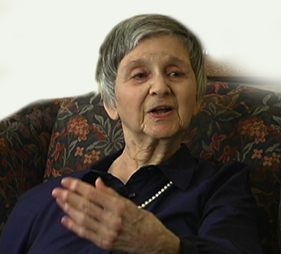
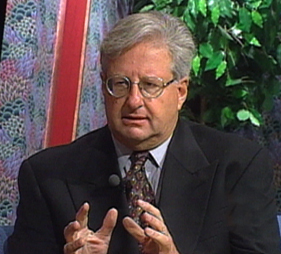
John Gottman on Couples Therapy

The Interview

Randall C. Wyatt: Welcome, Dr. Gottman. Thank you for being with us today and sharing your insights and work with our readers at Psychotherapy.net. Many therapists are familiar with your couple’s and marital research, which you have written about extensively in several books and articles. Today I want to focus more on the therapist’s end of it as much as the couple’s end of it, because this is going to be going out to therapists of all stripes. You have often quoted Dan Wile, who said that when you choose a marriage partner, you choose a set of problems, a whole set of difficulties. That doesn’t sound very hopeful. Is that as pessimistic as it sounds?
John Gottman: Well, it's interesting. It changes the way you think about marital therapy.

When we brought couples back into the laboratory four years later to talk again about their major issue in their marriage,

69 percent of the time the couples had the same problems, same issues, and they were talking about them in exactly the same way
69 percent of the time the couples had the same problems, same issues, and they were talking about them in exactly the same way, so that the instability in the marital arrangement was enormous. Still, 31% of the problems had been solved.

When we looked at the masters in marriage, how did they go about solving these solvable problems? That's when we discovered this whole pattern of really being gentle in the way they approached solvable problems – a softened start-up, particularly guys accepting influence from women, but women also said things to men, it was a balance, they both were doing it. The ability – again as Dan Wile says – to have a recovery conversation after a fight. So it wasn't that we should admonish couples not to fight but that we should admonish them to be able to repair it and recover from it. That became a focus of the marital therapy that I designed.

In terms of the unsolvable or perpetual problems, we found two kinds of couples, and the optimistic part is we found a lot of couples who really had sort of adapted to their problems.

It's not that they liked it but they were coping with it and they were able to establish a dialogue with one another about it. Okay, you're not happy about it but you learn you can cope with it, have a sense of humor about it, and be affectionate even while you are disagreeing, and soothe one another, de-escalate the conflict. And then the other kind of couple who is really gridlocked on the problem. Every time they talked about it, it was this meeting of oppositional positions; there was no compromising.

The Myth of Active Listening

RW: Many couple’s therapists, as you know, recommend “active listening” and “I messages,” and that’s pretty much the bedrock or the history of couples therapy in this country. Satir and Rogers, among others, advocated these approaches yet you’re critical.
JG: Well, I used to recommend it. The history of where it came from is that Bernard Guerney took it from Carl Rogers' client-centered therapy. Most of the techniques of marital therapy have come from extrapolations from individual therapy. Carl Rogers would be accepting and understanding and genuine and the client theoretically would grow and develop and open up.
RW: So each member of the couple could then be a therapist to the other person?
JG: Yes, suggesting that the same thing could be applied to marriages is a big leap because, first of all, there's a hierarchical relationship between therapists and client. The client is paying, the therapist isn't paying. Usually the client is complaining about somebody else, so it's very easy for the therapist to say: "Oh, that's terrible what you have to put up with, your mother is awful, or your husband, or whatever it is. I really understand how you feel."

But in marriages, it's different because now you're the target, and your partner is saying: "You're terrible," and you're supposed to be able to empathize and be understanding. We found in our research that hardly anybody does that, even in great marriages. When somebody attacks you, you attack back.

RW: “I feel you’re a jerk,” instead of “You are a jerk,” so the I statements are covert attacks?
JG: But that wouldn't really put the kibosh on active listening, because even if people didn't do it naturally, you could train people to do that. In the Munich Marital Study, a well controlled study, Kurt Hahlweg did the crucial test and he found that the modal couple after intensive training in active listening were still distressed. And the ones who did show some improvement had relapsed after eight months. It was the worst intervention in the Munich Marital Study! I'm not against empathy,
I'm just thinking active listening is not a very good tool for accomplishing it.
RW: Tell me why, in particular?
JG: Well, it kind of makes sense. Let's say my wife is really angry with me because I repeatedly haven't balanced the checkbook and the checks bounce. I keep saying: "I'm sorry, and I'll try not to do it again." So finally she gets angry and confronts me in a therapy session. What would it accomplish if I say: "I hear what you're saying, you're really angry with me, and I can understand why you're angry with me because I'm not balancing the checkbook." That's not going to make her feel any better, I still haven't balanced the damned checkbook! So I've got to really change – real empathy comes from going: "You know, I understand how upset you are. It really hurts me that I'm messing up this way, and I've got take some action." Real empathy comes from feeling your partner's pain in a real way, and then doing something about it.
RW: Doing what you can do?
JG: Yes, doing what you can do.
RW: You may not be a good accountant but you can try.
JG: You can try, right. So I think it's really kind of artificial to just say: "I hear what you're saying, I can understand that, that makes sense to me, and then we switch back and forth." Have you really engaged in empathy?
RW: You might have to work a lot harder to show somebody you understand, that you know what they’re talking about, and that it matters.
JG: So here's what the secret is, I think here's what couples do who really are headed for divorce. They take the problem and they put it on their partner: "The problem is you, and your personality, your character; you're a screw-up." That's an attack, and that's the fundamental attribution error that everybody's making: "I'm okay, you're the problem, you're not okay." So then their partner responds defensively and denies responsibility and says: "You're the problem; I'm not the problem."

What the masters do is they have the problem and it's kind of like a soccer ball they're kicking around with each other. They say: "We've got this problem. Let's take a look at it, let's kick it around. How do you see it? I see it this way, and we kick it around." And all of a sudden I can have empathy for your position because you're telling me what you contribute to the problem.

RW: One person has to break the cycle and then –
JG: And move that from defense mode into a collaborative mode.
RW: So have you found that if one person does that, some momentum starts going and things start changing?
JG: Rarely. It usually has to be both people. So one person is admitting fault and saying "I'm sorry" all the time, the other person is saying:
"Yeah, you're a screw-up. No wonder you're apologizing, you need to apologize, you should get down on your knees and apologize."
"Yeah, you're a screw-up. No wonder you're apologizing, you need to apologize, you should get down on your knees and apologize." And then eventually that person who's saying I'm sorry all the time feels pretty angry and pretty much like it's not fair, it's not balanced. There has to be a real balance, I think, or has to be a perceived balance, it has to feel fair.

"Yes Dear" and What Men Can Learn from Bill Cosby.

RW: I remember Bill Cosby having a father-son talk on the old Cosby Show. His teenage son said: "My girlfriend is still mad at me, I screwed up! I said I was sorry, but she won't forgive me. What can I do, Dad? I want her back more than anything." And Cosby says in his Cosby voice: "Son, you're not done til' she says you are done." His son dejectedly says: "Well, how many times do I have to keep apologizing, Dad?" And Cosby says: "Until she begs you to stop." This sounds similar to what has been called your "Yes, Dear" approach, which has been lampooned on the Politically Incorrect TV show. It sounds cliche, but what are Cosby and you really getting at?
JG: There's this great Ogden Nash poem that I think gets Bill Cosby's point, and I'll paraphrase it:

To keep brimming the marital cup, 
when wrong admit it, 
when right shut up!

It's a great line. It's about respect, it's about honor, and the idea of giving in, of saying I'm sorry, that really honors both people. So what we find is that, first of all, just like Bill Cosby said, the husband is really critical in this equation because women are doing a lot of accepting influence in their interaction. That's what we find and it doesn't predict anything, because many women are doing it at such a high level. But there's more variability in guys. Some guys are really in there and these are the masters. They're not saying: "Yes, dear." What they're really saying is: "You know, I can see some points in what you're saying make sense to me. And there's other stuff you're saying I just don't agree with. Let's talk about it." Now that husband is a different husband from the husband who says: "No. I'm not buying any of this!" Then the husband becomes an obstacle.

If you don't accept some influence, then you become an obstacle and people find a way around you and you have no power. So the violent guys that Neil Jacobson and I studied, they're always saying: "No!" to offers to communicate better. No matter what was said, they would bat it back like baseball players at batting practice. Wham! And they turn out to be enormously powerless in their relationships. I think that's one of the reasons they resort to violence, because they have no influence in any of their personal relationships.

RW: And in couple’s therapy, oftentimes when dealing with the aggressor, they’re told to basically give up all their power, both illegitimate and legitimate, and so then they’re powerless again, and the cycle begins anew.
JG: That doesn't work either. Morihei Ueshiba, the Japanese genius who invented Aikido, had that very point, his whole approach to negotiating conflict, which is you need to yield to be powerful.
RW: When pushed, pull, when pulled, push, and roll.
JG: That's right. So it's not that the guys were saying: "Yes, dear," as the parody went, and, sure, "I'm sorry, I'm sorry, anything you say." They were saying: "I can see this point; let's kick this around. Here's my point of view. I accept some of what you're saying but not all of it." Usually the wives will be saying a similar thing. And then they really start persuading one another and compromising and coming up with a solution.
RW: You’ve used “masters” several times, by that you mean?
JG: I just mean people who stay married and kind of like each other. I have a low criterion for mastery, and I actually do have a lot of awe for these marriages. We've studied couples who have been together 50 years. We've looked at masters from the newlywed stage through the seventies, the transition to retirement people who are 70 and 80 years old now. When I say they're masters I really sit down and watch them, and my wife and I try to learn from what we've learned in the research and acquired in our own relationship.

What Gottman Learned from His Own Marriage

RW: I was curious about that. In your own relationships in marriage and life, have you applied what you have learned personally in working with couples, and vice versa?
JG: Absolutely. For example, when Julie and I do our workshops with couples, one of the main messages we give is that we've found that really good marriages, people who are really happy, have terrible fights, where they're thinking at the end of the fight: Why did I marry this person?
RW: Not right before the workshop, I hope?
JG: Well, sometimes we have. We've had a fight the morning of the workshop and we're not talking to each other before the workshop. So one thing we did in the workshop is we processed our earlier fight in front of the audience. One time I got up in the morning and my wife had had a really bad dream about me. I was a real rotten guy in her dream. She was mad at me! I was being really nice to her in real life but in her dream I was a rotten SOB. So I try to be real understanding but she is still mad. And then finally I said: "You know, this isn't really fair because I didn't do this stuff" and so I got angry with her. She went in the shower and she's crying, and so I got in the shower and tried to comfort her. She wouldn't be comforted by me because now, I'd really made her angry. We talked about this in front of the audience for the first time: "We've had this fight, and this is not unusual. Periodically we have disagreements, stuff like this happens, and here's how we talk about it."

My wife and I once had a disagreement that took five years to resolve. It started out as a perpetual problem, a real big difference between us that wasn't reconcilable. We worked on it and we talked about it every day and we finally made a compromise. But it still wasn't fully resolved and five years later we actually solved this perpetual problem. It stopped being a problem, which happens occasionally in our research, too. But most of the time they don't get resolved at all. And somebody in the audience said: "Well, that's amazing that it took you that long. You guys, you're teaching this workshop." And we said: "Well, this is the way it is in good relationships."

RW: Why did it take so long? You’re both smart people, I am sure.
JG:
But she's so stubborn. You don't know what I have to go through. And that's what she says about me. That's what people are really saying.
RW: It seems there are three issues: prevention of fights when possible, how to argue when you do fight, and how to recover when it gets away from you.
JG: Exactly!

When Compromising Too Soon is a Problem

RW: You brought up the need to compromise. Dan Wile (see Couples Therapy: A Non-Traditional Approach) suggested that sometimes people compromise too soon even when they feel strongly about an issue. By the time they talk, neither one of them will compromise anymore. Each person has already compromised once, though their partner does not know that or appreciate it. And then both people come across as more stubborn then they actually are.
JG: Right, I think that's a very good point. I think Dan Wile is a very wise person, a wonderful therapist, and most of his insights are supported by the research I do. We have him come up to Washington every year and do a workshop for our therapists at our marriage clinic. I think one of the great things that Dan Wile said is people shouldn't compromise so much.
RW: Yes, that sometimes compromise is a solution that becomes a new problem.
JG: A lot of times they're giving up their ideals, they're giving up the romance and passion of their selves. They've giving up something really essential. That's what the secret is to ending the gridlock in these perpetual problems; to realize that there's a reason why people can't compromise. They have a personal philosophical ideal that they're holding on to and it's very essential to who they are as a person.

And

if you can make the marriage safe enough, you can take those fists and really open them up, and there's a dream inside of each fist, there's a life dream.
if you can make the marriage safe enough, you can take those fists and really open them up, and there's a dream inside of each fist, there's a life dream. When people see what the dream is and what the narrative story is, what Michael White would call the narrative behind it, the history of this life dream, usually both people want to honor their partner's dream.

RW: They may not be able to go along with it all, but honor is different than just kowtowing.
JG: Exactly. There are many ways of honoring someone's dream. You can support it, understand it, financially support it, or you can talk about it.
RW: Here’s another area where you go against the grain of couples’ therapy tradition. Often couples therapists begin their books criticizing romantic pop songs or idealistic romance movies or novels. You say “Don’t give up those dreams, don’t give up your fantasies, you may not get them all but don’t give them up.”
JG: I'm basing this a lot on the work of Don Baucom who has looked at this idea: Is it true that we have too high of standards and that's why we're unhappy and so should we lower our standards? He found just the opposite. He found people who have idealistic standards, who really want to be treated well and want romance and want passion, they get that, and the people who have low standards, they get that. It's better to really ask for what you want in a relationship and try to be treated the way you want to be treated.
RW: You’ve critiqued two pillars of the couple’s therapy accepted truths. Active listening is not the be-all/end all to accomplish empathy, and romance and hopes should not be cast aside as merely wishful thinking. So how do therapists respond to this? Are they shifting? What’s your perception?
JG: I think there's a certain kind of therapist that's real interested in what I have to say, those interested in scientific validation for ideas. Not every therapist finds it appealing. I've tried to create a psychology of marriage from the way real, everyday people go about the business of being married, instead of taking it from psychotherapy.

What Works in Couple’s Therapy?

RW: You’ve done in vivo research, looking at couples in their homes, in the lab. Now you are doing the outcome studies. How does it look?
JG: We're now doing the outcome studies to see whether it will work. What came out of this way of studying normal couples, everyday couples as well as the masters of marriage, was a theory, and I think that's what therapists find useful. Pieces of it have some evidence, but it still needs more confirmation. For example, if you know that the basis of being able to repair a conflict is the quality of the friendship in the marriage, then
you can individualize therapy for each couple and that's the task that every therapist is confronting.
you can individualize therapy for each couple and that's the task that every therapist is confronting. We confront it every day in our consulting rooms.

We look at three profiles in every marriage – the friendship profile, the conflict profile and the shared meanings profile – which is creating a sense of purpose and shared meaning together. Then on the basis of that we think: Well, they need this kind of intervention and that kind of intervention, but it really emerges from the process in the consulting hour from what the couple brings.

RW: Many therapists want more than a cookie cutter type of therapy? they want to individualize their work with couples vs. using only one theoretical model.
JG: That's right. The interesting thing to me is that my research supports a systems view, that really is husband affecting wife and wife affecting husband in a circle. The existential view is supported because you can't just look at what these gridlock conflicts are about; you have to look underneath at what the life dream is. Then these dreams have narratives, so narrative therapy is supported, and they usually go back to the person's childhood and they go back to have symbolic meanings about the way they've been traumatized in other situations, so a psychodynamic point of view is also supported. You get a behavioral view supported because you find when you look at the evidence that often the best way to effect change is changing the behavior rather than trying to change the perception of a person, and perception often follows behavior. So all these different kinds of therapies are supported by this research.
RW: There’s something for everybody to be happy with.
JG: You have to really take a little from everybody to do good couple's therapy.
RW: When you went into couple’s research, you had certain views of marriage and relationships. Which ones were debunked, and which ideas do you still hold on to, despite the research?
JG: Well, I went in with an open mind. When Bob Levenson and I started doing this research, we decided on a multi-method approach. We thought perception must be important, so we showed people their videotapes and interviewed them about what they saw on their tapes. We interviewed them more globally about the history of their families – multi-generational perspective must be important. Asked about their philosophy of marriage, how they thought about the conflict and what their worldviews were about their relationship, what their purposes were. And we thought emotion must be important, so we scored facial expressions and non-verbal behavior and voice tone. We tried to look at everything. We looked at couples in all these contexts, whether they were conflicting or talking about how their day went or a positive situation, with no instructions at all, and we tried to see what would emerge from the data.

I thought active listening would be powerful. People just didn't do it. For a long time I thought we were getting evidence that it was happening, but it wasn't until I started doing workshops with clinicians that I couldn't find any examples of it. I went to my observational coding team: "Help me find some examples," and they went: "Oh, God, we don't know how to break this to you but we haven't found any examples." And I said:

"Why didn't you tell me?" and they said: "Well, we didn't want to hurt your feelings." So I was blown away by it.

RW: Researcher and assistant bias?
JG: That's right. So my staff was really protecting me. I saw that I was wrong about this and had written about it in print. I really had to eat my words. I think it's important to do that, to find out these things. I also thought that what would really work in conflict is people being honest and direct. Confronting each other saying: "You know, you do this and it really makes me angry," and the other person would not get very defensive. Boy, that wasn't true. The masters were not doing a lot of this clashing and confronting stuff. They were softening the way they presented the issue and giving appreciations while they were disagreeing.
RW: They can also hear some feedback. They weren’t just closed to it.
JG: They weren't closed to it, because the partner was using humor: "I appreciated you taking that drive, it was so nice and I know you were tired." And the other person wouldn't see that as gratuitous flattery, and say: "Thank you very much," and really appreciate those comments.

Happy Marriages: What are They Made of?

RW: Is this something that is in these happily married people before they were married? Did they learn it? It is part of their family background?
JG: Well, we know a little bit. We know that personality, the enduring qualities that people bring to their relationships accounts for about 30 percent of it, how conversations begin could be a moodiness and so on.

But then there's the fit between two people. Let's say I select somebody to marry and she's kind of a moody person, but it doesn't really bother me that much, I don't take it personally and we fit in terms of this. If she had married somebody else and if she comes in moody and all of a sudden they take it personally, that doesn't work.

Nathan Ackerman talked about this a long time ago in the thirties, saying that two neurotics can have a happy marriage if they don't push each other's buttons and they're respectful about what Tom Bradbury calls enduring vulnerabilities.

That's one thing we do in our therapy is really try to find out what are the enduring vulnerabilities in these two people, how does the marriage respect that?
That's one thing we do in our therapy is really try to find out what are the enduring vulnerabilities in these two people, how does the marriage respect that? How can we, in this marriage, not trample on those sensitivities so that person doesn't go nuts?

RW: It sounds like there’s sensitivity to each person’s vulnerabilities and meanings and not just an open-ended kind of experiential therapy. In the same way, how can the therapist appreciate what works for the couple already? It reminds me of – it will sound far afield, but since you mentioned baseball, stay with me – the old Boston player Carl Yastremski used to have his bat way up there, and some coach tried to change it. Maybe he holds his bat funny but it works for him. For couples, I fear that sometimes therapists have a view of just how things should be. The couple’s doing fine, it’s not a problem for them, and yet we’re trying to fix it, the problem that doesn’t exist.
JG: I think that's true. I think a lot of us come in with a sort of model of what good communication or intimacy should be, and it doesn't fit what this couple wants or desires or needs. We have to be very flexible and be able to move from one system to the other, and really speak in their language as well.

Future Breakthroughs?

RW: What’s your next challenge in research? I see you have a book out on domestic violence and what works in couple’s therapy (When Men Batter Women: New Insights into Ending Abusive Relationships). What’s the next breakthrough on the horizon?
JG: The real challenge, I think, is to try to develop a therapy that fits certain kinds of people so that we're not doing the same thing for every couple. So we can do an assessment and say: "Oh, we need this kind of therapy for that couple, and this other couple doesn't need that, they need something quite different." We need to modify therapy to fit each particular couple.

And preventing relapse is the other challenge. We're trying to develop preventive approaches. We're doing things like arranging birth preparation classes to prepare people for what's going to happen for when the baby comes, because 70 percent of the time marital satisfaction goes down the tubes. We know marital conflict increases by a factor of nine.

Extra-marital affairs are another area where there hasn't been a single controlled outcome study, trying to help couples get over non-monogamy. At least if you're on the science bus you want more research-informed therapies. You can select from the clinical literature but it's hard to know which treatment approaches work best. Shirley Glass's is the one I really favor because it's based on more research. Another issue is co-existing problems like depression and marital trouble, or alcohol. O'Farrell and MacCready have approached alcoholism and marital distress and created an integrated program focusing on both issues in the same therapy; both were more effective.

RW: What is the most gratifying part of your work as a researcher, couple’s or marital therapist?
JG: I'm really in this for knowledge. The deal I made with God is that I wanted to understand things: how relationships work, how to make them work, and I'm hoping that eventually this knowledge becomes widespread and well known. Just like we don't know very much about the guy who invented Velcro, we just use it. One of the things that I've really learned in the past five years is to make research and therapy a two-way communication. That's what needs to happen because up until now therapists have been on the firing line – developing these ideas in isolation.
RW: One thing that people enjoy about your books and your work is that it does bring research from the ivory towers of academia to therapists, to other people, in an everyday language.
JG: I think it's absolutely true that if the people come alive from the theory, then you know that it makes some sense. If you can actually use the ideas and put them into practice, in some concrete way in your own relationships and in work with clients, then you know that maybe it makes some sense, it's useful.
RW: That would be a good thing. Thanks for taking the time to talk with us today.
JG: Thank you.