Repairing Self-Neglect in Clients with Complex PTSD

The Somatic Legacy of Complex Trauma

People who experienced complex post-traumatic stress disorder (C-PTSD) or ongoing ‘complex’ childhood trauma consisting of neglect, abuse, and invalidation, develop strategies and defenses designed to make sense of the painful truth that their caregivers failed to provide essential emotional and physical attachment needs. These protective strategies, though geared for survival, become obstacles to overall health, self-expression, healthy relationships, and fulfilling careers.

Clients who endured abuse or invalidation during childhood developed exquisite sensitivity to external cues that helped them manage chaotic or unpredictable environments. This hyper-attunement to external inputs, a kind of hypervigilant codependence, evolved while clients were simultaneously repressing internal cues like hunger, thirst, fatigue, toileting, and comfort as a result of needs repeatedly going unmet. It becomes a survival strategy to not feel or acknowledge them. By having suppressed their basic physical needs, these clients experience ongoing internal tension expressed as anxiety and depression, dysregulation, and codependent behaviors.

Growing up surrounded by reactive adults who did not provide functional emotional modeling, clients’ emotional tools are restricted. They became over-focused on external sources of validation which contribute to ongoing anxiety and reactivity. This situation fundamentally disrupts clients’ capacity for implementing self-care and other functional behaviors necessary for a healthy life.

Developing in an unsafe environment, clients’ ongoing somatic experience is of underlying danger and unpredictability. With porous boundaries and distorted perceptions, they look for confirmation of this bias in every interaction, are poised to identify danger, and experience unbearable flooding. This frequently leads to hypersensitivity to criticism and rejection along with perfectionistic tendencies as a defense against chaos.

In multiple cases, I have found that encouraging these clients to pay attention to and satisfy cues like hunger, thirst, physical discomfort, and toilet needs as a primary intervention is transformational. Providing a supportive container to address their needs evokes a crucial new experience in which to foster change.

In session, I routinely encourage clients to make themselves physically comfortable, whether we meet online or in person. My office has yoga mats, pillows, a physioball, chairs, and a long sturdy Pilates table. Throughout sessions, I cue them to check in with their sensations using direct questions with non-threatening words like, “what’s coming up for you now,” “are you still comfortable or do you need to move,” “feel free to adjust, move, or make yourself more comfortable,” “what would feel safer in this moment?” My aim is to highlight internal sensations and give explicit permission to foreground their physical needs over anything else—something that their upbringing did not allow or was not safe for them to do.

Because breathing is foundational to life, breathwork can also be a powerful tool for addressing dysregulation, though it requires careful implementation with Complex PTSD clients. Some clients may find breath-focused exercises triggering due to their trauma—for instance, one of my transgender clients rejected breathwork entirely due to traumatic experiences in a religious cult.

I begin with gentle, non-invasive approaches like observing the difference between nose and mouth breathing to help regulate anxiety. From there, I guide clients to simply notice physical sensations: the feel of air moving through their nostrils, the natural expansion and release of their lungs and abdomen. To demonstrate healthy breathing mechanics, I use a Hoberman Sphere to illustrate what I call “three-dimensional breathing”—showing how the thorax can move in all directions: length, width, and depth.

While advanced breathing techniques like those used in Kriya Yoga can create profound physiological and psychological changes through specific patterns of inhalation, exhalation, and breath retention, my primary goal with CPTSD clients is more fundamental. Simply helping them feel safe enough to take full, unrestricted breaths often begins to release long-held patterns of physical tension and armoring.

Attending to the Body in Therapy

A 23-year-old man in graduate school was recently diagnosed with bipolar disorder and had a history of physical abuse. In session he would frequently jiggle his leg. I noticed this becoming more intense when we discussed an upcoming exam. I used immediacy to bring his attention to his movement and invited him to tune into what his leg might be saying. He expressed anxiety and wanting to flee. I said, “feel free to run out of the room. I will be right here waiting for you whenever you are ready to return.”

Though surprised, he got up and left the room. A few minutes later, he came back, grinning. That completed escape and safe reception upon his return was a lynchpin to his future empowerment and ability to connect with his deepest desires. Further work around hunger ignited a passion for cooking that helped him solidify connections with friends.

During a session with a 19-year-old non-binary client, they revealed that at work they were so overburdened they didn’t urinate for up to 8 hours. When I expressed surprise and concern, they reported their boss often neglected to allow breaks. Not only due to the questionable legality of this situation, but due to this client’s habitual self-neglect, I encouraged them to insist on being allowed to take care of their bathroom needs.

In case clients don’t feel empowered to stand up for their needs, I encourage them to blame it on me, their therapist. In this way, therapy helps them repair personal boundaries caregivers often neglected to help them build. Over the course of our ensuing sessions, this client reported on the transformation they experienced because of this new awareness. Not only were they able to stand up for themselves in other interpersonal situations, they went on to become stronger advocates for animal welfare.

A 45-year-old woman was seeking therapy for chronic illness and overwhelming guilt around leaving her mother and sister, both addicted to methamphetamines. By attending to her basic physical needs, especially hunger and rest, she was able to reframe her “abandoning” of her family into the recognition that as a child, she was abandoned by them.

Paying attention to basic physical needs begins to reverse codependency dynamics of over-focusing outward and under-focusing inward. According to codependence expert Nancy L. Johnston, external focus and emotional suppression are two of the four hallmarks of codependent behavior, along with self-sacrifice and interpersonal control.

***

Helping clients become aware of biological needs is a critical first step in healing. Empowering them to satisfy these needs is the next step in helping them feel safe and grounded enough to pursue life satisfaction. Providing validation for these unmet physical needs can, at times, be challenging. As much as possible, I guide clients in session to check in with their inner experiences. I am repairing the attachment function of attending to a child’s most vital requirements.

My experience has taught me that in cases of childhood neglect and abuse, not only is there the tension of feeling needs but also accompanying grief, shame, and rage elicited by not having needs met by caregivers. Validating and normalizing having needs while providing opportunities to feel and satisfy them mitigates fears evoked by vulnerable feelings. Healing trauma through this attention can repair the split clients were forced to assume when they buried or negated crucial survival needs.

Questions for Thought and Discussion In what ways do you resonate with this author’s premise? In what ways do your PTSD clients neglect their basic bodily needs? How do you integrate these needs into your therapeutic work with these clients?

Awareness: Attunement, Access, and Affirmation

The key is to focus in on the intuition you do have, to pay attention to ways that you may be using it in your life, in your profession, in your interests, and in your dreams….
—Mona Lisa Schulz

Flowing into the Psychic Mind

Awareness of the diamonds contained in the psychic mind allows you to affirm its vital resources and attune to its ongoing flow of information. As Dr. Milton Erickson taught, we all have the ability to access and utilize the resources of the unconscious mind. The first step is to understand how to tune in and recognize the precious gems of intuitive wisdom. In understanding the use of the ACE schema, it’s important to remember that each step contains dynamic concepts made up of ideas and processes, characteristic phenomena that you can come to understand and learn to develop. Let’s start with the phenomenology of the first concepts of the schema:

A: Access, Attune to, and Affirm your natural psychic gifts.

I have identified six key phenomena of the first “step” of the ACE schema: accepting, absorbing, dissociating, listening/sensing, receiving, and interpreting, aka “reading.” As you study and use ACE, you may identify even more phenomena. I suggest that these features, although presented as linear, will overlap as you develop your intuitive skills. Let’s start with awareness and acceptance that psychic ability is part of our human makeup — that it is a valid way of receiving knowledge, and that it can make you a better clinician.

Becoming absorbed into the inner mind is something we all do on a regular basis. Absorption is as natural as spacing out in front of the TV, intently focused on playing a game on your computer, or relaxing in a hot tub. Meditation, progressive relaxation techniques, prayer, and hypnosis all involve the quieting of the mind, a kind of “zoning out” that creates entry to a state of inner awareness. When thus absorbed in a state of mindfulness, one is somewhat dissociated, less consciously aware of what is going on in the outer environment, more deeply and narrowly focused on one’s chosen object, and more deeply attuned inside.

Although this type of deeper attunement often happens spontaneously, you can actually learn how to become more consciously tuned to your inner world by practicing the felt experience of being in a receptive state. Your preferred method of stilling your mind can be a practical and useful way to enter a state of receptivity; however, a relaxed state is not mandatory for accessing intuitive knowing. Intuition can also be available when you are in a state of sympathetic arousal due to some exciting situation, positive or otherwise, including the variables of a therapy session when intuition may be extremely helpful. As will be demonstrated shortly in the case of Tom, access to intuitive knowing can be a go-to consultant when you are immersed in the variations and variables of a clinical experience.

Listening, Sensing, Receiving, and Interpreting

Take a moment to think about a time when you “just knew” the right thing to say or do in a session. Was it a fleeting thought of intuitive wisdom that helped you formulate an effective intervention, or a hunch about a correct diagnosis? Can you recall times when after following a gut feeling, you congratulated yourself on the way your clinical acumen could just “sense” what was needed?

As a therapist you probably already have a pretty good sense of how to “read” people, how to interpret and be guided by minimal cues. You may be adept at imagining contextual aspects of others’ lives by noticing small details of word choices, postures, and expressions. Observations such as these and similar experiences of knowing are examples of sensing, listening, receiving, and interpreting, some of the phenomena of attunement and access that are pivotal to the magick of clinical creativity.

Consciously putting yourself into a receptive state for intuitive knowing can make clinical insights, ideas, and interventions more available, and make you more creative. As you become familiar with the way your mind receives information and what related sensations occur in your body, you can memorize and anchor the felt experience of cognitive, emotional, and sensate phenomena of your receptive state. Practicing in this way will help you develop psychic “muscles” that you can flex with fluidity and authority. You will become better equipped to help clients access their own unconscious resources with greater trust and comfort, and less guilt and shame.

Welcoming Wisdom with Easy Attunement

If you choose to use your psychic wisdom to improve your clinical work, you may or may not hang out a flashing neon hand at an amusement park. However, after reading this book, you might decide to try your hand (or your mind) at an intuitive consultation, also known as, a psychic reading. In fact, doing intuitive readings can be fun and, as I have found, can also be very useful for certain clients and certain situations.

In whatever way you choose to utilize your intuitive ability, the following short script can be used to practice attunement and access. This can be done anywhere, and with practice you will become adept at recognizing and welcoming the way psychic knowing emerges into the wisdom of your conscious mind.

Choose a comfortable spot. Close your eyes if you wish or gently let them go out of focus or be blurry.

Gently breathe and when your mind is quiet in the right way for you, take a little deeper breath and count down slowly from 10 to 1. By inhaling gently and exhaling smoothly, you can realize how easily your body can settle and your mind can be free to roam into the unconscious mind and receive guidance.

Pay gentle attention to your breathing, feeling tension leaving your body, and in whatever way feels right to you, notice the way your mind is becoming receptive to images, ideas, and sensations. Good.

If unwelcome thoughts come in, return attention to your breathing or counting, continuing to pay attention to what comes in and give yourself permission to let go of what is not welcome. Very good.

As you continue to breathe normally and rhythmically, you can trust that you are entering a receptive state that is just right for you.

Now, without struggling or attempting to reach a conclusion, you can imagine allowing your senses to receive information as thoughts, feelings, impressions, somatic sensations and intuitive hunches enter your mind. Affirm that you will realize which ideas will be most useful. All you need to do is to notice. Good.

If there is a specific issue you wish to resolve, you can project your problem onto your mental screen. Visualize possible courses of action and potential outcomes. Allow your mind and body to imagine scenarios and metaphors that later you can consider for possible solutions. Excellent.

When you are ready, reorient your senses to your current circumstances. Affirm that your psychic mind has intelligence you need for all situations. You can remember whatever needs to be remembered or forget what needs to be forgotten.

When you’re ready, take a gentle breath and come back feeling refreshed all over. As you go forward, your psychic mind can offer continuing intelligence that may come as a subsequent hunch, a feeling, a metaphor or in some other form that you will realize. Affirm that this is so. Good job.

When we include guidance from our intuition during a therapy session, we are better able to help the patient attune to the unique resources of their own psychic mind. The case of Tom offers an example of the way in which insight from the psychic dimension gave me access to an idea for utilizing Tom’s intuitive potentials for neurobiological and physiological shifts, and actual somatic and emotional improvement.

The Doctor Makes a House Call: The Case of Tom

A grandfather and a retired businessperson living with HIV, Tom is down-to-earth and practical. While he might not appear on the surface to be a candidate for a psychic healing session, Tom’s health issues, his familiarity with my integrative, intuitive work, and our solid therapeutic alliance opened an opportunity to help Tom with his anxiety.

Having seen Tom through HIV diagnosis, stabilization on medical protocols, and successful recovery from several other serious health issues, I was only mildly surprised when he announced: “My doctor found bleeding during the sigmoid exam. I’m doing my best to manage the anxiety, but I’m scared, and there are a few weeks before the definitive procedure. I’m keeping busy, taking care of the grandkids, and going to the gym, but I can’t shake the feeling that this might be it.”

Given Tom’s ongoing health issues, I realized that his “This might be it” was very frightening. It was not my job to provide concrete answers or reassurance, so where would I go with “It?” At moments when there are complex intricacies, such as in Tom’s situation, I think of Dr. Erickson’s permission to utilize everything. Or as Jeff Zeig says to be in a “state of readiness” to use whatever the client brings as well as what comes into the therapist’s mind.

In what seemed like only seconds, my mind was filled with ideas. I could not give concrete information, but could I offer Tom something to relieve his anxiety, to tamp down his sympathetic nervous system? It occurred to me to venture outside the traditional box. If not specifically curative, the approach might be soothing for Tom. In the intuitive flow, memories of my great uncle came to mind.

Handsome and over six feet tall, with a strong jaw and a steady, reassuring stride, Uncle Abe had been a doctor in the city where I grew up. When I was a little girl, Uncle Abe made house calls, arriving confident and authoritative with his stethoscope and his otoscope (and a cache of lollipops tucked into his black bag). When deep in diagnostic considerations, Abe’s cheek muscles gave a teeny twitch. Uncle Abe’s presence, his gentle, caring reassurance, and our knowing we would get to pick a lollipop left my sister Gini and me feeling better and trusting we would get better.

Over the many years since Uncle Abe had been gone, I had often channeled him as a healing spirit guide. Now, perhaps a psychic visit from Abe could help Tom. Because Tom was aware of my psychic work, I felt fairly sure he would be open to having my uncle make a channeled house call. I hoped that an uplifting experiential moment might provide an alternative mental and emotional focus that could comfort Tom and replace any obsessive thinking about this latest health issue.

I asked Tom if he would be open to a visit and a healing from Uncle Abe. Intrigued, he agreed and settled into the couch as I induced a gentle hypnotic trance. Seeing Tom responsively absorbed, I said:

“I am inviting my spirit guide Uncle Abe to join us now.

“I welcome you to picture him in your own way, and when ready, imagine Uncle Abe gently placing his hands on your shoulders. As you feel his touch in your way, you may notice a shift in your breathing and a deepening awareness of sensations in your body.”

“I feel warm all over,” Tom responded. “I feel something like a gentle pressure around my pelvic area. It’s comfortable, healing, and warm. It’s okay.”

“Good,” I affirmed. “Now you can continue to breathe normally, just noticing this warm, healing sense of Uncle Abe’s presence and his placing his hands on you. Spend a few moments imagining and sensing in your body the way Uncle Abe’s hands can elicit feelings of comfort that can spread into any part of your body. In a few moments I will welcome you to return gently from trance, coming back refreshed and able to remember these feelings. You can memorize the way it feels to have healing hands laid upon you, and you can bring back these impressions any time later, as you desire.”

Coming back, Tom reported his anxiety to be relieved and his sense of hope improved. I asked him to call me after his procedure.

When the call came, Tom’s bright “Hello” said it all.

The doctor, actually somewhat surprised, had found no evidence of bleeding or pathology. He had pronounced that Tom was fine.

“I think it was that session we had with your uncle!” Tom asserted.

And I’m not sure I would disagree. Who knows really? Was Uncle Abe really there or was it the psychic wisdom in Tom’s own mind that could feel the healing power of imaginary hands the way you can taste an imaginary lemon?

I explained it this way to Tom: “Uncle Abe served as a channel for the psychic, somatic intelligence inside of you. Your body and your mind were the real medicine men. With your psychic mind allowing the felt sense of Uncle Abe’s touch, your body experienced whatever healing was in the imaginary hands, drawing on your body’s innate capacity and intelligence for improvement. Now as you absorb the memory of this experience into your mind/body, you can call upon Uncle Abe’s psychic medicine as many times as you wish.”

Dynamic Magick: Putting Ideas Together

Whether the vast resources of the inner mind are called the unconscious mind, the wise mind, the intuitive mind, or the psychic mind, the mind-that-knows is a font of wisdom and a vital feature of your enterprise as a clinician.

By listening, sensing, receiving, and reading you will have greater insight about what is going on with the client, what is happening within yourself, and how to best intervene in a given session. You will become more effective at helping clients choose more effective coping options, increase stress management capacity, experience problem-solving epiphanies, find relief from self-defeating patterns of thinking and behaving, and increase creativity.

Herb Dewey taught me to use psychic ability as part of counseling skill. Herb loved the drama of the magick, which he called the shmaltz or the pizzazz. And he was serious about the counseling, about helping others in an accepting, non-threatening, and non-shaming way. Similarly, Milton Erickson put great value on respecting all messages from the client and never taking away choice.

My intention is to utilize everything I have as a therapist, including aspects of psychic arts along with clinical skills in every session, based always on the needs, beliefs, and personal maps that a client brings in. Whatever your objectives may be, utilizing your intuitive abilities can empower the therapeutic magick that will motivate your clients to heal from inside out.

If it is your goal to help clients use their own inner resources for mental, emotional, or behavioral healing, why would you not want to attune to and access the healing wisdom available from your own intuitive mind? And why would you not want to use everything you have available to help yourself be more therapeutically effective and help your clients feel better?

As you affirm and access the breadth and depth of your psychic knowing, you will become more attuned to the unique personalities, personal world views, and therapeutic needs of your patients as they absorb and integrate the wisdom you offer. The following short excerpt from the case of Emily presents another example of utilization of the psychic mind.

Emily Tunes In

Trying to manage a large men’s store while dealing with a variety of personal health and family issues, Emily had been in a chronic state of high velocity distress. However, on this particular day she surprised me, coming into the office with light and lively steps. And she was laughing.

“I was at my wit’s end last week at the store,” Emily reported. Remember how we channeled my mother when my husband was sick? Well, I decided to channel you! I imagined sitting with you here in the office, but I switched it. I made me you and you me. Then I put you into that place in the inner mind where you, or I, or both of us could just let it all go, like we do when we have a good laugh together. So, what I am saying is that it was just like the time when John was in the hospital. Remember how we pictured him having no blood clots — and the doctor was surprised that the ones they thought he had had gone away? Remember how upset I was? You had me channel my mother and she told me that I was going to be able to handle everything — and I did handle it.

“Well, this time when the store was crazy, I channeled you and you said I could handle it. And it worked, I handled it all — and I feel great!”

***

Intuitive attunement and receptive access each have a particular phenomenology. In the same way, conscious contemplation of unconscious resources and cultivation of the experience of receptivity will make you even more adept at tuning into and accessing the virtually limitless flow of information that comprises your psychic mind — and your own brand of magick.

This essay appears as chapter 7 in, Other Realms, Other Ways: A Clinician’s Guide to the Magick of Intuition, published by Iantella books, and reprinted with the permission of its author, Bette Freedson.?  

What Root Canal Surgery Taught Me About Being a Therapist

Although I don’t have a full blown case of dental phobia, suffice it to say that I wasn’t looking forward to my root canal surgery that morning. I maturely prepared for the morning’s activity by queuing up a psychotherapy podcast, thinking that listening to it would distract me from the unpleasant sounds and smells of the offending tooth being drilled. While the endodontist had previously assured me that I would feel no pain, my eternal skepticism left me in doubt.

Like what you are reading? For more stimulating stories, thought-provoking articles and new video announcements, sign up for our monthly newsletter.

As the procedure progressed, I found it increasingly difficult to relax—if relaxation is even possible during a root canal. My garbled responses and feeble hand gestures were futile attempts to communicate with the surgery team, and it quickly became clear that my brilliant distract-by-podcast plan wasn’t quite as practical or effective as I had hoped.

So I removed my AirPods, and without a conscious choice, found myself turning my attention inward, focusing on my bodily sensations, and trying to relax as deeply as I could. Although I consider myself fairly attuned to my somatic being—and I use that attunement in my therapeutic work—the length of the procedure and its intensity motivated me to increase and deepen my level of focus.

I first tuned into my breathing, and then into what I can best describe as “energy flow”—although as I write this I worry it will sound a little too “woo-woo.” But whatever one wants to call it, it is something I regularly experience quite viscerally: the sense of energy flowing through my body, often stopping or disappearing at certain locations, such as my waist or hips when seated, but at other times like a creek which goes underground only to resurface later, reappearing in my calves or ankles.

I attended to this current of energy, noticing its ebbs and flows, and its associated sensations: pleasure, tension, openness or closedness, as well as the degree to which I was fully immersed in the experience. Then I began to have images and associations, most particularly related to table tennis, a sport which I’ve been playing for a few years (switching from tennis after developing tennis elbow) and had just played the previous evening at a local club. I’ve been getting coaching from an elderly Salvadoran man who played on his national team half a century ago, and am struggling to take the nice, relaxed forehand topspin shots that I can occasionally execute during our practice sessions and bring them into the matches at our club, only to find myself tightening up during my stroke and hitting the balls into the net. Yet as much as I tell myself that the stakes couldn’t possibly be any lower—what difference does it make if I win or lose one of these matches?—I find it extremely hard to change these habits. And there I was, in that chair, trying to do pretty much the same thing at the receiving end of the endodontist’s drills, picks, and pokes—focus, relax, let it happen.

And here my mind goes off in a number of directions. First, how hard it is to make any changes, and how the essence of who we are is so embodied. Think of anyone you know, and then how they move, whether it’s walking, dancing, or doing one sport or activity. If you see them again 10 or 20 years later, you can probably recognize them just by these movements alone.

And then I think about how we as therapists receive just about zero training in attending to the body, both our own and those of our clients. Sure, we may have been taught at one point how to lead a client in a relaxation or body-focused mindfulness exercise, but that’s likely about it. That’s barely scratching the surface. I realize that in recent years I’m much more attuned to my own bodily sensations when I am doing therapy. Sometimes it’s in the form of an emotional response in my heart or chest or throat, which I assume to be some form of empathic resonance. Often I share it with my client, not as a definitive statement, but merely as an observation, often with a question such as “I notice I feel some emotion swelling up in my chest; am I picking something up from you?” Other times I don’t share it but make a mental note for later consideration. This may take the form of something like, “Hmm, I find myself feeling ___________ (fill in the blank: softer, more vulnerable, tired or restless) with this client and wonder what might be happening between the two of us.”

There are indeed various somatic-oriented “approaches”—but these are far from mainstream, or from being taught in most of the grad programs which focus on “evidence-based” therapies. But there is no firewall between mind and body, and it’s patently absurd that therapeutic approaches should be Balkanized into separate fiefdoms: cognitive vs. emotionally focused vs. somatic. One hears about integration and flexibility as being hallmarks of mental health; if so, we therapists and our battles between theoretical schools aren’t doing a very good job of modeling this.

As I finish this blog a few days later while waiting in the San Francisco airport for our flight to depart after a four-hour delay due to leaking hydraulic fluid, I am grateful that this glitch was discovered on the runway before takeoff. I check into my body and feel the impending relaxation that comes with vacation, despite the false start on the runway. My shoulders are relaxed, my ankles warm, and I feel the energy flowing despite a slight constriction in my crossed legs. I notice a slight sadness, or perhaps melancholy, but am not sure what that’s about. Maybe I’ll sit with that a bit and see what I discover. Or maybe it will just fade away and remain a mystery.

Dual Aspect Monism: Centering Psychotherapy on Mind

“My brain needs to be fixed.” My prospective client looked down, then up, to search my eyes.

The statement is deceptive in its simplicity. I feel an involuntary retreat from almost all the multiple layers of meaning I can fathom for the utterance. I don’t think my client’s neuro-chemical functioning is the cause of his pain. I think I can help him more effectively if we explore his mind.

Back in the day, there was body, and there was mind. Medical practitioners treated bodies. Therapists and analysts treated minds. Every binary hides a hierarchy: the people who treated bodies were highly respected. Those who treated minds were considered, well, a little off.

Like what you are reading? For more stimulating stories, thought-provoking articles and new video announcements, sign up for our monthly newsletter.

Then people started realizing how much mental and physical functioning affected each other. They can’t be completely separate. The obvious solution (that preserved the hierarchy) was that mind must be an epiphenomenon of brain. Somehow, matter (brain) behaves in a way that creates a non-material phenomenon (mind). The battle cry became “mental illness is disease of the brain.” If you believe that mental illness is a disease of the brain, the way to fix it is to alter the brain. Chemically, surgically, magnetically, whatever. Talk therapy in this scenario is a poor substitute for direct neuro-chemical intervention, and one glorious day we will remember psychotherapy as a treatment analogous to applying leeches.

Except…logic dictates that the effect cannot impact the cause. The effect cannot precede the cause. So, if mind is caused by body, then mind cannot, logically, affect the body; a change in mind cannot precede a change in the body. And yet we know that it does. So maybe mind exists separately from the body after all? But if they’re separate, we’re still left with the problem of how two completely separate things can interact with and affect each other, as we know mind and body do.

As an ontological position (a statement concerning the nature of reality) offered by some philosophers of mind, Dual Aspect Monism offers a simple solution. The position is that there is a single reality that has two equal and irreducible aspects: mind and matter. Prior to the development of Dual Aspect Monism, there were basically three competing views concerning what is real. The dominant view today is Material Monism. From this perspective, reality is believed to be that which has physical properties. If you can’t measure it, it isn’t real. From this perspective, mind is the product of physical (neuro-chemical) activity. Idealistic Monism is the view that what is real is mind, and that matter is an illusion generated by mind. The third ontology is Dualism, which posits that mind and matter are both real, but they are completely separate realities. If they are completely separate realities, it’s hard to imagine why changes in one covaries with changes in the other.

According to Dual Aspect Monists, there is a single reality that is both physical and mental. Neither of these aspects is derived from or reducible to the other. These aspects are like two sides of a coin: you can’t make the head side of the coin square without altering the structure of the tail of the coin. But this does not mean that the change in the head caused the change in the tail. It is the change in the coin that changes both the head and the tail. When we use this analogy to understand humans, we see that some changes are more easily accomplished if we focus on body (I would not suggest that we focus primarily on mind to treat cancer), others may be more malleable by focusing on mind (I would not want to give a client a drug to help them develop a more fulfilling sense of self).

The implications are profound for psychotherapy: if mind is real and irreducible, we can legitimately aim our interventions directly at mind. We can use our minds to help clients change their minds. That means that our minds are the mutative factor in therapy. More precisely, the connection between our mind and the client’s is the mutative factor in therapy.

This means that some of the most profound changes our clients experience are changes in qualia (purely subjective experiences), and hence difficult to put into words, let alone observe from some outside objective position. It means that we know when our clients are improving because our minds are working together, and when their minds change, ours does too, a little bit. It means that what I do/say next is completely dependent on what my client and I are experiencing in the connection, not on some pre-determined protocol. That, in turn, means that my mind must remain attuned to the connection between our minds, not busy trying to problem solve, predict, or control the direction of the process.

We are psychotherapists. Many of us entered this field because the human mind is fascinating to us. Some of us have felt that the understanding of what we do has been slowly eroded as mind has become more and more devalued as an epiphenomenon of body. We always knew the two were connected (Freud was, after all, a neurologist). But many of us also know that what we do is not best captured by purely physical descriptions, or best understood using methods designed to understand the physical world. For us, dual aspect monism offers a way of understanding the world that explains what we do.

“Can you tell me what it feels like for your brain to be the way it is?” I try to join my client’s quale. By seeking to do so my mind reaches out, searching for, inviting a connection that can lead to change.  

Janina Fisher on Innovations in Treating Trauma

Enduring Conditions and Animal Defenses

Ruth Wetherford: Dr. Janina Fisher, you’re a clinical psychologist and expert in the treatment of trauma, author of the book, Healing the Fragmented Selves of Trauma Survivors, and have worked with many of the giants in our field—Judith Herman, Bessel van der Kolk and Pat Ogden and are currently an instructor at the Trauma Center, an outpatient clinic and research center founded by Bessel van der Kolk. Since trauma is such a overused, broad term these days, can you describe how you understand trauma?
Janina Fisher: There was a time when we defined trauma as an event outside the realm of normal human experience. Remember that?
RW: I do, yes. It had to be life threatening.
JF: Boy, were we wrong. We believed it was a rare occurrence. And we now know that 70 percent of the human race will be traumatized in their lifetimes, and probably about 40 percent will develop post-traumatic issues. So it is certainly far from outside of the norm. But over the years, the term started to lose its meaning in terms of its magnitude—now people talk about having critical and rejecting parents as traumatic, so I’m a little concerned that we have found the meaning of trauma and then lost it again, but I’ll tell you the definition I use:

Trauma can be a single event, it can be a series of events, or it can be a set of enduring conditions. Slavery was a set of enduring conditions, child abuse is a set of enduring conditions, domestic violence, war, the Holocaust.

It’s actually more common for people to be traumatized in the context of enduring conditions than to have a single event and have the rest of life be easy and smooth.
It’s actually more common for people to be traumatized in the context of enduring conditions than to have a single event and have the rest of life be easy and smooth. Then, that single event, series of events or enduring conditions have to overwhelm the individual’s capacity to cope and to activate a sense of threat to life.

It doesn’t have to literally be life threatening, like a bus barreling towards you as you cross the street. The key is that we feel a sense of threat to life whether we are capable of verbalizing it or not. Small children can’t say, “I’m afraid I’m going to be killed,” but their bodies can feel it.

RW: You’re talking about the subjective experience of threat to life. Your work focuses extensively on the brain’s reaction to it and the activation of the sympathetic nervous system. It seems like many more psychotherapists are trained in this area these days, don’t you think?
JF: Unfortunately what I hear from graduate students and from young therapists who’ve just been through training is that trauma wasn’t even mentioned in their graduate programs.
RW: That’s shocking. Well perhaps you could talk a bit about this aspect of your work for our readers who may be new to it.
JF: Well, when I first became interested in trauma in 1989-90, we still thought of trauma as being something that war veterans had exposure to and victims of sexual assault. We were still putting the pieces together and hadn’t incorporated more enduring traumas like child abuse and domestic violence.
RW: Neglect.
JF: Yes. Then 9/11 brought credibility to the concept of trauma and changed the whole world’s attitude toward trauma. Pioneers in the trauma field began to make sense of why patients could recover from depression, anxiety disorders, they could manage hallucinations and delusions, but they couldn’t manage post-traumatic reactions.

Bessel van der Kolk had this insight that “the body keeps the score,” that what was different about trauma was how it encoded in the body and activated the animal defense responses that we share with all mammals. People thought he was nuts. I remember people coming up to me and saying, “Stay away from that guy. He’s a nut case.” But over the years, research has proven him to be accurate.

RW: So what are those animal defenses that we share?
JF: There are 5 animal defenses: fight, flight, freeze, feign death, or submit and cry for help. Fight is basically anger. Interestingly, animals are much better at fighting than humans—that’s why we’ve taken up weapons. Then there’s flight, and again, animals are faster at fleeing. Animals play possum and human beings say things like, “I pretended to be asleep,” which is the human equivalent of playing dead. We freeze like a deer in the headlights and we cry for help. Humans are better at crying for help than mammals because we have language, but all animals make sounds to communicate to their fellow animals that they’re in trouble.
RW: How do those get manifested in the effects of trauma?
JF:
Clients who have chronic submission responses tend to present as chronically depressed, hopeless and helpless, ashamed, feeling less than, and because we call it depression, we don’t treat it as a trauma symptom.
The average therapist sees the animal defenses every day in the office. For example, clients who have chronic submission responses tend to present as chronically depressed, hopeless and helpless, ashamed, feeling less than, and because we call it depression, we don’t treat it as a trauma symptom. People who chronically have the freeze, deer-in-the-headlights response get an anxiety disorder diagnosis. They’ll report, “I’ve been having panic attacks, I can’t leave the house, I can’t drive the car more than a few blocks.” Those who have chronic fight responses can’t stop fighting, can’t stop being angry, engage in aggressive behavior including aggression toward their own bodies. Some people with chronic fight responses tend to be violent toward others, some toward themselves, and an even smaller percentage have both. They have aggressive responses toward others and they harm themselves.
RW: So these patterns of behavior in adult life correlate with the animal responses that we have as children in response to various kinds of trauma.
JF: Right. We have come to understand—and this is the essence of the body keeps the score—that when something bad happens to us, not just our minds, but our bodies become sensitive to related cues. This is why when people have a car accident they avoid the place where the accident occurred for months or years afterwards. Or sexual abuse survivors who can’t tolerate being in the company of men of a certain age. The body gets sensitized to anything that vaguely resembles the original event.

Body Memories

RW: Can you talk about how traumatic experiences are encoded in the brain differently than normal day-to-day events?
JF: In the first brain scan studies, which were conducted in the mid-90s, a small group of trauma survivors were asked to write a script describing a traumatic experience and then hear someone reading the script back to them while undergoing a brain scan. I think that’s pretty brave in and of itself.
RW: It sure is.
JF: What the researchers found, which astounded them, is that the part of the brain that remembers normal narrative memories shut down when they were being read the traumatic event—even though they themselves had written the script. The part of the brain that became active was a part of the brain that we’ve come to understand holds emotional nonverbal memories.
RW: The amygdala?
JF: Yes, the amygdala. For some reason, the amygdala on the right hemisphere side seems to be the center for traumatic memories. What this meant was that we couldn’t work with the narrative memory of the event because post-traumatic memories are held as non-verbal feeling and physical reaction memories—what I call body memories.
RW: Body memories.
JF: Yes. It literally changed everything about our thinking on trauma.
RW: It was revolutionary. Why isn’t it being widely taught in psychotherapy training programs?
JF: I wish that that research, which has been replicated many, many, times, was taught in graduate school and training institutes, hospitals and clinics, because most therapists still practice the type of trauma treatment that we were practicing in the late ‘80s and early ‘90s, which consists of asking people to remember what happened.
RW: Without a sense of what to do with it.
JF: Exactly.
The “talking cure” belief that if it’s talked about, it will resolve, unfortunately does not work with trauma.
The “talking cure” belief that if it’s talked about, it will resolve, unfortunately does not work with trauma. As patients talk about the trauma, their amygdalas and their limbic systems start to go crazy, they feel overwhelmed, and they don’t want to talk about it anymore.
RW: So they leave the session feeling very undone, and they don’t want to come back. You’ve said that you learned that the hard way, as many other trauma therapists did. So, if it’s not enough to just talk about it, what is enough?
JF: What seems to be enough is a variety of activities that help us to restructure our relationship to the memories—techniques, interventions, and experiences that help to slowly recalibrate the traumatized nervous system and animal defenses that are triggered by everyday kinds of stimuli. It’s two pieces: one is the body piece and the other is the feeling-memory piece.
RW: This gives a lot of creativity and flexibility to what the therapist does in the moment.
JF: True, but one of the difficulties, and the reason why I wrote the book, Healing the Fragmented Selves of Trauma Survivors, is that there’s a relatively large subset of traumatized clients who have what we call complex trauma related disorders—some of which are reflected in DSM, but many of which are not. Complex post-traumatic stress is not in the DSM. Dissociative disorders are in the DSM, but not in a very clear, usable way. And there’s a huge amount of literature that attests to the relationship between self-harm, suicidality, addiction and trauma. There’s huge correlations between them.

I happen to be a therapist who likes complexity—I like challenging cases—so I kept seeing people who, despite their best efforts, could not get sober, could not manage their suicidality, could not manage their anxiety, had treatment-resistant depression no matter what medication or what kind of therapy. I became intrigued by how to help these clients.

I had the opportunity to hear a theory proposed by Onno Van der Hart and Ellert Nijenhuis in the Netherlands called the “Structural Dissociation Theory,” which is a very well-accepted model in Europe. As soon as I heard them describe this model, the lights came on, the orchestra started playing, and I thought, this explains so much, including what we now call personality disorders, which are beautifully described by this model. It explains them as neurobiologically based, and that we all have a part of our brains, and therefore part of our personality, that keeps on going no matter what. No matter what disaster is befalling us, the left brain part of the personality just keeps on keeping on.

The “Going on With Normal Life” Self and the Traumatized Self

RW: You call this the “normal life part” or the “going on with normal life” part.
JF: Right. The authors call it the “apparently normal” part, but I didn’t like that language because it fed into my clients’ sense of having a false self. So I renamed it the “going on with normal life” self.

Repeated trauma can cause splitting in the personality such that we start to develop subparts representing the animal defenses.
And then the model says we all have a right-brain side of the personality that’s emotional, reactive, and nonverbal, which I call the traumatized part. They describe the way in which repeated trauma can cause splitting in the personality such that we start to develop subparts representing the animal defenses: a part that fights, a part that flees, a part that submits, a part that freezes, a part that cries for help.

For me, this theory makes sense of the most confusing of our clients. It makes sense of borderline personality where you see a very big cry-for-help response, but an equally big fight response. And in high-functioning individuals, a very strong going on with normal life self who’s actually quite ashamed of these big fluctuations between neediness and anger, and doesn’t understand them any more than the therapists do.

As you know, the problem often with psychotherapy is that clients want help but feel shame or defensiveness as we delve deeper into issues that they need to work on. What I found was that this language of parts helped my clients look at very difficult issues without feeling shame and defensiveness.

RW: Well there is so much pathologizing of this symptomology in our field and so much pejorative language around it. To have a language that frames the symptom as a creative solution to an early problem or trauma can be very relieving.
JF: Absolutely. It opens a door. I can talk to clients about how their fight part takes prisoners, right?
RW: Or stands up for a cause.
JF: Right. And then they’re free to say, “Yes, but it’s embarrassing because that angers drives people away.” Or I can say, “The cry for help part of you is just a little kid, and of course a little kid would cry for help.” It gives them a way to be in a relationship to these reactions rather than either being mortified and ashamed or saying, “What anger? I wasn’t angry.”
RW: It’s a form of psycho-education it seems to me. Can you talk about why that is so helpful?
JF: Well, I was trained in a traditional psychodynamic way.
RW: Me too.
JF: Most therapists from our time were, and psychoeducation didn’t have any place in psychodynamic psychotherapy. But when I went Judith Herman’s clinic in 1990 as a post-doctoral fellow, it was one of the major things she was recommending for trauma. She said that we had to educate clients, that it didn’t work for trauma survivors to have an imbalance of power. Aside from all the usual ways therapy can create an imbalance of power, there’s the imbalance of the therapist knowing everything and the client knowing nothing. She said, “Your job is to educate the client to make meaning of the trauma symptoms so that the playing field is more even.”
RW: In addition to balancing the power in the interpersonal dynamic that kind of learning activates the pre-frontal left brain. You begin to have a model and words for understanding what happens to you when you are triggered.
JF: Exactly. I learned that you can activate the prefrontal cortex when it automatically shuts down in the presence of a threat by getting people to be interested and curious.
My psychodynamic training was all about asking very complicated, beautiful questions, but I realize now my poor clients didn’t have the brain power to answer these very abstract questions.
My psychodynamic training was all about asking very complicated, beautiful questions, but I realize now my poor clients didn’t have the brain power to answer these very abstract questions. But when we just help people to be interested and curious, then things start to hum in the prefrontal cortex.

RW: Can you give some examples of how you might talk with the client that would encourage their curiosity about parts of themselves that they previously were too ashamed of or too frightened of?
JF: I start in the very first interview with someone. Most clients come in saying, “I’m here because I am depressed,” “I’m here because I’m having panic attacks,” “I’m here because I hate myself,” “I’m here because my relationships aren’t working.”
RW: They’re not coming to therapy to learn about the amygdala.
JF: Right. So in that initial conversation, I ask them, “When did these issues begin? When did you start to feel depressed? When did you start to have the panic attacks? When did it become difficult to leave the house?” And I say, “My guess is that something triggered that depression.”

Triggers

RW: You start looking for the triggers right away.
JF: I do that to help them be curious. They come in saying, “There’s something wrong with me because I can’t leave the house.” And usually within the first 20 minutes I say, “Wow, you must have been really, really triggered,” and they kind of go, “Huh?” That “huh” is what I want because it means that their fixed belief that there’s something wrong with them has just been disturbed.
RW: The idea that your difficult feelings are actually in response to something rather than just in your head without connection to the real world. That’s so reassuring.

JF: Yes, it is. At the same time, I want to be careful not to do a one-to-one correspondence to a specific event because most clients are suffering as a result of enduring conditions, and if they think they have to have a single event connected to every symptom, it becomes more difficult to work with them. I try very hard to connect the current trigger—like the death of the cat, or the fight with the husband—to the enduring conditions.

“The effect of living in a world where only the cat loved you is still with you, still in your body.”
So for the client whose cat died, I asked, “What did your cat mean to you when you were growing up?” And she responded, “The cat was the only person in the family who loved me.” “Well, no wonder it was triggering to lose your cat six months ago. The effect of living in a world where only the cat loved you is still with you, still in your body.” We connect the triggers to the enduring conditions, not to single events.

The Role of Empathy

RW: So your motive is to understand the experience from his or her point of view and you call that empathy. What is the role of empathy in your work?
JF: Well, there’s empathy as most of us have learned it in school where we say, “That must have been very hard for you.” The purpose there is to connect to the client’s pain and to say, “I get that these are not just bad events, they also caused you pain.” But I find that many traumatized clients have trouble with that kind of empathy because they’re afraid of the pain that we’re trying to evoke more of.

So I tend to express empathy more in terms of why it makes sense that they have a particular symptom. I say many times a day, “Well, of course, it makes so much sense. If you’re depressed, it’s easier to be seen and not heard, isn’t it?”

I have a long-term client who I’ll call Annie—not her real name, of course—who said to me once,

“Why are therapists so interested in every gory detail of what happened to us? Why don’t they ever ask us how we survived?”
RW: That’s such a great question.
JF: What she was saying was, “If you empathize with how I survived, that’s going to be more validating than empathizing with how victimized I was.”
RW: That appears to many to be paradoxical.
JF: If the purpose of empathy is to resonate to our clients’ feeling states, resonating to their strengths can feel very empowering, especially if you’re someone who has felt unempowered, ashamed, hopeless, weak, and your therapist says, “Wow, you were a pretty ingenious little kid to have survived that.” There’s a feeling of empowerment there as opposed to when we say, “Oh, that must have been so hard.” That pulls for the feelings of vulnerability which are connected to feeling weak, helpless, hopeless.

The Contagion of Confidence and Calm

RW: This touches on what you’ve referred to as the contagion of the confidence and the calm of the therapist. It’s related to what we think of as the placebo effect in medicine. We know that when doctors have absolute belief that their methods are going to help us get well, and they’re focusing on the self-correcting immune responses and the strengths of our bodies, it has a strong positive effect on patients.

It’s so important to think of empathy not just as for the painful negative aspects of the self, but for the positive surviving parts.

JF: Absolutely. Certainly we want therapy to be a safe place for people to share their pain, but why shouldn’t it also be a safe place to share their pride, pleasure, excitement, curiosity? Trauma survivors can get deeply mired in the trauma the more they go for the grief and anger.
RW: And many trauma survivors don’t have a lot of sources of recognition and appreciation. They’re not coming in with stories of little triumphs through the day, so when the therapist does point it out and they see that it’s not just window dressing, that it was substantive, that’s so affirming.
JF: Exactly.
RW: Would you talk about the role of the person of the therapist?
JF: As you know, it’s a topic near and dear to my heart because what I’ve come to realize over my 37 years in this field is that we are really the instrument of psychotherapy.
Research shows that the relationship with the therapist is still the strongest variable affecting therapy outcome, regardless of the model being used.
RW: I believe it.
JF: We have so many models now which are wonderful, and I like most of them, but we have a tendency to assume it’s the model helping rather than us helping. But who and how we are makes a huge difference. You and I are probably both old enough to remember the blank screen approach.
RW: I hated people who were blank screens.
JF: Me, too. And now we understand that if the therapist is a blank screen and the client has suffered abuse or neglect, it is immensely triggering and even threatening. It’s not going to feel neutral. Freud’s idea was to be neutral so as not to be threatening, but that’s just not how it works, particularly with clients who’ve experienced trauma.
RW: Carl Rogers pointed out that there is no neutrality because a blank screen or silence or non-responsiveness is itself a response usually perceived by the right brain as rejecting, or at least disconnecting.
JF: It’s funny, I didn’t love Carl Rogers when I studied him in graduate school, but I’ve really come to appreciate his work because he got this idea that the therapist is the instrument, and how you play your instrument makes such a difference in the client’s receptivity.

RW: How do you think therapists can be more personally connected with clients?
JF:
We are both triggers of hope and triggers of fear
. First and foremost a willingness to be curious rather than to assume from the diagnosis or from the presenting symptoms that someone is in a certain category. The willingness to assume that every symptom represents what was once an adaptive way of coping with and surviving their circumstances, because we become who we become in a habitat, in a context. Lastly, and this is hard for therapists, but remembering that we are both triggers of hope and triggers of fear.
RW: Can you say more?
JF: If we get caught up in seeing ourselves as triggers of hope or safety only, we’re going to pathologize the client when the client gets afraid. I’ve had very few clients in 37 years who’ve actually said, “I’m afraid,” but I’ve had lots of clients who’ve been reactive and angry, defensive, resistant, suspicious—all of which are expressions of fear.

It’s very important to know that even as we are building a relationship and creating safety, we’re also triggering fear. So we do our best to notice those moments that we can hear or decipher the fear and then do what securely attached parents do, or what dog owners do: Change your body language and your voice to help change the child’s state, the dog’s state. We do it without thinking.

I watch how the client responds to what I just said, and then I vary my next remark based on the data I just got. So I say something and I see the client looking a little uncomfortable, then I’ll smile and say something light and see if the client’s body relaxes. Or I might say something that really underscores how bad they feel—“Wow, I get that this is really awful”—and see if the body relaxes. Or is this a client who feels defensive when I say, “Wow, this is really tough.”

They feel safer not because I have good boundaries and a therapeutic frame and all those good things, but because I’m scaring them less and less.
RW: In my consultation with trainees where we’re going over audio or videotapes, it’s usually apparent that when the therapist says something that sounds pejorative or a little bit pathologizing, there’s a loss of empathy because of some perceived threat, and it’s often unconscious. An angry client, particularly a smart, articulate angry client, can be a trigger for the therapist. What are some things that you do to help yourself stay non-defensive? Not triggered?
JF: I sort of have a split screen. I’m very attentive to the client and to resonating to the client&rsq

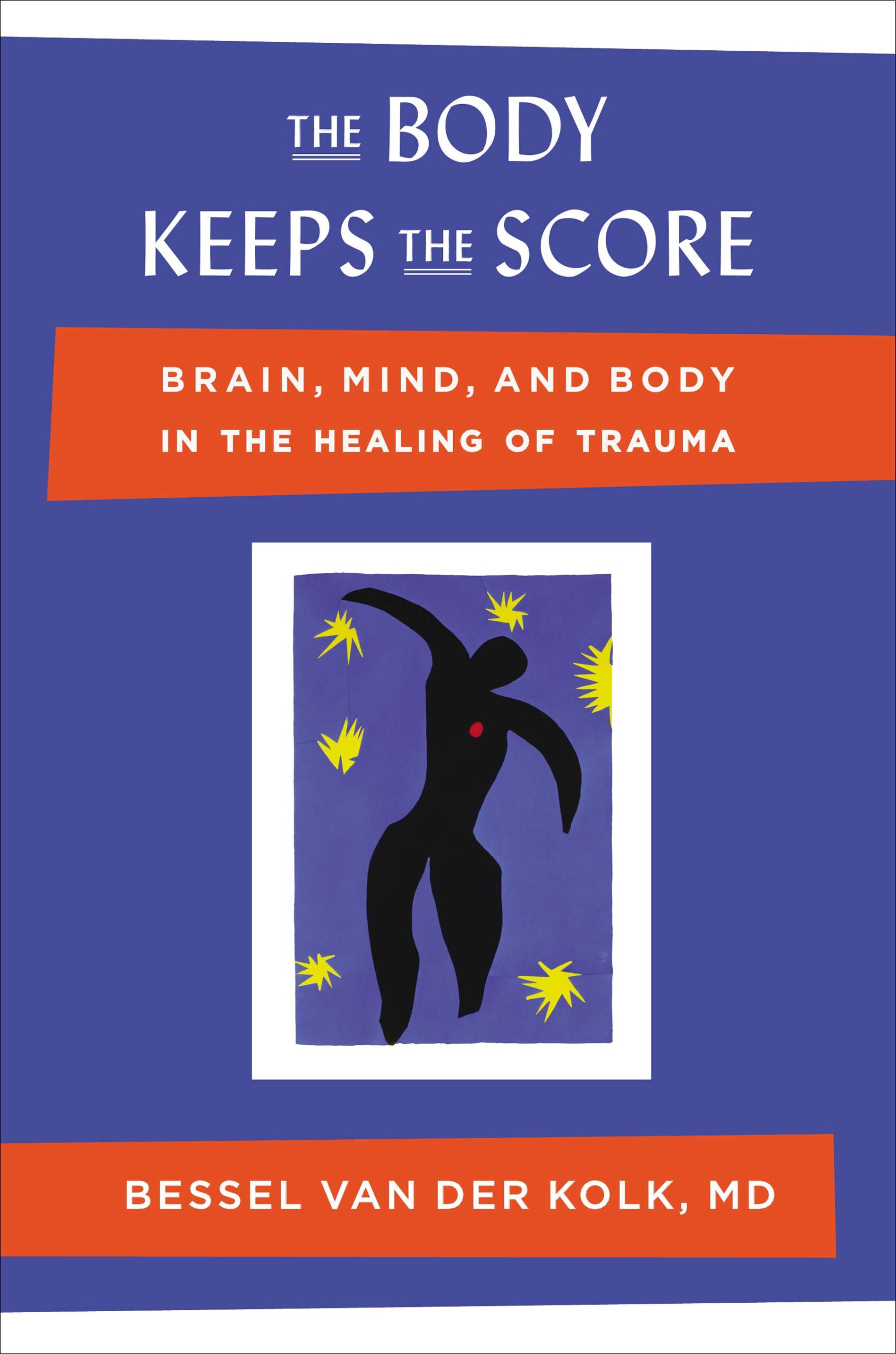
The Body Keeps the Score: Brain, Mind, and Body in the Healing of Trauma

The following is an excerpt from The Body Keeps the Score: Brain, Mind, and Body in the Healing of Trauma by Bessel van der Kolk, MD. Reprinted by arrangement with Viking, a member of Penguin Group (USA) LLC, A Penguin Random House Company. Copyright © Bessel van der Kolk, MD, 2014.

****

Marilyn was a tall, athletic-looking woman in her mid-thirties who worked as an operating-room nurse in a nearby town. She told me that a few months earlier she’d started to play tennis at her sports club with a Boston fireman named Michael. She usually steered clear of men, she said, but she had gradually become comfortable enough with Michael to accept his invitations to go out for pizza after their matches. They’d talk about tennis, movies, their nephews and nieces—nothing too personal. Michael clearly enjoyed her company, but she told herself he didn’t really know her.

One Saturday evening in August, after tennis and pizza, she invited him to stay over at her apartment. She described feeling “uptight and unreal” as soon as they were alone together. She remembered asking him to go slow but had very little sense of what had happened after that. After a few glasses of wine and a rerun of “Law & Order,” they apparently fell asleep together on top of her bed. At around two in the morning, Michael turned over in his sleep. When Marilyn felt his body touch hers, she exploded—pounding him with her fists, scratching and biting, screaming, “You bastard, you bastard!” Michael, startled awake, grabbed his belongings and fled. After he left, Marilyn sat on her bed for hours, stunned by what had happened. She felt deeply humiliated and hated herself for what she had done, and now she’d come to me for help in dealing with her terror of men and her inexplicable rage attacks.

My work with veterans had prepared me to listen to painful stories like Marilyn’s without trying to jump in immediately to fix the problem. Therapy often starts with some inexplicable behavior: attacking a boyfriend in the middle of the night, feeling terrified when somebody looks you in the eye, finding yourself covered with blood after cutting yourself with a piece of glass, or deliberately vomiting up every meal. It takes time and patience to allow the reality behind such symptoms to reveal itself.

Terror and Numbness

As we talked, Marilyn told me that Michael was the first man she’d taken home in more than five years, but this was not the first time she’d lost control when a man spent the night with her. She repeated that she always felt uptight and spaced out when she was alone with a man, and there had been other times when she’d “come to” in her apartment, cowering in a corner, unable to remember clearly what had happened.

Marilyn also said she felt as if she was just “going through the motions” of having a life. Except for when she was at the club playing tennis or at work in the OR, she usually felt numb. A few years earlier she’d found that she could relieve her numbness by scratching herself with a razor blade, but she had become frightened when she found that she was cutting herself more and more deeply, and more and more often, to get relief. She had tried alcohol, too, but that reminded her of her dad and his out?of?control drinking, which made her feel disgusted with herself. So instead she played tennis fanatically, whenever she could. That gave her a feeling of being alive.

When I asked her about her past, Marilyn said she guessed that she “must have had” a happy childhood, but she could remember very little from before age twelve. She told me she’d been a timid adolescent, until she had a violent confrontation with her alcoholic father when she was sixteen and ran away from home. She worked her way through community college and went on to get a degree in nursing without any help from her parents. She felt ashamed that during this time she’d slept around, which she described as “looking for love in all the wrong places.”

As I often did with new patients, I asked her to draw a family portrait, and when I saw her drawing, I decided to go slowly. Clearly Marilyn was harboring some terrible memories, but she could not allow herself to recognize what her own picture revealed. She had drawn a wild and terrified child, trapped in some kind of cage and threatened not only by three nightmarish figures—one with no eyes—but also by a huge erect penis protruding into her space. And yet this woman said she “must have had” a happy childhood.

As the poet W. H. Auden wrote:
Truth, like love and sleep, resents
Approaches that are too intense.

I call this Auden’s rule, and in keeping with it I deliberately did not push Marilyn to tell me what she remembered. In fact, “I’ve learned that it’s not important for me to know every detail of a patient’s trauma. What is critical is that the patients themselves learn to tolerate feeling what they feel and knowing what they know.” This may take weeks or even years. I decided to start Marilyn’s treatment by inviting her to join an established therapy group where she could find support and acceptance before facing the engine of her distrust, shame, and rage.

As I expected, Marilyn arrived at the first group meeting looking terrified, much like the girl in her family portrait; she was withdrawn and did not reach out to anybody. I’d chosen this group for her because its members had always been helpful and accepting of new participants who were too scared to talk. They knew from their own experience that unlocking secrets is a gradual process. But this time they surprised me, asking so many intrusive questions about Marilyn’s love life that I recalled her drawing of the little girl under assault. It was almost as though Marilyn had unwittingly enlisted the group to repeat her traumatic past. I intervened to help her set some boundaries about what she’d talk about, and she began to settle in.

Three months later Marilyn told the group that she had stumbled and fallen a few times on the sidewalk between the subway and my office. She worried that her eyesight was beginning to fail: She’d also been missing a lot of tennis balls recently. I thought again about her drawing and the wild child with the huge, terrified eyes. Was this was some sort of “conversion reaction,” in which patients express their conflicts by losing function in some part of their body? Many soldiers in both world wars had suffered paralysis that couldn’t be traced to physical injuries, and I had seen cases of “hysterical blindness” in Mexico and India.

Still, as a physician, I wasn’t about to conclude without further assessment that this was “all in her head.” I referred her to colleagues at the Massachusetts Eye and Ear Infirmary and asked them to do a very thorough workup. Several weeks later the tests came back. Marilyn had lupus erythematosus of her retina, an autoimmune disease that was eroding her vision, and she would need immediate treatment. I was appalled: “Marilyn was the third person that year whom I’d suspected of having an incest history and who was then diagnosed with an autoimmune disease—a disease in which the body starts attacking itself.”

After making sure that Marilyn was getting the proper medical care, I consulted with two of my colleagues at Massachusetts General, psychiatrist Scott Wilson and Richard Kradin, who ran the immunology laboratory there. I told them Marilyn’s story, showed them the picture she’d drawn, and asked them to collaborate on a study. They generously volunteered their time and the considerable expense of a full immunology workup. We recruited twelve women with incest histories who were not taking any medications, plus twelve women who had never been traumatized and who also did not take meds—a surprisingly difficult control group to find. (Marilyn was not in the study; we generally do not ask our clinical patients to be part of our research efforts.)

When the study was completed and the data analyzed, Rich reported that the group of incest survivors had abnormalities in their CD45 RA?to?RO ratio, compared with their nontraumatized peers. CD45 cells are the “memory cells” of the immune system. Some of them, called RA cells, have been activated by past exposure to toxins; they quickly respond to environmental threats they have encountered before. The RO cells, in contrast, are kept in reserve for new challenges; they are turned on to deal with threats the body has not met previously. The RA?to?RO ratio is the balance between cells that recognize known toxins and cells that wait for new information to activate. In patients with histories of incest, the proportion of RA cells that are ready to pounce is larger than normal. This makes the immune system oversensitive to threat, so that it is prone to mount a defense when none is needed, even when this means attacking the body’s own cells.

Our study showed that, on a deep level, the bodies of incest victims have trouble distinguishing between danger and safety. This means that the imprint of past trauma does not consist only of distorted perceptions of information coming from the outside; the organism itself also has a problem knowing how to feel safe. The past is impressed not only on their minds, and in misinterpretations of innocuous events (as when Marilyn attacked Michael because he accidentally touched her in her sleep), but also on the very core of their beings: in the safety of their bodies.

Note: Find out about Bessel’s new in-depth, online Trauma Certificate Course

Bessel van der Kolk on Trauma, Development and Healing

Talking About it Doesn’t Put it Behind You

David Bullard: Bessel, you are the medical director and founder of the Trauma Center at Justice Resource Institute and professor of psychiatry at the Boston University School of Medicine. You have been one of the most influential and outspoken clinicians, educators and researchers contributing to our understanding of trauma and its treatment.
I don’t remember reading a professional book in several intense sittings like I just did with your new book, The Body Keeps The Score: Brain, Mind, and Body in the Healing of Trauma. It’s been praised by everyone from Jon Kabat-Zinn and Francine Shapiro to Jack Kornfield, Peter Levine and Judith Herman, who called it a “masterpiece that combines the boundless curiosity of the scientist, the erudition of the scholar, and the passion of the truth teller.” (Read an excerpt from the book accompanying this interview.)
Let me start with some basics: Could you say something about why talk therapy alone doesn’t work when treating trauma?
Bessel van der Kolk: From my vantage point as a researcher we know that the impact of trauma is upon the survival or animal part of the brain. That means that our automatic danger signals are disturbed, and we become hyper- or hypo-active: aroused or numbed out. We become like frightened animals. We cannot reason ourselves out of being frightened or upset.
Of course, talking can be very helpful in acknowledging the reality about what’s happened and how it’s affected you, but talking about it doesn’t put it behind you because it doesn’t go deep enough into the survival brain.
DB: Would you say that is one of the distinctions between your work and Edna Foa’s “prolonged exposure therapy”? In a New Yorker article on trauma, Foa talked about rewriting memories, rather than destroying them, and describes her work with a patient with PTSD who had been raped years before: “We asked her to tell the story of that New Year’s Eve (when the rape occurred) and repeat it many times….to distinguish between remembering what happened in the past and actually being back there…and when, finally, the woman did that she realized that the terror and her rape were not her fault.”That sounds like cognitive learning.
Bv: That’s a lovely example of the ability of talk to get a better perspective. But there is a mistaken notion that trauma is primarily about memory—the story of what has happened; and that is probably often true for the first few days after the traumatic event, but then a cascade of defenses precipitate a variety of reactions in mind and brain that are attempts to blunt the impact of the ongoing sense of threat, but which tend to set up their own plethora of problems. So, trying to find a chemical to abolish bad memories is an interesting academic enterprise, but it’s unlikely to help many patients. It’s a too-simplistic view in my opinion. Your whole mind, brain and sense of self is changed in response to trauma.
In the long term the largest problem of being traumatized is that it’s hard to feel that anything that’s going on around you really matters. It is difficult to love and take care of people and get involved in pleasure and engagements because your brain has been re-organized to deal with danger.
It is only partly an issue of consciousness. Much has to do with unconscious parts of the brain that keep interpreting the world as being dangerous and frightening and feeling helpless. You know you shouldn’t feel that way, but you do, and that makes you feel defective and ashamed.

EMDR and Body Awareness Approaches to Trauma Treatment

DB: You are a big proponent of body awareness approaches to trauma treatment—and for a fully lived life. For example, you’ve done research on yoga for trauma survivors and recommend yoga for patients. I saw recently that your Trauma Center offers trainings to yoga teachers in working with the trauma of their students. You also speak very highly of the body-oriented therapies of Peter Levine and Pat Ogden, and especially of EMDR. You devote a whole chapter to your learning EMDR and examples of your use of it.
Bv: We have done the only NIMH-funded study on EMDR. As of 2014, the results of that study were more positive than any published study of those who developed their PTSD in reaction to a traumatic event as an adult.
There are opinions and there are facts.
Traumatized people often become insensible to themselves. They find it difficult to sense pleasure and to feel engaged. These understandings force us to use methods to awaken the sensory modalities in the person.
The facts are that the EMDR study was spectacularly successful in adults, a bit less with childhood trauma–at least not in the short period of time (eight 90-minute sessions) in the research protocol. But our research found that the impact of trauma is in the somatosensory self, trauma changes the insula, the self-awareness systems. Traumatized people often become insensible to themselves. They find it difficult to sense pleasure and to feel engaged. These understandings force us to use methods to awaken the sensory modalities in the person.
DB: The following quote from your book beautifully addresses some of this:
“The neuroscience of selfhood and agency validates the kinds of somatic therapies that my friends Peter Levine and Pat Ogden have developed…. [In] essence their aim is threefold:

  • to draw out the sensory information that is blocked and frozen by trauma;
  • to help patients befriend (rather than suppress) the energies released by that inner experience;
  • to complete the self-preserving physical actions that were thwarted when they were trapped, restrained, or immobilized by terror. 

Our gut feelings signal what is safe, life sustaining, or threatening, even if we cannot quite explain why we feel a particular way. Our sensory interiority continuously sends us subtle messages about the needs of our organism. Gut feelings also help us to evaluate what is going on around us. They warn us that the guy who is approaching feels creepy, but they also convey that a room with western exposure surrounded by daylilies makes us feel serene. If you have a comfortable connection with your inner sensations—if you can trust them to give you accurate information—you will feel in charge of your body, your feelings, and your self” (p.96).

EMDR trainers now seem to be focusing more on sensory modalities than when I first was taught about EMDR, and they also use “resource installation” (Leeds) and more recently “dyadic resourcing” (Manfield). But if there has been an identified single trauma that doesn’t resolve after several sessions, they look for an older “feeder memory,” and get there by asking the patient to focus on body sensations to see if he or she has ever felt those sensations before. It often is a gateway to an earlier trauma.
Bv: A lot of different schools do that, where the body is a pronounced part of therapy. My own teacher, Elvin Semrad, in the early 1970s in Boston, was very somatically oriented; same thing for Milton Erikson and many schools of hypnotherapy. Most people I hang out with who work with traumatic stress are somatically oriented.

The Limits of CBT

DB: The popular media are often puzzlingly ignorant about the nature of trauma and its treatment. You are very well aware of this, but an otherwise interesting article in the May, 2014 issue of The New Yorker magazine stated that a study “published in Nature in 2010, offered the first clear suggestion that it might be possible to provide long-term treatment for people who suffer from PTSD and other anxiety disorders without drugs.” That article never even mentioned EMDR, which was listed in a 1998 task force report of the Clinical Division of the American Psychological Association as being one of three psychological therapies (together with exposure and stress inoculation therapy) empirically supported for the treatment of PTSD. How could they miss that?
Bv: Well, they often get things not quite right! It intrigues me how the public is much more fascinated with the potential of false memories in patients than in the gross distortions of our society’s memory of trauma.
Articles like the one you cited often relate to the study of memories in mice. It is a huge leap, of course, from rodents to human beings, which not only leads to misinformation about the nature of traumatic stress and its treatments, but also about the rather trenchant differences between humans and mice. Humans are profoundly social animals—everything we do and think is in relation to a larger tribe. Our brains are cultural organs. It probably has something to do with people’s temperaments; people who do rodent research are drawn to the simplicity of rodent brains. In order to work with humans you need to have a taste for culture, complexity and uncertainty. People would be astonished if a psychotherapist gave advice to rodent researchers on how to run their labs! But the popular press takes the liberty of making these misinformed leaps with the general public all the time.
DB: How best to treat trauma is a crucial question, of course. You saw CBS’ 60 Minutes television show that first aired in November, 2013, describing a Veterans Administration program treating war veterans using “cognitive processing therapy” and prolonged exposure treatment methods. Your understanding of and approach to treating trauma is very different. Can you address a couple of points that distinguish your views from those presented by that VA treatment program?
Bv: Cognitive Behavioral Therapy (and “Trauma Focused CBT”), talk therapies, and prolonged exposure therapies can make some changes in people’s distress, but traumatic stress has little to do with cognition—it emanates from the emotional part of the brain that is rewired to constantly send out messages of dangers and distress, with the result that it becomes difficult to feel fully alive in the present. Blasting people with the memories of the trauma may lead to desensitization and numbing, but it does not lead to integration: an organic awareness that the event is over, and that you are fully alive in the present. The VA seems to be surprised by how many veterans drop out of prolonged exposure therapy. It would be helpful for them to find out why, but the likely answer is that it is re-traumatizing them.
DB: More recently, there was the profile of your work with trauma in the Sunday Magazine of the New York Times (May 22, 2014). The author shadowed you for a month, and it seemed to me that the article minimized the outcome of the clinical demonstration you did with an Iraqi war veteran at an Esalen Institute workshop.
Bv: The current Family Therapy Networker magazine just ran a piece about all the inaccuracies in that article, and the difficulties journalists have in getting the story straight. “Eugene” was the participant in the workshop, and he said “The takeaway when I read [the New York Times article] was that I was confused by the experience and that it didn’t help, which just isn’t true…When I spoke with the reporter, I said very positive things about the concrete ways that it helped me in terms of physical symptoms that disappeared, and also the fact that Dr. van der Kolk recommended people for me to work with afterward. He really spent some time finding a good recommendation for EMDR, and it really helps.” He wrote a letter to that effect and they wouldn’t publish it. I just got an email from him with a picture of my new book saying, “Thank you for helping me to regain the capacity for calmness and focus to be able to engage, and read books again.”
DB: The New York Times article also quoted sound bites from some other researchers, seemingly questioning your work, but later corrected some misinformation.
Bv: That’s another intriguing issue. There seems to be a tendency among therapists to become very religious about their own particular method—some seem to be more committed to their method than to the welfare of their patients. When patients don’t improve, they blame their resistance, and slam the people who point out that one size never fits all. The New York Times article also alluded to the Roman Catholic Church’s problems with clergy abuse and trying to defend itself by claiming that these plaintiffs suffered from “false memories,” and were the victims of “repressed memory therapy.” Testifying on behalf of pedophiles became a whole industry that seems to have entirely disappeared now that these trials are over.
DB: The newspaper did publish your brief (and, I thought, restrained!) rejoinder clarifying the issues presented, and you received an overwhelmingly supportive response in other letters to the editor and online comments. Here’s an excerpt from your letter to the New York Times:
Trauma is much more than a story about the past that explains why people are frightened, angry or out of control. Trauma is re-experienced in the present, not as a story, but as profoundly disturbing physical sensations and emotions that may not be consciously associated with memories of past trauma. Terror, rage and helplessness are manifested as bodily reactions, like a pounding heart, nausea, gut-wrenching sensations and characteristic body movements that signify collapse, rigidity or rage…. The challenge in recovering from trauma is to learn to tolerate feeling what you feel and knowing what you know without becoming overwhelmed. There are many ways to achieve this, but all involve establishing a sense of safety and the regulation of physiological arousal.
Bv: I also mentioned in the Networker article, “What happened …is a reflection of the incredible difficulties society has with staring trauma in the face and providing people with the facts of what happens, how bad it is, and how well treatments work.”

Talent and Compassion Aren’t Enough

DB: I appreciate your emphasis on research and fact-based discussions versus theoretical ones. Along those lines, George Silberschatz, a past-president of the international Society for Psychotherapy Research, said in a recent interview that the between-therapist effects were as large if not larger than the between-treatment effects in current psychotherapy research, and this is perhaps from non-specific treatment effects.
Bv: Well, talent and compassion are central elements of being an effective therapist, but learning to feel your feelings and be in charge of your self, and working with someone who knows how to deal with bodily sensations and impulses can make all the difference between visiting an understanding friend once a week, and actually healing your trauma.
DB: Could it relate to Stephen Porges’ description of the Polyvagal Theory and the social engagement system? The nonspecific treatment effects from psychotherapy research seem to be powerful about the therapist helping to create a safe environment.
Bv: I have been very much inspired by Porges’ work. The reason that Porges has become an important part of our world is his finding that trauma interferes with face-to-face communication. It is very important how you get regulated in the presence of other people. We need to learn very specific ways to activate the social engagement system. Sitting in your chair and chatting might not always be the most effective way of doing that.

Porges’ work was very helpful and clarifying about where in the brain trauma makes it difficult to feel comfort, to feel intimate and connected with other people. Knowing those things can help therapists to become more conscious about the specifics of their interactions, and should become part of the training of therapists. For example, I recently took a month-long intensive training course for Shakespearean actors to learn how the modulations of my voice, the configurations of my facial muscles, and the attitudes of my body affect my self-experience, and that of the people around me.
Porges’ work points to the importance of working with the reptilian brain—the brain stem, as well as the limbic system. We need to teach breathing and movement and work with the parts of the brain that are most impacted by trauma—areas that the conscious brain has no access to.
So I am dubious about the nonspecific relational impact of treatment on benefiting traumatized individuals. Seeing someone nonspecifically does not help the fear circuits and that collapsed sense of self. We need to learn very specific ways to activate the social engagement system. Sitting in your chair and chatting might not always be the most effective way of doing that.
DB: A colleague of yours from your Harvard days, neuroscientist Catherine Kerr, recently writing about mindfulness research, said:
The placebo effect is usually defined, somewhat tortuously, as the sum of the nonspecific effects that are not hypothesized to be the direct mechanism of treatment. For example, having a face-to-face conversation is not hypothesized as what makes psychotherapy work—you could have a face-to-face conversation with anybody. But for some reason, if you go every week to therapy, you are going to get better. But you could talk about the weather! When we perform these rituals with a desire to get better, we often do. We now know that a lot of the positive therapeutic benefit from psychotherapy and from various pain drugs may come from that initial context; it often has nothing to do with the specific treatment that is being offered. It is really just about the person approaching a situation with a sense of hope and being met by something that seems to hold out that hope (October 01, 2014, Tricycle Magazine).
And I think Allan Schore at UCLA would say that there is “unconscious right brain to unconscious right brain communication” going on, between therapists and patients, or between any of us in close relationships that might be what is otherwise thought to be “nonspecific” in therapy research. A deep ability to be present and connect empathically with patients is easier for some individual therapists than for others. Perhaps we are discussing a situation in therapy of “necessary, but not sufficient!”
Bv: I can’t really comment on all that—you’ll have to ask Catherine Kerr and Allan Schore. I have always been a bit puzzled about that “right brain to right brain” stuff. The research shows that the part of the brain most impacted by trauma is the left hemisphere, and I would imagine that every single part of the brain is necessary for effective functioning and feeling fully alive in the present.
DB: Well, I will be interviewing Schore next month, so we now have some good material to discuss!
Bv: I’ll look forward to reading that.

Neurofeedback & Yoga

DB: Is there anything in your own thinking that you feel has significantly changed in the last couple of years due to your continuing growth in the work and in all you are exposed to?
Bv: The biggest has been my exposure to neurofeedback (a type of biofeedback that focuses on brain waves, instead of peripheral phenomena like heart rate and skin conductance). In neurofeedback you change your brain’s electrical activity by playing computer games with your own brain waves. Learning how to interpret quantitative EEG’s helped me to visualize better how the brain processes information, and how disorganized the brain becomes in response to trauma. What made it necessary to look for other, non-interpersonally-based therapies was the realization, followed by research that dramatically illustrated how being traumatized may interfere with the ability to engage with other human beings to feel curious, open and alive.
Learning how to interpret quantitative EEGs allowed me to actually visualize what parts of the brain are distorted by traumatic experiences, and this can help us target specific brain areas where there is abnormal activity and where the problem actually is.
The trauma is not the story of what happened long ago; the long-term trauma is that you are robbed of feeling fully alive and in charge of your self.
For example, for the part of the brain supposed to be in charge, after trauma it will have excessive activity, keeping people in a state of chronic arousal—making it difficult to sleep, hard to engage and to relax. We find neurofeedback can change the activity in parts of the brain to allow it to be more calm and self-observant.
In another example, the frontal lobes of traumatized people often have activity similar to that of kids with ADHD, which makes it difficult to attend with the subtlety that we need to lead nuanced lives.
DB: So would the neurofeedback be with or without exposure to a particular traumatic memory?
Bv: Again, traumatic stress results in not being able to fully engage in the present. The trauma is not the story of what happened long ago; the long-term trauma is that you are robbed of feeling fully alive and in charge of your self.
DB: You would say that also is a positive outcome from yoga and other body awareness exercises, activating and strengthening the parasympathetic nervous system?
Bv: In our NIH-funded yoga for PTSD study we saw people did considerably better after 8 weeks of yoga. It can make a contribution to help people be more present in the here and now. The whole brain gets reorganized. Some quotes from participants in that study included:

  • “My emotions feel more powerful. Maybe it’s just that I can recognize them now.”
  • “I can express my feelings more because I can recognize them more. I feel them in my body, recognize them, and address them.”

This research needs much more work, but it opens up new perspectives on how actions that involve noticing and befriending the sensations in our bodies can produce profound changes in both mind and brain that can lead to healing from trauma. When we understand these things about the brain, how it works, we learn more about how to adjust our treatments.

DB: I’ve heard you say that you do not identify as belonging to any one particular school of therapy; that you do not even identify as an EMDR therapist even though you often utilize it.
Bv: Well, that would be like a carpenter saying he was a “hammer carpenter.” We need many different tools that will work for different patients and different problems.

Meaningless Pseudo-Diagnoses

DB: Can you talk a bit about your battles to get deeper and more sophisticated understandings of trauma treatment into the professional arena? Your book recounts the research you did that identified a traumatized population quite distinct from the combat soldiers and accident victims for whom the PTSD diagnosis had been created.
Bv: Yes, well, in the early 1990’s our PTSD work group for the Diagnostic and Statistical Manual of Mental Disorders voted nineteen to two to create a new diagnosis for victims of interpersonal trauma: “Disorders of Extreme Stress, Not Otherwise Specified” (DESNOS), or “Complex PTSD” for short. But when the DSM-IV was published in May 1994 the diagnosis did not appear in the final product.
Fifteen years later, in 2009, we lobbied to have “Developmental Trauma Disorder” listed in the DSM-5. We marshaled a lot of support, such as that from the National Association of State Mental Health Program Directors, who serve 6.1 million people annually, with a combined budget of $29.5 billion.

Everybody who holds forth should have a practice, otherwise you get seduced by your ideas and don’t get confronted with the limits of your ideas in clinical practice.
Their letter of support concluded: “We urge the American Psychiatric Association to add developmental trauma to its list of priority areas to clarify and better characterize its course and clinical sequelae and to emphasize the strong need to address developmental trauma in the assessment of patients.”
It was turned down also, and a lot of criticism of DSM-5’s approach has since been levied and they have lost credibility from a variety of professional sources.
DB: You recently published the results of an international survey of clinicians on the clinical significance of a Developmental Trauma Disorder diagnosis. Can you tell us why it might be so beneficial to have such a diagnosis?
Bv: Because it would help us to start focusing on helping kids feel safe and in control , rather than labeling them with meaningless pseudo-diagnoses like oppositional defiant disorder, impulse control disorder, self-injury disorder, etc.
DB: A significant part of your career at the Trauma Center has been working with traumatized children. There is a lot in your book relevant to work with children.
Bv: Yes, with Joseph Spinazzola and Julian Ford, we are involved in studies through the Complex Trauma Treatment Network of the National Child Traumatic Stress Network, which now is comprised of 164 institutions in almost all States.
DB: You are doing so much traveling with international teaching, you are involved in ongoing research, and you have quite a large staff at the Trauma Center in Boston to manage.
Bv: About 40 people are working at the trauma center now.
DB: Are you still personally able to do one-on-one clinical work or only have a supervisory role?
Bv: Everybody who holds forth should have a practice, otherwise you get seduced by your ideas and don’t get confronted with the limits of your ideas in clinical practice.

Posttraumatic Growth and Aliveness

DB: I’ve always liked the subtitle of Peter Levine’s book Waking the Tiger: Through Trauma Into Aliveness. Others are talking about “posttraumatic growth.”
Bv: That’s what the New York Times article should have been about. The guy they described so poorly actually recouped his life. People get better by befriending themselves. People can leave the trauma behind if they learn to feel safe in their bodies—they can feel the pleasure to know what they know and feel what they feel. The brain does change because of trauma and now we have tools to help people be quiet and present versus hijacked by the past. The question is: Will these tools become available to most people?
DB: You are certainly doing your part, Bessel, by being so very active and productive. I counted 35 workshops out-of-town on your calendar for 2014, in addition to your teaching at the various medical schools in Boston, at the Trauma Center and a new certification program. Right now you are about to embark on a 10-day bo

Complex PTSD: From Surviving to Thriving

Editor’s Note: Following is an adapted excerpt from Pete Walker’s latest book, Complex PTSD: From Surviving to Thriving—A Guide and Map for Recovering from Childhood Trauma. For more information about treating Complex PTSD (CPTSD) and managing emotional flashbacks, read a previously published article by Pete Walker here

Attachment Disorder and Complex PTSD

Many traumatologists see attachment disorder as one of the key symptoms of Complex PTSD. In the psychoeducational phases of working with traumatized clients, I typically describe attachment disorder as the result of growing up with primary caretakers who were regularly experienced as dangerous. They were dangerous by contemptuous voice or heavy hand, or more insidiously, dangerous by remoteness and indifference.

Recurring abuse and neglect habituates children to living in fear and sympathetic nervous system arousal. It makes them easily triggerable into the abandonment mélange of overwhelming fear and shame that tangles up with the depressed feelings of being abandoned.

A child, with parents who are unable or unwilling to provide safe enough attachment, has no one to whom she can bring her whole developing self. No one is there for reflection, validation and guidance. No one is safe enough to go to for comfort or help in times of trouble. There is no one to cry to, to protest unfairness to, and to seek compassion from for hurts, mistakes, accidents, and betrayals. No one is safe enough to shine with, to do “show and tell” with, and to be reflected as a subject of pride. There is no one to even practice the all-important intimacy-building skills of conversation.

In the paraphrased words of more than one of my clients: “Talking to Mom was like giving ammunition to the enemy. Anything I said could and would be used against me. No wonder, people always tell me that I don’t seem to have much to say for myself.”

Those with CPTSD-spawned attachment disorders never learn the communication skills that engender closeness and a sense of belonging. When it comes to relating, they are often plagued by debilitating social anxiety—and social phobia when they are at the severe end of the continuum of CPTSD.

Many of the clients who come through my door have never had a safe enough relationship. Repetition compulsion drives them to unconsciously seek out relationships in adulthood that traumatically reenact the abusive and/or abandoning dynamics of their childhood caretakers. For many such clients, we are their first legitimate shot at a safe and nurturing relationship. If we are not skilled enough to create the degree of safety they need to begin the long journey towards developing good enough trust, we may be their last.

Emotional flashback management, therefore, is empowered when it is taught in the context of a safe relationship. Clients need to feel safe enough with their therapist to describe their humiliation and overwhelm. At the same time, the therapist needs to be nurturing enough to provide the empathy and calm support that was missing in the client’s early experience.

Just as importantly, the therapist needs to be able to tolerate and work therapeutically with the sudden evaporation of trust that is so characteristic of CPTSD. Trauma survivors do not have a volitional “on” switch for trust, even though their “off” switch is frequently automatically triggered during flashbacks. In therapy, the therapist must be able to work on reassurance and trust restoral over and over again. I have heard too many disappointing client stories about past therapists who got angry at them because they would not simply choose to trust them.

As the importance of this understanding ripens in me, I increasingly embrace an intersubjective or relational approach. That means that I believe that the quality of the clients’ relationship with me can provide a corrective emotional experience that saves them from being doomed to a lifetime of superficial connection, or worse, social isolation and alienation.

Moreover, I notice that without the development of a modicum of trust with me, my CPTSD clients are seriously delimited in their receptivity to my guidance, as well as to the ameliorative effects of my empathy. In this regard then, I will describe four key qualities of relating that I believe are essential to the development of trust, and the subsequent relational healing that can come out of it. These are empathy, authentic vulnerability, dialogicality and collaborative relationship repair.

1. Empathy

I used to assume that the merits of empathy were a given, but I have sadly heard too many stories of empathy-impoverished therapy. In this regard, I will simply say here that if we are hard and unsympathetic with our clients, we trigger the same sense of danger and abandonment in them that they experienced with their parents.

In terms of a definition, I especially like Kohut’s statement that: “Empathy involves immersing yourself in another’s psychological state by feeling yourself into the other’s experience.”

When I delve deeply enough into a client’s experience, no matter how initially perplexing or intemperate it may at first seem, I inevitably find psychological sense in it, especially when I recognize its flashback components. In fact, I can honestly say that I have never met a feeling or behavior that did not make sense when viewed through the lenses of transference and traumatology.

Empathy, of course, deepens via careful listening and full elicitation of the client’s experience, along with the time-honored techniques of mirroring and paraphrasing which show the client the degree to which we get him.

Noticing my subjective free associations often enhances my empathic attunement and ability to reflect back to the client in an emotionally accurate and validating way. When appropriate, I sometimes share my autobiographical free associations with the client when they are emotionally analogous. I do this to let her know that I really empathize with what she is sharing.

Following is an example. My client tells me with great embarrassment that she stayed home all weekend because she had a pimple on her nose. She is ashamed of the pimple and of her “vanity’’ about it. She moans: “How could I be so stupid to let such a little thing bother me?” I suddenly remember cancelling a date once when I had a cold sore. At the time, I also got lost in a toxic shame attack. I share this with her, minus present day shame about it. She tears up and then laughs, relieved as her shame melts away. Months later, she tells me that her trust in me mushroomed at that moment. Guidelines for being judicious about this kind of self-disclosure will be discussed below.

Of the many benefits of empathy, the greatest is perhaps that it models and teaches self-empathy, better known as self-acceptance. To the degree that we attune to and welcome all of the client’s experience, to that same degree can the client learn to welcome it in her- or himself.

2. Authentic Vulnerability

Authentic vulnerability is a second quality of intimate relating which often begins with emotionally reverberating with the client. I have found that emotional reflection of the client’s feelings is irreplaceable in fostering the development of trust and real relational intimacy.

Emotional reflection requires the therapist to be emotionally vulnerable himself and reveal that he too feels mad, sad, bad and scared sometimes. Modeling vulnerability, as with empathy, demonstrates to the client the value of being vulnerable and encourages her to risk wading into her own vulnerability.

I came to value therapeutic vulnerability the hard way via its absence in my own therapy with a therapist who was of the old, “blank screen” school. She was distant, laconic and over-withholding in her commitment to the psychoanalytic principle of “optimal frustration.” Therapy with her was actually counter-therapeutic and shame-exacerbating for me as we reenacted a defective child/perfect parent dynamic.

Therapeutic Emotional Disclosure
Thankfully, I eventually realized that I had unresolved attachment issues, and sought out a relational therapist who valued the use of her own vulnerable and emotionally authentic self as a tool in therapy. Her tempered and timely emotional self-disclosures helped me to deconstruct the veneer of invincibility I had built as a child to hide my pain. Here are some examples that were especially helpful. “God, the holidays can be awful.” “I get scared when I teach a class too.” “I’m so sorry. I just missed what you said. I got a little distracted by my anxiety about my dental appointment this afternoon.” “I feel sad that your mother was so mean to you.” “It makes me angry that you were so bullied by your parents.”

“My therapist’s modeling that anger, sadness, fear, and depression were emotions that could be healthily expressed helped me to renounce the pain-repressing, emotional perfectionism in which I was mired.” With her, I learned to stop burying my feelings in the hope of being loved. I renounced my just-get-over-it philosophy and embraced vulnerability as a way of finally getting close to people.

I needed this kind of modeling, as so many of my clients have, to begin to emerge from my fear of being attacked, shamed or abandoned for feeling bad and having dysphoric feelings. In order to let go of my Sisyphean salvation fantasy of achieving constant happiness, I needed to experience that all the less than shiny bits of me were acceptable to another human being. Seeing that she was comfortable with and accepting of her own unhappy feelings eventually convinced me that she really was not disgusted by mine.

The therapist’s judicious use of emotional self-disclosure helps the client move out of the slippery, shame-lined pit of emotional perfectionism. Here are some self-revealing things that I say to encourage my clients to be more emotionally self-accepting. “I feel really sad about what happened to you.” “I feel really angry that you got stuck with such a god-awful family.” “When I’m temporarily confused and don’t know what to say or do, I…” “When I’m having a shame attack, I…” “When something triggers me into fear, I…” “When my inner critic is overreacting, I remind myself of the Winnicottian concept that I only have to be a ‘good enough person.’”

Here are two examples of emotional self-disclosure that are fundamental tools of my therapeutic work. I repeatedly express my genuine indignation that the survivor was taught to hate himself. Over time, this often awakens the survivor’s instinct to also feel incensed about this travesty. This then empowers him to begin standing up to the inner critic. This in turn aids him to emotionally invest in the multidimensional work of building healthy self-advocacy.

Furthermore, I also repeatedly respond with empathy and compassion to the survivor’s suffering. With time, this typically helps to awaken the recoveree’s capacity for self-empathy. She then gradually learns to comfort herself when she is in a flashback or otherwise painful life situation. Less and less often does she surrender to an inner torture of self-hate, self-disappointment, and self-abandonment.

My most consistent feedback from past clients is that responses like these—especially ones that normalize fear and depression—helped them immeasurably to deconstruct their perfectionism, and open up to self-compassion and self-acceptance.

Guidelines for Self-Disclosure
What guidelines, then, can we use to insure that our self-disclosure is judicious and therapeutic? I believe the following five principles help me to disclose therapeutically and steer clear of unconsciously sharing for my own narcissistic gratification.

First, I use self-disclosure sparingly.

Second, my disclosures are offered primarily to promote a matrix of safety and trust in the relationship. In this vein my vulnerability is offered to normalize and de-shame the inexorable, existential imperfection of the human condition, e.g., we all make mistakes, suffer painful feelings, experience confusion, etc.

Third, I do not share vulnerabilities that are currently raw and unintegrated.

Fourth, I never disclose in order to work through my own “stuff,” or to meet my own narcissistic need for verbal ventilation or personal edification.

Fifth, while I may share my appreciation or be touched by a client’s attempt or offer to focus on or soothe my vulnerabilities, I never accept the offer. I gently thank them for their concern, remind them that our work is client-centered, and let them know that I have an outside support network.

Emotional Self-disclosure and Sharing Parallel Trauma History
Since many of my clients have sought my services after reading my somewhat autobiographical book on recovery from the dysfunctional family, self-disclosure about my past trauma is sometimes a moot point. This condition has at the same time helped me realize how powerful this kind of disclosure can be in healing shame and cultivating hope.

Over and over, clients have told me that my vulnerable and pragmatic stories of working through my parents’ traumatizing abuse and neglect gives them the courage to engage the long difficult journey of recovering. But whether or not someone has read my book, I will—with appropriate clients—judiciously and sparingly share my own experiences of dealing with an issue they have currently brought up. I do this both to psychoeducate them and to model ways that they might address their own analogous concerns.

One common example sounds like this: “I hate flashbacks too. Even though I get them much less than when I started this work, falling back into that old fear and shame is so awful.”

I also sometimes say: “I really reverberate with your feelings of hopelessness and powerlessness around the inner critic. In the early stages of this work, I often felt overwhelmingly frustrated. It seemed that trying to shrink it actually made it worse. But now after ten thousand repetitions of thought-stopping and thought-correction, my critic is a mere shadow of its former self.”

A final example concerns a purely emotional self-disclosure. When a client is verbally ventilating about a sorrowful experience, I sometimes allow my tears to brim up in my eyes in authentic commiseration with their pain. The first time my most helpful therapist did this with me, I experienced a quantum leap in my trust of her.

3. Dialogicality

Dialogicality occurs when two conversing people move fluidly and interchangeably between speaking (an aspect of healthy narcissism) and listening (an aspect of healthy codependence). Such reciprocal interactions prevent either person from polarizing to a dysfunctional narcissistic or codependent type of relating.

Dialogicality energizes both participants in a conversation. Dialogical relating stands in contrast to the monological energy-theft that characterizes interactions whereby a narcissist pathologically exploits a codependent’s listening defense. Numerous people have reverberated with my observation that listening to a narcissist monologue feels as if it is draining them of energy.

I have become so mindful of this dynamic that, in a new social situation, a sudden sense of tiredness often warns me that I am talking with a narcissist. How different than the elevation I sense in myself and my fellow conversant in a truly reciprocal exchange. Again, I wonder if there are mirror neurons involved in this.

I was appalled the other day while perusing a home shopping catalog to see a set of coffee cups for sale that bore the monikers “Designated Talker” and “Designated Listener.” My wife and I pondered it for a few minutes, and hypothesized that it had to be a narcissist who designed those mugs. We imagined we could see the narcissists who order them presenting them to their favorite sounding boards as Christmas presents.

In therapy, dialogicality develops out of a teamwork approach—a mutual brainstorming about the client’s issues and concerns. Such an approach cultivates full exploration of ambivalences, conflicts and other life difficulties.

Dialogicality is enhanced when the therapist offers feedback from a take-it-or-leave-it stance. Dialogicality also implies respectful mutuality. It stands in stark contrast to the blank screen neutrality and abstinence of traditional psychoanalytic therapy, which all too often reenacts the verbal and emotional neglect of childhood. I believe abstinence commonly flashes the client back into feelings of abandonment, which triggers them to retreat into “safe” superficial disclosure, ever-growing muteness and/or early flight from therapy.

Meeting Healthy Narcissistic Needs
All this being said, extensive dialogicality is often inappropriate in the early stages of therapy. This is especially true, when the client’s normal narcissistic needs have never been gratified, and remain developmentally arrested. In such cases, clients need to be extensively heard. They need to discover through the agency of spontaneous self-expression the nature of their own feelings, needs, preferences and views.

For those survivors whose self-expression was especially decimated by their caretakers, self-focused verbal exploration typically needs to be the dominant activity for a great deal of time. Without this, the unformed healthy ego has no room to grow and break free from the critic. The client’s healthy sense of self remains imprisoned beneath the hegemony of the outsized superego.

This does not mean, however, that the client benefits when the therapist retreats into extremely polarized listening. Most benefit, as early as the first session, from hearing something real or “personal” from the therapist. This helps overcome the shame-inducing potential that arises in the “One-seen (client) / One-unseen (therapist)” dynamic. “When one person is being vulnerable and the other is not, shame has a huge universe in which to grow.” This also creates a potential for the client to get stuck flashing back to childhood when the vulnerable child was rejected over and over by the seemingly invulnerable parent. Consequently, many of my colleagues see group therapy as especially powerful for healing shame, because it rectifies this imbalance by creating a milieu where it is not just one person who is risking being vulnerable.

In this regard, it is interesting to note a large survey of California therapists that occurred about fifteen years ago. The survey was about their therapy preferences, and upwards of ninety percent emphasized that they did not want a blank screen therapist, but rather one who occasionally offered opinions and advice.

For twenty-five years, I have been routinely asking clients in the first session: “Based on your previous experiences in therapy, what would you like to happen in our work together; and what don’t you want to happen?” How frequently clients respond similarly to the therapists in the survey!

Moreover, the next most common response I receive is that I don’t want a therapist who does all the talking. More than a few have used the exact phrase: “I couldn’t get a word in edgewise!” “How I wish there was a way that our qualification tests could spot and disqualify the narcissists who get licensed and then turn their already codependent clients into sounding boards.” This is the shadowy flipside polarity of the blank screen therapist.

Psychoeducation as Part of Dialogicality
Experience has taught me that clients who are childhood trauma survivors typically benefit from psychoeducation about Complex PTSD. When clients understand the whole picture of CPTSD recovery, they become more motivated to participate in the self-help practices of recovering. This also increases their overall hopefulness and general engagement in the therapeutic process. I sometimes wonder whether the rise in the popularity of coaching has been a reaction to the various traditional forms of therapeutic neglect.

One of the worst forms of therapeutic neglect occurs when the therapist fails to notice or challenge a client’s incessant, self-hating diatribes. This, I believe, is akin to tacitly approving of and silently colluding with the inner critic.

Perhaps therapeutic withholding and abstinence derives from the absent father syndrome that afflicts so many westernized families. Perhaps traditional psychotherapy overemphasizes the mothering principles of listening and unconditional love, and neglects the fathering principles of encouragement and guidance that coaching specializes in.

Too much coaching is, of course, as counter-therapeutic and unbalanced as too much listening. It can interfere with the client’s process of self-exploration and self-discovery as described above. At its worst, it can lure the therapist into the narcissistic trap of falling in love with the sound of his own voice.

At its best, coaching is an indispensable therapeutic tool. Just as it takes fathering and mothering to raise a balanced child, mothering and fathering principles are needed to meet the developmental arrests of the attachment-deprived client.

The sophisticated therapist values both and intuitively oscillates between the two, depending on the developmental needs of the client in the moment. Sometimes we guide with psychoeducation, therapeutic self-disclosure and active positive noticing, and most times we receptively nurture the client’s evolving practice of her own spontaneously arising self-expression and verbal ventilation.

Once again, I believe that in early therapy and many subsequent stages of therapy, the latter process typically needs to predominate. In this vein, I would guess that over the course of most therapies that I conduct, I listen about ninety percent of the time.

Finally, I often notice that the last phase of therapy is often characterized by increasing dialogicality—a more balanced fluidity of talking and listening. This conversational reciprocity is a key characteristic of healthy intimacy. Moreover, when therapy is successful, progress in mutuality begins to serve the client in creating healthier relationships in the outside world.

Dialogicality and the 4F’s (Fight/Flight/Freeze/Fawn)
Because of childhood abandonment and repetition compulsion in later relationships, many 4F types are “dying” to be heard. Different types however vary considerably in their dialogical needs over the course of therapy.

The Fawn/ Codependent type, who survived in childhood by becoming a parent’s sounding board or shoulder to cry on, may use her listening defense to encourage the therapist to do too much of the talking. With her eliciting defense, she may even invoke the careless therapist into narcissistically monologuing himself.

The Freeze/Dissociative type, who learned early to seek safety in the camouflage of silence, often needs a great deal of encouragement to discover and talk about his inner experience. Psychoeducation can help him understand how his healthy narcissistic need to express himself was never nurtured in his family.

Furthermore, freeze types can easily get lost in superficial and barely relevant free associations as they struggle to learn to talk about themselves. This of course needs to be welcomed for some time, but eventually we must help him see that his flights of fantasy or endless dream elaborations are primarily manifestations of his dissociative defense.

“Freeze types need to learn that emotionally disconnected talking is an old childhood habit that was developed to keep them buoyant above their undealt with emotional pain.” Because of this, we must repeatedly guide them toward their feelings so that they can learn to express their most important concerns.

The Fight/Narcissistic type, who often enters therapy habituated to holding court, typically dodges real intimacy with her talking defense. Therapy can actually be counterproductive for these types as months or years of uninterrupted monologuing in sessions exacerbate their sense of entitlement. By providing a steady diet of uninterrupted listening, the therapist strengthens their intimacy-destroying defense of over-controlling conversations. Sooner or later, we must insert ourselves into the relationship to work on helping them learn to listen.

As I write this, I remember Harry from my internship whose tiny capacity to listen to his wife evaporated as my fifty minutes of uninterrupted listening became his new norm and expectation in relationship. I felt guilty when I learned this from listening to a recorded message from his wife about how therapy was making him even more insufferable. I was relieved, however, a few years later when a different client told me that Harry’s wife eventually felt happy about this “therapeutic” change. Her husband’s increased self-centeredness was the last straw for her and she finally, with great relief, shed herself of him.

“A therapist, who is a fawn type herself, may hide in a listening and eliciting defense to avoid the scary work of gradually insinuating herself into the relationship and nudging it towards dialogicality.” If we do not nudge the client to interact, there will be no recovering.

The Flight/Obsessive-compulsive type sometimes presents as being more dialogical than other types. Like the freeze type, however, he can obsess about “safe” abstract concerns that are quite removed from his deeper issues. It is therefore up to the therapist to steer him into his deeper, emotionally based concerns to help him learn a more intimacy-enhancing dialogicality. Otherwise, the flight type can remain stuck and floundering in obsessive perseverations about superficial worries that are little more than left-brain dissociations from his repressed pain.

It is important to note here that all 4F types use left- or right-brain dissociative processes to avoid feeling and grieving their childhood losses. As dialogicality is established, it can then be oriented toward helping them to uncover and verbally and emotionally vent their ungrieved hurts.

4. Collaborative Relationship Repair

Collaborative relationship repair is the process by which relationships recover and grow closer from successful conflict resolution. Misattunements and periods of disaffection are existential to every relationship of substance. We all need to learn a process for restoring intimacy when a disagreement temporarily disrupts our feeling of being safely connected.

“I believe most people, if they think about it, realize that their best friends are those with whom they have had a conflict and found a way to work through it.” Once a friendship survives a hurtful misattunement, it generally means that it has moved through the fair-weather-friends stage of relationship.

Synchronistic with writing this section, my son uncharacteristically got into a conflict at school. During third grade recess two of his good friends, also uncharacteristically, started teasing him, and when they would not stop he pushed each of them. This earned them all a trip to the principal’s office. The principal is a strict but exceptionally wise and kind woman. My son’s offense, using physical force to resolve a conflict, was judged as the most serious violation of school policy, but his friends were also held responsible for their part and given an enlightening lecture on teasing.

My son, not used to being in trouble, had a good cry about it all. He then agreed that a one-day loss of recess plus writing letters of apology to his friends were fair consequences. Two days later, I asked him how things were going now between him and the two friends. With a look of surprise and delight, he told me: “It’s really funny, daddy. Now it feels like we’re even better friends than we were before.”

Rapport repair is probably the most transformative, intimacy-building process that a therapist can model. I guide this process from a perspective that recognizes that there is usually a mutual contribution to any misattunement or conflict. Therefore, a mutually respectful dialogical process is typically needed to repair rapport.

Exceptions to this include scapegoating and upsets that are instigated by a bullying narcissist. In those situations, they are solely at fault. I have often been saddened by codependent clients who apologize to their bullying parents as if they made their parents abuse them.

In more normal misattunements, I often initiate the repair process with two contiguous interventions. Firstly, I identify the misattunement (e.g., “I think I might have misunderstood you.”) And secondly, I then model vulnerability by describing what I think might be my contribution to the disconnection.

Abbreviated examples of this are: “I think I may have just been somewhat preachy…or tired…or inattentive…or impatient…or triggered by my own transference.” Owning your part in a conflict validates the normality of relational disappointment and the art of amiable resolution.

Taking responsibility for your role in a misunderstanding also helps deconstruct the client’s outer critic belief that relationships have to be perfect. At the same time, it models a constructive approach to resolving conflicts, and over time leads most clients to become interested in exploring their contribution to the conflict. This becomes an invaluable skill which they can then take into their outside relationships.

As one might expect, fight types are the least likely of the 4F’s to collaborate and own their side of the street in a misattunement. Extreme fight types such as those diagnosed with Narcissistic Personality Disorder have long been considered untreatable in traditional psychoanalysis for this reason.

With less extreme fight types, I sometimes succeed in psychoeducating them on how they learned their controlling defenses. From there I try to help them see how much they pay for being so controlling. At the top of the list of debits is intimacy-starvation. Consciously or not, they hunger for human warmth and they do not get it from those whom they control. Victims of fight types are too afraid of them to relax enough to generate authentically warm feelings.

Finally, I believe one of the most common reasons that clients terminate prematurely is the gradual accumulation of dissatisfactions that they do not feel safe enough to bring up or talk about. How sad it is that all kinds of promising relationships wither and die from an individual or couple’s inability to safely work through differences and conflict.

Earned Secure Attachment
In therapy, clients get the most out of their session by learning to stay in interpersonal contact while they communicate from their emotional pain. This gradually shows them that they are acceptable and worthwhile no matter what they are feeling and experiencing.

As survivors realize more deeply that their flashbacks are normal responses to abnormal childhood conditions, their shame begins to melt. This then eases their fear of being seen as defective. In turn, their habits of isolating or pushing others away during flashbacks diminish.

Earned secure attachment is a newly recognized category of healthy attachment. Many attachment therapists believe that effective treatment can help a survivor “earn” at least one truly intimate relationship. Good therapy can be an intimacy-modeling relationship. It fosters our learning and practicing of intimacy-making behavior. Your connection with your therapist can become a transitional earned secure attachment. This in turn can lead to the attainment of an earned secure attachment outside of therapy. I have repeatedly seen this result with my most successful clients, and I am grateful to report that my last experience with my own therapy lead me to this reward.


Our Hungry Selves: Women, Eating and Identity

The Tyranny of Slenderness

In the early eighties I wrote several books about eating disorders; one of them became a national best seller. In the first book: The Obsession, Reflections on the Tyranny of Slenderness, I researched the way our culture's fear of women was directed against women's bodies and, in particular, against a large woman's body. I felt that the cultural preference for very slender women revealed a wish to see women reduce themselves as women and relinquish their power.

Here’s how I reasoned back then: “The body holds meaning. A woman obsessed with the size of her body, wishing to make her breasts and thighs and hips and belly smaller and less apparent, may be expressing the fact that she feels uncomfortable being female in this culture. A woman obsessed with the size of her appetite, wishing to control her hungers and urges, may be expressing the fact that she has been taught to regard her emotional life, her passions and 'appetites,' as dangerous, requiring control and careful monitoring. “A woman obsessed with the reduction of her flesh may be revealing the fact that she is alienated from a natural source of female power and has not been allowed to develop a reverential feeling for her body.””

The second book, The Hungry Self: Women, Eating and Identity, studied the way a woman's hunger for self-development, creative expression and liberation might express itself if it was not recognized as a hunger for food. I was curious about the emotion and conflict and turbulence that might be disguised as a craving for food, and especially “forbidden” foods like carbohydrates and sweets. “In [this] book I extend [my] analysis to include the mother/daughter bond and the issue of failed female development….We cannot heal ourselves until we understand the hidden struggle for self-development that eating disorders bring to expression in a covert way. We cannot indeed even begin to think of self-healing until we stop using the words “eating disorders” to hide from ourselves the formidable struggle for a self in which every woman suffering in her relationship to food is secretly engaged.”

In the third book, Reinventing Eve: Modern Woman in Search of a Self, I issued a call to women to step up and re-invent ourselves, freeing ourselves from the pressures and constraints of a society that feared women. I saw Eve as a radical, the first woman who was forbidden to eat food and who broke the taboo. “Women speaking intimately about their lives are usually, whether they know it or name it, on the far side of outworn ideas…We [have had] to start with the assumption that we knew little, had been lied to a great deal, that secrets had been kept from us, we were setting out as pioneers together, groping to find a suitable language for our experience….”

The Tyranny of Obesity

Thirty years later these ideas are still meaningful to me but my vision of possibility has been checked. “Fat is Beautiful,” a movement I greatly admired, has now become, thirty years later, a group of aging, obese women with serious health problems. I used to refer women who wanted to lose weight to other clinicians; I explained that my work offered them a chance to make peace with their body, not to change it. I now look back and think that I was rather close-minded, as if I knew what should matter to every woman who came to me for help.

Over these thirty years I've counseled countless women, discussed these issues with them, found them open to these ideas, yet progressively we have realized that it was no easy task to overcome the predominant dislike for big, fat or obese women. This overcoming of cultural dictates is a task suitable for some of us, not for everyone, and why should it be? Many women would rather work towards the body our culture admires than analyze the reasons they dislike their body as it is.

When I began to speak these ideas publicly, women who had read my earlier books were shocked; they felt that I had abandoned them in their quest to accept their body and their appetites. This new orientation seemed a betrayal, a renunciation of my earlier thinking with its cultural and psychological understandings. But I myself had begun to feel that my earlier ideas were hardening into an absolute, as if what was right for some women had to be right for all women, another once-size-fits-all approach to women and food.

I’ve had to explain that these days more and more women have to lose weight for the sake of their health, and that my clients and I had found a way to transform dieting from a self-defeating, frustrating, futile exercise into a useful therapeutic tool. A diet is—or can be—a way of becoming conscious of why one eats or feels driven to eat. Paradoxically, limiting what we eat is often the most direct way to uncover the feelings that drive us into self-destructive eating. Earlier, I had been opposed to the very idea of dieting, now I was willing to offer women help if they chose to diet. I left the decision to them, offering them both possibilities of work—towards body acceptance, weight loss, or sometimes the two together.

But there is more. There are other changes during the last thirty years that I have come to take very seriously. Following Michael Pollan, I began to study the food we are given to eat, so much of which has been degraded. The additives in it actively cause weight gain, and it is offered up in mega portions we tend to accept because there they are on the plate in front of us. As Michael Pollan writes: "Researchers have found that people (and animals) presented with large portions will eat up to 30 percent more than they would otherwise." Some of the weight we unhappily carry around with us is not really ours, it isn't natural, we haven't chosen it. Much of it has come upon us in surreptitious ways, through mysteriously named presences in our food, like high fructose corn syrup and its near-relations—aspartamine, glucose, dextrose, maltodextrin, maltose—which most people do not recognize as sweeteners. Even when reading a label and consciously hoping to avoid sugar, we end up with sweetening agents we don't want.

The Tyranny of American Culture

Thirty years ago I was asked to help people suffering from anorexia, bulimia and compulsive eating; these days women are calling me because, over the years, they have gained so much weight their doctors are alarmed for them. It was short-sighted to send them to someone else when I was a person who had dieted on and off for most of my life, at times winning, at times losing, the battle against our culture’s standards. And wasn’t I now, just as then, responding to a cry for help from our culture? After all, three of every five Americans are overweight. Obesity is an epidemic.

And so too is a woman's unhappy preoccupation with the size and shape of her body, or some part of her body, or some new diet that promises to change her body. I know this, not only from my clients, but far more intimately from myself. “I am a feminist, I care about women's self-development and the cultural and psychological obstacles that inhibit it, yet I have struggled, since the age of seventeen, to be at home in a body that has never been overweight but still has not been acceptable to me.” In spite of my three books about women and food, and all the lectures I have given, and the deep conversations in which I've been engaged; even in spite of the fact that I never any longer eat compulsively, a preoccupation with food and body size is still hanging around in my life. As a result, I can no longer underestimate the power of this conflict, as I observe it listing towards a feminist understanding about a woman's right to make decisions about her body, free of cultural pressures, and then spinning off in the opposite direction towards the next miracle diet that comes along, promising a body that conforms to our culture's punishing ideals. Weight and body size present us with a problem for which we don’t have an adequate solution.

Taken together, these are good reasons to change one’s point of view. I have changed mine in an effort to supplement—not replace—my earlier work. I intend to help people find the right diet and support them while they are losing weight, an emotionally demanding task whatever the nature of the diet. But losing weight is only part of it; we have to learn to eat in a way that often contradicts everything we’ve been taught about healthy nutrition. Not three meals a day but a small meal every couple of hours; not avoiding water because it may produce weight gain but drinking quarts of it; eating at night, before bed, because the body even in sleep requires 500 calories to keep itself going. Eating fat because we feel nourished by it, learning what are desirable portions, eating local produce because the food contains more of what food should contain and will therefore nourish us in smaller amounts. There is no one diet that is suitable for everyone—creating the right diet has elements of a quest for identity, a coming to know and be able to choose what is good for one. If this isn’t meaningful therapeutic work I don’t know what is.

Catherine's Story

A client of many years returned to work with me. Her doctor had just told her she had to lose between 25 and 40 pounds because her medical condition was severe. She came full of despair, wondering how we could approach this assignment since we had always discussed body-acceptance and appreciation for big and voluptuous women, which she was. Beautiful, certainly; but perhaps not healthy?

I began to work with Catherine in 1995. She was 26 at the time, a graduate from an Ivy League school, a women’s studies major who sought me out because she had read my books. She came from a small town on the East Coast, from a family active in their Episcopal church. For her to leave home, move to the West Coast, live with a man to whom she was not married, give up all religious affiliation and develop an interest in feminism while her two sisters and one brother remained close to home, was daring. She had graduated with honors and gone out into the world eager to make the most of herself. But this promising development had stalled. She was working as a secretary at a job she hated, was preoccupied with compulsive eating and her body’s size, found life meaningless and disappointing, described herself as depressed and despairing and at times suicidal. I was then in training with Otto Will, who had trained with Harry Stack Sullivan, who had worked with Freda Fromm Reichman. I was following their interpersonal approach with a dose of object relations mixed in, supplemented by an analytic interest in childhood memories.

Catherine found it almost impossible to cook for herself, although she had no trouble cooking on the night assigned to her by her collective. She didn’t plan for her meals but grazed throughout the day, almost entirely on cookies, candies and anything sweet. She ate in secret, disliked herself for doing so, was afraid that I was judging her, and suffered from guilt and remorse. Together, we observed the nuances of our relationship as it developed over many years, curious about the fact that she always stopped for food before her session and immediately went out afterwards for a piece of cake. She suggested that she was filling herself up so as not to bring a ferocious desire to eat into the room with me, evidently afraid that she would gobble me up. The cake that came after the session was to restore the energy that she felt had been depleted in thinking about these issues. She discovered that she refused to cook for herself because she wanted her mother to cook for her and would rather not eat than have to provide food for herself. Although she had voluntarily left the family for a larger life, she missed the closeness and safety of the small town, their church and especially her mother’s devotion to feeding the family. She was brilliant and analytic and good at interpreting symptoms; her childhood memories grew richer and more plentiful over the years, as did her ability to piece together a plausible narrative of her childhood. “Catherine ate in secret, disliked herself for doing so, was afraid that I was judging her, and suffered from guilt and remorse.”

She was the youngest in her family, and by the time she arrived her mother was exhausted and depleted. She hadn’t wanted another child, her milk dried up when Catherine was a few weeks old, and the care of the infant was largely handed over to her elder sister. Nevertheless, on the surface they were a happy, close-knit family, admired in their church and appreciated for their good works. Mother spent the day cooking for them, trying out new menus and culinary ideas, seemingly satisfied with her life but with an undercurrent of bitterness only Catherine seemed to recognize. Although well fed by her mother as she was growing up, Catherine began to wonder if she’d ever been nourished. Even her desire to have mother cook for her now that she was an adult began to seem a poignant wish that mother’s care and even her cooking had contained more authentic nourishment. The family dinners, which she’d always remembered as happy occasions, began to reveal their seams of stress—her older sister resenting her for the care she’d given her, her brother, two years older, in fierce competition for attention, her father absent, the second sister gentle and meek, as if she’d early decided that life was not going to offer her much, mother tyrannical when it came to the family’s enjoyment of her cooking. Dinner table conversation was lively but largely restricted to comments and conversation about food.

Catherine’s life changed dramatically through our work. She left her job, started a not-for-profit organization that became very successful, developed a strong interest in psychology, got an M.A. in counseling, worked out an honest and passionate relationship with her boyfriend, bought a house with several friends and lived collectively. When she got pregnant she decided to stop her work with me, owing both to financial concerns and to a general feeling that we had accomplished much and that she wasn’t capable at that time of going further. She still ate compulsively, giving us both the impression there was a lot more to understand.

I present this story in order to muse about the fact that excellent psychological work can be done that nevertheless does not reach a troubling emotional core. This did not surprise me. In my decades of work with eating disorders I have found that the underlying reasons a person eats compulsively, or eats more than they want, or far less than they ought, are hard to experience as direct, unmediated emotional events. The symptoms of a troubled relationship to food are so powerful and so deeply ingrained in the way one soothes and rewards oneself, hides from loneliness, expresses outrage and sorrow and in general shuts off consciousness, that it is hard to get beneath symptom into the raw emotion that is giving rise to it. She sensed that there was more to her emotional life than we'd yet explored; nevertheless, that is where we left it until, six years later, she came to speak with me about her doctor’s insistence that she lose weight.

Catherine's Diary

I have permission to quote from the diary she kept during the first three weeks of the diet. My comments follow her diary entries. This is not a description of the way Catherine and I worked together but an account of her process of uncovering meaning in what earlier had been unconscious, compulsive acts.

Catherine: I have a strange sensation—I am not really that hungry, though I can feel an underlying pull in my stomach now that's it's been a few hours since my breakfast. I am sad and irritable. My mind brightly goes to "treat" several times an hour, for myself, and socially ("like, oh I should take the girls out for burritos for lunch!" "I want a latte and a scone!"). Then I am disappointed in some deep way when I remember, but it's not exactly about being hungry. Fascinating. What is it about?

I am interested in the fact that from the first day of dieting hunger is put under suspicion. It can’t be taken at face value. This is an insight Catherine has not had before.

Catherine: Today, the glutton, the sensualist in me rebels. I can feel a sense of victimization mounting. "I hate restriction, I don't want to do this."

Here, as we can see, the issue has now become one of dislike for restriction. Insight is developing: this is a character trait, not an eating behavior. Catherine has not previously named in herself this rebellion against limitation. Indeed, it would be hard to recognize when there is a lifetime pattern of instant self-gratification.

Catherine: “OK, this is bearable, I am OK. But the sense of comfort I am missing—I am working so hard, I am so tired and worn out from childcare. How will I replace food as comfort? How? How? So far there is no replacement and I’m not sure there ever could be one. I am working so hard.

An additional meaning has been attributed to food. It is now recognized not only as a comfort but also as a reward for having had a hard time. This is a steady growth in the capacity to think symbolically. Hunger is no longer simply hunger and food is no longer simply food.

Catherine: It’s not hunger that’s hard. What I have to know about myself is what’s hard. I’d rather not know.

The progression of self-awareness has moved on into the striking discovery that the struggle with food has been a drama about self-knowledge. Or rather, about refusing self-knowledge. This is a lot of insight to achieve in a week.

Catherine: Last night at the party someone said I seemed like a happy person and I felt so embarrassed I almost cried. "I am having a terrible time, I'm filled with jealousy and poison," I thought. "Why does she think I'm happy?

Catherine has always had the capacity to seem happy, well-adjusted and cheerful, traits that were required by her family. They’ve been a second skin and only now are being viewed as alien. Although these traits have served as a protective covering, they have also been misleading as to who she really is. As she comes to know herself authentically, a wish to be authentically known begins to emerge.

Catherine: The depressive, dark, roiling, murky, angry, resentful, revengeful part of me is so present now when I am alone and I never show it in public—Who is this? I can see why she’s been out of sight. I don’t want her. I feel suffocated by these feelings and their bare truth. I can't push this part of me away and "think positive." I must integrate, integrate, integrate. I wish I could cry, but I feel so bottled up. Maybe I will cry today. Would crying be more satisfying than a burrito?

I thought of this as an important breakthrough. A subterranean world of feeling, now present in her awareness, has brought in the crucial thought that an ability to feel, to cry, or even to want to feel might be more satisfying than eating.

Catherine: It's very hard for me. These feelings are hard for me. I didn’t know I was filled with so much poison. Feeling these feelings is what’s hard for me. I don’t like who I am. But I do like myself for knowing all this.

The capacity to know and name herself is making the emergence of difficult self-knowledge bearable. We know how crucial this particular exchange is in psychological work. Not liking who one is but liking oneself for the ability to know it. The supposed safety of not-knowing is falling away before the power of insight.

Catherine: Last night I dreamed I was trying to warn a school full of small children (preschool) and teachers that a huge tidal wave was coming. Everyone was very busy and distracted and could not focus. Then I was in a meeting where someone was presenting us with his new beautiful chocolate bar. I raised my hand and asked, "What was your aesthetic inspiration for making this chocolate?"

I often dream about tidal waves: massive, blind destruction. But I never thought they were about what I was feeling. Or not feeling.

I think they represent my dread and fear and the sense of overwhelm I have about things. And the chocolate is so funny! That’s what I’ve found in my life, a chocolate bar to keep me safe against a tidal wave.

This is a curious insight because in fact the chocolate bar and its sister-sweets have served to protect her from the tidal wave of feelings that she fears. They’ve worked; they’ve captured her consciousness and shut it off. That’s why chocolate and muffins and brownies have been so hard to give up. Nevertheless, they are now seen for what they are and have become ludicrous.

Catherine: Any choice about my size, about losing weight, is astonishing to me. It lifts a lifetime of discouragement. How do I comfort and reward myself if not with food? (I want to replace compulsive eating with compulsive writing!) My shoulders ache, my eyes are heavy with un-slept sleep. I want to lie down right now in this library and cry.

Wonderful, this wish to replace compulsive eating with compulsive writing. She is in fact a very good writer and will, in a few months, discover that when she sits down to write, the inner turbulence she feels will subside. Not every time, not completely, but often enough to make her aware she has a choice between chocolate and self-expression.

Catherine: It's getting somewhat easier for me. Still many fantasies of treats, but it is balanced out by feelings of excitement and accomplishment. After all, it wasn’t hunger that was the problem. But all this poison inside me. So, now that I know it’s here? Now what? Can I just live with it? I don’t think so. But that’s what I’ve been doing, isn’t it?

The sense that these feelings are unbearable has not gone away, but there is the simultaneous discovery that after all they have been borne. The unbearable has become bearable. If this happens once, it can happen again: “I can’t live with it, but paradoxically I’ve just discovered that I have been living with it.”

Catherine: Clothes that were a bit too tight feel good and are fitting. Joy. Joy. JOY. Having these intense, florid cravings a few times a day. They stop me in my tracks. Today it was my childhood birthday cakes—"bakery cakes" we called them—white cake and frosting with clusters of pink frosting roses, they were even better slightly stale. Everyone wanted a rose on their slice—a mouthful of pure frosting. I practically moaned aloud as I pictured this. Bizarre. I could eat a truckload of that soft, fragrant, sweet white cake and frosting. Yesterday had a craving about thick ice cream shakes full of candy. Amazing that this is there, so deeply. Much much more than a memory. I can right now taste that pink frosting. Like those frosting roses were going to make up for everything that wasn’t so great in our childhood?

I still find it extraordinary that this transformational journey is taking place simply because Catherine isn’t eating in the way she ordinarily would. Through this precise memory, this sensually present image of the pink frosting roses, she has understood the full power of the emotions that she is engaging.

Catherine: I am starkly alone with all these bad feelings. I am hungry and I want to eat. I am sad and I want a treat and a reward. The only thing I can think of is going to bed, not so much as a reward but as a way to live through this. I am going to live through this. I have to live through this.

I admire this knowledge, this clear seeing of these very difficult feelings and the search for something other than food to see her through. Above all I am taken with this resolution: “I am going to live through this. I have to live through this.” It has some of the quality of a hero’s, or more precisely, a heroine’s journey.

Catherine: It gets easier. I am living with medium to mild cravings and longings; not much hunger; and a mounting pleasure in what I have done. It has been so hard and it’s not about hunger. I have been wrestling with an angel and trying to find my meaning in it all. The feelings are so intense: jealousy, grief, rage, cruelty, indifference, helplessness, mad cravings and feeling crushed. It's like living through a hurricane at times. I’m thinking again this is the hardest thing I’ve ever done in my life. But somehow I’m doing it.

I take this testimony seriously; this probably is the hardest thing she’s ever done in her life, harder than giving birth or separating from her family. The newly discovered feelings write the emotional narrative that had been driven out of awareness but was always lurking, lurking, driving the compulsion to eat.

Catherine: I am at my desired weight. I am really pleased. It's amazing. On the feelings front, I am in lots of turmoil. My temper is short, I am touchy and sad. This is the perfect moment to "assault eat." And I will not. I want to be able to handle my feelings and not use food to soothe them, but will I be able to do that for the rest of my life? Maybe if I ever am told I have 3 months to live I promise myself I will eat only ice cream.

I love the way she can simply say, after a lifetime of struggle with eating: I will not. She has acquired choice where she previously experienced compulsion. This transformation of compulsion into choice may be the single most crucial accomplishment in anyone’s therapeutic work.

Catherine: I want support from you and from my man but I feel vulnerable and raw when I think about sharing all this. But maybe it will be better if I talk to him? Maybe I will feel more recognized for how hard this is for me? I am not sure.

Food has so many purposes, meanings and uses; no wonder it’s so hard to work them all out. You give up food as comfort then it shows up as reward; you recognize it as a consolation, then it appears as an interpersonal shield.

Catherine: I spoke to you on the phone about how I'm feeling today. I'm noticing this kind or foundational feeling (that's the word I keep finding)—as if I have more of a right to be here. I think it has to do with feeling proud of myself for doing the hardest thing I can do. Working on my relationship to food is the oldest, toughest, most entrenched part of me. As we said today—it's not likely for me to find something harder. With my clients, I feel a new sense of balance, of rootedness. If I can deal with this for myself, I can ask them to do the hard things they need to do for themselves too. I can support them to do those things. This makes me feel transparent, more authentic. Like I am not a fraud.

This is a beautiful piece of psychological work. Catherine has discovered that experiences and moods she took at face value are actually the expression of emotions and conflicts. I love to recall that resounding phase: “I will not.” She has been able to substitute choice for compulsion. She has gained a great deal of self-respect by succeeding at something she found really difficult. She feels more confident in the work she does with her clients. She understands the meaning of her dreams, she sees life-patterns emerging, she has achieved much more self-knowledge than she’s had before. I like to think of this as the deconstruction of eating in favor of meaning. To this day, after some thirty years of work with these issues, I’m still astonished that something as seemingly mundane, concrete and literal as eating and food can have this crucial importance. Maybe it’s not surprising if we remind ourselves that our first act after birth and taking our first breath is a reaching out for food.

The Journey Continues

Successfully losing weight is not the end of the story, far from it.

Weight-loss faces anyone who has accomplished it with a number of immediate dilemmas. The body has changed but intimacy is still frightening; being dressed in size 8 clothes doesn’t necessarily secure a job; if one was shy before very likely one is still shy. A lot more social attention may be directed towards a woman who has changed her body’s size but cat calls, whistles, crude remarks, are not necessarily the attention she desires. The magic that weight-loss was supposed to produce as it solved all of life’s problems gets tarnished very fast. And there we still are, the same self in a different body, unless the dieting has helped us to change that self.

There’s still a long, hard road ahead. Learning to eat properly, sticking to the new habits one has acquired, shifting from the food of immediate gratification to food that supports health, these are going to present an ongoing struggle.

Catherine’s is not a typical story. Most people who lose weight on any kind of diet do not make a transformational journey. Nevertheless, many do. My intention in writing this article is to suggest that, as clinicians, we are going to be faced increasingly with the problem of obesity and its effect on health. If we learn to use dieting as a therapeutic tool, as a way of uncovering unconscious impulses and compulsions, weight-loss may be easier to accomplish, and certainly will be more rewarding, as knowledge of the self is acquired at the same time.

In closing, I would like to point out that I am not just speaking about dieting here. Any close examination of one’s eating habits and behaviors can yield the same consciousness of deep feelings, memories and life-patterns. As clinicians, I have the impression that we tend to be overly interested in people’s sexual experience and fantasy, and far less concerned than we ought to be in what food and eating have meant to them. In that sense, there is no contradiction between my work of thirty years ago and my work now: whether an individual chooses to diet or to become conscious of the ways she eats, the shared goal can be self-knowledge. Eating behaviors, as I wrote many years ago, can be the royal road to the unconscious as much as, or maybe even more than dreams, Freud’s favorite candidates for that distinction.

Techniques, Therapeutic Relationship and the Importance of the Body

Throughout my career as a psychotherapist I struggled to find the right balance between using specific techniques and the importance of establishing a safe therapeutic relationship. Toward the end I veered more to the latter as I realised, rather belatedly I admit, that people sought therapy not necessarily to get better but often just to be heard. A safe haven and a sensitive, empathic and caring individual can be enough; specific techniques can get in the way. Of course this is hard to square with the demand for evidence-based psychotherapy where therapy is defined as applying identifiable techniques and improvement seen in terms of symptom reduction. This quasi-medical model is rightly seen as simplistic, ignoring both individual meaning and the influence of socio-economic factors on mental health. Nevertheless, it has certain virtues. It enables those who know very little about psychotherapy to grasp what is supposed to be happening, something that both clients and commissioners of psychotherapy legitimately wish to know. Seeing a CBT therapist, for example, means that the approach is likely be collaborative, problem-focussed and address the client’s thoughts, feelings and behaviour in an open, adult and rational way. Seeing a psychodynamic therapist, on the other hand, means the therapist is likely to be passive, say relatively little, attend to underlying meanings and dynamics and use the therapeutic relationship as the main vehicle of gaining understanding from which change may or may not happen. Neither of these descriptions captures the subtlety and complexity of psychotherapy, nor the uncertainty that is part of all therapies. But they are not unimportant especially when it comes to making useful distinctions to those who know very little about what goes on behind the therapist’s closed doors.

In researching a book about peoples’ response to major traumas, I discovered some interesting and new (to me) therapies, ones that worked primarily through the body. I watched a DVD in which therapists trained in Emotional Freedom Techniques worked with highly disturbed combat veterans with strikingly positive results. I read up on the many and varied somatic therapies and began to understand how therapists who attend to the physical body gained much from not having to work verbally or at least not as the primary means of intervention.

Peter Levine is one of the best known exponents of “somato-sensory psychotherapy,” an approach that sees traumatic reactions as largely due to undischarged energy. Therapy is geared to enabling the person to discharge energy through more sensitive and balanced physical actions. Levine is adept at seeing the embodied person in a way that most psychotherapists are not. It is easy to equate the somatic therapies with their striking physical techniques. Tapping pre-defined meridian points in a particular sequence and in relation to a particular phrase or thought is clearly one such technique. But it also reflects a general therapeutic approach, one that conceptualises the psychological impact of trauma not in terms of trauma narratives or past history but in terms of physical experience. If, as seems to be the case, people can recover remarkably quickly, sometimes in a single session, then this different approach deserves to be taken seriously.

EMDR, essentially the precursor of the somatic therapies, was very critically received precisely because it seemed too good to be true. But it has proved its worth since. Similarly, it is easy to dismiss therapies as ‘wacky’ if they draw on traditional Chinese Medicine, focus on acupressor points, use an uncertain and vague term like “energy,” and involve rather simple physical actions like tapping. Beware of not seeing the wood for the trees. Energy psychology and somatic therapies offer something radical and different. Traditional (verbal) therapists would be well advised to keep an open mind. Seduced by our Freudian heritage, we plunged into the complexities of the mind and, with some notable exceptions, forgot the body. Isn’t it about time we brought the body back?