A Powerful Therapeutic Tool for Defeating Negative Self-Talk

A client of mine, let’s call her “Jill,” got nervous for business meetings no matter what they were about. She often worried, daydreamed, and lost sleep the night before meetings. Afterward, she typically acknowledged something to the extent of, “It wasn’t as bad as I thought.”

Like what you are reading? For more stimulating stories, thought-provoking articles and new video announcements, sign up for our monthly newsletter.

This was an exhausting strategy. Jill was convinced that her stream of hyperactive self-talk was preparing her for what was to come, but the amount of bandwidth chewed up by worry undercut her ability to plan well, if at all. On the day of the meeting, Jill presented as anxious, at least at first, until she realized that all was well. Fear of the moment was worse than the moment itself.

Sound familiar? Many of our clients experience similar struggles with anxiety and negative self-talk.

Eventually, Jill enlisted a strategy called WBL. Instead of steering her away from negative thinking (which would have felt precipitously close to telling her ‘How to feel’), we tapped into her brain’s natural predisposition to predict and created some parameters around it. It proved to be a powerful tool in our work.

A Cognitive Behavioral Intervention: The WBL Strategy

I adapted the WBL model from core CBT principles and have found it useful while working with clients like Jill. At the beginning of our work together, Jill and I defined the specifics of situations that aroused her anxiety. Often when anxious a set of varied concerns coalesced and appeared as one item. We combatted this generalized anxiety through a process called “unbraiding,” wherein we specified one particular concern from among the many. When her concerns appeared tangled, we pulled at only one thread.

Despite her competence and high level of achievement, Jill had grappled with imposter syndrome in the past, and at each new meeting, was inclined to “prove” her professional value.

After identifying the concern, we began the WBL process. The W stands for Worst. Jill was asked to imagine the worst possible scenario, with two limits: 1) take notes; and 2) keep time. We did this with pen and paper handy. The task was to write the ideas down and, importantly, to be honest. This was an important phase for multiple reasons.

First, we honored the inclination of her mind at that moment. In a recent incident, Jill was afraid of being shouted at. She said she did not want to feel powerless. She recounted her journey to achieve her position in the company and was terrified of losing that status. Once this worst-case scenario had been named, we were able to create space for it and distance from it. By talking through the W, we determined that it was not the business meeting that was bothering her, but the fear of feeling inadequate.

Together we agreed not to focus on the W for too long. We set a timer for five minutes and stuck to it. Importantly, Jill was the one who physically set the timer on her phone. She owned the duration; she set a barrier around the time we were allowed to spend considering the W. Before we started this process, Jill spent too much time contemplating the worst possible outcome.

The longer she sat in that hypothetical, negative situation, the more she colored her mind with negativity. Prior to beginning the WBL process, she would enter business meetings in that hyper-negative state, and as soon as she sensed that the meeting felt “off,” she would interpret it as a confirmation.

Therefore, the immediate next step, B, asked her to consider the Best possible outcome of the situation. Entertain the idea that the meeting will be full of praise, ending in a big promotion. What would that look like? Would it come with more free time? More money? More travel? It took considerable effort for Jill to allow herself to consider such a positive outcome. This phase of our work was not about considering what was “pretty good,” but instead, what the best could look like.

Jill had trouble getting to this place. She was hesitant to think big. She had no trouble going to the W but believed that the wonderful reaches of the B were not likely, so she talked herself out of them. Over time, we worked together to understand that the best was, by definition, just as likely as the worst — they were two ends of a hypothetical spectrum that she created.

Once we identified those two poles, we found a spot in between (it can be helpful to draw out the continuum on a piece of paper). In the L phase, which stands for Likeliest, we took a moment to be truly sensible. The outcome of Jill’s upcoming meeting was not likely to be at the worst pole, and, unfortunately, not likely to be at the best pole.

So where was it most likely to be? At this point, she tended to lean back toward the W side of the spectrum. It was important that she catch herself leaning into that negative default and do the work to stay centered. I encouraged her to, if anything, lean toward the B and let her mind be colored by positive thoughts, as they would have an impact on her interactions.

Once we did the work of naming the concern, then working through the WBL model, we put it all together. She had the power to influence the direction of the meeting through the energy she would bring to it.

Cognitive Strategies Lead to Successful Outcomes

Cognitive strategies like CBT did not rid Jill’s professional life of challenge but improved her approach to challenges. Jill was successful and driven. She was accomplished and continued to move in a positive direction. She credited taking control of her self-talk as an important step in the future she imagined for herself.

Deliberately cultivating Jill’s mindset was not a soft, feel-good skill (though it did feel good). It positively impacted outcomes. We call those positive outcomes feedback. The more positive feedback she received, the more confidence was built, and the less likely she would default the next time around toward a worst-case scenario. The more we repeated this process, the more we shifted the default positions away from the worst and toward the best.

The brain is, first and foremost, a prediction machine. The WBL tool helped us get behind the wheel of that machine and steer it. The difficult journey for Jill turned out to be well worth the effort.

Stephen Schueller on the Power and Promise of Mental Health Apps

Mental Health Apps 101

Lawrence Rubin: Thanks for joining me today, Stephen. I first became familiar with your work when I took a deeper dive into mental health apps and came across your work with One Mind PsyberGuide, a system for evaluating these tools. For those of our readers who may not yet be familiar with or worked with them personally or professionally, can you define a mental health app?
Stephen Schueller: A mental health app is essentially a software program that can support people in their mental health journeys. There are various kinds of mental health apps, with estimates suggesting that there are somewhere between 10,000 to 20,000 of them out there. Some of them are intended to be used on their own, so a consumer might use a product to self-manage facets of their own condition, like anxiety, depression, or trauma. And others are really meant to be used in conjunction with standard therapy.
So, for example, the Veterans Administration and the Department of Defense have developed a suite of different apps that are designed as adjuncts to standard evidence-based treatment. For example, CPT Coach for cognitive processing therapy. PTSD Coach for PTSD treatment. PE Coach for prolonged exposure. These are meant to be tools that help support a therapist and a client who are engaged in a specific type of treatment, like prolonged exposure or cognitive processing therapy.
LR:  Are the apps themselves subjected to the same type of empirical validation standards as the therapies they are adjunctive to?
SS: I think it is an appropriate question to ask. To consider what level of evaluation is needed depends on the type of product, the type of app. Those apps that are meant to be therapy adjuncts for example, are designed to replace worksheets or other supplemental content that would go along with an established evidenced-based treatments. Cognitive Processing Therapy Coach, developed by the VA and DOD, is meant to support cognitive processing therapy. Its various homework assignments, tracking components, and capacity to record the actual sessions so that clients can listen to them later and do some of the exposure exercises, all get done in the context of the app. And so, to the same degree that you probably don’t need to evaluate every new version of a worksheet associated with an established treatment protocol, you don’t need to undergo the same types of rigorous evaluations as you would do to the treatment itself.As opposed to apps that are therapeutic adjuncts, there are those that are meant to be more treatments unto themselves. And if they’re not some type of formal treatment like the ones I mentioned, they might be like self-help or self-management products, which opens some interesting questions. Like if these are replacing the self-help books of the past, do we need an evaluation of every single self-help book out there? Or is it sufficient that a self-help book aligns with evidence-based treatments and evidence-based principles if it does not have a formal evaluation?

And so, I think for these adjunctive apps, it’s important to distinguish between direct and indirect evidence. Direct evidence would entail an evaluation of the app itself that explores whether it has been subjected to clinical research studies that show effectiveness for the target condition or goal that that app is trying to change. Indirect research would be based off a pre-existing evidence-based practice, where we would be looking for fidelity of the app to that evidence-based practice.

In this latter case, the app would be evidence-informed rather than evidence-based. An app like that might be a digital CBT tool, that has some fidelity to Cognitive Behavioral Therapy principles. And I would argue that there are various levels of evidence that we should be looking at for with these apps. Obviously, I would love it if every app out there had a clinical trial showing its benefit, but I will tell you that’s not the case. Research suggests that about only 1 to 3 percent of mental health apps have any direct scientific evidence behind them. But I think if it doesn’t, an app that is evidence-informed is probably better than an app that is not based on evidence-based treatment. I think, again, it’s degrees of evidence, and that’s one of the things that we explore at One Mind PsyberGuide, is trying to look at the various degrees of evidence that are supporting various products.

LR: So, what you’re saying is that just as there is a hierarchy of what are considered highest levels of empirically backed treatment research, from randomized control trials down to anecdotal evidence, there are different levels of scientific evaluation that apps can be subjected to.
SS: That’s right. And I think I would add one other point, which is that in a lot of places we see that when treatments are adapted to new mediums, they often maintain their effectiveness. So, Cognitive Behavioral Therapy for depression has evidence that it works in person. It also works via teletherapy, in a group therapy format, as well as through self-help books. And so, to some degree, to continue to conduct the same level of studies as we move to new mediums may not be the most efficient use of our resources.When we’re taking something to new mediums and apps, is this really a new treatment, or a new practice that’s being developed through this technology? Or is it taking something that’s worked before and packaging it in a new way? And so, I think that’s the thinking around the evaluation of indirect evidence. That an established intervention already works in various realities and formats gives a lot of confidence that it would likely work in this digital delivery format, as long as it shows fidelity to those evidence-based principles that that treatment involves.

LR: We briefly mentioned self-help books. John Norcross, as an example, has done treatment outcome research at the highest empirical levels, but he has also written self-help books based on the same principles that drive his research. So that’s what you mean when you say if a therapeutic modality is robust and valid, we shouldn’t be that concerned with the transition into a different medium, such as digital technologies and apps.
SS: That’s right. Or at least we should be less concerned. The situations I worry most about are where new, innovative treatments are made possible using technology. I think those do need to meet really high standards of evidence to support their benefits.
LR: What would be an example of this?
SS: I think there’s a lot of work to do around chatbot apps, where you would interact with the app as if you’re chatting with a person, or potentially a therapist. Although they’re often based on evidence-based principles, I have some questions about the benefit of chatting with a computer program

And similarly, I’m also curious about some of these virtual care platforms using text message-based interactions with a therapist. Does that work? And what is the benefit someone gets from text-messaging back and forth with someone, even if they don’t have credentials? How do we distill evidence-based psychotherapy practices into these very brief back-and-forth interchanges?

So, I think there’s a lot of places where we do need new evidence to suggest that these things are beneficial. And I think that there is some promising evidence supporting both chatbots and text message-based interactions as potentially being clinically efficacious. But I do think these are places where we need more research to support these practices.

LR: Are these chatbot apps like virtual assistants, driven by artificial intelligence programs designed to provide human-type responses?
SS: There definitely are products like that. Three examples would be Woebot, Youper, and Wysa. All of these are apps where a user who downloads the app would be able to message back and forth with this virtual agent that is going to provide back full-text answers. Again, they’re often based on therapeutic principles. But I think that these are types of things that were not possible just a brief time ago. This is not like taking a self-help book and digitizing it. This is a very new type of thing that is possible because we have computer programs and software that can do these types of interactions.
LR: Would these types of virtual assistants be programmed with keywords that might be sent off to a therapist if the person is simultaneously working with a “live” therapist, or are they completely asynchronous standalone surrogates for therapy?
SS: It’s a little of both. You couldn’t take this program and bring it to your therapist and say, “Okay, I’m going to use this on the side, and it’s going to reach out to you if these certain words come up.” Some of the programs are designed to communicate directly with a therapist. Or they are a gateway. One way to think about these is as a low-intensity first step that can then introduce or connect someone to a therapist if necessary. And some of these programs do have that model, where if there is need for a therapist, they can step up to that higher level of care. But these aren’t the types of things where you as a client would say, “Okay, I’m going to use this in conjunction with a therapist I’m seeing.”
LR: I know that there are apps for medical care. For instance, those that monitor cardiovascular activity and then send that data to a physician or a physician’s assistant. Are there ways for some of these apps to communicate directly with a therapist, who then would respond to the client?
SS: There definitely are some apps that try to digitize measurement-based care, to allow some communication or transmission of data based on symptom tracking or logging, or other types of things that people would be doing or as part of the treatment that they’re receiving and feeding that information back to their therapist.

The Wild Frontier

LR: In the “old days,” people crowded the self-help aisles at Barnes & Noble or other bookstores. Today, in contrast, e-consumers routinely scroll through platforms like Amazon. How do folks who may not be ready or interested in taking the step into therapy find their way through this labyrinth of 10,000 to 20,000 apps? Is there some sort of roadmap, or a central directory?
SS: I think it’s hard. And I’ll say that there’s no one centralized hub. But I think most consumers go to the app stores and they put in keywords like depression, anxiety, or stress, or whatever they’re struggling with. But I think that the app stores do a very poor job differentiating these products, because most of the search results bring up apps that have four-and-a-half to five stars. That doesn’t really provide a lot of information about the difference between these apps, or which are the evidence-based ones. Relatedly, a lot of people hope or think that the FDA is going to solve this problem. I will say that the FDA has cleared some mental and behavioral health apps, starting with Reset back in 2017, which was an app focused on substance use disorders. But since then, there’s only about a handful of mental health apps, about 10, that have been cleared by the FDA. But that’s 10 out of 10,000 to 20,000 over a period of about five years, which is about two products per year that are being evaluated and cleared.

There is a class of products about which the FDA has said that “they are exercising enforcement discretion,” which means, “We probably could regulate these, but given our assessment of the risk-benefit ratio, we’ve decided not to.” Examples of apps in that category are those that allow consumers with diagnosed mental health conditions to self-manage their own symptoms, such as by providing a tool of the day or different behavioral coping skills. A lot of people think that the FDA regulation shows that something is efficacious or effective, but in actuality the FDA is mostly concerned about safety. They’re looking at the risk profile of these products, and then clearing it based on that. This is all to say that FDA is not really doing much or has not done much in this space. At the beginning of the pandemic, they paused their review of products in this space given the potential need for digital services to help support mental health problems in the pandemic. So, this is a space that’s been traditionally messy and has gotten even more so over the past couple of years.

I think a couple of places that I would point to as being better able to provide more information for consumers are the Veterans Administration and the Department of Defense. While they are mostly focused on veterans, their apps and evaluation procedures are also useful to diverse consumers, especially for therapists who are providing some of these evidence-based practices. And my project, One Mind PsyberGuide, which really tries to collect and provide some of this information for consumers to help them make informed decisions.

LR: So, with the exception of the small handful of apps the FDA and the VA and DOD have approved, publishers of mental health apps do not have to post any black box warnings.
SS: That’s exactly right. There’s little regulation of this space outside of the area that the FDA decided that they’re going to regulate, which, as you mentioned, is quite small.
LR: What are some of the criteria that a consumer should be looking at when they go to the app store?
SS: I think there are three main buckets of elements that are important to consider when searching for a mental health app. Credibility or evidence base, user experience, and then safety, especially related to privacy and data security.Credibility or evidence base goes back to the conversation we were having earlier around the evaluation of the evidence behind these products. Is there either direct (evidence-based) or indirect (evidence informed) support of the app’s effectiveness?

User experience, which is subjective, is about whether the app is easy to use, easy to learn, aesthetically pleasing, free of technical glitches, engaging, something you would come back to? Based upon this criterion, users can narrow down a set of apps to a selection of three to four and then try each of them out to see which works better for their needs.

Lastly, safety and security issues are related to data security and privacy. What is their privacy policy? What do they do with your data? Who is it accessible to? A few years back, we did a review of security policies on 120 depression apps and found that about half didn’t have any policy whatsoever, so they told you nothing about what they did with your data, which was a major red flag to us. And of the half that did have data security and privacy policies, using our scale that we developed at One Mind PsyberGuide, half of these were deemed unacceptable. These apps didn’t provide their data security and privacy policies until after you already put in information about yourself. So, for example, you would create a user profile by putting in your personal information, only after which the app would tell you, “Okay, now we’ll tell you what we do with our data.” That would be a pretty easy red flag for a consumer.

LR: In this Wild West of the internet, what entities might data be shared with?
SS: Often, it’s back to some of the big tech companies—the Googles and the Facebooks, where one’s data might be used for advertising or other marketing purposes. That would make me a little uncomfortable with mental health apps, although, honestly, I do use products that are associated with those worlds. With some of these apps, consumers just won’t know.I talk a lot about the importance of transactional value for data in this space. So, what do I get back, and does that align with what I’m using the data for? With Google Maps, for example, I’m sharing my location information, but in return, it’s helping me navigate to somewhere based on my location. That’s the transactional value, but it feels a little bit different when it comes to mental health apps. Why do they need to know my location?

LR: And since the FDA has only regulated a very small percentage of the apps, I imagine the potential for consumer deception is very great.
SS: That’s right. I think another thing is that sometimes there is a misconception where some people assume that if there’s data present, these apps must be regulated under HIPAA. But it’s important to realize that HIPAA is related to data that’s coming from covered entities, which in our case would be traditional health care providers. If an app is sharing information with a health care provider like your therapist, it should be, and hopefully is, following HIPAA regulations. But if there’s not a covered entity, then a lot of these apps are not regulated by HIPAA regulations, and they can change their terms of services or privacy policies without having to get approval from you. I’m much more comfortable with apps that are not collecting or sharing data, like a lot of the VA and DOD ones that don’t collect or share your information.

LR: I would also imagine that if a therapist assigns or recommends a particular app to a client, there’s the issue of potential vicarious liability. It would therefore behoove the clinician to become aware of all these different elements of the apps, particularly their privacy policies.
SS: That’s exactly right.
LR: Have you found that there are particular mental health conditions or client types that are more amenable to the use of mental health apps?
SS: There’s a lot of evidence to support the use of these tools for depression and anxiety. That doesn’t necessarily mean that these conditions are more amenable to apps. It’s more a reflection of where the research started and what information has accumulated. What I often say is that everything that has been treated with a psychosocial intervention has a digital tool or app that might be useful.

LR: And relatedly, some of the most effective treatments for anxiety and depression are cognitive behavioral. Have you also found some useful trans-theoretical mental health apps or those that capitalize on other types of interventions like Gestalt, or Psychoanalytic, or Existential?
SS: A lot of the apps out there are based on Cognitive Behavioral Therapy principles, but I do think there are some that could be amenable to some of the other treatments like you mentioned. Especially if we think about some of the general aspects of some of these apps. For example, you might be interested in tracking your mood or your symptoms, or different goals or values you have over time. You could imagine an app like that could be useful in a variety of different treatments.It has more to do with the theoretically aligned goals that you’re trying to achieve in those treatments and what products might support those goals that you’re trying to accomplish. But you’re right in suggesting that a lot of the tools out there are CBT-based. We recently did a study in which we reviewed apps with different features of thought records for Cognitive Behavioral Therapy. Traditionally, a therapist using CBT would give their client paper thought records to keep between sessions.

Since there are now all these digital tools that are promising or promoting that they can do this, we went back to see how faithful they were to traditional paper-and-pencil thought records. What we found is that although the set of apps we reviewed all had some elements of thought records, very few had all the elements. So, I think this is an important call for, if you’re a therapist or if you’re a consumer, to look under the hood of the app and to see what’s present in it. Pilot it, so you know what’s there. Just because it says it’s a cognitive behavioral therapy app doesn’t mean it has all the elements that you would want to be using, either as a provider or as a consumer.

LR: Have you found that to be an “optimal consumer” profile for users of mental health apps, defined by a certain set of characteristics?
SS: I think we see that people who are young, tech-savvy, and motivated tend to do better with these apps, especially on their own. In my own experience, older clients or those with less digital literacy might be a little bit more challenging to onboard. If you can train them and work with them, essentially providing a little bit of digital literacy training, these particular clients become most excited and engaged in using one of these tools. And for some of these clients, some basic digital literacy training or support can be useful in other areas of their life. I often tell clinicians to do some sort of assessment of their clients regarding their digital literacy skills, their interests, their previous experiences using apps, and health apps specifically. That information would help clinicians guide clients to the most appropriate and useful digital tool.

If they’re interested and willing to learn and excited to do so, that person might become a client who would be a good fit for a mental health app. I don’t think these tools are for everyone, and I would never, nor should a clinician ever force them on anyone. These should simply be a tool in the toolbox. It’s not the only thing we have available. But don’t assume if someone doesn’t fit the perfect profile, that there might not be some other ways to support them in using these tools. They might eventually end up being a very great fit and a very great client for it.

Challenges

LR: So, young, motivated, tech-savvy—got it! What about marginalized clients? Those that have been and/or continue to be disenfranchised, whether due to SES, education, race, culture, age?
SS: Yeah, well, I’ll say this is a place that I think the field has really failed so far. There’s a lot of promise, and a lot of dialogue like, “Oh, we’ll build these technologies, and we’ll reach people who haven’t been reached otherwise. And we’ll expand access.” The reality of the situation currently is that a lot of these products are made for White majority individuals, in terms of the language (English), the imagery, and the style of the dialogue that’s present.I think that’s shifting a little bit. I think there definitely are developers and entrepreneurs who are creating products that are tailored for traditionally marginalized and underserved groups. And I think that’s important. It’s something we’ve seen in both research studies and in our experience talking to consumers. Products that are tailored to specific populations are more effective and engaging, and those consumers see them as more appealing. But I think the reality of the situation is if you try to find a Spanish-language app or one tailored to another underserved group, there are far fewer out there. So, I think it’s a place where it’s an unfulfilled promise right now in this space, and more work needs to be done.

LR: Sort of the digital equivalent of the finding that specialized populations need specialized services by professionals who are most familiar with their needs?
SS: I think that’s exactly right, despite there being a lot of rhetoric of like, “Oh, we’ll have these products, and it gets around this problem, because we don’t have to rely on the provider. We’ve got technologies. But you still have to design it. It’s not technology—the apps must be able to meet the needs of these distinct groups. It’s not just going to be a one-size-fits-all and we can create a product without consideration of racial, ethnic, and cultural diversity.
LR: And availability is a self-limiting issue, because not everybody has an iPhone. Not everybody who has an iPhone knows what to do with it. And not everybody has a computer. If they do, it may just be for simple functioning. I don’t know if I’m overstating it when I suggest that mental health apps and digital technology like this really favors the educated, the employed, the informed, the digitally familiar.
SS:  I don’t think it’s overstated. Even if we look at research studies, the most common participants are middle-aged White women. So, I think that’s the group we know a lot about who these tools work for.
LR: What role do you see mental health apps playing in working with suicidal clients or those in crisis?
SS: I think there’s a couple places where these tools can be useful. I think one is having these apps be collections of crisis resources. I know, for example, in the case of PTSD Coach that there was a safety planning tool and crisis support services tool directly in that app. And it was such a popular feature that they developed a standalone version of that containing provider resources. So, I think some of it is putting the resources in the pockets of people at the places and time that they need them the most and that they can save lives. I’ve been part of a team that has done a little bit of work in using these tools while a person is undergoing acute treatment. We were working with people who were on an inpatient unit, learning Dialectical Behavior Therapy skills, who used this app or got the app after leaving the setting as a reminder to use the tools.We often talk about these tools as being on-ramps and off-ramps to mental health care. On-ramps to introduce people to what is this whole therapy thing about, and what are some of the things I’m going to be learning in therapy? So, not replacing treatment, but getting someone ready so that they might be more willing to go and have started learning some of those skills. And then off-ramps being the booster sessions, or the reinforcement of the skills. And I think the same thing applies to individuals who are dealing with suicidal ideation or who have been through a suicide attempt, in that these tools might be ways to provide them reinforcement of some of the skills that might be able to help support some of the things that they learned.

LR: So, mental health apps can have a wide range of usages for suicidal clients and other clients in crisis, but not as standalone resources.
SS: I think that’s exactly right. And a great point, and I think that’s something I should really emphasize and just say directly. I don’t think that these apps are replacements for therapists. But I also don’t think this is an either/or. This is a yes/and. I think that these tools can be useful in the toolboxes of therapists, as well as in toolboxes to provide mental health services broadly. And that we must think about ways in which technologies can really augment and support therapists to give them skills. Or give them resources to do things that they weren’t able to do before. But in all, I think that putting resources in the hands of clients at the times they need them is one of the biggest potentials of these tools.
LR: There’s a wide body of research that examines the impact of therapeutic relational variables on treatment outcome. When it comes to apps, that relational connection is absent. How might mental health apps, especially those that are asynchronous or not connected to a therapist, take the place of relationship? Or is it, again, not an either/or, but a yes/and?
SS:Yeah, I think it is a yes/and. We’ve done a little bit of research, as have others, looking at relational variables or therapeutic alliance to these products specifically. And we find that people do form relationships to products—in this case, apps. I think that people have attachments to their phones. It’s something I do often during in-person talks. I might say, “Everyone, hold up your phone,” and everyone whips their phone out of their pockets and shows like, hey, everyone has one of these. And I’m like, “Okay, now pass it to the person on your left.” And everyone looks at me like, “Why would I do that? I’m not giving up my phone. I’m not letting someone else touch it.” We can form attachments or feelings… I mean, not the same that we would to a therapist, but there are relational aspects that occur. I think sometimes with these apps, it’s to the authority or the sense of who developed this, and do we trust them? There are various aspects that come up. So, I think that’s one aspect.

I think another aspect, and this applies more to the products that do have some sort of human support or human component to it, is that having the smaller interactions sometimes can actually create a sense of connection or relationship. There was a study that a colleague of mine did where they had someone reach out to people. And they referred to this as mobile hovering. It was a daily text message from a person—not a therapist, not their therapist, but just someone who checked in—and would start out with three questions. Did you take your medication today? Have you had any side effects? And how are things going for you? And those were the three messages they got every day, and they got a response back. This was what was called mobile hovering. They had their therapist and their psychiatrist as well. And at the end of the study, they asked about relational variables, and the person felt most connected to the person sending them those three text messages every day, because they felt like they were really invested in them, and they were checking up on them. We’ve also done some work with automated text messaging — just pushing notifications to people every day. And clients will respond to them. And they’ll say, “Thank you.” We’ll tell them, “Hey, no one’s monitoring this. This is automatic.” Like, “Yeah, I just felt like I had to respond.” So, I do think it’s not the same. But there are relational things that come up, even with automated programs.

LR: What about mental health apps for children and teens?
SS: Some research suggests that a lot of teens have used these types of tools. There was a nationally representative survey of folks 14 to 22, and about two-thirds had used a health app. And a lot of those were focused on mental health conditions, stress, anxiety, substance use, or were apps that used interventions that related to mental health, like mindfulness. Interestingly, if you looked at those with elevated levels of depression, those who met clinical cutoffs on standard measures, three-fourths of those teens had used a help app.So, we find that they’re using these types of tools. I think one thing that is disappointing to me is that there aren’t a lot of apps that are really tailored for teens. And this goes back to some of the conversation we had earlier around traditionally underserved or marginalized populations. And I think the same thing occurs for teens, which is that a lot of the products that have been developed were developed for adults. And we typically youthify it by adding different images without really designing it with teens in mind.

we need to develop more products that are specifically designed for teens, with teens

So, I think it’s a place where there’s a lot of promise, and there’s a lot of potential. You mentioned some of them. Teens are on their phones often. They’re digital natives. They’re comfortable using technology. But we need to develop more products that are specifically designed for teens, with teens, in ways to make them better fits for that population.

Evaluation

LR: Circling back to the early part of this discussion when we addressed the evaluation of mental health apps, can you describe what One Mind PsyberGuide does?
SS: I can refer to One Mind PsyberGuide like a Consumer Reports or Wirecutter of digital mental health products. We identify, evaluate, and disseminate information about these products to help consumers make informed decisions. And we operate a website that posts all the reviews that we’ve done on them. We evaluate them on three dimensions related to the categories I mentioned earlier. We look at their credibility, user experience, and transparency around data security and privacy. And we say “transparency,” not “data security and privacy,” because we don’t do a technical audit of the app. We review their privacy policies. So, for example, if an app says that their data is safe and it’s encrypted, we don’t try to hack into their system so we can say, “Is it really encrypted?” We say, “Okay, we’ll take that at face value.” Our guide is designed to be mostly consumer-focused, geared toward people looking to use those products themselves. But we also know that a lot of clinicians turn to our product to be able to better understand what the evidence is base behind these tools.We also provide professional reviews for some of the products that we review, by which I mean we have a professional in the field use the product, review the product, and write up a short narrative review about what are some of the pros and cons, and how might you use this tool in your practice or your life. That’s like a user guide or a user manual for these tools, because a lot of these apps don’t come with instructions like, “Well, this is how you might be able to use it to help benefit clients or yourselves.” So, we provide some of that information. And that’s one of the more popular sections of our website — those professional reviews around specific products.

LR: Like what the Buros Mental Measurement Yearbook provides for psychological instruments.
SS: That’s right.
LR: I know the APA, the American Psychiatric Association, has its App Advisor. Is that similar or equivalent to One Mind PsyberGuide’s system?
SS: Yeah, I think it’s similar. The difference between the App Advisor at APA and what we do at One Mind PsyberGuide is the App Advisor is a framework that talks about the different areas you should be considering when you are evaluating an app. At One Mind PsyberGuide, we’re doing some of the evaluation and providing scores. The two systems can be quite complementary. What I often recommend for clinicians and providers is that you might use One Mind PsyberGuide as a narrowing tool, to be able to go from those 10,000 to 20,000 to a smaller subset that might be reasonable for you to look at. And then you could use the APA’s framework, to pilot and evaluate them yourselves.

As I mentioned, or as we’ve talked about, there’s a lot of ways these are like self-help books. And I wouldn’t recommend a clinician to give out a self-help book if they hadn’t read it or at least looked at it. So, I think the American Psychiatric Association’s framework is a good way to think about when you’re evaluating and looking at these apps, to identify the different features that you should be considering in your own review and evaluation of it.

LR: As we close, Stephen, I recall your saying that you were working on and had just submitted a grant to SAMSHA. Are you at liberty to share what the grant was about?
SS: It’s loosely related to mental health apps, although it will be more exciting if we get the grant. SAMSHA is starting a Center of Excellence on social media and mental well-being. So, effectively, developing a clearinghouse to help summarize the research and the evidence-based practices that might help protect children and youth who are using social media and support them in being empowered and resilient in using those tools effectively. And providing technical assistance to youth and parents and caregivers and mental health professionals around what they might be able to do around children and youth and social media.I think that it will be a great resource to help better understand what risks that social media plays, and how we might better help kids navigate that space. Because I do think that it’s an interesting challenge that was not present in my youth, in terms of the dangers, but also the opportunities that social media presents.

LR: What are you most excited about now in this whole area of mental health apps? What really gets your blood flowing?
SS:One thing I’m really interested in is how we can better use these tools to empower people who are not professionals to be able to support people in evidence-based ways. Or to embed them with extra skills that they don’t have. So, something that I’m really interested in is, as we’ve seen a lot of peer certifications programs develop across the country, how we might be able to better empower peers to connect or use mental health apps or digital products in their support of other people to bring evidence-based practices into the work that they’re doing.

So, how do we really scale with technology? Because I think that the current technologies we have, the most effective ones are those that have some form of human support. Although there’s a promise of scalability in technology, it’s not currently actual. That’s one aspect that I think is really exciting.

And another aspect that just kind of touches on the place that we’ve talked about a couple times is, how do we develop better products for different populations? For ethnic and racial minorities, for youth, for LGBTQ individuals? And I think that there are a lot of really exciting groups that are supporting that. The Upswing Fund, Headstream, different funding, and innovation platforms that are really trying to empower people from these groups to develop and evaluate products to show their benefit. Hopefully in a couple of years, I won’t have to say this is an unmet promise of this field.

LR: In a related vein, is venture capitalism something that might really boost mental health apps to the whole next level? Or is it something that might undermine the quality of mental health apps?
SS: That’s a great question. Venture capital funding in this space has grown exponentially over the past decade. So, I am excited to see people excited. And excited to see people investing money in this space. But I think ultimately it will be determined whether this is going to lead to more effective resources for those in need.
LR: Stephen, I appreciate your time. But even more, your incredible breadth of knowledge and passion in this burgeoning field. I’m going to close by thanking you.
SS: I appreciate your interest in the area.

Russell Siler Jones on Spiritually Integrated Psychotherapy

The Inevitability of Spirituality

Lawrence Rubin: Thanks for chatting with me today, Russell. I was initially going to begin by asking you to define spiritually integrated psychotherapy, but perhaps we can work towards that. Instead, I am curious as to why you think there’s been such resistance to integrating spirituality and religion into psychotherapy?
Russell Siler Jones: Thank you for having me, Lawrence, and we could think and talk all day just on that first question. But here’s a first thought, anyway, from a historical and developmental perspective. Psychotherapy is as old as humankind. Conversations to help people feel better have been happening for as long as we’ve been on the planet. And for centuries, many of these conversations happened in religious and spiritual contexts. The field of psychotherapy as we know it, as a professional discipline, is, what, 130 years old? That’s old for people, but against the backdrop of centuries, we’re still pretty young. But when psychotherapy came out of the gates in the late 19th and early 20th century, it had to differentiate itself from the healing conversations that had come before, to legitimate itself.
LR: To scientize itself.
RJ:  Yes, to scientize itself. And so, psychotherapy claimed a position for itself inside a scientific frame—although that has always been a debatable point, to what extent psychiatry and psychotherapy really know what it is they’re doing—and the psychotherapy movement positioned religion and spirituality on the outside of this “scientific” frame.

Then, in the last 30 years or so,
since mindfulness has entered the heart of most therapy practices, we see the field of psychotherapy reaching for help from the spiritual tradition
since mindfulness has entered the heart of most therapy practices, we see the field of psychotherapy reaching for help from the spiritual tradition. Not reaching for all the explicit trappings of the spiritual traditions but reaching for this core element of the spiritual tradition, which is the practice of consciousness and the understanding that to live well, you’ve got to wake up. You can’t sleepwalk your way through this life and do it well. There’s a gravitational pull to being asleep, but living well means that we’ve got to wake up. So, I think the field of psychotherapy reached out and grabbed that “wake-up” practice, which is part of almost every spiritual tradition I know of, and under the banner of mindfulness, has now made it a centerpiece.

There’s way more we could say about psychotherapy’s historical relationship to spirituality and religion. But I also think it’s important to add that it’s not just the field of psychotherapy that’s been resistant to spirituality. It’s people in general that are resistant to it. I know spirituality is appealing, and has all these benefits, and a majority of people say they value it. But many of the things spirituality asks us to do are actually quite challenging. Look inside yourself. Elevate yourself. What is it that you deeply know? What is wisdom calling you to do in this moment that might be difficult to do? Can you pick your head up out of your own self-absorption and let something larger than you be factored in? I think this is hard to do in psychotherapy or in any other context. And even though surveys say that clients want spirituality included in therapy, there is something in us that resists the kind of turnings that are part of spirituality. So we’re drawn to spirituality, yes, but we’re also drawn in lots of other directions, by the various lures of culture and of ego.
LR: It makes sense that if there has been a historical and institutional resistance to incorporating spirituality into so-called scientific practice, then that resistance will filter down to the individual. Interestingly, you spoke earlier about the nascency of psychotherapy and I immediately thought of Maslow’s hierarchy, and that as a field of practice, we’re not evolved enough to actualize and embrace the spiritual.
RJ:
and it strikes me that we are already swimming deep in an understanding of spirituality in this conversation
Yes! And it strikes me that we are already swimming deep in an understanding of spirituality in this conversation. Just your statement right there, about actualization being a spiritual process. And let’s add, since we were just talking about scientism, the need to legitimate our practices with proof, that when we say, “actualization is a spiritual process,” that’s neither a provable nor disprovable statement.
LR: So, are you suggesting that without intending to, our conversation has already broached the spiritual?
RJ: Yes. Absolutely. And wonderfully.

Explicit and Implicit Spirituality

LR: So the differentiation you make in your writings between explicit and implicit spirituality is not only part of our (non-therapeutic) conversation, but also finds its way into psychotherapy. What do you mean by explicit and implicit spiritual conversations in psychotherapy?
RJ: An explicit spiritual conversation is one that, if the average person on the street were to overhear it, they would say, “Oh, they’re talking about something spiritual. Somebody just said the word God, or meditation, or faith. They’re talking about something spiritual there.”

But implicit spiritual conversation, that’s when we aren’t using explicitly spiritual words, but spirituality is at the heart of what we’re thinking or feeling or saying. It’s a conversation about “What are you doing when you really come alive?,” or “What does all this mean?,” or “What’s my reason for being on this planet?” Or a conversation about guilt and forgiveness, or suffering, or joy. People don’t have to be using explicitly spiritual words or even thinking that what they’re saying is spiritual, for them to be tapping into the spiritual dimension.

I think most of the spiritual conversation that happens in therapy happens at the implicit level more than at the explicit level
I think most of the spiritual conversation that happens in therapy happens at the implicit level more than at the explicit level. It is explicit some of the time, but in my understanding of who human beings are, it’s implicit all the time. Every conversation is a spiritual conversation.
LR: Last night in my ethics class, one of my students asked, “What’s the difference between Christian counseling and spiritually integrated psychotherapy?” And in thinking about that question in the context of what you just said, I wonder if a therapist who is not explicitly religious or even spiritual, or is not actively “practicing” their faith, is precluded from being spiritual in therapy.
RJ: Therapists who don’t consider themselves particularly religious can definitely practice spiritually integrated psychotherapy. I know several who are really good at it. And with regard to your student’s question about Christian counseling, I’ll bet it means 50 different things to 50 different Christian counselors. But maybe at the heart of it, for all 50, is that both the therapist and the client have agreed that they are going to explicitly factor Christian beliefs, values, and practices into the conversation. That that’s going to be a part of what they do together.
LR:
Spirituality is a way of seeing. It’s a way of listening. It’s a way of being.
Along with biblical teachings and writings?
RJ: Yes. And I would say there’s overlap between Christian counseling and spiritually integrated counseling. But you could also be doing spiritually integrated psychotherapy without declaring a particular religious or spiritual orientation. And this could occur without your and your client’s ever saying explicitly, “We want spirituality to be somehow part of the way we’re coming at this.” Spirituality is a way of seeing. It’s a way of listening. It’s a way of being. Our spiritual orientation is a way of seeing, listening, and being in the same way that being male is, being white is, being educated at a certain level is. You just can’t wash it out of yourself. It’s going to affect the way you sit in the room and interact with people.

Being a Spiritually Informed Therapist

LR: What are some of the core attributes of a clinician who wants to open their therapy space to the spiritual, but not necessarily the Biblical or the religious?
RJ: A therapist who wants to honor that part of their client’s life and try to leverage it for some therapeutic gain—not one who wants to represent a particular spiritual tradition or try to advance a particular spiritual understanding, but one who wants to work with the spiritual understanding of their client—I would say they’ve got to be spiritually curious. They’ve got to have an interest in tracking it, noticing it, engaging with it. I think another key quality is humility. Humility in the sense of not assuming that the way you see things spiritually is the way the whole world sees it.
LR: Decentering.
RJ: Yeah. Yeah, yeah. You and I, if people could see us in this interview, we both have two eyes and two ears and a nose and a mouth. If people saw us, they would say, “Those are two human beings.” But they’d also recognize that we’re physically distinct. People can tell that that’s Lawrence and this is Russell. And if that’s true physically, why would it be any less true spiritually? So
a therapist who’s going to do spiritually integrated work well needs to really believe that everyone has a unique spiritual fingerprint
a therapist who’s going to do spiritually integrated work well needs to really believe that everyone has a unique spiritual fingerprint. That the way this person in their office relates with the spiritual dimension of their life and connects and comes alive is different from the way any other person who sits in their office does it. Even if the other person and you share a similar spiritual background, you must assume that everyone who sits in your office came from a different spiritual planet, and your work is to get to know who that person from that different planet is.
LR: That process of acknowledging the uniqueness of the other is itself a spiritual engagement.
RJ: I think that’s true. That is a spiritually informed value and practice for the therapist. Although, I do want to be clear. There are many wonderful therapists, many of whom are my friends, who have that same value and who say, “But I’m not spiritual at all. There’s not a spiritual bone in my body.” All this I’m saying to you, it’s just how I see it, and I know that’s not the case for everyone.
LR: Aren’t humility, curiosity, awe, and respect also the core qualities of spirituality? So even though someone may believe that they’re not inviting spiritual conversations into therapy, they are engaging in spiritual practice by virtue of trying to connect with another person.
RJ: I agree with that, and I’m just wanting to protect the space.
LR: The sanctity of the therapy space?
RJ: Yes, to protect every therapist’s right to understand themselves the way they understand themselves. So the therapist who says, “Curiosity and humility, I’m all in. I come from that place, as well. But don’t colonize that and tell me it’s spiritual.” You know, “Don’t plant your flag on my island and tell me that I’m spiritual even though I don’t think I am.” If you don’t want to claim it, I don’t want you to claim it.
LR: That might be a potential error a therapist could make: in planting their spiritual flag in someone else’s domain.
RJ: That’s exactly right.

Engaging Versus Imposing Spirituality

LR: That brings me to the distinction you make in your book between imposing your spirituality on the client and engaging the client around spirituality. Can you say more about that distinction?
RJ: Let me start with the engagement side. Engagement means listening for it and responding to it. If a client says something explicitly religious, you know, “I’ve been talking with my rabbi about this,” we show some curiosity about what that relationship with the rabbi is like and what the role of that is in their life. We don’t ignore it. Some therapists were trained to slide on past the spiritual comments their clients make, because if they talk about it at all, maybe they’re going to cross a boundary. You’re going to end up imposing, so stay away from it.

I think staying away from this client’s conversation with the rabbi or not showing curiosity about it conveys to them that maybe it’s not all that important. So
engaging around spirituality means that there’s a spirit of welcoming and hospitality if they say something explicitly spiritual
engaging around spirituality means that there’s a spirit of welcoming and hospitality if they say something explicitly spiritual. But even if they say something implicitly spiritual, like “That song came on the radio and something happened in me. And I can’t even tell you what it was,” and we pass over it or don’t engage with it, we have lost an opportunity. That moment deserves a “Can you tell me anything more about that? Can we talk about that experience a little more?” So that’s engaging around spirituality, explicitly or implicitly.

Imposition has more the feel of, “Let me tell you how I make sense of what you just said.” Or “Let me tell you a very helpful way to make sense of what’s going on in your life.” I think the gross examples of imposition would be a therapist who says, “You should become a Christian or a Buddhist. Or a cat lover.” I think imposition at a subtler level is when our client says something that in some way is spiritually bothersome to us. And maybe we don’t even know we’re doing it. It could happen even at the level of an unconscious countertransference reaction. But we pull away, we ignore, we cast some sort of shade on what they just said. I think that’s also a way of imposing our own spiritual perspective on a client and their life.
LR: And that’s what you referred to in your book as spiritual countertransference, which in this case would be an imposition or an ignoring or a pulling back from a client when they enter their spiritual realm and you’re not comfortable being there with them. Or you try to pull them out of their spiritual realm because you’re not comfortable or you don’t agree, or it goes against your own teachings.
RJ: Yes, exactly.
LR: Can you give an example of a time when you were impacted by your own spiritual countertransference with a client?
RJ:
feeling judgmental toward a client is an example of spiritual countertransference
Feeling judgmental toward a client is an example of spiritual countertransference, and that’s one I’m just a wee bit acquainted with. Say I’m talking with someone who is giving voice to a racist or sexist or heterosexist point of view, I might start feeling bothered or judgmental or annoyed or hostile. I know myself as a therapist, and I know I’m probably not going to reach across the room and try to shake those attitudes out of them. But I still have to deal with some degree of judgment in myself that becomes a barrier to really being present in a helpful, caring, loving way with that client.
LR: That sounds like “plain old” countertransference. Why does it necessarily cross over into spiritual countertransference when you express or feel negative or judgmental towards that same person?
RJ: I think what you’re smoking out here is that for me, plain old countertransference is also spiritual countertransference. Every experience I have, I feel it in a spiritual way. So judgment—we don’t have to think of that spiritually. But in the spiritual traditions, the deadliest thing going is self-righteousness.
LR: So judging someone negates the other person’s humanity.
RJ: Right. And when I negate theirs, I negate my own. When I’m in judgment of you, even if it never leaves my mouth and is just in my own head, I’m also harming myself.
LR: You’re actually minimizing and dehumanizing yourself by elevating yourself over someone else.
RJ: Yes.

Therapy as a Spiritual Journey

LR: From your description, it seems that spiritually integrated psychotherapy leans towards the existential, humanistic camp of therapy more than any of the more mechanistic, reductionist ones like CBT.
RJ: In the way I come at it and practice it, yes. But I think there are spiritually integrated therapies that tie themselves to the more structured, protocol-based therapy models. There are spiritually integrated CBT protocols.
LR: This may be sort of counterintuitive, but based on what we’ve been discussing, CBT doesn’t seem to have a spiritual flavor to me.
RJ:
ah, but everything has a spiritual flavor
Ah, but everything has a spiritual flavor. I haven’t done a whole lot of thinking about the spiritual flavor of the CBT model, but I think it does possess an implicit spirituality and that spiritually can be integrated into it. For instance, a CBT therapist helps a client identify a core belief such as, “I’m stupid. I never get it right.” And the spiritually integrated CBT therapist might say, “Is there anything in your spiritual tradition or any part of your faith that speaks to that?” And then, perhaps the client pulls on a sacred text or some sacred affirmation that really emphasizes the value of this person, like maybe the client’s value in God’s eyes. The therapist then helps the client to integrate that belief or to try to switch beliefs.

But to your point, in the way I see the world and practice therapy, spirituality is implicit in everything. And it’s not just a way of conceptualizing, it’s not just technique. It’s a way of being in the therapeutic space. I think in that sense, it’s very much in the same family as the existential and humanistic therapies.

What is Spirituality, Anyway?

LR: So are you suggesting that all therapeutic encounters, regardless of theory or technique, are spiritual undertakings shared by two people, even though it may not be explicitly stated as such?
RJ: Yes, I do think that is true. And so, maybe now is the place to talk about what is spirituality, anyway?

First of all, I’ve never read a definition that I find completely satisfying. And the reason is: when we discuss or try to define spirituality, we’re talking about something whose very nature is mysterious and beyond words. So every definition of spirituality in the spiritually integrated psychotherapy literature includes a word that also requires some additional definition. Maybe the best-known definition of spirituality in the literature is Ken Pargament’s notion that spirituality is a search for the sacred. And that’s a great definition, but here we go: what does sacred mean?

In my book, I say spirituality is all the ways you and God relate with each other. But I spend a whole chapter talking about what I mean by God and how I’m using the word God in a poetic, imagistic way. It’s hard to define spirituality. We know it when we feel it. We know it in a way that’s other than linear and rational and definable. But what I mean by spirituality is: it’s the way we orient ourselves to the mysteries of life.
LR:
maybe the best-known definition of spirituality in the literature is Ken Pargament’s notion that spirituality is a search for the sacred…but what I mean by spirituality is: it’s the way we orient ourselves to the mysteries of life
The undefinable!
RJ: Right! And the mysteries of life are these things we’re bumping into all the time. Where did I come from? How did all this get here? What happens after I’m gone? Does anything survive? What really, really matters? What’s worth spending this life on? Do you remember the “Once in a Lifetime” song from The Talking Heads? The line that goes: “How did I get here?” Or Mary Oliver’s poem, “The Summer Day,” where she asks, “Tell me, what is it you plan to do with your one wild and precious life?”

Spirituality is the way we live out answers to those questions, and so we’re doing it all the time. You and I are doing something spiritual right now. We decided that sitting together and having this conversation matters, and it feels to me like we’re bringing ourselves to it with a fair bit of passion.
LR: I guess it’s the passion rising, and I’m sorry to cut you off, but I’m flashing back to the interviews that Bill Moyer did with Joseph Campbell around mythology. Bill Moyer said, “So people struggle to find meaning in life.” And Campbell said something like, “No, people struggle to find a reason for living. Not a meaning in life.”
RJ: And what’s the difference, for you?
LR: The former sounds more like an intellectual exercise, and the latter like a “where people actually live” thing.
RJ: That’s the way I heard it, too. Not many people are sitting around thinking, “What is the meaning of life?” Most people are thinking, “What am I going to have for dinner?” And, “How am I going to get ahead?” “How am I going to get that person over there to pay attention to me over here?” But everyone is asking, “How do I get through this day? And what do I need to do to be happy? And am I OK?” And the way they live out their answers to those questions is connected to whatever they feel in their bones is the reason for living.

Spiritually Integrated Psychotherapy

LR: I had initially wanted to begin the interview by asking “What is spiritually integrated psychotherapy?,” which almost seems to be moot at this point. I think we’ve answered it by saying that all therapy that honors the transcendent, the mystical, the unknowable, the important core values in life as a spiritual process.
RJ: Yes. And let me add on to that wonderful summary you just offered. I would say that the most important question in psychotherapy is this: “What do you want?” We ask it the very first time we sit with a client, and we ask it again and again over the course of therapy, “What do you want?” What do you want to be different?” “What are you hoping for?” Whatever their answers are, embedded in them are some underlying assumptions about what it is that’s worth wanting. What matters enough to want? And a lot of the complexity of our lives is due to wanting things that are at odds with each other. “I want to get ahead at work, and I want a close relationship with my friends and family.” So what do you want more? What do you want most? What do you really, really, really want? These are spiritual questions.
LR: Wanting to succeed at work and to be in a relationship seem to be undergirded by, “I want to feel important.” “I want to be doing something valuable, I want to be loved.” So even those goals, which seem sort of transient and superficial, are, at a deeper level, spiritual goals.
RJ: Yes, if you succeed at work, what will that get you? If you have a good relationship with your spouse, what will that get you? What comes of that? What’s beneath all that? And I think the deeper you drop into that question, the more you land in some set of spiritual assumptions. Unprovable spiritual assumptions, but we organize our lives around them all the same.
LR: It’s not what is spiritually integrated psychotherapy, it’s how deeply will you journey with your client in therapy toward core spiritual issues?
RJ: Yes. Spiritually integrated psychotherapy is about following your client as deeply as they want to go.
LR: Even if you don’t want to go there.
RJ: Yes, following them, inviting them into as deep a space as they want to go to. But no deeper than they want to go right now. I think another way of imposing a spiritual perspective is trying to drag your client into a deeper part of the swimming pool than they want to be in, or deeper than they know, in their bones, they need to go right now.
LR: So when my daughter’s therapist recommends that she’s experiencing death anxiety and suggests she read Irvin Yalom’s “Staring at the Sun,” she might be pushing her a little bit.
RJ: Maybe so. You know, everything we do in therapy is an experiment, and hopefully, we’re paying attention enough to our client to see what happens in this experiment and to adjust. I think people come to therapy because they basically want someone to ask them, “What do you want?,” but also the related question, “What needs to happen?”

So, if your daughter is experiencing death anxiety, a spiritually integrated and implicitly worded spiritually integrated question might be, “What needs to happen?” And that question invites some inwardness and invites your daughter to seek a wisdom from a source that is not maybe part of her everyday, ordinary, or habituated way of handling her death anxiety, and invites a shift in perspective. But anyway, I guess I'm just suggesting that instead of saying, “Go stare at the sun,” the first question could be “What do you think needs to happen?”
LR: Could a related question be, “What does death mean to you?”
RJ: Yeah, absolutely.

Spirituality and Mental Health

LR: I’m curious about the distinction between spiritual health and illness and how a therapist recognizes and works with them.
RJ: Let me say something that I hope is unnecessary, but I’ll say it anyway. We don’t parse between spiritual health and spiritual illness based on the content of our client’s beliefs. We don’t say someone is spiritually ill because they believe something that we think is wacko or is different from the things that we treasure in our spiritual belief system. You know, in religion, there is such a thing as heresy, but in the world of psychotherapy, we’re not interested in heresy. We’re interested in, how well does this person function in their life? To what extent do they experience psychic suffering and to what degree are they impaired? And I think some of the spiritual measures of psychic suffering or impairment would be things like how much are hatred and resentment a part of this person’s experience? How infected or affected by hatred are they? How much is greed infecting and affecting this person? How much—
LR: —about their lives is meaningless?
RJ: Exactly! How connected or disconnected is this person to feeling that “My life matters for something important?”
LR: Worthlessness and meaninglessness infect and affect someone as toxically as hatred and bigotry and greed. Seven deadly sins, right?
RJ:
ome of the spiritual measures of psychic suffering or impairment would be things like how much are hatred and resentment a part of this person’s experience? How infected or affected by hatred are they? How much is greed infecting and affecting this person?
Right. And I think connected to the sense of meaning is a sense of awareness and consciousness. You know, how awake or asleep is this person? And on this point, what we mean by spiritual wellness and psychological wellness are really close to each other: to what extent is this person living their life on automatic pilot, in some habituated, unconsciously driven, stimulus-response sort of way? And to what extent are living with awareness?
LR: It makes me think about addiction.
RJ: Addiction, yeah.

And the opposite of addiction, maybe, is freedom. To what extent am I free in a given moment? And then, another thing I would put in there would be a sense of agency or power. How paralyzed or futile do I feel in my life? And to what extent do I think the choices I make matter? And can I gather my energy behind a choice and a decision that matters?

Another thing to remember is that all these healthy spiritual capacities are usually inseparable from our attachment experiences. They’re inseparable from experiences we may have had with trauma. They’re inseparable from the historical forces that have shaped the world in which I’m coming to be a person. The spiritual dimension is inseparable from all that.
LR: That’s an elegant answer, Russell.
RJ: Thank you.
LR:
when you read the DSM with a spiritual eye, you start seeing spirituality everywhere. Think about the criteria for depression in the DSM. There’s mention of hope, loss of hope, which is a spiritual word
I know you labor intensely to put these complex thoughts into just the right words, but to me, it brings together the field of mental health and spiritual health. Perhaps at the surface are the behavioral, emotional, and cognitive symptoms that people bring to us that they want alleviation from. The person who has, for example, been sexually assaulted has also been spiritually violated. The person who is depressed has, perhaps, lost access to spiritual connection, while the person with an anxiety disorder is struggling with meaning and a sense of powerlessness, perhaps. I wonder if you can rewrite the whole DSM from a spiritual perspective.
RJ: Well, it’s funny, you know. When you read the DSM with a spiritual eye, you start seeing spirituality everywhere. Think about the criteria for depression in the DSM. There’s mention of hope, loss of hope, which is a spiritual word.
LR: Worthlessness.
RJ: Worthlessness.
LR: Lack of will.
RJ: Feelings of guilt. And no longer taking pleasure in things that one used to take pleasure in. The spiritual word for what they’re talking about there is joy.
LR: Andrew Solomon, who is well known for the work he’s done on depression, says, “The opposite of depression is not happiness. The opposite of depression is vitality.” And vitality, it seems based on our conversation, is spiritually elemental.
RJ: That’s right. Another way of talking about that is the phrase “the life force.” That’s how I talk about spirit sometimes with clients who are not explicitly religious. How connected or disconnected are they feeling to the life force?

Seeing Beneath the Despair

LR: I’m hesitant to bring this into the conversation because it touches so many nerves. But as I watch and re-watch the assault on the Capitol on January 6th of this year, I wonder what those people shared and if there were issues of spirituality at play that might find their way into psychotherapy?
RJ: I understand why you may edit this out. But I’ll speak into that space, too. And my hesitancy to speak into it may be similar to yours. Or not. But mine is I want to be really careful that I’m not imposing my own worldview onto people who aren’t here to speak for themselves.

But
as I try to make sense of that scene at the Capitol, a good bit of what I saw really was spiritual
as I try to make sense of that scene at the Capitol, a good bit of what I saw really was spiritual. And at the heart of it was despair. The anger was obvious, the rage. But beneath the rage, I think, there is despair. And there are probably many causes of despair, many of them intensely personal. But there are also social forces, collective forces, that are part of it. One of them, in my mind anyway, is economic, the way wealth is so unequally shared.
LR: Yes. Along with racism. The rage around racism is, I think, intimately tied to the violence around the Capitol and assault in other situations, in which there’s this collective sense, perhaps, of anomie, of despair, of worthlessness. But then, I guess we’d have to get into a bigger conversation around spiritual illness in our country.
RJ: Yes, what are our shared spiritual illnesses? Groups and cultures can be healthy or unhealthy, although that’s too either-or a way of saying. Groups and cultures are a blend of healthy and unhealthy, just like individuals, healthy and unhealthy at the same time. You know, I guarantee you, most anybody in that crowd that day, if you could pick them out and have a conversation with them, you would find multiple spiritual virtues in those people. And, I’ll add, multiple spiritual vices. Violence is an expression of a spiritual vice.
LR: Which is?
RJ: Anger is one of the seven deadly sins in Christianity. In Buddhism, the three poisons are hatred, greed, and delusion. Violence has roots in all that. But my main point is, I think we’re all a blend. I have spiritual virtues and vices, and in different moments, in different circumstances, and under the influence of a crowd, my virtues and vices get amplified.

You know, another thing that was spiritual about that day, and about politics in general, is the projection of hope onto a savior.
LR: No Biblical references there, right?
RJ: Right. Yeah, “This is our guy.” “This is the one to deliver us from evil and evildoers.”
LR: One of my mental health counseling interns, an Orthodox Jew, was initially placed in a facility where she was working with young Black men. There, she heard stories of horror and tragedy-filled lives that she’d never heard before. And she was very reactive, very non-self-reflective, very defensive, and at the core, scared. She undertook her own therapy and had some solid supervision and then moved into a different facility with substance abusers where one young man picked up his shirt to reveal a swastika on his stomach. In that moment, she was able magnificently to be aware of the pull toward reactivity…toward instant hatred. But she was able to step back and wonder instead who he was beneath the swastika.
RJ: Wow, what a powerful example of drawing upon a spiritual virtue in a very intense moment. Something in her helped her see that man as a story, to see a past in him, to see deeper than the skin, deeper than the shield.
LR: Deeper than the shield?
RJ: Deeper than the swastika shield. To see the human being behind that shield. Good on her for being able to do that in the moment. That’s not easy. And you know, she earned it. Because it sounded like she had willingly put herself in an uncomfortable situation that stretched her—the previous internship—and it helped her get to that place, where she could remain in the center of her own being. “No matter who this person is around me, here’s the way I’m going to treat him.” That is a very spiritually grounded response that she was able to make.
LR: I’m going to tell her. At Psychotherapy.net, we’re working on a series of videos around counseling African American men, and one of the tragedies that these particular clients experience, and not unlike other people of color, is this sense of invisibility. That they are seen only for their skin color. And it makes me wonder, Russell, if one of the keys to working effectively with clients of other races, other belief systems, other cultures, is a spiritual venture in seeing them. Really seeing them and inviting them into this therapeutic space.
RJ: Yes. “Who are you? Tell me who you are. I see the color of your skin, and I have these implicit biases about you. I can’t help it. I grew up in this culture that tells me repeatedly who you are. And I have these implicit associations and prejudices. But within myself, spiritually, can I recognize my tendency to distortion and to prejudice, and somehow look at you and see you for who you really are? And ask you to tell me that—who are you?—ask you to show me that.”
LR: So if I were to sum up good therapy, we would talk about a powerful connection between two people—one who identifies as a client and one who identifies as a therapist? A shared spiritual journey.
RJ: Yes, I agree.
LR: And I come back once again to that original question I was going to ask, which was, “What is spiritually-integrated psychotherapy?”
RJ:
spiritually integrated psychotherapy is psychotherapy that makes use of the spiritual dimension of our client’s lives and of our own spiritual capacities and wisdom
It’s a hard thing to sum up in a sentence. But if people read this far into the interview, let’s thank them for that with a single sentence. Spiritually integrated psychotherapy is psychotherapy that makes use of the spiritual dimension of our client’s lives and of our own spiritual capacities and wisdom.
LR: With spirituality not necessarily being anchored to God or a particular religious practice, but more a set of core underlying values that we all share as humans.
RJ: Yes. There are theistic and nontheistic spiritualities. But all humans try to live—to find some reason for living and to actually do their living—in ways that are informed by assumptions about what’s real, what’s true, and what matters.
LR: As we come to a close, I want to reiterate that I thoroughly enjoyed your book, Spirit in Session, and hope people will buy it as a result of reading the interview. It is a must-read for those interested in spiritually integrated psychotherapy.
RJ: Oh, thank you for saying that, Lawrence. I believe in the book and want people to read it. One of my missions in this life is to help therapists feel more confident that they can do this kind of work, and the book is part of that. It’s a therapist talking to other therapists, in everyday language, and there are lots of transcripts from actual therapy conversations. Plus, it’s low-cost, so I don’t have a problem pushing it.

And if I could, I’d like to plug two other resources for therapists who want to grow their competence in working with spirituality. One is relatively small scale. It’s the CareNet Residency in Psychotherapy and Spirituality. CareNet is a state-wide outpatient counseling network in North Carolina. It’s part of the Wake Forest Baptist Health System. Our Residency is a two-year training program for therapists licensed at the associate level. They come to work at CareNet, and they join these learning cohorts. We have 10-12 residents at a time, five or six in their first year, five or six in their second year. I’ve been directing this program for 13 years now, we’ve had the most amazing people come through the program, and they’re the ones who taught me how to talk about this and teach it.

The other resource is larger in scale. It’s a national-in-reach training program in spiritually integrated psychotherapy offered through ACPE (Association for Clinical Pastoral Education). Historically, ACPE has offered top-notch training for chaplains and others who provide spiritual care, but they’ve recently developed a psychotherapy wing. I’ve been part of helping ACPE develop a 30-hour continuing education curriculum and a certification program. We now have 38 trainers offering this program across the country. So, if people want to do more than read a book, if they want to connect with other therapists who are trying to work more skillfully with spirituality, I’d encourage them to check out the ACPE website.
LR: I think that’s a good place to stop. I really enjoyed this conversation Russell. This is what I aspire to in these interviews, not just throwing questions at people, but engaging deeply in meaningful conversation.
RJ: Thank you, Larry. This was delightful. Thank you for sharing this platform with me. I hope people will read it and find it useful. And if they do, for me, that’ll be gravy. That’ll be a bonus. This real and rich conversation is already gift aplenty.


Caring for those Who Care for Our Pets

Stresses on the Veterinarian

We can’t turn on the television or look at social media without seeing evidence of how the pet industry has grown exponentially over the years. We don’t just have pets anymore; we now are the proud parents (and grandparents) of “fur babies.” Rarely, however, do we think about the difficult side of having a fur baby. Yet veterinarians are on the front lines of managing the effects of this fur baby boom; and, as pets age or become ill, veterinarians have the difficult task of working with pet parents and providing the necessary care for their pets. This task, difficult on its own, is compounded when pet owners cannot afford or are astounded by and react intensely about their pets’ cost of care. Still other pet parents are unable or unwilling to accept their pet’s illness and insist on providing treatment, even when the treatment will not extend the animal’s life. Even with these tensions, veterinarians often develop an emotional connection with pet owners and their pets. The emotional connection adds a dimension of stress and emotional pain when pets become ill or must be euthanized. Being a veterinarian is far more than working with animals.

Then there are the kinds of stories that appall the public. In early 2020 in South Florida, it was reported that a local humane society euthanized 198 animals over a two-month period without first requesting any support from rescue groups. The story is certainly shocking, and the tragedy to the animals pulls hard on our heartstrings; yet we don’t consider the impact of situations like this on shelter veterinarians. For this group, the need to euthanize can be emotionally overwhelming, given the number of euthanasia procedures they must perform due to overpopulation.

A review of the literature suggests that there is some training to help veterinarians provide grief support services and resources to clients. Still, there is little available to veterinarians for their own work-related grief work. An example of the need for awareness in this area was noted when one of the authors’ dogs, Riley, had to be euthanized when medications to control his health issues were no longer effective. Riley had been a client at his vet’s practice for seven years, and the hospital staff was also affected by the need to euthanize him. While there is the need to maintain a professional stance in these cases, it is important to note that veterinarians and their staff may have strong feelings for their clients.

Over the last couple of years, we have come to see that, like others in the helping professions, veterinarians face a wide variety of stressors that contribute to issues related to their mental health. Because impairments manifest in varying degrees, it can be challenging to recognize one’s own or a colleague’s impairment, even in the best of times and with experience. This is of particular concern when we consider that this group of professionals is at higher than average risk for suicide.

According to reports from the CDC and other international studies of veterinary professionals, mental health issues amongst veterinarians can be attributed to multiple factors. Compassion fatigue, demands for euthanasia, challenges with workplace relationships, and the demands of supporting and educating pet parents on issues related to their pets all impact veterinary professionals’ mental health. The responsibilities of managing a veterinary practice and exceedingly high levels of veterinary school debt from tuition costs averaging $160,000-$329,000 add additional burdens to veterinarians’ already stressed and challenging careers. Given our current COVID-19 crisis, many veterinarians have been furloughed or laid off or are witnessing their colleagues being laid off, creating a new level of stress. In addition, veterinary office changes were required to help manage physical distancing during COVID-19, causing stress for both veterinarians and pet owners.

While client relationships are primary in veterinary medicine, veterinary practices are also production-based, meaning that the veterinarian must manage what is in the best interest of the pet/client and the need to produce to retain their position. This creates an ethical challenge. In addition, the level of rigor and oversight around medical documentation can vary, with some practices being flexible and accommodating about how documentation is kept and who can sign off on medical records. Some practices allow technicians to sign records for renewing prescriptions or completing medical notes; this can open opportunities for veterinary staff to illicitly take or prescribe medications.

When combining the immense stressors that contribute to depression and other mental health-related issues, a production-based work environment, lax or variable management of documentation, and workplace access to a wide variety of drugs, many of which are highly addictive, there is increased potential for veterinary professionals to become susceptible to drug misuse and addiction to cope with work stress. Dr. Jon Geller noted this danger in his 2016 article in DMV 360 and added that there are insufficient resources to address this concern, including insufficient drug testing in veterinary workplaces, few or inadequate drug control procedures, and limited access to or availability to employee assistance programs.

Veterinarians have access, often with limited oversight, to potentially addictive medications to help with depression, anxiety, and sleep management. While increased levels of scrutiny and oversight have limited opportunities for medical professionals working with human patients to access in-house drugs, this level of oversight has not been implemented in veterinary practices in the United States.

The importance of greater training around and support for prescription abuse for veterinarians is underscored in stories such as John Burke’s Pharmacy Times article (2019), which highlighted the implications of limited oversight in veterinary clinics. As Burke relays, as rates of addiction rise with the growing opioid crisis, there is an increasing need for veterinarians to receive training and support around prescription abuse. His article includes an account of a veterinarian who prescribed unnecessary opioid medications for pets she had placed under overnight observation; pet owners would fill the scripts and return the medications to the clinic for their pets, not knowing that the veterinarian was taking them for herself. This practice continued until a pharmacist learned that the drugs were being returned to the vet clinic for administration and reported it to the authorities.

Addressing the Need

Given these challenges, the increased attention to veterinary professionals’ mental health needs is both timely and necessary. Yet, according to the American Veterinary Medical Association, only 36 states and the District of Columbia have laws and regulations authorizing wellbeing programs for veterinary professionals. Once it is determined that a veterinarian is indeed heading in the direction of impairment, because of the taboo associated with “having” a mental health or substance use disorder, it is often difficult for colleagues to encourage the impaired professional to seek counseling. Seeking the right treatment is important to maintain professional competence. By developing interventions for veterinary professionals along the three levels of prevention (primary, secondary, and tertiary), mental health professionals can intentionally make connections with and offer support to veterinarians. These prevention services can include education, training, and support around mental health and substance use disorders that are focused specifically on the issues faced by veterinarians.

Primary Prevention Interventions

Veterinary training programs may serve as ideal grounds for implementation of primary prevention strategies, which aim to address prevention of mental health and substance use issues before they arise. In many ways, to address the needs of veterinarians, it just makes sense to meet their needs when these professionals are at their most energetic and idealistic—while they are students, before the stressors of the work really start to impact professionals’ mental health. Clinical training faculty; however, may not sufficiently focus on students’ mental health or stress the importance of self-care during training. And conversely, students in these high pressure training programs may be reluctant to admit to that they are struggling emotionally. In a school-based primary prevention intervention, mental health professionals might coordinate with veterinary programs to offer workshops or guest lectures during various points in students’ training to reduce the risk of mental health disorders and/or substance use disorders. Integration of mental health information should not be a one-time occurrence. Instead, this type of programming should be implemented from the initiation of coursework as a prevention strategy for students while they deal with the stress and pressure of training.

A primary prevention strategy also offers an opportunity to plant seeds for when the student is a professional working in the field. In this case, mental health professionals could provide services that educate educators and students in veterinary studies about mental health and substance use disorders as well as the factors that often affect these impairments. Such training should also help educators and students identify the potential signs and symptoms of the impairments. Moving beyond just providing factual information, mental health professionals could work collaboratively with veterinary education programs to develop prevention programs that address and mitigate risks for mental health and substance use disorders amongst students. These programs could include interventions to help students develop self-care strategies, connect students to resources in the community, and support the development of healthy relationships within students’ support networks.

Secondary Prevention Interventions

Secondary prevention strategies involve early detection of issues, usually through screening measures. One example of a secondary prevention intervention would be mental health providers’ working with veterinary professionals to help them recognize when they or their colleagues are impaired. In another intervention, mental health practitioners might help veterinary practices to set up regular mental health screenings of workers (i.e., for burnout, anxiety, or suicidal ideation) to help identify issues in their initial stages. Early detection and treatment are key. In this prevention level, mental health practitioners might provide support to veterinary professionals who were caught using or accessing drugs. Working with individuals at this stage is meant to “catch” the potential problem and prevent it from getting worse.

Mental health professionals can also provide mental health consultation services to help veterinarians develop and establish thorough clinic practice standards. These standards should include steps to obtain due process for individuals who may be impaired. In the case of a veterinarian experiencing opioid dependence, secondary prevention might include providing consultation to the veterinarian and staff to set up a modified work schedule so the veterinarian can return to their job without risk of accessing drugs. In addition to supporting veterinary professionals experiencing mental health or substance use issues, we need to keep in mind the colleagues who may be caught off guard when a veterinary professional seeks or is encouraged to seek help for drug use. Therefore, the services provided to veterinary staff may include counseling to those working with an impaired professional, including grief counseling.

Tertiary Prevention Interventions

Tertiary interventions are necessary when veterinary professionals relapse or have a drug addiction and need rehabilitation and ongoing support. This stage of prevention is meant to keep the situation from getting worse. Again, this stage requires the mental health professional to pull on actions from the previous two stages, ensuring the veterinary professional is safe, connecting them to resources in their community, and assisting them to develop a healthy support network. To further support the tertiary prevention efforts for this group of professionals, mental health practitioners can host support groups for participants to explore their mental health concerns and share strategies for living well. If veterinarian professionals are terminated from their positions, mental health practitioners can advocate for veterinary programs to retrain workers for new jobs when they have recovered as much as possible.

For mental health professionals to provide services to this specialized group, we need to understand that veterinarians and veterinary professionals face unique pressures. Not only are their workloads excessive and their hours long, but they also must face anxious and emotional clients and animals, often having to make life-or-death decisions about unwanted or sick animals. These stressors, along with other practice-related factors, contribute to the veterinary profession’s challenges of burnout and compassion fatigue, which are associated with mental health and substance use disorders, as well as suicide-related behavior.

Case Discussion

Melinda reluctantly came to counseling at her primary care doctor’s urging. Her mother had convinced her she needed help dealing with being overwhelmed, stressed, isolated, and anxious. She told Melinda to speak to the doctor about getting her anti-anxiety medication adjusted, given her stress and lack of sleep. Melinda has been on a low dose of an SSRI since graduating with her bachelor’s degree. She visited her doctor, explained what was going on, and he increased her medication. The doctor also asked her if she wanted something to help her sleep. Melinda became quiet and reluctantly admitted that she had borrowed some medication from the veterinary hospital where she worked to help with sleeping. It was at this time that her doctor told her she needed to seek help.

Melinda learned that the company she worked for offered financial support for those seeking counseling, but she was afraid of what people would say if they knew she needed help. Throughout her years in veterinary practice, she knew that people generally thought veterinarians played with puppies and kittens all day and did not think anyone outside of the profession would understand. She tried to forego counseling and try to resolve the issues herself but realized she wasn't managing well. In the past, Melinda would go to the gym five days a week to help manage her anxiety and stress. She noted that going to the gym always worked for her, but now she didn’t have time to do that. She also indicated that she was having trouble sleeping. All Melinda wanted to do when she got home from work was sleep. Sometimes she was too tired to cook and would pick up fast food on the drive home. Everyone at work thought Melinda was okay but tired due to long hours.

As a young adult, after working diligently to obtain her undergraduate degree and working at a local animal shelter, Melinda had finally been accepted to a veterinary school after three years of submitting applications. Her new friendships at school and enthusiasm for her career helped her manage the program's mental demands. She was concerned about additional student loans but did not consider the future impact of high-interest rates accruing during and after school. The program's high demands and extensive studying prevented any students from getting jobs during school to offset some of these costs. Melinda did her best to live within her means and focused on completing her degree.

Once she graduated, Melinda was selected for a 1-year rotating specialty internship and was excited for the opportunity to improve her clinical skills. Although internships have a low salary despite their highly demanding schedules and on-call hours, Melinda felt the experience would be important when looking for a full-time position. She deferred student loan payments and, upon completing her internship, obtained a small animal general practice position with a five days per week schedule. Melinda was excited about being out of school and moving forward in her career.

When student loan payments came due, Melinda began making payments. She was disheartened to see the amount of interest her loans had accrued but felt empowered to have her dream career and start planning her future. Due to the high cost of living where she lived and her debt-consciousness, she shared a two-bedroom apartment with a roommate.

“Melinda noted that she worked 55-60 hours per week on paper, but she stayed late at work after every shift catching up on phone calls and writing medical records”. Since generating revenue was a high priority in this practice, she picked up additional shifts and was now averaging 60–70-hour work weeks. She felt relieved as she saw the larger paychecks and ignored her exhaustion, telling herself it would pay off in the long run. Feeling pressure from both clients and hospital management, Melinda frequently agreed to squeeze in additional cases during the day, and it was not uncommon to skip lunch. She indicated that she was losing weight but didn't have time to eat. She was increasingly tired but saw opportunities to pick up additional shifts as a good opportunity to help pay off the student loans. She often didn't have enough energy to get to the gym at night, a key stress reliever during college and veterinary school, so she would periodically “find a medication” from the clinic to help her energy level.

Melinda was having trouble sleeping and would wake up thinking about cases. She would replay patient exams and lab results in her mind, worrying if she had missed something. Melinda noticed some cases where she had forgotten to finish typing a medical record, and clients were calling asking for lab results more frequently because she didn't have time to call them with results. When arriving at work, Melinda would often have numerous lab reports to review, refill requests to fulfill, and client calls to return about sick pets. She struggled to find time to get everything done. It was relatively easy to take medications from the clinic without being noticed, and she had been doing so for the last six months before seeking counseling. She began periodically taking a stimulant medication from the clinic to help her boost her energy and then a sedative to help her sleep at night.

Melinda reminisced about the first few years of her career, when she had mentorship, and wished she could go back to those days. She felt increasingly alone both at work and in her social life. When she wasn't in surgery, a large part of her day was spent seeing sick pets, trying to work within owners’ budgets for diagnostics and appropriate treatments without sacrificing quality of care, end of life consultations, and client education for wellness and preventative care. Relationships at work were good, but all the team members were under stress. Some long-term patients had recently been euthanized, which was adding to everyone's emotional strain.

Melinda said she had begun reducing shifts and trying to minimize the extra caseload but started to feel guilty when saying no to additional “fit ins” throughout the day. A client recently posted a review on Yelp berating her for being unable to fit a pet in on the same afternoon the owner called. Another screamed at her on the phone for wanting to charge for the laboratory testing to help figure out the cause of a pet's weight loss and accused her of not caring about animals. She was also worried about a tough case requiring many follow-up visits. The owner had started to have financial concerns, and Melinda was worried that without the continued follow-up to regulate the pet's disease, the pet might start to decline.

Continued negativity from clients, the pressure to meet revenue goals set by the practice, self-care reduction, lack of personal space at home, worry about cases, and financial concerns drove Melinda to wonder if she made the right career choice. Given the high debt and interest rate on her student loan payments, she felt trapped in her current position, since a change for a lesser salary would make it impossible to make loan payments. After five years, she still had never taken time to travel, which had been something she had been hoping to do once she had a stable job. She realized she was not meeting her goals of meeting someone and starting a family. Melinda spoke to her manager and tried to reduce her hours down to four days a week; she then worried about the pay cut's impact on her finances. Melinda used some vacation days but felt she was not able to get her mind off work. She began to realize there wasn't much that she enjoyed in life anymore.

Primary Prevention: If we had been able to work with Melinda while she was still in her training program or as a new professional, primary prevention approaches would have focused on preventing or reducing the chances of acquiring a substance use disorder and/or mental health disorder. Prevention strategies at this level would likely include psychoeducation and skills development focused on awareness of the effects and potential consequences of SUDs and the importance of attending to wellness and mental health (e.g., stress management skills, self-esteem building, problem-solving, recognizing and building protective factors, recognizing risk factors). Given the stigma of seeking therapy Melinda seems to hold, we would work to destigmatize seeking mental health therapy, framing it as a source of support and one way to promote self-care, much like her time at the gym. We would make sure to provide connections to community and profession-specific resources that support veterinarians, such as state wellbeing programs for veterinary professionals. Considering the immense stress associated with student loans, having resource information about debt management training on hand would be another important prevention strategy to assist Melinda.

Secondary Prevention: Melinda is experiencing stress from work, the burden of a sizable student loan, and guilt (and possibly shame) for taking medication not prescribed to her from her place of work. From the perspective of secondary prevention, the focus is on harm reduction. Providing referrals to the resources identified in primary prevention would be appropriate in the secondary prevention process. Melinda will likely appreciate the information to help with her loans, but the referral alone is not enough to help her address her maladaptive behaviors. First, it is essential to assess for baseline severity of symptoms and coexisting mental health disorders. Given her reluctance to therapy, working with Melinda using motivational interviewing therapy might help her work through her ambivalence. Motivational therapies, such as motivational interviewing, encourage a client’s readiness for change and may help Melinda realize and voice her personal goals. To reduce harmful behaviors, for clients whose substance use is mild, CBT and social skills and other skills training (e.g., communication skills, stress management, problem-solving, and identification of the effects of the medication she’s taking without medical oversight) are reported effective. With addiction, a combination of motivational incentives/contingency management rewards and CBT appears to be an effective treatment intervention. Group counseling is especially effective in creating a support network. In addition to group counseling, there are profession-specific support networks available. One such group is Not One More Vet, which came about to prevent suicides among veterinarians. The last element of secondary prevention is to build in a relapse prevention plan into the client’s treatment plan.

Tertiary Prevention: Tertiary prevention would focus on relapse prevention and/or advanced substance abuse, the long-term effects of the abuse, and the impact of complications associated with SUDs. Relapse is common (and often part of the journey) in recovery. So, planning for relapse is an important part of any prevention plan. As a result, there are a number ways mental health practitioners can assist clients incorporate tertiary prevention approaches in their treatment. For Melinda, the following are just a few options. Focusing on relapse prevention, Melinda is encouraged to continue meeting with her therapist. However, the focus in therapy would be less on skill development and more on supporting her practice and implementation of her newly acquired (or reinforced) skills (e.g., stress management skills, self-esteem building, problem-solving, recognizing and building protective factors, recognizing risk factors) in her work setting and personal relationships. These skills are critical in her being able to deal with shifts and changes that happen in life, positive and negative. A related strategy would be to work with Melinda to identify and recognize the shifts and changes in her personal life or career that might negatively impact her sobriety and mental health and potentially open the door for relapse. Melinda’s continued involvement in her support group is also encouraged, so she can keep on learning healthy strategies from her peers.

In the case that Melinda’s substance use progresses and she opts to seek inpatient treatment, it is important for the practitioner to know of or to consult with colleagues about reputable rehabilitation programs. Helping the client research and select a rehabilitation program that best suits her needs fits in with tertiary prevention planning. Finally, should Melinda experience long-term medical or other disability effects of her substance use, she may need the support of a vocational rehabilitation counselor for assistance with employment support.

***

This brief article and case study propose making connections with and offering support to veterinarians and veterinary professionals from a prevention model perspective, engaging with them in training programs during their medical training and in the community. We propose not waiting for veterinarians to enter our practice for intervention, but rather reaching out proactively and identifying opportunities for providing psychoeducation, consultation, and advocacy.

Resources for Veterinarians and Mental Health Clinicians

State Wellbeing Programs for Veterinary Professionals
Debt Management Training
Not One More Vet

References

American Veterinary Medical Association. (n.d.) State wellbeing programs for veterinary professionals. https://www.avma.org/resources-tools/wellbeing

Geller, J. (2016, June 15). Dark shadows: Drug abuse and addiction in the veterinary workplace. DVM 360 Magazine. https://www.dvm360.com/view/dark-shadows-drug-abuse-and-addiction-veterinary-workplace 

A Therapist’s Best Friend

A while back, I was asked to present my animal assisted therapy work (AAT) to a group of masters students who were studying applied animal behavior and training. I was especially eager to share how in the course of my traditional work in rational emotive and clinical hypnotherapy, I had ventured into this little-researched but highly effective therapeutic modality. And somewhere along the way, my dog Lara would also acquire some well-deserved therapeutic notoriety. Allow me to explain.

Lara Earns Her Degree

I met Lara in 2014 when she was at the Battersea Dogs and Cats Home, a charity rescue centre near London, near to where I was living at the time. Lara was the first of what was meant to be many dogs that I would foster. However, I fell at the first hurdle and adopted her. We have been together ever since.

I moved to Bristol two years later, where I applied for a job as a part-time CBT therapist at the Priory Bristol, a local private psychiatric hospital. The interview went tremendously well, as I had mentioned my dog and it turned out that both I and the therapy services manager had Staffordshire Bull Terriers. Out came the photos on our respective smartphones. After much mutual cooing, the therapy services manager asked, “Have you ever done any therapy with her?” I had, albeit only a little and incidentally.

“I had used Lara to help two different clients deal with their dog phobias”. At the appropriate time in treatment, I brought her to the clinic and gradually introduced her to my client. First, I allowed her in the room but did not let her directly interact with the clients. When they were ready, I allowed Lara to have a nose and a sniff, and then invited the clients to stroke and interact with her. These safely-guided interactions slowly evolved into walks at the local dog park.

Another time, a mother asked me to help her autistic son, who was having anxiety issues related to his studies at university. When I asked her if there was anything I could do or should know about to help facilitate a smoother session for him, she asked, “I don’t suppose you have a dog, do you?” Apparently, this young man loved dogs and could communicate more fluidly if one was present. And so he spent all our sessions on the floor, petting Lara while talking to but never looking at me.

I landed the role at the Priory. It was during my first week of induction training that the manager asked if I would like to work three full days per week rather than the three mornings discussed. “I’d like to, but I can’t,” I said. This was not the answer she was hoping for. I explained that I had moved to Bristol to be closer to nature and to have lovely places to walk Lara. Leaving her at home while I worked or having a dog walker visit her only at lunchtimes was not part of my agenda.

“I can understand that,” she said, and then asked me again during my second week of training if I would work the three full days. “I thought I had made my position clear,” I said. “Oh, you did,” she replied. “But what if you brought Lara to work and added animal assisted therapy to your offerings here? You would have to think of formal therapy activities, so it won’t simply be the case of ‘bringing your dog to work.’”

The Priory Bristol, as it turned out, had a history of incorporating animals—including dogs, rabbits, and Shetland ponies—into their therapeutic milieu. The hospital itself was set in some rather lovely grounds, with meadows behind it; all perfect places to walk a dog, so I agreed.

For my continual professional development training that year, I undertook a distance learning course on AAT and had Lara assessed and registered with a charity called Pets as Therapy. She immediately began accompanying me to work.

Part of the Team

At The Priory, I work with clients both individually and in groups, where Lara acts as an icebreaker, rapport, and instant trust builder. My groups have a better attendance record than most at the facility, not because of therapeutic modality or my style of delivery, but rather because of the presence of my dog. Lara is great to have on hand for people who love dogs, but she's also very intuitive and good at providing comfort during moments of distress, usually by putting her head in client’s laps.

The Priory also contains five bedded wards and so, once a week, prior to COVID, Lara and I participated in rounds, visiting people who either missed their own or simply liked interacting with dogs. She also joined occasional exercise or rehab programs at the facility, where service users and I would walk Lara together, or play fetch in the walled garden.

My work with one particular service user highlighted the clear difference between an animal assisted activity and simply “bringing your dog to work.” Julia (not her real name), a long-stay resident on our dementia ward, loved dogs, and walking Lara down the lane and back became part of her tailored exercise plan. Because she had dementia, a poster of Lara was placed on her bedroom wall to act as a reminder, and so she always looked forward to Friday mornings walks with Lara. Until one day, she didn’t. She refused to participate and continued refusing to participate for several Fridays after that.

After a bit of investigating, I discovered that not only was one of the doctors on the ward bringing her dog to work, but so too was one of the nurses. And they were both leaving their respective animals with Julia “because she liked dogs.” And so, by Friday, having had her fill of canine company, Julia was refusing to walk my dog and was, therefore, not getting the exercise she needed. Sadly, I had to put the service on hold.

A little later, both the doctor and the nurse left the facility, so I tried to reintroduce dog walking, but Julia would have none of it. Every time I came near her with Lara, she told me to “bugger off.” Julia blamed me, you see. She went from one dog to three dogs to no dogs and in her mind, due to her dementia, saw me as the culprit. To this day, we cannot get her to walk with the dog.

Elsewhere in the hospital, Lara is used as a reinforcer in the context of a token economy—and by that, I mean a bribe. One of our wards is dedicated to treating service users with eating disorders. Each service user has a meal plan that they agree to. Sticking to the plan is essential to their recovery. When they don’t agree or comply, their privileges can be removed. “Eat your dinner,” they are told, “or you won’t be able to play with the dog on Friday.” It works.

Similarly, service users who don’t behave, cause trouble, or (if they are young and receiving schooling) don’t do their homework are told they can’t see the dog. They generally learned to calm down, behave and quickly apply themselves.

. She has even been used as bait. One afternoon, one of our young service users was refusing to go back to the ward after her late morning walk. A sturdy girl, she had thrown herself on the floor in the reception area and was clinging to one of the railings. She was there as I left to take the dog for a walk and was still there on my return some 40 minutes later. The staff were polite but frustrated. I motioned to the ward manager. “She likes the dog,” I said.

“Great!” said the ward manager, and we used Lara, and the promise of interacting with her, to lure the young woman back to the ward and her room, step by step, with me walking backwards, Lara following me, and the service user following the dog, all the way back to her room, where she was then allowed to stroke and cuddle her.

“Thank you for that,” said the ward manager gratefully. “That’s okay,” I said. “Only in this place is it normal for a middle-aged man to lure a teenage girl to her bedroom with the promise of a puppy.” “That’s dark,” she said. But she still sent a message to my manager saying how helpful both myself and Lara had been.

Added Benefits

Lara doesn’t just benefit the inservice and outservice users. Her presence in the workplace seems to contribute to a reduced sense of stress and increased productivity. She has a bed in an alcove in the therapy services department just behind my desk. Stressed staff often come to visit her during mini-breaks to calm down and enjoy some doggy time. And as I walk around the hospital, she is like a little wave of joy who participates in a dozen or more pleasurable micro-interactions in the course of our day.

Such a benefit is Lara that the Priory marketing department turned her into a feel-good intranet news story. A local newspaper then picked up on this and turned her into a minor local celebrity. Since then, she has appeared in various magazines, newspapers and pet and pet therapy websites (local, national, and global), has been used in social media posts by both the Priory and Battersea Dogs and Cats Homes, and has appeared in marketing videos for both. I’ve joked several times now that I should be getting her an agent.

At the end of every session in both my private practice and hospital work, I provide a written summary and five questions for clients to reflect on. I ask what their biggest learning point from the session was, what was and was not helpful, and so on. During sessions when Lara has not been present (such as when recovering from an operation or because she was fast asleep in her basket), people have often written, “I missed the dog,” under what was not helpful about the session. One man who was seeing me regularly for hypnotherapy stated, “I really missed the reassuring sound of Lara snoring during my session.” Even when Lara doesn’t appear to be doing anything therapeutic, she is still providing some sort of therapy benefit.

*****

As I delivered that talk to those students I mentioned at the opening of this article, I reflected on all these points and more, and reflected on how “I consider a dog essential to my own wellbeing”. I also very much enjoy being the therapist with a dog and feel very privileged that I can take her to work with me every day. As I write this article, she is asleep on the sofa, whimpering softly and dreaming doggy dreams. 

Integrating Technology into Mental Healthcare: Theory and Practice

Recent Trends

A recent review by the American Psychiatric Association (APA) found that there are currently over 10,000 mental health apps on the market¹.

At first glance, that number is astounding. However, “technology in mental health is not necessarily a new concept”. The 1966 advent of the Rogerian artificial intelligence therapist named Eliza marked the first formal introduction of technology’s application to mental health in general, and to the process of therapy in particular. Although the limited technology that built Eliza was far from a meaningful contribution to the course of mental healthcare in America, it nonetheless represented an important milestone that has since snowballed into our current ecosystem of mental health applications used by billions of people worldwide.

While there are all kinds of mental health-related applications that service a wide range of functions, most of which are of the “self-serve” type, what has drawn my attention most are those that are used to supplement or enhance my own work as a therapist. Truth be told, my skepticism around the prevalent use of self-serve apps — particularly those with largely unfounded clinical outcome claims about producing a quick fix for [insert any diagnosis here] — has limited my interest in recommending these apps as an alternative to face-to-face therapy. However, technological innovation in the context of supporting, rather than replacing, the work that we do in therapy has piqued my interest for quite some time.

In this context, I have found that technology used to enhance the therapeutic process can be clustered into three overarching domains, which are detailed in brief below.

1. Technology for improving access to care.

It’s no surprise that the largest impact that technology has had on the mental health and wellbeing of individuals across our world is the advent of online telehealth platforms. Individuals who previously were denied care due to a lack of access to qualified health professionals (e.g., those in rural areas, with disabilities, or with limited resources for transportation) can now access quality care in a matter of minutes. Telehealth companies such as Regroup and Ginger are changing the way in which we understand the therapeutic relationship, and the process of therapy more generally, through the addition of a computer screen separating therapist and client. Although there are certainly several noteworthy factors that warrant consideration regarding providing telehealth services (client safety, confidentiality and boundaries come to mind), “even the technology-wary therapist has a hard time arguing against the profound benefits that come from increasing access to care for those who need it”.

2. Technology for screening, assessment, and risk management

Leaders in our field have advocated for measurement-based care for decades, and countless research studies have confirmed that integrating routine screening and outcome monitoring into your practice in one way or another significantly improves your ability to detect client deterioration, make appropriate referrals and make better treatment decisions throughout the course of therapy, among other benefits. However, the implementation of measurement into practice has traditionally been halted by the cumbersome process of collecting relevant information and, quite frankly, the annoyances that inevitably arise when administering and making sense of paper-pencil assessments during your sessions. As a result, less than 20% of clinicians currently practice measurement-based care². Luckily, technological advances are solving these issues by making it easier than ever to routinely screen and assess client symptoms and progress in therapy. For example, companies such as Blueprint allow therapists to assign rating scales and screeners for clients to complete on their own time while at home. These platforms can alert you when a client’s data shows a spike in severity and can even link the client to local crisis resources for just-in-time interventions. Although seemingly simple, these advances can make a world of difference when trying to integrate measurement and screening into your otherwise busy clinical practice.

3. Technology as an adjunct intervention

The research around combining app-based interventions with face-to-face therapy tells a similar story to what is commonly found in outcome studies for psychotropic medication and therapy: they work alone but are better together. Many mental health apps are specifically designed to serve as a supplement to individual therapy by focusing on aspects of care that you want your clients to be doing anyway, such as learning new skills and practicing techniques outside of the therapy office. In fact, simply monitoring thoughts and emotions daily, which represents a fundamental component of cognitive behavior therapy (CBT), has been identified as a leading predictor of early positive change in CBT for depression and anxiety. “It’s no surprise that self-monitoring apps are also among the most downloaded mental health related apps on the market today”. As therapists, we should be encouraging our clients to partake in this type of behavior as a means of engaging more fully in the process of therapy and generalizing skills outside the therapy office.

A Lesson Learned

For some of you, the addition of the three domains of technology into your practice mentioned above comes naturally. For others, myself included, it does not. In fact, throughout my early years of clinical training I was vehemently opposed to introducing technology and apps into my clinical work. The foundation of my focus was (and still is) all about cultivating the therapeutic relationship; between this and my burgeoning passion for helping clients build a contemplative/meditative practice into their daily lives, I just couldn’t fathom why I would ever want to pull up a computer screen or bring out my cell phone during a session.

It wasn’t until my clinical training with Hasbro Children’s Hospital & Alpert Medical School at Brown University that the integration of technology into quality mental healthcare was de-mystified. The psychologists I worked under had a wonderful approach to implementing the three domains of technology mentioned above in a non-invasive and rapport-strengthening manner, and in a way that enhanced the therapeutic work that was being done. I’ll share one small excerpt from this experience in the form of a case study to illustrate how technology can be integrated into your clinical practice to support your work and improve your clients’ mental health and wellbeing. Please note that all identifiable information and certain aspects of the case report have been modified for privacy purposes.

Case Study — Katie

Katie was a 16-year-old female who was referred to me due to PTSD symptoms following a traumatic experience with a family member. She initially presented as cautious, with flat affect, and with little ability for back-and-forth conversation. Given her presenting symptoms and overall demeanor, I used a trauma-focused cognitive-behavioral therapy (TF-CBT) approach to help her overcome distressing internal experiences that were holding her back from engaging fully in her academic, home and social life.

Following a few weeks of psychoeducation and building rapport, we started working on relaxation and grounding skills to help her reduce the panic and hyperarousal that she would experience in the face of trauma-related triggers at school and with friends. Although she would engage in exercises during our sessions, she had difficulty maintaining this practice outside the office. After reviewing several relaxation apps, we collaboratively identified the app “Stop, Breathe & Think” to support her independent practice of these skills. Katie found this app extremely helpful, particularly its feature to support paced breathing, as well as its daily journal function, where she could express her thoughts and feelings in the moment. Moreover, she enjoyed bringing up the journal entries during our sessions as a means of communicating significant events that occurred over the week with more detail than if she relied on recall.

Over the course of six months, Katie became increasingly able to manage her symptoms of PTSD and felt as though she was finally beginning to take back control of her life. However, an upcoming out-of-state move with her parents required that we make a decision regarding the remainder of her care. I felt as though she still required the support and assistance of a therapist, yet had progressed sufficiently to warrant holding off on transferring to a new therapist for continued care. As such, we decided on using a telehealth platform to continue having sessions virtually on a bi-weekly basis with the goal of ending services within the year.

Given that I would no longer be meeting with Katie face to face, I decided to implement a remote assessment and screening platform as an additional precaution for keeping an eye on Katie’s health and wellness as she adjusted to the move. Katie was assigned the Patient Health Questionnaire Adolescent (PHQ-A) and the Trauma Symptom Checklist Short Form (TSCC-SF) to complete through the mobile app on her phone on a bi-weekly basis. I would review the results with Katie during our sessions and bring up any noteworthy changes to her functioning for further discussion.

“Six weeks into her move, I met with Katie through the telehealth platform as usual and things seemed to be going just fine”. She was keeping up with her journal entries in the Stop, Breathe & Think app, which we would use as an additional source of communication. However, when reviewing her most recent assessment, I noticed that Katie reported “sometimes” to the suicide-related question on the PHQ-9. When asked about this response, Katie reported that she had been feeling “a little off lately” and that she had been experiencing suicidal thoughts that were like her experiences early on in our time together. Upon further inquiry and discussion, Katie and I jointly decided to make a referral to a trauma specialty clinic in the area that could better assess safety and set her up for a longer course of care with a local therapist. Katie and I had one final session before her transition to the new therapist, and at that time she was feeling hopeful and optimistic for positive change. Although Katie’s case doesn’t have a resolution for our story today, I hope that it is a helpful example of the ways in which technology can be integrated into clinical practice to support the process of therapy across the care continuum.

Looking Back, Looking Forward

 While the list of mental health apps entering the market is growing each day, the practice of psychotherapy is, and always will be, founded upon the uniquely human relationship that occurs between a therapist and a client – something that technology in and of itself cannot reproduce. As a result, it is our responsibility as therapists to adjust to this new culture and learn how to integrate these tools into our practice, while also being mindful of the limitations that technology may have in supporting our work.

For example, a primary area of interest in contemporary mental health app development is the ability to detect psychological disorders or pathological behaviors using complex data analytic techniques such as machine learning and artificial intelligence. Doing so would, in theory, enable better prevention through linking individuals to healthcare services earlier in the disorder progression, and would help therapists identify clients at risk for relapse before they exhibit observable symptoms or behaviors. However, despite this type of technology’s current availability the market, such innovation is far from obtaining widespread research support and validation. As a result, clients may be vulnerable to the effects of misinformation (e.g., being wrongly identified with a particular mental health disorder), and clinicians need to increasingly trust their clinical judgement amongst potentially opposing information from unvalidated sources.

In summary, technology can and should have a place in the therapy office. In particular, therapists should take notice of technology that increases client access to care, assists in screening and routine assessment, or can be used as an adjunctive intervention to support face-to-face therapy sessions. My own experience has taught me that cultivating a sense of curiosity and willingness for change, together with a healthy sense of skepticism, is the best approach to jump-starting a technology-friendly practice. I’m hopeful that with regard to integrating technology into your mental healthcare services, you all can get out of your comfort zone and do the same.

References:

(1) Torous, J., Luo, J., & Chan, S. R. (2018). Mental health apps: What to tell patients. Current Psychiatry, 17, 21-24.

(2) Lewis, C., Boyd, M., Puspitasari, A., Navarro, E., Howard, J., Kassab, H., Hoffman, M., Scott, K., Lyon, A., Douglass, S., Simon, G., & Kroenke, K. (2019). Implementing measurement-based care in behavioral health: A review. JAMA Psychiatry, 76(3), 324-335. 

Think Act Be: A Whole Person Approach to Healing

When John came to me for treatment, he’d lost his job a year earlier; at 58 years old he was not optimistic about finding a new one. Since then, he’d stopped exercising, his diet had deteriorated and he’d had a recent health scare. His relationships were also suffering, as he often argued with his wife, felt alienated from his adult children and rarely got together with his friends. He felt broken, and sometimes wondered if life was worth living.

Like what you are reading? For more stimulating stories, thought-provoking articles and new video announcements, sign up for our monthly newsletter.

John’s situation is not at all uncommon. As one part of our life suffers, others often go down with it. What might start as a physical illness soon affects our minds, just as a psychological stressor like losing one’s job can lead to physical exhaustion and poor health. The cascade can continue and affect us at our core, leaving us feeling lost and dispirited.

I’m well acquainted with this downward spiral not only from my clinical work but from my own extended physical illness that resulted in social isolation and a major depressive episode. Eventually I felt like a burden to everyone and wondered if my family would be better off without me.

Just as our struggles often spread into many areas of our lives, our healing requires a multi-faceted response. My own approach as a therapist integrates cognitive behavioral therapy (CBT) with mindfulness, which I call “Think Act Be.” It’s a simple reminder of three interconnected paths to healing—Mind, Body, and Spirit (see figure).

When I’m working with clients I often ask myself which of these paths might be most helpful to them at this point in their treatment.
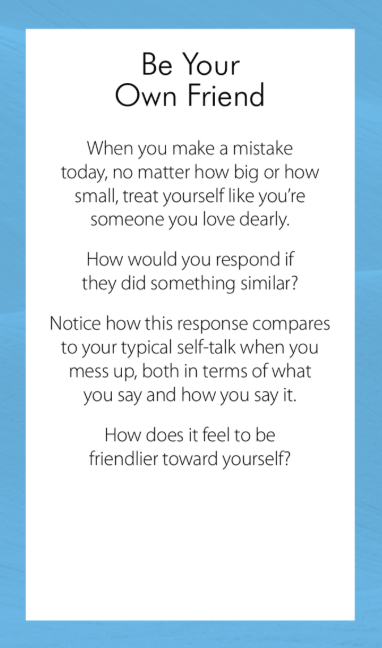
  • Are their thoughts serving them well?
     
  • Are their actions consistently rewarding them with enjoyment and a feeling of accomplishment?
     
  • Do they find meaning and connection to nourish their spirits?

Other clinicians before me have recognized the power of combining these three schools of thought (e.g., Mindfulness-Based Cognitive Therapy). Indeed, integrative approaches in general are commonly used by clinicians, whether or not they follow a CBT approach. Therapists of all stripes see the value in treating the whole person.

Bringing the Principles to Life

The principles of mindfulness-based CBT are very straightforward and easy to explain:

Foster healthy thinking.
Do life-giving activities.
Practice present awareness.


The challenge lies in bringing these principles to life, otherwise they’re no more effective than easy truisms like “be in the moment.” How do we retrain our minds? Which activities are the right ones for me? What are ways to practice mindful awareness?

In my experience, three ingredients are necessary to develop new and more effective habits that promote healing:

  1. A clear and focused plan
  2. Daily practice
  3. A wide range of practices
Without these three factors, we’re likely to slip back toward unhelpful thoughts and behaviors. Thus, each CBT session generally ends with planning for things to work on between sessions. This emphasis on consistent practice of new skills and techniques is part of what makes CBT effective.

In general, it’s best if the plan is written, which makes it much easier to remember and provides greater accountability. Some therapists write the plan on an index card so it’s easy for the client to carry it with them. That idea inspired me to develop The CBT Deck, a deck of cards printed with daily CBT and mindfulness-based practices. It includes many of the same techniques that John and I worked on during his treatment; example exercises from the deck are included in bold in the following discussion of his treatment and recovery.

John’s Recovery

In my work with John, we focused first on adding valued activities back into his life because this seemed like an area of “low hanging fruit,” and behavioral activation tends to pay off quickly. His activities included going on weekend adventures with his wife and doing fun things that also provided physical movement.

We also worked toward taking care of tasks around the house that he’d been putting off and on building positive interactions with others since his relationships had suffered. Given his health challenges, we worked on ways to improve his sleep and eat more healthfully.


Soon we began addressing his thoughts, starting with recognizing thoughts as thoughts. He identified an overly negative self-critical voice that told him he was “unwanted” and “useless,” which we worked to correct in various situations (see sample card).

Mindfulness became the third pillar of John’s treatment and recovery. Through different meditation practices he learned to quiet his mind and recognize its chatter, and could prevent himself from getting caught up in negative trains of thought. He also found relief from putting up less resistance to reality, instead opening to the unpredictability of life.

We worked together to bring these practices into his daily life and his interactions with others. Gratitude was also an important part of John’s recovery, as he started to notice how much was right in his life.

It was only a few weeks before John was feeling markedly better. That said, the improvements were somewhat delayed; he didn’t feel immediately better after the first weekend outing with his wife, and his mindset didn’t change miraculously after one week of working on his thoughts. Just as giving up life activities took a while to affect John’s well-being, so the effects of resuming them were somewhat delayed. This delay is part of why consistent practice is important; if a person stops the practice after a day or two, they probably won’t have gotten a sufficient “dose” to see real improvement—and may conclude prematurely that “it didn’t work for me.”

John and I met weekly for more than a year as the improvements continued. Eventually we tapered down to meeting about once a month, which John finds helpful to maintain the practices that keep him well.

Healing for All

After many rounds of inconclusive medical tests, I began to accept that a mind-body-spirit approach to healing was just as relevant for me as for those I was treating:

Think: I’ve found it extremely helpful to make simple adjustments to my mindset—for example, seeing myself as “still healing” rather than “still sick.”

Act: I threw myself into life-giving activities like gardening, where I can see the fruits (and vegetables) of my labor.

Be: I’ve given myself space to connect with deeper parts of myself that I’d forgotten about, including a renewed connection to sacred scriptures.

It might sound funny, but I plan to use The CBT Deck myself as a regular reminder of the kinds of practices that enrich our lives.

As you assist others in healing—or work toward your own—what framework do you find most helpful? In what way does your approach tend to the mind, body, and spirit?
 

The Value of Evidence-Based Treatment That Fails

In CBT I Trust

I became a psychotherapist because I wanted to help people feel better. I’m sure all therapists share that motivation. In my master’s program, I learned about cognitive behavioral therapy (CBT), and that no other type of therapy had as much research evidence to support it. I was drawn to its promise of rapid relief from suffering.

I sought out a doctoral program where I could receive specialized training in CBT for depression and anxiety. During my training, I saw firsthand how a few weeks of treatment could lead to big improvements in symptoms—not for everyone, but for many.

As an assistant professor I joined a leading center for the treatment of PTSD and OCD, and I witnessed the power of CBT to reopen lives that had been completely subverted by these conditions. When I found that cognitive and behavioral techniques weren’t always effective, I sought training in mindfulness and acceptance-based approaches. I wanted to be equipped to help everyone who came to me. Just as when I began this journey, I wanted to be a healer.

Later, I added CBT for insomnia so I could treat the frequent sleeping problems I encountered in my work. I began writing about the power of CBT to relieve suffering, first on my blog, then through a co-authored account of recovery from OCD, and then in two self-directed books on CBT techniques. I developed a blog and a podcast under a label that captures cognitive, behavioral and mindfulness-based approaches: “Think Act Be.” I was fully immersed in the evidence-based model, and I continued to be inspired by the successes I witnessed.

And yet I often remembered best the people I couldn’t help—the ones who came to me for a few sessions, or for many months, and never experienced lasting progress. They seemed to feel just as depressed, just as anxious, just as gripped by constant worries or obsessions as they did on the day I first met them. Some felt worse. My inability to help them weighed on me as I felt I’d let them down. Sometimes, when they left my office in obvious emotional pain, I cried at my desk.

Another Form of Healing

My work with Evan comes to mind (details changed to protect his identity). Evan was in his fifties and had been dealing with anxiety, depression, and obsessional thinking for his entire adult life. I introduced the standard CBT and mindfulness-based strategies, which Evan struggled to use. He experienced some relief from the meditations I led him in, but otherwise continued to have debilitatingly severe anxiety and depression. I could have blamed his lack of progress on his infrequent practice between sessions, but I didn’t believe that was the whole story, or even most of it. Whatever the reason, I couldn’t help him find relief.

And yet Evan often expressed his gratitude for everything I did for him. Like what?, I often wondered to myself. On one occasion when he thanked me “for everything,” I told him I wished I could do more to take away his pain. He expressed how much relief he found in our meetings, and particularly in the meditations I led him in and which he diligently recorded for listening between our sessions. “And you listen to me,” he said, “and you don’t give up on me. And I can tell sometimes when we’re talking that you’re feeling what I feel. And that’s huge.”

Many other names and faces stand out from over the years, people whose symptoms I seemed unable to touch. No one ever yelled at me or demanded that I do more to help them. Some expressed frustration at their continued suffering, occasionally directed at me, but most were entirely gracious, even grateful despite our lack of progress. Some even referred their friends or family members to me. It took me several years to realize that some of the deepest work I’ve done as a therapist has been with individuals whose symptoms didn’t improve.

This realization didn’t come until a few years ago as I sat with my friend Jim at his kitchen table. Jim had been battling an aggressive form of cancer for two years and had just learned it had returned. I didn’t realize as we sat there that it was the last time I would see him; Jim died two months later.

What surprised me in our final conversation was the gratitude Jim expressed for his treatment team. I expected he would be disappointed in them; after all, he was receiving the most state-of-the-art cancer treatment in the world, and yet it hadn’t kept his cancer away. I could imagine being bitter if I were in his shoes, and not at all happy to have to return for treatment.

Quite the contrary, Jim described how grateful he was for the care he’d received over the past two years. He noted that his medical team had extended his life, giving him time to put his things in order. He had been given more time with his family than he would have had without treatment. He was dying, and yet he was thankful to those who had done all they could to help him.

And more than the cutting edge care they provided, Jim seemed to appreciate that they cared. Jim wasn’t treated as a cancer case, or a research trial number. He was a complete human being, with a family, with hopes and fears, and likely a foreshortened future. The professionals with whom he worked provided compassionate care right until the end.

When I went through my own debilitating illness—much less severe than Jim’s, I learned what it meant to receive compassionate care. By my count, I saw 13 specialists over a 4-year period, and none of them was able to completely resolve my health problems. And yet most of them provided another form of healing—not of the body and mind, but perhaps of the spirit. I would leave their offices feeling a little less alone, a bit less afraid.

A True Presence

When I was in my late thirties, I was diagnosed with open-angle glaucoma. My optometrist who detected it reassured me that I wasn’t “guaranteed to lose my vision,” but the prospect of going blind hadn’t occurred to me until his reassurance. I didn’t ever want to not be able to see my kids.

The ophthalmologist I was referred to treated me with two rounds of laser surgery in each eye. The first involved boring a hole in the iris, making a tiny second pupil to decrease the dangerously high pressure inside the eye that could destroy the optic nerve. The second was meant to dissolve the blockage in the eye’s drainage ducts, allowing the pressure to return to normal. Unless it wouldn’t!

I learned through my own research that these procedures are effective in about seventy-five percent of patients. Thankfully, mine were successful and my pressures have been in a healthy range for the past few years. But I was struck by the failure rate of this treatment, given how directly it seems to target the root of the problem. Examples like this one abound across medical specialties; whatever the medication or procedure, the success rate of evidence-based interventions is significantly less than one hundred percent.

In light of the limitations of modern medicine, we shouldn’t be surprised at our limits as therapists. And yet many of us are quick to assign blame when a client isn’t showing obvious improvement. Often, we’ll blame the client, assuming there must be personality pathology or that they “don’t want to get better.” We may assume the symptoms bring secondary gain. We might prefer to believe that the treatment is effective, but the client just isn’t ready for change. These factors may be present, but they also have the convenient effect of letting us off the hook. It’s not us, it’s them.

The danger that I found in my own reaction to ineffective treatment was running ahead of the client, as it were, and trying to pull them along. This tendency showed up in things like assigning homework that I knew they weren’t going to complete, so at least I could feel like I was “doing something.” My conscience could be clear. Except it wasn’t, because I knew on a deep level that I wasn’t meeting the person where they were. They needed me to walk alongside them, to sit down with them when they sat to rest. They needed my true presence.

Our presence is what matters most. Otherwise, we would dispense therapy techniques from vending machines, or in fortune cookies. Even self-guided CBT books are written with a personal and encouraging tone. It’s crucial to feel that the guidance is coming not only from someone who is supposedly an authority, but from someone who wants the best for us, who’s in it with us. The relationship with an author matters.

Lessons Learned

I suspect I’m not alone in finding that my eagerness to help is actually unhelpful at times. For example, when Rick told me he felt like his life “hadn’t even been a prelude to anything,” I immediately jumped into cognitive therapist mode. My knee-jerk assumption was that this belief was exaggerated; after all, Rick had done many things in his life–graduated at the top of his high school and college classes, worked abroad, completed law school.

“Is that true?” I asked with skepticism. Immediately I knew I’d missed the mark. Rick wasn’t asking me to change his mind, especially not before he felt I’d really heard him. The truth was that his life hadn’t turned out the way he’d imagined. He’d come close to getting married twice, but never tied the knot, and he never had children. And despite his intelligence and education, his major struggles with anxiety and depression had left him unable to work since a year after he got his law degree. His life consisted mostly of tending to his garden, reading the news, and occasionally seeing a friend.

While I may have been on the lookout for distorted cognitions, on an unconscious emotional level I was motivated to look away from the deep pain expressed in Rick’s statement. It would have been much easier if I could have fixed his thinking and taken away his unhappiness. “See! It’s not that bad,” I wanted to say. But maybe it was. And the life Rick had lived wasn’t a problem I could solve.

As a therapist, I have come to appreciate the importance of remaining with and tolerating my discomfort and feelings of inadequacy, if I am going to serve as a full human being to those I treat. I must make peace with what I can’t change. Otherwise, I run the risk of compelling my clients to fight on two fronts, as they must contend not only with their suffering but with my expectations that there must be a solution.

All of this probably seems patently obvious to many therapists, perhaps especially those from a more psychodynamic background. Maybe my tendencies are specific to CBT, or to me. I do suspect CBT fosters some of the expectation about taking away symptoms, but I imagine some form of that expectation lives in all of us in the healing professions.

Sometimes life-changing work gets done while the symptoms are unchanged. For some that might mean connecting with the strength they have to meet their challenges. Others may discover the life that’s possible even through ongoing struggles. Still others will have their experience validated after a lifetime of being told what they felt wasn’t real or will simply feel less alone.

A Broader Lens

Hopefully it goes without saying that I still want to help people reduce their symptoms, and I want to offer each person all the tools that might be useful. Accepting the limits of my abilities and the value of our presence doesn’t mean I must stop trying to reduce suffering in any way I can. It’s also not a way to settle for less than optimal outcomes for my clients. And it certainly doesn’t mean that I have secret insights into what my clients really came to treatment for and that MY job is somehow to get them there.

I still want everyone I treat to experience less anxiety, better sleep, fewer OCD compulsions, or whatever else they came to me for. I provide referrals when I don’t feel that I have the expertise a person needs. At the same time, I’m trying to use a broader lens through which I see a person’s experience. As physician Rachel Naomi Remen suggests, there is a difference between fixing and healing. This stance isn’t a cop out, as I used to believe—a way to make myself feel better about my lack of skill. Rather, it’s a recognition of the reality that there is pain I cannot take away, and that “treatment success” is a bigger concept than can be easily captured in data from a randomized clinical trial, or from a well-validated self-report measure.

Therapy is as complex as any human relationship, with effects that potentially penetrate much more deeply than the apparent symptoms. The best we can do for anyone is to provide compassionate care until the end, whether that means a triumphant recovery, ruinous tragedy or the wide expanse in between.

I’ve also come to recognize that the end of our time together is not the end of the person’s road to healing. For some the time we spend together will be transformational, while for others there will be no obvious effect. For many others, the work we do together will plant seeds that grow only later, well after therapy has ended. It’s easy for me now to recognize the hubris in believing that the evidence-based therapy I offered was the person’s last hope. Now I know that I’m only ever part of a longer journey.  

Janelle Johnson on College Counseling

The Clinical Landscape

Lawrence Rubin: You’ve dedicated your career to college counseling, working with students who appear to experience many of the same problems clinicians encounter in outpatient clinics, crisis centers, and substance abuse facilities. Are college counseling centers microcosms for the clinical world outside of the campus?
Janelle Johnson: I would definitely say what we’re seeing at community colleges and at universities around the United States is reflective of what’s going on in the nation
LR: Can you give me some examples?
JJ: There has been a trend where colleges have been able to provide more support services so students can attend. In the past, these students were not able to attend because of a diagnosis or not having the right medication. They couldn’t perform in college. But now we see a lot of students coming that have schizophrenia or bipolar disorder and we have disability accessibility services to help them. Here at our college,
one third of the students we see are diagnosed with a mental health disability rather than a physical or learning disability
one third of the students we see are diagnosed with a mental health disability rather than a physical or learning disability.
LR: So, they come in with previously diagnosed mental health conditions which may run the gamut from adjustment and anxiety disorders all the way out to schizophrenia?
JJ: Absolutely. We see students every day that may have a lifelong diagnosis, who are able to come to college now, but they need resources around their diagnosis. Student counseling services often try to work with their outside providers because we see ourselves as providing supportive counseling. At larger universities, there is access to medical providers to help with monitoring medications. It depends on what your setting is at your school. If a college center does not have a medical provider, then we obtain a release, so we can actually work with a psychiatrist or a therapist that’s not on the campus, especially when it comes to monitoring medications for more serious diagnoses.

Emerging Adults

LR: So, these students that you’re seeing who have come with diagnoses are accustomed to being in treatment, are they open to being referred back into the community, even after they’re in a college counseling setting, or do they hope the counseling center will give them all they need?
  
JJ: That’s a very interesting question. It depends on their maturity level and how they’ve worked with medications in the past. Even with a seemingly simple diagnosis like ADHD students will often say, “I had these accommodations in high school. They sent me to a counselor.” Perhaps they had more of a medical professional do an assessment. But they come to college with the idea “well I’m in college now, I don’t need any of this.” I think most colleges experience students who come to college and try to maintain, but whatever their diagnosis is we also know that this is an age where certain mental illnesses start to show up.

Sometimes there’s an incident that brings a student like this to the counseling center where, depending upon its size, they may be able to receive an assessment. Large schools like the University of North Carolina has around 30 people on staff with psychiatrists, licensed psychologists and licensed counselors. But in a smaller private school or community college, we send them out into the community for some type of assessment or we refer them back to professionals they may have seen in the past

LR: So, a third of the students who visit the counseling center come with a previous diagnosis and may be accustomed to treatment, and they may be receptive to referrals back out into the community. What about the other two thirds? The ones who come to you and may not realize that they’re struggling or may have an emergent psychiatric disorder. How do you hook them?
JJ: What we see, especially with younger students, is emerging adulthood—that transition where they’re starting to be responsible for themselves. We try to talk to them about how they want to live their lives and how they want to express themselves as adults. In the past, when there have been mental health issues, a lot of that push either came from the parents or the school. Whereas in college, I think one of the mental health hooks that we offer them is saying, “you know, these are decisions you can make yourself. How do you want to be?” We give them some options as compared to the past where they were told what to do.

I’ve met a lot of students who were actually on medications for ADHD or who were taking antidepressants. Their parents said to them, “oh, you don’t need this anymore” and took them off. They were in that gray area of not functioning that well but having that parental oversight to get things done. And

then they come to college, and without their medications or follow up, the parents just expect them to do well, but they don’t
then they come to college, and without their medications or follow up, the parents just expect them to do well, but they don’t.
LR: So, these are emerging adults with whom you try to work developmentally around taking responsibility and seeking resources, which sometimes helps them to reach out for and effectively use treatment.
JJ: Yes, and at the community college level, we try to partner with community agencies so oftentimes, we can make those referrals right in our office with the student sitting here. We can put the student on the phone and facilitate appointments.

Getting Them Hooked

LR: So, you may actually be the frontline for these kids. Do you find that some of these students are resistant to the services that you provide? Or resistant to being referred out for more serious problems that they may not even think they have?
JJ: Yes, I think that we do see some resistance. The BITs (behavior intervention teams) or campus care teams sometimes need to intervene when students become disruptive in the classroom learning setting. We talk to them and try to engage them in counseling. Faculty and other students try to be patient, but I think when a student becomes disruptive, we try to figure out what’s going because we tell them that they are jeopardizing their ability to be on campus.
LR: It sounds like you have to be a little more heavy-handed or hope that the campus support teams can build enough of a relationship with the student and walk them over to the counseling center.
JJ: That’s absolutely true. You know, some people are very compliant. Other people are interested in finding out what’s going on with them because they may have that feeling like, “I don’t want to keep living like this. I don’t feel good.” But, then other students have a hard time recognizing that their behavior is disruptive or that there’s any issue. It really depends on how they’re supported when they’re at home and then how they’re treated. Sometimes I find students with very high intellectual functioning have their own unique mental health issues. It’s really difficult with some of those students because you can talk to them very intellectually and they can process what you’re saying, but
they feel like treatment is going to somehow interfere with their creativity or their ability to perform in school
they feel like treatment is going to somehow interfere with their creativity or their ability to perform in school.
LR: Is there a specific student that comes to mind?
JJ: A young male student I recently spoke with had a bipolar-one diagnosis and had recently received an ADHD diagnosis. He was watching his peers advancing on to their master’s degrees while he was struggling to complete school—but having this very fatalistic attitude about himself and about his ability to complete. But when you speak to him, when you look at his courses and grades, he’s got As. Schoolwork is not an issue but he lives in this sort of fatalistic place. “Why am I doing this? I’ll never amount to anything. I always fail at everything. Look what all my peers have already done.”

I think oftentimes a student feels overwhelmed on the campus and sort of wanders into our area hoping that someone will speak with them. What we usually do in that case is to obtain a release. We try to follow up to let the outside providers know that perhaps the student is in a downward spiral and perhaps he needs his medications checked.

That’s also where Cognitive Behavioral Therapy (CBT) comes in. It helps the students to look at thoughts that really aren’t helpful—the misconceptions that they have about themselves which sometimes can be very challenging. 

LR: Do you get a sense, at least on your campus, that there’s a stigma associated with going to the counseling center or being seen coming out of the counseling center? And if so, how do you address that on campus?
JJ: I have a sense of that most campuses are working really hard with different kinds of programs to remove that stigma around coming to the counseling center. We see different initiatives like the JED and Active Minds programs and peer support groups. I could give an example like suicide prevention. Some campuses do things where they lay out backpacks in the quad for how many students have been lost. And then they have a place where you can come out to honor somebody you’ve lost or write something about yourself—some kind of thing where you can participate. I feel like there is increasing recognition of mental health on campuses and getting help if you need it.

On our campus, in particular, and I think on a lot of campuses, we do classroom outreach. We appeal to students to refer other students to us. Sometimes we find that’s even better than faculty referring students. Staff bring students over. But we find sometimes if your peer, another student says to you, “Oh my gosh, you’re just going through a horrible time. You know there are counseling services here on campus? You know, let me walk you over there or let me show where that’s at.” We find that’s really beneficial. 

Challenges of Dual Enrollment

LR: Yours is a two-year college. But there are also high school students on campus. Do you find that these young people have unique clinical problems and challenges?
JJ: We’re seeing a lot of early admission, college dual-credit high schools on campuses. And at Santa Fe Community College we do have a high school right on our campus. It’s even happening at some four-year schools where there’s a high school house. They have some high school teachers and some high school curriculum, but almost immediately students are being placed into college-level classes. What you see happening is
they’re graduating from high schools one day and then receiving either a certificate or an associate’s degree the next
they’re graduating from high schools one day and then receiving either a certificate or an associate’s degree the next.

Regarding the mental health of these particular students, some are very high functioning, very motivated, but some of these students are in this fast-track program because they’ve not done well in the traditional public high school. They’ve had conduct problems or social interaction problems. The parents think, “we’ll take you over here to our college so you’ll be able to take college classes and you’ll be in this high school but it’ll be a lot more flexible for you.” But these students who haven’t performed well in the past may have an inability to follow through and can’t really manage themselves in college. One of our counselors in particular had a student with a very high level of ADHD who didn’t come to the counseling appointments on time. This sort of high school/college program can actually create more anxiety and more unmanageability and adjustment disorders for students.

LR: So, these kids may not be in an appropriate fit for college life just yet?
JJ: Perhaps, but it’s hard to say. What schools are doing with this early college high school programs are really a positive move for a lot of students because I think high school has let a lot of them down. I think high school is a really difficult time for a lot of students because of pressures around social media and bullying. So, being on a college campus really helps them be with other college students who are motivated to get a degree. But there is always the question of whether they are developmentally ready or mentally ready. And while there is a high school counselor here for those particular students, they are spending a lot of time on other things like scheduling and achievement testing.

Addressing Suicide on Campus

LR: Suicide rates are very high in the college-age demographic. How are college counseling centers set up to address that? 
JJ: I think a lot of college counseling centers are trying to address that with different kinds of programming. The JED foundation, for example, offers programming for college campuses. Active Minds is another one that offer all kinds of wellness programming for campuses that also addresses suicide prevention. Also the American Foundation on Suicide Prevention in New York.

Suicide is the second-highest cause of death for our demographic.
Suicide is the second-highest cause of death for our demographic. Even if you go up in age a little bit, which is the demographic for a lot of community colleges, then suicide is the third-highest cause of death. So, I think on most campuses we are all actively working with programming and bringing support.

At Santa Fe Community College we actually have a certified faculty member do Mental Health First Aid Training. Mental Health First Aid is a program that originally came out of Australia that has been embraced in the United States. It’s a day-long program for people in the community who are not mental health professionals. Here at Santa Fe, it would be our campus community—our faculty, staff, other students who take the training. 

LR: So, when it comes to the more serious disorders, and suicide in particular, it’s critical that college counseling centers work in conjunction with community agencies and have programs on campus so that students are never alone. And neither are college counselors alone because they’re always linked to other resources?
JJ: Right. College counselors work with these different available resources, create their own programming or belong to these organizations that provide free programming.
The idea is to eliminate the stigma, raise awareness and have people participate.
The idea is to eliminate the stigma, raise awareness and have people participate. The campus is a community and we encourage students to participate in these suicide prevention programs and to be part of a campus community that supports helping students reach out. People need to recognize the signs and to be comfortable approaching people.

Disconnected from Families

LR: On a related note, we know that LGBT youth are at particularly high risk for suicide. How do you address the needs of these students?
JJ: A lot of campuses are looking to find ways to support students who are in the process of self-identifying or have someone on their staff assigned to programming in that area who works on removing stigma. In New Mexico, which is a very Catholic state with a lot of immigrants, some of these families persist in saying to their children, “your religion doesn’t accept this. You can’t do this. If you do this, you can’t live with us.” So, we try to work on that by asking these students, “How can you speak with your family? How do you want to live your life?” These students still recognize their religious teachings but don’t want that being used against their identity.
LR: So, you try to work within their families and with the cultural issues that impact their emerging LGBT identities?
JJ: Campuses will either look for programming or design their own programming around supporting these students, and then work with them on these issues in counseling.
A lot of these students actually feel safer on campus than they do at home.
LR: Speaking of unique challenges, what about first-generation college students.
JJ: I do believe they have unique clinical challenges because many of them do not have a history of going to college. Additionally, many of these young people also have to help out financially in their homes. So they live at home, come to college but also work to help pay the rent, the utilities and the car payments. And then there are issues around their transition to adulthood. We help them speak to their parents about what they need to be a successful college student.

Some of them will say “my parents are making me feel like I’m crazy because I need more time to study and I can’t take care of my little brother or pick him up from school every day.” It’s an interesting dynamic that plays into their mental health because when they don’t feel supported or understood at home, they experience anxiety, depression and acting out behaviors. It’s not that families don’t support going to college—they absolutely do. But they don’t know what that means or what it looks like.

Raising Awareness

LR: There’s a lot of research into the short and long-term effects of adverse early childhood experiences and the need for trauma-informed education. The idea is that some of these kids are coming to school with such a heavy trauma burden that they can’t concentrate, can’t relate and are at high risk for drinking or self-harm. Have you seen this on your campus and how do you deal with that?
JJ: There are different kinds of trauma. Here
in New Mexico, we have a lot of Native Americans, so we talk about historical trauma
in New Mexico, we have a lot of Native Americans, so we talk about historical trauma. In addition to these historical events, some of our students come from a background of trauma in their home or in their childhoods. In the college counseling setting, we work with these students around issues of safety, peer support and collaboration—empowering the student to have a voice while they are exploring their issues. We are not dismissing what has happened to them but we’re looking at how the therapy works for them, helping them to move forward with that trauma and not to feel re-traumatized by being in our college setting.
LR: Are drinking and substance abuse significant problems on college campuses?
JJ: We’re not seeing it as much on commuter campuses like ours that do not have housing, although I do think it is a presenting problem in our counseling centers. It’s different on residential campuses, and particularly in the dorms. But we do see students coming to campus who are inebriated, or who have problems that other students are reporting. They may be coming to class and they sound like they’re drunk or other students can smell it on them.

I do think it is an issue that is hard issue to address. College counseling centers try to work with students on maintaining their sobriety. I think if they’re actively using or they can’t even function then it is critical to refer them to treatment center. Another student may binge drink only on weekends and otherwise be high functioning, but it also starts to catch up with them. They may not be getting proper nutrition, or may be having problems with sleep, hygiene or relationships. These effects of drinking begin to interfere with their functioning in the college setting. With these students, we try to talk more about responsible drinking and help them to understand how their drinking interferes with their learning and progress and help them explore how they can be more responsible. 

Serving our Veterans

LR: You had mentioned that you have a veteran’s program on campus? Are there unique clinical needs for these students?
JJ: Often college campuses have veteran support centers which provide resources for veterans and their families. These resources include counseling services. Although we are not housed with the veteran’s service center on our campus, veterans know about our counseling services. We also have a veteran’s hospital in Albuquerque, New Mexico, which is about 60 miles away and a veteran's counseling center in Santa Fe.

Our veteran’s center also brings counselors onto our campus about once a week to meet with the veterans. This is not to say that some of the veterans don’t come to our regular college counseling center. Having served first and then coming to college can be a challenge and clinical needs depend on whether or not they are a combat veteran. The

combat veterans may feel that there is a stigma around coming to the regular college counselor
combat veterans may feel that there is a stigma around coming to the regular college counselor who hasn’t experienced what they have or have a military background. Larger campuses actually hire counselors who have served in the military. This can be helpful because veterans have trauma about reintegrating. They’re used to following authority and a more established and structured day. Sometimes they have difficulty with younger students who aren’t respectful. 
LR: Or knowledgeable!
JJ: Sometimes, these younger, less sensitive or aware students don’t conduct themselves very well in class which is very troubling for veterans. And then of course, we do have veterans that have PTSD or depression; situations that require more treatment. But a lot of times, I think it is more about adjustment, depending on how long they served and the college program they’re in.

CBT and Beyond

LR: We’ve been talking about various treatment needs of college students and I know that CBT and other empirically supported treatments are the rage these days. I’m wondering if it also dominates the college counseling landscape.
JJ: I think there is a lot of support on college campuses to use research-supported therapy modalities. CBT has a lot of related therapies including DBT, solution focused and even positive psychology. The reason it works in our setting is because we’re tasked to triage students that come in. There can be a high need for services and students oftentimes wait to get in to see a counselor or a mental health provider. So, I think we want to use therapies that we know can assist with more immediate behavior change.

We don’t have the luxury for long-term care with students.
We don’t have the luxury—and I don’t know if it is a luxury—for long-term care with students. So, those kinds of therapies can really be useful. You can give the student homework and worksheets—something they can hold onto so that they can feel like they’re moving forward and like they’ve accomplished something. I’ve even had students with whom I’ve suggested a reward system to help when they were struggling with something and want to see improvement. Larger campuses can even incorporate these kinds of therapies into a group setting and can direct students to be part of therapy groups.
LR: Would you say that college counselors are pressured to use these proven methods and not encouraged to use creative-expressive modalities that incorporate art, play and music? 
JJ: We’re not forced to do that—it would depend on the counseling center and how many staff members they have. I do see the creative going on as well. In New Mexico, Southwestern College offers a master’s degree in art therapy and I’ve had interns from there on my campus who have done art therapy with our students and they’ve really liked that.

There is some room for creativity, but you have to be working to move the student forward especially because you’re working in a limited timeframe; a college semester or a college quarter and then there’s a break and they go home. I am at a community college where we are looking toward a goal-oriented type of therapy. If they bring in extreme trauma or are in an abusive relationship or are fighting an addiction, treatment is better is referred to a community partner. We use whatever modality is supportive of their counseling and helps them to meet their goals.

And for most of them, their goal is to complete college, find a career and move forward. So, we try to facilitate that. If there is a major mental illness diagnosis, we make sure that they have a community provider who may be doing something like DBT groups. I don’t feel like college counseling can replace that.

College Counseling Competencies

LR: With regard to the provision of treatment, what are some the unique competencies that a college counselor should possess?
JJ: At the university level, a lot of schools hire licensed doctoral-level clinical directors. The counseling staff is sometimes made up of licensed counselors. In New Mexico, I’m a licensed clinical mental health counselor. Some college centers hire licensed clinical social workers who are in clinical practice. That’s is the more traditional set up. Our organization, the American College Counseling Association expects that any counselors working in a college setting be licensed.

What we see in California is an interesting example where most of the universities are using doctoral level licensed psychologists in their counseling centers. In their community colleges, they are using master’s level clinicians. But they don’t have licensure at that level. It’s hard for me to talk across the board, however the American Counseling Association has been working on licensure portability along with licensure accountability.

I would say that if you’re going to work in a college setting, you should be licensed in the same manner that you would to work in a private practice or at any other clinical facility—you need the degree and the experience that comes from practicum and internship to do this work. Unless, that is, you’re in a college where they’re calling you a counselor and you’re doing academic advising or something like that. If you’re in a college mental health counseling center, you’re doing the same kind of work anybody would be doing as a mental health professional anywhere else. The scope of your practice may be limited in that you have to do more community resource referrals. But, your knowledge and ability including understanding the DSM, various diagnoses and treatment modalities fully impacts your work every day. You need to be able to do it.

LR: Do college counselors need to like teenagers and emerging adults? Wouldn’t that be a prerequisite?
JJ: I think that you want to be able to work with that population. Three years ago, I started an internship program here at Santa Fe Communi

David Barlow on Transdiagnostic Treatment of Emotional Disorders

Lawrence Rubin: Before we begin, Dr. Barlow, I'd like to congratulate you on being honored by the American Psychological Association with its Gold Medal Award for Lifetime Achievement in the Practice of Psychology. It's well deserved, and I applaud you. We often hear lifetime Award recipients say, "I'm not dead yet. I don’t need a Lifetime Award. I still have work ahead." So, is there any irony in receiving the Lifetime Award, over and above the gratitude that you have?
David Barlow: Well, you do have in the back of your head the notion that maybe they're trying to tell you something. But actually you know, I'm just about at the 50th anniversary of getting my Ph.D., so I certainly have been very blessed with a long and thoroughly enjoyable career. As I've said several times in talks of late, in all those years, I can never ever remember being bored for even an hour. 

Early Anxiety Research

LR: Your most recent work involves the development and testing of the Unified Protocol for the Transdiagnostic Treatment of Emotional Disorders, which primarily addresses anxiety and related disorders. And since anxiety is perhaps what you're most well-known for, I thought we could begin our conversation with anxiety and your work at Boston University’s Center for Anxiety and Related Disorders (CARD). You have dedicated your long career to the study and treatment of anxiety. What drew you in this direction and what's been enlightening and sustaining for you along the way?
DB: When I came on the scene in graduate school, I had the opportunity one summer to work in Boston with Joe Cautela, and also the South African psychiatrist Joseph Wolpe. People were very intrigued by what he was doing. He had developed an approach called systematic desensitization, the theoretical rationale for which turned out to be incorrect, but nevertheless it drove some of his work. What he did was take somebody with a phobia and have them gradually imagine being closer and closer to the phobic object or situation while in a very relaxed state. And he did it very gradually, because in those days we all thought, whether we were behavioral or psychoanalytic, that too much anxiety all at once was a very dangerous state of affairs that might lead to a psychotic break of some kind. So, this procedure turned out to be successful and people did seem to recover from their phobias. But of course in hindsight, it was not nearly as successful as it seemed to be at the time. That's often the case with new approaches. They seem more impressive at first than they turn out to be later.

Nevertheless, in those days, when we had very little in the way of more structured interventions, it was something people were intrigued with. And I trained with him, and so it was very natural when I went on to then do my doctoral work that I began to do my research on that technique and on its anxiety-reducing and phobic-behavior-reducing properties.

LR: So, you were entranced by Cautela’s and Wolpe's work. You saw it as a successful effort to address anxiety in a practical and effective way. What kept you in the anxiety game? For those therapists out there who search for specialties or search for an area that really grabs them, what was it about anxiety – it's ideology and its treatment – that really caught you and kept you?
DB: Well, I think there were several things.
First of all, anxiety is ubiquitous
First of all, anxiety is ubiquitous, as we now know. Everybody experiences anxiety. But in those days, we knew very little about it. We had not yet recognized that experiencing a panic attack was in some way unique and different from the more general background anxiety we all face. We had not yet really delineated the differences between anxiety and the day-to-day stress we all find ourselves under when we're challenged by one thing or another. So, it was very vague. People had not operationalized, as we say now in the game, the concepts of anxiety.

There was also very little connection with what we now call emotion science. In the old days, there used to be courses in motivation and emotion, but by the late '60s and early '70s, they began to fade away. And there was a long period of time when the basic field of studying emotion and motivation was under-emphasized and was often not taught in schools. So, it was such a common problem that we knew so little about. When we began to scratch the surface of it with Wolpe's early procedures which directly targeted the emotional symptoms of anxiety, we began to find out there was something there, but it did not work for the reasons Wolpe thought it did. He had a fancy kind of physiological theory about why it might work that was disproven rather quickly. And it was not as generally applicable as it would seem. And so, what was it about that procedure that at least benefited some people some of the time? Those are the kind of questions that we began to ask.

And, of course, to accomplish that, the other thing we did in the late '70s was to begin to study this in a real systematic way. I did my dissertation, as did many of my colleagues in those days, on female college sophomore who were afraid of snakes. And so did everybody else including my colleague Jerry Davidson. Why did we do that? Well, because it was so easy to find young women who were afraid of snakes. We'd just need to measure their fear. How afraid were they on a scale of zero to 10, and how close could they get to a snake in a cage? And we could then try different aspects of the treatment and look at the effects.

It wasn't too many years before we found out that that was all well and good, but it had very little to do with the kinds of patients we were seeing in real life, it did not transfer to the clinic, and to really find out something more important and more substantive, we had to begin working with patients. So, we established one of the first specialty clinics for people with anxiety disorders.

In those days, in clinical psychology and psychiatry, unlike medicine, we did not have specialty clinics that focused on a specific problem. Psychotherapy was kind of a general approach to a variety of problems people might have. But because we developed and then publicized this focus, we created a real niche. And it wasn't long before people were flocking to the clinic when we began to talk about what it was we were treating and began educating the public, often through the media, on what anxiety was, that panic was as a separate phenomenon, and the sorts of things we were beginning to do for it. And so, we had no shortage of patients, and that turned out to be a big reason for expanding research into the causes and treatment of these emotional disorders – much bigger than we thought it would be – in terms of playing into our training and research goals. 

LR: So, you saw a real need, not so much in the general, non-clinical population where anxiety was a day-to-day experience, but in clients who were struggling with anxiety at a level significantly higher and different than the average person, and that need caught your attention and just never let go.
DB: That's exactly right. And we found out that the simple, straightforward procedures like systematic desensitization, which were effective with less severe forms of emotional disturbance, often did not work with the more complex patients. Something was working, but we were not really sure exactly what was resulting in the positive changes we were seeing. What were we doing? What were the specific mechanisms or procedures we were using that seemed to be having an effect? And that started our program of research on really developing comprehensive treatments that had more general positive effects.
LR: So, you've always been interested in developing a real pragmatic, useful, and effective way to address, in this instance, an anxiety problem that's very, very common, that really didn't exist before beyond psychoanalysis, which had its own notions of anxiety as an overflow from unstable defenses.
DB: Yeah. We certainly shared with psychoanalysis that desire to come upon a set of principles that would be effective for anxiety disorders more generally. We also, in a separate but related line of research, began focusing on the nature of anxiety. You know, what was it that actually contributed to the development of really severe anxiety in people? What kind of personality characteristics? What kind of situational characteristics? What kind of early learning experiences contributed to this? Psychoanalysis, of course, had its hypotheses and theories, and then there were other theories coming out of attachment theory and the basic learning approaches in the laboratory. And we began another line of research which focused on, "How do these things all relate to each other? How do they come together?" And that was a very interesting parallel line of research.

Also, when the DSM came out, it had some similarities with previous versions, and also with the International Classification Disease schema that separated out the anxiety disorders. There were phobic neuroses — social phobia, and generalized kinds of neurotic symptoms. And so, people would separate out these things. And often it was not based on a reliable way of identifying disorders or problems. It was relatively vague. Two clinicians looking at the same patient couldn't agree on what was said. So, we began another project to attempt to delineate the different presentations of anxiety and determine "how do they differ?" but also, "what do they have in common?" And over the decades, you know, in the '80s, we all focused on how they differed, and this resulted in a greater and greater number of disorders and treatments to address them. And then, in the late '80s and '90s, I began to think many of these things are very similar, and many of the treatments that we'd developed for these individual disorders such as panic disorder or obsessive-compulsive disorder or phobias, they really were very similar in many ways.

Maybe there were some common kinds of approaches underlying all of them that were really responsible for success.

The Unified Protocol

LR: David, there is a symphonic piece by Bedrich Smetana called The Moldau which starts slowly and softly by depicting a small little rivulet at the top of a mountain, and then as that rivulet flows down, it joins others, and the music builds and builds. And by the end of it, there's a magnificent crescendo of this massive flowing river. As you're talking, my sense is that the Unified Protocol is something that wasn't born fully made. It's something that evolved from all your work and all your observations. And it just made sense that it should evolve, because your research determined that there are common factors underlying many anxiety disorders, and, therefore, why not look at a common set of treatments and treatment components to address those underlying common factors?

So, on the heels of that, can you describe the Unified Protocol for the Transdiagnostic Treatment of Emotional Disorders for those of our readers who probably have never heard of it? They've heard of CBT, they've heard of behavior therapy, but not the Unified Protocol

DB: Sure. I'd be happy to. And let me say, I think that's a very apt description about things coming together and forming a symphony, in some ways. But it's also important to add that it's not done yet. I think every month, every several months, the community of people doing clinical research and the community of people doing clinical work are getting their heads together and coming up with new issues that need to be added to this river to make it more comprehensive. But as it stands now we conceptualize what we are doing rather differently than we used to. We now approach these problems from the point of view of the overarching personality dimensions that are shared by these people.
Whether they have generalized anxiety disorder or depression or panic disorder or social anxiety disorder- they all share a personality trait or temperament called neuroticism
Whether they have generalized anxiety disorder or depression or panic disorder or social anxiety disorder- they all share a personality trait or temperament called neuroticism. Now clearly they had some other things going on that, in fact, define their disorders but we think that the basic overarching concept that actually has to be addressed is the neurotic temperament.And that neurotic temperament, as most everybody knows, has to do with a tendency to experience frequent out-of-control negative emotion and to be very reactive to that emotional experience because it seems out of one's control, it seems beyond one's ability to cope. And so, the Unified Protocol addresses this in what are now five core modules.

The first one would be making people more aware of their emotional life. People in the personality area and psychodynamic area talk of alexithymia or the difficulty in really recognizing or experiencing intense emotion. And so,

one of the things we do is help people to experience their emotion more fully
one of the things we do is help people to experience their emotion more fully. We have exercises to do that. We call them mindful awareness exercises, but they're a means to an end.

A second component would be helping them to recognize what kinds of attributions and appraisals they're making about their emotions. Not about the situation that provokes their emotions, but about the emotions themselves. And there's a lot that's very much like Beckian cognitive therapy in that approach.

Then, a third module helps people to focus on some of the somatic components of their emotional responses, of which they are often unaware. And so, we provoke, we examine, we evaluate the kinds of somatic symptoms that, for these people, signal the beginnings of intense emotion. For some, it's rapid breathing, kind of a hyperventilation. For others, it might be heart rate increases or decreases. Others may just have some feelings or sensations of unreality, some dissociation. And so, there's a variety of these somatic sensations that become important.

And then, we work on a fourth component, the tendency to avoid all emotional experience. And the avoidance obviously has long been recognized as a major part of all of the anxiety disorders, but the focus has been on the situations that are avoided, like a social situation or a crowded shopping mall for somebody with agoraphobia, or certain triggers or obsessions in somebody with OCD. But what we're focusing on is the avoidance of the emotion itself, which we think is what all these people have in common. And so, we work on identifying all the various subtle kinds of strategies our patients use to avoid experiencing any kind of intense emotion which, because of their temperament they feel, if it occurs, is out of their control and dangerous.

And then in a fifth module, finally, we put all these together into what we call emotion exposure exercises, where we have them experience intense emotions, often in context. We work with them in a collaborative fashion to provoke these emotions, and have them begin to experience these emotions in what ultimately would be a non-threatening way, as something that is a natural part of all of our existence, all of our behavior, and not something to be avoided at all costs.

if one does practice a greater awareness and acceptance of these kinds of emotional experiences, then they will repair naturally
And if one does practice a greater awareness and acceptance of these kinds of emotional experiences, then, in the lingo of the emotion theorists, they will repair naturally. They will diminish more quickly. 
LR: So, these are five core modules based on the underlying factors in the neurotic temperament that give rise to the various anxiety disorders, and then the actual specific techniques flow from these five core modules.
DB: That's correct. That's how we go about it now.

Whither the Dodo Effect

LR: There are numerous interventions for anxiety and related disorders, from psychoanalysis to somatic therapies, but there are those like John Norcross, Bruce Wampold and Michael Lambert who have proven through their research that all treatments are equally successful. And I don't know if that sends hackles down your back. But my question is, what is it about anxiety that lends itself so well to CBT? And conversely, what is it about the marriage of CBT and anxiety that's such a perfect union compared to these other treatments which these other folks say work just about the same?
DB: First of all, we do not agree with my good colleagues and friends John Norcross and Bruce Wampold that all treatments work the same. We think that's a gross oversimplification of the research literature. We think that there's irrefutable evidence that some psychological procedures and interventions work better than others– they're not all CBT by the way. I think we're getting away from schools of therapy. As we're beginning to identify actual components of mechanisms of action of various therapies, we're finding that all therapies, to some degree, may have, more or less, some of these components.

However, if we look around the world at the various health care policy making organizations that make these decisions, such as the National Health Service in the U.K., the Veterans Administration Health Care system, and others – there are people who just look at whether there are some treatments that are better than others and should be first-line treatments, and they find that there are and then write them in the clinic practice guidelines. And these are continually being updated and revised based on the evidence, and they are not limited to CBT, by any means.

Having said that, it's very clear that the so called "common factors" of all therapies are very active in themselves and very important. Nobody would disagree, certainly not the CBT folks, that alliance and things like client/patient expectancies contribute to outcomes in therapy. What we would say, and I think what a lot of people in the psychotherapy field are now beginning to say, is that,

given that we know some of these "common factors" are important, maybe it's time we did some research on how we could make them even more powerful
given that we know some of these "common factors" are important, maybe it's time we did some research on how we could make them even more powerful.

Rather than simply doing one's psychotherapy and waiting for the expectancies to develop, we know that the social psychologists have spent a lot of time determining how we could really enhance expectancies. How could we shape expectancies among patients and clients and whomever we're working with so that they will be maximally effective? We think that those are important. They do contribute. They're not the sole determining factor; they're not the only factor. But they should, to the extent that they are useful, be enhanced. 

LR: Are you seeing the field moving in a way that utilizes CBT to enhance some of these common factors? Or could other therapeutic approaches also build on expectancy, alliance and rupture repair and those other relational variables? Or is it CBT that has the greatest promise for building on those factors?
DB: Well, if we look at, let's say, the anxiety disorders – and really I'm talking about the emotional disorders now, the depression and the various dissociative disorders and trauma-related disorders – we know there are some very powerful psychological procedures that, if used properly, are just as powerful as medications and have more enduring effects. One of them would be organizing, in a therapeutically beneficial way, exposure to anxiety- and panic-provoking cues. Without that kind of exposure, nothing we know of any substance is going to happen.

Now, if you look at the varieties of psychotherapy, you'll see that CBT focuses rather explicitly on that in the treatment of anxiety disorders, and it's proven time and time again to be powerful. But other approaches also tend to incorporate basic exposure, whether it's through narrative exposure or another approach. But to the extent that these therapies are different it may be that some of the CBT approaches have structured the exposure exercises in a more efficient and parsimonious kind of way. Another important mechanism that has been demonstrated time and again in both clinical and basic laboratories is altering the individual's attributions and appraisals of their own emotional experience and the context in which it occurs. And we all know cognitive therapy does that, but there are also other therapies that approach that in some ways.

So, we think there are some fundamental psychological strategies that are responsible for improvement in anxiety disorders. And these strategies can be enhanced by, let's say, focusing on expectancies and the alliance. So, for example, patients are going to be less cooperative with what, at times, is a difficult kind of exposure exercise if they have a therapist they don’t like telling them to do it. I mean, it's just as simple as that. Or requesting that they do it or working through it with them in some way. And similarly, if they have very little hope that these procedures are going to do anything worthwhile, then we know they probably won't.

LR: Based on our conversation, it's interesting that the notion of a “unified protocol” suggests more than just CBT, because you really are taking into account the research on common factors and relationship, and integrating those into a unified approach, recognizing that without a good relationship, without an attempt to directly address alliance and repairing ruptures, that none of these techniques, whether they be CBT-oriented or otherwise, will be effective. So, the unification of the protocol seems to now be grabbing on to these other common factors, and even more inclusively than I originally thought when I read your book on the Unified Protocol.
DB: Well, I think that's fair. Again, our emphasis would be that it's the psychological factors that are most central, and that the so called "common factors" of alliance and expectancy then contribute to the efficacy of those. You're just not going to have one without the other. Many people now see much of the future of behavioral health care, given the overwhelming needs in the population – even in our country, let alone underdeveloped countries – as focusing on different ways of delivering services. It's like tele-health, web-based interactive therapies, all the new apps that are able to reach so many more people.

A New Care Continuum

LR: Do you see those newer forms of service delivery, whether it's tele-health or apps, being a useful adjunct or component of the Unified Protocol as it evolves?
DB: I think they’re a useful component of all protocols to the extent that they're structured.
They are considered by many to be a new, more efficient way of reaching many, many more people than we would ever reach by individual doctor-level kind of therapy, small office therapy, one-on-one kind of therapy.
We need to develop some ways to be more efficient
We need to develop some ways to be more efficient.

Again, what I'm saying is, right now, it seems to be the case that when you approach the severe cases, you still need to have the therapist involved. But for the bottom half of the distribution of severity, it looks like this may be a much more efficient way to help people deal with their problems initially. So, it's a stepped care kind of approach. So, initiall we can implement self-help procedures, followed by maybe therapist-assisted procedures, and only for those who don’t benefit from those would you step up to the full therapeutic thing. 

LR: So, you don’t think that therapy through apps and telehealth are a threat to service delivery, but part of the growing continuum of connecting with clients based on severity and accessibility; that
these other delivery mechanisms can be part of a continuum of care rather than something that's sort of inimical to face-to-face care
these other delivery mechanisms can be part of a continuum of care rather than something that's sort of inimical to face-to-face care.
DB: I think not only can it be a part, but I think that it will be a part, given the overwhelming needs of people in society for the kinds of programs we have for them.
LR: On that note, how can the Unified Protocol be adapted to everyday practice, the line worker in the trenches in a community mental health center or a private practitioner who may not have the time or take the time to become familiar with or train in it?
DB: One of our hopes is that the Unified Protocol, containing as it does kind of five core modules, will be much more easily disseminated to our frontline clinicians working in the trenches. As we continue to distil these five protocols clinicians will see that they are not too awfully different from what almost most of them are already doing. The protocol would help them organize their approach in a more structured way and offer some quick and hopefully easily utilized assessment devices to incorporate into their practice. It saves them from learning one treatment for panic disorder, another treatment for OCD, a different treatment for depression.

A Few Remaining Issues

LR: Changing direction just a bit; kids seem to be epidemiologically at a much higher risk level for anxiety disorders. What are your recommendations with regard to applying the Unified Protocol or components of it with them?
DB: Certainly the
kids with internalizing disorders are at risk to develop more severe anxiety disorders later in life
kids with internalizing disorders are at risk to develop more severe anxiety disorders later in life even if they have mild kinds of internalizing symptoms. So, one of our colleagues, Jill Ehrenreich at the University of Miami, has developed the Unified Protocol for children and adolescents. There are slightly different versions for kids four to 10 or 11, versus adolescents, maybe 12 to 17/18, but they have the same principles.
LR: You suggest in your Unified Protocol training video that patients can continue medication throughout the protocol. Can you say a few words about the place of medication in the administration of the Unified Protocol?
DB: Well, the approach we learned to take decades ago is that it's obviously difficult to discontinue people from medication, and we find that, with these protocols, there's no need to. They wouldn't come to us unless they were continuing to suffer from their disorder. So, clearly medication, while perhaps benefiting them a little bit, has not mitigated the disorder to the extent that they don’t need any help. And we find that we can administer the protocol, and we simply tell them that they can keep taking their medication if they like.
We find that 40 to 50 percent begin cutting back on or discontinuing their medications anyway
We find that 40 to 50 percent, as the treatment progresses and they find they're getting better, begin cutting back on or discontinuing their medications anyway. For those people who do not feel that they can totally discontinue their medications but would like to, we can add on a few extra sessions to help them do that and we are also working with their internist or their prescriber. And then, for the minority of people who really seem to be very much addicted, as is often the case with the high-potency benzodiazepines, we have a few extra modules that are in a separate program that we recommend.
LR: Okay. So, you're not averse to medication. You respect the client's relationship with medication, and your program is not forcing clients/patients to make choices between talk therapy and medication therapy.
DB: That's exactly right.
LR: Let's say that you have a time machine and you're propelled into the future by 25 years, and it's the next generation of researchers and clinicians who have taken up your mantle on the Unified Prot