Jill Scharff on Object Relations Therapy with Couples

What is Object Relations Therapy?

Rafal Mietkiewicz: Jill, you are a renowned psychiatrist, psychoanalyst and object relations therapy expert. You’ve written and edited many books on object relations therapy so I’m wondering if we can start with just a basic overview of what object relations therapy actually is. It can seem like rocket science to beginning therapists.
Jill Savege Scharff: It’s an unfortunate term, “object relations,” but it was chosen in deference to Freud’s use of the term “object,” which refers to the object that the drive to be in relationship attaches to. Freud talked about the sexual and aggressive drives later in his life, the life and death drives. Fairbairn, who introduced the term “object relations theory,” talked about people’s main motivation being to be in relationship, not only for love an security, but also for a sense of meaning. Giving meaning to existence.

It’s not just the mother who gives meaning to the baby, but the baby who gives meaning to the mother, who becomes a mother because she has the baby to relate to and care for. Object relations refers to the internal psychic structure that develops from these early experiences.

RM: And as therapists our job is to search for these internal structures in our clients?
JS:
Intimate relationships provide an opportunity to rediscover the internal object relations in a new dimension—one that may help it grow and change.
You don’t have to search very far because that internal structure is written large in external, current relationships. The internal relations operate as a kind of design that leads people to repeat it in their current relationships—partly because it’s familiar, and they want to recreate what they know, and partly to have new experiences that, if they’re healthy and interesting and challenging may encourage new learning so that modifications in the original object relations can be made. Intimate relationships provide an opportunity to rediscover the internal object relations in a new dimension—one that may help it grow and change. Same is true in therapy. Does it still sound like rocket science, Rafal?
RM: Yes, a little bit. It seems like it would take a long time to unwind these long-term patterns, and that the therapy would go quite deep.
JS: It does take time to create deep character change. It can take a couple of years with couples.
RM: I am a working therapist, and I have my own experiences in both individual and marital therapy, but the idea of working with a couple for a couple of years sounds challenging, to be honest.
JS: Well, that’s more for couples who are looking for radical change. Some couples come in and just want a little adjustment. They want to settle a fight, or they want to decide whether or not to have a child, and it’s just a developmental intervention. A developmental challenge has got them stuck, and after few sessions they’re on their way. But others who have tremendous difficulties relating, communicating, establishing an intimate sexual relationship—these therapies take longer.
RM: So you distinguish between a developmental intervention and deep therapy.
JS: Well, you never want to do too much. You just want to do what people are looking for and what they need. With an object relations approach, which does operate in depth, even in a few sessions you can show a couple what that approach could offer them if they chose it, if they chose to invest in something more substantial.
RM: When you see a couple, what are the initial stages?
JS: First we do a consultation—not therapy—because I want to give the couple a chance to decide if they think we’re a good match, and I want to show them my style of working. Not every couple chooses to work in an object relations framework, which is basically psychoanalytic framework. Some are looking for a shorter-term approach, or a more structured approach, or a more direct of approach, in which case I’ll refer them.
RM: So the first stage is consultation.
JS: Yes, I’ll meet for maybe two or three sessions. Some people will meet with one partner once, the other partner once, and the couple once. But unless there’s a specific indication to do that, I usually prefer to just work with the couple.
RM: What would be the special indication?
JS: If there is an autonomous individual psychiatric problem, such as a deeply established substance abuse problem, I might want to meet with that individual to assess the extent of it and decide if individual treatment is a better option, maybe even a rehab program. Another indication is the wife or husband of a therapist. Sometimes, you’ll find that non-therapist is so far behind the one who is trained as a therapist, in terms of communicating emotional experience, that they sometimes need an individual session away from the therapist-partner in order to find the words to speak to the therapist partner.
RM: Can a couple’s therapist join these two functions, and do individual therapy with one person from a couple, while also doing therapy for the couple?
JS: That can happen as long as you’re very aware that your commitment is to the couple and that anything you do with the individual comes back into the couple meeting. That the confidentiality, for instance, pertains to the couple, not to the individual member of the couple. So let’s say the individual tells you about an affair that they haven’t told their partner, you would not reveal that personally, but you would suggest they bring it up in couples therapy. If they can’t do it, you probably find yourself unable to work with the couple because if you have a piece of information that you can’t use, it blocks you from being able to respond to all the clues that lead to that conclusion, which you can’t then make.
RM: You also can’t free associate, because you’re blocked from going in certain directions.
JS: You’re absolutely right. I was in Poland last week, and I heard that the Family Therapy Association is working on a statement about confidentiality and how it pertains to couple and family therapy.

The Couple’s Unconscious Life

RM: How do you assess whether a couple is suitable for object relations therapy.
JS: I’m looking for how they respond to any interpretations I make, to my overall presentation, to any links I make between the current struggles and the past. If I get someone who doesn’t want to deal with the past, who says “The past is the past and I don’t want to think about it,” they aren’t likely a good candidate for therapy with me.
If I get someone who doesn’t want to deal with the past…they aren’t likely a good candidate for therapy with me.
So I might say, “Well, okay, I can try to work with you just on the present, but I know that everything that happens now is informed by what happened before, so I don’t think that this kind of therapy will suit you. Do you want to try it and see it what it can do for you, or would you prefer something else?”

I always like to work with couples who can work with their dreams, but not all couples are willing to do that. Some think their dreams are very private to the individual. To me, once an individual tells a dream in couples therapy, it becomes a dream of the couple that the couple has shared with me and that helps me have access to the couple’s unconscious life. The whole of object relations therapy is geared to getting access to the impact of the unconscious on the relationship.

RM: What’s your technique for working with a couple’s dream?
JS: Well, first of all, I listen to the dream from the individual. Then I ask the individual what has occurred to them about the dream. Then, I ask the partner what comes up for them in relation to the dream. Then, as a couple, they’re now talking about this dream, and I look for their associations, my own associations, the feelings it elicits in them and myself, and I construct an interpretation of the dream and what it conveys about the current of their relationship and what they hope for, what they wish for, for themselves in the relationship.
RM: I have always found that working with dreams is great in individual therapy, but this opens a new ocean of possibilities working with couples. Once you’ve done the consultation sessions, and you’ve got the couple on board for treatment, what next?
JS: We agree on the frequency of therapy, which will be once or twice a week. I like my sessions to be 45 minutes, but for couples who come a long distance, we might work for an hour or an hour and a half, whatever suits them. But by arrangement, not just running over time; we agree ahead of time what will be the best format. I don’t do questionnaires. I just ask them to come into the room. They sit.

Can you see my room? [Interview is being done via Skype]

RM: Of course, I see two armchairs.
JS: There are two red chairs over there. They sit in those chairs. I sit back here near the desk. There is a couch down that wall, past the printer. Some couples will sit together on the couch. Sometimes one will sit on the couch in a rather narcissistic way while the other will perch on the chair. However they sit, it’s of interest how they relate themselves to me, how they relate to each other, in spatial terms.

And then I just ask them to say whatever they want to say. Just come in and start. I don’t ask questions. I just listen, and I respond. I think my manner is sort of socially appropriate, unobtrusive, nondirective. It’s not remotely analytic as we’ll sometimes imagine analysts to be. And I’m not saying all the time, “And what do you think about that?”

A Couple's State of Mind

RM: You’re not?
JS: “And how does that make you feel?” No, it’s more that we’re just having an open space conversation, really. And then, every so often, I’ll arrive at a construction of what I think has been happening and show them their repeating patterns of interaction and how they connect to their early experiences. How they treat each other as people from the past were treated or treated them. I’m very interested in helping them as a couple to develop what Mary Morgan calls “a couple’s state of mind.”

You get some couples who used to think as a couple, plan as a couple, and who, because of the strains and stresses of their life and the emergence of negative aspects of their characters, have lost that ability. And then other couples come in who have never actually had it.
You get some couples who used to think as a couple, plan as a couple, and who, because of the strains and stresses of their life and the emergence of negative aspects of their characters, have lost that ability. And then other couples come in who have never actually had it. They come as two individuals. Each one thinking what he or she is doing and not understanding that the marriage is a thing in and of itself that they each contribute to the shaping of, the nurturing of, the maintenance of. If they can learn to do that, then the marriage offers them a great deal.

It’s not just that the partners take care of and love each other, but also the partnership or marriage that they construct. I’m not saying they have to be married in a church or anything, but if they made a commitment to be together, and they nurture that relationship, it will then nourish them and support them through the life cycle and through the various challenges of having the first child, the first child leaving home, retirement—whatever comes through life.

RM: Is one course of therapy enough for a couple or do they tend to come in and out over time?
JS: I think most couples, if they work for a couple years and get to the appropriate developmental level, then they have the tools they need when challenges come up. But you can never predict what life will throw in the way of a couple, and some things might overwhelm their capacity to adapt. If that’s the case they may come back for another session or series of sessions.

The Death of the Couple

RM: What techniques do you use? Do you give interpretations?
JS: I’m a little bit allergic to the term “techniques.” It sounds like they’re little things you apply in various circumstances.
I tend to think of technique more generally as a way of listening, observing, waiting, holding anxiety, not jumping to action, not becoming directive, of always following the affect.
I tend to think of technique more generally as a way of listening, observing, waiting, holding anxiety, not jumping to action, not becoming directive, of always following the affect. It’s very important to always be listening for the feeling behind the words. We do that by listening to the tone, the rhythm of the speech, the hesitations in speech, pauses, slips of the tongue, of course. I’m always interested in any dream material that comes up that will give more access to the unconscious. Then we look for repeating patterns of interaction. We name them and ask the couple to think about why they need this particular pattern. In other words, what defensive function does this pattern serve and what is the anxiety that lies behind it? And there’s always another anxiety that lies behind the most conscious anxiety—fundamentally, the main anxiety is death of the couple. That is the main anxiety.
RM: Death of the couple?
JS: Yes.
RM: Can you say a bit more about that?
JS: Couples are usually not consciously thinking about it, but fundamentally it’s what every couple is worried about. The individual worries that his or her pathology will destroy the couple.
Every couple tries not to remember that one of them will die first.
They consciously worry that they’ll be left, abandoned, rejected, tossed aside, but fundamentally they’re worried that the couple will be destroyed. Every couple tries not to remember that one of them will die first, and no couple knows which one will die first, and no couple knows which one will be left when that happens.
RM: It’s frightening, of course.
JS: It’s very, very frightening when it begins to come to consciousness. As people, maybe in their 40s, they start to maybe lose one friend, or they’ll lose a parent, and they see what happens to the one who is left, then it starts to bear in on them, and they become conscious of that fundamental worry.
RM: How do you work on developing the couple’s state of mind?
JS: The therapist must develop the capacity to be impartial to each individual—or to be equally partial to both of them—but with an overarching commitment to the couple relationship. It’s keeping that in mind that marks the more advanced couple therapist. Someone who isn’t pulled to take sides but who remains neutral, or, if pulled to take a side, latches onto it and can interpret what has just happened. Name it as a skewing of the original intention that reflects a characteristic of the individual who initiated it and the partner who allowed it to happen—since it will likely be a pattern that happens in the relationship. And there you have it, in the laboratory of the couple therapy, where you can see it, examine it in relation to yourself, a couple therapist who doesn’t have all the investment of being a life partner.
RM: Do you have all these concepts in your head when you talk to a couple?
JS: No. I think we do all that theory as background, and if we get stuck in our work with a couple, then we pull out the theory and see if it can help us. But, there’s something very important that you haven’t asked me about, which has to do with sexuality.
RM: By all means….
JS: I’ve found that a lot of couples—or rather couples therapists—don’t actually ask about the couple’s intimate relationship. If a couple presents with a sexual problem they’ll respond to it of course, but they don’t always ask about it as part of the assessment, and I think it’s important to do that, and to not be inhibited about it. It’s just part of the couple’s life and should be considered along with all other aspects. Now, if there is a specific sexual problem, then the object relations approach, which is analytic primarily, has to include a behavioral component.
RM: I know this is hard to quantify, but can you talk about one of your biggest successes and one your biggest failures as a therapist?

JS: That’s really hard to do off the cuff. I mean, there are couples that break up—and in one way, that’s a failure of the couple therapy. In another way, that is a recognition of their differentiation and that the therapy has helped them to reach this very painful decision. Whether you call that a success or a failure is really debatable.
The couple that quits in a rage at you or in disappointment with you—that feels like a failure.
The couple that quits in a rage at you or in disappointment with you—that feels like a failure. It’s also a tremendous loss because you didn't get the opportunity to work with them on these intense feelings which, had they come back to work on them, could have been very useful to their relationship. As it is, they just go off with an idea of putting the bad object into you as if it will stay there, and they’ll be relieved of it. Of course, the bad object always returns, and they won’t have had a chance to really work on it. That feels like a failure to me.
RM: It’s painful, yes.
JS: Success is any couple that goes off, and you never hear from them again because they’re coping. You hope that is a success, but you never really know because part of our policy is not to do follow-up, not to intrude on people’s lives after they have ended their contract with you. That’s one of the sad things about being a couples therapist, is not knowing what happens with them—unless you hear about a couple by chance or unless they return as parents of a child, and they want you then to see their child. They’re doing okay as a couple, but because of the period that they went through when they weren’t doing okay as a couple, their child has built in certain personality characteristics that are hampering that child. So you see the residue of the couple problem in the child.

You can work with the child to get them back on developmental track, but at the same time, you see the couple as parents and how well they are doing both as a couple and as parents, and that’s very gratifying. You could call that a success.

RM: What’s your advice to new therapists?
JS: Get into treatment.
RM: Get into treatment.
JS: And get supervision. And then you can study and take courses. It’s constant work. And if you find a couple daunting, you are not alone. Couple therapy is the hardest work we do because a couple has such a tight bond. They are together because they fit at conscious and unconscious levels.

Success is any couple that goes off, and you never hear from them again because they’re coping.
As the couple therapist, you often feel either you’re breaking a boundary by entering the bedroom, as it were, as if you were a child in an Oedipal situation, or you feel terribly excluded because you can’t get in. You feel guilty about trying to get in. You feel confused, puzzled, rejected. It can be very uncomfortable working with a couple, and this is the reason many people don’t do it, I think. That’s why I say get into therapy and supervision. It takes a lot of personal therapy on the part of the therapist to understand how their own personality is constructed and how they tend to express themselves not only in their personal relationships, but in relation to the couples and families they work with.
RM: Jill, thank you very much.
JS: You’re so welcome. Delightful talking to you.

Love Sense: The Revolutionary New Science of Romantic Relationships

Editor's Note: The following is adapted from Sue Johnson's latest book, Love Sense: The Revolutionary New Science of Romantic Relationships (Little, Brown and Company, 2013).

The Rhythm of Disconnection and Reconnection

A love relationship is never static; it ebbs and flows. If we want love to last, we have to grasp this fact and get used to paying attention to and readjusting our level of emotional engagement.

“I just assumed that once you are married, you both know you are partners and you can kind of relax and take the relationship for granted,” Jeremy tells Harriet. “You can focus on the big picture. You know I love you. We aren’t mean to each other. I haven’t been unfaithful to you or anything like that. Can’t you just roll with the less romantic, less touchy-feely times?” Harriet sits up straight in her chair and declares, “No, Jeremy. I can’t. Not anymore.”

“Well, that is just very immature, then,” Jeremy replies.

He is right in a way. In a good relationship, where we feel basically secure, we can fill in the blanks left by our partner’s occasional emotional absence. We can substitute positive feelings from past encounters and accept that there may be legitimate reasons for the inattention. But only some of the time, and only if we know we can reconnect if we really need to.

Loving is a process that constantly moves from harmony to disharmony, from mutual attunement and responsiveness to misattunement and disconnection—and back again. But to really understand what happens, we have to zoom down into these interactions and atomize them. Think of Georges Seurat’s paintings: when we move in really close, we realize that the vast scenes are composed of thousands and thousands of little dots. Researchers are doing the same with love relationships. By freeze-framing videos of romantic partners talking or arguing, and of babies playing with a parent, they are discovering how love, without our being aware, is shaped, for better or worse, in micromoments and micromoves of connection and disconnection.

“Up close, this is what love looks like: I look at you with my eyes wide open, trying to capture your glance, and you catch my expression, widen your eyes, and take my arm.” Alternatively, you ignore my bid for your attention, continue talking about your thoughts, and I turn away. In the next step, we resynchronize and reconnect. I turn back to you and lean forward and touch your arm; this time, you get my cue and turn toward me, smile, and ask me how I am. This tiny, fleeting moment of repair brings a rush of positive emotion. Moments of meeting are mutually delightful. (I always think that if we stopped and verbalized our innermost thoughts at this point, we would say something like “Oh, there you are” or even “Ah, here we are together.”)

It’s important to emphasize that misattunement is not a sign of lack of love or commitment. It is inevitable and normal; in fact, it is startlingly common. Ed Tronick of Harvard Medical School, who has spent years absorbed in monitoring the interactions between mother and child, finds that even happily bonded mothers and infants miss each other’s signals fully 70 percent of the time. Adults miss their partner’s cues most of the time, too! We all send unclear signals and misread cues. We become distracted, we suddenly shift our level of emotional intensity and leave our partner behind, or we simply overload each other with too many signals and messages. Only in the movies does one poignant gaze predictably follow another and one small touch always elicit an exquisitely timed gesture in return. We are sorely mistaken if we believe that love is about always being in tune.

What matters is if we can repair tiny moments of misattunement and come back into harmony. Bonding is an eternal process of renewal. “Relationship stability depends not on healing huge rifts but on mending the constant small tears.” Indeed, says John Gottman of the University of Washington, what distinguishes master couples, the term he gives successful pairs, is not the ability to avoid fights but the ability to repair routine disconnections.

We learn about mini-misattunement and repair in our earliest interactions. Tronick and his team have detailed what happens by analyzing videos of infants and their mothers playing a game of peekaboo that grows gradually more intense. At first the infant is happy, but as the game builds, he becomes overstimulated and turns away and sucks his thumb. Mom, intent on playing, misses this cue, and loudly cries “boo” again. The baby looks down with no expression. He shuts down to avoid her signals, which are suddenly too fast and too strong for him.

There are two basic scenarios for what happens next, one positive, the other negative. In the first, Mom picks up the cue that her child is overwhelmed, and she goes quiet. She tunes in to his emotional expression. She waits until he looks up and smiles at him very slowly, and then more invitingly, lifting her eyebrows and opening her eyes. Then she starts the game again. Misattunement and momentary disconnection shift to renewed attunement and easy synchrony. All it takes is a smile or tender touch.

In the second scenario, Mom ignores or doesn’t get her baby’s signal. She moves in faster and closer, insisting her child stay engaged with her. He continues to turn away, and the mother reaches out and pushes his face back toward her. The infant closes his eyes and erupts in agitated wails. The mother, annoyed, now turns away. This is misattunement with no repair, what Tronick calls “interactive failure.” Both mother and infant feel disconnected and emotionally upset.

Over time, thousands of these micromoves accumulate until they coalesce into a pattern typical of secure or insecure bonding. Tronick notes that at just seven months of age, infants with the most positive, attuned mothers express the most joy and positive emotion, while those with the most disengaged moms show the greatest amount of crying and other protest behaviors. Those with the most intrusive moms look away the most. We learn in these earliest exchanges with our loved ones whether people are likely to respond to our cues and just how correctable moments of misattunement are.

Those of us who wind up securely attached have learned that momentary disconnection is tolerable rather than catastrophic and that another person will be there to help us regain our emotional balance and reconnect. Those who become anxiously attached have been taught a different lesson: that we cannot rely on another person to respond and reconnect, and so momentary disconnection is always potentially calamitous. Those who become avoidant have absorbed a still harsher lesson: that no one will come when needed no matter what we do, so it’s better not to bother trying to connect at all.

We carry these lessons forward into adulthood, where they color our romantic relationships. “The past is never dead,” wrote novelist William Faulkner. “It’s not even past.” Psychologist Jessica Salvatore, along with her colleagues at the University of Minnesota, studied the romantic relationships of 73 young adult men and women. They had all been enrolled since birth in a longitudinal study of attachment, and their relationship with their mother had been assessed when they were between twelve and eighteen months old. They were invited to the lab with their romantic partner, where they were interviewed separately. Then they were instructed to discuss a key conflict between them for ten minutes and then talk about areas where they were in agreement for another four “cool down” minutes.

Researchers videotaped these talks and observed how well the 73 adults could let go of their conflict and shift out of a negative emotional tone. Some made the switch quickly and easily; others persisted in talking about the conflict and brought up new issues; still others refused to talk at all. Those who were good at cool down were generally happier in their relationship, and so was their partner. And, as we might expect, those who had been rated securely attached as babies generally moved out of the conflict discussion most successfully.

But is a person’s own attachment history the key predictor of stability in a romantic relationship? Or is a partner’s ability to resolve conflict also a major factor? Salvatore assessed the 73 subjects two years later and found that even among those who had histories marked by insecurity, their romantic relationship was more likely to have endured if their partner was able to recover well from an argument and help them transition into a positive conversation.

I call this the buffer, balance, bounce effect. A more secure partner buffers your fears and helps you regain your emotional balance so you can reconnect. Then together, you both bounce back from separation distress, distance, and conflict. “We are never so secure that we do not need our partner’s help in readjusting the emotional music in our attachment dance.” Relationship distress and repair are always a two-person affair; a dance is never defined by just one person.

Some of us, however, need more structured help in finding our way back to emotional harmony. Drawing from my discoveries in thirty years of practice and research and the findings of the new science of love outlined in these pages, I and my colleagues have created a powerful model for repairing relationship bonds, Emotionally Focused Therapy. The only intervention based on attachment, EFT is redefining the field of couple therapy and education. Sixteen studies now validate its success. Couples who have had EFT show overall increased satisfaction with their relationships and in the elements of secure attachment, including intimacy, trust, and forgiveness. Moreover, the more secure emotional bond remains stable years after therapy.

One of our newest and most exciting studies demonstrates through fMRI brain scans that after couples go through EFT and become more secure, holding the hand of their partner actually dampens fear and the pain of an electric shock. Just as predicted by attachment science, contact with a loving, responsive partner is a powerful buffer against danger and threat. When we change our love relationships, we change our brains and change our world.

The science of love allows us to hone our interventions—to be on target and aim high. The goal is to create lasting lifelong bonds that offer safe-haven security to both partners. Recently we have also created a group educational program based on my earlier book Hold Me Tight: Seven Conversations for a Lifetime of Love that helps couples take all we have learned in decades of research and use it in their own relationship.

Repairing Bonds Moment to Moment

Lasting bonds are all about emotional responsiveness. The core attachment question—“Are you there for me?”— requires a “yes” in response. A secure bond has three basic elements:

  • accessibility—you give me your attention and are emotionally open to what I am saying;
  • responsiveness—you accept my needs and fears and offer comfort and caring; and
  • engagement—you are emotionally present, absorbed, and involved with me.

When these elements are missing and alienation and disconnection take over, renewing a bond that is truly coming undone is essentially a two-step process. First, partners have to help each other slow down and contain the circular dance that keeps them emotionally off balance and hypervigilant for signs of threat or loss. Relationships begin to improve when partners can stop these runaway cycles that create emotional starvation and attachment panic.

To curb these demand-withdraw cycles, we first need to recognize that they are cycles. We get caught up in focusing on our partner’s actions and forget that we are players, too. We have to realize that we are in a feedback loop that we both contribute to. When we see that this is a dance we do together, we can stop our automatic, blaming, “You always step on my foot” response. This allows us to see the power and momentum of the dance and how we are both controlled and freaked out by it.

Prue accuses Larry of being hypercritical. “He’s always complaining about whatever I do—how I cook, how I make love. I feel picked on all the time. It’s devastating.” Larry argues that Prue always refuses to talk seriously about any problems they’re having. “She just goes distant. I can’t find her,” he says. In our sessions, they’ve now realized that they are prisoners of a pattern they call “the Pit.” “I encourage clients to give a name to their pattern to help them see it and begin to recognize that the pattern, not the partner, is the enemy.” They have both unwittingly created this enemy that is taking over their relationship, and they must work together to wrest their relationship from its clutches.

Now we can explore the triggers and emotions that shape the pattern. Prue and Larry recount a specific incident when they fell into the Pit, and we bring it into high focus and play it in slow motion, scrutinizing each detail, until its impact on each partner and their bond is clear. They were on holiday in Europe after a period when Prue had been away taking care of her dying aunt and Larry had resented her absence. They were in a station heading to catch a train when Larry suddenly realized that it had begun moving. Afraid they would miss it, he jumped on the step and yelled to Prue, who was carrying a coffee cup, “Run.” Larry shouted to the conductor to slow down and held his hand out to Prue, but she froze. Finally, she grasped his hand and struggled onto the train, out of breath. Larry turned to her and said, “You are so damn slow.” Shocked and hurt, she refused to speak to him the rest of the journey. Inside, she vacillated between rage at Larry’s reprimands and dread that she really is too “slow” and too flawed for him to love. She shut him out and, preoccupied with her own fears of inadequacy, began a downward spiral into depression.

I turn to Larry and we go over and over this incident moment by moment and tune in to the emotions he was feeling then and how they reflect his overall feeling about Prue and their relationship. He says he feels “agitated” when she does not keep up with him on hikes. He notes she doesn’t take her arthritis medication consistently. “I get anxious when she does not stay with me. I can’t count on her.” He recalls the image of “distance” that flooded him when the train started to move off and Prue froze. “She wasn’t running, working to be with me,” he says. He felt panicked. Larry then begins to talk about his sense of isolation when Prue stayed with her aunt for three months and his habit of dismissing, or “pushing down,” this frequent feeling. Sometimes he can’t, though, and it rises up and engulfs him, and he winds up being angry and sarcastic. He begins weeping as he realizes just how much he needs her and is afraid that she will remain “unavailable.” The slide into the Pit begins with attachment terror.

For Prue, too, the terror that freezes her and turns her away from Larry is a hopeless certainty that she is flawed and worthless, so rejection is certain. As they recognize and find their balance in these emotional moments, they can see the drama of distress as it occurs in their everyday life and then help each other halt its momentum. They can limit the extent of the rift between them and find a secure base. The next night, Larry lashes out, and Prue responds, “Is this a panic moment for you? I am not going to freeze up here, and I want you to slow down.” Each partner begins to see the other in a new light: Prue sees Larry as afraid rather than judgmental and aggressive, and he sees her as protecting herself from rejection rather than simply abandoning him and “sulking.”

Recent research by psychologist Shiri Cohen and her colleagues at Harvard Medical School confirms that partners do not suddenly have to become masters of empathy or emotional gymnasts in this kind of process. Partners, especially women, really respond to signs that their loved one is trying to tune in and actually cares about their feelings. This, in and of itself, creates a new safety zone where partners can begin to expand their dance steps and take risks with each other. New ways of dealing with emotion shape new steps in the dance, which in turn shape new chances for reattunement and repair. But this ability to keep miscues and missteps in check is not enough.

The second step in renewing bonds is much harder but more significant. This is when we move into powerful positive interactions and actually reach for each other. Specifically, withdrawn partners have to open up and engage on an emotional level, and blaming partners have to risk asking for what they need from a place of vulnerability. Partners have to tune in to the bonding channel and stay there. They find this process risky, but if they follow it through, their relationship becomes flooded with positive emotion and ascends to a whole new level. This process is not only a corrective move that kick-starts trust but also, for many, a transforming and liberating emotional experience.

These experiences are deeply emotional; partners each reach for the other in a simple and coherent way that pulls forth a tender, compassionate response. This begins a new positive bonding cycle, a reach-and-respond sequence that builds a mental model of relationships as a safe haven. It addresses each person’s most basic needs for safety, connection, and comfort. “These kinds of primal emotional moments are so significant that, as with all such “hot” moments, our brain seems to faithfully store them, filing them in our neural networks as the protocol for how to be close to others.” Our follow-up studies of EFT couples show that their ability to stay with and shape these emotional moments is the best predictor of stable relationship repair and satisfaction years later.

So what actually happens in these exchanges—I call them Hold Me Tight conversations—when real connection begins to form and a couple moves from antagonism into harmony? Until recently we have not known what specific responses in intimate exchanges make for tender loving bonds between adults. We have had, to quote psychologists Linda Roberts and Danielle Greenberg of the University of Wisconsin, “a typology of conflict . . . but no road maps for positive intimate behavior.” Years of watching couples reconnect in a therapy that deliberately builds bonds can offer us just this.

In Hold Me Tight conversations, couples have to handle a series of mini-tasks. Partners, whether pursuing and blaming or defending and withdrawing, attempt to:

  • Tune in to and stay with their own softer emotions and hold on to the hope of potential connection with the loved one.

John: “I did snap at you. But when I look inside, it’s that I find it worrying, upsetting that you go out to those clubs with your girlfriends. It somehow messes me up. It’s hard to tell you this. I am not used to talking about this kind of stuff.”

  • Regulate their emotions so they can look out at the other person with some openness and curiosity and show willingness to listen to incoming cues. They are not flooded or trying to shut down and stay numb.

John: “I feel a little silly, kind of wide open saying this. But there it is. It doesn’t work to deny it and say nothing. Then we get farther apart. Can you hear me? What do you think?” His wife, Kim, comes and hugs him.

  • Turn their emotions into clear, specific signals. Messages are not conflicted or garbled. Clear communication flows from a clear inner sense of feared danger and longed-for safety.

John: “I know I sometimes go off about you being tired after coming home late or the money you spend. But that is not it. Those are side issues. It reminds me of past relationships. I guess I am really sensitive here. I really find it difficult. It scares me. I wanted to run after you and say, ‘Don’t go.’ It’s like you are choosing them and the club scene over me, over us. That is how it feels.” His eyes widen, showing how anxious he is.

  • Tolerate fears of the other’s response enough to stay engaged and give the other a chance to respond.

John: “You aren’t saying anything. Are you mad now? I want us to talk about this kind of stuff when I get unsure of us and not push things under the rug. I want to hear how you feel right now.” Kim tells him she is confused because she feels loyal to her friends but that his feelings are important.

  • Explicitly state needs. To do this they have to recognize and accept their attachment needs.

John: “I want to know you are committed to us, to me. I want to feel like you are my partner and that nothing is more important than that. I need that reassurance that my needs matter. Then I can keep taking risks here. I am out on a limb otherwise.”

  • Hear and accept the needs of the other. Respond to these needs with empathy and honesty.

John: “I know I have been kind of controlling in the past. It’s a bit hard to hear you talk about it, but I know you need to make choices, and you have fun with your friends. I am not giving orders here. I want to know if we can work this out together.”

  • React to the other’s response, even if it is not what is hoped for, in a way that is relatively balanced and, especially if it is what is hoped for, with increased trust and positive emotion.

John: “Well, you have tickets for the concert, so I guess you will go. I can handle that. I hadn’t really shared with you openly about this. It helps if I feel included somehow, if you tell me about it afterward. And I appreciate that you are listening and telling me that you can consider how I feel about this.” Kim tells him she still feels scared to put herself in his hands completely. Her nights out are her statement that she is still holding on to her boundaries and showing she can stand up to him. But she hears his fears. She tells him that she does not flirt or drink too much on her outings, and she reminds him that she is going out less often now.

  • Explore and take into account the partner’s reality and make sense of, rather than dismiss, his or her response.

John: “I don’t want to tell you what to do. I know this upsets you. You have good reasons for this. I get that you are not trying to hurt me. I don’t want you to feel dictated to. I just get anxious about this stuff.” He reaches out for her, and she turns to him and holds him.

When this conversation goes off track, John—and hopefully Kim—can bring it back and stay with the main emotional message, the need to connect. For example, if John gets caught up ranting about the “seedy” clubs she visits, she is able to stay calm and soothe him by telling him that she is concerned that he worries about this, and this brings him back to talking about his fears. Both partners help each other keep their emotional balance and stay in the deeper emotion and bonding channel. John is attempting to repair his sense of disconnection, and he does it by exploring his own emotions and engaging with Kim. In the past he had tried criticizing his lover’s taste in friends or making deals about how many times each could go out without the other every month. Now he goes to the core dialogue in an attachment relationship, the one that matters most, where the question “Are you there for me?” is palpable. He shares and asks for her emotional support, for her help in dealing with his attachment fears.

This is very different from the way attempts at connection show up in distressed relationships and even in routine interactions in relatively happy relationships. We often bypass the attachment emotions and messages. We do not say what we need. Our signals to our loved one remain hidden, general, and ambiguous. Hal tells Lulu, “I don’t think I have ever asked you for affection. It’s not what I do. When you just give it, everything is fine. But when you get depressed . . . So then I say, ‘Want to watch a movie?’ or ‘You should go for a walk and cheer up.’ But you turn away, and in two seconds flat I am enraged. In my head, I am still thinking it’s about the movie or you not taking care of yourself. Not that you have gone missing on me.” When Hal can express his sense of loss at Lulu’s withdrawal, they can deal with it and her bout of depression differently—that is, in a way that leaves them more connected rather than less.

The most intense and attachment-focused Hold Me Tight conversations build tangible safety and connection, even in secure, happy relationships. They can occur at times when partners do not feel disconnected but simply want more intense intimacy. Lulu opens up one night and tells Hal of a moment after their lovemaking when she felt herself “sinking into a certain soft place where we just belong and belong and there is no more fear of risking.” He responds and shares his similar feelings. Each time these lovers share their “soft places” and their need for each other and respond with empathy and care, they offer their loved one reassurance that he or she is the chosen, irreplaceable one, and the bond between them deepens.

Treating a Couple After an Affair

The couple in my office is connected mostly by the spaces they hold between them. Sitting on the loveseat in my office, they do not touch, although their arms, legs, and elbows and hands shift in an unconscious echo of each other’s movements. They are not so much mirroring each other as performing an elaborate dance of avoidance and retreat, their bodies’ dialogue spoken even through their many silences. On a larger scale, the same thing happens where they live: he comes home, she goes upstairs; she comes downstairs, he goes up; he enters a room, she leaves. They know if one of them tries to bridge the gap, something even worse will happen. There will be a wordless rejection, a sharp reminder of loneliness like a slap, or there will be a spark that will catch, flaring up hot and mean between them.

She can’t imagine how she is going to get over the affair. She is all the things anyone would expect: angry, hurt, shamed, frightened. He is torn between the grief of losing his wife and the grief of losing his lover. He has given up his lover in that he no longer sees her, and hasn’t for months, but he still has this backwards kind of feeling that if he re-engages with his wife—has fun with her, makes love to her, creates pleasant memories with her—that he is somehow being unfaithful to the lover he has renounced and, most importantly, all that she represented to him. To maintain what remains of his honor and fidelity he feels he must remain distant from his lover, his wife, and himself.

Today she is angry, but instead of the usual sullen acceptance on his part, he flares up in anger, and then, just as suddenly, bursts into tears. They are both startled by his emotion.

He gasps out the words, “I can’t believe how much I miss her” and I think, oh boy, she is going to explode.

I take a breath, preparing to intervene, but I hesitate when I see her face. There is anger there, but also something more like confusion or doubt. I wait.

“I don’t know what to do,” she says, “I want to kill him, but my heart goes out to him at the same time. What am I supposed to do?” In other circumstances, the bewilderment in her expression would be comical.

I would have said, if he had given me the opportunity to offer advice, that it would not be helpful for him to share this grief with her, that it would only inflame her anger and hurt and sense of betrayal, but there is no going back now. His grief is intense and visceral. He is holding his head in his hands and almost wailing.

Still looking at me, she holds her palms up and shrugs her shoulders in a mute gesture of helplessness, then turns to look at him. I have no idea what will happen next.

Slowly, she reaches across the couch for his hand and twines her fingers through his. He grasps her hand like a lifeline and clings to her as he sobs.

He chokes out his guilt—“I’m so sorry, so sorry”—but at the same time his relief is palpable. He seems more present than he has at any time since they started coming for sessions. There is no sense of anything secret or held back. He gathers her closer to him and they lean into each other in a tight embrace, both crying.

They leave, and I find I am near tears myself. What I am feeling is mostly the kind of surprised awe I feel sometimes in nature—what I feel in those rare moments, a dawn, or a sunset, when I am completely outside myself, bearing witness to beauty. His unvarnished honesty, her generosity, their mutual capacity to express love in what has been an atmosphere of despair and anger were acts of tremendous courage. Certainly it may have been, like a particular sunset, a fleeting moment, perhaps unrecoverable. But I hope—and I realize that I don’t need to go much further than that one word: hope. I hope, and I believe they will hope, that this moment of meeting holds a promise that other such meetings are possible.

Esther Perel on Mating in Captivity

Lori Schwanbeck: You are widely known around the world for your unique and thought-provoking stance on what makes marriage work. Can you tell us a little bit about your perspective and what makes it unique?
Esther Perel: I was originally trained in psychodynamic psychotherapy, but my real home for many years has been in family systems theory—I trained with Salvador Minuchin, and then in psychodrama, expressive arts therapies, and bioenergetics. And for many years, I worked extensively as a cross-cultural psychologist with couples and families in cultural transition, primarily refugees, internationals, and mixed marriages—interracial, interreligious, and intercultural couples.
LS: So you saw a lot of different people’s lives.
EP: Yes, I'm interested in difference. I'm interested in the relationship between the individual and the larger context, looking specifically at gender relations and childbearing practices. I then added my interest in sexuality, so that I'm now working at the intersection between culture, couples, and sexuality.

I also like to work with clinicians, be they physicians or mental health professionals, to promote the integration of sexuality within the couples therapy world, and to integrate relational thinking within the sexuality world.
LS: What do you think is missing in most clinicians’ approaches to working with sexuality and intimacy in the Western world?
EP: I just read a whole review article by Eli Coleman about sexuality training in medical schools, and it has undergone yet another major decline since 2010. We would have thought we were finally creating comprehensive training in sexuality for physicians, but we are not. So what is missing? First and foremost, for mental health professionals as well as for all health professionals, is training: the acknowledgment of sexual health as an integrated part of general mental and physical health. The vast majority of couples therapists have had no training in sexuality whatsoever—maybe an hour here and there. Couples therapy has become, over the years, a desexualized practice. Sex is the elephant in the room.
Couples therapy has become a desexualized practice. Sex is the elephant in the room.
Most therapists do not talk about it, don't know how to talk about it, and often wait for a couple to bring it up. And the couple themselves are often uncomfortable talking about it, so it remains the unaddressed subject, though it's often hardly insignificant.

A Better Sexual Relation

LS: You see our sexuality, our erotic life, as vital in the health of a couple.
EP: I see a couple's erotic life as an important dimension of their relationship because it is an integral part of the romantic ideal that is the dominant model of modern love. We took love and brought it to marriage or committed relationships. We then sexualized love. Then with the democratization of contraception, we liberated women from the mortal dangers that were associated with sex, and sex got separated from its sole reproduction function—as Anthony Giddens says, it became a reflexive project of the self, an ongoing process of self-definition. We have, for the first time in history, a sexuality within long-term relationships that isn't about having ten kids or a woman's marital duty, but that is rooted in desire, i.e., in the sovereign free will of individuals to engage sexually with their partners. And in the process, we have linked sexual satisfaction with marital happiness; that is what has made sexuality an important element of modern marriages.

I realized in writing Mating in Captivity that I was not interested only in sexuality, per se. And I certainly was not so interested in, "Are people having sex? How often? How hard? How many? How long? Are you a sexless couple because you have less than 11 sexual interactions a year?" and so forth. My interests lie not in the statistics of sex or the perfect performance industry that pervade our society.

Instead, I found I was really interested in what makes a couple feel a sense of aliveness, vibrancy, vitality—of Eros as a life force. When couples complain about the listlessness of their sex lives, they sometimes may want to have more sex, but they will always want a better sexual relation. And they will invoke the experience of renewal, of connectedness, of playfulness, of mystery, of regeneration, of power.

My distinction between sex and eroticism actually came out of my work in trauma. My husband directs the International Trauma Studies Program at Columbia, and he works a lot with torture survivors. I would wonder, "When do you know that you have reconnected with life after a traumatic experience?" It's when people are once again able to be creative and playful, to go back into the world and into the parts of them that invite discovery, exploration, and expansiveness—when they're once again able to claim the free elements of themselves and not only the security-oriented parts of themselves.

In the community of Holocaust concentration camp survivors in Antwerp, Belgium where I grew up, there were two groups: those who didn't die, and those who came back to life. And those who didn't die were people who lived tethered to the ground, afraid, untrusting. The world was dangerous, and pleasure was not an option. You cannot play, take risks, or be creative when you don't have a minimum of safety, because you need a level of unself-consciousness to be able to experience excitement and pleasure. Those who came back to life were those who understood eroticism as an antidote to death.
LS: That’s a very powerful statement. Do you find many couples that come to you dead in their relationships?
EP: Yes, but it's not always in their relationships. Sometimes they feel deadened inside of themselves as individuals.
I think that one of the prime motives for transgression is trying to beat back a feeling of deadness.
I think that one of the prime motives for transgression is trying to beat back a feeling of deadness. And the deadness isn't the fault of the other person at all. It may be a slow progression of an atrophy that has taken place inside themselves. I think that when people miss a sexual connection, there's often one partner who misses it more than the other. That longing, that yearning for that feeling of aliveness, of connection, of transcendence, of vitality, of energy, of rush is what people talk about. And on the other side of that, they will talk about feeling flat, feeling numb, feeling shut down, feeling dead.
LS: It sounds like you’re really talking about eroticism as an expression of libido, of life energy. How do you support couples in reinvigorating the passion in their lives?
EP: There’s a little exercise that I like to do, which I borrowed from the work of Gina Ogden. I ask the each partner in the couple to complete the statement, “I shut myself down when… I turn myself off when…”

We tend to talk about “what shuts me off” and “what turns me off”; we say, “You turn me off,” but we don’t often ask the question, “When do I turn myself off?” “I turn myself off when I look at an email just before going to bed. I turn myself off when I am disinterested in what you’re talking about. I turn myself off when I worry about the kids. I turn myself off when I remember my childhood.” What do I do to shut myself down? “I turn myself off when I don’t take time for myself.”
LS: It’s really about personal responsibility.
EP: That's exactly it. So the partners go back and forth, and they can come up with a list of 10 or 15 each. And then we come to, "I turn myself on when…I become alive when…"—not just sexually. Because if you're feeling dead, the other person can wear the nicest Victoria's Secret lingerie (and there is no Victor's Secret, you know), and it's not going to do anything because there's nobody at the reception desk.

Most of the time, in response to the "I turn myself on" question, people will say things like, "When I am with friends. When I go out dancing. When I take time in nature. When I take time for myself. When I've accomplished something that I'm proud of"—things that have to do with our sense of self-worth, our connection to meaning, and our sense of pleasure—things that make us feel alive.

Then you ask a person, "You tell me you like to dance. When's the last time you went to dance?" And if they tell you, "It's been months," or, "It's been years," then, before you start to work on anything connected to sexuality, you say to them, "I think it's high time you went dancing, since it seems to be something you really love to do."
LS: When you say that modern couples therapy has become a desexualized profession, it really sounds like you’re talking about more than just sex, but really about tracking and supporting aliveness in people.
EP: I think that there are a few forces that desexualize couples therapy today. One is the notion that sexual problems are the consequence of relational problems. Then it follows that, if you fix the relationship, the sex will follow. Therefore, if all sexual problems are relational problems of complicity, of intimacy, of communication, of trust, and all of that, then there are no sexual problems. So we don’t talk about sex because sex is just a consequence of something else.
LS: And you’re saying it stands alone as a phenomenon in a relationship.
EP: I don't think that sexuality is only a metaphor: "Tell me about the state of the union and I know by extension what happens in the bedroom." I think that sexuality is a parallel narrative. I think, in fact, that when you change a couple's sexual relationship, it has an effect on every other part of their lives.
When you change people's relationships to their own sexual selves and their ability to connect with others, you have touched them at the core.
When you change people's relationships to their own sexual selves and their ability to connect with others, you have touched them at the core, because it's everything: mind, body, spirit, breath.

Love and desire both relate and conflict. Looking at the way people connect and their emotional history is very important, but it gets translated into the physicality of self, and then it inhabits its own narrative. They are parallel stories and they need to be looked at as such. So that's one.

Another element of the desexualization, which is, I would say, stronger here in the United States, is related to the fact that the focus over the last decades has been on security, attachment theory, the need for safety, and much less on the need for freedom, sovereignty, and self-determination. This is because we are working within a context that is among the more egalitarian contexts of the West, and one where people are often so individual and so alone that all the theories that have proliferated have been theories of connection. In the few decades before, they were all theories of individuation. It's like in art: you have one wave succeeding another. This is not a time when, in this country, people are very interested in investigating the need for freedom. That happens in environments where people are a lot more oppressed, and where they are overly connected in layers of extended family. That is not the dominant concern here, existentially or socially. And sexuality plays itself in both realms. You need a certain security for sex, for some people—not for everybody. But you certainly need a lot of freedom for sex.

Balancing Security and Freedom

LS: Tell us more about how that need for security and need for freedom can coexist.
EP: For me, the reference person is Stephen Mitchell, who in his work in Can Love Last? looked at how modern love and romanticism have brought us to try to reconcile within one relationship, within one person, fundamentally sets of opposing human needs.

In every epic story—in The Odyssey, for example—there is the home and the journey, the travel and the base. Today we want our needs for security, predictability, stability, reliability, dependability—all the anchoring, grounding elements of our lives—to be met in the same relationship with the person from whom we also expect adventure, novelty, mystery, and all of that. We still want what marriage always gave us, which was about economic support, companionship, family life, and social respectability, and on top of it, we want our partner to want us, to cherish us, to be our trusted confidant and our best friend. In effect, we are asking one person to give us what once an entire community used to provide.
LS: It’s a lot to ask for.
EP: We've never tried to experience both like that at that level in the history of human relationships. We also live twice as long—a hundred years ago, we died seven years after we were done raising children. So the longevity of what we expect from a monogamous, committed relationship is also unprecedented.

There is something about the enshrinement of the modern couple that has basically made it this hermetic unit where we have get all our needs met, rather than understand that there are certain things you're going to get from your sister, your aunt, your grandmother, your best friend, your colleague. I think that we can have multiple intimacies that are friendships and deep relationships with other people.

The model for me is really seeing the movement between freedom and security, which are the two pillars of development—connection and autonomy, independence and dependence. I think they are the two main pillars of growing up. And it is the same as any system. Every system needs to balance homeostasis and growth. It isn't just on an individual level. And every system regulates change and stability. So do individuals regulate connection and separateness.

The image that I often use in my work with couples is little kids: if everything is nice and going accordingly, you will have your child sit on your lap very cozy, nested, at ease, comfortable. And at some point, the child needs to jump out and go into the world to meet what are called the exploratory needs: freedom, independence, separateness, autonomy, all of that. If the little kid turns around, which kids always do, and looks to see what's going on with the adult, and the adult says, "Kiddo, the world's a beautiful place. Go for it. Enjoy it. I'm here," often the child will turn around and go further, and experience at the same time connection and independence, freedom and security. At some point, she has enough, and comes back to base and plops herself into your lap again, happily returning as an act of freedom to a place where she feels welcome because it offers security as well as the respect for freedom.

But if, on the other hand, the little child turns around and the adult says, "I need you. I'm alone. I miss you. I'm depressed. I'm anxious. I'm worried. What is so great out there? Why don't you want to be with me? My partner hasn't paid any attention to me"—any of the messages that basically say to the child, without ever saying it in words, "Come back"—then there are a number of dominant responses. One common one is that the child comes back, because we'll do anything not to lose the connection, since that's the primary need.

But we will sometimes lose a part of ourselves in order not to lose the other. We will forgo our need for freedom and space and separateness in order not to lose the other and the connection. And we will learn a way of loving that will have a certain excess emotional burden, responsibility, worry, that is beyond the normal elements of love that have to do with mutuality, reciprocity, care, and responsibility—so much so that once I love you, I can no longer leave you enough to be able to experience the freedom and the unself-consciousness that are necessary for sexual excitement and sexual pleasure. The adult makes that motion into sex: the ability to be inside myself while I am with another. If, when I am with another, I have to leave myself, stay outside of myself, basically, I can't even culminate. Physiologically, we cannot come if we don't have a moment where we can be completely with ourselves and inside ourselves in the presence of another.
LS: So it’s really holding that dialectic of being both within yourself while also connected.
EP: Yes. But when you talk about intimacy, you need attachment as a precondition for connection. In the realm of desire, separateness is a precondition for connection.
Love needs closeness. Desire needs space.
LS: Could you give us a practical example from a couple that you’ve worked with of how someone can have both connection and separateness? And what does separateness mean within a relationship?
EP: Imagine the person says, "I turn myself on when I go to the movies alone." Not sexually, right? "I come to life. I connect to my desires in the realm of pleasure"—that broad sense of the word "sex."
Sex isn't something you do. It's a place you go, inside yourself and with another or others. It's a space you enter.
Sex isn't something you do. It's a place you go, inside yourself and with another or others. It's a space you enter. I work in the erotic space, if you want. It's not an act. People have had sex for generations and felt nothing. I am not into promoting people having sex, but having a certain relationship with a certain dimension of your life.

So, if they say, "I like to go to the movies," then the next question will be, "Do you go?" And you will listen to the degree to which they tell you, "It's hard for me to leave," or, "It's hard for my partner when I leave," or, "No, it's just a matter of circumstances. Lately, I haven't had a chance to go, but it's never been an issue for me," or, "When I come back, I'm always worried." The third child I didn't describe is the one who does go, but is constantly looking over his shoulder, making sure that the adult here isn't going to punish him, reject him, become depressed, or collapse on him when he returns.

So the person says, "I don't go often to the movies alone, or listen to music, or play my music for that matter"—or whatever it is—"because when I come home, I experience that anxiety, that knot in my stomach that I'm not going to be told, 'How was it? How wonderful,' or I'm not going to be told, 'Stay out as long as you want. Everything's fine. Enjoy yourself.' I'm going to be told when I leave, 'Again you have to go? When are you coming back? Why are you staying out so late? Why do you not want to go with me?' I'm going to hear comments that basically say, 'Give up your freedom so that I can feel secure.'"

That is a classic transaction in the couple, versus, "I'm happy for whatever it is that you are experiencing elsewhere, even when it has nothing to do with me, because you bring this back, and that makes you a more interesting and alive person that maintains a certain vitality between us."
LS: If we use attachment language, it sounds like you’re trying to cultivate secure attachment.
EP: Yes, and a secure attachment for me isn't a singular experience: there is not always just one person to whom we turn. And I think it's a difference in culture. There are loads of places in the world that are more likely to think that your partner is the person with whom you experience parts of your life, while friends and family provide the existence of multiple safe harbors.
LS: So secure attachment for you is about feeling securely attached in the world, in your life, but not exclusively attached to one person. That’s a big difference.
EP: Right. The enshrinement of the modern couple is connected to the exclusiveness. I don't think we are more insecure today than we were before, but I think
We bring all our security needs to one person, and then we blame them for whatever is missing in our lives.
we bring all our security needs to one person, and then we blame them for whatever is missing in our lives. God forbid you have conversations with others that you should be having with your partner, because that becomes an emotional infidelity. The system is rigged with injunctions against leaving the relationship in any way possible—not just in sexual terms.

A Vibrant Field Has Multiple Voices

LS: How are you finding your ideas are holding up in our Western culture? Are other therapists embracing them, or is there a push back that you’re finding when you teach?
EP: I think that a vibrant field is a field that has multiple voices. When I wrote my book, it wasn't written for professionals. I did not think that it was going to become one of those voices—that it would be embraced in the couples and sexuality fields, as it has by some. I'm happy that it is one of the many voices. One of the things that you get when you work cross-culturally, as I do, is that every time you hear a truth in one place, you know that another place is thinking of it completely differently. The pacifier, the baby's bed, the baby's crying don't mean the same thing in every culture. And it's very refreshing to be located in a much more multicultural, nuanced, nonjudgmental, relative way of thinking. It works for me.

I think that there are people who have difficulty with what I talk about, and there are people who find a tremendous sense of affirmation in what I talk about—this is how they have been thinking, and they've been looking for that approach. I'm glad to be part of the conversation, and I'm glad to be a stimulant in the conversation.
LS: You're certainly that, and it is very refreshing. It's almost like you're bringing that multicultural perspective of relationships into a multicultural perspective of how to do therapy, as well—how to hold and look at a relationship and embrace different perspectives
EP: I think that romanticism has appeared in every part of the world, even in very traditional cultures. And wherever romanticism has appeared, people are investing more in love than ever before, and divorcing more in the name of love—or the disillusions of love—than ever before. And
I think that wherever romanticism has appeared, there's a crisis of desire.

Originally, I wrote my book from the perspective of a European therapist observing American sexuality. I started the original article during the Clinton and Lewinsky scandal because I was very intrigued as to why this society was so tolerant towards divorce—you can divorce three, four times without much stigma these days—but it was very intransigent towards any transgression or infidelity, whereas the more traditional family-oriented world had always compromised towards infidelity (a burden carried primarily by women, I should add), in the name of preserving the family, and separated the well-being of the couple from the well-being of the family.

I had no idea that I would be going to 20 countries on book tour. In the process, I began to realize that a crisis of desire was nothing unique to this country. It is really part of the romantic model and the changing meanings of sexuality in modern committed relationship.

But there are some unique features to this culture that have to do certainly with its relationship to sexuality. First, it's a society that often relates to sexuality as smut or sanctimony, titillation on the one side, and condemnation on the other side. It vacillates between extremes.

Second, it's a society that has certain views about transparency, and about transparency as essential to intimacy: wholesale sharing, telling it all, being explicit, not beating around the bush. I think that this is a society that looks at honesty from the point of view of a confession. Minimal tolerance for ambiguity and the imponderables is what makes American business great, but it's not necessarily what other cultures bring into the private sphere.

Keeping Secrets

LS: You’re saying that the emphasis on complete transparency and honesty actually gets in the way of creating a vital relationship?
EP: I think that one should know that, while it is obvious in some cultures, like here, that if I can tell you everything then we are closer, there are other cultures—sometimes your own neighbors—who actually think that the ability to maintain privacy is what enhances intimacy, and not necessarily transparency.
LS: It’s a big difference.
EP: It’s a difference. And I think each one evolves in its own context. But it’s very refreshing to know that there is a whole other way of looking and thinking out there that totally throws off what you take for granted. Working in New York City, I get people from 15 countries coming into my office. I practice in many languages. I cannot assume that that a couple who came at nine o’clock and wants to tell each other everything is the same as the couple who comes at ten o’clock with a completely different notion of boundaries, individual space, the mandate for sharing, the hegemony of the word as a form of intimacy, gender structures, power dynamics, and so forth.
LS: The policy of not keeping secrets within the couple is also widely held among therapists here. I’m wondering if you have a different perspective. As a therapist, do you have the same policy that many therapists have of not holding secrets?
EP: There is a clear hierarchy of secrets. There is only one particular secret that therapists really grapple with in terms of credibility, ethics, and mode of working. If you tell your therapist that you have had a miserable sexual relationship with your partner for years, that you’ve been faking it forever, that you can’t stand his smell, or her looks, or whatever it is, you rarely will hear a therapist say, “Either you need to tell your spouse, or you have to go to individual therapy.” That’s also a big sexual secret. I cannot imagine a partner one day after 27 years finding out that their wife or their husband has been lying and faking to them all these years. They’d be no less crushed. But somehow that one doesn’t do it. It is really any one of the secrets in the range of the infidelity spectrum. And even if you raided your bank account, a therapist would not usually say, “If you don’t tell, I can’t start working with you.”
LS: So you have more of a subjective stance to the issue of whether or not full transparency between your clients is ultimately serving them.
EP: I think it needs to be examined. Sometimes it's dangerous. In the field of infidelity, I would align myself very much with the work of Janis Spring, Michele Scheinkman, Tammy Nelson, or Stephen Levine, who are examining the concept of keeping a secret. Today, in the first session with any couple, I will say, "I will see you as sometimes together and sometimes apart—I don't know how much of each. When I will meet you apart, it's because I think that there's certain conversations that may be better held alone, because you will be less defensive. You will take more responsibility. You will be more able to examine yourself quietly. You won't be in the reactive stance. And those will be confidential conversations, which means that each of you will probably tell me things that your partner may not know. And you will decide at what point you want to share that."

I'm often asked, "What do I do with the secret of infidelity?" I sit with it, because sometimes the secret is the therapy. Or, as Janis Spring says, "Giving up on the secret is the therapy." Then the question is, is revelation mandatory? It is often seen as mandatory here. The concept that intimacy needs to be rebuilt through transparency and revelation doesn't take into account that for some people, revelation may be more traumatic, which then is answered by other people who say, "But, somehow experiencing the trauma is part of rebuilding the relationship." But that's one view.

So I work with secrets. If I agree to work with the couple, I take the couple as it comes to me. It's not for me to decide what risks people need to take in terms of revealing their secrets. There are major power imbalances in society—major risks involved for women to reveal certain secrets, for instance. I very carefully assess with them what is safe. I've learned that when I go to Cuba, Mexico, and other places, I can't just take transparency as a norm without looking at the political and social implications of gender politics. In that sense, the dominant theories and trends du jour are not as contextual as systemic thinking used to be.
LS: What advice would you give to therapists in looking at their own erotic lives, in terms of how that’s going to affect the way they show up with clients?
EP: There are two levels: the professional and the personal. On the professional level, I think you want to continue to learn, renew yourself, grow. I think it's particularly important for experienced therapists to not stop growing, to not stop listening to other people.

Every time I go to a workshop or a conference, I know that I work differently the week that follows. I am filled up. I am renewed. I'm trying out new things, stepping outside of my own comfort zone. Every time I go and I lecture some place, I ask people, "Has my work grown? Has it changed? Have the ideas matured? I hope I'm not repeating the same thing." At this moment in my work, I have made new choices, different choices than the ones I certainly was trained with—or indoctrinated with, we could say, because they were never questioned.

I also think that it's very important for me, anyway, as a therapist, to read anthropology, history, poetry. The arts are a lot more able to deal with the complexities of love, sex, desire, and transgression than psychotherapy is. The greatest novels, movies, and poems capture the complexities and the contradictions of our life. I strive towards the embrace of the contradictions, or the dialectic, and not necessarily towards the dogma. I tend to work more on the side of art than on the side of science. And to work in the realm of art is to work with the unknown, rather than to want to simplify the known and to make it predictable and organized. I don't have a set model in that sense.

Maybe what people have appreciated about my work is the fact that I am questioning our assumptions. I really don't think I have the truth on things, even though I sometimes sound very confident. But I am willing to ask myself, "Is this the only way? And who says? And must it be this way? And for whom?" The people who come to study with me do so because I'm out of the box, not because they're going to get a nicely structured framework. There are a lot of other important elements to couples' lives, but it happens to be that this existential dimension is the one I have become very interested in. So I write about that.

And personally, make sure you stay alive. Make sure you stay in touch with your own experience of pleasure, of receiving, of giving, of sexuality, of your body. Don't disconnect, or you will bring that into your work, and it doesn't benefit anybody.

Assessing Partner Abuse in Couples Therapy

Mark and Julie were in their late thirties, and had been married for seven years after living together for three. During their initial session with me, they expressed concern that they had been drifting apart over the past year. They were both under considerable stress. Julie’s planned six-month leave of absence from her job following the birth of their son Brandon had now lasted four years. Brandon required lots of Julie’s time: he was highly impulsive, displayed frequent temper tantrums, and recently bit another child at daycare. Mark supported the family as a salesman for a medical equipment firm, but getting along without Julie’s income meant longer hours and more frequent travel.

“We hardly ever have time for each other anymore,” said Mark. “And I’m out of town so often these days that it’s hard for us to readjust when I get home. Julie is always preoccupied, either with Brandon or something else, and our relationship isn’t a priority for her the way it used to be.”

“We don’t communicate well,” added Julie. “We argue about parenting Brandon, about my housekeeping, about Mark’s being gone so much of the time . . .”

“There’s an example of one of our problems,” Mark interrupted. “ I don’t feel like she appreciates how hard I work to support us. Traveling on business is no picnic, I can tell you. I miss being home with my wife and kid.”

To most outward appearances, this was a couple caught in the typical dilemmas of our age: how to balance work and home life, how to be both parents and intimate partners, how to get one’s own needs met while meeting the needs of the other.

Mark and Julie had been in conjoint therapy twice before; each stint had lasted about one and a half years. Their first therapist, they told me, helped them understand how their relationship replicated themes from childhood. A couple of years later, when their arguments grew more frequent, they decided to try a new therapist. Mark liked their new therapist’s pragmatic approach and appreciated learning how to make “I statements” and practicing reflective listening. Mark felt that he had finally gotten through to Julie about his concerns. Julie agreed that the therapy had been helpful, but wasn’t willing to continue because there was too much focus on Mark’s concerns and not enough on hers.

When I asked Mark and Julie how they argued, they reported that Mark frequently raised issues in an angry way. Julie would withdraw, and Mark would press for resolution. She sometimes burst into tears during these encounters, and he saw this as her way to avoid addressing his concerns. Yet they both reported that their arguments “never get physical.”

Over the next few sessions, I gave Mark and Julie typical homework assignments. We discussed taking time-outs when their interactions grew too heated. We reviewed and practiced reflective listening skills. They voiced an appreciation about each other every day. And despite difficulty finding a babysitter who could handle Brandon, they managed to schedule two “date nights” over the next two weeks.

I did not yet realize it yet, but I was making the same error as their two previous therapists: I was attempting to do couples therapy with an abusive relationship.

Obligation to Assess

Many therapists, including those of us with extensive clinical experience, frequently plunge into doing therapy before we have adequately assessed whom and what we are treating. It is in the nature of the therapist-client relationship that we cannot know the whole story from the outset. Our clients may be lost, confused, withholding, or in denial. They aren’t ready to divulge everything at a first session (and if they were, we would probably wonder why). In the cause of establishing a working alliance, we leave avenues of assessment unexplored until a more opportune moment. Assessment and treatment necessarily walk hand in hand as the ongoing process of discovery and healing unfolds.

However, none of this relieves us of the ethical and professional obligation to carefully assess factors that may undermine treatment. “Sometimes we collude with our clients’ denial systems, deliver services that are misdirected or even harmful, and allow problems to get worse, under the guise of providing treatment.” Meanwhile, our clients continue to believe they are getting help, and we continue to collect our fees. Whether the undiagnosed problem is addiction, bipolar illness, domestic violence, or some other weighty issue, part of our job is to make educated guesses and follow up on them.

One error I encounter with troubling frequency is the failure of couples therapists to assess adequately for partner abuse. By partner abuse, I mean the use of force, intimidation, or manipulation—or the threat to use any of those methods—to control, hurt, or frighten an intimate partner. Note that the definition can be met even if no physical violence is involved. Verbal and psychological tactics are more common; frequently, they are also more effective at controlling, hurting, or frightening another, and they can be more emotionally damaging in the long run.

I have met with couples whose seasoned therapists, over the course of several years’ treatment, missed the extent and severity of the physical and emotional abuse taking place at home. We might be tempted to believe that clients bear some responsibility for staying silent on the issue (whether out of fear or outright denial), but the obligation to assess rests firmly on our shoulders. For example, an abused partner may feel unsafe bringing up abuse in the presence of the other because of likely retaliation, yet many therapists have a policy of never meeting separately with one member of a couple they are treating jointly.

Regardless of the reason for the assessment failure, the tragic result can be months or years of continued abuse. “Suffering” is a pallid word to describe the soul-damaging, spirit-deadening impact of ongoing abuse on the abused partner and the children who live with it. The corrosive nature of some abuse leads to an erosion of the self that can be extremely difficult to reverse. The effects are cumulative and must stop before healing can begin. Additionally, abuse generally grows worse without intervention. Meanwhile, clients incur a sizable expenditure of time and money, and the therapist (and, by extension, our profession) loses credibility.

Common Misconceptions

Several common misconceptions hamper or prevent an adequate assessment of partner abuse.

“The couple report that they yell at each other, so they both contribute to the problem.”
Loud arguments should always suggest the possibility of partner abuse. Most abusive relationships involve some angry behavior by both parties; some involve mutually abusive behavior as well, although the degree of fear is generally much greater for one partner than the other. While both partners are responsible for their own behavior, one of them probably contributes disproportionately to the abuse.

“I spoke to them about partner abuse and they deny it is going on.”
As therapists, we know better than to accept clients’ analyses of their difficulties and to probe more deeply. “If an angry client reports that he believes in firm discipline but would never abuse his children, do we simply take his word for it?”

“It is my policy never to meet individually with clients I see in couples therapy.”
Adequate assessment for abuse cannot be accomplished with both partners in the room. Asking directly about abuse in a conjoint session puts the abused partner in a no-win position: to disclose and risk reprisal, or to deny and thereby avoid getting needed assistance.

“I have a ‘no secrets’ policy, so clients know that anything they share with me individually will be brought into the couples session.”
In my view, such a policy is designed to relieve the therapist’s anxiety and hinders rather than helps the client. As therapists, we often learn things we cannot or choose not to divulge. Holding some information in confidence is a small price to pay if it allows us to leverage our clients into the right form of treatment.

“Even if there is undiagnosed partner abuse, I’m helping them resolve the underlying relationship dynamic.”
By its very nature, abusive behavior prevents the resolution of other issues. Abuse skews the relationship dynamic and leaves most of the power and control in one partner’s hands.

“I can teach them better communication skills until they trust me enough to disclose the issues they are withholding.”
Abusive partners easily subvert communication skills at home. “I” statements are meaningless if the intent is to hurt, control, or manipulate.

“I’m not taking a stand on the issue because I’m afraid the abusive partner will bolt from treatment.”
Again, the delusion here is that some treatment is better than none. What is needed is a referral to appropriate treatment, rather than maintaining the fiction that the couple is getting help while the abuse continues.

An Abusive Dynamic

At their next session, Mark and Julie reported that their second planned date night had started out well. They ate dinner at a quiet restaurant, reminisced affectionately about the first time they met, and held hands as they shared a frozen yogurt. Brandon was asleep when they got home, even though it was still relatively early. When they went to bed, Mark anticipated they would make love; Julie was tired and just wanted to curl up and go to sleep. Mark persisted, saying that this was the only chance they’d had for sex in a while so they’d better take advantage of it. Julie said she was tired of his “guilt trips.” He said she was frigid and accused her of withholding sex to punish him.

They had carried on late into the night as the argument broadened to include many other areas of disagreement. The conflict continued in my office the next evening.

” . . . And I appreciate how hard he works to support us,” Julie was saying. “But when he gets back from a business trip, he’s constantly finding fault with the way I keep the house, the things I wasn’t able to get to. He thinks I’m too soft with Brandon and that’s why he’s been acting up at daycare. It’s true that I could do a lot better job of housecleaning, and I paid the credit card late last month. My hands are so full with Brandon that everything else seems to take second place. I know I need to get better at setting priorities, like Mark says, but I feel like I’m doing the best I can and I wish he appreciated how hard my job is.”

Mark was restless but listened quietly while Julie spoke. When it was his turn, he spoke quickly, with increasing agitation and volume.

“She talks about not being appreciated. Well, she doesn’t do a very good job of appreciating me. I work really hard to support us at this level, and you’d think I could at least come home to a house that didn’t look like a bomb hit it. And Brandon is out of control because she doesn’t know how to set limits with him. He never acts up with me the way he does with her. Plus, she has the entire day to spend at home and take care of the things I can’t get to because I’m out of town. Brandon’s in daycare now, and she has so much free time to get together with her girlfriends for coffee . . .”

“Now, wait just a minute!” said Julie angrily. “That only started a couple of weeks ago!”

“No, you wait a minute!” replied Mark in a louder voice. “I don’t appreciate your angry tone, and I didn’t interrupt you when you were talking. I’d appreciate it if you could show me the same respect!”

“It’s hard to sit still while you misrepresent things,” she said petulantly, slumping in her chair.

“There you go again. When I give my point of view, I’m misrepresenting things. “ He turned to me. “You see how this goes. She never seems to respect my opinion. Everything I say, she counters it.” He raised his voice. “She treats me like she doesn’t even like me anymore! Ever since Brandon came along, our sex life has gone out the window. She always has something else on her mind, or she’s too tired, or I don’t know what.”

“Maybe if you treated me with more respect, I’d feel more like getting close to you,” Julie replied softly.

“See, there you go again. It’s always my fault!” said Mark. “We disagree on so many things, I’m really not sure what’s keeping us together anymore!”

There was a pause. Mark’s face grew darker and his brow furrowed as he spoke. The skin around Julie’s temples grew taut and her shoulders sagged.

“Tell me, is this kind of how things go at home?” I asked. “You start to talk about an issue, and things escalate? Mark, you seem angry and frustrated, and Julie, you seem angry and resigned. I can see that there are a number of issues on the table. But I’m wondering if I’m getting to see how your efforts at communication get off track. Is this how things go when they don’t go well?”

They answered simultaneously. “Pretty much,” said Mark. “This is mild by comparison,” said Julie.

“So what would typically happen at this point?” I asked.

“Mark usually kicks something, then leaves the room,” said Julie, hands crossed over her chest.

“Oh, really? What about you turning on the water works, then giving me the cold shoulder and playing the Ice Queen for three days?” said Mark, pointing his finger at her. “You left that part out. As usual!”

“OK, hold on a moment, both of you,” I said. With ten minutes left in the session, I felt the need to intervene, based on the growing escalation, the content and tone of the communication, and Mark’s increasing impulsiveness. I also feared that their disagreements were severe enough that continuing to talk about them would result in yet another argument as they left my office.

“There’s been a lot of heat expressed in this office today, and I’d like you both to cool off before you leave. I want you both to take a few nice deep breaths, s-l-o-w-l-y. Good. I want you to drop this argument, and I want you to agree not to talk anymore about these issues today.” We spent a few minutes addressing the difficulties they might experience in keeping to this agreement.

It was now clear to me that this couple was caught in an abusive dynamic. Mark had initially given the impression that he was listening to Julie, but he shifted restlessly as she spoke; when she finished, he responded quickly with an increasingly angry and critical tone. He blamed her for their problems and employed various strategies—such as exaggeration, distortion, and counterattack—to deflect any suggestion that he might also bear some responsibility for their difficulties. When Julie attempted to correct his misrepresentation of her coffee dates, he turned the tables by attacking her for the interruption and accused her of having less respect for him than he had for her. Mark felt free to express his anger but could not tolerate Julie expressing hers. He accused her of employing the very tactics he used (for example, “Everything I say, she counters it”). Mark demeaned Julie for the upset feelings she experienced following his angry outbursts and her subsequent need to pull away.

By contrast, Julie recognized some of her contributions and validated many of Mark’s concerns. Her brief efforts to defend herself were quickly overwhelmed by Mark’s responses. Her petulant tone and slumped posture were signs of defeat.

Indicators of Partner Abuse

Like Mark and Julie, clients in abusive relationships present with typical complaints: “We don’t know how to communicate with each other.” “We’ve been arguing a lot.” “We’re both under a lot of stress.” “We’ve needed counseling for a long time and he/she finally agreed.” “We disagree about disciplining the children.” Usually, their level of intimacy has declined.

More telling indicators are embedded in the relational dynamic that emerges in the consulting room. There may be unexplained tension in the room; certain topics appear to be off limits. “There may be a marked difference in the way and the degree to which each partner participates in the session.” The abusive partner may always start the session or, alternatively, always make the abused partner begin. One partner may be highly critical and judgmental, or exercise control through silence, intimidation, and manipulation. The other may speak hesitantly and haltingly—or, alternatively, may be hostile, resentful, and angry, seemingly out of proportion to the subject under discussion.

They may disagree on basic facts and have widely divergent views of the same events. Frequently, both partners are highly defensive and misconstrue what the other says, as though looking for an opportunity to act angry or hurt. They report or exhibit destructive communication patterns, such as escalation, invalidation, or a demanding/withdrawing dynamic. Impulse control may be poor. Problem-solving and conflict resolution skills are lacking.

Any of these symptoms are sufficient to raise suspicions of partner abuse. Alternatively, many abusive relationships present as typical relationships with occasional heated arguments that both parties have come to see as the necessary though undesirable price of an intimate partnership.

Assessment Protocol

When a couple comes to see me specifically because of my expertise in treating partner abuse, I typically employ a four-session protocol. I meet once with the couple, once separately with each partner, and then once more with the couple (or twice, if I need to gather further information or test hypotheses) to deliver my recommendations.

Alternatively, a couple like Mark and Julie may come to see me because they’re having difficulties and have decided to try therapy, and I might not begin to suspect partner abuse until they have seen me a few times. When I recognized the abusive dynamic in Mark and Julie’s relationship, I said to them:

“I think it would be helpful for me to set up an individual appointment with each of you so that you can share your concerns without having to worry about the other person’s reactions. I frequently do this in couples therapy, and given the volatility of today’s session, now seems like a good time.”

With an even more highly volatile couple, I might say something as innocuous as:

“During the last several sessions, I’ve had a chance to see how you interact with each other. As part of our work together, and in order to get to know you better, I’d like to schedule an individual appointment with each of you. I want to find out more about you, your childhood, family history—that sort of thing.”

I wait until the individual sessions to address the issue of confidentiality and “secrets.” With Mark and Julie, I began their separate sessions this way:

“This is a rare opportunity to get together with you, and I’m wondering if there’s anything you’d like me to know that you’re not comfortable saying with your partner in the room? If it’s something you want to tell me in confidence, I can keep it to myself. If it’s something I think would be helpful to discuss in a joint session, I’ll let you know that today, but I won’t disclose anything you don’t want me to.”

I also tell each partner that I would like to ask a series of questions about the kinds of behaviors that have occurred in their relationship. With the abusive partner, I am especially interested to learn whether similar behavior has occurred in any previous relationships, because it counters the common belief that the current partner is in some way responsible for the abuse. For this purpose, I use my own Abusive Behavior Inventory, an abridged version of which is included at the end of this article. I frequently supplement the specific questions on the inventory by inquiring about the first, last, and worst conflicts the couple has had.

Choice of Assessment Tools

To develop the Abusive Behavior Inventory, I spent one dreary weekend reflecting on all the variations of spousal abuse I had encountered during several years’ clinical experience and incorporated them with similar questionnaires employed at two agencies where I worked. I also referred to Patricia Evans’s The Verbally Abusive Relationship: How to Recognize It and How to Respond (Bob Adams, Inc., 1992) and Ann Jones and Susan Schechter’s When Love Goes Wrong: What to Do When You Can’t Do Anything Right (Harper Collins, 1992). An instrument similar to mine is R. M. Tolman’s Psychological Maltreatment Inventory (see “The development of a measure of psychological maltreatment of women by their male partners,” Violence and Victims 4 (3): 159B177, 1989).

I do not employ the self-administered Conflict Tactics Scale, developed and revised by noted researchers Murray Straus, Richard Gelles, and Susan Steinmetz. Despite broad acceptance as a research tool, it has numerous shortcomings in a clinical setting. For example, it measures violence only during the preceding 12 months, even though just one violent incident from many years ago may still be casting a shadow over the relationship. It does not ask whether the violence occurred in self-defense. And it equates acts that are inherently unequal due to men’s generally greater physical size and strength and women’s generally greater level of fear that men’s anger will erupt into abuse.

Using the Abusive Behavior Inventory in the individual interview allows me to uncover whether a pattern of abusive or controlling behaviors exists. This is accomplished best in the context of a clinical interview, for two principal reasons. First, clients provide much more information—factual, psychological, and emotional—than they would with a self-administered questionnaire. Second, clients may be so disturbed by their answers that they need an opportunity to process their reactions.

Comparing their answers side by side is an exceptionally useful diagnostic tool. Couples who corroborate each other’s answers generally exhibit greater awareness of problems in their relationships and are more often motivated to do something about them.

Suspicions Confirmed

As I suspected, my individual meetings with Mark and Julie revealed a long-standing pattern of moderate partner abuse. Despite their earlier contention that their arguments “never get physical,” on several occasions Mark had prevented Julie from leaving the room during an argument by standing in the doorway. Once or twice, he had slapped her shoulder as she walked away. He had grabbed her wrist a few times, in one instance hard enough to leave a bruise. He had also thrown several television remote controls and a cell phone when angry, and he frequently punched walls and slammed doors.

Mark sometimes used what he had learned in couples therapy against Julie: for example, by couching frequent critical and demeaning comments using a distorted version of an “I” statement, or by asserting that she was projecting her father onto him. When Julie raised a sensitive subject, Mark frequently got angry, yelled in her face, declared a time-out, stomped out of the room, and never returned to the issue.

Julie reported that her self-confidence had plummeted over the past few years, and she was feeling helpless and hopeless about her marriage. She said Mark had little sympathy for the chilling effect his behavior had on her libido and often criticized her for her infrequent interest in making love.

Recommendations for Treatment

When Mark, Julie, and I came together following my individual sessions with each of them, my recommendations went something like this:

“I have some thoughts about your therapy and where we go from here. We’ve discussed the issues and difficulties you experience together. For example, neither of you feels adequately appreciated, and you both report difficulty getting the other person to recognize and meet your needs. You’re both pretty good about identifying each other’s shortcomings but not so good about identifying your own. And it’s hard for you, even with me in the room, to discuss sensitive issues without getting into a heated argument.

“I think it’s clear to all of us that the two of you need couples therapy. But I think it’s premature at this point. It’s really just a matter of timing. You’re going to be spinning your wheels until you both have a chance to address your own issues. Then you’ll be able to take advantage of what couples therapy has to offer.”

In recommending separate treatment, there is a risk that the abusive partner will accuse the abused partner of having disclosed sensitive or confidential information that led to the recommendation. To minimize that risk, I cite only the behavior I observed or heard about in meeting with the two of them together when explaining my recommendation. If the abusive partner has acknowledged any abusive behavior—and it is extremely rare for the Abusive Behavior Inventory to bring no abusive behavior to light—I will refer to that as well.

In his individual session, Mark confessed that he had grabbed Julie’s arm once and frequently got so angry that he hit things. He also expressed remorse about it and a desire to change. So I added:

“And I appreciate your forthrightness, Mark, in acknowledging that you grabbed Julie’s arm and you don’t like the way you act when you get angry. That’s definitely something I can help you with.”

In the typical abusive heterosexual relationship, I generally refer the man to a men’s group with a focus on partner abuse (one of my own groups, or a colleague’s). I refer his partner to a group for women in abusive relationships. Other options include individual therapy with a therapist who has experience treating partner abuse, and group therapy for abusive women. I generally refer men who are being abused to individual therapy, since groups for this population are rare.

It is important to be resolute about my recommendations prior to the final assessment session so that I keep to them, whether or not the couple finds them acceptable. One or both partners will sometimes attempt to mount a persuasive argument for being seen together, and occasionally one of them will insist on having therapy together or not at all. My express purpose is to send a clear and unwavering message at this stage of treatment that couples therapy is premature—just as I would regarding family therapy with a parent who currently abused the children or who was an active alcoholic.

Arguments for and against conjoint treatment in cases of partner abuse are often heated and polarized among treatment professionals, in a process that runs parallel to the typical dynamics in an abusive relationship. By training and experience, I believe in the paramount importance of holding the abusive partner (or partners) accountable for his or her actions, regardless of what the other partner says or does. In abusive relationships, couples therapy undermines this goal by communicating, either overtly or by implication, that both partners bear some responsibility for the abuse.

There are practical considerations as well. Abusive couples who leave a session with unresolved issues are more likely to erupt afterwards. (I know, because many years ago I heard them yelling outside my office or pealing out in separate cars!) Additionally, conjoint therapy is generally not productive when control issues distort the therapeutic process or when either party fears serious repercussions for speaking the truth.

When is Couples Therapy Indicated?

Before I would consider treating an abusive couple together, they would have to meet several conditions.

  1. Their answers to the Abusive Behavior Inventory match closely.
  2. Past abuse was moderate to mild; currently, abuse is extremely mild or entirely absent.
  3. The couple can adhere to a contract of no further abuse.
  4. The abused partner is safe, unafraid, and able to mobilize resources if needed.
  5. Both partners are motivated for treatment out of a sincere desire to grow and change.
  6. Both partners are willing to be accountable for their behavior, without blaming the other.
  7. The couple can use basic communication skills in a non-manipulative manner.

In short, couples therapy is appropriate when the dynamics of the relationship, not the abuse, is the proper focus of treatment.

I presented Mark and Julie with two choices. They could each seek treatment with other professionals and keep me in reserve as their couples therapist at some future date. Or I could take Mark into one of my men’s groups, refer Julie to another therapist, and help them find a new couples therapist when Julie’s therapist and I thought they were ready. Mark’s reluctance to join a group, much less one led by a different therapist, led us to conclude that the second option was preferable.

Over the next three years, Mark and Julie both participated in group therapy supplemented by short bouts of individual work. I consulted regularly with Julie’s therapist to coordinate our treatment efforts, and we met together with the two of them from time to time to coach the couple through especially difficult logjams. Once Mark had achieved more than six months of abuse-free behavior, he and Julie began working with a seasoned marriage therapist who understood the dynamics of abuse. Julie ended her group work, but Mark remained for another six months because he had discovered that being accountable to other men helped ensure his continued recovery.

Conclusion

Treating partner abuse is a specialized field. Trainings in recognizing and treating the problem are helpful, but the only way to develop real expertise is through direct experience. To that end, I recommend that you become familiar with an assessment tool like the Abusive Behavior Inventory and practice administering it to a few colleagues. As with any new tool you add to your clinical repertoire, the greater your comfort in using it, the more at ease your clients will be.

Then, the next time you suspect partner abuse, you’ll be ready to assess for it. When you do, share your findings with colleagues, a supervisor, or an expert. If you discover your suspicions are groundless, you can breathe a sigh of relief. If your suspicions are confirmed, refer the couple immediately for further assessment, if necessary, and appropriate treatment. The hazard of proving your suspicions incorrect is small compared to the danger of leaving partner abuse undiagnosed and untreated.

In many ways, Mark and Julie experienced an ideal outcome. Their commitment to each other and to the process of change allowed them to leave their abusive dynamic behind. Mark was able to give up his sense of entitlement and develop greater empathy for Julie. Although some emotional scars remained, the damage was not so severe that Julie was unable to reclaim the genuine affection she had once felt for Mark.

But they were lucky: without any of these factors, a divorce was likely. And without appropriate intervention, the probable outcome would have been an uninterrupted, escalating pattern of abusive behavior, accompanied by additional years of unnecessary pain and suffering and the possible transmission of abuse to the next generation.
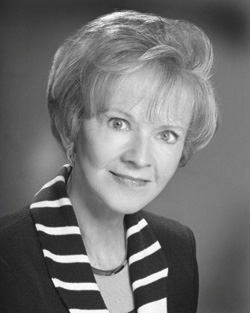
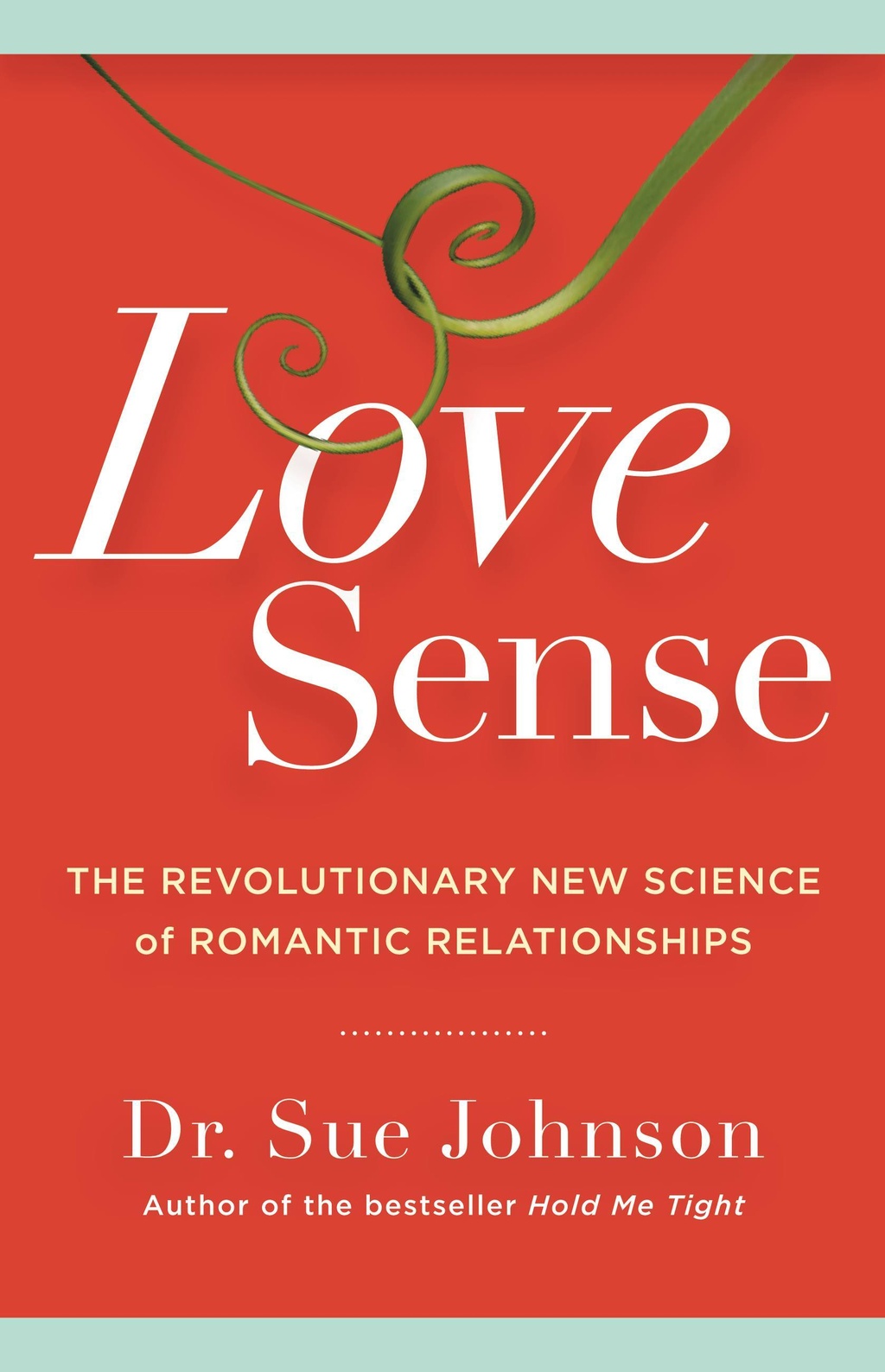
Is Self-Regulation or Co-Regulation Better for Couples?

Should couples in distress attempt to change their partner or themselves? Recent research discusses concerns about both of these strategies, and raises an interesting third option. Shreena Hira and Nickola Overall examined 160 couples attempting to change their partner or themselves. As they expected, attempts to change their partner didn’t make either their partner or themselves feel better. Surprisingly, however, a focus on self-change did not consistently help the relationship either. Instead, the researchers discovered that the most beneficial change occurred when one or both partners in the relationship perceived the other as changing themselves (self-regulating.)

This poses an interesting challenge for couples therapists, as partners don’t always perceive the change (or effort) made by their partners, and rarely does either partner want to “go first”.  One idea to address this dilemma, proposed by Victor Yalom, is for the therapist to help clients  tune into the changes and effort made by their partner, even if the change or effort is very small.  This can help build trust, morale and set the stage for greater changes later.  Likewise, therapists could use recognition of small-item effort or change as an assessment tool for determining when the couple is ready to work on more challenging change goals.

There is currently a hot debate in the field between therapists who promote self-regulation (differentiation) and therapists who promote co-regulation (attachment). This research suggests that couples may in fact improve co-regulation capacity by witnessing self-regulation efforts by their partner. 

From: Shreena N. Hira & Nickola C. Overall. (2010). Improving intimate relationships: Targeting the partner versus changing the self. Journal of Social and Personal Relationships 28, 610-633.

Sue Johnson on Emotionally Focused Therapy

Foundations of EFT

Victor Yalom: Sue, it's great to be with you today. We might as well start with the basics. Can you just say a bit about what is emotionally focused therapy or EFT?
Sue Johnson: EFT is an approach that was developed in the '80s to work with couples, that now has a very strong empirical base. It's been tested. There's lots of outcome data. We know that we get results with lots of different kinds of couples. We know how we get results. As its name suggests, it's an approach that focuses very much on how people deal with their emotions and how they send emotional signals to their spouse, and then how this emotion becomes the music of their interactional dance.

It's an attachment-oriented approach. Attachment is a broad theory of personality and human development that focuses, also, very much on emotion. It's an attachment approach, so it assumes that we all have very deep needs for safe connection and emotional contact, and that when we don't get those needs, we get stuck in very negative interactional patterns; the dance music gets very complicated.
VY: Of course, humans are complex creatures. Emotions are an essential component, but we also have cognitions. Why do you focus on emotions?
SJ: We focused on emotion, in some ways, because they were pretty much left out of interventions, particularly systemic interventions—interventions that looked at relationships. Emotions were really considered the enemy. They were the things that people had difficulty with. Particularly, anger and conflict were considered the enemy. So there was a lot of focus on just teaching people skills to control emotion—to be nicer to each other.

And what we tried to do is say, "No, focusing on emotion and helping people send key emotional messages to each other that help the other person feel safe is the most important part of a relationship. It's the key part of the attachment bond. And we really need to teach people how to do that." So that's why we focused on emotion.

VY: And how did attachment theory become such a central component?
SJ: Really, couples taught us how to do EFT. We started looking at how couples got caught in being overwhelmed by their emotions, or numbing out their emotions, or putting very negative emotions out to each other, and getting caught in really negative cycles. But we didn't understand why these cycles were so powerful, took over the whole relationship and induced such distress in people. We knew there was something powerful here. And we learned how to help people get out of these negative dances and move into positive, trusting, more open dances with each other.

So we discovered how to do that, but we didn't really understand why this dance was so incredibly powerful, why it had the effect it did until
VY: And when you refer to the dance, you’re referring to the patterns that couples get into.
SJ: Yes, I think of the patterns of interaction in a relationship as a dance. And I like to think of emotion as the music of the dance. I think that is a shorthand way of talking about how powerful emotions are. It’s very difficult to learn skills and do a new dance that’s about tango when there’s waltz music playing. You end up going on with the music in the end. That’s what happens in relationships with emotion.
VY: What do you mean?
SJ: If I'm really hurting and really upset with you, and I'm vigilantly watching everything you do, waiting for some sign that I don't really matter to you and you are about to turn away from me, I discount the positive things you say, for a start. I wait for you to raise your left eyebrow and say something negative. And when you say that, I'm ready—I have all these catastrophic ideas and feelings in my body, and this felt sense of falling through space and insecurity. And I react like crazy. And you turn to me and you say, "But I was so sweet to you yesterday. Doesn't that count?" And if I'm honest, I would say no. So our emotional realities are very powerful.
VY: The kind of situation you just described is something that therapists often get tripped up on. When we’re in the room with a couple, things happen so quickly, even before we understand what’s happening and they’re off to the races.
SJ: That’s right.
VY: So how does the theory help us? How do you understand that?
SJ:
It really helps to understand that you're dealing with an attachment drama. You're dealing with dilemmas in human bonding.
It really helps to understand that you're dealing with an attachment drama. You're dealing with dilemmas in human bonding. So the emotions that you're dealing with are high-voltage emotions, because your mammalian brain sees these emotions—these situations—in terms of life and death: "Does this person care about me?" It looks like we're having a fight about parenting, but, in fact, if you tune into the emotions, oftentimes two minutes after the fight started—or two seconds after the fight started—the fight ends up being about attachment issues like, "Do you love me? Do I matter to you? If I hurt do you care? Are you there for me? Will you respond to me? Can I depend on you?"

I started to realize after we'd done the first outcome study that the logic behind these emotions was that they were all about attachment and bonding, and our deep human need for that secure bond.

Johnson's Flash of Insight

VY: How did that come to you?
SJ: It was a flash of insight, I’m afraid. It sounds corny, but it was one of those traditional corny "Aha!" things that just hit you in the head.
VY: How did that happen?
SJ: Actually, I was at a conference. We'd done the first outcome study of EFT. It had worked amazingly well. I couldn't really understand how it had worked so well, and I was at a conference listening to Neil Jacobson talking. And Neil Jacobson, who was really the father of cognitive-behavioral marital therapy, was giving a talk and basically saying that relationships are rational bargains, so what you have to do is teach people to negotiate. His theory was that you can negotiate almost anything, including affairs. And this was the theory of relationship underneath the behavioral approaches: you teach people communication skills so that they can problem solve and bargain better.

Afterwards, I and my colleague Les Greenberg, who originally helped me put together EFT for couples, were sitting in a bar, and he said, "He's wrong." And I said, "Of course Neil's wrong." And he said, "Well, why is he wrong?" And I said, "Oh, he's wrong because an adult love relationship is an attachment bond, and you can't bargain for basic responsiveness and safety and love." And that was it. And then suddenly the whole of John Bowlby, who I'd read, but who I'd never made the links—it was like somebody hit me with a sledgehammer.

I went home and wrote an article called "Bonds or Bargains," which ended up being in the Journal of Marriage and Family Therapy, even though Alan Gurman sent it out for review four times, and each time he got two people who hated it and who said that adult relationships were not attachment bonds like the bonds between mothers and children. They were adult friendships, and they were rational, and dependency was a problem, and we got over it. And the other half of the people said, "Oh, this is really new and interesting." And Alan Gurman finally said, "I can never get people to agree. They either hate it or love it. So, Sue, I like it so I'm going to publish it"—for which I bless him forever.

That was the first article—it came out in '86. And in '87 Hazan and Shaver, who were social psychologists, bought out their first little study of adult attachment. Bowlby always said adults had attachment, but we'd never really done anything with his remarks.
VY: So the interesting thing is you developed the theory and practice of EFT before you conceptualized the centrality of attachment in it, and it worked without that understanding.
SJ: It worked because, I think, we were Rogerian, and we understood how to create new interactions from a systemic point of view. But we didn't really understand why these new interactions worked so well.

And don't forget, also, in those days not much was written about adult attachment. Since then there have been hundreds of studies. It's a very rich literature now—lots of studies on adult attachment linking adult attachment to better health, feeling better about yourself, better ability to deal with stress. But in those days—in the '80s—nobody was writing about adult attachment. So there wasn't a literature sitting there that I could go to and say, "Oh, this is it." I just understood suddenly what I was looking at between adult partners, and how this paralleled the between the bonds between mothers and children, which many people still find very difficult to accept. They say, "No, they're totally different."
VY: It certainly goes against the strong sense of psychological independence that we cherish in the West and is so central to so many of our conceptions of psychological health.
SJ: Yes. I think what we've done is we've pathologized dependency. If you really think about it, though, how on earth do we get to be independent anyway?
Bowlby basically said for a child to really become independent, he has to be dependent first.
Bowlby basically said for a child to really become independent, he has to be dependent first. He has to be able to turn to other people and reach for them, and know how to connect with others in order to build this sense of self and in order to deal with how your self evolves and how big the world is. In other words, Bowlby basically said we're mammals. We need other people. A strong sense of self and the ability to be separate are tied to how connected you feel. They're not opposites—they're both the two sides of the same coin. We made a mistake in that.

In psychology and in therapy, we often see a little piece of the picture, and we go with that because that's all we can see. Then when the whole picture suddenly evolves, we can put things together in a different way.
VY: So you don’t like the ideas of co-dependency or enmeshment?
SJ: Well, enmeshment confuses anxiety about closeness and coercion, for one thing. It's a very vague concept, and a lot of it came out of watching families where adolescents were in deep trouble and the therapist was trying to help the adolescents assert themselves with the parents. There's nothing wrong with the word "enmeshment" if you put it in a very particular context.

Co-dependency came out of the addiction literature, and we used it as a global blame for people without understanding that we have amazingly powerful emotional links with the people we love. To say you shouldn't have those links is craziness. Those links are wired into our brains by millions of years of evolution. Bowlby says if you're a mammal, there's no such thing as real self-sufficiency. And there's no such thing as real over-dependency. But there are massively anxious behaviors around dependency.

What healthy people have is effective dependency, which means—and there's lots of research behind this now—the more you know how to turn to other people, the more you can trust other people, the more you can go inside of yourself and access, for example, your loved one's face when you're feeling upset or distressed, the stronger you are as a person, the better you feel about yourself and the more able you are to take autonomous decisions.
The more you know how to turn to other people, the better you feel about yourself and the more able you are to make autonomous decisions.
And I'm not making this up. I can quote you study after study, and you see it in therapy.
VY: I know that you can. And I know you can talk passionately and animatedly about the attachment literature for hours—
SJ: Yes, I can. It’s the best thing to ever hit psychology and therapy in the last hundred years, so there you go.
VY: Yes, you’re not one shy of opinions!
SJ: No. Life's too short to not put out what you think. And if someone can show you you're wrong, that's good.

EFT Techniques

VY: How did it change your thinking and the technique of EFT when you had that "aha!" moment and started to understand the significance of attachment in adult couples?
SJ: I think it helped me understand, on a deeper level, how powerful these emotions were that I was seeing in the couple. It helped me understand the power of fear in a couple—fear of abandonment, fear of rejection. It helped me understand the logic behind some of the apparently self-destructive positions people take in relationships.
VY: Can you give an example of the fear or the self-destructive positions?
SJ: For example, one of the classic ones in relationships is, "I feel lonely. I feel unsure that you care about me. I don't even know quite how to put that into words because I'm an adult—I'm not supposed to feel that way. But I somehow feel like I'm starving emotionally. And I decide that what I'm going to do is I'm going to make you respond. Ironically, I'm feeling all these feelings inside of abandonment and loneliness and fear, and what I say to you is, 'You never talk to me.'"
VY: What you're describing is what's underneath, unconscious, as it were—not what the person's actually saying, but what you posit is driving their behavior.
SJ: You don't have to posit it if you slow people down, and you say, "In the second before you get angry and tell your husband that he's ridiculous because he can't talk to anyone—in the second before you attack him to get his attention and to make him listen to you—what's happening to you?" If you just slow people down, there are enormously powerful universal patterns that you can see, and they fit very well with what John Bowlby saw in situations between mothers and infants.

There are only so many ways we have of dealing with our emotions. If I'm in a relationship with somebody and I want them to respond to me, and suddenly I'm not getting responsiveness and connection, I've got to reach for them and say, "Where are you? I need you." If somehow I'm afraid to do that or that doesn't work too well, then there are really only two alternatives. I get angry and shriek—children shriek or they get mad or they get aggressive with the mother, and so do we. We say, "Why don't you ever talk to me?" Unfortunately, if that gets to be a habitual pattern, I end up pushing you away. And in classic marital distress, the other person hears, "I'm being rejected. I'm disappointing. I'm messing up. I'm not pleasing this person. I don't know how to please this person. This hurts like hell. I want this fight to stop. I'm just going to stop talking."

So one person numbs out. And the more he numbs out, shuts down, shuts his partner out, the more his partner gets angry and pushes.
So one person numbs out. And the more he numbs out, shuts down, shuts his partner out, the more his partner gets angry and pushes. And that is the most classic dance of relationship distress in North America. It's a hot number. We all do it a lot.
VY: This is what you refer to as a cycle?
SJ: That's a cycle. And in Hold Me Tight, which is the book I wrote for the public a couple of years ago, it's one of the main "demon dialogues." What's important is if you understand that that drama is not about communication skills or your personalities, or that you're deficient somehow, but rather that drama is about both of you being caught in feeling disconnected from each other and not knowing how to handle it—if you understand that, what we first teach people to do in EFT is to basically understand they're scaring the hell out of each other. Then we teach them how to step out of the negative patterns, and then deliberately learn how to reach for each other—which is what mothers and infants and bonded partners and people who love each other in positive relationships naturally do—learn how to reach for each other and create loving, responsive, open emotional communication where they can get their needs met.
VY: Sounds nice.
SJ: It is nice. It’s fun to do, as well. As a therapist, it makes you feel like you’re actually really doing what you wanted to do in grad school when you decided to be a therapist.
VY: So how do therapists do that? The first thing, I guess, is to start to be able to identify, in your own mind, this dance—this cycle.
SJ: Yeah. At this point, we’ve been doing EFT for 25 years. We’ve set it out pretty clearly and we’ve even done research on what you have to do to make this work. First of all, you’ve got to create safety in the session.
VY: Okay, safety is number one. So how do you do that?
SJ: You do that by being empathic and by being emotionally present. Really, this is a Rogerian therapy. So you do that in the traditional Rogerian way, but I think it's more intense than Rogers really created because you also help the couple understand the drama that they're caught in. So you're a relationship consultant. You follow the couple's drama. You make it clear to them the steps they're doing in the dance.
VY: That's "Rogers plus," because you're not just reflecting back—you're starting to explain to them what you see that they're doing.
SJ: I think you have to do more than explain. You have to give them a felt sense.
You have to catch it as it's happening, and you have to help them see the dance they're caught in and how it leaves them both alone and hurting.
You have to catch it as it's happening, and you have to help them see the dance they're caught in and how it leaves them both alone and hurting. You also have to help them see that underneath this dance they're both in pain, and that this pain is just built into us. It's part of who are as human beings. So that is key. You have to create safety in the session. You have to help people explore their emotions so that they can talk about some of these softer feelings.

If you're always telling me that you don't want to hear me because I'm so angry, after a while all I show you is anger. And all I see you do is be cold and indifferent. And what we help people do is talk about the softer feelings that they don't even know how to name sometimes, and certainly don't know how to share. So the reactively angry partner will start talking about how "I feel lonely. I don't know what to do. I do get angry. I do get critical because underneath I'm so scared I don't matter to him."

And we will help her not only access that and work with those feelings, regulate them differently, integrate them so she can talk about those softer feelings—we'll help her turn and share with her partner in interactions where we scaffold the safety in. We help her share that, and we help her partner hear it—because one of the reasons you need a therapist is that sometimes you do give these clear emotional messages to your partner, and because of the negative music playing in the relationship, your partner doesn't even hear it. Your partner doesn't trust, doesn't respond to it.
VY: When you say you help them share these feelings with their partner—this is what you refer to as enactments, á la Minuchin, right?
SJ: Yes, although they’re much more emotional than Minuchin’s enactments usually were. To really summarize it, the EFT therapist creates safety, deepens people’s emotions using the attachment frame, to the soft feelings, the fears, the sadnesses, the hurts, sometimes even the shame underneath their reactive responses to each other, and then helps them send clear signals to their partner in very powerful interactions about their fears and their needs. Really, we teach people to help each other deal with these difficult emotions in a way that brings them closer.
VY: So if all goes well, you identify their pattern, you help them feel safe, you observe their pattern, you help them identify it, and then you help them start to express their deepest, vulnerable, unmet needs with each other. Then what happens?
SJ: It's basically the prototypical corrective emotional experience. And the reason it's so powerful is that we have these key change events in the second stage of EFT. In the first stage, we de-escalate the negative patterns so that people can stop and say things like, "Hey, we're caught in that thing again—that thing where I get angrier and angrier and you get more and more silent. This is the place where we both get hurt." And they start seeing the dance is the problem.

So they can have control over the negative interaction pattern, but that's not enough. I think lots of couples therapies get people there one way or another. The important bit for me is the second stage, where we actively use an attachment frame to help people to distill their attachment fears and their attachment needs, which in the beginning of therapy they are often not even aware of. And then we help them share that.

When that happens and the other person can respond,
sometimes for the first time in people's lives they actually feel that another person is there for them, that the other person cares, that they matter to someone.
sometimes for the first time in people's lives they actually feel that another person is there for them, that the other person cares, that they matter to someone. This is a huge event. It starts to redefine the relationship as a secure bond. And it's incredibly positive for people because we have mammalian brains.
VY: It can be. But take the example where one of the partners gets to the point where they can be incredibly vulnerable and open and express their unmet needs, and the other partner has their own intimacy issues and blocks, and that’s too much for them, and they reject it or they withdraw.
SJ: First of all, the therapist is there dealing with that. Secondly, you titrate the risks people take in EFT. You don’t ask people to take huge risks before they’ve done Stage One. So ideally you don’t let people get into that position. But, nevertheless, if someone shares and the other person can’t respond, the good EFT therapist will go in and help that person slow everything down. See, emotion’s fast. If you want people to regulate it better and integrate it and deal with it differently, you’ve got to slow it down.
VY: Yeah, and I’ve seen you work and you’re very good. You track people very carefully, and you’re very good at slowing it down.
SJ: Yes. So in that case, I would turn to the person. I would say, "Could you help me? Did you see your partner just turned to you and said, 'I am scared. I am. And that's when I get into my tank, but inside I'm always so terrified that you never really chose me. I never understood why you married me. I'm always terrified by the fact you could leave me any minute'—did you hear your partner say that?"

You'd be amazed at what people hear sometimes. I had one man who basically said, "I heard that she can leave me any minute." So you have to slow it down. You have to help people get clear, and then you have to say to the person, "What happens to you?" And often people don't know what to do with it, so they'll go cognitive. They'll say, "Well, she had a very difficult family, and it's really not my fault." And you say, "No, I'm going to slow you down." So you help people focus on what matters. You support them. And I help the person hear it. I might say "My sense is that's hard for you to hear."And then the person will slow down and focus and say, "Yes, I don't see her that way. It's so strange for me to really see that she's afraid of me. I can hardly take it in. I see her as so powerful. I don't even know what to do with it. It confuses me. I actually feel dizzy. I feel like there's no ground under my feet. I've been with this person for 30 years. I never see her as—you mean she's vulnerable and scared? I don't know what to do with that."

So you listen to him. He's going to the leading edge of his experience. I'm keeping him there and helping him process it. Then I help him distill that and say, "Could you tell her, please?" And he says, "It's so hard for me. I don't quite know what to do with this new message. I don't know what to say when you tell me that. And I almost don't know whether to trust it. That you would be scared of me—that's so strange for me." And that's fine.
VY: This is where, as a therapist, you have to be very grounded to stick with it.
SJ: Yes.
VY: And really go slow with them, be patient, but also persist in insisting that he not withdraw.
SJ: Yes, that's right. And we're pretty systematic now. We've got training tapes, we've got a workbook, we've got the basic 2004 text. It's laid out in a lot of detail, and we have a whole procedure for training therapists and registering therapists. You can watch people do this on a tape. But you're right. EFT takes a lot of focus, and you have to be able to work with people's emotions, and help them stay with them and develop them and deepen them. You also have to be able to track interactions, and help them create these new interactions with their partner.

So it's a collaborative therapy. You're doing it with people, but it's certainly not a laid-back reflective therapy. It's a therapy where you're dancing alongside your client, and the music's going, and you understand the music, hopefully. But it's an active therapy, because there's so much going on.

Training Couples Therapists

VY: I understand that you’ve put a lot of thought into how to train therapists and set up a systematic program of training, ranging from your externships to supervision, et cetera. What do you find are the most difficult things for therapists to learn?
SJ:
I think our profession has developed a profound distrust of dependency, and we don’t understand it.
I think our profession has developed a profound distrust of dependency, and we don’t understand it. We still are hung up on, "We have to teach people to regulate their own emotions, be independent and separate, and define themselves." I think that’s one thing. We don’t really understand people’s deepest needs.
VY: So just conceptually having a shift in this idea of dependency, autonomy—that gets in the way.
SJ: Yes. You’ve got to be able to accept that we’re interdependent and we need each other. Otherwise, you’re going to have a hard time with EFT. You’re not going to be able to listen to and validate people’s needs. You’re going to blame them for their needs. But the second one is you have to get used to staying with emotion and deepening it. There’s a beautiful quote by Jack Kornfield. He writes about Buddhism and he says something about, "I can let myself be borne along by the river of emotion because I know how to swim."

I think therapists have been traditionally quite scared of strong emotion because we haven’t really known what to do with it. And at this point in psychotherapy in general, and in EFT, I think, there’s been a big revolution understanding emotion and human attachment. And we do know what to do with it. There’s nothing illogical about emotion. And, actually, there’s not very much unpredictable about emotion if you really know how to listen in to it. But many of us have not been trained in how to really stay emotionally present with somebody and track emotion, how to deepen emotion and use it. I think that’s the biggest one that people struggle with in EFT.
VY: So it’s just being more comfortable with emotion and trusting yourself to stay with it.
SJ: That’s a big part of it.
VY: That’s in terms of the comfort of the therapist. In terms of the techniques to help people work with it, what are the hardest things for therapists to learn?
SJ: I don’t think the techniques are hard per se. They’re a combination of Rogerian empathic reflection, validating, asking process-oriented questions like, "What’s happening for you right now? How do you feel when this person says this? How do you feel in your body? What do you tell yourself in your mind? Do you tell yourself this means this person doesn’t love you?"
VY: What I see is the skill that refer to as "slicing very thin"—tracking emotions on a very minute, moment-to-moment level. Not just asking someone how they feel, because many people, as you know, can't articulate that.
SJ: No.
VY: So you go at it from many angles.
SJ: Well, we know what the elements of emotion are. The elements of emotion are initial perception, body response, a set of thoughts, and then an action tendency.
VY: Now you’re sounding like a behaviorist.
SJ: No, I'm not. That comes from the emotion literature. A good EFT therapist will go and ask simple questions about the basic elements of emotion. Somebody will say, "I don't know how I feel right now." And the EFT therapist will say, "How's your body feel?" The person will say, "I feel tense." And the EFT therapist will say, "What do you want to do?"—because there's an action tendency in emotion. The person says, "I want this to stop. I want to get out of here." So you know what's happening—there's some version of fear going on. So the therapist will ask simple questions, and constantly empathically reflect to help people hold onto their emotional experience and continue to work with it.

Sometimes a therapist will interpret—add a piece. "This is very difficult for you. Could it be a little scary?" And then the therapist will help somebody hold their emotion, distill it. And then will create an enactment: "Could you turn and tell your partner, 'When we start to talk about this some part of me just wants to run away'?" You make the implicit explicit. You make the vague concrete. You make the vague vivid.

It's much better, from a relationship point of view, for me to turn and say to you, "Victor, I don't know what to do with what you've just said, but there's something a bit scary about it and I just want to run away." That's much better than for me to just feel that and not be able to talk about it, and turn and leave the room. If I turn and leave the room and you are a mammal and you're in a relationship with me, your brain says that's a danger cue. "This person who I depend on can walk away from me any time." And you start to get really upset—whereas if I turn and say to you, "I don't know what's happening with me. This is a bit scary. I just want to leave," you're probably going to feel compassion towards me.

It's all about helping people learn how to hold on to that emotional connection. Our mammalian brains experience emotional connection as a safety cue. There's lots of neuroscience behind this now, by the way. This emotional attachment stuff is creating a revolution in our field.

The New Science of Love

VY: I just heard David Brooks speak. He’s done a great job with his book, The Social Animal, summarizing a lot of the attachment research, but he also warned of the danger of over-reading brain science. He said something to the effect that brain science is in such a state of infancy that to draw any definitive conclusions from it can be riding the next wave of popularity, but to make precise conclusions from it is overreaching.
SJ: I agree with David Brooks that you can't draw conclusions. Sometimes when I listen to people and they say, "Oh, we change the brain in psychotherapy," I don't know. I just feel like saying, "Well, you know, eating an ice cream changes your brain."

On the other hand, when you look at research like my colleague, Jim Coan, has done, that if you lie alone in a computer in an MRI machine or you hold a stranger's hand, your brain goes berserk when you see a sign that you're going to be shocked on your feet. And when your partner, who you feel safe and connected with, holds your hand and you can see that signal that tells you you're going to be shocked on your feet, because you're holding your partner's hand and you feel connected to them your brain does not go berserk, and the way you experience the shock is much less painful.

Now, David Brooks is right. We're not quite sure what it all means. But it's fascinating stuff, and it's taking us into new territory. And, just by itself, that one study supports all the hundreds of studies that have been done on adult attachment and infant and mother and father attachment that says that we have connections with very special others, and that it's basically all about safety and danger. We use that connection as a safety cue. And what I just said has huge implications for couple therapy, psychotherapy in general, education for society. So, yes, David Brooks is right and we are in the middle of a revolution.
VY: Speaking of that, I hear you’re writing a new book on the science of love.
SJ: Yes, because we really do have a science of love. It's in its infancy, but it's a strong, bawling little infant. It's not a fragile child.
We really do have a science of love. It's in its infancy, but it's a strong, bawling little infant. It's not a fragile child.
When I think about it, in the last 15 years our understanding of our most important adult relationships has absolutely gone crazy. It is a revolution.

And it's so important. I was just looking in my local newspaper today, The Globe and Mail in Toronto, talking about how the Canadian government is struggling with the fact that there are rising levels of anxiety and depression and we can't deal with it in our healthcare system. Well, I know what John Bowlby would say. John Bowlby would say, "Absolutely, because we're facing less and less social connection, less and less community connection, and 50 percent of us divorce. We haven't learned how to create these safe, loving bonds. We need to belong." And the way to deal with that sort of thing, from my point of view, is not for the pharmaceutical companies to get better pills. It's for us to really understand our need for human connection, and start educating people for that and understanding how crucial that is in terms of basic mental health problems like anxiety and depression.
VY: Can you give a little sneak preview of your book? One or two morsels?
SJ: I'm going to talk about oxytocin, the cuddle hormone. I'm going to talk about how sex is an attachment behavior. I'm going to talk about how we're basically monogamous and that those people who say that we're not suited for monogamy are out of their minds. I'm going to talk about all the science behind what happens when you have one of those little arguments with your partner in the morning that ends up wrecking your whole day, so that when five o' clock comes along you're not even sure why you married this person. That's what I'm going to try to talk about.
VY: We'll look forward to that coming out. Thanks for taking the time to talk today.
SJ: You're welcome.

Turning Blaming into Confiding in Couples Therapy

The defining task in a Collaborative Couple Therapy session is to create an intimate conversation out of whatever is happening—frequently a fight. Sometimes that means helping the partner who has just been accused deal with the accusation. Sometimes, and this is my focus in this write-up, that means reshaping the accusing partner’s angry statement. I speak as if I were that partner, translating his/her blaming statement into a confiding one, in a method similar to doubling in psychodrama. I show what this partner might be saying if the couple was having a conversation rather than this fight. Here are the principles I use for making these translations.

• Change the tone of voice
• Omit the blaming
• Report the blaming
• Add or substitute heartfelt feelings
• Append a question that turns the monologue into a dialogue
• Acknowledge

1. CHANGE THE TONE OF VOICE. If I can’t immediately think of ways to modify a partner’s angry comment, I repeat or paraphrase it, but now in a nonprovocative, nonaccusing, nondefensive, warm, intimate tone. Of course, if I can think of how to modify what was said, I still change the tone. None of the changes listed below would do much good if they were stated in the partner’s original angry, defensive, arrogant, sarcastic, contemptuous, or distant tone.

2. OMIT THE BLAMING. An important way to turn a partner’s fight-fostering comment into a conversation-fostering one is, of course, to omit (or at least reduce) the blaming, accusations, anger, attack. Lynn says to Fred, “You’re selfish, immature, and totally irresponsible to go out to a bar with your office pals after work, and come home late for dinner. You’re probably flirting with what’s-her-name in the next cubicle.” Moving in and speaking for Lynn, I say, “I’m going to restate what you just said but change the tone in order to help you get your message across to Fred. In my version, Lynn, you’d say, ‘I hope you can understand why I might be upset about your going to a bar and coming home late and why, given the situation, I might be imagining all kinds of things like your flirting with other women’.”

3. REPORT THE BLAMING. Another way to eliminate (or at least reduce) the toxic fight-fostering effect of blaming is to report the anger rather than unload it. Bob says angrily to George, “You’re nasty and mean-spirited and never think of anybody but yourself!” I move over and speak for Bob in an effort to show him what it would sound like if he were to talk about the anger rather than from within it. I say for Bob, “I can’t remember when I’ve felt as angry at you as I do now” or “As you can see, I’m still furious about that comment you made this morning” or “At times like this when I’m really angry at you, I forget all that I like about you and just see you in a super negative way.”

The effect of such reporting is to create a platform, a perch, a meta-level, a vantage point above the fray from which Bob confides being angry. Most of the other interventions on this list create such a platform or vantage point.

4. ADD OR SUBSTITUTE HEARTFELT FEELINGS. In a fight, people lose the ability to make “I” statements. They lose contact with their vulnerable, heartfelt feelings and become “you” statement generating machines. In speaking for a partner, I uncover these vulnerable feelings: the wishes, fears, worries, longings, disappointments, self-reproaches, shame, guilt, self-hate, loneliness, and so on. I reveal the “I” statement hidden in the “you” statement. Here, as in other instances in which I guess what the partner might be thinking or feeling, I use information gleaned from earlier in the therapy, label my comments as speculations (saying, for example, “I give myself about a 30% chance of being right”), and check back to see if my guess was correct (“Where was I right and where was I wrong?”). At times I recast much of the partner’s original statement, changing “you” statements to “I” statements. Sometimes, as in the following examples, I append a vulnerable feeling (an “I” statement) to the partner’s attack.

John snaps at Judy, “You’re being selfish thinking of going back to school when you’ve got our kids to take care of, and in this rotten economy. Don’t you ever think of anybody but yourself?” Moving in and speaking for John to Judy, I append “… and I worry that your going to school might be the first step toward your leaving me.”

Sylvia says to Bob angrily, “I’m tired of always being the one who has to manage the family: schedule everything, make all the phone calls, assign all the chores.” In saying “I’m tired,” her comment appears to be an “I” statement. But implied is: “You don’t do your part,” “You take me for granted,” and “You’re selfish and irresponsible.” Moving over and speaking for her to Bob, I add the following clearer underlying “I” statement to what she just said: “I feel lonely” or “I don’t like the kind of person I’ve become in this relationship.”

5. APPEND A QUESTION THAT TURNS THE PARTNER’S MONOLOGUE INTO A DIALOGUE In an effort to make their cases, partners often give little lectures presenting their evidence, making speeches, pronouncements, or indictments. They deliver monologues. I try to turn these monologues into dialogues by appending a dialogue-creating question. Sue expounds on her knowledge of interior decorating and denigrates Phil’s taste in an attempt to prove to him that she should have the larger say in what furniture to buy. Moving over and speaking for her to Phil, I append to what she just said, “What do you think about what I’m saying?” or “Am I convincing you?” or “You probably disagree with most of what I just said. Am I right?” or “Is there any part of what I’m saying that you agree with?”

6. ACKNOWLEDGE. In a fight, each partner argues his/her case and either ignores or refutes that of the other. Neither acknowledges the validity of any of the other’s points or admits weaknesses in his/her own case. In speaking for partners, I do this acknowledging and admitting for them by doing one or more of the following:

• Acknowledge what the other partner has been trying to say
• Agree with parts of it
• Recognize the other partner’s efforts or achievements
• Appreciate the difficult position the other partner is in
• Admit his/her (the person on whose behalf I’m speaking) own role in the problem
• Confide doubts about the validity or fairness of what he/she is saying
• Express concern about how the other partner might hear what he/she is saying

Acknowledge what the other partner has been trying to say. In a fight, each partner feels too unheard to listen, which is what keeps the fight going. In speaking for a partner, I do the listening for him/her. I demonstrate how it would sound if this person were to do a bit of active listening and acknowledge what the other partner has been trying to say.

Judy complains to Bill, “Are you at all aware that you hardly ever talk to me except to complain about things I haven’t done right.” Bill pays no attention to this and, instead, tells her what is on his mind: “You forgot to lock the front door again.” Judy pays no attention to this and, instead, repeats her concern: “That’s all you care about—the front door. What about the fact that we never talk about anything important, like about us?” Bill says, “Keeping the door locked is important. We’ve got a lot of valuable stuff in here. You’ve got to think about that.” Judy says, “I’ll tell you what you’ve got to think about, and it’s that I’m starting to feel closer to my friends than I do to you.” Bill says, “But this is serious. Half the time you don’t lock the door; it’s just luck that we haven’t been robbed.” Judy says, “Speaking of robbed, I feel totally alone in this relationship.” Bill says, “All I’m asking is for you to be a little more careful when you leave the house.” The partners go back and forth repeating their point (because the other appears not to have heard it), paying little attention to what the other is saying.

Moving over and speaking for Judy, I say, “I know you’re worried about my not locking the door, but I can’t listen to that right now because I’m so frustrated that you won’t listen to my concern, which is that we never have intimate conversations.” I could just as easily have moved over and spoken for Bill, saying: “I know you’re saying that I don’t talk enough, but I can’t listen to that right now because I’m so frustrated that you won’t listen to my concern about locking the door.”

Agree with parts of what the other partner has been trying to say. In a fight, neither partner gets the satisfaction of having the other agree with anything. Each partner rebuts or ignores what the other says. In speaking for a partner, I do the agreeing for him/her. “You have a good point that I…and I have a good point that….” Or, “If we weren’t in the middle of a fight, I’d admit to you that you are making some good points.”

Often I turn to one partner and say, “I’m going to repeat what you just said, but begin by agreeing, which would then put you in a better position to make your point.”

Gloria criticizes Ed for being too harsh with the kids. Ed criticizes Gloria for being too lenient. The argument goes back and forth in this way for some time. Moving over and speaking for Gloria, remembering what she had said in a previous session, I say, “You’re right that I can be too soft with the kids. I need to work on that. My concern right now is to get you to consider that maybe you’re too hard on them.”

Paul criticizes Cheryl for something she did. Cheryl’s justification seems to convince Paul, but instead of acknowledging that, he goes on to make another complaint. I say, “Paul, were you feeling at that moment, ‘Okay Cheryl, you convinced me. But it just reminds me of something else I’m upset about, which is that…’”

Recognize (at times even celebrate) the other partner’s efforts or achievements. Sam proudly describes doing what Ann had asked him to do—pay the bills and clean the bathrooms. Ann replies, “Yes, that’s good. It’s about time. You act like you’re still single. You don’t take responsibility.” Moving over and speaking for her talking to Sam, I say, “You obviously paid attention to what I asked for last time. That’s wonderful! I really appreciate it. I hadn’t thought you would. But—and I’ll make this a multiple-choice question, Ann—A, I don’t want to get too excited about it and get my hopes up that the change is permanent, or, B, it’s too small a part of what I want to be really excited about. Ann, is it A or B. Or is it C, something else entirely?” (When I am uncertain what the person is feeling, I often ask such a multiple choice question.)

In her original statement, Ann skipped over Sam’s achievement. I try to show how it might make sense that she did so and how it would sound if she hadn’t done so.

Appreciate the difficult position the other partner is in. In a fight, each partner feels too unempathized with to empathize, too worn down by his/her own struggle to notice that the partner is caught in one, too. In speaking for partners, I do the appreciating, empathizing, and noticing for them.

Sara says to Ralph, “You never stand up for me when your mother pulls one of her numbers.” Ralph says, “Can’t you just do what everyone else in the family does—just accept that that’s how Mom has always been and realize there’s no way to change her.” Hearing this argument, I look for the right time and moment to say for Ralph, “I feel bad that I haven’t protected you from my mother” and for Sara, “I see how you’re caught in the middle.”

Admit his/her own role in the problem. In a fight, each partner blames the other partner for the problem and denies or minimizes his/her part in it. In speaking for a partner, I do the admitting for him/her. “I came home frustrated and took it out on you.” Or, “I overreacted.” Or “I know it didn’t help that I…” Or, “I’m suddenly seeing you as my father, which I know isn’t fair” Or, “I’m feeling hurt, but you have no way of knowing that, because my hurt is coming out as anger.”

Express concern about how the other partner might hear what he/she is saying. In a fight, partners lower their heads and bull ahead without acknowledging that what they are saying is provocative. In speaking for a partner, I do the acknowledging for him/her, often as a kind of prefacing statement. I say, “I know you never like it when I bring this up, and that’s why I mostly keep it to myself, but it’s been really bothering me lately so I need to say something…” or “I know this is a criticism, but I need to say it anyway” or “I’m angry, so I’m probably not saying this in the best possible way” or “I hope you see my distress peering through my anger,” or “This could get us into trouble, but I want to talk about it anyway” or “I wish I could find a way to say it that wasn’t a criticism because there’s something important here that I want to get you to see.”

Admit doubts about the validity or fairness of what he/she is saying. In a fight, partners focus on making their case. They put aside (and often lose awareness of) any doubts or reservations they might have about what they are saying. In speaking for a partner, I reintroduce these doubts or reservations. I say, “I know this isn’t fair, but it’s on my mind so I want to say it anyway and it’s that…” or “I know I’m on shaky ground here because I do the same thing myself, but…” or “I go back and forth between blaming myself for this problem and blaming you and, as you can see, at the moment, I’m deeply into blaming you” or “For a fraction of a second I was pleased by the lovely thing you did—and began to hope that it meant that you’ve really changed—but then I thought, ‘Wait a minute. I’m not going to get my hopes up just to be disappointed again’” or “I know I’m difficult to live with, so I probably don’t have a right to complain about something you do that’s so minor, but here it is…”

In speaking for partners, I try to make their case more effectively than they had been able to do so themselves. I repeat what they had just said but now in a more disarming, engaging, and heartfelt way. At times, I shorten what they have said and at times lengthen it. At times I reformulate what they have said and at other times append something to it. My effort in each case is to restate what the partners have just said in a way that will give them greater satisfaction and that their partner will be better able to hear.

My purpose here was to list the principles I use for arriving at my statements for partners in an effort to turn their blaming statements into intimate ones.
 

Training in Couples Therapy

Why might a therapist who works primarily with individuals consider studying couples’ therapy? If you work from an attachment perspective, as an increasing number of therapists do, then training in couples therapy may greatly inform and improve your work.

Many clients present to therapy for “relationship problems.” I’m sure all therapists who treat individuals have had the same experience I have of clients who want to spend their therapy hour talking about their spouse. Why do therapy on a relationship without both people present? Our training generally states that individual therapy will build resources in the individual, which they will then use to improve their relationships. But might an individual build resources faster and stronger with their partner present? Is working with the attachment dyad more efficient and powerful than working with the individual?

This hypothesis was presented at a recent training on Emotionally Focused Therapy for couples (EFT), an attachment-based approach developed by Sue Johnson, EdD . The presenters, Scott Woolley, PhD, and Rebecca Jorgenson , PhD, framed this question from an attachment perspective. They suggested that a client’s attachment system is more activated by and responsive to the client’s actual attachment figures than the therapist. Dr. Woolley quoted Dr. Johnson as saying, “As therapists we have 60 watt light bulb to bring light and healing to someone’s life, but the partner has a thousand watt search light!”

Attachment theory proposes that evolution has programmed us to be highly reactive to our partners, positively and negatively. “Relationship skills” learned in the presence of a soothing therapist might be no match for the tinderbox of a primary relationship. Likewise, there are risks in doing individual therapy. John Gottman, PhD, has found that people in individual therapy are much more likely to get divorced.

I emailed Dr. Johnson regarding this question. She replied, “A therapist’s empathy and validation are very useful — but to be really seen and accepted by the most important person in your life — that is transformational. The therapist is at best a surrogate attachment figure who validates.”

Victor Yalom points out that even if you plan to work individually, bringing the partner in for a single session provides invaluable data into the actual (versus reported) nature of your client's primary relationship and their interpersonal functioning, and can help broaden the frame of therapy. (Likewise with bringing in family members.)

Over time I have transitioned an increasing amount of my individual clients who present with relationship problems into couples therapy. Although the work is often harder, the results can come quicker, and I usually feel more confident that the results are lasting and durable.

Lonnie Barbach on Sex Therapy

Early Years of The Human Sexuality Program

David Bullard: Lonnie, as we start this interview I should acknowledge that we’ve known each other a long time as friends and colleagues.
Lonnie Barbach: Well, we met in late 1974 at the Human Sexuality Program at the University of California at San Francisco—that is a while ago!
DB: Yes, and you were one of my post-doctoral instructors, along with Jay Mann, Bernie Zilbergeld, Harvey Caplan, and Rebecca Black. Actually, you all were more important therapist role models to me than anyone I had encountered in graduate school.  And it was an exciting time to see how you all were bringing a kind of San Francisco humanism to sex therapy.
LB: That was an incredibly exciting time in human sexuality research and therapy and it led me to write my first book.
DB: Yes, For Yourself  was your timely and incredibly successful book that empowered women to take charge of their own sexual pleasure.  Not to linger too much in the past, but are there any impressions you can share when you think back to those days of the UCSF Human Sexuality Program, which for awhile was the largest training program in the country for psychotherapists, physicians and nurses in the newly-emerging field of sex therapy, post-Masters and Johnson.
LB: Well, for me, it changed my life; it was a pretty formative and important time. I didn't fully appreciate its significance at the time, but I knew that it was exciting.

DB: You graduated with a doctorate in psychology from the Wright Institute.
LB: I had done everything but my dissertation when I began at UCSF. I ended up designing this format for pre-orgasmic women's groups at UC, Berkeley where I worked with a small group of UC students in women's consciousness-raising groups using masturbation as a learning technique, but no one believed this form of therapy could work with middle-class housewives! So I was challenged and had to find a different environment in which to do my dissertation research.  Jay Mann was a psychologist and director of the HSP at UCSF and he said, “Well, if you pay us rent to use the space, you can run your research groups out of here and be under the umbrella of UCSF.” Then, as part of recruiting subjects, I was a guest on Don Chamberlin’s radio talk show called “California Girls.”  Thereafter, whenever someone mentioned having an orgasm problem, he would refer them to me. Within a few months, I had hundreds of women on a waiting list at UCSF.

Women’s Preorgasmic Groups

DB: So his show really jump-started your work with women’s preorgasmic groups.  Prior to your contributions, the professional diagnostic terms for a woman who had never or rarely had orgasm were “nonorgasmic” or “frigid.” Your use of “preorgasmic” instantly re-set more hopeful expectations and dropped the pejorative labels that almost all women had been oppressed by one way or another.
LB: Yes.  The semantics were oppressive, and we had to push over several years to get the medical and psychological establishment to drop those old labels. 
There was a great need in our society for people to drop shame about their sexuality in order to enjoy it….
There was a great need in our society for people to drop shame about their sexuality in order to enjoy it and for general self-acceptance. I learned a lot from the women in the groups–they were my teachers also. After completing three research groups with great results, I suddenly had this large number of women wanting help, so Jay Mann suggested we do a large group educational program. By then he realized that UCSF would earn more if they hired me and directly took in the money the women were being charged rather than my just paying them rent.  So I was brought on as co-director of clinical training in charge of their first women's program; later they added a men's program that Bernie Zilbergeld headed.
DB: You and I were both in graduate school in that era and I can remember what a powerful idea this was: empowering women to learn to take charge of and enjoy their own sexuality.  
LB: And I didn't realize that at first! All I knew was that I needed a job. It was actually a fluke that I even got into the field of sexuality. A woman came to a volunteer educational program I was leading for Planned Parenthood. At the end she said “you really should apply for my job because I'm leaving a position at UC, Berkeley as a sex therapist.” I was trying to finish my education at that point and really needed to earn some income. Two male colleagues of mine, Jim Purcell and Bob Cantor, both agreed they would do Masters and Johnson couples therapy counseling with me.  In that format, you needed both a female and male therapist for one couple. We got the job and I read the few books that were out and talked to everyone who knew anything about sex therapy, although there weren’t many of them at that time.  Shortly, Jim and Bob told me that they were too involved with their other jobs and graduate work and had no time to do the couples sex therapy. So I had a job I could not do as a single female. 
 
At the same time six women who also had no partners applied for sex therapy at the student health service. Some were single, some had partners but the partner wasn’t willing to come into therapy.  And one woman was faking orgasm and didn’t want her partner to know. Women’s consciousness-raising was really big at the time.  It seemed to me that Lo Piccolo and Lobitz's nine-step masturbation program could be used in a consciousness-raising group format.  So I tried it and led the first group with Nancy Carlson. Our first group was ten sessions long and we only had five weeks in order to fit it in between midterm and final exams! They were all “primary pre-orgasmic” women (never having experienced an orgasm by any means); by the end of this group they were all orgasmic by themselves and most of them were also orgasmic during sex with a partner. That was the beginning…. and if I had been on the East Coast, I probably never would have done anything more because, as I learned later, other professionals couldn't believe what I was doing out here–there was really a negative, critical reaction to working with women in groups and teaching them masturbation. But I was in California! So it all grew and developed.
DB: LoPiccolo and Lobitz had used this behavioral approach only in individual therapy?
LB: Yes. And then Jay Mann said I should write a book about this approach.  “But this stuff is so basic,” I said, and while he agreed, he believed that women needed permission to approach it so simply. So he was entirely responsible for my writing career. 
DB: Well, many therapists have ideas and talk about writing books, but actualizing it is quite a different matter!
LB: The power of the book is that it gives permission to women and to their partners to explore themselves. I did not realize that this was so needed because I did not come from a particularly sex negative or repressive family or religious background, so sex seemed natural and normal to me.
DB: And you were a couple of years ahead of the publication of Jack Annon’s book, in which he spoke about the PLISSIT (Permission, Limited Information, Specific Suggestions, and Intensive Therapy) model. 
LB: Yes, his wonderful book, The Behavioral Treatment of Sexual Problems, came out in 1976.
DB: How many copies of For Yourself have sold and in how many languages?
LB: It has been translated into 8 languages and a couple of million copies have been sold worldwide. I don't keep track of the numbers, but I do know that I’ve sold over 4 million copies of the total of my books in the United States.

A Career in Human Sexuality

DB:  I hope you don’t mind if I repeat a comment made at a professional meeting, when you were introduced as the person who has been responsible for more female orgasms than anyone else in human history!
LB: Yes that was either Bernie Zilbergeld or Jay Mann; it was very funny.
DB: That has led to a long career and interest in couples and sexuality, as well as in individual therapy. You do everything in your private practice.
LB: You can't separate out sex from a person’s life context. So we go into the psychological issues, the relationship issues, and perhaps the medical or physiological and neurophysiological issues.  Half the time it's not just a sexual issue but also a relationship issue. So that is the majority of my work.
DB: I don't imagine you've done a women's group in a long time.
LB: Probably not for 25 years. Group therapy is not as popular as it used to be and it's difficult to get a group together around one particular sexual issue. And it is not as needed. More basic information and permission about sexuality is now out there in every Cosmopolitan issue and in many books and the media in general. The culture is more open to the topic of sex.
DB: It's interesting to see how psychological issues evolve over time as a result of the culture changing, not just from research findings and technical changes.
LB:  
Yes, for example, trans-gendered, gay and lesbian issues are being discussed in high schools and now most people have a friend or cousin in one of these sexual minority groups because people are more open about it so it has become more natural. Look at the opportunities given to all of us to learn about other ways of being human that television and the internet have brought to us.  The culture is more accepting and it's infiltrating into the job market and the military.
DB: You wear several hats that I know of:  you have a partner and colleague of 26 years in David Geisinger, you are a mother of a wonderful daughter, you are a therapist with a private practice, you are a lecturer and workshop leader, and are an author and writer….
LB: And I used to be a producer of educational as well as erotic films.  I was a consultant for K-Y [a manufacturer of personal lubricants]. And a teacher at UCSF and at Antioch West.
DB: You then focused on male sexuality and couples sexuality as well.
LB: One thing just naturally led to another.

Couples Therapy

DB: Switching to your couples work and sexuality, are there any particular influences other than your own ongoing work with clients?
LB: I’m process oriented. For example, there can be a negative kind of power or withholding.
Not wanting sex and/or not having orgasms can be powerful ways of impacting the relationship, especially if there is a power imbalance in the relationship.
Not wanting sex and/or not having orgasms can be powerful ways of impacting the relationship, especially if there is a power imbalance in the relationship. If the man seems more powerful and has a larger personality, this negative withholding may be a way for her to balance out the power. So I tend to look at and work with the system in a relationship although power may be only one aspect of it. If one person is more forward, talking a lot, I may have them talk less and have the partner talk more. You have to move the process of the relationship in therapy. David and I wrote a book together called Going the Distance, Finding and Keeping Lifelong Love and in that we described our theory of working with couples and it has deepened over the years. Since then, other therapists have come up with similar approaches, such as Sue Johnson’s Emotionally Focused Therapy. The main premise is that intimacy is no better than the dialogue between two people and the dialogue has to be one based on vulnerability, so an important task is to help couples learn to be vulnerable and to make it safe to be vulnerable in their relationship. You look underneath anger for the more vulnerable feelings and help them express what's going on at that level so that people can hear each other and really respond without being pushed away and without getting defensive. It works really well.
DB: When you give a talk to graduate students who are interested in couples therapy, what particular ideas do you suggest, especially for dealing with any sexuality component their clients may be struggling with?
LB: One reason I think couples therapy is fascinating is that there are so many parts: each partner has his or her relationship history, each has their own personality issues, and then there are the ways they fit together. This is true for all aspects of their relationship including their sexual relationship. So I would suggest dealing with sex in the same way you deal with other issues: talk about it directly and specifically. See how early history may be contributing; how their relationship dynamics such as power struggles or just plain chemistry may be contributing, in addition to taking in real-life practical constraints such as job stress, children, medical issues etc. So it's wonderfully complicated and you play with that in order to get change and that’s all fascinating to me.
DB: Your enthusiasm and passion for working with couples is evident. I'm glad you also use the word “complicated” to describe couples work.   I have another very successful psychotherapy colleague who has written several books on therapy but doesn’t do couples therapy, saying “They are too complicated.” And you're now saying couples are “wonderfully complicated”!
LB: I have a road map in my head when I'm working with a couple and it’s a lot like writing a book. I know where I’m headed and I’m trying to figure out best how to work with them to get there. I believe that an intimate relationship is really the place where people can be healed most effectively–where emotional wounds are healed. So you are involved in a process where each partner is able to heal the other.
DB: Does that mean you've seen instances where you see an individual as part of a couple who might've been somewhat or completely resistant to individual therapy, but within the couples therapy format, that person was healed and got what they needed? Perhaps they could not have gone to or been successful in individual therapy.
LB: Absolutely! And sometimes with couples I also like to see them individually for a session here or there if there are individual issues that are contributing and both partners are very reactive to each other, and they take the other’s feelings too personally. So the couple dynamic comes into play when the reactivity keeps us from going deeper in the couples work. An individual session with that person may bring some clarity so they may be less reactive to their partner’s words.
 
If I were to speak with graduate students, I would suggest that they not start out with couples. As we’ve discussed, it is very complicated. One of my first internships was working at a Synanon-type program at Oak Knoll Naval Base in Oakland. I was working with drug users who were pretty hardcore. I had standard intern responsibilities and was the only female on the ward. I was also leading a couples group for the men and their wives or girlfriends. I was so lost that the guys kept having to explain to me what was going on! I was so over my head. I loved working with the guys and actually signed up for a second go around–the learning was amazing.  However, I would recommend you learn psychotherapy with individuals first and get comfortable with that before attempting work with couples.
 
When I do individual work, I’m always thinking about what is going on with my client’s partner, presuming innocence about them and not just seeing things from my client’s point of view. Also if you're not comfortable talking about sex, you are really limited in the kind of help that you can give couples because so many couples with relationship problems have sexual problems. I've had people come to see me who say, “I went and saw a couples therapist but when I talked about sexual stuff he said, ‘I don't do that’" and they were referred to me.
You're very limited in the kind of intimacy work you can do if you are not comfortable dealing with sex.
You're very limited in the kind of intimacy work you can do if you are not comfortable dealing with sex. The more depth and breath in your skills, the more you can be of assistance to the people you work with.

Sexual Issues in Therapy

DB: Can you give any advice to graduate students and therapists who may feel they have not had enough sexual experience themselves, or somehow feel that their sexual life is not up to some standard, or are just uncomfortable and may have a taboo sense of talking about sex. Any recommendations?
LB: I would say to people to read the books that are out there to get the basic information. Read Bernie Zilbergeld’s book The New Male Sexuality – still the best male sexuality book that's out there. Read For Yourself and For Each Other. Read a book on menopause, like The Pause. Read The Sexual Healing Journey by Wendy Maltz on sexual abuse and about sex and aging so you know about the changes people experience in their sexuality. 
 
And then explore experiential exercises within a graduate program or workshop, such as sex history giving and taking. It can really help to be in a course situation where students ask each other and inquire into the specifics of someone's sexual history and life. Or just practice taking sex histories with friends or lovers. The idea is to get more comfortable talking explicitly about sex.  Most of us need to get over feelings of shame that we are different or not normal or we may be otherwise anxious because we are comparing ourselves to some mythology about others. The more information we have, the more we realize that sexuality has a huge range. It’s not about right or wrong or better or worse, but what is right for the individual person and how their body functions and how they fit with their partner.
DB: In the beginning of the sex therapy revolution in the 1960s and 70s, the focus was on the sexual dysfunctions: erection problems, orgasm problems, ejaculation problems. Over time, desire problems seem to have become preeminent for couples. Is that what you're seeing in your work?
LB: Every now and then I'll get a rapid ejaculator or someone who's not having erections or orgasms. But the vast majority of the people I see are concerned with their lack of sexual desire. There are so many causes for a lack of desire: relationship and communication problems are the most common cause, then there is menopause, lack of chemistry, poor sexual communication, interfering medications, etc. etc.  Half the problem is figuring out the cause.  For example, psychotherapy won’t work if the problem is caused by low testosterone.
DB: So much of you and your work has been showcased in the media, that I have to ask what it was like for you to be on shows like Oprah?
LB: Well, she was lovely, but the most memorable show I did was the Phil Donohue Show.  Before the show he came and said, “ Look, you're the only guest for this hour but I'll be out there with you. You’re not alone.” It was great to have a whole hour on TV with nothing but questions from the audience that I could address. At one point, Donahue started going off on something and then he stopped, looked at me, and said “Can you help me out here?” So I jumped in.  I figured, you’re going to help me, I’m going to help you. It was such a lovely relationship working with him. The questions from the audience were so real. There was one eight-month pregnant woman who asked about sex during pregnancy, “What can you do?” And I got to talk about oral sex and manual stimulation and all sorts of things on national television. So it was a great educational opportunity.
DB: On regular network television! Was anything bleeped?
LB: No nothing was bleeped at all, and a friend who had seen it called me up later to say, “I can't believe on national television you were talking about hand-jobs and blow-jobs.” Not with that language, but that's what happened. On Oprah, other guests get in the discussion and it goes in different directions so you don't get into the depth of coverage and aren’t able to educate the same way that I was able to with the Donahue show.
DB: I'm thinking of the cultural changes. In 1959 on the Jack Paar Tonight Show, they bleeped the word “pregnant!” And years later you get on television and are able to talk about hand-jobs and blow-jobs! 
LB: I have done maybe 20 book tours over the years, and I still remember that at one live local morning show in Seattle, I think, the interviewer asked me, “How do you have oral sex?” I asked her “Do you want me to describe it right now on the air?”  And she said “Yes, I think that would be educational for our viewers.” So I said,“Okay” and I explained how to have oral sex. I gave a “how to.” So that was the most startling for me. At another show the female host of the program introduced me as being responsible for her own first orgasm.
DB: Wonderful!
LB: Yes, it was very sweet.
DB: Is there a current book project that you're working on?
LB: I may have waited too long to actually put a book together, but I'm working a lot in the area of sex after 60.  Also, David [Geisinger] and I have a second book on relationships that we need to write, but haven’t had the time to get to. 
DB: Speaking in generalities, perhaps, is there one overall sense you have of what helps couples feel better about their sexuality?
LB: Self-acceptance and connection. First, you need to feel connected to your partner, to feel safe with them and cared for by them and turned on to them.  Second, the more compassion you have for yourself and the more self-acceptance, the more comfortable you are with yourself the more comfortable you are likely to be with your partner and the better your sexual relationship is likely to be. It all fits together. 
DB: Do you routinely get detailed sex histories from each person you work with?
LB: I get my own kind of sex history from a person. I don't get a formulaic one, because I think a lot of it's just not relevant. I follow my intuition, but almost always ask about the person’s first sexual experience, relevant previous sexual relationships and look for any kind of molestation or negative sexual experience or trauma. Trauma of any kind can affect a sexual relationship. I also want to know about the initial sexual experiences with their current partner. Absent a history of abuse, if the sex with this person was never good, if there was never any chemistry, I find it very difficult, if not impossible, to create it down the line.
DB: For couples therapy, do you do this sex history individually?
LB: Yes, I find it easier for people to open up completely when I meet with them alone and I may learn about other significant sexual experiences or problems within the current sexual relationship that the person might not be open about in the presence of their partner.

Buddhism and Other Influences

DB:  What aspects of Buddhist psychology and philosophy have you found helpful and intriguing?
LB: I would say that Buddhist philosophy makes sense to me. It’s fairly new to me as I've only been working in a meditation group for 3 years, so I don’t claim to be terribly knowledgeable. Certainly, the Buddhist concept of suffering has been useful in my practice; that we all have to endure suffering but that we actually create suffering through our attachment to impermanent things.  Meditation is very useful with a lot of my clients, especially those who are very reactive. So I teach my clients how to meditate and how to be more in the moment.  Also the importance of compassion for oneself and others. And the necessity of presuming your partner innocent before getting upset at them. I’m not sure this last one is specifically Buddhist in origin, but it seems that way to me. 
DB: How do you approach suggesting meditation techniques?
LB: I just say, “Try this,” then I give them a short hypnotic induction, and have them focus on their breath, especially that peaceful and spacious moment after the exhale and before the next inhale.  I explain how it can help them and work with them on incorporating it into their daily lives. I also find EMDR useful, especially with sexually abused clients
DB: You've also been interested in and studied NLP (Neuro Linguistic Programming).
LB: NLP works very well for me.  NLP and EMDR are both techniques, where as Buddhism is a philosophy and psychology.  I keep a whole store of Silly Bandz, which are these little colored rubber bands which come in different colors and shapes. I have clients put one on their wrist and use it to remind them to practice whatever we have been working on to help them stay aware of.  
DB: They don't have to snap it like the old behavioral aversive technique?
LB: No, it is just an awareness enhancement.  For example, maybe you say “yes” to the requests of others automatically; and since you may not even realize it, it can be hard to break that pattern. The Silly Bandz can help someone in between our sessions to stay conscious of what we are working on.
DB: Is there an overall sense you have of what helps people change in couples therapy?
LB: I believe we can start to move when we have compassion for ourselves, our defenses go down, we can relax, be more ourselves, and be more present in our relationship. Of course, there are also physical issues to stay aware of.  For example, since we've gotten Viagra, Cialis and Levitra, there are a lot fewer erection problems that I see. Sometimes men may have low testosterone and other medical or physical issues. And then we have relationship issues.
DB: No drug for that yet? 
LB: Not yet one for women.  Let’s end with a New Yorker cartoon I’ve seen: A couple is lying in bed, next to each other with their arms crossed. And the woman says, “I wish they would develop a pill for conversation.”
DB: I’ll trade you:  I saw a cartoon with a husband and wife where she has her arm around him, looking at him and she says, “I would agree with you Leroy, but that would make us both wrong.” Lonnie, thank you so much for allowing us to get a sense of what it is like to be doing the kind of work that you have done and are doing. 
LB: The pleasure was all mine.