How to Successfully Navigate Cultural Challenges with Filipino Clients

Linda came into the office with an anguished look on her face, lamenting that her mother had given her the “cold shoulder.” The reason: Linda hadn’t taken her children to see their lola (grandmother in Filipino) for weeks. Through a wrinkled brow she continued, “my mom thinks I owe her a visit even though we’re trying not to catch COVID. I know she took care of the kids when they were younger, but she makes me feel like my obligation is a string that is never to be broken. I’m grateful to her, but…” 

In Filipino culture, the sense that a past or recent good deed or favor must be remembered (and repaid) is called utang na loob. Utang is “debt” and loob is “inner self.” Filipinos are collectivistic in nature. The physical proximity that exists (the bubble) between two people is so much closer than is customary in American culture. The young American child is taught to articulate her needs and to orient herself within her own space. That child is taught to say, “Johnny, I got this toy first. Wait your turn.” On the other hand, the Filipinx child’s orientation is to empathize, which may or may not result in her sharing the toy with Johnny. But if sharing takes place (“Here’s the toy, Johnny”), positive reinforcement is given. The adult smiles approvingly at the behavior of the mabait na bata (kind kid). Often, the adult in Filipino culture also teaches the child empathy by narrating non-verbal cues and gestures: “Look at Johnny, he’s very sad. He wants to play with the toy too.” 

The Filipino American in Session

One of the challenges to the Filipinx American is to reconcile cultural opposites. I remember when I first immigrated to America, I saw a popular Filipina student from my school soften her otherwise deep, bright, red lipstick in the school bus each time we were on our way home. I later realized that she was struggling to bridge the cultural divide, attempting to appear American to the outside world and Filipina inside her home—a daunting task, especially for a young adult who is trying to make her way in the social realm. 

It might be easy to assume that a Filipino has assimilated into the American culture once they have learned the language—most are bilingual. However, this bilingualism also creates myriad possibilities for miscommunication, not just in the therapy room but in the Filipino home. While a born-and-raised Filipinx American client may be more comfortable with English, their older relatives may not. Such was the case with Linda’s mother, her grandmother and her uncle. To help Linda in her familial struggles around utang na loob in the therapy room, I had to make space for the conflicted familial energy that came with the linguistic and cultural divide separating the generations.

A Westen-trained therapist might immediately focus on supporting a client like Linda by assisting her in setting boundaries and helping her to assert herself in the face of what she regarded as her mother’s unrealistic demands. While doing so might be a reasonable route to take later in therapy with her, it could very well backfire while working within her collectivistic familial system. Borrowing from Emotional-Focused Therapy, discovering our loved ones’ emotional longing can transform how we respond to them. However, this can be tricky because it’s important not to put your clients in a position where they carry the burden of changing the familial system by accommodating and flexing their emotional muscle at the expense of their own psychological well-being. I didn’t want to do that with Linda and her family. 

The Linearity of the English Language

To help Linda set boundaries with her mother and other family members, it was important for me to further explore the concept of utang na loob with her. As a debt, utang is typically a quantifiable exchange, such as a defined amount of money that both parties agree upon. In contrast, although it is inextricably linked to external exchange, or debt, loob describes the inner workings of the Filipinx psyche, an unquantifiable. The phrase lakas ng loob roughly translates as persistence on the inside.” But the word “inside” gets lost in translation. Sensing (pakiramdam in Filipino) is a core value rarely explored in Filipino American psychology. Pakiramdam is to sense someone beyond their verbal assertion and articulation.

In Filipino culture child-rearing, there is rehearsing that occurs between caregiver and child, which teaches the child that communication relies not solely on explicit language, but also, and deeply, on bodily movements such as the motion of the eyebrows, the breathing pattern, and bodily posture. Trained in Western notions of communication, a therapist might initially be curious as to why their client can’t just speak directly to mitigate misunderstanding—in this case, Linda with her mother. The assumption that verbal assertion trumps all other types of communication is the equivalent of seeing the world from a particular cultural perspective that in this case does not represent the Filipinx worldview or practice.

The history of the Philippines is complex. It ancestral roots were embedded in the rites of animism prior to colonization by the Spaniards. I believe that a history of oppression teaches the colonized to communicate implicitly with each other to maintain freedom of expression and to avoid imprisonment, both literal and emotional. Jose Rizal, the national hero of the Philippines spoke in codes through his literary manuscripts because it was safer to do so during its colonialization by Spain. Executed at 35 by firing squad, his work is studied to date by students who learn to decode his writings for their true underlying meanings. Speaking in code was a functional way to adapt to psychological threats, real and perceived. But it’s also a way to speak when people are in closer proximity. Despite Filipinxs’ bilingualism, concepts that aim to be translatable into English—in this case, utang na loob—can, and very often do, lose their meaning. 

Lost in Translation

A debt can be paid with a simple, explicit transaction, often, at least from a Western perspective, by a transfer of money. While utang literally translates to “debt” in Filipino, the word used in the native language rarely means “to pay” but to tanaw. Tanaw in Filipino means “to glimpse back on, to look back and not forget.” Regarding the immigrant who leaves the motherland in search of greener pastures, the young Filipinx American often carries a sense of obligation or burden to repay favors done for them by their elders. And because loob is the unquantifiable sense of the otherwise measurable utang, immigrants often bring with them and carry the unsettling feeling of not knowing the extent of the debt—how much and how long they need to pay for it, or what the repayment was—when they didn’t ask for or agree to the loan in the first place. They are simply expected to remember that they are in debt, and despite their gratitude and wish to honor their parents, struggle with the indeterminate nature of that debt.

It is as if upon leaving the motherland, the immigrant is given a rope with which they can metaphorically climb the steep mountain ahead of them. The rope is securely tied to the parent, who hopes their child will use it to the best of their abilities in the new land by striving for the highest goals, perhaps in the form of receiving straight A’s in their new schools. This rope is the bond between parent and child, and in essence ties the child to the parent in debt, utang na loob. This binding translates, so to speak, into an honoring through appreciation; a thank you and even a showcasing and sharing of one’s financial accomplishments.

This can be a deeply unsettling experience for the immigrant or Filipinx American who views this material—and sometimes immaterial and unmeasurable—tabulation as superficial. However, it’s important to remember what the material transaction represents. It allows the immigrant to satisfy their emotional needs (the sense of honoring the debt to the parent) and to feel like a hero in the parent’s eyes. When, on the other hand, the parent, who is still holding tightly to the rope feels forgotten or their generosity or sacrifice diminished, they often become sour, passively resentful, and pull out a lengthy list of all they’ve done for their child who is now successful in their new life and the new world because of what they provided. In turn, the now-grown child feels confused and attacked. 

The Shadow Side of Utang Na Loob

I’ve found that there are many reasons for the giving of favors. While kagandahang-loob (a Filipino core value of inner goodness shared with others) stands out, it is not always the case that favors are altruistic. I have seen generosity through giving favors used as emotional and financial investment (“You owe me money or gratitude for what I have given you or sacrificed for you”), a means of controlling the recipient, and as an ensnaring that keeps someone close at all costs. When the recipient of a favor is perceived by the giver (usually a parent or other close relative) as being successful in navigating the American culture by virtue of a stable job or possessions, including home ownership, that “giver” may expect something in return, either materially/financially or emotionally, such as in dependence or a never-ending thanks and the return of favors or satisfaction of demands or expectations. 

In general, Filipino immigrants learn to self-soothe through connection, as opposed to Americans, who seem to do so through independence and materiality. When an immigrant learns to navigate the American culture through self-care and self-soothing strategies, they can, in turn, better assist their own children in exploring their own worlds, rather than fostering in those children a sense of indebtedness or a thirsting for parental attention and affection. When, however, that parent begins to experience disconnection from their now independent-thinking child, they may invoke utang na loob to counter that sense of emotional distancing. They may, in turn, come to rely on their children to define their own happiness, in essence putting all their emotional eggs in one basket, and fear that the independence of their children may mean an empty emotional basket. 

In Linda’s case, any “sensed” or “felt” lack of appreciation by her mother was experienced as resentment, typically passive in nature. In all likelihood, Linda’s mother felt forgotten when COVID separated her from her child and grandchildren. For the mother, Linda’s disconnection (actually because of COVID) was felt as a personal rejection, and she reacted with resentment toward her daughter for a lack of gratitude. Verbally appreciating her mother and telling her how much her help meant went a long way in bridging the gap that had developed between Linda and her mother. Repetition of and consistency in communicating her appreciation became that much more important in shoring the rift. In a culture where politeness and kindness towards the debt holder supersede directness and self-assertion, repetition is critical and interpreted as sincerity. 

Because Linda hadn’t shown this “gratitude with sincerity” in a while, she decided to give it a shot, although she knew it was not likely that her mother would readily or eagerly accept it. She was more likely to give Linda a hard time following the first few attempts. It was also likely that when she called home, her mother would sound aloof and even sarcastic, so it was up to Linda to reach out with consistency to give her mother and the relationship the chance to pivot. Oftentimes, this is all that is necessary for Filipinx clients in a comparable situation. 

It’s possible that despite her consistency and expression of affection, Linda and her mother had become trapped in a negative emotional cycle from which it became difficult to escape. At the point when Linda came to see me, I believed that it was important to give her a gentle nudge in the direction of exploring the setting of healthy boundaries while discussing utang na loob with her. 

Final Thoughts

The concept and evocation of utang na loob has evolved over time; however, Filipinos may continue to use it in attempt to reel someone in or collect an explicit or implicit material or emotional debt in the name of a cultural or familial norm. However, from the depths of its ancestral roots and its connection to the culturally derived, deep unspoken sensing of “the other” (pakiramdam), it has also served the purpose of helping to maintain the integrity and survival of the Filipinx cultural ecosystem across the diaspora. In the process, this deeply-rooted belief and practice, despite the familial tension it can engender (as it did in Linda’s case), also encourages the child to give without concern about exchange or debt—with the faith that doing so will be remembered in one form or another today or into the future, keeping family members connected.

Author Note: Articulating the nuances of utang na loob for a clinical audience has been a feat. I tried to provide service to my fellow-practitioners/healers but am also mindful that my description of this dynamic concept continues to breathe and change with and for each Filipinx American client and their family.

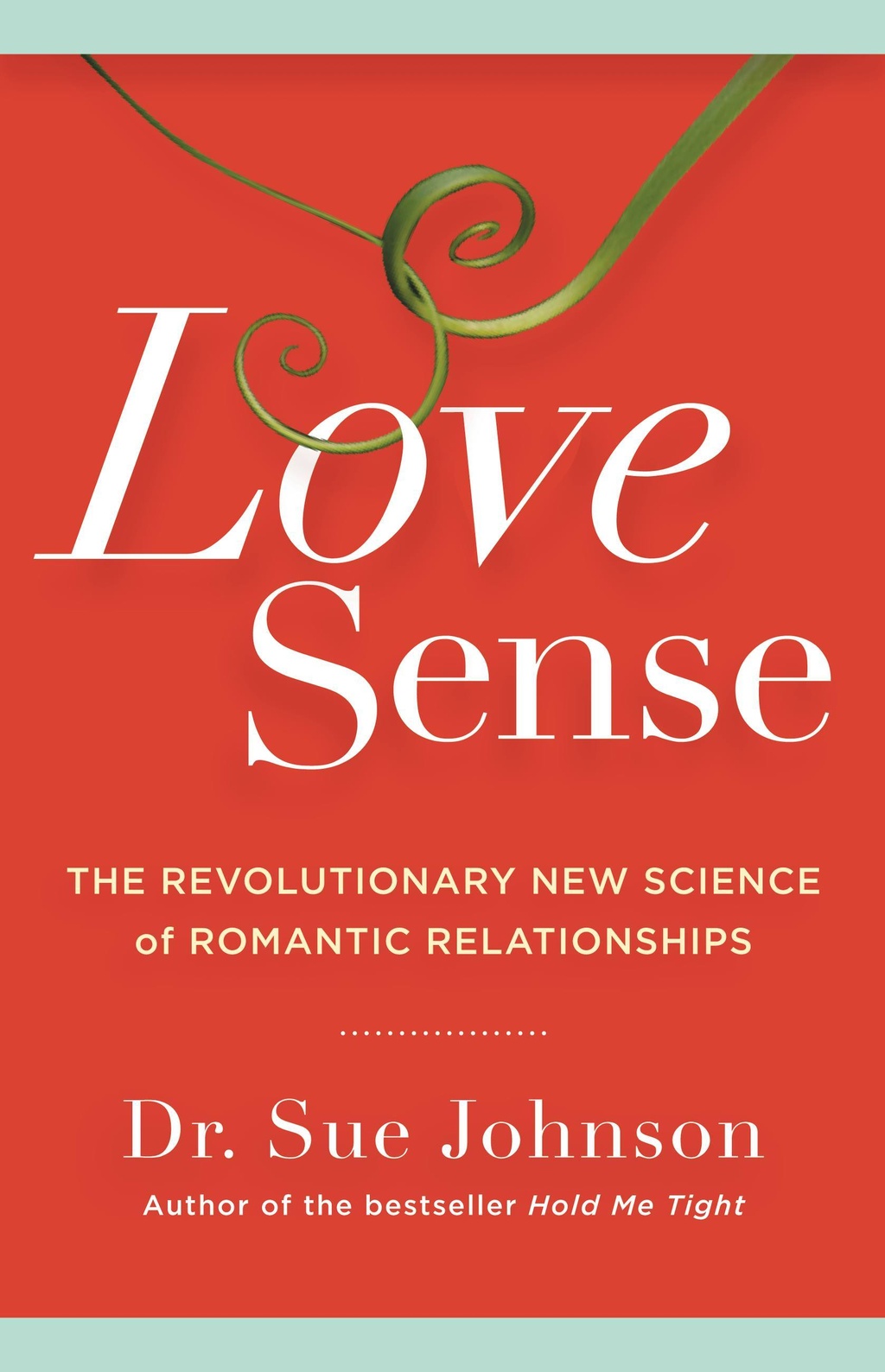
Love Sense: The Revolutionary New Science of Romantic Relationships

Editor's Note: The following is adapted from Sue Johnson's latest book, Love Sense: The Revolutionary New Science of Romantic Relationships (Little, Brown and Company, 2013).

The Rhythm of Disconnection and Reconnection

A love relationship is never static; it ebbs and flows. If we want love to last, we have to grasp this fact and get used to paying attention to and readjusting our level of emotional engagement.

“I just assumed that once you are married, you both know you are partners and you can kind of relax and take the relationship for granted,” Jeremy tells Harriet. “You can focus on the big picture. You know I love you. We aren’t mean to each other. I haven’t been unfaithful to you or anything like that. Can’t you just roll with the less romantic, less touchy-feely times?” Harriet sits up straight in her chair and declares, “No, Jeremy. I can’t. Not anymore.”

“Well, that is just very immature, then,” Jeremy replies.

He is right in a way. In a good relationship, where we feel basically secure, we can fill in the blanks left by our partner’s occasional emotional absence. We can substitute positive feelings from past encounters and accept that there may be legitimate reasons for the inattention. But only some of the time, and only if we know we can reconnect if we really need to.

Loving is a process that constantly moves from harmony to disharmony, from mutual attunement and responsiveness to misattunement and disconnection—and back again. But to really understand what happens, we have to zoom down into these interactions and atomize them. Think of Georges Seurat’s paintings: when we move in really close, we realize that the vast scenes are composed of thousands and thousands of little dots. Researchers are doing the same with love relationships. By freeze-framing videos of romantic partners talking or arguing, and of babies playing with a parent, they are discovering how love, without our being aware, is shaped, for better or worse, in micromoments and micromoves of connection and disconnection.

“Up close, this is what love looks like: I look at you with my eyes wide open, trying to capture your glance, and you catch my expression, widen your eyes, and take my arm.” Alternatively, you ignore my bid for your attention, continue talking about your thoughts, and I turn away. In the next step, we resynchronize and reconnect. I turn back to you and lean forward and touch your arm; this time, you get my cue and turn toward me, smile, and ask me how I am. This tiny, fleeting moment of repair brings a rush of positive emotion. Moments of meeting are mutually delightful. (I always think that if we stopped and verbalized our innermost thoughts at this point, we would say something like “Oh, there you are” or even “Ah, here we are together.”)

It’s important to emphasize that misattunement is not a sign of lack of love or commitment. It is inevitable and normal; in fact, it is startlingly common. Ed Tronick of Harvard Medical School, who has spent years absorbed in monitoring the interactions between mother and child, finds that even happily bonded mothers and infants miss each other’s signals fully 70 percent of the time. Adults miss their partner’s cues most of the time, too! We all send unclear signals and misread cues. We become distracted, we suddenly shift our level of emotional intensity and leave our partner behind, or we simply overload each other with too many signals and messages. Only in the movies does one poignant gaze predictably follow another and one small touch always elicit an exquisitely timed gesture in return. We are sorely mistaken if we believe that love is about always being in tune.

What matters is if we can repair tiny moments of misattunement and come back into harmony. Bonding is an eternal process of renewal. “Relationship stability depends not on healing huge rifts but on mending the constant small tears.” Indeed, says John Gottman of the University of Washington, what distinguishes master couples, the term he gives successful pairs, is not the ability to avoid fights but the ability to repair routine disconnections.

We learn about mini-misattunement and repair in our earliest interactions. Tronick and his team have detailed what happens by analyzing videos of infants and their mothers playing a game of peekaboo that grows gradually more intense. At first the infant is happy, but as the game builds, he becomes overstimulated and turns away and sucks his thumb. Mom, intent on playing, misses this cue, and loudly cries “boo” again. The baby looks down with no expression. He shuts down to avoid her signals, which are suddenly too fast and too strong for him.

There are two basic scenarios for what happens next, one positive, the other negative. In the first, Mom picks up the cue that her child is overwhelmed, and she goes quiet. She tunes in to his emotional expression. She waits until he looks up and smiles at him very slowly, and then more invitingly, lifting her eyebrows and opening her eyes. Then she starts the game again. Misattunement and momentary disconnection shift to renewed attunement and easy synchrony. All it takes is a smile or tender touch.

In the second scenario, Mom ignores or doesn’t get her baby’s signal. She moves in faster and closer, insisting her child stay engaged with her. He continues to turn away, and the mother reaches out and pushes his face back toward her. The infant closes his eyes and erupts in agitated wails. The mother, annoyed, now turns away. This is misattunement with no repair, what Tronick calls “interactive failure.” Both mother and infant feel disconnected and emotionally upset.

Over time, thousands of these micromoves accumulate until they coalesce into a pattern typical of secure or insecure bonding. Tronick notes that at just seven months of age, infants with the most positive, attuned mothers express the most joy and positive emotion, while those with the most disengaged moms show the greatest amount of crying and other protest behaviors. Those with the most intrusive moms look away the most. We learn in these earliest exchanges with our loved ones whether people are likely to respond to our cues and just how correctable moments of misattunement are.

Those of us who wind up securely attached have learned that momentary disconnection is tolerable rather than catastrophic and that another person will be there to help us regain our emotional balance and reconnect. Those who become anxiously attached have been taught a different lesson: that we cannot rely on another person to respond and reconnect, and so momentary disconnection is always potentially calamitous. Those who become avoidant have absorbed a still harsher lesson: that no one will come when needed no matter what we do, so it’s better not to bother trying to connect at all.

We carry these lessons forward into adulthood, where they color our romantic relationships. “The past is never dead,” wrote novelist William Faulkner. “It’s not even past.” Psychologist Jessica Salvatore, along with her colleagues at the University of Minnesota, studied the romantic relationships of 73 young adult men and women. They had all been enrolled since birth in a longitudinal study of attachment, and their relationship with their mother had been assessed when they were between twelve and eighteen months old. They were invited to the lab with their romantic partner, where they were interviewed separately. Then they were instructed to discuss a key conflict between them for ten minutes and then talk about areas where they were in agreement for another four “cool down” minutes.

Researchers videotaped these talks and observed how well the 73 adults could let go of their conflict and shift out of a negative emotional tone. Some made the switch quickly and easily; others persisted in talking about the conflict and brought up new issues; still others refused to talk at all. Those who were good at cool down were generally happier in their relationship, and so was their partner. And, as we might expect, those who had been rated securely attached as babies generally moved out of the conflict discussion most successfully.

But is a person’s own attachment history the key predictor of stability in a romantic relationship? Or is a partner’s ability to resolve conflict also a major factor? Salvatore assessed the 73 subjects two years later and found that even among those who had histories marked by insecurity, their romantic relationship was more likely to have endured if their partner was able to recover well from an argument and help them transition into a positive conversation.

I call this the buffer, balance, bounce effect. A more secure partner buffers your fears and helps you regain your emotional balance so you can reconnect. Then together, you both bounce back from separation distress, distance, and conflict. “We are never so secure that we do not need our partner’s help in readjusting the emotional music in our attachment dance.” Relationship distress and repair are always a two-person affair; a dance is never defined by just one person.

Some of us, however, need more structured help in finding our way back to emotional harmony. Drawing from my discoveries in thirty years of practice and research and the findings of the new science of love outlined in these pages, I and my colleagues have created a powerful model for repairing relationship bonds, Emotionally Focused Therapy. The only intervention based on attachment, EFT is redefining the field of couple therapy and education. Sixteen studies now validate its success. Couples who have had EFT show overall increased satisfaction with their relationships and in the elements of secure attachment, including intimacy, trust, and forgiveness. Moreover, the more secure emotional bond remains stable years after therapy.

One of our newest and most exciting studies demonstrates through fMRI brain scans that after couples go through EFT and become more secure, holding the hand of their partner actually dampens fear and the pain of an electric shock. Just as predicted by attachment science, contact with a loving, responsive partner is a powerful buffer against danger and threat. When we change our love relationships, we change our brains and change our world.

The science of love allows us to hone our interventions—to be on target and aim high. The goal is to create lasting lifelong bonds that offer safe-haven security to both partners. Recently we have also created a group educational program based on my earlier book Hold Me Tight: Seven Conversations for a Lifetime of Love that helps couples take all we have learned in decades of research and use it in their own relationship.

Repairing Bonds Moment to Moment

Lasting bonds are all about emotional responsiveness. The core attachment question—“Are you there for me?”— requires a “yes” in response. A secure bond has three basic elements:

  • accessibility—you give me your attention and are emotionally open to what I am saying;
  • responsiveness—you accept my needs and fears and offer comfort and caring; and
  • engagement—you are emotionally present, absorbed, and involved with me.

When these elements are missing and alienation and disconnection take over, renewing a bond that is truly coming undone is essentially a two-step process. First, partners have to help each other slow down and contain the circular dance that keeps them emotionally off balance and hypervigilant for signs of threat or loss. Relationships begin to improve when partners can stop these runaway cycles that create emotional starvation and attachment panic.

To curb these demand-withdraw cycles, we first need to recognize that they are cycles. We get caught up in focusing on our partner’s actions and forget that we are players, too. We have to realize that we are in a feedback loop that we both contribute to. When we see that this is a dance we do together, we can stop our automatic, blaming, “You always step on my foot” response. This allows us to see the power and momentum of the dance and how we are both controlled and freaked out by it.

Prue accuses Larry of being hypercritical. “He’s always complaining about whatever I do—how I cook, how I make love. I feel picked on all the time. It’s devastating.” Larry argues that Prue always refuses to talk seriously about any problems they’re having. “She just goes distant. I can’t find her,” he says. In our sessions, they’ve now realized that they are prisoners of a pattern they call “the Pit.” “I encourage clients to give a name to their pattern to help them see it and begin to recognize that the pattern, not the partner, is the enemy.” They have both unwittingly created this enemy that is taking over their relationship, and they must work together to wrest their relationship from its clutches.

Now we can explore the triggers and emotions that shape the pattern. Prue and Larry recount a specific incident when they fell into the Pit, and we bring it into high focus and play it in slow motion, scrutinizing each detail, until its impact on each partner and their bond is clear. They were on holiday in Europe after a period when Prue had been away taking care of her dying aunt and Larry had resented her absence. They were in a station heading to catch a train when Larry suddenly realized that it had begun moving. Afraid they would miss it, he jumped on the step and yelled to Prue, who was carrying a coffee cup, “Run.” Larry shouted to the conductor to slow down and held his hand out to Prue, but she froze. Finally, she grasped his hand and struggled onto the train, out of breath. Larry turned to her and said, “You are so damn slow.” Shocked and hurt, she refused to speak to him the rest of the journey. Inside, she vacillated between rage at Larry’s reprimands and dread that she really is too “slow” and too flawed for him to love. She shut him out and, preoccupied with her own fears of inadequacy, began a downward spiral into depression.

I turn to Larry and we go over and over this incident moment by moment and tune in to the emotions he was feeling then and how they reflect his overall feeling about Prue and their relationship. He says he feels “agitated” when she does not keep up with him on hikes. He notes she doesn’t take her arthritis medication consistently. “I get anxious when she does not stay with me. I can’t count on her.” He recalls the image of “distance” that flooded him when the train started to move off and Prue froze. “She wasn’t running, working to be with me,” he says. He felt panicked. Larry then begins to talk about his sense of isolation when Prue stayed with her aunt for three months and his habit of dismissing, or “pushing down,” this frequent feeling. Sometimes he can’t, though, and it rises up and engulfs him, and he winds up being angry and sarcastic. He begins weeping as he realizes just how much he needs her and is afraid that she will remain “unavailable.” The slide into the Pit begins with attachment terror.

For Prue, too, the terror that freezes her and turns her away from Larry is a hopeless certainty that she is flawed and worthless, so rejection is certain. As they recognize and find their balance in these emotional moments, they can see the drama of distress as it occurs in their everyday life and then help each other halt its momentum. They can limit the extent of the rift between them and find a secure base. The next night, Larry lashes out, and Prue responds, “Is this a panic moment for you? I am not going to freeze up here, and I want you to slow down.” Each partner begins to see the other in a new light: Prue sees Larry as afraid rather than judgmental and aggressive, and he sees her as protecting herself from rejection rather than simply abandoning him and “sulking.”

Recent research by psychologist Shiri Cohen and her colleagues at Harvard Medical School confirms that partners do not suddenly have to become masters of empathy or emotional gymnasts in this kind of process. Partners, especially women, really respond to signs that their loved one is trying to tune in and actually cares about their feelings. This, in and of itself, creates a new safety zone where partners can begin to expand their dance steps and take risks with each other. New ways of dealing with emotion shape new steps in the dance, which in turn shape new chances for reattunement and repair. But this ability to keep miscues and missteps in check is not enough.

The second step in renewing bonds is much harder but more significant. This is when we move into powerful positive interactions and actually reach for each other. Specifically, withdrawn partners have to open up and engage on an emotional level, and blaming partners have to risk asking for what they need from a place of vulnerability. Partners have to tune in to the bonding channel and stay there. They find this process risky, but if they follow it through, their relationship becomes flooded with positive emotion and ascends to a whole new level. This process is not only a corrective move that kick-starts trust but also, for many, a transforming and liberating emotional experience.

These experiences are deeply emotional; partners each reach for the other in a simple and coherent way that pulls forth a tender, compassionate response. This begins a new positive bonding cycle, a reach-and-respond sequence that builds a mental model of relationships as a safe haven. It addresses each person’s most basic needs for safety, connection, and comfort. “These kinds of primal emotional moments are so significant that, as with all such “hot” moments, our brain seems to faithfully store them, filing them in our neural networks as the protocol for how to be close to others.” Our follow-up studies of EFT couples show that their ability to stay with and shape these emotional moments is the best predictor of stable relationship repair and satisfaction years later.

So what actually happens in these exchanges—I call them Hold Me Tight conversations—when real connection begins to form and a couple moves from antagonism into harmony? Until recently we have not known what specific responses in intimate exchanges make for tender loving bonds between adults. We have had, to quote psychologists Linda Roberts and Danielle Greenberg of the University of Wisconsin, “a typology of conflict . . . but no road maps for positive intimate behavior.” Years of watching couples reconnect in a therapy that deliberately builds bonds can offer us just this.

In Hold Me Tight conversations, couples have to handle a series of mini-tasks. Partners, whether pursuing and blaming or defending and withdrawing, attempt to:

  • Tune in to and stay with their own softer emotions and hold on to the hope of potential connection with the loved one.

John: “I did snap at you. But when I look inside, it’s that I find it worrying, upsetting that you go out to those clubs with your girlfriends. It somehow messes me up. It’s hard to tell you this. I am not used to talking about this kind of stuff.”

  • Regulate their emotions so they can look out at the other person with some openness and curiosity and show willingness to listen to incoming cues. They are not flooded or trying to shut down and stay numb.

John: “I feel a little silly, kind of wide open saying this. But there it is. It doesn’t work to deny it and say nothing. Then we get farther apart. Can you hear me? What do you think?” His wife, Kim, comes and hugs him.

  • Turn their emotions into clear, specific signals. Messages are not conflicted or garbled. Clear communication flows from a clear inner sense of feared danger and longed-for safety.

John: “I know I sometimes go off about you being tired after coming home late or the money you spend. But that is not it. Those are side issues. It reminds me of past relationships. I guess I am really sensitive here. I really find it difficult. It scares me. I wanted to run after you and say, ‘Don’t go.’ It’s like you are choosing them and the club scene over me, over us. That is how it feels.” His eyes widen, showing how anxious he is.

  • Tolerate fears of the other’s response enough to stay engaged and give the other a chance to respond.

John: “You aren’t saying anything. Are you mad now? I want us to talk about this kind of stuff when I get unsure of us and not push things under the rug. I want to hear how you feel right now.” Kim tells him she is confused because she feels loyal to her friends but that his feelings are important.

  • Explicitly state needs. To do this they have to recognize and accept their attachment needs.

John: “I want to know you are committed to us, to me. I want to feel like you are my partner and that nothing is more important than that. I need that reassurance that my needs matter. Then I can keep taking risks here. I am out on a limb otherwise.”

  • Hear and accept the needs of the other. Respond to these needs with empathy and honesty.

John: “I know I have been kind of controlling in the past. It’s a bit hard to hear you talk about it, but I know you need to make choices, and you have fun with your friends. I am not giving orders here. I want to know if we can work this out together.”

  • React to the other’s response, even if it is not what is hoped for, in a way that is relatively balanced and, especially if it is what is hoped for, with increased trust and positive emotion.

John: “Well, you have tickets for the concert, so I guess you will go. I can handle that. I hadn’t really shared with you openly about this. It helps if I feel included somehow, if you tell me about it afterward. And I appreciate that you are listening and telling me that you can consider how I feel about this.” Kim tells him she still feels scared to put herself in his hands completely. Her nights out are her statement that she is still holding on to her boundaries and showing she can stand up to him. But she hears his fears. She tells him that she does not flirt or drink too much on her outings, and she reminds him that she is going out less often now.

  • Explore and take into account the partner’s reality and make sense of, rather than dismiss, his or her response.

John: “I don’t want to tell you what to do. I know this upsets you. You have good reasons for this. I get that you are not trying to hurt me. I don’t want you to feel dictated to. I just get anxious about this stuff.” He reaches out for her, and she turns to him and holds him.

When this conversation goes off track, John—and hopefully Kim—can bring it back and stay with the main emotional message, the need to connect. For example, if John gets caught up ranting about the “seedy” clubs she visits, she is able to stay calm and soothe him by telling him that she is concerned that he worries about this, and this brings him back to talking about his fears. Both partners help each other keep their emotional balance and stay in the deeper emotion and bonding channel. John is attempting to repair his sense of disconnection, and he does it by exploring his own emotions and engaging with Kim. In the past he had tried criticizing his lover’s taste in friends or making deals about how many times each could go out without the other every month. Now he goes to the core dialogue in an attachment relationship, the one that matters most, where the question “Are you there for me?” is palpable. He shares and asks for her emotional support, for her help in dealing with his attachment fears.

This is very different from the way attempts at connection show up in distressed relationships and even in routine interactions in relatively happy relationships. We often bypass the attachment emotions and messages. We do not say what we need. Our signals to our loved one remain hidden, general, and ambiguous. Hal tells Lulu, “I don’t think I have ever asked you for affection. It’s not what I do. When you just give it, everything is fine. But when you get depressed . . . So then I say, ‘Want to watch a movie?’ or ‘You should go for a walk and cheer up.’ But you turn away, and in two seconds flat I am enraged. In my head, I am still thinking it’s about the movie or you not taking care of yourself. Not that you have gone missing on me.” When Hal can express his sense of loss at Lulu’s withdrawal, they can deal with it and her bout of depression differently—that is, in a way that leaves them more connected rather than less.

The most intense and attachment-focused Hold Me Tight conversations build tangible safety and connection, even in secure, happy relationships. They can occur at times when partners do not feel disconnected but simply want more intense intimacy. Lulu opens up one night and tells Hal of a moment after their lovemaking when she felt herself “sinking into a certain soft place where we just belong and belong and there is no more fear of risking.” He responds and shares his similar feelings. Each time these lovers share their “soft places” and their need for each other and respond with empathy and care, they offer their loved one reassurance that he or she is the chosen, irreplaceable one, and the bond between them deepens.

Sue Johnson on Emotionally Focused Therapy

Foundations of EFT

Victor Yalom: Sue, it's great to be with you today. We might as well start with the basics. Can you just say a bit about what is emotionally focused therapy or EFT?
Sue Johnson: EFT is an approach that was developed in the '80s to work with couples, that now has a very strong empirical base. It's been tested. There's lots of outcome data. We know that we get results with lots of different kinds of couples. We know how we get results. As its name suggests, it's an approach that focuses very much on how people deal with their emotions and how they send emotional signals to their spouse, and then how this emotion becomes the music of their interactional dance.

It's an attachment-oriented approach. Attachment is a broad theory of personality and human development that focuses, also, very much on emotion. It's an attachment approach, so it assumes that we all have very deep needs for safe connection and emotional contact, and that when we don't get those needs, we get stuck in very negative interactional patterns; the dance music gets very complicated.
VY: Of course, humans are complex creatures. Emotions are an essential component, but we also have cognitions. Why do you focus on emotions?
SJ: We focused on emotion, in some ways, because they were pretty much left out of interventions, particularly systemic interventions—interventions that looked at relationships. Emotions were really considered the enemy. They were the things that people had difficulty with. Particularly, anger and conflict were considered the enemy. So there was a lot of focus on just teaching people skills to control emotion—to be nicer to each other.

And what we tried to do is say, "No, focusing on emotion and helping people send key emotional messages to each other that help the other person feel safe is the most important part of a relationship. It's the key part of the attachment bond. And we really need to teach people how to do that." So that's why we focused on emotion.

VY: And how did attachment theory become such a central component?
SJ: Really, couples taught us how to do EFT. We started looking at how couples got caught in being overwhelmed by their emotions, or numbing out their emotions, or putting very negative emotions out to each other, and getting caught in really negative cycles. But we didn't understand why these cycles were so powerful, took over the whole relationship and induced such distress in people. We knew there was something powerful here. And we learned how to help people get out of these negative dances and move into positive, trusting, more open dances with each other.

So we discovered how to do that, but we didn't really understand why this dance was so incredibly powerful, why it had the effect it did until
VY: And when you refer to the dance, you’re referring to the patterns that couples get into.
SJ: Yes, I think of the patterns of interaction in a relationship as a dance. And I like to think of emotion as the music of the dance. I think that is a shorthand way of talking about how powerful emotions are. It’s very difficult to learn skills and do a new dance that’s about tango when there’s waltz music playing. You end up going on with the music in the end. That’s what happens in relationships with emotion.
VY: What do you mean?
SJ: If I'm really hurting and really upset with you, and I'm vigilantly watching everything you do, waiting for some sign that I don't really matter to you and you are about to turn away from me, I discount the positive things you say, for a start. I wait for you to raise your left eyebrow and say something negative. And when you say that, I'm ready—I have all these catastrophic ideas and feelings in my body, and this felt sense of falling through space and insecurity. And I react like crazy. And you turn to me and you say, "But I was so sweet to you yesterday. Doesn't that count?" And if I'm honest, I would say no. So our emotional realities are very powerful.
VY: The kind of situation you just described is something that therapists often get tripped up on. When we’re in the room with a couple, things happen so quickly, even before we understand what’s happening and they’re off to the races.
SJ: That’s right.
VY: So how does the theory help us? How do you understand that?
SJ:
It really helps to understand that you're dealing with an attachment drama. You're dealing with dilemmas in human bonding.
It really helps to understand that you're dealing with an attachment drama. You're dealing with dilemmas in human bonding. So the emotions that you're dealing with are high-voltage emotions, because your mammalian brain sees these emotions—these situations—in terms of life and death: "Does this person care about me?" It looks like we're having a fight about parenting, but, in fact, if you tune into the emotions, oftentimes two minutes after the fight started—or two seconds after the fight started—the fight ends up being about attachment issues like, "Do you love me? Do I matter to you? If I hurt do you care? Are you there for me? Will you respond to me? Can I depend on you?"

I started to realize after we'd done the first outcome study that the logic behind these emotions was that they were all about attachment and bonding, and our deep human need for that secure bond.

Johnson's Flash of Insight

VY: How did that come to you?
SJ: It was a flash of insight, I’m afraid. It sounds corny, but it was one of those traditional corny "Aha!" things that just hit you in the head.
VY: How did that happen?
SJ: Actually, I was at a conference. We'd done the first outcome study of EFT. It had worked amazingly well. I couldn't really understand how it had worked so well, and I was at a conference listening to Neil Jacobson talking. And Neil Jacobson, who was really the father of cognitive-behavioral marital therapy, was giving a talk and basically saying that relationships are rational bargains, so what you have to do is teach people to negotiate. His theory was that you can negotiate almost anything, including affairs. And this was the theory of relationship underneath the behavioral approaches: you teach people communication skills so that they can problem solve and bargain better.

Afterwards, I and my colleague Les Greenberg, who originally helped me put together EFT for couples, were sitting in a bar, and he said, "He's wrong." And I said, "Of course Neil's wrong." And he said, "Well, why is he wrong?" And I said, "Oh, he's wrong because an adult love relationship is an attachment bond, and you can't bargain for basic responsiveness and safety and love." And that was it. And then suddenly the whole of John Bowlby, who I'd read, but who I'd never made the links—it was like somebody hit me with a sledgehammer.

I went home and wrote an article called "Bonds or Bargains," which ended up being in the Journal of Marriage and Family Therapy, even though Alan Gurman sent it out for review four times, and each time he got two people who hated it and who said that adult relationships were not attachment bonds like the bonds between mothers and children. They were adult friendships, and they were rational, and dependency was a problem, and we got over it. And the other half of the people said, "Oh, this is really new and interesting." And Alan Gurman finally said, "I can never get people to agree. They either hate it or love it. So, Sue, I like it so I'm going to publish it"—for which I bless him forever.

That was the first article—it came out in '86. And in '87 Hazan and Shaver, who were social psychologists, bought out their first little study of adult attachment. Bowlby always said adults had attachment, but we'd never really done anything with his remarks.
VY: So the interesting thing is you developed the theory and practice of EFT before you conceptualized the centrality of attachment in it, and it worked without that understanding.
SJ: It worked because, I think, we were Rogerian, and we understood how to create new interactions from a systemic point of view. But we didn't really understand why these new interactions worked so well.

And don't forget, also, in those days not much was written about adult attachment. Since then there have been hundreds of studies. It's a very rich literature now—lots of studies on adult attachment linking adult attachment to better health, feeling better about yourself, better ability to deal with stress. But in those days—in the '80s—nobody was writing about adult attachment. So there wasn't a literature sitting there that I could go to and say, "Oh, this is it." I just understood suddenly what I was looking at between adult partners, and how this paralleled the between the bonds between mothers and children, which many people still find very difficult to accept. They say, "No, they're totally different."
VY: It certainly goes against the strong sense of psychological independence that we cherish in the West and is so central to so many of our conceptions of psychological health.
SJ: Yes. I think what we've done is we've pathologized dependency. If you really think about it, though, how on earth do we get to be independent anyway?
Bowlby basically said for a child to really become independent, he has to be dependent first.
Bowlby basically said for a child to really become independent, he has to be dependent first. He has to be able to turn to other people and reach for them, and know how to connect with others in order to build this sense of self and in order to deal with how your self evolves and how big the world is. In other words, Bowlby basically said we're mammals. We need other people. A strong sense of self and the ability to be separate are tied to how connected you feel. They're not opposites—they're both the two sides of the same coin. We made a mistake in that.

In psychology and in therapy, we often see a little piece of the picture, and we go with that because that's all we can see. Then when the whole picture suddenly evolves, we can put things together in a different way.
VY: So you don’t like the ideas of co-dependency or enmeshment?
SJ: Well, enmeshment confuses anxiety about closeness and coercion, for one thing. It's a very vague concept, and a lot of it came out of watching families where adolescents were in deep trouble and the therapist was trying to help the adolescents assert themselves with the parents. There's nothing wrong with the word "enmeshment" if you put it in a very particular context.

Co-dependency came out of the addiction literature, and we used it as a global blame for people without understanding that we have amazingly powerful emotional links with the people we love. To say you shouldn't have those links is craziness. Those links are wired into our brains by millions of years of evolution. Bowlby says if you're a mammal, there's no such thing as real self-sufficiency. And there's no such thing as real over-dependency. But there are massively anxious behaviors around dependency.

What healthy people have is effective dependency, which means—and there's lots of research behind this now—the more you know how to turn to other people, the more you can trust other people, the more you can go inside of yourself and access, for example, your loved one's face when you're feeling upset or distressed, the stronger you are as a person, the better you feel about yourself and the more able you are to take autonomous decisions.
The more you know how to turn to other people, the better you feel about yourself and the more able you are to make autonomous decisions.
And I'm not making this up. I can quote you study after study, and you see it in therapy.
VY: I know that you can. And I know you can talk passionately and animatedly about the attachment literature for hours—
SJ: Yes, I can. It’s the best thing to ever hit psychology and therapy in the last hundred years, so there you go.
VY: Yes, you’re not one shy of opinions!
SJ: No. Life's too short to not put out what you think. And if someone can show you you're wrong, that's good.

EFT Techniques

VY: How did it change your thinking and the technique of EFT when you had that "aha!" moment and started to understand the significance of attachment in adult couples?
SJ: I think it helped me understand, on a deeper level, how powerful these emotions were that I was seeing in the couple. It helped me understand the power of fear in a couple—fear of abandonment, fear of rejection. It helped me understand the logic behind some of the apparently self-destructive positions people take in relationships.
VY: Can you give an example of the fear or the self-destructive positions?
SJ: For example, one of the classic ones in relationships is, "I feel lonely. I feel unsure that you care about me. I don't even know quite how to put that into words because I'm an adult—I'm not supposed to feel that way. But I somehow feel like I'm starving emotionally. And I decide that what I'm going to do is I'm going to make you respond. Ironically, I'm feeling all these feelings inside of abandonment and loneliness and fear, and what I say to you is, 'You never talk to me.'"
VY: What you're describing is what's underneath, unconscious, as it were—not what the person's actually saying, but what you posit is driving their behavior.
SJ: You don't have to posit it if you slow people down, and you say, "In the second before you get angry and tell your husband that he's ridiculous because he can't talk to anyone—in the second before you attack him to get his attention and to make him listen to you—what's happening to you?" If you just slow people down, there are enormously powerful universal patterns that you can see, and they fit very well with what John Bowlby saw in situations between mothers and infants.

There are only so many ways we have of dealing with our emotions. If I'm in a relationship with somebody and I want them to respond to me, and suddenly I'm not getting responsiveness and connection, I've got to reach for them and say, "Where are you? I need you." If somehow I'm afraid to do that or that doesn't work too well, then there are really only two alternatives. I get angry and shriek—children shriek or they get mad or they get aggressive with the mother, and so do we. We say, "Why don't you ever talk to me?" Unfortunately, if that gets to be a habitual pattern, I end up pushing you away. And in classic marital distress, the other person hears, "I'm being rejected. I'm disappointing. I'm messing up. I'm not pleasing this person. I don't know how to please this person. This hurts like hell. I want this fight to stop. I'm just going to stop talking."

So one person numbs out. And the more he numbs out, shuts down, shuts his partner out, the more his partner gets angry and pushes.
So one person numbs out. And the more he numbs out, shuts down, shuts his partner out, the more his partner gets angry and pushes. And that is the most classic dance of relationship distress in North America. It's a hot number. We all do it a lot.
VY: This is what you refer to as a cycle?
SJ: That's a cycle. And in Hold Me Tight, which is the book I wrote for the public a couple of years ago, it's one of the main "demon dialogues." What's important is if you understand that that drama is not about communication skills or your personalities, or that you're deficient somehow, but rather that drama is about both of you being caught in feeling disconnected from each other and not knowing how to handle it—if you understand that, what we first teach people to do in EFT is to basically understand they're scaring the hell out of each other. Then we teach them how to step out of the negative patterns, and then deliberately learn how to reach for each other—which is what mothers and infants and bonded partners and people who love each other in positive relationships naturally do—learn how to reach for each other and create loving, responsive, open emotional communication where they can get their needs met.
VY: Sounds nice.
SJ: It is nice. It’s fun to do, as well. As a therapist, it makes you feel like you’re actually really doing what you wanted to do in grad school when you decided to be a therapist.
VY: So how do therapists do that? The first thing, I guess, is to start to be able to identify, in your own mind, this dance—this cycle.
SJ: Yeah. At this point, we’ve been doing EFT for 25 years. We’ve set it out pretty clearly and we’ve even done research on what you have to do to make this work. First of all, you’ve got to create safety in the session.
VY: Okay, safety is number one. So how do you do that?
SJ: You do that by being empathic and by being emotionally present. Really, this is a Rogerian therapy. So you do that in the traditional Rogerian way, but I think it's more intense than Rogers really created because you also help the couple understand the drama that they're caught in. So you're a relationship consultant. You follow the couple's drama. You make it clear to them the steps they're doing in the dance.
VY: That's "Rogers plus," because you're not just reflecting back—you're starting to explain to them what you see that they're doing.
SJ: I think you have to do more than explain. You have to give them a felt sense.
You have to catch it as it's happening, and you have to help them see the dance they're caught in and how it leaves them both alone and hurting.
You have to catch it as it's happening, and you have to help them see the dance they're caught in and how it leaves them both alone and hurting. You also have to help them see that underneath this dance they're both in pain, and that this pain is just built into us. It's part of who are as human beings. So that is key. You have to create safety in the session. You have to help people explore their emotions so that they can talk about some of these softer feelings.

If you're always telling me that you don't want to hear me because I'm so angry, after a while all I show you is anger. And all I see you do is be cold and indifferent. And what we help people do is talk about the softer feelings that they don't even know how to name sometimes, and certainly don't know how to share. So the reactively angry partner will start talking about how "I feel lonely. I don't know what to do. I do get angry. I do get critical because underneath I'm so scared I don't matter to him."

And we will help her not only access that and work with those feelings, regulate them differently, integrate them so she can talk about those softer feelings—we'll help her turn and share with her partner in interactions where we scaffold the safety in. We help her share that, and we help her partner hear it—because one of the reasons you need a therapist is that sometimes you do give these clear emotional messages to your partner, and because of the negative music playing in the relationship, your partner doesn't even hear it. Your partner doesn't trust, doesn't respond to it.
VY: When you say you help them share these feelings with their partner—this is what you refer to as enactments, á la Minuchin, right?
SJ: Yes, although they’re much more emotional than Minuchin’s enactments usually were. To really summarize it, the EFT therapist creates safety, deepens people’s emotions using the attachment frame, to the soft feelings, the fears, the sadnesses, the hurts, sometimes even the shame underneath their reactive responses to each other, and then helps them send clear signals to their partner in very powerful interactions about their fears and their needs. Really, we teach people to help each other deal with these difficult emotions in a way that brings them closer.
VY: So if all goes well, you identify their pattern, you help them feel safe, you observe their pattern, you help them identify it, and then you help them start to express their deepest, vulnerable, unmet needs with each other. Then what happens?
SJ: It's basically the prototypical corrective emotional experience. And the reason it's so powerful is that we have these key change events in the second stage of EFT. In the first stage, we de-escalate the negative patterns so that people can stop and say things like, "Hey, we're caught in that thing again—that thing where I get angrier and angrier and you get more and more silent. This is the place where we both get hurt." And they start seeing the dance is the problem.

So they can have control over the negative interaction pattern, but that's not enough. I think lots of couples therapies get people there one way or another. The important bit for me is the second stage, where we actively use an attachment frame to help people to distill their attachment fears and their attachment needs, which in the beginning of therapy they are often not even aware of. And then we help them share that.

When that happens and the other person can respond,
sometimes for the first time in people's lives they actually feel that another person is there for them, that the other person cares, that they matter to someone.
sometimes for the first time in people's lives they actually feel that another person is there for them, that the other person cares, that they matter to someone. This is a huge event. It starts to redefine the relationship as a secure bond. And it's incredibly positive for people because we have mammalian brains.
VY: It can be. But take the example where one of the partners gets to the point where they can be incredibly vulnerable and open and express their unmet needs, and the other partner has their own intimacy issues and blocks, and that’s too much for them, and they reject it or they withdraw.
SJ: First of all, the therapist is there dealing with that. Secondly, you titrate the risks people take in EFT. You don’t ask people to take huge risks before they’ve done Stage One. So ideally you don’t let people get into that position. But, nevertheless, if someone shares and the other person can’t respond, the good EFT therapist will go in and help that person slow everything down. See, emotion’s fast. If you want people to regulate it better and integrate it and deal with it differently, you’ve got to slow it down.
VY: Yeah, and I’ve seen you work and you’re very good. You track people very carefully, and you’re very good at slowing it down.
SJ: Yes. So in that case, I would turn to the person. I would say, "Could you help me? Did you see your partner just turned to you and said, 'I am scared. I am. And that's when I get into my tank, but inside I'm always so terrified that you never really chose me. I never understood why you married me. I'm always terrified by the fact you could leave me any minute'—did you hear your partner say that?"

You'd be amazed at what people hear sometimes. I had one man who basically said, "I heard that she can leave me any minute." So you have to slow it down. You have to help people get clear, and then you have to say to the person, "What happens to you?" And often people don't know what to do with it, so they'll go cognitive. They'll say, "Well, she had a very difficult family, and it's really not my fault." And you say, "No, I'm going to slow you down." So you help people focus on what matters. You support them. And I help the person hear it. I might say "My sense is that's hard for you to hear."And then the person will slow down and focus and say, "Yes, I don't see her that way. It's so strange for me to really see that she's afraid of me. I can hardly take it in. I see her as so powerful. I don't even know what to do with it. It confuses me. I actually feel dizzy. I feel like there's no ground under my feet. I've been with this person for 30 years. I never see her as—you mean she's vulnerable and scared? I don't know what to do with that."

So you listen to him. He's going to the leading edge of his experience. I'm keeping him there and helping him process it. Then I help him distill that and say, "Could you tell her, please?" And he says, "It's so hard for me. I don't quite know what to do with this new message. I don't know what to say when you tell me that. And I almost don't know whether to trust it. That you would be scared of me—that's so strange for me." And that's fine.
VY: This is where, as a therapist, you have to be very grounded to stick with it.
SJ: Yes.
VY: And really go slow with them, be patient, but also persist in insisting that he not withdraw.
SJ: Yes, that's right. And we're pretty systematic now. We've got training tapes, we've got a workbook, we've got the basic 2004 text. It's laid out in a lot of detail, and we have a whole procedure for training therapists and registering therapists. You can watch people do this on a tape. But you're right. EFT takes a lot of focus, and you have to be able to work with people's emotions, and help them stay with them and develop them and deepen them. You also have to be able to track interactions, and help them create these new interactions with their partner.

So it's a collaborative therapy. You're doing it with people, but it's certainly not a laid-back reflective therapy. It's a therapy where you're dancing alongside your client, and the music's going, and you understand the music, hopefully. But it's an active therapy, because there's so much going on.

Training Couples Therapists

VY: I understand that you’ve put a lot of thought into how to train therapists and set up a systematic program of training, ranging from your externships to supervision, et cetera. What do you find are the most difficult things for therapists to learn?
SJ:
I think our profession has developed a profound distrust of dependency, and we don’t understand it.
I think our profession has developed a profound distrust of dependency, and we don’t understand it. We still are hung up on, "We have to teach people to regulate their own emotions, be independent and separate, and define themselves." I think that’s one thing. We don’t really understand people’s deepest needs.
VY: So just conceptually having a shift in this idea of dependency, autonomy—that gets in the way.
SJ: Yes. You’ve got to be able to accept that we’re interdependent and we need each other. Otherwise, you’re going to have a hard time with EFT. You’re not going to be able to listen to and validate people’s needs. You’re going to blame them for their needs. But the second one is you have to get used to staying with emotion and deepening it. There’s a beautiful quote by Jack Kornfield. He writes about Buddhism and he says something about, "I can let myself be borne along by the river of emotion because I know how to swim."

I think therapists have been traditionally quite scared of strong emotion because we haven’t really known what to do with it. And at this point in psychotherapy in general, and in EFT, I think, there’s been a big revolution understanding emotion and human attachment. And we do know what to do with it. There’s nothing illogical about emotion. And, actually, there’s not very much unpredictable about emotion if you really know how to listen in to it. But many of us have not been trained in how to really stay emotionally present with somebody and track emotion, how to deepen emotion and use it. I think that’s the biggest one that people struggle with in EFT.
VY: So it’s just being more comfortable with emotion and trusting yourself to stay with it.
SJ: That’s a big part of it.
VY: That’s in terms of the comfort of the therapist. In terms of the techniques to help people work with it, what are the hardest things for therapists to learn?
SJ: I don’t think the techniques are hard per se. They’re a combination of Rogerian empathic reflection, validating, asking process-oriented questions like, "What’s happening for you right now? How do you feel when this person says this? How do you feel in your body? What do you tell yourself in your mind? Do you tell yourself this means this person doesn’t love you?"
VY: What I see is the skill that refer to as "slicing very thin"—tracking emotions on a very minute, moment-to-moment level. Not just asking someone how they feel, because many people, as you know, can't articulate that.
SJ: No.
VY: So you go at it from many angles.
SJ: Well, we know what the elements of emotion are. The elements of emotion are initial perception, body response, a set of thoughts, and then an action tendency.
VY: Now you’re sounding like a behaviorist.
SJ: No, I'm not. That comes from the emotion literature. A good EFT therapist will go and ask simple questions about the basic elements of emotion. Somebody will say, "I don't know how I feel right now." And the EFT therapist will say, "How's your body feel?" The person will say, "I feel tense." And the EFT therapist will say, "What do you want to do?"—because there's an action tendency in emotion. The person says, "I want this to stop. I want to get out of here." So you know what's happening—there's some version of fear going on. So the therapist will ask simple questions, and constantly empathically reflect to help people hold onto their emotional experience and continue to work with it.

Sometimes a therapist will interpret—add a piece. "This is very difficult for you. Could it be a little scary?" And then the therapist will help somebody hold their emotion, distill it. And then will create an enactment: "Could you turn and tell your partner, 'When we start to talk about this some part of me just wants to run away'?" You make the implicit explicit. You make the vague concrete. You make the vague vivid.

It's much better, from a relationship point of view, for me to turn and say to you, "Victor, I don't know what to do with what you've just said, but there's something a bit scary about it and I just want to run away." That's much better than for me to just feel that and not be able to talk about it, and turn and leave the room. If I turn and leave the room and you are a mammal and you're in a relationship with me, your brain says that's a danger cue. "This person who I depend on can walk away from me any time." And you start to get really upset—whereas if I turn and say to you, "I don't know what's happening with me. This is a bit scary. I just want to leave," you're probably going to feel compassion towards me.

It's all about helping people learn how to hold on to that emotional connection. Our mammalian brains experience emotional connection as a safety cue. There's lots of neuroscience behind this now, by the way. This emotional attachment stuff is creating a revolution in our field.

The New Science of Love

VY: I just heard David Brooks speak. He’s done a great job with his book, The Social Animal, summarizing a lot of the attachment research, but he also warned of the danger of over-reading brain science. He said something to the effect that brain science is in such a state of infancy that to draw any definitive conclusions from it can be riding the next wave of popularity, but to make precise conclusions from it is overreaching.
SJ: I agree with David Brooks that you can't draw conclusions. Sometimes when I listen to people and they say, "Oh, we change the brain in psychotherapy," I don't know. I just feel like saying, "Well, you know, eating an ice cream changes your brain."

On the other hand, when you look at research like my colleague, Jim Coan, has done, that if you lie alone in a computer in an MRI machine or you hold a stranger's hand, your brain goes berserk when you see a sign that you're going to be shocked on your feet. And when your partner, who you feel safe and connected with, holds your hand and you can see that signal that tells you you're going to be shocked on your feet, because you're holding your partner's hand and you feel connected to them your brain does not go berserk, and the way you experience the shock is much less painful.

Now, David Brooks is right. We're not quite sure what it all means. But it's fascinating stuff, and it's taking us into new territory. And, just by itself, that one study supports all the hundreds of studies that have been done on adult attachment and infant and mother and father attachment that says that we have connections with very special others, and that it's basically all about safety and danger. We use that connection as a safety cue. And what I just said has huge implications for couple therapy, psychotherapy in general, education for society. So, yes, David Brooks is right and we are in the middle of a revolution.
VY: Speaking of that, I hear you’re writing a new book on the science of love.
SJ: Yes, because we really do have a science of love. It's in its infancy, but it's a strong, bawling little infant. It's not a fragile child.
We really do have a science of love. It's in its infancy, but it's a strong, bawling little infant. It's not a fragile child.
When I think about it, in the last 15 years our understanding of our most important adult relationships has absolutely gone crazy. It is a revolution.

And it's so important. I was just looking in my local newspaper today, The Globe and Mail in Toronto, talking about how the Canadian government is struggling with the fact that there are rising levels of anxiety and depression and we can't deal with it in our healthcare system. Well, I know what John Bowlby would say. John Bowlby would say, "Absolutely, because we're facing less and less social connection, less and less community connection, and 50 percent of us divorce. We haven't learned how to create these safe, loving bonds. We need to belong." And the way to deal with that sort of thing, from my point of view, is not for the pharmaceutical companies to get better pills. It's for us to really understand our need for human connection, and start educating people for that and understanding how crucial that is in terms of basic mental health problems like anxiety and depression.
VY: Can you give a little sneak preview of your book? One or two morsels?
SJ: I'm going to talk about oxytocin, the cuddle hormone. I'm going to talk about how sex is an attachment behavior. I'm going to talk about how we're basically monogamous and that those people who say that we're not suited for monogamy are out of their minds. I'm going to talk about all the science behind what happens when you have one of those little arguments with your partner in the morning that ends up wrecking your whole day, so that when five o' clock comes along you're not even sure why you married this person. That's what I'm going to try to talk about.
VY: We'll look forward to that coming out. Thanks for taking the time to talk today.
SJ: You're welcome.
Working with the Unemotional in Emotionally Focused Therapy

It is pretty clear from research that focuses on how change happens in therapy, that emotional engagement is essential for significant change to occur. This is true in individual therapy (for example, research by Castonguay and by Beutler ) and it is certainly true in couple therapy (research by EFT therapists like myself). So what happens in an intervention like Emotionally Focused Couple therapy when one person emphatically denies or avoids emotion? The Boy Code insists that men are at their best when they are strong and silent. So, it is not surprising that male clients tend to deny their emotions a little more often than their female partners.

Process of change research and over 30 years of the clinical experience of numerous EFT, suggests that in fact, this does not seem to be a problem in EFT. Men who are described as “inexpressive” by their partners at the beginning of therapy seem to do very well in EFT. Now why is that?

First, it’s because as EFT therapists we have a map for emotions. For example, there are only 6-8 emotions that everyone on this planet can read on another’s face and assign a similar meaning to. The main difficult emotions that come up in couple therapy are reactive anger, sadness, shame and fear of rejection and abandonment. If you understand emotions, you can help people make coherent sense of them. Once you and your client find the order and logic in an emotion, it is much easier to deal with and work with. Emotions are the most powerful music in the dance called a love relationship and EFT therapists learn how to shape that music and use that music to guide partners into new dance steps.

Second, EFT therapists are emotion detectives. They know emotions are wired into our brains and they have simple, safe, systematic ways of helping folks access and explore them. So, Jim will say in session 8 of EFT, “I used to think I was just frustrated, angry in these fights with my wife; but now I see that mostly I am afraid. It’s a relief to get this – to understand my own feelings and to be able to ask my wife for reassurance rather than stomping around the house in a huff or zoning out and withdrawing into my loneliness.”

Third, tuning into your emotions, especially your fears and longings and shaping these into new messages to your partner WORKS. It is what securely bonded folks naturally do. It pulls our partner close to us and this connection sparks little floods of the cuddle hormone, oxytocin, in our brain. The calm contentment and a sense of belonging that oxytocin induces is the ultimate reward for our kind – little bonding mammals that we are.

When folks tell us, “I don’t have emotions”, we know that this person is working very hard and stressing out his body to suppress his feelings, so we gently explore how and why he does this. He always does it out of fear to avoid being overwhelmed, feeling helpless or ashamed, getting rejected or abandoned. The trouble is that when you shut down your emotions, you shut others out and then you are ………… all alone. No-one wants that. So if you show folks another path to take and support them, they will take it. Even people who do have to shut down as part of their jobs, firefighters, policemen, marines and surgeons respond to EFT. Even traumatized partners who swim in the turmoil of emotional storms learn to order those storms and use their emotions to tell them what they want and need and so find direction in their lives and with their partner.

The traditional route to change in psychotherapy is the haloed “corrective emotional experience”. Without this, any therapy is just an intellectual mist that evaporates once a strong emotion hits. The EFT experience is that even the most seemingly “unemotional” among us respond to corrective emotional experiences of being reassured and treasured. Who can resist this ? Who wants to?

My, How Couples Therapy has Changed! Attachment, Love and Science

The revolution

Just a few short years ago couples therapy was cynically labeled as a set of techniques in search of a theory! Now researchers such as John Gottman and Kim Halford have suggested that even the accepted techniques of this field, such as teaching problem-solving and conflict-management skills, while beneficial, do not seem to get to the heart of the matter in terms of offering a pathway to lasting change in relationships and do not reflect how happy couples relate to each other outside of therapy.

If all this weren’t rough enough, everyone agrees that couples therapy can be very difficult to do. “Dealing with two people, two sets of hot emotions, escalating fights, and clients who hurt but don’t want to slow down, be more reasonable and negotiate is not for the faint of heart.”

Given all this, it seems almost reasonable that couples therapy is often ridiculed or maligned as ineffective in the media. But in spite of this, millions of couples persist in seeking out therapists, perhaps because, as recent surveys tell us, most people in North America rate finding a loving relationship as their main life goal, placing it ahead of career or financial success. It is fortunate, then, that the image of couples therapy painted above is not the whole story. In fact, this image is simply out of date.

Couples therapy is in the midst of a revolution. The key element in this revolution is the development of a new science of love and love relationships. As Yogi Berra told us, “If you don’t know where you are going, you wind up somewhere else.” Without a clear model of love and the process of connection and disconnection, it is difficult to know how to focus interventions on the defining issues and moments in a relationship. It is hard to know what changes will really make a difference and what the overall goal should be in couples therapy. If love is, as Marilyn Yalom in her book The History of the Wife suggests, “an intoxicating mixture of sex and sentiment that no one can understand,” then couples therapy is just appropriate sitcom material. As she suggests, sex and emotion do seem to be intrinsic to love, but it does not have to be a complete mystery.

There are many strands in this new science of love relationships, but they all come together in the growing literature on adult attachment, a relatively recent extension of the English psychiatrist John Bowlby’s work on the emotional bonds between mothers and children. The attachment perspective gives the couples therapist a meaningful and effective map to the drama of distress between partners. It guides the therapist in the pivotal moments in couples interactions and why they matter so much; it offers the therapist a guide to each partner’s deepest needs and strongest emotions. Even so, most therapists will ask, “But does it tell me what to do from moment to moment in a couple session?”

Many streams of research and theory have addressed these questions of late. My colleagues and I have explored these questions in what we call Emotionally Focused Couple Therapy (EFT), a systematic, rigorous, tested set of interventions based on the attachment view of love and bonding. I recently summarized attachment-based approaches in a manner that can be offered to clients and the public in Hold Me Tight: Seven Conversations for a Lifetime of Love . The great strength of this new scientific perspective is exactly that it offers a rigorous body of observation and research into what love is all about and how it changes shape and color. Moreover, it is a tested approach to intervention with excellent outcome data and clinical relevance. Clients also tell us that this way of seeing and working does indeed go to the heart of the matter. In this article I will summarize the attachment perspective and how it is supported by different strands of relationship science (these science strands will be in italics to find or avoid, as you wish!) and how it translates into practice in EFT.

A new scientific and practical theory of love

The multitude of studies on adult attachment that have emerged over the last decade tell us that the essence of love is not a negotiated exchange of resources (so why teach negotiation skills?), a friendship, Nature’s trick to get you to mate and pass on your genes, or a time-limited episode of delusional addiction.

“Love is a very special kind of emotional bond, the need for which is wired into our brain by millions of years of evolution.” It is a survival imperative. The human brain codes isolation and abandonment as danger and the touch and emotional responsiveness of loved ones as safety, a safety that promotes optimal flexibility and continual learning. Jaak Panksepp1, in his neurobiological studies, finds that loss of connection from attachment figures triggers “primal panic,” a special set of fear responses. As Bowlby notes, the words “anxiety” and “anger” come from the same etymological root and both arise at moments of disconnection, when attachment figures are non-responsive. This need for emotional connection is not a sentimental notion. The basic image of who we are and what our most basic needs are, namely that we are social animals who seek such connection, is reflected in health studies. For example, it is now clear that emotional isolation is more dangerous for your health than smoking, and that it doubles the likelihood of heart attack and stroke.

Attachment theory states that we need a safe haven relationship to turn to when life is too much for us and that offers us a secure base from which to go confidently out into the world. This is effective dependency. Many psychotherapy clients learn that their problem is that they are too close or undifferentiated from loved ones. The approach discussed here offers a larger picture. The evidence is that secure, close connection is a source of strength and personality integration rather than weakness. Studies show that the securely connected have a more articulated and positive sense of self. Eighteen months after 9/11, researcher Chris Fraley2 found that securely connected survivors, who could turn to others for emotional support, were able to deal with this trauma and grow from it, whereas insecurely attached survivors were experiencing significant mental health problems. Secure connection is shaped by mutual emotional accessibility and responsiveness. This is the heart of the drama that plays out in the couple therapist’s office. The fights that matter in a relationship are only superficially about the kids or money. Partners and therapists can spend many hours talking about these content issues instead of focusing on how the couple talk and more specifically, on the key attachment questions that drive a couple’s negative dance. “The key questions are: “Are you there for me?” “Do I matter to you?” “Will you turn towards me and respond to me?”” Partners often do not know how to ask these questions, and therapists often miss them or even see them as a sign of immature dependency.

Attachment theory tells us that emotion and emotional signals are the music of the dance between intimates. Many therapies encourage clients to go round strong emotion or replace it with rational thoughts or decisions. Emotion researchers such as James Gross now tell us that this not only increases arousal in the person who is inhibiting emotion but also creates tension in the other partner. An approach that focuses on attachment suggests that emotion is best acknowledged and listened to, so that emotional signals can be shaped in ways that make for safe connection. New emotional responses are also essential if therapy is to address each partner’s deeper longings, help partners formulate their needs and offer a path to the kind of compassionate loving connection that couples are seeking. “Secure attachment, not just conflict containment, is the goal of couples therapy here.” By the end of therapy, an EFT therapist, for example, wants to see his or her clients listen to their emotions, speak their needs clearly and reach for their partner in a way that helps that partner tune in and respond. Research into EFT outcomes tells us that when partners can do this in key sessions, they move into recovery from distress, and this recovery tends to be stable over time. Studies show that over 7 out of 10 couples reach this in EFT. Safe emotional connection then helps each partner deal positively with stress and distress, whether this stress arises from within or outside the relationship. Negative events then only make a relationship stronger. Jim Coan found that when women in an MRI machine were shown a sign that meant they might be shocked on their feet, their brains registered a high stress response, especially if they were alone and even if a stranger held their hand. But if they felt loved in their marriage and their husband held their hand, then these women’s brains were much calmer and the shock seemed to hurt less; holding hands with a loved one “calms jittery neurons” in the brain. As Bowlby predicted, there is more and more evidence that lovers are connected by a neural net. They regulate each other’s physiology and emotional lives. When they are tuned in emotionally, they help each other reach a physical and emotional balance that promotes optimal functioning.

If you look through the attachment lens, the negative spirals that distressed couples create and are victimized by are all about separation distress—the deprivation and emotional starvation that comes from emotional disconnection. “When we cannot get an attachment figure to respond to us, we step into a wired in sequence of protest, first hopeful and then angry, desperate and coercive.” We seek contact any way we can. My client tells me, “I poke him and poke him—anything to get a response from him, to know I matter to him.” If we cannot get a response, despair and depression come to claim us. This way of understanding the usual demand-withdraw cycle in a distressed relationship allows the therapist to help partners to see the game instead of the ball, and to come together against the common enemy of the isolation and the negative dance that is consuming their relationship. It also implies that unless the underlying attachment issues and primal panic is addressed, other approaches, such as insight or learning skill sequences, are unlikely to be effective.

Shaping a sense of safe connection

If we cannot find a way to turn towards our partner and shape a sense of safe connection, there are really only two other secondary strategies open to us and they map onto two emotional realities with exquisite logic. Strategy one is to become caught in fear of abandonment and demand responsiveness by blaming; unfortunately, this often threatens the other and pushes this person further away, especially if this strategy becomes habitual and automatic. Strategy two is to numb out attachment needs and feelings and avoid engagement (and conflict), that is, to shut down and withdraw. Unfortunately, this then shuts the other person out. Both these secondary strategies are ways of trying to hang onto an attachment relationship and deal with difficult feelings, but they often backfire. Over the course of EFT studies and practice, we have been able to chart the emotional realities of partners as they use these strategies. Once they can order and name their feelings, blamers speak of being alone, left, unimportant, abandoned, and feeling insignificant to their partner. Underneath their anger they are extremely vulnerable. Withdrawers speak of feeling ashamed and afraid of hearing that they are failures. They believe that they can never please their partner and so feel helpless and paralyzed.

Attachment-oriented couples therapy

Attachment theory offers a map to the dance of love and the powerful emotions that move partners in this dance. In moment-to-moment interactions, cognitive models of personal identity are also shaped. Each person is defined and defines themselves as lovable or unworthy and the other as trustworthy or dangerous. The map offered here allows the therapist to go within each partner and between the partners into the dance and its patterns. The therapist then, with EFT attachment-based interventions, shapes new interactions and new emotions, helping partners move from desperate anger, for example, to a clear expression of fear and longing that evokes caring and compassion in the other partner and creates the contact they long for.

EFT as an attachment-oriented therapy assumes that reshaped emotions and emotional signals and new sequences of responsive interaction are necessary to transform an attachment relationship. Couples therapy has rightly, from this view, been accused of ignoring nurturance and connection for a focus on conflict management, power and boundaries. This approach addresses this issue as core to forging satisfying and meaningful relationships. Attachment longings are wired into our brains and the tendency to reach and to trust and to comfort and care are always there, even if unrecognized or denied. The tendency to respond to hurtful disconnection by shutting down or attacking is also always there, and can become habitual for all of us.

Bowlby, like Carl Rogers, saw how we can all get stuck in dead-end ways of dealing with our emotional needs and with loved ones, but also believed that we can have a corrective emotional experience of safe connection that opens new doors for us and changes these ways. “What has to happen—or what is necessary and sufficient for a lasting transformational shift to occur in a distressed relationship?” My experience leads me to believe that a corrective emotional experience of safe connection that is then integrated into the self and the relationship is necessary. What does this look like?

We know from thousands or studies on attachments between mother and child and from studies of adult love that in secure relationships that people can become aware of and regulate their attachment emotions, accept their needs and express these needs coherently and openly to the other. They can accept comfort when offered and, in an adult relationship, offer comfort to the other. They can then use this sense of felt security to move out into the world, to explore and learn. In key change events that predict positive outcome in the second stage of EFT, when the therapist is guiding the couple into positive cycles of engagement and trust, this is also what we see. With both withdrawers and blaming anxious partners, the therapist helps them move into a deeper connection with their own fears and longings, and then express these fears and longings to their partner in a way that pulls the other close.

Withdrawers assert their needs for safety and can tell their lover what they require to stay emotionally engaged. David says, “I have to feel that I can win here. I can’t be walking on eggshells and get doubted and slammed every day. I want to be close. I need your help and a little trust from you.” More blaming partners can express their fears and also risk reaching for their partner. David’s wife, Sue, can say, “I am so scared of being let down, of going into freefall, but I need your reassurance. I have to know that I matter to you—that you will not let us lose each other.”

When couples can reconnect (or even connect for the first time!) in this way, immensely positive bonding events take place. Partners begin to see each other more fully and are more authentic and compassionate with each other. Their connection empowers each of them and opens the door to all the benefits that research tells us comes with secure attachment. Their way of engaging with their own emotions, their loved one and the world, which now contains a safe haven, shifts. The research on bonding suggests that as they make this kind of connection, lovers are likely flooded with the cuddle hormone, oxytocin. This is released during orgasm, breast-feeding or simply when attachment figures come close to us. Oxytocin is also linked to the release of dopamine, a natural opiate linked to pleasure, and down-regulates cortisol, the stress hormone. The neurochemical basis of bondingthe physical source of the calm euphoric feeling associated with loveis no longer a mystery. Once a couple can create these kinds of interactions, they can move into the final consolidation phase of EFT.

The practical application of attachment and associated research findings also leads into exciting new areas. It leads to a new understanding of how to create forgiveness for injuries in attachment relationships. A seven-step process has been outlined and tested (Johnson, 2004). New research also gives the therapist a guide to the integration of sex and attachment, helping us to understand Laumann’s recent survey results that the most satisfying sex occurs in long-term loving relationships. The passion of infatuation is perhaps just the hors d’oeuvre rather than the main meal. “Emotional presence and engagement are the keys to sex that remains thrilling, rather than seeking novelty or needing distance to spark desire” (see the chapter on this in Hold Me Tight). A new understanding of love also extends the reach of the couples therapist. EFT is used to create safe-haven relationships for those who are traumatized. If we can heal relationships, we can also create relationships that heal. A safe, loving relationship is the natural antidote to the emotional tsunami of trauma.

Sam and Kate: An EFT couples session

Let’s now look at some interventions in a small piece of couples therapy and see how all of this impacts the choices the therapist makes in a session. Kate and Sam are an older couple who have been very wounded in past relationships. Kate was wounded early by Sam’s reluctance, for the first few years of their relationship, to commit to her. He needed an “escape route,” to the point where she would feel humiliated and excluded by him, especially in social situations. They have come a long way. Sam is now expressing commitment and caring, but Kate just cannot bring herself to trust him and move in with him again. This session focused on addressing that impasse. Below is a list of a number of the interventions used and some examples of therapeutic interactions with Sam and Kate.

  • Validation is used to create a safe haven in the session for both partners.
  • Emotions are tracked, unpacked, and tied into key steps in the couple’s drama.
  • Responses are framed and clarified within the new understanding of attachment.
  • Profound core emotions are heightened and evoked to move partners into new, more responsive interactions.
  • New enactments are shaped to help partners move into interactions where each one of them can reach for the other and respond caringly to the other.

Sam: We are fine and then we are not. She just gets so upset. It’s like, “Go to jail, do not pass Go” for me. It’s disheartening. Then I get scolded about all the past injuries and crimes. (He shrugs and throws up his hands.)

Therapist: (Chooses to focus on process—Sam’s emotions and how they move him in the attachment dance.) You feel disheartened, and like you are being scolded. Kind of hopeless, then? So then, what do you do here? Is this one of these times when you, as you have said, try to “explain,” give reasons for past actions, and end up “stepping back” a little? (Sam nods and so does Kate.) That must be so hard for you, Kate. (Therapist actively reflects this couple’s attachment pattern, validates and empathizes to create a safe haven in the session.)

Kate: I still don’t feel heard. I was expendable to him—I am hurt. (“New research on hurt finds that is it a mixture of anger, sadness and fearthe fear of being excluded, abandoned and rejected.”) We have talked lots but it doesn’t change. And then we went to that party on Saturday and then we fought. The hurt goes on forever. So I just say, “Just leave.” (She weeps bitterly.) Some days I see that he is struggling to be there, but . . . then we just withdraw from each other. I can’t trust and he just gives up on us.

Therapist: Some part of you sees that he is fighting for you, (she nods). But these moments–this hurt is still triggered and hits like a tsunami (heightening primary attachment emotions). The hurt is sadness? (She nods). There is some anger, and a terrible sense that this is unbearable. The only answer is for him to leave and you to protect yourself, not let him in? The hurt will go on and on–that is the scary part.

Kate: Yes. It’s sad and it’s terrifying. I will never feel safe here. I can’t risk with him.

Therapist: (Using the map of attachment emotions.) There is a panic. Can you feel that fear right now? (Kate murmurs that she does.)

Kate: It’s like I am in freefall.

Sam: I try. I try to tell you that I am here, that I want you to come to the party with me. I know that in the past parties were like a minefield. I know I kept you at arm’s length. Now I try to reach out to you, but you don’t trust it. So what can I do? (He again throws his arms up in the air and turns away.) You are so attractive, so competent. You are dangerous for me too.

Therapist: Sam, I want you to stay here right now—not turn away and get discouraged. I know it’s hard to be holding out your hand to Kate and have her not able to really reach out and take it. That takes courage. But can you see that she is scared? Lots of past hurts and fears are right there for her in these moments. (His fears are validated and Kate’s responses are clarified in the light of attachment vulnerabilities.) Can you tell her, “I want you to be with me at the parties; I want to reassure you and have you take in my caring, feel safe”? (Highlighting the attachment message, the invitation, coming from Sam.)

Sam: (Turns to Kate) Yes. Yes, I am reaching from my heart. (He puts his hand on her arm.)

Therapist: Kate, can you feel Sam’s hand on your arm? (She shakes her head.) You can’t feel the warmth in his hand? (She shakes her head again.) You are so scared that you go numb, is that it?

Kate: I go numb. At the party the other night, I was numb. So scared that the old scenario would play out. He would move away; act like I wasn’t his lady. My facade works but underneath . . .

Therapist: You are just so very scared of being hurt again, of feeling unimportant, expendable. (Kate nods.) So you numb out. You can’t feel his warmth then. You can’t take in his reassurance. Then he gets discouraged and begins to express hopelessness and that confirms your fear. Can you tell him, “I am so very scared of letting myself hope, of beginning to feel and need you again”?

Kate: (To Sam) I am just so scared. I want to believe that you are with me now, but when we do stuff like go to a party, all that old hurt comes up and I just numb out. Then when you do touch me, it’s like you are a million miles away.

Therapist: How can Sam help you, Kate? How can he help you with your fear, your doubt? (“Don’t know,” Kate murmurs.) Can you look at him? Do you see that he cares, that he doesn’t want you to be hurt or afraid?

Kate: (Looks at Sam intently.) Yes, I see that. I need him to listen to that old hurt I have and help me with it. I need him to help me heal it and to reassure me that it is okay to begin to put my trust in him again. (Suddenly she smiles and he moves closer and smiles back at her.)

Sam: Well, then that is what we will do. I am not sure quite how to do it, but here I am. (She leans forward and folds herself into his shoulder.)

In this moment, Sam offers Kate a felt sense of connection, and I see the neural duet that researchers describe when they speak of mirror neurons firing in the brain so that we feel within our bodies the moves and emotions of another. This sense of felt connection seems to create a state of resonance that physicists speak of. “In this connected state, two particles vibrate together and move into exquisite coordination, a natural synchrony of matching rhythms and responses, where intentions and moves are transparent and perfectly anticipated.” This kind of engagement can be seen in joyous moments between mother and child, father and child. It is also part of these moments between adult lovers such as Sam and Kate. This is perhaps the essence of love.

So, yes! couples therapy has changed. It is changing into a rich scientific discipline that has a central place for love and attachment. We have reached into outer space, to Mars and beyond. This science of human connection changes everything, allowing us to reach into the space within and between us… for the better.

Seminal References

Mikulincer, Marion and Shaver, Phil (2007). Attachment in adulthood. Guilford Press.

Johnson, Sue (2008). Hold me tight: Seven Conversations for a Lifetime of Love. Little Brown. (Or visit the Hold Me Tight website for more info.)

Johnson, Sue (2004. 2nd Ed). The Practice of Emotionally Focused Therapy. Brunner/Routledge.

Notes

1Panksepp,Jaak. (1998) Affective Neuroscience:The foundations of human and animal emotions. Oxford: Oxford University Press.

2Fraley, C., Fazzari, D., Bonanno, G., & Dekel, S. ( 2006) Attachment and psychological adaptation in high exposure survivors of the September 11th attack on the world Trade Center. Personality and Social Psychology Bulletin, 32, 538-551