Laurie Helgoe on the Power and Challenges of Introversion

An Inner Laboratory

Lawrence Rubin: How would you, as a person, a clinician, a researcher, and a writer, define introversion?
Laurie Helgoe:
if you think of where you do your processing, where you work things out, where your laboratory is—it’s internal for an introvert
Introversion at its simplest is an inward orientation. If you think of where you do your processing, where you work things out, where your laboratory is—it’s internal for an introvert. In contrast, the extrovert’s laboratory is more external, and this difference translates to a lot of things. Introverts go inward to think things through. If there’s a question to be answered, like the one you just asked me, I might pause and kind of go inside myself to try to work out the answer before I speak. An extrovert might do that work interactively by giving you a partial answer and then engaging you in a back-and-forth until that answer is fully worked out. There’s not one “right” way, but the challenge for an introvert is if there’s not that space to go inside.

So, there’s a lot that goes with that. Many introverts talk about feeling energized through solitude. Part of that is just because they don’t have anything intruding on their thought process and kind of relax into it more easily.
LR: Being energized through solitude is interesting because we seem to live in a society in which we’re taught, or encouraged, or modeled, to seek energizing through connection, through activity, through accomplishment, through the immediacy of social media. So does that inherently place introverts against the current in our society?
LH: I think so, and that is why many introverts end up feeling bad about themselves or feeling that there’s something wrong, because we have these portrayals of the fun in life, the energizing aspects of life, as being social. I remember when one of the major phone carriers had this “friends and family” ad where one person was surrounded by this mob of people. That just sold me because it did just the opposite of what it intended because that looked like hell to me. Somehow, having that easy connection with this mob of friends and family was supposed to be what people wanted. And then when I think of the sitcom Friends, which just had a reunion show, there was the idea that people could just randomly pop into my space and I would always enjoy having them on the couch.

I think there are a lot of ways that introverts wonder things like, “Why aren’t I having fun at this party?” and “Why can’t I wait to get home and have what is considered fun for me?”
None of that fit for me, so I think there are a lot of ways that introverts wonder things like, “Why aren’t I having fun at this party?” and “Why can’t I wait to get home and have what is considered fun for me?” And in their case, that would mean getting back to a great book, or walking their dog, or just reading with space around them.
LR: I go back to that interesting analogy you made of the introvert having this internal laboratory. Is that contrasted with the extrovert, whose laboratory is the stage rather than a private enclave, and if so, does the introvert shy away from the public stage because that’s not where they process and how they process?
LH: Right. That’s an interesting question, because I happen to enjoy acting and I’m an introvert. But I think, and this is what reveals the complexity of introverts and extroverts, is that each may have different aspects, different ways in which people are introverted or extroverted. For example, public speaking is a common fear that is not confined to introverts. There are many extroverts who are terrified of public speaking despite the interest in and programming for obtaining external rewards—to get those smiles, to get those responses from others. In fact, there are dopaminergic pathways that reinforce external rewards, and these light up for the extrovert when they are socially stimulated.

I think introverts like me who enjoy the stage like teaching, acting, and performing in front of others, and particularly like the fact that they can do it in a structured way
There are fMRI findings and studies which show that introverts respond pretty much the same to images of flowers or people, whereas extroverts are very much more responsive to people-related stimuli. But while these positive, people-related stimuli can engage extroverts, they can also distract them from seeing the whole picture. Extroverts can in a way distort reality toward the positive because they really like these people-related rewards. It would be an extroverted kind of characteristic for someone to like the stage. That said, I think introverts like me who enjoy the stage like teaching, acting, and performing in front of others, and particularly like the fact that they can do it in a structured way, one that they planned and practiced for as opposed to being put on the spot. This is because when introverts are put on the spot, they don’t have time to go to their laboratory.

Misconceptions

LR: I’m fascinated by the notion of the inner laboratory—it has almost an Eastern sound to it. This makes me wonder if the so-called “extrovert ideal” is more of the dominant Western narrative, and that the benefits of introversion have only recently been recognized along with mindfulness practice and the integration of Buddhism into the clinical landscape.
LH:
in Eastern cultures, it can be the opposite, where extroverts are seen as a little weird or really out there
It’s so interesting you raise that, because there has been a lot of research suggesting just what you’re saying, which is that there is a very strong bias toward happiness in our culture—but a specific kind of happiness. Even the studies that have shown extroverts to be happier only tend to look at one facet of happiness, which is a high arousal-positive affect. But the research doesn’t look at low arousal-positive affect such as feeling tranquil and at peace, the chill feelings that are more valued by introverts. And so, you have this kind of culture-personality mismatch, which can lead introverts to feeling badly about themselves. In Eastern cultures, it can be the opposite, where extroverts are seen as a little weird or really out there. And there’s a puzzlement about this so-called American (extrovert) personality. So yes, I think there is some balance that is slowly being introduced as we look toward and value more contemplative practice in our society.
LR: Since we are this doing-connecting-running-accomplishing-externalizing type of culture, what misconceptions do clinicians need to know surrounding introversion and the introvert, such as the introvert and the schizoid personality are similar?
LH: I’m sure you were attuned to this when the DSM-5 was in development, but there was a proposal on the table to include the term “introversion” in a number of diagnostic categories as an indicator, as a symptom. But there was a loud outcry to that because what really was being referred to in the DSM was a kind of disengagement, and the problem with seeing introversion as disengagement is that it’s actually just the opposite. A healthy introvert may be quiet in a conversation, although not all introverts are disengaged. There is a continuum. Oftentimes, the reason why introverts are quiet is because we ARE engaged, because we’re processing, because we’re trying to make sense of what the other person is saying rather than the opposite, which is disengagement. We may put on good poker faces so that it seems that we’re kind of schizoid or not there. And sometimes introverts do need to make the point of narrating our process. Saying “Yeah, I’m thinking about this, just give me a second.”

so this idea that introversion is a pathological indicator is extremely problematic
So this idea that introversion is a pathological indicator is extremely problematic. I think most people who study introversion and extroversion see them as neutral categories and that there can be problems associated with either. If we look at mental health disorders, some of the impulse control disorders like substance use are more prevalent in extroverts, whereas for introverts, the internalizing disorders like depression and anxiety can be more prevalent.
LR: I am reminded of the Achenbach scales, which suggest that the externalizing disorders are more typically relegated to men and the internalizing disorders, like depression and anxiety, are more common among women. So, I wonder if there is a gender line that also contributes to the introversion/extroversion schism?
LH:
women have a harder time getting permission to be introverted
The gender differences aren’t as great as you might think. While I don’t have those figures right in front of me, one thing that’s notable is that women have a harder time getting permission to be introverted. We tend to think of the man as the strong, silent type, whereas a woman might just be considered the B-word or a snob if she’s not engaged. We have a lot of expectations on women to be the social kind of glue in our society. I think actually men are a little bit more prevalent in terms of the numbers, but they are not that different.
LR: I think I might have jumped ahead of myself. Can we go back and discuss other misconceptions around introversion?
LH: So, I think one is that there’s some kind of pathological disengagement. Another one is that introverts are shy, which is probably the most common misconception. While introverts can indeed be shy, so too can extroverts. The way that introversion is classically understood is that we are internally oriented, and our social way of engaging may be a bit different. We like a little more space in our interactions. We probably like fewer people. But all of that comes back to the level of stimulation. And I think of Hans Eysenck's level of cortical arousal and the idea that the sweet spot for everyone is in the middle, where we’re not too stimulated and we’re not bored. But extroverts tend to get cortically bored. They tend to crave more stimulation, so they’re trying to move in the direction of more stimulation to get to their middle, whereas introverts are trying to tone things down more to get to their middle.

So, for example, I’m at a party and I’m with a shy person. I, being pretty socially introverted, might be hanging on the sidelines because I kind of like being there. And there’s probably somebody there who’s a little quieter who I might want to talk to. I might really enjoy observing or just taking a break. A shy extrovert standing next to me might really, really want to be in there and just doesn’t know how. There might be a lot of self-consciousness and that kind of thing. Now again, these variables can overlap, but I think it’s much more helpful to see them as separate.
LR: This may be the pushy extroversive side of me, Laurie, but can you think of any others before we move?
LH:
there’s even a misconception or assumption that introverts really don’t have a personality—you know, that they’re kind of bland
Another one is that introverts are snobs. And this again might be due to the poker face. In the U.S., we love smile emojis, and we expect this very exuberant, outward-oriented evidence that a person is engaged, or present, or responsive. And if we don’t get that, the readiness is to assume that that person maybe doesn’t like me or is non-approving and stuck up. There’s even a misconception or assumption that introverts really don’t have a personality—you know, that they’re kind of bland. But if you just took a peek inside the laboratory, you’d find otherwise.
LR: I don’t know if this is a misconception, but there’s been a little bit of buzz in the literature about the overlap in some ways between introversion and autism. Is that a dangerous connection to make clinically?
LH: I know there has been talk that introversion is like [what used to be called] Asperger’s. I think if it helps us understand the autism spectrum in a different way, it may be useful. But I don’t know that it is the case and honestly, I haven’t gone that direction myself because we’re trying to link something up that may not be helpful and could be quite the opposite.

I’m all for the direction of us de-pathologizing most things, right? I think there is agreement around communication difficulties associated with autism spectrum disorders and there may also be some for some introverts. There may be some ways in which the spectrum would explain some aspects of their behavior.

LR: I can see what you’re saying in terms of this societal tendency to pathologize anything that’s considered different. We just tend to “other” the hell out of each other, so clinicians need to be very wary of looking for or building connections between introversion and pathology or problematic issues based upon misconceptions.

Introverts and COVID

LR: How did introverts fare during the isolation and social distancing of the COVID pandemic—heaven or hell?
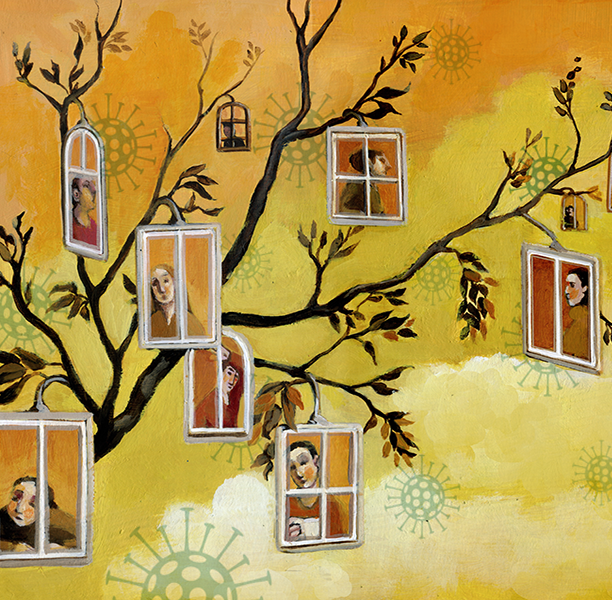
LH: In fact, I was just looking at some recent findings on that, and introverts did for the most part thrive, although there certainly are variations. While extroverts had a hard time, with reported deterioration in their mental health, there were certain challenges that isolation created for introverts. Surprisingly, there was a time in history where all of a sudden, introverts were being asked, “How do you do this? How do you manage being alone? How do you manage this?” So, if nothing else, I think there was a sense that what we have is valued and has survival value—because we did. We all were safer because people stayed in their zones because they were able to socially distance themselves and to spend more time alone.
LR:
so, during this time of forced isolation, those who have historically been quite fine with solitary and internal lives became the experts in teaching the rest of society
So, during this time of forced isolation, those who have historically been quite fine with solitary and internal lives became the experts in teaching the rest of society. You mentioned the word “thrive,” and that introverts were called upon for their expertise.
LH: I can use myself as an example. I am still mostly working from home, where I teach and work with a lot of students. In my traditional face-to-face classrooms, we have an open office plan, which does not necessarily work well at all for having conversations and is overstimulating for introverts. But what is paradoxically true for me and others of my colleagues is that from home, I now engage better because I can have a conversation on-screen with a student or a colleague from the quiet of my home office. I don’t have to worry about privacy or having to find a special room because of that open floor plan. From home, I can be in a place that reflects me—we might even talk about my paintings that are sitting behind me or the view outside the student’s window, which might be snow, while I’m in Barbados. We get to connect in a more personal way because we have this home-to-home kind of connection. So I have actually found that this forced isolation has enhanced my relationships, because they have become a little more contained and kind of safe in cyberspace.
LR: Is safety a concern for introverts? And as I even ask the question, I wonder if some clinicians out there are wondering if this need for safety suggests some kind of earlier trauma.
LH:
introverts tend to be more guardians of privacy
What I mean by safety is the freedom from bombardment and overstimulation, but it can also mean the protection of privacy. Introverts tend to be more guardians of privacy, both for themselves and in relationships.
LR: Prior to COVID, I had a strict closed-door policy for that very reason, while other colleagues whose doors were always open seemed to spend far more time gabbing than working. Did you find any other differences in the ways that introverts and extroverts fared during the pandemic?
LH: One thing I know from academia is that there’s evidence that everybody’s working more since we’ve gone online. Introducing new platforms and having a lot of Zoom meetings can definitely result in social fatigue when you’re constantly on screen.

the introverts I know who have struggled the most are the ones who have extroverted family members at home
But the introverts I know who have struggled the most are the ones who have extroverted family members at home, or kids that they are locked in with and from whom they normally get a break from. I know I’ve missed some of my introvert haunts, like the coffee shop I go to work and the movie theater. I like places in the world where I can be quiet and where I can view, you know, kind of be a flâneur (I wish we had an English word equivalent). I like the idea of the passionate observer who is out and about, but not engaged in a direct way—I do get energized by that. So, I think there definitely are ways in which introverts have missed out. And certainly, we have close relationships, so it’s been very hard to be separated from family and friends, because introverts are not necessarily loners. I’ve talked to introverts who have grieved a loved one who they described as their “comfortable person.” For introverts, it’s hard work to do small talk, so we rely more on our comfortable people.

LR: And I would imagine that older people who have historically been accustomed to face-to-face contact don’t find the same level of comfort on the screen.

In Therapy

LR: I don’t imagine that people come to therapy because they are suffering from introversion. And while I was initially going to begin by asking about the challenges that introverts bring to therapy, I’d like instead to ask how therapy can tap into the strengths and resources that introverts possess?
LH:
analysis was a space where I could sort out the fact that I was at odds with the way my lifestyle was set up and how it wasn’t working for me
The first thing that came to mind when you said, “Introverts aren’t necessarily going to come in and say I’m suffering from introversion,” was that they might in some way say, “I’m suffering from society,” which is what was going on for me when I went through psychoanalysis. I talk about it in my book and how it really was the starting point for the book and for a lot of healing for me. Analysis was a space where I could sort out the fact that I was at odds with the way my lifestyle was set up and how it wasn’t working for me. It was important to finally put a name to it—that I was an introvert. I realized that I needed things that my life wasn’t providing, so I started to make some radical changes in my life.

So in therapy, you might have people saying things like they are getting hassled at work because they’re not outgoing enough, or who feel bad about themselves because they are at odds with society. It can be very, very helpful for clients to be able to put a name to it. I can point to so many people who have talked about that transformative moment when they said, “Ah, I’m an introvert. That’s why. Okay.” But, I think it typically depends on how that’s delivered.

That’s the beauty of a Myers-Briggs Type indicator, although some have criticized its psychometric properties. It really does describe each personality type in a strengths-oriented way, so people then can see themselves mirrored in that positive way. Instead of thinking that they are the problem that needs to be fixed, they have permission instead to engage in their lives in a way that works better for them.
LR: Do you ever feel compelled to point out to a client that they are introverted, or is that not always necessary?
LH: I would, and it may not even be that the word “introversion” is necessary. But I think it does help because there are a lot of characteristics that come with somebody who’s an internal processor. They might not think on their feet so well or they need space in conversations. If they have a spouse that always wants to do things or who always wants to talk, the introvert may wonder, “Why don’t I love my spouse or my partner because I don’t want to talk or do things all the time, and sometimes I want space for myself?” I might tell them, “Well, it sounds like you’re an introvert,” and they might say, “Oh, what’s that?” While most people know, I’m surprised that some people haven’t or don’t really reflect on being an introvert. I didn’t, and I’m a psychologist who didn’t really reflect on what that meant about me until well into my practice years.
LR: Do you find that it’s liberating for these clients once you tell them or suggest to them that they are introverted?
LH:
I get letters from readers all the time that say, “All I needed to know is that there really isn’t anything wrong with me, and there are other people like me.”
It’s tremendously liberating. I get letters from readers all the time that say, “All I needed to know is that there really isn’t anything wrong with me, and there are other people like me.” And there are people in our society who believe that the introvert is the rare person, kind of sitting down in the basement avoiding people, when in any given room introverts make up about half of the people in that room. So I think that knowing does shift a person’s thinking. They may finally understand, “That’s why I prefer to send an email than speaking my thoughts,” or “That might be why, after a meeting, I really feel like I need a break to think through what happened and write down some notes.” We get so much mirroring of what it means to be an extrovert, but don’t get that much about what it means to be an introvert.
LR: Would you necessarily treat a depressed, anxious or perhaps substance-abusing introvert differently than you would treat a non-introvert with similar symptomatology?
LH: I think a lot of the treatments apply well to both. But I think that for introverts, part of our treatment is to help them align their lives with what gives them joy, even though we need to be very careful about ascribing to them what we think that would be. That would be like the parent saying to the child, “You need to go out more to be with your friends,” when maybe that child simply relishes reading a book and living in this wonderful imaginative space. The parent would end up trying to pull that child out of that comfortable and happy place and telling them what their definition of happiness is. Similarly, we have to be very careful as therapists to not impose what we think the introvert’s happiness should be.
LR: I could see an overzealous introverted therapist trying to impose their expectations or beliefs on a client; sort of introversion-based countertransference?
LH:
introverts tend to be quite versatile because we bend and have to be psychologically bilingual, which is actually a strength
If the therapist had some kind of mission, that could definitely be a trap, because we do know that introverts can gain a good feeling through social engagement. Even acting like an extrovert can give you a lift. I think the difference with introverts is that it can be helpful for them to know about their introversion without feeling like they have to change who they are. Introverts tend to be quite versatile because we bend and have to be psychologically bilingual, which is actually a strength. It’s easier for introverts to act like extroverts in general than it is for extroverts to act like introverts. We saw this with COVID. It was not easy for those extroverts to flex in the introverted direction, while introverts have had to do it all their lives. Through my book and my activism, I have wanted to simply reinforce the idea that introversion is a viable option. That’s not to say that introverts have to be introverted all the time or that they won’t benefit, but the problem is that many haven’t gotten permission to be who they are in the first place. So, if you’re not who you are in the first place, how do you transcend that?
LR: Are there any other challenges or issues that introverts are more likely to bring to therapy?
LH:
maybe we introverts are entitled to a little bit of that juice that the extroverts are drinking
I think introverts, for better and for worse, can be self-scrutinizers. We are reflective. We think about our conversations. We reflect on events. And so, that may give us a more realistic view of things, and it also can induce anxiety and depression. I think this is where mindfulness techniques are so helpful—we can do that reflection without getting so attached to those thoughts and, as a result, can come back to the present. And at times, we can deliberately seek those joyful experiences and do what extroverts do. Maybe we introverts are entitled to a little bit of that juice that the extroverts are drinking.
LR: In addition to mindfulness, are there particular modalities of therapy that introverts might be more drawn to?
LH:
a very extroverted therapist who really wants a back-and-forth kind of dialogue may lose an introverted client
As an introvert myself, I always gravitated toward the psychodynamic psychotherapies in part because they provide so much space for the internal life. As number nine in a family of ten who was constantly overstimulated, I relished the luxury of having a person listen to me in a place where I got to lay back on the couch and just let my mind take up the whole room. In terms of space, that was a wonderful thing.

Not all introverts would necessarily like that. Some introverts do actually appreciate some structure or inquisitiveness from a therapist. I think that a general rule is that when working therapeutically with an introvert, there needs to be a certain level of patience to let the client consult with their inner laboratory and find out what they’re thinking. A very extroverted therapist who really wants a back-and-forth kind of dialogue may lose an introverted client.
LR: What about the opposite situation in which an introverted therapist has a very extroverted, performative, gregarious, energetic, over-stimulating client?
LH: I’ve actually had to contend with that because for me and a lot of introverts, interrupting is taboo. But some extroverts expect to be interrupted. They kind of like just letting go and knowing that you’re going to get your word in whether you want or not. Some extroverts love talking to introverts because the introvert gives the full space. But the introverted therapist may also have to be more active than they prefer with that type of client.
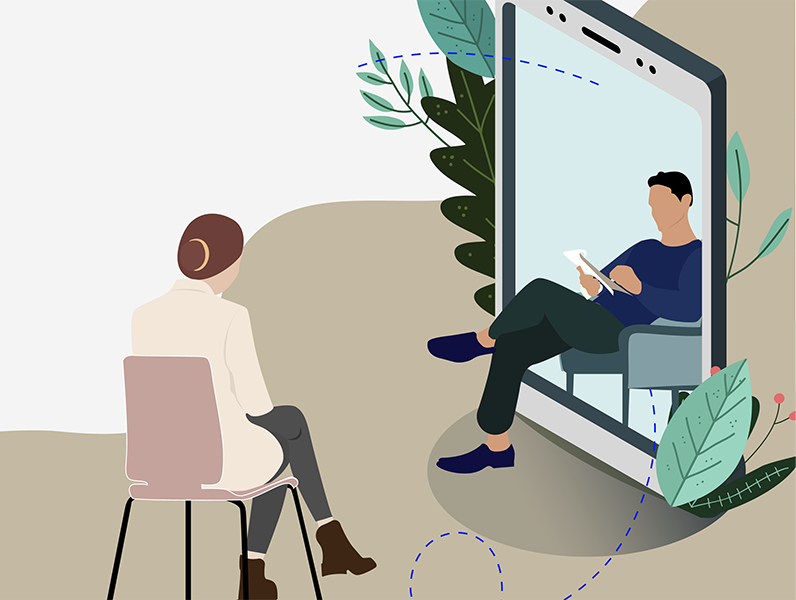
LR: I closed my physical practice a few years ago. It was so highly personalized, and some might argue overstimulating. If you were to be a consultant for designing therapy spaces for introverts, what tips might you offer?
LH: I love that question, because I think it’s a neglected one. One thing is that introverts are already likely coming into your office over-stimulated. If you have bright lights and a lot of clutter in your office, you’re probably not going to have somebody who’s going to be very able to settle into the space. I am very attentive to lighting so have a softly lit space, and because some introverts may not always want to make eye contact because they have to think and because sometimes our eyes will distract them, I do have some things that allow the patient or client to look away from me. They want to be oriented towards you. Introverts tend to be very absorbent of what’s going on around them. And so, they almost need to close themselves off. So, not facing the chair directly at them is helpful—kind of fanning them out so that the client can look off and go inside instead of always looking at you but can also easily enough look over at you. That kind of thing can really make an introvert feel more comfortable and open in this space.
LR: Maybe we can go into the office setup-for-introverts feng shui business.
LH: Love it.

Introverts at Home

LR: Do introverted parents bring unique challenges to therapy?
LH:
parents don’t often give permission and encouragement to help their child develop solitude skills
I do think parents feel a lot of pressure, from the whole playdate revolution, to having the most fun birthday party. I remember, and say this with a little bit of shame, but I was always relieved after Halloween was done because there was this pressure to create the best costume. One thing that I always note is that parents feel such a responsibility to help their child develop social skills, and certainly that is an important coping mechanism. But parents don’t often give permission and encouragement to help their child develop solitude skills. We can’t always entertain them. And if we are, we are developing a child who doesn’t have much resilience, because the reality is, we’re going to be alone for a good part of our lives. So, I think that it is important to help both introverted and extroverted parents foster that quiet space for their child(ren).

I remember the psychotherapy theorist, I think it was Fred Pine, who talked about the importance of quiet pleasures. Winnicott also talked about that. I like the idea that the child and you can be doing parallel things in this quiet space, and that child internalizes the ability to be alone, because they learn that they can be alone together. They learn that there is a sense of somebody who can tolerate their aloneness, which I think is such a beautiful but rare thing in parenting. That we can just do nothing together?

I was just watching the movie Christopher Robin. I love the way that Christopher Robin and Pooh talk about doing nothing because when you do nothing, something happens. I love when somebody asks me what I’m doing, and I say nothing, and then I do it. It is the idea of the generative, the fertile void. The way that boredom is a precursor to creativity. So I always ask, are we allowing kids boredom? If parents took some pressure off themselves to stop entertaining kids, kids might paradoxically end up being more self-entertained.
LR: I just wrote the introduction to a friend’s book on nature-based play therapy, and as we chat, Richard Louv’s work on the importance of nature in child development rings so loudly in my ears. I think kids (and adults) need to be in nature where there is quiet, and there is awe, and there is, like you said, an external space where they can be internal.
LH: Yes. I find for myself that having an evening walk when things are quiet is when I do feel that the laboratory is wide and vast, and I don’t have to tuck it away.
LR: Moving from parenting to relationships, what challenges have you found working with couples who are mismatched temperamentally?
LH:
an introvert/extrovert couple are going to have more conflict if they are going to be close, because they need to negotiate
I think there are a lot of introvert/extrovert couples that do quite well. But knowing from experience, an introvert/extrovert couple are going to have more conflict if they are going to be close, because they need to negotiate. So, if the extrovert wants to go out and be with friends, how often will the introvert be willing to do that? The introvert may indeed want to go to a movie or just have a quiet dinner or just stay at home and read together, which is a legitimate date, in my opinion.

There can be real advantages to that, because we might appreciate at times being pulled out of ourselves. Or pulled in, pulled back from ourselves. And so a couple that represents both those functions can become flexible in that way. What I notice is that there may be more of an ease in introvert/introvert couples. But that may also come with a lesser growth curve. The other thing can happen, though, is like with systems therapy, where one plays more of the function of introvert or extrovert. So, you have all different variations on the theme. But I think that naming this process becomes important in clinical work with couples, especially if their temperaments put them at odds. It took my husband and I twenty-five years and the writing of my book to discover that when I’m quiet, I’m not telling him he needs to explain things more.
LR: Or that you’re not withholding something from him or pushing him away.
LH: Instead, that he has been understood, and that I’m not telling him that I am disengaged. I’m actually thinking about what he says. So now when I’m quiet, he’ll say, “Oh, you’re thinking about it, right?” And I’m like, yes.
LR: So, your book in part was a marriage survival guide for yourself?
LH: Yeah, it’s very interesting to me that after writing the book, I found applications in my own life that I hadn’t yet discovered.
LR: Well, you probably were aware of those, but not consciously because you’re an introvert. They were bubbling up in some beaker deep in the back of your laboratory.
LH: There you go.
LR: As we come to an end, Laurie, what would you leave those clinicians out there who haven’t yet given too much thought to this whole introversion/extroversion area with?
LH: I think that we all benefit from having a richer world. And we have a richer world when we can embrace the internal and the external. I think too often we don’t, and we aren’t curious enough, or wait long enough to find out. I find in teaching interviewing skills to medical students that if they wait just a little bit longer, they’re going to find the story, the punchline, the meaning that, if they had spoken two seconds sooner, would have been missed. So keep in mind that the world is vast and wonderful out there. But it’s also vast and wonderful in there.
LR: If there are any questions that I wasn’t clear on, can I reach out to you after we finish today?
LH: Absolutely, because as an introvert, sometimes things get clearer later on.

Long-Term Psychotherapy and BPD, Part 2: A Dialogue on Trust


Question: What do you call a homeless horse with a Borderline Personality Disorder?

Answer: Unstable.
 

Introduction: What We Did

In this, the second of a two-part essay, we (Anne, the client, and Trish, the therapist) seek to share multiple perspectives of our co-writing collaboration, a process that we developed to inform our long-term therapeutic relationship’s new focus on Anne’s diagnosis of borderline personality disorder (BPD). Following on from Part 1, in which we detail the ways in which long-term therapy with Trish has had a powerfully positive impact on Anne’s (treatment for) BPD, this second part—begun 5-6 months after the first—moves into the “how” of our co-authoring experience. Through collaborating, Anne is able to practice better interpersonal relationships, which we identified in Part 1 of this essay as crucial to “building a life worth living.” The epistolary dialogue format (as in Part 1) models the importance of trust in the therapist/client relationship, especially for those with BPD, which for us has been built in a range of ways through creative collaboration. In Part 2, we explore the risks and benefits of this dialogic trust-building collaboration, and recognise the investments of all parties involved in the treatment of those with BPD.

In mid-2020, in the midst of Australia’s COVID lockdown, Anne was asked by a friend who edits a psychotherapy journal to contribute an article on their recent diagnosis of Borderline Personality Disorder (BPD). That process is detailed in Part 1 of this essay. In Part 2, we unpack how collaborative writing is impacting our therapeutic relationship, and how humour has played a powerful role in building trust. Our creative collaboration has also raised a number of questions and negotiations, including: What risks were identified? How were these processed and resolved? How has maintaining our dual roles improved our therapeutic relationship?

We explore not only what has changed in our therapeutic relationship due to our creative collaboration, but also what has happened underneath the changes and how co-authoring (or other creative collaboration) might be useful to both therapist and client. We consider why we came to write together, the power of attuning and attending, and shifts in the therapeutic atmosphere that can result in increased trust—most powerfully, a more expansive view of each other that seems to enhance our work “in the room.” For us, humour is a “way in,” a way for us to extend the safe space of the therapeutic exchange into different kinds of relating, a movement that leads to increased trust.

We share memes and jokes about therapy, BPD, and any other topics that need to be decompressed, which establishes a common irreverent sense of humour that solidifies the trust built over time. Common factors theory suggests that the most important influence on therapeutic change is the strength of the alliance between therapist and client. Looking beyond technique and intervention, how does what happens in the room affect our co-authoring, and how does our co-authoring affect what happens for both of us in the room? As before, we use a dialogic approach to give voice to both perspectives.

Trish (she/her): I remember several months back, you had had a bad couple of days, and you were feeling particularly isolated. I wanted to reach out in some way, so I sent you a video clip showing Pepper (my therapy dog, who has been a part of our work together) magically being able to speak through a phone app, asking how you were feeling. I hesitated several times before I sent it but did it in the end. Ultimately I think it achieved what I hoped—a moment of connection through humour, extended by you, when you sent me a video of your dog replying. This happened before the idea of writing of our first article was even on the table, but there we were, extending our therapeutic alliance beyond the counselling room and into a creative/visual space.

Anne (they/them): Our psychotherapeutic relationship is predominantly a one-way listener relationship, framed by your professional training and the terms of our engagement. Is the incessant talking of the therapy client and the never-ending listening of the therapist a false centring of the client in a way the world doesn’t uphold? Like you said the other day, the few times your own selfness comes out in sessions, the client often overlooks it and is like, “Yeah, so anyway, back to me”—which, sadly, I can totally see myself doing! What if you were to say to me, in a session where I might do that, “Hey Anne! I just said something about myself, and you totally ignored it.” It might be hard for me to hear, but that is exactly what happens in real life. And what would that mean for you as a “therapist-ever-becoming” who considers what might be possible when a client is so caught up in their own woes that they miss the you-ness? A you-ness that might be able to push them further toward better interpersonal relationships?

Trish: You came in with your American swagger, already a devotee to New York style of psychotherapy, where not everyone there might have their very own barista (it’s a Melbourne thing), but they certainly have a therapist. You seemed to be willing to take a chance on me, despite some differences that might have gotten in the way. We seemed to click, conversation flowed and continued to flow in subsequent sessions. We discovered things that connected us in shared experiences in our lives apart from the mutual age bracket we found ourselves inhabiting, both having been high school teachers, both loving dogs in the same devotional kind of way. But maybe it was mostly that I really liked you as a person—your inquiring mind, your desire to make sense of things, your wry humour, your ability to narrate your life from the couch in such a way that I was drawn into the story and cared deeply about the author. Your paid work took you away on a regular basis, often for weeks or months at a time, but you would appear again at my office and we would resume. Before I knew it, we had been doing this for a couple of years and entering the realm of long-term therapy—not new to you, but not guaranteed for me, for two reasons: Australians are not so familiar with this way of receiving (long-term) psychological support, and for me as a therapist sitting outside of the Medicare system, there were no financial structures in place to subsidize the work, at times a disincentive for prospective clients. But it has always been my preferred way of working, as one who has found a fit with the relational emphasis of therapeutic work.

When therapists get together and wax lyrical about unconditional positive regard, they rarely see this as a reciprocal idea. It is considered as something bestowed on the client, flowing from a compassionate therapist. But when it is present in the therapeutic space in its fullest capacity, it emerges out of a mutual desire for the therapist and client to see each other as the best that they can be. I want to help you and I want to be seen as someone capable of that. You want help from me and need to believe that I will not let you down. I keep getting to show up again; I can say I won’t give up on you, and you give me the chance to do that through your own acceptance and trust of me. So is this shared unconditional positive regard?

Anne: I was not surprised to find out that you were a teacher—you remind me of the best teachers I knew during my 11 years teaching in high schools. I can see why the kids would be drawn to you: your sense of humor and down-to-earth vibe instantly put me at ease. Yet one thing I’m seeing in myself through the BPD diagnosis and range of treatments is how transactional I can be: i.e., you are my therapist, and because I pay you, you should be like x. Today when we were talking about you, it occurred to me that if we are talking about mutuality, it has to include a kind of benevolence in me for you, too. It doesn’t mean you have to disclose personal details as I do, but I think the interpersonal, relational mode I was talking about does mean our therapy sessions could be a space where I try out caring more about the other.

You are not just my therapist because you were there and I said yes. You also said yes. I have not just stayed—you have stayed. You have said that you feel you can help people and maybe there’s a question in there that goes beyond me just “feeling better.” I don’t literally affirm to you that you DO help me. You do. And I don’t think I affirm you or acknowledge that in the way that you do for me. What does that mean or look like coming from client to therapist? I think I would like to try some kind of “attending to” you in our next session, as a kind of practice of my learning better how to attend to others, in a non-transactional way. It feels freeing to think of improving my interpersonal skills through getting out of my own needs and trying to live more in others’ experiences or needs. I’m not sure exactly what that looks like in our therapy sessions, but I do think this is evolving in a direction in which I can practice caring for someone without it being based on my own needs, even in therapy. Which is still part of my growth in response to my BPD diagnosis.

But why did we keep writing together, and how has it increased each person’s feeling of “being seen” in a more fulsome manner? Initially, it made sense for Anne to ask Trish to co-write the article for the psychotherapy journal, given she is Anne’s therapist and had played such a profound role in Anne’s diagnostic journey. But what we found was something more than a narration of how long-term psychotherapy might help those with BPD.

Trish and Anne started co-writing online while maintaining fortnightly therapy sessions, as face-to-face sessions had been prohibited by home isolation. During this time Anne was also completing their Dialectical Behaviour Therapy (DBT) program remotely, which had life-changing effects. We also acknowledge that we are producing writing that is going to have a public audience, and that now that shapes our creative collaboration in important ways.

We have tried writing separately and then sharing what we had written at a later point, as Irvin Yalom and his client “Ginny” did in Every Day Gets a Little Closer (1), but ultimately returned to co-authoring in a shared Google doc that has a satisfying interactivity and vibrancy. One aspect of the collaboration that emerged from the beginning is the humorous banter that we both enjoy. It is present in our therapy sessions, too, but not to the extent that it has bloomed in our tracked comments while writing together. So alive was that back-and-forth that we tried to include the tracked comments in the final draft of that first article, but it didn’t feel right; the spontaneity was lost once the time stamps and overlaps in the marginalia were formalised into the body of the essay.

The fluidity of being able to write into the same document, and comment on each others’ and our own writing, seemed to form a big part of the energy of the shared work. Trish identified “rooftop moments” and other important insights that emerged in the writing. We both flagged passages that brought tears.

________________________
(1) Every Day Gets a Little Closer

Trish: Anne, you pose such interesting questions about this creative process and why it works. It takes me back to our earlier discussions as we explored the issue of the power dynamic in the client-therapist relationship. It is a strange beast because it seems like it is both needed and rebelled against simultaneously. Sometimes, as a client, you want me to firmly take the reins and show you the way, and at other times you are aware that as you bare your life to me, I keep mine under wraps. You step into a vulnerable space and I have a boundary that keeps me safe. And I want to offer support and guidance but reject labels like “expert” and get cosy with terms like Yalom’s “fellow travellers.” “Do you think our writing together altered an established power dynamic?” For in that space I saw you as the authority and looked to you to have the answers on how the work would come together. I completely trusted that you would take us to where we needed to be with our first article. How does it feel for us to exchange leadership roles as we move from one space to the other? I encourage you and affirm your resolute commitment to wellness, as you face the parts of you that still flare up at times and remind you of the hell that is other people. (2) Then you encourage me and applaud certain passages that I write. You take note of my hesitancy and respond with patience and curiosity, perhaps in a similar way to how you do with your own students. So we redefine the terms of engagement. We allow the spaces of therapy and writing to co-inform one another, as this most human of relationships draws on all of its strengths to bring out the best in each of us. As Yalom (3)  reminds us:
 

This encounter, the very heart of psychotherapy, is a caring, deeply human meeting between two people, one (generally, but not always, the patient) more troubled than the other. Therapists have a dual role: they must both observe and participate in the lives of their patients. As observer, one must be sufficiently objective to provide necessary rudimentary guidance to the patient. As participant, one enters into the life of the patient and is affected and sometimes changed by the encounter. In choosing to enter fully into each patient’s life, I, the therapist, not only am exposed to the same existential issues as are my patients, I must assume that knowing is better than not knowing, venturing than not venturing, and that magic and illusion, however rich, however alluring, ultimately weaken the human spirit.


________________________
(2) No Exit and Three Other Plays
(3) Love’s Executioner and Other Tales of Psychotherapy


Trish: In a recent supervision session with my supervisee James, who works at an in-patient setting, we were reflecting on how patients there form a trusting alliance with the staff. James happens to be blessed with a benevolent warmth, and his presence is therapeutic before he even opens his mouth. He shared his thoughts about the negative impact on patients if they experience the mental health professionals as taking a position that is “above” them—whether that be in the way they dress or speak, or in the attitude that they convey—“I could never be in your shoes.” For James, what is important is the recognition that we can all find ourselves pushed beyond our capacity to cope and experience being unwell. That we need to have a willingness to “also see myself in their story.” Anne, it got me thinking about what you wrote in our first article—that BPD is a disorder of separation. And I wonder how it is possible to trust anyone if you feel so distant from them? As we grapple with understanding how our writing together built trust, it dawned on me that this process has been highlighting the ways in which we are similar rather than different.

Psychiatrist to his nurse: “Just say we’re very busy. Don’t keep saying, ‘It’s a madhouse.’”


When psychotherapy has an interpersonal focus, it can be described as paying attention to the interactions between client and therapist, as well as providing an opportunity for practising a more satisfying relationship that then gets taken into the real world of the client. So what is going on in our writing process, including in the comments? We agree it’s an alternative form of “the real world,” organically appearing out of the mutuality of the co-creative work. Through the collaboration, Anne starts to see Trish as a “fuller human being” with her own wants, needs, ideas, resulting in more trust of Trish. Trish reports seeing Anne also as a fuller person, in their element, strength and power, a kind of agency. We both express how the increased interactions are not necessarily about more stories of our personal lives, but rather an experience of “a different me.” For us both, we have an increased sense of how the other is with other people.

Anne asks Trish questions like, “How does it feel to be a subject with a client? To take up space?”

We both ask, “How much is too much?”

Trish has been thinking a lot about this in the last couple of days, about self disclosure as the therapist, and bringing more of the “real self” into therapy. She says,


I thought about your saying that you saw me as a ‘fuller human being’ through the writing process and it made us wonder what that would look like, i.e. to have Trish the fuller human being in the therapy sessions. There is always a risk that something may not work out the way you want it to. Including this collaboration.


For Trish there is tension about whether Anne could still trust her to help them in the therapy space if they see her vulnerable and feeling out of her depth in the writing space. This feels risky but also highly challenging to how she sees herself as a therapist. Trish’s previous self-image as being authentic and honest is tempering with the recognition that there are parts still held back. This important self-examination leads Trish to grapple with the boundary of what becomes known, foregrounding always that whatever she offers of herself still needs to be of therapeutic value. The added role of “collaborator” has both personal and therapeutic benefits for Anne. A healthy intimate relationship means both can safely be vulnerable with the other and know it can be held and ultimately strengthen the relationship, not damage it. The therapeutic potential is that if this happens with Trish, it can strengthen with others in Anne’s life.


Anne: I find it challenging to trust people who remain “distant,” as a therapist may appear, because it feels like rejection and elicits feelings of vulnerability. Navigating these secondary co-creative roles is tricky but feels reassuring to me, and the trust between us seems to increase. In therapy sessions, I am the one with issues, difficult feelings, vulnerability, who looks for support and understanding. You are the one who listens and focuses on how best to meet the needs that I express. So how is it that despite us writing about the therapy, our roles still shift? I often take the lead in the co-authoring, which is not surprising given my professional expertise. I am able to share information with you, Trish, around the process of writing together and send you co-written autoethnographic articles as examples—a classic example of table-turning, you tell me, when we reflect on the times you have sent me articles of a psychological nature in relation to our therapeutic work.

Psychotherapy is often described in the person-centred school as a respectful, collaborative, teamwork-like approach. In this way, the client-therapist team builds their alliance and works together, but—and this is a major distinction—it is all in the service of the growth of the client. And fair enough, given there is a fee attached. But it would be a deception to suggest that the therapist does not grow as well, or, as Yalom says, is not changed or affected by the work, or doesn’t think about the client beyond the therapy hour. How much of this knowledge is—or should be—available to the client? Do they even want to know?

Trish: Anne, you made a comment about not realising how much was going on “behind the scenes” in our sessions. This was probably in response to my talking about a certain approach I might take with a certain goal in mind. Do you think it is helpful for a client to know that what their therapist is doing is reparenting them, or providing empathic attunement, or providing a secure base that was lacking in childhood? I just can’t imagine a client caring about the what, as long as it works, but when I think about talking with other therapists about this work and leaving my clients out of the conversation, it seems ridiculous! I find myself imagining a conversation with fellow therapists:

Me: “Hey therapist colleagues, let me tell you about this great intervention I did the other day in a session…”

Therapist colleagues: “Oh cool…but how do you know it was great? Did you ask the client?”

Me: “Well… no… but, it’s in this book I read.”

Therapist colleagues: ‘“Yeah but how do you know it actually helped the client?”

Me: “Um… well, they probably don’t know it helped them… but… oh, shut up.”


Anne: I wonder at the disjunct between therapists’ acknowledgement that clients need to feel that you are not “above” us, are not inherently different from us, versus how infrequently clients seem to feel this sense of equality, accessibility, or sameness. As in James’ commentary above, I recognise the commitment in you, Trish, and others, to convey a sense of solidarity with clients; I also recognise what you have suggested many times, that clients do need that sense of being held, that the therapist is “holding things together” so that we can be vulnerable. Where is the balance between feeling this as hierarchical, and feeling in it together?

Trish: Anne, you are right that the balance is hard to find, particularly if there isn’t a dialogue between client and therapist about what is actually happening in the space together. As Yalom and others have often noted, it can be hard to know what helps in therapy, and I think quite often a therapist will have a different idea to the client about what was helpful, useful, or powerful in any given session. Sometimes a client will say to me, “When you said that thing last week, I found that really helpful.” And often I think, “Well actually, I didn’t quite say it like that, and it’s not what I meant, but OK. But didn’t you like it when I said this bit? You don’t remember that? Damn, I thought that was the good part…”


Cracking Ourselves Up: Enhancing Trust with Humour

Question: How many psychotherapists does it take to change a light bulb?

Answer: Probably just one, as long as it takes responsibility for its own change. This could be called having “a light bulb moment.”


Laughter has always been part of our therapeutic relationship, and we wonder as we go along what doorway this has opened to increasing trust. Our joking in the document is more frequent, but also a bit different in nature: more feeding off of one another, whereas in the room it’s a bit more measured. We are curious about the many roles humour seems to play between us in our dual roles. We discuss how—in the room—humour can also be a mechanism for deflecting, or keeping things on a more superficial level, and in this way is not always welcome. Nevertheless, once we begin our online interaction, the spontaneous humour grows. Trish writes of a time when she took a holiday and arranged for another staff member at the agency where she worked to see her clients if needed. The audacity of counsellors leaving clients in order to have some leisure time doesn’t go unnoticed by Anne in our track comments in the first article:

[Anne: how dare you LOL]

[Trish: How very BPD of you :)]

[Anne: LOL GUFFAW I think we may have a stand up routine by the end of this.]

[Trish: I know right? The side comments are almost as interesting as the article!!]


In this exchange, our shared humour strikes at the heart of the very condition that has caused Anne such anguish, and yet creates a moment of freedom as the heaviness of the label is discarded, all the while noticing that humour and pathos are indeed good friends. We agree that one reason both our irreverent humour and the creative collaboration work well is because it has emerged out of our pre-existing therapeutic relationship of almost six years. The trust and foundations were there before we altered our relationship, and Anne notes that widespread perceptions of BPD make it likely that such humour about the disorder would be hard to share with a therapist in a less established relationship.

One wall we have mutually hit together is a feeling of “too much”ness after the first essay, when we decided to continue writing together as well as still maintaining therapy sessions. The dual roles and time commitments of both soon felt too demanding, and we were able to talk about that openly and put some boundaries around it.


Trish: Anne, I recall that experience of “too much”ness was precipitated by your writing into our shared document about a dream you had had about me. I commented on how much was in the dream to be examined, but it seemed to be therapeutically, not creatively, relevant. Back then I wondered whether the writing together was blurring the therapeutic line in a confusing way. But now I think we see the line and we choose to walk along it courageously. I see an image of a tightrope walker, holding a long pole for balance. I wonder what the pole is representative of in our work together?

This experience caused us to recognise that we needed careful negotiation around how much and when we enact both roles: for example, do we collaborate while Anne is still a client? Do we have writing sessions and therapy sessions in the same week/month? After a time, we started to realise that they were folding back into one another in an iterative process that was becoming productive for both the writing and therapy, but we continue to monitor the efficacy of maintaining both roles simultaneously.


“Being Seen” through Creative Collaboration

Through humour especially, we both express a powerful feeling of being seen by the other, in deeper if not new ways. The feeling of “being seen” is, of course, a major part of the value of psychotherapy to a client, and was a strong part of Anne’s experience of therapy with Trish before the co-writing started. We decide to explore bringing some of this “whole person” or more interactive dynamic back into our therapy sessions, admitting that neither of us are quite sure what this will look like. We discuss how we might chip away at the “one-wayness,” the illusion of the therapist having no needs, feelings, investment. We consider questions like:

Is Trish always therapist Trish, even when we are co-writing?

What in that therapy space is different or the same?


It is confusing for us both at times, often in different ways.


Trish: I wonder, “Well what IS bringing more into the room?” I believe that my emotional responses are already an act of bringing myself. It is my standard practice to share things like “I’m aware that I’m feeling quite sad as you tell me this.”

We wonder together: what if we were writing a novel instead, or painting a picture? We are writing about our therapy, not something else, so it reinforces the therapeutic relationship. We reflect on the fact that Trish is also a teacher and practice supervisor, and in those roles she encourages her students to be prepared to walk the talk, to consider the ethics of asking clients to go further than they’ll go themselves. We begin to acknowledge our investment in each other.

Of course, our creative collaboration presents challenges as well as benefits. What if it dissolves, runs out of steam, or there is a creative rupture? We discuss the value of this changed way of working, despite the risks. We discuss whether writing about this will be of benefit to other client/therapist teams, and, if this multi-directionality in our sessions doesn’t work for all clients, whether it is still a worthy experiment to share publicly.


Anne: One reason why I have this trust of you is because you have hung in there, not rejecting me, through so many difficult times. And why wasn’t my treatment of you as challenging as so many others in my life? My hard behaviour, I think, is triggered by feeling rejected or judged. But rejection and judging is part of life. So how does unconditional acceptance (“unconditional positive regard”) by you help me handle rejection in the real world? One of the ways I’m suggesting is to regard you with care as a whole person, not just a “therapist.” That is, not just “there for me.” In thinking about this over the last little while, I believe the improvement in much of my behaviour comes from my starting to regard others as whole human beings with their own needs and validity, whether they reject me or not, meet my needs or not. How can I increase my ability to put myself aside and regard others in a less transactional way? If I were to do this with you in our sessions, what does that look like? Certainly not your therapy, or therapy about you. But maybe it’s more like, “How does it feel to you when I just talk the whole session?” or “Do I hurt your feelings?” or “Am I boring you right now?” Maybe attending to you (and others) is holding the dialectic of “My feelings are hurt right now, but I can also attend to your hurt feelings at the same time, or even first.” Part of improving my interpersonal relationships, I think, is being able to perceive my impact on people.

Trish: The process of writing the article with you has provoked me to re-examine the firmly boundaried position of this understood one-way process. No person-centred therapist wants to be a blank screen, and I have always believed I bring my genuine self to the therapy process with clients. Being willing to be more explicit about my internal responses to things you might say to me, rather than hold some therapeutic high ground as I bracket them off, seems like an important way forward.

We agree that it should be as intentional as setting some ground rules for the experiment. Trish suggests regular check-ins, like asking “How is this going right now?” Anne wonders how productive setting ground rules or negotiating terms of relationships might have been in other relationships or friendships, too; maybe with such agreements those relationships would have gone better. Trish suggests to Anne, “See? You are now connecting what we are doing in therapy to your life in the real world, i.e. negotiating with people around the types of interactions you have—what works for both. So here is therapy on the page.”


Mutually Revealing

One day after a co-writing session, Trish scribbles some notes, including:

Explore in what ways (even without Anne knowing) the relationship between us has been therapeutic:

  • Corrective emotional experience
  • Being there
  • Not abandoning
  • Staying with

…and that these things build trust.

Trish: I believe that so much of what a therapist does with clients is to provide a corrective emotional experience. When there is abuse or neglect or misattunement early in life, the therapy of care and unconditional positive regard gives the client the feeling of what it is like to be held. So for you, Anne, maybe some of that was to not have to listen to someone else and validate them (in the way you did for your adoptive mother) in order to feel worthy. That you get to have the experience of this for yourself. In some ways, it is not so important that it isn’t the “real world” but the world of the therapy room. The emotions are real. That I attend to you is real. And you don’t have to be “good” (thanks, Mary Oliver) in order to feel this. And feeling this with me might then motivate you to know that it is possible, and that maybe you can also feel it in your “real” life.


I have been thinking about this quite a bit over the last few days, and I have formed the belief that we needed to do this work (i.e. corrective emotional experience) before we could move into a space of being more overtly interpersonal. Trust is needed for that. I have often wanted to challenge some of my other clients with Borderline features to have a look at certain aspects of themselves and their behaviour that might impact other people, or even me, negatively, but I have found that there is a risk of their fragmenting. If someone already has a fragile sense of self, a suggestion that they could do something differently can be experienced as “I am a bad person.” So it is interesting that we are contemplating this experiment of giving the space between us more attention. Perhaps you feel secure enough in our relationship now to let me challenge you. If I let you see that I have reactions to what you do or say, that it actually affects me, I believe that you can hold this information and stay intact.

Anne: I have been thinking a lot for the past five days about my saying to you to “get over it.” One thing I’ve noticed with myself (is it the BPD?) is that sometimes I don’t intend to, but I am still quite harsh. I have always laughed this off as my New Yorker brusqueness. But is that an excuse for rudeness and not wanting to change? I’m sorry, Trish, that I spoke to you in that way. This is my being accountable interpersonally, even in a therapy session. I meant to encourage you. And I do think you are fearless in going to these places that are not the norm in the Australian context, and I love that and was trying to encourage you, but it came out in a rude and insulting way.

Trish: Twice now you have thought you might have offended me or been rude to me, and twice I have not felt offended or hurt. I wonder what you saw to think that you hurt me? An expression on my face, perhaps? Something in my response? Actually, I feel that on both occasions you were suggesting that maybe I could be more—an invitation to think big. And yet you think you were being dismissive or hurtful. I remember your saying recently that sometimes you find it hard to tell whether some communication between you and others is rude/aggressive or not. And then you might have to backtrack and check it out. I promise if you are nasty to me, I will tell you at the time and we can work out whether you meant it or not. You were witnessing my own discomfort with ambition. You didn’t cause it, you’re not the bad guy in this scenario. I am noticing and appreciating how you are thinking about the impact your words may have had on me.

Anne: I think it’s important to me that both of us acknowledge that there is fear perhaps around my BPD, because it is not only a disorder of separation, it is also a disorder of dysregulated emotions and behaviours. Through our work together and the safety of that, I am becoming more able to acknowledge the harms I have done to others and myself, harms that I can now feel regret and sadness about. That includes times I have hurt you in our work together, too, Trish. This doesn’t mean I won’t lash out (again). And as safe as I feel with you, we both know I have lashed out most often against those who are closest to me. So I recognise the courage it takes for you to continue to show up when you have witnessed so many of my hurtful behaviours to others, and sometimes experienced them yourself. That is brave, and I recognise the risk to you.

It is good and important to work together to improve my ability to calibrate my impact on others—to perceive it more clearly, perhaps—but also to model to other therapists that someone with BPD may be frightening or erratic, yes, but we can also be deeply reflective, resilient, empathic, courageous, and hungry to change. And we can care about you, even when we are mired in our own pain. And that this care for you can provide an important window to re-engaging with a world that is sometimes overwhelming for us.

Trish: You talk about acknowledging our fear around your BPD, and I wonder if it is the same for us both? You fear that you will still injure others, including me, despite how far you have come. I also fear that you could hurt me, too, might lash out at me despite the safety of our relationship. And as our therapeutic connection deepens, I take my place as someone at risk of being hurt by you. So how do we hold this fear in a way that makes sense? It brings to mind the dialectic of the work. Where there is fear, there is also bravery; where there is safety, there is also risk. And of course, as always, there is the knowing and the not knowing. It is inevitable that we hurt or disappoint the people who mean the most to us. We will do wrong, it is the nature of the imperfect relationships in which we all engage. And that brings us back to trust. With trust we are able to stay in touch with the resilience and perseverance that we see in one another, which makes repair and recovery possible. So when you care for me, and for others in their turn, know that what you are doing is an ongoing process of recreating a secure base that is at the very heart of what we all yearn for when we love and feel loved in return.


Epilogue: Returning to Embodiment—March 2021

Anne: I’m glad I came to your office today. It has been a long time since we have shared space, and so much has happened in the interim, with COVID and multiple lockdowns. I was aware of you again as a changing human person, and the affective intensity of proximity. I think one reason I felt moved today was not just about the content we were discussing, but about the relationship and the exchange. It is, as Tara Brach would say, sacred ground, where people feel seen and heard. It’s so powerful. That room is a powerful sacred space for me.

Do I have anxiety about going backward, now that my DBT has finished? Disappointing you? Being disappointed by you? Of course! That’s every relationship, surely. Today I just felt moved by the proximity, the laughing—so much laughter!—the attending, the eye contact, the ambient noises, the longevity, the commitment, and the hope, even when I can’t find exactly who I am. And also the power of the room itself. That familiar room—the white blinds, your desk, cup, computer. The little table by the couch, the bin. Pepper had died during lockdown, and I felt his absence so strongly in the room. The environment matters, and I can see it now as another expression of you, of another way of your “bringing yourself” to your clients.

Trish: Yes, it was pretty powerful being together in person today. There was a certain energy which may well have been about how long it has been since we took up the chair and the couch, or perhaps about the added layer of the creative space that we are sharing as we write, knowing that our words on screen find calibration with the ones we speak to one another. Were you more aware of me than you have been in the past? You have said you wanted to be able to hold space for others while you navigate your own emotional space. I think I noticed a subtle shift—while you certainly wanted some thoughts from me about what was going on for you, there was something different, more of an ease in you and a space created for me. And somehow I felt that even though I didn’t really have a clear answer for you, I was still offering you something, and you saw that (and subsequently wrote about it). This work together is making me examine myself in the most profound way, and if I want you to do it, then I will, too. Maybe I am also trying to find out exactly who I am when I am in a therapeutic encounter with you. I know one thing, I will trust the journey.

Anne: I was more aware of wondering what techniques you may have been using, and why. That relational aspect that I had never really thought much about before our co-authoring. I assumed the therapist just showed up and it was a one-way thing. I’m enjoying this change in my awareness: not only in terms of acknowledging what you are bringing, but also for me, thinking relationally about you. You exist. You are thinking and feeling things, not just absorbing. I also think we had a lot more eye contact yesterday than usual, that was something I was aware of. And also the laughing… Why do you think we laughed more yesterday than usual? My perspective is that it was just a bit of happiness to see you again, and also I felt you laughed more than usual and that felt like a kind of openness from you.
 

***
 

As recently as 2015, at the end of Creatures of a Day, Yalom  (4) reminds us that even in the United States, these kinds of relational accounts are all too rare and
 

not generally available in contemporary curricula. Most training programs today (often under pressure by accreditation boards or insurance companies) offer instruction only in brief, “empirically validated” therapies that consist of highly specific techniques addressing discrete diagnostic categories… I worry that this current focus in education will ultimately result in losing sight of the whole person and that the humanistic, holistic approach I used with these ten patients may soon become extinct. Though research on effective psychotherapy continually shows that the most important factor determining outcome is the therapeutic relationship, the texture, the creation, and the evolution of this relationship are rarely a focus of training in graduate programs.


For Trish and Anne, this focus on our creative collaboration allows a deepening of trust and strengthening of our relational dynamics. Trish (and sometimes both of us now) uses many of the suggestions Yalom offers for calling attention to the bond between patient and therapist including: doing process checks, inquiring about the state of the encounter during the session, Trish’s asking if Anne has questions for her. Through creative collaboration, trusting in the here and now becomes multi-modal and multi-directional in ways that can offer new forms of corrective emotional experience. It has also firmly established a secure base, the core purpose of strong and trusting client-therapist relationships, never more important (and challenging) than with clients with Borderline Personality Disorder.
________________________
(4) Creatures of a Day and Other Tales of Psychotherapy

Finding the Goldilocks Zone: An Antidote to Black-and-White Thinking

Everyone likes the idea of therapy being strengths-based, but disentangling clients’ strengths from their problems can be a challenging task (the same might be said of our own strengths and weaknesses as therapists). The root of this issue is that personality-based styles of thinking, feeling, and behaving typically work well in some situations but not others.

At the end of our first year of graduate school, my classmates and I met individually with our advisors to hear a summary of the faculty’s feedback about our progress. You can imagine the tension. My advisor, with a reassuring tone, said the feedback was organized in terms of strengths and weaknesses, with all students receiving some of each. Then he provided an insightful description of my strengths in the areas of learning, thinking, and interacting with others. After a pause, probably with a tremor in my voice, I asked to hear the weaknesses. He said, “Oh—the same things.” “What?” “Your weaknesses are just your strengths in situations where they don’t work.”

I don’t think this maxim is true all the time, but it seems true a lot. The idea that personality-related styles of functioning have advantages and disadvantages can help clients disentangle what they want to keep from what they want to modify.

Adaptive Elements within Dysfunction

In my experience, many faulty cognitions underlying psychological dysfunctional seem to include a valid point—an insight about life or a strategy for achieving safety or success. For example:

  • One anxious client said: “There’s so much that could go wrong, and I feel like if I relax and let my guard down, something will sneak up on me.”
  • A verbally aggressive client offered: “It’s tough out there, and you have to establish dominance to succeed. We’re not going to get very far in this therapy if you think I should let people push me around.”
  • A client with an overspending problem lamented: “Life is short, and I don’t want to be a cheapskate who obsesses about every penny I spend.”

These clients all had valid points, but they had taken their points so far that potential strengths became unobtainable. The culprit is black-and-white thinking, which ignores moderate options and presents spurious choices between extreme alternatives. The above clients benefited from discovering that:

  • It is possible to be careful and prudent without being chronically anxious.
  • It is possible to be non-aggressive without letting people push us around.
  • It is possible to manage money responsibly without obsessing about every penny.

This post is about a technique for helping clients develop gray-area cognitions, which enable them to moderate extreme versions of their styles of functioning and turn weaknesses into strengths. I developed the technique recently, but its roots go back 2,500 years.

Finding the Middle Way

In ancient times, several philosophers and religious leaders, living in separate cultures and with no knowledge of each other, developed the idea that optimal human functioning usually consists of a moderate balance between opposite extremes. In ancient Greece, Aristotle coined the term Golden Mean to summarize this idea; in India, Buddha used the term Middle Way; and in China, Confucius espoused his Doctrine of the Mean. These are different words for the same idea: skillful, effective functioning is generally moderate and balanced, and maladaptive behavior typically involves extremes, including opposite extremes.

The Goldilocks Principle got its name from a children’s story in which the protagonist noticed that qualities lying midway between two opposite extremes (e.g., hot and cold, hard and soft) can be pleasant, satisfying, and “just right.” Applications of this versatile principle appear in the seemingly disparate domains of developmental psychology, economics, communication science, medicine, and astrobiology.

Aaron Beck and others taught us that it is practically impossible to function effectively with a black-and-white map of a complicated, nuanced world. This is a cognitive-clinical issue that affects many clients across diverse diagnoses, so if you like the formulation presented here, you will be able to use it in much of your work.

Aristotle taught that moderation is the key to virtue. For instance, he conceptualized courage as the adaptive midpoint between the maladaptive extremes of cowardice and recklessness. He reasoned that it is bad to be a coward, dominated by fear, and it is also bad to be reckless, oblivious to fear; the virtuous way in the middle is courage. Aristotle offered similar analyses of other virtues that integrate elements from opposite ends of some spectrum.

Jumping ahead to the present, there are many examples of similar analyses in psychotherapy. For instance, it is maladaptive to be aggressive and violent, treating others as if their needs don’t count, and it is maladaptive to be passive and submissive, allowing others to treat us as if our needs don’t count. The virtuous way in the middle is assertiveness—the adaptive midpoint between these two extremes. One of the central strategies of Dialectical Behavior Therapy is to help clients integrate opposite forms of value and personal attributes into adaptive syntheses.

Replacing Binaries with Spectrums

In my psychotherapy practice, I have found that 10-point scales—already familiar to most clients— provide handy, effective tools for conceptualizing personal issues and planning changes. In particular, these scales address black-and-white or dichotomous thinking by presenting the spectrum of options that generally lie in between simple, extreme categories.1

I have found it useful to draw these scales on paper or computer screens, thus creating diagrams that supplement verbal reasoning with visual-spatial information. Psychotherapy tends to be dependent on words, but people think visually, too, so diagrams provide an important avenue of cognition and communication.2 Clients can also track their progress by graphing changes on these scales as they progress through therapy.

Opposite extremes and moderate middles can be represented with numbers and words on scales that describe dimensions of emotion, thought, behavior, and personality. For example, here are diagrams of the personality-related dimensions we have mentioned so far:

1———-2———-3———-4———-5———-6———-7———-8———-9———-10
Cowardly                                     Courageous                                       Reckless

1———-2———-3———-4———-5———-6———-7———-8———-9———-10
Overanxious                                  Prudent                                          Careless

1———-2———-3———-4———-5———-6———-7———-8———-9———-10
Passive                                         Assertive                                      Aggressive

1———-2———-3———-4———-5———-6———-7———-8———-9———-10
Miserly                                           Thrifty                                    Overspending

____________________________
1 Psychotherapeutic diagrams: Pathways, spectrums, feedback loops, and the search for balance.

2 Finding Goldilocks: A guide for creating balance in personal change, relationships, and politics.  

Here is a diagram with a little more detail:

1———-2———-3———-4———-5———-6———-7———-8———-9———-10
Hopeless           Pessimistic           Realistic           Optimistic           Pollyannish

Spending a session on this type of work can yield diagrams like the following:

Openness about Emotion

1———-2———-3———-4———-5———-6———-7———-8———-9———-10
Closed Off            Reserved         Selectively Open      Very Open      Attention Whore

1———-2———-3———-4———-5———-6———-7———-8———-9———-10
Hard to Get to Know                                                    Too Much Information

1———-2———-3———-4———-5———-6———-7———-8———-9———-10
Emotionally Alone                Sharing Important Things with Important People          Spilling Guts to Anyone

Going Over Past Mistakes

1———-2———-3———-4———-5———-6———-7———-8———-9———-10
Obsess about Mistakes         Figure Out What Went Wrong          Forget about Mistakes

1———-2———-3———-4———-5———-6———-7———-8———-9———-10
Beat Myself Up                 Learn from Mistakes                   Ignore Mistakes

1———-2———-3———-4———-5———-6———-7———-8———-9———-10
Feel Doomed by Mistakes            Plan How to Do Better           Pretend They Didn’t Happen

Getting Help from Other People

1———-2———-3———-4———-5———-6———-7———-8———-9———-10
No Help Ever          Last Resort            When Needed        More than Needed        Constantly

1———-2———-3———-4———-5———-6———-7———-8———-9———-10
Irrationally Independent.               Trying, Then Getting Help                Lazy, Dependent

1———-2———-3———-4———-5———-6———-7———-8———-9———-10
Living with One Arm Tied                  Using Resources Skillfully                               Can’t Do Anything
Behind Back                                                                                                              On Own
As these examples illustrate, when styles of functioning are conceptualized on continuums, both sides involve advantages, both involve disadvantages, and the most adaptive combinations are located in the middle—the Goldilocks Zone. Many mental health problems can be conceptualized as points close to the poles of scales like these, and effective styles can usually be pictured in the mid-ranges. Therapy using these scales can provide an antidote to black-and-white thinking.

The Procedure with Clients

I don’t think I’ve ever had two clients who constructed the exact same scale. We develop these diagrams collaboratively, mostly using the Socratic method. Sometimes I suggest words or phrases, and the client decides whether to use them.

The question I ask myself internally is: On what dimension of functioning does the client’s issue lie? The answer generally takes shape as we go through the following steps.

  • (1) Write words describing the client’s problematic way of functioning under the 8-10 points of the scale. For example: perfectionistic, rebellious, undisciplined.
  • (2) Write words describing the opposite style of functioning under the 1-3 points. This usually represents the style that the client most fears, looks down on, and wants to avoid. For example, a perfectionistic client might fear becoming a sloppy slacker; a rebellious client might look down on people who are mindlessly obedient; and an undisciplined client might be repelled by a workaholic lifestyle. These feared styles are generally maladaptive in ways precisely opposite the presenting problems.
  • (3) Write words describing the moderate middle under the 5-6 points of the scale. (5.5 is the midpoint.) This style represents a balance or synthesis that combines elements from both ends of the spectrum. For our examples, the words conscientious, cooperative, and work-life balance represent moderate syntheses.
  • (4) It is also useful to describe the two intermediate regions between the midpoint and poles. These words represent styles that are distinctive and effective, though not necessarily optimal.
  • (5) Ask the client to indicate their self-perceived location on the scale. Most clients are precise about this and give answers in the form of fractions or decimals. These numbers summarize a lot of information in a very succinct way.
  • (6) Finally, there is the goal-setting question: Where does the client want to be? The desired location is almost always between the client’s current position and the mid-point. Usually the distance is only about 2 scale-points—and the goals of therapy seem quite attainable.

Different people need to move in different directions to reach the adaptive middle, depending on where they start out. For example, highly self-critical people need to become easier on themselves, and conceited people need to become harder on themselves. Discussing the advantages and disadvantages of the two sides of these spectrums helps clients form a clear picture of the changes they want to achieve.

Not a Point but a Range

Adaptive functioning does not come in only one form. There are ranges of effective styles on most personality-related dimensions. In terms of our scales, this means that effective functioning is not limited to a tight band between 5 and 6, but extends outward to a broader range, such as 4 to 7, or even 3 to 8. In our search for adaptive moderation, we are not looking for a Goldilocks Point but a Goldilocks Zone (3,4).

In working with clients, I have found that the most effective way of working on personal change is not trying to become a different kind of person—not trying to move to the opposite end of the continuum. Clients don’t even need to move to the midpoint; they can stay on their preferred side and develop a successful style that fits their existing personality and preferences. Realistic, effective goals are usually located in the part of the Goldilocks Zone that is closest to the person’s starting point.

Clients usually like the idea that they can achieve major gains by making small to medium-sized changes in the way they operate. They don’t need to move from a 9 to a 2, or even to a 5.5. If they move from a 9 to a 7, they keep their basic style but moderate it enough to avoid most of its disadvantages and gain many of the benefits on the other side of the spectrum.

Once you get the hang of this method, I think you will find it applicable to a wide variety of mental health symptoms, problems in living, and personal dilemmas, most of which were not mentioned in this post. It is also useful in couples counseling, because it generally reveals to partners that their differences are matters of degree, not categorical matters of principle. In a multitude of ways, clients can turn dysfunctional styles into strengths by moderating them, so their ways of functioning move into the Goldilocks Zone.

Long Term Psychotherapy and BPD, Part 1: A Dialogue on Hope


Question: What do you call a homeless horse with a Borderline Personality Disorder?

Answer: Unstable.
 

Introduction: What We Did

In this, the second of a two-part essay, we (Anne, the client, and Trish, the therapist) seek to share multiple perspectives of our co-writing collaboration, a process that we developed to inform our long-term therapeutic relationship’s new focus on Anne’s diagnosis of borderline personality disorder (BPD). Following on from Part 1, in which we detail the ways in which long-term therapy with Trish has had a powerfully positive impact on Anne’s (treatment for) BPD, this second part—begun 5-6 months after the first—moves into the “how” of our co-authoring experience. Through collaborating, Anne is able to practice better interpersonal relationships, which we identified in Part 1 of this essay as crucial to “building a life worth living.” The epistolary dialogue format (as in Part 1) models the importance of trust in the therapist/client relationship, especially for those with BPD, which for us has been built in a range of ways through creative collaboration. In Part 2, we explore the risks and benefits of this dialogic trust-building collaboration, and recognise the investments of all parties involved in the treatment of those with BPD.

In mid-2020, in the midst of Australia’s COVID lockdown, Anne was asked by a friend who edits a psychotherapy journal to contribute an article on their recent diagnosis of Borderline Personality Disorder (BPD). That process is detailed in Part 1 of this essay. In Part 2, we unpack how collaborative writing is impacting our therapeutic relationship, and how humour has played a powerful role in building trust. Our creative collaboration has also raised a number of questions and negotiations, including: What risks were identified? How were these processed and resolved? How has maintaining our dual roles improved our therapeutic relationship?

We explore not only what has changed in our therapeutic relationship due to our creative collaboration, but also what has happened underneath the changes and how co-authoring (or other creative collaboration) might be useful to both therapist and client. We consider why we came to write together, the power of attuning and attending, and shifts in the therapeutic atmosphere that can result in increased trust—most powerfully, a more expansive view of each other that seems to enhance our work “in the room.” For us, humour is a “way in,” a way for us to extend the safe space of the therapeutic exchange into different kinds of relating, a movement that leads to increased trust.

We share memes and jokes about therapy, BPD, and any other topics that need to be decompressed, which establishes a common irreverent sense of humour that solidifies the trust built over time. Common factors theory suggests that the most important influence on therapeutic change is the strength of the alliance between therapist and client. Looking beyond technique and intervention, how does what happens in the room affect our co-authoring, and how does our co-authoring affect what happens for both of us in the room? As before, we use a dialogic approach to give voice to both perspectives.

Trish (she/her): I remember several months back, you had had a bad couple of days, and you were feeling particularly isolated. I wanted to reach out in some way, so I sent you a video clip showing Pepper (my therapy dog, who has been a part of our work together) magically being able to speak through a phone app, asking how you were feeling. I hesitated several times before I sent it but did it in the end. Ultimately I think it achieved what I hoped—a moment of connection through humour, extended by you, when you sent me a video of your dog replying. This happened before the idea of writing of our first article was even on the table, but there we were, extending our therapeutic alliance beyond the counselling room and into a creative/visual space.

Anne (they/them): Our psychotherapeutic relationship is predominantly a one-way listener relationship, framed by your professional training and the terms of our engagement. Is the incessant talking of the therapy client and the never-ending listening of the therapist a false centring of the client in a way the world doesn’t uphold? Like you said the other day, the few times your own selfness comes out in sessions, the client often overlooks it and is like, “Yeah, so anyway, back to me”—which, sadly, I can totally see myself doing! What if you were to say to me, in a session where I might do that, “Hey Anne! I just said something about myself, and you totally ignored it.” It might be hard for me to hear, but that is exactly what happens in real life. And what would that mean for you as a “therapist-ever-becoming” who considers what might be possible when a client is so caught up in their own woes that they miss the you-ness? A you-ness that might be able to push them further toward better interpersonal relationships?

Trish: You came in with your American swagger, already a devotee to New York style of psychotherapy, where not everyone there might have their very own barista (it’s a Melbourne thing), but they certainly have a therapist. You seemed to be willing to take a chance on me, despite some differences that might have gotten in the way. We seemed to click, conversation flowed and continued to flow in subsequent sessions. We discovered things that connected us in shared experiences in our lives apart from the mutual age bracket we found ourselves inhabiting, both having been high school teachers, both loving dogs in the same devotional kind of way. But maybe it was mostly that I really liked you as a person—your inquiring mind, your desire to make sense of things, your wry humour, your ability to narrate your life from the couch in such a way that I was drawn into the story and cared deeply about the author. Your paid work took you away on a regular basis, often for weeks or months at a time, but you would appear again at my office and we would resume. Before I knew it, we had been doing this for a couple of years and entering the realm of long-term therapy—not new to you, but not guaranteed for me, for two reasons: Australians are not so familiar with this way of receiving (long-term) psychological support, and for me as a therapist sitting outside of the Medicare system, there were no financial structures in place to subsidize the work, at times a disincentive for prospective clients. But it has always been my preferred way of working, as one who has found a fit with the relational emphasis of therapeutic work.

When therapists get together and wax lyrical about unconditional positive regard, they rarely see this as a reciprocal idea. It is considered as something bestowed on the client, flowing from a compassionate therapist. But when it is present in the therapeutic space in its fullest capacity, it emerges out of a mutual desire for the therapist and client to see each other as the best that they can be. I want to help you and I want to be seen as someone capable of that. You want help from me and need to believe that I will not let you down. I keep getting to show up again; I can say I won’t give up on you, and you give me the chance to do that through your own acceptance and trust of me. So is this shared unconditional positive regard?

Anne: I was not surprised to find out that you were a teacher—you remind me of the best teachers I knew during my 11 years teaching in high schools. I can see why the kids would be drawn to you: your sense of humor and down-to-earth vibe instantly put me at ease. Yet one thing I’m seeing in myself through the BPD diagnosis and range of treatments is how transactional I can be: i.e., you are my therapist, and because I pay you, you should be like x. Today when we were talking about you, it occurred to me that if we are talking about mutuality, it has to include a kind of benevolence in me for you, too. It doesn’t mean you have to disclose personal details as I do, but I think the interpersonal, relational mode I was talking about does mean our therapy sessions could be a space where I try out caring more about the other.

You are not just my therapist because you were there and I said yes. You also said yes. I have not just stayed—you have stayed. You have said that you feel you can help people and maybe there’s a question in there that goes beyond me just “feeling better.” I don’t literally affirm to you that you DO help me. You do. And I don’t think I affirm you or acknowledge that in the way that you do for me. What does that mean or look like coming from client to therapist? I think I would like to try some kind of “attending to” you in our next session, as a kind of practice of my learning better how to attend to others, in a non-transactional way. It feels freeing to think of improving my interpersonal skills through getting out of my own needs and trying to live more in others’ experiences or needs. I’m not sure exactly what that looks like in our therapy sessions, but I do think this is evolving in a direction in which I can practice caring for someone without it being based on my own needs, even in therapy. Which is still part of my growth in response to my BPD diagnosis.

But why did we keep writing together, and how has it increased each person’s feeling of “being seen” in a more fulsome manner? Initially, it made sense for Anne to ask Trish to co-write the article for the psychotherapy journal, given she is Anne’s therapist and had played such a profound role in Anne’s diagnostic journey. But what we found was something more than a narration of how long-term psychotherapy might help those with BPD.

Trish and Anne started co-writing online while maintaining fortnightly therapy sessions, as face-to-face sessions had been prohibited by home isolation. During this time Anne was also completing their Dialectical Behaviour Therapy (DBT) program remotely, which had life-changing effects. We also acknowledge that we are producing writing that is going to have a public audience, and that now that shapes our creative collaboration in important ways.

We have tried writing separately and then sharing what we had written at a later point, as Irvin Yalom and his client “Ginny” did in Every Day Gets a Little Closer (1), but ultimately returned to co-authoring in a shared Google doc that has a satisfying interactivity and vibrancy. One aspect of the collaboration that emerged from the beginning is the humorous banter that we both enjoy. It is present in our therapy sessions, too, but not to the extent that it has bloomed in our tracked comments while writing together. So alive was that back-and-forth that we tried to include the tracked comments in the final draft of that first article, but it didn’t feel right; the spontaneity was lost once the time stamps and overlaps in the marginalia were formalised into the body of the essay.

The fluidity of being able to write into the same document, and comment on each others’ and our own writing, seemed to form a big part of the energy of the shared work. Trish identified “rooftop moments” and other important insights that emerged in the writing. We both flagged passages that brought tears.

________________________
(1) Every Day Gets a Little Closer

Trish: Anne, you pose such interesting questions about this creative process and why it works. It takes me back to our earlier discussions as we explored the issue of the power dynamic in the client-therapist relationship. It is a strange beast because it seems like it is both needed and rebelled against simultaneously. Sometimes, as a client, you want me to firmly take the reins and show you the way, and at other times you are aware that as you bare your life to me, I keep mine under wraps. You step into a vulnerable space and I have a boundary that keeps me safe. And I want to offer support and guidance but reject labels like “expert” and get cosy with terms like Yalom’s “fellow travellers.” “Do you think our writing together altered an established power dynamic?” For in that space I saw you as the authority and looked to you to have the answers on how the work would come together. I completely trusted that you would take us to where we needed to be with our first article. How does it feel for us to exchange leadership roles as we move from one space to the other? I encourage you and affirm your resolute commitment to wellness, as you face the parts of you that still flare up at times and remind you of the hell that is other people. (2) Then you encourage me and applaud certain passages that I write. You take note of my hesitancy and respond with patience and curiosity, perhaps in a similar way to how you do with your own students. So we redefine the terms of engagement. We allow the spaces of therapy and writing to co-inform one another, as this most human of relationships draws on all of its strengths to bring out the best in each of us. As Yalom (3)  reminds us:
 

This encounter, the very heart of psychotherapy, is a caring, deeply human meeting between two people, one (generally, but not always, the patient) more troubled than the other. Therapists have a dual role: they must both observe and participate in the lives of their patients. As observer, one must be sufficiently objective to provide necessary rudimentary guidance to the patient. As participant, one enters into the life of the patient and is affected and sometimes changed by the encounter. In choosing to enter fully into each patient’s life, I, the therapist, not only am exposed to the same existential issues as are my patients, I must assume that knowing is better than not knowing, venturing than not venturing, and that magic and illusion, however rich, however alluring, ultimately weaken the human spirit.


________________________
(2) No Exit and Three Other Plays
(3) Love’s Executioner and Other Tales of Psychotherapy


Trish: In a recent supervision session with my supervisee James, who works at an in-patient setting, we were reflecting on how patients there form a trusting alliance with the staff. James happens to be blessed with a benevolent warmth, and his presence is therapeutic before he even opens his mouth. He shared his thoughts about the negative impact on patients if they experience the mental health professionals as taking a position that is “above” them—whether that be in the way they dress or speak, or in the attitude that they convey—“I could never be in your shoes.” For James, what is important is the recognition that we can all find ourselves pushed beyond our capacity to cope and experience being unwell. That we need to have a willingness to “also see myself in their story.” Anne, it got me thinking about what you wrote in our first article—that BPD is a disorder of separation. And I wonder how it is possible to trust anyone if you feel so distant from them? As we grapple with understanding how our writing together built trust, it dawned on me that this process has been highlighting the ways in which we are similar rather than different.

Psychiatrist to his nurse: “Just say we’re very busy. Don’t keep saying, ‘It’s a madhouse.’”


When psychotherapy has an interpersonal focus, it can be described as paying attention to the interactions between client and therapist, as well as providing an opportunity for practising a more satisfying relationship that then gets taken into the real world of the client. So what is going on in our writing process, including in the comments? We agree it’s an alternative form of “the real world,” organically appearing out of the mutuality of the co-creative work. Through the collaboration, Anne starts to see Trish as a “fuller human being” with her own wants, needs, ideas, resulting in more trust of Trish. Trish reports seeing Anne also as a fuller person, in their element, strength and power, a kind of agency. We both express how the increased interactions are not necessarily about more stories of our personal lives, but rather an experience of “a different me.” For us both, we have an increased sense of how the other is with other people.

Anne asks Trish questions like, “How does it feel to be a subject with a client? To take up space?”

We both ask, “How much is too much?”

Trish has been thinking a lot about this in the last couple of days, about self disclosure as the therapist, and bringing more of the “real self” into therapy. She says,


I thought about your saying that you saw me as a ‘fuller human being’ through the writing process and it made us wonder what that would look like, i.e. to have Trish the fuller human being in the therapy sessions. There is always a risk that something may not work out the way you want it to. Including this collaboration.


For Trish there is tension about whether Anne could still trust her to help them in the therapy space if they see her vulnerable and feeling out of her depth in the writing space. This feels risky but also highly challenging to how she sees herself as a therapist. Trish’s previous self-image as being authentic and honest is tempering with the recognition that there are parts still held back. This important self-examination leads Trish to grapple with the boundary of what becomes known, foregrounding always that whatever she offers of herself still needs to be of therapeutic value. The added role of “collaborator” has both personal and therapeutic benefits for Anne. A healthy intimate relationship means both can safely be vulnerable with the other and know it can be held and ultimately strengthen the relationship, not damage it. The therapeutic potential is that if this happens with Trish, it can strengthen with others in Anne’s life.


Anne: I find it challenging to trust people who remain “distant,” as a therapist may appear, because it feels like rejection and elicits feelings of vulnerability. Navigating these secondary co-creative roles is tricky but feels reassuring to me, and the trust between us seems to increase. In therapy sessions, I am the one with issues, difficult feelings, vulnerability, who looks for support and understanding. You are the one who listens and focuses on how best to meet the needs that I express. So how is it that despite us writing about the therapy, our roles still shift? I often take the lead in the co-authoring, which is not surprising given my professional expertise. I am able to share information with you, Trish, around the process of writing together and send you co-written autoethnographic articles as examples—a classic example of table-turning, you tell me, when we reflect on the times you have sent me articles of a psychological nature in relation to our therapeutic work.

Psychotherapy is often described in the person-centred school as a respectful, collaborative, teamwork-like approach. In this way, the client-therapist team builds their alliance and works together, but—and this is a major distinction—it is all in the service of the growth of the client. And fair enough, given there is a fee attached. But it would be a deception to suggest that the therapist does not grow as well, or, as Yalom says, is not changed or affected by the work, or doesn’t think about the client beyond the therapy hour. How much of this knowledge is—or should be—available to the client? Do they even want to know?

Trish: Anne, you made a comment about not realising how much was going on “behind the scenes” in our sessions. This was probably in response to my talking about a certain approach I might take with a certain goal in mind. Do you think it is helpful for a client to know that what their therapist is doing is reparenting them, or providing empathic attunement, or providing a secure base that was lacking in childhood? I just can’t imagine a client caring about the what, as long as it works, but when I think about talking with other therapists about this work and leaving my clients out of the conversation, it seems ridiculous! I find myself imagining a conversation with fellow therapists:

Me: “Hey therapist colleagues, let me tell you about this great intervention I did the other day in a session…”

Therapist colleagues: “Oh cool…but how do you know it was great? Did you ask the client?”

Me: “Well… no… but, it’s in this book I read.”

Therapist colleagues: ‘“Yeah but how do you know it actually helped the client?”

Me: “Um… well, they probably don’t know it helped them… but… oh, shut up.”


Anne: I wonder at the disjunct between therapists’ acknowledgement that clients need to feel that you are not “above” us, are not inherently different from us, versus how infrequently clients seem to feel this sense of equality, accessibility, or sameness. As in James’ commentary above, I recognise the commitment in you, Trish, and others, to convey a sense of solidarity with clients; I also recognise what you have suggested many times, that clients do need that sense of being held, that the therapist is “holding things together” so that we can be vulnerable. Where is the balance between feeling this as hierarchical, and feeling in it together?

Trish: Anne, you are right that the balance is hard to find, particularly if there isn’t a dialogue between client and therapist about what is actually happening in the space together. As Yalom and others have often noted, it can be hard to know what helps in therapy, and I think quite often a therapist will have a different idea to the client about what was helpful, useful, or powerful in any given session. Sometimes a client will say to me, “When you said that thing last week, I found that really helpful.” And often I think, “Well actually, I didn’t quite say it like that, and it’s not what I meant, but OK. But didn’t you like it when I said this bit? You don’t remember that? Damn, I thought that was the good part…”


Cracking Ourselves Up: Enhancing Trust with Humour

Question: How many psychotherapists does it take to change a light bulb?

Answer: Probably just one, as long as it takes responsibility for its own change. This could be called having “a light bulb moment.”


Laughter has always been part of our therapeutic relationship, and we wonder as we go along what doorway this has opened to increasing trust. Our joking in the document is more frequent, but also a bit different in nature: more feeding off of one another, whereas in the room it’s a bit more measured. We are curious about the many roles humour seems to play between us in our dual roles. We discuss how—in the room—humour can also be a mechanism for deflecting, or keeping things on a more superficial level, and in this way is not always welcome. Nevertheless, once we begin our online interaction, the spontaneous humour grows. Trish writes of a time when she took a holiday and arranged for another staff member at the agency where she worked to see her clients if needed. The audacity of counsellors leaving clients in order to have some leisure time doesn’t go unnoticed by Anne in our track comments in the first article:

[Anne: how dare you LOL]

[Trish: How very BPD of you :)]

[Anne: LOL GUFFAW I think we may have a stand up routine by the end of this.]

[Trish: I know right? The side comments are almost as interesting as the article!!]


In this exchange, our shared humour strikes at the heart of the very condition that has caused Anne such anguish, and yet creates a moment of freedom as the heaviness of the label is discarded, all the while noticing that humour and pathos are indeed good friends. We agree that one reason both our irreverent humour and the creative collaboration work well is because it has emerged out of our pre-existing therapeutic relationship of almost six years. The trust and foundations were there before we altered our relationship, and Anne notes that widespread perceptions of BPD make it likely that such humour about the disorder would be hard to share with a therapist in a less established relationship.

One wall we have mutually hit together is a feeling of “too much”ness after the first essay, when we decided to continue writing together as well as still maintaining therapy sessions. The dual roles and time commitments of both soon felt too demanding, and we were able to talk about that openly and put some boundaries around it.


Trish: Anne, I recall that experience of “too much”ness was precipitated by your writing into our shared document about a dream you had had about me. I commented on how much was in the dream to be examined, but it seemed to be therapeutically, not creatively, relevant. Back then I wondered whether the writing together was blurring the therapeutic line in a confusing way. But now I think we see the line and we choose to walk along it courageously. I see an image of a tightrope walker, holding a long pole for balance. I wonder what the pole is representative of in our work together?

This experience caused us to recognise that we needed careful negotiation around how much and when we enact both roles: for example, do we collaborate while Anne is still a client? Do we have writing sessions and therapy sessions in the same week/month? After a time, we started to realise that they were folding back into one another in an iterative process that was becoming productive for both the writing and therapy, but we continue to monitor the efficacy of maintaining both roles simultaneously.


“Being Seen” through Creative Collaboration

Through humour especially, we both express a powerful feeling of being seen by the other, in deeper if not new ways. The feeling of “being seen” is, of course, a major part of the value of psychotherapy to a client, and was a strong part of Anne’s experience of therapy with Trish before the co-writing started. We decide to explore bringing some of this “whole person” or more interactive dynamic back into our therapy sessions, admitting that neither of us are quite sure what this will look like. We discuss how we might chip away at the “one-wayness,” the illusion of the therapist having no needs, feelings, investment. We consider questions like:

Is Trish always therapist Trish, even when we are co-writing?

What in that therapy space is different or the same?


It is confusing for us both at times, often in different ways.


Trish: I wonder, “Well what IS bringing more into the room?” I believe that my emotional responses are already an act of bringing myself. It is my standard practice to share things like “I’m aware that I’m feeling quite sad as you tell me this.”

We wonder together: what if we were writing a novel instead, or painting a picture? We are writing about our therapy, not something else, so it reinforces the therapeutic relationship. We reflect on the fact that Trish is also a teacher and practice supervisor, and in those roles she encourages her students to be prepared to walk the talk, to consider the ethics of asking clients to go further than they’ll go themselves. We begin to acknowledge our investment in each other.

Of course, our creative collaboration presents challenges as well as benefits. What if it dissolves, runs out of steam, or there is a creative rupture? We discuss the value of this changed way of working, despite the risks. We discuss whether writing about this will be of benefit to other client/therapist teams, and, if this multi-directionality in our sessions doesn’t work for all clients, whether it is still a worthy experiment to share publicly.


Anne: One reason why I have this trust of you is because you have hung in there, not rejecting me, through so many difficult times. And why wasn’t my treatment of you as challenging as so many others in my life? My hard behaviour, I think, is triggered by feeling rejected or judged. But rejection and judging is part of life. So how does unconditional acceptance (“unconditional positive regard”) by you help me handle rejection in the real world? One of the ways I’m suggesting is to regard you with care as a whole person, not just a “therapist.” That is, not just “there for me.” In thinking about this over the last little while, I believe the improvement in much of my behaviour comes from my starting to regard others as whole human beings with their own needs and validity, whether they reject me or not, meet my needs or not. How can I increase my ability to put myself aside and regard others in a less transactional way? If I were to do this with you in our sessions, what does that look like? Certainly not your therapy, or therapy about you. But maybe it’s more like, “How does it feel to you when I just talk the whole session?” or “Do I hurt your feelings?” or “Am I boring you right now?” Maybe attending to you (and others) is holding the dialectic of “My feelings are hurt right now, but I can also attend to your hurt feelings at the same time, or even first.” Part of improving my interpersonal relationships, I think, is being able to perceive my impact on people.

Trish: The process of writing the article with you has provoked me to re-examine the firmly boundaried position of this understood one-way process. No person-centred therapist wants to be a blank screen, and I have always believed I bring my genuine self to the therapy process with clients. Being willing to be more explicit about my internal responses to things you might say to me, rather than hold some therapeutic high ground as I bracket them off, seems like an important way forward.

We agree that it should be as intentional as setting some ground rules for the experiment. Trish suggests regular check-ins, like asking “How is this going right now?” Anne wonders how productive setting ground rules or negotiating terms of relationships might have been in other relationships or friendships, too; maybe with such agreements those relationships would have gone better. Trish suggests to Anne, “See? You are now connecting what we are doing in therapy to your life in the real world, i.e. negotiating with people around the types of interactions you have—what works for both. So here is therapy on the page.”


Mutually Revealing

One day after a co-writing session, Trish scribbles some notes, including:

Explore in what ways (even without Anne knowing) the relationship between us has been therapeutic:

  • Corrective emotional experience
  • Being there
  • Not abandoning
  • Staying with

…and that these things build trust.

Trish: I believe that so much of what a therapist does with clients is to provide a corrective emotional experience. When there is abuse or neglect or misattunement early in life, the therapy of care and unconditional positive regard gives the client the feeling of what it is like to be held. So for you, Anne, maybe some of that was to not have to listen to someone else and validate them (in the way you did for your adoptive mother) in order to feel worthy. That you get to have the experience of this for yourself. In some ways, it is not so important that it isn’t the “real world” but the world of the therapy room. The emotions are real. That I attend to you is real. And you don’t have to be “good” (thanks, Mary Oliver) in order to feel this. And feeling this with me might then motivate you to know that it is possible, and that maybe you can also feel it in your “real” life.


I have been thinking about this quite a bit over the last few days, and I have formed the belief that we needed to do this work (i.e. corrective emotional experience) before we could move into a space of being more overtly interpersonal. Trust is needed for that. I have often wanted to challenge some of my other clients with Borderline features to have a look at certain aspects of themselves and their behaviour that might impact other people, or even me, negatively, but I have found that there is a risk of their fragmenting. If someone already has a fragile sense of self, a suggestion that they could do something differently can be experienced as “I am a bad person.” So it is interesting that we are contemplating this experiment of giving the space between us more attention. Perhaps you feel secure enough in our relationship now to let me challenge you. If I let you see that I have reactions to what you do or say, that it actually affects me, I believe that you can hold this information and stay intact.

Anne: I have been thinking a lot for the past five days about my saying to you to “get over it.” One thing I’ve noticed with myself (is it the BPD?) is that sometimes I don’t intend to, but I am still quite harsh. I have always laughed this off as my New Yorker brusqueness. But is that an excuse for rudeness and not wanting to change? I’m sorry, Trish, that I spoke to you in that way. This is my being accountable interpersonally, even in a therapy session. I meant to encourage you. And I do think you are fearless in going to these places that are not the norm in the Australian context, and I love that and was trying to encourage you, but it came out in a rude and insulting way.

Trish: Twice now you have thought you might have offended me or been rude to me, and twice I have not felt offended or hurt. I wonder what you saw to think that you hurt me? An expression on my face, perhaps? Something in my response? Actually, I feel that on both occasions you were suggesting that maybe I could be more—an invitation to think big. And yet you think you were being dismissive or hurtful. I remember your saying recently that sometimes you find it hard to tell whether some communication between you and others is rude/aggressive or not. And then you might have to backtrack and check it out. I promise if you are nasty to me, I will tell you at the time and we can work out whether you meant it or not. You were witnessing my own discomfort with ambition. You didn’t cause it, you’re not the bad guy in this scenario. I am noticing and appreciating how you are thinking about the impact your words may have had on me.

Anne: I think it’s important to me that both of us acknowledge that there is fear perhaps around my BPD, because it is not only a disorder of separation, it is also a disorder of dysregulated emotions and behaviours. Through our work together and the safety of that, I am becoming more able to acknowledge the harms I have done to others and myself, harms that I can now feel regret and sadness about. That includes times I have hurt you in our work together, too, Trish. This doesn’t mean I won’t lash out (again). And as safe as I feel with you, we both know I have lashed out most often against those who are closest to me. So I recognise the courage it takes for you to continue to show up when you have witnessed so many of my hurtful behaviours to others, and sometimes experienced them yourself. That is brave, and I recognise the risk to you.

It is good and important to work together to improve my ability to calibrate my impact on others—to perceive it more clearly, perhaps—but also to model to other therapists that someone with BPD may be frightening or erratic, yes, but we can also be deeply reflective, resilient, empathic, courageous, and hungry to change. And we can care about you, even when we are mired in our own pain. And that this care for you can provide an important window to re-engaging with a world that is sometimes overwhelming for us.

Trish: You talk about acknowledging our fear around your BPD, and I wonder if it is the same for us both? You fear that you will still injure others, including me, despite how far you have come. I also fear that you could hurt me, too, might lash out at me despite the safety of our relationship. And as our therapeutic connection deepens, I take my place as someone at risk of being hurt by you. So how do we hold this fear in a way that makes sense? It brings to mind the dialectic of the work. Where there is fear, there is also bravery; where there is safety, there is also risk. And of course, as always, there is the knowing and the not knowing. It is inevitable that we hurt or disappoint the people who mean the most to us. We will do wrong, it is the nature of the imperfect relationships in which we all engage. And that brings us back to trust. With trust we are able to stay in touch with the resilience and perseverance that we see in one another, which makes repair and recovery possible. So when you care for me, and for others in their turn, know that what you are doing is an ongoing process of recreating a secure base that is at the very heart of what we all yearn for when we love and feel loved in return.


Epilogue: Returning to Embodiment—March 2021

Anne: I’m glad I came to your office today. It has been a long time since we have shared space, and so much has happened in the interim, with COVID and multiple lockdowns. I was aware of you again as a changing human person, and the affective intensity of proximity. I think one reason I felt moved today was not just about the content we were discussing, but about the relationship and the exchange. It is, as Tara Brach would say, sacred ground, where people feel seen and heard. It’s so powerful. That room is a powerful sacred space for me.

Do I have anxiety about going backward, now that my DBT has finished? Disappointing you? Being disappointed by you? Of course! That’s every relationship, surely. Today I just felt moved by the proximity, the laughing—so much laughter!—the attending, the eye contact, the ambient noises, the longevity, the commitment, and the hope, even when I can’t find exactly who I am. And also the power of the room itself. That familiar room—the white blinds, your desk, cup, computer. The little table by the couch, the bin. Pepper had died during lockdown, and I felt his absence so strongly in the room. The environment matters, and I can see it now as another expression of you, of another way of your “bringing yourself” to your clients.

Trish: Yes, it was pretty powerful being together in person today. There was a certain energy which may well have been about how long it has been since we took up the chair and the couch, or perhaps about the added layer of the creative space that we are sharing as we write, knowing that our words on screen find calibration with the ones we speak to one another. Were you more aware of me than you have been in the past? You have said you wanted to be able to hold space for others while you navigate your own emotional space. I think I noticed a subtle shift—while you certainly wanted some thoughts from me about what was going on for you, there was something different, more of an ease in you and a space created for me. And somehow I felt that even though I didn’t really have a clear answer for you, I was still offering you something, and you saw that (and subsequently wrote about it). This work together is making me examine myself in the most profound way, and if I want you to do it, then I will, too. Maybe I am also trying to find out exactly who I am when I am in a therapeutic encounter with you. I know one thing, I will trust the journey.

Anne: I was more aware of wondering what techniques you may have been using, and why. That relational aspect that I had never really thought much about before our co-authoring. I assumed the therapist just showed up and it was a one-way thing. I’m enjoying this change in my awareness: not only in terms of acknowledging what you are bringing, but also for me, thinking relationally about you. You exist. You are thinking and feeling things, not just absorbing. I also think we had a lot more eye contact yesterday than usual, that was something I was aware of. And also the laughing… Why do you think we laughed more yesterday than usual? My perspective is that it was just a bit of happiness to see you again, and also I felt you laughed more than usual and that felt like a kind of openness from you.
 

***
 

As recently as 2015, at the end of Creatures of a Day, Yalom  (4) reminds us that even in the United States, these kinds of relational accounts are all too rare and
 

not generally available in contemporary curricula. Most training programs today (often under pressure by accreditation boards or insurance companies) offer instruction only in brief, “empirically validated” therapies that consist of highly specific techniques addressing discrete diagnostic categories… I worry that this current focus in education will ultimately result in losing sight of the whole person and that the humanistic, holistic approach I used with these ten patients may soon become extinct. Though research on effective psychotherapy continually shows that the most important factor determining outcome is the therapeutic relationship, the texture, the creation, and the evolution of this relationship are rarely a focus of training in graduate programs.


For Trish and Anne, this focus on our creative collaboration allows a deepening of trust and strengthening of our relational dynamics. Trish (and sometimes both of us now) uses many of the suggestions Yalom offers for calling attention to the bond between patient and therapist including: doing process checks, inquiring about the state of the encounter during the session, Trish’s asking if Anne has questions for her. Through creative collaboration, trusting in the here and now becomes multi-modal and multi-directional in ways that can offer new forms of corrective emotional experience. It has also firmly established a secure base, the core purpose of strong and trusting client-therapist relationships, never more important (and challenging) than with clients with Borderline Personality Disorder.
________________________
(4) Creatures of a Day and Other Tales of Psychotherapy

Jessica Stone on Play Therapy in the Digital Age

Crossing the Digital Divide

Lawrence Rubin: Hi, Jessica. Thanks for joining me today. How did you become interested in digital play therapy, which really is cutting-edge and somewhat controversial with children?
Jessica Stone: I kind of straddle a few worlds here. I am a licensed psychologist with a specialty in play therapy. Within it, digital play therapy has become one of those areas of interest over the last 20 years, stemming from experiences with my own kids, who had this whole portion of their world that I didn't really understand, know about, or enter into. It struck me as a little bit ironic and maybe even hypocritical that here I spend my time at work and my energy learning and doing play therapy with children and entering their world, while my own kids have this whole portion of theirs that I was putting no effort into understanding. And so, I kind of had to smack myself upside the head and say, all right, I need to learn more about this. Why is this important to them? Why are they interested in it?

Long story short, I ended up entering into an online game called Runescape that my oldest two (of four children) were both playing at the time. I am no digital native by any means, and I was not very good at these games, but the point was that I was taking interest. I was listening to them. I was asking them questions. We were having conversations about what happened in the game, what quest they were working on; things that were important to them that prior to my entering their world, I couldn't participate in or even understand. I began to see that because this co-play was so impactful with my own children, I needed to incorporate it into my work, which really opened the door to what I have been doing for all these years.
LR: So, you recognized that technology was so important and present in your kids’ life that you would be almost doing a disservice to your young clients if you didn't cross that bridge into their digital world. Tell me, what exactly is digital play therapy?
JS:
I am no digital native by any means, and I was not very good at these games, but the point was that I was taking interest
Digital play therapy is a modality that is based in speaking the client’s language through what I call the four C’s, which are competency, culture, comfort, and capability. These are basic elements of therapy in general, but digital play therapy in particular is couched within the broader context of prescriptive play therapy, which taps into what Charles Schaefer calls the therapeutic powers of play. So the point is that there is a foundation for it. It's not just, oh, let’s just jump on this bandwagon and start throwing these digital things into what we’re doing. We as clinicians need to have a very firm and solid foundation in what it is we’re doing and why we’re doing it regardless of our theoretical foundation, therapeutic modality, and interventions, or whether the platform is virtual or face-to-face. And as in all therapies, we must ground our interventions in solid case conceptualization and treatment planning.
LR: I know that Charles Schaefer co-founded the Association for Play Therapy and has written extensively on play therapy, but can you tell our readers what he means by the “therapeutic powers of play?”
JS:
it's not just, oh, let’s just jump on this bandwagon and start throwing these digital things into what we’re doing
If you can close your eyes for a minute, imagine a graph with four quadrants that represent what he calls the core agents of change. These are facilitating communication, fostering emotional wellness, increasing personal strength, and enhancing social relationships. In turn, each of those quadrants consists of the 20 therapeutic powers of the play. For instance, in the quadrant of “facilitating communication”, we have self-expression, access to the unconscious, direct and indirect teaching. In the quadrant of “enhancing social relationships,” we have the therapeutic relationship, attachment, social competence and empathy, and so on. I think what Dr. Schaefer has done is given us a really amazing foundation from which to then tailor and customize it as fit for whatever our modality and our theoretical foundation would be.
LR: So when working with children, it's important to consider their communication skills, their emotional development, their strengths, and their social connectivity, and then if you choose to work digitally with them using an app, a video game, or even a virtual reality platform, you are doing so from a solid theoretical foundation and justification for that intervention.
JS: Right, and one of the things that I wanted to add was
there are three levels of digital play therapy: at the first level, you are simply open to it, including it in the conversation, and trying to understand why it's important for that client
that there are three levels of digital play therapy. At the first level, you are simply open to it, including it in the conversation, and trying to understand why it's important for that client. The second level would be when someone brings in, for example, a YouTuber that they are interested in, or a game, and they want to show you a video of it, or together you're looking up information about it. So you're using a digital tool, but it's to learn more about it and to share in some aspects of your client’s life. The third level would be all of the above and would also include actually meeting with your client within a game (whether you are with them in the room or virtually) or using an app together. And so, in order to have digital play therapy, you don’t have to be in the Roblox game with them. You could be at level one or level two, talking about it, asking questions about it, or having your client show it to you, or taking a tour of it.

If Not for the Legend of Zelda

LR: And that becomes part of the treatment plan as well. And you may not even know which level you're going to be entering into until you know the child a little better. Can you give an example off the top of your head of a level three experience that you had with a client?
JS: Absolutely, but I’ll sanitize all over the place for obvious reasons. I had a little elementary school age guy who came in to me because he was selectively mute. He didn't speak to any adults, including his teachers. He spoke to his parents, but he didn't speak to any adults outside of his home.

We had this amazingly intricate way of playing the physical game Guess Who, not the digital version. We came up with this whole worksheet with all the different options that he could point to and we were really proud of ourselves for having gotten to that point. But then he wanted to move on and saw that I had a Nintendo Switch sitting on my shelf. He pointed to it, and I said, “Oh, yeah. You know, I have this Switch, and really the main game I have on there is Legends of Zelda.” I listed the other games I had, but the main one that the kids really wanted to play at the time was Zelda: Breath of the Wild, and so he wanted to play it. By the way, I have the “regular” Nintendo Switch, the one with the two removable handset controllers and central viewing screen that both players can see.

We each had a controller, and I said, “But what we have to do now is to figure out how we’re going to communicate, because one of the handsets controls where the person is looking, and the other one controls where the person is walking. So if we’re not communicating, we’re going to go off a cliff, or we’re going to run into an enemy, or, you know, something is going to happen because we’re not explaining to each other what our agendas are, or what our desires are.”

it was a breakthrough that I really don’t know that we would have had it were it not for Legend of Zelda
He also had a tablet that he could type on to communicate so he indicated that he would point because he was the walker, and I would be the looker. As we were playing, we came to this dangerous thing and it became this frenzied moment because we were going to be attacked. All of the sudden, he screams out at me, “Look over there!” While I had never heard his voice before, I didn’t want to make too big of a deal of it.

I was like, okay, play it cool, but inside I was so excited. Out of the corner of my eye, I see his hand fly up over his mouth, like, oh, my gosh, I can’t believe I just did that, right? And I said, “Oh, I’m so glad you said that,” and I looked where he told me, averted the danger and we went on. I said, “You really saved us. I’m so happy that you talked to me to tell me that because we would have totally been attacked.” After that pivotal moment, he would chitchat, and there weren’t any communication lapses. It was kind of like, well, the cat is out of the bag, and I didn't make it an unsafe environment for him to do so, and it was a breakthrough that I really don’t know that we would have had it were it not for Legend of Zelda, the two controllers, and the need to communicate with each other. It's amazing.

The 4 C’s of Digital Play Therapy

LR: That was a breathtaking moment. How does it capture those 4 C’s of digital play therapy you referred to earlier on?
JS: The first three—competency, culture, and comfort really culminate with the fourth, which is capability.

Competency is those core skills that derive from our theoretical beliefs, experience, and continued education, regardless of our discipline of practice. It is within the professional. It is what we bring into the therapeutic space.

Culture is very interesting to me and something that we’ve talked about for decades as being important to incorporate into our clinical work. It has blossomed and expanded from religion, race, and place of origin to include other facets of peoples’ experience, like music, food, and interests, and of course their digital involvement.

A while back, I was invited to speak at a PAX convention, which is like Comic Con but for people who enjoy gaming. There were literally thousands of people there, all of whom shared this common experience and who have historically been characterized as “other,” with all the stereotypes that go along with gamers, like spending days in their mother’s basement playing video games.
LR: They don't fit in.
JS: They don’t fit in. And while I don’t want to perpetuate any of those damaging and non-appropriate stereotypes, there I was with thousands and thousands of people and I was the “other.” I’d never felt like the other in my life, but in that moment, it really struck me that it is such a disservice to think of people who have digital interests as “others.”

First of all, it is quite hypocritical, because at any given moment, most of us have a device near us. We have a phone we don’t leave our house without. We have our computer, and millions of people play very casual games like Bejeweled or Candy Crush on their device. So, it's quite hypocritical for us to say, “Oh, those people are others,” when really, there are simply different levels of gaming. So, the culture piece is really important to me, and we can’t simply reject portions of our clients’ lives—in this case their digital interests.
LR: If technology is so significant a part of our culture, why is there still a seeming reluctance on the part of some clinicians to incorporate it into therapy, and in this case play therapy with children?
JS: That actually brings us into the next C, which is comfort, the importance of which is that we be genuine and congruent within ourselves, and that's something that I think that a lot of therapists don’t have about technology. I talk to people, and they're like, “I don't know how to get my photos off my phone. I don't know where to find them.” So first, I think it's just basic knowledge and comfort. We know that at the beginning of the pandemic, people were freaking out. They didn't know how to use a platform like Zoom or, you know, whatever it is that they're using. Where do I get the link? How do I get into the app? How do I talk to people? What if they can’t hear me? As therapists, regardless of whether we are working with adults or children, we have a lot of things to think about when we’re in session, including, how does this fit into our case conceptualization and align with our treatment goals?
LR: How do I validate it?
JS: So
when a new anything is added into that therapeutic mix, like technology, it throws everything else off kilter a little bit so that we don’t feel secure, we don’t feel congruent
when a new anything is added into that therapeutic mix, like technology, it throws everything else off kilter a little bit so that we don’t feel secure, we don’t feel congruent, and now we are not only worrying about the logistics, but also whether I am doing the right thing for my client. And so when you package all that together, it's like, oh, I don’t even want to touch that because it’s too risky. It's too scary. In my book, Digital Play Therapy, I refer to this as techno-panic. We can point to so many different points throughout history, such as Socrates saying that the written word was going to destroy the oral word. Radios are going to destroy… TV is going to destroy… Video is going to destroy…
LR: So techno-panic results in people, and perhaps in our case therapists, keeping their distance from technology because of anxiety, worry, and insecurity.
JS: Yes, I’m going to keep my distance, because that has enough in it to scare me but not enough to inform me.

And by the way, the fourth “C” is capability—something to bring the other 3 C’s together. Capability means continually striving and reaching forward throughout one's career to embrace, or at least consider new modalities, concepts, and techniques to discover, explore, and practice.

The Virtual Sandtray: Origins

LR: This conversation reminds me of an experience I had a few years back when I encouraged a fellow play therapist, Deidre Skigen, who had been using the SIMS program as a virtual sandtray, to write an article for Play Therapy magazine. Soon after it was published, a veteran sandtray therapist (and purist) sent in a 32-page paper lambasting the idea of using a simulated sand tray. According to your 4 C’s model, this veteran clinician could probably not check off any of the C’s. With that said, please tell us about your groundbreaking app, the Virtual Sandtray.
JS: Sandtray is amazing and has been around for just about 100 years.
Dr. Margaret Lowenfeld started with the World Technique in the 1920s while working with kids after the war
Dr. Margaret Lowenfeld started with the World Technique in the 1920s while working with kids after the war. She really wanted to understand more about their experience and, in particular, their resilience. She understood that the sand tray is a creative, projective way of working with people either nonverbally or verbally. Traditionally, it's a tray with a blue bottom, and depending on the clinician’s theoretical orientation, can be made in different sizes. It can be populated with various objects and figures, which when placed in the sand create a symbolic representation of the child’s external world, their unconscious conflicts, fantasies, and projections.

It can be freeform, and then it becomes the clinician’s job to understand what that client is expressing. Sometimes people will tell a story and narrate it. Sometimes they won’t. There’re so many things that will depend on where someone’s theoretical foundation is coming from with regard to sand therapies. This is the foundation and fundamental aspect of doing sandtray therapy—your client is creating a world, a microcosm right there with you.
LR: And your Virtual Sandtray app?
JS: In 2011, following a devastating tsunami in Japan, my very good friend and colleague, Dr. Akiko Ohnogi, co-founder of the Japanese Association for Play Therapy put out a plea, “Please send us materials. We have all these people.” She and her therapist-colleagues needed materials to work with people impacted by the tsunami.
no matter what you do, sand is bulky and heavy and will escape whatever you put it in, no matter what, so an alternative was needed


I got together a bunch of stuff, and I sent it over feeling quite proud of myself for contributing to all of this but then thought to myself, how are they going to do sandtray without a sand tray? While sand trays are very popular in the United States and come in many varieties, portable kits are clumsy at best, and how were we going to get all the necessary miniatures to them? No matter what you do, sand is bulky and heavy and will escape whatever you put it in, no matter what, so an alternative was needed.

As it happened, I had received an iPad for Mother’s Day that was pretty cool to have, but it wasn’t getting much use until I thought, “It should be on an iPad.” And then I started thinking about how it could be used by clinicians and interns in hospitals and schools, in crisis situations as well as in traditional therapy spaces, whether in-person or online. A virtual sand tray could be used with immunocompromised people and clients who were traumatized and would be triggered by the sensory contact with the sand. Interestingly, my husband had taught himself to program when he was a teenager. He said enthusiastically, “You know, I’m going to start that project for you.” Being married, I had of course heard that line before, but he proudly proclaimed, “Oh, that sand tray project.” It just bloomed from there.

the Virtual Sandtray started out as a touchscreen app so that you could have the kinesthetic experience of the creation of the tray
Dr. Schaefer invited me to his annual retreat/think tank, so I was able to share my thoughts and receive excellent feedback from my play therapy colleagues. And Drs. Linda Homeyer and Daniel Sweeney, who wrote the definitive book Sand Tray Therapy, offered to beta test it and provide additional feedback. So, I was very fortunate to have such amazingly educated and experienced people giving us information, knowledge, and feedback on our app.

The Virtual Sandtray started out as a touchscreen app so that you could have the kinesthetic experience of the creation of the tray. I also did a lot of research and reading into Dr. Cathy Malchiodi’s art therapy work about the inclusion of digital-art representation and symbolism and I am so proud to say that we have recently partnered with the Lowenfeld Trust, who endorsed our product and the way it has stayed faithful to the basic tenets of her original work with the sandtray.

The Virtual Sandtray: Applications

LR: So what exactly can you do with the Virtual Sandtray app, and what clients is it best suited for?
JS: So, I'll say this as a nutshell and then put it to the side. There are a lot of administrative features that we’ve built in for the therapist which are separate from the actual clinical uses. It is also important to note that the app is atheoretical, as is use of a physical sand tray. The Virtual Sandtray app is like all other materials in the playroom, a tool that is adaptable to the clinician and the client, regardless of presenting issues. It is also useful for any age, as is a physical sand tray.

You can dig in the sand. You can build up the sand. You can paint it, add grass, or water, or cobblestone, or you can have it be sand color. You can place 3D models in it, rotate the tray, and navigate at any angle. Like a physical sand tray, it is three-dimensional in every regard.

a happy-go-lucky scene of rainbows, butterflies, and unicorns can be created against a dark and foreboding background


You can make the models bigger or smaller, turn them around, move them, and knock them over. You can blow them up. You can change the background. A happy-go-lucky scene of rainbows, butterflies, and unicorns can be created against a dark and foreboding background. Congruence between the main scene and the background is relative. You can dig down in the sand, paint the inside of the tray blue so that the bottom of the tray is like water.


11 Year-Old: Safety and Security with Unicorns and Fence, but Danger (Dragons) Lurking


Adult: Castle as Calm Space/Sanctuary


You can create a multidimensionality in the sand so that, for instance, two layers would just be sand, but the third layer is liquid. So, in the happy-go-lucky scene I mentioned above, you can change the liquid layer to lava. So now we have a multilevel, multidimensional depiction of this world for this client. We also have camera filters, so you can make it look like it's snowing, or raining, or you can invert the colors. You can do night vision, like it’s seen by aliens or something like that.


9 Year-Old: Red Dragon Scene- Danger, Missing Scary, Unsafe, Trauma


Therapist Process Tray: Sadness Over Missing out On 4th of July Due To COVID

LR: Jeez.
JS: One of my current favorites is this one called “broken,” and there’s a couple different broken varieties, but if you can imagine a scene where the person has created a scene depicting their family and then they use the camera filter so it appears shattered. This might reflect how that client feels about their family.

By the way, you can save trays and load previously saved trays to work on again. The clinician can review and compare/contrast the in-person with the online sessions. In the secure, encrypted remote mode with a free client version, no personal health information is collected, and there are multiple language and accessibility features and well over 7,000 3D models available.

Sandtray with a VR Twist

LR: In your book, you talk about the virtual reality version of your sandtray app.
JS:
In VR with the Virtual Sandtray, you can be either up in what's called God mode, where you're up above the tray, looking down, or you can come down to the level of the sand tray and interact with your creation
In 2016, I started learning more and more about VR. I remember thinking, "Mental health is going to explode with virtual reality." So my husband created a version of the app for virtual reality. In VR with the Virtual Sandtray, you can be either up in what’s called God mode, where you're up above the tray, looking down, or you can come down to the level of the sand tray and interact with your creation. So imagine a child is depicting a theme in which they have been bullied at school, or an adult client is interacting with their spouse and that interaction has been traumatic. Unlike with the Virtual Sandtray app, the client can go right down to the level of the depicted scene to walk and interact within it. It is an entirely different level of immersion. You can certainly crouch down in a traditional tray and become more physically engaged—grab the items and narrate, and move them around and all of that. But in VR, you're staring them in the face. The thing is right there. It's a really powerful, amazing, immersive experience to use the virtual reality version of it, and I’m really proud of that.


Animated Bullies Looking Down on Child Who is Much Smaller/Crying


Bullied Child As He Would Like It To Be—He Is Now Bigger and Talking To Them


VR Version of Sandtray of 11 Year-Old’s Sandtray Scene From Above

LR: Readers may be familiar with the use of virtual reality in cognitive behavioral therapy, in exposure and response prevention. And this isn’t necessarily used for exposure in an anxiety or trauma reduction sense, but it's adding another level of immersion into the play.
JS:
VR could be used in an exposure play therapy format by putting a big spider in the tray or scene
VR could be used in an exposure play therapy format by putting a big spider in the tray or scene. I can make that thing enormous, and then it becomes a challenge to the client, who has to ask themselves, “How do I manage that? How do I keep myself safe? How do I titrate toward, or away, or whatever it is?” I use VR in my clinical practice for a variety of reasons. I’ve used it with adult women for empowering them. I’ve used it with all ages for identifying safe places and spaces.

I even have a job simulator. I have a kid whose life is very regimented, and she comes in, and she just destroys the whole office. She chooses the job of being an office worker, and she goes in and dumps the coffee, and throws things, and just makes this huge mess, and it's so cathartic for her to do this with no real-world consequences.

Synchronicities

LR: What’s the difference, Jessica, between synchronous and asynchronous telemental health play therapy?
JS: This conversation that we’re having right now is synchronous. We’re both here at the same time, speaking to each other, even though we’re in different locations. If you have synchronous learning, it's the educator and the student in the same place at the same time. Asynchronous is when we were emailing back and forth. Or it may be an online platform where the educator and the student are not in the same realm at the same time. In therapy, it would be the therapist and the client were not in the engagement at the same time. So when we give a client homework, or when they're going to draw something or create something, or make a list, or whatever it is, that would be asynchronous.
LR: In face-to-face (live) play therapy, the clinician has all the goodies right there in the room—the drawing materials, blocks, sand tray, clay, papier mâché, and dollhouse, to name a few. How is this done online in a synchronous format?
JS: There are just so many different things that people are doing, and it's just wonderful. The resilience of human beings is amazing. A lot of clinicians have either identified what the client has on their end and what the therapist has on their own end, and then they can each use their materials when they see each other; for example, they could play Uno. And we’re talking about, like, traditional play materials. If we’re talking about digital, there’s a way to do so many things digitally.

Other clinicians have created play therapy kits that the client can pick up or that get delivered, so both have similar materials in their respective spaces. In a sense, it’s parallel play. I’ve had a couple of clients just say, “Okay, let’s draw a whatever-it-is,” and then on my end, I do it, and on their end, they do it, and then I hold it up and they hold theirs up and we show each other. If you’re doing it digitally, you can screen share. What it boils down to is using the tools and materials that have clinical significance and relevance and that meet the needs of the client and their treatment, and that ties into your therapeutic modality of choice.

And this brings us way back to that fourth “C,” capability, because if we really understand what we’re doing and why we’re doing it, then we are able to identify those components and find alternate ways to employ them, but if we don’t have them identified, what the hell are we doing?
LR: What you're describing seems parallel to your experience at the PAX conference where there was this alternate mainstream, and you were the “other.” I imagine that there are some therapists out there who fall into this “other” category, as well as those who are curious and in need of training and exposure, and a third group that has already embraced digital play therapy.

As we come to an end, Jessica, can you name five apps that you have found most useful therapeutically with children?
JS:
I will say that the Nintendo Switch has been an amazing resource for me in therapy, whether through telehealth or in person, and the same goes for my use of virtual reality platforms
Like you said, the Virtual Sandtray would be my tippy top. I have found a lot of therapeutic value in VR programs, and that, again, can open up a whole ‘nother conversation. I will say that the Nintendo Switch has been an amazing resource for me in therapy, whether through telehealth or in person, and the same goes for my use of virtual reality platforms. Underneath that, Roblox. While I know a lot of people who let out a collective groan about Roblox for a number of reasons, I would ask techno-curious readers to watch YouTube videos. Learn more about it. Play some things yourself. It's not as scary and awful as a lot of people think it is. You have to be savvy and have some digital citizenship.
LR: Digital citizenship.
JS: There’s hundreds and hundreds of options to choose from, different varieties and genres that you can then tailor to your client’s needs and interests. It's like Disneyland, you know, for options. Then we have Uno Freak. I mean, that's really basic. We’re just going to play Uno. Like, you put a card. I put a card. You put a card. I put a card. Draw cards. You know, just really basic, fundamental. I actually like the Uno Freak version of Uno better than the card version.

There’s Board Game Arena, and there’s a couple other board game types, as well, traditional games like chess, checkers, Othello. Battleship is a good one, but there are hundreds of other games that you may never even have heard of that you can explore, and they each have little tutorials to walk you through it. So I would say those are really fundamentals that people could start with. Certainly, if people want to know more about some of the other arenas, then I’m happy to do that. Skribbl is there if you want to play something like Pictionary. You both join. You draw. You guess. You laugh. You engage. You learn a lot about people’s frustration tolerance and their coping skills and styles, as well as their interpersonal skills and styles.
LR: Maybe the greatest takeaway from this conversation, Jessica, is that, while this may be scary and new and even evoke techno-panic in those who are probably prone to techno-panic anyway, it really is worth becoming more aware of, because there’s probably not as much of a divide between digital play therapy and nondigital play therapy as people fear or think. Anyway, the real healing comes in the relationship between the therapist and the client and how we use whatever we have or whatever they bring to help them to get where they're going.
JS: I really would like people to think of it as an "and", not an "or". And that we can take all those fundamentals and use them in really powerful ways, whatever the medium is.


LR: And I think, on that note, we’ll stop. Thanks so much, Jessica, for pointing us to the bridge between the digital and non-digital world of therapy and, in particular, play therapy.

Holding Two Worlds Together—Apart: On the Duality of Being a Therapist

Consigned to Separate Lives

Am I the only therapist who sometimes feels that she lives two separate lives? One with my friends, family, and loved ones; and another entangled in the stories of my client’s lives, dramas, and company. What other professions dictate that the personal life can’t intersect with the professional? CIA agent, detective, spy? The duality of being a therapist often feels to me like I am holding onto two different worlds at the same time. Yet, as mysterious as what goes on between me and client often is, the paradox is that it is also meant to be an open and safe space where they can truly allow themselves to be authentic.

Therapists, social workers, psychologists, counselors, healers, and superheroes live double lives. We go to work every day and immerse ourselves in the stories of our clients. We fight for them, cry with them, laugh, get angry, and know things about them that most people don’t. We form relationships and bonds. We see them at their lowest, and watch them transform, fall again, move through relationships, pain, loss, birth, and death. We come to care about them deeply. We learn to love them. Yet we go home each and every day, and the people in our intimate lives know nothing about these stories. Sure, our significant other may know that we had a rough day or that we had to send our chronically suicidal patient to the hospital yet again, but they don’t know and will never know the complex, rich lives that we learn to treasure. The stories we hold dear and how brightly our clients’ souls shine even during agonizing darkness are ours alone, not to share outside of the therapeutic space.

Who’s Internalizing Whom?

I went back to school in my mid thirties to get my MSW and felt like I didn’t have much time to spare to really do what I wanted to do. I wanted to know people. To really know them. It was naïve of me to think that getting to truly see my people while having them tucked away from my real world would be easy. Just part of the job. However, it remains something that I often think about, struggle with, and theorize over as my career progresses. Part of the old school education I received when entering this field centered around a stoicism towards our people that I can’t quite understand. I was trained to travel the profession with an ingrained fear that it’s weird, and even wrong, to think about my clients when I am not with them. They are the ones who are supposed to internalize me in order to “feel better”—the process is not supposed to work the other way around!

To internalize is to incorporate within oneself guiding principles learned in the course of socialization. One of the biggest wins my clients experience is when they begin to internalize me outside of the room. When my re-parenting, nurturing, and insight become guiding lights in their every day, and when they don’t feel alone and know that the faithful kindness I provide them within our relationship is present even outside of our being near one other. Much is written about this phenomenon and the changes that clients start to make when they take us in. But what about the other way around? What about when we internalize our clients? I have thought about this often.

In his brilliant book The Gift of Therapy, Irvin Yalom urges us to allow our clients to matter to us, to allow them entry into our minds and to influence us. He also asks us to share this with them. When I read those words, layers of shame and frustration within myself seemed to melt away. For so long I felt guilty that I thought about my clients and their worlds long after our weekly meetings ended. How liberating it was to allow them to be with me, change me, to think of them, and allow their stories to move parts of me as well. One day, I was having a particularly hard week personally. I was letting old feelings of “not good enough” seep into my story. Not a good enough parent, wife, daughter, friend—you get the drill. I was sitting in session with a client, and she looked over to me and told me she wanted to send me an article she found online that “made me think of you because it talks about unconditional love.”

We finished our session, and I forgot about the article she had sent me. Only later in the evening when I was winding down for the day did I open what she sent me. As I read the words on that page, something that I had been missing all week snapped me back to reality. It said, “When you doubt yourself, when you feel the world turning swiftly against you—keep loving. Love so big that you become it, because you are love.” I cried. My client got it, and she gave the gift back to me. I thought of her knowing this, even when I did not. Next week in session, I gulped deeply and said, “Thank you—you gave me a gift last week, and it helped me.” Glossy, tear-filled eyes from both of us. It appears that internalizing my client was as important as the other way around. As we are told by Diana Fosha, client and therapist can and often do exist in the mind of the other.

Therapy as Co-Regulation

My job is to expertly track, monitor, and regulate not only the nervous systems of my clients, but my own as well—to hold two worlds simultaneously together at the same time. As I notice the body language, rhythm, facial expressions, and breathing rate of the people with whom I work, so do I track my own. In turn, my client and I are dancing together with two nervous systems coming in and out of connection—regulating (and sometimes mis-attuning) each other. One time, there was some extremely disappointing news that I had to share with one of my clients, and as I waited for our session, my anxiety was at an all-time high. How was she going to take the news? Was it going to set her back? My heart was in knots. My mind was racing. I was clearly overthinking everything. The session time came, and the second I saw her eyes my anxiety seemed to melt away. I heard myself say, “It’s going to be ok.” It was that quick, that simple, and that magic. I felt safe in our relationship, as did she. There were few words. We didn’t need it. Our nervous systems just knew, and we were both ok.

After that incident I asked myself, “What was that?” I even brought it up in my case consultation that week. I was afraid that I was being self-indulgent or entangled in some mysterious transference/counter-transference fiasco. Allan Schore tells us that psychotherapy entails intersubjective work which is focused more on being with rather than doing for clients, especially during moments of affective stress. In looking back, I realize that moment was not about what was spoken or wasn’t, but rather how we were with one another that made all the difference—for both of us.

“How do you do it?” “How can you not let any of this stuff get to you?” “It must be hard.” These are just a few of the comments and questions I have received from those in my personal life. I am not sure why people think that it doesn’t get to me (us). The fact is that it’s not only ok that it gets to me, it’s necessary. I am not talking about compassion fatigue or vicarious trauma, which can all too well happen if I don’t monitor and take care of my own self as well. I am talking about the actual day-to-day lives of my clients that I am privy to, are a part of, and are engrossed with. How can I “shut it off” when somebody I know intimately tells me a harrowing tale of abuse and neglect—or about when somebody mistreats them—or, conversely, when they start to fall in love and the things that at one time seemed impossible are starting to blossom? These things impact me. I take them with me and carry them as I walk through my day even outside of the therapy room. The resonances that work to create neural circuitry and bond the hearts and minds of our clients do the same for us—if we allow them to.

I’m not going to lie, sometimes I want the buzz in my mind of the two simultaneous worlds, mine and theirs (so many of them!) to shut off, because honestly, I need a break. But as I tell so many of my clients, resisting the natural contours of the mind is part of the problem. If we simply observe and validate that something touched us, and we hold it dear to us, that we are worried, or afraid that we said the wrong thing, then maybe we can all relax in knowing that our hearts and minds are human, too. I am not meant to “shut it off” and be “numb” to my clients’ experiences and stories. I must allow them to change me, move me, and be brave enough to let them know they did.

How Odd Our Profession Is!

As I go about my daily life outside of my office and socialize with friends and family I often find myself catching my words when something reminds me of one of my clients or it relates to what so-and-so said in session. I could be having a rip-roaring girl’s night out with a couple of girlfriends, and when I see one of them wearing a butterfly necklace made of rhinestones, I think to myself, “Oh, Grace (name changed) would love that!” It latches onto the tip of my tongue, ready to spill out. None of my friends know Grace, or the fact that she loves butterflies—but I do, and I immediately think of her. How weird that I can’t really share that, and it’s just a fleeting thought that only I know. How odd our profession is, I think to myself in that moment. It’s like a cozy little secret compartment in a part of my brain that carries all their cobwebs, but nobody in my “real” life really knows how important or special this person is to me—or that they love butterflies. How odd it is indeed.

There are some days that are intensely difficult—when crisis seems to erupt at every turn or the stories seem to be too hard to bear. Having spent some hectic days while working at an IOP/PHP and continuing to do so because most of my clients struggle with complex trauma, there are moments when it feels like I am energetically depleted and exhausted. Talking a client down from the brink of suicide and having them agree to go to a hospital, mediating between difficult family members, or listening to a violent fight as I try to call the police. All in a day’s work. Come home, look forlorn, have my husband ask me if everything is ok and if there is anything he can do. Do I try to explain or just sit with it, do I try to forget it, or tuck it back into the part of my brain that is called “work”? The next day I silently make my coffee in the morning. “You need to find a way to detach, Anna,” my husband says. How easy that is to say—but how hard it is to practice. I see people week after week—some for years. I don’t see some of my friends and family as much as I see my clients. Yet somehow the two worlds have to remain separate, both somewhat hidden from the other.

I open my daily planner and notice one of my scribbles on the back page: “is it my broken heart—Or—yours that I feel?” There are days when I am strangely unsure—but it becomes my job to find out. Giving into the empathic powers that are my work’s calling can be extraordinarily challenging on some days and make me susceptible to compassion fatigue and vicarious trauma. Guilty of both. Holding space for and witnessing suffering opens me up to wounds as well. Another interesting paradox—to truly heal them, we must allow our people to influence us and let them know it, but doing so can open our own cuts as well.

Yet it’s not always so harrowing and serious. In and during therapy, I laugh—a lot. What an often misunderstood part of the work. To go on the journey of pain, I must also find and allow lightness to enter the chambers of healing. I’m not talking about laughter as a defense or a way to deflect shame and fear. When I was a little girl, we had to sit Shiva (a seven day mourning period for Jews) after somebody passed away. Some of the best moments would be spent laughing. Yes, there were tears and anger and irritation as I was stuck with my family for seven days, watching various people coming in and out with tray upon tray of food and reminiscing about our loved one’s demise. It was comforting to spend time with friends and family during the first painful days of loss. But what I recall most is the first time that laughter erupted. It was like somebody allowed us to have that feeling, too. Grief and sadness were making room for joy and the hope that laughter would again find us.

My clients are some of the funniest people I know. They joke, smile, and belly laugh—and they can still do it after unthinkable loss, tragedy, and heartache. What can be more beautiful than that? And I laugh with them, for if I am to hold space for all the bad stuff, there has to be room —lots of room—for the light stuff, too. Laughter can be just as intimate as pain.

The Sharing of Intimacy

Intimacy is closeness between two people that builds over time. Intimacy—real intimacy—is allowing our raw, unrehearsed reality to spill out in front of another and be held in their embrace with resonance, acceptance, and nurturance. I was speaking with a colleague recently about how sometimes it’s hard for our loved ones to understand that “not taking your work personally” can be difficult to maintain. “Don’t you feel like the connections you have with your people is sometimes more intimate than you have with some of your friends and family?” she said. Yes! I know some of these people better than I know some of the closest people in my real life. How peculiar this work is, how incredibly glorious and beautiful in its capacity to let us know the essence of another soul. Yet how divided it often feels from the realm of our everyday life. The intimacy that is created in a therapeutic relationship, if cultivated correctly and appropriately, can change both our lives because part of their journey is ours, too. Here we are traveling together and separately at the same time.

Some days I feel like it’s a lonely road to travel down this path. It makes me go to chambers in my mind that others don’t know exist, thinking about people and things that others know nothing about. I question the real from the imaginary and how these divergent paths meet at a central place and have the capacity to move mountains and change lives. Both theirs and my own. I still get confused by it all. I am learning to accept some of the limitations and unrequited longing that both I as therapist and my clients must live with within this relationship. I am working on finding peace in knowing that my time with my clients doesn’t have to be real to anyone but myself and them to matter. In that respect, I am incredibly lucky to have a bond that has the power to transform, shake me into feeling more alive, and cultivate the ability to give and receive love. That is the legacy I impart to my clients as they embrace the world at large—and perhaps the one they leave me with as well.

Interpersonal Connection: Noticing the Needs of Others

Ancient Roots

In my recent book, I introduced an approach to physical, emotional, and spiritual health called The Connections Paradigm. This is a technique derived from an ancient Jewish tradition that I have used successfully in my clinical practice with clients.

The idea behind the paradigm is that human beings, at any given moment, are either “connected” or “disconnected” across three key relationships. To be “connected” means to be in a loving, harmonious, and fulfilling relationship; to be “disconnected” means, of course, the opposite.

The three relationships are those between our souls and our bodies (Inner Connection), ourselves and others (Interpersonal Connection,) and ourselves and a Higher Power (Spiritual Connection). These relationships are hierarchical, with each depending on the one that precedes it.

I began learning about interpersonal connection early in my career as a clinician. Back then, I was meeting with patients who seemed to have every need you could imagine. Some of my patients had needs that were similar to my own; others had needs that I never personally experienced.

“I struggled to place myself in the shoes of people who lived in circumstances very different from my own”, like the time I worked on a geriatric unit and treated several older patients with age-related problems that I had never encountered. There were other patients from whom I learned about culture-specific needs that I will probably never fully grasp, let alone experience. In other cases, I saw needs associated with specific health concerns that I never had, and with dire personal and financial circumstances that I pray to avoid during my lifetime.

Through this process, I concluded that being sensitive to each patient’s needs—i.e., interpersonal connection—is one of the most important skills in being an effective therapist.

I have also observed the most common ways that people fail to notice the needs of others. Once, a twenty-nine-year-old male patient of mine named Danny completely disputed the importance of noticing other people’s needs.

“I’m more of a doer,” Danny told me. “I only feel like I’m making progress when I’m actively involved in something. And at the end of the day, getting things done is more important than thinking about other people.”

“But how do you know what another person needs unless you develop your sensitivity?” I asked.

“A lot of the time their needs are obvious,” he said. “And if not, they should tell me.”

“Doesn’t it feel better when someone notices your needs without you telling them?”

“Um?.?.?.??I guess so,” he said.

“And let’s be honest,” I said, “do people really always know what they need? There are times when everyone in someone’s life can see clearly what they need except them. And sometimes we are sure we need one thing, but someone else can see that we really need something else.”

“What’s your point?” Danny asked. “I just don’t want to sit and think about other people, I guess. Is that so bad?”

Danny’s Story

Danny first came to treatment after a brief psychiatric hospital inpatient stay for severe depression. He had lived at his parents’ home for several years after college until he finally got a job and decided to move out. Within a few months, however, he was seriously considering suicide and ultimately checked himself into a hospital.

“”I’ve always gotten depressed, but this was worse”,” he said. “When I was living by myself, I was not really thriving. I had a job I hated and not much of a social life. I thought about moving home, but my depression just kept getting worse until I knew I needed to go into the hospital. I had to stop working, and I didn’t really have enough money.”

After his hospital stay, Danny decided to move back home with his parents. “I just need some time to relax and not worry about bills,” he said.

Danny’s psychiatrists recommended outpatient care, and he came to my New York clinic a few days after he left the hospital. As part of his treatment, I stressed the importance of self-care, positive thinking, and staying active. His condition improved relatively quickly. But as he started getting better, he experienced a backlash from his siblings.

Danny’s parents were elderly and had health problems. His father, 84 years old, was going through the early stages of dementia, and his 75-year-old mother, who had suffered several bone fractures as a result of severe osteoporosis, could no longer go up and down the stairs without help. They both struggled to do basic chores to keep their house in order, and Danny’s siblings felt that he was putting pressure on them by moving back home.

“I basically do whatever my parents ask me to do,” Danny said. “We have a good relationship. They say they’re happy that I’m home. But my brothers and sisters say I’m making it harder for them. Last weekend we all had a ‘siblings meeting’ to talk about Mom and Dad, and they basically ganged up on me. They said the house is dirty and that I’m not keeping up with the laundry and stuff like that. My older brother comes just about every day and he’s been giving me the stink eye for months, and I really didn’t know why until this weekend. We used to be really close. But now that I know how they feel I’m really annoyed.”

Danny was spending a lot of time applying for jobs and making sure he was taking care of himself so that his depression would not return. “They think I’m just sitting around doing nothing,” he said, “but I need to focus on getting back on my feet. And really, the house is not that messy. My parents have complex medical issues, but basically they’re doing okay.”

“You said you do everything your parents ask you to do,” I said. “So what are those things?”

“They don’t even ask me to do much. Sometimes my mom will ask me to help her get up the stairs, or my dad will ask me to help him to move something heavy. But they like to handle things on their own.”

With Danny’s permission, I spoke with his parents and siblings and got an entirely different story. “Danny was simply not aware that he was creating a significant financial and interpersonal burden on his parents and making their old age much more stressful”. He expected that his mother would cook, clean, and do laundry for him, and he would routinely leave his belongings around the house, even though they presented a tripping hazard for his parents.

His siblings were frustrated and even exasperated with his selfishness, to the point that they wanted to throw him out of their parents’ home even if it would lead to rehospitalization or worse. I managed to calm the siblings down, with the hope that I could get through to Danny in therapy.

During the next few sessions, I continued to discuss the core concepts of interpersonal connection with Danny, and he eventually acknowledged that his interpersonal style was a significant contributor to his depression over time.

Other Peoples’ Needs

“Years ago, when I lived in California with a friend after college, it was my highest point of functioning. I had a job, a girlfriend, and things were going pretty well. But over time, my friends got fed up with me because I have this unhealthy tendency to focus on myself more than others. I grew apart from my girlfriend and also my roommate, and eventually moved out on my own. But the costs of living were so expensive, and the next thing I knew, I was in major debt. It’s been a bad situation ever since.”

“There are ways to improve how you connect with others,” I told Danny, and he seemed interested to learn more. “Interpersonal connection starts with noticing other people and what they need, and eventually making an effort to make them happy. Being sensitive to others’ needs helps us to remain connected to others and helps us to feel more confident and happier ourselves.”

As a preliminary exercise, I encouraged Danny to make a comprehensive list of someone else’s needs. Danny initially wanted to focus on his older brother, but I encouraged him to choose one of his parents instead. “You see them a lot more often,” I said, “so you have a better perspective on what they need. And they seem to have a lot of difficulties right now, so many of their needs are more noticeable.”

Danny reacted negatively to my suggestion, suspecting it indicated my agreement with his siblings that he was not caring for his parents’ needs. “I’m not making any judgments on how you’re behaving in your relationships,” I said. “You’re my patient. I’m focused on helping you.” Danny reluctantly complied with my recommendation, and we spent nearly half a session making a list of all his parents’ needs.

The exercise turned out to be a powerful experience for him. He became especially conscious of the consequences of his parents’ physical health decline, and how he had indeed become more of a burden to them than he had previously acknowledged.

At our next session he said, “It’s hard for both of them to go out anymore. My dad used to be so active, he took a lot of pride in his work. Now he can’t do anything but sit at home and watch TV. It’s definitely not easy for my mom that she can’t go out to see my nieces and nephews. She used to take care of them every day, but now it’s too hard for her even to go visit them at all.”

It was slow going, but we were getting somewhere.

In truth, Danny had already been aware of his parents’ needs, but verbalizing them made them more visceral. I asked him to focus not only on his parents’ emotional needs but also on their physical needs. “Well, when it comes to physical needs, I guess they have enough money, so they’ve got that taken care of.”

“But your mom is in a lot of pain, right? Relief from pain is also a very strong physical need,” I said.

“That’s true. But I can’t do anything about that.”

“Maybe, but the point is to consider her needs, not necessarily to solve them. What about your dad?”

“He moves okay and he’s not in pain, but I guess his dementia makes it hard for him to handle all the basic things that he used to do to feel good. We put notes around the house because he doesn’t always remember where things are or how to use them. My brother told me we’re all going to start wearing name tags when his dementia worsens.”

Danny became emotional as he began taking serious stock of all the ways his parents were struggling to meet their own needs. “The thing is,” he said, “I still can’t see how it helps for me to get upset about it. It’s not like there’s anything I can do.”

“Maybe not,” I replied, “but being mindful of other people’s problems is important. That feeling of empathy you’re experiencing now is interpersonal connection. I can see now why it’s hard for you. The truth is that you really feel their pain. It’s very hard for you to see them suffer. It’s actually because you are a caring person inside that it’s so challenging for you to acknowledge that they are suffering.”

Danny started to cry, and then a wellspring of emotion came forth. He was visibly distraught with how his parents were suffering and how he had contributed to their pain. Over the following month, Danny’s behavior started to change. He not only improved his self-care but became much more considerate of his parents’ needs, and even his siblings.

Danny also became less introverted and eventually found a decent-paying job, where he developed friendships with several of his coworkers. A few months later, he said, “If I’m being honest, I’m not doing that much more to help anyone, but even thinking about other peoples’ needs has given me much more perspective. I have more interesting conversations with people now. They open up more since they see that I’m focused on what they’re saying, and that I care about them. Even my conversations with my siblings are better.”

***


As my work with Danny illustrates, interpersonal connection requires noticing other people’s needs with true sensitivity. Doing so enhances our ability to help them when they do not explicitly ask for our assistance. Furthermore, the importance of noticing others’ needs goes beyond improving their wellbeing; our own connection benefits as well when we develop finely-tuned empathy for other people.
 

Strengthening the Online Counseling Relationship: Helpful Tele-Tips

The COVID-19 pandemic has had many impacts on our lives, including changes in how we connect with others. For myself and many of my fellow counselors, this has meant shifting to working remotely, whether through online video platforms or over-the-phone support. Since March 2020, my own counseling practice has almost completely shifted to online video conferencing. Connecting with people using video platforms had already been a small part of my counseling role, but it has now become the main way I provide support. This no longer feels like a stopgap to get through the pandemic; it will likely continue to shape and influence how I think about counseling. This hit home at the end of a session with Jay, when they said, “I’m so glad we’ll be able to continue our regular online sessions when I move out of the city—I can’t imagine having to start over again with someone new.” There is abundant evidence that one of the central ingredients to any successful counseling experience is the quality of the relationship and connection between counselor and client. This is one of the most robustly studied aspects of in-person counseling, and it also appears central to providing support remotely. At first, I worried that the shift to online counseling would cause my connection with clients to suffer. I was concerned that it would be too hard to do well, and that the usefulness of counseling for people would lessen as a result. Despite my concerns, I have been pleasantly surprised to find that many of my clients enjoy it, and some even prefer connecting online rather than having to meet at my office. Jay is a prime example. They described thinking about counseling several times over the last number of years, but always felt too anxious to risk talking to a stranger. In fact, Jay rescheduled our first session twice before we finally connected. In our first session, they were able to sit in their home with their beloved dog on their lap. Jay described this as a key step for allowing them to take the risk of opening up while struggling with the additional stressors of the pandemic. Many clients with whom I work do express missing the opportunity to meet in person. There has been a lot of grace and acknowledgement that we are all adapting and doing the best we can. However, this comes along with a lingering sense that this way of living is temporary. Although many of my clients say that online counseling is better than not meeting me at all, what if this continues to be how some would prefer to engage with counseling in the future? How can I (and we) ensure that we’re building the strongest counseling relationships possible while working remotely? 3 Areas to Strengthen the Online Counseling Relationship In my own clinical experience and based upon the research I’ve done, I have landed upon a few tips for providing online counseling. These have contributed to creating a foundation for supportive connection that I want to share with fellow clinicians. Set the tone and establish boundaries. The environment I create through my online “meeting space” has greatly supported a feeling of ease, consistency, and safety for both myself and my clients. Ways I have established this online environment include:

  • Considering the lighting and environment. I make sure my face shows up well, without too many shadows. I have pleasant colors and images in my background.
  • Being mindful of privacy, as it is of course paramount for ethical counseling work. Privacy can also ensure freedom from distraction so focus can be maintained on the interaction at hand.
  • Reducing distractions from other devices. I make sure notifications are turned off and displays are out of my sight line. This has helped me provide full attention to my clients, so they feel truly listened to. It has also improved my ability to guide difficult conversations.
  • Pacing the interaction well, to allow space between asking a next question or waiting for the client to respond. Some cues that tell me when a person is about to speak, or they need time to reflect, will be harder to read. Going a little slower than I would in person helps me and my clients to avoid speaking over each other or missing an opportunity for the client to respond.
Create conditions for trust. At the center of a positive and successful counseling connection is the trust between client and counselor. A key way I have created the conditions needed to build trust is through the quality of my presence and attention. Here are some aspects of communicating with my online clients that have enhanced and conveyed presence to clients:
  • I consider how the client will see me and have paid attention to how much of me is visible in the video’s frame. Seeing all of my face and some of my shoulders has allowed facial and body language to be conveyed through movements, gestures, and expressions. It also ensures that I am comfortable, so that I can be grounded and steady in my presence.
  • I pay attention to how close or far I am from the camera. If I am too far, I may seem detached and unreachable; too close, and I may seem more intense and in their face.
  • I practice giving eye contact. Although it is uncomfortable and sometimes threatening to have too much direct eye contact, without some sense of being able to really see and be seen, there can be less of a connection. I toggle between looking at the image of my client on the screen and directly into the camera, so they have the experience of direct visual acknowledgment.
  • I try using earbuds or headphones. This makes me less likely to strain to hear, and the sound often feels more immediate and intimate.
Practice collaborative communication. My counseling relationships that have the most benefit include a sense of collaboration between me and my client. This includes ensuring there is a consistent opportunity for the client I am supporting to use their voice and have choice in the course of setting goals. It has been important to feel like I am negotiating together what is focused on and to build on the client’s strengths. Some ways I have done this include:
  • Taking time to check with my client about all the areas mentioned above. For example, I discuss the lighting, my distance from the camera, how well we can hear each other, and the privacy of our environments. These extra steps have helped me to create a joint space for the counseling work.
  • Verbalizing or narrating more often what I am thinking about or how I am sensing how my client might be feeling as we interact. Following this up with curious and open questions to check my observations has not only helped me learn to read and listen to my client in this different medium, but has also assisted the client in becoming more aware of these things. It has made the unspoken more explicit.
  • Regularly asking my client what the experience of online counseling is like for them. What are they noticing? Also checking in to see how they feel before and after sessions helps us both track their experience. These transitions may be very different if they are connecting from their home, office, or car. Creating plans together for helpful ways to prepare for an online session, as well as how to shift gears afterward, can support the overall feeling of a well-contained and supportive counseling relationship.

***

The use of online or other remote methods for counseling has become more common and is likely here to stay. Applying practical knowledge from known methods of creating an environment, tone, and collaboration that promote a strong counseling relationship has greatly helped me adapt to and use this modality well. Regardless of how I interact with my clients, positive outcomes rest on the development and experience of a solid and positive connection. Jay and I now regularly include updates on their pup, and together we monitor the health of my office plants in my background. We joke about guessing each other’s height and that we don’t have to worry about wearing matching socks. These unique small steps of our shared virtual “room” and connection have become a protected space and the threads of our relationship. I don’t know if I’ll ever meet Jay in person—however, their impact on my own learning continues to leave a lasting impression. I am hoping that what I have learned about online counseling and the tips I have shared in this essay will be of use to my fellow colleagues.

Russell Siler Jones on Spiritually Integrated Psychotherapy

The Inevitability of Spirituality

Lawrence Rubin: Thanks for chatting with me today, Russell. I was initially going to begin by asking you to define spiritually integrated psychotherapy, but perhaps we can work towards that. Instead, I am curious as to why you think there’s been such resistance to integrating spirituality and religion into psychotherapy?
Russell Siler Jones: Thank you for having me, Lawrence, and we could think and talk all day just on that first question. But here’s a first thought, anyway, from a historical and developmental perspective. Psychotherapy is as old as humankind. Conversations to help people feel better have been happening for as long as we’ve been on the planet. And for centuries, many of these conversations happened in religious and spiritual contexts. The field of psychotherapy as we know it, as a professional discipline, is, what, 130 years old? That’s old for people, but against the backdrop of centuries, we’re still pretty young. But when psychotherapy came out of the gates in the late 19th and early 20th century, it had to differentiate itself from the healing conversations that had come before, to legitimate itself.
LR: To scientize itself.
RJ:  Yes, to scientize itself. And so, psychotherapy claimed a position for itself inside a scientific frame—although that has always been a debatable point, to what extent psychiatry and psychotherapy really know what it is they’re doing—and the psychotherapy movement positioned religion and spirituality on the outside of this “scientific” frame.

Then, in the last 30 years or so,
since mindfulness has entered the heart of most therapy practices, we see the field of psychotherapy reaching for help from the spiritual tradition
since mindfulness has entered the heart of most therapy practices, we see the field of psychotherapy reaching for help from the spiritual tradition. Not reaching for all the explicit trappings of the spiritual traditions but reaching for this core element of the spiritual tradition, which is the practice of consciousness and the understanding that to live well, you’ve got to wake up. You can’t sleepwalk your way through this life and do it well. There’s a gravitational pull to being asleep, but living well means that we’ve got to wake up. So, I think the field of psychotherapy reached out and grabbed that “wake-up” practice, which is part of almost every spiritual tradition I know of, and under the banner of mindfulness, has now made it a centerpiece.

There’s way more we could say about psychotherapy’s historical relationship to spirituality and religion. But I also think it’s important to add that it’s not just the field of psychotherapy that’s been resistant to spirituality. It’s people in general that are resistant to it. I know spirituality is appealing, and has all these benefits, and a majority of people say they value it. But many of the things spirituality asks us to do are actually quite challenging. Look inside yourself. Elevate yourself. What is it that you deeply know? What is wisdom calling you to do in this moment that might be difficult to do? Can you pick your head up out of your own self-absorption and let something larger than you be factored in? I think this is hard to do in psychotherapy or in any other context. And even though surveys say that clients want spirituality included in therapy, there is something in us that resists the kind of turnings that are part of spirituality. So we’re drawn to spirituality, yes, but we’re also drawn in lots of other directions, by the various lures of culture and of ego.
LR: It makes sense that if there has been a historical and institutional resistance to incorporating spirituality into so-called scientific practice, then that resistance will filter down to the individual. Interestingly, you spoke earlier about the nascency of psychotherapy and I immediately thought of Maslow’s hierarchy, and that as a field of practice, we’re not evolved enough to actualize and embrace the spiritual.
RJ:
and it strikes me that we are already swimming deep in an understanding of spirituality in this conversation
Yes! And it strikes me that we are already swimming deep in an understanding of spirituality in this conversation. Just your statement right there, about actualization being a spiritual process. And let’s add, since we were just talking about scientism, the need to legitimate our practices with proof, that when we say, “actualization is a spiritual process,” that’s neither a provable nor disprovable statement.
LR: So, are you suggesting that without intending to, our conversation has already broached the spiritual?
RJ: Yes. Absolutely. And wonderfully.

Explicit and Implicit Spirituality

LR: So the differentiation you make in your writings between explicit and implicit spirituality is not only part of our (non-therapeutic) conversation, but also finds its way into psychotherapy. What do you mean by explicit and implicit spiritual conversations in psychotherapy?
RJ: An explicit spiritual conversation is one that, if the average person on the street were to overhear it, they would say, “Oh, they’re talking about something spiritual. Somebody just said the word God, or meditation, or faith. They’re talking about something spiritual there.”

But implicit spiritual conversation, that’s when we aren’t using explicitly spiritual words, but spirituality is at the heart of what we’re thinking or feeling or saying. It’s a conversation about “What are you doing when you really come alive?,” or “What does all this mean?,” or “What’s my reason for being on this planet?” Or a conversation about guilt and forgiveness, or suffering, or joy. People don’t have to be using explicitly spiritual words or even thinking that what they’re saying is spiritual, for them to be tapping into the spiritual dimension.

I think most of the spiritual conversation that happens in therapy happens at the implicit level more than at the explicit level
I think most of the spiritual conversation that happens in therapy happens at the implicit level more than at the explicit level. It is explicit some of the time, but in my understanding of who human beings are, it’s implicit all the time. Every conversation is a spiritual conversation.
LR: Last night in my ethics class, one of my students asked, “What’s the difference between Christian counseling and spiritually integrated psychotherapy?” And in thinking about that question in the context of what you just said, I wonder if a therapist who is not explicitly religious or even spiritual, or is not actively “practicing” their faith, is precluded from being spiritual in therapy.
RJ: Therapists who don’t consider themselves particularly religious can definitely practice spiritually integrated psychotherapy. I know several who are really good at it. And with regard to your student’s question about Christian counseling, I’ll bet it means 50 different things to 50 different Christian counselors. But maybe at the heart of it, for all 50, is that both the therapist and the client have agreed that they are going to explicitly factor Christian beliefs, values, and practices into the conversation. That that’s going to be a part of what they do together.
LR:
Spirituality is a way of seeing. It’s a way of listening. It’s a way of being.
Along with biblical teachings and writings?
RJ: Yes. And I would say there’s overlap between Christian counseling and spiritually integrated counseling. But you could also be doing spiritually integrated psychotherapy without declaring a particular religious or spiritual orientation. And this could occur without your and your client’s ever saying explicitly, “We want spirituality to be somehow part of the way we’re coming at this.” Spirituality is a way of seeing. It’s a way of listening. It’s a way of being. Our spiritual orientation is a way of seeing, listening, and being in the same way that being male is, being white is, being educated at a certain level is. You just can’t wash it out of yourself. It’s going to affect the way you sit in the room and interact with people.

Being a Spiritually Informed Therapist

LR: What are some of the core attributes of a clinician who wants to open their therapy space to the spiritual, but not necessarily the Biblical or the religious?
RJ: A therapist who wants to honor that part of their client’s life and try to leverage it for some therapeutic gain—not one who wants to represent a particular spiritual tradition or try to advance a particular spiritual understanding, but one who wants to work with the spiritual understanding of their client—I would say they’ve got to be spiritually curious. They’ve got to have an interest in tracking it, noticing it, engaging with it. I think another key quality is humility. Humility in the sense of not assuming that the way you see things spiritually is the way the whole world sees it.
LR: Decentering.
RJ: Yeah. Yeah, yeah. You and I, if people could see us in this interview, we both have two eyes and two ears and a nose and a mouth. If people saw us, they would say, “Those are two human beings.” But they’d also recognize that we’re physically distinct. People can tell that that’s Lawrence and this is Russell. And if that’s true physically, why would it be any less true spiritually? So
a therapist who’s going to do spiritually integrated work well needs to really believe that everyone has a unique spiritual fingerprint
a therapist who’s going to do spiritually integrated work well needs to really believe that everyone has a unique spiritual fingerprint. That the way this person in their office relates with the spiritual dimension of their life and connects and comes alive is different from the way any other person who sits in their office does it. Even if the other person and you share a similar spiritual background, you must assume that everyone who sits in your office came from a different spiritual planet, and your work is to get to know who that person from that different planet is.
LR: That process of acknowledging the uniqueness of the other is itself a spiritual engagement.
RJ: I think that’s true. That is a spiritually informed value and practice for the therapist. Although, I do want to be clear. There are many wonderful therapists, many of whom are my friends, who have that same value and who say, “But I’m not spiritual at all. There’s not a spiritual bone in my body.” All this I’m saying to you, it’s just how I see it, and I know that’s not the case for everyone.
LR: Aren’t humility, curiosity, awe, and respect also the core qualities of spirituality? So even though someone may believe that they’re not inviting spiritual conversations into therapy, they are engaging in spiritual practice by virtue of trying to connect with another person.
RJ: I agree with that, and I’m just wanting to protect the space.
LR: The sanctity of the therapy space?
RJ: Yes, to protect every therapist’s right to understand themselves the way they understand themselves. So the therapist who says, “Curiosity and humility, I’m all in. I come from that place, as well. But don’t colonize that and tell me it’s spiritual.” You know, “Don’t plant your flag on my island and tell me that I’m spiritual even though I don’t think I am.” If you don’t want to claim it, I don’t want you to claim it.
LR: That might be a potential error a therapist could make: in planting their spiritual flag in someone else’s domain.
RJ: That’s exactly right.

Engaging Versus Imposing Spirituality

LR: That brings me to the distinction you make in your book between imposing your spirituality on the client and engaging the client around spirituality. Can you say more about that distinction?
RJ: Let me start with the engagement side. Engagement means listening for it and responding to it. If a client says something explicitly religious, you know, “I’ve been talking with my rabbi about this,” we show some curiosity about what that relationship with the rabbi is like and what the role of that is in their life. We don’t ignore it. Some therapists were trained to slide on past the spiritual comments their clients make, because if they talk about it at all, maybe they’re going to cross a boundary. You’re going to end up imposing, so stay away from it.

I think staying away from this client’s conversation with the rabbi or not showing curiosity about it conveys to them that maybe it’s not all that important. So
engaging around spirituality means that there’s a spirit of welcoming and hospitality if they say something explicitly spiritual
engaging around spirituality means that there’s a spirit of welcoming and hospitality if they say something explicitly spiritual. But even if they say something implicitly spiritual, like “That song came on the radio and something happened in me. And I can’t even tell you what it was,” and we pass over it or don’t engage with it, we have lost an opportunity. That moment deserves a “Can you tell me anything more about that? Can we talk about that experience a little more?” So that’s engaging around spirituality, explicitly or implicitly.

Imposition has more the feel of, “Let me tell you how I make sense of what you just said.” Or “Let me tell you a very helpful way to make sense of what’s going on in your life.” I think the gross examples of imposition would be a therapist who says, “You should become a Christian or a Buddhist. Or a cat lover.” I think imposition at a subtler level is when our client says something that in some way is spiritually bothersome to us. And maybe we don’t even know we’re doing it. It could happen even at the level of an unconscious countertransference reaction. But we pull away, we ignore, we cast some sort of shade on what they just said. I think that’s also a way of imposing our own spiritual perspective on a client and their life.
LR: And that’s what you referred to in your book as spiritual countertransference, which in this case would be an imposition or an ignoring or a pulling back from a client when they enter their spiritual realm and you’re not comfortable being there with them. Or you try to pull them out of their spiritual realm because you’re not comfortable or you don’t agree, or it goes against your own teachings.
RJ: Yes, exactly.
LR: Can you give an example of a time when you were impacted by your own spiritual countertransference with a client?
RJ:
feeling judgmental toward a client is an example of spiritual countertransference
Feeling judgmental toward a client is an example of spiritual countertransference, and that’s one I’m just a wee bit acquainted with. Say I’m talking with someone who is giving voice to a racist or sexist or heterosexist point of view, I might start feeling bothered or judgmental or annoyed or hostile. I know myself as a therapist, and I know I’m probably not going to reach across the room and try to shake those attitudes out of them. But I still have to deal with some degree of judgment in myself that becomes a barrier to really being present in a helpful, caring, loving way with that client.
LR: That sounds like “plain old” countertransference. Why does it necessarily cross over into spiritual countertransference when you express or feel negative or judgmental towards that same person?
RJ: I think what you’re smoking out here is that for me, plain old countertransference is also spiritual countertransference. Every experience I have, I feel it in a spiritual way. So judgment—we don’t have to think of that spiritually. But in the spiritual traditions, the deadliest thing going is self-righteousness.
LR: So judging someone negates the other person’s humanity.
RJ: Right. And when I negate theirs, I negate my own. When I’m in judgment of you, even if it never leaves my mouth and is just in my own head, I’m also harming myself.
LR: You’re actually minimizing and dehumanizing yourself by elevating yourself over someone else.
RJ: Yes.

Therapy as a Spiritual Journey

LR: From your description, it seems that spiritually integrated psychotherapy leans towards the existential, humanistic camp of therapy more than any of the more mechanistic, reductionist ones like CBT.
RJ: In the way I come at it and practice it, yes. But I think there are spiritually integrated therapies that tie themselves to the more structured, protocol-based therapy models. There are spiritually integrated CBT protocols.
LR: This may be sort of counterintuitive, but based on what we’ve been discussing, CBT doesn’t seem to have a spiritual flavor to me.
RJ:
ah, but everything has a spiritual flavor
Ah, but everything has a spiritual flavor. I haven’t done a whole lot of thinking about the spiritual flavor of the CBT model, but I think it does possess an implicit spirituality and that spiritually can be integrated into it. For instance, a CBT therapist helps a client identify a core belief such as, “I’m stupid. I never get it right.” And the spiritually integrated CBT therapist might say, “Is there anything in your spiritual tradition or any part of your faith that speaks to that?” And then, perhaps the client pulls on a sacred text or some sacred affirmation that really emphasizes the value of this person, like maybe the client’s value in God’s eyes. The therapist then helps the client to integrate that belief or to try to switch beliefs.

But to your point, in the way I see the world and practice therapy, spirituality is implicit in everything. And it’s not just a way of conceptualizing, it’s not just technique. It’s a way of being in the therapeutic space. I think in that sense, it’s very much in the same family as the existential and humanistic therapies.

What is Spirituality, Anyway?

LR: So are you suggesting that all therapeutic encounters, regardless of theory or technique, are spiritual undertakings shared by two people, even though it may not be explicitly stated as such?
RJ: Yes, I do think that is true. And so, maybe now is the place to talk about what is spirituality, anyway?

First of all, I’ve never read a definition that I find completely satisfying. And the reason is: when we discuss or try to define spirituality, we’re talking about something whose very nature is mysterious and beyond words. So every definition of spirituality in the spiritually integrated psychotherapy literature includes a word that also requires some additional definition. Maybe the best-known definition of spirituality in the literature is Ken Pargament’s notion that spirituality is a search for the sacred. And that’s a great definition, but here we go: what does sacred mean?

In my book, I say spirituality is all the ways you and God relate with each other. But I spend a whole chapter talking about what I mean by God and how I’m using the word God in a poetic, imagistic way. It’s hard to define spirituality. We know it when we feel it. We know it in a way that’s other than linear and rational and definable. But what I mean by spirituality is: it’s the way we orient ourselves to the mysteries of life.
LR:
maybe the best-known definition of spirituality in the literature is Ken Pargament’s notion that spirituality is a search for the sacred…but what I mean by spirituality is: it’s the way we orient ourselves to the mysteries of life
The undefinable!
RJ: Right! And the mysteries of life are these things we’re bumping into all the time. Where did I come from? How did all this get here? What happens after I’m gone? Does anything survive? What really, really matters? What’s worth spending this life on? Do you remember the “Once in a Lifetime” song from The Talking Heads? The line that goes: “How did I get here?” Or Mary Oliver’s poem, “The Summer Day,” where she asks, “Tell me, what is it you plan to do with your one wild and precious life?”

Spirituality is the way we live out answers to those questions, and so we’re doing it all the time. You and I are doing something spiritual right now. We decided that sitting together and having this conversation matters, and it feels to me like we’re bringing ourselves to it with a fair bit of passion.
LR: I guess it’s the passion rising, and I’m sorry to cut you off, but I’m flashing back to the interviews that Bill Moyer did with Joseph Campbell around mythology. Bill Moyer said, “So people struggle to find meaning in life.” And Campbell said something like, “No, people struggle to find a reason for living. Not a meaning in life.”
RJ: And what’s the difference, for you?
LR: The former sounds more like an intellectual exercise, and the latter like a “where people actually live” thing.
RJ: That’s the way I heard it, too. Not many people are sitting around thinking, “What is the meaning of life?” Most people are thinking, “What am I going to have for dinner?” And, “How am I going to get ahead?” “How am I going to get that person over there to pay attention to me over here?” But everyone is asking, “How do I get through this day? And what do I need to do to be happy? And am I OK?” And the way they live out their answers to those questions is connected to whatever they feel in their bones is the reason for living.

Spiritually Integrated Psychotherapy

LR: I had initially wanted to begin the interview by asking “What is spiritually integrated psychotherapy?,” which almost seems to be moot at this point. I think we’ve answered it by saying that all therapy that honors the transcendent, the mystical, the unknowable, the important core values in life as a spiritual process.
RJ: Yes. And let me add on to that wonderful summary you just offered. I would say that the most important question in psychotherapy is this: “What do you want?” We ask it the very first time we sit with a client, and we ask it again and again over the course of therapy, “What do you want?” What do you want to be different?” “What are you hoping for?” Whatever their answers are, embedded in them are some underlying assumptions about what it is that’s worth wanting. What matters enough to want? And a lot of the complexity of our lives is due to wanting things that are at odds with each other. “I want to get ahead at work, and I want a close relationship with my friends and family.” So what do you want more? What do you want most? What do you really, really, really want? These are spiritual questions.
LR: Wanting to succeed at work and to be in a relationship seem to be undergirded by, “I want to feel important.” “I want to be doing something valuable, I want to be loved.” So even those goals, which seem sort of transient and superficial, are, at a deeper level, spiritual goals.
RJ: Yes, if you succeed at work, what will that get you? If you have a good relationship with your spouse, what will that get you? What comes of that? What’s beneath all that? And I think the deeper you drop into that question, the more you land in some set of spiritual assumptions. Unprovable spiritual assumptions, but we organize our lives around them all the same.
LR: It’s not what is spiritually integrated psychotherapy, it’s how deeply will you journey with your client in therapy toward core spiritual issues?
RJ: Yes. Spiritually integrated psychotherapy is about following your client as deeply as they want to go.
LR: Even if you don’t want to go there.
RJ: Yes, following them, inviting them into as deep a space as they want to go to. But no deeper than they want to go right now. I think another way of imposing a spiritual perspective is trying to drag your client into a deeper part of the swimming pool than they want to be in, or deeper than they know, in their bones, they need to go right now.
LR: So when my daughter’s therapist recommends that she’s experiencing death anxiety and suggests she read Irvin Yalom’s “Staring at the Sun,” she might be pushing her a little bit.
RJ: Maybe so. You know, everything we do in therapy is an experiment, and hopefully, we’re paying attention enough to our client to see what happens in this experiment and to adjust. I think people come to therapy because they basically want someone to ask them, “What do you want?,” but also the related question, “What needs to happen?”

So, if your daughter is experiencing death anxiety, a spiritually integrated and implicitly worded spiritually integrated question might be, “What needs to happen?” And that question invites some inwardness and invites your daughter to seek a wisdom from a source that is not maybe part of her everyday, ordinary, or habituated way of handling her death anxiety, and invites a shift in perspective. But anyway, I guess I'm just suggesting that instead of saying, “Go stare at the sun,” the first question could be “What do you think needs to happen?”
LR: Could a related question be, “What does death mean to you?”
RJ: Yeah, absolutely.

Spirituality and Mental Health

LR: I’m curious about the distinction between spiritual health and illness and how a therapist recognizes and works with them.
RJ: Let me say something that I hope is unnecessary, but I’ll say it anyway. We don’t parse between spiritual health and spiritual illness based on the content of our client’s beliefs. We don’t say someone is spiritually ill because they believe something that we think is wacko or is different from the things that we treasure in our spiritual belief system. You know, in religion, there is such a thing as heresy, but in the world of psychotherapy, we’re not interested in heresy. We’re interested in, how well does this person function in their life? To what extent do they experience psychic suffering and to what degree are they impaired? And I think some of the spiritual measures of psychic suffering or impairment would be things like how much are hatred and resentment a part of this person’s experience? How infected or affected by hatred are they? How much is greed infecting and affecting this person? How much—
LR: —about their lives is meaningless?
RJ: Exactly! How connected or disconnected is this person to feeling that “My life matters for something important?”
LR: Worthlessness and meaninglessness infect and affect someone as toxically as hatred and bigotry and greed. Seven deadly sins, right?
RJ:
ome of the spiritual measures of psychic suffering or impairment would be things like how much are hatred and resentment a part of this person’s experience? How infected or affected by hatred are they? How much is greed infecting and affecting this person?
Right. And I think connected to the sense of meaning is a sense of awareness and consciousness. You know, how awake or asleep is this person? And on this point, what we mean by spiritual wellness and psychological wellness are really close to each other: to what extent is this person living their life on automatic pilot, in some habituated, unconsciously driven, stimulus-response sort of way? And to what extent are living with awareness?
LR: It makes me think about addiction.
RJ: Addiction, yeah.

And the opposite of addiction, maybe, is freedom. To what extent am I free in a given moment? And then, another thing I would put in there would be a sense of agency or power. How paralyzed or futile do I feel in my life? And to what extent do I think the choices I make matter? And can I gather my energy behind a choice and a decision that matters?

Another thing to remember is that all these healthy spiritual capacities are usually inseparable from our attachment experiences. They’re inseparable from experiences we may have had with trauma. They’re inseparable from the historical forces that have shaped the world in which I’m coming to be a person. The spiritual dimension is inseparable from all that.
LR: That’s an elegant answer, Russell.
RJ: Thank you.
LR:
when you read the DSM with a spiritual eye, you start seeing spirituality everywhere. Think about the criteria for depression in the DSM. There’s mention of hope, loss of hope, which is a spiritual word
I know you labor intensely to put these complex thoughts into just the right words, but to me, it brings together the field of mental health and spiritual health. Perhaps at the surface are the behavioral, emotional, and cognitive symptoms that people bring to us that they want alleviation from. The person who has, for example, been sexually assaulted has also been spiritually violated. The person who is depressed has, perhaps, lost access to spiritual connection, while the person with an anxiety disorder is struggling with meaning and a sense of powerlessness, perhaps. I wonder if you can rewrite the whole DSM from a spiritual perspective.
RJ: Well, it’s funny, you know. When you read the DSM with a spiritual eye, you start seeing spirituality everywhere. Think about the criteria for depression in the DSM. There’s mention of hope, loss of hope, which is a spiritual word.
LR: Worthlessness.
RJ: Worthlessness.
LR: Lack of will.
RJ: Feelings of guilt. And no longer taking pleasure in things that one used to take pleasure in. The spiritual word for what they’re talking about there is joy.
LR: Andrew Solomon, who is well known for the work he’s done on depression, says, “The opposite of depression is not happiness. The opposite of depression is vitality.” And vitality, it seems based on our conversation, is spiritually elemental.
RJ: That’s right. Another way of talking about that is the phrase “the life force.” That’s how I talk about spirit sometimes with clients who are not explicitly religious. How connected or disconnected are they feeling to the life force?

Seeing Beneath the Despair

LR: I’m hesitant to bring this into the conversation because it touches so many nerves. But as I watch and re-watch the assault on the Capitol on January 6th of this year, I wonder what those people shared and if there were issues of spirituality at play that might find their way into psychotherapy?
RJ: I understand why you may edit this out. But I’ll speak into that space, too. And my hesitancy to speak into it may be similar to yours. Or not. But mine is I want to be really careful that I’m not imposing my own worldview onto people who aren’t here to speak for themselves.

But
as I try to make sense of that scene at the Capitol, a good bit of what I saw really was spiritual
as I try to make sense of that scene at the Capitol, a good bit of what I saw really was spiritual. And at the heart of it was despair. The anger was obvious, the rage. But beneath the rage, I think, there is despair. And there are probably many causes of despair, many of them intensely personal. But there are also social forces, collective forces, that are part of it. One of them, in my mind anyway, is economic, the way wealth is so unequally shared.
LR: Yes. Along with racism. The rage around racism is, I think, intimately tied to the violence around the Capitol and assault in other situations, in which there’s this collective sense, perhaps, of anomie, of despair, of worthlessness. But then, I guess we’d have to get into a bigger conversation around spiritual illness in our country.
RJ: Yes, what are our shared spiritual illnesses? Groups and cultures can be healthy or unhealthy, although that’s too either-or a way of saying. Groups and cultures are a blend of healthy and unhealthy, just like individuals, healthy and unhealthy at the same time. You know, I guarantee you, most anybody in that crowd that day, if you could pick them out and have a conversation with them, you would find multiple spiritual virtues in those people. And, I’ll add, multiple spiritual vices. Violence is an expression of a spiritual vice.
LR: Which is?
RJ: Anger is one of the seven deadly sins in Christianity. In Buddhism, the three poisons are hatred, greed, and delusion. Violence has roots in all that. But my main point is, I think we’re all a blend. I have spiritual virtues and vices, and in different moments, in different circumstances, and under the influence of a crowd, my virtues and vices get amplified.

You know, another thing that was spiritual about that day, and about politics in general, is the projection of hope onto a savior.
LR: No Biblical references there, right?
RJ: Right. Yeah, “This is our guy.” “This is the one to deliver us from evil and evildoers.”
LR: One of my mental health counseling interns, an Orthodox Jew, was initially placed in a facility where she was working with young Black men. There, she heard stories of horror and tragedy-filled lives that she’d never heard before. And she was very reactive, very non-self-reflective, very defensive, and at the core, scared. She undertook her own therapy and had some solid supervision and then moved into a different facility with substance abusers where one young man picked up his shirt to reveal a swastika on his stomach. In that moment, she was able magnificently to be aware of the pull toward reactivity…toward instant hatred. But she was able to step back and wonder instead who he was beneath the swastika.
RJ: Wow, what a powerful example of drawing upon a spiritual virtue in a very intense moment. Something in her helped her see that man as a story, to see a past in him, to see deeper than the skin, deeper than the shield.
LR: Deeper than the shield?
RJ: Deeper than the swastika shield. To see the human being behind that shield. Good on her for being able to do that in the moment. That’s not easy. And you know, she earned it. Because it sounded like she had willingly put herself in an uncomfortable situation that stretched her—the previous internship—and it helped her get to that place, where she could remain in the center of her own being. “No matter who this person is around me, here’s the way I’m going to treat him.” That is a very spiritually grounded response that she was able to make.
LR: I’m going to tell her. At Psychotherapy.net, we’re working on a series of videos around counseling African American men, and one of the tragedies that these particular clients experience, and not unlike other people of color, is this sense of invisibility. That they are seen only for their skin color. And it makes me wonder, Russell, if one of the keys to working effectively with clients of other races, other belief systems, other cultures, is a spiritual venture in seeing them. Really seeing them and inviting them into this therapeutic space.
RJ: Yes. “Who are you? Tell me who you are. I see the color of your skin, and I have these implicit biases about you. I can’t help it. I grew up in this culture that tells me repeatedly who you are. And I have these implicit associations and prejudices. But within myself, spiritually, can I recognize my tendency to distortion and to prejudice, and somehow look at you and see you for who you really are? And ask you to tell me that—who are you?—ask you to show me that.”
LR: So if I were to sum up good therapy, we would talk about a powerful connection between two people—one who identifies as a client and one who identifies as a therapist? A shared spiritual journey.
RJ: Yes, I agree.
LR: And I come back once again to that original question I was going to ask, which was, “What is spiritually-integrated psychotherapy?”
RJ:
spiritually integrated psychotherapy is psychotherapy that makes use of the spiritual dimension of our client’s lives and of our own spiritual capacities and wisdom
It’s a hard thing to sum up in a sentence. But if people read this far into the interview, let’s thank them for that with a single sentence. Spiritually integrated psychotherapy is psychotherapy that makes use of the spiritual dimension of our client’s lives and of our own spiritual capacities and wisdom.
LR: With spirituality not necessarily being anchored to God or a particular religious practice, but more a set of core underlying values that we all share as humans.
RJ: Yes. There are theistic and nontheistic spiritualities. But all humans try to live—to find some reason for living and to actually do their living—in ways that are informed by assumptions about what’s real, what’s true, and what matters.
LR: As we come to a close, I want to reiterate that I thoroughly enjoyed your book, Spirit in Session, and hope people will buy it as a result of reading the interview. It is a must-read for those interested in spiritually integrated psychotherapy.
RJ: Oh, thank you for saying that, Lawrence. I believe in the book and want people to read it. One of my missions in this life is to help therapists feel more confident that they can do this kind of work, and the book is part of that. It’s a therapist talking to other therapists, in everyday language, and there are lots of transcripts from actual therapy conversations. Plus, it’s low-cost, so I don’t have a problem pushing it.

And if I could, I’d like to plug two other resources for therapists who want to grow their competence in working with spirituality. One is relatively small scale. It’s the CareNet Residency in Psychotherapy and Spirituality. CareNet is a state-wide outpatient counseling network in North Carolina. It’s part of the Wake Forest Baptist Health System. Our Residency is a two-year training program for therapists licensed at the associate level. They come to work at CareNet, and they join these learning cohorts. We have 10-12 residents at a time, five or six in their first year, five or six in their second year. I’ve been directing this program for 13 years now, we’ve had the most amazing people come through the program, and they’re the ones who taught me how to talk about this and teach it.

The other resource is larger in scale. It’s a national-in-reach training program in spiritually integrated psychotherapy offered through ACPE (Association for Clinical Pastoral Education). Historically, ACPE has offered top-notch training for chaplains and others who provide spiritual care, but they’ve recently developed a psychotherapy wing. I’ve been part of helping ACPE develop a 30-hour continuing education curriculum and a certification program. We now have 38 trainers offering this program across the country. So, if people want to do more than read a book, if they want to connect with other therapists who are trying to work more skillfully with spirituality, I’d encourage them to check out the ACPE website.
LR: I think that’s a good place to stop. I really enjoyed this conversation Russell. This is what I aspire to in these interviews, not just throwing questions at people, but engaging deeply in meaningful conversation.
RJ: Thank you, Larry. This was delightful. Thank you for sharing this platform with me. I hope people will read it and find it useful. And if they do, for me, that’ll be gravy. That’ll be a bonus. This real and rich conversation is already gift aplenty.

Existential-Humanistic Therapy in the Age of COVID-19 in Vulnerable Populations

Challenges

COVID-19 has been a sudden, unexpected, and existentially shattering experience for many individuals, resulting in their questioning their sense of safety and security in the world. Whether facing actual illness or loss, fear of getting sick or infecting others, forced isolation, lack of personal space, or economic hardship, people have now been facing unprecedented stressors for close to a year. With a second wave upon us and new variants emerging, there may be a sense that anyone is vulnerable. While vaccine distribution offers promise for individual immunity, there is protracted uncertainty about the duration of the crisis and its psychological, economic, political, and societal consequences.

These COVID-19 phenomena may exacerbate challenges for individuals with a history of chronic medical conditions and trauma, including feelings of vulnerability, stigma, and lack of control. Having previously confronted and accepted existential truths such as life’s uncertainty, the random nature of events, and the inevitability of death, these individuals may, at the same time, be better equipped to cope with aspects of the pandemic (Gordon, 2020). Existential-Humanistic (E-H) therapy can provide effective therapeutic interventions to aid vulnerable populations in optimizing adjustment, coping, and quality of life during the COVID-19 pandemic.

Existential-Humanistic Therapy

Developed in the 1960s, E-H therapy consolidates central ideas from European existential philosophy—the power of self-reflection, taking responsibility for decisions, and confronting freedom and death—with the American tradition of spontaneity, pragmatism, and optimism (Schneider & Krug, 2017). E-H therapists emphasize several core aims that enable patients and therapists to become more present in the moment: increasing awareness of self-protective patterns that block and restrict presence and personal agency; taking personal responsibility for the construction of one’s life and self-narratives; and choosing or actualizing ways of being in the world that are consistent with values. E-H therapy strives to be a catalyst for individuals to develop their level of curiosity, generate experience that is felt to be enriching, and expand their capacity for personal agency, commitment, and action.

The model emphasizes the “whole-bodied” (e.g., cognitive-affective-kinesthetic) ability to choose, within limits, who one will become, and that fundamental change takes place through experiential learning. Bugental (1987) depicted resistance as analogous to wearing a spacesuit which helps sustain life but also narrows one’s experience of the world. E-H therapists believe that when life-constricting protections are reduced, more meaning, purpose, and joy can emerge. E-H therapists focus on the here-and-now experience of the past as manifested in the present moment, including the patient’s body posture, level and quality of presence, tone or voice, and self-protective patterns.

Viktor Frankl (1992), an Austrian psychiatrist and Holocaust survivor, observed that we do not get to choose our difficulties and challenges, but do have the ability to select our attitudes and responses, decide what we make of them, and maintain a sense of dignity. Rollo May (1985) believed that it takes courage to move forward in life despite adversity.

An E-H theme developed by Irvin Yalom (1980) is the idea that individuals have a basic need to construct meaning through tolerating uncertainty, a passionate engagement in life, and living in the moment. He describes existential anxiety as the result of the confrontation with the givens of existence, including death, freedom, isolation, and meaninglessness. Existential anxiety occurs because of the conflict between these challenges and a desire for its opposite. These universal conflicts include the awareness of death and the desire for immortality, a sense of groundlessness and the wish for structure to provide safety and security, feeling of isolation and the need for connection, and the awareness of meaninglessness of life and the need to construct meaning. As a result of facing death, individuals experience the urgency of time and setting priorities. For Yalom, psychotherapy during times of crisis can heighten existential awareness and help clients put current and ongoing life crises into perspective.

Yalom incorporates the concept of “rippling” into his many writings on existential therapy. This is the notion that we pass parts of our self onto others, even to others we never met, much like the ripples caused by a pebble in a pond—whether a personality trait, an act of kindness, a quote or saying, the impact of our work—which tempers the pain of transiency. Along related lines, Hoffman (2021), guided by the work of Rollo May, discussed the existential guilt that accompanies failure to live up to one’s potential or taking responsibility, while in contrast finding that meaning can transform pain. And finding this meaning, according to Remen (2000), does not require us to live differently, but instead to see our lives differently.

It is in this context of seeing life differently that I ask you, as we might ask our clients, to imagine the consequences of living in a house with only one window. For all intents and purposes, the view from that window will define your reality. Only by experiencing the view from a new window, built perhaps on the other side of the house, will you gradually internalize a degree of perspective and relativity, a sense that vision and meaning involve choice and agency. And with that, I now offer the case of Michael.

The Case of Michael

Michael is a 35-year-old aspiring artist who was referred to me for psychotherapy to develop effective coping skills in his adjustment to his recent diagnosis of Multiple Sclerosis (MS). MS is an autoimmune disease that attacks the central nervous system, which can cause a variety of symptoms, including numbness, fatigue, vision loss, and walking difficulty. He was living with his grandmother and mother and had a strained relationship with his father, whom he had never lived with. He entered therapy three months before COVID-19 rattled the city and shut down services.

At the beginning of treatment, “Michael reported multiple symptoms, frequent incidents of falling and losing his balance, a long-standing history of anxiety and panic attacks, and inhibitions in his ability to commit himself to intimate relationships and professional goals”. Since his adolescence, his anxiety had often resulted in shortness of breath that triggered fears of a heart attack and impending death. He was particularly worried that his physical symptoms would continue to get worse and that he would be totally dependent on others for his physical care.

During his initial sessions, he expressed a great deal of frustration that it took a number of years to get a definitive diagnosis of MS. He felt his family and friends thought he was exaggerating his symptoms to avoid pursuing his educational and vocational goals, which resulted in lack of confidence and trust in expressing his own feelings, needs, and opinions. Even when he was given a definitive diagnosis six months before entering treatment, he experienced others as not fully understanding the impact of his “hidden disability.” He was angry that he developed his medical condition at such an early age, started to doubt his belief that “bad things do not happen to good people,” and felt that he was being punished for his lack of motivation and accomplishments.

Capitalizing on meaning-centered and post-traumatic growth perspectives, therapy began by exploring his strengths—deep-seated values and qualities that did not change due to his medical condition—in order to help him feel more empowered. He identified his compassion for others, creativity, and a sense of humor that could help him cope with his multiple challenges. The only moments when he felt passion in life were when painting or taking pictures of landscapes and city architecture.

In these initial sessions, “Michael was able to express a deep sense of loss and sadness over his physical functioning, as he felt his athleticism had formed a core component of his identity during his adolescence and young adulthood”. He grieved the loss of not being able to play sports with his children, if he became a father in the future. These feelings of sadness triggered memories of his paternal grandfather, who had died of cancer during his adolescence. He was one of the few figures in his life who had confidence in Michael’s talent as an athlete and that he would succeed in the future. Michael identified his grandfather’s resiliency and perseverance in the face of his terminal illness as two of his special qualities. The sessions involved asking Michael open-ended questions, including “What advice would your grandfather give you right now in how to handle your MS?” and “How are you similar to your grandfather?” Michael became more aware of feelings of gratitude toward his grandfather and that he too was a survivor and a determined individual.

When the news of the spread of COVID-19 in March 2020 caused a city-wide lock down, Michael agreed to continue sessions via telehealth. At that time, now on top of his anxiety, panic, and fears of dependency resulting from his medical condition, “he identified the virus as compounding his fears of dying or becoming totally dependent on others”. Shortly after, Michael recalled a series of unsettling dreams. He reported that since his diagnosis of MS approximately nine months before, he had a recurring dream where “Martians shot people and then placed them in upright coffins. They had blank faces and appeared as if in an altered state and could only move their hands in front of them.” Michael’s associations to the dreams were fears of not being able to move, ending up in a wheelchair, and being totally dependent on others. He was asked to retell the dream in the present tense and how he would want the dream to end in order to develop a sense of agency. He said he wanted to be able to fight the Martians like his grandfather had fought his cancer and scare them away.

Two weeks later, Michael reported another frightening dream where he was “trapped in a glass cube in [his] home that was invaded by bad guys who were pumping gas into the cube, and [he] had no way out.” He said he felt terrified of dying and feeling helpless. He was asked to visualize and re-experience how he felt in the dream. He recalled that he felt trapped, his lungs were burning, and he was going to suffocate to death. Michael then spontaneously recalled a memory of escaping from the scene of the World Trade Center Attack. He was at breakfast in a diner across the street and saw the plane hit the building. Michael was numb and could not process what had happened. He was paralyzed by fear, but eventually ran down the street when told to leave by a security guard. He did not remember what happened next, but eventually arrived home covered in ashes and debris, and had difficulty breathing and sleeping for several days. He had not thought about this traumatic event in years.

During this phase of treatment, Michael became more aware of how this traumatic confrontation with the possibility of dying, which occurred shortly after his grandfather’s death, contributed to his panic attacks and fears of dying during his adolescence, which in turn impacted his ability to pursue his educational, vocational, and interpersonal goals. Michael became more aware that his strong needs for safety, security, and protection inhibited his pursuit of taking risks in many aspects of his life. Michael further realized that his avoidance of taking chances and exposing himself to failure and rejection was, as Bugental reminded us, analogous to wearing a spacesuit which is life-affirming but also narrows and inhibits one’s experience of the world.

A major focus of the middle phase of therapy involved his fears of dying and what was meaningful in his life. “Michael acknowledged that part of his death anxiety was that he had wasted many years avoiding pursuing his goals of being an artist and having close relationships”. When asked to project himself a year from now and what new regrets he might accumulate, Michael tearfully stated, “Not completing my college degree and becoming an art teacher, and not living up to Grandfather’s belief in my potential.”

This was a pivotal point in Michael’s treatment, which brought him to enroll in a local college, where he took and succeeded in a number of online courses. He continued to realize on a more experiential level that he had been fearful of taking risks and failing since his adolescence, but that he was paying a significant price for pursuing his strong need for security. When asked “What have you discovered about yourself through the challenge of the pandemic?” Michael reflected that, while the pandemic had added new layers of anxiety, it also had provided him with the space to step back and evaluate what really mattered to him. Rather than continuing his past patterns of avoidance, self-doubt, and comparing himself unfavorably to others, he was determined to focus on his creativity and having an impact on others through teaching. He also realized that his previous contemplation of death anxiety and perseverance in coping with his MS served as protective factors in dealing with COVID-19.

Within a few months, Michael transitioned from feeling overwhelmed and vulnerable in the storm of his MS symptoms and COVID-19 threat to feeling more focused, determined, and resilient. Although he had to maintain cautiousness due to his medical condition and COVID-19, he was able to take the initial steps in pursuing a meaningful career that was consistent with his values and identification with his grandfather. Through the therapeutic process, he came to recognize his own power to choose how he wanted to view and respond to life’s major challenges, including his MS.

Concluding Thoughts

This essay describes my flexible application of E-H approach to psychotherapy when working with a patient with a chronic medical condition and a history of trauma during COVID-19. The case vignette highlights different aspects of the E-H approaches, including cultivating presence in the moment, choosing one’s attitude toward challenge and adversity, increasing awareness of what is most meaningful in life, living in manner consistent with one’s values, and expressing gratitude toward others.

For patients who have chronic and life-threatening medical conditions and a history of trauma, COVID-19 may increase their level of anxiety, fear, vulnerability, and social isolation. On the other hand, “these individuals may have developed a degree of psychological protection and resiliency in having already experienced a prolonged sense of insecurity and uncertainty” involving fears of body integrity and mortality.

In my therapeutic work, E-H therapy provides a safe place for patients to reflect on how COVID-19, while frightening and potentially traumatic, is changing them in unanticipated positive ways, including living life with greater meaning, purpose, and sense of urgency. It is my hope that in reading this, that you may experience this new context as an opportunity to explore existential issues such as uncertainty, vulnerability, meaning in life, and death anxiety with patients in deeper ways than before.

References

Bugental, J. F. T. (1987). The art of the psychotherapist. Norton. https://doi.org/10.1037/h0085349

Frankl, V. (1992). Man’s search for meaning (4th Ed.). Beacon Press.

Gordon, R. M., Dahan, J. F., Wolfson, J. B., Fults, E., Lee, Y. S. C., Smith-Wexler, L., Liberta, T. A., & McGiffin, J. N. (2020). Existential-humanistic and relational psychotherapy during COVID-19 with patients with preexisting conditions. Journal of Humanistic Psychology. Published online: November 2020, https://doi.org/10.1177/0022167820973890

Hoffman. L. (2021). Existential-Humanistic therapy and disaster response: Lessons from the COVID-19 pandemic. Journal of Humanistic Psychology, 61, 33-54. http://doi.org/10.1177/0022167820931987

May, R. (1985). The courage to create. Bantam Books.

Remen, R. N. (2000). My grandfather’s blessings: Stories of strength, refuge, and belonging. Riverhead Books.

Schneider, K. J. & Krug, O. T. (2017). Existential-humanistic therapy (2nd Edition). American Psychological Association. http://dx.doi.org/10.1037/0000042-000

Yalom, I. D. (1980). Existential psychotherapy. Basic Books.