Circle of Development: How Clinical Supervisors Can Help You Get to Your Growth Edge

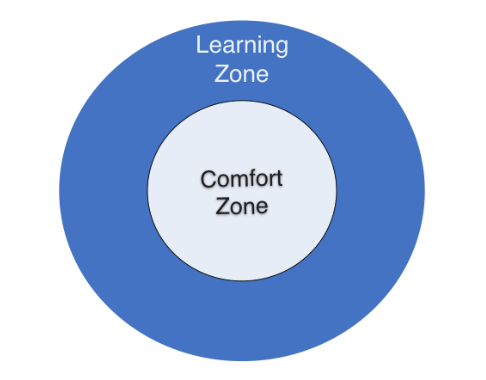
As a clinical supervisor, it is vital to help our supervisees move into their zones of proximal development, or that learning/experiential space just beyond their comfort zone (CZ)¹. But in order to do so, the supervisee’s current realm of abilities and limitations needs to be well-defined. This entails figuring out when they are at their best, how they conduct a typical session, what parts of them shines through, and how effective they are in aggregate. In other words, supervisors need to first help their supervisees figure out the bounds of their CZ so they can begin to push beyond it.

Supervisees must regularly pose questions to themselves such as, “What am I used to doing in sessions?” or “What did I do well” or even ”Was there something I did or said that stands out which might have contributed to the development of my client’s progress?”

Like what you are reading? For more stimulating stories, thought-provoking articles and new video announcements, sign up for our monthly newsletter.

We get comfortable with what we do well. Naturally so. The only problem is, if we fail to take the steps, our comfort zone can become our hell zone. What was once helpful with a particular client or type of client can become problematic or ineffectual. Think about your parents. If you were blessed with good enough parents when you were little, imagine if they used the same cuddly warmth and nurturing tendencies with you when you were a teenager. That wouldn’t have worked. You would have rebelled with angst. Past attempted and seemingly successful solutions can become today’s problems.

Here’s one of the axioms I have come to rely upon which defines the bounds of my current comfort zone (CZ): Provide clear and playful strategies to clients at the end of each session.

Over the last few years, I found myself drawn to being more playful and improvisational. This wasn’t how I used to be. I was constantly plagued with the question, “Am I doing this right?” Then I begin to realize that once I freed myself up to be more playful, I felt more flexible and less certain. This new mindset was unsettling and shook things up for me.

Other practitioners’ CZs that I’ve come across are founded in the following axioms:

“Be attentive and follow a clear treatment protocol.”
“Explore a person’s strengths and resources.”
“Develop clear treatment goals from the beginning.”
“Able to attune and empathize with my clients.”

First, and as noted above, it is critical that as supervisors, we help our supervisees to regularly ask themselves, “What did I do well?” “What stands out that I contributed to the development of my client’s progress?” This shall be your comfort zone.

Second, we need to help our supervisees to stretch out of their comfort zones and move into a less comfortable terrain that I call the learning zone (LZ). Our field has become obsessed with figuring out the how to improve, and less on taking the time to help individual practitioners figure out the what to improve. We need to get the sequence right. Figure out the what before the how. Especially in the realm of what we call clinical supervision, the supervisor plays a critical guiding role in helping to shape and identify learning objectives that are not only personalized, but ever evolving through the professional’s development over time.

It’s important to base your supervisee’s LZ on two critical pieces of information:

1. Their overall clinical outcome data, and

2. Feedback from a coach who knows their work.

By looking at the supervisee’s aggregated outcome data, you can begin to spot any glaring patterns. For example, early in my profession, I was shocked to find out that my own clinical outcomes for clients presenting with relational issues were the poorest compared to other presenting concerns, even though I was steeped in the systemic perspectives. Your role as a supervisor is to point out what the supervisee can’t see and lead them in the right direction.

Here’s my own current LZ as a therapist: I would like to learn to help clients face the feelings that they avoid. It’s so easy to continue validating and, as a result, getting lost in the interaction with my clients, while missing the opportunity to go deeper and help them with their difficult and painful emotions.

Other common LZs that I’ve come across in clinicians include:

“I would like to learn to improve the way I start my sessions.”
“I would like to learn to improve the way I close my first sessions.”
“I would like to learn to improve the way I elicit feedback at the close of a session.”


An excellent way to think about developing your supervisee’s LZ statements is to do this sentence completion exercise with them: “As a therapist, I would like to learn to…” Take it as a given that they will be struggling with this for a while. Give them time for this. Avoid non-specific definitions like, “I want to improve my engagement skills.” Narrow down to something more concrete and workable.²

For instance, if your supervisee’s data suggests that many of their clients come only for one session and drop out after that, you may be tempted to state that their LZ is “…to improve my return rates after the first session.” I see this more as an outcome goal. That is, you want X to influence Y, and “Y” is your outcome goal. In this case, you need to specify X and work on this.

Typically, when practitioners try to identify their own learning objectives, they tend to identify theoretically specific areas to work on (e.g., how to better conduct two-chair work on the inner-critic; how to employ a solution-focused approach when working with exceptions). Meanwhile, after examining their aggregated baseline performance metrics (more on this in upcoming blogs) and watching samples of their sessions, what I often end up proposing that supervisees work on is more fundamental and maybe even less revolutionary (e.g., how they begin a session, how they develop an effective focus, how they deepen the client’s emotional experience and how they end a session).

Most therapists and supervisors I know are life-giving and affirming. However, instead of simply bolstering their esteem with praise and consolation (A common refrain that I hear supervisors give, “Well, your clients came back to see you, didn’t they?”) without actually helping them identify their learning zones, we are doing our therapists and clients a disservice.

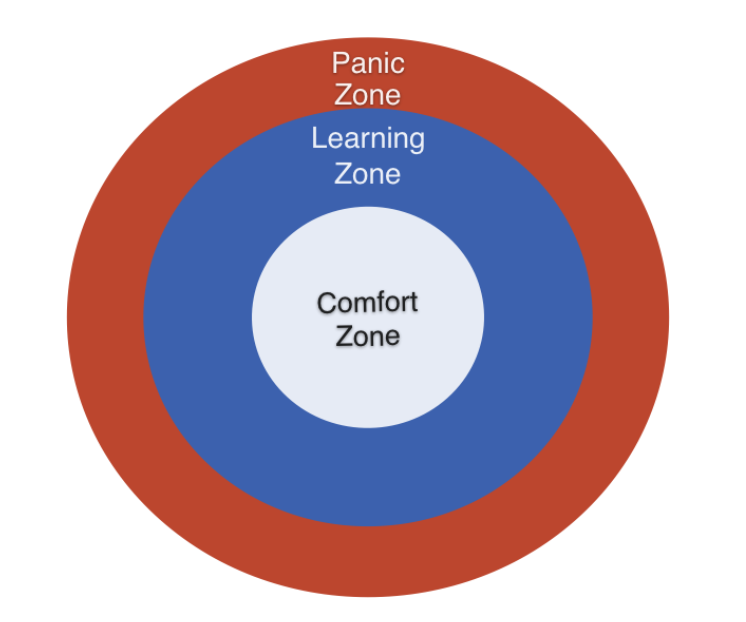
Finally, once we can identify our supervisee’s comfort zones and help them to move into their learning zones, we need to be able to guide them in articulating their panic zones (PZ). Panic zones tend to trigger feelings of being overwhelmed or may cause re-traumatization, which is not ideal for adaptive learning and personal growth. Panic zone materials are usually either too far a stretch in terms of the content to be learned, or the topic at hand might have triggered personal and/or professional ghosts of the past that have not been addressed.

Here are some common Panic Zones self-statements that I’ve encountered:

“Trying to learn what my supervisor says I should be focusing on, when I do not fully agree.”
“I know I should be working on difficult emotions like anger, but I do not feel ready at this point.”
“I tend to take critical feedback personally.”
“I just do not have the time and energy for this.”


It is important not to skip this step of helping your supervisee to identify their PZ. Doing so can help to remind them what not to do, or what not to focus on at various phases of their professional development.

Our circle of development is not static; it’s dynamic. If there is movement and directionality in the supervisee’s development, what used to be learning zone material might evolve to into the domain of the comfort zone. Likewise, what was previously panic zone materials can shapeshift into the realm of their learning zone.

The aim of helping our supervisees in figuring out their boundaries of their comfort, learning and panic zones is to clarify, magnify, and guide your supervisee’s messy and non-linear of professional development².

In the next blog post, I will address the critical value of teaching your supervisees to systematically monitor their clinical progress and how to use it beyond simply an assessment tool.

P.S.: My collaborators and I know how hard it is to figure out the key learning domains that therapists can spend their time and effort to deliberately practice. This is why we turned to what cutting edge research has to tell us, deconstructing the therapy hour, and we developed a comprehensive guide called the Taxonomy for Deliberate Practice Activities (TDPA) (Therapist’s and Supervisor’s version) (Chow & Miller, 2015). This is expanded upon in our forthcoming book, Better Results: Using Deliberate Practice to Improve Therapeutic Effectiveness (Miller, Hubble, Chow, 2020). But for now, if you are interested to receive a copy of the TDPA worksheets, drop me an email.

References

Chow, D. (2017). The practice and the practical: Pushing your clinical performance to the next level. In D. S. Prescott, C. L. Maeschalck, & S. D. Miller (Eds.), Feedback-informed treatment in clinical practice: Reaching for excellence (pp. 323-355). Washington, DC, USA: American Psychological Association.

Chow, D. (2018). The first kiss: Undoing the intake model and igniting first sessions in psychotherapy. Australia: Correlate Press. 

Jay Lappin on Family Therapy—The Long View

A Social Justice Lens

Lawrence Rubin: Good morning Jay and thanks for sharing your time with me. You’ve been practicing and teaching family therapy for several decades, in which time certain issues affecting families continue to remain relevant while other hotspot issues have gained prominence. May we start off by addressing some of these hotspot issues that family therapists need to address?
Jay Lappin: Sure. I think that one of the constants has been around social justice and poverty. We see the effects of the political decisions being made by different administrations and their changing priorities, including most recently around immigration. One of the things that I remember from my interview with Sal Minuchin a few years ago was him saying that, back in the day when we first started doing family therapy, we thought that they could change the world one family at a time. There was this thoughtful pause, and then he said, “We were wrong.” And that’s what got him into doing larger systems work, and myself as well.There are wonderful efforts by non-profits like The Annie E. Casey Foundation who are really taking this on, and it also still continues with family therapists who are doing home visits in impoverished communities which built on the early years of social work, and then on the work of Sal and others like Braulio Montalvo back in the ’60s. But we haven’t changed the world just yet.

LR: For the average family therapist who is not on the Southern border or who’s not in one of those areas where he or she is likely to see these families impacted by immigration policies or poverty, what guidance can you give them around working with families suffering social injustices?
JL: I think just being aware that social injustice exists, that there are commonalities among all families and their circumstances, but also as unique differences between families. That systemic perspective helps a lot. I just had a case involving a young man, a minority kid in a school system where there was a big incident. Because of my good fortune of working at the local clinic and being aware of the systemic issues, the line of questioning I used for the parent took a different turn. It was more of a talk about what the community was like and what it was like to be a minority family within a majority-culture town. And it really felt like things changed in the sense that there was space for that conversation. And I think that we can all make that space about those differences and be aware of them.
LR: There’s so much of a necessary push these days for therapists to become sensitive to and aware of diversity issues affecting individuals and, of course, families. So, is it our ethical obligation when working with, as you say, a minority family in a majority system, to bring in these social-justice issues, even if the family doesn’t address them? Is it our obligation?
JL: I think so, especially for those of us that are majority-culture folks. I know enough that I know that I don’t know enough about a minority family’s location in society. And I think to pretend that it’s not there is doing a disservice to the family and to the process of therapy. And, you know, the thing in systems work and all therapy is that you read the feedback. So, what happens when we open up the space for that conversation and what does it lead to and how does it change what we’re doing in the therapy? At the end of the day, they still want things to be better for their children, and that’s cross-cultural. I think we can do better when we create space to have those conversations.
LR: Do we expand a social-justice lens beyond culture and race when working with families these days? Are there other hot-button social-justice issues—you mentioned poverty—that we need to open the door to and invite into the family therapy space?
JL: Well, income differences. The vast majority of clients in my private practice, are majority-culture folks—middle-income and well-situated. The issues of social position, money and resources are still there, although on the other end of the spectrum. It’s all a part of the soup that we live in. I don’t see there’s any downside to working with these clients necessarily, but it’s very easy to get kind of a narrow lens just because that’s who’s in front of you.I remember a story Sal told me years ago during an interview. When he was young he had a psychology teacher who was a fan of Rousseau who made the case that delinquents were part of a larger system and the social institutions in which they lived. During the time that Sal was in high school, his family went from very good circumstances to losing pretty much everything as a result of the Depression. They lived in poverty. Sal’s story was about reminding ourselves how lucky we are, but also the obligation we have to all members of society. As family therapists, we must be open to conversations with families around the issues that are important to them, ones around which we may have little direct experience.

The Temptation of Sameness

LR: Clearly then, family therapists must be humble, aware and sensitive to the needs of minority-culture families. What about other hot-button issues like the breakdown or denuclearizing of families, and the newer ways that families are coming together—gay and single-parent, step, adoptive and foster families?
JL: I think one of the great things about being a family therapist is that you get to bear witness, to be a part of that change that you’re talking about. In family practice I see more and more of those denuclearized families that come in with different combinations. The classic ’50s Ozzie-and-Harriet family is changing and in a big way. But at the end of the day, they are all still families. They still love their children, and that crosses those old boundaries. We still have to do our jobs, but the context is shifting, and I think it gives us more possibilities, too, to think outside of the box.
LR: So, these new ways that families are coming together present challenges and opportunities for family therapists to expand their core skills? Are there specific ways that family therapists can expand to open up to these changing ways that families come together?
JL: Yes, I think that one of the ways that we get to do it is by working with different populations, because there is always the temptation of sameness. We do what we know. But, you know, there’s that old saying, “if you want to know about water, don’t ask a fish.” We can put ourselves in situations in which we feel different and that we experience other families. Home visits, I think, are a great way to do that. You can tell a lot about families, about how they live together, and it also stretches us a bit. I think both young and old therapists need to have an opportunity to do that. I think it helps our work and stretches us.
LR: Are you saying that the changes affecting families and the way that families are adapting to those changes is a clarion call to family therapists to dig deep, push hard, keep climbing learning curves and look for new ways to connect with new families, because each family that walks through your door is different?
JL: I think it’s all about difference. A picture is worth a thousand words because the picture is what the talk and the words are about. So, for example, Sue Johnson‘s work with attachment understands that talk therapy is necessary, but it’s not sufficient—it’s really about the enactment. It’s the felt experience of those different situations and pushing ourselves that challenges limiting patterns. You have your bag of tricks and you get reliant upon them, and, why? Because they work, after a fashion. So, it’s about taking a risk.And, that’s fair because it’s a risk for a family to come for treatment. Sal had this great saying that families are wrong about two things when they come to see us. First, they’re wrong about the location of the problem. It’s not the kid. He or she is an identified patient, so it’s the family system that’s the patient. And second, families are mistaken about is who is going to fix it. They look to us, but our position is that the inherent strengths are there in a family, that they have all these over-determined patterns, which is what brings them to us. So, I think, in this respect, we’re not asking any more of the families than we are of our ourselves, and I think that’s more fair.

LR: If Sal said that families come in with two errors in thinking, one is who the patient is, and the other is who will fix it; what might be some of the fundamental thinking errors that family therapists bring into their work?
JL: Oddly enough, the same two things. It’s a challenge. Family therapy can be tough, because you have all these people in a room. One of my early fatal mistakes with a family was when I thought I was being this wise, young guy that could figure stuff out quickly. It was a family I’d seen only 10 or 12 minutes in which the father was a plumber. So, I start spouting off—“blah, blah, blah, you should do this, you should do that” and the man turned to me and said, “How can you tell? You only met with us for a few minutes.” And because I was young and even more stupid than now, I said, “Oh, well, you’re a plumber.” And he said, “Yeah.” And I said, “How long does it take you to figure out that there’s a leak in the basement?” And the guy just looked at me with a lot of anger. I never saw the family again. So, either it was a one-session cure, or it was an abysmal failure. But I remember that I really hadn’t respected them. I hadn’t taken the time to join, and I was trying to be show-off. “Look how much I know.”So, I think it’s always the read-the-feedback thing, and we learn from the families as much as they learn from us.

An Alphabet of Skills

LR: Sal Minuchin taught you (and others) the importance of enactment, joining and challenging. How do you teach these fundamental skills to new family therapists who may be intimidated or challenged by a family?
JL: We came from an academic tradition where you teach theory, you teach theory, you teach theory, and then you practice. And Jay Haley had this great idea that you have people do things first and then retrospectively go back and say, okay, what happened? What happened when you turned to the mother and asked her to talk with the son? What was going on with you?So, it’s more that style of teaching where you’re consistent with the model of having people do things. When I teach, it’s lots of role plays, making up families. And then I have just some basic rules that I’ve come up with over the years, like thinking of joining as a traffic light—you have a red light, a yellow light, and a green light—and when you’re working with a family, you should always be in the yellow.

For instance, in New Jersey, you go through the yellow lights, and in South Philly, people don’t stop at stop signs. You kind of roll through the intersection. And I say if it’s green, that means it’s a bit too easy—Lyman Wynne had this expression of the rubber fence where you’re working with a family and you think, God, I’m really joined well, like it’s really the strength of homeostasis. So, green, not so good. Yellow, perfect.

But I’ll tell them if it’s a red light, you have to rejoin. So, if you’re trying to frame something or get an interaction going and you’re just getting that red light, then you say, okay, I need to reconnect, find another way to make this happen. It’s that constant reading of the feedback, and when you do role plays or approximations of families, then you can say, “What was that like when the family wasn’t with you on that? What happened? What did you come up with?”

And then you’ll go deeper with the students, and they can say, “Well, you know, it reminded me of this, where I felt this way.” So, okay, how are you going to shift that, because you’re going to be working with families. You’re going to have that capacity to be flexible. It’s like muscle memory almost, that you have to do it over and over again.

LR: You had said that Minuchin also taught you about the strategic use of self in the room. How important is this in the teaching and learning of family therapy?
JL: You probably don’t have it down in Florida, but here in New Jersey and Philadelphia, we have row homes which all look very similar from the outside. They’re each the same size and distance apart from each other, have the same foundations and the same layout. It’s like a rectangle. But when I used to do a lot of home visits, going from one person’s home to the next could be completely different. The next person’s home could even be on the very same block. So, that for me was a metaphor because my foundation is in systems work and structural theory, but the larger framework, what’s in the house and how they live, is up to the families.I think you have to just do it or it would be like reading about how to play guitar. That’s great if you already know that “A” has three sharps, but unless you’re playing it and having somebody saying to you, “What was that? Where were you going with that? What did you want to do? Let’s see if you can come up with another way,” you’re not going to improve your skill set. I lament the loss of one-way mirrors and taping. It doesn’t happen as frequently as it did back in the day.

LR: My experience has been that there are a lot of people out there doing family therapy, charging for family therapy, writing about family therapy, lecturing about family therapy, and they don’t seem to understand or really appreciate systems theory. They’re not students of the foundational theory that drives all models of family therapy. And I lament that. Do you see that as a problem?
JL: I remember talking to Sal and Braulio about this. They had this idea that you could have what is called an alphabet of skills. The idea was if you taught these skills, you could be a competent family therapist. And, indeed, many people did and are.But Sal said, that having an alphabet of skills is like teaching somebody the alphabet and then expecting that they can write sonnets. Like the idea of putting a room full of monkeys at typewriters who would type a Shakespeare play, by chance, after thousands of years. Having an alphabet of skills is necessary but not sufficient to practice competent family therapy. So, people need a bigger container. I think that what you’re talking about is having the systems foundation. It’s a deeper, bigger container to hold those ideas and to have the freedom to experiment. You’ve got to know where this stuff comes from, and I think it helps to have that foundation.

And I Got Dinner

LR: What are some of the personal and professional obstacles that family-therapy trainees need to overcome in order to eventually practice effectively as family therapists?
JL: I think first is finding an agency that values home-based family therapy. Back in the early days of clinic work, especially in the cities, you’d have people come for outpatient therapy, crowd the waiting rooms, and then you there’d be a large population of people that you could see.The shift to home-based family therapy, which, as you know, followed in the social-work tradition of doing work in people’s homes, changed things, so that people, especially poor families, didn’t necessarily have to get to a clinic. By going to people’s homes, you very quickly get a sense of what is happening. When I first went into private practice, I only had a handful of clients, so when I saw families, one of my requests was that they invite me for dinner. It was great, because, literally, within minutes, moments, you would have a whole set of new ideas. The theories I had about families when I went to the house was…

LR: Out the window.
JL: Right exactly. It was very humbling at times. And I’d have the kids show their rooms and their stuffed animals and their toys. And it was just such a rich environment, and then we’d have a family session after dinner. I got dinner.
LR: And they got therapy. And you did a hell of an intake by wandering through their rooms and sitting at their dinner table.
JL: Yeah, it was great. I think that the home-based work is really remarkable, and it’s a challenge. I remember being a research therapist on one of Duke Stanton’s projects with heroin addicts and their families. In those days, you’d have these massive cameras and tripods and all that stuff that you’d be lugging into people’s houses.So, in the middle of these intense moments, you’d think, oh, boy, this is really it, we’re going to tip the scales here. And then the dog would run through the scene or somebody’s diaper was wet, or the phone would ring. So, you would have all these multiple things happening at the same time, and you would have to figure workarounds. And you would really get a lived sense, an experienced sense. As opposed to talking about it, you were experiencing it.

LR: Clinicians and trainees attend workshops where clinicians show these wonderful, rarified clips from magnificent and timed interventions; but the reality is that families are messy. Families are complex. Families are chaotic. And maybe that’s one of the reasons why some people run from family therapy like the plague while others run to it. I wonder if there’s a difference in would-be family therapists regarding their tolerance for complexity, chaos, and ambiguity.
JL: Yeah, you’re right. It could be very chaotic at times, noisy…I just think it’s such a privilege to see the family in total, because when you see the kids individually—and, certainly, there’s a place for that in the context of family work—it’s not the same. You get so much more if you can see the whole family. For me family work is the best, and one would hope, even from those rarified clips, that people get excited about it and want to do it.
LR: I’m a child therapist, a play therapist, and I always say to my trainees that when you see a kid, they’re going to bring their family along with them. You have to be open to inviting the family in. So, is child therapy, by necessity, family therapy.
JL: There was a recent piece in The Inquirer about a Yale study on children that were anxious. The bottom line of the study was that they figured out that one of the principal causes of the kid’s anxiety was the parents. And I thought, are you kidding me?

Appy Hour

LR: What a surprise!
JL: So, their treatment model was having the parents figure out ways to help the children tolerate anxiety so that they were no longer hovering or helicoptering. And, really, when you think about it, it’s more of a systemic version, but it’s under the heading of teaching the kids.Years ago at the clinic where I worked there was research on pain. This fellow Sam Scott, who was one of my supervisors, a brilliant guy, had studied some with Erickson. Sam and Ken Covelman and Bruce Buchanan, who was my partner in teaching at the clinic, were working with families to develop ways to have kids who were experiencing extreme pain through psychosomatic and physical illnesses, get calmer.

Sam and the crew had developed this wonderful script that accounted for systemic interactions between the parents and the kids. The parent would say, “What we’re going to be working on today is helping you to feel more relaxed.” And then, in parentheses, the parent would have something that they would read to themselves that would say something to the effect of, “And while helping my child to relax, I want to breathe more slowly and thoughtfully.”

Just inserting that spacing or that timing helped the kids and the parents simultaneously to relax, which is different from the kind of individualized mindfulness training where you’re just teaching a kid how to relax. The back and forth accounted for the relational context.

I was teaching a family therapy course a few years ago at Penn and Drexel, and I realized that there were no students in the class that were as old as our youngest child, and I thought, “Oh, God, I am so ancient.” So,I created this thing called Appy Hour. At the beginning of class, the students would present apps that were helpful in teaching relaxation skills. It’s corny, but it was great, because they were all about finding these very cool apps. And if I see a kid individually, I’ll have the kid teach the parent how to relax and show what they learned on an app. As you were saying earlier, having that systems foundation just helps you think differently in a situation.

LR: So, whether you’re working with an adult, a husband, a wife, a lover or a child, you can work with any individual within a family, and as long as you are thinking and acting systemically, you’re helping everybody. You’re not targeting one person, even though one person may be the person that you’re working with.
JL: Yeah, there was a really good, two-part CD that Alan Cooklin and folks from England put together, and I had the privilege of interviewing Braulio Montalvo for it. I asked, “What are some of the seminal ideas about Minuchin?” This tape is called “Inviting the Family Dance.” Braulio said, really, the most important thing for him was Sal’s idea about part to whole. When you’re working with part of the system, you always keep the whole system in view, no matter who is in the room. If you have the kid, a parent or both parents, you’re always thinking of the whole system as kind of a backdrop. So, it’s reflected in having a kid learn an app and then teaching it to his parents or teaching it to her brother, moving from that idea of part to whole.

Tango with Me

LR: You’re engaging and empowering the whole family. In the linear world of individual psychotherapy, the push is toward evidence-based practice and manualized treatments. Has this push been part of the story of family therapy?
JL: I think, historically, one of the reasons that family therapy is around today is because, in its early years, family therapists took on the challenging populations—eating disorders, schizophrenia, delinquency, minorities—ones that for a lot of reasons resided at the margins of the prevalent psychodynamic and psychoanalytic models of the day. It was as if family therapy was being told, “Fine, do what you will—see if you can do better! And boy, did they. For Structural Family Therapy (SFT), the challenge to the status quo began in the Sixties at the Wiltwyck School for Boys in New York. Minuchin, Montalvo and others frustrated by the poor outcome with individual treatment decided, “This isn’t working—we have to do something different…”With support from an NIMH grant, Structural Family Therapy researched the development of a family/systems-based model with poor, minority delinquents and their families. Their research and the early bones of SFT were published in the 1967, Families of the Slums. Absent the internet, there was tremendous synergy and cross pollination—Minuchin making his way out to MRI and meeting Bateson, Haley, Don Jackson; Murray Bowen doing his work with schizophrenics; Whitaker’s developing his Experiential model; Satir’s Conjoint Family Therapy published in 1964. It was as if a whole new language and culture were sprouting up, rules were broken, the one way mirror and the capacity to videotape changed everything. And, like Gil Scott-Heron said, “the revolution will be televised,” and it never stopped.

LR: Along related lines, is manualized intervention antithetical to family therapy?
JL: I think there is a place for manualized care. Ultimately, I think that every therapist has to make their treatment their own. Sal would talk about the family dance, a “Tango.” Sue Johnson also has embraced tango dancing as a metaphor. And there’s some of us who are old enough to remember Arthur Murray’s Dance Studios where they would have the feet painted on the floor.

The Long View

LR: Steps! Actual, certain, steps that are important to take, but also instilling the importance of the therapist bringing their own person and adapting to constant changes. You know, “Dancing with Arthur Murray,” that would be a good family therapy article.Jay, you’ve mentioned in our phone conversation and in this in this interview about your relationship with aging. How has this relationship with aging played into your work as a family therapist?

JL: I think it’s made me more appreciative and humble, and grateful for the work. It’s the best job ever, really, when you think about how lucky we are to be part of people’s lives. And I think being a parent and being married for 48 years has given me perspective that I didn’t have when I was younger and new to family therapy.I think the aging process, being married a long time, having kids and grandchildren, the good fortune of amazing supervisors, mentors, students and clients, alongside experiencing painful losses of family, friends and clients, all of it gives you a certain perspective. Also, reading the Persian poet Rumi and Thich Nhat Hahn’s wisdom has slowly but surely shaped my appreciation of time and impermanence. I really value those present moments with families and with couples and individuals. I just continue to pinch myself about how lucky I am to be able to have that, and that people invite me into their lives to help them, and I do the best I can.

LR: How has this appreciation found its way into your clinical work with families?
JL: Someone I see experienced a profound loss of a child. All of my own family-of-origin issues played out alongside the experiences of this particular family. My youngest brother was 5 when he died of leukemia, and it had a profound impact on my family. Our oldest son, after he graduated college, came down with non-Hodgkin’s Lymphoma and he’s fine, and I’ve had malignant melanoma.Years and years ago, Sal and Pat Minuchin used to host these summer events at the end of the externship. People would come to the clinic for training from all over the world and Sal would host barbecues and there’d be teaching and learning. I was sitting in a group of students, and he was going around asking them about their families and their kids and so forth. He skipped me and went to somebody else. Afterwards, I said, “Sal, I know that you asked everybody about their families, but you skipped me. How come?” He said, “Because you don’t have any children yet.” And then he said, “It makes a difference.” When you live that experience, your perspective, for better or for worse, changes. Of course, he was right.

Once you have children, once you’ve experienced those kinds of losses, how can it not affect your worldview?

I think I’ve been more appreciative of that, and I think that shows in the way that I still challenge overdetermined patterns in the family, and challenge the ideas people have about themselves and always assume a strength-based model. It’s the therapist’s responsibility to come up with a context for those different slices, or, as Dick Schwartz would say, those parts of themselves that can be more manifest in a room, and then to recognize them when they happen.

Forrest Gump Meets Jay Haley

LR: You’ve jokingly referred to yourself as the Forrest Gump of family therapy. It’s a great metaphor, since you’ve had these incidental but powerful moments with the likes of Sal Minuchin, Carl Whitaker, Paul Riley, Braulio Montalvo, Marianne Walters and Barbara Bryant-Forbes. But you also have to be a Forrest Gump in your clients’ lives in order to be fully engaged with them at their own pivotal points.
JL: Larry, did I tell you the story of how I became a family therapist? My Jay Haley story? It’s to your point of being Forrest Gump and just being aware. In 1972, my wife and I got married on September 2nd, and I was drafted into the Army on September the 20th. I was very lucky that one of the nice things that Nixon did, if we can say that, is that he said only people that volunteer to go to Vietnam would go to Vietnam. So, I thought, okay, I’ll take my shingle, you know, shovel shit for the next few years, at least I’m not going to ‘Nam.So, I got out of being sent, and through a series of, again, Forrest Gump-like events, I wound up in Fort Gordon, Georgia and was assigned to work in the Mental Hygiene in the stockade and in the maximum-security block. I was seeing prisoners and thinking, “I have no idea what the heck I’m doing with these guys.” I was sitting in cells smoking, 26 cents a pack, how could you not smoke, and thinking, “Shit, I’m really lost here.”

So, I went to our psychiatrist, who was a man by the name of Art Warwick, who looked like—even then, Alan Dershowitz, who smoked a pipe. He had kind of fuzzy hair and wire-rimmed glasses, a brilliant guy. And I said, “Art, I’m lost with this stuff about how to see these guys.” I said, “Is there anything I can read to help me be a therapist, because I have to counsel these guys?” So, he’s smoking a pipe in a very cliché psychiatrist way and he puffed a few and said, “Get Strategies of Psychotherapy by Jay Haley.”

So, I sent away for it and the thing finally arrived and I started reading about Haley and Erickson and I just thought it was incredible. I wanted to do this kind of therapy.

The years went by and lo and behold, I wound up working in Philadelphia Child Guidance Clinic. I meet Jay Haley, and my head was like a dirigible because I couldn’t believe I was getting to work at that clinic. So, Art and I stayed in touch. I went to see him and we were sitting drinking beers, and talking about Army days, and I said, “Art, by the way, when you recommended Strategies of Psychotherapy to me, is that because you saw me as a good, strategic, structural family therapist?”

So, Art had this shit-faced grin on. He was smoking a pipe again. He kind of looked at me and said, “No.” I said, “No? how come,” and he said, “Well, your name is Jay and Jay Haley’s name is Jay and I thought it was kind of funny.”

Parting Words

LR: That’s your illustrious, effing origin story! You are Forrest Gump, Jay.Would you offer some parting words for the people who are going to read this interview, whether they are brand-new family therapists, graduate students, seasoned therapists, or old horses like yourself? If you had to condense your wisdom into some Salvador Minuchin-esque type of statement that people will be quoting 50 years from now? No pressure though, no pressure.

JL: Yes. Sal was a poet, as was Braulio. I think I would say, do family therapy—it’s the best job you’ll ever have. And whatever job you have after that, it will help you. It will help you with the people that you serve. It’ll help your family. It’ll help your children. There’s no aspect of your life that it won’t touch, and in a good way. And it’s a gift, and you’ll say your thanks for it.
LR: You had me at hello, Jay. I really want to thank you for sharing your stories, your wisdom, your decades of experience, and I anticipate many more wonderful stories.
JL: Thank you, Larry.

A Tale of Two Cars: Interpreting Therapeutic Play

Sam came to our session with two wooden cars he had made in occupational therapy. When I asked hi how things were going, he made a few comments about not wanting to return to his father and stepmother’s home. He seemed pensive and sober, but had little more to say. Instead, he seemed to be increasingly absorbed in playing with the wooden cars—one a larger Model T, and the other a smaller “Buggy.”

Like what you are reading? For more stimulating stories, thought-provoking articles and new video announcements, sign up for our monthly newsletter.

Like many 12-year-olds, Sam was not especially fond of talking, particularly about the problems that had led to his hospitalization. I made some additional attempts to engage with him verbally, but eventually I, too, became more absorbed in what Sam and the cars were doing. Sam was steering them wildly around the top of my desk. Sometimes one or the other, or both, would come screeching to a halt, right at the edge of the desk, which seemed to be a cliff. At other times, they interacted with each other, and, on a couple of occasions, the little one pushed the big one off the cliff.

As I was drawn more deeply into the drama that Sam was playing out, I began to think about our session somewhat differently. At a minimum, Sam’s involvement with the cars seemed to reflect, among other things, the discomfort he had just displayed about discussing his problems. Maybe the best thing to do was to drop the questions and engage with Sam around the play. I started narrating what the cars were doing: “Hmm! The big one is towing the little one. . . Now they’re spinning around each other. . . Wow! They hit each other that time!”

It felt like Sam and I were more engaged now. But what, exactly, was going on here? The interplay of the cars seemed to be more than a mere resistance or fantasy about driving. What was being played out between the cars was intense—a dynamic and developing relationship of some kind. It appeared that Sam was using the cars to express something emotionally significant in the medium of play. An interpretation seemed to be called for.

Psychotherapists have had mixed feelings about interpretation throughout the history of the field. In the early days of psychoanalysis, Freud and others believed that insight gained through interpretation was the primary curative factor in psychotherapy. It was generally held that in order to be effective, an interpretation had to be accurate in all its details. However, Edward Glover later pointed out that while many of the interpretations reported by earlier authors had probably not been entirely accurate, those same interpretations had often, apparently, been quite effective. Furthermore, evidence was starting to accumulate that a good therapeutic relationship was more helpful to patients than intellectual insight gleaned through interpretation.

Nevertheless, some sessions—like the one with Sam—do seem to involve an alternate form of meaning-making in which interpretation may play a useful role. And so, in this situation I found myself pondering just what Sam might be trying to communicate to me.

Perhaps the little car was Sam and the big car was me, trying to get him to talk. But the intensity of Sam’s play suggested that the dynamics within his family were more likely to be relevant. One possibility was that the big car was Sam’s father—but most of Sam’s conflicts were with his stepmother, whom he resented for taking the place of his biological mother. Indeed, Sam and his stepmother had been colliding into each other and spinning around in circles for years. I ventured an interpretation:

“The little one and the big one are pushing against each other, kind of like you and your stepmom fighting with each other.”

“Mm-hm.”

Not very enthusiastic. Maybe I had jumped in too quickly. Or maybe the interpretation that I had ventured was off the mark. The big car might be Sam’s biological mother. She had been described as physically and verbally abusive, abandoning Sam with his father on several occasions. After custody was given to Sam’s father, Sam’s biological mother had been involved with Sam only sporadically, staying away for long periods of time and intermittently making promises to visit Sam but not following through.

More play. Now, the big car drove headlong off the cliff and crashed into the canyon below. Then, slowly, it returned up a mountain road, back to the top of the cliff.

“Gee, it drove off the cliff and then it came back!”
“No. This is another car.”
“Ahh!” I said. I had the information I needed.

“You know what I think?” I said. “I think what’s happening in your family is like what’s happening with the cars. When the big one went off the cliff, the little one was left alone, like you were left alone when your biological mom went away. Then another big one came, like your stepmom; and now you and your stepmom have to try to get along with each other and help each other, like the two cars towing each other. But it’s really hard because you still miss your biological mom. You don’t know when you’ll see her again.”

“I don’t think I’ll ever see her again.”
“Really?”
“Yeah.”
“It’s hard for a kid to lose a parent.”
“I think the more I don’t see my mom, the more mad I get.”

We talked about this. He expressed anger that when he had recently said he wanted to get in touch with his biological mother, his father and stepmother had replied that this was not a good idea. I suggested we discuss it with them in our next family meeting.

That night, Sam had his first good evening in the hospital, and over the next few days he shared, first, his anger, and then his hurt, about his biological mother’s many failures to visit him.

In the next session with his parents he called his stepmother “Mom” for the first time. At the end of that meeting he gave her the big car and said, “You can take this home.”
 

How Self-Disclosure of Learning Differences Guides My Clinical Relationships

Origins of Empathy

As a child, I remember the frustration of not being able to tie my shoes, ride a bike or grip a pencil. The fact that I needed extended time on tests and note takers throughout high school and college was no less discouraging. However, one of my greatest challenges was adapting to adult employment and social demands; a process during which few people seemed to care about my specific struggles. I still remember fearing the supervisor who would criticize my handwriting and the sting of rejection after a first date. Although my therapists were empathetic, I was often curious about whether they had similar personal experiences, and whether disclosing them would have strengthened the alliance between us. Now, as a therapist who specializes in working with young adults with learning differences, I have made self-disclosure not only a basic component of treatment, but also part of how I present myself to the outside world, as my personal story is published on my website as well. This dynamic has led to a transference and countertransference between my clients and myself that starts from our first session and strengthens our relationship in many ways, while also providing an opportunity for us to reflect on our differences.

Part of my initial interest in becoming a psychotherapist and coach stems from my personal experiences struggling with learning differences. I am interested in using some aspects of my life to help other young adults with similar diagnoses navigate their challenges. It is reported that 75 to 85 percent of young adults on the spectrum are unemployed, and although the exact statistics on unemployment among adults with other learning differences are not known, it is widely thought that they also face a variety of barriers.1 The clients that come to my practice often say that they are struggling to manage their workload, navigate interpersonal situations with colleagues and bosses, and establish friendships and romantic relationships. “Preserving the uniqueness of their challenges while drawing on my own experiences is a tricky balance as a psychotherapist”, but I have developed a few strategies for doing so.

Fellow Travelers

My clients frequently find me through my writings for the NVLD (Nonverbal Learning Disorder) project, a non-profit that disseminates research and builds awareness regarding this unique visual-spatial disorder. One of the first things I tell them is that everyone’s experience is unique, and that my job is to help them to navigate their lives while also drawing on some of my own personal experiences related to common issues such as self-disclosure in the workplace, creating organizational systems and finding mentorship. The key is to listen fully to their stories and experiences, helping them to brainstorm and find their own solutions, while also offering, when appropriate, some personal anecdotes that might be helpful for their specific situations. An example could be a client who states that he or she is not sure how to best self-disclose their learning difference to their employer. We may explore ideas about different times and places to self-disclose, and I can talk about what I have learned from my own experience. I have found that many clients often appreciate this approach, stating that when I speak from a personal viewpoint it helps them to trust me more and feel as if I can relate better to their experiences.  

If transference in psychotherapy normally consists of unresolved feelings and expectations that are placed onto the therapist–oftentimes in an unconscious attempt to recreate or approximate a past relationship, and countertransference is the therapist’s resulting conscious and/or unconscious feelings that are projected onto the client, “the therapeutic relationship between two young people with learning differences is ripe for the enactment of these feelings/experiences”. I often find that the clients I work with report a feeling of safety and security, perhaps seeing me as an older sibling or parental figure, especially when they describe feeling understood or supported by my being in a unique position to empathize with their learning differences.

Transference & Countertransference

One client, whom we will call Joyce, frequently contacted me after our therapy had ended in order to ask questions that usually began with “since you have and know about NVLD…” Because our work together had ended, I redirected her to another therapist who practiced in my office, but she did state that she had felt a sense of security and safety with me that she may have felt earlier with her mother, whom she used to call to help guide her with difficult situations. In some ways, she may have unconsciously seen me as a parental figure helping her to navigate difficult questions related to her job and personal life. 

While working with male clients, I have often found that the transference/countertransference relationship may take on a different form. This is due to the fact that there is an element of both bonding and competition; many of the young men I have worked with may have a complicated history with women, especially regarding rejection and feelings of emasculation, a topic about which they may look to me for understanding. While I do not usually disclose my romantic status or experiences, by validating the unique challenges of dating with a learning difference and providing some practical steps for managing these feelings, I establish a bond with these clients, who describe previous male friendships in which they discussed these issues. A dynamic of male companionship can often form between my clients and me. However, some of my male clients have also seen me as a source of competition, and have reacted strongly, stating “you don’t know anything” or “how can you understand me?” Admittedly, it may be uncomfortable for some of my clients who see me as a “success story,” especially when they are struggling to find work or build interpersonal relationships. This is also a dynamic that I try to work through with them, making space for it to be discussed in the therapy room.

I attempt to use my countertransference as an indicator of not only how I should respond to the client in the room, but also of when, if and how I should self-disclose. A dynamic of male connection may lead me to respond to a client’s disclosure regarding rejection in the dating world with a few suggestions for improving one’s strategies, perhaps with the caveat that I have learned from my personal experiences. Depending on my relationship with the client, I may also use my countertransference as an indicator of my familiarity with certain aspects of the client’s professional experiences. For example, I remember identifying with a client I will call Michael, when he described challenges figuring out certain aspects of his job, as I have had similar experiences. However, if a client expresses competition or hostility towards me, I may also notice a feeling of defensiveness that arises in me, which will cause me to be more cautious regarding self-disclosure. Again, “countertransference can be an indicator of when and how to self-disclose”.

In my clinical work, transference and countertransference are often sparked by the patient’s vulnerability in the therapeutic relationship, something that individuals with learning differences will sometimes go to great lengths to conceal. Sometimes, they will hide behind a veneer of competence, lest anyone discover their sometimes painfully embarrassing challenges. The transference and countertransference dynamics in a therapeutic relationship often emanate from these struggles becoming visible, causing relief, vulnerability and perhaps shame at the same time. An articulate and thoughtful client, whom we will call Jenny, recounted how she had transferred to a reputable private school to receive more academic support and was subsequently abandoned by her previous friends, who stated, “So you think that you are better than us?” Despite distancing herself from her new school’s perceived “preppy” culture, she was reticent to explain that she had enrolled there because the workload and lack of individual attention at her local public school had become too onerous to handle. Quite the opposite of feeling “better,” her true reasons for transferring were a source of embarrassment. Hence, she described feeling “invisible” to her former friends, as they had falsely assumed she must have chosen the school for its supposed prestige. Jenny’s story prompted me to reflect on how many of my peers had also judgmentally questioned my parents’ decision to send me to small private schools, with statements such as, “Wait! How many people go to your school!? That’s weird.” Not to mention, “Are your parents rich or something?” I stated to her, “It is so frustrating and somewhat ironic when people assume you attend a private school because your rich parents want to help you escape the chaotic real world of public education, instead of the reality that you would do anything to be able to thrive while attending a school with over thirty students per class, loud and confusing hallways, and overwhelmed teachers.” Jenny thanked me, and although I never disclosed my experience, the fact that I had made hers visible created a positive transference between us. In that moment, I may have seen her in a way she would have wanted to be seen by an empathetic friend.

“Group therapy sessions necessitate a different kind of self-disclosure” and create a different stage for the expression and integration of transference and countertransference into the therapeutic work. I led a small group on developing dating skills for young men on the spectrum. The participants asked me, “Do you have a girlfriend,” and “What dating experience do you have?” I did not answer the first question but did confirm that I had faced some the challenges in this area. I added that I had developed some strategies and techniques of my own for finding success. My self-disclosure sparked an ongoing discussion of the struggles of dating between the group members, a discussion in which I was a participant in but not the expert leader. In other words, my self-disclosure leveled the playing field, so to speak, which facilitated a deeper and more meaningful conversation in the gruop. Because the participants acknowledged that they did not feel comfortable speaking about these issues with anyone else, the transference that may have developed was that of a relationship between intimate friends. Regarding my countertransference, I also felt a sense of kinship with the other participants.

Self-disclosure regarding around my learning differences and a careful monitoring of the related transference and countertransference relationships with certain clients has enriched my clinical work. My clients have had both positive and negative reactions to my self-disclosure, which has provided an important opportunity for deepening the clinical relationship. While not all my clients react positively to knowing that I also have a learning difference, the majority have developed a trust and willingness to explore how my self-disclosure may help them in treatment. Although I will continue to make sure that sessions focus on clients and not on myself, I believe that, overall, my decision to self-disclose has been a positive experience for clients.

Resources

Carley, J. M. (2017, April 13). The Employment Shift: Rethinking Autism Employment Initiatives. Fallbrook, California , USA.

Three Types of Knowledge Clinical Supervisors Need to Know

In my previous article, Seven Mistakes in Clinical Supervision, I highlighted common pitfalls we make in our pedagogy of choice in professional development.

In this blog post, I will provide a pathway out of the first of the seven issues, Too Much Theory-Talk, by suggesting the regular use of recording and reviewing of the supervisee’s clinical work.


Clinical supervision typically entails case discussion, case conceptualization, theoretical formulation, treatment planning/implementation and a myriad of therapist/client-related variables. Most clinical supervision sessions are constrained by a prescribed theoretical construction, dictated by both the supervisor’s and therapist’s theoretical biases. When a “stuck” case, one in which clinical progress is not forthcoming, is being reviewed, it is important that the supervision have a sound base of content knowledge of a client’s presenting concerns (e.g., depression, obsessive-compulsive disorder, complex trauma, borderline personality), a critical form of guidance related to process knowledge (i.e., the moment-by-moment engagement between client and therapist), and finally, conditional knowledge (i.e., how the supervisee/clinician may work with a client who is depressed in the context of grief, compared to someone else whose depression results from domestic violence)¹. Even in our individual pursuits as therapists, those moments spent outside of our immediate supervisory role, much of our time spent learning to become more effective clinicians is anchored in the “content knowledge” domain. While it may be necessary, this isn’t sufficient.

Like what you are reading? For more stimulating stories, thought-provoking articles and new video announcements, sign up for our monthly newsletter.

When there is a gap in the supervisee’s clinical knowledge, the supervisor can impart specific content knowledge by adopting a didactic stance and providing “just-in-time” relevant corrective information. In addition, especially for beginning practitioners, supervisors can provide relevant reading materials and resources.

However, in order for supervisors to provide relevant and useful feedback and guidance regarding process and content knowledge, those more complex and dynamic elements of the therapeutic encounter, it is not enough to simply talk about the content of the case from the removed position of clinical information-sharing. Much like other fields (music, sports), it’s important for the supervisee to record their therapy sessions so the supervisor may provide feedback about actual in-the-moment performance with particular clients, rather than feedback about a perceived performance by the supervisee. Feedback is useful when it’s based on well-defined objectives, observables, and specifics.

Take the renowned basketball coach, John Wooden. In an analysis of Wooden’s teaching practices, researchers found that 75% of his active coaching time consisted of “discrete acts of teaching . . . pure information: what to do, how to do it, [and] when to intensify an activity.” Slightly less than 7% of his time was spent dispensing compliments or disapproval².

As an aside, it is important to note that most theories are developed after the fact. As Gregory Bateson once said, “The theorist can only build his theories about what the practitioner was doing yesterday. Tomorrow the practitioner will be doing something different because of these theories.”

The field of psychotherapy is less about “specialized” technical knowledge, than it is about deep relational mastery to resolve the client’s (and occasionally, the clinician’s) emotional wounds. We need to move beyond content knowledge and design our learning to improve our process and conditional knowledge. Recall when Carl Rogers (1939) said “…A full knowledge of psychiatric and psychological information, with a brilliant intellect capable of applying this knowledge, is of itself no guarantee of therapeutic skill.”

In the next blog post, I will tackle the second issue raised in the article Seven Mistakes in Clinical Supervision, the “pat-on-the-back” phenomena in clinical supervision.

This blog post was adapted from the original titled: Three Types of Knowledge and Why This Matters in Psychotherapy.

References:

(1) Chow, D. (2017). The practice and the practical: Pushing your clinical performance to the next level. In D. S. Prescott, C. L. Maeschalck, & S. D. Miller (Eds.), Feedback-informed treatment in clinical practice: Reaching for excellence (pp. 323-355). Washington, DC, USA: American Psychological Association.

(2) Gallimore, R., & Tharp, R. (2004). What a coach can teach a teacher, 1975-2004: Reflections and reanalysis of John Wooden’s teaching practices. The Sport Psychologist, 18(2), 119-137. doi:10.1123/tsp.18.2.119 

Chocolate, Jalape

On those two nights after leaving school following back-to-back, eye-opening and unsettling experiences in my graduate counseling classes, I had a strange feeling that I had arrived at the intersection of possible culture blindness, social discomfort and the questioning of my own clinical supervisory competence.

Like what you are reading? For more stimulating stories, thought-provoking articles and new video announcements, sign up for our monthly newsletter.

I reflected back on two absolutely unrelated but clearly convergent events in two separate graduate counseling classes on back-to-back nights—ethics and psychopathology. As it was to turn out, challenging, unanticipated and enriching lessons in diversity were in the making.

Scenario one: My back was to the class as I was about to write down their responses to a question I had posed. One of my students, located in the far back right corner of the classroom had offered a verbal response, and as I turned to make eye contact I wasn’t quite sure where the voice had originated. My eyes landed on one particular African-American woman who I thought had made the comment, but quickly the student sitting next to her, also African-American, quipped “it was me, but there is a lot of chocolate in the room.”

Instantly embarrassed, I did my best to conceal the painful feeling of embarrassment and the deeper thought that, in that moment of failed echo-location, I had conveyed the message that the voices of all black people sound alike. Or, had I?

Scenario two: Occasionally, I joke with students about the snacks they bring to class. A Latina student in the back of the room offered up a bag of potato chips, across the front of which was a green elliptical design that on quick glance I thought was meant to be a jalapeño. I thanked her and said, “I don’t eat jalapeños.” Just as quickly as in the first scenario, this student shot back, partly in humor but also likely in defense, “did you assume these are jalapeño-flavored chips because you know I’m Mexican?”

Still reeling from the chocolate event of the previous night, I was once again embarrassed, thinking that I had somehow awkwardly fumbled insensitively across a cultural divide, falling flat on my face in the process.

I knew that these were learning opportunities in the making, both for myself and my counseling students, who had each taken our program’s multicultural course with Judi Bachay, an international scholar and diversity expert here at St. Thomas. But, there is nothing quite like a live-action, and as Irvin Yalom puts it¹, “here-and-now experience,” for conveying an important concept. And while I made a nominal attempt to address my concerns in class each time, I could tell that the two students were equally uncomfortable.
Was it my cultural insensitivity that provoked their humor-cloaked defensive comments, or over-sensitivity to their own racial/cultural positioning in my class…in society? In either event, I believed that as their (white) teacher, I needed to do my best to find out, for them, for myself and for the class.

I was indeed able to speak in private with each of these two students on separate occasions and discovered the following. The formative educational years of the student in the first scenario was spent alongside white peers, where a sense of racial discomfort led to concern that she would be judged primarily by her skin color, rather than the qualities of her character. Racial invisibility as Darrick Tovar-Murray suggests², was in a sense, a psychological survival strategy. During her transition to college, the student in the second scenario attended classes in a less-Latinx environment compared to earlier years. She became less comfortable with her Mexican roots, often trying to conceal her accent—a different, but no less poignant form of invisibility. She lived with the fear of being called a chola.

I felt sadness for each of these students who grew up believing they had to trade elements of their racial and cultural origin for the security, or perhaps false security, that invisibility falsely promises. I have never felt that pressure—part of my privilege, I guess. I shared with each of them the guilt I felt, perhaps white guilt, and my concern that I had contributed unknowingly to their experience of invisibility. But in retrospect, perhaps their respective protestations were statements of visibility, and refusals to remain hidden. Lessons were learned on both sides of the divide those nights.

References

(1) Yalom, I. (2017). The gift of therapy: An open letter to a new generation of therapists and their patients. New York: Harper Perennial.

(2) Tovar-Murray, D., & Tovar-Murray, M. (2012). A phenomenological analysis of the invisibility syndrome. Journal of Multicultural Counseling and Development, 40(1), 24-36. 

Coping with Infidelity in Professional Couples

Couples seek therapy for many reasons, but among the thorniest issues are those involving infidelity. Of course, circumstances vary widely, so it’s difficult to isolate causes that are equally relevant for all. Given that, I’ll focus on themes that have emerged with some professional couples with whom I have worked that have been married for some time (10+ years), with demanding careers, and for whom these issues arise after having children.

Like what you are reading? For more stimulating stories, thought-provoking articles and new video announcements, sign up for our monthly newsletter.

They may have met in college or graduate school. They became fast friends first, and they never imagined that would change. Both were career-minded and imagined living a life of significance, healthier and happier than that of their parents. They recognized one another as good, bright and hard-working persons. They felt heard, understood, and supported. They shared a vision of life.

Then, as the demands of their careers pulled them into individual tracks of ambition and responsibility, and as they began to have children, their friendship suffered—intimacy too. It wasn’t fully conscious yet, but they had become rutted in role-based “necessities” of duty and obligation. A shift occurred from a vital pursuit of happiness to accountabilities to children, home, and career—life felt burdensome.

The Sources of Disenchantment

The relative ease with which life’s demands were managed in the early, pre-parental years were gone. Back then, there was more time, unpressured and less distracted opportunities to talk. Everything was easier then, even though financial resources were limited. So, what had their success really purchased?

The couple was left feeling that life had somehow gotten away from them. They were overwhelmed and learning that feelings are a complex and nuanced form of meaning, confusing enough to experience let alone to articulate. It was easier when there was more breathing space, when they could get away for a weekend of hiking or big-city stimulation. Sometimes that alone, without talk was enough.

Taking on work-related duties, struggling to realize career aspirations, life became more serious. Then, with kids and parenting added to the mix, along with the financial demands of mortgage, child care, and interruption to a second income; it all added up to a loss of the enchanted vision of life they had in the beginning. Exchanges became strained. Soon they decided it just wasn’t worth the effort to argue.
They began wondering “is this all there is?” Exhausted by work strain, stressed by unrelenting demands, and lacking the friendship they once provided one another, they began to foreclose on the possibility of making things better. But settling is not very satisfying is it? Thus, arises the restless yearning.

Desperate Delusions

For these couples there is seldom a desire to abandon one’s partner. Very few had seriously considered divorce even as they began to look elsewhere for affection. Intact bonds remained that coexisted with urgent needs for emotional intimacy. They could not see a way to reconnect within the marriage. It’s a cognitive, emotional, and moral quandary that they’re unable to resolve, it looks impossible.
That’s where the desperation comes in. It may be equally felt by both members of the couple. But neither is able to frame the issues, broach the conversation, and make them “discussable.” They’ve learned (come to believe) that contentious tones, demanding voices and fault-finding quickly follows. So, they conclude, “I can’t meet my needs here; the situation won’t allow it.”

What they believe they cannot achieve in reality, they seek to address through fantasy and delusion, or perhaps more benignly framed—wishful thinking. Yes, there’s also the sense that they deserve something more and better given how hard they’re working. So, they seek “justice” through a kind of “let’s pretend.” They want to believe that there’ll be no harm as long as no one finds out. Sometimes drinking helps contain the cognitive dissonance. It’s regression in service of play, to invoke Freud, and a symptom of arrested development in the marriage.

The Bubble Bursts, Work Begins

When the truth comes out, a period of crisis ensues. Soon it becomes clear that the act of infidelity only ruptured a relationship that was already suffering from deep, long-standing strains. Upon reflection, both knew things were not going the way they wanted them to. In some cases, partners had even taken separate bedrooms, started vacationing separately, becoming more roommate than spouse.
But the initial disclosure brings jolting pain. Anger, embarrassment, and betrayal are only a few of the emotions that should be expected. It’s not a victimless act. The aggrieved party is deeply hurt. And the unfaithful party frequently suffers a different shame and loss of self-respect that he or she must endure without much sympathy while seeking redemption and forgiveness.

The saving grace for many of these couples is that they usually have reason enough to at least attempt reconciliation and repair. And if they seek help soon enough, before acting out their emotions in ways that make their problem even more difficult to address, their odds improve immensely. Because they are bright and hard-working, they may be able to use that ethic to persevere with the task at hand in some or all of the following ways.

Containment. The couple must have a safe place to process their feelings, and therapy must help them learn how to do even more of this outside the consulting room. Initially, they’ll struggle with managing the intensity of their exchanges outside of therapy.

Learning. The couple must now acquire the interpersonal communications skills to navigate emotionally charged conversations that they had earlier concluded were not possible. They will learn that doing good in their relationship requires knowing how to do good.

Forgiveness. Learning that infidelity is at least partly attributable to arrested development as a couple, a lack of insight, knowledge, skill, and hope concerning what was missing and how to correct it, helps both find a way to forgive.

Forgiveness is something we do for ourselves as much as for our partner. When we lose our capacity for the love, openness, and honesty to discuss the divide that is growing between us, it is not because we willfully intend to do harm to one another. We fail due to our fears and ignorance, our desperation and loss of hope. We lose the ability to focus more on coulds than shoulds.

This is what they learn in therapy.  

Judith Grisel on Addiction, Neuroscience and Choice

The Age of Neurophilia

Lawrence Rubin: Hi Dr. Grisel. I first became aware of you when Terry Gross interviewed you on her NPR show, Fresh Air, about your book, Never Enough. You mentioned that after that interview, they led you through a room where they store the hundreds of books they receive each week for consideration. I’m wondering, why did they pick yours from that pile?
Judith Grisel: Three things I guess. One is that we are really in a time in history where we’re very interested in the brain and in science. So, seventh graders appreciate things about the brain that we didn’t even know 30 years ago, and
I think there’s a neurophilia going on
I think there’s a neurophilia going on. Second, addiction is so widespread, practically everybody is touched by it. And third, I also think on my part, being at a liberal arts university and having to speak to students about complex ideas on a daily basis, I must be able to mine the minutiae of scientific inquiry and translate and explain its general principles in a way that people can understand.
LR: That reminds me of Stephen Hawking’s tiny volume, A Brief History of Time. Bringing it to the people, so to speak. What do you hope your slender volume will do that others haven’t in this conversation around the neuroscience of addiction?
JG: My hope is that the readers who aren’t scientists will learn about and be able to appreciate the core principles of brain adaptation—how it adapts to every single drug-related repeated experience that alters the way we feel. Seatbelts and sunscreen were not considered life-saving before the research taught us differently. Now, we understand the risks of not wearing seatbelts or using sunscreen, and both are seemingly simple, but most definitely life-saving practices. I want people to develop that kind of understanding about the brain’s adaptive capacity and drug use. My secondary hope is that scientists who read it will come closer to appreciating what it’s like to be an addict. My hope is that I was able to explain that in a way that made sense to both audiences.

Our Brain on Drugs

LR: You use this term, “neurophilia.” The folks who are going to read this interview may have some neuroscience interest, background or even training. Some may be neurophobic, but many, I suspect are armchair neuroscientists using trendy brain-based buzzwords, but who don’t know how to integrate the fruits of neuroscience into their psychotherapy. How can your book and your work around the neuroscience of addiction help neurophobic psychotherapists?
JG: Well, the first thing I would say—even though I’m not a therapist (and neuroscientists don’t understand it all that well, themselves) is that
there’s a difference between understanding the implications for people suffering with addictions and simply collecting piles of data
there’s a difference between understanding the implications for people suffering with addictions and simply collecting piles of data. I think that there’s definitely a place for all voices and insights to come together and try to work on this problem. It’s certainly not as if neuroscientists have made any great strides. So, that should alleviate some fear.

I also think that scientists like me who are working at a chemistry bench top or with laboratory mice, are looking at little trees or even particular leaves on particular trees. In contrast, I think clinicians are more trained to see the big picture—the psychological and social factors beyond the brain chemistry. I think we need a lot more communication and interaction between the neuroscientists and social scientists and the clinicians actually working day to day with addicts. 
LR: I interviewed Jose Rey, a psychopharmacologist, a while back and he spoke similarly of the importance of communication between disciplines, especially behavioral scientists like therapists. But you are both neuroscientists and I worry that our psychotherapist audience needs a bit of a primer—addiction neuroscience 101, if you will.
JG: I’d first define addiction, even though there is some controversy over that, and the definition changes quite frequently as anybody who looks at the DSM would know. I would say that there are five characteristics of addiction: Tolerance, dependence, craving, the drug use or the activity needs to be detrimental to the person and to their community, and denial. Those five things coming together are what I’m interested in understanding better. And the tolerance, dependence and craving are due to the brain’s adaptive capacity.

Any experience or drug that alters our neutral or baseline affective state—and this is a little different for each person, forces the brain to adapt to try to bring the chemistry in the brain, and associated behavior, back to that neutral baseline. Some people are naturally lighthearted and happy and some are naturally a little depressive and melancholy. Whatever their particular neutral is, it is the brain’s business to try to figure that out and return to its neutral position. The pathology arises when that neutral baseline is going up and down like wild all the time because of constant ingestion of drugs, because, in part, the brain is unable to sort what’s happening and do something about it.

I drink coffee every day, and what is going on in my brain is a good example. I am completely addicted to coffee. The only good news is it doesn’t cause any problems for me, so you can say maybe I’m not addicted; I’m just dependent. When I wake up in the morning, I am unable to really think or communicate until I get the coffee. I don’t wake up like my 16-year-old does, hopping out of bed and ready to go. I wake up like I’m in a coma. I get a big cup of coffee, and then I feel normal. That is true for every drug. If you take benzodiazepines regularly to deal with anxiety, your brain produces tension and anxiety so that now the benzos make you feel okay and without them you’re a wreck. The brain does something similar, but in the other direction with opiates.

Opiates affect our neutral or baseline affective state. They make us feel great. The brain makes us feel crappy to counteract that and bring us back to an affective neutral. When we take away the opiates, then we just feel bad and miserable. And that’s true for any drug: alcohol, stimulants, marijuana. I think, if I were
working with clients, I would want them to understand that their using has diminishing returns as the brain adapts
working with clients, I would want them to understand that their using has diminishing returns as the brain adapts. 
LR: The brain is always trying to pull the body and affect back to neutral?
JG: That’s right. It’s necessary for survival.
LR: Can you quickly run through the different classes of drugs and how they affect the brain and behavior differently?
JG: Let's start with the most complicated drug, which is also the smallest molecule—alcohol. Because it's so small and can go anywhere, it diffuses easily through membranes, and acts very promiscuously throughout the brain, including making us sedated, euphoric and less anxious.

At the other end of the spectrum are the stimulants; the class of drugs that includes methamphetamine, amphetamine, MDMA. They act in particular spots in the brain to enhance the amount of monoamines—dopamine, norepinephrine, and serotonin—in the synaptic spaces. By acting locally that way, they do two things. They make you more active behaviorally, so that's why they're stimulants, and they also make you euphoric, because dopamine works more directly in the mesolimbic system.

THC also acts all over the brain, like alcohol, but unlike stimulants it has a unique mechanism of action. THC mimics the endocannabinoids which can swim upstream across a synapse—it's a really unique pharmacology. The presynaptic cell sends a message to the postsynaptic cell, which on occasion makes these endocannabinoids tell the presynaptic cell, "What you just told me was really important." It can do that all over the brain, because we never know which circuits are going to be responsible for keeping track of important things. And when it does that with THC, then the whole brain thinks things are important, which is why Rice-A-Roni is delicious when you’re stoned.

And then there is LSD and the psychedelics—mescaline, peyote, and DMT, or the stuff in ayahuasca; and those four chemicals are unbelievably selective. They're agonists, so they mimic serotonin at the serotonin 2A receptor, and that action causes the serotonin filter to turn off. So, we can think of serotonin normally as kind of dampening or inhibiting most of the neural activity in the cortex. It's like a widespread filter. And when the filter comes off, things go wild. And so, there's it's kind of unfiltered cortical activation.

The benzodiazepines and the barbiturates are basically alcohol in a pill. The difference between benzos and barbiturates is that the barbiturates can be lethal, and the benzodiazepines cannot, although they both make a mean dependence.
LR: Is this new craze around cannabidiol (CBD) products potentially problematic, because they're touted as non-addictive and non-pharmacological, but useful for everything—like pharmacological duct tape, I guess.
JG: Placebos work for everything, though it's very hard to sort the science from the hype, and I think people are completely lost. On the other hand,
CBD is not dangerous, as far as we know, and if anything, it inhibits the effects of THC
CBD is not dangerous, as far as we know, and if anything, it inhibits the effects of THC, which has been linked to psychosis. There is also some evidence that CBD can inhibit psychosis. So, CBD is not addictive and it's an antagonist to THC. There is great evidence that CBD blocks certain seizures in children. I think overall that the evidence for THC is 10 times messier than for CBD. And one important way it's messy is that we can see that acutely, it helps somebody sleep or it helps anxiety. But because you develop tolerance, my strong prediction is that those returns are going to diminish with time and, in fact, the drug will create anxiety and insomnia, which is what regular users say. They cannot sleep without it. They cannot get through a day without it.

Self-Regulation

LR: When I teach abnormal psychology to my graduate students, I discuss addictions, eating disorders, gambling and even obsessive-compulsive disorders under the broad umbrella of disturbances of self-regulation. Our society seems so hellbent on opposing the body’s natural need to regulate itself into a neutral state.
JG: I first want to point out that this is a terrific example of what we were just saying—that we need both sides. We need the information that neuroscience provides at the molecular level but also the broader perspective that your observation implies. Your broad perspective suggests that all addictive disorders can fall under the umbrella of obsessive-compulsive disorders. Maybe obsessive-compulsive disorders, in turn, are under the umbrella of self-regulation. So, I really think it’s helpful because we’re focusing on some little, tiny detail and missing the big landscape.

I do want to say that we’re absolutely clear in neuroscience that everybody’s innate capacity for self-regulation is not the same. So, some people are fortunate with metabolism of monoamines, for instance, in a way that makes them a little more cautious and less impulsive. Impulsivity certainly counteracts self-regulation. So does frontal-lobe capacity. If you have a large frontal lobe, you’re better able to do it. I think community support and teaching can contribute to that, so I think everybody’s capable of it. I’m still working on it, myself. It’s not easy for me.

I’m somebody who tends toward extremes right away. I think, just to point out another big-picture view of this, it makes sense from an evolutionary perspective that some of us would be tending toward self-regulation and conscientiousness and careful thought and consideration before acting, and some of us would be more likely to swim to the other shore right away without even considering the implications—whether it’s good for the population—because you need both extremes. So, I think if everybody were reserved or everybody was impulsive, it would be detrimental for the whole group.

I do think in certain conditions, like the ones that you alluded to now of our current social institutions, we definitely value more highly the ability to pause, and you’ll do better if you’re not too impulsive, especially with all these drugs widely available. They are high potency and easy to administer. It’s not a good time and place for people who are poor at self-regulation, that’s for sure. 
LR: You say opiates are popular because they are the perfect antidote to suffering. Are we allergic to suffering in this society? We rush to mask it. We rush to medicate it. We rush to therapize it. What is it about suffering that is so abhorrent that it drives millions to drugs and other addictions?
JG: I really love that question. It’s really out of my expertise, so it’s going to be my opinion that I give here, and I can do that best from my own experience. I really did suffer for no good reason as a child. I think I was overly sensitive and tuned in to other people’s plights and confused by the values that seemed to be expressed around me. I don’t know, but I think if I had had an opportunity to talk about this kind of existential confusion, maybe I wouldn’t have found marijuana and alcohol such a sell.

It’s almost a knee-jerk reaction among otherwise sober, sane people to suppress and deny and minimize and escape any feelings of discomfort. Maybe I’m too heavy handed here, but as someone who couldn’t afford to do that anymore, I really think my suffering was the very thing that led to the not so much happy, as the well person.
I think it’s impossible to be well if you can’t face darkness
I think it’s impossible to be well if you can’t face darkness. We don’t have a lot of ways—I know I didn’t find any—to help people face the darkness. If you’re not taking medicinal alcohol, you’re taking medical marijuana. And if you’re not taking either of those, you’re taking prescriptions. If we look at the percentage of people in western societies who are medicating their existence, we are not talking about a physical malady, so much as a psychological malady. I think it’s hard to find people who are models for walking through it. I think that might be a dead end. I have gotten a lot of notes and letters from young people who say, “This is so hypocritical. My parents say, ‘Don’t smoke weed’, My parents say, ‘Don’t do this,’ but they do these things.” I even had a therapist the other day tell me, “Well, alcohol’s not really a drug.” I think that we’re all in denial, I guess. Not maybe you, but many of us. 
LR: Well, it seems that—and I know you’ve studied evolution—that an anesthetized and a medicated society does not build a stronger society.
JG: So true. If there was ever a time not to check out, maybe you could say this at any time, but I’m saying it now.
This is not the time to escape our reality.

Choice Versus Addiction

LR: In the latter part of your book, you say the opposite of addiction is choice. Some would argue that’s a bit on the simplistic side; especially those who say it’s a disease.   
JG: I’ve gotten a fair amount of pushback about that. We were so bad at solving addiction and the NIH and NSF were funding all this research on addiction and Congress, probably about 15 or 20 years ago, said, “What’s wrong with you guys? Fix it.” At that time, we didn’t understand how the brain works. Like the “No Child Left Behind,” they thought if they made an edict, it would solve the problem.

So, scientists realized, “Well, we’re not going to fix it if our criterion is that people are well.” So, we’ve said, now, that you can minimize the harm—reduce the harm—and that’s partly strategic to say, “Look. We are being successful.” Suboxone is better than overdosing on fentanyl. I completely agree. So, I’m not dualistic about this; that you’re either clean or you’re not and too bad. I really think every single strategy should be employed.

I think we’re diminishing our potential by capitulating to this quasi-existence where we’re not really engaged with reality but we’re also not dying. So, I think short-term strategies are terrific, but I object to giving someone a prescription for a substitute drug and sending them on their way. The causes of their excessive use, I think, need to be looked at. For me, it was a really hard, multipronged effort on my part and on the part of a fair number of professionals before I was willing to take responsibility.

This may sound trite, but
in order to be free, you have to take responsibility
in order to be free, you have to take responsibility. I think, in some cases, people don’t want that. Initially, I sure didn’t want that. I’m so grateful for it today, because sometimes I have a really rough period or day and it does occur to me, “Oh, my gosh. I would just like a brief—” 
LR: Escape.
JG: Escape. I go to the movies or take a hot bath. That’s my option. I think that surviving that, awake, looking at the factors in me that contributed to that discontent, or those things I can’t control, I think that’s powerful.
LR: Can we get back to the notion of choice as a path away from addiction. The choice between addiction and what? What did you mean?
JG: What I meant comes from my experience. When I was using, occasionally I would think, "Mm, it's probably not a good idea to use today." Like, I was going to my grandfather's funeral or I was going to be traveling on a plane, or I had a final exam, or something pretty big, you know. So, the thought would come to my head, "I should not do this." And then I would compulsively steer right for it, recognizing for a moment that it was going to be bad. It was going to hurt, cost me, but I couldn't stop.
So, I think the obsession to use is still occasionally in my brain
So, I think the obsession to use is still occasionally in my brain. But what's different is I have some space now between the thought and the act. And I guess what I meant was that having that space is the opposite, because addicts often don't want to use but it’s just inevitable because they don’t have that space.
LR: So, it's a matter of expanding that space that's left if you confront the impulse, if you wait 5 seconds, although I know it's not as easy as counting to 10 to break an addiction.
JG: Are you kidding? No, I counted to 10 many, many times, and also walked around the block and, you know, chewed on spaghetti sticks and just kind of disconnect that habit part of my brain, the striatal part, which
by the time you become an addict, you might as well be a rat in a cage, because it's just press the bar, press the bar, press the bar
by the time you become an addict, you might as well be a rat in a cage, because it's just press the bar, press the bar, press the bar. Even if nothing is coming out.
LR: Like you said, helping build a tolerance to those spaces that feel like crap or those existential spaces where life doesn't have any meaning and life is still not going to have meaning after you stop using. It's how to deal with that lack of meaning.
JG: Yeah, or disappointment, which is a huge trigger for people like me, because disappointment is sort of low dopamine, you know? But I think that a therapist can have a great role here. Instead of trying to avoid the obsessions, to experience the obsessions with somebody who helps us get that distance would be useful. I remember it slowly dawning on me, wow, just because it occurs to me doesn't mean I have to do it, and that was a novel thought.
LR: Where do you land on the debate between those who advocate abstinence versus controlled use, and how can you help therapists understand that distinction?
JG:
I am not against drug use. I am really against addiction
I am not against drug use. I am really against addiction. I don’t think there’s good evidence that people who are addicted can manage a controlled use, ever. Sometimes, they grow out of it, if they’re young enough, so that can happen if they get stopped really early like before they’re 20. The way I think of controlled use is being on a perpetual diet at a holiday party. It’s just miserable because—and for me, it really would be. How can I control myself? There are all these tasty things. So, it’s just the cost—I think the goal should be freedom. I think that’s hard for most people like me to imagine if I was trying to manage my drug use. I’ve heard a million creative ways of doing it and they all look miserable.
LR: What about the difference between those who have a bone fide addiction and those who are midway down a punitive trajectory?
JG: I guess I would ask you a question about that. When I was in abnormal psychology—and this is in the ‘80s—I thought that my teacher told me that the understanding of pathology was qualitative. So, you’re either sick or you’re well, basically. I thought that seemed surprising, but it was a great relief because I was among the well, I thought, for most things. My understanding of the way it is now is that we see most disorders as spectra and at some point, normal functioning becomes pathological.

For addiction, I think that, at some point, the reward pathway—this mesolimbic dopamine pathway that mediates the pleasure we get from addictive drugs–becomes altered. For some people controlled, moderate use—making other things like your children’s wellbeing, for instance, more important than your getting high—those kinds of things become impossible. I guess I see that in my own life. What happened is all I really cared about was drugs. There was nothing—no consequence—that I wasn’t willing to pay. I basically gave it all away so I could have this momentary escape. I think that is so compelling for some of us, either at birth or as a result of experience or probably both, that it’s a point of no return. I think age might influence that. 

I’m really concerned for kids. We know 80 percent of substance abusers—people who have addictions—start before they’re 18. Using moderation or avoiding excessive use before their brain is done developing around 23 or 25 might be the way for them to avoid addiction. I think it’s possible, then, to grow out of it, if you can back away.
Maybe addictions that develop in adulthood might be neurologically different than the ones that come on early
Maybe addictions that develop in adulthood might be neurologically different than the ones that come on early.

Teens and Drugs

LR: That’s interesting because a lot of therapists in our audience work with adolescents who live in a very confusing world full of stress, contradictions, widespread drug availability and increasingly pro-marijuana legislation. What must these therapists understand?
JG: The one thing I didn’t understand was: since when do adolescents worry about death? Don’t they think they’re immune to it? Isn’t their ability to self-regulate naturally and appropriately diminished? Isn’t this the time in life when they’re supposed to be taking risks?

I just want to say to the psychotherapists working with adolescents that this seems to me to be incredibly important. For children growing up today, it is, as you say, unbelievably confusing and drugs are everywhere. You can smoke pot now in school right in your seat where you’re taking your math test with no one knowing it. I think that it’s a treacherous time to try to find yourself and a place for yourself in such a confusing world. I think that our future depends on these kids.
LR: How do we convey the information of neuroscience and addiction to adolescents without their eyes rolling back and them dismissing us? Do we do it through the parents? Do we do it through the therapists? Do we teach adolescents about neuroscience and about the vulnerabilities of their brain and their neurocircuitry?
JG: I think that the kids in my town are very interested in neuroscience and I think most kids are interested in information. One of the things that’s really had a big impact, surprisingly, because they don’t worry about their own death so much or their own mortality, is this idea of the transgenerational effects from epigenetics. There was pretty alarming data piling up and we don’t understand it so well.

We understand the mechanism but it just seems incredibly inconvenient that if an adolescent is exposed to a drug like marijuana or alcohol and then grows up normally—doesn’t get any more of the drug, the offspring of that adolescent partier are prone to anxiety and depression and higher self-administration of drugs of abuse. I have to wonder if the epidemic of anxiety and depression is in part due to what our parents were doing in the 60s and ‘70s. Talk about a complicated, systemic way of understanding suffering, so that you reap what you sow. Also, most of the blame has been on the mothers, on the women who, somehow, were crappy. In fact, we know that the pathway for the sperm through the epididymis is marked by these experiences. We have a mechanism for how this can happen. Fathers to sons and grandsons is clear in the lab. Another analogy for even younger people that I talk about—and I don’t know if this will impact them or not—but it’s almost like you have a bank.
You start out with a certain amount of money in your bank and that’s your affective state. When you use a drug to feel great, you’re withdrawing from that. It is always the case that you have to pay it back; quickly or slowly.
You start out with a certain amount of money in your bank and that’s your affective state. When you use a drug to feel great, you’re withdrawing from that. It is always the case that you have to pay it back; quickly or slowly. 

So, a hangover is a little payback of the great time you had last night but there is no influx of funds coming from any place else. They have to come from us, so that’s why, if you withdraw a little bit at a time and you put money in, maybe, by learning the kinds of self-regulation and purposeful nourishing of yourself and your goals, having a little treat every now and then isn’t going to cause bankruptcy. 
LR: So, parents of adolescents might benefit from a far less restrictive approach to substance use. It might be helpful for therapists to help parents of teenagers not get so crazy about occasional or small-dose usage, rather than talk to the parents about the importance of absolute abstinence.
JG: If we had a perfect world, I would say nobody would overdo it.

I think kids don’t listen to parents making rules so that’s not a great strategy because you cannot enforce this. They do what they do. I hesitate to say, “Help them do it at home,” or, “help them learn moderation,” because, really,
any time the brain gets a big enough taste of a drug to feel great, especially in adolescence, that’s likely to have a lasting impact in the opposite direction
any time the brain gets a big enough taste of a drug to feel great, especially in adolescence, that’s likely to have a lasting impact in the opposite direction.

So, I’m quite convinced that my brain is less sensitive to pleasure and reward, so that when I got married or had my daughter or any other kind of peak experiences, which were good, they might have been even better if I hadn’t dampened my sensitivity to that. While we know this to be the case, I agree with you, though, that coming down hard and fast is a waste of time.

It’s impractical. In general, I tried to bribe my children. I said, “If you can not get wasted until you’re 21, I’ll buy you a plane ticket anywhere.” That’s what I would like. I don’t think it worked but I do think they’ve, in some way, taken it to heart. I mean, we talk about it an awful lot. 
LR: I’ll bet you do.
JG: I put different pictures of the brain impacted by drugs in the book, by the way, because I think those pictures have an impact on kids. So, seeing how chronic pot smoking decreases the number of brain receptors that respond to pot, I think that might help.
LR: Well, there’s also the irony or maybe a paradox that—as you said in the beginning—teenagers are invincible. They see themselves as unbreakable. Unless they’ve had real adverse experiences with alcohol or pot, beyond a bad hangover the next morning, they haven’t been threatened with death. They don’t see their synapses deteriorating. They don’t see brain centers shrinking. So, at a point where the most damage can be done, they’re least amenable to contradictory information. It’s tough.
JG: I have heard, though, from dozens, maybe hundreds, of kids, 15, 16, 17, 18 who completely identify with the lost, empty feeling that they cannot get enough of a drug. If these kids can stop early, their brain is much more capable of restoring things than it would be if they wait ‘till their 30. So, on the other hand, just because they have an increased risk of developing addiction, they also have an increased aptitude for recovering. Maybe this is a unique opportunity for them to begin to understand that these drugs really are so potent and so widely used, that it really is a dead end.
LR: Are you suggesting that it may be more therapeutically useful to point out to adolescents how crappy they feel when they’re not using the drug because the brain is trying to adapt, than how crappy or perhaps stupid and self-destructive they were feeling and acting when they were using the drug?
JG: Absolutely.
LR: So, the real danger is in what their body is experiencing when it’s craving or when they’re doing ridiculous and/or destructive things to acquire the drug.
JG: For me and for many pot smokers, what that looks like is that everything is just completely boring and flat and uninteresting. I mean,
I remember not caring about anything unless I was stoned
I remember not caring about anything unless I was stoned. That is profoundly painful. It’s a big deal.
LR: So, it’s helping our young to build up resistance to feelings of loneliness. To existential pain. To sadness. To injustice. Giving them the skills not so much to battle addiction but to battle the natural response to the pains of life.
JG: I’m interested that you say battle it. I guess I wouldn’t expect that. Is it that we want them to battle the pains or do we want them to negotiate the pains?
LR: Negotiate.
JG: Yeah, and one way that’s helped me a lot is to realize it’s overwhelming if I look at everything. If I just pick something that’s important to me, one thing that’s important to me, and live my life to show that, then that’s enough. I don’t have to get overwhelmed by what’s going on in Yemen or what’s going on with the rising water—these are things that are beyond my scope, but I can do a little bit and that is, I think, maybe a message that’s lost to them right now. That there’s a place for each of us.
LR: I guess the irony, also, is that because they have increased cognitive ability and they can think about thinking and think beyond their skin, the problems of the world become their problems—they have to worry about everything at once. They’re not worrying about Yemen or Syria or rising tides or climate. They’re not doing their job, but it’s in taking on the world just because they can that they forget to take on themselves and what they can control.
JG: Then, you point out the incredible irony, which is that they’re aware of all of this, and how do they deal with it? They completely erase it all by getting high, and by becoming withdrawn into themselves and their own private mental state which is being further manipulated by the drugs they are using. It’s simply not functional or adaptive.
LR: It seems from what you’re saying is that the antidote to addiction is connection.
JG: I think so. Connection! I mean, this is probably, blatantly obvious, but requires another side. Others who need us. I don’t think we can do it outside of the support of wise people. Connecting to art. Connecting to our bodies. Connecting to the earth. Connecting to mentors.
LR: Therapists can play a very powerful role, there.
JG: Absolutely.

Loose Ends

LR: May we shift gears here for a bit because I have, and I know our readers have, so many more questions, like about the recent FDA approval of esketamine nasal spray for severe depression.
JG: Every new drug, when it comes out, has all kinds of promise and no side effects and that turns out to be true for a few months, until we get some data. I think
it’s absolutely clear that the existing pharmacological treatment we have for depression is largely useless
it’s absolutely clear that the existing pharmacological treatment we have for depression is largely useless, and if nothing else, is really benefiting drug companies.
LR: Thomas Szasz’s notion of “pharmacracy,” government and control by and for the pharmaceutical industry.
JG: I don’t think we have good pharmacological interventions, going back to what you said earlier. I think we are a society always looking for a quick fix. I’m not against this. What I like about this new drug is it’s finally a novel mechanism of action. It’s also not something you take every day. The chemical esketamine, though, is a little bit of a baloney because the drug that it’s copying, ketamine, is cheap and old. What do they have to do, because the patent’s out on that? They have to develop a fancy version on that, which is no more efficacious, but it’s going to earn a lot more money.

I think people are desperate for treatment for depression. There are so many people who are pleading, “Please, let me have brain surgery to alleviate my depression.” So, we clearly need something. I don’t think that it’s going to be a magic bullet, but maybe it’s good to see some movement in that area. 
LR: We may start seeing esketamine clinics and esketamine overdoses and illicit copies of esketamine. It will be helpful to some perhaps, but will the societal consequences be far worse?
JG: You know, it’s possible. It’s a dissociative anesthetic. It’s Special K, basically, which is abused.
LR: You mentioned that women metabolize alcohol and some drugs differently than men because of the greater distribution and density of fat, as opposed to muscle. I know you’re not a therapist and I’m not asking you to be one, but you have some really good insights and you’re raising a young person. Do we have to work differently in therapy with girls and women as opposed to men and boys?
JG: Oh, my gosh. That is worth an hour in itself. I think it’s critical. We basically did 96 percent of our research until the turn of the century on white males. They are not the default population, so it turns out—especially with drugs of abuse,but much more than anybody suspected—women respond differently. That’s evident in the clinic because
women progress toward addiction and to toxic side effects much more quickly than men
women progress toward addiction and to toxic side effects much more quickly than men.

Women need lower doses. I think the reasons for using are different. I suspect—and it’s borne out by some data that’s accumulating—women use drugs more to cope and men use more to get off—to enjoy it. Those are really two different things. I think for men anger and resentment are big precipitating factors. For women, anxiety and insecurity are the precipitating factors. 
LR: So, as you said earlier in the interview, we need to address the core issues that girls and women struggle with by virtue of being girls and women in a patriarchal society. Do you have any final thoughts you’d like to share with our readers?
JG: I think the conversation was really enriching for me because I think we are both interested in the same goals but from different perspectives. I think it’s important to have these conversations, these bridges between what I know and what you know and our shared experiences from these different sides. So, I think that was really pleasant and novel for me because everybody only wants to talk about the brain molecules, evading these big, important, systemic, and social and spiritual questions.
LR: Did I betray my roots? My psychosocial roots?
JG: I hope so.
LR: You really have some powerful insights and I think your wisdom goes beyond mice and the lab. I think it also transcends neural circuitry. I think you understand the bigger issues and I hope more neuroscientists recognize the importance of the psychosocial elements of addiction and disease. I did an interview with Allen Frances a while back. He, like you, thinks that we really need to create bridges between the scientists—the behavioral scientists and the neuroscientists.
JG: Can I tell you, lastly, why I think you don’t have to worry about that? The neuroscience is not yielding answers. So, it’s going to be the data itself or the lack of data—the lack of understanding, the lack of impact—that brings us back to the wider community—to these connections outside of ourselves. As I say in the book, we thought that the brain was acting like Oz behind the curtain.
Now, we realize, “Oh, the brain is just a way that the environment influences us.”
Now, we realize, “Oh, the brain is just a way that the environment influences us.” We are coming full circle, I think, and we will, eventually, get to the same place where we realize everything’s social, psychological and biological.
LR: So, what do you say to those psychotherapists out there who are addicted to neuroscience research and who have fallen in love with the brain and who are rabid neurophiliacs?
JG: I would say they don’t understand it. I guess they’re selling something but it’s not understanding. It’s not wisdom.
LR: So, psychotherapists need, as you said, to position themselves along the spectrum somewhere between the extremes of neurophilia and neurophobia?
JG: Absolutely.
LR: On that note, Judy, thank you so much for sharing your time, research and wisdom with our readers.
JG: Thank you.
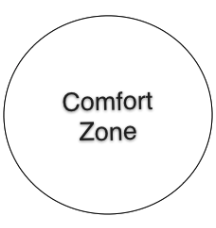
Seven Mistakes in Clinical Supervision and How to Avoid Them

Clinical supervision is the “signature pedagogy” of choice in psychotherapy (1). I’ve benefited a great deal from the lessons of my supervisors. Some of their words from a decade ago not only still echo but have become first principles I keep close in my own clinical and supervisory work and teaching. Most of us regard clinical supervision as highly integral to our professional development. It’s hard to imagine not having someone to turn to for case consultation and guidance, especially when stuck in a rut and not making expected or desired progress with a particular client.

Supervision and Clinical Impact

Given the benefit we often feel from clinical supervision, the logical next question to ask is whether clinical supervision actually translates into meaningful impact on our client’s wellbeing? About 8 years ago, Edward Watkins Jr., a researcher from the University of North Texas, conducted a review of 18 empirical studies that examined the impact of supervision on client outcomes. Based on the big picture analysis, Watkins said “…the collective data appears to shed little new light on the matter. We do not seem to be able to say anything new now, (as opposed to 30 years ago), that psychotherapy supervision contributes to client outcomes.” (2)

More recently, a team of researchers set out to investigate this question based on a large five-year dataset comprising 6521 clients seen in naturalistic settings by 175 therapists and guided by 23 clinical supervisors (3). Not only did factors such as supervisors’ experience level, profession (social work vs. psychology), and qualifications not predict differences between supervisors, the role of clinical supervisors explained less than 1% of the variance in client outcomes. Said in another way, and contrary to expectations, clinical supervision as we know it has little to no significant impact on improved outcomes in the lives of our client’s lives.

Taken together, we may very well feel the benefit from clinical supervision, but it doesn’t seem to translate into improved clinical outcomes.

Rethinking Clinical Supervision

This begs the question. Why is clinical supervision not translating to actual improvement of client outcomes? Given that we invest so much time and effort in our “signature pedagogy,” perhaps we need to rethink our current practices in supervision. Drawing from the existing psychotherapy evidence and the development of expertise literature outside of our field (4), here are seven supervisory mistakes I see us making, along with speculation on how these relate to apparent clinical stalemate:

1. Too Much Theory Talk

2. Pat-on-the-Back

3. Lack of Monitoring Client Progress

4. Lack of Monitoring Engagement Level in Supervision

5. Not Analyzing the Game

6. Overemphasis on the Self and Neglecting the Impact on Client

7. Lack of Focus on Therapist’s Learning Objectives

8. Too Much Theory-Talk

Often, the clinical supervision encounter revolves around cases discussion, case formulation and theorizing about the clinical pathology. This fits under the umbrella of clinical conceptual knowledge and does not actually delve into moment-by-moment interactional patterns that unfold in a therapy hour. We often end up waxing lyrical on how a case may be conceptualized in a psychodynamic framework or in an emotion focused or from a CBT perspective. Not only does this disembody the conversational nature of reality in therapy, we assume that the key is to obtain a thorough case formulation of the problem at hand. In 1939, Carl Rogers aptly pointed out, “…A full knowledge of psychiatric and psychological information, with a brilliant intellect capable of applying this knowledge, is of itself no guarantee of therapeutic skill.” (5)

2. Pat-on-the-Back

In my work with supervisors and therapists, I often hear this chant, “…But your client still comes back to see you right?” In actuality, a small percentage of clients (~10%) account for the largest percentage (~60-70%) of behavioral health care expenditures, showing a continued use of services without successful outcomes (6).

While it is vital to take care of the supervisee’s sense of self, what feels good doesn’t equate to what helps us grow. About a third of our clients continue therapy without experiencing reliable improvement in their well-being. If we continue to bolster their esteem with praises or consolations without helping them identify their growth edge and improve the outcomes of “stuck” cases, we are doing our therapists and clients a disservice.

3. Lack of Monitoring Client Progress

We therapists are an optimistic bunch. In the absence of real-time monitoring of outcomes and engagement, session-by-session, we fail to detect deterioration and dropouts. A groundswell of studies now show that the use of measures such as a real-time feedback tool not only reduces deterioration in client well-being by a third, but cuts drop-out by half, and as much as doubles the overall effectiveness of therapy (7). Even when we use routine outcome monitoring devices, like the Outcome Rating Scale (ORS) & Session Rating Scale (SRS), Outcome Questionnaire (OQ-45),or Clinical Outcome Routine Evaluation-Outcome Measure (CORE-OM),we fail to meaningfully integrate this into the supervisory process. We stick to using the measures as an assessment tool, and not as a conversational tool.

4. Lack of Monitoring Engagement Level in Supervision

For those of you who are already using routine outcome measures as a source of feedback, you know that it’s hard for clients to give feedback to the therapist. It’s also hard, if not harder, for a supervisee to provide feedback about the engagement levels in supervision — especially if the supervisor is a colleague.

The reality is, supervisors have a tough enough job of ensuring that their input has a ripple effect not only on the therapist, but also on their clients. Having some kind of formal procedure to elicit what’s been working for the learner can help the process of focus. In addition, given that supervisors and supervisees might have overlapping roles or collegial bonds outside of supervision, having a formalized feedback procedure in supervision allows for both parties to take a pit stop and address issues in real time — not 6 months down the road when it’s too late — that might be brushed aside.

5. Not Analyzing the Game

In any other domain of performance (e.g., sports, music), if one were to seek a coach’s help in improving their game, it would be unheard of for the performer not to analyze her performance. Yet, in the field of psychotherapy, we do less of examining the moment-by- moment dynamics of the therapy hour and more theorizing (see point #1). Most supervisors do not use the practice of watching snippets-segments of the video recording highlighting specific areas that the therapist can work on.

Much like other fields (music, sports), it’s important to record sessions in order to receive feedback about actual performance rather than feedback about a perceived or reported performance. Feedback is useful when it’s based on a well-defined objective, observables, and specifics.

6. Overemphasis on the Self and Neglecting the Impact on Client

You may not agree with this point, but there is an over-emphasis on the self of the therapist at the expense of impact on the client. Too much supervisory time is spent on superfluous issues such patting the supervisee on the back (see # 2), while not enough time is spent on using real-time progress monitoring to guide the conversation (see #3).

7. Lack of Focus on Therapist’s Learning Objectives

Finally, I would argue that there is a lack of focus on the therapist’s learning objectives. This is one of the four tenets in deliberate practice (8). (Stay tuned as we will cover this in future blog posts). This may be the most vital yet lacking element in a practitioner’s professional development. Too often, we engage in clinical supervision on a case-by-case basis, with no coherent thread weaving in the therapist’s learning needs and clinical case concerns. Even when we do so, there is often a lack of systematic tracking of the supervisee’s development. As useful as client feedback is to clinical practice — spotting anything glaring or missing and pointing out if the session is on-track or not — this does not help therapists improve on their therapeutic skill, based on the developmental stage of their profession.

Consider another example: A top musical performer does not benefit from the feedback of the crowd (the decibels of the audience’s applause, the verbal comments about the performance, etc.), as much as the nuanced and specific feedback they might receive from their maestro or producer.

***

In the upcoming blog posts, I will cover each of the seven points raised about the flaws in our default ways in clinical supervision, and I will provide specific pathways out for each of them.

References

(1) Watkins, C. E. (2010). Psychotherapy Supervision Since 1909: Some Friendly Observations About its First Century. Journal of Contemporary Psychotherapy, 1-11

(2) Watkins, C. E. (2011). Does Psychotherapy Supervision Contribute to Patient Outcomes? Considering Thirty Years of Research. The Clinical Supervisor, 30(2), 235-256.

(3) Tony G. Rousmaniere, Joshua K. Swift, Robbie Babins-Wagner, Jason L. Whipple & Sandy Berzins (2014): Supervisor variance in psychotherapy outcome in routine practice, Psychotherapy Research, 26(2), 196-205.

(4) A. Ericsson, K. A., Hoffman, R., Kozbelt, A., & Williams, A. (Eds.). (2018). The Cambridge Handbook of Expertise and Expert Performance (2 ed.). Cambridge: Cambridge University Press. B. Ericsson, A., & Pool, R. (2016). Peak: Secrets from the new science of expertise. Houghton Mifflin Harcourt.

Miller, S. D., Hubble, M., & Chow, (2020). Better Results: Using Deliberate Practice to Improve Therapeutic Effectiveness. American Psychological Association.

(5) Carl Rogers, 1939, p. 284 The Clinical Treatment of the Problem Child.

(6) Lambert, M. J., Whipple, J. L., Hawkins, E. J., Vermeersch, D. A., Nielsen, S. L., & Smart, D. W. (2003). Is It Time for Clinicians to Routinely Track Patient Outcome? A Meta-Analysis. Clinical Psychology: Science and Practice, 10(3), 288-301.

(7) Schuckard, E., Miller, S. D., & Hubble, M. A. (2017). Feedback-informed treatment: Historical and empirical foundations. Prescott, David S [Ed]; Maeschalck, Cynthia L [Ed]; Miller, Scott D [Ed] (2017) Feedback-informed treatment in clinical practice: Reaching for excellence (pp 13-35) x, 368 pp Washington, DC, US: American Psychological Association; US, 13-35.

(8) Chow, D. (2017). The practice and the practical: Pushing your clinical performance to the next level. In D. S. Prescott, C. L. Maeschalck, & S. D. Miller (Eds.), Feedback-informed treatment in clinical practice: Reaching for excellence (pp. 323-355). American Psychological Association.

Questions for Thought and Discussion

What kind of clinical supervision do you value and why?

Which of the author’s seven mistakes have you or do you currently engage in?

What have you done recently to improve the quality of your clinical skills?

What style of supervision do you practice, or would like to practice?

Talkspace: The New Therapy Room

I am always on the lookout for new opportunities and exciting options through which to share my mission of promoting positive mental health. I have been a psychotherapist for over 31 years. Working with adolescents has taught me many things, foremost among which is to expect the unexpected and be open to whatever is happening in the digital world. And it’s not like I’m a dinosaur who’s ignored trends in the digital world, but when did texting become the new form of talking, and can it possibly be an effective form of communication? For therapists?

Like what you are reading? For more stimulating stories, thought-provoking articles and new video announcements, sign up for our monthly newsletter.

Along came Talkspace (TS), a highly sophisticated digital therapy platform which provides for communication with clients through audio and/or video messaging and live video sessions. I thought it was an opportunity, but even more so, a resource, I could not ignore. The “on-boarding” process, as it is called, required a significant commitment including providing my professional credentials, proof of liability insurance and completion of their comprehensive Talkspace University+ training, so that I could understand and effectively use their digital platform. Yes, it is HIPAA compliant.

Clients provide informed consent along with emergency contact information. One hopes to never have to use the emergency contacts, yet it is reassuring to have them readily available, if needed. Talkspace handles all financial transactions, including insurance, private pay and EAP (employee assistance program) fees. Clients are paired with therapists or can choose their own clinician. They complete a general application outlining their presenting problem(s) which triggers an assessment designed to establish a baseline of the frequency and or intensity of the presenting problem(s). Once client and therapist are paired, the therapeutic relationship begins. Rapport building beings and expectations related to frequency and mode of communication are agreed upon. For me, it involves five twice-daily visits to my “room” each week. The client has 24/7 access to their “client room” which is where we maintain contact. The relationship can form surprisingly quickly compared to some of the typical live sessions I have had in my on-ground or in-school clinical work.

Has it been significantly different for me from the traditional face-to-face therapy that I have practiced for so long? Yes and no! The convenience for myself and my clients is incredible. If you have an iPhone or iPad with a wireless connection, you can provide psychotherapy through the Talkspace platform. Italy, here I come! Yes, that does make it sound easy, however just as I have in my on-ground office, it has been important to trust in and use the experience I have accumulated to read through the message in the messages. Do I miss the nonverbal cues? Well, yes! This introduces the challenge of asking additional questions that I might not otherwise ask in my face-to-face work. For example, “What are your feelings about this? How are you processing all of this?” Yes, you ask these questions in face-to-face therapy, however it is typically more in the flow while you are reading the client’s nonverbal cues that insight into their feelings is acquired.

Most of us do not audiotape/review our sessions, we use notes and memory, right? Think about what YOU use to recollect your session. The nature of this digital therapeutic communication is very similar to in-person communication, but the entire exchange is right there on the screen. Client and therapist can read re-read the entire communication. This has allowed me to use the CBT model with greater impact. I encourage my TS clients to reread and review some of our previous messages to reinforce interventions, sometimes cutting and pasting in order to highlight and reinforce a concept. Here is an example of part of an interchange I had with a client:

Client: “I value my friends a lot and I genuinely do whatever I can to make them feel as good as I can get them to be.”

Me: “I am wondering if you can apply that thought/ideal to yourself. I value me a lot and genuinely do whatever I can to make me feel as good as I can for myself. How would that statement/thought feel? Try it on.”

Of course, I asked my client permission to use this. Within my message to ask permission, I once again copied and pasted the previous message for the client—an effective way of reinforcing and restructuring some of the negative thinking that occurs for her. One of the advantages of this platform is the ability to go back with accuracy to reinforce while highlighting the possibility of change. Additionally, I like the use of visuals in therapy such as the CBT triangle (thought, behavior, emotion), but as yet, it has been a challenge to bring these into the Talkspace room. I’ll get there.

The one constant in life, and no less in my evolving professional role, is change. Talkspace has challenged my preconceived ideas about digital therapy and enabled me to bring my clinical skills into the digital sphere. I welcome the research and data to support this work. I recently asked one of my digital international clients to articulate their experience with me on Talkspace. She said, “I don’t know if this could be of any use, but face-to-face therapy here in Saudi Arabia is really limited…I was faced with ignorance and people didn’t know how to handle me.” She continued, “With Talkspace, I truly felt heard and comforted in ways I couldn’t in face-to-face therapy. I’m sure professionals here are extremely good at what they do, but I was blessed to have you as my therapist and like I’m taking a huge step into bettering myself.”

Face-to-face and digital therapy both include rapport building, the establishment of baseline through careful assessment, the development of treatment goals, the creation and implementation of interventions and assessment of treatment outcome. Talkspace has brought me and my therapy room to clients who I, more than likely, would never have had the opportunity to work with. The clinical effectiveness, affordability and accessibility of Talkspace have worked for both me and my clients, allowing me to continue my mission to promote positive mental health. Therapy is not about a room, it is about creating a space for connection and healing. Welcome to the new therapy room.