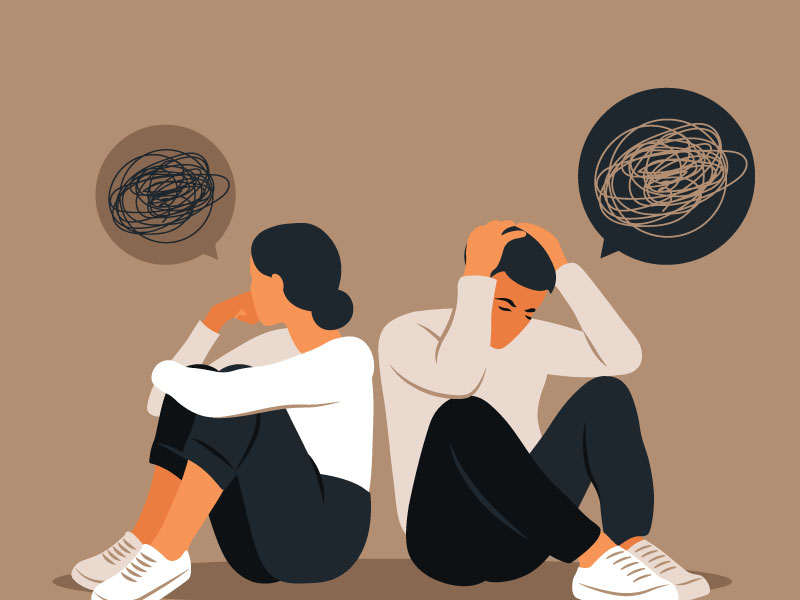
Successful Trauma Therapy Does Not Require Forgiveness

Research indicates that forgiveness can positively impact physical and mental health. Yet, few studies explore the impact of forgiveness on trauma survivors. Existing studies suggest that forgiveness can be beneficial. However, these few studies have small sample sizes and are often conducted or funded by forgiveness advocates. If we can’t rely on the research, clinicians must ask themselves, “Does forgiveness benefit trauma survivors as a part of their recovery?” Can CBT Truly Benefit Trauma Survivors? To find an answer, consider this question, “Does CBT — frequently used in the treatment of trauma survivors, benefit their recovery?” The answer is yes and no. Some survivors do, while others do not. The same applies for forgiveness. Some survivors benefit from forgiving their offenders, while others do not. There is no universal treatment for trauma. There is not one intervention that works for all survivors. If forgiveness may or may not benefit survivors in their recovery, could incorporating it into treatment harm them? And by “incorporating” it into treatment, I am referring to those instances when the therapist does so, not at the request of the client, but because they believe it will be beneficial. By “harm” I suggest that survivors could potentially: end therapy prematurely and not resume with a new therapist for years (as seen below in the cases of Marcus and DeAndre) continue to sacrifice their safety to forgive (which April, also below, was able to avoid) avoid, postpone, or try to skip vital emotional processing, which is often necessary for trauma recovery (such as with DeAndre) repeat old patterns of self-sacrifice, or pleasing their offenders to support their safety (continuing the flight, freezing, or fawn response) encourage silence, preventing survivors from embracing their narrative and sharing it with others, which can support recovery interfere with reporting dangerous people to the authorities if needed After 15 years as a trauma psychotherapist, I’ve discovered that when forgiveness is pressured, recommended, or even encouraged, it can cause harm in any of the forms noted above. I assume that many well-intended clinicians believe that trauma survivors will progress in therapy if, and perhaps only if, they forgive. These clinicians may unintentionally cause damage when they advocate forgiveness in circumstances where it doesn’t meet the needs of survivors. “Forgiveness Was Never for Me; It Was Always for Them” Marcus experienced emotional abuse as a child from ages 6-12. His father would scream at him, call him derogatory names, or ignore him for weeks. At age 14, he began instigating physical fights at school and was suspended. Therapy was recommended. When Marcus disclosed the abuse, his therapist encouraged him to let go of his anger by forgiving his father. There was no exploration of Marcus’ capability, readiness, or willingness to forgive. Instead, it was determined by the therapist, the school, and the family that Marcus needed to forgive so that he would stop physically assaulting others. A few months after starting individual therapy, Marcus participated in his first and only family therapy session with his father. Under the watchful eye of Marcus’ therapist, his father gave a one-minute apology for six years of emotional abuse, and Marcus sheepishly replied, “I forgive you.” Since that family therapy session, Marcus was not allowed to express anger directed at his father, mother, or anyone else. When he did, people would say to him, “What are you so angry about? Didn’t you forgive him?” and “It’s time to move on.” Five years later, at age eighteen, Marcus ended all communication with his parents. “Please, don’t ask me to forgive them,” 32-year-old Marcus told me during his first therapy session since he was 14. “Forgiveness was never for me; it was always for them.” “Deal,” I said without hesitation. “We are officially taking forgiveness off the table.” “Really?” “Yeah, we don’t have to focus on forgiveness. What would it be like if we focused on what you need instead?” Marcus looked shocked. He glanced around the room with fluttering eyes. Then, he placed his head in his lap and cried. For the next five years, Marcus learned to embrace, express, and process his anger, fear, and grief. Then, gradually, he experienced authentic forgiveness. This was never the focus of our treatment. Instead, it was an organic result. When he ended therapy with me, Marcus decided not to reestablish contact with his parents, whom he hadn’t spoken to in 14 years, a reminder that forgiveness is not the same as reconciliation. Marcus focused his efforts on the people he believed could provide safe and trusting relationships. “Women Are Supposed to Always Forgive, Even If It Kills Them” April began therapy when she abruptly left her physically and financially abusive husband. It was her third attempt at leaving and what she called “My last Hail Mary.” She moved out of the state with her children and ceased communication with her husband. She worked with an attorney and a case worker to pursue a divorce and full custody. Yet, her family members and friends encouraged her to resume communication with her husband, and at times passed messages along to her from him. They had good intentions. They didn’t want her to return to her husband; they wanted her to experience an uncontested divorce to minimize the financial burden and to participate in co-parenting to support the childrens’ relationships with both parents. When April began therapy, her therapist, who was not trained in working with survivors of domestic violence, agreed with them. In therapy April was encouraged to consider reestablishing contact with her husband to experience relationship closure by embracing forgiveness. Her therapist wanted her to “not have long-term trauma symptoms,” as April recalled. Therapy consisted of April learning coping skills to use when she was ready to reestablish contact with her husband and visualization exercises to help her to be open to forgiveness for the sake of her children. A month later, April ended therapy and all communication with her family and friends. Two months later, her case worker recommended that she work with a trauma-trained therapist, and she agreed to participate in a consultation call with me. “If I talk to him, I’ll go back,” April said in a tone that sounded angry, but all I heard was fear. “If I go back, he will kill me, or I’ll kill myself. You need to understand that.” “I get it. You have no plans to reestablish contact. All communication will go through your attorney or case worker. Is that correct?” I asked. “Yes. It’s like, people don’t get it. Women are supposed to always forgive, even if it kills them.” April agreed to try trauma therapy with the understanding that she could end treatment at any time. She didn’t. Instead of reestablishing communication with her husband and seeking forgiveness, April’s therapy focused on establishing safety. With a trauma therapy recipe consisting of EMDR, Somatic Experiencing, Internal Family Systems work, self-defense classes and support groups, April learned to create and maintain safety in her new home and city with new friends. Three years later, she resumed contact with a few family members and friends who were receptive to following firm boundaries regarding their interactions with her and her ex-husband. At that time, her ex-husband had ceased contact with all of April’s family and friends, had given April full custody of the children, ended contact with his children and remarried. “I Thought Forgiving Her Would Save Me” DeAndre’s mother would become rageful without warning. She’d scream, mock and belittle her children and damage property. As a result, he developed a fear of anger, as his childhood experiences taught him that anger was an unsafe emotion that should be avoided. He learned to suppress feelings and expressions of anger and was considered an easygoing guy. Yet, his relationships lacked closeness, and at 27 years old, DeAndre began therapy for the first time. DeAndre and his therapist discovered that his anger and fear prevented him from engaging in healthy conflicts, establishing boundaries, and presenting his authentic self in adult relationships. This avoidance caused a lack of vulnerability and closeness, leaving him feeling isolated. DeAndre’s therapist recommended that he engage in conflicts with others to achieve forgiveness. The therapist suspected that DeAndre would feel safer with his anger if he could do something healthy with it, which would be forgiving. As a result, DeAndre became a prolific forgiver. He forgave his mother, his friends, and everyone who had ever wronged him. He didn’t require acknowledgment, accountability, or apologies from his offenders. He quickly forgave them. After a year, he ended therapy because his relationships did not improve, he continued to feel isolated, and thought that people were taking advantage of his easy-going, forgiving nature. Twelve years later, DeAndre was married with children. He began therapy with me to address his lack of boundaries in his relationships. “I feel angry for a few minutes,” he said in the session. “What happens after those few minutes?” I asked. “I don’t feel anything,” DeAndre described. “That’s when I forgive them and move forward.” After working with DeAndre, it became clear that he was not forgiving; he was dissociating. Experiencing anger was so overwhelming that his mind and body could not tolerate it for more than a few minutes at a time. DeAndre and I focused on increasing his tolerance and feelings of safety related to anger. As therapy progressed, he discovered that he was angry at his mother for her abuse. He resented his extended family members for not protecting him. He was also disappointed in himself for being unable to protect his younger sisters from his mother’s rage. “The truth is, I haven’t forgiven her,” he said. “I thought forgiving her would save me from my anger, but it didn’t. It just helped me avoid it for forty years.” Two years later, DeAndre was able to experience anger for extended periods and safely express this anger to others. Once he discovered his anger did not harm others, he could engage in conflicts and establish boundaries in his relationship with less fear. He was now participating in closer relationships with his sisters, wife, and children. When DeAndre ended treatment, he had not forgiven his mother, but that was never the goal.

***

If forgiveness can harm trauma survivors, what should mental health clinicians do? Clinicians should not force, encourage, or recommend forgiveness. Instead, they should allow trauma survivors to decide or discover their needs regarding forgiveness. Survivors might choose to forgive, or they might embrace organic forgiveness. Survivors might choose to withhold, resist, or forgo forgiveness. Some survivors might not be capable of authentic forgiveness no matter how hard they try, and others may wish to take forgiveness off the table. The giving or withholding of forgiveness is a choice that should always be left to the survivor. Questions for Thought What are your thoughts about the author’s approach to forgiveness with trauma survivors? What is your approach to integrating forgiveness into your own trauma work? Can you think of instances where forgiveness helped the client? Can you think of instances where forgiveness did harm instead?



Dreams, Nightmares, and the Key to Successful Trauma Therapy

A client of mine dreamt that she had sat so long in the bath that the water had turned cold. While I have heard thousands of client dreams, this one brought me to a realization about how dreams may be graphic depictions of client’s shifting autonomic states — images from and of the body. Far less filtered by our internal censor than waking thoughts, dreams are more image-based, visceral and fluid. Spending time with my clients’ dream images in a calm and curious way has been inherently soothing for them, and of late, I am beginning to suspect why this is so. While many have offered opinions on the nature and purpose of dreams, this notion that they are images the body projects onto the dreamscape has become clinically compelling to me. Nightmares Can Be Most Useful Dreams The late Ernest Hartmann, a celebrated dreamworker and researcher, famously said, “The nightmare is the most useful dream.” This is not meant to dismiss the real distress and terror that our worst dreams can bring. Nightmares are perhaps the most troubling symptom of post-traumatic stress injury and are prevalent in fully two-thirds of those with a mental health diagnosis. The benefit of nightmares is that they represent extreme emotional and physical states, and as such, ones that we can learn the most from. I’ve spent the last few of years investigating the link between nightmares and the autonomic nervous system (ANS) through the lens of Porges’ polyvagal theory. Although I think the implications of this for nightmare formation and treatment are still largely unexplored, I started the ball rolling with the recent publication of an article with an optimistic title: Solving the Nightmare Mystery. In it, I imply that the role of the nervous system is a missing link in our understanding of how to treat nightmares. I have been working clinically with those who experience deeply disturbing dreams for many years. One of the main things I do to help is facilitate the search for, and embodiment of, cues of safety that help alter the dreamer’s perception and experience of these dreams. Clients tell me that this embodied process of dreaming their dreams forward (called ‘rescripting’ in modern nightmare treatment literature), changes how they hold the dream in their body. Typically, the memory remains, but the emotional and physical “charge” dissipates. For example, during the pandemic I dreamt of a woman falling to her death. She is a dear friend of mine with a highly compromised immune system, and it’s clear that the dream depicted my fear for her safety. I worked with this dream and found some hope in the athletic way she leaped onto the roof (before losing her balance). In dreaming it forward from there, she used that virtuosity to land safely. This dream session helped me feel better about the situation, and later she did indeed survive a nasty bout of COVID. Nightmares as Lived Bodily Sensations Nightmares are often quite dramatic depictions of current fear and/or past traumas. There is clear autonomic activation during sleep state shifts for those who experience them frequently. Nightmares are easily recalled, and their impact is tangibly felt, as is the relief one experiences when they begin to fade or shift into a more benign form. In a clinical setting, we can easily track clinical progress for those with intense dreams because when they shift toward more normal dreams, the change is welcome and obvious. In a recent class I taught on the clinical use of dreams, I realized that all dreams might be expressions of our autonomic state, even the quieter ones. A student brought a dream with the central image of a still, dark woman in a tub. She had sat there for so long the water had gone cold. When I invited the dreamer to allow the dream to continue, her impulse was to turn on the hot water faucet, to bring some warmth to the bath and to the woman’s body. At my invitation to enter the dream further, she took notice of the tub itself. It was older, more ornate and beautiful than the one in her bathroom, where the dream was set. I encouraged her to enjoy the details of this tub, and it began to feel like a precious heirloom. Details in dreams that depart from waking reality (called counterfactuals) warrant particular attention. The dreamer’s demeanor changed in this process of warming the bath; her face coloring and smiling as she described making the bath a sanctuary, adding scent and oils, and dipping into the enjoyment of it. Later, she told me, “I continued to experience ‘mini shifts’ in the following days and was able to access and carry the felt sense of the warmth and beauty of the bath into many areas of my daily life. I noticed I feel more present when I bring a sense of aesthetics, a little beautifying and warming detail, to tackling some of the mundane daily tasks which have been weighing me down lately.” The Critical Role of Polyvagal Theory This entire dream process could be seen as an image of the autonomic nervous system (ANS) as described by the polyvagal theory. Porges’ theory updates the former conceptualization of the nervous system as paired opposites that shift between sympathetic arousal and parasympathetic relaxation/shutdown. Instead, the theory suggests that we automatically shift states in a specific order depending on our sense of threat: we move from safety and social engagement to activation in the face of threat (fight/flight), and lastly, to immobility if the threat is perceived as overwhelming. And the theory suggests we move out of these states in reverse order. The woman in the dream followed these steps as she shifted from a cold, immobilized (dorsal vagal) state, into one of animation. The changes were clearly visible on her face. Her fellow classmates remarked on the change as the color returned to her cheeks, and her physiology demonstrated a clear shift into a state of social engagement and warmth (ventral vagal). This kind of shift is depicted in the imagery that arises in working with dreams. For example, the images from nightmares are clear representations of autonomic states. Activation or fight/flight – being chased or engaged in a battle are among the most prevalent nightmare themes. What I am suggesting is that nightmares are the most obvious expression of what happens in all dreams. They are our bodies expressing, in image and sensation, our fluctuating internal state. They are a doorway into its expression, particularly valuable for those clients who have trouble hearing what’s going inside. This brings me to another of Hartmann’s famous statements: that dreams are ‘picture-metaphors’ for our most salient emotional concerns. Sometimes our most pressing feelings are repressed, historic, or fleeting enough that we don’t think about them during the day. But our dreams have an uncanny way of picturing what matters most, even if we have repressed it. Our bodies carry the charge of feelings and memories that are unmetabolized, and these find expression in our dreams. The True Purpose of Dreaming? My sense, which is shared with many dreamworkers and researchers, is that the purpose of dreaming about emotion is not to upset us, but to help us process and shift such feelings. Sometimes, the dreams do this all on their own, like a nocturnal therapist, and sometimes it helps to have another person process the dreams with us. Sharing our dreams and bringing them into company and the light of day helps them do their job better. And increasingly, I’m beginning to think that a large part of their purpose is expressing and regulating the state of our nervous system. However, I need to give the dreamer the last word here. In the example of the woman in the bathtub, the dreamer accepted that yes, the dream did depict welcome state changes. But there was more — an invitation to sink into the beauty and warmth of an elegant bathtub, and a new way of being with life’s mundane chores. In other words, the shift in physiological state is welcome and accurate, but the invitation to appreciate beauty was compelling. And please forgive the very intended pun — to focus solely on physiology and ignore the depth and nuance of dream expression would be like throwing the baby out with the bathwater. Questions for Thought How does the author’s clinical use of the client’s dream fit with your own approach to dreamwork? What might you have done differently with this client regarding her dream? What is your own theoretical understanding of dreams and their “purpose?”

How Mental Illness Protects Clients Wounded by Trauma

All persons, those with and those without a mental disorder, exhibit both conscious and unconscious defense mechanisms. Conscious defense mechanisms are organized by, and act in service of the ego and seek to preserve the integrity of the person’s self-image. Unconscious defense mechanisms are organized by the unconscious mind — the mind’s mind — and serve the integrity of the whole person.

Like what you are reading? For more stimulating stories, thought-provoking articles and new video announcements, sign up for our monthly newsletter .

Rationalizations and Reflections

Rationalizations about the symptoms of a mental illness (for one with a mental illness), or about the vagaries of one’s actions (for one without a mental illness), are a form of conscious defense. Reflect briefly on the excuses you make, and you can see examples of a conscious defense in service of your projected or preferred self-image.

In my clinical experience, some persons with a mental illness devise alternate explanations for their diagnosis in ways that help preserve a sense of personal integrity. “I don’t think I have schizophrenia, I am a psychic,” said one female resident at a nursing facility where I provide counseling. “I don’t use the word schizophrenia, I think I have time-travel and mind-travel,” said a male resident. “It’s not right to say I have schizophrenia,” said another woman. “I have PTSD because of the things I’ve heard and seen being done by the government and the mafia.”

If the person admits to the disorder of their mind as an illness, it could imply that they cannot rely on their mind for coherence or integrity, and so feel like a kaleidoscope of fragments without coherence. That would truly be terrifying.

The defensive rationalization might provide an explanation that bestows a special significance to the person—I am gifted; set apart from others, unique, contending with things others know nothing about. Such rationalizations exist in a borderland between the conscious and unconscious mind; they are partly delusion and partly ego repair. Rationalizations are at least partially conceived by the conscious mind, while delusions are sensed as received, and incontrovertibly true; they have the authority of otherness.

Delusions, like defensive rationalizations, tend to serve a purpose yet they may originate from a deeper element of the psyche. Delusions can sometimes offer a glimpse into the working of a broader intelligence within the psyche. Fortunately, we are more than the contents of our conscious minds. We each are served by a deeper source of intelligence and creativity, the unconscious mind that envelopes the ego and seeks to broaden its understanding and foster its wholeness.

Manifestations of the individual unconscious can be seen in dreams, and the power of the archetypes of the collective unconscious can be seen in large social situations—witness the power of the archetype in the world-wide response to the recent death of Queen Elizabeth, for example (I think it is important, though, to view Queen Elizabeth as a rare living exemplar of the four Cardinal Virtues: Prudence, Justice, Temperance, and Fortitude).

Dream-Digging as Archeology of the Soul

Many years ago, I wrote a master’s thesis entitled “Dream-Digging: Archeology of the Soul,” in which I excavated through a stack of journals in which I had been writing my dreams over a 17-year period, examining the appearance and actions of a particular recurring image, that of a snake.

As part of my preparation for practicing psychotherapy, I had undertaken a two year long Jungian dream analysis. Each week I would type — on a manual typewriter with a sheet of blue carbon paper between two sheets of paper, so that I would have a copy — the dreams I had collected that week in my journal and would explore their meanings with the analyst.

Noticing the sometimes-ingenious incursions of the unconscious mind into daily life is not limited though, to dream analysis or to the study of archetypes. One can even notice the protective functioning of the mind's mind in the tragic consequences of trauma with dissociative features. Consider the following examples from my clinical work in nursing facilities.

Hazel’s Front Line Defense

Hazel was a 94-year-old lady living in a nursing facility. She was alert and quite talkative and actively wheeled through the building daily in her wheelchair—and always wore a red terry cloth bathrobe over her clothes. In childhood, she and her sisters were repeatedly sexually assaulted by their father who eventually went to prison for his crimes.

Hazel had an encapsulated psychosis with delusions involving possible threat from demons. She believed that many years ago demons had entered her childhood bedroom through hidden doors, and she claimed that one time while brushing her hair, she saw in the mirror that Satan was in her bedroom doorway. She felt the need to be perpetually on guard to notice and defend against any re-occurrence of demon activity.

Through the unconscious and protective functioning of dissociation, she split off awareness of her father sneaking into her room or looming ominously and projected it as having a supernatural source from which she might thereafter protect herself, if adequately vigilant. Her omnipresent red bathrobe also pointed symbolically as a sort of alarm, a warning about the earlier scene of the crimes.

Lucy’s Isolation as Protection

Similar in many ways to Hazel, Lucy was serially raped by her father and uncles over several years in her early adolescence. Lucy described leaving her body and floating at the ceiling and watching what was happening to her body below during assaults.

Due to severe trauma, she subsequently suffered from mental illness with dissociative features. She rarely chose to tell others of her thoughts and feelings because, “they’ll think it’s just all schizophrenic stuff.’ She isolated herself in her room at the nursing facility, wearing only hospital gowns, and kept the curtains drawn around her bed. She complained periodically that something had gone wrong with her mattress, and that she needed another one or it would make her ill. Lucy believed that she was supernaturally ordered not to wear clothes, and that they would make her ill if she did.

Lucy told me that the men who assaulted her were not actually to blame, because they were under the control of an evil spirit who made them do what they did. Again, we see how the symptoms of wearing only nightclothes and the sometimes-sickening mattress point to the earlier scene of the crimes. Her unconscious dissociative and psychiatric symptoms allowed her to imagine that her persecutors were not responsible for her abuse, and that she might be safe now if she lived within restrictive parameters.

Her goal in psychotherapy was simply to sustain her daily stability with as little change as possible in her daily routines. Lucy described living in her own world, which was more satisfying for her because the outer world had been so painful for her. She viewed psychotherapy conversations as a kind of visiting at the doors of our different worlds, where she could greet me and offer a report about how she was doing in her world.

***

The symptoms of mental illness can sometimes seem chaotic, yet while irrational, they may still be filled with meanings, and can point to their origins and to the unconscious strategies that help sustain a broken psyche. As a psychotherapist, I have come to notice and work with the often-clever manifestations of the “mind’s mind” as I have tried to decipher the hieroglyphic language of disordered thinking and acting that has been brought about by trauma, and by the creative efforts of the unconscious to try and manage the destruction.  

Questions for Clinical Thought

Can you think of clients with whom you’ve worked where this perspective might have helped, or may help?

How useful or not are the unconscious mind and ego defenses as therapeutic concepts?  

Radical Listening: A Key to Therapeutic Success

The space between musical notes is called an interval, I just learned. French composer Claude Debussy described music as “the space between the notes.” Without the space between, it would just be a cacophony of noise. The space allows for the notes to resonate and reverberate and mature into their fullness of expression. It gives room for relativity and reflection and response. This analogy could be applied to many things in life to improve their experience and outcome: dialogue, relationships, life, and psychotherapy.

Like what you are reading? For more stimulating stories, thought-provoking articles and new video announcements, sign up for our monthly newsletter.

Being untrained in the art and technicalities of music, I listen to and appreciate music more intuitively. I hear the Gestalt of the composition or song rather than attempting to discern the nuance of their parts. Knowing this about music, and then extending it analogously to other areas of life, clarifies and shines a light on the “space between” in some illuminating ways.

Competing for Space in Relationships

Sometimes in relationship conflict, when two people are vying for space to be heard, there are times when there is little space for absorption, reflection, and appreciation of the other. Defensiveness and/or attack predominate. Or sometimes one person needs space and the other does not provide it, pursuing relentlessly, forcing the other into either complete retreat and shutdown, or drawing them reluctantly into defensive engagement. It is a simultaneous and continual banging of pots and pans and blasting of horns with no space in between.

In this particularly heated kind of context, creating “space between” facilitates relative quiet and calm. It allows for reflection time. It provides the opportunity to digest the other’s words, and for words of retort to be more considered and chosen. It gives feelings time to catch up. It allows each to be heard and seen. For the uninitiated or unaccustomed, to break through requires the practice of self-reflection and awareness raising. It also requires getting in touch with one’s bodily sensations to change the state of one’s nervous system. The space between — the intervals — needs to be conscientiously placed in between the notes, just as in the writing of a piece of music, like the unfolding of an experimental jazz set.

Sexual Abuse and the Need to be Heard

I was inspired to think about the space between in a relatively new job I am working in. It is in a community legal clinic providing counselling support to adult survivors of sexual abuse. For many of these clients, it is the first time they have spoken about their childhood abuse, particularly in any detail. They trust us, the intake team, counsellors and lawyers, especially considering most of our work is done on the telephone. In most cases, clients and staff never even meet face to face.

Being in this new role and working within a new modality for me (telephone-based counselling), I have been in observer mode, taking in the similarities and differences to my previous counselling roles and clientele. I noticed a tendency in some clients to talk ceaselessly and seemingly uninterruptedly for the full hour, quite easily and without allowing anything much in return from me. I can sometimes barely get a word in edgeways. How dare they! Are they not aware of the wisdom and insight they are missing out on? Did they not come here for my well-honed techniques of reflection and Socratic enquiry? My gifts are going to waste! I am not here to just listen! Besides, I have got a wealth of experiential Gestalt learnings to practice (I am currently a student of this art).

After composing myself, I realized that this was exactly what they needed right now. I had to adjust. They needed to be heard. Needed to be seen. To be believed. Some clients did not have any meaningful contact, let alone any contact at all, with another person in the space between our phone calls. Many have very deeply entrenched fears around trust and relational intimacy. It was their time. I had to adjust. I needed to be the one to provide the space between.

I am there to just listen. And this is a powerful ally for many for where they are right now. I continually receive feedback from clients about how grateful they are and how important it is for them just to be listened to. To be acknowledged. To be given space, just for them. It is sometimes difficult to accept and implement. Nevertheless, my greatest wisdom is to just be minimal. Not always, of course, but to know when and how.

The Power of Space in Group Therapy

I recently participated in an experiential group facilitation workshop. It was taught by an extensively experienced Gestalt and Psychodrama practitioner. It was a profound learning opportunity for me, the standout technique which I observed being “space”. I was like Ludwig van Beethoven, I imagine, witnessing…hmmm, I don’t know…help me out here Google…Herbert von Karajan conducting Bizet’s Carmen? Sure, why not? The space the facilitator provided to the group, to those doing a piece of work, was enlightening to observe. The empty space they allowed for the subject and other participants to sit with their feelings, their uncertainty, the potential void, without jumping in to fill the space or to offer insight or comfort, seemed so natural. But it was not natural. Well, not for me. They seemed to know exactly when to allow another group member to break the silence and when to pause them, when to slow things down. It impacted me deeply. It inspired me to be a better space maker in my work. For, while in this group, I was imagining what I might have said during moments of others work, how I would have broken the silences possibly out of anxiety or impatience or those egotistical impulses that often lurk just beneath the surface. I was moved by the experience, emotionally and practically, for a few reasons. It led group participants into new ways of experiencing ourselves, giving more room for us to feel into the phenomenological moment, and because it once again revealed to me a learning edge of mine, shining a light on another way of being with clients. With people. And with myself.

***

The space between is a fertile ground. I have noticed that when I do not allow for space in between life activities, my world becomes a cacophony of noise. It is less beautiful. And there is less space to understand myself, my feelings, my impulses, or for insights to emerge. I miss out on flowing with the natural rhythm of life, the hidden laws of being perhaps. Part of my development is to extend this ‘space between’ to more areas of my life — counselling to be specific. To increasingly get myself out of the way, and to tune in better to the needs of the moment, to the needs of my client.   

Looking Back on a Year of Challenges for Psychotherapists

As much as I’d like to, I won’t presume to summarize this soon-to-be-past year in our world, because we each see that world differently. We each experience and live in that world uniquely. And the fields of psychology and psychotherapy are but minor lenses through which to perceive those worlds — and those of our clients.

So, as I look back on some of the events and issues we’ve experienced in 2022 as clinicians, clinical educators, and trainees, and the editorials you’ve contributed around those issues, I’m not surprised by their depth, range, and import.

A constant among the editorials we’ve featured has been a focus on the craft of psychotherapy. Not just the technical aspects of treatment, but the qualities of self that make for a “good enough” clinician — empathy, self-awareness, presence, and a commitment to growth and competence. These qualities, these aspects of self that the clinician brings into the room are often the unmeasurable ones, but are also those that help us to connect with diverse clients. They are the qualities that help clients make meaning of their stories, and when clinical stars align, to make meaningful changes in their lives whether they are experiencing the ravages of depression, battling with anxiety, adapting to situational stressors, or finding a peaceful and perhaps final resting place for ancestral trauma.

Then there were the essays that focused on the business of therapy, those that held a mirror to some of the very real-world pressures that clinicians must address to build their practices, their brands, and their reach. These are the ones that dealt with the benefits and challenges of teletherapy, advertising and branding considerations, and the lure of private equity firms with their singular focus on bottom lines, profits, and valuation.

Our editorials, whether shorter “blogs” or longer, in-depth “articles,” have also addressed some of the more complicated issues that clinicians and clients share as citizens of an increasingly divided local and global society. They aim to make sense of and adapt to the seemingly ceaseless presence of division, anger, disease, and war — all while keeping an eye on the horizon for goodness, connection, and hope.

And then there were our interviews; those opportunities to dive deeply into some of these issues by chatting with thought and practice leaders in the field like yourselves. These conversations highlighted a fascinating diversity of topics, including the proliferation of mental health apps, the realized and un-met promises of neuroscience, the importance of kink-affirming clinical practice, therapy in the digital age, behind prison walls, and even psychotherapy as an act of rebellion.

Quite a litany, of which I am proud and for which I thank YOU and promise more to come in the year ahead. Be safe, stay healthy, remain connected.

Lawrence Rubin, PhD

Editor, Psychotherapy.net  

Laughter and Humor Can Be the Best Therapy

A client once burst into my office for his first session and collapsed onto the couch. A little startled, I began with my usual protocol, asking what he had come for help with. “I’m a teepee,” he said. I stared at him, unfazed. “I’m a wigwam,” he continued. I nodded. “I’m a teepee,” he repeated. “I’m a wigwam!” I took a deep breath. “Obviously,” I explained, “you’re two tents.” This story didn’t happen, but it’s my favorite therapist joke. (If you haven’t gotten it yet, read it again aloud). People who know me outside the therapy room tend to think of me as a comedic fellow. The reason being, I surmise, is that I am in fact a comedic fellow — if I must say so myself. Some of them wonder how I could possibly be a therapist as well. Often, they do this aloud and in my presence. People generally regard therapists as serious professionals helping people with their serious problems in a calm, soft-spoken, (non-comedic) manner. It’s a fair question, and one answer is that I actually do have a serious side. It comes out mostly when I’m asleep, but it also makes appearances in the therapy room. If you wanted to psychoanalyze me, you might discover that my powers of humor derive from a sincere desire to spread joy, happiness, and empathy — which I maintain is foundational to all therapy — and is consistent with that desire. The other answer is that humor can be a powerful tool in the therapy room. Many people come for their clinical visit feeling terribly nervous and uncomfortable. This is especially true in my area of expertise, couples counseling, in which two people come to meet with a complete stranger to share their most personal moments (especially the most personal failures). Can they be blamed? Who’s excited about discussing their sexual dysfunction with anyone, let alone someone they just met? In this particular venue of counseling, I have found humor helps loosen us all up. It helps chip away at some of the discomfort and the shame and the resistance that clients bring with them. Donna and Dwayne As an example, consider Donna and Dwayne, an African American couple from Baltimore City who came in for help with their relationship. She walked in looking timid but hopeful. He followed behind looking P.O.’d from the get-go. He literally sat back on the couch, crossed his very muscular, tattooed arms, and glared at me. I started off with the usual pleasantries and asked them what brought them to therapy today. Donna looked at Dwayne, who didn’t move his gaze from me. She began to explain that they were having problems in their relationship. I listened for a few moments, nodding. When Donna finished the broad overview, I looked at her, then at him, and replied (mostly to him), “Uh-huh. So let me see if I get what happened: she’s unhappy with you, so she said, ‘hey, let’s go talk to a scrawny white Jewish guy about our problems and that’ll make everything better,’ and you were like, ‘that sounds GREAT!’” He did a very subtle double-take when I tagged myself as a scrawny white Jewish guy, then cracked a smile. That loosened things up enough for me to get a foot in the door with a client who was clearly not excited to be there to begin with. Humor has been a great connector for me, inside and outside of the therapy room. Someone somewhere said, “Everybody laughs in the same language.” (I just Googled it — turns out it was Yaakov Smirnoff, another comedic scrawny white Jewish guy. Go figure). Research tells us that the single most important factor in the outcome of therapy is the relationship between the client and the therapist. Nothing helps build relationships like a good shared laugh. Clients know when they come see me that it’s not going to be an interrogation or a kumbaya circle. It’s going to be a real conversation between real people. It’s going to be deep, but it’s going to be fun. It’s going to be us connecting to help them manifest change in their lives. I don’t think that can be accomplished by the clinician being a detached professional. At least not this clinician. But you can’t do that as a friend either. The sweet spot shares some features of both extremes. Pete Pete was a young man who I was seeing for depression. He started off one of his sessions with a new concern: “I think I may have some short-term memory loss,” he suggested. “I know,” I replied. “You told me that five minutes ago.” He looked concerned for a moment, then he broke out in a grin. Pete “got better” in due time. Not from that joke, you understand. But the camaraderie that undergirded our intense conversations, and the jokes that peppered them, certainly helped. Poking a bit of fun at the problems can also make them less menacing. “I need help with my procrastination,” said Avi, the husband of a couple I was working with. “We can talk about that later,” I replied. Of course, you have to know your audience. You don’t make a joke about memory loss with a senior. You don’t make off-color jokes or (do I need to say this?) racist jokes. Self-deprecating jokes are usually a safe bet. Puns likewise are not terribly risky, but let’s be honest, also not terribly funny. Sure, some of my jokes fall flat. But that happens in real life too. I’d say that just makes the therapeutic relationship all the more genuine. You know what I think? Laughter is love. And love is the most buoyant of human experiences. If you’re coming to me for help, I’ll use whatever tools I’ve got to lift you up. Comedy is just one of them. But yeah, it’s my favorite. Questions for Thought and Discussion How does the author’s premise about humor in therapy sit with you? How do you use humor in your own clinical practice? Have there been instances when humor facilitated therapy? Hindered it? If you appreciate humor in your life, do you bring it into therapy? If not, why?

Radical Listening is the Secret Ingredient to Successful Psychotherapy

I recently woke up feeling sick. I had a sore throat and could hardly utter any words beyond a whisper.

Like what you are reading? For more stimulating stories, thought-provoking articles and new video announcements, sign up for our monthly newsletter.

“I need to immediately call and reschedule all of my private practice clients,” I instinctively thought. However, I began considering how frustrating it is when my clients cancel on me at the last minute. They were expecting to see me, so I decided to work. I work virtually so there was no risk of getting anyone sick. I also felt as though I had enough energy to actively engage with clients as I regularly do. The only problem was my raspy voice.

Despite my attempt at fortitude, my mind wouldn’t quite let me off the hook. I became flooded with a barrage of critical thoughts about whether my clients would view me as being “less than” if I communicated with them through a hoarse voice. At one point, I conjured up a fantasy of being fired by one of my more critical clients. Further, I even imagined that if my voice was only at 30% of its capacity, I should only charge 30% of my rate. This flurry of thoughts helped me to empathize with many of my clients who struggle with overthinking.

As I proceeded throughout my day, I quickly became aware that most clients interacted with me as usual. Either they didn’t notice or didn’t care. I did have one teen ask if I had been practicing ASMR (Autonomous Sensory Meridian Response) — a pleasurable sensory experience — and another client asked if I was sick. Two out of ten clients wasn’t too bad. In the days that followed, I noticed a similar trend of clients being more concerned about their own problems than they were about me sounding a little different.

However, the experience offered a great lesson in self-awareness. Though I pride myself on “active listening,” I tend to talk way too much in therapy. I guess that I enjoy hearing myself speak. After all, I worked so hard to get a Dual Master’s in Counseling Psychology and I deserve to be heard, right? Talking makes me feel brilliant, but it is not always effective when getting clients to tell their stories.

Having a sore throat forced me to shut up more often than I wanted to. At times, I felt enraged with myself for not being able to point out patterns in my client’s distress or offer carefully planned interventions. Fortunately, over time, I accepted my fate as a somewhat voiceless therapist and stopped trying. To my surprise, clients did well with more space. They even made connections on their own without the imposition of their self-aggrandizing psychotherapist. Perhaps Carl Rogers would be proud of me.

But, how about the client that I fantasized about firing me? Towards the end of our session, I shared this fantasy with her. She had been talking about struggling with intrusive thoughts and I thought that this disclosure might be appropriate. She found my concern humorous, and I used it to help her understand how she could accept negative thoughts without necessarily having to change or challenge them.

Now that my voice has mostly recovered, I still find myself utilizing the lesson I learned from when it was hoarse. I remind myself to have clients lead and be the main experts in the room. As a therapist, we can sometimes be speechless and still have a voice.

Questions for Thought and Discussion

Did the author’s plight resonate with you? If so, how?

Do you tend to talk more than you think you should with clients?

Are there particular clients with whom you tend to talk more? Less?

What could you do to improve your presence with clients?   

Storytelling in Counseling Is Often the Key to Successful Outcomes

Clients come in all shapes and sizes, seeking services for a wide range of reasons. No two clients are alike. But I have noticed something that many of my clients seem to share when they first come to counseling: they all want to tell their story.

I mean, it makes sense. When I visit my medical doctor about my aching lower back and they want to know about physical symptoms, I, on the other hand, want to tell them the story of how my aching lower back came to be. When a client comes to counseling and I want to hear about mental health symptoms, they, on the other hand, want to tell the story of their mental health. People think in terms of stories. People live their lives in terms of stories. Memories are organized around stories, and hopes and dreams travel along narrative lines too. It’s no wonder why a client would want to tell their story when starting out therapy.

My Early Experiences

I didn’t always hold stories in high regard. When I first started out in counseling, I became rather annoyed with clients when they launched into what felt like a long-winded story. “Just answer my question” or “Just tell me the facts” I would think to myself. Stories, in my mind, were just ways for clients to frustrate me and drag out the process. I didn’t realize or capitalize on the therapeutic power contained within stories until I realized that stories are more than straightforward vehicles for communicating information.

Stories are a way for clients to share who they are. They are doorways for connecting with a client. They contain feelings, hopes, dreams, desires, fears, worries and more, all wrapped up in a narrative about the client’s major life experiences. I’ve come to realize that listening to a client’s story is incredibly important. As a counselor, I have slowly learned that I should not allow myself to feel rushed, or hurried by the demands of billing insurance, scheduling, lunch breaks, consultations, supervision, records requests, and the mounting unwritten therapy notes that await completion of the client’s story. Slowing down and listening to the client’s story is the key to exploring their intricacies.

The Therapeutic Power of Storytelling

There’s another dimension to storytelling, though, that I’ve haven’t mentioned. Storytelling is a two-way street. The client tells me their story, but I also tell the client their story back. Telling a client’s story to them allows them to reflect, to take perspective on aspects of their experience they may not have considered. Furthermore, I may highlight certain aspects of a story that the client often neglects or avoids. By listening with intent and curiosity, I can shine the spotlight on a client’s resilience and fortitude, even in the face of tremendous suffering and challenging circumstances.

But telling a client’s story doesn’t always have to be a matter of sunshine and roses, and may instead reflect the dark parts of a client’s narrative and life. It can be deeply affirming and validating for a client to hear their pain acknowledged, to know that what they went through mattered, and that it played a crucial role in shaping them. Storytelling is life-affirming. It coheres disparate elements of a client’s life into a continuous narrative that imbues them with a sense of purpose and meaning.

Storytelling in Practice

My perspective on the importance of storytelling’s role in counseling isn’t just theoretical. I’ve come to this view by working through the trenches of clients’ heartbreaking, tragic, bitter stories. One case in particular stands out. I remember working with a single mother of an especially challenging child. For his age, this child was very angry, aggressive, and prone to violent outbursts.

The mother attributed much of the behavior she saw in her child to the abuse and violence he witnessed from his father who was no longer in the picture. I worked with the family for some time, but it always seemed as though little progress was made. The mother, however, possessed an indomitable and unwavering belief in her son. Despite the family’s difficult past and her son’s concerning behavior, she saw strength and potential in him. She viewed their past as an opportunity to grow and develop in new patterns that would not resemble the abusive father.

“Defender of the Weak”

At particularly difficult moments with her son the mother would say, “This is not who you are. You are a kind, strong, caring young man, who will grow up to be a defender of the weak.” This was a powerful narrative the mother was giving her son, one that allowed him to conceptualize his behavior in such a way that he knew it was wrong, but not representative of who he was. Instead, it gave him a sense of who he could be.

After an especially bad week marked by multiple setbacks, I took a moment with the mother to share with her the story she had told me. “I see a strong mother, who despite her circumstances, is relentlessly committed to her son. I see a mother who believes the best in her son; whose every action slowly pours goodness and kindness into him. And one day, all that hard work will pay off. With each investment of time and love, your son will grow to be a kind and caring man before your very eyes.” As I shared this story with her, I could see her eyes well up. She said, “Thank you.”

After our professional relationship ended and several years had passed, I bumped into her at a coffee shop. Doing my best to protect her confidentiality, I proceeded to order my coffee and not disturb her. Having apparently seen me, she stopped me and shared that her son was an entirely different person than the young boy I knew. He was doing better in school, no longer violent, and treated her with respect and kindness. To say I was shocked would be an understatement. This case was one that always stood out in my memory. When working with them, I had very little hope that the young man would come around.

***

Many factors played an important role in the young man’s journey. But from my perspective, a great deal of importance should be attributed to his mother’s strength-based, life-giving, love-fueled narrative that she willed into existence. I also believe that the affirming and hopeful narrative sustained her just as much as it did him. The kinds of stories clients construct and tell about themselves shape the kinds of lives they live. The journey of the mother, her son, and myself are living proof of that.

How to Resurrect a Dying Relationship One Emotion at a Time

In my practice, I have borne witness to many romantic partnerships that have failed with time —often to the shock and dismay of one or both partners. For many of these couples, it is a stunning development that was mostly or even completely unforeseen. This downward relationship spiral is most poignantly captured in the phrase, “death by a thousand cuts.”

Like what you are reading? For more stimulating stories, thought-provoking articles and new video announcements, sign up for our monthly newsletter.

Retrospective analyses or “relationship autopsies” of these deteriorating ties often evince what I have come to call an “erosion of affection.” When hotbed issues between partners are not adequately or amicably addressed or resolved, chronic grievances fester and lay the foundation for irreparable damage. Affection is diminished and negative perceptions replace whatever positive ones might have previously existed.

Case Study: Amy and Mark

Exemplary of this point is the case of Amy and Mark. Amy had been after Mark, her husband, for over a year to put his dirty socks in the hamper. Mark had repeatedly promised to cooperate, but rarely if ever did so. This exchange between Amy and Mark went on nightly and eventually both became angry with each other. Amy felt disrespected and powerless. and Mark, who came to think of and eventually call his wife “a nag” for her constant pursuit of his compliance, seemed even less inclined to cooperate with her incessant badgering over something that seemed so insignificant to him.

Perhaps at an unconscious level, Mark became disinclined to “give her” what she had been asking him for. More importantly, the stalemated issue of the socks had changed the atmosphere in the relationship. Amy’s frustration had grown into resentment both because of the socks on the floor and being called a name as “punishment for my persistence.”

It was helpful to learn — and apparently for the first time — that Mark had been diagnosed with Oppositional Defiant Disorder earlier in life and had a history of troubled interactions both personally and professionally. In his individual and marital treatments, he came to understand and accept his role in what he subsequently referred to as “the absurd socks situation that I created.”
 

Unresolved Issues Lead to Erosion of Affection

Therapeutic work with Mark and Amy benefited enormously from a rather unusual collaboration between me and the clinicians who were working individually with each member of the couple. The continuous informational exchange enhanced everyone's understanding of the historical antecedents to their difficulties with each other and provided valuable guidance for each therapist as the three treatments simultaneously continued. Initially, the level of anger about this and other unresolved issues between the two marital partners were causing considerable damage to their relationship.

An important effort was to help them to use their anger to strengthen their communication and accomplish stated goals rather than to continue to cause possibly irreparable damage by their verbal abuse toward each other. Once the anger eased and the overall emotional climate improved, I often had Mark and Amy replay their earlier troubled interactions. The “before and after” provided an important opportunity for them to see the differences and enjoy the benefits of their overall improved manner of relating to each other.
 

The Spotlight Shines on Negatives

An often-unrecognized consequence of unresolved issues like this one is that they infiltrate the marital system and lead to other accusatory and blameworthy exchanges. This pattern sets the stage for lower tolerance for the partner's other quirks, foibles, and irritating behaviors that earlier had been either trivialized or ignored. The spotlight shines with increasing brightness on the negatives since they might be the new focus, especially if there has been little or no conflict resolution.

In the case of Amy and Mark, the idea of dirty socks “laying around” unattended seems an apt metaphor for the degradation of their relationship. Cleaning up this mess seemed an equally powerful and positive metaphor for their improved relationship.
 

Seeking Counseling When the Erosion Has Passed the Breaking Point

Many couples who eventually seek my counseling assistance for their troubled relationships arrive at my office when the erosion of affection has already passed the couple’s breaking point, causing irreparable damage. This makes the therapeutic enterprise a more complicated, if not doomed, endeavor.

It certainly helps if both partners have, or can be helped to have, sufficient reflective awareness to acknowledge responsibility for the now troubled union and be willing to do the necessary work of restoration and repair. It is especially helpful if neither partner has quietly consulted an attorney and if the subject of separation or divorce has not been part of the recent dialogue between them.
 

***
 

I did not write this piece as an advertisement for couples therapy. However, I suppose I am recommending that couples and individuals seek help to avoid creating a collection of unresolved issues and unaddressed grievances that carry the potential to ruin their relationship. Much like knowing when to consult a physician if a worrisome physical symptom appears, partners in a relationship need to be reasonably alert to the development of potentially harmful issues that can subvert the quality of their relationship. This is especially true if those issues threaten to erode their affection and make their bond difficult if not impossible to repair.


Final Questions for Thought

What therapeutic strategies do you employ with couples like Mark and Amy?

What feelings did the case of Mark and Amy provoke in you?

How do you address your own feelings when working with couples destined to separate?    

How to Help Veterans Haunted by War Reclaim Their Humanity

“I try to not fall asleep, because then I’ll just have another nightmare.”

Rick was a sniper in the Vietnam War. He was sent on “high-low” missions in which he was taken by plane at night to a “high” altitude (above radar) where he would jump out with his rifle, and his parachute would automatically open at a “low” altitude of 1000 feet. He was given a photo of a high-level North Vietnamese commander who was his target on the mission. After completing his mission, Rick would run through the jungle, then swim down the river where he was picked up by an American patrol boat. Rick successfully completed six of these incredibly dangerous missions. He subsequently suffered recurrent nightmares in which he would see the dreadful sights in his rifle scope at the moments of successes, and then be chased through the jungle by groups of North Vietnamese soldiers.

After returning from war Rick became alcoholic, lost his marriage and relationships with his two young daughters, became homeless, and suffered degradation to his health. Now, in the nursing facility, Rick was gaunt, wheelchair-bound, with straggly hair and beard, and largely mute, rarely speaking to anyone. He did begin to speak with me after a few months of my quietly and patiently talking to him.

Rick talked of how he and his sister grew up with alcoholic and abusive parents. To escape, he would shoot tin cans for hours at a local quarry. In our therapeutic work together, Rick was willing to explore the associations with his recurrent nightmares. Even though Rick knew he had acted under the command of superior officers, had skillfully fulfilled his military duties, and was viewed as a hero, he had deep feelings of guilt and shame about his role as a sniper. In part, his guilt stemmed from fantasies he had as a teenager that involved shooting his parents as he took aim at the tin cans. Rick felt remorse over the killing of targeted enemy commanders, even though he knew they were directing their own troops to kill him and his comrades. Rick had imaginary conversations during therapy with the men he had shot.

Rick felt deeply ambivalent about being labeled a “hero.” We considered if it was heroism to jump repeatedly from a plane over enemy territory at night, or to fulfill six sniper missions, or to overcome his trauma and recover his human concern for others, or to begin communicating with others at the nursing facility, or to have a meeting with one of his now-adult and long-estranged daughters, or to reconnect lovingly with his sister.

Rick came to laugh as we speculated that maybe it should be the North Vietnamese soldiers having nightmares after an invisible American sniper jumped from the sky six times and killed their commanders then escaped unseen. As therapy continued over the next two years, Rick reported gradual reductions in the frequency of nightmares from nightly, to once weekly, to “only once in a while now.”

In working with Rick, and others who shared similar trauma, I have come to learn that war is truly hell on earth, and that while heroism surely revolves around the strength and valor to fight, it also includes the courage to reclaim one’s humanity and one’s relationships, and to regain some degree of peace within a wounded soul.