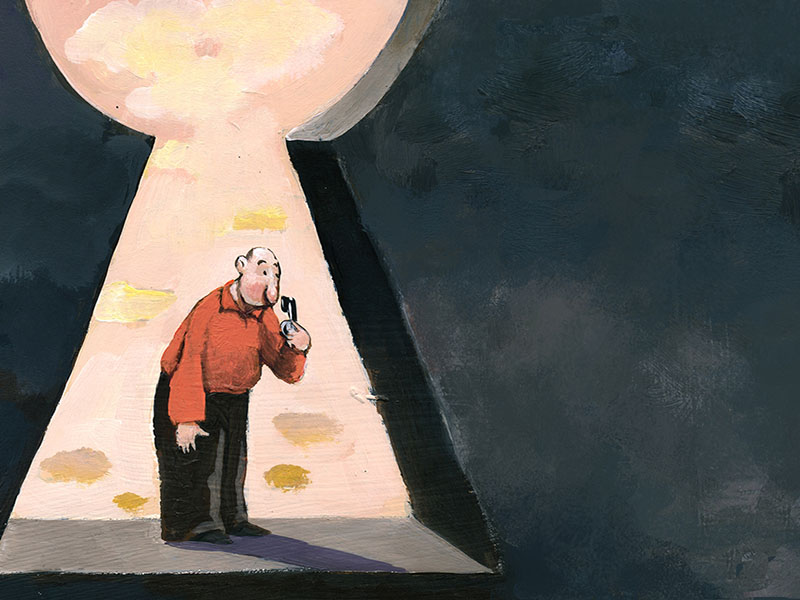
Re-Directing Clinical Passion: Benefits and Pitfalls

“I want to help people!”

This is a desire that motivates all therapists in one form or another. Through direct service, we therapists help one individual, one couple, one family, and one group at a time. Depending on our caseload at any given moment, that adds up to a relatively small number compared to the number of people in our geographic region. We may also help people indirectly through teaching, supervising, writing, and consulting. These activities may help larger numbers of people, although we are less likely to see the fruits of our labors.

Like what you are reading? For more stimulating stories, thought-provoking articles and new video announcements, sign up for our monthly newsletter.

Helping People on a Larger Scale

Through a series of chance circumstances, I had the opportunity to help, potentially, a much larger number of people. After being certified in hypnosis in 1997, I became interested in the growing academic psychological literature on virtual reality (VR). I noticed that hypnosis and VR have a number of elements in common, with both experiences giving access to alternative realities and both experiences feeling “real.”

While I was collaborating on research using VR, George Zimmerman was acquitted of Trayvon Martin’s murder. When some people responded to Black Lives Matter with “white lives matter” or “all lives matter,” I thought these comments reflected a profound lack of understanding of the lived experience of being Black in the U.S. (not that I presume to know the lived experience). I had the idea that VR could be used to help individuals understand the lived experiences of people different from themselves. I began discussing this idea with colleagues and others, offering my idea for others to do good in the world and to help people, if the idea was viable. To my surprise, a venture capitalist offered me enough money to do a proof-of-concept study to see whether the idea worked. I was thrilled. My hope was that if the data came out the way I hoped it would that I could make a difference on a bigger scale.

The study results were very promising and the reactions from participants were equally positive; we were able to change participants’ attitudes and deeply affect them so that they were more aware of how their biases affected others and were motivated and had new learning to treat people different from themselves more respectfully. These results left me facing a difficult choice. Should I close my practice and go full-time into the unchartered waters of building a company to provide this service as workplace training and the opportunity to make a difference on this scale, or let go of the idea and keep my practice open?

Values “High”

The opportunity to have a much bigger impact was enticing. In the language of Acceptance and Commitment Therapy (ACT), building a company to upskill employees for respectful and inclusive behavior, and making an impact on a large scale would be a values rush or high. How could I not choose to build the company?

If you’ve known entrepreneurs or start-up employees through your practice or personally, you know that startups are an emotional roller coaster. I’d seen it firsthand with clients and family members but living it myself was a different story. Yet I felt it was all worthwhile. What we were building was powerful and could help employees treat each other more inclusively. It felt like I was on a mission in a way I’d never experienced in my professional life.

The Downs

Right as we were about to launch the company to the public and start selling our program, COVID hit, with quarantines instituted for an unknown length of time. Work for most people moved from the office to the home. We struggled to adapt and survive. We figured out how to provide the VR experience so people could access it from home without a dedicated VR headset.

As we tried to sell our product to HR and DEI (diversity, equity, & inclusion) leaders, we found ourselves competing with higher priorities – companies were trying to address work fires about COVID-related remote work, as well as the murders of George Floyd, Ahmaud Arbery and Brionna Taylor and how these deaths affected employees. In the end, we didn’t get the traction that I’d hoped for.

The Values Crash

As the company’s money was running low and not enough was coming in, it was heartbreaking for me to realize that three years of work (and no income) would not come to fruition. Instead of a values rush, it was a values crash. In building the company, I’d felt a thrumming sense of purpose driven by the opportunity to influence many people on a deeper level. Now, I was looking at a return to doing clinical work, helping one individual, one couple at a time. I still loved my clinical work when I had left it behind three years earlier but returning to it felt like a let-down.

To me, to use a drug analogy, it was like going from a cocaine high to drinking weak tea. A bit of caffeine just didn’t cut it. I spent weeks, months, in a funk, doing an ACT values worksheet and felt that I had no values—at least not ones to which I wanted to take committed action. The fact that COVID continued to restrict life around me probably didn’t help my outlook. I knew I was grieving, but that knowledge only took me so far. I set a date for myself: come January, I’d start letting people know I was re-opening my practice.

In January, though, I was still struggling to find values and meaning in clinical work. Don’t get me wrong. I like doing clinical work and feel I’m generally helpful to people. But running a company was like directing a musical production with a full orchestra, while working directly with clients was like directing an intimate one-or-two-person show. Each activity is rewarding, but in different ways.

Talking with friends and family helped. Time helped. And getting intellectually stimulated about clinical work helped. I am someone who likes to do a deep dive into training and to learn a new set of skills or approach every few years. Three professional opportunities helped get me really excited about returning to clinical work.

Acceptance and Commitment Therapy
I had it in my sights to get more training in ACT, an approach to therapy that, in part, helps people articulate and then “live” their values. It seemed an apt fit, given my values crash. I had the good fortune to be accepted into an ACT peer consultation training group with experienced clinicians. This wonderful group of clinicians and the training spurred me to think about my eclectic approach in a deeper way. I became excited to use the ACT approach and techniques with clients.

Discernment Counseling
I also had the good fortune to watch videos of Bill Doherty, Ph.D. doing Discernment Counseling with a couple. Discernment Counseling is a specific modality for couples in which one or both spouses are considering divorce. The goal is to help the couple get clarity and confidence in the path they’d like to take their relationship. I’d received this training before starting my company but stopped when I closed my practice. What an honor to learn from him! The videos left me re-engaged and eager to see more couples for discernment counseling.

Ethical Lives of Clients
The third professional opportunity was hearing Bill Doherty speak about his recent book, which focuses on the ethical lives of clients that we, as therapists trained in an individualist culture, may not see or address. Reading his book and discussing his ideas with colleagues brought my systems training closer to the forefront, leading me to think more deeply about the ethical dilemmas our clients face that they may or may not see, and how to raise those issues.

Value Reflection

Although there are things I’d have done differently with my company, I’m proud of the work we did, and of what I learned. I know enough about the failure rate of startups to know that I’m in good company with the failure of my company.

I’m also thankful that I had the opportunity to re-find and re-commit to the values that initially led me to become a clinical psychologist and psychotherapist. It’s exciting to be re-energized by the work as well as intellectually stimulated. 

Useful References

Virtual Superheroes: Using Superpowers in Virtual Reality to Encourage Prosocial Behavior

Using Virtual Reality to Encourage Prosocial Behavior

VR for Civility Training: Envisioning a More Respectful Workplace  

Will Your Treatment Plans Actually Survive a Doomsday Scenario?

As a practicing clinical supervisor, and when I have attempted to teach graduate counseling students the differences between the art and science of psychotherapy, I have been careful to flavor my guidance with what I hoped would be just the right amount of professional ethics. And sometimes for good luck, I would add a pinch of legal-speak. But what seems to have resounded most loudly from my lessons were those that were worst case scenario-infused examples of what to do in clinical work to avoid, or at least contend with what one of my supervisees called, “Dr. Rubin’s Doomsday Scenario.” And this particular form of supervision-by-terrorization centered around the simple question, “what if you had to defend your treatment plan and/or intervention on the stand to an overly aggressive plaintiff’s attorney whose aggrieved client claimed that your treatment had caused them harm?

Like what you are reading? For more stimulating stories, thought-provoking articles and new video announcements, sign up for our monthly newsletter.

With the exception of those students/supervisees who were subsequently influenced to reconsider their professional trajectories, the rest learned the importance of justifying their treatment plan and techniques by locating their foundation in the quantitative research literature and/or the position statements/practice parameters/best practices guidelines of respectable and respected clinical organizations such as the American Psychological Association, American Counseling Association, National Association of Social Workers, American Association of Marriage and Family Therapy, American Academy of Child and Adolescent Psychiatry.

So, when I recently met with one of my clinical supervisees who had implemented what seemed to be a creative, and as he related, effective intervention around trauma in a therapy group, I asked him the simple question, “Where did this technique come from?” Quite pleased with himself and the apparent sweet fruits of his empathetic and creative labors, he couldn’t quite recall the source of the intervention. “I did my research….I found it somewhere online,” he said sheepishly, knowing from his experience with me, that such a response would likely be met with less than positivity, enthusiasm, and accolades for his clinical decision making.

“Somewhere online,” I mused inwardly. Oy! Where had my lessons gone? Had I failed him? Had he failed his clients? Would he fail on the stand if even one of the clients in that trauma group complained about his intervention or its unintended aftermath? So, I asked for more feedback to which he responded by saying that he had chosen the exercise for the group because after reviewing their clinical files and having worked with them both individually and in group, and due to their shared histories of trauma, the intervention made sense at that juncture. And because these clients had other group activities throughout the day that did not rely on creative/expressive media, he thought that inclusion of such would be particularly appealing to them and provide them with an alternative means of expressing their trauma-related feelings, memories, and somatic experiences. He added that he had tried using this exercise in the past but was not successful because those clients were far less open about their trauma and generally treatment resistant. Further, past therapy groups had not gelled as did the current one with which the intervention seemed so successful. He concluded his justification non-defensively by saying that group members responded very well to the exercise, seemed generally and genuinely grateful, were able to express their vulnerabilities, and had even highlighted each other's strengths during the debriefing.

Truth be told, I was pleased with what I heard. And I was quite proud with the way he had accumulated his “practice-based evidence” (as opposed to evidence-based practice), had taken the time to study the clients’ individual and collective histories, drew from his experience with each off them and as a cohort, and then tailor-made the intervention to their collective needs. And while that fictitious plaintiff’s attorney might have torn him to shreds on the stand, even if the counterargument was made that this was a well-researched, deliberated, and implemented intervention, he demonstrated a scientific and artistic approach to clinical service delivery. And isn’t that what we hope our interns and counseling students will be able to do some day?

***

I remember something David Nylund once said when presenting at the 2001 Pan-Pacific Brief Psychotherapy Conference in Japan. He mused, “I believe in evidence, but I am more interested in what constitutes evidence, and who gets to decide on what counts as evidence. Is it professionals, licensing boards, researchers, and journal editors? Or is it clients? If a young person can reclaim his life from ADHD, for example, and we create and circulate a therapeutic letter about his experience, I consider that just as compelling as a randomized clinical trial.”

Well, I don’t think that Nylund’s constructivist rejoinder would satisfy that attorney, but it works for me, as did the intervention and justification my intern demonstrated.   

Perfectionism in Highly Intelligent Clients: Therapeutic Strategies

In my therapy practice, I work with adults who have what I call rainforest minds. They are often, but not always, also called gifted. These are people with advanced intelligence and high levels of sensitivity, empathy, creativity, and intuition. They love learning new things and often have many interests. They may or may not excel in school. It can be hard for them to find friends or partners due to their intensity and intellectual complexity. In my many years of working with them, I have seen that they all experience one or both types of perfectionism. Understanding this distinction, along with the other particular traits that often accompany their rainforest minds, has helped me make progress with these clients who might otherwise feel stuck or lost in therapy but not know why.

These clients do not enter therapy because of their struggles with perfectionism or even for the challenges of being gifted. They come to counseling for the typical reasons: anxiety, depression, childhood trauma, and relationship issues. But, as I get to know them, and if I see they have rainforest minds, and the perfectionism that comes with that, I have these strategies ready to share.

Healthy Perfectionism

My clients who manifest “healthy perfectionism” set very high standards and expectations for themselves. They strive for beauty, balance, harmony, justice, and precision in many areas of their lives. This can look like obsessive research, overthinking, or many hours spent in order to find the perfect word, music, color, book, surgical technique, equipment, course, choreography, or whatever they are working on. It can look like continually raising the bar when they reach a goal, not out of fear, but out of the excitement of intellectual curiosity. It can look like the meticulous, detailed designing of an iPhone.

This type of perfectionism is not easily recognized or understood. It can be underappreciated by the client as well as by their friends, relatives, and therapists. But it is truly how humanity advances and great beauty is created. There are challenges that go with this perfectionism, though, when it becomes all-consuming, overwhelming, or misdiagnosed.

Therapeutic Strategies for Healthy Perfectionism

I have found offering the following “normalizing” strategies helpful when working with clients who experience “healthy perfectionism”:

  • Understand what healthy perfectionism is. It is not something you can change or should want to get rid of. See it as a strength. Imagine how the world would be if everyone had such a desire for depth, comprehensiveness, and accuracy. Appreciate this about yourself.
  • Let this striving for perfection feed your soul, even if no one else understands. Even if they are labeling you obsessive or neurotic.
  • Give yourself permission to feel emotional over a gorgeous sunset, a star-filled sky, an exquisite symphony, a towering cathedral, a stunning painting, or a perfect paragraph.
  • There will be times when you need to compromise to get something important finished. Prioritize your projects and let the unimportant items be less than beautiful or precise. Do you really need to spend hours on that 3-sentence email?
  • Recognize that others may not share your high standards. This does not mean others need to change or work harder. You may have a greater innate capacity to produce quality. Find patience and tolerance for others. At the same time, keep looking for others with rainforest minds so you can feel seen and understood.
  • Get feedback on your work from other people with high standards and similar expectations. Then, you are more likely to respect and believe what they are telling you.
  • Remember you can have excellence without perfection. Your excellence may, in fact, look like perfection to others.
  • If you produce something less than brilliant, it is not a failure.
  • Find ways to get intellectual stimulation. You need it, just like others need food and water.
  • If you are in school or at a job and have a deadline you must meet, try to evaluate your work through a different lens. Is this good enough for the situation? Will you still get an A even though it doesn’t meet your standards? How important is it that this be as thorough as you would like? Will anyone else see all of the connections you see?
  • Read Your Rainforest Mind: A Guide to the Well-Being of Gifted Adults and Youth. The chapter on perfectionism includes case studies from my counseling practice and many more resources.

Unhealthy Perfectionism

Anyone can experience unhealthy perfectionism from growing up in a dysfunctional family. Clients who have rainforest minds, though, might be perfectionists for additional reasons. As children, rainforest-minded clients who have developed “unhealthy perfectionism” were often ahead of their peers in academic abilities and achievements. If their parents and teachers over-praised them for how smart they were, or repeatedly emphasized their accomplishments, the children may have felt the acceptance and love as conditional, based on being the best, winning, and achieving at all costs. As they grew, this pattern morphed into an extreme fear of failure, procrastination, avoidance of difficult activities, and generalized anxiety. Early on, their sense of self became dependent on what they did instead of who they were and would become. If they did not achieve at the highest level, then, they felt worthless. This dynamic laid the foundation for heightened anxiety, pressure to achieve, fear of failure, and avoidance of intellectual challenges. It also often became disabling in adulthood, especially if not understood and deconstructed.

Therapeutic Strategies Offered to Clients with Unhealthy Perfectionism

I have found the following to be very useful in working therapeutically with clients who are struggling from the impact of “unhealthy perfectionism”:

  • This is complicated and usually starts at a young age. Take time to unravel the threads of how your perfectionism began and allow for slow progress. You do not need to blame anyone for over-emphasizing your intelligence. They were probably not aware of the impact it might have. It can be hard not to overreact to a highly articulate or a cognitively advanced young child.
  • Strive for wholeness and balance instead of perfection.
  • Put more emphasis on the process versus the product. Measure your success by effort, enjoyment, complexity, opportunities for growth, learning, or meeting new people.
  • If you have a loud inner critic, spend time with them in a journal. Start a dialogue. Ask them what they need. What are they protecting you from? What can you do that will allow them to step back?
  • Avoid all-or-nothing thinking, such as that something is either perfect or a failure. One error does not make the entire project a failure.
  • Remember you learn more from your mistakes than from your successes.
  • Failures make great stories for holiday gatherings, memoirs, and TED talks.
  • Learn about the growth mindset that Carol Dweck writes about in Mindset. Being smart is not an either/or proposition. You may have strengths in one area and weaknesses in another. Even though you may have been born with a high level of intelligence, you can always change and grow. It will be important to explore new areas where you risk mistakes and failure.
  • Read the book Procrastination by Burka and Yuen. It provides an in-depth look at perfectionism as it relates to procrastination.
  • Break down projects into small steps if you are overwhelmed. Make a list of the steps then set either a minimal goal or a time limit to get you started. Give yourself small rewards as you go.
  • If you are used to easy A’s or quick success, you may panic if you run into a challenge. Know that this is common when you have a rainforest mind. It does not mean you are no longer smart if something is difficult. In fact, it is a good thing to have to struggle. Think of it as giving your brain an upgrade!
  • Make a list of self-soothing tools if you are often anxious. Check out apps such as Calm and Headspace. Read The Anxiety and Phobia Workbook by Bourne.
  • If you are the parent of a child with a rainforest mind, place more emphasis on their traits such as their compassion, empathy, and love of learning instead of their achievements. Rather than say “You’re so smart,” give specific feedback such as, “Your story has some fascinating characters, tell me more about them.” Encourage their curiosity and kindness. Ask how they feel about an accomplishment or what they might do differently next time. Avoid generic praise. Find opportunities where they have to work at something over time, such as learning a musical instrument, a new language, or a sport. Listen deeply.

***

Perfectionism in our clients is often seen as something to avoid and that is always problematic. And yet, for someone gifted or with a rainforest mind, it is not that simple. In fact, there are often two specific types of perfectionism in these clients that need understanding, explanation, and strategies. The reasons for perfectionism in this population are more complex, as are the solutions. When a therapist sees this in a client and explains the patterns and difficulties through the lens of the rainforest mind, change is possible, in ways that might otherwise be overlooked or dismissed. It can make all the difference. It certainly has for me in my work with these complex and fascinating clients.

The Secret to Successful Couples Therapy: Empathy Over Doubt

I sometimes forget that the work that I do with couples is actually effective.

Despite having seen many successful outcomes over the decade or so I’ve been doing this work, I can’t help but feel skeptical about the possibility of success in the face of challenging client situations. In part I think it’s due to sporadic bouts of impostor syndrome, which I have struggled with in small and big ways; and in part I think it’s just that on its face it sometimes just seems so unlikely that a couple can bridge the giant gap that separates them when they come in.

Take Molly and Grant. Molly wanted another child. Grant did not. When they came in for couples counseling, they were both pretty despondent about the possibility of working things out. Theirs was a stark difference of opinions to overcome, not to mention the impact of months of intensifying arguments over that difference which had left them frustrated, angry, spent, and dejected.

I doubted myself, but I plunged ahead with what my training, experience, and instinct told me: let’s build empathy, and then take a second look at the problem afterwards through a new lens. My style looks a little bit like Imago, a lot like Relationship Enhancement Therapy, and a bit like everything else too. (I tend to think that there are strengths in many different modalities, and I like to keep a variety of tools in my belt.)

Molly and Grant had one child so far, a mischievous and often oppositional three-year-old girl named Haley. They had their fair share of struggles with her, but both of course loved her deeply. Grant, however, had never really expected to be a father and still grappled with how exactly to fill the role; he had no need to double down on it. Moreover, he was afflicted with a physical disability that made him earnestly question whether he could physically handle parenting twice as many children as he was currently attempting to manage.

Molly’s emotional yearning for another offspring was diametrically opposed to Grant’s disinclination. She wanted it, needed it, pined for it. She considered leaving the marriage over it (knowing, of course, that at her age that would certainly not increase her chances of having another child).

Over the course of our sessions, we were able to illuminate (at least partly) the source of her powerful desire; it was no small matter. Her wish for a second child related to her worth as a woman, to her fraught family history, to the untimely death of her own sister years earlier, and perhaps most strongly, her profound wish to give Haley someone to rely on through thick and thin.

Whenever they began to cycle through the arguments for and against, we got nowhere. Instead, I guided them to focus on their feelings, their experience of life as parents, as spouses, as a man or woman, and to share those in a safe and structured space with each other.

Grant was skeptical. Molly was hopeful, and also doubtful, and kind of both at the same time. But they tried. They really tried. They failed a lot; then they tried again. I taught them to listen to each other. I taught them to talk to each other (rather than at or around each other). And soon each began to understand where their partner was really coming from. From there it was a short distance to caring about where their partner was coming from, and then to expressing that caring. I taught them to reconnect with their empathy.

It was somewhat astounding to me that after five sessions, they were savoring their connection once again. They thanked me for literally saving their marriage. They left with a deep commitment to each other and to the process. I trust that these will be assets they will use to continue the discussion around having further children. It reminded me of my own commitment to the process as well.

My work with couples, challenging as it often is, continually reminds me that relationships are never about the what, but about the how. When couples interact with each other on the basis of empathy, there is virtually nothing that stands in the way of deep connection (even in situations where the best thing really is to break up). Couples like Molly and Grant remind me of this truth. They give me something to hold onto when my impostor syndrome strikes. Like my clients, I’m not perfect. I don’t always say the right thing. I don’t always know the right answer. But I am pretty sure that empathy is the right way.

But I have no idea what, or if, they decided about having another child. After all, that was never truly the problem.

May You Practice in Interesting Times: An Invitation

“May you live in interesting times” goes the expression, although I won’t debate, as historians have, whether this is a blessing or a curse. Because whichever it is we most definitely do live, and in the case of psychotherapists, practice in the most interesting and challenging of times.

Like what you are reading? For more stimulating stories, thought-provoking articles and new video announcements, sign up for our monthly newsletter.

As Psychotherapy.net’s Editor, I have had the privilege of working with you to bring those challenges to the forefront of our collective attention by soliciting, and at times writing content reflecting the ever-changing, always complex, and highly demanding landscapes in which psychotherapists of all levels and orientations work.

I aspire to content that holds up a mirror to the internal and external pressures that shape the practice of psychotherapy and counseling, one that reflects not only the clinical, but the personal, interpersonal and moral dilemmas that impact the way we think about ourselves as not only helpers, but as citizens, moral actors, and at times advocates within our private and collective spaces.

The Present

Some of our recent content has poignantly captured the challenges I allude to and invite you to reflect on just a small sampling of those.

The Future

Recently, the American Psychological Association published its “14 Emerging Trends”, highlighting some of the challenges that lay ahead, and which hopefully will inspire not only psychologists among us, but counselors, clinical educators and trainees. Some of these include:

  • Reworking Work is a call to clinicians to explore COVID-initiated changes to the landscape of the workplace and how our clients, particularly women, are adapting
  • Prominent Issues in Healthcare asks us to consider the serious and often long term impacts of the pandemic on healthcare providers (including mental health professionals) such as burnout and depression
  • Mental Health Meet Venture Capital highlights the promises and pitfalls of large, and often non-clinical entities purchasing clinical practices, both small and large
  • Childrens’ Mental Health in Crisis urges clinicians to turn an even keener eye towards the many ways that children and families continue to struggle in the post-pandemic era
  • Kicking Stigma to the Curb reminds us through celebrity support, that the struggle is real, especially for those who live in the shadows and margins of our society
  • Telehealth Proves its Worth validates the increasing role and importance of teletherapy, as well as remaining challenges to re-think traditional models of therapy service delivery

.
The Call

If you haven’t already guessed where this essay was leading, I’ll just come out and say it. You, we, all of us who are working with clients that are invariably impacted by any of the above issues and trends are in the best position to share those impacts on you and your clients. So please consider putting pen to paper (or fingers to keyboard) and submit a blog or article reflecting how these issues and trends are playing out in your own practices, whether small or large, whether in individual or group or family context. You already offer so much to your clients! Perhaps you’ll be surprised just how much you have to offer fellow clinicians.

Thanks so much for all that each of you does,

Lawrence Rubin, Editor (lawrence@psychotherapy.net

References

APA’s 14 Emerging Trends

Judgmental Health

Call me naive. I am still taken aback when therapists—who are trained to be empathic, to start where the client is, to put aside their own values—are agonizingly judgmental of their own kind.

Perhaps it is because we all to some extent have a professional persona that is different from how we are with our friends and family. So maybe when we are “on,” we’re able to keep the judgment out of the conversation, but when we’re on our own time we forget? (Although truth be told I’ve heard stories from my clients of previous therapists who were painfully judgmental even with their clients in the therapy room.)

Like what you are reading? For more stimulating stories, thought-provoking articles and new video announcements, sign up for our monthly newsletter.

I am a little weary of hearing comments like the following in therapist-oriented conversations, podcasts, and discussion groups:

“I don’t see how anyone can do trauma work without discussing issues of [race, family of origin, body image, etc.].”

“I don’t know how I was even effective before I learned [name of technique]!”

“If you haven’t done [name of method I personally use], you haven’t done couples counseling.”


These indirect digs at other therapists hurt. Too often, I’ve left Facebook groups that turned into feeding frenzies; I’ve even witnessed therapists chased off such groups for not falling into line on some issue or other. This problem seems even worse when social and political issues enter into the discussions. Did you know that it’s possible to be a social worker and also, for example, be pro-life? Or to be a couples counselor who believes in polyamory, or one who doesn’t? We can discuss and debate these issues at great length. Is it really necessary for colleagues to belittle and besmirch those who disagree with each other? (Answer: no!)

Friends, let’s please not do this to each other. There’s more than one way to skin a catharsis. In fact, there are many. New evidence-based modalities are coming out every year, and research has shown that the style of therapy being used has surprisingly little impact on client outcomes relative to the relationship between client and clinician. This means that the modality one clinician uses isn’t any better than what the therapist down the street uses. You can do you, and I can do me, and let’s all do what we can to help those who are seeking our help.

I frequently let my clients know that if what I’m doing doesn’t work for them, there are other clinicians out there with different styles and techniques, and I would be more than happy to make a referral if they’d like to try something I can’t offer. I wish more therapists had an equally pluralistic view of the range of therapy models out there and the clinicians who practice them.
 

Neither am I, for my part, judging those therapists. I am dismayed by their perspective and by their parochialism, but I understand that they, too, are coming from somewhere—whether it is their own pain, insecurity, dogmatic upbringing, or training. I am not denouncing as much as I am asking for change in the way (some, but not all) clinicians relate to each other (especially on social media).

Whether a clinician uses CBT or EMDR, whether they lean psychodynamic or experiential, whether they consider themselves client-centered or systems-oriented, there’s room at the table for all. And since the demand for mental health care has exploded these past few years, with no sign of letting up any time soon, the time seems particularly right for putting a few more chairs around that table. We want you at the table. We need you at the table.

There is enough ugliness and pain in the world without professionals who share the core values of empathy and compassion turning on each other. We don’t need Twitter-shaming. We don’t need the public call-outs. We don’t need the passive insinuations. What we need is for clinicians to value and honor each other, and the contributions they each make to the greater good. When we do this, the profession is a far richer one, and the community of care expands rather than constricts.

Diversity is not just about race or gender. Every person’s unique self—this is true of clients and clinicians alike — is worthy of admiration and esteem. Synergizing our strengths makes this world a better place, one session at a time.

Trauma Survivors React to Overturning Roe

At the start of every day, I check the news – not because I’m a responsible citizen, but because doing so helps me prepare for my work as a psychotherapist who specializes in working with complex trauma. George Floyd’s murder, the COVID outbreak, the war in Ukraine: in the wake of these each of these events, I had to take deep breaths before seeing my clients. On the morning of 6/24/22, I read that Roe v. Wade had been overturned, and deep breathing was no longer enough. Instead, I held back tears as several of my clients bravely unpacked the ramifications of this historic decision for their safety, autonomy, and sense of self-worth.

Like what you are reading? For more stimulating stories, thought-provoking articles and new video announcements, sign up for our monthly newsletter.

“When Will I Matter?”

Ruth is 72-year-old black heterosexual cis woman and complex trauma survivor who suffered from years of childhood sexual abuse as she was continually raped by her father. She participated in talk therapy for years with little progress and began seeing me in order to try EMDR, Internal Family Systems Therapy, and Somatic Experiencing. This combination of theoretical perspectives and interventions appeared to be successful, as Ruth reported feeling safer, an improved sense of self-worth, and the courage to begin exploring her sexuality (which had been developmentally delayed for most of her life). The day following the Supreme Court’s ruling on Roe v. Wade, Ruth arrived at our session appearing irritable and stated, “Don’t ask me how I’m doing, you don’t want to know.”

Even though she often presented herself to others as “the nice old lady” (which is a response to complex trauma that many mental health professionals refer to as “fawning” or “people- pleasing''), fortunately Ruth and I had developed a relationship in which she was comfortable feeling and expressing her emotions.

“What if I had gotten pregnant by my father?” she asked. “Some of these states would have forced me to give birth like it was my fault. It’s taken me most of my life to realize that it wasn’t my fault and that it was my father’s illness, but now it feels like there are people who believe that I would have been to blame and that I should have suffered the consequences.” Ruth’s voice began to quiver as her anger morphed into grief. “It’s like my father mattered more than me, my mother mattered more than me, and if I had gotten pregnant now, that fetus would have mattered more than me. When will I matter?”

Complex trauma creates and fuels low self-worth. Ruth was treated like a second-class citizen for most of her life: as a child, as a woman, and particularly as a black woman. The overturning of Roe v. Wade re-awakened and exacerbated past experiences that had nearly destroyed her self-worth. It’s difficult to sustain a healthy sense of self-worth when you are constantly barraged with messages – perpetuated by systemic racism and misogyny – that you are not, in fact, inherently worthy of life, liberty, happiness, or respect; that your life is disposable or only, at best, peripherally or instrumentally considerable. Under such circumstances, how can I help Ruth sustain the self-worth that she has fought so hard to obtain ?

“I’m Next, They’re Coming For Me!”

Leigh is a 32-year-old white married gay man and complex trauma survivor who experienced childhood neglect, abandonment, and emotional abuse. At 14, he was outed by a sibling and subsequently kicked out of his home. He lived on the streets and eventually found his chosen family. After Roe was overturned, he arrived at session making no eye contact, which wasn’t like him. He began the session stating, “I have to start by reading you one of my favorite poems.” I encouraged him to read the poem, which was written by Martin Niemöller.

“First, they came for the Communists
And I did not speak out
Because I was not a Communist
Then they came for the Socialists
And I did not speak out
Because I was not a Socialist
Then they came for the trade unionists
And I did not speak out
Because I was not a trade unionist
Then they came for the Jews
And I did not speak out
Because I was not a Jew
Then they came for me
And there was no one left
To speak out for me”

We sat in silence as his eyes darted around the room, desperately trying to find the words to express what he was thinking and feeling. “I’m next, they’re coming for me,” he whispered. Some therapists might categorize this thought as paranoia, but I didn’t. There are now rumblings to suggest that overturning Roe v. Wade will become a precedent for overturning same-sex marriage and legal consensual gay sex. Clarence Thomas has even explicitly suggested this.

Leigh arrived to therapy 2 years ago experiencing severe anxiety in social situations, sexual situations, and intimate relationships. He worked hard to address his trauma with attachment-based therapy, EMDR, and Animal Assisted Therapy in order to feel safe and secure in his relationships, sexuality, and social interactions. Now, once again, his safety is threatened. Every therapist knows that if your client doesn’t feel safe, they can only make so much progress. The client’s mind and body are focused on reestablishing safety, leaving little energy to focus on recovering from trauma or coping with the demands of their daily lives. Trauma survivors need to feel safe in order to heal, and now Leigh no longer feels safe.

“I’m Just a Vessel For Others To Use”

April is a 24-year-old nonbinary heterosexual Latina who survived multiple sexual assaults. At age 9, they were raped by an uncle, at age they were molested by a baby sitter, and at 15, gang raped at a college party. As a child, April was taught that they had no agency over their body. They were forced to hug and kiss their relatives on command, and thus they learned that adults get to decide what happens to their body – an experience that is all too common in many cultures. Unfortunately, these experiences caused April to internalize a lack of autonomy that made them unable to report their sexual assaults.

“Déjà vu,” April said, smiling wryly.
“Déjà vu?” I asked.
“My body isn’t mine, remember?”
“Yes, I do. Does this feel like before?
“Exactly like before.”

Due to a greater awareness of child sexual abuse and the importance of bodily autonomy, there is a movement in the psychology community that urges adults to ask children for their consent to acts of physical intimacy (e.g., hugs, kisses, snuggles, etc.) rather than command or coerce them to engage. There is a hope that these children will experience and internalize the value of bodily autonomy, practice establishing physical boundaries with adults, and be able to report violations of their boundaries. April never experienced bodily autonomy, and each sexual assault reinforced this lack of autonomy.

Over the past year, April addressed their trauma with Somatic Experiencing, EMDR, and Art Therapy. Slowly, they began to feel safer with others and in their body and were better able to establish boundaries in their relationships. I remember the first time they were able to say “no” on a date. They arrived at the session stating, “I didn’t want to go to his place and I didn’t care if he got angry.” Yet, after the overturning of Roe v. Wade, April experienced intense triggers that made them feel as if they were back at the beginning.

“I’m just a vessel for others to use,” April said as if it were a fact.

Once a trauma survivor is denied bodily autonomy, they are deprived of safey. The overturning of Roe v. Wade undercut April’s sense of autonomy, thus interfering in her trauma recovery. Will Ruth reclaim her self-worth? Will Leigh feel safe again? Will April reclaim her sense of bodily autonomy? I believe they will, but now they’ll have to struggle to do so more than anyone ever ought to have to. They have all made gains in their treatment that are still present at a deep level, and none of them are giving up.

As April proudly proclaimed at the end of their session, “ You know what? Fuck that, I’m not going back.”

The Encounter at the Doorway

Francis Thompson was born on December 18, 1859, and died on November 13, 1907. He is the author of the great mystical poem “The Hound of Heaven.”

I fled Him, down the nights and down the days;
I fled Him, down the arches of the years;
I fled Him, down the labyrinthine ways
Of my own mind; and in the midst of tears
I hid from Him, and under running laughter.
 

So begins the first verse of the poem that is considered a spiritual autobiography of Thompson’s attempted flight from God, and the gentle and persistent presence that always pursued him no matter how much of a mess he made of his life. Francis Thompson was often homeless on the streets of London and addicted to Laudanum (alcohol with a tincture of opium).

Like what you are reading? For more stimulating stories, thought-provoking articles and new video announcements, sign up for our monthly newsletter.

One day Francis went to the office of Wilfred Meynell at the Merry England magazine. At his desk, Mr. Meynell saw the office door open slightly and close, then open and close again. In the doorway, Francis had no shirt beneath his coat, bare feet in his broken shoes, and a soiled and wrinkled manuscript in hand. He was scared. Thankfully for Francis Thompson and for the history of English literature, the impeccably dressed Mr. Meynell looked beyond the surface of Thompson’s broken-down appearance. He read the manuscript with mounting astonishment, helped Francis get into a hospital, and gave him a job. Francis relapsed into addiction several more times between periods of rest and recovery at a monastery in the countryside and bursts of literary productivity, until his death that resulted from the effects of addiction and tuberculosis.

I have personally witnessed dramatic and counter-intuitive ways in which demographics have changed in skilled nursing facilities over the past several years. The general population may be aging, yet the trend nationally has been one of younger adults increasingly being admitted to nursing facilities. A dearth of funding for home-based services, and a lack of available and appropriate residential programs for psychiatric and substance abuse issues are among the factors that contribute to these changes, and those that most directly impact the clinical work I do with these populations.

In the nursing facilities where I work, I have encountered relatively young residents with complex medical and psychiatric and substance use disorders. I can attempt to prepare for these doorway encounters, as did Mr. Meynell all those years ago when first meeting Francis Thompson. But as Meynell’s first impression of Thompson was skewed by his streetworn and drug-addled presentation, so, too, might be our own first impression of a younger person whose substance abuse and psychiatric history has taken a toll on their body and mind. Their need to be seen fully as a person is no less than was Thompson’s when he first appeared in Meynell’s doorway. And, like Thompson, each of the residents who present in my clinical doorway is so much more than their respective psychiatric and substance abuse histories.

Every person wants his or her life to turn out well. The person with a substance use problem yearns to be recognized as someone who wants their life to turn out well, and who needs the help of others to rebuild that life. The person we meet might be a creative genius, but that doesn’t matter; they are always an individual human person of infinite value.

Residents I spoke to with a history of addictive illness have offered insightful comments that have guided me in my clinical role at these various nursing facilities.

“Staff make negative assumptions based on a person being homeless and self-medicating,” according to Casey. “It’s hell out on the streets; you get overcome and paranoid sometimes, and you use again,” Rod said. “Don’t tell them ‘Just get off drugs,’ but help them to get a job, a home, and social contacts,” he added. “You know, they once had a job and they were in society once; they need programs to help get back in society.” Casey said that staff should realize that for the newly admitted resident “their body is going through a metamorphosis because they are not drinking or using drugs.”

Trent pointed out that “you’re not relaxed and calm when you come into a nursing facility.” He suggested that too often caregivers have a negative attitude: “You’re busy and irritated, and it makes me irritated and angry.” Trent suggested that “it should be up to the patient if they want to talk about it [addiction].” “Too much pressure and they close up. You feel pressured by people always on your case, and telling you what to do, when you have to figure out what to do; it can be overwhelming, and you can clam up and want to be left alone,” he said.

The individual with a substance use illness will “need a little love; something like a Big Brother program for grown-ups,” said Rod. “Help them get to a place where they can at least have hope,” he said. “It’s going to take love and patience to help them rebuild themselves.” Casey suggested that nursing facilities might offer practical and age-appropriate group activities, and not simply Bingo or crafts. She suggested bringing in persons from the community to offer life skills training on how to budget, how to use the internet, how to interview for a job, how to prepare food, find an apartment, or apply for disability income. “You’ve got to help open doors to encourage people to want to do better: Give someone a reason to get up in the morning; you’re never too old to love to do something new,” she said.

I think we cannot reasonably say, “Let someone else deal with this; I’m not trained or qualified to deal with this kind of problem.” The residents I spoke with pointed out occasional shortcomings of the inpatient addiction treatment programs where they sometimes fruitlessly sought help. Frank was impressed by the practical advice and suggestions he heard during his first alcohol detox admission. He was surprised to hear the same points during his second admission, and then disappointed to find during repeated subsequent admission that “they just talk from the textbook, and they don’t really have something new to say to you.” Frank spoke of a 19-year-old woman who had been through 30 detox admissions—citing the evident insufficiency of the specialized treatment offered. The residents spoke to me about the perceived limited knowledge and understanding of some professionals with specialized credentials for treating persons with addiction. The residents stated that they could encounter negative judgmental attitudes and unhelpful advice as often in specialized in-patient treatment programs as in skilled nursing facilities.

In my own experience working with these residents, I have found it important to encourage fellow clinicians and nurses to acquire additional training and certification, yet not discount the array of skills, knowledge, and personal qualities that they already bring to bear in the service of these residents. Residents with addiction and/or psychiatric disorders tend to have developed acute BS-detectors; they observe us with an X-ray type of vision. The person with an addictive illness has a refined intuitive ability to notice the underlying attitude of the nurse or clinician who encounters them. That capacity typically emerges from the deep emotional wounds of shame that accompany an addiction. The person with the addictive illness feels under a cloud of suspicion and judgment from the first encounter. We should strive to receive that person with a wise and open heart, as well as with a wily awareness of the risks of manipulation that can also be an unfortunate part of the picture. We cannot hide or disguise attitudes of fear or revulsion or judgment from the awareness of the persons we meet and work with.

***

The encounter at the doorway is a two-way process: I encounter my personal attitudes and values and beliefs about illness, addiction, and homelessness as I also meet with a person in need of kindness and patience and practical encouragement. My own genuineness and authenticity and humility have often made the critical difference as I greet the other at the doorway of despair or new opportunity.

Making Clichés Work in Therapy

My work with Nathaniel was focused on the growing intensity of his depression. Things were going badly at work, his intimate relationship was not providing him joy, and he felt increasingly lethargic and unmotivated. His affect was flat and his voice emotionless as he assessed his life through the lens of this depression. I reflected these feelings back to him, showing him the picture he had just painted. Nathaniel seemed to take it in and as we sat with it for a bit and expressed hope that one day he’d get over the sadness. I assured him he would but acknowledged the frustration that comes with not knowing when a bout of depression will end or what can be done to make it end. Nathaniel sighed and said, “I guess the sun'll come out tomorrow.” He groaned and slumped down further down in his seat, as if that phrase had just added rather than reduced the weight of his sadness.

Like what you are reading? For more stimulating stories, thought-provoking articles and new video announcements, sign up for our monthly newsletter.

Phillipa had goals. Our main topic of discussion was dissatisfaction with her career. She was, however, in the process of taking steps to change this. She was exploring other areas of professional interest and talking to people in those fields, preparing both logistically and emotionally to engage in the kind of change she had expressed a desire to experience. After a few sessions in which she felt hopeful and inspired based on positive feedback from friends and family, Phillipa was riding high, until our most recent session, that is, when she learned that the career she most wanted to pursue required an advanced degree that she felt she was not in a position to pursue. Phillipa shook her head forlornly as she verbalized her frustrations, saying, “It just feels like it’s always two steps forward, one step back.”

Ravena craved a committed romantic relationship. We had identified her pattern regarding the development of these types of relationships, and her frustration that they did not end up in the place that she wanted. There was a cycle of intense attraction at first, with both emotional and physical connection, but these enjoyable beginnings always devolved into conflict, with Ravena experiencing difficulty understanding her instincts regarding boundaries and intimacy, and frustration that her instincts seemed to run counter to what she wanted. Ravena became more open to exploring her family of origin and the type of relationship modeling her parents provided, and our work became more about identifying how the best way to work towards positive relationships in the present was to examine the lessons imprinted on her from the past. “I guess I just have to learn to love myself before I can love someone else,” said Ravena, as she rubbed her temples and laughed bitterly in a physical manifestation of the frustration she was feeling inside.

***

These examples of work with clients are both specific to my experience as a therapist and universal to what it means to be human. The vignettes all demonstrate how, when assessing their progress and desires in therapy, clients often come to a point where they express their feelings and insights through cliché, and how the use of that cliché usually has a negative connotation. Why is this? Why does something as simple and universal as a cliché seem to leave such a bad taste in the mouths of these clients?

A cliché is an overused phrase or opinion that can often mimic an original thought or even epiphany. We call something a cliché when we’ve heard it a million times, so often that any meaning it once had has been eclipsed by our collective shrug when we hear it again. We sometimes experience negative thoughts about ourselves when we use these clichés because it implies we are lacking in original thought. And for some reason, to be lacking in original thought is a bad thing. We should suffer in original ways!

In addition, the fact that we are in therapy can color our response to clichés. When our clients are out in the world interacting with friends and family, they might find themselves using a phrase like “It’s always darkest before the dawn” or the classic “It is what it is” and feel okay about it. Or, more specifically, they don’t feel bad about it. The use of a cliché in these situations seems to pass by without much consideration, with no bad emotional taste being left in the cliché user’s mouth. However, in session our clients are at their most vulnerable, and often come in already feeling depressed or anxious or unsettled, and this baseline combined with the triteness of a cliché can make them feel worse. It’s a common reaction, and a wonderful opportunity to explore what these particular clichés mean and why our clients react the way they do, both in terms of what the clichés mean in general and what they mean to them.

Nathaniel seemed more depressed when he said that the sun will come out tomorrow. It seemed that in trying to make himself feel better, he had actually created more material to be depressed about. I mentioned Nathaniel’s mood and his reaction to the cliché, which he immediately responded to, almost eager to talk about how using this particular cliché made him somehow feel worse, even though the intended outcome was the opposite. I spoke a little about the meaning of clichés, how they come into existence, trying to work backwards from their origin to their original intent. We imagined the first person to use this phrase long ago, perhaps to cheer up a sad friend, and how that friend might have reacted. Nathaniel admitted that yes, this long-ago friend must certainly have been cheered up by this realization that the sun will come out the next day. We took turns interpreting what “the sun will come out tomorrow” actually means, both in terms of life in general and Nathaniel’s specific situation. By the end of the conversation, Nathaniel was sitting up in his chair, was more engaged, and spoke with more passion in his voice. I noted this, and Nathaniel admitted that he felt better. Talking more about clichés and how we react to them helped in this case. Our cliché journey had come full circle, from inspirational to trite and back to inspirational again.

Phillipa became frustrated at the first sign of resistance. After weeks of positive feedback and relative success, she would shut down at the first sign of trouble. She took plenty of steps forward, but those one-step-backs were devastating. We examined more closely the cliché about taking two steps forward and one step back, how this fit into a pattern for her like a dance step. When do we usually talk about things in terms of two steps forward, one step back? It’s usually when we have a goal and that goal feels like it’s far off in the distance, and we are slowly getting closer to it but we’re not moving fast enough to get over the frustration of not being there yet. I assured Phillipa that experiencing this cycle could just as easily be construed as a good thing. Two steps forward minus one step back equals a net gain of one step! For Phillipa, the frustration of not reaching the goal was eclipsing the very real process she was making. Our work together became about reframing the cliché as actually taking one step back from a kind of failure into a healthy break on the path of overall progress, as a necessary step in the dance of personal growth. Examining this cliché helped us realize together that the one step back is just as important as the two steps forward, and in the process we normalized that one backward step.

Ravena was so concerned with finding a partner that she had never pictured herself being alone. Just the idea of talking about what it would be like to live life by herself without a partner made her uncomfortable. The cliché about loving oneself became an opportunity to explore the fear that came up when we discussed the idea of being alone. This led to some significant insight into the nature of Ravena’s intimacy issues when relationships started to become serious, and after some time working on these issues, she noted that it was nice to focus only on her and the things under her control rather than on a relationship. In later sessions when Ravena had reflected on some understanding about why she reacted to some issue in “the old way” and recognized how she could change it, I noted that it seemed like she was really learning to love herself. This time the cliché was met with a smile and a knowing laugh.

***

Something about talk therapy I particularly enjoy is when the client and I identify a simple thought, perhaps one that is a part of the very foundation of how we see ourselves, and we turn this thought on its head. We examine it from a different perspective. We ask if this thought is still valid. When this occurs, things clients assumed they already knew transformed into opportunities for self-exploration and growth. I also react similarly when a client uses a cliché in a sad, pessimistic way. We take that seeming truth, turn it on its head, and ask, “Why does this cliché that purports to make us happier make us feel just the opposite? Let’s discuss.” This often results in clients begrudgingly admitting that yes, these clichés do have value, and sure, “maybe I should feel better than I do about using this cliché, and perhaps maybe even feel better about my life in general.” These cliché-dependent clients often benefit from the realization that they don’t have to feel bad about engaging in a cliché or have to necessarily feel better just because they happened upon on in a moment of seeming clarity. Sure, it’s trite, but let’s own that. It’s okay to feel trite. Better trite than depressed! Let’s give ourselves permission to not be original. I like to tell my clients that if they find themselves using clichés more often, it’s not something to sulk about, it’s a good thing. It means they can and often do actually see the light at the end of the tunnel and smell the greener grass on the other side of the street. Using and then mining the clichés can be and often are a sign that they are on the right path!

The Rest of the Story: Digging Beneath the Diagnosis

I remember sitting across from my client, wondering why we couldn’t make any progress with his depression. We had covered the terrain of cognitive distortions, the necessity of making behavioral changes, and even stepped outside the CBT stream in order to address insights he had experienced into the relationship between his childhood and current state of unmotivated listlessness. Nothing seemed to work.

Like what you are reading? For more stimulating stories, thought-provoking articles and new video announcements, sign up for our monthly newsletter.

He didn’t have the kind of sad, angry, irritable depression that practitioners commonly see in clients. His was the kind of depression that stripped him entirely of his energy. For him, it was a daily struggle to get out of bed in the morning, to make his own meals, to take out the garbage, or even to take on the seemingly insurmountable task of doing the laundry. But, I thought, or hoped, that with enough time, support, and psychoeducation, he might begin to budge in the right direction—in any direction. So I put my nose to the grindstone and retreaded familiar ground, covering cognitive distortions once again, revisiting the treatment plan, formulating habit-building strategies, and enlisting social support.

Our clinical stagnation seemed to give way during one session when we began discussing the clients’ interests. He shared that he was a huge sports fan. He religiously checked game stats, participated in online discussion forums, watched basketball, football, and soccer games. He devoutly followed his favorite teams and knew everything about his favorite players and coaches. It was really fascinating to observe the life flood back into my client when talking about this. Following my curiosity, I asked him to estimate how many hours of sports media he was consuming on a daily basis. He guessed that he was consuming upwards of 14 to 15 hours of sports media a day, every day. My jaw hit the floor.

It became apparent to me that my client was not suffering from depression, although his presentation was consistent with MDD, but was in fact addicted to media. So addicted that he had no time, attention, or energy for anything else. And since sports media is so pervasive and readily available in every platform and media outlet imaginable, my client’s addiction was readily fed, monetized, and maximized to the fullest extent. The problem was only worsened by a very forgiving, if not too forgiving, roommate. My client wasn’t working, nor pulling his weight regarding household responsibilities around his apartment. He couldn’t even recall the last time he took out the garbage. I asked if his roommate ever got upset; he said sometimes, but mostly he just ignored it or covered for him (like doing his chores for him and not pressing him on missing rent). That is one forgiving roommate, right?! Sadly, it was also a very enabling roommate. The roommate’s lax standards and minimum expectations were like gasoline to my client’s media addiction fire.

After exploring and reflecting on this new data set, we had a candid conversation—my client was coming to counseling because he wanted something in his life to change. He knew he needed to change. He wasn’t satisfied with the way things were going. Yes, he loved sports and couldn’t get enough of the latest sports news, but at the end of the day, he wasn’t satisfied. He had bigger goals for his life and felt like he was letting himself down by not getting a job, not pursuing his ambitions, and not contributing to the apartment. I put it to him rather bluntly that there wasn’t space in his life for his goals and that his sports media was a form of addiction; one or the other would have to go. He acknowledged that I was right but expressed fear of going “cold turkey” on sports media. So we devised an experiment: if he titrated his consumption of sports-related media down to something more manageable, he would feel more energy and motivation throughout his day? The thought of having more energy to accomplish his goals without the total loss of sports seemed to intrigue him. He committed to running the experiment and would report back his findings next session.

In my career, I haven’t had many spontaneous recoveries, but this, I am pleased and proud to say, was one of them. Something about the experiment clicked for him, and he realized that there was more to life than his media consumption addiction. His dissatisfaction with not making progress on life goals paired with lessened consumption of sport media carved out enough energy and motivation for him to make progress on smaller, more manageable alternate goals, leading to increased self-efficacy. He ran with the motivation boost and parlayed his newfound enthusiasm to accomplish bigger and bigger goals. Even getting outside to retrieve the mail felt good to him. Within a matter of weeks, he was doing household chores, grocery shopping and preparing his own meals, submitting job applications, and reconnecting with friends. I knew our therapeutic relationship was near its end when he got a job and joined a gym. He was feeling good and didn’t see the need for him any longer, for which I was grateful.

***

This clinical experience was an eye-opener for me. It was helpful to step outside the confines of my favored, tried-and-true therapeutic modality and the client’s presumptive diagnosis in order to consider contextual factors that often get ignored. This was the “rest of the story,” as broadcaster and commentator Paul Harvey so famously said, when digging just a bit deeper into the context beneath the headline, or in my case, the context beneath my client’s ostensible depression.

I now make it a regular practice to broach the topics of diet and nutrition, media consumption, social connectedness, feelings about current events, and finances, to name a few. In my better moments, I take time to consider what isn’t manifestly evident in my client’s clinical presentation that may be critical to address in counseling. What have I not thought of or asked about may make the difference for my client. What is going on in their life that they haven’t thought to mention, but may hold the key to their motivation, growth and healing?