
Podcasts and the Couch: An Effective Supplement to Couples Counseling

Bibliotherapy, as an adjunct to psychotherapy, can be helpful to clients struggling with mental health problems ranging from alcohol abuse, anxiety and depression to cancer patients hoping to increase their coping skills in the face of the disease. Although there has been little to no research conducted on the beneficial impact of bibliotherapy for couples in counseling, I’ve worked with many couples who attest to the benefits of reading counseling books as a supplement to therapy — John Gottman’s The Seven Principles for Making Marriage Work, Harville Hendrix’s Getting the Love You Want and Gary Chapman’s The 5 Love Languages, to name a few. Yet, as people are busier now than ever, especially the couples I work with who are managing two work schedules, daycare, parenting, school functions and activities, travel and all the other activities and obligations that dominate their day-to-day lives, couples simply don't have the time to sit down and read a book, let alone read a book together.

Like what you are reading? For more stimulating stories, thought-provoking articles and new video announcements, sign up for our monthly newsletter.

Problem, meet solution! Podcasts can fill the bibliotherapy gap created by busy schedules. Podcasts, if you have a smartphone (and everyone has a smartphone) are available at the touch of a finger. You merely need to download a podcast app, subscribe and listen away. A client can listen while riding a bike, mowing the lawn, on their commute, sitting with their partner, watching the kids play in the front yard, going to the bathroom (we all look at our phone while on the toilet) or while preparing school lunches.

The convenience and accessibility that smartphones provide are really mind-blowing, and to boot, there are a number of excellent podcasts available that address not only relationship issues but issues related to depression, addiction, anxiety and much more. Here are a few standouts your clients can subscribe to for free:

Accessing supplemental therapy content outside of a session can be useful for a client. A client has only one hour with you per week (really only 50 minutes). Even if you have a great rapport with your clients and they absorb every thought you have to offer, 50 minutes isn’t much time. Therapy workbooks and self-help books can make up ground where traditional, weekly, one-hour therapy may not be enough. This is especially true in couples work where an hour session can fly by. So, why not arm couples with additional psychotherapy material that they can noodle on between sessions?

You may be wondering, podcasts sound great, but how do they actually function relative to actual live couples therapy? The therapy office, in a sense, is a laboratory where couples perform a number of relational experiments. They then try those same experiments out in the real world and come back to session to analyze the results. From this outcome data, we can observe what worked and what didn’t. A couple could easily cycle through 15 ideas and find that only four work for them. It is only by the process of experimentation that the four become evident. So why not increase the range of ideas a couple can experiment with? Let’s imagine if we increased the number to 30 ideas. If the trend holds true, then the couple will discover eight ideas that really work. Bibliotherapeutic works, in this case podcasts, are an inexpensive and efficient way of increasing the number of ideas a couple can interact and experiment with. Below is an example where a couple in counseling utilized podcasts to increase their therapeutic gains.

I worked with a couple who needed longer sessions, yet because of my schedule, I could only see them for the typical 50-minute hour. This left a number of important topics without the necessary elaboration. As a way to compensate, I recommended the couple listen to a podcast on an issue they struggled with as therapy homework. The couple followed the advice and took the assignment beyond the original intent. They were able to use the podcast content to spark meaningful conversations. And, as one partner shared with me, she was deeply touched by the fact that her partner spent time, unrequested, on researching podcasts and listening to them. For her, it demonstrated engagement and investment in their relationship. Additionally, the content of the podcast contained communication skills and tools they were able to apply to addressing their destructive relational pattern. This learning segued nicely into the work done in session. They discussed insights gained from a podcast, further reinforcing the value of the ideas. Moreover, they discussed ideas difficult to understand, which I was able to clarify and through which enhance their understanding. All in all, the couple and I found podcasts to be immensely beneficial to their counseling goals.

Some therapists may have ethical or clinical concerns related to the use of podcasts in therapy, and for good reason. Podcasts are not to be a replacement for therapy. Additionally, the therapist may sacrifice some influence or control to podcasts. And not every podcast will express sound, evidence-based, therapeutic advice. Or the advice given in a podcast may contrast with your counseling. Certainly there are some liabilities that come with podcasts, which you can wisely mitigate. I suggest only recommending podcasts you have vetted and that specifically target the client’s issue. The podcasts recommended in this article give disclaimers that they are not replacements for therapy and are static, in that they can’t respond to crises or provide personalized advice. That level of care can only be provided by a therapist. With these potential liabilities considered, the research supporting the use of bibliotherapy and my own clinical experience supports the adjunctive use of podcasts in couples counseling. 
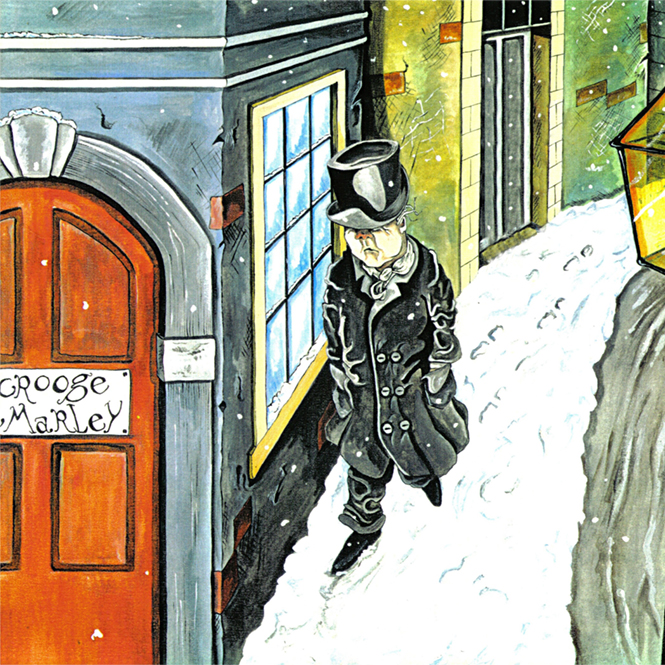
The Case of Ebenezer Scrooge: Therapeutic Reflections on A Christmas Carol

A friend of mine once told me that when psychology encounters great literature, literature comes out the loser. I took her point. And yet, every Christmas I find myself thinking that Dickens’ A Christmas Carol is, among other things, a singularly brilliant psychological treatise. The transformation of the story’s main character, Ebenezer Scrooge, is, of course, legendary. But the actions of the spirits who guide him are not just supernatural; some of them are surprisingly psychotherapeutic. And seasoned therapists may even find them—if I may say so—hauntingly familiar. The Scrooge we meet at the beginning of the story is not the kind of guy who typically comes to us for help. He is rigid, compulsive and defensive—far more likely to resist than to seek out a therapeutic process. He scorns human kindness, and he callously says the poor should die “and decrease the surplus population.” To be fair, though, Scrooge is also quick and spunky, and he is not without occasional flashes of wit. He attempts to disarm Marley’s ghost as a “disorder of the stomach,” quipping “There’s more of gravy than of grave about you!” And who among us has never wanted to see some exceedingly cheerful person boiled in his own pudding? Ah, but Scrooge is a hard case! As Dickens says, he is “a squeezing, wrenching, grasping, scraping, clutching, covetous old sinner.” Yet on the seventh anniversary of Marley’s death, something else is at work. As Scrooge enters his cold, dark, empty house, eerie things begin to happen: he sees Marley’s face on his door knocker. And before long, Marley himself appears in ghostly form, terrifying Scrooge and warning him that three more spirits will follow—his only chance to avoid a fate worse than Marley’s. Where is all this coming from? Seemingly from the spirit world. But might it not also be coming from within Scrooge himself? For hasn’t the old man buried parts of his own fractured self—his hopes, his humanity, his guilt about bad acts? And, once buried—undead—in Scrooge’s personal underworld, might not these fragments be struggling now to return in uncanny and ghostly form? The three spirits do come to Scrooge, and they come, periodically, through the night like dreams. At times, it seems as though they might actually be dreams. The first spirit, gentle and kindly, conducts Scrooge back through his childhood, and we start to see him in a more sympathetic light: a motherless child banished from his family by a resentful father, living in books, and finally turning to a pursuit of wealth so obsessive that it leaves him unable to love even his sweetheart. Immersed in this past with his spirit companion, Scrooge is unexpectedly wrenched by human emotions—laughing at happy memories and sobbing about the love he lost. Surely, there is real therapy happening here! But insight without change is empty, and, as stated before, Scrooge is a hard case. His rediscovered emotions have begun to chip away at his character armor, but this armor is formidable, and it requires something equally formidable to break it apart. The second spirit, therefore, is a “jolly giant,” impressive to behold, commanding in nature and more than a little intimidating. Flying with this spirit through the city of London and places unknown, Scrooge sees rich and poor alike, including those he knows, celebrating Christmas, warming the bitter cold of the night with their cheer. In the homes of his clerk and his nephew, he shares the glow of the season—only to be mortified when the mere mention of his name casts a pall on the merriment. Worse, the spirit informs him that “if these shadows remain unaltered,” his clerk’s sickly child, Tiny Tim, will soon die. Scrooge’s distress at hearing this turns to shame when the spirit cuts him to the core with his own previous callous words: “If he be like to die, he’d better do it and decrease the surplus population.” For the first time, Scrooge is confronted with the reality of the human suffering he has so lightly dismissed. A shaken Scrooge now encounters the third spirit. Frightening, faceless, and shrouded in a black garment, this spirit points silently at future events that seem to have existential significance for Scrooge. Most of these events involve a wealthy man who has recently died, leaving no one to mourn or care about his passing except a few seedy characters who are busy stealing bits and pieces of his estate. Although the answer is obvious, Scrooge repeatedly entreats the spirit to name the man who has died. The spirit says nothing but takes him to the cemetery, where it points to a neglected gravestone bearing Scrooge’s own name. Begging to know if change is still possible, Scrooge tries to seize hold of the spirit—who shrinks down into his bedpost! Was it a dream? Does it matter? Christmas morning, it turns out, is just starting. The shadows can still be altered, and Scrooge is a changed man. He is elated—feeling like “a baby,” “light as a feather,” simultaneously laughing and crying. In some versions of the story, his maid runs from the house, hysterically proclaiming that the old miser has gone mad. But if this is madness, it is a madness touched by divinity—for Scrooge is transformed, and he begins a new life of goodness, kindness and generosity. How though, has this transformation been accomplished? Certainly, one element was revisiting the past with a nonjudgmental guide to unearth his childhood wounds and to initiate a process of healing. Another element was the second spirit’s unsparing confrontation of Scrooge with the real-life ramifications of his previous behavior. Finally, the third spirit brings Scrooge face to face with the ultimate and timely fact of his own mortality. And yet, my friend’s warning about psychology and literature still weighs heavily on my mind. Can we really reduce Scrooge’s transformation to an “intervention” by a trio of psychodynamic, confrontational and existential spirit therapists? That seems a bit too easy, and even vapid. Scrooge’s transformation is not just a psychological change. It is a matter of the soul, a full-fledged spiritual rebirth. He has shed some kind of unspeakable hubris that deeply infects, in varying degrees, all of humanity. The full depth of the actions that have reanimated Scrooge, therefore, will not be found in psychotherapy manuals or textbooks, or in lists of best practices. Insurance will not cover them. Perhaps we’d best leave them to the spirits.

Trinkets, Tokens and Totems: Identity Renewal and the Rainbow Girl

Symbols fascinate me, and working with adolescents has given me plenty of material to think about. Halloween costumes, for example, often feature intensely conflicted themes, like those of a blood-phobic boy I treated who went to a party as Dracula, and a self-demeaning girl whose costume mimicked a toilet. Music, too, provides numerous hints about struggles with identity. One boy I worked with had become obsessed with determining the truth of accusations about past infidelity and neglect that his divorcing parents had hurled at each other. This boy had tattooed himself with the name of a rock star who played with reality by keeping his fans guessing whether his behavior was actually as outrageous as it was rumored to be. Another boy showed up for therapy in a T-shirt picturing a heart and an EKG line under the song title “Heartbeat Like a Drum.” After a number of individual and family sessions, it became clear that he deeply feared that his past rebellious behavior might have contributed to his father’s heart attack.

The symbols I find most fascinating, though, are those that hint not only at sources of pain but also at sources of strength and possible transformation. Such was the case with Marie, a 15-year-old girl who had a great fondness for rainbows. For several years she had been collecting trinkets decorated with rainbows, and in the hospital, she had continued to exhibit this rainbow motif in occupational therapy projects and occasional comments. The rainbow motif was consistent with Marie’s past temperament, which had been described by her parents as happy and “twinkly.” But her parents had become increasingly baffled, and then frightened, as Marie’s behavior gradually became angry, defiant, withdrawn and suicidal. In the hospital, Marie alternated between a cheerful demeanor and expressions of intense hatred for her parents, especially her mother, whom she described as hypocritical, judgmental and verbally abusive. Adopted as an infant, Marie characterized herself as “bought and paid for” but unable to meet her mother’s perfectionistic standards no matter how hard she had tried.

Like what you are reading? For more stimulating stories, thought-provoking articles and new video announcements, sign up for our monthly newsletter.

In therapy, Marie began to reveal a complicated and troubled decline that had preceded her hospitalization. During the past two years, she had escaped into her room at home and what she called her “Little World”—where she ruled a fantasy land, like Oz, full of rainbows that she materialized by rearranging colored objects in her room. The colors had reminded her of happier times, especially family trips to a brightly colored theme park, where Marie and her parents used to go on annual vacations and where they experienced rare periods of untroubled closeness. But in the past year, as the problems at home had grown worse, her Little World had become colorless, and then malignant. She had started hearing voices—that of a little girl who cried while other voices would say “mean things,” swear and argue with each other. These voices had been very frightening to her.

We had glimpsed this darker side early in Marie’s hospitalization when she had been tested psychologically. She had not appeared psychotic, but she had reacted strongly to the Rorschach inkblots, which she had characterized as dark, scary and depressing. Later in the test, she had described a colored inkblot as looking like “a rainbow destroyed.” It seemed significant, however, that her response to the next inkblot, which was also colored, seemed more hopeful: “a rainbow with the colors coming together . . . kind of circular.”

Family sessions with Marie and her parents were tumultuous. Initially, she raged at both parents. She accused her mother of judging and verbally abusing her when she did not live up to her mother’s standards of perfection, and then acting lovingly afterward. Her father, she said, had never stood up for her or shown her the love he did her brother (also adopted). At first, her parents denied her accusations, but as more was said they began to acknowledge that some of them were true. Marie was particularly relieved when they agreed that they had made a mistake by not seeking help for her after a previous overdose, and her father admitted, “We were just hoping the problems would go away.” In subsequent sessions, the family built on this new openness, and near the end of her hospitalization Marie raised, for the first time, questions about her adoptive status and her birth mother—a topic of great difficulty for her adoptive mother.

In individual therapy, I interpreted Marie’s Little World as an attempt not only to escape but also to discover who she really was—to put parts of herself together, as she had tried to harmonize the colors in her room. She acknowledged that some of the perfectionism she had seen in her mother was also coming from within herself, and she recognized that she would have to continue to sort out both her anger and her love for her parents. By the end of her time in the hospital, the voices were gone, and she said “I can still see my Little World. It’s deserted now. I like it that way.” Marie may not have intended it, but she had invoked symbolism with exceptionally broad and deep cultural roots.

All over the world, rainbows have signified a variety of related themes, including transience, hope, renewal and restoration. In some cultures, the rainbow may be a totem, or sacred object, and when coupled with circularity it may also serve as a mandala or symbolic schema for integration and transformation. For Marie, rainbow souvenirs had served as tokens of a happier time when her family had been able to recapture the closeness she had experienced as a young child. And in therapy they had given her a metaphor to encompass some of that history and a way to think about possible change.

Symbols, such as the rainbow for Marie, are not only hints at deeper meaning but richly layered and textured clues for clinicians willing to explore them with their clients. When I have followed these clues with my clients, I have often found that they point the way to important themes I might otherwise have missed. And they have given me a great appreciation for the depth and complexity of human communication.   

The Clinical Benefits of Required Continuing Education

Like most professionals, I am required to earn continuing education credits in order to maintain my license as a psychoanalyst. I usually experience this requirement as a pain in the neck. I have to find lectures or conferences that invariably interfere with my weekends. But each time I go to a lecture or conference kicking and screaming (metaphorically), I always leave feeling that this is a really good requirement and that I've learned something valuable that is useful to my psychoanalytic work. Most recently, I have been watching videos or reading lectures on Psychotherapy.net because I can earn CCE credits at my leisure–without having to give up an entire weekend.

Like what you are reading? For more stimulating stories, thought-provoking articles and new video announcements, sign up for our monthly newsletter.

A few weeks ago, I read an interview with Allan Schore about the neuroscientific underpinnings of psychotherapy. He pointed out the traditional way the different functions of the left and right hemispheres of the brain have been explained: the left hemisphere is engaged in objective thought, reading, thinking and language; while the right hemisphere is the center of subjectivity–e.g. empathy, intuition and emotional processing. Shore says that the core self-system is in the right hemisphere and hence the change that goes on in therapy is in the right hemisphere. Change and/or repair occur in treatment at the most cathartic moments–e.g. when we become aware of our body-based emotions more than our thoughts, when we have an "aha" moment,when a shared metaphor is imbued with emotion or when patient and therapist share an insight through humor. All of those, Shore says, are right hemisphere functions.

That was all very interesting, but the part of his discussion that really stuck with me was about the relationship between affect dysregulation and psychopathology. Schore said that affect dysregulation is the result of insecure attachment, and the two major ways that people try to regulate themselves when they suffer from it is by over-regulating (i.e. avoidance strategy) or under-regulating (anxiety strategy) their effect.

Soon after I read the Schore interview, I was in a phone session with a patient, Jonathan, who had his secretary call me and cancel four sessions in a row. I felt angry that he did not communicate with me himself because we had discussed having his secretary communicate with me at other times. I also felt frustrated that he had cancelled so many sessions when, in the sessions before that, he had been feeling unusually connected to me. I wondered if that had frightened him and perhaps caused him to create distance. I was thinking about his fear of intimacy.

When I asked Jonathan what he thought it meant that he had cancelled so many sessions and had his secretary communicate it to me, he said he was frightened of having to give an important talk at a conference and did not want to speak to me because he felt so fragile. I immediately realized that this was not about intimacy, but about attachment. Attachment issues are more primitive than intimacy issues.

             I said, "It sounds like you felt that talking to me would make you feel upset."

             He agreed. "I didn't want to talk to anyone. I am feeling calm about the talk at this moment and didn't want to take a chance."

             "So, it sounds like when you are frightened, you don't expect that connecting with me will make you feel better."

             "No, it's funny. I know that in reality I feel better after I talk to you," Jonathan said, "but I always expect it to make me feel worse. I've been in a state of terror about the talk and I just want to be alone."

             "What do you make of that?" I asked.

             "I never felt that I could go to my parents when I was worried or afraid," Jonathan said tearfully.

           "You feel like you're drowning," I said, "and no one can help you, you just keep flailing to try to get a breath."

           "Yes, exactly," he cried.

Because I had just read the Schore interview, I immediately understood he was describing a disorganised-disoriented state of insecure attachment. The issue wasn't that he was withdrawing because of being afraid of intimacy with me. Rather, Jonathan could not generate an active coping strategy to confront subjectively perceived overwhelming, dysregulating events, and thus he quickly accessed the passive survival strategy of disengagement and dissociation.

Jonathan was incapable of maintaining intimacy because of his insecure attachment. He could not think about talking to me when he was struggling with what he perceived as an overwhelming event. This happens with women he gets involved with as well. He cannot maintain the connection to them when work or life events overwhelm him. The affect dysregulation that results from insecure attachment leaves no room for providing comfort or give-and-take or commitment. Since an intimate relationship is mutual, affect dysregulation limits or precludes intimacy.

Clearly, being introduced to Schore's ideas sensitized me to what was happening with Jonathan–I was able to empathize with the terror he felt as a result of his affect dysregulation. Using the metaphor of drowning was reparative and strengthened our alliance because it helped Jonathan feel that I understood his body-based raw emotion.

I have decided to stop complaining about mandatory CE credits. 

Counseling the Stone Boys: Helping Boys and Men Who Have Been Sexually Abused

The title metaphor of my new novel, The Stone Boys, is of a boy who must become hard like stone to survive childhood sexual abuse. As an adult, he may function well for large chunks of time, even marrying, being intimate, raising children; but his internal resources are thin, and he rarely has any choice, if untreated, but to resort to hardening up against relationships, especially those that become close. I was one of the stone boys. At ten years old, in 1968, my psychiatrist molested me over a period of six months, first grooming me, then moving to abuse. After I escaped him, my confusion, shame and terror had no outlet except into signs of trauma that adults at the time did not recognize as abuse-trauma for two reasons: I did not disclose the abuse until I was 18, and in 1968, the signs were not public enough for people to know about them. A Case Study: Tom, 37 My client, Tom, had some of the same signs I had. In my office, he said, “I’ve never been very good at relationships, and reading your Stone Boys book, I think I finally understand why. It’s so obvious, but I missed it.” “What’s obvious?” Tom had been married and divorced twice, had difficulty holding down jobs, and had been in and out of rehab. “Well…” now, antsy, he stood up out of the chair; I asked if we should go take a walk together, to which he agreed. At a local park, we sat down on a bench. “Did the story trigger memories?” I asked. He nodded his head but didn’t speak. “You can tell me,” I said. “I’m safe, we’re confidential, and you know I will get what you’re saying. You know I’ve been there, in my own way.” “I know,” he acknowledged, standing back up again. We walked again in silence for a while, returning to my office where, once the door was closed, he told me his story. His abuse had been even more brutal than mine.

***

By now, most or all therapists are familiar with the ACEs (Adverse Childhood Experiences) survey, a very useful tool for trauma-informed counseling. I have also developed my own relationship-based checklist for my clients. Tom had eight of these “Signs of Unresolved Childhood Abuse Trauma in Adult Relationships.”
  1. Alienation
  2. Anger
  3. Hyper-vigilance
  4. Excessive Blaming
  5. Imposter Syndrome
  6. Addiction
  7. Sexual difficulties (includes excessive porn use, promiscuity, inappropriate sexual contact or displays, and avoidance of sex without porn)
  8. PTS (PTSD)
  9. Gender Dysmorphia
  10. Faking it (existing in the world with some success but retreating into a “stone boy” when triggered by the fear of connection and intimacy).
There are more than one hundred brain differences that apply to females, males and trauma, and many of these apply to a single thread: comparatively less developed connectivity between the male mid-brain (where memory, aggression and sensorial activity are mainly housed) and the top of the brain, where intimate decision-making and executive functioning occur. Abuse is not the same for females and males, despite the fact that we are all, indeed, human. Treating Abused Boys and Men A first step in treating males especially is Personal Storytelling. Even if a therapist has never experienced sexual abuse trauma, all of us have experienced trauma of some kind: some form of storytelling about trauma in your own life can help males to open themselves up. A second step is recognition that sexual abuse for males is indeed different than for females (in most cases), not only in the myriad ways males and females are neurobiologically different but in the specific male confusion over pleasure. Most sexual abuse of males, though not all, involves male ejaculation, something that gives pleasure. Much less often does the abused girl experience an orgasm. With Tom, talking about this helped him sort through guilt and shame at deep levels. More Best Practices for the Abuse Survivors and Their Therapists For abused males, these are best practices I have relied upon and will likely be needed as ongoing mechanisms for healing. Therapy, Medication, Brain-Direct Modalities EMDR (Eye Movement Desensitization Reprocessing), Neurofeedback, mindfulness, meditation, prayer, spiritual dialogue (talking directly with God), and ongoing talk therapy. Ongoing Support Groups Getting men involved in support groups, mentoring/counseling by and with males, and groups and counseling with people from their own milieu (racial, sexual orientation, culture, similar religious background) who have also been traumatized. Couples Therapy Because nearly everyone who has been sexually traumatized has relational difficulties of some kind, these men often need couples/relational therapy as soon as possible. Addiction Work Many abuse victims also possess addiction genetics which get triggered by the abuse. Recovery groups and addiction therapy can be crucial. Choice Theory Because an abuse survivor has felt out-of-control during the months or years of trauma, it is important to give him choices and “control” now, years later. Help Him Avoid Rumination Loops Negative rumination loops may be precursors to severe depression and actions taken (“What should I do!”), especially in a man’s islands of competence, can help. Journaling Writing or video journaling can lead to more rumination, so it can backfire, but often it is a good tool for boys and men who lean already toward reading, tech, and/or verbal processing. Organizations That Can Provide Support National Sexual Assault Helpline. 800.656.HOPE (4673). Department of Defense Helpline. (877) 995-5247. SAMHSA (Substance Abuse and Mental Health Services Administration). Additional Reading The Stone Boys, Michael Gurian, Latah Books, 2019. Saving Our Sons, Michael Gurian, GI Press, 2017 Victims No Longer, Mike Lew, HarperPerennial, 2004. Abused Boys, Mic Hunter, Ballantine, 1991 Beyond Betrayal, Richard Gartner, John Wiley, 2005.

A Case Study of Perfectly Hidden Depression

I watched one day as Brittany, a tall, stylishly dressed young woman, came into my office and wondered (as I always do in a first session) what problem or issue would she would present.

“I saw you on Facebook, talking about “perfectly hidden depression (PHD).” I’ve never been to therapy. But I know that you’re describing me, and I’ve got to get help, because things are getting worse.”

She stopped abruptly, seeming to immediately regret telling me even that much about herself. Smiling brightly, she sat a little sheepishly on the sofa, one of her legs nervously pumping up and down. She didn’t know what to do and waited for me to respond.

Like what you are reading? For more stimulating stories, thought-provoking articles and new video announcements, sign up for our monthly newsletter.

“Well, if you identify with PHD, you’re not used to openly talking about yourself. So, I bet being here is hard.” She nodded, looking down at her feet. “We can take all this very slowly. I’m here to listen, but you’re in charge of how fast or slow this goes. So, is there something that’s happened recently that made you more worried about yourself?”

Brittany didn’t tell me everything about her life in that session. In fact, it was months before I would know the whole story. As trust grew, she’d blurt out hurtful secrets that she’d been keeping, all the while very closely watching to see my reaction, as she gradually took more and more risks in sharing her real life. Still, her ability to openly express the emotions connected to those secrets was very limited; self-compassion was foreign to her. I’d see only an occasional tear, quickly covered by a blank look or a change of subject.

What was that story? It began with a childhood assault by her drugged-out father, with injuries that required multiple surgeries. It continued with a passion for ballet, which was sabotaged by a teacher who was demeaning and sharply critical of her body, contributing to anorexia. That was followed by intense pressure from her mother to marry someone who was “going to do well.” But the someone she attracted, her fiancé, was abusive and highly manipulative, frequently threatening to publicly humiliate her by telling “all he knew.”

Brittany wasn’t the first client I’d seen with this kind of emotional disconnect between the pain of what she was saying and the feelings she struggled to identify. Elizabeth found herself lying naked on a beach, having been drugged and raped. "I've never thought the story was all that important, it was a long time ago," she told me, smiling hesitantly. Linda hadn’t cried in years, even after her mother's sudden death. "Crying makes me uncomfortable,” she explained. “I think it’s a sign of weakness." Jackson talked about strange, secret impulses to drive off the road, then followed his confession with, “I have a good wife and family. I'm just a little stressed."

Like Elizabeth and Linda and Jackson, Brittany didn’t look depressed in the classic sense. She was highly organized, her planner stuffed with sticky notes and extensive to-do lists. She stayed very busy with dinners with girlfriends while she and her fiancé appeared to have the perfect relationship. She was successful in her job, although highly anxious about making the right decisions for her professional future. She didn’t look sad; in fact she was often quite jolly and funny. What she allowed others to see looked pretty perfect.

The more we worked together, the more she became aware of perfectionism’s grip on almost every aspect of her life. She realized the many barriers she put up to even consider living a more vulnerable life. She tackled her anorexia, confronting and discarding old irrational beliefs that she no longer wanted to live by, one of them being that she always had to seem in control. She said, “I cry now every time I eat dinner. But I know I’m growing.” She ended her silence, one emotion at a time, confronting her tendency to remain overly analytical and “in her head.” With huge trepidation, she broke things off with her fiancé and faced the wrath of their families. Much to her amazement, her mother backed her up. She could recognize that, all along, her emotional pain had been masked by her obsessively cheerful demeanor and incredibly high expectations of herself.

It was such an old strategy—she hadn’t been conscious of it. Until she was. And the light of that awareness couldn’t be turned off.

On the last day I saw her, she looked at me very directly. “I never told you that I planned to kill myself. I couldn’t see another way out. But I heard the term perfectly hidden depression, and something clicked. I didn’t know what I was doing but I knew I wanted it to stop.”

***

In suggesting the concept of perfectly hidden depression, I’m not offering the absolute, never-has-been-considered-by-anyone-else warning signal for depression or suicide. Perfectionism has been known to be correlated with depression. Yet an awareness of the presence of perfectionism might lead to us asking different questions. Instead of, “Do you feel hopeless?” the question becomes, “If you ever felt hopeless, would you tell anyone?”

I’m challenging mental health professionals to think outside classic depression’s diagnostic box. We know that depression can present as melancholy or anger and agitation. Another potent contender should be the virtual absence of spontaneous expression of any emotion but rigid positivity.

Perfect-looking is perfect-seeming. But seeming isn’t being. 

Reviving the Real Self: Why We Should All Be Reading Karen Horney

“Who am I?” Erica asked, sounding weary. “When will I ever feel good about myself. Why does it seem so easy for everyone else?” Erica had been coming to therapy for about a year, reporting depressed mood, anxiety and relationship difficulties. In our early sessions, her narrative remained superficial. She talked about the tribulations of her daily life. But even when describing stressful situations, her telling lacked any emotional depth. We’ve all been met with resistance. We all know that we must honor the patient’s need to remain safely where they are—that we must build ego strength and create curiosity. So, this was how we worked in the beginning. I listened. She talked. And we didn’t go too deep. But eventually, I realized that her need to remain on the surface and the lack of emotional vitality went deeper than anxiety about what she’d uncover. Erica was alienated from her real self as a result of the cultural climate. As clinicians, we know we must remain vigilant of the impact of the social environment. Symptoms of individual psychology don’t happen in a vacuum. They emerge within a context. Today’s societal atmosphere is filled with filtered photos and personal branding, where everyone is trying to be seen, where significance is slowly being equated with the amount of “likes” and the reaches of social media posts, where there’s a decline in meaningful interactions, where people are increasingly vulnerable to becoming someone they are not in order to receive validation. Pride and self-worth are slowly dissolving. What’s missing is being searched for in the very place it got lost. That is, validation is being sought from the outside, from “likes” on social media posts, something to give a brief dose of emotional validation. But that sense of validation doesn’t last. Karen Horney talked about the tyranny of the shoulds. For her, these were unrealistic demands placed – I should be this, I should do that – on our self to become what she called the idealized self, an image of perfection that could never be attained, a paragon that squelched the ability for the real self, the spontaneous self, the vital self, to pursue natural personal growth. The idealized self disables the real self and stops it from flourishing. It also blocks the individual’s ability to realize and use what Karen Horney called constructive forces, (our unique strengths and endowments) to go towards what would offer a sense of meaning and pride, a sense of aliveness. In a world filled with personal branding and contrived social profiles, in a world where how we look can be altered—people are shrinking their bodies, contouring curves, brushing out normal expression lines on their faces. We’re slowly losing the ability to know who anyone really is. How are we as clinicians to help our patients, particularly our younger ones, to remain connected to their real selves? Karen Horney’s theories, I believe, give us a window of hope. Patients most likely won’t come into the office saying, “I’ve completely lost who I am in order to be who I thought I should be. I’ve become who I present to the world. I’ve been faking it for so long, I don’t know what’s real anymore.” Like Erica, many times the symptoms are much more general, but there will be indications in the narrative that there’s an absence of true connection and vitality, of integrated personal significance. Real pride will be lost and instead we may hear of many frustrated and unrealistic aspirations. Sometimes we may hear inflated ideas about the self that are vacant of any real accomplishment or emotional connection. We can’t take pride in something we aren’t. And authentic pride is revealed not through self-aggrandizement, but through reverence and humility, by remaining awed by life and by others, and by having the emotional strength to doubt oneself. The real self is the thriving self, the spontaneous self, the part that exists within all of us that’s real. This is where true self-worth, efficacy, a sense of competency, pride, and meaning come from. Sometimes we have to help patients “unbecome” who they’ve been conditioned to believe they needed to be. One of Horney’s main ideas about therapy was to unblock the constructive forces. She believed that psychological distress occurred when our natural strengths became blocked, rendering us unable to use them. So, this is where I began with Erica. I looked for her innate strengths and dynamic forces and then worked with her to uncover them and nurture them. It took a while, but I was able to help Erica recognize her strengths. We can’t coddle patients by saying nice things to make them feel better, either. If we want them to find what’s real inside, then we need to listen closely and help them discover it. What makes this person unique? What are their personal endowments? Who is buried, alive, deep inside? Erica was artistic. She played piano, sang, wrote music and painted. She also was very good with numbers. She did all of her own accounting and even did some for her friends. Piecing together meticulous details was something she was not only good at, but also enjoyed. She loved organizing. She hadn’t even considered these as endowments. She also was quite athletic but felt that she was not as toned as many other women, especially the ones she looked at on the internet. We talked a lot about the psychological aspects of exercise and feeling strong and healthy and finding a true sense of pride in completing difficult workouts. We spent months discussing her feelings about her strengths, about who she was underneath all of the “shoulds.” It became clear that she didn’t recognize her endowments, because she kept aspiring to reach an idealized self, an unattainable image that matched the imagined lives of people she saw on social media. But as we continued to explore avenues for her to feel her talents and endowments, where she could gain true confidence, she showed more spontaneity in her choices. She decided to go back for a graduate degree in public health. She wanted to do research, a pursuit where she could combine her creativity with her love of meticulous details. She wanted to contribute to the world. This process was two steps forward one step back. It’s challenging to help patients maintain strengths while still immersed in and affected by the world. But with every step forward, she was one more inch toward who she was and one more step away from who she thought she “should” be. Perhaps, it’s time for all of us to revisit the brilliant contributions of Karen Horney. For those not familiar with her work, I highly recommend Neurosis and Human Growth where you will find the aforementioned ideas elaborated. *Erica’s information was changed to protect her anonymity.  

3 Techniques Masterful Psychotherapists Use in Every Session

There are many helpful lenses and methods that psychotherapists employ in the course of their work, typically reflective of a chosen therapeutic modality. Ultimately faith, hope, relationship and an unfathomable number of factors impossible to “procedurize” may catalyze therapeutic transformation. Yet with many competing priorities in our age of innovation and managed care, we must narrow our focus. Master psychotherapists use these three techniques in every session—

Like what you are reading? For more stimulating stories, thought-provoking articles and new video announcements, sign up for our monthly newsletter.

#1 – Approach problems with warmth, empathy, and curiosity.

Years ago, at a middle school, a student—my client—ran from class yelling obscenities at his teacher who was chasing him and demanding obedience. I was asked to quickly make my way outside to assist. For ten minutes I watched the teacher run in circles after him, demanding compliance. She gave up and retreated only after reciting her demands one last and futile time.

I stood quietly by as the boy ran wildly to the football field. He found a long PVC pipe and began using it as a martial arts bo staff. Once within a few yards of him and as he began to prepare his weapon for defense, I grabbed another pipe and awkwardly swung it around. He scoffed, “Haaa! You’re an idiot! You don’t know what the [bleep] you’re doing!” I laughed at myself, then offered, “Nice moves. Where’d you learn how to do all that.”

He immediately began to brag about his belt rank in karate, and I listened, uttering “Ah’s” and “Oh’s” and “Um-hm’s,” along with genuinely curious questions—it was, after all, quite interesting—as he explained forms and sparring. By the time he took his first pause, nearly out of breath—from not only all the angst and exercise but also in the excitement of having someone listen to him—I shared, “Well, thanks, this was fun, but I’d better get back to my office. I have a lot of paperwork to do. Do you want to walk back with me?" I noticed a glint of suspicion in his eyes, and he declined. "Don’t stay too long," I responded. You and I both have work we should be doing.”

As I walked away, my anxiety rose. I couldn’t leave him. Yet I couldn’t force him, and I saw no good coming from a power struggle. Still, I couldn’t return inside the building without him, or I would be reprimanded. What if he got hurt? What if he ran away?

I was thirty yards from the building by the time he caught up with me. He had run to my side and began walking with me. We walked all the way to the door of his class’s portable building, which I opened and said, “Have a great afternoon.” He retorted, “Have fun with all that paperwork.” We both laughed, and he took his seat. The teacher silently mouthed to me gratefully, “Thank you.”

We've all taken medication whose label cautioned to "use only the minimum effective dosage." Person-centered therapy is minimalist. Jay Efran and Rob Fauber (2015) wrote, "When the therapeutic canvas is cluttered, therapists are likely to become embroiled in the client's story and distracted by their own concerns about how to intervene, often failing to see the broader perspective that might enhance therapy's impact."

Carl Rogers (1961) taught, “The paradoxical aspect of my experience is that the more I am simply willing to be myself, in all this complexity of life and the more I am willing to understand and accept the realities in myself and in the other person, the more change seems to be stirred up.”

Most clients don't wish for more sophisticated interventions; they wish for a more genuine relationship—in their real lives and in the ill-defined relationship with a therapist. Viktor Frankl (1988) wrote, “A purely technological approach to psychotherapy may block its therapeutic effect.” If therapists are too lifeless or their technique too technical, participation in therapy may be worthless. Therapy, in this case, does not engage the healing power of the encounter, and what remains is, perhaps, little more than a kind of scientific experimentation.

#2 – Lean into constructive change talk and meaning-making.

Back in the '80’s, Wallace Gingerich, Steve de Shazer, and Michele Weiner-Davis (1988) conducted research which indicated a strong correspondence between a therapist’s use of what was referred to as “change talk” and positive treatment outcomes. For instance, when therapists stated in terms of “when” and “will” rather than “if” and “would” as they engaged their clients in “change talk,” clients themselves became focused on their own personal successes and, in many cases, went on to actualize those successes.

Therapists who wish to stir clients' own latent energies and motivations engage in conjecture that has the tone of curiosity, not clairvoyance. Therapists must come to believe in their clients if they expect their clients to gain in self-responsibility. If we train ourselves to talk about constructive changes, constructive changes begin to follow in some form or another, more often than not. As we talk about change, we engage language and co-create a narrative in an ongoing dialogue, and we cautiously aid in bringing the language to life.

#3 – Elicit feedback about progress toward established goals.

Zig Ziglar said, “When you aim at nothing, you will hit it every time.” When therapists and clients in therapy do not take the time to assess with therapeutic goals in mind, then they may enjoy therapeutic experience and even constructive therapeutic progress, so called, yet it is difficult to say whether meaningful successes will occur in a therapeutic relationship with no consolidated agenda.

Watzlawick, Weakland, and Fisch (1974) offered, “Change can be implemented effectively by focusing on minimal, concrete goals, going slowly and proceeding step by step, rather than strongly promoting vast and vague targets with whose desirability nobody would take issue, but whose attainability is a different question altogether.”

The Short of It

Carl Rogers (1942) set the tone for a psychotherapy undergirded by such values. In Counseling and Psychotherapy, he cautioned, "Much well-intentioned counseling is unsuccessful… Frequently therapists have no clear-cut notion of the relationship which should exist, and as a consequence their therapeutic efforts are vague and uncertain in direction and outcome."

Advice and the sometimes rigid interventioning of models often pressure a client to see through our eyes. Empathy promotes confidence and self-awareness as we see more clearly a client’s situation as only they can. Whatever lenses may aid therapeutic focus and drive in-session activity, the most effective artisans of change embody a reverence for human dignity through warmth, empathy and curiosity. And they engage in an intentional therapeutic optimism that redirects clients from cynicism toward hope and expectancy, and establish a clear and consolidated set of meaningful goals.

References

Efran, J., & Fauber, R. (2015, March/April). Spitting in the Client's Soup: Don't Overthink Your Interventions. Psychotherapy Networker, 31-48.

Frankl, V. (1988). The Will to Meaning: Foundations and Applications of Logotherapy. New York: Penguin Books.

Gingerich, W., de Shazer, S., & Weiner-Davis, M. (1988). Constructing Change: A Research View of Interviewing. In E. Lipchik (Ed.), Interviewing (pp. 21-31). Rockville, MD: Aspen.

Rogers, C. (1942). Counseling and Psychotherapy. Cambridge, MA: The Riverside Press.

Rogers, C. (1961). On Becoming a Person: A Therapist’s View of Psychotherapy. Boston: Houghton Mifflin Company.

Watzlawick, P., Weakland, J, & Fisch, R. (1974). Change: Principles of Problem Formation and Problem Resolution. New York: W.W. Norton & Company, Inc.
 

Show or Tell: Therapeutic Communication as Theater

An intern said to me, “You always stress the importance of getting examples. I’m seeing a young woman who complains of anxiety, but she won’t or can’t give examples. She will say only that it happens often, and when I ask what happens, she’ll only say anxiety.”

There are three ways that patients communicate with therapists: journalism, poetry and theater. Journalism involves reporting information. Journalism is often used to block relational bonds by filling the space with speech that is not designed for or responsive to the particular relationship. Journalism often strengthens the professional aspect of the relationship (like reporting symptoms to a doctor) at the expense of the therapeutic aspects of the relationship (which involves revealing oneself without too much cognitive packaging). A certain amount of journalism is needed in the initial professional frame to decide if the dyad will venture into the therapeutic frame.

Like what you are reading? For more stimulating stories, thought-provoking articles and new video announcements, sign up for our monthly newsletter.

Poetry, often the result of free association, or telling a story or stray thought without really knowing why, has metaphorical elements. The therapist wonders why, of all the millions of things the patient could have said at that moment, they picked this one, and the answer usually involves some aspect of the immediate environment reminding the patient of some aspect of the story. For example, the intern’s patient might have said, “Well, one time I felt anxious was when I was going to the dentist for a checkup. I wasn’t afraid of physical pain or anything. I was afraid I was going to get berated for not flossing often enough.” The therapist could now consider this story as a metaphor for the patient’s experience of the therapist. Was he asking her to open her mouth to find out what she has been doing wrong so he could blame her for her own troubles? Had he already done something like that? If so, he will need to process that exchange with her before she could be expected to treat his inquiries as welcoming and curious.

Theater refers to communication that is shown rather than told to the therapist. It’s often a form of projective identification, where the patient shows the therapist what they’re feeling by getting the therapist to feel it instead. That’s not intentional, of course; it’s a function of the way feelings are often expressed in behavioral patterns , such as bullying and intimidation. If a patient wants to avoid feeling intimidated, it may be that the only counterpoint they know to intimidation is bullying, so they bully the therapist, who then feels intimidated. Theatrical communication also stems from the general principle that the variables that control behavior in one situation are often the same ones that control it in another. Communication within therapy is often ambiguous, which can encourage this phenomenon. My view is that good therapy depends on the observation that patients mess up therapy relationships in the same ways they mess up other relationships.

In the intern’s case, the patient is enacting something about her anxiety by refusing to explore it. The therapist might say something along the lines of, “Walking through life feeling uneasy with no recollections, no images of what dangers lurk and no reminiscences about what happened in similar situations in the past—walking through life with earplugs and a blindfold and distracting sounds—that sounds nerve-wracking.” The therapist might suggest working first on what’s so dangerous about letting the imagination wander.

Another patient sought therapy because he realized that he doesn’t have any real friends, only what he called acquaintances. The therapist invited him to consider which person among his acquaintances would be most likely to become a friend, so they could explore what keeps him from making friendly moves in a specific context. The patient insisted that none of his current acquaintances could become friends, so the dyad discussed abstract situations and hypothetical friends. The therapist might have said something like, “I wonder if what’s keeping you from playing along with me keeps you from playing along with others?” This would have been based on the idea that the refusal to name a specific acquaintance as a potential friend was not journalism about the people in his life, but a theatrical communication about what gets in his way.

A narcissistic man started therapy only after reading a great deal about therapy in technical books typically written for therapists. Everything his new therapist said or did was subjected to scrutiny and critique. For instance, the therapist asked him for examples of his presenting problem—repeated disappointment by his friends and family. He cited the extensive literature on the disadvantages of asking questions compared to making observations and I-statements. The therapist treated this at first as journalism, information about his extensive knowledge of therapy, but when he said that the therapist’s looking flustered made him angry, she interpreted it as an effort to intimidate her. He might not have been a good therapeutic fit for this particular therapist, but it might have helped to view his performance as a form of theater. “It seems like you’re showing me what it’s like to be constantly appraised and constantly criticized.” The idea would be to make him feel understood and, just as importantly, to show him that there may be a way for them to relate to each other as teammates rather than as judge and contestant. It might turn out that he is used to relating to others only as an object of scorn or as an object of admiration, and they might have developed a therapeutic contract around relating to each other differently.

Family therapists developed the technique of enactment. Instead of just talking about marital fights or efforts to discipline a child, the therapist asks the couple to fight about something or asks the child to misbehave so the parents can discipline her right there in the therapy office. This allows for real-time intervention in the problematic ways of relating. It also shows the couple or the family that fighting and misbehaving are more under their control and more tolerable than they might think. The essential idea behind relational therapy is that the patient is already performing enactments. The therapist has to be open to construing annoying patient behaviors as a kind of communication to capitalize on this idea.

As professional clinicians, we are often well-prepared to engage in journalistic communication with patients about their symptoms and situations. As therapists, we are often well-prepared to listen for metaphors that express patients’ psychological patterns or their experiences of us. Some communications from patients are disruptive of our agendas, but instead of treating them as resistant or non-compliant, the working alliance can be bolstered by treating them as theatrical efforts to show us rather than tell us what’s going on with them. 

Analyzing the Game

In any other domain of performance (e.g., sports, music) it would be unheard of for the performer not to analyze her performance. Yet, in the field of psychotherapy, we do less of examining the moment-by- moment dynamics of the therapy hour and more theorizing (see Three Types of Knowledge Clinical Supervisors Need to Know).

Much like other professional fields, it’s important to record sessions to receive feedback about actual performance rather than feedback about a perceived or reported performance. Feedback is useful when it’s based on well-defined objectives that are observable and specific.

Like what you are reading? For more stimulating stories, thought-provoking articles and new video announcements, sign up for our monthly newsletter.

After a workshop where I related this idea of making it a routine practice to record sessions as part of deliberate practice and service improvement for our clients, an experienced therapist said to me, “Yes, it is a brilliant idea. I used to do that as a post-grad student. It’s helpful for students…Not so much for me now.” Another therapist said to me, “I cannot stand hearing my own voice in the recordings.”

Now imagine this: You are a coach of a tennis player. He comes to you and says that he doesn’t want to analyze his videos of the games because he gets uncomfortable looking at himself on-screen. Would you accept that?

Who has a problem with recording the sessions? Mostly, it isn’t our clients. It’s us. A recent study by a team of researchers found that a majority of clients have no objections to audio/video recording of the sessions, and close to three-quarters of them are willing to consider it. Less than a third of them express discomfort about it¹.

It is critical that you do not no use recordings in isolation. Make sure your supervisees couple the recordings with client outcome and engagement measures (see Marrying Data With Intuition).

Marrying Macro and Micro with ROM Session Recordings

When ROM (routine outcome monitoring) is employed without the use of recordings, you will lack the specificity of what to work on in your learning endeavor. When recordings are used without the context of ROM, you risk walking blind. You wouldn’t know if what you’ve identified as issues are indeed concerns from your client’s perspective (i.e., working alliance measures), and you wouldn’t know if what you chose to work on has any impact on benefiting clients.

Real Feedback

Some years ago, Bill Gates gave an important TED talk called “Teachers Need Real Feedback.” Many teachers got only one word of feedback once a year and that was "satisfactory." With no feedback or coaching, there was just no way to improve. Gates suggested that every great teacher can get better with smart feedback, and he laid out a program for his foundation to bring it to every classroom, based on a project called “Measures of Effective Teaching (MET).” The tool that was used was simply a video recording device.

Listen to what Sarah Brown Wessling, a high school English teacher at Johnston High School in Iowa, has to say about the use of video recording in her teaching:

"There is a difference for teachers between the abstract of how we see our practice and then the concrete reality of it…I think what video offers for us is a certain degree of reality. You can't really dispute what you see on the video. And there is a lot to be learned from that and there are a lot of ways that we can grow as a profession when we actually get to see this. I just have a flip camera and a little tripod and invested in a tiny little wide-angle lens. At the beginning of class I just put it in the back of the classroom. It's not a perfect shot. It doesn't catch every little thing that's going on, but I can hear the sound and I can see a lot and I'm able to learn a lot from it…it really has been a simple but powerful tool in my own reflection. Having the notes is part of my thinking process and I discover I'm seeing as I'm writing. I really have used it for my own personal growth and my own personal reflection on teaching strategy and methodology and classroom management, and just all of those different facets of the classroom.”


Curing “Explainaholism’

As therapists, when we talk about a session instead of listening to how it actually went, we try to recreate the experience in our heads. In the absence of the subject at hand, especially when we're talking about that in clinical supervision, it’s possible that we fill in some parts of reality with our imagination. We create interpretations. We become “explainaholics.”

Once you have the client’s formal consent to record for the sake of improving the service delivery, I would suggest recording all of your therapy sessions as a default. Instead of trying to predetermine who you should record your sessions with, make it part of your practice to record the majority of your clinical work. Make recording your sessions a default practice rather than an exception. This in turn reduces the cognitive load on your mind, given that it’s on most of the time, thus fading into the background. The value of recording your sessions is priceless.

By doing this front work in the sessions, you've taken the cognitive load off your mind for future sessions. I would suggest you provide a clear rationale to your clients of why you are doing this. So, for example, provide a social norm of your practice (e.g., “I do this with 90% of my sessions”), and provide a sound rationale for the purpose of recording (e.g., “I record my sessions so that I get to ensure the highest service delivery and experience in therapy…I would review them, when needed, and if we are off-track, I might get the help of a supervisor to offer a different perspective”). Clients are more likely to agree when you provide sound reasons.

The rate of compliance to be audio/video recorded is dependent more on the therapist than the client. Clearly, when your client is not comfortable with this idea, do not proceed with the recording. Let them know that their preferences are the priority. Must the recordings be videotaped or would audio suffice? I much prefer video as this allows me to look at the nonverbals. But interestingly, a recent study demonstrates that we are no more accurate reading emotions with audio with video, as compared to just audio alone. When we listen to the voice only, though handicapped by the lack of visual input, we seem to be able to pick up the emotional cues from the vocal quality alone². Note: If you're using audio-visual recording, the audio quality is more important than the visual.

Final Notes to Supervisors:

What to Watch

I recommend supervisors watch a handful of your supervisees at work, to get a sense of their presence, style and voicing within the context of facilitating therapy.

Pair Video and Client Feedback

Make sure that you pair video feedback with client feedback i.e., session by session outcomes and engagement levels (see Marrying Data With Intuition).

Figure Out the Growth Edge

After getting a (real) sense of how a therapist conducts therapy through the sessions recordings paired with client feedback, help your supervisees figure out their growth edge (see: Circle of Development). Thereafter, watch only thin slices of their recordings that are in relation to their identified growth edge. For instance, if you are working on helping a therapist deliberately practicing improving the way they solicit feedback, zoom in and watch only the last 10-15mins segment.

Focus less on content knowledge, and more on process and conditional knowledge (see Three Types of Clinical Knowledge). When we figure out the what to work on, therapists are more likely to be ignited with their own why.

Finally, go one step further. Once your supervisee’s growth edge is identified, help the therapist design a deliberate practice plan around this area (Watch this keynote to get ideas). Put both of your efforts on this sweet spot. This zone of proximal development is likely to evolve through time. (More about this in a future post on helping supervisees identify learning objectives that are predictive of improving client outcomes).

References

[1] Briggie, A. M., Hilsenroth, M. J., Conway, F., Muran, J. C., & M., J. J. (2016). Patient comfort with audio or video recording of their psychotherapy sessions: Relation to symptomatology, treatment refusal, duration, and outcome. Professional Psychology: Research and Practice, 47(1), 66-76. doi: http://dx.doi.org/10.1037/a0040063

[2] Kraus, M. W. (2017). Voice-only communication enhances empathic accuracy. American Psychologist, 72(7), 644-654. doi: http://dx.doi.org/10.1037/amp0000147