
Accurate Empathy is the Heartbeat of Rogerian Psychotherapy

Person-centered therapy (PCT) is a radical therapeutic ethic that leads to therapeutic discipline. It is not purely idiosyncratic, with therapists doing anything willy-nilly with their clients, reacting to compulsion or fancy. That is not person-centered therapy in the slightest. Person-centered therapy is a refusal to either disempower clients or to kowtow to scientism. It is a commitment to seek understanding over giving advice and to express genuine regard for humanness.

Unfortunately, critics of PCT often cast it as a kind of therapeutic anarchy or as lacking an empirical research base. While I do not intend this as an opportunity to refute baseless critique, I do wish to convey a more objective view, at a glimpse, of one of the pioneering PCT models: Rogerian therapy. I will also share, acknowledging my own bias against it, a contrast to PCT by one of the many CBT-like therapy models currently being held out as an “evidence-based practice” therapeutic approach. And I’ll provide a glimpse into accurate empathy in action.

Accurate Empathy

Carl Rogers had a highly disciplined view of the person-centered approach. He said many times that therapists should be careful to “reflect the emotionalized attitude being expressed.” In his 1942 volume, Counseling and Psychotherapy, he used this phrase again and again. What he also said again and again is that you should not reflect emotions or aspects of the client’s mindset that you think are there but have not yet been revealed—Rogers said that although you may suppose a client feels a particular feeling or that you suppose a client thinks a particular thought, you should stay with what we now term the intersubjective experience between you and the client. As these “attitudes” surface—not as you surface them—you reflect them in a way as a hypothesis. “When you say _______, or when I experience you _______, you’re bringing in this therapeutic material in a way that we can work with together. Am I getting this right?”

Those outside the fold who don’t understand the person-centered approach may wrongly assume such therapists think of themselves as clairvoyant empaths—that they claim psychic intuition. Person-centered therapists don’t believe they’re clairvoyant; quite the opposite. They deeply value checking their intuitions with clients as necessary for promoting true understanding. At the same time, no model can be purely logical, rational, or objective, and so that perhaps hints at the dialectic inherent in a person-centered paradigm.

The most powerful condition that Carl Rogers talked about was an intersubjective experience that he called “accurate empathy.” What Rogers meant by accurate empathy wasn’t that sometimes there is a kind of clairvoyance—that a therapist who is super-empathic can sense someone’s emotions better than someone else or can better identify with someone else’s experience than another. Rather, he was talking about this way of checking in with the client in an open-handed way: “When you say _______, is _______ what you mean?” “When I felt _______ from you when you said _______, I get a sense from you but want to better understand: are you feeling _______? Or maybe kind of _________?” And if you learn from the client that you were wrong, you gain in trust and in insight; and if you learn that you were right, you gain in trust and in insight.

It’s this careful dance of intersubjective experience—respectful warmness, genuineness, not presuming to know another’s experience—that is what Carl Rogers described when he spoke about “accurate empathy.” It’s why he cautioned us to reflect only the emotionalized attitude being expressed and not to reflect other things—other thoughts, other feelings that we think that the client might be having that they have not said anything about explicitly and would amount to mere conjecture. If we’re truly Rogerian, we can conjecture on the basis only of what the client has expressed to us, not on the basis of what the client has not expressed to us. By doing so, we stay firmly in the flow of the dance with a client rather than putting ourselves in the position of expert, as if we have on one extreme, pure logic, or on the other extreme, clairvoyance. Accurate empathy is the bullseye of Rogerian psychotherapy.

When Evidence-Based Claims and Person-Centered Practices Collide

There is a kind of protocol, then, within a Rogerian approach, but it is important to contrast this with the kinds of protocols we see within “evidence-based practice (EBP)” therapy manuals. One model, which is an offshoot of CBT for which I received training, provides clinicians with a literal “intervention flow.” In the model, called the Common Elements Treatment Approach (CETA), clients experiencing “predominantly anxiety problems” should be treated by (1) Engagement/Encouraging Participation, (2) Psychoeducation, (3) Cognitive Coping, (4) Gradual Exposure: Memories and/or Live, and (5) Cognitive Reprocessing. This explicit ordering directs clinicians in how to provide the moment-to-moment therapy, and these intervention protocols correspond to semi-scripted guidance for the clinician to follow.

To the extent that the clinician diverges from this semi-scripted methodology, they are considered noncompliant with the model’s so-called “evidence-based” methodology. There are similar intervention flows to be utilized with clients who are predominantly experiencing depression symptoms and for those predominantly experiencing symptoms of both anxiety and trauma, for instance.

At the CETA training I participated in, we role played. It was a humorous experience for me and my therapist colleagues as we literally read through scripts and were then evaluated by the trainers on the basis of how we pieced together modular scripts—that is, on the basis of whether the flow of scripts we utilized matched well with the recommended treatment “flow” prescribed by the name-brand EBP treatment model. It felt artificial. It felt antithetical to a person-centered approach. That was a great example of the kind of collision I think many therapists are experiencing within managed care systems that are increasingly requiring fidelity to evidence-based practice models.

These sort of “evidence-based practice” therapies are clearly antithetical to intersubjective experiencing, the fundamental therapeutic factor in a person-centered approach. Imagine how much room a semi-scripted approach like CETA, with its prescribed intervention flow, leaves for personal choice, for client agency, and for intersubjective experience. Almost none.

Leaving Room for Clinical Expertise and Patient Values

In 2005, the American Psychological Association published their Report of the 2005 Presidential Task Force on Evidence-Based Practice. This report is frequently cited as a defense of evidence-based practice. I have heard many who defend the sort of approach that I am criticizing here cite this very report. I am a bit baffled by that when I read from the report myself, which provides this definition of EBP: “Evidence-based practice is the integration of best research evidence with clinical expertise and patient values.” Here lies the hope that EBP does provide space for clinical expertise and patient values. Hope, anyway.

The report also says “the use and misuse of evidence-based principles in the practice of health care has affected the dissemination of health care funds, but not always to the benefit of the patient.” It goes on: “Even guidelines that were clearly designed to educate rather than to legislate, were interdisciplinary in nature, and provided extensive empirical and clinical information did not always accurately translate the evidence they reviewed into the algorithms that determined the protocol for treatment under particular sets of circumstances.”

And, finally, I’ll share this third excerpt: “The goals of evidence-based practice initiatives to improve quality and cost-effectiveness and to enhance accountability are laudable and broadly supported within psychology, although empirical evidence of system-wide improvements following their implementation is still limited. However, the psychological community—including both scientists and practitioners—is concerned that evidence-based practice initiatives not be misused as a justification for inappropriately restricting access to care and choice of treatments.”

I really appreciate this APA report. They provide the cautions, caveats, and contours of getting it right—of the necessity of integrating clinical expertise and patient values. But unfortunately, what I’ve seen is that many times evidence-based practice initiatives are misused.

For those who would defend the promise within evidence-based practice research and implementation efforts, I would have a very difficult time doing anything else but agreeing with the ideals and the shining examples of EBP. My greatest concern is the way that the research on EBP is systematically used to promote scripted approaches that do not leave room for a person-centered approach. Misunderstandings about EBP have been translated into manualized practice and into public managed care contracts, which shapes the terrain of outpatient systems of care and, consequently, the types of therapeutic modalities that in actual fact are being practiced across the world. These contracts have power to reshape our field in really significant ways.

In December 2017, I attended the Evolution of Psychotherapy conference in Anaheim, California, which was attended by many psychotherapy pioneers, including Aaron Beck, the father of cognitive behavioral therapy. Interestingly, in a workshop of Beck’s, he expressed a lot of caution about some of the directions of CBT as a field in itself, and about some of the ways that managed care has misused some of the research findings. But I was utterly stunned by his statements during the Q&A portion of the workshop, when someone asked 96 year-old Aaron Beck what wisdom he might give to young therapists just entering the field. His response? “Read Carl Rogers.”

Unfortunately, many of the so-called evidence-based practice therapies we see in the market now do not leave sufficient space for the type of therapeutic relationship that is most therapeutically beneficial. Some agency settings will provide the space and bandwidth that are necessary to practice with fidelity to your own training, values, and the disciplines within the therapeutic relationship. If you are fortunate to practice in a setting that allows you such space—to practice at a level of integrity—then you are fortunate indeed. I must be careful to acknowledge that honing great skill in this practice requires a great deal of intention and discipline. Some settings simply will not provide the space and support necessary to develop the craft of a skillful person-centered approach. Therapists must evaluate their values and act accordingly.

Accurate Empathy in Action

I can remember that initially Karys was not too happy to sit with me during our weekly sessions. Having experienced a childhood of broken trust and sexual trauma, and after having bounced around between too many foster homes over too many years, she—an older middle schooler—was understandably reluctant to relax into my couch and lean into our relationship.

I administered a simple self-assessment that helped me learn whether Karys had any enjoyment of expressive activities such as writing stories, poetry, and song lyrics, sketching drawings, or sculpting clay. She indicated a particular interest in drawing.

As I maintained a collection of colored pencils and drawing paper in my office, I offered them to her, and, another common practice of mine, I showed her an array of different colored folders she could choose to keep her drawings in at my office, so they would be available to her each week. She was welcome to take any of her drawings home, but I asked that she allow me to make a copy of any piece she would be taking with her. If she did not wish for me to have a copy, I would honor her decision.

Every time that she came to see me, I had art paper and colored pencils waiting for her. I sat with her and attempted to get to know her and to work with her to help her organize her emotions into reflections and her reflections into meaning. All the while, she organized her troubles into sketch art. On one occasion, while telling me the story behind something she had drawn, she fell apart into tears. In the midst of that, she cursed so loudly that I could hear the footsteps on creaky hallway floors of a coworker come to discreetly check on things at my door.

Karys entered therapy oscillating between expressive anger, reflective sadness, and emotional distance. These matched her foster parents’ reports from home. During our first two months of therapy, I observed difficult interactions between Karys and her foster parents, especially highly defensive behaviors by her. In her first several sessions with me, she had seemed emotionally rigid. As time wore along, I began to experience Karys differently. She seemed, in the context of our conversations over her sketch art, to be appropriately vulnerable, emotionally pliable, and more deeply reflective. As I tentatively checked with her my understanding of the feelings she was beginning to express—through her art and verbally—”she seemed to be enlivened by the sheer honesty and authenticity of these encounters”. However, her parents’ reports to me were nearly unchanged; the Karys living at home remained stuck in an alternate dimension.

The difference, in my view, between the kind of expression and interaction that Karys experienced in therapy (eventually) versus the kind frequently experienced during the rest of her weeks was a difference of control. During the week—during the course of her life, for that matter—she felt little of it. There were a number of reasons this could be said to be true. Yet during our sessions, she had a great deal of control. And she liked that.

With her permission, I invited Karys’s foster parents, Boyd and Angie, to join us for three sessions, in which I set the tone with a few rules, designed to keep Boyd and Angie from utilizing our time to provide me information or to bring any other agenda into session. In short, Karys would guide us, with the caveat that, as the therapist, I would take some liberties in providing gently offered facilitation as I saw fit. My goal for my own facilitative efforts was, in essence, to model for Boyd and Angie the rhythm and rhyme, give and take of noticing and asking, along with tentatively checking my understanding of what Karys was communicating about her own thoughts, attitudes, and feelings. According to Karys, I often got it wrong. She boldly corrected me again and again, and I’d check again to make sure I understood as fully as possible. She sometimes expressed irritation when I was “being weird” or dense, yet she was generous in spirit, even still. I’d defend myself playfully.

We’d laugh.

I wondered if Boyd and Angie noticed the elegance of empathic exchange, yet out of conviction, I took care not to slip into a mode of teaching reliant on conveying insight in a way that might be perceived as patronizing. I trusted that their experience would generate a more powerful and sustaining insight. Some time later, Boyd asked to speak briefly with me after Karys had achieved her treatment goals and was discharged from care. He said, “It’s like the light in her has been turned brighter, and she’s opening up in a new way. She actually has begun talking to me about past abuses, just matter-of-factly, really…and what’s more, she’s been kidding around with us a lot more lately.” He also acknowledged, “It really is something, how when we shifted over to what you had modeled for us with Karys, we were able to better understand what she was experiencing. And how she seemed to be able to better understand, of us, the love we had been trying so hard to show. It’s as if we were a threat before. Now we’re getting somewhere.”

*****

Beyond their use in justifying health insurance reimbursement, terms like “pathology” and “disorder” are often untenable and, more importantly, unhelpful categorizations of a person’s experience. Treatment should be no more modular than the person. A wise mentor once contrasted for me the importance of conceptualizing effective psychotherapy as a process of “puzzling through a process with someone,” rather than the kind of rote application of skills characteristic of current forms of “evidence-based practice.”

To become increasingly flexible and resilient, clients must experience freedom within felt pushes and pulls of powerful forces in which problems maintain themselves. Therapists have skillful empathy to offer, and “empathy at its best has power to re-shape experience”. Once clients experience themselves feeling more understood in the therapeutic setting, they often experience themselves feeling more understood in life. Do not underestimate the value of feeling understood.

Accurate empathy is the heartbeat not only of Rogerian psychotherapy, but also of all modes of psychotherapy. Whatever specific model of intervention is being employed, if a therapist is not fully present as a warm, accepting, genuine, and caring person who is truly seeking to understand, then the power center of therapy remains turned off and, for all practical purposes, ineffective. Ultimately, a person-centered process—not a manualized technique—is the most essential active ingredient in therapy.

References

American Psychological Association, Presidential Task Force on Evidence-Based Practice. (2005). Report of the 2005 Presidential Task Force on Evidence-Based Practice. Retrieved from https://www.apa.org/practice/resources/evidence/evidence-based-report.pdf

Beck, A., & Beck, J. (2017, December 16). New breakthroughs in cognitive therapy: Applications to the severely mentally ill, presented at Evolution of Psychotherapy conference, Anaheim, California, USA, December 13-17, 2017.

Merchant, L, Kirkland, C. & Ranna-Stewart, M. (2016, March 10-11). Common Elements Treatment Approach (CETA) Learning Collaborative training, Spokane, Washington, USA.

Rogers, C.R. (1942). Counseling and psychotherapy: Newer concepts in practice. The Riverside Press.

Seven Mistakes in Clinical Supervision and How to Avoid Them

Clinical supervision is the “signature pedagogy” of choice in psychotherapy (1). I’ve benefited a great deal from the lessons of my supervisors. Some of their words from a decade ago not only still echo but have become first principles I keep close in my own clinical and supervisory work and teaching. Most of us regard clinical supervision as highly integral to our professional development. It’s hard to imagine not having someone to turn to for case consultation and guidance, especially when stuck in a rut and not making expected or desired progress with a particular client.

Supervision and Clinical Impact

Given the benefit we often feel from clinical supervision, the logical next question to ask is whether clinical supervision actually translates into meaningful impact on our client’s wellbeing? About 8 years ago, Edward Watkins Jr., a researcher from the University of North Texas, conducted a review of 18 empirical studies that examined the impact of supervision on client outcomes. Based on the big picture analysis, Watkins said “…the collective data appears to shed little new light on the matter. We do not seem to be able to say anything new now, (as opposed to 30 years ago), that psychotherapy supervision contributes to client outcomes.” (2)

More recently, a team of researchers set out to investigate this question based on a large five-year dataset comprising 6521 clients seen in naturalistic settings by 175 therapists and guided by 23 clinical supervisors (3). Not only did factors such as supervisors’ experience level, profession (social work vs. psychology), and qualifications not predict differences between supervisors, the role of clinical supervisors explained less than 1% of the variance in client outcomes. Said in another way, and contrary to expectations, clinical supervision as we know it has little to no significant impact on improved outcomes in the lives of our client’s lives.

Taken together, we may very well feel the benefit from clinical supervision, but it doesn’t seem to translate into improved clinical outcomes.

Rethinking Clinical Supervision

This begs the question. Why is clinical supervision not translating to actual improvement of client outcomes? Given that we invest so much time and effort in our “signature pedagogy,” perhaps we need to rethink our current practices in supervision. Drawing from the existing psychotherapy evidence and the development of expertise literature outside of our field (4), here are seven supervisory mistakes I see us making, along with speculation on how these relate to apparent clinical stalemate:

1. Too Much Theory Talk

2. Pat-on-the-Back

3. Lack of Monitoring Client Progress

4. Lack of Monitoring Engagement Level in Supervision

5. Not Analyzing the Game

6. Overemphasis on the Self and Neglecting the Impact on Client

7. Lack of Focus on Therapist’s Learning Objectives

8. Too Much Theory-Talk

Often, the clinical supervision encounter revolves around cases discussion, case formulation and theorizing about the clinical pathology. This fits under the umbrella of clinical conceptual knowledge and does not actually delve into moment-by-moment interactional patterns that unfold in a therapy hour. We often end up waxing lyrical on how a case may be conceptualized in a psychodynamic framework or in an emotion focused or from a CBT perspective. Not only does this disembody the conversational nature of reality in therapy, we assume that the key is to obtain a thorough case formulation of the problem at hand. In 1939, Carl Rogers aptly pointed out, “…A full knowledge of psychiatric and psychological information, with a brilliant intellect capable of applying this knowledge, is of itself no guarantee of therapeutic skill.” (5)

2. Pat-on-the-Back

In my work with supervisors and therapists, I often hear this chant, “…But your client still comes back to see you right?” In actuality, a small percentage of clients (~10%) account for the largest percentage (~60-70%) of behavioral health care expenditures, showing a continued use of services without successful outcomes (6).

While it is vital to take care of the supervisee’s sense of self, what feels good doesn’t equate to what helps us grow. About a third of our clients continue therapy without experiencing reliable improvement in their well-being. If we continue to bolster their esteem with praises or consolations without helping them identify their growth edge and improve the outcomes of “stuck” cases, we are doing our therapists and clients a disservice.

3. Lack of Monitoring Client Progress

We therapists are an optimistic bunch. In the absence of real-time monitoring of outcomes and engagement, session-by-session, we fail to detect deterioration and dropouts. A groundswell of studies now show that the use of measures such as a real-time feedback tool not only reduces deterioration in client well-being by a third, but cuts drop-out by half, and as much as doubles the overall effectiveness of therapy (7). Even when we use routine outcome monitoring devices, like the Outcome Rating Scale (ORS) & Session Rating Scale (SRS), Outcome Questionnaire (OQ-45),or Clinical Outcome Routine Evaluation-Outcome Measure (CORE-OM),we fail to meaningfully integrate this into the supervisory process. We stick to using the measures as an assessment tool, and not as a conversational tool.

4. Lack of Monitoring Engagement Level in Supervision

For those of you who are already using routine outcome measures as a source of feedback, you know that it’s hard for clients to give feedback to the therapist. It’s also hard, if not harder, for a supervisee to provide feedback about the engagement levels in supervision — especially if the supervisor is a colleague.

The reality is, supervisors have a tough enough job of ensuring that their input has a ripple effect not only on the therapist, but also on their clients. Having some kind of formal procedure to elicit what’s been working for the learner can help the process of focus. In addition, given that supervisors and supervisees might have overlapping roles or collegial bonds outside of supervision, having a formalized feedback procedure in supervision allows for both parties to take a pit stop and address issues in real time — not 6 months down the road when it’s too late — that might be brushed aside.

5. Not Analyzing the Game

In any other domain of performance (e.g., sports, music), if one were to seek a coach’s help in improving their game, it would be unheard of for the performer not to analyze her performance. Yet, in the field of psychotherapy, we do less of examining the moment-by- moment dynamics of the therapy hour and more theorizing (see point #1). Most supervisors do not use the practice of watching snippets-segments of the video recording highlighting specific areas that the therapist can work on.

Much like other fields (music, sports), it’s important to record sessions in order to receive feedback about actual performance rather than feedback about a perceived or reported performance. Feedback is useful when it’s based on a well-defined objective, observables, and specifics.

6. Overemphasis on the Self and Neglecting the Impact on Client

You may not agree with this point, but there is an over-emphasis on the self of the therapist at the expense of impact on the client. Too much supervisory time is spent on superfluous issues such patting the supervisee on the back (see # 2), while not enough time is spent on using real-time progress monitoring to guide the conversation (see #3).

7. Lack of Focus on Therapist’s Learning Objectives

Finally, I would argue that there is a lack of focus on the therapist’s learning objectives. This is one of the four tenets in deliberate practice (8). (Stay tuned as we will cover this in future blog posts). This may be the most vital yet lacking element in a practitioner’s professional development. Too often, we engage in clinical supervision on a case-by-case basis, with no coherent thread weaving in the therapist’s learning needs and clinical case concerns. Even when we do so, there is often a lack of systematic tracking of the supervisee’s development. As useful as client feedback is to clinical practice — spotting anything glaring or missing and pointing out if the session is on-track or not — this does not help therapists improve on their therapeutic skill, based on the developmental stage of their profession.

Consider another example: A top musical performer does not benefit from the feedback of the crowd (the decibels of the audience’s applause, the verbal comments about the performance, etc.), as much as the nuanced and specific feedback they might receive from their maestro or producer.

***

In the upcoming blog posts, I will cover each of the seven points raised about the flaws in our default ways in clinical supervision, and I will provide specific pathways out for each of them.

References

(1) Watkins, C. E. (2010). Psychotherapy Supervision Since 1909: Some Friendly Observations About its First Century. Journal of Contemporary Psychotherapy, 1-11

(2) Watkins, C. E. (2011). Does Psychotherapy Supervision Contribute to Patient Outcomes? Considering Thirty Years of Research. The Clinical Supervisor, 30(2), 235-256.

(3) Tony G. Rousmaniere, Joshua K. Swift, Robbie Babins-Wagner, Jason L. Whipple & Sandy Berzins (2014): Supervisor variance in psychotherapy outcome in routine practice, Psychotherapy Research, 26(2), 196-205.

(4) A. Ericsson, K. A., Hoffman, R., Kozbelt, A., & Williams, A. (Eds.). (2018). The Cambridge Handbook of Expertise and Expert Performance (2 ed.). Cambridge: Cambridge University Press. B. Ericsson, A., & Pool, R. (2016). Peak: Secrets from the new science of expertise. Houghton Mifflin Harcourt.

Miller, S. D., Hubble, M., & Chow, (2020). Better Results: Using Deliberate Practice to Improve Therapeutic Effectiveness. American Psychological Association.

(5) Carl Rogers, 1939, p. 284 The Clinical Treatment of the Problem Child.

(6) Lambert, M. J., Whipple, J. L., Hawkins, E. J., Vermeersch, D. A., Nielsen, S. L., & Smart, D. W. (2003). Is It Time for Clinicians to Routinely Track Patient Outcome? A Meta-Analysis. Clinical Psychology: Science and Practice, 10(3), 288-301.

(7) Schuckard, E., Miller, S. D., & Hubble, M. A. (2017). Feedback-informed treatment: Historical and empirical foundations. Prescott, David S [Ed]; Maeschalck, Cynthia L [Ed]; Miller, Scott D [Ed] (2017) Feedback-informed treatment in clinical practice: Reaching for excellence (pp 13-35) x, 368 pp Washington, DC, US: American Psychological Association; US, 13-35.

(8) Chow, D. (2017). The practice and the practical: Pushing your clinical performance to the next level. In D. S. Prescott, C. L. Maeschalck, & S. D. Miller (Eds.), Feedback-informed treatment in clinical practice: Reaching for excellence (pp. 323-355). American Psychological Association.

Questions for Thought and Discussion

What kind of clinical supervision do you value and why?

Which of the author’s seven mistakes have you or do you currently engage in?

What have you done recently to improve the quality of your clinical skills?

What style of supervision do you practice, or would like to practice?

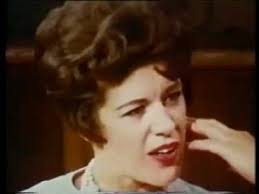
The Gloria Films: Candid answers to questions therapists ask most

When I penned an article and a book chapter on the classic Gloria Films some years ago I never dreamed these pieces would continue to bring me a seemingly endless string of correspondence. Indeed, this classic video influenced the psychotherapy training and subsequent practice strategies for thousands and thousands of helpers.

To this day the battle rages on about whether this work of art was the savior of psychotherapy, or psychotherapy’s worst nightmare.

Recently a graduate student contacted me with a string of seriously good questions. In this blog I shall share those questions with my answers to shed a tad more light on this major artifact of the 20th century counseling and psychotherapy movement. Okay, let’s do this!

Question: Is the Gloria Film the actual name of the training video? I couldn't find an official reference for it?

Answer: No, the actual title was Three Approaches to Psychotherapy I, II, and III, but folks dubbed it the Gloria Films.

Question: Is the work really as old as it looks? I mean it comes across as ancient.

Answer: That’s because it is ancient. The actual filming took place in 1964 and the movie was released in 1965. In 1964 the Beatles made their first appearance on the Ed Sullivan Show and in 1965, "The Sound of Music" was a big hit at the box office, and the mini-skirt was just released.

Question: Who came up with the idea for the project?

Answer: The mastermind (aka the producer and director) behind the flick was a California psychologist and psychotherapist of note, Everett.L. Shostrom. He created some self-actualization inventories and two years after the Gloria films he authored a successful book, Man the Manipulator.

Question: Why do you think Dr. Shostrum got involved in this project?

Answer: At that time a shroud of secrecy had permeated professional psychotherapeutic helping. The books gave mountains of information about theories, but there was very little literature about what therapists actually said to clients. In 1950 Shostrom recorded the late, great Carl Ransom Rogers with a client on a magnetic wire (yes, go ahead and laugh, this predated digital, cassettes, reel to reel, and eight-track recordings). But: It was not to be. The recording was lost forever when the head of the history department recorded his own presentation of Adam and Eve on the wire recorder! I mean seriously, could I make that up?

Question: Why did Dr. Shostrom choose Albert Ellis, Carl Rogers, and Frederick (Fritz) Perls as the therapists?

Answer: Well, quite frankly, it was an all-star line-up. A lot of folks in the field felt these three helpers were the dream team . . . the best in the world, if you will. Perls created gestalt therapy; Ellis pioneered RET or rational emotive therapy (abbreviated RT at the time of the filming); while Rogers was the father of nondirective counseling which in today’s world is often called person-centered counseling.

Question: Why do my professors always call the approach by Ellis REBT? Is that the same thing as RET?

Answer: Late in his career Ellis added the “B” to stand for behavior based on the longstanding recommendation of a well-known psychologist and psychotherapy book author Raymond J. Corsini.

Question: Had Gloria met Perls, Rogers, and Ellis prior to the filming and what did she know about them?

Answer: No. She just knew they were prominent therapists and would each have approximately 15 or 20 minutes to cure her of what ailed her.

Question: Was Gloria a real client or merely an actress pretending to be a client?

Answer: Oh definitely, a real client. In 1963 Shostrom put together a film titled "Introduction to Psychotherapy." The film featured an actress who was pretending to be a real client. Shostrom was not happy with the movie, nor the acting, hence a real client, Gloria, was cast for 1965 project.

Question: I thought Perls acted like a jerk during his session. Do you have any evidence that Perls was aware of how he was coming across? I am totally sure my current internship supervisor would never allow me to treat a client in such a mean manner.

Answer: I can say with great certainty that Perls was aware of his actions. At one point in the session he quips, "Well, Gloria, can you sense one thing? We had a good fight?"

Question: So how do experts who practice gestalt therapy defend the practice of this theory?

Answer: Well, generally speaking, they say something like, "You don't need to do therapy exactly like Perls to be a gestalt therapist." To be fair, I have heard top practitioners say precisely the same thing about Ellis, though to be sure they are not talking the way Ellis came across in this movie. If you ever witnessed a therapy session or workshop conducted by Ellis he was often prone to use a little off color language, and that's putting it mildly!

Question: Okay, well here is my biggest question and the one I really want to know the answer to. In the movie, Rogers comes across in a very warm moving way. Ellis, is seemingly a tad less empathic, but not bad, while Perls is flat out mean to her. After Gloria experiences therapy sessions with all of them she is asked which therapist she would most like to continue therapy with and she chooses Dr. Perls. I was shocked. I mean, I just thought Rogers was the hands down winner. What in the world was going on here?

Answer: You were surprised, I was surprised, my entire graduate class at the time we viewed the films was surprised, and seemingly countless others who viewed the sessions were in shock and awe. There was just something not quite right about her choice of Perls. I didn’t buy into it then and I sure don’t buy it now. In fact, it was her strange choice of Perls which piqued my interest in researching the movie.

Personally, I thought it was the strangest response (from a client who was not psychotic) I had come across in the entire field of psychotherapy, and that's saying a lot!

Question: Did you find it difficult to research this film?

Answer: Do birds fly? Absolutely. Lots of people were trying to piece this puzzle together with very little success. Perhaps the most remarkable was a fellow I corresponded with in another country who was actually offering small rewards for information. Seemingly folks with connections to the film just were not talking. On one occasion a person who actually knew Shostrom told me he insisted I share anything I came up with him before I had it published! He wanted to approve or disapprove of what I was going to write. What? (Excuse me, but when did America stop being a free country? Just asking.) He also refused to give me any information and told me it wasn't relevant why Gloria chose Perls. This made me even more suspicious and made me want to research this even more!

Question: Did Gloria ever see Perls after the interview and if so what transpired? I hope the transaction was more cordial than the therapy session.

Answer: Yes they saw each other, but no it wasn't pleasant! According to Gloria, after the cameras stopped rolling and the experts and movie crew were preparing to depart, Perls used Gloria as a human ash tray (not a misprint). He motioned for her to hold her hands cupped with her palms facing up. He then flicked his cigarette ashes into her hand.

Question: Geez, that's downright abusive, wouldn't you agree?

Answer: Yeah! At the very, very least I could safely say it is behavior that was unbecoming of the father of a major psychotherapy modality.

Question: Lots of folks on the web accuse Gloria of having an affair with Rogers or Ellis. Some even suggest she married one of them. Any truth to the rumors?

Answer: Totally false. Junk science. Not a shred of evidence to support these claims. In fact, to the contrary, Gloria became very close to Rogers and his wife.

Question: Okay, so I can't wait another moment. Why did Gloria pick Perls as her favorite? Rogers came across so empathic. Wasn't he surprised when Gloria did not choose him? I have heard therapists say that Perls was chosen because she realized she needed a tough helper and he would not allow her to remain disturbed.

Answer: Rogers did admit he was baffled. In my mind Rogers gave a flawless performance. I'd give him five stars. Six if I could. As the session began to wind down Gloria says, "Gee, I'd like you for my father." Rogers replies, "You look to me like a pretty nice daughter." As you remarked earlier, it was very moving and Rogers came across as an ideal billboard advertisement for his own theory. Moments after the session with Rogers Gloria announced that, "All in all I feel good about this interview."

Three years before he passed away, Ellis told me that Gloria hated Perls for the rest of her life. Ellis revealed that the movie was "a fake" in the sense that, prior to the filming Gloria had seen Shostrom for four years of psychotherapy. When the film was produced Rogers didn't know this either. At the time, Shostrom was a supporter of Perls. To quote Ellis, "He [Shostrom] got her to say it was Perls who helped her, when he actually didn't." Was Gloria experiencing positive transference toward Shostrom? Was it just that she didn't want to disappoint her therapist? Could it have been that she was petrified of Perls? I don't have the definitive answer, but I think all of the aforementioned issues most likely entered into this. Just for the record Ellis felt he tried to cover too much in his own session with Gloria, and thus while his intervention was not horrific, he was clearly not at the top of his own psychotherapeutic game.

Question: So what is the take-away message you think counselors and therapists need to know?

Answer: Well, first let me be 100% crystal clear that there are occasions when a helper must be direct and use confrontation. No argument about that. Not now, not ever. However, after watching the movie, countless generations of therapists came away with the false notion that a sarcastic, up in your face, card carrying mental judo therapist (in this instance Perls) will walk away with the grand prize. Over the years I routinely heard therapists, supervisors, and my own students brag, "I got right up in the client's face and came across like Perls in the movie," thinking that was the best approach. According to Gloria's daughter (referred to as Pammy, just a fifth-grader at the time of the film), who authored Living with the 'Gloria Films': A daughter's memory in 2013, these Perls wannabes got it oh so wrong. After perusing her book it is safe to say the brief session with Perls negatively impacted her for the rest of her life.

Question: Is Gloria still alive?

Answer: Sadly, Gloria passed away in her mid-forties after a battle with cancer. I believe Gloria said it best herself as she was fond of saying, "Believe half of what you see and none of what you hear." Every aspiring and practicing therapist who wants to complete the emerging gestalt should see this film.