A New Year for Psychotherapists

I was just on the phone with Peter Levine discussing a new video we are making  using his Somatic Experiencing approach to working with pain. I started to tell him that we want to release the video next year….and I caught myself as I realized that next year is now this year. Hello 2017! I still remember my kindergarten teacher writing 1964 on the board after our Christmas vacation, and I was so surprised. How could it be a new year? What did that even mean?

Which brings us back to the current state of things. Yes it’s an arbitrary date on our western calendar, but it is the calendar we live by. The earth has completed its little jaunt around our sun. And yes, there are possibly billions of other suns around the universe, and who knows how many planets circling those stars. But this is our little planet until we destroy it, and this is my life, and this is our new year. What am I going to make of it?

Here are a few things that come to mind, in no particular order:

1. Continue to make psychotherapy videos. In our pipeline for 2017 we have video series on Emotionally Focused Therapy Step-by-Step, Irvin Yalom on the Art of Psychotherapy, Diagnostic Interviewing and the DSM-5, Motivational Interviewing for Adolescents, and that’s just for starters. After 20 years of making training videos, we are pushing and stretching ourselves to move beyond single or multiple session videos, and trying to break down the specific skills needed to improve therapeutic efficacy.
2. Keep working on my tennis game. This has been a longer work in progress than #1 above, and the results so far less impressive. But suddenly I’m feeling a sense of urgency, as I know eventually that any increase in skills will be offset by a decrease in agility, given that I’ve survived 57 rotations of our planet going around our sun.
3. Paint and make more wooden spoons and bowls , and perhaps learn welding so I can make some metal sculptures.
4. Enjoy watching my children become adults.
5. Spend less time staring on my computer. Now that’s a challenging goal.
6. Perhaps write more blogs. Starting now.

In many ways I’m just going to continue what I’m doing. I’ll take that as a good sign that my life is not in need of a radical change. But I’ll keep my fingers crossed.

And what about you? For those of you who are practicing therapists, what is in store for you in this coming year? What tweaks do you wish to make in your work and personal lives? What will make you more effective, and more satisfied? How you will actually increase your skills as a therapist? I just conducted an interview (not yet published) with my friend Tony Rousmaniere, and the research seems fairly clear that simply reading books or attending workshops, or even more clinical experience does not lead to increased efficacy. He has some great ideas in his new book Deliberate Practice for Psychotherapists.

Is your practice running you, or are you running it? Are you seeing the number and types of clients you really want? If not—and I imagine for most of us it’s not the perfect mix—what can you do to move it towards your ideal? Are you getting the collegial support you need to avoid the pitfall of isolation? Looking back on my 25 years of private practice, I realize I was more isolated than I would have liked, and would have benefitted from much more peer interaction. Live and learn. What other passions are you pursuing? What would you like to do this year—or not do—so that when the calendar turns to 2018 you can look back and think “this was a year fully lived”?
 

The Gloria Films: Candid answers to questions therapists ask most

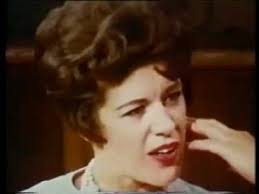
When I penned an article and a book chapter on the classic Gloria Films some years ago I never dreamed these pieces would continue to bring me a seemingly endless string of correspondence. Indeed, this classic video influenced the psychotherapy training and subsequent practice strategies for thousands and thousands of helpers.

To this day the battle rages on about whether this work of art was the savior of psychotherapy, or psychotherapy’s worst nightmare.

Recently a graduate student contacted me with a string of seriously good questions. In this blog I shall share those questions with my answers to shed a tad more light on this major artifact of the 20th century counseling and psychotherapy movement. Okay, let’s do this!

Question: Is the Gloria Film the actual name of the training video? I couldn't find an official reference for it?

Answer: No, the actual title was Three Approaches to Psychotherapy I, II, and III, but folks dubbed it the Gloria Films.

Question: Is the work really as old as it looks? I mean it comes across as ancient.

Answer: That’s because it is ancient. The actual filming took place in 1964 and the movie was released in 1965. In 1964 the Beatles made their first appearance on the Ed Sullivan Show and in 1965, "The Sound of Music" was a big hit at the box office, and the mini-skirt was just released.

Question: Who came up with the idea for the project?

Answer: The mastermind (aka the producer and director) behind the flick was a California psychologist and psychotherapist of note, Everett.L. Shostrom. He created some self-actualization inventories and two years after the Gloria films he authored a successful book, Man the Manipulator.

Question: Why do you think Dr. Shostrum got involved in this project?

Answer: At that time a shroud of secrecy had permeated professional psychotherapeutic helping. The books gave mountains of information about theories, but there was very little literature about what therapists actually said to clients. In 1950 Shostrom recorded the late, great Carl Ransom Rogers with a client on a magnetic wire (yes, go ahead and laugh, this predated digital, cassettes, reel to reel, and eight-track recordings). But: It was not to be. The recording was lost forever when the head of the history department recorded his own presentation of Adam and Eve on the wire recorder! I mean seriously, could I make that up?

Question: Why did Dr. Shostrom choose Albert Ellis, Carl Rogers, and Frederick (Fritz) Perls as the therapists?

Answer: Well, quite frankly, it was an all-star line-up. A lot of folks in the field felt these three helpers were the dream team . . . the best in the world, if you will. Perls created gestalt therapy; Ellis pioneered RET or rational emotive therapy (abbreviated RT at the time of the filming); while Rogers was the father of nondirective counseling which in today’s world is often called person-centered counseling.

Question: Why do my professors always call the approach by Ellis REBT? Is that the same thing as RET?

Answer: Late in his career Ellis added the “B” to stand for behavior based on the longstanding recommendation of a well-known psychologist and psychotherapy book author Raymond J. Corsini.

Question: Had Gloria met Perls, Rogers, and Ellis prior to the filming and what did she know about them?

Answer: No. She just knew they were prominent therapists and would each have approximately 15 or 20 minutes to cure her of what ailed her.

Question: Was Gloria a real client or merely an actress pretending to be a client?

Answer: Oh definitely, a real client. In 1963 Shostrom put together a film titled "Introduction to Psychotherapy." The film featured an actress who was pretending to be a real client. Shostrom was not happy with the movie, nor the acting, hence a real client, Gloria, was cast for 1965 project.

Question: I thought Perls acted like a jerk during his session. Do you have any evidence that Perls was aware of how he was coming across? I am totally sure my current internship supervisor would never allow me to treat a client in such a mean manner.

Answer: I can say with great certainty that Perls was aware of his actions. At one point in the session he quips, "Well, Gloria, can you sense one thing? We had a good fight?"

Question: So how do experts who practice gestalt therapy defend the practice of this theory?

Answer: Well, generally speaking, they say something like, "You don't need to do therapy exactly like Perls to be a gestalt therapist." To be fair, I have heard top practitioners say precisely the same thing about Ellis, though to be sure they are not talking the way Ellis came across in this movie. If you ever witnessed a therapy session or workshop conducted by Ellis he was often prone to use a little off color language, and that's putting it mildly!

Question: Okay, well here is my biggest question and the one I really want to know the answer to. In the movie, Rogers comes across in a very warm moving way. Ellis, is seemingly a tad less empathic, but not bad, while Perls is flat out mean to her. After Gloria experiences therapy sessions with all of them she is asked which therapist she would most like to continue therapy with and she chooses Dr. Perls. I was shocked. I mean, I just thought Rogers was the hands down winner. What in the world was going on here?

Answer: You were surprised, I was surprised, my entire graduate class at the time we viewed the films was surprised, and seemingly countless others who viewed the sessions were in shock and awe. There was just something not quite right about her choice of Perls. I didn’t buy into it then and I sure don’t buy it now. In fact, it was her strange choice of Perls which piqued my interest in researching the movie.

Personally, I thought it was the strangest response (from a client who was not psychotic) I had come across in the entire field of psychotherapy, and that's saying a lot!

Question: Did you find it difficult to research this film?

Answer: Do birds fly? Absolutely. Lots of people were trying to piece this puzzle together with very little success. Perhaps the most remarkable was a fellow I corresponded with in another country who was actually offering small rewards for information. Seemingly folks with connections to the film just were not talking. On one occasion a person who actually knew Shostrom told me he insisted I share anything I came up with him before I had it published! He wanted to approve or disapprove of what I was going to write. What? (Excuse me, but when did America stop being a free country? Just asking.) He also refused to give me any information and told me it wasn't relevant why Gloria chose Perls. This made me even more suspicious and made me want to research this even more!

Question: Did Gloria ever see Perls after the interview and if so what transpired? I hope the transaction was more cordial than the therapy session.

Answer: Yes they saw each other, but no it wasn't pleasant! According to Gloria, after the cameras stopped rolling and the experts and movie crew were preparing to depart, Perls used Gloria as a human ash tray (not a misprint). He motioned for her to hold her hands cupped with her palms facing up. He then flicked his cigarette ashes into her hand.

Question: Geez, that's downright abusive, wouldn't you agree?

Answer: Yeah! At the very, very least I could safely say it is behavior that was unbecoming of the father of a major psychotherapy modality.

Question: Lots of folks on the web accuse Gloria of having an affair with Rogers or Ellis. Some even suggest she married one of them. Any truth to the rumors?

Answer: Totally false. Junk science. Not a shred of evidence to support these claims. In fact, to the contrary, Gloria became very close to Rogers and his wife.

Question: Okay, so I can't wait another moment. Why did Gloria pick Perls as her favorite? Rogers came across so empathic. Wasn't he surprised when Gloria did not choose him? I have heard therapists say that Perls was chosen because she realized she needed a tough helper and he would not allow her to remain disturbed.

Answer: Rogers did admit he was baffled. In my mind Rogers gave a flawless performance. I'd give him five stars. Six if I could. As the session began to wind down Gloria says, "Gee, I'd like you for my father." Rogers replies, "You look to me like a pretty nice daughter." As you remarked earlier, it was very moving and Rogers came across as an ideal billboard advertisement for his own theory. Moments after the session with Rogers Gloria announced that, "All in all I feel good about this interview."

Three years before he passed away, Ellis told me that Gloria hated Perls for the rest of her life. Ellis revealed that the movie was "a fake" in the sense that, prior to the filming Gloria had seen Shostrom for four years of psychotherapy. When the film was produced Rogers didn't know this either. At the time, Shostrom was a supporter of Perls. To quote Ellis, "He [Shostrom] got her to say it was Perls who helped her, when he actually didn't." Was Gloria experiencing positive transference toward Shostrom? Was it just that she didn't want to disappoint her therapist? Could it have been that she was petrified of Perls? I don't have the definitive answer, but I think all of the aforementioned issues most likely entered into this. Just for the record Ellis felt he tried to cover too much in his own session with Gloria, and thus while his intervention was not horrific, he was clearly not at the top of his own psychotherapeutic game.

Question: So what is the take-away message you think counselors and therapists need to know?

Answer: Well, first let me be 100% crystal clear that there are occasions when a helper must be direct and use confrontation. No argument about that. Not now, not ever. However, after watching the movie, countless generations of therapists came away with the false notion that a sarcastic, up in your face, card carrying mental judo therapist (in this instance Perls) will walk away with the grand prize. Over the years I routinely heard therapists, supervisors, and my own students brag, "I got right up in the client's face and came across like Perls in the movie," thinking that was the best approach. According to Gloria's daughter (referred to as Pammy, just a fifth-grader at the time of the film), who authored Living with the 'Gloria Films': A daughter's memory in 2013, these Perls wannabes got it oh so wrong. After perusing her book it is safe to say the brief session with Perls negatively impacted her for the rest of her life.

Question: Is Gloria still alive?

Answer: Sadly, Gloria passed away in her mid-forties after a battle with cancer. I believe Gloria said it best herself as she was fond of saying, "Believe half of what you see and none of what you hear." Every aspiring and practicing therapist who wants to complete the emerging gestalt should see this film.

Jill Scharff on Object Relations Therapy with Couples

What is Object Relations Therapy?

Rafal Mietkiewicz: Jill, you are a renowned psychiatrist, psychoanalyst and object relations therapy expert. You’ve written and edited many books on object relations therapy so I’m wondering if we can start with just a basic overview of what object relations therapy actually is. It can seem like rocket science to beginning therapists.
Jill Savege Scharff: It’s an unfortunate term, “object relations,” but it was chosen in deference to Freud’s use of the term “object,” which refers to the object that the drive to be in relationship attaches to. Freud talked about the sexual and aggressive drives later in his life, the life and death drives. Fairbairn, who introduced the term “object relations theory,” talked about people’s main motivation being to be in relationship, not only for love an security, but also for a sense of meaning. Giving meaning to existence.

It’s not just the mother who gives meaning to the baby, but the baby who gives meaning to the mother, who becomes a mother because she has the baby to relate to and care for. Object relations refers to the internal psychic structure that develops from these early experiences.

RM: And as therapists our job is to search for these internal structures in our clients?
JS:
Intimate relationships provide an opportunity to rediscover the internal object relations in a new dimension—one that may help it grow and change.
You don’t have to search very far because that internal structure is written large in external, current relationships. The internal relations operate as a kind of design that leads people to repeat it in their current relationships—partly because it’s familiar, and they want to recreate what they know, and partly to have new experiences that, if they’re healthy and interesting and challenging may encourage new learning so that modifications in the original object relations can be made. Intimate relationships provide an opportunity to rediscover the internal object relations in a new dimension—one that may help it grow and change. Same is true in therapy. Does it still sound like rocket science, Rafal?
RM: Yes, a little bit. It seems like it would take a long time to unwind these long-term patterns, and that the therapy would go quite deep.
JS: It does take time to create deep character change. It can take a couple of years with couples.
RM: I am a working therapist, and I have my own experiences in both individual and marital therapy, but the idea of working with a couple for a couple of years sounds challenging, to be honest.
JS: Well, that’s more for couples who are looking for radical change. Some couples come in and just want a little adjustment. They want to settle a fight, or they want to decide whether or not to have a child, and it’s just a developmental intervention. A developmental challenge has got them stuck, and after few sessions they’re on their way. But others who have tremendous difficulties relating, communicating, establishing an intimate sexual relationship—these therapies take longer.
RM: So you distinguish between a developmental intervention and deep therapy.
JS: Well, you never want to do too much. You just want to do what people are looking for and what they need. With an object relations approach, which does operate in depth, even in a few sessions you can show a couple what that approach could offer them if they chose it, if they chose to invest in something more substantial.
RM: When you see a couple, what are the initial stages?
JS: First we do a consultation—not therapy—because I want to give the couple a chance to decide if they think we’re a good match, and I want to show them my style of working. Not every couple chooses to work in an object relations framework, which is basically psychoanalytic framework. Some are looking for a shorter-term approach, or a more structured approach, or a more direct of approach, in which case I’ll refer them.
RM: So the first stage is consultation.
JS: Yes, I’ll meet for maybe two or three sessions. Some people will meet with one partner once, the other partner once, and the couple once. But unless there’s a specific indication to do that, I usually prefer to just work with the couple.
RM: What would be the special indication?
JS: If there is an autonomous individual psychiatric problem, such as a deeply established substance abuse problem, I might want to meet with that individual to assess the extent of it and decide if individual treatment is a better option, maybe even a rehab program. Another indication is the wife or husband of a therapist. Sometimes, you’ll find that non-therapist is so far behind the one who is trained as a therapist, in terms of communicating emotional experience, that they sometimes need an individual session away from the therapist-partner in order to find the words to speak to the therapist partner.
RM: Can a couple’s therapist join these two functions, and do individual therapy with one person from a couple, while also doing therapy for the couple?
JS: That can happen as long as you’re very aware that your commitment is to the couple and that anything you do with the individual comes back into the couple meeting. That the confidentiality, for instance, pertains to the couple, not to the individual member of the couple. So let’s say the individual tells you about an affair that they haven’t told their partner, you would not reveal that personally, but you would suggest they bring it up in couples therapy. If they can’t do it, you probably find yourself unable to work with the couple because if you have a piece of information that you can’t use, it blocks you from being able to respond to all the clues that lead to that conclusion, which you can’t then make.
RM: You also can’t free associate, because you’re blocked from going in certain directions.
JS: You’re absolutely right. I was in Poland last week, and I heard that the Family Therapy Association is working on a statement about confidentiality and how it pertains to couple and family therapy.

The Couple’s Unconscious Life

RM: How do you assess whether a couple is suitable for object relations therapy.
JS: I’m looking for how they respond to any interpretations I make, to my overall presentation, to any links I make between the current struggles and the past. If I get someone who doesn’t want to deal with the past, who says “The past is the past and I don’t want to think about it,” they aren’t likely a good candidate for therapy with me.
If I get someone who doesn’t want to deal with the past…they aren’t likely a good candidate for therapy with me.
So I might say, “Well, okay, I can try to work with you just on the present, but I know that everything that happens now is informed by what happened before, so I don’t think that this kind of therapy will suit you. Do you want to try it and see it what it can do for you, or would you prefer something else?”

I always like to work with couples who can work with their dreams, but not all couples are willing to do that. Some think their dreams are very private to the individual. To me, once an individual tells a dream in couples therapy, it becomes a dream of the couple that the couple has shared with me and that helps me have access to the couple’s unconscious life. The whole of object relations therapy is geared to getting access to the impact of the unconscious on the relationship.

RM: What’s your technique for working with a couple’s dream?
JS: Well, first of all, I listen to the dream from the individual. Then I ask the individual what has occurred to them about the dream. Then, I ask the partner what comes up for them in relation to the dream. Then, as a couple, they’re now talking about this dream, and I look for their associations, my own associations, the feelings it elicits in them and myself, and I construct an interpretation of the dream and what it conveys about the current of their relationship and what they hope for, what they wish for, for themselves in the relationship.
RM: I have always found that working with dreams is great in individual therapy, but this opens a new ocean of possibilities working with couples. Once you’ve done the consultation sessions, and you’ve got the couple on board for treatment, what next?
JS: We agree on the frequency of therapy, which will be once or twice a week. I like my sessions to be 45 minutes, but for couples who come a long distance, we might work for an hour or an hour and a half, whatever suits them. But by arrangement, not just running over time; we agree ahead of time what will be the best format. I don’t do questionnaires. I just ask them to come into the room. They sit.

Can you see my room? [Interview is being done via Skype]

RM: Of course, I see two armchairs.
JS: There are two red chairs over there. They sit in those chairs. I sit back here near the desk. There is a couch down that wall, past the printer. Some couples will sit together on the couch. Sometimes one will sit on the couch in a rather narcissistic way while the other will perch on the chair. However they sit, it’s of interest how they relate themselves to me, how they relate to each other, in spatial terms.

And then I just ask them to say whatever they want to say. Just come in and start. I don’t ask questions. I just listen, and I respond. I think my manner is sort of socially appropriate, unobtrusive, nondirective. It’s not remotely analytic as we’ll sometimes imagine analysts to be. And I’m not saying all the time, “And what do you think about that?”

A Couple's State of Mind

RM: You’re not?
JS: “And how does that make you feel?” No, it’s more that we’re just having an open space conversation, really. And then, every so often, I’ll arrive at a construction of what I think has been happening and show them their repeating patterns of interaction and how they connect to their early experiences. How they treat each other as people from the past were treated or treated them. I’m very interested in helping them as a couple to develop what Mary Morgan calls “a couple’s state of mind.”

You get some couples who used to think as a couple, plan as a couple, and who, because of the strains and stresses of their life and the emergence of negative aspects of their characters, have lost that ability. And then other couples come in who have never actually had it.
You get some couples who used to think as a couple, plan as a couple, and who, because of the strains and stresses of their life and the emergence of negative aspects of their characters, have lost that ability. And then other couples come in who have never actually had it. They come as two individuals. Each one thinking what he or she is doing and not understanding that the marriage is a thing in and of itself that they each contribute to the shaping of, the nurturing of, the maintenance of. If they can learn to do that, then the marriage offers them a great deal.

It’s not just that the partners take care of and love each other, but also the partnership or marriage that they construct. I’m not saying they have to be married in a church or anything, but if they made a commitment to be together, and they nurture that relationship, it will then nourish them and support them through the life cycle and through the various challenges of having the first child, the first child leaving home, retirement—whatever comes through life.

RM: Is one course of therapy enough for a couple or do they tend to come in and out over time?
JS: I think most couples, if they work for a couple years and get to the appropriate developmental level, then they have the tools they need when challenges come up. But you can never predict what life will throw in the way of a couple, and some things might overwhelm their capacity to adapt. If that’s the case they may come back for another session or series of sessions.

The Death of the Couple

RM: What techniques do you use? Do you give interpretations?
JS: I’m a little bit allergic to the term “techniques.” It sounds like they’re little things you apply in various circumstances.
I tend to think of technique more generally as a way of listening, observing, waiting, holding anxiety, not jumping to action, not becoming directive, of always following the affect.
I tend to think of technique more generally as a way of listening, observing, waiting, holding anxiety, not jumping to action, not becoming directive, of always following the affect. It’s very important to always be listening for the feeling behind the words. We do that by listening to the tone, the rhythm of the speech, the hesitations in speech, pauses, slips of the tongue, of course. I’m always interested in any dream material that comes up that will give more access to the unconscious. Then we look for repeating patterns of interaction. We name them and ask the couple to think about why they need this particular pattern. In other words, what defensive function does this pattern serve and what is the anxiety that lies behind it? And there’s always another anxiety that lies behind the most conscious anxiety—fundamentally, the main anxiety is death of the couple. That is the main anxiety.
RM: Death of the couple?
JS: Yes.
RM: Can you say a bit more about that?
JS: Couples are usually not consciously thinking about it, but fundamentally it’s what every couple is worried about. The individual worries that his or her pathology will destroy the couple.
Every couple tries not to remember that one of them will die first.
They consciously worry that they’ll be left, abandoned, rejected, tossed aside, but fundamentally they’re worried that the couple will be destroyed. Every couple tries not to remember that one of them will die first, and no couple knows which one will die first, and no couple knows which one will be left when that happens.
RM: It’s frightening, of course.
JS: It’s very, very frightening when it begins to come to consciousness. As people, maybe in their 40s, they start to maybe lose one friend, or they’ll lose a parent, and they see what happens to the one who is left, then it starts to bear in on them, and they become conscious of that fundamental worry.
RM: How do you work on developing the couple’s state of mind?
JS: The therapist must develop the capacity to be impartial to each individual—or to be equally partial to both of them—but with an overarching commitment to the couple relationship. It’s keeping that in mind that marks the more advanced couple therapist. Someone who isn’t pulled to take sides but who remains neutral, or, if pulled to take a side, latches onto it and can interpret what has just happened. Name it as a skewing of the original intention that reflects a characteristic of the individual who initiated it and the partner who allowed it to happen—since it will likely be a pattern that happens in the relationship. And there you have it, in the laboratory of the couple therapy, where you can see it, examine it in relation to yourself, a couple therapist who doesn’t have all the investment of being a life partner.
RM: Do you have all these concepts in your head when you talk to a couple?
JS: No. I think we do all that theory as background, and if we get stuck in our work with a couple, then we pull out the theory and see if it can help us. But, there’s something very important that you haven’t asked me about, which has to do with sexuality.
RM: By all means….
JS: I’ve found that a lot of couples—or rather couples therapists—don’t actually ask about the couple’s intimate relationship. If a couple presents with a sexual problem they’ll respond to it of course, but they don’t always ask about it as part of the assessment, and I think it’s important to do that, and to not be inhibited about it. It’s just part of the couple’s life and should be considered along with all other aspects. Now, if there is a specific sexual problem, then the object relations approach, which is analytic primarily, has to include a behavioral component.
RM: I know this is hard to quantify, but can you talk about one of your biggest successes and one your biggest failures as a therapist?

JS: That’s really hard to do off the cuff. I mean, there are couples that break up—and in one way, that’s a failure of the couple therapy. In another way, that is a recognition of their differentiation and that the therapy has helped them to reach this very painful decision. Whether you call that a success or a failure is really debatable.
The couple that quits in a rage at you or in disappointment with you—that feels like a failure.
The couple that quits in a rage at you or in disappointment with you—that feels like a failure. It’s also a tremendous loss because you didn't get the opportunity to work with them on these intense feelings which, had they come back to work on them, could have been very useful to their relationship. As it is, they just go off with an idea of putting the bad object into you as if it will stay there, and they’ll be relieved of it. Of course, the bad object always returns, and they won’t have had a chance to really work on it. That feels like a failure to me.
RM: It’s painful, yes.
JS: Success is any couple that goes off, and you never hear from them again because they’re coping. You hope that is a success, but you never really know because part of our policy is not to do follow-up, not to intrude on people’s lives after they have ended their contract with you. That’s one of the sad things about being a couples therapist, is not knowing what happens with them—unless you hear about a couple by chance or unless they return as parents of a child, and they want you then to see their child. They’re doing okay as a couple, but because of the period that they went through when they weren’t doing okay as a couple, their child has built in certain personality characteristics that are hampering that child. So you see the residue of the couple problem in the child.

You can work with the child to get them back on developmental track, but at the same time, you see the couple as parents and how well they are doing both as a couple and as parents, and that’s very gratifying. You could call that a success.

RM: What’s your advice to new therapists?
JS: Get into treatment.
RM: Get into treatment.
JS: And get supervision. And then you can study and take courses. It’s constant work. And if you find a couple daunting, you are not alone. Couple therapy is the hardest work we do because a couple has such a tight bond. They are together because they fit at conscious and unconscious levels.

Success is any couple that goes off, and you never hear from them again because they’re coping.
As the couple therapist, you often feel either you’re breaking a boundary by entering the bedroom, as it were, as if you were a child in an Oedipal situation, or you feel terribly excluded because you can’t get in. You feel guilty about trying to get in. You feel confused, puzzled, rejected. It can be very uncomfortable working with a couple, and this is the reason many people don’t do it, I think. That’s why I say get into therapy and supervision. It takes a lot of personal therapy on the part of the therapist to understand how their own personality is constructed and how they tend to express themselves not only in their personal relationships, but in relation to the couples and families they work with.
RM: Jill, thank you very much.
JS: You’re so welcome. Delightful talking to you.

Ronald Siegel on Integrating Mindfulness into Psychotherapy

Mindfulness is an Attitude Toward Experience

Deb Kory: Ronald Siegel, you’re an assistant professor of psychology at Harvard Medical School, a longtime student and teacher of mindfulness meditation, on the faculty of the Institute for Psychotherapy and Meditation and in private practice as a psychotherapist. You’ve done a great deal of work in bringing mindfulness to chronic pain patients and co-wrote a book called Back Sense: A Revolutionary Approach to Halting the Cycle of Chronic Back Pain as well as one for therapists, Sitting Together: Essential Skills for Mindfulness-based Psychotherapy. Most exciting of all—for us at least—you are the star of a new video we produced and are releasing this month called Integrating Mindfulness into Counseling and Psychotherapy, which features you doing mindfulness-based psychotherapy with real clients. In it, you go into great detail about the theory and practice of mindfulness-based psychotherapy, and also do four different therapy sessions with clients each presenting different issues. For our readers who haven’t yet had a chance to watch it, let’s start with the basics: What is mindfulness?
Ronald D. Siegel:
Mindfulness is an attitude toward experience—approaching any moment of our lives with both awareness and acceptance.
Mindfulness is an attitude toward experience—approaching any moment of our lives with both awareness and acceptance. Many people mistake mindfulness for mindfulness meditation, which is actually an umbrella term for many different practices that are designed to cultivate mindfulness, some of which involve following an object of awareness, like the breath, others of which involve things like loving kindness practice or equanimity practices. Those are practices designed to cultivate mindfulness, but mindfulness itself is an attitude toward moment-to-moment experience.
DK: Is it possible to practice mindfulness without having some experience with meditation?
RS: Absolutely. We all have moments in which we’re mindful, in which our minds and bodies show up for an experience. In fact, you might take a minute just now, while reading this, to think of a meaningful moment you’ve had. People will often say, the birth of a child or a graduation or getting married or a particular sunset or a conversation with a friend—all of those moments are essentially moments in which our attention is in the present. We’re accepting of what’s happening and we’re not lost in fantasies of the past that we call memories, nor fantasies of the future. We’re actually present.

We have many moments of this kind of mindful presence in the course of our lives, it’s just that once we start to be attentive to various states of consciousness, we notice that they’re the exception, rather than the rule. They’re relatively rare. So we do mindfulness practices to cultivate more of these moments in our lives.
DK: A sunset or being with a loved one—those are positive experiences. Do we tend to be more mindful in positive moments?
RS: I think instinctually we are, because when we’re experiencing painful moments, we recoil from them. We try to change them or get them to stop, and it takes some practice to open to unpleasant experiences as well. That is a central part of mindfulness practices, particularly in the therapeutic arena, where we understand one aspect of psychopathology as a tendency to resist experience, to try to make it stop.
DK: You are considered a mindfulness expert of sorts and you’re also a psychologist. Have you always brought mindfulness into your psychotherapy practice?
RS: Well, I’d like to challenge that designation first. I’m certainly not a poster child for the practice, given my experience with my own unruly mind. However, I first started practicing mindfulness back in high school, so I have been at it for some time and the principles associated with mindfulness have always infused my psychotherapy practice. In fact, when I learned more conventional psychotherapeutic techniques like cognitive behavior therapy, psychodynamic techniques, systems techniques, humanistic psychological techniques, it was always against the backdrop of Buddhist psychology, which is really the ground out of which mindfulness practices grew.

Our Relentless Tendency Toward "Selfing"

DK: How do therapists actually bring mindfulness into therapy?
RS:
Experienced psychotherapists are perfectly capable of having a full session, making reflective comments, insightful interpretations, all while planning a 12-course meal and having our attention quite divided.
Mindfulness can infuse psychotherapy on many different levels. It can infuse psychotherapy simply on the level of the practicing psychotherapist—what happens to us as the tool or instrument of treatment when we start practicing ourselves. For example, we start to actually show up in the room more fully. Experienced psychotherapists are perfectly capable of having a full session, making reflective comments, insightful interpretations, all while planning a 12-course meal and having our attention quite divided.
DK: Shhhh, that’s supposed to be a secret!
RS: Yeah, don’t tell people outside of the field! But the more we practice mindfulness, the more we’re able to be present. The other thing that happens is our capacity to be with and bear difficult emotions increases a great deal as we take up these practices. As therapists, we tend to hear about painful matters all day long, and sometimes it feels like too much, so we start to shut down our feelings; that can get in the way of being present. Mindfulness practices can help us to remain open in a fresh way to those painful feelings.

At the next level, there’s what we might call mindfulness-informed psychotherapy, which involves gaining insights into how the mind creates suffering for itself—through our own mindfulness practice and through the experience of longtime practitioners. As we gain some of those insights, we start to see certain patterns of mind that begin to inform our models of psychotherapy. For example, our relentless tendency toward “selfing”— creating narratives in our minds, starring me. These narratives are often quite distorted and create a tremendous amount of tension and suffering as we try to hold on to one self image and abort another.

As we see this through our own mindfulness practice, we start to notice that our clients or patients seem to be struggling with the same thing and we can help them with that by drawing upon our own insights and practices. Similarly, noticing the tendency to resist experience and how that multiplies difficulty. In psychotherapy, regardless of what sort of treatment we’re doing, we try to help people move toward, rather than away from, painful experience. To be more present, rather than to be lost in the thought stream involving narratives about the past and the future. That’s a mindfulness-informed psychotherapy.

Finally, there’s the option that comes out of our own experience of doing meditation and realizing that it helps us be more present, clear, have greater affect tolerance, more perspective, and more wisdom in on our lives, as well as more compassion for others. We think, “Hmm, maybe this could help my clients or patients to do this same. Perhaps I’ll teach it to some of them.” I should underscore that it’s about teaching it to some of them and having a map or an understanding of what sort of people might respond well to which sorts of mindfulness practices, at what stages in treatment or stages in life development. It’s not a one-size-fits-all practice.

When Mindfulness is Contraindicated

DK: Isn’t it actually contraindicated for some people?
RS: It’s absolutely contraindicated for many people. For example, for folks who have a lot of unresolved trauma, meaning they’ve experienced painful events in their lives that were too difficult to fully let into awareness at the time, so some aspect of them has been blocked. Maybe it’s the narrative historical memory of the event that’s blocked, maybe it’s the affect associated with the experience that’s blocked, but in some way, the experience has been disavowed. Folks like that, if they start doing certain mindfulness practices, such as spending time following the breath, tend to become quite overwhelmed with the rush of previously blocked material that comes into awareness.

The most problematic adverse effect is due to “derepression,” or the rushing into awareness of things which defensively have been held out of awareness.
A colleague of mine at Brown University named Willoughby Britain is doing a large study on the adverse effects of mindfulness practices, and the most problematic adverse effect is due to what she calls “derepression,” which is this rushing into awareness of things which defensively have been held out of awareness up until the start of mindfulness practices. So, much as we wouldn’t in psychotherapy start talking about material in a vivid way that someone’s not ready to talk about, we don’t want to start doing mindfulness practices that might be premature for various people.
DK: Is Britton against using mindfulness at all in psychotherapy?
RS: No, she’s a mindfulness practitioner herself, a research psychologist who is very enthusiastic about these things and is trying to map this territory. What many meditation teachers know from observation is that these adverse effects are much more likely when somebody attends an intensive silent retreat over the course of many days. But I’ve lead countless groups of psychotherapists through mindfulness practices that are as short as 20-30 minutes and it’s not unusual for one or two members of the group to become overwhelmed by the experience, either by the emotions that comes up or by bodily sensations that they tend to keep out of awareness with constant activity and entertainment. Many, many people are vulnerable to reconnecting with split-off contents.
DK: Let’s say someone comes in to see you for psychotherapy and they haven’t done much psychotherapy and they seem somewhat fragile in this way. How might you work with them?
RS: What’s interesting is there are many mindfulness practices that actually help to create a sense of safety, that create a sense of holding, as Winnicott would say. There are mindfulness practices that are akin to guided imagery or have aspects that feel like hypnosis, and if they’re done in the context of a trusting therapeutic relationship, bring the safety of the therapeutic alliance into the experience of the mindfulness practice.

There are also practices that ground us in the safe aspects of moment-to-moment experience. Walking meditation, where we’re feeling the sensations of the feet touching the ground, or listening meditation, where we’re listening to the sounds of nature or the ambient sounds in the city. Or nature meditation, where we’re looking at clouds and trees and sky. Those objects, since they tend to be safe for most people and bring our awareness away from the core of the body—away from where we tend to identify emotion as happening and toward a safe outer environment—can be very stabilizing. In fact, many of those practices are conventionally in trauma treatment called “grounding” practices because they create safety.

A Transtheoretical Mechanism

DK: It seems to me like everybody in our profession is talking about mindfulness these days. And approaches that I would assume are kind of strange bedfellows—CBT and mindfulness, psychoanalysis and mindfulness—are being paired together. If you go to Psychology Today and look at the profiles of psychotherapists, mindfulness is now a little bullet-point you can select as an orientation. I often wonder if most practitioners actually know what they’re talking about when they claim to work within a mindfulness framework. Like, are they saying that because they’ve been to a one-day meditation retreat or are they actually genuinely skilled in this approach?
RS: Well, I think it’s the same as with any psychotherapeutic model, theory or treatment system—people have very variable levels of understanding of what they’re doing. There are some people who have a great deal of wisdom, compassion and knowledge, who are saying that they’re doing mindfulness-oriented treatments, and there are other people who have a much more cursory exposure to it and may not have much depth of personal experience, but are intrigued by the idea or see it as a useful concept to identify with because other people may be interested in it and looking for a therapist who has some expertise.

But I do think that the field is still in its infancy in terms of really understanding the psychological, as well as the neurobiological, effects of these practices.
The field is still in its infancy in terms of really understanding the psychological, as well as the neurobiological, effects of these practices.
It’s quite a complex field, with many different practices, each one affecting the mind, the brain and the body in different ways and in different ways for different individuals. So while we can make some generalizations and have some guidelines, I think clinicians are best served to see it as very complex.

To the other point that you made about various forms of treatment being incongruent with mindfulness, I actually don’t think most are. I think of mindfulness as a transtheoretical mechanism that is operating in virtually any effective psychotherapy, because virtually any effective psychotherapy is going to help people step out of irrational, unhelpful cognitive patterns. Virtually any effective psychotherapy is going to help people connect with, feel and embrace an increasingly wide range of emotions. Virtually any psychotherapy is going to try to help people to engage more fully moment-to-moment in their lives. Since these are cardinal features of mindfulness practice, you can see them as being helpful in virtually any form of treatment.
DK: So you don’t see it as its own model or approach, but more an attitude and set of practices that are brought into all approaches.
RS: Very much so. While we might choose to actually teach a mindfulness practice to a given client or a patient in a given psychotherapy, that could be done within the context of a cognitive behavioral treatment, a systemic treatment, a humanistic treatment, a psychodynamic treatment and many others as well.

When graduate students come to me and say, “I want to get trained as a mindfulness therapist. Where should I go to school? What kind of training should I have?” I tend to implore them, “Please don’t get trained as a mindfulness therapist. Please get trained as a therapist, first and foremost. Have some understanding of the complexities of the human mind and body, some understanding of the myriad forms of psychopathology that we can get stuck in, a good introspective understanding of your own issues and conflicts and how they get in the way of relating to other people, and get supervision from people who’ve been working with troubled folks for a long time; once you develop that foundation, then integrate mindfulness practices into psychotherapy.”
When graduate students come to me and say, “I want to get trained as a mindfulness therapist. Where should I go to school? What kind of training should I have?” I tend to implore them, “Please don’t get trained as a mindfulness therapist.”


Of course it’s very valuable all along in your training to be doing your own mindfulness practice, to maybe even have a meditation teacher that you turn to for advice. Extremely useful. But if I had a friend who was struggling psychologically and I had the choice of either sending them to a brilliant mindfulness practitioner with very limited clinical training or a reasonably good clinician with reasonably good training as a clinician, but who’d never heard of mindfulness, I would send that person to the clinician in a heartbeat.

We Are Hardwired for Misery

DK: That’s an interesting point. I live in the Bay Area, and there are a lot of people who are really into Buddhism and mindfulness practices, who kind of eschew psychotherapy for more spiritual practices of meditation and yoga. But at the same time, I know that the Buddhist teachers around here are often imploring people to get therapy, to not do the “spiritual bypass” thing and avoid the work of getting into the muck of our psyches and how they impact our relationships and lives.
RS: Yes, absolutely. Jack Kornfield, who teaches at Spirit Rock in the Bay Area and has written many books on the subject of integrating psychology and Buddhism, recently wrote an article about highly experienced mindfulness meditation teachers, Buddhist teachers, who needed to go into psychotherapy. Ultimately, it’s not that one is better than the other—they are both pathways toward sanity. There are so many pathways to insanity that we actually need a variety of tools to work toward sanity.

I would argue that our natural evolutionarily determined predilection is to be quite nuts and quite miserable.
I would argue that our natural evolutionarily determined predilection is to be quite nuts and quite miserable. As Rick Hanson, who wrote Buddha’s Brain: The Practical Neuroscience of Happiness, Love & Wisdom, puts it, “Our brains are like velcro for bad experiences and teflon for good ones.” It’s a total setup for human misery, not to mention the hardwired tendency toward self-preservation that makes us concerned with how we rank compared to the other primates in our troop, which results in endless self-esteem concerns.

We are hardwired for misery. It is a good thing that we have both Western psychotherapeutic techniques that can help us untangle our narratives and get in touch with our feelings and do that in a healing, interpersonal context, and also have access to mindfulness and compassion practices that can help us transcend our personal story to see existential reality, to face the reality of change and death, to face the reality of sickness and old age, and develop sanity through those practices as well.
DK: As mindfulness practices are becoming more mainstream in the psychotherapy community and the medical community, it’s also becoming more secularized. People might go to their primary care physician and be prescribed a mindfulness-based stress reduction (MBSR) class for high blood pressure, and never even hear the word “Buddhism.” Is there a downside to that?
RS: Let me talk about the upside first and then the downside. The Dalai Lama was talking to a group of clinicians and researchers at Emory University about depression, and toward the end of the conference, I remember being quite moved when he said, “If you folks discover that some elements of Buddhist meditation practices are useful for alleviating depression, I really have only one request for you: please, please don’t tell people that it comes from Buddhism. My tradition is about alleviating suffering, and if you tell people that these are Buddhist practices, you’re going to miss huge numbers of people whose suffering could be alleviated. Don’t get hung up on that. Express this in whatever form is going to be useful in alleviating suffering.”

So my inclination is to tailor our psychotherapy practices to the cultural background, needs, and proclivities of whoever we’re working with. There’s no need to present mindfulness in a way that is going to be alienating. Not only do you not need to mention Buddhism, you don’t need to mention meditation. These practices can be presented simply as attentional control training. When we train our attention differently, we have very different psychological experiences and it helps us both gain insight and cut through all sorts of forms of suffering.

The first rule of psychotherapy is to meet the client or patient where he or she is, and this should not be forced upon people as some alien cultural system, and nor should people be forced to consider the implications of these practices for developing wisdom and compassion if all they’re hoping for at the moment is a little bit less anxiety. That may come later down the road, but we can help them with that anxiety first.

That being said, there are potentials to these practices that are very deep, very wide, and very rich. If a clinician learns mindfulness-based stress reduction and sees these practices primarily as a tool for helping people to relax, they will miss some of the depth and some of the breadth of what these practices can offer. I think it’s useful for clinicians to practice with some intensity themselves, so they can see personally how transformative these practices can be, in a way that goes far, far beyond any benefits that come from relaxation training. It can be very useful for clinicians to learn about Buddhist psychology. It is a very profound and helpful way to understand the mind and how we get caught in suffering.
DK: I think that there’s a lot of mystery and mystification around what mindfulness is, and one of the great things about this new video with you we’re releasing is that we get to see you doing meditation with clients, and modulating it to the specific needs of each client. In real life you don’t do meditation with everyone, but this gives psychotherapists a chance to see what it looks like to bring it into a session.

I think a lot of people are kind of scared to do it and I know that when I first started doing it in my therapy sessions—and I only do it occasionally—I was actually surprised at how profound an experience it was for people and that it had the capacity to stir up some really intense memories. It’s a powerful tool that we have to learn how to use. Can you say a little bit about how you modulate and decide to use meditation in therapy sessions?
RS: First I’d like to pick up on one thing you said.
Many people in our society are involved in states of distraction all day long. Google says we check our cell phone on average 125 times a day.
Many people in our society are involved in states of distraction all day long. Google says we check our cell phone on average 125 times a day. We spend hours watching television. We spend a lot of time chatting with friends. There’s nothing with that—all of these things can have wholesome aspects to them and can make for a rich and interesting life, but for many of us, they keep us from really noticing what’s happening in our minds and in our hearts in each moment. They help to insulate us from the hundreds of micro-traumas that most of us experience just going through the day. The little disappointments, the “I wonder what she meant by that,” the “I didn’t do that as skillfully as I would have,” or “I haven’t quite achieved what I wanted in my life.” Endless, endless reflections, each of which has a bit of pain in it and each of which we want to distract ourselves from with various forms of entertainment and engagement. When people start taking up these practices, all of the pain of those micro-traumas start to come into awareness, and they can indeed be unsettling. Of course they also offer the opportunity to integrate all of that, which is a wonderful potential. So I think we have to be very judicious about it.

My main criteria for whether to actually teach mindfulness practice in a session are twofold; one is, what’s the person’s cultural background and how weird are they going to think it is to choose an object of attention and bring attention to that and return to that object when the mind wanders? Because for some people, it’s like, “forget it, man, that’s not me.”
DK: Yeah, on of the clients in the video, Julia, is a bit like that.
RS: For folks like that, I’m going to be very judicious about it, but one can bring mindfulness into psychotherapy in many, many ways that don’t involve teaching meditation. I already spoke about the shift in our attitude and our capacity for presence as psychotherapists that occurs, as well as the shifts in our models for psychopathology and for what might help people out of psychopathology that might come from our own practice.

Let’s say we’re sitting with somebody and it’s clear that some feeling got triggered. The conventional way to respond to that in therapy is, “What are you feeling now?” A slightly different way to ask the question might be, “what did you notice happening in the body and the mind right now?” That little shift in phrasing starts to shift the conversation from the normal narrative about “my life starring me,” to an observational stance—to what the CBT folks would call “metacognitive awareness,” or what the analysts would call “observing ego.”

To begin to watch and to identify a little bit with awareness itself, rather than the contents of the process. Of course it might be skillful or it might be unskillful in any given moment. For one person at one moment, what they need is to feel your empathic connection to them and saying, “What were you feeling at that moment?” might feel more empathically connected. But for somebody else, they might need to develop some of this observing ego or metacognitive awareness, and if we’re phrasing it in a slightly more objective way, it might serve that purpose. That begins to develop a little bit of mindfulness, even though we’re not doing anything that looks like meditation.

The second criterion I use is, “What’s their capacity to be with their experience?” If they have very little capacity to be with their experience, I want to start with very small doses and very non-threatening contents. If they have more capacity to be with their experience, we can dive into larger doses and get at whatever arises in consciousness right now. It really depends on the person.

Lighten Up

DK: You mentioned CBT and metacognition and it seems like a lot of what’s happening in mindfulness interventions is “noticing.” In CBT, I tend to think of it more as not just noticing, but blocking or counteracting thoughts. Is there also a methodology within mindfulness training where you’re being more directive with the material that comes up in the brain, or is that off limits?
RS: That’s a very interesting question. Let me correct one thing. There’s noticing, and there’s also feeling in a wholehearted way. I think one mistake people make is they assume that this is a very cognitive kind of endeavor and that’s only one part of it. The other part is really opening to what’s happening on a heart level, in terms of really feeling feelings, as well as noticing what’s happening in the interpersonal field and our relationships and connecting in an alive and juicy way to experience. So I just want to mention that first.

Secondly, CBT folks have described it as the third wave of behavior therapy. The first wave was Skinner on one hand and Pavlov and Watson on the other hand. Operant and classical conditioning and working with modifying behavior. Then came the very important insight that human beings, unlike other laboratory animals, think a lot and our thoughts have tremendous impact on both our emotions and on our behavior. So maybe what we should be doing is using behavioral principles, learning theory, to modify thoughts.

The third wave is coming from a different direction:
What if we start to see all thought as essentially fluid, suspect, unreliable, and based on emotion?
What if we start to see all thought as essentially fluid, suspect, unreliable, and based on emotion? These acceptance and mindfulness-based approaches are all about lightening up in relation to thought, rather than trying to get rid of the bad and hold onto the good.

In my experience, that can be quite powerful, but it takes a while. It’s a much more subtle and in some ways sophisticated way to work with the mind than just replacing maladaptive irrational thoughts with adaptive rational ones. After all, one person’s adaptive, rational thought, is another person’s insanity. We all may agree about our zip code and whether it’s raining at the moment, but as soon as we get into more complex matters, humans differ a great deal and I think we’d do better to have a more relativistic approach toward different thoughts.
DK: So the third wave basically posits that we are all insane.
RS: Yes, we’re all insane. This is a little bit of a bold summary, but my impression of the last 15 or 20 years of advances in cognitive science is basically the realization that all the processes that we’ve thought of as rational are irrational, that bias, desire, cultural proclivity, those kinds of factors are really what determine how and what we think. The idea that we are rational organisms analyzing data for positive goals—yeah, occasionally, but that’s not mostly how we tick. So if we can lighten up generally in our approach to thinking, I think that’s quite helpful.
DK: That is a perfect place to end. Thank you so much for sharing the insights of your otherwise unruly mind.
RS: It’s been a pleasure.

Creatures of a Day

The following is excerpted from Irvin Yalom's new book, Creatures of a Day: And Other Tales of Psychotherapy, with permission from the author. Available from Amazon.

All of us are creatures of a day; the rememberer and the remembered alike. All is ephemeral—both memory and the object of memory. The time is at hand when you will have forgotten everything; and the time is at hand when all will have forgotten you. Always reflect that soon you will be no one, and nowhere.

—Marcus Aurelius, "The Meditations"

The Crooked Cure

Dr. Yalom, I would like a consultation. I’ve read your novel, When Nietzsche Wept, and wonder if you’d be willing to see a fellow writer with a writing block.

—Paul Andrews

No doubt Paul Andrews sought to pique my interest in his email. And he succeeded: I’d never turn away a fellow writer. As for the writing block, I feel blessed by not having been visited by one of those creatures, and I was keen to help him tackle it. Ten days later Paul arrived for his appointment. I was startled by his appearance. Somehow I had expected a frisky, tormented, middle-aged writer, yet entering my office was a wizened old man, so stooped over that he appeared to be scrutinizing the floor. As he inched slowly through my doorway, I wondered how he had possibly made it to my office at the top of Russian Hill. Almost able to hear his joints creaking, I took his heavy battered briefcase, held his arm and guided him to his chair.

“Thankee, thankee, young man. And how old are you?

“Eighty years old,” I answered.

“Ahhh, to be eighty again.”

“And you? How many years do you have?”

“Eighty-four. Yes, that’s right, eighty-four. I know that startles you. Most folks guess I’m in my thirties.”

I took a good look at him and, for a moment, our gazes locked. I felt charmed by his elfish eyes and the wisp of a smile playing on his lips. As we sat in silence for a few moments looking at one another, I imagined we basked in a glow of elder comradeship, as though we were travelers on a ship who, one cold foggy night, fell into conversation on the deck and discovered we had grown up in the same neighborhood. We instantly knew one another: our parents had suffered through the great depression, we had witnessed those legendary duels between DiMaggio and Ted Williams, and remembered rationing cards for butter and gasoline, and VE day, and Steinbeck’s Grapes of Wrath, and Farrell’s Studs Lonigan. No need to speak of any of this: we shared it all and our bond felt secure. Now it was time to get to work.

“So Paul, if we may use first names—”

He nodded, “Of course.”

“All I know about you comes from your short email. You wrote that you were a fellow writer, you’ve read my Nietzsche novel, and you have a writing block.”

“Yes, and I’m requesting a single consultation. That’s all. I’m on a fixed income and can’t afford more.”

“I’ll do what I can. Let’s start immediately and be as efficient as possible. Tell me what I should know about the block.”

“If it’s all right with you, I’ll give you some personal history.”

“That’s fine.”

“I have to go back to my grad school days. I was in philosophy at Princeton writing my doctorate on the incompatibility between Nietzsche’s ideas on determinism and his espousal of self-transformation. But I couldn’t finish. I kept getting distracted by such things as Nietzsche’s extraordinary correspondence, especially by his letters to his friends and fellow writers like Strindberg. Gradually I lost interest altogether in his philosophy and valued him more as an artist. I came to regard Nietzsche as a poet with the most powerful voice in history, a voice so majestic that it eclipsed his ideas and soon there was nothing for me to do but to switch departments and do my doctorate in literature rather than philosophy. The years went by, my research progressed well, but I simply could not write. Finally I arrived at the position that it was only through art that an artist could be illuminated and I abandoned the dissertation project entirely and decided instead to write a novel on Nietzsche. But the writing block was neither fooled nor deterred by my changing projects. It remained as powerful and unmovable as a granite mountain. No progress was possible. And so it has continued until this very day.”

I was stunned. Paul was eighty-four now. He must have begun working on his dissertation in his mid twenties, sixty years ago. I had heard of professional students before, but sixty years? His life on hold for sixty years? No, I hoped not. It couldn’t be.

“Paul, fill me in about your life since those college days.”

“Not much to tell. Of course the university eventually decided I had stayed overtime, rang the bell and terminated my student status. But books were in my blood and I never strayed far from them. I took a job as a librarian at a state university where I stayed put until retirement trying, unsuccessfully, to write all these years. That’s it. That’s my life. Period.”

“Tell me more. Your family? The people in your life?”

Paul seemed impatient and spat his words out quickly, “No siblings. Married twice. Divorced twice. Mercifully short marriages. No children, thank God.”

This is getting very odd, I thought. So affable at first, Paul now seemed intent on giving me as little information as possible. What’s going on?

I persevered. “Your plan was to write a novel about Nietzsche and your email mentioned that you had read my novel, When Nietzsche Wept. Can you say some more about that?”

“I don’t understand your question.”

“What feelings did you have about my novel?”

“A bit slow going at first, but it gathered steam. Despite the stilted language and the stylized, improbable dialogue, it was, overall, not an unengrossing read.”

“No, no, what I meant was your reaction to that novel appearing while you, yourself, were striving to write a novel about Nietzsche. Some feelings about that must have arisen.”

Paul shook his head as though he did not wish to be bothered with that question. Not knowing what else to do, I continued on.

“Tell me, how did you get to me? Was my novel the reason you selected me for a consultation?”

“Well, whatever the reason, we’re here now.”

Things grow stranger by the minute, I thought. But if I were to offer him a useful consultation, I absolutely had to learn more about him. I turned to ‘old reliable,’ a question that never fails to provide heaps of information: “I need to know more about you, Paul. I believe it would help our work today if you’d take me through, in detail, a typical 24-hour day in your life. Pick a day earlier this week and let’s start with your waking in the morning.” I almost always ask this question in a consultation as it provides invaluable information about so many areas of the patient’s life. Sleep, dreams, eating and work patterns, but most of all I learn how the patient’s life is peopled.

Failing to share my investigative enthusiasm, Paul merely shook his head slightly as though to brush my question away. “There’s something more important for us to discuss. For many years I had a long correspondence with my dissertation director, Professor Claude Mueller. You know his work?”

“Well, I’m familiar with his biography of Nietzsche. It’s quite wonderful.”

“Good. Very good, I’m exceptionally glad you think that,” Paul said, as he reached into his briefcase and extracted a ponderous binder. “Well, I’ve brought that correspondence with me and I’d like you to read it.”

“When? You mean now?”

“Yes, there is nothing more important that we could do in this consultation.”

I looked at my watch. “But we have only this one session and reading this would take an hour or two and it is so much more important that we—”

“Dr. Yalom, trust me, I know what I’m asking. Make a start. Please.”

I was flummoxed. What to do? He is absolutely determined. I’ve reminded him of our time constraints and he is fully aware he has only this one meeting. On the other hand, perhaps Paul knows what he is doing. Perhaps he believes that this correspondence would supply all the information about him that I needed. Yes, yes, the more I think about it the more certain I am: this must be it.

“Paul, I gather you’re saying that this correspondence provides the necessary information about you?”

“If that assumption is necessary for you to read it, then the answer is ‘yes.’”

Most unusual. An intimate dialog is my profession, my home territory. It’s where I am always comfortable and yet in this dialog everything feels askew, out of joint. “Maybe I should stop trying so hard and just go with the flow. After all, it’s his hour. He’s paying for my time.” I felt a bit dizzy but acquiesced and held out my hand to accept the manuscript he proffered.

As Paul passed me the massive three-ring binder, he told me the correspondence extended over forty-five years and ended with Professor Mueller’s death in 2002. I began by flipping the pages to familiarize myself with the project. Much care had gone into this binder. It seemed that Paul had saved, indexed, and dated everything that passed between them, both short casual notes and long discursive letters. Professor Mueller’s letters were neatly typed with his small exquisitely fashioned closing signature, while Paul’s letters—both the early carbon copies and the latter photocopies—ended simply with the letter ‘P.'

Paul nodded toward me, “Please start.”

I read the first several letters and saw that this was a most urbane and engaging correspondence. Though Prof Mueller obviously had great respect for Paul, he chided him for his infatuation with wordplay. In the very first letter he said, “I see that you’re in love with words, Mr. Andrews. You enjoy waltzing with them. But words are just the notes. It’s the ideas that form the melody. It’s the ideas that give our life structure.”

“I plead guilty,” retorted Paul in the ensuing letter. “I don’t ingest and metabolize words, I love to dance with them. I greatly hope to be always guilty of this offense.” A few letters later, despite the roles and the half-century dividing them, they had dropped formal titles of Mister and Professor and used their first names, Paul and Claude.

In another letter, my eye fell on an important statement written by Paul: “I never fail to perplex my companions.” So, I had company. Paul continued, “Hence, I shall always embrace solitude. I know I make the error of assuming that others share my passion for great words. I know I inflict my passions onto them. You can only imagine how all creatures flee and scatter when I approach them.” That sounds important, I thought. ‘Embracing solitude’ is a nice cosmetic touch and puts a poetic spin on it, but I imagine he is a very lonely old man.

And then, a couple of letters later, I had an ‘aha’ moment when I came upon a passage that possibly offered the key to understanding this entire surreal consultation. Paul wrote, “So you see, Claude, what is there left for me but to look for the nimblest and noblest mind I can find. I need a mind likely to appreciate my sensibilities, my love of poetry, a mind incisive and bold enough to join me in dialog? Do any of my words quicken your pulse, Claude? I need a light-footed partner for this dance. Would you do me the honor?”

A thunderclap of understanding burst in my mind. Now I knew why Paul insisted I read the correspondence. It’s so obvious. How had I missed it? Professor Mueller died fifteen years ago and Paul is now trolling for another dance partner! That’s where my novel about Nietzsche comes in! No wonder I was so confused. I thought I was interviewing him whereas, in reality, he was interviewing me. That must be what is going on.

I looked at the ceiling for a moment wondering how to express this clarifying insight when Paul interrupted my reverie by pointing to his watch and remarking, “Please Dr. Yalom, our time passes. Please continue reading.” I followed his wishes. The letters were compelling and I gladly dived back into them.

In the first dozen letters there seemed a clear student-teacher relationship. Claude often suggested assignments, for example, “Paul, I’d like you to write a piece on comparing Nietzsche’ misogyny with Strindberg’s misogyny.” I assumed Paul completed such assignments but saw no further mention of them in the correspondence. They must have discussed his assignments face to face. But gradually, halfway through the year, the teacher-student roles began to dissolve. There was little mention of assignments and, at times, it was difficult to discern who was the teacher and who the pupil. Claude submitted several of his own poems seeking Paul’s commentary and Paul’s responses were anything but deferential as he urged Claude to turn off his intellect and pay attention to his inner rush of feelings. Claude, on the other hand critiqued Paul’s poems for having passion but no intelligible content.

Their relationship grew more intimate and more intense with each exchange of letters. I wondered if I held in my hands the ashes of the great love, perhaps the only love, of Paul’s life. Maybe Paul is suffering from chronic unresolved grief. Yes, yes—certainly that’s it. That’s what he’s trying to tell me by asking me to read these letters to the dead.

As time went on I entertained one hypothesis after another but, in the end, none offered the full explanation I sought. The more I read, the more my questions multiplied. Why had Paul come to see me? He labeled a writing block as his major problem, yet why did he show no interest whatsoever in exploring his writing block? Why did he refuse to give me details of his life? And why this singular insistence that I spend all our time together reading these letters of long ago? We needed to make sense of it. I resolved to broach all these issues with Paul before we parted.

Then I saw an exchange of letters that gave me pause. “Paul, your excessive glorification of sheer experience is veering in a dangerous direction. I must remind you, once again, of Socrates’s admonition that the unexamined life is not worth living.”

‘Good going, Claude!’ I silently rooted. ‘My point exactly. I identify entirely with your pressing Paul to examine his life.’

But Paul retorted sharply in his next letter, “Given the choice between living and examining, I’ll choose living any day. I eschew the malady of explanation and urge you to do likewise. The drive to explain is an epidemic in modern thought and its major carriers are contemporary therapists: every shrink I have ever seen suffers from this malady, and it is addictive and contagious. Explanation is an illusion, a mirage, a construct, a soothing lullaby. Explanation has no existence. Let’s call it by its proper name, a coward’s defense against the white-knuckled, knee-knocking terror of the precariousness, indifference and capriciousness of sheer existence.” I read this passage a second and third time and felt destabilized. My resolve to posit any of the ideas fermenting in my mind wavered. I knew that there was zero chance that Paul would accept my invitation to dance.

Every once in a while I looked up and saw Paul’s eves riveted on me, taking in my every reaction, signaling me to go on reading. But, finally, when I saw there were only ten minutes left, I closed the folder and firmly took charge.

“Paul we’ve little time left and I have several things I want to discuss with you. I’m uncomfortable because we’re coming to the end of our session and I’ve not really addressed the very reason you contacted me – your major complaint, your writing block.”

“I never said that.”

“But in your email to me you said … here, I have it printed out…” I opened my folder but, before I could locate it, Paul responded:

“I know my words: I would like a consultation. I’ve read your novel, When Nietzsche Wept, and wonder if you’d be willing to see a fellow writer with a writing block.

I looked up at him expecting a grin but he was entirely serious. He had said he had a writing block but had not explicitly labeled it as the problem for which he wanted help. It was a word-trap and I fought back irritation at being trifled with. ““I’m accustomed to helping folks with problems. That’s what therapists do. So one can easily see why I made that assumption.””

“I understand entirely.”

“Well then, let’s make a fresh start, ‘tell me, how can I be of help to you?’”

“Your reflections on the correspondence?”

“Can you be more explicit? It would help me frame my comments.”

“Any and every observation would be most helpful to me.”

“All right.” I opened the notebook and flipped through the pages, “As you know, I had time to read only a small portion, but overall I was captivated by it, Paul, and found it brimming with intelligence and erudition at the highest level. I was struck by the shift in roles. At first you were the student and he the teacher. But obviously you were a very special student and within a few months this young student and this renowned professor corresponded as equals. There was no doubt he had the greatest respect for your comments and your judgments. He admired your prose, valued your critique of his work, and I can only imagine that the time and energy he gave to you must have far exceeded what he could possibly have provided the typical student. And, of course, given that the correspondence continued long after your tenure as a student, there is no doubt that you and he were immensely important to one another.”

I looked at Paul. He sat motionless, his eyes filling with tears, eagerly drinking in all that I said, obviously thirsting for yet more. Finally, finally, we had had an encounter. Finally, I had given him something. I could bear witness to an event of extraordinary importance to Paul. I, and I alone, could testify that a great man deemed Paul Andrews to be significant. But the great man had died years ago and Paul had now grown too frail to bear this fact alone. He needed a witness, someone of stature, and I had been selected to fill that role. Yes, I had no doubt of this. This explanation had the aroma of truth.

Now to convey some of these thoughts that would be of value to Paul. As I looked back on all my many insights and at the few minutes remaining to us, I was uncertain where to begin and ultimately decided to start with the most obvious: “Paul, what struck me most strongly about your correspondence was the intensity and the tenderness of the bond between you and Professor Mueller. It struck me as a deep love. His death must have been terrible for you. I wonder if that painful loss still lingers and that is the reason you desired a consultation. What do you think?”

Paul did not answer. Instead he held out his hand for the manuscript and I returned it to him. He opened his briefcase, packed the binder of correspondence away, and zippered it shut.

“Am I right, Paul?”

“I desired a consultation with you because I desired it. And now I’ve had the consultation and I obtained precisely what I wished for. You’ve been helpful, exceedingly helpful. I expected nothing less. Thank you.”

“Before you leave, Paul, one more moment, please. I’ve always found it important to understand what helps. Could you expound for a moment on what you received from me. I believe that some greater clarification of this will serve you well in the future, and might be useful for me and my future clients.”

“Irv, I regret having to leave you with so many riddles but I’m afraid our time is up.” He tottered as he tried to rise. I reached out and grabbed his elbow to steady him. Then he straightened himself, reached to shake my hand and, with an invigorated gait, strode out of my office.


Francine Shapiro on the Evolution of EMDR Therapy

When a Cup Isn't Just a Cup

Ruth Wetherford: Francine Shapiro, you are the originator of EMDR therapy, the founder and executive director of the EMDR Institute, and author of numerous books, articles, and other interviews about this process. I want to begin by asking you a basic question: What is EMDR therapy?
Francine Shapiro: Eye Movement Desensitization and Reprocessing, or EMDR, is a form of therapy that focuses on memory and the brain. Every different form of therapy has a different model, a different way of conceptualizing cases and different procedures. For instance, in cognitive behavior therapy (CBT), pathology is based on inappropriate beliefs and behaviors. In psychodynamic therapy, it’s intra-psychic conflicts. In EMDR therapy, pathology is based on unprocessed memories that are stored intact—so if someone has some irrational beliefs or negative behavior, that’s not the cause but rather the symptom.

For example, let’s say we’re humiliated or bullied in grade school, and instead of the brain digesting it and making sense of it and letting it go, it actually gets stored in the brain with the emotions and the physical sensations and the beliefs that were there at the time. One of the functions of the information processing system of the brain is to make sense of the world, so if something happens 30 years later as an adult that is similar in any way, it has to link up with the memory networks to be made of sense of. In other words, if I’ve never seen a cup before, I don’t know what it is or what to do with it. The perceptions that we have about something in the present link up with the memory networks, and if it connects with that unprocessed memory, it gets triggered, and the emotions, physical sensations, and beliefs—“I’m terrible, I’m not good enough, I can’t succeed”—get triggered as well.

People may have no idea why they continually feel anxiety in social situations or when they talk to somebody at work, because the situation is linking them to an unprocessed memory, and those feelings are coming up automatically.
People may have no idea why they continually feel anxiety in social situations or when they talk to somebody at work, because the situation is linking them to an unprocessed memory, and those feelings are coming up automatically. We really are at the mercy of our memory networks, and if an experience hasn’t been processed, we’re just buffeted hither and yon by all of these negative emotions and feelings. With EMDR therapy, we identify what those earlier experiences are and we process them. We bring that information processing system back online. And what happens during an EMDR therapy session is that very rapid associations and connections or insights are made, and the emotions, physical sensations, beliefs—all of those shift to a level of learning and resilience, so we simply aren’t triggered that way any longer.
RW: You’re making the point that the mind and body connection cannot be separated. The cognitions, feelings, and other thought activities of our minds are so integrated with our bodies. This is not new, of course, but it does seem to be getting a lot more attention lately. In a recent interview with Bessel van der Kolk on Psychotherapy.net, he describes having done the only NIMH funded study on EMDR, and as of 2014, the results were more positive than any published study of those who developed PTSD in reaction to a traumatic event as adults. He goes on to talk about the impact of trauma on the somatosensory self, that it changes the insula, the self-awareness systems—which is exactly what you’re saying.

But EMDR therapy is also very easily integrated into other kinds of therapies. In fact, I saw that you won the Sigmund Freud award from the City of Vienna.
FS: People who have been trained as psychodynamic therapists say that EMDR lets them use what they know. They use EMDR therapy to help identify the earlier memories that cause maladaptive defenses and intra-psychic conflicts, and it helps people process those memories and experiences. It’s the same with those who practice cognitive behavioral therapy. EMDR therapy is used to process the memories that are causing dysfunctional behavior and irrational cognitions.

It’s a remarkably efficient treatment. There are three studies that have indicated that for single trauma victims there’s an 84 to 100% remission of PTSD within about five hours of treatment.
RW: That’s great.
FS: A study with EMDR therapy in combat veterans found that after only 12 sessions, 78% no longer had PTSD. Of course, the amount of treatment time it takes depends upon the number of memories that have to be processed, but you don’t have to process each and every event because memory is connected. Instead, you choose one that represents a whole group, and then you have a generalization effect. It rapidly shifts.
RW: This is the phase that has so much in common with all approaches to trauma. Learning self-soothing skills is consistent with all mindfulness meditation and stress reduction methods. It gives people a sense of confidence that they’re not going to be lost when they leave the session. It’s remarkable how fast the dysfunctional beliefs can shift from “it was my fault that I was abused” to “I didn’t deserve that.” It doesn’t happen all in one session, but—
FS: Well, it can.

The 8 Stages of EMDR

RW: Perhaps you could tell us a bit more about the stages of EMDR therapy?
FS: EMDR therapy is an eight-phase approach. During the first phase, the clinician takes an appropriate history of the client, finding out what the current problems and symptoms are, how long they’ve been going on, what the systems issues and the relationship issues are, etc. Then we begin to identify what earlier memories are causing many of these problems.

If you’re coming in with relationship issues like, “I always overreact to criticism,” we try to see what’s causing the overreaction. What earlier memories might there be that are pushing it? Does the sound of your husband’s voice remind you of your father’s voice before he hit you? We have specific techniques to identify these problematic memories.

The second phase involves preparation. We teach a variety of self-control techniques so that people learn to shift from negative feelings to positive ones.
You don’t have to process each and every event because memory is connected. Instead, you choose one that represents a whole group, and then you have a generalization effect.
These techniques can be very useful for everyone, but ultimately we’re trying to lessen the need for them. That is, if I’m always buffeted by these unprocessed memories, and I’m constantly needing to shift out of negative feelings into positive feelings, what I really want to do is process these memories so I’m not getting triggered by them any longer. A preparation technique will allow the person to feel in control so that when we start the processing, if a disturbance comes up, and they feel like they want to stop, we just stop. We use the technique to shift back into feeling good, and then when they’re ready, we go back and continue the processing.

The amount of preparation depends on how debilitated the client is to be begin with. Some people have never had good experiences—they had a terrible childhood, were beaten, ignored, neglected; they didn’t have anyone in their life that they could turn to or count on. These folks can be extremely debilitated emotionally, so we may need to spend more time preparing them. For most people it doesn’t take very long at all, maybe a session or so.
RW: That’s true, it can.
FS: For an individual trauma, it might take two or three sessions. And you simply want the client to be in the best possible state, not only during the processing but also in between sessions.
RW: So they can shift into and out of the self-paced imagery?
FS: Exactly. It’s not homework, as you would get with cognitive behavioral therapies for trauma. But let’s say it’s going to take three sessions to finish an individual trauma—you can do that morning and afternoon, or you can do it three consecutive days. In other words, the treatment can be done in days or weeks, rather than months or years.
The treatment can be done in days or weeks, rather than months or years.
And because all of the therapy is done with the clinician, they don’t have to go out and confront negative feelings and experiences on their own in order to try to make things change.
RW: So the history, identifying the memories, and preparation are the first phases. What happens next?
FS: Then we move into processing. We identify a memory that has been causing the symptoms and then we identify different aspects of it—the image, the negative thoughts associated with it, where they’re feeling it in their body, what the emotion is, etc. And once we access the memory in a certain way, we start the processing, which involves stimulating the brain’s own information processing system that allows the different connections to be made.

One of the procedures in the processing involves a form of dual attention stimulation—meaning the client follows the clinician’s fingers with their eyes as they move rapidly back or forth, or it can be tones or taps. It seems to stimulate the brain’s information processing system, and the client then has different, rapidly moving associations. They may have new thoughts about the memory, or other memories may emerge, or new insights can come up. It allows the brain to do the digesting by making all of the appropriate links that it hadn’t been able to make before.

Eye Movement

RW: After the preparation phase, I usually introduce the eye movement component. First I do the protocol, the target image. Many people don’t want it to be a memory—they’re coming in with some anxiety that they’re dealing with right now, and they don’t necessarily make the connection to memories. So I might start with a target image like, “when my husband’s face gets angry and frowny, I go into a panic.” Then I write down the negative self-beliefs after and rate their anxiety on a scale of intensity from zero to ten. I see where that anxiety is felt in the body. While they’re doing this protocol, they’re identifying what they’re feeling, what their beliefs are—“I’m a bad person. I’ll be a failure. I’ll be humiliated. I’ll be punished.”

And then I draw a line across the tablet and say, “What beliefs would you like to have?” This is straight out of your protocol. It’s often surprising to people, but once they get it, they can really elaborate. “I’d like to feel confident that I can handle this moment.” “I’d like to feel certain that I can stay calm and reasonable”—that sort of thing.

It’s a powerful moment when I move my ottoman over in front of the person and hold my hand up after customizing it for them. The rapidity of the motion back and forth, how wide the sweep is—these are custom tailored for each person, and then they go into that image—they’re seeing the husband’s face, angry and escalating, and they can actually feel their beliefs: “I’m getting ready to be demolished.” It is phenomenal. It’s very different.
FS:
It’s been demonstrated in about 16 randomized controlled trials now that the eye movement also rapidly causes the vividness to shift and emotion to decrease.
It’s been demonstrated in about 16 randomized controlled trials now that the eye movement also rapidly causes the vividness to shift and emotion to decrease. So they may start out with a disturbance, but it very rapidly decreases and shifts to that new understanding—from “that’s how my father used to look at me” to “that was wrong of him” to “It wasn’t my fault” to “it was his fault.” It’s getting liberated from how they felt as a child so that they can see the present more clearly.
RW: It’s so true.
FS: Of course there might be a need for couples counseling, but in many instances, these overreactions are caused by early childhood events stored as unprocessed memories.
RW: We all know that when our sympathetic nervous system gets aroused, clear thinking goes out the window.
FS: Right, exactly.
RW: The point here is that when you’re doing the eye movement part of it, after having prepared the self-soothing and the cognitive component of the beliefs and the desired beliefs, the shift is so remarkable.

The person may have four or five associations: “I see my parents fighting. I see myself hiding behind the door. I feel terrified. I feel like I should stop their fighting. It’s my fault.” The therapist picks out one of those, which I think is an area of the art of the therapist, knowing which one to pick that will lead to the next set of associations. But when it’s very, very accepting, no judgment, no anxiety on the part of the therapist, that calmness is often rewarded. After the next set of repetitions, the person says, “I do not have to rescue. It’s not my fault.” They’ll say it. You never have to say it. They get to it themselves.
FS: Very often the therapist can stay completely out of the way and foster and support the client nonverbally. We’re conveying acceptance because we do accept it. We are conveying unconditional regard because that’s part of the therapy process, so the clients don’t have to be afraid of their own emotions. They don’t have to be afraid, and they can reveal as much as they want.

With other forms of therapy, you have to describe the memories in detail. With EMDR therapy, that’s not necessary. The client says as much or as little as they want to.
With other forms of therapy, you have to describe the memories in detail. With EMDR therapy, that’s not necessary. The client says as much or as little as they want to. As a matter of fact, in many instances, you can do it content free, and the client just gives you enough information to know that it’s changed. So rape victims, molestation victims, who may feel so much shame and guilt that they don’t want to talk about it initially—they don’t have to. You don’t have to force the client to do or say anything that they don’t want to.
RW: Your point about the calm, accepting, unconditional regard is a component you’ve emphasized in the trainings, but I don’t know that it comes across to some people who think EMDR is technique-y.
FS: There are specific procedures about when you continue the associations and when you return to the target, but the beauty of it is to allow that internal, intrinsic healing mechanism to take over and to make the appropriate associations and not take a clinical stance that you know more than the client, that you are the one that has to give the answers. In most instances, the connections are all there for the client and when they’re not, we have specific EMDR therapy procedures to kick start it again. It’s not about clinicians imposing themselves on the client, but rather allowing the appropriate healing to take place.
RW: So what is the next stage?
FS: Assessment is the third phase, where you’re identifying the memory and the different components of it, and then you move into a phase that we call Desensitization, which is allowing the insights and connections to be made until they’re a zero on the Subjective Units of Disturbance Scale (SUDS). It could start off at an eight or nine, but it’s down to a zero.

Then we move to a phase we call Installation, which has to do with concentrating on that desired positive belief the client wants and seeing if we can strengthen it so that it feels completely true to the client.

Then we move to the Body Scan phase, where we have the person think of that memory, think of the positive belief, and scan to see if there’s any disturbance in the body; and if there is, we process it.
We process the memory, evaluate, reevaluate, reassess, and see what else needs to be done until we've basically addressed all of the issues, and the client is feeling empowered.
For instance, a molestation victim who is feeling good and powerful scans her body and notices that there is a strange sensation in her back, and we focus on that. It turns out that’s where she was held down when she was raped. So we process that.

At the end of the session, the Closure phase brings the clients back to the full state of equilibrium. We remind them of their self-control techniques and the in-between-session processing they can continue to do. We also suggest that if a disturbance comes up, to just write down what happened very briefly—“I walked into X situation and I got triggered”—so that they can be targets for next time.

Then the eighth phase at the next session is Reevaluation, where we bring back the memory and see how it feels. See if there’s anything else that needs to be addressed. For instance, I worked with a girl who had been molested by her grandfather, and by the end of the session she was saying, “He was really weak. I ran into the bathroom and he tried to get in, and I just kept telling him to go away, and he went away.”

At the next session when I saw her, she felt fine. She didn’t feel dirty. She didn’t feel shameful. She didn’t feel powerless. She had a good grip on it. But in asking her what else might be coming up, she said, “Well, I was thinking of my grandmother, that she didn’t believe me when I told her I was molested.” So that’s the new target. We identify what else needs to be processed, and that’s how the therapy continues.

We process the memory, evaluate, reevaluate, reassess, and see what else needs to be done until we've basically addressed all of the issues, and the client is feeling empowered. It’s not only that the major symptoms are gone, but they feel like a positive, healthy, resourceful human being and are now able to establish and maintain positive relationships in their life.

Death by a Thousand Cuts

RW: In my own practice, the vast majority of my clients don’t come in to do EMDR therapy. They are coming in with other problems in living—anxiety, depression, relationship problems, etc.—and then I introduce it to them. It’s looking at the current target image, the current source of the anxiety, that then leads to association with past memories of actual trauma. But another source of trauma is the reaction of the social environment to the trauma. Like in the example you just gave, the woman’s grandmother, in her disbelief, was another source of trauma in addition to the molestation.

This is a common consideration in most trauma therapies—that it’s not just the trauma, it’s everybody’s reaction to the trauma that makes it worse, so I think that’s such an important component. It’s all interconnected.
FS: PTSD has commonly been thought of as a response to major traumas—earthquakes, rape, molestation, combat, etc. But the research now is very clear that general life experiences can cause even more PTSD symptoms than major trauma. Childhood experiences, humiliations, divorce, conflicts in the home—these things can be a source of chronic PTSD.
RW: Death by a thousand cuts. All the micro traumas that get accumulated.
FS: It doesn’t even need to be accumulated. You can have individual childhood events, like an individual being pushed away, being left behind, being humiliated in grade school, having people laughing at them. Any of these things can get stored in the brain with terrible feelings and thoughts of, “I’m not good enough. I can’t succeed. I’m not powerful.”
PTSD has commonly been thought of as a response to major traumas—earthquakes, rape, molestation, combat, etc. But the research now is very clear that general life experiences can cause even more PTSD symptoms than major trauma.
They get locked in and run the person for the next 30 years. So it’s important for people to have some compassion for themselves and not just dismiss their anxiety or their depression or their insecurity just because they don’t know where it came from. Many of us simply don’t remember because it’s a long past childhood event, and we don’t recognize that the problems we’re having in relationships or at work are influenced by these earlier events.

Also there’s a lot of research now showing the negative impact parents can have on the lifelong health of their children. There was a study done at Kaiser Permanente that clearly showed that adverse childhood experiences were the leading causes not only of mental health problems in adults, but of physical health problems as well—cancer, lung problems, etc. So I think we need to be more aware of how these experiences are being stored in our brain and constantly pummeling us with negative feelings that impact not only our minds but our bodies. These problems are transferred easily to children because research has clearly shown that mothers who have posttraumatic stress disorder are more likely to mistreat their children—not purposely, but they simply react more harshly.

Research has also shown that highly disturbing experiences within two years before childbirth can prevent the mom from bonding with her child, which has extremely negative effects. Maternal depression is one of those factors that Kaiser Permanente identified as causing these lifelong negative effects for adults because depressed mothers may not be able to bond with their children. It’s not only major traumas that are the problem—all kinds of experiences can have long-lasting detrimental effect on individuals.
RW: That is certainly corroborated by all the new imagery and radiology advances that have been made in which various autonomic processes—not only the body but the brain—are shown to react during negative interactions with people. There is this whole cascade of activity—everything from cortisol to high blood pressure to galvanic skin response to a change of blood flow to the frontal cortex and the amygdala. We all have this sympathetic arousal over traumatic interactions.

What is the latest research on how neurological reprocessing of trauma actually works?
FS:
EMDR processing seems to link in to the same processes that occur during rapid eye movement sleep.
EMDR processing seems to link in to the same processes that occur during rapid eye movement sleep. REM sleep processes the events of the day in order to make sense of them, and it moves them from episodic memory to semantic memory, where you can remember what happened, but you no longer have those emotions and physical sensations locked into memory. Until that happens it’s stored in episodic memory, which seems to get triggered with PTSD.

People who have posttraumatic stress disorder often wake up in the middle of a nightmare. That’s the brain attempting to process the event, but it’s too disturbing, so they wake up in the middle of it. What EMDR therapy appears to do is to take the brain further than it’s able to go in its natural state. The eye movements tax working memory and stimulate REM processes, which allows the rapid shift in imagery, emotion, cognition and sensation.
RW: A possible physiological analogy would be how insulin produced by carbohydrates causes the pores of fat cells to open and take in fat, and it’s only when we have proteins that the cells open and the fat comes back out so that we can lose weight. Similarly, there’s some unlocking of synapses where the memories of the trauma are stored. The anxiety has to go down, but there’s something about the bilateral movement that not only allows the memory to be stored, but also then connect with current, more rational, more safe feelings that give people a sense of identity and agency. It connects together and desensitizes the memory, which loses its power, while the current situation gains power. The current sense of self gains power.
FS: What we say is that it arrives at an adaptive resolution. What’s useful from the event is incorporated and the learning takes place. What’s useless is let go, so the negative emotions and physical sensations and beliefs are basically all gone. But it’s different than the concept of “extinction” employed in cognitive behavioral therapies, where the person is asked to describe the memory in detail as if they’re reliving it, making sure they don’t think of anything else but just stay there with that memory. It allows desensitization to occur, but the original memory that’s being targeted doesn’t change; rather a new one is created. The theory is that the person has been disturbed because of avoidance behavior—they haven’t allowed themselves to stay with it because they believe they’ll go crazy, they’ll die. And as their therapist causes them to tell the story over and over again, they realize they won’t die, and that creates a new memory that competes with the old one—but the old one is still there.

With EMDR therapy, there’s a short exposure where you ask the person to think about it, have the eye movement for about 30 seconds or so, and then you specifically elicit associations. They often move right to another memory.
It appears that the original memory is transformed as these connections are made, and the new learning and the new insight is made, and then it’s stored in this changed form.
It appears that the original memory is transformed as these connections are made, and the new learning and the new insight is made, and then it’s stored in this changed form. They no longer feel terrible about themselves. The transformed memory is stored and the original form it began with no longer exists. We call that “reconsolidation,” not extinction. So with exposure therapy, the original memory is still there, but in EMDR therapy the original memory is no longer there in its old form. This may be responsible for certain differences that we’ve seen in treatment.

For instance, there was a study comparing exposure therapy and EMDR therapy for those who had complicated mourning—intense grief that wasn’t changing. When somebody dies suddenly, very often the person who is bereaved continues to have negative imagery, negative thoughts of the person dying, seeing them in pain, guilt about what they should’ve done, could’ve done, etc. When individuals were treated with EMDR therapy and with exposure therapy, the EMDR was more rapid with better outcomes. Interestingly, there was twice the positive recall of the deceased than after treatment with exposure therapy. The fact that the original memory was still intact might be the reason for that.

Another example is the EMDR therapy treatment of phantom limb pain, where accident victims and combat veterans, who lost limbs in a traumatic experience continue to feel pain in a limb that’s no longer there. What we’ve found from the articles that have been published so far is that by identifying the trauma in which the leg was damaged, for instance, and processing it with EMDR, at the end of the treatment, 80% of people either no longer had any pain or it was substantially reduced.
No other form of therapy has reported elimination of chronic phantom limb pain.

One last example. In a treatment of psychotic people who had suffered trauma, when treated with EMDR therapy that targeted the trauma, not only were the PTSD symptoms eliminated, but a majority of those who had started out with auditory hallucinations reported that they were completely gone at the end of treatment, which was only about six sessions. That had never been reported with CBT. So there’s a lot more to explore over the next decade or so.

Neurons That Fire Together…

RW: Particularly as we learn more about specifics of the neurophysiological underpinnings of each mind function, like the functions you were talking about just now—extinction and consolidation. This reminds me of the work of Norman Doidge, the Columbia psychiatrist and psychoanalyst who wrote the book about neuroplasticity, The Brain That Changes Itself. He believes that EMDR therapy is one of the greatest breakthroughs in psychology in his lifetime. He would say that there’s probably a neuroplastic underpinning to each one of these very dramatic changes. He talks about how when we are really listening to something, the auditory cortex will make acetylcholine. And when we have a sensation of pleasure or decreased anxiety, there’s a little bit of dopamine secreted, and it’s that combination of acetylcholine and dopamine that creates the brain’s dendritic growth factor, which causes the dendrites to grow a few microns per hour.

Over time these dendrites find each other, which is why a dog will salivate at the sound of a bell once he learns that he’ll be fed after the bell rings. The auditory cortex has absolutely nothing to do with saliva, but the bell creates salivation because those dendrites have found each other. In other words, neurons that fire together, wire together. During EMDR therapy, there must be a lot of firing going on—self-soothing and the reduction of anxiety is getting wired together with the old memories and the new sensations of agency and safety and new cognitions. They somehow get wired together, and that really does replace the old wiring. I believe at some point we’ll be able to confirm this on the molecular level.
FS: I think ultimately that’s where the field is going, but the field of neurophysiology is still in its infancy, so as of yet no one has ever seen a memory network. But there are more than a dozen studies showing how the brain functions both before and after EMDR therapy, and you can see many differences including growth of the hippocampus as well as changes in cortical and limbic activation after EMDR therapy. Why and how that happens will probably take another decade or so to discover, since imaging will need to become much more sensitive.
RW: I just read, I think in Wired magazine, that the new MRI machines can measure 10,000 times greater detail than the current ones, so they can actually see the electrochemical impulse go down the neurons. Isn’t that wild?
FS: Yes. We have a very exciting decade to look forward to.
RW: What about critics who believe that the research is weak because the dependent variables are all self-report? It makes me think about how innovations are accepted in any field, but particularly scientific fields. There are the early adopters, who are just a few, then the middle adopters as more people hear about it, and then there’s a tipping point where everybody jumps on and incorporates the new learning or the new innovation. It seems to me like you’ve been working on this now for 25-plus years. Where do you think we are in that curve of adoption?
FS: I think we’re in the latter stage now. Those critics you’re talking about were responding to research from 15 years ago. At this point, there are more than 25 randomized controlled trials that have demonstrated the positive effects of eye movements, and a recent meta-analysis has shown there’s a significant effect. In fact, one of EMDR’s original vehement critics has completely turned around and stated that it’s clear that the eye movements have been demonstrated to be effective. Critics who make derogatory statements are very much out of date.

The same is true about the research on EMDR’s effectiveness. There are now more than two dozen randomized controlled trials that have demonstrated the positive effects of EMDR therapy with all of the bells and whistles of good research, including standardized measures, interviews, etc. The World Health Organization (WHO) has even stated that trauma focused cognitive behavior therapy and EMDR therapy are the only psychotherapies recommended for the treatment of PTSD across the lifespan. That is for children, adolescents, and adults.

The Trauma of Everyday Life

RW: I want to return to this idea that is so prevalent in our society that if you didn’t have any major traumas, then you should be all right. In fact, that’s not the case at all, as you pointed out. There are so many life events that become traumatic based on cultural influences. There are so many traumatic and worsening aspects of our culture—the increase in poverty and unemployment as wealth is sequestered in smaller and smaller groups; the emphasis on extroversion and positive feelings over fear, anger and grief; the pathologizing of normal problems in living. All of these things are enormously traumatizing, but we don’t think of it as something that our culture needs to look at.
FS: That’s one of the reasons I wrote the self-help book, Getting Past Your Past—to bring attention to the many things that can be causing our negative reactions and symptoms in the present and explain what to do about it. There are so many events in life and so many things about our relationships that can cause anxiety, depression, insecurity and PTSD. It is explainable and it’s treatable.

We have a nonprofit organization that came into being after the Oklahoma City bombing in 1995. We got a call from a FBI agent, who said, “Can you please do something because the mental health professionals are dropping like flies.” There were no empirically validated treatments for trauma back then. We sent out clinicians to do free treatment for the frontline providers and victims, and the program evaluation showed that it had the same positive effects—about an 85% success rate within three sessions—as a randomized controlled study that was published that year. Since that time our Trauma Recovery/EMDR Humanitarian Assistance Programs, has been providing free treatment for victims of natural and manmade disasters throughout the world and low cost programs for inner city areas in the U.S.
RW: How many people do you have volunteering or doing low cost treatment?
FS: There are hundreds. We have responded to all the major disasters in the US such as Katrina, Sandy, the Boston Marathon Bombing and Newtown shootings. Trauma Recovery Networks have been established in about 30 cities throughout the country. And we’ve also sent teams out after the tsunamis and earthquakes around the world. EMDR Asia came into being a couple of years ago, so now they’re able to do the humanitarian work on the continent themselves.

But there are so many more that need help. People who have been hurt can hurt others. Child molesters, for instance, are often viewed as intractable. Many people don’t want to have anything to do with them. We basically keep them ostracized from society.
RW: Further traumatizing.
FS: But a director of a program incorporated six sessions of EMDR therapy for those molesters who seemed the most incorrigible. They themselves had been molested in childhood—which is often the case with those who molest children—and when their own molest was targeted and processed, they came in contact with how they felt at the time.
We can take people that seem intractable and transform them into positive human beings so they’re no longer hurting others.
They recognized that they hadn’t wanted it and empathy emerged for their own victims. They no longer felt sexually attracted to children. It was measured by something called a penile plethysmograph, which measured their arousal, and 90% no longer exhibited deviant arousal towards children. So we’re attempting to conduct more research in this area.

The bottom line is that we’re looking at the potential that no one needs to be left behind. We can take people that seem intractable and transform them into positive human beings so they’re no longer hurting others. We want to make sure that we’re able to get the treatment to all who need it, so that we stop the pain for future generations.
RW: For any clinicians who are reading this and are interested in getting EMDR training, what’s the best way for them to do so?
FS: It’s extremely important that clinicians who are interested in being trained go to a program certified by the EMDR International Association in the U.S or the EMDR Europe Association in Europe. There are people out there offering programs that are not up to snuff. Certified trainings are six days plus consultation. There are international standards that have been developed to make sure that clinicians know what they’re doing before they treat any clients. Non-profit agencies can arrange for low cost trainings from the Trauma Recovery/EMDR Humanitarian Assistance Programs.
RW: Any final comment you’d like to make before we sign off?
FS: I’m hoping that interviews such as this will really allow people to get a better understanding of EMDR therapy and its potential for healing. The unimaginable amount of suffering that’s going on out there does not have to continue. People can truly heal in a comparatively short period of time and move to a state of happiness, strength and resilience, with healthy relationships.
RW: Thank you so much, Francine, for a very good interview.
FS: Thank you.

The Body Keeps the Score: Brain, Mind, and Body in the Healing of Trauma

The following is an excerpt from The Body Keeps the Score: Brain, Mind, and Body in the Healing of Trauma by Bessel van der Kolk, MD. Reprinted by arrangement with Viking, a member of Penguin Group (USA) LLC, A Penguin Random House Company. Copyright © Bessel van der Kolk, MD, 2014.

****

Marilyn was a tall, athletic-looking woman in her mid-thirties who worked as an operating-room nurse in a nearby town. She told me that a few months earlier she’d started to play tennis at her sports club with a Boston fireman named Michael. She usually steered clear of men, she said, but she had gradually become comfortable enough with Michael to accept his invitations to go out for pizza after their matches. They’d talk about tennis, movies, their nephews and nieces—nothing too personal. Michael clearly enjoyed her company, but she told herself he didn’t really know her.

One Saturday evening in August, after tennis and pizza, she invited him to stay over at her apartment. She described feeling “uptight and unreal” as soon as they were alone together. She remembered asking him to go slow but had very little sense of what had happened after that. After a few glasses of wine and a rerun of “Law & Order,” they apparently fell asleep together on top of her bed. At around two in the morning, Michael turned over in his sleep. When Marilyn felt his body touch hers, she exploded—pounding him with her fists, scratching and biting, screaming, “You bastard, you bastard!” Michael, startled awake, grabbed his belongings and fled. After he left, Marilyn sat on her bed for hours, stunned by what had happened. She felt deeply humiliated and hated herself for what she had done, and now she’d come to me for help in dealing with her terror of men and her inexplicable rage attacks.

My work with veterans had prepared me to listen to painful stories like Marilyn’s without trying to jump in immediately to fix the problem. Therapy often starts with some inexplicable behavior: attacking a boyfriend in the middle of the night, feeling terrified when somebody looks you in the eye, finding yourself covered with blood after cutting yourself with a piece of glass, or deliberately vomiting up every meal. It takes time and patience to allow the reality behind such symptoms to reveal itself.

Terror and Numbness

As we talked, Marilyn told me that Michael was the first man she’d taken home in more than five years, but this was not the first time she’d lost control when a man spent the night with her. She repeated that she always felt uptight and spaced out when she was alone with a man, and there had been other times when she’d “come to” in her apartment, cowering in a corner, unable to remember clearly what had happened.

Marilyn also said she felt as if she was just “going through the motions” of having a life. Except for when she was at the club playing tennis or at work in the OR, she usually felt numb. A few years earlier she’d found that she could relieve her numbness by scratching herself with a razor blade, but she had become frightened when she found that she was cutting herself more and more deeply, and more and more often, to get relief. She had tried alcohol, too, but that reminded her of her dad and his out?of?control drinking, which made her feel disgusted with herself. So instead she played tennis fanatically, whenever she could. That gave her a feeling of being alive.

When I asked her about her past, Marilyn said she guessed that she “must have had” a happy childhood, but she could remember very little from before age twelve. She told me she’d been a timid adolescent, until she had a violent confrontation with her alcoholic father when she was sixteen and ran away from home. She worked her way through community college and went on to get a degree in nursing without any help from her parents. She felt ashamed that during this time she’d slept around, which she described as “looking for love in all the wrong places.”

As I often did with new patients, I asked her to draw a family portrait, and when I saw her drawing, I decided to go slowly. Clearly Marilyn was harboring some terrible memories, but she could not allow herself to recognize what her own picture revealed. She had drawn a wild and terrified child, trapped in some kind of cage and threatened not only by three nightmarish figures—one with no eyes—but also by a huge erect penis protruding into her space. And yet this woman said she “must have had” a happy childhood.

As the poet W. H. Auden wrote:
Truth, like love and sleep, resents
Approaches that are too intense.

I call this Auden’s rule, and in keeping with it I deliberately did not push Marilyn to tell me what she remembered. In fact, “I’ve learned that it’s not important for me to know every detail of a patient’s trauma. What is critical is that the patients themselves learn to tolerate feeling what they feel and knowing what they know.” This may take weeks or even years. I decided to start Marilyn’s treatment by inviting her to join an established therapy group where she could find support and acceptance before facing the engine of her distrust, shame, and rage.

As I expected, Marilyn arrived at the first group meeting looking terrified, much like the girl in her family portrait; she was withdrawn and did not reach out to anybody. I’d chosen this group for her because its members had always been helpful and accepting of new participants who were too scared to talk. They knew from their own experience that unlocking secrets is a gradual process. But this time they surprised me, asking so many intrusive questions about Marilyn’s love life that I recalled her drawing of the little girl under assault. It was almost as though Marilyn had unwittingly enlisted the group to repeat her traumatic past. I intervened to help her set some boundaries about what she’d talk about, and she began to settle in.

Three months later Marilyn told the group that she had stumbled and fallen a few times on the sidewalk between the subway and my office. She worried that her eyesight was beginning to fail: She’d also been missing a lot of tennis balls recently. I thought again about her drawing and the wild child with the huge, terrified eyes. Was this was some sort of “conversion reaction,” in which patients express their conflicts by losing function in some part of their body? Many soldiers in both world wars had suffered paralysis that couldn’t be traced to physical injuries, and I had seen cases of “hysterical blindness” in Mexico and India.

Still, as a physician, I wasn’t about to conclude without further assessment that this was “all in her head.” I referred her to colleagues at the Massachusetts Eye and Ear Infirmary and asked them to do a very thorough workup. Several weeks later the tests came back. Marilyn had lupus erythematosus of her retina, an autoimmune disease that was eroding her vision, and she would need immediate treatment. I was appalled: “Marilyn was the third person that year whom I’d suspected of having an incest history and who was then diagnosed with an autoimmune disease—a disease in which the body starts attacking itself.”

After making sure that Marilyn was getting the proper medical care, I consulted with two of my colleagues at Massachusetts General, psychiatrist Scott Wilson and Richard Kradin, who ran the immunology laboratory there. I told them Marilyn’s story, showed them the picture she’d drawn, and asked them to collaborate on a study. They generously volunteered their time and the considerable expense of a full immunology workup. We recruited twelve women with incest histories who were not taking any medications, plus twelve women who had never been traumatized and who also did not take meds—a surprisingly difficult control group to find. (Marilyn was not in the study; we generally do not ask our clinical patients to be part of our research efforts.)

When the study was completed and the data analyzed, Rich reported that the group of incest survivors had abnormalities in their CD45 RA?to?RO ratio, compared with their nontraumatized peers. CD45 cells are the “memory cells” of the immune system. Some of them, called RA cells, have been activated by past exposure to toxins; they quickly respond to environmental threats they have encountered before. The RO cells, in contrast, are kept in reserve for new challenges; they are turned on to deal with threats the body has not met previously. The RA?to?RO ratio is the balance between cells that recognize known toxins and cells that wait for new information to activate. In patients with histories of incest, the proportion of RA cells that are ready to pounce is larger than normal. This makes the immune system oversensitive to threat, so that it is prone to mount a defense when none is needed, even when this means attacking the body’s own cells.

Our study showed that, on a deep level, the bodies of incest victims have trouble distinguishing between danger and safety. This means that the imprint of past trauma does not consist only of distorted perceptions of information coming from the outside; the organism itself also has a problem knowing how to feel safe. The past is impressed not only on their minds, and in misinterpretations of innocuous events (as when Marilyn attacked Michael because he accidentally touched her in her sleep), but also on the very core of their beings: in the safety of their bodies.

Note: Find out about Bessel’s new in-depth, online Trauma Certificate Course

Bessel van der Kolk on Trauma, Development and Healing

Talking About it Doesn’t Put it Behind You

David Bullard: Bessel, you are the medical director and founder of the Trauma Center at Justice Resource Institute and professor of psychiatry at the Boston University School of Medicine. You have been one of the most influential and outspoken clinicians, educators and researchers contributing to our understanding of trauma and its treatment.
I don’t remember reading a professional book in several intense sittings like I just did with your new book, The Body Keeps The Score: Brain, Mind, and Body in the Healing of Trauma. It’s been praised by everyone from Jon Kabat-Zinn and Francine Shapiro to Jack Kornfield, Peter Levine and Judith Herman, who called it a “masterpiece that combines the boundless curiosity of the scientist, the erudition of the scholar, and the passion of the truth teller.” (Read an excerpt from the book accompanying this interview.)
Let me start with some basics: Could you say something about why talk therapy alone doesn’t work when treating trauma?
Bessel van der Kolk: From my vantage point as a researcher we know that the impact of trauma is upon the survival or animal part of the brain. That means that our automatic danger signals are disturbed, and we become hyper- or hypo-active: aroused or numbed out. We become like frightened animals. We cannot reason ourselves out of being frightened or upset.
Of course, talking can be very helpful in acknowledging the reality about what’s happened and how it’s affected you, but talking about it doesn’t put it behind you because it doesn’t go deep enough into the survival brain.
DB: Would you say that is one of the distinctions between your work and Edna Foa’s “prolonged exposure therapy”? In a New Yorker article on trauma, Foa talked about rewriting memories, rather than destroying them, and describes her work with a patient with PTSD who had been raped years before: “We asked her to tell the story of that New Year’s Eve (when the rape occurred) and repeat it many times….to distinguish between remembering what happened in the past and actually being back there…and when, finally, the woman did that she realized that the terror and her rape were not her fault.”That sounds like cognitive learning.
Bv: That’s a lovely example of the ability of talk to get a better perspective. But there is a mistaken notion that trauma is primarily about memory—the story of what has happened; and that is probably often true for the first few days after the traumatic event, but then a cascade of defenses precipitate a variety of reactions in mind and brain that are attempts to blunt the impact of the ongoing sense of threat, but which tend to set up their own plethora of problems. So, trying to find a chemical to abolish bad memories is an interesting academic enterprise, but it’s unlikely to help many patients. It’s a too-simplistic view in my opinion. Your whole mind, brain and sense of self is changed in response to trauma.
In the long term the largest problem of being traumatized is that it’s hard to feel that anything that’s going on around you really matters. It is difficult to love and take care of people and get involved in pleasure and engagements because your brain has been re-organized to deal with danger.
It is only partly an issue of consciousness. Much has to do with unconscious parts of the brain that keep interpreting the world as being dangerous and frightening and feeling helpless. You know you shouldn’t feel that way, but you do, and that makes you feel defective and ashamed.

EMDR and Body Awareness Approaches to Trauma Treatment

DB: You are a big proponent of body awareness approaches to trauma treatment—and for a fully lived life. For example, you’ve done research on yoga for trauma survivors and recommend yoga for patients. I saw recently that your Trauma Center offers trainings to yoga teachers in working with the trauma of their students. You also speak very highly of the body-oriented therapies of Peter Levine and Pat Ogden, and especially of EMDR. You devote a whole chapter to your learning EMDR and examples of your use of it.
Bv: We have done the only NIMH-funded study on EMDR. As of 2014, the results of that study were more positive than any published study of those who developed their PTSD in reaction to a traumatic event as an adult.
There are opinions and there are facts.
Traumatized people often become insensible to themselves. They find it difficult to sense pleasure and to feel engaged. These understandings force us to use methods to awaken the sensory modalities in the person.
The facts are that the EMDR study was spectacularly successful in adults, a bit less with childhood trauma–at least not in the short period of time (eight 90-minute sessions) in the research protocol. But our research found that the impact of trauma is in the somatosensory self, trauma changes the insula, the self-awareness systems. Traumatized people often become insensible to themselves. They find it difficult to sense pleasure and to feel engaged. These understandings force us to use methods to awaken the sensory modalities in the person.
DB: The following quote from your book beautifully addresses some of this:
“The neuroscience of selfhood and agency validates the kinds of somatic therapies that my friends Peter Levine and Pat Ogden have developed…. [In] essence their aim is threefold:

  • to draw out the sensory information that is blocked and frozen by trauma;
  • to help patients befriend (rather than suppress) the energies released by that inner experience;
  • to complete the self-preserving physical actions that were thwarted when they were trapped, restrained, or immobilized by terror. 

Our gut feelings signal what is safe, life sustaining, or threatening, even if we cannot quite explain why we feel a particular way. Our sensory interiority continuously sends us subtle messages about the needs of our organism. Gut feelings also help us to evaluate what is going on around us. They warn us that the guy who is approaching feels creepy, but they also convey that a room with western exposure surrounded by daylilies makes us feel serene. If you have a comfortable connection with your inner sensations—if you can trust them to give you accurate information—you will feel in charge of your body, your feelings, and your self” (p.96).

EMDR trainers now seem to be focusing more on sensory modalities than when I first was taught about EMDR, and they also use “resource installation” (Leeds) and more recently “dyadic resourcing” (Manfield). But if there has been an identified single trauma that doesn’t resolve after several sessions, they look for an older “feeder memory,” and get there by asking the patient to focus on body sensations to see if he or she has ever felt those sensations before. It often is a gateway to an earlier trauma.
Bv: A lot of different schools do that, where the body is a pronounced part of therapy. My own teacher, Elvin Semrad, in the early 1970s in Boston, was very somatically oriented; same thing for Milton Erikson and many schools of hypnotherapy. Most people I hang out with who work with traumatic stress are somatically oriented.

The Limits of CBT

DB: The popular media are often puzzlingly ignorant about the nature of trauma and its treatment. You are very well aware of this, but an otherwise interesting article in the May, 2014 issue of The New Yorker magazine stated that a study “published in Nature in 2010, offered the first clear suggestion that it might be possible to provide long-term treatment for people who suffer from PTSD and other anxiety disorders without drugs.” That article never even mentioned EMDR, which was listed in a 1998 task force report of the Clinical Division of the American Psychological Association as being one of three psychological therapies (together with exposure and stress inoculation therapy) empirically supported for the treatment of PTSD. How could they miss that?
Bv: Well, they often get things not quite right! It intrigues me how the public is much more fascinated with the potential of false memories in patients than in the gross distortions of our society’s memory of trauma.
Articles like the one you cited often relate to the study of memories in mice. It is a huge leap, of course, from rodents to human beings, which not only leads to misinformation about the nature of traumatic stress and its treatments, but also about the rather trenchant differences between humans and mice. Humans are profoundly social animals—everything we do and think is in relation to a larger tribe. Our brains are cultural organs. It probably has something to do with people’s temperaments; people who do rodent research are drawn to the simplicity of rodent brains. In order to work with humans you need to have a taste for culture, complexity and uncertainty. People would be astonished if a psychotherapist gave advice to rodent researchers on how to run their labs! But the popular press takes the liberty of making these misinformed leaps with the general public all the time.
DB: How best to treat trauma is a crucial question, of course. You saw CBS’ 60 Minutes television show that first aired in November, 2013, describing a Veterans Administration program treating war veterans using “cognitive processing therapy” and prolonged exposure treatment methods. Your understanding of and approach to treating trauma is very different. Can you address a couple of points that distinguish your views from those presented by that VA treatment program?
Bv: Cognitive Behavioral Therapy (and “Trauma Focused CBT”), talk therapies, and prolonged exposure therapies can make some changes in people’s distress, but traumatic stress has little to do with cognition—it emanates from the emotional part of the brain that is rewired to constantly send out messages of dangers and distress, with the result that it becomes difficult to feel fully alive in the present. Blasting people with the memories of the trauma may lead to desensitization and numbing, but it does not lead to integration: an organic awareness that the event is over, and that you are fully alive in the present. The VA seems to be surprised by how many veterans drop out of prolonged exposure therapy. It would be helpful for them to find out why, but the likely answer is that it is re-traumatizing them.
DB: More recently, there was the profile of your work with trauma in the Sunday Magazine of the New York Times (May 22, 2014). The author shadowed you for a month, and it seemed to me that the article minimized the outcome of the clinical demonstration you did with an Iraqi war veteran at an Esalen Institute workshop.
Bv: The current Family Therapy Networker magazine just ran a piece about all the inaccuracies in that article, and the difficulties journalists have in getting the story straight. “Eugene” was the participant in the workshop, and he said “The takeaway when I read [the New York Times article] was that I was confused by the experience and that it didn’t help, which just isn’t true…When I spoke with the reporter, I said very positive things about the concrete ways that it helped me in terms of physical symptoms that disappeared, and also the fact that Dr. van der Kolk recommended people for me to work with afterward. He really spent some time finding a good recommendation for EMDR, and it really helps.” He wrote a letter to that effect and they wouldn’t publish it. I just got an email from him with a picture of my new book saying, “Thank you for helping me to regain the capacity for calmness and focus to be able to engage, and read books again.”
DB: The New York Times article also quoted sound bites from some other researchers, seemingly questioning your work, but later corrected some misinformation.
Bv: That’s another intriguing issue. There seems to be a tendency among therapists to become very religious about their own particular method—some seem to be more committed to their method than to the welfare of their patients. When patients don’t improve, they blame their resistance, and slam the people who point out that one size never fits all. The New York Times article also alluded to the Roman Catholic Church’s problems with clergy abuse and trying to defend itself by claiming that these plaintiffs suffered from “false memories,” and were the victims of “repressed memory therapy.” Testifying on behalf of pedophiles became a whole industry that seems to have entirely disappeared now that these trials are over.
DB: The newspaper did publish your brief (and, I thought, restrained!) rejoinder clarifying the issues presented, and you received an overwhelmingly supportive response in other letters to the editor and online comments. Here’s an excerpt from your letter to the New York Times:
Trauma is much more than a story about the past that explains why people are frightened, angry or out of control. Trauma is re-experienced in the present, not as a story, but as profoundly disturbing physical sensations and emotions that may not be consciously associated with memories of past trauma. Terror, rage and helplessness are manifested as bodily reactions, like a pounding heart, nausea, gut-wrenching sensations and characteristic body movements that signify collapse, rigidity or rage…. The challenge in recovering from trauma is to learn to tolerate feeling what you feel and knowing what you know without becoming overwhelmed. There are many ways to achieve this, but all involve establishing a sense of safety and the regulation of physiological arousal.
Bv: I also mentioned in the Networker article, “What happened …is a reflection of the incredible difficulties society has with staring trauma in the face and providing people with the facts of what happens, how bad it is, and how well treatments work.”

Talent and Compassion Aren’t Enough

DB: I appreciate your emphasis on research and fact-based discussions versus theoretical ones. Along those lines, George Silberschatz, a past-president of the international Society for Psychotherapy Research, said in a recent interview that the between-therapist effects were as large if not larger than the between-treatment effects in current psychotherapy research, and this is perhaps from non-specific treatment effects.
Bv: Well, talent and compassion are central elements of being an effective therapist, but learning to feel your feelings and be in charge of your self, and working with someone who knows how to deal with bodily sensations and impulses can make all the difference between visiting an understanding friend once a week, and actually healing your trauma.
DB: Could it relate to Stephen Porges’ description of the Polyvagal Theory and the social engagement system? The nonspecific treatment effects from psychotherapy research seem to be powerful about the therapist helping to create a safe environment.
Bv: I have been very much inspired by Porges’ work. The reason that Porges has become an important part of our world is his finding that trauma interferes with face-to-face communication. It is very important how you get regulated in the presence of other people. We need to learn very specific ways to activate the social engagement system. Sitting in your chair and chatting might not always be the most effective way of doing that.

Porges’ work was very helpful and clarifying about where in the brain trauma makes it difficult to feel comfort, to feel intimate and connected with other people. Knowing those things can help therapists to become more conscious about the specifics of their interactions, and should become part of the training of therapists. For example, I recently took a month-long intensive training course for Shakespearean actors to learn how the modulations of my voice, the configurations of my facial muscles, and the attitudes of my body affect my self-experience, and that of the people around me.
Porges’ work points to the importance of working with the reptilian brain—the brain stem, as well as the limbic system. We need to teach breathing and movement and work with the parts of the brain that are most impacted by trauma—areas that the conscious brain has no access to.
So I am dubious about the nonspecific relational impact of treatment on benefiting traumatized individuals. Seeing someone nonspecifically does not help the fear circuits and that collapsed sense of self. We need to learn very specific ways to activate the social engagement system. Sitting in your chair and chatting might not always be the most effective way of doing that.
DB: A colleague of yours from your Harvard days, neuroscientist Catherine Kerr, recently writing about mindfulness research, said:
The placebo effect is usually defined, somewhat tortuously, as the sum of the nonspecific effects that are not hypothesized to be the direct mechanism of treatment. For example, having a face-to-face conversation is not hypothesized as what makes psychotherapy work—you could have a face-to-face conversation with anybody. But for some reason, if you go every week to therapy, you are going to get better. But you could talk about the weather! When we perform these rituals with a desire to get better, we often do. We now know that a lot of the positive therapeutic benefit from psychotherapy and from various pain drugs may come from that initial context; it often has nothing to do with the specific treatment that is being offered. It is really just about the person approaching a situation with a sense of hope and being met by something that seems to hold out that hope (October 01, 2014, Tricycle Magazine).
And I think Allan Schore at UCLA would say that there is “unconscious right brain to unconscious right brain communication” going on, between therapists and patients, or between any of us in close relationships that might be what is otherwise thought to be “nonspecific” in therapy research. A deep ability to be present and connect empathically with patients is easier for some individual therapists than for others. Perhaps we are discussing a situation in therapy of “necessary, but not sufficient!”
Bv: I can’t really comment on all that—you’ll have to ask Catherine Kerr and Allan Schore. I have always been a bit puzzled about that “right brain to right brain” stuff. The research shows that the part of the brain most impacted by trauma is the left hemisphere, and I would imagine that every single part of the brain is necessary for effective functioning and feeling fully alive in the present.
DB: Well, I will be interviewing Schore next month, so we now have some good material to discuss!
Bv: I’ll look forward to reading that.

Neurofeedback & Yoga

DB: Is there anything in your own thinking that you feel has significantly changed in the last couple of years due to your continuing growth in the work and in all you are exposed to?
Bv: The biggest has been my exposure to neurofeedback (a type of biofeedback that focuses on brain waves, instead of peripheral phenomena like heart rate and skin conductance). In neurofeedback you change your brain’s electrical activity by playing computer games with your own brain waves. Learning how to interpret quantitative EEG’s helped me to visualize better how the brain processes information, and how disorganized the brain becomes in response to trauma. What made it necessary to look for other, non-interpersonally-based therapies was the realization, followed by research that dramatically illustrated how being traumatized may interfere with the ability to engage with other human beings to feel curious, open and alive.
Learning how to interpret quantitative EEGs allowed me to actually visualize what parts of the brain are distorted by traumatic experiences, and this can help us target specific brain areas where there is abnormal activity and where the problem actually is.
The trauma is not the story of what happened long ago; the long-term trauma is that you are robbed of feeling fully alive and in charge of your self.
For example, for the part of the brain supposed to be in charge, after trauma it will have excessive activity, keeping people in a state of chronic arousal—making it difficult to sleep, hard to engage and to relax. We find neurofeedback can change the activity in parts of the brain to allow it to be more calm and self-observant.
In another example, the frontal lobes of traumatized people often have activity similar to that of kids with ADHD, which makes it difficult to attend with the subtlety that we need to lead nuanced lives.
DB: So would the neurofeedback be with or without exposure to a particular traumatic memory?
Bv: Again, traumatic stress results in not being able to fully engage in the present. The trauma is not the story of what happened long ago; the long-term trauma is that you are robbed of feeling fully alive and in charge of your self.
DB: You would say that also is a positive outcome from yoga and other body awareness exercises, activating and strengthening the parasympathetic nervous system?
Bv: In our NIH-funded yoga for PTSD study we saw people did considerably better after 8 weeks of yoga. It can make a contribution to help people be more present in the here and now. The whole brain gets reorganized. Some quotes from participants in that study included:

  • “My emotions feel more powerful. Maybe it’s just that I can recognize them now.”
  • “I can express my feelings more because I can recognize them more. I feel them in my body, recognize them, and address them.”

This research needs much more work, but it opens up new perspectives on how actions that involve noticing and befriending the sensations in our bodies can produce profound changes in both mind and brain that can lead to healing from trauma. When we understand these things about the brain, how it works, we learn more about how to adjust our treatments.

DB: I’ve heard you say that you do not identify as belonging to any one particular school of therapy; that you do not even identify as an EMDR therapist even though you often utilize it.
Bv: Well, that would be like a carpenter saying he was a “hammer carpenter.” We need many different tools that will work for different patients and different problems.

Meaningless Pseudo-Diagnoses

DB: Can you talk a bit about your battles to get deeper and more sophisticated understandings of trauma treatment into the professional arena? Your book recounts the research you did that identified a traumatized population quite distinct from the combat soldiers and accident victims for whom the PTSD diagnosis had been created.
Bv: Yes, well, in the early 1990’s our PTSD work group for the Diagnostic and Statistical Manual of Mental Disorders voted nineteen to two to create a new diagnosis for victims of interpersonal trauma: “Disorders of Extreme Stress, Not Otherwise Specified” (DESNOS), or “Complex PTSD” for short. But when the DSM-IV was published in May 1994 the diagnosis did not appear in the final product.
Fifteen years later, in 2009, we lobbied to have “Developmental Trauma Disorder” listed in the DSM-5. We marshaled a lot of support, such as that from the National Association of State Mental Health Program Directors, who serve 6.1 million people annually, with a combined budget of $29.5 billion.

Everybody who holds forth should have a practice, otherwise you get seduced by your ideas and don’t get confronted with the limits of your ideas in clinical practice.
Their letter of support concluded: “We urge the American Psychiatric Association to add developmental trauma to its list of priority areas to clarify and better characterize its course and clinical sequelae and to emphasize the strong need to address developmental trauma in the assessment of patients.”
It was turned down also, and a lot of criticism of DSM-5’s approach has since been levied and they have lost credibility from a variety of professional sources.
DB: You recently published the results of an international survey of clinicians on the clinical significance of a Developmental Trauma Disorder diagnosis. Can you tell us why it might be so beneficial to have such a diagnosis?
Bv: Because it would help us to start focusing on helping kids feel safe and in control , rather than labeling them with meaningless pseudo-diagnoses like oppositional defiant disorder, impulse control disorder, self-injury disorder, etc.
DB: A significant part of your career at the Trauma Center has been working with traumatized children. There is a lot in your book relevant to work with children.
Bv: Yes, with Joseph Spinazzola and Julian Ford, we are involved in studies through the Complex Trauma Treatment Network of the National Child Traumatic Stress Network, which now is comprised of 164 institutions in almost all States.
DB: You are doing so much traveling with international teaching, you are involved in ongoing research, and you have quite a large staff at the Trauma Center in Boston to manage.
Bv: About 40 people are working at the trauma center now.
DB: Are you still personally able to do one-on-one clinical work or only have a supervisory role?
Bv: Everybody who holds forth should have a practice, otherwise you get seduced by your ideas and don’t get confronted with the limits of your ideas in clinical practice.

Posttraumatic Growth and Aliveness

DB: I’ve always liked the subtitle of Peter Levine’s book Waking the Tiger: Through Trauma Into Aliveness. Others are talking about “posttraumatic growth.”
Bv: That’s what the New York Times article should have been about. The guy they described so poorly actually recouped his life. People get better by befriending themselves. People can leave the trauma behind if they learn to feel safe in their bodies—they can feel the pleasure to know what they know and feel what they feel. The brain does change because of trauma and now we have tools to help people be quiet and present versus hijacked by the past. The question is: Will these tools become available to most people?
DB: You are certainly doing your part, Bessel, by being so very active and productive. I counted 35 workshops out-of-town on your calendar for 2014, in addition to your teaching at the various medical schools in Boston, at the Trauma Center and a new certification program. Right now you are about to embark on a 10-day bo

A Short Piece on Disrespecting Teenagers

We have an American cultural norm to disrespect teenagers. For example, it’s probably common knowledge that teens are:

  • Naturally difficult
  • Not willing to listen to good common sense from adults
  • Emotionally unstable
  • Impulsively acting without thinking through consequences

Wait, most of these are good descriptors of Bill O’Reilly. Isn’t he an adult?

Seriously, most television shows, movies, and adult rhetoric tends toward dismissing and disrespecting teens. It’s not unusual for people to express sympathy to parents of teens. “It’s a hard time . . . I know . . . I hope you’re coping okay.” Even Mark Twain had his funny and famous disrespectful quotable quote on teens:

“When I was a boy of 14, my father was so ignorant I could hardly stand to have the old man around. But when I got to be 21, I was astonished at how much the old man had learned in seven years.”

This is a clever way of suggesting that teens don’t recognize their parents’ wisdom. Although this is partly true, I’m guessing most teens don’t find it especially hilarious. Especially if their parents are treating them in ways that most of us would consider unwise—at least if we were treated similar ways in the workplace.

And now the neuroscientists have piled on with their fancy brain images. We have scientific evidence to prove, beyond any doubt, that the brains of teens aren’t fully developed. Those poor pathetic teens; their brains aren’t even fully wired up. How can we expect them to engage in mature and rational behavior? Maybe we should just keep them in cages to keep them from getting themselves in trouble until their brain wiring matures.

This might be a good idea, but then how do we explain the occasionally immature and irrational behavior and thinking of adults? I mean, I know we’re supposed to be superior and all that, but I have to say that I’ve sometimes seen teens acting mature and adults acting otherwise. How could this be possible when we know—based on fancy brain images—that the adult brain is neurologically all-wired-up and the teen brain is under construction? Personally (and professionally), I think the neuroscience focus on underdeveloped “teen brains” is mostly (but not completely) a form of highly scientifically refined excrement from a male bovine designed to help adults and parents feel better about themselves.

And therein lies my point: I propose that we start treating teens with the respect that we traditionally reserve for ourselves and each other . . . because if we continue to disrespect teenagers and lower our expectations for their mature behavior . . . the more our expectations are likely to come true.

Thomas Moore on the Soul of Psychotherapy

Therapy Isn't Healing

Deb Kory: Thomas Moore, you are a writer, a theologian, a psychotherapist, a musician, a former monk, and a professor. You lecture widely on incorporating aspects of the soul into daily life, and have written many books on the subject, including the bestseller, Care of the Soul. You've just released a book called A Religion of One’s Own, which seems in part intended to bring meaning back to the word and to argue against the secularization of modern life. Since our audience is primarily psychotherapists, I'd like to first ask you about psychotherapy: How you define it and what role do you see it playing in bringing soul back into the world, and into your clients?
Thomas Moore: I go back, as I always do in my books, to etymologies. I like to think about how people first thought about the use of the word since the very beginning. The word therapy has been around for a couple of thousand years at least, and originally among the Greeks it meant to care for or attend to. I like that meaning of the word. It never meant to heal or to fix or anything like that. In fact, there's a passage in Plato where a student asked Socrates what he means by therapy, and Socrates says, "It's like someone who takes care of horses. They give them water and food and take them for some exercise and clean their stalls. That kind of thing is therapy."

So it's an interesting definition of the word. Then if you put psyche with it—psyche is the word for soul—you get psychotherapy, to care for the soul, to attend to the soul. That's how I see therapy.
I'm not interested in helping a person get along in life, and I'm not interested in helping them improve or get better as a person. That's more of an ego kind of project. I'm interested in the soul, which is deeper.

When someone comes to me for therapy, I'm always listening at a very deep level, because I want to know what their soul is hungry for. I listen to their stories and look for where they are getting in the way of their soul’s unfolding. What is trying to emerge? Where are they headed in spite of themselves?
DK: So you are against the whole idea of therapists being healers?
TM: Yes, pretty much.
DK: Can you say more about that? Is it because it’s too omnipotent a role?
TM: Yes. I think the idea of care is different from helping or healing. Healing sounds like you're really going to once and for all fix this person and resolve their problems or get rid of their pain. Sometimes, in fact most of the time, what I feel I have to do is be with the person in their suffering or their pain, and in the moment I may hope that we get to the point where they don't suffer anymore, but I don't think I can get there by being the hero and thinking that I can get rid of their pain. I can't. But together what we can do is see what's going on and, as they get to be closer to their deeper life, their attitude in life shifts and they usually make different life decisions. Those things tend to resolve the pain and the suffering.
DK: So you don’t necessarily feel responsible for what happens in therapy?
TM: I don't feel responsible, no.
I'm rather shocked when I hear from some of my clients that they've been in therapy with people who tell them what they should be doing. I can't imagine it because I don't know—who am I?
It’s tempting at times to tell people what I think they should do, but I don't think that's my place. I'm rather shocked when I hear from some of my clients that they've been in therapy with people who tell them what they should be doing. I can't imagine it because I don't know—who am I? I don't have any special insight or any kind of revelation about people's lives. So what I do is I go with them and I try to get a glimpse of who they are and what's wanting to emerge.
DK: That’s in striking opposition to all of the manualized and “evidence-based” psychotherapy that’s currently in vogue.
TM: I'm not interested in any of that.
DK: You're kind of outside of that system altogether.
TM: Totally on the outside of that system.
DK: It sounds like part of what you've been trying to do throughout the course of your career is to critique that system, because it's in every profession in one way or another. Perhaps that’s what you mean by secularization?
TM: Yes, it is.
DK: It’s almost as if science, itself, has become a religion.
TM: I think when you secularize, the ego comes to the foreground, in the sense of, “I know what's going on. I need to be in control.” My approach has been more what I would consider a religious approach, in the deepest sense—not as part of any particular religion, but rather appreciating and acknowledging that there are things going on that I don't understand and can't control, but I can help with by being an attentive listener. I respect what's happening in a person, and I try not to listen to it with the thought that I know what's best or I know what's healthy. I never use words like that—“healthy” or “correct” or “right.” I watch my language carefully and try to let the soul of a person be revealed. When they see who they are at that soul level, they can make better decisions for themselves.

A lot of people have not had much education in psychology, and they don't really understand too much what's going on with their emotional life or their relationships. So we have to go deep into it where they can see what's happening, and then make their own decisions.

“Who Wants to Adapt to a World That is Crazy?”

DK: You also said that you're not interested in helping people get by in the world. Is part of that because the world is kind of nuts?
TM: That's certainly a part of it. Who wants to adapt to a world that is crazy? I've been saying ever since I first wrote Care of the Soul that if you do care for your soul you're going to be quite eccentric because, for one thing, that's where your individuality is.
If you do care for your soul you're going to be quite eccentric because, for one thing, that's where your individuality is.
The more you get in touch with your own soul, the more individual you become. Jung called this work individuation, and I think that makes sense because you become more of an individual from being in tune with who you are.

Another piece of this modern approach that I don't agree with is this idea of having some kind of standard for normalcy. We have these standards that are expressed in these lists of disorders, the DSM-5, but behind all of that is the assumption that there is such a thing as being normal and well-adjusted. I would probably have a very different type of DSM myself because I'm not interested in adjustment and being normal so much as really being in touch with that deep place. People may not fit in very well when they do that. They may be odd, and their friends may wonder what's going on with them.
DK: Do you see yourself as radical?
TM: No, not at all. But I was in Berkeley a couple of months ago, and I was at what was considered, I guess, a radical radio station, and I was just talking about things that, to me, seem quite ordinary. Afterwards the two people interviewing me said that I fit into their program quite well because it was also radical. But I don’t see myself as radical; I’m quite traditional.
DK: Am I right that you didn't get any kind of traditional psychological training? You didn't go through a psychotherapy school, right?
TM: Well, my training was actually in Rogerian therapy. I did a lot of counseling work when I was doing my PhD in religion. I did my religious studies work at Syracuse University, which is a very broad program. I studied world religions in one phase of it and depth psychology in another phase and the arts, especially literature, in the third part. These three parts came together to be the focus of my study of religion. When I was doing that, it occurred to me—I don't know why—that the only way I could really learn psychology would be to also train as a therapist. So I did.

A lot of my work was in counseling psychology, which was mainly based on Carl Rogers' approach. I did a lot of coursework and supervised practice, practicums, and led groups. Usually you can get a license if you have a PhD in religion or if you have some background in religion plus some psychological training, and I had both, so I put those together and got my counselor’s license.
DK: Did you decide at a certain point to leave the constraints of being licensed or are you still licensed?
TM: No, I just moved to another state, and the state I moved to requires the kind of therapy that I just don't understand or really want to do. So I no longer do therapy as such as a licensed therapist. I counsel people on this work of the soul based on my books, and I tell people that I'm not a therapist in the sense that people do it today and that I can't do that kind of therapy anymore. I mean, I probably would do it if the system were set up in a way that I could fit in, but I can't, so I don't. In fact, it’s just not what I do at all.
DK: What is it about the system that you can't abide?
TM: Well, a number of things. I'm not interested in quantified studies at all. That's never been a part of my life. I'm trained in the classics. I know Greek mythology very well. I know history and the history of philosophy and theology and medicine.
I’ve never become a Jungian analyst because I feel it’s too narrow for me. I don't want to have to fit in with the language and ideas of Jungianism.
That gives you a great deal to work with. Anyone who knows Jungian psychology would know that my background in religion and mythology are perfect for a Jungian analyst. I've studied Jung for years. In fact, a week ago I was in Canada speaking to a Jung society, and I'm going in a couple of days to a Jung society in the Southern United States. I speak to Jung groups frequently because I do know Jung well. They're interested in my background in religious studies and the arts and also my work over all these years, all these books about the soul. So that’s an area where I could fit in more easily, but I’ve never become a Jungian analyst because I feel it’s too narrow for me. I don't want to have to fit in with the language and ideas of Jungianism.

A Religion of One's Own

DK: Your most recent book, A Religion of One's Own, is that a play on Virginia Woolf?
TM: Yes, it is.
DK: My sense from reading it and from reading many of your works is that every system of belief or philosophy is too narrow, that you're fundamentally ecumenical. You love to dive deeply into various traditions, but you’re not interested in being a certified member of anything.
TM: I don't think anyone should be confined to one particular system of belief.
If you really want to be someone who is alive in what you're doing and not just following a system, then you want to make it your own in some way.
I wrote A Religion of One's Own to make that clear. It could also be “a psychology of one’s own.” It’s important to honor the traditions and you can study any branch of psychology you want, but I think if you really want to be someone who is alive in what you're doing and not just following a system, then you want to make it your own in some way. I happened to take it pretty far in making it my own.
DK: You're a little eccentric.
TM: Yes. That's exactly it, and that's just the way it is. I'm surprised because I'm not a radical type. I'm kind of an easygoing person. I don't challenge the world too much except in my writing. In my style, I write a lot of things that go against the themes of the times and the spirit of the times, but I don't do it in a style or a manner that is confrontational. I simply present and say, "Well, if you want this, great. If you don't, forget it."
DK: So your style isn't confrontational, but your ideas are or could be perceived as such.
TM: Yes.
DK: I’m imagining with this recent book you’re being critiqued both from the Left and the Right.
TM: Yes.
DK: There’s a fair amount of religiophobia on the Left and there are a lot of therapists, in my experience, who harbor a not-so-subtle contempt for religious people. Or rather, some religions are considered okay: Buddhists are fine, Mormons are not. This really goes unchallenged in therapy culture.
TM: Yes, I agree.
DK: And then on the Right you’re probably just seen as an apostate. Are you getting challenged on that at all on this book tour?
TM: A little bit, but very little actually. People get the idea right away, and they're interested in it. The majority of people who hear this idea say to me, "Well, this is what I've been doing and thinking all along, and it's really helpful for me to have it articulated."
I’ve had feedback from people saying that they don't need religion. The secular world is all they need.
That's the response I get most of the time. Now, maybe there are people out there who are more traditional in their religious practice who just aren't interested and so aren't talking to me. On the other hand, I’ve certainly had feedback from people saying that they don't need religion. The secular world is all they need.
DK: I'm thinking of people like Bill Maher, and a lot of these so-called “new atheists” who think that religion is the root of all evil.
TM: The problem I have with them is that they usually pick a very childlike or fundamentalist type of religion and critique it as if it stands for all religions. Take me on, you know? Years ago, actually, I tried to have a debate with Carl Sagan because he was saying that a lot that goes by the name of religion is superstition. We had set up a debate, but then just at the point when we were making the arrangements he developed cancer, so it never happened.

Critiquing the most simple-minded and fundamentalist forms of religion is easy. I critique them, too, and have a lot of that kind of atheism in me as well. I have no problem with that; but when you look more deeply at the richness and depth of so many traditions, when you get right down to the subtleties, I'd hate to see us turn into a totally secular world.

DK: How do you deal with the reflexive antagonism that people have toward religion? If you were speaking to a group of therapists who were more of the secular type, how would you argue for integrating more of this soul work into therapy?
TM: I have worked with psychiatrists and other kinds of therapists, and a lot of them come to me and they want to open up. They want something more in their practice, but they don't know what that would be. I try to give them background, history, a lot of examples, a lot of material—to let them see the intelligence of the spiritual traditions. I present it to them as someone who really loves these traditions, but I'm not a member. I'm not defending them. I'm not that kind of person.
DK: You're not an “ist” or into “isms.”
TM:
I don’t actually participate in the Catholic Church, but that’s because I think they don't want me. I'm not sure it's because I don't want them.
No. I'm not. I'm not in one of these traditions either. Though I sometimes call myself a Zen Catholic, because in my own life, I was born into Catholicism. It's not something you just set aside intentionally; it's something that's just part of you. I don’t actually participate in the Catholic Church, but that’s because I think they don't want me. I'm not sure it's because I don't want them.
DK: Do you think you'd be excommunicated?
TM: Oh, yeah. There is plenty of grounds for that.

With therapists, though, I try to give them an intelligent approach to how to include spiritual matters in psychotherapy. I try to show them that you can't really separate spirit from soul. I talk about the difference between those things and how you can't separate them.

The Planet Has a Soul

DK: Can you talk about the difference between spirit and soul?
TM: Well, it's dicey in a way. In the traditions that I follow, the spirit takes us away from our bodies and our appetites and our relationships and our everyday lives in order to have a big vision, a cosmology, a cosmic vision to ask questions about how the world came to be or how to live and to meditate and pray. These are all things that take us up and away.
DK: Those are spiritual.
TM: Yes, and these things are good, very valuable and important.
The spirit takes us away from our bodies and our appetites and our relationships and our everyday lives in order to have a big vision, a cosmology, a cosmic vision to ask questions about how the world came to be or how to live and to meditate and pray.
But the soul at its depth has not been developed very much. There are many traditions that deal more with the depth of our everyday life, like the importance of home and the deep fantasies and emotions connected with home. Memories of home and the need to be at home and to feel at home with what we're doing, the importance of family and feeling family even if it's not literal. It might be the family spirit at work or in your town, to be living a sensual life or a sexual life. A lot of spiritual people have trouble with sexuality because it's in another direction. It seems to be a problem. So what I try to do is speak for those things, for the soul. I'm also someone who loves the spiritual as well. I value both of those directions.
DK: So the soul is more grounded. It's more earthbound.
TM: Yeah, definitely grounded.
DK: Is there more of an ethical dimension to it?
TM: Yes, there are ethics, but it's a different kind of ethics because soul ethics are rooted in, let's say, your love of the planet or your love of your place, your home, or your appreciation for the individuality of people because you know people directly. That's a more heart-centered ethics. But there is another important kind of ethics, which is spiritual, which would mean you have a vision about the planet and about history and people and how we need to behave. All of that kind of thing could be very spiritual. So I like to have those two together. You need both motivations for an ethical life.
DK: Given you're deeply rooted in your own ecumenism and ethics, what do you think our role is in trying to make the world a better place? You say we aren’t healers, that we help people only in the sense of getting people connected to their soul’s hunger. What about the world beyond the therapy room? Are we bound by ethics to try to, for example, fight against climate change and all the ways humans are destroying the planet and each other? Or is that separate from our work as therapists?
TM: Let's go back to the definition of therapy: care of the soul. One interesting aspect of soul is that in the traditions about the soul, it's not just humans. The planet itself has a soul. I’ve got some documents here in my study from five or six hundred years ago that say that the planet has a soul and that the things on the planet have a soul. So if psychotherapy is care of the soul, the care of the planet is a kind of psychotherapy. Do you know what I mean? You don't just care for people or individuals.

I do a lot of work with hospitals and have been for a long time. I go into a hospital and I try to talk to the doctors and nurses especially about the importance of family because the illness a person has is a soul illness as well as a body illness, and the family plays a role because that's part of a person's deep life. It's a very important part. So we try to talk to hospitals about the importance of including the family. Not just tolerating them, but really seeing them at the very center of illness, both to heal and even being partly responsible in some ways.

A Psychotherapy of One's Own

DK: I have been licensed for about a year after a very long process, many thousands of hours of unpaid labor and studying and writing a dissertation and post-doc hours and licensing exams, and I feel a little bit like after all that time I'm starting from scratch in a way. There was a lot along the journey that simply wasn't useful and I almost had to fight to keep my soul. There were things that I brought to my clients from the very first day that I value—just a certain way of loving and being with people that I feel is the most fundamental part of the work I do—more than any theories or techniques. Yet hardly anyone ever mentioned the word “love” in all my years of training. I felt like I had to fight to retain the soul of my own work and to not get all weird and rigid and overwhelmed with the whole professional side of being a therapist.

There are people I know who are seeing 10-12 clients a day, trying to pay off school loans, pay the mortgage—it can become a real grind. In private practice therapists often don’t see other therapists at all except in passing on the way to the bathroom between clients. It can be a very lonely business and it’s easy to feel isolated from the more systemic problems of the world. I do see myself as a bit of a radical and an activist, and it doesn't align very well with this ten-clients-a-day paradigm that keeps us from connecting with each other and leaves us too exhausted to think about larger world issues.
TM: Well, you might have to define psychotherapy as your own. For example, after doing therapy for a number of years I discovered I could be a writer and live that way. But I've seen myself as a therapist-writer, in the writing itself, which I try to do in a therapeutic way. Some people don't like that, but that's just the way it is.
DK: What don't they like?
TM: People think it's not substantive enough because I don't write academically or reference research studies. I'm writing therapeutically, so it doesn't look so substantive, but the average reader knows. I get feedback all the time from people saying, "This book came to me when I really needed it." I must have heard that a hundred times in the past week.
DK: That's all the evidence you need, right?
TM: It’s a different way of being a therapist. I also learned when my books began being read around the world—today it's a small globe so the books get out there—that therapy is not a narrow thing. When I work with an individual then, I really like it because it's a piece of a much bigger work that I'm doing.

After publishing Care of the Soul twenty years ago, immediately I began getting invitations to speak at medical conferences and hospitals and medical centers. I never intended to do that.
DK: That must have been surprising.
TM: It was very surprising, but you see, that's another example of what I do.
After doing therapy for a number of years I discovered I could be a writer and live that way. But I've seen myself as a therapist-writer, in the writing itself, which I try to do in a therapeutic way.
I go into a hospital or go to a medical conference. I'm the therapist really, and I'm representing the soul of the situation. So I try to work with doctors and nurses, and I listen to them and see what's going on there and I talk to them the way I would as a therapist. I talk to them about the soul of their building, "It's not doing well right now. What can we do to make it fit into this whole process more?" So all of that, to me, is therapy. Just as Socrates says that taking care of your horses and feeding them, that's what he means by therapeia or therapy, I'd say going into a hospital or going into your own home and looking it over and seeing how it is and what it needs also is therapy.

Looking at the planet and saying the planet needs us too, and we're not going to solve the problem of global warming just by convincing people that it's a moral need or your life is at stake. We need a therapy of the world. We need to be able to say, "There is reason for this. This is your home. Get motivated. Take care of it."
DK: That's not confrontational, right? Because that's not your approach.
TM: No, I don't agree with that approach.
DK: Can you say more?
TM: When we take the confrontational approach, we polarize right away. We tend then to see ourselves as right and the other person as wrong. And then we get into some type of moralistic debate that goes nowhere.

The Passion of James Hillman

DK: I think it would be interesting for our readers to know a little bit your relationship with James Hillman. It sounds like you two were very close. He was one of your teachers?
TM: He wasn't a teacher exactly, but he was a mentor. He was a friend more than anything. I met him in 1970 and I started corresponding with him in about 1973. He was living in Zurich at the time, and was sending me articles he was writing. I had been studying Jung very intensely, but I really liked Hillman's revision of Jung, the fresh direction that he took Jung's work. Then, just by accident, he and I ended up in Dallas, Texas. I was teaching at Southern Methodist University, and he got a job at the University of Dallas. So we both ended up in the same city by a fluke and that’s when we became very good friends. We did a lot of things together socially, spent a lot of time together the two of us, and we have a very similar type of temperament. Well, not temperament, but background and interests. He was very confrontational, and so when working together it was interesting because we had two very different styles. But we were passionate about the same things.
DK: What were those passions?
TM: We were passionate about psychology moving into the culture rather than just being individual. In fact he gave up doing individual therapy after a while.
DK: I didn’t realize that.
TM: He didn't agree with it.
DK: Then what did he do?
TM: “Therapy of the world,” he would call it. There's a tradition in the old writing, it's called anima mundi, the soul of the world. He picked up that theme, and he would give lectures and work with city governments, and give talks at political meetings and he would say he was bringing a “soul orientation” toward those kinds of subjects and those concerns. When we weren't in the same place, we exchanged a lot of letters and postcards because we didn't have email in those days. We were friends for over thirty-five years.
DK: You presided over his funeral, right?
TM: I did, yes. He was Jewish and he always had interesting things to say about my Catholic background, so it was kind of surprising that he would ask me to officiate at his funeral, but I think it was based on our friendship and his knowledge that we shared so many ideas about religion and psychology.
DK: My sense is that you can feel like you have much more in common with people from other religions than your own when you come from this more ecumenical place.
TM: That could be what it was, yeah. In our conversations he was always being the depth psychologist and trying to see in a deeper way what was happening in the world around him, so I learned a lot from him just being with him and used his work pretty directly at first. One big difference between us in our work was that he didn't have a very positive opinion of the spiritual dimension. He was good at criticizing it, but didn't have a real appreciation for the spiritual—and I do. So in that way we were very different.
DK: But he was into the concept of soul, right?
TM: Yes, but not in a spiritual or religious context.

“To really love a soul, even if it's weird and strange”

DK: Can you give us a sense of how you work with clients?
TM: Well, I started off by saying before that I'm not so interested in managing a person's life. That's not what I want to do. That's not how I see psychotherapy. That's something else. Psychotherapy is care of the soul. It's therapeia, serving the soul. So when someone comes to me, from the very beginning I'm interested in their soul. What are they coming in with? What's not visible? Not even what they tell me because they don't often know that deep level of themselves. So I don't just take everything at face value, but I do look for signs and try to join them. I agree with you that it’s based on love—love of the person and love of the material and what they're going through. There's a love. I learned that from Hillman—to really love a soul, whatever's going on, even if it's weird and strange.
DK: And dark.
TM: Yeah, dark. Whatever it is, you appreciate it. So I do that, and then I would say most of the time I spend working with dreams. My work is almost all dreams. It's not interpreting dreams. I don't say, "Give me your dream, and I'll tell you what it means, and we'll apply it." But I do ask people to bring their dreams because what I hear from their dream is this deeper level. That soul level comes through in their dreams. At first it takes a while to get it because the dream images are confusing initially. After a while you get to know the individual person's set of images in their dreams. I absolutely need them. I couldn't do the work without them. The dreams give us the direction to go in and what to talk about and how to understand what's happening.
DK: Does your interest in dreams stem from your study of Jung?
TM:
I've studied the imagery in religions, their stories and narratives and rituals, so when I hear a dream, I see a lot of those rituals and stories in the dream.
I think it came from Jung, yes. When I first started reading Jung, I was really taken by his own dreams, especially what he talks about in his memoir, Memories, Dreams, Reflections. He talks there about his own dream work being central to his life. Instead of talking about what's going on in the external world, most of what he writes about is this dreamland, this deep fantasyland. It was very substantial and really made an impression on me. There was so much more there than if you just talk about what's happening on the surface.

His other work, especially his alchemical work, also draws on dreams and shows the connection between alchemy, mythology, and the dream. I've studied the imagery in religions, their stories and narratives and rituals, so when I hear a dream, I see a lot of those rituals and stories in the dream. This was Jung's method too, to compare an individual's dream to what you know about religion and mythology and even art.
DK: Do you bring those associations into the therapy and give them some context?
TM: Yes. You compare them or just see them interact with each other, and that helps you see much more of what's going on in a dream, which otherwise could be quite confusing. Jung felt that if you know myth and religion and the arts well, then you'll have a much better chance of working with dreams, and that’s just what I did. The first thing I did in my studies of religion was to read Jung’s collected works. After that I was able to study all of these religions and their traditions with Jung in mind. I was always thinking, "How do they speak about what's going on in the psyche and the soul?" I bring that background in religion to the dream work. Then I see what's going on in a person's life, and I can see the roots of it more.

Airplanes and Rivers

DK: Can you give an example?
TM: Sure. I write about this one in my book, and I got permission from the dreamer to make it public. This was a young man who came to me with some OCD, some obsessive compulsive practices, little rituals that he did.

The first dream he told me was that he saw these sharks in a river, and he originally wanted to go down to the river. It looked like a nice thing to do. But then when he saw the sharks, he backed away and went away from it. That was the first dream. Well, that tells us quite a bit really. Right away you've got a river, and a river itself is a tremendous image in the history of religion. There are so many great rivers. I'm not saying that his river was one of those, but knowing about those rivers you have a deeper sense of what it means in a dream to have to approach a river.

Very often it might be something like this river is the stream of your life or the stream of your time going on as you experience it. If there are sharks in it, you may not want to go into it. Obsessional practices sometimes look like people are afraid to really live. They have these practices that keep them at a distance, that keep them protected. So that gave us a lot of help right away in the very first ten minutes of working with him. Then we just keep going, more dreams, more stories, and we get deeper and deeper. Not just the surface behavior, but what's going on deep. We discuss the person's family life, childhood, and you see the themes there. A person only has so many themes in life, and they remain, they don’t change radically over the course of one’s life.
DK: And they remain in the dreams?
TM: They come and go. Dreams tend to be cyclical. You may have a series of dreams that have a certain type of imagery in them for maybe six months or up to four or five years, but then they may shift. Or they may come back again later in life. For example, I could talk about my own. I had a series of airplane dreams that lasted maybe eight years, and then they just stopped coming. So the dreams may not last forever, but it’s interesting when they stop. You can ask yourself, "Why did they stop right now?"
DK: Were yours plane crash dreams?
TM: No. My dreams were about trying to take off in a city. The planes would try to get into the air, but they weren't on an open runway. They were in a city trying to take off.
DK: And what did you come to understand about that?
TM: Well, I felt all along that I needed to adjust to the world more. I had to grow up, essentially. I had to live in the culture more. In fact, my books got me more and more into society, into people's lives. As I got more grounded in the world and in society, that dream no longer appeared.
DK: I also have recurring airplane dreams. I was just going to ask you about them.
TM: Yes, go for it.
DK: Mine are also usually in a city, and I witness a terrible plane crash. The context is always different but basically I witness these horrifying plane crashes over and over again, and I can't do anything about it, and I'm completely freaking out. It's devastating every time.
TM: See this is interesting. Can we talk about that for a minute?
DK: I would love that.
TM: So my first reaction to it is that the interesting thing about it is that you freak out. It's not that the plane crashes. I think it's okay that planes crash in the dream because sometimes that high-flying, that airy kind of existence has to come down and you crash. I would connect that with the Icarus myth, the story of Icarus who flew too high to the sun and his wings melted, and he crashed down to the earth. So there's a kind of crashing that takes place when you fly too high or when you're flying too long, that kind of thing. I wouldn't explain this dream that way, but these thoughts would be in my mind as I thought of our continuing conversations. So I would think, "Well, this is an issue where it may be necessary for planes to crash, but that really bothered you. You really have a hard time with that.”
DK: With the fall?
TM: Yeah, with the fall.
DK: That resonates with me.
TM: You used the word fall. That would take us into all that mythology of the fall that's in the book of Genesis, you know the fall of Adam and Eve. There's a lot written about the fall, a fall from innocence, or a fall from whatever. So there's so much there already just without even knowing anything personally about it. There's a lot there to think about before we go too far.

DK: It's so different from the experience of having someone go, "Well, that sounds like depression." So often we therapists get habituated to using language that really lacks imagination. Even in this one minute improvisational therapy that we just did, the myth and the story and the way that you responded just now was almost with a kind of excitement. As opposed to, "Tell me about your sleep hygiene” or “what are your automatic thoughts?" That kind of rote diagnostic way of relating to clients.
TM: Yes, exactly.

There's No Done

DK: Do you tend to see people for a long time? How does therapy end? You don't want to make them better, so how do you know that they're done?
TM: There's no done.
DK: There's no done?
TM: No. There's no done. There can't be.
DK: I like that.
TM:
Therapy is care for the soul, so it's not about seeing a particular person or using a particular method. A person may decide, "I'm not going to do this anymore," but one hopes they'll continue to care for their soul in some way.
Therapy is care for the soul, so it's not about seeing a particular person or using a particular method. A person may decide, "I'm not going to do this anymore," but one hopes they'll continue to care for their soul in some way. They may find another therapeutic thing to do. They may take up gardening or make movies or something that will really be good for their soul. In going through that process, they're going through a process very similar to what therapy is.

That's the beauty of Jung's idea of alchemy. He thought that alchemy was the model for the therapeutic process. We can go through any kind of alchemy any place in life. Getting a new job, that's an alchemical process to some extent. You have to process it, go through various stages, and so the therapy never has an end. That doesn't make any sense.
DK: Do you ever fire people?
TM: That's a good question. I don't recall that happening. No, I never did that. Most of the time when people want something, there are a couple of reasons why they would stop. One is that they want something they think I'm not giving them. They want something more specific. They wanted just the practical stuff. I tell them I can't do that. That's not what I do. I don't just say that. I try my best to go deeper into whatever it is they bring up.

On the other hand, some people just don't want to face it. If we had an hour talking about your dream, you'd have to face some things that are not so easy to do. When people hear about dream work, they think “oh, that sounds fun!” But it turns out to be very challenging and some people find it to be too much and so they just leave. I usually think that it's too bad because the process seemed to be getting somewhere.
DK: So you've been fired, but you've never fired anyone.
TM: No, I don't think so.
DK: Well, thank you so much for taking the time to share a bit yourself with our readers. It’s been fascinating.
TM: Thank you, it’s been a pleasure.