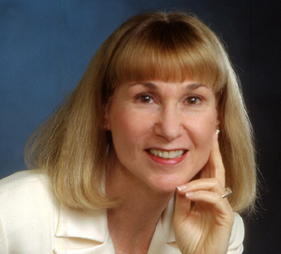
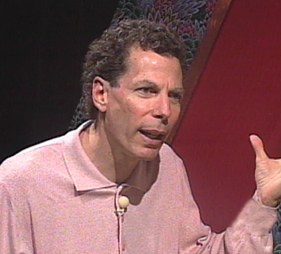
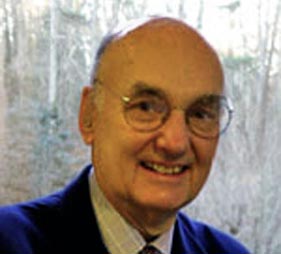
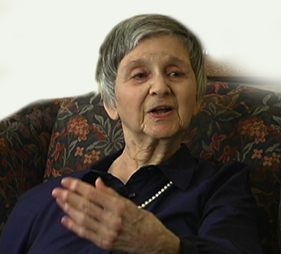
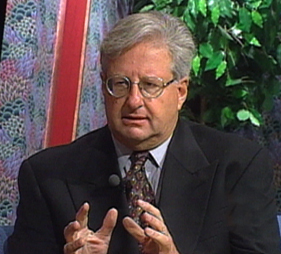
Monica McGoldrick on Family Therapy

Monica’s Coffee Shop Transformation

Randall C. Wyatt: Monica McGoldrick, LCSW, family therapist, teacher, writer, and so much more, that’s what we’re here to talk about. Good to have you here.
Monica McGoldrick: Glad to be here.
RW: Monica, how did you first get into the field of psychology and social work?
MM: Well, I was studying Russian in graduate school and then I kind of dead-ended because I didn’t see myself becoming an academic. The day I finished the program, I met a guy in a coffee shop who was studying psychology, and I thought, “Wow. That’s the perfect field for me. I could study the life of Dostoevsky, my hero, and then could do something with it.” I really do think you could study Dostoevsky and learn most of what you would ever need to know about human psychology.
Victor Yalom: Who was this guy you met?
Monica McGoldrick: Yeah, actually, you probably know him. His name is Lowell Cooper.
VY: Lowell Cooper, of course. He was a professor at the California School of Professional Psychology where we both went to school. He teaches group theory and Tavistock groups.
MM: So, he was studying psychology at Yale, and we just started talking. And before the day was out, I went home and told my parents that I wanted to study psychology. My mother had always wanted to be an anthropologist but her mother wouldn’t let her do it. She was otherwise very difficult but when I told her about psychology, she just said, “If that’s what you want, you just have to pursue what you want. Do it.”I met with a psychologist, Jack Levine, who also part of the Yale system. And he said, “To make sure you really want to do this, why don’t you go work at the mental health center?” It was 1966, and they were just opening the first community mental health center in New Haven. I went and applied for the job with a nurse named Rachel Robinson who was the wife of the first African American ballplayer named Jackie Robinson. He was my hero from childhood because I come from Brooklyn and Rachel became my first boss.

All the boundaries were down. I was a psychiatric aide working on this brand new unit in the mental health center. And during the time there were quite a few people who said, “Why don’t you think about social work? It’s a lot more practical.”

The psychologists didn’t seem to do anything very interesting. They wrote psychological reports that nobody read.

VY: What do you mean nobody read them?

MM: Anytime we had a really hard patient, we’d send them to psychologists for a report. We had a really famous psychologist who did the assessments. A client would be raging around the clinic and after two weeks the psychologist would pass out the copies of the test report which said how rageful the patient was. There’d be some discussion about how messed up the client was; then the psychologist would leave and we’re still be left with the raging patient. What good was that? (laughter)
VY: Right. What are you going to do now? We know he’s raging? He’s a 4.9 on the test and we know his IQ. Hopefully, we have come forward from those days.
MM: And the psychiatrist would be there in the morning for the sort of group psychotherapy with the patients and would act very important and we’d have big meetings discussing what that person thought. But the psychiatrist had not seen the patient all day, the psychiatrists would know very little.
RW: So the people who knew the least and did the least had the most power, the psychiatrists and the evaluating psychologist. What a system!
MM: That’s right. Finally an overwhelmed social worker who had responsibility for all the clients and families on our unit, said, “Any psych aide who wants to help me, I’ll supervise you.” And I was like, “Me!” All afternoon and evening we would see the patient, and then we’d see the patient when the family came to visit. And it would be just unbelievable the things you would learn.And then the next morning, the psychiatrist would appear again knowing nothing about the patient and just spout off again about what he thought was going on. And I thought, “God. I don’t get it.”

RW: It’s obvious now why being a social worker was so attractive to you.
MM: Exactly. The social worker had the most interesting work because they got to actually work with families. So, I signed on to work with families and I just never looked back. I thought, “I’ll be a social worker and I’ll work with families.” So, I went to Smith College for social work and I worked. But in order to stay in New Haven, I had to either be married or in therapy. And I wasn’t married and had no prospects.
RW: Why did you have to be married?
MM: Well, if you were married they wouldn’t separate you from your husband. If you were not married, they could send you away for a summer program and they might send you to Denver or anywhere in the country.
RW: I see, but where does therapy come in?
MM: Psychotherapy was the other best alternative. I signed up for therapy, telling the guy the very first session, “I need a letter telling them that I need at least two years of your help, and that I can’t leave New Haven.” He agreed to do it. And I had a great social work experience because I worked at the Yale-New Haven Hospital unit, which was absolutely fabulous. Very family oriented.
RW: At that time, what was the state in the ’60s of family therapy when you entered into it?
MM: It was the most exciting time. And on this unit, probably of all the places I could have ever been, families were seen three times a week. This was for the rich and famous as well as anybody else. It was remarkable and it was totally integrated into whatever happened with the patients.

Where Have All the Families Gone?

RW: Nowadays, it seems like – at least in California, Northern California – it’s not easy to get a family in. Parents, even those who are together and have kids, they’re running around so much. Oftentimes it’s hard to get everybody in at once. What does it mean for family therapy, that it’s hard to get everybody in?
MM: I think what’s really made it terribly hard for family therapy, in my own experience, is not the families themselves. It’s what’s happened with managed care, insurance, the drug companies. The drug companies have totally taken over psychiatry. And managed care has totally taken over how mental health services take place, and they have no interest whatsoever in family therapy because it is not as short and sweet as seeing one person three times. Or, you know, medicating them up and being done with it. Yes, it’s true that we do have a high rate of divorce, and we do have parents who are working in different places. Nothing supports paying attention to the family issues that contribute to kid’s problems.
RW: So it’s much different than the heyday of family therapy when the idea of treating families was the way to go. There’s one or two managed care companies in California that actually support couples therapy and family therapy. And they actually have it in their manuals. Basically, most companies seem to support medication or groups, many of which can be helpful, of course, but nowhere near the gold standard of caring for people.But lets move to what you love, and that is family therapy. What kind of therapy practice are you doing now?

MM: About 14 years ago, 1991, I basically got kicked out of the medical school, you might as well say. I mean, they couldn’t exactly fire me because it’s a faculty position I had. But they took away my secretary. They told me I was going to have to see 28 clients a week in the emergency room.So the training program in family therapy was just basically moved out of the system. And in its own very small way, it still survives. We have a small family institute in the town where I live. A very little house in a very little town. We’re a very small group, and we have very small classes also of people who want to study family therapy. And every year we wonder, “Are we going to have a class?”

RW: So, how would you characterize how your work is similar or different to other family therapists? Your approach, your ideas?
MM: Okay, well, along the way—and this is probably important in terms of where I ended up—in 1972, I went to a family therapy conference where I heard Murray Bowen. And I was completely blown away. He was talking about getting a relationship with your mother, and I just thought that was ridiculous because my mother was so impossible. Even though I was into family therapy, I wasn’t into family therapy for my family. So, I really could hardly hear what he said, but he was basically saying as strongly as he could express it that you’re nowhere if you haven’t worked it out with your mother. And I kept thinking, you know, “This guy is a real idiot.” Because he certainly never met my mother.
RW: What was your mother like?
MM: She was very difficult, very difficult. And anyway, during that conference, I met one of Bowen’s students, a guy named Phil. And we hit it off very well. And he was just starting a family institute, and I asked him if he would coach me on working on my family. And he asked me if I would work at that institute. So, I really became a Bowenite and I would say that I’m still very much of a Bowenite. And there aren’t too many of us. I don’t think I have met any Bowenites on the West Coast. But, you know, you recognize them when you hear them talk about families.
RW: What’s a giveaway?
MM: Well, they don’t believe in cut-off. They pay a lot of attention to family of origin. They do genograms, for example. I mean, I’m known for genograms.
RW: Can you explain cut-offs?
MM: Cut-off.We don’t believe that if you don’t like your mother you should just say, “Enough of this. I’ll find somebody else.” They believe that everybody should try to work it out with their mother. They basically believe that you never give up.

RW: So, did you work it out with your mother?
MM: I did work on it a good while. It changed my life.
RW: How so?
MM: Well, the power of being able to think systems and realize that we are all part of the system. So I kept trying to change my mother, and really, I was trying to get her to change her relationship with her mother who she had hated before. I stopped… I learned that you can’t change the person. You can only change yourself. And so to change how I was in relation to her and also to change other relationships in the family… to just change.Now I would think of it as taking my power back. That if I gave her the power to put me down and feel put down by her, that was something I actually had control over. And so if I flipped that around and did something different with it, instead of feeling wounded every time, and thought about what might lead her to do that, that it might be her problem, not my problem. It just transformed everything.

Bowen and Haley Throw Stones at McGoldrick

So I did change my relationship with my Mother. And I just saw systems through that lens. Some years later Bowen didn’t like a lot of my ideas although I liked all of his ideas.

RW: Do you recall the ideas of yours that Bowen didn’t like?
MM: We got into doing work on the life cycle and he didn’t really think that that was a very good idea. Betty Carter and I wrote a book in 1980, The Expanded Family Life Cycle (Third Edition). And he did it sweetly, but Bowen basically said, “Eh, this is kind of an… eh idea, but hey, you could read it, whatever.”
RW: Did you keep the foreword?
MM: Oh, yeah. We did. Yeah.
RW: Your ideas certainly got a reaction worth noting instead of being ignored.
MM: Well, his wasn’t the worst reaction, actually. Jay Haley was even more critical. You see at that time nobody had written anything on the life cycle from a family therapy point of view. And so we searched the literature for anybody who had ever said anything about the life cycle.But Jay Haley had written this thing about Milton Erikson (though it had little to do with the family) which was about a life cycle perspective. So we thanked Jay Haley for his contribution to our thinking in life cycle terms. And after we published that book on life cycles and families, Haley wrote a nasty article on the right to choose your own grandchildren, saying that he rejected us as his grandchildren. He had nothing to do with us or our ideas.

RW: You were kicked out. Seems Haley was into cut-offs.
MM: Yes, Haley kicked us out. Yeah, he was.
RW: Well, it’s good to see that the old Freudian idea of just getting rid of all competition was alive and well in the family therapy world!
MM: But later on, Bowen didn’t like the culture stuff, either. He didn’t like the gender stuff. He didn’t like any of it.

Never Run Logic Through an Emotional System

RW: Let’s come back to that later, for now, lets go more into the work itself, working with families. How do you or Bowen see the idea of cut-offs with families and dealing with your parents in adult life? Should you just confront your parents like some therapists suggest?
MM: Your parents always matter. Bowen felt so strongly that it’s all about getting a personal relationship with your parents. But you have to pay exquisite attention to what’s going on in the emotional field, because to do exactly that, write a tell-all letter to your parents disregarding, you know, where you are with them—what’s the possibility they could possibly hear such a message and not feel hurt and insulted or shot down by it? He would say that’s outrageous. And you’re going to cause years of conflict.
RW: That’s good to hear, since I am certainly an advocate of not just wailing on parents without dealing with the complexity of the situation and the likely consequences.
MM: Well, you should read our paper that we wrote on coaching. Because we lay out Bowen’s theory as well as we can. I mean, I lay it out every chance I get.
RW: Well, I want to see that. Most parents are defensive anyways, to say the least, since they often, rightly or wrongly, feel unappreciated and blamed for their kids problems.
MM: One of the rules of thumb is never run logic through an emotional system. If your family is in an emotionally reactive place, why in the world would you take what we would call an “I” position and say, “This is where I stand.” He would say that is outrageous and abusive to your family to do that.
RW: I may be a closet Bowenian then.
MM: Well, you just might be, so here we go. You’d be the first west coast Bowenian we ever had! (laughter)
RW: Perhaps it’s because I am in California or because of my upbringing, but I have always been troubled by theories and practices of therapists who so easily suggest that clients individuate from their families, without considering the many layers and meanings of family relationships. Of course autonomy and individuation have their central place in life, but so do connection, family, community and the like. It seems western psychology too often forgets this part of the life equation.
MM: Absolutely.

Genograms: More Than Just Squares and Circles

RW: What is the importance of genograms in your work with families or individuals?
MM: A genogram is just a map. You know, squares and circles. But what’s important is paying attention to where people come from, who they are, where they’ve been, where they’re coming from. And genograms are just a way to map that. So the point is, it’s important to consider people in historical context. That’s why genograms are important. It’s just to say, “Who are you? Where did you come from? What was it like?”
RW: What are your roots?
MM: Yes. Exactly. And to be respectful of that.
RW: And not going into one’s history, what is the problem with not doing it?
MM: We would say there’s no way to understand who a person is if you take an ahistorical approach to it. If you don’t say, “Where have you been? Tell me about yourself. Who’s your grandfather? When did your family come to this country? What struggles have you had?” To know if your father committed suicide or something. I mean, how could that not be relevant about a person?
RW: It makes sense. If somebody knew me, and they didn’t know about my grandfather who came over from Italy at the turn of the century or my other family roots, then I would not feel that they really knew me well. We don’t want to be reduced to our roots, but we like them to be appreciated as part of us.
MM: Exactly.
RW: It’s not rocket psychology.
MM: Exactly. It’s just common sense. Anybody would know that. (laughter)
VY: Monica, I want to ask about the work you did in your video. A lot of therapists focus on the past, in almost a stereotypical way, but it often stays up in the head. It stays intellectualized. And what impressed me in your video, is that you use that information, but it’s all about connecting with the family in the moment.
MM: That helps change the future. I really believe it. I recall that the first time I heard Bowen speak, he said: “It doesn’t matter how much you’ve analyzed your mother’s psychological problems or whatever, if you can’t sit in a room with her and be generous, you’re not there. So, don’t kid yourself.” But it is all about what are you going to do now.
RW: Right. You’re saying that understanding the past can help you connect in the present and vice versa.
MM: I think so. Well, and also think about what’s your responsibility to the future. It might not be too apparent on that video, but I really think that we as therapists can help people position themselves to make choices about what they are going to do in life. And that we make the best decisions if we pay attention to where we’re coming from and we pay attention to what’s ahead. So, you know, what do we owe to our children’s children? As well as what do we owe to our ancestors who struggled before us?

Autonomy and Connection

RW: It’s a very honoring position and approach, and refreshingly so.
VY: It’s hard to find anybody who doesn’t want to be honored.
RW: You use the concepts of love, respect, honor, forgiveness, spirituality. These aren’t words that are commonly used to talk about goals in psychotherapy. Where do you come from in using these kinds of words?
MM: I think it resonated in me. I got it from Bowen. You know, the basic Bowen theory is that differentiation for the mature person means getting our connectedness to everyone and everything. And respecting that. That it’s about making our own decisions about how we are going to relate. That I have to go into my heart and choose my relationship, choose how to relate to you.But Bowen’s idea was also about the autonomy part, in that you don’t live your life according to anyone else’s values. That you have to go into your own heart and figure out what your own values are and then live it out. But that we are all connected. I mean, that’s totally basic to Bowen’s theory, and it’s so different from those who focus on autonomy as, ” I’ve got to do for me.” But I’m in it with you. We’re in life together. That’s just the deal.

RW: This is not some abstract idea, but a reality that exists in our lives. It seems every therapist we have interviewed here has approached this idea: We are connected, we are separate, both are true and how we deal with it is everything.
MM: It’s not that I can only pretend that I’m not connected to you because I am actually. Something could happen right now and I could this minute be dependent on you to save my life because you’d be the one here. And if I do something to hurt you, that could come back to hurt me. Because that’s just our nature, that we are interdependent.
RW: But then how does autonomy play into this for you?
MM: In a way, it is a philosophical stance that there is no such thing as autonomy. The only autonomy is about our decisions of how to live. You know? So, it’s so basic to our way of thinking, systemically, about our connectedness. Respecting each other in some kind of spiritual understanding that we are a part of something larger than what we can see, including our ancestors, including those who are going to come after us, all that.
RW: This must be the kind of approach you use with clients, too. Talking this way, and sharing these things with them.
MM: It is. I do. Yeah.
RW: Do they ever want to rebel against it?
MM: Oh, sure. Yeah.
RW: Can you think of an example?
MM: Oh, not my clients. They just come in. I say, “Listen, you have to get a relationship with your mother first thing. Could you bring her in next time?” And they say, “Oh, sure. That sounds good.” (laughter)They say, “Go fuck yourself. I told you, my problem is I want you to fix my wife.”

RW: Or my mother or my father or…
MM: My mother. Yeah. You get them to stop drinking, no problem.

McGoldrick’s Work with Families

RW: How do you get people to turn to themselves and what they can do? Can you give an example of how a person starts with the position of “it’s them, it’s not me,” and you get them to turn it around?
MM: Well, if you take the example of the video I did with that family. I think that’s a good example where he wanted me to fix the daughter and, for many reasons, wanted to push away his part in that because of his own grief about the wife and the other things he didn’t deal with in his own way. And something about getting the stepmother out of the way to focus in on the daughter, to really hear her, and then also bringing in the son because that I see as relevant, too. That sometimes, as with that guy, a person can hear it more powerfully if two of the children say that it matters. And that something makes a person hear it differently.
RW: Any other examples of this playing out in therapy?
MM: I was thinking of one guy; he was very negative, sort of talking suicidally. I raised questions about that. And he’s says, “How else is there to be?” And I said something about culture, and he says,

“Oh, don’t give me that bullshit. If you’re going to tell me that this is about culture, then I’m out of here.”

RW: What was his background?

MM: Irish. And then, he said… It was all his mother’s fault. Blah, blah, blah. And she was this witch who had been controlling, you know, whatever. So, I said couldn’t we talk to her? Because she was alive and around. And he said, “No, we’re not doing that, and I’m not coming back if we even think about that. I came here to solve my marital problems with my wife and this is it.” A number of months later I was at it again: “You tie my hands behind my back and then you’re frustrated that I haven’t helped you yet. Bring in somebody. Who would you be willing to bring in?” So he brought in his brother, which was really interesting. I learned a lot about the family, and we talked about the sort of suicidal feelings and whatever.
RW: And what about the mother, did you ever get her in?
MM: Eventually, somewhere we had a big argument about his mother and I said, “You know, well, I hate to be a broken record, but we could go back to that?” And he says, “If you had her in, what would you say to her?””I don’t know what I’d say to her. I’d have a chat with her about whatever’s been bothering you. Or you’d have a chat with her.”

“No, but I want to know what would you’re say to her.” “I don’t know,” I told him. And then I remembered. I had just been looking in this book that I wrote, You Can Go Home Again, this is a book for the public. At the end of the chapters, I actually have questions that you could ask you parents. So I said, “Well, come to think of it, you know, if you asked 100 therapists they wouldn’t be able to tell you, but I actually wrote a book and there you can see the type of questions I might ask her.”

“No, I want to know the exact questions.”

Whatever…

RW: The whatever approach.
MM: So, I said, “You know, you do whatever you want to do.” And finally he said, “Next week I’ll either bring in my mother or I won’t.” So, I said, “Well, that’ll be good. Okay.” So the next week he brought in his mother, and it was the most amazing thing. I don’t think I said a word the whole time, and he worked out so many things with her. It was so interesting. She was phenomenal.
RW: You being there helped. And she was phenomenal.
MM: Well, you can’t count on the parent being phenomenal. But that he did it would have been good enough because he took all the responsibility. It’s like he knew what he had to talk to her about. He said to her, “I’m a 51 year old man. I feel like I have to talk to you about some things that happened so long ago, and I feel like it’s stupid but these things are kicking my ass, and I’m taking it out on my wife and my two year old and I don’t want to be like this. I’ve got to talk to you.” And she just listened which worked out so well.
VY: What I really like about such stories is that on so many videos or therapy stories, they show the therapist being brilliant and making great interpretations, but instead sometimes it is best to shut up and listen.
RW: Anti-brilliant. Just to be there.
MM: Get out of the way.
VY: Get out of the way. When the clients are doing the work, you don’t need to be there, you go to the background.

Jackie Robinson’s Wife, Culture and Family Therapy

RW: Lets go back to something you brought up earlier. What led you to get into culture and ethnicity and why are these so important in your work?
MM: I suppose at some emotional level, I was raised by an African-American caretaker who worked for our family and was the person I was closest to growing up, I am sure at some level—because I loved her—at some level what was wrong there about race was at the interior of my own family. I’m sure that had an impact. But I don’t know really.
RW: You noted earlier that Bowen did not like your cultural work either. How come?
MM: Well, it was kinda surprising that Bowen did not like these new ideas about culture, but he came at it from another angle. Bowen had this idea about triangles and family. And then he took it to the level by analyzing societal level systems in terms of triangles. We feel better if the enemy’s a really good enemy, but if the enemy’s not a really good enemy then we start fighting with each other. This is the process by which nations and social systems basically join together and scapegoat a third party.So culture would make great sense from that point of view. And Elaine Pendehughes, an African-American therapist, took his theory and used it to analyze slavery and how that system operated. And she did a really brilliant, basically Bowenian analysis of slavery.

RW: What was his critique of your work then?
MM: I remember one conference where he chose to speak out against my work on culture. He could be an ornery person at times. We had recently published the ethnicity book, Ethnicity and Family Therapy and Bowen said, “Those people who want to waste their time studying, you know, the differences between the Irish and the Italian, let them waste their time.” And he was talking to me, clearly. And everyone in the room who knew anything about it, I’m sure, knew just who in that room was wasting their time studying the difference between Irish and Italians.
RW: Back then there were not as many ways to talk about culture in psychology. To bring this home, I’m teaching a course in ethnicity, diversity and psychotherapy next semester for the first time. What kinds of things do you think would be important to attend to? I’m going to use your book as one text, so I’ve got that going.
MM: Well, this is a whole subject in itself. Because I think there is a lot about white privilege, heterosexual privilege, gender privilege that really we need to pay attention to and think about how it organizes us. And that would be good to deal with in your class. I think it important to deal with it multi-dimensionally. That ethnicity most of the time, not always, helps people get centered a little bit if you urge them to think about what it means. Who we are culturally and what are the values we grew up with and so forth.I didn’t grow up thinking anything about any of that. I didn’t know I was Irish, never mind, you know, white. I mean, honestly, I knew nothing. I was just a regular person, or so I thought.

RW: You found out you were white later?
MM: I found out I was white really later. I didn’t know I was a woman, never mind that. I mean, I just thought I was a person. And I never thought about gender. I never thought about race. I didn’t think Irish meant anything. It was not even a category.I knew my name was Irish. If you asked me, I could have told you that my ancestors came from Ireland. But if you said, “Does that mean anything?” It’s like, “No. That was like 150 years ago. It’s like, it means nothing to me.”

Now I would say, it has organized my family for that entire 150 years, and right now many things about how I react to a situation have to do with the power of that history. Only just recently, maybe like the past year or so, I started thinking about some of my experiences in college and realizing that I think now it probably had to do with being Irish. The ways in which being at an Ivy League school, Brown—I knew I didn’t belong, and I knew I didn’t fit. But I didn’t know what the rules were and I didn’t know that that was because I wasn’t a WASP. I didn’t get that. I was very naive about it. So I think there were all kinds of things that I didn’t understand.

RW: And at that time there were few women in the therapy world. How did that work out for you?
MM: There were lots of things in family therapy that I didn’t understand about being a woman; there was so few male mentors who could take me. I was quite a follower of Virginia Satir. She was the only woman. And I would go anytime she was going to be there.
RW: So you went from all that to writing a book on ethnic diversity in family therapy. That’s quite a ways.
MM: Well, ethnicity came first. Ethnicity came in by doing my own genogram there came a point where it was like, “Yeah, but what does it mean to be Irish?” And my family never wanted to talk to about it. They could pass for the dominant group. They had gone to Ivy League schools. They were pretending they weren’t Irish, you know. And so they taught us that. And so when I started asking questions, my mother, especially, was distinctly uninterested.My mother kept saying, “We’re Americans, Monica. Leave it alone. What do you care where we came from? We’re Americans.”

And because I hated her I would always pursue anything that she didn’t think was good like asking her about our background. She would say, “They were just peasants. They were just peasants. Could you just leave it alone? They were nothing. Here we are. We’re fine now.” You know, but then that got me interested. And that book came out of going to Ireland in 1975. It totally transformed my life. I was already married to a Greek, so I knew ethnicity meant something.

RW: What do you mean about his being Greek?
MM: They do maintain it. My husband grew up in Greece, so he was seriously ethnic. But you know, that didn’t relate to me. But we went to Ireland and it was like, “Oh my god. Everybody’s like my family.” And I had four years of psychotherapy where I had analyzed the shit out of my family of origin and thought about it differently. But nobody said, “It’s culture!”My mother would make fun of people – that was her typical way. It wasn’t really an angry thing; it was subtle. So, humor was a way that she would put you down. She would make you feel stupid. She would make a joke. She’d wait for someone else to come into the room and then she would make a joke about you. So, you would just feel humiliated.

Well, going to Ireland I saw that that’s what the Irish do. The Irish wait until another person comes into the room and they make a joke at your expense. And yet, the way humor operates, I thought that that was just my fucked-up mother. But it’s like, oh my God, they all do this. How come nobody talks about these things? I came back to the medical school and I couldn’t stop thinking about it.

One of the First Diversity Classes

RW: Did you ever talk about culture and ethnicity in your training?
MM: Yes, we did these little presentations, six of us, 15 minutes a piece on different ethnic groups: Irish, Jewish, Italian, African American, Puerto Rican, and Asian. It was very short, 15 minutes each. And even in the 15 minutes, we’re be, “Well, I can’t speak for all Irish, but-” And then say a few stereotypes. And it was mind blowing to me.I remember the Jewish one and the WASP one. The WASP one went first and she makes all the apologies and then she says, “Well, you know, if I’m going to say something about WASPs, they kind of believe everything in moderation and decorum and they’re not too big on expressing any feelings too strongly. Everything in moderation. Leave a little on your plate. Never get too enthusiastic about the food.”

And her best friend was this Jewish therapist who went next and she said, “Well, you know, you can’t speak for all Jews because…there are German Jews and there’s European Jews and anyway, you know, Hungarian Jews are completely different. Then you have Los Angeles Jews and they’re different from New York Jews. And Brooklyn Jews are different from, you know, Bronx Jews,” and so forth. Then she finally said, “But anyway if you are going to say something, Jews kind of believe in expressing your feelings and actually talking a lot about analyzing your feelings and expressing them. And food is very important, and guilt is very important. And eating more and getting your children to eat more is very important.”

Then we had a little conversation, and so the Jewish woman said to the WASP, “I’ve always liked you, but I have to say that I’ve always found it a little irritating that you’re so smart but you never speak up in a group. It’s really like you are withholding. And now when you’ve expressed this about how, you know, in your culture, it’s like in moderation and you shouldn’t…it’s like you hide your light under a bushel, and I never really understood that. I just found it irritating.”

So the WASP woman says, “Well, okay, if we’re going to be sharing like this. Actually, I’ve often wished you would hide your light under a bushel, because you never hesitate to say what you think in a group.”

RW: And what did all this mean to you at the time?
MM: My thought was that even though I had worked with them for several years, I had reacted to them both in terms coming from my Irish point of view, which is different, and I had just judged them as if they were wrong and I was right. Why did one always speak up? And why did the other always seem to hide her light under a bushel? And I never thought before that moment, wow, this is really cultural meaning.
RW: Well, that makes sense then. What you’re also saying is that it is a good idea to get in touch with your own roots. And that enlivens you and engages you.
MM: Right.
RW: I was also concerned more about how early multicultural ideas seem to use stereotypes or oversimplifications. Say Asians are just into shame or Blacks feel suspicious in society because of oppression, and so on.
MM: My thought would be to use the ethnicity book to help people understand something about where they might be coming from, because what we tried to do is lay out caricatures that help, you know, tell the story. And to try to tell it so that the characteristics are put into some kind of historical context of why Italians might be suspicious and why African-Americans might be a certain way and why the Irish might have developed the characteristics that they have.
RW: So, instead of just the trait outside of history.
MM: Right. Because if you think systemically, of course, there has to be a reason why people would develop these different ways. But one thing that I do think is very important and I think is very hard to teach about is, when you come from a place of privilege, it is so hard to be aware of what the implications are of that in the interactions with the other. It would be easier for me to tell you about the ways that I felt inadequate as a woman, and didn’t know about it. Or felt inadequate as Irish and didn’t realize it.It’s harder for me to talk about—which I’m struggling to be aware of—the ways in which as a white person, I have so many privileges. And feel free to talk about so many things in a context without even realizing that others don’t. I don’t think the issue is apologizing for it. It’s getting conscious of it and the doing work and then following it through. What are the implications of that?

“I Feel Like I Fell Into Heaven”

RW: A wrap up question. You’ve been practicing quite awhile. What keeps you going as a therapist? What still juices you?
MM: I love it. You can probably tell. I feel like I stepped in, that day when I met Lowell Cooper, I feel like I fell into heaven. I love what I do. I love these ideas. I feel like family therapy may be dead here in this country because of all the things that we talked about, but family in all different forms is still there.
RW: And family still matters whether they all come in or one at a time.
MM: Yeah. How do you help people and what can we do and what makes a difference. And every family is a great challenge. And I love mentoring students, and trying to put ideas together… I love all of it.
RW: Well, I wish we had time to go into a lot more. Maybe another time. Some of them we only touched on, because your background is so rich and your ideas are a piece of heaven. Thanks so much for sharing them with us today.
MM: Thanks for talking to me.

Peter Levine on Somatic Experiencing

An Unconscious Image

Victor Yalom: So Peter, you’ve spent most of your life working with trauma and traumatized patients, and have developed an approach called Somatic Experiencing® that focuses on including, and putting emphasis, on the physiological aspects of trauma. You believe that working with the trauma through the body is necessary to any trauma resolution and a required step before addressing emotional and cognitive issues. We’ll get into this in more detail, but let’s first start with: What got you there? How did you get interested in trauma in the first place?
Peter Levine: My career began somewhat accidentally. In the 1960s I started a practice in the fledgling field of mind-body healing. Around that time it was completely in its infancy. I had been developing a protocol to use body awareness as a tool for stress reduction. I would teach people how to relax different parts of their body and they would have a very deep relaxation that was much deeper than I had expected. And so I was referred a patient—I’ll use the name Nancy—by a psychiatrist, and she had been suffering from a host of physical symptoms including migraines, severe PMS, what would now be called fibromyalgia and chronic fatigue, pain in most of her body. And the psychiatrist reasoned that if I could help her with some of my relaxation techniques, it could help with her anxiety or at least with her pain.
VY: Now, were you a psychologist at that point, Peter?
PL: At that time I was finishing a degree in medical biophysics. And again, there was not a field of bodywork at that time, but I had met some influential people including Ida Rolf and Fritz Perls, and I was hanging out at Esalen—I took a leave of absence—and that’s where I really got exposed to these different mind-body approaches.
VY: And this was a heyday where all sorts of things and discoveries were happening?
PL: Crazy stuff. Yeah, exactly. It was both exciting and a chaotic free-for-all in some ways. So anyhow, this psychiatrist sent this woman, Nancy, to see me, and she was extremely anxious. And she was with her husband because she couldn’t go out of the house alone. She had, again what would be called now, severe agoraphobia. So anyhow, she came into my office and I noticed her heart rate was really quite high—it was probably about 90, 100 beats per minute. So I did some work with her breathing and then with the tension in her neck. And her heart rate started to go down. And I thought, “Oh, okay, this is great.” And it went down and then all of a sudden, it shot up to, I don’t know, 140-150 beats per minute. I could see this from her carotid pulse.
VY: Not what you were going after.
PL: Not exactly. I had gone from success to abject failure and, really, fear of putting her into extreme panic attack. So I said something, probably the most stupid thing anybody could say. I said something like, “Nancy, just relax. You need to relax.” And her heart rate started going down. And it went down and down and down. And it went to a very low level, probably in the mid-50s. And she looked at me. She turned white, and she looked at me, and she said, “I’m dying, I’m dying. Doctor, don’t let me die. Help me, help me, help me.” And at that moment of stress, I kind of was prompted by an unconscious image, a vision of a tiger crouching at the other side of the room and getting ready to spring. And I said, “Nancy, Nancy, there’s a tiger, a tiger’s chasing you. Run, climb those rocks, and escape.”
VY: And this was just a spontaneous kind of image that came from your imagination or unconscious?
PL: This was a spontaneous image. My unconscious. Yeah, because I had really, truly no idea what to do. I was in a state of, well, near panic myself. So to my amazement, to both of our amazement, her legs started moving as though she were running. And her whole body started to shake and to tremble. And this occurred in waves. And she went from being very very hot to extremely cold. Her fingers turned almost blue. And the shaking and the trembling and the waves of coldness and heat went on for almost 30-40 minutes, maybe. And after that, her breathing was free and spontaneous. She opened her eyes and she looked at me and she said, “Do you want to know what happened, Doctor? Do you want to know what happened to me?” And I said, “Yes, please.”This was one of the first patients. This was certainly the first one where something like this had happened. I worked with a lot of people in getting them to relax, and there were some kinds of things like that, but never anything nearly as dramatic. So anyhow, she reported how during the session she remembered a long forgotten event: as a four year old child, she was given ether for a tonsillectomy—at that time, ether was routinely used for tonsillectomies—and she remembered feeling suffocated and completely overpowered by the doctors and nurses who were holding her down to put on the ether mask while she was trying to scream and get away. As I discovered later, many people who had anxiety disorders had also had tonsillectomies as children with ether. So anyhow, that was the last panic attack that she had. And many of her symptoms abated. Others disappeared completely. We did a few sessions after that where I was actually able to do different relaxation procedures with different muscles and different parts of her body. So of course I was curious about the image—where did that come from?

Marie-Helene Yalom: The tiger image?

The Polyvagal Theory

Peter Levine: Yes, the tiger image. At that time, I was taking a graduate seminar, and some brief mention was made of a phenomenon called tonic immobility. If animals were physically restrained and frightened, they would go into a profoundly altered state of consciousness where they were frozen and immobilized, unable to move. And it turns out that this is one of the key survival features that animals use to protect themselves from threat—in this case from extreme threat. Actually there are three basic neural energy subsystems. These three systems underpin the overall state of the nervous system as well as the correlative behaviors and emotions, leading to three defensive strategies to threat.
MY: That’s the polyvagal theory developed by Stephen Porges?
PL: Yes. These systems are orchestrated by the primitive structures in our brainstem—the upper part of the brainstem. They’re instinctive and they’re almost reflexive. The tonic immobility is the most primitive system, and it spans probably over 500 million years. It is a combination of freezing and collapsing—the muscles go limp, the person is left without any energy. The next in evolutionary development is the sympathetic nervous system, the fight-or-flight response. And this system evolved from the reptilian period which was about 300 million years ago. And its function is enhanced action, and, as I said, fight-or-flight. Finally the third and most recent system is the social engagement system, and this occurs only in mammals. Its purpose is to drive social engagement—making friends—in order to defuse the aggression or tension.
VY: So this is when we’re feeling threatened or stressed we want to talk to our friends and family?
PL: Yeah, exactly. Or if somebody’s really angry at us, we want to explain what happened so they don’t strike out at us. Obviously most people won’t strike out, but we’re still hardwired for those kinds of expectations.
VY: Most people have a general sense of the fight-or-flight, but would you just say a few words on it?
PL: Basically, in the fight-or-flight response, the objective is to get away from the source of threat. All of our muscles prepare for this escape by increasing their tension level, our heart rate and respiration increase, and our whole basic metabolic system is flooded with adrenaline. Blood is diverted to the muscles, away from the viscera. The goal is to run away, or if we feel that we can’t escape or if we perceive that the individual that’s trying to attack us is less strong than we are, to attack them. Or if we’re cornered by a predator—in other words, if there’s no way to escape—then we’ll fight back. Now, if none of those procedures are effective, and it looks like we’re going to be killed, we go into the shock state, the tonic immobility. Now the key is that when people get into this immobility state, they do it in a state of fear. And as they come out of the immobility state, they also enter a state of fear, and actually a state in which they are prepared for what sometimes is called rage counterattack.
MY: Can you say more about that?
PL: For example, you see a cat chasing a mouse. The cat catches the mouse and has it in its paws, and the mouse goes into this immobility response. And sometimes you’ll actually see the cat bat the mouse around a little bit until it comes out of the immobility, because it wants the chase to go on. Now, what can happen is that the mouse, when it comes out of the immobility state, goes into what is called nondirective flight. It doesn’t even look for where it can run. It just runs as fast as it can in any direction. Sometimes that’s right into the cat. Other times, it will actually attack, in a counterattack of rage. I’ve actually seen a mouse who was captured by a cat come out of the immobility and attack the cat’s nose. The cat was so startled it remained there in that state while the mouse scurried away. When people come out of this immobility response, their potential for rage is so strong and the associated sensations are so intense that they are afraid of their own impulse to strike out and to defend themselves by killing the predator. Again, this all goes back to our animal heritage.So the key I found was in helping people come out of this immobility response without fear. Now, with Nancy, I was lucky. If it were not for that image, I could just as easily have retraumatized her. As a matter of fact, some of the therapies that were being developed around that time frequently retraumatized people. I think particularly of Arthur Janov’s Primal Therapy, where people would be yelling and screaming out, supposedly getting out all of their locked-in emotions, but a lot of times they were actually terrorizing themselves with the rage and then they would go back into a shutdown, and then be encouraged to “relive” another memory, and then this cycle would continue.

MY: It becomes addictive sometimes, right?
PL: That’s correct. It literally becomes addictive. And one of the reasons is that when you do these kinds of relivings, there’s a tremendous release of adrenaline. There’s also a release of endorphins, which is the brain’s internal opiate system. In animals, these endorphins allow the prey to go into a state of shock-analgesia and not feel the pain of being torn apart. When people relive the trauma, they recreate a similar neurochemical system that occurred at the time of the trauma, the release of adrenaline and endorphins. Now, adrenaline is addictive, it is like getting a speed high. And they get addicted not only to the adrenaline but to the endorphins; it’s like having a drug cocktail of amphetamines and morphine. So when I was at Esalen I actually noticed that people would come to these groups, they would yell and scream, tear a pillow apart that was their mother or their father, and they would feel high. They would feel really great. But then when they would come back a few weeks later, they would go through exactly the same thing again. And that’s what gave me a clue to the fact that this might be addictive.

Releasing Trauma from the Body

VY: So getting back to Nancy, from what you observed and what you learned from the animals’ various responses, what was your understanding of what happened with Nancy and what you did that was actually helpful?
PL: What was helpful is that her body learned that in that time of overwhelming threat she could not defend herself. She lost all of her power. Her muscles were all tight. She was struggling to get away—this was the flight response—to get out of that, to get away from those people who were holding her down and to run out of the room and back to her parents. I mean, that’s what her body wanted to do, her body needed to do—to get out of there and get back to where she could be protected. So what happened is all of this activation, this “energy” that was locked into her body when she was trying to escape and then was overwhelmed, was still there in a latent form. When we’re overwhelmed like that, the energy just doesn’t go away—it gets locked very deeply in the body. That’s the key. It gets locked in the muscles.
MY: And that’s the foundation of your understanding of trauma—this locking of energy?
PL: That’s right, exactly. How the energy, how this activation gets locked in the body and in the nervous system.
MY: And so your objective is to help the person release that energy?
PL: Yes, to release that energy, but also to re-channel that energy into an active response, so then the body has a response of power, of its own capacity to regulate, and the person comes out of this shutdown state into a process in which they re-own their own vital energy—we use the term “life energy.” It’s not generally used in psychology but I think it’s a term that is profound in people’s health, that people feel that they have the energy to live their life fully, and that they have the capacity to direct this energy in powerful and productive ways.
VY: Now obviously you’re just giving a snapshot of the case and we can’t capture the depth and the nuances of it. But someone who doesn’t know about this could think it sounds a little simplistic. This woman had a tonsillectomy decades ago, and you’re having this one session with her and somehow you’re freeing up some energy that was trapped back then. How would you respond to that?
PL: Well, it was simplistic, and of course I was to learn that one-time cures were not always the case. However, over the years I started to develop a systematic approach where the person could gradually access these energies and these body sensations—not all at once, but one little bit at a time. It’s a process that I call titration. I borrowed that term from chemistry. The image that I use is that of mixing an acid and a base together. If you put them together, there can be an explosion. But if you take it one drop at a time, there is a little fizzle and eventually the system neutralizes. Not only does it neutralize but after you do this titration a certain number of times, you get an end result of salt and water. So instead of having these toxic substances, you have the basic building blocks of life, I use this analogy to describe one of the techniques I use in my work with trauma patients.
You’re not actually exposing the person to a trauma—you’re restoring the responses that were overwhelmed, which is what led to the trauma in the first place.
VY: And you’re doing it very slowly, one little step at a time.
PL: Very slowly.
VY: Would you say that is the key?
PL: That’s the key. So you get a little bit of discharge, you get a little bit of a person’s body, like their hands and arms, feeling like they want to hold something away from them, that they want to push something away. So they feel that energy, that power into the muscles in their arms. If they want to run they feel the energy, the aliveness in their legs. The ideas are extremely simple, but the execution of them is much more complex. Actually we have a training program and the training program is a three-year program.

Working with an Iraq Vet

VY: I think this is really nicely demonstrated in the video that we’re just releasing at the time of this interview, where you demonstrate five sessions with Ray, who’s an Iraq vet, who was in an IED explosion. And when he first presents, his body is visibly twitching every few seconds, and you came up with an explanation that he’s actually trying to reorient himself to the original trauma, that he was never able to face the trauma.
PL: Yes, well, exactly. This was a young Marine. While he was on patrol two explosive devices blew up right near him and he was thrown into the air, and woke up two weeks later in Landstuhl, at the military hospital in Germany. Afterwards he was diagnosed with traumatic brain injury and PTSD and also Tourette syndrome, and this was, I think, because of this extreme twitching. You saw this kind of twitching, these neurological presentations in the World War I soldiers. Some of them could barely walk, and they were twitching and in near convulsion. And I think these people who are exposed to these bombs actually have similar presentations. But let’s go back to the day when he’s on patrol. The bomb blows up. Now what happens whenever there’s a loud sound is that it startles us, right? And we arrest what we’re doing and we try to localize that sound because that sound could be a threat. That’s something that’s hard-wired in our bodies. These responses were actually discovered by Pavlov in the 1920s. So there’s an explosion and what we do is we turn toward the source of the explosion.
VY: That’s how we know where it’s coming form.
PL: Exactly. And so what we do is we start to turn our eyes, our neck and head, turn towards that source to try to localize it. In Ray’s case, as soon as his eyes and head began to orient, in milliseconds, he was thrown up into the air and this defensive response, this orienting response became completely disorganized and kept repeating itself. It’s what many psychologists see in people who are perseverating. They’ll go over something…
VY: So your understanding of his constant visible twitching which presented in the first few sessions was that he was still trying to orient himself to the trauma. He’d never been able to complete that orienting response.
PL: Exactly. Because as soon as he began to orient, as soon there was that pre-motor impulse and before that orientation could be felt—much less executed—he was thrown into the air, and in the air his whole body was trying to say, “What can I do?” And so all of his muscles contracted together. Again, this is an archaic response that we’ve inherited from monkeys. For example, if a monkey falls out of a tree, its whole body flexes. And it does that to protect the vital organs. So in a situation like this, if we’re thrown into the air, or even with extreme startle, all the muscles in the front part of our body, the abdomen and the leg flexors and so forth, go into this protective response. So that also contributed to Ray’s symptoms, to his chronic pain, because his whole body was locked to protect himself from falling. And of course there were also many emotional issues, such as a tremendous amount of loss and survivor’s guilt—he saw many of his best friends killed—that grafted themselves onto the physical trauma.
VY: So in terms of titration that you were talking about, your goal initially in therapy, in the treatment, is to do what?
PL: The goal is to very gradually help him get in touch with the sensations that precede the twitching and that will eventually enable him to complete the orienting responses that were interrupted. It wouldn’t have worked if I had said: “We’re going to work on controlling the tics.” If you tell somebody with Tourette, for example, to not twitch, they may be able to control it for a while, and they do it generally, because in social situations they don’t want it to happen. But then the more they try to control it the more explosive it becomes. It is similar to glowing embers—if you blow on the embers, it ignites into a flame. So the key is to cool the embers before they ignite into flame. The flame is this convulsive response.This is a concept that exists in migraines or epilepsy. Before a seizure, a person experiences prodromal symptoms. So for example, before they get the migraine attack, they may see flickering lights or they may have a particular smell or a body sensation. And they know when they experience those symptoms that they will go into a seizure or a migraine or even an anxiety attack. I focus on something I call the pre-prodromal, because once the person experiences the prodromal, then they go into the attack, the paroxysm. So if you are able to get them to just feel before that—in the pre-prodomal stage, they can redirect that energy, and as they do so they begin to complete the orienting responses that were overwhelmed by the trauma. And in the video, you see Ray little by little begin to reestablish his orienting responses, and this triggers very profound sensations of cold and heat, coolness and warmth, tingling and relaxation.

MY: And that’s the energy being released.
PL: Yes, that’s the energy being released that’s shifting from one system to another.
VY: And you gradually help him to spread that energy, rather than just being in the neck or head, so he experiences it going through the rest of his body.
PL: Exactly, exactly. At first these sensations are only local, mostly in the head or the neck. Then as we do this repeated times, and you’ll see this is done several times in each of the first four sessions, gradually the convulsive reaction attenuates and then almost disappears. And in its place he feels pleasure in his body. I was able to invite him to Esalen at one of the workshops I give once a year titled “Awakening the Ordinary Miracle of Healing.” By then he had been able to resolve the physiological aspect of the trauma, he was able there to address the emotional aspects of it. Two things happened in that workshop. First of all, he dealt with the different emotions—his loss, his anger, and his guilt that he survived and that many of his comrades did not. But he was also able to reenter and engage with a group of people around feelings of goodness and of social engagement, of hunger for being able to relate to people in a non-aroused….
MY: In a nonviolent way.
PL: In a nonviolent way, exactly. And you see so many vets now—when they come back, they go into maybe not complete convulsions like he did, but into an exaggerated fight-flight-freeze response which can lead to attacks on their children or their spouses. And they do it in an involuntary way, and are helpless to change that. And unfortunately there’s little help available for these soldiers to resolve their trauma reactions and be able to reintegrate….

Emotional Processing with Trauma Survivors

MY: Peter, you talked about how it’s only in session five that Ray started expressing his emotions. You approach trauma in a very different way than most traditional psychotherapists would, where they would focus probably sooner on dealing with emotions.
PL: Yes.
MY: And you have strong feelings about that.
PL: Actually, what you are alluding to is the whole idea of bottom-up processing. So maybe let’s get back to that, okay? In top-down processing, which is normally what we do in psychotherapy, we talk about our problems, our symptoms, or our relationships. And then the therapist often tries to get the client to feel what they’re feeling when they talk about those kinds of things. Or they try to work with them to become more aware of their thoughts so that they can change their thoughts. In this model the language that you’re talking with the client is in the realm of symbols, of thoughts, of perceptions. The language of the emotions is the language of the emotional brain—the limbic system. And in order to change emotions, people have to be able to touch into the emotions, to express the emotions.In the case of trauma patients, we have a person who is locked in the fight-or-flight response and as I explained earlier in the Polyvagal theory, a person who is functioning primarily in the brainstem, and the language of the brainstem is the language of sensations. So if you are trying to help the person work with the core of the trauma response, you have to talk to that level of the nervous system.

MY: So what you’re saying is a person who has been traumatized cannot really process emotions if they are in the early stages after the trauma until they have dealt with their physiological traumatization.
PL: Right, until the person has dealt with and sufficiently resolved the physiological shock, they really can’t deal with the emotions because the emotions actually will throw them further back into the shock, if the emotions occur at all. Many of these people are so shut down that it’s very difficult to get at any emotion. But if some kind of therapy forces them into the emotions, that can have a deleterious effect. That can cause them to further withdraw into the immobility, into the shock reaction. So you have to dissolve the shock first.
VY: What you’re saying, though, flies in the face of most of conventional therapy, which goes straight for the emotions. Do you think that most therapies are actually not helpful, or is something else happening during that time?
PL: Many therapists are doing something different from what they think they’re doing. And if you’re working with emotions in a very titrated way, then you can actually go from the emotions to the sensation, and begin to resolve things at a sensation level. But therapies that really work to provoke emotions or the exposure therapies… I know that they do get some results, but I think that they can easily lead to retraumatization.
VY: How so?
PL: One of the things that Bessel van der Kolk showed when he first started to do trauma research with functional MRIs is that when people are in the trauma state, they actually shut down the frontal parts of their brain and particularly the area on the left cortex called Broca’s area, which is responsible for speech. When the person is in the traumatic state, those brain regions are literally shut down, they’re taken offline. When the therapist encourages the client to talk about their trauma, asking questions such as, “Okay, so this is what happened to you. Now, let’s talk about it,” or, “What are you feeling about that?” The client tries to talk about it. And if they try to talk about it, they become more activated. Their brainstem and limbic system go into a hyperaroused state, which in turns shuts down Broca’s area, so they really can’t express in words what’s going on. They feel more frustrated. Sometimes the therapist is pushing them more and more into the frustration. Eventually the person may have some kind of catharsis, but that kind of catharsis is due frequently to being overloaded and not being able to talk about it, being extremely frustrated. So in a sense, trauma precludes rationality.
MY: So what do you think is the hardest thing for traditional talk therapists to learn when dealing with trauma patients?

Experiencing the Body

PL: I think the most alien is to be able to work with body sensations. And again, because the overwhelm and the fight-or-flight are things that happen in the body, what I would say is the golden route is to be able to help people have experiences in the body that contradict those of the overwhelming helplessness. And my method is not the only way to do that. It’s certainly one of the most significant. But many therapists, for example, will recommend that their clients do things like yoga or martial arts.
MY: Or meditation?
PL: The thing about meditation, though…. With some kinds of trauma, meditation is helpful. But the problem is when people go into their inner landscape and they’re not prepared and they’re not guided, sooner or later they encounter the trauma, and then what do they do? They could be overwhelmed with it, or they find a way to go away from the trauma.
And they go sometimes into something that resembles a bliss state. But it’s really an ungrounded bliss state. I call that the bliss bypass. It’s a way of avoiding the trauma. It was very common in the ‘60s when people were taking all of these drugs, and a lot of these people were traumatized from their childhood. And what they would do is they would go into these kinds of dissociated states of bliss and different hallucinatory imageries, but in a way it was avoiding the trauma. So in a way the trauma became even a greater effect, and then often people would then wind up having bad trips in which they would go into the trauma but without the resources to work them through.
MY: I guess that’s what I find inspiring about your approach. Ultimately you really want to enable the traumatized person to regain their autonomy, not just find palliative methods of dealing with their trauma.
PL: Yes. One thing therapists are really good at, I think, is they’re good at helping people calm. We set up our offices so they’re conducive, so they’re friendly, they’re cheerful, there are things in the room that would evoke interest and curiosity. And many therapists can actually help calm the traumatized person. This is something that’s a necessary first step, but if it’s the only thing that happens, the clients become more and more dependent on the therapist to give them some sense of refuge, some sense of okayness. But when therapists are helping the clients get mastery of their sensations, of their power in their body, than they are truly helping them develop an authentic autonomy. And from the very beginning, the client is beginning to separate.So this is a gradual process, where the client really becomes authentically autonomous, authentically self-empowered. And if we don’t do this, the client tends to become more and more dependent on the therapist, and this is when you see these transferences where all of a sudden the client depends on the therapist for everything. At this point the therapist can go from being the god or the goddess up on this pedestal to being thrown down and the client having rage about the therapist for not helping them enough. So the key out of these conundrums is through self-empowerment, and I know of no more direct and effective way of doing this than through the body.

A Personal Experience of Trauma

MY: You use an accident that happened to you—you were hit by a car—and your own experience of trauma as a way to demonstrate some of the principles of Somatic Experiencing®. You describe how some people were helpful to you and some were not. It seems like a good example to illustrate what to pay attention to when interacting with a traumatized person. Would you say more about that?
PL: Actually I got a good dose of my own medicine. Thankfully. I was walking a crosswalk five or six years ago, and a teenage driver went through the stop sign. I didn’t see her because there was a large truck parked waiting at the stop sign and she didn’t see the stop sign and she was passing the truck. So she hit me at about 25 miles an hour, and I was splatted out on the pavement. And in shock, disoriented, I didn’t know what had happened. And at that moment, or probably shortly thereafter, an off-duty paramedic came and he sat by my side and said, “Don’t move.” Now remember how previously I was talking about Ray, and his orientation to the explosion when he heard the blast. Well, similarly my survival response is to orient towards where that command came from. But then he’s telling me, “Don’t move.”
MY: So it’s a contradiction.
PL: Exactly, it’s a complete contradiction. So I go into a freeze, into a panic. And at that moment, I dissociate from my body—it’s like I’m out of my body and I’m looking down and seeing this man kneeling by my side and seeing me in this frozen state. Of course, somebody called on their cell phone for an ambulance. But then after a little while, he kept asking me questions, and I was able to get enough orientation to say, “Please just give me time, I won’t move my neck,” and I didn’t want to answer questions about what my name was, where I was going, what the day was. I needed to collect myself, and all of those things were making things much worse. So I was able to set enough of a boundary to have him back off. Then miraculously, serendipitously, a woman came, much calmer, sat by my side, and she said, “I’m a doctor. I’m a pediatrician. Can I do anything?” And I said, “Please just sit here by my side.” And she touched my hand with her hand, and we folded our hands together.
VY: She worked with kids so she probably knew how to calm children down.
PL: Exactly. And that’s what we need when we’re traumatized. We need that kind of direct contact where we know somebody is protecting us. Because when we’re in trauma, we go back to a pretty infantile state of feeling completely unprotected. So it was really, really important, and I know I couldn’t have done what I did without her being there. I could have done some of it, but her presence really was very important. And then what I was able to do was recollect myself. I was actually able to experience being hit by the car, being thrown in the air, how my arms and hands went out to protect myself first from the window of the car, and then protect my head from getting smashed on the road.
MY: When you say experience, do you mean mentally, or do you mean literally by moving your arms?
PL: I literally experienced my arms as though they were moving. I mean, you could barely see it. These are what are called micro-movements. But as I felt that, I felt that instead of my body becoming limp, I started to get more strength in my body. As I started to get more strength in my body, my physiological systems started normalizing. When the guy first took my blood pressure it was about 170, and my heart rate was 100 beats per minute. When I was in the ambulance, by re-experiencing those movements and letting my body shake and tremble and feel the different emotions—one was the rage at this woman, the desire to kill this girl—I was again able to ground these feelings in my body. That was the key. I could ground them in my body. And by doing this, my heart rate and blood pressure went to a normal level when I was in the ambulance—it dropped to 120/72.
MY: And you said to the paramedic “Thank God, I won’t be getting PTSD.”
PL: There was actually some research done in Israel with people who went into the emergency room. Of course, everybody’s heart rate and blood pressure is recorded. And people who had a normal heart rate and blood pressure when they left had a very low likelihood of developing PTSD. Those who left with a high heart rate and blood pressure were very likely to develop PTSD.
MY: So what caused some of them to leave with a lower heart rate versus high?
PL: Well, that’s hard to know, and unfortunately this wasn’t studied. It could have been that somebody there actually helped them calm down, saying things like, “It’s okay, I’m here to help you, we’re going to take care of you, we’re going to help you.” I mean, I don’t know that. That’s a guess. These people may have been more resilient; the other people may have had more trauma. These variables weren’t controlled for. But the basic idea is that if we’re able to reset our physiological system, able to reset our nervous system, then we don’t develop the symptoms of trauma. That’s a little bit of oversimplification, because some people, instead of going into the sympathetic response, go into the shutdown state more directly. That’s a little bit more complicated. But in my case, by being able to reestablish that my body knew what to do—to protect itself—I&allowed my body to come back into present time, to re-orient and to get through this unscarred. And I’m sure if I hadn’t been able to do that, I would have been highly traumatized from that event. I have no question about that.
VY: You mention in the ambulance trembling and shaking. What’s the significance of that?
PL: That was similar to what I described with Nancy, my first client. The shaking and trembling has to do with the resetting of the autonomic nervous system. I was so curious about this that I interviewed a number of people who work with capturing animals and releasing them into the wild. And they described to me very much the kinds of shaking and trembling that I see with my clients and that happened to me. A number of these folks said that they knew that if the animals didn’t go through this kind of shaking and trembling when they were captured and put in cages, they were less likely to survive when released into the wild. So it appears to be a way in which the physiological autonomic nervous system resets itself. Very often this shaking and trembling can be so minute that you barely perceive it from the outside. And the client or the person experiencing it, experiences it in a very subtle, nonthreatening way. As a matter of fact, after a short period of time, they often experience it as being pleasurable. Exactly what it is, we don’t know, but again, I’ve talked to Stephen Porges, who is probably the preeminent psychophysiologist working with these kinds of nervous system states, and it does appear that this occurs as the autonomic nervous system shifts, particularly out of the shutdown states into the mobilization states and then into the social engagement states. So it’s something that goes on as the nervous system comes out of shock.

PTSD & Medication

MY: Peter, you mentioned PTSD earlier. You’ve worked with numerous clients who had PTSD. Many of them heavily medicated. Has there been any research done about the impact of somatic therapies versus medication, and what is your experience of the effect of medication in cases of PTSD?
PL: Well, first of all, I’m not against medication.
MY: Sure. And actually, Ray is taking quite a lot.
PL: He was. But he felt like he was just completely blotted out. He was put on an antipsychotic medication and antidepressant medication. Medications that help stabilize clients enough so that you can begin to access and work with them can be important. For example, the SSRIs are sometimes helpful in that regard. However, with many of these people, most of the SSRIs are so activating that it actually makes things worse. But if it works, if it helps a person even a small percentage, that can be of real value.Benzodiazepines, which are often prescribed, in my experience, interfere with the healing process. Some psychiatrists have prescribed very small doses of the atypical antipsychotic Seroquel to help PTSD people sleep. And that seems to be helpful, —because if the person can get some restorative sleep, then they can begin to process the trauma. But just drugs by themselves—the person will very often have to take the drug basically forever. There’s a saying: meds without skills don’t do the trick. So the key is for the person to be self-regulating.

Comparison to EMDR

VY: How would you compare Somatic Experiencing® from EMDR?
PL: Well, EMDR basically works with one technique. And actually, many of the people who have studied EMDR have trained with us, and vice versa as well. The key here, and nowadays I think EMDR is doing this more, is to reference things as sensations in the body. Again, I think without the body things are limited. It’s really, really key to work with the body, or to reference in the body. I do some work with the eyes, but I do it in a different way from the EMDR movement—it’s actually quite different. And EMDR has had research, and they have often had good results. We haven’t had the same kind of extensive research that EMDR has. My approach is a much older approach—I developed that in the late ‘60s and early ‘70s—but we haven’t had the extensive research.
VY: We’ve covered a wide span of your fascinating career. What’s exciting you now? What are you working on now?

Current Work

PL: I just completed two books on preventing trauma in kids—one for therapists and medical workers and teachers, and the other for parents. The one for parents is called Trauma-Proofing Your Kids: A Parents’ Guide to Instilling Confidence, Joy, and Resilience. And the book for therapists, teachers and medical people is called Trauma Through a Child’s Eyes. And then I am just in the process of completing my main work, really. It will be released in September. It’s called In an Unspoken Voice: How the Body Releases Trauma and Restores Goodness. So those are my big projects right now, and I’m actually kind of under piles of chapters right now doing the final completion on that book.
MY: Do you still have time for patients?
PL: Not really. Most of my time is with teaching. I do see people… Occasionally people will come from out of town or out of the country and then I work with them for a few days, I do intensive work with them. But I don’t have any kind of a regular practice anymore.
MY: I have one more question for you, Peter. You were telling us before this interview that you are coming back from Esalen where you were teaching a group of therapists who were primarily talk therapists with little somatic therapy experience. And you said they were like kids. What was so exciting for them?
PL: Actually this is a class I teach with Bessel van der Kolk, and Bessel is one of the leading researchers in the field of trauma research. He’s done some of the main core studies in the neuroscience of trauma. He and I teach a workshop together every year. I think we’ve done it for ten years. In the group we had this time, there were about 60 to 65 people, and almost all of them were talk therapists of one kind or another. And it was really tremendously exciting and gratifying for both of us, for Bessel and me, and also of course for the students, for them to realize, “Oh my gosh, there’s a whole other universe beyond just using talk.” And I think we also gave them some simple tools that they could begin to incorporate into their conventional psychotherapy practice. And that’s another thing that we’re doing with my institute— programs for different kinds therapists where they don’t have to have full training for working with trauma, but they begin to get some simple tools that they can incorporate into whatever kind of therapy they do, whether it’s cognitive therapy, psychodynamic therapy…
MY: You think it works with most therapies?
PL: Yes. There’s no therapy that can’t be made better by referencing the body. Actually Eugene Gendlin, who coined the term “the felt sense” in his seminal book, Focusing, did his PhD thesis on what therapies worked best. And he found that there was very little correlation between whether a patient improved and what kind of therapy he had. So he said, “Well, maybe it’s the experience of the therapist.” Well, there was a small correlation. “Well, maybe it’s the relationship between the therapist and the client.” And again, there was a small correlation, but really nothing that explained why some clients really got well in therapy and others didn’t. And what he discovered was that the single variable that was the most robust was whether clients were able to reference different changes, different experiences they had in their bodies. So any kind of tools that therapists have to be able to help clients reference their body, and particularly to find the ways that their body experiences power and mastery, are going to dramatically inform the type of therapy they’re doing.

VY: Well, I understand that talk alone cannot heal all, but certainly our talk has been tremendously informative to us and hopefully to those who have a chance to read this. So thank you very much for taking the time to explain this all to us.
PL: Gladly. I hope it was of value.

Hanna Levenson on Time Limited Dynamic Psychotherapy

The Interview

Randall C. Wyatt: Good morning Hanna, nice to have with you with us. Did I pronounce it right?
Hanna Levenson: Either way. My real first name is Hanna-Mae. It’s a hyphenated first name. Hardly anyone knows that.
RW: I like that name, now we all know it. Let’s get right to the work you are most known for, Time Limited Dynamic Psychotherapy, otherwise known as TLDP. Usually when people think of psychodynamic psychotherapy, they think long term, psychoanalysis, or at least that the therapist wants it to be long-term. So it almost seems like an error, a typo or something.
HL: Yes, people do sometimes have trouble putting those two together, although Freud certainly did very, very brief therapies when he first started, and many were quite effective. His length of the therapy elongated as the theoretical parameters became more and more encumbered. So, it doesn’t have to be an oxymoron.
RW: Right. How did you first discover that it wasn’t an oxymoron, Time Limited Dynamic Therapy?
HL: My original entrance into the field is kind of indirect. I was originally trained as an experimental psychologist with emphasis on social psychology and personality theory. And then later on, as my interests and responsibilities grew more and more clinical, I, what they called, retreaded – lovely term – I retreaded into clinical psychology. So I didn’t become steeped in the tradition of long-term analytic therapy. I was used to working with groups, with individuals in a much more pragmatic way, more from a research standpoint than from an academic standpoint. But the whole arena of psychodynamics fascinated me. The emphasis on the unconscious, on conflict, and on transference and countertransference. So it just seemed natural to take that and adapt it to my understanding of social contexts. Plus my own style, I think, is more of a pragmatic, impatient, let’s-get-to-it style so that led me to the brief part.
RW: Impatient? What do you mean, impatient?
HL: It can cut both ways, because I often get feedback that I’m very, very patient in the clinical work, or when I’m teaching, but I’m impatient in that I’m really looking to make every session count. How can I get the most mileage, whether I’m teaching or doing clinical work? How can I help someone get from A to B in an efficient and yet as respectful way as possible? So I like seeing results, but I’m also fascinated with the process, so when I seek results I don’t necessarily mean just focusing on the end point. In those micro-interactions, can I see that the work has deepened? Can I see that the work is furthering?
RW: Well, impatience is a word that generally isn’t used in therapeutic lingo, not that I’m against it, since sometimes patience has its limitations as well. But I imagine you’re using impatience in the sense that it’s a good thing.
HL: Absolutely. I mean, people come in and they’re suffering; that’s the major reason people come in to therapy. They’re suffering, they’re in pain. And how can we be of help to them as soon as possible? Yet also having respect, not just for symptom relief, but for the bigger picture.
RW: What’s the bigger picture to you?
HL: The bigger picture to me includes what is the context in which the person lives? The social milieu? What is their personal background? What are the stressors that they’re dealing with? So, all of that.
Victor Yalom: You focus a lot on their long-term interactional or interpersonal patterns.
Hanna Levenson: Right. What is there about those that might cause someone to come in with symptoms of depression, anxiety or emptiness?

An Integrationist Point of View

VY: So it seems like you try to do two things. You’re trying to cover both bases – you’re trying to work with symptom relief, which there’s a lot of emphasis on in cognitive therapy. But you also try to do some structural personality changes.
HL: Right, and I also should say that originally I was very enamored of cognitive-behavioral techniques, as well as systems theory, which I come by legitimately with my interest in social psychology. So I don’t see these all at variance with one another. It somewhat puzzles me, to tell you the truth, that so many of my colleagues identify with a kind of strict orientation. So there’s the cognitive behaviorists, and then there’s the psychoanalysts, the humanists, and people who are interested in systems. And for me it all kind of really flows together, that these are all valuable orientations, ways of looking at the person, and all orientations are trying to be of help.And so it seems natural for me to look at schema theory. It makes a lot of sense when you’re talking about someone’s pervasive dysfunctional style. It certainly makes sense to look at conflict and unconscious processes. It certainly makes sense to look at the system which might maintain that dysfunctional way of being. So it all just makes sense to hold it together in a more integrationist point of view.

RW: I certainly know what you mean, that a lot of people identify very closely with their own church be it CBT or psychoanalysis, or existential. Well, everybody has a favorite, but do you sense that they aren’t open to other theories, or they’re only open to one?
HL: I have a colleague who very much identifies as a cognitive therapist, but I tease her that she’s a psychodynamic therapist in cognitive clothing. Let me back up. If you open up the door of the experienced therapist and listen in, it’s often very hard to actually discern their orientation. Because I think we all get to be rather flexible and pragmatic and tuned in to what the client needs, with more and more experience. So I think it’s more the neophyte therapist that kind of latches onto a more rigid adherence to a theoretical orientation, and appropriately so, developmentally. Don’t get me wrong. I think that’s an important way of learning – to really steep oneself in one approach, and really push the limits of that approach.

The Essence of Time Limited Dynamic Psychotherapy

VY: Before we start comparing your approach to other approaches, what is the essence of Time Limited Dynamic Psychotherapy?
HL: The way I practice it, I really see it basically as psychodynamic in orientation, which is to say, looking at things like transference, countertransference, conflict, processes that are out of awareness, and combining that with aspects of cognitive and systems orientations. I don’t view people as being fixated in some early intrapsychic stage which is unchangeable. The person may develop a style, a way of being early in life, but that’s always open to change, depending upon other people, other social environments, other trauma that they might come in contact with, or other healing environments, and in my case, psychotherapy. I’m also very interested in the affective component of how someone puts their world together, and very much from attachment theory. So it all just makes sense that it hangs together for me.
RW: What do you take from attachment theory?
HL: I take from attachment theory that basically what drives human beings is not sexual and aggressive impulses, nor how to construe the environment in a more cognitive way, but rather the need to attach to other human beings, the need to be accepted, the need to feel close, and especially the need to feel secure. But that is inborn, and we all seek that. It’s just that things might go awry in that process.
RW: So how does this need for relationships play out in therapy, then, for you?
HL: Well, the person enters therapy and has a way of interacting with me, as well as what they tell me about their past way of interacting with others. I try, from those two sources of information, to formulate what have been some difficulties with attachment in the past, what kinds of security operations might the person need to have developed in order to stay as much connected as possible, and what might be necessary experientially and cognitively that would help them shift from maybe this lifelong dysfunctional pattern in life.
RW: Can you give an example of that?
HL: Let’s say there is a boy who was raised by very authoritarian, dogmatic, punitive, harsh parents. And so he develops a style, a way of being that is subservient, anxiety-ridden, placating. It makes sense given the pushes and pulls from his parents. It might be the only way for him to stay safe in that family, since at a very young age he’s totally dependent on them. He needs to come up with some kind of compromise – compromise on maybe his true emotional feelings, so that the more angry feelings, the more assertive feelings get suppressed. So he goes through his childhood in that way, and then in adulthood, since he’s now got a well-ingrained style and pattern, he continues to manifest this anxiety-ridden, placating way of presenting himself to others, and may even, unconsciously, seek out people who are more punitive, arbitrary, superior — not because he’s masochistic, but because it’s what’s comfortable. It’s what he knows. So then he enters the therapy room, again being this placating, subservient, anxiety-ridden man.
VY: So what do you do about that, and how do you use the therapeutic relationship? How do you address these issues?
HL: In the sessions, I, the therapist, might find myself becoming more the expert than usual. I might find myself becoming more reassuring, maybe more advice-giving. Already I am adopting a style that would be the reciprocal, the complement, of this patient’s style. So, I not only observe his style and way of being and formulate according to that, but I’m also very cognizant of my own reactions to him, what I call interactive countertransference. And then by being aware of seeing how his behavior and interactions affect my own interactive countertransference, I think about what would need to shift in the here-and-now, in the therapy room, that could give him a new experience of himself, that could give him, perhaps, in this case more a sense of being assertive, more a sense of being angry even, and certainly more a sense of me as the therapist as not having all the answers, of not thinking less of him, of not shaming him.
VY: How am I going to do this with a client?
HL: So that’s one thing. This is keeping me on my toes. Secondly, I would want him to have some insight into what’s going on. I want him to have a kind of cognitive understanding—
VY: From the experience and the insight or understanding?
HL: Exactly, both of those. And that makes my approach somewhat different than the traditional psychodynamic approach that is more insight-oriented. You know, the belief that insight will set you free. Well, we know now that insight unfortunately doesn’t set us free. I think it helps a lot, and it’s very interesting, but it doesn’t necessarily mean we’re going to be less depressed and less anxious, and so forth. So I want to go an experiential route, because nothing succeeds like having a new experience of something. And the truth be known, these are two sides of the same coin. It would be very hard to have a true new experience without some understanding and very hard to have a true insight without having an affective component.
VY: I always refer to a quote by Frieda Fromm-Reichman that patients need an experience, not an explanation.
HL: Right. Right, exactly. I’m very fond of that quote. I’m fond of a quote from Hans Strupp, “The supply of interpretations far exceeds the demand.” Speaking of Hans Strupp, it’s very sad, he died last week. A real pioneer in our field. Eminent researcher, theoretician, but also just a mensch. Just a very decent human being. I was very saddened to hear it, he had such an impact on my work.
RW: You studied with Strupp?
HL: I didn’t study with him per se. He was doing his NIMH study in the mid 1980s, and I had read a draft of his book, which came out later in 1985, Psychotherapy in a New Key. Wonderful book. And so I had the chutzpah at the time to just invite myself to Nashville and say, “I think I’m doing something similar to what you’re doing. Can I come and take a look?” And at that point no one had done that, so they were a bit intrigued and very open. And I went, and had the chance to sit in on all of their training groups that were going on, and it was the beginning of a wonderful collegial relationship. And then we ended up publishing some papers together and some chapters together, and so we had a 20-year relationship.
RW: Do you see your work as similar to Strupp’s and his colleague’s work, or different?
HL: Yes, it’s similar in that the way I formulate is very much an adaptation of their way, really looking at what the interpersonal story is that the person is telling and the way he or she acts in the world. Where I differ is what I mentioned previously, is that they were emphasizing that if you have a good enough relationship, a good enough alliance, then go for the insight, go for the understanding. And I’m saying yes, a good enough relationship is of course critical no matter what kind of therapy you’re doing, but above and beyond that, I think you can be more focused in the experiential learning part. I don’t think it’s one size fits all. I think we can really hone in and be much more specific, kind of like an experiential version of insight. Something very unique to the individual.
VY: This might be a good segue back to the case you were presenting on, how you would do something experientially to address the interpersonal problems and patterns.
HL: Right, and in fact, Victor, you just nicely demonstrated one of the ways I do it, which is to maintain a focus. You got us back on the focus where we had left off, after a little side trip, and by your saying that, you bring me back to where we left off. This focusing is an extremely important factor in how most brief therapists work; bringing the person back to a central theme. And so that’s one of the ways I would do it in treating this anxiety-ridden man, for example.One way I would keep a focus is to look for themes. What am I hearing about the redundancies in the way he acts in the world: what are his thoughts, his feelings, his wishes, his behaviors, chiefly of an interpersonal sort, since this is an interpersonal model. Second, what are his expectations about how others will behave? Third, what is the behavior of others? Of course, as seen though the eyes of a patient, we don’t have the others there, except for the therapist. How do they respond? And then fourth, how does that leave the person feeling about themselves? What is that person’s introject? How do they treat themselves? And then that, in turn, causes them to act, think, feel, etc, so we really have described a story about the person interpersonally.

RW: Where does the cyclical part come into play?
HL: I act, think, feel in a certain way and expect other people will treat me in such and such a way. In fact, they treat me in this way, and all of this leaves me feeling X about myself, which causes me to act, feel, think, and then what we have is a cyclical maladaptive pattern.It’s cyclical; it feeds on itself. It’s maladaptive because it doesn’t work well for the person, and it’s a pattern because it occurs over time, over place, over people. So that’s what I’d be trying to do, from an insight-oriented place, help this client see this pattern. At the same time, I will be experientially working on reinforcing and highlighting those places where he is behaving differently, where he is moving out of this rut, and I’d be very mindful of myself and my own reactions, to see if I end up reenacting something dysfunctional with him, or can I step back and help provide him with some new experiential learning?

Working Psychodynamically in the Here-and-Now

VY: One thing I recall from the video that you made, Time Limited Dynamic Psychotherapy was that you actually articulate, put into words, your awareness about your own reactions. And I think that’s different, at least, from people’s stereotype of how more psychodynamic or analytic therapists use countertransference. That you really engage in the here-and-now with the patient, rather than kind of making a transference or countertransference interpretation that is more distant or in the third person, or leaves the therapist out of the equation.
HL: Right, for example, I might say to a patient, “You know, I notice I’m telling you a lot of what to do, and I seem overly sure of myself compared to how I usually am. I’m wondering what might be going on.” And in doing that, I not only allow us to take a look at the here-and-now situation between the patient and myself, but I’m also saying, “I’m contributing to this dynamic between us.”So this is perhaps another, different point of view from the caricature of the analyst, which is that I’m not neutral. I’m not this benign, neutral, mirror representation. I am someone who gets hooked into acting and reacting to the pushes and pulls of the client.

VY: Well, I think it’s a really key point, because I think some of the modern dynamic people, the intersubjective folks, certainly the Gestalt and the existential and humanistic therapists, have talked for years about working in the here-and-now in the relationship. And I think one of the things therapists have the hardest time is really learning how to do that. Do you agree with that?
HL: Yes. I think somewhere students learned either at their parents’ knee or from their supervisors or teachers, if you can’t say anything nice, don’t say anything at all. And of course one always has to be tactful, in therapy as well as in life, because you want to be heard. But we are really depriving our clients of such critical, important information if we don’t share: “Well, this is what I’m struggling with as I interact with you.” And clients are often very grateful for that feedback given all the usual caveats about the timing of it and the nature of the alliance, and all those things we need to be mindful of. But yes, I find it’s hard for beginning students to do that, and sometimes it’s hard for advanced therapists to do that, because what it does mean is you enter the fray.You have to get down into the trenches with the client. You can’t stay up here in a lofty position, and it’s dirtier down there. It’s messier down there, and you don’t know exactly what’s going to happen down there.

VY: And you have to be more vulnerable as a therapist.
HL: Absolutely.
RW: So during the session as a therapist, you’re feeling more vulnerable. In what ways does that serve or not serve the therapy.
HL: Yes, in a healthy, open way. I don’t mean vulnerable in like, “Oh my goodness, I need to become protective. I need to erect a wall because I’m going to be hurt.” That kind of vulnerability would not be helpful, and in fact sometimes I think the therapist seeks the expert position from on high because the therapist does feel too vulnerable. And then you have a defensive or what I call a security operation that sets in, that actually promotes keeping that distance. Rather, I am speaking of an open vulnerability. It’s a trust in the process – let’s put it that way. It’s a trust in the process.
RW: I’m thinking of the intersubjective wing of psychoanalysis and the well-known and prolific analyst Roy Schafer who talked about changing how we therapists speak about ourselves and our clients. Certainly there’s this line of thinking going on in a lot of existential-humanistic, and definitely psychoanalysis, as well. Can you give an example of any time recently where you’ve felt something in the room and you’ve shared it with a client, and it was either negative or difficult to say?
HL: Yes. There are many. Let’s see. A woman I saw, who was rather egocentric, and if one were to diagnose her, they would probably say that she has a narcissistic style.
Early on in our work she found that most everything I said was ineffective to her and sadly lacking. She said my comments were not deep enough, not on point, not psychoanalytic enough. This was a woman who had been in analysis.
VY: She was critical of you?
HL: Yes, she was quite critical of my interventions and of me; she wouldn’t broach it directly, but indirectly with side snide comments and a heavy hand. But of course this was one of the reasons that she had come into therapy. She was having significant difficulties with her daughters and her husband. One of her agendas in coming to therapy was to really shape up her daughters and her husband.But as I was feeling this barrage from her, I could feel myself moving further and further back in my chair and becoming more and more unable to say anything. Certainly I was trying to get a good alliance with her, but it was becoming increasingly difficult.

So I finally said to her, “You know, you’re a force to be reckoned with, aren’t you?” And it kind of startled her. She said, “What do you mean?” And I described my reaction and that I was very aware that I was feeling very ineffective and not competent. Well, this came as a complete surprise to her. She had no intention of wanting to do that, and it was very useful information and something we referred back to time and time again in our work.

Those moments become earmarked, which allows me to say another aside, that I’ve often found that being this open about my countertransferential reactions, can actually build an alliance. It isn’t like you have to wait to have a good alliance before you could say something like this, but like with this woman, you need to find a way to bring yourself back into the room, find a way to bring yourself back into relationship with the person.

VY: It’s hard to genuinely engage her if you’re feeling like you have to stifle all these negative feelings you’re having.
HL: Absolutely.

Becoming Aware of and Using Countertransference

VY: Given that you agree that this is a hard skill for therapists to learn, other than having personal supervision with you, for example, what are some ways that you find that are helpful for therapists to learn how to do this? Because it’s very different than what therapists usually learn in grad school or most post-graduate education.
HL: That’s a great question, Victor. I find that if you can record, preferably videotape, but at least audio-record your work, it’s enormously helpful. When we’re in the therapy room, especially for beginning therapists, it is so difficult to keep track of all that is happening: one’s own feelings, what’s going on in the transference, what’s going on affectively with the client, nonverbal information, etc. So being able to listen to an audiotape after a session, or even better yet watch a videotape of what goes on while the therapist or trainee as observer is in a different emotional state, really allows therapists to see all kinds of things.
VY: And what do you listen for, or watch for?
HL: The therapist’s nonverbal behavior. I might wonder: What am I doing? Why am I doing that, rubbing my hands a lot? What’s going on there? I’m having trouble looking at the client. What’s going on there? What’s that tone in my voice? I sound tremulous. I sound angry.
RW: It sounds like the first step is to be more aware of what kind of countertransference reactions are getting engendered. So then the second step is how to find a way to put those feelings into words in a way that’s going to be helpful.
HL: Yes, and also acknowledging that there is a reality to the client’s perception. That’s another thing. So that when the client says, “Well, am I boring you?” Rather than saying “Well, what makes you say that?” And then they’ll say, “Well, you’re yawning and your eyes are at half-mast.” Then what do you say? “Do other people always look bored to you?” Do you take it out of the room? Do you take it to a safe place distant from you, or do you say something like, “You know, I think you’re right. I wasn’t aware of it but I think I was drifting off. Can we go back and take a look at what was just going on between the two of us? When did you notice that I was not as present? When did you notice that I was looking bored?” It is giving some validity, as an interpersonal slice of life, to the client’s perceptions. It isn’t all projection.
RW: That’s an amazing, amazing concept in itself, which I say with some irony, that the therapist will acknowledge that the client’s perceptions are accurate or have some validity, and aren’t just something to be questioned and wondered about.
VY: In fact, to deny what actually is, is anti-therapeutic in a sense. If they are having an accurate perception and you’re denying it, well, that’s no help to them.
HL: Right, and you said, “If they’re having an accurate perception.” From an interpersonal therapist’s point of view, you would not even wonder right there about the accuracy.
RW: There’s no one objective reality. There are two interpersonal realities.
HL: Right, because if I say they’re having an accurate perception, that means that I have to be all-knowing. I have to know all of my unconscious processes, I have to be aware of everything, and I can determine as the therapist on high what is accurate and what isn’t. So my assumption is that maybe it doesn’t fit for where you are. I know sometimes when I’m listening very intently, I can look angry. I might furrow my brow, and so I know enough about myself that when I’m really looking and listening intently, it can come across as angry.So when the person says, “Gee, you look angry with me,” I may know there’s something being misperceived. But nonetheless, I take what they’re saying as important, and we can explore that and we can process that, and maybe at some point it gets to my actually sharing with them, “I’m really listening very intently, but I know I can come across as angry, and what’s that like for you?” And I can also say to them, “You know, I’m not feeling angry at all, but I really appreciate your courage, your willingness to take the chance of letting me know that.”

What to Self Disclose and what to Hold Back

RW: Let’s go to another level of self-disclosure. How do you decide what to disclose to the client or to keep hidden? Obviously you don’t say every single thing on your mind. You don’t do that with anybody.
HL: Right.
RW: What guides you in disclosing to the client about your own process?
HL: Excellent question. What guides me is the formulation. In fact, the formulation guides me in everything. The formulation leads to my goal, the goals lead me to my interventions. So that in getting that formulation, going back to that cyclical maladaptive pattern, if I have an idea about what is the style, what the person invites in others, what is their own self-concept, etc., then that is going to allow me to devise some experiential and insight oriented goals, and then that is what’s going to guide me.So for example, with the person who comes in who’s placating and subservient, I’ll be listening for any opportunity where he might say something assertively. Anything where he might say, “I want,” especially if it might seem to contradict something I’m saying, for example. So I would want to highlight those times, capture those times, elongate those times, dwell on those times. However, let’s say there’s someone who comes in who is quite hostile, that that’s part of their cyclical maladaptive pattern, and in reciprocation they invite hostility or subservience, and that’s what gets them into difficulty. Then if they keep challenging me, then that might not be something that I’d want to reinforce, that I might want to focus on.

VY: You might instead reinforce the time when they’re more vulnerable or softer.
HL: Exactly, exactly. So what happens in a session is really driven from how I am formulating the case, and what are my goals. So I really need to keep those at the forefront. This also gives me the opportunity to maybe make a little segue in this interview and say that I use this approach even when I’m doing long-term therapy, and I enjoy doing very long-term therapy, as well as briefer therapies. But I do tend to keep a more focused approach when I’m aware of the formulation and my goals.
RW: And so what’s the difference? The way you practice sounds not so different than the way I practice, using insight, experience, here-and-now work, transference, and countertransference. What makes it short term? What makes it time-limited or long?
HL: In general, and a gross overstatement, I try and make every session count, because I don’t know how long I’m going to see the person; that’s up to the client, for the most part. So we know that 80 to 90 percent of clients drop out before the 12th session, whether or not they’re in managed care. People stop when they have gotten enough out of therapy, or it’s reached that kind of threshold between cost-benefit, it wasn’t what they had in mind, they’re not being helped and so forth.So people drop out of therapy and therapists frame it as a premature termination, which again is a little presumptuous. I’m trying to make every session count, not knowing if I’ll see them for five sessions or five years, at the outset. Certainly as time goes on, you have a better idea if you’ll be seeing them longer term or not. So for me there isn’t so much of a clear dividing line between brief and long term therapies.

VY: How do you decide? Do you decide in advance, this is going to be a time-limited therapy?
HL: For some modes of brief therapy, Mann’s model for example, the time-limited nature of the therapy is very critical. In TLDP, it’s not critical. In fact, I think if Hans Strupp and Jeffrey Binder had a chance to rename their approach, it would be something more like “Focused Dynamic Therapy.” And take the “time-limit” out of it, because it doesn’t so much weigh on the brevity of time. Really what heats up the session is the focus on what’s happening in the here-and-now, and being very aware of that in the here-and-now.To get to your question, Victor, about do I decide ahead of time or do I decide as the person comes in, it’s a mutual decision. Again, it’s not a unilateral decision. So what is the person interested in? Where do they see they want to go? I do believe in having windows of opportunity where we might stop the ongoing process of the work and reflect, where are we? Are we at an ending place? Or a client might say, “Gee, I think I’m at a place where I can end.” Or we might just say, “So where are we and what have we gotten out of our work?” There should be windows of opportunity all along the way to reevaluate. It helps keep everyone on the same page, and I think also helps us put our clients’ needs first.

VY: So we’re not just assuming longer is better.
HL: Definitely not assuming longer is better. As my colleague Michael Hoyt has said, “Better is better.”
RW: Better is better, Hoyt can make that a book title.
HL: I think he has. Yes, better is better, not longer is better!

Is Cognitive Behavioral Therapy the Gold Standard?

VY: In the media, almost every time there’s an article now – somehow brief and cognitive therapy especially, seem to take all the limelight. It’s referred to repeatedly as the gold standard, proven, that it’s empirically validated. Psychoanalysis is often set up as the straw man, where Woody Allen goes forever and never gets better. You’ve been involved in lots of research, and my sense is that good therapy is always good therapy, regardless of these orientation differences. Do you agree that the research shows that cognitive therapy is so superior, and if not, why is it getting all the attention?
HL: Well, it certainly is getting a lot of attention. I do keep up on this literature and I write an updated review chapter on cognitive therapy about every ten years for the Review of General Psychiatry. One of the reasons that the research is coming out favoring cognitive therapy has a lot to do with NIMH funding. NIMH uses the medical model and experimental design as the gold standard and cognitive therapy certainly lends itself to discreet interventions that are made in experimental control designs. In addition, the research design often involves having patients who do not suffer from any other condition other than one diagnosis. So no complex cases, you must find subjects who have an anxiety disorder but who are not addicted to substances, who are depressed but don’t have marital difficulties, who do not have a medical problem, and so on.
VY: Pretty hard to find.
HL: Yeah, pretty hard to find, but you can find them for research purposes. So while the studies are easier to do, easier to analyze, and the results can be shown in a clear-cut way, the transition for the practicing therapist dealing with the populations in the real world, is problematic and might not hold much water. The studies do not generalize or apply readily to real clinical populations. However, I also want to say it could certainly lead to wondering about certain interventions that could be incorporated into messy or real clinical situations.I should note that I’m very impressed by the research of Louis Castonguay and Marv Goldfried who have done a beautiful job of really looking at a more sophisticated version of cognitive therapy which takes into account factors such as the therapeutic relationship, the alliance. Safran’s book on interpersonal processes and cognitive therapy is also one of my favorites.

RW: It is my read that APA’s position on evidence based interventions, in particular, Norcross’ work, has room for the therapeutic alliance and relationship as part of these protocols and manuals in addition to the more CBT technique like approaches.
HL: Unfortunately, the evidence based focus on the therapeutic relationship had to come up as a reaction to much pressure — it would have been nice if we could have been more proactive and been out in front of the curve.
VY: Back to the protocols, I’m interested. From your experience in the CBT world, do CBT therapists follow the protocol, perhaps, that’s not “better” to them as well.
HL: Right, that would not be the best approach for their clients. You have to do an idiosyncratic formulation. You have to know when, for this particular individual who’s sitting across from you, when to follow the protocol and when not to, or when the protocol must be adjusted. Jackie Persons’ work in this area is superb.
VY: So I take it you’re not a big fan of manualized treatment?
HL: I’m not a big fan of rote manualized treatments. I think manualized treatments can be wonderful to teach from but not with the point of view of follow it exactly, do this, then this, then this – kind of in a robotic fashion.
VY: Unless you’re treating robots. Even in these severe research conditions you describe, is it in fact the case that cognitive behavioral approaches show superior results to just an experienced, integrated eclectic clinician?
HL: Depends on the study. Some of them show clear-cut advantage. For others the results are more complex. I’m also very mindful as a researcher that who conducts the outcome research, is very critical – that one of the best predictors of the outcome of the study is the theoretical allegiance of the investigator.
VY: So when you read these same articles that I do in Newsweek and the popular media referring to CBT as the gold standard in therapy, what’s your reaction to that?
HL: Take it with a grain of salt. I’m going to have to leave soon, just to give you a head’s up.

Running out of Time

RW: What time to you have to be out of here?
HL: I probably should leave here at noon.
RW: So, can we ask a few more questions? Seems there is a limit on our time here as well.
HL: Please.
RW: What types of client is TLDP intended for? Adults, kids, couples, families?
HL: Good question. Yes, it can be done with individuals, couples, families and groups because of the systems orientation, so it’s going to be looking at interpersonal interactions. It was designed for individuals. I have taken it to the level of dealing with couples, and I know others talk about the similarities with Irvin Yalom’s approach to group therapy, but I don’t know anyone who is purposefully looking at a TLDP perspective within groups per se.
RW: What’s the most satisfying part about doing clinical work for you?
HL: Just the honor of being let into people’s lives. It is really so phenomenal to be let into the depths of their lives like so few people are, and I feel very honored by that.
VY: You’ve obviously been practicing for a few years now, and you’ve trained hundreds of therapists. What are some things that you know now about doing therapy that you didn’t know originally or when you were younger? What are some key points for young or developing therapists that you could pass on to them?
HL: Don’t be afraid. Don’t be afraid to share who you are, to really make who you are work for you. Yes, the theories are important, the expertise is important, the learning is critical, but that which is uniquely within you, make that work for you. If you have a good sense of humor, make that work for you. If you’re more reserved, make that work for you. Whatever it is, that’s what makes for the best therapy possible.
RW: That’s a very good point. Some theories of therapy are extroverted therapies in what they call on the therapist to do. Psychoanalysis pulls for a more of an introverted approach, meaning the therapist is more reserved and less interactive. CBT is a more of an extroverted approach, where you’re coaching more, and so forth. Yet some quiet CBT therapists are wonderful, and some analysts find a way to practice using their extroverted personality.
HL: Yes, make it work for you.

If you can bring the combination of who you are and your unique gifts combined with the expertise, that’s unbeatable.

If you can bring the combination of who you are and your unique gifts combined with the expertise, that’s unbeatable.

RW: I think you’re right. Many of the master therapists that we’ve interviewed have focused on the therapist bringing themselves to the encounter of psychotherapy. That whatever you do–the more you can bring yourself into your work, the better it is. And I think it has a lot to do with countering much of what we have been taught, but also it has to do with being vulnerable and being willing to take risks. Well I see we’re at the limit of our time today, so I want to thank you for engaging in this thought-provoking discussion.
HL: I’ve enjoyed it myself. Thank you.

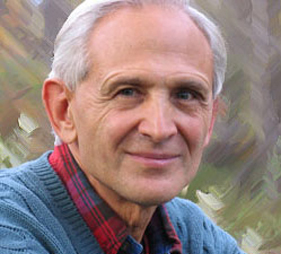
Jeffrey Kottler on Being a Therapist

The Therapist's Experience

Rebecca Aponte: In your book, On Being a Therapist, you talk about some of the challenges and personal fulfillment that come from being a therapist, as well as the need of therapists to embrace the ambiguity of human experiences and the process of the therapy itself. What did you mean by all that?
Jeffrey Kottler: I don't know.
RA: That’s a great answer!
JK: I've just always been fascinated with the therapist's experience of doing therapy—what that feels like, how it changes us, how it penetrates us. I see the job, or the profession, or the calling, as just being this amazing gift for those of us that are privileged enough to do this work, because of these gems and things that we learn. And I know there are people who do therapy differently than this, but it's just a very weird, strange enterprise, therapy. I mean, trying to describe to your own children what you do is bizarre.

I don't really have a lot of faith that we understand how therapy works.
I don't really have a lot of faith that we understand how therapy works. One thing we're clear about is that therapy does work, but there are just so many competing explanations for that. With that said, what the client brings to us in a session is so overwhelming and so full of content and feeling that we can't hold it. So we have to find ways to live with that—to live with all this uncertainty, and all this mystery, and all this ambiguity. At the same time, our clients are demanding answers and solutions, preferably in this session—if necessary they'll come back a second time, but that's about it. Part of the job of inducting someone into the role of being a good client is teaching them a little bit of patience, and teaching them how to work the process. But all the while we're saying this to our clients, we're talking to ourselves, too, about how to live with the ambiguity of our own lives, trying to make sense of what it is that we do and what we're on this planet to do.

I find it more than a little hysterical, more than a little amusing, the different perceptions that therapists and clients have about their sessions. A couple of my Ph.D. students have done qualitative interviews where they interview the therapist and interview the client, and it's as if there were different people in the room, or different sessions. That's the thing that's so crazy: that we can't even tell when we did a good job. The session is over and we're flying high, and the client never comes back again! What's that about? We delude ourselves: "Oh, they must be cured. It was so good they didn't need to come back!" I remember Albert Ellis told me that in the interview for Bad Therapy: "When they don't come back, it's just because they don't need it anymore; they're cured." Well, good on you that you can delude yourself with that.

Victor Yalom: Do you have any idea what draws you to the experience of being a therapist?
Jeffrey Kottler: I'm interested in the taboo, in the forbidden, in the things that we don't talk about, related to therapy. When I was learning to be a therapist, there were just so many questions I had about things that I was too afraid to even ask because I didn't want people to find out how stupid I was, or to realize that I don't belong in this club. "If people find out what I'm really like, I'm going to get kicked out! I'd better keep this stuff to myself." I would sit in classrooms, and then in case conferences and workshops, and want to scream questions, like: "Do you really think that's what therapy's about?" Or, "What you're saying doesn't make any sense!" I think I read in a book review or something that someone once called me the conscience of the profession, and I'm very flattered by that. But I prefer to think of it more as the role of the little boy in The Emperor's New Clothes: not to expose, but rather to uncover the unsaid. And for me, the unsaid is the experience—not the perverse, but the wonderful, amazing joy that's involved in this journey that we're privileged to be on with people, if not as guides, then as companions on this journey.

We Feel like Frauds

VY: What are some of the questions you have asked or explored in your writing that other people might think of as taboo?
JK: Like, that much of the time we feel like frauds. That we can't do the things that we ask our clients to do. That we lie. That we can't walk the talk. That we don't understand what we're doing and why it works. That our own issues are constantly coming up. Oh, a really good one: that we're not listening to our clients half the time—half the time we're in the room we're somewhere else, while we're nodding our heads and pretending to listen.
VY: And preaching mindfulness.
JK: Preaching mindfulness when we're planning what we're going to make for dinner. And I don't mean to make fun of that. I don't think human beings can stay present. I've been doing this survey for 20 years when I do workshops, asking, "What percentage of the time would you estimate that you are present with your clients on the average, keeping in mind that there are some clients who are so riveting that we really are there almost all the time?" And I've gotten answers between 20 and 70 percent, but the average really is about 50 percent, and I think that's pretty darn good!
RA: That sounds about right.
JK: I think that's a high exaggeration. But I monitor this in myself and I'm kind of amused by it. I'm amused by it right now—as I'm talking to you, I'm somewhere else. I have to go onstage in an hour and there's a part of me that's still planning what I'm going to do in an hour at that stage, all while I'm saying this. And I don't want us to be ashamed of that. I just want to talk about it, because I need to talk about it. In the early part of my career, I was never fortunate enough to be in a very supportive working environment where I could trust my supervisor or my colleagues. They felt competitive; it felt like it just wasn't safe. So because I had to hold onto this in the early part of my career, maybe that's why I had to write.Aponte: It's interesting to use the metaphor of the emperor's new clothes, because there is a nakedness in the way that you write—this insecurity about what kind of a job you're doing, and what kind an impact you're having, if you're having any impact at all.

Yesterday, I was doing a workshop on relationships in a therapist's life, and I was talking about the work I do in Nepal with young girls at risk to be sold into sex slavery; we give out scholarships to keep them in school. It costs a hundred dollars to keep one little girl out of sex slavery, to keep her in school for a year. So it's redefined how I think about money. I was using an example of how my belt broke two days ago, so I went to the mall to look for a replacement belt and saw this amazing alligator belt—$400. And I thought, "That's four girls! That's four girls' lives. So if I could find a belt for $60, then I can…" Even though I don't take the $350 and give it to the girls, I still think that way.

So anyway, someone came up to me after the workshop and she said, "God, it must be so hard to be you, to be so hard on yourself all the time, if that's how you really think about money! You must be in anguish." I had forgotten to mention the other side: that, maybe because I was a cognitive therapist early in life, I don't do guilt. I am really just a peaceful, calm person almost all the time. And I hardly worry about anything that I can't control or do something about. So I forgot to mention that other thing! The way that woman perceived me is that I must be very troubled to talk about this, and think about this morbid stuff all the time, and I must be so hard on myself—all the stuff I write about fear of failure and perfectionism and all that.

There are two themes that live within me. One is that I really am never good enough. After every performance, including this interview, I think about what I could have said, what I should have said, what I wished I'd said. "I can't believe I didn't say that; oh, I forgot that." And then the other part is total and complete forgiveness within five minutes, like, "Okay, on to the next thing. What can I learn from that interview that's going to help me to do that better and be more responsive next time?" So those are the two. And this woman yesterday helped me by asking that question, because I haven't really talked about that—the two, the yin and the yang, both of them living together.
RA: It sounds like the relationship that you have with that part of yourself recognizes that as part of your driving force to constantly get better. And that was the whole point of your book, Bad Therapy: that we can learn this way. It sounds to me like that’s the way that you learn, and that’s the way that you continue to grow—rather than controlling that inner critic, it’s really more like embracing it.
JK: And honoring it, and really feeling grateful for it. I don't learn very much about therapy anymore, reading books or whatever. But I learn so much watching people who are just good at anything they do. I've been reading Gladwell's new book about what leads to success—and it's ten thousand hours of experience. Gladwell's point in The Outliers is that people who are extraordinary in their fields just work harder at it than anyone else. They work at it so hard that it looks easy. And I embrace that idea.
VY: So how do therapists work hard at being better therapists?
JK:
The single best thing that predicts excellence in what we do is how we respond to our consumers.
The single best thing that predicts excellence in what we do is how we respond to our consumers. My consumers are mostly students and readers because I don't do that much therapy anymore. But I want to be a much better teacher that I am. I think I'm really, really good, but not nearly as good as I want to be. And I think that's why, after almost 35 years of teaching, I'm still so incredibly excited about what I'm doing.

Yalom, to get back to your question about what therapists can do, I have friends that have been practicing for decades that see anywhere from 25 to 50 clients a week, basically following the same theoretical orientation they've always used. They report to me that they still very much enjoy their work, and still feel enlivened by it, and I have to tell you that I don't understand that. I believe that they believe it—I think I believe that—but a part of me says it's impossible.

But maybe that's a statement about my own needs for change. I reinvent myself at least every five years because—here's my neurosis right out here—I get so bored with myself. I'm tired of my own stories. I get tired of doing things. I've taught the group therapy course well over a hundred times, and the reason I like teaching group therapy is that it is always different, it is never the same. You can change one person in the group and it's different. That means I'm always challenged and always stimulated.

I think therapists get lazy. I think we've got our favorite stories, we've got our favorite techniques and metaphors that have been tested in the trenches for years. They produce predictable outcomes, so we just go on cruise control: "Oh, here's another one of those." And it works. But I just get bored with myself if I don't feel like I'm learning something new or I'm out on the edge, on a learning edge to get better. But that is more than a little exhausting.
RA: Where do you source your change from? Do you feel that you change in response to what your consumers—students or clients or readers—are wanting from you?
JK: I change everything I can that's within my power to change. For a while I used to change jobs. That was somewhat self-destructive because I had a family and a young son at the time, and my wife and son would always come with me. We lived in Peru and Iceland and Australia, and we lived in five different universities in the United States. I was moving every five years just because I was hungry for something new. And while I don't believe in regret, there's a part of me that feels a little wistful about what it would have been like to be in one place for long enough that I would actually see my students around town as they became professionals. This might be my seventh university or something like that. It's my last one; I'm at an age now where I know this is where I am. And I love that feeling, too. I've changed my theoretical orientation, or at least it's evolved, every two years. I'm amused that when a client comes back to see me after five years, they think I do therapy the same way, and I don't anymore.
VY: Who’s the judge of that? You think you don’t…
JK: I'm pretty sure I don't. Because they expect certain things of me and I sometimes have to explain, "Oh, by the way, I don't do that anymore. I approach it this way. I still remember how to do it if that's what you want, but I've got some new stuff here that's kinda cool; maybe you'll like this too."
VY: Of course. But so much about therapy is the relationship. Although you may feel you’ve changed, do they experience you differently as a person?
JK: Actually, another one of the cool things about aging, at least in the literature I'm aware of in men—but I'll just talk about me—is, as I've aged, I think I've become even more transparent, more authentic, and more willing to take interpersonal risks with clients in session to help them feel safe. I was a therapist when I was 21—and I look young now, but I am going to be 58. But boy, did I look young then.
RA: 21—that’s quite young!
JK: Yeah, it was quite young. So, early in my life, I had to devise ways to get respectability so people would take me seriously. And even when I was in my 30's, I looked like I was in my 20's. I looked in the mirror recently, and I think I'm old now: I have gray hair! I think people look at me as old. Actually, I know they do, because my students now look at me as their father, which is a little depressing. But I like that I've finally reached a point where I look like what a therapist is supposed to look like.

Maybe Doubt isn’t such a Bad Thing

VY: Do you think it’s really important that therapists are honest with themselves about their doubts, about themselves and their work, the variety of their desires?
JK: No, I don't think it's good for all therapists to open up that can of worms if that's not some place where they want to be or some place they want to go, or maybe that's just not their experience. I meet and know therapists that say they don't have doubts. I envy that—I think. No, see, that's a lie! I don't envy that. See, that's one of the lies I mean: I catch myself saying things like that that I don't really believe, but they're the kinds of things I'm supposed to say.
I don't envy therapists who don't have doubts; I mistrust them
I don't envy therapists who don't have doubts; I mistrust them—maybe because it's so far from my experience, and because I think that doubting and questioning lead me to be more of an explorer of things

So I don't think I believe that's the case with all therapists. But the ones who come to my workshops or my classes came there for a reason, so there's a level of informed consent. If someone comes to a workshop or picks up a book that has a title like Clients Who Changed Me or Bad Therapy or whatever, then they're saying, "Okay, I'm open to this." But one of the beautiful things about our work is that there are just so many ways to do this that fit different personalities and different styles.

I go to a lot of programs where experts stand up with total and complete certainty and they say, "This is truth, this is the way it is." And it might often be prefaced with the statement, "The data supports blah blah blah." Or they'll say, "The empirical evidence supports blah blah blah and it follows that…" Because you say, "That's The Data, The Evidence; therefore, there it is," then it ends the conversation. What makes it especially funny is that then you go into the next room and the next conference, and someone says, "The evidence supports…" and then the exact opposite of what you just heard.


RA: So how do therapists bring that ambiguity into the room, or bring their own doubts into the room? Because I imagine that’s part of what makes them human.
JK: You know, I don't bring it into the room. When I and a couple of colleagues about fifteen years ago were looking at all the research on therapeutic relationships—and this was in a book called The Heart of Healing: Relationships in Therapy—I remember what we considered groundbreaking at the time was that there is no "Therapeutic Relationship." The best therapeutic relationship is one that's individually designed and tailored for each client, not for the therapist's convenience. My fantasy is imagining my clients in the waiting room comparing notes about what my therapy is like, and they think they're seeing different therapists. And they are, because I'm not the same with any. If I'm seeing a working-class man who's skeptical of therapy, works in construction and is not sophisticated about the emotional work, we would work in a very different, concrete, specific, goal-focused, male-respectful way.
RA: So it sounds like you actually do bring the ambiguity into the room, but maybe not in a way that your clients would tell. You might bring it by responding differently to each client.
JK: For some clients, I think the source of their anxiety or their depression or their helplessness is that their lives feel out of control because there is too much ambiguity in their lives. So the whole idea of doing a personalized assessment for a client is, if you have too much ambiguity in your life then you need more structure and an illusion of certainty.
VY: So, for you, being comfortable and exploring your own ambiguity feels right, but it’s not something you’re going to share with your client if it’s not helpful to them.
JK: That meets my needs, not the client's needs. I have preferences, as all therapists do, about the kinds of clients I like to work with. My perfect client is me—someone like me, that's got my unresolved issues, so that I get to do my work.
If I had my way, I'd prefer to do a Yalom-esque, existentially based, search-for-meaning long-term relationship, probably with a professional male. If I had my druthers, that's my YAVIS client, my perfect client who would come in. But I get a couple of those in a lifetime.

And, with managed care and all the other kinds of things, if I have a client who comes in and says, "I have one session with you, this is all we have," I'll do brief therapy like the best of them. I will rise to the challenge, because that's what the client needs. But I can't say I like that as much as I would if I could do relational-oriented work with someone that wants to do some deeper explorations into what gives their life, and all lives, greater meaning. I get off on that, because that's my journey.

I suppose what I teach my students is that it's fine to pick a theory, any theory, doesn't matter which theory—pick a theory to start with or, pick a theory that your supervisor likes because you've got to make your supervisor happy—and then over time you're going to have your own theory, your own way of understanding what this work is about. And that's the growth edge that we were talking about earlier.

I feel sorry for therapists that come to workshops like this to get their CEUs. I see that because I do so many of those workshops. And I can see people sitting in the audience that have this huge sign on their forehead: "I am only here for my CEUs. Entertain me, damn it, because I don't want to be here, and you're not going to teach me anything I don't know, anyway." I might agree with that last statement, and I will entertain them, but I think that's a bit sad that they really think they've got it already.

Integrative Therapy: Replacing “Or” with “And”

VY: When you’re training students and trying to in some way mold the next generation of therapists…
JK: Or grow, instead of mold.
VY: Sure. What do you do to help make it safe for them to explore, to be aware of their own inner world as therapists?
JK: All the things that I'm doing with you right now—that is,transparency and the most brutal honesty that I'm capable of. And modeling for them, as much as I can, that I'm not afraid, and I'm going to show you the parts of myself that I think are least likable. And what do you notice happening when I show you that? My hypothesis is that you like me more—that the more I show you the parts of myself I don't like, the more you respect me and the more you like me. Isn't that interesting?
VY: What you’re advocating is still counter to, I think, the basic framework that we have as therapists.
JK: Is it?
VY: You know, people talk about countertransference, but it’s still almost as if, well, you’ve got to resolve your countertransference.
JK: I believe in countertransference; I believe in projective identification. I believe that those are phenomena that exist. I'd been classically trained in a strong psychodynamic background, a strong cognitive-behavior background, a strong person-centered background. I went through all of those stages and a dozen others in my career. So I honor all of those concepts. I think they exist; they exist within me; I recognize them with me. But it's not either/or, it's and:
the feelings that we have for our clients or our students are both real and projections, not one or the other.
VY: Sure. I like what you’re saying. I think there’s still a bias in our profession that we work these things through quickly to become “mature” therapists.
JK: I sure don't believe that. But what I love that's happening: it feels like there are other people that are, if not joining me, going way ahead of me in this regard. The whole constructivist movement, narrative therapy movement, and feminist therapy movement, and relational cultural therapy are now all about honoring the egalitarian relationship between therapist and client: therapist not as expert, but as partner, as collaborator.

Therapy was dominated by men and male-oriented thinking for the first century. But now, because my students are mostly immigrants and minority students in Southern California, a lot of the traditional white-man theories don't really fit their client populations. Most of my students are immigrants who work in their own communities. You can't do cognitive-behavior therapy or existential therapy, or person-centered, or Ericksonian, or any of these mainstream therapies—you can't do them as they were designed when you're doing it in Vietnamese or Mandarin or Spanish.
VY: Why not?
JK: Well, I guess you can. My point is there's a tremendous cherishing and honoring of difference, and the idea that you adapt what we do as therapists, not just for that individual client but for the cultural context of their experience, the community in which they live and function. So it feels like there's much more respect for the therapist's experience.

For my next book on creativity, which I'm writing with Jon Carlson, we interviewed a number of therapists, but a couple that stand out are Laura Brown, a feminist therapist, and Judy Jordan, who's a relational cultural therapist. And they both use the four-letter word when they describe their relationship, that is, love: that therapy is about love. And
I believe that it's a non-possessive, non-exploitative kind of love that our clients feel for us and that we feel for them.

I've been doing qualitative research my whole life, and I had to do it in the dark because it was never respected as legitimate research. Now qualitative research is one of the preferred methods. When I first started doing this, everyone was doing grounded theory, which is ex-quantitative researchers doing qualitative research but being uncomfortable with it, so they do all this coding. Most of my students are doing narrative analysis now, which involves preserving the stories, the lived experiences, the phenomenology of the people they're talking with—being able to do a thematic analysis of it, not the same way that therapists do, but in a parallel process. "What is the meaning of this?" And, "What are the intersections between the lives of these different people I've spoken to?" The last study one of my students has done is with therapists who had clients who committed suicide and who were marginalized afterwards—could never speak about it, could never talk about it.
VY: The therapists?
JK: The therapists. And what's so forbidden about this is that therapists are not allowed to grieve or express their own loss of a client.
RA: It sounds like you get really energized by the exploration of the tremendous variability of human life.
JK: I get excited when I learn something I don't already know; that really gets me going. I like working with therapists and working with students—and for that matter, working with clients—who bring something in that I've never thought about before, never encountered before. It's my fault because I get lazy. Someone comes in and they say, "I'm depressed because I don't have a job," and I think, in a lazy way, "Oh yeah, you're another one of these."
VY: You’re 58 and you’ve written about 75 books, so laziness is the last attribute I would think to describe you.
JK: I meant laziness in my therapy, where I put someone into a category instead of honoring the uniqueness of what they're bringing. Every client really is unique. This kicks in that perfectionistic stuff again—the voice: "Kottler, it's you! You're the problem, not what your clients are bringing you. And if you stop looking at them as being similar, they wouldn't be similar." Then that forgiveness voice says, "Yeah, but you do the best you can. You're busy; you're writing five more books. So give yourself a break."
VY: What it seems you were speaking to is the fundamental trait of curiosity about others and about yourself, which I think is a great trait in a therapist: to be genuinely curious.
JK: Maybe about some kinds of therapists, but I'm imagining people reading this that don't think that way, and I want to honor their experience too.
That's another one of the things that's so great about being a therapist: you can be a therapist so many different ways.
That's another one of the things that's so great about being a therapist: you can be a therapist so many different ways. And it's much harder work for me to do this, but I like helping each therapist develop their individual style rather than trying to be like me or someone else. But it's much easier to teach people, "This is the way." There are some really good habits and skills and knowledge-base kinds of things that everybody must learn and get down before we let you loose to start doing this with other people. Everybody has to start with all these generic skills, and the basic research and theory in a field; developing your own voice is something that happens years later.
VY: It is. I think, unfortunately, people get professionalized and homogenized in graduate school and have to unlearn a lot in order to find their own voice ten, fifteen years later.
RA: Yeah. I’m wondering whether you’ve found that there’s a way to circumvent this. Are you helping students to find their own voice, or to maintain their voice, earlier in their training?
JK: Yeah—back to something we talked about earlier—by modeling the doubts and uncertainties.
RA: Right.
JK: And that's a huge feature of what I write about and teach: "Why would you want to be like me? You might say I'm ahead of you in some areas, but I'm still questioning, still trying to make sense. That's what I want to model that you do, because we never become this finished product." That's another one of the taboos we mentioned earlier. We never—I'm saying we—
I will never get to the point where I think I know what I'm doing.
I will never get to the point where I think I know what I'm doing. And for students to hear me say that out loud, they just eat that up.
RA: It’s liberating.
JK: Yeah! And—now I have to remember the second part of that, the second thread that that person told me earlier—and I'm not bothered by that. I don't worry about it, I don't feel ashamed of it, I don't think about it. It's really good to be me. It's really good to be calm and accepting about the things I don't know and understand.

The Secret to Writing: Just Do It

VY: When you’re working with a client, there must be some times when you feel like you know more, and sometimes you know less.
JK: Yes, of course. And with teaching it's like that as well. But—back to that theme about being bored with myself, bored with my stories—I've repeated some of them in this interview that I've written about in books. And I feel badly about that, because I don't like to repeat myself. And when you've written 75 books, how much experience could a person have to put in 75 books? It's really hard work to go out and find new experiences for the next interview or the next book. And I feel bad about that. Audiences and readers are very forgiving. They say, "Oh, but it was such a good story, it bears repeating." That's so kind, but I hated when my teachers would repeat a story that we already heard before.
VY: I imagine people frequently ask you how you have written 75 books. You probably have some standard answers for that, but could you come up with a new answer?
JK: Here's the new answer, because I've been thinking about this: it's really, really easy. Because people ask me all the time, "How can I write one book, or how do I become a writer?" It's easy: write!
VY: For you it’s easy.
JK: No, it's easy for anyone! If you write, then you're a writer. It's like, I don't decide in the morning when I wake up that I'm going to brush my teeth. I just brush my teeth; it's something that I do. Live, breathe, keep good dental hygiene. So I don't decide I'm going to write everyday. I just write everyday. It's part of who I am, and it's so intrinsically satisfying. I love it so much because it's part of my curiosity. I write about things to try to make sense of the world, and I just love it. There's sex, there's skiing, there's surfing, there's being with my family, and there's writing. And that's what I love. So it's not work. I don't ever have to make time for it. It's just there. It's just what I do. And I'm a really good writer because I've found my voice. People tell me all the time I write just like I speak. So I don't have to rewrite anything that I write. It comes out beautifully in a first draft; when I see editors, they don't have anything to do with my stuff.

I never had a good foundation; I needed glasses. Up through junior high school, my dumb parents never got my eyes tested. I memorized the eye chart in school because I was embarrassed. But the whole world was foggy. I could never see anything. I used to sit right in front of the television to watch cartoons. My dumb parents didn't say, "Duh, this kid can't see. Why do you think he's right in front?" So I could never see the board in school. What that means is I never learned grammar. So I don't have the basics, but I think I learned to write because I just love to write, and I do it everyday.
VY: Well, you have a natural ability. Some musicians can hear a tune and play it on the piano; most people can’t do that. They have to learn the music.
JK: I don't know. You say it's a natural ability. I think I worked my ass off to be able to do this. I think I just flat-out worked harder than anyone else I know to do this. And I still work harder than anyone else I know to do this.

And, by the way, let me just put this qualifying thing: I save so much time in my life for play. I will not do a workshop or a presentation in a place unless there's fun associated with it, or it's someplace I want to go or want to be. I find time for myself. I read a novel a week.
VY: How much do you sleep a night?
JK: That's the thing: I don't sleep very well. But that's bladder-related. And my wife is the same age, so we kid each other that we only need a single bed because one of us is up… including last night. Last night I got up at three and that was it.

I think we're going to have to end here.
RA: Any last comments?
JK: I think the bladder one was a great last comment.
VY: I don’t think we could top that one. Thank you very much for taking the time to talk with us.
JK: This was fun. You got a good interview out of me because it was fun, dynamic and interactive. And I said some new things, so that's good.
RA: Good, I appreciate it. Thank you very much.

Lisa Firestone on Psychotherapy with Suicidal Clients

Something to Lose

Rebecca Aponte: One thing that I’m really interested to know is: what are the rewards of working with suicidal clients?
Lisa Firestone: Wow. Well, obviously, the ultimate reward is if you can make somebody's life worth living so that they're no longer feeling suicidal. But it's often a real struggle—often, people who are suicidal have complex problems that are not easily solved. They also have issues with being able to regulate their emotions and tolerate strong negative emotions. While it's a diverse population of people who become suicidal, they seem to have those two things in common. Those issues have to be addressed to have any long-term effect. You could ride out crises, but they will resurface if the person doesn't learn some basic ways of dealing with their emotions.
RA: How do you stay motivated as a therapist working with these sorts of very complex issues?
LF: There's nothing like working with a suicidal patient to make you feel motivated, because there's so much concern and fear involved in what the outcome can be if it doesn't go well. Israel Orbach, who we interviewed for our film on suicide, talks about how it's really important to find something that you'll lose if the patient would die, and I think that's a really powerful idea. He's not talking about losing in terms of your status or professional or legal liability—he's talking about what you come to value in that person.
A lot of suicidal people are brilliant, funny, charming in various ways; there are a lot of positives there, too. One of the last suicidal patients I worked with was a brilliant young student. It's easy to see the things to admire from the outside. It's helping the person see themselves in that perspective, because they're seeing everything through a very negative filter.
A lot of suicidal people are brilliant, funny, charming in various ways; there are a lot of positives there, too. One of the last suicidal patients I worked with was a brilliant young student. It's easy to see the things to admire from the outside. It's helping the person see themselves in that perspective, because they're seeing everything through a very negative filter. They're not seeing their positive attributes, or potential positives in their life, very clearly.

Victor Yalom: It sounds like you’re emphasizing the importance of finding a way to connect to aspects of that client.
Lisa Firestone: Aspects of the client—the part of them that wants to live.
All suicidal people are ambivalent: part of them wants to die, but part of them wants to live as well.
All suicidal people are ambivalent: part of them wants to die, but part of them wants to live as well. And if you can connect with and help strengthen that part of them that wants to live, then you're on the right track. The trick is to not do anything to support the negative side. I just consulted the other day for a man whose wife is very distraught because her adult son committed suicide. =The night before he did it, she went from having been catering and caretaking, to blasting him. And of course now she feels very guilty about that, and is experiencing a lot of self-recrimination. She's also suicidal, herself, at this point. The husband reported that a famous drug and rehabilitation counseling center counseled the son, saying basically, "You can't even take care of yourself; how do you expect to take care of your family?"—which is actually a voice on our scale for predicting suicide risk. That's what he reported their counselor said to him the night before he died!
RA: Wow.
LF: So that's siding with the part of the person that wants to die. And it's easy to get caught up in those kinds of statements or sentiments, because the client will provoke those kinds of reactions. And I'm sure he may have precipitated that reaction, but it still was not a very therapeutic way to respond to him.
VY: So the whole idea of suicide and working with suicidal clients, as you said, brings up a lot of fear—it’s very threatening to therapists.
LF: Absolutely—especially in our litigious society, where wrongful death cases do happen. And especially with suicide, because when somebody dies by suicide, there's a lot of anger, but there's a lot of reluctance to direct that anger at the person who is primarily responsible: the person who died. So there's a lot of anger on the part of families, of wanting to accuse therapists of being the problem. There's a lot of anger on the part of therapists, of wanting to accuse families of being the problem. There is a lot of anxiety around it. And most people going into to our field are not looking to be dealing with life-or-death situations. They want to help people, have a feeling for people, and yet with suicide we are dealing with a life-and-death situation where somebody could actually lose their life. So that in itself is anxiety provoking.

Suicidal patients tend to provoke negative countertransference feelings, as well. They tend to make therapists feel like getting rid of them, just like they feel like getting rid of themselves. And they do that with friends and family members, as well. That's part of what I mean by complex problems: because they've been interacting with people in ways that reaffirm their own negative view of themselves.

Bending the Rules

RA: When you’re forging a therapeutic alliance with these types of clients, how do the normal boundaries come into play? Do you bend the rules? Are you self-revealing? Certainly the stakes are significantly higher.
LF: The stakes are significantly higher, and the need to connect with them in a manner that inspires hope, and to keep that connection with them, is crucial. When they looked at people who committed suicide while they were in treatment, there was some breakdown in the relationship where the suicidal person felt like, "Even this person can't help me." This reinforced the hopelessness and helplessness that they were feeling, as well as the desperation, which was found in the same study to be the strongest negative emotion associated with suicide. So keeping that connection is really important. But it's a complex process, and certainly
if you talk to people who are specialists in suicide, they will all tell you about times that they did things that were outside the boundaries of what we usually consider the limits of psychotherapy.

Edwin Shneidman, the father of suicidology, talks about a student at UCLA who came to see him ready to kill herself over an A-. He needed to buy time to form a relationship with her, so he went to the teacher and got the grade changed. He decided the difference between an A and an A- to UCLA was nothing; the difference to this girl was life and death at that moment. Now, we wouldn't do that with most of our clients, and I'm not suggesting that we always should, but there is a need to build and maintain that connection. And if you look at Dialectical Behavior Therapy—one of the therapies with the strongest research track record in terms of affecting people who are suicidal, particularly those with Borderline Personality Disorder —there is an emphasis on maintaining the connection through phone contact between sessions, frequent sessions, and skill building classes. As Marsha Linehan describes it herself, it's shepherding them through, checking up on them, and teaching them how to regulate and tolerate their emotions.
VY: I had a client who was suicidal in a somewhat unusual way. This was maybe 10 years ago, and AIDS was more of a death sentence. He was talking about actively going out and having unprotected sex to infect himself. I was quite concerned about him and ended up driving him to the hospital in my car because it seemed like the best alternative. I thought he needed to be hospitalized and he agreed to that. I didn’t want to call an ambulance and have him strapped into that. So I just walked down with him to the garage and got him in my car and drove him to the hospital. That certainly is not something I would normally do with a patient, but it felt right and I think it was helpful.
LF: Yes. I think, in each case, we just have to reflect on what's in the best interest of the client. And we're going to end up doing things that are, like you said, not what you would do with every client, but that are important for this particular client at this point in time. John T. Maltsberger, who is a suicidologist in Boston, talks about a client he got just prior to Christmas break, during which he usually took a skiing vacation. She was suicidal, and he was really torn: “Do I go and feel guilty the whole time and worry about her, and ruin my vacation? Do I not go and resent her for having interrupted my vacation, which will come out in the countertransference, or one way or another in the therapy?” The agreement they made was that they would have a phone call every morning at 7:00 a.m. during that vacation. She felt very cared about and contained by that intervention. He felt relieved at the end of those phone conversations: he could go skiing and enjoy his day knowing he was going to talk to her the next morning. And it worked.
RA: Is it common to collaborate with the client in figuring out what kind of things can work like that?
LF: I think working collaboratively in the relationship is the most important thing. And there's actually a group that meets in Switzerland every two years that is devoted to working on that issue of collaborative, relationship-oriented work with suicidal clients. At this conference, I have experienced a psychoanalytic person speaking right before a behaviorist, and they're saying the same thing about what you do with a suicidal client. So it's really interesting—even though the presenters represent the theoretical spectrum, they're talking about the relationship being primary.
VY: I think most of the research shows that if you really dig deep and tune into the client’s perspective, you find it’s their sense of you—that you really do care about them, that you’re willing to go outside the normal boundaries if necessary—that is what’s ultimately important to them.
LF: Certainly in some cases, and often these are people for whom the attachment relationships they had early on were not secure, and were not such that they were able to learn to either tolerate or regulate their emotions. These are things that an infant originally needs from the outside. An attuned parent provides these functions, but a parent who is depressed, substance abusing, or who can't regulate their own emotions is going to have a hard time filling that function for a young baby.
RA: And then there’s a fear to get attached to these people because, should they commit suicide, that’s a great loss to whoever is attached.
LF:
That's the thing about suicide: there's no suicide without other people being hurt.
That's the thing about suicide: there's no suicide without other people being hurt. It's not a private act between a person and themselves. Nobody's an island unto themselves enough that their suicide doesn't affect other people. Certainly, when you're the therapist, you get hurt if it happens, but also the family members, the loved ones. No matter how complex their relationships to the individual might have been, they get hurt.
VY: One of the first clients I ever saw, his father committed suicide when my client was a child. I think for children, as in this case, the sense that a parent would take their own life rather than being there for them is intensely damaging.
LF: I don't think anybody's fully studied the impact on children of losing a parent to suicide, and I think it's huge. I don't think there's a simple way to deal with it. But that's a very understudied population, and a high-risk population for suicide. Losing a parent during childhood puts somebody at greater risk for both suicide and violence.

Finding the Family

RA: Do you often bring the family into the therapy session? If you have someone coming to you who is suicidal, do you talk to their family or friends?
LF: Ideally you talk to the people on the ground, and that could be the family, spouse, or roommate. The subtle changes in behavior that are going to alert you to the likelihood of an actual suicide attempt are going to be noticed even better by the people who are seeing the person daily than by the therapist.

Some families are too toxic; they're not going to be helpful. It's going to make the situation worse. Sometimes there are a lot of complex dynamics going on in the family, so it's not an absolute given that you're going to want to involve them. But you certainly will learn information about your client that you do not know. And if you're dealing with a younger person who's still in a lot of contact with their parents, it makes a huge difference to have the family on board to understand both the level of risk and what the management and treatment plans entail.
VY: I think many of us are still overly influenced by this neutral, passive role of the therapist with the focus on boundaries. I think for almost any client it’s helpful to be in touch with family and friends. If a client’s siblings are in town, I bring them in for a session. I find out so much more about my client every time I do this—things I might have never expected.
LF: Their support system can strengthen what you know and how you can intervene. I also tell family members, if you're concerned about your loved one being suicidal, and they're in therapy, you've got to advocate for them. You have to call the therapist. Even if the therapist can't talk to you because of confidentiality, they can listen. They don't even have to acknowledge whether this person is their patient or not. But say, "I think this is really important for you to know." I had a mother contact me in Santa Barbara whose daughter was in another state and in therapy and was not doing well on her antidepressants: she was sleeping 20 hours a day on them.
VY: That’s one indication of not doing well.
LF: Right, but she wasn't telling her psychiatrist this. So how was he supposed to know? It's very hard to adjust somebody's medication if they're not giving you the feedback you need in order to do that. Families can have some power, but they can't ultimately necessarily save the person's life any more than you can as the therapist. There still is frustration because the final decision is going to be up to the person, but there's also a lot families can do.

When possible, therapists should really communicate with the family and make them part of the treatment team. I see therapists very resistant to that, like you said. Even though they may not see themselves as Freudian, they see themselves as having good boundaries, even with children. You would think that anybody who was seeing somebody under 18 would obviously be letting parents know this, but
I've heard stories over and over again of people who wanted to pull their kids out of therapy for whatever reason, and the therapist said, "Oh, no, you can't do that—this child is suicidal."
RA: And that’s when the parent finds out?
LF: And the parent says, "Wait a minute, you never told me that before? How could you be treating my child and not letting me know that you thought that?"
VY: It sounds like you’ve done a fair amount of consulting to other therapists with suicidal clients.
LF: Yes, I have. That's one of the things that I do: people call me when they're concerned.

Suicide is an Acquired Ability

VY: Of course, every case is different, but do you find that there are some common types of advice you give, or some common types of problems you see in the way that therapists approach or deal with suicidal patients?
LF: Yes. Unfortunately, I think one of the problems is that, because it causes therapists so much anxiety, they tend to minimize or want to think the person is less suicidal than they are. And I think families do that too.
VY: Any examples of that pop into your mind?
LF: A therapist from the East Coast, who was seeing an adolescent boy, called me. He was sixteen at the time, and he made his first suicide attempt when he was fourteen: he took a very minor amount of medication, not even very serious. Second suicide attempt happened about a year later: he took a more significant amount of medication, but told his mom. He got taken to the hospital, and had his stomach pumped. In therapy, the day before his third suicide attempt, he basically said that he felt suicidal; he felt unloved and uncared for by his mom, who was there in the session. His mom had a new baby, was distracted as well as sick, and hadn't been paying as much attention to him as a result. The next day, he jumped off a low bridge and broke every bone in his body. He has minimal brain damage and will survive—miraculously. But everything he said the day before in therapy should have told the therapist what was coming.
There's a tendency to minimize or to think, "Well, his past attempts weren't serious." There's a tendency to not want to think that this could really happen.
RA: I read an autobiography about a woman who had dissociative identity disorder and had also attempted suicide. The author wrote that as she kept talking about suicide, she was getting more comfortable with the concept, while everyone else around her was beginning to tune out what she was saying. Do you find that that’s common?
LF: Yes. And there's a desensitization process to suicide attempts that makes the person feel like, "This is a course of action I could take." It gets easier and easier to do as they make attempts. And people do get tuned out to it, because they think, "Oh, they're just trying to manipulate us," especially with kids or teenagers. They downplay the risk and don't really hear it. I also think the therapist or the family member sees all the good traits in this person. It's hard to realize that they could really feel the way they do about themselves.
VY: So one obvious implication of this is to take people’s threats seriously.
LF: Absolutely. Take people's threats seriously. You're better off overreacting than underreacting. When a therapist seems panicked or made afraid by the patient's suicidality, it often increases the patient’s sense of hopelessness. It's experienced as basically admitting defeat or lack of ability, which makes them feel more helpless and hopeless. So it's not that we need to panic about it, but we do need to take it seriously and do whatever we need to do to make them safe, including hospitalization when that's necessary. And also really following up closely when they get out of the hospital, because that's the highest risk time: the three weeks post-hospitalization.
VY: But don’t you think it’s helpful, if you’re really concerned—if you’re scared, even—to share that with the client? Isn’t that being real?
LF: Absolutely. But not in a manner as to communicate that you are helpless to help them. Instead, what you want to communicate is that you want them to be safe, so whatever is necessary to keep them safe needs to be done.
RA: And you have to monitor how it’s impacting you.
LF:

Some Uncommon Advice


Absolutely. Making yourself a real person to them is important because that strengthens the connection. What you're trying to build is trust: you want them to see you as a safe haven, as well as the attachment for them that they may never have had.

I think another problem is trying to get a client to stop behaviors that are self-destructive but that are helping them manage their emotions, like self-harm behaviors. Many therapists just want it to stop. Many parents just want it to stop when it's their teenager. But you don't want to rip that away from somebody for whom that's a self-soothing behavior that's working, until you replace it with a more healthy coping strategy.

We have a mother whose son committed suicide days after his 15th birthday. The year before, he started to cut himself, and she took him to therapy. The therapist got him to stop, and he spent the next six months searching the attic for the bullets to the gun in the house. And the day he found them, he died.

You don't want them to just stop.
RA: Wow. I don’t think that’s advice you hear everywhere.
LF: No. I think it's hard because to most people, self-mutilation behaviors seem horrifying and painful. But to people who use them, they are very soothing. You want them to develop healthier coping strategies, certainly, but you want to do that before you just say, "Stop." So you're really looking into how they cope:
what works for them when they're stressed? Maybe that's cutting themselves, or maybe that's burning themselves. That may not sound very good to you, but for them it's working. And when it's working is not when they're going to die. It's when things aren't working.
VY: But what does the therapist do with that? If you don’t urge them to stop, then what?
LF: I think you want to slowly replace it. You want to work with them on developing healthier strategies so that those other behaviors can fall out. But you have to respect what works for them when they're in distress, and what worked for them in the past. Then, how can we move to something that would be even a better strategy for them? But you don't want to do things to expose them more to their pain—you want to help ameliorate that pain. You've got to deal with their pain. The deep underlying psychological pain they're experiencing often has to do with their early pains and hurts, and feeling that they don't deserve to live—these core beliefs that they basically should be dead, that they shouldn't have been born in the first place.

The Power of Dissociation

VY: Sometimes. And maybe sometimes it’s just real-life crises that trigger vulnerabilities.
LF: They trigger vulnerabilities, but those vulnerabilities are there. And you talked about somebody who has dissociative identity disorder.
Certainly dissociation, I think, is a key piece in suicide, and this is one of the under-researched issues.
Certainly dissociation, I think, is a key piece in suicide, and this is one of the under-researched issues. The role that dissociation plays in violent behavior is much better researched and more spoken and written about than it is with suicide, and yet I think it's a key component to the acquired ability to kill yourself. We have some clients that feel very suicidal, but they don't have the acquired ability to do it, so it's not going to happen. But that desensitization of making attempts, of physically experiencing or being exposed to a lot of pain, of being able to dissociate… I don't think you get suicide without that ability to dissociate. And I don't mean having to have full-blown dissociative identity disorder, but certainly, having the ability or tendency to dissociate is there in people who complete suicide.

If you think about it, just on a basic animal level, an animal that's injured gasps for every last breath; so do human beings. But with people who are suicidal, they have to go so against that to actually take actions against their own body that they have to be in a pretty disconnected state. And the suicide attempt often reconnects them to themselves. They snap back to themselves.
RA: Yes, I remember that from Voices of Suicide.
LF: Kevin Hines talks about that: how he felt like he was worthless, he didn't deserve to live, he was a burden to his friends and family. He jumped, and the minute he lost physical contact with the bridge it was, "Wait a minute, I don't want to die. Wait a minute! And these people love me!”
RA: Not dissociated anymore.
LF: Not dissociated anymore—reconnected, whole different perspective. And that's one of the problems with suicide: when people use not-so-lethal means like pills or things like that, they can call somebody—they can potentially save themselves, and people can potentially find them and have time to save them. The problem with very lethal means like guns, which are the number one method here in the United States, is it's over in a second. You have to have sustained intent for such a brief period. Jumping off a bridge takes moments of sustained intent. And there's no going back, in most cases.

A Personal Philosophy on Suicide

VY: What’s your philosophical stance on suicide? Do you make any distinctions? For example, certain states are talking about the right to die if you have a physical illness. Where do you draw the line between “someone is insane” or “it’s a permanent state of pain”? What happens if someone has been chronically depressed for twenty years, and they’re miserable and they’re unhappy, and they just want to end the pain?
LF: It's a very hard one for me, because I generally believe people should have the freedom to make decisions about their life and live in any way that is meaningful to them. The problem around suicide, for me, is that the person is almost never in a rational state of mind. Even in research that has been done with terminal cancer patients, those who wanted to hasten their death were in a depressed state. Depression is treatable, even for those at the end of their lives.

We don't have optimal end-of-life care here. We do for some, but we don't for all. So there are people who feel like they're a burden to their family or they're going to eat up all the family's money, because they are. That's what will happen. That puts outside pressures on the situation, certainly, so I think it's very difficult. And I think it's a kind of slippery slope issue. Even in countries and states where it's legal, there are cases of people who have been depressed for short periods of time who get assisted in killing themselves, and I have a lot of trouble with that—people who have not had a chance to receive adequate treatment. And with optimal pain management, I don't think people generally want to hasten their own deaths. I don't think we should make people be in pain. Currently, when a person speaks up and provides feedback to their doctor, we can have optimal pain management for most situations. So I hate to make it a moral issue, but I do think that suicide always hurts other people, so I think that does make it a bit of a moral issue. It's not just between the person and themselves. And I've heard Thomas Szasz speak on this; I've heard very reasonable researchers on the other side who have reached a different conclusion. I heard somebody present on it at the International Association of Suicidology once who said, "Any doctor who feels good about assisting somebody in their own suicide shouldn't be doing it." That should be one of the qualifications: that you don't feel good about it. And who does those evaluations that decide that somebody's in the right state of mind to do that? What does that even mean?
My belief is that when anyone is in a suicidal state, they are not thinking rationally, they are at the mercy of a destructive thought process
My belief is that when anyone is in a suicidal state, they are not thinking rationally, they are at the mercy of a destructive thought process, what we refer to as the “voice.” These voices are tormenting them, causing the psychological pain they are expressing, and encouraging them to get out of the pain by killing themselves. These voices represent the “antiself,” which is opposed to the person’s going on being.
RA: You mentioned earlier that the role of the therapist in helping the suicidal person is to help them find ways to alleviate their psychological pain. Do you get to a point that you do start to explore the pain and start to work through it?
LF: You want to get to the bottom of the process that is causing the pain. You want to bring to the surface these destructive thoughts or voices, challenge them, separate from them, and act against them, helping the client to take his or her own side. You want to help make life worth living to them. So what gives them meaning? What lights them up? What matters to them? That's strengthening that self system, so from the beginning you're wanting to connect with that and support that. What you don’t want to do is anything that sides with the ways they've turned on themselves and the ways they're thinking negatively about themselves, the antiself. And it's easy to do in those moments. Even saying things like, "How could you do this to your kids?" can be interpreted as, “I really am a bad parent.” What you want to communicate is, “People really need you to stick around, and your kids need you to stick around.” It's choosing your words. It's thinking through what you're communicating or how it's coming across to that person in that moment in time. It's the same content in both of those statements, but they come across very differently.

Keeping it Real

VY: Someone reading this interview might get a little concerned that they have to weigh their words too carefully—like if they say the wrong words, suddenly they could be responsible for having their patient commit suicide.
LF: I don't think anybody can be completely responsible for another person's suicide, first of all—and
I caution therapists against thinking either that they can save every patient or that they're going to be responsible.
I caution therapists against thinking either that they can save every patient or that they're going to be responsible. But it's having the right intent to what you're trying to do with the person, and knowing where you really sit in your feelings. And trying to communicate that: that you really do care about them, that you really do want to see them be able to live and to feel better than they do now, and offering that hope that they can feel better than they do now. And when you recognize that there has been a misattunement or the client has taken something you said wrong, you admit your mistake and repair the relationship. And really helping them develop the skills and the ability to get there, partly by looking at what is driving them to feel suicidal in the first place, and unearthing the negative thoughts that they're experiencing and what behaviors they engage in when they're thinking that way. Often, when they're thinking negatively about themselves, they isolate themselves. That's when these negative thoughts take more hold over them. So getting them out of their isolation is huge.
VY: So you take a very active advice-giving role when you think someone’s at risk.
LF: No, you are active and engaged, but you are not advice-giving. When somebody's in suicidal crisis, I think they do really need you to provide the structure. It's not that you're the expert telling them how they should live their lives, but you're collaborating with them on how you can make this work.
VY: Maybe it’s a dirty little secret that I think almost all of us at some point in our lives have felt some level of despair that may involve some vague, or not so vague, suicidal thinking. This includes therapists, of course.
LF: Oh, absolutely. And having tolerance for that and for those feelings is really important. But I think for therapists it can be very scary, because any of those feelings in them could get stirred up in sitting with somebody who is really feeling that way so strongly.
VY: Do you think it’s helpful for therapists to share that they’ve had experiences like that—that they can really relate?
LF: I think it can be helpful. Again, it's how you use it and how that's going to be received by that individual. If you have somebody who's on the brink of suicide, who's really in suicidal crisis, and you say, "I know how you feel," they're often going to feel like you just obviously aren't paying attention, because you haven't had that experience. Even if you've been there, they're going to have a hard time believing that you were there and that you got where you are now. It's going to be hard for them to really feel it. So it's important not to minimize it. It's like saying to a parent who's lost a child, "I know how you feel." If you haven't had that experience, you probably don't really know how they feel. You can empathize with it—you can think about what it would be like to be in their shoes—but that's a bit different. And I think people in suicidal crisis can be very sensitive to that. So I just think it's important not to overstate it, because it will be experienced as disingenuous.
RA: It’s kind of like what you were saying earlier—that you just have to be so real, and that even amongst the different disciplines of therapists who work with suicide, it’s so incredibly obvious that it’s the relationship that matters. It sounds like that honesty is crucial.
LF: I think it's huge and yet I think there are plenty of therapists out there who do not realize this.
And I think, in managing our own anxiety about dealing with suicidal clients, it's a very good idea to get consultation.
And I think, in managing our own anxiety about dealing with suicidal clients, it's a very good idea to get consultation. It puts another person's perspective on it that can be helpful. And from a legal perspective, it's also very important because it's like taking a biopsy of the standard of care. If you consult with somebody and they agree with your treatment approach and you document that, that's also very protective. But it's also helpful for your client because if you get too distressed or feel overwhelmed by it, I don't think that's helpful for them.

And I think it's important not to have too many suicidal patients in your practice at any one time; it is just much too stressful for anybody. When we were doing testing for our suicide assessment, we were in therapists' offices all over the country, and in one case a woman had seven people in her practice that tested as being highly suicidal. She didn't intend to get in that situation. It had just sort of happened that she had taken on that much, and it was probably not the right thing to do, for her or for the patients.

Identifying Suicidal Thoughts

RA: Let’s talk about the assessment. There’s the FAST (Firestone Assessment of Self-Destructive Thoughts) that you and your father worked out. Can you describe that briefly?
LF: Sure. We started to look at what we knew about suicide, and at a continuum of negative thoughts that contribute to suicide in particular. We looked for statements from people who had made serious suicide attempts and were in the voice therapy groups we were doing at the time. All of the statements that we put on the scale were taken directly from the clinical material—things that people actually voiced. And we looked at the whole continuum of self-destructiveness, from mild self-critical thinking that we all have at one time or another, to extreme self-hatred, all the way up to suicidal thoughts. We took statements from 11 levels along that continuum and determined the statements that best fit their category based on expert reviewers. We then looked at those that distinguish between suicidal and nonsuicidal people in our pilot study. Then we tested people all around the country who were in outpatient psychotherapy, and then we did the second study of people who were in inpatient psychotherapy and had been diagnosed with the disorders most associated with suicide risk. We found that you really could distinguish between people who are very depressed and are suicidal from those who aren't, or people who have bipolar disorder and are suicidal from those who have bipolar disorder and are not. We found that people who have borderline personality disorder endorse more negative thoughts than any other group. Still there are very different negative thoughts for those who are suicidal than those who aren't suicidal.

It's interesting that cognitive-behavioral therapists focus on negative thoughts as being the underlying driver of a lot of self-destructive behavior, including suicide, but the tests that they've developed are not based on thoughts.
We ask people directly: “Do you have these thoughts toward yourself?” And we have found that people are a lot more honest about their thoughts than about their behavior.
We ask people directly: “Do you have these thoughts toward yourself?” And we have found that people are a lot more honest about their thoughts than about their behavior. For instance, there's a whole subset of items on the FAST that have to do with the kind of thoughts that lead to addictive behaviors. "Do you have an alcohol problem?" That's an opinion question and most people will say no to it—even people whom you might consider as having an alcohol problem. We're not very good at opinion questions. But if you ask them specifically, "Do you have this negative thought, or that negative thought…" They're more likely to say, "Oh yeah, I have those thoughts."
VY: So the thoughts that they identify through the FAST can reliably predict suicidality?
LF: Yes. Suicidality, substance abuse, self-harming behavior—all can be identified by the FAST. We've found that in half the cases in which a patient had a history of suicide attempts, they hadn't told their ongoing therapist. Same with self-mutilation behaviors: in half the cases, their ongoing therapist didn't know about these behaviors.
VY: What does that tell you?
LF: Well, in the case of suicide, one thing it tells you is that therapists aren't asking. The patients weren't hiding it; they just had never been asked about it. They don't want to burden their therapists with the anxiety of having to feel that they're suicidal or that they're engaging in self-mutilation. And yet, as a therapist, as much as it might cause you anxiety, you want to know those things.
RA: There may be some level of shame associated with it for the patient.
LF: There is some level of shame, and there is a level of protectiveness toward the therapist, too. And I think it's really important to draw those things out and to ask. And then I think we need to really address them as well.
RA: And take it seriously.
LF: Yes, take it seriously. And it's interesting—if you sit there with somebody while they take the FAST, when you get to the items they think only they have, they sort of startle, or they almost laugh. People will say, "Wow, where'd you get that thought?" A lot of people say things like, "I'm talking to myself a lot more than I thought I was." They start to self-identify their patterns of negative thoughts: “I can see that when I get stressed I start to isolate myself.” This is very helpful because it moves things forward in the therapy.

The reason we put these thoughts on a scale is because we've found in our research that these thoughts that people verbalize are not just thoughts, unfortunately.
The thoughts actually direct how people live their lives day to day, and how they conduct their relationships. That's why tapping into these thoughts, and really getting to the bottom of them seems so important to us.

Who’s Calling the Shots, Anyway?

RA: I hear what you’re saying. Watching some of the voice therapy that I’ve seen—and we’ll get into voice therapy in a second—a lot of the thoughts that people voice in these sessions sound more like commands or directives.
LF: They often are more like directives and commands. And they really do direct how these people are living their lives. For instance, the voices in the film about relationships [make a link to this DVD], you look at how a man who has a voice telling him that he needs to take care of women marries someone who can barely get across the street by herself, and then he takes care of her and resents her. Or a woman who feels like she has to get a man and hang onto him marries someone who's a child molester and stays with him. It's just really powerful how much people live out these thoughts.
VY: Maybe it would be helpful if you said a little bit about what voice therapy is.
LF: Voice therapy is really a process of giving language to the defensive process that we see the voices representing. So it's a way of getting people to verbalize their negative thoughts, and we have them do it in the format of putting it in the second person. So instead of, "I'm no good," "I'm a failure," "I'll never amount to anything," we have patients put their negative thoughts toward themselves in the second person, as though they were another person speaking to themselves. "You're no good." "You're a failure." "You're never going to amount to anything."
VY: Why do you do that?
LF: For two reasons: One is it helps to start to separate this very negative point of view from a more realistic, compassionate point of view toward the self. The other is that it brings to the surface the affect that goes along with these thoughts. This is not just a cognitive process. These thoughts have a lot of affect associated with them, so a lot of strong anger, rage toward the self, and a lot of pain and sadness come up as well. And even when we have people pair up in adult education classes and say some of their negative thoughts to each other in the second person, the emotion starts to come to the surface.

Patients also find that they start off with the thoughts that they're aware of on the surface. As one therapist described it in our workshop in LA, “You read the ones you wrote down on the paper, and then you just sort of get into a flow with it. And then all this stuff comes out that I didn't even know I really thought.” And what quickly come are the very core beliefs that they have about themselves. Often people will do this and they'll say a number of statements, and then they'll pause. And if you just leave it alone and sit with it, what come next are much stronger core beliefs about the self. So it very quickly brings that material to the surface. Also, when people are verbalizing it in that way, we encourage them to say it with the full emotion associated with it, maybe to say it louder. Often there's a very derogatory, taunting, sarcastic kind of tone to these negative thoughts as they occur. We encourage them to say it with the full feeling behind it, maybe to say it louder. And often, as they're saying it, they take on the accent, the body posture, or the tone of voice of their parent. Their vocabulary changes. Sometimes they change into their language of origin. Someone whose parents came from Eastern Europe switches into their parents' accent. It's a very powerful process. So that's the first step in voice therapy.

The second step has to do with really looking at: where do these thoughts come from? And this is not a therapy where we interpret to the person. We don't say, "Oh, this must be your father's voice; this must be your mother's voice"—first of all, because we don't know; they're the expert in this. Secondly, it's much more powerful for them to make those connections.

Talking Back

RA: And how does that then shift from recognizing where the attitudes about the self come from to actually formulating new attitudes?
LF: I think it's a really important process, because that accountability of knowing where that came from really helps the person get some compassion for themselves. It's not that we want to blame parents. Often, if you really look at it, it came from your parent, and it came from their parent; it goes generations back. And sometimes it's their peers that taunted them, or their sibling who was particularly cruel to them.
RA: So the self-compassion is the first step. And the next?
LF: In starting to break with this way of thinking about oneself, I think it's a very important step. The next step really is answering back. And sometimes if they've gotten into it emotionally, the person will have a very strong feeling of wanting to get angry back at those voices. Often a lot of interesting material about what life looked like from their perspective as a child will come out in their answering back, as well. You get a real picture of what the parent looked like to them when they're verbalizing the voice, and what they experienced as a child in answering back.
VY: This sounds somewhat similar to what occurs in psychodrama, except in psychodrama, rather than saying voices that your parents said to you, you actually roleplay being the parent, or talking to your mother, and then being your mother talking back to yourself.
LF: Right. We try to separate it not so much as a conversation, but really to just have the person fully verbalize the negative thoughts first and go through all of what's there—and then, after making the connections about where they come from, really answering back, emotionally at times. An important part of the answering back, though, is just objectively stating what's true about yourself.
RA: And is that typically when the clients begin to learn how to self-regulate their emotions?
LF: It's a helpful piece of it—and starting to really say who they are and what's true about them. Seeing ourselves as divided is an unpleasant thought, and people often side with their voices, and side with the negative part, and that's their identity: "I really am stupid," or "I really am unattractive," or "I really am" whatever. And answering back can be very difficult.

Starving the Monster

RA: I have a personal question from watching one of the videos. I think that what I was seeing was the first stage—I was seeing a lot of speaking in the second person…
LF: The voices, yes.
RA: …and a lot of encouragement to stay in that voice, to keep speaking in that voice. I’m curious, and I imagine some of our readers might be curious, too: Does that shift in another stage? Does the encouragement for them to speak in the second person and to go to that place, does that shift as the client begins to build their own boundaries around becoming vulnerable and choosing to be vulnerable in that way?
LF: It can shift. The next step in Voice Therapy is to look at how these voices are affecting your life. What actions are you engaged in based on these thoughts? And the next step in Voice Therapy is to collaborate with the person on changing their behavior, to act in their own self-interest, and resist acting on the voices. I think that what happens initially—if they start to act in their own self-interest, or refrain from the self-destructive behaviors so they're acting against the voices—is the voices are going to get louder. That's the first thing that's going to happen. And I always educate people about that. First, they're going to get louder. It's almost like it’s this monster inside of you. Every time you give into it, you're feeding it, and the monster gets stronger and takes more and more control over your life. You want to starve the monster. But the monster's not going to be happy about that. It's going to throw a tantrum. It's going to get louder. And it's almost like a parent yelling at you to get you back into line.
RA: Do you find that the ferocity of the voice dies over time?
LF: If you can stay with that behavior and go through that anxiety, which you're going to feel, the monster is going to get weaker and weaker—almost like a parent that gets tired of nagging and sort of fades into the background.

And it doesn't mean you'll never have that thought again. Particularly, either at times of stress or, conversely, at times when you're acting the most different from the parent in positive ways—out of nowhere, some of those self-destructive thoughts will come up. Something can happen in the person's current-day life, a particular stressor. I think about this financial crisis we're currently facing: somebody who has underlying self-destructive thoughts but has come a long way from that in their life could get triggered back to feeling like a failure, for instance, because their stock went down or they lost all their retirement funds or they lost their job.
VY: In the Great Depression a lot of people jumped out buildings, but most people didn’t.
LF: Yes. And that's actually probably a misconception. According to the research that's been done on it, there were a couple of high-profile suicides you could really link to the Great Depression, but the suicide rate didn't go up dramatically at that time. It was rising slowly at that point and it continued to rise slowly after that, when things got better, too. But certainly when a person has underlying vulnerability… And then there are people that have what David Rudd would call fluid vulnerability for suicide. These are people who have usually had a lot of trauma in their early lives, and they can easily get triggered back into that state of being suicidal, even from things like seeing a method. He talks about a business executive who had had some very serious suicide attempts, but who was doing really well in his treatment and was feeling a lot better. But then he went on a business trip out of town, and the hotel room happened to have a balcony that was over a great height. He went out on it and he had the thought, "Just kill yourself, just jump." And he was like, "Oh, no, my treatment isn't working; I'm a failure." And Rudd said no, you are doing fine in therapy, but even just seeing a method can trigger somebody who has a lot of fluid vulnerability back into that vulnerability.
RA: That coping mechanism’s still alive.
LF: Yes. I would say that self-destructive, incorporated parent is still alive. And it's like somebody with a substance abuse habit who encounters one of their triggers: it can start a whole thought process that could go down that road.

The Impact on Therapists

VY: Have there been studies on what the effect is on therapists who have clients that have successfully committed suicide?
LF: There's not a whole lot of research. There are now support groups online for therapists who've lost clients to suicide. It can be really beneficial for therapists to talk to other therapists who've had that kind of loss. It happens to one in seven people in their training years. One in five clinical psychologists will lose a client to suicide in the course of their clinical career, one in two psychiatrists. And it's not because psychiatrists do a worse job; it's that they tend to see more disturbed patients.
VY: So what have you found in terms of effects it has on therapists?
LF: I think it's all the same kind of effects that there are on surviving family members. I think there's first the shock: it is hard to believe that somebody you care about could actually do this. And if you've been working with the person for a while, there’s often a lot of care and concern you've had for this person, and involvement with them. I think there is a lot of self-recrimination that people go through: “If only I'd done this. What if I had done that? I should have said this.” There's also a lot of anger, of wanting to blame it on somebody else, too. And that can be the family; it could be somebody else in the person's life who did something that wasn't helpful.

For a family member,
if somebody killed your loved one, you'd clearly be angry at the murderer. But when the murderer and the victim are the same person, it's very confusing.
if somebody killed your loved one, you'd clearly be angry at the murderer. But when the murderer and the victim are the same person, it's very confusing. And then there are often fears about, “What does this mean about me and my confidence? What does it mean about me? Could this happen to me?” Family members feel that a lot. Or, “Should I kill myself because I didn't do this or that?” And then there can be a slow process of resolving it, but I don't think it's something you can rush or say it should just be over. It's a process. It's worth getting help with that process, because it is really difficult on an emotional level to lose a client.
RA: And as you said earlier, and I’m sure the support groups would really help with this, but you can’t take responsibility when someone else does it.
LF: Ultimately, you can't. I think there's an idea that therapists can foresee these things with some kind of magic lenses. And about violence potential of clients, too—that somehow, magically, we can do that. I don't think that the research shows that we're necessarily very good at either of those things. But I think we can really be listening and we can be paying attention and take action to help prevent a client’s suicide. And when we have clients that feel like they're a burden, and when they feel like they don't fit in anywhere, and when they have that acquired ability to commit suicide because they do dissociate or they do disconnect from themselves, then you've got a high-risk mixture of somebody who's likely to actually do it.

What’s Up Next, Doc?

VY: Well, we’ve covered a lot of ground today.
RA: Yes.
LF: We have.
VY: And you’ve covered a lot of ground in your career. What’s currently interesting you most?
LF: We’re currently going to write a book about couple relationships—well, about individuals, about learning to love and develop yourself in your capacity to be close and vulnerable and giving in a relationship. People will pick it up because they want their partner to learn how to do all those things.

We have learned the form that these negative thought processes take in relationships—that the voice is really almost like a coach: coaching you to protect yourself, coaching you to take a certain stance toward your partner, not to be too giving, to take control of the situation and not be too vulnerable, to look at all your partner's potential flaws as opposed to focusing on their good traits. And this coaching sounds friendly to yourself—it sounds self-protective as if you're taking care of yourself—but it's often destroying your relationship. And it's really based on a posture of defending yourself and maintaining your original fantasy bond or connection with your parent, and being self-parenting; listening to this voice is really destructive to having the satisfaction and closeness and fulfillment you really could have in a relationship. It's often what destroys relationships. People who are perfectly good choices for one another often play this out in such a way as to destroy the relationship, or to make it a whole lot less satisfying than it could be even if they stay in it. We really want to try to help people with that. We have a couples group we're doing now with some young couples, trying to help them earlier on in their relationship life to be able to stick in there and take back the projections they make onto one another that really have to do with the people they grew up with and not with the person they're with.
It's amazing how much, as partners in relationships, we take on the projections of our partner and really feel like we are that way. And pretty soon we’re reenacting that person for our partner.
VY: So projective identification doesn’t happen only in therapy.
LF: Unfortunately, no. Wouldn't that be nice if we had to walk into a therapist's office to do that? I think we do that with our partners, certainly, because, if you think about it, all the same emotions are triggered. If you look at the attachment research on how early attachments affect your later adult attachments, and if you look at just biochemically what's going on, it's the same kind of hormones and neurochemicals that are being released in long-term relationships as in parent-child bonding. All of those neural pathways get triggered in a close relationship where we want to make ourselves vulnerable, but we're very afraid to make ourselves vulnerable, too. But if people can think about these thoughts that they have, which seem self-protective, as a coach that's actually out to destroy your relationship, not to help you, I think it can be really helpful for people to start to catch on to what they're doing. I think it's a tool that therapists could use to help couples understand themselves better, too, and understand what's going on in the relationship.
VY: Speaking of attachment, it’s time for us to detach.
LF: Yes. I will let you detach. I will go teach.
RA: Thank you so much.
VY: Or as they say in this field, “Our time is up.”
LF: Yes, our time is up, right.

Irvin Yalom on Existential Psychotherapy and Death Anxiety

From Chapter One: Origins

Ruthellen Josselson: This was your first case presentation.
Irvin Yalom: Right. I was pretty anxious about it. I remember my patient very clearly—a red-headed, freckled woman, a few years older than I. I was to meet with her for eight weekly sessions (the length of the clerkship.) In the first session she told me she was a lesbian.

That was not a good start because I didn't know what a lesbian was. I had never heard the term before. I made an instant decision that the only way I could really relate to her was to be honest and to tell her I didn't know what a lesbian was. So I asked her to enlighten me and over the eight weeks we developed a close relationship. She was the patient I presented to the faculty.

Now I had been to several of these conferences with other students and they were gut- wrenching. Each of these analysts would try to outdo the other with pompous complex formulations. They showed little empathy for the student who was often crushed by the merciless criticism.

I simply got up and talked about my patient and told it as a story. I don't think I even used any notes. I said here's how we met. Here's what she looked like. Here's what I felt. Here's what evolved. I told her of my ignorance. She educated me. I was profoundly interested in what she told me. She grew to trust me. I tried to help as best I could though I had few arrows of comfort in my quiver.

At the end of my talk there was a loud long total silence. I was puzzled. I had done something that was extremely easy and natural for me. And, one by one, the analysts—those guys who couldn't stop one-upping each other—said things to the effect of, "Well, this presentation speaks for itself. There's nothing we can say. It's a remarkable case. A startling and tender relationship." And all I had done was simply tell a story, which felt so natural and effortless for me. That was definitely an eye-opening experience: Then and there I knew I had found my place in the world.

This memory is perhaps a life-defining moment for Yalom. As he remembers and talks about it, he is deeply moved. In some ways, his work ever since has been about telling stories, stories about his encounters with people as a therapist, stories that instruct us about how to connect meaningfully with others. He has retained his essential humility—he still allows others to teach him about their reality as he tries to encounter them in their deepest being and offer them a relationship in which they can heal. This moment also marked for Yalom a route out of the anonymity he had experienced throughout his education. Despite his academic successes, no one had recognized that he had any particular talent and he had only the vaguest sense that he had some special ability. For the first time, he was recognized—and for doing something that his teachers had never seen done before.

RJ: Where did you get the courage to do that?
IY: It didn't feel like anything courageous, as I recall—but this is over fifty years ago—I didn't have other options. It was my turn to present a case, this was my way to present a case. Whenever afterward I presented a case, whenever I presented at grand rounds or a lecture, I had the audience's full attention. I always had that ability.
RJ: So this moment when you told the case to the analysts and they were silent, they were unable to respond in their usual ways and start to compete with each other with formulations, you felt that they saw in you and that you had done something worth noticing, something important?
IY: Oh, yeah, for sure. If I try to understand it now across all those decades, I think it was because I was talking about a psychiatric case, but speaking in a whole different realm, a literary, story-telling realm. And their formulations had no sway. The jargon, the interpretations, all that had nothing to do with the story I told them. Of course that's my view: I'd love to go back in time and learn what they were really thinking.
RJ: There are so many different ways to tell a story, including the usual case presentation which is also a way to tell a story. But this was a different way to tell a story.
IY: I didn't know anything about telling a story or what telling a story meant in any kind of technical way, but I somehow knew how to put things together to create a drama.
RJ: With yourself in it.
IY: Oh, with myself in it. How I met her, how I didn't know anything about her being a lesbian, how baffled I was, how I guessed she must feel to work with a therapist who's admitted that he's totally ignorant of her lifestyle, how she must have worried about my accepting her, how I must have given to her some representative of the whole world who knew nothing about her and who possibly might ostracize her in some way.
RJ: You didn’t judge her, or pathologize her, or do something like that. You were able, in fact, to engage with her in a very human way.
IY: Yes. I think that's true. I did not ostracize her—just the opposite, my confessing my ignorance drew us closer together—a relationship forged in honesty.
RJ: As opposed to the psychiatric way or psychoanalytic way that would look at her as a carrier of symptoms and pathology.
IY: That's right, case formulations which focus narrowly on pathology were very distasteful to me.
RJ: It was distasteful even in medical school.
IY: Even in medical school—I didn't like the distant disinterested stance of many psychiatrists I encountered.
RJ: But you were still clear you wanted to go into psychiatry even though what they were doing was not something that you felt was at all appealing.
IY: That's right. Once or twice I wavered because there were so many things I liked about medicine. I liked taking care of people, liked passing on to them what Dr. Manchester had passed on to me. But I never seriously entertained doing anything else in medicine. So I was committed. At this point, I was already starting to read a lot about psychiatry.

From Chapter Six: Yalom’s Reflections on His Work

RJ: I am impressed by how much philosophy you have read and integrated in your work as a therapist and a writer.
IY: I spent 10 years reading philosophical works and writing Existential Psychotherapy. It was a good friend, Alex Comfort (a man known for The Joy of Sex but who wrote over fifty scholarly books) who advised me it was time to stop reading and start writing. But I've continued to read philosophy ever since. Existential Psychotherapy was a sourcebook for all that I've written since then. All the books of stories and the novels were ways of expanding one or the other aspects of Existential Psychotherapy.
RJ: But you don’t think about Existential Psychotherapy as being a school of psychotherapy?
IY: No. I never have. You cannot simply be trained as an existential psychotherapist. One has to be a well-trained therapist and then set about developing a sensitivity to existential issues. I've always resisted the idea of starting an institute or a training program. I have such a strong pull towards writing. I really love to write.
RJ: With the widespread success of your case story books and then your first novel, did you then start writing more to the general public?
IY: No, I always thought my audience was the young therapist, young residents in psychiatry and student psychologists and counselors.
RJ: So you never thought about writing to the general public? They would be eavesdropping as you spoke to therapists.
IY: Yes, they would be eavesdropping because they had been in therapy or were interested in the topic of therapy. I think the Love's Executioner book description proclaimed that this book was for people on both sides of the couch. And I also thought people in philosophy would be interested, especially in the Nietzsche book and the Schopenhauer. That psychobiography of Schopenhauer was original—there's no other work like that.
RJ: How come you chose Schopenhauer? With Nietzsche it’s clearer to me, because you are so close to his philosophy.
IY: Schopenhauer was always in the background. You have to remember that he was Nietzsche's teacher. (I mean intellectually—they never met.) But Nietzsche turned against him eventually and that break fascinated me for a long time. It was of great interest to me that they started from the same point, the same observations about the human condition, but one became life-celebrating and one life-negating. So what was that all about? I suspected it was driven by character, or personality, issues.

And also Freud was interested in Schopenhauer. He was the major German philosopher when Freud was educated. A great many of Freud's major ideas are sketched out in Schopenhauer's work. His work was very rich. He wrote voluminously about so many other topics such as politics, musicology, and esthetics but I concentrated solely on his writings about life and existence.

You have to recognize the human condition before you can figure out how to deal with it. Schopenhauer can inform us about the futility of desire and the inevitably of oblivion, but eventually it's the Nietzschean idea of embracing life that is the viable answer to this dilemma.
RJ: In so many of your stories as well as the novels, there is a recurrence of the themes of sex obsession and love obsession. Can you tell me about how come this captured your interest?
IY: I've always been struck with the idea of romantic love and losing oneself in the other in that way, which I've often characterized as "the lonely I dissolving into the we." And therefore you lose the sense of personal separateness and find comfort in the lack of loneliness. That's why I've always been intrigued with Otto Rank's formulation of going back and forth between the poles of life anxiety and death anxiety. And also Ernest Becker, who is very Rankian, and developed Rank's ideas in his wonderful book, The Denial of Death.

So I've always been interested in this idea of romantic love and also in religious submission, which is similar—both relate to the ultimate concern of isolation. And this issue of obsession was a predominant theme in Nietzsche.

I had a patient recently who was obsessed about a woman who had broken off with him but he couldn't get her out of his mind and he went and read the Nietzsche book and came back and said it did him more good than the two years of therapy we had done.
RJ: So we strive to be autonomous but have difficulty dealing with our separateness?
IY: Yes, and also underneath much compulsive activity is a lot of death anxiety. Often the death anxiety is overlooked because of other issues such as rage.
RJ: So in the pain of existential isolation, the lonely I is connected to rage which is connected to death anxiety. And the fear and the rage is about both aloneness and death. We are thrown into this finite existence alone. In your Nietzsche novel and in some of the stories, the aim is to help people give up the obsession.
IY: Helping them find some more authentic way of relating to others.
RJ: Do you see love obsession and sex obsession as the same thing?
IY: I see them as first cousins. In The Schopenhauer Cure, Phillip's anxiety was assuaged by the sexual coupling, but the relief was evanescent. In romantic love, life can't be lived without this person and if you lose her, you're in continual grief—that's been the problem for many of my patients.
RJ: How do you distinguish between authentic meaningful connection and love obsession?
IY: The basic distinction lies in rationality, not thinking in irrational terms. A love obsession is highly irrational. It's ascribing things to the other that aren't there, not seeing the other as the other is, not being able to see the other person as a finite, separate person who doesn't have magical powers. A love obsession comes from the same stuff as religion, ascribing powers to the other.
RJ: Don't you think that when people love one another, they do some of that's a certain amount of idealizing, making the other person very special?
IY: I think that a true love relationship is caring for the being and becoming of the other person and having accurate empathy for the other person where you are trying to care for the other person in every way you can. But that may not be the focus of a love obsession. Like the first story in Love's Executioner—where one of the dyad did not even know the other was having a psychotic experience. People will fall in love with someone they hardly know. In true love, you see the other person accurately as a human being like yourself. You fall in love with someone by seeing who they are and what they are so they aren't forced to be someone they're not. For me, the kind of love relationship I want to espouse is one where one's eyes are wide open.
RJ: So that would be a measure of the rationality of the relationship.
IY: Yes.
RJ: In your most recent book, Staring at the Sun, you return to the theme of death. I wonder why now?
IY: I'm dealing more with this because of my age. I'm 76 now, an age when people die and I see my friends aging and dying. I see myself on borrowed time. I spoke about much of this in Staring at the Sun.
RJ: What has it meant to write this book at this age?
IY: I've been so inured, so plunged into the topic. Originally I was going to write a series of connected fictional stories about dealing with death anxiety. I had been reading a lot of Plato and Epicurus and I thought I would write a series of stories with some connection. I was inspired by a Murukami book called After the Quake in which all the stories were connected by one thing: the Kobe earthquake. I had six stories in mind and my plan was to start each story with the identical nightmare about death. In each story the dreamer wakes up in a panic about dying, leaves the house and searches for someone who can help him with his death anxiety. The first story was set in 348 BC and the dreamer goes out in search of Epicurus. A second story would involve a minor Pope of the middle ages, then in Freud's time, then more contemporary stories. But I spent so much time researching the first story on Epicurus, reading about what the ancient Greeks had for breakfast—what's a Greek café like, what clothing was worn, then I started reading novels about ancient Greece, a novel about Archimedes, and about the priestesses at Delphi—until six months had elapsed and I realized that the background research would take years and I reluctantly gave up the idea, which I thought was a splendid concept. Perhaps one of the readers of this interview will write it some day.

So I went to the other project I had in mind, a revision of Existential Psychotherapy. I reread it carefully and underlined things I wanted to change and organized a course of students who would read it with me and help me to select the dated material, but, in the end, I was overwhelmed by the task, especially the scope of the library research looking up the empirical research on the ultimate concerns that has been accumulating in the twenty-five years since I first published this book. So I gave that up and wrote a book on what I had learned about an existential approach in the years that have passed since I wrote the textbook. Next my agent, noting that seventy-five per cent of the book addressed death anxiety, suggested that I might write a tighter book if I concentrated only on death anxiety. Finally the book underwent one more metamorphosis when my publisher suggested I direct it more to the general public. I agreed to do so but insisted upon a final chapter directed at therapists. I believe the strongest chapter is a personal chapter dealing with the development of my own awareness of death.
RJ: Would you say that doing this book makes you even less fearful about death than when you started it?
IY: I think so. But writing about death anxiety wasn't an effort to heal myself about it. I've never been that consumed with death anxiety. It was more of an issue a long time ago when I started working with cancer patients. I don't think I've been unusual in my degree of death anxiety. Now I feel like I've become effective in dealing with patients with death anxiety and am confident that I can offer help.

Irv shared with me a number of email letters he gets daily from people all over the world. These are heartfelt (often heart-rending) letters from people expressing their appreciation of the ways in which his writings have changed their lives.

"It is not enough to say that your words moved me or affected me. When at the end [of The Schopenhauer Cure] Pam placed her hands on Phillip and told him what he needed to hear—the words on the page began to blur, all I could do was lean my head back, swipe at the onslaught of tears and wait for my faculties to return. It was the catharsis I needed." Or from another: "I know I am alone and finite, but I feel connected to the rest of humanity in reading your books because everyone else, I realize, is in the same boat—and thanks for that insight/comfort." And from a professor in Turkey: "I'm writing to you in appreciation of keeping me excellent company through the rough hours of the day: when you are alone, or even worse (better?) when you think you are alone . . . I usually start my lessons with a saying or a thought of yours in order to boost my class—and me—to open a new window and see things a little bit different."

Other letters are from people longing to find some salve for their emotional pain, some of what he has provided his own patients. He answers each of these letters personally, acknowledging their meaning for him or, when he can, offering counsel.

RJ: What have these letters meant to you?
IY: I feel I have another, a second therapy practice. I know I mean a lot to some of my readers. I'm aware that they imbue me with a lot more wisdom than I have and they long to connect with me. I try to answer every letter, even if it's just to say thank you for your note. This correspondence makes me unusually aware of my readership. I took an early retirement from the Department of Psychiatry ten years ago. One of my main reasons was that psychiatry had become so re-medicalized that my students had little interest in psychotherapy and instead were far more interested in biochemistry and pharmacological research and practice. I didn't really have students who were interested in what I had to teach. So I now feel that my teaching is done through my writing. I don't miss classroom teaching because I feel that I now have this whole other way of teaching. I consider my writing teaching and getting this correspondence keeps me aware of that all the time.
RJ: What message do you try to convey in response?
IY: As I said, some simply express appreciation for the writing or tell me it was meaningful to them and I simply state that I feel good that my writing had a positive impact. Sometimes I say that writers send their books out like ships at sea and that I'm delighted that a book arrived at the right port.

There are other readers who ask for help for some personal issue and, if appropriate, I urge them to seek therapy. Some write a second time thanking me for being instrumental in their obtaining help. Some readers comment that their current therapy isn't helping and ask for email therapy. I don't do therapy by email and urge them to be direct with their therapist and to express these sentiments openly. I even suggest that concealing these feelings may be instrumental in their therapy not being useful. Their job in therapy is to share all their feelings and wishes with their therapists. Able therapists will welcome this forthrightness. My main message though is to let them know that I've read their letter.
RJ: It makes me so sad to hear that you had students who didn’t want to learn what you had to teach. What does this say about the future of psychotherapy?
IY: I do feel there is a pendulum swinging, even in psychiatry. I do hear about more programs starting to introduce therapy again. Many contemporary therapists are trained in manualized mechanical modes—all of which eschew the authentic encounter. After some years of practice, however, a great many of these therapists come to appreciate the superficiality of their approach and yearn for something deeper, something more far-reaching and lasting. At this time therapists enter postgraduate therapy training programs or supervision. Or they learn by entering their own therapy. And I can assure you they never never seek a therapist who practices mechanical, behavioral or manualized therapy. They go in search of a genuine encounter that will recognize the challenge inherent in facing the human condition.
RJ: From Afterword
IY: In 2005, Irv and I went to visit Jerome Frank, Irv's mentor and friend, who lived in a nursing home nearby my own home in Baltimore. We had been visiting him, separately and together, over many years, as he steadily declined with age. Even as his physical and mental impairments progressed, Jerry was always professorially dressed in suit and tie. "Tell me what you're working on," Jerry would usually ask Irv when we arrived, and they would embark on lively conversation about Irv's work and whatever Jerry was reading at the time. (My role was usually to sit and smile and enjoy the warmth of their connection. I knew Jerry far less well and for less long, of course.) On this particular occasion, Jerry was not wearing his suit and, after a few moments, it became clear that his mental decline was far worse. In fact, we soon realized that he didn't know who we were. I was very embarrassed and unsure what to do, and I left the conversational challenge to Irv. He tried a few topics to engage Jerry and found that Jerry could still remember some people from the distant past and they talked some about them. But then, Irv's genius asserted itself in the flow of this difficult interaction and he asked, kindly and compassionately, "What is like for you, Jerry, to be sitting here talking to people when you aren't sure who we are?" Always the here and now! And Jerry understood and responded to the care in the question. "I'm glad of the company," he said, "and you know, it's not so bad. Each day I wake up and see outside my window the trees and the flowers and I'm happy to see them. It's not so bad." Once again, Irv had penetrated to the existential core of Jerry's experience, and he did so by daring to speak the simple reality of our being together. Perhaps the message of his whole corpus of work is just this. It's all we have.

Frank Pittman on Growing Up and Taking Responsibility

Victor Yalom: I appreciate you fitting this time into your busy schedule at the Evolution of Psychotherapy Conference (2000) for this interview.
Frank Pittman: I love being interviewed.
VY: Really? Why?
FP: Because I like to get that much attention from somebody,especially somebody who may ask me something that hasn't been asked before,and stimulate some thought.
VY: I like to stimulate people.
FP: Great.

Grow Up!

VY: Your book has a bold title. It’s called Grow Up! How’d you come up with that title?
FP: My first book, Turning Points, was about treating families in transitions and crises. The original title was Shit Happens, and they changed it.
VY: They?
FP: My publisher. I wrote another book, about infidelity, entitled Screwing Around, and they changed the title to Private Lies: Infidelity and the Betrayal of Intimacy. So I wrote a book about men and masculinity, about fathers and sons and the search for masculinity. And the title was Balls. They changed it to Man Enough. So I figured I could write a book called Grow Up about—really it's about the happiness that comes from joining the adult generation, rather than sticking with the narcissism of being in the child generation, the generation to whom much is owed and who feels picked on allthe time. So I called it Grow Up! I never thought for a moment they'd keep that title, but they did. And then the day the book came out the publisher went bankrupt. And has not been heard from since!

VY: So maybe they should have changed that title?
FP: Maybe they should have changed the title. The book's doing okay; it's just that the publisher is not. They sold the paperback rights to St.Martin's Press, which is doing pretty well with it.
VY: Can you summarize the thesis of Grow Up?
FP: The thesis is that people who feel like victims (people who feel that they're helpless and they need other people to do for them) are not going to be as happy as people who see themselves as competent adultsAnd
we've got a society full of good people who somehow get stuck in adolescence.
we've got a society full of good people who somehow get stuck in adolescence. And I think we have that because we haven't really seen much in the way of adults making marriages work, making life work. Kids instead grow up seeing adults complaining because the adults aren't children. So the children can fight like hell to make sure they don't have to become adults.
VY: What do you mean, “adults aren’t children?”
FP: These adults are behaving like children. They screw around on their marriage, they pout, they refuse to parent their children and instead complain to their children because the children aren't performing better for the glory of the parent. We've got a society in which adulthood is not valued. And as a result, we wind up with very unhappy people. See, if you find yourself in the child generation, you really have a choice: you can declare whether you're going to be an adult or a child. You know you're declaring that you're going to be a child when you go around blaming your life choices on your parents, when you go around avoiding getting stuck in adult positions, getting stuck in adult jobs, adult professions, and try to maintain the child's position. You're being a child if you go around trying to get everyone to see you as a child, by dressing yourself up as a child.
People wear baseball caps now, trying to look as if they're 12-year old children, so nobody will expect them to be grown up. We've got a world full of people who are trying to do that because they're terrified of moving into adulthood.
People wear baseball caps now, trying to look as if they're 12-year old children, so nobody will expect them to be grown up. We've got a world full of people who are trying to do that because they're terrified of moving into adulthood. And what they don't realize is that if they felt empowered enough to be adults, their ability to achieve happiness would be enormously enhanced.
VY: I’ve been struck by your bold and repeated use of the word “happy.” In fact, the subtitle of your book is How Taking Responsibility Can Make You a Happy Adult. People don’t talk much about the actuality, or even the possibility, of being happy.
FP: They don't talk about being happy. What they talk about is not being happy. What they talk about is that if they don't get their heart's desire, they will surely be miserable. If they're not so crazily in love—with their job, with their wife, with their child—that they just perform their responsibilities automatically, out of overwhelming passion, then they will surely be miserable.
There's this great belief that if you are not getting everything your heart desires, you will be miserable. This is a dangerous belief. The failure to be blessed with a life that is a constant state of ecstatic wonder becomes a psychiatric emergency.
There's this great belief that if you are not getting everything your heart desires, you will be miserable. This is a dangerous belief. The failure to be blessed with a life that is a constant state of ecstatic wonder becomes a psychiatric emergency. All the mental health people jump in and say, "Oh, my God. They're not happy. Call the fire department. Maybe these people shouldn't have gotten married. Sorry about the six kids and all. But maybe they shouldn't have gotten married. Maybe we'll have to get them divorced so maybe they can be happy with the 2nd, the 3rd, the 4th, the 5th, or the 6th husband or wife." I look at these people who aremiserable in their marriages and their lives, and I think, I have the responsibility to them, to make them aware that they have the capacity to bring about their adult selves—that they have aresponsibility to their children that's going to affect the second half oftheir life enormously if they don't fulfill it. Maybe I've got aresponsibility to the two other people that these folks would marry next if they don't learn how to be married the first time around.
VY: You have previously mentioned your marriage as being a big source of happiness for you.
FP: It's been a big source of reality for me. Some days it's kind of irritating. There's a wonderful line at the end of American Beauty when Kevin Spacey has been shot, is dying. His wife has been messing around on him, can't stand him. He's looking at the pictures of his family as he dies. He says it's all coming to him, as if all of it's happening at the same time. "And the only thing we can feel is grateful." Now, to have somebody who's willing to put up with you for forty years, to have somebody who knows you; it makes you so appreciative. Somebody else may have a better turned elbow, cuter toes, or something like that. Somebody else might tell jokes better or cook better or do better carpentry, or some such thing. But that seems so unimportant compared with having somebody really care about you. Somebody who knows you.

James Dean and Modern Malaise

VY: How did you personally come into adulthood. When did you grow up? And what helped you to grow up?
FP: I grew up in the 1950s. At that time, adulthood was popular. We aspired to it. It was the pre-James Dean era. See, in 1955, James Dean came along. Elvis Presley came in the same year. But James Dean appeared in three movies, in all of which he sat around and whimpered and suffered because his father, or father-figure, was not loving him enough. And then he sullenly collapsed on some woman, taking like a child and giving nothing back.
VY: For the benefit of those of us in the next generation trying to grow up, could you remind us what these three movies are?
FP: The first was East of Eden, then Rebel Without A Cause and Giant. The plot was the same in all three of them. The guy who could not grow up because he had not received his father's approval, and trying to get a woman to take care of him. These were the children of what Tom Brokaw calls "The Greatest Generation," the generation that fought World War II. The men were the heroes that saved the world. All they had to do was risk their lives. They came back home to be worshiped by women and be taken care of and granted all manner of privileges. Only their sons didn't want to go risk their lives. They didn't want to run the risk of dying.
VY: You’re talking about Vietnam?
FP: Well, the world was changing before Vietnam. Remember, there was Korea before Vietnam. The world changed a lot between 45 and 68. The boys of that generation were expected to grow up to be little soldiers. And they began to resist that effort. They began to refuse. In many ways this was a good thing; in many other ways, it was a very bad thing. Because while we ended up having a generation that produced social change, we also had a generation that was highly resistant to the idea of growing up.
VY: So it’s a good thing if growing up doesn’t necessarily mean being soldiers and going out to kill people.
FP: But
growing up does mean that while your feelings are very interesting, they're not the only thing that's going on in the universe today.
growing up does mean that while your feelings are very interesting, they're not the only thing that's going on in the universe today. And however lovely your feelings are, and however fascinating your complicated state of mind, there are things that need to be done. And if you're going to take on a partner, there are responsibilities there. If you're going to have children, there are responsibilities there. And you can't really run out on those responsibilities and maintain much of a senseof honor and integrity. You can't run out on those responsibilities and really grow up in a way that makes you proud of your life's choices in the second half of your life.
VY: So I hear you saying that one thing that helped you grow up was the historical times that you lived in. Growing up was expected; it wasn’t really a question.
FP: I was never given a choice. I went to college in four years. I was not given a choice of taking six or seven or eight years because I wanted to "experience" myself. Nobody in my generation was.
VY: But what personally helped you to grow up? To really grow up, not just to fulfill those roles.
FP: By the time I was 25, I was a doctor, a husband, and a father. I might very well have wanted to go off to Tahiti and paint. But that just didn't seem like much of an option! If you don't consider it an option, then you don't go through the rest of your life pouting because you didn't get to do it. I mean, at a certain age, I wanted to run off with the circus! At another age, I would have liked to have been a cowboy. By the time I was moving toward adulthood, certainly by the time I got out of college, it became apparent that hey, I've got the abilities that are required to become an adult. If I become an adult, then I will have all of these rights and privileges. I will have honor and integrity, and I will be respected by all sorts of people. There will be all manner of good things that will happen to me.

Who the Hell is Frank Pittman to Tell Me Anything?

VY: So you became a psychiatrist, and you noticed that a lot of your patients haven’t grown up. They come into your office, and some of them know some things about you and what your values are. I can imagine them are thinking, “Who the hell is Frank Pittman to tell me anything? To tell me how I should grow up?”
FP: "What an ass! How dare he tell me anything. He's just like my daddy; he's just like my mamma; he's just like the assistant principal. How can anybody tell me what to do? I want what I want when I want it. I'm not going to grow up and you can't make me!"
VY: So whatever they know about you beforehand , probably within the first five minutes that you open your mouth, they’re going to get a strong sense of what your values are.
FP: Most of my patients have heard about me before they come in.
VY: I don't believe in pure therapeutic neutrality per se, but it seems to me that you're on the very opposite end of that spectrum. So if people get such a clear sense of what your values are, how does that impact your work with them?
FP: I am empowering. I'm making them aware that they have the power to do things they didn't know they could do. They really do not know that they can act contrary to their emotions. When they feel mad, they react mad. When they feel sad, they act sad. When they feel bored, they act bored. They are not aware that if they behave differently from the way they feel, in some sort of thought-out way, they may very well achieve exactly what they're seeking.
VY: According to Frank Pittman?
FP: I don't have control over them. I can't make them do what they don't want to do. I can just make them aware that they can do things differently from the way they're doing them.
VY: What you bring to the work, your values, your views—it has got to have a big impact on your relationships with your clients. You bring a lot of yourself into the room.
FP: A lot of myself is in the whole office. My wife runs the office. Until recently, my daughter was working with us.
VY: She’s a psychologist?
FP: Both of my daughters are psychologists. One of them I write with, and one of them I do therapy with. But when people come in, they really enter my life. Much more than I enter theirs. They're in my space; they're in my milieu. They're experiencing me and how I think and how I evaluate things and how I make decisions.
VY: Again, how does that impact the type of therapy you do?
FP: They're perfectly capable of saying, "I'm not going to do it and you can't make me." They're perfectly free to not come back. When I make people aware that they don't have to break off contact with their families, they don't have to quit their job, they don't have to leave their marriage, they don't have to put their children up for adoption. That they really could do something different. Despite the fact that they're doing exactly what they're feeling, they could do something different that might produce a different outcome. And while I might offer one possibility or two or seventeen possibilities about something they might do differently, they can come up with a whole lot of possibilities on their own. Many more than I can come up with.

My contribution is my optimism that they have the power to do things differently from the way they have been taught to do things. From the way they have been accustomed to doing things. I see people who are violent; I see a lot of people who are screwing around; I see people who are kicking and hollering at their kids all the time; I see people who jump from job to job to job, finding something to be displeased with in all of them. These people don't have to do that. It's self-defeating for them to do it, and I can make them aware.

The Movies and the Psychotherapeutic

VY: How do you make them aware? What do you do?
FP: Send them to the movies. Send them out reading novels. The novels and the movies are opportunities to examine people making decisions. Feeling what they're feeling, thinking it out, taking action of one sort or another. They get to spend a few hours in somebody else's head, in somebody else's life. I tell them stories. I tell them stories from my own life; I tell them stories from other people's lives. I just go through the process with them of how they make the decisions that they're making. That just because they're mad at somebody doesn't mean they have to hit them. Just because somebody cuts them off in traffic, they don't have to shoot them. They don't have to do just what they feel like doing. If they see somebody who turns them on, they don't have to jump them. If the kids get to them, they don't have to kick them. But there are people who don't know that.
VY: You have a love of the movies.
FP: I have a love of the movies. I do. I want my myths to come at me bigger than life. I want big myths. I want John Wayne-, Katherine Hepburn-size myths. I have this great love for the movies that I guess comes from growing up in rural Georgia and Alabama and thinking that happiness was elsewhere. That there must be great excitement elsewhere. It took me coming into adulthood to appreciate what we had in those little towns. Because at the time I wanted to get to the big city. I wanted to get to Atlanta.

No Neutralily and No Pussyfooting Around

VY: I can imagine someone reading this interview might think, “Frank Pittman’s in there kind of sermonizing, telling people what to do,” rather than helping people explore and come up with their own solutions. Can you try and give a picture of how you help them reach these decisions?
FP: I was looking at a tape I made about ten years ago, interviewing a couple. The man had been screwing around for 20 years. His wife found out about it. And in talking with him about it, he just assumed that all the other men were doing the same sort of thing that he was doing. And the magic moment in all of this was when he said, "I must have been the only man who was feeling what I was feeling." I said, "No, no. I think we all feel that way. I think we all enjoy looking. But it feels safer if you know you're not going to act on it. What did you think everybody else was doing?" He said, "I thought everybody else was messing around just the way I was." I said, "No. Some people were and some people weren't and things generally went better for the ones who weren't."

Now, I'm not shoving anything down his throat. If you're being honest with your partner, then you have this magical thing of knowing that there's somebody who knows you, warts and all, who knows you in all your foolishness, and puts up with you anyway. And there can be no more wonderful feeling in life than that. Whereas, if somebody thinks you're perfect and you've faked them out into thinking that, the fact that that person loves you doesn't mean shit. Because they don't know you.
VY: If you don’t mind, I’d like to back up and get a sense of how you evolved into the kind of active, perhaps moralistic kind of therapist that you are.
FP: Well, unfortunately I didn't get trained very well in psychiatric residency.
They were never able to convince me that I was supposed to sit there like a stuffed teddy bear after a stroke and pretend not to understand anything that was going on and not have any thoughts about it.
They were never able to convince me that I was supposed to sit there like a stuffed teddy bear after a stroke and pretend not to understand anything that was going on and not have any thoughts about it. So I got involved in working with families. I grew up in a family where everything, all explanations, were 3-generational. Everything was connected with Grandma. That was my growing up in Alabama and Georgia. They brought Nathan Ackerman and Margaret Mead and whoever I needed to teach me.
VY: Who’s “they”?
FP: The Department of Psychiatry at Emory. They were just getting started; they had lots of money and very few residents. It was wonderful. A great experience. It's just that they didn't teach me how to be psychoanalytic. I became a family therapist instead. I hooked up with some people who had gotten a grant from NIMH, and went out to Denver and spent four years researching community mental health, learning how to keep people out of psychiatric hospitals by doing family therapy at home. It worked well, we got great results, we won awards–it was all fabulous. I became head of psychiatry at the local, great big charity hospital back in Atlanta, and was teaching at Emory. I did that for about four years and then went into private practice.

Finally I decided to write the book about family crises. The first step in writing the book about family crises was to write achapter on infidelity, because that was the major crisis that was coming to my attention. In my family, people didn't screw around. The ones who did, we talked about it. We used them as object lessons. So I had a pretty clear idea that this was irregular behavior. People had agreed not to do that and they were doing it, and sure enough all hell was breaking loose. Sometimes all hell was breaking loose in that they were people mad, and sometimes they had even bigger problems: they were falling in love with the people they screwed around with! God knows, this is theroad to unhappiness and instability. So I wrote this book about family crises, including the chapter about infidelity. The publisher said, "You can't write about infidelity; that's a moral issue." It's like, "Here, I'll show you all these wonderful textbooks on marriage that go on for 400, 800 pages without ever mentioning infidelity. You can do that, if you set your mind to it."

So I took it to another publisher. Then I wrote Private Lies, the one on infidelity, which was more or less for a popular audience. I had written Turning Points,the first one, the one on family crisis, with the idea that therapists could give it to their patients. I wrote Private Lies with the idea that patients would bring this to their therapists.
VY: Why?
FP: Because we were going through a
period of assuming that what therapists did was being neutral and assuring everybody that whatever damn fool thing they wanted to do was perfectly okay.
period of assuming that what therapists did was being neutral and assuring everybody that whatever damn fool thing they wanted to do was perfectly okay. That they didn't have to give any thought to the impact of their actions on anybody else.
VY: You tend to make (in your books and right now) some pretty strong and provocative generalizations about all sorts of people, including therapists.
FP: Well, pussyfooting around is time-consuming.
VY: I think a lot of therapists reading this interview are going to think, “Hey, I don’t do that!”
FP: Good for them! If they don't do that, then they should send me their card and I'll send them referrals. If they are willing to take strong values, if they are willing to use their experience as therapists to mold their own values, to make sense out of life, to make sense out of the human condition and how to live it and how to make it work, then they're developing wisdom. And if they're developing wisdom by really challenging the cultural norms, challenging the social customs, and trying to figure out how things connect with one another, what actions will cause what reactions, then they're going to get wise. I've noticed that therapists who have been practicing for 10 or 15 years get over their fear of hurting people. And they begin to realize that this is a human encounter between them and somebody else. And if they can convey their experience of life, their experience of the sort of dilemmas, the sort of life stages that their patients are going through, as well as hearing what their patients have to say, then it's a collaborative effort for coming to an understanding of life.
VY: It’s great when that happens.
FP:
It's marvelous. And if therapists are being honest, rather than being neutral, if they're really having fun, if they're finding the humor in the human condition, then therapists can help people go from the tragic position that their feelings must be all determining, to the comic position of believing that their survival is crucial.
It's marvelous. And if therapists are being honest, rather than being neutral, if they're really having fun, if they're finding the humor in the human condition, then therapists can help people go from the tragic position that their feelings must be all determining, to the comic position of believing that their survival is crucial. If we can get people to change in order to protect themselves from the certain disaster that will come from continuing the patterns that they're in, it becomes a dance that is marvelously celebratory. Therapy must be fun. If it's not fun, you're not doing it right.
VY: It’s not always fun.
FP: Sometimes people have to go through periods of convincing you that they feel bad. Once you can convince them that you are convinced that they feel bad, then you can start talking about life and about how to make choices and what to do about the fact that they're feeling bad. What sort of action they can take, what sort of choices they can make, what sort of things they can do that can enable them to live with themselves despite the fact that their life isn't perfect, that the world isn't perfect, and they're feeling something they don't want to feel.

Therapy is No Place for Handholding

VY: You are quite critical of traditional therapists–that they are hand-holders and don’t take tough positions.
FP: I think we went through a period in which this passive, neutral approach was encouraged. My experience is that the longer therapists practice, the more comfortable they get as therapists, the less likely they are to be neutral. The less likely therapists are to be hand-holders, and the more likely they are to make this a human encounter between more or less equals, or at least equal in the sense that we're all mortal and we're all idiots and none of us is quite what we'd like to be.
VY: How long have you been practicing as a therapist?
FP: Forty years. I started my psychiatric residency forty years ago.
VY: You said a few minutes ago that you think it takes 10-15 years for a therapist to come into their own, to not be afraid.
FP: It takes 10-15 years to reach the point that they are not thinking of people in terms of their pathology. And they're not being protective of people, trying to keep them from living their lives.
VY: They’re going to lead their lives anyway.
FP: Coming to the rescue is not what makes them therapeutic. It's the human encounter. It's the exploration of the movies and the novels and the life going on, the history going on. That's what's empowering.
VY: But you’ve got to find their language. You may love movies; that may be a great medium for you, so you’d love to send your clients out to see movies, but they may need something very different.
FP: I have clients who bring me rap music that expresses what they feel. Country music, with all those lessons in low rent reality, is full of wisdom, and opera, with all those out of shape, not very bright characters feeling everything so desperately, is full of bad examples of crisis management. I love it.
VY: So you put on the rap CD in your office and listen to it?
FP: I have dutifully listened to a whole lot of very bad music that sounds like industrial noise to me, but tells me what they feel—and what it must sound like to filter reality through their brains. But in my office I generally keep Mozart or Haydn or Beethoven playing. It keeps my brain organized, it keeps me at peace. It makes me smart.
VY: So, I’m in the 10-15 year category. You’re in the 40 year category. What would you want to tell people like me and my colleagues about what you’ve learned?
FP: Read novels, go to movies, and normalize what you're seeing in your office. Turn it into the human condition. Turn the crises of life into stages of development.Read novels, go to movies, and normalize what you're seeing in your office. Turn it into the human condition. Turn the crises of life into stages of development.
VY: You talked about the old generation of men: that you had to fit into certain roles.
FP: I don't know if I had to. I had the opportunity to.
VY: But there weren’t a lot of choices in that regard.
FP: No.
VY: So now we do live in a different world. And you’re saying, “There’s some great value in these obligations. These expectations that you’ll grow up and be a man, and a woman, and accept that responsibility.”
FP: The beauty of it is that it's now possible. Because we've largely done away with gender. Gender no longer has to be determining. That helps enormously.
VY: I think we also have a greater opportunity that we can do that: that we can be men and women and yet have a much fuller, broader definition of what masculinity or femininity is.
FP: What people don't understand—and this is the reason I keep talking about it—is how much happier they'd become if they'd accept the responsibility for the give and take of their relationships. If they accept the responsibility for parenting or marriage or careers or their social responsibilities— picking up the trash on the highway, or whatever it is. If they see that they're privileged to live with these people who are willing to put up with them, they're privileged to live in this society, on this planet and that they owe something back, they'll end up feeling very good about themselves.
VY: That sounds like a good place for us to stop.
FP: It's fun.
Life is fun, therapy is fun! But only if you're not feeling like a victim.

Zerka Moreno on Psychodrama

“Don’t tell me. Show me!”

Victor Yalom: You look wonderful. You’re really 83?
Zerka Moreno: Next month. 13th of June. I remember when I was 8, thinking, "I'll be 13 on the 13th of June. Won't I be old?"
VY: I’m so happy that you agreed to be here with us and to share with our readers your life and your work in Psychodrama which was originally founded by your late husband, J.L. Moreno. It’s hard to believe you’re 83; you’re so full of life. You have a lot left in you.
ZM: Thank you. I'm happy to be here, too. I always like to talk about my work.
VY: And your life.
ZM: And my life. The two are interwoven.
VY: I think the best place to start would be to tell me a little bit about what psychodrama is.
ZM: The easiest way to think about it is "the mind in action." Instead of talking about your concerns, we come from Missouri and say, "Don't tell me. Show me!" Showing means to act it out. Show me an action-in that way you show me what your concern is. That's the shortest way to describe it.
VY: And the reason?
ZM: Life produces its own constraints. Many of us can't deal with these very comfortably. I'll tell you why.
We claim that the most central thing about the human being, is spontaneity and creativity. There's no culture that lays stress upon spontaneity and creativity of the individual.
We claim that the most central thing about the human being, is spontaneity and creativity. There's no culture that lays stress upon spontaneity and creativity of the individual. Children have a lot of it, and they get squelched somewhere along the way, distorted, pushed under, rejected. We greatly believe in teaching children to have good motor control, memory, and we measure their intelligence. But what about their spontaneity? There are people who are very highly intelligent and yet have very little spontaneity and creativity. It's a twin principle:   the child represents for us spontaneity. Saying "yes!" to life. Wanting to live life. If you watch a small child, they're full of life. We stop them from making noises, from stamping, from laughing, even though this is the way they live. But we don't understand it very well. We want them to conform and to behave and to be like all the other nice people in the world. And so what happens to many of us is that we have to work very hard as we get older, to recapture that beginning of our selves.

VY: And psychodrama can help with that?
ZM: Yes, it helps you to express yourself in a new way. In a way that life doesn't usually permit. In a way, we live in two worlds, you know. We live in the world of reality, of objective reality. You and I can agree we're here, right? But you have another world, and I have another world that's invisible. Psychodrama makes that other world visible.
VY: And for what end?
ZM: To make you a more complete person. To make you more productive, to make you more integrated. We believe in the integrated personality.
VY: What are some ways that you go about doing that? How is psychodrama used? What is the structure of psychodrama?
ZM: Well, I first want to say that it's not only used as a form of psychotherapy. That's just one application. A very useful way of using psychodrama, as you probably know, is in role-playing. It's used in education, in administration, in many, many fields today. It comes from psychodrama originally. But the source is your mind, whatever roles you play in your life; that's where we start.
VY: How do you go about doing it?

Psychodrama Explained

ZM: Ok. Let's say someone comes and says, "I'm having a terrible problem. My husband drinks, he beats me, he gambles, he's irresponsible, and he doesn't want to change." Bad situation all around. "What do I do? I can't divorce him, I'm Catholic. I'll be thrown out of the church, and will be isolated altogether. What do I do?" Well, that's very big, very serious problem. "Show me what your husband is like, since we don't have him here. Would he come?" "No, probably not. He doesn't believe in any of this stuff." So I have to assess:   what can I contribute to the welfare of this woman? Is there something in this relationship that's still viable, or not? . But I may have to help her, unfortunately, to see that it's not a viable relationship, if she wants to stay sane.
VY: Stay sane, or stay alive?
ZM: Absolutely. So, I would begin by saying, "I don't have your husband here; all I have is your perception of your husband." By the way, that perception may be distorted, but that's the only one we have. That's the one she lives with. So then I ask her to reverse roles and become her husband. I usually make them sit in a different seat, so that the body is moved as well. That's important. Because we're not just working up here in the head. We're working with the whole body; we're actors. We say that the human being is an improvising actor on the stage of life. Unlike in the theater, you don't have a script; I don't have a script. We have to interact on the spur of the moment, here and now. With whatever we have between us.
VY: And your late husband, the founder of Psychodrama, Jerome Moreno, coined the term, “here and now?”
ZM: Right. He coined the term and later many others used it, Perls and his Gestalt theory, Irv Yalom and the Existentialists.
VY: Yes, the phrase continues to express the immediate moment of human interactive experience.
ZM: So then I interview her as if she is her husband. And, by the way, she's learning a lot about her husband that she didn't know before. She comes very much closer to the reality of this man.
VY: How so?
ZM: The philosopher Wittgenstein said something like "To learn about the self, step outside the self." So what she's doing is, in the role of her husband, she's perceiving herself. I ask her what's wrong between them. "What do you think is going wrong between you. I've heard what your wife says. Now I'd like to hear what you think." Now you begin to find out the way they interact with one another.
VY: So she takes on the role of her own husband talking back to herself?
ZM: Eventually, she might. If there's someone else available to be an actor, then we bring in that person. If not, I keep role reversing her back and forth. She plays both roles. Sometimes, as this goes on, I may take the role of the patient and she may take on the role of the husband.
VY: Does that help her then to empathize more with the husband?
ZM: Let me explain what we're dealing with. We're dealing with two people, but three entities. Husband, wife, and the relationship between. We postulate that you cannot influence a psyche directly, except through a significant relationship. And so what we're dealing with, is that we're not only exploring the relationship, but trying to heal it. Can this be healed or not? That's the crucial decision to be made. It's also very possible that in the role of the husband, she suddenly learns-although he's told her about his miserable childhood, and how he was abused–, she suddenly begins to see and feel him in a different way. His humanity comes through. And because she sees and perceives in a different way, when she goes back in her own role, she has to change how she relates to him. What we're talking about here is behavior change. Not only cognitive insight. We don't really think that intellectual insight cures so well.
VY: Not cognitive insight by itself.
ZM: Not by itself. It needs to be coupled with an emotional part. Psychodrama deals with both. People use it often for insight-giving. I think that's only half the job. I'm not so concerned about what's going on up here [points to her head]. Because what's going up here is…
VY: If you experience in your body, or emotionally, then it’s much more powerful.
ZM: For instance, when she sits over here, I'll say, "How do you sit? Show me with your body how you sit." And he may sit half-turned away from her, rejecting her in a way. Or he may be sitting very close to her because he wants to re-establish contact with her. So you get all kinds of information, simply by making a role reversal. Now, later on, it may be possible that I do actually get to see him. You know, Moreno, way back in 1957 wrote an article called, "Psychodrama and the Psychopathology of Interpersonal Relationships," in which he used himself as a mediator between husband and wife. He didn't treat them together to begin with. They each had a complaint about the marriage. He saw the wife alone, and the husband alone. That was an entirely new way of proceeding. Freud never did that. He analyzed husband and wife, but never in reference to each other, but only in relation to their own life.
VY: Dr. Moreno wouldn’t see them together?
ZM: Not yet. He would interpret the wife to the husband, and the husband to the wife.
VY: With their permission, of course.
ZM: Of course. They were both working at the relationship. Sometimes he was able to create a new bridge between these people. Sometimes it became clear that what they really needed, for both of them to stay sane, was to separate.
And then he might produce what we called a "divorce catharsis," and that was a new idea. That you can produce a therapeutic divorce, without mangling the people involved. To bring them to the point of recognition that there's no return.
VY: Back then, divorce was much less accepted. Was he successful in doing that?
ZM: Yes, a number of times. Also a number of times he was able to resuscitate the relationship.
VY: Did he do anything resembling traditional psychotherapy?
ZM: He began to discard traditional practice. Eventually, he developed psychodrama and put it into an interaction with each person.
VY: But was he trained in traditional psychoanalysis?
ZM: No, he was never trained in it. He was anti-analytic. He did not believe in Freud's model?Freud came from biology. Moreno was inspired by the great religions of this world. Freud was atheistic. Moreno was not. He said that the great religions of this world, and the prophets of this world, inspired him. It's an entirely different approach. Also, he did not believe, for a good scientific reason. He said that from the view of the individual, and the point of view of the human race, speech is a fairly late development. You learn to sit up, you learn to crawl, you learn to walk-all this before you speak. That means that for approximately two to three? years, you have lived very intensively pre-verbally.
VY: In the body.

The Double Life and Surplus Reality

ZM: With the body, in the body, and in interaction with other people. We're in interaction with other people from the moment of birth on. Obviously that influences us. But let's face it:   words can lie. Look at TV. Look at the politicians. They are lying through their teeth. And we're supposed to believe that? So, there's a more primordial level, beneath the level of speech, and that's the level of the act and the interact. And that's why he picked drama. But not the legitimate drama, but a new form of drama:   improvisational drama. Which is the way we live in life. I don't know if you saw in my book, the patient that says to me, "I know what psychodrama is:   it's the double of life." That's a very interesting, profound statement.
VY: How so?
ZM:
The double life! In other words, you can have one life, and have another life in psychodrama.
VY: You're referring to your new book that just came out. Congratulations, by the way. A very interesting title: Psychodrama: Surplus Reality and the Art of Healing.
ZM: What is surplus reality?
VY: You took the question right out of my mouth!
ZM: Yes, I saw where you were going. What this woman was doing, was she was entering her husband's reality. She's in surplus reality. Role reversal is a surplus reality technique-it's the reality beyond everyday reality, which is not visible, but very real. See, it's the not-visible-but-very-real that we're dealing with a great deal. That could be mythical. It could be almost anything. I t can be a fairy tale. It can be your life as you want it to be. The old movie, The Secret Life of Walter Mitty had a psychodramatic idea, right? So, what are we reaching for? What is it that's crucial in catharsis? Well, we believe it is those scenes, those interactions, those realities, that life does not permit us, but which we need in order to be fulfilled. I call it the "If onlys!" Think of all the "if onlys" in your life. If you could lift those all out-you know how much time and energy you spend on these?
VY: A lot of energy, that’s for sure.
ZM: A tremendous amount. Which deviates you from what you should be doing in actuality, here and now. In your mind you're somewhere else, with the "if onlys.".The phone calls you didn't make, the phone calls you did make where you're thinking, "If only I hadn't made that phone call." The letters you should have answered. The email you should have sent.
VY: It’s amazing we can attend to anything!
ZM: (laughing) Yes, well. You can really almost translate every aspect of life into a psychodrama, and use this to explore how you would have liked to change your childhood or your adolescence or your professional life. It's an attempt to find yourself in a new realm, in a new way. To be spontaneous and to be creative in a way that you weren't before. That's a way of healing the self, too. It may not always work. I often think that in psychodrama we're dealing with the fringes of life. This is a new idea that I'm just getting now, really.
VY: Isn’t it amazing how we
ZM: Over 60 years.
VY: And you’re having a new idea about it right now.
ZM: Yes, it's an interesting thing:   new ideas keep coming up. Creativity is like that.
It's the twin principle:   spontaneity is defined as a new response to an old situation, or an adequate response to a new situation. Creativity, which is its twin idea, is creating something that wasn't there before.
It's the twin principle:   spontaneity is defined as a new response to an old situation, or an adequate response to a new situation. Creativity, which is its twin idea, is creating something that wasn't there before. Think of this guy Bill Gates. He's created a whole new world! It wasn't there before.
The whole idea that "things don't change" in this world is nonsense! Things are constantly being created.

Who could have dreamt about the internet 20 years ago?
VY: Very few apparently.
ZM: So that's a particular form of creativity. I mean, of course, he's a good businessman, too. He likes to make money. I don't know that his ways of making money are so benign, but that's not the issue. The issue is here is something creative-someone creating something entirely new, and we had no idea how important it was going to be for the world.
VY: So, speaking of creating lives?
ZM: We need to recreate our life?

Meeting and Loving Dr. Moreno

VY: I’d like to hear a little more about your life. And how you met Jacob Moreno.
ZM: I brought my psychotic older sister to him to be treated. I had brought her from Europe.
VY: You brought her all the way from Europe to be treated? How did that come about?
ZM: I first came here by myself, from England, just after the Second World War was declared. I was 22 years old. I knew nothing about Moreno or psychodrama. I had studied art and psychology. My sister became psychotic when I was 19. I was going to be an artist, a fashion designer, especially for the stage, costumes and scenery. You know, London is a wonderful place for theater. Then my sister became desperately ill, psychotic. And somehow I knew; I understood what had gone wrong. And I thought, "Oh, I must look into this," and began to study psychology. But none of the classic psychology taught me what my sister was like. And the fact that I grasped her so well, understood it, without speech, I thought that there is something here. There was no combination possible. When I met Moreno, the combination was possible.
VY: And how did you meet Moreno?
ZM: The war broke out. My sister was living 25 kilometers from the German border in Belgium. Very dangerous.
VY: Not a good place to be.
ZM: Terrible. But I came to this country. I said to my mother and father, "Let me go. I may be able to save my sister." My only sister, five years older. The war progressed also on the continent and I finally managed to collect the money to bring her over in1941. And she was again psychotic. And she needed hospitalization, because she was not without suicidal ideation. This time she had a small child to take care of. So my brother-in-law found a home for the little boy, and I found a hospital for my sister.
VY: Where was this?
ZM: In Beacon, New York. It's about 60 miles north of New York City on the Hudson River.
VY: This is where you live now?
ZM: Yes, where I live now. I tell my students, "My life is a fairy tale. I came here as a helpless little refugee, unhappy because of my sister's illness. I came here to find a new life for my sister. I found a new life for me. You know what the lesson was?
In this lifetime Zerka, don't look for anything for yourself. Look to help other people, and you shall find happiness. It was a profound lesson.
In this lifetime Zerka, don't look for anything for yourself. Look to help other people, and you shall find happiness. It was a profound lesson. It really became the basis of my life; that's where my happiness comes from.
VY: Your happiness comes from??
ZM: I'm very content with my life. The older I get, the more content I get. We live in a nutty world, let's face it. Absolutely crazy! In my young days, I would be infuriated with this and that. Now, no matter how crazy the world is, I feel fine. I'm doing what I can, what I'm best at. How can anybody be happier than that? Anyway, Moreno discovered my talent.

Belgium to New York City

VY: Your talent for??
ZM: For his work. He tested me. When my sister was well, I became his student. I lived in New York city and worked as his private secretary in Beacon, New York. yHe offered me a scholarship. I said, "Yes, but I want to work for it." Because I was a great, fast typist. I had always wanted to work with a creative writer, and he said, "Fine." So I worked for my scholarship, my training. The war progressed; all the males on the staff disappeared into the army. He opened his Institute in New York, and I became his research assistant and lived in New York.
VY: New York City?
ZM: One Park Ave., just one block away from Grand Central Station. I commuted five days a week, and then eventually he asked me to come and live in Beacon because he needed the help there.
VY: When was this?
ZM: August, 1922. My sister was sick again the next year after having a second child. Ten days after her second child, she's back in Beacon. Now I have two children to take care of. So, my whole life was taking care of someone, you know? I don't have to do that anymore. Imagine, I'm now almost 83, and all I have to take care of is me. Isn't that wonderful?

I Did All the Wrong Things.

VY: All the Shalt Nots!
ZM: Anyway, eventually I became his wife. He was married at the time, and had a child.
And, since confession is good for the soul, I did all the wrong things. I did all the things a nice, middle-class Jewish girl doesn't do. All the "thou shalt nots."
And, since confession is good for the soul, I did all the wrong things. I did all the things a nice, middle-class Jewish girl doesn't do. All the "thou shalt nots." Getting involved with a man who's the father of a child, who's married. It was a very complicated situation. And he wasn't willing to let me go. I tried to break it off, and he said he couldn't. That he would follow me wherever I would go.
VY: He fell for you.
ZM: Absolutely. I'll tell you what he said when we met. When we walked into his office to present my sister as a patient, sitting behind his desk-I even remember the color of his shirt-I looked at him and thought, "I know this man." My inner voice was saying, "Zerka, you're really crazy."

You're getting into my history, and not into psychodrama, although it's all connected together-is that what you want?
VY: You’re doing fine.
ZM: Ok. I walk in there; I look at him and I think, "Wait a minute. He looks familiar. I know this man." And my inner voice is saying, "You're as crazy as your sister. You've never been in Beacon before."
Moreno gets up from behind his desk, spreads his arms and says, "Yeeessss." And I think, "That is the strangest greeting I have ever heard."
VY: I heard he wore a cape.
ZM: You know what? Later on, he told me that he had thought, "This is she." He was looking for a muse. And I became his muse.
VY: What do you mean?
ZM: A muse, an inspiring goddess. You know, the muses? The muse of music and dance. All his life he was looking for a muse. A muse who would be an inspiration to him. The extraordinary thing was, I was 24 years old, I didn't think I was particularly well-educated. I would make some kind of throw-away remark about something that was happening in the world, and he would say, "What did you say?" Would you repeat that? That's very important." And I would repeat it. And he would say, "Great. Come," and we would go to the typewriter. And out would come so many pages of dictation. Now, I defy any young woman not to be absolutely tied to a person she could inspire with some off-handed remark.
VY: It makes you feel very important.
ZM: I never had anyone listen to me like that, who thought I was important. I was the youngest of four; my mother was much too busy to think that what we were saying was terribly important. And even if she did, European parents didn't pat you on the back like American parents, because that might make your head blow up.
VY: Were you attracted to him right away?
ZM: Absolutely. To his mind, especially. He was a very exciting person to be with. And he was a fun person. He also had a dark side, of course. Don't we all? But that you only get to learn gradually, don't you, the dark side.

The Master's Dark Side

VY:
What were some of the crazy, flamboyant, things he did? His dark side, as you say.
ZM: He would fight people. I thought he spent a lot of energy fighting. But some of it is motivated because he was so anti-Freudian-and at the time, everybody was Freudian. So that anybody who was anti-Freudian was an enemy, or an outcast. And they would pooh-pooh his ideas. But they would take them, just the same, without giving him credit. That is still happening today. And that would hurt him, and he would get very obstreperous about that. I think he spent a lot more time and energy that might have been saved to do other things. But that was the way he was. Some of his concern was correct. Some of it may have been a little bit magnified in his mind, because he had so little support. I think he got quite frantic at times that he wasn't being really heard. There was another problem. When I heard him lecturing, I knew that he wasn't being heard. He was talking above people's heads. I made up with mind when I first saw him working with psychotic patients. No one was working actively with psychotic patients at that time. I'm talking about early '40s. And I remember thinking to myself, "I'm never going to be able to be a director. I'll never know enough, I'll never be smart enough."
VY: A psychodrama director?
ZM: Yes. Never. I'll be a therapeutic actor, that's all. But I'll also be his interpreter, because he needs interpretation. He needs to be brought down to a level where people can understand. He has an important message, and it's not getting through.
VY: He had a hard time communicating to the common folk.
ZM: And that's really what happened. My writing, they tell me, is more cogent. His writing is very dense, very heavy, very charged, very Germanic. Every sentence is loaded with ideas.
VY: So you were translating his ideas into a form that could be better understood.
ZM: Yes, the more I learned, the more I got into the work, the more readable his books became.
VY: And you became more involved in directing yourself.
ZM: I became more involved, and finally married him in 1949.
VY: How long did that take?
ZM: Eight years.
VY: And you were in love with him all that time.
ZM: You know, I've often thought, I was not "in love" with him. I loved him. There's a difference. I adored him. I loved him. I don't think I was "in love" with him. That's an entirely different feeling. I know what the difference is. I've been "in love." This was more important than being in love. My older brother used to say, "I know what love means; it's the thing you fall in and out of." It was not like that. It was a very steady love. He said to me one day, "Our relationship is largely built on faith:   faith in each other." And I think that was true.

So I began to learn to the method. I had seven years of apprenticeship. And that's what you had in the old days when you went to a master, as an artist. You studied for seven years.
VY: Really? What was it about seven?
ZM: I don't know. But you went and had at least seven years of apprenticeship before you could become an actual artist.
VY: That’s about what it takes many people to get a Ph.D.
ZM: That's right.
VY: After you get that, at least in our field, then you start learning a little bit about therapy.
ZM: Well, I learned it as I went along, fortunately. What struck me about psychodrama was the combination of science and art. That's what I loved about it.
VY: Where was the science? The art is obvious.
ZM: Well, there's a lot of technical stuff to learn, obviously. Method, theory, ideas.
VY: You have learned it well, really. The student has turned instructor.
ZM: To become passionate about such learning, to immerse oneself in such a path, has made life a wonderful journey for me.
VY: Thanks for letting me and those who read this in it. Your passion and energy for your life and work are infectious.
ZM: Thank you, I have enjoyed it.

Donald Meichenbaum on Cognitive-Behavioral Therapy

The Interview

Victor Yalom: Dr. Meichenbaum thanks for meeting with me today.
Donald Meichenbaum: I welcome the opportunity to be part of your interview series.
VY: I am interested in knowing what got you into the field of clinical psychology.
DM: I started my undergraduate career at City College of New York and from there I went to the University of Illinois in Champaign where I obtained my Ph.D. in Clinical Psychology. I started out in graduate school as an industrial psychologist and I was hired as a research assistant to conduct group observations at a local veteran's psychiatric hospital. I became fascinated with the patients and decided to switch to clinical.
VY: Why did you go into psychology?
DM: I grew up in New York City where one naturally becomes a "people watcher." I was always fascinated by the process of trying to understand human behavior. As a youth, I was interested in how people come to engage in destructive aggressive acts like the Holocaust. On the other side, I grew up in a home where caring for others was important. These two influences led me to choose psychology.

VY: How did you end up at the University of Waterloo in Ontario Canada?
DM: From Illinois I went to Waterloo, in part because they offered me a job. Waterloo was a new University and it had much promise. Also, the Chairman of the Psychology Department was Richard Walters of Bandura and Walters fame. He was a brilliant psychologist and I had an opportunity to work with him. Unfortunately, he died soon after I arrived, but Waterloo turned out to be a wonderful setting and I have stayed for 33 years until I took early retirement a few years ago.
VY: What are you doing now?
DM: If you live in Ontario, Canada, and you retire, one of the things you do is go to Florida for the winter (with a large percentage of the Canadian population). Besides the weather, the main activity that brings me to Florida is that I have become the Research Director of The Melissa Institute for Violence Prevention and the Treatment of Victims of Violence, in Miami, Florida.

Trauma and Hope: The Melissa Institute

VY: Can you tell us about The Melissa Institute? How did it emerge? What does it do? Why Melissa?
DM: Melissa was a young lady who grew up in Miami and she was going to Washington University in St. Louis. A tragic thing occurred. She was car jacked and murdered. Now when such a tragedy befalls a family, their relatives, friends and neighbors, one of the ways people try and "cope" is to transform their pain.
There is no way to allay the emotional pain of such trauma, but rather they try and find some meaning in the tragedy.
There is no way to allay the emotional pain of such trauma, but rather they try and find some meaning in the tragedy. Hopefully, some good can come out of such a profound loss.

As you know, one of my areas of specialization is studying the impact of trauma (as I discuss in myClinical Handbook on Treating Adults with PTSD). A friend of Melissa's parents read the handbook and attended one of my workshops. She put me in touch with Melissa's parents and one thing led to another and with the friend, Dr. Suzanne Keeley, we established an Institute in Melissa's name.

VY: What does The Melissa Institute do?
DM: The Melissa Institute is designed to bridge the gap between scientific findings and public policies, clinical and educational practices. The Melissa Institute is designed to "give psychology away" in an effort to reduce violence and to treat victims of violence. It is not a direct service Institute. Instead, it provides services in three areas. First, it provides graduate student scholarships in support of doctoral dissertation work in the areas of violence prevention and treatment of victims. Second, it provides training and education in the form of workshops and conferences. We hold an annual May conference, (next year will be a conference in New York on the aftermath of September 11), and conduct other trainings for various members of the community, as well as school children (e.g., on bullying). Third, and most importantly, The Institute provides consultation to various public agencies in the area of violence prevention.

On a personal note, it has been fascinating for me to consult to the Mayor's office, the Public Defender's Office, the District Attorney, the Juvenile Assessment Center and to other agencies. After some 30 years of research and clinical practice, I have been struggling with how I can have a larger impact. How could I use all that I have experienced and learned to make the world less violent for my new grandchildren? (For more information on The Melissa Institute activities, please visit the website www.melissainstitute.org).

As you can see, I have not fully retired. I do not just spend my time on the beach.
VY: What do you miss about the academic setting, if indeed you do?
DM: I do spend the summer months in Waterloo, so I have maintained contact with the University. I miss my colleagues and the daily research activities with my graduate students. I also cut back on my clinical practice and I now spend my time engaged in consultations with a wide array of clinical populations in various settings including psychiatric facilities, residential programs, centers for treating individuals with brain injury and individuals with developmental delays. I am still a "people watcher."
VY: You mentioned that you also are involved with trauma patients.
DM: Yes, I was involved in consultations on an array of traumatic events including the Oklahoma City bombing, the Columbine school shootings, and now the aftermath of the September 11 events. These various forms of violence have led me to write a Clinical Handbook on Treating Individuals with Anger-control Problems and Aggressive Behaviors. This practical therapist manual fits well with my efforts as Research Director of The Melissa Institute.
VY: Your work sounds both gratifying and intellectually stimulating, but it doesn’t sound like you’re retired.
DM: It is rewarding. I cannot think of a more important problem to focus my attention on than the reduction of violence.

The Desire to Help and a Story about Mom

VY: Getting back to your desire to help people. Therapists often go about helping people in ways that are based on their own experiences in life. Do you have a sense of how personal experiences in your life have affected your clinical work?
DM: A couple of years ago, I wrote a chapter entitled "A Personal Journey of a Psychotherapist and His Mother". In it, I began with an anecdote that may answer your question. My mother, who lived in New York, came to visit me in Canada soon after I took early retirement. I had to tell her the news about my early retirement. My mother looked a bit puzzled upon hearing of my retirement and then paused and asked, "What am I supposed to tell my friends? I'm still working and my son, the Professor, is retired!"

Now when my mom visits she comes with stories. She is a big "story teller". But, she has a special way of telling stories. She not only tells you about an incident in her life, but she also tells you about the feelings and thoughts she had before, during, and after the incident. Moreover, she provides editorial commentary on what were useful thoughts and what were stress-engendering thoughts and moreover, what she could have done differently. On one recent visit, it dawned on me that I ate dinner with my mother each day of my formative years and listened to such stories. For example, my mother would say:

"I said to myself, Flo, so you moved the heavy box? I knew I shouldn't have done that. Then, I got down on myself for making such a foolish decision. 'What will I tell Donny?' But, then I thought why get down on yourself, because all you were doing was trying to help."  And so the story continued.
VY: What did you learn for this story with your mother?
DM: I came to realize that the form of cognitive-behavioral therapy that I have been working on for my entire career was in some sense a way to validate my socialization process.
As my mom would say what you do is "New York Therapy". You try and teach people (schizophrenics, hyperactive children, aggressive individuals, traumatized individuals) to talk to themselves differently, to change the stories they tell themselves and others. "For this you get paid?"
VY: I didn’t realize your mom was one of the originators of Cognitive-Behavior Therapy (CBT).
DM: I think she would be willing to share credit with others. I could give a scholarly answer about the origins of CBT ranging from Immanual Kant to Freud to Dubois to Adler to Kelly to Ellis and to Beck. But, I like to give credit to my mom who recently died of cancer. You can trace the scholarly lineage in my Handbooks.
VY: I know the intellectual roots of your inspiration also run deep, but it is particularity refreshing to hear you speak outside of the traditional academic jargon and learn of your personal connection to your work. That is what we expect of our clients, namely, their ability to learn from their lives, so why not therapists.

Paradigm Shifts in Psychotherapy

DM: I have become fascinated with the nature of story telling that patients offer themselves and others and how their stories change over the course of therapy.
VY: It sounds like this relates a lot to the ideas of narrative constructions.
DM: If you look at the evolution of cognitive behavior therapy you can find a shift in the models employed to explain the nature and role of cognitions. In 1960's and early 1970's, I (and others) was viewing cognitions within the framework of learning theory. Cognitions were viewed as "covert behaviors" subject to the same so-called "laws of learning", as are overt behaviors. Now, I don't believe that there are laws of learning" that explain overt behavior, let alone cognitions. In the 1970's and 1980's, the computer metaphor became prominent and cognitions were viewed within the framework of social information processing. Concepts of decoding, mental heuristics, attributional biases, self-fulfilling prophecies, and the like were used to explain the role of thoughts and feelings played in overt behavior.

These first two conceptual stages were heuristically useful, as they yielded the development of self-instructional training, stress inoculation training, and various cognitive restructuring procedures. (See Meichenbaum's Cognitive-Behavior Modification : An Integrative Approach for a discussion of these origins.) More recently, as the role of meaning, with all of its developmental and contextual-cultural influences, has come to the fore, I (and others) have begun to explore the usefulness of a constructive narrative perspective. I have written about the importance of this theoretical shift in various places, including the two Clinical Handbooks.
VY: In terms of theoretical shifts, you are one of the few writers to directly confront how to treat co-existing anxiety and depression, which is so common in clinical practice. Indeed, in the video training film you demonstrated how CBT can be applied when these clinical conditions co-occur. What were you attempting to illustrate in this video?
DM: This teaching film was an interesting exercise because the producers wanted me to demonstrate short-term CBT intervention (12 sessions) with a patient who experienced both anxiety and depression. Not only that, they wanted me to reduce all 12 sessions into a one hour film. If you had to make such a one-hour film, what would you put in it? What exactly would an "expert" therapist demonstrate? What does the research literature suggest as being critical to include?

I should note, parenthetically, that the area of "expertise" interests me a great deal. With a colleague, Andy Biemiller, we wrote a book called Nurturing Independent Learners (Brookline Books Publishers) in which we reviewed the literature on expertise in various areas such as athletes, musicians, teachers, students and clinicians.

People Have Stories to Tell

VY: Can you speak more about nature of stories and change in therapy?
DM: If you work with people who have been victimized as a result of having been raped or sexually abused, or exposed to intimate partner violence, or some other form of violence, you soon come to see that the nature of their "stories" changes over the course of therapy.
VY: How so?
DM: One of the things that becomes apparent when you work with people who've been victimized is they have a story to tell. One of the things we know is that people who have been victimized and have shared that story do better than those who have not. Moreover, if you work with those clients over a period of time, as I have, one of things you come to realize is that the nature of their story changes.

At the outset of therapy, they may view themselves as "victims", as "prisoners of the past", as "soiled goods". This is more likely if the individual has been repeatedly victimized. At the outset of therapy, they may see themselves as "unlovable and "worthless" and view the world as being unsafe and their situation as being "helpless" and "hopeless". As one patient observed, "My life is a glob of misery, a total personal tragedy." The patients' beliefs in themselves and others have been "shattered".
VY: That reminds me of a song by Sting to this effect: “I’ve been shattered, I’ve been scattered I’ve been knocked out of the race, but I’ll get better.” As you describe patients’ feelings as expressed in their stories, it becomes clear how important the therapeutic alliance is to this change process.
DM: Very much so. In the safety of the therapeutic alliance, the therapist listens compassionately, emphatically, and in a nonjudgmental manner to the patient's accounts. One of the things that becomes very interesting is that collaboratively, in the safety of the therapeutic relationship, you start to see the story of the trauma change.

But more is involved as the therapist can help the patients attend to features of their "stories" that are often overlooked. What did the patients do to endure and survive the abuse? In short, the therapist helps the patients tell the "rest of the story" and to consider the implications of such survival skills for coping in the future.

The therapist helps the patients move from viewing themselves as a "victim", to becoming a "survivor", and even to the point of becoming a "thriver", as patients come to help others and transform their pain into something good that may come from their experiences. The therapist can use a number of clinical skills and the "art of questioning" to help nurture the patient's sense of personal agency in this transformation process. The "thriver" is someone who still remembers, but can use that pain more effectively. Patients learn to develop their own voice and not repeat the "stories" that were conveyed by victimizers.

Change in Trauma Clients

VY: Can you give an example of this change process?
DM: Take Melissa's parents as an example. Their daughter was victim of a senseless brutal murder. The emotional pain and loss that surviving members experience do not go away as attested to by the survivors of the events of September 11. The question for patients is how to muster the courage and to transform their emotional pain into something good that will come of it. As I discuss in some detail in the PTSD Handbook, the adage that "thou shalt not forget", becomes a personal directive; for forgetting would dishonor the memory of the lost one. Instead,
how individuals use the memory of the loss to make changes is a task of therapy.
how individuals use the memory of the loss to make changes is a task of therapy. In Melissa's case, her parents helped establish an Institute in her name. If they could prevent one more Melissa from dying, then maybe she did not die in vain. Patients do not need to create an Institute to heal. Their Institute may be a small personal way to "find meaning". This constructive narrative perspective that I am advocating is not unique to cognitive-behavior therapy. A number of psychodynamic therapists such as Schafer and Spence have been strong advocates of a narrative perspective, as has the developmental psychologist Jerome Bruner.
VY: How does your concept of narrative construction fit in with the narrative therapies of Michael White and David Epston?
DM: I think there is some overlap theoretically, but there are also differences in terms of specific interventions. My commitment to cognitive-behavioral interventions highlight the role of behavioral change, namely, the value of helping change the nature of the "stories" patients tell themselves and others as a result of personal behavioral experiments they engage in. As a cognitive-behavioral therapist, there is still a critical role for skills training and relapse prevention in the therapy regimen. So the focus of therapy is not delimited to just trying to have patients change their stories. There is also a need for the therapist to collaboratively address the other clinical needs that patients experience, especially in those instances when comorbid disorders occur. Since PTSD often co-occurs with such additional problems as anxiety, depression, substance abuse and anger, there is a need for therapists to attend to these clinical areas.
VY: You mention anger in passing yet I know you have spent quite a bit of time and study on anger which resulted in your writing new book, Clinical Handbook in Anger Control.
DM: Yes, in a number of settings in which I consult the patients (children, adolescents and adults) have a history of victimization (up to 50%) and they evidence problems with emotional dysregulation, where anger comes into play. I am often called upon to help frontline staff and therapists to deal with potentially violence and aggressive patients. The Anger Handbook provides practical examples of how to assess, and treat such patients.

The Search for “Expert” Therapists

VY: What did you learn about what works in therapy from you research and study of expert therapists?
DM: In general, three features characterize experts.
Experts know a lot, and moreover, their knowledge is organized in an efficient, retrievable fashion.
Experts know a lot, and moreover, their knowledge is organized in an efficient, retrievable fashion. They have a good deal of knowledge – declarative ("knowing what", strategic ("knowing how") and conditional ("knowing if – then relationships"). Secondly, they use this knowledge in a strategic flexible fashion. Third, expertise develops as a result of deliberate practice – practice that is designed to achieve specific goals. In fact, there is some suggestion that expertise does not develop until you have been at an activity for several years.

One very interesting thing that comes out of the literature on expertise: -whether you study chess players or chefs- you are unlikely to become expert until you're at it for several years. Why should it take so long to become an expert? Or, for some, they might say "so little." So a good, expert therapist has a lot of knowledge about patterns, about strategies. And they hang in there.
VY: So I get a sense of what the qualities of an expert therapist are, but in your view what do they attend to or do differently in the session?
DM: Let me enumerate what my research has shown to be the core tasks of therapy. I have discussed them in detail in the Anger-Control Handbook. First, the "expert" therapist needs to establish and maintain a therapeutic alliance. This is the "glue" or key ingredient for nurturing change. Second, inherent to all forms of therapy is some form of education. I don't mean didactic instruction, but rather Socratic interactions. I spell out the innumerable ways that therapist can engage in the educational process over the course of treatment. These include the "art of questioning", the use of patients' self-monitoring, modeling films, the use of "teaching stories", and the like.

Other core tasks of therapy include nurturing patient's hope, teaching skills and ensuring the likelihood of generalization. I have included in the Anger-Control Handbook a checklist of how to increase the likelihood of generalization, as well as ways to engage in relapse prevention and self-attribution training (i.e., making sure that patients take credit for change).

The therapist needs to ensure that not only do patients have intra- and interpersonal skills, but also that they apply them in their everyday experience. Patients also need to come to see the connections between their efforts and resultant consequences. Moreover, given the high likelihood of patients re-experiencing their problematic behaviors and given the episodic nature of chronic mental disorders, there is a need to help patients develop relapse prevention skills.
The expert therapist attends to these core tasks in a consistent, creative manner, tailored to each patient's needs.

VY: Are there additional core tasks that need to be considered when working with patients who have been victimized?
DM: If the patient has been traumatized, then there are five additional core tasks that need to be considered. These include addressing the specific needs in terms of safety and the specific PTSD or complex PTSD symptomatology, as well as any comorbid features. There is also a need to help patients share their stories and consider not only what they experienced, but also what are the implications, what are the conclusions they draw about themselves and others as a result of having experienced trauma. What is the nature of the "story" that patients fashion as a result of having been victimized?

It is not just that "bad" things happen to people, but what people tell themselves and others as a result of having been victimized that is critical.
It is not just that "bad" things happen to people, but what people tell themselves and others as a result of having been victimized that is critical. Out of the sharing of these accounts, the therapist helps patients co-construct "meaning" and transform their pain into some activity that permits them to continue functioning. Other core tasks include helping patients develop strategies in order to avoid victimization. Patients also have to be encouraged to associate with and nurture relationships with prosocial non-victimized others. Not delimiting their life to being a "victim".
VY: Can these same core tasks be applied to other clinical populations besides individuals with PTSD?
DM: Yes. For example, in the recent Handbook on Treating Individuals with Anger-Controls Problems, I discuss various ways to establish a therapeutic alliance with aggressive angry individuals who may be persistent perpetrators. There is a need to understand the "mind-set" of individuals who engage in such aggressive behaviors. There is also a need to educate clients about the distinction between anger and aggression. By use of collaborative goal-setting, the therapist can nurture hope. There is a need to teach self-regulating skills and interpersonal skills and to take the steps required to increase the likelihood of generalization or transfer. I enumerate a variety of skills that may be taught including relaxation, self-coping skills, relapse prevention skills, and the like.

In the Handbook, as I noted earlier, I have included a behavioral checklist so therapists can assess how "expert" they are in implementing these core tasks. Moreover, since a percentage of individuals who engage in violent behavior have been victimized themselves, there is a need to address therapeutically the impact of such experiences on the development of their belief system.

How Meichenbaum’s Work Has Grown

VY: Do you think you are a better therapist now than say 20 years ago?
DM: I would like to think so. Remember it takes about seven years to become an "expert" at any activity.
VY: In what ways do you think you are a better therapist?
DM: Before answering, I wish I had hard data that the patients outcomes are better now than when I began. The data on level of therapists' experience and treatment outcomes may give one pause in drawing any conclusions. On the other side of the equation, I believe that the patients I am now seeing are more distressed than those I saw 20 years ago. They also have fewer resources and supports.

In terms of specific changes in my approach, I believe I have become more strengths-based in my therapy approach.
I now focus more on what patients have been able to accomplish in spite of the exposure to multiple stressors and how patients can use such resilience to address present needs.
I now focus more on what patients have been able to accomplish in spite of the exposure to multiple stressors and how patients can use such resilience to address present needs. I have come to appreciate the value of having patients be collaborative, and in fact even one step ahead of me, offering the advice I would otherwise offer. I have written a book (with Dennis Turk) on Facilitating Treatment Adherence that convinced me of the need for the "expert" therapist to anticipate and address issues of noncompliance, resistance, and barriers to generalization throughout therapy. One cannot "train and hope" for transfer, but must build these issues into treatment from the outset.
VY: I can see that many things have changed in your work. What has stayed the same in your work?
DM: I have still maintained my desire to help and to respect my patients. I have always had a commitment to integrate empirically-sound treatment approaches with a clinically sensitive compassionate approach. I have tried to be sensitive to the role of racial and cultural factors and the need for an ecologically sensitive treatment approach. I have always been hopeful about human behavior and the ability of psychology to make a difference. My current involvement with The Melissa Institute provides me with an opportunity to implement that dream. For example, The Melissa Institute recently had a conference on ethnic diversity and the implications for assessment and treatment. I became supersensitive to the issue of culture when I taught at the University of Hawaii on several occasions. The "expert" therapist needs to be sensitive to how culture impacts on the expression, course and treatment receptivity of patients. For example, research indicates that depression looks different cross-culturally – a lesson I learned in Hawaii. Or what constitutes risk and protective factors among delinquent youth in the Miami Juvenile Assessment Center varies by age and gender. I believe it is crucial for the clinician to develop an appreciation of the role of culture and a questioning of what makes someone an "expert" therapist.
VY: I am really struck by the scope of your work. To take a wide angle view of your career paints quite a picture, so please indulge me for a moment. Your studies range far and wide covering varied clinical populations of psychological trauma, head injury, medical and psychiatric patients. You have pushed the field ahead in terms of developing new cognitive behavioral treatment approaches such as stress inoculation training and self-instructional training. And now you are in the midst of refining cognitive therapy from a cognitive narrative perspective. Professionally, you have extended yourself to influencing public policy and clinical and educational practices with The Melissa Institute. You may be “retired”, but your curiosity and passion still seem very much alive.
DM:
The sense of inquiry and the desire to help that were there when I began this journey in the 1960's are very much alive in the year 2002.
The sense of inquiry and the desire to help that were there when I began this journey in the 1960's are very much alive in the year 2002. The urgency for social action is even more pressing.
VY: It has been a pleasure speaking with you and thanks for sharing your thoughts with our readers.
DM: Thank you very much.

Otto Kernberg on Psychoanalysis and Psychoanalytic Psychotherapy

The Interview

Chanda Rankin: I’m Chanda Rankin, and it’s a real pleasure to have you here for this interview today with Psychotherapy.net. Earlier you mentioned you were born in Vienna, Austria. I wanted to know how much sociocultural influences at that time affected and influenced you to go into the field of psychotherapy and analysis.
Otto Kernberg: To begin with, I left Austria when I was ten years old. My parents and I had to escape from the Nazi regime. We did so at the last moment and immigrated to Chile. I trained in psychiatry at the Chilean Psychoanalytic Society. I came to the States for the first time in 1959 on a Rockefeller Foundation fellowship to study research in psychotherapy with Jerry Frank at Johns Hopkins. Then in 1973 I moved to New York, where I was at Columbia. Now, I'm Director of the Personality Disorders Institute where we're carrying out the research of personality disorders.

Certainly my cultural influences are Austrian, German, and that has influenced me in many ways. But my psychiatric training was integration of classical descriptive German psychiatry and psychoanalytic psychiatry/psychodynamic psychiatry. Later I became immersed in ego-psychology and Klein's work. I also visited Chestnut Lodge where I became acquainted with the culturist orientation, Sullivanian, Frieda Fromm-Reichman as well as the ego/object relations psychologists, Edith Jacobsen and Margaret Mahler. So it was natural to try to synthesize an object relations approach between the great ego psychological Kleinian and so-called British 'middle group' or independent approaches. Then many years later, to this was added a certain influence from French psychoanalysis.

Kernberg’s Gold Mine

CR: I’ve always been very curious about what is it about working with personality disorders do you find so compelling that you’ve made this the focus of your life’s work?
OK: It was a combination of various influences. First of all, perhaps the most important one was that the psychotherapy research project at the Menninger Foundation that I joined and eventually directed consisted of the treatment of 42 patients—21 treated with various types of psychotherapy from a psychoanalytic basis, and 21 patients were treated with standard psychoanalysis. Now, it so happened that many of the patients sent to the Menninger Foundation suffered from severe borderline conditions. Severe personality disorders, right now called Borderline Personality Organization…the concept had originally been developed there by Robert Knight and his coworkers. Many patients with severe personality disorders were included in that project, and the diagnosis was made very, how shall I put it, tentatively or fleetingly. When the project started in 1954, there were no clear-cut criteria being used. It was very helpful because it turned out that half of the patient population on the therapy side, and half of the patient population on the psychoanalysis side suffered from severe borderline conditions.
CR: How fortunate for the researchers.
OK: Yes. And each of these cases had typed process notes of each session, of treatment over many years. Big fat books. So by the time I got there, I had 42 cases studied in detail, and it was just a gold mine! I noticed regularities about what happens in the treatment, what would have facilitated the diagnosis, so I combined my interest in object relations theory with the interest in clarifying this group, to develop some hypothesis about treatment. We then did the statistical and quantitative analysis of the project. It provided me with important confirmations and disconfirmations of the hypothesis.
CR: And this population was not well understood at the time.
OK: No, so I was very lucky to have this patient population. And when I started out, I wasn't aware myself that I was getting into a very interesting subject.
CR: How did you become involved with the study of narcissistic personality disorders?
OK: Just by chance. One of the patients who I saw in a controlled analysis while I was a student at the Psychoanalytic Institute in Santiago, Chile, had been diagnosed as an obsessive-compulsive personality. I was unable to help him—he didn't change one inch over years and his memory persecuted me. Then, I perceived that he was very much like other patients I saw at the Menninger Foundation. Hermann Van Der Waals, who had written an important article on the narcissistic personality told me, 'These are narcissistic personalities.' Nobody had described these characteristics in the literature well.

I then took another patient into analysis, exactly like my previous one, and on the basis of my then-developing psychoanalytic knowledge, I developed a particular thesis on how to treat that patient. And this is how I developed the treatment of narcissistic personality, the diagnostic observations, the differential diagnosis between narcissistic and borderline typology, the generalization of the concept of borderline personality organization. So it was a combination of luck and interest.

CR: A very rich time, and a confluence of things coming together to make that happen. What or who influenced your clinical style which seems to be neutral in many ways but not passive or impersonal?
OK: One individual who I have not yet mentioned, who is very little known at this point, although he was a leader of American psychiatry, is John White, the Chair of Public Psychiatry of Johns Hopkins when I was there. He developed a method for clinical interviewing that inspired me for developing structural interviewing. He was the best interviewer I've ever seen. He would start talking with the patient, and the interview would go on until he had a sense that he knew what he wanted to do. It went on for two or three hours. John White had a way of putting himself into the background, disappearing, so to speak. He was very direct, very honest, and understood something about people, in depth. No showmanship. Just raising questions that permitted the development of the patient. He had a tremendous capacity to permit the patient to develop his present personality, rather than asking what happened 50,000 years ago. That also influenced me in interviewing. Sharpened my approach to the study of the present personality.

But, perhaps also what has been very important to me is the excitement with the fact that there you have these patients with severe distortions, that ruin their lives. No doubt about it. This is not phony pathology for wealthy patients who have nothing to do but to go to a psychoanalyst. These people have not been able to maintain work, a profession, a love relation. And with the psychoanalytic psychotherapy and psychoanalysis you are able to change their personality, improve their lives. I think that is an extremely important contribution of psychoanalysis. And we need to do empirical research on this. One of the things that I have been very critical about is the lack of systematic and empirical research within the psychoanalytic world.

How People Change!

CR: Do you think that there’s any one specific thing, if at all, that contributes more than any other thing to change with a personality-disordered patient?
OK: People change in many ways with common sense, with friends, with help, with luck, with good experiences in life. I think that psychoanalytic psychotherapy and psychoanalysis are probably the methods that promote the best changes in case of severe personality disorders, through the mechanism of analyzing of the transference, the split off, dissociated, primitive object relations that determine and are an expression of identity-fusion, bringing about normalization of the patient's identity, integrating his self and concept of significant others. In that context, permitting the advance from primitive to advanced defense mechanisms, and strengthening of ego function in terms of increased impulse control, moderating affective responses, and facilitating sublimatory engagements.

So I think that's probably the best approach nowadays to bring about fundamental personality change. There are indications and contra-indications; not all patients can be helped. I think that the prognosis depends on the type of personality disorder, on intelligence, on secondary gain, on the severity of anti-social features, on the quality of object relations, on the extent to which some degree of freedom of the sexual life has developed or not. So there are many features that make indication, contra-indication and prognosis for the individual cases different. We are in the middle of trying to spin all of these out.

“Psychotherapy Training is Going Down the Drain”

CR: You often emphasize the importance of training, really making sure that the therapists know what they are doing and what they are dealing with in terms of the patient. Can you speak to that issue?
OK: First of all, yes, I am very critical of chaotic gimmickry in treating patients based upon chaotic theory. Each person who invents a treatment method invents his own ad hoc theory for treatment. I find that this damages the field, the treatment, the patients. It's bad science, on top of it. One thing I like about psychoanalysis is that it's an integrated theory of development, structure, psychopathology, that lends itself to develop a theory of technique of intervention. I'm not saying it's the only one, but that's one of its strengths.

I think that when people apply various techniques from different theoretical models, they cannot but end up in a chaotic situation in which transference and countertransference is going to drive the relationship in one direction or another. I'm not saying that you can't help patients with this. But you cannot learn how to develop a certain approach. I've seen so many bad consequences from that. Because then you don't match technique with the needs of the patient. And you don't give patients as much. So I prefer to have a cognitive-behavioral therapist, let's say, a well-integrated general theory that applies to his field, rather than one of these esoteric schools everybody has. In this field there is so much voodoo and so much fashion and quackery. It's paid for, and of course, it requires research. Now, unfortunately, most of the research that's been done on short-term psychotherapy done by non-therapists with non-patients in university settings, to grind out papers… so the real treatment that is done clinically has only been researched in a limited way… I think that's our major task. And I believe that we need to develop manualized treatments for long-term psychotherapists, whatever their background. And test them scientifically.

So, regarding training, I think that training should focus on theory of personality, personality change as a basis of technique. And then, apply it to clinical situations.

CR: What do you think of the impact of managed care on psychotherapy?
OK: Psychotherapy training is going down the drain in this country, under the corrupting effect of managed care, this terrible system for profit that goes under the mask of 'managed care,' but really it's managed cost. Under its pressure, long-term psychotherapy is now reserved for those who can pay for it privately. So we are depriving a significant segment of the population of treatment. I trust that that system is going to explode by its own corruptive effects and structure. This is already occurring. And that in the long run, our knowledge and our scientific development of psychotherapy will restore an optimal level of psychiatric practice and psychotherapeutic practice. I think that in the meantime we live in a happy-go-lucky, democratic fashion in which everything goes. Which creates distrust in the public, cynicism in the profession, and is not healthy to patients.
CR: Have you considered ways to reverse this trend?
OK: I think the solution is, in the long run, scientific research.

In my own Institute of Personality Disorder, we're trying to contribute in a modest way by carrying out empirical research. We have randomized three groups of 40 patients each, all of them with the diagnosis of Borderline Personality Disorder. One group to be treated with transference-focused psychotherapy, which is a psychoanalytic psychotherapy that we have developed and tested. The second group by DBT, Dialectical Behavioral Therapy, developed by Marsha Linehan for suicidal Borderline patients. And third, supportive psychotherapy based on psychoanalytic principles. We're going to compare these treatments, not simply in a kind of horserace, but we're trying to study what process mechanisms are connected with what mechanisms of change.

I don't believe that one treatment is 'better' than the others, but there are specific types of patients who respond better to one or another or that treatments may be equally good on the basis of different mechanisms of change. In this regard, I'm very critical of the assumption that non-specific aspects of psychotherapy are by far the overriding cause of its effectiveness. Because all the studies on which these conclusions are based are short-term psychotherapists of very questionable nature. Nobody has studied yet the comparison of long-term psychotherapists from the solid bases, as I have tried to define.

Critiquing the Media and Pop Culture

CR: To go back to something we were talking about earlier, I was wondering if you could say something about psychotherapists portrayal in the media? What are your thoughts on how psychotherapists are portrayed in movies and television? Along those same lines, you have noted how eclecticism in the field is leading to a diffusion and misrepresentation.
OK: In general, psychotherapists are portrayed in simplified and almost caricatured ways in movies. What is very fashionable in this country right now is the so-called intersubjectivist approach, in which the therapist lets 'everything hang out' and people are impressed with how real the therapists are. I think that reflects a dominant culture of doing things quickly, immediately, the culture of faith, good faith, warmth, belief in the human being helps everybody along. Which is different from the reality when we treat patients who suffer under severe regressive conflicts, whose major need is to destroy the therapeutic relationship, who envy the therapist's capacity to help them—those kinds of cases we don't see in the movies, except that by the time we see that kind of patient, they are shown as monsters and people get horrified. And there is a strong cultural critique of psychoanalysis that is not new, but now takes the form of "psychoanalysis is lengthy, expensive, hasn't demonstrated its efficacy and effectiveness, and patients can be helped by brief psychotherapists." Often they present psychotherapy as shamanism.

At the same time, the combination of the important development in biological psychiatry, the financial pressures reducing availability of psychotherapeutic treatment, the cultural critique of subjectivity and wish for quick solutions, adaptation—all that has tended to decrease the participation of psychodynamic psychiatry and psychodynamic psychotherapy and the training of psychiatrists. It has brought about the old-fashioned split between biological psychiatry (centering on basic research and psychopharmacological treatment) and psychotherapy (pushed off to other professions and being disconnected from medicine and psychiatry). I think that's unfortunate. That leads to a kind of mind/body divide when they should come together.

CR: Can you say more about this mind/body divide?
OK: The impact of the new neurosciences on psychotherapy is very misunderstood. I think there is a lot of premature, reductionist excitement with all these new findings. We have important new findings of the central nervous system, as an effect of psychotherapy, correlations between psychiatric disorders and brain functioning. But these new developments do not, as yet, have any practical implications in terms of both theory and technique, technical interventions, so we have to keep that in mind.
CR: How do you view issues of the mind/body applying in the clinical situation?
OK: Of course you could say that it applies insofar as psychopharmacological drugs derived from our better understanding of neurotransmitters. That is certainly true for the case of schizophrenia, major affective disorders, syndromes of depression and anxiety in general, but it's not true for personality disorders, the many sexual difficulties and inhibitions that go with them. And, to the contrary, there, medication has a very limited symptomatic effect on anxiety and depression, but not at all on the basic psychopathology. The illusion that eventually everything is going to be cured by a pill is an illusion that has existed for a long time, and I think that there are good theoretical as well as practical, clinical, reasons to question it.

The Question of Love

CR: I want to turn to a different interest of yours which you explore in your new book Love Relations: Normality and Pathology. I was very curious how that came about, and in the body of all your other work to be writing a book on love seemed like such a drastic change. What was the impetus for this book?
OK: As I mentioned in the Introduction to the book, I have been accused of being only concerned with hatred and aggression, so I thought it would be fun to write about love!
CR: Was it fun to research and write this book?
OK: It was fun, but it was also difficult, because when I got into the subject, I realized how complicated it is, and how I had to renounce exploring many areas that I would have loved to explore. So the book has important limitations. I observation that the degree of pathology of the personality disorder, of one or both participants of the couple, does not permit us to establish a prognosis of how the couple would do. Two perfectly healthy people get together and it's like hell on earth; two extremely troubled people get together and have a wonderful relationship! So that clinical observation created my curiosity, because of course it's a problem that borderline patients face—establishing couples, getting married.

I also became interested in the subject of sexual relations, because I found out there were two types of borderline patients—I'm using the term loosely to mean severe personality disorders. One with an extremely severe primary inhibition of all sexual capacity, no capacity for sensual activation or enjoyment, no sexual desire, no capacity for masturbation. These patients had a bad prognosis because in the treatment, as everything was consolidating, more repressive mechanisms inhibits that sexuality even further. On the other hand, you had those with wild promiscuous sexuality—polymorphous perverse, invert, pan-sexuality, with masochistic, sadistic, voyeuristic, exhibitionistic, fetishistic, homosexual, heterosexual, everything…those with such a chaotic sexual life seem to have a terrible prognosis, but the opposite was true. These patients did extremely well, once their personality was functioning better. So it raised my interest, why this extremely severe sexual inhibition, what could be done about this? And, also, a more basic question about how much a couple can contribute to inhibit each other or to help each other to free themselves sexually. That's it, in a nutshell.

What are Good Therapists and Analysts Made Of?

CR: Do you have any thoughts about personality characteristics that an analyst or a therapist needs to have in order to work with severe personality disorders, or even mild personality disorders?
OK: That's a good question. As I look at our experience, we've trained many therapists. We've had 20 years of training and supervision. I think that people with very different personalities can become very good therapists. I don't have anything deep or new to say about this that couldn't be said by anybody with some experience in this field. I think it's important, first of all, that the therapist be intelligent, it helps. Second, that they are emotionally open. That they be a personality that is sufficiently mature, on the one hand, and open to primitive experience, in contrast to someone who is extremely restricted. It helps not to be excessively paranoid, infantile, or obsessive-compulsive. Although, I'm saying excessive because we have all kinds of therapists—all basically, honest with themselves and others, with a willingness to learn. Therefore, it helps not to have too much pathological narcissism. If you are too narcissistic, you don't have the patience to work with very troubled patients, and your capacity for empathy is limited.
CR: But it also seems like you need a healthy dose of those things.
OK: Yeah, some of us are exploring that. I really don't have a good answer to that. But there are some people who have a talent for it, like people have talent for playing piano. I don't know whether experts would say, what personality does it take to play the piano? There are some people who have the talent. Some people are able to do it almost without any training. It's almost frightening that they know things before we teach them. It's bad for our self-esteem! I've had therapists with whom I've had a sense that there is such an inborn capacity that with little…they would flourish. And others who never learned, even though they were intelligent and hard-working. And I'm not able, at this point, to spin out what it is. But, we can discover it.

Very simply, we tell people who want to train, "Bring us a tape. The best tape you have, of any session that you are carrying out, a videotape with a patient in treatment." And we have developed methods of the psychotherapeutic interaction by which we can sort out who does have the talent for doing it. We can evaluate very quickly with manualized treatment whether the therapist is able to adhere and whether the therapist is competent. Competence is seen by the therapist talking, focusing on what is relevant, focusing on what is relevant with clarity, doing it relatively quickly and in depth. Relevance, clarity, speed, depth. The combination of them tell us who is a good therapist. It's terribly simple, and it works.

And I'll tell you, some experienced psychoanalysts are terrible; and some young trainees are very good. This creates the problem: does one have to be a psychoanalyst to do this kind of treatment? I would say it helps to have psychoanalytic training, but it's not indispensable. There are some people who have so much talent they can do it without psychoanalytic training, although, a personal psychotherapeutic experience always helps, particularly if people have a kind of "blind spot" in a certain area. Sometimes a psychoanalytic treatment or psychoanalytic psychotherapy helps.

CR: You have written about the importance of therapist safety. It really hit home with me, and I had not actually heard anyone articulate that clearly before. The ability to be able to sense when safety is an issue seems so primary. So all the things that you’re talking about—your own self-awareness, to be able to have the insight into these areas, to know when something is a problem. It’s very important for safety as a therapist and also the amount of safety you can provide for your patient.
OK: Exactly right. It permits you to maintain the frame of the treatment. It's absolutely essential. The therapist has to maintain the control over the therapeutic situation. The therapist has to be in charge. There is a realistic authority of the therapist that has to be differentiated from authoritarianism, namely, the abuse of that authority. There is kind of a cultural move toward "democratization" of the psychotherapeutic relationship. I think that's just silly. Because patients come to us because of a certain expertise, otherwise they wouldn't come to us, and they shouldn't. There's a difference between authority and authoritarianism. And part of the authority of the therapist depends on the therapist's being able to maintain the frame of the treatment. And our own safety is essential in this regard. When you treat severe personality disorders it becomes crucial…physical, psychological, legal safety, in this country which is so litigious. It's the most paranoid culture that I know within the civilized world. I've not been in the jungle…
CR: We might be close!
OK: Perhaps so, we live in a very paranoid culture.
CR: Thank you so much for your time.
OK: You're most welcome.