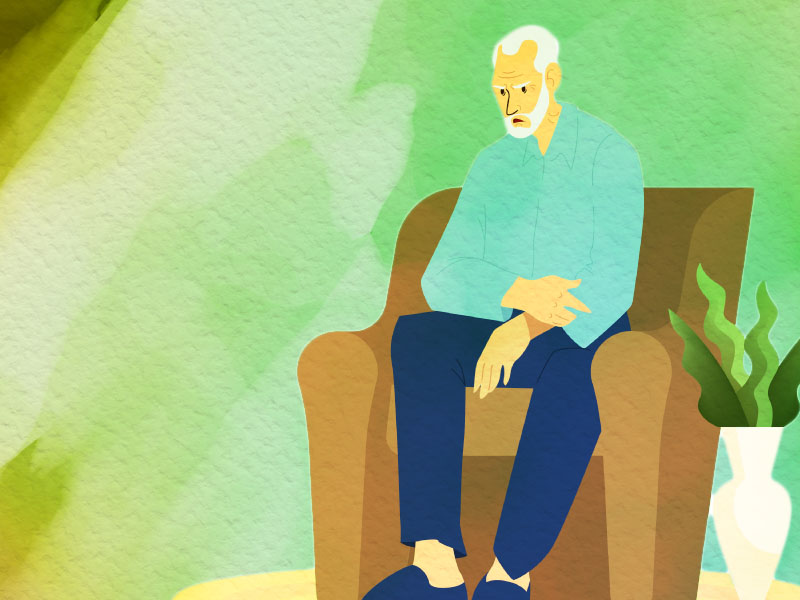
How to Survive Pandemic Pandemonium in Nursing Facilities

“We were left too alone at times, in these incubators of COVID at the nursing home, and we experienced true fear, and that fear is still present for me.”
 

“I’ve learned that if you allow yourself to go arm in arm with someone else, you can really accomplish something.”
 

The COVID-19 pandemic has had a tremendously disruptive impact on multiple aspects of personal life and on society across the United States. Yet the impacts in hospitals and in nursing facilities have been especially catastrophic, with shocking numbers of deaths, and severe effects on care providers.

Like what you are reading? For more stimulating stories, thought-provoking articles and new video announcements, sign up for our monthly newsletter.

Nursing facilities continue to experience dramatic changes because of the pandemic. As a psychotherapist providing treatment in these facilities, I lost many therapy clients to coronavirus, as 20 residents died in this facility, 30 in that, and 36 in another facility, for example.

In the spring of 2020, during the early stages of the pandemic and as the level of risk rose, my employer placed us on a temporary furlough. Many workers at the facilities, though, had to persevere in the face of cascading catastrophes. I felt so relieved to be home and to feel safe, yet I felt guilty to not be in the facilities when the need was greatest. I recall the anxiety I felt upon returning to the devastated facilities as I dressed in surgical gown, mask, face shield, and gloves before entering the buildings—something I’d never done before.

Plastic sheeting covered the entrances into some of the units, and at one facility the doors of residents’ rooms were covered with plastic sheeting with a zipper in the middle. A 55-year-old man with schizophrenia unzipped the plastic as I approached and handed out two dollars, asking if I’d get him a soda from the vending machine in the staff lunchroom.

A 51-year-old female resident had recovered from COVID infection and was aware of many fellow residents having died, yet she asked me if I really thought it (COVID) was real—she was strongly influenced by ill-informed and insincere information she’d gathered on TV and on social media, despite her direct experience. Such fearful spellcasting continues unabated, and I, along with my fellow workers have had to rely on critical thinking skills to help dispel, or de-spell, malign messaging wherever it appears.

As a mental health professional, I know that isolation can be kryptonite for persons experiencing mental health issues, and yet, to protect vulnerable persons from imminent danger, we needed to subject them to unprecedented degrees of isolation—weeks at a time closed in their room, months with no dining room, no group activities, and no family visits.

There was an early rise in mental health and behavioral symptoms in these facilities, and then an unexpected phase of collective self-suppression—passivity and apathy—as an apparent mode of coping. I was puzzled as one resident after the next stated that they were “okay” when they were immersed in this unusually unpleasant and lonely and anxious time. Were they okay or collectively experiencing a blunting of affect as an element of PTSD, or a type of useful detachment linked with dissociation?

It is still too soon to measure or appreciate the scale of the impact, as facilities continue to experience occasional positive tests for staff or residents. Many facilities have achieved a semi-normal state of daily activity, yet staffing has been decimated, and the need for new staff persons too often goes unfilled. Many TV and print news reports have described the negative impact of the pandemic on hospital staffing, yet few have examined the erosion of staffing at nursing facilities.

In some nursing facilities in Massachusetts, we have National Guard men and women in uniform performing non-clinical tasks: helping in the kitchen, folding laundry, and mopping floors, among others. It is wonderful that the Governor of the Commonwealth of Massachusetts has provided this support, yet it is shocking to see their presence and to know how much they are needed. Some facilities are leaning heavily on the National Guard’s men and women, and on expensive and budget-busting agency staffers. From where will the much-needed workers be found when the National Guard departs?

I admire the valiant, and exhausted, workers—the nurses, aides, directors of nursing, administrators, social workers, housekeeping, maintenance, laundry, food service, and floor care workers grinding on daily through risk and hardships. Call them heroes and they’d shake their head and roll their eyes—dead tired and just trying to get on with it, they’d say, instead.

It’s a challenge for my employer to hire enough clinicians to cover the needs for behavioral health service at the nursing facilities. Some clinicians seem to shy away from nursing facilities, and too many psychotherapists have migrated to telehealth jobs. We are still awaiting the phoenix phase of the pandemic, the rebirth of a personal and a shared sense of mission, as individuals recover from severe and sustained burnout.

For this article, I asked two questions of several residents and staff persons at different nursing facilities. Their responses vividly illustrate the range of poignant human reactions.

What has it been like to live through this period of pandemic in the nursing facility?

Resident: “It was a life changing situation. I’ve had to learn to survive—through all my mental issues; it’s been difficult.”

Resident: “It’s been frustrating, because of the repeated COVID testing.”

Director of Nursing: “It has been awful, stressful, and heartbreaking. But it was impressive to see, in the early stages, how all the people in the building came together to take care of the residents. I still feel like I haven’t coped with it, like I have post-traumatic stress disorder. I’m getting better, but I’m not yet coping as well as I want to.”

Director of Social Work: “It has been very traumatizing, actually, with so many residents passing away and being urgently sent out to the hospital in those early days of the pandemic. We had residents getting sick so quickly, and ambulance and fire people who wouldn’t go up to their rooms to get them—we had to rush sick residents down to the lobby in the elevator to get them out.”

Social Worker: “There’s been a heaviness about it, with unending changes and a sense of not-knowing every day, and a lot of fear. But also a lot of people who have stepped up with great compassion. We were left too alone at times, in these incubators of COVID at the nursing home, and we experienced true fear, and that fear is still present for me.”

Director of Nursing: “It has been extremely difficult for me, emotionally and professionally.”

Resident: “It has been a mixed experience. On one hand, I received good care from the aides—at least in the early stages, and when I was sick with COVID, and I got good physical therapy, and that got me walking again. I also got a little insensitivity, at times, because the workers needed to take care of their needs rather than mine, or so it seemed.”

Social Worker: “It has been sad, and challenging. We lost so many residents. Two years ago today, I came down with COVID. When everyone was in isolation we used Facetime, and we took photos of residents and posted them online, and the families were very grateful. But many of those pictures turned out to be the last ones of their family members. It is still very traumatic for me [said with a quavering voice and streaming tears].”

Administrator: “It has been extremely challenging and emotional. I’ll never forget family members visiting their loved ones—separated by glass windows, talking on the phone, and crying. It has been life changing, and points out things we often take for granted.”

What lessons have you learned from coping with the pandemic?

Resident: “To be kind, to ask for help, to reach out to other people, to accept my circumstances for what they are, and that every day is a new adventure.”

Resident: “You just try to keep your distance from people who are coughing and sneezing.”

Resident: “Being ill with COVID was rough for me, and I learned a lot by surviving it. I was grateful to be in a nursing facility rather than an assisted living program because of the greater amount of care I got here.”

Resident: “I guess I’ve learned that you’re stronger than you thought you were—or we all are.”

Social Worker: “I’ve learned that if you allow yourself to go arm in arm with someone else, you can really accomplish something. I’ve learned tolerance, especially around faulty systems, and I’ve learned to be more grateful than I ever have been.”

Director of Nursing: “That it is okay to feel vulnerable, and not strong; and how important is the gift of life, and how family is the priority.”

Director of Social Work: “I have learned the importance of teamwork. It taught us to work together, and to lean on each other for support. It is important to surround ourselves with a support system when dealing with such unfortunate circumstances.”

Nurse’s aide: “I learned more about a new disease, and that added to my knowledge. It has encouraged me more in my job. When I recovered from COVID , it made me stronger, and made me want even more to help people through my work.”

The process of asking these questions of staff and residents was emotionally powerful. It prompted me to spend time reflecting on my own reactions to the pandemic, and it pointed to the need for additional support to help staff persons manage the pandemic’s impact. So I developed a plan for “Pandemic Processing: In Search of Healing” support groups. Management staff at each of the facilities where I work were keenly interested to hold such groups. The meetings start with a simple relaxation exercise, then comments to set the context for conversation, and then a list of uncompleted sentences that act as springboards to the sharing of emotions.

The purpose of the support meetings is to step from coping toward healing. Coping is short-term efforts to function amidst an enduring stressor. Healing is a gradual process leading to lasting relief. Even while we continue to battle this enormous dragon of COVID, we need to reach out to one another and exchange support and encouragement so that we may emerge as stronger, more resilient, and more compassionate individuals—persons readier and more willing to devote themselves to the service of others.

Melting Fear with Love

Walking up the back stairs, I heard someone yelling and cursing loudly. I pressed the red button releasing the door lock and came onto the third-floor unit. The fire of her fury had burnt out rapidly, and a 32-year-old young woman—I’ll call her Gwen—now sat hunched and sobbing in the nook at the end of the hallway. I thought if I spoke or approached too closely she would dismiss me, so I sat quietly 10 feet away. Her breathing slowed, she sighed and looked questioningly at me. I introduced myself and my role as a therapist, and she began to tell me of her frustrations: with her medical problems, her mood shifts associated with bipolar disorder, and feeling trapped in a nursing home with people ordering her around.

Like what you are reading? For more stimulating stories, thought-provoking articles and new video announcements, sign up for our monthly newsletter.

During her stay, Gwen had many similar fiery outbursts aimed at authority figures, and weekly conversations with me in which she spoke of being trapped and tormented as a child in foster care. She felt furious with her biological mother for abandonment, and with her abusers. As a child, her proficiency with math was a saving grace for Gwen, and her most keen desire was to teach young children about the delights of mathematical thinking. Gwen had been burned by betrayal as a child, and suffered inflammatory medical problems and destabilizing bursts of inflamed emotions that limited her progress in pursuit of her goals of a stable life and a teaching job. She loved being a teacher of young children and wanted to stabilize her physical and mental wellness so she might obtain an apartment and a return to work.

Yet Gwen could easily erupt in dragon’s breath fury when frustrated or challenged or limited by an authority figure. We talked of how her suffering as a child was unjust, and how her feelings of anger were understandable, yet how the heat, hammer, and anvil of her anger needed to be forged into steel-strength skills for successful adult functioning.

Watching the movie Frozen with our grandchildren, I was reminded of Gwen, and reflected further on the emotional themes she and the fictional character Elsa had played out in their lives. Each an orphan with a gift, overwhelmed by circumstances and emotional reactions to them and fleeing into unhelpful and alienating defenses—either with ice or fire—and as yet unable to assume full adult responsibility until brought home by love.

***

In the movie Frozen, the initially playful child, Elsa, has been endowed with special powers over the piercingly beautiful yet dangerous elements of winter.

In Norway, the setting for the movie, the freezing powers of winter exert tremendous influence over the lives of the Norwegians. It seems only natural to mythically imagine reversing the dynamic and exerting unique and personal control over cold, ice, and snow.

Elsa is not only endowed from birth with ice magic, but she is also likewise enlisted from birth to inherit grand royal authority as the Queen. Yet with a lack of parental or adult guidance or guardianship, she is left unprepared to understand or to cope with either form of power. With no guiding principles or instruction, she can only rely on her increasingly troubled and difficult-to- control emotions for direction.

In her journey from fear towards love, Elsa magically conjures two characters: Olaf and the Snow Monster, which represent differing elements of her character and of her reactions to the overwhelming circumstances enveloping her. Olaf represents the playful joy of Elsa’s childhood with her younger sister Anna, and the Snow Monster embodies the ferocious defensiveness Elsa has developed as a coping strategy.

Elsa learned only fear and cover-up as ways of managing her special gift. Added to that were the burdens of unresolved grieving over the deaths of her parents and her misguided estrangement from Anna. Under the additional burden of authority as a newly crowned queen, Elsa fails and flees; from the sister she ostensibly wants to protect—even when Elsa knows that Anna is actively endangered by a conniving scoundrel—and as well from her responsibility for the needs of the people she is destined to rule.

Elsa experiences an initial, albeit illusory, euphoric sense of release—which is anything but genuine freedom—as she isolates herself ever further inside a grand though chilling fantasy of solace through solitude.

Elsa, sadly, is not—at least not yet—a heroic figure. She never risks herself for the sake of another. Elsa is a tragically lonesome figure who withdraws from others into an ever-deepening coldness. Elsa even rejects her sister after Anna has come to call her back to family and community and responsibility.

The real heroine of the movie is Anna, who remains hopeful even while enduring a childhood of rejection and imposed isolation. Anna always believes the best about her older sister Elsa, and Anna departs immediately, and on her own, to find and rescue the sister who has run away.

Anna awakens love and heroism in the character Kristoff. It is their budding love for each other, along with the vestiges of Elsa’s hope and joy in the figure of Olaf, which prepares the way for Anna to give of herself to the end in a successful attempt to save Elsa through an act of true love.

***

Two years after my initial encounters with Gwen, I had the opportunity to work again with her in a different nursing facility after she experienced another medical flare-up. This time, her attitude and outlook were far more mature and optimistic than when we first met, yet she still struggled with unstable medical and emotional distress. She was considering the short-term goal of moving in with a family—a lady and her two young adult daughters—under a foster family care program. One morning she was crying heavily when I came to her room. Gwen said, “I know it’s different, it’s not the same as foster care when I was a kid, but it reminds me of that.”

The host family was patient and kind and invited her six times to their home, so she might gradually consider the option of living with them, without any rush to decide. Gwen reflected with me on each contact she’d had with the potential host family—what they said and did, and how kind they had been and how hard it was for her to trust that it might turn out well. However, she also felt reassured to learn that the host family would hold no authority over her, and that she would be free to move on from their home to her own when it became available. She could live in a house with a friendly family—with ordinary routines and with full opportunities and encouragement to pursue her dreams.

Here finally was a chance for the stability she yearned for without the need of flame-throwing defenses. For me, Frozen was the perfect illustration of the challenges of coping with losses and misfortunes and injustices, while learning to love and care for others and to responsibly develop one’s particular gifts. As a psychotherapist, I was able to draw from the riches of mythology, fairy tales, literature, and cinema to elicit analogies and insights to formulate broader understanding of the trials encountered by my client.

Two weeks after moving in with that family, Gwen returned in triumph to the nursing facility to share her relief and satisfaction. The gentle and loving support of the host family helped to melt her dreadful fear and allowed her to enjoy the ordinary, yet for her rare pleasures of family life.

Burning Out After Jumping In: Reflections From the F

Some days, I question why I became a social worker. Other days, I wonder why I chose to work at an inpatient psychiatric facility for the past two years of my life. Coincidentally, these last two years were my first years in the field post graduate school. The reason I find myself working at an inpatient facility is a much less dynamic mystery—I was hired straight out of grad school by the hospital I did my first-year internship with. I remember it vividly. I was nearing graduation with a mountain of student loan debt, armed with an Ivy League education and ambition to help others. Secretly, I was crippled with anxiety about exiting the comfort that being in school provided. So, like most people, I jumped at the first job I was offered. Mystery solved.

However, wondering why I became a clinician is a recurring thought. Sometimes I find myself pondering the motivation behind my entire career path. On other more hectic days, I gravitate towards the more stress-fueled variety of that question: Why the (expletive) did I choose to dedicate my life to helping others who, more often than not, don’t want my help?! Why am I swimming in debt to provide services to patients who would rather do literally anything than attend my groups?

It occurred to me recently—can this be burnout so early in my chosen career? Is it possible to be burned out after two years of practice? Apparently so. Okay, so, we’ve established that I’m burned out. The question now evolves to—what do I do about it? I engage in self-care daily. I have a beautiful horse that I ride as much as possible; I have a wonderful husband who supports me in every way; I journal; I participate in mindfulness; I play with my dogs, I don’t take work home with me. But, on the worst, most chaotic days—that’s not enough.

If I’ve learned anything from my years on this planet—what’s right for one is not right for others. I don’t presume to have the answers for anyone but myself. Though, I know I’m not the first to wonder if it’s too late for a career change because I just can’t take anymore (just a side note—I’ve investigated essentially every profession that does not deal with other living human beings). So, I’m not sure if this is the “right” approach, but here’s what I’ve determined: burnout is eased by the days that a patient says, “thank you.” Okay, that’s ridiculously simple and people are rolling their eyes thinking, “Yeah, someone says thank you and then all your stress and compassion fatigue just vanishes?” Definitely not.

But, today a patient walked into my office. Uninvited… sure!, but “come on in” I said! He said to me, “When I first got here, you made me nervous because you are a smart woman. But, I have to tell you that I’ve learned so much from your groups. You have a heart of gold and have helped me more than you know.” This person then proceeded to recite ideas that were shared in my groups and was applying them to his particular situation. He illustrated how certain topics helped him in specific ways throughout his admission. I won’t pretend that this interaction erased the layers upon layers of burnout hovering over me like an aggravating, stress filled cloud. But, I can say with confidence that this conversation reminded me why I became a social worker. This five-minute discussion is the answer to the recurring question: why did I enter this field?

Burnout remains a mystery to me. I know I haven’t introduced an unfamiliar idea into the narrative around this subject. Though, if you’re anything like me, and you feel like you’re doing as much self-care as one human can possibly do yet continue to feel dread as you pull into the parking lot at work—then gratitude is the sprinkle of motivation essential to putting the car in park and carrying on with the day. And maybe it is just enough to keep me moving forward into this new and strangely rewarding career.
 

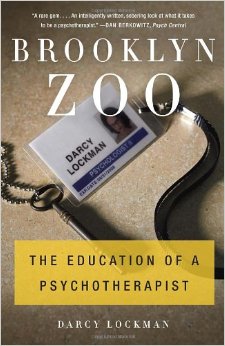
Brooklyn Zoo: The Education of a Psychotherapist

Editor's Note: Following is an excerpt from Brooklyn Zoo: The Education of a Psychotherapist, by Darcy Lockman. © 2012 by Darcy Lockman.

I woke a woman named Ophelia for morning group, and she was not pleased. “You woke me from my sunder,” she kept repeating in an angry voice. She followed me into the dayroom anyway. A man named Juan was dancing in the hallways, and I corralled him, too. There was a third patient, a woman, she looked a little slow. And Mr. Rumbert again. I asked them to speak about why they were in CPEP [Comprehensive Psychiatric Emergency Program].

“I came for a bed, but I was double-crossed,” said Ophelia.

“My fiancée called 911 after Shabbos dinner,” Juan said, which sounded funny because he was clearly Mexican.

“Why did she call?” I inquired.

“You’d have to ask her,” he replied.

The woman who looked slow said she’d done crack for the first time and was full of regret.

She began to cry.

Rhoda [a nurse] walked in to get Ophelia. She needed her help with some paperwork.

“You can come back when you’re finished,” I told the patient as she left. She turned and gave me the finger. Juan told those of us who remained that he wanted to read to us from a book called Recreating Your Self. As we listened, Ophelia returned, and she was worked up. She marched up right close to me.

“You double-crossed me,” she yelled. Her body looked tense, poised for a fight. For the first time in the ER, my fear of being physically threatened was being realized. I made my way toward the door, encouraging Ophelia to come with me, not wanting to leave her alone with the other patients. She was taller than I was, and wiry. I imagined her rage would give her fists great force. I had never learned how to protect myself from a punch, and cowering seemed like my best defense. I remembered what T. [a supervisor] had told me weeks earlier about being soothing.

“It’s okay. Come with me. We’ll find you some juice, something to eat,” I said. She followed me as I walked backward into the hallway, which for once was deserted, the guard having abandoned her post. Ophelia remained too close, still menacing, insisting on my alleged crime, taunting me. I continued walking slowly, my body facing toward her as I backed away sideways. “Hello, hello,” I said loudly, turning my head toward the adjacent halls, trying to get the staff ’s attention without alarming anyone, but someone was always yelling, if not screaming, in the ER, and no one was likely to heed my cautious cries. Calling for help seemed overly dramatic, and I thought it might set Ophelia off besides. Shit.

But Rhoda came out of her office and saw us. She rushed over, inserting her solid body between Ophelia’s and mine. She managed to calm her down while also explaining to me that Ophelia had slammed out of her office two minutes before. “I’ll take care of you,” Rhoda said firmly to Ophelia, shepherding her off to another hallway. I went back to the group room, concerned that the patients might have gotten spooked. Juan and the other woman were now seated side by side. She was choosing passages from his book, and he was reading these aloud. Mr. Rumbert sat across the room, silent but calm. I entered and closed the door and sat to listen and get myself back together. Ophelia was back soon, standing outside the windows of the group room looking in. I saw the guard was back at her post, and I opened the door. “Would you like to rejoin us?” I asked Ophelia, because wasn’t that my job?

““Don’t talk to me,” she said. “You look like a canker sore.””

Afterward, I did not have much left in me, but still I brought Juan into T.’s office for an interview. His chart said he had a long history of bipolar disorder. He told me he was an attorney and a converted Jew and there was no reason for him to be in a psychiatric emergency room.

“Have you been hearing voices?” I asked.

“Yes,” pause, “Guided by Voices,” pause. “Get it? The band?” Guffaw.

“Are you worried that someone is watching you?”

“Yes,” pause, “the Police,” pause. “Every breath I take, every step I make.”

He kept insisting there was no reason for him to be there, and when T. came in, she’d quickly had enough and told him we were done. He got up and walked out, turning off the light as he made his exit.

“That’s so symbolic,” T. said. “Lights out.” I told her about what happened with Ophelia because I thought the staff might want to assign her an assault level. T. asked if I was okay. I was still shaken, but I said yes. Then it was time to go, and as I left, I saw Juan the converted Jew lying on his stomach on one of the reclining chairs. I waved, and he thrust his hands back to catch his ankles in a resplendent yoga bow pose.

All the way to work the next morning I debated whether to bring Ophelia to group. I hadn’t thought to ask T. about that. With a higher-functioning patient—someone who was not psychotic—I thought it would have been important to bring her in, to demonstrate implicitly that her aggressive impulses were not as destructive as she likely feared. I was not sure that the same thinking applied to a psychotic patient, especially a paranoid one, since paranoia reflects a projection of aggression—that is, Ophelia experienced the hostility not as her own but as directed toward her by those around her (in this case, me). I decided I would invite her if she was up but that I would not wake her from her “sunder” if she was still asleep. It turned out not to matter, because when I got the census she was no longer on it—moved to the list of people waiting for a bed upstairs. I was relieved. I found Juan and Mr. Rumbert—who was continuing to speak—and a new woman who was attractive and looked with-it. But then she told me she did “sortation” for a living, which made me suspect she had a thought disorder because I knew, thanks to my month in the psych ER, that use of neologisms was often a symptom of schizophrenia or mania. T. called in sick, and Dr. Brink was my official supervisor for the day.

I spoke to the sortater, who had a long history of psychiatric hospitalizations, for some time and then went to report to Dr. Brink. She seemed distracted, and I felt as if I was bothering her; EOB patients were not her problem, after all, and I didn’t imagine her relationship with T. made her inclined to fill in with her caseload. The hospital police were called to the ER while I sat in Brink’s office, but I paid that little mind. When I got up to go back across the hall, she put her hand out to stop me. ““Didn’t you hear that page? You never leave after hearing the hospital police called. You need to pay attention.”” It had been a month, and there were many things I had learned there, but others that I had not. I sat to wait while the police broke up a fight in the hallway.

The next day was a Friday, and my last in the psychiatric emergency room; on Monday, I would report to inpatient unit G-51. I gathered the EOB patients for my final group with ease. A moment of interpersonal conflict between two group members got me engaged. The drug addict told another patient he didn’t like being asked about his methadone in the hallway in front of everyone the previous day. The offender replied he’d noticed the drug addict had not eaten breakfast and was testing a theory that methadone users in general didn’t like to eat. I tried to facilitate further discussion, which would have been the meat of an outpatient group, but neither man was as interested as I was.

After group Rhoda told me there was an EOB patient pending. A psychiatrist I recognized by face but not by name told me I should see him to try to make something of his story. Darren looked like a handful of the others I’d seen that month: early twenties and handsome and robust, nicely dressed in jeans and a sweater. His presence in the G-ER didn’t bode well, but I was still maintaining my manic hope that somehow nothing was seriously wrong this time. T. came in as I was beginning my interview with Darren and quietly sat down to observe. I felt my usual self-consciousness and also a determination to do better this time, to prove to us both that my four weeks of immersion in her EOB had taught me something. Darren made eye contact and answered my questions in the right amount of detail, without hesitation or mistrust. To make matters murkier, his reason for admission puzzled me, and I didn’t know where to go with it. “A week of really bad headaches,” he said. If there was one thing I’d learned, it was that you didn’t get brought to a psychiatric emergency room for a headache.

“Did the headaches start because you’d been drinking too much or using drugs?” I asked.

“No, I’m not into any of that,” he said.

“Did your headache come from voices you were hearing that no one else could hear?”

He shook his head.

“Was it because someone was stealing your thoughts or trying to put ideas into your head?”

He gave me a wry smile. Still no.

“Did the headache make you agitated? Did you get very angry at anyone, maybe yell at them on the street or shove them?”

Negative. We sat there together, equally perplexed.

“Where was the pain?” I asked, grasping at straws. If he told me it was in his face, maybe I could diagnose him with a sinus infection. He said that it was in his entire head. I turned to T., defeated. “Do you have any questions?” I half mumbled.

She took over with her usual omniscience. It was not grandiosity, she just really was all knowing. I tried to calculate the difference between my four weeks and her twenty years. Even allowing for fifteen vacation days annually, it was considerable. “Your thoughts were all jumbled up last week, and it really made your head hurt,” she said to Darren. He nodded, and it was as if a light had turned on in his brain.

“They were mad bundled!” he said.

“And that happened in school, too, right? It got hard to pay attention, hard not to get confused?” Darren had told us that he’d flunked out of college four months earlier.

He nodded, starting to look upset. T. had his chart open in front of her and was looking at the doctor’s orders. “Has the medicine we’ve been giving you helped with the headache?” she asked.

“Yes,” he replied. “It’s gone now.”

“You’re lucky,” she told him. “Years ago we didn’t have these pills, and people who got headaches and confusion like yours had much more trouble going about their lives.”

After Darren had left us for the hallway, T. said, “Most likely schizophreniform, though it could be a psychotic depression.” She explained that schizophreniform disorder was diagnosed in patients with less than six months of symptoms of schizophrenia; only some of them would go on to exhibit the full-blown disorder. “His prognosis is good. He relates pretty normally, and his affect isn’t flat. If he stays on the medication, he can probably go back to school, next semester even. He should see a therapist, too, of course, to monitor how he’s doing over time, to help him understand his preoccupations better. He’s far from a hopeless case.”

“How about me?” I asked, aware that my minutes there were dwindling, wanting to remind T. that today it was me who was timing out.

“Not hopeless,” she said. “Frankly, I was surprised by how little you knew when you got here. But you’ve been doing a good job trying to take everything in. It’s a lot of information, and it’s a difficult environment. I wasn’t sure you’d come back after what happened the other day with Ophelia.”

This floored me. It never crossed my mind not to return. What kind of wimp did she take me for? “No. I mean, I was shaken, but this is my internship. I signed up for this,” I reminded her. She pulled out the same evaluation sheet that Dr. Young had filled out the month before. T. had not given me high marks, but at least they were scores that actually reflected her own ideas about my work. As she reviewed them with me, I thought again about what Dr. Wolfe had said the month before, and how after so long in the carpeted classrooms of my graduate school it was actually quite hard to pull off, this task of becoming a better psychologist. But also I felt on my way.

Heather Clague on Psychiatry, Psychotherapy and Working with Society’s Most Marginalized Populations

Deb Kory: One of the reasons that I wanted to interview you for Psychotherapy.net is that you’re one of the only psychiatrists I know who both works in a hospital setting and also sees private clients as a psychotherapist. You are the medication-dispensing therapist that so many of my clients wish I were—though I’m so grateful not to have prescribing privileges. It would freak me out.

Since we’re releasing a video this month about working in hospitals and treatment centers, I thought you would be a great person to shed some light on that world. You are in private practice in Oakland, California, and you also you work at John George psychiatric hospital. What is your job there?
Heather Clague: John George is a public psychiatric hospital in San Leandro, California, and I’m an attending psychiatrist in the psychiatric emergency room (PES). It’s the 5150 [California law allowing involuntary psychiatric hold] receiving facility for Alameda County, so anyone who is put on a psychiatric hold in our county will come to us to be assessed for that 5150.

Our model is known as the “Alameda Model,” and it’s a way to reduce the length of stay for psychiatric patients in emergency rooms. In other counties that don’t have psychiatric emergency services like we do, people with psychiatric emergencies are taken to medical emergency rooms and then await an inpatient bed somewhere.
Methamphetamine accounts for a shocking amount of our services. Meth makes you really, really crazy.
And since there are so few psychiatric inpatient beds, they can wait days and days, often strapped to a gurney, ignored in a corner. Medical ER boarding times are significantly shorter in our county than those without a PES like ours, because as soon as the patient is medically cleared they can send the patient to us.

“We have just allowed ourselves not to see them”

DK: Dr. Heather Clague, thanks so much for taking the time to speak to me and our Psychotherapy.net readers today. Truth in advertising: you were my supervisor at Berkeley Primary Care, a community health clinic, where I did a practicum my third year of graduate school at the Wright Institute. These days we sometimes share clients and we also did improvisational theater together for a while. We’re both believers in the therapeutic value of improv
HC: Indeed.
DK: Let’s say someone is having a psychotic break and they go to a regular medical hospital and they get discharged to John George—what then happens to them?
HC: Then they come into our facility and they get an evaluation.
DK: Would you do that evaluation?
HC: I would, yes. We have a doctor-centered model where each patient will get seen by a physician once or twice, or sometimes even three times, and an assessment is made. The idea being that it should be a rapid assessment, that patients are not supposed to be held there more than 24 hours, at which point they will either be admitted to the hospital or released to the community.

But the reality is that our service can become overrun. There can be long delays and patients often still have to wait days and days to get an inpatient bed—although they are at least waiting in a psychiatric emergency room as opposed to a medical emergency room.
DK: Feeling hope and joy in this work really matters.
HC: It matters to me and I think it matters to the people that I work with. I also think there’s something about midlife where one has to reconcile reality with ideals.
DK: It’s humbling, isn’t it? Finding peace in our little slice of the pie, much smaller than we might have once hoped.
HC: But without becoming cynical.
DK: Is that why you only work there one day a week?
HC: For me it’s the threshold. Below a certain amount, I have a very good sense of gallows humor about it. The people I see who work there full time struggle a lot more with the despair and a very grim feeling that comes from working in a dysfunctional system.

The other way the system is broken is that there is a population of maybe 100, maybe up to 500 high users, people who are chronically calling 911. If they were given apartments, free taxi vouchers—just find out what they want and give it to them—it would cost vastly less than the impact that they have on the medical system. And I’m not just talking about the financial cost, but the burnout and wear-and-tear on the people who work in the system. I think there’s pretty good data on this.

If you need to go to an emergency room and you wait a long time, that is a direct result of this problem.

“The overwhelming burden of the radical not-enough-ness”

DK: You would have to retain some sense of hope to do this work. Both of us, really, but I’m quite comfortable in my cozy, private psychotherapy office, whereas you are much more in the trenches of human suffering, where I think hope is often in short supply.
HC: Or, less charitably, I think I’ve got strong internal boundaries. When I was working at Berkeley Primary Care, where you and I met, I had a population of patients that I saw as part of my ongoing caseload, and I ultimately left that environment because it was too dispiriting for me. I followed those patients long term and I think I felt too responsible for them, just this overwhelming burden of the radical not enough-ness. At least in emergency room settings what I’m supposed to do is so tiny, I can do that tiny piece really well and cheerfully and with compassion and humanity so that I don’t have solve everyone’s problems. If I can give them a moment of feeling seen as a human being, that works for me. I think it would be grandiose to suggest it really has a radically long-term effect on the patients that I see, but it allows me to sustain and feel hopeful and to enjoy what I do.
DK: That must be awfully dispiriting.
HC: Well, I can handle it when I work there one day a week.
DK: Wait, so you’re basically also a homeless shelter?
HC: We’re basically also a homeless shelter. And we are emblematic of societal dysfunction. If Alameda county would invest some money in opening up some shelters, the number of patients coming to us and medical emergency rooms would drop. There is no drop-in women’s shelter in Alameda County. There is one drop-in men’s shelter in Alameda County and it costs $5 a night, which is $150 a month, which most people can panhandle if they’ve got the wherewithal to panhandle $5 a night, but that’s a giant chunk of what General Assistance [Alameda county aid program for indigent adults and emancipated minors] gives you.
DK: Because our culture has become immune to it?
HC: Yeah, happy to ignore psychotic people. We have just allowed ourselves to not see them.

We have a large population of homeless people who use us a shelter. And almost all of them are also using drugs, but some of them will just come in and know that if they say the magic words—that they’re suicidal and hearing voices—they’ll get to spend the night. Some of them first present to the nearest medical emergency room, which amps up the expense because there are ambulances involved and there is a medical ER evaluation involved.
DK: So part of your role then is educating them about the dangers of meth?
HC: We do a little scaring them straight. “There are dangerous consequences to continued use, you could lose your teeth”—that type of thing.
DK: Is it?
HC: It’s like Altoid’s, strangely addictive.
DK: Otherwise you’re kind of on automatic pilot?
HC: Well the productivity expectations have gone up and up and up. When I started in 2001, if we had 20 people it was off the hook. Now, if we come in and there’s fewer than 50 we’re like, “easy day!” At the peak this weekend we had 86. I’m just waiting for us to hit 100. It just keeps escalating, and the population of Alameda County has not grown that much.
I think what we’re witnessing is the degradation of the mental health system—the ongoing defunding of the community mental health system and the social system.

They just keep slashing money from community mental health, caseloads go up, there are fewer case managers and fewer psychiatrists. Services are getting cut or just not growing proportionate to the need.
DK: Wow. I had no idea there were so few shelters around.
HC: There are some other shelters around, but none that you can access on a drop-in basis. It’s an appalling lack of care that our county pays for through the nose, but those who pay for it are not necessarily in charge of fixing it, and so the problem doesn’t get fixed.
DK: Say more about that.
HC: It’s a high-energy place—there’s always a lot of work to get done. It’s very satisfying. There’s all these people that need to get seen and you make a lot of people happy because you send them home.
DK: Do you feel a special affinity with your colleagues there?
HC: Absolutely. The nurses and social workers who work there are fantastic. The people who survive in that environment develop certain social skills and have a certain philosophy of life—
DK: A sense of humor would be paramount.
HC: It’s so important. If we aren’t overwhelmed with patients one day, one of our social workers will say, “Well, we had a mental health outbreak today!”

Also, there’s no calls, there’s no voicemail.
DK: You get to leave it behind when you go home?
HC: Exactly. I have a very intense experience when I’m there and then when I’m done I can let it go.
DK: And do you?
HC: Yeah. I would say I do. Actually, I find it important not to let it go too quickly. Part of the problem of working there is it’s so fast-paced, it’s easy to do it a little mindlessly. So when I’m working in the hospital, it’s actually good for me to tell my husband some of the stories of the day so that I can actually take in that, “Wow, I just had a brush with someone who is having a much deeper, more complicated experience, and I got to bear witness to a small piece of a much bigger story.” It’s important to be able to sit back and reflect on what that story likely looked like.

It’s easy to let my impressions of people fall into stereotypical typologies, so it’s important to pull back from that and realize that there’s a very interesting three-dimensional person behind what looks like “just another meth addict.” This person had a mother, this person came from somewhere, they have a very specific story that brought them to this point.
DK: There’s obviously a deep level of dehumanization that has brought them to this point, and I think you’re saying that it’s difficult to yourself not become dehumanized in that environment.
HC: Exactly.
DK: So you have to find creative ways to stay present and to rehumanize these people.
HC: And oneself.

“People don’t have beds to sleep in”

DK: One thing that’s very noticeable about the Bay Area when you move here are the number of mentally ill people living on the streets. Do these folks make their way to you?
HC:
In our culture, you have to be pretty smelly or lying in the middle of the street or obviously bothering people with your lack of self-care before anyone will really take action.

There are people with chronic psychotic illnesses who become agitated or have such radically poor self-care that they come to attention of the people around them. In our culture, that has to be pretty radical—you have to be pretty smelly or lying in the middle of the street or obviously bothering people with your lack of self-care before anyone will really take action.
DK: Do you see a lot of addicts at the psych ER?
HC: Substance abuse is huge. My impressions aren’t necessarily accurate, but it feels like at least 20% of the people we see are having paranoid delusions because of methamphetamine use. Methamphetamine accounts for a shocking amount of our services; methamphetamine makes you really, really crazy.
DK: It sure does.
HC: And very aggressive.
DK: So what would you do with a meth addict who came in?
HC: Give some Ativan. Let them sleep. Feed them.
DK: Detox?
HC: We can refer to a detox facility that’s right near us, though there are shockingly few detox facilities available.

I think there should be a public health announcement in the Latino community because I see these higher functioning men working two jobs to support their families, who start using methamphetamines to increase their productivity, and then they get psychotic. I don’t think they know how dangerous it is.
DK: That people don’t have beds to sleep in and aren’t being properly treated for their addictions and poverty-related problems?
HC: People don’t have beds to sleep in, which is an easily solvable problem that would not cost that much money. It also would not cost that much money to give some intensive case management to this particular high-using group. Perhaps they are a fairly cynical, seemingly undeserving group, but it’s a funny kind of justice that would create a system like ours to punish them in the way we do. There’s this feeling that if we give those people taxi vouchers, then other people are going to learn that if they spend all their time in emergency rooms pretending to be suicidal, they’ll get taxi vouchers too. But I don’t think the population of people willing to spend all their time at the hospital pretending to be suicidal is that high.

“Well, it is fun”

DK: That’s a really good point. So if you’ve had to keep your workload down to one day to stay sane, why do you work in the psychiatric ER at all?
HC: Well, it is fun.
DK: How long is a typical stay for a patient there?
HC: I’m not sure what the average is, but it’s probably too long. It can range anywhere from a half hour—we get a quick evaluation and realize you don’t need to be there—to 18 to 36 hours. So, a night or two.

If we’re backed up on beds, or there is a placement issue, patients can stay for a number of days. That’s not ideal and everybody in the system tries to keep that from happening.
DK: Why?
HC: Because it’s a rough experience for the patients. It’s a hard place to have to hang out, especially if you’re in psychiatric distress. We have nurses and doctors rotating every shift. We are able to make some limited interventions—start medications, family meetings, have patients participate in some group therapy, but it’s primarily a facility designed to collect observations, make a decision, and move on. It’s clearly a giant step above waiting for days in a medical emergency room, but it is not equal to a good inpatient experience.
DK: Say more about the types of people you see.
HC: The 5150 is applied for danger to self—someone who is acutely suicidal; danger to others—so someone may be homicidal; and grave disability—someone who is unable to provide food, clothing, and shelter for themselves. We see people with chronic psychotic illnesses having a decompensation, people with bipolar disorder who have become manic, people who have a depressive illness and have become acutely suicidal. We’ll see people who aren’t necessarily mentally ill but they just had a breakup and have became suicidal and texted someone they were going to kill themselves.
DK: Are you only involved in the initial assessment, or are you involved in ongoing care?
HC: My general schedule is to work one day a week, so normally I would just do a one-time assessment and would see them over the course of the day if they have needs during that day. Sometimes I’ll work two days in a row and if a patient is still there then I see them again. I can do small interventions, but we’re not an inpatient service.

Bringing Grit to the Comfortable Place

DK: Without becoming cynical, right. Do you feel like your ER psychiatrist role is a separate identity from your role as a psychotherapist in your private practice Oakland?
HC: Yeah, I do.
DK: In a never-the-twain-shall-meet kind of way?
HC: Well, not entirely. I’m me. I’m the same person. But, my role is quite different. They are two ends of a spectrum: Long-term/short-term, higher-functioning/lower-functioning. But obviously the two inform each other. I think it’s good to bring some grit into the comfortable space and compassion into the gritty space. And I definitely feel like using my empathic skills in the emergency room is effective and incredibly rewarding.
DK: Speaking of which, psychiatrists are not often thought of as empathic. It’s all anecdotal, but I’ve not had many people come into my office reporting positive experiences with psychiatrists. Why do you think that is? And why don’t more psychiatrists do therapy?
HC: Well, it’s not as lucrative. If you see three medication patients per hour, you can make a lot more money than seeing one therapy patient per hour.
DK: So it’s purely financial?
HC: Well, also, in order to do learn to do therapy well, you have to feel safe and have time to empathize and mentalize, and I don’t think the medical model facilitates mentalizing.
DK: Because doctors are trying to squeeze in as many patients as possible?
HC: You’re not trying to form a model of the patient’s inner experience, you’re trying to make a diagnostic categorization and then select a medication.
If I can give them a moment of feeling seen as a human being, that works for me.
I think skillful pharmacologists obviously do need to understand the target symptoms, what the side effects are, what a particular person’s concerns about taking medication are. Obviously having empathic skills helps with prescribing medication, but I think it’s treated as icing on the cake. I think that’s true in most medical settings.
DK: When you went through UCSF Medical School, were you given any proper therapy training?
HC: UCSF did a reasonable job of training people how to communicate effectively with patients. I also went to UCSF for residency and that program was very strong in training. But I think that’s not typical for psychiatric residencies. They tend to be more biologically oriented, and I personally feel a bit skeptical about the biological approach of psychiatry. There are obviously illnesses like schizophrenia and bipolar disorder and severe depression that look like medical illnesses. They look very biological. But the human condition does not want to easily fit itself into DSM V diagnostic categories, and there’s a lot of politics behind why we shoehorn them in there.
DK: Our last interview was with Gary Greenberg, who recently wrote The Book of Woe: The DSM and the Unmaking of Psychiatry, and in it he talks a lot about how inappropriate the medical model is for maladies of the mind. How do you use the DSM? How do you view diagnosis?
HC: I hold it lightly. I have to put some code down there, and I choose from a handful of codes.
DK: Do you have a favorite?
HC: Well at the hospital, we’re allowed to use more of the bullshitty codes, the “NOS” codes. Of course, we can’t put substance abuse as a primary diagnosis because we don’t get paid.
DK: Why not?
HC: I don’t know, actually. The stigmatization of substance abuse? Insurance companies don’t want to pay for addicts who end up in the ER? Perhaps it’s viewed as an issue of volition rather than biology?
DK: Though there’s plenty of evidence for a genetic predisposition toward addiction.
HC: Well, the reason we call it volition is that we don’t have great treatments for it, so it’s blamed on the patient.

But the DSM doesn’t turn me on. I do what I have to do. Probably the biggest diagnostic question that I face is, “is this unipolar depression or bipolar depression?” I don’t want to give a bipolar patient an antidepressant and cause a manic episode, so that is an important practical diagnostic question.

Or “does this person have OCD as opposed to other forms of anxiety?” because that has treatment implications. With OCD, we’ll want to use higher doses of SSRIs and encourage therapies such as exposure and response prevention.

There is No Truth

DK: Well, if I were struggling with the Bipolar 1 or Bipolar 2 question, I’d just send them over to you to figure out.
HC: And I would tell you that there is no truth.
DK: And that would be annoying.
HC: Do you want to hear my rant about bipolar disorder?
DK: Yes, please.
HC: Bipolar got really trendy right around the time that Lamotrigine was being marketed.
DK: Which is Lamictal.
HC: Right. And the evidence for its efficacy is actually pretty weak.
Bipolar got really trendy right around the time that Lamotrigine was being marketed.
People who responded to Lamotrigine who went off of it were more likely to have a depressive relapse than people who stayed on it, but there is no control trial of people having acute depressive episodes on Lamotrigine doing better than people who took placebo. And there are all sorts of methodological issues around discontinuation studies. Even the data on lithium and Depakote is actually quite thin. And if you really want to get paranoid about it, the reproducibility of psychiatric trials is also quite weak.
DK: Because it’s too hard to control for variables? Or is it just that the nature of the mind is still so mysterious? It’s not like measuring the size of a tumor or drawing blood to see if a disease is still present.
HC: Well, we take a cluster of symptoms and we describe them and we put a label on them. Some people are probably very obsessively good at asking really detailed questions—“How many days did that last?” But I can tell you in practice I don’t have the time or the interest to go through it with that fine grain a comb. I screen for things that sound like classical bipolar symptoms, but what is ultra-rapid cycling bipolar disorder and how does it differ from the psychiatric effects of trauma? I mean, does pediatric bipolar actually exist? Kids who are beaten and raped and emotionally abused are going to have rage outbursts and sleep problems.

I saw this young man last week who was put in foster care at age 4, so who knows what kind of horror show was happening in his life before age 4. He’s been in and out of foster care. He’s been in juvenile justice since age 12, and he’s been shooting methamphetamine, and he’s telling me he has bipolar disorder. You grow up that way you’re going to be traumatized. Maybe there are people who have resiliency factors who don’t become mentally ill, but he didn’t look like he had bipolar disorder to me. He looked like someone very, very traumatized, but I’m going to giving him Zyprexa?! That just did not feel like the right solution.

The next guy who comes in, I ask, “Have you ever made a suicide attempt?”

“Oh, yeah, a bunch of times.”

“Oh, what have you done?”

“Well, I swallowed glass and I swallowed razor blades. I drank bleach.”

“When was the last time?”

“Five or six months ago.”

He’s got scars all up and down his arm and all up and down his neck. This patient did not want to talk to me about what happened to him when he was young, but in my mind, his diagnosis is trauma until proven otherwise. But this guy is not carrying a trauma diagnosis, even as a rule-out. He’s only carrying a psychotic disorder diagnosis. That just feels very wrong to me.

I’m partly on a kick because I saw Bessel van der Kolk at a conference, and what he says makes so much sense to me. He put together a diagnosis called “developmental trauma disorder,” which is obviously a trauma-based diagnosis, and one of the major cons of including developmental trauma disorder into the DSM is that it would wipe out a bunch of other diagnoses. It wipes out a lot of ADHD. It wipes out oppositional defiant disorder, borderline personality disorder, a lot of bipolar disorder.
DK: So it wipes out a lot of money?
HC: It wipes out a lot of things that people want to treat with medication. There’s compelling epigenetic research about the way that experience and trauma gets incorporated into your biology and passed on to your offspring, and it doesn’t necessarily mean that the primary solution should be to take a pill.

I’m not anti-medication. I think there’s definitely a role for pills, but the fact that psychiatry has put all of its eggs in that basket is appalling to me, especially when there’s a lot of exciting research about non-pharmacological treatments, such as EMDR, neurofeedback, hypnosis, and paradoxical motivational techiques.

How is it that we help our patients? How do we train ourselves as therapists to be highly effective on a kind of session-by-session basis? What did I do in session today that was actually effective? I think we should be collecting a lot more data, both as a profession and also individually. Our impressions are so misleading.
DK: Scott Miller has done a lot of research on what works in psychotherapy and what doesn’t. I think he reported that something like 75% of therapists think they’re better than average, which is, of course, statistically impossible.
HC: That is healthy narcissism. I would want to know what is up with the 25% that thinks they’re below average. I wouldn’t want to see them. I think it’s okay to think you’re somewhat more effective than you are.

Does pediatric bipolar actually exist? Kids who are beaten and raped and emotionally abused are going to have rage outbursts and sleep problems.
But we also need to be willing to take that confidence in ourselves to the next level, so that we can look at ourselves critically and separate out what we do that is effective from what isn’t. I was really intrigued when van der Kolk talked about doing EMDR with a patient who was very hostile toward him. He was asking the patient to be with this traumatic memory and he says, “So tell me what’s going on.” And the patient says, “It’s none of your fucking business.” And van der Kolk says, “OK, go with that,” and he completes the session and the guy tells him nothing about what he was thinking about, but at the end says, “Thank you, that was very helpful.”

So it’s not always clear how the patient liking or attaching to us predicts the kinds of changes they want or that we think they should want. I’m not saying we should encourage our patients to hate us, but I think a lot of us think we’re more effective than we are.
DK: We just recently interviewed Bessel van der Kolk as well as Francine Shapiro, the originator of EMDR, so you are in good company here. They are both big researchers and into collecting data on the efficacy of their work. Do you collect data from your clients?
HC: I’ve started to. I’m training in the David Burns TEAM model of cognitive therapy, and it asks the patient to complete a symptom rating scare before and after every session. So after every session they fill out a feedback form and they evaluate you based on how well you empathized with them, how well they felt that they were able to talk about what was important to them, whether they learned new skills and whether they’re going to do their homework, and then it lets them give a little narrative write up.

It’s very, very humbling. And it has transformed my therapy practice. You have a session you thought was great and then learn that patient didn’t think so! You’re able to come back to the person and say, “You know, it sounds like I wasn’t really getting this. Can you fill me in? How was I off track?” It’s an incredibly therapeutic moment. We’re inviting patients to criticize us and then taking that non-defensively. How many people have that in their lives where they get to actually say to someone, “that kind of sucked,” and to have that received that lovingly and non-defensively?
DK: And with curiosity.
HC: It’s incredibly hard to do. And we’re only human. But I think that having the right kind of training can make it possible.
There is a lot of narcissistic support built into our field for embracing failure.
Allowing ourselves as therapists to really take pride in our failures is what allows us to be non-defensive and to receive critical feedback from patients in an open-hearted way. For example, it turns out my grandparents were right, I really do talk too fast. I’ve heard that on enough feedback forms. That’s humbling, but at least I know I have that tendency, and when it comes up I can validate the patient’s experience. And actually, now that I think about it, I haven’t gotten that feedback as much lately, so maybe I’m actually doing better at slowing down!

To Prescribe or Not to Prescribe?

DK: Do you generally try to do psychotherapy first for a while before prescribing?
HC: So much depends on what the patient comes in expecting and wanting. It’s really interesting, because some people are very clear: “I don’t have the time and energy for CBT. I want a relatively straightforward, easy solution to my chronic anxiety, and I’m willing to take the risks that come from medication. And I only have to see you every six months if I’m stable.” And that works for me. CBT is hard work. Actually, most psychotherapy is hard work and that doesn’t fit for everybody.

And then other people feel like, “I don’t want to take a pill. I don’t want to take medication. I don’t want to be labeled and stigmatized and reduced to that. I want to explore and understand.” It’s a tremendous privilege as a clinician to be able to work with people in such a broad way. The danger is that I’m a little jack-of-all-trades, master-of-none. I’m not the most hotshot psychopharmacologist. I’m not up to date on all the latest meds. But I’m really good at SSRIs.
DK: Speaking of SSRIs, given that they work slightly better than placebo, do you tend to psychoeducate people about that, about all the risk, the fact that we don’t even really know why they work?
HC: No. I don’t. Because I want to maximize the placebo response. I give them every testimonial I can. Because they’re not just getting the pill, they’re getting me prescribing the pill. They’re getting the experience of having a relationship with me and so to whatever extent taking that pill is internalizing me, I want that to be a positive experience.

Now, I’m not going to shine them on and say that SSRIs always work or are completely benign, but as drugs go—certainly compared to the mood stabilizers or heavens, antipsychotic medications—I think they’re relatively benign. They’re not so benign for people who might be bipolar, since they can bring on severe agitation or even manic episodes, so I have to be careful there, but otherwise they are relatively benign.
DK: If somebody is clearly suffering with chronic depression, they are in therapy, and they’re open to getting pharmacological help, how many SSRIs are you willing to try on a person before you give up?
HC: The data shows that the chance of it working goes down with every trial. But, again, they’re not getting a pill, they’re getting the experience of paying a fair amount of money to come sit in my nice office, to sit across from me, and have me listen to their story, and then to have a conversation with me about what it means to take medication. And then to have customized dosing.
DK: So it may be that they’re getting the therapeutic effect of seeing you rather than from the pill.
HC: Right. I had a client some time ago with a lot of trauma who had bad experiences with antidepressants, and we shifted him to Prozac and it was going well and I remember him saying to me in session that he was feeling much better, but also sometimes feeling really sad and that it was scary for him.
The expectations of psychiatrists are so low….I get a lot of credit for having kind of average social skills.
I was able to tell him that the fact that the sadness came up right when he was feeling better made me think that maybe his body was realizing it was safe to feel his feelings. I pointed out that he’d had a lot of trauma in his life and lives in a high-pressure culture with a high-pressure career as a high functioning person and that it’s easy to become phobic about feeling sad. And I said, “What do you think about the idea of just allowing the sadness?” And he was so visibly relieved by that.

I think there’s something very powerful about having your prescriber license your sadness instead of pathologizing it. Of course your therapist can do the same thing, but some of what I do is help support therapists whose clients I share. They want to know that they’ve done everything they can in the therapy setting and I can validate that and help them feel less alone in their treatments.
DK: It makes everybody feel more confident, including the clients who feel like, “I have a team working with me.”
HC: Which is why the current model of overburdened, non-psychologically-oriented psychiatrists handing out pills and not calling back therapists probably isn’t the most effective. The expectations of psychiatrists are so low.
DK: No kidding.
HC: I can walk on water because I return phone calls. I get a lot of credit for having kind of average social skills. Very privileged place for me to be in. I will not complain.
DK: Because you’re not a complete weirdo.
HC: There are a lot of very weird therapists out there, too, though.
DK: We are a strange subculture. Or maybe everyone is strange but the standards are higher for us because we’re supposed to be helping people with problems in living?
HC: Well, when you’re vulnerable and need help, you’re really sensitive to the weirdness.
DK: Well, on that note, I want to thank your only modestly weird self for participating in this interview.
HC: It’s been a pleasure.