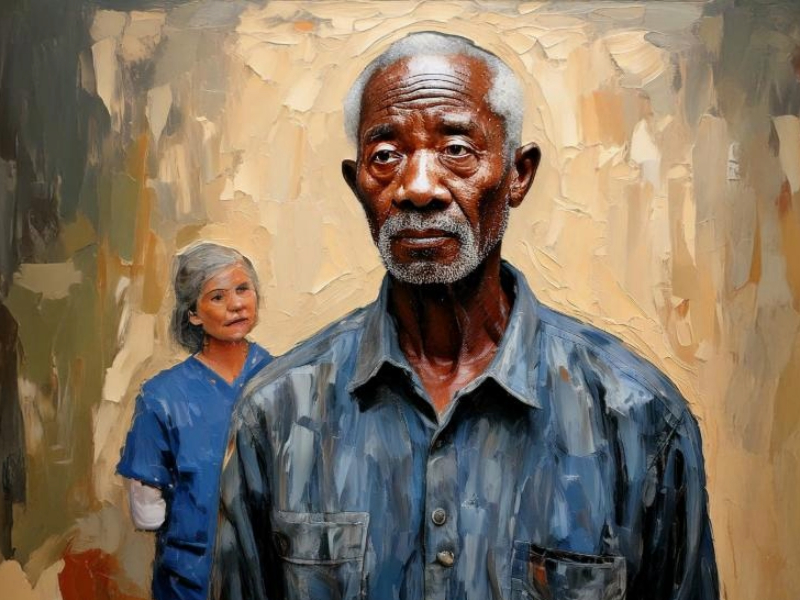
The Silent Therapist: Teddy Bear Therapy with Adults

Alex is a tall, thin, 86-year-old former psychotherapist now living in a nursing home, and walking with a walker. He experiences mild anxiety and depression associated with adjustment to his advanced stage of life development, and he experiences mild cognitive issues. I meet with him for life review therapy.

The Importance of Everyday Objects

Alex loves music and theater, and he wrote and performed in plays, in addition to practicing and teaching psychotherapy. He had studied in a Catholic Seminary yet decided against becoming a priest. He has a teddy bear named TJ in his room with a scarf around its neck knitted by his daughter. Alex was given TJ many years earlier, and for 30 years TJ served as his co-therapist. “I gave presentations at maybe 75 conferences with at least 75 participants each time, and I always brought TJ with me,” Alex said. “I would approach the podium and introduce myself. The audience members were probably wondering what was going on with this guy holding a teddy bear. ‘This is my partner TJ. He doesn’t have a lot to say, but he would be glad to meet some of you while I am speaking.’ Always, someone would raise their hand and ask to hold TJ. “While I was speaking, I would notice one person tap the shoulder of the one holding TJ, and pretty soon he would be handed along, person to person. When I was wrapping up and asking if there were any questions, one or more hands would shoot up, and someone would say, ‘We haven’t had a chance yet to hold TJ.’ The experience of TJ being at the meeting would create a warm sense of camaraderie, and people always spoke to me afterwards to remark on the special experience it had been for them,” Alex said. In his private practice, Alex had TJ placed in a chair next to his in the office. “Clients would walk in and say, ‘What’s up with the bear?’ ‘Oh, this is TJ. He just likes to listen; he doesn’t say too much; you can hold him if you’d like to get to know him better.’ Some who scoffed at TJ the first time, might return the next time and just pick him up and hold him without saying anything. “TJ was like a doorway to feelings and thoughts that clients might not get to for a long while if I had only used language. It was always remarkable to me the things that people remembered and talked about because they were holding TJ,” said Alex. He added; “With my students or clients, they look at me, and they see their projection on me. But when they look at TJ, they see into themselves; a part of their self they have not been in touch with, or for a long time, and they sometimes don’t know what to do with it.” “TJ helped me have a tangible connection to the child in me, and helped me evoke that in others,” Alex said. He added, “TJ represents innocence, and there are not so many ways in therapy, or in society, for an adult to access their innocence — and I don’t only mean childhood innocence, but a sort of opening to wonder and mystery and spirit — because if those things aren’t present in therapy, what are we doing,” Alex asked?

***

Teddy bear therapy has been around for many decades, yet mostly used in work with children. Alex found clever and effective ways to incorporate TJ into his teaching and therapy practice. At a time when he feels saddened by the need to adapt to a slower and less productive period, life review therapy validates Alex’s notable accomplishments and restores his positive sense of self-worth and makes room for his mischievous and warm-hearted sense of fun, which is where TJ comes into play. Questions for Reflection and Discussion What are your personal and professional impressions of the author’s work with this patient? How might you have addressed the patient’s relationship with TJ’s similarly? Differently? How have you made use of inanimate objects in your clinical work?

Spilling Over Modernity’s Borders and Boundaries: A Decolonial Story About Alzheimer’s, Family, and Migration

“¿De dónde eres?” My friend’s 9-year-old niece asked me shortly after we were introduced to each other during Christmas. This was in Bogotá last year at my high school friend’s place. She sat next to me, leaning slightly toward me. Her question seemed fueled by a kind of curiosity that two strangers at times share when wanting to rush through the unfamiliar and quickly find a common place from where to discuss matters of much greater importance, like her Christmas presents. It must have been around 15 years since my high school friend and I last knew about each other’s lives. Various life circumstances might have contributed to vanishing from each other’s lives—including living in two different countries—until whenever the day was going to come for us to meet again and pick up our friendship right from where we left off to catch up on whatever many years in between.

My eyes shot open and met her curiosity, sensing all over my body the shock of her question. Did she unwittingly render me foreign to and within my homeland? I wondered.

“Pues de aquí. De Bogotá. Rola 100%!” I said to her, stating what for me was the obvious.

“Es que hablas diferente.” She further explained.

“¿Y tu?” Le pregunté,” pretending to ignore the state of my body, and attempting to reciprocate an interest in our origins.

“De acá.” Me respondió, while organizing her Christmas presents for their exhibit.

My friend overheard our conversation. On the way to the kitchen, she provided some context to resolve her niece’s confusion and to create mine.

“Ella es de aca pero hace mucho que no vive aquí por eso habla así.” my friend explained with the tone of certainty of an irrefutable conclusion.

“Así cómo ???” I yelled in horror; but she had now gotten lost far back in the kitchen as the Christmas host.

Like many, I became well acquainted with the origin question as an immigrant, hence actual foreigner to the sociopolitical and material history of my host country, the United States (U.S.); as well as with the experiences of those who although were born in the United States are inadvertently or intentionally rendered foreign in their homeland by others. This is, when informed by discriminatory singular and monolingual principles about nationals and foreigners from a land. Having left Colombia as an adult, in the U.S. the socio, geo, and body-political history of Latin America/Abya Yala I carry, materializes not only in my accent but in my interactional manners, phenotype, epidermis, and knowledges, which intertwined with local racializing practices, continuously mark the well or ill intended curiosities of the inquirers, nationals or immigrants alike, about their assumptions about my foreign origins. Regardless of their intent, in foreign soil, I share my origins with my chest filled with air, trying out a new sense of pride in the diaspora evoked by its nostalgia, not quite reaching patriotism but maybe darn close to it, if I were to speculate on what incarnated patriotism would be like:

“From Colombia.” I usually respond to that question and sometimes I point at my wrist when I wear its colors.

Re-entering: From Here and From There Migration Experience

During the last couple of years, I have been spending more and more time in Bogotá than I ever have since the early 2000’s when I left. My mother’s health and increasing loss of memory called for it. Although no doctor would diagnose her with Alzheimer’s in her late 80s, that was the family’s narrative about that part of my mom’s life and our relationship with her still to this day. Her four daughters were no longer living in Colombia. My three sisters and I migrated to the U.S. at different times during our adult lives, for different reasons that required no explanation. Mom and dad raised us during the Colombian armed conflict, intensified by the international drug war and the U.S. intervention.

In a country living and enduring the ongoing wounds of war, poverty, and state neglect, as it is the case for many countries living through long-standing conflicts around the world, as I recalled, for many Colombians across various socio-political circumstances, since birth, the idea of leaving Colombia becomes part of what it means to live in Colombia, aspiring for refuge elsewhere. Violence humiliates the homeland and elevates the non-realizable promises of foreign land. Those of us who realized the idea of leaving Colombia represent the 6% of the population who currently live outside of the country—primarily in the U.S., Spain, and Venezuela. According to the Migration Policy Institute, Colombians are the largest group of South American immigrants in the U.S., representing 2% of U.S. immigrants. Colombian migration to the U.S. has increased three times as fast, from 144,000 Colombians in 1980 to 855,000 in 2022.

During our lives in the U.S., mom would come to visit for various periods of time, visiting with each one of us across states. My dad traveled once, which was more than enough contact with U.S. soil for him, given his politics. We would stay in contact through daily emails or texts, otherwise. Also, from time to time, I would travel to Bogotá for a long weekend or so for a visit. Before migrating, and all throughout the Covid pandemic, my oldest sister lived with and cared for mom in Bogotá until the impending heart-wrenching decision finally came knocking at the door to meet the four of us face to face.

The emotional intensity, and dedicated care my sister and her children had been providing mom with for the last few years had proven to be no longer sustainable for either of them. Con cabeza fría, we had to make the overdue decision, even against mom’s wishes that she no longer remembered. Mom needed to be relocated to a specialized nursing home for her proper care. She had outlived friends and close relatives. My father died back in 2008, and we heard that mom’s last living sibling, the oldest, Alberto, was still alive but bedridden in deteriorating health conditions. He died not too long after mom moved to the nursing facility.

My relatively advantageous immigrant conditions afforded me alternatives that only so many immigrants in the U.S. have in similar circumstances, with aging parents still living back in our home-countries. I began traveling to Bogotá regularly during the last year before mom died, spending months at a time with her while working remotely. My sisters would visit when able. Daily, morning and afternoon, raining or not, I would walk back and forth to visit mom at the nursing place in the north area of Bogotá from the small place nearby I rented during my stays. I would pick up on my way some kind of dessert for my mom’s sweet tooth that memory loss had forgotten to forget. I became very well acquainted with mom’s co-living folks and their visiting families; and also the nurses, aids, physical therapists, and cooking and cleaning staff, majority women, to the extent that exceptions for their visiting hours became the new visiting hours. It was through their lives—the only people I had close contact with at that point in Bogotá—that I re-entered a sense of living a life in Bogotá, although still having more than one foot in my immigrant life in the U.S., to which I remained virtually connected through a laptop.

Through life at the nursing home, I reintegrated myself to the familiar tensions of the Colombia Nation-State’ s sociopolitical heartbeat, revealing along the signs of the 24 years that have passed and have transformed both the country and my politics in the diaspora. The tensions were palpable. On the one hand, the advantageous circumstances of the families who could afford their relatives to live there were visible. And, on the other, so were the injurious sociopolitical conditions and longstanding neglect by the Nation-State toward the lives of the people working there. Although responsible for the care of the facility’s residents, they had to do so while undergoing living conditions that seemed to cry out in state neglect. This was one of the other jobs they needed for their survival and the survival of their family.

Some of their children were being educated under precarious conditions in public schools. Evictions from their home were more tangible month after month. The impeccable makeup of some of the women working in the kitchen kept hidden the marks of patriarchy’s hands from the night before, some of which was documented in futile police reports as well as in her self-defense fingernails imprinted on his skin. Their clothes served as curtains behind which their bruised bodies were concealed, while their bones would heal from their forceful impact against the wall, or the push down the stairs. Their children were their witnesses. According to the Colombian newspaper, El Pais, between May of 2023 and 2024, 149.017 family violence incidents and 630 femicides were reported in the country. Limping, the women would arrive on time at the nursing home after a 3-hours-long commute from the south of Bogotá to care for my mom with the best of dispositions possible. Story after story, the nostalgic Nation-State Colombia of the diaspora that I was so proudly holding tight to, wearing it on my wrist, and expanding my chest, started to melt throughout my body, transpiring through my skin, forming a polluted stream of outrage that took off running through la Avenida 19, running all the red lights, turning toward la Autopista Norte, eventually merging with Bogotá River, considered one of the most contaminated rivers in the world, according to WSP.

My relationship with mom that year was not exempt from a sort of re-entering experience. It was similar to how my re-entering to a life in Bogotá was. On occasion, mom would seem as if she could see in my face sort of a familial resemblance but not quite family. I was beginning to feel that way about everyday life in Bogotá although not linked to a matter of memory but migration. I recognized aspects of what I remembered was my homeland out of the unrecognizable features of the obvious changes since I left. I was able to discern some things but not others with my renewed borderland eyes as a Colombiana inmigrante en the U.S.

My life from when I lived in Colombia during the late 1900s met with my life as an immigrant living in the U.S. since the beginning of the 2000s only to discover they had already met over two decades ago and have become inseparable since. My memories from Colombia were never left behind. On the contrary, they carried me through the making of a new life in a new land. After all, we can’t separate ourselves from the history that makes us. I have been living both lives simultaneously, through a multiplicity unfolding either in Colombia or the U.S.

A sense of foreignness within the familiar, and a sense of familiarity within the foreign helped me discern the experience of dwelling in the borderlands, which my friend and her niece also brought out in the open during Christmas, when I reconnected with them months after mom died on March 29, 2023. The borderlands became a point for reflection on what it was bringing forth—difference—to ultimately transcend modernity’s definition of difference as fracturing borders or boundaries since the conquest of the Americas—the colonial difference. Walter Mignolo has written extensively on this topic.

The colonial difference refers to a hierarchy of separation (for control purposes) through the development of borders or boundaries that create races, cultures, Nation-States, identities, languages, genders, etc. Modernity’s colonial difference fractures the bones of the communal into hierarchical separate pieces whereby those lower in the hierarchy can be thrown down the stairs or against the walls of separation that it created. Thus, my friend nieces’ question about my origins, became a recognition of difference stemming from my 24 years in the diaspora crawling up my Colombian accent to renew it within a sense of plurality. My renewed accent marks a difference that does not have to be of borders, exclusion, fracture, or separation, but of relationality and connection out of what it means to live relationally, or in more than one world simultaneously.

I have heard many stories, mostly from Mexican, Chicanxs, Mexican-American, or Texanes, about their experiences when returning to their homelands in the Nation-State of México. They shared being made to feel that they do not belong on either side of the border: “not from here, not from there,” “ni de aquí, ni de allá [neither from here nor there].” I understand this to be a symptom of modernity’s logic of criminalization by difference and punishment when crossing the border. Anything that does not represent nationalism on either side of the border, thus promotes monolinguality, monoculturality, or singularity, is destitute and criminalized. On the contrary, from the borderlands of my experience, I am thinking about immigration interrogating the borders while being interrogated; thus, opening at the same time possibilities to rethink the fracturing premise of separation modernity promotes into being “from here AND from there, simultaneously, thus relationally.” This revised premise eases my body when facing the origin question by Colombians in Colombia.

Rendering the Familiar Unfamiliar: Radical Listening

More often than not, mom did not know exactly who I was, or when and where we may have met at some point in our lives. Only a couple of times, she recognized me as her youngest daughter, “marce,” as she used to call me. Although she never forgot her name, Gloria, she did not know where she was nor recognized her own image in the mirror. Sometimes I was her youngest sister, and other times, she would address me as her nurse or aid. When I would rub her hands, the touch would call her to reposition her hands and to start giving me instructions on how she wanted her nails done that day. When I would pass my fingers through her hair, sometimes she would address me as her hairdresser, or quite firmly in a tone I did not recognize, she would push my hand away demanding that I do not touch and mess her hair.

As much as mom did not remember that I was her daughter, I did not always fully recognize mom in the body and interactions of the 89-year-old woman living in the nursing home—except during her brief inconfundibles momentos [unmistakable moments] of humor here and there. This was not surprising to me, having learned about similar yet different stories from folks from various backgrounds with parents living with Alzheimer’s or dementia, not only in my therapy work. My family was now living through those stories but creating our own. Our story is also likely to be my story about possibly inheriting from mom a life with Alzheimer’s yet to manifest, at least as far as my memory can tell thus far.

Although not surprising, witnessing mom’s increasing experiences of discomfort, suffering, and loss of conversational abilities was at times hard. Yet, unexpectedly, under such unfortunate circumstances, not being remembered by mom at times opened alternative relational possibilities. But it required radical listening to recognize these as possibilities and through the rather overwhelming presence of Alzheimer’s. I have learned radical listening from various perspectives that I carried with me every day to the nursing home during my visits. These include perspectives on borders, memory, history, and aesthetics shaped by my lived experiences as a bilingual immigrant, my understanding of Narrative Therapy in English as a family therapist, and mostly by my engagement with the decolonial project from Abya Yala y el Caribe in Spanish and Spanglish as a member of the civil political society. These are perspectives that have shaped not only my family therapy work but my life as I write here.

Cognitively speaking, Alzheimer’s configured mom and I as strangers, no longer family. We became foreigners to one another. Most interestingly, however, it rendered us foreigners to modernity’s concept of the family. As an immigrant, working and living in community with immigrants in the U.S., questioning, revising, expanding, or delinking from the westernized idea of family has not been uncommon. Migration is a context for the necessary renegotiation of our ties and kinships within the context of voluntary or involuntary separation, and deportation. For example, during the current administration in the Nation-State of the U.S., during the last four years, nearly 4.4 million people have been deported to more than 170 countries according to the Migration Policy Institute.

Mom and I became foreigners to the western idea of the family settled and promoted in Colombia, and many other parts of the world, through Catholicism, heteronormativity, patriarchy, capitalism, and their institutionalization of relationships. As one of mom’s four non-adopted or non-in vitro children, our half a century-long enfleshed relationship was governed in great part by humanized fracturing assumptions of reproduction, motherhood, productivity, and gendered relationships founded on who gave birth and who was birthed to constitute a family. Thus, oddly, Alzheimer’s liberated us, not from accountability for all the headaches I caused mom over the years, rather, from thinking ourselves, and listening to each other, through the institutionalization of boundary-based relationships, its imposed social expectations, and Nation-State’s laws whereby the western family has been instituted as some sort of a social mandate. If I were to take a guess, these sort of institutionalized human laws and western concept of the family might be the sort of conundrums that would make la Pachamama, Madre Tierra, shake the earth. Mom’s forgotten aspirations for my life and my sisters’, which included growing up to become Colombian mothers, with good husbands, and decent, healthy, economically independent (from men), and hard-working women, were no longer shaping our relationship.

Deinstitutionalized by the unfortunate circumstances of Alzheimer’s, thus no longer being a Colombian mother and a Colombian daughter in the modern sense, we learned each other and cared for each other otherwise, sometimes minute by minute. The fracturing logic of the family boundaries planted by modernity was removed. Thus, I understood care to be instead about honoring the relationship with the person I owed my existence to in so many ways in addition to giving birth to me. As a family therapist, I am attentive to what the global and western concept of family imposes on relationships in an exploration of what sort of relationships are possible otherwise or in addition to.

My relationship with mom was unpredictable and in constant movement. It was to be discovered by dwelling in the moment of its expression. We had to discover who we were, a cada momento (every moment), according to the memories invoked and received as they came, no matter what. Was I the hairdresser, the woman who does her nails, her sister, one of my sisters, her nurse, or any other character out of my mom’s history? I could not arrive at the nursing home with certainty of who I was, but with clarity of where my existence—and my sisters’— came from. I became someone only through the act of being with mom and our memories, some of which we invoked together.

We connected through the ever-changing moment of the circumstances that brought to life some of the memories of what we were made of. The circumstances I am referring to were for the most part sensorial. The senses evoked sparkles of memories, interconnected with other memories, both hers and mine. The taste of the daily desserts, my touch, the temperature of my hand over hers, the boleros we listened to, the noise from the novelas on the TV we stared at, pictures of her younger life, the colors and textures of my clothes, my gray hairs, the co-living folks’ speech or appearance, the birds’ colors and their singing having Bogotá’s traffic as their symphony far in the background, as well as the colors of the flowers around us when we sat outside in the garden evoked memories intertwined. Those memories that have shaped, among other things, our half a century relationship, not only formed our lives but who we were to become moment by moment. I realized I was mom’s sister, por ejemplo, only in the brief moment that she saw me as her sister. Undoubtedly, we were radical historical and relational beings.

I can’t help to think about how social relationships, including relationships within the context of westernized therapy look like when we are to arrive at the encounter with someone else not with certainty (or doubt of) of who we are as therapists but with clarity about where we come from—as historical beings. This shifts away from the mainstream conceptualization of the therapist as an empty (no history) interventionist, solely performing according to the regulations of the institution and professional Eurocentric theories to be good or effective therapists. As historical therapists, instead, we become available to engage and receive the encounter with another, attending carefully to our histories, intentionalities and how we are shaped by the experience of the encounter. Thus, similar to who I became when visiting mom, who is the therapist is not independent from the encounter with who consults. The therapist becomes a therapist in the encounter with the person who is consulting. This shift requires an initiative to des-institutionalize the therapist, and to foreignize westernized therapy perspectives that situate an ahistorical therapist.

The Sensorial Grammar and Temporality of Memories

As mom’s cognitive abilities continued to deteriorate, it seemed as if for those of us around her, her presence in this world began to disintegrate into oblivion. She was talked about, no longer engaged with, her body moved from one place to the other, and words were put in her mouth, at times necessarily. Her existence was for the most part reduced only to her possibilities, or lack thereof in her present, in the here and now. Although her body was present, the growing absence of thought, reason, and the ability to access frameworks of intelligibility to express ideas in the present moment seemed to cast doubt on her very existence. Hence, if we were to recognize mom’s existence and vivid presence in this world, it required us—decolonially speaking —to overcome modernity’s spatial (here), temporal (now), universal assumptions. It also meant to cast doubt on the overemphasis on cognitive function, (capitalist) productivity, modern storytelling (or framework of intelligibility), and conversational skills as the only ways of being or existing. Then, it became more possible for me to continue to relate to mom, to learn from her, and to be transformed with her.

I came to understand that the sensorial had become the grammar of our communication, through memories. Mom’s life was unfolding through her bits of memories that situated us in their respective temporalities. Although evoked in the present, mom’s slivers of memories were transgressing modernity’s contemporary framework, its universalized linearity—past, present, and its spatial metaphysics that places the present as the monopoly for the principles of what is real and represented as real. She brought me into her life to take part in events that were happening before I was even born. When some of the aides or co-living folks would overhear our conversations at the nursing home, however, it was not uncommon that they would mistakenly “correct” mom’s temporality when instructing her about their (modern) sense of time—the time most of us operate under. They would persist in telling mom what year, place, and person she was, alluding to the calendar present even though it did not match the temporality of her memories. I could see in mom’s face deep concern and confusion by their efforts. She was in complete disbelief and shocked by how wrong and confused they were.

“What are they saying?” She would ask me.

Thus, even as an unborn person, unquestionably I was mom’s companion through the pieces of her history from a time that for folks in the nursing home and in the majority of the Eurocentrically educated world, was not chronologically feasible. Both of us experienced those brief moments often to resolve whatever concerns she may have had, at times involving her parents and siblings—my grandparents, aunts and uncles, all biologically dead—and her childhood home in La Candelaria, in Bogotá’s historic downtown. She worried if we had locked the house after we left, or if we had brought the keys with us, if we had enough time to eat dessert and get home in time before her younger sister, Estella, would get there, or Alberto, her oldest sibling, would pick us up. It seemed as though the sensorial grammar of our communication implicated mom’s entanglement with what decolonial theorist Rolando Vázquez calls a relational idea of time and space that doesn’t have either a geometrical, chronological, linear, or circular understanding of time like modernity marks reality.

I got a sense of the temporality of mom’s memories not by asking mom her age, since she no longer had reference to that kind of time-thinking. Modernity’s temporality—defined by calendar date, clock time, age, or generations—were not determinants for tracking her stories or a reference to time. Instead, it was the people who featured in that memory and its setting that gave me a reference to the time of the events, making them feasible. Her experience in the present was happening through her history—that is, through her memories from a time when her parents were alive, she was living in la casa de La Candelaria with her siblings, and I had not been born. Hence, there were no westernized life span or human developmental theories that would serve as frameworks to interpret her experiences.

Instead, the vegan cheesecake de maracuyá of La Despensa, the bakery around the corner of my rental, would bring to the surface memories that contained mom’s lived experiences with their own temporalities in no specific order. Events would unfold through particular relationships and their settings. Her memories jumped from one moment to the other according to what the cheesecake called for, and I jumped along. Following her memories was more helpful than listening to them from assumed theories of time, stories, and development. I would say, decolonially speaking, that relational time re-dignified mom’s existence that modernity’s capabilities of erasure through its overinflation of cognition, the contemporary idea of time, and the metaphysics of presence had rendered it suspicious. For modernity, Alzheimer’s had placed mom in an evacuated present time—with no history. She was seen as living in an empty time like Walter Benjamin’s because all that counted as a measurable reality was no longer mom’s reality. Thus, on the contrary, from de-modernity, I would say that by radical listening to the plurality of mom’s lived experiences in their own terms that modernity destitutes through erasure, the senses restituted.

Sensorial Invocation

One of the settings or temporal references that would come up quite a bit in mom’s memories was the colonial casa de La Candelaria of my grandparents. It was the house where mom and her siblings were born and raised until she married dad. This was also the house that kept many explanations of the scars still visible in my body—head, knees, and face by roller skating throughout the house from one patio to the other, running up and down, and playing with my sisters on the swing set by the large fig tree in the back patio still standing. Every weekend mom would take us to visit our grandparents. The house was finally sold to an Italian man much later after my grandparents died. He renovated it into a hotel, maintaining its colonial architecture.

Late afternoon on Sundays when Bogotá’s traffic would be more bearable, I would drive mom from the nursing home to la casa de La Candelaria. The first time we got there I was dying of anticipation for the memories and experiences we were about to live together and for what I was going to learn about mom’s history once she would see the house and the colonial neighborhood. I was hoping that seeing the material presence of the house we have visited several times, through her memories, imaginatively, from the nursing home, would call upon a flood of pieces of memories here and there, unleashed from Alzheimer’s and running loose through La Candelaria’s narrow streets, passing through la Catedral Primada were she married dad, right across from the presidential residence, el Palacio de Nariño.

Overjoyed, I would yell out calling and pointing out various landmarks of our shared history through the neighborhood. I had not been there in years! It was extraordinary to be back. To my surprise and quite a bit of disappointment, my persistence in calling upon mom’s memories was futile. The house we had been at through the memories evoked and configured from the sensorial grammar of our relationship was not the material house of la casa de la Calle 11 con 2nda in the year 2023, nor its representation. It existed in a different temporality.

Over a year after mom died, cousins on my dad’s side, my sisters, and I were finally able to arrange a time to meet in Bogotá and drive to my dad’s family farm in Sasaima, one hour away with no traffic, to bury mom’s ashes. She is buried next to my dad’s, my paternal aunt’s, and paternal cousin’s ashes. They are overlooking the mesmerizing landscape of the Andes mountains, surrounded by the farm’s variety of lush vegetation that my dad had a deep connection to. The scars on my body that la Casa de la Candelaria could not explain, the farm in Sasaima could from rolling down the hills, swimming, and barbecuing with my sisters and cousins during the various trips with dad’s family growing up. Unlike the scars of the women working at the nursing home, these were privileged scars of a life from the minority in Colombia also living in the midst of Colombia’s armed conflict. Privileged and all, even so, neither la casa de La Candelaria nor the farm in Sasaima were exempt from becoming sites for violence where kidnappings took place of an aunt and cousins on both sides of the family while I was still living in Colombia.

During our day or weekend trips to the farm growing up, at lunchtime the family would get together and sit around the large dining table to eat what the land offered–herbs, vegetables, and fruits among other foods. We were always served delicious vegetable soup with cilantro. In the diaspora, I have experienced being at that table and sipping soup with cilantro millions of times. Cilantro calls on that memory. In a split of a second, cilantro opens the door for me to enter into that moment although I am on U.S. soil. It brings me to the sensing of the taste of food, the light coming from the wood windows, the touch on my skin of Sasaima’s humidity in the mid 70’s, and the crackling sound of the straw woven mats. I can’t recreate that experience otherwise. I’ve tried. I can see static images but can’t experience the sensation of being there that cilantro brings to life.

Returning to the farm in 2024, I was amazed by being at the same table, eating the food of the land, and soup with cilantro. I couldn’t believe it. It did not take me too long to realize though that it was a different “coming back,” it did not feel the same as the experience of the memory from the diaspora. It was as if the memory linked to cilantro existed in a life with a different temporality, in a parallel reality, yet intimately connected to the material farm. Just like mom’s experience of driving by la casa de La Candelaria in 2023, the vividly sensed farm within my connection to cilantro also belongs to a reality that was embedded in a different temporality, and therefore a different relationality. It is a place I can no longer drive to on my own—no matter the traffic or the day —but I can taste my way to it.

In connection to a decolonial premise, I would say that la casa and the farm exist in memories that do not subscribe to an understanding of modernity’s contemporary, its linear temporality, and notion of reality as presence. Although I would say that our memories surfaced in the present as expressions from a relational time, relationally, not always on our own volition, but under certain circumstances, such as sensorial. According to Vázquez, these memories, like all our memories, live in a plurality that is always moving. Hence, memories are not chained to a particular date or someone’s age in a dead or static past, for example. In that sense, these memories are not representations of the material in the present—mom lived certain moments of her day at La Casa de la Candelaria while being at the nursing home, but could not recognize the material house on Sundays when we drove by.

Our lived experiences live in our memories and grow their own heartbeats, giving us life. We are made of memories, collective memories, with their own lives, sensings, and times. Our existence comes from those memories. Thus, it might be more suitable to say that memories are beside us. They are not deep in history but wide in history, next to us or in front of us, accompanying us, guiding us, and constituting our lives, even though they do not always show up in the present, unless relationally and sensorially called upon.

Like my memories, mom’s seemed to be interacting with other memories, perhaps being that the reason why it was possible for me to join her in a moment in her life when although I had not been born, memories of my aunt, uncles, grandparents and the house better helped me to be there for her and with her. Therefore, although mom’s ability to recall events that took place in the nursing home that morning, an hour ago, or last week kept dwindling, her memories interconnected to mine and our senses kept alive aspects of what she had lived, shaping how she lived, and continue to live through us, her four daughters’ memories and the memories of all she had contact with, perhaps even before she was born.

Her existence spilled over modernity’s placed boundaries of her skin to re-exist via her relational memories in a relational time that has kept her alive after her biological death. Mom got to re-exist, inadvertently putting doubt to and rendering suspicious for me modernity’s persuasive cognitive driven and over inflated perspectives that previously rendered mom’s life doubtful and suspicious, when her life was reduced to be only cognitively spoken about.

Re-existence: Restitution by De-institutionalization

After getting over my disappointment from my mom’s unexpected response to La Candelaria, I chuckled a bit and rolled my eyes while driving back to the nursing home before it got dark. “Really?” I thought. Although I had been experiencing and learning from the ongoing and uncertain movement of my relationship with mom, and attentive to what the unpredictability that each bit of memory would offer to us, my over-a-decade of experiences as a therapist, academic, and researcher—Eurocentrically trained—couldn’t help it but to show up.

I realized that I had begun to identify a pattern of response from mom to “study it” and identify its conditions or context. I tried to generalize it by manufacturing similar conditions for the sustainability of the pattern of response. I wanted to replicate it. In doing so, I was attempting to manipulate mom’s response at my will by driving her to la casa. Ugh! I was guided by my own assumption and best intentions to create a “happy” moment for mom. I am fairly confident in saying that this is somewhat similar to modernity’s logic of knowledge production in therapy.

Based on the therapeutic model’s theory of change—or what the therapist believes (based on research) makes people “happy” (well, stable, healthy, or problem free etc.), interventions are identified with expected outcomes (via research or clinical case examples) to be replicated (mostly to a homogenous population). Such interventions are technified or manualized for easier distribution, consumption, and implementation for others to use with the persuasive generalized promise of delivering an outcome of change to help a-historical people. I am afraid that by doing so, I was imposing a boundary between the subject (investigator) and object (mom) to arrogantly identify sensorial tools for change, to technify and manualize our relationship based on modernity’s arrogance to self-define what is good for others.

Very gladly so, unintentionally perhaps, mom sort of delivered a candid middle finger—not the first nor the second in her life—at my attempts at technifying our relationship. I received her delivery happily. I had re-institutionalized our relationship, losing sight of the possibilities that come from the borderlands, memories and their sensorial grammar, relational time, and defamiliarization from modernity’s logic of erasure.

Mom’s implicit middle finger reconnected me to our lived experiences to sense more clearly what institutional practices do and fracture, like the institutionalization of the land, bodies, relationships, healing, and histories. Thus better discerning deep connections—being from here AND from there—to my home-land, in various relational times, my languages, and relationships with the people I owe my existence to, the food the land offers, the Andes where my parents ashes are spread, la casa and the farm along with their explaining histories, the Bogotá altitude, the strangers in the street, the acquaintances of the bakery around the corner, and the long-time friends and the people they owe their existence to. These are the sort of experiences that contribute to de-institutionalizing my work as a therapist and training therapists, to begin conceptualizing our work first and foremost from the histories that make us.

Author’s Note: I want to thank Jill Freedman & Gene Combs at the Evanston Family Therapy Center and their 2024 training cohort for listening to my reading of an earlier version of this story, which helped me revise it. 

Impactful Encounters: The Truth About Therapy in Nursing Homes

What do you imagine it might be like to spend a day doing psychotherapy in a nursing home?

Well, no, it would not be like that.

Like what you are reading? For more stimulating stories, thought-provoking articles and new video announcements, sign up for our monthly newsletter.

In some nursing homes, there are many patients from age 40 to 70, with disabling or sometimes terminal diseases and medical conditions, who might likewise suffer from major mental illnesses, a history of trauma, and/or substance use disorders. And all of this can play out in the social dynamics between clients and sometimes understaffed, overburdened, and maybe inadequately trained caregivers.

Staff persons often turn to behavioral health clinicians with complaints about the “behaviors” of clients. A key part of my work is to help staff persons see how “behaviors” might be trauma reactions, or manifestations of pain, or psychiatric disorders, or medical conditions, or simply responses to the style of approach used by that staff person.

Challenges to Nursing Home Psychotherapist

While I am protecting my clients’ basic confidentiality, as a consultant psychotherapist, I understand that I am not practicing in a vacuum. I am seeking to relieve the symptoms of my clients while helping the staff to better understand and respond to the needs and symptoms conveyed through sometimes troubled and troubling behaviors.

The 10 clients I met with on this particular day each had major medical and psychiatric needs, were facing the end of their life, were actively grieving. Many had histories of difficult personal relationships. The clients were all in their 60s and 70s. Many were socially avoidant and isolated, some tended toward paranoia, and were argumentative, while some experienced auditory hallucinations. Nevertheless, and almost to the one, all were lonely, fearful, and frustrated by a loss of control.

I encountered each of these individuals in the vividness and complexity of their situation, tried to help them gain new perspectives on their experiences, better recognize their available choices, and to consider alternate ways of thinking and acting. Therapy can support persons facing the end of life and can help them better appreciate the psychiatric nature of peculiar subjective experiences. It can also widen the focus of attention from their medical condition to their whole self.

Nursing homes provide settings for meaningful, challenging, and beneficial psychotherapy, and I strongly encourage therapists to consider practicing where the need is so greatly concentrated. Look, you are not going to find such dynamic cases in any other setting.

At the end of this day, I got in my car, and I felt tired and drained. But why, I wondered, should I interpret my tiredness as being heavy stress? None of the clients I saw that day would say the encounter had been stressful; they would each say it had been relieving and encouraging. The encounters ended with expressions of thanks, handshakes, and comments about looking forward to the next session.

As I drove home, I could look back in my mind’s eye at each client and see ways I had helped them or eased their burden on that day. Was the work stressful? Sure. But I chose to maintain perspective and balance, and take care of myself, while enjoying a rewarding sense of fatigue from a day’s good work.

Questions for Reflection and Discussion  
What is your first reaction to the author’s message about working clinically in a nursing home?

What personal and professional challenges would you anticipate in this setting?

What countertransference reactions might you have in this kind of work?  

What Happens Now? Reporting Childhood Sexual Abuse

Isabella’s stomach is tight as she squirms in her chair. She is wringing her sweaty hands and can feel a lump in her throat. She is scared. Isabella swallows hard and then begins to disclose to her school counselor that her stepfather is sexually abusing her.  

Childhood Sexual Abuse

Sadly, Isabella is one of many children and adolescents being sexually abused around the world. Childhood sexual abuse (CSA) is a global social epidemic that is overwhelming for all who are connected to it.

The Centers for Disease Control (CDC) estimates that 1 in 4 girls and 1 in 13 boys in the United States will experience child sexual abuse before their 18th birthday. Ninety percent of this occurs at the hands of someone known and trusted by the child or the child’s family. We will follow Isabella’s journey as she moves through the multidisciplinary systems she encounters following her disclosure, which I hope will be helpful to fellow clinicians working with sexually abused children.

The Children’s Advocacy Center

Isabella’s school counselor reports the sexual abuse to the child abuse reporting hotline. This sets the wheels in motion for Child Protective Services (CPS) and law enforcement to intervene. Isabella’s mother is wrought with fear and anxiety when she receives a call from a detective. She was instructed to bring Isabella to the local Children’s Advocacy Center (CAC). As she drives to pick up Isabella from school, she experiences a surreal sense of shock and numbness.  

Back in the day, many years ago, disclosures of childhood sexual abuse were met with fragmented investigative responses with children like Isabella participating in multiple interviews. Not only was this potentially traumatizing for the child, but it also resulted in inconsistent findings for various disciplines and poor outcomes for our youth and families. This changed in 1985 with the formation of the first Children’s Advocacy Center (CAC) in Huntsville, Alabama. Uniting law enforcement, criminal justice, child protective services, medical, and mental health services under one roof, the CAC movement revolutionized our response to sexual abuse allegations. Today, the CAC approach is the best practice for multidisciplinary professionals battling child abuse and neglect. The force monitoring and accrediting our CACs is the National Children’s Alliance (NCA) which oversees nearly 1,000 CACs.

Advocacy and Case Management

Upon entering the CAC, Isabella and her mother are greeted by Jordan and Rose. Jordan is a family advocate and case manager for the agency. Rose is a child engagement advocate. Jordan explains that she will be helping Isabella and her family during their time at the CAC and beyond. Rose explains that, as a child engagement advocate, she will be helping prepare and alleviate as many stressors as possible for Isabella today. Despite Jordan and Rose’s friendly demeanor, Isabella is cautious, and her stomach remains just as tight as it was when she disclosed to her counselor.

Isabella and her mother follow Jordan and Rose down the hallway into a clean, tidy room with a couch and toys. Rose notices Isabella’s anxiety and offers some fidgets, coloring sheets, and a snack. Rose showed her a book with pictures and names of the people she will be meeting today and explained the jobs they do at the CAC. Isabella begins to relax.   

As previously noted, most perpetrators of child sexual abuse are known to their victims. The CDC estimates the 90% of sex offenders are known to their victims and their victim’s family. In some instances, the perpetrator lives in the home or is the breadwinner for the family. As a result, the aftermath of a disclosure of CSA can leave a family with another crisis. The CAC’s family advocacy team helps to support the non-offending family members as well as the victim. Family advocates are the first to greet victims and their families, and are a consistent presence. They provide advocacy within the multidisciplinary team (MDT), emotional support as victims proceeds through the judicial system, information about client’s case, and assistance with tangible needs such as bills, clothing, food, housing, transportation and other aspects of daily living.

Research shows children fare better throughout the investigative process when they know what to expect. Child engagement advocates attempt to decrease traumatization and alleviate stressors victims may experience while at the CAC through preparing them for what they will be experiencing, using play, and trauma-informed care.  

Forensic Interview

While Rose was playing with Isabella, Jordan brought her mom back into the room. After a bit, another lady came into the room and Jordan introduced her colleague, Abby. Rose had shown her a picture of Abby in the book earlier and told her she was a forensic interviewer. Earlier, Rose had explained that “forensic interviewer” was a name for someone who was going to ask Isabella some questions. Abby smiled as she greeted them and asked Isabella to come to the “talking room.”

Isabella felt the knot return to her stomach as she looked first at Rose and then at her mom. She stood and gave her mom a hug before following Abby to the “talking room.” Once in the room, Isabella looked around. There were not any toys in this room. Abby started out by asking Isabella a lot of questions about herself. Isabella’s knot got a little looser as it wasn’t hard or scary to spell her name and talk about her pets. Abby explained to Isabella that only “true” things that happened can be talked about in the talking room. Isabella told Abby about what happened with her stepdad. Abby asked a lot of questions with a lot of details. Isabella felt anxious but she remembered her breaths that Rose taught her. Abby let her take breaks when she needed them. Abby had Isabella draw on a diagram of her body where her stepdad touched her. When they were done in the “talking room,” Isabella went back to the original room where her mom, Jordan, and Rose were waiting.  

Forensic interviews (FIs) of children and adolescents provide key evidence to guide investigations and support decisions regarding whether to pursue criminal prosecutions or continue interventions by child protection. Forensic interviews (FIs) may be requested by law enforcement and child protection. Occasionally, the District Attorney’s Office may request an FI. Typically, the FI is scheduled as close to the disclosure as possible. These interviews are done blindly, meaning the highly trained forensic interviewer does not know the details of why the victim has been brought to the CAC. FIs are legally justifiable, fact-finding interviews with a child conducted by specially trained forensic interviewer.  

In cases of childhood maltreatment, the overarching goal of a forensic interview is to gather information from a child in a neutral, non-leading way. The purpose of a forensic interview is to minimize the number of times a child must tell their story. Forensic interviewers provide an opportunity for a child to disclose abuse. If abuse is disclosed, the interview is used to gather details about their victimization. CPS and law enforcement observe the interviews to assist in their investigations.

Interviews are recorded to minimize the number of times a victim must detail their trauma and to increase the accuracy of the information provided. The FI is viewed in another room by law enforcement and child protection. Caregivers are not allowed to observe their child’s interview. Although the video recording itself does not substitute for a victim’s testimony in a court of law, it is utilized by the multidisciplinary team as part of the investigation and must meet certain legal criteria. A forensic interviewer is not responsible for proving or disproving an allegation.

Child Protective Services

After the forensic interview, Isabella returns to the room where her mother, Rose, and Jordan are waiting. Her mother has paperwork in her hands and is busy reading and signing forms. Jordan explains the next steps of the process and provides resources that might be helpful for Isabella and her mother. She tells them that an investigator with Child Protective Services (CPS) will be coming to speak with them shortly. Isabella wonders if the CPS worker was one of the people who was watching during her forensic interview. 

CPS is responsible for identifying and intervening in cases of childhood abuse or neglect. The overall purpose is to ensure child safety. During the investigative stage, interviews are conducted, pertinent records are reviewed, and a home visit is conducted. As in Isabella’s case, the CPS investigator was present at the CAC during the forensic interview and has information on what Isabella has experienced.

Based on the totality of the investigative information, Child Protective Services makes decisions regarding whether a child may remain in their home or not. In Isabella’s case, the mother is protective. She decided to stay at the home of relatives until the stepfather is out of the home or other housing is obtained. Given that the protective concerns are addressed, the CPS case is closed. This is not always the case.

Some family systems require ongoing services from CPS. For example, if the non-offending caregiver does not believe a child’s disclosure and is not willing or able to protect the child from the alleged offender, CPS may stay involved with the family. They may need to have a child, and their siblings, temporarily placed outside of their home with a relative or a foster home. Given the mandate to preserve families, CPS would have the family members participate in a case plan that will support the eventual reunification of the child with their caregiver. Case plans may include therapy and substance abuse treatment. Each state has their own child protection agency and services may vary from jurisdiction to jurisdiction.  

Law Enforcement

As the CPS worker finished the last few questions, a man wearing a suit and tie entered the room. As he gets closer, Isabella realizes he also has a badge and a holster. The man introduces himself and explains that he is a detective with the local police department. He also observed the forensic interview and believes there is enough details to pursue filing a criminal complaint against the stepfather. The detective meets with Isabella’s mom. 

Not every disclosure of CSA is investigated by law enforcement. This can occur for a variety of reasons. For example, due to the inherent pressure in cases of CSA, a child may recant their original disclosure and state abuse did not occur. Another example would be instances when the victim was unable to provide specific details or was unable to recall dates.

In cases involving law enforcement, an investigation will ensue to determine if the CSA can be charged criminally. Some investigations are closed due to lack of evidence. If the law enforcement officer believes there is enough evidence to hold the offender criminally culpable, the case will be passed on to the district attorney’s office for consideration for prosecution.  

Mental Health Treatment/Therapy

Approximately two weeks later, Isabella’s mother received a phone call from the Client Intake Specialist (CIS) Cheyenne. Cheyenne is from the Clinical Department at the CAC. She let Isabella’s mother know that she received a therapy referral for Isabella from Jordan and wanted to know if mother was interested in services for Isabella. Isabella’s mother expressed interest in services. CIS explored times that would work both for mother and Isabella, as well as assigned a therapist named Jackie. Following the initial intake, Isabella receives ongoing therapy to process and integrate her history of CSA. 

Different forms of therapy can be utilized with Isabella post trauma including, Dialectical Behavioral Therapy (DBT), Eye Movement Desensitization and Reprocessing (EMDR), Play Therapy, and Trauma-Focused Cognitive Behavioral Therapy (TF-CBT). Therapists may incorporate expressive media including play, sandtray, kinesthetic movement, and expressive arts (i.e., art, music, dance) into treatment.

The intake session allows the therapist an opportunity to gather psychosocial information to ensure the client receives the best therapeutic services available. Depending on availability and resources, the CAC may also offer services to non-offending family members. In some cases, referrals are made to trauma-informed providers outside of the CAC.   

Moving Forward/Conclusion

 Isabella completes therapy, and, for the most part, her functioning appears to be developmentally on track. Intermittently, she experiences episodes of posttraumatic distress and receives booster therapy sessions as needed. Isabella testified in the criminal trial against her stepfather. This adds another layer of complexity to her therapy and to her family.

The short- and long-term impact of childhood sexual abuse is well established. Timely and comprehensive interventions are essential to protect children and strengthen families. This includes the multidisciplinary work covered in this article. Cases of CSA are multilayered and complex. The investigatory and therapeutic process may not be as streamlined as it was for Isabella. It is crucial members of the MDT operate in their scope of practice. Additionally, support from the non-offending caregiver and society at large is crucial for the overall welfare of victims.

How to Create Positive Outcomes in Play Therapy: Following the Child’s Lead

I’m an over-preparer. I want to be prepared for whatever happens. Not just in life, but in the therapy room too. I want to be prepared when a client doesn’t have anything to say. I want to pull out that worksheet and be like “No worries! Let’s work towards your therapeutic goals!” (Not in those words, but you know what I mean.) I do come prepared, no doubt, but I think my desire to be prepared can come from a deeper place of needing to feel in control. In a sense, I want to control what happens in the session. I think as therapists we all desire some control within our therapy space. Think about it. We tend to think we know it all; the perfect theory, the perfect worksheet, the perfect intervention for our clients.

Like what you are reading? For more stimulating stories, thought-provoking articles and new video announcements, sign up for our monthly newsletter.

But I often stop long enough to ask myself, “Is this really what my client needs right now?” I think this desire for control can become especially hard to ignore when I work with child clients. This desire for control could be due to many different things such as pressure from parents to “fix my kid” or my assumption that child clients don’t know what they need, and I think I do know what they need. I am the expert after all…right?

But I also have to ask myself what happens if I let go of my assumptions, my agenda, myself, what could happen? What if I listened to that tiny voice in the back of my head saying, “Just go with it”? Letting go of myself and my desire to control was a difficult lesson to learn. However, I discovered that when I did let go, when I did listen to that voice saying, “Just go with it,” incredible things happened. And I learned this all from a 6-year-old boy I’ll call Adam.

What a Therapist Learned from her Young Client

Adam was having some emotional regulation difficulties in his first-grade classroom, so he was referred to me, the school counseling practicum student. As I got to know Adam, I learned that he loved video games. And that was all he would talk about. I was very aware, thanks to the elementary school counselor, of all of the difficulties Adam was having at home. Yet, when I would ask Adam about how home was, he would always say “Good,” and change the subject to…you guessed it…video games.

I tried many different interventions with him including sandtray, creative art, and as a last resort, talk therapy. Nothing worked. I was beginning to get discouraged because I felt that I wasn’t “helping” him, and he was still having the same issues in his classroom. I was not seeing progress.

When I brought this up to my practicum supervisor, she suggested an intervention based on Adam’s love of video games. The intervention was to create a video game controller and to create buttons based around coping skills and his difficulties. Then, the child would use this controller to “control” the therapist. The therapist would follow the child’s instructions and act out the buttons the child was pushing on the controller. This intervention was to give the child “control” of a scenario based around his issues. To my relief, Adam agreed to participate in the activity. However, when I tried to steer him in the direction I thought he needed to go, such as creating buttons based around coping skills and emotional regulation, Adam was quick to turn me down. Instead, he created buttons for running, jumping, fighting, and throwing erupting cupcakes at an invisible perpetrator.  

Throwing erupting cupcakes was not what I had in mind for this intervention. However, there was a voice in the back of my mind saying, “Just go with it.” So, I did…despite my other thoughts saying, “Nope, this isn’t going to work. He’ll never get better if you keep this up.”

But listening to this voice in the back of my mind would become imperative to what happened next.

Before my next session with Adam, the elementary counselor informed me that someone had tried to rob Adam’s home. She said that he had briefly mentioned it to her in passing and she wanted me to know just in case it came up in our next session. Well, during our next session when I asked Adam if he needed to talk about anything, Adam simply said, “Nope,” and continued to eat his lunch. I could feel tears welling up in my eyes. I simply wanted to help Adam, and I could tell there was still some resistance. However, I tamped down my desire to pry and to push and moved on to explain the plan for our session.   

“So, Adam,” I said, “Remember the controller we made together during our last session?” Adam nodded. “Well, we’re going to use it today.” I reviewed the button meanings with Adam and when we were finished, I said, “Okay, here’s what’s going to happen. You’re going to give me a problem and using the controller, you’re going to control me to help me solve the problem.” Adam began jumping up and down excitedly. “So,” I continued, “What’s the problem you want to use?” Now you should know that my idea of the type of problem I wanted Adam to come up with was “A friend beat me at a game” or “I got a bad grade on a test”. I wasn’t prepared for what came out of his mouth next.

Adam thought for a minute and then finally said, “You’re being robbed.” Without thinking, I said, “Well, let’s think of a different problem…maybe one that happens in everyday life.” Adam looked disappointed but started to think. Suddenly, an alarm went off in the back of my head and I realized what Adam was trying to tell me: He knew exactly what he needed; he needed to process the break-in he had experienced. The voice in my head was shouting: “Alicia, JUST GO WITH IT.”  

So, I listened and I pivoted. I said to Adam, “You know what? Yeah, let’s go with that. I’m being robbed.” Adam began jumping up and down excitedly. And then fun ensued. Adam pushed the “jump” button, and I jumped around the room. Adam pushed another button, and I threw erupting cupcakes. I ran and hid, I fought my perpetrator, all the while Adam was jumping up and down and laughing his little head off. Finally, after I was completely exhausted, Adam said, “You did it! You fought him off! He’s gone forever!” With relief, I plopped down in my chair as Adam erupted into applause for my performance.

As I reflect on this session, I notice how close I was to missing what Adam was trying to tell me. I was blinded by my own agenda. I thought I knew what was best for him. But in that session, Adam was trying to process something that was very real and scary in his world. And I almost missed it.  

Since then, I’ve learned to use my intuition and to listen to that little voice in my head saying, “Just go with it,” particularly when it comes to working with children. I listen to the child when I introduce an intervention, and they say “No,” I let them pick up the sandtray to play with because I understand that that is what they may need in the moment. I let them do my interventions in their own way. I allow them to control what happens in the therapeutic space because there’s a good chance that they don’t get that anywhere else.

All I can say is that I’m glad I let go of my agenda and my desire to control during my session with Adam because when I did, healing took place. And I want more of that. I want more than anything to help children process things they don’t understand. I want to be the conduit they use to control what is outside of their control. I want more laughter, more fun, more silliness. And overall, I want more healing to take place in the therapy room. Adam taught me a valuable lesson: To let go of myself and just go with it.  

Questions for Reflection and Discussion

How does the author’s reflections on her play therapy work resonate with you?

What do you appreciate about the author’s clinical work with Adam?

What might you have done differently with this particular child?  

Michelle Jurkiewicz on Gender-Affirming Psychotherapy with Children, Teens and Families

Lawrence Rubin: Thanks so much for joining me today, Michelle. You are a psychotherapist in private practice in Berkeley, where, among other things, you specialize in gender-affirming mental healthcare for children, teens, and their families. Did I get that right? 
Michelle Jurkiewicz: Yes, you did.
LR:
we have the gender affirmative model, and then we have gender-affirming care
What exactly is your gender-affirming model as applied to clinical work with kids and teenagers? What does that mean?
MJ: We have the gender affirmative model, and then we have gender-affirming care. The gender affirmative model is a way of thinking about and understanding gender diversity, which applies to everyone. It’s based on the premise that gender diversity is a normal and healthy human variation, that people have the right to live in the gender that feels most true to them, without criticism and discrimination. And it’s also based on the idea that there’s not a preferred outcome in terms of a young person’s gender, whether that’s transgender or cisgender. There’s not one that’s preferred.

Gender-affirming Mental Health Care with Children and Teens

LR: And you said that’s different than gender-affirming care.
MJ: Gender-affirming care is informed by the gender affirmative model. When we talk about gender-affirming care, especially when you hear about it in the media, it’s often referring to medical care. But gender-affirming care often takes place amongst an interdisciplinary team.

So, if you’re talking about puberty blockers and gender-affirming hormone treatment, then that is something that even as a psychotherapist, you would be working in conjunction with an endocrinologist or pediatrician, likely a social worker. There are various members of the team.

The main way the gender affirmative model works with children and teens is the way that the therapists themselves are holding the space for a child to be able to explore who they are and be who they are, as well as increase what we call gender literacy. In the most basic sense, gender literacy is increasing an understanding of the sociocultural norms of gender roles and stereotypes, and what potential consequences there are if you step outside of those boxes.

We want children to be able to be themselves and explore who they are while also—in age-appropriate ways—making sure that they understand the world that they live in and that not everyone necessarily understands gender diversity.   

LR:
the main way the gender affirmative model works with children and teens is the way that the therapists themselves are holding the space for a child to be able to explore who they are
What is your particular role in that network of professionals that converge in working with a kid or a family around gender and gender transition?
MJ: There’s not as much need to be in contact with young children before puberty unless there’s something else going on. Then, of course, like any child, we would be in touch with pediatricians and other relevant professionals.

But when a child enters puberty, and there is the question or desire for puberty blockers or later for gender-affirming hormone treatment, the gender centers require an assessment from a mental health provider, which they take into consideration. It’s one piece of the whole picture of whether this is the right thing for the child. The psychotherapist’s job in those instances is to share your thoughts about whether, in your professional opinion, that is the best next step for this child and family.   

LR: So, they will take your input, based on your observation and your work with the child and family, into consideration before the team decides, although I imagine it’s ultimately—hierarchically—it is the physician who makes the decision.
MJ: Well, the parents ultimately, but yes.
LR: Is this evaluative process with pre-pubertal clients what you refer to as your holistic evaluation?
MJ: We typically think of the holistic evaluation even prior to that. But in terms of specifically with pubertal kids who are seeking gender-affirming medical care, we’re referring to taking everything that we possibly can into consideration. And that means that we work very closely with parents as well.

So, we’re looking at all aspects of their history. We’re looking at how parents feel about it because it’s important that if this goes forward, we have the parents’ full support.   

LR: While we’ll chat about the family a bit later, I would imagine at this juncture that dealing with parental ambivalence would be an important part of that holistic evaluation.
MJ: I think oftentimes, parental ambivalence is addressed and worked with even prior to this evaluation. 
LR:
the gender affirmative model does not advocate for specific psychological testing
I would hope so. For those psychometrically driven clinicians out there, are there specific inventories or questionnaires, psychological tests, so to speak, that would be part of an evaluation?
MJ: The gender affirmative model does not advocate for specific psychological testing. Prior to the gender affirmative model, the child had to undergo a whole battery of psychological tests. We don’t do that anymore.

There are various screeners and batteries, and things like that that some clinicians use to help them get a child’s gender into focus. I personally am not using those so much because I feel like I’m well-trained and I have a lot of experience, and that, through my conversations with children and their families, I get a very good picture and don't need those batteries.

I will say, though, that I am an advocate for more research in that area. I think there are some people that are working on a more standardized evaluation process, of course. But I have not found that useful in my own work.   

LR: I guess when you’re talking about gender-affirming care, you are already outside of standardized notions. You’re already considering not just the psychological makeup of the child, but the whole ecosystem. To then try to empower some instruments to carry the burden of decision making almost seems antithetical. 
MJ: I agree. I think the tension is around insurance companies.
LR: And then there’s the issue of liability. If the clinician is going to be called into court, psychometrics may be desired, or even demanded. In the course of your typical evaluation, what are you looking for historically, developmentally, in a teenager? In other words, what are some of the markers you are looking for that give you a sense that this child has always been on this path?
MJ: That’s a good question because I think what we’re seeing is shifting, and it used to be that the kids that we were working with came out when they were very tiny, and they maintained that identity until puberty, and then they accessed gender-affirming medical care.

I think now we’re seeing more and more kids come out later, in which case, when we’re looking at their history, we’re not necessarily looking for stereotypes, such as they played with stereotypical toys of the other gender, or they wore clothes of the other gender—although we do gather that information, but it’s not a required piece of their history.

If we’re going to introduce gender-affirming medical care, we’re looking for some sort of sense that this has been a consistent and persistent identity, especially once we’re talking about gender-affirming hormones. Because puberty blockers have not been shown to have long term adverse effects once they’re stopped, that could happen potentially more quickly if a child is in a lot of distress and puberty is right then and there. But that doesn’t mean then that that child would necessarily go on to gender-affirming hormones.

We are looking for some sort of consistency in their identities. We’re developing this pathway in conjunction with medical providers, which requires that the child is, at the same time, learning about the risks and benefits in a developmentally appropriate way. In some ways this is asking them to take on something we don’t typically ask of cisgender kids in terms of their medical care, but it does mean that a lot of times these kids know a lot.   

LR:
if we’re going to introduce gender-affirming medical care, we’re looking for some sort of sense that this has been a consistent and persistent identity, especially once we’re talking about gender-affirming hormones
They’re informed.
MJ: They’re very informed, and that’s a necessary piece of the process.
LR: Why does WPATH (World Professional Association for Transgender Health) recommend that while evaluating these kids, you look for, if not rule out, autism spectrum disorder? What's the link that they think must be examined there?
MJ: If a child is on the spectrum, it does not disqualify them from gender-affirming care. However, what WPATH is addressing, and what I’ve seen in my own practice, is that there is a huge correlation between gender diversity and being on the autism spectrum. The most recent statistic I’ve heard is that about 10 to 12% of gender diverse children are also on the spectrum. That’s huge compared to the regular population of kids.
LR: As a clinician, and perhaps intuitively, what do you think the connection is?
MJ: I don’t know, but my best guess, and the way I think about it as of this moment, is that a necessary piece of being diagnosed on the spectrum has to do with social differences, the way that one reads cues, the way that one responds to others and interacts with others. And so, I wonder if children who are on the spectrum feel less inhibited by social norms around gender, so they have naturally more freed up space to take it up. 
LR: Do you have to sort of screen for, if not rule it out before proceeding with transitioning?
MJ: We don’t inhibit a child from proceeding because they’re on the spectrum. But what we do need to be screening for is the hyper-focusing and rigidity that often accompanies spectrum-related behavior. We need to make sure that that’s not what’s going on with gender.
LR:
here is a huge correlation between gender diversity and being on the autism spectrum
Are there any myths you’ve come across about these gender diverse kids who are searching—and is ‘searching” a good enough word? 
MJ: Gender exploring! I think that there are many myths, and one of the ones that comes to my mind immediately is the idea that kids can’t know their gender if they’re gender diverse. They’re likely to change their minds later, so we should not really be listening too much to what they’re saying. We have to wait a while. I think that’s a big myth.

I think another myth, which is part of our bigger culture, and we all hold it and have to work on it, is that being transgender or gender diverse in some way is less ideal than being cisgender. And that’s a big shift in thinking. That’s something that I am monitoring within myself. Oh, and then there’s the myths of the gender affirmative model, that it’s just a fad or a kid might say they’re transgender because they're trying to fit in with peers, or that being a gender-affirming therapist means that if a kid says they’re transgender, the therapist is going to immediately write a letter and say yes, puberty blockers. Yes, hormones. In reality, these are decisions that are very carefully sorted through and that take time.   

LR:
another myth, which is part of our bigger culture, and we all hold it and have to work on it, is that being transgender or gender diverse in some way is less ideal than being cisgender
Is that second myth related to what you refer to as quieting the gender noise in the clinician’s head?
MJ: We all have a gender. We all grew up with expectations. We all hold biases about gender. And that’s what we think of as gender noise. Gender noise, the myth that I was talking about, was the myth that somehow being cisgender was preferred or more ideal, and that’s just been stated as fact, basically, for as long as we’ve known in Western culture. That’s a more difficult one for some people to really shift around. And even when we shift around it, I think if we’re really not paying attention, it can be easy to slip out of that. This is especially so if I’m not monitoring my countertransference, monitoring my own biases about gender.
LR: Makes me think that gender noise is on one end of the spectrum of therapists’ presence with these kids, and severe unchecked countertransference is all the way at the other end, and there are so many points in between where that noise can impact the therapeutic relationship.
MJ: I want to make one more point about gender noise based on something I’ve noticed in my practice with cisgender people. I’ve had several cisgender male clients who have expressed a lot of stress and even angst around masculinity with questions like, “Am I measuring up?” or “Am I too masculine?” Does that mean they’re aggressive? Just trying to sort out for themselves what it means to be a man and what is okay and not okay. And I would say even that is gender noise.
LR: What is that male bashing concept typically attributed to the dangerousness of hypermasculinity? 
MJ: Oh, toxic masculinity?
LR: Is that what you refer to when you say a cisgender male might come in worrying that they’re just a little too beefed up emotionally? 
MJ: Some of them worry if they’re even doing masculinity correctly. Like, are they masculine enough? There’s such mixed messages out there right now and I don’t know that historically, I have had so many male clients talking about these issues as I have in the last couple of years.
LR:
we all have a gender. We all grew up with expectations. We all hold biases about gender. And that’s what we think of as gender noise
I wonder if the males who come in worrying about their masculinity is more of a function of their education level, their intelligence, their sensitivity, and if they are sensitive to ‘am I being too masculine,’ then that sort of answers its own question.
MJ: Exactly, exactly. And I think the Me Too Movement, along with toxic masculinity, has brought these topics to the forefront.
LR: Not to mention the politicization, but we’ll save that for another conversation. How does gender stress differ from gender dysphoria? 
MJ: It’s a good question. When I think about gender dysphoria, in the most basic sense, it’s the distress that someone feels when their gender identity does not match the gender designated to them at birth. And gender dysphoria, often, but not always, can show up around their body, like, not wanting certain body parts they have, or wishing they had body parts they don’t have. Feeling like their face, or their bone structure, or body shape, or genitals are wrong. The distress is very internal.

You don’t have to be gender dysphoric to experience gender stress. You could feel very comfortable with your gender identity and your body and all of that, but on a regular basis, encounter situations based on your gender that cause stress. For example, if you’re a trans girl, and have to choose between men’s or women’s bathroom, the very process of going to the bathroom can become stressful. That would be gender stress even if you’re okay with who you are, and your body, and everything.  

LR:
when I think about gender dysphoria, in the most basic sense, it’s the distress that someone feels when their gender identity does not match the gender designated to them at birth
How have the gender issues that have been presented in your practice changed over the last 20 years?
MJ: They’ve changed quite a bit! Early on, most of the children that were brought to me around gender were assigned, or designated male at birth and were wanting long hair and to wear dresses and play with dolls, and they were saying that they were girls. Their parents wouldn’t really know what to do at that time. They would have questions like, “Is it bad to let my little boy wear a dress or play with dolls?” or “Do we affirm that and say it’s fine,” or “Do we change pronouns or a name?”

These were little kids that usually ranged in age from 3 to 6. But sometimes they were older, but almost always they were quite young. Early on in this work, I didn’t really ever have a parent bring a child who was designated female at birth when they were little. The way I understood this was that the girl box, so to speak, is a lot bigger than the boy box. It was, and maybe still is okay for little girls to cut their hair short and play with the boys and be good at sports. But it was not seen as okay for a little boy to wear a dress.

Over time, this has shifted. And as I touched on a little bit earlier, while we still see those young kids, they’re not coming to our offices as frequently. I think because parents have more awareness out there and perhaps parents aren’t as worried when the kids are little and they’re going to kind of see what happens and support their kid in the meantime. Parents might only bring their kids into therapy when that kid is nearing puberty and they’re starting to sense stress in the child about a changing body.

The other difference that we’re seeing is that kids come out later. I have many families that bring a teenager to me who has come out as transgender, post puberty. We never used to see that, and now we’re seeing it more and more. I see that pretty equally among “designated male” at birth or “designated female” at birth. But when we start to talk about who is showing up for medical treatment, there is a greater number of designated female teens showing up for hormones than there are designated male teens.    

LR:
parents might only bring their kids into therapy when that kid is nearing puberty and they’re starting to sense stress in the child about a changing body
Before we shift gears, is there anything else I should ask about the kids?
MJ: Not so much specific questions, but I guess what I would say about the kids themselves is that some of these kids absolutely know who they are. Regardless of how certain or sure they are of their identity, what we know these kids need is family acceptance, and family acceptance does not necessarily mean, “oh, my kid’s trans, so let’s go get hormones.” They need to know that families have their back, and ideally that communities, teachers, churches, have their back and love them no matter who they are.
LR: In your book, you said that if depression and anxiety develop, it’s likely due to negative social responses, so treatment should be aimed at helping and healing the surrounding environment. Are you saying that effective intervention for the child or teen means that the clinician must work with the family?
MJ: We do help the child, too, but I feel like the root of it is not necessarily about their child’s gender as much as it is about the parents’ response to their child’s gender expression. If we think about just anxiety and take away the gender piece when we’re working with an anxious child, we often find that we have to work with the parents as well. You know, there’s something going on at home, or there’s ways the parents can do things differently to help work with us, to help treat the anxiety. We were not just treating that in isolation.

So, in that way, it’s not that big of a leap to think about it as you’re starting with the family. And somebody doesn’t have to be out there being super politically active if that’s not what they want to do. But the way that they are holding gender in mind and interacting in the community, in their own communities, for example, and raising awareness, I think is huge.   

LR: Do you go to the school in the course of working with a particular child and family? Do you go to churches? Do you go to community centers? What is the extent is your work outside of the therapy office?
MJ: I think gender-affirming care is a team effort. We’re lucky here because we have people at UCSF’s Child and Adolescent Gender Center, where there’s an educational specialist. And if the family wants, that person will go with the family to the school and advocate on the child’s behalf.

If the family doesn't want to bring in an educational specialist, I know about creating a gender and educational gender plan. I can offer information to the family if they feel like they can address the school themselves.

That’s basically about having a discussion with administrators about whether there is a safe person for this child to go to if something were to happen. What bathroom is this child going to use? Do they have access to one that feels safe and comfortable to them? Whether teachers are informed or not, whether the kid is out to peers or not, those sorts of things are talked about amongst the adults to create a plan to support the child at school, for example.   

LR:
I  think gender-affirming care is a team effort
So basically, extending the office to include all possible support members to extend the safety of the office into the world that they actually have to live in.
MJ: Exactly.
LR: What about the kids who express gender stress, even gender dysphoria, but don’t want to, or aren’t committed to chemical intervention? 
MJ: We’re seeing this a lot. I think this is one of those myths out there that transgender and gender diverse children and teens necessarily are seeking out medical intervention. Because that’s not true. It’s a subset that wants medical intervention, and even within that subset it has to be determined to be the right next thing for them.

There are many, many young people who identify as gender queer, non-binary, or even as a trans girl or a trans boy who have no desire for medical intervention. They love their bodies the way that they are. And so, there’s that piece, and then in terms of the journey piece like we talked about in the book, is that gender journeys are something we’re all on throughout our life, right!?

Even as a cisgender woman—and being a woman has been an important identity of mine—but how I experienced being a woman, and thought about being a woman, and expressed my femininity or lack thereof at 20 years old is very different than how I do it now in my 40s. So, there can be shifts in how we express gender, experience it, and then there can also be shifts in identities.

That happens over time, and so we don’t think of there ever necessarily being an end point in terms of a gender journey, although there may of course be an end point in therapy when kids are doing well, and they’re not needing that level of support.   

Gender-affirming Work with Families and Beyond

LR: What are some of the clinical challenges that the parents have brought to you, or the families? Because it’s not just parents, it’s also siblings, maybe even the extended family.
MJ: There are so many if we got into specifics! But I’ll start general first. When a child comes out as transgender or gender diverse in some way, it impacts the entire family, especially the family unit living together. And siblings have a range of experiences. Sometimes it’s not an issue, and everything’s fine, but other times, the sibling may go to the same school. This sibling may either feel they are a target, or they may actually experience being a target, like being teased for who their sibling is, or they may fear that that is going to happen, even if perhaps it doesn’t. Siblings might not understand and might need support in even understanding what this means.

However, I think parents struggle more than siblings do, partly because we’re finding that young people just tend to have more flexible minds around gender than us adults. One particularly difficult thing is that every parent has dreams for their children and ideas about who their child is, who their child is going to become. When they realize that there’s an aspect of their child where their gender is something different than they’ve imagined, there has to be a reworking of those dreams and expectations. Oftentimes, there has to be a lot of grieving and mourning for what they thought that they would experience with their child, or what their child would experience in life.

There’s often anxiety for parents about how the world is going to accept their child. They may ask, “Is my child going to be hurt in this world because of who they are?” Then there’s the stress of extended family. I’ve worked with families where things are going really well within the nuclear family, but the thought of telling grandparents feels really dicey out of fear that the grandparents aren’t going to understand.

Or I’ve worked with families who are religious, and their particular church or synagogue is not supportive of gender diversity. This is a community that the family loves and relies on, and they’re having to face the harsh reality that they may need to move out of or disconnect from this community in order to support their children. Or they wonder if there is a way for them to bring education to those communities and to help them to grow and expand to accept their children for who they are. So, it's a lot of pieces that parents are holding.   

LR:
here are many, many young people who identify as gender queer, non-binary, or even as a trans girl or a trans boy who have no desire for medical intervention
What family factors have you experienced that might undermine successful intervention with the child, or do those families simply not come to therapy?
MJ: Rejection is the biggest thing. If parents are absolutely like, “this is not true, it’s not real, I’m not even going to discuss this with you,” that is the worst-case scenario, and we see those children do very poorly. That’s where we’re seeing the highest rates of suicide. The highest rates of runaways. And once these children run away, they’re at greater risk of victimization than their cisgender homeless peers. So, we know that the biggest protective factor is family acceptance.
LR: Are the transgender kids accepted in the broader LGBTQ community, or do you find it depends on the community? 
MJ: It’s actually kind of complicated. In my experience, some older adults or adults in general‚ not young adults, but middle age and older in the LGBT community can be quite non-accepting and surprisingly dismissive that these identities are real, coupled with the belief that it’s sexual orientation and not gender identity.

I would say that we see less of this within the younger members of the LGBT community, like adolescents and young adults. I think there’s still some cases

Addressing Bullying in the Classroom: Undercover Anti-Bullying Teams

“I know I’m weird,” she said slowly, tossing her multi-colored hair around her shoulders as she sat down heavily in the chair in my office, “but I can’t help it!” Tears welled up in her dark eyes, and she shuddered involuntarily. The smell of sweat and fear filled the air in my small room. Her eyes, heavy with cheap mascara looked as if they had withdrawn into her pale, blotchy face. She shifted her long body from side to side. “I feel like a dumb goose,” she sobbed. “I don’t belong in this school or even this world. I know they all hate me.”

I sat back gently to give her space and listened with interest to what she was saying. I had seen her on the school campus many times, usually alone, looking stressed and unhappy, walking quickly from place to place, carrying her heavy school bag and not looking at anyone. Other kids seemed to avoid her and whispered about her as she walked past.

“It’s not fair, I’ve done nothing but be myself, but nobody can accept that. I am starting to think that it’s true what they say. Why do they want me to change? I don’t ask them to change who they are!” she blurted out.

“I don’t belong here,” she reminded me. “I want to stay home and never go to this stupid school.”

She paused for a moment, then she said, “But I hate home as well, I don’t belong there either, my parents are losers and never get out of bed. I don’t know what to do. I really hate my life.”

The sound of her pain seemed to hang like a sword in the air. I was stunned by this stream of painful emotions that surged like a tornado in my room.

“No,” she said emphatically, “It’s not fair because I have done nothing.”

“Would you mind if I asked you some questions about what’s been happening?” I asked. “I’ve seen something like this before,” I added, “and I have some ideas about what we can do.” She shifted slightly in the chair, her long legs looking for a place to hide and her sobs began to slow down. She shrugged her shoulders and said, “I guess…Go ahead then.”

I paused again for a brief moment, then I asked gently, “Where does this kind of thing happen most?”

“It’s everywhere but mostly in my classes. It’s the story of my life. They gang up on me and shut me out deliberately and they talk about me behind my back. I can’t take much more of it,” she said. “They bully me and make me feel stupid. One kid even made up a song about me. Everyone laughed, even my so-called friends,” she said with disdain.

She lifted her head slightly and looked out at me from under her tousled hair. I handed her a tissue and she dotted the black lines of mascara that had made streaky tracks on her face. I had been carefully listening for a way to talk about what she had been experiencing and I had a number of choices including “bullying,” “ganging up,” “shutting me out deliberately,” “talking about me behind my back,” “making me feel stupid,” but I chose “bullying” because it seemed to sum up all the other things she had been going through and it was, after all, a description that she had chosen.  

“Is it bullying that you’ve been the target of?” I asked. When I used this word, she looked up at me and her face winced at the sound of the word. I felt that I had struck a chord with her.

“Yes, it’s bullying plain and simple,” she said sadly.

“I would like to tell you my ideas about how we can get rid of it, would you like to hear them?” I ventured. “It may take a few minutes and if there is something you don’t understand, please ask me. Is that alright?”

She didn’t answer, and looked bored, but I persevered.  

Planning an Undercover Anti-Bullying Team

“I have seen problems like this one and even some worse ones solved with ‘Undercover Anti-bullying Teams,’” I continued. “They are a group of students from your class that we select together, and they come up with a plan to eliminate the bullying. Once they find out how much the bullying is affecting people, they usually are happy to do whatever they can to bring some happiness back into the class. It’s my guess that they are looking for a chance to do something right. I think they know about the bullying but don’t know what to do about it. They hate it as much as you do.”

“Yeah, sometimes some kids have stuck up for me and the bullying has stopped, but it doesn’t last. I wish they could keep it up because that’s when I think they accept me.”

I paused for a moment, thinking about what she had just said. I could see that there had been moments when there was no bullying, that there had been exceptions to the story that she was telling me.

“On your team,” I continued, “must be the two kids who are the biggest bullies together with four others who are kids that the teachers and other students look up to.”

She looked startled when I mentioned the bullies being on the team.

“That’ll never work,” she said, “Why should they want to help me when all they do is bully me?”

“Well for one thing, they are outnumbered,” I smiled, “and the other more important reason is that, in my experience, sometimes even the bullies get sick of bullying, but they don’t know what else to do. They almost think that’s who they are. For some reason, they like to think that they know how everyone should be and when they come across someone who they think is different, they try to get them to be like them! That’s the part I am still trying to figure out, why they think they should do that.

“I’ve found through doing this Team idea for over 50 times now, that once they are introduced to a better way and the other kids on the team get behind the plan, they always seem to change the way that they speak and act, and in some teams, they have become the leaders of the team! In many cases, the bullies have become friends of the ones they had been bullying, but we don’t expect them to.”

“It could work….” she said cautiously. “50 times? How many failures have you had?” she cheekily asked, and I thought I detected the hint of a smile.

“I know it sounds ridiculous, but there have been no failures. Every team has been successful in eliminating bullying, and what’s more,” I said with pride, “it hasn’t returned!

“There are two other important parts to this way of dealing with ‘bullying’.” I continued. “Firstly, the teachers of your classes are told what has been happening to you in their class and that an ‘undercover anti-bullying team’ has been set up to eliminate it. They are usually quite surprised, and some teachers have even told me that I’m mistaken. They say that there is no bullying in their class! Just goes to show how clever kids are. The kids who bully certainly don’t want the teachers to know about it.”

“The teachers are told the names of the team members including those doing the bullying, but without mentioning the names of the students who are doing it. They are invited to make suggestions about who they think should be on the team. Sometimes we add their names as well, but most often you will know the ones best suited to help you. It’s not just your friends, but ones who you think could really make a difference. So now the teachers know about what was previously kept hidden from them. They become like extra team members!

“Secondly, when you are sure that the bullying has gone for good, the team members receive a certificate of recognition from the Principal and a canteen voucher from the school. We have a special ceremony in my office where we hand out the certificates to the team. We talked about how the team went and what they have done and what they can keep doing to make this school safe from bullying. Sometimes the Principal hands out the certificate, sometimes the dean, and sometimes teachers and even parents will come to show their appreciation. Sometimes, the ex-victim likes to give out the certificates!” Like I said, I’ve done this over 50 times now and it has worked every time.”

“I guess…” she said tentatively. “It’s better than nothing being done which is how it’s always been.”

“Once the team is set up,” I continued, “They make a plan that details how they are going to make the changes. I don’t tell them what to do, it’s better if it comes from them.”

“Then I wait a couple of days for the team to begin their plan and the next step is to call you out of class, and we talk about what has changed and what remains to be changed. I write all this down on my form. Then I call the whole team together and I share with them what you have told me. We talk about the same things that I talk about with you, such as: How is the plan going? Should they add to the plan? Is it enough? Have they been able to stick to the plan? What have they noticed about your reactions to their efforts? Have other kids said anything? Have they been able to keep it undercover? Etc.

“You don’t have to meet the team or do anything special, but it does help if you recognize the efforts the team is making. I also ask your teachers to tell me what changes they have noticed, and I share these observations with the team and with you each time we meet. We keep going with this process until you decide that the bullying is over. In most cases it takes at least a couple of weeks for the changes to become permanent, but I am sure you agree that’s not much compared to how long this has been going on for.”

She was starting to show some real interest by now. She brushed back her hair and stood up and looked at her eyes in my mirror. She used the tissue I had given her earlier to dab the corners of her eyes. She is quite tall, I thought, as she stood beside me.

“Well, to get this started I need to carefully write down the story of the bullying. This will be what I read to the team. Then we select the team members and then I email your teachers to let them know what we are doing. The next day, I call the team members from classes where they will not be obvious and give them their instructions.”

“One more thing,” she interrupted me, “why is this ‘undercover?’”  

“I was hoping you would ask that,” I said. “As I explained earlier, I have found that when people feel that they have been caught out bullying, they are more than likely to blame the person they think has exposed them. Then they try to get revenge on that person, and it usually makes things worse. If they are invited to solve the problem of bullying without being exposed as the bullies, they respond positively. It’s a way of protecting you from retaliation. They become part of the solution, whereas before they were part of the problem. It gives them a fresh chance to do what is the right thing to do. Punishment never works in cases like this.”

“Also, the other students who have been observing the bullying and have done nothing to stop it usually feel ashamed of their inaction. By being anonymous, they also get a chance to make the changes they have wanted to do without it being a big deal.”

“But the main thing though, is that this kind of bullying survives because it is undercover or under the radar. Teachers rarely see it. We must use the same kinds of tricks against it, and who better to do it than students themselves? It is a job that no teachers or other adults can do; it’s going to need some special strategies to expose it and to get rid of it.”

I paused for a while to let all this information be absorbed by her. She seemed to understand what I was saying.

“What I have noticed happening with these teams, is that sometimes the friends of the team members notice the changes and ask if they can be on the team. It’s often hard for the team members to keep it a secret because they enjoy the new job and things in the classroom change pretty quickly. I believe that the kids who bully are not bullies by nature. Often, they don’t even realize they are bullying. They think they are having a joke. Hardly ever do they think that bullying is their only job in life.  

“Are you ready now to tell me your most recent experience of bullying?” I enquired as I took out the forms I use to record her story.

“Well,” she began, “It’s been going on for most of my life. It wasn’t as bad at primary school, but it’s gotten much worse as I’ve gotten older.”

This is what she told me. I carefully recorded her own words, checking every now and then to make sure I had written down exactly what she said.

“Well, in social studies, we had to get into groups around tables and I was late to class because of my rowing training. The only place left was right by the door where no one was and everyone who was around were saying things like ‘goosey girl,’ ‘loner,’ and ‘O.T.L.’ (Only the Lonely) and stuff and laughing so the teacher couldn’t hear. I was sitting by myself, and it made me feel horrible, like I was dead meat.

“Another time last week was when I walked into the library, a group of the boys were lined up against the wall on both sides and they were yelling stuff at me and saying stuff to me. They were calling me names and saying that I made up an account on Facebook just to have friends and stuff and why did I bother coming to this school because nobody wants me here. A while ago in P.E (Physical Education), we had to get into groups, and nobody wanted to be in my group. The leaders put me in a group, and they were all going, ‘why do we have to have her in our group and stuff?’ This kind of thing happens to me a lot when we have to get into groups.”

I wrote it down as she spoke, checking with her to make sure I heard her clearly. Then I asked her how this incidents affected her and made her think and feel.

“I feel like I can’t cope, and I want to be able to relax like everyone else. It’s OK for them but they don’t realize what they are causing me because I don’t get any support at home. I don’t feel at home even at home. It makes me want to run away. Sometimes I want to leave but I can’t. Sometimes I want to leave and never come back. I hate coming to school early for rowing because kids are saying horrible things and stuff but if I am late, everyone draws attention to it. They look at me and act in a shaming way. It makes me hate school. I used to love school and now when I wake up, I just want to lie there and not move. I hate it so much. Sometimes I wish I was not even alive.”

I let that powerful expression of her emotions hang in the air. I had heard similar stories many times but each of these moments are so moving, so important. Following the questions on my form, I gently asked her, “Ideally, how would you like things to be?”

She paused for a while and looked at me. My guess was that it was hard for her to relive those painful moments, but this question seemed to shift her thoughts.

“Well, I want to feel comfortable here to relax and forget about everything else, to be comfortable at school. I want to be able to say what I feel, not being scared of everything I say and do. I don’t want to be bullied anymore. I want to have friends, good friends that I can trust and not laugh at me or put me down. I feel like I must defend myself to show that they are not hurting me,” she added.

“Thanks for letting me write it all down,” I said. “Can I read it all back to you to make sure that I have got it down correctly? Remember that this is the story I will read out to the Undercover Anti-bullying Team once they are assembled.” She nodded her head. I read the story to her just as she had told it to me. She listened carefully to my reading of her story and looked sad. “Are you OK with me reading this out to the Team like that?” I asked.

“I hope this works,” she said, “and that they don’t use it as a reason to bully me more,” she said with a worried look on her face.

“You know, in all the Teams I have run, that has never happened. Most times the team is shocked to hear the story and is ashamed that it has got to this stage. In some cases, students have cried when I have read their story out. One time, the bully confessed! It was him that eventually became the leader of the team.”

She seemed reassured by this, and I said to her, “Now we must select the Team before I let the teachers know about it. Let’s look at your class list and we can go through each student one-by-one and you can tell me what you know about them and we can select the Team.” I printed off the list and we discussed each student. I explained that apart from the two students who were responsible for the most bullying, the other four people would be students that the rest of the class and teachers looked up to. Students with status in the eyes of their peers. I recorded these names on my form.

Once the composition of the team was decided, I thanked her for her bravery in coming forward with this and I sent her back to her class.

Building the Anti-Bullying Team

Then I sent this email to her teachers:

Hi Teachers,

Candice has told me a story about some bullying of the continual teasing, name calling, mocking family, excluding from group work type, what others might think as “low level,” but to her its big and causing her to switch off school. Together we think that an Undercover Team might work well to eliminate the bullying.

She has selected:

Michelle, Josephus, Mario, Alayah, Yanet and Carlos as students she wants to support her. Remember that in this group are the two “worst” bullies. Considering what you know about these students and others in the class, can you suggest any others that may be more suitable?

If you think this is a good team to go about doing anti-bullying work, don’t reply. If you have any suggestions, please let me know asap as I need to call the team together tomorrow.

There is nothing extra you need to do but it would help if you notice the activities of the team and feed your observations back to me by email. I will pass them on during the monitoring process. You may decide to take some actions yourself with the class, but please do not let the existence of the team be known to the class.

On the side of a bullying free school, Mike.  

Sending such an email to the teachers is a risky business and I have only recently begun to do that. It is my belief that this undercover bullying needs to be exposed, and the widest audience possible recruited, to eliminate it. By informing teachers about activities that have been happening in the lives of their students, they become part of the Team and become more aware of the relational climate in their classes. Knowing what I know about each teacher, I predicted a variety of responses.

1.Dear Mike

Thank you for the email regarding the bullying of Candice. I was quite surprised to read this because I thought she was doing very well. Are you sure you have the right person? I struggled to detect the two worst bullies though. Except for Mario who makes the occasional smart comment to everyone, not just Candice, they all seem to be nice kids. I won’t allow any negativity in my class though and it is important for me that kids feel safe enough to learn.

It must be pretty low level as you say because I haven’t seen much of it. Still, I will take your word for it and keep my eyes open for the positive actions of the team members. She has selected a good Team because the ones she has chosen are students that I think have leadership potential. Who are the bullies again?

I will keep you posted, George.

2.Mike

I thought as much! She is strange and the kids find it hard to accept her. She should get her hair cut and not put so much make up on. She mucks around quite a bit and draws attention to herself. She doesn’t do much work in my class and is absent a lot. She doesn’t make it easy for herself though as she sometimes says some pretty harsh stuff back to them. I wonder if she deliberately excludes herself from whole class activities.

She does need to harden up and not be so sensitive.

I will keep my eyes open for any kids who might be acting differently towards her, but I can’t see them making much of a difference.

Most of these kids on her “Team” are pretty hard workers when they want to be so I wouldn’t make any changes.

Andrea

3.Dear Mike

This is clever! I have seen this kind of thing in my last school but it was more obvious. The counsellor took the kids who were bullying aside and had a talk with them. There was a small change but it didn’t really last because my guess is that they did it for the counsellor, not because it was the right thing to do.

As you know, I do my best to have the best environment for learning. Happiness is important to me, and I want my kids to have fun learning. But if any one kid is unhappy in any way, I want to know about it.

I will call a class circle tomorrow and we will all talk about how we can make our relationships the best that they could be. I will not draw attention to Candice but talk about good relationships in general.

In agreement with you about having a bully free school, Jenny.  

I was predicting a more unsupportive response from one teacher who I knew wouldn’t email me but would talk to me face to face.

I was sitting in the staffroom with my friends during morning break when he came over to me. The room was filled with colleagues drinking coffee and enjoying the respite from teaching. There were lots of warm conversations around tables and some people had gone outside to enjoy the early summer sun.

“Can I talk to you?” he asked.

I knew what this would be about and I steeled myself for what I knew was going to be a difficult conversation. “Could we go somewhere else and discuss this outside?” I asked.

We found a quieter corner of the courtyard and he started telling me his ideas.

“I am not happy about this ‘Undercover Team’ in my class,” he said. “It’s bollocks. I won’t tolerate bullying. I have high standards. If I knew who they were, I would make them stand up in front of the class and apologize to everyone for what they are doing. Then I would give them a detention or lines, and I would ring their parents and tell them what they are doing.

“Going soft on these bullies is a waste of time,” he continued. “They need to be held accountable for what they are doing and be punished. That’s how it was in my day, and I haven’t changed my opinion.”

I struggled to find a way to address his concerns.

“Kids in my class don’t dare bully each other. If I catch them, they know what to expect. If it was my kid who was bullied, I would want those kids excluded from school.”

I took a deep breath and tried to be calm.

“I know that this is not how you might do things, " I said, “but I have found over many years that when kids are punished, especially for bullying, they will somehow try to get their revenge back on the person that has told on them. If they don’t, then they will get their friends to. It always makes things worse. Besides, they spend time thinking about revenge and then they don’t learn. In my experience, students who are bullied don’t want the bullies to be exposed or punished. They just want it to stop.

“We both want the same thing, for kids to learn and to treat each other well. I am not asking you to change anything in any way, but just see if you can notice when the students on the team are doing positive things to support Candice.

“There may not be bullying while the students are in your lessons,” I explained, “but if all teachers can be on the lookout for any kind of unpleasantness, then our school is going to be a much happier and purposeful place, wouldn’t you agree?”

“Well, I’d be surprised if it was going on in my class, but I will keep an eye out for Candice as I do anyway.”

“Thanks for telling me about your concerns,” I added and went back with a pounding heart to my friends.

The Anti-bullying Team Convenes

Two days later I called up the team members. They shuffled into my office looking anxious and worried. I suspected that although they were classmates, they were not friends. They looked at each other suspiciously and began to ask why they were called out of class.

“Welcome,” I smiled and said as they looked uncomfortably for a chair to sit on. “You must be wondering why you have been called out of class and I will tell you why in just a moment and you may be surprised. But you may not be as well.

“Yesterday, one of your classmates told me a sad story of bullying in your class. I made sure she didn’t mention any names because as I explained to her before she started, the best way to eliminate bullying is for everyone to work together. Sometimes people get caught up in bullying and want to change because they know it’s wrong and they would not like it if it was done to them. Sometimes, people don’t even know that they are bullying and just think they are having fun. Other times, people see and hear the bullying and don’t know what to do about it. Many times, it seems as if even friends are in on it”.

“Who is it?” one student said. “Why us?” another said.

The room went silent, and some students began shifting nervously in their seats. I let the silence sit for a while and then I continued, “She has personally selected you as the students best able to eliminate the bullying. Not only that, but your teachers have endorsed her selection and are going to do what they can (without exposing the team) to make their classrooms safe from bullying. If you agree to be on the team, and when you have eliminated the bullying for good, you will receive a Principal’s Award in recognition of your anti-bullying activities and a canteen voucher from the school at a little ceremony to celebrate your success. He could even present it to you if you like,” I added cheekily.

“The important thing about this is that it is undercover. Nobody would know of your existence but myself, your teachers, the Principal, and of course the student who has been bullied. You can tell your parents if you like as I am sure they will be proud of your selection in this really important matter.”

They laughed uncomfortably and looked at each other sideways.

“I am going to read out the story and then I will tell you who it is and ask you if you would like to be involved. Are you ready to hear her story?” I asked.

“Yes,” they all nodded in agreement.

“I think I know who you are talking about,” one of the boys ventured.

“I will read the story exactly as she told me. I have added nothing and taken nothing out. You may know of the incidents she describes, and you may have seen it differently, but this is her story; this is how it is for her,” I added. “I am telling you in this way because I want the focus to be on the bullying, not so much on who was involved. You will notice that she doesn’t name anyone. That is not important to me. No one is being blamed or singled out.”

“This is her story,” and I read out her story, including how it made her feel and think.

There was silence as I read Candice’s story to the group, and some students said quietly, “that must be horrible.”

“I think I know who it is,” one boy said. “I didn’t know she felt like that. That’s sad.”

When I mentioned her name, I noticed looks of surprise on the faces of some students. Some were clearly embarrassed, but all the students listened without interruption to her tale.

“Would you all like to be on her undercover team?” I asked.

They all said they would be, including the ones she has identified privately as the two worst bullies.

“What do you want us to do?” Josephus asked.

“We make up a plan. I call it our ‘five point plan.’ On it, we list simple ideas that will turn things around for her. Who would like to start?”

I went over to the whiteboard with my marker in my hand. “If the same things were happening to you, what would you like people to do?” I asked.

“Offer her help when she needs it and offer for her to come into our group. I will do that,” Alayah said.

“That’s great!” I exclaimed.

“I could remind her that she doesn’t need to go ‘all stupid’ in a gentle way. I will do that because I think she will listen to me,” Michelle said.

“Stick up for her when people tease her,” said one boy and the others all nodded in agreement. “Would you all like to sign up for that?” I aske

Successful Use of Haleys Strategic Model of Family Therapy

As a marriage and family therapist, I often find myself drawn to the road less traveled. In a field dominated by well-known approaches like Cognitive Behavioral Therapy and psychodynamic therapy, I’ve discovered the beauty and power of a model that, while rarely discussed in contemporary literature, possesses a distinctiveness that sets it apart: Haley’s Strategic Model.

Challenging the Traditional Model of Therapy

At first glance, this approach might seem unconventional, even daring. Its directive nature challenges the traditional therapeutic stance of non-directiveness, opting instead for a proactive, solution-focused approach. This alone makes it a rarity in today’s therapy landscape. But it’s precisely this departure from the norm that makes it so intriguing and, in my experience, incredibly effective. This therapeutic method stands out for its bold departure from traditional therapeutic approaches as it challenges the status quo of non-directiveness and passive exploration. Numerous clients shared with me the allure of a solution-focused approach, which they did not think was possible given the passive exploration they had come to expect from psychotherapy. What truly sets this model apart is its emphasis on strategic interventions. Rather than probing into the depths of past traumas or exploring abstract concepts, this model is all about pinpointing the problem, devising a plan of action, and executing it with precision. It’s like a finely crafted puzzle, where each intervention is strategically placed to unlock the path to change. But make no mistake — this approach isn’t for everyone. It takes a certain type of therapist, one who isn’t afraid to roll up their sleeves and dive headfirst into the complexities of family dynamics. It requires a keen eye for patterns, an intuitive understanding of systems, and a willingness to challenge conventional wisdom. More importantly, it takes a deep sense of empathy and compassion. Despite its directive nature, Haley’s model is rooted in collaboration and understanding. It’s about meeting clients where they are, acknowledging their struggles, and empowering them to take control of their own narratives. Using this therapeutic method isn’t just about following a set of techniques; it’s about embodying a mindset — a mindset that sees problems not as obstacles, but as opportunities for growth and transformation. It’s about embracing the uncommon, the unconventional, and the uncharted territory. In this model, two key techniques stand out: strategic interventions and paradoxical techniques, each serving as powerful tools in the therapist’s toolkit. So, what does it take to steer the ship in Haley’s Strategic Model? Effective implementation hinges on a blend of qualities and skills that go beyond the traditional therapist toolkit. Patience, creativity, and adaptability are essential, as is a keen understanding of family dynamics and systems theory. Being able to think on your feet and pivot strategies as needed is crucial, especially when faced with complex and ever-changing family dynamics. Balancing the directive nature of Haley’s approach with collaboration and empathy requires finesse. While strategic interventions are at the core of the model, it’s equally important to create a safe and supportive environment where clients feel heard and understood. I’ve found that taking the time to build rapport and establish trust lays the foundation for successful therapy. It’s about finding the delicate balance between guiding clients toward change and empowering them to take ownership of their journey.

Clinical Application of Haley’s Model

Strategic interventions are precisely targeted actions designed to disrupt dysfunctional patterns and facilitate change within the family system. I recall a client, let’s call her Sarah, who sought therapy for her strained relationship with her teenage daughter. Sarah felt overwhelmed by her daughter’s rebellious behavior and constant defiance. During our sessions, I introduced a strategic intervention by prescribing a specific communication exercise for Sarah and her daughter to complete together. This task aimed to improve their communication skills and foster a sense of understanding and connection. As they engaged in the exercise, Sarah and her daughter began to open up to each other in ways they hadn’t before, leading to a breakthrough in their relationship dynamics. Paradoxical techniques, on the other hand, are seemingly counterintuitive strategies used to evoke change by embracing resistance or amplifying symptoms. In another case, a couple, let’s call them Mark and Lisa, sought therapy for their constant arguing and power struggles. Despite their initial reluctance, I introduced a paradoxical technique by prescribing a “fight schedule” where they were only allowed to argue at certain times of the day. This approach initially seemed absurd to Mark and Lisa, but as they adhered to the schedule, they began to realize the futility of their constant arguing and started to communicate more effectively outside of their designated “fight times.” Of course, navigating the directive approach isn’t without its challenges. Resistance from clients can arise, whether it’s skepticism about the effectiveness of strategic interventions or discomfort with the idea of change. In these moments, patience and perseverance are key. I’ve learned to approach resistance with curiosity rather than confrontation, exploring the underlying fears or concerns that may be driving it. One striking example of overcoming resistance involved a young boy, let’s call him Max, who was brought to therapy due to behavioral issues and defiance at school. Max had a history of pushing back against authority figures and was initially resistant to the idea of therapy. He viewed it as just another attempt by adults to control him. Instead of adopting a traditional authoritarian approach, I decided to honor Max’s self-determination and autonomy. I engaged him in collaborative discussions, allowing him to voice his opinions and preferences. Together, we set goals for therapy that aligned with Max’s interests and values, empowering him to take an active role in his own treatment. As therapy progressed, I introduced strategic interventions tailored to Max’s unique needs and preferences. For example, instead of prescribing specific behaviors for Max to follow, I invited him to brainstorm alternative solutions and encouraged him to take ownership of his choices. Over time, I witnessed a remarkable shift in Max’s attitude towards therapy. His resistance softened, and he became more open to exploring new perspectives and strategies for managing his behavior. By honoring Max’s self-determination and empowering him to be an active participant in his therapy, we were able to achieve meaningful progress and foster a sense of agency and empowerment within him.

***

From its directive nature and emphasis on brief interventions to its strategic focus on systemic change, Haley’s model has provided me with a refreshing alternative to traditional therapy approaches. By harnessing the power of strategic interventions and paradoxical techniques, I have been able to navigate complex family dynamics with precision and creativity, fostering meaningful change and empowering my clients to lead more fulfilling lives. While a bit intimidating earlier on in my career, I have enjoyed, and my clients have benefitted from embracing the innovative and the unconventional and daring to explore new horizons in my practice. With this therapeutic method as my guide, and of course, my clients’ willingness to trust me and enter into new territory with me, new opportunities for growth and transformation have revealed themselves. Questions for Reflection and Discussion In what ways have you traveled unfamiliar roads as a therapist? What model of family therapy works best for you and why? What do you find most rewarding and challenging in doing family therapy?

Reflecting on Domestic Violence: How One Therapist Made a Difference

I loved my work in community mental health, but I hated office politics—the best way to avoid them was to spend as much time outside the building as possible. I accomplished this for over 10 years by providing in-home services.

Like what you are reading? For more stimulating stories, thought-provoking articles and new video announcements, sign up for our monthly newsletter.

Making a Mental Health Impact in the Community

My very favorite program under the in-home umbrella was referred to as “Mother House.” It was a joint program between a Christian based church that wanted to make a difference in the community and the child & family team of the community mental health center (CMHC) where I worked.

The church owned and maintained a four plex, two-bedroom apartment building, the purpose of which was to provide safe shelter for women with children leaving domestic violence relationships. To qualify for the housing, they required the mother and a child to have a diagnosable mental illness and to be receiving treatment for that illness. They asked the CMHC and particularly the child/family services program to provide mental health treatment.

The CMHC where I worked was very traditional in their orientation to service programs; separating adult services from services for children. An adult parent needing mental health services was seen in the adult division, while the child was seen in children’s services. Never the two should meet. “It can’t be done” they said. “One therapist cannot work with both adult and child service programs at the same time.”

By that point in my career, I had worked in every type of mental health program you could imagine—inpatient, outpatient, day treatment, rehab, adult and child case management, and crisis intervention. By then I was the senior clinician in the agency. I was a perfect fit and said, “Watch how it can be done.”  

Making a Domestic Violence Shelter Work

Over the course of the project, I had anywhere from four mothers, and 8 to 11 children of all ages in treatment under one roof at any time. Mothers were occasionally asked to leave the program when they could not honor the rules. One parent and one child in treatment and no men were permitted to live in the building. I had the independence to do whatever I needed to do keep them functioning; grocery shopping, bill paying, doctor’s appointments, school meetings, and therapy.

I loved the constant challenge and the variety of individual, family, or group therapy. I loved the unplanned picnics, holidays, water balloon fights, family feuds, wars with the neighbors, and the continual challenges of keeping men from moving in on the women. I did not care for the police calls. When the police did come, they sent four squad cars and for hours they screwed up what I could have settled in 30 minutes. Things ran far more smoothly when I was in the building.

One of my first families was a mother with a severe mental illness who had lost or given up custody of her four children. The first to come home was her 13-year-old daughter, Wendy. She came home angry, defiant, and rebellious. She had a lot to be angry about and a right to be angry. She was not a bad child, just an angry one. I did not think therapy was successful for her, but she had her anger to keep her going.   

The mother had to leave the program after the fourth child came home because the apartment was not big enough. We lost touch clinically but through sources in the system, I continued to hear of what was happening in the mother’s life and those of her children.

Fast forward to 2021. The picture of a young woman came through my Facebook page, and although the last name was different than I remembered it when working with the mother and four children, I knew it was Wendy. That 13-year-old girl, now in her thirties, was married, a mother, and looking to connect. I responded to her, and she replied. While she had created that post over two years before, we decided to meet at a local restaurant—she, her mother, and me.

When I arrived, she greeted me as soon as I walked through the door, jumping up from the table to wrap me in a big warm hug before I could even sit down. She did not bring her mother because she wanted to let me know personally and privately that she was sorry for the horrible way she treated me while they were living in the apartment. “I was so angry.” I respond, “You were, but you had a lot to be angry about.”

Wendy shared her story, and what a story it was! She had experienced her share of struggles and challenges, several of which I had heard through my mental health grapevine. She was happily married to a good man and together they had a huge family of “his, mine, and ours.” She had turned out to be a wonderful mother, and a loving and caring daughter to her mother.

***

I subsequently reconnected with Wendy’s mother with whom I met occasionally for lunch. Surprisingly, she recalled that her time at Mother House with her four children, and when she later came home with them, was one of the best times of her life. She said, “We were all like family in that building and you were part of the Family!”

Questions for Reflection and Discussion

What are your impressions of the Mother House project?

What challenges might you experience working with this population?

How might you have worked differently with Wendy under similar circumstances?    

Using Four-Legged Friends as Metaphors in Therapy

The Clinical Challenges of Adoption

As an adoptive parent and psychologist, I’ve long been drawn to all clinical aspects of the adoption process. I began this part of my journey with my wife, who, as an adoption social worker, referred home studies to me. A home study is basically a psychosocial evaluation of the prospective adoptive parents with recommendations about their “readiness” or “fitness” to adopt. Through those many intimate visits with clients, who, for a variety of reasons ranging from infertility to choice, I learned of the frustrations, despair, and hope that accompanied the decision to raise another person’s child.

Like what you are reading? For more stimulating stories, thought-provoking articles and new video announcements, sign up for our monthly newsletter.

The home studies laid the foundation of the post-adoption placements with those new parents who were fortunate enough to meet the often-stringent requirements for domestic adoption, and even more demanding requirements that accompanied adopting a child from another country. While those visits were often accompanied by the joys of new parenthood, they also came with a myriad of unanswered and unanswerable questions about what lay beyond the luster of that new status. From those visits, I learned of the many challenges that new parents faced, peppered in with the often-irrepressible joy they experienced.

From the child, especially when I was privileged to work with them in therapy, I witnessed firsthand the “primal wound” that Verrier described as a core dynamic in adoption. For as much as is gained by an adopted child, so too have they experienced loss, even when that loss was necessitated by birthparent neglect, abuse, and/or abandonment. I even had the opportunity to work with those birth parents before and after placement, where the experiences of grief and loss were clearly on display.

The Therapeutic Value of a Puppy

I remember 8-year-old Amber and her 4-year-old brother Asher, siblings who had spent most of their childhoods in various foster placements following removal from their biological parents due to severe neglect. My work with them began right around the time that their out-of-state adoption was being finalized, so I knew that my time with them would be short. Since they were, in every sense of the word, fellow travelers, I met with them together in play therapy, themes which revolved around family life.

I was able to loosely track the chronology of changes they had experienced in their short lives through their dollhouse and sandtray play. What stood out the most was the issue of loss, impermanence, and change, issues that were always at the forefront of their lived experiences. One of our sessions revolved around planting a small tree in front of the office. Metaphoric and literal conversations about growth, hope, and vitality were plentiful. Gardening and nature-based metaphors are among my favorites in therapy, made even more so when I have been able to literally get my hands dirty with clients.

And then the day of our last session came. Amber and Asher would be traveling the next day for what would hopefully be their permanent placement. I was very anxious. What could I possibly offer them in those last minutes of our short-lived relationship? What could I say that could even be mildly reassuring?

As I drove up to the office (and I promise that I am not making this up), there was a puppy sitting on the doorstep—very young, very lost, and thankfully, very affectionate. I knew at once what shape the final therapy session would take as I quickly scooped up this little lost creature and brought it inside.

The children came only moments after I got settled, so I thought it would be a good idea to include them in the welcoming of this puppy—water, a soft towel to lay on, and some of the resident cat’s kibble. We had to manage with what we had on hand, but no one, especially the puppy, complained. Asher and Amber fell instantly for the dog, taking turns gently holding it, assuring it that it was safe and loved, and that it would be cared for. We talked about fear, hope, loss, adoption, and forever homes that day, and we never used any of these words. This furry, four-legged metaphor was all we needed to help launch these children on the next leg of their own journey.

***

Take whatever lessons you’d like or need from this story into your own clinical work, whether it be with children, adults, or any of your clients that have been lost and seek welcomed rest stops along their own journeys.

Questions for Thought and Discussion

What have you found to be some of the greatest challenges in working with adopted clients?

What are your impressions of the author’s approach to this case?

How have you used metaphors in therapy?