Imagining the Way to Self-Compassion Using the Ideal Parent Figure Protocol

“I know I’m supposed to be self-compassionate, but I don’t know how to do that, and that makes me feel even more like crap!”

My patient Sally has struggled with years of chronic depression. Through hard work in therapy, she understands that her rough childhood has set her up with a tendency to be harsh with herself. She understands that energy wasted on self-criticism and negative emotion leaves her less free to take initiative and connect with others. But when she wakes up in her apartment alone, all that wisdom seems to fly out of her head, and she feels crushed by a load of self-loathing.

Much the way we learn language, we learn patterns of relating to ourselves early in life. John Bowlby and researchers who followed him described this process as the formation of secure or insecure attachments to a caregiver. People lucky enough to have warm and sensitive parents can develop a secure attachment, which leads to the development of kind and encouraging ways of being with oneself. This inner soothing and encouragement support brave engagement with the world that helps reinforce a sense of the self as capable, and of the world as responsive to one’s needs. A smoothly functioning emotional system allows wise choices in response to the present situation in accord with one’s values.

For those who did not internalize a relationship with a sensitive and encouraging caregiver, life is harder. They can become overwhelmed with feelings of shame, helplessness, anger, and fear, or they may feel depressed, deadened, or cut off from experience. Unregulated or silenced emotions inhibit healthy exploration, which reinforces negative images of the self, generating further negative emotion and inner harshness. Self-compassion can seem like a strange and distant land.

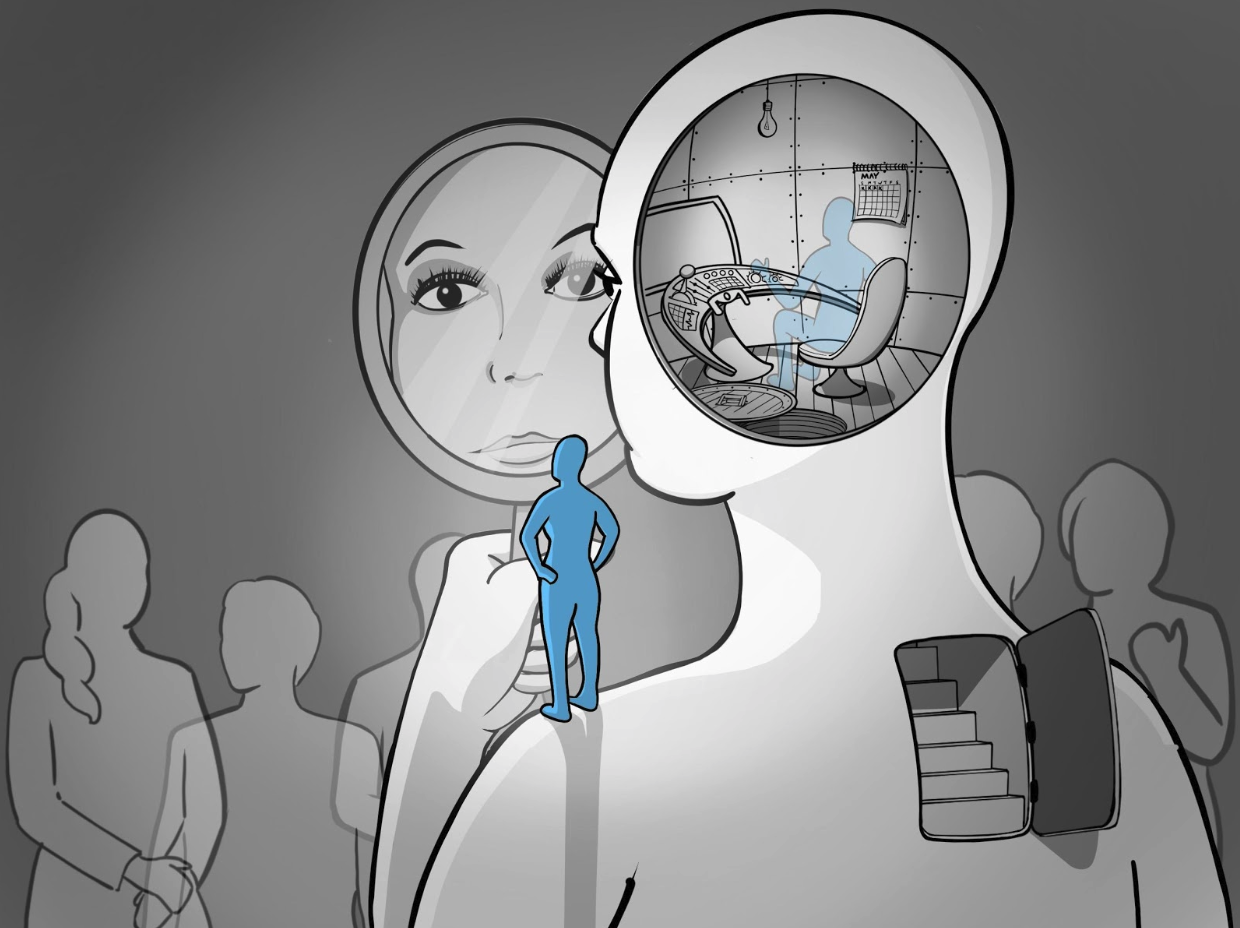
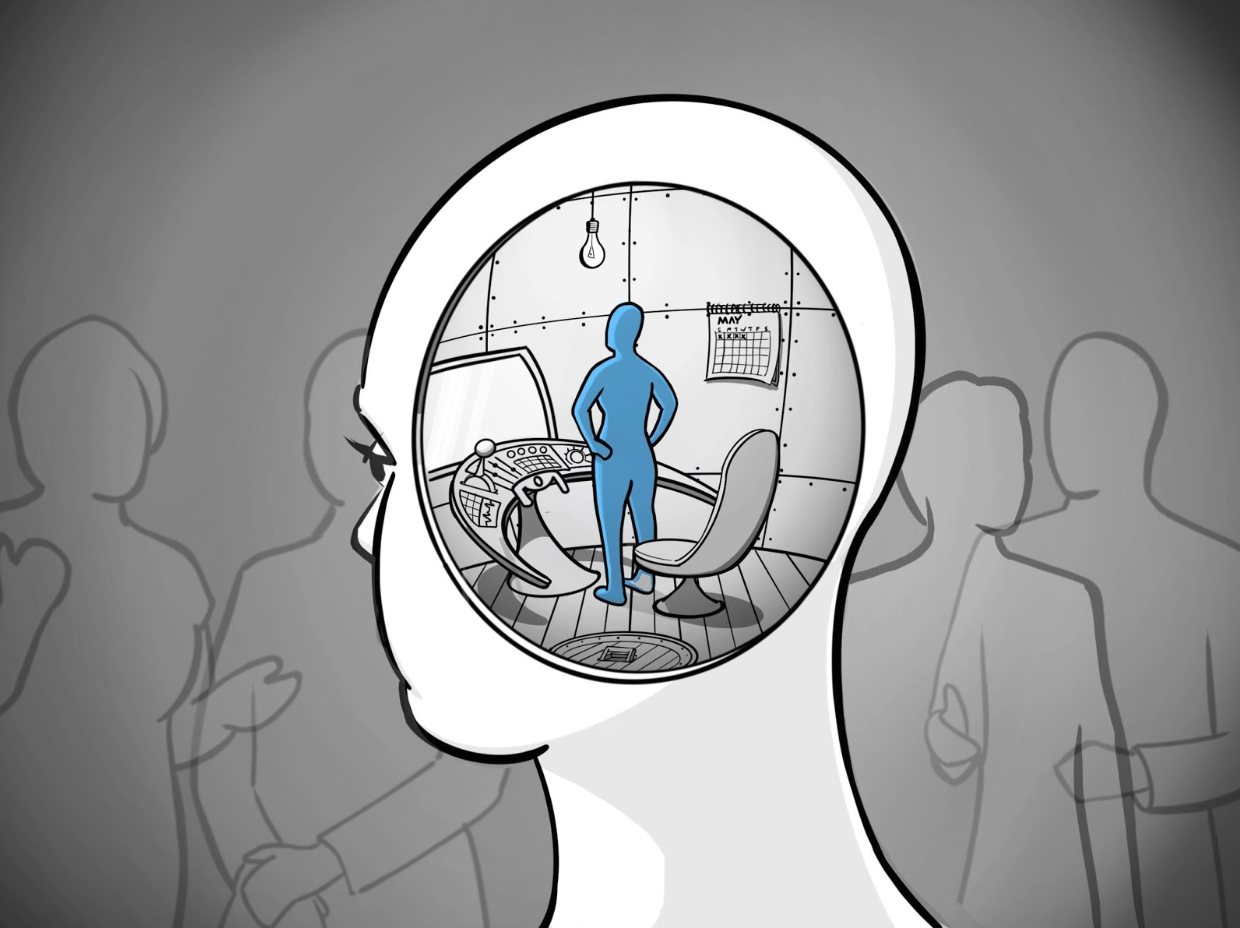
Enter the Ideal Parent Figure visualization protocol, developed by Daniel P. Brown, PhD. as a method for healing attachment disturbances in adults (1). His method relies on the fact that the unconscious mind does not distinguish between images that derive from memory and those that come from the imagination (in fact, most images that we think of as memories are imaginary reconstructions of events). With deliberate visualization practice, we can come to “know” something we did not directly experience. In this method of treatment, I ask Sally to visualize herself as a young child and to imagine ideal parent figures that are perfectly suited to her and responsive to her needs. From there, I ask her to imagine herself playing and exploring with the ideal parent figures offering perfect support and encouragement. Once that imagery has been established, we will have her use these Ideal Parents to respond to her in moments of distress, giving her a visceral sense of an attuned, soothing, and encouraging relationship, and a vivid sense of how she can treat herself.

Sally was dubious. “That sounds kind of cheesy,” she told me. “Also, I can’t really imagine what ideal parents would be like.”

That’s exactly the point. Kids who grow up with parents who were unable to provide good-enough care will stop hoping for something that never comes. We protect ourselves by not thinking about what we can’t have, which reduces the pain but, if practiced repeatedly, can create a deliberate (though unconscious) failure of imagination. The Ideal Parent Figure visualization protocol seeks to reverse that. It turns out that no matter how terrible and abusive one’s childhood was, each of us knows what we needed to thrive. I find this to be a wondrous and hopeful thing.

Ideal Parent Figure visualization uses the process of exploration to discover the kind of support that fosters further exploratory behavior. This method provides a solution to Sally’s frustration of “not knowing how” to be self-compassionate: she will explore until she comes upon the experience. As the therapist, I will provide her with support and light guidance as she navigates this uncharted territory. I’ll be prompting her to imagine Ideal Parent Figures who have five key features: 1) The Ideal Parent Figures are reliable and consistently present—they provide a deep sense of safety and refuge that creates a secure base from which to explore. 2) The Ideal Parent Figures are perfectly attuned; they see us and accept us exactly as we are, which sets us free to be completely and authentically ourselves. 3) The Ideal Parent Figures know exactly how to soothe us, so if we get distressed or over-excited in our exploration, they help us settle down, so we can return to pursuing what is interesting and meaningful to us. 4) The Ideal Parent Figures are delighted by us. We can see their faces light up when they connect with us—not because we have achieved or accomplished anything, but because of our being ourselves. 5) Finally, the Ideal Parent Figures understand we are growing and developing, and they encourage us to become our best selves.

Importantly, the specific imagery comes from the patient herself; she is tapping into the wisdom of her own imaginal experience to create parent figures ideally suited to her. And because these figures are ideal, they will provide a source of support and resiliency more effective and powerful than anything a fallible, human parent or therapist can provide.

Insights during Ideal Parent Figure work often have the feel of a lightbulb turning on. The insights my patients have experienced have included the following:

“My parent figures would NEVER hurt me. They are strong enough to protect me.”

“When I feel safe, I naturally get curious and want to explore.”

“My ideal mother figure understands my mistrust, and she doesn’t pressure me to come close before I am ready.”

“My parent figures don't turn away while I am angry. They stay interested and want to know why I am upset. It’s okay to be angry.”

“My ideal mother figure is delighted by me, even when I am being bad and she is setting limits—I can see it in her eyes.”

In our first few sessions, Sally quickly became frustrated. “Nothing is coming up, I can’t imagine anything.” This frustration is normal and is a sign that she has come to the “edge of her imagination.” Exploration requires trying things, running into blind alleys, trial and error, persistence. “That’s good, keep going,” I encouraged her. “Imagine that your ideal parent figures are with you, sensing exactly what is wrong and responding in exactly the right way. They love being here with you as you explore. They know you can figure this out, and they will stay with you as long as you need, for hours, days, weeks, or even years. Imagine what that would be like.”

In our fourth session, Sally’s imagination “popped.” “They know I can get this!” she said with a smile, “that’s how they can be so patient. They’ll stand by me as I figure this out.” Her expression changed, and what followed was an eruption of grief she had missed out on when she was little. She broke into deep sobs while imagining being held, forever if she wanted, by her ideal mother. The moment was anything but cheesy. Afterward, she felt an unusual sense of peace and hopefulness.

After that point, when that feeling of frustration or sadness emerged during visualization practice, she could reliably call up the image of her ideal mother to soothe herself. Becoming more confident, she started to have fun and looked forward to visualization sessions. Meanwhile, she reported that her mood improved, it had become easier to get things done, and she was reaching out more in relationships. “Well,” she told me with a smile, “I think I’ve figured out how to be self-compassionate.”

References

(1) Brown, D. P., & Elliot, D. (2016). Attachment disturbances in adults: Treatment for comprehensive repair. W. W. Norton and Co.

Many thanks to George Haas of mettagroup.org for his exploration of the language of encouragement.
 

Interpersonal Connection: Noticing the Needs of Others

Ancient Roots

In my recent book, I introduced an approach to physical, emotional, and spiritual health called The Connections Paradigm. This is a technique derived from an ancient Jewish tradition that I have used successfully in my clinical practice with clients.

The idea behind the paradigm is that human beings, at any given moment, are either “connected” or “disconnected” across three key relationships. To be “connected” means to be in a loving, harmonious, and fulfilling relationship; to be “disconnected” means, of course, the opposite.

The three relationships are those between our souls and our bodies (Inner Connection), ourselves and others (Interpersonal Connection,) and ourselves and a Higher Power (Spiritual Connection). These relationships are hierarchical, with each depending on the one that precedes it.

I began learning about interpersonal connection early in my career as a clinician. Back then, I was meeting with patients who seemed to have every need you could imagine. Some of my patients had needs that were similar to my own; others had needs that I never personally experienced.

“I struggled to place myself in the shoes of people who lived in circumstances very different from my own”, like the time I worked on a geriatric unit and treated several older patients with age-related problems that I had never encountered. There were other patients from whom I learned about culture-specific needs that I will probably never fully grasp, let alone experience. In other cases, I saw needs associated with specific health concerns that I never had, and with dire personal and financial circumstances that I pray to avoid during my lifetime.

Through this process, I concluded that being sensitive to each patient’s needs—i.e., interpersonal connection—is one of the most important skills in being an effective therapist.

I have also observed the most common ways that people fail to notice the needs of others. Once, a twenty-nine-year-old male patient of mine named Danny completely disputed the importance of noticing other people’s needs.

“I’m more of a doer,” Danny told me. “I only feel like I’m making progress when I’m actively involved in something. And at the end of the day, getting things done is more important than thinking about other people.”

“But how do you know what another person needs unless you develop your sensitivity?” I asked.

“A lot of the time their needs are obvious,” he said. “And if not, they should tell me.”

“Doesn’t it feel better when someone notices your needs without you telling them?”

“Um?.?.?.??I guess so,” he said.

“And let’s be honest,” I said, “do people really always know what they need? There are times when everyone in someone’s life can see clearly what they need except them. And sometimes we are sure we need one thing, but someone else can see that we really need something else.”

“What’s your point?” Danny asked. “I just don’t want to sit and think about other people, I guess. Is that so bad?”

Danny’s Story

Danny first came to treatment after a brief psychiatric hospital inpatient stay for severe depression. He had lived at his parents’ home for several years after college until he finally got a job and decided to move out. Within a few months, however, he was seriously considering suicide and ultimately checked himself into a hospital.

“”I’ve always gotten depressed, but this was worse”,” he said. “When I was living by myself, I was not really thriving. I had a job I hated and not much of a social life. I thought about moving home, but my depression just kept getting worse until I knew I needed to go into the hospital. I had to stop working, and I didn’t really have enough money.”

After his hospital stay, Danny decided to move back home with his parents. “I just need some time to relax and not worry about bills,” he said.

Danny’s psychiatrists recommended outpatient care, and he came to my New York clinic a few days after he left the hospital. As part of his treatment, I stressed the importance of self-care, positive thinking, and staying active. His condition improved relatively quickly. But as he started getting better, he experienced a backlash from his siblings.

Danny’s parents were elderly and had health problems. His father, 84 years old, was going through the early stages of dementia, and his 75-year-old mother, who had suffered several bone fractures as a result of severe osteoporosis, could no longer go up and down the stairs without help. They both struggled to do basic chores to keep their house in order, and Danny’s siblings felt that he was putting pressure on them by moving back home.

“I basically do whatever my parents ask me to do,” Danny said. “We have a good relationship. They say they’re happy that I’m home. But my brothers and sisters say I’m making it harder for them. Last weekend we all had a ‘siblings meeting’ to talk about Mom and Dad, and they basically ganged up on me. They said the house is dirty and that I’m not keeping up with the laundry and stuff like that. My older brother comes just about every day and he’s been giving me the stink eye for months, and I really didn’t know why until this weekend. We used to be really close. But now that I know how they feel I’m really annoyed.”

Danny was spending a lot of time applying for jobs and making sure he was taking care of himself so that his depression would not return. “They think I’m just sitting around doing nothing,” he said, “but I need to focus on getting back on my feet. And really, the house is not that messy. My parents have complex medical issues, but basically they’re doing okay.”

“You said you do everything your parents ask you to do,” I said. “So what are those things?”

“They don’t even ask me to do much. Sometimes my mom will ask me to help her get up the stairs, or my dad will ask me to help him to move something heavy. But they like to handle things on their own.”

With Danny’s permission, I spoke with his parents and siblings and got an entirely different story. “Danny was simply not aware that he was creating a significant financial and interpersonal burden on his parents and making their old age much more stressful”. He expected that his mother would cook, clean, and do laundry for him, and he would routinely leave his belongings around the house, even though they presented a tripping hazard for his parents.

His siblings were frustrated and even exasperated with his selfishness, to the point that they wanted to throw him out of their parents’ home even if it would lead to rehospitalization or worse. I managed to calm the siblings down, with the hope that I could get through to Danny in therapy.

During the next few sessions, I continued to discuss the core concepts of interpersonal connection with Danny, and he eventually acknowledged that his interpersonal style was a significant contributor to his depression over time.

Other Peoples’ Needs

“Years ago, when I lived in California with a friend after college, it was my highest point of functioning. I had a job, a girlfriend, and things were going pretty well. But over time, my friends got fed up with me because I have this unhealthy tendency to focus on myself more than others. I grew apart from my girlfriend and also my roommate, and eventually moved out on my own. But the costs of living were so expensive, and the next thing I knew, I was in major debt. It’s been a bad situation ever since.”

“There are ways to improve how you connect with others,” I told Danny, and he seemed interested to learn more. “Interpersonal connection starts with noticing other people and what they need, and eventually making an effort to make them happy. Being sensitive to others’ needs helps us to remain connected to others and helps us to feel more confident and happier ourselves.”

As a preliminary exercise, I encouraged Danny to make a comprehensive list of someone else’s needs. Danny initially wanted to focus on his older brother, but I encouraged him to choose one of his parents instead. “You see them a lot more often,” I said, “so you have a better perspective on what they need. And they seem to have a lot of difficulties right now, so many of their needs are more noticeable.”

Danny reacted negatively to my suggestion, suspecting it indicated my agreement with his siblings that he was not caring for his parents’ needs. “I’m not making any judgments on how you’re behaving in your relationships,” I said. “You’re my patient. I’m focused on helping you.” Danny reluctantly complied with my recommendation, and we spent nearly half a session making a list of all his parents’ needs.

The exercise turned out to be a powerful experience for him. He became especially conscious of the consequences of his parents’ physical health decline, and how he had indeed become more of a burden to them than he had previously acknowledged.

At our next session he said, “It’s hard for both of them to go out anymore. My dad used to be so active, he took a lot of pride in his work. Now he can’t do anything but sit at home and watch TV. It’s definitely not easy for my mom that she can’t go out to see my nieces and nephews. She used to take care of them every day, but now it’s too hard for her even to go visit them at all.”

It was slow going, but we were getting somewhere.

In truth, Danny had already been aware of his parents’ needs, but verbalizing them made them more visceral. I asked him to focus not only on his parents’ emotional needs but also on their physical needs. “Well, when it comes to physical needs, I guess they have enough money, so they’ve got that taken care of.”

“But your mom is in a lot of pain, right? Relief from pain is also a very strong physical need,” I said.

“That’s true. But I can’t do anything about that.”

“Maybe, but the point is to consider her needs, not necessarily to solve them. What about your dad?”

“He moves okay and he’s not in pain, but I guess his dementia makes it hard for him to handle all the basic things that he used to do to feel good. We put notes around the house because he doesn’t always remember where things are or how to use them. My brother told me we’re all going to start wearing name tags when his dementia worsens.”

Danny became emotional as he began taking serious stock of all the ways his parents were struggling to meet their own needs. “The thing is,” he said, “I still can’t see how it helps for me to get upset about it. It’s not like there’s anything I can do.”

“Maybe not,” I replied, “but being mindful of other people’s problems is important. That feeling of empathy you’re experiencing now is interpersonal connection. I can see now why it’s hard for you. The truth is that you really feel their pain. It’s very hard for you to see them suffer. It’s actually because you are a caring person inside that it’s so challenging for you to acknowledge that they are suffering.”

Danny started to cry, and then a wellspring of emotion came forth. He was visibly distraught with how his parents were suffering and how he had contributed to their pain. Over the following month, Danny’s behavior started to change. He not only improved his self-care but became much more considerate of his parents’ needs, and even his siblings.

Danny also became less introverted and eventually found a decent-paying job, where he developed friendships with several of his coworkers. A few months later, he said, “If I’m being honest, I’m not doing that much more to help anyone, but even thinking about other peoples’ needs has given me much more perspective. I have more interesting conversations with people now. They open up more since they see that I’m focused on what they’re saying, and that I care about them. Even my conversations with my siblings are better.”

***


As my work with Danny illustrates, interpersonal connection requires noticing other people’s needs with true sensitivity. Doing so enhances our ability to help them when they do not explicitly ask for our assistance. Furthermore, the importance of noticing others’ needs goes beyond improving their wellbeing; our own connection benefits as well when we develop finely-tuned empathy for other people.
 

Emergent Anxiety: Facing a Post-COVID Life

A New Normal

During the past year, therapists and patients alike have become habituated to the familiar routines of telehealth sessions, new grocery shopping habits, Zoom school for the kids, figuring out what to watch on Netflix, and (re)discovering pastimes and hobbies. At the time, we were faced with the Herculean task of tending to our patients while taking care of ourselves and our families as we adapted to a world filled with COVID-related anxiety.

Here we are at another crossroads. There’s not going to be a singular event that demarcates the age of COVID and the post-COVID era. It will be a gradual process, and it will generate excitement and relief. In fact, there will be a lot of jubilation as we move to this next phase. Hugging grandchildren, going to movies, seeing friends (in person!), and attending special events such as weddings and graduations will take on a special meaning, and many, if not most of us, will feel a deep sense of appreciation for what we used to take for granted.

But there will be a cross-current that we will be facing with our patients—an uncertain future, which includes how to live as they transition to the New Normal.

The term “emergent anxiety” describes the phenomenon of anxiety following the initiation of a psychotropic medication. I believe it should be repurposed to describe the upcoming post-COVID adjustment period. In fact, the irony of an increase in anxiety during the introduction of a medication whose purpose is to alleviate anxiety has an unmistakable parallel to the future uptick in anxiety around the vaccine, reduction in cases, and ultimately, a return to normal life.

It is important to consider that “COVID and the upcoming emergence of related anxieties is one of those rare occurrences where we are having a shared experience with our patients”. We have been providing treatment to those suffering from depression, anxiety, and unwanted behaviors such as overeating, drinking, and screen time while we have been attempting to manage our lives.

Emergent Worries and Concerns

As I listen to my patients’ concerns, these are some of the many questions that are emerging:

  • Once I'm vaccinated, how do I handle people in my life who refuse to do so?
  • How long will immunity last?
  • Will the vaccine cover the variants? When will boosters become available?
  • Will there even be a “Post-COVID” age? Will we always be social distancing and wearing masks?
  • When can I safely visit my children, grandchildren, and friends? At what point can I hug and hold them?
  • When can I start going to movies again? A museum? A restaurant? Should I only dine outside?
  • When can I schedule routine doctor visits and obtain tests (mammograms, colonoscopies, etc.)? When should I resume going to the dentist? My barber/hairdresser?
  • When can I begin to travel safely? Will airlines, hotels, trains, and cruise ships require people to be vaccinated? Will I need to obtain a digital vaccine passport?

From discussions with colleagues, additional questions are emerging about the future of therapy:

  • When will I go back to seeing people in person? Should I wait for herd immunity to go back to the office?
  • Will I continue to provide telehealth full-time, part-time, or not at all after herd immunity? What will my patients want to do?
  • If there’s a shared waiting room, how will we make it safer for everyone?
  • When I start treating patients face-to-face again, can I legally ask them if they have been vaccinated?
  • Can I treat vaccinated patients face-to-face and unvaccinated patients (including those who refuse to be vaccinated due to a disability) through telehealth – thus creating a two-tier system – without inadvertently running afoul of laws that prohibit discrimination against people with disabilities?
  • Will we wear masks during the therapy hour even though the threat of infection is lower?
  • How is the ventilation in my office? Will I be buying an air purifier? Will that help?

Understanding Emergent Anxiety

In general, a certain amount of anxiety is necessary to help us survive in our day-to-day lives. As a species, we wouldn’t be here if not for the capacity for the fight-flight-freeze response.

Yet anxiety can become too much of a good thing. Our minds have been adapting to the stresses related to COVID, and just because the threat decreases, it doesn’t mean that we will snap back to feeling normal.

In fact, the new adjustment may make some people more anxious. During the course of the pandemic, our reactions seemed completely rational. Like a lion in front of our foreparents’ caves long ago, COVID and its related anxieties—a racing heart, sweaty palms, discombobulation, and panicky feelings—made sense to us. Once the threat of the “lion” (COVID) has gone away, continued physiological and psychological responses will be inexplicable. That is, the residual symptoms will no longer make sense to us.

This post-trauma phenomenon reminds me of what happened when we emerged from the worst of the AIDS crisis. As new medications reduced the chances of horrible illness and death, it was assumed that people with AIDS would feel relieved and happy.

Many if not most of my patients with AIDS weren’t simply happy or relieved that new medications would save them. Actually, it threw many of them into a tizzy, especially those who had resigned themselves in one way or another to the probability that their lives would soon be ending.

The parallel I’m drawing here highlights the disconnect between the intellect and our emotional responses to being “saved” from COVID. Once the major threat of COVID has passed, we will not be one happy, relieved, functional family. It’s far more likely we’ll be witnessing a concomitant increase in anxiety and confusion, and our services will be required more than ever (as is already happening, as many of us have full practices).

Related Conditions

It’s important to be on the lookout not only for anxiety, but a kind of post-pandemic depression. Symptoms may include avoiding others, agoraphobia, other fears and phobias developing in otherwise healthy patients, and a rise in panic attacks and full-blown panic disorder. Social anxiety will also be on the rise. Some younger children and adults will have a new or reemerging separation anxiety as well as “stranger danger” as they continue to skirt around people when in public places.

Other maladaptive strategies that we’ll be treating more often will run the gamut from increased phone/internet/video game use, compulsive gambling, substance abuse and drug addictions, overeating, and other dependencies and compulsions.

Regarding relationships, many couples are holding it together for fear of moving out during the pandemic. Other couples are hanging on by a thread. Expect a post-COVID “divorce boom” and an epidemic of relationship break ups, as well as couples trying to save their relationships.

Post-COVID reactions are also going to include a unique brand of PTS(D),including unpleasant reactions to being in social situations and public places, an increased vigilance about health, COVID-related nightmares, constant vigilance for symptoms of COVID, an over-reaction to catching a cold or another minor bug, and not wanting to return to the workplace.

Many children have been regressing—wetting the bed after months or years of not doing so, refusing to play with friends, and wanting to crawl into bed at night with a parent due to insecurity and fear. But children aren’t the only ones who are regressing. Adults regress as well, and many of us are reverting to old coping strategies, becoming more quick-tempered, and fighting and bickering with our partners more often.

Treating Emergent Anxiety

My personal philosophy about mental illness is that heredity, biology, and brain chemistry cause many types of mental illness (schizophrenia, autism, ADHD, etc.), but more often we develop “mental illnesses” not because the brain gets sick, but because it adapts. The main illnesses I’m referring to are depression, anxiety, addictions, and PTSD. The following are some of the techniques I have found useful with my clients around emergent anxiety.

  • Normalize their experience. Developing post-COVID anxiety will be a normal response to a highly abnormal situation. So the first intervention is to normalize your patients’ responses and reassure them that their coping strategies—which picked them (we do not choose our coping strategies)—are the natural backwash to a major tsunami.
  • Self-disclose more often. In the past year, I have been more disclosive than pre-pandemic. I have told several patients that I have to watch my diet more closely, for example, and I share some of my concerns and fears about the future (not to heighten their anxiety, but to remind them they are not alone).
  • Be a witness. Every trauma victim needs a witness. Part of our role is to be a container and a holder of memory. I listen carefully when a patient describes the pain associated with COVID, and I make sure that every important milestone (including deaths of loved ones, when they got their vaccines, how this has impacted their jobs) will be remembered and commented on in the future.
  • Look for delayed grief. Be on the lookout for delayed grief reactions, not just to lost loved ones but to a lost year (and counting), whether it has been a career/job, socializing with friends and family, a lost school year—basically all routine life. As we have been focused on our day-to-day survival, many have not had the “luxury” to grieve. Much of our work will be on helping patients to heal from their buried grief.
  • Interrupt the “anxiety process.” I have a particular way of treating anxiety, and emergent anxiety can be treated this way as well. I see anxiety as a process as well as a state. We develop one or more feelings that are highly uncomfortable. Over time they get bunched up (very technical, but it’s how I describe the process to my patients) and it can become overwhelming.
  • Help with Meaning-Making. During this time, a lot of existential questions have surfaced. Just because COVID becomes a manageable disease, it doesn’t mean that we should squander the opportunity to help make meaning out of this “lost year.”

Over several sessions, we break down anxiety into its component emotional parts, and we usually find that the emotions that turn into anxiety are particularly difficult for the patient to tolerate (which varies by individual). Next we find ways to better cope through emotional regulation. Once we identify their emotions, I help the patient to understand and modulate their response.

The “No Wonder” goal is a way for patients to eventually be able to say, “It’s no wonder I experience a lot of uncertainty about the future and feel so helpless to do anything about it.” The No Wonder goal—which can be achieved over several sessions for patients to make sense of their anxiety—can help to reduce patients’ anxiety about being anxious.

I also explain to my patients that when they have anxiety, their bodies are engaging in natural processes to keep them alive—such as increasing their heart rate, moving blood away from the abdomen, and heightening the senses in order to flee if necessary, among others. With enough effort and trial-and-error, they can tell themselves that their bodies are becoming more alive and alert (rather than shutting down) while a bout of anxiety or a panic attack is occurring.

***


My hope is that this article can assist my fellow clinicians by providing some new tools to help your patients and motivate you to think about and discuss what will surely be in our future. We will be an even more integral part of our patients’ lives as we help to prepare them for emerging into a post-COVID world.
 

Treating the Compulsive Personality: Transforming Poison into Medicine

One summer during my analytic training, I committed myself to study, outline, and completely internalize Nancy McWilliams’s Psychoanalytic Diagnosis (1994). The idea that you could be more effective with clients by understanding their specific patterns ran contrary to the anti-diagnosis attitude at my training institute. But it appealed to my eagerness to be helpful.

Not long after I began, I recognized myself in the chapter on the obsessive-compulsive personality. While I didn’t meet the DSM-5 criteria for obsessive-compulsive personality disorder (OCPD), I certainly had my compulsive traits: perfectionism, over-working, and planning, just to name the obvious. McWilliams’ description elucidated who I could have become, had I not had a supportive family and lots of analysis to rein in those tendencies.

But this wasn’t just personal or theoretical. I recognized the collection of traits found in the personality style in my many driven, Type A, and perfectionistic clients working in law, finance, and publishing in work-crazed midtown Manhattan. And I saw the suffering it caused.

The Unrecognized Stepchild of Personality Disorders

Captivated by the subject, I eventually got involved in some online OCPD support groups. There, I read many stories of people who thought they had OCD for years before finally realizing that their entire personality was characterized by compulsive tendencies. They had known that their struggles weren’t just with specific obsessions and compulsions, but that was the only diagnosis they were aware of that was even close to describing them. And in many cases, OCD was the diagnosis a clinician had given them.

This pattern of misdiagnosis became even clearer once I began receiving comments and emails from people reading my new blog, The Healthy Compulsive Project, and my book, The Healthy Compulsive.

While OCPD is one of the most frequently occurring personality disorders of the ten listed in the DSM, it is under-recognized and probably underdiagnosed (Koutoufa & Furnman, 2014). Far too often, it’s confused with OCD by both the public and clinicians. One study indicates that the lack of recognition of the condition leads to a lack of empathy for it (McIntosh & Paulson, 2019). And far more people suffer from obsessive-compulsive personality traits than those who meet the full criteria.

It doesn’t help that it’s ego syntonic not just for the sufferer, but to some extent for our culture as well. Capitalism doesn’t care if you work too hard. According to psychologist and researcher Anthony Pinto (2016), there is no empirically validated gold standard treatment for OCPD. I suspect that this is a function both of our tolerance of it and of the difficulty in treating it.

What’s the Meaning of This?

As I filtered all of this through my training as a Jungian analyst, my curiosity about the underlying meaning of the disorder was piqued. Jung emphasized the importance of asking what symptoms and neuroses were for. What potentially adaptive purpose did symptoms serve in the patient’s life, or for humankind at large? Could there be meaning under something so destructive? Was there some underlying attempt to move toward individuation gone awry?

Looking up the etymology underlying the word “compulsion,” I realized that it wasn’t originally a bad thing. A compulsion is an urge that’s almost uncontrollable. A drive or force. And that’s not all bad. Many of these urges lead to creative and productive behavior. But “before I could find any possible light in the condition, I had to acknowledge how dark it could be”.

The Cost of OCPD

The more I observed the world of the obsessive-compulsive personality, the more I came to see its destructive potential. A review of OCPD by Deidrich & Voderholzer (2015) tells us that people who have OCPD often have other diagnoses as well, including anxiety, depression, substance-abuse, eating disorders, and hypochondriasis. OCPD amplifies these other conditions and makes them harder to treat. People with OCPD have higher than average rates of depression and suicide and score lower on a test called the Reasons for Living Inventory (Deidrich & Voderholzer, 2015).

Medical expenses for people with OCPD are substantially higher than those with other conditions such as depression and anxiety. And the study indicating this only included people who had sought treatment—which excludes the many with more serious cases who don’t (Deidrich & Voderholzer, 2015).

The cost for couples and families is great. People who are at the unhealthy end of the compulsive spectrum can be impossible to live with. They can become mean, bossy and critical, and their need to control often contributes to divorce. Much of the correspondence I receive is from partners of people with OCPD who are at the end of their rope, looking desperately for hope that their partner can change.

Parents with OCPD often place unreasonable demands on their children. This can interfere with developing secure attachment and may also increase the chances of a child’s developing an eating disorder.

It also causes problems in the workplace. While some compulsives are very productive, others become so perfectionistic that they can’t get anything done. Still others prevent their coworkers from getting anything done because their criticism disrupts productivity.

Similar problems happen in other organizations such as volunteer groups and religious institutions. People with compulsive tendencies often become involved in community groups, and they’re so convinced that they’re completely right, and that they should control everything, that they contribute to the deterioration of the organization, partially because others don’t want to work with them (Deidrich & Voderholzer, 2015).

Just as disturbing is knowing of the many personal, community, and cultural benefits that the condition prevents when it hijacks energy that would otherwise have led to leadership, creativity, and productivity. Compulsives can be movers and shakers, but instead they often end up being blockers and disruptors. The people who shape the world are the ones with the most determination, not the ones with the best ideas. And compulsives have lots of determination.

The Adaptive Perspective on OCPD

As I looked more deeply into the condition, I could see that the original intention beneath compulsive control is positive: compulsives are compelled to grow, lead, create, produce, protect, and repair. It seemed to me that the obsessive or compulsive personality is not fundamentally neurotic, but a set of potentially adaptive, healthy, constructive, and fulfilling characteristics that have gone into overdrive.

I’m certainly not the only one to make this observation. A dimensional perspective of personality disorders is gaining momentum (Haslam, 2003). But this viewpoint is still sorely needed for sufferers, partners, and clinicians.

Realizing that evolutionary psychology might provide an understanding of the adaptive potential of obsessive-compulsive tendencies, I contacted psychologist Steven Hertler, who has been on the front lines of thought in this area. His ideas resonated with what I had suspected about the survival benefits of obsessive-compulsive tendencies: the behavior that those genes led to made it more likely that the offspring of those with the genes would survive (Hertler, 2015). For instance, being meticulous and cautious is part of what Hertler (2015) refers to as a “slow-life strategy,” which increases the likelihood that those genes will be handed down.

Most importantly, though, a perspective which highlights the possible benefits of a compulsive personality style has significant clinical benefits. Conveying the possible advantages of this character style to clients lowers defensiveness and encourages change.

There is a wide spectrum of people with compulsive personality, with unhealthy and maladaptive on one end, and healthy and adaptive on the other end. Clients on the unhealthy end of the spectrum can be very defensive about their condition. They tend to think in black-and-white terms, good and bad, and their sense of security is dependent on believing that they are all the way on the good side. This makes it hard for them to acknowledge their condition, enter therapy, and get engaged in treatment. When they do come in, it’s usually because their partner is pressuring them, or because they have become burned-out or depressed.

If we are to help people suffering from obsessive-compulsive personality disorder, we need to find a way to get under their defenses so that they can make use of therapy. When we understand and convey that OCPD is a maladaptive version of something much more positive, we begin to forge a good working relationship.

But as therapists, we should also acknowledge that some individuals are so far to the unhealthy end of the continuum that even if they were to enter therapy, we might not be able to help them. It was important for me, at least, to be realistic, so that I didn’t set myself up to feel that I had failed if I wasn’t able to help someone.

Characteristics of the Obsessive-Compulsive Personality

The DSM-5 says that OCPD is defined by a “preoccupation with orderliness, perfectionism, and mental & interpersonal control at the expense of flexibility, openness, & efficiency” (American Psychiatric Association, 2013). It goes on to list eight criteria; since these criteria are readily available, I won’t list them here. But I do want to emphasize what the DSM-5 (2013) points out in the first criteria: people with OCPD are preoccupied with details, rules, lists, order, organization, or schedules to the extent that the major point of the activity is lost. I have found this to be a defining characteristic of people on the unhealthy end of the compulsive spectrum—they’ve lost the point of their rules and efforts to control. They’ve lost their original intention, the thing they first felt compelled to do.

I remember being struck the first time I noticed this. A female client was talking about how she had berated some people for not following the rules. It struck me that she was so adamant about the rules that she had forgotten who the rules were meant to help and protect—the very people she was berating.

One goal of treatment should be to help clients recover, or uncover for the first time, the original impulse, the deeper motivation that has compelled them. I may be biased because I practice psychodynamic treatment, but it seems to me that because OCPD affects the entire personality, psychodynamic treatment will be the most effective. I say this because cognitive and behavioral treatments are most effective for very specific issues, less so for the sort of global issues that characterize OCPD.

But those of us who work psychoanalytically may need to budge a little on maintenance of the frame, disclosure, the use of goals, and our reluctance to diagnose. Just as the saying “the only way to peace is peace” goes, “the only way to flexibility is flexibility.” We need to be mindful of our own personal need to control, and a certain rigor that our training may have encouraged: we might think or feel that we are doing the “right” thing by following the rules. But in particular aspects of the work with compulsives, we may gain more through example than through analysis.

Eight Key Points

I’ve found that there are particular themes and tasks that I usually need to work through with compulsive clients over time. I don’t believe that these are unique to OCPD, but rather that they usually require more emphasis than might with other conditions. I outline these below with the suggestion that they be used in a flexible and organic way, rather than as hard and fast steps.

In each of these steps I try to enlist clients’ adaptive compulsive characteristics to foster change.

  1. Create a narrative respecting inborn characteristics. To help compulsives diminish insecurity and develop self-acceptance, “I’ve found that it is important to create a narrative which distinguishes authentic, organic aspects of their personality” from those which were the result of their environment. Compulsives are born with traits such as perfectionism, determination, and attention to detail. They usually like constructive projects, and this can be a joint project that nurtures the working therapeutic relationship.
  2. Identify the coping strategy they adopted. If there was a poor fit between the client and his or her parents, the child may have used their inborn tendencies, such as perfectionism, drive, or self-restraint, to find favor and to feel more secure. Most unhealthy compulsives become so when their energy and talent are hijacked and enlisted to prevent feelings of shame and insecurity, and to prove that they are worthy of respect, inclusion, and connection.
  3. Identify when their coping strategy is still used to cope with anxiety. Recognize if and how they still use that coping strategy as an adult. Most coping strategies used to ward off anxiety will diminish if the anxiety is faced head on rather than avoided with compulsions.
  4. Address underlying insecurity. Question their self-criticism and replace it with appreciation for their inherent individual strengths, rather than pathologizing or understanding them as reactive or defensive. Reframe their personality as potentially constructive. I’ve seen this perspective help many people as they participate in OCPD support groups.
  5. Help clients shift to a more “bottom-up” psychology. Nurture their capacity to identify emotions and learn from them rather than use compulsive behavior to avoid them. Help them to identify and live out the original sources of their compulsion, such as service, creation, and repair, actions that would give their lives more meaning. Help them to make choices based on how things feel rather than how they look.
  6. Identify what’s most important. Most compulsives have either lost track of what’s most important to them, or never knew. Projects and righteousness that they imagine will impress others fill the vacuum. Instead, once they can feel what they were naturally compelled to do, they can use their determination to fulfill it in a more satisfying way.
  7. Identify personality parts. Compulsives try to live in a way that is entirely based on direction from the superego, and they attempt to exclude other aspects of their personality. I have found it very helpful to have them to label the dominant voices in their head (Perfectionist, Problem Solver, Slavedriver), and to identify other personality parts that have been silenced or who operate in a stealth way. Depending on what the client is most comfortable with, we can use terms from Transactional Analysis (Parent, Adult, Child), Internal Family Systems (Exiles, Managers, Firefighters), or a Jungian/archetypal perspective (Judge, Persona, Orphan).
  8. Use the body, the present moment, and the therapeutic relationship. Compulsives rarely experience the present and usually drive their bodies as vehicles rather than nurture them. Bringing their attention to their moment-to-moment experience and using their experience of you as their therapist can help. For instance, bring their attention to tension in their body and, if possible, connect that with any feelings that they have about you. For instance, do they feel a need to comply with you, or any resentment about complying with you?

The Case of Bart

Background

A man in his early forties, whom I will call Bart, came to see me when his wife said she could no longer tolerate his worrying and unhappiness. To his own surprise, he found himself tearing up as he described his life to me. He didn’t do that kind of thing. Ever.

Bart was handsome, fit and bright. Yet he was very self-deprecating.

He told me that he worked in finance and had done well enough to provide comfortably for his family. But his success didn’t register with him at all. He worried about what others thought of him. He feared that people would discover that he was a hoax at his job; he believed his success was accidental and that he could lose it all at any time. At this point in his career, he was just coasting and didn’t find any meaning or challenge in it.

Bart imagined that his family tolerated him only because he provided for them. During our initial consultation, he said he wasn’t feeling bad. But it was clear that he had experienced serious depression in the past, and I suspected that he was still depressed but couldn’t acknowledge it.

His wife was lively, talkative, and highly social, but their relationship was flat at best. He made it a point to say that he did not want to blame her for any of his problems or theirs as a couple. Nor did he want to assign any blame to his parents. Any problems he had were of his own making.

He admitted that he found it difficult to engage feelings. He avoided reflection, journaling, and talking. Like most compulsives, he controlled not just the outer world, but also his inner world. It was hard for him to tolerate uncertainty.

He played organized sports about four days a week, and he had great difficulty tolerating any mistakes on the field or court. He constantly monitored success and failure with a scoreboard in his head. He had quit playing golf because he got too upset when he didn’t play well.

At the end of our initial consultation, I told him that it seemed to me that while he had adapted very well to the external world, he had not adapted well to his inner world. Achieving that would be one of the goals of our work together. I was confident that if he could put the same energy and attention that he had put into career success into his psychological well being, he would see change.

He told me that his impressions of therapy were based on media examples and that he didn’t have any idea how this worked. I told him that I was glad he was asking because we as therapists don’t always do a good job of explaining how the therapeutic process works. I agreed to be transparent about the course of our work, to share how I believed we needed to proceed, and to explain the rationale behind my suggestions. In particular, I would try to be clear about his role in the work.

Narrative

His mother was depressed and a classic martyr. Masochistic, even. She seemed to enjoy her suffering. His father worked as a salesman and was willful, driven, and judgmental. He insisted on success: winning was his religion. For Bart this meant that if his behavior didn’t lead to points on the scoreboard in terms of some productivity or success, it was meaningless. His father said, “it’s good to win.” Bart extended this to “it’s terrible to lose.”

Bart internalized the strategies of both parents, and it caused a terrible conflict: he had imperatives both to lose and suffer (his mother’s masochism), and to win and achieve (his father’s need to triumph). He chose to be more like his father from his teens until he was 25; then he switched and became more like his mother. But he couldn’t let go of the feeling that he should still be winning all the time, in addition to learning, producing, and working all the time. He had lots of “shoulds.”

He had concluded that people want compliance rather than authenticity. He was raised Roman Catholic, and he’d make up things he had done wrong to have something to admit when he went to confession. He told me that he no longer believed in God, so he had to punish himself now. He felt guilty about any sort of self-assertion. He loved post-apocalyptic films because “in that setting, you don’t have to worry about being good anymore.”

Yet Bart didn’t feel that his parents or his environment had any bearing on his current struggles. So I said that the most important thing for us now was to understand how he had adapted to the situation he was raised in.

Coping Strategy

One aspect of Bart’s strategy was trying to control people by giving them what they wanted. Meeting his father’s expectations was only the beginning. Among the four types of compulsives, he was clearly a follower/people-pleaser. He tried to achieve self-acceptance through others’ opinions of him, but it didn’t work, even when he did get accolades.

Another aspect of his strategy was to not depend on others. To do so would rob him of control. It would take time for him to realize that he actually did have social needs, but that, so far, those needs had only gone into impressing others, rather than relating to them. As with many compulsives, Bart felt it was safer to seek respect than to want love.

In his martyr mindset, being a victim implied that he was good. So he often became very negative about his life to prove to himself that he was a victim. He wouldn’t complain verbally to others, but he did need to show himself, at least, how bad his life was. Later he came to realize that his depressed moods were also unconscious attempts to communicate the misery that he could not reveal directly.

He was aware that he had adopted a strategy of planning and perfecting to try to pre-empt the utter self-contempt he unleashed on himself when things didn’t go well. “But why the self-contempt?” I asked. “If I’m self-critical, it will show other people that I won’t tolerate mistakes. But it’s become habitual. I do it even when other people aren’t looking.”

Engaging Feelings

Much of our work involved learning to identify feelings and excavating different levels of feeling so that he could operate from a more “bottom-up” approach. We spoke of therapy as a gymnasium for exercising his capacity to tune into feelings. As with many compulsives, framing our work in terms of a project was helpful in engaging him. I tried to bring attention to what he was feeling in his body and to the present moment.

Most of his feelings were about “shoulds.” Desires were few and far between. Tuning in to desires was a heavy lift for him, but with time he began to be more aware of the difference between acting on fears versus acting on desires.

At times Bart felt like giving up, whatever that might mean. I recommended that he take that seriously but not literally: What is it that you really need to give up? What is the control that you would be happier without?

As he let go of self-control, anger began to surface and eclipsed his sadness and anxiety. Part of him believed that he always did the right thing, and he got angry at those who didn’t. While he was typically self-effacing, it was new for him to acknowledge that in some ways he felt superior.

But we also needed to continue to excavate even more deeply beneath his anger and judgement to see if there were yet other levels of fear or sadness. While it was scary and sad to acknowledge how much was out of his control, it was a relief not to be avoiding it.

When he first came into treatment he had imagined that therapy would remove all his uncomfortable feelings. But with time he came to realize that it was okay to have feelings—sad, anxious or angry—and that he could learn not to amplify those feelings or carry them needlessly. With time, he didn’t need to avoid them so thoroughly.

Identifying What’s Important

Even as he learned to turn his focus inward, he found it hard to articulate his goals in life, career, and therapy. He had lost track of himself and what he really wanted long ago.

Because he had little access to feeling, he was unable to find direction. He obsessed about his job and whether to change companies or even careers. He liked the idea of a new career, especially one with a new identity, but he couldn’t follow through on that. He feared losing the fantasy of what it would be like if he did change.

As he navigated his professional and personal world, I often had to ask him what was most important to him. At first this was distressing, since he had no idea who he was or what he wanted. He was always climbing mountains, but he wasn’t sure whether taking on challenges was something he felt he was supposed to do or something he wanted to do. This skill of distinguishing how something looks from how it feels has been essential to the improvement of most of the people I work with. He couldn’t tell the difference, and we kept revisiting the distinction.

In his efforts to succeed, he’d lost track of why he wanted to succeed. Any sense of fulfillment in accomplishments was replaced by the need to achieve to prove to others and himself that he wasn’t a fraud. Over time he came to recognize that taking on challenges was fulfilling, that he genuinely enjoyed it, and that it was vital to his feeling better. But to enjoy it, he had to let go of using the challenges to prove his worth.

He had similar realizations when telling me about learning: this wasn’t just something he should do to silence his father’s demanding voice, it was something that was very satisfying. He didn’t have to do it, he wanted to do it. And that made it more pleasurable.

We explored his feelings about his marriage. He did value his marriage but was reluctant to depend on his wife: “I’d like to think that I don’t need my wife, but I do. And because I don’t want her to be too important, I don’t take in her support.” This would have made him too vulnerable and would have gone against the masochism he adopted from his mother.

It was a small revelation to him when he was recounting his weekend and noticed that spending time with his son had actually been pleasurable. It wasn’t just a “should.” Noticing this feeling of pleasure was a small window into what was most important for him. “I’ve been putting points in the wrong basket all along, thinking that making money was most important…I have to challenge the idea that piling one more dollar on the stack will make me feel better.”

He came to value more peaceful emotional states—being more present and accepting, and less regretful and judgmental.

Transference & Countertransference

Coming to therapy was not comfortable for Bart, partially because he felt he wasn’t “good” at it. “I remembered that he had quit playing golf because he wasn’t good at it and wondered to myself if the same could happen with therapy”. Still, his ability to speak to me directly about his discomfort was a success. Doing so served as a sort of psychoanalytic exposure therapy, staring down his deep fear of being real and of being known, with the added advantages of eventually understanding the causes and functions of those fears.

He once asked whether therapy was like confession. I explored what it was like in that regard for him and reminded him that when he was young he would make up sins to take to confession. Would he need to do that here? He didn’t think so.

He admitted that he wanted to learn the language of psychotherapy to please me. “Sometimes I tell you what I think you want to hear. I never lie to you, but I do try to figure out what you want.” He felt pressure in the silence to figure out what he was supposed to say. We explored this as a good example of his strategy.

“I’m afraid you think I’m a dick,” he said. “I’ve got so much, what’s my problem? Why am I complaining? You must think I’m just indulging here.” Was this feeling unique to our situation, or was this actually typical of how he felt with most people? He acknowledged that he never felt that it was okay to feel even tolerably accepting of himself, much less feel really good. That would be indulgent and arrogant. And it would invite humiliation.

He had imagined that I would give him a thumbs up at some point, certify him as mentally healthy, and send him on his way. We used this as an opportunity to distinguish what was more important: what I thought about him or how he felt about himself.

Allowing me to know him, and questioning how he imagined I saw him, was a step in the direction of being more open with people in general. Looking for parallels with what he imagined I thought of him, we explored the difference between what he imagined his wife thought of him, and what she really thought of him. As he felt less criticized, anxious, and depressed, she scrutinized him less, and he began to feel more comfortable with her.

“I also experienced my own discomfort with him”. I feared that he would run out of things to say and that I would be exposed as not having anything to offer him. I was not able to work this through completely, but in retrospect I suspect that my fears of being found inadequate were both induced and my own.

He missed a fair number of sessions. Even accounting for the fact that business meetings came up last minute, it still seemed that he avoided his issues at times by not coming. I thought it might be fitting for this to be an imperfect therapeutic process, and that my accepting that was going to be instrumental in his progress.

Despite how imperfect it was, he did make progress. Candor, which had been ego dystonic, was becoming ego syntonic. His coping strategy was changing, and we both came to enjoy his increasing freedom to be himself in the sessions.

Treatment Process: The Agents of Change

My goal in treatment with most compulsives is to enlist their natural impulse to become a “better” person and put it in service of their psychological growth. With Bart I never used the word compulsive, much less mention the diagnosis “OCPD.” But I did note his strong, natural drive to succeed and to be a good person.

Bart did seem to get this eventually: “It's kind of like I'm waking up and realizing that the game I was playing, putting points on the scoreboard, was meaningless, but this process of understanding myself and feeling better is more important. It feels good when I get it, when I master it.”

These realizations included questioning the narrative that he had to be like either of his parents. Near the end of his treatment he told me, “I want to take the best of my mother and father, and not be so black-and-white about it.”

Another aspect of his narrative that we needed to question was whether his family needed him only for money. Maybe they wanted him to be happy as well. Accepting this as a possibility required some vulnerability on his part. He couldn’t remain aloof if they actually cared about him. I believe that his work on opening to feelings in our sessions was instrumental in allowing him to feel closer to his family.

On occasion he wanted assignments for the week. I chose exercises to help him become more aware, in the moment, of how his old coping strategy affected him. For instance: “Try to notice when you stop yourself from feeling good. Count the times you do it. Just noticing it is great.” And, “Notice how many times perfectionism leads you to attack yourself.” Compulsives love to count. What he counted was changing.

We explored different parts of his personality. “What if I’m an asshole that just likes money? What if I just like being seen as generous but I’m really not?”

“Yes, part of you likes money, and part of you likes being seen as generous. Those are both okay. And there is more to you. There is also a part that genuinely likes to be generous whether anyone sees it or not.”

He wondered if it was okay to be ambitious. Somehow it didn’t feel right. The more we processed this, the clearer it became that it wasn’t so much money that was important to him, but achievement and mastery. There was a part of him that loved challenges. To say what he loved was a new expression and marked acceptance of a part of him that he had only vaguely recognized before.

Accepting his introversion was another challenge. He definitely liked his time alone but felt guilty about it, which of course meant that spending time with his wife and others felt like it was in the “should do” column, not the desire column. In the long run, he came to appreciate both being alone (without guilt) and spending time with his family, because it was no longer a “should.” As different parts of him came out of hiding, it became clearer what was important to him.

All these elements served to reduce the insecurity he felt, so that he didn’t need to prove himself…as much.

Termination

After 19 months Bart felt well enough to end treatment. We spent a few weeks processing the termination, especially what it was like for him to end it rather than me. I would have liked to see him longer, but that may have come out of my own perfectionist ideas about how long treatment should go on and what it should accomplish.

I would like to have seen him develop more comfort with the therapeutic process itself, but that too comes from someone whose intense interest in psychology developed when he was a teenager. Maybe not everyone needs to be comfortable with therapy, much less actually enjoy it. It was a very good sign that he decided to end treatment rather than feel he needed to stay to please me. I hope my acceptance was healing.

“I will never know how much, if any, of his progress was a well-performed recovery”. But I suspect that even if his first efforts to be authentic were to please me, they eventually became truly authentic. I suspect that he had experiences and insights that will help him change and be more fulfilled, even well after our work is finished.

Working with compulsives has forced me to examine my own biases, my own need to control, and my own rigidity. If nothing else, I learned that I can’t expect my patients to become any more flexible than I am myself. This includes challenging my own fixed ideas of how treatment should go with each new client.

Conclusion: Poison as Medicine

Jung said that individuation is a compulsive process, that we are compelled to become our true, authentic selves. When that process is blocked, neurotic compulsion ensues.

When we recognize the constructive potential of the obsessive-compulsive personality, we can help make it less “disordered.” When we recognize the energy that’s gotten off track, we can help direct that energy back toward its original, healthier path. The adamancy about doing the “right thing” that turned against the client and the people around them can be enlisted to help them find their way to a more satisfying way of living.

The alchemists were known for trying to transform lead into gold, which was really only a metaphor for transforming the poisonous, dark struggles of our lives into the incorruptible gold of character. But I think that this metaphor works best when we understand that the gold was there all along, obscured and waiting to be released.

References

American Psychiatric Association. (2013). Diagnostic and statistical manual of mental disorders (5th ed.). https://doi.org/10.1176/appi.books.9780890425596

Diedrich, A., & Voderholzer, U. (2015). Obsessive-compulsive personality disorder: a current review. Current Psychiatry Reports, 17(2), 2.

Haslam, N. (2003). The dimensional view of personality disorders: a review of the taxometric
evidence. Clin Psychol Rev, 23(1), 75-93.

Hertler, S. C. (2015). The evolutionary logic of the obsessive trait complex: Obsessive
compulsive personality disorder as a complementary behavioral syndrome. Psychological
Thought, 8
(1), 17-34.

Koutoufa, I., & Furnham, A. (2014). Mental health literacy and obsessive–compulsive personality disorder. Psychiatry Research, 215(1), 223-228.

McIntosh, P., Paulsen, L. Mental health literacy of OCD and OCPD in a rural area. The Journal of Counseling Research and Practice, 4(1), 52-67. Available at https://egrove.olemiss.edu/jcrp/vol4/iss1/4.

McWilliams, N. (2014). Psychoanalytic Diagnosis. The Guildford Press.
Pinto, A. (2016). Treatment of obsessive-compulsive personality disorder. In E. A. Storch & A. B. Lewn (Eds.), Clinical handbook of obsessive-compulsive and related disorders (pp. 415-429). Springer International Publishing AG. 

Understanding the Pandemic’s Impact Through a Developmental Lens

Rounding the Corner?

As we round the corner on the first year of living with COVID-19, it behooves us to ask the following questions: where is the intersection between developmental theory and the pandemic, and how can therapists use this information in their clinical work? Despite similarities in our clients’ experiences, there are significant differences, due solely to age, in how the pandemic has affected their lives. Although the pandemic has been discussed from a multitude of perspectives, such as race and socioeconomic status, most commonly it is referenced as a singular event, i.e., the pandemic. In fact, our clients’ age at the time of the pandemic is bound to influence their life both now and in the future. For many, the pandemic has had a devastating impact on their health, food security, learning, and living environment, but even for the more fortunate, living through a pandemic has had an impact on their long-term development as well.

The landmark study by Wallerstein and Kelly, Surviving the Breakup: How Parents and Children Cope with Divorce (2008), changed the conversation about the consequences of divorce on children as a function of their age at the time the marriage ended. As I reflected on that study, I thought a similar examination of the significance of the pandemic across ages would be valuable. Since we have yet to experience the true end of the pandemic, these are preliminary musings meant to be formative rather than summative; I offer them with the hope that as therapists our voices will contribute to writing the history of the consequences of living through a pandemic. 

The fields of psychology and psychotherapy are often bifurcated along normal/abnormal lines on the individual level, but what does it mean developmentally when entire populations have been thrust into the abnormal state that has resulted from COVID? We are living through abnormal times, and our clients are expressing their desire for normalcy. And the various ways they are expressing their yearning for normalcy are not merely a reflection of their pre-COVID lives, they are a function of the developmental tasks that were thwarted by the pandemic. 

Across the Lifespan

Infants and very young children have a multitude of developmental milestones to meet. The tasks of language development and early socialization were severely challenged by mask wearing and lockdown restrictions. Children as young as preschoolers have been taught to stay away from others and not to share their toys. We can only imagine how hard parents and teachers will have to work in an attempt to reverse the message that the world is a dangerous place when these children return to in-person early education programs. Maintaining six feet of separation and wearing a mask is a challenge for most adults, let alone three-year-olds. Starting life from the vantage point of mistrust has far-reaching implications. Healthy autonomy rests on a foundation of trust in the adult caregivers in a young child’s life. For those young children who fear venturing into the world, critical developmental tasks will be harder to achieve.

In addition to falling behind academically, latency-age children lost many opportunities for extracurricular activities and the friendships they foster. Rather than having the typical, slow movement toward freedom, their options for exploration were limited. Adolescents were deprived of the chance to stretch their wings and assert their independence. One father in my practice said, “I hate seeing my kid on the couch hour after hour. He has nowhere to go, but I’ve got to wonder, what is he really learning about life?” Will our younger clients’ sense of the world and themselves be forever diminished by learning how quickly everything can be upended?

As college students returned home, frustrated at having their longed-for college years reduced to online classes in their childhood bedrooms, the rise in reports of depression were significant but not unexpected (Anderson, 2020). Young adults couldn’t find jobs and “failed to launch.” Some of my young adult patients adapted easily to working remotely and created pods with a select group of friends. This was true for some older adults as well, and many families came to appreciate the opportunity to spend more time together. Those who did date tended to commit quickly to each other to feel COVID-safe. In many cases, their friends and family never got to meet their partners, and couples had few opportunities to explore activities together as a way to assess compatibility. Depending on how many of these relationships stand the test of time when the world reopens, we may see a delay in marital age for this generation.

Other adult patients put significant life markers, such as having children, on hold due to the restrictions of lockdowns and the fear of spreading or contracting the virus. It is too soon to know how these delayed rites of passage will impact their futures. One mother in my practice, who has a toddler, is rethinking her desire to have more children as she waits for the data on the safety of the vaccines and pregnancy to be made public. Parenting as a rule presents inherent challenges, but as the toll of the pandemic has worn on, many of the parents in my practice voiced concern about their ability to juggle the responsibilities of work and home. Those parents with children enrolled in remote learning were at great risk both emotionally and practically. Some quit jobs or cut back their hours, while others relaxed their previous sanctions against “screen time” and abdicated specific parental responsibilities out of desperation. Mothers, in particular, were burdened with trying to fill in the gaps created by changes to routines and schedules. As their own needs went unmet, reports of depression and substance abuse increased.

Some adult clients also felt angry that the rug had been pulled out from under them just as they were about to advance in their jobs. The loss of economic stability is bound to have far-reaching consequences for their own futures as well as those of their dependents. As opportunities grew limited, those who had the ability to pivot and embrace a different career or lifestyle fared much better than those for whom the losses are permanent. The long-term implications of either outcome on self-esteem needs to be addressed.

For many of my middle-age and older adults, this time has been one of intense grieving. Many of them experienced their own version of “failure to launch.” Travel plans were canceled, downsizing was put on hold as adult children returned home, and retirement was delayed or accelerated due to economic changes. A patient in her sixties said, “I’d planned to work until 70, but it’s clear with cost-cutting measures (at her company), I’m being forced out. I’m just not ready. And with nowhere to go, what am I going to do with all my time?” She became quite depressed and worried about the quality of her “last chapter.” Others lamented the inability to hug their elderly parents or their grandchildren. The geographical separation from family and friends was heartbreaking and it led to revising priorities. Another patient, a wealthy man in his late fifties, decided to take an early retirement. His response to COVID-19 was to devote himself to his family. After some initial missteps, his family adjusted to this new arrangement. His increased presence in his children’s lives is bound to influence their development as well as his own.

The elderly, who are most at risk of dying from the virus (Centers for Disease Control, 2021), have the least opportunity to make up for lost time. News reports were filled with harrowing photos from nursing homes and hospitals. The lack of stimulation accelerated cognitive decline. Due to the lockdowns, many of the elderly suffered from increased isolation and loneliness. What was lost for this generation may be the hardest to calculate, but their deaths will reverberate in the lives they left behind for years to come. We can only hope that the horrific images of people dying alone in hospitals may inspire a change in how we view the needs of the elderly and end-of-life concerns in this country.

Several of my patients lost parents or grandparents to COVID-19 and other illnesses. Unable to have funerals or attend services, their grief has been much more complicated. Some are living with the pain of knowing their loved one died alone. It has made them rethink their own plans for growing old. Aging in place seems much more attractive to many at this point. As a society, how we manage the grief and devastation of the pandemic will shape the values and aspirations of generations to come.

Hopeful Signs

Across age groups, there have been hopeful signs that some consequences of the pandemic may have changed the culture in ways that might promote successful development. This is by no means to imply that the loss of life and cost to our economy were worth a pandemic, but it is helpful to consider what positive learnings we can take for ourselves and for our clients into a post-pandemic world. Awareness of climate change and the Black Lives Matter movement took on heightened significance around the globe. These attentions will hopefully have long-reaching consequences for improving the lives of younger generations and those with whom we work. Also, out of the necessity of scaling back our lifestyle during lockdowns, many people deepened relationships with a few key people in their lives, improving their feelings of being connected in the world. Time and again, what I heard from clients was an appreciation for the slower pace of life necessitated by pandemic protocols. The opportunity to work remotely enhanced job happiness for many. The absence of commuting and the limited availability of extracurricular activities was a game changer in terms of time management. As one client said, “I never had time to think before, I just did. Now I’m asking myself, what do I really want in my life?” Reconfiguring work/home boundaries is likely to be one of the most significant by-products of the pandemic.

Some found comfort through a heightened relationship with nature, which deepened their life satisfaction. Seeking time outside was a positive outlet. One client, who is a runner, appreciated the decrease in traffic and went on longer runs since he no longer commuted to work. “As I watched the seasons change and heard the birds like never before, I found renewed energy,” he said. In general, there was an appreciation for the preciousness of life and a sense of urgency to not waste time.

Personal Reflections

As I reflect on my own experience during the pandemic, I am reminded of the influence another historical event had on my life, albeit indirectly. My parents were both children of the Great Depression, which had a devastating impact on their formative years. They did not have to maintain social distance or wear masks, but each of their families suffered significant economic loss. Worries about money and food scarcity were constant themes in my house as I was growing up, even though by then my parents were leading a solid 1960s middle-class life. Both their scars and their ability to survive were underpinnings in how they made choices as adults and parents, and what they wished for their own children’s futures.

It is still too early to comprehend the full impact of the pandemic, but we already know that the longevity of American citizens dropped by a full year due to COVID (Andrasfay and Goldman, 2021). Nonetheless, it is not just the loss of a single year that will define the lasting impact of the pandemic. As I listen to my patients grappling with life during and, hopefully, post-pandemic, I applaud their resilience while acknowledging to them what they have lost during the pandemic. As the fear of the virus abates and we move out of abnormal times, our challenge will be to understand what normal development will look like in a post-pandemic world and to support each person’s quest to become their best self.

Reference:

Anderson, G. (2020, September 11). Mental Health Needs Rise With Pandemic. Inside Higher Ed. https://www.insidehighered.com/news/2020/09/11/students-great-need-mental-health-support-during-pandemic

Andrasfay, L. and Goldman, N. (2021). Reductions in 2020 US life expectancy due to COVID-19 and the disproportionate impact on the Black and Latino populations. Proceedings of the National Academy of Sciences Feb 2021, 118 (5) e2014746118; DOI: 10.1073/pnas.2014746118

Centers for Disease Control. (2021, February 26). Older Adults. https://www.cdc.gov/coronavirus/2019-ncov/need-extra-precautions/older-adults.html
Wallerstein, J. S., & Kelly, J. B. (2008). Surviving the breakup: How parents and children cope with divorce. Basic Books.

3. https://health.clevelandclinic.org/pandemic-isolation-can-be-especially-hard-on-older-adults/

COVID-19 and the De-Stigmatization of Therapy

“This is my first time in therapy,” Sean tells me in our first virtual session. He is among the many who have come into therapy for the first time with the onset of the COVID-19 pandemic.

Coming from parents who suffered from alcoholism and depression for his entire childhood, he is no stranger to mental illness. Growing up, however, therapy was looked down upon as something only “broken” people do—he was one of the many recipients of the damaging fallacy that strong people solve their problems on their own and seeking help means weakness. Fortunately, many of the clients with whom I work have made the decision to fight against the silent stigma against therapy. Clients like Sean are breaking the therapy stigma in the face of the COVID-19 pandemic for several reasons.

Like what you are reading? For more stimulating stories, thought-provoking articles and new video announcements, sign up for our monthly newsletter.

The Normalization of Therapy

Sean is seeing me for help with depression, which he says began right around the onset of the pandemic. COVID-19 left him unemployed and unable to see his friends, not unlike many others who have found themselves out of work and isolated. I have seen a rise in those seeking mental health services at this time, especially among first-time therapy go-ers! As Sean takes the leap with me to finally start working on his mental health, he is helping break the stigma against therapy simply by growing the population of therapy-consumers, making therapy more commonplace. He has also encouraged his sister, who has battled depression for years, to see a therapist. By doing so, he sends the message to his sister, “It’s ok to talk to someone. I do.”

Acceptance of Vulnerability

Although Sean usually doesn’t tell others in his life about his painful emotions for fear that they will reject him or he will make others feel badly, he tells me that he has been able to open up to his roommate and father like never before. Because they have also been struggling with the emotional consequences of the pandemic, Sean and those close to him have been having deeper conversations about what's really going on with them emotionally and behaviorally.

With so many others facing similar struggles, Sean has gained confidence that he will be understood and heard when he reveals what he has been experiencing. Because others in his life are more aware of the fact that many people around them, both near and far, are struggling, he feels safer to disclose his emotions and life struggles and has received an unprecedented level of acceptance and support. Sean is more emotionally open and aware of hardship in others’ lives, thus allowing him to risk being more vulnerable with others about his deeper feelings. And because he is feeling safer in expressing this vulnerability, Sean was able to come to therapy, knowing that he could expose his deeper feelings to a therapist without feeling “weak” or being judged for seeking help.

Realization of a Common Humanity

Like others who have visited with me, Sean has come to accept that he is not isolated in his suffering. Because those in his life are beginning to express similar vulnerability, Sean is beginning to realize the reality that life is hard for everyone. Instead of feeling isolated in his suffering, Sean is more in touch with a sense of common humanity. Knowing that he is not the only one who is facing a hard time, Sean felt increasingly connected and was able to take the leap to book his first therapy appointment with me. He continues to fully express his emotions without feeling that he is the only one who struggles in life.

***
 

Sean has learned that it is ok to not be ok and that it is ok to get help. In taking care of his mental health during this time, he, like others with whom I have worked, is becoming an advocate for therapy and breaking the stigma.  

Beverly Greene on Race, Racism and Psychotherapy

Race, Racism, and Privilege

Lawrence Rubin: At this particularly charged moment in the history of race relations in our country, what is the primary message you want to share with psychotherapists, particularly white psychotherapists working with clients of color?
Beverly Greene: I think one of the charged characteristics of this particular time, and thereʼs a corollary to this in our history, the Civil Rights Movement and the marches during the Civil Rights Movement, is the way technology affects a movement.At that time, it was television. Many people across the country probably didnʼt believe that black people were being brutalized just because they were trying to register to vote until it was in everybodyʼs living room on television and being beamed all over the world. This beacon of democracy, the United States, held a group of its own citizens hostage in terms of civil liberties that are presumably granted to everyone. So I think it pushed some legislation along because it was an embarrassment to the government. It also became undeniable when it became visible over over and over again to people sitting at home in the middle of Paducah or wherever, who were not surrounded by that kind of activity, or hadnʼt previously had contact with black people.

And weʼre in that moment now, in terms of cell phones. Suddenly, if you step outside your house, YOUR privacy is gone. Everybody has a camera, and all these things are recorded. I think the sort of synergistic effect of all these killings and the power of George Floydʼs murder has resulted in an unambiguous, unassailable level of evidence that says, this is a serious problem, and this is real.

One of the challenges that people of color often face is that when they talk about their encounters with racism, theyʼre not believed, or itʼs minimized, even in therapy

One of the challenges that people of color often face is that when they talk about their encounters with racism, theyʼre not believed, or itʼs minimized, even in therapy. Therapists may want to explore all the other things that could have been going on in addition to, rather than race, which may seem so completely foreign in the life of a white therapist. In actuality, racism is an everyday occurrence for a black person or another person of color. The existence of racism is a real social phenomenon and not just something black people make up to make white people feel guilty or uncomfortable.

It is something that is connected to real challenges and obstacles that people of color must negotiate both practically and psychologically. In order to fully understand their patients of color, therapists need to appreciate that racism, as a form of social inequity, may be an unrelenting challenge to that client.

LR: What personal barriers might stand in the way of a white therapist fully grasping the reality of living as a black person in a racist society?
BG: Well, I think that we live in a society that is, in some ways, dominated by race, but also surrounded by a denial of that fact. I still see discussions on news programs in which leaders of various parties and contingencies are asked, “Do you think there is systemic racism in policing? In criminal justice?” Well, if anybodyʼs still asking that question, hello, where have you been?
LR: Theyʼre not getting it.
BG: I think the simple answer is that many people donʼt want to get it because it makes them feel uncomfortable, and this includes therapists. I donʼt know that all institutions do an equally good job at training prospective therapists to have that conversation. It can be highly variable. Even though race is a clear and evident social phenomenon in this country and has been for 400 years, there is a mutual denial of it, and so there is a pressure to not talk about it. Itʼs a difficult dialogue. Itʼs not something people have learned to have conversations about. If anything, itʼs something about which conversations are avoided. And so,

in therapy, many therapists donʼt know how to have that conversation, and are not comfortable with the notion; what if they say something that may be racist?

in therapy, many therapists donʼt know how to have that conversation, and are not comfortable with the notion; what if they say something that may be racist?

LR: Or offensive.
BG: Yes, but those are things therapists need to be addressing in their own professional development. If youʼre not having that conversation, why arenʼt you? What does it mean to the therapist to have that conversation? What if you do say the wrong thing? I mean, as therapists, sometimes we donʼt always get it right. So, what does that mean to the therapist? Itʼs about looking at, as you would many other issues, why would the therapist need to avoid that? Why might the patient have reluctance raising it? Patients may expect that theyʼre going to be told, “Itʼs you. There must have been something else going on. You must have done something wrong because people donʼt behave that irrationally.”Therapists must be able to confront their own reluctance or unwillingness to engage with a patient of color who has had experiences that are very different from their own.

LR: Why is race that much more of a challenging issue than some other ones like sexuality, gender, or religion? They are all important.
BG: I think that for many therapists, discussing matters of sexuality is fraught with challenges as well, but therapy is a place where we discuss difficult things. I mean, we discuss things that one would think are much more emotionally laden than race. Perhaps therapists are afraid of finding something in themselves that they donʼt want to see. Racism, despite its ubiquity, along with racist beliefs and practices, is not something people want to cop to. Even people who in fact are, will say no, theyʼre not racists, they just believe in white supremacy, or that theyʼre some other thing, but no one wants to be considered racist. For the most part, thatʼs not something you want to be. Thatʼs not a positive thing. Thatʼs not a neutral thing. And so, if people are afraid that it may be in them and itʼs going to slip out, what does that make them? Psychoanalyst Kirkland Vaughans observes that race has the capacity to evoke so much anxiety that it blocks the capacity to think. If the therapist is blocked in this way, a productive exploration cannot take place.But again, exploring difficult material like race is part of the work of being a therapist; you do so as you would any other tender or charged issue. We are obliged to ask, what is there that we fear finding in ourselves that is triggered by what the patient is raising? We are responsible for putting our own needs or distress on hold and exploring that which is in the patientʼs interest, regardless of how it makes us feel in the moment. We must ask ourselves, what is there that youʼre afraid of finding in yourself that may be raised by a patient? And some of that gets back to the practice issue. Typically, there isnʼt enough practice in having that conversation.

LR: You have quoted Cornel West who says, among other things, that “The challenge of being elite is to avoid the practice of elitism.” This seems to be related to what youʼre saying now because for a therapist, especially a white therapist, to acknowledge that they are an elite just by virtue of the color of their skin may be very, very difficult and uncomfortable for them; so much so that they avoid the conversations completely, and in turn, minimize their black clientʼs experience.
BG: Well, he was using the terms “elite” and “elitism.” One could say that

no matter what color you are, if youʼre a therapist, youʼve benefited from a level of education and opportunity that probably puts you in a group of, you know, maybe less than 10% of the general population

no matter what color you are, if youʼre a therapist, youʼve benefited from a level of education and opportunity that probably puts you in a group of, you know, maybe less than 10% of the general population. And that is a kind of eliteness, because youʼve had access to things that many people donʼt have access to, some being knowledge, but also just the ability to access certain institutions and the resources of those institutions.

I think heʼs talking about acknowledging having a certain level of privilege, which is the ease of access that one did not deserve, that one acquired by simply having a characteristic that the world values for probably the wrong reasons, but which just makes life easier. I donʼt think that most, not just white therapists, but that most white people donʼt walk around thinking about being white and what thatʼs apt to trigger in someone, and what they may need to do to manage that.

In contrast, people of color have developed an anticipatory intelligence, they are socialized to develop a kind of anticipatory intelligence around being very aware that they are people of color—which may exist at various levels of consciousness. For some people, it may operate on an unconscious level, while for others, itʼs the very conscious and deliberate practice of considering what their skin color is going to evoke when they walk into a room or when theyʼre interacting with white people. What is it your race is going to evoke in someone? What will you have to manage in response to that which gets evoked?

Thatʼs what having “the talk” is about among black families. Itʼs understanding what your children evoke in a police officer that their white counterpart does not evoke. Black children are often socialized around the notion of, “Youʼre as good as anybody, but you canʼt get away with what white kids can get away with, so remember that. If you do something, itʼs going to be seen and judged differently, and the punishment may be much harsher.”

All that highlights the difference between being privileged and not.

If youʼre privileged around something, you donʼt have to think about it

If youʼre privileged around something, you donʼt have to think about it. You donʼt have to think about how thatʼs going to negatively affect something youʼre about to do, or how it could get you hurt, or how itʼs going to transform an understanding of how youʼre responding to something. For example, during the initial COVID crisis back in March, I remember seeing some articles in response to the requirement to start wearing masks. What happens if you are a black person wearing a mask and you go into a store, or youʼre out in the street? How are you going to be perceived? Might you be perceived as suspicious? Might you be perceived as a criminal? Something that in a pandemic is a perfectly appropriate thing to do, may be seen differently if that mask is on a white face or a black face.

Hated, Unsafe, Unprotected

LR: I went into a gas station wearing a mask in a very white North Carolina town a few weeks ago, and the white guy behind the counter raised his hands in mock surrender and said, “Donʼt shoot.” I know he was being facetious, but maybe not. It went right through me in a way that I couldnʼt even comprehend. I knew it was a joke, but there was this bizarre presumption that because I had the mask, I was up to no good. So, I imagine that if I was a black man walking into that same gas station in that same town, I might have carried the additional burden of fear. Thatʼs the closest Iʼve come to being identified in that way.
BG: To being niggerized?
LR: Please say more.
BG: One could say, based on Cornel Westʼs use of that term and definition, that you were niggerized in that moment. You can take a mask off, but you canʼt take your skin off, and skin color for black folks leads to the presumption that youʼre up to no good all the time. You never have the benefit of the doubt. Your skin color says to them, “This is somebody whoʼs up to no good.” So you get followed around stores, or you get treated differently if youʼre asking to see certain merchandise.I think itʼs important to be aware of the intersections of class and other identities around race,
and how it can transform that experience, but the notion that social class and having money means people no longer experience racism is nonsense. Nobody knows how much money you have when you walk into a situation. The first thing they see is your color, and a range of judgments are made about that which supersede other considerations, and which can trigger behavior that you then have to manage, you know, whether you have other resources.

LR: So, what would a white therapist experience working with a black client who has been niggerized have to be aware of and look for, so they can respect and address it?
BG: First, let me explain what I think West meant when he coined that term. He first used that term in the aftermath of the 9/11 attacks, and the way the country was reeling in shock; feeling frightened, taken off balance, feeling unsafe. He said, “America has been niggerized.” Because

to be niggerized is to be hated, to be unsafe and unprotected

to be niggerized is to be hated, to be unsafe and unprotected. But thatʼs the status under which black people have lived in America for 400 years. And suddenly, America was made to feel hated, unsafe, and unprotected. He suggested that America could learn something from black Americans about how you manage being hated, unsafe, and unprotected. Because that is a part of the socialization of black folk, and thatʼs what black families do with their children. Theyʼre teaching them, “Thereʼs this thing youʼre going to have to manage.” Every black parent knows that they cannot protect their child from it, but they teach them how to recognize it, how to manage it, when you do something, when you donʼt, what you can do, and all those things.

But black Americans have survived. I often look at the ways that black people are vulnerable to less than optimal health and mental health outcomes, and I think itʼs important to flip that question and ask, “Why isnʼt that more so?” Because if you look at the kinds of challenges that black Americans face, many of them are the same that were faced in the past. Why are they not more damaged or riddled with problems?

In ʼ68, not long before his murder, Martin Luther King gave the keynote address at the annual meeting of the American Psychological Association, and everything he talked about in that keynote speech in terms of things that we needed to address at that time, a series of social problems, could have been written two weeks ago. On the surface, there is a great deal that has changed, but systemically, many of those things have not changed.

LR: So, when a black client comes into the office of a white therapist, they may carry with them a history of feeling hated, unsafe, and unprotected. Are they at further risk by a white therapist of being pathologized for those very characteristics that are part of having been niggerized?
BG: Well, yeah. Iʼve heard therapists in training incorrectly presume a level of paranoia on the part of the patient, a black patient, who was responding to what it is like to walk around as a black man, in ways that the therapist was clueless about. They werenʼt paranoid, they were appropriately vigilant. There is a difference between fearing something that isnʼt there and being appropriately vigilant about something thatʼs real, that you have to manage, and that your patient has had experience having to manage.I think itʼs also important to not disregard indications of potential pathology, because you donʼt help patients by doing that either. But you also have to look at every patient in terms of the nature of the social milieu that they walk around in. What happens when they walk around your neighborhood, as opposed to when you walk around your neighborhood? Thatʼs something that should be understood before the patient walks through the door.

You donʼt assume that whoever walks into your office is you or a reincarnation of your experiences

You donʼt assume that whoever walks into your office is you or a reincarnation of your experiences.

But when we view a patient, a posture of ignorance is where you should be. You donʼt know this person. You have everything to learn, and the more you assume you know about them or the more you assume you know about their experience, the fewer questions youʼre going to ask. And the questions you ask people are, I think, what is most important in therapy, not the answers that you come up with for them.

Presumptions and Pitfalls

LR: Is that what you refer to as the clinical pitfalls of assuming homogeneity among black clients?
BG: Well, thereʼs an assumption you make about a person when you say they are “overly suspicious.” Compared to what and whom? If you live in a country that is as racist as this one, how much suspicion is warranted? For a therapist to make uninformed assumptions about that, I think, is already an error. It depends on that personʼs life. What is that personʼs milieu like? What is their history? And, in some ways, what is their parentsʼ history? If youʼre dealing with someone whose parents have had really traumatic experiences around racial discrimination, around police brutality, or other kinds of things, we know damn well thatʼs going to affect parenting. So how did it affect the parenting of your patient? What kinds of things or strategies have they internalized that may be useful or may be less useful?Black patients address a real phenomenon in racism. But like any other thing that people address in therapy, some forms of solutions that theyʼve derived can be useful; some may not be. And so thatʼs kind of what youʼre looking at. And good racial socialization in families addresses that. Youʼre helping kids figure out, well, in Situation A, what do you do if that happens? How do you have a template for figuring out when you say something and when you donʼt? What does it mean if you let it go? What is it going to mean if you say something? Who are you saying it to? Does this person, if theyʼre made uncomfortable by your challenging them, do they have the power to hurt you? If itʼs a police officer, they do, so you donʼt challenge them. You become obsequious and compliant.

Thatʼs just one example. But thatʼs what “the talk” is about. Itʼs like in this situation, you may be in the right, but this person has the power to hurt you and, as weʼve seen in the legacy of this country, take your life and get away with it. And I hear that in conversation weʼre having in our family with my fatherʼs great-grandson, that my grandmother had with him. So, even in terms of the post-traumatic stress model of understanding racism, itʼs not post.

Racism is an ongoing stressor and potential trauma for people

Racism is an ongoing stressor and potential trauma for people. Itʼs not like a discrete entity or experience, and now itʼs over, and youʼre not going to have that again. Itʼs part of a way of life. Managing it is part of a way of life.

LR: We started this piece of the conversation around white therapistsʼ assuming a certain level of paranoia in a black client if theyʼre not aware that itʼs frightening and life-threatening to live as a black person in our society. Might a white therapist make similar presumptions around depression or trauma?
BG: Well, you know, I think some of the questions youʼre asking are relevant in terms of what good therapy is, and what is sort of symptom-focused….
LR: Diagnostic?
BG: Reductionist, lazy kind of therapy. I donʼt treat depression. I treat a person who is depressed. And that means learning everything about that person to understand what this means in that personʼs life. Because what it may mean in another patientʼs life may be completely different.
What does it mean to be depressed? When I see black women, for example, who often feel like they have to be ubiquitously strong all the time for everybody—well, you know, if thatʼs kind of their model of what they need to be, then it becomes important to address their depression in that context in order to understand what that means in terms of that personʼs inability to function in their milieu. Itʼs not just, “Okay, youʼre depressed, hereʼs the prescription.”In therapy, Iʼm trying to understand that personʼs experience of the world. What is it like for them to navigate the world every day? To get up, to do whatever it is they have to do, the challenges they face. What do they have to do to negotiate those challenges? To what extent is the external world helpful and supportive? To what extent is it part of the problem? To what extent are familial and community relationships helpful and supportive? To what extent are they part of the problem?

I guess one of the earliest things that I learned in psychology courses, probably before I necessarily thought I wanted to become a psychologist, was that you donʼt analyze behavior outside of understanding its context. Behavior is contextual. And the notion that this thing is a thing thatʼs located in the person and itʼs their defect, I think is the hallmark of what is problematic in what has been the history of institutional mental health.

We problematize the person and fail to try to understand how this person is interacting with the social world at many different levels. And sometimes, what people of color are doing is trying to cope with social pathology. Theyʼre not pathological. Theyʼre trying to cope with pathological situations in which they may have an inadequate range of resources. And so their solutions are not optimal. Or they may be trying to cope with social racism or something in a workplace and have a certain amount of baggage that theyʼve accumulated from a family where they didnʼt really get helpful instruction around how to manage these things and how to recognize them, or they have been complicated by family pathology or dysfunction.

All these things are going on, and they go on differently for every individual. Even when people belong to the same racial group, pretty much any black person I see, I assume theyʼve been confronted with racism at some point. It doesnʼt mean that I know anything about how they experience it, what they attribute it to, how they understand it, what they think theyʼre supposed to do about it; all those things are different for every individual.

Thereʼs no cookie-cutter kind of assumption that you can make that says, “Okay, now I know about that.” You must ask patients about their experiences in that way. Even if youʼre not a white therapist, it is important to ask patients if they think you can understand what the world is like for them? And if they think you can, why do they think you can? And if they think you canʼt, why do they think you canʼt? And itʼs not for the purpose of convincing them that you can because there are going to be things that you wonʼt understand because nobody understands anyone perfectly. But it helps to say, “What is the world like for you? What would having my understanding of that look like? What are the things you think I wouldnʼt understand, and why is that?”

Because the assumption is that a black therapist will ipso facto understand. Well,

if youʼre a black therapist, you understand racism, because youʼve seen it. That doesnʼt mean it gets experienced in the same way in the patient

if youʼre a black therapist, you understand racism, because youʼve seen it. That doesnʼt mean it gets experienced in the same way in the patient. And youʼre trying to understand the patientʼs experience, you do not impose your idea of their experience onto a patient.

LR: So, a black therapist may misread a black client, just as a white therapist may misread a black client, out of failure of curiosity, out of failure of empathy, out of their own internalized messages of racism. It cuts across races.
BG: Yeah. Or a black therapistʼs own internalized sense of what one is supposed to do when one encounters racism. That may range for some people from nothing and just keep moving along to the other extreme, which may be, “Well, you have to confront it every single time.” There is no one size fits all solution to addressing social inequity when you encounter it. It always is situational. It always depends on who you are, what your resources are, what youʼre up against. And at some point, do you want to do this?Itʼs like, okay, how much do you have to do today? Do you want to exert the time and energy on responding to this thing? Because at some point, in any patientʼs life or in any therapeutic moment, you make decisions about what youʼre going to respond to and what youʼre not. This is where location and context are important for someone, letʼs say, who was living or working in a really racist environment. If a person feels compelled to respond directly to every single racist thing that happens in their life, itʼs exhausting. And whatʼs going to be accomplished?

But then, the therapist needs to understand also, what does it mean to that person if theyʼre not responding? Why do they think theyʼre supposed to respond to every single thing? Again, the sense of, well, what do people think theyʼre supposed to do, and why do they think that? Where did they learn that? And if they learned it from family members, you know, was there a discrepancy between what family members told them theyʼre supposed to do and what they saw family members doing? That sort of “Do as I say and not as I do,” as we all know, doesnʼt work so well because kids see what you do before they understand anything you say.

A Way of Knowing

LR: Where do you fall on this so-called debate over whether a white therapist should bring up the issue of race with their black client?
BG: I never get why thereʼs a debate. The question is how you explore it. Because if you were seeing a transgender client, why wouldnʼt you ask any questions about that? Wouldnʼt you think that has some relevance to this personʼs experience? We ask LGBTQ clients about when they first experienced their sexual orientation, what they think it meant. We ask about coming out stories and the like. But

we make the assumptions about race that because people are born black, theyʼre born with a black identity, when in reality, theyʼre born with a black demographic

we make the assumptions about race that because people are born black, theyʼre born with a black identity, when in reality, theyʼre born with a black demographic. Theyʼre not born with a black identity. Identity takes time to develop and does so in interaction with the environment.

I think itʼs appropriate to ask questions like, “What was your earliest experience knowing you were a black person? When did you understand what that meant, and was there a connection between the two? Or do you ever remember not knowing? How old were you? What was the situation? What was the experience? What was the experience that you connected that gave race meaning? This thing, being black, means something. Itʼs connected with, among other things, subordinate social status. That means there are limitations on you in some way. How did you find out? Were you able to talk to anybody in the family about it? What did they tell you? What had their experiences been like? What was the most transformative experience youʼve ever had around race or racial inequity? What encounter really sticks out in your mind in terms of when you were growing up?”

When youʼre taking a personʼs history, itʼs important to be asking questions about family and who the family was, where the family came from, what their experiences were like. I am still an old school therapist who believes you want to understand something about somebodyʼs history and their family before you jump in talking about symptoms and what youʼre going to do ostensibly to address the “problem.” Part of it is understanding the history of the problem. Itʼs understanding the history of the person and how thatʼs related to this thing that theyʼre bringing in as the problem. What, if any, are the connections there? What was the most recent experience or encounter with racism? What was it like for them?

You had asked earlier whether the therapist should raise the issue of race when the patient walks in the door the first time you start talking about it. Well, you donʼt do that with a lot of things that you think are important to raise in therapy. You look for natural openings to do that. Itʼs reasonable to ask those kinds of questions when youʼre doing a history. The notion of whatʼs it like working with a white therapist? Thatʼs not the first question Iʼd ask someone. That may or may not be the issue for them. So you ask a broader question first about being understood. “What things do you think Iʼll understand? What things do you think I wonʼt understand? Would you be willing to tell me at times that you think I donʼt understand, or I donʼt get it?”
The patient may say something about race, and if they do, you can follow that up. And if they donʼt, there may be other opportunities to raise it around the general issue of difference. But I think an important thing is that often

when black people have been asked questions about race and racism by a white person, not just in therapy, but in their life experience, they never know if that person really wants to know the answer, because sometimes the answer is not pretty

when black people have been asked questions about race and racism by a white person, not just in therapy, but in their life experience, they never know if that person really wants to know the answer, because sometimes the answer is not pretty.

If what that person wants is for the black person to say something that makes them feel better about who they are, then if they talk about how painful it is, and it makes them uncomfortable, are they then going to want to argue with you about, “Well, but itʼs really not that…”; are they going to get angry with you? We are often asked this question, but people really donʼt want to hear the answer. Not the truth, anyway. Because the truth is often painful, and it may evoke feelings of guilt or shame. And when people feel guilt or shame, they seek to do what they need to do to get rid of that as quickly as possible. In a therapist, thatʼs dangerous. When these feelings of guilt or shame get evoked in a therapist, it is their job to understand why thatʼs happening. If the white therapist is feeling uncomfortable, they need to figure out why; and not with the patient, but in their own therapy, supervision, consultation, or in other ways.

LR: I was going to ask you about racial countertransference and transference, but as you speak, I realize that whether it is about race, the therapistʼs own discomfort or unresolved issues must be addressed—period.
BG: What youʼre saying is, one of the things you donʼt get to be if youʼre a therapist is lacking in self-awareness. And that kind of goes with the job. If youʼre not willing to do that, then probably another line of work is more suitable for you. Our obligation is to understand how weʼre being affected by the process, what thatʼs evoking in us and why, and to be aware of those things and not just act on them. It involves the capacity for self-reflection and restraint. You donʼt just act on your feelings, but you have to be able to recognize them.Therapy is a complex process. Youʼre monitoring whatʼs going on between, but you also have to monitor whatʼs going on within and have some sense of what can get evoked in you and why it gets evoked, and in this case, it is about race and racism. How much of whatʼs going on is really about a response to the patient or how the patient evoked something in you that you struggle with?

What is often surprising to me is when I started my career, it was around having this discussion. And now, you know, 30 years later, itʼs sort of like weʼre still debating talking about race in therapy? Really? How do you not? It also, by the way, presumes that white patients donʼt have feelings about race. When you ask “What do we do with black patients?” thatʼs important, but I

donʼt think you can assume that white patients donʼt have feelings of all sorts about race, many of which the therapist may not share and may not like

donʼt think you can assume that white patients donʼt have feelings of all sorts about race, many of which the therapist may not share and may not like.

Fishing with a Net

LR: So we canʼt presume that a black patient does have feelings about racism, and we canʼt presume a white client doesnʼt. Just like we canʼt presume a straight person doesnʼt have feelings about homosexuality and vice versa. Itʼs about good solid curiosity, appreciation for context and good tracking, the same basic skills that go into any type of therapy.On a related note, Monica McGoldrick recently interviewed Elaine Pinderhughes, a prominent black social worker, on the intergenerational legacy of slavery. Iʼm wondering whether and how this should be a part of the conversation with black clients.

BG: Well, youʼre talking about history. What is the nature of this patientʼs history? Who is their family? Where did their family come from? Where did people grow up? Something I learned from Nancy Boyd Franklin is that “Who raised you?” may be a more relevant question than “Who are your parents?” “Who did you go to when you were in trouble?” That gets at something more basic than who you were biologically connected to, which is important, but it may not have the kernel of emotional significance for everyone in the same way.Any patient that I see, Iʼm thinking, who was their family? Who were their parents? What kind of struggles did those people have raising them? Did they have enough or sufficient resources? Did they get, when they were growing up, some sense of how to help that patient understand who they are as a black person and what racism looks like; how you determine when itʼs racism as opposed to when itʼs something else? How deeply were they loved and cared for, and by whom…

Again, what do you do in response to encounters with racism? When do you respond? How do you respond? How do you figure all of that out? Well, how those parents were raised and what they experienced is going to affect that. How their parents were raised and where, and what kinds of choices they had or didnʼt have, is going to affect your client as well.

All of that is part of the transgenerational process of racial socialization. But it also includes other kinds of socialization within a family. Were people struggling to barely make ends meet? Because the more tangible tasks a family has to do to have basic resources, the less time and emotional wherewithal parents may have to look at the picture of, “Well, was your teacher mean because youʼre black?” They may respond poorly by dismissing their childʼs concerns, e.g., “I donʼt know. Just ignore it. Go watch TV. Go do whatever.”

So all those things matter. The history of the patientʼs relationships with their parents and other significant figures. Were those generally positive and beneficial connections? Were they fraught with conflict? All those things are part of the picture, and so I would think you donʼt have to ask about slavery.

LR: Itʼll come up.
BG: Yeah, youʼre asking about a familyʼs history, so you will get something that will lead you to ask other questions, or youʼll have the question answered. But you donʼt start there because not every black personʼs family goes back to slaves.
LR: I wonder if white therapists can fumble over their lack of racial awareness by presuming the inevitable presence of niggerization, by presuming slavery, by presuming transgenerational trauma; and in doing so, stack the interview with such racially charged questions that it becomes assaultive and oppressive to the black clients rather than illuminating, safe, and engaging?
BG: Thatʼs why Iʼm saying

you ask about history, not about slavery

you ask about history, not about slavery. Whatʼs your familyʼs history? Of any patient. Because often if you donʼt ask a question you donʼt get an answer, but ask a question, and you get information that you hadnʼt expected to get. At least thatʼs often been my experience. My assumption about what the answer would have been is not what it was. Even with patients who have specifically asked for a black therapist, I ask them why that was important. The reasons that I thought might be? That has never been so.

Once I start exploring that, I learn that sometimes itʼs not really about race per se, thatʼs not where itʼs at. That thing about blackness means something different to different people. It means something different to those who felt theyʼd be better understood. Once weʼre exploring the why, often the why doesnʼt necessarily mean the client feels better understood. The therapist may mistakenly presume that because they and the patient share a skin color that they also share a narrative around blackness. While all black folks share aspects of history and treatment, every personʼs individual narrative is unique. As a therapist, it is the patientʼs unique narrative that you seek to understand.

LR: So a black client might presume a certain level of safety with a black therapist that is as unwarranted, perhaps, as a feeling of unsafety they feel about a white therapist. Itʼs what the black client brings in that the therapist must be curious about, rather than just accept.
BG: You canʼt assume that you know anything. Be curious. I know when patients have asked for a black therapist, thatʼs the route that got them to me. And so I know that was a request, and I can ask about that. But again, it goes back to that question of “Do you think I can understand what the world is like for you? And in what ways, what kinds of things will I understand? What kinds of things wonʼt I understand?”Youʼre getting at whatʼs most important to the patient in terms of how they need to be understood. For some patients, it may not be their blackness that their concerns about being misunderstood are organized around. It could be their sexual orientation. It could be their class background and the way it intersects with their blackness. So you donʼt assume. You ask a question. Itʼs kind of like youʼre fishing. If you just want one fish, you use a line and a pole. If youʼre fishing and you donʼt know what youʼre going to get, but you want to get as much as possible, you use a net, and then youʼll get something. And what you get may then tell you what other kinds of questions you need to ask.

Working with the Family

LR: In working with black families, especially those with young children, how would a white therapist help that family to have “the talk” when the caretakers may not be willing, ready, or able to have that talk?
BG: You start with broader questions. I would ask parents about their relationship with their kids and what they want to see for their children. What are their fears for their kids? What are their concerns about their growing up? What are the things that they think are really important for them to know? How do they communicate that? Have they talked about that? Sometimes parents think they are communicating something to their kids that is not so clear, and sometimes itʼs their discomfort around not knowing how to do it.You can ask, “Do you think your parents had those concerns for you? How did they communicate them with you? Was that helpful? Would you choose to do that in the same way? Or would you think, ʼI need to do this differentlyʼ?” Because everybody has feelings about things their parents did when they were raised that they thought were helpful, or things they thought were less helpful and they thought something else would be more helpful. So you can get at it in that way.

In working with black parents, you do start getting their fears for their kids around race and whatʼs going to happen to them

In working with black parents, you do start getting their fears for their kids around race and whatʼs going to happen to them. For some parents, you may hear, “Well, I donʼt want them ever to use race as an excuse for not being successful.” Thatʼs valid. How might that happen? Letʼs look at that. How might that happen? How would we tell the difference between when itʼs them or when itʼs somebody or something else? Is there a sense of how to do that? How do they do it when theyʼre in the workplace or whatever?

And sometimes what you may hear from some people is their defensive way of managing racism, which is to be in denial about a certain level of it. Well, what is that? Itʼs a defense. So you try to understand what the defense is protecting them from, although in some cases, itʼs fairly obvious. Is it control? If you allow that thereʼs this thing out there that can have such a powerful effect on oneʼs life that you canʼt control, do you assume more responsibility for what happens to you than is necessarily yours because that feels better than acknowledging there are these places where you really donʼt have control? And that depends on who the individual is and what makes them feel more vulnerable. Because we know that certainly in some people who are traumatized or abused, early on in treatment, their understanding is often, “Well, I permitted that to happen. I brought it on myself.” There is a way that they take inappropriate levels of responsibility for something that happened to them. Because that may feel safer than the feeling that you were helpless and you could not have stopped it. But in fact, it highlights a way in which youʼre vulnerable in the world that for some people may be less tolerable than saying, “I was responsible for this bad thing that happened to me.” At least that gives a person a feeling of agency.

LR: You have written about narrative development among black children on their road to becoming adults. What are the therapeutic tasks for helping black families raise their children?
BG: Well, you have to understand how the parents have done that, and what they learned from their own parents about doing that. Did they get the message that this is a crazy world, and sometimes we have to negotiate things that are unfair? But in those moments, we canʼt change that. So the question is, what we do that leaves us with as much agency as possible while also keeping us safe? “Is this a situation that you can leave? Whatʼs the price of leaving? Is this a place that is hostile, but youʼre stuck there? Then how do you figure out how to manage that hostility so that you donʼt internalize it and minimize the injurious effects of it?” And anywhere in between.
LR: And thatʼs a privilege of being a white parent—never having to have those conversations with their kids. Never having to prepare their children to live in a hostile world.
BG: Thatʼs one of the privileges, yes. I read someplace in the family therapy literature that

one of the challenges for black families is to raise their children to live among white people without becoming white people

one of the challenges for black families is to raise their children to live among white people without becoming white people. That theirs is not a dominant cultural narrative, and how to hold both of those narratives in your head but understand and appreciate the difference and hold your own narrative in as high esteem as possible. We know that people who belong to marginalized groups often can see the center and the dominant group more clearly than it sees itself, because itʼs at the center of itself. Itʼs like you donʼt have to think about whiteness if it doesnʼt get in the way for you.

People are more aware of the identities that are apt to cause problems for them when they interact with broader society. Itʼs not unlike the way sexual minority individuals—although they donʼt have the benefit of getting that socialization from their families—understand how to be in a world that has a different narrative than their own. It is about being able to hold on to your own narrative, see the flaws in the dominant cultural narrative, understand when and how to challenge it, and when not to.

But therapists can help black parents who, if they can express trepidation or apprehension or concern about having “the talk,” can have it in therapy with that parent. “What would you want your child to know? What would you say to them? What is it that makes you apprehensive? What is it that somehow you think youʼre not going to get right? What would getting it right look like?”

You can roleplay in those situations. I have a colleague who was working with an adolescent black male and his grandmother. The teen was getting his driverʼs permit, and, of course, she was apprehensive about that but couldnʼt quite articulate that it was about more than just driving. Her unspoken message was that “You can get into an accident if youʼre driving.” It was about now heʼs in the crosshairs of the police. Heʼs out there exposed to danger in a different kind of way.

LR: Vulnerable.
BG: Yes. Some of the challenges for black families are heightened during adolescence, when there is a natural move towards autonomy in children.

Some families, in this instance black families, may appear to be overly protective or intrusive during these periods because theyʼre scared for their children

Some families, in this instance black families, may appear to be overly protective or intrusive during these periods because theyʼre scared for their children. There are realistic dangers out there for their children around which the parent may have apprehensions and fears due to lack of preparation.

That tendency to be seen as overprotective, to be interfering with a normal developmental move towards autonomy, has to be understood in terms of each individual family. For some families, there may be overprotectiveness that has other kinds of dynamics attached to it, but one of the things that happens in black families is that their fears are realistic. There are realistic things that happen to your kids if theyʼre out there driving that have to do with police brutality, that sometimes I donʼt think some white therapists recognize. Having an appropriate level of concern for your children but allowing them age-appropriate autonomy is a difficult balance to strike under normal circumstances. And for black parents, it can be particularly fraught, because there are other dangers out there that are real for black kids because they are seen as older than their chronological age, more aggressive, and possessing other kinds of negative traits that put them at risk.

This colleague of mine asked this grandmother what she was afraid of. I think in this instance she was talking about him getting his driverʼs permit. As the therapist asked what was going on and what were her concerns, the grandmother started to weep and said, “The police.” The therapist then said, “Have you had that talk with him about how to conduct himself when he encounters the police? This is likely to happen. This is something that happens to young black men. It may be that heʼs stopped unfairly…” and she said no. She just didnʼt even know how to approach that. The therapist said, “We can talk about it here. Would you like to have that talk with him here?” So thatʼs also another thing that therapists can do.

LR: So a white therapist might falsely interpret a black parentʼs efforts to protect their children as stymieing their autonomy, and that would not be a sensitive way to make that interpretation.
BG: No, nor is it an accurate interpretation. Itʼs not motivated by an attempt to stymie autonomy. Itʼs motivated by, for some parents that Iʼve worked with, an abrupt realization that when a child is a certain age, itʼs like, “Oh, this is what you look like out in the world, and this is whatʼs going to be made of that, and people are going to try to hurt you.” Particularly as boys move from childhood to adolescence and start looking more like young men than boys. But even as boys, black boys are adultified. In much of the research,

black children tend to be seen as more sexually precocious, aggressive, and older than their chronological age and less worthy of protection

black children tend to be seen as more sexually precocious, aggressive, and older than their chronological age and less worthy of protection.

Training Better Therapists

LR: What must clinical educators of all races do to better prepare therapists to work with black clients…to be better therapists?
BG: I often say to my students that the very thing required of us to reach a high educational/professional status is the same thing that undermines being a good therapist. To get into a clinical Ph.D. program in psychology requires demonstrating how much you know and how smart you are. But in therapy, youʼre not so smart. The patientʼs the one who has all the information about who they are. You donʼt. And

the more you can tolerate your own ignorance, the better the therapist youʼll actually be

the more you can tolerate your own ignorance, the better the therapist youʼll actually be, because youʼll ask questions as part of that process to help give your patient an organized way of understanding things and problem-solving so that they begin to ask themselves those questions.

As therapists, we have to be comfortable not having the answers, not needing to be right. Sometimes weʼll get it wrong. Part of what weʼre also modeling for patients is humility. That none of us gets it right all the time and that they donʼt have to either. There can be self-forgiveness for making mistakes. Thatʼs part of being human. That doesnʼt mean you can just do sloppy half-assed therapy and say, “Oh well, I made a mistake. Thatʼs okay.” We have a certain responsibility to our patients. But the sense that we should have the answers? Well, we donʼt have the answers.

Thriving Through Adversity

LR: It seems that traditional western medicalized psychotherapy is an oppressive ideology, or an oppressive regime designed to subordinate marginalized people.
BG: Historically, if you think about sexual minority group members and African Americans, three of the major institutions in our society have been used to maintain their subordination and to maintain the domination of the groups that are dominant. Thatʼs religion, law, and medicine. In religion, if youʼre deemed a sinner, youʼre regarded as defective or deficient, and itʼs okay for people to ill-treat you. If a person is legally deemed a criminal, then things can be done to that person that canʼt otherwise be done in a civilized society. And medically, when the person is deemed ill, they are pathologized. The illness is in this person rather than in the interaction between the person and society. Often, it is not that the patient is pathological, but theyʼre in an environment thatʼs pathological, and they donʼt always have the resources that they need to fulfill social contracts. By not fulfilling those contracts, then theyʼre seen as defective or pathological in some way.In the history of mental health, those two groups (sexual minorities and African Americans) have been subordinated through each of these dominant institutions. And if you look at immigrants and the history of psychological testing, there is sufficient evidence that they, too, have been marginalized as being intellectually sub-standard. Letʼs not talk about restricted educational opportunities or any of those things. Letʼs just pathologize the person. Itʼs a way of avoiding looking at systemic inequity. Itʼs rather saying, “This person is the problem,” or “The problem is in them.”

LR: It seems that psychotherapyʼs salvation lies in postmodern approaches, narrative approaches, that allow for a real hearing of the clientʼs narrative, the clientʼs history, and how they interact within the contexts of their lives, rather than a top-down reductionistic way of pigeonholing people.
BG: These groups of subordinated people have had to come up with solutions to problems that are very real and make us wonder, “Why isnʼt it much worse than this?” Because

if you look at all the systemic assaults that have taken place on African Americans from the inception of slavery, there was never a respect for the integrity of the African American family

if you look at all the systemic assaults that have taken place on African Americans from the inception of slavery, there was never a respect for the integrity of the African American family. Social policy has been organized around the kinds of practices that are destructive to black families. And so, if you look at slave families, you are compelled to ask, how did they manage to survive in situations in which their children were literally taken and sold, never to be seen again? Well, somehow informal adoption became this thing that black families did to claim children beyond biological ties and protect their groupsʼ children from this practice.

In slavery, the children on the plantation found parents among other slaves whose children had been given away. There have always been these kinds of adaptive mechanisms within African Americans that have never received much attention, that Robert Hill and Nancy Boyd Franklin later studied. Despite all the destruction, they wondered, how was it that African Americans in many cases not only survived but thrived?

I donʼt mean that they were unaffected by the destructive aspects of racism, but despite that, they thrived. Despite prohibitions against learning, people were determined to learn how to read. They were determined that their children would get an education. Why do we see that? That points to understanding the strengths of people as well as understanding their vulnerabilities. Thatʼs important and other groups can learn from it.

LR: Especially white therapists working with black clients.
BG: We can learn something from black clients about how to negotiate hostile environments. Successful black people have negotiated hostile environments. Theyʼve had to get to where they are, for the most part. And so, in terms of mental health as an institution, we might want to understand something about how survivors and thrivers in marginalized groups manage to do that and what the constituents of that were to help other people who have not.

Despite all the assaults, African Americans are not inevitable psychological cripples

Despite all the assaults, African Americans are not inevitable psychological cripples. The question then is, well, why is that? Given everything, why wouldnʼt they be? Why wouldnʼt people have just given up? Why did slaves have hope, for Godʼs sake? What was there to be hopeful about? Certainly there were some who did give up, but for the most part, weʼre all here because mostly they didnʼt. But why didnʼt they? There was no sign that there was any reason to be hopeful.

I think another important piece is, given what weʼre seeing in terms of this movement against police brutality, therapists need to understand this is not new for black folks. This is a long continuation of something, and the constant exposure to this may impact black clients differently than white clients for whom itʼs like, really? This really happens?

Black folks have been living with this interminably. For us, this keeps happening. This is kind of a pile-on, and it might help people to better understand that thereʼs perhaps a different response taking place among black people. This isnʼt new. So why is it that this has come up before, itʼs been discussed before, and itʼs dropped?

And is that going to happen again? Are those new-found coalitions really going to hold when the people who join us in those coalitions become niggerized, when they begin to be treated, you know, in destructive ways, as we are often used to being treated? When they begin to be negated in ways that weʼre used to being negated. Are those coalitions going to hold? Because we know what to expect. We know how bad it can get. People who are just joining these coalitions may not fully appreciate that. Is that clear?

LR: Depending on their history. Depending on how they were raised. Depending on their personal experiences. Yes, it is. Am I hearing you?
BG: This is something black families prepare their children for. This isnʼt new. So, what are the implications of that? Again, when the stress trauma isnʼt post, but itʼs ongoing.
LR: Ongoing. Continual. As we close, I am wondering if I did a good enough job of listening to you? Not as a black woman, not as a psychologist, just as a person in conversation.
BG: Yeah. Do you doubt that you did? Are you feeling reasonably satisfied?
LR: I am. This is so much bigger than I could have imagined. I mean, I havenʼt been a recipient of racism, and I see whatʼs going on, and I want this to be an important conversation, and I want the therapists to really get these messages, so I guess Iʼm carrying the burden, not for white therapists per se, but for therapists in general who arenʼt aware yet. I came into this interview with the greatest sense of burden on my shoulders.
BG: When you say youʼve never experienced racism, youʼve never experienced anti-Semitism?
LR: Perhaps I have somehow skirted it. Maybe one or two comments somewhere. People have told Jew jokes to me. And Iʼve sort of laughed them off or corrected them.
BG: Did you think they were funny?
LR: No.
BG: Then youʼve experienced a microaggression of anti-Semitism. Did you feel you could say, “Thatʼs not funny, and Iʼd rather you didnʼt tell me those kinds of jokes”?
LR: Yes.
BG: Did you feel you could say that?
LR: I did. Because itʼs usually some white person, whom I disregarded because of their ignorance, and I did feel powerful enough to say that. So, I havenʼt felt that I didnʼt have the right to say that.
BG: Well, but that was nevertheless a form of microaggression. That person was in the wrong. But if you were the dominated one, you would have to not say anything because their dominance in some way would be likely to prevail. Theyʼre small examples, but nonetheless, that is a form of anti-Semitism.
LR: Yes. So I have.
BG: And what made it OK for someone to think it was OK to say that to you…?

Beyond Resilience: Addressing Moral Distress During the COVID-19 Pandemic

Rachel Smith was deployed to Iraq as a nurse at the height of the war in 2003. When she returned to the States, she recognized she was changed by the war, but didn't speak to anyone about her experiences. She closed off that part of herself and began to question the purpose of her deployment. Rachel did not believe she had PTSD — she wasn't plagued by flashbacks or hypervigilance, but she did feel sad, guilty and helpless over what she experienced. She went on to become a physician assistant and pushed her memories of war to the back of her mind. In 2018, an article in STAT about people in healthcare suffering from moral injury went viral. “Rachel had never heard the term “moral injury” before”, and read this article several times – the concept resonated on a deep level, describing how she felt about both her military experience and her current struggles providing care in a broken system as a physician assistant. She felt a sense of freedom and relief to finally have the vocabulary to describe what she was feeling, and this gave her the starting point to begin processing what she had experienced.

Moral Distress

Right now, everywhere we look, there are articles, both popular and professional, about how to manage, cope and reduce stress. Mental health providers are dispatched to COVID treatment sites to help care providers with the crisis they are experiencing. Apps such as Calm or Headspace, which focus on self-care and breathing, have come into focus to help with the overwhelmingly stressful situations that frontline healthcare workers find themselves in. This is crucial and important primary prevention, but it is only a starting point, not a solution. The challenge is not only about handling acute trauma. The COVID experiences of healthcare workers are slow-moving and life-altering, with important moral features.

By the time healthcare workers finally visit a therapist’s office (for those who do), therapists need to be prepared for more than helping people manage acute anxiety and addressing trauma. They will need to recognize the vocabulary of moral distress and to have internalized its meaning.

Distress is not new to healthcare workers. It is part of their normal routine and work; they experience days where people are sick and cannot be cured, and witness pain, suffering and death. They expect this as part of their role and are accustomed to its happening and to witnessing it. They often feel a sense of privilege at being able to be there for people during these challenging moments of grief, pain and loss.

With COVID, there are unexpected experiences. People around COVID patients suffer, but the resources to which they are accustomed are simply not there. There is not enough equipment or staff. Patients are alone when they die. Healthcare workers may be charged with triage decisions that make them feel they are “playing God,” or they may be following protocols to make those life-or-death decisions that constrain them from making a different choice, resulting in feelings of powerlessness or self-blame. Furthermore, the lack of personal protective equipment or leadership support can result in feelings of anger or of being sacrificial, even disposable. Because of COVID’s unpredictable and devastating nature, “working in a healthcare role right now can lead to more helpless or sad feelings than usual, and potentially a questioning of purpose. When these feelings are associated with one’s belief that he or she is participating in moral wrongdoing, this is “moral distress.””

It is not too early for therapists to get a head start on learning about moral distress. This is what many healthcare workers will be experiencing. We can learn more, and professional organizations can educate their constituents to avoid the potential problems that can happen if we ignore this aspect of what is coming down the pike.

Another concept, “moral injury”, is typically discussed in the context of military populations who had field experiences where they perpetrated, failed to prevent, and/or bore witness to acts that were transgressive and that went against their deeply held moral beliefs. Although such events may additionally give rise to post-traumatic stress symptoms or disorder, moral injury is not a psychiatric disorder.

The concept of moral distress, on the other hand, first arose in the field of nursing literature and has now been discussed in relation to other healthcare professions. In general, the term moral distress has been used to describe one’s inability, due to perceived constraints, to fulfill the moral obligations that those in healing roles assume to others. As a result, one’s core values and duties are violated. Within the nursing profession, some uses of the term reflect experiences of working within traditional hierarchies of decision-making. For example, in some cases, nurses are certain of the right thing to do, but feel constrained to carry out physicians’ orders or abide by other policies which make it impossible to pursue the actions they feel are morally right. Others in healthcare, in addition to nurses, may experience constraints due to power differentials or other obstacles. When any healthcare worker is not certain about the rightness of an action (for example, taking someone off life support), the decision is morally hard as well, and deep distress can arise out of having to make these decisions. Allocation of resources in the healthcare setting can at times lead to problems with unsafe staffing, unsafe practices and sometimes subsequent codes of silence in speaking out or reporting mistakes. These factors may all contribute to moral distress.

“Like moral injury, moral distress is a not a psychiatric disorder”. It is a psychological experience or state, a response to situations that are morally challenging. It is a disorienting feeling, a way one might feel that what they are doing does not fit in with their role as a caregiver, a healer, a health professional. Importantly, moral distress not only occurs at the moment of the morally challenging situation, but can linger for an indefinite period of time after the initial triggering event passes. Those who experience moral distress can be impacted for some time. It is and will become increasingly important for psychotherapists to appreciate the complexities of working with clients experiencing moral distress.

Suggestions for Amelioration of Moral Distress

1. Our primary goal is not to “fix” moral distress. Not only is this impossible, it overlooks something important for the person. Instead, we need to help them integrate their experience into their life and see it as life-altering but not life-impairing, in some ways similar to how we work with other losses and death. Don’t tell someone that you are sure you know what will help. No one knows exactly. But say what you do know — that therapy can give one the opportunity to better understand one’s thoughts, feelings and behavior and to gain insight into our pasts and futures.

2. Early recognition is important. When someone seeks help acutely, we must help them with general wellness in body and mind, and also acknowledge that they may need to make sense of this entire experience later on. Some people may think they are depressed — and in some cases there will be clinical depression or other significant psychiatric symptoms — but there is risk in not also incorporating the concept of moral distress.

3. Be cautious about diagnosis. Don’t make assumptions or over-pathologize moral distress. Depression and PTSD are psychiatric conditions. Burnout is a constellation of symptoms that correlates with psychiatric illness. But moral distress might in some cases resonate better with patients who don’t feel distorted in their thinking, feeling or behavior. In fact, some people might experience the stresses during COVID and attribute their experiences to “doing their job” or an “occupational hazard” and not feel distress, instead coming for other reasons to therapy. The same experiences might cause deep, abiding distress in others. “For some, COVID may be amplifying something they already felt, while for others it is an entirely new set of feelings to contend with.”

4. Use what you already know. Don’t over-specialize the emotional states of moral distress on one hand, yet at the same time recognize the particulars of it as unprecedented. Sit with a patient to listen and understand what happened to them. Develop a narrative that makes sense by revisiting facts and experiences about moral events, particularly those that engendered shame, self-blame, sadness or anger; and ask what else they could have done in those moments or not, to help them move toward the future. This is different for every person and depends on their own individual values and priorities. They can adapt and incorporate what happened and move forward.

5. Use compassion. Bearing witness, being non-judgmental, sitting with intense feelings and acknowledging normal human reactions are important tools to keep the individual well and better able to handle the reactions and feelings they have.

6. All theoretical orientations are welcome. We all practice from different theoretical perspectives: psychodynamic, cognitive-behavioral, relational, mindfulness-based. All of these can be helpful. We also know how to ask people about experiences where they felt powerless, harmed, abandoned, mistreated, overwhelmed, or witnessed others’ suffering. But it is important we have language to discuss what we see, and that patients have some language to use as well. We do not need to be trauma specialists to provide excellent care to healthcare workers and others with moral distress coming to terms with how COVID has affected them.

7. Avoid saying “I know how you feel.” Psychotherapists can relate to some aspects of this. When healthcare systems put in place decisions we might otherwise not make, we may feel our efficacy is undermined by not being able to provide high quality or even adequate care. This can literally feel “demoralizing” to the individual. But here, it is important not to say you know what it is like to be trying to save someone dying from severe hypoxemia while others also need your attention, while at the same time being terrified of catching the virus. Instead, focus on reflecting and supporting, and encouraging people to debrief and connect with trusted colleagues who share their lived experience.

8. Make room for non COVID-related experiences as well. “Healthcare workers seeking help in the coming months are not only about COVID — their lives bring context”. Some may come for psychotherapy for the same reasons many others will — to deal with general worry, sadness, questions about life and relationships, even to seek care for mental health concerns that predate COVID — so we can’t make assumptions that all will experience moral distress.

9. Pursue Purpose and Meaning. Finally, it is important to recognize that our work is not only about making someone feel better, though this is important. But to address moral distress we also need to make room for meaning-making and cultivating the sense of purpose that brought people to healthcare in the first place. Rachel found this by moving into the field of patient safety and quality improvement in health care. At Ariadne Labs, she works on developing solutions to improving healthcare delivery. She is completing a doctorate in Public Health, which will give her the ability to improve the care of patients on a large scale. For some, being able to address the system and effect change in some way is very therapeutic, and attempts to change structures to prevent morally distressing situations in health care systems in the future can help people heal.

***
 

We need more understanding about what best “treats” moral distress across situations and people, and there is great need to invest in research. We need to ask people over time what helped them or would have helped them. But for now, at least, we psychotherapists have the tools we need to carefully listen to our patients affected by COVID and can avoid mistakes if we keep these concepts in mind in the coming months.
    

Ego Liberation: A Buddhist Guide to Escaping Your Mental Prison

Awakening

In 2016, I decided I wanted to become a therapist. After years of soldiering silently through unexplainable sadness, I found my way out of that headspace long enough to see hope for myself and others. I didn’t know what it meant to be a therapist at the time I enrolled in my master’s program. I had never really engaged in therapy before enrollment. But for some reason, I believed in the philosophical cure of self-discovery. Now I think self-discovery, on its own, might be part of the problem.

I used to equate therapy to individuation. And that’s partially true. Many therapists, including myself, use self-excavating questions and assessments to help people filter out expectational forces that keep us from “becoming who we are.” But as I’ve grown into this field, I’ve started to believe that self-defining and reframing tools have a limit in their helpfulness, and that perhaps the next philosophical remedy is not in ego defining but rather ego liberation.

When I say ego, I’m not talking about narcissism or prideful thinking. I’m talking about ego as in our sense of self—especially a sense of self that is unchanging and completely autonomous and independent from our environment. I have found the ego has a way of limiting myself and the clients I attempt to help. I specifically remember seeing a student-client I’ll call Olivia, who was living with chronic and severe depression. Olivia wasn’t attending any of her classes, experienced regular dissociation and suicidality, and could barely muster the energy to leave her house. Unfortunately, our counseling services did not have the resources to assuage her advanced depression. I pleaded with her to look into more intensive treatment options. Olivia cried in my office and admitted she was resistant to trying anything new because she was afraid of who she might be without depression. She had no context for her ego outside of her depressive thoughts. I’ll return to Olivia later in this discussion.

We become comfortable in our own mental maze. Even if our maze is limiting and painful, at least we know how to navigate it. All behavior makes sense in context. A healthier sense of self can be reconstructed, but sometimes even that reconstructed self keeps us trapped. If we see ourselves as creative and smart, then what does it mean for us when we make a mistake? “Taking ourselves too seriously and wrapping our identities around positive attributes can have its pitfalls too”.

Our sense of self also has universal implications when we consider how it impacts our understanding of common humanity. In an age of political, racial, sexual, generational, physical, gender, economic and religious othering, maybe the answer to our problem with power, oppression and polarization is not individuation. Our egos like to categorize our attributes and compare them to others, creating a feeling of separateness from our neighbor. It’s no wonder we’re exhausted from a continuous “us vs. them” dialogue. Perhaps there’s another way. Perhaps understanding the synthetic nature of our “self” is what we most need to feel more connected with others, less polarized and less serious about maintaining our identity

Freedom

Buddhist psychology and acceptance-based therapy invite us into recognizing the synthetic nature of our egos so that we may be free of the mental maze. This concept of the synthetic self or synthetic ego is what the Buddhists call anatta, or the doctrine of dependent origin¹. The main idea behind the doctrine of dependent origin is that the ego only feels real because the ego decided it was so. The ego is its own architect, and it desperately wants to be known and understood by others and itself. But the feeling we have of separateness from others and our environment is an illusion the ego creates to examine itself in relation to its environment. Mark Epstein, a famous Buddhist psychotherapist², often references this quote from a Mongolian Buddhist lama: “It’s not that you’re not real. We all think we’re real, and that’s not wrong. You are real. But you think you’re really real, you exaggerate it.” Buddhism attempts to break down that feeling of being really real and helps us see our person as it is, without attaching ourselves too much to our identity.

Seeing through our illusory mental prisons of individuation allows us to explore the mystery of ourselves and not be so attached to the idea of our minds being separate and individualistic. Mindfulness and meditation help with this nonattachment to self. Being grounded and present with our physical world helps liberate the ego. The moment our minds wander off, we regress into autopilot and forget our connection with our environment. The challenge to escaping the mind is that we’re stuck in it. As Sylvia Plath, the famous poet, so beautifully pondered, “Is there no way out of the mind?” “Seeing our egos as illusionary is metaphorically akin to a dog chasing its own tail”. How do we use our ego to liberate itself? This can be an especially difficult task in Eurocentric cultures and schools of psychotherapy, where the rugged individual archetype is widely understood and rewarded.

I’ve found it helpful to look at the ego and ego liberation on three levels. These three levels are essentially stages of thinking and working toward seeing the synthetic ego. Because each level is predicated on the one below it, you cannot skip a level without experiencing the one below. However, people slide in and out of different levels as the mind attempts to deconstruct and reconstruct its own reality. These levels act as a spiral upward, with the level you experience operating in continuous existence with those below it. Meaning, if you are experiencing level 3, you are simultaneously experiencing levels 2 and 1. But you can experience level 1 without experiencing levels 2 and 3. Confused yet? Let me explain.

The first and most basic level of awareness involves perception and reality management. Imagine your ego sitting back in your head with a control panel, responding to and interpreting reality and holding the mind as an independent entity. That’s level 1 thinking. We tell ourselves stories about experiences and what our experiences mean for us. For example, when we experience pain, we may create a suffering story around that pain and tell ourselves, “This happens to me all the time because I’m worthless.” Level 1 thinking is always interpreting life and assigning meaning to life’s events. In many ways, level 1 is judging external events and people by making assumptions about the value, purpose and motivations of these external experiences. The level 1 ego is not self-reflective in understanding its own role within the judgements it makes.

Level 2 ego functioning is self-reflective. Level 2 is more sophisticated than level 1 ego functioning. Level 2 looks down at ego level 1 and evaluates how level 1’s functioning affects the internal world of the ego. Self-reflection is where we would normally find therapists helping clients engage in self-discovery. Questions like “How do you think this judgement about your divorce impacts how you see yourself?” are the essence of level 2 ego functioning. Self-reflective functioning engages in a more critical way of seeing the world, because it is evaluating how seeing the world affects how the ego sees itself. In essence, level 2 is the mirror the ego uses to see and judge its functioning at level 1. Self-reflection is also where the level 2 ego scaffolds itself to create our identity as separate, which is the very thing level 3 sees as synthetic.

The highest level of ego functioning, level 3 or mindful observation, is where the ego understands its false or synthetic nature. It is the ability to step outside the mind, while paradoxically inhabiting it. This is where mindfulness skills are used to achieve their fullest potential. If level 2 is judging level 1 in the mirror, then level 3 is the silent observer noticing level 2 judging level 1.

Mindful observation notices the spiral of self-reflection to reality perception without judgement and analysis. Level 3 ego is perched on top of the ego spiral, looking down at the dog chasing its tail and noticing it, but not in any kind of pejorative way. Mindful observation does not attempt to change or judge level 1 or 2, because the minute it engages in judgement, it is by nature slipping into level 1 or 2 ego functioning. Level 3 sees the process of engaging in self-discovery, and it knows interrupting this process is futile because the mind, by nature, never stops its external and internal self-analysis.

There’s a peace level 3 ego has in accepting the process and synthetic nature of level 1 and 2’s judgement and self-discovery. It understands and accepts the schema level 1 and 2 have built that create the synthetic ego. This understanding is the foundation of mindfulness. It’s the ultimate form of observation. Level 3 sees the purpose of level 1 and 2’s functioning and takes it a step further by integrating the self with the environment. Level 3 is feeling connected to everything. It is also finding the barriers between self and environment to be much more porous than previously imagined. The mindful observer understands that the self is much more flexible to behave and think beyond the barriers level 1 and 2 constructed through their analysis and critique of life and self.

Seeing the illusionary self and getting to level 3 is a long and sometimes arduous process. There are no shortcuts, and I’m not sure if anyone ever fully “arrives.” People must engage in some serious level 2 functioning and self-reflection before they can begin to conceptualize themselves as not being exaggeratedly real and separate. You can’t see the synthetic nature of yourself until you’ve first mapped out your ego’s identity through self-discovery. Jumping straight to understanding the synthetic self is impossible without first constructing the ego. “Identity is important, and it needs to be integrated within relationships and the environment”.

I constantly have to remind myself to practice mindful observation. Level 3 requires not just a philosophical understanding but, more importantly, an experiential understanding of equanimity through mindfulness and meditation. The goal is to behave in such a way that we understand our minds as being deeply connected and integrated with each other.

Olivia

Returning to my work with Olivia, integrating these three levels was essential to her movement toward a meaningful life. When Olivia saw me that day, she had already been engaged in level 2 work. She had reflected, constructed and analyzed all her behavior and thought patterns. Olivia knew her mental maze and was well aware of how her maze never served her needs. When she told me she didn’t know who she’d be without depression, she was really saying, “I don’t know if I’ll have an identity outside of depression.”

“I invited Olivia to consider the reality that her depressive thoughts and feelings were not her identity”. I asked Olivia to consider the perspective that her depression symptoms were not the enemy. Olivia found this was a difficult reality to accept, especially when thoughts and feelings felt painful and overwhelming.

I proposed that the goal of therapy should not be focused on fighting depression, but instead be redirected toward living a meaningful life while being depressed. For some clients, especially those with acute symptoms, this goal doesn’t sound like a good alternative. But for Olivia, a wave of relief came over her in considering living a life of meaning even if happiness was not guaranteed. This realistic goal is often a refreshing perspective for those with chronic symptoms, especially when the elimination of those symptoms seems unattainable. The non-judgment and acceptance that inform this goal are wrapped up in level 3’s mindful observation. It’s creating a different relationship with depressive thoughts and feelings, but not through a position of denial or naiveté. It’s accepting that the symptoms are there, acknowledging that pain, and acting according to your values without symptoms dictating your every move.

As Olivia became mindfully aware of her thoughts and feelings and accepted them without judgment, she began to free up mental space to be present in her school work, music and friendships. Olivia began to see her identity as tethered to her people, her hobbies and her environment through cultivating a commitment to meaning through action. The focus of her attention was no longer on the symptoms within her mind; instead, her focus was turned outward. This attention helped Olivia experientially understand her mind’s integration with others rather than see it as a self-contained, autonomous ego. We’re all hardwired for connection, and we need to step outside of ourselves to get there.

Through Olivia’s work in mindful observation, she approached her patterns and behaviors with more curiosity and mystery. Before, she felt locked in her self-constructed, unchanging identity. Oliva found a way out of that perspective, which gave her permission to exercise more psychological flexibility even in the face of unrelenting sadness. Olivia learned that not all thoughts and feelings needed to carry so much meaning; some thoughts and feelings are better off left alone through mindful observation.

I suppose that’s one of the greatest areas of discernment in psychotherapy — when to self-reflect on thoughts and when to just leave them be. I can’t say there’s any matrix to figuring out that balance other than noticing when you’re becoming exhausted from self-examination and deciding to let thoughts be when self-examination isn’t serving you well.

“Returning to Sylvia Plath’s and humanity’s ubiquitous question, “Is there no way out of the mind?,” I believe we can find our way out”. I think we can be liberated if we choose to see our synthetic self. I think that liberation might help bring us back to each other. The sooner we realize that our brains embody and exchange energy and information through relationships in our environment, the more quickly we will understand the porousness of self and the interdependent nature of the mind³. With this understanding, we cannot help but find ourselves in a deeper place of compassion, empathy and common humanity.

References

¹Mick, D. G. (2017), Buddhist psychology: Selected insights, benefits, and research agenda for consumer psychology. Journal of Consumer Psychology, 27, 117-132. doi: 10.1016/j.jcps.2016.04.003

²Epstein, M. (2014). The trauma of everyday life. New York: Penguin Books.

³Siegel, D. J. (2017). Mind: A journey to the heart of being human (First ed.). New York: W.W. Norton & Company.

Illustrations by Drew Brandt.

The Instant Replay: Reliving a Critical Moment

In doing psychotherapy, I sometimes feel like I am wandering with my client through a dense forest of brush and brambles, trying to find a pathway out. Often there is no clear direction or clue, and the way ahead may be difficult. However, there are also times when I have found it particularly helpful to ask my client to return with me to a salient event in his or her life and look at it once again in considerably more detail. This might involve, for example, reexamining a triggering experience or an incident that brought the client into therapy. I call this process of reexamining an earlier event—exactly as the client remembers it happening, moment by moment—the “instant replay.”

Like what you are reading? For more stimulating stories, thought-provoking articles and new video announcements, sign up for our monthly newsletter.

You might do this when the client first brings up such an experience, but often it is best not to do so right away. The event may be too raw and painful when it first comes up in therapy; and additionally, you may not yet know enough about the client to grasp the full significance of this landmark in the larger terrain of his or her life. Consider the following case.

Beth, a fifteen-year-old, had been admitted to the hospital due to explosive outbursts, depression and suicidal ideation. Her anger toward her family seemed inexplicably intense, and her worst outbursts were directed toward her mother. For example, on the day she was admitted to the hospital, she had planned to run away, and when her mother found out and tried to stop her, Beth had threatened to “deck” her mother, had refused to return home and had threatened to jump out of the car when her mother tried to bring her back. When asked about her anger in family sessions with her mother—and sometimes in individual sessions as well—Beth would withdraw into a seemingly impervious and almost catatonic silence. When she did talk about her anger, Beth expressed feeling criticized, and stated a belief that everyone in her family blamed her for all the family’s problems, including the breakup of her mother’s marriage to her stepfather, and the fact that her biological father had stopped all contact with her. She was not convinced by attempts at reassurance that her mother and stepfather had had their own marital problems and that her biological father had stopped contact not only with her, but with other family members as well.

As time went on, another side of Beth began to emerge. Her mother revealed that at times, Beth had written letters expressing unbearable remorse about her behavior and a desperate wish to change. One letter, which was four-pages long, was entitled “The Unconditional You.” It described a story from a book Beth had read about a girl who was ungrateful and cruel toward her mother until she realized with shock that her mother still loved her unconditionally. The letter went on to express Beth’s belief that she and her mother were like the girl and mother in the story. Beth’s mother voiced exhausted confusion about letters like this and the fact that her daughter could still explode into rage toward her, even after writing them. Beth’s mother seemed to have difficulty accepting that her daughter could have such seemingly contradictory feelings.

At about this time, Beth opened up, first in group and then in individual therapy, about her history with her biological father. He and her mother had separated when Beth was very young, but he had continued to visit Beth, and had remained close with her until he moved to another state when she was 11. They had promised to write each other every week. They did so for a while, but a few months later he remarried and without explanation stopped responding to her letters. Beth’s behavior worsened after this.

The day after she told me about this, I found Beth crying in her room when I came to meet with her. She had spoken to her mother on the phone and was feeling hopeless about ever returning to her family. We talked about the phone call, and then I told her that her mother had showed me the letter about the story she had read. I said that I knew how badly she wanted unconditional love but that I believed that her mother couldn’t always give her this kind of love because her mother was dealing with her own problems.

At this point, the time seemed right to do an “instant replay” of the events that had brought Beth into the hospital. I reminded her of what had happened the day of her admission—how her mother had tried to stop her from leaving, how they had argued, and how she had exploded and eventually been taken to the hospital. I asked her to tell me what they had actually said to each other and we reviewed their argument, step-by-step and word-for-word. She described how her mother had attempted to talk her into returning home. Beth had refused, and after more attempts to persuade her, her mother had finally grown exasperated and said “You can just stay [away]! I’ve tried for seven years, and I give up!” That was the moment when Beth exploded and threatened her mother.

“It sounds like it really upset you when you mother said that. It really hurt you and made you angry.”

“Yes,” she said.

“It scares you when your mother says things like that.”

“Yeah.”

“Can you say why?”

“Because I’m afraid my mother is going to leave me like my dad did.”

This was the first time Beth had ever explicitly made a connection between her behavior toward her mother and her hurt about her father.

In the next few sessions, we clarified and extended this insight. Working individually with Beth, I pointed out that when she had felt hurt by some of her mother’s actions, the hurt had been supercharged by the past pain related to her biological father’s rejection. In parent work with Beth’s mother, I explained that Beth’s battle for distance was accompanied by a fear that she would lose her mother completely, leading her to do things that forced her mother to take greater parental control, while simultaneously pushing her mother away. And in family sessions, we explored together how Beth’s feelings about both of her parents had come to be focused on her mother. As Beth said to her mother in one of these sessions, “It’s easier to get mad at the parent who is there for you.”

Somewhere within us, painful memories are frozen in time. Unexpectedly, they may leap to life, opening old wounds. But under the right conditions, we can gain the upper hand over time—revisiting and re-running those painful experiences, freeze-framing the exact moments when we gave them power, and clearing a path to healing.