Working Towards Therapeutic Solutions with Men

In my experience, men typically and stereotypically really don’t like opening up about their feelings and prefer not to admit there’s a problem in the first place. So how to help get them into therapy becomes a compelling challenge.

Like what you are reading? For more stimulating stories, thought-provoking articles and new video announcements, sign up for our monthly newsletter.

Many years ago, I read a report that found that one in three of the young men polled within it would rather smash things up than talk about their feelings. It was a tad extreme, I thought, but there you go. Thankfully, things have moved on a bit since then. However, men are still reticent. For instance, it turns out that they would rather talk to their barber about their problems than talk to their doctor, which is why the Lions Barber Collective exists. An international organisation that recognises the unique bond formed between a man and the bloke who clips his hair, it trains members up as mental health first aiders. Not only do they listen to the guys who sit in their chairs, but they can also spot the early warning signs of a developing mental health condition and then point them in the right direction for help. This usually means a psychotherapist. Which means we are back to talking about feelings. Which, as we know, men are not wont to do.

The problem is complex. But a big part of it is that talking about their feelings is still seen as a sign of weakness among many men. And despite the prevalence of metrosexual men in our media, the strong and silent male myth still pervades. Also, when men do talk, because of said stereotypes, what is more than likely depression can often be written off as a “bit of a low mood” instead.

Another problem, to my mind at least, is that when a man who doesn’t like talking about his feelings goes looking for a therapist, he goes looking online. And practically every single therapist’s opening statement will say something along the lines of “I offer a safe and non-judgemental space in which to explore your feelings.”

Egad!, as the exclamation goes. Are you trying to scare them away? Do you want men to come to see you for help? And, if you do, how do you reel them in? (Big hint: male-orientated metaphors help.) Enter then, any form of solution-oriented therapy.

I’m a rational emotive behaviour therapist (REBT) and have found that as a form of cognitive behaviour therapy (CBT), its philosophy and structure are easily explained and understood. As an active and directive approach, it offers me a way of being actively involved in the therapeutic process rather than sitting back and offering a safe space in which my client can talk whilst I sit passively by. As a form of solution-oriented therapy, I can even discuss SMART goals from the outset. And, before it starts exploring all the emotional consequences of a person’s dysfunctional beliefs, REBT can challenge them empirically, logically, and pragmatically.

I explain REBT to prospective clients in a very matter-of-fact way. My webpage is plain and straightforward. It attracts a large proportion of potential clients (including men) who want their therapy delivered in a similar style. This has been very helpful to anybody who is nervous about, or unable to, talk about their feelings.

Many years ago, a highly anxious man was brought to my clinic. In fact, he was so anxious that he was having a panic attack in the waiting room and was breathing deeply and slowly into a brown paper bag. It wasn’t having much effect, and it was clear his anxiety was not going to go away any time soon. I brought him into my clinic room anyway.

“Would it help if you just sat there breathing into the bag while I explain what this therapy is all about?” I asked.

He nodded. And so I discussed both REBT and the ABCDE model of psychological health, as well as the roles played by dysfunctional and functional belief systems. After a while, I simply asked him if he had noticed anything. He nodded slowly.

“What have you noticed?” I asked.

“I’ve stopped panicking,” he said.

I asked him why that was.

“Because I can see a way out,” he replied. “I’ve not been able to see one before.”

Fast forward a few years to a man who came to see me for psychosexual dysfunction, a tricky subject at the best of times. In my initial telephone consultation, before I engaged with him for therapy, this man described himself as a typical alpha male type who didn’t like all that touchy-feely stuff. He’d been living with his particular form of anxiety for over five years, hadn’t had any form of sexual contact with his wife for over three years, and was only speaking to me because his wife had delivered him an ultimatum. He’d had several courses of therapy already, including sessions with a sex specialist.

“I didn’t like it,” he said. “They were all sympathetic, but I wasn’t looking for sympathy. And they were all trying to get me to open up about my feelings, but I either couldn’t or didn’t want to.”

“So, what’s going to be different this time?” I asked.

“I really liked your website,” he said. “It was very direct. I know I will have to speak about how I feel at some point, but there’s a format there that appeals to me.”

Studies have shown that men aren’t averse to therapy per se, but they are averse to therapy that is loose, conversational, and exploratory. One study found that the best treatment styles for engaging the menfolk were, “collaborative, transparent, action-orientated, goal-focused” (Seidler, 2018).

When delivered in the correct way, I have been able to encourage men to talk about their feelings. I haven’t had to get all stoic and blokey myself, I just have to explain myself in a clear and concise way, preferably without mentioning either safe spaces or feelings. In my experience, if a man phones me up for therapy and I ask him what his goal is, he will usually commit to the process. And together, we venture forward on a journey of change

References

Seidler, Z. E., Rice, S. M., Ogrodniczuk, J. S., Oliffe, J. L., & Dhillon, H. M. (2018). Engaging Men in Psychological Treatment: A Scoping Review. American journal of men's health, 12(6), 1882–1900. https://doi.org/10.1177/1557988318792157 

Male Survivors of Sexual Abuse: The Prelude to Healing

Researcher and clinician Bessel van der Kolk reminds us that when it comes to the immediate and long-lasting impact of trauma, “the body keeps the score.” Psychic and somatic pain are stored, ever-present, ready to break through into consciousness—keeping the survivor in a state of high alert for danger—all the time, everywhere. Helping clients make connections between these painful states and the trauma memories allows them to begin the process of healing and grants the clinician access to this hidden painful domain. In this way, client and therapist can begin to loosen the hold of the trauma, free the victim of its insidious and regressive pull, and help them live less painfully in the present and move less encumbered toward the future.

Like what you are reading? For more stimulating stories, thought-provoking articles and new video announcements, sign up for our monthly newsletter.

Sexual abuse is one form of such trauma that is surprisingly common in my practice with men, and that is associated with painfully held secrets and a seemingly desperate attempt to minimize both psychic and physical pain. In my work with these men, I have found that when the trauma narrative is produced and the pain can be present simultaneously, the healing is (in part) automatic. Surprisingly, in men who have had little if any vocabulary for emotions, words to describe painful and long-buried emotions materialize.

I had the opportunity to work with Mike, a large, burly tattooed man in his early 40’s. Tortured by his excessive masturbation, a pattern of frequency that exceeded his already high-baseline, he self-referred, with trepidation. Shortly into the therapy, as the topic shifted from his repetitive sexualized behavior to a challenging relationship with his son, the product of a recent divorce, things shifted. As he recited both his internal and external struggle, things calmed down. Not coincidentally, with a heavy heart, he revealed that his son was the same age as he was when he was abused for a short period by his then 12-year-old brother, a memory that held not only pain but intense shame, guilt, anger and remorse.

Then there was Gabe, a middle aged man with two young-adult children from his first, somewhat unhappy, marriage. As he reluctantly approached therapy, he talked about a recent episode of sexual acting out during his current, second, much happier marriage. With his ultra-conservative Italian Catholic background, he was perplexed with his actions and the lies he employed to shield them. His behaviors had not yet taken full form, as he had only “flirted” with the notion of being with others. Gabe shared that as a young boy, he was repetitively used as a tool for his much older, post-pubescent sister’s masturbation. There was no penetration and he was not asked to do anything specific to satisfy her. Telling the secret was painful for Gabe, who, as his repressed rage was given voice, allowed the pain as well as the tears to flow.

Raymond held his secret for 50 years in a secluded psychic compartment, a private underground space in his life disguised largely by his out-of-control sexual behavior, never changing despite his 15-year marriage, 2 children, house, successful career and twin dogs. Held under wraps inside this man born of two German parents, this classified information was made known one moment after 5 years in therapy that had included couples therapy for his wife to work through the complex partner trauma, and intermittent individual sessions. With an outpouring of pain he cited a now-conscious awareness of a few sexual incidents during childhood with his older brother, a prodigy who was favored by the parents. This new awareness opened a space to create an honest account and narrative of his pain.

The stories seem never ending as is the pain locked within them, until it is finally released. I am not inferring that with the telling or retelling of the event, all will be cured. Yet, the changes I’ve witnessed that accompany the release of the traumatic stories have been profound and have provided an opening for deeper work. Insight was seemingly insufficient. Access inside the mental network housing the injury and its memory was critical.

One of the greatest, if not primary, clinical challenges I’ve experienced is the inability or difficulty for these men to use words to define their experience. Finding a voice for their wounds began a movement towards healing. Still, not all trauma survivors remember their incident that clearly, cannot report it as such, and many become traumatized by the retelling. In these cases, clients need a safe holding space in order to proceed and a skilled process consultant (a.k.a. therapist) to help work through the emotions as they emerge so they may re-weave a self-affirming and empowering life narrative that is neither permeated nor defined by the pain of trauma.

Resources:

APA Guidelines for Psychological Practice with Boys and Men

Male Survivors of Sexual Abuse

Betrayed as Boys, by Richard Gartner
 

Michael Gurian on Masculinity, Neuroscience and Psychotherapy

Psychotherapy and the Brain

Lawrence Rubin: You are a prolific author and experienced clinician who's best known for your work at the intersection of gender and neuroscience. As you know, there's a fierce debate in both fields about the relative influence of genetics and culture on the experience and expression of gender. What does a psychotherapist need to know about both sides of this debate when it comes to working with boys and men?
Michael Gurian: As you know, my work focuses on nature, nurture and culture. So, I and my team work in all these areas. On the nature side, the brain differences are quite robust, and it's important for psychotherapists to consider this when working with male clients. In the psychotherapy profession, it’s, “come in, sit, talk for 50 minutes,” and that may be a beautiful match for the female brain in the aggregate, and in general a beautiful match for a brain that does words on both sides, that connects words to feelings and memories on both sides.

It's not as good a match for male clients, who only do words on the left, mainly the front left; who only connect words to memories, are sensorial, and who need more movement, more cerebellum involvement. So,

the male/female brain differences, I think, are one of the most important and underutilized parts of our profession
the male/female brain differences, I think, are one of the most important and underutilized parts of our profession. And when we do use them, when we do train people, like when I speak at psychotherapy conferences or do trainings with psychotherapists, their minds are blown when they see the brain scans.

And they say, “Oh. Okay. We'd better take this into account.” And they alter their practices and succeed more with boys and men. So, I would say that's a primary thing. And it doesn't negate LGBTQ clients. Those groups are set up ideologically by people as if they're in opposition, but they're not and their experiences are well-integrated into neuroscience. 

LR: So, you say that language is differentially represented in the brains of boys and girls, men and women. And for that reason, we must consider gender and age when planning our psychotherapeutic approach and techniques. It sounds like you're saying you just can't sit with boys and say, “Tell me about your childhood.” You advocate a peripatetic approach.
MG: The sit-and-talk method will work with about one out of five males darn well. It sure works with me because I like to sit and talk when I'm in therapy. But we've got to always remember that we also only have about one out of five males in general staying in therapy, boys or men. So, it can work with some, but no. We must expand and use peripatetic methods.
LR: I associate peripatetic with movement, perhaps taking a walk, maybe some sort of sports activity. What about the use of the different methods of art and play, music and dance—the expressive therapies? Do you find that boys and men, maybe more so boys, are amenable to these expressive, creative modalities?
MG: Yes, they're all within that range. Prior to writing Saving Our Sons, I wrote, How Do I Help Him?, which is a practitioner's guide for psychotherapists. And all those methods you listed are featured in that book because I have had success with all of them. They all come within the range of expressive modalities, and I have found that boys and men really like working with sand and art. I've even expanded it to looking at the use of video games in treatment. Graphics allows movement, so yes, all of those are great.

Video Games and Violence

LR: Do you have any clinical examples of using any of these movement-oriented modalities with a specific male client?
MG: I work with adolescents, puberty onward – 10, 11, 12. I worked with one such boy whose father fought over in the Middle East in Iraq, came back and was struggling with a lot of issues. The boy, therefore, was having issues as well. And we used video games including Halo, and we looked at what were the messages in Halo and what was Halo trying to do for soldiers. He really got into that. And at a certain point I was able to work with the whole family. The dad and the son, who was 13, had a session in which they were working through what the father had experienced in Iraq and his own PTSD using Halo.
LR: Over the history of media from radio through comics, television, movies, and now videogames, there's been a concern with the potential impact of violence and aggression on the development of boys, especially teens. On top of that is the notion of toxic masculinity. Doesn’t playing violent video games with an adolescent whose father is in the military just stoke the potential for aggression?
MG: I think you know from reading my other work that I have a different vision of male development. Let me preface it by saying that I always caution males and families about videogames. But videogames, even more than the violence in them, are fantasy and not as causal in my mind—
and there have not actually been causal links proven between violent video games and violent behavior
and there have not actually been causal links proven between violent video games and violent behavior.

And one of the ways we know that is we look at how violent the videogames are in Japan where there's very little violence. And so, we can do cross-cultural studies and try to really figure this out. For me, the bigger worry is how these games may desensitize kids to violence even though it hasn't been causally proven. The thing that worries me the most about videogames is the whole way that the dopamine system is getting messed up. That's harming male development even more.

For instance, I'm begging parents, “No videogames on school nights—only a couple hours on the weekends.” And I show them the scans and all the research about how this goes. And I show this to therapists too. I'm not a huge fan of video games. I also don't overreact to them. I try to use them. So, if it's a good link to something like for the kid with the dad who returned from war, there was useful language in Halo that I could use in therapy to help both father and son communicate better. I worked with that family to cut back on the videogames out of concern for his brain development even more than out of concern for violence. 

Toxic Masculinity

LR: In light of this particular discussion, can we circle back to toxic masculinity?
 
MG:  I don't do much with that. By focusing on toxic masculinity every ten years or so, our culture is recycling an anti-male movement. And we've done this for all the decades that I’ve been in the field, 30 years, and each one has some merit. None of us like bad men doing bad things. I was a victim of sexual abuse as a boy and I certainly am very clear on males who abuse and who rape. None of us want that.

The issue and the reason I don't use the concept of toxic masculinity much in my work is that it's based on a conceptual structure which we would never apply to females. We don't talk about femininity anymore and we don't talk about toxic femininity. Well, with males, what we do is we say, as the APA just said, “Well, you know, masculinity is the problem, especially traditional masculinity. And then it becomes toxic masculinity.” Well, masculinity is not a problem. And, in fact, masculinity is crucial for male development.

And masculinity does include, even though it's a culture construct, male/female brain difference. It includes the male development arc, which is different than the female development arc. It includes all the necessity for males of rites of passage. All these things that come under “masculine,” we simply should not condemn. And one of the primary ways we know that masculinity is crucial to male maturation is through father and absent father studies. So, we can directly link male disturbance, discomfort, difficulties later in life—and a lot of female issues as well—to lack of a father.

What the father transmits to the child is masculine development. So, I think the problem is with the word and what people think is masculine or isn't masculine. And then, of course, we add on “toxic masculinity” whenever we see a guy do a bad thing. And I think it's the wrong frame, and what it does is disallow what I think is the most necessary, which is to figure out what males and masculinity really are and to work with those.

By focusing on toxic masculinity every ten years or so, our culture is recycling an anti-male movement
For instance, there are more than 100 brain differences that all of us as psychotherapists have to integrate. If we're arguing about masculinity and toxic masculinity, we're not going to integrate those. We're going to be saying, “Well, guys should be crying like girls do. They should be talking about their feelings in the same way. Why can't they just sit down in my…” And then, “They shouldn't be stoic because stoic is toxic,” which, of course, has been disproven. Stoicism is not toxic. You know, on and on that goes.

I'm very vigilant about male behavior and male accountability. But I don't use that frame, and I think the APA used the wrong frame.
 

LR: You vociferously critiqued the new APA guidelines for working with men and boys based on it ignoring hard science and its stance, as you said, that masculinity is toxic. If you were to rewrite or be asked by the APA to write an addendum to these guidelines directly for therapists, what would that be and what do we really need to do in therapy with boys as we help them move toward mature male adulthood?
MG:  The good thing about the APA guidelines is that our profession has stepped up and said, “Okay. The world isn't a zero-sum world in which girls and women are victims and are struggling and boys or men have privilege and they're doing fine.” In fact, as all of us have been saying for decades, boys and men are behind girls and women. They're not doing fine. They need a lot of help, and they need help from our profession. We are in the trenches as a profession to help them.

as all of us have been saying for decades, boys and men are behind girls and women. They're not doing fine
I love that the APA did that—it is great and a long time coming. But once they go with a pure psycho-sociology approach in which they never mention the male brain—they just don't mention it—then we're back in the big problem. So, the rewrite for me would be, “Look at all the great stuff in these APA guidelines, but you're not going to change male lives, you're not going to save males, you're not going to help males heal by constantly talking to them about how bad masculinity, and that they shouldn’t be stoic, and shouldn't be aggressive.”

And males are simply not going to stay in our profession. And once they hear it—their wives drag them in, their moms drag them in for the first two or three sessions, they just keep hearing this stuff—they're going to find ways to leave. They're going to say that the therapist doesn't understand them. So, what we have to do is understand them. I would say rewrite the guidelines to spend more time now on understanding how important masculinity is to their development and their maturation, how to work with them based on the way the male brain is set up. 

Males Need a Nudge

LR: So, what does this mean for working with boys and men therapeutically?
MG: I gave one example about verbals. You talked about expressives. I'll give another example, which is aggression and a strategy that's a great with males. We're taught not to interrupt, to use our cognitive behavior strategies and to elicit from the client what's going on inside through a lot of listening—a little bit of guidance but a lot of listening.

Well, a lot of guys need us to interrupt them when they go off on tangents, and/or they need us to interrupt them and/or prompt them because they don't have access verbally to the feelings that we are asking them to access. A male brain can take an hour, two hours, a day, two days longer to access that thing we're trying to get them to access in our office. If we prompt them some, we can help them. We were really trained to work with females but weren't really trained to work with male brain.

And, in fact,

most or all of us were not given anything in grad school to prepare us to work with males in particular
most or all of us were not given anything in grad school to prepare us to work with males in particular. We came out of grad school thinking males and females are basically the same. Well, now what we do is we practice this strategy. And as they go tangential or as they are trying to figure out the feeling or the memory we're trying to get them to access, we prompt.

And so I will prompt and say, “Okay. So, it sounds like you're saying you got really angry right then,” or, “it sounds like you're saying that actually made you feel ashamed,” something like that, to help them. And then they say, “Yeah. Yeah, yeah.” Or they'll say, “No, no, no,” but then about 30 seconds later, they'll say, “Yeah, and then I felt really bad.” And so, the biggest thing we can do for males is to not see the 50 minutes as a pure listening environment or a mainly listening environment with the assumption that they'll get there themselves.

A lot of guys won't get there themselves. And if we don't prompt them, interrupt their tangents, get them back on track, they won't respect us as therapists. Guys are task-focused, and they want their mentor, who is their counselor now, to really help them. And they don't respect someone sitting there for 50 minutes, listening to them go off on tangents. They just don't respect that. 

LR: You are clearly a very passionate advocate for masculinity.
MG: Well, male development, because masculinity is such a charged word, you know? I'm an advocate for everyone understanding male development, and I do think our profession isn't as good at that as I wish.
LR: You say that because of the way boys and men are wired and then socialized, that they may need some prompting to develop a language around what we might call the anti-male feelings, such as vulnerability, fear, insecurity and weakness. Are we putting words in their mouths when we're pushing them to reflect on those feelings or incorporate those feeling words? Might that be a little too aggressive?
MG: I don't think so. Everyone should be case-by-case. We were talking about the brain spectrum and the one-in-five males, like myself, who can just come in and sit and talk. And then my therapist says a little something. Then I go off on a deep tangent. You know, there are a lot of guys who do that, and they don't need what I'm talking about here. But for the majority of guys, I would not say it's too aggressive. And what it will do is it will keep them in therapy.

I also use spatial and motor activities to get the right side of their brains working
I also use spatial and motor activities to get the right side of their brains working. I'll throw a ball back and forth and, as I talk, I'm squeezing the ball. Obviously, most of the talking should be going on with my client. I throw the ball to the client. That excites the right side of the brain, which is completely dormant when all we do is sit and talk. That can create more connectivity. So, then it's his turn. He's got the ball. More of his brain is already active.

He throws the ball back to me. He didn't quite get at it. I say, “I think what you're saying is you were really scared right there. Is that what you're saying?” I throw the ball back to him. About half the time, he'll say, "No. I wasn't scared," because that's a vulnerable feeling. “No. I wasn't scared.” But he'll process. We'll go back and forth.

By prompting him to try to understand that he was scared or for him to say, no, he wasn't scared, he will ultimately say something that's got emotionality to it and maybe he will link to a memory. And then we can get back to the root feelings like fear. We can get back to shame. It may be too aggressive for some clients. I'm case-by-case, for sure. But since we're talking in the aggregate, I think, for males, it keeps clients sitting in our chairs. 

Boys, Men and Depression

LR: On the heels of this discussion about boys, men and their feelings; what about toxic and unfettered masculinity, and the belief that if you don’t “tame” boys, they will go out and shoot up schools?
MG: Unfettered masculinity! Boys don't shoot up schools because of masculinity, right? They're mentally ill, depressed. I was asked to look at all the profiles of all the school shooters around 1998 to 2003. I'm going to speak in the aggregate because there's confidentiality there. Basically, all those guys were depressed.

The key element is, when males get depressed, they tend toward withdrawal and/or toward violence. The AMA has worked with this for 25 years. So, I don't bring masculinity and toxic masculinity into my practice. I'm not talking to my male clients about toxic masculinity. It's not my area.

Boys don't shoot up schools because of masculinity, right? They're mentally ill, depressed
If they're doing something that is wrong behavior—you know, adultery or some kind of violence—of course, I'm pointing that out and I'm working with that. They don't need a frame that says that it’s toxic masculinity. That's not really going to help them anyway. What they need is help with depression. They need help with understanding why they don't have the impulse control to not hit, what is chemically going on for them. That's what they need.

The masculinity/toxic masculinity thing is more a public frame that folks can use, and I believe to a great extent, to avoid what is going on inside male development. It avoids the depression. It avoids all these developmental issues males face by attaching it to a culture construct. So, no, I don't use it much in my practice. 

LR: Are we as a culture afraid of masculinity, and for that reason have vilified it and toxified it? Is there something about those characteristics of boys and men that you think are very positive that society and perhaps the APA is not comfortable accepting?
MG: Absolutely. We have a bunch of guys, and right now it's mainly white guys, who are at the top. They control a lot at the top. So, there's one set of optics that really helps push the concept that males inherently have privilege, especially white males. And that creates then a war—a gender war and a race war—because, of course, tens of millions of males and white males don't have privilege. They are depressed. They're struggling. They can't find jobs. So, we have that mythos and the optics that white males control everything and have everything.

we have that mythos and the optics that white males control everything and have everything
Then we've got the other set of optics, which is a bunch of bad guys who do bad things. Their numbers are not actually very high. If we look in the aggregate of males, it's not very high, but they're constantly reported. None of us like that behavior. And so, the academic universe said, “Come up with a concept.” And that concept was toxic masculinity.

And then we run with that when, in fact, the real life that's lived in the trenches is males of all colors who are struggling, in the aggregate. Absolutely more black and Latino males when we proportionalize that out. But we still have at least nine million white males right now who are without work and who've stopped looking for work and they're not even counted in the unemployment rolls. So, we've got the reality of that.

And then the reality with our male clients is that very few if any of them are becoming violent because of masculinity. They're becoming violent, again, because of mental illness, lack of impulse control, self-regulation—all of these things that are not cultural constructs but rather have to do with the way the brains work and issues that have arisen for them in their family systems
And then the reality with our male clients is that very few if any of them are becoming violent because of masculinity. They're becoming violent, again, because of mental illness, lack of impulse control, self-regulation—all of these things that are not cultural constructs but rather have to do with the way the brains work and issues that have arisen for them in their family systems. So, as you know, when I'm looking at violent clients, I'm looking for the three actual causes of male violence, none of which are masculinity.

The three actual causes are: 1) neurotoxins affecting cells in the brain, 2) trauma, and 3) under-attachment, especially in infancy, to a primary caregiver. Those three are proven causes of male violence, and those would be the ones that I would be trying to help them with. And in all these cases, they become depressed, and they tail toward withdrawal and/or violence. So, that's really what I work with.

For actual male clients in the trenches, I don't see a lot of gain by us spending a lot of time with cultural constructs that are not causal. Just like I wrote quite a bit in my books on girls, I don't spend a lot of time arguing that girls become anorexic or bulimic because they see images of thin women. That is not causal, right? That is something we've got to get them away from—we've got to get them to stop looking at those images of thin women. 

LR: So, it's not toxic masculinity that we need to worry about. It's addressing depression, the sense of powerlessness, and the brain's impact on their behavior—as you say, the neurotoxins.
MG: Oh, yeah, especially the male brain.
LR: What does the depressed brain look like in boys and men, what should therapists need to be aware of?
MG: Therapists may think of male aggression, even male anger as covering up fear, right? Therapists are often trained to see that as something to avoid or something that may show defect whereas I look for depression. It's not always there, but I know that aggression is one of the ways that the male brain masks depression.

aggression is one of the ways that the male brain masks depression
Guys are covert in their depression, and females are more overt. When covert, it hides under anger and aggression. It can also hide under substance abuse. One of the ways that covert depression manifests for males is through substance abuse—they're medicating depression. They may also be genetically predisposed to addiction , and so arises the need to medicate depression. 
LR: Has the male brain become predisposed to depression over the course of evolution?
MG: The reason it crosses cultures is that it comes in on the Y chromosome. In utero, the brains differentiate male and female, even including the whole gender spectrum. But they still differentiate male and female in utero. So, as these kids come out, yeah, we've got a much more fragile male brain than we realize.
LR: A fragile male brain! What does that mean?
MG: Both brains can be fragile, meaning that they can be vulnerable to neurotoxic effects and trauma. Social-emotional development is tougher for males, especially tougher if they don't have fathers—another Y chromosome in there helping them, and/or male role models throughout the lifespan, but especially ten to 20.

What the male brain tends to sacrifice is social-emotional. It'll retain things like spatial, but we don't have as many brain centers and connectivity. Females do that on both sides of the brain and are oxytocin-driven which is the so-called bonding chemical. If males don't have key relationships early on in life and are then impacted by neurotoxic effects too early, their brains tend to sacrifice social-emotional growth at the cortical level, and it then manifests behaviorally. 

Mentoring our Males

LR: Many boys grow up without male role models. Some are raised exclusively by their mothers or grandmothers while others are raised by lesbian or transgendered couples. Where do boys find mentors outside of male therapists and what does it mean for a boy to have a male role model or mentor?
MG: If their role models are bad males, obviously, we don't want them, but most men can provide good mentoring. Coaches can be mentors. Faith communities are systematically set up for mentoring. If kids are in school, we can become citizen scientists and watch them gravitate at five, at six, at seven, at eight to whoever is the male teacher. We also want to remember that female therapists and women are mentors too. This is not either/or. And gay couples can raise great kids.

Many boys grow up without male role models
I beg therapists to create academic systems that support more males so that they can become therapists. A lot of these guys who are raised by single moms and grandmas would benefit from a male therapist. As a profession, we have got to generate more male therapists to be these mentors and then generate more information to female therapists so they understand guys so that they can be mentors too. Again, it's not an either/or. You don't absolutely have to have a male therapist. At a certain point, you're going to need a one, but you don't absolutely have to have a one right now. A woman therapist could do it right now too if we train her in it. 
LR: It's an interesting irony, perhaps paradox, that a disproportionate number of clinicians, especially for boys and teens, are female. Does that mean that boys and men in therapy are being mentored by clinicians who may not be as adept around masculinity issues Are boys at risk by being treated predominantly by women?
MG: I love the women who are treating boys, but yeah, it's a systemic problem that started around 50 years ago, assuming and remembering that before between 30 and 50 years ago, most psychologists and psychiatrists were male.

But as we moved toward more verbal literacy and the notion of “use your words” that is practiced in both these professions, we set the profession up to be a verbal literacy platform without neuroscience to understand male/female brains differences. So, males are pulling out and pulling away in stages.

Fewer males than females move into our academy. They're not going to graduate school. They're not going to become therapists. And more males will become psychologists and psychiatrists, but far fewer become therapists. The males know that the academy is doing this—it's inchoate for them; it's unconscious. I don't think they've studied brain science, but they know, “Wow! Am I going into a profession where I'm going to be sitting there with a client for 50 minutes, trying to get this client to say stuff, knowing that for many clients, especially males, it won't work? And for me as a guy, I need to be a certain kind of guy to be able to sit eight hours a day, 50 minutes per hour, in that chair,” right?

So, I think that to some extent, we're losing them at the academy level. And then as they come out, we start losing the men as clients and as patients because there isn't academic training for most of the therapists, who are female, in understanding the male brain. And, we lose them in our therapeutic work with couples as it is generally the wife or the partner who brings the guy in, and it's clear the therapist doesn't know how to work with him. So, he pulls out of treatment as well. He's seen as a failure. So, from the academy to the therapy office, we are losing males because of systemically pervasive attrition. 

Which Therapy is Best?

LR: Have you found that there are therapeutic models that are more effective with boys and men? A client-centered approach, I consider a more-traditionally-feminine approach. It's about listening and reflecting feelings whereas a solution focused approach seems to fit more the male stereotype. “Let's

Therapy with a Condom On

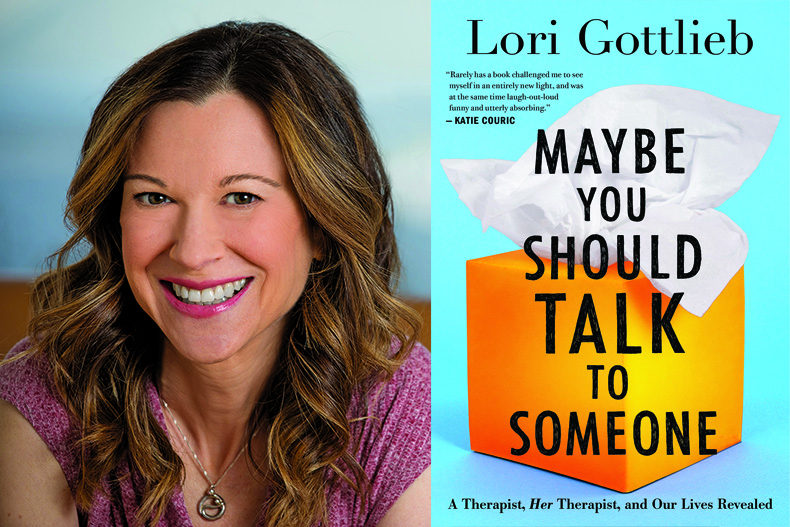
Editor's note: The following is an excerpt taken from Maybe You Should Talk to Someone: A Therapist, Her Therapist and Our Lives Revealed, by Lori Gottlieb, published by Houghton Mifflin Harcourt © 2019 and reprinted with permission of the publisher.

Shall We Skype?

“Hi, it’s me,” I hear as I listen to my voicemails between sessions. My stomach lurches; it’s Boyfriend. Though it’s been three months since we’ve spoken, his voice instantly transports me back in time, like hearing a song from the past. But as the message continues, I realize it’s not Boyfriend because (a) Boyfriend wouldn’t call my office number and (b) Boyfriend doesn’t work on a TV show.

This “me” is John (eerily, Boyfriend and John have similar voices, deep and low) and it’s the first time a patient has called my office without leaving a name. He does this as if he’s the only patient I have, not to mention the only “me” in my life. Even suicidal patients will leave their names. I’ve never gotten Hi, it’s me. You told me to call if I was feeling like killing myself.

John says in his message that he can’t make our session today because he’s stuck at the studio, so he’ll be Skyping in instead. He gives me his Skype handle, then says, “Talk to you at three.”

I note that he doesn’t ask if we can Skype or inquire whether I do Skype sessions in the first place. He just assumes it will happen because that’s how the world works for him. And while I’ll Skype with patients under certain circumstances, I think it’s a bad idea with John. So much of what I’m doing to help him relies on our in-the-room interaction. Say what you will about the wonders of technology, but “screen-to-screen is, as a colleague once said, “like doing therapy with a condom on.””

It’s not just the words people say or even the visual cues that therapists notice in person–the foot that shakes, the subtle facial twitch, the quivering lower lip, the eyes narrowing in anger. Beyond hearing and seeing, there’s something less tangible but equally important— the energy in the room, the being together. You lose that ineffable dimension when you aren’t sharing the same physical space.

There’s also the issue of glitches. I was once on a Skype session with a patient who was in Asia temporarily, and just as she began crying hysterically, the volume went out. All I saw was her mouth moving, but she didn’t know that I couldn’t hear what she was saying. Before I could get that across, the connection dropped entirely. It took ten minutes to restore the Skype, and by then not only was the moment lost but our time had run out.

I send John a quick email offering to reschedule, but he types back a message that reads like a modern-day telegram: Can’t w8. Urgent. Please. I’m surprised by the please and even more by his acknowledgment of needing urgent help–of needing me, rather than treating me as dispensable. So, I say okay, we’ll Skype at three.

Something, I figure, must be up.

At three, I open Skype and click “call,” expecting to find John sitting in an office at a desk. Instead, the call connects and I’m looking into a familiar house. It’s familiar to me because it’s one of the main sets of a TV show that Boyfriend and I used to binge-watch on my sofa, arms and legs entwined. Here, camera and lighting people are moving about, and I’m staring at the interior of a bedroom I’ve seen a million times. John’s face comes into view. “Hang on a second” is how he greets me, and then his face disappears and I’m looking at his feet. Today he’s wearing trendy checkered sneakers, and he seems to be walking somewhere while carrying me with him. Presumably he’s looking for privacy. Along with his shoes, I see thick electrical wires on the floor and hear a commotion in the background. Then John’s face reappears.

“Okay,” he says. “I’m ready.”

There’s a wall behind him now, and he starts rapid-fire whispering.

“It’s Margo and her idiot therapist. I don’t know how this person has a license but he’s making things worse, not better. She was supposed to be getting help for her depression but instead she’s getting more upset with me: I’m not available, I’m not listening, I’m distant, I avoid her, I forgot something on the calendar. Did I tell you that she created a shared Google calendar to make sure I won’t forget things that are ‘important’”—with his free hand, John does an air quote as he says the word important—“so now I’m even more stressed because my calendar is filled with Margo’s things and I’ve already got a packed schedule!”

John has gone over this with me before so I’m not sure what the urgency is about today. Initially he had lobbied Margo to see a therapist (“So she can complain to him”) but once she started going, “John often told me that this “idiot therapist” was “brainwashing” his wife and “putting crazy ideas in her head.”” My sense has been that the therapist is helping Margo gain more clarity about what she will and will not put up with and that this exploration has been long overdue. I mean, it can’t be easy being married to John.

At the same time, I empathize with John because his reaction is common. Whenever one person in a family system starts to make changes, even if the changes are healthy and positive, it’s not unusual for other members in the system to do everything they can to maintain the status quo and bring things back to homeostasis. If an addict stops drinking, for instance, family members often unconsciously sabotage that person’s recovery, because in order to regain homeostasis in the system, somebody has to fill the role of the troubled person. And who wants that role? Sometimes people even resist positive changes in their friends: Why are you going to the gym so much? Why can’t you stay out late—you don’t need more sleep! Why are you working so hard for that promotion? You’re no fun anymore!

If John’s wife becomes less depressed, how can John keep his role as the sane one in the couple? If she tries to get close in healthier ways, how can he preserve the comfortable distance he has so masterfully managed all of these years? I’m not surprised that John is having a negative reaction to Margo’s therapy. Her therapist seems to be doing a good job.

“So,” John continues, “last night, Margo asks me to come to bed, and I tell her I’ll be there in a minute, I have to answer a few emails. Normally after about two minutes she’ll be all over me—Why aren’t you coming to bed? Why are you always working? But last night, she doesn’t do any of that. And I’m amazed! I think, Jesus Christ, something’s finally working in her therapy, because she’s realizing that nagging me about coming to bed isn’t going to get me in bed any faster. So, I finish my emails, but when I get in bed, Margo’s asleep. Anyway, this morning, when we wake up, Margo says, ‘I’m glad you got your work done, but I miss you. I miss you a lot. I just want you to know that I miss you.’”

John turns to his left and now I hear what he hears—a nearby conversation about lighting—and without his saying a word, I’m staring at John’s sneakers again as they move across the floor. When I see his face appear this time, the wall behind him is gone, and now the star of the TV series is in the distant background in the upper-right corner of my screen, laughing with his on-camera nemesis along with the love interest he verbally abuses on the show. (I’m sure John is the one who writes this character).

I love these actors, so now I’m squinting at the three of them through my screen like I’m one of those people behind the ropes at the Emmys trying to get a glimpse of a celebrity—except this isn’t the red carpet and I’m watching them take sips from water bottles while they chat between scenes. The paparazzi would kill for this view, I think, and it takes massive will-power to focus solely on John.

“Anyway,” he whispers, “I knew it was too good to be true. I thought she was being understanding last night, but of course the complaining starts up again first thing this morning. So I say, ‘You miss me? What kind of guilt trip is that?’ I mean, I’m right here. I’m here every night. I’m one hundred percent loyal. Never cheated, never will. I provide a nice living. I’m an involved father. I even take care of the dog because Margo says she hates walking around with plastic bags of poop. And when I’m not there, I’m working. It’s not like I’m off in Cabo all day. So, I tell her I can quit my job and she can miss me less because I’ll be twiddling my thumbs at home, or I can keep my job and we’ll have a roof over our heads.” He yells “I’ll just be a minute!” to someone I can’t see and then continues. “And you know what she does when I say this? She says, all Oprah-like”—here he does a dead-on impression of Oprah—“‘I know you do a lot, and I appreciate that, but I also miss you even when you’re here.’”

I try to speak but John plows on. I haven’t seen him this stirred up before.

“So, for a second I’m relieved, because normally she’d yell at this point, but then I realize what’s going on. This sounds nothing like Margo. She’s up to something! And sure enough, she says, ‘I really need you to hear this.’ And I say, ‘I hear it, okay? I’m not deaf. I’ll try to come to bed earlier but I have to get my work done first.’ But then she gets this sad look on her face, like she’s about to cry, and it kills me when she gets that look, because I don’t want to make her sad. The last thing I want to do is disappoint her. But before I can say anything, she says, ‘I need you to hear how much I miss you because if you don’t hear it, I don’t know how much longer I can keep telling you.’ So I say, ‘We’re threatening each other now?’ and she says, ‘It’s not a threat, it’s the truth.’” John’s eyes become saucers and his free hand juts into the air, palm up, as if to say, can you believe this shit?

“I don’t think she’d actually do it,” he goes on, “but it shocked me because neither of us has ever threatened to leave before. When we got married we always said that no matter how angry we got, we would never threaten to leave, and in twelve years, we haven’t.” He looks to his right. “Okay, Tommy, let me take a look—.”

John stops talking and suddenly I’m staring at his sneakers again. When he finishes with Tommy, he starts walking somewhere. A minute later his face pops up; he’s in front of another wall.

My Idiot Therapist?

“John,” I say. “Let’s take a step back. First, I know you’re upset by what Margo said —.”

“What Margo said? It’s not even her! It’s her idiot therapist acting as her ventriloquist! She loves this guy. She quotes him all the time, like he’s her fucking guru. He probably serves Kool-Aid in the waiting room, and women all over the city are divorcing their husbands because they’re drinking this guy’s bullshit! I looked him up just to see what his credentials are and, sure enough, some moron therapy board gave him a license. Wendell Bronson, P-h-fucking-D.”

Wait.
Wendell Bronson?
!
!!
!!!!
!!!!!!!

Margo is seeing my Wendell? The “idiot therapist” is Wendell? My mind explodes. I wonder where on the couch Margo chose to sit on her first day. I wonder if Wendell tosses her tissue boxes or if she sits close enough to reach them herself. I wonder if we’ve ever passed each other on the way in or out (the pretty crying woman from the waiting room?). I wonder if she’s ever mentioned my name in her own therapy— “John has this awful therapist, Lori Gottlieb, who said . . .” But then I remember that John is keeping his therapy a secret from Margo—I’m the “hooker” he pays in cash—and right now, I’m tremendously grateful for this circumstance. I don’t know what to do with this information, so I do what therapists are taught to do when we’re having a complicated reaction to something and need more time to understand it. I do nothing—for the moment. I’ll get consultation on this later.

“Let’s stay with Margo for a second,” I say, as much to myself as to John. “I think what she said was sweet. She must really love you.”

“Huh? She’s threatening to leave!”

“Well, let’s look at it another way,” I say. “We’ve talked before about how there’s a difference between a criticism and a complaint, how the former contains judgment while the latter contains a request. But a complaint can also be an unvoiced compliment. I know that what Margo says often feels like a series of complaints. And they are—but they’re sweet complaints because inside each complaint, she’s giving you a compliment. The presentation isn’t optimal, but she’s saying that she loves you. She wants more of you. She misses you. She’s asking you to come closer. And now she’s saying that the experience of wanting to be with you and not having that reciprocated is so painful that she might not be able to tolerate it because she loves you so much.” I wait to let him absorb that last part. “That’s quite a compliment.”

I’m always working with John on identifying his in-the-moment feelings, because feelings lead to behaviors. Once we know what we’re feeling, we can make choices about where we want to go with them. But if we push them away the second they appear, often we end up veering off in the wrong direction, getting lost yet again in the land of chaos.

Men tend to be at a disadvantage here because they aren’t typically raised to have a working knowledge of their internal worlds; it’s less socially acceptable for men to talk about their feelings. While women feel cultural pressure to keep up their physical appearance, men feel that pressure to keep up their emotional appearance. Women tend to confide in friends or family members, but when men tell me how they feel in therapy, I’m almost always the first person they’ve said it to. Like my female patients, men struggle with marriage, self-esteem, identity, success, their parents, their childhoods, being loved and understood—and yet these topics can be tricky to bring up in any meaningful way with their male friends. It’s no wonder that the rates of substance abuse and suicide in middle-aged men continue to increase. Many men don’t feel they have any other place to turn.

So, I let John take his time to sort out his feelings about Margo’s “threat” and the softer message that might be behind it. I haven’t seen him sit with his feelings this long before, and I’m impressed that he’s able to do so now. John’s eyes have darted down and to the side, which is what usually happens with someone when what I’m saying touches someplace vulnerable, and I’m glad. It’s impossible to grow without first becoming vulnerable. It looks like he’s still really taking this in, that for the first time, his impact on Margo is resonating.

Finally, John looks back up at me. “Hi, sorry, I had to mute you back there. They were taping. I missed that. What were you saying?” Un-fucking-believable. I’ve been, quite literally, talking to myself. No wonder Margo wants to leave! I should have listened to my gut and had John reschedule an in-person session, but I got sucked in by his urgent plea.

“John,” I say, “I really want to help you with this, but I think this is too important to talk about on Skype. Let’s schedule a time for you to come in so there aren’t so many distract —”

“Oh, no, no, no, no, no,” he interrupts. “This can’t wait. I just had to give you the background first so you can talk to him.”

“To . . .”

“The idiot therapist! Clearly he’s only hearing one side of the story, and not a very accurate side at that. But you know me. You can vouch for me. You can give this guy some perspective before Margo really goes nuts.”

I Won’t Do It!

I noodle this scenario around in my head: John wants me to call my own therapist to discuss why my patient isn’t happy with the therapy my therapist is doing with my patient’s wife.

Um, no.

Even if Wendell weren’t my therapist, I wouldn’t make this call. Sometimes, I’ll call another therapist to discuss a patient if, say, I’m seeing a couple and a colleague is seeing one member of the couple, and there’s a compelling reason to exchange information (somebody is suicidal or potentially violent, or we’re working on something in one setting that it would be helpful to have reinforced in another, or we want to get a broader perspective). But on these rare occasions, the parties will have signed releases to this effect. Wendell or no Wendell, I can’t call up the therapist of my patient’s wife for no clinically relevant reason and without both patients signing consent forms.

“Let me ask you something,” I say to John. “What?”

“Do you miss Margo?”

“Do I miss her?”

“Yes.”

“You’re not going to call Margo’s therapist, are you?”

“I’m not, and you’re not going to tell me how you really feel about Margo, are you?” I have a feeling that there’s a lot of buried love between John and Margo because I know this; love can often look like so many things that don’t seem like love.

John smiles as I see somebody who I assume is Tommy again enter the frame holding a script. I’m flipped toward the ground with such speed that I get dizzy, as if I’m on a roller coaster that just took a quick dive. Staring at John’s shoes, I hear some back-and-forth about whether the character—my favorite!—is supposed to be a complete asshole in this scene or maybe have some awareness that he’s being an asshole (interestingly, John picks awareness) and then Tommy thanks John and leaves. To my amusement, John seems perfectly pleasant, apologizing to Tommy for his absence and explaining to him that he’s busy “putting out a fire with the network.” (I’m “the network”). Maybe he’s polite to his coworkers after all.

Or maybe not. He waits for Tommy to leave, then lifts me up to face level again and mouths, Idiot, rolling his eyes in Tommy’s direction.

“I just don’t understand how her therapist, who’s a guy, can’t see both sides of this,” he continues. “Even you can see both sides of this!”

Even me? I smile. “Was that a compliment you just gave me?”

“No offense. I just meant…you know.”

I do know, but I want him to say it. “In his own way, he’s becoming attached to me”, and I want him to stay in his emotional world a bit longer. But John goes back to his tirade about Margo pulling the wool over her therapist’s eyes and how Wendell is a quack because his sessions are only forty-five minutes, not the typical fifty. (This bugs me too, by the way). It occurs to me that John is talking about Wendell the way a husband might talk about a man his wife has a crush on. I think he’s jealous and feels left out of whatever goes on between Margo and Wendell in that room. (I’m jealous too! Does Wendell laugh at Margo’s jokes? Does he like her better?) I want to bring John back to that moment when he almost connected with me.

“I’m glad that you feel understood by me,” I say. John gets a deer-in-the-headlights look on his face for a second, then moves on.

“All I want to know is how to deal with Margo.”

“She already told you,” I say. “She misses you. I can see from our experience together how skilled you are at pushing away people who care about you. I’m not leaving, but Margo’s saying she might. So maybe you’ll try something different with her. Maybe you’ll let her know that you miss her too.” I pause. “Because I might be wrong, but I think you do miss her.”

He shrugs, and this time when he looks down, I’m not on mute. “I miss the way we were,” he says.

His expression is sad instead of angry now. Anger is the go-to feeling for most people because it’s outward-directed—angrily blaming others can feel deliciously sanctimonious. But often it’s only the tip of the iceberg, and if you look beneath the surface, you’ll glimpse submerged feelings you either weren’t aware of or didn’t want to show—fear, helplessness, envy, loneliness, insecurity. And if you can tolerate these deeper feelings long enough to understand them and listen to what they’re telling you, you’ll not only manage your anger in more productive ways, you also won’t be so angry all the time.

Of course, anger serves another function—it pushes people away and keeps them from getting close enough to see you. I wonder if John needs people to be angry at him so that they won’t see his sadness.

I start to speak, but somebody yells John’s name, startling him. The phone slips out of his hand and careens toward the floor, but just as I feel like my face might hit the ground, John catches it, bringing himself back into view. “Crap–gotta go!” he says. Then, under his breath: “Fucking morons.” And the screen goes blank.

Apparently, our session is over.

Ethics Over Coffee

With time to spare before my next session, I head into the kitchen for a snack. Two of my colleagues are there. Hillary is making tea. Mike’s eating a sandwich.

“Hypothetically,” I say, “what would you do if your patient’s wife was seeing your therapist, and your patient thought your therapist was an idiot?”

They look up at me, eyebrows raised. Hypotheticals in this kitchen are never hypothetical.

“I’d switch therapists,” Hillary says.

“I’d keep my therapist and switch patients,” Mike says. They both laugh.

“No, really,” I say. “What would you do? It gets worse: He wants me to talk to my therapist about his wife. His wife doesn’t know he’s in therapy yet, so it’s a non-issue now, but what if at some point he tells her and then wants me to consult with my therapist about his wife, and his wife consents? Do I have to disclose that he’s my therapist?”

“Absolutely,” Hillary says.

“Not necessarily,” Mike says at the same time.

“Exactly,” I say. “It’s not clear. And you know why it’s not clear? Because this kind of thing NEVER HAPPENS! When has something like this ever happened?”

Hillary pours me some tea.

“I once had two people come to me individually for therapy right after they’d separated,” Mike says. “They had different last names and listed different addresses because of the separation, so I didn’t know they were married until the second session with each of them, when I realized I was hearing the same stories from different sides. Their mutual friend, who was a former patient, gave both of them my name. I had to refer them out.”

“Yeah,” I say, “but this isn’t two patients with a conflict of interest. My therapist is mixed up in this. What are the odds of that?”

I notice Hillary looking away. “What?” I say.

“Nothing.”

Mike looks at her. She blushes. “Spill it,” he says.

Hillary sighs. “Okay. About twenty years ago, when I was first starting out, I was seeing a young guy for depression. I felt like we were making progress, but then the therapy seemed to stall. I thought he wasn’t ready to move forward, but really I just didn’t have enough experience and was too green to know the difference. Anyway, he left, and about a year later, I ran into him at my therapist’s.”

Mike grins. “Your patient left you for your own therapist?”

Hillary nods. “The funny thing is, in therapy, I talked about how stuck I was with this patient and how helpless I felt when he left. I’m sure the patient later told my therapist about his inept former therapist and used my name at some point. My therapist had to have put two and two together.” I think about this in relation to the Wendell situation. “But your therapist never said anything?”

“Never,” Hillary says. “So, one day I brought it up. But of course, she can’t say that she sees this guy, so we kept the conversation focused on how I deal with the insecurities of being a new therapist. Pfft. My feelings? Whatever. I was just dying to know how their therapy was going and what she did differently with him that worked better.”

“You’ll never know,” I say.

Hillary shakes her head. “I’ll never know.”

“We’re like vaults,” Mike says. “You can’t break us.”

Hillary turns to me. “So, are you going to tell your therapist?” “Should I?”

They both shrug. Mike glances at the clock, tosses his trash into the can. Hillary and I take our last sips of tea. It’s time for our next sessions. One by one, the green lights on the kitchen’s master panel go on, and we file out to retrieve our patients from the waiting room. 

The Masculinity Trap: A Science-Based Response to the APA Guidelines

Andrew was a 13-year-old boy who walked into my counseling office with a lot of issues. He had been diagnosed with a learning disorder and ADD, and his parents felt he might be depressed. Like many male clients, he would quickly decide if I as his potential counselor knew how to work with him as a male. If I did not, he would start trying to leave therapy in a few weeks or less.

After normal intake, the first thing we did together was walk outside, talking shoulder-to-shoulder. Because the male brain is often cerebellum-dependent (it often needs physical movement) in order to connect words to feelings and memories, we sat down only after our walk was finished. By then, a great deal had happened emotionally for Andrew.

Like what you are reading? For more stimulating stories, thought-provoking articles and new video announcements, sign up for our monthly newsletter.

Once in our chairs, we talked with a ball in hand, tossing it back and forth, like fathers often do with children. This cerebellum and spatial involvement help the male brain move neuro-transmission between the limbic system and frontal lobe, where word centers are. We also used visual images, including video games, to trigger emotion centers, and we discussed manhood and masculinity a great deal, since Andrew, like every boy, yearns for mentoring in the human ontology of how to be a man.

I’ve seen hundreds of girls and women in my therapy practice. Few of them needed walking, physical movement and visual-spatial stimulation to help access memories, emotions, and feelings because most girls are better able to access words-for-feelings than boys and men are while sitting still. Girls and women have language centers on both sides of the brain connected to memory, emotion, and sensorial data, while the male brain mainly has word centers and word-feeling connectivity on the left side.

Without our realizing it over the last fifty years, we’ve set up counseling and psychological services for girls and women. “Come into my office,” we say kindly. “Sit down. Tell me how you feel/felt.” Boys and men fail out of counseling and therapy because we have not taught our psychologists and therapists about the male and female brain. Only 15% of new counselors are male. Clients in therapy skew almost 80% female–males are dragged in by moms or spouses, but generally find an environment unequipped for the nature of males.

Male nature, the male brain, and the need to contextualize boyhood into an important masculine journey to manhood are missing from the American Psychological Association’s new “Guidelines for Psychological Practice with Boys and Men.” While the document calls attention to male developmental needs and crises in our culture, which I celebrate as a researcher and practitioner in the field, it then falls into an ideological swamp.

Males, we are told, are born with dominion created by their inherent privilege; females (and males) are victims of this male privilege. The authors go further to discuss what they see as the main problem facing males—too much masculinity. They call it the root of all or most male issues including suicide, early death, depression, substance abuse, family breakups, school failure, and violence. They claim that fewer males than females seek out therapy or stay in therapy and health services because of “masculinity.” Never is the skewed female-friendly mental health environment discussed. The assumption that all systems skew in favor of males, not females, is so deeply entrenched in our culture today, the APA never has to prove it.

Perhaps most worrisome, the APA should be a science-based organization, but its guidelines lack hard science. Daniel Amen, Ruben and Raquel Gur, Tracey Shors, Louanne Brizendine, Sandra Witelson, Richard Haier, Laurie Allen, and the hundreds of scientists worldwide who use brain scan technology to understand male/female brain difference do not appear in the new Guidelines. Practitioners like myself and Leonard Sax, MD, PhD, who have conducted multiple studies in the practical application of neuroscience to male nurturance in schools, homes, and communities are not included.

Included are mainly socio-psychologists who push the idea that boys and men are socialized into “masculinities” that destroy male development. Stephanie Pappas on the APA website sums up the APA’s enemy; “Traditional masculinity—marked by stoicism, competitiveness, dominance, and aggression—is, on the whole, harmful.” Our job as therapists, the authors teach, should be to remove all but the ideologically sound “masculinities” from boys and men, and specifically remove masculinities that involve competition, aggression, strength, and power.

How much longer can our society and its professionals pretend we are developing a saner society by condemning the very parts of males that help them succeed, heal, and grow? In the same way that it is misogynistic to claim femininity is inherently flawed, it is misandrist to claim that masculinity is also thus.

And it is just plain wrong. Stoicism, aggression, self-reliance, and strength are helpful to human growth, healing, and self-development. Steven Pinker recently made this point when he asked the APA to revise its Guidelines, and put to rest “the folk theory that masculine stoicism is harmful.” And, a new study published in January 2019 in Psychology of Men and Masculinities, echoes Pinker, showing that boys and men who adhere to masculine training do better in life, are happier, and become better husbands, fathers, and partners.

I am an example: I was a sexual abuse victim in my boyhood, and a very sensitive boy. My ten years of healing from the abuse came as much from tapping into masculine strength as it did from expanding my sense of self in the 1970s toward the feminine. Both are good; neither is zero-sum, but I could not have healed without the very masculinity Pappas finds suspect.

Part of the problem with the APA guidelines is that, from a neuroscience point of view, masculinity is not as limited as Pappas’ assessment would have us believe. Masculinity is a social construct made of biological material, an amalgam of nature, nurture, and culture that forms an ontology in which a male of any race, creed, or ethnicity commits to developing and exercising strength, perseverance, work, love, honor, compassion, responsibility, character, service, and self-sacrifice.

What professional in the psychology field would not want to embolden these characteristics? Most fathers and mothers would want counselors to embolden them because, as the APA authors themselves point out (somewhat unaware, I think, of their self-contradiction), fathering and mentoring boys in masculine development has been proven among the most important determinants of child safety, school success, and emotional and physical health.

Not the erasure of masculinity but the accomplishment of it is required if we are to save our sons from the crises outlined in the APA guidelines. Without counselors and parents understanding how to raise and protect brain-based masculine development, boys like Andrew drift in and out of video games, depression, substances, half-love, and, often, violence.

As all of us in our profession know, the most dangerous males in the world are not those who feel powerful but, rather, those who feel powerless. “Toxic masculinity” is a convenient academic avenue for condemning males who search for strength, healing, and love by conflating things bad men do with an ontology that is necessary for human survival and thriving.

The masculine journey is not perfect and expanding what “masculine,” “male power,” and “man” mean to a given family and person is a point well made by the APA authors, but trying to hook mental health professionals into this ideological trinity of false ideas—

*masculinity is the problem, always on the verge of toxicity
*males do not need nurturing in male-specific ways because men have it all in society anyway; and
*masculinity is not an ontology, a way of healthy being, but a form of oppression,

—ignores one of the primary reasons for the existence of our psychology profession: not just to help girls, women, and everyone on the gender spectrum be empowered and find themselves, but also to help boys and men find their strength, their purpose, and their success in what will be, for them, a complex male and masculine journey through an increasingly difficult lifespan.

Sources:

Amen, D.G., et.al., “Women Have More Active Brains Than Men." August 7, 2017 Journal of Alzheimer’s Disease

Halpern, D.F., et.al., “The Science of Sex Differences in Science and Mathematics.” Psychological Science in the Public Interest. August 8, 2007

Burman, D., et.al., "Sex Differences in Neural Processing of Language Among Children." March 2007. Neuropsychologia

Benedict Carey, “Need Therapy: A Good Man Is Hard to Find.New York Times. May 21,2011

APA Guidelines for Psychological Practice with Boys and Men

Stephanie Pappas, “APA issues first-ever guidelines for practice with men and boys.APA Monitor. January 2019

Steven Pinker. Male Psychology: What is Wrong with APA’s Masculinity Guidelines.

Psychology of Men and Masculinities

Coalition to Create a White House Council on Boys and Men’s meta-study

Embracing Chronic Anger: A Prescription for Disempowerment

“I’ve had a problem with anger all of my life… at work, in my relationships and everywhere in between. I was court referred because I assaulted a guy at a bar when I was drunk. That’s how I got this (pointing to the cast on his left wrist). I also took a class five years ago because I had slapped my wife. But she dropped the charges. In the past ten years, I’ve been married twice. I know my anger contributed to my divorces and I really don’t want to lose my current girlfriend.”

Anger Chose Him

Keith, a participant in one of my anger management classes, introduced himself in a deep, resonant voice. As an anger management specialist, I have offered these classes for over thirty years, with participants who have been self-referred as well as referred by their workplace, partners, friends and the courts. They have included individuals from various socio-economic levels, including professionals, blue-collar workers and students ranging in age from eighteen to seventy-five years old. Surprisingly, Keith became increasingly candid throughout the first session.

“You know, there are times I feel like maybe I was just born being angry. My father had a lot of anger too. So did his father. Maybe it’s just in my genes.” Keith described a life of chronic anger–anger that was frequent and pervasive, evidenced in his workplace, personal relationships and daily life. It entailed anger arousal not just as a situational reaction to a specific triggering event, but reflective of a general predisposition to hostility. Chronic anger encompasses “trait” versus “state” anger, which is more situational and short-lived. And like others who report issues with chronic anger, “Keith described his anger as if it chose him”, as if he was the victim of his anger and did not have free agency to choose it.

Keith, like others with chronic anger, views the world through a filter constricted by his anger. This filter inhibits self-reflection and access to more rational thought. And, like others with chronic anger, his narrowed vision, along with the rigidity of his reactions, saps his capacity to genuinely satisfy his desires and needs.

It appeared that disappointment in his life, coupled with an increased curiosity about his anger, enhanced his motivation for further exploration. The most recent arrest and being almost 40 years old also provided an impetus for his seeking help. As I later learned, he was also dealing with his father’s death two years before. Keith seemed increasingly committed to his desire to change, reflected in his active participation in the class as well as his request for individual therapy upon completing the course.

Keith, like others who exhibit chronic anger, appeared to embrace it as a core aspect of his identity. Chronic anger became a major aspect of his inner sense of sameness and continuity over time.

A Word on Identity

Consciously cultivating our identity requires that we answer the following questions:
“Who am I?” “What is my purpose?” “What kind of individual do I wish to be?” “What gives me meaning?”

Many of us fail to ask these questions of ourselves. Absent such reflection, we may subsequently become subject to a “script”, one that is defined for us by others. This script becomes the blueprint for the structure of our lives. It provides the guidelines for how we live, informing habits in how to think, feel and behave. And each time we practice these habits, we reinforce the connections in our neuronal pathways in ways that only increase our propensity for them. For this reason, it may require some life-altering event to prompt us to more fully examine what we are doing.

The self-reflection required to address these questions pits us against our fears, our sense of self-worth, and our difficulties in making decisions and choices and committing ourselves to them. Such reflection also moves us to address barriers we create regarding the opinions of others—those voiced by others as well as those we hear from the imaginary audience in our minds. It is then understandable that we may seek distraction from engaging in this daunting task–through our work, the immediate demands of our daily lives, our relationships and even our addictions. Embracing chronic anger as a major component of our identity may yet be another form of bypassing this intensely difficult challenge.

Chronic Anger

Anger, a natural emotion, stems from a perceived threat to our physical or mental well-being. Additionally, it’s a reaction to and distraction from uncomfortable negative feelings that precede it–feelings such as shame, guilt, rejection, powerlessness, inadequacy or devaluation. I’ve come to view anger, like other symptoms we may encounter, as originating from an initial impulse of self-compassion–an attempt to alleviate our suffering. Such anger hijacks our attention away from our our internal landscape and in effect offers us a temporary reprieve from enduring the intense suffering caused by these more uncomfortable feelings.

When managed in a healthy manner, we’re able to pause to take the time that is essential for understanding our anger–whether regarding our feelings behind it, our expectations or our key desires and needs. Anger can empower us to seek constructive ways to satisfy our desires and needs. It can fuel healthy assertiveness that moves us to act in ways consistent with who we are and who we wish to become.

By contrast, destructive anger moves us further away from satisfying our core desires and needs. It can lead to poor work performance, a stalled career, relational conflict, social isolation, depression, excessive guilt or shame and even the loss of one’s freedom. Additionally, extensive research shows that anger can contribute to illnesses like heart disease, high blood pressure and even back pain.

Chronic anger is one form of destructive anger. For some of us, such anger serves as psychological armor, intended to protect us from the sting of our inner pain. Such anger can be viewed as a form of “experiential avoidance,” as described by Stephen Hayes, and involves the suppression, minimization and denial of our feelings.

It is against the lack of a solid identity that individuals with chronic anger may be characterized as embodying a “negative identity,” described by Erik Erikson as an identity in opposition to what is expected of them. Lacking self-awareness and the self-reflection essential for such awareness, their default is to react. They may gravitate toward this resolution when they believe the roles their parents and society expect them to fulfill are unattainable. The psychological underpinning of this stance is reflected in the attitude “I don’t know whom I wish to be, but I certainly don’t want to be like you.”

Unfortunately for Keith and others, embracing chronic anger was a formula for disempowerment that only strengthened the tendency for anger arousal. And for Keith, like others with chronic anger, it appeared to be an outgrowth of aspects very much consistent with a negative identity.

Chronic anger has many forms. It’s reflected by the quickness to experience anger in daily life, in one’s relationships and especially with authority. Chronic anger appears in the numerous comments on the Internet, statements of opinion that are predominantly expressions of anger rather than rational argument. Such anger impairs the capacity to be civil, open, understanding or compassionate with others and ourselves. “It is a cataract that clouds our vision to the possibilities of looking for and noticing the positive in others and in ourselves”.

Chronic anger promotes disempowerment, which only furthers the propensity for anger. It undermines taking responsibility for our own lives. In doing so, it constricts the range of possibilities and minimizes the freedom for personal evolution and life fulfillment. It’s so much easier to blame others or circumstances for a difficult or painful situation and by doing so, renounce all our power to help alter our situation. In the process, however, we only further bolster our sense of victimhood. Even when others have truly contributed to our pain, embracing chronic anger may serve to protect us from the hard work of identifying and choosing alternative courses of action.

It then makes sense that individuals with chronic anger may resort to drug or alcohol use, or blame or hate others for their own misery. Certainly, such anger might foster or be a symptom of depression, especially when it is self-directed.

Furthermore, this vicious cycle of chronic anger and disempowerment fuels pessimism that inherently diminishes the capacity to envision a future without anger–a future that holds greater happiness, meaning and fulfillment. And, further, it undermines the capacity to develop an identity marked by greater individuation and resilience.

Like so many symptoms we observe in our clinical work, chronic anger is most often rooted in wounds–deeply felt hurt and trauma that have not been fully acknowledged. It is often a reaction to emotional or physical abuse, neglect, or loss. And while some studies suggest a genetic influence, as with much of personality, nurture helps determine whether these genetic predispositions are expressed. And while such anger may also originate with experiences in adulthood, being prone to chronic anger further strengthens it as a go-to reaction.

All too often, childhood trauma forms the underpinning of chronic anger. It may lead to a global sense of shame and accompanying feelings of inadequacy about oneself. This sense of shame is often the overriding and paralyzing feeling that creates a block to trusting one’s own thoughts, feelings or actions. These feelings then further weaken the capacity to engage in thoughts and behavior that would be essential for a more authentic choice in creating and living one’s identity.

The Case of Keith

Keith shared a history of physical abuse, occasionally being slapped or paddled by his father for his “bad” behavior. Like others with issues surrounding anger, he tended to minimize and deny the impact of these earlier experiences. And in doing so, he cut himself off from the range of feelings that surround such abuse. Unfortunately, a child in pain needs compassion and empathy from a caring parent but is unable to obtain it when a parent is the cause of that pain.

Keith learned to ignore his suffering by blaming himself for how he was treated. He experienced shame regarding his behavior but, more importantly, and without awareness, he experienced tremendous shame regarding the slightest surfacing of anger toward his father. As such, Keith, like others with early wounds, could describe the circumstances of early wounds as a matter of fact, but was unable to regard them as wounds–let alone be more fully in touch with the underlying emotions associated with them. “It didn’t hurt that much.” “I think I deserved it.” “That was how most parents disciplined their kids.” “I certainly wouldn’t call it abuse.”

Like others who have experienced such abuse and like many with chronic anger, these are just a few of the ways that Keith protected himself from experiencing his hurt and anger. This fear of experiencing anger with his father simply continued into his adulthood. Consequently, Keith had little awareness of how his earlier interactions and related wounds influenced his anger. “My father was a marine. He was always intensely demanding and perfectionistic. He constantly interrogated me, questioning me to justify myself, why I thought this or why I did that. He had little patience for pain or for a difference of opinion.”

Keith also revealed that if anything, he was angry with himself for not measuring up. This conclusion further informed his sense of shame and inadequacy. It’s important to note that, for Keith and others like him, chronic anger served as a powerful distraction from anger that was originally self-directed. While his father was perfectionistic and highly critical, his mother was distant and not available to help protect him or validate his pain. “She was quite anxious, quiet in general, and maybe depressed, I’m not sure. I know she was fearful of my dad. She always avoided conflicts and disappeared when they arose.”

Keith’s reported that his mother was closer with his younger sister who was rarely the target of his father’s anger. His ambivalent feelings toward his mother would only later become more apparent. His parents were divorced when he was in middle school and his father remarried within a year. Only then did Keith experience some relief, as his father became preoccupied with his new wife and stepchildren.

Keith reported that during this time, he experienced a growing distance from his parents and a sense of disorientation regarding his future. He described himself as kind of “floating” throughout high school. His tendency to be angry with teachers competed with any academic interest and, subsequently, his motivation to do well in school. Lacking a more solid connection with himself, he was unable to emotionally invest either academically or in his relationships.

“Like others with chronic anger, Keith was especially sensitive to criticism in many situations”, especially those involving authority. Clearly, his early interactions left him with an increased sensitivity for perceiving threat. As he candidly admitted, his tendency toward conflicts with authority undermined his ability to succeed in school and work and his capacity to maintain friendships. “I really wasn’t motivated in school and only did the minimum to get by. I spent most of my time playing video games, hanging out with friends, and I smoked marijuana often, beginning in my freshman year.”

Keith went to college for two years, primarily because he had no idea what he wanted to do, and his father had promised to pay the tuition for the first two years. His motivation and focus hadn’t changed during this time. While he occasionally dated, his quickness to have conflicts interfered with his developing any ongoing relationships. Unlike Keith, there are certainly individuals with chronic anger who are motivated to achieve, both academically and in their pursuit of a career. For some, the full impact of their anger may not surface until they are more involved in relationships, whether personal or work related.

Keith quit school after two years and his father suggested that he join him in a property management business, but Keith knew he could never work with him. Instead, he became a realtor, primarily motivated by his belief that he could make easy money with minimal effort. Within a year, he realized that he had little patience for dealing with the clients. After that he held a variety of jobs. He gravitated toward working with computers and by the time he enlisted in my anger management class, he had been working for several years in IT.

Keith also indicated a growing anger in recent years regarding the government. He complained a great deal, even commented on the Internet, but never demonstrated his anger in more aggressive ways. He didn’t consider himself an activist but he found himself also spending a good amount of time online, following the angry chatter of various groups.

Facing the Demon

Keith represents a small fraction of men with chronic anger who ultimately seek help for their anger. I view the courageous decision to seek therapy, although prompted by pain, as stemming from self-compassion–a desire to alleviate one’s pain. And while Keith had learned to renounce his need for such compassion, he sought help when he more fully recognized how anger contributed to his suffering.

Keith had grown to view the need for compassion as reflecting weakness and as threatening to his masculinity. He had learned to believe that being a “real” man involved cultivating an identity devoid of needing such compassion. However, ignoring his need for compassion further undermined his capacity to be more fully present with his feelings, in general, as well as with his underlying desires.

When we are truly compassionate and connected with ourselves, we know how we feel, recognize our key desires, and feel anchored in an identity that provides stability with flexibility to be open to both our thoughts and feelings. By contrast, the lack of such compassion and self-reflection can make us vulnerable to self-doubt. Keith’s lack of access to his feelings reduced his capacity to notice or be compassionate to the pain reported by his partners. This is very much consistent with individuals with chronic anger and was reflected in Keith’s description of a recent anger episode with his girlfriend.

“She’s always criticizing me. She’s always telling me that I don’t care for her–like I can’t do anything right. The other day she described a conflict she had with her supervisor. After listening, I told her that maybe her supervisor was right. I mean–based on what she told me–I could see his point of view.” It became evident that Keith was more concerned with facts than with feelings. His focus on facts competed with his capacity to be empathic with his girlfriend. Understandably, validating the supervisor’s criticism was experienced by his girlfriend as a demonstration of his empathy–with the supervisor. The argument escalated with Keith cursing and demeaning her. It ended by his leaving the house for a few hours, an evening of silence upon his return and then, the next day, gradually resuming their relationship as usual.

Consistent with his experiences in past relationships, if he couldn’t “fix” his partners’ problems, he would soon experience an overwhelming feeling of inadequacy. In effect, in his personal interactions, Keith re-experienced the feelings of inadequacy as well as his self-doubts triggered in his earlier interactions with his father. Additionally, he carried into his relationship the anger he had also experienced toward his mother for her lack of availability.

“The tendency to be vulnerable and to feel controlled is part of the fallout of not living a life grounded in self-connection”. A more mature identity allows us to hear opinions that stand in opposition to our own, living a life based on an identity of anger leads to hypervigilance to protect ourselves from self-doubt and feeling influenced by others. Others’ opinions may be experienced as threatening and viewed as overbearing and controlling. It is then no surprise that individuals with chronic anger feel isolated. And it is equally understandable how such anger promotes distrust that only strengthens the avoidance of genuine intimacy.

Keith had embraced this perspective for much of his life. The more he reacted to others in this manner, the more he cultivated his sense of victimhood and, in turn, had become more prone to anger arousal. His flight from responsibility was similarly reflected in our work together, most poignantly in his initial hesitation to actually practice the skills essential for cultivating healthy anger.

Part of my approach is to have clients complete an anger log, a structured journal that helps them review an anger-provoking episode and their thoughts and feelings related to such events. The log specifically asks them to identify feelings that immediately precede their anger, the knee-jerk conclusions they make about the event, expectations they may have held before the event occurred, body sensations and key desires that feel threatened by the event.

I advocate completing the log to review as many events as possible. Doing so promotes emotional intelligence not only regarding the reviewed event, but also fosters increased mindfulness to reactions for future events. Furthermore, completing the form helps to foster emotional awareness of one’s unique “hot buttons”–personal sensitivities regarding specific desires and the past experiences that intensify their current reactions. And, as always, “I emphasize that overly intense anger most often is a residual reaction to events of early wounds”. This is poignantly highlighted when I help them recognize that “It’s happening again!” is just one of their immediate responses to a triggering event. “At that distinct moment, it is as if your emotional brain is recalling all past hurts that are in any way similar to what you are currently experiencing. This is the power of global thinking and feeling.”

I emphasized with Keith that our global emotional mind has nothing to do with our age, intelligence or even our more rational thought. It is a part of us that, without our awareness, may override our rational mind as it impacts our thinking and behavior. Completing the log serves to offer psychological distance to the experience and fosters the cultivation of the “observing self” or “witness.” This strengthens one’s ability to not feel overwhelmed by such thoughts and feelings.

Keith repeatedly did not accept this recommendation. I suggested that it would be beneficial to understand what interfered with his completing the logs. I asked if he experienced my suggested assignments as controlling. His knee-jerk response was to deny this but after a pause he then admitted, “Maybe a little.” I then responded, “That makes perfect sense–to your emotional mind. You grew up with tremendous anxiety about expressing yourself. Understandably, you experienced safety by trying to avoid conflict with your father. Your inhibitions in expressing yourself contributed to feeling controlled.”

During the following session, I asked Keith if he was open to doing an exercise. He agreed. I then handed him a blank anger log. “Make yourself physically comfortable. Look at the anger log. Imagine that you are seated where you might be completing the form. Hold the pencil to the paper without writing anything. Now, think of an event that you would review if you were to complete the log. Do that for a few moments. Now, shift your attention from the event to what you are experiencing regarding writing it. What physical sensations are you experiencing? Are you feeling calm or tense? What are your thoughts about this task?”

Keith paused for a moment to reflect. With little hesitation, he answered, “Yeah. I guess I’m angry that I have to practice these skills while others don’t have to…others had it easier. They most likely didn’t go through what I went through.” I fully acknowledged and validated this belief that, yes, others may have had it easier in so many ways. And, yes, they may not have to do these exercises to better manage their anger. And, yes, engaging in this work arouses uncomfortable feeling regarding previous wounds and hurts. I then emphasized that he could choose to stay resentful and hold on to his anger or he could take steps to change, with the potential of having a more fulfilling life. Additionally, I highlighted to him that how we manage anger involves habits in our thoughts, feelings and behaviors–habits which he can change, but only with patience, commitment and practice.

Keith’s recognition of irritation with this task presented another opportunity to discuss mourning and grieving for what he didn’t have and felt he should have had. Much of anger is about this discrepancy. As part of such mourning, I encourage clients to find a picture of themselves at an earlier age. Over time, when they are ready, I help them recall the earlier suffering of that younger self. I help them work toward being able to fully express themselves as that younger version and say things like, “It made perfect sense that you suffered, were confused and even angry with your parents,” “How you were treated was not your fault” and “I’m sorry I could not help you.”

Such mourning and grieving is an ongoing process that in many ways never ends. Rather the rawness of such experiences just becomes more emotionally muted. Through our work together, “Keith increasingly began to develop a deeper connection with himself, his feelings and his thoughts”. He became more alert to his tendency toward anger and increasingly recognized it as a signal to direct his attention to self-reflection rather than act it out. He reported one incident, having to do with a homeless person that very much reflects this growth.

“You know that homeless guy who is always on the corner. I’ve always been annoyed when I walk by him. In the past, I’d usually tell myself that he was just lazy and that he should get a job. I started to think about that. I think that I was just feeling inadequate about not being able to fix him or others like him. I also reacted to feeling he was needy, a feeling I’ve always felt uncomfortable acknowledging in myself. There’s a lot in there!”

Keith continued with therapy and gained a variety of strategies to better understand and manage his anger. He expanded his compassionate self sufficiently to recognize and admit some of the hurt he had experienced that contributed to his shame and related anger.

As often happens when treating chronic anger, improving his ability to more constructively manage his anger reduced his motivation to more poignantly mourn and grieve his childhood. However, processing the loss of his father led him to attend to his earlier years. He became increasingly able to tolerate mixed and ambivalent feelings, essential for dealing with his complex relationship with his father.

Keith demonstrated progress in that he reacted with anger less frequently and it was shorter in duration when it did occur. At one point, Keith reported that he was pleased with his improvement and that he needed to take a break. Additionally, he was also able to recognize that spending more time on grieving and mourning had been very difficult for him.

Keith returned a year later, prompted in part by an anger-arousing episode that had surprised him. While he had continued to make progress, the event had pushed hard on one of his hot buttons. It was a reminder that learning new habits requires commitment, practice and patience.

Anger in Our Culture

It’s difficult to discuss chronic anger within the therapy session and ignore the larger expressions of chronic anger that we are witnessing in society. As previously indicated, we see evidence of such anger in statements made on the Internet, supported by anonymity and increased cultural support to “tell it like it is.” We see it on newscasts revealed by the “talking heads,” each predominantly focused on getting their points across rather than having a real discussion. Clearly, the media reflects our culture, but, unfortunately, it may only further influence those who already are defined by their chronic anger–just as violent videos have been shown to have an impact primarily with adolescents who are already prone to anger.

Additionally, we see increased evidence of anger as identity as the foundational core of the hatred of the “other”, those who may be different than us–whether regarding race, religion, ethnicity, gender or sexual orientation. A moment of intense anger brings with it a tendency to demonize the other. However, when chronic, it can lead to more fully dehumanizing them as well.

Furthermore, chronic anger may foster the belief that one’s happiness can’t be achieved because of one’s very existence. It is this rigidity of identity that gives far too much power to others and distracts those with such anger from the work required to explore and identify choices that can help them to feel and become more empowered. And far more serious for all of us, are individuals who associate with others with the same tendencies or, even on their own, promote activities to teach others a “lesson.” These facts only highlight the challenge we face as clinicians dealing with chronic anger.

Holding on to anger is often rooted in the need to protect ourselves from being hurt again as well as re-experiencing our past suffering. This is especially the case when this mindset becomes the foundation for one’s identity. So, while anger management strategies that focus primarily on behaviors and current knee-jerk thoughts can be effective, moving past chronic anger as one’s identity requires going deeper. It calls for helping individuals recognize and sit with the pain of grieving and mourning their past wounds. It requires that they become a witness to the suffering of their younger selves if they are to be able to live more fully and with greater emotional access in the present.

Dealing with chronic anger, as when dealing with so much of our client’s suffering, involves our sensitivity to dosage–sensitivity to the protective nature of symptoms, the degree to which they have become a part of a client’s identity and, of course, to their openness to change. For this reason, many individuals with chronic anger will never seek our services. Consequently, clinicians who address chronic anger may need to play a more active role as advocates for education and understanding of chronic anger in the courts, correctional facilities, substance abuse programs and schools.

One of my personal challenges as a therapist working with individuals with chronic anger is to “always be alert to look beyond the anger to the pain that it masks”. So, at any given moment within a session, I need to be mindful to be empathic with my client even when I find myself also focused on the pain they may cause for others. Such moments require my own comfort with anger and remembering the powerfully cohesive force that chronic anger may have in helping them to maintain their identity.     

Howard Kassinove on Anger Management

“I can see your bald head”

Christian Conte: Dr. Howard Kassinove, how did anger management became a central focus for you?
Howard Kassinove: When I went to graduate school, the central focus seemed to be anxiety, and the physiological or biophysical aspects of emotion. So we studied heart rate, sweating, pupillary response to light—but all with regard to anxiety. I then went out to study with Joseph Wolpe and of course his major area was anxiety. But he really put me in touch with this notion of approach versus avoidance behaviors—moving towards, moving against, or moving away from. I was also trained by Albert Ellis and he was very interested in emotionality in general.
But with that background, once I went into private practice what I discovered was that lots of my patients were angry at each other. Husbands angry at wives, parents angry at children, adolescents angry at their parents, and I had been ill trained. I really didn’t know much about it, because anxiety was the major focus of my training. So I began to study and read and my practice moved along. But then in about 1992, I really decided I had to get some kind of a handle on this. So with my then Ph.D. graduate student Christopher Eckhardt, now a professor at Purdue, he and I just started cold calling people in the field of anger: Charlie Spielberger, Jerry Deffenbacher and a range of figures. We put together an edited book, which included all aspects of anger from Spielberger’s measurement to Sergei Tsytsarev and Junko Tanaka-Matsumi’s cross-cultural perspective, and this was the beginning of me becoming centrally involved.
Then I started doing more cross-cultural research—in India, Russia, Romania and many other countries. We collected data on anger in all these other countries and I did a number of doctoral dissertations on anger. One of the most important was with my colleague Chip Tafrate, who of course is doing books with me and did the video released this month by psychotherapy.net. He did a very interesting study in which we would try to insult people—“I can see your bald head!”—and Chip would ask people to respond in different ways. One was, “How could you say that to me? That’s terrible. I can’t stand it!” And the other was, “It’s unpleasant that you’re saying that. I wish you weren’t saying it, but I can tolerate it.”
CC: The old Albert Ellis stuff.
HK: Albert Ellis, exactly. We even had a controlled condition where I would kind of insult you like that, and you would say things like, “A stitch in time saves nine.” What we found was that both the Ellis rational ideas and the distracting statements led to anger reduction.
CC: So for you it centers on cognitive behavioral techniques—on changing the thoughts around and having people learn different forms of self-talk.
HK: Yes, but my original training was at Adelphi University, which is a very psychodynamic place. One of my great heroes always was Karen Horney, because she spoke about the tyranny of the shoulds well before Ellis did. She spoke about moving against, moving away from, and moving towards people. So I also have that background.

What Exactly is Anger Management?

CC: Obviously anger has been around as long as there were human beings, but in the news over the last several years it seems like anger management in particular is getting more attention than it has in the past. From your perspective, what exactly constitutes anger management?
HK: Let’s go back to the beginning of modern anger management—Ray Novaco’s 1975 book, Anger Control. Prior to that we were not really dealing much with anger management. Ray came on the scene and became a major figure, but the word “control” has kind of disappeared and now we talk about “anger management.”
I think of it as developing less intense disruptive responses to aversive stimuli. The fact is that we live in a world where there are lots of aversive stimuli:
People take our parking spots, students tell us we’re lousy teachers, our wives and husbands tell us that we didn’t mow the lawn correctly. We are kind of bombarded with this aversive stimulation environment. Lots of good things occur in the environment, of course, but the bombardment with the aversive stuff leads us either to be angry—”How dare you say that to me?! You know you don’t have any right! You should treat me with more respect!”—and it can also lead to anxiety, when we’re being threatened by someone in authority or someone with a knife or gun.
CC: Sure.
HK: So I think that anger management in a broader sense is emotion management or emotion regulation. I try to live my life in the most mellow way possible. Most of the time these days I succeed. But it’s not only anger or annoyance I want to bring under control; I also want to bring anxiety under control. This is where Rational Emotive Behavior Therapy (REBT) has played such a central focus in my own life. Lots of abrasive events occur in life that are overwhelmingly unpleasant. These days I try and leave them there—whether it’s difficulties with my own children or difficulties with my students or my car or whatever. So in the broader sense, it’s emotion management.
CC: That’s exactly the word I use: emotional management. You’ve developed what you call the “anger episode model.” Can you talk a little bit about the evolution of that?
HK: As the years were going by, I found myself becoming kind of disgusted with the notion that kids are lazy, people are stupid—this kind of broad overarching condemnation of people. Instead, because I became more and more of a behaviorist as time went along, I wanted to speak about how people behave in particular situations. You might become angry at your wife, let’s say, when she does something wrong, and you might yell at her and maybe even demean her verbally in some way. But I bet you wouldn’t do that if you were at a state dinner with President Obama, because in that environment you’re going to behave very differently.
So I found myself moving away from the notion of “he’s an angry person,” “she’s such an angry woman,” to the idea of—how can we deal with individual situations? We started to develop the notion that people have “anger episodes” and that led to the anger episode model. The more episodes we can help them bring under control, the more likely it is they will become more generally controlled.
It’s kind of like an incremental model. I don’t think we can really change broad-spectrum personality. If I define personality as the cross-situational stability of behavior, then what I’m trying to do is change behaviors in a number of situations with the hope that eventually through generalization people become less angry.
CC: That’s fantastic.
HK: We needed a very specific and relatively simple model that we could teach to our patients.

Triggers

CC: I really identify with what you’re saying. You put people in different situations, they respond in different ways. I say to people all the time, “If I gave you a million dollars, would you respond in the same way?” They say, “Well, I don’t know if I’d be that angry if somebody cut me off in traffic if I knew I was getting a million dollars.” So we really get at the heart of those thoughts.
You talk about triggers, and I wondered does it always, from your perspective, take an outside trigger to set someone off into an anger episode?
HK: I wouldn’t necessarily say it takes an outside trigger. Something has to initiate the sequence, but it can be an inside trigger. It can be a memory of what you did to me yesterday, how you treated me as a colleague or as a student or as a professor yesterday. I remember when you gave me the mid-term examination and you were unfair then. I’m quite sure you’re going to be unfair now. That’s an inside memory. But most of the time, I still see anger as a social, interpersonal process.
Most of the time, I’m going to become angry at a person or a group of people because of something that I perceive they did wrong. Let’s face it—I’m looking around in your office right now; I bet you don’t get angry at your bookcase.
You don’t get angry at your doorknob. You don’t get angry at your carpet. But you might get angry at your wife or your children or something like that. It’s always the social, interpersonal process. But it could be what the kids are doing today, or it could be you’re lying in bed and remembering what they did yesterday.
CC: That’s so powerful. I’ve specialized in working with people convicted of violent crimes and people are always really fascinated by the intense experiences I’ve had. I wonder if you could recall for us memorable and intense situation you encountered throughout your years in anger management.
HK: That’s an interesting question. I run an anger management program at Hofstra, and it’s housed in a generic building that has little children who are learning how to read, people who are having marital problems, and kids who are there all day as part of a child care center. So we’re always worried—is there going to be an intense anger problem? I’m always worried about my students, who are upstairs behind closed doors with anger patients, many of whom come from the probation department, and they’ve been convicted of anything from pushing and shoving to murder. They have histories. I’m always concerned. But I have to tell you that in the last nine years, we have had zero intense anger problems.
CC: Many new therapists are intimidated whenever it comes to working with angry patients. They’re scared of dealing with angry people, so I have my own approach to orienting them to the work. What’s something that you teach new therapists to do if they find themselves intimidated by the anger of their clients?
HK: Well, look at how I approached you, Christian, before we started this interview. I even made fun of your bald head.
CC: Yes, you did.
HK: Right? This is really important. The interpersonal therapeutic relationship, for me, is critical. You have to know how to not make every interaction into the most serious problem in the world. Most people, I find, are willing to kid around with me. They’re willing to take my barbs, my probes, my jabs, and that’s really what I say to students. Let your clients know that you’re in their corner. You know, “I understand you have been sent by your wife, sent by your husband, sent by the judge, from the probation department, and I’m going to be as respectful of you as I can, but I’m also going to jab you a little bit.” Then I ask, “Christian, would it be okay if I jabbed you a little bit? Can we play together like that?”
I think the only way people really get better is if we engage in reinforced practice in the office. So if I’m going to consider you as my patient for a moment, I might say things like, “Well, Christian, we’ve learned a bit about your life. You’re married and you have two children, and I know that you’re having troubles with your wife, who sometimes calls you lazy. Would it be okay if I called you lazy?”

The Comeback

HK: I’d talk to you a bit about that, and then I’d say, “Well let’s start off with some deep muscle relaxation.” I would make sure that you and I are on the same page, but then I would think about some kind of a hierarchy of insults. I’d start off with, “Well, Christian, take a deep breath. Just let your body relax. Consider what a nice day it is. I can see the sunshine behind you there. It’s really a nice day. Are you ready?”
CC: Yes.
HK: Here it comes. “You know, Christian, you seem very immature today. Take a deep breath in, and out.” So that was very mild.
CC: Very, yes.
HK: As the weeks go along, it’s going to escalate to, “Christian, you’re damned immature. Do you know that?” Then I’m going to go up to, “Christian, what the hell is wrong with you? How could a man of your age be so goddamned immature?”
CC: That’s awesome.
HK: And we’ll do two things. One, I’m going teach you to engage in those cognitive coping responses. So for example, say it to me.
CC: All right. Howard, you seem awfully immature.
HK: I understand what you’re saying. Thanks for sharing it with me.
CC: So you’re kind of putting me off there. That’s a sure sign of immaturity. You seem really immature.
HK: You have a real firm impression. It’s unpleasant to hear it, but I do want to thank you for sharing with me. It shows we have an honest relationship. Thank you.
CC: That’s great. That was a good comeback.
HK: What I’m trying to do is teach the patient a way of responding that, first of all, does not inflame, because—actually come at me again.
CC: Howard, you seem awfully immature.
HK: What about you? I mean, look at that shirt that you’re wearing. It’s like something I would wear around the supermarket or something, and here we are being interviewed! There’s that come back. Or, I could teach you another comeback—try it again.
CC: Boy, Howard, you really are immature.
HK: Yes, Christian. I bought a new hard drive for my computer yesterday.
You don’t know what to do with that, right?
CC: No, that totally threw me off.
HK: In my therapy, I try to, first of all, focus in on in your particular family or life, what are the adverse verbalizations that you might be receiving? That’s what I want to hone in on. I try to teach you either to relax deeply and not respond, to say something that’s really totally silly like, “I got a new hard drive,” to thank you for being honest, to say, “It’s unpleasant. I don’t like to hear it, but I can tolerate it.” So I’m teaching a variety of responses, you know?
CC: That’s great. It’s fantastic. I love the immediacy of the role-play right there in the moment.
HK: It works pretty well. Not all the time, obviously. I’m so interested about your work in the criminal justice system. Some of those people are kind of tough cookies.
CC: Yeah. Some of them are tough to crack, but overall, even though we’ve never met before this interview, there are so many things that you’re saying that I’m putting into practice. It’s so fun to be even in a role-play on the other end of that for even just a moment. It’s just great.
Tell me about your co-author. How did you get involved with Raymond Chip Tafrate?
HK: That’s kind of a funny story. Chip was originally my PhD student, and he was just going to become a practitioner and open up a mental health center. But then when he and I did this dissertation together on anger, we started to form this close bond. He went on to become a professor in a criminology and criminal justice department in Connecticut. We just bonded. He’s a wonderful man. If there is one thing I’ve learned—I’m sure you’ve been a professor also—there are just lots of things I don’t think about. We are both experts in the field, but you and I can really learn from each other.
And I thought I could learn from Chip. He’s thoughtful. He’s grounded. He comes out of a literature base now in criminology, that’s a little bit different from mine. Even though I taught him originally about REBT or relaxation training, he also studied with Ellis and he taught me about motivational interviewing. He really turned me on to that. So it’s just been a synergistic relationship.
CC: Well the book you wrote together, Anger Management: The Complete Treatment Guidebook for Practitioners, is extremely well done.
What’s something that you know now that you wish you could go back and tell yourself as a new therapist?
HK: I think I’d tell myself to be happy with small gains. If I can just teach that person not to rebel when the boss says, “I’d like you to stay an extra two hours tonight,” and not to flip off the boss, I’m happy with that these days.
CC: I think that’s so deep for people to get and really understand. Those little things, when people have been thinking one way their entire lives and all of a sudden now they can go that extra two hours and look at it differently, I think that’s big. I think learning to appreciate that is really big.
HK: I’m kind of unhappy when I go to some of the professional meetings these days. I hear about one-session or three-session or five-session treatments for Disorder X. I think we have a lifetime of learning. We have all kinds of reinforcements and punishments and incentives that are with us all day long. You really need time, and that’s something I didn’t understand as a young person.
Many times the judges here will mandate people to come see us for twelve sessions, twenty-four sessions. It’s not enough.

CC: I totally agree.

HK: I have a cousin who is a family court judge in California, and she says she recommends people for fifty-two sessions. I said, “I’m praying for that.”
CC: I just moved back to Pittsburgh, Pennsylvania, a year-and-a-half ago, but I was a professor at the University of Nevada before that. I co-founded a center for violent offenders in South Lake Tahoe, California. So in California, if they commit a violent crime, they are sentenced to fifty-two weeks of anger management. That’s standard. But in Nevada, just on the other side of state line, if they get in trouble there they were only sentenced to twenty-six weeks. I found in my own research that people did not make the kind of changes in twenty-six weeks, not even close, to the ones who were sentenced to fifty-two weeks. So I am a big proponent of a long treatment. Here in Pennsylvania, I’ve have judges say, “If they need a session or two.” A session or two to change a lifetime of anger? That’s just funny.
HK: Sometimes we ask patients, “How much anger management did the judge tell you you need?” “Today, just today.”
CC: “I just need to come to this one class.”
HK: If there’s anything I’ve also learned it’s that change comes about not from a class, not from education, but from practice. I teach my students practice makes better. We have to get these people into our offices and practice better behaviors with them. I even had one case, one of my students, where we started to transition from kind of barbing him and insulting in the office and frustrating him in the office, to out in the real world. So this patient happened to have worked as a shoe salesman, and what my student did is he went to the shoe store and without the patient seeing, pushed over a whole batch of shoes. This guy used to respond with great anger, but we wanted to see if we had done anything. Indeed, he responded very well. So I think practice makes better, starting in the office, going to the natural environment. That’s one thing I’ve learned that I really didn’t fully understand as a beginning therapist.
CC: I wholeheartedly and really sincerely appreciate this interview and this time with you because it’s tremendous to listen and hear and say I agree. I mean, two people practicing in totally different parts of the country and our experiences sound so similar. To me, that’s grounded in truth. There’s an essence to that change that obviously is just there regardless of words.
HK: Thank you.

Christian Conte on Anger Management

"People Don’t Just Wake Up One Day and Become Violent'

Victor Yalom: Dr. Christian Conte, we’re here today to talk with you about your work with violent offenders, with anger management, and so on. You’ve chosen to work with a rather unusual and, most therapists might think, a difficult, challenging population. What got you interested in this kind of work in the first place?
Christian Conte: When I was an intern in a master’s program, I had an opportunity to co-run a group for sex offenders. The first group I ran was an adolescent sex offender group, and the way the person who was running the group started each group was that everybody had to introduce themselves by saying what they had done to offend on someone else. And then they had to follow it up with anything had ever been done to them.

So at the time I went in, my energy was pretty high because this was my first experience. I didn’t know what to expect. The guy who was training me said, “Look. They’re going to tell you about raping little kids. You’re going to hear all kinds of stuff.” So I sat down and the person to my left started. And, he talked about what he had done to someone else and then he said, “I, myself, have been physically, mentally, and sexually abused.”

So I thought, “Okay. I can see that.”

So then the next person goes, and same thing. “I, myself, have been physically, mentally, sexually abused.” As they went around the group, my energy started to calm down as I realized that everybody had had something happen to them. And over the last 14 or 15 years since then, I found that to be true for everybody I’m working with. People just don’t wake up one day and become violent. They don’t just wake up one day and hurt somebody. They’ve had past history that leads them to do what they’ve done. So that really got me interested.
 
VY: Other than your energy going down, can you recall what other kind of initial reactions you had, thrust into that group for the first time?
CC: I was studying CBT heavily at the time, so one thing I was doing was recognizing what my thoughts were. I think I was fairly judgmental in my thoughts when I started. And then my thoughts started to shift into thinking, “What would it be like to have to introduce yourself and say, ‘This is what I’ve done’?” Because that was the very first thing that struck me, is that someone would talk about their offenses so freely.
When you live in shame, you act out of shame.


I thought, “Well this is interesting. I’ve never had this experience before.” So I think my thoughts ranged from, “How could you?” to “Wow. How difficult would it be to actually be saying this?” That was my initial experience and I left feeling like I wanted to do more work with sex offenders. I worked at a mental health institution and I volunteered extra days of the week, so I was there 40 hours a week and it was just a practicum. I was doing that much time because I was so invested in it and I had the opportunity to do it.
VY: You said you were aware of some judgmental thoughts—which, of course, is natural. But how did you handle that? What did you do with that?
CC: Well I still look back on that very first session and I was really struck by the moment—I think it was the third person that went and I remember his face getting really red as he talked about what he did. This kid was about 15 and had forced his brother to give him oral sex and his brother was very, very young, like 5. And I thought, “My gosh. What would that be like to have to sit and tell these people that? How much shame must be coming up for him?” And I still reflect on that when I think about how I’ve tried to make getting beyond shame central to my work. Because when you live in shame, you act out of shame. 

"Oh Yeah? I’m Dr. Conte Too"

VY: How did your work progress over the years, in terms of the type of population and your ideas about it?
CC: I remember a guy came in who was straight out of prison, much bigger than I was, solid as a rock. And I just had a really good connection with this guy, I could really relate to him. When I talked to my colleague about how well things were going, he said, “Well look at you.” This might be a silly thing but I had just recently shaved my head—you know, I was losing my hair anyways so I started shaving my head—and I guess I didn’t even see myself in that way, but I think other people could see me in that way. 
VY: It’s not just your hair but you’re a big, muscular, stocky guy, and you sport tattoos to boot!
CC: All of that. I think I realized my persona fits, so I started running a group to see if my approach could be effective, which it turned out to be, and I ended up running groups for violent offenders.

On my first day there the guys were in line to sign in and, as they were getting in line to sign in, a guy said, “Hey go ahead, man.” I just had a t-shirt on so I had tattoos out and everything, and he said, “Go ahead, man.”

I said, “No, you go ahead. I’m Dr. Conte.”

He said, “Oh, yeah? I’m Dr. Conte, too. Go ahead.”

I said, “No. I really am. Go ahead and get in line.” So I learned early on that my persona does help. It certainly helps me to connect with people. And I don’t feel the same types of judgments that I hear other people feel about these guys. I really don’t. I look at people and I realize, “How do I know that I wouldn’t have been different if I didn’t grow up in their world and see the things that they saw and have their cognitive functioning?” I’ve thought that for a long time. And when I started to integrate into my personal life what I believed about counseling and psychology, and I really started to integrate it through meditation, it just became a part of who I am.

One thing that my clients have always reported is that they don’t feel judgment from me. I’m going to accept you. I’m not going to accept the behavior. I mean, guys knew I was not for violence. I wasn’t even a proponent of spanking. I don’t even spank my daughter. I’m not for violence in any way. But I’ll accept you as who you are. You may have messed up. That behavior is not acceptable, we’ve got to work to change it, but I accept the essence of who you are.
 

Yield Theory

VY: That speaks to the central theory you’ve developed—you refer to as “Yield Theory.” Can you describe that in a nutshell?
CC: In a nutshell the essence of Yield Theory is based on the fundamental assumption that if I lived every day as the other person, with that person’s cognitive functioning, with that person’s ability to experience emotions, and with that person’s life experiences, I believe I would have made every single decision that that person made in life. My experience is, when I throw that on the classroom, that causes a discussion right there.

People tend to respond with, “Well I had a hard life, but I didn’t do that,” but that is not what I’m talking about. You had a hard life, but you also had your cognitive functioning and your life experiences. You had your whole perspective. So it’s just a hypothetical assumption but what it helps me see is, I don’t know that I would have done this differently. That’s just radical empathy, I think, but what it allows me to do is if a person comes in and says, “That’s it. I’m going to kill that guy“—I don’t know how many tapes I’ve watched through the years of training counselors, the first thing they’ll say is, “Let’s just calm down. Let’s not do that.” Or somehow try to stop the person.

Where I go with the person, no matter how intense it is—if they’re saying, “I’m going to kill him,” I’ll respond in kind: “You kill him then. You need to kill him. All we need to do is sit here and talk. We’ll talk for a minute, then you go kill him.” And I really let them get out everything that they’re going to get out.

The analogy is like you’re driving down the road and you come to a merge sign and you yield with somebody, and your car’s driving along next to their car. After a while in this little hypothetical experiment, they say, “You know, we’re driving the same direction. I’m going to invite you into my car.” So you get into the other car with them and now you’re a passenger, but you’re starting to see things out of their window. And after you drive on a trip long enough with someone, they start to trust you and allow you to drive, then you can steer them down a different path.
 
VY: So that’s where the name “Yield Theory” comes from?
CC: That’s where the name Yield Theory came from. You give it up to join them.
VY: So philosophically you could get into a debate about free will and whether you would make the exact same choices they do, but what I hear you saying is, it’s a useful assumption in really deeply being empathic, understanding, and trying to see things from their point of view.
CC: Exactly. The very first time—this is just coming to me right now—the very first time I ever used it, after I really thought about it and wrote about it in a little journal exercise in a master’s program, I went into this group home to work and this adolescent female came down and she talked about how she stole this other girl’s shorts. And she was laughing about how she got away with it. So I completely went with it and even laughed with her: “that’s hilarious, and she didn’t even see that coming!”

And she said, “She’s so stupid.”

And I just kept joining with her: “I can’t believe how dumb she would be to let that happen.” And it went on like this for a while. By the end of the time that we were together, she said, “You know what? That was kind of messed up what I did.” And she gave the girl her shorts back. I went with her so much and then I would pose a questions like, “You know, I wonder though, as funny as it is, if there’s a point where, if she sees that, or if somebody finds out you’re stealing from them, if people aren’t going to start stealing from you? And I wonder what that’s going to be like?” And then she started to think about it.

So the point is that once people really believe and feel that you’re with them, then they don’t have to fight any more. So it’s a work around—getting around people’s fight-or-flight responses. That’s huge.
 
VY: Whose fight-or flight-response?
CC: The client’s. I know that’s a question for people because I think that’s what happens with violent offenders. Every time I’ve ever had an intern come in and sit with me doing my groups with violent offenders, they say, “Well that wasn’t anything like I thought it would be.” 

"I Picture These Giant Guys Sitting There with Knives"

VY: In what way was it different than they expected?
CC: They say, “Well some of these guys were like normal people. They just got really angry.”

And I say, “What did you expect them to look like?” I work with some gang members who have tattoos on their heads and everything else and on their faces and in that sense, that might be a little different for some people who go to school and train to become counselors. But for the most part, you see normal human beings who have issues. And I always say, ““There are two kinds of people in the world: people with issues and dead people.””] So if you’re alive, you got issues.

When people would walk out of the group, they’d say, “Wow, that guy was a normal guy,” or, “I could relate to that guy.” So I started to survey my interns before they went into a group for the first time, to see what they were expecting. They’d say, “I just picture these giant guys who are all like sitting there with knives.” That’s what their projections would be. And they’d get in there and say, “Well this is totally different.” I think if you’re not checking those assumptions, if you’re not checking those fears and projections, then you’re going to spew them all over your clients.
VY: You were saying earlier that you became aware that your physicality, your presence, helped you connect with the clients and helped them relate with you, but what about your more typical counselor, who might be rather bookish, and probably not at all physically imposing—can they do this work just as well?
CC: Anybody can do this work. Think of Aikido. You can take someone who weighs 80 pounds and they can throw me, because basically you’re taking the person’s own body weight and throwing them. If I push, they pull. If I pull, they push. I was trained in Akido, so I thought, well, this is the same thing mentally. I’m aware I’m 6 feet, 260lbs—I’d like to say 250 for the interview, but I’m at 260…
VY: Well, it’s right after New Year’s so hope springs eternal…
CC: Right, but I know I’m a big guy and that I can take care of myself physically, but I don’t put that out there. You can watch former cops come in and they’ll run groups or work with other cops and they talk in a tough way—I don’t do that. My intention is not to say, “Look at me. Look how tough I am. If it really comes down to it, I could kick your ass.” I always maintain that “you guys are tougher than I am.” I have no attachment to that.
VY: But have you noticed any differences or any particular struggles female therapists have working with violent or sexual offenders?
CC: The person I co-founded “Balanced Life” with in South Lake Tahoe, Lacey Noonan, was amazing. What she would do is she would handle herself extraordinarily well and then in supervision, she’d come in and say, “You know what? When so and so was standing over me, I felt all kinds of fear but I pushed through it.” She would step back and look at the person and say,
“You know, I wonder if you’re aware that you’re standing over me in an aggressive way?”
“You know, I wonder if you’re aware that you’re standing over me in an aggressive way?” She said that internally she had fear but realized that, through the years, she could trust the process, that she had to stay open and genuinely compassionate.

I would kind of stand in front of people and say, “Look. It’s me. I’m the person that’s stopping you from trying to get yourself locked up. So what I say to you when I give you this direct feedback, this is to help you.” And Lacey took on that approach, too. She’d say, “I’m not here to hurt you. I’m simply telling you the stuff that’s a little bit more direct because I want to help you.” She is a smaller female and she was tremendous at this. 
VY: But she did feel fear.
CC: Sure.
VY: So how do you help therapists that are new to working with this population handle that fear and not let it get in the way of being compassionate?
CC: Lao Tzu, the founder of Taoism, said, “ If you treat the people as though they are trustworthy, then they will be trustworthy.” If I look at you and I’m exuding peace and I’m trying to talk to that center in you that I know that you can exude peace as well, I think a transformation happens. I realize as I say it out loud, it can sound out there. 
VY: Well, it can, yeah. Just to play devil’s advocate, I have not worked with that population so I don’t have that direct experience, but it can certainly sound naive. These are people that have done some terrible things and just by being compassionate, you’re going to change that?
CC: I totally agree. I think it does sound naive. Except that I’ve seen it for thousands and thousands of hours of working with people. So it’s a matter of saying, “Look, I’m validating why you’re angry at something. You’re angry at something. You have a right to be angry. Just because you grew up in a certain area, because you look a certain way, because you look physically tough, I’m validating—hey, this is what you’ve done. But the question is, do you want the results of what you’re going to do?”

I mean, there are certainly moments when things get really intense. I had a guy one time—about 6’7”, 270 lbs—and he came his fourth time late to group. He was late by two minutes. And guess what? If you’re late by one minute, I’m calling your parole officer. I wasn’t attached to that. I didn’t have emotion around it.

But I remember going up, thinking to myself, “This guy’s bigger than I am. This could be interesting.” I went up to him and I said, “Look. I can understand you’re going to be really frustrated and will probably direct some of this anger at me, but you recognize that this is your fourth time late, and that your PO has to be contacted, and you’re likely going to go back to jail.” And he turned, and for a moment when he turned, and put his head off to the side, I thought, “Okay. Well he could turn around and swing right here. I’m aware of that.” But I said, “Look, I understand. I can understand you’re fired up. If you’re pissed off, you’re pissed off.”

And, he said, “No. I know. I want to be pissed at you guys but the truth is, I know I did it. I knew I did it.”

And I just jumped on it. I was like, “That’s huge. That’s huge for you to have that realization.” I just kind of praised that part before anything happened.
 

Avert Your Eyes

VY: Have you or anyone you’ve worked with or supervised ever been physically attacked?
CC: No. No, we have not. And we’ve have worked with a lot of people who have struggled with anger. One thing I’ll do is I also teach students about turning your body so that your body language isn’t inviting that. You know, if males sustain eye contact for too long, their testosterone actually increases, so I tell people to avert their eyes. You don’t have act tough and be like, “Let me stare you down.”
If males sustain eye contact for too long, their testosterone actually increases.


I turn to the side and make sure that I’m not in a threatening pose. I’ll put my hands in my pockets. I’ll do something to make somebody feel secure, that I’m not trying to threaten them in any way. The closest I think I’ve ever come—I had a guy who came in really high. He was really high on drugs and he wasn’t necessarily that big but he was just an angry guy and he was really high. So I was just very careful with how I approached him in regard to my body language and was very respectful that he was very pissed off and said, “You have a right to be pissed off.”
 
VY: We’ve been talking about underlying assumptions, the spirit of your work, you know, countertransference—if you want to put it in that language—but let’s back up a bit and get into some nuts and bolts. Have you worked with this population mainly in a group setting?
CC: Mainly in a group setting, yes.
VY: So how do these groups work? How are they structured? Are they mandated clients primarily?
CC: For the groups that I ran out there in California for six years, they were mandated by the State of California. If you committed a violent crime, you would be mandated to 52 weeks of anger management.
VY: And this is people that have gone to prison? Or doing this in lieu of going to prison?
CC: The majority of them went to prison. Every once in a while, you get somebody who, if they had no priors and depending on the nature of what they did, they would just get mandated to group therapy. That was few and far between.
VY: So they come out of jail and….
CC: They come out of jail or prison, and they’re mandated to spend 52 weeks in this two-hour anger management group. There were specific rules, obviously, that they had to follow for our program to maintain certification. So they had to be there at a certain time, they had to be two-hour groups, you get a 10-minute break. It was an open group so people were coming in all the time.
VY: About how many members?
CC: We would have 25 people in groups, which is way over the standard recommendation for group counseling which is eight to ten group members. But even though the groups were open and really big, we would get people sharing as though it was a closed group. I thought that was profound, the way that people would share, and I believe it was due to the atmosphere that was created for them. They were going to be accepted no matter what. I always said, “Whatever thoughts about what you want to do, talk about them. I don’t care what you want to do, let’s talk about it. I’d rather you talk about it then pretend like you’re not having these thoughts.”

So over the course of my career I developed over 100 exercises I would do with these groups at various times and I’m actually about to publish a workbook on anger management that includes all of them. So I’d take something like Gestalt therapy, the five phases of psychopathology—the phony, the phobic, the impasse, the implosive and the explosive—and I’d turn that into an exercise.

The Phony Phase

VY: What would an exercise look like, for example?
CC: So I’d start out by describing what the idea was—I’d tell them about what each layer was, but I would try to use the language that worked for them. So instead of saying, “there’s a phony layer,” I might say, “This guy, Fritz, called it a phony layer. It just kind of means that we’re superficial, we’re fake sometimes.” So then I’d teach this idea to them, and then I would give them a worksheet where they would detail, “How have I been phony in the past? How have I been phobic in the past?” I always asked, “How have you been this way in the past?” Rather than, “Were you this way?” Because if we say, “Were you?” they’re going to say, “No. Not me. I was never that way.”

Or I might take a Johari Window—I would take that and then I’d make a worksheet out of it. “So how are you in each one of those blocks?”
 
VY: So you do exercises like that where people would do some reflection, share with the group as a whole?
CC: Everyone would have something written down and then we would process what was going on. So I would give whatever topic I was going to do, and I’d talk about it for a little bit, and then they’d fill it out. If I had a particularly quiet member for a long enough period of time, and I wanted to draw that person out I could say, “What did you have there for that one?” And they’d feel confident to have something to look at. But basically we’d morph it into a process group at that point. Very powerful. Then I’d always end groups by asking them what they were taking away from the session.
VY: So when you say “a process group,” would you do much interpersonal here-and-now work, where people would give each other feedback in the moment?
CC: Absolutely. Right there in the moment, what was going on then, what was happening inside of them. Sometimes I would let things get heated, because I felt confident I could handle it. And there were one or two times where I would step in and say, “Okay. Now we’re going to step back for a minute and let’s talk about what just happened.” But again, it wouldn’t be judging them or scared or “break it up.” It would just be, “Okay. Let’s talk about this. Let’s stop right here for a second. Let’s hold on.” I tried to create an atmosphere of respect for one another by giving them respect, so they would listen when each other talked. There were 25 people in the room, so if somebody started a side conversation, I would say, “Hey, let’s stay focused right here. We’re always giving somebody respect, whoever’s speaking.” And they would. It was a very respectful atmosphere.
VY: Do any examples pop into your mind? Any recollections of heated moments that kind of stand out to you that you were able to use in a therapeutic manner?
CC: Well one time this guy was talking about how he beat this guy up, which ended with him kicking the guy in the head. He wasn’t proud of this moment, and his face started to get flushed as he told it. He said,
“I was kicking him in the head and I just, when they pulled me off, I was just, like, ‘What’s wrong with me? What did I just do?
“I was kicking him in the head and I just, when they pulled me off, I was just, like, ‘What’s wrong with me? What did I just do? I don’t understand what I just did.’”

And then, in the back of the room—boom, boom—this guy just started pounding on the floor, really loudly, with his foot, stomping on it. And it kind of echoed through you. And he said, “What the fuck is wrong with a human being that would step on somebody’s face?” He didn’t realize that, not only was he putting that guy down who finally owned up to what he did, but he was intimidating everybody in the room because he was getting so fired up, his testosterone’s flowing, as he’s pounding his foot.

I let it get heated and then somebody else defended the other guy: “Man, he just said he felt so bad about it, he couldn’t believe he did it. And look at you!” And he responded, “Look at me? I can’t believe you would do something like this.” Meanwhile, this guy himself had done some horrific stuff, so it was shadow projection.

And that was one of those times when I stepped in and I said, “Alright, now listen. Let me say something. Let me just say something. I don’t know if you’re aware of this, but as you were pounding your foot on the floor, the rest of the group members—and even me, I was feeling, ‘Whoa, this is some heavy energy.” He didn’t get it at first, so I switched it over to the other guy and said, “That was huge for you. I think he misheard what you were saying, because I saw your face and I saw how you finally had that feeling of, ‘Wow. I can’t believe I did that.’ And I really appreciate that you even got to that spot or that you would share that with us.”

So I’m trying to validate him. And then I said, “Now what else happened here? Do you notice how the group divided? Some people who happened to be sitting by him were were agreeing with him—let me ask you guys, were you really in agreement with him or was it because of where you were sitting?” So then we started to talk about how they would just naturally come to somebody’s defense just because they’re sitting right next to them.

It ended up being super powerful. We took a break—and I didn’t take a break until we had moved the energy in a different direction—but when we came back, I used humor to get it going at first, which was very helpful. And then we started to talk about it again, and the guy who had been pounding his foot said, “Man, I’m sorry, I just got so into that story.” And then he admitted, “I’m having a bad day.” So he was able to kind of work through it. That was one of the most powerful experiences; it was intense.
 
VY: Do you ever physically stand up?
CC: Most of the time I was standing already, but there were times that I would walk forward, just use my energy to cut somebody off or to say, “Okay, let me stop you right there for a second.” I definitely have used that energy in that way. I get that from being a professor. If somebody started to have a side conversation in class, I just walked over to that direction and, all of a sudden, there’s no side conversation.
VY: It sounds like to be effective, you need to feel in control.
CC: I think so.

Motivating Mandated Clients

VY: Would there be voluntary clients and mandated clients in the same group?
CC: Yes.
VY: So what was the difference? A lot of therapists think it’s hard to do treatment with mandated clients, that they don’t have the motivation. What are your thoughts?
CC: I’ve made a career out of working with mandated clients, so I don’t believe that at all. I think it’s our job to find out what their motivation is, and a lot of times people’s motivation, especially with this population, is, “I don’t want to be in prison. I don’t want to be sitting in this cell.” At the end of the day,
I’ve sat down with enough big, strong, tough people, who one-on-one will break down and cry and tell me how they don’t want to be sitting in that cell.
I’ve sat down with enough big, strong, tough people, who one-on-one will break down and cry and tell me how they don’t want to be sitting in that cell. That is a huge motivator.

I’ll say, “I’m going to make a wild guess that you don’t like rules. So why are you going to make decisions to put yourself in a place where they have tons of rules for you?” So I use that as a motivator for any mandated client, from adolescents all the way up. I had a new adolescent male in my practice the other day, it was my first time seeing him. His mother made him come, and I said, “Well that’s pretty shitty. She’s making you come sit across from this dude, a crazy bald-headed dude.”

And he kind of smiled and looked away. And I was like, “Man, I can’t believe she’s making you do that. It’s messed up. What do you need to do to not have to come here anymore?” And then we kind of worked through the goals that way.
VY: Any other general strategies, principles, to work with violent offenders, sexual offenders, that differ from standard therapeutic practice?
CC: Something that was a typical approach for anger management for the longest time was that people would have to write letters and read them out loud to the group about what they did and why they felt so bad. I strongly disagree with this type of perspective, forcing people to take accountability when they’re not ready to. All they do is learn how to say whatever needs to be said in front of the official people, without actually working to change.

So I never force people to take accountability. I never say, “You need to say this,” or “You need to feel shame about what you did.” Never. Because if you shame people, they’re just going to act out again. If you think you’re a no-good son-of-a-whatever, you’re going to keep doing it.
 

No More Letters of Apology

VY: So that first group that you led, where people had to start out saying what they had done, really made an impact on you.
CC: It did, but even more than that when I started to work with violent offenders because they had to read letters of apology for what they did, and the very first time I sat in on a group with violent offenders, I listened to what people really said: “No this is horse shit.” “You’re supposed to say this in it.” “No, no, hurry up, man, get an eraser. You’ve got to say this.” “Just say this word right here, you’ll make that dude happy.” They just said what they were supposed to say.

Since that time, all these years later, I’ve visited people in prisons and talked to people, and that’s still what they do. They’ll say in their writings whatever the therapist tells them they’re supposed to say so they can check the box and say they took accountability, but it’s not actually happening. So I threw that out before I started. There was no way I was doing that.

The first week I took over the groups I said, “No more of those letters. Those are out the window. We’re not doing that anymore.” Of course people would come in and think, “I did nothing. I didn’t do anything. I shouldn’t be here. I shouldn’t have to be experiencing this.” But over time, in accepting them and showing them and teaching them…Look if you meet one asshole in a day—what is the saying?
“You meet one asshole a day, that person might be an asshole. But if you meet five in the same day, you’re probably the asshole.”

If you keep going to jail over and over again, you’ve got to be doing something wrong. So maybe everybody in the world’s messed up, or maybe it’s you. Maybe you need to start working on yourself. A statement I often said was, “Look, we’re all human beings. If a human being does it, it’s human nature. So if you do it, let’s just explain it. Let’s figure it out.” A lot of guys would comment that it helped them when I talked about it that way, “That’s just human behavior. So you got pissed off. So you hit somebody that you wish you hadn’t hit. Let’s learn from it; let’s move from here.”
 
VY: You’re passionate about what you do, and you take an optimistic and hopeful approach, which is certainly a good thing. I mean, if we can’t be hopeful about the clients we’re working with then probably we shouldn’t be doing it. But there’s certainly some thought in the field that there are certain people—we often label them “sociopaths”—that are just untreatable, unreachable. What are your thoughts on that?
CC: In all my years, I had only one person who I said was not right for the group setting. He was really locked into his worldview. He was intimidating physically and would get people to kind of join. I thought he was detrimental to the group setting, so I recommended him for individual treatment. I remember talking to his probation officer and he said, “In 30 years, he’s the only person who, when he goes to the bathroom, I have my hand on my holster on my gun.” He said, “My hairs on the back of my neck stand up.” The guy was an imposing figure, for sure. And I do think that some people probably need to stay locked up. I understand that that probably is that way for some people.

But I believe everyone can change. I still think human beings are worth it.
What I don’t see is how we’re not spending more time and more effort on trying to genuinely rehabilitate people.
What I don’t see is how we’re not spending more time and more effort on trying to genuinely rehabilitate people. Not make people write accountability letters that they’re faking, but genuinely change. Because if they’re going to come back out in society, why not have more intense programs that are really life-changing and affecting their whole psychology? Not just saying, “you’re angry,” but looking at their whole being. There are people that probably have a much more limited chance to change than others but I still want to remain hopeful that it’s possible for anybody to change
 
VY: Are there major mistakes or pitfalls that you’ve made or that you would caution other therapists about who are new to this population?
CC: Hmmm. Which ones do I want in print is the question?

I made a huge mistake one time with an adolescent male who told me about his drinking. I used Yield Theory, kind of went with him, validated him. I was a school counselor at the time and I ran out of time to talk to him, so all he got was validated about his drinking. He left and that was it. And I thought, “What the hell did I just do?” I validated his perspective, let him think it was okay, and I didn’t give myself enough time to actually complete what I was going to do.”

You Can Definitely Kill This Person, but…

VY: Yeah, you mentioned before that you validated this person’s desire to want to kill someone. So once you validate that, what do you do after that?
CC: You have to have the time to know that you’re going to finish the interaction. But what I can do faster now is I can move more quickly into options for people. So what I wasn’t able to do back then and what I can do now is within a statement or two, get into the options. “You can definitely kill this person but let’s think, let’s play it out real quick: If you do it, what’s going to happen?”

I’m kind of like a coach and I’ll use that metaphor a lot with men I work with—“You’re the pro. I’m just here to run some options by you. You can run this play and here’s the likely results; you run this play, here’s your results.”
 
VY: This reminds me a bit of Motivational Interviewing. We just did a video series and an interview on Motivational Interviewing, and I know that was an approach originally developed for addictions. It’s now been applied to healthcare and criminal justice. And it’s ultimately about respecting that the client—it’s their life and they’re ultimately going to make their own decisions. But given the challenges of your clients, when you’re discussing options with them do you really stay neutral? Because there’s a risk of just telling them what to do, which they’ve heard all their life; but it seems that there is also a risk of supporting, empathizing, validating them, and not taking a stand about, “Hey, maybe it’s not a good idea to kill someone.” What are your thoughts about that?
CC: That’s a really good question. It’s tough, especially when you watch yourself on tape, to say that your voice doesn’t go a certain way when you provide the option that you hope they’ll choose.
VY: Right.
CC: So I can say that I stay neutral, but I’m sure if I saw myself on tape, I make some options sound a bit more enticing than others. And not killing somebody—I want to make that sound good, so I probably end with it. I start with the option that they’ve been thinking of and I go with it. But I really play it out. “So you go kill him. Let’s play it out. So, you get arrested, or maybe you’re on the run for a little bit. What’s that like, when you’re on the run? Tell me about that.” My experience has been that when people do that, it’s almost like learning from experience in the future—now—by playing out their options.
VY: So your hope is that by doing that, they’ll make the right decision, but without pounding them over the head with it.
CC: Right.

Yield Theory for All

VY: So you’ve been talking mainly about your work in groups. What pointers would you have for a therapist who doesn’t have a particular focus or experience with this, but encounters in their private practice, a patient—maybe you’d call them “borderline” or whatever—but who really struggles with rage, aggression, acting impulsively and self-destructively. What advice would you have for them?
CC: Let’s say you’re struggling with someone with a borderline personality disorder, and you want to teach them a new skill, and you’re getting wound up in so much resistance and feeling stuck. That’s the moment to implement Yield Theory and really get into their worldview, and watch—just try it on, something as simple as that and watch how that will shift things for you.

And then it’s a matter of skill, of teaching the options. So for somebody struggling with borderline personality disorder, it would be about helping them become aware of what they’re doing, with mindfulness, and kind of going with them, yielding with them in a way that allows them to feel safe enough to become aware of themselves, and then helping them become aware of what’s happening in interactions between them and others.
VY: What would you advise students or beginning or experienced therapists who are wanting to work with this population or have the opportunity to work with them?
CC: As you said, I’m super passionate. I’m really an intense person and I’m really passionate about what I do. I was really passionate about students looking at their own lives, just like I’m passionate about looking at my own life and looking at mistakes I’ve made. I’m pretty effective at not repeating mistakes, but I’m really creative at making new mistakes every day. So I really try to look at my own life every day and ask myself, “Am I living according to what I’m trying to preach and what I’m teaching?”

But the reality is, as a supervisor for the last decade in this field, watching people’s tapes, listening to students, the bottom line is, the majority of people in our field are fairly judgmental. They’re opinionated, they try to get their opinions across in therapy sessions, and I see that a ton.
The bottom line is, the majority of people in our field are fairly judgmental.


One exercise I would do in class is, I would draw a normal bell curve, and I’d say, “This bell curve says that the majority of you, in this room right now, are going to fall right here. You’re going to be average counselors. That means when people come see you with their emotions, trusting you with their lives and telling you about their life, you’re going to give them an average response. You tell me where you want to be.”

Of course, every student would go and mark the top and say, “I’m going to be this elite counselor.” And I’d say, “Well what’s it going to take to be there? You have to read incessantly. You have to learn about your life incessantly. You have to be passionate about saying ‘What am I doing in my personal life?’ You can’t be super judgmental in your personal life and then walk into a session and just think all of a sudden you’re not going to be super judgmental.” So I really try to get people to practice what they preach. 

Let’s learn more. What are our biases? What do we think? What do we really believe? What are we attached to? I teach a lot about confirmation bias and the idea that people get so locked into, “This is my religion. This is my politics,” that kind of stuff. They hate the other side or don’t like the other side and then go into a counseling session and can’t separate themselves from that.

 
VY: Really attending to our own growth, our own biases, is a refreshing perspective, especially in this day of “empirically validated treatments,” where it’s all about the technique and not about the therapist. So I really appreciate your passion about that.
CC: I like the way you’ve rephrased it. That’s much more concisely said than what I said. I like the idea of counseling as an art, and it’s never which martial art can win, it’s which artist, as a counselor, can be effective? And so we’ve really got to learn about ourselves. I think we’re charged with doing that. I think we have an oath with saying that we’ll do that in our personal lives. People who do that become very effective counselors.
VY: Right. Well I think that’s a wonderful note to end on, so I want to thank you for taking the time to share this with us. For readers who want to get more of a sense of who you are and the spirit of your approach, we’re delighted that we’ll be releasing a video of you coinciding with the publication of this interview. I would urge people to take a look at that, as well.
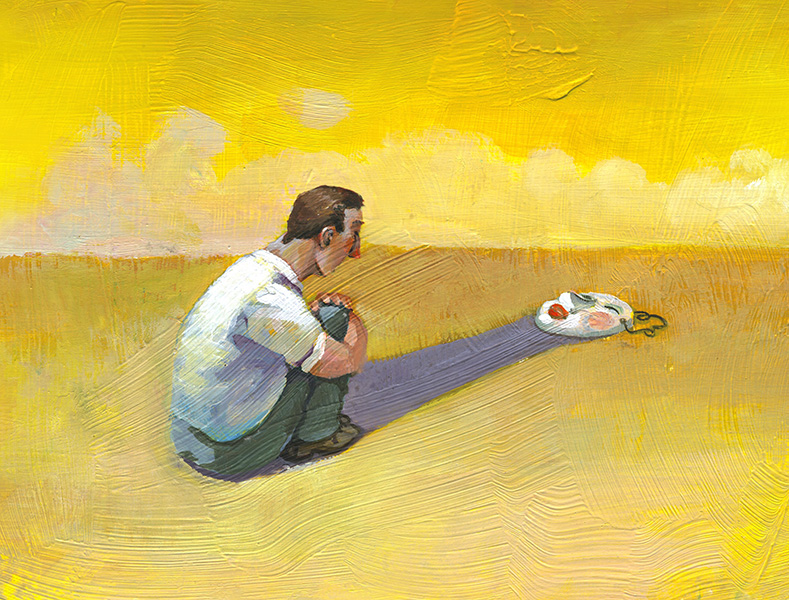

The Tao of Anger Management: A Yield Theory Approach

“The gentlest thing in the world overcomes the hardest thing in the world.” —Lao Tzu

Brian had been incarcerated for taking a baseball bat to his girlfriend’s truck with her inside of it; he then pulled her out and beat her unconscious. He was out of prison and in my anger management group for two weeks when he reported, “What I did may have been too much, but she deserved it because she stole my money.” He claimed that he shouldn’t have gotten in that much trouble because it was “my truck anyway,” and besides, she “slipped and hit her head on the ice.” Brian was still in the precontemplation stage of change: he didn’t think he had a problem.

Things got worse before they got better. The following week Brian was furious when he came to group, complaining that he had been called in by his probation officer two days in a row to be drug-tested. The only reason for this, he claimed, was that his ex was “sleeping with a cop.” In a state of rage, his face flushed, his fists and feet pounding wildly, he shouted about police corruption and denounced his ex-girlfriend, the “whore” who was just out to get him. 

Instead of asking him to calm down, take a breath, or do anything other than be where he was in the moment, I simply validated him. I imagined what the world would look like from Brian’s perspective as I said, “Man, that’s just plain messed up.” I knew that Brian didn’t know anything other than what he knew in that moment, and he needed someone to see what he saw, so I went with him further: “You know, it sucks that you work so hard to be sober, and then people go and pull this shit, and test you even more.” I paused briefly, made a projection about what he might be thinking and added, “I mean, they tested you literally, but they’re also testing your limits too. It’s like they’re trying to set you back.”

He responded emphatically, “Exactly! They’re pushing me!”

“You know what?” I said, “this was kind of messed up, so I’m not even going to ask you to calm down right now.” I paused, shook my head, and waited for a moment before continuing. “In fact, even if this is supposed to be anger management, it would be stupid for someone to think you need to learn from this right now, because you have a right to be pissed off.”

He nodded his head in agreement, and he was visibly calmer, so I went on.

“I’m not going to tell you to learn anything from this right now, but let’s say this was tomorrow at this time, what do you think you might say about this experience?”

“I don’t know.” He paused. I waited. “I guess I would say that I probably overreacted.”

I then said, “I’m not going to say that you overreacted because it was really messed up, but, I don’t know—I wonder if this was like a week later… I wonder what you’d say about this experience then?”

 “I don’t know,” he said. “I guess I’d say that probation has a right to test me two days in a row in case I’m using or something.” He was calming down more, and moving more and more into his frontal lobes.

So I said finally, “Look, I know you’re pissed off, and I see you’re hurting about this, and we don’t need to talk about this tonight—but if this were a month from now, I wonder what you might say about this whole night?”

Almost completely calm now, Brian replied, “I guess if this were a month from now, I would probably look back on this night and see that I was still doing the same thing I always did: blaming her for me not wanting to be drug tested.” 

The shift occurred. The door was open to future work. 

Behind the Mask

"Treat the people as trustworthy, and they will be trustworthy." —Lao Tzu


When Brian came in furious and outraged, it could have elicited fear in me—he was, after all, an imposing figure—but I knew that Brian wasn’t angry at the world or at me; he was angry at having to take responsibility for something unpleasant. When that happens, people are usually blinded with rage, but not likely to hurt someone they don’t know. Brian was scared to face the world without what he had come to depend on: drugs to alter his state of mind. He was not ready in that moment to genuinely be accountable for what he did—so that was not the time to get on a soapbox and criticize his actions. 

More importantly, Brian didn’t scare me because I am armed with the knowledge that anger masks fear. Just as you wouldn’t walk into a costume party and believe that goblins and monsters are suddenly alive and dancing with each other because you would know it was people dressed in costumes, so too do I see that when people are angry, they are wearing a mask to hide what is really going on inside them. It was important for me to trust the deepest part of Brian’s essence: the part that is, in my view, inherently good. 

As a therapist, my goal is to facilitate people’s journey through the depths of their undiscovered psyches in a way that helps them move beyond the battle of the ego/true-self dynamic so that they can find, hold, and live in expanded consciousness. My working assumption is that the essence of people is much deeper than what we can see on the surface. This assumption helps me view people as vastly greater than their actions, and infinitely more than any pain and suffering they have caused or experienced. 

I specialize in working with people who have been convicted of violent crimes: murder, rape, and the abuse of others. The work is not easy, but it is some of the most rewarding work that I have ever done, due in part to the amazing transformations that I’ve witnessed throughout the years. I’ve watched gang members gain awareness and perspective enough to walk away from their gangs; I’ve seen people who train as fighters walk away from street fights; I’ve seen people who have spent their lives believing that life is about getting “respect,” make incredible changes and learn to more deeply respect themselves and the world around them. 

“No one sets out to be defined by his or her worst moment in life, yet almost every violent offender is judged, convicted, and defined by his or her worst moment.” Just imagine if everyone in your life defined you by your worst moment, that this moment accompanied you like a badge of shame throughout your life, limiting all future possibilities, including your hopes and dreams. It would seem terribly unjust; and yet this is what we do with violent offenders. They carry the burden of our shadow projections and are left believing that they are terrible people because they have done terrible things. And because they lose hope about the possibility of breaking free from these deeply internalized expectations, they live up to their self-fulfilling prophecies by continuing to do terrible things. 

The startling recidivism rates in our country (close to 70% of violent offenders return to a life of crime after imprisonment) should be all the evidence we need to understand that our system of rehabilitation-by-incarceration alone simply doesn’t work, but it’s not. The “more shame, more guilt, and more punishment” approach—though it has a long history among treatment of violent offenders—has led to 7 out of 10 people returning to lock-up. It’s clear that it is time for a new approach to this problem, and it requires a change in consciousness, not only among violent offenders, but also among the population at large. 

Yield Theory

“Knowing how to yield is strength.” —Lao Tzu


My approach to working with clients who have committed the most heinous of crimes is grounded in what I call “Yield Theory,” a powerful and compassionate approach to communication that essentially boils down to radical empathy delivered with intentionality. Taoism is a spiritual tradition—the core of which is seeing beyond the black and white world of either/or, good/bad, and recognizing balance through the single essence of everything. Founded by the legendary Lao Tzu more than 2,500 years ago, “Tao” means the way. For me, the journey that clients take to personal growth is the same as what we all undertake along the way in life.

Yield Theory differs from radical empathy in that in addition to attempting to think and feel entirely from clients’ perspectives, therapists also go with or literally yield to what clients are saying in the moment, with the intention of guiding them to new insight on situations. This approach involves more than simply understanding that multiple factors contribute to violent interactions—you must cultivate the ability to not resist even the angriest outbursts. Yielding entails both joining with the essence of who clients are, and “going with” clients to circumambulate their fight-or-flight responses so they will be more open to the possibility of healthier options.

The underlying assumption of Yield Theory is this: If we lived every day as another human being—not just walked a metaphorical mile in that person’s shoes, but actually had the exact same cognitive functioning, affective range, and life experiences—then we would make every single decision that that person has ever made. Every single decision. This goes beyond simple empathy: it is the capacity to truly recognize the essence of others, and non-judgmentally accept who people are, regardless of their choices and actions—including violence. 

By yielding with others and genuinely trying to understand why they have done what they’ve done rather than judging them, I have found that people are more than just willing to open up and talk—they are also much more open to the possibility of change. I have found that by accepting the essence of people, I have an easier time approaching violence with compassion. The Yield Theory framework has allowed me to rid myself of judgment and do the job I was intended to do: assess people accurately and help them change and lead lives directed by their true selves (their essence), rather than by their egos (introjected identities). 

My anger management program is predicated on respecting all human beings who enter treatment, regardless of their actions, and strives to meet every person where he or she actually is. I call it, “conscious education rooted in compassion.” Even the most resistant clients who ardently deny any accountability for significantly harming others are accepted as readily as those who are actively seeking change. Everyone has a story, and people’s cognitive functioning, ability to process emotions, and life experiences shape and continually influence them.

“Though many therapists and counselors may claim to “accept all people,” in practice, most struggle in their work with people who have violent tendencies.” It could be that the natural fight-or-flight response triggers their survival fears and causes them to write off violent offenders as incapable of change, dangerous, and hence deserving of judgment; but it could also be because human beings tend to value their own standards of living, beliefs, and ideas over those of others and in subtle and often unconscious ways judge people who are different—particularly when those differences appear threatening. 

It is hard for most people to grasp that fully accepting a person who commits a violent crime has absolutely nothing to do with condoning that person’s actions. Truly understanding this, however, makes all the difference in our work with those who are pushed the margins of society. 

Components of Yield Theory

Vulnerability takes courage—especially amongst people who define themselves by how “tough” they are—and yet I have found in my anger management groups (which are open, so there always new people coming in) that people share with the same level of vulnerability and honesty as any therapy group I’ve ever witnessed. I believe this is due to the key components of Yield Theory that I apply in my groups: acceptance, the elimination of shame, mindfulness, creativity, conscious education, non-attachment and authenticity.

Acceptance
The potential for everything great and everything terrible resides inside all human beings. If a human being has performed an act, then it is accurate to say that it is “human nature.” If we can accept the nature of human beings (that we will at times be loving and kind, at other times hurtful and cruel, and everything in between and beyond), then we can evaluate others, as well as ourselves, in terms of trying to simply understand human behavior. Furthermore, if we accept the premise that we cannot do one single thing to change the past, and we merely have the ability to impact the present to shape the future, then we can see that pejorative, judgmental approaches do little to impact the present or future in positive ways; whereas acceptance of what is, along with acceptance of the essence of people, can set the stage for conscious learning and change.

With Brian, it was important to accept him for the essence of who he is, and from there to accept where he was cognitively and emotionally in that moment. From his perspective, after all, things were unjust and unfair, so acknowledging that was an important first step.
 
Shame
Years of studying people who commit violent crimes has led me to the conclusion that people who live in shame act out of shame.Eliminating shame, therefore, has become central to my work. At first glance, it may seem difficult to swallow the idea of not shaming someone who has committed a violent act; however, as David Hawkins (2002) suggested in his “map of consciousness,” shame is the lowest form of consciousness that human beings experience. What I have learned is that it is difficult for human beings to make highly conscious choices from low levels of consciousness, so helping people have expanded consciousness becomes paramount to changing their actions.

It would have shamed Brian to try to get him to see what he did wrong while he was in a state of fear and anger. It was not the time to have him acknowledge responsibility or even awareness of anything he did that was hurtful. Instead, it was important to work with what was available for him cognitively and emotionally in the present moment.

Mindfulness
Mindfulness was first described in the Dhammapada as a way that the Buddha taught others to observe and keep constant watch over their thoughts. Engaging in “right mindfulness” entails expanding the awareness that we have not only for ourselves, but also for the world around us. The more mindful we can be in every moment, the more likely we are to consider alternative ways of interacting with others. Mindfulness begins with self-awareness, but it also extends to an awareness of the environment and what is going on inside other people as well. As a group leader, I both practice and teach mindfulness. Though it is fairly easy for therapists to learn how to teach or simply read a basic mindfulness exercise in a group setting, it is the role modeling of mindfulness (i.e., the therapist’s constant awareness of present moment intra and interpersonal experiences) that seems to make the biggest impact on clients. As many people who teach mindfulness would explain: mindfulness must be lived to be understood. 

It was important for me to be mindful and aware of my own thoughts when Brian began railing against his parole officer and his ex, and to be careful not to get caught up by them. I tried to be as aware as possible about what might be going on inside of him, based on what I was seeing in him and my own internal reactions, but ultimately the best we can do as therapists is project what we imagine others are thinking, and then check those projections. In this instance, my projection appeared to be accurate. But mindfulness goes much deeper than just awareness of my thoughts and his; it is also an awareness of the environment in the moment, and a willingness to stay present with whatever unfolds without reverting into a reactive or defensive posture.

Creativity
In my experience, having the ability to genuinely meet a diverse group of clients where they are separates average therapists from very good ones. If we are charged with meeting people where they are, then we must consider that people have varied learning styles, and forcing clients to only get information in the way that we think works is, in my view, irresponsible. To implement creativity in therapy is to constantly evaluate one’s own communication style, and to be open to adjusting it accordingly to what people need. I believe the onus of communicating effectively rests with the therapist, so when clients are not getting what we are communicating, I believe it is our responsibility to find creative ways to meet them where they are. Creativity can come in the form of analogies, metaphors, techniques, or even just in the openness to develop new ways to say things in ways clients can fully hear. 

In the heated moment with Brian, I chose to use a future-self technique with him. I have found that in working with a largely angry population, being able to think quickly and creatively is not only a bonus, but a necessity. 

Conscious Education

“What is a good man, but a bad man’s teacher? What is a bad man, but a good man’s job?” —Lao Tzu

In my view, it is the responsibility of therapists to offer something more than just listening to their clients. Teaching skills is essential to helping people who are struggling with anger. We cannot expect people to respond differently to the world until we teach them different options. For counselors to implement conscious education, they must be willing to teach concepts patiently and compassionately until clients understand the ideas. This is quite different than simply relating concepts and assuming that clients understand them. In conscious education, therapists do not assume their clients should already have specific information; instead, they make the effort to teach in compassionate ways that meet diverse learners where they are.

As a former tenured professor, I know all too well how lengthy the discussions can be over the semantics of what does and does not constitute teaching. Outside of the world of academia, however, I would argue that we are always teaching others—even if the lesson is about how we are likely to respond in a given situation. I know from further interactions with Brian that he learned that day how to implement the future-self technique. He subsequently reported using it several times and even taught it to another group member during an anger management session.

Non-attachment
The idea of non-attachment is at the foundation of healthy learning. Whereas it is fairly easy for most Westerners to understand the idea of attachment to material goods through identification (“I’m a homeowner” or “This is my car” or “I am a good person because I have a high-paying job”), the notion that we are equally attached to our ideas seems far less widespread. “As long as our ideas are a part of who we are, we become defensive when people disagree with us.” When we can separate ourselves from our things, as well as from our very ideas, we are engaged in the process of non-attachment. As therapists model this concept, they create a safe path for clients to learn to express themselves openly, knowing they will not offend their therapist in any way. 

As a caution to those becoming too attached to the idea of non-attachment, Zen practitioners offer the concept of the “soap of the teachings.” Consider that to clean a shirt, it is necessary to use soap; but if the suds are not rinsed out, the garment will not truly be clean. In this same way, non-attachment to the idea of non-attachment becomes central to practicing the concept. 

In the case of Brian, I was not attached to his response, and would have been content with being off base had he told me that was the case. I was also not attached to the technique I was using with him; had it not helped, I was ready to readjust my technique to something more useful. 

Authenticity
People can spot disingenuousness easily. Mirror neurons are not only the root of vicarious learning, but are also the key part of our neurology that helps us identify when people are being authentic with us or not. It is well known in our field that clients will use the inauthenticity of their therapists as a reason they cannot or should not have to change. On the other hand, when people experience authenticity and know that we sincerely have their best interest at heart, they are much more open to learning about themselves.

The most pragmatic way therapists can convey authenticity is to regularly practice the ideas that they are teaching in their personal lives. It is paramount to practice what we preach. We do not have all the answers, nor should we purport to. We make mistakes as equally as our clients: not better or worse mistakes, just different mistakes, and we are all in this process of experiencing what it is like to be fully human. 

Conclusion

“Can you love the people and lead them without imposing your will?” —Lao Tzu

To understand people’s stories is, in a sense, to journey with them to the depths of their psyches. As a modern journeyman, I like to use vehicles as an analogy for journeying. Here’s my analogy for using Yield Theory to work with clients: Imagine that you are riding in a car and you come to a merge point (a yield sign). You merge with another car until you are side-by-side. Suspend what you know about reality, and imagine that as you travel beside the car long enough, the other driver sees that you are going in the same direction, so he invites you into his car. 

As a passenger now in this person’s metaphorical car, you have a better opportunity to see the road as he sees it, through his windshield. As the trip goes on, perhaps the driver gets tired and is ready to rest for a bit. You are now trusted enough to take the wheel. When you do, you can help steer the car down a more effective path. 

Lao Tzu said, “What is painted on these scrolls today will appear in different forms in many generations to come.” Similarly, the words of all therapies emerge at different times and come in different forms, but they are always essentially the same. For Yield Theorists, accepting the core of who people are, finding creative ways to communicate so that we are actually heard, teaching in some form, modeling openness, facilitating awareness and being authentic are therapeutic concepts that are simultaneously a way of life. 

The first practice of the Tao is something called undiscriminating virtue. It means taking care of those who are deserving and also—and equally—taking care of those who are not. When therapists practice Yield Theory, they are practicing undiscriminating virtue by immersing themselves into the psyches of others—regardless of anything they have done up to that point. Violence as a human construct probably cannot be eliminated; however, people—even those with the most violent backgrounds and intense struggles with anger—can learn a different way. 

We can continue to stand on our soapboxes and preach against violence and against the people who perpetrate it, but violence will always exist and shaming people simply doesn’t work. If we truly want to help people overcome their violent tendencies, we must work from a place of consciousness, choose to merge with others—see the world as they see it, attempt to understand what they understand, and help support them in their journey to new levels of awareness and peace. 

“To the highly evolved being, there is no such thing as tolerance, because there is no such thing as other.” —Lao Tzu


Working with the Unemotional in Emotionally Focused Therapy

It is pretty clear from research that focuses on how change happens in therapy, that emotional engagement is essential for significant change to occur. This is true in individual therapy (for example, research by Castonguay and by Beutler ) and it is certainly true in couple therapy (research by EFT therapists like myself). So what happens in an intervention like Emotionally Focused Couple therapy when one person emphatically denies or avoids emotion? The Boy Code insists that men are at their best when they are strong and silent. So, it is not surprising that male clients tend to deny their emotions a little more often than their female partners.

Process of change research and over 30 years of the clinical experience of numerous EFT, suggests that in fact, this does not seem to be a problem in EFT. Men who are described as “inexpressive” by their partners at the beginning of therapy seem to do very well in EFT. Now why is that?

First, it’s because as EFT therapists we have a map for emotions. For example, there are only 6-8 emotions that everyone on this planet can read on another’s face and assign a similar meaning to. The main difficult emotions that come up in couple therapy are reactive anger, sadness, shame and fear of rejection and abandonment. If you understand emotions, you can help people make coherent sense of them. Once you and your client find the order and logic in an emotion, it is much easier to deal with and work with. Emotions are the most powerful music in the dance called a love relationship and EFT therapists learn how to shape that music and use that music to guide partners into new dance steps.

Second, EFT therapists are emotion detectives. They know emotions are wired into our brains and they have simple, safe, systematic ways of helping folks access and explore them. So, Jim will say in session 8 of EFT, “I used to think I was just frustrated, angry in these fights with my wife; but now I see that mostly I am afraid. It’s a relief to get this – to understand my own feelings and to be able to ask my wife for reassurance rather than stomping around the house in a huff or zoning out and withdrawing into my loneliness.”

Third, tuning into your emotions, especially your fears and longings and shaping these into new messages to your partner WORKS. It is what securely bonded folks naturally do. It pulls our partner close to us and this connection sparks little floods of the cuddle hormone, oxytocin, in our brain. The calm contentment and a sense of belonging that oxytocin induces is the ultimate reward for our kind – little bonding mammals that we are.

When folks tell us, “I don’t have emotions”, we know that this person is working very hard and stressing out his body to suppress his feelings, so we gently explore how and why he does this. He always does it out of fear to avoid being overwhelmed, feeling helpless or ashamed, getting rejected or abandoned. The trouble is that when you shut down your emotions, you shut others out and then you are ………… all alone. No-one wants that. So if you show folks another path to take and support them, they will take it. Even people who do have to shut down as part of their jobs, firefighters, policemen, marines and surgeons respond to EFT. Even traumatized partners who swim in the turmoil of emotional storms learn to order those storms and use their emotions to tell them what they want and need and so find direction in their lives and with their partner.

The traditional route to change in psychotherapy is the haloed “corrective emotional experience”. Without this, any therapy is just an intellectual mist that evaporates once a strong emotion hits. The EFT experience is that even the most seemingly “unemotional” among us respond to corrective emotional experiences of being reassured and treasured. Who can resist this ? Who wants to?