Long Term Psychotherapy and BPD, Part 1: A Dialogue on Hope


Question: What do you call a homeless horse with a Borderline Personality Disorder?

Answer: Unstable.
 

Introduction: What We Did

In this, the second of a two-part essay, we (Anne, the client, and Trish, the therapist) seek to share multiple perspectives of our co-writing collaboration, a process that we developed to inform our long-term therapeutic relationship’s new focus on Anne’s diagnosis of borderline personality disorder (BPD). Following on from Part 1, in which we detail the ways in which long-term therapy with Trish has had a powerfully positive impact on Anne’s (treatment for) BPD, this second part—begun 5-6 months after the first—moves into the “how” of our co-authoring experience. Through collaborating, Anne is able to practice better interpersonal relationships, which we identified in Part 1 of this essay as crucial to “building a life worth living.” The epistolary dialogue format (as in Part 1) models the importance of trust in the therapist/client relationship, especially for those with BPD, which for us has been built in a range of ways through creative collaboration. In Part 2, we explore the risks and benefits of this dialogic trust-building collaboration, and recognise the investments of all parties involved in the treatment of those with BPD.

In mid-2020, in the midst of Australia’s COVID lockdown, Anne was asked by a friend who edits a psychotherapy journal to contribute an article on their recent diagnosis of Borderline Personality Disorder (BPD). That process is detailed in Part 1 of this essay. In Part 2, we unpack how collaborative writing is impacting our therapeutic relationship, and how humour has played a powerful role in building trust. Our creative collaboration has also raised a number of questions and negotiations, including: What risks were identified? How were these processed and resolved? How has maintaining our dual roles improved our therapeutic relationship?

We explore not only what has changed in our therapeutic relationship due to our creative collaboration, but also what has happened underneath the changes and how co-authoring (or other creative collaboration) might be useful to both therapist and client. We consider why we came to write together, the power of attuning and attending, and shifts in the therapeutic atmosphere that can result in increased trust—most powerfully, a more expansive view of each other that seems to enhance our work “in the room.” For us, humour is a “way in,” a way for us to extend the safe space of the therapeutic exchange into different kinds of relating, a movement that leads to increased trust.

We share memes and jokes about therapy, BPD, and any other topics that need to be decompressed, which establishes a common irreverent sense of humour that solidifies the trust built over time. Common factors theory suggests that the most important influence on therapeutic change is the strength of the alliance between therapist and client. Looking beyond technique and intervention, how does what happens in the room affect our co-authoring, and how does our co-authoring affect what happens for both of us in the room? As before, we use a dialogic approach to give voice to both perspectives.

Trish (she/her): I remember several months back, you had had a bad couple of days, and you were feeling particularly isolated. I wanted to reach out in some way, so I sent you a video clip showing Pepper (my therapy dog, who has been a part of our work together) magically being able to speak through a phone app, asking how you were feeling. I hesitated several times before I sent it but did it in the end. Ultimately I think it achieved what I hoped—a moment of connection through humour, extended by you, when you sent me a video of your dog replying. This happened before the idea of writing of our first article was even on the table, but there we were, extending our therapeutic alliance beyond the counselling room and into a creative/visual space.

Anne (they/them): Our psychotherapeutic relationship is predominantly a one-way listener relationship, framed by your professional training and the terms of our engagement. Is the incessant talking of the therapy client and the never-ending listening of the therapist a false centring of the client in a way the world doesn’t uphold? Like you said the other day, the few times your own selfness comes out in sessions, the client often overlooks it and is like, “Yeah, so anyway, back to me”—which, sadly, I can totally see myself doing! What if you were to say to me, in a session where I might do that, “Hey Anne! I just said something about myself, and you totally ignored it.” It might be hard for me to hear, but that is exactly what happens in real life. And what would that mean for you as a “therapist-ever-becoming” who considers what might be possible when a client is so caught up in their own woes that they miss the you-ness? A you-ness that might be able to push them further toward better interpersonal relationships?

Trish: You came in with your American swagger, already a devotee to New York style of psychotherapy, where not everyone there might have their very own barista (it’s a Melbourne thing), but they certainly have a therapist. You seemed to be willing to take a chance on me, despite some differences that might have gotten in the way. We seemed to click, conversation flowed and continued to flow in subsequent sessions. We discovered things that connected us in shared experiences in our lives apart from the mutual age bracket we found ourselves inhabiting, both having been high school teachers, both loving dogs in the same devotional kind of way. But maybe it was mostly that I really liked you as a person—your inquiring mind, your desire to make sense of things, your wry humour, your ability to narrate your life from the couch in such a way that I was drawn into the story and cared deeply about the author. Your paid work took you away on a regular basis, often for weeks or months at a time, but you would appear again at my office and we would resume. Before I knew it, we had been doing this for a couple of years and entering the realm of long-term therapy—not new to you, but not guaranteed for me, for two reasons: Australians are not so familiar with this way of receiving (long-term) psychological support, and for me as a therapist sitting outside of the Medicare system, there were no financial structures in place to subsidize the work, at times a disincentive for prospective clients. But it has always been my preferred way of working, as one who has found a fit with the relational emphasis of therapeutic work.

When therapists get together and wax lyrical about unconditional positive regard, they rarely see this as a reciprocal idea. It is considered as something bestowed on the client, flowing from a compassionate therapist. But when it is present in the therapeutic space in its fullest capacity, it emerges out of a mutual desire for the therapist and client to see each other as the best that they can be. I want to help you and I want to be seen as someone capable of that. You want help from me and need to believe that I will not let you down. I keep getting to show up again; I can say I won’t give up on you, and you give me the chance to do that through your own acceptance and trust of me. So is this shared unconditional positive regard?

Anne: I was not surprised to find out that you were a teacher—you remind me of the best teachers I knew during my 11 years teaching in high schools. I can see why the kids would be drawn to you: your sense of humor and down-to-earth vibe instantly put me at ease. Yet one thing I’m seeing in myself through the BPD diagnosis and range of treatments is how transactional I can be: i.e., you are my therapist, and because I pay you, you should be like x. Today when we were talking about you, it occurred to me that if we are talking about mutuality, it has to include a kind of benevolence in me for you, too. It doesn’t mean you have to disclose personal details as I do, but I think the interpersonal, relational mode I was talking about does mean our therapy sessions could be a space where I try out caring more about the other.

You are not just my therapist because you were there and I said yes. You also said yes. I have not just stayed—you have stayed. You have said that you feel you can help people and maybe there’s a question in there that goes beyond me just “feeling better.” I don’t literally affirm to you that you DO help me. You do. And I don’t think I affirm you or acknowledge that in the way that you do for me. What does that mean or look like coming from client to therapist? I think I would like to try some kind of “attending to” you in our next session, as a kind of practice of my learning better how to attend to others, in a non-transactional way. It feels freeing to think of improving my interpersonal skills through getting out of my own needs and trying to live more in others’ experiences or needs. I’m not sure exactly what that looks like in our therapy sessions, but I do think this is evolving in a direction in which I can practice caring for someone without it being based on my own needs, even in therapy. Which is still part of my growth in response to my BPD diagnosis.

But why did we keep writing together, and how has it increased each person’s feeling of “being seen” in a more fulsome manner? Initially, it made sense for Anne to ask Trish to co-write the article for the psychotherapy journal, given she is Anne’s therapist and had played such a profound role in Anne’s diagnostic journey. But what we found was something more than a narration of how long-term psychotherapy might help those with BPD.

Trish and Anne started co-writing online while maintaining fortnightly therapy sessions, as face-to-face sessions had been prohibited by home isolation. During this time Anne was also completing their Dialectical Behaviour Therapy (DBT) program remotely, which had life-changing effects. We also acknowledge that we are producing writing that is going to have a public audience, and that now that shapes our creative collaboration in important ways.

We have tried writing separately and then sharing what we had written at a later point, as Irvin Yalom and his client “Ginny” did in Every Day Gets a Little Closer (1), but ultimately returned to co-authoring in a shared Google doc that has a satisfying interactivity and vibrancy. One aspect of the collaboration that emerged from the beginning is the humorous banter that we both enjoy. It is present in our therapy sessions, too, but not to the extent that it has bloomed in our tracked comments while writing together. So alive was that back-and-forth that we tried to include the tracked comments in the final draft of that first article, but it didn’t feel right; the spontaneity was lost once the time stamps and overlaps in the marginalia were formalised into the body of the essay.

The fluidity of being able to write into the same document, and comment on each others’ and our own writing, seemed to form a big part of the energy of the shared work. Trish identified “rooftop moments” and other important insights that emerged in the writing. We both flagged passages that brought tears.

________________________
(1) Every Day Gets a Little Closer

Trish: Anne, you pose such interesting questions about this creative process and why it works. It takes me back to our earlier discussions as we explored the issue of the power dynamic in the client-therapist relationship. It is a strange beast because it seems like it is both needed and rebelled against simultaneously. Sometimes, as a client, you want me to firmly take the reins and show you the way, and at other times you are aware that as you bare your life to me, I keep mine under wraps. You step into a vulnerable space and I have a boundary that keeps me safe. And I want to offer support and guidance but reject labels like “expert” and get cosy with terms like Yalom’s “fellow travellers.” “Do you think our writing together altered an established power dynamic?” For in that space I saw you as the authority and looked to you to have the answers on how the work would come together. I completely trusted that you would take us to where we needed to be with our first article. How does it feel for us to exchange leadership roles as we move from one space to the other? I encourage you and affirm your resolute commitment to wellness, as you face the parts of you that still flare up at times and remind you of the hell that is other people. (2) Then you encourage me and applaud certain passages that I write. You take note of my hesitancy and respond with patience and curiosity, perhaps in a similar way to how you do with your own students. So we redefine the terms of engagement. We allow the spaces of therapy and writing to co-inform one another, as this most human of relationships draws on all of its strengths to bring out the best in each of us. As Yalom (3)  reminds us:
 

This encounter, the very heart of psychotherapy, is a caring, deeply human meeting between two people, one (generally, but not always, the patient) more troubled than the other. Therapists have a dual role: they must both observe and participate in the lives of their patients. As observer, one must be sufficiently objective to provide necessary rudimentary guidance to the patient. As participant, one enters into the life of the patient and is affected and sometimes changed by the encounter. In choosing to enter fully into each patient’s life, I, the therapist, not only am exposed to the same existential issues as are my patients, I must assume that knowing is better than not knowing, venturing than not venturing, and that magic and illusion, however rich, however alluring, ultimately weaken the human spirit.


________________________
(2) No Exit and Three Other Plays
(3) Love’s Executioner and Other Tales of Psychotherapy


Trish: In a recent supervision session with my supervisee James, who works at an in-patient setting, we were reflecting on how patients there form a trusting alliance with the staff. James happens to be blessed with a benevolent warmth, and his presence is therapeutic before he even opens his mouth. He shared his thoughts about the negative impact on patients if they experience the mental health professionals as taking a position that is “above” them—whether that be in the way they dress or speak, or in the attitude that they convey—“I could never be in your shoes.” For James, what is important is the recognition that we can all find ourselves pushed beyond our capacity to cope and experience being unwell. That we need to have a willingness to “also see myself in their story.” Anne, it got me thinking about what you wrote in our first article—that BPD is a disorder of separation. And I wonder how it is possible to trust anyone if you feel so distant from them? As we grapple with understanding how our writing together built trust, it dawned on me that this process has been highlighting the ways in which we are similar rather than different.

Psychiatrist to his nurse: “Just say we’re very busy. Don’t keep saying, ‘It’s a madhouse.’”


When psychotherapy has an interpersonal focus, it can be described as paying attention to the interactions between client and therapist, as well as providing an opportunity for practising a more satisfying relationship that then gets taken into the real world of the client. So what is going on in our writing process, including in the comments? We agree it’s an alternative form of “the real world,” organically appearing out of the mutuality of the co-creative work. Through the collaboration, Anne starts to see Trish as a “fuller human being” with her own wants, needs, ideas, resulting in more trust of Trish. Trish reports seeing Anne also as a fuller person, in their element, strength and power, a kind of agency. We both express how the increased interactions are not necessarily about more stories of our personal lives, but rather an experience of “a different me.” For us both, we have an increased sense of how the other is with other people.

Anne asks Trish questions like, “How does it feel to be a subject with a client? To take up space?”

We both ask, “How much is too much?”

Trish has been thinking a lot about this in the last couple of days, about self disclosure as the therapist, and bringing more of the “real self” into therapy. She says,


I thought about your saying that you saw me as a ‘fuller human being’ through the writing process and it made us wonder what that would look like, i.e. to have Trish the fuller human being in the therapy sessions. There is always a risk that something may not work out the way you want it to. Including this collaboration.


For Trish there is tension about whether Anne could still trust her to help them in the therapy space if they see her vulnerable and feeling out of her depth in the writing space. This feels risky but also highly challenging to how she sees herself as a therapist. Trish’s previous self-image as being authentic and honest is tempering with the recognition that there are parts still held back. This important self-examination leads Trish to grapple with the boundary of what becomes known, foregrounding always that whatever she offers of herself still needs to be of therapeutic value. The added role of “collaborator” has both personal and therapeutic benefits for Anne. A healthy intimate relationship means both can safely be vulnerable with the other and know it can be held and ultimately strengthen the relationship, not damage it. The therapeutic potential is that if this happens with Trish, it can strengthen with others in Anne’s life.


Anne: I find it challenging to trust people who remain “distant,” as a therapist may appear, because it feels like rejection and elicits feelings of vulnerability. Navigating these secondary co-creative roles is tricky but feels reassuring to me, and the trust between us seems to increase. In therapy sessions, I am the one with issues, difficult feelings, vulnerability, who looks for support and understanding. You are the one who listens and focuses on how best to meet the needs that I express. So how is it that despite us writing about the therapy, our roles still shift? I often take the lead in the co-authoring, which is not surprising given my professional expertise. I am able to share information with you, Trish, around the process of writing together and send you co-written autoethnographic articles as examples—a classic example of table-turning, you tell me, when we reflect on the times you have sent me articles of a psychological nature in relation to our therapeutic work.

Psychotherapy is often described in the person-centred school as a respectful, collaborative, teamwork-like approach. In this way, the client-therapist team builds their alliance and works together, but—and this is a major distinction—it is all in the service of the growth of the client. And fair enough, given there is a fee attached. But it would be a deception to suggest that the therapist does not grow as well, or, as Yalom says, is not changed or affected by the work, or doesn’t think about the client beyond the therapy hour. How much of this knowledge is—or should be—available to the client? Do they even want to know?

Trish: Anne, you made a comment about not realising how much was going on “behind the scenes” in our sessions. This was probably in response to my talking about a certain approach I might take with a certain goal in mind. Do you think it is helpful for a client to know that what their therapist is doing is reparenting them, or providing empathic attunement, or providing a secure base that was lacking in childhood? I just can’t imagine a client caring about the what, as long as it works, but when I think about talking with other therapists about this work and leaving my clients out of the conversation, it seems ridiculous! I find myself imagining a conversation with fellow therapists:

Me: “Hey therapist colleagues, let me tell you about this great intervention I did the other day in a session…”

Therapist colleagues: “Oh cool…but how do you know it was great? Did you ask the client?”

Me: “Well… no… but, it’s in this book I read.”

Therapist colleagues: ‘“Yeah but how do you know it actually helped the client?”

Me: “Um… well, they probably don’t know it helped them… but… oh, shut up.”


Anne: I wonder at the disjunct between therapists’ acknowledgement that clients need to feel that you are not “above” us, are not inherently different from us, versus how infrequently clients seem to feel this sense of equality, accessibility, or sameness. As in James’ commentary above, I recognise the commitment in you, Trish, and others, to convey a sense of solidarity with clients; I also recognise what you have suggested many times, that clients do need that sense of being held, that the therapist is “holding things together” so that we can be vulnerable. Where is the balance between feeling this as hierarchical, and feeling in it together?

Trish: Anne, you are right that the balance is hard to find, particularly if there isn’t a dialogue between client and therapist about what is actually happening in the space together. As Yalom and others have often noted, it can be hard to know what helps in therapy, and I think quite often a therapist will have a different idea to the client about what was helpful, useful, or powerful in any given session. Sometimes a client will say to me, “When you said that thing last week, I found that really helpful.” And often I think, “Well actually, I didn’t quite say it like that, and it’s not what I meant, but OK. But didn’t you like it when I said this bit? You don’t remember that? Damn, I thought that was the good part…”


Cracking Ourselves Up: Enhancing Trust with Humour

Question: How many psychotherapists does it take to change a light bulb?

Answer: Probably just one, as long as it takes responsibility for its own change. This could be called having “a light bulb moment.”


Laughter has always been part of our therapeutic relationship, and we wonder as we go along what doorway this has opened to increasing trust. Our joking in the document is more frequent, but also a bit different in nature: more feeding off of one another, whereas in the room it’s a bit more measured. We are curious about the many roles humour seems to play between us in our dual roles. We discuss how—in the room—humour can also be a mechanism for deflecting, or keeping things on a more superficial level, and in this way is not always welcome. Nevertheless, once we begin our online interaction, the spontaneous humour grows. Trish writes of a time when she took a holiday and arranged for another staff member at the agency where she worked to see her clients if needed. The audacity of counsellors leaving clients in order to have some leisure time doesn’t go unnoticed by Anne in our track comments in the first article:

[Anne: how dare you LOL]

[Trish: How very BPD of you :)]

[Anne: LOL GUFFAW I think we may have a stand up routine by the end of this.]

[Trish: I know right? The side comments are almost as interesting as the article!!]


In this exchange, our shared humour strikes at the heart of the very condition that has caused Anne such anguish, and yet creates a moment of freedom as the heaviness of the label is discarded, all the while noticing that humour and pathos are indeed good friends. We agree that one reason both our irreverent humour and the creative collaboration work well is because it has emerged out of our pre-existing therapeutic relationship of almost six years. The trust and foundations were there before we altered our relationship, and Anne notes that widespread perceptions of BPD make it likely that such humour about the disorder would be hard to share with a therapist in a less established relationship.

One wall we have mutually hit together is a feeling of “too much”ness after the first essay, when we decided to continue writing together as well as still maintaining therapy sessions. The dual roles and time commitments of both soon felt too demanding, and we were able to talk about that openly and put some boundaries around it.


Trish: Anne, I recall that experience of “too much”ness was precipitated by your writing into our shared document about a dream you had had about me. I commented on how much was in the dream to be examined, but it seemed to be therapeutically, not creatively, relevant. Back then I wondered whether the writing together was blurring the therapeutic line in a confusing way. But now I think we see the line and we choose to walk along it courageously. I see an image of a tightrope walker, holding a long pole for balance. I wonder what the pole is representative of in our work together?

This experience caused us to recognise that we needed careful negotiation around how much and when we enact both roles: for example, do we collaborate while Anne is still a client? Do we have writing sessions and therapy sessions in the same week/month? After a time, we started to realise that they were folding back into one another in an iterative process that was becoming productive for both the writing and therapy, but we continue to monitor the efficacy of maintaining both roles simultaneously.


“Being Seen” through Creative Collaboration

Through humour especially, we both express a powerful feeling of being seen by the other, in deeper if not new ways. The feeling of “being seen” is, of course, a major part of the value of psychotherapy to a client, and was a strong part of Anne’s experience of therapy with Trish before the co-writing started. We decide to explore bringing some of this “whole person” or more interactive dynamic back into our therapy sessions, admitting that neither of us are quite sure what this will look like. We discuss how we might chip away at the “one-wayness,” the illusion of the therapist having no needs, feelings, investment. We consider questions like:

Is Trish always therapist Trish, even when we are co-writing?

What in that therapy space is different or the same?


It is confusing for us both at times, often in different ways.


Trish: I wonder, “Well what IS bringing more into the room?” I believe that my emotional responses are already an act of bringing myself. It is my standard practice to share things like “I’m aware that I’m feeling quite sad as you tell me this.”

We wonder together: what if we were writing a novel instead, or painting a picture? We are writing about our therapy, not something else, so it reinforces the therapeutic relationship. We reflect on the fact that Trish is also a teacher and practice supervisor, and in those roles she encourages her students to be prepared to walk the talk, to consider the ethics of asking clients to go further than they’ll go themselves. We begin to acknowledge our investment in each other.

Of course, our creative collaboration presents challenges as well as benefits. What if it dissolves, runs out of steam, or there is a creative rupture? We discuss the value of this changed way of working, despite the risks. We discuss whether writing about this will be of benefit to other client/therapist teams, and, if this multi-directionality in our sessions doesn’t work for all clients, whether it is still a worthy experiment to share publicly.


Anne: One reason why I have this trust of you is because you have hung in there, not rejecting me, through so many difficult times. And why wasn’t my treatment of you as challenging as so many others in my life? My hard behaviour, I think, is triggered by feeling rejected or judged. But rejection and judging is part of life. So how does unconditional acceptance (“unconditional positive regard”) by you help me handle rejection in the real world? One of the ways I’m suggesting is to regard you with care as a whole person, not just a “therapist.” That is, not just “there for me.” In thinking about this over the last little while, I believe the improvement in much of my behaviour comes from my starting to regard others as whole human beings with their own needs and validity, whether they reject me or not, meet my needs or not. How can I increase my ability to put myself aside and regard others in a less transactional way? If I were to do this with you in our sessions, what does that look like? Certainly not your therapy, or therapy about you. But maybe it’s more like, “How does it feel to you when I just talk the whole session?” or “Do I hurt your feelings?” or “Am I boring you right now?” Maybe attending to you (and others) is holding the dialectic of “My feelings are hurt right now, but I can also attend to your hurt feelings at the same time, or even first.” Part of improving my interpersonal relationships, I think, is being able to perceive my impact on people.

Trish: The process of writing the article with you has provoked me to re-examine the firmly boundaried position of this understood one-way process. No person-centred therapist wants to be a blank screen, and I have always believed I bring my genuine self to the therapy process with clients. Being willing to be more explicit about my internal responses to things you might say to me, rather than hold some therapeutic high ground as I bracket them off, seems like an important way forward.

We agree that it should be as intentional as setting some ground rules for the experiment. Trish suggests regular check-ins, like asking “How is this going right now?” Anne wonders how productive setting ground rules or negotiating terms of relationships might have been in other relationships or friendships, too; maybe with such agreements those relationships would have gone better. Trish suggests to Anne, “See? You are now connecting what we are doing in therapy to your life in the real world, i.e. negotiating with people around the types of interactions you have—what works for both. So here is therapy on the page.”


Mutually Revealing

One day after a co-writing session, Trish scribbles some notes, including:

Explore in what ways (even without Anne knowing) the relationship between us has been therapeutic:

  • Corrective emotional experience
  • Being there
  • Not abandoning
  • Staying with

…and that these things build trust.

Trish: I believe that so much of what a therapist does with clients is to provide a corrective emotional experience. When there is abuse or neglect or misattunement early in life, the therapy of care and unconditional positive regard gives the client the feeling of what it is like to be held. So for you, Anne, maybe some of that was to not have to listen to someone else and validate them (in the way you did for your adoptive mother) in order to feel worthy. That you get to have the experience of this for yourself. In some ways, it is not so important that it isn’t the “real world” but the world of the therapy room. The emotions are real. That I attend to you is real. And you don’t have to be “good” (thanks, Mary Oliver) in order to feel this. And feeling this with me might then motivate you to know that it is possible, and that maybe you can also feel it in your “real” life.


I have been thinking about this quite a bit over the last few days, and I have formed the belief that we needed to do this work (i.e. corrective emotional experience) before we could move into a space of being more overtly interpersonal. Trust is needed for that. I have often wanted to challenge some of my other clients with Borderline features to have a look at certain aspects of themselves and their behaviour that might impact other people, or even me, negatively, but I have found that there is a risk of their fragmenting. If someone already has a fragile sense of self, a suggestion that they could do something differently can be experienced as “I am a bad person.” So it is interesting that we are contemplating this experiment of giving the space between us more attention. Perhaps you feel secure enough in our relationship now to let me challenge you. If I let you see that I have reactions to what you do or say, that it actually affects me, I believe that you can hold this information and stay intact.

Anne: I have been thinking a lot for the past five days about my saying to you to “get over it.” One thing I’ve noticed with myself (is it the BPD?) is that sometimes I don’t intend to, but I am still quite harsh. I have always laughed this off as my New Yorker brusqueness. But is that an excuse for rudeness and not wanting to change? I’m sorry, Trish, that I spoke to you in that way. This is my being accountable interpersonally, even in a therapy session. I meant to encourage you. And I do think you are fearless in going to these places that are not the norm in the Australian context, and I love that and was trying to encourage you, but it came out in a rude and insulting way.

Trish: Twice now you have thought you might have offended me or been rude to me, and twice I have not felt offended or hurt. I wonder what you saw to think that you hurt me? An expression on my face, perhaps? Something in my response? Actually, I feel that on both occasions you were suggesting that maybe I could be more—an invitation to think big. And yet you think you were being dismissive or hurtful. I remember your saying recently that sometimes you find it hard to tell whether some communication between you and others is rude/aggressive or not. And then you might have to backtrack and check it out. I promise if you are nasty to me, I will tell you at the time and we can work out whether you meant it or not. You were witnessing my own discomfort with ambition. You didn’t cause it, you’re not the bad guy in this scenario. I am noticing and appreciating how you are thinking about the impact your words may have had on me.

Anne: I think it’s important to me that both of us acknowledge that there is fear perhaps around my BPD, because it is not only a disorder of separation, it is also a disorder of dysregulated emotions and behaviours. Through our work together and the safety of that, I am becoming more able to acknowledge the harms I have done to others and myself, harms that I can now feel regret and sadness about. That includes times I have hurt you in our work together, too, Trish. This doesn’t mean I won’t lash out (again). And as safe as I feel with you, we both know I have lashed out most often against those who are closest to me. So I recognise the courage it takes for you to continue to show up when you have witnessed so many of my hurtful behaviours to others, and sometimes experienced them yourself. That is brave, and I recognise the risk to you.

It is good and important to work together to improve my ability to calibrate my impact on others—to perceive it more clearly, perhaps—but also to model to other therapists that someone with BPD may be frightening or erratic, yes, but we can also be deeply reflective, resilient, empathic, courageous, and hungry to change. And we can care about you, even when we are mired in our own pain. And that this care for you can provide an important window to re-engaging with a world that is sometimes overwhelming for us.

Trish: You talk about acknowledging our fear around your BPD, and I wonder if it is the same for us both? You fear that you will still injure others, including me, despite how far you have come. I also fear that you could hurt me, too, might lash out at me despite the safety of our relationship. And as our therapeutic connection deepens, I take my place as someone at risk of being hurt by you. So how do we hold this fear in a way that makes sense? It brings to mind the dialectic of the work. Where there is fear, there is also bravery; where there is safety, there is also risk. And of course, as always, there is the knowing and the not knowing. It is inevitable that we hurt or disappoint the people who mean the most to us. We will do wrong, it is the nature of the imperfect relationships in which we all engage. And that brings us back to trust. With trust we are able to stay in touch with the resilience and perseverance that we see in one another, which makes repair and recovery possible. So when you care for me, and for others in their turn, know that what you are doing is an ongoing process of recreating a secure base that is at the very heart of what we all yearn for when we love and feel loved in return.


Epilogue: Returning to Embodiment—March 2021

Anne: I’m glad I came to your office today. It has been a long time since we have shared space, and so much has happened in the interim, with COVID and multiple lockdowns. I was aware of you again as a changing human person, and the affective intensity of proximity. I think one reason I felt moved today was not just about the content we were discussing, but about the relationship and the exchange. It is, as Tara Brach would say, sacred ground, where people feel seen and heard. It’s so powerful. That room is a powerful sacred space for me.

Do I have anxiety about going backward, now that my DBT has finished? Disappointing you? Being disappointed by you? Of course! That’s every relationship, surely. Today I just felt moved by the proximity, the laughing—so much laughter!—the attending, the eye contact, the ambient noises, the longevity, the commitment, and the hope, even when I can’t find exactly who I am. And also the power of the room itself. That familiar room—the white blinds, your desk, cup, computer. The little table by the couch, the bin. Pepper had died during lockdown, and I felt his absence so strongly in the room. The environment matters, and I can see it now as another expression of you, of another way of your “bringing yourself” to your clients.

Trish: Yes, it was pretty powerful being together in person today. There was a certain energy which may well have been about how long it has been since we took up the chair and the couch, or perhaps about the added layer of the creative space that we are sharing as we write, knowing that our words on screen find calibration with the ones we speak to one another. Were you more aware of me than you have been in the past? You have said you wanted to be able to hold space for others while you navigate your own emotional space. I think I noticed a subtle shift—while you certainly wanted some thoughts from me about what was going on for you, there was something different, more of an ease in you and a space created for me. And somehow I felt that even though I didn’t really have a clear answer for you, I was still offering you something, and you saw that (and subsequently wrote about it). This work together is making me examine myself in the most profound way, and if I want you to do it, then I will, too. Maybe I am also trying to find out exactly who I am when I am in a therapeutic encounter with you. I know one thing, I will trust the journey.

Anne: I was more aware of wondering what techniques you may have been using, and why. That relational aspect that I had never really thought much about before our co-authoring. I assumed the therapist just showed up and it was a one-way thing. I’m enjoying this change in my awareness: not only in terms of acknowledging what you are bringing, but also for me, thinking relationally about you. You exist. You are thinking and feeling things, not just absorbing. I also think we had a lot more eye contact yesterday than usual, that was something I was aware of. And also the laughing… Why do you think we laughed more yesterday than usual? My perspective is that it was just a bit of happiness to see you again, and also I felt you laughed more than usual and that felt like a kind of openness from you.
 

***
 

As recently as 2015, at the end of Creatures of a Day, Yalom  (4) reminds us that even in the United States, these kinds of relational accounts are all too rare and
 

not generally available in contemporary curricula. Most training programs today (often under pressure by accreditation boards or insurance companies) offer instruction only in brief, “empirically validated” therapies that consist of highly specific techniques addressing discrete diagnostic categories… I worry that this current focus in education will ultimately result in losing sight of the whole person and that the humanistic, holistic approach I used with these ten patients may soon become extinct. Though research on effective psychotherapy continually shows that the most important factor determining outcome is the therapeutic relationship, the texture, the creation, and the evolution of this relationship are rarely a focus of training in graduate programs.


For Trish and Anne, this focus on our creative collaboration allows a deepening of trust and strengthening of our relational dynamics. Trish (and sometimes both of us now) uses many of the suggestions Yalom offers for calling attention to the bond between patient and therapist including: doing process checks, inquiring about the state of the encounter during the session, Trish’s asking if Anne has questions for her. Through creative collaboration, trusting in the here and now becomes multi-modal and multi-directional in ways that can offer new forms of corrective emotional experience. It has also firmly established a secure base, the core purpose of strong and trusting client-therapist relationships, never more important (and challenging) than with clients with Borderline Personality Disorder.
________________________
(4) Creatures of a Day and Other Tales of Psychotherapy

Jessica Stone on Play Therapy in the Digital Age

Crossing the Digital Divide

Lawrence Rubin: Hi, Jessica. Thanks for joining me today. How did you become interested in digital play therapy, which really is cutting-edge and somewhat controversial with children?
Jessica Stone: I kind of straddle a few worlds here. I am a licensed psychologist with a specialty in play therapy. Within it, digital play therapy has become one of those areas of interest over the last 20 years, stemming from experiences with my own kids, who had this whole portion of their world that I didn't really understand, know about, or enter into. It struck me as a little bit ironic and maybe even hypocritical that here I spend my time at work and my energy learning and doing play therapy with children and entering their world, while my own kids have this whole portion of theirs that I was putting no effort into understanding. And so, I kind of had to smack myself upside the head and say, all right, I need to learn more about this. Why is this important to them? Why are they interested in it?

Long story short, I ended up entering into an online game called Runescape that my oldest two (of four children) were both playing at the time. I am no digital native by any means, and I was not very good at these games, but the point was that I was taking interest. I was listening to them. I was asking them questions. We were having conversations about what happened in the game, what quest they were working on; things that were important to them that prior to my entering their world, I couldn't participate in or even understand. I began to see that because this co-play was so impactful with my own children, I needed to incorporate it into my work, which really opened the door to what I have been doing for all these years.
LR: So, you recognized that technology was so important and present in your kids’ life that you would be almost doing a disservice to your young clients if you didn't cross that bridge into their digital world. Tell me, what exactly is digital play therapy?
JS:
I am no digital native by any means, and I was not very good at these games, but the point was that I was taking interest
Digital play therapy is a modality that is based in speaking the client’s language through what I call the four C’s, which are competency, culture, comfort, and capability. These are basic elements of therapy in general, but digital play therapy in particular is couched within the broader context of prescriptive play therapy, which taps into what Charles Schaefer calls the therapeutic powers of play. So the point is that there is a foundation for it. It's not just, oh, let’s just jump on this bandwagon and start throwing these digital things into what we’re doing. We as clinicians need to have a very firm and solid foundation in what it is we’re doing and why we’re doing it regardless of our theoretical foundation, therapeutic modality, and interventions, or whether the platform is virtual or face-to-face. And as in all therapies, we must ground our interventions in solid case conceptualization and treatment planning.
LR: I know that Charles Schaefer co-founded the Association for Play Therapy and has written extensively on play therapy, but can you tell our readers what he means by the “therapeutic powers of play?”
JS:
it's not just, oh, let’s just jump on this bandwagon and start throwing these digital things into what we’re doing
If you can close your eyes for a minute, imagine a graph with four quadrants that represent what he calls the core agents of change. These are facilitating communication, fostering emotional wellness, increasing personal strength, and enhancing social relationships. In turn, each of those quadrants consists of the 20 therapeutic powers of the play. For instance, in the quadrant of “facilitating communication”, we have self-expression, access to the unconscious, direct and indirect teaching. In the quadrant of “enhancing social relationships,” we have the therapeutic relationship, attachment, social competence and empathy, and so on. I think what Dr. Schaefer has done is given us a really amazing foundation from which to then tailor and customize it as fit for whatever our modality and our theoretical foundation would be.
LR: So when working with children, it's important to consider their communication skills, their emotional development, their strengths, and their social connectivity, and then if you choose to work digitally with them using an app, a video game, or even a virtual reality platform, you are doing so from a solid theoretical foundation and justification for that intervention.
JS: Right, and one of the things that I wanted to add was
there are three levels of digital play therapy: at the first level, you are simply open to it, including it in the conversation, and trying to understand why it's important for that client
that there are three levels of digital play therapy. At the first level, you are simply open to it, including it in the conversation, and trying to understand why it's important for that client. The second level would be when someone brings in, for example, a YouTuber that they are interested in, or a game, and they want to show you a video of it, or together you're looking up information about it. So you're using a digital tool, but it's to learn more about it and to share in some aspects of your client’s life. The third level would be all of the above and would also include actually meeting with your client within a game (whether you are with them in the room or virtually) or using an app together. And so, in order to have digital play therapy, you don’t have to be in the Roblox game with them. You could be at level one or level two, talking about it, asking questions about it, or having your client show it to you, or taking a tour of it.

If Not for the Legend of Zelda

LR: And that becomes part of the treatment plan as well. And you may not even know which level you're going to be entering into until you know the child a little better. Can you give an example off the top of your head of a level three experience that you had with a client?
JS: Absolutely, but I’ll sanitize all over the place for obvious reasons. I had a little elementary school age guy who came in to me because he was selectively mute. He didn't speak to any adults, including his teachers. He spoke to his parents, but he didn't speak to any adults outside of his home.

We had this amazingly intricate way of playing the physical game Guess Who, not the digital version. We came up with this whole worksheet with all the different options that he could point to and we were really proud of ourselves for having gotten to that point. But then he wanted to move on and saw that I had a Nintendo Switch sitting on my shelf. He pointed to it, and I said, “Oh, yeah. You know, I have this Switch, and really the main game I have on there is Legends of Zelda.” I listed the other games I had, but the main one that the kids really wanted to play at the time was Zelda: Breath of the Wild, and so he wanted to play it. By the way, I have the “regular” Nintendo Switch, the one with the two removable handset controllers and central viewing screen that both players can see.

We each had a controller, and I said, “But what we have to do now is to figure out how we’re going to communicate, because one of the handsets controls where the person is looking, and the other one controls where the person is walking. So if we’re not communicating, we’re going to go off a cliff, or we’re going to run into an enemy, or, you know, something is going to happen because we’re not explaining to each other what our agendas are, or what our desires are.”

it was a breakthrough that I really don’t know that we would have had it were it not for Legend of Zelda
He also had a tablet that he could type on to communicate so he indicated that he would point because he was the walker, and I would be the looker. As we were playing, we came to this dangerous thing and it became this frenzied moment because we were going to be attacked. All of the sudden, he screams out at me, “Look over there!” While I had never heard his voice before, I didn’t want to make too big of a deal of it.

I was like, okay, play it cool, but inside I was so excited. Out of the corner of my eye, I see his hand fly up over his mouth, like, oh, my gosh, I can’t believe I just did that, right? And I said, “Oh, I’m so glad you said that,” and I looked where he told me, averted the danger and we went on. I said, “You really saved us. I’m so happy that you talked to me to tell me that because we would have totally been attacked.” After that pivotal moment, he would chitchat, and there weren’t any communication lapses. It was kind of like, well, the cat is out of the bag, and I didn't make it an unsafe environment for him to do so, and it was a breakthrough that I really don’t know that we would have had it were it not for Legend of Zelda, the two controllers, and the need to communicate with each other. It's amazing.

The 4 C’s of Digital Play Therapy

LR: That was a breathtaking moment. How does it capture those 4 C’s of digital play therapy you referred to earlier on?
JS: The first three—competency, culture, and comfort really culminate with the fourth, which is capability.

Competency is those core skills that derive from our theoretical beliefs, experience, and continued education, regardless of our discipline of practice. It is within the professional. It is what we bring into the therapeutic space.

Culture is very interesting to me and something that we’ve talked about for decades as being important to incorporate into our clinical work. It has blossomed and expanded from religion, race, and place of origin to include other facets of peoples’ experience, like music, food, and interests, and of course their digital involvement.

A while back, I was invited to speak at a PAX convention, which is like Comic Con but for people who enjoy gaming. There were literally thousands of people there, all of whom shared this common experience and who have historically been characterized as “other,” with all the stereotypes that go along with gamers, like spending days in their mother’s basement playing video games.
LR: They don't fit in.
JS: They don’t fit in. And while I don’t want to perpetuate any of those damaging and non-appropriate stereotypes, there I was with thousands and thousands of people and I was the “other.” I’d never felt like the other in my life, but in that moment, it really struck me that it is such a disservice to think of people who have digital interests as “others.”

First of all, it is quite hypocritical, because at any given moment, most of us have a device near us. We have a phone we don’t leave our house without. We have our computer, and millions of people play very casual games like Bejeweled or Candy Crush on their device. So, it's quite hypocritical for us to say, “Oh, those people are others,” when really, there are simply different levels of gaming. So, the culture piece is really important to me, and we can’t simply reject portions of our clients’ lives—in this case their digital interests.
LR: If technology is so significant a part of our culture, why is there still a seeming reluctance on the part of some clinicians to incorporate it into therapy, and in this case play therapy with children?
JS: That actually brings us into the next C, which is comfort, the importance of which is that we be genuine and congruent within ourselves, and that's something that I think that a lot of therapists don’t have about technology. I talk to people, and they're like, “I don't know how to get my photos off my phone. I don't know where to find them.” So first, I think it's just basic knowledge and comfort. We know that at the beginning of the pandemic, people were freaking out. They didn't know how to use a platform like Zoom or, you know, whatever it is that they're using. Where do I get the link? How do I get into the app? How do I talk to people? What if they can’t hear me? As therapists, regardless of whether we are working with adults or children, we have a lot of things to think about when we’re in session, including, how does this fit into our case conceptualization and align with our treatment goals?
LR: How do I validate it?
JS: So
when a new anything is added into that therapeutic mix, like technology, it throws everything else off kilter a little bit so that we don’t feel secure, we don’t feel congruent
when a new anything is added into that therapeutic mix, like technology, it throws everything else off kilter a little bit so that we don’t feel secure, we don’t feel congruent, and now we are not only worrying about the logistics, but also whether I am doing the right thing for my client. And so when you package all that together, it's like, oh, I don’t even want to touch that because it’s too risky. It's too scary. In my book, Digital Play Therapy, I refer to this as techno-panic. We can point to so many different points throughout history, such as Socrates saying that the written word was going to destroy the oral word. Radios are going to destroy… TV is going to destroy… Video is going to destroy…
LR: So techno-panic results in people, and perhaps in our case therapists, keeping their distance from technology because of anxiety, worry, and insecurity.
JS: Yes, I’m going to keep my distance, because that has enough in it to scare me but not enough to inform me.

And by the way, the fourth “C” is capability—something to bring the other 3 C’s together. Capability means continually striving and reaching forward throughout one's career to embrace, or at least consider new modalities, concepts, and techniques to discover, explore, and practice.

The Virtual Sandtray: Origins

LR: This conversation reminds me of an experience I had a few years back when I encouraged a fellow play therapist, Deidre Skigen, who had been using the SIMS program as a virtual sandtray, to write an article for Play Therapy magazine. Soon after it was published, a veteran sandtray therapist (and purist) sent in a 32-page paper lambasting the idea of using a simulated sand tray. According to your 4 C’s model, this veteran clinician could probably not check off any of the C’s. With that said, please tell us about your groundbreaking app, the Virtual Sandtray.
JS: Sandtray is amazing and has been around for just about 100 years.
Dr. Margaret Lowenfeld started with the World Technique in the 1920s while working with kids after the war
Dr. Margaret Lowenfeld started with the World Technique in the 1920s while working with kids after the war. She really wanted to understand more about their experience and, in particular, their resilience. She understood that the sand tray is a creative, projective way of working with people either nonverbally or verbally. Traditionally, it's a tray with a blue bottom, and depending on the clinician’s theoretical orientation, can be made in different sizes. It can be populated with various objects and figures, which when placed in the sand create a symbolic representation of the child’s external world, their unconscious conflicts, fantasies, and projections.

It can be freeform, and then it becomes the clinician’s job to understand what that client is expressing. Sometimes people will tell a story and narrate it. Sometimes they won’t. There’re so many things that will depend on where someone’s theoretical foundation is coming from with regard to sand therapies. This is the foundation and fundamental aspect of doing sandtray therapy—your client is creating a world, a microcosm right there with you.
LR: And your Virtual Sandtray app?
JS: In 2011, following a devastating tsunami in Japan, my very good friend and colleague, Dr. Akiko Ohnogi, co-founder of the Japanese Association for Play Therapy put out a plea, “Please send us materials. We have all these people.” She and her therapist-colleagues needed materials to work with people impacted by the tsunami.
no matter what you do, sand is bulky and heavy and will escape whatever you put it in, no matter what, so an alternative was needed


I got together a bunch of stuff, and I sent it over feeling quite proud of myself for contributing to all of this but then thought to myself, how are they going to do sandtray without a sand tray? While sand trays are very popular in the United States and come in many varieties, portable kits are clumsy at best, and how were we going to get all the necessary miniatures to them? No matter what you do, sand is bulky and heavy and will escape whatever you put it in, no matter what, so an alternative was needed.

As it happened, I had received an iPad for Mother’s Day that was pretty cool to have, but it wasn’t getting much use until I thought, “It should be on an iPad.” And then I started thinking about how it could be used by clinicians and interns in hospitals and schools, in crisis situations as well as in traditional therapy spaces, whether in-person or online. A virtual sand tray could be used with immunocompromised people and clients who were traumatized and would be triggered by the sensory contact with the sand. Interestingly, my husband had taught himself to program when he was a teenager. He said enthusiastically, “You know, I’m going to start that project for you.” Being married, I had of course heard that line before, but he proudly proclaimed, “Oh, that sand tray project.” It just bloomed from there.

the Virtual Sandtray started out as a touchscreen app so that you could have the kinesthetic experience of the creation of the tray
Dr. Schaefer invited me to his annual retreat/think tank, so I was able to share my thoughts and receive excellent feedback from my play therapy colleagues. And Drs. Linda Homeyer and Daniel Sweeney, who wrote the definitive book Sand Tray Therapy, offered to beta test it and provide additional feedback. So, I was very fortunate to have such amazingly educated and experienced people giving us information, knowledge, and feedback on our app.

The Virtual Sandtray started out as a touchscreen app so that you could have the kinesthetic experience of the creation of the tray. I also did a lot of research and reading into Dr. Cathy Malchiodi’s art therapy work about the inclusion of digital-art representation and symbolism and I am so proud to say that we have recently partnered with the Lowenfeld Trust, who endorsed our product and the way it has stayed faithful to the basic tenets of her original work with the sandtray.

The Virtual Sandtray: Applications

LR: So what exactly can you do with the Virtual Sandtray app, and what clients is it best suited for?
JS: So, I'll say this as a nutshell and then put it to the side. There are a lot of administrative features that we’ve built in for the therapist which are separate from the actual clinical uses. It is also important to note that the app is atheoretical, as is use of a physical sand tray. The Virtual Sandtray app is like all other materials in the playroom, a tool that is adaptable to the clinician and the client, regardless of presenting issues. It is also useful for any age, as is a physical sand tray.

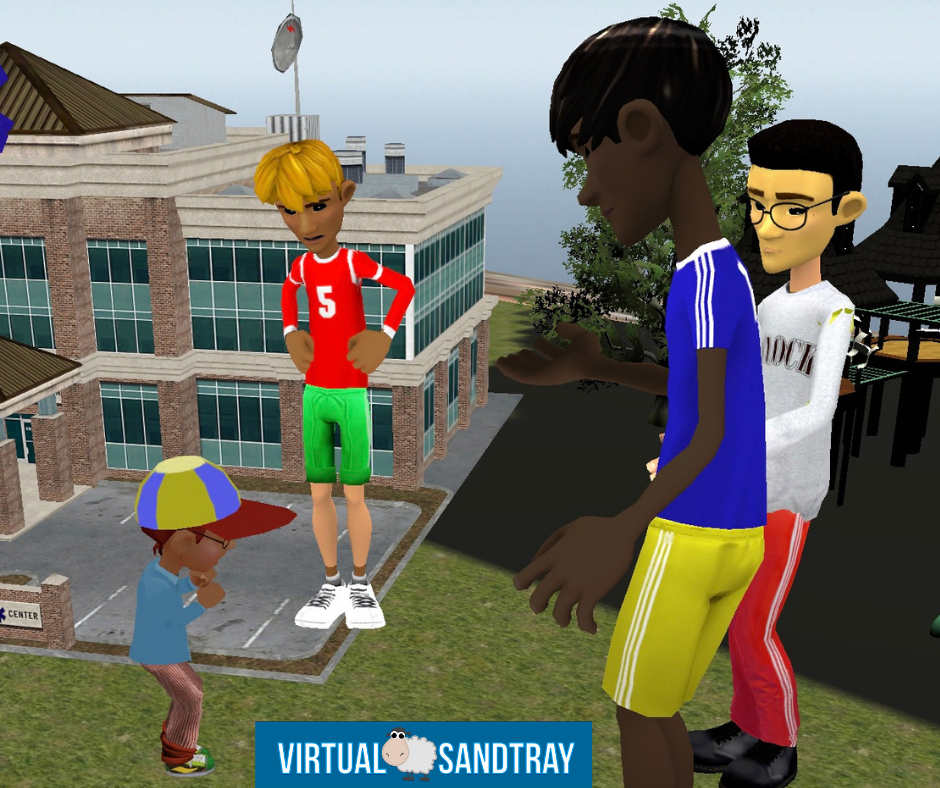
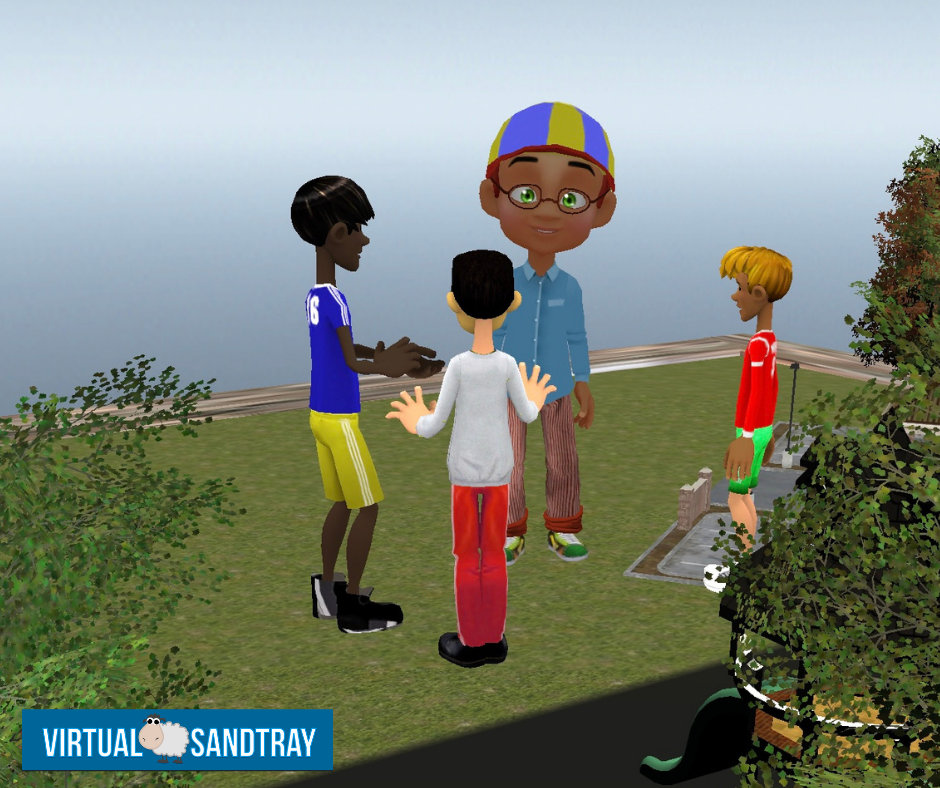
You can dig in the sand. You can build up the sand. You can paint it, add grass, or water, or cobblestone, or you can have it be sand color. You can place 3D models in it, rotate the tray, and navigate at any angle. Like a physical sand tray, it is three-dimensional in every regard.

a happy-go-lucky scene of rainbows, butterflies, and unicorns can be created against a dark and foreboding background


You can make the models bigger or smaller, turn them around, move them, and knock them over. You can blow them up. You can change the background. A happy-go-lucky scene of rainbows, butterflies, and unicorns can be created against a dark and foreboding background. Congruence between the main scene and the background is relative. You can dig down in the sand, paint the inside of the tray blue so that the bottom of the tray is like water.


11 Year-Old: Safety and Security with Unicorns and Fence, but Danger (Dragons) Lurking


Adult: Castle as Calm Space/Sanctuary


You can create a multidimensionality in the sand so that, for instance, two layers would just be sand, but the third layer is liquid. So, in the happy-go-lucky scene I mentioned above, you can change the liquid layer to lava. So now we have a multilevel, multidimensional depiction of this world for this client. We also have camera filters, so you can make it look like it's snowing, or raining, or you can invert the colors. You can do night vision, like it’s seen by aliens or something like that.


9 Year-Old: Red Dragon Scene- Danger, Missing Scary, Unsafe, Trauma


Therapist Process Tray: Sadness Over Missing out On 4th of July Due To COVID

LR: Jeez.
JS: One of my current favorites is this one called “broken,” and there’s a couple different broken varieties, but if you can imagine a scene where the person has created a scene depicting their family and then they use the camera filter so it appears shattered. This might reflect how that client feels about their family.

By the way, you can save trays and load previously saved trays to work on again. The clinician can review and compare/contrast the in-person with the online sessions. In the secure, encrypted remote mode with a free client version, no personal health information is collected, and there are multiple language and accessibility features and well over 7,000 3D models available.

Sandtray with a VR Twist

LR: In your book, you talk about the virtual reality version of your sandtray app.
JS:
In VR with the Virtual Sandtray, you can be either up in what's called God mode, where you're up above the tray, looking down, or you can come down to the level of the sand tray and interact with your creation
In 2016, I started learning more and more about VR. I remember thinking, "Mental health is going to explode with virtual reality." So my husband created a version of the app for virtual reality. In VR with the Virtual Sandtray, you can be either up in what’s called God mode, where you're up above the tray, looking down, or you can come down to the level of the sand tray and interact with your creation. So imagine a child is depicting a theme in which they have been bullied at school, or an adult client is interacting with their spouse and that interaction has been traumatic. Unlike with the Virtual Sandtray app, the client can go right down to the level of the depicted scene to walk and interact within it. It is an entirely different level of immersion. You can certainly crouch down in a traditional tray and become more physically engaged—grab the items and narrate, and move them around and all of that. But in VR, you're staring them in the face. The thing is right there. It's a really powerful, amazing, immersive experience to use the virtual reality version of it, and I’m really proud of that.


Animated Bullies Looking Down on Child Who is Much Smaller/Crying


Bullied Child As He Would Like It To Be—He Is Now Bigger and Talking To Them


VR Version of Sandtray of 11 Year-Old’s Sandtray Scene From Above

LR: Readers may be familiar with the use of virtual reality in cognitive behavioral therapy, in exposure and response prevention. And this isn’t necessarily used for exposure in an anxiety or trauma reduction sense, but it's adding another level of immersion into the play.
JS:
VR could be used in an exposure play therapy format by putting a big spider in the tray or scene
VR could be used in an exposure play therapy format by putting a big spider in the tray or scene. I can make that thing enormous, and then it becomes a challenge to the client, who has to ask themselves, “How do I manage that? How do I keep myself safe? How do I titrate toward, or away, or whatever it is?” I use VR in my clinical practice for a variety of reasons. I’ve used it with adult women for empowering them. I’ve used it with all ages for identifying safe places and spaces.

I even have a job simulator. I have a kid whose life is very regimented, and she comes in, and she just destroys the whole office. She chooses the job of being an office worker, and she goes in and dumps the coffee, and throws things, and just makes this huge mess, and it's so cathartic for her to do this with no real-world consequences.

Synchronicities

LR: What’s the difference, Jessica, between synchronous and asynchronous telemental health play therapy?
JS: This conversation that we’re having right now is synchronous. We’re both here at the same time, speaking to each other, even though we’re in different locations. If you have synchronous learning, it's the educator and the student in the same place at the same time. Asynchronous is when we were emailing back and forth. Or it may be an online platform where the educator and the student are not in the same realm at the same time. In therapy, it would be the therapist and the client were not in the engagement at the same time. So when we give a client homework, or when they're going to draw something or create something, or make a list, or whatever it is, that would be asynchronous.
LR: In face-to-face (live) play therapy, the clinician has all the goodies right there in the room—the drawing materials, blocks, sand tray, clay, papier mâché, and dollhouse, to name a few. How is this done online in a synchronous format?
JS: There are just so many different things that people are doing, and it's just wonderful. The resilience of human beings is amazing. A lot of clinicians have either identified what the client has on their end and what the therapist has on their own end, and then they can each use their materials when they see each other; for example, they could play Uno. And we’re talking about, like, traditional play materials. If we’re talking about digital, there’s a way to do so many things digitally.

Other clinicians have created play therapy kits that the client can pick up or that get delivered, so both have similar materials in their respective spaces. In a sense, it’s parallel play. I’ve had a couple of clients just say, “Okay, let’s draw a whatever-it-is,” and then on my end, I do it, and on their end, they do it, and then I hold it up and they hold theirs up and we show each other. If you’re doing it digitally, you can screen share. What it boils down to is using the tools and materials that have clinical significance and relevance and that meet the needs of the client and their treatment, and that ties into your therapeutic modality of choice.

And this brings us way back to that fourth “C,” capability, because if we really understand what we’re doing and why we’re doing it, then we are able to identify those components and find alternate ways to employ them, but if we don’t have them identified, what the hell are we doing?
LR: What you're describing seems parallel to your experience at the PAX conference where there was this alternate mainstream, and you were the “other.” I imagine that there are some therapists out there who fall into this “other” category, as well as those who are curious and in need of training and exposure, and a third group that has already embraced digital play therapy.

As we come to an end, Jessica, can you name five apps that you have found most useful therapeutically with children?
JS:
I will say that the Nintendo Switch has been an amazing resource for me in therapy, whether through telehealth or in person, and the same goes for my use of virtual reality platforms
Like you said, the Virtual Sandtray would be my tippy top. I have found a lot of therapeutic value in VR programs, and that, again, can open up a whole ‘nother conversation. I will say that the Nintendo Switch has been an amazing resource for me in therapy, whether through telehealth or in person, and the same goes for my use of virtual reality platforms. Underneath that, Roblox. While I know a lot of people who let out a collective groan about Roblox for a number of reasons, I would ask techno-curious readers to watch YouTube videos. Learn more about it. Play some things yourself. It's not as scary and awful as a lot of people think it is. You have to be savvy and have some digital citizenship.
LR: Digital citizenship.
JS: There’s hundreds and hundreds of options to choose from, different varieties and genres that you can then tailor to your client’s needs and interests. It's like Disneyland, you know, for options. Then we have Uno Freak. I mean, that's really basic. We’re just going to play Uno. Like, you put a card. I put a card. You put a card. I put a card. Draw cards. You know, just really basic, fundamental. I actually like the Uno Freak version of Uno better than the card version.

There’s Board Game Arena, and there’s a couple other board game types, as well, traditional games like chess, checkers, Othello. Battleship is a good one, but there are hundreds of other games that you may never even have heard of that you can explore, and they each have little tutorials to walk you through it. So I would say those are really fundamentals that people could start with. Certainly, if people want to know more about some of the other arenas, then I’m happy to do that. Skribbl is there if you want to play something like Pictionary. You both join. You draw. You guess. You laugh. You engage. You learn a lot about people’s frustration tolerance and their coping skills and styles, as well as their interpersonal skills and styles.
LR: Maybe the greatest takeaway from this conversation, Jessica, is that, while this may be scary and new and even evoke techno-panic in those who are probably prone to techno-panic anyway, it really is worth becoming more aware of, because there’s probably not as much of a divide between digital play therapy and nondigital play therapy as people fear or think. Anyway, the real healing comes in the relationship between the therapist and the client and how we use whatever we have or whatever they bring to help them to get where they're going.
JS: I really would like people to think of it as an "and", not an "or". And that we can take all those fundamentals and use them in really powerful ways, whatever the medium is.


LR: And I think, on that note, we’ll stop. Thanks so much, Jessica, for pointing us to the bridge between the digital and non-digital world of therapy and, in particular, play therapy.

Pandemic Lessons for Introverts (and their Therapists)

Melissa* is a professional in her early thirties. She is married and has two dogs and a cat. She is also a self-described introvert. “What that means,” she said when we first started working together “is that I like people, but I don’t like socializing. I’m happiest when I’m at home with my husband and my pets. I prefer working in my garden to being around other people.”

Melissa is one of many self-described introverts for whom the COVID-19 pandemic has provided a surprising and often welcome respite from the difficult demands of everyday interactions with others. The concept of “introversion,” popularized by Carl Jung, is often described as a reserved or shy person who enjoys spending time alone. As with most descriptions of personality, introversion and extroversion exist on a continuum, with most of us experiencing a mix of these characteristics, and many people who consider themselves more on the introverted side of the extrovert-introvert continuum have still had difficulties during the pandemic. But, as a recent New York Times article suggested, forced separation from their hectic lives has given some people the opportunity to see just how hectic those pre-pandemic lives were (1). After reading the article, Melissa resonated with the example of Josh Bernoff, a public speaker and author who lives in Arlington, Massachusetts, who acknowledged how stressed he had been prior to the pandemic as he was constantly traveling, planning his next on-the-go meal, and forced into socially awkward conversation with veritable strangers.

“That’s exactly how I felt,” she told me. “I hadn’t thought about how hard I work all the time to do social stuff that other people find so simple.”

Years ago, individuals who were quiet and reserved were often admired, but today, at least in the United States, according to Susan Cain, author of Quiet: The Power of Introverts in a World That Can't Stop Talking, introversion and its often-associated characteristics of sensitivity and shyness has become synonymous with some type of personality flaw (2).

Melissa, who had grown up in a world that admires the outgoing extrovert, spent much of her life feeling ashamed of herself for preferring solitude to social interaction. “I’ve always thought there was something wrong with me,” she told me early in our work together. “So, I’ve worked hard to be more outgoing, even though it’s never been comfortable.”

The reality for Melissa, as for many self-proclaimed introverts, was not quite as black and white as it might have appeared at first. During the pandemic, even as she was enjoying her time alone, she found herself thinking that it might be nice to spend a little time with one friend or another. But as the world has begun to open, Melissa is taking stock of some of the lessons she has learned about herself during the pandemic.

“I don’t want to get caught back up in that crazy social schedule I had before,” she said. “I want to be able to find time for myself, to read, listen to music, go for long solitary walks. But I also want some time with people I care about.”

I asked her to talk to me about what appealed to her about spending time with those people. “That’s a really interesting question,” she said. “I don’t think I’ve ever taken the time to think about what I like about being with them, because I’m always so busy either forcing myself to spend time with someone when I don’t want to or pushing people away because they want to spend time with me when I want—need—to be alone.”

I asked her to tell me about what she liked about being with friends and family she cared about, and as she tried to explain it to me, she realized that she actually enjoyed her time with other people when it was her choice to be with them.

I said, “You need more quiet time than some of your friends and family, and more time alone. But it’s not that you don’t like being with people at all.”

“You’re right,” she said. “I just realized that one of the things I’ve really liked about the pandemic—and I hate that so many people are suffering from it, and I kind of feel guilty about the fact that I’m enjoying anything about it—but one of the things I do enjoy is that when I talk to a friend or my sister or my mother or a colleague on Zoom, it’s for a limited time. Most of us just can’t stay on Zoom forever, so it has a natural limit that’s probably much more like my own personal limit.”

We were both silent for a minute, digesting this idea. I was wondering if there was a way to carry this new information about herself into the world as it opened up and had just started to ask her that question when she said, “I’m trying to figure out if there’s a way I can use that knowledge about myself moving forward. I have to go back to work, and I have to start seeing my friends and my family again. But can I set some kind of limits with them? Or will I just fall into the same habits as before, going along with what seems right to them and then fighting to find my time and space?”

As the apparent slowing down of the pandemic leads businesses to re-open and social life to ramp up, Melissa, like other clients who have enjoyed the time on their own, faces an interesting dilemma. She put it this way in one of our discussions: “I’ve learned a lot about myself during this time,” she said to me. “Now I want to see if I can incorporate my sense of peace about myself as a less outgoing person with my desire to be connected—but on my own terms.”

Many clients who do not consider themselves introverted at all have also told me that they learned to appreciate time on their own more than ever before. As another client put it, “It seems like some of the activity in my life was doing stuff because I was afraid of feeling left out. It felt really good to slow down, to be on my own, and to do things that I wanted to be doing, not because I was driven to be part of the crowd.”

The gradual ending of the isolation resulting from the pandemic has brought on some concerns, including what Melissa and several other clients call “fear of re-entry,” that is, fears about returning situations in which interpersonal interactions stir up discomfort and anxiety. But one important takeaway for therapists and clients has been to pay attention to and respect what they have learned about themselves during this time. We therapists can help clients recognize and respect their own needs and shift away from always pushing themselves to engage in social activities. Recognizing the “power of introverts” can lead to acknowledgement that it can be useful to respect their own qualities, even if they do not meet the demands of an extroverted culture. And many clients might also discover for themselves what Melissa recently told me: “As I allow myself to take the time alone when I need it, I find that I’m able to engage in the social interactions that I want to engage in much more easily.”

*Names and identifying information changed to protect privacy

References

(1) Richtel, M. (2021) The U.S. is opening up. For the anxious, that comes with a cost. Retrieved from https://www.nytimes.com/2021/03/17/health/US-reopening-anxiety-ocd.html?action=click&module=RelatedLinks&pgtype=Article.

(2) Cain, S. (2013) Quiet: The power of introverts in a world that can't stop talking. Crown.

Additional Writings on Introversion

Buelow, B. and the Introvert Entrepreneur. (2012) Insight: reflections on the gift of being an introvert. Introvert Entrepreneur.

Dembling, S. (2012). An introvert's way: Living a quiet life in a noisy world. Penguin Books.

Helgoe, L. (2012) Introvert power: Why your inner life is your hidden strength. Sourcebooks. 

Imagining the Way to Self-Compassion Using the Ideal Parent Figure Protocol

“I know I’m supposed to be self-compassionate, but I don’t know how to do that, and that makes me feel even more like crap!”

My patient Sally has struggled with years of chronic depression. Through hard work in therapy, she understands that her rough childhood has set her up with a tendency to be harsh with herself. She understands that energy wasted on self-criticism and negative emotion leaves her less free to take initiative and connect with others. But when she wakes up in her apartment alone, all that wisdom seems to fly out of her head, and she feels crushed by a load of self-loathing.

Much the way we learn language, we learn patterns of relating to ourselves early in life. John Bowlby and researchers who followed him described this process as the formation of secure or insecure attachments to a caregiver. People lucky enough to have warm and sensitive parents can develop a secure attachment, which leads to the development of kind and encouraging ways of being with oneself. This inner soothing and encouragement support brave engagement with the world that helps reinforce a sense of the self as capable, and of the world as responsive to one’s needs. A smoothly functioning emotional system allows wise choices in response to the present situation in accord with one’s values.

For those who did not internalize a relationship with a sensitive and encouraging caregiver, life is harder. They can become overwhelmed with feelings of shame, helplessness, anger, and fear, or they may feel depressed, deadened, or cut off from experience. Unregulated or silenced emotions inhibit healthy exploration, which reinforces negative images of the self, generating further negative emotion and inner harshness. Self-compassion can seem like a strange and distant land.

Enter the Ideal Parent Figure visualization protocol, developed by Daniel P. Brown, PhD. as a method for healing attachment disturbances in adults (1). His method relies on the fact that the unconscious mind does not distinguish between images that derive from memory and those that come from the imagination (in fact, most images that we think of as memories are imaginary reconstructions of events). With deliberate visualization practice, we can come to “know” something we did not directly experience. In this method of treatment, I ask Sally to visualize herself as a young child and to imagine ideal parent figures that are perfectly suited to her and responsive to her needs. From there, I ask her to imagine herself playing and exploring with the ideal parent figures offering perfect support and encouragement. Once that imagery has been established, we will have her use these Ideal Parents to respond to her in moments of distress, giving her a visceral sense of an attuned, soothing, and encouraging relationship, and a vivid sense of how she can treat herself.

Sally was dubious. “That sounds kind of cheesy,” she told me. “Also, I can’t really imagine what ideal parents would be like.”

That’s exactly the point. Kids who grow up with parents who were unable to provide good-enough care will stop hoping for something that never comes. We protect ourselves by not thinking about what we can’t have, which reduces the pain but, if practiced repeatedly, can create a deliberate (though unconscious) failure of imagination. The Ideal Parent Figure visualization protocol seeks to reverse that. It turns out that no matter how terrible and abusive one’s childhood was, each of us knows what we needed to thrive. I find this to be a wondrous and hopeful thing.

Ideal Parent Figure visualization uses the process of exploration to discover the kind of support that fosters further exploratory behavior. This method provides a solution to Sally’s frustration of “not knowing how” to be self-compassionate: she will explore until she comes upon the experience. As the therapist, I will provide her with support and light guidance as she navigates this uncharted territory. I’ll be prompting her to imagine Ideal Parent Figures who have five key features: 1) The Ideal Parent Figures are reliable and consistently present—they provide a deep sense of safety and refuge that creates a secure base from which to explore. 2) The Ideal Parent Figures are perfectly attuned; they see us and accept us exactly as we are, which sets us free to be completely and authentically ourselves. 3) The Ideal Parent Figures know exactly how to soothe us, so if we get distressed or over-excited in our exploration, they help us settle down, so we can return to pursuing what is interesting and meaningful to us. 4) The Ideal Parent Figures are delighted by us. We can see their faces light up when they connect with us—not because we have achieved or accomplished anything, but because of our being ourselves. 5) Finally, the Ideal Parent Figures understand we are growing and developing, and they encourage us to become our best selves.

Importantly, the specific imagery comes from the patient herself; she is tapping into the wisdom of her own imaginal experience to create parent figures ideally suited to her. And because these figures are ideal, they will provide a source of support and resiliency more effective and powerful than anything a fallible, human parent or therapist can provide.

Insights during Ideal Parent Figure work often have the feel of a lightbulb turning on. The insights my patients have experienced have included the following:

“My parent figures would NEVER hurt me. They are strong enough to protect me.”

“When I feel safe, I naturally get curious and want to explore.”

“My ideal mother figure understands my mistrust, and she doesn’t pressure me to come close before I am ready.”

“My parent figures don't turn away while I am angry. They stay interested and want to know why I am upset. It’s okay to be angry.”

“My ideal mother figure is delighted by me, even when I am being bad and she is setting limits—I can see it in her eyes.”

In our first few sessions, Sally quickly became frustrated. “Nothing is coming up, I can’t imagine anything.” This frustration is normal and is a sign that she has come to the “edge of her imagination.” Exploration requires trying things, running into blind alleys, trial and error, persistence. “That’s good, keep going,” I encouraged her. “Imagine that your ideal parent figures are with you, sensing exactly what is wrong and responding in exactly the right way. They love being here with you as you explore. They know you can figure this out, and they will stay with you as long as you need, for hours, days, weeks, or even years. Imagine what that would be like.”

In our fourth session, Sally’s imagination “popped.” “They know I can get this!” she said with a smile, “that’s how they can be so patient. They’ll stand by me as I figure this out.” Her expression changed, and what followed was an eruption of grief she had missed out on when she was little. She broke into deep sobs while imagining being held, forever if she wanted, by her ideal mother. The moment was anything but cheesy. Afterward, she felt an unusual sense of peace and hopefulness.

After that point, when that feeling of frustration or sadness emerged during visualization practice, she could reliably call up the image of her ideal mother to soothe herself. Becoming more confident, she started to have fun and looked forward to visualization sessions. Meanwhile, she reported that her mood improved, it had become easier to get things done, and she was reaching out more in relationships. “Well,” she told me with a smile, “I think I’ve figured out how to be self-compassionate.”

References

(1) Brown, D. P., & Elliot, D. (2016). Attachment disturbances in adults: Treatment for comprehensive repair. W. W. Norton and Co.

Many thanks to George Haas of mettagroup.org for his exploration of the language of encouragement.
 

Interpersonal Connection: Noticing the Needs of Others

Ancient Roots

In my recent book, I introduced an approach to physical, emotional, and spiritual health called The Connections Paradigm. This is a technique derived from an ancient Jewish tradition that I have used successfully in my clinical practice with clients.

The idea behind the paradigm is that human beings, at any given moment, are either “connected” or “disconnected” across three key relationships. To be “connected” means to be in a loving, harmonious, and fulfilling relationship; to be “disconnected” means, of course, the opposite.

The three relationships are those between our souls and our bodies (Inner Connection), ourselves and others (Interpersonal Connection,) and ourselves and a Higher Power (Spiritual Connection). These relationships are hierarchical, with each depending on the one that precedes it.

I began learning about interpersonal connection early in my career as a clinician. Back then, I was meeting with patients who seemed to have every need you could imagine. Some of my patients had needs that were similar to my own; others had needs that I never personally experienced.

“I struggled to place myself in the shoes of people who lived in circumstances very different from my own”, like the time I worked on a geriatric unit and treated several older patients with age-related problems that I had never encountered. There were other patients from whom I learned about culture-specific needs that I will probably never fully grasp, let alone experience. In other cases, I saw needs associated with specific health concerns that I never had, and with dire personal and financial circumstances that I pray to avoid during my lifetime.

Through this process, I concluded that being sensitive to each patient’s needs—i.e., interpersonal connection—is one of the most important skills in being an effective therapist.

I have also observed the most common ways that people fail to notice the needs of others. Once, a twenty-nine-year-old male patient of mine named Danny completely disputed the importance of noticing other people’s needs.

“I’m more of a doer,” Danny told me. “I only feel like I’m making progress when I’m actively involved in something. And at the end of the day, getting things done is more important than thinking about other people.”

“But how do you know what another person needs unless you develop your sensitivity?” I asked.

“A lot of the time their needs are obvious,” he said. “And if not, they should tell me.”

“Doesn’t it feel better when someone notices your needs without you telling them?”

“Um?.?.?.??I guess so,” he said.

“And let’s be honest,” I said, “do people really always know what they need? There are times when everyone in someone’s life can see clearly what they need except them. And sometimes we are sure we need one thing, but someone else can see that we really need something else.”

“What’s your point?” Danny asked. “I just don’t want to sit and think about other people, I guess. Is that so bad?”

Danny’s Story

Danny first came to treatment after a brief psychiatric hospital inpatient stay for severe depression. He had lived at his parents’ home for several years after college until he finally got a job and decided to move out. Within a few months, however, he was seriously considering suicide and ultimately checked himself into a hospital.

“”I’ve always gotten depressed, but this was worse”,” he said. “When I was living by myself, I was not really thriving. I had a job I hated and not much of a social life. I thought about moving home, but my depression just kept getting worse until I knew I needed to go into the hospital. I had to stop working, and I didn’t really have enough money.”

After his hospital stay, Danny decided to move back home with his parents. “I just need some time to relax and not worry about bills,” he said.

Danny’s psychiatrists recommended outpatient care, and he came to my New York clinic a few days after he left the hospital. As part of his treatment, I stressed the importance of self-care, positive thinking, and staying active. His condition improved relatively quickly. But as he started getting better, he experienced a backlash from his siblings.

Danny’s parents were elderly and had health problems. His father, 84 years old, was going through the early stages of dementia, and his 75-year-old mother, who had suffered several bone fractures as a result of severe osteoporosis, could no longer go up and down the stairs without help. They both struggled to do basic chores to keep their house in order, and Danny’s siblings felt that he was putting pressure on them by moving back home.

“I basically do whatever my parents ask me to do,” Danny said. “We have a good relationship. They say they’re happy that I’m home. But my brothers and sisters say I’m making it harder for them. Last weekend we all had a ‘siblings meeting’ to talk about Mom and Dad, and they basically ganged up on me. They said the house is dirty and that I’m not keeping up with the laundry and stuff like that. My older brother comes just about every day and he’s been giving me the stink eye for months, and I really didn’t know why until this weekend. We used to be really close. But now that I know how they feel I’m really annoyed.”

Danny was spending a lot of time applying for jobs and making sure he was taking care of himself so that his depression would not return. “They think I’m just sitting around doing nothing,” he said, “but I need to focus on getting back on my feet. And really, the house is not that messy. My parents have complex medical issues, but basically they’re doing okay.”

“You said you do everything your parents ask you to do,” I said. “So what are those things?”

“They don’t even ask me to do much. Sometimes my mom will ask me to help her get up the stairs, or my dad will ask me to help him to move something heavy. But they like to handle things on their own.”

With Danny’s permission, I spoke with his parents and siblings and got an entirely different story. “Danny was simply not aware that he was creating a significant financial and interpersonal burden on his parents and making their old age much more stressful”. He expected that his mother would cook, clean, and do laundry for him, and he would routinely leave his belongings around the house, even though they presented a tripping hazard for his parents.

His siblings were frustrated and even exasperated with his selfishness, to the point that they wanted to throw him out of their parents’ home even if it would lead to rehospitalization or worse. I managed to calm the siblings down, with the hope that I could get through to Danny in therapy.

During the next few sessions, I continued to discuss the core concepts of interpersonal connection with Danny, and he eventually acknowledged that his interpersonal style was a significant contributor to his depression over time.

Other Peoples’ Needs

“Years ago, when I lived in California with a friend after college, it was my highest point of functioning. I had a job, a girlfriend, and things were going pretty well. But over time, my friends got fed up with me because I have this unhealthy tendency to focus on myself more than others. I grew apart from my girlfriend and also my roommate, and eventually moved out on my own. But the costs of living were so expensive, and the next thing I knew, I was in major debt. It’s been a bad situation ever since.”

“There are ways to improve how you connect with others,” I told Danny, and he seemed interested to learn more. “Interpersonal connection starts with noticing other people and what they need, and eventually making an effort to make them happy. Being sensitive to others’ needs helps us to remain connected to others and helps us to feel more confident and happier ourselves.”

As a preliminary exercise, I encouraged Danny to make a comprehensive list of someone else’s needs. Danny initially wanted to focus on his older brother, but I encouraged him to choose one of his parents instead. “You see them a lot more often,” I said, “so you have a better perspective on what they need. And they seem to have a lot of difficulties right now, so many of their needs are more noticeable.”

Danny reacted negatively to my suggestion, suspecting it indicated my agreement with his siblings that he was not caring for his parents’ needs. “I’m not making any judgments on how you’re behaving in your relationships,” I said. “You’re my patient. I’m focused on helping you.” Danny reluctantly complied with my recommendation, and we spent nearly half a session making a list of all his parents’ needs.

The exercise turned out to be a powerful experience for him. He became especially conscious of the consequences of his parents’ physical health decline, and how he had indeed become more of a burden to them than he had previously acknowledged.

At our next session he said, “It’s hard for both of them to go out anymore. My dad used to be so active, he took a lot of pride in his work. Now he can’t do anything but sit at home and watch TV. It’s definitely not easy for my mom that she can’t go out to see my nieces and nephews. She used to take care of them every day, but now it’s too hard for her even to go visit them at all.”

It was slow going, but we were getting somewhere.

In truth, Danny had already been aware of his parents’ needs, but verbalizing them made them more visceral. I asked him to focus not only on his parents’ emotional needs but also on their physical needs. “Well, when it comes to physical needs, I guess they have enough money, so they’ve got that taken care of.”

“But your mom is in a lot of pain, right? Relief from pain is also a very strong physical need,” I said.

“That’s true. But I can’t do anything about that.”

“Maybe, but the point is to consider her needs, not necessarily to solve them. What about your dad?”

“He moves okay and he’s not in pain, but I guess his dementia makes it hard for him to handle all the basic things that he used to do to feel good. We put notes around the house because he doesn’t always remember where things are or how to use them. My brother told me we’re all going to start wearing name tags when his dementia worsens.”

Danny became emotional as he began taking serious stock of all the ways his parents were struggling to meet their own needs. “The thing is,” he said, “I still can’t see how it helps for me to get upset about it. It’s not like there’s anything I can do.”

“Maybe not,” I replied, “but being mindful of other people’s problems is important. That feeling of empathy you’re experiencing now is interpersonal connection. I can see now why it’s hard for you. The truth is that you really feel their pain. It’s very hard for you to see them suffer. It’s actually because you are a caring person inside that it’s so challenging for you to acknowledge that they are suffering.”

Danny started to cry, and then a wellspring of emotion came forth. He was visibly distraught with how his parents were suffering and how he had contributed to their pain. Over the following month, Danny’s behavior started to change. He not only improved his self-care but became much more considerate of his parents’ needs, and even his siblings.

Danny also became less introverted and eventually found a decent-paying job, where he developed friendships with several of his coworkers. A few months later, he said, “If I’m being honest, I’m not doing that much more to help anyone, but even thinking about other peoples’ needs has given me much more perspective. I have more interesting conversations with people now. They open up more since they see that I’m focused on what they’re saying, and that I care about them. Even my conversations with my siblings are better.”

***


As my work with Danny illustrates, interpersonal connection requires noticing other people’s needs with true sensitivity. Doing so enhances our ability to help them when they do not explicitly ask for our assistance. Furthermore, the importance of noticing others’ needs goes beyond improving their wellbeing; our own connection benefits as well when we develop finely-tuned empathy for other people.
 

Help-Seeking-Rejecting Clients and The Therapist

I realized the other day that over the course of my lifetime, I have probably joined and cancelled gym memberships about 25 times. I always enter these contracts with a bright sense of optimism and hope—“This is my year!” I usually proclaim proudly. I may even go a few times before my motivation starts to dwindle. My pattern then dictates that I consult with a personal trainer. The personal trainer is always very optimistic and willing to help. However, after I beg the trainer to push me in the workouts and give me at-home routines, it usually takes about a week or two before I am back in the manager’s office asking to cancel my membership. It is never that I do not want the help, but rather that binging television shows and napping on the couch will always feel better in the short term than sweating through my pants while trying to pretend that I am not as winded as I look.

I relate this experience to my work with the patient who ostensibly seeks but ultimately rejects help. I often find myself frustrated and overwhelmed by that person who comes in asking for help but does not seem to be interested in the coping skills and practices I offer to support them in their improvement. In a sense they seem stuck, and, in turn, I feel stuck right along with them.

I have worked with patients before who continue to stay in their romantic partnerships despite their feelings of unhappiness and desire to date other people. I can remember one patient in particular who had been in a romantic partnership for over two years despite describing herself as unhappy. She noted that each time she engaged in sexual intercourse with her partner, her vulva burned and spasmed. She noted that when she engaged in extramarital affairs with other men, such a reaction did not occur. Despite trying different positions, lubricants, and doctors, the problem persisted. It was discussed that the relationship was making her so unhappy that her body was physically rejecting her partner. Sessions focused on processing the meaning of this relationship and noting why it was so hard for her to leave this person. They also focused on exploring feelings related to the breakup process and using effective communication strategies to foster mutual respect. However, as time continued and the extramarital affairs increased, it was clear that this was not the right time for the patient to end the relationship. At one point I became so frustrated that I myself wanted to grab her phone and send a break up text! The more I have reflected and thought about my reactions, the more I realize that they have more to do with my own ego than with the patients and their progress, or lack thereof.

Each time I encounter a help-seeking-rejecting patient, I want to hear that they have used the coping skills offered that week, and their lives have changed for the better because of those actions. I want this outcome not only because I want them to live happier and more authentic lives, but also because it would mean I have been successful in some way. It would mean that something I did or suggested mattered and helped change an outcome. Clearly, it is difficult not to personalize my patients’ wins and struggles as my own. As if I really had some power to control what happens! It is ironic because it is also me who frequently recites the common therapist phrase “You cannot control others; you can only control yourself and your reactions/perceptions.”

And so I realize it is my job as a therapist to meet patients where they are, letting them know that sometimes it is okay not to be able to or want to change right now. Just as it is okay for me to cancel a gym membership I am not using, sometimes it is okay to be stuck. That is not to say that this patient cannot and will not change in the future (I will keep joining gyms, and one day it may work for me!), but more to accept that patients are not always in a place in their lives where they can (or want to) change. Sometimes clients, like therapists—me included—must accept they are doing the best they can in the moment with the tools and circumstances they have.

I think it is great when patients improve in some measurable, objective, and defined way. However, I do not think therapy is an exact science, and I have come to learn (and accept) that clients will experience lapses, relapses, and periods of stagnation. In doing so, I am better positioned to help them find a sense of peace in a world that tries to shape and change them beyond what they can do.

Countertransference to Sexual and Developmental Trauma in the Psychoanalysis of a Disabled Patient

Our First Meeting

Referred to me by a colleague, Tanya was an elementary school principal who had polio as a child. When I initially asked my colleague how severely Tanya had been affected, she told me, “It isn’t too bad.” When I opened the door to my waiting room to greet my new client for the first time, I was shocked to see that Tanya had a deformed arm and leg. She struggled to get out of the chair and when she stood up, I was struck by the contrast between my colleague’s description and the reality before me. I wondered what made my esteemed colleague deny the severity of Tanya’s deformity.

Tanya settled into the chair in my office and was silent. Although she was in her late thirties and a successful professional, she was dressed like a pre-adolescent in short white socks and sneakers. When I asked what brought her for psychotherapy, she said she wanted to feel sexual.

“Everyone else has somebody,” she said. “They have a husband, they have children. I have nothing. I hate my life. I need something, help me, help me,” she cried. “I need something. I want someone to love me. I want to get married. I want a family."

In her third session, Tanya began talking about her deformity.

“Nobody can see it,” she said. “Nobody knows I had polio, that’s why nobody says anything about it. You can’t tell, can you? Can you?”

Shocked that she could be in such a state of denial, I hesitated a moment.

“Yes,” I said as softly as I could, “I can tell you had polio.”

“I’m sorry. How can you say that?” she yelled. “You’re horrible. I’m sorry. I’m not coming back.” She hugged her purse but did not leave.

Tanya’s pleading for me to deny her deformity and the repetition of “I’m sorry” continued for many months. It grated on me. I wanted to yell at her: “Stop it, I can’t stand it.” Session after session as the same scene unfolded over and over, I felt tortured by her, and I felt guilty for feeling tortured.

““I think my mother couldn’t stand me,” she said. “She wanted me to go away.””

Finally, to my great relief, I realized that this was an enactment of her experience with her mother.

When Tanya was ten, she complained that she had intense back and neck pain, but her mother told her “it was nothing” and to go to sleep. But Tanya could not sleep. Finally, when she was in such pain that she couldn’t walk, her parents took her to a doctor, who said she had polio and needed to be hospitalized immediately. Her parents did not explain it to her. The doctors explained it to her parents, but not to her. She did not understand that she would have to remain in the hospital for several weeks. Her parents did not visit every day because the hospital was far from their house, and when they did visit, they only stayed for an hour. Tanya was filled with anxiety and rage.

When she was finally released from the hospital, recuperating at home, Tanya often pleaded for her parents to tell her she would not have to go back to the hospital. Her parents said, “No, don’t worry.” They knew that was not true, but they could not bear her reaction to the truth. When she had to go back a second time, she was enraged that her parents had lied to her.

“Tanya felt betrayed and unprotected”. Her parents said they would visit and didn’t come; they said she would be fine, and she wasn’t. After a while she felt that she could not trust anything they said. Later, when she went through puberty and the curvature of her spine worsened, her mother assured her that no one could tell she had had polio.

I knew that telling Tanya that I could see her deformity would enrage her. But if I had tried to avoid it when she communicated “Don’t you dare say you can see it,” I would have communicated that I was unable to deal with the reality of her polio—just like her mother.

Nevertheless, I continued to feel I was between a rock and a hard place with Tanya. I did not want to lie to her as her mother had, but telling her the truth enraged her.

“Do you think I’ll get married?” she pleaded over and over.

I felt a wave of meanness. The lyrics to “Que Sera Sera” came into my head:

“When I was just a little girl
I asked my mother
What will I be
Will I be pretty
Will I be rich
Here's what she said to me.”

I knew any answer other than “yes” would result in her fury and threats to quit treatment.

“I cannot predict the future,” I said. “I don’t know if you will get married.”

“You’re horrible,” she yelled, picking up her purse from the floor and embracing it. “How can you say that to me? I’m sorry. What’s wrong with you? I’m sorry. I’m not going to come back anymore…”

“What would you like me to say to you?” I asked. My head throbbed.

“That I’m going to get married like everyone else. What’s wrong with you?” she yelled.

“Do you want to get married?” I asked.

“Of course, I want to get married. But who will want to marry me?” she cried.

“I could hear my heart thumping. What am I going to say to her?” She was right to feel her chances were diminished because of her disability.

“You’re right,” I said. “There are some men who will not be interested in you because you had polio. But there are some men who don’t have perfect bodies either or who are more interested in finding someone who they can feel close to than whether her body is perfect.”

She was quiet.

“You had polio, and it affected your arm and your leg,” I said. “That is part of who you are, but that is not all that you are.”

Tanya had not been able to accept that she had polio and tried to cope with it by joining in her mother’s denial that it was visible. I realized that my referring colleague had also been drawn into the denial.

Being a Sexual Person

As the treatment deepened, it became clear that Tanya’s overwhelming anxiety was not simply the result of her polio. One session was a turning point in our understanding Tanya’s level of anxiety and confusion. She began by talking about seeing her doctor for dizziness.

“I went to see Dr. Roberts, and he took my blood pressure,” she said. “It was lower than it has been since this whole thing began. But then he took it ten minutes later and it went up. But it still wasn't as high as it has been in the last few weeks.”

Tanya sat with her legs spread apart. Her crotch was in full view. She did this often when she was wearing a skirt. I was trying not to look at her crotch while she was talking to me, but I thought she was not wearing underpants. I thought to myself that perhaps she was just wearing dark underpants. At first, I questioned whether I was imagining things, but I knew what I was seeing. I started thinking about how to handle it. If I ignored that she seemed to be exposing herself to me, I would be denying the reality. On the other hand, I knew that however I said it to her, she would be mortified and furious at me if I brought it up. In the past I felt the mortification would be too much for her, but this time I felt I could not ignore it.

“Are you aware of how you're sitting?” I asked.

Tanya immediately put her knees together.

“What are you talking about? What are you saying? I'm sorry. You hate me. You think I'm bad. What are you saying? You want me to leave?”

“I don't hate you,” I said. “I don't want you to leave. You were sitting with your crotch exposed to me, and I think that has some meaning. Don’t you?”

“I'm sorry. I like you and I respect you. I don't know what you're saying,” she cried. “You think I'm bad. I'm sorry. You want me to leave.”

“I know you like me and respect me, and I don't want you to leave,” I said. I leaned forward in my chair. “I don't think you are bad. You don't need to apologize. I just think that sitting like that means you have some feelings about yourself and about me that we need to understand.”

“I'm sorry. Sitting like that doesn't mean anything. I just don't think it matters how I sit.”

“You mean it doesn't matter if your crotch is exposed or not?” I asked.

“”I just don't feel like a sexual person. I don't feel like a woman”. Look how I dress. Look how I take care of myself. I just don't feel like a sexual person; that's why it doesn't matter how I sit.”

“You mean you feel like there's nothing between your legs?”

“That's right. What's between my legs is dirty and smelly and bad and disgusting. You don't want to see it.”

“So you think that I am pointing out how you're sitting,” I said, “because I feel your vagina is bad and smelly and disgusting.”

“I offended you. I'm sorry. I won’t do it again. Don’t worry about it.”

“You didn't offend me. But I think exposing yourself is a way of telling me something.”

“You know, you're really inappropriate sometimes. I can't believe you said that to me. Who would say such a thing? I don't know anyone who would say such a thing.”

““You mean you would rather I act like your mother and make believe that there's nothing between your legs or that it's too disgusting to talk about?””

“Maybe it's like the polio. I don't want you to see that I have it. I want you to say you can't tell I have it. But I also don't think I have anything. I am completely out of touch with my body,” she said, crying. “I don't feel connected to it. I can't touch myself still. I don't feel like a woman. Even now with the operation, I still don't really have breasts. Sometimes I don't even bother to wear a bra.”

“What about underpants?”

“What do you think is wrong with me? Do you think I don't wear underpants? Of course I wear underpants.”

“If you don't feel you need to wear a bra because you don't feel you have breasts, I wondered if you don’t wear underpants because you feel you don't have a vagina or clitoris."

“Of course I wear underpants, what do you think is wrong with me?” she yelled. “How could you say that. I can’t believe it. You must think I’m disgusting.”

She got up and walked out of the office. I was not sure she would come back.

When Tanya did come back for the next session, she was angry for the first few minutes. But then she told me that after the session she remembered her mother sitting in the living room on the couch with her legs spread and touching herself.

“You mean your mother was masturbating in front of you?” I asked.

“Yes. She did it in front of my brother too. I wasn’t sure what she was doing. I asked her to stop, but she said she wasn’t doing anything.”

Tanya explained it was like listening to her older brother masturbate. She told her mother that her brother was making strange noises and she didn’t want to share the same room with him, and her mother told her it was nothing and she should just go back to bed. Tanya grew up in a dark, one-bedroom apartment. Her parents slept in the living room, and she and her older brother shared the bedroom. Her parents could have afforded a larger apartment and were even offered one for modest cost in the same building, but her mother did not want to move.

Her mother and brother overstimulated Tanya, and her mother’s denial gave Tanya no protection from the anxiety created by it. Tanya was forced to develop other ways of coping—being confused, not knowing if she was hearing things or not. Her anxiety was so overwhelming it interfered with her thought processes and her reality testing. Years passed in therapy before Tanya brought in a dream she identified as sexual.

“My car was damaged, someone hit it and the door and fender were all bent. I looked underneath, and it was perfect. I felt surprised and happy.”

“When did you have the dream?” I asked.

“I had the dream after our last session. I think it’s about myself. I am finally accepting that I am damaged on the outside, but I am all right inside.”

“Yes, it sounds like a positive dream. What comes to mind about looking underneath?”

“It was underneath the hood. Inside. But it sounds sexual doesn’t it? Maybe I realize that I am damaged outside, but I am not damaged sexually.”

“And you're surprised?” I chuckled.

“Yes, I have always been afraid of sex. Something is wrong with me. When I go to the gynecologist, she can’t even examine me.”

“Because you are so frightened that you have a spasm?” I asked.

“Yes,” she said. “”I have always been terrified of touching myself or someone touching me”. I’m terrified. I just see a man with a suit eating pizza and I think he’s cute and I feel terrified.”

“I think you have sexual feelings,” I said, “and then imagine he wants to have sex with you right there in the pizza store and then you are terrified.”

“Yes, I only feel the terror, but I must be having sexual feelings,” she said.

“I think you become overwhelmed by your sexual excitement and project it onto the other person and then feel terror. You know when you would lie in bed listening to your brother masturbating and coming, that was overstimulating. You knew it and went to your mother, but she denied the whole thing and told you to go back to your room. You couldn’t get any help protecting yourself from the overstimulation.”

“It was normal for him to masturbate. I know kids masturbate, but I shouldn’t have been in the same room. I should have had my own room, and when she just told me to go back to bed and ignore it, I must have felt flooded.”

“Exactly,” I agreed.

“You know, she said, “I had another dream last night. “I was watching somebody teach somebody how to dance. This young girl was very graceful, and she was moving very well. She knew how to dance. They were getting ready for a wedding.”

“How did you feel in the dream?”

“I felt good,” she chuckled. “I felt I could learn to dance. You know, they had dancing at my beach club on July 4th, and I didn’t dance. But next week, they’re having a DJ and they are doing line dancing, and I’m going to get up and learn how to do it. I’m going to join in.”

The following session, Tanya came in saying she had a dream about tongue kissing the night after the last session.

“I was eating dog food, and my mother was telling me I was eating dog food. I was licking the bowl like a dog and I got nauseated after she said that, and I threw up in the dream and, in my bed. I was gagging and choking.”

“What comes to mind about dog food?”

“Dogs go right for sexual gratification, they’re animals. They can’t delay gratification. Maybe I’m the one who’s bad because my mother tongue-kissed me in my dream. I was acting like a dog.”

“Maybe we're acting like a good dog—a loyal dog does whatever the master wants,” I said.

“Dog food looks like shit. I was eating shit. All my life I was eating shit. I was an obedient dog. Every day I was choking and gagging before I went to school. In the dream I said, ‘I must get it out of me.’ Something was stuck in my throat. It’s a feeling of fear. You know, my brother can’t swallow pills; he gags also.”

“Really!?”

“What could be stuck in my throat? Do you think this is at the bottom of why I can’t touch myself or have sex?” she asked.

“Yes, I think that your mother was crazy, and she masturbated in front of you and acted like nothing was happening and kissed you sexually and acted like it was normal. When you told her your brother was masturbating and you didn’t want to share a room with him, she said it was nothing and you should forget it. I think this is only the tip of the iceberg. I think there’s a lot you haven’t been able to tell me yet. Maybe you’re afraid I’ll think you’re bad.”

“Yes, I think so. You know, she would sit with her legs spread apart and pull her underpants to the side and play with herself. She did it while we were watching TV. My father was there sometimes, and he never said anything. My brother was there. If I asked her to stop, she would ignore me.”

Homosexual Feelings

Tanya was angry because I did not hear the doorbell—she had to ring twice, and the clock in my waiting room was four minutes fast. Anything that questioned reality (e.g., what time is the session) threw her into questioning everything. I also thought it might make her feel that I was out of control or her feelings toward me could get out of control. Maybe she felt I was like her mother if the time was wrong and I didn’t hear her. It threw her into a panic attack and made her question reality.

The next session, Tanya came in saying that she was upset and sad after our last session. It might have been from talking about how sexually stimulating her house was and that she might have felt aroused by it, or it might have been about my clock being wrong. She said the erroneous clock made her feel crazy. Then she moved on to talk about being angry at a teacher with whom she worked. She thought he was gay but that he could not deal with it because he was religious. Then she talked about being angry at her friend’s husband, who always talked about women he wanted to screw. Tanya thought it was a defense against his homosexual feelings.

“It’s interesting that in both cases you’re angry at people who are denying their homosexual feelings,” I said.

“Do you think I’m homosexual?”

“No,” I said, “but I think you might be afraid that you have sexual feelings about me.”

“That would be inappropriate, wouldn’t it?”

“No, I don’t think feelings are appropriate or inappropriate—they just are what they are. We don’t have control over our feelings, only our actions. Considering your mother’s sexually provocative behavior toward you, I don’t think it would be surprising if you had sexual feelings about me.”

“How would you feel if I had sexual feelings toward you?” she asked.

“I would feel happy for you that you were able to be in touch with your sexual feelings, whatever they are. You haven’t been able to experience them at all.”

“After the last session I had this tension in my inner thighs. Do you think that was a sexual feeling?” she asked.

“Yes, I think that was sexual tension.”

“How do you get rid of sexual tension?” she asked.

“Well,” I said, “you could masturbate or have sex with someone else. Sexual tension gets built up and then released when you have an orgasm.”

“I have to get a Pap smear on Wednesday. I’m afraid I won’t be able to do it. I feel like canceling it.”

“Are you afraid of having sexual feelings during the exam?” I asked.

“Yes, what if I have sexual feelings during the exam? What should I do?”

“You don’t have to do anything. You can just have them, and eventually it will pass.”

“Oh,” she said, seeming relieved.

Fear of Driving Me Away

Tanya walked into my office and sat down clutching her purse on her lap.

“I couldn't find a parking spot. It's getting harder and harder to find a spot around here. It makes me so frustrated,” Tanya said.

“What about that?” I asked.

“It makes me feel so annoyed and angry.”

“Maybe you're annoyed and angry at me?”

“No, I just can't stand how hard it is with all the traffic and it's so hard to find a spot. It makes me not want to come.”

“Maybe you had some feelings about coming today?” I asked.

“I was thinking about stopping,” she cried. I have too many feelings about you. I'm sorry, my feelings are too strong…”

“What are you sorry about?” I asked.

““You don't want me, you wish I'd go away,” she said angrily”.

“What is it about you that makes me want you to go away?”

“I'm sorry, I have too many feelings about you.” She picked up her purse and hugged it.

“You mean I can't stand your feelings about me?”

“I'm sorry. I want too much; you won't want to give it and you'll want me to go away.” Tears flowed down her cheeks.

“Why would your feelings be so intolerable to me?”

“I want to talk to you all the time. I'm sorry.”

“If you want to talk to me all the time, do I have to do it?” I asked. “Why can't you want whatever you want?”

Tanya looked surprised. “Because I want you to do it!”

“If I felt I had to do whatever you want, I wouldn't be able to stand your feelings. But I don't feel I have to do things just because you want them, so I can allow you to want whatever you want.”

“I don't think my mother could stand my feelings,” she whimpered.

“No,” I agreed, “because she felt she had to do something about them and she couldn’t, so she wanted you to go away.”

Transference and Countertransference

Tanya’s transference changed during various times in the treatment. At the beginning, she experienced me as if I were her mother who wanted her to go away. But this was not a neurotic transference onto me; rather, she induced in me the feelings her mother had about her. She pleaded for me to lie to her but wanted to believe me. She wanted me to feel what her mother had felt but be a better mother than hers had been. It was a struggle for me; I felt harassed by her pleading and guilty for not feeling empathic. I found it difficult to bear her pain and her rage at the hand she had been dealt. Her demands for reassurance made me feel helpless, which is probably how her mother felt. I had to find a way to help her accept reality but also console her.

Later in the treatment, when she was finally able to deal with her sexual feelings, the transference shifted. She was not able to tell me what had occurred with her mother. Rather, she created an enactment of it so that I would understand what she had felt as a girl. I became confused about reality just as she had—e.g., is she wearing underpants?

Final Thoughts

Tanya would remain in treatment with me for over ten years. When she terminated, she was a much more integrated person. She felt like a sexual woman and got over her social phobia enough to develop close friendships with both men and women. Tanya was able to accept the gaslighting, denial, and lack of boundaries in her family. She became closer to her brother and convinced him to seek treatment.

Of course, there were many other issues in her treatment that I have not dealt with in this article—e.g., her envy of me for not having a misshapen arm and leg. I have only highlighted the issues of denial of her disability and the lack of boundaries and sexual overstimulation in her family.

I think it was important that I told Tanya her disability was visible for two reasons. First, she knew that it was. If I denied it, it would imply that it was so horrible that I couldn’t deal with it. I would be like her mother – distorting reality because I could not tolerate Tanya’s pain. Second, Tanya did not trust her parents because they consistently lied to her. She called me constantly to confirm our appointments. And when applying for a handicapped license and being told she would have to wait 60 days, she called them daily to confirm it. So I had to be truthful to build her trust, even though it enraged her.

Some therapists might have avoided confronting Tanya about exposing herself to me. It was awkward and uncomfortable for me, and it enraged her. However, I think it was a major turning point in the treatment. As a result, she was able to tell me about her mother’s exhibitionism; she became more able to identify and process her own sexual feelings, which reduced her projection of them onto men. She also made progress in being able to comfort herself.

Although Tanya was not able to have a sexual relationship with a man, she bought a dog and named him “Sigmund” as a testimony to how much psychoanalysis had helped her. She did the macarena with the husband of her friend and felt sexually aroused. She understood that her sense of sexual abnormality had more to do with her mother than polio.She also made progress in being able to find comfort. Although she was not able to have a sexual relationship with a man, she was finally willing and able to treat herself to massages regularly and was able to masturbate. Overall, Tanya had come a long way. Her social and sexual anxieties were greatly diminished and she had a much more fully developed sense of self. It was very hard work for Tanya, and in a different sense, for me as well. 

Strengthening the Online Counseling Relationship: Helpful Tele-Tips

The COVID-19 pandemic has had many impacts on our lives, including changes in how we connect with others. For myself and many of my fellow counselors, this has meant shifting to working remotely, whether through online video platforms or over-the-phone support. Since March 2020, my own counseling practice has almost completely shifted to online video conferencing. Connecting with people using video platforms had already been a small part of my counseling role, but it has now become the main way I provide support. This no longer feels like a stopgap to get through the pandemic; it will likely continue to shape and influence how I think about counseling. This hit home at the end of a session with Jay, when they said, “I’m so glad we’ll be able to continue our regular online sessions when I move out of the city—I can’t imagine having to start over again with someone new.” There is abundant evidence that one of the central ingredients to any successful counseling experience is the quality of the relationship and connection between counselor and client. This is one of the most robustly studied aspects of in-person counseling, and it also appears central to providing support remotely. At first, I worried that the shift to online counseling would cause my connection with clients to suffer. I was concerned that it would be too hard to do well, and that the usefulness of counseling for people would lessen as a result. Despite my concerns, I have been pleasantly surprised to find that many of my clients enjoy it, and some even prefer connecting online rather than having to meet at my office. Jay is a prime example. They described thinking about counseling several times over the last number of years, but always felt too anxious to risk talking to a stranger. In fact, Jay rescheduled our first session twice before we finally connected. In our first session, they were able to sit in their home with their beloved dog on their lap. Jay described this as a key step for allowing them to take the risk of opening up while struggling with the additional stressors of the pandemic. Many clients with whom I work do express missing the opportunity to meet in person. There has been a lot of grace and acknowledgement that we are all adapting and doing the best we can. However, this comes along with a lingering sense that this way of living is temporary. Although many of my clients say that online counseling is better than not meeting me at all, what if this continues to be how some would prefer to engage with counseling in the future? How can I (and we) ensure that we’re building the strongest counseling relationships possible while working remotely? 3 Areas to Strengthen the Online Counseling Relationship In my own clinical experience and based upon the research I’ve done, I have landed upon a few tips for providing online counseling. These have contributed to creating a foundation for supportive connection that I want to share with fellow clinicians. Set the tone and establish boundaries. The environment I create through my online “meeting space” has greatly supported a feeling of ease, consistency, and safety for both myself and my clients. Ways I have established this online environment include:

  • Considering the lighting and environment. I make sure my face shows up well, without too many shadows. I have pleasant colors and images in my background.
  • Being mindful of privacy, as it is of course paramount for ethical counseling work. Privacy can also ensure freedom from distraction so focus can be maintained on the interaction at hand.
  • Reducing distractions from other devices. I make sure notifications are turned off and displays are out of my sight line. This has helped me provide full attention to my clients, so they feel truly listened to. It has also improved my ability to guide difficult conversations.
  • Pacing the interaction well, to allow space between asking a next question or waiting for the client to respond. Some cues that tell me when a person is about to speak, or they need time to reflect, will be harder to read. Going a little slower than I would in person helps me and my clients to avoid speaking over each other or missing an opportunity for the client to respond.
Create conditions for trust. At the center of a positive and successful counseling connection is the trust between client and counselor. A key way I have created the conditions needed to build trust is through the quality of my presence and attention. Here are some aspects of communicating with my online clients that have enhanced and conveyed presence to clients:
  • I consider how the client will see me and have paid attention to how much of me is visible in the video’s frame. Seeing all of my face and some of my shoulders has allowed facial and body language to be conveyed through movements, gestures, and expressions. It also ensures that I am comfortable, so that I can be grounded and steady in my presence.
  • I pay attention to how close or far I am from the camera. If I am too far, I may seem detached and unreachable; too close, and I may seem more intense and in their face.
  • I practice giving eye contact. Although it is uncomfortable and sometimes threatening to have too much direct eye contact, without some sense of being able to really see and be seen, there can be less of a connection. I toggle between looking at the image of my client on the screen and directly into the camera, so they have the experience of direct visual acknowledgment.
  • I try using earbuds or headphones. This makes me less likely to strain to hear, and the sound often feels more immediate and intimate.
Practice collaborative communication. My counseling relationships that have the most benefit include a sense of collaboration between me and my client. This includes ensuring there is a consistent opportunity for the client I am supporting to use their voice and have choice in the course of setting goals. It has been important to feel like I am negotiating together what is focused on and to build on the client’s strengths. Some ways I have done this include:
  • Taking time to check with my client about all the areas mentioned above. For example, I discuss the lighting, my distance from the camera, how well we can hear each other, and the privacy of our environments. These extra steps have helped me to create a joint space for the counseling work.
  • Verbalizing or narrating more often what I am thinking about or how I am sensing how my client might be feeling as we interact. Following this up with curious and open questions to check my observations has not only helped me learn to read and listen to my client in this different medium, but has also assisted the client in becoming more aware of these things. It has made the unspoken more explicit.
  • Regularly asking my client what the experience of online counseling is like for them. What are they noticing? Also checking in to see how they feel before and after sessions helps us both track their experience. These transitions may be very different if they are connecting from their home, office, or car. Creating plans together for helpful ways to prepare for an online session, as well as how to shift gears afterward, can support the overall feeling of a well-contained and supportive counseling relationship.

***

The use of online or other remote methods for counseling has become more common and is likely here to stay. Applying practical knowledge from known methods of creating an environment, tone, and collaboration that promote a strong counseling relationship has greatly helped me adapt to and use this modality well. Regardless of how I interact with my clients, positive outcomes rest on the development and experience of a solid and positive connection. Jay and I now regularly include updates on their pup, and together we monitor the health of my office plants in my background. We joke about guessing each other’s height and that we don’t have to worry about wearing matching socks. These unique small steps of our shared virtual “room” and connection have become a protected space and the threads of our relationship. I don’t know if I’ll ever meet Jay in person—however, their impact on my own learning continues to leave a lasting impression. I am hoping that what I have learned about online counseling and the tips I have shared in this essay will be of use to my fellow colleagues.

Emergent Anxiety: Facing a Post-COVID Life

A New Normal

During the past year, therapists and patients alike have become habituated to the familiar routines of telehealth sessions, new grocery shopping habits, Zoom school for the kids, figuring out what to watch on Netflix, and (re)discovering pastimes and hobbies. At the time, we were faced with the Herculean task of tending to our patients while taking care of ourselves and our families as we adapted to a world filled with COVID-related anxiety.

Here we are at another crossroads. There’s not going to be a singular event that demarcates the age of COVID and the post-COVID era. It will be a gradual process, and it will generate excitement and relief. In fact, there will be a lot of jubilation as we move to this next phase. Hugging grandchildren, going to movies, seeing friends (in person!), and attending special events such as weddings and graduations will take on a special meaning, and many, if not most of us, will feel a deep sense of appreciation for what we used to take for granted.

But there will be a cross-current that we will be facing with our patients—an uncertain future, which includes how to live as they transition to the New Normal.

The term “emergent anxiety” describes the phenomenon of anxiety following the initiation of a psychotropic medication. I believe it should be repurposed to describe the upcoming post-COVID adjustment period. In fact, the irony of an increase in anxiety during the introduction of a medication whose purpose is to alleviate anxiety has an unmistakable parallel to the future uptick in anxiety around the vaccine, reduction in cases, and ultimately, a return to normal life.

It is important to consider that “COVID and the upcoming emergence of related anxieties is one of those rare occurrences where we are having a shared experience with our patients”. We have been providing treatment to those suffering from depression, anxiety, and unwanted behaviors such as overeating, drinking, and screen time while we have been attempting to manage our lives.

Emergent Worries and Concerns

As I listen to my patients’ concerns, these are some of the many questions that are emerging:

  • Once I'm vaccinated, how do I handle people in my life who refuse to do so?
  • How long will immunity last?
  • Will the vaccine cover the variants? When will boosters become available?
  • Will there even be a “Post-COVID” age? Will we always be social distancing and wearing masks?
  • When can I safely visit my children, grandchildren, and friends? At what point can I hug and hold them?
  • When can I start going to movies again? A museum? A restaurant? Should I only dine outside?
  • When can I schedule routine doctor visits and obtain tests (mammograms, colonoscopies, etc.)? When should I resume going to the dentist? My barber/hairdresser?
  • When can I begin to travel safely? Will airlines, hotels, trains, and cruise ships require people to be vaccinated? Will I need to obtain a digital vaccine passport?

From discussions with colleagues, additional questions are emerging about the future of therapy:

  • When will I go back to seeing people in person? Should I wait for herd immunity to go back to the office?
  • Will I continue to provide telehealth full-time, part-time, or not at all after herd immunity? What will my patients want to do?
  • If there’s a shared waiting room, how will we make it safer for everyone?
  • When I start treating patients face-to-face again, can I legally ask them if they have been vaccinated?
  • Can I treat vaccinated patients face-to-face and unvaccinated patients (including those who refuse to be vaccinated due to a disability) through telehealth – thus creating a two-tier system – without inadvertently running afoul of laws that prohibit discrimination against people with disabilities?
  • Will we wear masks during the therapy hour even though the threat of infection is lower?
  • How is the ventilation in my office? Will I be buying an air purifier? Will that help?

Understanding Emergent Anxiety

In general, a certain amount of anxiety is necessary to help us survive in our day-to-day lives. As a species, we wouldn’t be here if not for the capacity for the fight-flight-freeze response.

Yet anxiety can become too much of a good thing. Our minds have been adapting to the stresses related to COVID, and just because the threat decreases, it doesn’t mean that we will snap back to feeling normal.

In fact, the new adjustment may make some people more anxious. During the course of the pandemic, our reactions seemed completely rational. Like a lion in front of our foreparents’ caves long ago, COVID and its related anxieties—a racing heart, sweaty palms, discombobulation, and panicky feelings—made sense to us. Once the threat of the “lion” (COVID) has gone away, continued physiological and psychological responses will be inexplicable. That is, the residual symptoms will no longer make sense to us.

This post-trauma phenomenon reminds me of what happened when we emerged from the worst of the AIDS crisis. As new medications reduced the chances of horrible illness and death, it was assumed that people with AIDS would feel relieved and happy.

Many if not most of my patients with AIDS weren’t simply happy or relieved that new medications would save them. Actually, it threw many of them into a tizzy, especially those who had resigned themselves in one way or another to the probability that their lives would soon be ending.

The parallel I’m drawing here highlights the disconnect between the intellect and our emotional responses to being “saved” from COVID. Once the major threat of COVID has passed, we will not be one happy, relieved, functional family. It’s far more likely we’ll be witnessing a concomitant increase in anxiety and confusion, and our services will be required more than ever (as is already happening, as many of us have full practices).

Related Conditions

It’s important to be on the lookout not only for anxiety, but a kind of post-pandemic depression. Symptoms may include avoiding others, agoraphobia, other fears and phobias developing in otherwise healthy patients, and a rise in panic attacks and full-blown panic disorder. Social anxiety will also be on the rise. Some younger children and adults will have a new or reemerging separation anxiety as well as “stranger danger” as they continue to skirt around people when in public places.

Other maladaptive strategies that we’ll be treating more often will run the gamut from increased phone/internet/video game use, compulsive gambling, substance abuse and drug addictions, overeating, and other dependencies and compulsions.

Regarding relationships, many couples are holding it together for fear of moving out during the pandemic. Other couples are hanging on by a thread. Expect a post-COVID “divorce boom” and an epidemic of relationship break ups, as well as couples trying to save their relationships.

Post-COVID reactions are also going to include a unique brand of PTS(D),including unpleasant reactions to being in social situations and public places, an increased vigilance about health, COVID-related nightmares, constant vigilance for symptoms of COVID, an over-reaction to catching a cold or another minor bug, and not wanting to return to the workplace.

Many children have been regressing—wetting the bed after months or years of not doing so, refusing to play with friends, and wanting to crawl into bed at night with a parent due to insecurity and fear. But children aren’t the only ones who are regressing. Adults regress as well, and many of us are reverting to old coping strategies, becoming more quick-tempered, and fighting and bickering with our partners more often.

Treating Emergent Anxiety

My personal philosophy about mental illness is that heredity, biology, and brain chemistry cause many types of mental illness (schizophrenia, autism, ADHD, etc.), but more often we develop “mental illnesses” not because the brain gets sick, but because it adapts. The main illnesses I’m referring to are depression, anxiety, addictions, and PTSD. The following are some of the techniques I have found useful with my clients around emergent anxiety.

  • Normalize their experience. Developing post-COVID anxiety will be a normal response to a highly abnormal situation. So the first intervention is to normalize your patients’ responses and reassure them that their coping strategies—which picked them (we do not choose our coping strategies)—are the natural backwash to a major tsunami.
  • Self-disclose more often. In the past year, I have been more disclosive than pre-pandemic. I have told several patients that I have to watch my diet more closely, for example, and I share some of my concerns and fears about the future (not to heighten their anxiety, but to remind them they are not alone).
  • Be a witness. Every trauma victim needs a witness. Part of our role is to be a container and a holder of memory. I listen carefully when a patient describes the pain associated with COVID, and I make sure that every important milestone (including deaths of loved ones, when they got their vaccines, how this has impacted their jobs) will be remembered and commented on in the future.
  • Look for delayed grief. Be on the lookout for delayed grief reactions, not just to lost loved ones but to a lost year (and counting), whether it has been a career/job, socializing with friends and family, a lost school year—basically all routine life. As we have been focused on our day-to-day survival, many have not had the “luxury” to grieve. Much of our work will be on helping patients to heal from their buried grief.
  • Interrupt the “anxiety process.” I have a particular way of treating anxiety, and emergent anxiety can be treated this way as well. I see anxiety as a process as well as a state. We develop one or more feelings that are highly uncomfortable. Over time they get bunched up (very technical, but it’s how I describe the process to my patients) and it can become overwhelming.
  • Help with Meaning-Making. During this time, a lot of existential questions have surfaced. Just because COVID becomes a manageable disease, it doesn’t mean that we should squander the opportunity to help make meaning out of this “lost year.”

Over several sessions, we break down anxiety into its component emotional parts, and we usually find that the emotions that turn into anxiety are particularly difficult for the patient to tolerate (which varies by individual). Next we find ways to better cope through emotional regulation. Once we identify their emotions, I help the patient to understand and modulate their response.

The “No Wonder” goal is a way for patients to eventually be able to say, “It’s no wonder I experience a lot of uncertainty about the future and feel so helpless to do anything about it.” The No Wonder goal—which can be achieved over several sessions for patients to make sense of their anxiety—can help to reduce patients’ anxiety about being anxious.

I also explain to my patients that when they have anxiety, their bodies are engaging in natural processes to keep them alive—such as increasing their heart rate, moving blood away from the abdomen, and heightening the senses in order to flee if necessary, among others. With enough effort and trial-and-error, they can tell themselves that their bodies are becoming more alive and alert (rather than shutting down) while a bout of anxiety or a panic attack is occurring.

***


My hope is that this article can assist my fellow clinicians by providing some new tools to help your patients and motivate you to think about and discuss what will surely be in our future. We will be an even more integral part of our patients’ lives as we help to prepare them for emerging into a post-COVID world.
 

The Upward Arrow and the Golden Rule

My client Leslie sits across from me, her shoulders slumped. She has come to me for help with her marriage. Despite having a core of love for each other, for many years Leslie and her wife have been sharing mutual recriminations and dismissals of each other’s feelings. Their marriage has moved through time like a net, trapping resentments. We’ve been focusing on a moment when she complained to her wife about a critical comment her wife made about her in front of their kids.

I ask her the “Miracle Cure” question to clarify her goal in today’s work. “Let’s imagine that a miracle happens, and you got exactly what you wanted out of this session. What would that look like, what would be different?”

“She would see that I’m right, and she’d apologize,” she responds quickly.

Like so many people who say they want to improve their relationships, Leslie is stuck in blame. She is having a hard time conceiving anything that could help the relationship beyond having her wife do the changing.

As Dr. David Burns (1) has pointed out, a stance of blame is incompatible with healthy intimacy. When we blame, we fall into distorted thinking patterns and place all the badness and problems on the shoulder of the other person. In doing so, we cast ourselves in the role of victim, powerless to effect any changes that would move us to our goals. But the problem goes further than that. Relationships are reciprocal—when we approach someone with blame, they will naturally respond in kind. The Golden Rule is fundamentally a self-compassionate one: treat others as you would like them to treat you…because, well, what comes around goes around.

But how to help Leslie feel that with her heart, and not just in her head? In previous sessions, I had validated the hurt behind her wish and then redirected her, reminding her that her wife wasn’t asking me for help and that any changes need to come from Leslie herself. But today, I encourage her. I call this line of questioning the Upward Arrow, akin to the technique called the Downward Arrow. In the Downward Arrow technique, we ask a person why a negative thought is upsetting, which leads them to make contact with the negative beliefs that underlie the thought. In the Upward Arrow technique, by contrast, I ask my patient to elaborate on her wish for her wife to acknowledge her as right and apologize. The goal is to help her make contact with the healthy longings that underlie the problematic wish.

At first, she is confused by my line of questioning. She closes her eyes and shakes her head. She has a hard time imagining her wife apologizing. I encourage her to keep going, even if she draws a blank at first. She makes another try, but her anger and bitterness reemerge.

“She never listens, she’s always poo-pooing my feelings.”

I redirect her gently back to the task at hand. “Yes, you’ve felt so dismissed by her. See if you can put those thoughts aside for a moment. Instead of thinking about how badly she has been treating you, let yourself think about what you’d most want to hear from her. You said you’d want her to see that you are right and to apologize. That makes so much sense to me—can you elaborate on that? What would that mean to you, why is that important?”

“Well, it would mean she understood me. We wouldn’t have to keep arguing all the time. I wouldn’t have to keep defending myself.”

“Yes, that would be so much better, wouldn’t it? And can you keep going? Why would you want that, to not have to argue and defend yourself?”

A look of sadness crosses her face, and her eyes moisten.

“I could let my guard down, and relax, and just tell her how I was feeling. I could just be myself with her.”

“That would feel so good, wouldn’t it? To just be able to be yourself, without worry.”

“Yes,” she softens, “that would be such a relief.”

“And what would it be like to be with her, if she apologized to you, and you were feeling able to just be yourself?”

“We’d be on the same team. We’d be able to work together instead of fighting with each other. We’d be better parents.”

 “Close your eyes for a moment and really imagine that. What would that feel like, in your body, to be with her like that? What sensations do you have?”

“I feel calmer. My chest feels more open. I feel like I can breathe.”

Can you see what is happening here? She is starting to self-regulate, using her own imagination. She doesn’t need her wife to say exactly the right thing—with a little guidance she can bring herself to this state of mind. She has woken up to her own self-compassion using an idealized image of a partner.

I bring her out of the visualization and check-in. She’s still enjoying a feeling of ease.

“And you know what is cool?” I ask her. She tilts her head, inviting my answer. “You came to this state without her having to be different. You didn’t need her to say the right thing to be able to feel this sense of ease. This is something you created in yourself.”

“Yeah,” she nods. “Just imagining being treated this way allowed me to relax and be less defensive.” She widens her eyes as she realizes something. “And what is also interesting is that I feel more warmly toward her.”

“When we started this conversation, you said what you most wanted was for her to see that you are right and apologize.”

She gives a short laugh. “Yeah, that would be nice, I guess. But what I want more is for the two of us to be on the same page.”

She pauses, then continues. “What if I accept that she’s feeling hurt and defensive too? If I treat her the way I want her to treat me, maybe she’d relax and be more open to working this out.”

“I think you have just articulated a famous rule,” I notice.

“A golden one!” she says with a smile.

References

(1) Burns, D. (2020). Feeling great: The revolutionary new treatment for depression and anxiety.
PESI Publishing and Media.