Listening for Meaning in the Voices Nursing Home Clients Hear

Several years ago, I worked with a lovely lady in her early seventies who resided in a nursing facility, and who heard the voices of her daughter and son daily. She had been delighted to be a young mother of two children but was ill with bipolar disorder and psychotic features that necessitated repeated psychiatric hospital admissions. Her husband subsequently divorced her, gained custody of the children, and remarried. The children bonded with the stepmother and cut off all contacts with their biological mother. One day I asked her, “If we had a new pill that would eliminate all voices, would you want it or not?” “Oh, no, Tom; then I’d have no contact with my children,” she answered.

Different Kinds of Voices

Over the next few years, I asked that question to hundreds of therapy patients in nursing facilities. I had initially assumed that most persons who hear auditory hallucinations would like to turn them off completely. To my surprise and increasing fascination, the majority, approximately 70–80% of those that I asked said no, they would not take a pill that would erase all voices.

Individuals with whom I’ve worked therapeutically have explained that there is indeed a negative aspect of the voices, usually involving insulting and hurtful remarks, but there is also a positive aspect—something that was pleasing, and they would not want to do without. For each person, the positive element was different, and was personally meaningful. “Tom, if it wasn’t for the voices, I’d be very lonely,” said a woman in her fifties with schizophrenia.

“I’d have no one to talk to if it weren’t for the voices,” said a male patient.

“I don’t really talk back to them, but I like them, and I listen to them; and it’s better than talking with people,” said a 73-year-old man with schizophrenia.

“I guess it’s a side benefit of schizophrenia: I can hear the voices of my dead relatives,” said a male patient.

“The good voices I think of as the children, and the bad voices are the adults; I’d just feel terrible if I stopped hearing from the children; they cheer me up,” said a different female patient.

“It’s easier talking to the voices than to people,” a man said.

Some believe they gain special knowledge from voices. “How else would I know what’s going on?” one man asked. “I read people’s minds; I can tell what they’re thinking because I can hear it.”

Some patients, though, do wish to eliminate all auditory hallucinations, and their psychiatric medications do offer symptomatic relief. Some patients tell me that they used to hear voices, but no longer do because of their medication.

Some individuals with whom I’ve worked have achieved insights through psychotherapy that helped them understand and manage the symptoms. I worked with a 74-year-old woman who had more than a 50-year experience of schizophrenia. She knew the name of the condition yet could not recall ever being educated about the symptoms of the illness. She believed that she had super hearing and could hear persons in different rooms saying nasty things about her. Often, she would yell out when passing by the nurse’s desk—because of hearing the nurse making insulting remarks about her. After months of therapeutic conversations about voices as symptoms of schizophrenia, she greeted me one morning by saying, “Guess what happened today, Tom? I was walking past the nurse’s area, and I heard them talking bad about me, and I realized; I’m hearing it, but they are not saying it!”

Troubled Journeys

Multiple factors might cause or contribute to one’s hearing an auditory hallucination—they can be associated with neurologic conditions, seizures, autism, bereavement, medication effects, drug effects, trauma and dissociation, borderline personality disorder, dementia, and/or postpartum psychosis. But for persons with a diagnosed psychiatric condition who hear voices, there may often be a pattern of additional, related life experiences that can further limit social functioning and productive activities.

Many patients who speak with me in psychotherapy about the voices they hear also report early-education learning difficulties, special education classes, and a growing sense in childhood of being different, with estrangement from peers and few childhood friends—and, therefore, reduced opportunities to develop and refine social relationship and communication skills.

Autistic elements are commonly identified in schizophrenic illnesses. Learning disabilities, likewise, are commonly associated with schizophrenic illness. Autistic features, learning disabilities, and mental illnesses can contribute to social estrangement and reduced development of adaptive social communication skills.

Affected persons may withdraw into substitute communications with voices, and that can in turn contribute to worsening of symptoms of depression—as can be manifested in the menace of some perceived voices—and to progressive depths of withdrawal, thereby adding to paranoid distrust of others.

My clinical experience suggests that many patients rely on an imaginary companionship through the voices and would like to minimize or eliminate only the malignant (the derogatory, or depression-reflective) voices. Yet other persons report significant relief when their experiences of hearing voices have been quelled by medication. If those persons had been asked prior to remission of auditory hallucinations/delusions (AH/D) symptoms, might they, too, have said they would prefer to retain the voices? I believe that relief from symptoms would better serve an individual than a pseudo-accommodation to them.

The Gifts of Therapy

I think there is a vital need for new and more effective medications, and for optimum application of presently available medications, along with psychotherapy and psychosocial interventions that can be applied by staff persons in the nursing facility.

Sometimes one learns in unexpected ways that a patient is experiencing hallucinations. I worked with a 48-year-old man with a diagnosis of bipolar disorder and no known experience of hallucinations or other psychotic symptoms. He often complained of pain and argued with staff persons. He was making vague remarks about something bothering him one day, and among other questions, I asked if he ever heard voices in his ears, anticipating he would say no. He surprised me by saying, “Not in my ears, I hear voices in the mattress; I hear the voices of the dead people who died on the mattress before I started using it. That’s why I don’t sleep at night.” The physical frailty that brought him to the facility for nursing care and rehab triggered underlying fears of dying.

Images in dreams typically hold specific and personal meanings that can be identified through sensitive personal conversation, and awareness of those meanings can improve a person’s understanding and coping with internal experiences. Hallucinations and delusions likewise contain personalized meanings and tend to provide protective psychological functions. Symptoms can be remarkably clever psychic creations that help balance an imbalanced psyche.

Many persons who don’t have a mental illness might entertain glorious daydreams of special accomplishments. Some persons with a psychiatric diagnosis develop grand delusions that protect against feelings of shame and disappointment over inadequacies. A 54-year-old man with schizophasia and thought disorders due to schizophrenia who found it difficult to communicate in ordinary ways with others once told me he had written the lyrics for many of the major rock bands.

Sometimes a patient will openly discuss their hallucinations during therapy yet deny having them when questioned by other care providers. “That was a red flag for me,” a 54-year-old female patient said about an initial conversation with a psychiatric consultant asking assessment questions. “I didn’t know who he was, and he was asking these personal questions, so I hardly said anything.”

Some patients say they do not report their internal (symptomatic) experiences, such as hearing voices, to other care providers because “they might not believe me,” “they might think I’m crazy,” “they might just think it’s not true,” “they might make fun of me,” or “they might send me to the hospital.”

I explain that in psychotherapy we are looking for the true personal meaning of the experience, so that they might better understand and manage those experiences—and, for persons hearing voices associated with dissociative conditions, so that they might better integrate the meaning of the perceptions. In therapy we talk about the difference between objective reality and subjective reality, so that the person might feel less perplexed and afraid, and more willing to discuss and examine their experiences.

The Other Side of the Sun

I met for weekly psychotherapy for two years with a 53-year-old man with schizophrenia who told me one morning, “I just got back to earth. For the last 30 years I was living on a planet on the other side of the sun.” He was upset because the staff had laughed and told him it was not true when he told them earlier that morning about his experience. I spoke with him about things that are true as shared realities and things that are true as psychological experiences that have symbolic personal meaning. We spoke of ways he wanted to fit in and get along with others, yet how that might be difficult and how he might sometimes feel far away from others. So far that it would be like being on a different planet; and how good it feels when one starts to feel better, and back down to earth, and better able to connect with people. This conversation helped him to speak more directly about the alienation he sometimes feels because of his illness.

In psychotherapy, some patients argue that the brain is not capable of creating convincing experiences that are not real. The following remarks represent a composite of conversational points from sessions with a few patients.

Therapist: Have you ever awakened from a dream and thought, wow, that dream was so real!

Patient: Yeah.

Therapist: And where did the dream come from?

Patient: Okay, it came from the brain, I see.

Therapist: Have you heard of someone taking LSD?

Patient: Yeah.

Therapist: What happened during the “trip?”

Patient: Oh, yeah; they heard things and saw stuff, and maybe went to another world.

Therapist: Those seemingly real experiences were caused by a chemical that triggered an imbalance of other brain chemicals.

Patient: My psychiatrist said my illness was a chemical imbalance in the brain.

Therapist: And psychiatric medications work to correct imbalances of brain chemicals.

Patient: Oh, so brain chemicals can make you hear and see things that are not there, except in your brain.

Therapist: Do you hear a high-pitched ringing sound?

Patient: No.

Therapist: I do, because I have a condition called Tinnitus. The ringing is not coming from outside of me, but from inside, because of a medical condition. It is subjectively real, because only I hear it. It would be objectively real if we both heard it at the same time.

Patient: Okay, so some things can be real for me on the inside, but not real between you and me; I guess that’s like mental illness.

Asking the Right Questions

Assessment questions using clinical terminology might trigger anxiety and reluctance to acknowledge internal perceptions and beliefs. “Do you hear auditory hallucinations?” might trigger a denial, yet asking “Do you hear voices or receive communications that are pleasant, unpleasant, both or neither?” might initiate conversation about one’s experiences. Asking if one feels paranoid might stir resistance, yet asking “Is it sometimes frightening or confusing to deal with people?” might lead to conversation about the thing’s others do that cause fear or mistrust.

What do auditory hallucinations compensate for? What do they replace? Do internal or out loud conversations with these voices represent a form of self-treatment for the patient? What type of adaptive skill training might address those needs?

Turning to the literature does not always result in answers to these enigmatic questions. I believe that additional research is needed to:

  • Improve awareness of the incidence of AH/D amongst persons with psychiatric diagnoses residing in nursing facilities
  • Identify how many patients have achieved remission of AH/D resulting from psychiatric medication
  • Determine how many persons experience auditory hallucinations without delusions
  • Identify the percentage of patients preferring to retain rather than eliminate AH/D
  • Elicit examples of personal meanings of AH/D
  • Develop educational guidelines to assist Activities Department staffers, including occupational and physical therapists, to teach and practice adaptive social communication skills
  • Gather ideas/suggestions from patients on how professionals might inquire about symptoms without causing shame or triggering denials

***

I have been and continue to be deeply moved by the trust and disclosures offered to me by the many vulnerable persons with whom I have been privileged to work. I ache with hopes that we find new ways to quiet their symptoms, relieve their shame, and help them deepen their willingness and capacity for ordinary social communications.

Melting Fear with Love

Walking up the back stairs, I heard someone yelling and cursing loudly. I pressed the red button releasing the door lock and came onto the third-floor unit. The fire of her fury had burnt out rapidly, and a 32-year-old young woman—I’ll call her Gwen—now sat hunched and sobbing in the nook at the end of the hallway. I thought if I spoke or approached too closely she would dismiss me, so I sat quietly 10 feet away. Her breathing slowed, she sighed and looked questioningly at me. I introduced myself and my role as a therapist, and she began to tell me of her frustrations: with her medical problems, her mood shifts associated with bipolar disorder, and feeling trapped in a nursing home with people ordering her around.

Like what you are reading? For more stimulating stories, thought-provoking articles and new video announcements, sign up for our monthly newsletter.

During her stay, Gwen had many similar fiery outbursts aimed at authority figures, and weekly conversations with me in which she spoke of being trapped and tormented as a child in foster care. She felt furious with her biological mother for abandonment, and with her abusers. As a child, her proficiency with math was a saving grace for Gwen, and her most keen desire was to teach young children about the delights of mathematical thinking. Gwen had been burned by betrayal as a child, and suffered inflammatory medical problems and destabilizing bursts of inflamed emotions that limited her progress in pursuit of her goals of a stable life and a teaching job. She loved being a teacher of young children and wanted to stabilize her physical and mental wellness so she might obtain an apartment and a return to work.

Yet Gwen could easily erupt in dragon’s breath fury when frustrated or challenged or limited by an authority figure. We talked of how her suffering as a child was unjust, and how her feelings of anger were understandable, yet how the heat, hammer, and anvil of her anger needed to be forged into steel-strength skills for successful adult functioning.

Watching the movie Frozen with our grandchildren, I was reminded of Gwen, and reflected further on the emotional themes she and the fictional character Elsa had played out in their lives. Each an orphan with a gift, overwhelmed by circumstances and emotional reactions to them and fleeing into unhelpful and alienating defenses—either with ice or fire—and as yet unable to assume full adult responsibility until brought home by love.

***

In the movie Frozen, the initially playful child, Elsa, has been endowed with special powers over the piercingly beautiful yet dangerous elements of winter.

In Norway, the setting for the movie, the freezing powers of winter exert tremendous influence over the lives of the Norwegians. It seems only natural to mythically imagine reversing the dynamic and exerting unique and personal control over cold, ice, and snow.

Elsa is not only endowed from birth with ice magic, but she is also likewise enlisted from birth to inherit grand royal authority as the Queen. Yet with a lack of parental or adult guidance or guardianship, she is left unprepared to understand or to cope with either form of power. With no guiding principles or instruction, she can only rely on her increasingly troubled and difficult-to- control emotions for direction.

In her journey from fear towards love, Elsa magically conjures two characters: Olaf and the Snow Monster, which represent differing elements of her character and of her reactions to the overwhelming circumstances enveloping her. Olaf represents the playful joy of Elsa’s childhood with her younger sister Anna, and the Snow Monster embodies the ferocious defensiveness Elsa has developed as a coping strategy.

Elsa learned only fear and cover-up as ways of managing her special gift. Added to that were the burdens of unresolved grieving over the deaths of her parents and her misguided estrangement from Anna. Under the additional burden of authority as a newly crowned queen, Elsa fails and flees; from the sister she ostensibly wants to protect—even when Elsa knows that Anna is actively endangered by a conniving scoundrel—and as well from her responsibility for the needs of the people she is destined to rule.

Elsa experiences an initial, albeit illusory, euphoric sense of release—which is anything but genuine freedom—as she isolates herself ever further inside a grand though chilling fantasy of solace through solitude.

Elsa, sadly, is not—at least not yet—a heroic figure. She never risks herself for the sake of another. Elsa is a tragically lonesome figure who withdraws from others into an ever-deepening coldness. Elsa even rejects her sister after Anna has come to call her back to family and community and responsibility.

The real heroine of the movie is Anna, who remains hopeful even while enduring a childhood of rejection and imposed isolation. Anna always believes the best about her older sister Elsa, and Anna departs immediately, and on her own, to find and rescue the sister who has run away.

Anna awakens love and heroism in the character Kristoff. It is their budding love for each other, along with the vestiges of Elsa’s hope and joy in the figure of Olaf, which prepares the way for Anna to give of herself to the end in a successful attempt to save Elsa through an act of true love.

***

Two years after my initial encounters with Gwen, I had the opportunity to work again with her in a different nursing facility after she experienced another medical flare-up. This time, her attitude and outlook were far more mature and optimistic than when we first met, yet she still struggled with unstable medical and emotional distress. She was considering the short-term goal of moving in with a family—a lady and her two young adult daughters—under a foster family care program. One morning she was crying heavily when I came to her room. Gwen said, “I know it’s different, it’s not the same as foster care when I was a kid, but it reminds me of that.”

The host family was patient and kind and invited her six times to their home, so she might gradually consider the option of living with them, without any rush to decide. Gwen reflected with me on each contact she’d had with the potential host family—what they said and did, and how kind they had been and how hard it was for her to trust that it might turn out well. However, she also felt reassured to learn that the host family would hold no authority over her, and that she would be free to move on from their home to her own when it became available. She could live in a house with a friendly family—with ordinary routines and with full opportunities and encouragement to pursue her dreams.

Here finally was a chance for the stability she yearned for without the need of flame-throwing defenses. For me, Frozen was the perfect illustration of the challenges of coping with losses and misfortunes and injustices, while learning to love and care for others and to responsibly develop one’s particular gifts. As a psychotherapist, I was able to draw from the riches of mythology, fairy tales, literature, and cinema to elicit analogies and insights to formulate broader understanding of the trials encountered by my client.

Two weeks after moving in with that family, Gwen returned in triumph to the nursing facility to share her relief and satisfaction. The gentle and loving support of the host family helped to melt her dreadful fear and allowed her to enjoy the ordinary, yet for her rare pleasures of family life.

The Pygmalion Effect and Treating Incarcerated Individuals with Severe and Persistent Mental Illness

For as long as I can remember, I’ve always been fascinated by locked doors; what does society do with the individuals it tucks, or perhaps sends away, and why are they sent away to begin with? Prisons and psychiatric hospitals were always talked about so ominously, and as a young child I remember thinking, “I need to know what goes on in there.” Fast forward to the year 2015, when I signed an offer to begin working as a correctional social worker. I had spent the last year working in a correctional facility as an intern and made the decision that working in corrections was where I needed to be. I’ve always had a passion for mental health, and when I was offered a position in a psychiatric correctional unit, I knew I had to take it.

Like what you are reading? For more stimulating stories, thought-provoking articles and new video announcements, sign up for our monthly newsletter.

Upon walking onto the psychiatric unit that first day, I knew instantly that I’d found my place. This place, this “unit” was just the opposite of what I expected it to be and believed as a child they were. It was painted with bright colors, residents’ art was on the walls, groups were running, and security and mental health staff members were working together to provide treatment to the men on the unit. The air on the unit was lighter—residents were able to joke with staff and clearly felt safe in this niche of the prison. I had always hoped a program like this could exist in corrections, and somehow I was lucky enough to stumble into this in one.

***

“I never thought it would work,” Melvin* said. This is a line I’ve heard Melvin repeat time and time again in our clinical sessions as he reflected on the birth and development of an innovative psychiatric unit where he resides inside a correctional facility. Melvin is a long-standing community member in the unit, and his role is anything but benign. He and a few other permanent residents serve as institutional memory—not only do they keep the mission of the unit alive, but they also keep the cultural expectations and norms of the unit thriving.

It may be tempting to think the culture of a unit inside a correctional facility to be harsh, ruthless, and violent; but with the right balance of residents and staff, the most astounding transformations can be seen—just ask Melvin. Melvin, an individual living with psychotic illness who walked onto the unit upon its inception, will be the first to tell you he never thought a structured mental health unit would survive in corrections. Having lived a life riddled by poverty, substance use, abandonment, dual-diagnosis, and trauma, it is not surprising Melvin ended up in an institutional setting. When he first arrived onto the unit, he appeared hardened and unreachable and had just returned from a hospital trip due to an injury inflicted during the throes of a psychotic episode. “Ya, I used to sit in the corner over there (referencing the group treatment room) and just stay silent all group, purposefully choosing to stay uninvolved.” Melvin is honest in his reflections that he didn’t think a unit could exist inside a correctional facility without strong-arming, victimization, and prison politics. He didn’t know then the power of the Pygmalion Effect.

The “Pygmalion Effect”¹ describes the way individuals present themselves in a manner akin to the expectations set before them, whether they are positive or negative. The psychiatric unit where Melvin resides was able to cultivate the expectation that individuals residing on the unit would drop behaviors typically seen in the prison culture (intimidation, bullying, violence) and promote ideals such as asking staff for help, utilizing town halls to address community issues within the unit, and speaking honestly about their lives in group treatment. The vulnerability and effort to curb well-developed criminal tendencies it took residents like Melvin to exhibit was extraordinary, and over time the unit has become what Melvin describes as a “safe place” and “my family.” Although staff may have initially brought forth these ideals and stayed dedicated and consistent to the mission of providing treatment rather than simple stabilization, the therapeutic and pro-social culture of the unit now comes directly from Melvin and other long-term residents. The “Pygmalion Effect” tends to be cyclical in nature and is seen daily in this psychiatric unit. The staff members show unconditional positive regard and a belief that typical prison behavior and defenses can be dropped in the unit because the residents are much more than their prison sentence or mental illness. The residents, in turn, begin to believe themselves to be individuals who are worthy and can contribute to the world through human connection. This spreads amongst the men through groups and psychotherapy, and eventually, the entire unit is finding positive ways to support one another along their journeys with mental illness, recovery, and imprisonment. The “Pygmalion Effect” has allowed for something uncommon to occur in a correctional environment—people are actually getting well, not just stabilized.

****


Here we are in 2021, and I now hold my doctorate in social work and am the director of this unit in which I whole-heartedly believe. The evolution of the unit has been extraordinary to watch. In an interesting way, we’ve grown together. I started working in the unit as a conditionally licensed professional, left and explored other avenues of corrections, and then returned as a fully licensed professional completing a doctorate program. As I’ve gained my clinical footing and found my stride, I’ve watched the men on the unit do the same. The residents who have been on the unit since its inception, such as Melvin, have gone from being acutely ill to now being peer mentors on the unit. Throughout these years on the unit these men have developed self-esteem and practiced being able to trust; skills they struggled with for most of their lives. If this is what happens in six years’ time, I cannot wait to see the growth that occurs within the next six.

1. Chang, J. (2011). A case study of the “Pygmalion Effect”: Teacher expectations and student achievement. International Education Studies, 4(1), 198–201.

Trusting Her Voices: Trusting My Own

There was something different about this seven-year-old who at such a tender age had already lost her father. And if that adversity was not enough, Christine was struggling to fit in and keep up. Yet, there was something about this lost and lonely girl, some palpable sense I had of her resilience. After a psychoeducational evaluation, carefully chosen recommendations, and consultation with her mother, it would be 15 years before I next saw this girl. She was now a woman who was, perhaps not unsurprisingly, still struggling to fit in and keep up, this time with a far-less accepting college crowd and the rigors of an academic curriculum that was really of little interest to her.

I was immediately struck by how she was at the same time both young for her age and an old soul- isolated, enigmatic. In her “backpack of wonders,” as I silently called it, she had a number of amulets drawn from characters of popular culture; wore T-shirts advertising her fascination with or perhaps identification with popular teen icons, and soon revealed to me that she had learned to populate the empty rooms of her life with what she called her ‘All-Girls Group.’ “Voices in her head, damn!”, I thought to myself. Could I have so badly wanted to see that struggling child in the most benign light all those years ago, denying the possibility of early onset schizophrenia? A rising sense of panic muddled my thoughts. Critical, self-questioning voices.

What to do? Query her mother more deeply? Do a thorough psychological evaluation? Refer her immediately to a psychiatrist? Consider the possibility of hospitalization? These were the voices in my head, and while I did not ignore them, I addressed each of them, ruled out immediate danger, and opened myself to Christine’s inner world. In the process, I got to know Laura, a “real” young woman who chronicled her lifelong battle with cystic fibrosis in the book Breathing for a Living. I met Lisa, the take-no-prisoners character from Susanna Kaysen's Girl, Interrupted. And after being granted membership as the “only boy” in Christine’s exclusive private club, went to work with her, following her lead, suspending my voices, getting to know hers, and following her lead in trying to plot a therapeutic path for us and for her.

That phase of therapy ended abruptly following a surgical procedure for Christine and loss of the family dog, which I imagine were very destabilizing for her. I later found out that she had joined the Army. “Of all places to go… They will eat her alive.” When she arrived several years later to reconnect and reinitiate our work, I found out that Christine’s group had abandoned her to the military thinking it the wrong decision. But with some creative re-framing, she accepted the notion that her support team thought the Army would be an important test for her and that she had to go it alone.

And, as to be expected, Christine experienced considerable adversity during her short stay with Uncle Sam-a belligerent drill instructor, unaccepting platoon-mates, brutal physical rigors and loneliness Broken and alone, Christine hobbled back into her life and somehow her “girls” found her, flocked to her side, lifted her on their backs and marched her back to school…and life. Along the way, their numbers increased to include a few new select members, this time a few male figures- all strong, all supportive, all with stories of survival and resilience, just what she needed.

Christine finished her college degree, tried a few different jobs in the computer field, and as of this writing, was still searching for the very same things she was looking for when I first met her as a child. I see her whenever she calls, trust that she is never alone, and long since separated myself out from the voices in my head that did not trust the voices in hers. I don’t believe that Christine ever dis-trusted her voices – that was me, although I never showed it to her. I think I was only able to accept hers when I was finally able to subdue my own.
 

Heather Clague on Psychiatry, Psychotherapy and Working with Society’s Most Marginalized Populations

Deb Kory: One of the reasons that I wanted to interview you for Psychotherapy.net is that you’re one of the only psychiatrists I know who both works in a hospital setting and also sees private clients as a psychotherapist. You are the medication-dispensing therapist that so many of my clients wish I were—though I’m so grateful not to have prescribing privileges. It would freak me out.

Since we’re releasing a video this month about working in hospitals and treatment centers, I thought you would be a great person to shed some light on that world. You are in private practice in Oakland, California, and you also you work at John George psychiatric hospital. What is your job there?
Heather Clague: John George is a public psychiatric hospital in San Leandro, California, and I’m an attending psychiatrist in the psychiatric emergency room (PES). It’s the 5150 [California law allowing involuntary psychiatric hold] receiving facility for Alameda County, so anyone who is put on a psychiatric hold in our county will come to us to be assessed for that 5150.

Our model is known as the “Alameda Model,” and it’s a way to reduce the length of stay for psychiatric patients in emergency rooms. In other counties that don’t have psychiatric emergency services like we do, people with psychiatric emergencies are taken to medical emergency rooms and then await an inpatient bed somewhere.
Methamphetamine accounts for a shocking amount of our services. Meth makes you really, really crazy.
And since there are so few psychiatric inpatient beds, they can wait days and days, often strapped to a gurney, ignored in a corner. Medical ER boarding times are significantly shorter in our county than those without a PES like ours, because as soon as the patient is medically cleared they can send the patient to us.

“We have just allowed ourselves not to see them”

DK: Dr. Heather Clague, thanks so much for taking the time to speak to me and our Psychotherapy.net readers today. Truth in advertising: you were my supervisor at Berkeley Primary Care, a community health clinic, where I did a practicum my third year of graduate school at the Wright Institute. These days we sometimes share clients and we also did improvisational theater together for a while. We’re both believers in the therapeutic value of improv
HC: Indeed.
DK: Let’s say someone is having a psychotic break and they go to a regular medical hospital and they get discharged to John George—what then happens to them?
HC: Then they come into our facility and they get an evaluation.
DK: Would you do that evaluation?
HC: I would, yes. We have a doctor-centered model where each patient will get seen by a physician once or twice, or sometimes even three times, and an assessment is made. The idea being that it should be a rapid assessment, that patients are not supposed to be held there more than 24 hours, at which point they will either be admitted to the hospital or released to the community.

But the reality is that our service can become overrun. There can be long delays and patients often still have to wait days and days to get an inpatient bed—although they are at least waiting in a psychiatric emergency room as opposed to a medical emergency room.
DK: Feeling hope and joy in this work really matters.
HC: It matters to me and I think it matters to the people that I work with. I also think there’s something about midlife where one has to reconcile reality with ideals.
DK: It’s humbling, isn’t it? Finding peace in our little slice of the pie, much smaller than we might have once hoped.
HC: But without becoming cynical.
DK: Is that why you only work there one day a week?
HC: For me it’s the threshold. Below a certain amount, I have a very good sense of gallows humor about it. The people I see who work there full time struggle a lot more with the despair and a very grim feeling that comes from working in a dysfunctional system.

The other way the system is broken is that there is a population of maybe 100, maybe up to 500 high users, people who are chronically calling 911. If they were given apartments, free taxi vouchers—just find out what they want and give it to them—it would cost vastly less than the impact that they have on the medical system. And I’m not just talking about the financial cost, but the burnout and wear-and-tear on the people who work in the system. I think there’s pretty good data on this.

If you need to go to an emergency room and you wait a long time, that is a direct result of this problem.

“The overwhelming burden of the radical not-enough-ness”

DK: You would have to retain some sense of hope to do this work. Both of us, really, but I’m quite comfortable in my cozy, private psychotherapy office, whereas you are much more in the trenches of human suffering, where I think hope is often in short supply.
HC: Or, less charitably, I think I’ve got strong internal boundaries. When I was working at Berkeley Primary Care, where you and I met, I had a population of patients that I saw as part of my ongoing caseload, and I ultimately left that environment because it was too dispiriting for me. I followed those patients long term and I think I felt too responsible for them, just this overwhelming burden of the radical not enough-ness. At least in emergency room settings what I’m supposed to do is so tiny, I can do that tiny piece really well and cheerfully and with compassion and humanity so that I don’t have solve everyone’s problems. If I can give them a moment of feeling seen as a human being, that works for me. I think it would be grandiose to suggest it really has a radically long-term effect on the patients that I see, but it allows me to sustain and feel hopeful and to enjoy what I do.
DK: That must be awfully dispiriting.
HC: Well, I can handle it when I work there one day a week.
DK: Wait, so you’re basically also a homeless shelter?
HC: We’re basically also a homeless shelter. And we are emblematic of societal dysfunction. If Alameda county would invest some money in opening up some shelters, the number of patients coming to us and medical emergency rooms would drop. There is no drop-in women’s shelter in Alameda County. There is one drop-in men’s shelter in Alameda County and it costs $5 a night, which is $150 a month, which most people can panhandle if they’ve got the wherewithal to panhandle $5 a night, but that’s a giant chunk of what General Assistance [Alameda county aid program for indigent adults and emancipated minors] gives you.
DK: Because our culture has become immune to it?
HC: Yeah, happy to ignore psychotic people. We have just allowed ourselves to not see them.

We have a large population of homeless people who use us a shelter. And almost all of them are also using drugs, but some of them will just come in and know that if they say the magic words—that they’re suicidal and hearing voices—they’ll get to spend the night. Some of them first present to the nearest medical emergency room, which amps up the expense because there are ambulances involved and there is a medical ER evaluation involved.
DK: So part of your role then is educating them about the dangers of meth?
HC: We do a little scaring them straight. “There are dangerous consequences to continued use, you could lose your teeth”—that type of thing.
DK: Is it?
HC: It’s like Altoid’s, strangely addictive.
DK: Otherwise you’re kind of on automatic pilot?
HC: Well the productivity expectations have gone up and up and up. When I started in 2001, if we had 20 people it was off the hook. Now, if we come in and there’s fewer than 50 we’re like, “easy day!” At the peak this weekend we had 86. I’m just waiting for us to hit 100. It just keeps escalating, and the population of Alameda County has not grown that much.
I think what we’re witnessing is the degradation of the mental health system—the ongoing defunding of the community mental health system and the social system.

They just keep slashing money from community mental health, caseloads go up, there are fewer case managers and fewer psychiatrists. Services are getting cut or just not growing proportionate to the need.
DK: Wow. I had no idea there were so few shelters around.
HC: There are some other shelters around, but none that you can access on a drop-in basis. It’s an appalling lack of care that our county pays for through the nose, but those who pay for it are not necessarily in charge of fixing it, and so the problem doesn’t get fixed.
DK: Say more about that.
HC: It’s a high-energy place—there’s always a lot of work to get done. It’s very satisfying. There’s all these people that need to get seen and you make a lot of people happy because you send them home.
DK: Do you feel a special affinity with your colleagues there?
HC: Absolutely. The nurses and social workers who work there are fantastic. The people who survive in that environment develop certain social skills and have a certain philosophy of life—
DK: A sense of humor would be paramount.
HC: It’s so important. If we aren’t overwhelmed with patients one day, one of our social workers will say, “Well, we had a mental health outbreak today!”

Also, there’s no calls, there’s no voicemail.
DK: You get to leave it behind when you go home?
HC: Exactly. I have a very intense experience when I’m there and then when I’m done I can let it go.
DK: And do you?
HC: Yeah. I would say I do. Actually, I find it important not to let it go too quickly. Part of the problem of working there is it’s so fast-paced, it’s easy to do it a little mindlessly. So when I’m working in the hospital, it’s actually good for me to tell my husband some of the stories of the day so that I can actually take in that, “Wow, I just had a brush with someone who is having a much deeper, more complicated experience, and I got to bear witness to a small piece of a much bigger story.” It’s important to be able to sit back and reflect on what that story likely looked like.

It’s easy to let my impressions of people fall into stereotypical typologies, so it’s important to pull back from that and realize that there’s a very interesting three-dimensional person behind what looks like “just another meth addict.” This person had a mother, this person came from somewhere, they have a very specific story that brought them to this point.
DK: There’s obviously a deep level of dehumanization that has brought them to this point, and I think you’re saying that it’s difficult to yourself not become dehumanized in that environment.
HC: Exactly.
DK: So you have to find creative ways to stay present and to rehumanize these people.
HC: And oneself.

“People don’t have beds to sleep in”

DK: One thing that’s very noticeable about the Bay Area when you move here are the number of mentally ill people living on the streets. Do these folks make their way to you?
HC:
In our culture, you have to be pretty smelly or lying in the middle of the street or obviously bothering people with your lack of self-care before anyone will really take action.

There are people with chronic psychotic illnesses who become agitated or have such radically poor self-care that they come to attention of the people around them. In our culture, that has to be pretty radical—you have to be pretty smelly or lying in the middle of the street or obviously bothering people with your lack of self-care before anyone will really take action.
DK: Do you see a lot of addicts at the psych ER?
HC: Substance abuse is huge. My impressions aren’t necessarily accurate, but it feels like at least 20% of the people we see are having paranoid delusions because of methamphetamine use. Methamphetamine accounts for a shocking amount of our services; methamphetamine makes you really, really crazy.
DK: It sure does.
HC: And very aggressive.
DK: So what would you do with a meth addict who came in?
HC: Give some Ativan. Let them sleep. Feed them.
DK: Detox?
HC: We can refer to a detox facility that’s right near us, though there are shockingly few detox facilities available.

I think there should be a public health announcement in the Latino community because I see these higher functioning men working two jobs to support their families, who start using methamphetamines to increase their productivity, and then they get psychotic. I don’t think they know how dangerous it is.
DK: That people don’t have beds to sleep in and aren’t being properly treated for their addictions and poverty-related problems?
HC: People don’t have beds to sleep in, which is an easily solvable problem that would not cost that much money. It also would not cost that much money to give some intensive case management to this particular high-using group. Perhaps they are a fairly cynical, seemingly undeserving group, but it’s a funny kind of justice that would create a system like ours to punish them in the way we do. There’s this feeling that if we give those people taxi vouchers, then other people are going to learn that if they spend all their time in emergency rooms pretending to be suicidal, they’ll get taxi vouchers too. But I don’t think the population of people willing to spend all their time at the hospital pretending to be suicidal is that high.

“Well, it is fun”

DK: That’s a really good point. So if you’ve had to keep your workload down to one day to stay sane, why do you work in the psychiatric ER at all?
HC: Well, it is fun.
DK: How long is a typical stay for a patient there?
HC: I’m not sure what the average is, but it’s probably too long. It can range anywhere from a half hour—we get a quick evaluation and realize you don’t need to be there—to 18 to 36 hours. So, a night or two.

If we’re backed up on beds, or there is a placement issue, patients can stay for a number of days. That’s not ideal and everybody in the system tries to keep that from happening.
DK: Why?
HC: Because it’s a rough experience for the patients. It’s a hard place to have to hang out, especially if you’re in psychiatric distress. We have nurses and doctors rotating every shift. We are able to make some limited interventions—start medications, family meetings, have patients participate in some group therapy, but it’s primarily a facility designed to collect observations, make a decision, and move on. It’s clearly a giant step above waiting for days in a medical emergency room, but it is not equal to a good inpatient experience.
DK: Say more about the types of people you see.
HC: The 5150 is applied for danger to self—someone who is acutely suicidal; danger to others—so someone may be homicidal; and grave disability—someone who is unable to provide food, clothing, and shelter for themselves. We see people with chronic psychotic illnesses having a decompensation, people with bipolar disorder who have become manic, people who have a depressive illness and have become acutely suicidal. We’ll see people who aren’t necessarily mentally ill but they just had a breakup and have became suicidal and texted someone they were going to kill themselves.
DK: Are you only involved in the initial assessment, or are you involved in ongoing care?
HC: My general schedule is to work one day a week, so normally I would just do a one-time assessment and would see them over the course of the day if they have needs during that day. Sometimes I’ll work two days in a row and if a patient is still there then I see them again. I can do small interventions, but we’re not an inpatient service.

Bringing Grit to the Comfortable Place

DK: Without becoming cynical, right. Do you feel like your ER psychiatrist role is a separate identity from your role as a psychotherapist in your private practice Oakland?
HC: Yeah, I do.
DK: In a never-the-twain-shall-meet kind of way?
HC: Well, not entirely. I’m me. I’m the same person. But, my role is quite different. They are two ends of a spectrum: Long-term/short-term, higher-functioning/lower-functioning. But obviously the two inform each other. I think it’s good to bring some grit into the comfortable space and compassion into the gritty space. And I definitely feel like using my empathic skills in the emergency room is effective and incredibly rewarding.
DK: Speaking of which, psychiatrists are not often thought of as empathic. It’s all anecdotal, but I’ve not had many people come into my office reporting positive experiences with psychiatrists. Why do you think that is? And why don’t more psychiatrists do therapy?
HC: Well, it’s not as lucrative. If you see three medication patients per hour, you can make a lot more money than seeing one therapy patient per hour.
DK: So it’s purely financial?
HC: Well, also, in order to do learn to do therapy well, you have to feel safe and have time to empathize and mentalize, and I don’t think the medical model facilitates mentalizing.
DK: Because doctors are trying to squeeze in as many patients as possible?
HC: You’re not trying to form a model of the patient’s inner experience, you’re trying to make a diagnostic categorization and then select a medication.
If I can give them a moment of feeling seen as a human being, that works for me.
I think skillful pharmacologists obviously do need to understand the target symptoms, what the side effects are, what a particular person’s concerns about taking medication are. Obviously having empathic skills helps with prescribing medication, but I think it’s treated as icing on the cake. I think that’s true in most medical settings.
DK: When you went through UCSF Medical School, were you given any proper therapy training?
HC: UCSF did a reasonable job of training people how to communicate effectively with patients. I also went to UCSF for residency and that program was very strong in training. But I think that’s not typical for psychiatric residencies. They tend to be more biologically oriented, and I personally feel a bit skeptical about the biological approach of psychiatry. There are obviously illnesses like schizophrenia and bipolar disorder and severe depression that look like medical illnesses. They look very biological. But the human condition does not want to easily fit itself into DSM V diagnostic categories, and there’s a lot of politics behind why we shoehorn them in there.
DK: Our last interview was with Gary Greenberg, who recently wrote The Book of Woe: The DSM and the Unmaking of Psychiatry, and in it he talks a lot about how inappropriate the medical model is for maladies of the mind. How do you use the DSM? How do you view diagnosis?
HC: I hold it lightly. I have to put some code down there, and I choose from a handful of codes.
DK: Do you have a favorite?
HC: Well at the hospital, we’re allowed to use more of the bullshitty codes, the “NOS” codes. Of course, we can’t put substance abuse as a primary diagnosis because we don’t get paid.
DK: Why not?
HC: I don’t know, actually. The stigmatization of substance abuse? Insurance companies don’t want to pay for addicts who end up in the ER? Perhaps it’s viewed as an issue of volition rather than biology?
DK: Though there’s plenty of evidence for a genetic predisposition toward addiction.
HC: Well, the reason we call it volition is that we don’t have great treatments for it, so it’s blamed on the patient.

But the DSM doesn’t turn me on. I do what I have to do. Probably the biggest diagnostic question that I face is, “is this unipolar depression or bipolar depression?” I don’t want to give a bipolar patient an antidepressant and cause a manic episode, so that is an important practical diagnostic question.

Or “does this person have OCD as opposed to other forms of anxiety?” because that has treatment implications. With OCD, we’ll want to use higher doses of SSRIs and encourage therapies such as exposure and response prevention.

There is No Truth

DK: Well, if I were struggling with the Bipolar 1 or Bipolar 2 question, I’d just send them over to you to figure out.
HC: And I would tell you that there is no truth.
DK: And that would be annoying.
HC: Do you want to hear my rant about bipolar disorder?
DK: Yes, please.
HC: Bipolar got really trendy right around the time that Lamotrigine was being marketed.
DK: Which is Lamictal.
HC: Right. And the evidence for its efficacy is actually pretty weak.
Bipolar got really trendy right around the time that Lamotrigine was being marketed.
People who responded to Lamotrigine who went off of it were more likely to have a depressive relapse than people who stayed on it, but there is no control trial of people having acute depressive episodes on Lamotrigine doing better than people who took placebo. And there are all sorts of methodological issues around discontinuation studies. Even the data on lithium and Depakote is actually quite thin. And if you really want to get paranoid about it, the reproducibility of psychiatric trials is also quite weak.
DK: Because it’s too hard to control for variables? Or is it just that the nature of the mind is still so mysterious? It’s not like measuring the size of a tumor or drawing blood to see if a disease is still present.
HC: Well, we take a cluster of symptoms and we describe them and we put a label on them. Some people are probably very obsessively good at asking really detailed questions—“How many days did that last?” But I can tell you in practice I don’t have the time or the interest to go through it with that fine grain a comb. I screen for things that sound like classical bipolar symptoms, but what is ultra-rapid cycling bipolar disorder and how does it differ from the psychiatric effects of trauma? I mean, does pediatric bipolar actually exist? Kids who are beaten and raped and emotionally abused are going to have rage outbursts and sleep problems.

I saw this young man last week who was put in foster care at age 4, so who knows what kind of horror show was happening in his life before age 4. He’s been in and out of foster care. He’s been in juvenile justice since age 12, and he’s been shooting methamphetamine, and he’s telling me he has bipolar disorder. You grow up that way you’re going to be traumatized. Maybe there are people who have resiliency factors who don’t become mentally ill, but he didn’t look like he had bipolar disorder to me. He looked like someone very, very traumatized, but I’m going to giving him Zyprexa?! That just did not feel like the right solution.

The next guy who comes in, I ask, “Have you ever made a suicide attempt?”

“Oh, yeah, a bunch of times.”

“Oh, what have you done?”

“Well, I swallowed glass and I swallowed razor blades. I drank bleach.”

“When was the last time?”

“Five or six months ago.”

He’s got scars all up and down his arm and all up and down his neck. This patient did not want to talk to me about what happened to him when he was young, but in my mind, his diagnosis is trauma until proven otherwise. But this guy is not carrying a trauma diagnosis, even as a rule-out. He’s only carrying a psychotic disorder diagnosis. That just feels very wrong to me.

I’m partly on a kick because I saw Bessel van der Kolk at a conference, and what he says makes so much sense to me. He put together a diagnosis called “developmental trauma disorder,” which is obviously a trauma-based diagnosis, and one of the major cons of including developmental trauma disorder into the DSM is that it would wipe out a bunch of other diagnoses. It wipes out a lot of ADHD. It wipes out oppositional defiant disorder, borderline personality disorder, a lot of bipolar disorder.
DK: So it wipes out a lot of money?
HC: It wipes out a lot of things that people want to treat with medication. There’s compelling epigenetic research about the way that experience and trauma gets incorporated into your biology and passed on to your offspring, and it doesn’t necessarily mean that the primary solution should be to take a pill.

I’m not anti-medication. I think there’s definitely a role for pills, but the fact that psychiatry has put all of its eggs in that basket is appalling to me, especially when there’s a lot of exciting research about non-pharmacological treatments, such as EMDR, neurofeedback, hypnosis, and paradoxical motivational techiques.

How is it that we help our patients? How do we train ourselves as therapists to be highly effective on a kind of session-by-session basis? What did I do in session today that was actually effective? I think we should be collecting a lot more data, both as a profession and also individually. Our impressions are so misleading.
DK: Scott Miller has done a lot of research on what works in psychotherapy and what doesn’t. I think he reported that something like 75% of therapists think they’re better than average, which is, of course, statistically impossible.
HC: That is healthy narcissism. I would want to know what is up with the 25% that thinks they’re below average. I wouldn’t want to see them. I think it’s okay to think you’re somewhat more effective than you are.

Does pediatric bipolar actually exist? Kids who are beaten and raped and emotionally abused are going to have rage outbursts and sleep problems.
But we also need to be willing to take that confidence in ourselves to the next level, so that we can look at ourselves critically and separate out what we do that is effective from what isn’t. I was really intrigued when van der Kolk talked about doing EMDR with a patient who was very hostile toward him. He was asking the patient to be with this traumatic memory and he says, “So tell me what’s going on.” And the patient says, “It’s none of your fucking business.” And van der Kolk says, “OK, go with that,” and he completes the session and the guy tells him nothing about what he was thinking about, but at the end says, “Thank you, that was very helpful.”

So it’s not always clear how the patient liking or attaching to us predicts the kinds of changes they want or that we think they should want. I’m not saying we should encourage our patients to hate us, but I think a lot of us think we’re more effective than we are.
DK: We just recently interviewed Bessel van der Kolk as well as Francine Shapiro, the originator of EMDR, so you are in good company here. They are both big researchers and into collecting data on the efficacy of their work. Do you collect data from your clients?
HC: I’ve started to. I’m training in the David Burns TEAM model of cognitive therapy, and it asks the patient to complete a symptom rating scare before and after every session. So after every session they fill out a feedback form and they evaluate you based on how well you empathized with them, how well they felt that they were able to talk about what was important to them, whether they learned new skills and whether they’re going to do their homework, and then it lets them give a little narrative write up.

It’s very, very humbling. And it has transformed my therapy practice. You have a session you thought was great and then learn that patient didn’t think so! You’re able to come back to the person and say, “You know, it sounds like I wasn’t really getting this. Can you fill me in? How was I off track?” It’s an incredibly therapeutic moment. We’re inviting patients to criticize us and then taking that non-defensively. How many people have that in their lives where they get to actually say to someone, “that kind of sucked,” and to have that received that lovingly and non-defensively?
DK: And with curiosity.
HC: It’s incredibly hard to do. And we’re only human. But I think that having the right kind of training can make it possible.
There is a lot of narcissistic support built into our field for embracing failure.
Allowing ourselves as therapists to really take pride in our failures is what allows us to be non-defensive and to receive critical feedback from patients in an open-hearted way. For example, it turns out my grandparents were right, I really do talk too fast. I’ve heard that on enough feedback forms. That’s humbling, but at least I know I have that tendency, and when it comes up I can validate the patient’s experience. And actually, now that I think about it, I haven’t gotten that feedback as much lately, so maybe I’m actually doing better at slowing down!

To Prescribe or Not to Prescribe?

DK: Do you generally try to do psychotherapy first for a while before prescribing?
HC: So much depends on what the patient comes in expecting and wanting. It’s really interesting, because some people are very clear: “I don’t have the time and energy for CBT. I want a relatively straightforward, easy solution to my chronic anxiety, and I’m willing to take the risks that come from medication. And I only have to see you every six months if I’m stable.” And that works for me. CBT is hard work. Actually, most psychotherapy is hard work and that doesn’t fit for everybody.

And then other people feel like, “I don’t want to take a pill. I don’t want to take medication. I don’t want to be labeled and stigmatized and reduced to that. I want to explore and understand.” It’s a tremendous privilege as a clinician to be able to work with people in such a broad way. The danger is that I’m a little jack-of-all-trades, master-of-none. I’m not the most hotshot psychopharmacologist. I’m not up to date on all the latest meds. But I’m really good at SSRIs.
DK: Speaking of SSRIs, given that they work slightly better than placebo, do you tend to psychoeducate people about that, about all the risk, the fact that we don’t even really know why they work?
HC: No. I don’t. Because I want to maximize the placebo response. I give them every testimonial I can. Because they’re not just getting the pill, they’re getting me prescribing the pill. They’re getting the experience of having a relationship with me and so to whatever extent taking that pill is internalizing me, I want that to be a positive experience.

Now, I’m not going to shine them on and say that SSRIs always work or are completely benign, but as drugs go—certainly compared to the mood stabilizers or heavens, antipsychotic medications—I think they’re relatively benign. They’re not so benign for people who might be bipolar, since they can bring on severe agitation or even manic episodes, so I have to be careful there, but otherwise they are relatively benign.
DK: If somebody is clearly suffering with chronic depression, they are in therapy, and they’re open to getting pharmacological help, how many SSRIs are you willing to try on a person before you give up?
HC: The data shows that the chance of it working goes down with every trial. But, again, they’re not getting a pill, they’re getting the experience of paying a fair amount of money to come sit in my nice office, to sit across from me, and have me listen to their story, and then to have a conversation with me about what it means to take medication. And then to have customized dosing.
DK: So it may be that they’re getting the therapeutic effect of seeing you rather than from the pill.
HC: Right. I had a client some time ago with a lot of trauma who had bad experiences with antidepressants, and we shifted him to Prozac and it was going well and I remember him saying to me in session that he was feeling much better, but also sometimes feeling really sad and that it was scary for him.
The expectations of psychiatrists are so low….I get a lot of credit for having kind of average social skills.
I was able to tell him that the fact that the sadness came up right when he was feeling better made me think that maybe his body was realizing it was safe to feel his feelings. I pointed out that he’d had a lot of trauma in his life and lives in a high-pressure culture with a high-pressure career as a high functioning person and that it’s easy to become phobic about feeling sad. And I said, “What do you think about the idea of just allowing the sadness?” And he was so visibly relieved by that.

I think there’s something very powerful about having your prescriber license your sadness instead of pathologizing it. Of course your therapist can do the same thing, but some of what I do is help support therapists whose clients I share. They want to know that they’ve done everything they can in the therapy setting and I can validate that and help them feel less alone in their treatments.
DK: It makes everybody feel more confident, including the clients who feel like, “I have a team working with me.”
HC: Which is why the current model of overburdened, non-psychologically-oriented psychiatrists handing out pills and not calling back therapists probably isn’t the most effective. The expectations of psychiatrists are so low.
DK: No kidding.
HC: I can walk on water because I return phone calls. I get a lot of credit for having kind of average social skills. Very privileged place for me to be in. I will not complain.
DK: Because you’re not a complete weirdo.
HC: There are a lot of very weird therapists out there, too, though.
DK: We are a strange subculture. Or maybe everyone is strange but the standards are higher for us because we’re supposed to be helping people with problems in living?
HC: Well, when you’re vulnerable and need help, you’re really sensitive to the weirdness.
DK: Well, on that note, I want to thank your only modestly weird self for participating in this interview.
HC: It’s been a pleasure.
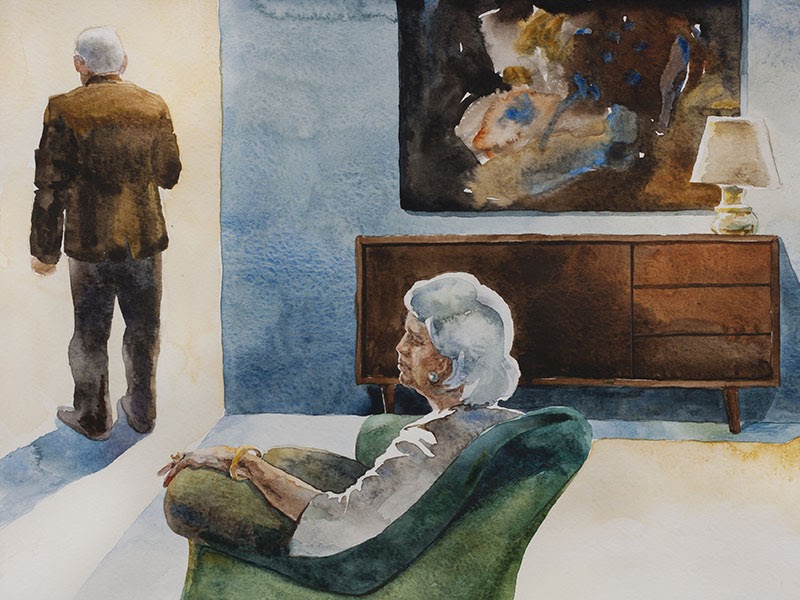

How One Desperate St. Louis Psychotherapist Cured A Schizophrenic

Maggie began the session by telling me that she had been diagnosed by three different psychiatrists. The good news was that all three agreed on the diagnosis. The bad news was that each psychiatrist told her she was schizophrenic.

"So, what brings you here today?" I asked.

"Well, I saw something in the newspaper and it said you wrote some books on mental health and teach in the field so I thought you might know something these psychiatrists don't."

(Wow. How refreshing. A client who actually thought that a nonmedical mental health professional such as myself would know more than a bona fide MD psychiatrist. Perhaps this was my lucky day. Maybe I should purchase a lottery ticket or search Google for the nearest horse race track.)

As Maggie began talking my elevated mood and optimism began dropping like a thermometer placed in an overactive refrigerator freezer. In short order I was convinced that the psychiatrists were wrong — dead wrong. This lady wasn't just schizophrenic. Maggie displayed more hallucinations, delusions, and thought disorders, than ten schizophrenics combined. As I listened I couldn't help thinking that the folks who penned the DSM needed a new category. What? Oh heck, I didn't know, perhaps mega-psychotic or super-schizophrenic or something. Now I realize that doesn't sound nice and isn't very high on the Carkhuff Scales, but at least I was facing reality: something Maggie clearly was not doing.

The session went on for what seemed like eternity. At the end of our meeting I was faced with a dilemma. If I diagnosed Maggie as schizophrenic for the fourth time she would be devastated. I scribbled something on her insurance super bill and scheduled her for another appointment.

I continued to see Maggie weekly for approximately one year. To say that she made monumental progress would be an understatement. I thus terminated her.

About a year later I saw an article about her in the neighborhood newspaper. Maggie was being honored by her college for being the only student in her program to snare a perfect 4.0 straight A average as a chemistry major. The article also boasted that she landed a pristine job in her chosen field.

Just days after I read the article Maggie dropped in not for a therapy session (because she was doing very well), but just to say "hello."

"You are doing fantastic," I said. "Listen, I just have to know. What I'm about to ask you will help me with all the clients I will be seeing in the future. Why do you think you made such good progress in therapy? Was it because we explored the abuse in your childhood? Was it the relaxation techniques? Perhaps it was the dream work. Maybe it was the focus on your self-talk."

"Oh no," she replied. "I'm sure those things were helpful, but none of them cured me. No, not a single one of them. I can tell you precisely what it was.

Do you remember when you saw me for the first time and I mentioned that three psychiatrists had diagnosed me as schizophrenic? Well we decided right then and there that because you had written some books and taught in a college you knew a lot more than those psychiatrists. And when I left your office after my first session I felt terrific because I glanced at the insurance bill you gave me and you said I was an undifferentiated type. And that was wonderful news because schizophrenia is caused by chemical imbalances and genetics and it can't be cured. You know that.

But, I wasn't schizophrenic. I was just a normal person who was an undifferentiated type. And that meant I could be cured."

Thus, if you happen to be an advisor in a graduate program and an upbeat perky chemistry major named Maggie comes strolling in, please, pretty please with sugar on top, promise me you won't even think about letting her enroll in an abnormal psychology class.