Phil Zimbardo on the Stanford Prison Experiment, Evil and Heroism
Video
with
Philip Zimbardo, PhD
Video

Phil Zimbardo on the Stanford Prison Experiment, Evil and Heroism

In 1971, Dr. Philip Zimbardo led the notorious Stanford Prison Experiment in order to answer the question, “What happens when you put good people in an evil place?” In this interview with Victor Yalom, Zimbardo speaks in-depth on the study, its lessons, and its relationship to Abu Ghraib decades later.
Video length: 1h 36m
Buy a Membership
COURSE DETAILS

Overview

As clinicians, we seek to support individual change—but to what extent are we influenced by the institutions that surround us? Can we ignore the role of systems in our work with clients, or does treatment involve addressing one’s environment as well? In this video, Dr. Philip Zimbardo illuminates the longstanding nature vs. nurture debate in a deep discussion about evil, heroism, and the psychological conditions that impact which way we turn. Here, the former APA president and leader of the infamous Stanford Prison Experiment goes back decades to tell us the story of its participants, the ways in which we internalize the roles given to us, and the compelling ways these factors are still playing out today.

Over the course of his long career, Zimbardo has tackled the question of morality, seeking to understand the power of situations over individuals that lead to corruption and compliance. The 1971 Stanford Prison Experiment was the most notorious of his studies, and here Zimbardo describes its methodology, goals, unraveling, and abrupt cancellation after only six days of its planned two-week run. You’ll watch him reflect on the harsh conditions leading a college-aged group of “otherwise good people” to turn against each other, and hear about his ongoing regrets comingled with important lessons about human nature.

Zimbardo discusses issues such as compliance (what causes us to look the other way), learned helplessness (through the gradual acclimation to fearful situations), and “the illusion of personal invulnerability”—the idea that we would make better choices in similar situations. He goes on to discuss his work as an analyst during the Abu Ghraib trials, bringing his expertise to bear on the psychological processes at work among the guards.

Ultimately, though, Zimbardo’s objective is hopeful: to uncover what inspires heroic acts and promote the development of our collective moral compass. If you’re interested in understanding how psychological and systemic forces create good or evil, you won’t want to miss this compelling interview.
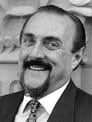
About the Experts

Philip Zimbardo, PhD
Expert

Philip Zimbardo, PhD

Philip G. Zimbardo, PhD, is a psychologist and a professor emeritus at Stanford University, where he taught for 50 years, starting in 1968. He continues to conduct research at Stanford and teach at the former Pacific Graduate School of Psychology, now Palo Alto University. He is also president of the Heroic Imagination Project, which teaches people how to overcome the natural human tendency to watch and wait in moments of crisis. Zimbardo is probably best known for his 1971 Stanford…

View full profile

Disclosures

Philip Zimbardo was compensated for his contribution. None of his books or additional offerings are required for any of the Psychotherapy.net content. Should such materials be references, it is as an additional resource.

This Disclosure Statement has been designed to meet accreditation standards; Psychotherapy.net does its best to mitigate potential conflicts of interest and eliminate bias in all areas of content. Psychotherapy.net offers training for cost but has no financial or other relationships to disclose. Additionally, there is no commercial support for this activity. None of the planners or any employee at Psychotherapy.net who has worked on this educational activity has relevant financial relationship(s) to disclose with ineligible companies.

Psychotherapy.net defines ineligible companies as those whose primary business is producing, marketing, selling, re-selling, or distributing healthcare products used by or on patients. There is no minimum financial threshold; individuals must disclose all financial relationships, regardless of the amount, with ineligible companies. We ask that all contributors disclose any and all financial relationships they have with any ineligible companies whether the individual views them as relevant to the education or not. Each experts’ specific disclosures can be found in their biography.

Immersive Technology in Therapy: An Introduction to VR, Presence, and Clinical Possibility
  • Video
  • Webinar Replay

Immersive Technology in Therapy: An Introduction to VR, Presence, and Clinical Possibility

The Essence of Change
  • Video

The Essence of Change

Narrative Family Therapy
  • Video

Narrative Family Therapy

Coping with the Suicide of a Loved One: An REBT Approach
  • Video

Coping with the Suicide of a Loved One: An REBT Approach

Recognizing and Preventing Child Neglect
  • Video

Recognizing and Preventing Child Neglect