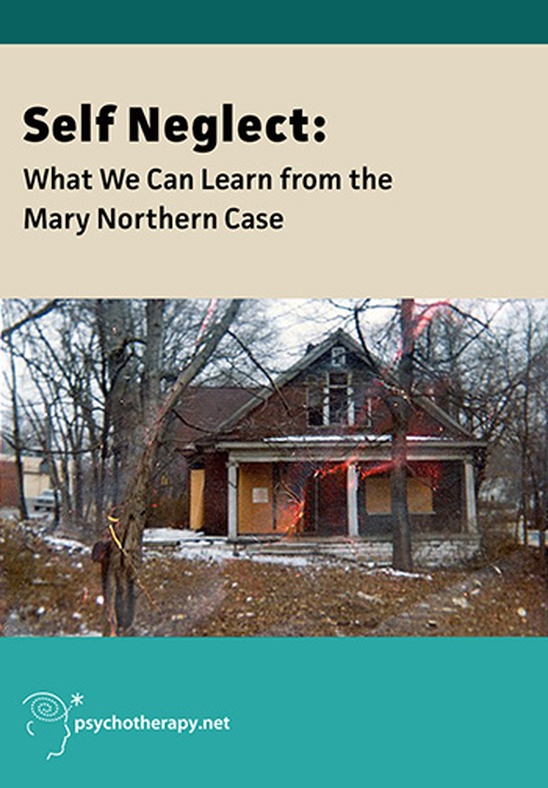
The case of Mary Northern in 1970s Tennessee led to substantial change in social policy for treatment of the elderly. It is referred to by adult protection agencies as one of the four “pioneer cases” that led to needed reform. This video takes a look back at the case and explores it from several different angles: the medical, legal, and mental health perspective.
Mental health professionals will be interested to learn how different professions played a role in Mary’s case. The healthcare advocate, in this case a registered nurse, focuses intently on Mary’s medical needs. The lawyer is mainly concerned about defining elements such as “clear and convincing evidence” and whether it is “right to die” case. The mental health clinician explores the complex defensive structure of a client whose decision-making is not easily understood by legal and medical personnel. In addition, you’ll learn the importance of doing an accurate and complete assessment, and the interventions that happen as a result.
Mary’s case is also an opportunity to deepen the mental health professional’s knowledge of Delusional Disorder and psychotic denial. Both are uncommon, but the Mary Northern case provides the foundation for an important discussion on the function of diagnosing; not only can it lead to necessary mental health interventions, but it can have a profound effect on legal strategies and medical care.
This video includes questions from the audience to explore at greater length the concepts of confidentiality, informed consent, as well as what can be expected from a mental health perspective if a patient’s right to self-determination is breached.