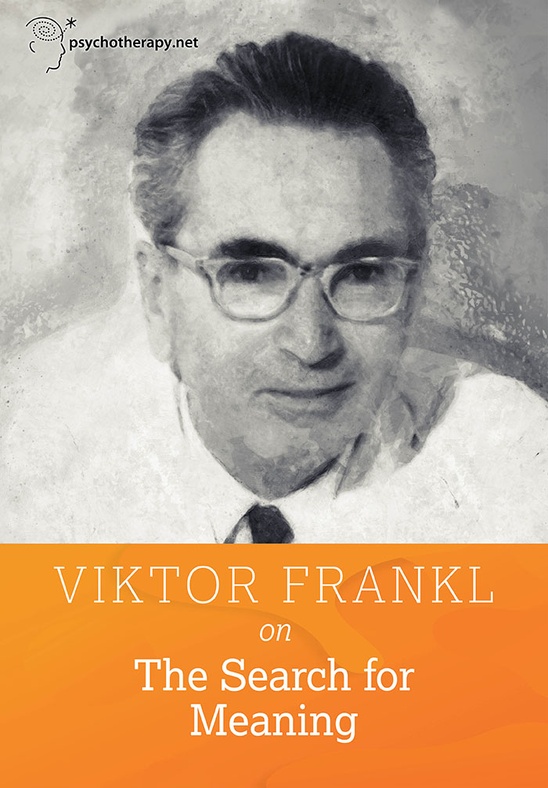
Viktor Frankl on The Search for Meaning
Video
with
Viktor Frankl, MD
Video

Viktor Frankl on The Search for Meaning

Viktor Frankl’s dedication to our collective struggle for freedom inspired his creation of Logotherapy, and in turn generations of therapists working to liberate their clients to lives of meaning. Video length: 1h 25m
Buy a Membership
COURSE DETAILS

Overview

In this lecture, Viktor Frankl reflects on mankind’s collective sense of futility, meaninglessness and emptiness. This existential vacuum, as he called it, leads to boredom — a loss of interest, and apathy — a loss of initiative, as well as to a myriad of psychological disorders. Attending solely to the compelling and presenting problems of depression, criminality and addiction, Frankl’s triad of mass neurosis, clinicians risk missing deeper underlying existential struggles.

By listening to Frankl, you will realize that our role as therapists is not to simply free our clients of imprisoning behaviors and symptoms, but to help them enhance their sense of freedom, responsibility, purpose and connection. And even with clients who have experienced part or all of the “tragic triad” of death, pain and guilt, you will more effectively help them extract and internalize a sense of meaning in their lives.


About the Experts

Viktor Frankl, MD
Expert

Viktor Frankl, MD

Viktor Frankl, MD, was an Austrian psychiatrist and neurologist, best known for his 1946 “Man’s Search for Meaning,” an existential volume based upon his experiences as a prisoner in the Nazi concentration camps during World War II. His break from traditional psychoanalysis in favor of an existential/humanistic orientation led to the development of Logotherapy. Frankl, primarily a clinician, was also a prolific internationally recognized author, speaker and teacher who viewed freedom of will, will to meaning and meaning in life…

View full profile

Disclosures

Viktor Frankl was compensated for his contribution. None of his books or additional offerings are required for any of the Psychotherapy.net content. Should such materials be references, it is as an additional resource.

This Disclosure Statement has been designed to meet accreditation standards; Psychotherapy.net does its best to mitigate potential conflicts of interest and eliminate bias in all areas of content. Psychotherapy.net offers training for cost but has no financial or other relationships to disclose. Additionally, there is no commercial support for this activity. None of the planners or any employee at Psychotherapy.net who has worked on this educational activity has relevant financial relationship(s) to disclose with ineligible companies.

Psychotherapy.net defines ineligible companies as those whose primary business is producing, marketing, selling, re-selling, or distributing healthcare products used by or on patients. There is no minimum financial threshold; individuals must disclose all financial relationships, regardless of the amount, with ineligible companies. We ask that all contributors disclose any and all financial relationships they have with any ineligible companies whether the individual views them as relevant to the education or not. Each experts’ specific disclosures can be found in their biography.