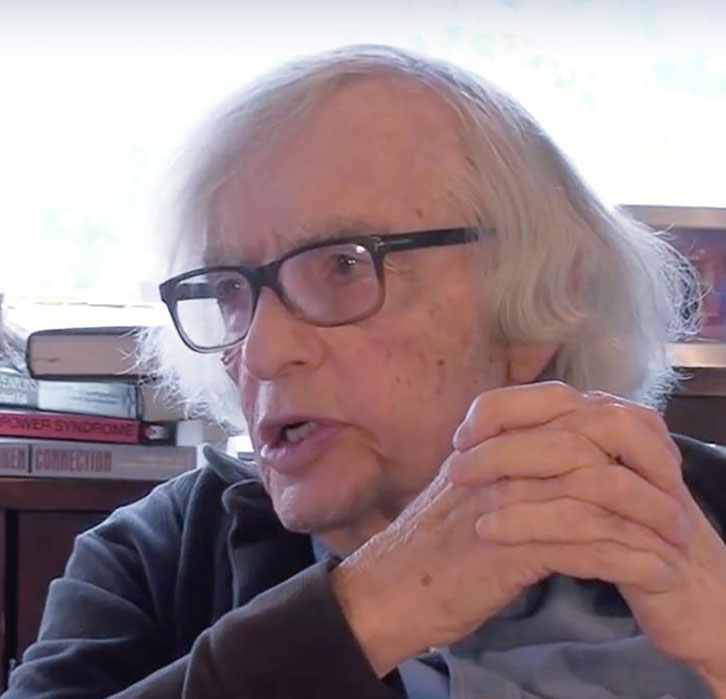
Thupten Jinpa on Fearless Compassion

A Fearless Heart

David Bullard: I am so pleased and honored to meet you and to have this opportunity to talk a little bit. I’m also looking forward to seeing you when you come out to the Bay Area next month on your book tour for A Fearless Heart: How the Courage to Be Compassionate Can Transform Our Lives and for some talks and workshops. I just read the book and I couldn’t put it down. It’s fantastic. And to prepare for this interview and to learn more about your work, I also bought and am reading your first book based on your Cambridge PhD dissertation, Self, Reality and Reason in Tibetan Philosophy (2002).
Thupten Jinpa: Oh yeah, that was a heavy-duty undertaking.
DB: Heavy duty reading, too! It will require further slow reading! But the new book is very accessible. I even feel calmness in talking with a revered and accomplished person like you right now because of all the compassion I felt from the book for all of us.
TJ: That’s great.
DB: Those first 100 pages impact the reader at the intellectual level, because of the all of the research, and all you bring to bear from Western science. But you integrate feelings so well with stories from your own life, many wonderful quotations, and the suggested meditation activities from the compassion training you helped develop at Stanford. It’s going to help many, many people.
TJ: Thank you. That was the motivation for writing it.
DB: How did you decide to make compassion the central point of your work in this book?
TJ: As someone who grew up with refugee parents in a refugee community, the impact of compassion was real on a day-to-day basis. The schools that we went to, the clothes that we received all were donated from around the world.
From a very early age I knew that almost everything for the development of our refugee community was made possible thanks to other people’s generosity.
From a very early age I knew that almost everything for the development of our refugee community was made possible thanks to other people’s generosity. I think that probably was a very important fact in my life.

The second thing is, because of being brought up in a traditional Tibetan society, compassion is probably the highest spiritual value and is very present in the religious and spiritual consciousness of the Tibetan people. Starting from the Tibetan symbol of the Dalai Lama being a kind of manifestation of the Buddha of compassion….being an embodiment of compassion. Then there is the everyday mantra that we recite, “Om mani padme om,” being a symbol of compassion. So compassion is very, very present in the everyday religious and spiritual life of a Tibetan person.

Also the work that I continue to do for His Holiness is very much around compassion. Because if there is one thing that His Holiness promotes everywhere, in addition to peace, it’s compassion. The bottom line of his message, wherever he travels, is really about compassion. I’ve done a lot of that service for him, which is a service to the promotion of compassion.
DB: Both in what you lived by experiencing it as refugees, and in the whole teaching that’s infused your culture for thousands of years.
TJ: Yes, exactly. I remember when I was growing up and I was in a boarding school, and once in a while the school would arrange for some of us children whose parents were working on road constructions in the local Simla area to be driven there for a couple of days. My parents were moving from camp to camp in these tents as the roads were progressing, and every morning, I remember waking up in a tent full of smoke and steam from Tibetan tea being made, and my mother chanting the Four Immeasurables prayer: “May all beings be free of suffering and its causes.” These are things that I grew up with. Of course, as a kid, you know, words are words— they may not mean much. But the sound of these prayers and these lines were deeply imprinted in me.
DB: I understand what you mean by, “words are words” for children, but I have to share with you, a friend has a wonderful granddaughter who, when she was three-and-a-half or four years old, said, “Loving people is so much fun!” Which I think also could have been one of the chapter titles of your book!
TJ: That's so!
DB: You have such wonderful quotes beginning each chapter of the book, pairing up East and West: A Tibetan saying with one by W.H. Auden, the First Panchen Lama and Charles Darwin, Gandhi and Aristotle, and even a quote by Tsongkhapa with (revealing Canada as your adopted home!) one by the writer Alice Munroe.

Your first chapter “The Best Kept Secret of Happiness: Compassion” is introduced by a comment attributed to the Buddha: “What is that one thing, which when you possess, you have all the other virtues? It’s compassion.” This is paired with Jean Jacques Rousseau “What wisdom can you find that is greater than kindness?” These are beautifully chosen. And you also point out that when we are being compassionate and being kind, the paradox is it helps us all feel better.
TJ: Definitely.
Compassion and empathy—and an instinct for these—are very natural, and they are a deeply ingrained part of our psyche.
We are living in a very scientific age, and science carries a kind of weight at the societal level. But despite all of this, if we look at our own personal experience, on a day-to-day level if we try to remember when we were most happy, when we felt most full and complete, most of the time we will find that this was in the context of some kind of healthy relationship—something where we felt deeply connected; something where we felt deeply open and free in our interaction with someone. These are all expressions of compassion. One of the key points I try to argue in this book is that compassion and empathy—and an instinct for these—are very natural, and they are a deeply ingrained part of our psyche. We can make the choice to live as much as possible from that place, and if we are able to do that, then at the end of the day, we ourselves stand to gain more. It does sound kind of paradoxical. It’s almost like using a self-interest logic to advocate compassion.
DB: But you point out it’s more of a side effect than a motivation.
TJ: Exactly.

Compassion Cultivation Training

DB: I’m remembering when reading the book that I was not at all surprised to see that you are friends with Paul Gilbert, PhD, from the University at Derby, UK, who came last year to speak with us at UCSF and Stanford. The first thing he said to us was, “You know, your brain is a mess.” He waited, and then he said, “Because it’s hard-wired for fight or flight. Anger or fear. And you have to cultivate self-compassion,” which is what your book is all about—cultivating self-compassion and compassion for others, and understanding why it’s so important; but also how to do it. Which brings me to my next question. Can you tell us about the Compassion Cultivation Training (CCT) at The Center for Compassion and Altruism Research and Education (CCARE) program at Stanford.”
TJ: My work at Stanford gave me an opportunity to really bring a much more systematic structure to what can be brought consciously into a secular environment. I took inspiration from the amazing success of the mindfulness movement, where a group of people—individually and later collectively—decided to look into the Buddhist contemplative sources to see what are the specific types of contemplative practices that can be brought out of the traditional context into the wider world, for the benefit of helping people. The focus was on overcoming problems and suffering, promoting a greater sense of well-being. Along with that came science and research. Ordinary people and secular-minded people can begin to look at these things and see if they work for them.

I thought that we could do something similar with compassion. One of the powers of mindfulness is it teaches us the skills to disengage. When we over-identify with our problems and thoughts, and start to believe the contents of thoughts as reality, mindfulness practice shows us that we can actually disengage and observe what’s occurring in us so that we don’t get swept away by the story we’re telling about ourselves.
DB: You’ve probably seen the bumper sticker that says, “Don’t believe everything you think.”
TJ: No, I haven’t seen it. That’s funny! And true!
DB: You’ve got several research articles, with Kelly McGonigal and others, showing that the compassion training decreased fear of compassion and increased self-compassion. How do you conceptualize compassion itself?
TJ: We’ve identified four components: An awareness of suffering which is cognitive; an affective sympathetic concern related to being emotionally moved by suffering; a wish to see the relief of that suffering, which is an intention; and a responsiveness or readiness to help relieve that suffering—a motivational component.

Our most recent article in the Journal of Positive Psychology, “A wandering mind is a less caring mind: Daily experience sampling during compassion meditation training,” found decreased mind wandering to neutral topics and increased caring behaviors for oneself and others.

We are also collaborating with psychologist and neuroscientist, Dr. Brian Knutson, researching the neural correlates of components of compassion in Buddhist adepts and novices. Together with many other researchers, there is quite a range of activities at CCARE deepening and broadening our awareness of the benefits of compassion and how best to cultivate it in people.

And the beauty I see is that, in a sense, compassion training is the next chapter in this very interesting cultural phenomenon. What compassion brings is, to use vernacular language, the “wet stuff”—our emotion and experience. And also, compassion is part of our motivation system: empathy, a sense of love and connection. Compassion plays a powerful role, if we allow it, as part of our motivation system.

Compassion also has an important role in shaping our intention. If we can bring conscious cultivation of compassion to help us shape our intention, we bring a more enlightened content to our motivation and intention. When combined with mindfulness, then it can create something that can lead to real personal transformation.

Those were the kinds of ideas behind the Stanford program, and then I sat down to develop an eight-week training and sought the help of some other colleagues to refine it. We developed the program in such a way that it does not rely entirely on quiet, formal sitting practices alone.
DB: Beyond meditation alone, or “just” being present….
TJ: We have interactive exercises. Many of them are dyadic. But also, there’s psychological education that allows people to observe, based upon their own experience, how attitudes and thoughts shape the way we experience the world, and how that affects how we behave, and that has a kind of a loop-back effect. So we come to recognize that there’s a complex dynamic relationship between our perception of the world, what we bring to the world, and how we experience the world.

And then, of course, we have one of the central elements—the contemplative practice—which includes a series of guided meditations. We also have what we call informal practices, taken from the Tibetan mind-training teachings, where the instruction is, “Whatever you may encounter, bring them right now into your practice.” It’s a beautiful line in the mind-training practice.

Throughout the eight week course, whatever specific topic we are focusing on, we advise the course participants to use that particular week to try to see if they can find, in their everyday life, moments when they can actually use their experience as an informal practice.

We were surprised when we started the compassion cultivation work that we couldn’t start with the traditional Buddhist compassion meditations, because the first step is based on an understanding that self-care and self-compassion are instinctual. But we found that many of our Western students needed additional help to learn to have self-compassion; they couldn’t start with this as step one!

Perhaps a Tibetan quote from my book illustrates this: “Envy toward the above, competitiveness toward the equal, and contempt toward the lower.” These often lie at the root of dissatisfaction and unhappiness.

DB: I’ve heard people ask, “What if you’re mindful and present, and you’re feeling really bad about yourself and your situation?” That’s why you’re bringing it to this next level, so that when you are mindful, you can be mindful with compassion for yourself and others, even if you’re suffering with painful thoughts, situations, feelings or attitudes.
TJ: Exactly. Yes. For example, I don’t have any expertise in parenting—other than having parented my own two daughters. And having lived most of my life as a monk, I probably would be the last person to claim such expertise! But on the other hand, I do believe that one of the key dimensions of compassion is a sense of connectedness, which is the active ingredient of a relationship. Increasingly, modern research on happiness is pointing out that one of the major sources of happiness for ordinary folks like us is our intimate relationships, the important relationships in our lives.

Compassion and loving-kindness are very social emotions; they are sentiments and states of mind. My hope is that therapists like yourself will look into compassion training as a resource to incorporate into your own practice, so that you can better help people who are in difficult relationships, where something has broken down in the line of communication and in their relationship dynamic. If both sides are able to somehow return to their base, to what connected them in the first place, which is where there’s a genuine recognition of each other as individuals, but also there is a shared kind of affinity and identification with each other. It’s here that compassion training, and greater awareness of feelings and thoughts about compassion really have some resources to offer.

Attachment and Non-Attachment

DB: I’m eager to understand more from your book about how to integrate that with my own work with couples, for example. You have sections on why we fear compassion, breaking through resistance to compassion, turning intention into motivation, the benefits of focused awareness, “escaping the prison of excessive self-involvement,” expanding our circle of concern, how compassion makes us healthy and strong, and the way to a more compassionate world.

So let me ask about the question of non-attachment, which is such an important concept in Buddhism. In the Western sense, for child-rearing and marital and relationship issues, we talk about secure attachment. I have some ideas about the differences between the two and how they are actually compatible, even though on the surface they sound like they’re not. Can you share any thoughts on that particular point?
TJ: I think it’s a very important question.
Quite often, people get the wrong impression about Buddhist teachings on non-attachment and equanimity…. and think that compassion and equanimity from a Buddhist perspective means that we shouldn’t be favoring our own children.
Quite often, people get the wrong impression about Buddhist teachings on non-attachment, and also about equanimity. I have consciously avoided over-emphasizing the equanimity step in this compassion training, which is the first step in the Tibetan tradition, in which you view three different people, and then you even out your emotional reaction to all of them, and then build on that.

Sometimes people take the wrong message out of this and think that compassion and equanimity from a Buddhist perspective means that we shouldn’t be favoring our own children—that we shouldn’t love them more than a stranger’s kids. I don’t think that’s the correct interpretation.

Instead the message is that you should train your mind and heart to a point where you would be able to love the stranger’s children as much as you love your own. But sometimes the message is taken in the opposite direction, as a sort of a license to disregard your responsibility as parents.

Similarly with attachment, what the Buddhist teachings are asking is actually quite subtle. It’s asking us to have the kind of passion and the dedication that normally comes with attachment, and engagement, and focus and commitment, without that stickiness that generally comes with self-referential thinking. You know, “I care for this person because this person is my spouse.” Attachment, in the Buddhist sense, has that self-referential component. But trying to convey that in the English word “attachment” is very complicated. So, that’s why in this book I try to avoid even getting into that kind of confusion.
DB: One thing I get from the book, but also get from the experience of being with many people in couples therapy who are working on forgiveness and trying to reconnect, is the idea that you can take another person’s feelings seriously… but you don’t have to take their feelings personally.
TJ: That’s right. And that would be one way to reconcile the nonattachment versus secure attachment issue. To not be attached to the part of their feelings that you would react to as if you were being blamed, but at the same time to be attached in a caring way.

The Secular Approach

DB: Your book is very secular. Could you say something about what secular means to you? Particularly for people who assume Buddhism is a religion.
TJ: The way I use the word secular is how His Holiness the Dalai Lama uses it. It’s meant to be a perspective that is inclusive of all possible perspectives, including religious ones. In a sense, it’s a perspective grounded on a certain understanding of human nature and human condition that does not presuppose a particular religious orientation. So, for example, to bring in the Buddhist idea of successive lives would be to bring a very specific cultural perspective—but we don’t need to reference such beliefs. When we talk about compassion and its role in our life, and how it’s part of our innate nature, none of this requires subscribing to, nor is it contradictory with, a belief in rebirth, or in believing in some form of theistic understanding of the evolution of human life. That is the beauty of secular language. It’s a much more, I suppose, basic language—a basic way of talking about these things. Because in the end, regardless of all the differences of culture and language and religion, when it comes to everyday human experience and the human condition, we’re all the same, you know?

We are happy when someone loves us. We feel angry when someone threatens us. We are afraid when we are confronted with a danger. And we are sad when we experience loss. At this basic level, there’s nothing to differentiate us.
We are happy when someone loves us. We feel angry when someone threatens us. We are afraid when we are confronted with a danger. And we are sad when we experience loss. At this basic level, there’s nothing to differentiate us. It’s just the reality of the human condition. There must be a perspective and way of talking about the human experience that can address our condition at that fundamental level, and that’s the kind of language I was striving for.
DB: So let me come back to a fundamental issue with resistance to compassion. At dinner recently, one friend asked, “How can you be compassionate when you’re really angry at somebody?” And I said, “Well, maybe that’s why Jinpa titled the book A Fearless Heart.
TJ: Yes.

Compassion is Not Compliance

DB: Our anger is one of the resistances to being compassionate. We have difficulty being compassionate if we’re angry. One mistake we make is to think that compassion and compliance are one and the same. “If I really understand how upset you are, I’ll have to do what you want so you won’t be upset.”

But if we think of how we deal with a child who’s really upset—“I don’t want to go to bed. You’re a jerk, Daddy, for making me go to bed!” I can be compassionate and say, “I know, it’s really hard to be young sometimes… you see the grownups are staying up later and you think you’ll be missing out. Name-calling is not OK, but I know you don’t want to go to bed now. It’s really hard, but… you’re going to bed now!”
TJ: Yeah, exactly. That’s true. I love the way you put it. Compassion and compliance are not the same things. And there is confusion about this for a lot of people. Somehow, when they think of compassion, they think of “giving in” and just letting the other person do what he or she wants. That’s not really what compassion is all about. Compassion is being in a position, or being in a state of mind that understands the other person’s situation—not from your own perspective, but from the perspective of the other person—but at the same time, being able to bear in mind what is the best thing for you to do in that situation to help that other person. That may require firmness sometimes.
DB: And we also often live in an illusion or “paradigm of blame,” as if it’s a zero-sum game. So that, if we’re not blaming the other, we’re afraid the blame will come back at us and make it our own fault. The Buddhist ideas of dependent origination have something to say about that
TJ: I also think that one of the interesting things about Western culture is that—and maybe it has something with the Judeo-Christian heritage—justice is a very powerful concept, as is accountability for something that has happened. When you have accountability needs, you want someone to be responsible. When something has happened, someone has to be responsible. And if no one is responsible, then you feel something’s quite wrong.

There’s almost a terror that everything’s going to fall apart. And this is where, even in a personal relationship, you want to blame someone, or you want to take the blame upon yourself. Because it’s very difficult for a lot of people to try to understand, “Well, actually we are both responsible. And also there were certain things which are beyond our control.” That kind of nuanced approach, for a lot of people, is like explaining it away. It’s almost like not doing justice to the actual problem, and not taking it seriously. And this is one area where I think in the West, we do need to work a bit harder.

"I've Never Met a Stranger"

DB: I appreciate so much the gift of this time together and remember what you were saying earlier: The Dalai Lama’s comment that he has never met a stranger…
TJ: Yes…
DB: I think that the readers of this interview, as I now do, will feel that we have met you. So, I deeply thank you for this opportunity.
TJ: Thank you very much, David, and I look forward to seeing you in May in San Francisco.

NOTE: For information about A Fearless Heart book tour please see sacredstream.org or find him on Facebook.

**This interview was completed just a few days before the devastating earthquake which took thousands of lives in Nepal and also caused death and injuries in Tibet and India (where Jinpa was at the time the earthquake struck). If so moved, he recommends any donations can be sent to one of the below organizations.

The American Red Cross

UNHCR (UN refugee agency)

Psychotherapy in the Year 2045

According to Ray Kurzweil, futurist extraordinaire, the singularity is approaching at the speed of Jimmy John's delivery. The technological notion of the singularity asserts that computers, robots, and related super-intelligent machines will reach a stage when they match and then exceed the capabilities of human beings.

When will the singularity occur? Ray has his calendar marked for 2045, so I should have the majority of my credit card bills polished off by then. Now, of course, we could dismiss Kurzweil's predictions as ludicrous, except for the fact that he possess 20 honorary doctorate degrees, has received honors from three U.S. presidents, and enough inventions to make Benjamin Franklin green with envy.

Make no mistake about it: If the singularity casts its shadow it will be a major game-changer for the field of psychotherapy, and I am not the only pundit sounding the alarm. University of Missouri at St. Louis graduate professor and book author R. Rocco Cottone recently penned an article in the 2015 April issue of Counseling Today titled, "The End of Counseling as we Know it."

So let's get a tad self-centered here and see where we as helpers fit into this movement.

At first the future looks bright, as therapists will be needed to program these electronic psychotherapists. Those therapists who obtain double degrees such as psychology or counseling and computer science, or perhaps social work and computer programming, will likely have their pick of jobs. (By the way, that wouldn't be yours truly. I'm still struggling to learn the features on my semi-prehistoric flip phone and I am dreading the day—which will surely arrive prior to the singularity—when I can no longer secure a battery for this dinosaur.)

The next phase. Well, that's where the proverbial bottom drops out. First these techno-wonders will surely be able to surpass our human scores on exams like the EPPP, the NCE, or the CPCE. "And the job goes to the bright silver nanobot in the corner with the terrahertz processor." Of course that will end therapists' interview anxiety when it comes to those "tell me about your weaknesses" questions.

For those who are skeptical, please recall that on February 10, 1996, an IBM supercomputer dubbed Deep Blue beat Garry Kasparov, the world chess champion, in a match.

On the positive side, Kurzweil makes it clear that we will indeed have the technology to load all the world's information to our brains. Hence, I would imagine that after that any red-blooded therapist could ace their licensing or certification exam with a perfect score. But what's a therapist to do if insurance refuses to pay for the procedure? Good question, isn't it?

The final phase will take place when every cell phone, flat screen television, tablet, Google Glasses, and only God knows what, will sport an app with an Albert Ellis clone right down to the New York vocal inflections. And if you don't like Ellis, no problem. Just tell the app you would like a humanist, and a virtual Carl Rogers appears. But is that what we really want for our clients? Wouldn't it be better to learn to have a relationship with another human being rather than a computer program with artificial intelligence (AI), governed by Moore's Law, that has passed the Turing test? Just asking. I don't know about you, but a computerized Rogers doesn't sound very humanistic to me.

And say the client develops a positive transference toward a virtual Freud. Do we applaud that sort of behavior or shall we advocate for a new DSM category?

It is only fair to mention that not everybody is buying the Kurzweil version of the future. Dr. John Grohol of the PsychCentral website is adamant that since we actually don't know how the human brain functions, it is futile to worry about us creating artificial intelligence systems which will occupy our seats in the therapy room.

As for me. I just want some assurance that the techno-human counseling my client isn't hacked or isn't a hacker. But then again, I would imagine that would be a user support issue.

Brooklyn Zoo: The Education of a Psychotherapist

Editor's Note: Following is an excerpt from Brooklyn Zoo: The Education of a Psychotherapist, by Darcy Lockman. © 2012 by Darcy Lockman.

I woke a woman named Ophelia for morning group, and she was not pleased. “You woke me from my sunder,” she kept repeating in an angry voice. She followed me into the dayroom anyway. A man named Juan was dancing in the hallways, and I corralled him, too. There was a third patient, a woman, she looked a little slow. And Mr. Rumbert again. I asked them to speak about why they were in CPEP [Comprehensive Psychiatric Emergency Program].

“I came for a bed, but I was double-crossed,” said Ophelia.

“My fiancée called 911 after Shabbos dinner,” Juan said, which sounded funny because he was clearly Mexican.

“Why did she call?” I inquired.

“You’d have to ask her,” he replied.

The woman who looked slow said she’d done crack for the first time and was full of regret.

She began to cry.

Rhoda [a nurse] walked in to get Ophelia. She needed her help with some paperwork.

“You can come back when you’re finished,” I told the patient as she left. She turned and gave me the finger. Juan told those of us who remained that he wanted to read to us from a book called Recreating Your Self. As we listened, Ophelia returned, and she was worked up. She marched up right close to me.

“You double-crossed me,” she yelled. Her body looked tense, poised for a fight. For the first time in the ER, my fear of being physically threatened was being realized. I made my way toward the door, encouraging Ophelia to come with me, not wanting to leave her alone with the other patients. She was taller than I was, and wiry. I imagined her rage would give her fists great force. I had never learned how to protect myself from a punch, and cowering seemed like my best defense. I remembered what T. [a supervisor] had told me weeks earlier about being soothing.

“It’s okay. Come with me. We’ll find you some juice, something to eat,” I said. She followed me as I walked backward into the hallway, which for once was deserted, the guard having abandoned her post. Ophelia remained too close, still menacing, insisting on my alleged crime, taunting me. I continued walking slowly, my body facing toward her as I backed away sideways. “Hello, hello,” I said loudly, turning my head toward the adjacent halls, trying to get the staff ’s attention without alarming anyone, but someone was always yelling, if not screaming, in the ER, and no one was likely to heed my cautious cries. Calling for help seemed overly dramatic, and I thought it might set Ophelia off besides. Shit.

But Rhoda came out of her office and saw us. She rushed over, inserting her solid body between Ophelia’s and mine. She managed to calm her down while also explaining to me that Ophelia had slammed out of her office two minutes before. “I’ll take care of you,” Rhoda said firmly to Ophelia, shepherding her off to another hallway. I went back to the group room, concerned that the patients might have gotten spooked. Juan and the other woman were now seated side by side. She was choosing passages from his book, and he was reading these aloud. Mr. Rumbert sat across the room, silent but calm. I entered and closed the door and sat to listen and get myself back together. Ophelia was back soon, standing outside the windows of the group room looking in. I saw the guard was back at her post, and I opened the door. “Would you like to rejoin us?” I asked Ophelia, because wasn’t that my job?

““Don’t talk to me,” she said. “You look like a canker sore.””

Afterward, I did not have much left in me, but still I brought Juan into T.’s office for an interview. His chart said he had a long history of bipolar disorder. He told me he was an attorney and a converted Jew and there was no reason for him to be in a psychiatric emergency room.

“Have you been hearing voices?” I asked.

“Yes,” pause, “Guided by Voices,” pause. “Get it? The band?” Guffaw.

“Are you worried that someone is watching you?”

“Yes,” pause, “the Police,” pause. “Every breath I take, every step I make.”

He kept insisting there was no reason for him to be there, and when T. came in, she’d quickly had enough and told him we were done. He got up and walked out, turning off the light as he made his exit.

“That’s so symbolic,” T. said. “Lights out.” I told her about what happened with Ophelia because I thought the staff might want to assign her an assault level. T. asked if I was okay. I was still shaken, but I said yes. Then it was time to go, and as I left, I saw Juan the converted Jew lying on his stomach on one of the reclining chairs. I waved, and he thrust his hands back to catch his ankles in a resplendent yoga bow pose.

All the way to work the next morning I debated whether to bring Ophelia to group. I hadn’t thought to ask T. about that. With a higher-functioning patient—someone who was not psychotic—I thought it would have been important to bring her in, to demonstrate implicitly that her aggressive impulses were not as destructive as she likely feared. I was not sure that the same thinking applied to a psychotic patient, especially a paranoid one, since paranoia reflects a projection of aggression—that is, Ophelia experienced the hostility not as her own but as directed toward her by those around her (in this case, me). I decided I would invite her if she was up but that I would not wake her from her “sunder” if she was still asleep. It turned out not to matter, because when I got the census she was no longer on it—moved to the list of people waiting for a bed upstairs. I was relieved. I found Juan and Mr. Rumbert—who was continuing to speak—and a new woman who was attractive and looked with-it. But then she told me she did “sortation” for a living, which made me suspect she had a thought disorder because I knew, thanks to my month in the psych ER, that use of neologisms was often a symptom of schizophrenia or mania. T. called in sick, and Dr. Brink was my official supervisor for the day.

I spoke to the sortater, who had a long history of psychiatric hospitalizations, for some time and then went to report to Dr. Brink. She seemed distracted, and I felt as if I was bothering her; EOB patients were not her problem, after all, and I didn’t imagine her relationship with T. made her inclined to fill in with her caseload. The hospital police were called to the ER while I sat in Brink’s office, but I paid that little mind. When I got up to go back across the hall, she put her hand out to stop me. ““Didn’t you hear that page? You never leave after hearing the hospital police called. You need to pay attention.”” It had been a month, and there were many things I had learned there, but others that I had not. I sat to wait while the police broke up a fight in the hallway.

The next day was a Friday, and my last in the psychiatric emergency room; on Monday, I would report to inpatient unit G-51. I gathered the EOB patients for my final group with ease. A moment of interpersonal conflict between two group members got me engaged. The drug addict told another patient he didn’t like being asked about his methadone in the hallway in front of everyone the previous day. The offender replied he’d noticed the drug addict had not eaten breakfast and was testing a theory that methadone users in general didn’t like to eat. I tried to facilitate further discussion, which would have been the meat of an outpatient group, but neither man was as interested as I was.

After group Rhoda told me there was an EOB patient pending. A psychiatrist I recognized by face but not by name told me I should see him to try to make something of his story. Darren looked like a handful of the others I’d seen that month: early twenties and handsome and robust, nicely dressed in jeans and a sweater. His presence in the G-ER didn’t bode well, but I was still maintaining my manic hope that somehow nothing was seriously wrong this time. T. came in as I was beginning my interview with Darren and quietly sat down to observe. I felt my usual self-consciousness and also a determination to do better this time, to prove to us both that my four weeks of immersion in her EOB had taught me something. Darren made eye contact and answered my questions in the right amount of detail, without hesitation or mistrust. To make matters murkier, his reason for admission puzzled me, and I didn’t know where to go with it. “A week of really bad headaches,” he said. If there was one thing I’d learned, it was that you didn’t get brought to a psychiatric emergency room for a headache.

“Did the headaches start because you’d been drinking too much or using drugs?” I asked.

“No, I’m not into any of that,” he said.

“Did your headache come from voices you were hearing that no one else could hear?”

He shook his head.

“Was it because someone was stealing your thoughts or trying to put ideas into your head?”

He gave me a wry smile. Still no.

“Did the headache make you agitated? Did you get very angry at anyone, maybe yell at them on the street or shove them?”

Negative. We sat there together, equally perplexed.

“Where was the pain?” I asked, grasping at straws. If he told me it was in his face, maybe I could diagnose him with a sinus infection. He said that it was in his entire head. I turned to T., defeated. “Do you have any questions?” I half mumbled.

She took over with her usual omniscience. It was not grandiosity, she just really was all knowing. I tried to calculate the difference between my four weeks and her twenty years. Even allowing for fifteen vacation days annually, it was considerable. “Your thoughts were all jumbled up last week, and it really made your head hurt,” she said to Darren. He nodded, and it was as if a light had turned on in his brain.

“They were mad bundled!” he said.

“And that happened in school, too, right? It got hard to pay attention, hard not to get confused?” Darren had told us that he’d flunked out of college four months earlier.

He nodded, starting to look upset. T. had his chart open in front of her and was looking at the doctor’s orders. “Has the medicine we’ve been giving you helped with the headache?” she asked.

“Yes,” he replied. “It’s gone now.”

“You’re lucky,” she told him. “Years ago we didn’t have these pills, and people who got headaches and confusion like yours had much more trouble going about their lives.”

After Darren had left us for the hallway, T. said, “Most likely schizophreniform, though it could be a psychotic depression.” She explained that schizophreniform disorder was diagnosed in patients with less than six months of symptoms of schizophrenia; only some of them would go on to exhibit the full-blown disorder. “His prognosis is good. He relates pretty normally, and his affect isn’t flat. If he stays on the medication, he can probably go back to school, next semester even. He should see a therapist, too, of course, to monitor how he’s doing over time, to help him understand his preoccupations better. He’s far from a hopeless case.”

“How about me?” I asked, aware that my minutes there were dwindling, wanting to remind T. that today it was me who was timing out.

“Not hopeless,” she said. “Frankly, I was surprised by how little you knew when you got here. But you’ve been doing a good job trying to take everything in. It’s a lot of information, and it’s a difficult environment. I wasn’t sure you’d come back after what happened the other day with Ophelia.”

This floored me. It never crossed my mind not to return. What kind of wimp did she take me for? “No. I mean, I was shaken, but this is my internship. I signed up for this,” I reminded her. She pulled out the same evaluation sheet that Dr. Young had filled out the month before. T. had not given me high marks, but at least they were scores that actually reflected her own ideas about my work. As she reviewed them with me, I thought again about what Dr. Wolfe had said the month before, and how after so long in the carpeted classrooms of my graduate school it was actually quite hard to pull off, this task of becoming a better psychologist. But also I felt on my way.

Heather Clague on Psychiatry, Psychotherapy and Working with Society’s Most Marginalized Populations

Deb Kory: One of the reasons that I wanted to interview you for Psychotherapy.net is that you’re one of the only psychiatrists I know who both works in a hospital setting and also sees private clients as a psychotherapist. You are the medication-dispensing therapist that so many of my clients wish I were—though I’m so grateful not to have prescribing privileges. It would freak me out.

Since we’re releasing a video this month about working in hospitals and treatment centers, I thought you would be a great person to shed some light on that world. You are in private practice in Oakland, California, and you also you work at John George psychiatric hospital. What is your job there?
Heather Clague: John George is a public psychiatric hospital in San Leandro, California, and I’m an attending psychiatrist in the psychiatric emergency room (PES). It’s the 5150 [California law allowing involuntary psychiatric hold] receiving facility for Alameda County, so anyone who is put on a psychiatric hold in our county will come to us to be assessed for that 5150.

Our model is known as the “Alameda Model,” and it’s a way to reduce the length of stay for psychiatric patients in emergency rooms. In other counties that don’t have psychiatric emergency services like we do, people with psychiatric emergencies are taken to medical emergency rooms and then await an inpatient bed somewhere.
Methamphetamine accounts for a shocking amount of our services. Meth makes you really, really crazy.
And since there are so few psychiatric inpatient beds, they can wait days and days, often strapped to a gurney, ignored in a corner. Medical ER boarding times are significantly shorter in our county than those without a PES like ours, because as soon as the patient is medically cleared they can send the patient to us.

“We have just allowed ourselves not to see them”

DK: Dr. Heather Clague, thanks so much for taking the time to speak to me and our Psychotherapy.net readers today. Truth in advertising: you were my supervisor at Berkeley Primary Care, a community health clinic, where I did a practicum my third year of graduate school at the Wright Institute. These days we sometimes share clients and we also did improvisational theater together for a while. We’re both believers in the therapeutic value of improv
HC: Indeed.
DK: Let’s say someone is having a psychotic break and they go to a regular medical hospital and they get discharged to John George—what then happens to them?
HC: Then they come into our facility and they get an evaluation.
DK: Would you do that evaluation?
HC: I would, yes. We have a doctor-centered model where each patient will get seen by a physician once or twice, or sometimes even three times, and an assessment is made. The idea being that it should be a rapid assessment, that patients are not supposed to be held there more than 24 hours, at which point they will either be admitted to the hospital or released to the community.

But the reality is that our service can become overrun. There can be long delays and patients often still have to wait days and days to get an inpatient bed—although they are at least waiting in a psychiatric emergency room as opposed to a medical emergency room.
DK: Feeling hope and joy in this work really matters.
HC: It matters to me and I think it matters to the people that I work with. I also think there’s something about midlife where one has to reconcile reality with ideals.
DK: It’s humbling, isn’t it? Finding peace in our little slice of the pie, much smaller than we might have once hoped.
HC: But without becoming cynical.
DK: Is that why you only work there one day a week?
HC: For me it’s the threshold. Below a certain amount, I have a very good sense of gallows humor about it. The people I see who work there full time struggle a lot more with the despair and a very grim feeling that comes from working in a dysfunctional system.

The other way the system is broken is that there is a population of maybe 100, maybe up to 500 high users, people who are chronically calling 911. If they were given apartments, free taxi vouchers—just find out what they want and give it to them—it would cost vastly less than the impact that they have on the medical system. And I’m not just talking about the financial cost, but the burnout and wear-and-tear on the people who work in the system. I think there’s pretty good data on this.

If you need to go to an emergency room and you wait a long time, that is a direct result of this problem.

“The overwhelming burden of the radical not-enough-ness”

DK: You would have to retain some sense of hope to do this work. Both of us, really, but I’m quite comfortable in my cozy, private psychotherapy office, whereas you are much more in the trenches of human suffering, where I think hope is often in short supply.
HC: Or, less charitably, I think I’ve got strong internal boundaries. When I was working at Berkeley Primary Care, where you and I met, I had a population of patients that I saw as part of my ongoing caseload, and I ultimately left that environment because it was too dispiriting for me. I followed those patients long term and I think I felt too responsible for them, just this overwhelming burden of the radical not enough-ness. At least in emergency room settings what I’m supposed to do is so tiny, I can do that tiny piece really well and cheerfully and with compassion and humanity so that I don’t have solve everyone’s problems. If I can give them a moment of feeling seen as a human being, that works for me. I think it would be grandiose to suggest it really has a radically long-term effect on the patients that I see, but it allows me to sustain and feel hopeful and to enjoy what I do.
DK: That must be awfully dispiriting.
HC: Well, I can handle it when I work there one day a week.
DK: Wait, so you’re basically also a homeless shelter?
HC: We’re basically also a homeless shelter. And we are emblematic of societal dysfunction. If Alameda county would invest some money in opening up some shelters, the number of patients coming to us and medical emergency rooms would drop. There is no drop-in women’s shelter in Alameda County. There is one drop-in men’s shelter in Alameda County and it costs $5 a night, which is $150 a month, which most people can panhandle if they’ve got the wherewithal to panhandle $5 a night, but that’s a giant chunk of what General Assistance [Alameda county aid program for indigent adults and emancipated minors] gives you.
DK: Because our culture has become immune to it?
HC: Yeah, happy to ignore psychotic people. We have just allowed ourselves to not see them.

We have a large population of homeless people who use us a shelter. And almost all of them are also using drugs, but some of them will just come in and know that if they say the magic words—that they’re suicidal and hearing voices—they’ll get to spend the night. Some of them first present to the nearest medical emergency room, which amps up the expense because there are ambulances involved and there is a medical ER evaluation involved.
DK: So part of your role then is educating them about the dangers of meth?
HC: We do a little scaring them straight. “There are dangerous consequences to continued use, you could lose your teeth”—that type of thing.
DK: Is it?
HC: It’s like Altoid’s, strangely addictive.
DK: Otherwise you’re kind of on automatic pilot?
HC: Well the productivity expectations have gone up and up and up. When I started in 2001, if we had 20 people it was off the hook. Now, if we come in and there’s fewer than 50 we’re like, “easy day!” At the peak this weekend we had 86. I’m just waiting for us to hit 100. It just keeps escalating, and the population of Alameda County has not grown that much.
I think what we’re witnessing is the degradation of the mental health system—the ongoing defunding of the community mental health system and the social system.

They just keep slashing money from community mental health, caseloads go up, there are fewer case managers and fewer psychiatrists. Services are getting cut or just not growing proportionate to the need.
DK: Wow. I had no idea there were so few shelters around.
HC: There are some other shelters around, but none that you can access on a drop-in basis. It’s an appalling lack of care that our county pays for through the nose, but those who pay for it are not necessarily in charge of fixing it, and so the problem doesn’t get fixed.
DK: Say more about that.
HC: It’s a high-energy place—there’s always a lot of work to get done. It’s very satisfying. There’s all these people that need to get seen and you make a lot of people happy because you send them home.
DK: Do you feel a special affinity with your colleagues there?
HC: Absolutely. The nurses and social workers who work there are fantastic. The people who survive in that environment develop certain social skills and have a certain philosophy of life—
DK: A sense of humor would be paramount.
HC: It’s so important. If we aren’t overwhelmed with patients one day, one of our social workers will say, “Well, we had a mental health outbreak today!”

Also, there’s no calls, there’s no voicemail.
DK: You get to leave it behind when you go home?
HC: Exactly. I have a very intense experience when I’m there and then when I’m done I can let it go.
DK: And do you?
HC: Yeah. I would say I do. Actually, I find it important not to let it go too quickly. Part of the problem of working there is it’s so fast-paced, it’s easy to do it a little mindlessly. So when I’m working in the hospital, it’s actually good for me to tell my husband some of the stories of the day so that I can actually take in that, “Wow, I just had a brush with someone who is having a much deeper, more complicated experience, and I got to bear witness to a small piece of a much bigger story.” It’s important to be able to sit back and reflect on what that story likely looked like.

It’s easy to let my impressions of people fall into stereotypical typologies, so it’s important to pull back from that and realize that there’s a very interesting three-dimensional person behind what looks like “just another meth addict.” This person had a mother, this person came from somewhere, they have a very specific story that brought them to this point.
DK: There’s obviously a deep level of dehumanization that has brought them to this point, and I think you’re saying that it’s difficult to yourself not become dehumanized in that environment.
HC: Exactly.
DK: So you have to find creative ways to stay present and to rehumanize these people.
HC: And oneself.

“People don’t have beds to sleep in”

DK: One thing that’s very noticeable about the Bay Area when you move here are the number of mentally ill people living on the streets. Do these folks make their way to you?
HC:
In our culture, you have to be pretty smelly or lying in the middle of the street or obviously bothering people with your lack of self-care before anyone will really take action.

There are people with chronic psychotic illnesses who become agitated or have such radically poor self-care that they come to attention of the people around them. In our culture, that has to be pretty radical—you have to be pretty smelly or lying in the middle of the street or obviously bothering people with your lack of self-care before anyone will really take action.
DK: Do you see a lot of addicts at the psych ER?
HC: Substance abuse is huge. My impressions aren’t necessarily accurate, but it feels like at least 20% of the people we see are having paranoid delusions because of methamphetamine use. Methamphetamine accounts for a shocking amount of our services; methamphetamine makes you really, really crazy.
DK: It sure does.
HC: And very aggressive.
DK: So what would you do with a meth addict who came in?
HC: Give some Ativan. Let them sleep. Feed them.
DK: Detox?
HC: We can refer to a detox facility that’s right near us, though there are shockingly few detox facilities available.

I think there should be a public health announcement in the Latino community because I see these higher functioning men working two jobs to support their families, who start using methamphetamines to increase their productivity, and then they get psychotic. I don’t think they know how dangerous it is.
DK: That people don’t have beds to sleep in and aren’t being properly treated for their addictions and poverty-related problems?
HC: People don’t have beds to sleep in, which is an easily solvable problem that would not cost that much money. It also would not cost that much money to give some intensive case management to this particular high-using group. Perhaps they are a fairly cynical, seemingly undeserving group, but it’s a funny kind of justice that would create a system like ours to punish them in the way we do. There’s this feeling that if we give those people taxi vouchers, then other people are going to learn that if they spend all their time in emergency rooms pretending to be suicidal, they’ll get taxi vouchers too. But I don’t think the population of people willing to spend all their time at the hospital pretending to be suicidal is that high.

“Well, it is fun”

DK: That’s a really good point. So if you’ve had to keep your workload down to one day to stay sane, why do you work in the psychiatric ER at all?
HC: Well, it is fun.
DK: How long is a typical stay for a patient there?
HC: I’m not sure what the average is, but it’s probably too long. It can range anywhere from a half hour—we get a quick evaluation and realize you don’t need to be there—to 18 to 36 hours. So, a night or two.

If we’re backed up on beds, or there is a placement issue, patients can stay for a number of days. That’s not ideal and everybody in the system tries to keep that from happening.
DK: Why?
HC: Because it’s a rough experience for the patients. It’s a hard place to have to hang out, especially if you’re in psychiatric distress. We have nurses and doctors rotating every shift. We are able to make some limited interventions—start medications, family meetings, have patients participate in some group therapy, but it’s primarily a facility designed to collect observations, make a decision, and move on. It’s clearly a giant step above waiting for days in a medical emergency room, but it is not equal to a good inpatient experience.
DK: Say more about the types of people you see.
HC: The 5150 is applied for danger to self—someone who is acutely suicidal; danger to others—so someone may be homicidal; and grave disability—someone who is unable to provide food, clothing, and shelter for themselves. We see people with chronic psychotic illnesses having a decompensation, people with bipolar disorder who have become manic, people who have a depressive illness and have become acutely suicidal. We’ll see people who aren’t necessarily mentally ill but they just had a breakup and have became suicidal and texted someone they were going to kill themselves.
DK: Are you only involved in the initial assessment, or are you involved in ongoing care?
HC: My general schedule is to work one day a week, so normally I would just do a one-time assessment and would see them over the course of the day if they have needs during that day. Sometimes I’ll work two days in a row and if a patient is still there then I see them again. I can do small interventions, but we’re not an inpatient service.

Bringing Grit to the Comfortable Place

DK: Without becoming cynical, right. Do you feel like your ER psychiatrist role is a separate identity from your role as a psychotherapist in your private practice Oakland?
HC: Yeah, I do.
DK: In a never-the-twain-shall-meet kind of way?
HC: Well, not entirely. I’m me. I’m the same person. But, my role is quite different. They are two ends of a spectrum: Long-term/short-term, higher-functioning/lower-functioning. But obviously the two inform each other. I think it’s good to bring some grit into the comfortable space and compassion into the gritty space. And I definitely feel like using my empathic skills in the emergency room is effective and incredibly rewarding.
DK: Speaking of which, psychiatrists are not often thought of as empathic. It’s all anecdotal, but I’ve not had many people come into my office reporting positive experiences with psychiatrists. Why do you think that is? And why don’t more psychiatrists do therapy?
HC: Well, it’s not as lucrative. If you see three medication patients per hour, you can make a lot more money than seeing one therapy patient per hour.
DK: So it’s purely financial?
HC: Well, also, in order to do learn to do therapy well, you have to feel safe and have time to empathize and mentalize, and I don’t think the medical model facilitates mentalizing.
DK: Because doctors are trying to squeeze in as many patients as possible?
HC: You’re not trying to form a model of the patient’s inner experience, you’re trying to make a diagnostic categorization and then select a medication.
If I can give them a moment of feeling seen as a human being, that works for me.
I think skillful pharmacologists obviously do need to understand the target symptoms, what the side effects are, what a particular person’s concerns about taking medication are. Obviously having empathic skills helps with prescribing medication, but I think it’s treated as icing on the cake. I think that’s true in most medical settings.
DK: When you went through UCSF Medical School, were you given any proper therapy training?
HC: UCSF did a reasonable job of training people how to communicate effectively with patients. I also went to UCSF for residency and that program was very strong in training. But I think that’s not typical for psychiatric residencies. They tend to be more biologically oriented, and I personally feel a bit skeptical about the biological approach of psychiatry. There are obviously illnesses like schizophrenia and bipolar disorder and severe depression that look like medical illnesses. They look very biological. But the human condition does not want to easily fit itself into DSM V diagnostic categories, and there’s a lot of politics behind why we shoehorn them in there.
DK: Our last interview was with Gary Greenberg, who recently wrote The Book of Woe: The DSM and the Unmaking of Psychiatry, and in it he talks a lot about how inappropriate the medical model is for maladies of the mind. How do you use the DSM? How do you view diagnosis?
HC: I hold it lightly. I have to put some code down there, and I choose from a handful of codes.
DK: Do you have a favorite?
HC: Well at the hospital, we’re allowed to use more of the bullshitty codes, the “NOS” codes. Of course, we can’t put substance abuse as a primary diagnosis because we don’t get paid.
DK: Why not?
HC: I don’t know, actually. The stigmatization of substance abuse? Insurance companies don’t want to pay for addicts who end up in the ER? Perhaps it’s viewed as an issue of volition rather than biology?
DK: Though there’s plenty of evidence for a genetic predisposition toward addiction.
HC: Well, the reason we call it volition is that we don’t have great treatments for it, so it’s blamed on the patient.

But the DSM doesn’t turn me on. I do what I have to do. Probably the biggest diagnostic question that I face is, “is this unipolar depression or bipolar depression?” I don’t want to give a bipolar patient an antidepressant and cause a manic episode, so that is an important practical diagnostic question.

Or “does this person have OCD as opposed to other forms of anxiety?” because that has treatment implications. With OCD, we’ll want to use higher doses of SSRIs and encourage therapies such as exposure and response prevention.

There is No Truth

DK: Well, if I were struggling with the Bipolar 1 or Bipolar 2 question, I’d just send them over to you to figure out.
HC: And I would tell you that there is no truth.
DK: And that would be annoying.
HC: Do you want to hear my rant about bipolar disorder?
DK: Yes, please.
HC: Bipolar got really trendy right around the time that Lamotrigine was being marketed.
DK: Which is Lamictal.
HC: Right. And the evidence for its efficacy is actually pretty weak.
Bipolar got really trendy right around the time that Lamotrigine was being marketed.
People who responded to Lamotrigine who went off of it were more likely to have a depressive relapse than people who stayed on it, but there is no control trial of people having acute depressive episodes on Lamotrigine doing better than people who took placebo. And there are all sorts of methodological issues around discontinuation studies. Even the data on lithium and Depakote is actually quite thin. And if you really want to get paranoid about it, the reproducibility of psychiatric trials is also quite weak.
DK: Because it’s too hard to control for variables? Or is it just that the nature of the mind is still so mysterious? It’s not like measuring the size of a tumor or drawing blood to see if a disease is still present.
HC: Well, we take a cluster of symptoms and we describe them and we put a label on them. Some people are probably very obsessively good at asking really detailed questions—“How many days did that last?” But I can tell you in practice I don’t have the time or the interest to go through it with that fine grain a comb. I screen for things that sound like classical bipolar symptoms, but what is ultra-rapid cycling bipolar disorder and how does it differ from the psychiatric effects of trauma? I mean, does pediatric bipolar actually exist? Kids who are beaten and raped and emotionally abused are going to have rage outbursts and sleep problems.

I saw this young man last week who was put in foster care at age 4, so who knows what kind of horror show was happening in his life before age 4. He’s been in and out of foster care. He’s been in juvenile justice since age 12, and he’s been shooting methamphetamine, and he’s telling me he has bipolar disorder. You grow up that way you’re going to be traumatized. Maybe there are people who have resiliency factors who don’t become mentally ill, but he didn’t look like he had bipolar disorder to me. He looked like someone very, very traumatized, but I’m going to giving him Zyprexa?! That just did not feel like the right solution.

The next guy who comes in, I ask, “Have you ever made a suicide attempt?”

“Oh, yeah, a bunch of times.”

“Oh, what have you done?”

“Well, I swallowed glass and I swallowed razor blades. I drank bleach.”

“When was the last time?”

“Five or six months ago.”

He’s got scars all up and down his arm and all up and down his neck. This patient did not want to talk to me about what happened to him when he was young, but in my mind, his diagnosis is trauma until proven otherwise. But this guy is not carrying a trauma diagnosis, even as a rule-out. He’s only carrying a psychotic disorder diagnosis. That just feels very wrong to me.

I’m partly on a kick because I saw Bessel van der Kolk at a conference, and what he says makes so much sense to me. He put together a diagnosis called “developmental trauma disorder,” which is obviously a trauma-based diagnosis, and one of the major cons of including developmental trauma disorder into the DSM is that it would wipe out a bunch of other diagnoses. It wipes out a lot of ADHD. It wipes out oppositional defiant disorder, borderline personality disorder, a lot of bipolar disorder.
DK: So it wipes out a lot of money?
HC: It wipes out a lot of things that people want to treat with medication. There’s compelling epigenetic research about the way that experience and trauma gets incorporated into your biology and passed on to your offspring, and it doesn’t necessarily mean that the primary solution should be to take a pill.

I’m not anti-medication. I think there’s definitely a role for pills, but the fact that psychiatry has put all of its eggs in that basket is appalling to me, especially when there’s a lot of exciting research about non-pharmacological treatments, such as EMDR, neurofeedback, hypnosis, and paradoxical motivational techiques.

How is it that we help our patients? How do we train ourselves as therapists to be highly effective on a kind of session-by-session basis? What did I do in session today that was actually effective? I think we should be collecting a lot more data, both as a profession and also individually. Our impressions are so misleading.
DK: Scott Miller has done a lot of research on what works in psychotherapy and what doesn’t. I think he reported that something like 75% of therapists think they’re better than average, which is, of course, statistically impossible.
HC: That is healthy narcissism. I would want to know what is up with the 25% that thinks they’re below average. I wouldn’t want to see them. I think it’s okay to think you’re somewhat more effective than you are.

Does pediatric bipolar actually exist? Kids who are beaten and raped and emotionally abused are going to have rage outbursts and sleep problems.
But we also need to be willing to take that confidence in ourselves to the next level, so that we can look at ourselves critically and separate out what we do that is effective from what isn’t. I was really intrigued when van der Kolk talked about doing EMDR with a patient who was very hostile toward him. He was asking the patient to be with this traumatic memory and he says, “So tell me what’s going on.” And the patient says, “It’s none of your fucking business.” And van der Kolk says, “OK, go with that,” and he completes the session and the guy tells him nothing about what he was thinking about, but at the end says, “Thank you, that was very helpful.”

So it’s not always clear how the patient liking or attaching to us predicts the kinds of changes they want or that we think they should want. I’m not saying we should encourage our patients to hate us, but I think a lot of us think we’re more effective than we are.
DK: We just recently interviewed Bessel van der Kolk as well as Francine Shapiro, the originator of EMDR, so you are in good company here. They are both big researchers and into collecting data on the efficacy of their work. Do you collect data from your clients?
HC: I’ve started to. I’m training in the David Burns TEAM model of cognitive therapy, and it asks the patient to complete a symptom rating scare before and after every session. So after every session they fill out a feedback form and they evaluate you based on how well you empathized with them, how well they felt that they were able to talk about what was important to them, whether they learned new skills and whether they’re going to do their homework, and then it lets them give a little narrative write up.

It’s very, very humbling. And it has transformed my therapy practice. You have a session you thought was great and then learn that patient didn’t think so! You’re able to come back to the person and say, “You know, it sounds like I wasn’t really getting this. Can you fill me in? How was I off track?” It’s an incredibly therapeutic moment. We’re inviting patients to criticize us and then taking that non-defensively. How many people have that in their lives where they get to actually say to someone, “that kind of sucked,” and to have that received that lovingly and non-defensively?
DK: And with curiosity.
HC: It’s incredibly hard to do. And we’re only human. But I think that having the right kind of training can make it possible.
There is a lot of narcissistic support built into our field for embracing failure.
Allowing ourselves as therapists to really take pride in our failures is what allows us to be non-defensive and to receive critical feedback from patients in an open-hearted way. For example, it turns out my grandparents were right, I really do talk too fast. I’ve heard that on enough feedback forms. That’s humbling, but at least I know I have that tendency, and when it comes up I can validate the patient’s experience. And actually, now that I think about it, I haven’t gotten that feedback as much lately, so maybe I’m actually doing better at slowing down!

To Prescribe or Not to Prescribe?

DK: Do you generally try to do psychotherapy first for a while before prescribing?
HC: So much depends on what the patient comes in expecting and wanting. It’s really interesting, because some people are very clear: “I don’t have the time and energy for CBT. I want a relatively straightforward, easy solution to my chronic anxiety, and I’m willing to take the risks that come from medication. And I only have to see you every six months if I’m stable.” And that works for me. CBT is hard work. Actually, most psychotherapy is hard work and that doesn’t fit for everybody.

And then other people feel like, “I don’t want to take a pill. I don’t want to take medication. I don’t want to be labeled and stigmatized and reduced to that. I want to explore and understand.” It’s a tremendous privilege as a clinician to be able to work with people in such a broad way. The danger is that I’m a little jack-of-all-trades, master-of-none. I’m not the most hotshot psychopharmacologist. I’m not up to date on all the latest meds. But I’m really good at SSRIs.
DK: Speaking of SSRIs, given that they work slightly better than placebo, do you tend to psychoeducate people about that, about all the risk, the fact that we don’t even really know why they work?
HC: No. I don’t. Because I want to maximize the placebo response. I give them every testimonial I can. Because they’re not just getting the pill, they’re getting me prescribing the pill. They’re getting the experience of having a relationship with me and so to whatever extent taking that pill is internalizing me, I want that to be a positive experience.

Now, I’m not going to shine them on and say that SSRIs always work or are completely benign, but as drugs go—certainly compared to the mood stabilizers or heavens, antipsychotic medications—I think they’re relatively benign. They’re not so benign for people who might be bipolar, since they can bring on severe agitation or even manic episodes, so I have to be careful there, but otherwise they are relatively benign.
DK: If somebody is clearly suffering with chronic depression, they are in therapy, and they’re open to getting pharmacological help, how many SSRIs are you willing to try on a person before you give up?
HC: The data shows that the chance of it working goes down with every trial. But, again, they’re not getting a pill, they’re getting the experience of paying a fair amount of money to come sit in my nice office, to sit across from me, and have me listen to their story, and then to have a conversation with me about what it means to take medication. And then to have customized dosing.
DK: So it may be that they’re getting the therapeutic effect of seeing you rather than from the pill.
HC: Right. I had a client some time ago with a lot of trauma who had bad experiences with antidepressants, and we shifted him to Prozac and it was going well and I remember him saying to me in session that he was feeling much better, but also sometimes feeling really sad and that it was scary for him.
The expectations of psychiatrists are so low….I get a lot of credit for having kind of average social skills.
I was able to tell him that the fact that the sadness came up right when he was feeling better made me think that maybe his body was realizing it was safe to feel his feelings. I pointed out that he’d had a lot of trauma in his life and lives in a high-pressure culture with a high-pressure career as a high functioning person and that it’s easy to become phobic about feeling sad. And I said, “What do you think about the idea of just allowing the sadness?” And he was so visibly relieved by that.

I think there’s something very powerful about having your prescriber license your sadness instead of pathologizing it. Of course your therapist can do the same thing, but some of what I do is help support therapists whose clients I share. They want to know that they’ve done everything they can in the therapy setting and I can validate that and help them feel less alone in their treatments.
DK: It makes everybody feel more confident, including the clients who feel like, “I have a team working with me.”
HC: Which is why the current model of overburdened, non-psychologically-oriented psychiatrists handing out pills and not calling back therapists probably isn’t the most effective. The expectations of psychiatrists are so low.
DK: No kidding.
HC: I can walk on water because I return phone calls. I get a lot of credit for having kind of average social skills. Very privileged place for me to be in. I will not complain.
DK: Because you’re not a complete weirdo.
HC: There are a lot of very weird therapists out there, too, though.
DK: We are a strange subculture. Or maybe everyone is strange but the standards are higher for us because we’re supposed to be helping people with problems in living?
HC: Well, when you’re vulnerable and need help, you’re really sensitive to the weirdness.
DK: Well, on that note, I want to thank your only modestly weird self for participating in this interview.
HC: It’s been a pleasure.

Creative Writing as Psychotherapy

“An interesting fusion.” That’s what my project Wild Words was once called by a fellow psychotherapist, and yes, he was looking down his nose at me. But I’ve discovered a huge demand for the fusion of body-based, nature-based, and narrative therapy, via which I help people to find creative flow in their lives. Here’s one recent example.

A stooped 17 year-old man came to me. He had a mop of black hair and smelled of spirits. There were tensions in the family, and his father thought “that some poetry tuition might help relax him.” As I’ve seen many times, my authority as a university creative writing tutor allowed the family to ask for help, without having to admit to themselves or others that what they were really seeking was psychotherapeutic support.

Jed told me that all he wanted to do was to be a poet, but “nothing comes out right.” He didn’t care about my qualifications, but he liked the concept of writing “Wild Words.” He said it would be nice to feel like a wild animal when he wrote, but instead, he usually felt more like his little brother’s hamster, going round and round on its wheel.

As we talked, he asked me crossly why I hadn’t yet asked to see his writing, and motioned to the groaning backpack sitting at his feet. But I didn’t need to look at his writing to understand what was going on, I only had to look at his body. His skin was sickly white. His hands were blue with cold, even though the room was warm. Sometimes, when he told me about the subject of his poetry, color rose in his cheeks, but it was quickly followed by a deflation of his body, and a draining of color. And then, of course, there was the smell of alcohol.

He asked me, even more angrily, why I hadn’t asked him for the reasons for his “writer’s block,” the reason he couldn’t write well. I said that I was sure he already knew the reason, and that he’d probably already thought through it a thousand times to no avail. I was going to try a different approach. He looked skeptical. He told me the reason anyway. Apparently, his father was a well-known poet. “I’m scared that I will never write like my father,” he said. “And it’s ceasing me up.”

I asked him then to remember a time when he did write well, when the words flowed. He told me about a writing competition he had won when he was twelve. I invited him to close his eyes, to remember that experience, and to see how it felt in his body. He told me he felt a warmth, a relaxation spreading from his chest out through his limbs.

Next, I asked him to think about a time when he sat down to write but felt blocked. Where in his body was that physical sense of block? He told me it was in his stomach. At this point he started telling me again about his fears of not matching up to his father’s success. I told him not to think, but to just stay with his bodily experience. If he scanned his body, despite the feeling of block in his chest, was there a place where he still felt the warmth or movement from the writing competition experience? He said yes, there was. It was in his hand. I then got him to move his attention back and forth between his stomach and his hand, touching into the block, and then back again to a place of relaxation.

Through doing this in the session, and by practicing it at home, he gradually found that he could pick away at the edges of the feeling of block his stomach, and integrate it with the feeling of flow in his hand. Eventually that enabled him to find flow in the whole of his body. This process led spontaneously to writing ideas flowing from his body on to the paper. He was an unblocked writer.

The day this happened, he called me immediately. He was excited and laughing, but also confused. He told me, “I’m writing, the words won’t stop coming, but now I have another problem, I’m writing a comedy screenplay, not poetry. That’s not what I want to write. I’ve always wanted to be a poet’.

The psychotherapist Peter Levine has a saying: ‘The body knows.”

This is what I told him. Your body knows what it needs to say. From then, my work with Jed, which lasted six sessions, became about helping him to find his own voice rather than meeting his father’s expectations or trying to follow in his footsteps. He found a creative flow in his life, as well as in his words, and the tensions within the family lessened considerably.

Creatures of a Day

The following is excerpted from Irvin Yalom's new book, Creatures of a Day: And Other Tales of Psychotherapy, with permission from the author. Available from Amazon.

All of us are creatures of a day; the rememberer and the remembered alike. All is ephemeral—both memory and the object of memory. The time is at hand when you will have forgotten everything; and the time is at hand when all will have forgotten you. Always reflect that soon you will be no one, and nowhere.

—Marcus Aurelius, "The Meditations"

The Crooked Cure

Dr. Yalom, I would like a consultation. I’ve read your novel, When Nietzsche Wept, and wonder if you’d be willing to see a fellow writer with a writing block.

—Paul Andrews

No doubt Paul Andrews sought to pique my interest in his email. And he succeeded: I’d never turn away a fellow writer. As for the writing block, I feel blessed by not having been visited by one of those creatures, and I was keen to help him tackle it. Ten days later Paul arrived for his appointment. I was startled by his appearance. Somehow I had expected a frisky, tormented, middle-aged writer, yet entering my office was a wizened old man, so stooped over that he appeared to be scrutinizing the floor. As he inched slowly through my doorway, I wondered how he had possibly made it to my office at the top of Russian Hill. Almost able to hear his joints creaking, I took his heavy battered briefcase, held his arm and guided him to his chair.

“Thankee, thankee, young man. And how old are you?

“Eighty years old,” I answered.

“Ahhh, to be eighty again.”

“And you? How many years do you have?”

“Eighty-four. Yes, that’s right, eighty-four. I know that startles you. Most folks guess I’m in my thirties.”

I took a good look at him and, for a moment, our gazes locked. I felt charmed by his elfish eyes and the wisp of a smile playing on his lips. As we sat in silence for a few moments looking at one another, I imagined we basked in a glow of elder comradeship, as though we were travelers on a ship who, one cold foggy night, fell into conversation on the deck and discovered we had grown up in the same neighborhood. We instantly knew one another: our parents had suffered through the great depression, we had witnessed those legendary duels between DiMaggio and Ted Williams, and remembered rationing cards for butter and gasoline, and VE day, and Steinbeck’s Grapes of Wrath, and Farrell’s Studs Lonigan. No need to speak of any of this: we shared it all and our bond felt secure. Now it was time to get to work.

“So Paul, if we may use first names—”

He nodded, “Of course.”

“All I know about you comes from your short email. You wrote that you were a fellow writer, you’ve read my Nietzsche novel, and you have a writing block.”

“Yes, and I’m requesting a single consultation. That’s all. I’m on a fixed income and can’t afford more.”

“I’ll do what I can. Let’s start immediately and be as efficient as possible. Tell me what I should know about the block.”

“If it’s all right with you, I’ll give you some personal history.”

“That’s fine.”

“I have to go back to my grad school days. I was in philosophy at Princeton writing my doctorate on the incompatibility between Nietzsche’s ideas on determinism and his espousal of self-transformation. But I couldn’t finish. I kept getting distracted by such things as Nietzsche’s extraordinary correspondence, especially by his letters to his friends and fellow writers like Strindberg. Gradually I lost interest altogether in his philosophy and valued him more as an artist. I came to regard Nietzsche as a poet with the most powerful voice in history, a voice so majestic that it eclipsed his ideas and soon there was nothing for me to do but to switch departments and do my doctorate in literature rather than philosophy. The years went by, my research progressed well, but I simply could not write. Finally I arrived at the position that it was only through art that an artist could be illuminated and I abandoned the dissertation project entirely and decided instead to write a novel on Nietzsche. But the writing block was neither fooled nor deterred by my changing projects. It remained as powerful and unmovable as a granite mountain. No progress was possible. And so it has continued until this very day.”

I was stunned. Paul was eighty-four now. He must have begun working on his dissertation in his mid twenties, sixty years ago. I had heard of professional students before, but sixty years? His life on hold for sixty years? No, I hoped not. It couldn’t be.

“Paul, fill me in about your life since those college days.”

“Not much to tell. Of course the university eventually decided I had stayed overtime, rang the bell and terminated my student status. But books were in my blood and I never strayed far from them. I took a job as a librarian at a state university where I stayed put until retirement trying, unsuccessfully, to write all these years. That’s it. That’s my life. Period.”

“Tell me more. Your family? The people in your life?”

Paul seemed impatient and spat his words out quickly, “No siblings. Married twice. Divorced twice. Mercifully short marriages. No children, thank God.”

This is getting very odd, I thought. So affable at first, Paul now seemed intent on giving me as little information as possible. What’s going on?

I persevered. “Your plan was to write a novel about Nietzsche and your email mentioned that you had read my novel, When Nietzsche Wept. Can you say some more about that?”

“I don’t understand your question.”

“What feelings did you have about my novel?”

“A bit slow going at first, but it gathered steam. Despite the stilted language and the stylized, improbable dialogue, it was, overall, not an unengrossing read.”

“No, no, what I meant was your reaction to that novel appearing while you, yourself, were striving to write a novel about Nietzsche. Some feelings about that must have arisen.”

Paul shook his head as though he did not wish to be bothered with that question. Not knowing what else to do, I continued on.

“Tell me, how did you get to me? Was my novel the reason you selected me for a consultation?”

“Well, whatever the reason, we’re here now.”

Things grow stranger by the minute, I thought. But if I were to offer him a useful consultation, I absolutely had to learn more about him. I turned to ‘old reliable,’ a question that never fails to provide heaps of information: “I need to know more about you, Paul. I believe it would help our work today if you’d take me through, in detail, a typical 24-hour day in your life. Pick a day earlier this week and let’s start with your waking in the morning.” I almost always ask this question in a consultation as it provides invaluable information about so many areas of the patient’s life. Sleep, dreams, eating and work patterns, but most of all I learn how the patient’s life is peopled.

Failing to share my investigative enthusiasm, Paul merely shook his head slightly as though to brush my question away. “There’s something more important for us to discuss. For many years I had a long correspondence with my dissertation director, Professor Claude Mueller. You know his work?”

“Well, I’m familiar with his biography of Nietzsche. It’s quite wonderful.”

“Good. Very good, I’m exceptionally glad you think that,” Paul said, as he reached into his briefcase and extracted a ponderous binder. “Well, I’ve brought that correspondence with me and I’d like you to read it.”

“When? You mean now?”

“Yes, there is nothing more important that we could do in this consultation.”

I looked at my watch. “But we have only this one session and reading this would take an hour or two and it is so much more important that we—”

“Dr. Yalom, trust me, I know what I’m asking. Make a start. Please.”

I was flummoxed. What to do? He is absolutely determined. I’ve reminded him of our time constraints and he is fully aware he has only this one meeting. On the other hand, perhaps Paul knows what he is doing. Perhaps he believes that this correspondence would supply all the information about him that I needed. Yes, yes, the more I think about it the more certain I am: this must be it.

“Paul, I gather you’re saying that this correspondence provides the necessary information about you?”

“If that assumption is necessary for you to read it, then the answer is ‘yes.’”

Most unusual. An intimate dialog is my profession, my home territory. It’s where I am always comfortable and yet in this dialog everything feels askew, out of joint. “Maybe I should stop trying so hard and just go with the flow. After all, it’s his hour. He’s paying for my time.” I felt a bit dizzy but acquiesced and held out my hand to accept the manuscript he proffered.

As Paul passed me the massive three-ring binder, he told me the correspondence extended over forty-five years and ended with Professor Mueller’s death in 2002. I began by flipping the pages to familiarize myself with the project. Much care had gone into this binder. It seemed that Paul had saved, indexed, and dated everything that passed between them, both short casual notes and long discursive letters. Professor Mueller’s letters were neatly typed with his small exquisitely fashioned closing signature, while Paul’s letters—both the early carbon copies and the latter photocopies—ended simply with the letter ‘P.'

Paul nodded toward me, “Please start.”

I read the first several letters and saw that this was a most urbane and engaging correspondence. Though Prof Mueller obviously had great respect for Paul, he chided him for his infatuation with wordplay. In the very first letter he said, “I see that you’re in love with words, Mr. Andrews. You enjoy waltzing with them. But words are just the notes. It’s the ideas that form the melody. It’s the ideas that give our life structure.”

“I plead guilty,” retorted Paul in the ensuing letter. “I don’t ingest and metabolize words, I love to dance with them. I greatly hope to be always guilty of this offense.” A few letters later, despite the roles and the half-century dividing them, they had dropped formal titles of Mister and Professor and used their first names, Paul and Claude.

In another letter, my eye fell on an important statement written by Paul: “I never fail to perplex my companions.” So, I had company. Paul continued, “Hence, I shall always embrace solitude. I know I make the error of assuming that others share my passion for great words. I know I inflict my passions onto them. You can only imagine how all creatures flee and scatter when I approach them.” That sounds important, I thought. ‘Embracing solitude’ is a nice cosmetic touch and puts a poetic spin on it, but I imagine he is a very lonely old man.

And then, a couple of letters later, I had an ‘aha’ moment when I came upon a passage that possibly offered the key to understanding this entire surreal consultation. Paul wrote, “So you see, Claude, what is there left for me but to look for the nimblest and noblest mind I can find. I need a mind likely to appreciate my sensibilities, my love of poetry, a mind incisive and bold enough to join me in dialog? Do any of my words quicken your pulse, Claude? I need a light-footed partner for this dance. Would you do me the honor?”

A thunderclap of understanding burst in my mind. Now I knew why Paul insisted I read the correspondence. It’s so obvious. How had I missed it? Professor Mueller died fifteen years ago and Paul is now trolling for another dance partner! That’s where my novel about Nietzsche comes in! No wonder I was so confused. I thought I was interviewing him whereas, in reality, he was interviewing me. That must be what is going on.

I looked at the ceiling for a moment wondering how to express this clarifying insight when Paul interrupted my reverie by pointing to his watch and remarking, “Please Dr. Yalom, our time passes. Please continue reading.” I followed his wishes. The letters were compelling and I gladly dived back into them.

In the first dozen letters there seemed a clear student-teacher relationship. Claude often suggested assignments, for example, “Paul, I’d like you to write a piece on comparing Nietzsche’ misogyny with Strindberg’s misogyny.” I assumed Paul completed such assignments but saw no further mention of them in the correspondence. They must have discussed his assignments face to face. But gradually, halfway through the year, the teacher-student roles began to dissolve. There was little mention of assignments and, at times, it was difficult to discern who was the teacher and who the pupil. Claude submitted several of his own poems seeking Paul’s commentary and Paul’s responses were anything but deferential as he urged Claude to turn off his intellect and pay attention to his inner rush of feelings. Claude, on the other hand critiqued Paul’s poems for having passion but no intelligible content.

Their relationship grew more intimate and more intense with each exchange of letters. I wondered if I held in my hands the ashes of the great love, perhaps the only love, of Paul’s life. Maybe Paul is suffering from chronic unresolved grief. Yes, yes—certainly that’s it. That’s what he’s trying to tell me by asking me to read these letters to the dead.

As time went on I entertained one hypothesis after another but, in the end, none offered the full explanation I sought. The more I read, the more my questions multiplied. Why had Paul come to see me? He labeled a writing block as his major problem, yet why did he show no interest whatsoever in exploring his writing block? Why did he refuse to give me details of his life? And why this singular insistence that I spend all our time together reading these letters of long ago? We needed to make sense of it. I resolved to broach all these issues with Paul before we parted.

Then I saw an exchange of letters that gave me pause. “Paul, your excessive glorification of sheer experience is veering in a dangerous direction. I must remind you, once again, of Socrates’s admonition that the unexamined life is not worth living.”

‘Good going, Claude!’ I silently rooted. ‘My point exactly. I identify entirely with your pressing Paul to examine his life.’

But Paul retorted sharply in his next letter, “Given the choice between living and examining, I’ll choose living any day. I eschew the malady of explanation and urge you to do likewise. The drive to explain is an epidemic in modern thought and its major carriers are contemporary therapists: every shrink I have ever seen suffers from this malady, and it is addictive and contagious. Explanation is an illusion, a mirage, a construct, a soothing lullaby. Explanation has no existence. Let’s call it by its proper name, a coward’s defense against the white-knuckled, knee-knocking terror of the precariousness, indifference and capriciousness of sheer existence.” I read this passage a second and third time and felt destabilized. My resolve to posit any of the ideas fermenting in my mind wavered. I knew that there was zero chance that Paul would accept my invitation to dance.

Every once in a while I looked up and saw Paul’s eves riveted on me, taking in my every reaction, signaling me to go on reading. But, finally, when I saw there were only ten minutes left, I closed the folder and firmly took charge.

“Paul we’ve little time left and I have several things I want to discuss with you. I’m uncomfortable because we’re coming to the end of our session and I’ve not really addressed the very reason you contacted me – your major complaint, your writing block.”

“I never said that.”

“But in your email to me you said … here, I have it printed out…” I opened my folder but, before I could locate it, Paul responded:

“I know my words: I would like a consultation. I’ve read your novel, When Nietzsche Wept, and wonder if you’d be willing to see a fellow writer with a writing block.

I looked up at him expecting a grin but he was entirely serious. He had said he had a writing block but had not explicitly labeled it as the problem for which he wanted help. It was a word-trap and I fought back irritation at being trifled with. ““I’m accustomed to helping folks with problems. That’s what therapists do. So one can easily see why I made that assumption.””

“I understand entirely.”

“Well then, let’s make a fresh start, ‘tell me, how can I be of help to you?’”

“Your reflections on the correspondence?”

“Can you be more explicit? It would help me frame my comments.”

“Any and every observation would be most helpful to me.”

“All right.” I opened the notebook and flipped through the pages, “As you know, I had time to read only a small portion, but overall I was captivated by it, Paul, and found it brimming with intelligence and erudition at the highest level. I was struck by the shift in roles. At first you were the student and he the teacher. But obviously you were a very special student and within a few months this young student and this renowned professor corresponded as equals. There was no doubt he had the greatest respect for your comments and your judgments. He admired your prose, valued your critique of his work, and I can only imagine that the time and energy he gave to you must have far exceeded what he could possibly have provided the typical student. And, of course, given that the correspondence continued long after your tenure as a student, there is no doubt that you and he were immensely important to one another.”

I looked at Paul. He sat motionless, his eyes filling with tears, eagerly drinking in all that I said, obviously thirsting for yet more. Finally, finally, we had had an encounter. Finally, I had given him something. I could bear witness to an event of extraordinary importance to Paul. I, and I alone, could testify that a great man deemed Paul Andrews to be significant. But the great man had died years ago and Paul had now grown too frail to bear this fact alone. He needed a witness, someone of stature, and I had been selected to fill that role. Yes, I had no doubt of this. This explanation had the aroma of truth.

Now to convey some of these thoughts that would be of value to Paul. As I looked back on all my many insights and at the few minutes remaining to us, I was uncertain where to begin and ultimately decided to start with the most obvious: “Paul, what struck me most strongly about your correspondence was the intensity and the tenderness of the bond between you and Professor Mueller. It struck me as a deep love. His death must have been terrible for you. I wonder if that painful loss still lingers and that is the reason you desired a consultation. What do you think?”

Paul did not answer. Instead he held out his hand for the manuscript and I returned it to him. He opened his briefcase, packed the binder of correspondence away, and zippered it shut.

“Am I right, Paul?”

“I desired a consultation with you because I desired it. And now I’ve had the consultation and I obtained precisely what I wished for. You’ve been helpful, exceedingly helpful. I expected nothing less. Thank you.”

“Before you leave, Paul, one more moment, please. I’ve always found it important to understand what helps. Could you expound for a moment on what you received from me. I believe that some greater clarification of this will serve you well in the future, and might be useful for me and my future clients.”

“Irv, I regret having to leave you with so many riddles but I’m afraid our time is up.” He tottered as he tried to rise. I reached out and grabbed his elbow to steady him. Then he straightened himself, reached to shake my hand and, with an invigorated gait, strode out of my office.


The Book of Woe: The DSM and the Unmaking of Psychiatry

Editor's Note: The following is excerpted from The Book of Woe: The DSM and the Unmaking of Psychiatry by Gary Greenberg. Published by arrangement with Blue Rider Press, a member of Penguin Group (USA).

In 2002, the APA officially announced that [the DSM-IV] had had its day. In A Research Agenda for DSM?V, a book that kicked off the official revision effort, the APA acknowledged that the reification of the DSM?IV’s categories, “to the point that they are considered to be the equivalent of diseases,” had most likely “hindered research.” Nor was “research exclusively focused on refining the DSM-defined syndromes [likely to] be successful in uncovering their underlying etiologies.” Searching for the causes of the illnesses listed in the DSM was proving to be not unlike a drunk looking for his car keys under a streetlight even if that’s not where he dropped them. Scientists were unlikely to find the causes of Generalized Anxiety Disorder or Major Depressive Disorder or any of the other DSM categories­—as descriptive psychiatrists had been promising to do since Kraepelin—because it increasingly seemed unlikely that they really were the equivalent of diseases.

So the APA did what organizations everywhere do when they find themselves flummoxed. They convened a committee. To be exact, they convened thirteen committees that, beginning in 2004, held a series of “planning conferences” at APA headquarters. Because the conferences were explicitly devoted to finding that new paradigm—which, according to the Research Agenda, was “yet unknown”—the NIMH helped pay for them.

Among the people appointed to organize the conferences was a Columbia University psychiatrist named Michael First. First had been the text editor for the DSM?IV and the editor of the DSM?IV?TR. Since 1990, part of his salary at Columbia had been paid by the APA, for which he consulted on all matters related to the DSM. He’d already worked on DSM?5, editing the Research Agenda and writing its foreword.

When he’s not traveling around the world, lecturing on diagnostic issues or consulting to the Centers for Disease Control or the World Health Organization or teaching clinicians how to use the DSM, First can be found in a basement office at the New York State Psychiatric Institute, part of Columbia Presbyterian hospital on the northern tip of Manhattan. He’s bent over in his office chair when I arrive, searching for something amid the piles of papers that have spilled over from his desk and tables and onto the floor. Bearded and rumpled, he looks like a psychiatrist in a New Yorker cartoon. When he talks, thoughts tumble out like the papers in his office, one on top of another, but somehow usually making sense. So you’d be mistaken to think that he’s absentminded. If I hadn’t interrupted him, he would surely have reached into the mess and found just what he was looking for, just as he seems to be able to rummage around in his memory and retrieve the slightest detail of the DSM’s history.

“In a way, I was born to do the DSM,” First told me. But he didn’t always think so. “When I first saw DSM-III”—at the University of Pitts-burgh’s medical school in 1978—“I thought it was preposterous. I saw the Chinese-menu approach and thought, ‘This is how they do diagnosis in psychiatry?’ It seemed overly mechanical and didn’t fit my idea of what the study of the mind and psychiatry should be.”

First had a second love: computer science, which he had pursued as an undergraduate at Princeton. He’d almost chucked pre-med for computers, and during medical school, he continued his interest, working with a team using artificial intelligence for diagnosis in internal medicine. He took a year off to earn a master’s degree in computer science, working on a program to diagnose neurological problems. When he returned to medical school, he settled on psychiatry as his specialty, and his interest in using computers to aid diagnosticians made that Chinese-menu approach seem not quite so preposterous. “I thought, ‘Well, psychiatry is actually relatively straightforward. It’s got a book with rules in it already—an obvious good fortune if I was going to try to get a computer to be able to do this.” Which he was, and which is why he decided to go to the New York State Psychiatric Institute, the professional home of Bob Spitzer, where he planned to exploit his good fortune.

Spitzer had already flirted with computer­-assisted diagnosis in the 1970s, when he was first developing the criteria-based approach. He’d abandoned the attempt, however, and soured on the idea. First managed to negotiate a bargain: he could work on his program so long as he helped out with one of Spitzer’s—an old-fashioned paper-and-pencil test Spitzer was developing called Structured Clinical Interview for DSM Disorders, or SCID. The SCID, which is still in use, is straight forward to use. If you answer yes when the doctor asks you if you’ve been sad for two weeks or more, then he is directed to ask you about the next criterion for depression—whether or not you have lost interest in your usual activities. If you answer no, then he moves on to a criterion for a different disorder. This goes on for forty-five minutes or so, the questions shunting you from one branch of the diagnostic tree to the next until you land on the leaf that is your diagnosis.

First eventually did develop his own diagnostic program. He called it DTREE, but it was a commercial failure. “I learned a lesson,” First said. “Doctors don’t care much about diagnosis. They use diagnosis mostly for codes. They don’t really care what the rules are.” When a patient comes in complaining of pervasive worry and jitters, with a little dread thrown in, most clinicians don’t take the time to climb around on the diagnostic tree. They don’t bother consulting the DSM’s list of criteria to diagnose Generalized Anxiety Disorder. They just write the code, 300.02, in the chart (and on the bill) and move on.

“That was my first lesson in how people think about diagnosis,” First told me.

First doesn’t think the solution is more reverence toward the DSM. Indeed, there may be only one thing worse than not paying attention to the DSM and that is paying it too much heed. “I think people take diagnosis too seriously,” he said. The DSM may appear to be a master text of psychological suffering, but this is misleading. “The fiction that diagnosis could be boiled down to a set of rules is something that people find very appealing, but I think it’s gotten out of hand. It is a convenient language for communication, and nothing more.” The rules are important, but they should not be applied outside of a very particular game.

In this respect, First thinks, “the DSM has been a victim of its own success.” If it was merely the lexicon that gave psychiatrists a way to talk to one another, then it might live in the same dusty obscurity as, say, Interventional Radiology in Women’s Health or Consensus in Clinical Nutrition does. If it was treated as a convenient fiction fashioned by expert consensus, and not the embodiment of a scientific understanding of human functioning, then newspapers would not be giving psychiatrists valuable op?ed real estate to debate its merits. If it hadn’t escaped its professional confines, it would not be seen as a Rosetta Stone capable of decoding the complexities of our inner lives. If it had not become an epistemic prison, psychiatrists wouldn’t be languishing in it, trying to find the biological correlates of disorders that don’t really exist, that were invented rather than discovered, whose inventors never meant to make such mischief, and whose sufferers, apparently unreasonably, take medical diagnoses seriously enough to expect them to be real.

First is right about at least one thing. Most clinicians don’t care what the DSM’s rules are. I know I don’t. I rarely take it down off my shelf. I use only a handful of the codes and by now I know them by heart.

At the top of my favorites list is 309.28, which stands for Adjustment Disorder with Mixed Anxiety and Depressed Mood. Here’s how the DSM?IV defines it:

A. The development of emotional or behavioral symptoms in response to an identifiable stressor(s) occurring within 3 months of the onset of the stressor(s)

B. These symptoms or behaviors are clinically significant as evidenced by either of the following:

  1. marked distress that is in excess of what would be expected from exposure to the stressor
  2. significant impairment in social or occupational (academic) functioning

C. The stress-related disturbance does not meet the criteria for another disorder

D. The symptoms do not represent Bereavement

E. Once the stressor (or its consequences) has terminated, the symptoms do not persist for more than an additional 6 months

I’m sure you can see why 309.28 is popular with clinicians, and why insurance company claims examiners probably see it all the time. It sounds innocuous, which makes it go down easy with patients (if, as I do, you tell your patients which mental illness you are now adding to their medical dossier) and with employers or insurers or others who might have occasion to scrutinize a patient’s medical history and be put off by a more serious-sounding diagnosis. It offers all kinds of diagnostic flexibility. Take Criterion B1, for instance. It is easy to meet; it is easy enough to use the fact that the patient made an appointment as evidence of “marked distress.” And that lovely parenthetical in Criterion E makes it possible to re?up the patient even after the six months have elapsed.

But Adjustment Disorder also has a special place in my heart because it was my own first diagnosis, or at least the first one I knew about. I got it sometime in the early 1980s, when I was in my early twenties and the DSM was in its third edition. I don’t remember why I wanted to be in therapy or very much of what I talked about with my therapist. I do remember that my father was paying for it. He was probably hoping I would discover that my self-chosen circumstances—living alone in a cabin in the woods without the modern conveniences—were a symptom of something that could be cured. What I was being treated for, however, was not “Back to the Land Disorder” or “Why Don’t You Grow Up Already Disorder,” but rather, as I discovered one day when I glanced down at my statement on the receptionist’s desk, Adjustment Disorder.

I guess the tag seemed about right. I definitely wasn’t adjusting; and if it occurred to me that by calling my lifestyle an illness (if indeed that’s what he meant to do, as opposed to just rendering the most innocuous-sounding diagnosis possible), my therapist had passed judgment on exactly where the problem resided, I didn’t think much of it at the time. But I do remember that I noticed, for the first time, that I’d been going to these weekly appointments in a doctor’s office. It happened to be in a building adjacent to the office of my childhood pediatrician, but it did not smell like alcohol or have a white­shoed woman bustling about, nor did its business seem a bit related to the shots and probes I’d suffered next door, so the discord stood out. But still the fact of that diagnosis, right there in black-and-white, was undeniable. I was a mental patient.

I was eventually cured of my maladjustment—not by therapy, but by a family coup that resulted in my grandfather’s being relieved of the farm he’d inherited from his mother. That happened to be the land on which I’d built my home, and so I was evicted, my cabin eventually bulldozed and the land converted to McMansions, and it became necessary for me to earn a living. Of the many adjustments I have had to make, diagnosing people in order to secure an income was one of the strangest—not only because the DSM’s labels seemed so insufficient, its criteria so deracinated, the whole procedure so banal in comparison with the rich and disturbing and ultimately inexhaustible conversation that was occurring in my office, but also, and much more important, because of the bad faith involved. I didn’t mind colluding with my patients against the insurance companies; sometimes I actually enjoyed the thought. I brought them in on the scam, explaining exactly what diagnosis I was giving them, sometimes even taking out the book and reading the criteria and occasionally offering them a choice. But the fact that we were sharing the lie didn’t make our business any less dishonest.

I know therapists who diagnose everyone with Adjustment Disorder unless the insurance company limits benefits for its treatment on the grounds that it isn’t enough of an illness to warrant much treatment—at which point the patient often contracts a sudden case of something much worse, like Major Depressive Disorder. Myself, I prefer to mix things up a little. But mostly I prefer not to do business with insurance companies, so I often don’t have to bother with such dilemmas. Of course, that means I get paid less money, since not everyone can afford my rates without a little help from their friends at Aetna, so I end up giving people a break in return for steering clear of the whole unsavory business. Over the thirty years I’ve been in practice, I’ve probably left a couple million dollars on the table by avoiding the DSM. It’s an expensive habit, but I think of it as buying my way out of bad faith.

And it’s not just my rank­and-file colleagues and I who think of the DSM as if it were a colonoscopy: a necessary evil, something to be endured and quickly forgotten, and surely not to be taken seriously unless you have to. I once asked psychiatrist and former president of the APA Paul Fink to tell me how the DSM was helpful in his daily practice.

“I have a patient that I’ve been seeing for two months,” he told me. “And my secretary said, ‘What’s the diagnosis?’ I thought a lot about it because I hadn’t really formulated it, and then I began to think: What are her symptoms? What does she do? How does she behave? I diagnosed her with obsessive­ compulsive disorder.”

“Did this change the way you treated her?” I asked.

“No.”

“So what was its value, would you say?”

“I got paid.”

It is at least ironic that a profession once dedicated to the pursuit of psychological truth is now dependent on this kind of dishonesty for its survival. But I suppose that any system guided by the invisible­hand—financial markets no more than healthcare financing—is bound to be gamed. And the DSM, whatever its flaws, has proved to be a superb playbook.

Gary Greenberg on the DSM and Its Woes

The Book of Constructs

Deb Kory: Gary Greenberg, you are a psychotherapist and a writer, author of Manufacturing Depression: The Secret History of a Modern Disease and, most recently, The Book of Woe: The DSM and the Unmaking of Psychiatry, from which we’re featuring an excerpt to go along with this interview. You’ve written for Mother Jones, Harper's, Rolling Stone, The New Yorker, The Nation, and McSweeney's to name a few. In these books you've taken on the mental health industry, psychiatry, pharmaceutical companies, and the culture they have created. Let's start with your most recent book, The Book of Woe. Why did you decide take on the DSM?
Gary Greenberg: Well, I actually didn't decide. I was happily ignoring the whole thing and knew what any person scanning The New York Times would have known until I got a phone call from Wired magazine asking me if there was something about the DSM that might be worth their while. At the time I was sort of aware that there was this rebellion at the top within the American Psychiatric Association—that the guys who had done the DSM-III and the DSM-IV were really unhappy about the DSM 5—and so I started looking into it and realized that their complaints were really about the nature of psychiatric diagnosis. That interested me and I told the magazine I would write the article. I've been thinking and living in this whole set of questions for many years, and it didn't seem all that remarkable to me, but the reaction I got from people who I thought would have also seen it as old hat was pretty strong, so the decision that I made wasn't to go out after the story, but having gone after the story I decided to feed the curiosity of the people who responded to it. In particular because everybody grouches about the DSM.
DK: It’s kind of a monstrosity. Unwieldy on so many levels.
GG: Nobody likes the DSM, including, for the most part, the psychiatrists who author it—but also therapists, clinicians, researchers and academics too.
Nobody likes the DSM, including the psychiatrists who author it.
And when you look into what people object to, a lot of their objections are—I don't want to sound haughty—but they're uninformed. There's an understandable, and for the most part accurate, instinctual objection to the whole idea of it. So I thought it would be interesting to do with the DSM something like what I did with Manufacturing Depression, which was to explore it as an instance of a problematic mental health culture.
DK: It seems like sort of the same book written from a different angle, where you're deconstructing the way that we think about mental health and disease, and taking on two of its principle constructs: depression and diagnosis. One of the things I've heard you say is that the DSM is a book of constructs, not of real entities. Can you explain what you mean by that?
GG: Whether it’s correct or not, in medicine real entities are those that have a biological basis, where you can find the causes and the boundaries of a disease through biochemical means, whether that's by culturing tissue, or looking under a microscope, or doing a blood test, or whatever it is you do. The problem with mental illness, or with psychological suffering in general, is that it's very difficult to come up with those biochemical assays. In fact, I shouldn't say, “very difficult,” but rather, “at this point, impossible.”
DK: Because?
GG: Mostly because the brain is so seemingly infinitely complex and the tools that we have for understanding it are comparatively crude. And if you pay attention to neuroscience, the field changes dramatically all the time. It's a moving target.

So you don't really have the basis for understanding mental illness in terms of real entities in that respect. On the other hand, for many different reasons, there is a strong need to have those entities. From the political and ideological having to do with the authority of medicine, right to the most practical having to do with how society decides to ration its health care resources, and everything in between. The way that psychiatry has bridged that gap is by using the rhetoric of science to create a DSM without ever being able to say that those scientific sounding categories are truly scientific. In other words, you can create the construct and then build all sorts of science around it.
DK: From inside it makes perfect sense.
GG: Right. But so does schizophrenia. And this is a problem with all ideologies. If you accept their basic premise, then everything else makes sense. In scientific methodology this is known as the validity problem. None of the categories in the DSM are valid, and that becomes a problem particularly because once you use that rhetoric it is inevitable, inescapable, that the categories will become reified, meaning that people will take them as real, and they'll use them as real, and they will become the basis for all sorts of political, economic, and individual decisions based on their reality.

One of the things that you find when you talk to the people who make the DSM is they're all really smart—well most of them are really smart people—and they're quite capable of understanding and appreciating the problem that we're talking about. But they have trouble taking account of the fact that the reification is a problem for everyone, not just for the professionals.
DK: Say more about that.
GG: In other words, they're happy to say to you, “Yeah, I understand that. We all know these are just constructs,” as if their knowing it is enough. But what that really means is that they don't want everybody else to know.
DK: Because it confers power on them?
GG: Right. It's the problem of the noble lie. Actually, I think that the best example isn't really the noble lie as Plato saw it, because that's a more complex topic. It’s more like what the Grand Inquisitor presents to Ivan Karamazov [from Dostoevsky's The Brothers Karamozov], which is that, “We in the Grand Inquisitors coterie, we know this stuff and nobody else needs to know, and in fact we're using our knowledge to help people.” That's exactly the pitch that the Grand Inquisitor uses to justify what he's doing to Ivan Karamazov.
DK: That power dynamic does a lot of harm.
GG: Of course. Power unquestioned is always a problem, and the problem is always damaging to the people that don't have it.
DK: If I were to draw your work together thematically, it seems to be challenging power in its various manifestations. You’re also a journalist and have obviously written widely on a variety of topics, but because you're a psychotherapist, you’ve taken on its institutions of power.
GG:
Power unquestioned is always a problem, and the problem is always damaging to the people who don't have it.
I think that's an interesting point. I think that's true. I don't think any of that is particularly conscious. I imagine that’s why I chose these professions—they both try to unearth power relations in one way or another, and claim, anyway, that that's the truth that they're uncovering.
DK: But they reify that power at the same time that they are claiming to unearth it.
GG: In what way?
DK: I'm thinking more of psychologists and psychotherapists than journalists, though the claim could be made for them too. There is a power dynamic in the therapy relationship that I think we are often unwilling to recognize. They come to us, they pay us, they have all kinds of transference reactions to us that we help them “work through” while we choose to reveal those aspects of our internal experience we think might be helpful to them. Having gone through the medical system I think psychiatrists are much more clear about their power in relationship to “patients,” whereas many psychotherapists are not. You take on psychiatry a fair amount but haven’t necessarily gone after psychotherapists.
GG: Well, the only direct approach I make to that question is my critique of cognitive-behavioral therapy.
DK: Talk about that.
GG: Do I have to?

The Problem of Piety

DK: Well, you don’t have to but I think it might be interesting to our audience.
GG: Cognitive-behavioral therapy is an ideology of optimism that is used by therapists to induct people into a more genial understanding of their lives and their circumstances. It's in some ways the diabolical twin brother of Freudian psychoanalysis, in that it trades on optimism rather than pessimism. CBT believes in the perfectibility of the human as opposed to the depravity of the human. It posits, without saying so, a benevolent universe, which is the opposite of what Freud thought.
DK: Is it their certainty that you have a problem with? You seem to wrestle with the notion of certainty a fair amount in your writing.
GG: Well, piety is a problem. Ask the people at Charlie Hebdo. If power is the general preoccupation of my books, piousness is the specific preoccupation. Unquestioned belief. For all of his problems at the granular level, at the macro level Freud was the master of ambivalence and uncertainty, and I think that there is a connection to be drawn between understanding life as infinitely uncertain—at least mental life—and the tragic sensibility.
I think that cognitive-behavioral therapy tries to overlook, or ignore, or erase the tragic dimension of human life.
I think that cognitive-behavioral therapy tries to overlook, or ignore, or erase the tragic dimension of human life. So, to get back to your original question, why do I go easy on psychotherapy? Well, this is one way that I don’t go easy on it and, as you and I both know, CBT is the dominant theme of psychotherapy in this country right now.
DK: Along with “evidence-based” therapies.
GG: It links in with the evidence based therapy thing, which bleeds over into my second criticism of psychotherapy, which is that we're way too tied in to medicine. Regardless of what we individually, or even as institutions, believe about psychiatric drugs, that's not the issue. The issue is how do we get paid and how do we get our status and authority in society? When I pick up the phone and I call somebody and then say, “Hey, this is Dr. Greenberg,” I get a different response than I would if I called up and said, “Hey, this is Gary Greenberg.” I'm not averse to using that power, but I'm implicated in a whole web that I shouldn't be. That critique shows up in both of my books, where I repeatedly question the whole business of psychotherapy.
DK: These days almost everyone talks about therapy as a business.
GG: Well, you've got to make a living.
DK: True enough. But it’s disheartening to me, nonetheless.
GG: We're all doing it. You make your accommodation with it however you can. The problem, when it comes to the DSM and to the medical-model aspect of our practice is that it is so at odds with what we purport to do. If you start your therapy by giving a person a diagnosis that you don't believe in, there's no way that you can't see that as a contradiction of the terms of psychotherapy, because it's dishonest.

The Rhetoric of Disease

DK: That’s interesting. I recently had someone come in claiming to be bipolar, and I pulled out my DSM for the first time in quite awhile because, in my mind, bipolar is not something to dawdle around. It has a high suicide rate, and is one of those diagnoses we are taught is genetic and kind of untreatable without medication. How do you deal with something like schizophrenia or bipolar or autism where there's clearly a mental disorder of some sort happening, there’s a pretty compelling case for genetic transmission, etc. Is there some utility in using the DSM for something like bipolar disorder?
GG: Well, I don't know about the DSM, but I do know about the larger rhetoric of mental illness. The DSM is just the most obvious example. I believe that as symptoms get more severe, and as impairments get more severe, the justification for using the rhetoric becomes greater, because it is a rhetoric that is quite effective. For instance, the rhetoric would say, “Schizophrenia is a biological brain-based illness that is just the luck of the draw. Maybe you had some stressors, but you definitely had this serious predisposition and your brain's all fucked up and now you're going to have to manage this all your life. And the best way to manage it is with Geodon.” Or you can go farther with that. You can say to somebody, “You have to take responsibility for you who you are, just like I do. And who you are happens to be somebody with this vulnerability, and that means keeping yourself in situations that aren't likely to kindle your psychosis. It means recognizing the prodromal nature of it. It means taking medications when it seems to be necessary to keep you and the people around you safe.”

That whole rhetoric is very helpful. I believe at some point it makes sense. And I even would go farther and say that there are some psychiatric illnesses, mood disorders, certainly the autism spectrum, that really are the luck of the draw, in the same sense that type 1 juvenile diabetes is. So the best we're going to do is help you cope. And I think that the rhetoric is useful there.

The problem is that that's the model for everybody, and we have no way of determining who it is that we should consider that way and who we shouldn't. It's like not knowing the difference between who's got type 1 diabetes and who should just eat less sugar, and just treating them all the same way. That's a problem. And it's not a problem that's been intentionally created by psychiatrists. I'm not a Scientologist. I don't believe that that's what's happened here. But I do think that because of its blindness to its power—and I do hold psychiatry more responsible than the rest of us because you and I are just living off of their crumbs when it comes to this stuff—psychiatrists have failed to make those distinctions, have failed to start with the assumption that only a small minority of people who are suffering with mental illness, even severe mental illness, have that classic disease structure. Now it’s reasonable to say, “Let’s err on the side of caution.” We’re talking about serious stuff here, and it's a useful model.
DK: So you sometimes use it with your clients?
GG: I just had a patient go into the hospital because she was sure that laser beams were doing something to her bones. She was a howling, psychotic mess. She's in the hospital and I'm really hoping that one of the psychiatric drugs that they throw at her will work, because her brain's on fire. It’s a useful way to look at it in this instance.
DK: So you pull it out of your toolbox when you need it.
GG: Yes, but do we know when we should and when we shouldn't? Absolutely not. But to get back to your patient who came in with the bipolar diagnosis, you took out the DSM and then what? You never finished the story. Did you then get them to tell their history of manic episodes?
DK: I did. We went through all of the assessment and then I said, “Okay, according to this book”—I mean I literally said this—“you qualify, but I need to qualify that this book is also a load of B.S.”
GG: Yes! Now was this bipolar 1 or bipolar 2?
DK: It's still not clear.
GG: So my guess is, if somebody shows up in your office and they're basically okay, and they tell you they just got diagnosed with bipolar and you're thinking, “What?!” chances are that person is going to qualify for the bipolar 2 diagnosis.
DK: Right, with the less intense mania.
GG: It only requires hypo-manic episodes. And so what you have there is the diagnostic creep that I just outlined.
All of a sudden there's all these people that—sure, they’re not happy, but they are not psychotic—telling me that they're bipolar and they're on Depakote and they're on Abilify. And I'm thinking, “What in the world is going on out there?”
That diagnosis just arrived in 1994. I don't know how long you've been in practice, but I've been in practice for a long time and I remember when these people started showing up in my office with their diagnoses and their anti-psychotics and their stabilizing drugs. All of a sudden there's all these people that—sure, they’re not happy, but they are not psychotic—telling me that they're bipolar and they're on Depakote and they're on Abilify. And I'm thinking, “What in the world is going on out there?” I think there's cases where that's a totally useful and justified approach, and I think there's cases where it isn't, and that's where all the trouble lies.

The Serotonin Myth

DK: In your book, Manufacturing Depression, you say that serotonin came along and seemed to make people happier and so the drug companies had to find an illness that would make people need it, right?
GG: It's not quite that conspiratorial. In the case of depression and antidepressants and neurotransmitters, it’s like strands of a braid that came together advantageously for some patients, and many doctors, and most of all for the pharmaceutical industry, which was brilliant, clever, and lucky.

I guess that's a little cynical. I have to be fair, the cynicism in the pharmaceutical industry didn't really start until the mid-1990s, by which time scientists knew that this whole serotonin deficiency theory of depression was bullshit. They knew that it was wrong, and then they did tone down the rhetoric to some extent in their advertising. The consumer advertising started right around the same time that scientifically the serotonin myth fell apart, the late 90s, but you wouldn't know that to look at the ads. That, to me, was their most egregious move.
DK: They didn't correct for it, they just took advantage of it.
GG: Exactly. They knew that if you could sell it as that kind of disease, it was so overdetermined that it would succeed and they could not resist it. You would have to be some kind of Boddhisattva of advertising to resist that temptation.
DK: A lot of people, myself included, only recently came across this information that it's really not about serotonin deficiency. We literally have no idea why they work, and for whom they work.
GG: Right. Now you say you just came across that. You're an intelligent, well-educated person with a PhD, right?
DK: Yes, but I’ve also benefited from antidepressants, so I had a little bit of denial in the game around it. I’m one of those people with a seeming genetic predisposition for depression for whom SSRI’s just helped, with no bad side effects. I thought I understood why they were helping, but it turns out no one knows yet what they do.
GG: There's two ways to look at that question of why. One of them is, do we know neurochemically what's going on and what, if any, deleterious consequences there are? And the answer to that question is no.
DK: Well, we know a little bit.
GG: We know that you're increasing the activity at certain receptor sites, including some of the serotonin receptor sites, although these drugs aren't as precise as they are sold as. And we know that serotonin appears to be associated with increase in neurogenesis. And we know that at really high doses you can see the axonal growth that appears to be the direct result of increased serotonin activity. So there's all these things that we know, but why that changes a person's mood…
DK: There's no causal correlation.
GG: Right. In order to know that you would have to have an account of how the brain produces consciousness, and good luck with that, because that's just not going to happen. So what you're left with is to say, “Okay, well this drug makes me feel better.”
The cynicism in the pharmaceutical industry didn't really start until the mid-1990s, by which time scientists knew that this whole serotonin deficiency theory of depression was bullshit.
And I don't mean that necessarily in the same way that smoking a joint or whatever makes you feel better. It just makes you feel better, and it works, and it doesn't hurt my life in any other way, and I'm going to take it. To me, anyway, the only problem I have with that approach is the same as with any drug. It's like, “Okay, well, am I hurting myself in any way?” It's the same question I have about vaporizing nicotine. Obviously, the reason that that's become controversial isn't because we know that it's bad for you.
DK: It's because we don't know that it isn't bad.
GG: No, I think it's because we are an anti-drug society, and it just makes it really clear what's going on in smoking cigarettes. People don't smoke cigarettes to get cancer. They smoke cigarettes to get high, and the vaporizer just eliminates the middleman and delivers to people the drug that they want. And in our society, unless you're on antidepressants, or happen to be addicted to caffeine or alcohol, you can't just openly say, “I'm going to do this in order to change my consciousness.”

So I think that the controversy arises because of that, and then it is also true that we don't really know the long-term effects of using nicotine—although we know enough to know that it is not carcinogenic.
DK: And we don't know the long-term effects of taking an antidepressant.
GG: Right.
DK: So how do you deal with people who come in and seem to suffer from depression—have a family history of it and display severe depressive symptoms—who then respond really well to antidepressants?
GG: The way you do with anything that you're wondering about. You just take it as it is. You support it. “Okay. So, tell me about it.” Of course, people aren't stupid, and they tend to expect, particularly from me because of my relatively high profile, that I will disapprove. So I have to spend a little time reminding them that I really don't disapprove. If they actually read what I wrote, as opposed to listening to what people say about it, they would know that. You have to start by letting them know that, for the most part anyway, it's cool with me if this is what you decide to do. But one of the hallmarks of being mature and self-possessed is recognizing that you can't have it both ways. If you want to be on drugs, you've got be on drugs, and live with whatever that means to you and with whatever the implications are. And among the things that it means to be on antidepressants, particularly long-term, is struggling with the question of what's you and what's the drug. People have these severe doubts about their functioning and about their success. There's a whole version of the imposter syndrome that goes along with being on long term antidepressants.

Does Depression Exist?

DK: Do you think depression exists? Is it real?
GG: What does that mean?
DK: Is it an actual illness? You say that it is manufactured.
GG: No, I’m saying that I’m sure there are situations, brains, people who certainly qualify. Let's say that the ability to feel depression as it's described in the DSM is heterogeneous—in other words, there are many ways to get there, both existentially and biochemically. I'm sure that's true. And let's say that some subgroup of people who qualify for the diagnosis—which is insanely broad—
DK: It covers a large swath of American culture.
GG: —nine symptoms, five of which qualify you; there's 125 different combinations to be depressed, just for starters. But let’s say some subgroup of the people that qualify are suffering from some identifiable biological fuck up, some hiccup somewhere. Or maybe more than one. And it wouldn't matter what their circumstances were, once the depression was kindled, they're screwed. Again, I don't know who they are. Nobody knows who those people are. In the meantime, the presumption is that everybody is. And that's the problem.
DK: There's not a model for the remaining majority.
GG: Yes. And I also think that the question of, “Is it an illness? Is it real?” is, in some respects, a red herring. Because why are you asking the question? What is the importance of that question?
DK: Hmmm. That’s a good question.
GG: Why does it matter to know that it is or it isn't?
DK: I guess I’m interested in how much of our internal lives are constructed by social structures and beliefs. I listened to an amazing podcast called "Invisibilia" recently, an episode entitled “How to Become Batman” where a blind guy, blind since birth, learned to “see” by using echolocation, a clicking sound with his mouth, and because his mom let him run wild and didn’t treat him like he was blind. Let him ride bikes, climb trees, fall and get hurt, all of that. Apparently his visual cortex has actually created something like sight for him. It made me think about how we are both blinded and liberated by our beliefs. So if we had an entirely different model and way of seeing depression, it could transform the world.
GG: So the reason that you're asking the question is because you see certain shortcomings, at least potential shortcomings, to understanding it as an illness.
DK: Oh, for sure, at the very least.
GG: The advantage of seeing it as an illness is that certain social resources become available to you if you see it that way. Drugs, medical care, sympathy, understanding, none of which is to be sneezed at.
It's notable that one of the major ways of getting social resources in our society is to be sick.

But there are also disadvantages, as you just pointed out. If you see yourself as sick then you act sick, and if you're sick you're less empowered, maybe you're less active, maybe you take less responsibility for yourself. You cited an extraordinary example, but you're certainly not going to do that if what you decided to do is to live the life of a blind person. So, yes, there's something liberatory about it which is much more likely to be achieved if we understand illness as a contingence category as opposed to an absolute category. As something human-made as opposed to something scientific and medical.
DK: I’ve written extensively about psychologists’ complicity in torture at Guantanamo and other CIA black sites, and in researching what led to it, I found that the profession of psychology emerged out of war, has been funded in large part by the military in terms of training programs and research grants, and is thus inexorably linked to the American war machine. I haven’t had a chance to delve into the role that scientism plays in all of this—and I understand scientism to be viewing science as a religion, basically—but one of my speculations was that this desire for the profession to be perceived as a hard science, to be seen essentially as a “man among men,” was a big part of the problem. You wrote some about this in your article in Harper's, where you take on positive psychology guru Martin Seligman, whose own research is deeply embedded with the military and who coached the very psychologists who created the program at Guantanamo in his theory of learned helplessness. I'm wondering if you have any thoughts about the role of scientism in the militarization of psychology or if you see any connections between what you're critiquing in your work and what's happened with the psychology profession becoming kind of an arm of the military.
GG: Well, I think to start with, there's lots of psychologists like yourself who are appalled at that outcome, so it's pretty clear that it's not a necessary outcome. There are even psychologists who don't buy Marty Seligman's self-serving excuses for his own implication in these things. That conference that I wrote about in Harper’s took place in 2009 and the issue was still alive at the time, and Seligman had some very greasy responses to those questions.
DK: Yes, he claimed to have had no clue what they were intending, which wasn't very credible given where and when he delivered his lectures and the meetings he was involved with.
GG: But there are people who don't buy it and who are critical when these discoveries are made. But, having said that, I think your point is well taken. There is a kind of wish among all the medical health disciplines to be on the inside rather than on the outside. And whether you're on the inside by virtue of having a professional license or by virtue of having the authority to declare people mentally ill, or to get services for kids through special education, or to help the military figure out how to make soldiers resilient, I think this desire to be considered an insider can be problematic. And that in itself is complicated because sometimes it's simply wanting to make a living, or to make a decent living. Obviously, if we didn't have our professional licenses then we probably wouldn't make as much money as we do. If we didn't have our ability to bill insurance companies or, in my case, help people get reimbursed, then we would make less money. So some of it is just about that, but a lot of it is about wanting to be in the mainstream, because, like I said earlier, you can't have it both ways. If you're not in the mainstream, there are some severe prices to be paid.

A Foot in Each World

DK: Do you feel like an outsider in this profession?
GG: I have one foot in each world. Yes, I feel like an outsider in the sense that there's lots of things that I don't do that I would do if I wanted to be on the inside, like joining insurance panels and stuff like that. I probably feel better about that than I ought to though because it's not that important. It does restrict my access in some ways, but mostly what it does is restrict my income.
DK: Right, it can be a tough choice to side-step the whole insurance industry.
GG: Yes. But I'm clearly an insider in the sense that I described before. I pick up the phone and say, “This is Dr. Greenberg,” then I get somewhere on the phone tree.
DK: Do you do that with a smirk?
GG: No. I do it totally straightforwardly, because I'm just trying to be effective and that is the way you're effective. These questions can come down to a kind of moral anorexia—a sort of refusal to take in the goodies that are out there because we all know they're tainted. I think that in some ways you've got to be fair to yourself and to others and say that the life lived entirely outside is very, very difficult and in some ways less effective. There are people who I have helped not by virtue of my education, or my training, or my insider-ness, or my license. It is something inherent to those that have allowed me to help them, but my availability to them, even if it's not about money, just the fact that I'm out there and legally practice my trade, just the fact that I'm available to them is what made it possible for me to help them.

The Writer as Therapist or the Therapist as Writer?

DK: I also was a journalist before becoming a psychotherapist, and I tend to come at things with a critical point of view, and I often have the experience of being critical of the “profession,” of training programs, of the way that we organize—and don’t organize—around issues of justice, etc. But at the same time, I simply love the work, itself, with clients and some of my very best friends are therapists. I feel like I’ve got a real love-hate relationship with the profession that I haven’t fully worked out yet.

One of the reasons I’m so interested in your work is that you seem to be able to traverse both worlds—to be a writer, and to write honestly and critically and self-revealingly about the profession while still very much being in it. Do you see the writer in you and the psychotherapist in you as fundamentally complementary? Do they ever come at odds? Do you ever not write about things because you're worried about your clients?
GG: In both of the books that we've been talking about, I write a little bit about my actual practice, but I hate doing it. I would not be disappointed if I never did it again. I don't know if that's a principled stand—I just don't like doing it. I think it's really hard. I don't know if you ever saw the TV series “In Treatment.”
DK: Yes, I loved it. It rankled me, but I loved it.
GG: That was the most realistic handling of psychotherapy ever, that I've seen, in the mass media—and it was boring. Nothing happens.
The person that I am as a therapist is not someone that I want to write about.
I mean, it's okay with me, I was interested in it, but I don't think it did well because it's just day-to-day what goes on in therapy. It's really hard to write about. There are some people who can pull it off nicely, like Irvin Yalom, but for me anyway, the person that I am as a therapist is not someone that I want to write about.
DK: What do you mean?
GG: If someone comes into my office for therapy, I feel like it's a total breach to write about them, even if I ask for permission. Even if I disguise them. That's how I feel about it, having done it now a few times. The Book of Woe went through a very, very extensive legal review and the case material was altered to the point that it was no longer factual. It was really fiction, and if I'm going to write fiction I should write fiction. I really believe that. I don't know that a reporter has any obligation, or even ability, to be objective, but to intentionally make shit up? If you’re going to make it up, make it up. If you're not going to make it up, don't. And if you can't write about it without making it up, don't write about it.
DK: Do you feel like you have to sort of forget about your therapist self when you're writing? Are you split off in some way?
GG: I guess so. I never really thought about that. No, I would say it’s the other way around. I have to forget about my writer self when I'm doing therapy. I can't really think about myself as a writer when I'm working with people. Once in a while something so fascinating occurs, so remarkable that you picture yourself writing about it, but in general therapy is something that I go and I do, and it's a performance—and I don't mean that in a cynical way—it's a thing that I do. But the writing draws on all of me in a way that the therapy doesn't.
DK: So do you feel you are more of a writer than a therapist?
GG: I guess so. I never really thought about it before. There's something that I do as a therapist—there's a way that you use yourself, and all of you has to be available to yourself. But you also as a therapist have to bracket certain things.
You have to look at the fact that you want to write about somebody, and that has to be just as subject to scrutiny as your desire to have sex with your patient.
You have to look at the fact that you want to write about somebody, and that has to be just as subject to scrutiny as your desire to have sex with your patient. It's like, “Okay, yeah, that's something that I feel, and I've got to figure it out, and I've got to deal with it here.” But I can't take it for granted any more than I can take it for granted if I had a sexual impulse, or some strong negative reaction to somebody. Whereas with writing, that's a whole different kind of discipline, where you have to take whatever it is and transform it into words.
DK: You aren't thinking, “What if Sheila reads this?” when you write?
GG: No. I probably should, but I think if I did I wouldn't be able to maintain both disciplines, because people actually do read my writing.
DK: And they come in to talk about it sometimes?
GG: Oh yeah. Sometimes they do. I've got a relatively wide readership, but I'm certainly not a famous writer, and therefore most of the people that I work with may not even know that I have a writing career.
DK: So you don't bring it in.
GG: No. I don't bring it in at all. My books aren't in my office. I don't mention it.
DK: Do you feel like it would be an intrusion?
GG: Yeah, of course. I don't talk about the argument I just had with my son either. Actually, there are situations in which I might talk about writing, but it very much depends. I see people who are artists or writers, and with those people I do sometimes bring it in.
DK: That’s interesting. I'm struggling with my identities in a way that it sounds like you haven't and don’t. You just write, and you're not tormented about it.
GG: Well, I was doing therapy for many years before I got into writing.
DK: Well this has been a fascinating interview. Thank you so much for your time.
GG: Thank you.

In Search of the Perfect Private Practitioner

It all began in my undergraduate abnormal psychology class after I made the curious observation that our faithful professor was absent for each and every one of our exams. The professor's pattern of behavior struck me as odd. I leaned over and asked a fellow student who worked as a teacher's aide what he knew about this since I figured he might just have the inside scoop.

My cohort whispered, "You really don't know. The guy is in private practice and he charges $50 an hour, man."

Seriously?

I nearly choked on my Adam's Apple. I didn't know a single soul who commanded $50 for an hour back then. I decided at that very moment that since I wanted to devote my life to helping others, I might as well do it with a bank account that rivaled the worth of US Bullion Depository at Fort Knox. I was going to be a private practice therapist. Yes indeed, a private practitioner, the most noble profession on the planet.
Soon after snaring my master's degree I set up shop in a plush psychotherapeutic district of the city. I wanted to be on the strip where all the other greatest local minds in the field of psychotherapy practiced their craft.

I was able to afford the raised gold leaf lettered ink business cards (okay barely), but renting an office in this venue was a whole different story. The rent was extremely expensive and was way out of my league. But I knew I was living right when I spied an ad for a choice office location for under $100 a month. It had to be a mistake. Nope, I contacted the real estate office and it was for real. Some guys just have all the luck.

But it didn't take long to see why I landed this lead airplane of an office for less than a C-note every 30 days. The office was heated by radiators and the temperature was controlled by the real estate company. When the radiators kicked in they generated a banging noise that sounded like a steel drum band. Try to do a little creative visualization here. I am attempting to perform hypnosis, systematic desensitization, or relaxation therapy, and it sounded like Gene Krupa, or perhaps the lead drummer from Led Zeppelin, had set up shop in the suite next door. Worse yet, the office temperature soared to Death Valley levels, to the point that it was wilting my books and artwork. I coped by showing up for some of my clients' sessions wearing a light short sleeve golf shirt on days when the thermometer was hovering near zero and the streets were covered in ice and snow.

To fight off the intense heat I installed two window AC units that raised the already high decibel level to a fever pitch. In case you are missing the point, this was not turning out to be the private practice made it heaven.

But an even bigger problem emerged. The slick business cards and the cool custom white lettering I personally purchased and mounted on the office suite door did nothing to bring in clients. What in the world was I thinking when I opened the practice? Was I pondering that somebody would be strolling down the street and just happen to mosey into the building for no special reason, and make the sojourn to the second floor? Then, while on the second floor, spy my compelling sign replete with my degree and think, "Awesome. I'll march right in and see this Rosenthal guy. Now would be a great time to do something about that anxiety problem of mine."

Actually, that's exactly what I was thinking would occur.

Then came the dawn. I needed a role model, a hero, someone to pump me up and make me optimistic. While spending time in my, ahem, comfortable cubby-hole excuse for a private practice, I read numerous books on psychotherapy since the office wasn't exactly brimming with clients.

Enter my savior, Dr. Karen Asch. Luckily, the neighborhood had a free community newspaper replete with a column called "Ask the Counselor," penned by a therapist named Dr. Karen Asch. Her distinguished confident mug shot graced every issue.

Each week she would take clients' questions and answer them. Her answers were solid and beyond insightful. I loved it. I finally knew there was psychotherapeutic light at the end of the tunnel.

In my mind Dr. Asch had it all. Here was a practitioner who was so well liked that clients were writing the newspaper weekly just to correspond with her. I imagined she had the perfect private practice. I didn't know how big it really was, but I knew it was big!

I made up my mind right then and there that one day I would be like Karen Asch. Indeed, I too would live the good life. I would write my own "Ask the Counselor" newspaper column and head up a mega private practice, packed with clients, just like hers.

I had never met Dr. Asch, but it is safe to say that I admired her from afar.

Fast forward approximately five years into the future. Although I was still running a part-time private practice (several miles down the road from my old office where the radiators and the twin window boxes kept things jumping), I had acquired a day job working for a nonprofit agency, where I gave numerous mental health lectures to the corporate world, schools, community groups, and organizations.

One evening I presented to a burgeoning mental health center. The lecture went well. But it was what occurred immediately after the talk that was significant.

As I was packing up my handouts to leave I froze. There she was. In the flesh. My hero, Dr. Karen Asch was standing in front of the coffee pot adding a dash of cream to her brew. She looked just as confident and successful as her picture in the throw-away paper made her out to be. She had not attended my lecture, but then again, who could blame her? Would you expect Albert Pujols to come to a beginning course on baseball for little leaguers or Martin E.P. Seligman to sit in on an introductory lecture on positive psychology? Well would you?

I nervously approached her. I didn't want to blow it. This was a seminal point in my career. "Dr. Asch."
She turned to face me. "Yes, may I help you?"

Me, behaving like a ten-year-old kid who just ran into Taylor Swift at a yogurt bar, "Are you the Dr. Karen Asch?"

"What do you mean the Dr. Karen Asch? Why do you say it like that?"

In sixty seconds or less, I encapsulated the saga of my anemic private practice and how she had been my much needed role model and hero. I described to her precisely how in my mind she had become the poster child for running a successful private practice.

What came next was totally unexpected.

Dr. Asch, the open, honest, and candid person that she was, revealed she could honestly never remember a single question submitted for her "Ask the Counselor Column." She created (translation: made up) the questions herself. She added that she just couldn't make it in private practice, because it was too darn difficult to get clients. Her dream private practice, I so vividly had created in my mind, didn't exist. She was now working full time at the agency where I had just given my speech as an administrator.

The next day my first call was from Dr. Asch. She candidly admitted that she was not happy at the agency where I had run into her the evening before and wondered if I could give her a few viable job leads. I did.
So in the end, the moral of the story is that the carpet is not always greener in your neighbor's private practice, though to be sure, their heating and cooling system might be a hairline quieter than your own. Or perhaps that we shouldn't judge a fellow private practitioner's business by our insides . . . or something like that.

Why Some Therapists Always Get Their Books Published

It's a shame for you not to write a book when many therapists do it so easily. The problem: Most psychotherapists know about as much about the publishing business as they do about building a nuclear power plant.

When I listen to therapists talk about writing their first book I generally hear something like, "Gee, I'd like to write a general, counseling, psychotherapy, or self-help book."

Let me assure you that the general counseling, psychotherapy, or self-improvement books are some of the most difficult topics world to get published. It worked in the 1960s and 1970s, but the chances of it working today are slim to none.

Yes, Gerald Corey is a master at pulling it off, Raymond Corsini was a maestro as well, Lewis R. Wolberg accomplished it big time, Sam Gladding does it exceedingly well, but it's an extremely difficult route to take. These folks are accomplished professionals. I am not saying it is not possible, just that there are easier paths. As an analogy, your child could become a professional athlete, but the odds of doing so are about 1 in almost 25,000. Translation: Little Jimmy or Sally is more apt to win the lottery. You could become the next Muriel James or Eric Berne, but you get what I am saying.

Believe it or not, there is one idea that is even worse than attempting to pen a general counseling, psychotherapy, or self-improvement book. This flawed plan goes something like this, "I had an interesting childhood. I grew up in South St. Louis, my father was an alcoholic and never paid attention to me, and my mother suffered from panic attacks and liked my sister best. I'll write a book about my life."

Folks, get over it! Tell your neighbor. Book an appointment with the therapist you don't know down the hall, but don't write a book about it. Almost anybody on the face of the globe could come up with a similar book about his or her own life. But why? Most publishers don't give a hoot that your mom liked your little sister best. Moms always do for gosh sakes!

As I often say in my lectures with a small degree of sincerity: If you lost a lot of weight with Atkins, exercise, or eating fruits and vegetables, trust me, you don't have a book. On the other hand, if you shed your pounds and drastically improved your blood chemistry markers while wolfing down a dozen ice cream bars each day, sitting on your duff watching "Saved by the Bell" reruns, then congratulations my dear reader, you have a book.

An editor of a publishing company is looking for something new, something exciting, and something different. (Or, on very rare occasions, something that has not been done in years.)

Let's examine the anatomy of a good book idea. Say you wanted to write a book on alcoholism. Would you be able to sell the idea to an agent or an editor? The simple answer is probably not. Now, let's assume you wanted to write a book on rational emotive behavior therapy (REBT) and alcoholism. That's a little better idea, but I certainly wouldn't consider it a strong idea. Assume you beefed it up a little and wanted to pen a tome on using REBT for alcoholic teens. Wow, now we are getting somewhere. And finally, you put together a book about using REBT for alcoholic teens who are disabled. Hmm, you might just have a winner.

Of course you are cutting down on the size of your audience, but in today's society the more specific the idea, the higher the likelihood you will dominate your market. Again, in today's market, the more specific the idea, the better.

Most authors in general (therapists included) search the entire globe in search of the perfect book idea, when in many instances that creative gem of wisdom is staring them in the face.

As a case in point, after I had written a number of books I therefore decided I was going to write a dictionary of counseling. Sure, there were other counseling dictionaries, but I was convinced mine would be the best. I mean come on, let's be brutally frank, isn't that what every psychotherapy author thinks? What happened next is very typical. Everybody rejected my idea.

Then one day, I had a powerful insight. What do I teach in college? Is it psychology or psychiatry? No, technically, the psychology program is two doors down from my office. Is it social work or counseling? Actually it is not. Well, what do I teach? We call our program human services. And then a bright light bulb lit up in my head. Had anybody ever written a dictionary of human services? At the speed of light I checked Books in Print, Amazon, B&N and anybody else I could think of. Nobody had composed a dictionary of human services. I had struck pay dirt. Within the year my CV was sporting "author of the first ever Human Services Dictionary." I don't know about you, but I really liked the way that looked on my vita.
The ultimate rule of publishing a book in this field is to write about what you know best.

7 Surprising facts about the book publishing business

Here are 7 sure-fire ways to jump-start your career as a book author:

1. Your first book is the most difficult to get published, but moving a book into print is never easy even if you are the author of 50 texts. Expect to be rejected a lot.

2. The most common question I receive is: "Dr. Rosenthal, how do I find an agent?"
Unless your book has massive appeal and you want to appear on the "Rachel Ray Show" or "Brian William's NBC Nightly News," you don't want an agent. In fact, most academic publishers won't speak to you if you have an agent. Most therapists reading this blog do not—I repeat do not —need an agent.

3. The second most common question I receive is: "Dr. Rosenthal, how do I copyright my book?"

My answer: Don't waste 30 seconds of your valuable time worrying about this process. Most publishers want to retain the copyright so it won't be an issue.

4. Another thing I hear is: "Should I send a publisher or editor my manuscript by mail or via an email attachment?"

The question is irrelevant because you should never send an agent or an editor a manuscript. If you do send a manuscript it is a red flag you don't know what you are doing and you won't be taken seriously. Instead, mail them a query letter, a book proposal, your first chapter, the strongest chapter from your work, and a CV. Since you probably don't understand what I am talking about here, I will put in a shameless plug and refer you to my new You Tube video. Click Here.

5. "Will I get rich off my monthly royalty checks?"

Yes, when the moon turns to green cheese! Most publishers send out royalty payments just twice a year, and I once worked with a company that paid just once a year.

6. "Should I hold out for a big advance?"

Yes, when the moon turns to green cheese a second time! First, if you get a $1000.00 advance, realize that the publisher will subtract a grand from your first royalty check. Second, keep in mind that a lot of academic publishers often offer no advances, and in fact, do the direct opposite. In an attempt to recoup their expenses for creating your book, they will pay you nothing (that's nada, zip, zero) for the first 500 or so copies. Check your book contract for specifics. Yes, Bill Clinton really received a ten million dollar advance and Dr. Phil no doubt rakes in a sizable sum as well. But in the case of celebrities, the publisher is buying a name.

7. "Isn't self publishing the best route?"

For most of us the answer is an unequivocal no. A publisher sends out 100,000 copies of their catalog at a time. Let's see, just 100,000 postage stamps would cost you $49,000. Gulp! Now add in your printing and paper costs. If you are one of the top direct mail marketers in the world, then yes self-publish. That eliminates virtually everybody who will ever read this blog.

Kevin Trudeau's self-published work Natural Cures They Don't Want You To Know About was at the top of the charts few years ago, but he literally put millions into infomericals and related advertising. Richard Nelson Bolles created What Color Is Your Parachute?, the best selling job hunting book in history. Initially, the text was a self-published work, but was later picked up by a creative mainstream publisher who catapulted the work into stardom.

If you give hundreds of workshops a year related to your book, then self-publishing might be a valid strategy.

And finally, if you try everything under the sun and it fails, then what the heck, self-publish.

I would be remiss if I didn't mention the hot topic of electronic books, or e-books, for short. E-books, or so-called digital works, can be read on electronic devices such as a computer, tablet, or Kindle. Books of this nature now account for approximately 30% of all book sales with over half of those sales taking place on Amazon.

Initially, e-book sales were surging and a lot of folks were worried that the paper and print versions of works were dead in the water. Not so. Digital sales seem to have leveled off. If you publish a book with a traditional publisher, you need not worry because if the publisher thinks there is any chance the book will sky rocket to stardom in an electronic version the company will create one for you.

In terms of self-publishing (also dubbed indie publishing) the e-book offers a viable route, but trust me when I say it is definitely no panacea. Have you ever sold books at a conference and told a participant who is eager to buy your text that it is only available in a digital format? There goes the autographed copy you could have sold.
If you do go the self-published e-book route I highly recommend you go through a firm who is skilled in putting these works together. Why? Unless you are a total computer geek there is an excellent chance the final product will not be easy to navigate and readers will shower your self-proclaimed masterpiece with negative reviews. Just as an example, your reader might click the chapter on group psychotherapy in the table of contents and takes her to the section on sports psychology. Expect to pay an e-book conversion firm approximately $300.00 or more for a job well done. What's that? You thought it was going to be free. Come on folks.

Another key hint is to keep the price of your self-published e-book very low. Although it sounds insanely low, some research indicates that a price tag under $5.00 would be prudent.

Unfortunately, the indie authors raking in money hand over fist with e-books are mainly in the fiction and romance genre and not psychotherapy. Several of my books sold via traditional publishers do indeed have e-book versions, but at this point in time the sales pale in comparison to their paper and ink counterparts. And yes, I have penned a single self-published e-book. As for sales of this digital masterwork, the number of readers is so small you'd need an electron microscope, and a good one at that, to get a sneak peek at the action.

So here's a toast to your bestseller. I'll see you on the Dr. Phil. Then again, maybe not.