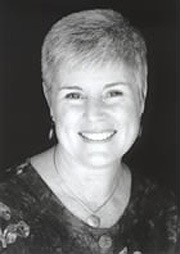
Violet Oaklander on Gestalt Therapy with Children

An Unorthodox Notion

Rafal Mietkiewicz: Violet, what makes me curious is that you are trained as a Gestalt therapist and people connect you with Gestalt therapy, but Gestalt therapy was mainly considered, at least here in Europe, to work primarily with adults. How did you find your way to do Gestalt therapy with the kids?
Violet Oaklander: I was already working with emotionally disturbed children in the schools when I got interested in Gestalt therapy. One of my children became very ill and died. I was very depressed. My friend was going to Esalen Institute to be in a group for a week with Jim Simkin, so I went with him, and I was so impressed with what happened to me. It made such a difference for me that when I came back, I started training in the Los Angeles Gestalt Therapy Institute, and while I was training, I thought, “How could I apply this to children?”It seemed very organic to me. Fritz Perls talked about the body and senses and all of that. I found that it fit my work with children and child development. And of course, over the years, I started using a lot of creative media, like drawing and clay and puppets and music, because that’s the only way it would interest children. But behind that, the basis of my work was Gestalt therapy theory and philosophy. And I developed it more and more as time went by. That’s how it got started.

RM: That’s what you wrote in your book—that children already know, but they are wearing special glasses, so you just take the glasses off?
VO: Yeah. I have many stories working with kids. I’m trying to think of when I first started. When I first began, I was working in the schools with maybe a group of 12 children. And they were older—maybe 12 and 13 years old, all boys. These were kids that didn’t make good contact; they didn’t connect very well with other children.I started doing things that were sort of different. I would have them finger paint. I’d line up the desks so it was like a table, and they’d stand around the table finger painting. At first, they didn’t want to do it. “It’s for babies.” But while they were finger painting, they would talk to each other, make really good contact. And of course it was important to establish boundaries—what they could not do and what they could do. So that was very clear.

Another thing I started doing was bringing in wood, and they would build things. These were children who weren’t allowed to hold a hammer or a saw because they were very disturbed children—it was dangerous. But I saw other classes had wood and got to build things, so I got that. And they had rules: they couldn’t swing the saw or the hammer, or else they had to sit down that day.

I wouldn’t let them build guns, but they could build boxes and birdhouses, and they would work together because they had to share the tools. You would not believe they were emotionally disturbed children. They were making such good contact and really enjoying this. I did many things like that.

RM: You look like you really enjoy your work.
VO: Oh, yeah. I even had the old empty chair. I had two chairs in the front of the room, and when a kid would get really upset and angry, I would have him sit in the chair and talk to the empty chair.And the child that he was angry at might be in the room there, but he would be talking to the empty chair. And then I’d have him switch and say, “Well, what do you think he would say back to you?” and it was so amazing because he would realize that he was projecting. They didn’t know that word—they didn’t have that insight. But they could see that they were projecting their own stuff on the other boy.

It would be so amazing. They would come into the room and say, “I need the chairs.” They would talk to a teacher who had yelled at them outside. They would talk to that teacher, and then they would begin to see that the reason the teacher yelled at them is because they did something they weren’t supposed to do. They knew this, but when they sat in the empty chair, they’d say, “Well, I yelled at you because you hit this other boy!” And then I’d say, “Now, what do you say to that?” They’d say, “Yeah, I guess I did. I did do that, yeah.” It was just little things like that that I began to do, to experiment with some of the techniques.

After I left teaching and I was in private practice, I thought a lot about what I was doing, and I started developing a therapeutic process that was based on Gestalt therapy, beginning with the “I-thou” relationship, and looking at how the child made contact, and then building his sense of self and helping him to express his emotion.

RM: It seems like you combine a bunch of techniques and approaches in your work—like expressive art therapy or child group therapy.
VO: Yeah. We do a lot of sensory work. I mentioned finger painting—anything they can touch. Clay is incredibly sensory and evocative. If it seems like they need to do some movement, we do that. Sometimes we play creative dramatics—charades—because to show something, you have to really be in touch with your body. We might start with fingers: “What am I doing? Now, you do something.” And they think of something and they have to use fingers to act it out.And then maybe we do a sport—they have to show with their body what sport they’re playing, and I have to guess. It might be obvious, but they enjoy doing that anyway—maybe catching a ball or hitting with a bat or tennis racquet. They have to get in touch with their body to do that.

The projective work with drawings and the clay is also very important, because this is how they can project what’s inside of them and then own it. One example is a boy who had a lot of anger but he kept it inside. He presented himself as just very nice and sweet, and nothing was wrong with his life. It was only after I asked him to make something, anything—I usually say, “Close your eyes and just make something, and then you can finish it with your eyes open”—he made a whale, and told a whole story about how the whale had a family—a mother and a father and sister.

What I always do after they tell the story is try to bring it back, so I said, “Well, does that fit for you? Do you have a family like that?” He said, “No, my father lives far away because he and my mother don’t live together. I never see him.” “Well, how do you feel about that?” And then we started talking about his father, which he would never have mentioned, and all this feeling came up. It’s very powerful.

The First Session

RM: How do you approach the first session with a child?
VO: I always meet, if possible, with the parents and the child the first session, because I want the child to hear whatever the parents tell me. I don’t want the parents to tell me things and have the child not know what they told me.Even if the parents are saying bad things about the child, the child needs to hear what I hear from the parents.

Usually in the first session, I have a checklist, and very often I would put it on a clipboard. First I would say, “Why are you here?” and all that. Then I would ask the child these questions. “Do you have a good appetite? Do you have bad dreams?” A whole list of questions.

Sometimes the parent would chime in, but mostly it’s to the child. It was a way of really making a connection with the child. Of course, if they were very, very young, four years old, maybe I’d still ask these questions, but not everything—and use language they could understand.

That’s always pretty much the first session. But if there are no parents involved—because I saw many kids who were in foster homes or group homes—the first session is an important one to establish some kind of connection or relationship. Sometimes I’d ask the child to draw a picture on that first session. I’d ask them to draw a house-tree-person. But I wouldn’t interpret it. It’s not for interpretation. It was to say to them when they were done, “Well, this picture tells me that you keep a lot of things to yourself. Does that fit for you?”—because maybe they wouldn’t draw many windows. And they usually would say “yes.” Or, “This picture tells me that you have a lot of anger inside of you. Does that fit for you?” If they’d say, “No, I’m not angry,” I’d say, “Oh, okay. I just need to check out what I think it tells me,” and we would have that kind of a session.

I did that once with a very resistant 16-year-old girl who at first said she wouldn’t speak to me. And when we finished, she wanted her sister and her mother to come in and do that drawing. So it’s a way of connecting.

But we don’t always do that. If it’s a child who is very frightened—I had a girl, for instance, who was very severely sexually abused for many years, and it finally came out when she was about 11, and she was removed from the home. So she was in a foster home, but the foster mother was very devoted to her and came in, too.

But she was very, very frightened and didn’t want to talk to me. So in the beginning we would take a coloring book, and we’d both color in the book. And we wouldn’t really talk about anything. I’d say to her, “Should I use red for this bird? What do you think?” and just begin to connect with her that way. Pretty soon I was asking her, “Well, what do you think the bird would say if it could talk?”—that kind of thing.

Pay Attention

RM: It’s my guess that you don’t really diagnose kids in clinical terms.
VO: No. I mean, sometimes I would have to for an insurance company. But it’s a matter of seeing where they’re at, where they’re blocked. I had one boy who walked very stiffly all the time. He was 11 years old. And I thought, “Maybe we need to do something to help him loosen up before we even talk about his feelings”—that kind of diagnosis.
RM: So, you don’t find clinical diagnosis useful in therapy?
VO: Not very much, no.
RM: You trust in what you see and what you feel about the kid.
VO: What I see, yeah.If, for example, the child has a lot of difficulty making a relationship with me, that’s what we have to focus on, because I can’t do anything unless we have that relationship. Sometimes children have been very hurt and damaged so early, they have trouble making a relationship. So we have to figure out how we could do that.

I used to see a lot of adolescents who were arrested by the police because they had committed a crime. I was involved in a program where they would send these children to counseling. It was a special program they were trying. So this one girl came in. She had to come—she had no choice. She was 14. She wouldn’t look at me, she wouldn’t talk to me. She just sat there. Naturally when a child does that, it makes you have to come forward more. Well, it didn’t work. So I thought, “Maybe I cannot see this girl. Maybe I have to refer her to another person.”

I went out into the waiting room the next time she came, and she was reading a magazine. I sat down next to her and I said, “What are you reading?” She flashed the cover at me. I said, “I didn’t see it,” so she held it up.

RM: And that was the beginning of contact.
VO: Yeah. Already we were making contact. And it was a music magazine about different groups. I said, “I don’t know anything about that. Could we look at it together?” So we went into my office and looked at the magazine, and she was telling me about the different groups. It was mostly heavy metal. And she was all excited, telling me about the groups and which ones she liked.We tried to find the music on the radio because I said, “I don’t know what it sounds like.” We couldn’t find it, so she said she would bring in a tape. The next week, she brought it in and we listened together. Some of the songs were so amazing—all these feelings and anger. So we just started working with that. And we had a relationship.

But we need to do that—start with where they are. Pay attention. I wasn’t paying attention in the beginning. It was only when I thought, “What am I going to do?”

RM: So apparently the child therapist must be very in touch with his own senses. I guess it’s more important than clinical knowledge.
VO: I think you’re right. You have to know things, but that’s most important—to be in touch with yourself. It’s not easy to be a child therapist. An adult comes in and says, “This is what I want to work on,” or, “This is what’s happening.” When a child comes in, she doesn’t have a sense of what she needs to do. And you have to talk to parents, and you have to talk to teachers, and that kind of thing, too. So it’s different.
RM: Do you do something particular to help bring each session to an end—to help bring the child back to “regular life?”
VO: I think the job of the therapist is to help the child express what’s going on inside. But I notice that most children will only express what they have the strength to, and then they get resistant or they close down. They take care of themselves better than adults that way.But if they do open up a lot, we have to pay attention to what I call “grounding” them. I have a policy that children have to help me clean up whatever we’ve used. So we start cleaning up and then I’ll say, “Well, that was hard. Maybe we’ll talk some more about it next time, but where are you going now?” or “What are you having for dinner?” or “What did you have for dinner?” We talk about regular things to help them come back to ground.

RM: I know that Gestalt therapists hate “shoulds,” but using a paradox, are there any “shoulds” that a good child therapist should obey?
VO: Nothing comes immediately to mind, other than things I’ve already said. But speaking of “shoulds,” it’s worth noting that children have a lot of “shoulds.” People don’t realize that, but children are very hard on themselves. They’re split—there’s a part of them that’s very critical of themselves and then a part of them that, of course, rebels against that. Sometimes we help them understand that, especially if they are adolescents.
RM: Do you touch or hug your clients?
VO: Sometimes, but I’ll always ask them. I might say, “Can I give you a hug?” I don’t just do it. I have to ask them. Or I might put my hand on their shoulder. I can tell if they pull away that that’s not a good thing to do. Or sometimes we shake hands. We do a little bit—not a lot.

Working with Parents

RM: Do you often talk to parents?
VO: Oh, yes. This girl that I just mentioned, she lived in a foster home, and they didn’t care about her, so they weren’t interested. They just did what they had to do. But yes, parents come in. Every three or four weeks they have to come in with the child. Sometimes we just have a family session and I don’t see the child individually. It depends. You have to just decide which is the best way to go.
RM: We have agreed that it’s important for therapists to be in touch with their own feelings. What other qualities should one have to be a good child therapist?

VO:

You have to understand child development so you have a sense of if the child is not at the level she needs to be at. You have to understand the process. You have to be in touch with yourself. You need to know when your own buttons are being pressed—in psychoanalytic vocabulary, they call it transference. You have to understand when you have some countertransference, and to deal with that and work with that.

RM: In your Child Therapy Case Consultation video, a therapist is presenting a case of a child who is acting aggressively. You state at one point that kids can’t change their behavior with awareness. Is this why you often use art or have kids smash clay or other activities, versus just talk therapy?
VO: Yeah. What I mean is children don’t say, “This is what I’m doing to keep me from being happy or satisfied.” Even adults have trouble being aware of what they do to keep themselves stuck. So, with children, these drawings and clay are powerful projections. And it’s the way they can articulate what’s going on with them, without bypassing the intellect, but coming out from a deeper place. And at some point, they will own it. They will say, “Oh, yes, that fits for me.”When children feel stronger about themselves and they express what’s blocking, their behaviors change without having to force it or say anything. I mean, what makes children do what they do? All the behaviors that bring them into therapy are really ways of not being able to express what they need to express—of not being heard or not feeling good inside themselves.

RM: How do you measure progress in your work with children?
VO: It’s important to help the parents see the small changes, and not to expect complete reversal. And, of course, we have to work with the parents, too. Often the parents have a lot of difficulty with their own anger, and we have to work to help them understand how to express these feelings without hurting people around them. We can often do that in family sessions—help them to express what they’re feeling and what they’re wanting and what their sadness is about.One of the things I’ll say to parents is that I don’t fix kids. But what I do is I help them feel better about themselves. I help them express some of their deeper feelings that they’re keeping inside, and help them feel a little happier in life. We do many things to make this happen. And that’s what you have to look for. So when a parent comes in a month later and I say, “How are things going at home?” and the father says, “I think he’s a little happier,” then I know that this father has got it, and he’s seeing some progress here.

I am thinking of this was a boy of maybe 14 who was stealing, and the father wanted to send him to a military school because he couldn’t control him. There was a lot of reason the boy was like that, but that doesn’t help to understand the reason. It’s good to understand the reason why he’s like that, to help him change and be different.

So that’s how I look at progress. When they’re doing better out in life, they’re going to school and have some friends, and doing some of the things they have to do at home, and doing their schoolwork, then you’re seeing progress. They may not be altogether different, but they’re functioning in life.

The other thing that’s important is that it has to be at their level. Children can’t work everything out. They have different development levels. So the girl who was very severely sexually abused, we did a lot of work about that. But when she was 13, she had to come back into therapy for more work—things came up. They reach plateaus. They have to go out and be in life, and then maybe more things come up.

Becoming a Child Therapist

RM: Does it happen often that, when therapists work with a kid, the therapists’ trauma from childhood appears?
VO: Absolutely. That’s something one has to really know about—be in therapy, have a therapist. I have several people who come to me for supervision who are very experienced therapists, and that’s the reason they come. I think it’s really good for a child therapist to have somebody to talk to and consult with because it’s very difficult sometimes. You can’t always see what’s going on.
RM: How long does it take to be fully trained as a child therapist?
VO: Oh, gosh. For many years, I did a two-week training. People would come from all over the world. And sometimes they would get it in those two weeks, and other times they didn’t, so I don’t know. Two weeks is not enough, but it was the most that people could give of their time. Sometimes they’d come back two or three times to the training, but those were people who actually got it the most, because they were so committed to learning more.I can’t define a time. They have to have the experience of working with children first, I suppose, and understand about children. You have to have patience when you work with children. If one thing happens in a session—if they say, “I’m like that lion. I get so angry, just like that lion,” or whatever—if they say one thing, sometimes that’s it for a session. You have to be patient.

RM: What are the most frequent mistakes that therapists make when they work with kids?
VO: Usually what happens is therapists get stuck. They don’t know where to go next or what to do next.
RM: But why do they get stuck?
VO: Maybe they’re just not able to stand back and look. Sometimes, in a supervision or consultation, I’ll give a suggestion, and they’ll say, “Oh, of course, why didn’t I think of that? Of course, I know that.” They get too close to it and worry about doing the right thing. They’re afraid to make mistakes, really. I always tell them, “No matter what you do, you can’t really go wrong.”
RM: If you were to give the best advice to the young therapists about working with children, what would be this advice be?
VO: I might say if you’re working with children, you have to like children!

If you’re working with children, you have to like children!

What Keeps Me Going

RM: My last question is personal. How do you manage to keep so vital?
VO: You know, I’m 84.
RM: You don’t look it.
VO: I don’t know. I am who I am, I guess. I’m still working some. I have this foundation (The Violet Solomon Oaklander Foundation), and we’re having a conference this weekend at a retreat center, and I’m going to do a keynote. So every now and then I still do something like that, or conduct a supervision. That’s what keeps me going. I do a little writing. I read a lot.I lived in Santa Barbara, California, for 21 years. And my son, who lives in Los Angeles, decided I was getting too old to live there by myself. So he tore down his garage and he had a little cottage built, and that’s where I live now, in this little cottage behind their house.

I miss Santa Barbara. I had a lot of friends. I’d be more vital if I was back in Santa Barbara. But I am getting older, and I had a little heart attack this year—little. I’m okay. But I was in the hospital a few days. So it’s good that I’m near my son and my daughter-in-law.

RM: It is obvious for me that you, at 84, have still have so much to give to the others.
VO: Thank you very much for those nice words. I will, as long as I can.That’s what keeps me vital: just doing as much as I can, as long as I can. I just have to learn to take it easy.

The God of Hellfire Will See You Now

The Crazy World of Arthur Brown

On a number of occasions in the late 1960s, an exceptionally gangly gentleman made up in skeleton face paint would affix what has been described as a metal plate to the top of his head with a leather strap and commence singing a song called “Fire” to assembled crowds in a dark, cramped Paris nightclub. The song begins with the spoken/shouted intro, “I am the God of Hellfire and I bring you…FIRE!” The key to making this routine particularly dangerous (rather than just slightly odd) was the fact that the plate, probably more of a shallow bowl, contained gasoline, which would be set aflame as the performer took the stage. The showman in question would cavort about the stage in an approximation of a cross between a witch doctor’s contortions and the popular ’60s novelty dance, the Frug. Not surprisingly, his ill-designed headgear would tip and spill varying amounts of flaming liquid on his body and brightly-colored stage costume, turning the already smoky club even more so. Fortunately for him, his bandmates quickly became adept at performing as an ad hoc fire brigade.

While the DSM may not have a particular diagnosis for such behavior (yet), a casual observer might be forgiven for assuming that the sort of person who would behave in such a manner might be more likely to be a recipient of psychotherapy rather than a provider. The fact that in this instance the reverse is true provides one of the more interesting chapters in the annals of mental health practice. Arthur Brown, the pop singer who gave new meaning to the term “smoldering stage presence,” followed a long and unusual path from performing rock and roll in the psychedelic sixties to performing psychotherapy in the early 1990s in Texas.

Brown was born in England on June 24, 1942. Like many artistically inclined young Englishmen of his generation, Brown went away to college and ended up in a band. But unlike ersatz “art” students Mick Jagger and John Lennon, despite his keen interest in music, Brown stayed the course and graduated with a bachelor’s degree in philosophy.

Soon after, music became his full-time vocation, and his band, The Crazy World of Arthur Brown, released their eponymous debut album in 1968. Their single, the aforementioned “Fire,” reached number 1 in the UK charts and number 2 in the States. Their failure to follow up this initial success marks Brown and company as one of the benighted breed popular culture terms “One-Hit Wonders.” Despite their lack of chart success, Brown, with his band and later as a solo artist, continued to work steadily well into the 1970s. His greatest contribution to music history, however, may be the influence he wielded through his choice of material and stage persona. Brown may today be viewed as a clear link on the continuum from Screamin’ Jay Hawkins in the 1950s to artists like Alice Cooper in the 1970s and Marilyn Manson today. You may or may not have heard of Brown or his most famous song, but his Goth-before-Goth-was-cool style has influenced just about every bombastic and excessively theatrical heavy metal/progressive rock act you’ve ever seen.

By 1980, his career as a musician was at such a low ebb that Brown and his then-wife decided to make a fresh start in America. They chose as their destination “the live music capital of the world,” Austin, Texas. Willie Nelson had famously retreated there for similar reasons a decade earlier with productive results, and Brown found amiable company in a number of other expatriates from the world of rock stardom. Brown kept at the music but soon found himself working as journeyman carpenter and the proprietor of a house painting business. While the work was rewarding enough financially, it did little to satisfy the creative muse. Brown found himself ready for another change but unsure what it was to be.

From Rockstar to Masters Student

Then in 1989, Vincent Crane, former keyboardist in The Crazy World of Arthur Brown and Brown’s longtime friend and bandmate, lost his long battle with bipolar illness, committing suicide. Whether this tragedy was the catalyst for Brown’s next move is open to speculation. But not long after returning to Texas from the funeral in Britain, Brown enrolled in the Masters in Counseling program at Southwest Texas State University (today known as Texas State University).

Such an endeavor may seem to be a truly unexpected left turn in the life of an avant-garde artiste. However, there were portents aplenty in Brown’s past which indicated an interest in helping others and exploring personal growth. In a period when it seemed almost de rigueur for pop stars to explore Eastern religion, Brown took a shine to Sufism. Other religions had been a fascination as well, as he studied formally and informally with everyone from practicing Druids to priests of the Greek Orthodox Church. Moreover, Brown seems to have delved deeply into the primordial soup of the ’70s self-actualization/encounter ethos, taking a self-guided tour of the “Me” decade. A trip to Israel during the Yom Kippur War to entertain wounded soldiers (presumably he spared them the flaming hat) inspired in him a keen interest in the healing properties of music.

But perhaps the biggest giveaway to his future career was the b-side of “Fire,” a song called “Rest Cure.” While the term is now archaic, it refers to a discreet stay in a sanitarium of the sort described by Simon and Garfunkel in “Mrs. Robinson”—a getaway to nice, quiet facility to collect one’s nerves. The lyrics reveal that Brown seems even then to have seen himself as able to provide a cure for the ills of modern society.

When the world is getting you down.
And nothing is in its right place;
Your friends are letting you down.
And you can’t seem to find the right face.
All you want is me,
All you need is me to give you,
Rest cure for all your ills,
Rest cure to make the world stand still.
Rest cure and the world won’t bring you down no more.

Brown was an able and ardent non-traditional student, making the 60-mile round trip from home to school each day, and he rapidly established positive relationships with classmates and professors alike. It was at a party on campus one day at which both groups mixed that Brown performed a light-hearted impromptu tune, name-checking all present. This so impressed one of his professors that she was moved to suggest he find a way to blend his musical gifts with his newly minted learning.

Brief Atypical Music Therapy

Shortly after picking up his diploma, he set up a counseling practice with a fellow alumnus to do just that. They named their venture “Healing Songs Therapy,” and in this context Brown and his cohort introduced a new therapeutic form.

As described in various media outlets, the session began much like a normal 50-minute hour. Brown’s partner would allow the client to describe his or her concerns and issues offering feedback in the normal therapist-client interaction as Brown sat to the side of the room with notepad and guitar at hand. Following the cessation of the first portion of the session, Brown would then perform an original song in which he brought forth insights and reflection about things he believed he had heard in the client’s narrative. The client would be given an audiotape of the song and be sent on his or her way, having completed a course of what might be called Brief Atypical Music Therapy.

In 1992, not long after Healing Songs had opened up shop, a feature reporter from the Austin daily paper came to Brown and his partner ostensibly seeking help with a mild phobia of driving in rush hour highway traffic, and more to the point, for a story. Following her hour with the duo, she reported coming away with her trepidations at least somewhat alleviated, along with a personalized song on cassette which she could pop into her stereo the next time she was caught in traffic. Evidently from the snippet of lyrics she published of her seven-minute personalized “healing song,” Brown saw in her presenting problem echoes of deeper existential issues.

I have a dream that I am keeping,
And I will not let it surface,
For the fear that rules my life
Has taken me and chained me to my own
Image of reflecting everything,
That I can’t hold onto.

A certain amount of notoriety followed as the fledgling practice grew. Other news outlets across Texas began to feature stories, as did People magazine with a story entitled “The Singing Shrink.” Of these stories, the early reporter/client from Austin offered one of the few independent reviews of Brown’s new therapy technique. Most of the accounts are long on Brown’s unmistakable enthusiasm for his latest venture and favorable words from experts about the broad efficacy of more traditional forms of music therapy, but very short on any sort of objective examination of the Healing Songs modality. The rejoinder from more knowledgeable quarters (such as representatives of the duos’ alma mater) was less than favorable, however. In response to the mostly positive article in the Austin paper, a professor from the Southwest Texas counseling faculty took exception in a letter to the editor decrying the inference that the university in any way endorsed or even recognized the potential validity of Brown’s approach.

The perturbed prof seemingly didn’t need to worry so, as what might one day have developed into a new therapeutic discipline seems to have fallen by the wayside when Brown’s music career began to heat up once again, probably due in part to the sudden spate of publicity regarding his side venture. Just when Brown put aside the formal role as a budding psychotherapist is hard to ascertain. The state credentialing board offers no record of Brown ever actually obtaining licensure as a Professional Counselor or Music Therapist. However, it’s safe to assume he gave up formal counseling at some point after departing Texas for a European tour with his new band in late 1992. Given Brown’s interest in his own inner world as well as that of other human beings, it seems likely that he still, shaman-like, exerts whatever healing powers he believes are in his possession from the stage. However, office hours are a thing of the past.

In the end, one has to wonder about the great unreleased Arthur Brown album. Ballads and Poems of Fin-de-Siècle Problems of Living, it might be called, or Arthur Brown Makes Your World Not So Crazy. According to the account in People, Brown and his partner had reached a height of 20 sessions a month at the time of writing. Thus, there could well be as many as hundreds of unknown Arthur Brown compositions out there in the world. While cassette tapes are today an almost forgotten technology, surely a personalized song dealing with a deeply personal issue and written by an erstwhile rock star is the sort of thing more than just a few people might have held onto. Secreted away in junk drawers and the back of closets, they await a 21st-century John Lomax to bring them to light once more.

Robin Rosenberg on Treating Eating Disorders

Rebecca Aponte: When you think about eating disorders, do you think of both anorexia and bulimia? Is there a lot of overlap in people who engage in these behaviors?
Robin Rosenberg: There are people who engage in both types of behaviors. In DSM-IV, individuals who exhibit all the criteria for anorexia but who also binge and purge would be diagnosed as anorexia nervosa binge/purge type. So diagnostically, anorexia trumps bulimia, if you will. But that is just the DSM-IV; who knows what will happen in DSM-V?
RA: Are they related?
RR: They appear to be, at least for a significant subset of people. So in terms of the research, when you look at people who have bulimia versus people who have anorexia, that is not necessarily a helpful distinction. Anorexia has, in DSM-IV, two subtypes. There is the traditional restricting type, which is the people who eat minimally, and then there is the form of anorexia where people are significantly underweight and may be amenorrheic [they have stopped menstruating], but they may also binge or eat without restricting, but then purge in some way, or use other compensatory behaviors. Those people are classified as anorexia binge/purge type, but in studies, those people have more in common with people who have bulimia than they do with anorexia restrictive type. Some of this is a bit of a diagnostic artifact, because it’s the way that it has been defined in DSM-IV.The most interesting thing about eating disorders in terms of classification issues is that it is not uncommon for people to move from one eating disorder to another over time.

Chicken or Egg: Looking at Causes of Eating Disorders

RA: What do you think are the causes of anorexia and bulimia? Is there a general consensus on what causes them?
RR: One of the things that is clear is the influence of culture, in that our culture is pretty screwed up about body ideal, especially for women. And it is hard to be a young woman or an older woman in our society and have a positive relationship with your body because of the cultural messages about how women should look, which is basically unattainable unless it is a full-time job or you have a lot of plastic surgery.There was a fascinating study by Anne Becker and her colleague. She went to Fiji and happened to be there right as they were getting Western television. Fiji is a Polynesian culture in which typically the ideal body type was the voluptuous large woman, and they were seeing Western TV with our ideal body types—very thin. So she had a chance to study girls and young women, and what was fascinating but sad is that over the time that television was there, the girls basically stopped liking their voluptuous bodies. They started dieting, talking about dieting; there was a lot of peer stuff about food and weight and appearance, consciousness which hadn’t been there before.

It is not a true experimental design, but it is pretty compelling. These young women were from a culture that had historically had an ideal of a heavyset look for women—yet some of them started spontaneously throwing up because they felt they had eaten too much, which could be a symptom of bulimia. Very sad. So culture is clearly part of the equation for both anorexia and bulimia.

RA: There are images surrounding us constantly of unrealistically thin or fit men and women, but it seems that not everyone is as susceptible to negative self-comparisons.
RR: That’s exactly right. Because this is a multi-determined category of disorders, there is no one factor that stands out, but people with eating disorders often report having been teased about their appearance or body size or shape. At least, these experiences are on their minds in such a way that they tend to report them. So that is another cultural piece, if you will.Personality factors or being perfectionistic—that is particularly true for people who have a restrictive type of anorexia. The thought is they will diet and then they keep dieting. It is a very slippery slope of weight loss.

People who binge and purge or have a binge/purge-type anorexia may have some issue around impulsivity or emotional regulation. Sometimes they will have more substance abuse issues, alcohol in particular. There is sometimes a cycle where they become disinhibited by drinking, and then they overeat, and then they feel bad, and then they throw up or purge and whatever they do with the eating. Frequently, they exercise the next day.

RA: Is it as if they are using these behaviors as external tools to try and help deal with their emotions?
RR: Exactly. In fact, people who binge talk about using it to zone out, to get away from themselves, but then they just feel really bad afterwards, so it doesn’t really work. It works in the moment, but not later.
RA: Are there common family dynamics in eating-disordered people? You mentioned some personality issues of being perfectionistic, but are there any relational patterns that stand out?
RR: The biggest one is a family preoccupation with weight, food and appearance, or being teased in other ways, their body shape being an issue—which makes sense, right?If your family is really attuned to how you look or how they look, that is what you learn and what you internalize. There appear to be some causal biology issues as well, but that is also very hard; it is sort of a chicken-and-egg thing, because people often don’t come to the attention of research studies until they have an eating disorder. And once your eating is disordered, you are changing your biology.

So there are lots of associations, but it is just not clear. Sometimes eating disorders run in families. Is that genetic coding? If a parent had eating issues, the odds are that there will be a family dynamic around food. So is that genetic or is that biological? They are trying to tease this part out. Is the eating disorder co-morbid with a mood issue, which could explain why antidepressants might work for people with bulimia? I think the biology part maybe a bit oversold. People have different temperaments that make them vulnerable to different sets of disorders if environmental circumstances trigger them. But I don’t think it is the case where someone has the gene and therefore he or she gets it.

RA: It certainly seems like you are leaning much more towards a social explanation.
RR: Right. It’s not as if eating disorders typically arise across like multiple generations in the same family.
RA: That is what I was going to ask, too. Are the rates of anorexia and views around eating disorders different in different parts of the world?
RR: There have been people with anorexia in recorded history going back quite a while, but they were mostly young women or older girls, and it was religiously motivated—a sort of asceticism. There weren’t issues about body image per se. And in current times in Asia, at least 10 years ago when they did some of these cross-cultural studies, some of the young women with anorexia didn’t say that they felt fat, but they complained that the reason they didn’t eat much was because they didn’t like the way that they felt. They did not express the same fear of weight issues that Western girls or adults with anorexia have.The other thing is that 30 years ago anorexia was a kind of white upper-middle-class disorder; now it is an equal opportunity disorder.

Dissatisfied or Delusional?: Body Dysmorphia and Pro-Ana Culture

RA: What is the role of body dysmorphia—a disturbed image of someone’s own body? Is that causative, or is that more like a symptom?
RR: It is hard to figure out what is normal eating for a woman in our society. It is hard to sort out where the line is between normal and abnormal size. When guys are hungry, they eat; it’s fuel. But it is really hard for women to view food as fuel that they need and not use it in other ways, and listen to their body about when they are hungry and full and not be externally regulated—”This is the amount I should eat, and this much is too much,” or that kind of thing.So many women feel fat, or feel fatter than they actually are. Is that body dysmorphia, or is that just part of what women think it means to be a woman? Is that what our culture tells us women are supposed to do? Women say, “How do I look? Do I look fat in this?” That is part of the culture.

Real dysmorphia is preoccupying—it is almost delusional. They have done some studies on women with anorexia: they have an Adobe Photoshop morphing program where there is a photo of them and they can turn a dial to make themselves thinner or heavier. So you ask them to adjust the image to what they think is their actual body size. Some of the studies show they are actually pretty accurate—it is not that they necessarily see themselves as heavier than they are—but some studies don’t show that. It is a little hard to say.

The dysmorphia isn’t about being unhappy with your body; it is really thinking that your body is different than it is. And I think it is not uncommon for people who were heavy when they were younger—no matter how thin they are, they may feel like they are heavy. It is not a dysmorphia—it is just how they encoded their body image, and it is really, really hard to update it accurately. It is like people who grew up poor: no matter how much money they have, they often feel poor. It’s not like they are delusional. They know that they have this money, but it’s hard to fully accept the new circumstances in a deep way.

RA: Do you find that restrictive eating is often a way to get attention, or is it really primarily an attempt to fix a perceived flaw in oneself?
RR: I think people come to it for really different reasons. It’s sort of like substance abuse. There are many different reasons why people start this slippery slope of using or abusing a substance. But once they are dependent on the substance, it takes on a life of its own, and ultimately they all look similar at that end of the process. Some people start out trying to lose some weight. It feels really good. They get a lot of positive feedback about it. They say, “Okay, I will just lose a little bit more, a little bit more.” And then, before you know it, they are underweight and their self-esteem has gotten tied up with it. They have gotten this reinforcement from, who knows, their boyfriend.And then it is really hard to come out of it, because depending on how underweight you are, you start having some cognitive impairment issues, and then it is hard to make good decisions. Bulimia or binging and purging is a similar thing: it may start out where someone ate so much that she felt either physically uncomfortable or emotionally uncomfortable with how much she had “pigged out,” so to speak. So she may have made herself throw up, and then in that moment she felt better—there was immediate positive reinforcement for the behavior. So the next time she feels uncomfortable she thinks, “Oh, well, this worked last time. I will do it this time.” And then she does it again and she start to think, “Well, it’s okay if I overeat, because if I do, I can just throw up, or I can take laxatives, or I will just do another half hour on the Stairmaster,” or something.

Then it becomes a slippery slope. It is not necessarily for attention, but once they do it, it becomes a coping strategy that it is hard to switch off. And it often becomes the primary coping strategy.

RA: Has there been a shift in anorexic culture with the rise of pro-ana websites? (These are websites that act to support groups for eating disordered women, to encourage each other in extreme weight loss.)
RR: Yeah, it’s really sad. It is one of the downsides of the Internet. It is ubiquitous—if you want that kind of support, it’s there for you. And I think it is really hard for families and caregivers, because you can’t forbid someone to use the Internet, so it is much harder to control the environment in a way that is positive.
RA: Is that the main difference since the rise of these kinds of websites—that it is more difficult to create a healing environment and to control that space?
RR: I think that is one of the differences. I think there is also a “me, too” copycat issue. In psychotherapy, there is a certain competitiveness that happens. It is not just advice. If you have a therapy group of women with anorexia, you have to have a skilled group therapist to make sure that the group doesn’t end up being de facto pro-ana. You don’t want people to get into this competitive “I’m thinner than she is, I eat less” dynamic.

The Importance of Teamwork: Treating Eating-Disordered Patients

RA: What kinds of events precipitate eating disordered individuals seeking treatment?
RR: Sometimes the individuals recognize they have a problem—either they saw something on television or a film or online. Or they vomited up some blood or they passed out. Sometimes people just feel like it is taking over their lives and they haven’t quite realized it until they were late for some event because they were engaging in these behaviors. Or a friend was using the toilet, the bathroom was left disgusting, and they had a fight.Sometimes it is family members being concerned. Sometimes if they are under 18 or even if they are college age, parents may say, “You have to do this,” or, “We won’t pay for college if you don’t do this.” So there may be a certain level of coercion.

RA: Do eating disordered clients usually minimize their problem?
RR: I think it depends on why they are there. If they are not there because they want to be, then they may be tempted to minimize it. I think it is like substance abuse in that way. If people are really there because they feel totally committed and want to be there, they are likely to be more honest than people who are ambivalently there.
RA: Are there pitfalls to getting in the role of monitoring their eating or bulimic episodes? How do you balance concern for their physical well being with the need to give nonjudgmental support?
RR: Great question. One of the things that is really important for psychotherapists treating eating disorder patients is to work with either an internist or a pediatrician who has experience and knowledge about medically treating eating disorders. This is super important, because as the psychotherapist you don’t want to get into that dilemma of having to be the bad cop, or any cop. You just don’t want to have to be monitoring their medical status. And frankly, most mental health clinicians don’t have the training. Even psychiatrists shouldn’t be in that role because that is really a medical role.And not all internists and pediatricians really know how to monitor patients with eating disorders. They don’t necessarily know what to look for, and they don’t know how patients might try to game the medical exam. For example, a good practice for any kind of eating disorder, and patients who have anorexia in particular, is that they should be weighed every time they come in. And they should be weighed with only a gown, because sometimes anorexic patients will put weights into their clothes to make themselves heavier on a scale so it looks like they have gained weight.

If you have them wear a gown, or even if you don’t, you really need to palpitate their bladder, because sometimes patients will water-load before they come in as a way of being heavier on the scale. Water-loading is very dangerous because it can make their electrolytes go all out of whack. So there are all these things that you wouldn’t necessarily think to do.

For eating disordered patients, the internist should explain that they have to be weighed every time. If they don’t want to know the numbers on the scale, the internist is happy to weigh them backwards, or have the nurse or the physician’s assistant weigh the patient backwards. Sometimes patients freak out by the numbers on the scale every time they come in, if it is up or down or that kind of thing. It can be devastating for patients to see the numbers on the scale show they are gaining weight, even if they know that they are and they should.

RA: Other than working with internists, are there other things that therapists should know about working with anorexic or severely bulimic clients?
RR: It’s really good to have a dietician who knows about treating people with eating disorders. Sometimes a dietician who doesn’t have specific training in eating disorders can do more harm than good. It is really about specializing. They are a valuable part of the program because they can look at a patient’s food chart and see, “Gee, maybe you are having cravings for ice cream because you are not getting enough fat earlier in the day. So what happens is by dinner time you are not being sustained by the food that you are eating because you need fats to give a sense of satiety.”So if they are basically having a low-fat diet, they will be much more likely to be at risk to binge later in the day. It is little things like that, where even a nutritional consult can be helpful.

RA: What do you think about residential eating disorder programs? Are they worth the cost? Is it possible to get that kind of care as an outpatient?
RR: I leave the medical decision to have someone do residential treatment to the person’s pediatrician, doctor, or internist. We consult with part of a team, but at some point it is a medical decision, which means it is really not safe for the person to be doing what they are doing on an outpatient basis.There are various steps of care for eating disorders. You can have a 24-hour inpatient experience. You can have residential, which means that is where they sleep. They have a dinner meal and they sleep there, but during the day they are doing other things. You can have a day treatment, which is their 9 to 5, but then they sleep somewhere else. You can have intensive outpatient treatment, where the person comes three to five times a week for a psychotherapy session, or more regular once- or twice-a-week outpatient psychotherapy.

There is a range of different options available depending on the severity, the patient’s motivation, insurance issues, or practical issues. Sometimes residential is really the best course of action because the eating is so out of control that they need an environment that is totally structured for them 24 hours a day.

The main problem with residential is that when people leave, they typically go back to the same environment that they came from, and they have all the situational cues. It’s like putting an alcoholic in detox—if afterwards you put them back with their friends who are going to bars, or they have all of the alcohol in the house, or they haven’t learned new coping strategies adequately, then they are kind of back to square one.

RA: Because they are surrounded by enablers?
RR: Right, depending on the situation. And honestly, unlike alcohol, someone can not drink, but you can’t not eat. And I think that is one of the hardest things about recovering from an eating disorder—it is really having to figure out how to do it in a different way. It is not an all-or-none thing. And it is really hard, I think, to figure out how much food is enough. When should I get up from the table? How hungry should I be before I start a meal? How hungry should I be to have a snack?
RA: With regards to psychotherapy, in your experience, what kind of treatment works best?
RR: The kind for which the patient is most motivated. The track record in research studies is for cognitive behavioral therapy; that is the gold standard and the treatment of choice for bulimia. For young people with anorexia, if a family is willing to do it, there is what is called the Maudsley Approach, named after Maudsley Hospital in England, which is where the treatment originated. The idea for this treatment is that the therapist’s role is to support the parents and the parents’ wisdom and authority in getting their child to eat. So the child lives at home, and one of the parents is home 24 hours a day, and they alternate. The idea is that the kid can’t do anything until she eats, and as parents it is their right to get their kid to eat. But you don’t want to literally force it down her throat, so the therapist is a consultant helping the parents use their knowledge of their child and their authority to help the person eat. There is a great book for the Maudsley Treatment called Treatment Manual for Anorexia Nervosa.
RA: That sounds pretty intense for a family.
RR: It is incredible intensive. It is a huge family investment in time and energy, and it has a very good track record. But obviously, you are not going to use this with a 30-year-old.For people with anorexia who are older or for whom Maudsley doesn’t make sense, if they are medically stable, so they don’t need to be in an inpatient unit, cognitive behavioral therapy can be very helpful. But the main problem with cognitive behavioral therapy for people with anorexia is if they are underweight enough, their cognitive functioning is compromised; it is subtle, so patients don’t always realize that their cognitive functioning is compromised.

So what happens is that you can’t really do the cognitive work, because they can’t do it. They can pretend to do it, but they believe that their thoughts about food are actually rational.

RA: What do you do at that point?
RR: If this is because they are underweight, you may actually want to do a brief inpatient or day treatment stay to get their weight into a healthier range so that the cognitive functioning is better.Sometimes depending on how old they are, their living circumstances, they are having family therapy or even couples therapy, if they are older. And they are trying all different kinds of things. Interpersonal therapy (IPT) is being used for bulimia. It has actually got a pretty good track record. Most people don’t have training in IPT, so it is not as widespread. Another thing that can be helpful is dialectic behavioral therapy for people with intense bulimia, because it is really an emotional regulation problem, so DBT aimed at helping with emotional regulation can be very helpful. Researchers are beginning to apply DBT as a way of treating bulimia, and results are encouraging.

Tips for the Novice

RA: If a client reveals to his psychotherapist that he has some form of disordered eating but he is not drastically underweight, at what point should he be referred out to someone who specializes in these kinds of issues?
RR: What might make sense before clients are referred out is if therapists are willing to have a consult with someone who has this expertise in eating disorders, because it can’t hurt.If the psychotherapist doesn’t have an expertise in eating disorders, even in a one-shot consultation they will learn something that will help them for other patients in their practice. They themselves will get to ask that question—”What is the cutoff? What are the questions I should be asking patients when they mention eating that seems a little odd to me?”

Therapists who are at all wondering if a consult is a good way to go should do what therapists naturally do when a flag goes up with something a patient mentions, which is to ask more about it. Try to get a little bit of a history of the problem. Does the patient see it as a problem? Do family members or friends mention it? What does the patient think the function is? What function does it serve? What are the drawbacks? What are ways in which it seems the patient thinks it is working for him or her to have that disordered system? So collect information.

When there is any doubt, a consultation is a really good idea. Or, if it is really clear that the person has a problem that is enough out of the therapist’s expertise, he makes a referral and explain to the patient, “You know, it’s not necessarily an ‘eating disorder,’ but it sounds like it is enough of a problem in your life that it is worth just getting some advice from someone who has an expertise about this.”

Again I wouldn’t frame it as the person should enter lifelong eating disorder treatment. If the therapist doesn’t think she needs a consult herself, let the patient have a consult.

RA: What is the biggest challenge of working with these kinds of clients?
RR: One of the things about the process of becoming a better therapist is figuring out the kinds of clients that aren’t a good fit for you. And patients with eating disorders are definitely not a good fit for some therapists. One of the things is just to realize that and there is no shame in that. It’s really not an issue. We all have kinds of patients who we work better with and kinds of patients that we work less well with.So if you as a therapist feel like, “Ugh, I don’t really want to get into this. This is just not my thing,” that’s really useful information and it may make sense to refer the person to someone else.

Again, I think the best thing to do when that happens is to have a consultation. I am a big believer in either peer consultation, groups with people who have an expertise in eating disorder or paying for a consult, but if you feel like you are not being as helpful as you can, if it feels like the treatment is standing still, it is always good to get another take on the case. That is where we have case conferences and things like that.

The easy cases, where the work gets done very quickly, usually happen when it is a newly diagnosed eating disorder or new onset, and the person is really motivated. But I think more and more there are the chronic cases where people have been doing it for a long time and it is one of the main coping strategies that they have. And if they got the eating disorder at a young age, they never really developed themselves as people outside of the eating disorder, so they don’t actually know who they are. There is no baseline they can return to.

And it can be very slow-going work. The patient may be ambivalent about getting better, so it may feel like it is two steps forward, one step back, or just sometimes like you are standing still.

RA: What is the hardest thing for you personally in working with it?
RR: I think it is my own impatience to want to help them get better sooner.
RA: Having more motivation than they have sometimes?
RR: Yeah, exactly.
RA: You mentioned it is important for therapists to figure out what kinds of clients are a good fit for them. Have you noticed personality characteristics that make really good therapists for working with eating disorders?
RR: Yes. One of them is people who aren’t squeamish about talking about vomit, about loose stool, about bodily functions in great detail. If someone is uncomfortable about that, then it is definitely not a good fit. Some people may feel like they are being too intrusive to ask the kinds of questions that should be asked: “How often are you throwing up? How do you throw up? What does it feel like when you throw up?”The other part is there is a lot of work about body image. The actual eating disorder symptoms sometimes, with appropriate treatment, can get better remarkably quickly. But what happens is residual body image issues remain; the person may be eating in a normal way but he or she doesn’t like their body, they may be cutting—not parasuicidal cutting, but they make little marks with a razor on their thighs, that kind of body hatred. That is a different level of work that then has to get done.

RA: When you are at that piece of the work, is cognitive behavioral therapy still the best modality for that?
RR: If people are having that kind of self-harming behavior, probably DBT, dialectical behavior therapy, or some of those techniques can be very useful because, again, it is about emotional regulation. If you hate your body so much that you hurt yourself like that, then I would say DBT is a good way to go.Often, there are psychodynamic issues as well. And there is a fantastic workbook by a man named Tom Cash called The Body Image Workbook, and it is just a fantastic book—well researched, very effective treatment for body image issues. The main problem is that people don’t necessarily want to do the work that is in the workbook. They have to be really motivated to do it. It is a lot of record keeping and exercise, not physical exercise but things like “stand naked, look in the mirror”—Mirror Exposure, it’s called. And that can be really hard for people. So therapy can actually be helpful in getting people over the hump to do that work.

RA: Have you learned anything in specializing in eating disorders that has informed your general practice?
RR: Absolutely. I have a deep respect for people’s ambivalence about getting better, and about how the longer symptoms persist, the harder it is to turn them around because people forget who they were before. The saddest part about eating disorders developed early is there was no “before.”But that’s generalizing. The other thing is just the awesome human spirit and the general capacity to try valiantly to cope. Human beings are amazing, and to a certain extent we are very resilient. Eating disorders, in some sense, are a type of resilience that just went awry, that became pathological.

RA: Say more about that.
RR: If you are having a hard time, if your boyfriend broke up with you and you are sad, it’s not uncommon in our culture to go have some ice cream to console yourself. People are just trying to do the best they can, and I think that is true for eating disorders. People who are depressed who struggle valiantly to get out of bed in the morning when they just want to curl up—the fact that they get out of bed is amazing. That is what I mean about the human spirit to keep going, despite all of the things that people are juggling and the mental and physical handicaps, being exhausted, feeling like they are going to faint, just not being able to function well, being preoccupied with lots of food.

Most people, most of the time, are able to put one foot in front of the other and keep going in trying to get better.

RA: What have you found most enjoyable in this work?

RR: I think it is about the essential human contact of really hearing someone in the fullness of who they are—the good, the bad, the ugly—and their profound relief at being accepted for who they are. And then the sense of being able to help them. The amazing thing is, when therapy works, the idea that you helped make someone’s life better.

Sleep and the Therapist: A Poem

Most times it is courteous
Sending notice of its pending arrival
Yawns that begin tiny, politely, and gradually stretch the jaw
Blinks that seem to beat in slow motion to some unknown tune and then even slower to some unheard command
This time, however, its approach was one a stealth bomber would envy
A stealth attack if there ever was one and in the most inconvenient place . . . a therapy session

It was not that I was bored or even distracted
Looking at the clock in disbelief that what I knew was half an hour
was in fact just five minutes
Just seconds before, I had been attentive, present when suddenly, sleep descended
Seductive, irresistible, folding me in soft arms
And I was in trouble
Struggling to contain jaw splitting yawns in the twin caves of my cheeks
Changing positions frequently as if the chair's cushion was suddenly holding the heat of a Texas summer day
or had morphed into its cousin, holding pins
Crossing first the right knee over the left
Then the left over the right
Crossing the ankles in similar fashion
Trying to do all this with style and nonchalance

Usually I value eye contact but now I am grateful for the seconds my client looks down or away
Shutting my eyes quickly for sweet relief
Hoping I can open them before she looks up again
But desperation sets in when I see three identical clients where there is only one
Prayers ascend rapidly and fervently
"God, please don't let me fall asleep." "Please help me stay awake." "Please, God, please!!"
"Just for a few more minutes, help me keep my eyes open"
And I almost believe that I hear sleep's soft laughing whisper, "Stop fighting and embrace me."
My prayers are now one word, "Help!" "Please!"
Then finally, it is time to end and if I was ever happier to see quarter or ten till the hour
I cannot recall it

Supervision of Executive Coaching

Last year I was tempted out of my retirement as a psychotherapist to provide supervision to a group of colleagues working with business executives. This was not psychotherapy but coaching, and my protests that I had never done any coaching or even read very much about it were overruled: they wanted me and they had every confidence that I would do a good job. I was flattered of course, intrigued too, and the extra money was welcome. So I began. Sessions were individual and scheduled to last an hour and a half, not the usual fifty minute hour. I met my supervisees just once a month. These parameters took some getting used to and I found myself having to take detailed notes in the session, something I had not done for years, simply in order to keep in mind who people were, what their place was in a particular firm, what work they were doing and who they related to. It was a steep learning curve and, more than once, I wondered whether I had taken on something of a monster. But I got used to it and developed a way of working that suited me. Interestingly, only one person out of the six I was supervising asked me at the outset what my model of supervision was. I was not expecting the question and answered without preparatory thought. I listen to what you tell me, I said, and, where appropriate, I shall say something. I admit that this is terribly vague but it is nevertheless accurate. I could have said something about attending to the currents and undercurrents in the material, or about the dynamics of relationships, or about the transactional nature of coaching. But I felt that that was too prescriptive and even, to some degree, false. I would do what I was good at and what I had done as a therapist, which was work out what I thought might be going on and seek out the best moment to make an intervention. This is not as straightforward as it sounds.

In supervision there are three levels of ‘what might be going on.’ What the coach/therapist and client are doing in the world outside, what material the coach/therapist chooses to bring to the session, and what is happening there and then in the supervisory relationship. The last is particularly important. One of the supervisees was someone I had met 20 years ago when we were both involved in training clinical psychologists but I had not seen since. He is a likable and charismatic person with an unusual background. At our first supervisory meeting, he said that, when he had heard I was to be their supervisor, he had told his colleagues how great I was and how he had known me for 20 years. My ears pricked up not just at the effusive compliment but the claim to have known me for 20 years when the truth was he had known me briefly 20 years ago, an important difference. I said nothing. Time would reveal whether his desire for special recognition would be important in the work as indeed it has proved to be.

The man who asked me what my model of supervision was suddenly quit. He came to one session and bluntly told me that he had decided to stop. It was not adding enough value and he was a busy man. I was filled with overwhelming anger. I felt the narcissistic wounding and I knew this was in part counter-transference, how I hated to be wrong-footed and made to seem a worthless minion. I waited a while for my feelings to lessen and then formulated my response. “You have sacked me,” I said, deliberately using that dismissive word, “and I am feeling quite angry at that.” Immediately, he acknowledged the peremptory way he had done this, apologising for it. The anger, which had been felt by both of us, was transformed and even though, he stuck to his decision to quit, we could spend the last session in productive work.

There are some who argue that supervisors have a responsibility to tell their supervisees what they are doing wrong or to suggest particular techniques to use. While there is a place for this, it is far less important that understanding and reflecting back. It is better for supervisees to find things out for themselves and unless something very bad is going on, the supervisor should not be directive. In a heated debate on supervision in the late 1970s, I vividly recall a distinguished psychoanalyst quietly saying, “Those who tell their supervisees what to do end up telling their clients what do.” He did not mean it as a compliment.
 

James Gilligan on the Psychology and Treatment of Violent Offenders

Why Violence?

Rebecca Aponte: You worked with highly violent individuals for many years. Most people are not particularly inclined to work with those kinds of populations. What drew you to work with this population?
James Gilligan: That's a good question. I think the ultimate answer, as with most major life decisions that people make, goes back to my earliest childhood. I grew up in a family with a father who was quite violent toward my two brothers. He was only violent toward me when there was a medical excuse for it—he was a surgeon. But my brothers he would really whack around. He would knock them across the room to the point where I was really scared he would accidentally kill one of them.

Now, it's true, the level of violence didn't reach the extremes that I later became familiar with when I worked with prison inmates who were often the children of fathers or mothers who actually had killed a family member. My father didn't go that far. He was never arrested, and nobody ever made a complaint of child abuse or anything. That was in the days before people even had a concept of child abuse. The whole concept of the battered child syndrome wasn't articulated and expressed until around 1963 in the Journal of the American Medical Association. Before that, people didn't even talk about child abuse.

So this was, you might say, "invisible," even though it was happening in a small town in Nebraska where everybody knew everybody else. People could see the bruises on my brothers, but nobody would say a word.

So without consciously intending this at all, I became interested in becoming a peacemaker and trying to figure out how to prevent violence—how to get it stopped, or how to prevent it from happening in the first place. I wouldn't say that I consciously articulated that to myself at the time, and not until years and years later.

But when I became a psychiatrist, I was not at all interested in working with violent patients. I wanted to work with people more or less like myself.
When I became a psychiatrist, I was not at all interested in working with violent patients. I wanted to work with people more or less like myself.
I wanted to become a psychoanalyst and work with the ordinary neuroses that everybody has to one degree or another.

When I was in my residency training at the Harvard Medical School, the teaching hospital was paying me such a small salary that I couldn't afford the expenses I had, because I already had a wife and three children. I needed to supplement my salary, which I learned I could do by spending one day a week in a state prison doing something I had never heard of before and had no interest in, called prison psychiatry.

So I went into this project with no high hopes. I thought it would be an exercise in futility. I thought it would be boring. And I had been taught up to that point that the kinds of people who wind up in prison are totally untreatable—they have no motivation to examine themselves, no motivation for introspection. They wouldn't tell you the truth. They would try to manipulate you by lying to you so that you could help them get an early release date, and on and on.

I was taught all of this and believed it. Then I went into the prisons and discovered that almost everything I had been taught was wrong. And I discovered that it was the most moving experience I had ever had in psychiatry, because I was face to face with the deepest human tragedies on a daily basis. And I mean not just the tragedies these criminals had inflicted on their victims, but also the tragedies they themselves had been victims of in the course of their lives.

What I found was that the most violent among them, and many of those who weren't even at the highest level of violence, had been subjected to a level of child abuse that was beyond the scale of anything I had even thought of applying that term to. As I said earlier, the most violent people were really the survivors of lethal violence, either of their own attempted murders at the hands of one of their parents, or the actual murders of close family members who were often killed by other family members right in front of their eyes.

In the Danger Zone

RA: You have said that the first prerequisite for a therapist working with violent patients is to learn how not to become their victims. How do they do that?
JG: Let me just say two things I would emphasize there. One is simply a practical matter of common sense, which is when you are dealing with a dangerous population, make sure there is plenty of security around. “One of my mentors said, “”If you don’t realize how dangerous these people are, you are more out of touch with reality than they are.”
RA: Aside from the fact that prisoners are obviously in a situation where they are being humiliated so frequently, do you find that therapy with regular people and therapy with violent individuals is really all that different? Or is it very similar?
JG: That's a good question, because throughout the time I was doing this work in the prisons, I was working probably between 70 to 80 hours a week, but I had a very active private practice, too, with people more like myself—Harvard faculty members, Harvard graduate students, local professional people, and so forth.

First of all, the basic principle of respect certainly is universal—that is part of all therapy. But the main difference is the prison work was much more skewed toward crisis intervention. That is, the prisons are the environment in which crises are not just an everyday occurrence, but a several-times-a-day occurrence. Prisons are in a state of chronic recurrent crisis. So when I was actually talking with people in the prison, it often was in order to resolve a current crisis.

What I learned was, however, that when you learn how to deal with the crises, a lot of very constructive work can be done. The prisoner, for example, can learn how you can resolve a crisis by talking rather than by using your fists or a weapon, because they would see how we did it—and that, in fact, it was more effective than their way of trying to solve a crisis, which was to hit somebody, or try to strangle them or stab them.

So a lot of useful work got done that way, but certainly the prison environment and also the personalities of the kinds of people who wind up in prison were different enough from my ordinary private patients that we were certainly not even in any way attempting to mimic a lot of the ordinary routines of psychotherapy or psychoanalysis. We certainly didn't have people lying down on the couch five times a week, free-associating.

We were much more face-to-face, dealing with a concrete reality. But in the course of that, as we got the crises resolved, the prisoners then became capable and motivated to talk with us about their lifelong issues, and could talk to us about the most painful and formative experiences in their earliest childhood and so forth.

Common Misconceptions and the Meaning of Attention

RA: And you have trained a lot of therapists to work with violent individuals, haven’t you?
JG: Yes, I did, and I and many of my colleagues, over many years.
RA: Do you find that therapists have any general misconceptions about working with violent individuals?
JG: Oh, yes, I really do—just as I did before I first started working with violent people. I was full of misconceptions. One of the commonest, actually, was one I didn't share quite as much, and that was a total fear of working with people who had a history of violence or were at high risk of it. Every time I worked in the prisons, I was working as a member of faculty of one of the Harvard teaching hospitals. And we would try to make sure that part of the training of the psychiatric residents—or sometimes even medical students and forensic psychiatry fellows, along with clinical psychologists, psychiatric social workers—consisted of spending a certain number of months as clinicians in either the state prison mental hospital or the prisons themselves.

What we found was that we got a lot of resistance. Many of the people who were very happy to see mentally ill people at, say, Maclean Hospital or the Massachusetts Mental Health Center, the Harvard teaching hospital, didn't want to go near a prison or a prison mental hospital, and were scared to death of it. We tried to convince them that ironically, in some ways, because there is so much security, the prisons and prison mental hospitals can be some of the safer places to work, as long as you know how to do it.

So that was one misconception—that this population was too dangerous to work with. The other was the misconception I had had, which is that they were untreatable. I found it totally untrue. In fact, I would go so far as to say that, while I frequently had the experience of meeting somebody in the prison or the prison mental hospital who I thought was untreatable at first,
I came to the conclusion, over the course of working for 25 years, that nobody is untreatable. I wouldn't give up on anybody.
I came to the conclusion, over the course of working for 25 years, that nobody is untreatable. I wouldn't give up on anybody. I saw people who seemed intractably violent, and in some cases intractably psychotic, in the case of the mentally ill prisoners. And I reached the position that everybody can be brought to a point where they stop being violent toward other people. They just do not use that as a means of trying to solve their life problems anymore.
RA: Going back to what you were saying about people being afraid to work with these populations, I’m wondering about the times that you were assaulted when you were new to this. What do you think went wrong?
JG: In the 25 years I did this, I was really seriously assaulted about three times—I mean, punched in the face. I didn't get a broken nose or a broken jaw, though I easily could have if I hadn't been lucky. That was really it. And when I asked myself, "What happened? What led to this? What could I learn from it?" I began to realize that each of these incidents had occurred under almost identical circumstances. Namely, it was late in the afternoon, I was getting tired, I was eager to get home to see my wife and family. And what occurred to me was the analogy that skiing accidents typically around 4 o'clock in the afternoon, when the sun is going down and you want just one last descent along the ski slopes before you go home—people are tired, they are distracted, and that's when the accidents happen.

I found that that was what was happening, and I realized that the prisoners, in fact, were correct that they thought that I was really not giving them my full attention, that I was a little distracted or impatient, I wasn't really completely listening to them, and they succeeded in getting my attention. That's how you do it—you hit somebody, you sure get their attention.

And I realized another thing about it: the German word for attention, "Achtung," also means respect. And it struck me that paying attention to people is a form of showing respect for them.
The German word for attention, "Achtung," also means respect. And it struck me that paying attention to people is a form of showing respect for them.
And not paying attention to them is a way of disrespecting them. In fact, that's one reason that I think that psychotherapy is one of the most profound forums of showing respect toward another human being, because the therapist is sitting there giving that person his or her entire unadulterated attention. That alone is part of the curative therapeutic process, I'm convinced.

But I also realized that what I was doing in the prisons was I was not giving them my full attention, and I was disrespecting them. What I heard from the most violent inmates over the years when I would ask them why they had hit somebody—not myself but anybody—they would say, "It is because he disrespected me." And they used that term so often, they abbreviated it into the slang term, "He dissed me." It struck me that anytime a word gets used so often it gets abbreviated, it tells you how central it is in the moral and emotional vocabulary of the person using it.

Disrespect is central to the ideology of violence. When I became a victim of violence, I would say I had provoked it by inadvertently, unconsciously disrespecting the people I was supposedly talking with.

Confronting the Horror

RA: I want to talk a little bit more about that role of disrespect or shame in violence. When you are working with the prison population, how do you balance your sense of respect and dignity for them with the serious and grave impact of the actions that landed them in prison?
JG: Again, that's an excellent question I asked myself many times. I have tried to make the distinction, when I think about that, between the horror and the outrage that one can't help feeling when you realize how horribly this person mutilated somebody else or caused them horrendous suffering. So when I talk about respect for this population, I don't mean pretending that you respect somebody for that part of their behavior.

What I mean is something much more basic than that. First of all, no matter how horrified I am about the behavior that led them to be sent to prison, I'm not there to humiliate them about it.
No matter how horrified I am about the behavior that led them to be sent to prison, I'm not there to humiliate them about it.
I am there to try to understand what caused this behavior on their part. I am an investigator. It is a scientific process. I am a physician that is a part of science, and I am there to try to learn something from them. So it is precisely the most horrendous offenders who I regarded as my teachers, and I was their student. I was trying to learn from them what had led them to behave in this way, which of course I found just horrendous. So when I say I would treat them with respect, that doesn't mean I respected what they had done. But on the other hand, I also felt it was not my job to punish them or humiliate them for it. My job is to try to understand what had caused them to do it.

The other thing—in my first book on the subject of violence, called Violence: Reflections on a National Epidemic, one of the epigraphs was a quotation from a book by a political scientist who said, "Of human beings, none are good but all are sacred." Now that is, in a sense, a religious way of putting it. But actually you don't have to commit yourself to a particular form of religious belief to believe that some things are sacred and that, just being human, there are some things we just don't do. And I felt the one thing I would not do, no matter what the person was in front of me had done—I was not going to strip that person of their human dignity. They still were human beings no matter what they had done.

And that there was something about the human personality or the human soul or psyche, whatever you want to call it, that is sacred. There are just some things that you don't do to a person's psyche.
RA: But you must have negative feelings from time to time towards the person that you are working with. How do you manage that countertransference?
JG: I will tell you about one of the most horrendous case that affected me personally, that really forced me to confront that in myself. This is a man who had raped and murdered a 14-year-old girl who lived in the house next door to him, and he then buried her body in his basement. He dug a hole in the dirt floor of the basement and buried her in it. Then he went upstairs and watched a football game on television, and waited until his wife and daughters got home, and acted as though nothing had happened.

When her family realized she was missing, a group of citizens was formed in the community to have a search party and try to find her. He joined the search party as if he did not know where she was. He finally was caught and apprehended, and convicted of murder.
RA: That’s chilling.
JG: When he told me this story I felt literally sick in my stomach. I thought I was going to throw up. I was so offended. The whole story was so horrible. How can you sleep after hearing something like this? And I felt a sense of compassion for this girl that is just endless. How much more horrible can anything be?

Then I realized, "Well, I have experienced that feeling before." When I was a medical student, we learned anatomy by dissecting a cadaver that smelled of formaldehyde. And you worked very hard in medical school. Sometimes people had to eat lunch while they were dissecting a cadaver. It would make you sick to your stomach. And then in the pathology lab, the same thing. We would be doing autopsies and dissecting disease tissue, tumors and so forth. And, again, totally disgusting. I would feel sick in my stomach.

But when I was in medical school, the attitude I took was, "Well, okay, that's a normal response to something that in fact is a source of illness in pathology. And, yes, you should be disgusted by it. It's a normal, human, biological response. But I will tolerate the disgust and nausea in order to learn what caused this person to die—in order to learn more about the pathology that was involved." So I realized, with this murderer, I was doing the same thing—but as a psychiatrist, not as a surgeon or pathologist. I was, in a sense, dissecting his soul, which was full of pathology, and it was disgusting. It was horrible. It made me nauseated. But I said, "Again,
I am doing this in order to try to learn something. I'm trying to learn what was the pathology that killed this girl.
I am doing this in order to try to learn something. I'm trying to learn what was the pathology that killed this girl." And that was the only way I could do it—by tolerating the sense of nausea in order to try to learn something.
RA: If the person that you are speaking with is expressing remorse, do you find that your own sense of disgust is mitigated by that?
JG: I would absolutely say that. And I think it's true for several reasons. One is, when a person has a sense of remorse, I am less worried that they are going to be likely to repeat the same behavior. I feel that also there is more to work with. They are more treatable. One thing that I learned over the years, though—I would see people who had committed murders and felt no sense of remorse whatsoever. They felt totally justified. They felt they were the victims, and on and on.

Finally, when they began to realize what they had done, how much human suffering they had caused to other people, when they finally reached the point where they could recognize how much pain they had caused, then they would begin starting to feel remorse and say, "Oh my god, what have I done?" And at that point I was dealing with a suicidal person, because the remorse is one aspect of feelings of guilt. When people feel guilty, they typically have a need to punish themselves. In many cases these were the people who would kill a family member, a wife or a child, and minimize it at first. Then, finally, when they were able to face what a horrible thing they had done, they really were seriously suicidal, and the staff and I would spend a year or two trying to prevent a suicide before the prisoner could finally integrate what they had done, who they were, and where they could go from there.

Once they had learned to live with the remorse and not kill themselves over it, the one thing they seemed to find that made life livable for them was when they found out how they could be of service to other people. And when these men in the prison, who otherwise just seemed unremittingly suicidal, realized they could actually be useful to other people, they had something to live for.

It might be as simple as they could teach other inmates how to read or write. A lot of prisoners are illiterate, and those who knew how to read or write could teach the others to read and write. Another person might become the librarian at the law library in the prison, and kind of be the jailhouse lawyer and help prisoners to write up a legal brief for themselves and so forth. Or they might help out with the school educational programs, or cooking things in the cafeteria. It almost didn't matter what they did, but if there was something that was useful and had a useful place, they then had something to live for.

What struck me about that was, after all, in a sense, that is true of all of us. What makes life meaningful and worthwhile for anybody is the sense that actually they are useful to other people.
RA: Once someone has reached that point of experiencing remorse, is it dangerous to bring that up, to try to treat it directly? What do you do at that point?
JG: At the concrete level, we would certainly put them on suicide precaution and try to make sure that they didn't have access to anything they could hurt themselves with. But I would talk with them. I would try to acknowledge their pain—the pain of realizing how much pain they had caused others—and try to talk with them about how they are actually not helping anybody if they kill themselves. They are not undoing anything. In fact, maybe they could find a way to, so to speak, try to make up for what they had committed. I would certainly try to steer them in the direction of finding some way to make their own lives useful to other people.

But I was certainly aware that they were dangerous to themselves, for often a year or two. In fact, the only suicides that I did see happen in this world were of people who had reached that point, who had originally felt totally justified in the homicide they committed and then later realized that they really weren't—there's no justification for killing somebody else.

The Point of It All

RA: As you know, the “bread and butter” of psychotherapy is to help people reduce anxiety and depression and adjust to new life situations. What are typical treatment goals in working with violent offenders?
JG: First of all, to prevent further violence. That's not the ultimate goal—that's just the first step. But we would have to reach that point before we could do anything further. In other words, as long as violence was continuing, any other therapy was a waste of time. It's beside the point. So the first goal would be to help them to reach a point where they would stop using violence as their optional tool for solving life problems.

A second one would be to give them the tools they needed and the resources they needed in order to gain the sense of self-respect, which they simply had never been able to develop. The reason they were hypersensitive to being disrespected by others was because they were so lacking in self-respect, and that means lacking in the precondition that any of us need in a given day to be able to respect ourselves.

For example, everybody gets humiliated at one time or another, but most people never commit a serious act of violence in their lives. And I would say one reason for that is because most people have enough internal and external resources available to them that they can restore their self-esteem, even when they have felt humiliated. You have an education, you have some skills, knowledge that you can respect and that other people will respect. The guys in the prison, almost all of them had none of those. They were often illiterate. They had often been unemployed, homeless. They have been abused and treated as worthless from the time they were born. I mean, their self-respect is zero.

I learned that if we gave them the tools they needed, they could gain self-respect just through the process of education and development. For example, I always regarded education as a therapeutic tool. Education can serve a lot of purposes—people can get better jobs if they have a good education, and so on. But I felt it was therapeutic for this population to gain a set of knowledge and skills that they could respect themselves and treat other people with respect.

In fact, we found that the single most effective therapy in the prisons in preventing violent recidivism after people left the prison was prisoners getting a college degree while in prison.
We found that the single most effective therapy in the prisons in preventing violent recidivism after people left the prison was prisoners getting a college degree while in prison.
We had a program like that that had been in effect for 25 years. Professors from Boston University taught courses for credit, and the prisoner could get a college degree from Boston University.

We found that over a 25-year period, several hundred prisoners had gotten a college degree, and not one of them had been returned to prison in that time. When we extended the study to 30 years, we found that two people had been returned. That was much less than a 1 percent recidivism rate. Phenomenal compared to the usual recidivism rate of 65 percent in three years—this was less than 1 percent over 30 years.

But, for me, the reason was they built up their self-esteem. They could respect themselves.
RA: So preventing future violence and tools for self-respect—are those the core of the work that you are doing?
JG: Certainly that was, at the level of emotions, prerequisite to everything else. For example, I felt that certainly one thing that had been missing that had made it possible for them to commit serious harm to others was their lack of a capacity for empathy with the suffering of others, and a lack of the capacity to care about others or to love others.

But what struck me was they couldn't respect other people or treat other people with esteem if they were lacking in self-esteem and self-respect. So helping them reach the point where they gained self-respect and self-esteem was really a prerequisite to their being able then to care about others enough so that they would not violate the rights or inflict harm on other people.

But that is all at the emotional level. At a more cognitive level, one major thing that we did in the jails of San Francisco when I worked there over a ten-year period was to focus on cognitive issues—namely what we call the Male Role Belief System, which we felt had underlain the violence these men had committed. And by that we meant all of the assumptions they had been taught as to how you define masculinity and what you need to do in order to be a man, what you are entitled to do, what you are obligated to do, how should women treat you, how should you treat them, and on and on—the whole set of assumptions that almost all men in our society are raised with. The assumption underlying this very skewed patriarchal, somewhat misogynistic view is that the social universe, that is, the whole population, is divided into the superior and the inferior. In that division, men are supposed to be in the superior part and women in the inferior part. And, in fact, the really superior man has also got to be superior to other men. So they are also inferior.

This is a recipe for violence because most people don't want to be cast into the role of the inferior.
RA: And it is a roadmap for feeling disrespected.
JG: Exactly. So we engaged in intensive group therapy with these jail inmates—all of them were in for a violent crime. I was amazed how quickly they grasped that point. And not only did they get the point, they began to say things like, "I've been brainwashed by the society I have grown up in." They would want to then start educating the new inmates about what they had learned.

So we said, "Great," and we would train them to lead the groups themselves, kind of like Alcoholics Anonymous where the people suffering from the problem are sometimes the best therapists. So we trained them to lead these groups, and we found the level of violence in the prison dropped to zero, and the level of recidivism after they left the prison was down 83% compared with people who had been in an ordinary jail without these kinds of programs.
We found the level of violence in the prison dropped to zero, and the level of recidivism after they left the prison was down 83%.
So that is a concrete example.

At a more abstract level, we were trying to increase their ability to be self-aware, to recognize their own motivations, to recognize how they were behaving in ways that were really self-defeating—this wasn't helping them get what they really wanted. In fact, their behavior was often costing them relationships that they actually wanted to maintain.

So, like any psychotherapy, you are ultimately trying to get at the greater sense of self-awareness and a greater degree of self-control that comes from the self-awareness. If you are lucky, that is what will happen. The goals of therapy and the methods of therapy did share those features in common with psychotherapy with any population.

Violence in Childhood: Bullying and Corporal Punishment

RA: I want to transition into talking about the earliest possible interventions. We know that violent behavior begins fairly early in life. How do you think that child and school counselors should be responding to bullying? Do you think parents are to blame? Should they be involved in the response?
JG: First of all, I certainly think that bullying is a prime example of the kinds of experiences that stimulate violence. That is hardly an original observation on my part, but I think people in general are increasingly aware how much school violence and violence out of school is caused by bullying.

I would like to see a truly cooperative effort on the part of schoolteachers, school administrators, and parents to identify and respond to a bullying situation and to get it stopped. Whenever there is a bullying situation, there are three parties involved. It’s not just the bully and the victim. The third party is the bystander, the witness, whether that is a schoolteacher or whoever. I really think that it is vitally important that nobody take this as just normal. Many of the people I saw in prison, for example, would talk about how they had been bullied in school, come home and tell their parents about it, and the parents, instead of going to the school and saying, “This is a problem we should work together to solve,” would tell their son, “You go back and beat him up, and if you don’t beat him up I will beat you up myself.”

That’s how you teach children to be violent.
RA: Do you feel that the chronic victims of bullying are at a similar risk for violence as the chronic perpetrators?
JG: That's a good question. I don't want to give you an answer that would imply that I am sure I know what the answer is. That is one I am not sure off the top of my head. Very often, bullies also have been victims. They aren't necessarily just one or the other. Often you find they are overlapping categories.

Without being able to be sure how I could predict which of those groups is most dangerous in the future, I would share pretty much an equal sense of concern for both. I would want to pay just as much attention to one as to the other—to the bully in order to get the bullying stopped, and to the victim in order to make sure that the victim doesn't ultimately turn into a bully.

Whenever I see a situation like that, I would want to intervene. But I would like to do so in a way that is not aimed at humiliating or at punishing, but is really aimed at restraining, in the sense of saying, "This is not permissible. You can't do this. We will not tolerate this. But we are not going to bully you ourselves. We are not going to beat you up or spank you. What we are going to do is limit your freedom to do this until the point you can stop yourself. If you can limit yourself from doing this, then fine, we don't need to do anything."

In other words, the only way to stop violence is with nonviolent means. That doesn't mean you don't need restraint, but it does mean that I would make a sharp distinction between punishment and restraint. I think parents who have two-year-old children running in front of traffic need to restrain the children so they don't get hurt. But that doesn't mean they have to hurt the children themselves. The whole point of restraining them is so the children won't get hurt.
RA: You mentioned not using spanking. Every time there has been a new movement to try to outlaw spanking, it has been met with quite a bit of controversy in the name of parental rights. What would you say to parents who think that spanking is a necessary tool?
JG: First of all, I think most of the empirical research on this subject has found that spanking is counterproductive. Over the last 60 or 70 years, there have been literally dozens of studies, if not hundreds, about child rearing and child development. The whole process of child development is so complicated and there are so many variables that not very many generalizations have been almost universally replicated. But the one conclusion on which there is the highest degree of consensus is that the more severely a child is punished, the more violent the child becomes. Using violent means to limit violence is just self-defeating. Violence stimulates violence. Obviously, you can talk about different degrees of spanking, and you talk about it so that it is not really painful—not going to cause bruises and so forth. But just the sheer idea that an adult can do something to a child which would be called assault and battery if they did it to another adult—I mean, the legal system recognizes the difference between a violent and a nonviolent intervention. And I just don't think an adult is doing anything except stimulating violence. To me, that is what the empirical research has shown. From my experience working with prisoners, I have already mentioned the most violent prisoners are the ones that have experienced the most violence at home. If violent punishment would prevent violence, then the people who wound up in the prisons would never have become violent in the first place, because they had suffered as much violent punishment as you could inflict on a person without actually killing them. As I said, many of them were the survivors of their own attempted murders.

I understand people who believe in spanking and say, "Well, we are not attempting murder." One problem is that people who have studied child abuse have found over and over again that it often starts just as so-called harmless spanking and escalates—parents get carried away.

I have treated parents who came to me in my private practice because they were afraid they were losing control and they were going to really injure the child more than they intended. They couldn't stop themselves once they got started. I would recommend that the United States follow the example of an increasing number of nations around the world—I think Sweden was one of the first, but by now there are at least a dozen if not more—who have made it a law that corporal punishment of children is assault and battery.

Intervening with Victims of Violence

RA: I'm wondering also whether you have any insights from your work with violent individuals that would be helpful to therapists who primarily work with victims of violence, maybe a battered spouse or adult children of violent parents.
JG: First of all, I would begin the work I do with the victim of violence with the unequivocal assertion that violence is not justified. Nobody deserves to be victimized by violence. It is important that they realize that they weren't the cause of this. No matter what they did, that doesn't justify the person who harmed them.

The second thing is that, precisely because nobody deserves to be treated this way, it is vitally important that they do everything they can to protect themselves from it and to make sure that they don't expose themselves to the risk of further violence of this sort. If they are involved with somebody who does not appear to be capable of renouncing violence as a form of trying to influence the person they are involved with, it is vitally important that they separate themselves from this person.

Otherwise, you have to then shift the focus to the question of, where is their need for punishment coming from? I would really focus on trying to prevent violence there by trying to prevent their victimization. You have heard of the Tarasoff Rule and the Tarasoff Warning—the legal rule that if the therapist has reason to believe that a patient of his or hers is at risk of being injured by someone else, they have a legal obligation to inform the patient of their concern and to clarify who it is they feel they are in danger from, and to recommend that they do everything that they can to separate themselves from that person and to protect themselves.

We had a terribly tragic situation in Massachusetts when a man was sent to the prison mental hospital because he had been threatening a woman he had had a love affair with, and he would keep breaking up with her and then wanting to get back together. Finally she got tired of it and said, "No, forget it, go away." And he couldn't, he was obsessed with her, and would keep threatening her. He was sent to the prison mental hospital for the crime of threats, which he had been convicted of.

We reported to the court that we thought this man was indeed dangerous to her. We also sent her a letter saying that we thought he was dangerous and she should do everything she could to escape from him, to not let him know where she was, and to leave. The letter went to the judge, it went to the sheriff of the jail this man went to. But the man was not psychotic. We couldn't commit him to the prison mental hospital on grounds of insanity because he wasn't insane. And he got sent to the jail with the letter in which the judge ordered the sheriff to notify the police in this woman's hometown when this man was going to be released from jail, because the maximum sentence for the crime of threats was only six months.

So this guy, after only six months, was released from jail. The sheriff screwed up and didn't notify the police in her hometown, didn't notify her, and the man went to her home and killed her.

It was a tragic, tragic case where the victim could have been saved. On the other hand, you might say it is one of the difficulties in our legal system that this man could only be locked up for six months according to the law. I could understand this woman's sense that she wouldn't want to be going into a witness protection program like where the FBI puts informants against other criminals or something. She would literally have to change her social security number, and move to the other end of the country or something, change her name—literally, because this man was obsessed with her and was very dangerous, and was willing to do something.

He now has a natural life sentence. He will never be out of a prison in his life. So clearly he didn't care; he wasn't restrained by anything. You talk about dealing with the victims—that was the worst case I think I have ever seen. It was not just frustrating, but horrendous. It was appalling. The Boston Globe reviewed all the circumstances and concluded this could have been avoided if the sheriff and the police had provided some protection as the judge had ordered. But it's even more complicated than that. “It's a very difficult thing to help the people who have been victimized to realize how much danger they may be in.”

How to Abandon the Prison System, and Why

RA: I want to give you a chance to talk about your more recent work, which is violence prevention at the societal level. You have said that prisons should be demolished and replaced with secure residential schools, colleges, and therapeutic communities. I wonder if you could briefly outline your theory behind this.
JG: The modern prison system is a fairly recent invention. It was only in the late 18th to early 19th century, starting in countries like England and the United States, to some extent Italy and other European countries, that prisons became long-term residential facilities for purposes of punishment rather than being short-term settings just awaiting trial, and at the outcome of the trial they would either be executed or tortured and mutilated, or acquitted and just let go.

But what we have now, where people come into prison and spend years there, or maybe the rest of their lives—that is a new development. It is a well-meaning experiment that has failed. It was well meaning because it was originally developed as an alternative to torture and execution. It was an attempt to protect people from such horrendous experiences. But in fact, it does not work in its stated purpose, which is to make society safer, except insofar as it certainly serves purposes of restraint. I mean, you keep somebody violent from the community—that I am in favor of, and I think we do need to do.

But if you want to look at the long-term effect on society, more than 90 percent of the people who get sent to prison are back in the community within a few years. They would have to be, or otherwise the prisons would be ten times larger than they are now, and they are already something like 7.5 times larger than they were in the mid-1970s on a per-capita basis.

Humanizing Predators

RA: Aside from the cost of doing something like that, probably the biggest resistance to that idea would be the conventional wisdom that there is a certain subset of people who are true sociopaths who are not going to be helped. You said earlier that nobody is untreatable. Is the "predator personality" a myth?
JG: Well, in one sense it is. But let me make clear, too, that I do not mean to imply that I am so optimistic about everybody that I think everybody that comes into the prison, no matter how violent they have been, can necessarily be returned to the community.

What I am saying is they can be rendered nonviolent. But I certainly have known people that I think should in fact remain institutionalized, because I think they have been too damaged. I will give you a case example. We had a man sent to us when I was running the prison mental hospital in Massachusetts, an African-American man who had been a pimp of a stable of prostitutes. He killed several people in the community, including some of his own prostitutes, was arrested for multiple murders and sent to the Charles Street Jail in Boston to await trial for murder.

He promptly killed one of the other inmates. So they realized he was too dangerous to await trial there. He had to be sent to the maximum-security prison to await trial, even though that is where you would normally be sent only after being convicted. And he killed an inmate in the prison. So they sent him to me at the prison mental hospital.

Now this man, when he came to the door, was mute—he was like a zombie. He was paranoid. He couldn't relate to anybody. Everybody was, of course, scared to death of him, knowing his history. And he seemed equally terrified and suspicious of everybody. When saw this guy, I thought, "This is someone who is untreatable. He is actively violent. You can't do psychotherapy with somebody who is mute, with his kind of history. The best we can hope for is to limit the violence that he would commit." So I had him put in a maximum-security residential unit we have where he would be in a locked bedroom at night so he couldn't hurt anybody and they couldn't hurt him. And I told people during the day to just keep a six-foot invisible wall between him and everybody else so that nobody would crowd him. One of our staff wanted to try to engage him in psychotherapy and I said, "Don't even bother. That he would experience that as a violation of his space." I said, "Give him space."

And after a month or two of this he didn't harm anybody; nobody harmed him. He found that there was a profoundly retarded 18-year-old man in the same residential facility there, same dormitory building, and this kid was so retarded he could hardly tie his shoelaces. He really needed somebody to look out for him. This multiple murderer took this guy under his wing and would walk with him to and from the dining hall and make sure that nobody abused him, robbed him, raped him, assaulted him, anything. He protected him.

And from the moment I saw this happen I said, "Thank god. This may be this guy's restoration to humanity." But I wasn't sure. He still didn't seem treatable in any conventional sense. But we let this go on, and for several months he was the caretaker of this kid, and still not talking much to anybody.

Finally he reached the point where he was relaxed enough that he did start wanting to talk. I sat down with him several times, and he basically told me the story of his life. His childhood was horrifying, blood-curdling. But he got this off his shoulders. By the way, we gave him very small doses of medication as he came in looking paranoid, but actually, he wound up to be more depressed than anything else. And we gave him very small doses of an antidepressant. As far as I know, he is probably still taking it.

But it was minimal medication involved. He really wasn't psychotic. Once he got to the point of talking, he was perfectly sane. But he had had horrendous child abuse in his lifetime. He still is at the prison mental hospital. He has several life sentences. He will never be out of prison. He will never be back in the community. Frankly, I don't think he would know what to do if somebody sent him back into the community.

So when I say that I wouldn't give up on anybody, I don't mean that this is somebody that is really going to be fit to return to the community and live in it. I think he is too badly damaged. But on the other hand, I think we don't need to keep punishing him. We can provide him a place where, for example, he has a job in the hospital. So, again, he is of use to other people. He gets some degree of self-respect from that, and people are grateful. He has filled a useful role in the hospital. When I come back to visit from time to time, he will smile and say, "Hello, Dr. Gilligan, how are you?" You know, behave like a normal human being—no longer mute, paranoid, menacing. And he has not harmed a hair on anybody's head since coming to that prison mental hospital.

So when I say I don't give up on anybody, this was somebody who was still killing people even after he was sent to prison. He has been there for 25 years now, and hasn't harmed anybody. And to me, that's success. I don't care if he goes back into the community. I think he would die if he went back into the community.

Discipline, Not Punish

RA: In a therapeutic community in a prison setting, how are rules enforced? Obviously you would have a no-violence policy. Does that mean that somebody can be ejected from the program or not be allowed to do certain group activities that they like? How do you do that in a way that manages respect but also enforces rules?
JG: I would try to focus on attempting to learn what was motivating the person to break the rules, including the most important rules, which would be rules against violence.

Again, let me give a case example to illustrate how I would approach it. We had a fellow at the state prison mental hospital who, on a regular basis, would engage in what we called sucker punching. That means hitting somebody just out of the blue with no provocation, no warning—being in an ordinary conversation with them, and then just suddenly punching them in the face, and sometimes really injuring people.

When that would happen, he would be immediately removed to a locked individual room where he would be isolated from other prisoners so he couldn't hurt anybody. Then a therapist would go over to talk with him repeatedly, day after day, until we figured out whether he was ready to come back into the community and not hurt people. After awhile, he would come back in and then he would be nonviolent for a couple of weeks or a couple of months, and then he would repeat the same behavior.

Finally, we sat down with him and said, "What's going on here? Why are you doing this? You know you get locked up when you do it." What we learned was that he wanted to be locked up. There were times that he just felt either he was losing control and felt he needed to be locked up, or he was afraid other people were dangers to him and he wanted to be saved, locked up. I think he was more afraid of himself than of others, but he knew that this was a way that he could get locked up for several days and feel safe. But everybody around him was safe.

What we said to him was, "Look, you don't need to hit anybody in order to be locked up. If you just tell us that you feel you need to be locked up, we will do that. We will put you in this room and lock the door, and we will keep the door locked until you can tell us you feel ready to come out again."

And what was amazing was that worked. He stopped sucker punching. He would tell us that he really wanted to be locked up. We said, "Fine, we will do it right now." And then we would go and talk to him about why he felt the need to be locked up. We wouldn't deny him the wish.

That would be one way in a therapeutic community that one would deal with rule violators. It's try to learn why they are breaking the rule, and to approach it not in the spirit of, "We are going to punish you for doing that," but rather, "We are going to try to help you to reach the point where you don't need to do that in order to get what you want"—and try to clarify what their goal is.

That's only one example, and I'm sure we can think of a hundred others that might not be so easily or neatly resolved. But the basic principle is you restrain people from hurting other people, absolutely. Clearly there are some people not ready to be in the group, like I mentioned with the multiple murderer. I didn't want him in a group at first. I thought he would experience that as an assault on his living space. He needed to be separate from other people for a while. So my emphasis would be less what are the rules than on what is motivating this person, what is his current mental status, to what degree is he in control of himself, what are his goals—in other words, a very psychological approach to everything, rather than a kind of rules-based approach.

I don't mean to say you don't need rules. You do need very clear rules, something that is acceptable to others. That does need to be made clear and unambiguous. But a violation of them should be not punishment but rather, first of all, restraint, and then inquiry and an attempt to learn, what was going on? Why did this happen?

Never a Boring Day

RA: You have obviously had a career full of very challenging work. What has been rewarding to you about it?
JG: That's, in a way, almost too easy to answer. It has been constantly rewarding. I have felt so fulfilled by this work. I felt so fortunate to be able to engage in it.

First of all, it satisfied my curiosity. I was able to learn a lot about things that I didn't understand earlier and I wanted to learn about. Secondly, this wish of mine that goes back to childhood to try to find ways to limit violence or prevent violence—I have certainly been able to gratify that wish through this work.

The third thing is I have talked to many of my colleagues who went into an ordinary psychoanalytic or psychotherapeutic career and finally, after 30 or 40 years of that, would tell me they were feeling bored—they were just doing the same thing over and over again, but they weren't learning anything new. I felt sorry for them, because I felt
I have never had a boring day of work in my life. I look forward to every opportunity to engage in this work.
I have never had a boring day of work in my life. I look forward to every opportunity to engage in this work. It's endlessly interesting, gratifying, moving. And I would recommend it unreservedly. And I mean I really recommend it. I'm not like Freud, who, when the Gestapo arrested him in Vienna and required him to write a note telling how well they treated him, ended it by signing, "And I would recommend the Gestapo to anyone." It's probably ironic and sarcastic, so I don't mean it in that sense. I mean that I really would recommend this kind of work to anybody.

I would love to see the mentally ill moved out of the prisons, where they really don't belong, and back into the mental health system. But I also want to see the prisons themselves really turn into therapeutic communities rather than being just places for punishment.

I think one of the biggest mistakes we have made—and when I say "we" I mean all of western civilization—over the last two or two and a half centuries has been this mistaken belief that punishment would prevent violence. I think in fact it just stimulates more violence. But that doesn't mean we should unlock the doors and let everybody run free. I do believe in restraint—in restraining those who hurt others, stopping them from hurting others through coercion and restraint and constraints and force—when necessary. But that doesn't mean violence and punishment. That is the vital distinction I would like to make.
RA: Do you have any final thoughts that you would like to share?
JG: I want to thank you for your interest in this work. Let me say one thing that I think applies to all psychotherapy. Again, what I have talked about is certainly very, very different from the population that 99 percent of therapists work with. But I do think it is worth recognizing that psychotherapy is a modern invention, a great social experiment in self-education. Sure, it has roots in everything from confession in the church to philosophic introspection and so on. There are antecedents for modern psychotherapy, but nothing really comparable.

It is a great, unprecedented social experiment, and I think we are only beginning to realize how important it is and how valuable it can be. When I first was trying to decide whether to become a psychoanalyst, I talked with a friend of mine, the late Peter Newbauer, who was a psychoanalyst in New York. I said, "Peter, if I become a psychoanalyst, I can only treat a few hundred people in my whole lifetime, and yet the need for this is so overwhelming. There are six billion people on this planet, and all of the psychoanalysts in the world can't treat more than a tiny handful. How can I think about this?"

He said, "Of course, you are right." But he said he felt that the ultimate benefit of psychoanalysis would come not simply from the actual treatment of individuals you are seeing, but from what you learn from treating them that could then be applied in other contexts such as in child rearing, in education, in the criminal justice system, and so on. Even in ordinary medicine—psychological insights have transformed so much of what we do in medicine.

When my children were born, I wasn't allowed in the delivery room. Nowadays people bend over backwards to try to increase the bonding between parents and children and to protect the bond between the father and mother and so on. That is one of gazillions of examples. The way children are treated in hospitals now is totally different from what it was when I was a medical student. These are examples of applying psychoanalytic knowledge into completely different contexts. So I have often felt that what I have done is applied psychoanalysis. It is not psychoanalysis as such—we don't put prisoners on the couch and have them free-associate five days a week—but we apply what we know from psychoanalysis in that different context, and then we can learn more things.

Psychotherapy with Former Cult Members

Two years ago, I received a late-night telephone call from a man who would give me only his first name. Bill said that he’d recently moved to Oakland and had been referred to me by a cult awareness organization in Florida. I get calls like this a few times a year—sometimes a referral from the cult awareness network, occasionally from the internet, and once in a while from someone I’d already met with. Because I was working full time as a clinical psychologist and lecturer at the university, I told Bill that he’d likely be better served calling a county psychological association for a referral to a private practice psychologist. “I’ve done that already,” he replied irritably. In fact, he had already tried therapy with both a psychologist and an MFT, but neither seemed to understand what he’d gone through. ““They couldn’t tell me what happened.””

Relenting, I told Bill that I’d be happy to meet with him, and suggested a coffee shop in Berkeley. As with each of these referrals, I was curious to hear Bill’s story. Although I would not provide psychotherapy to him, I hoped to explain to him how cults operate. Once he understood the powerful techniques of persuasion that were used against him, perhaps at least some of the guilt and foolishness he might be feeling over his cultic involvement would decrease.

The next morning I arrived in the crowded coffee shop 15 minutes early. Bill was there already, sitting at a small corner table in the Phillies baseball cap he told me to look for. He was a tall, red-faced man in his mid-thirties, with the kind of physical build that suggested a retired athlete. I introduced myself and he nodded, his eyes tight.

As I sat down across from him, he launched right into his story. “It’s about a church I joined in college,” he began. “I think it’s a cult—I read up on cults, but I just don’t know. The group I belonged to doesn’t sound like any of those famous ones, like Heaven’s Gate or Jonestown, and it’s not big or anything. But it’s a bad place.” He shook his head, gaze focused on the Formica tabletop. “I’m kind of a loss as to what exactly happened,” he continued. “I’m not a stupid man. I’m not, really. And I just can’t seem to figure out what went wrong.”

Bill's Story

Though Bill’s story was unique to him, it followed a pattern I was familiar with. He had been raised in a devout Lutheran family. As a freshman in college and far from home, he had been approached one day in the quad by a woman named Sarah. “She was real pretty and so nice to be around. She told me she was a student and we talked about school and God—we were both Christians.” She ended up inviting him to a prayer meeting that night at her church. Grateful for the attention of an attractive woman when he was struggling to find new friends, he went along.

The prayer meeting was held in a storefront church a few blocks from the campus. “Bill began attending weekly services there, and was made to feel so welcome that within a month he was visiting the church daily.” There always seemed to people there, no manner when he dropped by, and they were always glad to visit with him. The pastor, Brother Jacob, was an inspiring teacher who seemed to know just about everything about Bill, “or it seemed to me then that he did! About my spiritual struggles and my loneliness, about my trying to figure out what I was supposed to do with my life and wondering if I was even a good man.”

By the end of his freshman year, Bill had dropped out of college to live with the group. “School just didn’t seem that important to me anymore,” he explained. “I was more concerned about the spiritual crisis in America.” As he became immersed in his new church family, he was persuaded that the Lutheran religion he’d been raised in was a false religion and that his only hope for salvation and peace of mind was with Brother Jacob’s church family.

Over the next several years, Brother Jacob’s small, insular spiritual group moved often, eventually settling in Sonoma County, California. By the time they arrived, they included over 40 members. The theology of the group, as espoused by Brother Jacob, gradually morphed into an amalgam of fundamentalist Christianity and nebulous New Age teachings. In his daily sermons, Brother Jacob reinforced the belief that he was a divinely appointed prophet chosen by God to usher in a universal spiritual awakening.

Despite Bill’s initial infatuation with her, he never became romantically involved with Sarah, the girl who introduced him to the church. Once he was firmly ensconced with the group, she distanced herself from him. Only belatedly did he learn that the other members considered her and Brother Jacob a married couple.

The church members were forbidden contact with family or past friends without Jacob’s explicit permission, and the church community did not have television or radio and did not subscribe to newspapers. Bill and the other congregants relied solely on Jacob for outside news. Five years after his recruitment into the church, Bill married a church member new to the group, and they had a daughter together, six years old at the time I met with Bill. Brother Jacob officiated at the wedding and no marriage license was filed.

“It got really bad after that,” Bill told me. “I didn’t have an education and mostly did construction work, odd and ends—grunt work like everybody else.” He turned his paychecks directly over to Brother Jacob.

“I started thinking that this was pretty bad—and my wife and I weren’t getting along so good. I just prayed harder. Jacob preached to us every night for hours, and God help any one of us who fell asleep while he was talking. Mostly I was just tired all the time.” Bill couldn’t sleep and started losing weight. It was about then, around six months before he phoned me, that Brother Jacob began the ordeal he called “confession and redemption.”

Brother Jacob would choose a member of the community to be criticized and belittled by the entire community for hours at a time, rationalizing this exercise as a way to rid the community of sin and temptation and put the sinner on a strong foothold to spiritual purity. It was at one of these group confessionals, when Bill was on “the hot seat,” that he finally “cracked up. My wife went after me, along with everybody else. Brother Jacobb egged her on until she ridiculed our sex life and made fun of my unspiritual, lustful attitudes and my shortcomings as a husband. Nobody there seemed to care how horrible that was for me. I was shamed in front of everybody.” At the end of that meeting, which seemed to go on for hours, Brother Jacob ordered Bill to maintain chastity until he’d worked through all his sins and worldly thoughts—until the spiritual welfare of the planet became his overwhelming desire. He was ordered to live in the garage until further notice.

“It was then that I realized it was all like a really bad nightmare and I’d just wasted thirteen years of my life,” Bill told me. “I hadn’t spoken to my parents or brother in years, had no friends, and never finished school.” Bill was now working at two low-paying jobs and had hired an attorney to try to get custody of his six-year-old daughter, whose mother had remained in Jacob’s church. His attorney warned him to prepare for a long legal battle—he and his wife had never been legally married, and his wife disavowed his paternity of the child.

Cult Recruitment Tactics

Bill’s story illustrates perfectly the classic cultic recruitment and retention process. Margaret Singer, a preeminent 20th-century authority on cults, wrote in her definitive Cults in Our Midst about the six stages of cultic recruitment and retention.

1. Keep the person unaware of what is going on and the changes taking place.
 Bill was recruited as a college student, when he was most vulnerable. He was away from home, far from his social support system, emotionally insecure, and lonely. It’s likely that Sarah had spent days recruiting on the campus and had approached dozens of solitary students before finding Bill. When he initially became involved with Brother Jacob, Bill thought he was joining a Christian church with spiritual and ethical beliefs much like his own. He had no inkling that Sarah had been trolling for new members and that the initial stages of his involvement with the group were carefully orchestrated to reinforce the commonalities Bill felt with the cult members.

2. Control the person’s time and, if possible, physical environment.
 Once Bill actually moved in with Jacob’s group, his time was rigorously controlled as he worked multiple physically exhausting jobs. Bill relinquished his income to Jacob, had no meaningful emotional contact with anyone outside the church community, and was dependent on Jacob and the other congregants for shelter, emotional support, and food.

A cult could be in your own neighborhood and you might well not know it because the members have such superficial social interaction with nonmembers. If a cult member were to have outside interests, meaningful contact with friends and family outside of the cult, or personal interests not specifically tied to the cult, it would be a whole lot easier for him or her to just walk out when things got bad. Recruits are not allowed exposure to any people, situations or ideas that might help them look at the situation objectively; the consequence is that the ideas of the cult gradually replace independent thought.

3. Create a sense of powerlessness, covert fear, and dependency.
One of the unbending tenets of cults is the “us versus them” mentality. Cult leaders justify this insularity in innumerable ways. In Bill’s case, Brother Jacob convinced his followers that his was a divinely directed spiritual path and that all other religions, Christian or otherwise, were either well meaning but false, or were diabolical. Citing the danger of “contamination,” Brother Jacob instructed his followers that to maintain their spiritual purity and avoid damnation, they needed to avoid as much as possible all contact with persons outside the community. To do otherwise would mean impeding God’s design for world spiritual harmony.

4. Suppress much of the person’s old behavior and attitudes.
In his groundbreaking book on “brainwashing” techniques used by Communist prison guards during the Korean War, Dr. Robert Jay Lifton points out that

“Whatever its setting, thought reform consists of two basic elements: confession, the exposure and renunciation of past and present ‘evil,’ and re-education, the remaking of a man in the Communist image. These elements are closely related and overlapping, since both bring into play a series of pressures and appeals—intellectual, emotional, and physical—aimed at social control and individual change.” (5, 1961)

This is certainly what happened to Bill. He had renounced his past beliefs and affiliations, but in this case the “confession and redemption” exercise that he participated in finally caused him to metaphorically snap. Years of hard physical labor, a failed marriage, and humiliation from his wife, Jacob, and the other cult members caused such emotional exhaustion that he fled the cult to try to recoup his sanity.

5. Instill new behavior and attitudes.
With cults, the goal is to take whatever sense of morality or personal identity the person originally had and replace it with the leader’s own vision. Cultic indoctrination is gradual and incremental, just like the mind control described by Dr. Lifton. Everything happens in small, sometimes seemingly inconsequential steps. Had Bill been told at the first service at Brother Jacob’s church that he would have to disavow his family, drop out of school, perform mind-numbing physical labor for years, accept Jacob as a prophet, and be subjected to continual emotional abuse, it is unlikely he would have attended a second service. Jacob and his followers, however, kept hidden the central precepts of Jacob’s message.

6. Put forth a closed sense of logic; allow no real input or criticism.
Brother Jacob continually reminded his congregation that to desert the group was tantamount to eternal damnation. Members of the community were taught that temptation was everywhere and could come from anyone and everyone not associated with Jacob. For hours each evening, Jacob lectured on theology, the evils of modern society, and the hypocrisy of organized religion. He warned his congregation that to lose sight of his message, even for a minute, would be tantamount to suicide.He urged them to report any doubts or negative thoughts to Jacob immediately, and to assist each other in remaining spiritually pure by informing Jacob of any concerns they felt about the purity and purpose of their fellow congregants. Bill tried his best to live up to these strict rules; in doing so, he came to unquestionably accept the belief that Jacob was a prophet appointed by God.

Exploiting Vulnerability

Despite decades of research on cults, there is no typical personality that is particularly susceptible to cult involvement. You can’t say, for instance, that cults recruit only timid, uneducated, or naïve people. But one thing that continually comes up is that most people who become involved with a cult are going through a vulnerable time in their lives. In the 1960s and ‘70s, the most typical recruits were young, which makes sense as there were thousands of young people adrift looking for a sense of direction and purpose.

Today, college campuses remain good recruiting spots with young students away from home for the first time, vulnerable and lonely. But life transitions make us vulnerable at any age, and a cult can present itself favorably as a support network during these times. You might think of a woman whose husband divorces her after a 30-year marriage—her identity and sense of purpose have been focused on her family and now the family is gone; or a single parent whose children go away to college; or someone who has had a catastrophic death in the family; or a 50-year-old man who just lost his job of 20 years. These people bring job skills and potential earning power to the group. The elderly have become particularly good recruits because they have assets. If they own their own homes, the homes are probably paid off, they have Social Security and pensions, and they have free time to devote to the cult. Cults need these recruits to ensure their financial and social sustainability.

During my predoctoral internship at a day treatment facility in the San Francisco Bay Area, I came to learn that one of my co-interns, doing her postdoctoral internship, had suffered a series of personal tragedies on the East Coast and had moved to California to start her life over. There had been a lapse of a few years before she felt organized enough to finish up her internship hours. One of the personal tragedies she was running away from was an abusive sexual relationship. She settled in Berkeley and, feeling the need for friendship and quiet reflection, she joined a free spiritual meditation group. At first they met twice a week, but gradually these meetings became more frequent and took up most of her free time. When I met her, the only people she really knew in California were the therapists at the day treatment center and her new friends in the meditation group.

The group was part of a national spiritual organization controlled by a self-described guru. I realized early on that she had joined a cult, but my attempts to talk to her about it failed. She had a stack of cards on her desk, each printed with a quote by her guru. When I tried to talk with her about my research on cults, she would pick up one of the cards and read its message to me. These messages were innocuous, cloying, vaguely spiritual sayings. She was doing something called a thought-stopping technique. Followers of charismatic leaders are often taught that when they are faced with adversity, doubt, or challenge, they’re to say a specific mantra or prayer or do some specific activity that will bring the cult and its leader to the front of their minds and drive doubt away.

Since she wasn’t open to my concerns about the group she’d joined, I stopped mentioning them. I figured that if she ever did decide to leave the group, she would know that she could talk to me. The other therapists avoided her. They found her smugness, her meditating during breaks, the photo of her guru on her desk, and the little aphorism cards irritating and troubling.

When her postdoctoral internship was completed and my predoctoral internship was finishing up, she and I had the opportunity to receive funding to start a small drop-in clinic for runaway teenagers. For the first time in the 15 months I’d known her, I met with her outside the clinic. She refused to meet either at my home or at hers, so we arranged to convene at a picnic spot in a Berkeley park. When we met, she was flustered and nervous; she revealed that the local leader of her spiritual group had told her she shouldn’t trust me. We were writing out the rough draft of our proposal when it started raining. She suggested that, after all, it was okay to meet at her apartment.

We hadn’t been at her apartment three minutes when her local spiritual leader phoned and informed her that he was holding an emergency mandatory meeting for the entire group. So much for that; I left. The next Monday, she left me a voicemail message stating that she had no interest in running a clinic with me. A month later, this woman who had a Ph.D. in clinical psychology was working at the cult’s San Francisco restaurant 12 hours a day, five days a week for $280 a month, while living in a group home owned by the cult. “There was no way the group she belonged to was going to let her act independently.” She was too valuable to them. At the restaurant, they could watch over her.

Treating Former Cult Members: Common Issues

Very few of those who briefly become involved with a cult will stay. As a PhD candidate I studied a small cult for my dissertation. Along with 18 other people, I attended a free introductory psychic healing offered by a local group. Six of us signed up and paid for a psychic healing class. When I finally stopped attending the group’s services eight months later, only one other person from the original 19 was still involved with the group.

But the damage done once someone decides to break away can vary tremendously, and the challenges of providing to psychotherapy to ex-cult members can be daunting. There is no one-size-fits-all strategy for former members, and there’s no reliable data I am aware of that indicates success rates using any specific psychotherapeutic tool. Each client brings his or her own personal issues to the therapy session, which will vary depending on variables such as duration of involvement, age, educational background, and whether sexual abuse was part of the cult’s practices. Along with collaboratively developing a treatment plan that is unique to that client and which most clearly addresses the client’s pain and sense of loss, the most reasonable and helpful psychotherapy for a former cult member will involve education, patience, and case management when it’s needed.

Although I wasn’t in a position to offer psychotherapy to Bill when he contacted me, I will use his case as an example to highlight many of the issues to consider when providing psychotherapy to a person who has left a cult. When Bill exited the cult, he was 33 years old. He had dropped out of college in his sophomore year and worked as a construction laborer. He had acquired no job skills that could pay him much above the minimum wage, and now faced the daunting tasks of supporting himself, paying child support, and somehow earning enough money to finance what looked to be an expensive child custody legal battle. He was estranged from his biological family and had no friends outside of the cult.

Social Services Referrals

It is important that the therapist learn the specifics of Bill’s current living situation. Bill has met with two psychotherapists already and psychotherapy is not cheap; he may have paid a third or more of his weekly income for each visit, and clearly he can’t do that indefinitely. It’s quite possible, too, that Jacob placed little priority on his followers’ physical health; it may have been years since Bill visited a medical doctor or dentist. As a first step in the psychotherapeutic process, it may be necessary to assist Bill with basic case management services. Bill said that he’s working at two low-paying jobs, but does his income disqualify him from food stamps or Medi-Cal eligibility? And where is Bill living? He may be staying in a homeless shelter or in his car. In order to be helpful to Bill, the psychotherapist needs to know the answers to these questions and be prepared to refer him to county agencies that can assist him.

Assessing Risk of PTSD, Depression, and Other Diagnoses

For years, Bill was subjected to ongoing emotional abuse from Jacob. The consequences of that abuse, coupled with his current poverty and the dissolution of his marriage and loss of meaningful contact with his daughter, is likely causing overwhelming psychological pain. He may be experiencing difficulty sleeping and have an accompanying high startle response. Christian symbolism might remind him of Jacob’s theology. Even driving by a church with the congregation mingling outside could trigger unpleasant memories. His self-esteem was still forming when he met Jacob, and will almost certainly be low; he’s without friends and lives in poverty. All of these factors put him at risk for depression. It was already noted that Bill is quite thin. Does he have an appetite? It’s understandable that he may be feeling guilt about having abandoned the only friends and family he has known in the past decade, but is the guilt overwhelming? Does he do anything at all that gives him pleasure, or does he spend all of his time working and worrying?

At intake, the therapist should do a Mental Status Exam and perhaps use other assessment measures such as the Beck Depression Inventory screening to determine Bill’s level of concentration, document his physical appearance and affect, and determine whether Bill is experiencing depressive symptoms. The results of these screenings will indicate whether formal psychological testing is advisable. In eliciting his life story from Bill and the diagnoses based on the initial screening and psychological testing, the therapist can then formulate a treatment plan that prioritizes Bill’s problems and the diagnoses determined by the psychological testing.

While it is common for ex-cultists to experience posttraumatic stress disorder, not all of them will, any more than will all soldiers who experience combat. Depression and anxiety are very frequently found in persons who have left a cult, but it is an error to automatically assume that all former cult members suffer from these dysfunctions. Shame, low self-esteem, and anger, however, are nearly always present.

In these cases especially, journal keeping can become an important adjunct to therapy. Bill should be encouraged to keep a daily journal as a way to document his feelings and reactions to stressors. If, for example, he feels a surge of anxiety when driving past a church or seeing a parent and child, Bill and the therapist can collaboratively develop coping strategies to lessen the chances of Bill reacting adversely to such stimuli. He should also be encouraged to write down his feelings about his future and the impediments he sees as preventing him from more fully taking advantage of his intellect and ambition. Journaling will allow the therapist to better understand Bill’s dilemma as Bill views it.

Life Decisions

As an adult, all of Bill’s meaningful life decisions had been made by Jacob; Bill had no say in his education and employment and had limited say in his own marriage. Now all decisions are his. After viewing what he sees as a waste of 13 years of his life, he may feel either like he needs to make up for lost time and immediately “jump back into” the life he put on hold when he was 19 years old, or, conversely, believe it’s too late for him to make the needed changes in his life.

Although Bill is in his thirties, emotionally in many ways he is still an adolescent. While with Jacob, he’d learned to suppress doubt; now he is likely overwhelmed by doubt. Does he fear that if his decision to leave Jacob was the wrong decision, he will be damned? Does he believe that he has offended God?

In addition to focusing on Bill’s immediate psychological dysfunction, the therapist should also assist him in realizing what his long-term goals are, something that was never addressed while he was with Jacob. At some point, he may want to look beyond remaining a laborer. The therapist can assist Bill in expressing his interests and hopes for the future. Because Bill’s self-esteem is almost certainly poor, he may be timorous in talking about what he would like to do; he may feel that he is not smart or worthy enough. The therapist can help Bill past his timidity and low self-regard. Bill is an intelligent man and there are a myriad of options available to him; finding the confidence to speak to his therapist about his goals will be of great emotional benefit.

Social Reintegration

Because of the cult practice of social isolation, Bill will now almost certainly feel alienated from just about everybody. He’s left the only people he’d known for over a decade, and he has no one to replace them. As a result of his isolation as well as the cult’s “us-versus-them” mentality, he may view people with distrust, fearing that they’ll take advantage of him. Because he was also taught to harshly judge “outsiders” who did not conform to the cult’s standards of conduct, he may need help developing a less judgmental and more open approach when interacting with other people as a way to more fully re-integrate himself into society.

Finding a way to fit into a mainstream that he has spent nearly his entire adult life viewing with suspicion and judgment will be difficult. What will he talk about with people he meets at work? “How can he explain his involvement with the group without provoking ridicule and disbelief? If he chooses not to talk about his cult membership, what will he say he’s been doing for the last 13 years?”

For these reasons, group psychotherapy is often useful when working with former cult members. For Bill, group therapy would allow him to hone his social skills, which have been dormant for over a decade; he may not even know how to speak to people in a friendly, unassuming manner. Additionally, receiving feedback from the other group members will assist Bill in thinking about his experiences in the cult from a different standpoint. Good group therapy creates a safe environment Bill for to learn socially appropriate ways to assert himself. By interacting with peers in the group, Bill will learn coping skills and reframing strategies, and improve his ability to speak about his experiences and hopes for the future. Group therapy will also assist him in realizing that he is not metaphorically alone, that the turmoil he is experiencing is not unique.

Challenges in Reconnecting with Family

Bill has had no contact with his biological family in over a decade. It is not uncommon for cult leaders to persuade followers to borrow money from their families, most often by promising to use the money to return home or return to school. If this happened with Bill, the therapist should know about it; it might make reconciliation more difficult, and the shame of having stolen from his family may be a contributing factor to Bill’s emotional problems. Reconciling with his family could both decrease Bill’s isolation and ease some his guilt. His parents might not know that Bill has left the cult; they might not even know he has a daughter, and learning of a grandchild could make reconnecting with his family easier.

The therapist will also want to explore Bill’s current disenfranchisement from his family and his reasons for avoiding contact with them. Bill can be encouraged to talk to the therapist about the worse-case scenarios he envisions might happen if he attempts reconciliation. Rejection? Anger? Legal action to recover unpaid debts? If Bill is prepared to reach out to his family, the therapist can offer to meet with them together, to act as a sort of referee and to explain to Bill and his family the forces that were put into play by Jacob that led to Bill’s recruitment into the cult. It could be healing for the family to learn about tools of undue influence used on Bill, and understand that Bill’s cultic involvement was not due to Bill’s upbringing, but were rather a result of Jacob using remarkably successful tools of persuasion on a particularly vulnerable young man.

Managing Self-Blame with Psychoeducation

Persons who leave cults, or any abusive relationships for that matter, very often feel foolish and angry for having been so badly manipulated. It’s important that Bill knows that the techniques used against him by Jacob were not Bill’s fault. It wasn’t weakness on Bill’s part that caused him to join Jacob’s cult; rather, it was his innocence and Jacob’s pathology that were ultimately responsible. There is a genuine sense of empowerment when a former cult member understands the tools of manipulation that were used against him or her. While bitterness and anger may linger, the former cultist no longer feels somehow defective. This goes a long way in eliminating feelings of low self-worth.

Follow-up: A Slow Recovery

Over the next several months, I heard from Bill occasionally. At his suggestion, about a year later, I met with him again at the same coffee shop. This time he was more relaxed but still maintained a reserved, moderately nervous affect. He told me that although he had met with three more psychotherapists, he’d been unable to find one he believed understood his experience well enough to be able to help him. He mentioned that he’d joined a psychotherapy group a month earlier and felt that he was receiving support from the other members of the group, who do not see him as weak or foolish. He was hopeful that the group therapy would work out.

He still worked in construction and paid monthly child support. The courts had determined that he was the biological father of his daughter, and he’d been granted visitation privileges with her, which his ex-wife was contesting through an attorney hired by Jacob. In response to my question, he said that he still considered himself a Christian but, despite attending several churches, had not found one where he felt he belonged. He added that he still had difficult mentally separating Christian theology from Jacob and what Jacob had done to him. Bill remained quite bitter over having lost so much of his life to the cult.

I hope Bill’s story makes clear that ex-cult members are a traumatized segment of the population that needs more therapists who are educated about and sensitive to their particular experiences. Patience is a necessity in doing this work, but it is often helpful to remember that while these individuals suffered extreme measures of manipulation, their susceptibility to such influence is not surprising, or even necessarily difficult to understand. As Dr. Margaret Singer was fond of saying, anybody is capable of cultic recruitment if approached at the right time—a time when they are most vulnerable. That was certainly the case with Bill; he was young and naïve with minimal life experience, and he was lonely and cut off from his family. Jacob used an attractive woman as the initial bait and then played into Bill’s isolation, Christian beliefs, doubts about his direction in life, and his yearnings to be part of a community of friends who shared his principles.

Sources:
Lifton, R. (1961). Thought Reform and the Psychology of Totalism. New York: W.W. Norton and Company, Inc.
Singer, M. and Lalich, J. (1995). Cults In Our Midst. San Francisco: Jossey-Bass Publishers.


Training for the Treatment of Eating Disorders

Eating disorders are widely recognized as some of the most challenging psychological diagnoses. I was surprised to learn that they are also the most dangerous: eating disorders have the highest mortality rate of any diagnosis. Many clinicians assume that eating disorders only occur in young women. However, research has shown that the frequency of eating disorders is rising across a wide range of client populations, including men, middle-aged, and the elderly. Regardless of the population you work with, sooner or later you will encounter clients with eating disorders.

How can a clinician get training to help clients with eating disorders? I recently discussed this with Deborah Brenner-Liss, PhD, the director of the Association of Professionals Treating Eating Disorders (APTED). APTED is an affiliation of eating disorder specialists based in the San Francisco Bay Area. APTED provides support and training for clinicians, and referrals and direct service for clients.

APTED emphasizes a multi-modal method of treating eating disorders, including trauma, attachment-focused, somatic, experiential and affect-focused treatments. Given the complexity of eating disorder ontology and treatment, Dr. Brenner-Liss encourages students to “enlarge the depth of their conceptualizations”. APTED treatment includes a wide range of providers in the treatment team, including therapists, social workers, physicians, psychiatrists, nutritionists, body workers and coaches. (I personally find this to be a welcome relief from the all-too-common clinical turf battles!)

For clients with sub-clinical eating disorders, Dr. Brenner-Liss recommends consulting with an eating disorder specialist. Like other addictions, eating disorders are behaviors that build over time, and can sometimes be arrested in the early stages if they are addressed early with serious treatment.

For clinicians who want to work with clinical-level eating disorders, Dr. Brenner-Liss recommends getting formal training. In the San Francisco Bay Area, both UC Berkeley extension and JFK University provide eating disorder certificates. For those in other areas, the International Association of Eating Disorders Professionals Foundation (IAEDP) provides an online training and certification course (http://www.iaedp.com/). The IAEDP course includes readings, audio records from IADEP conferences, and writing assignments. I am currently taking this course myself, and have found it very rich.

Dr. Brenner-Liss also recommends joining a eating disorder-focused consultation in order to get exposure to a wide range of case material. Likewise, attending a weekly 12-step eating disorder group for a few months can provide valuable insight into the nature and course of eating disorders. Most ED groups are “open” so clinicians can be a “fly on the wall.”

For those in the SF Bay Area, APTED is hosting a two-day conference, “Re-Finding Our Way to Wholeness: What heals? Eating Disorders and Trauma,” September 24-25th, 2011, in Berkeley.  Registration required by September 10th. For more info, call 415-608-6307, or e-mail AptedSF@aol.com.  Notably, the conference is open to both clinicians and individuals in recovery.  I am personally encouraged by the growing movement in the psychotherapy community to break down the barriers between providers and clients.  (Another notable recent example is the Marsha Linehan's courageous self-disclosure about her struggle with mental illness.)

Listening versus Hearing in Psychotherapy

In my memoir, The Gossamer Thread: My Life as a Psychotherapist, I describe my treatment of ‘Angie’, a young mother with horrific fantasies of killing her two young children by stabbing them through the heart with a kitchen knife. It was back in the 1980s and I was in the process of shedding my old behaviour therapy skin, realising I needed to listen to the client more carefully before embarking on any specific intervention. My therapy was a success, or so it seemed at the time. I even wrote her case up for a behaviour therapy journal under the grandiose title, Verbal methods of behaviour change. I had confidently formulated her fantasies as extreme anxiety since there was no evidence of her ever harming her children. I discovered that they had begun after she had read a newspaper account of a couple’s murder of their children in a Satanic ritual. She worried that, however much she loved her children, that she too could be taken over by the Devil and do things she would never normally do. I saw this as vicarious traumatisation and her anxiety stemmed from her ruminations about this. I was able to help her, getting her to monitor the fantasies, reframing them as anxious thoughts, and substituting more positive ones, until the fantasies declined significantly in both intensity and frequency. This was my pre-cognitive therapy days and Angie was to lead me into training as a cognitive therapist. But that is another story.

I revisited the case in my book and, looking back, I realised that, while I had listened to Angie, I had not really heard her. Or rather I had heard what I had wanted to hear. She was a young mother, looking after two very young children while her husband was away working on the North Sea oil rigs. She was living hundreds of miles from her home town and the family she had grown up with. She had relatively little money and had given up her job. She was trapped like many young mothers are. Was that perhaps what this was all about? After all, what trapped her most were her children as they needed her constant care and attention. Could her fantasies be an unconscious expression of her resentment of them? If I had trained in systemic therapies, I might have heard a different story to the one I had carefully elicited with my prototype cognitive therapy hat on. I might have heard how unhappy she was, perhaps heard her fear that her marriage was a mistake and that she no longer loved her husband. Or had I been more analytically inclined, I might have wondered about the aggression in the fantasies and perhaps linked that to infantile aggression or sibling rivalry or other possible unconscious conflicts from her past. I did none of these things because I had heard what I had wanted to hear. I prided myself on attentive listening, on my sensitivity and creativity as a therapist. I had done a really good job. But had I? Listening is not a passive matter. It always reflects what we expect to hear. Hearing, on the other hand, is something else altogether as I later went on to learn. To hear properly one has to suspend one’s preconceptions and be prepared to question one’s own thoughts and beliefs. It is important to give a space to the client and not fill it with one’s artful questions, ideas or interpretations. It is to take a step back for a moment and wonder. We all listen but how much do we actually hear?

Sue Johnson on Emotionally Focused Therapy

Foundations of EFT

Victor Yalom: Sue, it's great to be with you today. We might as well start with the basics. Can you just say a bit about what is emotionally focused therapy or EFT?
Sue Johnson: EFT is an approach that was developed in the '80s to work with couples, that now has a very strong empirical base. It's been tested. There's lots of outcome data. We know that we get results with lots of different kinds of couples. We know how we get results. As its name suggests, it's an approach that focuses very much on how people deal with their emotions and how they send emotional signals to their spouse, and then how this emotion becomes the music of their interactional dance.

It's an attachment-oriented approach. Attachment is a broad theory of personality and human development that focuses, also, very much on emotion. It's an attachment approach, so it assumes that we all have very deep needs for safe connection and emotional contact, and that when we don't get those needs, we get stuck in very negative interactional patterns; the dance music gets very complicated.
VY: Of course, humans are complex creatures. Emotions are an essential component, but we also have cognitions. Why do you focus on emotions?
SJ: We focused on emotion, in some ways, because they were pretty much left out of interventions, particularly systemic interventions—interventions that looked at relationships. Emotions were really considered the enemy. They were the things that people had difficulty with. Particularly, anger and conflict were considered the enemy. So there was a lot of focus on just teaching people skills to control emotion—to be nicer to each other.

And what we tried to do is say, "No, focusing on emotion and helping people send key emotional messages to each other that help the other person feel safe is the most important part of a relationship. It's the key part of the attachment bond. And we really need to teach people how to do that." So that's why we focused on emotion.

VY: And how did attachment theory become such a central component?
SJ: Really, couples taught us how to do EFT. We started looking at how couples got caught in being overwhelmed by their emotions, or numbing out their emotions, or putting very negative emotions out to each other, and getting caught in really negative cycles. But we didn't understand why these cycles were so powerful, took over the whole relationship and induced such distress in people. We knew there was something powerful here. And we learned how to help people get out of these negative dances and move into positive, trusting, more open dances with each other.

So we discovered how to do that, but we didn't really understand why this dance was so incredibly powerful, why it had the effect it did until
VY: And when you refer to the dance, you’re referring to the patterns that couples get into.
SJ: Yes, I think of the patterns of interaction in a relationship as a dance. And I like to think of emotion as the music of the dance. I think that is a shorthand way of talking about how powerful emotions are. It’s very difficult to learn skills and do a new dance that’s about tango when there’s waltz music playing. You end up going on with the music in the end. That’s what happens in relationships with emotion.
VY: What do you mean?
SJ: If I'm really hurting and really upset with you, and I'm vigilantly watching everything you do, waiting for some sign that I don't really matter to you and you are about to turn away from me, I discount the positive things you say, for a start. I wait for you to raise your left eyebrow and say something negative. And when you say that, I'm ready—I have all these catastrophic ideas and feelings in my body, and this felt sense of falling through space and insecurity. And I react like crazy. And you turn to me and you say, "But I was so sweet to you yesterday. Doesn't that count?" And if I'm honest, I would say no. So our emotional realities are very powerful.
VY: The kind of situation you just described is something that therapists often get tripped up on. When we’re in the room with a couple, things happen so quickly, even before we understand what’s happening and they’re off to the races.
SJ: That’s right.
VY: So how does the theory help us? How do you understand that?
SJ:
It really helps to understand that you're dealing with an attachment drama. You're dealing with dilemmas in human bonding.
It really helps to understand that you're dealing with an attachment drama. You're dealing with dilemmas in human bonding. So the emotions that you're dealing with are high-voltage emotions, because your mammalian brain sees these emotions—these situations—in terms of life and death: "Does this person care about me?" It looks like we're having a fight about parenting, but, in fact, if you tune into the emotions, oftentimes two minutes after the fight started—or two seconds after the fight started—the fight ends up being about attachment issues like, "Do you love me? Do I matter to you? If I hurt do you care? Are you there for me? Will you respond to me? Can I depend on you?"

I started to realize after we'd done the first outcome study that the logic behind these emotions was that they were all about attachment and bonding, and our deep human need for that secure bond.

Johnson's Flash of Insight

VY: How did that come to you?
SJ: It was a flash of insight, I’m afraid. It sounds corny, but it was one of those traditional corny "Aha!" things that just hit you in the head.
VY: How did that happen?
SJ: Actually, I was at a conference. We'd done the first outcome study of EFT. It had worked amazingly well. I couldn't really understand how it had worked so well, and I was at a conference listening to Neil Jacobson talking. And Neil Jacobson, who was really the father of cognitive-behavioral marital therapy, was giving a talk and basically saying that relationships are rational bargains, so what you have to do is teach people to negotiate. His theory was that you can negotiate almost anything, including affairs. And this was the theory of relationship underneath the behavioral approaches: you teach people communication skills so that they can problem solve and bargain better.

Afterwards, I and my colleague Les Greenberg, who originally helped me put together EFT for couples, were sitting in a bar, and he said, "He's wrong." And I said, "Of course Neil's wrong." And he said, "Well, why is he wrong?" And I said, "Oh, he's wrong because an adult love relationship is an attachment bond, and you can't bargain for basic responsiveness and safety and love." And that was it. And then suddenly the whole of John Bowlby, who I'd read, but who I'd never made the links—it was like somebody hit me with a sledgehammer.

I went home and wrote an article called "Bonds or Bargains," which ended up being in the Journal of Marriage and Family Therapy, even though Alan Gurman sent it out for review four times, and each time he got two people who hated it and who said that adult relationships were not attachment bonds like the bonds between mothers and children. They were adult friendships, and they were rational, and dependency was a problem, and we got over it. And the other half of the people said, "Oh, this is really new and interesting." And Alan Gurman finally said, "I can never get people to agree. They either hate it or love it. So, Sue, I like it so I'm going to publish it"—for which I bless him forever.

That was the first article—it came out in '86. And in '87 Hazan and Shaver, who were social psychologists, bought out their first little study of adult attachment. Bowlby always said adults had attachment, but we'd never really done anything with his remarks.
VY: So the interesting thing is you developed the theory and practice of EFT before you conceptualized the centrality of attachment in it, and it worked without that understanding.
SJ: It worked because, I think, we were Rogerian, and we understood how to create new interactions from a systemic point of view. But we didn't really understand why these new interactions worked so well.

And don't forget, also, in those days not much was written about adult attachment. Since then there have been hundreds of studies. It's a very rich literature now—lots of studies on adult attachment linking adult attachment to better health, feeling better about yourself, better ability to deal with stress. But in those days—in the '80s—nobody was writing about adult attachment. So there wasn't a literature sitting there that I could go to and say, "Oh, this is it." I just understood suddenly what I was looking at between adult partners, and how this paralleled the between the bonds between mothers and children, which many people still find very difficult to accept. They say, "No, they're totally different."
VY: It certainly goes against the strong sense of psychological independence that we cherish in the West and is so central to so many of our conceptions of psychological health.
SJ: Yes. I think what we've done is we've pathologized dependency. If you really think about it, though, how on earth do we get to be independent anyway?
Bowlby basically said for a child to really become independent, he has to be dependent first.
Bowlby basically said for a child to really become independent, he has to be dependent first. He has to be able to turn to other people and reach for them, and know how to connect with others in order to build this sense of self and in order to deal with how your self evolves and how big the world is. In other words, Bowlby basically said we're mammals. We need other people. A strong sense of self and the ability to be separate are tied to how connected you feel. They're not opposites—they're both the two sides of the same coin. We made a mistake in that.

In psychology and in therapy, we often see a little piece of the picture, and we go with that because that's all we can see. Then when the whole picture suddenly evolves, we can put things together in a different way.
VY: So you don’t like the ideas of co-dependency or enmeshment?
SJ: Well, enmeshment confuses anxiety about closeness and coercion, for one thing. It's a very vague concept, and a lot of it came out of watching families where adolescents were in deep trouble and the therapist was trying to help the adolescents assert themselves with the parents. There's nothing wrong with the word "enmeshment" if you put it in a very particular context.

Co-dependency came out of the addiction literature, and we used it as a global blame for people without understanding that we have amazingly powerful emotional links with the people we love. To say you shouldn't have those links is craziness. Those links are wired into our brains by millions of years of evolution. Bowlby says if you're a mammal, there's no such thing as real self-sufficiency. And there's no such thing as real over-dependency. But there are massively anxious behaviors around dependency.

What healthy people have is effective dependency, which means—and there's lots of research behind this now—the more you know how to turn to other people, the more you can trust other people, the more you can go inside of yourself and access, for example, your loved one's face when you're feeling upset or distressed, the stronger you are as a person, the better you feel about yourself and the more able you are to take autonomous decisions.
The more you know how to turn to other people, the better you feel about yourself and the more able you are to make autonomous decisions.
And I'm not making this up. I can quote you study after study, and you see it in therapy.
VY: I know that you can. And I know you can talk passionately and animatedly about the attachment literature for hours—
SJ: Yes, I can. It’s the best thing to ever hit psychology and therapy in the last hundred years, so there you go.
VY: Yes, you’re not one shy of opinions!
SJ: No. Life's too short to not put out what you think. And if someone can show you you're wrong, that's good.

EFT Techniques

VY: How did it change your thinking and the technique of EFT when you had that "aha!" moment and started to understand the significance of attachment in adult couples?
SJ: I think it helped me understand, on a deeper level, how powerful these emotions were that I was seeing in the couple. It helped me understand the power of fear in a couple—fear of abandonment, fear of rejection. It helped me understand the logic behind some of the apparently self-destructive positions people take in relationships.
VY: Can you give an example of the fear or the self-destructive positions?
SJ: For example, one of the classic ones in relationships is, "I feel lonely. I feel unsure that you care about me. I don't even know quite how to put that into words because I'm an adult—I'm not supposed to feel that way. But I somehow feel like I'm starving emotionally. And I decide that what I'm going to do is I'm going to make you respond. Ironically, I'm feeling all these feelings inside of abandonment and loneliness and fear, and what I say to you is, 'You never talk to me.'"
VY: What you're describing is what's underneath, unconscious, as it were—not what the person's actually saying, but what you posit is driving their behavior.
SJ: You don't have to posit it if you slow people down, and you say, "In the second before you get angry and tell your husband that he's ridiculous because he can't talk to anyone—in the second before you attack him to get his attention and to make him listen to you—what's happening to you?" If you just slow people down, there are enormously powerful universal patterns that you can see, and they fit very well with what John Bowlby saw in situations between mothers and infants.

There are only so many ways we have of dealing with our emotions. If I'm in a relationship with somebody and I want them to respond to me, and suddenly I'm not getting responsiveness and connection, I've got to reach for them and say, "Where are you? I need you." If somehow I'm afraid to do that or that doesn't work too well, then there are really only two alternatives. I get angry and shriek—children shriek or they get mad or they get aggressive with the mother, and so do we. We say, "Why don't you ever talk to me?" Unfortunately, if that gets to be a habitual pattern, I end up pushing you away. And in classic marital distress, the other person hears, "I'm being rejected. I'm disappointing. I'm messing up. I'm not pleasing this person. I don't know how to please this person. This hurts like hell. I want this fight to stop. I'm just going to stop talking."

So one person numbs out. And the more he numbs out, shuts down, shuts his partner out, the more his partner gets angry and pushes.
So one person numbs out. And the more he numbs out, shuts down, shuts his partner out, the more his partner gets angry and pushes. And that is the most classic dance of relationship distress in North America. It's a hot number. We all do it a lot.
VY: This is what you refer to as a cycle?
SJ: That's a cycle. And in Hold Me Tight, which is the book I wrote for the public a couple of years ago, it's one of the main "demon dialogues." What's important is if you understand that that drama is not about communication skills or your personalities, or that you're deficient somehow, but rather that drama is about both of you being caught in feeling disconnected from each other and not knowing how to handle it—if you understand that, what we first teach people to do in EFT is to basically understand they're scaring the hell out of each other. Then we teach them how to step out of the negative patterns, and then deliberately learn how to reach for each other—which is what mothers and infants and bonded partners and people who love each other in positive relationships naturally do—learn how to reach for each other and create loving, responsive, open emotional communication where they can get their needs met.
VY: Sounds nice.
SJ: It is nice. It’s fun to do, as well. As a therapist, it makes you feel like you’re actually really doing what you wanted to do in grad school when you decided to be a therapist.
VY: So how do therapists do that? The first thing, I guess, is to start to be able to identify, in your own mind, this dance—this cycle.
SJ: Yeah. At this point, we’ve been doing EFT for 25 years. We’ve set it out pretty clearly and we’ve even done research on what you have to do to make this work. First of all, you’ve got to create safety in the session.
VY: Okay, safety is number one. So how do you do that?
SJ: You do that by being empathic and by being emotionally present. Really, this is a Rogerian therapy. So you do that in the traditional Rogerian way, but I think it's more intense than Rogers really created because you also help the couple understand the drama that they're caught in. So you're a relationship consultant. You follow the couple's drama. You make it clear to them the steps they're doing in the dance.
VY: That's "Rogers plus," because you're not just reflecting back—you're starting to explain to them what you see that they're doing.
SJ: I think you have to do more than explain. You have to give them a felt sense.
You have to catch it as it's happening, and you have to help them see the dance they're caught in and how it leaves them both alone and hurting.
You have to catch it as it's happening, and you have to help them see the dance they're caught in and how it leaves them both alone and hurting. You also have to help them see that underneath this dance they're both in pain, and that this pain is just built into us. It's part of who are as human beings. So that is key. You have to create safety in the session. You have to help people explore their emotions so that they can talk about some of these softer feelings.

If you're always telling me that you don't want to hear me because I'm so angry, after a while all I show you is anger. And all I see you do is be cold and indifferent. And what we help people do is talk about the softer feelings that they don't even know how to name sometimes, and certainly don't know how to share. So the reactively angry partner will start talking about how "I feel lonely. I don't know what to do. I do get angry. I do get critical because underneath I'm so scared I don't matter to him."

And we will help her not only access that and work with those feelings, regulate them differently, integrate them so she can talk about those softer feelings—we'll help her turn and share with her partner in interactions where we scaffold the safety in. We help her share that, and we help her partner hear it—because one of the reasons you need a therapist is that sometimes you do give these clear emotional messages to your partner, and because of the negative music playing in the relationship, your partner doesn't even hear it. Your partner doesn't trust, doesn't respond to it.
VY: When you say you help them share these feelings with their partner—this is what you refer to as enactments, á la Minuchin, right?
SJ: Yes, although they’re much more emotional than Minuchin’s enactments usually were. To really summarize it, the EFT therapist creates safety, deepens people’s emotions using the attachment frame, to the soft feelings, the fears, the sadnesses, the hurts, sometimes even the shame underneath their reactive responses to each other, and then helps them send clear signals to their partner in very powerful interactions about their fears and their needs. Really, we teach people to help each other deal with these difficult emotions in a way that brings them closer.
VY: So if all goes well, you identify their pattern, you help them feel safe, you observe their pattern, you help them identify it, and then you help them start to express their deepest, vulnerable, unmet needs with each other. Then what happens?
SJ: It's basically the prototypical corrective emotional experience. And the reason it's so powerful is that we have these key change events in the second stage of EFT. In the first stage, we de-escalate the negative patterns so that people can stop and say things like, "Hey, we're caught in that thing again—that thing where I get angrier and angrier and you get more and more silent. This is the place where we both get hurt." And they start seeing the dance is the problem.

So they can have control over the negative interaction pattern, but that's not enough. I think lots of couples therapies get people there one way or another. The important bit for me is the second stage, where we actively use an attachment frame to help people to distill their attachment fears and their attachment needs, which in the beginning of therapy they are often not even aware of. And then we help them share that.

When that happens and the other person can respond,
sometimes for the first time in people's lives they actually feel that another person is there for them, that the other person cares, that they matter to someone.
sometimes for the first time in people's lives they actually feel that another person is there for them, that the other person cares, that they matter to someone. This is a huge event. It starts to redefine the relationship as a secure bond. And it's incredibly positive for people because we have mammalian brains.
VY: It can be. But take the example where one of the partners gets to the point where they can be incredibly vulnerable and open and express their unmet needs, and the other partner has their own intimacy issues and blocks, and that’s too much for them, and they reject it or they withdraw.
SJ: First of all, the therapist is there dealing with that. Secondly, you titrate the risks people take in EFT. You don’t ask people to take huge risks before they’ve done Stage One. So ideally you don’t let people get into that position. But, nevertheless, if someone shares and the other person can’t respond, the good EFT therapist will go in and help that person slow everything down. See, emotion’s fast. If you want people to regulate it better and integrate it and deal with it differently, you’ve got to slow it down.
VY: Yeah, and I’ve seen you work and you’re very good. You track people very carefully, and you’re very good at slowing it down.
SJ: Yes. So in that case, I would turn to the person. I would say, "Could you help me? Did you see your partner just turned to you and said, 'I am scared. I am. And that's when I get into my tank, but inside I'm always so terrified that you never really chose me. I never understood why you married me. I'm always terrified by the fact you could leave me any minute'—did you hear your partner say that?"

You'd be amazed at what people hear sometimes. I had one man who basically said, "I heard that she can leave me any minute." So you have to slow it down. You have to help people get clear, and then you have to say to the person, "What happens to you?" And often people don't know what to do with it, so they'll go cognitive. They'll say, "Well, she had a very difficult family, and it's really not my fault." And you say, "No, I'm going to slow you down." So you help people focus on what matters. You support them. And I help the person hear it. I might say "My sense is that's hard for you to hear."And then the person will slow down and focus and say, "Yes, I don't see her that way. It's so strange for me to really see that she's afraid of me. I can hardly take it in. I see her as so powerful. I don't even know what to do with it. It confuses me. I actually feel dizzy. I feel like there's no ground under my feet. I've been with this person for 30 years. I never see her as—you mean she's vulnerable and scared? I don't know what to do with that."

So you listen to him. He's going to the leading edge of his experience. I'm keeping him there and helping him process it. Then I help him distill that and say, "Could you tell her, please?" And he says, "It's so hard for me. I don't quite know what to do with this new message. I don't know what to say when you tell me that. And I almost don't know whether to trust it. That you would be scared of me—that's so strange for me." And that's fine.
VY: This is where, as a therapist, you have to be very grounded to stick with it.
SJ: Yes.
VY: And really go slow with them, be patient, but also persist in insisting that he not withdraw.
SJ: Yes, that's right. And we're pretty systematic now. We've got training tapes, we've got a workbook, we've got the basic 2004 text. It's laid out in a lot of detail, and we have a whole procedure for training therapists and registering therapists. You can watch people do this on a tape. But you're right. EFT takes a lot of focus, and you have to be able to work with people's emotions, and help them stay with them and develop them and deepen them. You also have to be able to track interactions, and help them create these new interactions with their partner.

So it's a collaborative therapy. You're doing it with people, but it's certainly not a laid-back reflective therapy. It's a therapy where you're dancing alongside your client, and the music's going, and you understand the music, hopefully. But it's an active therapy, because there's so much going on.

Training Couples Therapists

VY: I understand that you’ve put a lot of thought into how to train therapists and set up a systematic program of training, ranging from your externships to supervision, et cetera. What do you find are the most difficult things for therapists to learn?
SJ:
I think our profession has developed a profound distrust of dependency, and we don’t understand it.
I think our profession has developed a profound distrust of dependency, and we don’t understand it. We still are hung up on, "We have to teach people to regulate their own emotions, be independent and separate, and define themselves." I think that’s one thing. We don’t really understand people’s deepest needs.
VY: So just conceptually having a shift in this idea of dependency, autonomy—that gets in the way.
SJ: Yes. You’ve got to be able to accept that we’re interdependent and we need each other. Otherwise, you’re going to have a hard time with EFT. You’re not going to be able to listen to and validate people’s needs. You’re going to blame them for their needs. But the second one is you have to get used to staying with emotion and deepening it. There’s a beautiful quote by Jack Kornfield. He writes about Buddhism and he says something about, "I can let myself be borne along by the river of emotion because I know how to swim."

I think therapists have been traditionally quite scared of strong emotion because we haven’t really known what to do with it. And at this point in psychotherapy in general, and in EFT, I think, there’s been a big revolution understanding emotion and human attachment. And we do know what to do with it. There’s nothing illogical about emotion. And, actually, there’s not very much unpredictable about emotion if you really know how to listen in to it. But many of us have not been trained in how to really stay emotionally present with somebody and track emotion, how to deepen emotion and use it. I think that’s the biggest one that people struggle with in EFT.
VY: So it’s just being more comfortable with emotion and trusting yourself to stay with it.
SJ: That’s a big part of it.
VY: That’s in terms of the comfort of the therapist. In terms of the techniques to help people work with it, what are the hardest things for therapists to learn?
SJ: I don’t think the techniques are hard per se. They’re a combination of Rogerian empathic reflection, validating, asking process-oriented questions like, "What’s happening for you right now? How do you feel when this person says this? How do you feel in your body? What do you tell yourself in your mind? Do you tell yourself this means this person doesn’t love you?"
VY: What I see is the skill that refer to as "slicing very thin"—tracking emotions on a very minute, moment-to-moment level. Not just asking someone how they feel, because many people, as you know, can't articulate that.
SJ: No.
VY: So you go at it from many angles.
SJ: Well, we know what the elements of emotion are. The elements of emotion are initial perception, body response, a set of thoughts, and then an action tendency.
VY: Now you’re sounding like a behaviorist.
SJ: No, I'm not. That comes from the emotion literature. A good EFT therapist will go and ask simple questions about the basic elements of emotion. Somebody will say, "I don't know how I feel right now." And the EFT therapist will say, "How's your body feel?" The person will say, "I feel tense." And the EFT therapist will say, "What do you want to do?"—because there's an action tendency in emotion. The person says, "I want this to stop. I want to get out of here." So you know what's happening—there's some version of fear going on. So the therapist will ask simple questions, and constantly empathically reflect to help people hold onto their emotional experience and continue to work with it.

Sometimes a therapist will interpret—add a piece. "This is very difficult for you. Could it be a little scary?" And then the therapist will help somebody hold their emotion, distill it. And then will create an enactment: "Could you turn and tell your partner, 'When we start to talk about this some part of me just wants to run away'?" You make the implicit explicit. You make the vague concrete. You make the vague vivid.

It's much better, from a relationship point of view, for me to turn and say to you, "Victor, I don't know what to do with what you've just said, but there's something a bit scary about it and I just want to run away." That's much better than for me to just feel that and not be able to talk about it, and turn and leave the room. If I turn and leave the room and you are a mammal and you're in a relationship with me, your brain says that's a danger cue. "This person who I depend on can walk away from me any time." And you start to get really upset—whereas if I turn and say to you, "I don't know what's happening with me. This is a bit scary. I just want to leave," you're probably going to feel compassion towards me.

It's all about helping people learn how to hold on to that emotional connection. Our mammalian brains experience emotional connection as a safety cue. There's lots of neuroscience behind this now, by the way. This emotional attachment stuff is creating a revolution in our field.

The New Science of Love

VY: I just heard David Brooks speak. He’s done a great job with his book, The Social Animal, summarizing a lot of the attachment research, but he also warned of the danger of over-reading brain science. He said something to the effect that brain science is in such a state of infancy that to draw any definitive conclusions from it can be riding the next wave of popularity, but to make precise conclusions from it is overreaching.
SJ: I agree with David Brooks that you can't draw conclusions. Sometimes when I listen to people and they say, "Oh, we change the brain in psychotherapy," I don't know. I just feel like saying, "Well, you know, eating an ice cream changes your brain."

On the other hand, when you look at research like my colleague, Jim Coan, has done, that if you lie alone in a computer in an MRI machine or you hold a stranger's hand, your brain goes berserk when you see a sign that you're going to be shocked on your feet. And when your partner, who you feel safe and connected with, holds your hand and you can see that signal that tells you you're going to be shocked on your feet, because you're holding your partner's hand and you feel connected to them your brain does not go berserk, and the way you experience the shock is much less painful.

Now, David Brooks is right. We're not quite sure what it all means. But it's fascinating stuff, and it's taking us into new territory. And, just by itself, that one study supports all the hundreds of studies that have been done on adult attachment and infant and mother and father attachment that says that we have connections with very special others, and that it's basically all about safety and danger. We use that connection as a safety cue. And what I just said has huge implications for couple therapy, psychotherapy in general, education for society. So, yes, David Brooks is right and we are in the middle of a revolution.
VY: Speaking of that, I hear you’re writing a new book on the science of love.
SJ: Yes, because we really do have a science of love. It's in its infancy, but it's a strong, bawling little infant. It's not a fragile child.
We really do have a science of love. It's in its infancy, but it's a strong, bawling little infant. It's not a fragile child.
When I think about it, in the last 15 years our understanding of our most important adult relationships has absolutely gone crazy. It is a revolution.

And it's so important. I was just looking in my local newspaper today, The Globe and Mail in Toronto, talking about how the Canadian government is struggling with the fact that there are rising levels of anxiety and depression and we can't deal with it in our healthcare system. Well, I know what John Bowlby would say. John Bowlby would say, "Absolutely, because we're facing less and less social connection, less and less community connection, and 50 percent of us divorce. We haven't learned how to create these safe, loving bonds. We need to belong." And the way to deal with that sort of thing, from my point of view, is not for the pharmaceutical companies to get better pills. It's for us to really understand our need for human connection, and start educating people for that and understanding how crucial that is in terms of basic mental health problems like anxiety and depression.
VY: Can you give a little sneak preview of your book? One or two morsels?
SJ: I'm going to talk about oxytocin, the cuddle hormone. I'm going to talk about how sex is an attachment behavior. I'm going to talk about how we're basically monogamous and that those people who say that we're not suited for monogamy are out of their minds. I'm going to talk about all the science behind what happens when you have one of those little arguments with your partner in the morning that ends up wrecking your whole day, so that when five o' clock comes along you're not even sure why you married this person. That's what I'm going to try to talk about.
VY: We'll look forward to that coming out. Thanks for taking the time to talk today.
SJ: You're welcome.