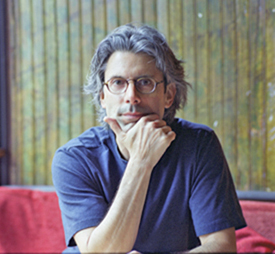
Irvin Yalom on Existential Psychotherapy and Death Anxiety

From Chapter One: Origins

Ruthellen Josselson: This was your first case presentation.
Irvin Yalom: Right. I was pretty anxious about it. I remember my patient very clearly—a red-headed, freckled woman, a few years older than I. I was to meet with her for eight weekly sessions (the length of the clerkship.) In the first session she told me she was a lesbian.

That was not a good start because I didn't know what a lesbian was. I had never heard the term before. I made an instant decision that the only way I could really relate to her was to be honest and to tell her I didn't know what a lesbian was. So I asked her to enlighten me and over the eight weeks we developed a close relationship. She was the patient I presented to the faculty.

Now I had been to several of these conferences with other students and they were gut- wrenching. Each of these analysts would try to outdo the other with pompous complex formulations. They showed little empathy for the student who was often crushed by the merciless criticism.

I simply got up and talked about my patient and told it as a story. I don't think I even used any notes. I said here's how we met. Here's what she looked like. Here's what I felt. Here's what evolved. I told her of my ignorance. She educated me. I was profoundly interested in what she told me. She grew to trust me. I tried to help as best I could though I had few arrows of comfort in my quiver.

At the end of my talk there was a loud long total silence. I was puzzled. I had done something that was extremely easy and natural for me. And, one by one, the analysts—those guys who couldn't stop one-upping each other—said things to the effect of, "Well, this presentation speaks for itself. There's nothing we can say. It's a remarkable case. A startling and tender relationship." And all I had done was simply tell a story, which felt so natural and effortless for me. That was definitely an eye-opening experience: Then and there I knew I had found my place in the world.

This memory is perhaps a life-defining moment for Yalom. As he remembers and talks about it, he is deeply moved. In some ways, his work ever since has been about telling stories, stories about his encounters with people as a therapist, stories that instruct us about how to connect meaningfully with others. He has retained his essential humility—he still allows others to teach him about their reality as he tries to encounter them in their deepest being and offer them a relationship in which they can heal. This moment also marked for Yalom a route out of the anonymity he had experienced throughout his education. Despite his academic successes, no one had recognized that he had any particular talent and he had only the vaguest sense that he had some special ability. For the first time, he was recognized—and for doing something that his teachers had never seen done before.

RJ: Where did you get the courage to do that?
IY: It didn't feel like anything courageous, as I recall—but this is over fifty years ago—I didn't have other options. It was my turn to present a case, this was my way to present a case. Whenever afterward I presented a case, whenever I presented at grand rounds or a lecture, I had the audience's full attention. I always had that ability.
RJ: So this moment when you told the case to the analysts and they were silent, they were unable to respond in their usual ways and start to compete with each other with formulations, you felt that they saw in you and that you had done something worth noticing, something important?
IY: Oh, yeah, for sure. If I try to understand it now across all those decades, I think it was because I was talking about a psychiatric case, but speaking in a whole different realm, a literary, story-telling realm. And their formulations had no sway. The jargon, the interpretations, all that had nothing to do with the story I told them. Of course that's my view: I'd love to go back in time and learn what they were really thinking.
RJ: There are so many different ways to tell a story, including the usual case presentation which is also a way to tell a story. But this was a different way to tell a story.
IY: I didn't know anything about telling a story or what telling a story meant in any kind of technical way, but I somehow knew how to put things together to create a drama.
RJ: With yourself in it.
IY: Oh, with myself in it. How I met her, how I didn't know anything about her being a lesbian, how baffled I was, how I guessed she must feel to work with a therapist who's admitted that he's totally ignorant of her lifestyle, how she must have worried about my accepting her, how I must have given to her some representative of the whole world who knew nothing about her and who possibly might ostracize her in some way.
RJ: You didn’t judge her, or pathologize her, or do something like that. You were able, in fact, to engage with her in a very human way.
IY: Yes. I think that's true. I did not ostracize her—just the opposite, my confessing my ignorance drew us closer together—a relationship forged in honesty.
RJ: As opposed to the psychiatric way or psychoanalytic way that would look at her as a carrier of symptoms and pathology.
IY: That's right, case formulations which focus narrowly on pathology were very distasteful to me.
RJ: It was distasteful even in medical school.
IY: Even in medical school—I didn't like the distant disinterested stance of many psychiatrists I encountered.
RJ: But you were still clear you wanted to go into psychiatry even though what they were doing was not something that you felt was at all appealing.
IY: That's right. Once or twice I wavered because there were so many things I liked about medicine. I liked taking care of people, liked passing on to them what Dr. Manchester had passed on to me. But I never seriously entertained doing anything else in medicine. So I was committed. At this point, I was already starting to read a lot about psychiatry.

From Chapter Six: Yalom’s Reflections on His Work

RJ: I am impressed by how much philosophy you have read and integrated in your work as a therapist and a writer.
IY: I spent 10 years reading philosophical works and writing Existential Psychotherapy. It was a good friend, Alex Comfort (a man known for The Joy of Sex but who wrote over fifty scholarly books) who advised me it was time to stop reading and start writing. But I've continued to read philosophy ever since. Existential Psychotherapy was a sourcebook for all that I've written since then. All the books of stories and the novels were ways of expanding one or the other aspects of Existential Psychotherapy.
RJ: But you don’t think about Existential Psychotherapy as being a school of psychotherapy?
IY: No. I never have. You cannot simply be trained as an existential psychotherapist. One has to be a well-trained therapist and then set about developing a sensitivity to existential issues. I've always resisted the idea of starting an institute or a training program. I have such a strong pull towards writing. I really love to write.
RJ: With the widespread success of your case story books and then your first novel, did you then start writing more to the general public?
IY: No, I always thought my audience was the young therapist, young residents in psychiatry and student psychologists and counselors.
RJ: So you never thought about writing to the general public? They would be eavesdropping as you spoke to therapists.
IY: Yes, they would be eavesdropping because they had been in therapy or were interested in the topic of therapy. I think the Love's Executioner book description proclaimed that this book was for people on both sides of the couch. And I also thought people in philosophy would be interested, especially in the Nietzsche book and the Schopenhauer. That psychobiography of Schopenhauer was original—there's no other work like that.
RJ: How come you chose Schopenhauer? With Nietzsche it’s clearer to me, because you are so close to his philosophy.
IY: Schopenhauer was always in the background. You have to remember that he was Nietzsche's teacher. (I mean intellectually—they never met.) But Nietzsche turned against him eventually and that break fascinated me for a long time. It was of great interest to me that they started from the same point, the same observations about the human condition, but one became life-celebrating and one life-negating. So what was that all about? I suspected it was driven by character, or personality, issues.

And also Freud was interested in Schopenhauer. He was the major German philosopher when Freud was educated. A great many of Freud's major ideas are sketched out in Schopenhauer's work. His work was very rich. He wrote voluminously about so many other topics such as politics, musicology, and esthetics but I concentrated solely on his writings about life and existence.

You have to recognize the human condition before you can figure out how to deal with it. Schopenhauer can inform us about the futility of desire and the inevitably of oblivion, but eventually it's the Nietzschean idea of embracing life that is the viable answer to this dilemma.
RJ: In so many of your stories as well as the novels, there is a recurrence of the themes of sex obsession and love obsession. Can you tell me about how come this captured your interest?
IY: I've always been struck with the idea of romantic love and losing oneself in the other in that way, which I've often characterized as "the lonely I dissolving into the we." And therefore you lose the sense of personal separateness and find comfort in the lack of loneliness. That's why I've always been intrigued with Otto Rank's formulation of going back and forth between the poles of life anxiety and death anxiety. And also Ernest Becker, who is very Rankian, and developed Rank's ideas in his wonderful book, The Denial of Death.

So I've always been interested in this idea of romantic love and also in religious submission, which is similar—both relate to the ultimate concern of isolation. And this issue of obsession was a predominant theme in Nietzsche.

I had a patient recently who was obsessed about a woman who had broken off with him but he couldn't get her out of his mind and he went and read the Nietzsche book and came back and said it did him more good than the two years of therapy we had done.
RJ: So we strive to be autonomous but have difficulty dealing with our separateness?
IY: Yes, and also underneath much compulsive activity is a lot of death anxiety. Often the death anxiety is overlooked because of other issues such as rage.
RJ: So in the pain of existential isolation, the lonely I is connected to rage which is connected to death anxiety. And the fear and the rage is about both aloneness and death. We are thrown into this finite existence alone. In your Nietzsche novel and in some of the stories, the aim is to help people give up the obsession.
IY: Helping them find some more authentic way of relating to others.
RJ: Do you see love obsession and sex obsession as the same thing?
IY: I see them as first cousins. In The Schopenhauer Cure, Phillip's anxiety was assuaged by the sexual coupling, but the relief was evanescent. In romantic love, life can't be lived without this person and if you lose her, you're in continual grief—that's been the problem for many of my patients.
RJ: How do you distinguish between authentic meaningful connection and love obsession?
IY: The basic distinction lies in rationality, not thinking in irrational terms. A love obsession is highly irrational. It's ascribing things to the other that aren't there, not seeing the other as the other is, not being able to see the other person as a finite, separate person who doesn't have magical powers. A love obsession comes from the same stuff as religion, ascribing powers to the other.
RJ: Don't you think that when people love one another, they do some of that's a certain amount of idealizing, making the other person very special?
IY: I think that a true love relationship is caring for the being and becoming of the other person and having accurate empathy for the other person where you are trying to care for the other person in every way you can. But that may not be the focus of a love obsession. Like the first story in Love's Executioner—where one of the dyad did not even know the other was having a psychotic experience. People will fall in love with someone they hardly know. In true love, you see the other person accurately as a human being like yourself. You fall in love with someone by seeing who they are and what they are so they aren't forced to be someone they're not. For me, the kind of love relationship I want to espouse is one where one's eyes are wide open.
RJ: So that would be a measure of the rationality of the relationship.
IY: Yes.
RJ: In your most recent book, Staring at the Sun, you return to the theme of death. I wonder why now?
IY: I'm dealing more with this because of my age. I'm 76 now, an age when people die and I see my friends aging and dying. I see myself on borrowed time. I spoke about much of this in Staring at the Sun.
RJ: What has it meant to write this book at this age?
IY: I've been so inured, so plunged into the topic. Originally I was going to write a series of connected fictional stories about dealing with death anxiety. I had been reading a lot of Plato and Epicurus and I thought I would write a series of stories with some connection. I was inspired by a Murukami book called After the Quake in which all the stories were connected by one thing: the Kobe earthquake. I had six stories in mind and my plan was to start each story with the identical nightmare about death. In each story the dreamer wakes up in a panic about dying, leaves the house and searches for someone who can help him with his death anxiety. The first story was set in 348 BC and the dreamer goes out in search of Epicurus. A second story would involve a minor Pope of the middle ages, then in Freud's time, then more contemporary stories. But I spent so much time researching the first story on Epicurus, reading about what the ancient Greeks had for breakfast—what's a Greek café like, what clothing was worn, then I started reading novels about ancient Greece, a novel about Archimedes, and about the priestesses at Delphi—until six months had elapsed and I realized that the background research would take years and I reluctantly gave up the idea, which I thought was a splendid concept. Perhaps one of the readers of this interview will write it some day.

So I went to the other project I had in mind, a revision of Existential Psychotherapy. I reread it carefully and underlined things I wanted to change and organized a course of students who would read it with me and help me to select the dated material, but, in the end, I was overwhelmed by the task, especially the scope of the library research looking up the empirical research on the ultimate concerns that has been accumulating in the twenty-five years since I first published this book. So I gave that up and wrote a book on what I had learned about an existential approach in the years that have passed since I wrote the textbook. Next my agent, noting that seventy-five per cent of the book addressed death anxiety, suggested that I might write a tighter book if I concentrated only on death anxiety. Finally the book underwent one more metamorphosis when my publisher suggested I direct it more to the general public. I agreed to do so but insisted upon a final chapter directed at therapists. I believe the strongest chapter is a personal chapter dealing with the development of my own awareness of death.
RJ: Would you say that doing this book makes you even less fearful about death than when you started it?
IY: I think so. But writing about death anxiety wasn't an effort to heal myself about it. I've never been that consumed with death anxiety. It was more of an issue a long time ago when I started working with cancer patients. I don't think I've been unusual in my degree of death anxiety. Now I feel like I've become effective in dealing with patients with death anxiety and am confident that I can offer help.

Irv shared with me a number of email letters he gets daily from people all over the world. These are heartfelt (often heart-rending) letters from people expressing their appreciation of the ways in which his writings have changed their lives.

"It is not enough to say that your words moved me or affected me. When at the end [of The Schopenhauer Cure] Pam placed her hands on Phillip and told him what he needed to hear—the words on the page began to blur, all I could do was lean my head back, swipe at the onslaught of tears and wait for my faculties to return. It was the catharsis I needed." Or from another: "I know I am alone and finite, but I feel connected to the rest of humanity in reading your books because everyone else, I realize, is in the same boat—and thanks for that insight/comfort." And from a professor in Turkey: "I'm writing to you in appreciation of keeping me excellent company through the rough hours of the day: when you are alone, or even worse (better?) when you think you are alone . . . I usually start my lessons with a saying or a thought of yours in order to boost my class—and me—to open a new window and see things a little bit different."

Other letters are from people longing to find some salve for their emotional pain, some of what he has provided his own patients. He answers each of these letters personally, acknowledging their meaning for him or, when he can, offering counsel.

RJ: What have these letters meant to you?
IY: I feel I have another, a second therapy practice. I know I mean a lot to some of my readers. I'm aware that they imbue me with a lot more wisdom than I have and they long to connect with me. I try to answer every letter, even if it's just to say thank you for your note. This correspondence makes me unusually aware of my readership. I took an early retirement from the Department of Psychiatry ten years ago. One of my main reasons was that psychiatry had become so re-medicalized that my students had little interest in psychotherapy and instead were far more interested in biochemistry and pharmacological research and practice. I didn't really have students who were interested in what I had to teach. So I now feel that my teaching is done through my writing. I don't miss classroom teaching because I feel that I now have this whole other way of teaching. I consider my writing teaching and getting this correspondence keeps me aware of that all the time.
RJ: What message do you try to convey in response?
IY: As I said, some simply express appreciation for the writing or tell me it was meaningful to them and I simply state that I feel good that my writing had a positive impact. Sometimes I say that writers send their books out like ships at sea and that I'm delighted that a book arrived at the right port.

There are other readers who ask for help for some personal issue and, if appropriate, I urge them to seek therapy. Some write a second time thanking me for being instrumental in their obtaining help. Some readers comment that their current therapy isn't helping and ask for email therapy. I don't do therapy by email and urge them to be direct with their therapist and to express these sentiments openly. I even suggest that concealing these feelings may be instrumental in their therapy not being useful. Their job in therapy is to share all their feelings and wishes with their therapists. Able therapists will welcome this forthrightness. My main message though is to let them know that I've read their letter.
RJ: It makes me so sad to hear that you had students who didn’t want to learn what you had to teach. What does this say about the future of psychotherapy?
IY: I do feel there is a pendulum swinging, even in psychiatry. I do hear about more programs starting to introduce therapy again. Many contemporary therapists are trained in manualized mechanical modes—all of which eschew the authentic encounter. After some years of practice, however, a great many of these therapists come to appreciate the superficiality of their approach and yearn for something deeper, something more far-reaching and lasting. At this time therapists enter postgraduate therapy training programs or supervision. Or they learn by entering their own therapy. And I can assure you they never never seek a therapist who practices mechanical, behavioral or manualized therapy. They go in search of a genuine encounter that will recognize the challenge inherent in facing the human condition.
RJ: From Afterword
IY: In 2005, Irv and I went to visit Jerome Frank, Irv's mentor and friend, who lived in a nursing home nearby my own home in Baltimore. We had been visiting him, separately and together, over many years, as he steadily declined with age. Even as his physical and mental impairments progressed, Jerry was always professorially dressed in suit and tie. "Tell me what you're working on," Jerry would usually ask Irv when we arrived, and they would embark on lively conversation about Irv's work and whatever Jerry was reading at the time. (My role was usually to sit and smile and enjoy the warmth of their connection. I knew Jerry far less well and for less long, of course.) On this particular occasion, Jerry was not wearing his suit and, after a few moments, it became clear that his mental decline was far worse. In fact, we soon realized that he didn't know who we were. I was very embarrassed and unsure what to do, and I left the conversational challenge to Irv. He tried a few topics to engage Jerry and found that Jerry could still remember some people from the distant past and they talked some about them. But then, Irv's genius asserted itself in the flow of this difficult interaction and he asked, kindly and compassionately, "What is like for you, Jerry, to be sitting here talking to people when you aren't sure who we are?" Always the here and now! And Jerry understood and responded to the care in the question. "I'm glad of the company," he said, "and you know, it's not so bad. Each day I wake up and see outside my window the trees and the flowers and I'm happy to see them. It's not so bad." Once again, Irv had penetrated to the existential core of Jerry's experience, and he did so by daring to speak the simple reality of our being together. Perhaps the message of his whole corpus of work is just this. It's all we have.

Dan Wile on Collaborative Couples Therapy

The Interview

Ruth Wetherford: Dan, thank you for agreeing to be interviewed for Psychotherapy.net. I’m delighted to be interviewing you to bring more information about collaborative couple therapy to the world. Let’s start with the question of how you got into psychology. How did that happen for you?
Dan Wile: Well, it was in the family. My mother is a psychiatrist, and my sister became a social worker. I was planning to be a psychiatrist myself. But when I went to the University of Chicago, I discovered that if I was going to be pre-med, I wouldn't be able to take the University of Chicago Great Books courses. So I decided at that point to be a psychologist.
RW: In your writing, you often credit the work of Berkeley psychologist Bernard Apfelbaum for contributing to your ideas. Do you have specific memories of working with him that stand out for you?
DW: A bunch of us would meet with him every month, we'd present all kinds of ideas and cases, and he'd always come up with a fascinating new angle for looking at the matter. He seemed to be thinking at a higher level than practically everyone else I knew. Whenever I do therapy, I think, "What would Bernie say about this situation?"

The Importance of Non-Pejorative Interpretations

RW: The growing emphasis in psychotherapy on the quality of the relationship between the therapist and the client, more than on the accuracy of interpretation, has contributed to a cultural milieu perhaps more receptive to your ideas, and your approach is gaining more interest and attention in recent years. What is it about your work that makes it more appealing to people at this point in the development of the profession?
DW: I use my relationship with my client couples to improve the accuracy of my interpretations. I make guesses about what they're thinking and feeling but not saying, check with them whether these guesses are accurate, and revise my statements according to what they say. We figure out together what's true about them. And I use my interpretations to create a collaborative relationship with the partners. They like the fact that I take their view of the matter into account, and, in fact, make them the final arbiter of the accuracy of the interpretation. And they like that my theory of personality and relationships leads to interpretations that are non-pejorative. That was the problem with the old style of interpretations and what got them into disrepute—they were pejorative.
RW: Interpretations frequently imply blame, and have the pejorative connotations you just referred to. Your approach emphasizes the opposite of that: acceptance.
DW:
A big problem in couple therapy is that we react to clients in the same way partners do with each other when they fight.
A big problem in couple therapy is that we react to clients in the same way partners do with each other when they fight. When clients act in an arrogant, bullying, or other off-putting way, we get angry at them—though, of course, in a much milder way than the partners do with each other. Being angry, we think of these clients in pejorative terms, make pejorative interventions, and lose the ability to look at things from their point of view. When a client says or does something off-putting, you can stand back in negative judgment and say to yourself, "Well, this is borderline or sadistic or passive-aggressive,"—or you can imagine what it's like being in that person's position and what inner struggle the person is engaged in that's leading them to be stuck in this off-putting behavior. I spend a lot of my effort in couple therapy trying to recognize when I'm standing back in negative judgment so I can overcome it.
RW: That process of putting yourself in the other’s position and seeing how it makes sense that they could be stuck—is that what you call empathy?
DW: Yes, that's a good way to put it
RW: Would you discuss the centrality of empathy in your work?
DW: A big problem in couple therapy is finding yourself siding with one partner against the other, feeling unempathic. And that's not a place where you can do therapy. So I try to think how to shift out of my pejorative view of this person and imagine what it's like being in their shoes and seeing the hidden reasonableness in their seemingly unreasonable and irrational behavior. If I can get myself in a mood where I'm not reacting to them, I can make a pretty good guess as to what that is or think of questions to ask that would bring it out.
RW: You’re pointing to the importance of self-control of the therapist’s own emotional reactions. Do you have some tools you can share or ways that you manage yourself internally?
DW: I have three tools. First,
just recognizing that I am reacting and viewing them in negative ways may be enough to shift me into a more compassionate place
just recognizing that I am reacting and viewing them in negative ways may be enough to shift me into a more compassionate place and enable me to begin to look at things from their point of view. If that isn't enough, the second thing is I have slogans—statements I make to myself or questions I ask myself—that remind me of my theory and help me shift to a more compassionate mode.

One slogan is, "My job is to become spokesperson for the partner I find myself siding against." Another is, "What is the internal struggle this person is having?" It's great to ask myself that question because until I ask it, I don't think there is an internal struggle—I think that person is just enjoying being provocative. Another question I ask myself is: "What is the vulnerable feeling that, because the person can't express it, is causing this person to act in this off-putting way as a fallback measure?" Still another question is: "What can I say or ask that will enable the person to feel listened to?"

If these slogans and questions aren't enough to get me out of my adversarial state, the third thing I do is I try to get myself out of this state by expressing what I need to say to clear my gills, just as I try to get partners out of their adversarial state by helping them express what they need to say.

One of the advantages of couple therapy is you can move in and speak for the partner. I use a psychodrama kind of method—
I move over and kneel next to the person I am speaking for.
I move over and kneel next to the person I am speaking for. For example, if I'm reacting to how one partner seems to be bulling the other, I can move over and, speaking for that person, I can say, "When you get bullying like this, I just stop listening and wonder why I'm in this relationship." The partner I'm speaking for usually likes this, and I feel much better—so much so, in fact, that I'm suddenly able to look at things from the point of view of the bullying partner. My feeling of empathy has returned for that person and I move over and make a confiding statement for him.
RW: What might that be?
DW: I might say for that person, "Well, I know that you don't listen to me when I come on strong like this. I feel helpless and get frustrated. I've lost some friends because I've come across this way. But there's something important I'm trying to say and I wish I could find a way to say it that doesn't blow you away." Of course, I would immediately check with this person to see which parts of this, if any, capture how he feels.

Finding the Leading-Edge Feeling

RW: You talk about the “leading edge,” and I know that’s one of your core concepts. Say more about the leading edge and how you try to elicit the couple to talk about this.
DW: Well, I figure that, at any given moment, there is a thought or a feeling each person is having that is who they are at the moment. It's what Marshall Rosenberg calls "what's alive at the moment." If there's going to be intimacy between the two partners, this is what each needs to confide to the other and feel that it gets across.
I'm looking, at any given moment, for the feeling the person needs to express that would make them sigh with relief and feel closer to their partner.
I'm looking, at any given moment, for the feeling the person needs to express that would make them sigh with relief and feel closer to their partner. And the term "leading-edge feeling" sort of captures what I have in mind.
RW: It seems like at any given moment there could be any number of feelings that they’re having, such as, “I’d better keep my mouth shut—I’m scared.” Another one could be, “I feel lonely; I feel distance.” Another one could be, “I’m so angry—I don’t deserve this.” How do you determine which is the more salient or the one you want to focus on more?
DW: I may be wrong, but I think that there is just one leading-edge feeling at any given moment—but it can quickly shift from, to use your example, fear to loneliness to resentment. But you're right that if I ask partners a multiple-choice question, they might pick the leading-edge feeling they had two moments before, one moment before, or right now.
RW: A multiple-choice question.
DW: If people don't respond when you ask them how they feel, you can help them along by suggesting possibilities. I might say, "Let me make it a multiple choice question: Are you feeling, A, hurt, or B, angry, or C, lonely, or D, something else entirely?"
RW: You’re very clear that you want people to feel more connected by increasingly confiding their inner vulnerabilities in a way that can be understood by the other. But when you’re trying to get them to reveal those things and they’re presenting their default modes of anger or withdrawal, you don’t shy away from that. How does that work?
DW: Well, at times withdrawing or being angry is a leading-edge feeling. So I would help people capture that. I might help them express their anger in a way that is more satisfying to them and easier for their partners to hear. Moving over and speaking for them, I might say, "I'm still fuming about what you said ten minutes ago. I'm not even listening to anything you're saying. It wiped me out." I'm hoping that the person I'm speaking for will express a sigh of relief and, when I ask whether I got her feelings right, will improve what I said to make it more accurate. If a partner is withdrawing, I'd try to give words to that. I'd move over next to that person and, speaking for that person, say, "Well, when you say what you just did, I get despairing, and feel hopeless about us and kind of give up and don't have anything to say." A statement like this—if the person were able to make it—is the way for that person to be intimate at that moment.
RW: It seems like so much of your method is in the nonverbals: your tone of voice and your facial expressions that imply what you want is for them to get closer by being able to confide and have so-called “elegant conversation.” You seem to be equally accepting of rancor and disconnection—you believe it’s just as important to talk about that as well. Is that right?
DW: That's right. I'm looking for the leading-edge feeling of the moment, and it could be any feeling, positive or negative. I'm always thinking that there's a way of confiding it rather than just acting from within it.
RW: That reminds me of another thing you emphasize, which is the “relationship atmosphere.” Talk about that.
DW: My focus in a couple is whether they're in an adversarial cycle, which means fighting—either a quiet one or a loud one—or a withdrawn cycle in which they're disengaged, or an intimate cycle in which they're expressing their leading-edge feelings and it's getting across to the other person. Those are three different moods that a couple goes through. And my task is to shift them from the withdrawn or adversarial mood they're in, into the collaborative one.
RW: That’s where intimacy occurs.
DW: That's right. That's intimacy. And
sometimes I show them what it would look like by enacting the conversation they'd be having right then if they weren't angry at each other, but instead were feeling intimate.
RW: By speaking for them.
DW: By speaking for them.
RW: You’ve written in your book, After the Honeymoon, that “a relationship is a busy place. It’s like an airport with lots of things going on and scheduled and unscheduled feelings arriving and departing.” Say more.
DW: In the metaphor of the airport, I was thinking particularly of the observation tower, where people up there would be looking at everything going on—the planes, or feelings, going in, going out. So the couple could be in that observation tower noticing how they shift among those three moods—how there's anger, withdrawal, and tenderness—and having an ongoing way of talking about what's happening in the relationship. The "permanent platform" is another metaphor I use.
RW: This has a lot of implications for your view of what constitutes intimacy. Do you have a summary about that, a distilled view?
DW: Yeah. It's that intimacy is each partner saying what's on their mind, their leading-edge feeling, with the other one understanding. And you could say that a goal I have in couples therapy is to get the partners to develop, or develop further, such a permanent platform from which they can co-monitor the relationship. Intimacy is created by the way partners talk about what's happening in their lives and, in particular, about what's happening between them.  It's a consequence of their ability to be mutual confidants. That's a key point to my approach—the goal of the couple developing the ability to observe their own interaction patterns, the permanent platform.
RW: So it’s not about agreement or consensus—it’s about being more revealing.
DW: Yeah, it's having a way of getting in touch with what you need to say, what you're feeling, and having a relationship in which the other person is able to take it in, is eager to hear it, and has a confiding comment to make in return. And it doesn't become a fight, and the other doesn't withdraw.
When people are saying the main things on their mind, their main worries and concerns, their ache of the moment, and feel it's heard by the other person—well, that's the height of intimacy.

The Power of Negative Thinking

RW: The ache of the moment—that reminds me of your comment about the power of negative thinking. Say more about that.
DW: Well, that was my cutesy way of talking about the permanent platform, in that the couple would know that there are certain problems that arise, certain conflicts that they have, certain issues that keep coming up, and they have an ongoing way of talking about that in a collaborative way when it arises. That means you're not just trying to talk yourself out of the problem and look on the positive side, but are fully appreciating that it's a problem—that's the power of negative thinking.
RW: So you’re saying that couples who can go in and out of collaboration and intimacy are having conversations, not just about what they’re enjoying in their lives, but about what they’re not enjoying of the important things, including the relationship.
DW: Yeah. So it's an increasing ability, after a period of fighting or withdrawal, to have a recovery conversation where you figure out what happened and get together in an intimate way about what went wrong—which is one of the more intense experiences of intimacy that people can have, if they can have it.
RW: Tell me about the recovery conversation.
DW: It's inevitable that partners are going to fight and withdraw. Some couples are lucky to have the fight end without it escalating too much, and they wake up the next morning and go on as if nothing had happened. And maybe that works for them okay. But for some couples, that doesn't work. And there's a disadvantage anyway, because a fight or withdrawal is an opportunity for intimacy, in the discussion of it afterwards. But it's understandable that a couple might want to avoid having such a discussion, since it often gets them back into the fight. Having productive conversations is a skill that evolves over time. The goal of such a discussion is to end up with a picture of how each partner's position made sense and how the two of them got stuck in something. So it's a compassionate, commiserating, from-the-platform view of what happened in the fight.
RW: It’s been said that your compassion-based approach is compatible with attachment work. How do you see it being congruent with issues of secure and insecure attachment?
DW: Well, I'm trying to create secure attachment by enabling partners to confide their ache of the moment. When, in every given moment, or maybe in just enough moments, a person can confide their ache of the moment—this leading-edge feeling—and feel that the other understands, this increases the security of the bond between them.

The Pleasure of Being Non-Defensive

RW: You know, one aspect of your work that you describe a lot is your role of being utterly non-defensive. Anyone who knows your work would say that. How can you be so non-defensive?
DW: I tell myself to be non-defensive and take pleasure when I succeed.
And if a client criticizes me, I'm grateful the person is doing that rather than just quitting therapy without saying anything.
And if a client criticizes me, I'm grateful the person is doing that rather than just quitting therapy without saying anything. And I believe that such criticizing is often a fallback measure the person engages in because they couldn't say something more vulnerable. So I don't want to make the mistake of reacting to the fallback measure when what I really want to do is help them discover the more vulnerable feeling underlying it, such as, "You know, I feel uneasy about the therapy for this reason or that reason," or "I worry that we're really not getting anywhere," or "I'm afraid that nothing can help me." Well, if they can't get that out, they may be stuck just blaming me for something. So I want to track back to the person's vulnerable feeling rather than react and defend myself.
RW: Right. You’d call that “the pleasure of being non-defensive.” What’s pleasurable about it?
DW: Well, it's a goal I set for myself. Instead of feeling defeated or whipped, I have a certain amount of pride in being able to do that. Also, I find it enjoyable when we escape from polite conversation. So when a person is expressing some disappointment or anger at me that I could get defensive about, that person is likely to be saying something more direct than they've said for some time. For me—and I believe for others as well—there's some intrinsic pleasure in shifting from the level of politeness to that of directness. And so this would be a shift towards more directness—that would be enlivening, you'd get to feel more there. And you kind of slump when there's a movement in the other direction, of people saying things that are just polite and not engaged. Yes, there's more energy, more feeling, more aliveness with the escape from politeness.
RW: You describe things you tell yourself as slogans, implying you repeat them, you remind yourself frequently. And I know the repetition of thoughts and images that we want to acquire does lead to their acquisition. I would imagine that would be an important tool, to have some of these slogans that people can put in their own language and learn.
DW: Yeah—now that you say that, I realize a therapist's orientation can be thought of as developing from the slogans and questions that arise automatically in the individual's mind. For instance, one common automatic question or slogan in a therapist's mind is, "What family of origin issues could create the problem this person is having?" If that's one of the main questions you automatically ask, your therapy will go in a certain direction. Or, "What unconscious purpose does this serve?" Thinking that, your mind and your therapy will go in another direction. So there's the set of slogans and questions already in your mind. When I'm put off by a client's behavior, I can lose certain of my slogans that lead me to be compassionate.
RW: How does that happen?
DW: When I'm feeling okay, one of the questions I ask myself is, "What's the hidden reasonableness in what's going on?" But when I'm reacting to the person, I don't ask myself that—I just think the person is totally unreasonable. I lose the ability to do therapy, since therapy requires my appreciating how both partners' positions make sense. It's a temporary loss, because I get up in the tower of the airport as soon as I can, so I can notice what is happening and regain my ability to do therapy. Yeah, so in any given session, particularly with a difficult situation to handle, or with partners who might feel provocative, I can lose and regain my ability to do therapy repeatedly throughout the session. Hopefully I keep my mouth shut when I've lost the ability and only talk when I have it.
RW: And this is just like the couples—gaining and losing the ability to connect with each other over time.
DW: Exactly, yes.
RW: Well, we’re just about out of time. Is there anything else you’d like to add to this?
DW: You're a great interviewer—the questions you've asked got me more clearly in touch with my own theory. So between the two of us, we created a momentum where I became more able to get at it than if you'd asked other kinds of questions that would have taken me away from my theory.
RW: Thank you so much. We collaborated.
DW: Yes, we collaborated.

Thomas Szasz on Freedom and Psychotherapy

The Myth of Mental Illness 101

Randall C. Wyatt: I am going to ask you a wide variety of questions, given the diversity of your interests, and I want to make sure to also focus on your work as a psychotherapist. A little background first. You’ve been well-known for the phrase, “the myth of mental illness.” In less than 1000 words, what does it mean?
Thomas Szasz: The phrase "the myth of mental illness" means that mental illness qua illness does not exist. The scientific concept of illness refers to a bodily lesion, that is, to a material — structural or functional — abnormality of the body, as a machine. This is the classic, Virchowian, pathological definition of disease and it is still the definition of disease used by pathologists and physicians as scientific healers.

The brain is an organ — like the bones, liver, kidney, and so on — and of course can be diseased. That's the domain of neurology. Since a mind is not a bodily organ, it cannot be diseased, except in a metaphorical sense — in the sense in which we also say that a joke is sick or the economy is sick. Those are metaphorical ways of saying that some behavior or condition is bad, disapproved, causing unhappiness, etc.
In other words, talking about "sick minds" is analogous to talking about "sick jokes" or "sick economies."
In other words, talking about "sick minds" is analogous to talking about "sick jokes" or "sick economies." In the case of mental illness, we are dealing with a metaphorical way of expressing the view that the speaker thinks there is something wrong about the behavior of the person to whom he attributes the "illness."

In short, just as there were no witches, only women disapproved and called "witches," so there are no mental diseases, only behaviors of which psychiatrists disapprove and call them "mental illnesses." Let's say a person has a fear of going out into the open. Psychiatrists call that "agoraphobia" and claim it is an illness. Or if a person has odd ideas or perceptions, psychiatrists say he has "delusions" or "hallucinations." Or he uses illegal drugs or commits mass murder. These are all instances of behaviors, not diseases. Nearly everything I say about psychiatry follows from that.

RW: Let’s say that modern science, with all the advances in genetics and biochemistry, finds out that there are some behavioral correlates of biological deficits or imbalances, or genetic defects. Let’s say people who have hallucinations or are delusional have some biological deficits. What does that make of your ideas?
TS: Such a development would validate my views, not invalidate them, as my critics think. Obviously, I don't deny the existence of brain diseases; on the contrary, my point is that if mental illnesses are brain diseases, we ought to call them brain diseases and treat them as brain diseases — and not call them mental illnesses and treat them as such. In the 19th century, madhouses were full of people who were "crazy"; more than half of them, as it turned out, had brain diseases — mainly neurosyphilis, or brain injuries, intoxications, or infections. Once that was understood, neurosyphilis ceased to be a mental illness and became a brain disease. The same thing happened with epilepsy.
RW: It’s interesting, because a lot of students of mine, and colleagues, who have read your work or heard of your ideas, think that when condition previously thought to be mental is to be a brain disease, as noted, your ideas become moot.
TS: That's because they are not familiar with the history of psychiatry, don't really understand what a metaphor is, and don't want to see how and why psychiatric diagnoses are attached to people. Ted Kaczynski, the so-called Unabomber, was diagnosed as schizophrenic by government psychiatrists. If people want to believe that a "genetic defect" causes a person to commit such a series of brilliantly conceived crimes — but that when a person composes a great symphony, that's due to his talent and free will — so be it.

Objective, medical diagnostic tests measure chemical and physical changes in tissues; they do not evaluate or judge ideas or behaviors. Before there were sophisticated diagnostic tests, physicians had a hard time distinguishing between real epilepsy — that is to say, neurological seizures — and what we call "hysterical seizures," which is simply faking epilepsy, pretending to have a seizure. When epilepsy became understood as due to an increased excitability of some area of the brain, then it ceased to be psychopathology or mental illness, and became neuropathology or brain disease. It then becomes a part of neurology. Epilepsy still exists. Neurosyphilis, though very rare, still exists, and is not treated by psychiatrists; it is treated by specialists in infectious diseases, because it's an infection of the brain.

The discovery that all mental diseases are brain diseases would mean the disappearance of psychiatry into neurology. But that would mean that a condition would be a "mental disease" only if it could be demonstrated, by objective tests, that a person has got it, or has not got it. You can prove — objectively, not by making a "clinical diagnosis" — that X has neurosyphilis or does not have it; but you cannot prove, objectively, that X has or does not have schizophrenia or "clinical depression" or post traumatic stress disorder. Like most nouns and verbs, the word "disease" will always be used both literally and metaphorically. As long as psychiatrists are unwilling to fix the literal meaning of mental illness to an objective standard, there will remain no way of distinguishing between literal and metaphorical "mental diseases."
RW: Psychiatrists, of course, don’t want to be pushed out of the picture. They want to hold on to schizophrenia as long as they can, and now depression and gambling, and drug abuse, and so on, are proposed as biological or genetically determined. Everything is thought to have a genetic marker, perhaps even normality. What do you make of this?
TS: I hardly know what to say about this silliness. Unless a person understands the history of psychiatry and something about semantics, it's very difficult to deal with this. Diagnoses are NOT diseases. Period.
Psychiatrists have had some very famous diseases for which they have never apologized, the two most obvious ones being masturbation and homosexuality.
Psychiatrists have had some very famous diseases for which they have never apologized, the two most obvious ones being masturbation and homosexuality. People with these so-called "diseases" were tortured by psychiatrists — for hundreds of years. Children were tortured by antimasturbation treatments. Homosexuals were incarcerated and tortured by psychiatrists. Now all that is conveniently forgotten, while psychiatrists — prostitutes of the dominant ethic — invent new diseases, like the ones you mentioned. The war on drugs is the current psychiatric-judicial pogrom. And so is the war on children called "hyperactive," poisoned in schools with the illegal street drug called "speed," which, when called "Ritalin," is a miracle cure for them.

Let me mention another, closely related characteristic of psychiatry, as distinct from the rest of medicine. Only in psychiatry are there "patients" who don't want to be patients. This is crucial because my critique of psychiatry is two-pronged. One of my criticisms is conceptual: that is, that mental illness is not a real illness. The other one is political: that is, that mental illness is a piece of justificatory rhetoric, legitimizing civil commitment and the insanity defense.
Dermatologists, ophthalmologists, gynecologists, don't have any patients who don't want to be their patients. But the psychiatrists' patients are paradigmatically involuntarily.

Originally, all mental patients were involuntary, state hospital patients. That concept, that phenomenon, still forms the nucleus of psychiatry. And that is what is basically wrong with psychiatry. In my view, involuntary hospitalization and the insanity defense ought to be abolished, exactly as slavery was abolished, or the disfranchisement of women was abolished, or the persecution of homosexuals was abolished. Only then could we begin to examine so-called "mental illnesses" as forms of behavior, like other behaviors.

Slavery, Witchcraft, and Psychiatry

RW: In terms of involuntary hospitalization and coercive psychiatry, which you’ve critiqued in your works.
TS: Excuse me, all psychiatry is coercive, actually or potentially — because once a person walks into a psychiatrist's office, under certain conditions, that psychiatrist has the legal right and the legal duty to commit that person. The psychiatrist has the duty to prevent suicide and murder. The priest hearing confession has no such duty. The lawyer and the judge have no such duties. No other person in society has the kind of power the psychiatrist has. And that is the power of which psychiatrists must be deprived, just as white men had to be deprived of the power to enslave black men. Priests used to have involuntary clients. Now we call that forcible religious conversion and religious persecution; it used to be called "practicing the true faith" or "loving God." Now we have forcible psychiatric conversion and psychiatric persecution — and we call that "mental health" and "therapy." It would be funny if it were not so serious.
RW: The symbolic nature of psychiatry and the sociology of psychiatry are coercive. Yet, every act isn’t literally coercive. Somebody comes to a doctor and says, “I can’t sleep. I’m depressed. Can you give me something to help me go to sleep, help wake me up?” That’s a free exchange.
TS: That's correct. There are voluntary psychiatric exchanges, at least in principle. As I like to say, I wholeheartedly approve of psychiatric acts between consenting adults. But such acts are pseudo-medical in nature, because the problem at hand is not medical, and also because the transaction often rests on taking advantage of the criminalization of the free market in drugs. Why do you have to go to a doctor to get a sleeping pill or a tranquilizer? A hundred years ago you didn't have to do that, you could go to a drug store, or to Sears Roebuck, and buy all the drugs you wanted — opium, heroin, chloral hydrate. In certain ways, the psychiatric profession lives off the fact that only physicians can prescribe drugs, and the government has made most drugs that people want prescription drugs.
RW: On a side note, isn’t it interesting, and troubling, that most people who go to jail for drug abuse, or drug selling, are black and minority, and those that have the license to prescribe are often non-minority, and they get to be heroes in society for essentially selling what is sometimes the same merchandise, albeit legally, of course?
TS: Indeed. I discuss that new form of black enslavement in detail in my book, "Our Right to Drugs." Because of the kinds of laws we have, physicians prescribe mood-altering drugs, which patients often want and demand; it's a medicalized version of drug distribution. Physicians did the same thing with liquor during Prohibition, which was quite lucrative.
RW: And now psychiatry and pharmacology can be a lucrative business.
TS:
Psychiatry is a lucrative business only insofar as it partakes of these two medical-psychiatric privileges or monopolies — prescribing drugs, which only licensed physicians can do; and creating their own patients, that is, transforming people into patients against their will, which only psychiatrists can do.

The Right to Use Drugs

RW: So what is your view on psychiatric medication for people suffering from “schizophrenia” or “problems in living” as you call it, or “interpersonal difficulties,” or “intra-psychic difficulties.” Whatever you call it, people suffer or are troubled internally or interpersonally. What is your view on the use of either legal or illegal drugs to help people cope with these things?
TS: I am smiling because I know you know my views! However, I wouldn't phrase the question this way. In my opinion, using drugs is a fundamental human right, similar to using books or prayer. Hence, it comes down to the question of what does a person want and how can he get what he wants? If a person wants a book, he can go to a store and get it or get it on the Internet. He ought to be able to get a drug the same way. If he doesn't know what to take, then he could go to a doctor or a pharmacist and ask them. And then he should be able to go and buy it.
RW: That brings up the issue of drug and prescription laws, which you have written about extensively.
TS: Indeed. Prescription drug laws are a footnote to drug prohibition. Prescription laws should be repealed. All drug laws should be repealed. Then, people could decide for themselves what helps them best to relieve their existential ails, assuming they want to do it with a drug: opium or marijuana or cigarettes or Haldol or Valium. After all, the only arbiter of what ails a person "mentally" and what makes him feel or function better, as he defines better, is the patient. We don't have any laboratory tests for neuroses and psychoses.

As for insomnia, typically that's a complaint, an indirect communication, to obtain sleeping pills. A person can't go to a physician and tell him: Please write me a prescription for a barbiturate. If he did that, he would be diagnosed and denounced as an addict. So he must say: "I can't sleep." How could the doctor know if that's true?
RW: You ask him how many hours he sleeps, he says two hours a night.
TS: How would the doctor know if that's true? The term "insomnia" can function as a strategic lie that the patient has to utter to get the prescription he wants.

The Therapeutic State and the Medical Model

RW: You seem to have a different view of the medical model of medicine, than the medical model of psychiatry.
TS: Yes, very much so. We don't speak of the medical model of medicine in medicine or the medical model of pneumonia. There is no other model. We don't speak of the electrical model of why a light bulb emits light. Language is very important. If a person says: "I am against the medical model of mental illness," that implies that mental illness exists and that there is some other model of it. But there is no mental illness. There is no need for any model of it.

The important issue is not the "medical model," a badly abused term; the issue is the "pediatric model," the "irresponsibility model" — treating people labeled as mentally ill as if they were little children and as if the psychiatrist was their parent. The pillars of psychiatry are medically rationalized and judicially legitimized coercions and excuses.
RW: If you were to use mental illness as a metaphor, or pseudonym… disease meaning “dis-ease,” people are personally distressed, the psychosocial model of mental illness. If you substitute “emotional troubles”.
TS: No. That won't do. Almost anything can be the cause of emotional trouble — being black or being poor or being rich, for that matter. Innumerable human conditions can create human distress. Which ones are we going to medicalize, and which ones are we not? We used to medicalize, psychiatrize, blacks running away from slavery, masturbation, homosexuality, contraception. Now we don't. Instead we medicalize what used to be called melancholia, and sloth, and self-murder, and racism, and sexism.
RW: To shift gears.
TS: Let's not yet. Because I want to add that
it is this tendency to call more and more human problems "diseases" and then try to remedy them, or "attack" them, as if they were diseases is what I call "the therapeutic state."
RW: Certainly everything used to be viewed religiously, and now so much is seen as medical. The transformation is almost pure.
TS: Exactly! And it's perfectly obvious. It requires the systematic educational and political dumbing down of people not to see it. Three hundred years ago, every human predicament was seen as a religious problem — sickness, poverty, suicide, war. Now they are all seen as medical problems — as psychiatric problems, as caused by genes and curable with "therapy." In the past, the criminal law was imbued with theology; now, it's imbued with psychiatry.
RW: President Bill Clinton is a prime example of how we use different models to describe the same problem. His wife said his problems were due to “emotional problems” in his childhood. His brother said he was a sex addict, because he was a drug addict, himself. And Bill Clinton said it was a sin issue — the religious model. He went to a minister.
TS: That's a good point. But note that Clinton didn't go to a real minister. He went to a politician — Jesse Jackson. His job was to make Clinton look good again. And he did it. Clinton hand-picked him as he did the others, much as a medieval emperor might have hand picked a bishop to make him look good.
RW: Can I shift gears now?
TS: Sure.

Liberty and the Practice of Psychotherapy

RW: You’re known as a libertarian.
TS: Yes, I am a libertarian.
RW: It’s a philosophical view, an economic and political view. What does that mean in terms of practicing psychotherapy?
TS: I'll start at the end, so to speak. If you use language carefully and are serious about libertarianism and psychiatry, then the term "libertarian psychiatrist" is, quite simply, an oxymoron. Libertarianism means that individual liberty is a more important value than mental health, however defined. Liberty is certainly more important than having psychiatrists lock you up to protect you from yourself. Psychiatry stands or falls with coercion, with civil commitment. Non-coercive psychiatry is also an oxymoron. This is one of the main reasons why I never considered myself a psychiatrist — because I always rejected psychiatric coercions.

Now, in term of political philosophy, libertarianism is what, in the 19th century, was called liberalism. Nowadays it's sometimes also called "classical liberalism." It's a political ideology that views the state as an apparatus with a monopoly on the legitimate use of force and hence a danger to individual liberty. Contrariwise, the modern "Liberal" view regards the state as a protector, a benevolent parent who provides security for its citizens as quasi-children. To me, being a libertarian means regarding people as adults, responsible for their behavior; expecting them to support themselves, instead of being supported by the government; expecting them to pay for what they want, instead of getting it from doctors or the state because they need it; it's the old Jeffersonian idea that he who governs least, governs best. The law should protect people in their rights to life, liberty, and property — from other people who want to deprive them of these goods. The law should not protect people from themselves.

This means that, as far as possible, medical care ought to be distributed, economically speaking, as a personal service in the free market. There is much wisdom in the adage, "People pay for what they value, and value what they pay for." It's dangerous to depart too far from this principle.
RW: Why does money necessarily have to come into it? If people have less money, they can’t afford as much as others who have more money. A poor person can benefit from therapy.
TS: Of course. The issue you raise confuses the quest for egalitarianism with the concepts of health or psychotherapy and also with the quest for health. Why should psychotherapy be dispensed in a more egalitarian manner than anything else? Also, people often value things other than health more highly than they value health — such as adventure, danger, excitement, smoking.

Let me elaborate on this. Economists and epidemiologist have shown, beyond a shadow of a doubt, that the two variables that correlate most closely with good health are the right to property and individual liberty — the free market. The people who enjoy the best health today are people in the Western capitalist countries and in Japan; and those in the poorest health are the people who enjoyed the blessings of 80 years of paternalistic statist, Communism. In the Soviet Union, where people's political liberty and economic well being were systematically undermined by the state — where they enjoyed "equal misery for all" — life expectancy dropped from more than 70 years to about 55 years. During the same period, in advanced countries, it increased steadily and is now almost 80. And medical care has little to do with it, since Russia had access to medical science and technology. It's primarily a matter of life style — of what used to be called good habits versus bad habits. And of good public health, in the sense of having a safe physical environment.

Psychotherapy, Szasz Style

RW: You wrote, “The Ethics of Psychoanalysis” in 1965. That was your diving into psychotherapy, psychoanalysis. What do you have to say about what is useful in psychotherapy? What theories do you hold to or do you find valuable? When you’re in a free relationship of psychotherapy — simply put, one person helping another with their personal issues — what have you found to be helpful, and what theories have you used in your own work?
TS: You are asking two questions: what did I find useful or interesting and what theories did I use. The kind of therapy one does, if one does it well, in my opinion, is selected and depends primarily on the therapist.
Different people have different temperaments about how to relate to other people. Because the therapeutic relationship is an intimate, human relationship with another human being, the kind of psychotherapy that makes sense to therapists reflects the kind of person they are.
Different people have different temperaments about how to relate to other people. Because the therapeutic relationship is an intimate, human relationship with another human being, the kind of psychotherapy that makes sense to therapists reflects the kind of person they are. In this respect, psychotherapy could not be more different from physical therapies in medicine. The proper treatment of diabetes does not depend, and ought not to depend, on the doctor's personality. It's a matter of medical science. On the other hand, the proper treatment of a person in distress seeking help is a matter of values and personal styles — on the parts of both therapist and patient.

The proper analogies to psychotherapy are not medical treatment but marriage or raising children. How should a man relate to his wife, and vice versa? How do you raise your child? Different people relate differently to their wives or husbands or children. As long as their life style works for them, that's all there is to it. So, first I say that I believe that any kind of so-called "therapy" — any kind of human helping situation that makes sense to both participants and that can be entered and exited and conducted wholly consensually, voluntary, and that is devoid of force and fraud — any and all of that is, by definition, helpful. If it were not helpful, the client wouldn't come and pay for it. The fact that a client returns and pays for what he gets from a therapist is, prima facie evidence for me, that he finds it helpful.

I would compare it, once again, to religion, to going to church. Personally, I'm not religious. But I respect religions and people who find solace in their faith. Millions of persons the world over continue to go to church. They wouldn't be going to church if they didn't find it helpful, assuming they're not just going for purely social reasons, in which case they still find it useful, though not for strictly theological reasons.
RW: What was your initial interest in becoming a psychiatrist?
TS: I was never interested in becoming a psychiatrist and never considered myself a psychiatrist. Psychiatry was a category I had to operate in, given the society in which we live. I was interested in psychotherapy, in what seemed to me the core of the Freudian premise – and promise, which, unfortunately, never materialized as a professional code. Freud and Jung and Adler had a very good idea — that is, that two people, a professional and a client — get together, in a confidential relationship, and the one tries to help the other live his life better. Each of these pioneers emphasized a different aspect of how best to go about this business. There are three aspects to life: the past, the present, and the future.
Freud dwelled on the past, Jung dwelled on the future, and Adler (and Rank) dwelled on the present. All of these make sense. But all this has to be tailored to whether or not it makes sense to the patient.
RW: How does this play out in term of the therapeutic relationship?
TS: The relationship has to be wholly cooperative. The two people may meet only a few times, or they meet many times over many years. The therapist is the patient's agent. This doesn't mean that he must agree with everything the patient believes or wants; far from it. But it means that the therapist is prohibited — by his own moral code — from doing anything against the patient's interest, as the patient defines his interest. That is part of my idea of the contract with the patient. That's why I titled my book, "The Ethics of Psychoanalysis." Therapy is a matter of ethics, not technique.

It was crucial that my patients selected themselves. They came when they wanted; they came to see me, because they wanted to see me, not someone else. And there wasn't any of this business about being "ready" to end therapy. Just as the patient decided when or whether to begin therapy, so he decided when or whether to end therapy. There isn't any of this business that the therapist has to change the patient, or make him better, or control his behavior, or protect him from himself, and so forth. It is up to the patient to change himself. The therapist's job is to help him change in the direction in which the patient wants to change, provided that's acceptable to the therapist. If it's not acceptable, then it is therapist's job to discuss that with the patient and end the relationship.
RW: What are the expectations of the patient then?
TS: The patient doesn't have to do anything except pay. This sounds like a selfish joke. It is not. It is important. It's up to the patient what he or she takes away from the situation. The situation is similar to what happens in school, especially at the university level. If you go to school and have to pay for it, the idea is that you should learn something. But there is no coercion. At the end of it, if you don't learn something, that's your business. It's your loss.
RW: You mentioned that change isn’t a prerequisite, yet most people want some change.
TS: It's not that simple. People want to change and they also don't want to change. The behavior that the patient wants to change must, in some way — this is very Freudian — be also functional for the patient, or else he would already have changed it, without formal therapy. People can and do change themselves.
RW: Adaptive?
TS: Adaptive. Exactly. So-called mental symptoms are rather unlike medical symptoms. A cough, say, if you have pneumonia, is adaptive: it rids the body of mucus and infectious material and tissue debris as sputum. But it's adaptive in this or other similar pathological situation only. It's not adaptive to you as a human being. But a phobia, anxiety, depression, etc. maybe adaptive as some kind of a life strategy, economic or interpersonal strategy.
RW: Your goal for psychotherapy, that is, the fully-functioning human, is to increase their autonomy. You did have that as a goal.
TS: That was my underlying goal, which I communicated [to my clients] as the ethical principle. My premise is that responsibility is, morally speaking, anterior to liberty. So if a person wants to gain more freedom — in relation to his fears, his wife, his work, etc. — he must first assume more responsibility (than he has been) toward them; then he will gain more liberty in relation to them.
The goal is to assume more responsibility and therefore gain more liberty and more control over one's own life.
The goal is to assume more responsibility and therefore gain more liberty and more control over one's own life. The issues or questions for the patient become to what extent is he willing to recognize his evasions of responsibility, often expressed as "symptoms."
RW: That’s a dialogue.
TS: Yes, that is likely to be a focus of the therapeutic dialogue. Actually, some people say they want to do this or that — say stop smoking or be a better parent — but they don't really want to do it, don't want to forego the pleasures of smoking or experience the burdens of caring for a dependent. A person comes to see a therapist and says that he wants to kill himself. Obviously, that's not all he wants. He also wants psychotherapy. In short, people are often ambivalent about basic choices. Ambivalence is not a pathological symptom; it a normal, appropriate mental state of many people, in many situations.
RW: Come back home to therapy, again, you’re not practicing any more?
TS: No, but I did for 45 years.
RW: What was the most difficult and what was the most satisfying for you in working with people one-to-one?
TS: I found practicing therapy very satisfying and not at all arduous. I left Chicago for Syracuse mainly to escape having to fully support myself from doing therapy, which can create financial temptations to make the client dependent on therapy. Of course, everyone who does therapy is likely to say it, but I think a lot of people benefited from having a "conversation" with me.
RW: With all your work in politics and philosophy, your work on psychotherapy is overlooked. That you were in the trenches, helping people, conversing with them.
TS: And many of the people I saw would have been diagnosed as very sick by other people. Some of them would have been diagnosed as psychotic and put on psychiatric drugs.
RW: You never prescribed?
TS: No. Never when practicing psychiatry — psychotherapy —
I never prescribed a drug. I never gave insulin shock or electric shock. I never committed anyone. I never testified in court that a criminal was not responsible for his crimes. I never saw, as a patient, anyone who did not want to see me.
I never prescribed a drug. I never gave insulin shock or electric shock. I never committed anyone. I never testified in court that a criminal was not responsible for his crimes. I never saw, as a patient, anyone who did not want to see me. I went into psychiatry with my eyes wide open. I never viewed psychiatry or psychotherapy as a part of medicine. Perhaps I should add, though it should be obvious, that I had no objections to the patient taking drugs or doing anything else he wanted. As far as I was concerned, things outside the consulting room were not my business — in the sense that if the patient wanted to take drugs, he had to go to a doctor and get them, just as if he wanted a divorce, he had to go to a lawyer.
RW: With the laws today, it’s very hard for a therapist or a psychiatrist to practice psychotherapy. You can shy away from involuntary hospitalization, or other state mandates, or insurance demands, but when push comes to shove, you are pressured to break confidences or end up in trouble.
TS: That's putting it mildly. For all practical purposes, it's impossible. It is the hallmark of totalitarianism that there can be no personal secrets from the state. That's why I call our present political system a "therapeutic state." Such a state is your friend, your benefactor, your doctor. Why should you want to hide anything from it? Keep in mind that it was impossible to do psychotherapy in Soviet Russia, too, or in Nazi Germany. Suppose someone came to you in Nazi Germany and said, "I'm harboring Jews in my cellar." If you did not report that, you ran the risk of being put in a concentration camp and gassed. Today, if you don't report that the patient is suicidal, or homicidal, or a child abuser, among other mandates, you are asking for trouble. So confidential psychotherapy is kaput, finished. Therapists and patients kid themselves that it isn't.

What can you do? Nothing. We have managed to make the free practice of psychotherapy de facto illegal! The psychotherapist has been transformed into a reporting agent, an agent of the state whose job is to betray his patient. Child abuse, drug abuse, violence, suicide — the therapist must stop, must prevent, all these things. The therapist must be a policeman pretending to be therapist. Increasingly, people complain about one or another of these "problems of confidentiality," but they don't see the larger picture. They don't see that this has to do with the alliance of psychiatry and psychotherapy with the state, replicating the alliance of church and state and all its implications.
RW: Even more so, when people go to a therapist who’s working under managed care, they have to have enough problems to get in the door to see the therapist and talk, or get drugs, but not too many problems. If they have too many problems they’re seen as “chronic” and they can’t get help. Do you think a therapist working under managed care is able to freely practice psychotherapy? Is the client free to work in psychotherapy?
TS: Psychotherapy under managed care is a bad joke. It's like religion under managed care, or education under managed care. Even medical care gets complicated and contaminated if the direct relationship between doctor and patient is disrupted by the input of third parties, if the patient doesn't, in some form, pay for what he gets, and if he can't get what he wants with the money he pays.

Modern psychotherapy is based on psychoanalysis, and the psychoanalytic relationship was based on the relationship between priest and penitent in the confessional. The crux of the confessional is self-accusation on the part of the penitent, and the secure promise, by the priest, that the confession he hears will and can have no consequences for the self-accuser in this world (but only in the next). A priest hearing confession and working as a spy for the state would be a moral obscenity. Not in the darkest days of totalitarianism did such a thing occur.

The same thing is true for psychotherapy based on confidentiality and on the premise that the patient "accuses" himself in the hope that, by so doing and with the help of the therapist, he might be able to change himself.
What is truly ugly about psychotherapy today is that many patients labor under the false belief that what they say to the therapist is confidential
What is truly ugly about psychotherapy today is that many patients labor under the false belief that what they say to the therapist is confidential, and that therapists do not tell patients, up front, that if they utter certain thought and words, the therapist will report them to the appropriate authorities, they may be deprived of liberty, of their job, of their good names, and so forth.

Now, it should be clear that to place psychotherapy under the control of an insurance company or the state — that's just heaping nonsense upon nonsense. We can still call it psychotherapy, and we can treat it as if doing psychotherapy, "curing souls," were in principle no different from doing orthopedic surgery, setting a fractured bone. But, psychotherapy is like going to church. You go there voluntarily for a certain kind of service from a certain person. And it's spiritual. It's not physical.
RW: We only have a couple of minutes left. I want to ask you one or two more questions. It was a pleasure to talk about your therapy, because you get very little chance to talk about that work given the vitriol surrounding many of your views.
TS: Thank you.

Critics and Heroes

RW: You’ve had a lot of critics in your career.
TS: You can say that again!
RW: Maybe an enormous amount! In your book, Insanity, you point out all the critics.
TS: Not all of them!
RW: You couldn’t mention all of them?
TS: No. Just a few (laughter).
RW: How do you deal with this? You’re one of the most criticized psychiatrists in history, perhaps. I don’t know anybody else who’s as criticized as you are.
TS: I was very fortunate. I had very good parents, a very good brother, a very good education as a child in Budapest. I have very fine children, good friends, good health, good habits, a fair amount of intelligence. Really, I have always felt blessed. It also helped at lot that I felt there were many people who agreed with me — that what I'm simply saying is simply 2 + 2 = 4 — but that many people are afraid to say this when it is personally and politically improvident to do so. I haven't made any scientific discoveries. I'm simply saying that if you are white and don't like blacks, or vice versa, that's not a disease, it's a prejudice.
If you're in a building that you can't get out of, that's not a hospital, it's a prison.
If you're in a building that you can't get out of, that's not a hospital, it's a prison. I don't care how many people call racism an illness or involuntary mental hospitalization a treatment.
RW: Did the criticism ever get you down?
TS: Of course it did, especially when people actually wanted to injure me — personally, professionally, legally. No need to get into that. I tried to protect myself and escaped, luckily enough. I found boundless support in literature, in the great writers. Ibsen said, among other things, that "the compact majority is always wrong."
RW: My last question. In addition to being criticized a great deal, you are also somewhat of a hero to a lot of people, in what you’ve fought for, liberty, individual rights, and increased freedoms with responsibility. Who are the your heroes, since childhood and now?
TS: Where should I start, there are many? Shakespeare, Goethe, Adam Smith, Jefferson, Madison, John Stuart Mill, Mark Twain, Mencken. Tolstoy, Dostoyevski, Chekhov. Orwell, C.S. Lewis. Ludwig von Mises, F.A. Hayek. Camus and Sartre, though personally and politically, he is rather despicable. He was a Communist sympathizer. He was willing to overlook the Gulag. But he was very insightful into the human condition. His autobiography is superb. His book on anti-Semitism is important.
RW: Camus challenged him.
TS: Yes, Camus broke with him, mainly about politics. Camus was a much better person, a much more admirable human being. He was also a terrific writer.
RW: We could go on about how each of them influenced you, I am sure of it, another day perhaps. I want to thank you for being with us today. I am sure our readers will appreciate your candor.
TS: Thank you.

Ernest Rossi on Mind-Body Therapy

Breakthroughs in Mind-Body Research

Rebecca Aponte: As students of psychology and psychotherapy, we think and read and talk a lot about the mind—perception and memory, identity, and cognition. Can you convince me that it’s important in psychotherapy to think about the body?
Ernest Rossi: You say you want me to talk about the importance of the body? Wow. About time somebody asked. Well, ours is a fantastic generation. We've discovered what the mind-body connection is really all about. This comes from the middle 1990's—neuroscience found that experiences of novelty, enrichment, exercise, both mental and physical, turn on activity-dependent gene expression, and that turns on brain plasticity, modulates the immune system, and activates stem cells throughout the body. And we've just completed a study, published last year for the first time—we used DNA microarrays to evaluate therapeutic hypnosis in psychotherapy. For the first time, we've established that therapeutic hypnosis in psychotherapy does change gene expression—specifically activity-dependent or experience-dependent gene expression.
RA: What are DNA microarrays?
ER: DNA microarrays are a new genomic technique of measuring in a single test with a few drops of blood (or other body fluids) all the genes that are being expressed in a moment of time. Our Italian-American team was the first to use DNA microarrays to determine a "molecular-genomic signature" (something like a genetic fingerprint) of therapeutic hypnosis. Other researchers have also used DNA microarrays and found that meditation, music, and Qi Gong can also turn on experience-dependent gene expression.

PTSD also turns on gene expression; we are now exploring which therapeutic techniques are most effective in turning off the genes that are turned on by PTSD as well as other psychiatric diagnostic categories like anxiety, depression, and so forth. The most exciting aspect of this research that relates psychological states to experience-dependent gene expression is that it bridges the so-called "Cartesian gap" between mind and body! I believe DNA microarray research together with innovative bioinformatic software is a new way of defining and identifying any psychological state – including creative states associated with live, here-and-now experiences of art, beauty, and truth. A variety of my books and papers that discuss this new neuroscience worldview can be found on my website at http://www.ernestrossi.com.

So
for the first time in our generation we're seeing the whole connection—mind, thoughts, feelings.
for the first time in our generation we're seeing the whole connection—mind, thoughts, feelings. Excitement turns on our genes in our brain and our body and immune system. Those genes make proteins, and in the brain, those proteins make new synaptic connections, turn on stem cells, and create new neural networks, which now create new thoughts. So we've got the complete circle. The Cartesian gap between mind and body no longer exists.

Humble Beginnings

RA: It’s so interesting to see you light up like that when you talk about it. Of course, our readers won’t be able to see that unless they’ve seen you on a video—but what is it that makes you light up about it like that?
ER: Well, I'm just a little guy. My father immigrated to this country in '06, never went beyond the eighth grade; same with my mother. As a child, I was fascinated with chemistry—wine. My father's Italian. He'd make wine in the cellar. He'd crush the grapes and then he'd make a ferment. The fumes were so strong I'd go down there, get drunk, and almost fall down the stairs. "What is that?" I wanted to know.

My father used to have these little bottles of flavoring for wines and liquor. He also made and sold veterinary medicines the farmers loved. We had shelves all around our cellar, stocked with drugs and mysterious balms and pharmaceuticals. So as a little boy my first toys were those empty little bottles. I'd fill them with water and I'd try to make colors. But my parents indentured me to the local shoe repairman. At seven I went to work after school everyday, learning how to become a shoe repairman. But it got boring after a while.
RA: Yeah, I can imagine.
ER: On the way home from school, I would pass this little library. I'd go in and start browsing in the books. I fell in love with fairy tales, myths, until one day I finished all the books in the children's section, and I was terribly sad. Then I idly noticed in another section of books—they were adult books, they weren't for me—but one of them had little lightning bolt on the back binding, and I said, "Ah, must be a fairy tale book." I picked it up: Electricity for Young Boys. I opened it up and it was a little book about Tesla coils, electricity, and how to make sparks come out of magnets—for young boys to make experiments. So to make a long story short, I did all those experiments.
I was a little physicist. I made little radios. I used my tips from my shoeshine to buy my first chemistry set.
I was a little physicist. I made little radios. I used my tips from my shoeshine to buy my first chemistry set. In the eighth grade I was so proficient that on the last day of school, we'd all lined up ready to file in for graduation, and just to celebrate with great exuberance, I set off one of my homemade bombs. It went, Boom! Kids went flying, dogs jumped around. The teachers expelled me the last day of school.
RA: The last day of eighth grade you were expelled?
ER: I had perfect attendance for eight years. The last day of school they expelled me. My mother had to go in and see the principal.
RA: So then what happened?
ER: Well, I was never a very great student academically because I spoke Italian, you know—we came from an impoverished home. But nonetheless, I continued my library readings so that by the time I went to high school downtown… That's another nice story. Let me tell you the story.

All the kids would take the buses downtown where the big school was. It was on Main Street in Bridgeport, Connecticut. The bus stopped, all the kids rolled out, and now our archetypal situation manifested itself. All the smart kids who were planning to go to college went up the hill to Central High. All the dumb kids destined for trade school went down the street to an industrial area where there was a trade school for industrial workers, for kids like me. Well, I was enrolled to go to the trade school, but as luck would have it, I was in love with Beverly Slavsky. She didn't know it, of course. My first day, she rushed out in her beautiful flouncing skirts with all her friends and jabbering, and they started walking up to high school.
RA: And away from you.
ER: I started to look across Main Street where I had to cross to go down, and I took one long, lingering look, and I saw her with her flouncing skirts and happy faces. I said, "Damn it," and I just followed her. I followed her right up to high school. She didn't know me from Adam.

I followed what the kids did—they went to the auditorium where they had to go toward their names. When it came to me they said, "We don't have your name here." I said, "You don't have my name here? Oh, I guess there must be some mistake, huh?" And they said, "Oh, yes, there must be an error. Well, let me take down your name, Ernest." And that's all I heard of it.

So I registered in regular high school. My parents didn't know it.
All hell broke out three months later when the first report card came out. "You're going to high school! You're not going to trade school! What are you, crazy?"
All hell broke out three months later when the first report card came out. "You're going to high school! You're not going to trade school! What are you, crazy?" How was I going to earn a living? But I stuck. I eventually did date Beverly the last year of high school.

RA: So the story has something of a happy ending.
ER: Yeah. We went for a bike ride. But the unhappy part is I was so shy, all I could talk to her about is how I wished I had a dog and stuff like that.
RA:

A Secret Weapon

ER: In high school I was still working for the shoe repairman, but by this time my tastes had become more academic. I discovered in the libraries all about fairy tales, electricity and chemistry, so I was a little genius making my chemistry. I didn't always make bombs. I made radios and electric vacuum tubes. I was a real little protégé. I didn't know it—I thought it was just natural. But I would go to the library for these technical books on electricity and eventually mathematics. And I discovered yoga. Boy, what a story that is.

So now I was maybe twelve or thirteen. And I was reading all of these yoga books and I felt I was dumb, especially compared to Beverly Slavsky. I wasn't really so dumb—I was like a C student—but she was more than just pretty skirts. I saw one day next to the yoga books—it must have been the philosophy section—a book by Immanuel Kant,The Critique of Pure Reason. I thought, "That book is going to teach me how to reason." So I picked up The Critique of Pure Reason, not knowing who Immanuel Kant was. And I began studying that book. It was very hard to read, and you know how dense the Germanic prose is, especially in translation. So for years through high school I was just a mediocre student, but I was reading Immanuel Kant and then many of the classics in physics and early mathematics. None of it applied to my school, though, so I never got good grades.

By this time I also had a newspaper route, so I had to get up at four o' clock in the morning, fighting the snow in Connecticut. It was terrible. And what I would do is I would get up and sit in a lotus posture in my bed. I'd read about the experiments of the yogis, how they did mind-body things, miracles. And by this time I was in love with Janet Tallcouch. I went to my mother one day as she was stirring the soup. I said, "What color are my eyes, Ma?" I knew Janet would look into my eyes, and I couldn't tell what color my eyes were. "Your eyes? Your eyes are shit-brown," and she shrugged. Completely crushed, I went to the mirror. My god, how did I not notice that they were shit-brown! It was worse with the black spots, and there were even green spots—really terrible. So I continued my meditation. Then it occurred to me in my yogic meditations that maybe I could change the color of my eyes so Janet, when she looked at me, would fall in love with me. So I looked at my eyes: "Well, the green is nice. What if I could change my eyes from shit-brown to green? There already is a little green there." So I decided that I would sit in my yoga posture at four o' clock in the morning, just before I had to go out to deliver papers, and say, "Green eyes, green eyes, Ernie has green eyes." And I did that every morning, I don't know for how long—maybe half a year or so. But like kids will, you forget about it.
RA: Right. So eventually this accumulation of knowledge and the discovery of yoga opened your eyes to the mind-body connection?
ER: I really believed all those miracles of yogis. This was the beginning of my interest in higher consciousness.

Meanwhile, graduation time came, and there was no chance for me to go to college—I was a C student. But nonetheless, as luck would have it, my parents went to Italy for a visit for the first time in their lives, just around graduation time. So to make a long story short, I asked my grandfather to loan me 25 dollars so I could take the college entrance exam. He said, "You, Jack?" He called me Jack—it was short for jackass. It was my childhood name.

"Yeah, I want to take them."

"What the heck." So they loaned me the 25 dollars, I took the exam, and I did so well. What happened was that on the exam they had reading comprehension. Soon we hit those paragraphs where you have to read, then check off A, B, C, or D. It was a miracle: all those paragraphs I studied in Immanuel Kant, there they were! I didn't bother reading the paragraph. I just looked at the answers, and well, check, check. Looked to the next one—check, check. I went through the whole section, just rapidly clicking off the answers without even reading. I thought, "Oh my god, this is crazy." And I'd go back and I started to read some of them, but yeah, it was all correct, so I put that aside and I went on to the next thing. So I really had a secret cheat sheet.

So I got a scholarship to college. And that started a pattern. By the time I got to college I'd done all my studying in chemistry. I went to pharmacy school. I hardly had to go to take the exams because I already knew all that stuff.

But we have to get back to the yoga. So now I was in college for the first time, in a fraternity. In fraternities the first thing they do is set you up on blind dates with the sorority. I really never had a date except for Beverly Slavsky and that bike ride. So I have a date with a lovely young thing. We meet, and she's in beautiful flouncing skirts, and she's kind of short, and she looks up at me. "Oh, Ernest. What beautiful green eyes you have." Green eyes! I hadn't looked at my eyes since the shit…
RA: You had completely forgotten about the green eyes.
ER: Forgot it. After the date, I went and looked at my eyes, and they are kind of green.
RA: Yes.
ER: I think a little greener than yours, as a matter of fact.
RA: I think so.
ER: Now, did I change my eye color? I don't know. It might have been a natural thing. My father had brown eyes, my mother had blue—who knows.

Introduction to Mental Chemistry

RA:
ER: But you asked a question—how did I get interested in body and mind?
RA: Right.
ER: You see, I went to pharmacy school. And there I was clearly outstanding, and so now I got scholarships to go to graduate school. And there again I was pretty good, but I was neurotic—I still wasn't dating girls. So one day while I was working in the pharmacy department to earn some money,
a fellow graduate student in psychology gave me Freud'sInterpretation of Dreams. And that book completely knocked me out cold.
a fellow graduate student in psychology gave me Freud'sInterpretation of Dreams. And that book completely knocked me out cold. I saw suddenly, this was mental chemistry. I loved all that. My first book turned out to be about dreams too.

I immediately decided to switch into psychology, and of course in psychology they welcomed me with open arms—I was a scholarship student, and had all this good physical chemistry background. So that's how it continued. I got my first degree in psychology, then my PhD. I landed a U.S. public health postdoctoral with Franz Alexander, this famous psychoanalyst out here on the West Coast, so I studied with him two years. And of course he was a profound gentlemanly scholar.

Now that I'd got my postdoctoral done, I had my first proper office in the Berkeley hills, and one of my first clients was this elderly schoolteacher. What was his problem? Sexual impotence. So I worked with his dreams, and by this time I was writing my own dream book, and he thought I was very clever. After a couple sessions, he was improving. And he'd walk out of the office, and he'd wink at me. I thought, What the hell's happening that he would wink at me? So I asked him the next day, "What is all this winking at me as you leave?" And he tells me, "Oh, I know what you're doing. You pretend to be interested in my dreams but you're using hypnosis on me, aren't you?" I never said hypnosis. In short, he had Haley's early book on selected pages of Milton H. Erickson. He loaned it to me. He said, "You pretend to be interested in my dreams, but as I talk about my dreams I get sleepy, and you're hypnotizing me. That's how you're curing my impotence, and it's working."
RA: Were you working with the body back then too, or was this strictly talk therapy?
ER: No, I was just working with dreams. I was trained as a Freudian analyst. While I was getting my PhD in the daytime, I secretly went to a psychoanalytic institute at night. Of course, you can't tell that to the academic people—they'dfire you! But my client gave me that book, the selected papers of Erickson. I took it home, and it was a weekend and I began reading it. Actually, this is a different one but this is my own copy [pulls book off of bookshelf]. I bought this when it was new. You'll see notes on just about…
RA: Oh my god. It’s tattered!
ER: Look, can I find a page where there aren't notes? Let me see how enamored I was of Milton H. Erickson, making these notes…
RA: What was it about hypnosis? Is there something about it that speaks to that mind-body connection?
ER: Exactly. I was so taken up with this that I read it all. I had a wife and two lovely little girls at this time. I read it all that Friday night. Saturday, I still was buried in the book. My wife went out with the kids to the park. She came back and said, "You're still reading that?!" I said, "Yes, yes, yes, I've got to finish this." I read all Saturday night. Sunday came around—I was still reading the book. My wife was beginning to think this was crazy. Finally, Sunday night, I was lying in bed next to my beautiful, lovely wife, and I was still reading the book. I wanted to put the book down, so I said, "Okay, I just want to finish this paragraph." Finally I felt a pain in my stomach, and I just dropped off to sleep. Next day I had a hot poker in my stomach.

A couple days later I went to a doctor. He said, "What are you doing, Ernest? Stop whatever you're doing. You're giving yourself an ulcer." Now I had an ulcer. I needed a cure for my ulcer. Who could I call? Milton H. Erickson.

So I called Erickson. He said, "Well, sure, you can see me." I told him I'd written a book. He said, "Okay, you mail me the book." So within a couple weeks I drove eight hours from California to Milton's office in Phoenix, and he began working with me. We had about four or five sessions like that. But on the drives there and back, I would start to write papers in my mind, because every time I left Erickson's office, I went into my car and wrote down everything I thought he said and what the hypnosis was.

Finally, he looked at me quizzically one day.
He was this gnarled little man in purple robes and paralyzed, mostly. Finally he wagged his head. "You aren't a real patient, are you?" He found me out.
He was this gnarled little man in purple robes and paralyzed, mostly. Finally he wagged his head. "You aren't a real patient, are you?" He found me out. So I said, "Aw, yeah, when I go out I write down everything you say. And I drive home and I'm starting to write papers in my mind with you, Dr. Erickson." He wanted to know what those papers were, so I explained. I really had about four or five in my mind. He said, "Okay. I want you to write those papers. But I want you to remember one thing. On those papers, I will be the senior author and you will be the junior author, because I am your senior, you know!" You think of Milton H. Erickson, the lovely old man. But he had a little bite to him.
RA: Oh, yes. I’ve heard stories. Now when you had those initial sessions with him, was he talking about dreams with you?
ER: No, he just did hypnosis. And there came this day when he had this conversation. All this time my first book, Dreams and the Growth of Personality, was sitting between us. Erickson had this little office, about eight by eight. So he's sitting here, I'm sitting there, and this book was right on the corner of the desk, right between us. We went through four or five sessions with that book just being there, closed. I knew it was my book, but he never said anything, I never said anything, until finally, one day when I was walking out the door, I looked back at him shyly, and I felt now I had license. "Oh, by the way, my book's there. Did you look at it, Dr. Erickson?"

He turned, slowly looked at the book, as if he'd never seen it before. "Oh." He looked at me. By this time I had the door half open, just about to step out. He looked up at me. "Well, it's kind of elementary, isn't it?"
RA: Ouch.
ER: Bang! I closed the door. I didn't mean to bang it. I just banged the damn thing. Went home and I started writing the papers. But you know, he's a master of one-upmanship—rousing that expectation having that book right there, until I finally have to ask him, and then he's in the up position.
RA: Of course.
ER: And then, "It's rather elementary." I thought it was the latest thing since Freud, obviously. But "kind of elementary."

Novelty, Numinosum and Neurogenesis

RA: Shifting gears a little bit to the present, I read something recently that you wrote about dreams and constructed memory.
ER: Yes, I got a prize for that.
RA: Excellent. Can you explain what constructed memory means?
ER: Yes. The classic theory of memory, of course, is that memory is to recall the past. This is the basis of psychoanalysis: as you recall the past, you hit upon sources of stressful memories, you go into catharsis, cry and weep, and that catharsis leads to healing. Same thing with hypnosis. All the classic books of Pierre Janet, the 1880's classic, all case histories of how therapeutic hypnosis is used to access memory, you get those early troublesome memories, and, ah… suddenly their symptoms disappear! And I had some success with that, working the psychoanalytic mode. I also shifted later and became a Jungian analyst, where there's more of a focus on consciousness. But it wasn't until the 1990's that neuroscientists created a new theory, which I talk about in that paper. The new theory is that,
although the very word "memory" means from the past, really these functions of memory, from an evolutionary perspective, are actually tools, resources that evolution selected for to help you create dreams, and in the dreams you create a better future.
RA: So it’s using memories of things that have actually happened, but applying them to novel situations in a dream?
ER: Yes. In the 1970's I wrote a couple papers on dreams. I proposed the theory that dreams are tapping our RNA and they're making the proteins that lead to new structures of the mind. That idea was floating around someplace. Neuroscientists were discovering that when they give a rat a rich environment, the brain's actually heavier. Why? Because it has more proteins, and proteins are the heaviest part of the body. So there was the idea that RNA was somehow related to neural activity. So in that first paper I proposed half a dozen lines of things that could really investigate this hypothesis. It wasn't until 20 years later—1995, 96, 97—that neuroscientists actually established that enriching life experiences turn on genes in our brain and those genes make the proteins for the new neural networks for presumably new levels of consciousness.
RA: Can constructed memories act as enriching life experiences in such a way that they activate the genes that lead to new neural pathways in the brain—in the way that neuroscientists now understand waking events to do?
ER: I certainly believe this will be true. But no one has tested this possibility yet, as far as I am aware.
RA: Now, for therapists who don’t have a strong science background like you do, how can they harness that?
ER: That's what I'm working on day and night. Most of my books—for example, The Psychobiology of Gene Expression, orA Discourse with our Genes—really, these are terrible titles. Most psychotherapists don't pick it up because it looks like biology. But it's not biology—it's the connection between psychology and biology, and now psychology and gene expression.

The important thing to recognize is that this innovative bioinformatic field of research with DNA microarrays, which I now call "psychosocial genomics,"is helping us break out of the limitations of the cognitive-behavioral worldview that has dominated psychology and psychotherapy over the past generation. Every time a client enters your consulting room and sits within arm's length of you—that simple act of behavior and positive expectation turns on your mirror neurons, experience-dependent gene expression, and the possibility of creative brain plasticity.
If you have an interesting session that engages your client's sense of wonder, novelty, fascination, enrichment etc.—what I call the "Novelty-Numinosum-Neurogenesis Effect"—that actually evokes heightened consciousness and neural activation to facilitate brain plasticity.
If you have an interesting session that engages your client's sense of wonder, novelty, fascination, enrichment etc.—what I call the "Novelty-Numinosum-Neurogenesis Effect"—that actually evokes heightened consciousness and neural activation to facilitate brain plasticity. We no longer presume to "analyze" and "interpret" or "suggest" things to our clients! That's really an impossible task. How could even the wisest therapist hope to accomplish that—with billions of neurons and synaptic connections changing every microsecond within our clients? Rather, psychotherapists help people access their sense of awe and wonder to heighten their consciousness and neurons to evoke "experience-dependent gene expression and brain plasticity" so people can provide themselves with the kind of self-care and self-direction that only they are sensitive enough to perceive and modulate appropriately with their own behavioral self-prescriptions. This is rather a different point of view of what psychology and psychotherapy is all about, is it not?
RA: And this is the very mind-body connection that’s always fascinated me.
ER: So finally we found the truth, the real signs of mind-body connection. But you see, I'm still governed by the primacy of molecules, so I'm very proud of my books. The Psychobiology of Gene Expression—wow, what profound ideas!
RA: The names might scare away the biologists and the psychologists.
ER: It falls between the cracks and gets lost.
RA: Right.
ER: So this is why I'm so enthusiastic. I'm that little kid who studied this way back with yoga, you know, when he was 12, 13, and then again as I became a young man in my late twenties and thirties. So I've done a lot of original thinking in this area. My books are very highly respected, but they're not exactly bestsellers, because psychologists still think of me… Well, they don't think of me!

There's an article, "Art, Beauty and Truth," where I talk about how experiences of art, beauty and truth are turning on gene expression, brain plasticity, and new levels of consciousness. Evolution has selected for states of consciousness that are very aware of any change in environment, because that has survival value. Someone like Richard Dawkins, a neo-Freudian, talks about sexual selection, the mechanism of evolution in which a female bird, for example, finds males with a little bit of color in their tail attractive because that color detail means it's a healthy male and it's going to have better babies and so forth. So females will select more and more of males that have those tails, and this evolves into the peacocks.

So sexual selection is one of the dominant modern theories of evolution. But what I'm formulating is consciousness selection, and it has the basis in this new neuroscience that says evolution has a survival mechanism, and that's being sensitive to any changes in your environment, because it could be dangerous or it could be good food and so forth. This is the "Novelty-Numinosum-Neurogenesis effect." Anything that's novel turns on your genes, fixes your attention, and gives you a certain emotion, and that's what Jung called the numinosum. This is where my background as a Jungian analyst comes in.

The numinosum was invented by German theologian Rudolf Allers. He studied all the religions of humankind: was there any common denominator in the experiences of Christ, and Moses, Buddha, Mohamed? He found, yes, they all had a big experience: Buddha with the waking up in this meditation and realizing the universe and I are one; Moses going up to the mountain and getting the tablets of God, a symbol of consciousness. So Rudolf Allers said, "What is the numinosum? It's the experience of fascination, mysteriousness, and tremendousness." All the major religions of humankind were founded by someone who had, if we rely on historical documents, a big experience of this fascinating, tremendous and mysterious. Well, in my mind, fascination, tremendousness, and mysteriousness are very similar to novelty, enrichment, and exercise. So I put them together. In the humanities they called it art and beauty that fixes our attention—a witness and fixation of attention, but a heightening of consciousness.
Anything that heightens consciousness turns on gene expression and brain plasticity and new neural networks and therefore consciousness.

And this is what I try to write about in my books, but I'm always trying to bring the evidence, and half the evidence is in biology and half is in the humanities—Jung, visions, the spiritual. Even today, I just wrote a chapter of a prolegomenon to the philosophy of evolution. A bunch of philosophers in India are writing this book. I give them workshops, they hear about me, so they invite me to make a contribution, and my contribution is: what does neuroscience have to offer philosophy?—a new view of what the human condition is. So in that paper, which will be out later this year, I hope, I lay out this theory of art, truth, and beauty. From the humanities to numinosum, from all the spiritual humanistic literature to the neuroscientists' novelty, excitement, enrichment, activity—they're all one, I'm saying. So this is how I integrate all of the humanities and sciences.


RA: That’s great. There’s a current trend right now where therapists are starting to use the language of the brain and biology, referring to the limbic system and so forth. Maybe some of these therapists don’t have a great fundamental knowledge in science…
ER: They're still using neuroscience, and neuroscience merges into genomics and the new field that I've created called psychosocial genomics. So most psychologists think that they're doing great with neuroscience. That is wonderful. But there's still this other level, the genomic level. They're interested in neurons. Well, how do you get new neurons? I had a stroke—I've had an experience of it. Your neurons die. When there is any injury to cells in a tissue, those cells send out emergency messenger molecules that signal neighboring stem cells to turn on gene expression that will generate the new proteins that are needed for the stem cell to differentiate, that is, mature into new cells that will replace the injured and dying cells. This is how normal wound healing and rehabilitation take place in the brain and body.

Of particular interest to psychotherapists is that the new neurons that develop in response to brain trauma and stress require about four weeks to evolve from stem cells in the hippocampus of the human brain where memory and learning are encoded. It then takes another three or four months for these new neurons to become fully functional. That's just about the time required for "brief psychotherapy!" Recent neuroscience research demonstrated that these new neurons encode the most refined nuances of new learning. I hypothesize that the new consciousness and ineffable states of being are also encoded by these sensitive young neurons. They are the source of all original art, beauty, and truth!

A New Theory of Art and Beauty

RA: It’s interesting that you mention that the things that we love—art and beauty and truth—we’re naturally drawn to.
ER: Yes, why do we love them? Evolution has selected art, truth and beauty, anything that heightens our consciousness, I mean,
even a bird will pick up a bright-colored stone hoping to attract a female bird. Anything bright that sparkles turns on your senses.
even a bird will pick up a bright-colored stone hoping to attract a female bird. Anything bright that sparkles turns on your senses. So this is a new theory of art and beauty—it's a new theory of aesthetics. What do the arts and sciences have in common? You have all these talking heads, "Oh, art is just like the sciences." Now they're saying, "What they have in common is a sense of wonder." Wonder motivates the scientists just as it does the humanistics. It is wonder of the transcendent god that is really the most sophisticated. Nobody believes there's a god in heaven, but they believe in a transcendent god. And how do we know but because we have a sense of wonder that goes beyond our experience, our empirical experience. And so once again they're trying to keep these fields separate.

I'm saying, "Dumbbell, the sense of wonder is like fascination—it turns on the genes that makes new neural networks. And as it makes these new neurons, it pours out young hormones, making you feel good." So evolution has selected for a sense of wonder, and yet the very ultra-conservative, not too well educated, I'm afraid, or religious would say, "The wonder goes beyond science. And that's the spirit and soul." Give me a break!
RA: Do you suggest that exposing ourselves to new experiences is a way to keep our brains young and to maximize our neurological regenerative capacities? Is this something you would advocate for the general population?
ER: Yes, and for the general population there is a new industry of computerized games of skill to choose from. I also see this as the essential function of the psychotherapist. We optimize experience-dependent gene expression and brain plasticity by facilitating novel and numinous states of heightened consciousness and creativity that actually keep us young with the new neurons such interesting experiences tend to evoke. This is what I do! I'm always searching for the most numinous and fascinating experiences my clients have in dreams and fantasies as well as real life. How can I encourage people to have the courage (and good sense) to go with their bliss—whatever their growing edge may be? That is always the central question and focus of my creative approaches to psychotherapy.
RA: Now, in the way that we’re naturally drawn to art—we don’t know what it’s doing for us, but we’re drawn anyway.
ER: Yes, exactly—because it's intriguing, it's novel, it's different. It leaves you with a profound "I don't know. What is this, what is this, what is this?" And your focusing, and that "What is it? What is this?"—that's turning on gene plasticity and new neural networks.

An Exercise in Curiosity

RA: Since most therapists don’t have the background that you have in hypnosis and chemistry, is there a way that they’re still getting to the right end without knowing it?
ER: Yeah, I think so. With hypnosis, there's a sense of wonder, for example. The very concept of the unconscious—it's mysterious, it's strange. The whole theory of archetypes and so forth. Study mythology and you get the underlying patterns of human behavior, and you'll see all the metaphors. Certain Jungian analysts, for example, are still in the thirteenth century: "Alchemy, alchemy, alchemy." They don't know there's a new alchemy called DNA today. But I'm developing what I call the activity–or experience–dependent exercises for hypnotic induction, only I don't call it hypnotic induction unless the person believes that nonsense.

But I will say, for example, "Look at those hands almost as if you've never seen them before." Just that simple thing starts to pull for a dissociation. "Look at my hands almost as if I've never…" starts stimulating a sense of wonder—the beginning of the four-stage creative process. Leonardo da Vinci called it curiosity. The mother of science is data collection—you've got to collect data. But it's the "I don't know" that leads to wonder and those first two stages. And when you start wondering, inevitably in every creative process, you hit the middle stage or stage two: despair. See, smoke is coming out of his head. His brain is overheated. He has activity-dependent gene expression that's being turned on by this "I don't know." He doesn't know how to do it. But the very "I don't know" starts the mind wondering, and he actually gets pink in the face until that stimulates the neurons stimulating the different connections, until, "Ah!" Stage three: he gets a new idea. He drops his pencil. Every artist, every scientist talks about their creative process. They always talk about the struggle. Have you ever seen a movie where there wasn't a problem in the beginning? All love songs, what are they about? All operas? There's always a problem. Lovers can't get together. So this is the common feature of curiosity: "I don't know—how am I going to solve this problem?" So this is a hook. Every day we go through this process. You're asking me questions, you're trying to learn something, right?
RA: Right.
ER: You get the new idea, and then, "Ah." It's like magic. "Why didn't I think of this before? It's so simple!" That's what I'm saying: it's so simple.
RA: You call that stage “verification.” Is that your cerebral cortex verifying what your body knows?
ER: Yes. You have to go in and do the experiments, you have to verify the equation, write the musical.
RA: Right. That makes me wonder—as someone who focuses on the mind and body the way you do, if you teach a client how to look inside and feel curious about themselves, how do you help them integrate it to their life?
ER: I've got what I call the creative psychosocial genomic healing experience. I've actually got a scale so that I can teach it to other therapists. It's what I tried to show you with the hands. The typical thing is: What's your problem? You don't even have to tell me what your problem is, okay? Just look at those hands and tell me, which hand seems a little warmer or cooler? Lighter or heavier? And people start actually getting the sense. And then I move on to: Which hand would be more like your mother? Which would be more like your father? Now, no hand is really your mother or your father, yet most people will say, "Well, this would be my mother. Yeah, this would be my father." Then I go on: Which hand is more like you as you are here today, and which is more like you as a child? Can you tell me that right now?
RA: Yes. This one is more like me. And my left is more like me as a child.
ER: Of course, you're having a hallucination. But yet I do believe for processes in your brain that you're projecting into your hands. So we get the brain, the mind, out into observable behavior. And now I can ask a whole series of questions of how that child and the adult are going to get together for a mutual benefit. But you see, already, was this a hypnotic induction I've done on you? You said, "This is the child and this is me." That is it. It works that quickly.

So we can say, "Oh, Rossi's turned into a Gestalt therapist." Yeah, I worked with Fritz Perls, but instead of putting the mother out in the chair, I put it in your hands. Or if not your hands—I got some people who have crippled hands, so I said, "Are you more in your head or your heart? Which is more like you today, your head or your heart? Which is the child?" So you see, I can take different parts of the body. The value of using the body instead of out-there projection like Fritz did is that you immediately get sensory feedback from your hands. And this is what our research has shown—these processes turn off immune system dysfunction, tend to turn off molecular oxidation at the genomic level, and tend to turn on stem cell activity for healing.

And we have practical techniques. These are the techniques that we used for that study. So we published the first DNA study showing that these psychological techniques, this little simple thing you're doing, is affecting you at the genomic level. That's the new exciting thing.

The Opposite

RA: Is there any type of client that this wouldn’t work for?
ER: Yes. Some people just don't get it, like the Marlboro man. You know what I mean? The ones don't know how to introspect. I've had men come in here, beautiful types, and they put out their hands, and I can see immediately they don't. I say the things that I say to you and they stare at their hands. They stare up at me. They look down. They're waiting for lightning to strike. What happened to you? It took you less than a minute. They don't have your sensitivity. You've got wonderful introspective powers. Did you know that?
RA: I did know that.
ER: A lot of people, actors, most people in the humanities—you're into literature, you're into writing, you're a journalist or a psychologist. We have good mirror neurons, not only for picking up on the outside, but what's going on inside.
RA: Are there specific challenges with this technique if you’re working with trauma?
ER: Trauma are my best clients because whatever the trauma is, I can say, "Which hand would be the hand that's experiencing the trauma?" And they say, "Oh, this one." I say, "Good. Continue experiencing. Now, what do you experience in the other hand that's the opposite of the trauma? You don't even have to tell me."
What's the opposite of every trauma? It's got to be inner resources that can heal the trauma.
What's the opposite of every trauma? It's got to be inner resources that can heal the trauma. You don't ask them, "What are the inner resources?" They're going to say, "Yes, yes, I've got them." You just say something simple like, "What's the opposite? If you're feeling your anxiety here, what do you feel in your other hand?"

I can give you an anecdote about how I learned this process maybe 30 years ago. I was working in Malibu at the time. Your classic teensy-weeny little bitty sweet secretary comes in, a first-time client. And what's her problem? "Oh, stress, doctor. Stress, stress." Stress at her job, how terrible her boss is, this that and the other thing. I don't want to admit this, I wouldn't admit it in public—but this particular afternoon, it's getting late, around four o' clock, I'm tired so I'm losing my verbal fluency. So I say, "Can you put your stress in one hand?" And she starts, like you, only she takes her time and I see her sitting back in the couch and I think, "Wow, she's really taking it seriously." So seriously I start becoming interested now. So finally she says, "This hand, Doctor." And I say, "Okay, now, in the other hand… " I'm looking for the word like relaxation or calm, the opposite of the stress, only I'm tired and I stumble. "You know, the opposite of your stress. What's the opposite of your stress you put in the other hand?" I'd never said it that way before.
RA: Open-ended like that?
ER: I always told the patient what to feel here in the second hand, which is what I thought was the opposite. But here, by accident, I happen to say "the opposite." And now I see her look, almost with a hypnotic stare, from her stressed hand to her other hand. And I see her eyes widen, her jaw dropping. At this time I realize she's falling into a trance. And I say, "That's right. Really continuing to receive that as your eyes are getting droopy, continue…" And to make a long story short, finally, both hands go down and she starts to curl up on the couch in a very sweet way. And there's a pillow there and she tucks herself in, and she goes on just quietly in her inner trance. I say nothing until, after about 20, 30, maybe even 40 minutes, she comes to and she looks at me. And I look at her. And suddenly I'm realizing, this is no teeny-weeny little secretary. Actually, I wouldn't want to say it, but this is quite an attractive woman I'm looking at. Well, of course, with the relaxation her face changes her voice. Her pupils are dilated. I just noticed she was very lovely.

As she comes out, she says, "Oh, Doctor, thank you. That's so wonderful. I've never felt so wonderful in all my life." And I pick up my book and am going to start setting up for the next appointment, but before I can ever ask her for the check or anything, she picks up her pocketbook, she opens it, she pulls out her checkbook, says, "Doctor, what is your fee? I'm going to tell all my friends about you. I didn't know psychotherapy could work so wonderfully in just one session." I give her my fee. She writes out the check, hands it to me, and I notice she isn't a bent, fearful secretary. Now she stands—she really is a lovely woman—and she starts walking to the door. I'm thinking she's this lovely creature that's going to leave my life forever. And so just as she's going out the door, I finally am able to say, "Oh, by the way, what was it that was the opposite of the stress?" And she says, "Oh, Doctor, it was wonderful." She looks back. "It was sex, doctor. That was the opposite. Thank you so much." And she closed the door and was out of my life forever. And there I learned, the therapist should not project.

To go back to your question on trauma—what's the main problem in working with traumatized patients?
The big debate in the literature: "Aren't you going to retraumatize your patient when you have them reactivate the memories?" No, I've never retraumatized the patient. Why? Because I never have a person go into the trauma.
The big debate in the literature: "Aren't you going to retraumatize your patient when you have them reactivate the memories?" No, I've never retraumatized the patient. Why? Because I never have a person go into the trauma. As soon as they say, "The trauma's here," before they go any further, I say, "Now, what's in your other hand that's the opposite?" It's going to be invariably something positive even though I don't know what it is. So you see, the typical therapist makes this mistake of just going into the traumatic side, reliving it, and they think reliving it just like Freud's catharsis—and there's some truth to it, it does work pretty good sometimes—but yes, people can get stuck in stage two. They keep reliving. They never jump to stage three.
RA: Right.
ER: But my clients are always in the safety basket of a positive something. It's only part of their mind. The other part of their mind is in their resources and how to deal with it. They go through a psychodrama. Sometimes they don't have to talk about it. So it's a nonverbal psychodrama where they resolve their own problem in their own way. A trauma's coded here, the resources are here, and with this process in projection they're putting together the traumatized part of their brain with the inner resources, even though I don't know what they are.

And they don't know. But they come out with unique solutions. So this is how I can resolve a person's problem without programming, without so-called suggestion.
RA: The traditional hypnotherapy, right?
ER: Yeah. I don't have to use that. It works for 5 or 10 percent of the population wonderfully. But what about the other 95 percent?
RA: Right.
ER: Well, I'm not saying all subjects will do this process, but 80, 90 percent. And those that don't, there's a solution for that. What's the solution? You have to work with them in a group. You give the same instructions to everyone in the group and have everybody go through the process. And then when they're done: "Does anyone want to share? How far did you get in the creative process?" Well, the people who have talent like you will immediately want to say something. They don't have to go into personal detailsAll this work can be done privately. I ask the magic question: "Anything that was surprising, unusual for you?" Because that will pull for stage three. And so they come to surprising, unusual solutions.
RA: So you look for the surprise.
ER: Yes. And now these people who are the untalented will see people all around them coming out with their very simple stories. They do the process again, and now they've learned how to do it.

So psychosocial learning. I don't consider myself a group therapist, but I acknowledge that, yes, the best way to learn these creative processes is in a group where the slow learners can immediately pick up that it's nothing mysterious.

Lighting the Lamps of Human Consciousness

RA: So to wrap up, your work has spanned over 40 years. What do you wish you knew 40 years ago? What would you tell yourself 40 years ago in your career?
ER: The same thing as Joseph Campbell: Follow your own passion. And what was your passion since you were a kid? The mysteriousness of chemistry, transformation—and that became, with the yogis, mental transformation; with the philosophers, philosophical transformation. So now I'm doing the ultimate transformation: I'm learning how mind can impact our gene expression to change our proteins, make new neural networks, immune system—the mind can generate gene expression and brain plasticity. So this is the true alchemy.

But for your question, when I was going to psychoanalytic school, the big word was the unconscious. Catherine interviewed me in a video format, and it was mostly a spontaneous interview like we're having. The title isTherapeutic Hypnosis in Psychotherapy: The New Neuroscience Paradigm. And now we added a subtitle because the very last thing I say in this video is, "In other words, this is what we do: we light and we brighten the lamps of human consciousness." I made up this phrase spontaneously, but it's very satisfying to me. I made it up right in the moment when we made this video. Why is this? Well, that's what the young kid was doing who was trying to—"Green eyes, Ernie has green eyes." And it was under the impulse of love, beauty.
RA: Art.
ER: The divine. Here's another part of the anecdote. I was always falling in love with girls, especially in high school. I can remember, back to fifth grade, a series of girls. I remember all their names. What did they all have in common? You've got to remember, I'm a dirty—not an immigrant, but like an immigrant. Dyes were on my hands. The little girls, when they played checkers or Monopoly, they didn't want me to play with them because my hands were always so dirty. Imagine going into your teens with this. But the common denominator before I knew I was smart, myself, was the girls I fell in love were not just the prettiest but they were always the smartest. Just because her father owned the best jewelry store in town, that wasn't why I was casting sidelong glances at this girl in sixth grade or something, but it was because she was the smartest. And that also motivated me to start taking school seriously. Of course, I was already doing it with my private reading.
But love, beauty was my path to truth, science, all these things.
RA: That’s fascinating. Well, again, I so appreciate you taking the time today to talk with me. Thank you.
ER: You're very welcome, it's been really quite a pleasure.

Frank Pittman on Growing Up and Taking Responsibility

Victor Yalom: I appreciate you fitting this time into your busy schedule at the Evolution of Psychotherapy Conference (2000) for this interview.
Frank Pittman: I love being interviewed.
VY: Really? Why?
FP: Because I like to get that much attention from somebody,especially somebody who may ask me something that hasn't been asked before,and stimulate some thought.
VY: I like to stimulate people.
FP: Great.

Grow Up!

VY: Your book has a bold title. It’s called Grow Up! How’d you come up with that title?
FP: My first book, Turning Points, was about treating families in transitions and crises. The original title was Shit Happens, and they changed it.
VY: They?
FP: My publisher. I wrote another book, about infidelity, entitled Screwing Around, and they changed the title to Private Lies: Infidelity and the Betrayal of Intimacy. So I wrote a book about men and masculinity, about fathers and sons and the search for masculinity. And the title was Balls. They changed it to Man Enough. So I figured I could write a book called Grow Up about—really it's about the happiness that comes from joining the adult generation, rather than sticking with the narcissism of being in the child generation, the generation to whom much is owed and who feels picked on allthe time. So I called it Grow Up! I never thought for a moment they'd keep that title, but they did. And then the day the book came out the publisher went bankrupt. And has not been heard from since!

VY: So maybe they should have changed that title?
FP: Maybe they should have changed the title. The book's doing okay; it's just that the publisher is not. They sold the paperback rights to St.Martin's Press, which is doing pretty well with it.
VY: Can you summarize the thesis of Grow Up?
FP: The thesis is that people who feel like victims (people who feel that they're helpless and they need other people to do for them) are not going to be as happy as people who see themselves as competent adultsAnd
we've got a society full of good people who somehow get stuck in adolescence.
we've got a society full of good people who somehow get stuck in adolescence. And I think we have that because we haven't really seen much in the way of adults making marriages work, making life work. Kids instead grow up seeing adults complaining because the adults aren't children. So the children can fight like hell to make sure they don't have to become adults.
VY: What do you mean, “adults aren’t children?”
FP: These adults are behaving like children. They screw around on their marriage, they pout, they refuse to parent their children and instead complain to their children because the children aren't performing better for the glory of the parent. We've got a society in which adulthood is not valued. And as a result, we wind up with very unhappy people. See, if you find yourself in the child generation, you really have a choice: you can declare whether you're going to be an adult or a child. You know you're declaring that you're going to be a child when you go around blaming your life choices on your parents, when you go around avoiding getting stuck in adult positions, getting stuck in adult jobs, adult professions, and try to maintain the child's position. You're being a child if you go around trying to get everyone to see you as a child, by dressing yourself up as a child.
People wear baseball caps now, trying to look as if they're 12-year old children, so nobody will expect them to be grown up. We've got a world full of people who are trying to do that because they're terrified of moving into adulthood.
People wear baseball caps now, trying to look as if they're 12-year old children, so nobody will expect them to be grown up. We've got a world full of people who are trying to do that because they're terrified of moving into adulthood. And what they don't realize is that if they felt empowered enough to be adults, their ability to achieve happiness would be enormously enhanced.
VY: I’ve been struck by your bold and repeated use of the word “happy.” In fact, the subtitle of your book is How Taking Responsibility Can Make You a Happy Adult. People don’t talk much about the actuality, or even the possibility, of being happy.
FP: They don't talk about being happy. What they talk about is not being happy. What they talk about is that if they don't get their heart's desire, they will surely be miserable. If they're not so crazily in love—with their job, with their wife, with their child—that they just perform their responsibilities automatically, out of overwhelming passion, then they will surely be miserable.
There's this great belief that if you are not getting everything your heart desires, you will be miserable. This is a dangerous belief. The failure to be blessed with a life that is a constant state of ecstatic wonder becomes a psychiatric emergency.
There's this great belief that if you are not getting everything your heart desires, you will be miserable. This is a dangerous belief. The failure to be blessed with a life that is a constant state of ecstatic wonder becomes a psychiatric emergency. All the mental health people jump in and say, "Oh, my God. They're not happy. Call the fire department. Maybe these people shouldn't have gotten married. Sorry about the six kids and all. But maybe they shouldn't have gotten married. Maybe we'll have to get them divorced so maybe they can be happy with the 2nd, the 3rd, the 4th, the 5th, or the 6th husband or wife." I look at these people who aremiserable in their marriages and their lives, and I think, I have the responsibility to them, to make them aware that they have the capacity to bring about their adult selves—that they have aresponsibility to their children that's going to affect the second half oftheir life enormously if they don't fulfill it. Maybe I've got aresponsibility to the two other people that these folks would marry next if they don't learn how to be married the first time around.
VY: You have previously mentioned your marriage as being a big source of happiness for you.
FP: It's been a big source of reality for me. Some days it's kind of irritating. There's a wonderful line at the end of American Beauty when Kevin Spacey has been shot, is dying. His wife has been messing around on him, can't stand him. He's looking at the pictures of his family as he dies. He says it's all coming to him, as if all of it's happening at the same time. "And the only thing we can feel is grateful." Now, to have somebody who's willing to put up with you for forty years, to have somebody who knows you; it makes you so appreciative. Somebody else may have a better turned elbow, cuter toes, or something like that. Somebody else might tell jokes better or cook better or do better carpentry, or some such thing. But that seems so unimportant compared with having somebody really care about you. Somebody who knows you.

James Dean and Modern Malaise

VY: How did you personally come into adulthood. When did you grow up? And what helped you to grow up?
FP: I grew up in the 1950s. At that time, adulthood was popular. We aspired to it. It was the pre-James Dean era. See, in 1955, James Dean came along. Elvis Presley came in the same year. But James Dean appeared in three movies, in all of which he sat around and whimpered and suffered because his father, or father-figure, was not loving him enough. And then he sullenly collapsed on some woman, taking like a child and giving nothing back.
VY: For the benefit of those of us in the next generation trying to grow up, could you remind us what these three movies are?
FP: The first was East of Eden, then Rebel Without A Cause and Giant. The plot was the same in all three of them. The guy who could not grow up because he had not received his father's approval, and trying to get a woman to take care of him. These were the children of what Tom Brokaw calls "The Greatest Generation," the generation that fought World War II. The men were the heroes that saved the world. All they had to do was risk their lives. They came back home to be worshiped by women and be taken care of and granted all manner of privileges. Only their sons didn't want to go risk their lives. They didn't want to run the risk of dying.
VY: You’re talking about Vietnam?
FP: Well, the world was changing before Vietnam. Remember, there was Korea before Vietnam. The world changed a lot between 45 and 68. The boys of that generation were expected to grow up to be little soldiers. And they began to resist that effort. They began to refuse. In many ways this was a good thing; in many other ways, it was a very bad thing. Because while we ended up having a generation that produced social change, we also had a generation that was highly resistant to the idea of growing up.
VY: So it’s a good thing if growing up doesn’t necessarily mean being soldiers and going out to kill people.
FP: But
growing up does mean that while your feelings are very interesting, they're not the only thing that's going on in the universe today.
growing up does mean that while your feelings are very interesting, they're not the only thing that's going on in the universe today. And however lovely your feelings are, and however fascinating your complicated state of mind, there are things that need to be done. And if you're going to take on a partner, there are responsibilities there. If you're going to have children, there are responsibilities there. And you can't really run out on those responsibilities and maintain much of a senseof honor and integrity. You can't run out on those responsibilities and really grow up in a way that makes you proud of your life's choices in the second half of your life.
VY: So I hear you saying that one thing that helped you grow up was the historical times that you lived in. Growing up was expected; it wasn’t really a question.
FP: I was never given a choice. I went to college in four years. I was not given a choice of taking six or seven or eight years because I wanted to "experience" myself. Nobody in my generation was.
VY: But what personally helped you to grow up? To really grow up, not just to fulfill those roles.
FP: By the time I was 25, I was a doctor, a husband, and a father. I might very well have wanted to go off to Tahiti and paint. But that just didn't seem like much of an option! If you don't consider it an option, then you don't go through the rest of your life pouting because you didn't get to do it. I mean, at a certain age, I wanted to run off with the circus! At another age, I would have liked to have been a cowboy. By the time I was moving toward adulthood, certainly by the time I got out of college, it became apparent that hey, I've got the abilities that are required to become an adult. If I become an adult, then I will have all of these rights and privileges. I will have honor and integrity, and I will be respected by all sorts of people. There will be all manner of good things that will happen to me.

Who the Hell is Frank Pittman to Tell Me Anything?

VY: So you became a psychiatrist, and you noticed that a lot of your patients haven’t grown up. They come into your office, and some of them know some things about you and what your values are. I can imagine them are thinking, “Who the hell is Frank Pittman to tell me anything? To tell me how I should grow up?”
FP: "What an ass! How dare he tell me anything. He's just like my daddy; he's just like my mamma; he's just like the assistant principal. How can anybody tell me what to do? I want what I want when I want it. I'm not going to grow up and you can't make me!"
VY: So whatever they know about you beforehand , probably within the first five minutes that you open your mouth, they’re going to get a strong sense of what your values are.
FP: Most of my patients have heard about me before they come in.
VY: I don't believe in pure therapeutic neutrality per se, but it seems to me that you're on the very opposite end of that spectrum. So if people get such a clear sense of what your values are, how does that impact your work with them?
FP: I am empowering. I'm making them aware that they have the power to do things they didn't know they could do. They really do not know that they can act contrary to their emotions. When they feel mad, they react mad. When they feel sad, they act sad. When they feel bored, they act bored. They are not aware that if they behave differently from the way they feel, in some sort of thought-out way, they may very well achieve exactly what they're seeking.
VY: According to Frank Pittman?
FP: I don't have control over them. I can't make them do what they don't want to do. I can just make them aware that they can do things differently from the way they're doing them.
VY: What you bring to the work, your values, your views—it has got to have a big impact on your relationships with your clients. You bring a lot of yourself into the room.
FP: A lot of myself is in the whole office. My wife runs the office. Until recently, my daughter was working with us.
VY: She’s a psychologist?
FP: Both of my daughters are psychologists. One of them I write with, and one of them I do therapy with. But when people come in, they really enter my life. Much more than I enter theirs. They're in my space; they're in my milieu. They're experiencing me and how I think and how I evaluate things and how I make decisions.
VY: Again, how does that impact the type of therapy you do?
FP: They're perfectly capable of saying, "I'm not going to do it and you can't make me." They're perfectly free to not come back. When I make people aware that they don't have to break off contact with their families, they don't have to quit their job, they don't have to leave their marriage, they don't have to put their children up for adoption. That they really could do something different. Despite the fact that they're doing exactly what they're feeling, they could do something different that might produce a different outcome. And while I might offer one possibility or two or seventeen possibilities about something they might do differently, they can come up with a whole lot of possibilities on their own. Many more than I can come up with.

My contribution is my optimism that they have the power to do things differently from the way they have been taught to do things. From the way they have been accustomed to doing things. I see people who are violent; I see a lot of people who are screwing around; I see people who are kicking and hollering at their kids all the time; I see people who jump from job to job to job, finding something to be displeased with in all of them. These people don't have to do that. It's self-defeating for them to do it, and I can make them aware.

The Movies and the Psychotherapeutic

VY: How do you make them aware? What do you do?
FP: Send them to the movies. Send them out reading novels. The novels and the movies are opportunities to examine people making decisions. Feeling what they're feeling, thinking it out, taking action of one sort or another. They get to spend a few hours in somebody else's head, in somebody else's life. I tell them stories. I tell them stories from my own life; I tell them stories from other people's lives. I just go through the process with them of how they make the decisions that they're making. That just because they're mad at somebody doesn't mean they have to hit them. Just because somebody cuts them off in traffic, they don't have to shoot them. They don't have to do just what they feel like doing. If they see somebody who turns them on, they don't have to jump them. If the kids get to them, they don't have to kick them. But there are people who don't know that.
VY: You have a love of the movies.
FP: I have a love of the movies. I do. I want my myths to come at me bigger than life. I want big myths. I want John Wayne-, Katherine Hepburn-size myths. I have this great love for the movies that I guess comes from growing up in rural Georgia and Alabama and thinking that happiness was elsewhere. That there must be great excitement elsewhere. It took me coming into adulthood to appreciate what we had in those little towns. Because at the time I wanted to get to the big city. I wanted to get to Atlanta.

No Neutralily and No Pussyfooting Around

VY: I can imagine someone reading this interview might think, “Frank Pittman’s in there kind of sermonizing, telling people what to do,” rather than helping people explore and come up with their own solutions. Can you try and give a picture of how you help them reach these decisions?
FP: I was looking at a tape I made about ten years ago, interviewing a couple. The man had been screwing around for 20 years. His wife found out about it. And in talking with him about it, he just assumed that all the other men were doing the same sort of thing that he was doing. And the magic moment in all of this was when he said, "I must have been the only man who was feeling what I was feeling." I said, "No, no. I think we all feel that way. I think we all enjoy looking. But it feels safer if you know you're not going to act on it. What did you think everybody else was doing?" He said, "I thought everybody else was messing around just the way I was." I said, "No. Some people were and some people weren't and things generally went better for the ones who weren't."

Now, I'm not shoving anything down his throat. If you're being honest with your partner, then you have this magical thing of knowing that there's somebody who knows you, warts and all, who knows you in all your foolishness, and puts up with you anyway. And there can be no more wonderful feeling in life than that. Whereas, if somebody thinks you're perfect and you've faked them out into thinking that, the fact that that person loves you doesn't mean shit. Because they don't know you.
VY: If you don’t mind, I’d like to back up and get a sense of how you evolved into the kind of active, perhaps moralistic kind of therapist that you are.
FP: Well, unfortunately I didn't get trained very well in psychiatric residency.
They were never able to convince me that I was supposed to sit there like a stuffed teddy bear after a stroke and pretend not to understand anything that was going on and not have any thoughts about it.
They were never able to convince me that I was supposed to sit there like a stuffed teddy bear after a stroke and pretend not to understand anything that was going on and not have any thoughts about it. So I got involved in working with families. I grew up in a family where everything, all explanations, were 3-generational. Everything was connected with Grandma. That was my growing up in Alabama and Georgia. They brought Nathan Ackerman and Margaret Mead and whoever I needed to teach me.
VY: Who’s “they”?
FP: The Department of Psychiatry at Emory. They were just getting started; they had lots of money and very few residents. It was wonderful. A great experience. It's just that they didn't teach me how to be psychoanalytic. I became a family therapist instead. I hooked up with some people who had gotten a grant from NIMH, and went out to Denver and spent four years researching community mental health, learning how to keep people out of psychiatric hospitals by doing family therapy at home. It worked well, we got great results, we won awards–it was all fabulous. I became head of psychiatry at the local, great big charity hospital back in Atlanta, and was teaching at Emory. I did that for about four years and then went into private practice.

Finally I decided to write the book about family crises. The first step in writing the book about family crises was to write achapter on infidelity, because that was the major crisis that was coming to my attention. In my family, people didn't screw around. The ones who did, we talked about it. We used them as object lessons. So I had a pretty clear idea that this was irregular behavior. People had agreed not to do that and they were doing it, and sure enough all hell was breaking loose. Sometimes all hell was breaking loose in that they were people mad, and sometimes they had even bigger problems: they were falling in love with the people they screwed around with! God knows, this is theroad to unhappiness and instability. So I wrote this book about family crises, including the chapter about infidelity. The publisher said, "You can't write about infidelity; that's a moral issue." It's like, "Here, I'll show you all these wonderful textbooks on marriage that go on for 400, 800 pages without ever mentioning infidelity. You can do that, if you set your mind to it."

So I took it to another publisher. Then I wrote Private Lies, the one on infidelity, which was more or less for a popular audience. I had written Turning Points,the first one, the one on family crisis, with the idea that therapists could give it to their patients. I wrote Private Lies with the idea that patients would bring this to their therapists.
VY: Why?
FP: Because we were going through a
period of assuming that what therapists did was being neutral and assuring everybody that whatever damn fool thing they wanted to do was perfectly okay.
period of assuming that what therapists did was being neutral and assuring everybody that whatever damn fool thing they wanted to do was perfectly okay. That they didn't have to give any thought to the impact of their actions on anybody else.
VY: You tend to make (in your books and right now) some pretty strong and provocative generalizations about all sorts of people, including therapists.
FP: Well, pussyfooting around is time-consuming.
VY: I think a lot of therapists reading this interview are going to think, “Hey, I don’t do that!”
FP: Good for them! If they don't do that, then they should send me their card and I'll send them referrals. If they are willing to take strong values, if they are willing to use their experience as therapists to mold their own values, to make sense out of life, to make sense out of the human condition and how to live it and how to make it work, then they're developing wisdom. And if they're developing wisdom by really challenging the cultural norms, challenging the social customs, and trying to figure out how things connect with one another, what actions will cause what reactions, then they're going to get wise. I've noticed that therapists who have been practicing for 10 or 15 years get over their fear of hurting people. And they begin to realize that this is a human encounter between them and somebody else. And if they can convey their experience of life, their experience of the sort of dilemmas, the sort of life stages that their patients are going through, as well as hearing what their patients have to say, then it's a collaborative effort for coming to an understanding of life.
VY: It’s great when that happens.
FP:
It's marvelous. And if therapists are being honest, rather than being neutral, if they're really having fun, if they're finding the humor in the human condition, then therapists can help people go from the tragic position that their feelings must be all determining, to the comic position of believing that their survival is crucial.
It's marvelous. And if therapists are being honest, rather than being neutral, if they're really having fun, if they're finding the humor in the human condition, then therapists can help people go from the tragic position that their feelings must be all determining, to the comic position of believing that their survival is crucial. If we can get people to change in order to protect themselves from the certain disaster that will come from continuing the patterns that they're in, it becomes a dance that is marvelously celebratory. Therapy must be fun. If it's not fun, you're not doing it right.
VY: It’s not always fun.
FP: Sometimes people have to go through periods of convincing you that they feel bad. Once you can convince them that you are convinced that they feel bad, then you can start talking about life and about how to make choices and what to do about the fact that they're feeling bad. What sort of action they can take, what sort of choices they can make, what sort of things they can do that can enable them to live with themselves despite the fact that their life isn't perfect, that the world isn't perfect, and they're feeling something they don't want to feel.

Therapy is No Place for Handholding

VY: You are quite critical of traditional therapists–that they are hand-holders and don’t take tough positions.
FP: I think we went through a period in which this passive, neutral approach was encouraged. My experience is that the longer therapists practice, the more comfortable they get as therapists, the less likely they are to be neutral. The less likely therapists are to be hand-holders, and the more likely they are to make this a human encounter between more or less equals, or at least equal in the sense that we're all mortal and we're all idiots and none of us is quite what we'd like to be.
VY: How long have you been practicing as a therapist?
FP: Forty years. I started my psychiatric residency forty years ago.
VY: You said a few minutes ago that you think it takes 10-15 years for a therapist to come into their own, to not be afraid.
FP: It takes 10-15 years to reach the point that they are not thinking of people in terms of their pathology. And they're not being protective of people, trying to keep them from living their lives.
VY: They’re going to lead their lives anyway.
FP: Coming to the rescue is not what makes them therapeutic. It's the human encounter. It's the exploration of the movies and the novels and the life going on, the history going on. That's what's empowering.
VY: But you’ve got to find their language. You may love movies; that may be a great medium for you, so you’d love to send your clients out to see movies, but they may need something very different.
FP: I have clients who bring me rap music that expresses what they feel. Country music, with all those lessons in low rent reality, is full of wisdom, and opera, with all those out of shape, not very bright characters feeling everything so desperately, is full of bad examples of crisis management. I love it.
VY: So you put on the rap CD in your office and listen to it?
FP: I have dutifully listened to a whole lot of very bad music that sounds like industrial noise to me, but tells me what they feel—and what it must sound like to filter reality through their brains. But in my office I generally keep Mozart or Haydn or Beethoven playing. It keeps my brain organized, it keeps me at peace. It makes me smart.
VY: So, I’m in the 10-15 year category. You’re in the 40 year category. What would you want to tell people like me and my colleagues about what you’ve learned?
FP: Read novels, go to movies, and normalize what you're seeing in your office. Turn it into the human condition. Turn the crises of life into stages of development.Read novels, go to movies, and normalize what you're seeing in your office. Turn it into the human condition. Turn the crises of life into stages of development.
VY: You talked about the old generation of men: that you had to fit into certain roles.
FP: I don't know if I had to. I had the opportunity to.
VY: But there weren’t a lot of choices in that regard.
FP: No.
VY: So now we do live in a different world. And you’re saying, “There’s some great value in these obligations. These expectations that you’ll grow up and be a man, and a woman, and accept that responsibility.”
FP: The beauty of it is that it's now possible. Because we've largely done away with gender. Gender no longer has to be determining. That helps enormously.
VY: I think we also have a greater opportunity that we can do that: that we can be men and women and yet have a much fuller, broader definition of what masculinity or femininity is.
FP: What people don't understand—and this is the reason I keep talking about it—is how much happier they'd become if they'd accept the responsibility for the give and take of their relationships. If they accept the responsibility for parenting or marriage or careers or their social responsibilities— picking up the trash on the highway, or whatever it is. If they see that they're privileged to live with these people who are willing to put up with them, they're privileged to live in this society, on this planet and that they owe something back, they'll end up feeling very good about themselves.
VY: That sounds like a good place for us to stop.
FP: It's fun.
Life is fun, therapy is fun! But only if you're not feeling like a victim.

Augustus Napier on Experiential Family Therapy

Experiential Family Therapy

Rebecca Aponte: I want to talk to you about your contributions to psychotherapy, particularly in couples and family therapy. First off, you’ve called your approach Experiential Symbolic Therapy. Can you say what you mean by that—by “symbolic,” especially?
Augustus Y. Napier: This term really came from Carl Whitaker. The word "symbolic" has to do with the nature of therapeutic experience. Our assumption is that psychotherapy is a kind of italicized experience in that it's heightened. It provides a slice of experience that the client may not have experienced, which is more honest and more caring, with insights, etc., that they haven't had, and the assumption is that these incidents that occur in the psychotherapy interview—in the room itself—have a kind of symbolic importance. The therapist is symbolic, often of a parent or some family-like authority figure, and what we try to provide is a slice of something that's missing from the family's life. You can't reparent somebody who needed twenty years of the kind of parenting they didn't get, but you can provide them experience that is a taste of something that was missing in the family or the individual's experience. In that way, it's like a slice of a pie that goes deep but not broad.

RA: How does the therapist do that?
AN: I think by bringing a lot of focus on the here-and-now in the interview—that is, trying to make the experience as real, as immediate, and as powerful as possible. I think families bring a lot of expectations to therapy. Things have gotten pretty bad; there's a hunger for something new, and for help. Often they bring a lot of skepticism and wariness, but they also bring a need that's pretty deep. So the way that the therapist influences the symbolic nature is to, first of all, be aware that what you say, what you do, has more than ordinary importance. This is not a social conversation—this is a deeper level of conversation. So the therapist invests a kind of personal commitment to making the experience in the interview as intense, and as intensely meaningful, as possible. It's taking on a burden of making this more personal, as opposed to technical.
RA: Does that mean you allow the therapy to impact you in a personal way?
AN: Yes, it does. It means
we allow ourselves to be personally involved, and to bring our own feelings, as well as our thoughts, to the process.
RA: I can imagine some different schools of thought cringing at that idea.
AN: Yes, absolutely. I talked recently with a friend whom I had referred to a therapist. My friend said, "He talked about himself—I found that unprofessional." What I think should be emphasized here is that we're well aware of the danger in the therapist's personal involvement. And for that reason, we often work with co-therapists who balance the personal in some way. It's as if you're in a tag-team wrestling match: one of the therapists goes in and works for a while, and then they're sort of rescued by the other one who's been watching and monitoring and being more in his or her head. So we think about psychotherapy as freed up by the therapists being a team; that allows a more personal encounter.

We're also quite disciplined about the structure of the therapy. For example, if somebody walks out of the room to go to the bathroom, we stop the interview because we don't want a second level of interaction. Somebody might walk out to go to the bathroom and the other partner says, "I'm having an affair." So there's a discipline process around the structure. And we maintain control of the structure—for example, who comes in to the therapy—in a way that creates safety.

Heart Surgery

RA: I think that sounds ideal, and obviously people who have read The Family Crucible have glimpsed the co-therapist model in action. Is that something that’s practical, though? Is that something that’s easy to do?
AN: Well, it's expensive any time you have two therapists in a room working together. Whitaker's analogy is that
family therapy is like heart surgery: it's very complex, and you'd better not do it by yourself because you're in over your head.
family therapy is like heart surgery: it's very complex, and you'd better not do it by yourself because you're in over your head. You get sucked into the family's own drama and you lose your perspective—and that really happens to lots of therapists who try to do it alone. It's a bit like speaking to the wilderness: when you try to say this to people whose work is dictated by managed care, for example, they're not going to want to pay for two therapists. So agencies that have some freedom over their budget can do it, and in private practice it can be done, but it is a specialty. And my concern over time about the field is that the demands of this practice, of working with families and couples, are much greater than we had anticipated, and that the therapists need a lot more help, a lot more structure, a lot more support in order to do it well. So there are limitations to being able to work in teams, but I think it's necessary to do a really good job. When trying to work with families and couples alone, I've often found myself triangulated in some way, or compromised by that process, or feeling overwhelmed or discouraged, or induced into the family's own world to too great of an extent. So admittedly this is not an easy approach to do, and it's not easy to teach.
RA: Reading your book, I got the sense that a lot of problems that we as a society tend to think of as individual problems actually exist within the family or the couple. Would you say that most therapy really belongs in a family or couples context?
AN: That's my belief. There are individual, intrapsychic, historical issues that need to be worked with, but my sense is that it's best done by starting first with the group that's intimately involved—that lives together, that deals with each other in real time. And the individual work can take place within that context—that is, you can work on the husband or the wife's childhood with the other person in the room. And it takes some work to get there so that there's enough intimacy and safety. But there's a point, for example, in working with couples where conflict breaks down between the couple because it's very clear that a lot of issues come out of their histories. And that's what I would call a depressive period: when, instead of fighting with each other, you have two people who get depressed because they realize, "Oh my goodness, this really comes from childhood and from my other relationships." So there is a phase in which individual therapy in the presence of the other becomes the focus.

And sometimes, toward the end of therapy, a lot of the group issues have been resolved, and somebody wants to work on something that has to do with their own journey or their own individual issue, and then you have enough trust in the group itself for that to take place. But the first step, really, is to get all the key players in the room, and to work on building safety and trust and more intimacy with that group. Then you have tremendous freedom about where you go and what you do. But if you start with an individual, you become that person's therapist, and it can happen in two or three sessions, so that you'd be not available to the family.

The Dangers of Individual Therapy

RA: I don’t mean to suggest that it’s not helpful at all, but do you feel that most individual therapy is a waste of time? I think most people nowadays go to individual therapy; do they then go home and get in these same old dynamics?
AN: Exactly. One of the dangers in doing individual therapy, and I think they're considerable dangers, is that the therapist and the client create a fantasy about life that is a kind offolie à deux in which two people agree, "Oh, the real problem is your spouse," or, "The real problem is your mother-in-law." But when this process goes on for a long time, the client and therapist become a microsociety within which there's agreement and consensus and a kind of coziness. While that can feel good, a problem with what I would call a kind of autistic view of the world is that nobody challenges it. There's nobody there to say, "Oh, but I don't agree about that. You're forgetting about so-and-so," or, "I see you as…" So there's no encounter where an individual's perception is challenged in some way, by somebody else who knows them and is involved with them. So there are two things that can happen with individual work. I mean, there are many things, but one thing is that the family or the marriage or the context defeats the individual.
RA: What do you mean by that?
AN: She's run down. She doesn't have as much money or as much power as her husband. She is helped to feel a little better, but she doesn't have enough power to change the system, so she goes home and essentially plays the role that life casts her in there. So there's the situation where an individual fails to develop enough power to really change the system. Now, sometimes a powerful therapist can help someone change their system, and that really can happen. Usually it's because the therapist is thinking about the system and, in fact, is working with the individual on how to deal with the system. My wife Margaret treated a woman whose husband was well known, rigid, absolutely uninterested in coming to therapy. And I think her work with the wife was so targeted and so thoughtful that it really saved the marriage, even though he never came. So sometimes the issue is: Is the therapist thinking about the system? Does the therapist have a commitment to the life of the system rather than just who's in the room? Of course, it would have been a lot easier of the husband had come to therapy.
RA: Right, of course.
AN: The other danger with individual therapy—and this is something tragic I saw sometimes—I remember a woman who came in with her husband. The woman's therapist had asked me to join in because the marriage had deteriorated as the individual work progressed. And by the time I came into that system, it was very clear that this woman had decided with the therapist that the husband was impossible and that she was out of there. And they did divorce. He remarried, she never did, and I think she lived a pretty lonely life after that, without ever having had access to really concentrated work on that problematic marriage. So
sometimes individual therapy creates a coalition that really disempowers a marriage.
sometimes individual therapy creates a coalition that really disempowers a marriage. I've seen it be destructive in that way. And it's not that she shouldn't have divorced, but the marriage really never had an advocate in itself.
RA: What does it mean when you’re working with a family and the family system is your client? That’s really very different from the way that individual therapy is taught.
AN: Yes, and that's really the basis of family therapy: seeing that the problems are not just in the individuals, they're in the complexity of the relationships. And we would say that the family is always your client—that you should be thinking about your work as it impacts that group. But it's a very different way of viewing the world. It's much more difficult to say, "My client is this family. My obligation is to help them as a group." And it's something that I think more therapists should do—that is, to expand their mandate to include the family: "My responsibility is beyond the individual. I'm responsible for what's happening to the kids at home, I'm responsible for what's going on between an adult and their parents," and so forth. So it's an expanded mandate. And I think it's the ethical way to proceed with therapy, is to think in bigger terms than what your obligation is.
RA: Is the way that you engage a family significantly different than the way you would engage a non-family group, or the individuals within the family?
AN: That's a great question. I don't think it's necessarily different, from the therapist's perspective. Whitaker used to compare the family to a sports team that's been playing together for years and years: they know each other's moves, so they're powerful in their connectedness. An ad-hoc group is not powerful in that way, unless it's got a longevity commitment together. So an ad-hoc group is relatively superficial in the intensity of the connection, compared with a family. The voltage is so much higher in families; the stakes are so much higher. So with an ad-hoc group, you can develop a lot of intensity, but it tends to be focused on the individuals that make up the group.

Bringing the Past into the Present

RA: I’ve seen you conduct couples therapy in the video Experiential Therapy. Is that representational of most of your work?
AN: You know, it's interesting. Reviewing this video recently, I was surprised at how much time I spent in the interview on insight into the couple's histories. And as I looked at it, I thought I was aware of the fragile nature of the relationship, and was trying to help them gain more insight because I didn't have much time with them. But I think in ongoing work, there's a lot more emphasis on the encounter process between the members. There's a lot less therapist intervention, a lot more sitting back and watching as an episode unfolds. And then there's a point where one comes in and intervenes in a more confrontational or personal way. I started out fairly confrontational in that interview, and then for some reason I backed off and didn't push in the direction I'd been going. So I do think that typical for the experiential approach is an effort to push the family to try some interactions that they haven't been doing, and to lend one's own muscle to getting some different things to happen. For example, in the interview that you're talking about, I pushed the husband to be more assertive. So I do think that there's that component, that is, the focus on the encounter process and making it move somewhere new by adding a coalition from the therapist or by encouraging somebody to go in a direction they've been afraid to go in. But I also think of this work as having a high component of insight.

I started my career in high school reading Freud—not that I knew I was starting a career, but I picked up some paperbacks off a newsstand—and so I came into this field with a keen attachment to the idea that we understand our histories. And intellectually, I'm curious. I think people need to know a lot about themselves and their upbringings. I think this process of becoming more rational about the turbulence of the emotional world is generally a good thing. So I would probably put more emphasis on insight, for instance, than Carl Whitaker would have. But where I joined with his work was believing in getting that history to become present—that is, bringing in the family of origin, and working actively with those key players. And
it feels to me that the most powerful, impactful work that I did was bringing together extended families.
it feels to me that the most powerful, impactful work that I did was bringing together extended families. In some ways it was incredibly easy once you got people into the room, because they had a lot to talk to each other about that they really needed to deal with. And you just helped it along.
RA: And were there other families where you would have to take a more active and more confrontational role?
AN: Yes. Families where there's a big power imbalance, where there's some abusive process going on, where somebody is floundering, being suicidal. But I think, particularly when there's the danger of abuse, working carefully and confrontationally is sometimes called for.
RA: Is there a time when that goes wrong?
AN: Well, I think there are many times when psychotherapy goes in directions we didn't anticipate, sort of like a political process—you get surprised by things. Looking back over years of practice, I think that I wish I had been more confrontational more often. I think
this is one thing that differentiates experiential therapy—the willingness to be confrontational.
this is one thing that differentiates experiential therapy—the willingness to be confrontational. And to be openly caring. So that level of emotional involvement is part of what typifies this approach.

A Vague, Intuitive Therapy

RA: What sort of criticism have you heard about your method?
AN: That it's vague. That it's too subject to the therapist's own countertransference issues. That it's expensive because it often involves a team. That it's cumbersome if you try to get in people who don't want to come. That it can sometimes be authoritarian if the therapist sets rules about the process. But I think the main criticism is that it's hard to define—it's hard to say what it is. And I think part of that problem is that what it is is complex. It's atheoretical, and it's atechnical—there's generally not a set of techniques that we learn. For example, in structural therapy, there are certain theories about what you do in what situations, and techniques that you can use. And I think experiential therapists do use techniques—I don't think we're entirely pure. But there's a high focus on the therapist's intuitive process. And so when you're trying to teach experiential psychotherapy, it's generally something that's done best with a student in the room with the therapist. That is, we often trained therapists by doing co-therapy with them. And that's a very slow way to teach. It can take years of hanging out with somebody to really teach them what you're doing. I was lucky to get to work side by side with Carl for at least five years. So I think the approach is limited by the personalized way of teaching. And I'm also concerned that it's limited by the fact that it's quite complex.

So I think there are real concerns about the approach. But one of the things that I think make it exciting for the therapist is the permission to be himself or herself in the process. And
over time I've begun to think, "Gosh, I have one of the best jobs that anybody on the planet can have."
over time I've begun to think, "Gosh, I have one of the best jobs that anybody on the planet can have." I have a license to say what I feel and think. I'm trying to do something to help people, and I've given myself permission to be myself in the interview, to be real, to say what's on my mind. And that's incredible. When you look around this society, how many jobs give you permission to be honest? To care about the people who are paying you? And I began to think about it as a kind of privileged position or perspective, to be allowed to take a personal involvement with something as intricate and meaningful as a family.

So I think this approach has the promise of expanding the experience of the therapist. You're not doing a series of techniques—you are putting your own life mixed in with other lives, and it's incredibly rich emotionally. So I found the work exciting. I was always curious about what was going to happen, what this new family was going to be like. I always felt like I was learning and being forced to learn. I felt like I was being forced to confront my own devils in my own family.

And that reminds me that another part of this approach is the assumption that the therapist will have therapy—that if you do this approach, you'll find yourself having to go back to therapy because this family looks so much like the one you grew up in, or this person reminds you so much of… And the field is so charged. It's hard to distance yourself from it.
RA: Based on what you’re saying about this style of therapy–with the therapist being so emotionally involved—it would seem necessary for the therapist to be engaged in his or her own therapy.
AN: Yes—having your own therapy, having a consultation group, like a peer supervision group, and having an actual consultant with you in the therapy session. In cases where co-therapy was prohibitively expensive, we arranged within our practice group to do drop-in consultations for each other, where every four or five sessions the other therapist would come in and essentially say, "How are you doing? Has Gus gotten on somebody's side yet?" and so on. So the balancing of the personal with disciplined professional structure is what makes it really possible.
RA: Switching gears a little bit, obviously not everyone is going to work well with this style of therapy. Which clients don’t work well with this?
AN: Rigidly authoritarian families have real trouble with it, because usually they're dominated by an individual who doesn't want his or her power disrupted. Often it needs to be disrupted. So people who are personally rigid or systems that are personally rigid are threatened by this approach. They want you let them identify the problem and then have you solve it. And often it's, "Fix our adolescent son or daughter." And without the freedom to challenge that scapegoating dynamic, golly, it's really tough. One of the things we learned that helped us work with that kind of authoritarian structure is to find the vulnerability of the powerful person–being careful not to humiliate this person—but basically forming an alliance with them that says, "I know life is hard for you, too. Tell me your perspective. Where are you worried?" The aim is to co-opt that power position by going for support.
RA: Right—rather than trying to topple it in a humiliating way.

Rising to the Family’s Challenge

AN: Particularly with rigid men, you've got to tiptoe around their pride sometimes. And sometimes just getting them to come to the session is a victory. So you tread carefully with them. But at some point you know you'll have to challenge the family, and an individual in the family. You have to challenge their authority. And you guard yourself for that moment: "Okay, when's the showdown going to be?" And it's probably wise of the family to challenge the therapist, because they need to know if you can stand up to them.
They need to know that you have enough strength to take the chaos beneath the surface.
They need to know that you have enough strength to take the chaos beneath the surface. And sometimes it's an adolescent who's elected to challenge by refusing to come to the session or by being flippant, insulting. But often it's one of the parents who's threatened by the process.
RA: Do you see a big shift in the family after that confrontation takes place?
AN: Yes. It's really a critical moment in therapy, and usually the family sort of sighs with relief: "Oh, we feel in safer hands." At the beginning of therapy, the family is needy but not trusting, and they have to put you through a series of tests to find out if they can trust you. Can you challenge the dominant person in the family? It may be a bratty four-year-old. Can you be honest? Can you maintain neutrality, or can you be sucked into somebody's side? I remember a couple I worked with in Madison, one of the first ones I saw there. And I realized I was really getting on the wife's side. I didn't have a co-therapist—they couldn't afford it and I didn't have students at that time. So I got up my nerve and I said, "Listen, I am getting on your wife's side, and you've got to help me see something more sympathetic about your position."
RA: Did that work?
AN: The wife said, "Yes, I'm really good at getting people to be on my side and making him look bad." So we had a laugh, and he began to be more self-revealing. But what I'm just describing is one of the critical elements in this approach to therapy: there's this moment where the therapist says, "Do I have the nerve to say this?" And it's really the ultimate therapeutic moment, when the therapist says, "Okay, I'm going to say this. It's not going to be popular." I remember a family where the husband, a successful lawyer, was in the process of leaving his wife—affair with the secretary and so forth. I got him to bring in his mother and siblings. One of his siblings was obviously gay and frightened at being in the session, and one of the siblings was a kind of hostile-looking good ol' boy. And the husband who was leaving his wife was just one of the crowd, here. But I realized the sister was afraid of her brother's scorn and so forth, and she said something that indicated that she was gay. So, in order to make this perfectly explicit, I said to the good-ol'-boy brother, "How does it feel to have a sister who's gay?" And there was this huge silence.
RA: Oh my gosh.
AN: But it was one of those moments where my heart was in my throat. It's like, "If I can't say this, if I can't challenge the lie in this family, then I'm not earning my keep here." So there was a little talk—this was her coming out in the family. They hadn't been able to talk about it. They did talk about it, and then we moved on to other things. I ran into her years later, and she said, "You know, you asking one question changed the whole course of my experience with my family. They all warmed up to me, and they reconnected," she said. "Everybody except my brother. He never really accepted me." But the experiential approach has this demand on the therapist to be courageous in moments where there's something not being said. And I think that's the essence of the approach, really—to push yourself as the therapist to break the rules about what's permissible within the family. And it's really hard to do.

The Decline of Family Therapy

RA: You concluded The Family Crucible, which was published over 30 years ago now, with a look toward the future. Looking back now over the past three decades, I’d like to get your take on the decline of family therapy. Why is it so hard to get families into treatment?
AN: Well, part of it is cultural in that the family is more fractured. Families have trouble finding time to eat a meal together. They're fractured by time demands, stresses of work, and so forth. So
the whole idea of family unity is under attack by the society.
the whole idea of family unity is under attack by the society. We know of families who don't even have a dining table—they eat fast food sitting on the floor. So there's that cultural aspect. I think the whole idea of family loyalty has been challenged, as well, by geographic mobility. My daughter lives in Argentina, another lives in Boston; my son's in Albany, New York. So going to college, going into the military, is a lot of geographic separation, and that runs counter to families seeing each other and being involved with each other on a daily basis.

But I also think that we have failed as a profession to train family therapists adequately. I don't think we've done a good job of preparing people to do the very difficult work of family therapy. Sometimes in the latter stages of my lecturing, I depressed people because I said, "Listen, our field is failing to make family therapy work. We're letting ourselves be defeated by the insurance companies." And of course, that's another factor here: the family system as patient is in fact often prohibited. That idea was never really embraced by the insurance companies. But I don't think we did a good enough job in giving young therapists enough support to stay with it and to develop their own skills. I just think it takes so much more than we estimated. A resident I worked with in the psychiatry department at Madison said, "Family therapy is doomed because it's too difficult to do. I don't think it will ever work." And he had obviously tried it and found it too daunting. I'm debating about writing a television series based on a family therapist's life. Maybe that will rejuvenate interest. But I think a lot of forces have conspired against family therapy. And you know, it exists in pockets, and certainly there are training programs that do an excellent job, and there are people who do it. But I think the issue of enough support is what has made this so difficult. And it's discouraging to see.
RA: Yeah, it is. Are there family therapy techniques that individual therapists can start to use?
AN: Absolutely. Murray Bowen was the master at this. He would work with a family member for a while, and then he'd say, "I want to see this other one over here." So he would work serially with family members, or he would work with an individual on how to change their direction with the system, and he did that in his own family. So if you think in terms of your client as being a family, you can find a way to work with them. I was amazed that my wife could work with this really difficult, rigid husband through his wife. But he changed over time, so I think in spite of all the obstacles to getting families into the room together, if we can think about the system as something we're responsible for helping, then I think we can help them. I think the critical thing is thinking systems.
RA: And should individual therapists bring in spouses or family members to individual therapy? If they’ve already been working with someone for some time, as that person’s therapist, is that still a helpful thing to do? Is that just getting a better idea of who their individual client is when they see how they interact with others?
AN: Well, yes, indeed—both.
I think that the responsible thing if you're practicing individual therapy is to meet at least the spouse before you start the process
I think that the responsible thing if you're practicing individual therapy is to meet at least the spouse before you start the process, so that you're not dealing with some kind of myth. You see a real person here, and you don't allow a massive distortion of the other. You also learn about an individual client by seeing how they interact.

It's also possible to go in the other direction. Say somebody starts seeing a woman who can't get her husband to come to therapy, and that goes pretty well for a while, and she begins to feel more powerful and she challenges him, and the marriage begins to deteriorate. There is a way to make a transition to working with a couple or a family in this way, which is to bring in another therapist.
RA: Is that structured so that the spouse has a representative?
AN: Well, maybe in the beginning. But really it allows the therapist, who has gotten captured by the individual client, to retreat a little bit and to involve the spouse. It's quite a delicate process to go from an individual therapy process to a couples therapy or family therapy process, but it can be done. It takes another therapist's involvement, I think. I've seen too many cases where an individual therapist tried to bring in a spouse and was so biased that it just went sour very quickly.
RA: I would imagine, even if they weren’t biased, that there would already be intrinsic trust issues.
AN: Absolutely, yes. If the therapist who's been committed to the individual now spreads his or her loyalty to the other spouse, the one who's been the patient feels abandoned. So it's very tricky. Most therapists would say, "Okay, I'm going to hold myself in reserve and refer you to a couples therapist to start again with." That's also very problematic, because you're basically saying to the individual patient, "I'm going to abandon you." So my sense is that it's so much better to start with a minimal unit being the couple. I didn't see individuals in the beginning who were married. I said, "I just don't do it—I know it's going to be trouble. You've got to bring your spouse. And I'll work with you on how to do that, but we're not going to do psychotherapy—we're going to work on how to get your spouse to come to therapy for maybe five sessions."

So my sense was that marriage is the irreducible client—that we owe a certain loyalty to give that relationship an advocate. And that's really an ethical belief.
RA: I can see why. At the end of your book, you mention specifically the role of the medical model in psychiatry needing to change if family therapy is to take hold. What are your thoughts on what has happened now with respect to that? Insurance is obviously one element of the situation, but how has the medical model affected family therapy?
AN: I think in a pretty devastating way. It's not just family therapy that got medicalized—it's the entire psychotherapy process. Psychotherapy got devalued as medicine became the easy way to treat individual distress. In Wisconsin where I was trained, we had a group therapist, we had a family therapist, we had a psychoanalyst, we had a behavioral therapist. And when I went back ten years later, gosh, it all looked medical. It was all focused on medicine and biology and so forth. So I think the medicalization of psychotherapy affected the whole field, not just family therapy. But family therapy was hit particularly hard, because when you say the problem is inside the individual, and it's a biological problem and it's treatable by medicine, it doesn't leave much place for a family system. So
I think medicalization of psychotherapy in general has been a tragic thing.

Fortunately, the research is now showing that the most effective treatment even for individual issues may be both medication and psychotherapy. So there's more balance at least, in the promoting the benefits of talking to somebody.

I think this medicalization trend fits also with the depersonalization of our world—that we've got big anonymous cities and big anonymous systems, so the whole project of human connection has been depersonalized.
RA: Can you say a little bit more about that?
AN: Well, you know, families are moved around from place to place. People work in corporations where they're pretty anonymous within those big organizations where there's a lack of a human community. People live in suburbs, miles away from any intimate relationships. And they live online. So there's this huge machinery here of interfering with the intimate relationship, the small town, the family that lived on three blocks in New York City. That whole world has changed.

I think in some ways the Internet is a countervailing trend in that it tries to connect people in ways that really facilitate more communication. I mean, I'm on the phone or on iChat with my kids from Argentina and so forth. So we have this other thing—that, in the face of anonymity and abstraction, we have the capacity to connect with each other. So I feel the Internet has many negative things, but it's also got this possibility.
RA: That’s very true.
AN: I don't know about doing family therapy over the Internet. Maybe that's possible.
RA: That’s hard for me to imagine.
AN: Yes. Once Margaret and I were working with a family, and the husband had left the family and moved to London, and he left behind three very hurt teenage sons. And his ex-wife was a therapist, so she brought her kids and we worked on the absent dad stuff and the boys' grief. So I decided to do a speakerphone interview with him. We had the speakerphone sitting in the room on a chair among the family, and his voice would come out of that thing. These boys would look at it with this combination of rage and hurt. And he looked so diminished sitting there.

A New Look to the Future

RA: If I could just ask you one last question, looking yet again into the future, what do you think we can do about the ways that family therapy has been decimated?
AN: Golly. Give me a minute… I think the main thing we can do here is to provide deeper levels of support to therapists. You're going into the equivalent of systems warfare here, and you need a lot of support and help—you need to be able to work with people who believe in your world. So we start out with building in for the therapist a community of support, and we legitimize for therapists the need for support—intellectual support, peer supervision, supervision, psychotherapy—and help the therapist seek support, and validate the need. It's important not to underestimate what it's like to go into a clinic where nobody's doing family therapy and you're trying to do it. So that's the individual work with the therapist. So how do you negotiate the conditions of your job? How do you try to set conditions that are favorable to your being successful? Most of that has to do with having some buddies who believe in the way you do, and staying in touch.

The other tack is legislative and large-system intervention in ways that would validate psychotherapy and family therapy. I think we could do a better job of educating the public about the benefits of psychotherapy and family therapy. Most people haven't heard of the family approach. So I think legislatively we can work to get, for example, insurance reimbursement, and our big associations can help with that. We could do a much better job of educating the public, and we could do a much better job of supporting the struggles of young therapists. So there's a lot of work to be done there.
RA: Yes—very important work.
AN: I think so. But we need to start with belief that this is a valid thing to do, that it's important to do: some sort of ethical commitment to the world of psychotherapy and family therapy. It's not just a trade—it's something like a calling.
RA: Yes, that resonates very deeply with me. Thank you so much.
AN: I didn't have any worry about having enough to say, thanks to your excellent questions! This has been fun.

Zerka Moreno on Psychodrama

“Don’t tell me. Show me!”

Victor Yalom: You look wonderful. You’re really 83?
Zerka Moreno: Next month. 13th of June. I remember when I was 8, thinking, "I'll be 13 on the 13th of June. Won't I be old?"
VY: I’m so happy that you agreed to be here with us and to share with our readers your life and your work in Psychodrama which was originally founded by your late husband, J.L. Moreno. It’s hard to believe you’re 83; you’re so full of life. You have a lot left in you.
ZM: Thank you. I'm happy to be here, too. I always like to talk about my work.
VY: And your life.
ZM: And my life. The two are interwoven.
VY: I think the best place to start would be to tell me a little bit about what psychodrama is.
ZM: The easiest way to think about it is "the mind in action." Instead of talking about your concerns, we come from Missouri and say, "Don't tell me. Show me!" Showing means to act it out. Show me an action-in that way you show me what your concern is. That's the shortest way to describe it.
VY: And the reason?
ZM: Life produces its own constraints. Many of us can't deal with these very comfortably. I'll tell you why.
We claim that the most central thing about the human being, is spontaneity and creativity. There's no culture that lays stress upon spontaneity and creativity of the individual.
We claim that the most central thing about the human being, is spontaneity and creativity. There's no culture that lays stress upon spontaneity and creativity of the individual. Children have a lot of it, and they get squelched somewhere along the way, distorted, pushed under, rejected. We greatly believe in teaching children to have good motor control, memory, and we measure their intelligence. But what about their spontaneity? There are people who are very highly intelligent and yet have very little spontaneity and creativity. It's a twin principle:   the child represents for us spontaneity. Saying "yes!" to life. Wanting to live life. If you watch a small child, they're full of life. We stop them from making noises, from stamping, from laughing, even though this is the way they live. But we don't understand it very well. We want them to conform and to behave and to be like all the other nice people in the world. And so what happens to many of us is that we have to work very hard as we get older, to recapture that beginning of our selves.

VY: And psychodrama can help with that?
ZM: Yes, it helps you to express yourself in a new way. In a way that life doesn't usually permit. In a way, we live in two worlds, you know. We live in the world of reality, of objective reality. You and I can agree we're here, right? But you have another world, and I have another world that's invisible. Psychodrama makes that other world visible.
VY: And for what end?
ZM: To make you a more complete person. To make you more productive, to make you more integrated. We believe in the integrated personality.
VY: What are some ways that you go about doing that? How is psychodrama used? What is the structure of psychodrama?
ZM: Well, I first want to say that it's not only used as a form of psychotherapy. That's just one application. A very useful way of using psychodrama, as you probably know, is in role-playing. It's used in education, in administration, in many, many fields today. It comes from psychodrama originally. But the source is your mind, whatever roles you play in your life; that's where we start.
VY: How do you go about doing it?

Psychodrama Explained

ZM: Ok. Let's say someone comes and says, "I'm having a terrible problem. My husband drinks, he beats me, he gambles, he's irresponsible, and he doesn't want to change." Bad situation all around. "What do I do? I can't divorce him, I'm Catholic. I'll be thrown out of the church, and will be isolated altogether. What do I do?" Well, that's very big, very serious problem. "Show me what your husband is like, since we don't have him here. Would he come?" "No, probably not. He doesn't believe in any of this stuff." So I have to assess:   what can I contribute to the welfare of this woman? Is there something in this relationship that's still viable, or not? . But I may have to help her, unfortunately, to see that it's not a viable relationship, if she wants to stay sane.
VY: Stay sane, or stay alive?
ZM: Absolutely. So, I would begin by saying, "I don't have your husband here; all I have is your perception of your husband." By the way, that perception may be distorted, but that's the only one we have. That's the one she lives with. So then I ask her to reverse roles and become her husband. I usually make them sit in a different seat, so that the body is moved as well. That's important. Because we're not just working up here in the head. We're working with the whole body; we're actors. We say that the human being is an improvising actor on the stage of life. Unlike in the theater, you don't have a script; I don't have a script. We have to interact on the spur of the moment, here and now. With whatever we have between us.
VY: And your late husband, the founder of Psychodrama, Jerome Moreno, coined the term, “here and now?”
ZM: Right. He coined the term and later many others used it, Perls and his Gestalt theory, Irv Yalom and the Existentialists.
VY: Yes, the phrase continues to express the immediate moment of human interactive experience.
ZM: So then I interview her as if she is her husband. And, by the way, she's learning a lot about her husband that she didn't know before. She comes very much closer to the reality of this man.
VY: How so?
ZM: The philosopher Wittgenstein said something like "To learn about the self, step outside the self." So what she's doing is, in the role of her husband, she's perceiving herself. I ask her what's wrong between them. "What do you think is going wrong between you. I've heard what your wife says. Now I'd like to hear what you think." Now you begin to find out the way they interact with one another.
VY: So she takes on the role of her own husband talking back to herself?
ZM: Eventually, she might. If there's someone else available to be an actor, then we bring in that person. If not, I keep role reversing her back and forth. She plays both roles. Sometimes, as this goes on, I may take the role of the patient and she may take on the role of the husband.
VY: Does that help her then to empathize more with the husband?
ZM: Let me explain what we're dealing with. We're dealing with two people, but three entities. Husband, wife, and the relationship between. We postulate that you cannot influence a psyche directly, except through a significant relationship. And so what we're dealing with, is that we're not only exploring the relationship, but trying to heal it. Can this be healed or not? That's the crucial decision to be made. It's also very possible that in the role of the husband, she suddenly learns-although he's told her about his miserable childhood, and how he was abused–, she suddenly begins to see and feel him in a different way. His humanity comes through. And because she sees and perceives in a different way, when she goes back in her own role, she has to change how she relates to him. What we're talking about here is behavior change. Not only cognitive insight. We don't really think that intellectual insight cures so well.
VY: Not cognitive insight by itself.
ZM: Not by itself. It needs to be coupled with an emotional part. Psychodrama deals with both. People use it often for insight-giving. I think that's only half the job. I'm not so concerned about what's going on up here [points to her head]. Because what's going up here is…
VY: If you experience in your body, or emotionally, then it’s much more powerful.
ZM: For instance, when she sits over here, I'll say, "How do you sit? Show me with your body how you sit." And he may sit half-turned away from her, rejecting her in a way. Or he may be sitting very close to her because he wants to re-establish contact with her. So you get all kinds of information, simply by making a role reversal. Now, later on, it may be possible that I do actually get to see him. You know, Moreno, way back in 1957 wrote an article called, "Psychodrama and the Psychopathology of Interpersonal Relationships," in which he used himself as a mediator between husband and wife. He didn't treat them together to begin with. They each had a complaint about the marriage. He saw the wife alone, and the husband alone. That was an entirely new way of proceeding. Freud never did that. He analyzed husband and wife, but never in reference to each other, but only in relation to their own life.
VY: Dr. Moreno wouldn’t see them together?
ZM: Not yet. He would interpret the wife to the husband, and the husband to the wife.
VY: With their permission, of course.
ZM: Of course. They were both working at the relationship. Sometimes he was able to create a new bridge between these people. Sometimes it became clear that what they really needed, for both of them to stay sane, was to separate.
And then he might produce what we called a "divorce catharsis," and that was a new idea. That you can produce a therapeutic divorce, without mangling the people involved. To bring them to the point of recognition that there's no return.
VY: Back then, divorce was much less accepted. Was he successful in doing that?
ZM: Yes, a number of times. Also a number of times he was able to resuscitate the relationship.
VY: Did he do anything resembling traditional psychotherapy?
ZM: He began to discard traditional practice. Eventually, he developed psychodrama and put it into an interaction with each person.
VY: But was he trained in traditional psychoanalysis?
ZM: No, he was never trained in it. He was anti-analytic. He did not believe in Freud's model?Freud came from biology. Moreno was inspired by the great religions of this world. Freud was atheistic. Moreno was not. He said that the great religions of this world, and the prophets of this world, inspired him. It's an entirely different approach. Also, he did not believe, for a good scientific reason. He said that from the view of the individual, and the point of view of the human race, speech is a fairly late development. You learn to sit up, you learn to crawl, you learn to walk-all this before you speak. That means that for approximately two to three? years, you have lived very intensively pre-verbally.
VY: In the body.

The Double Life and Surplus Reality

ZM: With the body, in the body, and in interaction with other people. We're in interaction with other people from the moment of birth on. Obviously that influences us. But let's face it:   words can lie. Look at TV. Look at the politicians. They are lying through their teeth. And we're supposed to believe that? So, there's a more primordial level, beneath the level of speech, and that's the level of the act and the interact. And that's why he picked drama. But not the legitimate drama, but a new form of drama:   improvisational drama. Which is the way we live in life. I don't know if you saw in my book, the patient that says to me, "I know what psychodrama is:   it's the double of life." That's a very interesting, profound statement.
VY: How so?
ZM:
The double life! In other words, you can have one life, and have another life in psychodrama.
VY: You're referring to your new book that just came out. Congratulations, by the way. A very interesting title: Psychodrama: Surplus Reality and the Art of Healing.
ZM: What is surplus reality?
VY: You took the question right out of my mouth!
ZM: Yes, I saw where you were going. What this woman was doing, was she was entering her husband's reality. She's in surplus reality. Role reversal is a surplus reality technique-it's the reality beyond everyday reality, which is not visible, but very real. See, it's the not-visible-but-very-real that we're dealing with a great deal. That could be mythical. It could be almost anything. I t can be a fairy tale. It can be your life as you want it to be. The old movie, The Secret Life of Walter Mitty had a psychodramatic idea, right? So, what are we reaching for? What is it that's crucial in catharsis? Well, we believe it is those scenes, those interactions, those realities, that life does not permit us, but which we need in order to be fulfilled. I call it the "If onlys!" Think of all the "if onlys" in your life. If you could lift those all out-you know how much time and energy you spend on these?
VY: A lot of energy, that’s for sure.
ZM: A tremendous amount. Which deviates you from what you should be doing in actuality, here and now. In your mind you're somewhere else, with the "if onlys.".The phone calls you didn't make, the phone calls you did make where you're thinking, "If only I hadn't made that phone call." The letters you should have answered. The email you should have sent.
VY: It’s amazing we can attend to anything!
ZM: (laughing) Yes, well. You can really almost translate every aspect of life into a psychodrama, and use this to explore how you would have liked to change your childhood or your adolescence or your professional life. It's an attempt to find yourself in a new realm, in a new way. To be spontaneous and to be creative in a way that you weren't before. That's a way of healing the self, too. It may not always work. I often think that in psychodrama we're dealing with the fringes of life. This is a new idea that I'm just getting now, really.
VY: Isn’t it amazing how we
ZM: Over 60 years.
VY: And you’re having a new idea about it right now.
ZM: Yes, it's an interesting thing:   new ideas keep coming up. Creativity is like that.
It's the twin principle:   spontaneity is defined as a new response to an old situation, or an adequate response to a new situation. Creativity, which is its twin idea, is creating something that wasn't there before.
It's the twin principle:   spontaneity is defined as a new response to an old situation, or an adequate response to a new situation. Creativity, which is its twin idea, is creating something that wasn't there before. Think of this guy Bill Gates. He's created a whole new world! It wasn't there before.
The whole idea that "things don't change" in this world is nonsense! Things are constantly being created.

Who could have dreamt about the internet 20 years ago?
VY: Very few apparently.
ZM: So that's a particular form of creativity. I mean, of course, he's a good businessman, too. He likes to make money. I don't know that his ways of making money are so benign, but that's not the issue. The issue is here is something creative-someone creating something entirely new, and we had no idea how important it was going to be for the world.
VY: So, speaking of creating lives?
ZM: We need to recreate our life?

Meeting and Loving Dr. Moreno

VY: I’d like to hear a little more about your life. And how you met Jacob Moreno.
ZM: I brought my psychotic older sister to him to be treated. I had brought her from Europe.
VY: You brought her all the way from Europe to be treated? How did that come about?
ZM: I first came here by myself, from England, just after the Second World War was declared. I was 22 years old. I knew nothing about Moreno or psychodrama. I had studied art and psychology. My sister became psychotic when I was 19. I was going to be an artist, a fashion designer, especially for the stage, costumes and scenery. You know, London is a wonderful place for theater. Then my sister became desperately ill, psychotic. And somehow I knew; I understood what had gone wrong. And I thought, "Oh, I must look into this," and began to study psychology. But none of the classic psychology taught me what my sister was like. And the fact that I grasped her so well, understood it, without speech, I thought that there is something here. There was no combination possible. When I met Moreno, the combination was possible.
VY: And how did you meet Moreno?
ZM: The war broke out. My sister was living 25 kilometers from the German border in Belgium. Very dangerous.
VY: Not a good place to be.
ZM: Terrible. But I came to this country. I said to my mother and father, "Let me go. I may be able to save my sister." My only sister, five years older. The war progressed also on the continent and I finally managed to collect the money to bring her over in1941. And she was again psychotic. And she needed hospitalization, because she was not without suicidal ideation. This time she had a small child to take care of. So my brother-in-law found a home for the little boy, and I found a hospital for my sister.
VY: Where was this?
ZM: In Beacon, New York. It's about 60 miles north of New York City on the Hudson River.
VY: This is where you live now?
ZM: Yes, where I live now. I tell my students, "My life is a fairy tale. I came here as a helpless little refugee, unhappy because of my sister's illness. I came here to find a new life for my sister. I found a new life for me. You know what the lesson was?
In this lifetime Zerka, don't look for anything for yourself. Look to help other people, and you shall find happiness. It was a profound lesson.
In this lifetime Zerka, don't look for anything for yourself. Look to help other people, and you shall find happiness. It was a profound lesson. It really became the basis of my life; that's where my happiness comes from.
VY: Your happiness comes from??
ZM: I'm very content with my life. The older I get, the more content I get. We live in a nutty world, let's face it. Absolutely crazy! In my young days, I would be infuriated with this and that. Now, no matter how crazy the world is, I feel fine. I'm doing what I can, what I'm best at. How can anybody be happier than that? Anyway, Moreno discovered my talent.

Belgium to New York City

VY: Your talent for??
ZM: For his work. He tested me. When my sister was well, I became his student. I lived in New York city and worked as his private secretary in Beacon, New York. yHe offered me a scholarship. I said, "Yes, but I want to work for it." Because I was a great, fast typist. I had always wanted to work with a creative writer, and he said, "Fine." So I worked for my scholarship, my training. The war progressed; all the males on the staff disappeared into the army. He opened his Institute in New York, and I became his research assistant and lived in New York.
VY: New York City?
ZM: One Park Ave., just one block away from Grand Central Station. I commuted five days a week, and then eventually he asked me to come and live in Beacon because he needed the help there.
VY: When was this?
ZM: August, 1922. My sister was sick again the next year after having a second child. Ten days after her second child, she's back in Beacon. Now I have two children to take care of. So, my whole life was taking care of someone, you know? I don't have to do that anymore. Imagine, I'm now almost 83, and all I have to take care of is me. Isn't that wonderful?

I Did All the Wrong Things.

VY: All the Shalt Nots!
ZM: Anyway, eventually I became his wife. He was married at the time, and had a child.
And, since confession is good for the soul, I did all the wrong things. I did all the things a nice, middle-class Jewish girl doesn't do. All the "thou shalt nots."
And, since confession is good for the soul, I did all the wrong things. I did all the things a nice, middle-class Jewish girl doesn't do. All the "thou shalt nots." Getting involved with a man who's the father of a child, who's married. It was a very complicated situation. And he wasn't willing to let me go. I tried to break it off, and he said he couldn't. That he would follow me wherever I would go.
VY: He fell for you.
ZM: Absolutely. I'll tell you what he said when we met. When we walked into his office to present my sister as a patient, sitting behind his desk-I even remember the color of his shirt-I looked at him and thought, "I know this man." My inner voice was saying, "Zerka, you're really crazy."

You're getting into my history, and not into psychodrama, although it's all connected together-is that what you want?
VY: You’re doing fine.
ZM: Ok. I walk in there; I look at him and I think, "Wait a minute. He looks familiar. I know this man." And my inner voice is saying, "You're as crazy as your sister. You've never been in Beacon before."
Moreno gets up from behind his desk, spreads his arms and says, "Yeeessss." And I think, "That is the strangest greeting I have ever heard."
VY: I heard he wore a cape.
ZM: You know what? Later on, he told me that he had thought, "This is she." He was looking for a muse. And I became his muse.
VY: What do you mean?
ZM: A muse, an inspiring goddess. You know, the muses? The muse of music and dance. All his life he was looking for a muse. A muse who would be an inspiration to him. The extraordinary thing was, I was 24 years old, I didn't think I was particularly well-educated. I would make some kind of throw-away remark about something that was happening in the world, and he would say, "What did you say?" Would you repeat that? That's very important." And I would repeat it. And he would say, "Great. Come," and we would go to the typewriter. And out would come so many pages of dictation. Now, I defy any young woman not to be absolutely tied to a person she could inspire with some off-handed remark.
VY: It makes you feel very important.
ZM: I never had anyone listen to me like that, who thought I was important. I was the youngest of four; my mother was much too busy to think that what we were saying was terribly important. And even if she did, European parents didn't pat you on the back like American parents, because that might make your head blow up.
VY: Were you attracted to him right away?
ZM: Absolutely. To his mind, especially. He was a very exciting person to be with. And he was a fun person. He also had a dark side, of course. Don't we all? But that you only get to learn gradually, don't you, the dark side.

The Master's Dark Side

VY:
What were some of the crazy, flamboyant, things he did? His dark side, as you say.
ZM: He would fight people. I thought he spent a lot of energy fighting. But some of it is motivated because he was so anti-Freudian-and at the time, everybody was Freudian. So that anybody who was anti-Freudian was an enemy, or an outcast. And they would pooh-pooh his ideas. But they would take them, just the same, without giving him credit. That is still happening today. And that would hurt him, and he would get very obstreperous about that. I think he spent a lot more time and energy that might have been saved to do other things. But that was the way he was. Some of his concern was correct. Some of it may have been a little bit magnified in his mind, because he had so little support. I think he got quite frantic at times that he wasn't being really heard. There was another problem. When I heard him lecturing, I knew that he wasn't being heard. He was talking above people's heads. I made up with mind when I first saw him working with psychotic patients. No one was working actively with psychotic patients at that time. I'm talking about early '40s. And I remember thinking to myself, "I'm never going to be able to be a director. I'll never know enough, I'll never be smart enough."
VY: A psychodrama director?
ZM: Yes. Never. I'll be a therapeutic actor, that's all. But I'll also be his interpreter, because he needs interpretation. He needs to be brought down to a level where people can understand. He has an important message, and it's not getting through.
VY: He had a hard time communicating to the common folk.
ZM: And that's really what happened. My writing, they tell me, is more cogent. His writing is very dense, very heavy, very charged, very Germanic. Every sentence is loaded with ideas.
VY: So you were translating his ideas into a form that could be better understood.
ZM: Yes, the more I learned, the more I got into the work, the more readable his books became.
VY: And you became more involved in directing yourself.
ZM: I became more involved, and finally married him in 1949.
VY: How long did that take?
ZM: Eight years.
VY: And you were in love with him all that time.
ZM: You know, I've often thought, I was not "in love" with him. I loved him. There's a difference. I adored him. I loved him. I don't think I was "in love" with him. That's an entirely different feeling. I know what the difference is. I've been "in love." This was more important than being in love. My older brother used to say, "I know what love means; it's the thing you fall in and out of." It was not like that. It was a very steady love. He said to me one day, "Our relationship is largely built on faith:   faith in each other." And I think that was true.

So I began to learn to the method. I had seven years of apprenticeship. And that's what you had in the old days when you went to a master, as an artist. You studied for seven years.
VY: Really? What was it about seven?
ZM: I don't know. But you went and had at least seven years of apprenticeship before you could become an actual artist.
VY: That’s about what it takes many people to get a Ph.D.
ZM: That's right.
VY: After you get that, at least in our field, then you start learning a little bit about therapy.
ZM: Well, I learned it as I went along, fortunately. What struck me about psychodrama was the combination of science and art. That's what I loved about it.
VY: Where was the science? The art is obvious.
ZM: Well, there's a lot of technical stuff to learn, obviously. Method, theory, ideas.
VY: You have learned it well, really. The student has turned instructor.
ZM: To become passionate about such learning, to immerse oneself in such a path, has made life a wonderful journey for me.
VY: Thanks for letting me and those who read this in it. Your passion and energy for your life and work are infectious.
ZM: Thank you, I have enjoyed it.

Donald Meichenbaum on Cognitive-Behavioral Therapy

The Interview

Victor Yalom: Dr. Meichenbaum thanks for meeting with me today.
Donald Meichenbaum: I welcome the opportunity to be part of your interview series.
VY: I am interested in knowing what got you into the field of clinical psychology.
DM: I started my undergraduate career at City College of New York and from there I went to the University of Illinois in Champaign where I obtained my Ph.D. in Clinical Psychology. I started out in graduate school as an industrial psychologist and I was hired as a research assistant to conduct group observations at a local veteran's psychiatric hospital. I became fascinated with the patients and decided to switch to clinical.
VY: Why did you go into psychology?
DM: I grew up in New York City where one naturally becomes a "people watcher." I was always fascinated by the process of trying to understand human behavior. As a youth, I was interested in how people come to engage in destructive aggressive acts like the Holocaust. On the other side, I grew up in a home where caring for others was important. These two influences led me to choose psychology.

VY: How did you end up at the University of Waterloo in Ontario Canada?
DM: From Illinois I went to Waterloo, in part because they offered me a job. Waterloo was a new University and it had much promise. Also, the Chairman of the Psychology Department was Richard Walters of Bandura and Walters fame. He was a brilliant psychologist and I had an opportunity to work with him. Unfortunately, he died soon after I arrived, but Waterloo turned out to be a wonderful setting and I have stayed for 33 years until I took early retirement a few years ago.
VY: What are you doing now?
DM: If you live in Ontario, Canada, and you retire, one of the things you do is go to Florida for the winter (with a large percentage of the Canadian population). Besides the weather, the main activity that brings me to Florida is that I have become the Research Director of The Melissa Institute for Violence Prevention and the Treatment of Victims of Violence, in Miami, Florida.

Trauma and Hope: The Melissa Institute

VY: Can you tell us about The Melissa Institute? How did it emerge? What does it do? Why Melissa?
DM: Melissa was a young lady who grew up in Miami and she was going to Washington University in St. Louis. A tragic thing occurred. She was car jacked and murdered. Now when such a tragedy befalls a family, their relatives, friends and neighbors, one of the ways people try and "cope" is to transform their pain.
There is no way to allay the emotional pain of such trauma, but rather they try and find some meaning in the tragedy.
There is no way to allay the emotional pain of such trauma, but rather they try and find some meaning in the tragedy. Hopefully, some good can come out of such a profound loss.

As you know, one of my areas of specialization is studying the impact of trauma (as I discuss in myClinical Handbook on Treating Adults with PTSD). A friend of Melissa's parents read the handbook and attended one of my workshops. She put me in touch with Melissa's parents and one thing led to another and with the friend, Dr. Suzanne Keeley, we established an Institute in Melissa's name.

VY: What does The Melissa Institute do?
DM: The Melissa Institute is designed to bridge the gap between scientific findings and public policies, clinical and educational practices. The Melissa Institute is designed to "give psychology away" in an effort to reduce violence and to treat victims of violence. It is not a direct service Institute. Instead, it provides services in three areas. First, it provides graduate student scholarships in support of doctoral dissertation work in the areas of violence prevention and treatment of victims. Second, it provides training and education in the form of workshops and conferences. We hold an annual May conference, (next year will be a conference in New York on the aftermath of September 11), and conduct other trainings for various members of the community, as well as school children (e.g., on bullying). Third, and most importantly, The Institute provides consultation to various public agencies in the area of violence prevention.

On a personal note, it has been fascinating for me to consult to the Mayor's office, the Public Defender's Office, the District Attorney, the Juvenile Assessment Center and to other agencies. After some 30 years of research and clinical practice, I have been struggling with how I can have a larger impact. How could I use all that I have experienced and learned to make the world less violent for my new grandchildren? (For more information on The Melissa Institute activities, please visit the website www.melissainstitute.org).

As you can see, I have not fully retired. I do not just spend my time on the beach.
VY: What do you miss about the academic setting, if indeed you do?
DM: I do spend the summer months in Waterloo, so I have maintained contact with the University. I miss my colleagues and the daily research activities with my graduate students. I also cut back on my clinical practice and I now spend my time engaged in consultations with a wide array of clinical populations in various settings including psychiatric facilities, residential programs, centers for treating individuals with brain injury and individuals with developmental delays. I am still a "people watcher."
VY: You mentioned that you also are involved with trauma patients.
DM: Yes, I was involved in consultations on an array of traumatic events including the Oklahoma City bombing, the Columbine school shootings, and now the aftermath of the September 11 events. These various forms of violence have led me to write a Clinical Handbook on Treating Individuals with Anger-control Problems and Aggressive Behaviors. This practical therapist manual fits well with my efforts as Research Director of The Melissa Institute.
VY: Your work sounds both gratifying and intellectually stimulating, but it doesn’t sound like you’re retired.
DM: It is rewarding. I cannot think of a more important problem to focus my attention on than the reduction of violence.

The Desire to Help and a Story about Mom

VY: Getting back to your desire to help people. Therapists often go about helping people in ways that are based on their own experiences in life. Do you have a sense of how personal experiences in your life have affected your clinical work?
DM: A couple of years ago, I wrote a chapter entitled "A Personal Journey of a Psychotherapist and His Mother". In it, I began with an anecdote that may answer your question. My mother, who lived in New York, came to visit me in Canada soon after I took early retirement. I had to tell her the news about my early retirement. My mother looked a bit puzzled upon hearing of my retirement and then paused and asked, "What am I supposed to tell my friends? I'm still working and my son, the Professor, is retired!"

Now when my mom visits she comes with stories. She is a big "story teller". But, she has a special way of telling stories. She not only tells you about an incident in her life, but she also tells you about the feelings and thoughts she had before, during, and after the incident. Moreover, she provides editorial commentary on what were useful thoughts and what were stress-engendering thoughts and moreover, what she could have done differently. On one recent visit, it dawned on me that I ate dinner with my mother each day of my formative years and listened to such stories. For example, my mother would say:

"I said to myself, Flo, so you moved the heavy box? I knew I shouldn't have done that. Then, I got down on myself for making such a foolish decision. 'What will I tell Donny?' But, then I thought why get down on yourself, because all you were doing was trying to help."  And so the story continued.
VY: What did you learn for this story with your mother?
DM: I came to realize that the form of cognitive-behavioral therapy that I have been working on for my entire career was in some sense a way to validate my socialization process.
As my mom would say what you do is "New York Therapy". You try and teach people (schizophrenics, hyperactive children, aggressive individuals, traumatized individuals) to talk to themselves differently, to change the stories they tell themselves and others. "For this you get paid?"
VY: I didn’t realize your mom was one of the originators of Cognitive-Behavior Therapy (CBT).
DM: I think she would be willing to share credit with others. I could give a scholarly answer about the origins of CBT ranging from Immanual Kant to Freud to Dubois to Adler to Kelly to Ellis and to Beck. But, I like to give credit to my mom who recently died of cancer. You can trace the scholarly lineage in my Handbooks.
VY: I know the intellectual roots of your inspiration also run deep, but it is particularity refreshing to hear you speak outside of the traditional academic jargon and learn of your personal connection to your work. That is what we expect of our clients, namely, their ability to learn from their lives, so why not therapists.

Paradigm Shifts in Psychotherapy

DM: I have become fascinated with the nature of story telling that patients offer themselves and others and how their stories change over the course of therapy.
VY: It sounds like this relates a lot to the ideas of narrative constructions.
DM: If you look at the evolution of cognitive behavior therapy you can find a shift in the models employed to explain the nature and role of cognitions. In 1960's and early 1970's, I (and others) was viewing cognitions within the framework of learning theory. Cognitions were viewed as "covert behaviors" subject to the same so-called "laws of learning", as are overt behaviors. Now, I don't believe that there are laws of learning" that explain overt behavior, let alone cognitions. In the 1970's and 1980's, the computer metaphor became prominent and cognitions were viewed within the framework of social information processing. Concepts of decoding, mental heuristics, attributional biases, self-fulfilling prophecies, and the like were used to explain the role of thoughts and feelings played in overt behavior.

These first two conceptual stages were heuristically useful, as they yielded the development of self-instructional training, stress inoculation training, and various cognitive restructuring procedures. (See Meichenbaum's Cognitive-Behavior Modification : An Integrative Approach for a discussion of these origins.) More recently, as the role of meaning, with all of its developmental and contextual-cultural influences, has come to the fore, I (and others) have begun to explore the usefulness of a constructive narrative perspective. I have written about the importance of this theoretical shift in various places, including the two Clinical Handbooks.
VY: In terms of theoretical shifts, you are one of the few writers to directly confront how to treat co-existing anxiety and depression, which is so common in clinical practice. Indeed, in the video training film you demonstrated how CBT can be applied when these clinical conditions co-occur. What were you attempting to illustrate in this video?
DM: This teaching film was an interesting exercise because the producers wanted me to demonstrate short-term CBT intervention (12 sessions) with a patient who experienced both anxiety and depression. Not only that, they wanted me to reduce all 12 sessions into a one hour film. If you had to make such a one-hour film, what would you put in it? What exactly would an "expert" therapist demonstrate? What does the research literature suggest as being critical to include?

I should note, parenthetically, that the area of "expertise" interests me a great deal. With a colleague, Andy Biemiller, we wrote a book called Nurturing Independent Learners (Brookline Books Publishers) in which we reviewed the literature on expertise in various areas such as athletes, musicians, teachers, students and clinicians.

People Have Stories to Tell

VY: Can you speak more about nature of stories and change in therapy?
DM: If you work with people who have been victimized as a result of having been raped or sexually abused, or exposed to intimate partner violence, or some other form of violence, you soon come to see that the nature of their "stories" changes over the course of therapy.
VY: How so?
DM: One of the things that becomes apparent when you work with people who've been victimized is they have a story to tell. One of the things we know is that people who have been victimized and have shared that story do better than those who have not. Moreover, if you work with those clients over a period of time, as I have, one of things you come to realize is that the nature of their story changes.

At the outset of therapy, they may view themselves as "victims", as "prisoners of the past", as "soiled goods". This is more likely if the individual has been repeatedly victimized. At the outset of therapy, they may see themselves as "unlovable and "worthless" and view the world as being unsafe and their situation as being "helpless" and "hopeless". As one patient observed, "My life is a glob of misery, a total personal tragedy." The patients' beliefs in themselves and others have been "shattered".
VY: That reminds me of a song by Sting to this effect: “I’ve been shattered, I’ve been scattered I’ve been knocked out of the race, but I’ll get better.” As you describe patients’ feelings as expressed in their stories, it becomes clear how important the therapeutic alliance is to this change process.
DM: Very much so. In the safety of the therapeutic alliance, the therapist listens compassionately, emphatically, and in a nonjudgmental manner to the patient's accounts. One of the things that becomes very interesting is that collaboratively, in the safety of the therapeutic relationship, you start to see the story of the trauma change.

But more is involved as the therapist can help the patients attend to features of their "stories" that are often overlooked. What did the patients do to endure and survive the abuse? In short, the therapist helps the patients tell the "rest of the story" and to consider the implications of such survival skills for coping in the future.

The therapist helps the patients move from viewing themselves as a "victim", to becoming a "survivor", and even to the point of becoming a "thriver", as patients come to help others and transform their pain into something good that may come from their experiences. The therapist can use a number of clinical skills and the "art of questioning" to help nurture the patient's sense of personal agency in this transformation process. The "thriver" is someone who still remembers, but can use that pain more effectively. Patients learn to develop their own voice and not repeat the "stories" that were conveyed by victimizers.

Change in Trauma Clients

VY: Can you give an example of this change process?
DM: Take Melissa's parents as an example. Their daughter was victim of a senseless brutal murder. The emotional pain and loss that surviving members experience do not go away as attested to by the survivors of the events of September 11. The question for patients is how to muster the courage and to transform their emotional pain into something good that will come of it. As I discuss in some detail in the PTSD Handbook, the adage that "thou shalt not forget", becomes a personal directive; for forgetting would dishonor the memory of the lost one. Instead,
how individuals use the memory of the loss to make changes is a task of therapy.
how individuals use the memory of the loss to make changes is a task of therapy. In Melissa's case, her parents helped establish an Institute in her name. If they could prevent one more Melissa from dying, then maybe she did not die in vain. Patients do not need to create an Institute to heal. Their Institute may be a small personal way to "find meaning". This constructive narrative perspective that I am advocating is not unique to cognitive-behavior therapy. A number of psychodynamic therapists such as Schafer and Spence have been strong advocates of a narrative perspective, as has the developmental psychologist Jerome Bruner.
VY: How does your concept of narrative construction fit in with the narrative therapies of Michael White and David Epston?
DM: I think there is some overlap theoretically, but there are also differences in terms of specific interventions. My commitment to cognitive-behavioral interventions highlight the role of behavioral change, namely, the value of helping change the nature of the "stories" patients tell themselves and others as a result of personal behavioral experiments they engage in. As a cognitive-behavioral therapist, there is still a critical role for skills training and relapse prevention in the therapy regimen. So the focus of therapy is not delimited to just trying to have patients change their stories. There is also a need for the therapist to collaboratively address the other clinical needs that patients experience, especially in those instances when comorbid disorders occur. Since PTSD often co-occurs with such additional problems as anxiety, depression, substance abuse and anger, there is a need for therapists to attend to these clinical areas.
VY: You mention anger in passing yet I know you have spent quite a bit of time and study on anger which resulted in your writing new book, Clinical Handbook in Anger Control.
DM: Yes, in a number of settings in which I consult the patients (children, adolescents and adults) have a history of victimization (up to 50%) and they evidence problems with emotional dysregulation, where anger comes into play. I am often called upon to help frontline staff and therapists to deal with potentially violence and aggressive patients. The Anger Handbook provides practical examples of how to assess, and treat such patients.

The Search for “Expert” Therapists

VY: What did you learn about what works in therapy from you research and study of expert therapists?
DM: In general, three features characterize experts.
Experts know a lot, and moreover, their knowledge is organized in an efficient, retrievable fashion.
Experts know a lot, and moreover, their knowledge is organized in an efficient, retrievable fashion. They have a good deal of knowledge – declarative ("knowing what", strategic ("knowing how") and conditional ("knowing if – then relationships"). Secondly, they use this knowledge in a strategic flexible fashion. Third, expertise develops as a result of deliberate practice – practice that is designed to achieve specific goals. In fact, there is some suggestion that expertise does not develop until you have been at an activity for several years.

One very interesting thing that comes out of the literature on expertise: -whether you study chess players or chefs- you are unlikely to become expert until you're at it for several years. Why should it take so long to become an expert? Or, for some, they might say "so little." So a good, expert therapist has a lot of knowledge about patterns, about strategies. And they hang in there.
VY: So I get a sense of what the qualities of an expert therapist are, but in your view what do they attend to or do differently in the session?
DM: Let me enumerate what my research has shown to be the core tasks of therapy. I have discussed them in detail in the Anger-Control Handbook. First, the "expert" therapist needs to establish and maintain a therapeutic alliance. This is the "glue" or key ingredient for nurturing change. Second, inherent to all forms of therapy is some form of education. I don't mean didactic instruction, but rather Socratic interactions. I spell out the innumerable ways that therapist can engage in the educational process over the course of treatment. These include the "art of questioning", the use of patients' self-monitoring, modeling films, the use of "teaching stories", and the like.

Other core tasks of therapy include nurturing patient's hope, teaching skills and ensuring the likelihood of generalization. I have included in the Anger-Control Handbook a checklist of how to increase the likelihood of generalization, as well as ways to engage in relapse prevention and self-attribution training (i.e., making sure that patients take credit for change).

The therapist needs to ensure that not only do patients have intra- and interpersonal skills, but also that they apply them in their everyday experience. Patients also need to come to see the connections between their efforts and resultant consequences. Moreover, given the high likelihood of patients re-experiencing their problematic behaviors and given the episodic nature of chronic mental disorders, there is a need to help patients develop relapse prevention skills.
The expert therapist attends to these core tasks in a consistent, creative manner, tailored to each patient's needs.

VY: Are there additional core tasks that need to be considered when working with patients who have been victimized?
DM: If the patient has been traumatized, then there are five additional core tasks that need to be considered. These include addressing the specific needs in terms of safety and the specific PTSD or complex PTSD symptomatology, as well as any comorbid features. There is also a need to help patients share their stories and consider not only what they experienced, but also what are the implications, what are the conclusions they draw about themselves and others as a result of having experienced trauma. What is the nature of the "story" that patients fashion as a result of having been victimized?

It is not just that "bad" things happen to people, but what people tell themselves and others as a result of having been victimized that is critical.
It is not just that "bad" things happen to people, but what people tell themselves and others as a result of having been victimized that is critical. Out of the sharing of these accounts, the therapist helps patients co-construct "meaning" and transform their pain into some activity that permits them to continue functioning. Other core tasks include helping patients develop strategies in order to avoid victimization. Patients also have to be encouraged to associate with and nurture relationships with prosocial non-victimized others. Not delimiting their life to being a "victim".
VY: Can these same core tasks be applied to other clinical populations besides individuals with PTSD?
DM: Yes. For example, in the recent Handbook on Treating Individuals with Anger-Controls Problems, I discuss various ways to establish a therapeutic alliance with aggressive angry individuals who may be persistent perpetrators. There is a need to understand the "mind-set" of individuals who engage in such aggressive behaviors. There is also a need to educate clients about the distinction between anger and aggression. By use of collaborative goal-setting, the therapist can nurture hope. There is a need to teach self-regulating skills and interpersonal skills and to take the steps required to increase the likelihood of generalization or transfer. I enumerate a variety of skills that may be taught including relaxation, self-coping skills, relapse prevention skills, and the like.

In the Handbook, as I noted earlier, I have included a behavioral checklist so therapists can assess how "expert" they are in implementing these core tasks. Moreover, since a percentage of individuals who engage in violent behavior have been victimized themselves, there is a need to address therapeutically the impact of such experiences on the development of their belief system.

How Meichenbaum’s Work Has Grown

VY: Do you think you are a better therapist now than say 20 years ago?
DM: I would like to think so. Remember it takes about seven years to become an "expert" at any activity.
VY: In what ways do you think you are a better therapist?
DM: Before answering, I wish I had hard data that the patients outcomes are better now than when I began. The data on level of therapists' experience and treatment outcomes may give one pause in drawing any conclusions. On the other side of the equation, I believe that the patients I am now seeing are more distressed than those I saw 20 years ago. They also have fewer resources and supports.

In terms of specific changes in my approach, I believe I have become more strengths-based in my therapy approach.
I now focus more on what patients have been able to accomplish in spite of the exposure to multiple stressors and how patients can use such resilience to address present needs.
I now focus more on what patients have been able to accomplish in spite of the exposure to multiple stressors and how patients can use such resilience to address present needs. I have come to appreciate the value of having patients be collaborative, and in fact even one step ahead of me, offering the advice I would otherwise offer. I have written a book (with Dennis Turk) on Facilitating Treatment Adherence that convinced me of the need for the "expert" therapist to anticipate and address issues of noncompliance, resistance, and barriers to generalization throughout therapy. One cannot "train and hope" for transfer, but must build these issues into treatment from the outset.
VY: I can see that many things have changed in your work. What has stayed the same in your work?
DM: I have still maintained my desire to help and to respect my patients. I have always had a commitment to integrate empirically-sound treatment approaches with a clinically sensitive compassionate approach. I have tried to be sensitive to the role of racial and cultural factors and the need for an ecologically sensitive treatment approach. I have always been hopeful about human behavior and the ability of psychology to make a difference. My current involvement with The Melissa Institute provides me with an opportunity to implement that dream. For example, The Melissa Institute recently had a conference on ethnic diversity and the implications for assessment and treatment. I became supersensitive to the issue of culture when I taught at the University of Hawaii on several occasions. The "expert" therapist needs to be sensitive to how culture impacts on the expression, course and treatment receptivity of patients. For example, research indicates that depression looks different cross-culturally – a lesson I learned in Hawaii. Or what constitutes risk and protective factors among delinquent youth in the Miami Juvenile Assessment Center varies by age and gender. I believe it is crucial for the clinician to develop an appreciation of the role of culture and a questioning of what makes someone an "expert" therapist.
VY: I am really struck by the scope of your work. To take a wide angle view of your career paints quite a picture, so please indulge me for a moment. Your studies range far and wide covering varied clinical populations of psychological trauma, head injury, medical and psychiatric patients. You have pushed the field ahead in terms of developing new cognitive behavioral treatment approaches such as stress inoculation training and self-instructional training. And now you are in the midst of refining cognitive therapy from a cognitive narrative perspective. Professionally, you have extended yourself to influencing public policy and clinical and educational practices with The Melissa Institute. You may be “retired”, but your curiosity and passion still seem very much alive.
DM:
The sense of inquiry and the desire to help that were there when I began this journey in the 1960's are very much alive in the year 2002.
The sense of inquiry and the desire to help that were there when I began this journey in the 1960's are very much alive in the year 2002. The urgency for social action is even more pressing.
VY: It has been a pleasure speaking with you and thanks for sharing your thoughts with our readers.
DM: Thank you very much.

Madeline Levine on Psychotherapy with Adolescents

Working with Teens

Keith Sutton: I’m very pleased to be speaking with you today about working with adolescents. Many therapists are trained to work with children or adults, but really, adolescents fall in between. How do you work with adolescents? Is it child therapy? Is it adult therapy?
Madeline Levine: I'm always slightly embarrassed or hesitant to talk about the way I actually work with teenagers. I think working with teenagers demands a degree of fluidity and flexibility very particular to teenagers. One of the things you need to do with adolescents is really enter into their world, because it is so profoundly different, both cognitively and emotionally, than the world of children or adults. I may take them out, feed them ice cream, go to their house and hang out in their rooms. I incline to bring in friends and boyfriends, and the people who matter in a teenager's life—something I wouldn't do ordinarily if I were seeing adults or children.
KS: So you really try to enter the teenager’s world in a much more concrete way than you would with an adult or a child. Some people think of teenagers as a very difficult population to work with. What do you think?
ML: Well, they're my favorite population to work with, mostly because a lot of them are really angry. Give me an angry teenager any day over a depressed child, or a depressed teenager, for that matter, because they have the energy to help themselves. And I think one of the things you want to do is not necessarily pathologize their anger, but enlist it in the service of being used in a healthier way.

For example, a kid who's doing some dangerous risk-taking—that's worrisome. On the other hand, I think there is a healthy risk-taking that's imperative for adolescents. Usually the kid who's doing dangerous things sees no opportunity to do some risk taking. So we can take the anger that a kid brings in and try to turn it into part of the developmental task, which is to get out there and try new things and push your boundaries—and that often includes pissing a few people off, particularly your parents, from time to time. But that's okay — as opposed to doing meth behind the school gym.

KS: So channeling that energy into more appropriate or safer activities?
ML: Yes. I think one thing that's misunderstood about teenagers is that all this risk-taking is an indication of pathology. I think, in general, teenagers are horribly pathologized. And this started long ago with Hall's concept of Sturm und Drang — Anna Freud basically said it was a period of pathology and you could be diagnosed as having adolescence. I don't think that's true—I think it's just another developmental stage with very major psychological tasks to be accomplished, and that if we could start looking at it and normalizing some of what adolescents do, making sure they're safe, then you'd have adolescents who are much more willing to talk to you. So this issue of, "How do you see teenagers? They never talk"—I don't find that really a problem at all in my practice.
I think teenagers are hungry to talk to adults who truly are interested in their internal lives.

Trouble or Normal Development?

KS: I think often some parents want their kids to get through adolescence on a straight and narrow kind of line, and actually the normalcy of adolescence actually is not so straight and narrow. So can you talk a little bit about what is “normal” adolescence?
ML: That's like, "What's normal adulthood?"
KS: How can a therapist tell between a teenager that’s got some big problems or big issues, and a teenager who is just going through the normal development of adolescence?
ML: Well, teenagers as a group do not have higher rates of pathology than any other group—so we think that they're more depressed and they're not. Are they moodier? Are they a little more labile? Sure. And I actually think we missed the boat a little bit about when that happens developmentally. My observation is that we think teenagers are going to be really difficult toward the end of adolescence when they can drive and have sex and stuff like that. But I actually think the height of their struggle with autonomy happens a lot earlier than that. So what I see is much more likely to be a 12-year-old who's running into trouble with their parents, and their parents are completely freaked out because they were waiting for the kid to be 15 or 16 before they were anticipating having autonomy problems. I think when we talk about it, we need to move down a little bit in terms of, is a 12-year-old who is saying, "Leave me alone and don't tell me what to do" and sneaking out and doing those kinds of things, is that way out of line? And I actually don't think so, because, like I said, I think the struggle for autonomy starts earlier than the popular perception.

But I want to answer a little more clearly your question of, "How do you know if a kid is really in trouble or not?" Aside from all the obvious things—you'd want to look for the same things you'd look for in anybody, which would be severe depression or an eating disorder, self-mutilation, or anxiety disorders, or a family history of bipolar; none of that is any different for teenagers than it would be, I think, for adults. I think what is different is that, in spite of the fact that, in early adolescence, cognitively kids are at the stage of abstract reasoning—they actually can think more or less the way an adult does, which gives the impression that they're older than they actually are, so they have the cognitive skill, but they don't have any experience.

So a parent comes in and says, "Well, my kid argues all the time, and he's rude." But that's what a young teenager's supposed to do, because how do you go from having the cognitive skill with no experience to having the cognitive skill and some experience, if you don't get it by being out in the world and trying things out and banging up against parents? So I always tell parents, "That's a great thing that your kid is arguing. Think of it in the same way you would think of practicing pre-calc or soccer—that it's a skill that needs to be honed and not pathologized." And I think the parent's job is to stay reasonably calm, which can be very difficult because kids want the argument—it's their way of expressing their growing autonomy, so they want it to be an argument. And they're like Jedi masters at knowing where to get you.

So the fact that a kid is arguing, the fact that a kid is moody, the fact that a kid is doing some risk-taking that doesn't endanger them in any way—none of those things are particularly worrisome to me.
I'm most worried about a kid who has really retreated into themselves and has no capacity for self-reflection.
I'm most worried about a kid who has really retreated into themselves and has no capacity for self-reflection. With all the demands for academic and athletic success, the standard task of adolescence — which is solidifying a nascent sense of self — tends to get lost because you don't have the time to daydream and you don't have the time to hang out and all that kind of stuff. I think kids are absolutely overwhelmed with the amount of structured activity and the demands for academic excellence, particularly in upper-middle-class communities. And I don't think you can forgo the period of time of learning how to think about oneself.

Developing a Sense of Self

KS: In your book, The Price of Privilege, you talked about developing that sense of self. Can you talk more developing that strong sense of self that as a developmental task in adolescence?
ML: If we go back and think in our own lives about the experiences that added to a sense of self, I mean, what comes to my mind is very visual— lying out in the backyard with my dad and looking at the clouds, and making up… The Rorschach test of childhood is looking at the clouds. The teachers who I had a relationship with who actually encouraged me to write. The hundreds of hours spent listening to Bob Dylan records and trying to figure out what he was saying. These were all sort of slow, internal activities without any particular evaluation.  My parents might have said once or twice, "Shut off the Bob Dylan," because I listened to him obsessively. But in general, they were internal, they were tolerated, because adults weren't in teenagers' lives all the time—not in the way they are now, and I'd like to be clear about this particular point.

I think we're way overinvolved in the wrong things and underinvolved in the right things.
I think we're way overinvolved in the wrong things and underinvolved in the right things. So moms stand at the door when their kids come home from school and want to know how they did on their math test that day. We know every teacher, every grade, every pop quiz, but we don't provide the space or the container for that kid to come home, sit at the kitchen table, have a glass of milk and a couple cookies, tell you or not tell you what their day was like. And I think that those are the spaces in which an internal sense of self develops. And it's much harder to develop if you're constantly being evaluated. So the kid down the block is smarter, or somebody has better grades, or your sister's daughter got into Harvard. What I hear in my office over and over again is, "I'm only good as my last grade." And that is an incredibly sad comment on the internal life of the kid. You know, kids walk into the office and I say, "Tell me a little bit about yourself," and they rattle off their metrics: "I get an A in this, and I get a B in this, and my parents are really mad because my SAT scores…" It's like, "No, tell me about yourself." I think one of the things that work pretty successfully with teenagers is absolute boredom with their metrics. You know, I look at my watch, I look out the window. I'm not interested in that. And every therapist knows the line where the kid says something that's really authentic. "I was so pissed, I went to my room and I listened to Sublime," or, "I took out my drawing pad…" And that's the moment you want to jump all over. You're not interested in the metrics—you're very interested in the part of the kid that feels authentic. And I think kids are a little suspicious of that at first, but very quickly get that you're interested in something entirely different about them than what they're used to adults being interested in.

Building Rapport

KS: How do you build rapport with teenagers? How do you approach them? It sounds like this is one approach, where you’re interested in some authentic part of themselves rather than the metrics. What else?
ML: I think in order to be an adolescent therapist, you have to really like teenagers, and you have to have a pretty good relationship with your own adolescent self. So I'm real knowledgeable about the culture, and I'm real knowledgeable about the music, and I'm real knowledgeable about the language. I'm not so good on the technology because it goes faster than I can possibly keep up with. But I'm knowledgeable and not in the least dismissive of adolescent culture. Your own authenticity is incredibly important.
The standard classical therapeutic position of not revealing about yourself, absolutely does not work with teenagers.
The standard classical therapeutic position of not revealing about yourself, absolutely does not work with teenagers. They want to know, and from their position, rightfully, so: "Who the hell are you? Why should I tell you anything? I tell my teacher at school and he tells me to work harder. I tell my parents and they tell me they're disappointed in me."

I would say the majority of the teenagers who come to see me really want to be in therapy. They're desperate to be in therapy. And talking, for them, is no issue—which is just surprising to me, and is still surprising to me. Then you have the kid who's dragged in by a parent who's worried, either appropriately or not so appropriately, about some kind of bad behavior. With those kids it takes a period of time of hanging out.  I had this one teenage boy who just was really difficult, but he had a passion for tropical fish, and we ended up doing—I saw him for about three years—we did his whole therapy through tropical fish. I went to his house, and I saw his tropical fish, and I learned about tropical fish, and we talked about the habits of tropical fish. It's a mistake to push teenagers into the model that most of us were most comfortable with, which is, "Well, what do you think about that?" Because I think when a parent says to a child, "What were you thinking?" the real answer is, "Nothing." I mean, nothing like what the parent wishes the child was thinking. It's kind of like a freight train going on in there.
KS: Things are moving so fast they’re not really paying attention to what they’re thinking.
ML: That's right. Now we have the neuropsychology, and we know a lot about how active the adolescent brain is. You have to take that brain where it is and be respectful. The other thing is adults aren't respectful of teenagers. Things they would never say to another adult I hear all the time in my office. A parent will come in and say, "Look at what he looks like." You wouldn't say that to your spouse or your best girlfriend, but it's kind of okay to be disrespectful towards teenagers. And that same parent turns around and is shocked when the child is disrespectful to them. So I try to stay very respectful, and very curious. I talk a lot more than I do with an adult patient. They know a lot more about my life. I have a hard time bringing out some of it in case conferences, but I think it works. I think they need to know that you're the real deal. And that can take a while.
KS: How do you deal with the issue of self-disclosure? Because in general, in children, adults, adolescents, people approach that very differently.
ML: I think it depends on the case. So there are kids who know absolutely nothing because I don't think it would be helpful to them. I use self-disclosure when kids have really become convinced that, and are treated as if, there's something incredibly wrong with them that isn't.

For example, I have three sons – two of whom are very academic and one who is less so. I will use the notion that people are good at different things. "Yeah, well, what do you mean by that? I'm not good at anything except noodling around in my car." And that's your way in to this client. I'll show that I want to know about cars; I want to come up with anything I can remember about cars; I'll  want to engage them in cars. And then I might say, "Well, it's interesting, because one of my kids is at a hands-on college because that was how he learned." It becomes not only normalized but valuable. For a lot of kids, especially in a community like ours, that experience of somebody saying, "You know, being a mechanic—everybody needs their car fixed. What a great skill. You must be good with your hands, you must really be able to see things…." And I may add something like "My spatial relations are absolutely awful." Teenagers, are like children in that they look at adults and we appear incredibly confident. That's because we get to do what we're good at. There's a whole bunch of stuff that teenagers don't see that we're not good at. So often I'll say to a kid like that, "You know, I have a trip coming up and I really can't visualize where I'm going. Can you help me?" The whole notion that there are things I'm good at and things I'm not is just a revelation for some of these kids.

Nobody’s Perfect

KS: Pointing out that you’re not perfect.
ML: That nobody's perfect. I do a tremendous amount of speaking at the Young Presidents Organization — these are the Young Turks of business, they have big corporations. If you talk to them and ask them how they did in high school, they, for the most part, were average students who went to state universities. I'm very interested in dispelling the notion that there's this one way that people get successful. It just isn't true.
KS: That’s an interesting area that I’m looking more into, which is around resilience. On the one hand, in working with adolescents, oftentimes I’m trying to help them better their family relations. But I also know extremely successful people who went through a lot of hardship. What do you think about that, especially how that translates to the work we’re doing as therapists with adolescents, trying to decrease the hardship in their lives?
ML: So this is the topic of the new book I'm writing, and I'm very interested in it. If you look at who's successful where they went to school, what their grades were, what their IQ is, none of that stands out. But someone said, "Success is how high you bounce after failure." I think that's true. I think what people forget is that we all hit terrible bumps in our lives. There are losses, there are deaths, there are divorces, there's heartbreak. That's life. So parents run around like crazy trying to make sure that their kid isn't kicked off the team, and if it was a B- it should really be a B and they're going to go up and talk to the teacher, and they're going to help them write the essay to get into the college they want them to get into, thinking that they're giving their kid a leg up.

Bad stuff is going to happen to you in life. And it's going to happen no matter what you do with your kids. Instead of all this focus on protecting kids from age-appropriate challenge, stay out of your kid's grade in the fourth grade or the sixth grade or the eighth grade. Teach them to talk to the coach if they're not getting enough playing time. We're really busy protecting kids in that way, which is a tremendous loss for the kids, because then they don't know. And side by side with that, by the way, I think we're not busy enough saying to our 16-year-old, "It's Saturday night and I want you home by 1:00 or midnight because nothing good happens after midnight," or, "Where are you going?"

So what are the components of resilience? I'm interested in this. I think things like perseverance, self-management, autonomy, self-reflection are all part of becoming resilient. But if I had to pick the most important one, it's the ability to tolerate mistakes. And I think that's exactly what we're not tolerating in kids.
KS: Can you give me an example of what you mean?
ML: I was speaking in New York, and I'm walking down Fifth Avenue, and there's a mom with a very well dressed four-year-old boy, and he jumps in a puddle of water right in front of Bergdorf Goodman. And it's kind of muddy and he's splashing. And the mother has an absolute meltdown on Fifth avenue, just a meltdown—she's screaming at the kid and crying. And of course with the grandiosity of a famous psychologist, I walk over and go, "Hi, I'm Madeline Levine, I'm a psychologist. Are you okay?" And what happened? They were on their way to a preschool interview, and now she couldn't decide, did she have enough time to get him home and spiff him up again, or would she be late and would that be a strike against him? It sort of breaks your heart because now the four-year-old looks like a four-year-old instead of like little Lord Fauntleroy. But she's yelling at him—"How could you make a mistake like that? How could you get dirty?" So it's a little bit of a dramatic example, but I think that goes on all the time. The normal parts of mistake making aren't tolerated.

Collaborating with Parents

KS: How do you decide whether to do individual therapy or family therapy? Because a lot of your book is geared toward parents — helping parents change their thinking or behavior.
ML: Again, this is just how I work—I wouldn't think of seeing a teenager without their parents. Not necessarily together, but parents are — and should be — a really big part of an adolescent's life. The research is that teenagers want more, not less. They may not tell you that, and they may roll their eyes when you say, "It's family day," but all the research is pretty consistent, that kids want more contact with their family.

What's the reality of working with the family and a teenager? About two-thirds of the families I see, I continue to see the parents—we're collaborative. You have to be pretty good at boundaries and at issues around confidentiality, and those have to be clear up front. And I would say with maybe a third of the parents, the reality is they're not going to collaborate with me, they don't especially like what I'm doing with their children, they don't like being told, "Back off." I had one dad who had this really nice daughter, very mild level of difficulty, and she wanted a small nose piercing. A very wealthy guy. And he said, "If you encourage her in that, I will cut her out of my will."

I'd love to tell you that all the families come around and they're really helpful. Some of them aren't. And then part of what you do is, you never really diss the parents, but you're allied with the child's perception that there's something crazy here. Those can be really tough cases. But most of the time there is enough of a good parent in there, which is what you're always calling for: "I know you want to be a good parent. I know that you've been a great mom. I know you want to do best. But this is how I see it" So
in a best-case scenario you work collaboratively with parents, mostly trying to teach them some really basic skills about adolescent development
in a best-case scenario you work collaboratively with parents, mostly trying to teach them some really basic skills about adolescent development—not to flip out at the wrong things, and not at the right things. I still will get calls from time to time that say, "I found cocaine in my daughter's room. Should I do anything?" That's when you flip out. Well, you don't flip out, but that's when you do something. The parent who says, "My kid keeps coming in ten minutes late and why won't they listen to my authority"—that's the not-flip-out stuff.
KS: How do you manage the different relationships and the rapport with both parent and adolescent at the same time, especially if they have very competing interests?
ML: Good question. I don't see the teenager and the parent together frequently. Maybe I'll see them together twice a year. But I'll see the parents once a month, because, again, it's an hour a week or two hours a week, and you're trying to make some systemic change in the house around things like chores. You know, none of these kids have chores. They're supposed to have chores. There's good reason for kids to have chores. Optimally you get buy-in. But I don't see them in the same room more than once or twice a year for a very particular reason, and that is that I think the teenager has to feel that your alliance is primarily with them, that you don't have this split alliance. And you can run into some of that when everybody's in the room together. And, again, as a point for therapists, I think the fastest—I don't know how good this will sound—but the fastest way to get buy-in from a teenager is to get something for them. You want a teenager to come back the next week. It doesn't matter if it's ten minutes on their curfew. It doesn't matter if it's just a quarter on their allowance. You get something, you can be useful to a teenager in some way, you at least have a beginning relationship. So I don't bring them all in together that frequently, and I bring friends in but not that frequently. It has to be very clear that your main allegiance is to your teenage patient and that you use other people selectively to be helpful, to provide a better environment, and things like that.
KS: I’m wondering about countertransference with the adolescent and the parent. I know a lot of young therapists tend to identify with the adolescent over the parents, and I’m wondering, as you became a parent of adolescents yourself if that changed your experience with your teenage clients and their parents?
ML: Did I change when I had teenagers of my own? Not so much. I mean, I always liked teenagers, and if I have to really think about it, it's probably somehow related to the fact that I was one of those really, really goody-two-shoes teenagers. I didn't lie and I didn't do any of those things. So there's something about the spiritedness of adolescence that intrigues me. And my own kids' adolescences were not particularly difficult. So I think certainly I have a greater tolerance or more empathy for parents. I had three boys. That's a challenging period of time.
KS: Did you change how you worked with the parents after gaining that greater empathy?
ML: I think I use a tremendous amount of humor in working with parents. Maybe what I learned in having teenagers is that they grow out of it—and they grow out of it really pretty quickly. It seems interminable in the middle of it, but it's not. We think of these kinds of things in young children as kind of dear. You have young children, right? Your child starts to learn how to walk, and they totter and they fall down, and they totter, and we love it. We don't get mad at them and we don't say, "If you keep falling down, you're going to be flipping burgers for the rest of your life." We don't do that. We find their motions toward independence and autonomy…the word that comes to mind, is "dear." And I think that's how I found my own kids' adolescence—the stories in The Price of Privilege, of mistakes and times my kids got in trouble and stuff like that. But if you frame it as kids really trying to do their best and they're not out to get you, that the tasks of adolescence are so multiple… When I talk to parents, and it's usually about college and grades and all this stuff, and what they've forgotten in their pursuit of all of this is these kids have to learn how to talk to each other, they have to learn social skills, they have to learn how to ask a girl out, they have to go to school in spite of the fact that they've got acne all of their face or a boner when they go up to the blackboard, or one girl's bust… I mean, just all the physical, physiological and social changes and all that is happening, and you want your kid to get straight A's also? So I think that what changed for me in having teenagers of my own was seeing on how many multiple fronts they had to deal with change, and that instead of being pissed at some of it, I started to see it more like the two-year-old who's stumbling.
KS: That’s a good metaphor for it. In your book, you write about the authoritarian, authoritative, and permissive parenting styles. How do you deal with the issue of one parent that’s over-involved? I find, at least in my practice, that the parent who’s very strict is a little bit easier to slow down. But the parent that’s so worried if they step back that everything’s going to fall apart—how do you work with that?
ML: That's our toughest dilemma, isn't it? That, or the divorced family where there are entirely different sets of rules. I don't have any magic words for that, because I think it really is very difficult. In my experience, it's usually the mother that's over-involved. Sometimes I'll have a session or two with Mom alone. My take on mothers is this: I'm practicing thirty years. I've never, ever had a mother come to therapy and say, "Would you help me screw up my child?" That's just not what moms want to do. So I think usually a mom's over-involvement is coming out of anxiety.

There's usually something in that mom's background that needs some exploration, and if you don't get to it, you can say over and over, "It would be better for your kid if you backed off," but I think the anxiety becomes so overwhelming that it's really impossible. If you can bring that mom in—and I've never had a mom not do that, because mothers in communities like this are very lonely and are very eager for connection—and if you can find out what the anxiety is about, that's your best chance at effecting some change with the mother.

Here's a personal example of what I'm talking about. My youngest kid was a hands-on, nonverbal kind of kid, and I found myself, in spite of knowing so much better, giving him a hard time with English—that was where his learning disability was. So I went, "I know better, what the heck am I doing?" I really had to think long and hard about it, but what I came up with was my father died when I was the age that Jeremy was when I was giving him a hard time, and we had no money, and I got to college on my verbal skills. I had a scholarship. So when I was yelling at him about his English grades, it wasn't him. I was just remembering my own sense of whether or not I was going to make it at all.

So I think it's like those ghosts in the nursery—Selma Fraiberg's ghosts in the nursery kind of stuff—that if you can get to with the parent, you can, first of all, strengthen your relationship with that mother because she feels understood and I think you have a better chance.

Dangerous Issues

KS: How do you deal with the dangerous issues that you run into with adolescents in therapy, like drug or alcohol abuse? Or other issues like cutting, or suicidality, or sexual acting out. How do you deal with these?
ML: That's the hard part. It's not just stressed-out kids that we see. We see some sick kids and some kids who are doing very dangerous things. I probably have a divergent point of view about some of this, and I think along some of what you're talking about, I'm as much a mother as a psychologist. If my kid was in danger and was seeing a therapist and I didn't know about the danger, I would be really pissed. Now what constitutes real danger? Is smoking marijuana real danger? Not if the kid's experimenting and he's 15 or 16 years old. If he's high all the time, yes. Is cocaine a real danger? Well, you think you're going to say yes, because it's a much more dangerous drug, but if the kid's tried it twice as experimentation and they're done, then no. So I think you look at several things. You look at the age of the child, because we do know that the younger kids experiment with drugs and alcohol and sexual relations, the more at risk they are. There's a huge difference between an 18-year-old smoking a couple of doobies and an 11-year-old doing that. That's one thing you look at. The other thing you look at is whether or not it's being used for experimentation or self-medication. So the kid who's self-medicating is at much greater risk than the kid who's out with their friends and they're 12 years old and somebody has a beer.

If I have a kid who's actively suicidal, I have to tell the parents. And because teenagers are so sensitive to issues of trust, those things have to be laid out really early. "If I feel that you're a danger to yourself or others, I will tell your parents. Do you still want to do this with me?" Clearly, you want the teenager, if possible, to be the person to say, "I'm having a problem." I think for me, personally, the hardest moments as a therapist have been when I've had to decide whether or not I'm going to give the kid the week — when I'm worried about them — to talk to their parents themselves. I tend to keep in a lot of contact with the kid over that week. If somebody's actively suicidal in my office, I take them to the hospital. If there's a clear and immediate threat, obviously I know what to do. But I think there's this little bit of a grey area where you're worried about a kid, you think they're going to be able to talk to their parents, but you're not sure. You have to know the kid you're treating really well. And for me if I'm going to err, I'm going to err on the side of involvement.
KS: What about sexual acting out, especially for male clients versus female clients?
ML: Well, I see almost all girls, so I can talk more about girls than boys. I think the thing that I find troubling for girls is disengagement of sexual activity and affect—you know, the twelve-year-old girls who have given blowjobs behind the gym at the middle school here. So as a therapist, once you get over the shock of that—because it is shocking the first couple times you hear it—what you find is an incredibly frightening lack of being there. They don't feel much of anything—they don't really care much about whether what they're doing is right or wrong or a good idea or a bad idea. For most of them, depending on the status of the boy, it accrues to either their popularity or sense of self.I see that as really quite troublesome, as one of the more distressing things about the kids I see.

Look, I grew up in the sixties. There was a lot of sexual activity, but it was "make love not war"—it was in the context of relationships. I think if I had to pick one thing that troubled me about young kids now, it is this kind of friends-with-benefits, very early sexual acting out. Kids going to school dressed sort of like hookers. Is some of this the media? Absolutely, some of it's the media. Why are parents tolerating it?
Why does the mother of a 12-year-old let her kid go to school dressed looking like a whore?
Why does the mother of a 12-year-old let her kid go to school dressed looking like a whore? So part of it is the community. But part of it, I think, is symptomatic of a de-emphasis on the value of relationship. Look at the times we live in. Our grandest people have no morals, and kids will say that all the time. Like, "What are you giving me a hard time for? I didn't steal money from my grandmother or anything like that." So we have to work extra-hard because these kids have grown up in a period, starting with Enron, of terrible disconnection between people. I mean, how do you steal all that money without being psychopathic and not really being connected to people?

So the work—and I see a fair number of these girls—the work with them is to start to restore some sense of self, because these girls have awful self-esteem. They have a very poor sense of self, based entirely on their sexuality, and for somebody like me, it's challenging. Anybody who went through the women's movement and has a girl in her office saying, "All I want to do is give head to the cutest boy because then maybe he'll marry me and I can lie back and be rich," and it's kind of like, "What?! You want to do what with your life?" I'd have to think about whether this is fair to say or not… Anecdotally, a fair number of these kids come from divorced homes, so I don't know if it's true or not, but the whole issue of a father's involvement with an early adolescent girl's sense of sexuality is really, really important. So if Dad's out of the picture or hanging around with young girls… Again, it's purely anecdotal, but I do have a sense that it's an issue for these kids in the same way that work can be an issue for adolescent boys.
KS: In the same way as what?
ML: It seems to me, at least in my practice, that girls have issues around trust and sexuality, and boys seem to have issues around work.

The Price of Privilege

KS: Interesting. Now, the premise of The Price of Privilege is that kids of affluent, upper-class and very affluent families, have more mental health problems than middle-class or poorer adolescents.
ML: Yes.
KS: And that seems against common sense—
ML: Counterintuitive.
KS: Yes, counterintuitive. Especially, working in my internships and practicum in Richmond, which is one of the most dangerous cities in California, with very poor families and adolescents and all those issues, I have a hard time wrapping my head—
ML: Buying it.
KS: Yeah, buying it.
ML: Well, okay. So, first of all, they don't have higher rates of mental illness across the board. They have higher rates of depression, anxiety disorders, and substance abuse. They do not have higher rates of the acting-out disorders—behavioral disorders.
KS: Yeah, that’s what I was wondering. I imagine PTSD and things like that, too.
ML: Right. It's a perfectly legitimate question that comes up a lot. It's like, "What are you talking about? How could you possibly be more impaired coming from Kentfield than from Richmond?" You're impaired in different ways. And also I worked in Harlem when I lived in New York, so I had a lot of trouble with it, too. But the numbers are pretty consistent. And substance abuse among inner-city kids is a lot lower than among suburban white kids. But the big ones are the depression and anxiety—upper-middle-class adolescent girls have three times the rate of depression of the general population, and just slightly higher than inner-city girls. And what the research says is that their pressure to be successful and to be perfect is intolerable. I think girls have tremendous pressures on them. I think they have the wrong kind of supervision, and I think they don't feel known at all. My experience is that these kids come in and just don't know themselves. Now, teenagers aren't supposed to be done knowing themselves, but they're supposed to be starting to know themselves. And these kids have developed astounding facades. They look great, they…
KS: It sounds like especially for the girls, it’s more on the outward appearance, either the metrics or the physical appearance, rather than the inward self.
ML: Right. There's not much value on going off by yourself and playing the guitar—unless you're a really cute boy and you can bring it to the party or something like that—just those kinds of experiences that nurture the internal sense of self. So there's this issue of academic pressure, there's this issue of appearances. And there's disconnection from adults. And you ask upper-middle-class parents if they're close to their kids, they overwhelmingly say yes, and you ask the kids, and they overwhelmingly say no. Because the parent says, "I took you to lacrosse and I took you to your coach, and then I took you to Kumon [Learning Center]," and the kid is going, "And so? You don't know anything about me." So certainly poverty has a huge range of different pressures and stuff on it, but there tends often to be more of a community. I grew up very working class. You didn't buy your way out of anything. Somebody had a problem in the neighborhood, every door was open, everybody came over. You didn't go down to the Woodlands and buy the frozen lasagna, you had to make the lasagna. So I think there are a lot of problems, clearly, and I think the issues of involvement are actually the opposite—inner-city kids, you want more involvement from their parents, not less, which we're trying to do. But I do think there's a broader net.
KS: So it sounds like it’s different issues than the low-income areas or middle-class.
ML: It is different issues, but I thought it was really important to bring that information forward, because it is so incredibly counterintuitive. And I think a lot of upper-middle-class kids were not getting the kind of attention and the kind of services that they needed. You talk to counselors in schools around here, and they're afraid to refer a kid to therapy because they're afraid the parents are going to be angry and threaten to sue the school and all that kind of stuff. So I think the assumption has always been, "Well, these kids get services left and right," but I don't think that's entirely accurate.
KS: So they’re somewhat neglected in that way, too.
ML: I think they are, yeah.
KS: Do you have any other words of wisdom or thoughts to pass on for therapists of adolescents that could be helpful?
ML: I think to be an adolescent therapist, like I said, you have to really like teenagers, and you have to have a pretty good capacity for uneven progress. So just when you think you've got that teenager stopping the blowjobs behind the gym or the cocaine or something, they get really stressed and they're back doing it. That's true in therapy in general, but I think kids are not very good drivers of their own cars yet, both literally and metaphorically. So
I think an important trait for an adolescent therapist is to be able to tolerate disappointment reasonably easily, because if you don't, you become just like everybody else in the teenager's world.
I think an important trait for an adolescent therapist is to be able to tolerate disappointment reasonably easily, because if you don't, you become just like everybody else in the teenager's world. And that's not to say that you don't have an authentic relationship. If that kid has really done something and you're disappointed, I think you get to talk about that with the teenager. But I think you save it for things that are critical in terms of their development, and you have to be able to take pleasure in the fact that these are really works in progress and not treat them like adults. I think people make a mistake when they treat teenagers like adults. You've got to be more forthcoming, you've got to be more fun, you've got to know something about the world in which they live. You don't look like them and you don't talk like them—that's not the point. You absolutely have to be the adult. So you walk a very different line. You're knowledgeable, but you don't come in dressed like they do or talking like they do. And I think, like any psychologist, you have to be really curious, because what you want is the development of that ability to reflect, so you have to value curiosity.
KS: Well, great. Thank you so much for the interview. I appreciate it.
ML: My pleasure.

Ronald Levant on Psychotherapy with Men

“I was the father without a clue.”

Randall C. Wyatt: Your work has focused on gender, the psychology of men, the problems with traditional masculine socialization, psychotherapy with men, and fatherhood, in addition to your work as APA (American Psychological Association), President and the evidence-based practice of psychology. Let’s start with the psychology of men and your upbringing. What was your upbringing like?
Ronald Levant: I was raised in a really tough neighborhood, and where I grew up, if a boy starts to show vulnerability, he's also so violated the male code as to warrant severe punishment.
RW: Typically, if a boy shows he cannot withstand or deal with the teasing it does not bode well for him as a kid.
RL: Yes, I witnessed scenes as a child where boys were beat up by other boys for crying.
RW: You grew up in Los Angeles? Whereabouts in LA?
RL: Southgate. South Central Los Angeles. No, I wasn't a member of the Crips and Bloods.
RW: But it was a tough neighborhood?
RL: Yes. At that time, South Gate was all white and it bordered Watts, which was all black. Southgate was pretty much a blue collar town. There were two major factories in the town then, Firestone and General Motors, and most of the fathers of my friends worked on the line. So it was a working class, tough neighborhood.
RW: Did these early experiences spark your interest in men’s psychology and psychotherapy with men?
RL: Actually, it was being a divorced, semi-custodial father. My wife and I lived in California. Then she moved to New York, and I moved to Boston, and we worked out an arrangement where I had my daughter for the summers. And I would travel several times a month to visit her in New York.

But the visits when she lived with me did not go well and I felt like I was the father without a clue. I didn't really have a good idea of what a father was supposed to be, because when I thought about my own dad, his idea of having quality time with me and my brother was to have us do some work and he'd supervise.

As a psychologist, young assistant professor at Boston University, responsible for teaching the courses in family psychology and having a research program on parent training,

I felt like I was a fraud, because here I am an expert in parenting and family stuff, and yet, I'm so ineffective with my own daughter.

And like most men, I didn't talk about it with anybody. Again, I was a fairly traditional masculine guy and I didn't talk about it. Just sucked it up and tried to keep doing it, until I saw the movie Kramer vs. Kramer (1979).

RW: I remember that film; it was talked about a great deal, with Dustin Hoffman and Meryl Streep. Did it hit you right away?
RL: Not right away. I had to think about it for a few days, frankly. It led me to realize that it wasn't a case of my personal inadequacies, though I might have been inadequate is some ways. It was more of a case that this was really a shift in roles for fathers, in that men of my generation were doing things that our dads never did. And maybe we weren't really well-prepared for it. Maybe we could get prepared for it. And so that led to a whole chain of thinking that was the proverbial fork in the road in my career.
RW: And then you began to focus on the study of fathering?
RL: I shifted from parent training to fathering. I started the Boston University Fatherhood Project a few years later. I discovered this lack of emotional self-awareness in my fatherhood work. I used to run these fatherhood courses where we would get six or eight guys to meet together for eight weeks and we would teach them a little bit about fathering. We had a grant that allowed us to purchase an incredible amount of video equipment. Video was very cool in the early '80s, and we had a big room lined with video decks, monitors and special effects generators, microphones hanging from the ceiling, and three tripods with cameras in the middle of the room; so when the guys would come into the room for the first time, they would be just blown away. They'd say, "Wow, these guys have some really cool equipment."

And we'd tell them, "We'll teach you how to be a better father the same way you might have learned how to play a sport like golf or tennis. We'll videotape it, do the instant replay, analyze how you could do it better, and try it again. And we'll practice." A very hands-on approach.

RW: One thing I have really appreciated about your work is that you join with the men and use sports metaphors, which many men can relate to. On that note, one of my early supervisors used to say to men in couple’s therapy, “If Michael Jordan only dribbled with one hand; they’d be able to figure him out really quickly and be able to defend him easily. You’ve got to be able to dribble with both hands. And you know how to think and be logical but you’re ignoring the other side of it, your emotions, which can be learned too.”
RL: That's excellent.
RW: Instead of forcing these men into some therapy-contrived way to express emotions, as in, “How do you feel now,” you really join with the men and say “we.” A lot of men are ashamed or embarrassed to come to therapy since they think it won’t relate to their way of thinking. The traditional therapist says “How do you feel? What are you feeling now?” The traditional male replies, “I don’t know” and leaves feeling more inadequate or that therapy is just not for them.
RL: Right. And then, "What's wrong with you?" From what I've said about my background, you can see that it's not that hard for me to empathize with traditional men. A lot of my friends growing up, myself and my family were traditional men, so it's not a stretch for me. I don't have to imagine it, I lived it. Having been trained in the Rogerian tradition, I want to start off by being as empathic with their experience as I possibly can be.
RW: Did getting into the psychology of men and fatherhood change your relationship with your daughter?
RL: Not right away because the fact that I got into this work didn't have an immediate impact on me. I probably didn't really fundamentally change until later when I went into analysis, which would have been in the later '80s. I went into psychoanalysis for four years and, regardless of what the empirical research says about it, it worked wonders for me.
RW: How so?
RL: Psychoanalysis helped me kind of get through a lot of my own constraints as a human being, some of which were about masculinity and some of which were unique to me, but it was a marvelous experience. I'm really glad I did it. And I think it obviously helped me and my relationships.

You know, I have a good relationship with my daughter now. I have a great relationship with my grandsons. So it didn't work out too badly.

A New Psychology of Men

RW: Let’s talk about your work on the psychology of men and gender. Where have we been and where are we now?
RL: When we talk about gender and men in particular, where most of my own work lies, we were pretty blind. Most of the key, long term studies on personality development were done on boys and men at Berkeley and Harvard. And that basic personality development, personality theory, and developmental psychology was the psychology of boys and men until the feminists came along in the '70s and said, "Whoa, women are not simply a deviation from male development. Let's study females, too." So there was a period in time where psychologists thought it reasonable to study only men.
RW: You make another point in your work: that psychologists in their research were studying men a great deal, but in the clinical world, psychoanalysis, it was men studying and treating women, who were the patients. Such irony.
RL: That is a very ironic thing. I'm working with a group in Division 51 of APA, the Psychology of Men and Masculinity, writing guidelines for the psychological treatment of boys and men. We just met a few days ago at the University of San Francisco— we were writing the preamble— and we had to focus on that very same irony because personality and developmental psychology really was based on male samples, but the whole approach of the psychotherapeutic endeavor was, as you pointed out, based on the idea of men treating women.

Like Freud and Breuer with their female patients they considered hysterical. And it pretty much continued that way through the '60s. So our models of psychotherapy have to be revised, really have to be revised radically.

RW: Even the most famous videos in the psychotherapy field… what video do you think of?
RL: Well, the one that would come to mind for me would be Rogers, Perls and Ellis with Gloria.
RW: Exactly. And that’s what a lot of psychologists and therapists were trained on in their graduate programs.
RL: Your mention of the Gloria video makes me think about something related, it's a bit of trivia. I was trained in the client-centered school. My advisor and professor was John Shlien, who trained with Rogers. Shlien and I put together a book in the '80s called Client-Centered Therapy and the Person-Centered Approach in which Carl Rogers contributed two essays, one of which was a story of his continuing relationship with Gloria. Gloria contacted Rogers after the filming and they developed a lifelong relationship as a result of that half-hour interview. She became very attached to him. She died tragically in her 50's of cancer, but she became friends with Carl and his wife, and would visit. And so it's a remarkable essay on what a 30-minute interaction can create.

Traditional Masculinity is Hazardous to Men’s Health

RW: Now let’s jump into the psychology of men. For a long time, in the ’60s and ’70s in particular, the whole idea of men and women being different was frowned upon, that the sexes were not so different after all. Now we see books and studies on Mars and Venus, on gender communication differences. It seems the pendulum goes back and forth in our culture with politics playing as much a role as the research itself. Where can we begin with this discussion without getting lost?
RL: The bottom line to it all is that men and women are really not that different. We're talking about biology here. Sex. You know, male, female.

Going back to the 70's, when Maccoby and Jacklin did the first kind of major synthesis of the psychology of sex differences, all the way up to Janet Hyde's recent article in the American Psychologist (The Gender Similarities Hypothesis). If you look at any kind of behavioral, psychological, or cognitive traits, what you will find is that there are only a handful of small mean differences, and you will find overlapping distributions. And you'll find within those distributions that, say, males are higher in this trait than females, and you'll find lots of females who are higher than lots of males. Imagine two bell curves with the means very close together, you can see that there's just lots of overlap. So Hyde says, "Let's talk about gender similarities," and that's really true.

But she's misusing the term "gender." It's really sex similarities. It's about biology. Males and females are not that different.

RW: Ok, how are you using gender?
RL: Gender is masculinity and femininity, actually, and in many ways they are like polar opposites. Masculinity and femininity are the ways in which we socialize boys and girls and the ways in which we relate to adult men and women that reinforce or punish certain behaviors. Masculinity is the antithesis of femininity. Whereas men are socialized to traditional masculinity, which would have men be tough and aggressive, women are expected to be nurturing and caring.

We have an ideology about gender that varies within subcultures and societies and is something that I've spent 15 years studying, actually, looking at masculinity ideology. And there tends to be a certain amount of adherence to what my colleagues and I define as traditional masculinity ideology, which is the notion that

men should avoid anything that hints of the feminine, restrict the expression of emotions, be aggressive and dominant, be extremely self-reliant, be studs and always be ready for sex.

RW: The strong cowboy and the Marlboro man.
RL: Yes. The traditional, macho version of masculinity is still adhered to in varying degrees within societies and subcultures. I developed the Male Role Norms Inventory when I was at Rutgers back in the late 80's. It measures seven norms of traditional masculinity ideology and nontraditional masculinity ideology. I used that to study African American males and females, European American males and females, and Latino males and females in this country and abroad. We looked at Russians versus Americans, Chinese twice, before and after the NGO Conference on Feminism in Beijing. And my collaborators have studied it in Japan, South Africa, and Pakistan. So we have quite a bit of data, and we've recently developed a parallel measure for women called Femininity Ideology, a scale which we're just now studying that looks at five norms of traditional femininity ideology.

So ideology or the belief about how men and women ought to behave is a very powerful construct. There are a number of masculinity constructs that have been derived from this paradigm. One is the endorsement of traditional masculinity ideology, the second is conformity to male norms, the third is gender role conflict, and the fourth is gender role stress. And these four constructs—all of which are measures developed by myself and my colleagues — have been used in hundreds of studies, and one of the things that you find is that the higher the level of masculinity, the more the problems.

RW: The more masculinity, the more the problems? Say more about that.
RL: In my scale, the greater the endorsement of traditional masculinity ideology, the more likely it is that the person is alexithymic, which means they have an inability to put emotions into words.

They are more likely to endorse coercive and harassment attitudes towards females. For boys, using a similar measure to mine, they're more likely to have drug and alcohol problems, have early sex and drop out of school. Using Jim O'Neill's measure, The General Conflict Scale, they're more likely to be depressed and have relationship issues.

The long and short of it is that traditional masculinity is hazardous to men's health.

RW: It’s not uncommon for a man to come into therapy and say something like, “I was taught not to show my feelings. I was taught to be tough, to ignore those things. I don’t really think I need to be here, therapy is not for me.”
RL: When a man comes into therapy that man could be anywhere on a scale from one to 100 in terms of where they are in their masculinity and I think one of the first messages I would say to clinicians is: think about that. A man is not a man is not a man, but a man may be hypo-masculine, hyper-masculine or somewhere in between, and that's going to be a big difference in how they're going to respond to therapy.

I've created an instrument, the Normative Male Alexithymia Scale, which is available free in the journal Psychology of Men and Masculinity. It's a 20-item scale that you could administer relatively easily to your clients that would give you an indication of whether or not they are likely to be alexithymic. It's a good instrument, only twenty items, with strong reliability and validity, so it's a fairly easy way to assess it.

The fact is, you can assess how traditional a man's view—your client's view—is of masculinity. That's going to make a big difference in how you're going to want to approach him.

RW: In your video, Effective Psychotherapy with Men, you assessed, in session, how your male client made sense of his emotions.
RL: You can probably get a good sense just from the initial encounter by how the man responds to questions, and you might ask him to describe how they felt in certain circumstances, to see whether they're capable of describing how they felt. And men do vary. Again, we have to think of masculinity, not men. There are some men who have not been reared to conform to traditional masculinity or have gotten over it and are fully capable of experiencing and expressing a wide range of emotions. There will also be men who are harshly socialized, maybe even punished for any deviations to the male code. They might have even been traumatized for showing non-stereotypical feelings and have a really hard time answering your questions and will feel ashamed of themselves for even trying to express vulnerability.

Mistakes Therapists Make Working with Men

RW: Let’s focus on that traditional man, because it is that man with traditional masculinity that’s difficult for many therapists. Therapists are used to clients that come in talking about their feelings. They want a verbal, expressive client.
RL: They want a client who's more like a stereotypical female. A man that exhibits the kind of openness to emotions that is ascribed for women and that's an essential core component of femininity. And some men are indeed like that.

But as you point out, you don't need a special training video to learn how to work with those men. You can apply what you already know, and it will work. But the man who doesn't want to be there — his wife forced him to be there. His boss said, "Look, if you don't do something about your lateness" or, "If you don't do something about your aggression." Or the man runs into a few DUIs and has a substance abuse problem and is forced in. Oftentimes, those men don't come voluntarily. They're forced in by circumstances. And so it's a very delicate act to get them engaged.

RW: Can you tell us some of the things you think about when trying to get these traditional men engaged?
RL: I want to connect with what brought them there. Their wife told them to come but they didn't have to come. Okay, you came. So therefore, you must want to preserve your marriage, and you probably want to figure out what you can do about it, right? So I try to start building the alliance with their motivation for being there. There's some motivation. Let's find out what it is. How can we build on it? I try to connect that to my assessment of where they are, if this man is also alexithymic, as I did in the video.
RW: And what if they are alexithymic?
RL: If the man is alexithymic, as Raymond is in the video, I will give a little introduction to masculine socialization: "We men were raised in such a way that we felt it was really inappropriate to express vulnerable emotions, to even dwell on them too much. But the fact is, for you to resolve these problems, you're going to have to learn a lot more about your emotions than you've ever known. The good news is there's a short way to get there. We have a structured method for teaching men how to learn to identify and process their emotions."

You'll encounter lots of resistance along the way. In the video, I am going over the emotional response log with the client and he says, "I can identify 10 emotions but I've still got a problem to deal with."

I came back and I said, "Well, yes, indeed. You do. But I think you're going to be in a much better position to deal with the problem if you kind of know what you're feeling and process that rather than stay stuck in being angry, say, at your shop for delaying the repair of your car."

RW: What kinds of reactions do you get from that, or what resistances emerge?
RL: They might come up with other kinds of resistance, like a common thing I've heard men say is that if they learn how to express their emotions they'll have no choice but to express them. And I say, "Well, actually no.
You're going to have more choices than you have now. You only have one choice now, which is not to express your emotions."

And in Raymond's case, to somaticize it, you get a headache or a stomachache. Or in some other man's case, to numb himself by drinking or chasing women, or whatever the maladaptive method that has evolved in that man's life for dealing with psychological distress. And so, "You really have limited choices now. If you can identify and think about your emotions, that is, route it through your cortex rather than simply have it go from your limbic system to your musculoskeletal system, you can choose."

RW: From your emotions to your body, use your mind in between.
RL: That's it. You said it more simply than I did. (laughter)
RW: Reframing.
RL: But that's exactly what it is. If you think about what happens in the socialization of boys, a lot of boys really are humiliated around the expression of vulnerable emotions. "Big boys don't cry," or worse, somebody teases them or picks on them and they show vulnerability and their friends laugh at them or beat up on them, depending on the kind of neighborhood they live in.
RW: What mistakes have you found that therapists commonly make in working with traditionally masculine men, and what can therapists do to work better with these men?
RL: The mistake both male and female therapists make is to really not be aware of how the differences in men and how masculinity affects men's functioning. I think that it's really a knowledge thing. Unless you've taken a course in gender issues in psychotherapy, you're probably not likely to know about this. So to not stop and think, "What kind of man am I dealing with? To what extent has he been affected by masculinity? How alexithymic is he? How am I going to work with him? How much shame does he have about just being here?" If he's very traditional, he's going to be feeling very ashamed. So just simply not knowing some of these front-end issues and that really have to factor into the very initial minutes of your meeting. I think that's one of the first things.
RW: Instead of, “This guy’s annoying. He doesn’t talk about his feelings, doesn’t say anything emotional or immediate, why is he here, what is his problem?”
RL: Exactly. Just like a lot of wives find men annoying and they think that they're just being obstinate:
"I told you I want to talk about your emotions. What's wrong with you? Please share your innermost feelings with me. What the heck's wrong with you? Why aren't you doing that?"
RW: And do you find when you work with men that they can change on these things and are they grateful that they have?
RL: Yes, and I actually now have some hard data. I did a pilot study of a flexible, manualized treatment and we did a pilot study with a group that received that treatment and another group that did not. We used the Normative Male Alexithymia Scale and the Male Role Norms Inventory. We showed that after six sessions, we were able to significantly reduce the men's scores on alexithymia and on the endorsement of traditional ideology.

So not only do I have clinical, anecdotal case study evidence from treating dozens of such men when I had my practice in Boston, but now I actually have at least pilot study data—not a randomized clinical trial, just a comparison group—that show that this kind of treatment does help men reduce their alexithymia and reduce their adherence to strict male norms.

The Three-Legged Stool of Evidence-Based Practice

RW: To switch to another important part of your work as the President of the American Psychological Association in 2005, you were instrumental in creating the APA Presidential Task Force on Evidence-Based Practice in Psychology. Could you tell us how that all came to be?
RL: Sure. In 1995, APA Division 12, the Division of Clinical Psychology under the leadership of David Barlow, established a task force on empirically validated treatments, and took a rigorous scientific approach to practice focused on empirically validated treatment. The treatment had to be subjected to two randomized clinical trials using a manualized treatment, using measures that had good reliability and validity. They had a list of criteria, which would be considered the highest standard for experimental clinical research, and as a result of that, they generated 8 treatments, most of which were cognitive-behavioral or behavioral. This task force identified 18 specific disorders that met this criteria and could be treated with manualized treatments. And this was disseminated as a list of empirically validated treatments. It was updated a couple of times.

People had problems with that approach because those treatments were really validated on a narrow band of the clinical population. For one thing, the randomized clinical trials that they were based on largely excluded patients with two disorders, virtually excluded people of color, and thus were basically an artificial population. Like many clinicians, I have yet to see many patients who have only one diagnosis. I couldn't find an empirically validated treatment that had two randomized control trials that fit the population I treated, which was a combination of Axis I substance abuse and Axis II problems. And that's true for many clinicians, especially when you rule out co-morbidity.

RW: Then there is the question of using manualized treatments.
RL: Now there's a spectrum of views on manualized treatments. The most narrow view reduces the role of clinician to that of technician and allows very little deviation from the manual. The manuals that were personified in the Division 12 lists were the really rigid manuals. And then there are much more clinically sophisticated versions, like Steve Hollon's work that recognizes that therapy does have to be tailored to the needs of the person and that you do have to attend to the relationship.

So you know, it's not like a manual is always a manual.

RW: Not all manuals are created equally.
RL: So getting back to your question about why we set up the Presidential Task Force on Evidence-Based Practice. We did so because we felt we needed a much broader look at the role of evidence in practice, and we were inspired by the Institute of Medicine's approach to evidence-based medicine, which basically said that evidence-based medicine rests on a three legged stool. One leg is the research evidence, but we took a much broader approach to defining research evidence. We didn't say that only randomized clinical trials should be looked at. Certainly, they are the only way to determine causation, but they're not the only kind of research evidence. Correlational studies can help, too.

We said there's another variable, the second leg, that's ignored in the Division 12 approach, and that's the experience of the therapists. That was dismissed.

RW: Clinical judgment, clinical impressions.
RL: And clinical expertise. And it was dismissed because of the Kahneman and Tversky article about heuristics, essentially showing that clinicians could make errors. Well, guess what? Researchers make errors, too. We all make errors. Humans make errors, but that doesn't mean that there isn't data that supports the idea that there's such a thing as expertise. In fact, there is a lot of data that shows that expert clinicians behave differently than neophyte clinicians.

We said part of clinical expertise is really knowing the research literature enough to know how best to serve your patient.

RW: And then there is the patient and what they bring to the equation.
RL: Yes, the third leg of the stool is the patient because
psychotherapy is not an approach where a technician does something to a person and then they go off and essentially live with it.
psychotherapy is not an approach where a technician does something to a person and then they go off and essentially live with it. It's not like surgery. It's a collaborative process. The clinician and the patient work together. The patient has to participate. They have to bring in the material. They have to apply the techniques. Patients have preferences for how they'd like to work. They have values. Patients of different cultures have different cultural understandings of the word, of the concepts of healing.
RW: Alright, to go over my sense of this, the three legs are: one, the best research evidence on psychotherapy and assessment broadly defined, including randomized trials, the alliance, case studies and so on; two, clinician expertise including the use of the alliance and the interpersonal relationship, clinical judgment, self-reflection, understanding of culture, and so on; and three, patient characteristics, values, and context which takes into account patient motivation, support, readiness to change, preferences, culture, functioning level, presenting problem and so forth. The lists are longer but does that seems to be the gist?
RL: Yes, those are the basics. To see the details people can look at a recent article published in the American Psychologistin May-June, 2006 which focuses on evidence-based practice. We define that broadly to include all psychological practices; not simply treatment, but also assessment, consultation, prevention and a whole range of things. And we said that when psychologists practice, they really should take into account the research evidence, broadly conceived clinician judgment, and work to improve their own judgment and expertise.
RW: Including, it must be added, the importance of case studies, which was excluded in early versions of empirically-based work.
RL: Yes, that's very much a part of the research evidence. The Division 12 excluded everything except for randomized clinical trials.
RW: If medicine only included randomized clinical trial, we wouldn’t have much medicine, right?
RL: Quite correct. Certainly you have to assign relative weights to different kinds of evidence but if you were to simply follow the Division 12 approach, you'd probably have to turn away 68 percent of the people who came for your services because you wouldn't have randomized control trials to back-up an approach for them.
RW: How did all these researchers and psychotherapists from different positions work together?
RL: We tried to get people on all sides of the spectrum, drawing on the task force, to essentially debate and dialogue on a wide range of issues. I think it would be hard to find an issue that doesn't come up in our debates. Norcross, Beutler, and I brought out a book on evidence-based practice, (Evidence-Based Practices in Mental Health: Debate and Dialogue on the Fundamental Questions) which opens up the discussion.
RW: Now did the folks who were advocating for the earlier view of evidence-based therapy, stricter manualized treatments, and randomized trials, how did they participate in these task forces? Was there a meeting anywhere in the middle?
RL: Yes, they were invited and did participate, including Dave Barlow and Steve Hollon. Barlow is the one that created that Division 12 Task Force. And we had Drew Westen, John Norcross (see Norcross' Stages of Change for Addictions video), Bruce Wampold, and people from just a broad range of perspectives.
At the very first evidence-based practice meetings, we gave everybody an opportunity to put their stuff on the table with three PowerPoint slides. No more!
RW: I like that; a psychologist having to limit themselves to three slides and be very concise.
RL: What is the kernel? What is the essence of what you're about? Really forcing them to think about what's most important. Then we put them into breakout groups where we mixed them up. So we had people like Carol Goodheart and David Barlow in the same group.

Now these two individuals—Carol's a well-known clinician, David's a well-known researcher—normally wouldn't attend each other's convention programs. But here they're kind of forced to listen to each other's perspective. And so Carol had to really understand why David thought that randomized clinical trials was an adequate basis for this, and then David had to understand why Carol felt hamstrung by that because so few patients would fit into those narrow criteria. And they had to then address the middle ground in between them.
They had to address the vast unaddressed part, because what we were dealing with was extreme views. And that's really what the Evidence-Based Practice Report does—it sketches out the middle.
They had to address the vast unaddressed part, because what we were dealing with was extreme views. And that's really what the Evidence-Based Practice Report does—it sketches out the middle. The report is lengthy but basically says, "When you're a clinician and you're trying to provide services in good faith to your clients, here's a good way to use the evidence and where there is no evidence, here are other things you can do." Or, "Here is the best work to date on psychotherapy research, the contributions of the psychotherapist, and the contributions of the patient."
RW: This is a real contribution to the field, instead of succumbing to the pressure to get more narrow about practice, it was opened up to every meaningful avenue for the growth and value of psychotherapy. And I’m sure you heard, but for ground floor therapists and colleagues and professors, this has been something I think people can join with, psychologists and psychotherapists of different theoretical orientations, because it’s fairly comprehensive and it’s inclusive. And it values the relationship. It values randomized trials. It values what we’ve been doing to better the lives of people, so it really is a godsend. Of course, this is not the end, but it is a testament to brilliant people putting aside their differences, and making a meaningful contribution. People really rose above the typical turf battles, this time, at least.
RL: Well, we haven't solved all the problems, but we've created a different format for the debate. I don't think anybody would, at this point in time, think of just simply, "Let's get a group of people who only agree with us, and let's just talk amongst ourselves." We've also got to get practicing clinicians in on designing these studies if they're going to be useful to them.

And clinicians like Steve Ragusea have started to create these practice research networks among themselves, networking with scientists. So he was networking with some people at Penn who were advising him. He's not a researcher. He's a very good clinician. And he and his colleagues created a practice research network.

So I think what we've done is we've populated the middle ground and taken the emphasis away from the extreme positions. You know, you had your extreme positions 10 years ago: "Only randomized control trials" vs. "I want to do long-term psychoanalysis, and I don't care if there's any evidence."

RW: Psychoanalysis, my psychoanalyst friend Lee Rather used to say, is based on the “case study method, which is part of the scientific method.” It is systematic and it is the way analysts test hypothesis in clinical practice. And the CBT folks were saying, “Let’s do a pre-test, during-test, and post-test. Let’s do the Beck Inventory, let’s control client selection.” Luborksy and Strupp, of course, did some work on researching outcomes for psychodynamic therapy in a systematic way.
RL: Right. And when I mentioned that, I was not trying to mischaracterize people, but in '95, people thought it was legitimate to stay in your camp and I don't think any more people see that as legitimate. You have to address the middle ground and continue the dialogue in a way that includes both sides of practice.
RW: Well, that’s good, because that’s what psychologists have been preaching particularly in politics. Psychologists are always out there saying, “Why can’t people and countries make peace? Why can’t they talk? Why can’t they negotiate?” You always hear psychologists saying that in the press. But if we don’t talk to each other then our methods don’t amount to much.
RL: We need to apply it to ourselves.

What were we thinking?

RW: Let’s dig a bit into something you’ve emphasized, which is the importance of clinical judgment and the clinical relationship in outcomes research.
RL: Well, I think Norcross' book (Psychotherapy Relationships that Work: Therapist Contributions and Responsiveness to Patients, Edited by John Norcross), which is based on the Division of Psychotherapy 29th Task Force, did a great service. This preceded my presidential initiative but it was an important stepping stone, and it was after the Division 12 lists of empirically validated treatments. His book and his task force brought together—essentially assembled—all the evidence for the therapeutic relationship.


And the evidence that he assembled shows that the quality of the therapeutic relationship outweighs the influence of the model of therapy you're using. And the book went further to delineate and really look at specific evidence for different aspects of the relationship, from working alliance to empathy to some of the conditions that were described by Rogers back when he was doing research on empathy and conditional regard, and so on. It's hard to dispute that the therapeutic relationship accounts for a large percentage of the variance in therapeutic outcome, which can be viewed as part of clinician expertise. We really have to know a lot about how to build that relationship. We have to know about stages of change, the Prochaska model, and understand what stage our clients are in and tailor our interventions accordingly.

Also, there are important cultural variables. We have to become multi-culturally competent.

RW: Multiculturalism is clearly part of everything psychology does these days, and rightly so. APA considers it an important part of accreditation, and in practice and research. So psychotherapy, of course, requires attention to a client’s culture vs. one-size-fits-all therapy techniques.
RL: I don't know why our field got away with this for so long, but so much of our earlier clinical research virtually excluded people of color, and looking back on it now, I just have to scratch my head. What were they thinking? Are we not going to treat people of color? Are there not people of color who need our services? I mean, I just don't get it. But evidently, the zeitgeist of the time was that you could ignore that. Maybe the progress of civilization can be measured by the realization of the need for inclusiveness.
RW: Let’s hope we are headed in that inclusive direction for good. Thanks so much for taking the time to speak with us on these most important issues.
RL: Thank you.