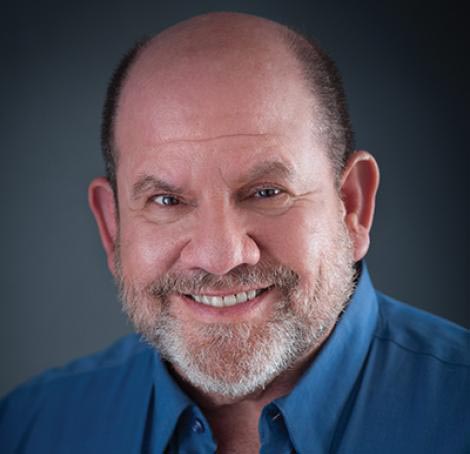
Hanna Levenson on Time Limited Dynamic Psychotherapy
The Interview
An Integrationist Point of View
The Essence of Time Limited Dynamic Psychotherapy
Working Psychodynamically in the Here-and-Now
Early on in our work she found that most everything I said was ineffective to her and sadly lacking. She said my comments were not deep enough, not on point, not psychoanalytic enough. This was a woman who had been in analysis.
So I finally said to her, “You know, you’re a force to be reckoned with, aren’t you?” And it kind of startled her. She said, “What do you mean?” And I described my reaction and that I was very aware that I was feeling very ineffective and not competent. Well, this came as a complete surprise to her. She had no intention of wanting to do that, and it was very useful information and something we referred back to time and time again in our work.
Those moments become earmarked, which allows me to say another aside, that I’ve often found that being this open about my countertransferential reactions, can actually build an alliance. It isn’t like you have to wait to have a good alliance before you could say something like this, but like with this woman, you need to find a way to bring yourself back into the room, find a way to bring yourself back into relationship with the person.
Becoming Aware of and Using Countertransference
What to Self Disclose and what to Hold Back
Is Cognitive Behavioral Therapy the Gold Standard?
Running out of Time
If you can bring the combination of who you are and your unique gifts combined with the expertise, that’s unbeatable.
Jeffrey Kottler on Being a Therapist
I find it more than a little hysterical, more than a little amusing, the different perceptions that therapists and clients have about their sessions. A couple of my Ph.D. students have done qualitative interviews where they interview the therapist and interview the client, and it's as if there were different people in the room, or different sessions. That's the thing that's so crazy: that we can't even tell when we did a good job. The session is over and we're flying high, and the client never comes back again! What's that about? We delude ourselves: "Oh, they must be cured. It was so good they didn't need to come back!" I remember Albert Ellis told me that in the interview for Bad Therapy: "When they don't come back, it's just because they don't need it anymore; they're cured." Well, good on you that you can delude yourself with that.
Yesterday, I was doing a workshop on relationships in a therapist's life, and I was talking about the work I do in Nepal with young girls at risk to be sold into sex slavery; we give out scholarships to keep them in school. It costs a hundred dollars to keep one little girl out of sex slavery, to keep her in school for a year. So it's redefined how I think about money. I was using an example of how my belt broke two days ago, so I went to the mall to look for a replacement belt and saw this amazing alligator belt—$400. And I thought, "That's four girls! That's four girls' lives. So if I could find a belt for $60, then I can…" Even though I don't take the $350 and give it to the girls, I still think that way.
So anyway, someone came up to me after the workshop and she said, "God, it must be so hard to be you, to be so hard on yourself all the time, if that's how you really think about money! You must be in anguish." I had forgotten to mention the other side: that, maybe because I was a cognitive therapist early in life, I don't do guilt. I am really just a peaceful, calm person almost all the time. And I hardly worry about anything that I can't control or do something about. So I forgot to mention that other thing! The way that woman perceived me is that I must be very troubled to talk about this, and think about this morbid stuff all the time, and I must be so hard on myself—all the stuff I write about fear of failure and perfectionism and all that.
There are two themes that live within me. One is that I really am never good enough. After every performance, including this interview, I think about what I could have said, what I should have said, what I wished I'd said. "I can't believe I didn't say that; oh, I forgot that." And then the other part is total and complete forgiveness within five minutes, like, "Okay, on to the next thing. What can I learn from that interview that's going to help me to do that better and be more responsive next time?" So those are the two. And this woman yesterday helped me by asking that question, because I haven't really talked about that—the two, the yin and the yang, both of them living together.
Yalom, to get back to your question about what therapists can do, I have friends that have been practicing for decades that see anywhere from 25 to 50 clients a week, basically following the same theoretical orientation they've always used. They report to me that they still very much enjoy their work, and still feel enlivened by it, and I have to tell you that I don't understand that. I believe that they believe it—I think I believe that—but a part of me says it's impossible.
But maybe that's a statement about my own needs for change. I reinvent myself at least every five years because—here's my neurosis right out here—I get so bored with myself. I'm tired of my own stories. I get tired of doing things. I've taught the group therapy course well over a hundred times, and the reason I like teaching group therapy is that it is always different, it is never the same. You can change one person in the group and it's different. That means I'm always challenged and always stimulated.
I think therapists get lazy. I think we've got our favorite stories, we've got our favorite techniques and metaphors that have been tested in the trenches for years. They produce predictable outcomes, so we just go on cruise control: "Oh, here's another one of those." And it works. But I just get bored with myself if I don't feel like I'm learning something new or I'm out on the edge, on a learning edge to get better. But that is more than a little exhausting.
So I don't think I believe that's the case with all therapists. But the ones who come to my workshops or my classes came there for a reason, so there's a level of informed consent. If someone comes to a workshop or picks up a book that has a title like Clients Who Changed Me or Bad Therapy or whatever, then they're saying, "Okay, I'm open to this." But one of the beautiful things about our work is that there are just so many ways to do this that fit different personalities and different styles.
I go to a lot of programs where experts stand up with total and complete certainty and they say, "This is truth, this is the way it is." And it might often be prefaced with the statement, "The data supports blah blah blah." Or they'll say, "The empirical evidence supports blah blah blah and it follows that…" Because you say, "That's The Data, The Evidence; therefore, there it is," then it ends the conversation. What makes it especially funny is that then you go into the next room and the next conference, and someone says, "The evidence supports…" and then the exact opposite of what you just heard.
And, with managed care and all the other kinds of things, if I have a client who comes in and says, "I have one session with you, this is all we have," I'll do brief therapy like the best of them. I will rise to the challenge, because that's what the client needs. But I can't say I like that as much as I would if I could do relational-oriented work with someone that wants to do some deeper explorations into what gives their life, and all lives, greater meaning. I get off on that, because that's my journey.
I suppose what I teach my students is that it's fine to pick a theory, any theory, doesn't matter which theory—pick a theory to start with or, pick a theory that your supervisor likes because you've got to make your supervisor happy—and then over time you're going to have your own theory, your own way of understanding what this work is about. And that's the growth edge that we were talking about earlier.
I feel sorry for therapists that come to workshops like this to get their CEUs. I see that because I do so many of those workshops. And I can see people sitting in the audience that have this huge sign on their forehead: "I am only here for my CEUs. Entertain me, damn it, because I don't want to be here, and you're not going to teach me anything I don't know, anyway." I might agree with that last statement, and I will entertain them, but I think that's a bit sad that they really think they've got it already.
Therapy was dominated by men and male-oriented thinking for the first century. But now, because my students are mostly immigrants and minority students in Southern California, a lot of the traditional white-man theories don't really fit their client populations. Most of my students are immigrants who work in their own communities. You can't do cognitive-behavior therapy or existential therapy, or person-centered, or Ericksonian, or any of these mainstream therapies—you can't do them as they were designed when you're doing it in Vietnamese or Mandarin or Spanish.
For my next book on creativity, which I'm writing with Jon Carlson, we interviewed a number of therapists, but a couple that stand out are Laura Brown, a feminist therapist, and Judy Jordan, who's a relational cultural therapist. And they both use the four-letter word when they describe their relationship, that is, love: that therapy is about love. And
I've been doing qualitative research my whole life, and I had to do it in the dark because it was never respected as legitimate research. Now qualitative research is one of the preferred methods. When I first started doing this, everyone was doing grounded theory, which is ex-quantitative researchers doing qualitative research but being uncomfortable with it, so they do all this coding. Most of my students are doing narrative analysis now, which involves preserving the stories, the lived experiences, the phenomenology of the people they're talking with—being able to do a thematic analysis of it, not the same way that therapists do, but in a parallel process. "What is the meaning of this?" And, "What are the intersections between the lives of these different people I've spoken to?" The last study one of my students has done is with therapists who had clients who committed suicide and who were marginalized afterwards—could never speak about it, could never talk about it.
I never had a good foundation; I needed glasses. Up through junior high school, my dumb parents never got my eyes tested. I memorized the eye chart in school because I was embarrassed. But the whole world was foggy. I could never see anything. I used to sit right in front of the television to watch cartoons. My dumb parents didn't say, "Duh, this kid can't see. Why do you think he's right in front?" So I could never see the board in school. What that means is I never learned grammar. So I don't have the basics, but I think I learned to write because I just love to write, and I do it everyday.
And, by the way, let me just put this qualifying thing: I save so much time in my life for play. I will not do a workshop or a presentation in a place unless there's fun associated with it, or it's someplace I want to go or want to be. I find time for myself. I read a novel a week.
I think we're going to have to end here.
Mardi Horowitz on Psychotherapy Research and Happiness
That notion persists in my use of the word "course" in A Course in Happiness. It means two things. One: navigating. I'm a sailor, and the practice of sailing teaches you very quickly that you can't sail into the wind, even if that's where you want to go. So if you want to go to San Francisco from Sausalito, you have to hit the winds coming from San Francisco, which, fortunately, it rarely does. You can't just point to the Trans-America Pyramid to get there. You have to go back and forth. But you need to chart your course so you get there with the most economical and speedy means.
The second meaning of "course" is a course that's full of lesson plans and teaching points. My years professing and being a bit of a pedant, I think, have a practical payoff in that I know how psychotherapy trainees learn. And I think those lessons for psychotherapy clinicians, and those lessons learned by psychotherapy patients over a period of time, can be translated so that people can use them on their own if they have the motivation—hence A Course in Happiness.
So I think, by using empirical work, we can find that working clinicians agree on how contents change—that's the critical thing. How does the mind's narrative about self and others, for example, change in therapy so the person's able to make more reasonable plans?
That's not how psychotherapists are taught, however, and it took a few decades for me to learn how people learn to be psychotherapists. For example, a young teacher who's really bright and a good clinician will come in and tend to teach theory. Then the trainees will complain because they're not emotionally ready for the theory of how things work. They want to know, how do they even survive with their cases? They want to know how to do it right away. So I think we have to go with what people are motivated to learn. The first thing we teach people so they're less frightened when they're doing therapy—which is scary at first, as you know—is, "Borrow from me these techniques, these rules of thumb. Later on, I'll tell you why you don't always use this rule of thumb, and when this technique can be harmful, or at least not helpful." Then, after a year or two, when they feel comfortable, you can start teaching them how people change.
There tends to be a Y in the road because some therapists feel so confident in themselves, once they're able to establish a trusting, calm relationship with disturbed people, that they just go and do it by intuition. And their patients get better, so they have feedback that they're doing a good job. But they don't understand what's possible for the person.
That's where the content comes in: what are change processes? For example, grieving is a change process that occurs on both conscious and unconscious levels, to change the narrative of life so the person can accept a loss and move on.
We know from psychotherapy research that the relationship is the most important factor, but in our research studies we examined some additional variables.
Now, the therapy techniques that would be optimum for this patient will focus on helping her stabilize her states of mind, develop new relationships, modify her sense of identity, and develop better plans for the near future. This is kind of simple and obvious. That's what the patient would say she wanted, if she could articulate it.
Now, in the condensed, teaching form of this article, I start with Clone One and then go on to Clone Two of this exact story.
Now, let's say the techniques in Clone One's case are successful: they involve just being clear that that's her life story in a way; that she has, for the time being, the safety of a container with a good therapist; that in this container she's going to work through any sense that she's been shattered or abandoned; and that she's going to be helped to develop near-future plans in being more assertive, going out and forming relationships, and not being so frightened, hopeless and helpless. She gets better and lives happily ever after, because those techniques were very helpful and just what she needed, from just the right person, at just the right age milestone for that kind of development. So she's gone through a maturational path. And those techniques tend to be pretty interpersonal in discussion; we're looking at the repetitive, maladaptive interpersonal patterns, like excessively needing guidance from another person, being exploited by another person because she's seen as a sucker, and so on.
On to Clone Two: this patient has not had a chance in her previous development to develop a coherent self-organization, so she has dissociative fragments of identity—not only in conflict, but segregated in terms of memories. She may even have different memories of a relationship with her mother in different states of mind. So when the therapist is interpreting something in one state of mind, the patient may shift to another state of mind and be misinterpreting the interpretations.
Also, diagnosis stemmed out of research: the DSM in 1980 was a drastic revision saying, "Okay, we don't have a theory of mental disorder and what causes symptoms, so let's just describe it."
And the worst thing about the use of our product in making DSM III and then IV, and now V—the same arguments, by the way, are taking place—is that they're committee judgments. The committee knew there was a dilemma. Ultimately it came down on static descriptions, in part for some forensic reasons. So now you have to have five of these eight depressive symptoms for three months in order to qualify for major depressive disorder—something like that.
But if you have the passionate aim of teaching therapists, then after you say, "Here are the diagnoses, here are the rules of thumb," you have to say, "Now let's go back to the symptoms. What causes each symptom? Where do those different causes converge? And of those causes, where can we change things?"
So the states-of-mind concept was a way of dislodging the rigidity of static memorization of the diagnostic criteria. The idea is that
So I developed a system called configurational analysis—which is based on four formal categories or levels of formulation—in part to help both students and colleagues think about cases. Here are the categories. One: Just describe what you observe, and select the phenomena you're trying to explain. Not everything—it could be one, two, or three symptoms, for example.
What triggers each state? "Well, when I get absorbed in my work, I get into a state of relative less-depression." What triggers the pining and yearning? And so on. So it's only one level down, but it's still observational.
What's more, you can share this language with the patient, so the patient can begin to examine their states of mind and look for the triggers, just like in positive psychology. You can say, "Well, how can I feel a little bit better right now? Maybe instead of criticizing myself for being lazy and having screwed up all my relationships, I should look at my achievements: I've done the architectural plans for three new buildings. I've made a living somehow. I've not gotten in car accidents. I'm taking care of my parents"—or whatever the person might say. So that's states of mind.
And even at the states level, you get a psychodynamic configuration right away with the patients. "What states are you frightened of entering that you can't prevent yourself from? What states would you like to enter and can't get into? And what states are you using to avoid the dilemma of trying to get into a good state but then you're afraid of a bad state?" So, you might hear, "I don't ask people out for coffee because they might reject me." You're then getting into the next level of formulation, which is: what are the themes that are related to these state transitions? And the themes are certain topics like, "Do people like me?"
But the question will be, what will happen if you counteract their inattention and focus attention?
But the fourth level is often what beginning therapists plunge down to with their theory prematurely, which is the self-and-other configurations. That's why this system of formulation is called configurational analysis: it gets down to the level of the self-and-other attitudes and beliefs, but then organizes state of mind. So when you have a patient who's flip-flopping to different states of mind, even in the relationship with you as the therapist, you often can then see, once you're looking at it, the difference of states, the different topics, the obstacles. You often can say, "Ah, here is a recurrent attitude—the patient's flip-flopping. Either they're the aggressor and I'm the victim, or I'm the aggressor and they're the victim." Once you see these role relationship models and each person as having a repertoire of role relationship models, of different self-images, then you can see a recurrent pattern.
On each of these levels, we've shown that you can get empirical, reliable, and valid predictive agreement between clinicians if you define the labels—so configurational analysis is an empirically based system of case formulation. It is psychodynamic in that it deals with wish, fear, defense, unconscious processes and stuff, but it's integrative in that you could take a cognitive behavior therapy clinician and see if they formulate their cases this way (we just published a paper on this; they do), if you enable them with a system. They're making the same observations. And the systems of cognitive behavioral formulation and configurational analysis and psychodynamic—they're all containable under the circus tent of these formal properties. But the stories they focus on tend to be different.
So the patient's telling me some story about some grievance that they have or a stressor event that's coming up that they're trying to prepare for, and I'm listening for how they're processing it in their mind.
Also, there's a difference between what I'm encouraging the reader to learn to do in A Course in Happiness and what the reader's going to do. I'm calm about the reader's pain. And I'm trying to say, "Try and be as calm as you can, which doesn't mean go write a philosophical essay on your predicament. Try and be as calm as you can, and allow yourself, in a safe moment, to consider your emotional distress." That's the difference between A Course in Happiness, which takes on a stress mastery approach, and a book on happiness that says, "Don't worry, just be happy"—like the Bobby McFerrin song.
One of my colleagues calls me an in-betweener: I don't seem to accept the biological approach and I don't accept the psychological approach. Well, I'm a scientist. I'm a scientist, physician, clinician, psychiatrist—I want to understand how it works. And it doesn't work just biologically, and it doesn't work just psychologically, and it doesn't work just socially. It's an interaction of complex patterns, and we need research methods that focus on complex patterns. That means an uphill fight with study sections that give grants, because they want homogeneous groups by diagnoses. And since I contribute to the diagnoses, I'm entitled to say they're too static. I'm trying to work to redefine post-traumatic stress disorder, even though the criteria are right out of my book on stress response syndromes. And I'm at work to see us go beyond brand names in psychotherapy towards an integrative approach, which I've tried to simplify in my books States of Mind, Understanding Psychotherapy Change, and Cognitive Psychodynamics. But economics is what drives a lot of the field. So it's big pharma; it's simplified randomized clinical trials with very simple, cheap, inexpensive treatments that can be done by people who don't have much training.
The interesting thing in starting to focus on intrusive thinking is: when does it occur? I would get calls from mental health professionals who'd say, "You're an expert on trauma. I was just in an automobile accident and a passenger was injured, and it's three days later. I'm not upset. Is that okay?"
When we interview the therapists afterward, They say, "I kind of knew that—but I didn't know I knew it." They say, Yeah, now I see it!" So they had bits of it, but they didn't see how it fit together, and they didn't see where to go with it as a practical suggestion.
And those are two things that you can tell the patient about in a sympathetic way, that they do this. Then the focus of the therapy becomes: "What's the difference between thought and action, and what's the difference between you and not-you?" And, You have some vulnerabilities here, and we need to address them, very patiently, very slowly, very repeatedly."
Then the patient would say, "This is terrible"—there would be obstacles to hearing that. But once the patient realizes that you're really sticking with them like you have stuck with them, and that you are examining this together, then when they're having these confusional states outside the therapy, they can say, "Oh, I'm going to talk about this with Dr. So-and-so. I don't have to do anything about it right now."
Lisa Firestone on Psychotherapy with Suicidal Clients
Suicidal patients tend to provoke negative countertransference feelings, as well. They tend to make therapists feel like getting rid of them, just like they feel like getting rid of themselves. And they do that with friends and family members, as well. That's part of what I mean by complex problems: because they've been interacting with people in ways that reaffirm their own negative view of themselves.
Edwin Shneidman, the father of suicidology, talks about a student at UCLA who came to see him ready to kill herself over an A-. He needed to buy time to form a relationship with her, so he went to the teacher and got the grade changed. He decided the difference between an A and an A- to UCLA was nothing; the difference to this girl was life and death at that moment. Now, we wouldn't do that with most of our clients, and I'm not suggesting that we always should, but there is a need to build and maintain that connection. And if you look at Dialectical Behavior Therapy—one of the therapies with the strongest research track record in terms of affecting people who are suicidal, particularly those with Borderline Personality Disorder —there is an emphasis on maintaining the connection through phone contact between sessions, frequent sessions, and skill building classes. As Marsha Linehan describes it herself, it's shepherding them through, checking up on them, and teaching them how to regulate and tolerate their emotions.
Some families are too toxic; they're not going to be helpful. It's going to make the situation worse. Sometimes there are a lot of complex dynamics going on in the family, so it's not an absolute given that you're going to want to involve them. But you certainly will learn information about your client that you do not know. And if you're dealing with a younger person who's still in a lot of contact with their parents, it makes a huge difference to have the family on board to understand both the level of risk and what the management and treatment plans entail.
When possible, therapists should really communicate with the family and make them part of the treatment team. I see therapists very resistant to that, like you said. Even though they may not see themselves as Freudian, they see themselves as having good boundaries, even with children. You would think that anybody who was seeing somebody under 18 would obviously be letting parents know this, but
Some Uncommon Advice
Absolutely. Making yourself a real person to them is important because that strengthens the connection. What you're trying to build is trust: you want them to see you as a safe haven, as well as the attachment for them that they may never have had.
I think another problem is trying to get a client to stop behaviors that are self-destructive but that are helping them manage their emotions, like self-harm behaviors. Many therapists just want it to stop. Many parents just want it to stop when it's their teenager. But you don't want to rip that away from somebody for whom that's a self-soothing behavior that's working, until you replace it with a more healthy coping strategy.
We have a mother whose son committed suicide days after his 15th birthday. The year before, he started to cut himself, and she took him to therapy. The therapist got him to stop, and he spent the next six months searching the attic for the bullets to the gun in the house. And the day he found them, he died.
You don't want them to just stop.
If you think about it, just on a basic animal level, an animal that's injured gasps for every last breath; so do human beings. But with people who are suicidal, they have to go so against that to actually take actions against their own body that they have to be in a pretty disconnected state. And the suicide attempt often reconnects them to themselves. They snap back to themselves.
We don't have optimal end-of-life care here. We do for some, but we don't for all. So there are people who feel like they're a burden to their family or they're going to eat up all the family's money, because they are. That's what will happen. That puts outside pressures on the situation, certainly, so I think it's very difficult. And I think it's a kind of slippery slope issue. Even in countries and states where it's legal, there are cases of people who have been depressed for short periods of time who get assisted in killing themselves, and I have a lot of trouble with that—people who have not had a chance to receive adequate treatment. And with optimal pain management, I don't think people generally want to hasten their own deaths. I don't think we should make people be in pain. Currently, when a person speaks up and provides feedback to their doctor, we can have optimal pain management for most situations. So I hate to make it a moral issue, but I do think that suicide always hurts other people, so I think that does make it a bit of a moral issue. It's not just between the person and themselves. And I've heard Thomas Szasz speak on this; I've heard very reasonable researchers on the other side who have reached a different conclusion. I heard somebody present on it at the International Association of Suicidology once who said, "Any doctor who feels good about assisting somebody in their own suicide shouldn't be doing it." That should be one of the qualifications: that you don't feel good about it. And who does those evaluations that decide that somebody's in the right state of mind to do that? What does that even mean?
And I think it's important not to have too many suicidal patients in your practice at any one time; it is just much too stressful for anybody. When we were doing testing for our suicide assessment, we were in therapists' offices all over the country, and in one case a woman had seven people in her practice that tested as being highly suicidal. She didn't intend to get in that situation. It had just sort of happened that she had taken on that much, and it was probably not the right thing to do, for her or for the patients.
It's interesting that cognitive-behavioral therapists focus on negative thoughts as being the underlying driver of a lot of self-destructive behavior, including suicide, but the tests that they've developed are not based on thoughts.
The reason we put these thoughts on a scale is because we've found in our research that these thoughts that people verbalize are not just thoughts, unfortunately.
Patients also find that they start off with the thoughts that they're aware of on the surface. As one therapist described it in our workshop in LA, “You read the ones you wrote down on the paper, and then you just sort of get into a flow with it. And then all this stuff comes out that I didn't even know I really thought.” And what quickly come are the very core beliefs that they have about themselves. Often people will do this and they'll say a number of statements, and then they'll pause. And if you just leave it alone and sit with it, what come next are much stronger core beliefs about the self. So it very quickly brings that material to the surface. Also, when people are verbalizing it in that way, we encourage them to say it with the full emotion associated with it, maybe to say it louder. Often there's a very derogatory, taunting, sarcastic kind of tone to these negative thoughts as they occur. We encourage them to say it with the full feeling behind it, maybe to say it louder. And often, as they're saying it, they take on the accent, the body posture, or the tone of voice of their parent. Their vocabulary changes. Sometimes they change into their language of origin. Someone whose parents came from Eastern Europe switches into their parents' accent. It's a very powerful process. So that's the first step in voice therapy.
The second step has to do with really looking at: where do these thoughts come from? And this is not a therapy where we interpret to the person. We don't say, "Oh, this must be your father's voice; this must be your mother's voice"—first of all, because we don't know; they're the expert in this. Secondly, it's much more powerful for them to make those connections.
And it doesn't mean you'll never have that thought again. Particularly, either at times of stress or, conversely, at times when you're acting the most different from the parent in positive ways—out of nowhere, some of those self-destructive thoughts will come up. Something can happen in the person's current-day life, a particular stressor. I think about this financial crisis we're currently facing: somebody who has underlying self-destructive thoughts but has come a long way from that in their life could get triggered back to feeling like a failure, for instance, because their stock went down or they lost all their retirement funds or they lost their job.
For a family member,
We have learned the form that these negative thought processes take in relationships—that the voice is really almost like a coach: coaching you to protect yourself, coaching you to take a certain stance toward your partner, not to be too giving, to take control of the situation and not be too vulnerable, to look at all your partner's potential flaws as opposed to focusing on their good traits. And this coaching sounds friendly to yourself—it sounds self-protective as if you're taking care of yourself—but it's often destroying your relationship. And it's really based on a posture of defending yourself and maintaining your original fantasy bond or connection with your parent, and being self-parenting; listening to this voice is really destructive to having the satisfaction and closeness and fulfillment you really could have in a relationship. It's often what destroys relationships. People who are perfectly good choices for one another often play this out in such a way as to destroy the relationship, or to make it a whole lot less satisfying than it could be even if they stay in it. We really want to try to help people with that. We have a couples group we're doing now with some young couples, trying to help them earlier on in their relationship life to be able to stick in there and take back the projections they make onto one another that really have to do with the people they grew up with and not with the person they're with.
Stephanie Brown on Treating Addictions in Psychotherapy
I entered my own recovery in 1971. I've been very interested in the developmental process that occurs for people once they stop drinking. I developed the Dynamic Model of Active Addiction and Recovery through my doctoral research, which was finished in 1977.
If you watch a person's focus on alcohol they turn psychologically, emotionally towards the attachment to the substance. People talk about alcohol as their best friend; people take it to bed with them. They have their primary relationship with their bottle, with their Jack Daniels, with their Jim Beam. Alcohol becomes the central organizing principle for the alcoholic and then it operates in the same way for the family or friends. Getting it, having it, drinking together, sharing it, stopping it, starting it again, and so on.
Prescription medication is both legal and illegal actually because you're supposed to have prescriptions for them but they are available illegally on the streets, over the internet, on school and college campuses. For many people, OxyContin and Vicodin have become drugs of choice. People are ending up in emergency rooms with dangerous overdoses.
Tobacco is an addictive substance. The behaviors: gambling, out of control sexual behaviors, specific kinds of sexual addictions to pornography and the internet are all kinds of loss of control.
More people are coming in my door who are out of control. They're dominated by impulse disorders and they're not functional anymore. Their lives are falling apart and they are trying to get their lives back.
The therapist says, "Okay, how much do you drink?" and the person says, "I have a couple of glasses of wine a day." I always put down a "couple of glasses of wine" in quotes because that is everybody's favorite quote.
Does the therapist say, "Tell me some more about how you drink, tell me some more about these couple of glasses of wine, how do you think about it, what's been your history with alcohol" and begin to use that first question as a starting point for a much more in-depth assessment of attachment? What you want to find is not just how much the person drinks but what their relationship to alcohol is.
A client comes in one day saying "Jeez, I'm late today" or "I was late to work."
Therapist: Well what made you late?
Client: Oh, I overslept.
Therapist: How come you did that? Is that typical for you?
Client: Well I had a big weekend.
Therapist: Oh, what happened?
Client: Well we partied.
But don't stop there!
Therapist: Tell me more, what do you mean partied?
And later, Therapist: Give me a sense of a day in your life.
Now watch as the addicted client will eventually begin to include alcohol or drugs or whatever their addiction is in their daily activities and way of thinking. People who have an attachment to alcohol tell stories to friends and families about their lives that include alcohol, hoping to see if anyone wants to join them.
So we'll collude together here, agreeing that there is no problem with alcohol and we'll have a very fine psychotherapy and avoid the tough issues.
If those experiences happen, the person may very well be moved via that experience into asking for help. It is the asking for help, reaching outside of the self, no longer saying "I've got to get control of myself" or "I've got to learn how to drink."
Therapists, then, may tend to get impatient because they really do sense that the client is shining them on, and it's true that many clients will be in denial and distort and deceive. The therapist needs to look at what is going on in the patient and not act it out in a countertransferential way.
And that's the way in which the therapist maintains the alliance while working with someone who is conning and deceptive and manipulative. If the patient keeps coming to you, that person wants help. Let me add, there are many people who are not conning, deceptive or manipulative. Many people want help and can't see clearly what is wrong and what to do. They need support for seeing clearly and guidance in the next steps. They have to feel safe enough to recognize their loss of control.
And I say, "Yep, I'm your problem alright because I'm going to keep talking about alcohol. I think it's your main attachment. I think it's the center of your life. You don't want to see it that way, but I hear it and I see it."
In psychotherapy it's an unequal structure. It's not equal, we're not peers. In any kind of help-seeking framework with the exception of peer counseling there is still the helper and the "helpee", as I call it. Within AA, every single person sitting together is both a helper and a helpee at the same time. You get to experience yourself as being the dependent person needing the help of others and the one who shares your experiences to help others in the same moment.
I tell patients that people are not standing in line waiting to get into AA. No one wants to go to AA. So then how is it that millions of people have found a way to let AA work for them? It's in the individual; it's not in AA.
I define spirituality as dependence; that's what it is to me within the framework of thinking about addiction and recovery. Spirituality is dependence, and the god of the addict is the alcohol. The dependence, the spirituality, is invested in the attachment to alcohol. When that person comes in to AA, the dependency, the attachment is changed to the meeting, to a new sponsor, to the people of AA, to the ideas espoused in AA, to the books and readings. The dependence is transferred to a new object representing recovery.
So that dependency moves over time, developmentally from concrete object representation to abstract concepts of God. And it's a developmental process.
They were right, in many cases, but that has changed dramatically. Addictions counselors, starting in the 80's and 90's, now have to have academic training. There are addictions certification programs that are very solid and based on a lot of mental health training as well as addiction training. They're becoming psychologists and marriage family therapists. So, we're getting a larger and larger group of people who wear both hats.
Yet, where psychology has been willing to say, "Why don't the addiction counselors want to know more about psychology, we'll teach them" – would psychotherapists go to a residency and treatment program for a week to learn about recovery? No, I don't think so.
With every single person, no matter how out of control they are, I'm sitting they're saying, "What's that about, what do you think is going on?" I never leave the frame of listening and trying to make sense of what is happening in the room. Now, with a particular person who walks in my door, there may be more issues of containment and boundary setting. You have to come back to the addiction if they don't. You have to wonder how it serves them. I may say, "You're drinking the way you're drinking because it's helpful to you in some way. What does it do for you? How does it function for you?"
It's a very similar type of frame to most therapies, but often the countertransference, as I noted, is quite different in the therapist.
It's all steps of faith and trust and not knowing. You just don't know every single step you take where you're going. I tell you, these people take these steps and are willing. People get well and they trust in me and I always feel moved by that trust. And staying with them to hold the space where they can find it in themselves is just profound.
The Psychiatric Repression of Thomas Szasz: Its Social and Political Significance
Thomas Szasz has been the leading critic of psychiatry for the past 35 years. In this time, his relationship with psychiatry has been problematic and painful. Critics are rarely loved by the objects of their attention. Thomas Szasz has been hated, mocked, repressed, ignored, and ostracized by psychiatrists who fear his critical gaze. This period of psychiatric history, which is not well known, is highly significant for contemporary psychiatry and for the society in which it operates.
The reader should be informed at the outset that I, personally, have been strongly influenced by Szasz to both my benefit and my detriment. I first met him in 1956, when I was a senior medical student and he had just been appointed professor of psychiatry at the Upstate Medical Center at Syracuse. We have been friends and colleagues for—I am startled by the number—almost 40 years. In this time, both psychiatry and American society have undergone profound changes. Some people have blamed Szasz for some of those changes, for example, the deinstitutionalization of mental patients.1 Others would deny that he has had any influence at all on psychiatric thought or practice. They say that progress in biological psychiatry has rendered his writings hopelessly obsolete.
It is incorrect and unfortunate, however, to dismiss the corpus of Szasz's work on the grounds either that he has been a negative influence or that his work is no longer relevant to modern psychiatry. Although Szasz has been in conflict with psychiatry because he is an individualist and a champion of individual rights, he is not an individual thinker. Strictly speaking, there is no such thing as an individual thinker, in the sense that individuals think in the intellectual paradigms of their times. Thinking is a social activity. Thinkers think in the framework of thoughts articulated before them. They may interpret and express their ideas uniquely, but they nevertheless swim in the intellectual currents of their Zeitgeist. Szasz represents a current of intellectual history. The fact that most psychiatrists dismiss him as irrelevant means that psychiatry rejects and avoids that current.
If some people regard Szasz's work as wrong, obnoxious, or obsolete it is because it embodies a historical set of concepts and values with which they disagree or by which they are threatened. Szasz has written critically of psychiatry because he disagrees with fundamental psychiatric concepts and values. The relationship between Thomas Szasz and psychiatry is shaped by ethical and philosophical conflicts which are rooted in historical and political currents. Understanding these currents will help to illuminate some vexing problems of modern psychiatry and society.
This Historical Context
Students of the sociology of knowledge have long understood that thought is a commodity. Karl Mannheim observed that thoughts have political and social value.2 Some thoughts are enlightening and ennobling while others are false and degrading. Some ideas are congenial and supportive of our particular interests while others are contradictory and threatening. Mannheim, like most social thinkers after Marx and Freud, recognized that individuals and groups are motivated by their desires and interests and tend to support ideas which promote them and to oppose ideas which obstruct them.
History shapes and is in turn shaped by the dynamic conflict between competing desires and ideas. Until the seventeenth century of the Christian era, the prevailing ideology in the West was a cosmology which viewed the world hierarchically. The earth was perceived as at the center of the universe, orbited by the seven visible spheres: the moon, the sun, Mercury, Venus, Mars, Saturn, and Jupiter. Presiding at the pinnacle of this cosmic hierarchy was the Judeo-Christian Sky God, Lord of the World, who governed human affairs through His representatives on earth—kings and popes. They, in turn, ruled by divine right over the descending order of landed nobles and feudal chiefs, soldiers and knights, artisans and merchants, and, at the bottom, peasants and indentured serfs.
In the seventeenth century, this dominant ideology was challenged by the scientific discoveries of men like Giordano Bruno, Johannes Kepler, Galileo Galilei, Isaac Newton, and Rene Descartes. In their new, scientific world view, the earth was perceived as only one of six planets orbiting the sun in a universe governed indifferently by the laws of physics. The New Science threatened the knowledge and, therefore, the authority of the prevailing social powers who consequently opposed it and persecuted its practitioners. Bruno was burned at the stake for teaching that the earth revolves around the sun. Kepler and Descartes were intimidated. Galileo was forced to recant it. His works were censored by the Vatican's index of prohibited books until the end of the nineteenth century.
But the medieval cosmology could not withstand the assault of factual knowledge about the world. At the same time that the facts of the New Science were spreading across Europe, the Catholic Church and the monarchies of its Christian empire were disintegrating from the poisonous effects of their own corruption, cruelty, and hypocrisy. A groundswell of political unrest and revolution overturned the authority of the tyrannical rulers beginning in America in 1776, erupting in France in 1779, and continuing around the world until today.
The twin ideals of the intellectual and political revolutions of the European Enlightenment were science and democracy. Jurisdiction over the problems of human suffering and the pursuit of happiness were transferred from religion to science and from church to state. The new social order would no longer be guided by priests, kings, and scripture toward a hoped-for heaven after death. It would now be guided by scientists and politicians toward the utopian ideal of social progress here on earth.3
The decline of traditional religious authority, the rise of the city, and the corollary disintegration of the clan and family left the individual and the state as the new primary units of society. The democratic revolutions embodied a new political spirit of a community of individuals as expressed in the slogan "Liberty, Equality and Fraternity." This new ideology was fueled by the hope for social progress based on faith in science and an economic policy driven by enlightened self-interest under a minimalist state ruled by law. American constitutional government was designed on the template of this ideology. This is the current of history to which Thomas Szasz belongs. Szasz has been labeled a political conservative but he is, basically, a Jeffersonian liberal.
Szasz's valuation of the individual and of individual rights under the rule of law in an open society also has a personal context. He was born Jewish in Hungary in 1920 when anti-Semitic fascism was on the rise. His family was educated and politically sophisticated. They knew that fascism and communism both meant the hypertrophy of the power of the state and the repression of the individual, especially the Jewish individual. Szasz fled Hungary in 1938 together with his beloved brother George. His parents followed later. They traveled overland to Paris and then overseas to the United States, to Cincinnati, Ohio, where relatives lived. Szasz attended the University of Cincinnati and graduated first in his class with a bachelor of science in physics. He then completed his medical education at the University of Cincinnati medical school.
Szasz's conflict with psychiatry has its historical roots in the growth and expansion of the power of the state over and against the individual. The eighteenth-century ideal of enlightened self-interest was, in practice, more selfish than enlightened. The gap between rich and poor grew wider than it had been under the old feudal and monarchic orders. The modern socialist state has hypertrophied to its present leviathan proportions to mediate the conflicts between classes and groups, to replace the historical functions of the declining family and community, and to socialize, educate, and control its members.
As a social institution, psychiatry has historically functioned both in the service of the individual and in the service of the state. This is the root of the conflict between Thomas Szasz and modern psychiatry. Psychoanalysis and psychotherapy developed in the service of the modern, alienated individual to help resolve and relieve the psychological conflicts and emotional pain of secular life. In this manifestation, the psychiatrist is the heir of the priest, the moralist, the educator, and the critic. Szasz belongs to this tradition. He was trained as a psychoanalyst and, like Freud, was more comfortable in the role of the intellectual and literary critic than of the medical physician.
Psychiatry has another face, however. Psychiatry has also allied itself with the state as a covert agent of social control of the individual. This alliance of psychiatry and the state is a historical consequence of the limitations placed on the power of the state by the rule of law. The rule of law limits the power of the state over the individual. This limitation has motivated the invention of a covert, disguised means by which society can control the individual. Psychiatry has served this social function through its state-sanctioned power to label certain forms of deviant or undesirable conduct as illness and by means of involuntary psychiatric commitment which enables the state to detain individuals against their will, without trial or conviction of a crime, in the name of their mental health.
The conflict between Thomas Szasz and establishment psychiatry began in the historical context of the conflict within psychiatry about whether it functions as an agent of the individual or as an agent of the state. Szasz's critique of psychiatry has two elements: first, the critique of the political function of psychiatry as an agency of social control; second, the critique of the ideology which justifies and facilitates this political function, namely, the medical model of psychiatry.
Szasz's Early Work
Szasz inaugurated his critique of the medical model of psychiatry with the publication of the now classic Myth of Mental Illness in 1961. This seminal work has been widely misunderstood and misinterpreted. Many psychiatrists to this day believe that Szasz denies that mental illness exists and even denies that mental suffering and disturbance exist. On the contrary, Szasz does not deny the existence of suffering. How foolish for anyone to think so. Szasz acknowledges the existence of mental illness, but differs from the conventional view of it. The critical point is that mental illness is not a disease which exists in people, as pneumonia exists in lung tissue. Mental illness is, rather, a name, a label, a socially useful fiction, which is ascribed to certain people who suffer or whose behavior is disturbing to themselves or others.
Szasz developed this point of view while he was a student and teacher at the Chicago Psychoanalytic Institute under Franz Alexander. Alexander's work focused on the psychoanalysis of psychosomatic disorders. Szasz disagreed with his teacher on fundamental philosophical points which Szasz presented in his first book, Pain and Pleasure, published in 1957. In this book, Szasz critiqued the prevailing tendency to psychoanalyze body functions, imputing meanings to and motivations for physical diseases. Szasz's critique was based on the work of modern English philosophers such as Bertrand Russell, Gilbert Ryle, and Karl Popper.
Szasz's critique of Alexander's work was derived specifically from the empirical and logical dualism developed by Russell and Ryle.5 Russell took the epistemological position that mind-body dualism is based upon an operational dualism. Mind and body are different because psychology and the physics (including biology) are based on different methods of investigation. Knowledge about the body is obtained by means of the methods of physics observation, description, measurement, and mathematical calculation. Knowledge about the mind is obtained by means of communication through language and the interpretation of meanings. Ryle supplemented this view with the argument that, since our knowledge of other minds is based upon the meaning of the actions and speech of other persons, statements about minds and statements about bodies belong to different logical categories of language.
Szasz applied this point of view to the critique of the medical model of psychiatry. The medical model is so called because it views the mind the way medicine views the body, as an object which is explained either in terms of neurophysiology and genetics or in the language of disease, medicine, and treatment.6 In Pain and Pleasure, Szasz argued that it is logically permissible to talk about the meanings of physical disease, in the sense of our reactions to them and interpretations of them. But to talk about meanings as causes of physical disease is to conflate two operationally and logically different concepts. In The Myth of Mental Illness, Szasz moved from psychosomatic disease to conversion hysteria to demonstrate that the classification of thoughts, feelings, and behavior as diseases or as diseased is a logical error. It confuses the logical category of the body with the logical category of the mind. The term "myth," in The Myth of Mental Illness, refers to a category error as described by Gilbert Ryle. Ryle defined a myth as not a fairy story but as the presentation of the f acts from one logical category in the language appropriate to another.
Szasz's first book was not attacked by established psychiatry. In fact, Franz Alexander was so impressed by Szasz's intellect that he offered to make him his heir as Director of the Chicago Institute of Psychoanalysis.7 Szasz turned Alexander down for another offer, as we shall presently see. Szasz came into conflict with psychiatry not so much because of his ideas but because of his values. All his life, Szasz has been the emphatic champion of the values of individual freedom, dignity, and autonomy, which are in conflict with the psychiatric practices of involuntary psychiatric confinement and treatment. This is the basis of the conflict between Thomas Szasz and psychiatry.
Conflict in the Department of Psychiatry at Syracuse
I can best tell the story of this historical conflict from my own point of view. I believe it is a story that needs to be told and reflected upon. It illustrates how and why intellectual thought is subtly controlled by academic power brokers and, in this case, how the repression of Thomas Szasz and his students reflects the ironic predicament of modern psychiatry.
After graduating from the medical school at Syracuse in 1957, I served a one-year internship in medicine and psychiatry at the Strong Memorial Hospital in Rochester, New York. The six-month psychiatry rotation was under John Romano, who was chairman of psychiatry, and George Engel, from whom I learned to read electroencephalograms. In 1958, I returned to Syracuse to do my residency training under Szasz. Dr. Marc Hollender had just been appointed Chairman of Psychiatry at Syracuse, by the good graces and influence of Dr. Julius Richmond, who was then Chairman of Pediatrics. Richmond was a Chicago-trained, psychoanalytically oriented pediatrician who became friendly with Hollender and Szasz when he studied at the psychoanalytic institute. He later became Dean of the Faculty at Syracuse and then Director of Head Start and Surgeon General. Later he moved to the post of Director of the Judge Baker Clinic in Boston. Hollender brought Szasz with him to Syracuse as full and tenured professor of psychiatry. The idea was to form a psychoanalytic training institute at Syracuse with Szasz as the leading intellectual. I was a resident in psychiatry at Syracuse from 1958 to 1961, and was fortunate to have read The Myth of Mental illness in manuscript form and to have discussed it vigorously with a brilliant group of co-residents in Szasz's seminars.
To understand the situation at Syracuse, it is important to recall the intellectual context of psychiatry at that time. Psychoanalysis was in ascendance. It had been increasingly popular among American intellectuals during the 1930s. In the postwar intellectual ferment of the 1950s, it became the guiding theoretical framework of psychiatry. Its derivative, dynamic psychotherapy, was the most popular therapeutic modality. Therapists who did not have psychoanalytic training but who were psychoanalytically oriented practiced dynamic psychotherapy. Psychiatric faculties across the country were recruiting training analysts for chairmanships and professorships with the same enthusiasm, conviction, and exclusivity as they now recruit neurobiologists.
Hollender's idea, as I understood it at the time, was to found a unique psychoanalytic center at Syracuse, unique because it would seek to integrate an interdisciplinary faculty and curriculum. Attempts to integrate psychiatry and psychoanalysis with psychology and the social sciences were very much in the air at the time. Hollender's predecessor, Edward Stainbrook, who was a medical psychiatrist as well as a Ph.D. psychologist, had already invited a variety of social scientists and humanities scholars from Syracuse University to participate in the undergraduate and graduate psychiatry teaching programs at the medical school.
At the time, about 35 years ago, Hollender's vision was avant-garde. It was at the cutting edge not only of psychiatric thought but of the social sciences and humanities, which were heavily influenced by psychoanalysis. Stainbrook had invited Professor Douglas Haring, an anthropologist from Syracuse University, to teach general and psychological anthropology to medical students and psychiatric residents. When Hollender took charge, he hired Ernest Becker, who had recently completed his Ph.D. in anthropology at Syracuse under Haring.
Becker and I quickly became close friends, bonded to each other by a common background as first-generation Jews; by a mutual fascination with anthropology, psychoanalysis, and intellectual history; and a by a mutual love of Italian food and films. Becker attended Szasz's seminars for psychiatric residents and began to read extensively in psychoanalytic literature, hoping to integrate psychoanalytic theory with current work in psychological anthropology. In 1961, I completed my residency and, at Hollender's invitation, joined the full-time psychiatric faculty. Gradually, Becker and I shaped a common vision which seemed to be in harmony with Hollender's vision of an interdisciplinary psychoanalytic center, namely, to bring modern knowledge from the fields of psychology, anthropology, sociology, and philosophy to bear on a new understanding of the forms of mental suffering which are designated as mental illness. Toward this end, I took a master's degree in philosophy at Syracuse University and also taught the sociology of personal development and deviance under Paul Meadows.
The next few years were intellectually productive for Szasz, Becker, and myself. Szasz followed The Myth of Mental Illness with Law, Liberty and Psychiatry, the third of 25 books he has published to this date. Becker wrote the first edition of The Birth and Death of Meaning, in which he attempted to integrate psychoanalytic and anthropological concepts of human personality development. Next, he wrote a potentially seminal book which, tragically, has been widely ignored by psychiatrists, The Revolution in Psychiatry. In this book, Becker adopts the eclectic spirit at Syracuse and the spirit of Szasz's critique of the medical model by initiating a project for the development of a nonmedical, interdisciplinary view of such alleged mental illnesses as schizophrenia and depression. I recommend this book highly to those interested in a fresh and non-reductionistic view of depression and schizophrenia. Becker's hopes for the development of a new humanistic science were dashed by developments at Syracuse, but he continued to write as he pursued the painful career of a peripatetic intellectual.
For my small part, I published in two directions. I wrote a number of articles critical of the legal and social functions of psychiatry.8 At the same time, I was working with Ernest, in the context of our friendship, toward an interdisciplinary, nonmedical understanding of the various psychiatric diagnoses. In this period, I wrote a nonmedical formulation of the problem of phobias.9 I was in the process of developing an introductory textbook of psychiatry for a course taught to sophomore medical students. I was also writing a political and sociological critique of psychiatry, which appeared in 1969 as In the Name of Mental Health: The Social Functions of Psychiatry.
The dark clouds of conflict soon appeared on the horizon, however, and the dream of a school of autonomous, interdisciplinary intellects striving together to understand the problems of human life vanished in the storm.
In 1962, after The Myth of Mental Illness had been published, Szasz testified in the Onondaga County trial of John Chomentowski. Mr. Chomentowski owned a small gasoline station which he sold to a prominent real estate developer. When the developer tried to take over the property earlier than had been agreed, Mr. Chomentowski threatened the company's agents with a shotgun which he fired into the air. He was arrested and the prosecutors, aided by testimony of government psychiatrists, convinced the court that Chomentowski was not mentally competent to stand trial. Chomentowski was then committed to Matteawan State Hospital for the Criminally Insane, in spite of the fact that he had not been convicted of a crime. Szasz testified at a habeas corpus hearing in which Chomentowski was suing to gain his freedom from confinement. The trial, which I attended, was a highly anticipated event in psychiatric circles, since for the first time Szasz was in an adversarial confrontation with conventional psychiatrists in a public forum.
Szasz's testimony was eloquent, witty, and bold. Testifying for the defendant, he stated frankly under questioning that he did not believe that mental illnesses are true medical diseases but, rather, are psychiatric fictions. He believed that mental hospitals are prisons and that, in effect, Mr. Chomentowski had been imprisoned without having been convicted of a crime. He translated the state hospital psychiatrists' psycho-babble testimony into ordinary language with devastating effect. What the psychiatrists called psychotic aggression Szasz called anger at false confinement. What the psychiatrists called psychotic withdrawal Szasz translated as the unwillingness to consort with one's enemies. What the psychiatrists called contractions of his blepharal and facial muscles Szasz called "blinking." The state psychiatrists from Marcy State Hospital in nearby Rome, where Chomentowski was being held for examination and trial, were humiliated and angered.
Present in the courtroom was Abraham Halpern, then Commissioner of Mental Health for Onondaga County. He sat at the prosecutor's table, coaching the District Attorneys. He felt outraged by Szasz's testimony and made his feelings known. His protests reached the ears of the State Commissioner of Mental Hygiene, Dr. Paul Hoch. Simultaneously, the state hospital psychiatrists complained to the director of their hospital, Dr. Newton Bigelow, who was also editor of the then-prestigious psychiatric journal, The Psychiatric Quarterly. Bigelow published an article in his journal condemning Szasz, "Szasz for the Gander."(10) In response to the complaints by the state psychiatrists, Dr. Hoch issued an order banning Dr. Thomas Szasz from teaching psychiatric residents at the Syracuse Psychiatric Hospital. To understand the significance of this order, it is necessary to know how Hollender's department of psychiatry was set up.
Hollender had a dual appointment as both chairman of the department of psychiatry at the medical school and as director of the Syracuse Psychiatric Hospital, which was a state hospital. In addition, many of the faculty of the department of psychiatry also had joint appointments as visiting staff at the hospital, including Szasz. This arrangement was and is today quite common. Many of the faculty of medical school departments of psychiatry around the country are also directors or staff of government-run hospitals. The critical fact in this case is that Hollender decided to locate his office for both positions at the state hospital. Using state funds, he constructed for himself a very comfortable office at the hospital from which he conducted departmental business. In addition, Hollender refurbished a meeting room at the hospital where the department held its weekly scientific and faculty meetings.
When Szasz was notified that his appointment as visiting psychiatrist at the Syracuse Psychiatric Hospital was terminated, he boycotted the hospital, including the departmental meetings which were held at the hospital, on the basis that if he was not permitted to teach there, he should not attend teaching clinics conducted there. This created a conflict between Szasz and Hollender which split the department apart. Several faculty members, including the psychologists Ed Engel and Charles Reed, Becker, and myself joined Szasz in boycotting the hospital. Those who joined the boycott did not all necessarily agree with Szasz's analysis of the concept of mental illness, but they all found unacceptable the attempt by an official of the state to censor and repress a member of an academic faculty.
Hollender responded by offering to move the scientific faculty meetings to the medical school. This did not satisfy Szasz or other members of the faculty, however. They believed that Hoch's and Hollender's repression of Szasz made it clear that the teaching faculties of an academic department of psychiatry must be autonomous and independent of the state or the freedom of inquiry and expression would be jeopardized. They requested that Hollender choose between being director of the state hospital or being chairman of the department of psychiatry. If he was to continue as chairman of psychiatry, he should resign as director of the hospital and move his office to the medical school.
Hollender declined to choose. He took the position that the state hospital was the flagship of the department and he was admiral of both. Interpersonal tensions in the department intensified. Szasz's supporters took seriously the threat by the state to intimidate and repress academic faculty. Most of the faculty who had joint appointments at the medical school and the Syracuse Psychiatric or the nearby Veteran's Administration Hospital, which also had a closed ward with involuntary patients, were hostile toward Szasz. They rejected his critique of the medical model and believed he was creating unnecessary conflict. Some people believed that Szasz should not even be allowed to teach The Myth of Mental Illness to students, interns, and residents at the medical school. The conflicts were both personal and ideological, the one fueling the other until the department was divided into two hostile camps.
Some members of the faculty contrived a secret scheme to lure Szasz into insubordination so they could fire him in spite of his tenure. One principled member of the group, Dr. Richard Phillips, withdrew and notified Szasz of the attempt. Szasz hired a young lawyer from the local law school, George Alexander, later dean of the law school at the University of California at Santa Clara, to defend him against his accusers. The dean of the medical school, Carlysle Jacobsen, appointed faculty committees to investigate the conflict. The AAUP committee, chaired by Dr. Peter Witt, found that Szasz's academic freedom had, indeed, been violated.
Hollender was exasperated by this conflict, which had stalled his quest for psychiatric empire. One day, Hollender telephoned Becker to request his appearance in Hollender's office at the Syracuse Psychiatric Hospital. Some medical students had asked Hollender whether the psychiatric teaching program had been compromised by the conflict between him and Szasz. Hollender asked the students where they had heard such a story. They told him they heard it from Becker. Hollender was indignant. He accusingly demanded to know from Becker whether he was warning prospective interns and residents away from the department.
I was present when Becker returned Hollender's call. We had discussed how he might respond. Becker told Hollender that he would not meet him at the hospital because he was not on the staff of the hospital, he was on the faculty of the medical school. The administrators of the hospital had banned a faculty colleague from teaching there and so he would prefer to meet Hollender at the medical school. Hollender refused and, once again, ordered Becker to come down to Hollender's office in the state Hospital. Becker refused. Hollender fired him on the spot!
On the one hand, Hollender might seem to have had some justification for firing Becker on the grounds of insubordination. On the other hand, Becker was one of Szasz's most vocal defenders. His ideas and writings were influenced by or were in harmony with Szasz's views. Becker was even interviewing a few patients by Syracuse Psychiatric Hospital under Szasz's supervision. Firing Becker was a way for Hollender to strike back at Szasz.
After leaving the medical school, Becker had a tragic-glorious peripatetic career.11 He spent 1965 in Rome writing what he thought would be his monumental work, The Structure of Evil.12 He then returned for a one-year appointment in the department of anthropology at Syracuse University, sponsored by his close friend Professor Agehananda Bharati. This was followed by a second year in Sociology, hosted by his friend Professor Paul Meadows, who was chairman. The following year, Becker replaced Erving Goffman at Berkeley on Goffman's recommendation. He won a brief moment of fame there when he was written up in Time magazine because the student body at Berkeley petitioned for Becker to be rehired, and, in an unprecedented move offered to pay his salary out of the student organization's treasury. But the university refused. It would have been too dangerous for them to rehire a professor who was a social critic and also popular with the students at time of political protest and upheaval.
Becker then moved across the bay to San Francisco State University where he worked happily until 1968, when S.I. Hayakawa, then president of the university, called police on campus to repress student demonstrations against the war in Vietnam. Becker resigned in protest in a heroic gesture, since he had three children and no prospect of any job elsewhere. The only offer he received was from Simon Fraser University in Vancouver, Canada, where he remained in exile until his premature death from colon cancer in 1974.
Two months after he died, Becker was awarded the Pulitzer Prize in Nonfiction for his book The Denial of Death. This highly prestigious award represents the recognition by the literary community of the high merit of Becker's work. Yet Becker has never been recognized by establishment psychiatry in spite of the fact that he wrote continuously on psychiatric issues from his days in Syracuse until he died. His work has been totally ignored. To establishment psychiatry, Becker was tainted by his association with the reviled Szasz. In effect, Becker was indexed and repressed. He was the victim of modern society's favorite method of repressing its critics—what the Germans call Todschweigen (Tod = death; schweigen = silence)—death by silence.
After Becker left, I continued as an assistant professor at the department of psychiatry, teaching, writing, and speaking my mind on a variety of psychiatric issues, including the social functions of psychiatry and nonmedical conceptualizations of the problems of human suffering. During this period, I completed the manuscript of In the Name of Mental Health. In 1966, frustrated by his hostile standoff with Szasz, Hollender resigned as chairman of the department and was replaced by Dr. David Robinson, an ally of Hollender's who even more vehemently opposed Szasz's critique of psychiatry and the concept of mental illness.
The department was still trying to continue its liaison with social scientists and other scholars from Syracuse University. A committee was formed, of which I was an appointed member whose job was to nominate social scientists from Syracuse University to teach the psychiatric residents and interns. I taught at Syracuse and knew the faculties of the social sciences and humanities, and I nominated Ernest Becker and Stanley Diamond, an outstanding anthropologist who later became professor at the New School, as the best suited to teach medical students and psychiatric residents. My colleague on the committee, Dr. Robert W. Daly, now Professor of Medical Humanities at the Health Sciences Center at Syracuse, agreed on these nominations, as did Dr. Bradley Starr, chairman of the committee, although Starr was doubtful that Robinson would approve of either of these men.
A few days later, Starr informed me that Robinson had indeed vetoed both Becker and Diamond as candidates to teach the psychiatric residents. I could understand why he vetoed Becker. Hollender, although no longer chairman, was still in the department and it would have been awkward for him to face Becker. I could not imagine, however, why Robinson objected to Diamond, who had nothing to do with Szasz or the Szasz affair. I protested to Starr. The next day, Robinson burst into my office and announced that he did not intend to renew my appointment. Since I was a junior faculty member without tenure, this meant, in effect, that I had been fired.
I appealed to the local and national chapters of the AAUP on the grounds that, although I did not have tenure, the university did not have the right to dismiss me because of my views. They could fire me without reason, or for such justifiable reasons as insubordination, dereliction, incompetence, or flagrant immorality. But they could not fire me because the chairman opposed my views, my speech, or my writings.
In a meeting with Dr. Jacobsen, Dean of the Faculty at the medical school, Robinson said he would not renew my appointment because he "did not need two French professors in his department," meaning that he had been sufficiently provoked by Szasz and did not want another thorn in his side. In other words, everyone else in the department could share Robinson's views, but if I shared Szasz's views, I was excess baggage.
To my further amazement, Robinson boldly admitted that he did not want me on the faculty because he did not want my book published while I was a member of the department. He said that he was afraid that with both Szasz and me writing, publishing, and teaching our heretical views, the department at Syracuse might become known as "anti-psychiatry" and might not be funded by the NIMH, with obvious unpleasant consequences for him and the department. Jacobsen, acting in the great tradition of academic administrators, chose to avoid conflict with a department chairman. He imposed a compromise. He conceded that the department had fired me without adequate notice since Robinson had fired me in March effective the following September while AAUP regulations provided for one year's notice to give the rejected member time to find another job. So Jacobsen gave me a six-month extension on my appointment—a delay of execution.
On another occasion, Robinson arrogantly admitted to me that he did not want either Becker or Diamond to teach in his department because he believed both men were eastern radical-liberal troublemakers who were stirring up dissent by participating in civil rights and anti-war protests. The implication was clear that Robinson believed that I, too, was a member of this group of traitors.
Becker and I were both victims of the psychiatric repression of Thomas Szasz. In my view, Robinson, Jacobsen, and the State University abridged my First Amendment rights of free expression. If one believes in the value of ideas and the right to express ideas, which is supposedly protected by the First Amendment, this is a serious matter. I do not think that my experience is unique. I saw a generation of brilliant intellectuals driven off university campuses because they studied and talked about Marx or some other out-of-favor thinker, or because they fought in the civil rights and anti-war struggles of the 1960s. In my view, the same situation exists today in universities and medical school departments of psychiatry. I do not believe thought is free in America. Thought is a controlled substance, repressed and regulated by representatives of various prevailing interests. Many of my friends on the medical school faculty were horrified by this situation, but felt powerless to do anything about it. The AAUP committee of the medical school, after painful debate, decided not to challenge the administration on constitutional grounds.
It was a painful experience, but my fate, or that of Becker or Szasz as individuals, is relatively insignificant in the scheme of history. More significant, it seems to me, are the questions of whether the right to the free expression of ideas was violated at Syracuse and, if so, what are the motives and consequences of such repression?
We can only speculate what course psychiatric history might have taken had Szasz not been repressed and had Becker and I not been fired from the medical school at Syracuse. Our dynamic trio would likely have attracted at least a few interested students. And some of these students might have matured, made their own unique contributions, and, in turn, drawn more interested students. Possibly, a school of thought might have developed at Syracuse which would provide a critical alternative to the current ideological hegemony of contemporary medical-coercive psychiatry.
As it is, neither Szasz, Becker, nor I have had any students, in the sense that most university professors and elders of various intellectual traditions usually have the opportunity to teach and guide their heirs of the next generation. After the crisis with Hollender was resolved, Szasz remained at Syracuse as full professor, but out of the spotlight and off stage. He was not asked and did not volunteer to teach psychiatric residents. He no longer presented papers or participated in the discussion at faculty meetings. He wrote and published prolifically, traveled and lectured widely and frequently, but was silent at Syracuse.
I too was, in effect, blackballed from academic psychiatry. I applied for faculty positions elsewhere, but I was condemned by my association with Szasz and by the evidence of my own writings. I submitted the manuscript of In the Name of Mental Health to Basic Books. They accepted and I went to Mexico on an extended adventure. When I returned, the editor at Basic Books, Irving Kristol, called me and withdrew the offer. Basic Books would have to reject my book, he confessed apologetically, because the psychiatrists to whom they gave the book to review were so outraged by it that they threatened to boycott Basic Books if they published it. Todschweigen! I was repressed and negated by psychiatrists who threatened to boycott my prospective publisher.
I have spent the last 30 years in the glorious isolation of private practice, continuing to study and write, striving to develop a nonmedical view on the problems of mental and emotional suffering. Having been disillusioned by the coercive and repressive influences in Western psychiatry and psychology, I turned elsewhere for insight and understanding. Over the years, my interest has increasingly turned to a study of the Buddhist view of mind.
Over the past 20 years, I have studied under several distinguished Tibetan Lamas, particularly Khenpo Karthar Rinpoche, Abbot of Karma Triyana Dharmachakra, a Karma Kagyu monastery near Woodstock, New York. I was one of the organizers of the first Karma Kagyu Conference on Buddhism and Psychotherapy at International House in New York in 1987. I invited Tom Szasz and R. D. Laing to be two of the main Western speakers at this conference. For the past two years, I have been a student at the Namgyal Monastery Institute for Buddhist Studies in Ithaca, New York, which was founded by the Dalai Lama. I have just completed a comparative study of Buddhist and Western views on suffering and the causes of suffering, called The Happiness Project.13 I am now working on a manuscript on the emotions as viewed from a combined Buddhist and Western perspective.
In my view, obviously textured by my own personal experiences, the events at Syracuse are significant because they represent the repression and abortion of a school of ideas. I believe that ideas are important. E. A. Burtt once wrote that the concept a people has of its world is its most important possession. How we see the world shapes how we act in it. The repression of Szasz at Syracuse is symptomatic of a society which, like Oedipus Rex, blinds itself to the truth it does not want to see.
Szasz was banned from the Syracuse Psychiatric Hospital because of his views and his values. In contrast to the followers of the medical model, Szasz acknowledges and appreciates the differences between mind and body, and does not try to reduce the former to the latter. Unlike most modern psychiatrists, Szasz opposed the common practice of oppressing individuals through psychiatric labeling and involuntary commitment.
Szasz was repressed because his critique of the medical model threatened the medical identity of psychiatrists. Becker and I were fired not simply because we defended the academic freedom of a colleague, or even because we were friends of Szasz. We were fired because we were writing and publishing prolifically and thus also represented a threat to psychiatric ideology and psychiatric identity. In my view, the events at Syracuse constitute the control and suppression of thought for social and political purposes, something we assume does not happen in this country, but which happens so persistently and inexorably that we choose to ignore it.
The Significance of the Psychiatric Repression of Szasz
What is the significance of the repression of Thomas Szasz and the possible abortion of a critical school of thought in psychiatry? To probe this question, we must trace the recent history of psychiatry. In the early 1960s when Szasz was first repressed, psychiatry was at a crossroads, a crisis of identity. The psychoanalytic tradition had reached the zenith of its influence and several formidable problems had been exposed. Psychoanalytic therapy had become the most powerful and most popular form of treatment of mental illness. The problem was that it is a nonmedical treatment. It can be practiced equally well by psychologists, social workers, and other skilled nonmedical professionals as well as by physicians. The increasing number of nonmedical psychotherapists not only threatened the medical identity of psychiatrists, it also threatened the economic interests of psychiatrists by competing for psychiatric patients at a lower fee. A second and related problem was that the basic sciences of psychoanalysis are psychology and the social sciences. A sophisticated spectrum of neo-psychoanalytic, nonmedical theories of mental illness was under development by men like Erving Goffman, Norman O. Brown, and particularly by the French existentialists. Szasz, with his reinterpretation of conversion hysteria in The Myth of Mental Illness, Becker, with his new theories on schizophrenia, depression, and the neurotic sexual fetishes, and my contribution on phobias14 were on the frontier of this development.
The problem for psychiatry was that its medical identity was being eroded by psychoanalysis. Szasz's critique of the medical model and of coercive psychiatric practices was perceived by medical psychiatrists as an added threat to their legitimacy. Medical doctors in other specialties were growing increasingly skeptical that psychiatrists were really kin under the sheepskin. Nonmedical therapists, often well trained and competent, were competing with medical psychiatrists for fees. Psychiatrists who worked for the state, particularly those who worked with involuntary patients in mental hospitals or clinics and who adhered to a Kraepelinian model of medical diagnoses, were becoming increasingly hostile toward psychoanalysis and psychoanalytically oriented psychiatrists in private practice.
Over the years, psychiatric anger toward Szasz and those who agree with his point of view has been further provoked by the mental patient's survivor movement. The medical- coercive psychiatrists and their sympathizers have come increasingly under criticisms and attack by survivors of psychiatric abuse—victims of involuntary confinement and forced drugging and electroshock.15 We have recently become more sensitive to the endemic horrors of sexual abuse and child abuse, thanks to the media. However, we have not discovered, or have not yet been willing to admit, the degree of endemic psychiatric abuse by means of involuntary confinement and forced treatment. Our denial is reinforced by psychiatrists who regard the victims of psychiatric abuse as mentally ill and therefore incompetent to form valid feelings or complaints. This is similar to saying that a rape victim asked for it. The mental patient survivors and self-help movement is autonomous and driven by its own motives, but it has, over the years, been inspired and supported by Szasz, Peter Breggin16 (a student of Szasz's and mine at Syracuse), me, and other critics of coercive medical psychiatry. This has contributed to the psychiatric anger toward Szasz and his supporters.
Hollender embraced both sides of this inner conflict of psychiatry in that he was both a psychoanalytically trained chairman of an academic department of psychiatry and a director of a state hospital. The situation at Syracuse was representative of the conflict within psychiatry as a whole and, thus, was primed and ready for the explosion that occurred.
At the same time, other developments in psychiatry were strengthening the hand of those who subscribe to the medical model. The era of tranquilizers had arrived with the introduction of Thorazine in 1954. The success of the new tranquilizers in controlling the inmates of psychiatric institutions was exploited by medical psychiatrists to bolster their argument that mental illnesses have a biological basis. Increasing funds were invested by pharmaceutical companies to develop new anti-psychotic and antidepressant drugs and the NIMH increasingly favored research to study the safety and efficacy of these drugs, thus underwriting the medical model.
As narrowly funded research seemed to confirm and explain the efficacy of psychoactive drugs, the false impression was created that psychiatry had become an objective, quantifiable, "hard" biological science. As new generations of drugs were developed, the pharmacological treatment of mental illness appeared to be more cost- effective and became more popular. This trend has continued to the present day, when, under managed care, drug treatment of mental illness is the preferred modality and psychiatrists are now primarily trained as psychopharmacologists rather than as psychotherapists. Psychotherapy has largely been taken over by nonmedical therapists! This is the historical context of the conflict between establishmentarian, medical-model psychiatry and its critics such as Szasz, Becker, and me.
But the pendulum of history may now be swinging the other way. The biological approach to mental illness may have reached a point where its weaknesses, problems, and contradictions are becoming clear, just as they did after psychoanalysis was in vogue for a few decades. The biological model of mental illness has been successful, in part, because it has identified itself with modern science and, thus, basks in the prestige of modern science. Present-day psychiatric theories assert that mental illness is basically brain disease, that schizophrenia and depression are basically caused by genetic predisposition to "chemical imbalances"—excessive dopamine in the case of the former and insufficient serotonin in the case of the latter. This point of view helps to solidify psychiatric identity as medical and carves out for psychiatrists a monopoly on the pharmacological treatment of mental illnesses.
Present biological theories of mental illness, however, are highly problematic. In the first place, they are incomplete, because they are biological, reductionistic, and ignore the psychological dimensions of human experience and thus ignore what is most characteristic of and fundamental to the human experience. Secondly, they are weak in themselves, having been deduced entirely, and not entirely logically, from the actions of tranquilizers and antidepressants on neurotransmitters.
The fact that Prozac, for instance, which boosts intersynaptic serotonin, can help lift depression does not logically imply that the depression is caused by low brain serotonin. It may equally well be, and is in my opinion more likely, that the individual's psychological response to life events conditions the levels of brain serotonin. In spite of the strident brain reductionism of modern biological psychiatrists, there is strong scientific evidence that experience influences the brain's physical structure and development. Spitz's famous studies showed that babies will die without sufficient love. Children will lose their capacity for speech if they have not learned to talk by a certain age. A crowd of sports fans in a frenzy over the last-minute victory of their team will undoubtedly have elevated blood catecholamines. Is their excitement due to the elevated catecholamines or to the thrill of victory?
While psychiatrists are publicly engaged in a media blitz to propagandize the idea that mental illnesses are medical diseases which are treatable with medications, privately they admit that their research is flawed and their theories are, as yet, unproved. Every few years they convene a committee to write a new diagnostic and statistical manual (DSM), in which the primary proof of the existence of the diagnostic categories of mental illness is that psychiatrists, who train each other to see them, believe they exist. Natalie Angier, science writer for the New York Times, says what no psychiatrist will publicly admit: that they "want badly to transform their discipline into a hard, quantifiable science that is on a par with molecular biology, or genetics, but they have often been frustrated. Every time they think they have unearthed a real, analyzable gene to explain a mental disorder like manic depression or alcoholism, the finding dissolves on closer inspection or is cast into doubt."17
To make matters worse, psychiatry bears the historical guilt of having purged itself of critics. No supporter of Szasz's views on mental illness would be appointed to full-time position by an academic department of psychiatry to teach psychiatric residents. I know this from my own personal experience. In spite of his international reputation, Szasz's papers are routinely rejected by psychiatric journals. He has, in effect, been excommunicated.
“As a result of the persecution of Szasz at Syracuse and elsewhere, there are no critics of psychiatry from within its ranks. This, in itself, should disqualify psychiatric theory as scientific.” The essence of scientific method is critical inquiry. The basic principle of scientific discovery is the null hypothesis, that is, the hypothesis which, when it is advanced, is presumed to be false and is subject to exhaustive testing, checking, and criticism before it is even accepted as provisionally valid.
Psychiatric thought more closely resembles political ideology than it does science in that it is presented and certified by a power elite, the psychiatric establishment, who promote and propagandize their views as official dogma and who dismiss, exclude, and persecute dissenters. Psychiatric thought is not the product of a free market of ideas. It is carefully controlled and disseminated. And it serves the economic and psycho-social interests of those who purvey it by promoting their medical identity and justifying their right to receive part of the national health care budget. This does not mean that the costs of alleviating the emotional sufferings of life should not be distributed equally through insurance programs, whether private or public. It means that if we distort our perception of the problems of life by viewing them as medical illnesses, we are disabling our abilities to deal with these problems effectively in order to justify the sharing of its costs.
The persecution and repression of Thomas Szasz and his school of thought, and the corresponding supremacy of the medical model of mental illness, presents two critical problems, one for psychiatry and the population it serves and the other for society as a whole. An exclusively biological approach to problems of mental suffering and disability is, at best, partial and incomplete and, at worst, disempowering and disabling to the consumers of mental health services. It sends the explicit message that people are not responsible for the forms of suffering which are labeled as mental illness.
There are certain kinds of suffering for which the individual cannot be held responsible, and others for which he or she can. Certainly, people are not responsible for their medical illnesses, except in cases where they are self-induced, like cancer of the lung from smoking cigarettes. On the other hand, there is a degree of suffering that we cause ourselves because of our ignorance, our selfishness, our greed, and our aggression.
Ancient wisdom teaches that a portion of our suffering is the result of defects of moral character. The Greeks, too, knew that character is fate. Sophocles said that "the greatest griefs are those we cause ourselves."18 The Judeo-Christian Bible is a book of ethics based on the belief that evil-doing is punished with suffering and virtue is rewarded with happiness. The moral teachings of the Judeo-Christian prophets, on which the values of Western civilization are based, tell us, in effect, that although life is a "valley of tears" we are, nevertheless, responsible for some portion of our suffering.
We are responsible, at least, for how we suffer, for example, whether we suffer patiently, like Job, or with aggression. We are also responsible for that portion of our suffering that we cause ourselves. We are responsible for the consequences or our words and deeds. This is the law of Karma, or, as the saying goes: "What goes around comes around." These are profound moral teachings and they are compatible with the view of most modern psychotherapists, who, whether or not they believe in the medical model, practice therapy on the assumption that we can increase our measure of happiness through self-knowledge and self-discipline.
Innumerable patients have come to me with the complaint that they have a "chemical imbalance." They have been told by other therapists, or have heard in the media, or have read in misleading NIMH pamphlets, that their sufferings—their depression, their anxiety, their guilt, their anger, their enthusiasm, their addiction to drugs or food, their obsessions and compulsions—are due to biochemical imbalances in their brain. They have no idea what these chemical imbalances are. But they believe they are the cause of their misery. As a result, they have not the slightest insight into or interest in the way in which their mental attitudes, orientations, and responses to life events cause their suffering and symptoms. They have become blind to the human dimensions of their lives, to the nature of their own experience, and thus have handicapped their ability to deal with the problems of life.
By discouraging people from taking responsibility for themselves, for their own behavior, emotions, and modes of thinking, biological psychiatry contributes to the current political atmosphere of the dissipation of moral values and the abandonment of personal responsibility. In this century, we have seen the balance between individual freedom and state power swing away from the individual and toward the state. As it swings toward the state, the individual is deprived both of freedom and the responsibilities which are intrinsic to the exercise of freedom. Modern psychiatry has contributed to the momentum of this swing by promoting an ideology which is biologically reductionistic and explains human thoughts, feelings, and behavior on the basis of brain physiology.
After completing his presidency, Dwight Eisenhower warned the American people that the military-industrial complex, which was largely responsible for victory in World War II, was the greatest danger to peace. As we approach the millennium, we must be aware of a new danger. The State-Science Alliance, upon which our forefathers relied instead of religion for human progress, is now the greatest threat to that progress.
The psychiatric repression of Thomas Szasz is a symptom of the rise of the State-Science Alliance—the ascendance of the ethics and technology for managing and controlling people and the simultaneous decline of the ethics of individual freedom, dignity, and responsibility. In the context of history, the conflict is between a narrowly scientific, biological-reductionistic view of human beings, which interprets behavior as the product of brain chemistry and justifies depriving certain individuals of their freedom against their will, and a humanistic view which integrates biological science into a multidimensional perspective on the individual as moral agent. To humanists all over the world, Szasz is a hero who has fought long and hard and with great personal sacrifice for the values of individual rights, freedom, and dignity, and against the paternalistic state and psychiatrists who function as agents of the state to manage, control, and repress the individual.
The issue came to a focus recently when Darryl Strawberry, star outfielder of the Los Angeles Dodgers, quit playing baseball, reportedly because he had a problem with drugs and had to enter a treatment program for addiction. Tommy Lasorda, manager of the Dodgers, criticized Strawberry for his lack of moral character because he yielded to the temptation of drugs. Tipper Gore, wife of the U.S. Vice-President and champion of medical-model coercive psychiatry, chastened Lasorda for his ignorance. Every educated person today knows, Tipper Gore said, that addiction is a disease and that Strawberry, therefore, is the victim of mental illness. Perhaps only old Szasz fans and old Dodger fans like me believe Tommy Lasorda.
Notes
- Rael J. Isaac, and Virginia C. Armat, Madness in the Streets: How Psychiatry and the Law Abandoned the Mentally Ill. (New York: The Free Press. 1990).
- Karl Mannheim, Ideology and Utopia (New York: Harcourt, Brace and World, 1929).
- Ronald Leifer, The Happiness Project (Ithaca: Snow Lion Press, 1997).
- Ronald Leifer, In the Name of Mental Health: The Social Functions of Psychiatry (New York: Science House, 1969); Ronald Leifer, "The Medical Model as the Ideology of the Therapeutic State," Journal of Mind and Behavior, 11, nos. 3 and 4 (Summer and Autumn 1990), pp. 247-258; Thomas Szasz, Law, Liberty and Psychiatry (New York: Macmillan, 1963).
- Bertrand Russell, The Analysis of Matter (New York: Dover Publications, 1954), and Logic and Knowledge, Charles Marsh, Ed. (London: Allen and Unwin, 1956); Gilbert Ryle, The Concept of Mind (New York: Barnes and Noble, 1949).
- Szasz is uncomfortable with the term "medical model" because, he says, "medical doctors don't deprive people of their freedom" (personal communication). Psychiatrists use only those aspects of the medical model that are useful to their interests. By this definition, the medical model refers to a view of the mind on the template of the body and the brain. This results in a biological or neurophysiological reductionism for explaining thoughts, feelings, and behavior.
- Personal communication from Tom Szasz.
- Ronald Leifer,"The Competence of the Psychiatrist to Assist in the Determination of Incompetency: A Skeptical Inquiry into the Courtroom Functions of Psychiatrists," Syracuse Law Review, 14, no. 4 (Summer 1963), pp. 564- 575. See also Leifer, "Psychiatric Expert Testimony and Criminal Responsibility," American Psychologist, 19, no. 11 (November 1964), pp. 825-830.
- Ronald Leifer, "Avoidance and Mastery: An Interactional View of Phobias," Journal of Individual Psychology, 22, no. 1 (May 1966), pp. 80-93.
- Newton Bigelow, "Szasz for the Gander," Psychiatric Quarterly 36, no. 4 (1962) pp. 754- 767.
- Ronald Leifer, "Ernest Becker: A Biography." In International Encyclopedia of the Social Sciences, Volume II (New York: Harper and Row, 1978). See also Leifer, "The Legacy of Ernest Becker." Kairos,2, (1986), pp. 8-21.
- Ernest Becker, The Structure of Evil: An Essay on the Unification of the Science of Man (New York: Braziller, 1968).
- Ronald Leifer, The Happiness Project: Transforming the Three Poisons Which Are the Causes of the Suffering We Inflict on Ourselves and Others (Ithaca: Snow Lion Press, 1997).
- Ernest Becker, Revolution in Psychiatry (New York: The Free Press, 1969); Ernest Becker, Angel in Armor: A Post-Freudian perspective on the Nature of man (New York: George Braziller, 1969); Leifer, Avoidance and mastery.
- Kate Millet, The Loony Bin Trip (New York: Simon and Schuster, 1990).
- Peter Breggin, Toxic psychiatry (New York, St. Martin's Press, 1992).
- Natalie Angier, Review of Torrey, E.F., et al., Schizophrenia and Manic Depressive Disorder, in New York Times Book Review, April 17, 1994.
- Sophocles, Oedipus Rex. In The Oedipus Plays of Sophocles, Paul Roche, trans. (New York: Mentor Books, 1991).
What Do We Believe and Whom Do We Trust?
Caitlin had been referred by her physician because he could find no organic cause for her symptoms. She had complained of a variety of medical problems that led to being run through a gauntlet of tests, scans, and diagnostic procedures, all negative. Yet her problems, regardless of their origin, seemed to worsen over time. Caitlin was hardly the most expressive or verbal client I'd seen.
Although in her mid-twenties, she reminded me of some adolescents who would rarely speak; in her case she was virtually mute.
"What can I help you with?" I asked to begin our first session. Shrug.
"You're not sure?" Another shrug.
Was she playing a game with me? Was I being tested? Did she have laryngitis or a mental handicap? I could not be sure.
After five long minutes of silence in which she stared at the floor, seemingly fascinated by the weave of the carpet, I had finally had enough. "Look Caitlin, I'm not sure what you expect of me or why you're here. The only thing that I know is that your doctor sent you to me because he couldn't help you. I understand you are having a lot of problems, and, apparently, he thinks it might be helpful for you to talk about them. But I can't help you unless you tell me what's going on."
Incredibly, Caitlin shrugged again but this time offered a wry smile.
Now I was determined to wait her out. There was something going on here that I did not understand, but I sensed that pushing her further was not going to work. I just wanted to get through the hour and send her on her way. Obviously, she was not ready for therapy.
We sat silently for the rest of the session, Caitlin alternately staring at the floor and some undetermined spot over my left shoulder. I checked a few times, just to see what was so interesting, but it was one of the few blank spots on the wall. Maybe she was projecting her own images. At this point I did not know or care; I was already thinking about my next client and what I could do to make up for this disaster.
Imagine my surprise when the session finally ended and Caitlin said to me, "Same time next week?"
I was taken by such surprise that all I could do was nod my head. Now I was the one who was rendered mute.
The second session repeated the pattern of the first: Caitlin took her seat but would not speak. She just sat there, apparently comfortable and unconcerned with the silence. Even though I was prepared for this eventuality, and had rehearsed several things I might do to draw her out, each overture was met with a shrug or ignored altogether. By the time the second session ended, I was resolved that I'd had enough: no more "same time next week."
I was just about to call for an end to this charade, pretending to be therapy, when Caitlin abruptly stood up, handed me an envelope, and exited, stage left. I was dumbfounded, frozen in place, holding this offering in my hand, unsure what to do next. I told myself that I should just put it aside for now—it could not be good news—but my curiosity got the better of me. I ripped open the envelope to find a five-page single-spaced letter in which Caitlin had outlined the sorry state of her life. It included all the things that a client would normally reveal in the first few sessions, talking about her early history, her family situation, her living arrangements, employment, and cogently reviewing all her various physical symptoms. She ended the self-report by stating that she hoped I understood how difficult it was for her to talk about these things and asked if I could be patient with her. She said she would return the following week if I'd still be willing to see her.
What could I say to that? I just shook my head, eager to resume this "conversation" during our next meeting. Oh, did I mention that I assumed that the structure of our communication might change? No such luck. It was more of the same: continual and unremitting silence. In response to everything I brought up from her letter, Caitlin would smile or shrug or sometimes frown and shake her head. I was so desperate, that seemed like progress: at least now I could get a tentative yes or no in response to a question.
"Caitlin," I tried again, "you wrote in your letter that you live with your brother. How's that working out?" Shrug.
"Just okay? You mentioned in your letter that you were close." She nodded her head.
And so it went, another frustrating, laborious, tedious (did I mention frustrating?) hour.
Fast forward five months. I have now seen Caitlin every week at our appointed weekly time. We are talking now. Or at least I am mostly talking and she occasionally rewards me with an actual verbal yes or no response, and sometimes she even utters a whole sentence. But basically she does not say much—until she hands me a letter at the end of the session that basically answers every question I asked the previous session and even a few things I wondered about but had not yet broached. I have certainly never done therapy quite like this, and it sure is hard work, but I tell myself that she is coming back, so she must be getting something out of the experience.
Another few months go by and I eventually learn a lot about Caitlin's life and her predicament. Her physician has been increasingly concerned because of abrasions in her vagina and burns on her breasts, wounds that appeared to be self-inflicted. When I asked her about this, Caitlin immediately clammed up and would not talk about them at all, even in a follow-up letter. The doctor called a week later to tell me that he "fired" Caitlin as a patient, refusing to see her any longer. I assumed this was because she was playing the same kind of silent treatment games with him that she was acting out with me, but I was wrong. Apparently, Caitlin had been left alone in an examining room when a nurse unexpectedly entered and found her holding the thermometer that had been placed in her mouth underneath the flame of a lighter to artificially raise the temperature and fake a fever. All of a sudden things started to fall in place, and the doctor realized that he was dealing with a case of Munchausen syndrome in which Caitlin had been manufacturing various disorders and diseases all along as an excuse for attention. This was clearly a case for psychological treatment, way out of his domain—and firmly back into mine.
But this called into question everything that she had thus far told me in her letters. How much of this was really true? How much could I trust anything that she had related to me? If she had been willing to fake her various ailments, and lie about her symptoms, what was to say that anything about her history was true? How could I work with a client who was now identified as a chronic liar?
I'm hardly the first therapist to work with someone with Munchausen syndrome, or a factitious disorder, or a sociopath, or any other client who knowingly lies, but once these fabrications and deceit are uncovered, what are we to do with them?
After so many months invested in our relationship, I initially felt betrayed, just as I had with Jacob. But in Caitlin's case, I quickly realized this was one very vulnerable, terrified, disturbed young woman who was doing the best she could to hold things together. If she was willing to go to such extremes for attention and self-protection, what did that say about anything she would tell me in therapy? And how and when is it appropriate and safe enough to confront this issue directly?
I decided that I really did need to confront the issue of truth with Caitlin, not for my own satisfaction, but to make it possible for us to have a truly trusting relationship, maybe the first one in her life. I had by this point learned that there were all sorts of weird things going on in her family, lots of secrets and lies that had been kept hidden.
It was during the middle of one of our silent conversations that I took a deep breath and told Caitlin that I had a few things that I wanted to bring to her attention. One of the advantages of having a client who does not talk is that it is very easy to carve out time to say whatever I want and expect a fairly compliant audience. She cocked her head and actually made eye contact, signaling that she realized that something important was coming.
I told her everything that I had recently learned, that she had been making up her various ailments and faking the symptoms in order to visit the doctor, perhaps for attention and sympathy, or perhaps for other reasons that she might reveal. I presented specific, irrefutable behavioral evidence, complete with witnesses, so there would be no sense denying the "charges." Furthermore, I shared with her my concerns that all along she had been playing games with me, just as she had with the doctors giving me the silent treatment and refusing to talk (except in carefully constructed letters). She seemed to be taking this with relative calmness, so I went further and talked about how this made it difficult for me to trust her. I told her how much I cared about her, how much I wanted to know her better, how important it was for me to help her if she would let me, and how I was bringing all this up because it felt like we could never go much further unless we were more honest with one another. Maybe this is coming across as harsh, but I tried to be as gentle and loving as I could while bringing the deceit into the open. And I insisted on thinking about this as an issue of honesty in our relationship rather than as a pathological condition named after an obscure German baron.
Caitlin looked at me thoughtfully after I finished what I had to say. I fully expected complete silence and so was surprised—and delighted—that after close to nine months we had our first real face-to-face conversation. It was as if a door had been opened and she had decided to walk through and meet me, if not halfway, then a few tentative footsteps in my vicinity. For the rest of that session, and the few that followed, she told me about the sexual abuse she had experienced since she had been a child by her brother, the same brother who was still living with her, and still sneaking into her room at night. She admitted that she had been hurting herself, sticking objects in her vagina and burning her breasts with lit cigarettes, in order to discourage her brother from continuing to have sex with her. She talked about all the guilt she had been feeling and how she understood the meaning of the self-punishment. She even understood that her silence in her relationship with me was a way for her to maintain control, to take care of herself while in the room with a strange man who might hurt her the way she had been betrayed before.
Yes, I know what you are thinking: Was this true?
This time I can say, unequivocally and without reservation, yes, I am convinced that Caitlin did eventually trust me to risk revealing herself in a more honest and authentic way. How do I know that? Well, for one thing her symptoms disappeared. She moved out of the apartment where she had been living with her brother. She became functional in a whole host of other ways related to her work and other relationships. She confronted her brother, finally, and told him to never, ever come near her again or she would call the police. (I was able to get corroboration that this, in fact, did take place, and I was prepared to testify on her behalf.)
Yet would I be surprised if I ever learned that I had been scammed, that she made the whole story up, that she was still playing me—but simply changed tactics once I caught on to the previous game? Yes I would. I will never know of course. Most of the time we can never really know what is true and what is not. We have to live with this uncertainty and give people the benefit of the doubt. To do otherwise, we could never do this work or function at all.
Maybe you are not very surprised that there would not be much neat closure to our topic. You already knew there is no certainty in what we do, given the complexities and ambiguities or the territory in which we operate.
Clients Who Lie and Deceive
It is the client's job description in therapy to tell us what is going on as fully, completely, and honestly as possible, providing the most detailed and robust descriptions of complaints, life history, contextual features, and innermost thoughts and feelings. The reality of what we actually get from clients is less than ideal for a number of reasons. There are unconscious distortions and imperfect memories. Defense mechanisms operate to protect the client against pain, discomfort, and perceived attacks. Character traits may compromise trust and intimacy.
In a blog (psychcentral.com), psychologist John Grohol (2008a) asked people why they would ever lie to therapists. This was a question that he could never really understand. "If you lie to your therapist," he pointed out, "especially about something important in your life or directly related to your problems, then you're wasting your time and your therapist's time." He cites lies of omission as an example, such as a client saying he is depressed and uncertain why, yet failing to mention that his mother recently died. Or another example in which someone complains about low self-esteem but neglects to say that she binges and purges after every meal.
When Grohol first wrote his essay, musing about the ridiculousness of lying to the person who is paid to help you, he was completely unprepared for the barrage of clients who would respond on his blog. Here are a few representative reasons posted why people lie to their therapists:
I don't yet trust my therapist, partly because I'm not confident that this therapist has the skills or experience to handle my problems in the first place. (Adrivahni, January 9, 2008)
i lie to my therapist about what i'm feeling towards her. i'm embarrassed about these feelings, and when i do try to share them, they come out wrong. those are that i feel too dependent, that I want more than what she can give me, and that i find these feelings to be a sort of weakness in me. (Cameron, January 9, 2008)
We all lie to our shrinks, just like we lie to our dentists (Sure, I'll floss twice a day) and our mechanics (It's not so much a click as a drum roll). But the point of repeat visits to our shrinks is to allow for the time necessary to figure out what's a lie, what's a misconception, and what the truth (for that day) is. (Gabriel, January 10, 2008)
Dozens of other confessions led Grohol (2008b) to write a follow-up essay about common reasons to lie to your therapist. Contributions from him and from other sources (DeAngeles, 2008; Gediman & Leiberman, 1996; Kelly, 1998) identified several of the most common reasons for deception in therapy sessions.
Some Reasons Why Clients Lie
We have seen how lying is a natural and normal part of daily life, a practice that first begins about age 3 or 4 when we first learn we have choices about what we tell others, each presenting different consequences. Biologist Lewis Thomas once observed that if people stopped lying, the world would end, politicians would be arrested, media would be cancelled, and people would stop talking to one another. Lies, or at least half-truths and other fractions of complete honesty, allow trust to build. In therapy, deception is just another in a series of defenses that clients use to remain in control and to protect themselves.
Many, if not most, clients keep certain things from their therapists in order to present themselves in the best possible light. Whereas previously it was believed that lying or deceiving a therapist would only sabotage the treatment, it would appear as if clients may actually benefit by keeping some things private (Kelly, 1998). People lie to their spouses and partners, their family and friends, especially to coworkers and others in which favorable impressions are critical to continued success. It should come as no surprise that clients also lie to their therapists, a lot.
Fear of Shame and Humiliation
Let's face it: it is hard to talk about secrets, about sex, about mistakes and failures, about shortcomings, about feeling helpless to take care of one's own problems, about almost anything that people bring to sessions. It hurts.
Many clients lie to their therapists to avoid feelings of shame, embarrassment, and what they believe will be critical judgment by their therapists (DeAngelis, 2008). We may think of ourselves as neutral, accepting, and nonjudgmental, and advertise ourselves as such, but that does not mean that people actually believe us. And they aren't far wrong. The reality is that we are sometimes critical and judgmental (at least inside our heads) when clients do or say things that seem stupid, even as we keep the poker face in place, nod our heads, and pretend we do not care one way or the other.
Much of the content of therapy involves talking about things about which people feel most ashamed and embarrassed, and most reluctant to admit. It takes awhile for clients to warm up, to feel safe enough, in order to broach the subjects that are most sensitive. It is during this period in which the therapist is on probation that clients will take any steps necessary to risk greater vulnerability. When we think about it, it is absolutely ridiculous for us to anticipate anything different—that is, to actually expect a new client during the first few weeks to spill his or her guts and come clean with anything and everything that has been previously disguised or hidden. Lying during the initial (and subsequent) stages of therapy is not only normal but highly adaptive and healthy.
Disappointing the Therapist
Whether clients are afraid of disappointing their therapists, or whomever he or she represents as an authority or parental figure, there is often concern (or perception) that the naked truth will result in a loss of respect. One client explains why she lied: "For myself, one of my biggest problems has been worrying that I was letting my therapist or psychiatrist down in some way. I try to hide when I feel depressed, fearing that my mood is somehow going to wreak havoc on others. My therapist is a cognitive behaviorist and I used to fret that she'd think I hadn't been doing my homework. Also, she was so clearly concerned for my well-being that it upset me to come in when I was feeling lousy!" (MacNamarrah, 2008).
It is ironic, but all too often the case, that clients do not talk about what is really bothering them, or even cancel sessions when they need help the most. They believe that others—even someone who is paid to be helpful—cannot really handle their deepest secrets and innermost selves. In addition, therapists are required by law to report suspected (or confessed) cases of physical, emotional, or sexual abuse. We are also forced to act when there is a risk of harm to self or others. Then there are other illegal or moral transgressions that may have been committed in the past, or are still currently going on. It behooves such an individual to be less than completely forthcoming with anyone, much less a professional who is mandated to contact authorities.
Ignorance
Some clients, who are relatively unsophisticated about therapy, or about how change takes place, leave out all kinds of important stuff because they did not know it was particularly important. It wasn't exactly that they were lying as much as choosing to ignore, deny, or otherwise gloss over things that did not seem all that important—and besides, they are uncomfortable to mention.
Physicians are able to run all kinds of diagnostic tests—blood work, magnetic resonance imaging (MRI), electrocardiograms (EKGs), ultrasound, urine analysis, biopsies, X-rays—because they do not fully trust self-reports as accurate data. We are left with what clients choose to tell us based on their beliefs about what is relevant, awareness of what they know and understand, and willingness to share information selectively. It is no wonder that we are operating with imperfect, flawed, and incomplete data. Even in cases of clear success, how confident do you feel that you really understood what was going on? How certain are you that the results reported were truly accurate? If you answer, unequivocally, that you are very confident, perhaps you should consider your own degree of honesty.
Living Alternative Realities
For those with personality or factitious disorders, lying is a way of life. It has become so habituated that the person actually comes to believe the fantasies that are spun; they become an alternate reality.
When Meghan first contacted me, it was in a letter she had written after discovering one of my books at a garage sale (the first book I ever wrote that she purchased for a dollar). At the time she was a teenager and we struck up a correspondence that lasted for 20 years. Meghan struggled with depression throughout most of her life, had contemplated and attempted suicide many times, never deciding on the best method to end her life.
I'm still not sure what role I played in her life, but I always responded to her letters with support and caring, encouraging her to stay in therapy and continue to work on herself. She ended up reading many of my books over the years and, each time, would send her comments and reactions. Over the years she also told me a lot of things about herself, sent photos, brought me up to date on her family and relationships, and occasionally asked for advice. Even though she was not a client, and I never actually met her, I felt a certain responsibility to be as kind as I could; there was obviously some kind of transference going on and I wanted to be careful.
Eventually I learned that much of what Meghan had told me over the years were lies. I believe the part about her depression and suicidal thoughts, but I discovered that the photos she sent me were of someone else, the stories she told me were fictions, and that she had even sent me e-mails masquerading as other people. It was a bizarre case that I did my best to extricate myself from, although every few years Meghan will contact me again in some other disguised form.
There are other people like Meghan in the world and you have met them, perhaps worked with them. Sometimes you recognize them before you are sucked into their fantasy worlds; other times (most of the time in my experience) you do not realize the level of deception until it is far too late. One of the reasons it is so difficult to detect such mendacity is because the individuals have managed to confuse lies from truth; they cannot seem to tell the difference.
Unlike Jacob, I did have the chance to confront Meghan directly (and repeatedly) about the games she had played over the years. After each instance of discovering a lie, she would first deny it, then apologize profusely and beg for another chance. I gave up trying to negotiate a more honest form of communication with her soon after she sent me a draft of her autobiography, which she claimed would soon be released by a major New York publisher (another lie). It was titled: "I Will Tell You No Secrets and Tell You All Lies."
As with Meghan, some clients are not really lying to "us" but to individuals we represent, whether transference objects or surrogate authority figures. When all is said and done, therapists are never going to be very good at detecting client lies. It is just not part of our constitution, or our training, in which so much of what we learn to do is build trust.
Given the uncertainty and doubt we must accept and live with related to our work, the question remains: How do we work with issues of deception and lies in therapy?
This excerpt from The Assassin and the Therapist: An Exploration of Truth in Psychotherapy and in Life was reprinted with permission from the publisher. For more information and to purchase the book, visit Amazon.com.
Psychotherapy with Medically Ill Patients: Hope in the Trenches
Psychotherapists who work with medically ill clients often feel adrift between two seas. One ocean is the fast-paced world of medicine, in which we, as medical consultants, must efficiently develop complete answers to complex questions. The other ocean involves the deep and dark undertow of emotions: our clients are often dealing with terrifying bodily limitations and unknown outcomes. As therapists, we are called upon to integrate and understand the hypomanic world of medicine, while helping our clients tolerate the unfair and arbitrary aspects of illness and, more ominously, the inevitability of death. Though providing psychotherapy to these clients can at times feel overwhelmingly tragic, it is the solace we are able to offer those beset with illness and death that makes the work so gratifying and meaningful.
As therapists we are privileged to have access to some of the most intimate recesses of the human mind. However, those of us who work with medical patients also have to bear the burden of our clients' concrete suffering. The toll on us is significant: having to tolerate the arbitrariness of illness can either make us cynical and scared, or jolt us into appreciating the finite aspects of life. Working with people beset by medical illness can make us, as therapists and people, able to appreciate life with all its benefits, limitations, joys and disappointments. Working with clients who are medically ill not only requires us to learn more about the seemingly distant and disembodied relational aspects of medicine, but also forces us to confront painful existential realities on a daily basis.
Illness in Psychology and Medicine
When I was not yet 30 years old and had been in private practice only a couple of years, I met Anne*, a pleasant and motivated 70-year-old whom I saw as an outpatient for mild depression. I had known her only briefly, but was very fond of her. Like many elders, Anne had gotten depressed after the death of her husband. Though she had not been in therapy before, she was open to learning how her mood might impact her ability to take care of herself. And like many older clients, she was unsure how talking could help her. But she often noted that after our meetings she felt better, even if she just talked about how she was struggling with getting used to taking care of the finances herself or how much she missed her husband. She also took our appointments very seriously.
One day, Anne uncharacteristically missed an appointment and I had been unable to get in touch with her. The next day, while at a nurse's station in the cardiology unit of the hospital I worked in, I saw her primary care physician, who had referred Anne to me. Upon seeing me, the physician said, “"Oh, Tamara, your patient, the older lady, she died two days ago. She had a heart attack." He then walked away as I stood at the chaotic nurse's station, stunned and tearful.” I had known Anne only a few months, but I had been feeling hopeful about her treatment. Given that she did not have any previous history of heart disease, I couldn't believe that she had died so suddenly.
Anne's death and her physician's manner of disclosure illustrate aspects of medicine that many of us in the field know all too well. The fast-paced, energetic facet of medicine in the U.S. can be characterized as being "hypomanic." Although I am referring loosely to the familiar Diagnostic and Statistical Manual of Mental Disorders1 criteria of hypomania, my understanding of the intensely energetic nature of medicine is more akin to the ideas of Melanie Klein and what she called "manic" defenses. Briefly, Klein described manic defenses as when idealization, feelings of being powerful, and hyperactivity are employed to ward off sadness, worries about aggression, and ambivalence2. In other words, manic defenses are used to avoid difficult feelings. And since difficult feelings abound in medicine, energetic defenses offer a perfect antidote to sadness and loss.
Even minimal experience in the medical profession inevitably leads one to appreciate the consequences of a hypomanic culture. Particularly in hospitals, people talk fast, move fast, and think fast. Many healthcare workers are constantly engaged in goal-directed activity. Even in outpatient settings, patients remark that they spend only five to fifteen minutes with their physicians and commonly complain that doctors are pressed for time. This pressure- and speed-driven culture has a rational component: when a patient is critically ill, physicians and medical staff need to move quickly in order to administer urgent care, which could be life saving. Additionally, many physicians, especially those who work in inpatient settings, are chronically sleep-deprived due to the demands of long hours, call schedules, and other professional and personal responsibilities. In the outpatient setting, physicians are often tightly scheduled to see a large number of patients in a limited amount of time.
As medicine has advanced, the kinds of interpersonal connections within the profession have changed as well. Donald Winnicott described the way he noticed interpersonal differences as a result of modern medical practice:
It is a sad result of the advances in modern medicine that there is no personal clash between patient and doctor as whole persons; there is a visit to the doctor, a disease process found, treatment is given, and the disease is cured, but no one has met anyone, no one person has bumped into another person.3
What I experienced in my conversation with Anne's physician after her death seems to be a common symptom of modern medicine as Winnicott described. Medicine demands a great deal from its practitioners, and a hypomanic style in the personalities of medical professionals can be viewed as a kind of acculturation to seemingly endless demands. On the other hand, the perpetually fast pace in medical facilities also reflects a tendency and desire to not engage with patients in an emotional way.
Bodies Breaking Down: Challenges for Therapists
Although physicians often experience the hypomanic trappings of medicine, as therapists we are also subject to these intense pressures. When I worked in medical settings with a large number of clients both as inpatients and in my outpatient practice, I often found myself wishing I could offer something simple and concrete to ease my clients' suffering. But I also wanted to ease my suffering; at times it felt like helping people who were ill was too much to bear. Sitting with someone with a rare autoimmune disease who had a guarded prognosis and uncertain future, helping someone with lung cancer who was overwhelmed with self-blame regarding years of heavy smoking, or trying to soothe a young adult randomly afflicted with heart disease forced me to face the complex reality of health and illness: we can all try to take care of ourselves and do the right things in terms of our health, but the sad truth is there are many variables we cannot control. Even when clients might have endangered their health knowingly or unknowingly (as in the case of older adults with lung cancer, who grew up seeing physician advertisements for cigarettes), they still have to deal with the fact that illness has happened to them and that their body has let them down and they might not live—or, for some, live with limitations they may never have dreamed possible.
I felt more emotionally vulnerable regarding death and serious illness in my clients when I was younger. Especially then, I had a hard time knowing how to manage the feelings that were stirred up in me. This was probably exacerbated by the difficulties with mourning that are present in medicine, as I had little support in a culture in which people simply move on to the next task, even after someone dies.
One way my intense anxiety manifested at the time was that I frequently feared that I would develop the same diseases of those I was treating. Especially when I worked with people who had been subject to random or mysterious illnesses (often those thought not to have links to lifestyle behaviors), I worried that I too, would be subject to the same bad luck. When I was seeing large numbers of patients in the hospital, it often seemed unbelievable to me that anyone could be in good health, and not sick with some terrible disease! Clinicians I have supervised in hospital settings, in which they were working with severely ill people, have echoed similar sentiments. These feelings and anxieties seem especially prevalent in younger clinicians and those who have not experienced illness or death in their personal lives. However, all of us, in working with people with medical illnesses, need to come to terms with the intense anxieties and overstimulation that are associated with treating this population.
Though our feelings and experiences are filtered through our own psychology, there are many common reactions to working in medical settings and with clients who are severely ill. “Intense fear, anxiety, and thoughts and images of our own death are common reactions and not necessarily related to our own psychological problems; what we encounter is simply difficult to bear.” Serious illness and the possibility of death inherently evoke intense and disorganizing emotions in therapists when we are with our very ill clients. Since many people experience considerable shame in confronting these emotions, reinforced by a cultural mandate to move on, therapists need to create an internal and external space for these intense feelings. This involves a lot of interpersonal work, and often requires a lot of our own psychotherapy.
Those of us who work with medical patients suffer vicarious trauma. We don't talk about it much, as we are not so sure that our colleagues won't pathologize us. In fact, I felt quite misunderstood by a therapist I was seeing when I first started working with severely ill clients in a hospital setting. “When I tried to articulate my terror regarding seeing people my own age who were dying, my therapist interpreted these fears as "unrealistic."” My view was, how could my fears be unrealistic? The young people I was seeing had not engaged in risky lifestyle behaviors; they just were victims of bad luck. How was I to know that this could not happen to me?
Therapists who don't work with medically ill clients often remark that those of us who do have a skewed view of the world or that we don't have good boundaries between our clients and ourselves. Regarding the former idea, our colleagues are right. Therapists who specialize in work with medically ill adults primarily see people who have been subjected arbitrarily to illness. I did have a skewed view of the world, especially when I was younger. As I have gotten older, I realize that many medical illnesses are rare and unfortunate, and I feel privileged to have been able to help my clients at a time in their lives in which they needed someone who could tolerate randomness and unfairness of disease and illness, to acknowledge the potential of death, and most importantly to help them know they are not to blame. Indeed, many people feel that random illness must be caused by something they have done. Feeling that they have caused the illness is a way to believe that they can stop it. Sadly, this is not true. But the idea that we can predict and know of our potential to cause (and cure) our own illnesses is seductive.
A younger colleague, who works with people who have rare lung cancer, said to me recently, "When I cough, I think I have lung cancer." When she said this, I was reminded of the claims launched at me over the years by well-meaning colleagues: that my work was reducing me to a state of lowered boundaries, and that it was crazy to think I might be in the same boat as my clients. And though on one level I can understand these criticisms, on the other it feels so profoundly misplaced and misunderstood. As I said to my younger colleague, "Of course you feel this way. There is no way to work with such an unfairly beleaguered population and not feel scared about what this can mean for you. Bad things just happen."
Psychology, and especially psychoanalytic psychology, can be funny in that “we as therapists are "allowed" (especially in training) to indulge in whatever ideas and fantasies we might have about our own psychological problems, but we immediately pathologize whoever is talking if they have worries about their own bodily health”—they must be too "concrete," they must have some difficult psychological problem that allows them to somatacize. The reality, however, is the opposite of what people often perceive. When we work with medically ill people and are confronted with the random nature of illness and the cruel distribution of severe illness, it is natural that as therapists we would imagine ourselves in the same situation. After all, what else can be described as the true seed of empathy? And in my experience and those of students I know, it is this kind of empathy, "What would it mean if this were happening to me?" that is the most profound and ideal empathy we need to have inside of us to help our clients manage the painful and difficult aspects of illness they are confronted with.
The Difficulty of Engaging Clients
A few years ago I was teaching a class on psychodynamic perspectives of medical illness and mentioned a common phenomenon: many cancer patients who engage in therapy do so when they are in the active stages of their medical treatment (e.g., chemotherapy or radiation); once these stages are completed, many of them leave therapy. The therapists in the class who had worked with people with cancer laughed and seemed relieved to know that this is a common experience and not necessarily based on the therapist's individual psychotherapeutic style or practice.
While it is true that many people with medical illness (not just those who have cancer) present for psychological treatment in the more acute phases of illness and then leave when illness becomes chronic, is in remission, or in the best of circumstances, is cured, it raises the question of why this happens and how it affects the psychological health of people we try to help. One possibility is that those who are acutely ill and undergoing intensive kinds of treatment need acute and intensive psychological support, and once that phase of medical treatment is finished, they may feel that less intensive psychological treatment is needed. Although this rationale may appear to make sense, I have been surprised over the years at the number of people who have left psychotherapy after the acute phases of medical treatment, as some of these clients clearly had issues that would have benefited from longer-term psychotherapy. And even though it is true that some people, particularly those who have had psychotherapy in the past, might be inclined to continue with therapy after the acute phases of treatment, how are we to understand those who do not? And are there things we can do to increase the chance of engaging some of these people in a more meaningful and helpful therapeutic relationship?
People with medical illnesses are hesitant to engage in longer-term treatment with mental health clinicians for a number of reasons. As described, the culture of medicine and modern healthcare reflects a hypomanic culture in which "cures" are provided in a quick and often rushed manner. The practice of psychology within medicine, though valuable, offers a culturally inconsistent approach for people with severe medical illnesses. Even with the approaches often advocated within health psychology and medical care (specifically cognitive-behavioral approaches), the integration of psychology in medicine remains largely difficult.
Integration of psychological approaches and applications in healthcare has improved dramatically over recent years, yet psychological services are largely viewed as an elective treatment within the medical system. To some extent this makes sense. From a practical standpoint, many people undergoing medical care are overwhelmed with medical appointments, as well as the financial expenses involved in receiving care for an illness. Time and money spent on psychotherapy may not seem to be a priority. Physicians may not consider referrals to mental health professionals for those patients who seem to be coping well, even though therapy could be of great benefit.
However, even for people who have financial resources and time for it, therapy is often construed as not only elective, but also a burden. Psychotherapy requires a tremendous amount of resources, both internal and external. “People with severe illnesses are often taxed with the impact of bodily changes and decline, physical pain, and fear of death: surviving from day to day involves tremendous physical energy, and as a result, psychological energy that might be employed to address emotional issues is reduced.”
This relates to the idea that medical patients often present as being more psychologically "concrete." The term concrete has been associated with thinking in patients who are more severely disturbed, such as those who are psychotic or those with personality disorders. However, this way of viewing concrete thinking is very limited—and in itself concrete! A more modern perspective is that, especially under times of stress, we all can regress to a more concrete way of operating, and this is often the case with severe physical illness. In such states, we feel more sensitive to intrusions, more focused on pragmatic aspects of functioning, with less emotional space for reflection.
Trauma researchers have long known that traumatic events make it difficult for people to think in a symbolic way4. The burden is on us, as therapists, then, to help make space for symbolic thought, as opposed to demanding that our clients do so for us.
What Seems Concrete Is
Sara* was a 30-year-old doctorate-level professional when I met her. After a routine doctor visit, her physician had told her that she could not go back to work that day, but needed to be hospitalized immediately for dangerously low blood cell counts. She was diagnosed with leukemia. I met her a few days later in the hospital; she was referred for what her nurses described as almost nonstop crying and excessive controlling behaviors, such as continually asking the nurses to verify the accuracy of her medications, even when they had already told her what they were giving her and confirmed that the dosages were correct.
When I met with Sara, she was guarded and extremely anxious. Although she felt that she wanted help by talking with me, she appeared in genuine shock (as would be expected) but also panicked. When I suggested that she might feel overwhelmingly anxious, and that perhaps she even thought that the feelings she was having would cause her to die immediately, she agreed. She said that at times she felt that she could just "die right there," even though she knew she was getting treated for her disease. The panicked feelings made it difficult for Sara to cope in the hospital. Staff became increasingly concerned because she often asked for higher levels of anxiolytics and pain medications, presumably to manage her anxiety. Sara acknowledged that she just wanted to feel "numb." Although I had suggested an antidepressant, which might provide longer-term and more consistent relief from her symptoms, she refused, objecting that she did not want to feel "controlled" through medication.
As for my role while she was in the hospital, Sara was able to talk to some extent about her anxiety. However, discussions tended to focus on aspects of her life that needed to be managed and taken care of, such as who was paying her bills, what was happening in a recent financial transaction, and how others were managing her projects at work. And although I willingly discussed these topics with her, I felt as if there was little I could do to help ease her tremendous anxiety.
Sara's situation illustrates that when someone is overwhelmingly terrified in response to a serious and life-threatening illness, his or her ability to think about meaning is reduced. Sara's panicked state and her constant checking on the nurses prevented her from slowing down long enough to realize that she was not going to die immediately. They also prevented her from thinking about what she could do to help herself in her situation. She felt that her life was already over, even though she had a long road of treatment ahead of her. Feelings of hopelessness in medically ill clients are common and can be detected by a feeling of helplessness in the therapist, which I felt acutely while I was with her.
Sara attempted to manage her anxiety by becoming more watchful of her environment, including frequently checking that the nurses would not make any mistakes. Not only was Sara terrified and attempting to manage her terror, but I understood that underneath her need to be more in control of her environment was a sense of profound confusion regarding what was happening to her. Attempts at control were a way to reduce the confusion she felt. In her conversations with me, Sara felt the need to go over events in her life that she could not currently control as a way to try to maintain control. She was stuck in this way of thinking and needed me to give ample attention to these external events.
Talking about the more real issue of what she could not control (her body) was not possible, as it made her unbearably anxious and confused. Sara had been caught completely off guard by this diagnosis. As a relatively young woman, she'd had little experience with major illnesses or death. She had no risk factors for malignancies, something she eventually told me she often thought about. Not knowing why or how this had happened to her was a tremendous source of distress. The level of her confusion was so intense that at times she felt as if it would overwhelm her. This is one meaning of panic attacks that sometimes occur in people with medical problems; “anxiety, confusion, and feeling out of control become so powerful that people sometimes feel as if they will die then and there.” It is as if the idea, "Well, I might as well just die now," takes over. The price of such a way of thinking, however, is that Sara and others like her forget that they are still alive, and can maximize coping resources to fight their illness.
Although it is understandable that many people experiencing a life-threatening illness would be terrified, the kind of terror I am describing is the kind where one cannot find refuge in a logical reminder that they are not dying at that moment or that others are helping to keep them alive (meaning, in these cases, medical treatment). This is because the disorienting feelings in reaction to a traumatic illness can become overpowering. Sara could not find solace in the fact that she was being treated for a disease. Sara was so tortured by her anxiety that she feared others, even though these others were desperately trying to help her. She became wary and guarded.
Though I knew that the nurses and doctors caring for her at the time were extremely sympathetic, Sara could not absorb sympathy. Her fears had rendered her helpless, feeling paralyzed and tortured. In this state, no one can really be trusted. Additionally, in this state of mind, the act of thinking as well as having ideas, of any kind, can feel like torture. In other words, the process of thinking as we understand it can feel persecuting, because in a situation in which the body has failed, it is hard to know who to trust. Sometimes in such scenarios, people are even hesitant to access their own thoughts, as thoughts themselves (being present in one's mind) can feel equally as terrifying and persecuting.
This kind of state presents a unique problem to us as therapists, in that the people we may want to help the most are intensely (and often unconsciously) unable to take in what we have to offer. “Their terror becomes our cross to bear. In other words, the intense and barely known emotions become something we have to share and know in order to help. With Sara, I had to tolerate feeling helpless, enraged, outraged, and terrified about what was happening to her.” At the time I knew her in the hospital, she could barely acknowledge these feelings in herself. So I absorbed them and hoped for the best for her, and hoped as well that at some point she could feel her own emotional turmoil.
Sara did well with her medical treatment in the hospital, but was never able to follow up for therapy as an outpatient. And because of that, I can never quite be sure whether my work was helpful to her or not. Such is the case when working with people who are seriously ill. I do not know how Sara fared, or even whether she is still alive. This is another difficult fact of working with severely ill clients, especially in hospital work. As mental health clinicians, we are often not privy to the medical outcomes of those whose lives we become invested in. Clients struggling with illness can't necessarily follow-up in longer-term psychotherapy, for both physical and psychological reasons. As helpers in the world of medicine, we often have to tolerate not knowing whether our clients live or die.
Psychological Ramifications of Cancer Diagnoses
Most of us who are born without chronic illnesses take the functioning of our bodies for granted. When the body stops working in adulthood, this jars one's sense of self. And if the inside of the body does not work, it is very hard to know how and what to trust on the outside. Many cancer patients talk about the eerie feeling that cancer cells have been growing in their bodies without them knowing it. This may be related to both ideas and fears of cancer in our culture. Although heart disease is the number-one cause of death in industrialized countries, many people verbalize not a fear of heart disease, but of cancer.
This is most likely because the imagery associated with cancer, in which bad cells insidiously destroy good cells, resonates with the fear of the internal workings of the body being attacked by itself. This idea has roots in early developmental theories of childhood. Aggression is something we all struggle with as younger beings. Dependency, a sense of not being in control, and anger about that fact that we need to rely on others are facets of young childhood. When things go right in childhood, we can emerge relatively unscathed and able to tolerate our own (and others') limitations and need for dependency.
But when things don't go right, or when parents are preoccupied, we then struggle to tolerate the fact that at times we will need others. The sense that the body is attacking itself is common among clients with medical problems. When this feeling is excessive or pervasive, it can sometimes be a sign that, as children, these clients were often left alone to deal with angry feelings. These feelings can and do often come back to us as adults, especially when dealing with something amiss in the body that we cannot understand. “A sense that the body can attack itself feels like our own toxic anger is turning inward in ourselves, and results in disorientation and mistrust of people in the "outside" world. For some, this results in confusion, collapse, and a feeling that nothing can be trusted either internally or externally.”
Sara tried to remedy these disorganized, helpless, and out-of-control feelings by managing the nurses' behaviors with an attempt to control, in a literal way, what was being put into her body. Such patients need to be able to feel that they can control what we, as mental health clinicians, "put into" them as well.
In these situations, we need to tolerate the fact that due to a patient's suspicions and sense of terror, it may feel at times that we have little to offer. However, just being able to engage with patients like Sara goes a long way. It means a lot to listen and tolerate unbearable feelings when no one else can. People caught up in medical crises often cannot turn to their physicians, as their work requires a kind of detachment. Family members are often so scared themselves that they often tell me they can't bear to hear my clients utter anything other than positive statements. Thus, our clients need us to bear the confusion, terror and disorganization to which they are subjected.
Hope In The Trenches: The Meaning of Our Work
Janet*, a client of mine, died recently after a long battle with cancer. When I saw her for the last time, she told me she was scared of death, but relieved to have an end to her suffering. She grabbed my hand and said, "I can do this now. Thanks for helping me to know that I can let go." Our work together lasted less than a year.
I met Janet in the context of several medical problems while she lived in a skilled nursing facility, but in the process of our working together, she was diagnosed with recurrent cancer. Although she had been told that her cancer had not been cured, and that she would eventually die from the disease, she had convinced herself that her prognosis was otherwise. When she was told that her cancer was not only back, but raging with virulent intensity, I gently suggested that her lifespan was shorter than she had previously thought, and that she might want to say goodbye to those who were important to her. In the context of our relatively close therapeutic relationship, she could hear this, and no longer needed to be in denial about what would be her fate. She was able to say goodbye to those she loved, and was even able to say she was sorry to people she perceived she had hurt.
I could not continue to work with people who were enduring this kind of suffering unless it felt like there was some help I was able to provide, and it appeared that I had helped Janet to relinquish the denial she had so desperately clung to, and had eased her feeling that she was dying alone. These moments remind me of why I got into the practice of working with medical clients to begin with. And more importantly, when I come home every night to my husband, I am so grateful for what we have, now.
*Client names have been changed to protect confidentiality.
Excerpts from this article are taken (with permission) from Psychodynamic Perspectives on Aging and Illness, Springer, 2009. The paperback version of this book was released in June, 2010.
References
Diagnostic and Statistical Manual of Mental Disorders 4th ed.; DSM-IV; American Psychiatric Association, 1994.
Klein M. (1940). Mourning and its relation to manic-depressive states. International Journal of Psychoanalysis, 21,125-153.
Winnicott, D.W. (1966). On cardiac neurosis in children. In R. Shepard, J. Johns, & H.T. Robinson (Eds.), Thinking about children. New York: Addison Wesley
van der Kolk, B.A., Hostetler, A., Herron, N., & Fisler, R.E. (1994). Trauma and the development of borderline personality disorder. Psychiatry Clinics of North America, 17, (4), 715-730.
Michael Yapko on Psychotherapy and Hypnosis for Depression
The first question was, "How do you recognize depression?" Depression takes many different forms, so there are many different ways to answer this. If you look at the DSM IV, which is our diagnostic system, there are 227 different symptom combinations that could all yield a correct diagnosis of depression. So depression is a soft diagnosis. It's not an easy diagnosis to make because of all these different combinations.. The United States government has been pushing physicians for almost 10 years now to recognize depression more frequently. When I said earlier that only 20 to 25 percent of depression sufferers seek help from a mental health professional, more than 90 percent of them have seen a physician within the last year, presented the symptoms of depression, and many physicians miss it. So the government's been asking physicians to just ask two questions. One question is about mood; "Have you been feeling down, sad, blue, or depressed for the last month or more?" And the second question is about anhedonia, or the loss of pleasure; "Have you lost interest in the things that usually interest you, or have you stopped deriving pleasure from the things that normally give you pleasure?" Now, if somebody says yes to one or both of those questions, it doesn't automatically mean they're depressed, but it leads you to take a closer look.
Sleep disturbance is the single most common symptom of depression, and the most common form of insomnia is early morning awakening, what's called terminal insomnia because it interrupts the terminal phase of sleep. But there are other symptoms as well. People who are depressed are most often suffering a coexisting condition. Anxiety disorder is the most common coexisting condition, but there are others including substance abuse problems—alcohol especially—medical problems, and personality disorders. So that complicates the diagnosis. But when you're talking with somebody who is feeling hopeless and helpless—the two biggest characteristics of depression—it leads you to look more closely.
Now, the second question was about so-called "masked depression." And the reality is that moods fluctuate. Depressed people aren't in the same level of depression every hour of every day. Typically there fluctuations, times when they feel a little worse—early morning, for example—times when they feel a little better, times when today they're feeling optimistic, and tomorrow they feel rotten again. Today they can barely get out of bed; yesterday they had a good day. So what is a masked depression? The assumption is that the depression is being hidden by some other symptom or some other behavioral pattern. And a good diagnostician, someone who understands what depression looks like in all of its different forms, would simply say instead of "masked depression" that this person has a comorbid condition. They have another coexisting issue, whether it's an anxiety disorder or alcohol abuse or something like that.
So when I encounter somebody who's been through a terrible set of experiences and they're strong and they're motivated and they're positive and they're happy, I don't look at that as a defense. I look at that as health. I want to know how they did that so I can teach it to somebody else. So that's where the techniques that I've developed come from: studying people who cope well in the face of adversity, the people who manage intense stress well, who have lost people and then managed to love again instead of saying, "I'll never love again." The people who fall down and get back up again. And I think there's much, much, much more to learn from them than there is from analyzing people and talking everyday about how bad they feel and how crummy their childhood was. What a waste of time! It's like putting 10 people together in a group who all have airplane phobias. Now you have the blind leading the blind. You're not going to learn anything about how to get on an airplane comfortably by sitting in a room with nine other people who have the same fear you do.
But the point about the use of metaphor—it has become so basic in the practice of hypnosis to be able to absorb people in a story and encourage multiple-level processing. The conscious understanding, and then stimulating the unconscious processes of the person to build new understandings, build new associations. I'm obviously a big fan of hypnosis. Many of my books are about hypnosis. And hypnosis is such an extraordinarily powerful context for teaching people things and helping people get focused on and absorbed in new ideas and new possibilities. And it helps to understand that hypnosis cures nothing. It's what happens during hypnosis that has the potential to be therapeutic—the new understandings the person develops, the new associations they form in their mind, the new perspectives that evolve for this person as they go through the hypnotic experience. So the hypnosis itself, where metaphor is most commonly used, simply provides a context in which this person can learn things in a much more concentrated way.
I worked in an acute care psychiatric hospital for three years, working with very psychotic patients, very chronic patients. Now with some of them, they could focus long enough, five minutes, ten minutes to actually, "Sit back, close your eyes, let's do an exercise here." And then there are others where it was just being very deliberate about getting their attention for a moment to say something in a way that would focus them and introduce another possibility. Now, that's not formal hypnosis, but it's using the same patterns, the same principles of hypnosis. And so that's what I was talking about.
And hypnosis now is such an obvious contributor to our understanding of the brain, and the relationship between brain and mind, because it's an obvious research question: "What changes in a brain when someone is able to go into hypnosis, generate an anesthesia, and have a surgery?" Using fMRI scanning techniques, PET scans, SPECT scans, the person has a scan, then they go through hypnosis and some procedure and then they have another scan, and you literally watch how their brain changes. We're learning about how brains change in psychotherapy or through suggestive procedures, whether it's cognitive therapy or some kind of hypnotic protocol. But the fact that hypnosis is now at the heart of the new neuroscience, this is how fields advance.
At that time, cognitive therapy was in its absolute infancy. It wasn't well developed yet. There were no good therapies, and there were no good drugs. And so to watch people suffer in depression, and to know that nobody's doing anything that really makes a difference, for me it was a challenge. "Can I make a contribution here? Here's the most common problem, and I want to be able to do something about it."
But it's certainly interesting that, of the many different therapies that have good treatment success rate, it's interesting that none of them analyze childhood. None of them focus on symbolic meanings of things. All of them teach skills. All of them have an orientation towards the future that help the client come to understand how the future can be different in very specific ways. So instead of saying that the goal is insight, saying that the goal is change–that poses a direct challenge. And typically when people are challenged, they either get angry or they get open. I'm hoping at least some of the readers will get curious enough to see what else is going on that might inspire them to change some of what they do in ways that they feel good about.