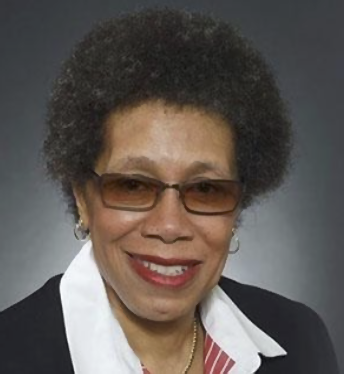
Laurie Helgoe on the Power and Challenges of Introversion

An Inner Laboratory

Lawrence Rubin: How would you, as a person, a clinician, a researcher, and a writer, define introversion?
Laurie Helgoe:
if you think of where you do your processing, where you work things out, where your laboratory is—it’s internal for an introvert
Introversion at its simplest is an inward orientation. If you think of where you do your processing, where you work things out, where your laboratory is—it’s internal for an introvert. In contrast, the extrovert’s laboratory is more external, and this difference translates to a lot of things. Introverts go inward to think things through. If there’s a question to be answered, like the one you just asked me, I might pause and kind of go inside myself to try to work out the answer before I speak. An extrovert might do that work interactively by giving you a partial answer and then engaging you in a back-and-forth until that answer is fully worked out. There’s not one “right” way, but the challenge for an introvert is if there’s not that space to go inside.

So, there’s a lot that goes with that. Many introverts talk about feeling energized through solitude. Part of that is just because they don’t have anything intruding on their thought process and kind of relax into it more easily.
LR: Being energized through solitude is interesting because we seem to live in a society in which we’re taught, or encouraged, or modeled, to seek energizing through connection, through activity, through accomplishment, through the immediacy of social media. So does that inherently place introverts against the current in our society?
LH: I think so, and that is why many introverts end up feeling bad about themselves or feeling that there’s something wrong, because we have these portrayals of the fun in life, the energizing aspects of life, as being social. I remember when one of the major phone carriers had this “friends and family” ad where one person was surrounded by this mob of people. That just sold me because it did just the opposite of what it intended because that looked like hell to me. Somehow, having that easy connection with this mob of friends and family was supposed to be what people wanted. And then when I think of the sitcom Friends, which just had a reunion show, there was the idea that people could just randomly pop into my space and I would always enjoy having them on the couch.

I think there are a lot of ways that introverts wonder things like, “Why aren’t I having fun at this party?” and “Why can’t I wait to get home and have what is considered fun for me?”
None of that fit for me, so I think there are a lot of ways that introverts wonder things like, “Why aren’t I having fun at this party?” and “Why can’t I wait to get home and have what is considered fun for me?” And in their case, that would mean getting back to a great book, or walking their dog, or just reading with space around them.
LR: I go back to that interesting analogy you made of the introvert having this internal laboratory. Is that contrasted with the extrovert, whose laboratory is the stage rather than a private enclave, and if so, does the introvert shy away from the public stage because that’s not where they process and how they process?
LH: Right. That’s an interesting question, because I happen to enjoy acting and I’m an introvert. But I think, and this is what reveals the complexity of introverts and extroverts, is that each may have different aspects, different ways in which people are introverted or extroverted. For example, public speaking is a common fear that is not confined to introverts. There are many extroverts who are terrified of public speaking despite the interest in and programming for obtaining external rewards—to get those smiles, to get those responses from others. In fact, there are dopaminergic pathways that reinforce external rewards, and these light up for the extrovert when they are socially stimulated.

I think introverts like me who enjoy the stage like teaching, acting, and performing in front of others, and particularly like the fact that they can do it in a structured way
There are fMRI findings and studies which show that introverts respond pretty much the same to images of flowers or people, whereas extroverts are very much more responsive to people-related stimuli. But while these positive, people-related stimuli can engage extroverts, they can also distract them from seeing the whole picture. Extroverts can in a way distort reality toward the positive because they really like these people-related rewards. It would be an extroverted kind of characteristic for someone to like the stage. That said, I think introverts like me who enjoy the stage like teaching, acting, and performing in front of others, and particularly like the fact that they can do it in a structured way, one that they planned and practiced for as opposed to being put on the spot. This is because when introverts are put on the spot, they don’t have time to go to their laboratory.

Misconceptions

LR: I’m fascinated by the notion of the inner laboratory—it has almost an Eastern sound to it. This makes me wonder if the so-called “extrovert ideal” is more of the dominant Western narrative, and that the benefits of introversion have only recently been recognized along with mindfulness practice and the integration of Buddhism into the clinical landscape.
LH:
in Eastern cultures, it can be the opposite, where extroverts are seen as a little weird or really out there
It’s so interesting you raise that, because there has been a lot of research suggesting just what you’re saying, which is that there is a very strong bias toward happiness in our culture—but a specific kind of happiness. Even the studies that have shown extroverts to be happier only tend to look at one facet of happiness, which is a high arousal-positive affect. But the research doesn’t look at low arousal-positive affect such as feeling tranquil and at peace, the chill feelings that are more valued by introverts. And so, you have this kind of culture-personality mismatch, which can lead introverts to feeling badly about themselves. In Eastern cultures, it can be the opposite, where extroverts are seen as a little weird or really out there. And there’s a puzzlement about this so-called American (extrovert) personality. So yes, I think there is some balance that is slowly being introduced as we look toward and value more contemplative practice in our society.
LR: Since we are this doing-connecting-running-accomplishing-externalizing type of culture, what misconceptions do clinicians need to know surrounding introversion and the introvert, such as the introvert and the schizoid personality are similar?
LH: I’m sure you were attuned to this when the DSM-5 was in development, but there was a proposal on the table to include the term “introversion” in a number of diagnostic categories as an indicator, as a symptom. But there was a loud outcry to that because what really was being referred to in the DSM was a kind of disengagement, and the problem with seeing introversion as disengagement is that it’s actually just the opposite. A healthy introvert may be quiet in a conversation, although not all introverts are disengaged. There is a continuum. Oftentimes, the reason why introverts are quiet is because we ARE engaged, because we’re processing, because we’re trying to make sense of what the other person is saying rather than the opposite, which is disengagement. We may put on good poker faces so that it seems that we’re kind of schizoid or not there. And sometimes introverts do need to make the point of narrating our process. Saying “Yeah, I’m thinking about this, just give me a second.”

so this idea that introversion is a pathological indicator is extremely problematic
So this idea that introversion is a pathological indicator is extremely problematic. I think most people who study introversion and extroversion see them as neutral categories and that there can be problems associated with either. If we look at mental health disorders, some of the impulse control disorders like substance use are more prevalent in extroverts, whereas for introverts, the internalizing disorders like depression and anxiety can be more prevalent.
LR: I am reminded of the Achenbach scales, which suggest that the externalizing disorders are more typically relegated to men and the internalizing disorders, like depression and anxiety, are more common among women. So, I wonder if there is a gender line that also contributes to the introversion/extroversion schism?
LH:
women have a harder time getting permission to be introverted
The gender differences aren’t as great as you might think. While I don’t have those figures right in front of me, one thing that’s notable is that women have a harder time getting permission to be introverted. We tend to think of the man as the strong, silent type, whereas a woman might just be considered the B-word or a snob if she’s not engaged. We have a lot of expectations on women to be the social kind of glue in our society. I think actually men are a little bit more prevalent in terms of the numbers, but they are not that different.
LR: I think I might have jumped ahead of myself. Can we go back and discuss other misconceptions around introversion?
LH: So, I think one is that there’s some kind of pathological disengagement. Another one is that introverts are shy, which is probably the most common misconception. While introverts can indeed be shy, so too can extroverts. The way that introversion is classically understood is that we are internally oriented, and our social way of engaging may be a bit different. We like a little more space in our interactions. We probably like fewer people. But all of that comes back to the level of stimulation. And I think of Hans Eysenck's level of cortical arousal and the idea that the sweet spot for everyone is in the middle, where we’re not too stimulated and we’re not bored. But extroverts tend to get cortically bored. They tend to crave more stimulation, so they’re trying to move in the direction of more stimulation to get to their middle, whereas introverts are trying to tone things down more to get to their middle.

So, for example, I’m at a party and I’m with a shy person. I, being pretty socially introverted, might be hanging on the sidelines because I kind of like being there. And there’s probably somebody there who’s a little quieter who I might want to talk to. I might really enjoy observing or just taking a break. A shy extrovert standing next to me might really, really want to be in there and just doesn’t know how. There might be a lot of self-consciousness and that kind of thing. Now again, these variables can overlap, but I think it’s much more helpful to see them as separate.
LR: This may be the pushy extroversive side of me, Laurie, but can you think of any others before we move?
LH:
there’s even a misconception or assumption that introverts really don’t have a personality—you know, that they’re kind of bland
Another one is that introverts are snobs. And this again might be due to the poker face. In the U.S., we love smile emojis, and we expect this very exuberant, outward-oriented evidence that a person is engaged, or present, or responsive. And if we don’t get that, the readiness is to assume that that person maybe doesn’t like me or is non-approving and stuck up. There’s even a misconception or assumption that introverts really don’t have a personality—you know, that they’re kind of bland. But if you just took a peek inside the laboratory, you’d find otherwise.
LR: I don’t know if this is a misconception, but there’s been a little bit of buzz in the literature about the overlap in some ways between introversion and autism. Is that a dangerous connection to make clinically?
LH: I know there has been talk that introversion is like [what used to be called] Asperger’s. I think if it helps us understand the autism spectrum in a different way, it may be useful. But I don’t know that it is the case and honestly, I haven’t gone that direction myself because we’re trying to link something up that may not be helpful and could be quite the opposite.

I’m all for the direction of us de-pathologizing most things, right? I think there is agreement around communication difficulties associated with autism spectrum disorders and there may also be some for some introverts. There may be some ways in which the spectrum would explain some aspects of their behavior.

LR: I can see what you’re saying in terms of this societal tendency to pathologize anything that’s considered different. We just tend to “other” the hell out of each other, so clinicians need to be very wary of looking for or building connections between introversion and pathology or problematic issues based upon misconceptions.

Introverts and COVID

LR: How did introverts fare during the isolation and social distancing of the COVID pandemic—heaven or hell?
LH: In fact, I was just looking at some recent findings on that, and introverts did for the most part thrive, although there certainly are variations. While extroverts had a hard time, with reported deterioration in their mental health, there were certain challenges that isolation created for introverts. Surprisingly, there was a time in history where all of a sudden, introverts were being asked, “How do you do this? How do you manage being alone? How do you manage this?” So, if nothing else, I think there was a sense that what we have is valued and has survival value—because we did. We all were safer because people stayed in their zones because they were able to socially distance themselves and to spend more time alone.
LR:
so, during this time of forced isolation, those who have historically been quite fine with solitary and internal lives became the experts in teaching the rest of society
So, during this time of forced isolation, those who have historically been quite fine with solitary and internal lives became the experts in teaching the rest of society. You mentioned the word “thrive,” and that introverts were called upon for their expertise.
LH: I can use myself as an example. I am still mostly working from home, where I teach and work with a lot of students. In my traditional face-to-face classrooms, we have an open office plan, which does not necessarily work well at all for having conversations and is overstimulating for introverts. But what is paradoxically true for me and others of my colleagues is that from home, I now engage better because I can have a conversation on-screen with a student or a colleague from the quiet of my home office. I don’t have to worry about privacy or having to find a special room because of that open floor plan. From home, I can be in a place that reflects me—we might even talk about my paintings that are sitting behind me or the view outside the student’s window, which might be snow, while I’m in Barbados. We get to connect in a more personal way because we have this home-to-home kind of connection. So I have actually found that this forced isolation has enhanced my relationships, because they have become a little more contained and kind of safe in cyberspace.
LR: Is safety a concern for introverts? And as I even ask the question, I wonder if some clinicians out there are wondering if this need for safety suggests some kind of earlier trauma.
LH:
introverts tend to be more guardians of privacy
What I mean by safety is the freedom from bombardment and overstimulation, but it can also mean the protection of privacy. Introverts tend to be more guardians of privacy, both for themselves and in relationships.
LR: Prior to COVID, I had a strict closed-door policy for that very reason, while other colleagues whose doors were always open seemed to spend far more time gabbing than working. Did you find any other differences in the ways that introverts and extroverts fared during the pandemic?
LH: One thing I know from academia is that there’s evidence that everybody’s working more since we’ve gone online. Introducing new platforms and having a lot of Zoom meetings can definitely result in social fatigue when you’re constantly on screen.

the introverts I know who have struggled the most are the ones who have extroverted family members at home
But the introverts I know who have struggled the most are the ones who have extroverted family members at home, or kids that they are locked in with and from whom they normally get a break from. I know I’ve missed some of my introvert haunts, like the coffee shop I go to work and the movie theater. I like places in the world where I can be quiet and where I can view, you know, kind of be a flâneur (I wish we had an English word equivalent). I like the idea of the passionate observer who is out and about, but not engaged in a direct way—I do get energized by that. So, I think there definitely are ways in which introverts have missed out. And certainly, we have close relationships, so it’s been very hard to be separated from family and friends, because introverts are not necessarily loners. I’ve talked to introverts who have grieved a loved one who they described as their “comfortable person.” For introverts, it’s hard work to do small talk, so we rely more on our comfortable people.

LR: And I would imagine that older people who have historically been accustomed to face-to-face contact don’t find the same level of comfort on the screen.

In Therapy

LR: I don’t imagine that people come to therapy because they are suffering from introversion. And while I was initially going to begin by asking about the challenges that introverts bring to therapy, I’d like instead to ask how therapy can tap into the strengths and resources that introverts possess?
LH:
analysis was a space where I could sort out the fact that I was at odds with the way my lifestyle was set up and how it wasn’t working for me
The first thing that came to mind when you said, “Introverts aren’t necessarily going to come in and say I’m suffering from introversion,” was that they might in some way say, “I’m suffering from society,” which is what was going on for me when I went through psychoanalysis. I talk about it in my book and how it really was the starting point for the book and for a lot of healing for me. Analysis was a space where I could sort out the fact that I was at odds with the way my lifestyle was set up and how it wasn’t working for me. It was important to finally put a name to it—that I was an introvert. I realized that I needed things that my life wasn’t providing, so I started to make some radical changes in my life.

So in therapy, you might have people saying things like they are getting hassled at work because they’re not outgoing enough, or who feel bad about themselves because they are at odds with society. It can be very, very helpful for clients to be able to put a name to it. I can point to so many people who have talked about that transformative moment when they said, “Ah, I’m an introvert. That’s why. Okay.” But, I think it typically depends on how that’s delivered.

That’s the beauty of a Myers-Briggs Type indicator, although some have criticized its psychometric properties. It really does describe each personality type in a strengths-oriented way, so people then can see themselves mirrored in that positive way. Instead of thinking that they are the problem that needs to be fixed, they have permission instead to engage in their lives in a way that works better for them.
LR: Do you ever feel compelled to point out to a client that they are introverted, or is that not always necessary?
LH: I would, and it may not even be that the word “introversion” is necessary. But I think it does help because there are a lot of characteristics that come with somebody who’s an internal processor. They might not think on their feet so well or they need space in conversations. If they have a spouse that always wants to do things or who always wants to talk, the introvert may wonder, “Why don’t I love my spouse or my partner because I don’t want to talk or do things all the time, and sometimes I want space for myself?” I might tell them, “Well, it sounds like you’re an introvert,” and they might say, “Oh, what’s that?” While most people know, I’m surprised that some people haven’t or don’t really reflect on being an introvert. I didn’t, and I’m a psychologist who didn’t really reflect on what that meant about me until well into my practice years.
LR: Do you find that it’s liberating for these clients once you tell them or suggest to them that they are introverted?
LH:
I get letters from readers all the time that say, “All I needed to know is that there really isn’t anything wrong with me, and there are other people like me.”
It’s tremendously liberating. I get letters from readers all the time that say, “All I needed to know is that there really isn’t anything wrong with me, and there are other people like me.” And there are people in our society who believe that the introvert is the rare person, kind of sitting down in the basement avoiding people, when in any given room introverts make up about half of the people in that room. So I think that knowing does shift a person’s thinking. They may finally understand, “That’s why I prefer to send an email than speaking my thoughts,” or “That might be why, after a meeting, I really feel like I need a break to think through what happened and write down some notes.” We get so much mirroring of what it means to be an extrovert, but don’t get that much about what it means to be an introvert.
LR: Would you necessarily treat a depressed, anxious or perhaps substance-abusing introvert differently than you would treat a non-introvert with similar symptomatology?
LH: I think a lot of the treatments apply well to both. But I think that for introverts, part of our treatment is to help them align their lives with what gives them joy, even though we need to be very careful about ascribing to them what we think that would be. That would be like the parent saying to the child, “You need to go out more to be with your friends,” when maybe that child simply relishes reading a book and living in this wonderful imaginative space. The parent would end up trying to pull that child out of that comfortable and happy place and telling them what their definition of happiness is. Similarly, we have to be very careful as therapists to not impose what we think the introvert’s happiness should be.
LR: I could see an overzealous introverted therapist trying to impose their expectations or beliefs on a client; sort of introversion-based countertransference?
LH:
introverts tend to be quite versatile because we bend and have to be psychologically bilingual, which is actually a strength
If the therapist had some kind of mission, that could definitely be a trap, because we do know that introverts can gain a good feeling through social engagement. Even acting like an extrovert can give you a lift. I think the difference with introverts is that it can be helpful for them to know about their introversion without feeling like they have to change who they are. Introverts tend to be quite versatile because we bend and have to be psychologically bilingual, which is actually a strength. It’s easier for introverts to act like extroverts in general than it is for extroverts to act like introverts. We saw this with COVID. It was not easy for those extroverts to flex in the introverted direction, while introverts have had to do it all their lives. Through my book and my activism, I have wanted to simply reinforce the idea that introversion is a viable option. That’s not to say that introverts have to be introverted all the time or that they won’t benefit, but the problem is that many haven’t gotten permission to be who they are in the first place. So, if you’re not who you are in the first place, how do you transcend that?
LR: Are there any other challenges or issues that introverts are more likely to bring to therapy?
LH:
maybe we introverts are entitled to a little bit of that juice that the extroverts are drinking
I think introverts, for better and for worse, can be self-scrutinizers. We are reflective. We think about our conversations. We reflect on events. And so, that may give us a more realistic view of things, and it also can induce anxiety and depression. I think this is where mindfulness techniques are so helpful—we can do that reflection without getting so attached to those thoughts and, as a result, can come back to the present. And at times, we can deliberately seek those joyful experiences and do what extroverts do. Maybe we introverts are entitled to a little bit of that juice that the extroverts are drinking.
LR: In addition to mindfulness, are there particular modalities of therapy that introverts might be more drawn to?
LH:
a very extroverted therapist who really wants a back-and-forth kind of dialogue may lose an introverted client
As an introvert myself, I always gravitated toward the psychodynamic psychotherapies in part because they provide so much space for the internal life. As number nine in a family of ten who was constantly overstimulated, I relished the luxury of having a person listen to me in a place where I got to lay back on the couch and just let my mind take up the whole room. In terms of space, that was a wonderful thing.

Not all introverts would necessarily like that. Some introverts do actually appreciate some structure or inquisitiveness from a therapist. I think that a general rule is that when working therapeutically with an introvert, there needs to be a certain level of patience to let the client consult with their inner laboratory and find out what they’re thinking. A very extroverted therapist who really wants a back-and-forth kind of dialogue may lose an introverted client.
LR: What about the opposite situation in which an introverted therapist has a very extroverted, performative, gregarious, energetic, over-stimulating client?
LH: I’ve actually had to contend with that because for me and a lot of introverts, interrupting is taboo. But some extroverts expect to be interrupted. They kind of like just letting go and knowing that you’re going to get your word in whether you want or not. Some extroverts love talking to introverts because the introvert gives the full space. But the introverted therapist may also have to be more active than they prefer with that type of client.
LR: I closed my physical practice a few years ago. It was so highly personalized, and some might argue overstimulating. If you were to be a consultant for designing therapy spaces for introverts, what tips might you offer?
LH: I love that question, because I think it’s a neglected one. One thing is that introverts are already likely coming into your office over-stimulated. If you have bright lights and a lot of clutter in your office, you’re probably not going to have somebody who’s going to be very able to settle into the space. I am very attentive to lighting so have a softly lit space, and because some introverts may not always want to make eye contact because they have to think and because sometimes our eyes will distract them, I do have some things that allow the patient or client to look away from me. They want to be oriented towards you. Introverts tend to be very absorbent of what’s going on around them. And so, they almost need to close themselves off. So, not facing the chair directly at them is helpful—kind of fanning them out so that the client can look off and go inside instead of always looking at you but can also easily enough look over at you. That kind of thing can really make an introvert feel more comfortable and open in this space.
LR: Maybe we can go into the office setup-for-introverts feng shui business.
LH: Love it.

Introverts at Home

LR: Do introverted parents bring unique challenges to therapy?
LH:
parents don’t often give permission and encouragement to help their child develop solitude skills
I do think parents feel a lot of pressure, from the whole playdate revolution, to having the most fun birthday party. I remember, and say this with a little bit of shame, but I was always relieved after Halloween was done because there was this pressure to create the best costume. One thing that I always note is that parents feel such a responsibility to help their child develop social skills, and certainly that is an important coping mechanism. But parents don’t often give permission and encouragement to help their child develop solitude skills. We can’t always entertain them. And if we are, we are developing a child who doesn’t have much resilience, because the reality is, we’re going to be alone for a good part of our lives. So, I think that it is important to help both introverted and extroverted parents foster that quiet space for their child(ren).

I remember the psychotherapy theorist, I think it was Fred Pine, who talked about the importance of quiet pleasures. Winnicott also talked about that. I like the idea that the child and you can be doing parallel things in this quiet space, and that child internalizes the ability to be alone, because they learn that they can be alone together. They learn that there is a sense of somebody who can tolerate their aloneness, which I think is such a beautiful but rare thing in parenting. That we can just do nothing together?

I was just watching the movie Christopher Robin. I love the way that Christopher Robin and Pooh talk about doing nothing because when you do nothing, something happens. I love when somebody asks me what I’m doing, and I say nothing, and then I do it. It is the idea of the generative, the fertile void. The way that boredom is a precursor to creativity. So I always ask, are we allowing kids boredom? If parents took some pressure off themselves to stop entertaining kids, kids might paradoxically end up being more self-entertained.
LR: I just wrote the introduction to a friend’s book on nature-based play therapy, and as we chat, Richard Louv’s work on the importance of nature in child development rings so loudly in my ears. I think kids (and adults) need to be in nature where there is quiet, and there is awe, and there is, like you said, an external space where they can be internal.
LH: Yes. I find for myself that having an evening walk when things are quiet is when I do feel that the laboratory is wide and vast, and I don’t have to tuck it away.
LR: Moving from parenting to relationships, what challenges have you found working with couples who are mismatched temperamentally?
LH:
an introvert/extrovert couple are going to have more conflict if they are going to be close, because they need to negotiate
I think there are a lot of introvert/extrovert couples that do quite well. But knowing from experience, an introvert/extrovert couple are going to have more conflict if they are going to be close, because they need to negotiate. So, if the extrovert wants to go out and be with friends, how often will the introvert be willing to do that? The introvert may indeed want to go to a movie or just have a quiet dinner or just stay at home and read together, which is a legitimate date, in my opinion.

There can be real advantages to that, because we might appreciate at times being pulled out of ourselves. Or pulled in, pulled back from ourselves. And so a couple that represents both those functions can become flexible in that way. What I notice is that there may be more of an ease in introvert/introvert couples. But that may also come with a lesser growth curve. The other thing can happen, though, is like with systems therapy, where one plays more of the function of introvert or extrovert. So, you have all different variations on the theme. But I think that naming this process becomes important in clinical work with couples, especially if their temperaments put them at odds. It took my husband and I twenty-five years and the writing of my book to discover that when I’m quiet, I’m not telling him he needs to explain things more.
LR: Or that you’re not withholding something from him or pushing him away.
LH: Instead, that he has been understood, and that I’m not telling him that I am disengaged. I’m actually thinking about what he says. So now when I’m quiet, he’ll say, “Oh, you’re thinking about it, right?” And I’m like, yes.
LR: So, your book in part was a marriage survival guide for yourself?
LH: Yeah, it’s very interesting to me that after writing the book, I found applications in my own life that I hadn’t yet discovered.
LR: Well, you probably were aware of those, but not consciously because you’re an introvert. They were bubbling up in some beaker deep in the back of your laboratory.
LH: There you go.
LR: As we come to an end, Laurie, what would you leave those clinicians out there who haven’t yet given too much thought to this whole introversion/extroversion area with?
LH: I think that we all benefit from having a richer world. And we have a richer world when we can embrace the internal and the external. I think too often we don’t, and we aren’t curious enough, or wait long enough to find out. I find in teaching interviewing skills to medical students that if they wait just a little bit longer, they’re going to find the story, the punchline, the meaning that, if they had spoken two seconds sooner, would have been missed. So keep in mind that the world is vast and wonderful out there. But it’s also vast and wonderful in there.
LR: If there are any questions that I wasn’t clear on, can I reach out to you after we finish today?
LH: Absolutely, because as an introvert, sometimes things get clearer later on.


Long-Term Psychotherapy and BPD, Part 2: A Dialogue on Trust


Question: What do you call a homeless horse with a Borderline Personality Disorder?

Answer: Unstable.
 

Introduction: What We Did

In this, the second of a two-part essay, we (Anne, the client, and Trish, the therapist) seek to share multiple perspectives of our co-writing collaboration, a process that we developed to inform our long-term therapeutic relationship’s new focus on Anne’s diagnosis of borderline personality disorder (BPD). Following on from Part 1, in which we detail the ways in which long-term therapy with Trish has had a powerfully positive impact on Anne’s (treatment for) BPD, this second part—begun 5-6 months after the first—moves into the “how” of our co-authoring experience. Through collaborating, Anne is able to practice better interpersonal relationships, which we identified in Part 1 of this essay as crucial to “building a life worth living.” The epistolary dialogue format (as in Part 1) models the importance of trust in the therapist/client relationship, especially for those with BPD, which for us has been built in a range of ways through creative collaboration. In Part 2, we explore the risks and benefits of this dialogic trust-building collaboration, and recognise the investments of all parties involved in the treatment of those with BPD.

In mid-2020, in the midst of Australia’s COVID lockdown, Anne was asked by a friend who edits a psychotherapy journal to contribute an article on their recent diagnosis of Borderline Personality Disorder (BPD). That process is detailed in Part 1 of this essay. In Part 2, we unpack how collaborative writing is impacting our therapeutic relationship, and how humour has played a powerful role in building trust. Our creative collaboration has also raised a number of questions and negotiations, including: What risks were identified? How were these processed and resolved? How has maintaining our dual roles improved our therapeutic relationship?

We explore not only what has changed in our therapeutic relationship due to our creative collaboration, but also what has happened underneath the changes and how co-authoring (or other creative collaboration) might be useful to both therapist and client. We consider why we came to write together, the power of attuning and attending, and shifts in the therapeutic atmosphere that can result in increased trust—most powerfully, a more expansive view of each other that seems to enhance our work “in the room.” For us, humour is a “way in,” a way for us to extend the safe space of the therapeutic exchange into different kinds of relating, a movement that leads to increased trust.

We share memes and jokes about therapy, BPD, and any other topics that need to be decompressed, which establishes a common irreverent sense of humour that solidifies the trust built over time. Common factors theory suggests that the most important influence on therapeutic change is the strength of the alliance between therapist and client. Looking beyond technique and intervention, how does what happens in the room affect our co-authoring, and how does our co-authoring affect what happens for both of us in the room? As before, we use a dialogic approach to give voice to both perspectives.

Trish (she/her): I remember several months back, you had had a bad couple of days, and you were feeling particularly isolated. I wanted to reach out in some way, so I sent you a video clip showing Pepper (my therapy dog, who has been a part of our work together) magically being able to speak through a phone app, asking how you were feeling. I hesitated several times before I sent it but did it in the end. Ultimately I think it achieved what I hoped—a moment of connection through humour, extended by you, when you sent me a video of your dog replying. This happened before the idea of writing of our first article was even on the table, but there we were, extending our therapeutic alliance beyond the counselling room and into a creative/visual space.

Anne (they/them): Our psychotherapeutic relationship is predominantly a one-way listener relationship, framed by your professional training and the terms of our engagement. Is the incessant talking of the therapy client and the never-ending listening of the therapist a false centring of the client in a way the world doesn’t uphold? Like you said the other day, the few times your own selfness comes out in sessions, the client often overlooks it and is like, “Yeah, so anyway, back to me”—which, sadly, I can totally see myself doing! What if you were to say to me, in a session where I might do that, “Hey Anne! I just said something about myself, and you totally ignored it.” It might be hard for me to hear, but that is exactly what happens in real life. And what would that mean for you as a “therapist-ever-becoming” who considers what might be possible when a client is so caught up in their own woes that they miss the you-ness? A you-ness that might be able to push them further toward better interpersonal relationships?

Trish: You came in with your American swagger, already a devotee to New York style of psychotherapy, where not everyone there might have their very own barista (it’s a Melbourne thing), but they certainly have a therapist. You seemed to be willing to take a chance on me, despite some differences that might have gotten in the way. We seemed to click, conversation flowed and continued to flow in subsequent sessions. We discovered things that connected us in shared experiences in our lives apart from the mutual age bracket we found ourselves inhabiting, both having been high school teachers, both loving dogs in the same devotional kind of way. But maybe it was mostly that I really liked you as a person—your inquiring mind, your desire to make sense of things, your wry humour, your ability to narrate your life from the couch in such a way that I was drawn into the story and cared deeply about the author. Your paid work took you away on a regular basis, often for weeks or months at a time, but you would appear again at my office and we would resume. Before I knew it, we had been doing this for a couple of years and entering the realm of long-term therapy—not new to you, but not guaranteed for me, for two reasons: Australians are not so familiar with this way of receiving (long-term) psychological support, and for me as a therapist sitting outside of the Medicare system, there were no financial structures in place to subsidize the work, at times a disincentive for prospective clients. But it has always been my preferred way of working, as one who has found a fit with the relational emphasis of therapeutic work.

When therapists get together and wax lyrical about unconditional positive regard, they rarely see this as a reciprocal idea. It is considered as something bestowed on the client, flowing from a compassionate therapist. But when it is present in the therapeutic space in its fullest capacity, it emerges out of a mutual desire for the therapist and client to see each other as the best that they can be. I want to help you and I want to be seen as someone capable of that. You want help from me and need to believe that I will not let you down. I keep getting to show up again; I can say I won’t give up on you, and you give me the chance to do that through your own acceptance and trust of me. So is this shared unconditional positive regard?

Anne: I was not surprised to find out that you were a teacher—you remind me of the best teachers I knew during my 11 years teaching in high schools. I can see why the kids would be drawn to you: your sense of humor and down-to-earth vibe instantly put me at ease. Yet one thing I’m seeing in myself through the BPD diagnosis and range of treatments is how transactional I can be: i.e., you are my therapist, and because I pay you, you should be like x. Today when we were talking about you, it occurred to me that if we are talking about mutuality, it has to include a kind of benevolence in me for you, too. It doesn’t mean you have to disclose personal details as I do, but I think the interpersonal, relational mode I was talking about does mean our therapy sessions could be a space where I try out caring more about the other.

You are not just my therapist because you were there and I said yes. You also said yes. I have not just stayed—you have stayed. You have said that you feel you can help people and maybe there’s a question in there that goes beyond me just “feeling better.” I don’t literally affirm to you that you DO help me. You do. And I don’t think I affirm you or acknowledge that in the way that you do for me. What does that mean or look like coming from client to therapist? I think I would like to try some kind of “attending to” you in our next session, as a kind of practice of my learning better how to attend to others, in a non-transactional way. It feels freeing to think of improving my interpersonal skills through getting out of my own needs and trying to live more in others’ experiences or needs. I’m not sure exactly what that looks like in our therapy sessions, but I do think this is evolving in a direction in which I can practice caring for someone without it being based on my own needs, even in therapy. Which is still part of my growth in response to my BPD diagnosis.

But why did we keep writing together, and how has it increased each person’s feeling of “being seen” in a more fulsome manner? Initially, it made sense for Anne to ask Trish to co-write the article for the psychotherapy journal, given she is Anne’s therapist and had played such a profound role in Anne’s diagnostic journey. But what we found was something more than a narration of how long-term psychotherapy might help those with BPD.

Trish and Anne started co-writing online while maintaining fortnightly therapy sessions, as face-to-face sessions had been prohibited by home isolation. During this time Anne was also completing their Dialectical Behaviour Therapy (DBT) program remotely, which had life-changing effects. We also acknowledge that we are producing writing that is going to have a public audience, and that now that shapes our creative collaboration in important ways.

We have tried writing separately and then sharing what we had written at a later point, as Irvin Yalom and his client “Ginny” did in Every Day Gets a Little Closer (1), but ultimately returned to co-authoring in a shared Google doc that has a satisfying interactivity and vibrancy. One aspect of the collaboration that emerged from the beginning is the humorous banter that we both enjoy. It is present in our therapy sessions, too, but not to the extent that it has bloomed in our tracked comments while writing together. So alive was that back-and-forth that we tried to include the tracked comments in the final draft of that first article, but it didn’t feel right; the spontaneity was lost once the time stamps and overlaps in the marginalia were formalised into the body of the essay.

The fluidity of being able to write into the same document, and comment on each others’ and our own writing, seemed to form a big part of the energy of the shared work. Trish identified “rooftop moments” and other important insights that emerged in the writing. We both flagged passages that brought tears.

________________________
(1) Every Day Gets a Little Closer

Trish: Anne, you pose such interesting questions about this creative process and why it works. It takes me back to our earlier discussions as we explored the issue of the power dynamic in the client-therapist relationship. It is a strange beast because it seems like it is both needed and rebelled against simultaneously. Sometimes, as a client, you want me to firmly take the reins and show you the way, and at other times you are aware that as you bare your life to me, I keep mine under wraps. You step into a vulnerable space and I have a boundary that keeps me safe. And I want to offer support and guidance but reject labels like “expert” and get cosy with terms like Yalom’s “fellow travellers.” “Do you think our writing together altered an established power dynamic?” For in that space I saw you as the authority and looked to you to have the answers on how the work would come together. I completely trusted that you would take us to where we needed to be with our first article. How does it feel for us to exchange leadership roles as we move from one space to the other? I encourage you and affirm your resolute commitment to wellness, as you face the parts of you that still flare up at times and remind you of the hell that is other people. (2) Then you encourage me and applaud certain passages that I write. You take note of my hesitancy and respond with patience and curiosity, perhaps in a similar way to how you do with your own students. So we redefine the terms of engagement. We allow the spaces of therapy and writing to co-inform one another, as this most human of relationships draws on all of its strengths to bring out the best in each of us. As Yalom (3)  reminds us:
 

This encounter, the very heart of psychotherapy, is a caring, deeply human meeting between two people, one (generally, but not always, the patient) more troubled than the other. Therapists have a dual role: they must both observe and participate in the lives of their patients. As observer, one must be sufficiently objective to provide necessary rudimentary guidance to the patient. As participant, one enters into the life of the patient and is affected and sometimes changed by the encounter. In choosing to enter fully into each patient’s life, I, the therapist, not only am exposed to the same existential issues as are my patients, I must assume that knowing is better than not knowing, venturing than not venturing, and that magic and illusion, however rich, however alluring, ultimately weaken the human spirit.


________________________
(2) No Exit and Three Other Plays
(3) Love’s Executioner and Other Tales of Psychotherapy


Trish: In a recent supervision session with my supervisee James, who works at an in-patient setting, we were reflecting on how patients there form a trusting alliance with the staff. James happens to be blessed with a benevolent warmth, and his presence is therapeutic before he even opens his mouth. He shared his thoughts about the negative impact on patients if they experience the mental health professionals as taking a position that is “above” them—whether that be in the way they dress or speak, or in the attitude that they convey—“I could never be in your shoes.” For James, what is important is the recognition that we can all find ourselves pushed beyond our capacity to cope and experience being unwell. That we need to have a willingness to “also see myself in their story.” Anne, it got me thinking about what you wrote in our first article—that BPD is a disorder of separation. And I wonder how it is possible to trust anyone if you feel so distant from them? As we grapple with understanding how our writing together built trust, it dawned on me that this process has been highlighting the ways in which we are similar rather than different.

Psychiatrist to his nurse: “Just say we’re very busy. Don’t keep saying, ‘It’s a madhouse.’”


When psychotherapy has an interpersonal focus, it can be described as paying attention to the interactions between client and therapist, as well as providing an opportunity for practising a more satisfying relationship that then gets taken into the real world of the client. So what is going on in our writing process, including in the comments? We agree it’s an alternative form of “the real world,” organically appearing out of the mutuality of the co-creative work. Through the collaboration, Anne starts to see Trish as a “fuller human being” with her own wants, needs, ideas, resulting in more trust of Trish. Trish reports seeing Anne also as a fuller person, in their element, strength and power, a kind of agency. We both express how the increased interactions are not necessarily about more stories of our personal lives, but rather an experience of “a different me.” For us both, we have an increased sense of how the other is with other people.

Anne asks Trish questions like, “How does it feel to be a subject with a client? To take up space?”

We both ask, “How much is too much?”

Trish has been thinking a lot about this in the last couple of days, about self disclosure as the therapist, and bringing more of the “real self” into therapy. She says,


I thought about your saying that you saw me as a ‘fuller human being’ through the writing process and it made us wonder what that would look like, i.e. to have Trish the fuller human being in the therapy sessions. There is always a risk that something may not work out the way you want it to. Including this collaboration.


For Trish there is tension about whether Anne could still trust her to help them in the therapy space if they see her vulnerable and feeling out of her depth in the writing space. This feels risky but also highly challenging to how she sees herself as a therapist. Trish’s previous self-image as being authentic and honest is tempering with the recognition that there are parts still held back. This important self-examination leads Trish to grapple with the boundary of what becomes known, foregrounding always that whatever she offers of herself still needs to be of therapeutic value. The added role of “collaborator” has both personal and therapeutic benefits for Anne. A healthy intimate relationship means both can safely be vulnerable with the other and know it can be held and ultimately strengthen the relationship, not damage it. The therapeutic potential is that if this happens with Trish, it can strengthen with others in Anne’s life.


Anne: I find it challenging to trust people who remain “distant,” as a therapist may appear, because it feels like rejection and elicits feelings of vulnerability. Navigating these secondary co-creative roles is tricky but feels reassuring to me, and the trust between us seems to increase. In therapy sessions, I am the one with issues, difficult feelings, vulnerability, who looks for support and understanding. You are the one who listens and focuses on how best to meet the needs that I express. So how is it that despite us writing about the therapy, our roles still shift? I often take the lead in the co-authoring, which is not surprising given my professional expertise. I am able to share information with you, Trish, around the process of writing together and send you co-written autoethnographic articles as examples—a classic example of table-turning, you tell me, when we reflect on the times you have sent me articles of a psychological nature in relation to our therapeutic work.

Psychotherapy is often described in the person-centred school as a respectful, collaborative, teamwork-like approach. In this way, the client-therapist team builds their alliance and works together, but—and this is a major distinction—it is all in the service of the growth of the client. And fair enough, given there is a fee attached. But it would be a deception to suggest that the therapist does not grow as well, or, as Yalom says, is not changed or affected by the work, or doesn’t think about the client beyond the therapy hour. How much of this knowledge is—or should be—available to the client? Do they even want to know?

Trish: Anne, you made a comment about not realising how much was going on “behind the scenes” in our sessions. This was probably in response to my talking about a certain approach I might take with a certain goal in mind. Do you think it is helpful for a client to know that what their therapist is doing is reparenting them, or providing empathic attunement, or providing a secure base that was lacking in childhood? I just can’t imagine a client caring about the what, as long as it works, but when I think about talking with other therapists about this work and leaving my clients out of the conversation, it seems ridiculous! I find myself imagining a conversation with fellow therapists:

Me: “Hey therapist colleagues, let me tell you about this great intervention I did the other day in a session…”

Therapist colleagues: “Oh cool…but how do you know it was great? Did you ask the client?”

Me: “Well… no… but, it’s in this book I read.”

Therapist colleagues: ‘“Yeah but how do you know it actually helped the client?”

Me: “Um… well, they probably don’t know it helped them… but… oh, shut up.”


Anne: I wonder at the disjunct between therapists’ acknowledgement that clients need to feel that you are not “above” us, are not inherently different from us, versus how infrequently clients seem to feel this sense of equality, accessibility, or sameness. As in James’ commentary above, I recognise the commitment in you, Trish, and others, to convey a sense of solidarity with clients; I also recognise what you have suggested many times, that clients do need that sense of being held, that the therapist is “holding things together” so that we can be vulnerable. Where is the balance between feeling this as hierarchical, and feeling in it together?

Trish: Anne, you are right that the balance is hard to find, particularly if there isn’t a dialogue between client and therapist about what is actually happening in the space together. As Yalom and others have often noted, it can be hard to know what helps in therapy, and I think quite often a therapist will have a different idea to the client about what was helpful, useful, or powerful in any given session. Sometimes a client will say to me, “When you said that thing last week, I found that really helpful.” And often I think, “Well actually, I didn’t quite say it like that, and it’s not what I meant, but OK. But didn’t you like it when I said this bit? You don’t remember that? Damn, I thought that was the good part…”


Cracking Ourselves Up: Enhancing Trust with Humour

Question: How many psychotherapists does it take to change a light bulb?

Answer: Probably just one, as long as it takes responsibility for its own change. This could be called having “a light bulb moment.”


Laughter has always been part of our therapeutic relationship, and we wonder as we go along what doorway this has opened to increasing trust. Our joking in the document is more frequent, but also a bit different in nature: more feeding off of one another, whereas in the room it’s a bit more measured. We are curious about the many roles humour seems to play between us in our dual roles. We discuss how—in the room—humour can also be a mechanism for deflecting, or keeping things on a more superficial level, and in this way is not always welcome. Nevertheless, once we begin our online interaction, the spontaneous humour grows. Trish writes of a time when she took a holiday and arranged for another staff member at the agency where she worked to see her clients if needed. The audacity of counsellors leaving clients in order to have some leisure time doesn’t go unnoticed by Anne in our track comments in the first article:

[Anne: how dare you LOL]

[Trish: How very BPD of you :)]

[Anne: LOL GUFFAW I think we may have a stand up routine by the end of this.]

[Trish: I know right? The side comments are almost as interesting as the article!!]


In this exchange, our shared humour strikes at the heart of the very condition that has caused Anne such anguish, and yet creates a moment of freedom as the heaviness of the label is discarded, all the while noticing that humour and pathos are indeed good friends. We agree that one reason both our irreverent humour and the creative collaboration work well is because it has emerged out of our pre-existing therapeutic relationship of almost six years. The trust and foundations were there before we altered our relationship, and Anne notes that widespread perceptions of BPD make it likely that such humour about the disorder would be hard to share with a therapist in a less established relationship.

One wall we have mutually hit together is a feeling of “too much”ness after the first essay, when we decided to continue writing together as well as still maintaining therapy sessions. The dual roles and time commitments of both soon felt too demanding, and we were able to talk about that openly and put some boundaries around it.


Trish: Anne, I recall that experience of “too much”ness was precipitated by your writing into our shared document about a dream you had had about me. I commented on how much was in the dream to be examined, but it seemed to be therapeutically, not creatively, relevant. Back then I wondered whether the writing together was blurring the therapeutic line in a confusing way. But now I think we see the line and we choose to walk along it courageously. I see an image of a tightrope walker, holding a long pole for balance. I wonder what the pole is representative of in our work together?

This experience caused us to recognise that we needed careful negotiation around how much and when we enact both roles: for example, do we collaborate while Anne is still a client? Do we have writing sessions and therapy sessions in the same week/month? After a time, we started to realise that they were folding back into one another in an iterative process that was becoming productive for both the writing and therapy, but we continue to monitor the efficacy of maintaining both roles simultaneously.


“Being Seen” through Creative Collaboration

Through humour especially, we both express a powerful feeling of being seen by the other, in deeper if not new ways. The feeling of “being seen” is, of course, a major part of the value of psychotherapy to a client, and was a strong part of Anne’s experience of therapy with Trish before the co-writing started. We decide to explore bringing some of this “whole person” or more interactive dynamic back into our therapy sessions, admitting that neither of us are quite sure what this will look like. We discuss how we might chip away at the “one-wayness,” the illusion of the therapist having no needs, feelings, investment. We consider questions like:

Is Trish always therapist Trish, even when we are co-writing?

What in that therapy space is different or the same?


It is confusing for us both at times, often in different ways.


Trish: I wonder, “Well what IS bringing more into the room?” I believe that my emotional responses are already an act of bringing myself. It is my standard practice to share things like “I’m aware that I’m feeling quite sad as you tell me this.”

We wonder together: what if we were writing a novel instead, or painting a picture? We are writing about our therapy, not something else, so it reinforces the therapeutic relationship. We reflect on the fact that Trish is also a teacher and practice supervisor, and in those roles she encourages her students to be prepared to walk the talk, to consider the ethics of asking clients to go further than they’ll go themselves. We begin to acknowledge our investment in each other.

Of course, our creative collaboration presents challenges as well as benefits. What if it dissolves, runs out of steam, or there is a creative rupture? We discuss the value of this changed way of working, despite the risks. We discuss whether writing about this will be of benefit to other client/therapist teams, and, if this multi-directionality in our sessions doesn’t work for all clients, whether it is still a worthy experiment to share publicly.


Anne: One reason why I have this trust of you is because you have hung in there, not rejecting me, through so many difficult times. And why wasn’t my treatment of you as challenging as so many others in my life? My hard behaviour, I think, is triggered by feeling rejected or judged. But rejection and judging is part of life. So how does unconditional acceptance (“unconditional positive regard”) by you help me handle rejection in the real world? One of the ways I’m suggesting is to regard you with care as a whole person, not just a “therapist.” That is, not just “there for me.” In thinking about this over the last little while, I believe the improvement in much of my behaviour comes from my starting to regard others as whole human beings with their own needs and validity, whether they reject me or not, meet my needs or not. How can I increase my ability to put myself aside and regard others in a less transactional way? If I were to do this with you in our sessions, what does that look like? Certainly not your therapy, or therapy about you. But maybe it’s more like, “How does it feel to you when I just talk the whole session?” or “Do I hurt your feelings?” or “Am I boring you right now?” Maybe attending to you (and others) is holding the dialectic of “My feelings are hurt right now, but I can also attend to your hurt feelings at the same time, or even first.” Part of improving my interpersonal relationships, I think, is being able to perceive my impact on people.

Trish: The process of writing the article with you has provoked me to re-examine the firmly boundaried position of this understood one-way process. No person-centred therapist wants to be a blank screen, and I have always believed I bring my genuine self to the therapy process with clients. Being willing to be more explicit about my internal responses to things you might say to me, rather than hold some therapeutic high ground as I bracket them off, seems like an important way forward.

We agree that it should be as intentional as setting some ground rules for the experiment. Trish suggests regular check-ins, like asking “How is this going right now?” Anne wonders how productive setting ground rules or negotiating terms of relationships might have been in other relationships or friendships, too; maybe with such agreements those relationships would have gone better. Trish suggests to Anne, “See? You are now connecting what we are doing in therapy to your life in the real world, i.e. negotiating with people around the types of interactions you have—what works for both. So here is therapy on the page.”


Mutually Revealing

One day after a co-writing session, Trish scribbles some notes, including:

Explore in what ways (even without Anne knowing) the relationship between us has been therapeutic:

  • Corrective emotional experience
  • Being there
  • Not abandoning
  • Staying with

…and that these things build trust.

Trish: I believe that so much of what a therapist does with clients is to provide a corrective emotional experience. When there is abuse or neglect or misattunement early in life, the therapy of care and unconditional positive regard gives the client the feeling of what it is like to be held. So for you, Anne, maybe some of that was to not have to listen to someone else and validate them (in the way you did for your adoptive mother) in order to feel worthy. That you get to have the experience of this for yourself. In some ways, it is not so important that it isn’t the “real world” but the world of the therapy room. The emotions are real. That I attend to you is real. And you don’t have to be “good” (thanks, Mary Oliver) in order to feel this. And feeling this with me might then motivate you to know that it is possible, and that maybe you can also feel it in your “real” life.


I have been thinking about this quite a bit over the last few days, and I have formed the belief that we needed to do this work (i.e. corrective emotional experience) before we could move into a space of being more overtly interpersonal. Trust is needed for that. I have often wanted to challenge some of my other clients with Borderline features to have a look at certain aspects of themselves and their behaviour that might impact other people, or even me, negatively, but I have found that there is a risk of their fragmenting. If someone already has a fragile sense of self, a suggestion that they could do something differently can be experienced as “I am a bad person.” So it is interesting that we are contemplating this experiment of giving the space between us more attention. Perhaps you feel secure enough in our relationship now to let me challenge you. If I let you see that I have reactions to what you do or say, that it actually affects me, I believe that you can hold this information and stay intact.

Anne: I have been thinking a lot for the past five days about my saying to you to “get over it.” One thing I’ve noticed with myself (is it the BPD?) is that sometimes I don’t intend to, but I am still quite harsh. I have always laughed this off as my New Yorker brusqueness. But is that an excuse for rudeness and not wanting to change? I’m sorry, Trish, that I spoke to you in that way. This is my being accountable interpersonally, even in a therapy session. I meant to encourage you. And I do think you are fearless in going to these places that are not the norm in the Australian context, and I love that and was trying to encourage you, but it came out in a rude and insulting way.

Trish: Twice now you have thought you might have offended me or been rude to me, and twice I have not felt offended or hurt. I wonder what you saw to think that you hurt me? An expression on my face, perhaps? Something in my response? Actually, I feel that on both occasions you were suggesting that maybe I could be more—an invitation to think big. And yet you think you were being dismissive or hurtful. I remember your saying recently that sometimes you find it hard to tell whether some communication between you and others is rude/aggressive or not. And then you might have to backtrack and check it out. I promise if you are nasty to me, I will tell you at the time and we can work out whether you meant it or not. You were witnessing my own discomfort with ambition. You didn’t cause it, you’re not the bad guy in this scenario. I am noticing and appreciating how you are thinking about the impact your words may have had on me.

Anne: I think it’s important to me that both of us acknowledge that there is fear perhaps around my BPD, because it is not only a disorder of separation, it is also a disorder of dysregulated emotions and behaviours. Through our work together and the safety of that, I am becoming more able to acknowledge the harms I have done to others and myself, harms that I can now feel regret and sadness about. That includes times I have hurt you in our work together, too, Trish. This doesn’t mean I won’t lash out (again). And as safe as I feel with you, we both know I have lashed out most often against those who are closest to me. So I recognise the courage it takes for you to continue to show up when you have witnessed so many of my hurtful behaviours to others, and sometimes experienced them yourself. That is brave, and I recognise the risk to you.

It is good and important to work together to improve my ability to calibrate my impact on others—to perceive it more clearly, perhaps—but also to model to other therapists that someone with BPD may be frightening or erratic, yes, but we can also be deeply reflective, resilient, empathic, courageous, and hungry to change. And we can care about you, even when we are mired in our own pain. And that this care for you can provide an important window to re-engaging with a world that is sometimes overwhelming for us.

Trish: You talk about acknowledging our fear around your BPD, and I wonder if it is the same for us both? You fear that you will still injure others, including me, despite how far you have come. I also fear that you could hurt me, too, might lash out at me despite the safety of our relationship. And as our therapeutic connection deepens, I take my place as someone at risk of being hurt by you. So how do we hold this fear in a way that makes sense? It brings to mind the dialectic of the work. Where there is fear, there is also bravery; where there is safety, there is also risk. And of course, as always, there is the knowing and the not knowing. It is inevitable that we hurt or disappoint the people who mean the most to us. We will do wrong, it is the nature of the imperfect relationships in which we all engage. And that brings us back to trust. With trust we are able to stay in touch with the resilience and perseverance that we see in one another, which makes repair and recovery possible. So when you care for me, and for others in their turn, know that what you are doing is an ongoing process of recreating a secure base that is at the very heart of what we all yearn for when we love and feel loved in return.


Epilogue: Returning to Embodiment—March 2021

Anne: I’m glad I came to your office today. It has been a long time since we have shared space, and so much has happened in the interim, with COVID and multiple lockdowns. I was aware of you again as a changing human person, and the affective intensity of proximity. I think one reason I felt moved today was not just about the content we were discussing, but about the relationship and the exchange. It is, as Tara Brach would say, sacred ground, where people feel seen and heard. It’s so powerful. That room is a powerful sacred space for me.

Do I have anxiety about going backward, now that my DBT has finished? Disappointing you? Being disappointed by you? Of course! That’s every relationship, surely. Today I just felt moved by the proximity, the laughing—so much laughter!—the attending, the eye contact, the ambient noises, the longevity, the commitment, and the hope, even when I can’t find exactly who I am. And also the power of the room itself. That familiar room—the white blinds, your desk, cup, computer. The little table by the couch, the bin. Pepper had died during lockdown, and I felt his absence so strongly in the room. The environment matters, and I can see it now as another expression of you, of another way of your “bringing yourself” to your clients.

Trish: Yes, it was pretty powerful being together in person today. There was a certain energy which may well have been about how long it has been since we took up the chair and the couch, or perhaps about the added layer of the creative space that we are sharing as we write, knowing that our words on screen find calibration with the ones we speak to one another. Were you more aware of me than you have been in the past? You have said you wanted to be able to hold space for others while you navigate your own emotional space. I think I noticed a subtle shift—while you certainly wanted some thoughts from me about what was going on for you, there was something different, more of an ease in you and a space created for me. And somehow I felt that even though I didn’t really have a clear answer for you, I was still offering you something, and you saw that (and subsequently wrote about it). This work together is making me examine myself in the most profound way, and if I want you to do it, then I will, too. Maybe I am also trying to find out exactly who I am when I am in a therapeutic encounter with you. I know one thing, I will trust the journey.

Anne: I was more aware of wondering what techniques you may have been using, and why. That relational aspect that I had never really thought much about before our co-authoring. I assumed the therapist just showed up and it was a one-way thing. I’m enjoying this change in my awareness: not only in terms of acknowledging what you are bringing, but also for me, thinking relationally about you. You exist. You are thinking and feeling things, not just absorbing. I also think we had a lot more eye contact yesterday than usual, that was something I was aware of. And also the laughing… Why do you think we laughed more yesterday than usual? My perspective is that it was just a bit of happiness to see you again, and also I felt you laughed more than usual and that felt like a kind of openness from you.
 

***
 

As recently as 2015, at the end of Creatures of a Day, Yalom  (4) reminds us that even in the United States, these kinds of relational accounts are all too rare and
 

not generally available in contemporary curricula. Most training programs today (often under pressure by accreditation boards or insurance companies) offer instruction only in brief, “empirically validated” therapies that consist of highly specific techniques addressing discrete diagnostic categories… I worry that this current focus in education will ultimately result in losing sight of the whole person and that the humanistic, holistic approach I used with these ten patients may soon become extinct. Though research on effective psychotherapy continually shows that the most important factor determining outcome is the therapeutic relationship, the texture, the creation, and the evolution of this relationship are rarely a focus of training in graduate programs.


For Trish and Anne, this focus on our creative collaboration allows a deepening of trust and strengthening of our relational dynamics. Trish (and sometimes both of us now) uses many of the suggestions Yalom offers for calling attention to the bond between patient and therapist including: doing process checks, inquiring about the state of the encounter during the session, Trish’s asking if Anne has questions for her. Through creative collaboration, trusting in the here and now becomes multi-modal and multi-directional in ways that can offer new forms of corrective emotional experience. It has also firmly established a secure base, the core purpose of strong and trusting client-therapist relationships, never more important (and challenging) than with clients with Borderline Personality Disorder.
________________________
(4) Creatures of a Day and Other Tales of Psychotherapy

Jessica Stone on Play Therapy in the Digital Age

Crossing the Digital Divide

Lawrence Rubin: Hi, Jessica. Thanks for joining me today. How did you become interested in digital play therapy, which really is cutting-edge and somewhat controversial with children?
Jessica Stone: I kind of straddle a few worlds here. I am a licensed psychologist with a specialty in play therapy. Within it, digital play therapy has become one of those areas of interest over the last 20 years, stemming from experiences with my own kids, who had this whole portion of their world that I didn't really understand, know about, or enter into. It struck me as a little bit ironic and maybe even hypocritical that here I spend my time at work and my energy learning and doing play therapy with children and entering their world, while my own kids have this whole portion of theirs that I was putting no effort into understanding. And so, I kind of had to smack myself upside the head and say, all right, I need to learn more about this. Why is this important to them? Why are they interested in it?

Long story short, I ended up entering into an online game called Runescape that my oldest two (of four children) were both playing at the time. I am no digital native by any means, and I was not very good at these games, but the point was that I was taking interest. I was listening to them. I was asking them questions. We were having conversations about what happened in the game, what quest they were working on; things that were important to them that prior to my entering their world, I couldn't participate in or even understand. I began to see that because this co-play was so impactful with my own children, I needed to incorporate it into my work, which really opened the door to what I have been doing for all these years.
LR: So, you recognized that technology was so important and present in your kids’ life that you would be almost doing a disservice to your young clients if you didn't cross that bridge into their digital world. Tell me, what exactly is digital play therapy?
JS:
I am no digital native by any means, and I was not very good at these games, but the point was that I was taking interest
Digital play therapy is a modality that is based in speaking the client’s language through what I call the four C’s, which are competency, culture, comfort, and capability. These are basic elements of therapy in general, but digital play therapy in particular is couched within the broader context of prescriptive play therapy, which taps into what Charles Schaefer calls the therapeutic powers of play. So the point is that there is a foundation for it. It's not just, oh, let’s just jump on this bandwagon and start throwing these digital things into what we’re doing. We as clinicians need to have a very firm and solid foundation in what it is we’re doing and why we’re doing it regardless of our theoretical foundation, therapeutic modality, and interventions, or whether the platform is virtual or face-to-face. And as in all therapies, we must ground our interventions in solid case conceptualization and treatment planning.
LR: I know that Charles Schaefer co-founded the Association for Play Therapy and has written extensively on play therapy, but can you tell our readers what he means by the “therapeutic powers of play?”
JS:
it's not just, oh, let’s just jump on this bandwagon and start throwing these digital things into what we’re doing
If you can close your eyes for a minute, imagine a graph with four quadrants that represent what he calls the core agents of change. These are facilitating communication, fostering emotional wellness, increasing personal strength, and enhancing social relationships. In turn, each of those quadrants consists of the 20 therapeutic powers of the play. For instance, in the quadrant of “facilitating communication”, we have self-expression, access to the unconscious, direct and indirect teaching. In the quadrant of “enhancing social relationships,” we have the therapeutic relationship, attachment, social competence and empathy, and so on. I think what Dr. Schaefer has done is given us a really amazing foundation from which to then tailor and customize it as fit for whatever our modality and our theoretical foundation would be.
LR: So when working with children, it's important to consider their communication skills, their emotional development, their strengths, and their social connectivity, and then if you choose to work digitally with them using an app, a video game, or even a virtual reality platform, you are doing so from a solid theoretical foundation and justification for that intervention.
JS: Right, and one of the things that I wanted to add was
there are three levels of digital play therapy: at the first level, you are simply open to it, including it in the conversation, and trying to understand why it's important for that client
that there are three levels of digital play therapy. At the first level, you are simply open to it, including it in the conversation, and trying to understand why it's important for that client. The second level would be when someone brings in, for example, a YouTuber that they are interested in, or a game, and they want to show you a video of it, or together you're looking up information about it. So you're using a digital tool, but it's to learn more about it and to share in some aspects of your client’s life. The third level would be all of the above and would also include actually meeting with your client within a game (whether you are with them in the room or virtually) or using an app together. And so, in order to have digital play therapy, you don’t have to be in the Roblox game with them. You could be at level one or level two, talking about it, asking questions about it, or having your client show it to you, or taking a tour of it.

If Not for the Legend of Zelda

LR: And that becomes part of the treatment plan as well. And you may not even know which level you're going to be entering into until you know the child a little better. Can you give an example off the top of your head of a level three experience that you had with a client?
JS: Absolutely, but I’ll sanitize all over the place for obvious reasons. I had a little elementary school age guy who came in to me because he was selectively mute. He didn't speak to any adults, including his teachers. He spoke to his parents, but he didn't speak to any adults outside of his home.

We had this amazingly intricate way of playing the physical game Guess Who, not the digital version. We came up with this whole worksheet with all the different options that he could point to and we were really proud of ourselves for having gotten to that point. But then he wanted to move on and saw that I had a Nintendo Switch sitting on my shelf. He pointed to it, and I said, “Oh, yeah. You know, I have this Switch, and really the main game I have on there is Legends of Zelda.” I listed the other games I had, but the main one that the kids really wanted to play at the time was Zelda: Breath of the Wild, and so he wanted to play it. By the way, I have the “regular” Nintendo Switch, the one with the two removable handset controllers and central viewing screen that both players can see.

We each had a controller, and I said, “But what we have to do now is to figure out how we’re going to communicate, because one of the handsets controls where the person is looking, and the other one controls where the person is walking. So if we’re not communicating, we’re going to go off a cliff, or we’re going to run into an enemy, or, you know, something is going to happen because we’re not explaining to each other what our agendas are, or what our desires are.”

it was a breakthrough that I really don’t know that we would have had it were it not for Legend of Zelda
He also had a tablet that he could type on to communicate so he indicated that he would point because he was the walker, and I would be the looker. As we were playing, we came to this dangerous thing and it became this frenzied moment because we were going to be attacked. All of the sudden, he screams out at me, “Look over there!” While I had never heard his voice before, I didn’t want to make too big of a deal of it.

I was like, okay, play it cool, but inside I was so excited. Out of the corner of my eye, I see his hand fly up over his mouth, like, oh, my gosh, I can’t believe I just did that, right? And I said, “Oh, I’m so glad you said that,” and I looked where he told me, averted the danger and we went on. I said, “You really saved us. I’m so happy that you talked to me to tell me that because we would have totally been attacked.” After that pivotal moment, he would chitchat, and there weren’t any communication lapses. It was kind of like, well, the cat is out of the bag, and I didn't make it an unsafe environment for him to do so, and it was a breakthrough that I really don’t know that we would have had it were it not for Legend of Zelda, the two controllers, and the need to communicate with each other. It's amazing.

The 4 C’s of Digital Play Therapy

LR: That was a breathtaking moment. How does it capture those 4 C’s of digital play therapy you referred to earlier on?
JS: The first three—competency, culture, and comfort really culminate with the fourth, which is capability.

Competency is those core skills that derive from our theoretical beliefs, experience, and continued education, regardless of our discipline of practice. It is within the professional. It is what we bring into the therapeutic space.

Culture is very interesting to me and something that we’ve talked about for decades as being important to incorporate into our clinical work. It has blossomed and expanded from religion, race, and place of origin to include other facets of peoples’ experience, like music, food, and interests, and of course their digital involvement.

A while back, I was invited to speak at a PAX convention, which is like Comic Con but for people who enjoy gaming. There were literally thousands of people there, all of whom shared this common experience and who have historically been characterized as “other,” with all the stereotypes that go along with gamers, like spending days in their mother’s basement playing video games.
LR: They don't fit in.
JS: They don’t fit in. And while I don’t want to perpetuate any of those damaging and non-appropriate stereotypes, there I was with thousands and thousands of people and I was the “other.” I’d never felt like the other in my life, but in that moment, it really struck me that it is such a disservice to think of people who have digital interests as “others.”

First of all, it is quite hypocritical, because at any given moment, most of us have a device near us. We have a phone we don’t leave our house without. We have our computer, and millions of people play very casual games like Bejeweled or Candy Crush on their device. So, it's quite hypocritical for us to say, “Oh, those people are others,” when really, there are simply different levels of gaming. So, the culture piece is really important to me, and we can’t simply reject portions of our clients’ lives—in this case their digital interests.
LR: If technology is so significant a part of our culture, why is there still a seeming reluctance on the part of some clinicians to incorporate it into therapy, and in this case play therapy with children?
JS: That actually brings us into the next C, which is comfort, the importance of which is that we be genuine and congruent within ourselves, and that's something that I think that a lot of therapists don’t have about technology. I talk to people, and they're like, “I don't know how to get my photos off my phone. I don't know where to find them.” So first, I think it's just basic knowledge and comfort. We know that at the beginning of the pandemic, people were freaking out. They didn't know how to use a platform like Zoom or, you know, whatever it is that they're using. Where do I get the link? How do I get into the app? How do I talk to people? What if they can’t hear me? As therapists, regardless of whether we are working with adults or children, we have a lot of things to think about when we’re in session, including, how does this fit into our case conceptualization and align with our treatment goals?
LR: How do I validate it?
JS: So
when a new anything is added into that therapeutic mix, like technology, it throws everything else off kilter a little bit so that we don’t feel secure, we don’t feel congruent
when a new anything is added into that therapeutic mix, like technology, it throws everything else off kilter a little bit so that we don’t feel secure, we don’t feel congruent, and now we are not only worrying about the logistics, but also whether I am doing the right thing for my client. And so when you package all that together, it's like, oh, I don’t even want to touch that because it’s too risky. It's too scary. In my book, Digital Play Therapy, I refer to this as techno-panic. We can point to so many different points throughout history, such as Socrates saying that the written word was going to destroy the oral word. Radios are going to destroy… TV is going to destroy… Video is going to destroy…
LR: So techno-panic results in people, and perhaps in our case therapists, keeping their distance from technology because of anxiety, worry, and insecurity.
JS: Yes, I’m going to keep my distance, because that has enough in it to scare me but not enough to inform me.

And by the way, the fourth “C” is capability—something to bring the other 3 C’s together. Capability means continually striving and reaching forward throughout one's career to embrace, or at least consider new modalities, concepts, and techniques to discover, explore, and practice.

The Virtual Sandtray: Origins

LR: This conversation reminds me of an experience I had a few years back when I encouraged a fellow play therapist, Deidre Skigen, who had been using the SIMS program as a virtual sandtray, to write an article for Play Therapy magazine. Soon after it was published, a veteran sandtray therapist (and purist) sent in a 32-page paper lambasting the idea of using a simulated sand tray. According to your 4 C’s model, this veteran clinician could probably not check off any of the C’s. With that said, please tell us about your groundbreaking app, the Virtual Sandtray.
JS: Sandtray is amazing and has been around for just about 100 years.
Dr. Margaret Lowenfeld started with the World Technique in the 1920s while working with kids after the war
Dr. Margaret Lowenfeld started with the World Technique in the 1920s while working with kids after the war. She really wanted to understand more about their experience and, in particular, their resilience. She understood that the sand tray is a creative, projective way of working with people either nonverbally or verbally. Traditionally, it's a tray with a blue bottom, and depending on the clinician’s theoretical orientation, can be made in different sizes. It can be populated with various objects and figures, which when placed in the sand create a symbolic representation of the child’s external world, their unconscious conflicts, fantasies, and projections.

It can be freeform, and then it becomes the clinician’s job to understand what that client is expressing. Sometimes people will tell a story and narrate it. Sometimes they won’t. There’re so many things that will depend on where someone’s theoretical foundation is coming from with regard to sand therapies. This is the foundation and fundamental aspect of doing sandtray therapy—your client is creating a world, a microcosm right there with you.
LR: And your Virtual Sandtray app?
JS: In 2011, following a devastating tsunami in Japan, my very good friend and colleague, Dr. Akiko Ohnogi, co-founder of the Japanese Association for Play Therapy put out a plea, “Please send us materials. We have all these people.” She and her therapist-colleagues needed materials to work with people impacted by the tsunami.
no matter what you do, sand is bulky and heavy and will escape whatever you put it in, no matter what, so an alternative was needed


I got together a bunch of stuff, and I sent it over feeling quite proud of myself for contributing to all of this but then thought to myself, how are they going to do sandtray without a sand tray? While sand trays are very popular in the United States and come in many varieties, portable kits are clumsy at best, and how were we going to get all the necessary miniatures to them? No matter what you do, sand is bulky and heavy and will escape whatever you put it in, no matter what, so an alternative was needed.

As it happened, I had received an iPad for Mother’s Day that was pretty cool to have, but it wasn’t getting much use until I thought, “It should be on an iPad.” And then I started thinking about how it could be used by clinicians and interns in hospitals and schools, in crisis situations as well as in traditional therapy spaces, whether in-person or online. A virtual sand tray could be used with immunocompromised people and clients who were traumatized and would be triggered by the sensory contact with the sand. Interestingly, my husband had taught himself to program when he was a teenager. He said enthusiastically, “You know, I’m going to start that project for you.” Being married, I had of course heard that line before, but he proudly proclaimed, “Oh, that sand tray project.” It just bloomed from there.

the Virtual Sandtray started out as a touchscreen app so that you could have the kinesthetic experience of the creation of the tray
Dr. Schaefer invited me to his annual retreat/think tank, so I was able to share my thoughts and receive excellent feedback from my play therapy colleagues. And Drs. Linda Homeyer and Daniel Sweeney, who wrote the definitive book Sand Tray Therapy, offered to beta test it and provide additional feedback. So, I was very fortunate to have such amazingly educated and experienced people giving us information, knowledge, and feedback on our app.

The Virtual Sandtray started out as a touchscreen app so that you could have the kinesthetic experience of the creation of the tray. I also did a lot of research and reading into Dr. Cathy Malchiodi’s art therapy work about the inclusion of digital-art representation and symbolism and I am so proud to say that we have recently partnered with the Lowenfeld Trust, who endorsed our product and the way it has stayed faithful to the basic tenets of her original work with the sandtray.

The Virtual Sandtray: Applications

LR: So what exactly can you do with the Virtual Sandtray app, and what clients is it best suited for?
JS: So, I'll say this as a nutshell and then put it to the side. There are a lot of administrative features that we’ve built in for the therapist which are separate from the actual clinical uses. It is also important to note that the app is atheoretical, as is use of a physical sand tray. The Virtual Sandtray app is like all other materials in the playroom, a tool that is adaptable to the clinician and the client, regardless of presenting issues. It is also useful for any age, as is a physical sand tray.

You can dig in the sand. You can build up the sand. You can paint it, add grass, or water, or cobblestone, or you can have it be sand color. You can place 3D models in it, rotate the tray, and navigate at any angle. Like a physical sand tray, it is three-dimensional in every regard.

a happy-go-lucky scene of rainbows, butterflies, and unicorns can be created against a dark and foreboding background


You can make the models bigger or smaller, turn them around, move them, and knock them over. You can blow them up. You can change the background. A happy-go-lucky scene of rainbows, butterflies, and unicorns can be created against a dark and foreboding background. Congruence between the main scene and the background is relative. You can dig down in the sand, paint the inside of the tray blue so that the bottom of the tray is like water.


11 Year-Old: Safety and Security with Unicorns and Fence, but Danger (Dragons) Lurking


Adult: Castle as Calm Space/Sanctuary


You can create a multidimensionality in the sand so that, for instance, two layers would just be sand, but the third layer is liquid. So, in the happy-go-lucky scene I mentioned above, you can change the liquid layer to lava. So now we have a multilevel, multidimensional depiction of this world for this client. We also have camera filters, so you can make it look like it's snowing, or raining, or you can invert the colors. You can do night vision, like it’s seen by aliens or something like that.


9 Year-Old: Red Dragon Scene- Danger, Missing Scary, Unsafe, Trauma


Therapist Process Tray: Sadness Over Missing out On 4th of July Due To COVID

LR: Jeez.
JS: One of my current favorites is this one called “broken,” and there’s a couple different broken varieties, but if you can imagine a scene where the person has created a scene depicting their family and then they use the camera filter so it appears shattered. This might reflect how that client feels about their family.

By the way, you can save trays and load previously saved trays to work on again. The clinician can review and compare/contrast the in-person with the online sessions. In the secure, encrypted remote mode with a free client version, no personal health information is collected, and there are multiple language and accessibility features and well over 7,000 3D models available.

Sandtray with a VR Twist

LR: In your book, you talk about the virtual reality version of your sandtray app.
JS:
In VR with the Virtual Sandtray, you can be either up in what's called God mode, where you're up above the tray, looking down, or you can come down to the level of the sand tray and interact with your creation
In 2016, I started learning more and more about VR. I remember thinking, "Mental health is going to explode with virtual reality." So my husband created a version of the app for virtual reality. In VR with the Virtual Sandtray, you can be either up in what’s called God mode, where you're up above the tray, looking down, or you can come down to the level of the sand tray and interact with your creation. So imagine a child is depicting a theme in which they have been bullied at school, or an adult client is interacting with their spouse and that interaction has been traumatic. Unlike with the Virtual Sandtray app, the client can go right down to the level of the depicted scene to walk and interact within it. It is an entirely different level of immersion. You can certainly crouch down in a traditional tray and become more physically engaged—grab the items and narrate, and move them around and all of that. But in VR, you're staring them in the face. The thing is right there. It's a really powerful, amazing, immersive experience to use the virtual reality version of it, and I’m really proud of that.


Animated Bullies Looking Down on Child Who is Much Smaller/Crying


Bullied Child As He Would Like It To Be—He Is Now Bigger and Talking To Them


VR Version of Sandtray of 11 Year-Old’s Sandtray Scene From Above

LR: Readers may be familiar with the use of virtual reality in cognitive behavioral therapy, in exposure and response prevention. And this isn’t necessarily used for exposure in an anxiety or trauma reduction sense, but it's adding another level of immersion into the play.
JS:
VR could be used in an exposure play therapy format by putting a big spider in the tray or scene
VR could be used in an exposure play therapy format by putting a big spider in the tray or scene. I can make that thing enormous, and then it becomes a challenge to the client, who has to ask themselves, “How do I manage that? How do I keep myself safe? How do I titrate toward, or away, or whatever it is?” I use VR in my clinical practice for a variety of reasons. I’ve used it with adult women for empowering them. I’ve used it with all ages for identifying safe places and spaces.

I even have a job simulator. I have a kid whose life is very regimented, and she comes in, and she just destroys the whole office. She chooses the job of being an office worker, and she goes in and dumps the coffee, and throws things, and just makes this huge mess, and it's so cathartic for her to do this with no real-world consequences.

Synchronicities

LR: What’s the difference, Jessica, between synchronous and asynchronous telemental health play therapy?
JS: This conversation that we’re having right now is synchronous. We’re both here at the same time, speaking to each other, even though we’re in different locations. If you have synchronous learning, it's the educator and the student in the same place at the same time. Asynchronous is when we were emailing back and forth. Or it may be an online platform where the educator and the student are not in the same realm at the same time. In therapy, it would be the therapist and the client were not in the engagement at the same time. So when we give a client homework, or when they're going to draw something or create something, or make a list, or whatever it is, that would be asynchronous.
LR: In face-to-face (live) play therapy, the clinician has all the goodies right there in the room—the drawing materials, blocks, sand tray, clay, papier mâché, and dollhouse, to name a few. How is this done online in a synchronous format?
JS: There are just so many different things that people are doing, and it's just wonderful. The resilience of human beings is amazing. A lot of clinicians have either identified what the client has on their end and what the therapist has on their own end, and then they can each use their materials when they see each other; for example, they could play Uno. And we’re talking about, like, traditional play materials. If we’re talking about digital, there’s a way to do so many things digitally.

Other clinicians have created play therapy kits that the client can pick up or that get delivered, so both have similar materials in their respective spaces. In a sense, it’s parallel play. I’ve had a couple of clients just say, “Okay, let’s draw a whatever-it-is,” and then on my end, I do it, and on their end, they do it, and then I hold it up and they hold theirs up and we show each other. If you’re doing it digitally, you can screen share. What it boils down to is using the tools and materials that have clinical significance and relevance and that meet the needs of the client and their treatment, and that ties into your therapeutic modality of choice.

And this brings us way back to that fourth “C,” capability, because if we really understand what we’re doing and why we’re doing it, then we are able to identify those components and find alternate ways to employ them, but if we don’t have them identified, what the hell are we doing?
LR: What you're describing seems parallel to your experience at the PAX conference where there was this alternate mainstream, and you were the “other.” I imagine that there are some therapists out there who fall into this “other” category, as well as those who are curious and in need of training and exposure, and a third group that has already embraced digital play therapy.

As we come to an end, Jessica, can you name five apps that you have found most useful therapeutically with children?
JS:
I will say that the Nintendo Switch has been an amazing resource for me in therapy, whether through telehealth or in person, and the same goes for my use of virtual reality platforms
Like you said, the Virtual Sandtray would be my tippy top. I have found a lot of therapeutic value in VR programs, and that, again, can open up a whole ‘nother conversation. I will say that the Nintendo Switch has been an amazing resource for me in therapy, whether through telehealth or in person, and the same goes for my use of virtual reality platforms. Underneath that, Roblox. While I know a lot of people who let out a collective groan about Roblox for a number of reasons, I would ask techno-curious readers to watch YouTube videos. Learn more about it. Play some things yourself. It's not as scary and awful as a lot of people think it is. You have to be savvy and have some digital citizenship.
LR: Digital citizenship.
JS: There’s hundreds and hundreds of options to choose from, different varieties and genres that you can then tailor to your client’s needs and interests. It's like Disneyland, you know, for options. Then we have Uno Freak. I mean, that's really basic. We’re just going to play Uno. Like, you put a card. I put a card. You put a card. I put a card. Draw cards. You know, just really basic, fundamental. I actually like the Uno Freak version of Uno better than the card version.

There’s Board Game Arena, and there’s a couple other board game types, as well, traditional games like chess, checkers, Othello. Battleship is a good one, but there are hundreds of other games that you may never even have heard of that you can explore, and they each have little tutorials to walk you through it. So I would say those are really fundamentals that people could start with. Certainly, if people want to know more about some of the other arenas, then I’m happy to do that. Skribbl is there if you want to play something like Pictionary. You both join. You draw. You guess. You laugh. You engage. You learn a lot about people’s frustration tolerance and their coping skills and styles, as well as their interpersonal skills and styles.
LR: Maybe the greatest takeaway from this conversation, Jessica, is that, while this may be scary and new and even evoke techno-panic in those who are probably prone to techno-panic anyway, it really is worth becoming more aware of, because there’s probably not as much of a divide between digital play therapy and nondigital play therapy as people fear or think. Anyway, the real healing comes in the relationship between the therapist and the client and how we use whatever we have or whatever they bring to help them to get where they're going.
JS: I really would like people to think of it as an "and", not an "or". And that we can take all those fundamentals and use them in really powerful ways, whatever the medium is.


LR: And I think, on that note, we’ll stop. Thanks so much, Jessica, for pointing us to the bridge between the digital and non-digital world of therapy and, in particular, play therapy.

Russell Siler Jones on Spiritually Integrated Psychotherapy

The Inevitability of Spirituality

Lawrence Rubin: Thanks for chatting with me today, Russell. I was initially going to begin by asking you to define spiritually integrated psychotherapy, but perhaps we can work towards that. Instead, I am curious as to why you think there’s been such resistance to integrating spirituality and religion into psychotherapy?
Russell Siler Jones: Thank you for having me, Lawrence, and we could think and talk all day just on that first question. But here’s a first thought, anyway, from a historical and developmental perspective. Psychotherapy is as old as humankind. Conversations to help people feel better have been happening for as long as we’ve been on the planet. And for centuries, many of these conversations happened in religious and spiritual contexts. The field of psychotherapy as we know it, as a professional discipline, is, what, 130 years old? That’s old for people, but against the backdrop of centuries, we’re still pretty young. But when psychotherapy came out of the gates in the late 19th and early 20th century, it had to differentiate itself from the healing conversations that had come before, to legitimate itself.
LR: To scientize itself.
RJ:  Yes, to scientize itself. And so, psychotherapy claimed a position for itself inside a scientific frame—although that has always been a debatable point, to what extent psychiatry and psychotherapy really know what it is they’re doing—and the psychotherapy movement positioned religion and spirituality on the outside of this “scientific” frame.

Then, in the last 30 years or so,
since mindfulness has entered the heart of most therapy practices, we see the field of psychotherapy reaching for help from the spiritual tradition
since mindfulness has entered the heart of most therapy practices, we see the field of psychotherapy reaching for help from the spiritual tradition. Not reaching for all the explicit trappings of the spiritual traditions but reaching for this core element of the spiritual tradition, which is the practice of consciousness and the understanding that to live well, you’ve got to wake up. You can’t sleepwalk your way through this life and do it well. There’s a gravitational pull to being asleep, but living well means that we’ve got to wake up. So, I think the field of psychotherapy reached out and grabbed that “wake-up” practice, which is part of almost every spiritual tradition I know of, and under the banner of mindfulness, has now made it a centerpiece.

There’s way more we could say about psychotherapy’s historical relationship to spirituality and religion. But I also think it’s important to add that it’s not just the field of psychotherapy that’s been resistant to spirituality. It’s people in general that are resistant to it. I know spirituality is appealing, and has all these benefits, and a majority of people say they value it. But many of the things spirituality asks us to do are actually quite challenging. Look inside yourself. Elevate yourself. What is it that you deeply know? What is wisdom calling you to do in this moment that might be difficult to do? Can you pick your head up out of your own self-absorption and let something larger than you be factored in? I think this is hard to do in psychotherapy or in any other context. And even though surveys say that clients want spirituality included in therapy, there is something in us that resists the kind of turnings that are part of spirituality. So we’re drawn to spirituality, yes, but we’re also drawn in lots of other directions, by the various lures of culture and of ego.
LR: It makes sense that if there has been a historical and institutional resistance to incorporating spirituality into so-called scientific practice, then that resistance will filter down to the individual. Interestingly, you spoke earlier about the nascency of psychotherapy and I immediately thought of Maslow’s hierarchy, and that as a field of practice, we’re not evolved enough to actualize and embrace the spiritual.
RJ:
and it strikes me that we are already swimming deep in an understanding of spirituality in this conversation
Yes! And it strikes me that we are already swimming deep in an understanding of spirituality in this conversation. Just your statement right there, about actualization being a spiritual process. And let’s add, since we were just talking about scientism, the need to legitimate our practices with proof, that when we say, “actualization is a spiritual process,” that’s neither a provable nor disprovable statement.
LR: So, are you suggesting that without intending to, our conversation has already broached the spiritual?
RJ: Yes. Absolutely. And wonderfully.

Explicit and Implicit Spirituality

LR: So the differentiation you make in your writings between explicit and implicit spirituality is not only part of our (non-therapeutic) conversation, but also finds its way into psychotherapy. What do you mean by explicit and implicit spiritual conversations in psychotherapy?
RJ: An explicit spiritual conversation is one that, if the average person on the street were to overhear it, they would say, “Oh, they’re talking about something spiritual. Somebody just said the word God, or meditation, or faith. They’re talking about something spiritual there.”

But implicit spiritual conversation, that’s when we aren’t using explicitly spiritual words, but spirituality is at the heart of what we’re thinking or feeling or saying. It’s a conversation about “What are you doing when you really come alive?,” or “What does all this mean?,” or “What’s my reason for being on this planet?” Or a conversation about guilt and forgiveness, or suffering, or joy. People don’t have to be using explicitly spiritual words or even thinking that what they’re saying is spiritual, for them to be tapping into the spiritual dimension.

I think most of the spiritual conversation that happens in therapy happens at the implicit level more than at the explicit level
I think most of the spiritual conversation that happens in therapy happens at the implicit level more than at the explicit level. It is explicit some of the time, but in my understanding of who human beings are, it’s implicit all the time. Every conversation is a spiritual conversation.
LR: Last night in my ethics class, one of my students asked, “What’s the difference between Christian counseling and spiritually integrated psychotherapy?” And in thinking about that question in the context of what you just said, I wonder if a therapist who is not explicitly religious or even spiritual, or is not actively “practicing” their faith, is precluded from being spiritual in therapy.
RJ: Therapists who don’t consider themselves particularly religious can definitely practice spiritually integrated psychotherapy. I know several who are really good at it. And with regard to your student’s question about Christian counseling, I’ll bet it means 50 different things to 50 different Christian counselors. But maybe at the heart of it, for all 50, is that both the therapist and the client have agreed that they are going to explicitly factor Christian beliefs, values, and practices into the conversation. That that’s going to be a part of what they do together.
LR:
Spirituality is a way of seeing. It’s a way of listening. It’s a way of being.
Along with biblical teachings and writings?
RJ: Yes. And I would say there’s overlap between Christian counseling and spiritually integrated counseling. But you could also be doing spiritually integrated psychotherapy without declaring a particular religious or spiritual orientation. And this could occur without your and your client’s ever saying explicitly, “We want spirituality to be somehow part of the way we’re coming at this.” Spirituality is a way of seeing. It’s a way of listening. It’s a way of being. Our spiritual orientation is a way of seeing, listening, and being in the same way that being male is, being white is, being educated at a certain level is. You just can’t wash it out of yourself. It’s going to affect the way you sit in the room and interact with people.

Being a Spiritually Informed Therapist

LR: What are some of the core attributes of a clinician who wants to open their therapy space to the spiritual, but not necessarily the Biblical or the religious?
RJ: A therapist who wants to honor that part of their client’s life and try to leverage it for some therapeutic gain—not one who wants to represent a particular spiritual tradition or try to advance a particular spiritual understanding, but one who wants to work with the spiritual understanding of their client—I would say they’ve got to be spiritually curious. They’ve got to have an interest in tracking it, noticing it, engaging with it. I think another key quality is humility. Humility in the sense of not assuming that the way you see things spiritually is the way the whole world sees it.
LR: Decentering.
RJ: Yeah. Yeah, yeah. You and I, if people could see us in this interview, we both have two eyes and two ears and a nose and a mouth. If people saw us, they would say, “Those are two human beings.” But they’d also recognize that we’re physically distinct. People can tell that that’s Lawrence and this is Russell. And if that’s true physically, why would it be any less true spiritually? So
a therapist who’s going to do spiritually integrated work well needs to really believe that everyone has a unique spiritual fingerprint
a therapist who’s going to do spiritually integrated work well needs to really believe that everyone has a unique spiritual fingerprint. That the way this person in their office relates with the spiritual dimension of their life and connects and comes alive is different from the way any other person who sits in their office does it. Even if the other person and you share a similar spiritual background, you must assume that everyone who sits in your office came from a different spiritual planet, and your work is to get to know who that person from that different planet is.
LR: That process of acknowledging the uniqueness of the other is itself a spiritual engagement.
RJ: I think that’s true. That is a spiritually informed value and practice for the therapist. Although, I do want to be clear. There are many wonderful therapists, many of whom are my friends, who have that same value and who say, “But I’m not spiritual at all. There’s not a spiritual bone in my body.” All this I’m saying to you, it’s just how I see it, and I know that’s not the case for everyone.
LR: Aren’t humility, curiosity, awe, and respect also the core qualities of spirituality? So even though someone may believe that they’re not inviting spiritual conversations into therapy, they are engaging in spiritual practice by virtue of trying to connect with another person.
RJ: I agree with that, and I’m just wanting to protect the space.
LR: The sanctity of the therapy space?
RJ: Yes, to protect every therapist’s right to understand themselves the way they understand themselves. So the therapist who says, “Curiosity and humility, I’m all in. I come from that place, as well. But don’t colonize that and tell me it’s spiritual.” You know, “Don’t plant your flag on my island and tell me that I’m spiritual even though I don’t think I am.” If you don’t want to claim it, I don’t want you to claim it.
LR: That might be a potential error a therapist could make: in planting their spiritual flag in someone else’s domain.
RJ: That’s exactly right.

Engaging Versus Imposing Spirituality

LR: That brings me to the distinction you make in your book between imposing your spirituality on the client and engaging the client around spirituality. Can you say more about that distinction?
RJ: Let me start with the engagement side. Engagement means listening for it and responding to it. If a client says something explicitly religious, you know, “I’ve been talking with my rabbi about this,” we show some curiosity about what that relationship with the rabbi is like and what the role of that is in their life. We don’t ignore it. Some therapists were trained to slide on past the spiritual comments their clients make, because if they talk about it at all, maybe they’re going to cross a boundary. You’re going to end up imposing, so stay away from it.

I think staying away from this client’s conversation with the rabbi or not showing curiosity about it conveys to them that maybe it’s not all that important. So
engaging around spirituality means that there’s a spirit of welcoming and hospitality if they say something explicitly spiritual
engaging around spirituality means that there’s a spirit of welcoming and hospitality if they say something explicitly spiritual. But even if they say something implicitly spiritual, like “That song came on the radio and something happened in me. And I can’t even tell you what it was,” and we pass over it or don’t engage with it, we have lost an opportunity. That moment deserves a “Can you tell me anything more about that? Can we talk about that experience a little more?” So that’s engaging around spirituality, explicitly or implicitly.

Imposition has more the feel of, “Let me tell you how I make sense of what you just said.” Or “Let me tell you a very helpful way to make sense of what’s going on in your life.” I think the gross examples of imposition would be a therapist who says, “You should become a Christian or a Buddhist. Or a cat lover.” I think imposition at a subtler level is when our client says something that in some way is spiritually bothersome to us. And maybe we don’t even know we’re doing it. It could happen even at the level of an unconscious countertransference reaction. But we pull away, we ignore, we cast some sort of shade on what they just said. I think that’s also a way of imposing our own spiritual perspective on a client and their life.
LR: And that’s what you referred to in your book as spiritual countertransference, which in this case would be an imposition or an ignoring or a pulling back from a client when they enter their spiritual realm and you’re not comfortable being there with them. Or you try to pull them out of their spiritual realm because you’re not comfortable or you don’t agree, or it goes against your own teachings.
RJ: Yes, exactly.
LR: Can you give an example of a time when you were impacted by your own spiritual countertransference with a client?
RJ:
feeling judgmental toward a client is an example of spiritual countertransference
Feeling judgmental toward a client is an example of spiritual countertransference, and that’s one I’m just a wee bit acquainted with. Say I’m talking with someone who is giving voice to a racist or sexist or heterosexist point of view, I might start feeling bothered or judgmental or annoyed or hostile. I know myself as a therapist, and I know I’m probably not going to reach across the room and try to shake those attitudes out of them. But I still have to deal with some degree of judgment in myself that becomes a barrier to really being present in a helpful, caring, loving way with that client.
LR: That sounds like “plain old” countertransference. Why does it necessarily cross over into spiritual countertransference when you express or feel negative or judgmental towards that same person?
RJ: I think what you’re smoking out here is that for me, plain old countertransference is also spiritual countertransference. Every experience I have, I feel it in a spiritual way. So judgment—we don’t have to think of that spiritually. But in the spiritual traditions, the deadliest thing going is self-righteousness.
LR: So judging someone negates the other person’s humanity.
RJ: Right. And when I negate theirs, I negate my own. When I’m in judgment of you, even if it never leaves my mouth and is just in my own head, I’m also harming myself.
LR: You’re actually minimizing and dehumanizing yourself by elevating yourself over someone else.
RJ: Yes.

Therapy as a Spiritual Journey

LR: From your description, it seems that spiritually integrated psychotherapy leans towards the existential, humanistic camp of therapy more than any of the more mechanistic, reductionist ones like CBT.
RJ: In the way I come at it and practice it, yes. But I think there are spiritually integrated therapies that tie themselves to the more structured, protocol-based therapy models. There are spiritually integrated CBT protocols.
LR: This may be sort of counterintuitive, but based on what we’ve been discussing, CBT doesn’t seem to have a spiritual flavor to me.
RJ:
ah, but everything has a spiritual flavor
Ah, but everything has a spiritual flavor. I haven’t done a whole lot of thinking about the spiritual flavor of the CBT model, but I think it does possess an implicit spirituality and that spiritually can be integrated into it. For instance, a CBT therapist helps a client identify a core belief such as, “I’m stupid. I never get it right.” And the spiritually integrated CBT therapist might say, “Is there anything in your spiritual tradition or any part of your faith that speaks to that?” And then, perhaps the client pulls on a sacred text or some sacred affirmation that really emphasizes the value of this person, like maybe the client’s value in God’s eyes. The therapist then helps the client to integrate that belief or to try to switch beliefs.

But to your point, in the way I see the world and practice therapy, spirituality is implicit in everything. And it’s not just a way of conceptualizing, it’s not just technique. It’s a way of being in the therapeutic space. I think in that sense, it’s very much in the same family as the existential and humanistic therapies.

What is Spirituality, Anyway?

LR: So are you suggesting that all therapeutic encounters, regardless of theory or technique, are spiritual undertakings shared by two people, even though it may not be explicitly stated as such?
RJ: Yes, I do think that is true. And so, maybe now is the place to talk about what is spirituality, anyway?

First of all, I’ve never read a definition that I find completely satisfying. And the reason is: when we discuss or try to define spirituality, we’re talking about something whose very nature is mysterious and beyond words. So every definition of spirituality in the spiritually integrated psychotherapy literature includes a word that also requires some additional definition. Maybe the best-known definition of spirituality in the literature is Ken Pargament’s notion that spirituality is a search for the sacred. And that’s a great definition, but here we go: what does sacred mean?

In my book, I say spirituality is all the ways you and God relate with each other. But I spend a whole chapter talking about what I mean by God and how I’m using the word God in a poetic, imagistic way. It’s hard to define spirituality. We know it when we feel it. We know it in a way that’s other than linear and rational and definable. But what I mean by spirituality is: it’s the way we orient ourselves to the mysteries of life.
LR:
maybe the best-known definition of spirituality in the literature is Ken Pargament’s notion that spirituality is a search for the sacred…but what I mean by spirituality is: it’s the way we orient ourselves to the mysteries of life
The undefinable!
RJ: Right! And the mysteries of life are these things we’re bumping into all the time. Where did I come from? How did all this get here? What happens after I’m gone? Does anything survive? What really, really matters? What’s worth spending this life on? Do you remember the “Once in a Lifetime” song from The Talking Heads? The line that goes: “How did I get here?” Or Mary Oliver’s poem, “The Summer Day,” where she asks, “Tell me, what is it you plan to do with your one wild and precious life?”

Spirituality is the way we live out answers to those questions, and so we’re doing it all the time. You and I are doing something spiritual right now. We decided that sitting together and having this conversation matters, and it feels to me like we’re bringing ourselves to it with a fair bit of passion.
LR: I guess it’s the passion rising, and I’m sorry to cut you off, but I’m flashing back to the interviews that Bill Moyer did with Joseph Campbell around mythology. Bill Moyer said, “So people struggle to find meaning in life.” And Campbell said something like, “No, people struggle to find a reason for living. Not a meaning in life.”
RJ: And what’s the difference, for you?
LR: The former sounds more like an intellectual exercise, and the latter like a “where people actually live” thing.
RJ: That’s the way I heard it, too. Not many people are sitting around thinking, “What is the meaning of life?” Most people are thinking, “What am I going to have for dinner?” And, “How am I going to get ahead?” “How am I going to get that person over there to pay attention to me over here?” But everyone is asking, “How do I get through this day? And what do I need to do to be happy? And am I OK?” And the way they live out their answers to those questions is connected to whatever they feel in their bones is the reason for living.

Spiritually Integrated Psychotherapy

LR: I had initially wanted to begin the interview by asking “What is spiritually integrated psychotherapy?,” which almost seems to be moot at this point. I think we’ve answered it by saying that all therapy that honors the transcendent, the mystical, the unknowable, the important core values in life as a spiritual process.
RJ: Yes. And let me add on to that wonderful summary you just offered. I would say that the most important question in psychotherapy is this: “What do you want?” We ask it the very first time we sit with a client, and we ask it again and again over the course of therapy, “What do you want?” What do you want to be different?” “What are you hoping for?” Whatever their answers are, embedded in them are some underlying assumptions about what it is that’s worth wanting. What matters enough to want? And a lot of the complexity of our lives is due to wanting things that are at odds with each other. “I want to get ahead at work, and I want a close relationship with my friends and family.” So what do you want more? What do you want most? What do you really, really, really want? These are spiritual questions.
LR: Wanting to succeed at work and to be in a relationship seem to be undergirded by, “I want to feel important.” “I want to be doing something valuable, I want to be loved.” So even those goals, which seem sort of transient and superficial, are, at a deeper level, spiritual goals.
RJ: Yes, if you succeed at work, what will that get you? If you have a good relationship with your spouse, what will that get you? What comes of that? What’s beneath all that? And I think the deeper you drop into that question, the more you land in some set of spiritual assumptions. Unprovable spiritual assumptions, but we organize our lives around them all the same.
LR: It’s not what is spiritually integrated psychotherapy, it’s how deeply will you journey with your client in therapy toward core spiritual issues?
RJ: Yes. Spiritually integrated psychotherapy is about following your client as deeply as they want to go.
LR: Even if you don’t want to go there.
RJ: Yes, following them, inviting them into as deep a space as they want to go to. But no deeper than they want to go right now. I think another way of imposing a spiritual perspective is trying to drag your client into a deeper part of the swimming pool than they want to be in, or deeper than they know, in their bones, they need to go right now.
LR: So when my daughter’s therapist recommends that she’s experiencing death anxiety and suggests she read Irvin Yalom’s “Staring at the Sun,” she might be pushing her a little bit.
RJ: Maybe so. You know, everything we do in therapy is an experiment, and hopefully, we’re paying attention enough to our client to see what happens in this experiment and to adjust. I think people come to therapy because they basically want someone to ask them, “What do you want?,” but also the related question, “What needs to happen?”

So, if your daughter is experiencing death anxiety, a spiritually integrated and implicitly worded spiritually integrated question might be, “What needs to happen?” And that question invites some inwardness and invites your daughter to seek a wisdom from a source that is not maybe part of her everyday, ordinary, or habituated way of handling her death anxiety, and invites a shift in perspective. But anyway, I guess I'm just suggesting that instead of saying, “Go stare at the sun,” the first question could be “What do you think needs to happen?”
LR: Could a related question be, “What does death mean to you?”
RJ: Yeah, absolutely.

Spirituality and Mental Health

LR: I’m curious about the distinction between spiritual health and illness and how a therapist recognizes and works with them.
RJ: Let me say something that I hope is unnecessary, but I’ll say it anyway. We don’t parse between spiritual health and spiritual illness based on the content of our client’s beliefs. We don’t say someone is spiritually ill because they believe something that we think is wacko or is different from the things that we treasure in our spiritual belief system. You know, in religion, there is such a thing as heresy, but in the world of psychotherapy, we’re not interested in heresy. We’re interested in, how well does this person function in their life? To what extent do they experience psychic suffering and to what degree are they impaired? And I think some of the spiritual measures of psychic suffering or impairment would be things like how much are hatred and resentment a part of this person’s experience? How infected or affected by hatred are they? How much is greed infecting and affecting this person? How much—
LR: —about their lives is meaningless?
RJ: Exactly! How connected or disconnected is this person to feeling that “My life matters for something important?”
LR: Worthlessness and meaninglessness infect and affect someone as toxically as hatred and bigotry and greed. Seven deadly sins, right?
RJ:
ome of the spiritual measures of psychic suffering or impairment would be things like how much are hatred and resentment a part of this person’s experience? How infected or affected by hatred are they? How much is greed infecting and affecting this person?
Right. And I think connected to the sense of meaning is a sense of awareness and consciousness. You know, how awake or asleep is this person? And on this point, what we mean by spiritual wellness and psychological wellness are really close to each other: to what extent is this person living their life on automatic pilot, in some habituated, unconsciously driven, stimulus-response sort of way? And to what extent are living with awareness?
LR: It makes me think about addiction.
RJ: Addiction, yeah.

And the opposite of addiction, maybe, is freedom. To what extent am I free in a given moment? And then, another thing I would put in there would be a sense of agency or power. How paralyzed or futile do I feel in my life? And to what extent do I think the choices I make matter? And can I gather my energy behind a choice and a decision that matters?

Another thing to remember is that all these healthy spiritual capacities are usually inseparable from our attachment experiences. They’re inseparable from experiences we may have had with trauma. They’re inseparable from the historical forces that have shaped the world in which I’m coming to be a person. The spiritual dimension is inseparable from all that.
LR: That’s an elegant answer, Russell.
RJ: Thank you.
LR:
when you read the DSM with a spiritual eye, you start seeing spirituality everywhere. Think about the criteria for depression in the DSM. There’s mention of hope, loss of hope, which is a spiritual word
I know you labor intensely to put these complex thoughts into just the right words, but to me, it brings together the field of mental health and spiritual health. Perhaps at the surface are the behavioral, emotional, and cognitive symptoms that people bring to us that they want alleviation from. The person who has, for example, been sexually assaulted has also been spiritually violated. The person who is depressed has, perhaps, lost access to spiritual connection, while the person with an anxiety disorder is struggling with meaning and a sense of powerlessness, perhaps. I wonder if you can rewrite the whole DSM from a spiritual perspective.
RJ: Well, it’s funny, you know. When you read the DSM with a spiritual eye, you start seeing spirituality everywhere. Think about the criteria for depression in the DSM. There’s mention of hope, loss of hope, which is a spiritual word.
LR: Worthlessness.
RJ: Worthlessness.
LR: Lack of will.
RJ: Feelings of guilt. And no longer taking pleasure in things that one used to take pleasure in. The spiritual word for what they’re talking about there is joy.
LR: Andrew Solomon, who is well known for the work he’s done on depression, says, “The opposite of depression is not happiness. The opposite of depression is vitality.” And vitality, it seems based on our conversation, is spiritually elemental.
RJ: That’s right. Another way of talking about that is the phrase “the life force.” That’s how I talk about spirit sometimes with clients who are not explicitly religious. How connected or disconnected are they feeling to the life force?

Seeing Beneath the Despair

LR: I’m hesitant to bring this into the conversation because it touches so many nerves. But as I watch and re-watch the assault on the Capitol on January 6th of this year, I wonder what those people shared and if there were issues of spirituality at play that might find their way into psychotherapy?
RJ: I understand why you may edit this out. But I’ll speak into that space, too. And my hesitancy to speak into it may be similar to yours. Or not. But mine is I want to be really careful that I’m not imposing my own worldview onto people who aren’t here to speak for themselves.

But
as I try to make sense of that scene at the Capitol, a good bit of what I saw really was spiritual
as I try to make sense of that scene at the Capitol, a good bit of what I saw really was spiritual. And at the heart of it was despair. The anger was obvious, the rage. But beneath the rage, I think, there is despair. And there are probably many causes of despair, many of them intensely personal. But there are also social forces, collective forces, that are part of it. One of them, in my mind anyway, is economic, the way wealth is so unequally shared.
LR: Yes. Along with racism. The rage around racism is, I think, intimately tied to the violence around the Capitol and assault in other situations, in which there’s this collective sense, perhaps, of anomie, of despair, of worthlessness. But then, I guess we’d have to get into a bigger conversation around spiritual illness in our country.
RJ: Yes, what are our shared spiritual illnesses? Groups and cultures can be healthy or unhealthy, although that’s too either-or a way of saying. Groups and cultures are a blend of healthy and unhealthy, just like individuals, healthy and unhealthy at the same time. You know, I guarantee you, most anybody in that crowd that day, if you could pick them out and have a conversation with them, you would find multiple spiritual virtues in those people. And, I’ll add, multiple spiritual vices. Violence is an expression of a spiritual vice.
LR: Which is?
RJ: Anger is one of the seven deadly sins in Christianity. In Buddhism, the three poisons are hatred, greed, and delusion. Violence has roots in all that. But my main point is, I think we’re all a blend. I have spiritual virtues and vices, and in different moments, in different circumstances, and under the influence of a crowd, my virtues and vices get amplified.

You know, another thing that was spiritual about that day, and about politics in general, is the projection of hope onto a savior.
LR: No Biblical references there, right?
RJ: Right. Yeah, “This is our guy.” “This is the one to deliver us from evil and evildoers.”
LR: One of my mental health counseling interns, an Orthodox Jew, was initially placed in a facility where she was working with young Black men. There, she heard stories of horror and tragedy-filled lives that she’d never heard before. And she was very reactive, very non-self-reflective, very defensive, and at the core, scared. She undertook her own therapy and had some solid supervision and then moved into a different facility with substance abusers where one young man picked up his shirt to reveal a swastika on his stomach. In that moment, she was able magnificently to be aware of the pull toward reactivity…toward instant hatred. But she was able to step back and wonder instead who he was beneath the swastika.
RJ: Wow, what a powerful example of drawing upon a spiritual virtue in a very intense moment. Something in her helped her see that man as a story, to see a past in him, to see deeper than the skin, deeper than the shield.
LR: Deeper than the shield?
RJ: Deeper than the swastika shield. To see the human being behind that shield. Good on her for being able to do that in the moment. That’s not easy. And you know, she earned it. Because it sounded like she had willingly put herself in an uncomfortable situation that stretched her—the previous internship—and it helped her get to that place, where she could remain in the center of her own being. “No matter who this person is around me, here’s the way I’m going to treat him.” That is a very spiritually grounded response that she was able to make.
LR: I’m going to tell her. At Psychotherapy.net, we’re working on a series of videos around counseling African American men, and one of the tragedies that these particular clients experience, and not unlike other people of color, is this sense of invisibility. That they are seen only for their skin color. And it makes me wonder, Russell, if one of the keys to working effectively with clients of other races, other belief systems, other cultures, is a spiritual venture in seeing them. Really seeing them and inviting them into this therapeutic space.
RJ: Yes. “Who are you? Tell me who you are. I see the color of your skin, and I have these implicit biases about you. I can’t help it. I grew up in this culture that tells me repeatedly who you are. And I have these implicit associations and prejudices. But within myself, spiritually, can I recognize my tendency to distortion and to prejudice, and somehow look at you and see you for who you really are? And ask you to tell me that—who are you?—ask you to show me that.”
LR: So if I were to sum up good therapy, we would talk about a powerful connection between two people—one who identifies as a client and one who identifies as a therapist? A shared spiritual journey.
RJ: Yes, I agree.
LR: And I come back once again to that original question I was going to ask, which was, “What is spiritually-integrated psychotherapy?”
RJ:
spiritually integrated psychotherapy is psychotherapy that makes use of the spiritual dimension of our client’s lives and of our own spiritual capacities and wisdom
It’s a hard thing to sum up in a sentence. But if people read this far into the interview, let’s thank them for that with a single sentence. Spiritually integrated psychotherapy is psychotherapy that makes use of the spiritual dimension of our client’s lives and of our own spiritual capacities and wisdom.
LR: With spirituality not necessarily being anchored to God or a particular religious practice, but more a set of core underlying values that we all share as humans.
RJ: Yes. There are theistic and nontheistic spiritualities. But all humans try to live—to find some reason for living and to actually do their living—in ways that are informed by assumptions about what’s real, what’s true, and what matters.
LR: As we come to a close, I want to reiterate that I thoroughly enjoyed your book, Spirit in Session, and hope people will buy it as a result of reading the interview. It is a must-read for those interested in spiritually integrated psychotherapy.
RJ: Oh, thank you for saying that, Lawrence. I believe in the book and want people to read it. One of my missions in this life is to help therapists feel more confident that they can do this kind of work, and the book is part of that. It’s a therapist talking to other therapists, in everyday language, and there are lots of transcripts from actual therapy conversations. Plus, it’s low-cost, so I don’t have a problem pushing it.

And if I could, I’d like to plug two other resources for therapists who want to grow their competence in working with spirituality. One is relatively small scale. It’s the CareNet Residency in Psychotherapy and Spirituality. CareNet is a state-wide outpatient counseling network in North Carolina. It’s part of the Wake Forest Baptist Health System. Our Residency is a two-year training program for therapists licensed at the associate level. They come to work at CareNet, and they join these learning cohorts. We have 10-12 residents at a time, five or six in their first year, five or six in their second year. I’ve been directing this program for 13 years now, we’ve had the most amazing people come through the program, and they’re the ones who taught me how to talk about this and teach it.

The other resource is larger in scale. It’s a national-in-reach training program in spiritually integrated psychotherapy offered through ACPE (Association for Clinical Pastoral Education). Historically, ACPE has offered top-notch training for chaplains and others who provide spiritual care, but they’ve recently developed a psychotherapy wing. I’ve been part of helping ACPE develop a 30-hour continuing education curriculum and a certification program. We now have 38 trainers offering this program across the country. So, if people want to do more than read a book, if they want to connect with other therapists who are trying to work more skillfully with spirituality, I’d encourage them to check out the ACPE website.
LR: I think that’s a good place to stop. I really enjoyed this conversation Russell. This is what I aspire to in these interviews, not just throwing questions at people, but engaging deeply in meaningful conversation.
RJ: Thank you, Larry. This was delightful. Thank you for sharing this platform with me. I hope people will read it and find it useful. And if they do, for me, that’ll be gravy. That’ll be a bonus. This real and rich conversation is already gift aplenty.

Treating the Compulsive Personality: Transforming Poison into Medicine

One summer during my analytic training, I committed myself to study, outline, and completely internalize Nancy McWilliams’s Psychoanalytic Diagnosis (1994). The idea that you could be more effective with clients by understanding their specific patterns ran contrary to the anti-diagnosis attitude at my training institute. But it appealed to my eagerness to be helpful.

Not long after I began, I recognized myself in the chapter on the obsessive-compulsive personality. While I didn’t meet the DSM-5 criteria for obsessive-compulsive personality disorder (OCPD), I certainly had my compulsive traits: perfectionism, over-working, and planning, just to name the obvious. McWilliams’ description elucidated who I could have become, had I not had a supportive family and lots of analysis to rein in those tendencies.

But this wasn’t just personal or theoretical. I recognized the collection of traits found in the personality style in my many driven, Type A, and perfectionistic clients working in law, finance, and publishing in work-crazed midtown Manhattan. And I saw the suffering it caused.

The Unrecognized Stepchild of Personality Disorders

Captivated by the subject, I eventually got involved in some online OCPD support groups. There, I read many stories of people who thought they had OCD for years before finally realizing that their entire personality was characterized by compulsive tendencies. They had known that their struggles weren’t just with specific obsessions and compulsions, but that was the only diagnosis they were aware of that was even close to describing them. And in many cases, OCD was the diagnosis a clinician had given them.

This pattern of misdiagnosis became even clearer once I began receiving comments and emails from people reading my new blog, The Healthy Compulsive Project, and my book, The Healthy Compulsive.

While OCPD is one of the most frequently occurring personality disorders of the ten listed in the DSM, it is under-recognized and probably underdiagnosed (Koutoufa & Furnman, 2014). Far too often, it’s confused with OCD by both the public and clinicians. One study indicates that the lack of recognition of the condition leads to a lack of empathy for it (McIntosh & Paulson, 2019). And far more people suffer from obsessive-compulsive personality traits than those who meet the full criteria.

It doesn’t help that it’s ego syntonic not just for the sufferer, but to some extent for our culture as well. Capitalism doesn’t care if you work too hard. According to psychologist and researcher Anthony Pinto (2016), there is no empirically validated gold standard treatment for OCPD. I suspect that this is a function both of our tolerance of it and of the difficulty in treating it.

What’s the Meaning of This?

As I filtered all of this through my training as a Jungian analyst, my curiosity about the underlying meaning of the disorder was piqued. Jung emphasized the importance of asking what symptoms and neuroses were for. What potentially adaptive purpose did symptoms serve in the patient’s life, or for humankind at large? Could there be meaning under something so destructive? Was there some underlying attempt to move toward individuation gone awry?

Looking up the etymology underlying the word “compulsion,” I realized that it wasn’t originally a bad thing. A compulsion is an urge that’s almost uncontrollable. A drive or force. And that’s not all bad. Many of these urges lead to creative and productive behavior. But “before I could find any possible light in the condition, I had to acknowledge how dark it could be”.

The Cost of OCPD

The more I observed the world of the obsessive-compulsive personality, the more I came to see its destructive potential. A review of OCPD by Deidrich & Voderholzer (2015) tells us that people who have OCPD often have other diagnoses as well, including anxiety, depression, substance-abuse, eating disorders, and hypochondriasis. OCPD amplifies these other conditions and makes them harder to treat. People with OCPD have higher than average rates of depression and suicide and score lower on a test called the Reasons for Living Inventory (Deidrich & Voderholzer, 2015).

Medical expenses for people with OCPD are substantially higher than those with other conditions such as depression and anxiety. And the study indicating this only included people who had sought treatment—which excludes the many with more serious cases who don’t (Deidrich & Voderholzer, 2015).

The cost for couples and families is great. People who are at the unhealthy end of the compulsive spectrum can be impossible to live with. They can become mean, bossy and critical, and their need to control often contributes to divorce. Much of the correspondence I receive is from partners of people with OCPD who are at the end of their rope, looking desperately for hope that their partner can change.

Parents with OCPD often place unreasonable demands on their children. This can interfere with developing secure attachment and may also increase the chances of a child’s developing an eating disorder.

It also causes problems in the workplace. While some compulsives are very productive, others become so perfectionistic that they can’t get anything done. Still others prevent their coworkers from getting anything done because their criticism disrupts productivity.

Similar problems happen in other organizations such as volunteer groups and religious institutions. People with compulsive tendencies often become involved in community groups, and they’re so convinced that they’re completely right, and that they should control everything, that they contribute to the deterioration of the organization, partially because others don’t want to work with them (Deidrich & Voderholzer, 2015).

Just as disturbing is knowing of the many personal, community, and cultural benefits that the condition prevents when it hijacks energy that would otherwise have led to leadership, creativity, and productivity. Compulsives can be movers and shakers, but instead they often end up being blockers and disruptors. The people who shape the world are the ones with the most determination, not the ones with the best ideas. And compulsives have lots of determination.

The Adaptive Perspective on OCPD

As I looked more deeply into the condition, I could see that the original intention beneath compulsive control is positive: compulsives are compelled to grow, lead, create, produce, protect, and repair. It seemed to me that the obsessive or compulsive personality is not fundamentally neurotic, but a set of potentially adaptive, healthy, constructive, and fulfilling characteristics that have gone into overdrive.

I’m certainly not the only one to make this observation. A dimensional perspective of personality disorders is gaining momentum (Haslam, 2003). But this viewpoint is still sorely needed for sufferers, partners, and clinicians.

Realizing that evolutionary psychology might provide an understanding of the adaptive potential of obsessive-compulsive tendencies, I contacted psychologist Steven Hertler, who has been on the front lines of thought in this area. His ideas resonated with what I had suspected about the survival benefits of obsessive-compulsive tendencies: the behavior that those genes led to made it more likely that the offspring of those with the genes would survive (Hertler, 2015). For instance, being meticulous and cautious is part of what Hertler (2015) refers to as a “slow-life strategy,” which increases the likelihood that those genes will be handed down.

Most importantly, though, a perspective which highlights the possible benefits of a compulsive personality style has significant clinical benefits. Conveying the possible advantages of this character style to clients lowers defensiveness and encourages change.

There is a wide spectrum of people with compulsive personality, with unhealthy and maladaptive on one end, and healthy and adaptive on the other end. Clients on the unhealthy end of the spectrum can be very defensive about their condition. They tend to think in black-and-white terms, good and bad, and their sense of security is dependent on believing that they are all the way on the good side. This makes it hard for them to acknowledge their condition, enter therapy, and get engaged in treatment. When they do come in, it’s usually because their partner is pressuring them, or because they have become burned-out or depressed.

If we are to help people suffering from obsessive-compulsive personality disorder, we need to find a way to get under their defenses so that they can make use of therapy. When we understand and convey that OCPD is a maladaptive version of something much more positive, we begin to forge a good working relationship.

But as therapists, we should also acknowledge that some individuals are so far to the unhealthy end of the continuum that even if they were to enter therapy, we might not be able to help them. It was important for me, at least, to be realistic, so that I didn’t set myself up to feel that I had failed if I wasn’t able to help someone.

Characteristics of the Obsessive-Compulsive Personality

The DSM-5 says that OCPD is defined by a “preoccupation with orderliness, perfectionism, and mental & interpersonal control at the expense of flexibility, openness, & efficiency” (American Psychiatric Association, 2013). It goes on to list eight criteria; since these criteria are readily available, I won’t list them here. But I do want to emphasize what the DSM-5 (2013) points out in the first criteria: people with OCPD are preoccupied with details, rules, lists, order, organization, or schedules to the extent that the major point of the activity is lost. I have found this to be a defining characteristic of people on the unhealthy end of the compulsive spectrum—they’ve lost the point of their rules and efforts to control. They’ve lost their original intention, the thing they first felt compelled to do.

I remember being struck the first time I noticed this. A female client was talking about how she had berated some people for not following the rules. It struck me that she was so adamant about the rules that she had forgotten who the rules were meant to help and protect—the very people she was berating.

One goal of treatment should be to help clients recover, or uncover for the first time, the original impulse, the deeper motivation that has compelled them. I may be biased because I practice psychodynamic treatment, but it seems to me that because OCPD affects the entire personality, psychodynamic treatment will be the most effective. I say this because cognitive and behavioral treatments are most effective for very specific issues, less so for the sort of global issues that characterize OCPD.

But those of us who work psychoanalytically may need to budge a little on maintenance of the frame, disclosure, the use of goals, and our reluctance to diagnose. Just as the saying “the only way to peace is peace” goes, “the only way to flexibility is flexibility.” We need to be mindful of our own personal need to control, and a certain rigor that our training may have encouraged: we might think or feel that we are doing the “right” thing by following the rules. But in particular aspects of the work with compulsives, we may gain more through example than through analysis.

Eight Key Points

I’ve found that there are particular themes and tasks that I usually need to work through with compulsive clients over time. I don’t believe that these are unique to OCPD, but rather that they usually require more emphasis than might with other conditions. I outline these below with the suggestion that they be used in a flexible and organic way, rather than as hard and fast steps.

In each of these steps I try to enlist clients’ adaptive compulsive characteristics to foster change.

  1. Create a narrative respecting inborn characteristics. To help compulsives diminish insecurity and develop self-acceptance, “I’ve found that it is important to create a narrative which distinguishes authentic, organic aspects of their personality” from those which were the result of their environment. Compulsives are born with traits such as perfectionism, determination, and attention to detail. They usually like constructive projects, and this can be a joint project that nurtures the working therapeutic relationship.
  2. Identify the coping strategy they adopted. If there was a poor fit between the client and his or her parents, the child may have used their inborn tendencies, such as perfectionism, drive, or self-restraint, to find favor and to feel more secure. Most unhealthy compulsives become so when their energy and talent are hijacked and enlisted to prevent feelings of shame and insecurity, and to prove that they are worthy of respect, inclusion, and connection.
  3. Identify when their coping strategy is still used to cope with anxiety. Recognize if and how they still use that coping strategy as an adult. Most coping strategies used to ward off anxiety will diminish if the anxiety is faced head on rather than avoided with compulsions.
  4. Address underlying insecurity. Question their self-criticism and replace it with appreciation for their inherent individual strengths, rather than pathologizing or understanding them as reactive or defensive. Reframe their personality as potentially constructive. I’ve seen this perspective help many people as they participate in OCPD support groups.
  5. Help clients shift to a more “bottom-up” psychology. Nurture their capacity to identify emotions and learn from them rather than use compulsive behavior to avoid them. Help them to identify and live out the original sources of their compulsion, such as service, creation, and repair, actions that would give their lives more meaning. Help them to make choices based on how things feel rather than how they look.
  6. Identify what’s most important. Most compulsives have either lost track of what’s most important to them, or never knew. Projects and righteousness that they imagine will impress others fill the vacuum. Instead, once they can feel what they were naturally compelled to do, they can use their determination to fulfill it in a more satisfying way.
  7. Identify personality parts. Compulsives try to live in a way that is entirely based on direction from the superego, and they attempt to exclude other aspects of their personality. I have found it very helpful to have them to label the dominant voices in their head (Perfectionist, Problem Solver, Slavedriver), and to identify other personality parts that have been silenced or who operate in a stealth way. Depending on what the client is most comfortable with, we can use terms from Transactional Analysis (Parent, Adult, Child), Internal Family Systems (Exiles, Managers, Firefighters), or a Jungian/archetypal perspective (Judge, Persona, Orphan).
  8. Use the body, the present moment, and the therapeutic relationship. Compulsives rarely experience the present and usually drive their bodies as vehicles rather than nurture them. Bringing their attention to their moment-to-moment experience and using their experience of you as their therapist can help. For instance, bring their attention to tension in their body and, if possible, connect that with any feelings that they have about you. For instance, do they feel a need to comply with you, or any resentment about complying with you?

The Case of Bart

Background

A man in his early forties, whom I will call Bart, came to see me when his wife said she could no longer tolerate his worrying and unhappiness. To his own surprise, he found himself tearing up as he described his life to me. He didn’t do that kind of thing. Ever.

Bart was handsome, fit and bright. Yet he was very self-deprecating.

He told me that he worked in finance and had done well enough to provide comfortably for his family. But his success didn’t register with him at all. He worried about what others thought of him. He feared that people would discover that he was a hoax at his job; he believed his success was accidental and that he could lose it all at any time. At this point in his career, he was just coasting and didn’t find any meaning or challenge in it.

Bart imagined that his family tolerated him only because he provided for them. During our initial consultation, he said he wasn’t feeling bad. But it was clear that he had experienced serious depression in the past, and I suspected that he was still depressed but couldn’t acknowledge it.

His wife was lively, talkative, and highly social, but their relationship was flat at best. He made it a point to say that he did not want to blame her for any of his problems or theirs as a couple. Nor did he want to assign any blame to his parents. Any problems he had were of his own making.

He admitted that he found it difficult to engage feelings. He avoided reflection, journaling, and talking. Like most compulsives, he controlled not just the outer world, but also his inner world. It was hard for him to tolerate uncertainty.

He played organized sports about four days a week, and he had great difficulty tolerating any mistakes on the field or court. He constantly monitored success and failure with a scoreboard in his head. He had quit playing golf because he got too upset when he didn’t play well.

At the end of our initial consultation, I told him that it seemed to me that while he had adapted very well to the external world, he had not adapted well to his inner world. Achieving that would be one of the goals of our work together. I was confident that if he could put the same energy and attention that he had put into career success into his psychological well being, he would see change.

He told me that his impressions of therapy were based on media examples and that he didn’t have any idea how this worked. I told him that I was glad he was asking because we as therapists don’t always do a good job of explaining how the therapeutic process works. I agreed to be transparent about the course of our work, to share how I believed we needed to proceed, and to explain the rationale behind my suggestions. In particular, I would try to be clear about his role in the work.

Narrative

His mother was depressed and a classic martyr. Masochistic, even. She seemed to enjoy her suffering. His father worked as a salesman and was willful, driven, and judgmental. He insisted on success: winning was his religion. For Bart this meant that if his behavior didn’t lead to points on the scoreboard in terms of some productivity or success, it was meaningless. His father said, “it’s good to win.” Bart extended this to “it’s terrible to lose.”

Bart internalized the strategies of both parents, and it caused a terrible conflict: he had imperatives both to lose and suffer (his mother’s masochism), and to win and achieve (his father’s need to triumph). He chose to be more like his father from his teens until he was 25; then he switched and became more like his mother. But he couldn’t let go of the feeling that he should still be winning all the time, in addition to learning, producing, and working all the time. He had lots of “shoulds.”

He had concluded that people want compliance rather than authenticity. He was raised Roman Catholic, and he’d make up things he had done wrong to have something to admit when he went to confession. He told me that he no longer believed in God, so he had to punish himself now. He felt guilty about any sort of self-assertion. He loved post-apocalyptic films because “in that setting, you don’t have to worry about being good anymore.”

Yet Bart didn’t feel that his parents or his environment had any bearing on his current struggles. So I said that the most important thing for us now was to understand how he had adapted to the situation he was raised in.

Coping Strategy

One aspect of Bart’s strategy was trying to control people by giving them what they wanted. Meeting his father’s expectations was only the beginning. Among the four types of compulsives, he was clearly a follower/people-pleaser. He tried to achieve self-acceptance through others’ opinions of him, but it didn’t work, even when he did get accolades.

Another aspect of his strategy was to not depend on others. To do so would rob him of control. It would take time for him to realize that he actually did have social needs, but that, so far, those needs had only gone into impressing others, rather than relating to them. As with many compulsives, Bart felt it was safer to seek respect than to want love.

In his martyr mindset, being a victim implied that he was good. So he often became very negative about his life to prove to himself that he was a victim. He wouldn’t complain verbally to others, but he did need to show himself, at least, how bad his life was. Later he came to realize that his depressed moods were also unconscious attempts to communicate the misery that he could not reveal directly.

He was aware that he had adopted a strategy of planning and perfecting to try to pre-empt the utter self-contempt he unleashed on himself when things didn’t go well. “But why the self-contempt?” I asked. “If I’m self-critical, it will show other people that I won’t tolerate mistakes. But it’s become habitual. I do it even when other people aren’t looking.”

Engaging Feelings

Much of our work involved learning to identify feelings and excavating different levels of feeling so that he could operate from a more “bottom-up” approach. We spoke of therapy as a gymnasium for exercising his capacity to tune into feelings. As with many compulsives, framing our work in terms of a project was helpful in engaging him. I tried to bring attention to what he was feeling in his body and to the present moment.

Most of his feelings were about “shoulds.” Desires were few and far between. Tuning in to desires was a heavy lift for him, but with time he began to be more aware of the difference between acting on fears versus acting on desires.

At times Bart felt like giving up, whatever that might mean. I recommended that he take that seriously but not literally: What is it that you really need to give up? What is the control that you would be happier without?

As he let go of self-control, anger began to surface and eclipsed his sadness and anxiety. Part of him believed that he always did the right thing, and he got angry at those who didn’t. While he was typically self-effacing, it was new for him to acknowledge that in some ways he felt superior.

But we also needed to continue to excavate even more deeply beneath his anger and judgement to see if there were yet other levels of fear or sadness. While it was scary and sad to acknowledge how much was out of his control, it was a relief not to be avoiding it.

When he first came into treatment he had imagined that therapy would remove all his uncomfortable feelings. But with time he came to realize that it was okay to have feelings—sad, anxious or angry—and that he could learn not to amplify those feelings or carry them needlessly. With time, he didn’t need to avoid them so thoroughly.

Identifying What’s Important

Even as he learned to turn his focus inward, he found it hard to articulate his goals in life, career, and therapy. He had lost track of himself and what he really wanted long ago.

Because he had little access to feeling, he was unable to find direction. He obsessed about his job and whether to change companies or even careers. He liked the idea of a new career, especially one with a new identity, but he couldn’t follow through on that. He feared losing the fantasy of what it would be like if he did change.

As he navigated his professional and personal world, I often had to ask him what was most important to him. At first this was distressing, since he had no idea who he was or what he wanted. He was always climbing mountains, but he wasn’t sure whether taking on challenges was something he felt he was supposed to do or something he wanted to do. This skill of distinguishing how something looks from how it feels has been essential to the improvement of most of the people I work with. He couldn’t tell the difference, and we kept revisiting the distinction.

In his efforts to succeed, he’d lost track of why he wanted to succeed. Any sense of fulfillment in accomplishments was replaced by the need to achieve to prove to others and himself that he wasn’t a fraud. Over time he came to recognize that taking on challenges was fulfilling, that he genuinely enjoyed it, and that it was vital to his feeling better. But to enjoy it, he had to let go of using the challenges to prove his worth.

He had similar realizations when telling me about learning: this wasn’t just something he should do to silence his father’s demanding voice, it was something that was very satisfying. He didn’t have to do it, he wanted to do it. And that made it more pleasurable.

We explored his feelings about his marriage. He did value his marriage but was reluctant to depend on his wife: “I’d like to think that I don’t need my wife, but I do. And because I don’t want her to be too important, I don’t take in her support.” This would have made him too vulnerable and would have gone against the masochism he adopted from his mother.

It was a small revelation to him when he was recounting his weekend and noticed that spending time with his son had actually been pleasurable. It wasn’t just a “should.” Noticing this feeling of pleasure was a small window into what was most important for him. “I’ve been putting points in the wrong basket all along, thinking that making money was most important…I have to challenge the idea that piling one more dollar on the stack will make me feel better.”

He came to value more peaceful emotional states—being more present and accepting, and less regretful and judgmental.

Transference & Countertransference

Coming to therapy was not comfortable for Bart, partially because he felt he wasn’t “good” at it. “I remembered that he had quit playing golf because he wasn’t good at it and wondered to myself if the same could happen with therapy”. Still, his ability to speak to me directly about his discomfort was a success. Doing so served as a sort of psychoanalytic exposure therapy, staring down his deep fear of being real and of being known, with the added advantages of eventually understanding the causes and functions of those fears.

He once asked whether therapy was like confession. I explored what it was like in that regard for him and reminded him that when he was young he would make up sins to take to confession. Would he need to do that here? He didn’t think so.

He admitted that he wanted to learn the language of psychotherapy to please me. “Sometimes I tell you what I think you want to hear. I never lie to you, but I do try to figure out what you want.” He felt pressure in the silence to figure out what he was supposed to say. We explored this as a good example of his strategy.

“I’m afraid you think I’m a dick,” he said. “I’ve got so much, what’s my problem? Why am I complaining? You must think I’m just indulging here.” Was this feeling unique to our situation, or was this actually typical of how he felt with most people? He acknowledged that he never felt that it was okay to feel even tolerably accepting of himself, much less feel really good. That would be indulgent and arrogant. And it would invite humiliation.

He had imagined that I would give him a thumbs up at some point, certify him as mentally healthy, and send him on his way. We used this as an opportunity to distinguish what was more important: what I thought about him or how he felt about himself.

Allowing me to know him, and questioning how he imagined I saw him, was a step in the direction of being more open with people in general. Looking for parallels with what he imagined I thought of him, we explored the difference between what he imagined his wife thought of him, and what she really thought of him. As he felt less criticized, anxious, and depressed, she scrutinized him less, and he began to feel more comfortable with her.

“I also experienced my own discomfort with him”. I feared that he would run out of things to say and that I would be exposed as not having anything to offer him. I was not able to work this through completely, but in retrospect I suspect that my fears of being found inadequate were both induced and my own.

He missed a fair number of sessions. Even accounting for the fact that business meetings came up last minute, it still seemed that he avoided his issues at times by not coming. I thought it might be fitting for this to be an imperfect therapeutic process, and that my accepting that was going to be instrumental in his progress.

Despite how imperfect it was, he did make progress. Candor, which had been ego dystonic, was becoming ego syntonic. His coping strategy was changing, and we both came to enjoy his increasing freedom to be himself in the sessions.

Treatment Process: The Agents of Change

My goal in treatment with most compulsives is to enlist their natural impulse to become a “better” person and put it in service of their psychological growth. With Bart I never used the word compulsive, much less mention the diagnosis “OCPD.” But I did note his strong, natural drive to succeed and to be a good person.

Bart did seem to get this eventually: “It's kind of like I'm waking up and realizing that the game I was playing, putting points on the scoreboard, was meaningless, but this process of understanding myself and feeling better is more important. It feels good when I get it, when I master it.”

These realizations included questioning the narrative that he had to be like either of his parents. Near the end of his treatment he told me, “I want to take the best of my mother and father, and not be so black-and-white about it.”

Another aspect of his narrative that we needed to question was whether his family needed him only for money. Maybe they wanted him to be happy as well. Accepting this as a possibility required some vulnerability on his part. He couldn’t remain aloof if they actually cared about him. I believe that his work on opening to feelings in our sessions was instrumental in allowing him to feel closer to his family.

On occasion he wanted assignments for the week. I chose exercises to help him become more aware, in the moment, of how his old coping strategy affected him. For instance: “Try to notice when you stop yourself from feeling good. Count the times you do it. Just noticing it is great.” And, “Notice how many times perfectionism leads you to attack yourself.” Compulsives love to count. What he counted was changing.

We explored different parts of his personality. “What if I’m an asshole that just likes money? What if I just like being seen as generous but I’m really not?”

“Yes, part of you likes money, and part of you likes being seen as generous. Those are both okay. And there is more to you. There is also a part that genuinely likes to be generous whether anyone sees it or not.”

He wondered if it was okay to be ambitious. Somehow it didn’t feel right. The more we processed this, the clearer it became that it wasn’t so much money that was important to him, but achievement and mastery. There was a part of him that loved challenges. To say what he loved was a new expression and marked acceptance of a part of him that he had only vaguely recognized before.

Accepting his introversion was another challenge. He definitely liked his time alone but felt guilty about it, which of course meant that spending time with his wife and others felt like it was in the “should do” column, not the desire column. In the long run, he came to appreciate both being alone (without guilt) and spending time with his family, because it was no longer a “should.” As different parts of him came out of hiding, it became clearer what was important to him.

All these elements served to reduce the insecurity he felt, so that he didn’t need to prove himself…as much.

Termination

After 19 months Bart felt well enough to end treatment. We spent a few weeks processing the termination, especially what it was like for him to end it rather than me. I would have liked to see him longer, but that may have come out of my own perfectionist ideas about how long treatment should go on and what it should accomplish.

I would like to have seen him develop more comfort with the therapeutic process itself, but that too comes from someone whose intense interest in psychology developed when he was a teenager. Maybe not everyone needs to be comfortable with therapy, much less actually enjoy it. It was a very good sign that he decided to end treatment rather than feel he needed to stay to please me. I hope my acceptance was healing.

“I will never know how much, if any, of his progress was a well-performed recovery”. But I suspect that even if his first efforts to be authentic were to please me, they eventually became truly authentic. I suspect that he had experiences and insights that will help him change and be more fulfilled, even well after our work is finished.

Working with compulsives has forced me to examine my own biases, my own need to control, and my own rigidity. If nothing else, I learned that I can’t expect my patients to become any more flexible than I am myself. This includes challenging my own fixed ideas of how treatment should go with each new client.

Conclusion: Poison as Medicine

Jung said that individuation is a compulsive process, that we are compelled to become our true, authentic selves. When that process is blocked, neurotic compulsion ensues.

When we recognize the constructive potential of the obsessive-compulsive personality, we can help make it less “disordered.” When we recognize the energy that’s gotten off track, we can help direct that energy back toward its original, healthier path. The adamancy about doing the “right thing” that turned against the client and the people around them can be enlisted to help them find their way to a more satisfying way of living.

The alchemists were known for trying to transform lead into gold, which was really only a metaphor for transforming the poisonous, dark struggles of our lives into the incorruptible gold of character. But I think that this metaphor works best when we understand that the gold was there all along, obscured and waiting to be released.

References

American Psychiatric Association. (2013). Diagnostic and statistical manual of mental disorders (5th ed.). https://doi.org/10.1176/appi.books.9780890425596

Diedrich, A., & Voderholzer, U. (2015). Obsessive-compulsive personality disorder: a current review. Current Psychiatry Reports, 17(2), 2.

Haslam, N. (2003). The dimensional view of personality disorders: a review of the taxometric
evidence. Clin Psychol Rev, 23(1), 75-93.

Hertler, S. C. (2015). The evolutionary logic of the obsessive trait complex: Obsessive
compulsive personality disorder as a complementary behavioral syndrome. Psychological
Thought, 8
(1), 17-34.

Koutoufa, I., & Furnham, A. (2014). Mental health literacy and obsessive–compulsive personality disorder. Psychiatry Research, 215(1), 223-228.

McIntosh, P., Paulsen, L. Mental health literacy of OCD and OCPD in a rural area. The Journal of Counseling Research and Practice, 4(1), 52-67. Available at https://egrove.olemiss.edu/jcrp/vol4/iss1/4.

McWilliams, N. (2014). Psychoanalytic Diagnosis. The Guildford Press.
Pinto, A. (2016). Treatment of obsessive-compulsive personality disorder. In E. A. Storch & A. B. Lewn (Eds.), Clinical handbook of obsessive-compulsive and related disorders (pp. 415-429). Springer International Publishing AG. 

Anastasia Piatakhina Giré on Teletherapy, Borders and Building Bridges

In Different Tongues

Lawrence Rubin: When I first contacted you to schedule this chat, you had said that you needed a little time to wind down after your therapy session, which I completely understood. But you just now told me that your previous session was in Italian, and now you're speaking with me in English. It’s more than winding down, it’s completely shifting gears, so to speak. What is that like for you inside?
Anastasia Piatakhina Giré: I also had a quick chat with my daughter in between in French. I’ve gotten used to it, but it’s tiring, of course—it's code switching all the time. But on the positive side, it creates a very clear boundary between clients and their stories. The cultural context that we talk about and we're immersed in during the session is different. If I’m with a British client, the therapy will be in English, and then for the next client I might have to switch to French. It's not just switching from one language to another; it's switching from one cultural context to another, one story to another, one person to another. In a way, it helps to switch languages with different clients because it’s like you're opening one book and then putting it down to open another. If the book is in a different language, it's easier in a way to connect with the book you're reading at that moment.
LR: Do you find that you are equally effective as a therapist as you switch languages because it sounds incredibly complex.
AP:
it helps to switch languages with different clients because it’s like you're opening one book and then putting it down to open another
That’s a good question that I've often asked myself. I remember working with my first client in English. I was terribly anxious and wasn’t sure I would be able to make it, but I didn't have a choice. I already spoke with clients in Russian, Italian and French, but I was living in Spain and I wanted to expand my practice in English. So I did it. And now, after a lot of practice, I find that I am more comfortable doing therapy in English because it's really a question of distance. It gives me enough distance from the context, the cultural context.

I remember talking about this with a British client who lived in Great Britain, so I was quite familiar with their cultural context. We were talking about what it was like for me being on the fringes. I'm not completely inside. I'm not immersed in their cultural context, but I'm familiar enough to understand them. And that gives me a very interesting distance, a very interesting position. I'm pretty sure that's the experience of many therapists whose lingua franca is English. It takes some work, of course, but it's interesting. I do think that I'm a slightly different therapist in English than in Russian, which is my mother tongue. Better? Worse? I don't know, but slightly different, certainly.
LR: A different therapist! When I'm in therapy, I may switch orientations and techniques depending upon the circumstances of my client's life. But it blows my mind to think of your being a different therapist in different languages. Are you more client-centered in one, more solution focused in another, more cognitive behavioral in another? How do the languages align with your therapeutic orientation in the different tongues?
AP:
I'm probably bolder in Italian, more cognitive in French, and funnier in Russian
I'm probably bolder in Italian, more cognitive in French, and funnier in Russian. I can come up with a lot of differences. I also have clients, and that's probably my favorite situation, where we have a few languages that we share. And this goes to the topic of expatriation and working with displaced groups. My clients often do speak several languages, and they evolve in contexts where they have to learn a second language, or third or fifth. And their having a few languages really helps, because we can code switch from one to another during the session. This is one of the tools that I'm lucky to have, and I use it a lot.

I find that it really benefits therapy, really benefits the client. I often bring it up during the intake where we discuss the question of language. Sometimes, multilingual clients have a choice of which language they want to do therapy in. For example, one of my new clients speaks a few languages and previously had therapy in Japanese, but her native language is Russian. She came to see me with a very clear idea about wanting to work in Russian, which is my first language. We also share English because she used to study in England and spoke English for a while. Basically, language was the topic of our first session. So the choice of language becomes a tool that brings therapy forward. It's really interesting.
LR: Being multilingual along with your clients raises this notion of tools to a whole new level, because just as you switch therapeutic orientation in different languages, they access different parts of themselves as they move through different languages with you. It's almost like this potential for a multitude of conversations between two people.
AP:
I think the conversation becomes a polyphonic process, like multiple dialogues or a choir
I think the conversation becomes a polyphonic process, like multiple dialogues or a choir because my Russian part will connect with the Russian part of my client, but our English-speaking parts are also there and they also participate. And my client who speaks Japanese still brings it in because she knows that I'm open to it. I welcome her Japanese even if I don’t understand it. ; I ask, “How do you say it in Japanese?” or “How was that with your Japanese therapist?” It's like welcoming all those parts, which is obviously very inclusive and often very therapeutic in itself. I also work with Arabic-speaking clients, and while I don’t speak the language, it is a rich and beautiful language. I always welcome their quoting of the Qur'an or their favorite books or a family member or husband.
LR: So even though you may be with an Arabic client who is speaking in, or recollecting a memory or recounting a dream in Arabic, you can empathize with the feeling that's being expressed? You can help the client to interpret it in their mother tongue but also translate it so you can understand it? It seems like what you're doing is on the fringe of something so creative, so dynamic and rich that it almost transcends individual therapy. It's like this other level of interaction between two people that is so layered and so deep. I can't even follow it myself, and we are speaking in the same tongue and I'm not even in therapy with you.
AP: It's a lot of fun, and I'm very lucky to have all these languages and to do online therapy. It's all about access, right? It broadens access for the clients. And we know that with COVID, it was the only choice for all of us? But I've been working online for years and years, well before COVID. For people who are displaced—both my clients and myself—doing it online has been the only way to get therapy. It brings these unbelievable diversities to my practice. If I were only working in Paris, I could work with a lot of American and British clients, but I would never have seen the diversity that I see working online. Working with clients from Saudi Arabia, Iran, Russia, China and India is so enriching.

Fellow Travelers

LR: You were born in Russia, lived in Italy, and now live in France, so you are personally multicultural. And you say that working with this mélange of clients has enriched you as a person and therapist? 
AP: You put it beautifully. This is a process that nourishes me. Working with this diverse population enriches me and makes me a better therapist every day because it's challenging and challenges me in my view of myself.
When I see a client like the Russian one I described, it puts me in front of my own Russianness
When I see a client like the Russian one I described, it puts me in front of my own Russianness. After all I have experienced since leaving Russia, how Russian am I now? After all this, what's still Russian in me, what's left? Or what is my relationship with my second culture which is French? My husband is French. I live in France. My daughter is half French. What is my relationship with this context, with this culture? And all these questions are always there as I work with these people. I have to face them again and again and again, and that obviously impacts my relationship with myself all the time. So, it changes me as a person all the time.
LR: I know that there's a sense of being unsettled in those who are or have been expatriated. Do you ever have the sense in yourself that you're never quite settled internally even though you are settled externally?
AP: I have a very settled life now with my family, but I'm very unsettled and fidgety in general. I have to move, I have to change. I'm not planning to move any time soon, and with COVID it's not possible anymore; but I'm constantly traveling with my clients. I'm so aware of this because of the lockdown. Being trapped in my apartment, in a way, was really hard. I love to move. During the lockdown, my clients allowed me to travel to many places simultaneously. I was locked down in Rome, in Venice, in London, Saudi Arabia and in Russia.
LR: I wonder if in working with you, your clients who are locked down—partly because of the pandemic but also perhaps because of living in an oppressive, inescapable society—if they get to travel with you and through you in a way that is therapeutic and liberating.
AP: Absolutely! Traveling together is therapeutic. Irvin Yalom said "we're fellow travelers," right? And it's absolutely true. Existentially, we're all in the same boat and traveling together towards the end. That's a little corny, but it's true. I think I have a very heightened notion of this because the clients I work with in oppressive or very difficult regimes often feel trapped; like the people who I work with living in Saudi Arabia or Iran or Russia or some parts of China. Some people can feel trapped in Texas—a person can feel trapped in any kind of personal situation.
I become a gate, I become a window. Online therapy becomes a window to something that feels like freedom or a different place, a different reality
I become a gate, I become a window. Online therapy becomes a window to something that feels like freedom or a different place, a different reality. And it works both ways. It works sometimes for me when I feel a little trapped in my reality and we connect and travel together for an hour. And it's liberating sometimes to give that hope and means to survive.
LR: Related to the notion of fellow travelers, would you explain what you mean by Expat Therapy, the name of your website and practice specialty?
AP: I'm not really attached to that name. I was moving between countries almost a decade ago from Jersey, a very small island in La Manche in the Channel between France and England, to Spain. I had to create my practice in Spain from old pieces, and as I said, I didn't speak Spanish well enough or feel confident enough to work in the language. But I had to create a website and start a practice and was looking for a name that would make sense. The domain name “Expat Therapy” was free, so I took it—it was really on a whim. It was just, okay, let's do expat therapy.
I don't say I work with expats but prefer to say that I work with displaced and highly mobile individuals
I don't say I work with expats but prefer to say that I work with displaced and highly mobile individuals.

The term makes sense to me because it is very inclusive which I think is very important. Displaced people include those who have left their home country, but one can also be displaced internally. We can be displaced in so many different ways, but the experience deep down, the existential experience of displacement, is always there. There are certainly differences between internal and external displacement in terms of context and experience, of course, but I prefer to see it as a continuum. There's voluntary displacement on the one hand—expatriation—and these are the people I refer to as “expats,” those who wanted to leave. On the other end, you have refugees and migrants whose displacement is forced and who did not have a choice.

The experience of displacement goes deep down psychologically. I love quoting Grinberg and Grinberg, who wrote Psychoanalytic Perspectives on Migration and Exile, first published in 1984. It really made sense to me at the time and still does. They say migration or exile are traumatic experiences that involve so much stress and loss, no matter if one leaves even just for a year or two. It is about learning a new language, losing your friends and all that you know. It could be a student who does an exchange to study abroad for a year or a migrant who's forced to move because of the climate crisis, fire or flooding, war or hunger. They're each different, of course, but deep down the psychological experience is similar.
LR: Not just loss of place, but loss of language, loss of identity, loss of physical surrounding, loss of familiarity and significant others. Do you find that much of your work with displaced people, whether voluntary or involuntary, centers around grief and loss?
AP: There is a lot of that, but the work with many of my fellow travelers also involves a lot of creativity. We lose a lot, but we also find a lot because we usually move for a better life, at least we hope, right? People usually leave when they have a choice, although sometimes they don't have much of a choice for a better place, for a better life. But I have found that there's a lot of hope. They're also very good at adapting. These travelers are very resilient, or they develop this resilience that makes them very special.

these travelers are very resilient, or they develop this resilience that makes them very special
We have to turn obstacles into opportunities. Online therapy is a lot about that. I think a lot of my fellow therapists who had to work online or move online during the COVID probably experienced something like, “Wow, we don't have the client in our room. We lost the couch, we lost so much, but here we go; we can still do the work, and we can sometimes do it better and be more effective and be bolder.” That's resilience.
LR: For every displaced client who finds their way to your electronic couch, there must be a hundred or a thousand who don't have the privilege or the luxury or the resource. And they suffer in their displacement and never get the help of therapy. Does that make you sad?
AP: Of course, it's very sad, and I am very aware of this which is why I'm advocating for online therapy and have been for a long time, and am writing a book, blogging, trying to convince my fellow therapists of the importance of this work. And you know, broadening access is absolutely key. I'm at a stage where I'm also advocating for trainings, because I don't know one training in this world about online therapy around displacement, cross-cultural, or multi-lingual work. Nothing! This is exactly why I'm writing a book, because I realized that there's nothing out there. I’m also doing peer supervision and educating more therapists in cross cultural/multi-lingual work.

All on the Move

LR: When you put it that way, the work that you're doing with displaced people is the equivalent of Doctors Without Borders, the work of the United Nations and The World Health Organization. It's advocacy at a grassroots level. It's not just helping one person with depression or the anxiety related to displacement, it's advocacy at a global level.

I have seen statistics suggesting that much of the world's population is on the move.
AP: Lawrence, we're all on the move.
LR: Please say more about that, Anastasia.
AP: There's the existential part, obviously, but in the end, we are all moving towards something, right?
LR: Or away from something.
AP:
I don't know one person today who would say, “I feel perfectly settled, perfectly fine.” I would be concerned about his or her mental health.
Or away, exactly! We are dynamic beings. Life is dynamic. Everything's changing, every single moment is unique. And the world is a very unsettling place. You had said something about my being unsettled, but I think nobody's settled right now. I don't know one person today who would say, “I feel perfectly settled, perfectly fine.” That would be really weird to me. You know, I would be concerned about his or her mental health. There's the pandemic, fires, climate crisis, and that displaces us even more, right? We're trying to explore other planets and see if we can expand somehow. Humanity is in a crisis, and crisis means displacement which is the reaction to crisis. People leave because they experience a crisis.
LR: What about people who are not physically forced out of their home place but are obstructed from leaving their home place? What are some of the struggles of these “internal emigrants?”
AP: I grew up in the Soviet Union. We couldn't leave. I was young, but I remember very, very well the feeling of being trapped. I became interested in languages and learning French for example from very early on. But it was absolutely impossible, unthinkable, to go to France. I remember I had a map of Paris in my room and dreamt of living there. I read Hemingway and fantasized but I couldn't go. I absolutely couldn't go. My parents had never traveled until I made them travel. That experience stayed with me, and I have become very sensitive to people who experience that. There are so many obstructive regimes that trap people, but there are many more subtle examples when we feel stuck inside, unable to leave or needing to leave because our needs are not fulfilled or met in the place or context we are in.

there are so many obstructive regimes that trap people, but there are many more subtle examples when we feel stuck inside
And yet we cannot leave that context which brings us to the experience of “internal emigration.” That's where we go inside to withdraw from the outside, which can come out as depression. I think this involves a lot of shame because you feel like you're stuck and disempowered, different, and unaccepted.

As a young person, I remember feeling like I didn't fit where I was, but I couldn't leave. Homosexuals in today’s Russia, for example, evolve in a context where they know they're not accepted. They have to find a way out without being able to leave physically. So what do they do? They go inside, and they withdraw into a bubble. And that's a very difficult psychological setup.
LR: Where do they go if they can't come out, literally or figuratively?
AP: Coming out in some cultural and social contexts can be equal to a death sentence.
LR: What is coming out figuratively if they can't come out and enjoy who they are, whether it's religiously or sexually or politically?
AP: This is such hard work. They live a traumatizing experience, and I often feel traumatized after a session with somebody like this. But again, it's that window that I can offer them of acceptance, of understanding, of fresh air to connect with a different context. A context where it's acceptable to be seen and accepted as they are, and that makes a difference.
LR: You can offer them a window, but not necessarily a doorway.
AP: Exactly. It's not a door, it's a window. It's working within the limitations. It's like you can enter their dark room and open a window. You cannot get them out, but you can stay with them there for a while and help them to reorganize their dark room, put some lights on and invite friends in sometimes when it's possible. There are ways. And the Internet obviously opens a huge window because I'm not the only one sitting in that window; they can connect with other people just like them and that helps them to cope with internal emigration, because they're not alone.
LR: When they're in their dark place and thousands of miles away from you with no connection beyond you, how do you handle being pulled into that dark room with them? You said it's traumatizing for you. Can you give me an example of how you might deal with working with someone who is so trapped and how it affects you?
AP: Those days are hard, and I don't sleep well. But again, somebody has to sit there with them for a little bit, at least. I really rely on the relationship. I rely on human resilience and creativity. And what I find is that creativity is often a way out. It's not physically a way out, but it's a way out.
LR: Can you give me an example of a client with whom you worked where creativity was the bridge for them?
AP: I love art and am very sensitive in that way. I grew up in a very artistic family, so
I use a lot of art and artistic means when possible to help clients who are trapped in their realities to expand their reality
I use a lot of art and artistic means when possible to help clients who are trapped in their realities to expand their reality, to make something out of it. I use a lot of writing, for example, journaling and creating poetry. That's where the second language of therapy, English, for example, becomes a liberating tool—because what can be unsaid in their native language, whether it is Japanese, Arabic, or Russian, can be expressed in English.

I often invite them to explore their experience by writing an essay or piece of poetry in English. And they write wonderfully. It can also be a painting or drawing or collage, which are wonderful tools. I use anything that is available to them. It can be pictures. I may ask them to take their phone outside to take pictures of the place where they live and share that with me. Relationship to the place where they are trapped is very interesting to explore in therapy because they often have an ambivalent relationship with it. 
LR: You had mentioned that you have enjoyed the work of Irvin Yalom, who often uses dreamwork with his clients. How does dreamwork play into your online therapeutic work with displaced and mobile clients?
AP: Like in any therapy with anybody, I think dreams also have an important place with this population. There's so much that is out of reach or that we cannot grasp cognitively or voice or verbalize or even be aware of. Dreams open that window. It's another window and the more windows we can open, the better.
LR: The more you can access the psyche.
AP: Exactly! More air, more light. With the displaced individual in particular, dreamwork can be very powerful and important. The multilingual brain is slightly different from the monolingual brain. I will ask clients which languages they dream in. It's really interesting. I remember, for example, dreaming in Italian or in French and seeing my parents speaking Italian in my dream which is weird because they don’t speak Italian in reality.

I often invite the client to tell me their dream in their mother tongue, and even if I don't speak the language, I will pick up key words and they will translate them for me. It gives that additional layer of depth to the work we can do. It's really interesting. It's also a way for the clients to tell me something they cannot always convey directly in English or that is not yet in their awareness; it's a way for them to invite me into their world and their culture.

The Shame of Moving Away

LR: As I was reading some of your work, I got the sense that there might be a similarity between clients who are being physically or sexually abused in their families from whom they can’t escape, except perhaps through dissociation or substance use, and internal emigrants who are traumatized by their living circumstances, such as an oppressive regime or family, and are also incapable of escape.
AP: I know what you mean. What probably makes those experiences feel existentially similar is that in both situations, the person feels that there is something very wrong with them. If they are abused by their father or a family member and there is silence and secrecy in the family, then that's shameful, right? That triggers shame, because the only way they can make sense of it is by believing that something's wrong with them or that they’ve done something wrong. Very similar things happen, psychologically speaking, with people who feel that they don't fit into their context.

They feel like outsiders—different from everybody else, and that triggers shame. Something's wrong with me. To be the only white person in the room, the only man in the room, the only Russian in the room, that triggers shame. The levels can be different, but the experience is the same, and it's a continuum. And that's what we work with in therapy. Any therapy with a displaced person, regardless of the circumstances, has to deal with shame at some point.
LR: Our readers are familiar with the work of Joe Burgo, who wrote a wonderful book called Shame. Would you consider shame an existential dilemma for people? Does it tie into those core challenges that displaced people feel?
AP:
I'm really interested in shame in general, and think it is part of the human experience, as much as death or loss
I'm really interested in shame in general, and think it is part of the human experience, as much as death or loss. It is one of the major things that make us human. Somebody without shame doesn’t feel human to us, because shame is really part of our experience of being human. It's one of the first strong emotions that we feel when we are babies, so I think that in any psychological struggle, shame is somehow a part of any kind of psychological discomfort.
LR: Someone who is taught all their life to love the motherland or fatherland and doesn’t must struggle terribly inside with a sense of disloyalty and shame as if they've done something wrong.
AP: Have you seen clients who really struggle when they talk about their parents who were not perfect? To acknowledge their parents' shortcomings or abuse is so hard for them. That sense of loyalty and the shame that comes with it is terrible. It's so important to sit there with the client and help them to realize that it's okay to feel that way. It's okay to say, “My father abused me or was distant and disconnected or not good enough sometimes…but was still a father, and I can still love him even if I have to recognize that he did some damage.” And that is exactly the same thing that happens when we deal with a country or motherland that is not good enough. Right now, in this moment, many people probably experience their motherlands like this. I’ve certainly experienced that being Russian; I'm not always very proud of my motherland. In some ways I am, but in other ways I'm not, and that's a really difficult experience. It creates a problem.
LR: It's dissonance.
AP: Absolutely.
We are taught or told that we have to love that entity, whether a parent or a country, but we cannot because it's bad for us, because we are being mistreated or damaged in some ways. And that can create shame.
LR: It almost seems that in this sense, dislocated people are moving along the developmental pathway to autonomy, freedom of thought, freedom of communication; but that there’s a feeling of there being something wrong with them for doing so.
AP: I absolutely agree. Grinberg and Grinberg talk about this displacement—but they don't call it displacement. They call it migration or exile, but they see it as an existential issue and an existential experience. And of course, any move to a new place can be seen and perceived as a lifecycle event. It really is developmental work all the way around because, for example, people who come to see me here in Paris often come in their first year of expatriation. This might include an American who comes to work or follows a partner and settles in Paris.

And after a few weeks or months, they start to experience psychological discomfort. The place isn't as welcoming as it should be or as nice as they thought it would be. And there's this kind of disconnect between what they imagined or dreamed and the reality of their new life. People cope with that in different ways. Some write books—there are a lot of wonderful books written by American expats about Paris, for example. And that's a way of dealing and coping with a challenging, potentially traumatizing situation, but not everybody's a writer. So that's where journaling is really useful, and therapy also is very useful. So, that's what we do. Basically, we write that book together.
LR: You co-author.
AP: Exactly. We co-author the story about their emigration, displacement and expatriation. And it’s developmental work, of course. Hopefully at the end of that work, they're closer to being more autonomous and more resilient. Fluency in the new language is ideal. But that's kind of what the scope is, to bring them to that point.

Final Thoughts

LR: I had asked you earlier in the interview about your own sense of being unsettled. And it seems from our conversation thus far that you're there as a welcome agent of sorts at the gate that separates them from wherever they want to be. You're inviting but also challenging them to take a step into a space of shared discomfort and distress in hopes of feeling a bit more settled wherever they may be.
AP: There's a lot of modeling in the process of course. I have been displaced in my own life and in that therapeutic moment with them am again being displaced. It creates a kind of a kind of kinship—we're in this together, we understand each other, and that makes our work easier, in a way. It's difficult for me at times, because my own stuff comes up, of course. It gives us a shortcut, because they don't have to spell it out to me. They know that I know. Jung’s idea of the wounded healer.

we co-author the story about their emigration, displacement and expatriation
What’s interesting is that many clients come with some previous experience of therapy which sometimes was really good. And often it was absolutely not—in that they never addressed their displacement experience. I keep being bewildered. I have clients who come after four or five years of therapy who had never discussed their experiences of displacement.
LR: And that type of therapy just perpetuates their sense of…
AP: Alienation.
LR: Alienation and dislocation.
AP: Exactly. So being that welcoming space, co-creating that inclusive experience, helps them to learn how to do that for themselves.
LR: It's almost like you're a travel agent.
AP: I am, absolutely.
LR: Internal travel agent.
AP: Yes, traveling together. I love to see it that way.
LR: Your own experience allows you to cut to some of the stuff with your clients that others might not be able to get to as quickly. Do you find a challenge in how much to disclose of yourself?
AP: I have my website, and that's my kind of travel agency advertisement, and potential clients are welcomed into that space. I say a little bit about myself there, so when they come to see me they usually know that I've traveled, and they know about the languages and often come to see me because of that.
LR: Seek you out?
AP: Exactly. My average client seeks me out. We talk about it in the first session. Sometimes it's very conscious and very mindful of a choice. Sometimes it's less cognitive. Sometimes it's an intuitive choice, and we find out later why they chose me. Some guess quite quickly; sometimes they don't yet know. As we start, I work in English with some Russian clients because that's their preference. And then at some point, I try to switch and move to Russian, because obviously that was the hidden agenda.

Having that kinship, that shared ground, is obviously a shortcut. It often helps us to do better work, and I'm comfortable self-disclosing to get there. I obviously have to think about it, but usually I intuit when it's actually helpful to the client. But people rarely ask me any questions. Usually what's on the website is enough for them. After a long period of therapy with me, they will see me in different contexts, and I will have seen them in many different contexts. I may have seen them changing countries a few times, or they have seen me in my holiday house. At some point, obviously, they know a bit more about me, but that happens naturally.
LR: Have you worked with transgender clients who emigrate between genders in a culture that makes it that much more difficult for them to do so?
AP: I have worked with clients for whom it wasn't an option. Technically they couldn't do it, so it was internal work. It's extremely interesting but really tough work. It's a lot of traveling together internally, and there’s a lot of shame involved in the process. It’s kind of building that resilience in the face of a history of shame. It’s also about working on the relationship with their own bodies and their cultures and their place simultaneously, so it's a lot like relational work.
LR: What advice do you have for therapists who are venturing into the world of online therapy, especially with those who have been displaced either externally or internally? I don't see it as something that just everyone can do.
AP: It is my hope that some therapists will stick to their rooms, because that’s also needed. I love having my chairs and working here, too, because it's really important to keep with physical reality. I don't think you will always have the kind of massive migration to online therapy that has been imposed by COVID. But I don't think it should go away. Maybe therapists who score high on openness might be better suited for this niche work. Maybe it would be fun to do research looking at the difference in openness between therapists who voluntarily and involuntarily move online, shifting from a familiar to an unfamiliar space.

It helps to trust the process, the therapeutic relationship, the client and ourselves. It gets much easier once we’re in the process, because clients are pretty good at guiding us so we're not alone. Younger clients are wonderful guides.
LR: From our conversation, I think one of the greatest gifts that you bring to your work is providing clients with the sense that they're not alone. Even if they're isolated within themselves, within a house, within a geographical region, within a political party, within a religious group, they're not alone when they’re with you.
AP: I feel inspired after some good work done with the client. It's kind of like writing a book that has a lot of voices in it, and those are the voices of my clients.
LR: The voices inside of you as well.
AP: It's a choir, but a noisy space sometimes.
LR: As we finish the interview, Anastasia, I am curious about how this traveling we did together was for you?
AP: I'm having so much fun. I could keep going on and on. Thank you. It's fascinating, and thank you for not sticking to the book. I would have struggled. I really am most comfortable in a natural relationship, so I was a little anxious about this.
LR: I was a little anxious too. My questions are usually just a guide for me, and it’s a sign of a good relationship when conversation flows and ideas are shared freely. Whether it's a therapeutic conversation or an interview conversation, we get to the same place together.
AP: Thank you for creating that space, because I really feel that it was a very, very safe space. And I really appreciate it. Thank you, Larry.

Beverly Greene on Race, Racism and Psychotherapy

Race, Racism, and Privilege

Lawrence Rubin: At this particularly charged moment in the history of race relations in our country, what is the primary message you want to share with psychotherapists, particularly white psychotherapists working with clients of color?
Beverly Greene: I think one of the charged characteristics of this particular time, and thereʼs a corollary to this in our history, the Civil Rights Movement and the marches during the Civil Rights Movement, is the way technology affects a movement.At that time, it was television. Many people across the country probably didnʼt believe that black people were being brutalized just because they were trying to register to vote until it was in everybodyʼs living room on television and being beamed all over the world. This beacon of democracy, the United States, held a group of its own citizens hostage in terms of civil liberties that are presumably granted to everyone. So I think it pushed some legislation along because it was an embarrassment to the government. It also became undeniable when it became visible over over and over again to people sitting at home in the middle of Paducah or wherever, who were not surrounded by that kind of activity, or hadnʼt previously had contact with black people.

And weʼre in that moment now, in terms of cell phones. Suddenly, if you step outside your house, YOUR privacy is gone. Everybody has a camera, and all these things are recorded. I think the sort of synergistic effect of all these killings and the power of George Floydʼs murder has resulted in an unambiguous, unassailable level of evidence that says, this is a serious problem, and this is real.

One of the challenges that people of color often face is that when they talk about their encounters with racism, theyʼre not believed, or itʼs minimized, even in therapy

One of the challenges that people of color often face is that when they talk about their encounters with racism, theyʼre not believed, or itʼs minimized, even in therapy. Therapists may want to explore all the other things that could have been going on in addition to, rather than race, which may seem so completely foreign in the life of a white therapist. In actuality, racism is an everyday occurrence for a black person or another person of color. The existence of racism is a real social phenomenon and not just something black people make up to make white people feel guilty or uncomfortable.

It is something that is connected to real challenges and obstacles that people of color must negotiate both practically and psychologically. In order to fully understand their patients of color, therapists need to appreciate that racism, as a form of social inequity, may be an unrelenting challenge to that client.

LR: What personal barriers might stand in the way of a white therapist fully grasping the reality of living as a black person in a racist society?
BG: Well, I think that we live in a society that is, in some ways, dominated by race, but also surrounded by a denial of that fact. I still see discussions on news programs in which leaders of various parties and contingencies are asked, “Do you think there is systemic racism in policing? In criminal justice?” Well, if anybodyʼs still asking that question, hello, where have you been?
LR: Theyʼre not getting it.
BG: I think the simple answer is that many people donʼt want to get it because it makes them feel uncomfortable, and this includes therapists. I donʼt know that all institutions do an equally good job at training prospective therapists to have that conversation. It can be highly variable. Even though race is a clear and evident social phenomenon in this country and has been for 400 years, there is a mutual denial of it, and so there is a pressure to not talk about it. Itʼs a difficult dialogue. Itʼs not something people have learned to have conversations about. If anything, itʼs something about which conversations are avoided. And so,

in therapy, many therapists donʼt know how to have that conversation, and are not comfortable with the notion; what if they say something that may be racist?

in therapy, many therapists donʼt know how to have that conversation, and are not comfortable with the notion; what if they say something that may be racist?

LR: Or offensive.
BG: Yes, but those are things therapists need to be addressing in their own professional development. If youʼre not having that conversation, why arenʼt you? What does it mean to the therapist to have that conversation? What if you do say the wrong thing? I mean, as therapists, sometimes we donʼt always get it right. So, what does that mean to the therapist? Itʼs about looking at, as you would many other issues, why would the therapist need to avoid that? Why might the patient have reluctance raising it? Patients may expect that theyʼre going to be told, “Itʼs you. There must have been something else going on. You must have done something wrong because people donʼt behave that irrationally.”Therapists must be able to confront their own reluctance or unwillingness to engage with a patient of color who has had experiences that are very different from their own.

LR: Why is race that much more of a challenging issue than some other ones like sexuality, gender, or religion? They are all important.
BG: I think that for many therapists, discussing matters of sexuality is fraught with challenges as well, but therapy is a place where we discuss difficult things. I mean, we discuss things that one would think are much more emotionally laden than race. Perhaps therapists are afraid of finding something in themselves that they donʼt want to see. Racism, despite its ubiquity, along with racist beliefs and practices, is not something people want to cop to. Even people who in fact are, will say no, theyʼre not racists, they just believe in white supremacy, or that theyʼre some other thing, but no one wants to be considered racist. For the most part, thatʼs not something you want to be. Thatʼs not a positive thing. Thatʼs not a neutral thing. And so, if people are afraid that it may be in them and itʼs going to slip out, what does that make them? Psychoanalyst Kirkland Vaughans observes that race has the capacity to evoke so much anxiety that it blocks the capacity to think. If the therapist is blocked in this way, a productive exploration cannot take place.But again, exploring difficult material like race is part of the work of being a therapist; you do so as you would any other tender or charged issue. We are obliged to ask, what is there that we fear finding in ourselves that is triggered by what the patient is raising? We are responsible for putting our own needs or distress on hold and exploring that which is in the patientʼs interest, regardless of how it makes us feel in the moment. We must ask ourselves, what is there that youʼre afraid of finding in yourself that may be raised by a patient? And some of that gets back to the practice issue. Typically, there isnʼt enough practice in having that conversation.

LR: You have quoted Cornel West who says, among other things, that “The challenge of being elite is to avoid the practice of elitism.” This seems to be related to what youʼre saying now because for a therapist, especially a white therapist, to acknowledge that they are an elite just by virtue of the color of their skin may be very, very difficult and uncomfortable for them; so much so that they avoid the conversations completely, and in turn, minimize their black clientʼs experience.
BG: Well, he was using the terms “elite” and “elitism.” One could say that

no matter what color you are, if youʼre a therapist, youʼve benefited from a level of education and opportunity that probably puts you in a group of, you know, maybe less than 10% of the general population

no matter what color you are, if youʼre a therapist, youʼve benefited from a level of education and opportunity that probably puts you in a group of, you know, maybe less than 10% of the general population. And that is a kind of eliteness, because youʼve had access to things that many people donʼt have access to, some being knowledge, but also just the ability to access certain institutions and the resources of those institutions.

I think heʼs talking about acknowledging having a certain level of privilege, which is the ease of access that one did not deserve, that one acquired by simply having a characteristic that the world values for probably the wrong reasons, but which just makes life easier. I donʼt think that most, not just white therapists, but that most white people donʼt walk around thinking about being white and what thatʼs apt to trigger in someone, and what they may need to do to manage that.

In contrast, people of color have developed an anticipatory intelligence, they are socialized to develop a kind of anticipatory intelligence around being very aware that they are people of color—which may exist at various levels of consciousness. For some people, it may operate on an unconscious level, while for others, itʼs the very conscious and deliberate practice of considering what their skin color is going to evoke when they walk into a room or when theyʼre interacting with white people. What is it your race is going to evoke in someone? What will you have to manage in response to that which gets evoked?

Thatʼs what having “the talk” is about among black families. Itʼs understanding what your children evoke in a police officer that their white counterpart does not evoke. Black children are often socialized around the notion of, “Youʼre as good as anybody, but you canʼt get away with what white kids can get away with, so remember that. If you do something, itʼs going to be seen and judged differently, and the punishment may be much harsher.”

All that highlights the difference between being privileged and not.

If youʼre privileged around something, you donʼt have to think about it

If youʼre privileged around something, you donʼt have to think about it. You donʼt have to think about how thatʼs going to negatively affect something youʼre about to do, or how it could get you hurt, or how itʼs going to transform an understanding of how youʼre responding to something. For example, during the initial COVID crisis back in March, I remember seeing some articles in response to the requirement to start wearing masks. What happens if you are a black person wearing a mask and you go into a store, or youʼre out in the street? How are you going to be perceived? Might you be perceived as suspicious? Might you be perceived as a criminal? Something that in a pandemic is a perfectly appropriate thing to do, may be seen differently if that mask is on a white face or a black face.

Hated, Unsafe, Unprotected

LR: I went into a gas station wearing a mask in a very white North Carolina town a few weeks ago, and the white guy behind the counter raised his hands in mock surrender and said, “Donʼt shoot.” I know he was being facetious, but maybe not. It went right through me in a way that I couldnʼt even comprehend. I knew it was a joke, but there was this bizarre presumption that because I had the mask, I was up to no good. So, I imagine that if I was a black man walking into that same gas station in that same town, I might have carried the additional burden of fear. Thatʼs the closest Iʼve come to being identified in that way.
BG: To being niggerized?
LR: Please say more.
BG: One could say, based on Cornel Westʼs use of that term and definition, that you were niggerized in that moment. You can take a mask off, but you canʼt take your skin off, and skin color for black folks leads to the presumption that youʼre up to no good all the time. You never have the benefit of the doubt. Your skin color says to them, “This is somebody whoʼs up to no good.” So you get followed around stores, or you get treated differently if youʼre asking to see certain merchandise.I think itʼs important to be aware of the intersections of class and other identities around race,
and how it can transform that experience, but the notion that social class and having money means people no longer experience racism is nonsense. Nobody knows how much money you have when you walk into a situation. The first thing they see is your color, and a range of judgments are made about that which supersede other considerations, and which can trigger behavior that you then have to manage, you know, whether you have other resources.

LR: So, what would a white therapist experience working with a black client who has been niggerized have to be aware of and look for, so they can respect and address it?
BG: First, let me explain what I think West meant when he coined that term. He first used that term in the aftermath of the 9/11 attacks, and the way the country was reeling in shock; feeling frightened, taken off balance, feeling unsafe. He said, “America has been niggerized.” Because

to be niggerized is to be hated, to be unsafe and unprotected

to be niggerized is to be hated, to be unsafe and unprotected. But thatʼs the status under which black people have lived in America for 400 years. And suddenly, America was made to feel hated, unsafe, and unprotected. He suggested that America could learn something from black Americans about how you manage being hated, unsafe, and unprotected. Because that is a part of the socialization of black folk, and thatʼs what black families do with their children. Theyʼre teaching them, “Thereʼs this thing youʼre going to have to manage.” Every black parent knows that they cannot protect their child from it, but they teach them how to recognize it, how to manage it, when you do something, when you donʼt, what you can do, and all those things.

But black Americans have survived. I often look at the ways that black people are vulnerable to less than optimal health and mental health outcomes, and I think itʼs important to flip that question and ask, “Why isnʼt that more so?” Because if you look at the kinds of challenges that black Americans face, many of them are the same that were faced in the past. Why are they not more damaged or riddled with problems?

In ʼ68, not long before his murder, Martin Luther King gave the keynote address at the annual meeting of the American Psychological Association, and everything he talked about in that keynote speech in terms of things that we needed to address at that time, a series of social problems, could have been written two weeks ago. On the surface, there is a great deal that has changed, but systemically, many of those things have not changed.

LR: So, when a black client comes into the office of a white therapist, they may carry with them a history of feeling hated, unsafe, and unprotected. Are they at further risk by a white therapist of being pathologized for those very characteristics that are part of having been niggerized?
BG: Well, yeah. Iʼve heard therapists in training incorrectly presume a level of paranoia on the part of the patient, a black patient, who was responding to what it is like to walk around as a black man, in ways that the therapist was clueless about. They werenʼt paranoid, they were appropriately vigilant. There is a difference between fearing something that isnʼt there and being appropriately vigilant about something thatʼs real, that you have to manage, and that your patient has had experience having to manage.I think itʼs also important to not disregard indications of potential pathology, because you donʼt help patients by doing that either. But you also have to look at every patient in terms of the nature of the social milieu that they walk around in. What happens when they walk around your neighborhood, as opposed to when you walk around your neighborhood? Thatʼs something that should be understood before the patient walks through the door.

You donʼt assume that whoever walks into your office is you or a reincarnation of your experiences

You donʼt assume that whoever walks into your office is you or a reincarnation of your experiences.

But when we view a patient, a posture of ignorance is where you should be. You donʼt know this person. You have everything to learn, and the more you assume you know about them or the more you assume you know about their experience, the fewer questions youʼre going to ask. And the questions you ask people are, I think, what is most important in therapy, not the answers that you come up with for them.

Presumptions and Pitfalls

LR: Is that what you refer to as the clinical pitfalls of assuming homogeneity among black clients?
BG: Well, thereʼs an assumption you make about a person when you say they are “overly suspicious.” Compared to what and whom? If you live in a country that is as racist as this one, how much suspicion is warranted? For a therapist to make uninformed assumptions about that, I think, is already an error. It depends on that personʼs life. What is that personʼs milieu like? What is their history? And, in some ways, what is their parentsʼ history? If youʼre dealing with someone whose parents have had really traumatic experiences around racial discrimination, around police brutality, or other kinds of things, we know damn well thatʼs going to affect parenting. So how did it affect the parenting of your patient? What kinds of things or strategies have they internalized that may be useful or may be less useful?Black patients address a real phenomenon in racism. But like any other thing that people address in therapy, some forms of solutions that theyʼve derived can be useful; some may not be. And so thatʼs kind of what youʼre looking at. And good racial socialization in families addresses that. Youʼre helping kids figure out, well, in Situation A, what do you do if that happens? How do you have a template for figuring out when you say something and when you donʼt? What does it mean if you let it go? What is it going to mean if you say something? Who are you saying it to? Does this person, if theyʼre made uncomfortable by your challenging them, do they have the power to hurt you? If itʼs a police officer, they do, so you donʼt challenge them. You become obsequious and compliant.

Thatʼs just one example. But thatʼs what “the talk” is about. Itʼs like in this situation, you may be in the right, but this person has the power to hurt you and, as weʼve seen in the legacy of this country, take your life and get away with it. And I hear that in conversation weʼre having in our family with my fatherʼs great-grandson, that my grandmother had with him. So, even in terms of the post-traumatic stress model of understanding racism, itʼs not post.

Racism is an ongoing stressor and potential trauma for people

Racism is an ongoing stressor and potential trauma for people. Itʼs not like a discrete entity or experience, and now itʼs over, and youʼre not going to have that again. Itʼs part of a way of life. Managing it is part of a way of life.

LR: We started this piece of the conversation around white therapistsʼ assuming a certain level of paranoia in a black client if theyʼre not aware that itʼs frightening and life-threatening to live as a black person in our society. Might a white therapist make similar presumptions around depression or trauma?
BG: Well, you know, I think some of the questions youʼre asking are relevant in terms of what good therapy is, and what is sort of symptom-focused….
LR: Diagnostic?
BG: Reductionist, lazy kind of therapy. I donʼt treat depression. I treat a person who is depressed. And that means learning everything about that person to understand what this means in that personʼs life. Because what it may mean in another patientʼs life may be completely different.
What does it mean to be depressed? When I see black women, for example, who often feel like they have to be ubiquitously strong all the time for everybody—well, you know, if thatʼs kind of their model of what they need to be, then it becomes important to address their depression in that context in order to understand what that means in terms of that personʼs inability to function in their milieu. Itʼs not just, “Okay, youʼre depressed, hereʼs the prescription.”In therapy, Iʼm trying to understand that personʼs experience of the world. What is it like for them to navigate the world every day? To get up, to do whatever it is they have to do, the challenges they face. What do they have to do to negotiate those challenges? To what extent is the external world helpful and supportive? To what extent is it part of the problem? To what extent are familial and community relationships helpful and supportive? To what extent are they part of the problem?

I guess one of the earliest things that I learned in psychology courses, probably before I necessarily thought I wanted to become a psychologist, was that you donʼt analyze behavior outside of understanding its context. Behavior is contextual. And the notion that this thing is a thing thatʼs located in the person and itʼs their defect, I think is the hallmark of what is problematic in what has been the history of institutional mental health.

We problematize the person and fail to try to understand how this person is interacting with the social world at many different levels. And sometimes, what people of color are doing is trying to cope with social pathology. Theyʼre not pathological. Theyʼre trying to cope with pathological situations in which they may have an inadequate range of resources. And so their solutions are not optimal. Or they may be trying to cope with social racism or something in a workplace and have a certain amount of baggage that theyʼve accumulated from a family where they didnʼt really get helpful instruction around how to manage these things and how to recognize them, or they have been complicated by family pathology or dysfunction.

All these things are going on, and they go on differently for every individual. Even when people belong to the same racial group, pretty much any black person I see, I assume theyʼve been confronted with racism at some point. It doesnʼt mean that I know anything about how they experience it, what they attribute it to, how they understand it, what they think theyʼre supposed to do about it; all those things are different for every individual.

Thereʼs no cookie-cutter kind of assumption that you can make that says, “Okay, now I know about that.” You must ask patients about their experiences in that way. Even if youʼre not a white therapist, it is important to ask patients if they think you can understand what the world is like for them? And if they think you can, why do they think you can? And if they think you canʼt, why do they think you canʼt? And itʼs not for the purpose of convincing them that you can because there are going to be things that you wonʼt understand because nobody understands anyone perfectly. But it helps to say, “What is the world like for you? What would having my understanding of that look like? What are the things you think I wouldnʼt understand, and why is that?”

Because the assumption is that a black therapist will ipso facto understand. Well,

if youʼre a black therapist, you understand racism, because youʼve seen it. That doesnʼt mean it gets experienced in the same way in the patient

if youʼre a black therapist, you understand racism, because youʼve seen it. That doesnʼt mean it gets experienced in the same way in the patient. And youʼre trying to understand the patientʼs experience, you do not impose your idea of their experience onto a patient.

LR: So, a black therapist may misread a black client, just as a white therapist may misread a black client, out of failure of curiosity, out of failure of empathy, out of their own internalized messages of racism. It cuts across races.
BG: Yeah. Or a black therapistʼs own internalized sense of what one is supposed to do when one encounters racism. That may range for some people from nothing and just keep moving along to the other extreme, which may be, “Well, you have to confront it every single time.” There is no one size fits all solution to addressing social inequity when you encounter it. It always is situational. It always depends on who you are, what your resources are, what youʼre up against. And at some point, do you want to do this?Itʼs like, okay, how much do you have to do today? Do you want to exert the time and energy on responding to this thing? Because at some point, in any patientʼs life or in any therapeutic moment, you make decisions about what youʼre going to respond to and what youʼre not. This is where location and context are important for someone, letʼs say, who was living or working in a really racist environment. If a person feels compelled to respond directly to every single racist thing that happens in their life, itʼs exhausting. And whatʼs going to be accomplished?

But then, the therapist needs to understand also, what does it mean to that person if theyʼre not responding? Why do they think theyʼre supposed to respond to every single thing? Again, the sense of, well, what do people think theyʼre supposed to do, and why do they think that? Where did they learn that? And if they learned it from family members, you know, was there a discrepancy between what family members told them theyʼre supposed to do and what they saw family members doing? That sort of “Do as I say and not as I do,” as we all know, doesnʼt work so well because kids see what you do before they understand anything you say.

A Way of Knowing

LR: Where do you fall on this so-called debate over whether a white therapist should bring up the issue of race with their black client?
BG: I never get why thereʼs a debate. The question is how you explore it. Because if you were seeing a transgender client, why wouldnʼt you ask any questions about that? Wouldnʼt you think that has some relevance to this personʼs experience? We ask LGBTQ clients about when they first experienced their sexual orientation, what they think it meant. We ask about coming out stories and the like. But

we make the assumptions about race that because people are born black, theyʼre born with a black identity, when in reality, theyʼre born with a black demographic

we make the assumptions about race that because people are born black, theyʼre born with a black identity, when in reality, theyʼre born with a black demographic. Theyʼre not born with a black identity. Identity takes time to develop and does so in interaction with the environment.

I think itʼs appropriate to ask questions like, “What was your earliest experience knowing you were a black person? When did you understand what that meant, and was there a connection between the two? Or do you ever remember not knowing? How old were you? What was the situation? What was the experience? What was the experience that you connected that gave race meaning? This thing, being black, means something. Itʼs connected with, among other things, subordinate social status. That means there are limitations on you in some way. How did you find out? Were you able to talk to anybody in the family about it? What did they tell you? What had their experiences been like? What was the most transformative experience youʼve ever had around race or racial inequity? What encounter really sticks out in your mind in terms of when you were growing up?”

When youʼre taking a personʼs history, itʼs important to be asking questions about family and who the family was, where the family came from, what their experiences were like. I am still an old school therapist who believes you want to understand something about somebodyʼs history and their family before you jump in talking about symptoms and what youʼre going to do ostensibly to address the “problem.” Part of it is understanding the history of the problem. Itʼs understanding the history of the person and how thatʼs related to this thing that theyʼre bringing in as the problem. What, if any, are the connections there? What was the most recent experience or encounter with racism? What was it like for them?

You had asked earlier whether the therapist should raise the issue of race when the patient walks in the door the first time you start talking about it. Well, you donʼt do that with a lot of things that you think are important to raise in therapy. You look for natural openings to do that. Itʼs reasonable to ask those kinds of questions when youʼre doing a history. The notion of whatʼs it like working with a white therapist? Thatʼs not the first question Iʼd ask someone. That may or may not be the issue for them. So you ask a broader question first about being understood. “What things do you think Iʼll understand? What things do you think I wonʼt understand? Would you be willing to tell me at times that you think I donʼt understand, or I donʼt get it?”
The patient may say something about race, and if they do, you can follow that up. And if they donʼt, there may be other opportunities to raise it around the general issue of difference. But I think an important thing is that often

when black people have been asked questions about race and racism by a white person, not just in therapy, but in their life experience, they never know if that person really wants to know the answer, because sometimes the answer is not pretty

when black people have been asked questions about race and racism by a white person, not just in therapy, but in their life experience, they never know if that person really wants to know the answer, because sometimes the answer is not pretty.

If what that person wants is for the black person to say something that makes them feel better about who they are, then if they talk about how painful it is, and it makes them uncomfortable, are they then going to want to argue with you about, “Well, but itʼs really not that…”; are they going to get angry with you? We are often asked this question, but people really donʼt want to hear the answer. Not the truth, anyway. Because the truth is often painful, and it may evoke feelings of guilt or shame. And when people feel guilt or shame, they seek to do what they need to do to get rid of that as quickly as possible. In a therapist, thatʼs dangerous. When these feelings of guilt or shame get evoked in a therapist, it is their job to understand why thatʼs happening. If the white therapist is feeling uncomfortable, they need to figure out why; and not with the patient, but in their own therapy, supervision, consultation, or in other ways.

LR: I was going to ask you about racial countertransference and transference, but as you speak, I realize that whether it is about race, the therapistʼs own discomfort or unresolved issues must be addressed—period.
BG: What youʼre saying is, one of the things you donʼt get to be if youʼre a therapist is lacking in self-awareness. And that kind of goes with the job. If youʼre not willing to do that, then probably another line of work is more suitable for you. Our obligation is to understand how weʼre being affected by the process, what thatʼs evoking in us and why, and to be aware of those things and not just act on them. It involves the capacity for self-reflection and restraint. You donʼt just act on your feelings, but you have to be able to recognize them.Therapy is a complex process. Youʼre monitoring whatʼs going on between, but you also have to monitor whatʼs going on within and have some sense of what can get evoked in you and why it gets evoked, and in this case, it is about race and racism. How much of whatʼs going on is really about a response to the patient or how the patient evoked something in you that you struggle with?

What is often surprising to me is when I started my career, it was around having this discussion. And now, you know, 30 years later, itʼs sort of like weʼre still debating talking about race in therapy? Really? How do you not? It also, by the way, presumes that white patients donʼt have feelings about race. When you ask “What do we do with black patients?” thatʼs important, but I

donʼt think you can assume that white patients donʼt have feelings of all sorts about race, many of which the therapist may not share and may not like

donʼt think you can assume that white patients donʼt have feelings of all sorts about race, many of which the therapist may not share and may not like.

Fishing with a Net

LR: So we canʼt presume that a black patient does have feelings about racism, and we canʼt presume a white client doesnʼt. Just like we canʼt presume a straight person doesnʼt have feelings about homosexuality and vice versa. Itʼs about good solid curiosity, appreciation for context and good tracking, the same basic skills that go into any type of therapy.On a related note, Monica McGoldrick recently interviewed Elaine Pinderhughes, a prominent black social worker, on the intergenerational legacy of slavery. Iʼm wondering whether and how this should be a part of the conversation with black clients.

BG: Well, youʼre talking about history. What is the nature of this patientʼs history? Who is their family? Where did their family come from? Where did people grow up? Something I learned from Nancy Boyd Franklin is that “Who raised you?” may be a more relevant question than “Who are your parents?” “Who did you go to when you were in trouble?” That gets at something more basic than who you were biologically connected to, which is important, but it may not have the kernel of emotional significance for everyone in the same way.Any patient that I see, Iʼm thinking, who was their family? Who were their parents? What kind of struggles did those people have raising them? Did they have enough or sufficient resources? Did they get, when they were growing up, some sense of how to help that patient understand who they are as a black person and what racism looks like; how you determine when itʼs racism as opposed to when itʼs something else? How deeply were they loved and cared for, and by whom…

Again, what do you do in response to encounters with racism? When do you respond? How do you respond? How do you figure all of that out? Well, how those parents were raised and what they experienced is going to affect that. How their parents were raised and where, and what kinds of choices they had or didnʼt have, is going to affect your client as well.

All of that is part of the transgenerational process of racial socialization. But it also includes other kinds of socialization within a family. Were people struggling to barely make ends meet? Because the more tangible tasks a family has to do to have basic resources, the less time and emotional wherewithal parents may have to look at the picture of, “Well, was your teacher mean because youʼre black?” They may respond poorly by dismissing their childʼs concerns, e.g., “I donʼt know. Just ignore it. Go watch TV. Go do whatever.”

So all those things matter. The history of the patientʼs relationships with their parents and other significant figures. Were those generally positive and beneficial connections? Were they fraught with conflict? All those things are part of the picture, and so I would think you donʼt have to ask about slavery.

LR: Itʼll come up.
BG: Yeah, youʼre asking about a familyʼs history, so you will get something that will lead you to ask other questions, or youʼll have the question answered. But you donʼt start there because not every black personʼs family goes back to slaves.
LR: I wonder if white therapists can fumble over their lack of racial awareness by presuming the inevitable presence of niggerization, by presuming slavery, by presuming transgenerational trauma; and in doing so, stack the interview with such racially charged questions that it becomes assaultive and oppressive to the black clients rather than illuminating, safe, and engaging?
BG: Thatʼs why Iʼm saying

you ask about history, not about slavery

you ask about history, not about slavery. Whatʼs your familyʼs history? Of any patient. Because often if you donʼt ask a question you donʼt get an answer, but ask a question, and you get information that you hadnʼt expected to get. At least thatʼs often been my experience. My assumption about what the answer would have been is not what it was. Even with patients who have specifically asked for a black therapist, I ask them why that was important. The reasons that I thought might be? That has never been so.

Once I start exploring that, I learn that sometimes itʼs not really about race per se, thatʼs not where itʼs at. That thing about blackness means something different to different people. It means something different to those who felt theyʼd be better understood. Once weʼre exploring the why, often the why doesnʼt necessarily mean the client feels better understood. The therapist may mistakenly presume that because they and the patient share a skin color that they also share a narrative around blackness. While all black folks share aspects of history and treatment, every personʼs individual narrative is unique. As a therapist, it is the patientʼs unique narrative that you seek to understand.

LR: So a black client might presume a certain level of safety with a black therapist that is as unwarranted, perhaps, as a feeling of unsafety they feel about a white therapist. Itʼs what the black client brings in that the therapist must be curious about, rather than just accept.
BG: You canʼt assume that you know anything. Be curious. I know when patients have asked for a black therapist, thatʼs the route that got them to me. And so I know that was a request, and I can ask about that. But again, it goes back to that question of “Do you think I can understand what the world is like for you? And in what ways, what kinds of things will I understand? What kinds of things wonʼt I understand?”Youʼre getting at whatʼs most important to the patient in terms of how they need to be understood. For some patients, it may not be their blackness that their concerns about being misunderstood are organized around. It could be their sexual orientation. It could be their class background and the way it intersects with their blackness. So you donʼt assume. You ask a question. Itʼs kind of like youʼre fishing. If you just want one fish, you use a line and a pole. If youʼre fishing and you donʼt know what youʼre going to get, but you want to get as much as possible, you use a net, and then youʼll get something. And what you get may then tell you what other kinds of questions you need to ask.

Working with the Family

LR: In working with black families, especially those with young children, how would a white therapist help that family to have “the talk” when the caretakers may not be willing, ready, or able to have that talk?
BG: You start with broader questions. I would ask parents about their relationship with their kids and what they want to see for their children. What are their fears for their kids? What are their concerns about their growing up? What are the things that they think are really important for them to know? How do they communicate that? Have they talked about that? Sometimes parents think they are communicating something to their kids that is not so clear, and sometimes itʼs their discomfort around not knowing how to do it.You can ask, “Do you think your parents had those concerns for you? How did they communicate them with you? Was that helpful? Would you choose to do that in the same way? Or would you think, ʼI need to do this differentlyʼ?” Because everybody has feelings about things their parents did when they were raised that they thought were helpful, or things they thought were less helpful and they thought something else would be more helpful. So you can get at it in that way.

In working with black parents, you do start getting their fears for their kids around race and whatʼs going to happen to them

In working with black parents, you do start getting their fears for their kids around race and whatʼs going to happen to them. For some parents, you may hear, “Well, I donʼt want them ever to use race as an excuse for not being successful.” Thatʼs valid. How might that happen? Letʼs look at that. How might that happen? How would we tell the difference between when itʼs them or when itʼs somebody or something else? Is there a sense of how to do that? How do they do it when theyʼre in the workplace or whatever?

And sometimes what you may hear from some people is their defensive way of managing racism, which is to be in denial about a certain level of it. Well, what is that? Itʼs a defense. So you try to understand what the defense is protecting them from, although in some cases, itʼs fairly obvious. Is it control? If you allow that thereʼs this thing out there that can have such a powerful effect on oneʼs life that you canʼt control, do you assume more responsibility for what happens to you than is necessarily yours because that feels better than acknowledging there are these places where you really donʼt have control? And that depends on who the individual is and what makes them feel more vulnerable. Because we know that certainly in some people who are traumatized or abused, early on in treatment, their understanding is often, “Well, I permitted that to happen. I brought it on myself.” There is a way that they take inappropriate levels of responsibility for something that happened to them. Because that may feel safer than the feeling that you were helpless and you could not have stopped it. But in fact, it highlights a way in which youʼre vulnerable in the world that for some people may be less tolerable than saying, “I was responsible for this bad thing that happened to me.” At least that gives a person a feeling of agency.

LR: You have written about narrative development among black children on their road to becoming adults. What are the therapeutic tasks for helping black families raise their children?
BG: Well, you have to understand how the parents have done that, and what they learned from their own parents about doing that. Did they get the message that this is a crazy world, and sometimes we have to negotiate things that are unfair? But in those moments, we canʼt change that. So the question is, what we do that leaves us with as much agency as possible while also keeping us safe? “Is this a situation that you can leave? Whatʼs the price of leaving? Is this a place that is hostile, but youʼre stuck there? Then how do you figure out how to manage that hostility so that you donʼt internalize it and minimize the injurious effects of it?” And anywhere in between.
LR: And thatʼs a privilege of being a white parent—never having to have those conversations with their kids. Never having to prepare their children to live in a hostile world.
BG: Thatʼs one of the privileges, yes. I read someplace in the family therapy literature that

one of the challenges for black families is to raise their children to live among white people without becoming white people

one of the challenges for black families is to raise their children to live among white people without becoming white people. That theirs is not a dominant cultural narrative, and how to hold both of those narratives in your head but understand and appreciate the difference and hold your own narrative in as high esteem as possible. We know that people who belong to marginalized groups often can see the center and the dominant group more clearly than it sees itself, because itʼs at the center of itself. Itʼs like you donʼt have to think about whiteness if it doesnʼt get in the way for you.

People are more aware of the identities that are apt to cause problems for them when they interact with broader society. Itʼs not unlike the way sexual minority individuals—although they donʼt have the benefit of getting that socialization from their families—understand how to be in a world that has a different narrative than their own. It is about being able to hold on to your own narrative, see the flaws in the dominant cultural narrative, understand when and how to challenge it, and when not to.

But therapists can help black parents who, if they can express trepidation or apprehension or concern about having “the talk,” can have it in therapy with that parent. “What would you want your child to know? What would you say to them? What is it that makes you apprehensive? What is it that somehow you think youʼre not going to get right? What would getting it right look like?”

You can roleplay in those situations. I have a colleague who was working with an adolescent black male and his grandmother. The teen was getting his driverʼs permit, and, of course, she was apprehensive about that but couldnʼt quite articulate that it was about more than just driving. Her unspoken message was that “You can get into an accident if youʼre driving.” It was about now heʼs in the crosshairs of the police. Heʼs out there exposed to danger in a different kind of way.

LR: Vulnerable.
BG: Yes. Some of the challenges for black families are heightened during adolescence, when there is a natural move towards autonomy in children.

Some families, in this instance black families, may appear to be overly protective or intrusive during these periods because theyʼre scared for their children

Some families, in this instance black families, may appear to be overly protective or intrusive during these periods because theyʼre scared for their children. There are realistic dangers out there for their children around which the parent may have apprehensions and fears due to lack of preparation.

That tendency to be seen as overprotective, to be interfering with a normal developmental move towards autonomy, has to be understood in terms of each individual family. For some families, there may be overprotectiveness that has other kinds of dynamics attached to it, but one of the things that happens in black families is that their fears are realistic. There are realistic things that happen to your kids if theyʼre out there driving that have to do with police brutality, that sometimes I donʼt think some white therapists recognize. Having an appropriate level of concern for your children but allowing them age-appropriate autonomy is a difficult balance to strike under normal circumstances. And for black parents, it can be particularly fraught, because there are other dangers out there that are real for black kids because they are seen as older than their chronological age, more aggressive, and possessing other kinds of negative traits that put them at risk.

This colleague of mine asked this grandmother what she was afraid of. I think in this instance she was talking about him getting his driverʼs permit. As the therapist asked what was going on and what were her concerns, the grandmother started to weep and said, “The police.” The therapist then said, “Have you had that talk with him about how to conduct himself when he encounters the police? This is likely to happen. This is something that happens to young black men. It may be that heʼs stopped unfairly…” and she said no. She just didnʼt even know how to approach that. The therapist said, “We can talk about it here. Would you like to have that talk with him here?” So thatʼs also another thing that therapists can do.

LR: So a white therapist might falsely interpret a black parentʼs efforts to protect their children as stymieing their autonomy, and that would not be a sensitive way to make that interpretation.
BG: No, nor is it an accurate interpretation. Itʼs not motivated by an attempt to stymie autonomy. Itʼs motivated by, for some parents that Iʼve worked with, an abrupt realization that when a child is a certain age, itʼs like, “Oh, this is what you look like out in the world, and this is whatʼs going to be made of that, and people are going to try to hurt you.” Particularly as boys move from childhood to adolescence and start looking more like young men than boys. But even as boys, black boys are adultified. In much of the research,

black children tend to be seen as more sexually precocious, aggressive, and older than their chronological age and less worthy of protection

black children tend to be seen as more sexually precocious, aggressive, and older than their chronological age and less worthy of protection.

Training Better Therapists

LR: What must clinical educators of all races do to better prepare therapists to work with black clients…to be better therapists?
BG: I often say to my students that the very thing required of us to reach a high educational/professional status is the same thing that undermines being a good therapist. To get into a clinical Ph.D. program in psychology requires demonstrating how much you know and how smart you are. But in therapy, youʼre not so smart. The patientʼs the one who has all the information about who they are. You donʼt. And

the more you can tolerate your own ignorance, the better the therapist youʼll actually be

the more you can tolerate your own ignorance, the better the therapist youʼll actually be, because youʼll ask questions as part of that process to help give your patient an organized way of understanding things and problem-solving so that they begin to ask themselves those questions.

As therapists, we have to be comfortable not having the answers, not needing to be right. Sometimes weʼll get it wrong. Part of what weʼre also modeling for patients is humility. That none of us gets it right all the time and that they donʼt have to either. There can be self-forgiveness for making mistakes. Thatʼs part of being human. That doesnʼt mean you can just do sloppy half-assed therapy and say, “Oh well, I made a mistake. Thatʼs okay.” We have a certain responsibility to our patients. But the sense that we should have the answers? Well, we donʼt have the answers.

Thriving Through Adversity

LR: It seems that traditional western medicalized psychotherapy is an oppressive ideology, or an oppressive regime designed to subordinate marginalized people.
BG: Historically, if you think about sexual minority group members and African Americans, three of the major institutions in our society have been used to maintain their subordination and to maintain the domination of the groups that are dominant. Thatʼs religion, law, and medicine. In religion, if youʼre deemed a sinner, youʼre regarded as defective or deficient, and itʼs okay for people to ill-treat you. If a person is legally deemed a criminal, then things can be done to that person that canʼt otherwise be done in a civilized society. And medically, when the person is deemed ill, they are pathologized. The illness is in this person rather than in the interaction between the person and society. Often, it is not that the patient is pathological, but theyʼre in an environment thatʼs pathological, and they donʼt always have the resources that they need to fulfill social contracts. By not fulfilling those contracts, then theyʼre seen as defective or pathological in some way.In the history of mental health, those two groups (sexual minorities and African Americans) have been subordinated through each of these dominant institutions. And if you look at immigrants and the history of psychological testing, there is sufficient evidence that they, too, have been marginalized as being intellectually sub-standard. Letʼs not talk about restricted educational opportunities or any of those things. Letʼs just pathologize the person. Itʼs a way of avoiding looking at systemic inequity. Itʼs rather saying, “This person is the problem,” or “The problem is in them.”

LR: It seems that psychotherapyʼs salvation lies in postmodern approaches, narrative approaches, that allow for a real hearing of the clientʼs narrative, the clientʼs history, and how they interact within the contexts of their lives, rather than a top-down reductionistic way of pigeonholing people.
BG: These groups of subordinated people have had to come up with solutions to problems that are very real and make us wonder, “Why isnʼt it much worse than this?” Because

if you look at all the systemic assaults that have taken place on African Americans from the inception of slavery, there was never a respect for the integrity of the African American family

if you look at all the systemic assaults that have taken place on African Americans from the inception of slavery, there was never a respect for the integrity of the African American family. Social policy has been organized around the kinds of practices that are destructive to black families. And so, if you look at slave families, you are compelled to ask, how did they manage to survive in situations in which their children were literally taken and sold, never to be seen again? Well, somehow informal adoption became this thing that black families did to claim children beyond biological ties and protect their groupsʼ children from this practice.

In slavery, the children on the plantation found parents among other slaves whose children had been given away. There have always been these kinds of adaptive mechanisms within African Americans that have never received much attention, that Robert Hill and Nancy Boyd Franklin later studied. Despite all the destruction, they wondered, how was it that African Americans in many cases not only survived but thrived?

I donʼt mean that they were unaffected by the destructive aspects of racism, but despite that, they thrived. Despite prohibitions against learning, people were determined to learn how to read. They were determined that their children would get an education. Why do we see that? That points to understanding the strengths of people as well as understanding their vulnerabilities. Thatʼs important and other groups can learn from it.

LR: Especially white therapists working with black clients.
BG: We can learn something from black clients about how to negotiate hostile environments. Successful black people have negotiated hostile environments. Theyʼve had to get to where they are, for the most part. And so, in terms of mental health as an institution, we might want to understand something about how survivors and thrivers in marginalized groups manage to do that and what the constituents of that were to help other people who have not.

Despite all the assaults, African Americans are not inevitable psychological cripples

Despite all the assaults, African Americans are not inevitable psychological cripples. The question then is, well, why is that? Given everything, why wouldnʼt they be? Why wouldnʼt people have just given up? Why did slaves have hope, for Godʼs sake? What was there to be hopeful about? Certainly there were some who did give up, but for the most part, weʼre all here because mostly they didnʼt. But why didnʼt they? There was no sign that there was any reason to be hopeful.

I think another important piece is, given what weʼre seeing in terms of this movement against police brutality, therapists need to understand this is not new for black folks. This is a long continuation of something, and the constant exposure to this may impact black clients differently than white clients for whom itʼs like, really? This really happens?

Black folks have been living with this interminably. For us, this keeps happening. This is kind of a pile-on, and it might help people to better understand that thereʼs perhaps a different response taking place among black people. This isnʼt new. So why is it that this has come up before, itʼs been discussed before, and itʼs dropped?

And is that going to happen again? Are those new-found coalitions really going to hold when the people who join us in those coalitions become niggerized, when they begin to be treated, you know, in destructive ways, as we are often used to being treated? When they begin to be negated in ways that weʼre used to being negated. Are those coalitions going to hold? Because we know what to expect. We know how bad it can get. People who are just joining these coalitions may not fully appreciate that. Is that clear?

LR: Depending on their history. Depending on how they were raised. Depending on their personal experiences. Yes, it is. Am I hearing you?
BG: This is something black families prepare their children for. This isnʼt new. So, what are the implications of that? Again, when the stress trauma isnʼt post, but itʼs ongoing.
LR: Ongoing. Continual. As we close, I am wondering if I did a good enough job of listening to you? Not as a black woman, not as a psychologist, just as a person in conversation.
BG: Yeah. Do you doubt that you did? Are you feeling reasonably satisfied?
LR: I am. This is so much bigger than I could have imagined. I mean, I havenʼt been a recipient of racism, and I see whatʼs going on, and I want this to be an important conversation, and I want the therapists to really get these messages, so I guess Iʼm carrying the burden, not for white therapists per se, but for therapists in general who arenʼt aware yet. I came into this interview with the greatest sense of burden on my shoulders.
BG: When you say youʼve never experienced racism, youʼve never experienced anti-Semitism?
LR: Perhaps I have somehow skirted it. Maybe one or two comments somewhere. People have told Jew jokes to me. And Iʼve sort of laughed them off or corrected them.
BG: Did you think they were funny?
LR: No.
BG: Then youʼve experienced a microaggression of anti-Semitism. Did you feel you could say, “Thatʼs not funny, and Iʼd rather you didnʼt tell me those kinds of jokes”?
LR: Yes.
BG: Did you feel you could say that?
LR: I did. Because itʼs usually some white person, whom I disregarded because of their ignorance, and I did feel powerful enough to say that. So, I havenʼt felt that I didnʼt have the right to say that.
BG: Well, but that was nevertheless a form of microaggression. That person was in the wrong. But if you were the dominated one, you would have to not say anything because their dominance in some way would be likely to prevail. Theyʼre small examples, but nonetheless, that is a form of anti-Semitism.
LR: Yes. So I have.
BG: And what made it OK for someone to think it was OK to say that to you…?

Bret Moore on Military Psychology and Getting the Mission Done*

Challenges During the Pandemic

Lawrence Rubin: Good afternoon, Dr. Moore, and thank you for sharing your time with us today. Much has obviously changed in the world since the time we scheduled this interview. My understanding of the role of the military psychologist is that they serve the mental health needs of veterans and active personnel. What clinical challenges have you noticed in light of the COVID crisis?
Bret Moore: We often think about service members deploying and helping overseas, fighting wars and those kinds of things. But they actually have quite a strong mission stateside as well. So, in episodes like the COVID-19 pandemic, many military members are tasked to help support local response efforts in states like New York and California that have been been hit the hardest. You have probably seen the news where certain units have been activated to support those efforts — whether it be quarantine or getting supplies to individuals that are sometimes done by National Guard service members or active duty service members.

In the case of the COVID-19 crisis, one of the challenges to military clinicians is having to shift our practice to telehealth
In the case of the COVID-19 crisis, one of the challenges to military clinicians is having to shift our practice to telehealth, just like civilian practitioners are having to do. Obviously you have to be concerned about privacy and not violating HIPAA, and other related issues like what if the video's not working. Can you do the session over the phone, and how much good can you do without seeing each other and having that visual interaction, those visual cues? So, again, not so much unique to military psychologists, but it's something that we're struggling with. You did mention at the beginning that military psychologists provide mental health care to military members. But that is really only one small part.

We also provide consultation to commanders about morale and unit cohesion. In a way we also function as consultants and industrial organizational psychologists. We not only focus on individual wellness; we focus on unit wellness. We focus on organizational functioning. That's what I really like about military psychology. It is a very diverse field, and it is very difficult to get bored being a military psychologist. 
LR: Telehealth is a transition that military and non-military clinicians are making right now, feverishly trying to catch up, get up to speed, so to speak. Do you think that providing telehealth to military personnel, either active or veterans, is a different challenge at this point to military clinicians than it might be to non-military clinicians?
BM: I think the transition to telehealth may be a little bit easier from the standpoint that the VA has been doing telehealth for over a decade. All branches of the military — but primarily the army seems to have had the most sophisticated behavioral telehealth infrastructure for at least a decade, so we are somewhat used to it. Even clinicians within the VA and military systems who don't provide telehealth on an ongoing basis are certainly familiar with certain aspects of telehealth. So, providing telehealth during this crisis is not a shock. It's not a huge amount of adjustment for clinicians within those systems as it is to some of my friends and colleagues who were practicing outside of the federal military system and who are asking questions like, “What system do I use?” “Is it secure?” “How do I get paid?” “How do I bill insurance companies?” The nice thing about the VA and the DOD is that they are really somewhat of a socialized healthcare system. We're not billing insurance companies per se, so clinicians aren't really having to struggle as much with answering those kinds of questions that our civilian counterparts are.
LR: Is telehealth something that a military clinician might use for someone who is deployed, if that clinician is not deployed with them?
BM:
Telehealth has been provided in places like Afghanistan and Iraq, and we have telehealth services that are being provided currently to Germany. Wherever there's a connection
Telehealth has been provided in places like Afghanistan and Iraq, and we have telehealth services that are being provided currently to Germany. Wherever there's a connection, theoretically you could provide services. I think the VA has done very nicely, and I do believe that the Department of Defense is going to be coming online with providing care from federal hospitals, VA clinics, or Department of Defense clinics to patient's homes. Now the VA has been doing that for quite some time and I think we are going to be moving toward in the future. It's important for the VA mostly because so many veterans live in remote areas. When I worked in North Dakota for two years and when I needed to go see and check in, have a physical with my doc at the VA, I literally had to drive four or five hours. So, it is important to be able to provide these services in the home, and hopefully the Department of Defense will come online with that at some point.
LR: What advice might you offer civilian clinicians in our audience about what may be gained after this pandemic passes as opposed to what will be lost?
BM: Well, that's a tough question. It is an excellent question, but it is a tough one because that is something I have been thinking about over the past several weeks. What I hope to see is a deepening of relationships, maybe — certainly within the immediate family. We're spending all this time together and you see memes and jokes like, “We're going to end up killing each other because we're spending all this time together.” I think the opposite is probably more likely, in that people are starting to reconnect and rekindle some of the things that brought them together in the first place. And dads are learning more about their daughters, and mothers are learning more about their sons.

Hopefully, we are developing deeper bonds. But what I really hope is that we develop some compassion and connection with people we have never even met, with larger society in general. We watch the news and we see everything that's going on and it's hard not to feel some kind of connection to the people who are suffering the most right now. So, I am hoping we gain a sense of greater compassion. And I just really wish that we would stop fighting each other. And I wish our politicians would set a good example by showing how we can all play together nicely and respect each other and get along with each other.
But I do hope that we see a deeper connection between individuals once this is all over
But I do hope that we see a deeper connection between individuals once this is all over. 

Trained to Solve Problems

LR: If we want to call the battle against the pandemic a war, would you say that from the standpoint of a military psychologist, service men and women are uniquely prepared to address some of the mental health challenges that crises such as this one create? 
BM: Oftentimes I am asked if there is a certain type of person who joins the military. And the short answer is no. I mean there are a lot of shared characteristics, but there is a lot of individual variability. There is a strong sense of public service and patriotism that you see obviously within the military population. And those individuals who join tend to have people within their immediate family that have served in the military. So, there is a sense of something that is passed down from generation to generation. I will also say, to generalize, I think individuals who join the military already tend to be fairly resilient individuals. And I think that the hard work and training they do in boot camp strengthens their resilience, whether or not they are eventually deployed.

You're probably aware of some of the research that Martin Seligman has done with comprehensive soldier fitness, and how the military has made a strong effort to strengthen the cognitive reserve, cognitive strength and emotional, psychological, physical and spiritual strength of service members. I am not going to speak for that particular program, but I think in general,
our men and women in uniform are some of the toughest individuals you'll ever find. and probably are more equipped to deal with the anxiety and stress that comes with something like the pandemic we are dealing with now
our men and women in uniform are some of the toughest individuals you'll ever find. and probably are more equipped to deal with the anxiety and stress that comes with something like the pandemic we are dealing with now.
LR: Would you anticipate that the levels of anxiety, depression and fear that have been reported in the civilian population might be lower in the military because of their preparation, resilience and the skills that they bring to service?
BM: I would think so. Even though we're not in necessarily active conflict right now, many service members have done deployments, and in some cases, multiple deployments in some of the most stressful environments that you can imagine, where every day is filled with new anxieties and new tensions and new fears. So, yes, just based on that, I think from a larger standpoint or from a broader standpoint, these individuals would be better equipped to deal with the anxiety and tensions that we see today. Absolutely.
LR: Do you think that this preparation and hardened resilience might make it difficult for some military personnel to address the potential lethality of the pandemic? Might they downplay it or minimize the risk because they are accustomed to being ready and prepared for war and death?
BM: No, I don't think so. I think it is more of understanding what the challenges are, because military members and veterans are trained to be problem solvers. You identify the problem and you come up with several solutions. You pick the best solutions, implement them, and then if that doesn't work, you implement something else. So, it is really a calculated approach to things. But no, I don't think that they would under-appreciate the significance and the risks that are associated with something like this. If anything else, I think they may appreciate it more.
LR: So, although not prepared to handle pandemics per se, you're saying that military members, by virtue of their training, by virtue of the resilience and problem solving skills are uniquely prepared to help each other and civilians to address the challenges of the virus.
BM: Yes, absolutely.

The Caretaker’s Perspective

LR: During this crisis, what concerns do you have for the mental health of military clinicians?
BM: There's been a few studies out there looking at provider burnout, compassion fatigue, vicarious trauma.
In general, the stress for clinicians comes with managing their large caseloads, which are made up of trauma
In general, the stress for clinicians comes with managing their large caseloads, which are made up of trauma. A third or a half of their cases are post-traumatic stress. I think it's not so much which area you practice in. I think it's the kind of disorders and presentations that you see, just like a social worker who treats child sexual abuse cases nonstop. If you have clinicians that are constantly treating post-traumatic stress disorder, combat-related trauma, military sexual trauma, whatever the case may be, I think that's going to take a toll more so than someone who's treating adjustment disorders, or even depression or panic disorder. So, I don't think it is any different, but I think it is something that is shared across the profession. So, you know, working with trauma survivors can be very challenging, and I think we probably have a similar rate of burnout and compassion fatigue that you would see across the system.
LR: You had mentioned earlier that by virtue of their training and resilience, service men and women are perhaps better suited than the average person for dealing with crises like this one. Do military clinicians bring a unique blend of characteristics into their role during times like these?
BM: You have military psychologists who, like me, were in active duty for five years. I did two and a half years in Iraq providing services to service members. And then I transitioned back to the civilian world as a civilian psychologist for the Department of the Army. So, my experience is going to be a little bit different than someone that comes out of internship from a university and has never worked with this population, and steps into an internship working with combat veterans. You know, I think over time there is a strength that these clinicians build if they stay within the system long enough.

I do think that those who choose to enter the VA to work as psychologists or the Department of Defense oftentimes have a strong sense of public service and a strong sense of patriotism. One of the webinars I provide is on military mental health and how to treat PTSD and related conditions. I get a lot of clinicians saying that they like working with veterans because “my dad was a veteran.” “My uncle was a veteran.” “I used to sit on my grandfather's lap, and he would tell me stories about what it was like serving in World War II.” So they come with their own experiences, even though they may not be direct experiences. 
LR: When you made that transition from a combat to non-combat military psychologist, did you notice any changes in the way you practiced, or what you brought from the combat sphere into the non-combat sphere?
BM:
I trained as an Adlerian, which involves insight-oriented work and a focus on the past; but I had to shift. You do not get to spend six months doing in-depth insight-oriented work with veterans.
I trained as an Adlerian, which involves insight-oriented work and a focus on the past; but I had to shift. You do not get to spend six months doing in-depth insight-oriented work with veterans. A lot of times, at least with active duty military personnel, you may get four to six sessions. So, I had to shift my approach and, when needed, to be solution-focused. I had to work collaboratively with the service member and identify what it is that we needed to correct, to “fix,” so that they could continue to do their job.

My job as an active duty army psychologist was to care for the wellbeing and emotional health of the personnel, but it was also to make sure they could continue in the fight. You know, a soldier's job is to fight, to win wars. So, if they are not psychologically and emotionally healthy, they cannot do their job. So, not only do I have to take care of them emotionally and psychologically and help them, but also, I have to get them to return to the mission so they can finish what they started. And sometimes people who don't understand the military all that well have a deep conflict with that because they ask, “How can I as a psychologist try to patch people back up just to send them back out to fight?” Well, what is the alternative? Just send them back out to fight and not patch them up? They're soldiers. They're going to have to go to war. So, I need to be able to do whatever I can to make sure they can do their job to the best of their ability. 
LR: If you thought a particular combatant was not fit to continue, did you have the flexibility to send them back stateside, or was there a mandate to patch him up, get them back? In other words, was the threshold lowered because the mission was the mission, and your role was to get him back into the battle?
BM: No, I didn't experience the pressure at any point in my active duty days. The psychologist, the mental health professional in general, has a lot of power, a lot of control and influence over what happens with service members who may be struggling and are not mission-ready. Ultimately, it is usually the commander's call to decide whether to send a soldier away from the fight, maybe back to the States so they can recover. But in general, a commander,
a good commander will listen to his docs and say, “okay, if my doc is telling me that sergeant so-and-so is not fit, I am not going to put him back out there
a good commander will listen to his docs and say, “okay, if my doc is telling me that sergeant so-and-so is not fit, I am not going to put him back out there. Because not only does that put him at risk, it is going to put the rest of my unit at risk.” So, yeah.
LR: Did you ever feel caught between that conflicting obligation toward the military to continue the mission versus the person who might not be ready to get back in the fight?
BM: Near daily. Over two and a half years of being deployed, probably most every day I wrestled with that to varying degrees. Brad Johnson and Jeff Barnett have written a lot of great stuff about that. There is always that push and pull, and you have to find a balance, and you can't be overly rigid. This is not a black and white game. You have to think in various shades of gray and you also don't want to work in a vacuum. So, that's why if, when I was an active duty army psychologist, I got on my high horse and said, “all right, I'm just sending this person home, this person home, and that person home, I don't care what you think,” I wouldn't have lasted very long. There had to be some trust that developed through consultation and education, which oftentimes was an important part of my job, was to educate commanders about the impact of mental illness and mental health conditions on functioning. With that proper education, I was able to resolve most all conflicts in a rapidly short period of time.
LR: So, that moral conflict servicemen and women experience can also be experienced by the military clinician who struggles with the morality of where to send them in or send them back.
BM: Absolutely. I trained as a psychologist. I wanted to help people. If it would have been up to me, we would not have been there in the first place. But it was not up to me, and if it were up to me, I would send everybody home. But I knew I couldn't do that. That is not my job, not my responsibility. So, yeah, it was a challenge.

Military Clinical Competencies

LR: I would like to drop back to some of the core questions I had initially prepared because many of our readers will not have experienced military psychology. I recently did an interview about multicultural competence, and since the military is its own culture, I'm wondering if there might be core clinical competencies that a military clinician must have or develop in the course of their training and service?
BM: The core clinical competencies include being a generalist. The military and the VA definitely have specialists, including neuropsychologists, aviation psychologists, as well as behavioral medicine specialists. But to be a military psychologist, you have to be a generalist because, for example, you may find yourself deployed or in a remote location where you may be the only person available. So, you do not have the luxury to knock on the door of the specialist down the hallway.

There are some good articles and chapters out there about this notion of the distinctiveness of the military culture. In 2008, Greg Reger and colleagues wrote an article in The Military Psychologist in which they talked about the ethical challenges that military psychologists face that are not fully understood by the average clinician. The military has a unique language and a certain class caste system, a socio-economic status of sorts within the military that distinguishes the officers from the lower enlisted.

The lower enlisted have different responsibilities from the senior enlisted versus the officers. So, there is a hierarchy that must be understood.
Sometimes things in the military are not about fairness and it is not about the individual, it is about collectivism and working as a team
Sometimes things in the military are not about fairness and it is not about the individual, it is about collectivism and working as a team. You know, if you think about our current society, we put a lot of emphasis on individual rights and what is best for us. You know, what is best for me. If I take care of myself, I can take care of other people. You hear us say that as clinicians quite often. But in reality, that is not necessarily the mentality within the military. You take care of your group and then as you take care of the group, you are also taking care of yourself. 
LR: So, a commitment to a more generalized approach to intervention and an appreciation for the collectivism that is part of the military. Are there any other core competencies that you can think of that distinguish military clinical competence from non-military clinical competence?
BM: I think comfort with and being well trained in the treatment of trauma-related conditions. Combat trauma is a lot different from civilian trauma, meaning motor vehicle accidents or natural disasters and sexual assault. Combat trauma is more along the lines of complex trauma and multiple traumas. There is generally not one specific incident that leads to post-traumatic stress. For a combat veteran, it could be a year or years-long worth of traumatic events. So, it is about having a comfort to work with very trying and difficult cases, presentations and diagnoses, and being versed in evidence-based treatments. You know, the VA and the DOD are very focused on providing manualized evidence-based therapies for PTSD, like prolonged exposure and cognitive processing therapy. You also must be comfortable with a solution-focused, problem-oriented approach to care. Again, a psychodynamic psychotherapist is going to struggle a bit more than someone who is more of a behavioralist or cognitive behavioral clinician.
LR: Might a non-military clinician working with military personnel be more susceptible to compassion fatigue or vicarious trauma more so than a military psychologist who has worked side by side with these military personnel?
BM: I think that is a reasonable assumption to make. I'm not aware of any data to support that, but
plenty of friends and colleagues who have never served in the military or have never even worked within the military system, but who are private practitioners who take veteran patients, tell me, “Oh my goodness, how do you deal with this on a day-to-day basis?”
plenty of friends and colleagues who have never served in the military or have never even worked within the military system, but who are private practitioners who take veteran patients, tell me, “Oh my goodness, how do you deal with this on a day-to-day basis?” Some of the cases are very overwhelming, as they must listen to the horrific traumas that some of our men and women experience. And the military can be a difficult environment to work in. You know, there is no eight-hour shift for the most part. You work until the job is done. The mission comes first, whether it’s to complete training or to win a war. And that means everything else must come second, third, fourth and fifth, including family, friends, socialization and even self-care.

Non-military clinicians may say that these types of conditions and stresses are an unfair position to put clinicians in. How do you expect them to be happy when they are living in such a stressful environment? And so, I think compassion fatigue and an increased level of frustration are certainly going to impact the non-military clinician. And I think that is normal and to be expected that you are going to find yourself frustrated not only working with this population but with the system that you have really never been a part of. They may be hearing second hand the difficulties of working within that system, but not necessarily the benefits of working in the military. 
LR: It almost sounds like the clinician, whether military or non-, who is working with military personnel has to readjust their relationship with Maslow’s hierarchy of needs because in active military combat, there's not a hell of a lot of time for self-actualization.
BM: No, that is way down on the list.

The Privilege of Prescribing

LR: You are in a unique position because you are a prescriber, one of an elite group, so to speak, in a nation where very few states provide prescription privileges to psychologists. How has this added privilege been a benefit in working with the folks you have had to serve?
BM: It has reduced the number of referrals I have had to make. I will tell you that. I do a lot of medication management as well as administration. About half of my time is research and administration and half of my time is clinical work. I am not a huge proponent of medication and believe in using it sparingly, smartly and only in cases where psychosocial interventions have not worked. But as a clinician who trained initially as a psychotherapist, I know that sometimes psychosocial interventions don't work, or they don't work well enough, and then medications are warranted. I might at times have to refer to somebody else and lose that patient because they resist psychosocial intervention, but also resist having to start over and believe that they have to tell their stories over and over again, especially trauma victims.

So, I might lose patients once I attempt to refer, or if I could obtain a referral while convincing them to stay in treatment, it could be three months before there's an appointment. But, as a prescribing psychologist, I get to do both my therapy and medication management. I have the ability to provide a level of continuity of care that you don't get, I think, in any other mental health profession — even psychiatrists. You know, psychiatrists obviously can do medication management, but very few choose to or can do psychotherapy. So,
I really think prescribing psychologists are in a good position to show that continuity of care is important, that collaborative care is important, because we do best as professionals when we collaborate
I really think prescribing psychologists are in a good position to show that continuity of care is important, that collaborative care is important, because we do best as professionals when we collaborate. I collaborate with primary care physicians and other healthcare professionals. I do not operate in a vacuum. But I have become more effective, I think, as a clinician, and I have grown to truly appreciate the complexities of human nature and psychological presentations and have come to appreciate how powerful psychotherapeutic interventions can be as well. 
LR: Have you found any particular challenges prescribing to service men who are either predisposed to substance abuse or who have histories of substance abuse? Or who are actively using substances while serving?
BM: Not so much substances. My guess is that the rate of true substance use disorders in the military is probably equal or a bit lower than you would see in the general population. The challenge you tend to find as a prescriber within the military system is that there are medications that are not conducive to serving in a harsh environment. So, medications that require careful monitoring and updated laboratory values might not be the most appropriate during times of active combat. Medications like benzodiazepines — Valium and Xanax — can reduce a person's focus and concentration and can lead to drowsiness, so you don’t want someone who is rappelling off a tower on high doses of one of these types of drugs. But there are mechanisms in place if you put someone on one of these medications. Commanders are alerted that hey, these are some limitations that you need to follow while this or that soldier is on this or that medication. That is the biggest challenge.
LR: Are there difficulties certain service men or women have who are prescribed during active combat, and then return home or are transferred into a non-combat area?
BM: I kind of see it as the opposite. The need for meds is limited in a combat environment except for sleep meds. Sleep meds are very, very useful for service members who are working very long shifts in a very noisy environment where it is very difficult to sleep even when allowed to. So, what I find stateside is there's more time to ask the existential questions, even though you would think you would be asking these questions on deployment. But it's so busy and the operational tempo is so fast that you don't really get a chance to sit back and do a lot of introspection about the meaning of life, and why am I not happy, and what's this anxiety that I'm dealing with? When deployed soldiers return home to relative comfort and regular days, we start to see more anxiety and maybe more dissatisfaction with life.

I think transitioning medication from non-deployment to deployment is the bigger challenge — getting them off the medication so that they can be aware, alert and not have any cognitive deficits related to medication so they can really focus on the task at hand
I think transitioning medication from non-deployment to deployment is the bigger challenge — getting them off the medication so that they can be aware, alert and not have any cognitive deficits related to medication so they can really focus on the task at hand. I'll give you a concrete example with nightmares. There is a medication called Prazosin that’s used for nightmares. It's been shown to be really effective. And if you're taking that stateside, that's fine. But when you deploy and take it, one of the side effects is that if you get up too fast, you can faint and hurt yourself. So, yeah, if you are sleeping and a rocket comes in, you hop up out of bed too fast, you could fall and hurt yourself. There are just some medications that aren't conducive to a combat environment. 
LR: It sounds like in your training for prescription privileges, there were specific components of that training that addressed the issues of transitioning from deployment to non-, from non- to deployment, and to the use of medications in combat. Is it that specific during your prescription training?
BM: Not during the formal educational/clinical training. On the job training, yes. One of the nice things about the military is they tell you what they want you to do. There is no shortage of regulations and memos and guidelines to follow. So, there's definitely guidelines for which medications are a go versus no-go, and for what to do if a person is on a medication and they're getting ready to deploy or transition from one base to another base. So, there's definitely plenty of guidelines out there to help clinicians make those decisions.

Myths and Misconceptions

LR: Are any popular misconceptions about the military persona, the military psyche? 
BM: There are some popular misconceptions out there, likely based partly on some truth. Back in the day, the only people that went into the army were the people who went before the judge who said, “Hey, you either go to the army or you go to jail.” But it's not like that anymore. Actually, there are more people joining the military right now who are from the middle class. People tend to think that they’re from lower SES groups. So, it is more of the middle class, middle America that really serves. And the military can be a springboard for very successful careers, not only in the military, but after service ends. You can serve 20 years and get out at the age of 38 with a full retirement and then have another career set aside for you. I guess my point is the idea that people join the military because they don't have any other options is no longer accurate. It's just not true.
LR: Choice versus default. And it is the default conception that leads people to think that military personnel are unstable or simply do not have anywhere else to go.
BM: Sure, there is going to be a segment of military people that join because they do not have any other options. They may come from a small town where either they work at the sawmill or they go into the military. College isn't always an option. And the great thing about the military is it has a very robust college opportunity where if you serve, you basically can go to college for free. And there are some people within inner cities that say, “You know, I've got to get out of this. This is an opportunity for me to make a life of my own.” I don't want this to sound wrong, but it's not the bottom of the barrel of our country that joins the military by any stretch. It is people who come from hardworking families and the middle class, from across the country. And again, many who have a strong patriotism, a love of the country and want to serve others.
LR: You'll probably find the most misconceptions coming from those who are most removed from the military.
BM: Absolutely. Another misperception or conception that I think that some people have post- 911 or post-Iraq and Afghanistan, is that our soldiers are broken, busted, unhinged, crazy. It really, really troubles me. I know they've made great stories for media, but anytime a veteran does something that's not good, you know, a shooting or a high profile crime, they always lead with “combat veteran does this” in the heading — they don't lead when a non-veteran that does something bad, they don't lead with “non-combat veteran does this.” I think it's done to create some of the sensationalism. But I think it feeds into that wrong narrative that our service members are busted and broken, and they are really not. If you look at the vast majority of service members, they don't return home with post-traumatic stress disorder.

And if they do, they go on to lead very healthy and successful lives with symptoms of PTSD. We look at our World War II veterans, you know, the level of post-traumatic stress that these men and women dealt with — primarily men — they helped build this country into what it is today. And they didn't get a lot of treatment. They didn't get a lot of services, but they still found a way to live with those experiences. And that has led me to another area that I am really interested in, which is post-traumatic growth. Working with Rich Tedeschi and Lawrence Calhoun, we have found that
not only do returning soldiers experience symptoms following trauma, they experience growth
not only do returning soldiers experience symptoms following trauma, they experience growth. You can actually become a stronger, better, person following trauma and lead a more rewarding and fulfilling life because of what happened to you. 

Challenges to Military Families

LR: What are some of the challenges that military clinicians typically confront when working with the children and partners or spouses of deployed personnel when they come home, when wheels go down, as you say in one of your books?
BM: When the spouse stays home, it’s typically the female partner. The military member maybe took care of everything when they were home. But again, each household differs. What I found is that the stay-at-home partner or the partner that didn't deploy, the non-military partner, has to take on the responsibilities previously handled by the military member of the family, which creates a significant level of stress, feelings of being overwhelmed — “I'm doing this by myself. I'm having to raise the kids, but now I also have to take care of everything else that you were taking care of.” So, there can be a bit of anger, frustration and animosity toward the service member who is deployed, and when they return home.

But, I have also seen the transition from that frustration and animosity to a new sense of independence. After a year of paying the bills, after a year of making sure the home was being maintained and the cars were maintained, the partner who remains home might feel something like, “I'd like to keep doing this” or “I want to keep doing this.” So, now when the service member comes home and believes that they are going to take over their former responsibilities, there can be a bit of a conflict, as the stay-at-home partner feels, “I don't want to give this back up. I am more capable than I originally thought. I can actually handle a lot.” It's hard to turn that back over. I think non-military clinicians who want to work with couples, especially couples that had at least one party deployed, should understand that this kind of military-related conflict may be a common occurrence. 
LR: What are some of the issues that you've noticed in the parent-child relationship between the deployed and now-returned veteran and the child(ren)?
BM:
One of the complaints I hear from the returning service member is feeling disconnected from their family, especially if they were away for a long time
One of the complaints I hear from the returning service member is feeling disconnected from their family, especially if they were away for a long time, and the only previous contact was through Skype or phone calls. There is a sense of disconnection, and sometimes it is connected to post-traumatic stress, while other times it is outside of the realm of post-traumatic stress. I am not really clear on where that disconnection comes from. It probably has something to do with being separate for so long. And sometimes the children mature and develop in their own ways. So, that tends to be a struggle.

This is certainly true from an adolescent standpoint, particularly if the service member was a strong disciplinarian before deployment, and returns to an older and more independent child who feels something like, “They come back and tell me now what to do,” or “I've been taking care of mom or the sister or brother for the last year while you were off at war, so don't come home and start bossing me around.” The same thing may occur for the spouse, who feels, “Don't come home and start bossing me around. I'm the one that's been taking care of the household for this long.” But again, the nice thing is that with good counseling, marriage counseling, couples counseling, family counseling, this can be corrected. That is because a lot of times it's just a matter of understanding how expectations have changed and understanding how people are feeling, and helping these individuals discuss what they're feeling and what they would like to see happen going forward.
LR: So, is being a well-trained family or couples therapists enough to work with families of returning veterans, or is there additional training they should have in order to work with military families that are reunited after deployment?
BM: I think being a grounded and solid couple or family therapist is important, but also having some additional training. It doesn't have to be formalized training. It could be a CE activity or even reading a couple of books on military culture. Family therapy is family therapy is family therapy.
If the clinician can pair their skills as a couples therapist or family therapist with their newfound awareness of cultural, military cultural aspects, then I think they will be just fine
If the clinician can pair their skills as a couples therapist or family therapist with their newfound awareness of cultural, military cultural aspects, then I think they will be just fine.
LR: If, as we close, you could send a message to those military psychologists, military clinicians working in the combat theater or at home, what would you say to them?
BM: Well, first of all, thanks for doing such an incredible job over the years, and that's directed toward those that have been doing this for a while, because I think we have had a challenge providing for the many needs that our families and our service members have experienced over the past decade and a half. And for those that are new to this field and are just starting to work with veterans and military members, don't give up. You are going to feel frustrated. At times you are going to question, “Why in the world am I doing this? Why would I work with families or individuals that I really don't have a strong connection to?” Because as a civilian provider, you can oftentimes feel like an outsider if you don't have military experience.

Military experience and military service is valued by service members and military families, but it is not a requirement for helping them. But in honesty, in all honesty, it is valued. But for the non-military clinician or clinician who has no experience in the military, ask when you don't know something — don't try to fake it. If you don't understand what the terminology means, let the service member teach you. Let the family teach you. Develop a collaborative relationship, and don't give up. Just work through the frustration, because we have plenty of veterans and families that need the help of good clinicians. 
LR: Stay in the fight.
BM: Stay in the fight. Get the mission done.


* The views expressed herein are those of the interviewee and do not reflect the official
policy or position of U.S. Army Regional Health Command-Central, the U.S. Army Medical Department, the U.S. Army Office of the Surgeon General, the Department of the Army and Department of Defense or the U.S. Government.

David Nylund on Narrative Therapy, Curiosity and Queertopia

Narrative Therapy 101

Lawrence Rubin: Thanks for sharing your time with our readers, David, some of whom may not be familiar with Narrative Therapy. Can you give us an overview that would do it justice? Narrative Therapy 101, so to speak.
David Nylund: Well, that’s a challenge, but I’m going to give it a go. I imagine if you asked me at a different time, I might have a different take on it. Narrative Therapy is based on a narrative metaphor and the idea that people are multi-storied. And people get locked into a singular story which tends to be deficit-based and internalized. The job of the narrative therapist is to create a conversational context, usually through questions, to trace these thin, deficit-based stories that contradict the dominant stories that are always apparent. The job of the narrative therapist is not to coach them or help them build skills, but to trace those alternative stories that are always present but, as Michael White would say, “thinly known.” And through different narrative practices like questions and letters, to help thicken that story so it begins to gain some momentum and density. And when people can step into that story, they come to maybe a different version of who they are.
LR:

Narrative Therapy is based on a narrative metaphor and the idea that people are multi-storied.

You make it sound as if it’s a process of rewriting a life script in which the therapist is a co- editor or the editor. How do they work together to rewrite this story?

DN: I like the idea of a co-editor, where it’s a collaborative inquiry. The therapist is decentered, but is definitely influential, attending to certain things and not others. It’s based on a critique of individualism. It’s a very anti-individualist approach, and it’s very much informed by post-structuralism and thinking relationally. People are always in relationship to others, to a larger cultural narrative. I think narrative pays a lot of attention to how people’s stories are shaped by larger cultural narratives, or what Foucault would call discourses. I think one of the aspects of narrative that really drew me to it was its focus on how peoples’ problems and struggles are not their own, they’re shaped by the larger culture. So, it leads narrative into a certain kind of arena of social justice, which is what I was drawn to as a social worker.
LR: So, the job of the narrative therapist is to disabuse people of those deficit-based stories they’ve been told or have come to believe are true about themselves? How directive is the narrative therapist in moving the person off center in their cherished story?
DN: The intention of the narrative therapist is to not be impositional or directive. I would refer to it as invitational.
LR: Invitational?
DN: And yet, the narrative therapist is informed by a couple of basic premises: that people are multi-storied and many of these stories contradict each other; that people always have skills and abilities and values that run in contradiction to their dominant story that is often very deficit-based or problem-focused; and that problems are separate from people. For Michael White,

the problem is the problem, the person is not the problem

the problem is the problem, the person is not the problem. Peoples’ lives and problems are always relational and informed and shaped by the larger culture, especially around issues like normative ways of being related to race, class, gender and sexuality. And some of those dominant norms help shape peoples’ lived experiences and can contribute to their problems. So, the narrative therapist enters through an invitational conversation from a stance of curiosity about these alternative stories and what they might mean. I think the job of the narrative therapist is not to determine whether these alternative stories are good or bad, but to invite their client to become curious about them. And that might be an entry point into some new stories, and that entry point is often referred to as a unique outcome.

LR: It doesn’t sound like you’re trying to be a car salesman, but you’re visiting a car lot with a person and considering new colors and new models, psychologically. So, from a traditional and individualistic perspective, a client diagnosed with depression might be referred for medication and cognitive behavior therapy. How would a narrative therapist approach that same depressed person?
DN: The first step would be to be curious about depression. Perhaps you would externalize the depression, and then you’d be curious about what the depression means to the person, to the client. I don’t want to assume some clinical DSM version of what depression is. I want to understand it from the client’s perspective and their meaning around it. Now that it’s externalized, we might explore the effects of the depression on their life. I might ask questions like, “How is the depression affecting your thoughts about yourself?” “How it is affecting your relationships?” “Who’s in league with the depression?” “What supports depression?” “If you look back on your life, were there some people or experiences that contributed to depression’s hold over your life?” Through these questions, which are referred to as deconstructive questions or relative influence questions, we always find some contradiction or gap, because no story is seamless. There’s always some event or disruption; one day, one moment where the depression wasn’t as strong. It might be the client reached out to a friend. It could even be the act of coming to therapy is a unique outcome.I might start out by asking, “Did depression want you to come to the session today?” “I’ve worked with many clients with depression, it tries to convince them that therapy won’t be helpful. So, do you think it tried to do some of that?” “How did you defy depression’s dictates to come to the session, and what does that reflect about your hopes, your values, your ethics?”

I don’t want to assume some clinical DSM version of what depression is. I want to understand it from the client’s perspective and their meaning around it

One of the things that is important in Narrative Therapy, but also one of its challenges, is that it requires clinicians to rethink some taken-for-granted ideas in our field, especially around identity. From a modernist perspective, therapists like Jill Friedman and Gene Combs refer to internal states of identity. It’s based on this idea that identity is fixed, it’s static, it’s inside the person. It’s often linked to biology, and it’s outside of language and history and context. From a narrative perspective, it’s more of what I like to call intentional states of identity.

LR: This reminds me of Kenneth Gergen saying, “We come bearing multitudes” when referring to the difference between an individualistic and relational definition of identity.
DN: I like to think of identity as fluid, performed and in context. It’s relational, and about people coming to know themselves in relationship to others and in relationship to what’s important to them, their values, their ethics, their hopes. And so, a narrative therapist is really curious about their clients: their hopes, their intentions and their values that run in contradiction to, in this case, depression. And that leads to a very creative use of language and questions to help that alternative story, maybe anti-depression, to become thicker through reauthoring questions. And these re-authoring questions might be circulated to other folks in their life such as, “I imagine some of your folks in your life have an outdated version of you. What do you think is the best way to bring them up to date in terms of your journey away from depression?”The two challenges to the narrative therapist are to rethink and to challenge some core assumptions that we’re trained in our field and in the larger culture to believe. But your main tool is the use of creative questions that come from a stance of curiosity. This is very different from, for example, CBT or some of the more traditional models where the therapist is more of the expert helping coach people to develop skills. They might make more direct statements. They might interpret the client’s experience for them. In narrative, you’re influential but you’re decentered; maybe you lead from behind and you keep up that stance of curiosity. I think therapists are curious, but

narrative therapists practice a kind of curiosity about how things might be other than what they have been – a curiosity about hope and possibility

narrative therapists practice a kind of curiosity about how things might be other than what they have been – a curiosity about hope and possibility.

LR: It’s a very optimistic type of therapy, a liberating practice in a sense.
DN: Yeah! At the same time, I think narrative gets associated with positive psychology or solution-focused; or in my field of social work, a strength-based perspective. To me, it’s much more than that. It’s like these alternative stories that speak to a whole possibility. Values are always present. There’s evidence of it, and it’s inviting people to speculate about their significance. So, it isn’t like you’re having to find them or search for them, and it’s not about applause and cheerleading. It’s like coming from that place of honoring peoples’ experience, and there’s always things that stand outside the problem.
LR: Helping the person to widen their gaze to see instances in their life when they did stand up to the story that has previously defined them. So, you’re not a cheerleader on the sideline, you’re out on the field, playing with them.
DN: That’s a great metaphor. Definitely.

The Narrative Therapist

LR: What are some of the core qualities of a clinician that would make them a more effective narrative therapist? Not all therapists favor the use of metaphor or consider themselves to be particularly creative.
DN: I think one quality would be a real ethical stance of curiosity and respect for the client. I think there must be the ability to entertain multiple perspectives and not get captured by one singular truth. It might mean having to give up some of our training of being an expert. It also might be a commitment to social justice. And I think what often what attracts folks to Narrative Therapy is its demand to be intentional. If you look at most models, like CBT, for example, you won’t see much attention placed on how, let’s say, thought distortions are shaped by racism or the larger culture or dominant norms. It’s just very highly focused on the individual. I think there’s this commitment to seeing things within the larger social context, which then opens up this ethic of justice. Narrative uses language that can be social justice-oriented. The person is not oppressed, the problem is oppressive. The narrative therapist might ask, “Is it fair that the problem of oppression is cutting you off from your hopes?

a lot of narrative therapists also have this experience of standing outside the norm in their own lived experience, in a good way, like a rebel or an outlaw

As a social worker, I have a commitment to social justice. A lot of narrative therapists also have this experience of standing outside the norm in their own lived experience, in a good way, like a rebel or an outlaw. You know, like a commitment to a broad notion of queer. It’s not necessarily tied to gender and sexuality, just this broader definition of queer as a critique of norms and of normativity. I know that a lot of narrative therapists are committed to critiquing taken-for- granted assumptions or norms. I think that a narrative therapist is also drawn to new ideas and staying curious. It requires not just learning, but kind of more of an unlearning. It can be really challenging for people, especially if you’ve invested time in a model like CBT. It can be hard to give that up a bit.

LR: Do you think it’s more important that graduate social work and other clinical students learn first before they unlearn, or can we teach them first to unlearn before they can learn?
DN: It’s a great question. My preference is to start with unlearning. I don’t think I’m the majority there. I think my classes are as much about unlearning as learning, and I tell my students that. For example, last night in my class, I was presenting an overview of different family therapy models, and most of the students are also in a class to learn the DSM.But then I said, “Here’s another way of doing assessment.” And I introduced them to Karl Tomm’s ideas of assessing relational patterns, not people. So, a lot of my teaching is offering alternatives to the ways one can do the work. It’s a kind of tension between learning and unlearning. I think everywhere in the States, you have to learn some of these dominant ways of working in terms of charting and having to do diagnoses for billing purposes. You might have to use the more traditional language as shorthand to connect with other colleagues. So, I think narrative therapists have to find a way to entertain multiple perspectives simultaneously, even if they contradict each other.

What Counts as Evidence?

LR: Narrative therapists must be subversive!You once said, “I believe in evidence, but I’m more interested in what constitutes evidence and who gets to decide what counts as evidence.” You and I well know that these days, if you’re not doing randomized controlled trial studies, if you’re not doing meta-analyses, if you don’t have outcome studies based on psychological tests, then your work is not considered valuable. How do therapists operate from this anti-evidence base that you talk about?

DN: It was a conference in Osaka, Japan, and on the panel was the top voice of CBT therapy in Japan, and he challenged me about, like, “Hey, this is all great, but what do you think of evidence-based treatment?” And that was in 2001. Evidence-based therapy is much stronger than it was even then. I don’t have an easy answer for that one. I think that you’re right, unless the way you work has evidence from that more traditional notion, quantitative meta-analysis, randomized clinical trials, it doesn’t get the same respect. And that’s been an ongoing journey and struggle for me and my work. I’m in a privileged position now because I’m a professor and I’m the clinical director of the Gender Health Center, which is an agency working with trans and queer communities, but when I was earlier in my career, I had to work in hospitals and other settings. County mental health, community mental health, hospitals at Kaiser, and I just had to learn to be subversive, kind of covert, and let the work speak for itself.And you know, I think one thing that we’ve done at the Gender Health Center is use some of Scott Miller’s ideas around feedback-informed treatment, which is considered evidence-based now and has been sanctioned by SAMHSA, Substance Abuse Mental Health Services Administration. They’ve done a lot of random clinical trials and meta-analyses proving or having evidence that it’s not the model, it’s more about the alliance.

And alliance starts with how the client is doing. You create a culture of feedback. So, it’s interesting that some of the core ideas of feedback-informed treatment line up with narrative, right? Creating a culture of feedback, checking in, privileging the client’s voice. So, that’s one of the ways, strategically, we’ve been able to give narrative a voice. We use those measurements and the online program that gives all this data.

To me, unfortunately, it’s a reality that you need to have numbers. So, that’s one way we do it, and then there is a growing body of research on the effectiveness of narrative. It tends to be mostly qualitative. So, there is some evidence, but again, qualitative doesn’t earn the same merit as quantitative.

LR: Of course.
DN: It’s an ongoing journey.

I think a lot of narrative therapists are just subversive

I think a lot of narrative therapists are just subversive, and they might also be able to work more independently in their private practices. It always helps if somebody in the agency who is a leader or director is supportive of narrative. That can help.

Narrative Thoughts on Gender

LR: I want to move into questions around gender and working with queer folk. I never thought of, and I love being challenged by new thoughts, that queer is a critique of normativity, whether it’s queer racism or queer gender or queer religiosity.
DN: Right.
LR: Queer is an adjective, it’s not a noun.
DN: Right.
LR: Interesting. So, my question, David, is in what way does narrative therapy lend itself to working with gender queer folks?
DN: Okay. And when you say gender queer, are you referring to folks who identify as non-binary or are you talking more just—
LR: Yes, around the work that you’ve done.
DN: Often, what you just referred to is a term that’s used and that comes out of queer theory and queer scholarship, is heteronormativity. The norm that heterosexuality is the only sexual orientation and that the gender binary male/female is the only healthy way of being. So, I think what you’re referring to is everybody who stands outside that heteronormative way of being in their identities or practices. I think narrative therapy lends itself well to that because narrative therapy comes from this deconstructive lens, so it really is curious about these taken-for-granted assumptions, in this case, about gender and sexuality.

Narrative Therapy is informed by post-structuralism, and one of post-structuralism’s theoretical allies is queer theory

Narrative Therapy is informed by post-structuralism, and one of post-structuralism’s theoretical allies is queer theory, so there’s this connection between queer theory and narrative, because both are informed by social constructionism and post-structuralism, which pay close attention to dominant norms and language that can oppress folks.

So, it opens up that kind of dialogue about who gets to decide what’s normal. A lot of the conversations will be around these deeply entrenched gender norms, like masculinity, femininity, and around sexual identity. And I think it gives you some vocabulary; narrative offers a vocabulary to have those conversations.

LR: Can you give an example, David, of a recent client you’ve worked with whom you helped to challenge the heteronormative discourse that’s plagued them and maybe stood between them and becoming who they are from a sexual/gender perspective?
DN: At the Gender Health Center, we often do what has traditionally been called reflecting teams or outsider witnessing. Some folks refer to them as response teams. So, I’ll be interviewing a client in the presence of my colleagues, and my colleagues will then have a conversation amongst themselves while the client and I observe or listen in on that, and they’ll reflect on what stood out in the conversation, where did it take them? The comments are situated in trying to attend to the alternative story. So, I was doing that just yesterday with a 32-year-old person who was assigned male at birth who identifies as a trans female. However, she is in a family that comes from a very conservative faith tradition, and that’s held her back because she’s afraid of losing support from her parents.So, she’s really holding back on moving forward with her transition, meaning like hormones or surgery, because of her fears of how her family and her support network will handle it. So, instead of focusing on those issues, I was really curious about how, in spite of the religion that she was raised with, she was able to challenge that. What gender norms did she have to defy in order to even come to see me? And what did that say about her hopes for her life? I asked, “When you think about a person who comes from that background like yourself, and they’re beginning to consider that they’re trans, would you have respect for that person? Do you think it would take some bravery or courage?” And then, I started to ask questions like, “Who in your life might support this idea that you’re brave?”

And from there, she discussed a friend who supports her gender identity. And that led into some of the restraints and limitations of masculinity and toxic masculinity. I just kind of hovered around that, and then I said, “If you were to get a further appreciation of your bravery in living the counter story, what difference will that make towards your next step?” And that led to a conversation of coming to one of our programs at the Gender Health Center. It’s a respite program. It’s often more of a social context for trans folks who are feeling really isolated and disconnected to meet. You know, three days a week, they have this respite program. It’s for six hours and just kind of a place to hang out, relax, be yourself. They do some narrative work there, but it’s more just a meeting place.

So, by the end, she was open to going to that place. And then we talked about her ability to be more overt in her gender expression, and I noticed that she was wearing painted fingernails and earrings. We then talked about what those acts meant about her and ability to navigate her world, given that her parents wouldn’t be supportive because of their faith. I asked her to consider, “If I move forward, does that mean I’m no longer sinning?” And these kinds of discourses. That was the conversation, and then we had a reflecting team. And of course, in the team, there was various therapists who were queer or trans, so now this client is seeing community and support. One even shared that they also came from a deeply conservative religious tradition, and they talked about their journey and how they were able to move forward in their own life. So, that kind of gave the client some hope and inspiration.

Even Well-Meaning Therapists…

LR: In a sense, you’re helped this client connect with an external reflecting team, but also helped her to consider the internalized reflecting team that has been oppressive and could now be challenged.You’ve worked with and written about transgender oppression and suggested that even well-meaning therapists can further contribute to transgender marginalization through internalized transphobia and cisgender privilege. I find that fascinating. What do you mean that otherwise well-meaning therapists can contribute to the marginalization through those two things?

DN: Most therapists, most social workers I know, including my students, come from a place of ethics and wanting to help and might see themselves as open minded and progressive. When it comes to issues around LGBTQ, however, that acronym doesn’t account for the different hierarchies of worthiness, like gay white men have more power and privilege than, let’s say, lesbians, and then bisexuals are kind of held in somewhat of a suspicious or more marginalized status, and then T is at the end. Often, the T is rendered invisible or not really discussed. So, people will say, “I’m an ally for the LGBT community,” but not really know what T means, never having worked with folks who identify as trans. And so, they might go into a session with somebody who identifies as trans with these predetermined, taken-for-granted ideas of gender.

when it comes to issues around LGBTQ, however, that acronym doesn’t account for the different hierarchies of worthiness

The client might identify as a trans woman but be expressing their gender in a way that’s read as masculine in our culture. And so, what the well-meaning clinician might do is mis-gender the person by not using the pronouns that the client identifies with. The therapist might not share their own pronouns, it’s sort of taken for granted that there’s a normal gender. They might focus more on voyeuristic curiosity about genitalia and might have normative ideas of what it means to be trans. And for trans folks, there’s no one monolithic trans experience.

And then, I think the therapist who’s cisgender–this being a term for somebody whose gender identity is congruent with the sex they’re assigned at birth–may have a lot of unearned privilege in many areas. I am cisgender and don’t get misgendered. If I go to a doctor, the forms are very clear for me. My gender is right there, I click the box male. I don’t have to worry about spaces like restrooms and public bathrooms. I don’t have to worry about questions about my genitalia or dating or all that sort of stuff. Cisgender people don’t necessarily have to worry about being harassed in public because of their gender presentation. So, I think therapists who have cisgender privilege often don’t really take that into account in their work with transgender people.

Another thing that I’ve been really thinking about a lot more lately is the Black Lives Matter movement and some articles I’ve read around transgender allies. I see myself as an ally, but I’ve been reading some material asserting that simply being an ally is not enough. It becomes an identity, a noun, not a practice, and you know the ally almost gets centered, and people build their whole career on being an ally and profit from it, but not necessarily helping the community. That was really hard for me to look at because I do good work. I try to use my voice to support marginalized communities like trans folks. I’m writing a book on it, I do speaking engagements, and so it got me to rethink about what is my role? Am I putting myself out there? Is there any sacrifice? And so, there’s these new ways of rethinking allyship and referring to being an ally as more of a co-conspirator or an accomplice. And that’s happening in Black Lives Matter movements. We don’t want white allies, we want white co-conspirators, where you hold your white colleagues and friends accountable. So, it would be like me, as a cisgender person, really holding other cisgender people accountable for when they make transphobic comments. So, I think those are some of the things that might contribute to well-meaning therapists who are cisgender inadvertently imposing certain ideas that are cisnormative or transphobic.

LR: Elegant answer, David. Elegant. My mind is spinning with possibilities. What is queertopia, and if, in some wonderful future, we can live in that queertopia, would there be a need for therapists?
DN: That’s a great question. I don’t think so. I’m going to take that position of a queertopian, through a queertopian lens. A colleague of mine, Julie Tilson and I, wrote some about queertopia, and I’ve given some speeches on it. One was at an event called the Transgender Day of Remembrance, which is an international event – it’s a very somber, moving event about honoring and recognizing all the folks who were trans or gender nonconforming who were murdered over the past year. So, one of the years, I was asked to do a talk about what it’s like to be cisgender and then about what a queertopian world would look like.

In a queertopia, we would dismantle the gender binary. There would just be multiple genders.

In a queertopia, we would dismantle the gender binary. There would just be multiple genders. There wouldn’t be a need to police sexuality, you know, these hierarchies of gay and straight. There would be a loosening up of these strict identity categories, because I think identity categories can be useful, but they also impose restraints and limitations.

If somebody comes out as gay, there’s all these normative ideas of what it means to be gay. So, it can become another opportunity for policing and surveillance. There would be more of a loosening up of these identity categories. There wouldn’t be a DSM. There would be more work in the communities and community work rather than just individual clinical work. I think it would also be intersectional, so there would probably be a lot of focus on anti-racism and looking at some of the ideas about what it means to be male. There would be a loosening up of those ideas. And there would be a lot of just understanding of people’s identities and lived experiences, not necessarily related to their biology, their genitalia. Those are some of my thoughts about what a queertopia would look like.

LR: In queertopia, therapists might not be cloistered away in private practices behind closed shades. They’d all be social workers, they’d be co-conspirators, they’d be advocates, they’d be out in the community. There’d be more conversation about all the different ways of expressing oneself.
DN: It would be more like a deprivatization of the culture.

Hierarchies of Worthiness

LR: It’s ironic, almost paradoxical, that you have this forward-thinking vision of a queertopia, deprivatization and removal of gatekeepers of normativity. But one of the things that you do in your practice is psychological assessments for trans folks who want to pass through the portal of acceptance. Do you find yourself on the wrong side of the gate when you’re doing these assessments?
DN:

the standards of care when working with trans folks have moved a bit more towards depathologizing trans identities

We have this queertopian vision where mental health would get out of the way of people’s journey or transition, but that’s not the reality. Things are better. The standards of care when working with trans folks have moved a bit more towards depathologizing trans identities. In the DSM-IV, there was Gender Identity Disorder, now it’s Gender Dysphoria. The WHO (World Health Organization), in their next ICD – version XI, will no longer include gender dysphoria in the mental health section. It will be in the sexual health section. So, there is this movement forward. There are more trans voices, including trans folks who are providers, therapists. So, that’s the ideal, where it’s moving. But there still is this requirement by insurance companies and by physicians to diagnose a person with gender dysphoria. It needs to be medicalized in some way or psychiatricized, and since that’s the reality, I’m going to try to use my privilege, my credentials, to help make that gatekeeping as painless as possible, to not go through too many hoops.

What that might mean for me is that instead of a trans person having to see a mental health professional for a three to six session evaluation–which is a big cost and presents a barrier for so many folks, because this population is underemployed or unemployed–I don’t charge them if they need a letter. And I do it as fast as possible. I don’t really question them around whether they have a legitimate trans identity. I’m just using the letter to be an advocate, using letters as another form of co-conspiracy. It’s me saying, “You need this, I’m going to do it as fast as possible. One day, I hope we don’t have to do this, but in the meantime, you know, this is a way I’m trying to help support you.”

LR: A subversive gatekeeper.
DN: And then what I do for trans youth is to write a second letter. So, there’s the traditional clearance letter/assessment in which I diagnose them and say why they need hormones or surgery out of medical necessity, but then I’ll also write a counter letter, a narrative letter that is more about their own standards of care, their own appreciation of their gender journey, so they get two letters.
LR: That’s neat. So, you’re representing both sides of the fence, so people pass through it more easily.
DN: I think over time, I’ve figured that out. So, in my assessments, I’ve focused less on “Do you meet the standard, the criteria?” I’ll even say, “You know, I’m supposed to ask these questions. Why do you think I’m not going to ask them?” And they’ll say, “Because I already know that stuff. I know what hormones do. I know what the side effects are.” So, I focus more on their journey, on their narrative. I was working with this trans youth, where I asked him, “In your journey, have you thought about the kind of masculinities that you want to take up?” A lot of the conversations are more along those lines: their hopes, their visions of their own life, their gender identity.

Final Thought

LR: If we were to finish this interview up by trying to touch on kids, can you say a few words about what a therapist should know about working with trans kids?
DN: So, in working with trans children and teens, one thing that is really important is that young people are pretty clear about their gender identity. There are these discourses that they’re not capable of making decisions, I’m talking more teenagers where they might want to start taking hormones or hormone blockers. There’s this idea that they’re not capable and mature enough to make those decisions. As a narrative therapist, I look at how there’s a lot of discrimination like youth oppression, not honoring their voices. One thing is just to really honor their version of their gender identity and not to begin from the notion that they’re confused about their identity. That would be one thing, in terms of working with trans youth.I think another thing is to have conversations about how is it that they’re able to navigate this in spaces like schools that can be pretty tough and where there can be a lot of bullying. It is about helping them develop strategies to advocate for themselves and protect themselves. I use them a lot as consultants to other trans youth.

I’m working with one young trans man who then consulted another one of my clients and their parents because they’re earlier in their journey and had some questions. The dad is really concerned about hormones and their effects. So, I’ll use my other families’ experiences to help each other. I find that in my work with queer and trans youth, I’m always amazed and honored about how they’ve had to live their life and that they have these amazing ideas we can learn from as adults.

LR: Empowering them.
DN: Around how to look at gender and sexuality differently.
LR: Because of their honesty.
DN: Exactly.
LR: David, I’m going to draw us to a close. Thank you for a couple of things. You’ve been inspirational to me through your writings, truly. And as I did the reading and preparation for this interview, it further deepened my affection for narrative and strengthened my reserve. It’ll make me a better teacher and clinician, and I trust that our readers will also benefit, so I thank you for all you do on both sides of the fence.
DN: Thank you. I appreciate that.

Barry Duncan on The Heart and Soul of Change

Routine Outcome Monitoring

Lawrence Rubin: You’ve dedicated your professional career to improving clinical outcomes and effectiveness at the individual and organization level with the Partners for Change Outcome Management System (PCOMS). Can you tell us what this is and why you think it’s so important for optimizing clinical outcome?
Barry Duncan: It’s really a very simple idea that fortunately has had a great return on investment. The idea is simply that you monitor outcome with clients and you identify those consumers who are benefiting from whatever treatment or service that you’re providing to them. You then put your heads together with those clients that aren’t benefiting, collaboratively deciding what to do next and based on the information of their lack of benefit, create a new treatment plan. Try a different venue of service.
Try everything at your disposal that meets the client’s resources and needs and your own areas of expertise and limitations
Try everything at your disposal that meets the client’s resources and needs and your own areas of expertise and limitations. And ultimately, maybe give them to a different provider if you’re not able to get things back on track. So, it is a process of monitoring clients’ response to treatment, and then using that feedback to determine the way the treatment is delivered. So, if it’s working, you rock and roll, keep doing what you’re doing. If it’s not, then you figure out what else to do. That prevents dropouts, and by recapturing those clients who would otherwise not have benefited, you can improve your outcomes quite substantially.
LR: In the truest sense of the word, and perhaps invoking Carl Rogers, it is truly client centered, for together with them we become partners for change.
BD: That’s exactly it. And that’s the part that the field is a little slower to come around on. The idea of routine outcome monitoring is generally thought of as a therapist-driven process. You know, we monitor outcome and then we get our expert information, we figure out what else to do with people. PCOMS is client directed. We get the information collaboratively from clients and then together, we figure out what to do next based on their reaction to the treatment being administered, their reaction to the services, their experience of the alliance. From there, we can formulate a better path for them if they’re not benefiting from our therapeutic business as usual.
LR: So, your approach to working with clients is really trans-theoretical and trans-methodological. A clinician can bring in their own pet therapy as long as they listen to the client as to how that therapy is working.
BD: That’s exactly it. So, do what you do that works best for you and your clients until you have direct evidence from the client that they’re not responding to that, your business as usual, and then, with that, you can move on and try other things. This also happens to be a great way to grow as a therapist in that you don’t always do what you’ve always done, you step outside your comfort zone and do things you’ve never done with people before, and therefore grow and expand your own repertoire of interpersonal relationship and technical therapy skills.
LR: Didn’t Einstein have something to say about doing the same thing over and over again and expecting different results?
BD: It doesn’t make sense to continue doing the same thing in the absence of response from the client. And we only know if our treatment is working if the client says so, if they are monitoring their benefit and reporting that on outcome measures. We haven’t been very good in our field at changing tracks. When treatment fails, therapists are quick to attribute it to client pathology or resistance. Only later do they consider perhaps that “I’m not competent enough to deal with this person.” So, first, we shoot the client, and then the therapist, right? But we don’t want to shoot anybody actually; we just want to alter the treatment to better fit what the client will respond to.

For the Love of Model

LR: Why are therapists so entrenched or in love with their models and techniques? What makes it so difficult for them to say, “This isn’t working. I need to change?”
BD: Our field has had a long love affair with models and techniques. I mean, we’re really enamored of them.
We begin to believe that our models represent truths about human beings, rather than being metaphorical representations of how people can change
We begin to believe that our models represent truths about human beings, rather than being metaphorical representations of how people can change. We just over-attributed the truth value to all these different ways of thinking about things, and some fit our own view of how people really are, our own view of ourselves, and we hold those close and dear.

That makes it very difficult to say that it’s not the client, it’s actually the method that I’m using, and can we find another thing that’s a better fit? It is very hard to let that sense of certainty go, leaving us with the existential angst. It’s like, “Well, if I don’t have these certainties to hold onto, I’m in the abyss of uncertainty when I’m with clients and I won’t know what to do next.” So, the models give structure and focus to the work, and help us manage our own anxiety when we’re in the room with somebody in a lot of distress.

We also have to acknowledge that there’s no conceivable way that every client will respond to a model and technique that we’re using. If that were the case, we’d all use the same one with everybody that walked in the door. In reality, it’s a far more interactive and changing process that we engage in with clients as we try to figure out what will work best with them. 

The Rating Scales (ORS/SRS)

LR: Ironic isn’t it, that on top of this inflexibility, your research strongly suggests that therapeutic technique accounts for only a very minor portion of treatment outcome. Yet still we cleave! May we shift here to a discussion of your remedy for this dilemma which is routine outcome monitoring and use of rating scales like the ORS and SRS?
BD: I’ll start with the Outcome Rating Scale (ORS). It is a four-item analog scale that asks the client how they’re doing in the major areas or domains of their life: individually, their personal wellbeing; interpersonally, how things are going in their close family relationships; socially, how things are going with them outside of the family in the social world at work, school and with friendships; and finally how they are doing overall in their life. The client puts a mark on each of the four 10-centimeter scales. This results in four individual scores and a total score between zero and 40. It takes about 20 seconds to do.

What clients do, amazingly, is that they imbue their life and their life experience on those four little lines of the scale
What clients do, amazingly, is that they imbue their life and their life experience on those four little lines of the scale, and whatever presenting concern they have, they represent that by the scale they mark the lowest. So, if they’re struggling with anxiety or depression, they’ll usually reflect that on the individual scale. If they’re having a relational problem with a kid or a partner, they’ll reflect that, and so on. And so, it goes from this general view of how life is going to a specific representation of what they’re doing in therapy. And at that point, then, it becomes a valid measure of therapy’s progress.

The Session Rating Scale (SRS) is a classic alliance scale built on the major ways of looking at the therapeutic alliance. In fact, it’s built on Borden’s classic view of the alliance, which is the relational bond, the Rogerian triad variables, the degree of agreement with the client about the goals of therapy and then how you’re going to accomplish the goals of therapy. So, it’s a quick check with that. We do the ORS at the beginning of the session. We do the SRS with about five minutes to go in the session to check with them. In essence, we are asking the client, “how is this for you here today?” This way, we can alter our approach if it didn’t go well or there’s something else they want to make sure that we do.

My own style is to do a wrap-up of the session and a take-home message. I ask the client if they have a take home message from the session, and then I give the SRS to check in with them about their experience of the session, with the idea being that
I’m building the alliance, not just giving lip service to it. I am very interested in their experience
I’m building the alliance, not just giving lip service to it. I am very interested in their experience. 
LR: Are these measures a hard sell to clients?
BD: It is not a hard sell at all. First of all, they only take about 20 seconds to fill out, and so it’s not a big investment of time or energy. And it’s all in how you present it to clients. If you’re flicking forms and not using the information, clients are going to get tired of it in a hurry, but if it’s integrated into the therapy that you’re doing, and it makes some sense and they see the benefit of it, then it’s not a hard sell at all. I simply say, “Look, I like to work and use these two very brief forms. The first one is the ORS, and this is a way to ensure that your voice remains central to everything that we do here, that your view of whether your benefiting is going to actually direct what we do in our sessions. And second, it’s going to be the way that you and I can collaboratively look at whether you’re benefiting, and if you’re not, you and I will put our heads together and figure out what else to do.”
LR: I would imagine most good therapists implicitly incorporate some sort of client feedback into therapy. Is there a real difference between those who implicitly check in with their client and those who use standardized measures such as these?
BD: The other advantage is that you have this incredible data that lets you know your effectiveness, so you can then strive to get better and do things to improve yourself over time. You can actually monitor your career development as a therapist and know whether the strategies that you are implementing, the new things you’re learning, are actually improving outcomes. Also, when you have data, then you have your client list, you can look at your client list, and of course, that’s what software does for you. You know, you have a client list and you can look at a glance and see who the clients are who aren’t benefiting so that you can reflect more about them, talk to a colleague, talk to a supervisor before you see them again. And we found just that process alone, to be more reflective about what you’re doing, improves outcomes, improves effectiveness.

PCOMS-The Heart and Soul of Change

LR: And that’s really where psychology is attempting to go; in the direction of a science-based and empirical-based foundation for what some have otherwise called soft science or an art. I’d be remiss if I didn’t ask you to tell us what PCOMS is. We’ve been talking around it?
BD: PCOMS is the Partners for Change Outcome Management System, the title for which came from the book, Heroic Clients, Heroic Agencies: Partners for Change that Jacqueline Sparks and I wrote. We conceptualized the whole therapy process as working together with clients as partners for change. PCOMS brings this partnership process to routine outcome monitoring using the SRS and ORS to solicit the client’s response to therapy and their experience of therapy through the alliance measure. I co-developed the measures with Scott Miller and then developed the process of using them clinically in what would become the EBP of PCOMS. Jackie and I wrote the first PCOMS manual.

I thought it was a great idea to check in with clients more formally, and I wanted to get therapists to talk to clients about outcome and the alliance. Then, we started doing the research to validate the measures and not only were these short, feasible and easy to do, but they were also reliable and valid when compared against much longer measures like the OQ45, Michael Lambert’s gold standard outcome questionnaire. And then, finally, I was able to say, “Well, gosh, I think this really works. Let’s do the language of science. Let’s do a randomized clinical trial.” And
with my colleagues, Morten Anker and Jacqueline Sparks, we did the first RCT of PCOMS. And since then, we’ve done seven more that have shown the increase in benefit
with my colleagues, Morten Anker and Jacqueline Sparks, we did the first RCT of PCOMS. And since then, we’ve done seven more that have shown the increase in benefit.

We next expanded our research populations and implemented the PCOMS in many large organizations. My own main work has been in public behavioral health, so I really wanted to apply it to clients who are often get the short end of the stick. We’ve shown that use of the system improves outcomes in real-world settings where we can achieve outcomes comparable to those achieved in randomized clinical trials. The final step in the evolution of these ideas is performing RCT’s in integrative care, and then making it even easier through technology. We launched a web version of PCOMS called Better Outcomes Now, which allows the whole process to be automated, easy and very visually appealing to clients. 
LR: Because I’m a child clinician, I wonder what challenges you’ve had using your system with kids, considering their developmental differences.
BD: Great question. There are, obviously, developmental differences, and we have implemented with kids since the very beginning. You know, I did family therapy and seeing children has been a part of my own development as a clinician, and so I wanted to develop measures right away that would apply to kids. Soon after the ORS and SRS were developed, Jacqueline Sparks and I applied these measures to children ages six to twelve. In fact,
the child outcome rating scale is the first self-rated outcome measure for children six to twelve in the world
the child outcome rating scale is the first self-rated outcome measure for children six to twelve in the world, because previously, only parents were rating children that young. When you have a child in therapy, it’s always a good idea to get a parent view or an adult view of how the child is doing, as well, just for the reasons that you speak to. While we validated the measure for six-year-olds, that doesn’t necessarily mean they all get it. They have difficulty connecting the dots between what is talked about and what happens in therapy, and what’s going on in their life from session to session.

By the time a child is nine, they pretty much can make that connection, so you have to use your own judgment. That’s why we always also want to have the parents’ view of how the child is doing. On the research side, we just published an RCT that we did in the UK with Mick Cooper with children under 11 years of age, which demonstrated a very similar feedback effect using the Strength and Difficulties Questionnaire, which is a mandatory measure in the UK.
LR: Am I correct in assuming that with kids, you would use pictures on the SRS rather than words, per se?
BD: First of all, the child versions of these measures are in eight-year-old language, and there are faces. There are happy faces and frowns that give an orientation to the child. It’s basically, “How did it go for you today? Did you like what we did? How are things in your family? How are things at school?” So, it really puts it in a way that children can understand. I think it’s been very nice to do with kids, because kids can be very lost in the shuffle and not have a voice.
I think a good therapist will make sure that children have a voice in therapy, but this systematizes the process
I think a good therapist will make sure that children have a voice in therapy, but this systematizes the process. And whether the measures are valid, I’m still going to use it to check in with the kid.
LR: For the connection.
BD: Yes.
LR: I’m wondering if the PCOMS has been effectively used with families? Are you actually going to give out the SRS and the ORS to six family members in the room, or is that sort of an insurmountable challenge?
BD: It’s not an insurmountable challenge. Actually, it works quite well with families. The more people you get in the room, the greater the logistical challenge, so you’ve got to use it wisely. For example, if I have five people in the room, and the kid is presented as a problem, I’m going to do only the key people. I’ll have everybody do it, but the only data I’ll record will probably be the kid or the main parent that’s there, or both parents, if they’re there. If I also have grandma and a pastor, I’m certainly going to include them in the conversation and get their viewpoints, but the data points will be the parent(s) and the kid.

And you know, in this day and age you can have two iPads in the room for filling out the scales. Twenty seconds each and I’m rocking and rolling. I can put all their scores on the same graph and talk about it in that way. It quickly cuts to the chase with families. I really like that about it, so I’ve used it with families since the very beginning. I know who is seeing the problem the most, who is seeing it the least, what the differences are, and I have them explain those differences to me right at the top of the hour.
LR: I can see therapists believing that they can easily use the PCOMS measures without training. What do you say to them?
BD: I would encourage them by saying, “I’m glad you’re really interested in this and you’re seeing the benefit this could bring to your practice. So, I would just ask you to invest a very small amount of time. For example, you know, on our website, betteroutcomesnow.com, there are 250 free resources. There are 20-minute webinars about every aspect of doing PCOM, so with very little time investment you can access a whole curriculum of reading and watching free videos about how you might do this.” So, I think it’s quite possible for a thoughtful therapist to implement this just with the available resources.
LR: You’ve mentioned, and I’ve read in your work, that you’ve applied the PCOMS at the institutional level in community mental health centers and hospital settings. And I know documentation is critically important on that end of it. What challenges and benefits have you seen in this facet of your work?
BD: There’s almost always, at the very least, institutional apathy, if not resistance. Because the way therapists are in institutions tends to be “Oh, now, gosh, here’s the new paradigm shift. The next one will be five days from now. Let me just hunker down, the storm will pass, and we’ll go back to business as usual here.” One thing that’s helped is that the three main accrediting bodies now require client generated outcome data.
LR: Yours or just in general?
BD: In general. We’re one of the approved ones, but nevertheless, it’s required now, and people are coming to grips. If they’re going to be re-accredited or accredited by COA (Council on Accreditation) or JCAHO (Joint Commission on Accreditation of Healthcare Organizations), they’re going to have to face this. So, that’s the wakeup call to a lot of places which is making them move. However,
if an organization’s mission is to put consumers first, outcome monitoring allows for an operationalization of that mission in a very real way
if an organization’s mission is to put consumers first, outcome monitoring allows for an operationalization of that mission in a very real way. That’s an institutional benefit. As a quality improvement or quality assurance initiative, this allows the organization to know whether any of their initiatives are actually working—the beauty of data. You can know at the individual provider level, you can know at the program level, you can know at the location level.

Let’s say you implemented another evidence-based practice like functional family therapy for your kids who have been adjudicated. So, you spend the money, you get the training, you implement it. You’ll know whether that was or wasn’t money well spent because you’re collecting data on every client that comes in the system. So, besides the benefit of looking at your supervisory practice, identifying at-risk clients and looking at programs to address the needs of people who aren’t benefiting, you can track each program to see which ones are really doing the job for you and which ones are not. And again, not to be punitive about that, but to learn from that data what else you can do to improve your outcomes. The largest public behavioral health venue in Arizona, Southwest Behavioral Health, was an early adapter of PCOMS. By collecting and analyzing data, they have been able to raise the bar of their performance in all their programs, including their inpatient units. So, there are institutional benefits, but it’s not for the faint of heart to implement this. You’ve got to be in it for the long haul. You’ve got to think this whole process through.

The Heroic Client

LR: We began by discussing the PCOMS, its use in the individual consulting room and then its use at the institutional level. I’d like to drop back to the level of the client/therapist relationship and ask about the so-called “heroic client” you discussed in your book of the same title.
BD: I coined the name of that book, like I did The Heart and Soul of Change. Titles are important and in guiding readers. For too long, we’ve thought of the client as this helpless victim of their own psychopathology. But what if we think about clients in terms of what they’ve endured, what they’ve accomplished, what they’ve overcome.
The metaphor of the heroic client was a way of shifting our thinking about therapists riding in on this white horse of theoretical purity and brandishing the sword of evidence-based treatment to slay those psychic dragons that terrorize them
The metaphor of the heroic client was a way of shifting our thinking about therapists riding in on this white horse of theoretical purity and brandishing the sword of evidence-based treatment to slay those psychic dragons that terrorize them. It’s their story of transformation, not ours.

We’re a useful component of change in that story, but it’s not us making those changes, so I just wanted to shift that. The notion of the heroic client is really borne out by the literature which says that the client and their life factors account for the majority of the variance of change in psychotherapy. If look at how change happens—at meta-analytic views of psychotherapy change, about 86% of it is due to the client. If we discard them in the process, or only see the more negative sides of who they are, we are really starting out with two strikes against us in terms of how change happens. In fact, we are embarking on a new, edited book process about the common factors, and one of the themes of the book is that you should spend your time in therapy commensurate to the amount of variance that the different factors account for.

Since client variables account for 86% of outcome, you probably ought to be spending most of your time harvesting, recruiting, activating clients’ resources, strengths and resiliencies. You’ve got to spend a fair amount of time doing that because clients walk in with a lot already to contribute to the process of change.
I call it soliciting these heroic stories, because where there’s pain, there’s endurance; where there’s suffering, there’s coping and where there’s destitution, there’s desire for something different
I call it soliciting these heroic stories, because where there’s pain, there’s endurance; where there’s suffering, there’s coping and where there’s destitution, there’s desire for something different. Those are the sides of the story I want to come out in my interview with a client, these more heroic aspects of who they are. Doing this doesn’t invalidate the struggles that they’re having, but it also puts it next to the other things about them that could be utilized to deal with the struggles they’re having, if that makes sense.
LR: It reminds me very much of some of the basic tenets of narrative therapy and solution focused brief therapy in that it’s really the therapist’s obligation to dig into the life of their clients to find evidence of strength and resilience. You know, it’s interesting. Patch Adams said that if you treat a disease, you win or you lose, but if you treat a patient, you win, regardless of outcome.
BD: It is a real shift, and as you mentioned, there are approaches that line themselves up with that shift, like narrative and solution focused views, and positive psychology as well. The Heart and Soul of Change books have been best sellers because people like the idea. I wrote an article in 1994, published in Psychotherapy and with Dorothy Monaghan, who was a student of mine at the time, about the clients’ frame of reference guiding psychotherapy.

I had been publishing for almost 10 years at that time, but I got more requests for reprints from that article than all the other articles I’d written. I got almost 1,400 of them for that article. So, the idea of the common factors and actually operationalizing them, what that actually means in therapy, really resonated with a lot of people. So, of course, then that led into “The Heart and Soul” and all that business, so I think there are a lot of people out there that these ideas resonate with, and that speaks to this shift and the way that psychotherapy is thought of as a far more collaborative, client-directed process.
LR: In therapy, we try to teach clients, if i may evoke John Bradshaw, how to move from the perspective of human doings to human beings. In your model, we’re asking therapists to do the same, “Don’t be a therapist, don’t be someone doing therapy. Be someone in a caring, monitored relationship with a client, with whom you’re not central, but influential.” It’s almost liberating for the therapist.
BD: I think that is liberating, for sure, and I think that in the course of training, younger clinicians really get that. They like the liberation that flows from the idea that “we’re in this thing together. It’s not solely my responsibility. I don’t want to have to figure everything out, we can come to some terms about what change means.” The measure then provides some structure to that process about how you know whether the client is benefiting and how is the client experiencing their time with me so that I can alter that. So, in that way it does free you from having to know the right way to be a therapist, as if there is some golden right way to be or right method to use. We’ve been in search of that holy grail throughout our history as a field, but it’s not been very fruitful considering all the different models and techniques.
At last “count”, I think it was up around 400 different models and techniques, and still no holy grail yet
At last “count”, I think it was up around 400 different models and techniques, and still no holy grail yet.

In Search of the Grail

LR: Why do you think the field is so hell-bent on finding the holy grail? Is that taking us away from the true holy grail, which is the relationship with the client?
BD: People are so dismissive of the relationship, it drives me crazy. It’s my biggest irk with the field, that people think that, “Oh, you form a relationship and then you do the real treatment.” It’s like it’s anesthesia before surgery, right? We dumb the client down with our Rogerian reflections until they’re asleep, and then we kind of on the sly stick it to them, right? It’s crazy, because you could make a much stronger empirical case that the relationship alliance is the therapy, right? That’s the continuum for everything to happen, all the exploration, and it’s not easy to experience with everybody that you see. You have to work at it. I used to love it when someone would come in and we’d hit it off great, we got down to what we needed to be doing really quickly, but then there’s everybody else. It’s the same with those people who are not so sure about therapy or they don’t want to invest, or they’re mandated, or they haven’t ever been in a good relationship, or they’ve been screwed over so many times. My job is still the same. I’ve got to form a relationship with that person, and it’s not easy. It’s a daunting task. It’s not something I do just because I’m a nice guy. So, it’s those things that are real misconceptions about the change process and the skill it takes to form strong alliances with the varied amount of people that we see.
LR: I can’t tell you how many times I hear from interns, “Okay, I built rapport. Now what do I do?” It’s just amazing.
BD: It’s such a simple idea of just asking the client, what do you think, do you have any ideas? A lot of people have ideas about how things started with their struggles, and perhaps even ideas about what would make it any better? You know, I call it the client’s theory of change, and it’s a great alliance building tool, and a way to dig into their own viewpoint. And you know, what I find is clients have very good ideas. Not all the time, but most of the time. These are worthwhile questions to ask. And you know, what do I do next? Well, what does the client think about that? That’s my broken record in the situation. What does the client say? Then you talk to them about them not benefiting. What are their ideas about that? That’s what you’ve got to do, have a dialogue about this.
LR: What would you offer to the readers who are not really tuned into this whole evidence-based relationship gig yet, or who are not even aware of the value of client-driven informed therapy. What would you offer as closing words?
BD: My closing words to them would be, take a step back and think about the way that they are a therapist, and what their identity is as a therapist, and who they aspire to be as a therapist. And that it is a relational process more so than any other way that you can describe it.
Therapy is not a biomedical process, it’s not diagnosis plus prescription equals cure
Therapy is not a biomedical process, it’s not diagnosis plus prescription equals cure. That’s not what we do. It’s a relational process. The main things that account for outcome in psychotherapy are the people involved, the client, the therapist and their relationship. These account for the overwhelming majority of outcome variance, so they should focus on those aspects, harvesting the client, you know, monitoring their own outcomes and improving themselves in that way, and then putting their efforts into getting better at their relational repertoire.

That would be the way they can improve. In fact, my recipe for improvement is to focus on harvesting client resources, abilities, and the therapist’s alliance and relational abilities. And the way that you can get at both of those things is to monitor outcomes in the alliance with clients. It’s long-winded advice, but nevertheless, that’s how people can get going. And there’s lots of free stuff to help them do that. Very brief videos to help getting their thinking process going about all those things on the website I mentioned.
LR: As you make these concluding comments, I think of medical practice, and it seems that doctors have this built in magic by virtue of their tools, medicines, techniques and machines. I wonder if medicine could be better oriented if it moved in the direction of outcome monitoring, patient collaboration and relationship building.
BD: I think this would be a very nice fit into the primary care world, and in fact, a colleague and I, Bob Bohanske, developed and validated primary care measures analogous to the PCOMS. The next step will be an RCT, and so they’re patient-guided quality of life measures. We believe that if patients improve the quality of their life with treatment, then that will translate to biomedical markers. The physician checking in to ensure that their intervention is what the patient is looking for—the part of their life they’re most distressed about, and then checking in with them that it was indeed a collaborative process, we think will have an impact on chronic illness outcomes.
LR: This seems to be a necessary next step; taking all that you’ve learned from psychotherapeutic relationships to medical relationships and treatment.
BD: Absolutely.
LR: I want to thank you Barry, for the voluminous amount of time and research you put into developing PCOMS, the contributions you have made to the field and for sharing your time today.
BD: Great, great. No, Larry, thanks very much. I enjoyed it. My pleasure, totally.