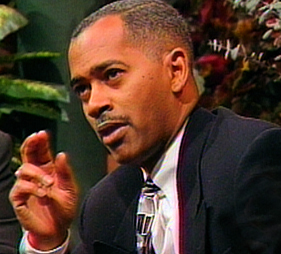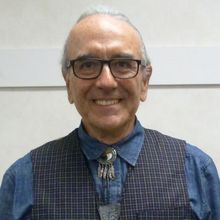
Eduardo Duran on Psychotherapy with Native Americans

Lost in the Wilderness

Deb Kory: You are a Native American clinical psychologist, scholar, teacher and healer, who has worked primarily in the Native American community over the last several decades. Your most recent book, Healing the Soul Wound: Counseling with American Indians and Other Native Peoples, centers on the theme of healing historical trauma. Can you describe what you mean by historical trauma, and how you came to this work?
Eduardo Duran: Well, it started very early on. I had just gotten out of the military, and I was working in this community up in the mountains, pretty much by myself. I was in graduate school at the California School of Professional Psychology (CSPP) and was supposed to be developing a mental health program. People were coming to me for help, but I frankly didn't know anything about therapy. They weren’t easy clients—they had serious issues—and my supervisor was in the city, so I had to kind of start inventing stuff.
DK: Was this on a reservation or just in a rural community?
ED: It was a reservation up in the mountains. Very remote. The curious thing was that people assumed, “He’s an Indian guy, so he must know how to do this therapy thing.” At that point nobody else wanted to do it, so it was kind of up to me. So I started developing a needs assessment and came up with the usual stuff—there was a lot of depression, alcoholism, and those types of problems in the community.

When I took my report back to the Tribal Council they said, “Those are not our problems,” which really threw me. I could see with my own eyes that these were their problems. They completely rejected what I was doing and told me to go back and try something else.
Basically everything I was doing was being rejected. And here I was paying a lot of money to go to graduate school and it was not working with my clients.


At the same time people were coming to me for therapy and I was doing the best I could with my limited knowledge of cognitive behavioral therapy. But these folks were also telling me, “We don’t want this. We don’t want to talk about this stuff.”

Basically everything I was doing was being rejected. And here I was paying a lot of money to go to graduate school and it was not working with my clients.
 
DK: They just weren’t having any of it.
ED: No they weren’t, and I was at my wit’s end. I went back to the Tribal Council with another report, and at this point I had switched over to using a qualitative methods approach and thought for sure I had the goods now. And they rejected it again. I had no idea what to do.

Then this old guy there says, “What you need to do is go up in the mountains and consult the spirits.” At that time, CSPP did not have a Consulting Spirits class. 
DK: It’s probably safe to say they still don’t.
ED: I think you’re right. So I was like, “OK, now what? I don’t know how to do this.” I'd heard stories of ancient people and the burning bush and all that, so I went up into the mountains, and with nobody looking I just kind of walked around. 
DK: Did you see a burning bush?
ED: No.
I was wandering around there like a dummy, hoping nobody saw me walking through the trees. I didn’t hear anything. Nobody talked to me. And no spirits came.

At the time I was sharing an office with a doctor and a nurse practitioner. It was actually an RV, an Indian Health Service RV, and we were so cramped. People just kept coming to me for help and I had exhausted my Western tool bag. What people wanted to talk about was their dreams and, of course, I didn't know anything about dreams. In grad school, they didn’t teach us anything about dreams.

So I would just sit there using the two techniques that I learned, that all psychologists need to know to be psychologists. The first one is when you have no idea what's going on—which is most of the time for me, anyway—you say, “Well, what do you think that means?” So I did that. And they said, “If we knew what it meant, we wouldn't be here talking to you, would we?”

So they took that one away from me, and all I had left was the deep-look-in-your-eye technique, and nodding “hmm.” Pretending that I knew stuff. Well, that bought me some space.

It was during this time that I started having the feeling that there were other people in the room.
 

Seven Generations

DK: Wow. That must have been unnerving.
ED: It sure was. And I couldn't very well acknowledge it with my clients who were coming to me for help. You know, because that’s against the rules. One of the rules of being a psychologist is, “Thou must not hallucinate in front of patients.”
DK: Did you worry that you were going crazy?
ED: Actually, yeah. It was a very difficult time because I didn't have any context for this. But it happened that around this time, there was a particular traditional healer, or medicine man, that I had heard a lot of stories about. He arrived at my door one day to kind of just help or check me out or something.
One of the rules of being a psychologist is, “Thou must not hallucinate in front of patients.”
As he was talking, and using tobacco in the sacred way, I thought, “He's probably as good a guy as any to run this by.” I figured he’d say I was stressed out from working and graduate school and needed to take a break or something.

So I told him what I was experiencing and he said the exact opposite of what I wanted to hear: “The reason you're feeling that is because they are there.” I was like, “What?! Who's there? I don't need this.”
 
DK: You were actually disappointed that he didn’t tell you that you were just going crazy and needed to stop what you were doing. 
ED: Yeah. “Just go and take some time off. Take some nice anti-psychotic medication and all will be well.” He didn't do that. He told me that in most Native communities here and across the world where I've been, there's a very common saying that “everything you do affects seven generations.” And he said, “It's not just in one direction. In spirit time or dream time, it also can go backwards. So seven generations back, seven generations forward, which means a lot of the unborn ones are also being affected. You and me talking today, we're affecting seven generations of our ancestors and descendants.” Then he went on to explain that between the year 1870 and 1900, 80% of the Native people in the communities I was working with had been exterminated. By the military, through disease, complete tribes were wiped out.
Between the year 1870 and 1900, 80% of the Native people in the communities I was working with had been exterminated.


He said that what was happening was because of the rules of natural law, that there needed to be healing, but it had to take place in a particular way. There had to be grieving and healing of the trauma, but because there had been no time to do that in the past, the energies or the spirits of the ancestors of the people I was working with were showing up in sessions. They needed to heal through their descendant here.

I mean, what do you do with that? 
DK: Yeah, what did you do with that?
ED: I sat with it in disbelief. But since nothing else I was doing was really making any sense to the people I was working with, I thought, “Well, I’ll try this. I'll tell some of these people what he said and just see what happens.” And it made perfect sense to the people I was working with. And it started helping me make more sense of the dreams, because a lot of the dreams involved trauma. Some of the people I was seeing had serious problems—addictions, violence, family dysfunction, all of that—and, to my surprise, using this frame to work through their dreams really started making people better. 
DK: Did any of your clients also have the experience of other beings, spirits being in the room? 
ED: They had experiences in their life where that had happened but, like me, they didn't have the context for understanding it. So, by me being able to talk about it, they were able to say, “Oh by the way, I've been seeing my great-great-grandpa appearing. But I can't tell people because they'll think I'm crazy.” And, of course, that was true.

"You're on the Right Track"

DK: They would be institutionalized.
ED: Exactly. In fact, I remember I was invited by the Federal Agency, the Indian Health Service, to give a report to them about what I was doing. So I gave a presentation about this—not like I’m talking to you; I tried to cover it up a little bit. And during my talk, these two guys in uniform from the Public Health Service came up to the podium and I thought they were going to congratulate me, but as they got to me, one of them whispered in my ear, “What the hell do you think you're doing?”
DK: Wow.
ED: And the other one said, “You're going to ruin your career before it starts.”
DK: Were they Native American?
ED: One was and the other one wasn't. But they were high-ranking people in the Public Health Corps and in the Indian Health Service. They were high up on the food chain and had control over the money, so they could mess with me.

By this time I had already encountered my teacher, Terrence, who would play such a big role in my life, so I went up to see him, and he basically said, “Don't worry about that. Keep going. You’re on the right track.”
DK: So you got important validation at a crucial moment.
ED: Right before he went on to the spirit world, one of the things he told me was, “If everybody's liking everything you're doing, you're doing something wrong.” I really try to honor that wherever I go.
DK: Pissing people off is kind of underrated in our field.
ED: Yes, and he was able to offer the container for me through all of it. In my meetings with him, he would kind of contain my psyche. My clinical supervisor could only do so much and I could only tell him so much if I wanted to stay in the profession.
DK: We’re going to be releasing a video this month featuring Derald Wing Sue, one of the main forces behind multicultural training in psychotherapy. 
ED: Oh yeah, I know Derald.
DK: In the video he talks a little bit about his beginnings in this field, and there are commonalities in your stories. He got into psychology many decades ago and realized that the fundamental structure of the field was pathologizing to Asian culture. He had to figure out a way to carve out a space that made sense for his own culture and upbringing, and ended up shedding a lot of light on the profession’s profound inadequacies.

It sounds like you also had firsthand experience of being an outsider in this field—being told you were crazy and being shut down by people around you. I can imagine being pretty traumatized by that.
ED: I had an experience recently in New Zealand, reviewing a dissertation of a Maori man, where he talks about exactly this same phenomenon. In New Zealand, they’re in the beginning stages of this cultural competency training, and the Maori are pathologized in very much the same way that Native people here still are.

That’s why I write the stuff I write. There’s no other reason to write it. There's no money in academic publishing. But in the Western world, if it's published it's “true”; If you just say it, it's just anecdotal, right?
 
DK: Oral tradition isn’t considered scientific enough in the Western paradigm. How are you treated when you go to more traditional Western schools and talk about seeing spirits and having these scientifically unprovable experiences?
ED: It’s interesting. I did a talk for folks in the judicial system here in Montana—you know, cops and judges—and I thought, “This isn’t going to go well.” But I gave my talk and at the break, three or four officers came up and I thought they were really going to let me have it, but instead they said they were so relieved to hear me talk. They work with people who are locked up in jails and prisons, and they said that they were having these same experiences, of seeing people and thinking they were just going crazy. My stories gave them a context to understand their experiences and they were just very relieved. I was totally blown away by that. These were guys with guns and stuff.

So I think it’s more widespread than we think, but people stay closeted. What I do is validate it so they come out. The same with therapists. When I do these talks with therapists types, they don’t dare say it openly, but at breaks they’ll come and whisper in my ear that this has happened to them.
DK: Are these mostly Native American people?
ED: Not at all. I'm working with this one brother right now who happens to be from a Jewish tradition. And he's experiencing these things in the room and seeing ancestors with the patients.
All I'm doing is basically saying that it's okay to be human and to have a spirit. You have a soul, go with it.
He asked me, “What do I do with this?” And I told him, if it's going to help the patient, he’d better do something. He’s slowly allowing himself to go with the reality that he's experiencing.

All I'm doing is basically saying that it's okay to be human and to have a spirit. You have a soul, go with it. Because, that's what people really are needing at this point.
 

Colonial Research Methods

DK: I'm just imagining some people in this field, more traditional Western-trained types, who would not be inclined to believe any of this because there’s no way to measure and validate what you’re doing. There’s a big emphasis these days on evidence based treatments, and this kind of spirit-based treatment, or spiritually oriented treatment, isn’t quantifiable in any way.
ED: There's a big movement with a lot of Native scholars from all over the world to respond to the evidence-based demand, since the only way you can get your practice to be considered evidence-based in a Western world is by using Western based empirical methods.
DK: Is this what you’ve called in some of your writings, “historical narcissism”? Where one culture’s frame of reference is the frame with which to judge all others?
ED: Yeah. And it's also neo-colonialism, because if you set out rules that require everything to be validated through a certain filter, then what you're saying is that if it's not Western, it doesn't work.
If you're using colonial methods to do the research, there's only one thing that's going to come out. You're going to come out with a colonial result.
A lot of Native people all over the world, indigenous people, are really sensitive to that and say, “then we don't want it.” If you're using colonial methods to do the research, there's only one thing that's going to come out. You're going to come out with a colonial result. If we are to first “do no harm,” then this way of thinking and “validating” is unethical and immoral. It harms indigenous communities.
DK: The research itself is a form of harm? Or the methods?
ED: There has to be another way of doing research, of getting “evidence-based” approval of more historical, traditional healing methods that have been in our communities for thousands of years. Why aren't those evidence based? It’s the colonial mindset that cannot accept them.

The very definition of the Western medical model is adversarial and pathologizing. In Native communities, it's all about relationships. We create relationships, even with the pathology itself. To the Native person it's not a matter of getting rid of the depression. It's a matter of making a relative out of it and learning something. It’s kind of an existential trip. Not unlike the Irvin Yalom’s work, actually.
DK: Backing up for a minute, how is it that you were so decontextualized from your own roots? I read that you were born in New Mexico. Were you born in a tribal community?
ED: No, we moved all over. My dad worked construction, so we lived in places that weren't even places, up in the mountains.
DK: You also worked as a migrant farm worker.
ED: Yeah, I did. That's when I decided to go into the military, because that was too hard. Boy did I get that wrong.
DK: You served in Vietnam, correct? 
ED: Yeah, I'm a veteran. The first day at boot camp I thought, “What the hell have I done? I should have stayed in the fields!”
DK: Migrant farm work was probably a piece of cake in comparison.
ED: I thought, “This was a big mistake”—but it was too late. But the experience was valuable. Out of that I was able to get the GI Bill, which helped me get educated and get where I am today. 

A Nice White Guy

DK: So you went back to school to become a clinical psychologist?
ED: Not right away. The first college course I ever took was on the naval base. I didn't think I could go to college. I was told all along I couldn't. So I decided to try some classes on the naval base. I got B’s in the classes and thought, "Huh, maybe something is wrong here. Let me try another couple of classes." And I got A's in those. Then I thought, "I'm going to try the junior college, because this doesn't count." And I got A’s in those classes. By then I was like, “Somebody didn't tell me the truth here.”
DK: You found out you were quite smart.
ED: Yeah, so I kept going. But I got into trouble fairly early on, because I started saying stuff in class, especially psychology courses. One of my most momentous experiences was with this guy Jerome Sattler, a bigwig in assessment methods. I was in his class and started talking about how maybe assessment methods for Native children weren’t quite up to par. I'll never forget the last time I saw him I was at his door, and he closed the door, but as he was closing it he said, “You want to be a psychologist? Ha!” and he closed the door in my face.
DK: That’s appalling. 
ED: I thought I was done and that my career was over before I started, but there was a Native woman teaching there, Gwen Cooper, and she said, “Don’t worry, you can do this.” She pointed me in the direction of my graduate school and the rest is history.
DK: Well you sure showed him. 
ED: Yeah. The same thing happened in my Master’s program, in an assessment class, actually. I wrote a paper and the professor gave me a C. When I went to talk to him about it, he said, "It’s not because it’s not a good paper, it’s because you shouldn’t be saying what you’re saying in this paper." In that program, if you got two C’s you were kicked out, so I had to really learn early on to go underground and not say what I was thinking.
DK:
I went underground and just pretended to be this nice white guy for the remaining time.
That’s so dehumanizing. I found graduate school dehumanizing and I’m white and there were a bunch of multicultural courses required of us. I can’t even imagine what that was like for you.
ED: I went underground and just pretended to be this nice white guy for the remaining time.
DK: You lose a part of yourself that way. Then you have to work to get it back.
ED: That’s just what happens. A lot of Native students approach me and ask, “Where is there a program where we can study what you're doing?” And I tell them there isn’t one. You just have to go through it and hope you can keep your soul at the end of this. But a lot of them don't. If you pretend long enough, then you become it.
DK: Or you become depressed. 
ED: Yeah. This is where Terrance really helped, because he wouldn’t let me become this middle American guy that just believed in that.
DK: It must have been kind of a shock to go back into those rural Indian communities and feel like after all of that, you had nothing to offer them. It sounds like you kind of got your ass handed back to you by those folks. And to connect with them you were forced to connect back with your own roots, your own spiritual traditions. 
ED: It was really rough. Early on when I was doing the needs assessment, I had prepared this survey instrument, and I had sent it throughout the community. I thought, “Good, I'll have data so I can develop this program.” In that linear approach, you get the data, develop the program, implement and then evaluate. So I thought, “Voila, I'll cure this community in no time!”

Two weeks after the instruments went out in the community, they all came back to me and they were blank. I asked the community help workers, “Didn’t you guys take these out into the homes?”
Talk about cultural incompetence—I was the epitome of cultural incompetence. But I'm so blessed that they taught me.
They said, “Yeah, but the elders said that the reason they hired you in the first place was because they thought your grandmother taught you better manners than this. What gives you the right to go around asking us a bunch of stupid questions like this?” Talk about cultural incompetence—I was the epitome of cultural incompetence. But I'm so blessed that they taught me. A lot of times Native people are very polite and they won't say things like that.
 
DK: But you would have been shut out, right?
ED: Yeah, they would have pretended, and they would have paid me still, but nobody would have come. I would have just been wasting my time. I was very fortunate that they honored me enough to tell me the truth.
DK: Were you raised with some of these traditions or was it all new to you?
ED: Well, it was a mix. I got some of it, but because of the colonized way that it was treated, I had no real relationship with it. And I grew up in a very dysfunctional home with a lot of alcohol and violence, so those traditions were sort of on the periphery.

My grandparents followed a fairly spiritual way of being, were kind of models, but I didn't really know what it was that they were doing. They would take me to some of the ceremonial stuff, but there was often a lot of alcohol involved in that too, so there was a real contamination of the tradition with the dysfunction. So again, with the teachings of Terrance, I was able to finally see clearly through that.
DK: To see what was colonial intrusion and what was more of the essence of the tradition that you could reclaim?
ED: Yeah. That’s what I try to do with the people I see, because most of them are in the same situation where they're really struggling in between worlds—in between the religions and the loss of identity. By realizing who you are, your existence opens up and so much more becomes possible. If you don't know who you are, and there's no identity, it's real easy to kill yourself. If there's somebody there, it's a lot harder to commit suicide.

Cultural Competence

DK: I want to switch for a moment to the topic of cultural competence for psychotherapists. These days, most graduate schools have multicultural competence courses as part of their curriculum, and while this is certainly progress—considering the state of things when you went through graduate school—I think we’re still far from truly being trained competently in multicultural competence. The article written by Laura Brown that we’re releasing along with this interview offers a strong critique of what she calls the “Handbook for Therapy with Aliens” strategy that so many training programs offer.

In my own relatively recent graduate school experience, the cultural competency work that we did ended up being very divisive. People of color are still astonishingly under-represented in this field, and many in my program I think felt quite wounded by having to go through the process of people coming to terms with their own racism; but they were also wounded by the folks who weren’t willing to really dig deep into the work. Derald Wing Sue calls this latter phenomenon, “invisible whiteness,” where people just don’t see their privilege, or the fact that the dominant white-hetero-male-etc. culture even is a culture.

And then on the other hand, a number of white students felt like it was just a long guilt trip, and that the ways in which they’d experienced oppression weren’t privileged in the multicultural context. You know, the white woman who was born to heroin addicts and grew up in desperate poverty having a hard time identifying with the word “privileged.” And yet, of course white folks have white privilege. It was and remains a deeply important process, but in my experience we were more divided into factions after the training. The environment hadn’t really been able to contain us as a group and it left me wondering if cultural competence was even possible.

What has your experience been in cultural competency training? Is it preferable to have Native psychologists treating Native communities? Or is it possible for non-Natives to become truly competent in treating Native communities?
 
ED: Well, just being Native isn't the answer either. There are a lot of not just Native, but African-American, Latino and Asian psychologists who are being co-opted and internalize the oppression and that's even worse than being oppressed by a white person. Because you kind of expect it from the white person, but it’s a double hit when one of your own with internalized oppression does it to you.

But of course it can be done. Otherwise, it would be really hopeless and we should just shoot ourselves right now, right? But cultural competency training can't be a paternalistic, three-unit course where we learn little techniques to use with each culture—like not looking people in the eye as a sign of respect or whatever. There’s no list of stuff to make you culturally competent if everything coming out of your mouth is Westernese. That doesn't work.
Cultural competency training can't be a paternalistic, three-unit course where we learn little techniques to use with each culture—like not looking people in the eye as a sign of respect or whatever.


I was invited to do a talk to a bunch of doctors and pharmacists and also a bunch of Native, traditional people about how to work in each other's worlds. I knew if I went in there and talked Westernese, then the Indians were going to shut down; and if I talked about traditional Indian stuff, then the doctors were going to shut down. So I came up with the idea of going back to the birth of the archetypes, where the female energy of the earth herself gives form to everything that is. The essence of my talk was that everything in Western medicine and Western philosophy, as well as Native philosophy and medicine, comes from the same source—that one great mother gave birth to all of it, and we then put the cultural flavor on it.

I gave examples of the ancient Greek doctor Asclepius, who is considered the first Western physician, and how he used the dreams of his patients to help heal them, in much the same way that Natives did and do.
 
DK: The Rod of Asclepius is the universal sign for medicine, right? With the snake?
ED: Yeah, exactly. He would take people into caves and wash them with water and steam, and that initial process was called a catharsis. Then they were taken into an inner chamber where they were supposed to have a healing dream. They would sit on this little stone couch, which was called a clinic, and they would have their healing dream. A lot of these dreams were recorded; you can look them up online.

For ancient Greeks, a medical doctor was a doctor of the body, of the mind, and of the spirit who was able, through dreams, to allow the patient to have their healing. That’s the root of Western medicine.

So I was talking about all this stuff and all the Indians were like, “Whoa, that's like what we do.” And the doctors were like, “We did that?” And I said, “Yeah, where did you lose it?”

Western medical models are pretty guy-oriented, built around antagonism. That’s why we have wars on sickness, wars on cancer, etc. The Native way is more female oriented, about relationship. Instead of saying, “You have a major depressive disorder,” which crystallizes the sickness, we say, “You are being visited by the spirit of sadness.” It’s a very different message to give the patient. They are more empowered, they feel they can actually move through it.

In English, there’s a noun-ing that happens that freezes you in space and time. If you say you are a woman, well, that's all you can be. But if it's woman-ing that’s happening, then guess what? Man-ning can also happen over there. 
DK: Womaning and manning in one person.
ED: Yeah. Those energies can move. And what a way to live—you’re free to be whatever at any moment in time. I met this elder in Canada a couple years ago, and he told me that in his language there are no nouns.
DK: My brain can’t even compute that.
ED: What do you do with that, right? But that's how he walks through the world, with no nouns; so everything's in movement. And in quantum theory we're finding out that that's really the way it is. The universe is really in movement, and nothing really exists, right?

In the Navajo tradition, there’s an idea of Changing Woman, where there’s no image that can be made of her because she is constantly changing, and because she’s constantly changing, she’s not anything. But if she’s not anything, she can be everything.
 
DK: That's some deep wisdom right there. So it seems like you’re trying to unify people by harkening back to unifying metaphors. 
ED: Yes. I did the anger thing, where I critiqued and rejected white culture, but that didn’t work, they just got more dug in. And now it’s more that we can share these traditions in a way that will serve everyone.

"We're Modern People"

DK: Have you had the experience of treating Native Americans who just don’t want to hear about tradition? Who flat out reject their roots?
ED: Oh, absolutely.
DK: How do you deal with that? Is it a necessary part of their healing to be able return to their Native traditions?
ED: Oh yeah, identity needs to be restored; without that they're going to be flailing out there. But initially I don't tell them that. We psychologists are supposed to be tricky right? That's the whole tradition. 
DK: So first you gain their trust?
ED: Gain their trust, the therapeutic alliance and all that good stuff—again through their own dreams, their own process, it's restored. I’ll give you an example. I do dream groups, especially in substance abuse programs, and this one day I was leading a group and I was talking about the spirit of alcohol and how it’s an energy, and this young Indian guy rolled his eyes and said, “You sound just like my grandmother.” Which I took as a great compliment. He said, “We're modern people,” and I said, “Well that’s good. You don't have to believe this. I'm just offering another idea here.”

In my experience, patients in treatment for substance abuse have moments of being trapped in bed—they can't scream, they can't get up, and it's very terrifying. So two days later I came back to the program to do my dream group, and this guy was at the door waiting for me. He was ashen. “That thing happened to me. I couldn't get up and I couldn't cry. I couldn't move. I couldn't breathe, and it was really scary.” So here's where my psychologist manipulation came in. I said, “Well, gee, I wonder what happened?” He answered, “It was the spirit of alcohol.”

“I wonder what you could do about that?” I had already talked to the group about what to do. And he said, “Well, I could make an offering to the spirit.” I encouraged him to make an offering to that energy, whether it was alcohol or depression. He said, “How do I do that?”

See, so now his identity's starting to be turned. He’s doing the intervention, but he's also bringing himself back. And of course I always tease people. “What kind of Indian are you, anyway?”
 
DK: Kind of like you were, right?
ED: Exactly. So I said, “You use some tobacco, because that's the form of offering that is used by most Native people, and give the spirit of alcohol some of that and see what it does. It might accept it, it might not. I don't know.”

Two days later I come back for the group and he’s waiting for me at the door, looking worse than before. So I'm like, now what? And he said, “I put my offerings in this place, and they took them.” Whoever they are, they literally took the physical tobacco, and that really freaked him out. He’d been sober for a couple of months, so it wasn’t a hallucination or anything. So now he's realizing that he's moving in a whole other world. He's moving back into the Indian world.

I said, “Having a conversation with that energy, maybe it will let you go enough to where you can deal with what's bothering you, so that you don't have to use it anymore.” Because using alcohol as a Native person is abusing sacred medicine, and that a terrible accusation. That's like telling a Christian that they're blaspheming against Christ.
Using alcohol as a Native person is abusing sacred medicine, and that a terrible accusation. That's like telling a Christian that they're blaspheming against Christ.


So I said, “Now you need to make amends to the spirit of alcohol. Because, as a Native person, it knows that you know better.” So now it's shifted the situation into a whole other place—and if nothing else, it’s weird enough to be interesting.
 
DK: It sure is!
ED: He said, “Are you kidding?” I said, “You don't have to take my word, just do it and see what happens.” By doing these things, he started reconnecting himself to himself, and at the same time working on the addiction, so that now he’s lost his thirst for alcohol. Because the spirit of alcohol is also letting him go in that relationship. It’s like divorce. If you want to divorce somebody, you don't just walk away. You've got to go through a process. Here you've been married to this medicine, and now you just want to walk away. That's bad manners. It’s an interesting way of looking at things and it changes the way you think.
DK: It reminds me of motivational interviewing, the way you kind of let him come to his own insights in his own time, but prompt him and give him tools along the way.
ED: During this process, their dreams get really intense to where the spirit of alcohol actually shows up, and it’s really terrifying for people. But now they're dealing with the real issue.
DK: Do you incorporate the Twelve-Step programs in with your substance abuse work?
ED: Oh, sure, yes, if that's working for them. It says right there in the Twelve Steps that you need to make amends. So make amends to the medicine. AA founder Bill W. developed the Twelve Steps in part through a conversation with Jung, where he basically told him exactly what I'm telling you—that this is an energy, this is a spirit, and you're in a state of possession. You can look at the letter Jung wrote online. He also consulted with Native elders in developing the Twelve Steps. You can see the influence, but he westernized it so that it's more palatable.
DK: He made it more Christian-based.
ED: But if you look into the subtext, you can see Jung’s influence and that of the Native elders. A lot of these elders were present at his funeral. 
DK: So what I’m hearing is, you use whatever works.
ED: Yes, exactly. 

Leave Your Westernese at the Teepee Door

DK: What do you recommend for practitioners who want to be culturally competent with Native American clients?
ED: Well, I’ve trained quite a few interns over the span of my career and I basically let them dive into the work and then try to help move them away from the thinking function. For example, in supervision they'll come in with little yellow tablets ready to take notes. And I'll say stupid stuff like, “What's that for? You’re really going to take notes?” And then I try to deconstruct their thinking so that they can start moving down into their heart. I also ask them if they’re dreaming, and if their patients are dreaming, and basically immerse them into the Native worldview.

Of course, that can be really frightening.
I've had interns almost lose it because they started hallucinating and seeing stuff when they were awake.
I've had interns almost lose it because they started hallucinating and seeing stuff when they were awake. I had to really contain that process for them, because it gets really scary once you start moving out of your Western-thinking paradigm. It’s foreign to the ego and the ego can start to disintegrate without proper containment.

I had a Jewish intern, actually, who was pretty non-identified with his Jewish culture, not practicing or anything. He was irreverent and would do things like bring pork to potlucks and laugh about it. He thought all this spirit stuff was crap.

One day he came to a Native ceremony. It was an all night ceremony and there happened to be a fire at the ceremony, and prayer and singing. And that night in the fire he said he saw God. It totally transformed him. He became ultra-Jewish, and even started rabbinical studies. It was a really interesting metamorphosis for him, like regaining his soul. Him being completely present to who he is allows him to be present for that Native person.

In another instance, a Korean woman from a very prestigious school was working with us, and we were going to have an all-night ceremony again. She was really worried that she might run into her clients at the ceremony and was struggling with the whole ethics side of things. I said, “Well, who knows?” I try not to contain it too much, because the ego needs to experience some unsettling.

So she decided to go, and she's sitting there in the teepee all night, and who walks in but the one family that she's been working with that's really difficult. They sit right next to her and since she doesn't know anything about the ceremony, they start helping her with the ceremony. It was such a tremendous transformation for her, and a tremendous validation for the family, because she was praying their way now. It really brought their relationship and the treatment to a whole new level.
DK: It also turns the “expert” role on its head. We psychologists like to be experts. 
ED: It took away that thinking function and at the end of it she was so grateful. Their work progressed quickly after that.
DK: So getting beyond thinking, beyond the ego, is a big part of your work.
ED: Yeah. Absolutely. Since the ego's in complete control and knows everything, you can't go into other cultures, because then you’re just bringing your Westernese with you. But if you're a little big fragmented, maybe you'll be open to something else.
DK: So you're modeling that for them.
ED: I try. A lot of times I say stupid stuff to patients also, to confuse the ego.
DK: I say stupid stuff all the time, too! I didn’t realize it served such a therapeutic purpose. Well thank you so much for taking the time to share your wisdom with us today. 
ED: It was my pleasure, thank you.

Monica McGoldrick on Family Therapy

Monica’s Coffee Shop Transformation

Randall C. Wyatt: Monica McGoldrick, LCSW, family therapist, teacher, writer, and so much more, that’s what we’re here to talk about. Good to have you here.
Monica McGoldrick: Glad to be here.
RW: Monica, how did you first get into the field of psychology and social work?
MM: Well, I was studying Russian in graduate school and then I kind of dead-ended because I didn’t see myself becoming an academic. The day I finished the program, I met a guy in a coffee shop who was studying psychology, and I thought, “Wow. That’s the perfect field for me. I could study the life of Dostoevsky, my hero, and then could do something with it.” I really do think you could study Dostoevsky and learn most of what you would ever need to know about human psychology.
Victor Yalom: Who was this guy you met?
Monica McGoldrick: Yeah, actually, you probably know him. His name is Lowell Cooper.
VY: Lowell Cooper, of course. He was a professor at the California School of Professional Psychology where we both went to school. He teaches group theory and Tavistock groups.
MM: So, he was studying psychology at Yale, and we just started talking. And before the day was out, I went home and told my parents that I wanted to study psychology. My mother had always wanted to be an anthropologist but her mother wouldn’t let her do it. She was otherwise very difficult but when I told her about psychology, she just said, “If that’s what you want, you just have to pursue what you want. Do it.”I met with a psychologist, Jack Levine, who also part of the Yale system. And he said, “To make sure you really want to do this, why don’t you go work at the mental health center?” It was 1966, and they were just opening the first community mental health center in New Haven. I went and applied for the job with a nurse named Rachel Robinson who was the wife of the first African American ballplayer named Jackie Robinson. He was my hero from childhood because I come from Brooklyn and Rachel became my first boss.

All the boundaries were down. I was a psychiatric aide working on this brand new unit in the mental health center. And during the time there were quite a few people who said, “Why don’t you think about social work? It’s a lot more practical.”

The psychologists didn’t seem to do anything very interesting. They wrote psychological reports that nobody read.

VY: What do you mean nobody read them?

MM: Anytime we had a really hard patient, we’d send them to psychologists for a report. We had a really famous psychologist who did the assessments. A client would be raging around the clinic and after two weeks the psychologist would pass out the copies of the test report which said how rageful the patient was. There’d be some discussion about how messed up the client was; then the psychologist would leave and we’re still be left with the raging patient. What good was that? (laughter)
VY: Right. What are you going to do now? We know he’s raging? He’s a 4.9 on the test and we know his IQ. Hopefully, we have come forward from those days.
MM: And the psychiatrist would be there in the morning for the sort of group psychotherapy with the patients and would act very important and we’d have big meetings discussing what that person thought. But the psychiatrist had not seen the patient all day, the psychiatrists would know very little.
RW: So the people who knew the least and did the least had the most power, the psychiatrists and the evaluating psychologist. What a system!
MM: That’s right. Finally an overwhelmed social worker who had responsibility for all the clients and families on our unit, said, “Any psych aide who wants to help me, I’ll supervise you.” And I was like, “Me!” All afternoon and evening we would see the patient, and then we’d see the patient when the family came to visit. And it would be just unbelievable the things you would learn.And then the next morning, the psychiatrist would appear again knowing nothing about the patient and just spout off again about what he thought was going on. And I thought, “God. I don’t get it.”

RW: It’s obvious now why being a social worker was so attractive to you.
MM: Exactly. The social worker had the most interesting work because they got to actually work with families. So, I signed on to work with families and I just never looked back. I thought, “I’ll be a social worker and I’ll work with families.” So, I went to Smith College for social work and I worked. But in order to stay in New Haven, I had to either be married or in therapy. And I wasn’t married and had no prospects.
RW: Why did you have to be married?
MM: Well, if you were married they wouldn’t separate you from your husband. If you were not married, they could send you away for a summer program and they might send you to Denver or anywhere in the country.
RW: I see, but where does therapy come in?
MM: Psychotherapy was the other best alternative. I signed up for therapy, telling the guy the very first session, “I need a letter telling them that I need at least two years of your help, and that I can’t leave New Haven.” He agreed to do it. And I had a great social work experience because I worked at the Yale-New Haven Hospital unit, which was absolutely fabulous. Very family oriented.
RW: At that time, what was the state in the ’60s of family therapy when you entered into it?
MM: It was the most exciting time. And on this unit, probably of all the places I could have ever been, families were seen three times a week. This was for the rich and famous as well as anybody else. It was remarkable and it was totally integrated into whatever happened with the patients.

Where Have All the Families Gone?

RW: Nowadays, it seems like – at least in California, Northern California – it’s not easy to get a family in. Parents, even those who are together and have kids, they’re running around so much. Oftentimes it’s hard to get everybody in at once. What does it mean for family therapy, that it’s hard to get everybody in?
MM: I think what’s really made it terribly hard for family therapy, in my own experience, is not the families themselves. It’s what’s happened with managed care, insurance, the drug companies. The drug companies have totally taken over psychiatry. And managed care has totally taken over how mental health services take place, and they have no interest whatsoever in family therapy because it is not as short and sweet as seeing one person three times. Or, you know, medicating them up and being done with it. Yes, it’s true that we do have a high rate of divorce, and we do have parents who are working in different places. Nothing supports paying attention to the family issues that contribute to kid’s problems.
RW: So it’s much different than the heyday of family therapy when the idea of treating families was the way to go. There’s one or two managed care companies in California that actually support couples therapy and family therapy. And they actually have it in their manuals. Basically, most companies seem to support medication or groups, many of which can be helpful, of course, but nowhere near the gold standard of caring for people.But lets move to what you love, and that is family therapy. What kind of therapy practice are you doing now?

MM: About 14 years ago, 1991, I basically got kicked out of the medical school, you might as well say. I mean, they couldn’t exactly fire me because it’s a faculty position I had. But they took away my secretary. They told me I was going to have to see 28 clients a week in the emergency room.So the training program in family therapy was just basically moved out of the system. And in its own very small way, it still survives. We have a small family institute in the town where I live. A very little house in a very little town. We’re a very small group, and we have very small classes also of people who want to study family therapy. And every year we wonder, “Are we going to have a class?”

RW: So, how would you characterize how your work is similar or different to other family therapists? Your approach, your ideas?
MM: Okay, well, along the way—and this is probably important in terms of where I ended up—in 1972, I went to a family therapy conference where I heard Murray Bowen. And I was completely blown away. He was talking about getting a relationship with your mother, and I just thought that was ridiculous because my mother was so impossible. Even though I was into family therapy, I wasn’t into family therapy for my family. So, I really could hardly hear what he said, but he was basically saying as strongly as he could express it that you’re nowhere if you haven’t worked it out with your mother. And I kept thinking, you know, “This guy is a real idiot.” Because he certainly never met my mother.
RW: What was your mother like?
MM: She was very difficult, very difficult. And anyway, during that conference, I met one of Bowen’s students, a guy named Phil. And we hit it off very well. And he was just starting a family institute, and I asked him if he would coach me on working on my family. And he asked me if I would work at that institute. So, I really became a Bowenite and I would say that I’m still very much of a Bowenite. And there aren’t too many of us. I don’t think I have met any Bowenites on the West Coast. But, you know, you recognize them when you hear them talk about families.
RW: What’s a giveaway?
MM: Well, they don’t believe in cut-off. They pay a lot of attention to family of origin. They do genograms, for example. I mean, I’m known for genograms.
RW: Can you explain cut-offs?
MM: Cut-off.We don’t believe that if you don’t like your mother you should just say, “Enough of this. I’ll find somebody else.” They believe that everybody should try to work it out with their mother. They basically believe that you never give up.

RW: So, did you work it out with your mother?
MM: I did work on it a good while. It changed my life.
RW: How so?
MM: Well, the power of being able to think systems and realize that we are all part of the system. So I kept trying to change my mother, and really, I was trying to get her to change her relationship with her mother who she had hated before. I stopped… I learned that you can’t change the person. You can only change yourself. And so to change how I was in relation to her and also to change other relationships in the family… to just change.Now I would think of it as taking my power back. That if I gave her the power to put me down and feel put down by her, that was something I actually had control over. And so if I flipped that around and did something different with it, instead of feeling wounded every time, and thought about what might lead her to do that, that it might be her problem, not my problem. It just transformed everything.

Bowen and Haley Throw Stones at McGoldrick

So I did change my relationship with my Mother. And I just saw systems through that lens. Some years later Bowen didn’t like a lot of my ideas although I liked all of his ideas.

RW: Do you recall the ideas of yours that Bowen didn’t like?
MM: We got into doing work on the life cycle and he didn’t really think that that was a very good idea. Betty Carter and I wrote a book in 1980, The Expanded Family Life Cycle (Third Edition). And he did it sweetly, but Bowen basically said, “Eh, this is kind of an… eh idea, but hey, you could read it, whatever.”
RW: Did you keep the foreword?
MM: Oh, yeah. We did. Yeah.
RW: Your ideas certainly got a reaction worth noting instead of being ignored.
MM: Well, his wasn’t the worst reaction, actually. Jay Haley was even more critical. You see at that time nobody had written anything on the life cycle from a family therapy point of view. And so we searched the literature for anybody who had ever said anything about the life cycle.But Jay Haley had written this thing about Milton Erikson (though it had little to do with the family) which was about a life cycle perspective. So we thanked Jay Haley for his contribution to our thinking in life cycle terms. And after we published that book on life cycles and families, Haley wrote a nasty article on the right to choose your own grandchildren, saying that he rejected us as his grandchildren. He had nothing to do with us or our ideas.

RW: You were kicked out. Seems Haley was into cut-offs.
MM: Yes, Haley kicked us out. Yeah, he was.
RW: Well, it’s good to see that the old Freudian idea of just getting rid of all competition was alive and well in the family therapy world!
MM: But later on, Bowen didn’t like the culture stuff, either. He didn’t like the gender stuff. He didn’t like any of it.

Never Run Logic Through an Emotional System

RW: Let’s come back to that later, for now, lets go more into the work itself, working with families. How do you or Bowen see the idea of cut-offs with families and dealing with your parents in adult life? Should you just confront your parents like some therapists suggest?
MM: Your parents always matter. Bowen felt so strongly that it’s all about getting a personal relationship with your parents. But you have to pay exquisite attention to what’s going on in the emotional field, because to do exactly that, write a tell-all letter to your parents disregarding, you know, where you are with them—what’s the possibility they could possibly hear such a message and not feel hurt and insulted or shot down by it? He would say that’s outrageous. And you’re going to cause years of conflict.
RW: That’s good to hear, since I am certainly an advocate of not just wailing on parents without dealing with the complexity of the situation and the likely consequences.
MM: Well, you should read our paper that we wrote on coaching. Because we lay out Bowen’s theory as well as we can. I mean, I lay it out every chance I get.
RW: Well, I want to see that. Most parents are defensive anyways, to say the least, since they often, rightly or wrongly, feel unappreciated and blamed for their kids problems.
MM: One of the rules of thumb is never run logic through an emotional system. If your family is in an emotionally reactive place, why in the world would you take what we would call an “I” position and say, “This is where I stand.” He would say that is outrageous and abusive to your family to do that.
RW: I may be a closet Bowenian then.
MM: Well, you just might be, so here we go. You’d be the first west coast Bowenian we ever had! (laughter)
RW: Perhaps it’s because I am in California or because of my upbringing, but I have always been troubled by theories and practices of therapists who so easily suggest that clients individuate from their families, without considering the many layers and meanings of family relationships. Of course autonomy and individuation have their central place in life, but so do connection, family, community and the like. It seems western psychology too often forgets this part of the life equation.
MM: Absolutely.

Genograms: More Than Just Squares and Circles

RW: What is the importance of genograms in your work with families or individuals?
MM: A genogram is just a map. You know, squares and circles. But what’s important is paying attention to where people come from, who they are, where they’ve been, where they’re coming from. And genograms are just a way to map that. So the point is, it’s important to consider people in historical context. That’s why genograms are important. It’s just to say, “Who are you? Where did you come from? What was it like?”
RW: What are your roots?
MM: Yes. Exactly. And to be respectful of that.
RW: And not going into one’s history, what is the problem with not doing it?
MM: We would say there’s no way to understand who a person is if you take an ahistorical approach to it. If you don’t say, “Where have you been? Tell me about yourself. Who’s your grandfather? When did your family come to this country? What struggles have you had?” To know if your father committed suicide or something. I mean, how could that not be relevant about a person?
RW: It makes sense. If somebody knew me, and they didn’t know about my grandfather who came over from Italy at the turn of the century or my other family roots, then I would not feel that they really knew me well. We don’t want to be reduced to our roots, but we like them to be appreciated as part of us.
MM: Exactly.
RW: It’s not rocket psychology.
MM: Exactly. It’s just common sense. Anybody would know that. (laughter)
VY: Monica, I want to ask about the work you did in your video. A lot of therapists focus on the past, in almost a stereotypical way, but it often stays up in the head. It stays intellectualized. And what impressed me in your video, is that you use that information, but it’s all about connecting with the family in the moment.
MM: That helps change the future. I really believe it. I recall that the first time I heard Bowen speak, he said: “It doesn’t matter how much you’ve analyzed your mother’s psychological problems or whatever, if you can’t sit in a room with her and be generous, you’re not there. So, don’t kid yourself.” But it is all about what are you going to do now.
RW: Right. You’re saying that understanding the past can help you connect in the present and vice versa.
MM: I think so. Well, and also think about what’s your responsibility to the future. It might not be too apparent on that video, but I really think that we as therapists can help people position themselves to make choices about what they are going to do in life. And that we make the best decisions if we pay attention to where we’re coming from and we pay attention to what’s ahead. So, you know, what do we owe to our children’s children? As well as what do we owe to our ancestors who struggled before us?

Autonomy and Connection

RW: It’s a very honoring position and approach, and refreshingly so.
VY: It’s hard to find anybody who doesn’t want to be honored.
RW: You use the concepts of love, respect, honor, forgiveness, spirituality. These aren’t words that are commonly used to talk about goals in psychotherapy. Where do you come from in using these kinds of words?
MM: I think it resonated in me. I got it from Bowen. You know, the basic Bowen theory is that differentiation for the mature person means getting our connectedness to everyone and everything. And respecting that. That it’s about making our own decisions about how we are going to relate. That I have to go into my heart and choose my relationship, choose how to relate to you.But Bowen’s idea was also about the autonomy part, in that you don’t live your life according to anyone else’s values. That you have to go into your own heart and figure out what your own values are and then live it out. But that we are all connected. I mean, that’s totally basic to Bowen’s theory, and it’s so different from those who focus on autonomy as, ” I’ve got to do for me.” But I’m in it with you. We’re in life together. That’s just the deal.

RW: This is not some abstract idea, but a reality that exists in our lives. It seems every therapist we have interviewed here has approached this idea: We are connected, we are separate, both are true and how we deal with it is everything.
MM: It’s not that I can only pretend that I’m not connected to you because I am actually. Something could happen right now and I could this minute be dependent on you to save my life because you’d be the one here. And if I do something to hurt you, that could come back to hurt me. Because that’s just our nature, that we are interdependent.
RW: But then how does autonomy play into this for you?
MM: In a way, it is a philosophical stance that there is no such thing as autonomy. The only autonomy is about our decisions of how to live. You know? So, it’s so basic to our way of thinking, systemically, about our connectedness. Respecting each other in some kind of spiritual understanding that we are a part of something larger than what we can see, including our ancestors, including those who are going to come after us, all that.
RW: This must be the kind of approach you use with clients, too. Talking this way, and sharing these things with them.
MM: It is. I do. Yeah.
RW: Do they ever want to rebel against it?
MM: Oh, sure. Yeah.
RW: Can you think of an example?
MM: Oh, not my clients. They just come in. I say, “Listen, you have to get a relationship with your mother first thing. Could you bring her in next time?” And they say, “Oh, sure. That sounds good.” (laughter)They say, “Go fuck yourself. I told you, my problem is I want you to fix my wife.”

RW: Or my mother or my father or…
MM: My mother. Yeah. You get them to stop drinking, no problem.

McGoldrick’s Work with Families

RW: How do you get people to turn to themselves and what they can do? Can you give an example of how a person starts with the position of “it’s them, it’s not me,” and you get them to turn it around?
MM: Well, if you take the example of the video I did with that family. I think that’s a good example where he wanted me to fix the daughter and, for many reasons, wanted to push away his part in that because of his own grief about the wife and the other things he didn’t deal with in his own way. And something about getting the stepmother out of the way to focus in on the daughter, to really hear her, and then also bringing in the son because that I see as relevant, too. That sometimes, as with that guy, a person can hear it more powerfully if two of the children say that it matters. And that something makes a person hear it differently.
RW: Any other examples of this playing out in therapy?
MM: I was thinking of one guy; he was very negative, sort of talking suicidally. I raised questions about that. And he’s says, “How else is there to be?” And I said something about culture, and he says,

“Oh, don’t give me that bullshit. If you’re going to tell me that this is about culture, then I’m out of here.”

RW: What was his background?

MM: Irish. And then, he said… It was all his mother’s fault. Blah, blah, blah. And she was this witch who had been controlling, you know, whatever. So, I said couldn’t we talk to her? Because she was alive and around. And he said, “No, we’re not doing that, and I’m not coming back if we even think about that. I came here to solve my marital problems with my wife and this is it.” A number of months later I was at it again: “You tie my hands behind my back and then you’re frustrated that I haven’t helped you yet. Bring in somebody. Who would you be willing to bring in?” So he brought in his brother, which was really interesting. I learned a lot about the family, and we talked about the sort of suicidal feelings and whatever.
RW: And what about the mother, did you ever get her in?
MM: Eventually, somewhere we had a big argument about his mother and I said, “You know, well, I hate to be a broken record, but we could go back to that?” And he says, “If you had her in, what would you say to her?””I don’t know what I’d say to her. I’d have a chat with her about whatever’s been bothering you. Or you’d have a chat with her.”

“No, but I want to know what would you’re say to her.” “I don’t know,” I told him. And then I remembered. I had just been looking in this book that I wrote, You Can Go Home Again, this is a book for the public. At the end of the chapters, I actually have questions that you could ask you parents. So I said, “Well, come to think of it, you know, if you asked 100 therapists they wouldn’t be able to tell you, but I actually wrote a book and there you can see the type of questions I might ask her.”

“No, I want to know the exact questions.”

Whatever…

RW: The whatever approach.
MM: So, I said, “You know, you do whatever you want to do.” And finally he said, “Next week I’ll either bring in my mother or I won’t.” So, I said, “Well, that’ll be good. Okay.” So the next week he brought in his mother, and it was the most amazing thing. I don’t think I said a word the whole time, and he worked out so many things with her. It was so interesting. She was phenomenal.
RW: You being there helped. And she was phenomenal.
MM: Well, you can’t count on the parent being phenomenal. But that he did it would have been good enough because he took all the responsibility. It’s like he knew what he had to talk to her about. He said to her, “I’m a 51 year old man. I feel like I have to talk to you about some things that happened so long ago, and I feel like it’s stupid but these things are kicking my ass, and I’m taking it out on my wife and my two year old and I don’t want to be like this. I’ve got to talk to you.” And she just listened which worked out so well.
VY: What I really like about such stories is that on so many videos or therapy stories, they show the therapist being brilliant and making great interpretations, but instead sometimes it is best to shut up and listen.
RW: Anti-brilliant. Just to be there.
MM: Get out of the way.
VY: Get out of the way. When the clients are doing the work, you don’t need to be there, you go to the background.

Jackie Robinson’s Wife, Culture and Family Therapy

RW: Lets go back to something you brought up earlier. What led you to get into culture and ethnicity and why are these so important in your work?
MM: I suppose at some emotional level, I was raised by an African-American caretaker who worked for our family and was the person I was closest to growing up, I am sure at some level—because I loved her—at some level what was wrong there about race was at the interior of my own family. I’m sure that had an impact. But I don’t know really.
RW: You noted earlier that Bowen did not like your cultural work either. How come?
MM: Well, it was kinda surprising that Bowen did not like these new ideas about culture, but he came at it from another angle. Bowen had this idea about triangles and family. And then he took it to the level by analyzing societal level systems in terms of triangles. We feel better if the enemy’s a really good enemy, but if the enemy’s not a really good enemy then we start fighting with each other. This is the process by which nations and social systems basically join together and scapegoat a third party.So culture would make great sense from that point of view. And Elaine Pendehughes, an African-American therapist, took his theory and used it to analyze slavery and how that system operated. And she did a really brilliant, basically Bowenian analysis of slavery.

RW: What was his critique of your work then?
MM: I remember one conference where he chose to speak out against my work on culture. He could be an ornery person at times. We had recently published the ethnicity book, Ethnicity and Family Therapy and Bowen said, “Those people who want to waste their time studying, you know, the differences between the Irish and the Italian, let them waste their time.” And he was talking to me, clearly. And everyone in the room who knew anything about it, I’m sure, knew just who in that room was wasting their time studying the difference between Irish and Italians.
RW: Back then there were not as many ways to talk about culture in psychology. To bring this home, I’m teaching a course in ethnicity, diversity and psychotherapy next semester for the first time. What kinds of things do you think would be important to attend to? I’m going to use your book as one text, so I’ve got that going.
MM: Well, this is a whole subject in itself. Because I think there is a lot about white privilege, heterosexual privilege, gender privilege that really we need to pay attention to and think about how it organizes us. And that would be good to deal with in your class. I think it important to deal with it multi-dimensionally. That ethnicity most of the time, not always, helps people get centered a little bit if you urge them to think about what it means. Who we are culturally and what are the values we grew up with and so forth.I didn’t grow up thinking anything about any of that. I didn’t know I was Irish, never mind, you know, white. I mean, honestly, I knew nothing. I was just a regular person, or so I thought.

RW: You found out you were white later?
MM: I found out I was white really later. I didn’t know I was a woman, never mind that. I mean, I just thought I was a person. And I never thought about gender. I never thought about race. I didn’t think Irish meant anything. It was not even a category.I knew my name was Irish. If you asked me, I could have told you that my ancestors came from Ireland. But if you said, “Does that mean anything?” It’s like, “No. That was like 150 years ago. It’s like, it means nothing to me.”

Now I would say, it has organized my family for that entire 150 years, and right now many things about how I react to a situation have to do with the power of that history. Only just recently, maybe like the past year or so, I started thinking about some of my experiences in college and realizing that I think now it probably had to do with being Irish. The ways in which being at an Ivy League school, Brown—I knew I didn’t belong, and I knew I didn’t fit. But I didn’t know what the rules were and I didn’t know that that was because I wasn’t a WASP. I didn’t get that. I was very naive about it. So I think there were all kinds of things that I didn’t understand.

RW: And at that time there were few women in the therapy world. How did that work out for you?
MM: There were lots of things in family therapy that I didn’t understand about being a woman; there was so few male mentors who could take me. I was quite a follower of Virginia Satir. She was the only woman. And I would go anytime she was going to be there.
RW: So you went from all that to writing a book on ethnic diversity in family therapy. That’s quite a ways.
MM: Well, ethnicity came first. Ethnicity came in by doing my own genogram there came a point where it was like, “Yeah, but what does it mean to be Irish?” And my family never wanted to talk to about it. They could pass for the dominant group. They had gone to Ivy League schools. They were pretending they weren’t Irish, you know. And so they taught us that. And so when I started asking questions, my mother, especially, was distinctly uninterested.My mother kept saying, “We’re Americans, Monica. Leave it alone. What do you care where we came from? We’re Americans.”

And because I hated her I would always pursue anything that she didn’t think was good like asking her about our background. She would say, “They were just peasants. They were just peasants. Could you just leave it alone? They were nothing. Here we are. We’re fine now.” You know, but then that got me interested. And that book came out of going to Ireland in 1975. It totally transformed my life. I was already married to a Greek, so I knew ethnicity meant something.

RW: What do you mean about his being Greek?
MM: They do maintain it. My husband grew up in Greece, so he was seriously ethnic. But you know, that didn’t relate to me. But we went to Ireland and it was like, “Oh my god. Everybody’s like my family.” And I had four years of psychotherapy where I had analyzed the shit out of my family of origin and thought about it differently. But nobody said, “It’s culture!”My mother would make fun of people – that was her typical way. It wasn’t really an angry thing; it was subtle. So, humor was a way that she would put you down. She would make you feel stupid. She would make a joke. She’d wait for someone else to come into the room and then she would make a joke about you. So, you would just feel humiliated.

Well, going to Ireland I saw that that’s what the Irish do. The Irish wait until another person comes into the room and they make a joke at your expense. And yet, the way humor operates, I thought that that was just my fucked-up mother. But it’s like, oh my God, they all do this. How come nobody talks about these things? I came back to the medical school and I couldn’t stop thinking about it.

One of the First Diversity Classes

RW: Did you ever talk about culture and ethnicity in your training?
MM: Yes, we did these little presentations, six of us, 15 minutes a piece on different ethnic groups: Irish, Jewish, Italian, African American, Puerto Rican, and Asian. It was very short, 15 minutes each. And even in the 15 minutes, we’re be, “Well, I can’t speak for all Irish, but-” And then say a few stereotypes. And it was mind blowing to me.I remember the Jewish one and the WASP one. The WASP one went first and she makes all the apologies and then she says, “Well, you know, if I’m going to say something about WASPs, they kind of believe everything in moderation and decorum and they’re not too big on expressing any feelings too strongly. Everything in moderation. Leave a little on your plate. Never get too enthusiastic about the food.”

And her best friend was this Jewish therapist who went next and she said, “Well, you know, you can’t speak for all Jews because…there are German Jews and there’s European Jews and anyway, you know, Hungarian Jews are completely different. Then you have Los Angeles Jews and they’re different from New York Jews. And Brooklyn Jews are different from, you know, Bronx Jews,” and so forth. Then she finally said, “But anyway if you are going to say something, Jews kind of believe in expressing your feelings and actually talking a lot about analyzing your feelings and expressing them. And food is very important, and guilt is very important. And eating more and getting your children to eat more is very important.”

Then we had a little conversation, and so the Jewish woman said to the WASP, “I’ve always liked you, but I have to say that I’ve always found it a little irritating that you’re so smart but you never speak up in a group. It’s really like you are withholding. And now when you’ve expressed this about how, you know, in your culture, it’s like in moderation and you shouldn’t…it’s like you hide your light under a bushel, and I never really understood that. I just found it irritating.”

So the WASP woman says, “Well, okay, if we’re going to be sharing like this. Actually, I’ve often wished you would hide your light under a bushel, because you never hesitate to say what you think in a group.”

RW: And what did all this mean to you at the time?
MM: My thought was that even though I had worked with them for several years, I had reacted to them both in terms coming from my Irish point of view, which is different, and I had just judged them as if they were wrong and I was right. Why did one always speak up? And why did the other always seem to hide her light under a bushel? And I never thought before that moment, wow, this is really cultural meaning.
RW: Well, that makes sense then. What you’re also saying is that it is a good idea to get in touch with your own roots. And that enlivens you and engages you.
MM: Right.
RW: I was also concerned more about how early multicultural ideas seem to use stereotypes or oversimplifications. Say Asians are just into shame or Blacks feel suspicious in society because of oppression, and so on.
MM: My thought would be to use the ethnicity book to help people understand something about where they might be coming from, because what we tried to do is lay out caricatures that help, you know, tell the story. And to try to tell it so that the characteristics are put into some kind of historical context of why Italians might be suspicious and why African-Americans might be a certain way and why the Irish might have developed the characteristics that they have.
RW: So, instead of just the trait outside of history.
MM: Right. Because if you think systemically, of course, there has to be a reason why people would develop these different ways. But one thing that I do think is very important and I think is very hard to teach about is, when you come from a place of privilege, it is so hard to be aware of what the implications are of that in the interactions with the other. It would be easier for me to tell you about the ways that I felt inadequate as a woman, and didn’t know about it. Or felt inadequate as Irish and didn’t realize it.It’s harder for me to talk about—which I’m struggling to be aware of—the ways in which as a white person, I have so many privileges. And feel free to talk about so many things in a context without even realizing that others don’t. I don’t think the issue is apologizing for it. It’s getting conscious of it and the doing work and then following it through. What are the implications of that?

“I Feel Like I Fell Into Heaven”

RW: A wrap up question. You’ve been practicing quite awhile. What keeps you going as a therapist? What still juices you?
MM: I love it. You can probably tell. I feel like I stepped in, that day when I met Lowell Cooper, I feel like I fell into heaven. I love what I do. I love these ideas. I feel like family therapy may be dead here in this country because of all the things that we talked about, but family in all different forms is still there.
RW: And family still matters whether they all come in or one at a time.
MM: Yeah. How do you help people and what can we do and what makes a difference. And every family is a great challenge. And I love mentoring students, and trying to put ideas together… I love all of it.
RW: Well, I wish we had time to go into a lot more. Maybe another time. Some of them we only touched on, because your background is so rich and your ideas are a piece of heaven. Thanks so much for sharing them with us today.
MM: Thanks for talking to me.

Kenneth V. Hardy on Multiculturalism and Psychotherapy

Trained to be a “pretty good white therapist”

Randall C. Wyatt: Hi Kenneth. Today I want to talk to you about your work in ethnic studies, diversity, and social justice with a particular emphasis on how that impacts the work we do in psychotherapy. But I want to start with something basic: What originally got you into the field of psychology and diversity?
Kenneth V. Hardy: Good to be here Randy. Well, at a very early age I started noticing differences in human beings and mostly my own family. I became intrigued just by how was it that my brother and I could grow up in the same family, two years apart, and yet be so incredibly different. I think some piece of that curiosity extended to things like these broader social concerns. I have vivid memories of going home in Philadelphia and asking my parents and my grandmother why there were so many people sleeping on the streets. Despite their best efforts to provide me with what they thought were pretty cogent answers, the answers they gave me didn’t make much sense. I had this insatiable curiosity about how we ended up in circumstances in life. Long before I even knew what to call it, I had some passion for it. I just knew that I was interested in this unnamed discipline that would help me understand human beings better.
RW: Where did you end up going to school to get your psychology degree?
KH: I did my undergraduate work at Penn State University, a Master’s degree at Michigan State and got my doctorate degree in clinical psychology at Florida State. So I did a little bit of globetrotting.After getting my PhD, I hung around in Tallahassee, Florida for a bit, worked, stayed on at the place where I’d done an internship. Left there, took a job in Brooklyn, New York, at an outpatient psychiatric clinic, and there some of my interests around issues of diversity and race began to crystallize.

I realized after working at the outpatient psychiatric clinic that

my training had prepared me in a way that I was a pretty good, decent white therapist

my training had prepared me in a way that I was a pretty good, decent white therapist. I was in NY and there was great diversity in the clients I was seeing: immigrants, African Americans, poor, and so on. I realized at that point that I was poorly trained and oftentimes challenged very directly by clients of color about the ways in which they felt I was not understanding or appreciative of their experiences; that was very enlightening for me.

RW: Say more about what you mean when you said you were a “pretty good white therapist.”
KH: What I mean is that I had gone to predominately white schools. I struggled with how to take the theories and conceptual models I was exposed to and massage them to apply to individuals and families of color; I was pretty much left to do that myself. There wasn’t someone to oversee, guide, and mentor me for that. I was introduced to ways of thinking, ways of conceptualizing human behavior, problem formation, and solutions from a more Euro-centric point of view. And I don’t think there’s anything necessarily wrong with Euro-centrism. It’s just that not everybody is of European descent.
RW: Much of your career has set out to change that emphasis and broaden what psychologists and psychotherapists study and who they work with. We will get to more of that in a minute. What did you do next in your career?
KH: I left New York and took a faculty position at the University of Delaware for a short period of time, and then I then went to Washington DC to work for the American Association for Marriage and Family Therapy as a senior executive. I also worked rather assiduously there to keep my fingers in academia at Virginia Tech on their campus in Fosters, Virginia. And then after almost ten years at AAMFT, I left to go to Syracuse. There was a program specializing in family therapy and social justice that drew me there. I helped to get the PhD program started and to help solidify the emphasis of diversity and multicultural social justice.I recently moved back to a program in Philadelphia Drexel University where there is a strong emphasis around diversity and social justice. And my last book was on youth and violence (Teens Who Hurt: Clinical Interventions to Break the Cycle of Adolescent Violence) and sadly and unfortunately, Philadelphia has a major problem with violence, in particular, youth violence, and so it’s an important place to continue my research in that area.

Social justice and diversity

RW: How do you describe and differentiate diversity and social justice?
KH: I’m glad you ask because lately in lectures I’ve been suggesting that we as a discipline need to tease out a bit some of the nuances and distinctions that exist between diversity and social justice. I think that they’re first cousins but they have different emphases. With diversity, it means acknowledging and finding ways to appreciate differences. How do we include? How can we be more inclusive?Social justice has more to do with critiques around power and the inequitable distribution of power. The more diversity-oriented orientation would be one that would embrace some piece of the ideology, “I’m okay, you’re okay.” This presupposes that we’re all situated equally. I think a social justice perspective, while it appreciates differences, also attempts to look at the ways in which we are situated differently and the ways in which everyone possesses power but not everyone possesses it equally. Social justice is about, in one sense, rectifying fractures and ills that may be attributable to the inequitable distribution of power. Social justice is about recognizing that some voices are louder than others, that some people have greater access to power than others, and then what do you do about that. What is your resolve to alter that?

RW: Can you give an example of social justice from something that’s happened or that you’ve noticed?
KH: At this workshop I was just doing here in Berkeley on various isms (Building Inclusive and Multi-Culturally Competent Health Organizations: A Healing Approach to Addressing the Isms), we’re thinking about how to bring people together across any kind of divide—whether it’s race or gender, sexual orientation, class, blue states and red states. We are bringing people together to constructively engage and question the conventional wisdom predicated on the notion that everybody has equal opportunity, equal voice, equal power. I think that’s a fundamentally flawed position, because I think when you bring people together, for example, people of color and whites, there’s a way in which people of color and whites are not situated equally in those situations. It may be an equal resolve to have the conversation, but one group historically has had more power, has enjoyed more privileges and had greater access to resources than the other. So to freeze frame it in this moment and treat it as if everyone is equal, I think disadvantages the group that’s been historically disadvantaged.Now, I used people of color and whites in my example, but I certainly could argue that the same would be true if we were trying to cross a gender divide.

RW: How does it take shape with men and women?
KH: Men historically have had more power than women have. And so that if you’re trying to problem solve, it doesn’t make sense to start from the point of view that presupposes that men and women are on equal footing. That is in keeping with what I think the social justice position would be. What it means is that power and distribution of power is being factored into the analysis of relationship dynamics.
RW: I can see what you are saying and it makes sense – the importance of taking power and history into account. How then does an awareness of that different distribution of power make a difference in a conversation between people?
KH: It can play out in many ways, but I think that what the whites would refrain from doing is turning to people of color and asking them in those settings to teach them, forgive them, accept that they’re unique or whatever.
RW: Like, “Hey, accept that I’m the good white guy.”
KH: Yes. What that does is draw upon these narratives from history, which is what the person of color is in—same would be true for a woman—that they almost immediately get into sort of a caretaking role. And so, like what I would expect from you as a conscientious white person, who’s aware, that even if we were in a group together and you saw me beginning to do this thing, which is caretaking of you, that you would have some consciousness about what’s going on and use yourself in a way that you didn’t collude with me around that.I’ve developed this model which outlines what the tasks of the privileged are in these conversations and what the task of the subjugated are.

RW: So let’s hear your basics on what these tasks are.
KH: If you’re in a privileged position—and it doesn’t matter to me by virtue of what race, class, gender, sexual orientation—I find a much more useful way to have these conversations than to get bogged down in the fine distinctions between these issues. The underlying process is the same no matter what the context is, whether I’m in an organization talking about how to bridge the gap between senior management and laborers, it’s the same process. They’re privileged; they’re subjugated.So one task of the privileged, for example, is to make a critical differentiation between intentions and consequences, because I believe that when one is in a privileged position, one almost invariably talks about intentionality.

RW: “I meant well” or “I was trying to help, trying to do the right thing.”
KH: Exactly, that’s right. You can mean well, have pure intentions and still do harm. And so, conversations between the privileged and the subjugated—whether we’re talking about blue states and red states, or men and women, or poor and wealthy, or races—break down when the person or group in the subjugated positions is principally concerned about consequences where the person in the privileged position is concerned with intentionality. And because the person in the privileged position has power, they have a greater opportunity to frame the discussion around the purity of intentions rather than honoring consequences.So for example, if you said something that I considered racist and I said to you, “That upset me, it was racially insensitive, etc…” This type of consciousness about privilege and subjugation from the social justice perspective would hopefully inform you to address the consequences of what you said rather than providing me with an explanation.

RW: Pay attention to how what you did or said affected the other person versus just defending or explaining yourself.
KH: Yes, I understand how it happens to defend and explain but it’s not a useful conversation. It doesn’t allow for a deepening or an advancement of the dialogue. If I’m stating to you an infraction that I have experienced and your retort is about the purity of your intentions and how I’ve misunderstood it, you see, then that conversation becomes a conversation about what your intentions were rather than a harm that I thought was done to me. Does that make sense to you?
RW: Yes it does and it is quite poignant with significant implications for relations between people and in therapy. Can you tell me why you think this is so crucial?
KH: I believe that an explication of these tasks are important and a necessary prerequisite to bringing people together to have these conversations. I think that these issues around theisms are so explosive and so laden with heavy meanings that it doesn’t make a great deal of sense to me that we can simply bring people together who have been in a tense relationship and just suddenly have a conversation because there’s the will to have it.

I think will is important, but I think you have to have will and skill.

I think will is important, but I think you have to have will and skill. And sometimes, even the best of us have will but no skill, or it’s possible to have skill and no desire to do it, a lack of will.

RW: Will and skill, that’s nice. Let’s go back to the consequence and intention. It seems both would have to be attended to for each person to feel it works in the conversation. The person in power that made the offensive comment or unintentionally offensive comment would have to communicate “I didn’t mean to do that and I am sorry that it hurt you.” The person who felt hurt, offended, thought it had to do with race, let’s say, or whatever, would have to know that their pain and hurt was understood and not dismissed or explained away.
KH: I certainly understand what you’re saying with that, but I don’t think it’s necessary in the midst of an infraction or offense for the person in the privileged position to even get into clarifying intentionality, because that’s designed to take care of them. It’s not on behalf of the relationship. And so when I’m in that position, if a woman is saying to me, “You know, you just said this thing, Ken Hardy, and I’m offended. It did not feel good to me as a woman.” What I need to do is rather than say, “Oh, wait a minute. You misunderstood me. That’s not what I meant. You know, I meant this or that.” What I need to say is, “I’m sorry that I said something that was hurtful to you.” I appreciate the conversation because what I believe is that when you’re in a subjugated position, I don’t think it makes much difference whether it’s intentional or not.
RW: Okay, let’s hear why you think that and why this is so important.
KH: Say that in my haste to go to the bathroom, I step on your foot and break your toe. Your toe is broken whether I intended it or not and that what I need to do is to attend to that first and foremost before I get into any explanations. Let me just think about how ludicrous that would be, that I’ve broken your toe and I’m taking the time to explain to you how it was not intentional and that I’ve never done this before, because what I imagine is that what you’d be most concerned about is getting your toe attended and this whole piece about “I didn’t mean to do it” is not attending to you; it’s attending to me.
RW: This example is right to your point, certainly. I would think it does matter a great deal if a person broke my toe intentionally or not but I would say in support of your point that attending to the wound basically shows that you care about the person and implies that it was not intentional. I’ll go with you on that. Historically there has been too much room for explanation of intention and not enough for the consequence. When there is a crisis going on or a person is wounded, such explanations seem almost superfluous or dismissive.
KH: Yes, and especially because of the history of inequities.
RW: So what are some examples of the responsibility or tasks of the subjugated?
KH: One example has to do with reclaiming one’s voice, because I do believe that when one is in a subjugated position, one typically becomes silenced. Say a woman colleague of mine is offended or feels hurt by something I’ve said but she does not say anything to me, and is quietly resentful and that resentment erodes our relationship. So she’s walking around with something that’s developing, swelling up in her for three weeks. Now she is further upset because I am walking around as if nothing happened. Well, from my perspective, nothing did happen. And so she can’t hold me accountable for that, which she hasn’t shared with me. And so, I do think

that part of the task of the subjugated is to give voice to one’s experiences.

that part of the task of the subjugated is to give voice to one’s experiences. The same would go for me if I was offended at something a white colleague said to me. It sounds simple but I think it’s very complicated because I think that the very socialization process of the subjugated is one that orients them toward silence, a kind of voicelessness.

Another task of the subjugated is to really overcome having to take care of the privileged in very sophisticated ways, often involving self-sacrificial behavior. “I’m not going to say what I believe and I am not meaning what I say,” for example, would be a way in which I sort of protect the privileged because I don’t want to be thought of in a certain way, and so that I end up compromising myself.

I always know that if I’m doing a workshop and if there’s what some might call a “radical militant gay person” in the group who’s challenging heterosexism in a way that makes straight people feel uncomfortable. Invariably what happens is, there’s usually another gay person in that group that’s going to challenge the more radical, outspoken gay person.

RW: Interesting. What do you think is behind this reaction and what are you getting at here?
KH: I see it as a very sophisticated form of taking the privilege. I think dynamically that there’s some inherent fear that people in the subjugated position have about the privileged being taken to task. Sometimes bad things happen when the privileged get challenged. I think historically whites have done that with people of color. I think men have done that with the woman who says more than we think she should say. And so it’s not like it’s necessarily something broken in subjugated people; it is a reflex reaction. It is learned behavior that has to be unlearned in order to be able to constructively engage in these discourses in a way that I think is necessary to move forward.
RW: I get how the one gay person may speak their truth, their experiences and…
KH: Can I interrupt you for a second? Because for me, it’s “radical gay” in quotes. It may not be a person I necessarily consider radical but is being perceived in the group that way.
RW: Okay. I would think if the second gay person was trying to help them be more constructive, that would be valuable. But my guess is you are speaking of times when the second person is trying to soften the blow, to make nice, to avoid the issue, so to speak. Is that it?
KH: I am glad you said that, yes. When one person is trying to almost undo what the other subjugated person has said. I do also think that when you are suffering from ways in which your voice has been muted and when you are in a process of coming to have your own voice, that the voice that you are evolving toward is a very primitive unrefined voice. It’s raw.

Silencing rage versus giving voice to rage

RW: That is a powerful distinction, that the person whose voice has been muted, historically silenced, is finding their voice, and an expectation of some super constructive expression is unrealistic and not really looking at the reality of the situation.
KH: And also, in the interest of the relationship, I would hope that the person in the privileged position—in this case, me—would be able to hold that sometimes-belligerent raw voice, to not issue preconditions, because there’s something about the issuance of preconditions that has the net effect of silencing again.
RW: I’m reminded of a client, an African-American male, who came in with his white American wife because their child had been kicked out of school for fighting. And the father had gotten in trouble for spanking his kid, CPS had been called, and they’d been referred to me. The mother came in quite calm, wanting to know what to do differently. The man was quite angry, very angry and the wife was getting very uncomfortable, trying to calm him down: “You’re in a professional office, and CPS is after you. Bring it down.”
KH: That’s a tough situation, what did you do?
RW: Now what I did, and hopefully I was getting at what you are saying, we’ll see what you think. I said to her, “Why don’t he and I meet together for awhile?” Because he was going off and I had not made much of a connection to him yet. And so she left and he kept going on, so I thought I’d kind of join with him instead of trying to silence him, by saying, “It sounds like you’re furious at this situation that’s happened, you’re tired of it.” And trying to get his voice to come out more rather than less.
KH: Right. That’s right. How did he react?
RW: He seemed to appreciate that. I brought up the issue that I was a white male and how he now was sent to see the man. I asked him, “Do you have any thoughts about that?” He said, “You seem okay, but you know, yeah, you’re right. I didn’t want to come here.” And then the third thing I tried to do was kind of even go one more step, which felt a little risky, but I said, “I’m wondering, you know, what’s going on with you disciplining your kid and they’re saying you’re too much, that you’re out of control – I’m wondering if you’re trying to protect your kid from getting in trouble. That’s why you’re doing this. That you see what is happening with so many black kids and you don’t want that to happen to your kid.” And he said, “Yeah, I’m spanking him more for a reason. I don’t want him to get into fights and like a lot of black men end up in jail. I don’t want my kid to go through that, nothing scares me more than that. ” I felt I was out on a limb in a way, but it felt right and he softened and we went deeper in the session.
KH: That is precisely what I’m getting at, with his anger and his rage—it was counterintuitive—that rather than try to cap it, you moved toward it almost implicitly, encouraging him to go there. I think it did a sort of counterintuitive thing for him; he actually calmed down. I think if you tried to suppress that affect by sitting on top of it [pushes hands down] you press down, it goes up.You know, what you did was,

you were able to sort of get him to calm down by basically almost encouraging him to sort of rage in your presence, and that’s precisely what I’m talking about.

you were able to sort of get him to calm down by basically almost encouraging him to sort of rage in your presence, and that’s precisely what I’m talking about.

And I think that that type of intervention or technique if you think of it that way, I think is within the province of the privileged to do that. I think that when I’m situated in interactions where I have the power and privilege to do that I want to do just that.

I would say that I’m not one of these folks who are out trying to eradicate the world of privilege and dismantle all privilege, because I don’t think that privilege in and of itself is necessarily a bad thing in all circumstances. I think what we ultimately do with privilege determines the valence that’s attached to it, and so that I think it’s possible to have privilege and use privilege responsibly. I think it’s possible to have privilege and use privilege abusively.

RW: I like that you don’t divide people into such either/or categories in that it depends on the situation. Would you say that you’re privileged as a therapist, as a professional, a doctor?
KH: Absolutely. As a man, as a heterosexual, in many ways. And so what I hope for myself is that I use the privilege that I have in a very conscientious, respectful way that helps to promote the kind of change that I hope for rather than using it to exacerbate preexisting differences.
RW: Silencing.
KH: Yes.
RW: Now I want to go back to something you said because I want your take on it. You said that what I did was a good technique, how I got him to express his rage and I gave voice to it and it counterintuitively calmed him. I would have to say I thought he had some valid points, and some of his rage was valid, that yeah, “There’s a reason you’re really trying to manage and help your kid. Maybe you’re going overboard at times but I can see how much your care about your kid.” I didn’t think, “Oh, I’m just going to do this to calm him down.” This is not a technique to appease him, it’s vital and real. I meant it.
KH: Right. Yeah, I appreciate that. There’s no way for you to know this, but just yesterday in my workshop, I’m saying to folks what I believe is exactly what you’re saying. That there’s a piece of what I’m suggesting that looks like a technique although I don’t think it is simply exclusive technique. That if that were just a technique for you, it probably wouldn’t have worked. It was as much ideology as it was technique—there was a way in which you looked at the world that helped that technique to be effective. Even to the point where you say, “I wonder if you’re concerned about your son out there.”Now, I’m telling you, any time any white therapist says that to a black male client, it says so much more than those few words state.

If you’re saying that to me and I’m your client, what I’m thinking is, “Damn. He understands. You know, he understands the reality of the world out there.”

If you’re saying that to me and I’m your client, what I’m thinking is, “Damn. He understands. You know, he understands the reality of the world out there.” I mean, you didn’t have to name it anymore explicitly than you did, but if I’m that client, I’m thinking, “He gets it.”

That’s the part that has virtually nothing to do with technique as such. It has to do with a piece of consciousness, a piece of a world view that you have that you bring to this, and I think that, when I talk about the task of the privileged, responsible use of privilege, that that would be the embodiment of it.

Talking about diversity concerns in psychotherapy

RW: Let’s go to psychotherapy specifically. You started out by saying you were trained to be a good therapist for white people. What is the difference between a therapist practicing therapy as usual versus a therapist practicing therapy informed by racial sensitivity and multicultural concerns?
KH: Well, I think the major difference is that psychotherapy as we’ve known it, as we’ve practiced it, has been one where the focus has been around the, for lack of a better term, the psychology of one’s being… to look inside of me and make some broad generalizations, determinations about what’s broken inside of me. The unit of inquiry really centers around the individual, the intrapsychic processes, and maybe one’s interpersonal processes depending on what you’re doing.I think operating from a culturally informed, multicultural perspective is the recognition that psychotherapy is not just about one’s psychology but also, broadly speaking, about one’s ecology. I’m not just concerned about how is it that this person’s family of origin impacts the client you talked about earlier. There’s a difference between looking at how his family of origin impacted his parenting practices and what society would consider abusive discipline habits—that’s one way of looking at it.

The other way of looking at it, for example, would be to raise questions about what impact his lot in life out there in the world as a black man has on his parenting practices, in addition to his family background and inner world. I’m as interested in one’s ecological context broadly defined and how it shapes behavior, as I am about one’s intrapsychic, psychological processes. So I think that the point of examination is a wider lens.

And I also think that the other piece of it is that it’s not just about having capacity to see it and conceptualize it, but also having a requisite skill to talk about it.

RW: In your experience, how does it play out in talking about diversity and culture in therapy?
KH: In any number of ways. I think in having the willingness and the foresight and the skill to name it. I’ve had people watch me do therapy and be very critical of the way I do therapy. Let me give an example from one of the Psychotherapy with the Experts therapy videos1 with an interracial couple. She’s Chicana, he’s African-American and a stepfather to her two boys by a previous marriage, also an interracial marriage. The boys who are his stepsons, are failing in school, and are into rap music. And he really struggles with that. Now part of my hypothesis is that he may struggle with this because they are more identified with urban black hip hop culture than he is comfortable with.Afterwards some of therapists watching this session say, “It seems like there’s a lot of discussion about race and I don’t know why that was necessary.” And so that to me, that’s a difference in their perspectives and I think that’s how it translates in therapy.

There’s a wilderness of creative space in the therapeutic dialogue for the recognition of race and class, how they inform who we are, decisions we make or decisions we fail to make.

There’s a wilderness of creative space in the therapeutic dialogue for the recognition of race and class, how they inform who we are, decisions we make or decisions we fail to make. Because there’s no aspect of our lives that aren’t, I believe, shaped by the nuances of all these issues—race, class, gender, all of those things.

RW: Why not? I mean, you can almost turn it around and say these are part of the fabric of life, the threads, so it would seem unusual or troubling to not be noticing their relevance. Yet, for years we didn’t.
KH: That’s right. And some today still don’t because they don’t see the utility of doing that.
RW: Let’s say, some may not see the utility, but maybe many also think there’s a danger or a fear, or that it could be offensive, or that it could stir up things and cause a greater problem.
KH: Yes, I think that is true. I think that these fears are impediments to talking and yet I think there’s a greater likelihood to be a problem when it doesn’t come up than when it does come up. And I’m not just talking about bringing up race with clients of color. I’m not just talking about discussing gender with women. I mean, I think it’s important for us to have these conversations with clients across the board and have an openness to look at them. See, I guess that’s the difference. I’m keenly interested in knowing how one’s life and relationships are informed by all of these issues, no matter who’s sitting in front of me. Because I think they do inform our lives though we may not always be conscious of it.
RW: If they are brought up in a constructive way, people seem to love to talk about such things and it brings more meaning to the conversations.
KH: That’s right. And particularly people for whom it’s a major core aspect of their identity and their lives, I agree with you. I think, when properly executed, it does provide a deeper level of richness to the conversation and to the relationship.
RW: I mean, I come from an Italian-American background and if my therapist didn’t know that my grandfather came from Italy, I would feel like he didn’t know about me.
KH: That’s right. I, as your therapist, after having that piece of information would then be curious about your name.
RW: My last name is Wyatt, which is my father’s name. His family came out west from Missouri in the dust bowl and he was mostly English and some Cherokee Indian. My mother’s maiden name is Acquistapace which is Italian. So if my name was Acquistapace, people might see me differently.
KH: That’s absolutely right.
RW: So many people say, “You can’t be Italian.”
KH: Right. They’ll tell you.
RW: Which I’m sure comes up even more so for mixed race, black/white or other mixed race folks.
KH: Yeah, it’s the audacity of it that people can make a claim on somebody else’s identity, and that’s why what you said just cracks me up because I’ve heard so many times, “You can’t be that!”

The psychotherapist as the broker of permission

RW: Can you talk about other ways that discussing racial issues can play out in therapy? Let’s say you’re seeing a white client. Usually most of the books on multiculturalism and psychotherapy are written to the white therapist and say how we can be more informed about ethnic minorities. So very few books are written to the black therapist or the Asian therapist or the gay therapist about how that therapist can work with cross-cultural issues. Yet, since people from diverse groups and identities are becoming therapists more often now, that is changing some. What goes through your mind when you see white clients? What issues have come up for you?
KH: First, as you said, there is a dearth of information about therapists of color with white clients, I think that needs to be addressed more. I also think part of the reason is because it’s part of the psychology of being a minority. When you’re a minority, you have to know about the majority group, so I think that’s part of the reason why that gap exists there.
RW: That minorities live in two worlds.
KH: And where your very survival is predicated on your knowledge of the dominant group, to have to know what to say, when to say it, what not to say.But to come back to your question about therapy. My guess would be that you could interview 100 therapists of color and 90 of them would report anxiety and discomfort about that walk to the waiting room for the first time seeing a client—it comes up in workshops all the time. I’ve experienced that when I have white therapists who refer white clients to me they find it necessary to let them know I’m a therapist of color. So they’re forewarned about that.

RW: Before you go on, it’s fascinating that you mentioned that. When I told people I was interviewing you, one person brought up the question of therapists notifying the client about the therapist being Black. I wondered if this was as common as he thought it was.
KH: It happens all the time. For some therapists I know they routinely and naturally describe people that way, their gender, race, etc, which I don’t have a problem with. But, if it is selective for one race that is problematic. I’ve found myself anxious about what reception I will receive and I don’t think that would be true for you. So either the client is already forewarned that they’re going to see a black person: “You need to know this before you go” or they are not told and are surprised to see me.

I’ve watched clients get paralyzed. “I’m Dr. Hardy, your therapist,” and they cannot move; they are so utterly shocked by it, by the whole race thing.

I’ve watched clients get paralyzed. “I’m Dr. Hardy, your therapist,” and they cannot move; they are so utterly shocked by it, by the whole race thing.

I also think that in situations like that, when it’s cross-racial therapy, it’s really important to me to name race very early in the process, which I often do. I’ve written about the importance of the therapist being the broker of permission. And I think that that permission to acknowledge and talk about race has to be given before it ever happens because the rules of race in our society is that we don’t talk about it. So I use myself to do that. I will make reference to myself in therapy. “Well, as an African-American” or “as a black therapist,” which is my way of saying to you, the white client, “I’m okay acknowledging race. I’m even okay if we talk about it.”

RW: The way you introduced it there was in a subtle way, putting it on the table.
KH: I believe that permission granting maneuver requires some subtly.

I don’t agree with the strategy where white therapists ask clients of color, “How do you feel about being in therapy with me?”

I don’t agree with the strategy where white therapists ask clients of color, “How do you feel about being in therapy with me?” I also don’t agree with me asking a white client that because of power. While I believe the white person is generally in the racially more powerful position, in that context of therapy, I’m in a more powerful role. And so I would be asking this person to engage in a level of self-disclosure about a very difficult topic while I’m not revealing anything about myself. And so I think—again, back to social justice—your privilege also brings a greater responsibility.

It’s my job, the way I see it, to put my views out there about it and not require an answer. It’s up to the client if they want to pick it up and go with it. But my putting it out there is not contingent on them picking it up and going with it. So it’s not like a chess game.

RW: It’s an invitation. It doesn’t need a response, but it’s there.
KH: Absolutely.
RW: Your approach adds a different way of looking at why these types of questions often backfire. I’m glad you brought that up because a lot of cross-cultural psychotherapy books and supervisors across the country are saying to their white interns, you know, Ask the client, “How do you feel about me being white?” or “You’re black, and I’m white.” Or “You’re this, and I’m that, how does that make you feel?” I don’t think it works well that way.
KH: To take the race risk, no it does not work well in that way.
RW: It reminds me of former colleague of mine, John Nickens, an African-American man who was going for his postdoc in psychology after a successful career in management. He went for a group interview and the white interviewer said, “Well, we’re wondering how you feel about coming to work here with, you know, mostly white therapists.” And he said, “I want to work here. I’m wondering how you feel about having me here. I’m okay with being here, that’s why I applied.” I think they were trying to be sensitive but it did not make him feel comfortable. John has a way of cutting right to the chase on these matters.
KH: I personally don’t think that it’s a useful strategy where I’m asking a person to disclose to me because I think the conversation’s too volatile that way. There’s an inequity of power. So you were asking earlier about social justice; that would be an example that’s informed by this difference in power between client and therapist.
RW: Can you give an example with a white client when they did talk about it, when a difficult issue came up?
KH: Well, I am reminded of a young nine-year-old white child who I wrote about. He did not want to continue with me because he believed that white therapists were better and smarter than black therapists. He felt like he was being shortchanged by having me as his therapist and essentially told me that. I first tried to deal with it clinically, but it just exacerbated the situation. He became more egregious and more insulting and assaultive in his interactions with me. I think he was pissed off that I wasn’t releasing him from the therapy. And, he had these well-developed emotions about why it was unacceptable to him to have a black therapist. It had to do with somehow he was being disadvantaged by having me as his therapist.Other times issues have come up where I’ve had a client who has used a word like “nigger” for blacks or “spic” to refer to Hispanics, not just Puerto Ricans but Hispanics. When I address that, it’s almost like it’s a wake-up call to them that I’m a person of color. And it’s, “Oh, well…” It’s like they sort of excuse me because I’m a therapist, but I always feel it necessary to raise issues like that anywhere they come up and sort through them.

And then there what I consider subtleties of race, microaggressions, where my clients talk about not wanting their daughter to date a black guy. And they say to me, “It’s nothing personal, Ken. It’s just too hard out there. You know, I worry about her.” So those conversations eek up in therapy a lot, and it’s almost like sometimes with white clients, it comes out before they realize it. And it’s, “Oh my, he’s black…”

Doing work with adolescents, I often get referrals from white families who are referring their children to therapy, mostly boys, because they think they sometimes act too ethnic. They say their white sons act too black, so they send them to me to help them with that.

RW: And how do you think about and approach these situations with clients?
KH: Well, for the family that refers them for acting too black, I’m always curious about what that means. What does it mean to act black? And I have my own thoughts about that, so I don’t pretend. I engage the parents in, “What is the difficulty with some of this behavior that’s being so pathologized?” because I do believe that in our society when kids of color act white, they’re considered good kids, and when white kids act like kids of color, they need therapy. And so, I try to make that part of the conversation.With the father who didn’t want his daughter dating a black guy, my general approach in therapy is to try to open up the conversation and dialogue with him. I think that we often times, in and outside of therapy, so quickly move in ways that we shut conversations like that down when I think we should be opening them up. I try to respond in ways so I don’t go into the challenge of, “Why? Why not? What’s wrong with you!” I try and get into their world and understand how they’re putting all this together that it gets him to this place where he has a well-developed position against his daughter dating an African American.

In working with racial or cultural issues, I think it’s important to create a space for a conversation rather than me issue a cease-and-desist order.

In working with racial or cultural issues, I think it’s important to create a space for a conversation rather than me issue a cease-and-desist order.

RW: Instead of silencing them. Because that person could feel silenced, too.
KH: Absolutely.
RW: I think white people ”I don’t think it’s the same thing as silencing a subjugated group” but I think we should address it. I want to hear what you have to say about the fear of being called a racist. It’s a Catch-22 in society and especially in forums where diversity and racism are discussed. On one hand, let’s be open about racial issues, let’s talk about ethnicity, about that it’s a culture with racism in it, and people should be aware of their own prejudices and privileges. Yet if somebody is defined as being racist, they’ll get really defensive, they may lose their job, other people will see them as really out there.
KH: Well, that’s why I try not to ever use the term “racist” to apply to someone or to refer to someone. I personally don’t find it useful, and I think that it’s a conversation stopper, a conversation blocker. It doesn’t facilitate, because it’s so totalizing in a sense. I was consulting to an organization that was already one year into an anti-racism initiative. I was never quite comfortable with that term because it has a way of implicating people in a way that it doesn’t allow for some wiggle room with people who are trying to find a way to grow. More often than not what I see is that the person who’s been called a racist gets into defensive mode about why they’re not a racist, and that becomes the conversation rather than this belief I have about why my daughter shouldn’t date a black man or whatever.

Of course, white therapists can be challenged with things from clients of color as well. The question is, how to deal with those issues from a curiosity mindset instead of becoming defensive or pathologizing, and how to bring them up in a way that allows for discussion.

RW: I am thinking of one situation where the issue of race came up but in a indirect but powerful way. I remember one time a black woman client of mine was very upset because she was being discriminated against at work, mostly by white supervisors. And she said she felt very angry about white people and saw white people on the train and looked at them very intently as if to look right through them to scare them. So at a certain point, I said, “Well, you know, how does it feel you telling me ”I’m white, you are feeling lots of anger toward white people, how does it feel to tell this to me here?” And she talked about it very freely as we had a strong trusting relationship. In that state of hurt and anger that she was in, she generalized beyond those who had hurt her. She said she struggled with that because it didn’t make sense to her. She didn’t hate white people. She had grown up with many friends that were white and appreciated people of various backgrounds. But in that moment it transferred there.
KH: Yeah, absolutely. Yes, it makes. Where did this lead you in term of your relationship and your work with her?
RW: I saw her for years in therapy and years later she told me, “When I first came to see you, I didn’t think you could understand my culture, my life, but I gave you a try because they referred me to you and I like to give people a chance in life.” She said that over the years her view of me had changed, “First I saw you as a white guy. Then I saw you as a doctor. Then later I saw you as a pretty good doctor. I came to see you as a friendly doctor, and then I saw you as a person and a friend who was a doctor.” And that kind of blew me away and sticks with me to this day.
KH: Wow. That is profound. And it seems to be reflective of just, I mean, the incredible piece of work you’ve done with her, the deepening of the relationship together. I mean, it says it all. You know, you’ve gone from “white person” to “person and friend who happens to be a doctor.” I mean, that’s so amazing.
RW: So much so that when my father died, she wanted to pay her respects to my mother. She said it was just what people did where she was from. She had also heard stories of my father and what a fair man he was. She let me know she was going to contact my mother since my client was in her town on business. At first, I was fairly reticent due to unusual nature of this request in our traditional therapy culture. I consulted with a colleague, raising the questions of her interests, cultural background, and potential therapeutic benefits and drawbacks. After discussing it more with her, I decided to let it take its natural course, since I also trusted both of them implicitly. She then called and visited my mother who is a very warm welcoming person as well. They visited for a bit and hit it off and both appreciated the visit. I was touched myself by her grace in the matter.
KH: Amazing. That’s unbelievable. Did it fit in any way that you understood her background and culture, I am just wondering.
RW: It felt like it was culturally congruent with her background. She was from a big close knit family back east, one of many siblings, the oldest so she had a lot of responsibility. And every year she’d have a pie for a holiday or something for my family. After her visit, there was no fallout. She appreciated and enjoyed paying her respects, honoring what happened, as she called it. She came back and told me the story and then it was part of the background and a good experience.
KH: Perfect. Looks like a match made in heaven. I struggle with this stuff because I just think that somehow, sometimes the work that we do is so incredibly boundaried that it blocks, or at least minimizes our capacity to promote healing in clients. I mean, like who’s to say that her doing that wasn’t as healing, transformative, therapeutic as anything you’ve ever said to her sitting in the office? If she gets to reach out to your mom and felt like she was giving something back, maybe that interaction was transformative for her.I remember I had a client, a poor black woman I was treating, and she had very few marketable skills as society would record them, but she was an avid baker. And I remember I happened to mention in passing one day my love for brownies, and so around the holidays she brought a dozen brownies. And she said,

“I baked these for you,” and her hands were literally shaking because she wasn’t sure about the appropriateness of it and was worried that I was going to reject it.

“I baked these for you,” and her hands were literally shaking because she wasn’t sure about the appropriateness of it and was worried that I was going to reject it. And when I took the brownies and ate one in front of her, her face lit up in a way I’d never seen before and she sat there, teared up, “Dr. Hardy, a doctor eating my brownies…”

You could tell what that meant to her. I thought about the depths of her own sense of devaluation, the fact that this powerful figure in her life could find something valuable that she did, I thought was important to her.

And despite all the worries in psychotherapy and the caution about that, there was no spillage over into other parts of the relationship. I mean, it was, you know, it was simply that she brought in the brownies. I accepted and appreciated them. We moved on. I mean, I thought trust was built in our relationship. It wasn’t anything that I usually read about in books where you take the brownies and next the person brings you a Rolex watch or keys to a Jaguar. The drama didn’t play out that way at all.

Are we not all just basically human?

RW: I teach diversity and clinical psychology myself and a common refrain that’s a challenge to diversity studies is “It’s good to study about ethnicity, race, prejudice and racism, but are we not all just basically human? Shouldn’t we be focusing on what brings us together and makes us all human? Isn’t that the way to bring justice and peace to the world?”
KH: Yes, it’s true, we’re all human. But we are so many more other things than just human, and so, yes, I want us to appreciate and hold our humanness but I also want us to hold all the other threads of who we are. So, no, we shouldn’t take that view. I think that’s something that romance novels are made out of, that belief, that ideology.I don’t know why this is a common belief that our humanness should trump all the other places and spaces where we stand to give meaning to our lives. And even what makes us human. I’m not so sure it is the same thing for each of us. Because I would say that the pain and suffering that I have experienced in my life as an African-American has helped to tremendously, significantly humanize me, that there’s a piece of my humanity that is specifically borne out of my suffering and that piece of suffering is inextricably connected to being black in this society.

I’m not convinced that we could all get together and come up with some uniform answers as to what makes us all human, because I think we’ve all traveled different paths and those paths have been significant.

I’m not convinced that we could all get together and come up with some uniform answers as to what makes us all human, because I think we’ve all traveled different paths and those paths have been significant.

And so I don’t think that the problem is paying attention to differences. I think the problem is that we—as we often do in our society—attach differential values to differences. And so the problem is not with diversity. The problem is with hierarchical dichotomized thinking, I think, that one group of people is somehow better than another based on color, gender and so on.

RW: What about the flipside, which you hear in multicultural studies where it is, explicitly or implicitly, stated that “race, ethnicity or the color of one’s skin is the most important factor and life and power should be always looked at through the lens of race, ethnicity or color.”
KH: I think those issues are contextual. I think that race has greater salience in U.S. culture in particular. But I don’t necessarily agree with that sentiment in totality. I believe that we all have multiple threads of diversity that makes us who we are, that we have to pay attention to all of them. And within any given moment or a freeze frame, it may be that race is more salient than some others. I would say race and gender, women and people of color were the only two groups in our society that historically weren’t born with the right to vote, and other built-in forms of racism and sexism, which elevates those issues to a whole different level of significance.But I generally don’t like to even get in conversations that rank isms. It’s enough to recognize that all these issues are all valuable in their own ways.

RW: You’ve done dozens of diversity trainings and a videos, including Psychological Residuals of Slavery. How do people take to your ideas? What’s your general take about what people take well to and where there’s some resistance or tentativeness or anxiety?
KH: I think that what people generally appreciate is the opportunity to discuss these very complex issues. There are very few venues in society where we can get together in cross-racially, cross-cultural, heterogeneous groups and have open, candid, in-depth conversations about things that really matter.

The anxiety is about having the cross-cultural conversation, so I think people find the greatest gift of it, the greatest attribute, is also the thing that’s most anxiety-producing.

The anxiety is about having the cross-cultural conversation, so I think people find the greatest gift of it, the greatest attribute, is also the thing that’s most anxiety-producing.

RW: Let’s take whites, blacks, Asians, Hispanics. What might their anxieties commonly be?
KH: I think that whites, some whites have anxiety about being blamed, being called racist, saying the wrong thing. Those are always concerns that whites have. They come, but some whites worry that they come to be dumped on. That’s the anxiety of whites. Blacks tend to have anxiety about having wounds reopened, being on display and at the end of it, nothing changes.And I think Asians and Latinos often have had anxieties about the binary notions of race being so rigidified that there’s no place in the discussion for them, that somehow the conversations get calcified, if you will, around black/white issues and they’re left somewhere in between.

And then if they’re Asian or Latinos or others who are not U.S. born, they tend to have some anxiety about where they fit into this conversation because you have people coming here from countries where they were not thought of as people of color and come here and become a person of color.

RW: So it becomes important to facilitate Asians, Latinos and other minority groups to feel they have a voice and are part of the dialogue beyond the white/black focus.
KH: That’s right. And it creates a space for them to externally explore what feels internal, because to express one’s experience and have other people hear it and validate it is liberating and uplifting.

Cultural genogram

RW: Can you talk about the cultural genogram that you’ve developed and the role of that in diversity training and other groups?
KH: I took the standard genogram which is usually a three generational diagram that’s focused around family of origin and modified that to a cultural genogram. And so the way it’s set up is that the therapist, trainees, and participants use colors to depict the various ethnic, racial groups that comprise their family of origin and their three-generational family.You mentioned earlier that you were Italian, and so that you might say, “Well, I’m going to give Italian red.” And then, you know, if your dad was English and Native American, and your mom was Italian, then they would get different colors. So you see all these colors on the genogram, which depicts the various ethnicities that comprise a family.

So if you were doing one, as an Italian, what are the major organizing principles in Italian culture? What are the things that comprise core values for Italians across the board? What makes you most proud as an Italian, what are those things? What are things that make you feel shame about being Italian? List all of these on the board. And so the idea behind it is to help each of us become more acutely acquainted with our cultural selves, what we’re proud of and what we feel shame about. I think that, particularly for us as therapists, when we have parts of ourselves that we attempt to disavow because of shame, they inevitably come back to haunt us therapeutically.

I’m also thinking with the cultural genogram that it’s a way for every trainee to practice talking about race, class, gender, ethnicity, all those things, because all those have to be depicted on the culture genogram. And then, it’s helpful, finally, to help the person trace generational patterns that are informed by culture. So it really is designed to help the person become more knowledgeable of who they are as a cultural being.

The personal and the professional self are one

RW: You make a point in your writing to emphasize the importance of developing skills and ways to approach diversity and social justice concerns, but also personal growth and self awareness. To quote your writings: “It’s hard to separate the personal from the professional lives of the therapist, that the process of becoming sensitive begins with how each therapist lives his or her life. Once change occurs on this level, it will be manifested within the therapy process.” You said it so well there that I don’t know if you can elaborate, but can you?
KH: I solidly reject this notion that this is me out there, this is me in here. I think that we are who we are. I always tell therapists that I’m training and in my role as a professor that what we’re doing here is training you, teaching you how to be a different kind of human being and if we succeed in that, you’re going to be fine as a therapist. And so, it’s how do you embrace your own sense of humanity. Doing that is the beginning of embracing the humanity of others as a therapist and a person.
RW: Indeed, that is a lot of what psychotherapy is about. It really is foundational.
KH: Yes it is.
RW: Kenneth, I want to thank you so much for having this conversation and sharing your ideas and challenging us to go beyond the expected in therapy and life, professionally and personally.
KH: Thank you Randy, it has been a great pleasure. You brought out nuances of these questions that have made me think about them in new ways.

Psychotherapy in China: Western and Eastern Perspectives

From Leicester to Shanghai

I have been living and working as a psychologist in China for the past four years. During this time, I have been teaching psychology, counselling, and psychotherapy courses to Chinese university students. I am originally from Leicester, Britain, where I was trained as a psychologist.

In this paper, I give my perspective based on my own experiences teaching counselling, counselling patients, interviews, and conversations with friends and colleagues in China. I also learned a great deal from the numerous families that invited me to stay with them for a week at a time to observe family life, including those who are from wealthy homes, as well as peasants in the countryside who could ill afford to share their food with me but graciously did. My research with women has come from over 200 interviews with women in China who told me their stories of their lives and marriages. The majority of my clients for my private practice came from referrals from students, other professors, Chinese friends and by word of mouth. Some of my clients came from the Internet who read my profile and sent email requests for help.

Getting a feel for Chinese culture

When I first started seeing clients in China I had to rapidly adjust to a different way of thinking by the Chinese patient. Although the issues were similar to those presented in any typical Western setting, such as relationships, depression, anxiety, family disputes, and lack of self-esteem, the Chinese mindset is profoundly different from my own in regard to their cognition and their way of thinking.

For a Westerner, it takes time to understand the subtlety of the Chinese way of thinking out problems and solutions. It helps to get a feel for the society, the pressures, the traditional ideals, and the judgmental, conforming behaviour. And I am always open to learning something new. You have to take your Western training and try to match the social consciousness of those you are trying to assist. This is not an easy process and does take time. All of my friends here are Chinese and I spend a lot of my time listening to how they see things; it is the only way to understand. Most Chinese do embrace Western culture and see it as an important part of their future and improvements to society. Of course, many Western ideas are not suitable to this society, so we discuss these issues as well.

Cultural factors and psychotherapy in China

What is the culture of psychotherapy in China? What makes up the thinking and feeling processes in the typical Chinese client? Understanding these questions gives us a beginning of how to understand and make trusting alliances with the Chinese patient. Several factors play a large role in the Chinese culture and character that affect attitudes toward seeking help and dealing with emotional difficulties.

Other-centered culture: Many Chinese people see their own problems as coming last compared to the welfare of others. While this is adaptive and socially valuable for the culture at large, it also keeps people from seeking help for themselves and taking a constructive approach to emotional and life problems. The Chinese client often thinks they are troubling the counselor with trifles and are more concerned about the therapist’s welfare than their own well-being. Knowing and appreciating this feeling as normative can also help move the focus to the client in a respectful and therapeutic way.

Culture of therapy? In China, there is almost no culture of therapy that is comparable to the Western culture of therapy. Indeed, there is a great mistrust among Chinese people toward authorities in general, perhaps going back to the cultural revolution and the intimidations and damage done to openness and trust during this time. Most people do not discuss their emotional turmoil with anyone, as they will lose face. In China there is a high degree of anxiety about judgement, criticism and evaluation by the state and other people. This, as you can imagine, makes it very hard to separate social norms from inner feelings. And it adds an extra layer of caution and suspicion when the client comes to see the counsellor.

Face: A crucial thing for the Western therapist to understand is that the Chinese client before them is not going to tell the truth in a direct manner due to the issue of face. This is not uncommon even among more free-thinking Western patients. However, for the Chinese this goes deeper. Face means not being put in a position of shame. In the culture as a whole, the taboo of mental illness is high. People will not admit to anyone that a family member has a problem of this kind or that they themselves are mentally unhealthy. The awareness of shame is very high and controls the daily aspects of business, government, and personal behaviour. A man whose wife is cheating on him will simply complain of headaches to the doctor and request some medicine to help him. To admit that this is in fact stress would be to admit weakness of character—so in turn the physical complaint is easier to cope with and address.

How shame and face affect therapy: First, even if you can get the person into a therapeutic relationship, they will avoid opening up about their concerns to avoid losing face in front of you. This then requires the therapist to begin sessions with an open honest approach to talking about shame and face directly to the patient. The client will instantly understand your meaning and seek a non-judgemental attitude from the therapist in return. It still may take several sessions for the client to trust the therapist before a real exchange of information based on the true nature of their problems comes forth.

Relationships and favour: In China the word relationship carries with it the factor of favour—that is, a relationship is about what you do for each other. Often, it is to one’s advantage that a person does a favour for you. In return, at some future point, you will return that favour—often many times bigger than the original favour. This system of relationships works through government, business, and in daily life.

For example, a university student is failing his course, so the father makes a generous contribution to the University building program, and the boy’s papers are then marked higher. In the West this is corruption, in China just a relationship being confirmed. In the future, the student may become successful; in turn one day he may be asked to contribute; he will feel under obligation to do so. It is this ongoing sense of obligation that causes a great deal of unhappiness in China. In England, we have the old-boys network: the inside practice of people from Oxford or Cambridge University giving jobs and promotions to those who, like them, went to the so-called right places. In China they have these forms of relationships born out of favour and return. Understanding this helps the therapist avoid being shocked and confused when favour is played out so directly.

Family (fealty) and the one-child policy: Family has always been strong in China and from an early age, family loyalty is seen as crucial to survival in the future, as one generation relies on the next for support in old age or infirmity. The one-child policy has dramatically affected the Chinese people’s experience and the lives of families. Under the one-child policy there comes an increased insecurity amongst the elderly and the young alike. Parents put enormous pressure on this one child from an early age to conform to educational expectations, moral responsibility, and the work ethic. In the past, maybe five or six children would have shared the burden, but today that is no longer true; single children feel the increasing need to make a success of life in order to care for their parents later. Cousins become brothers and sisters, which is an adaptive social support, but they cannot share the parental burden as each has their own.

The one-child rule is not rigid: one can have more than one child, but the state only recognises the first child as the recipient of state benefits and schooling freedom. Additional children become a financial burden to the parents. Girls are not appreciated in the family in the same way boys are. Although both genders tend to be over-indulged and spoiled in youth, the boys are definitely given more leeway and mothers’ dotage. In the past, boys were favoured over girls, and if a baby girl was suspected in the first pregnancy, it was often aborted or self-aborted under pressure by the family.

There are many issues that lead to the one-child policy that may seem quite unfamiliar to the Western point of view: over-population, not enough food, overcrowding in the city and lack of services in rural areas, shrinking agriculture and streamlining of production—all leading to massive unemployment and in some cases starvation and poverty. While the West may talk of the legitimate role and value of human rights—the right to choose to give birth or not—practical survival overrides this consideration in the minds of most Chinese people. “The impact of the one-child policy is yet to be known in terms of the psychology of these children, as well as the impact on society and families as a whole”, but it is something that is on the minds of psychologists, the people and the policy decisions of government leaders.

Clash of cultures: In modern Chinese cities it seems as if there is a KFC, McDonalds, or another mass-market fast food outlet on every city block. These fast food restaurants take away the traditional diet of high vegetable and low meat consumption. In return, the young are now enticed to a high-fat, high-sugar, and unhealthy but trendy diet of rubbish food. You can already see the problems of anorexia and obesity in children. The increase in cars and traffic in China is explosive and driving at high speeds is common with resultant high accident rates. The intensity and rate of change is so fast with the growth of the economy, population movement from the rural areas to cities, changes in family size and value systems, making it all quite stressful to keep up with and adjust to the changes.

Education: The educational system in China is very different from that in the West. It is based on memory learning and a strict examination system with little room for failure. Chinese schools manufacture the right qualities for the work place in conformity and strict adherence to authority figures. The system does not teach critical thinking, so wealthy Chinese often groom their one child to go to an overseas University to obtain a broader education, if they can afford it. The benefits of the Chinese educational system, including discipline and basic skills, are evident, but the pressures also impact the emotional well-being of the people.

Suicide: There are 25 suicides per every 100,000 people in China each year, compared with 15 per 100,000 globally. According to the Chinese Ministry of Health the leading cause of death amongst people ages 15 to 34 is suicide, which costs the country at least $3.5 billion a year and is second only to the US. A recent report by the Ministry on the nation's biggest killers listed suicide just after road mishaps.

Language issues: One Chinese woman inquired with me about how I could understand the Chinese psyche when I had no knowledge of the subtlety and non-verbal behaviour that accompanies the Chinese language and peculiarities of expression. I had to agree that this limits my understanding in some respects, which I attempt to fill in by asking more questions of the locals. Yet, as an outsider, I can report my experiences and observations, while people inside the culture give theirs; each view has its own intrinsic and unique value.

I speak about 200 common Mandarin words and can get by in most everyday situations, like in cafes asking for the check. Most of my clients are educated Chinese women and can speak good English. They start learning English from about age 12 and they think it is very important to their careers to speak it well. Occasionally, my Chinese assistants, some who are psych graduates, may sit in and translate, but this is quite rare. I have also found that being culturally aware and non-judgemental is more important than worrying about missing something. After all, it is for the client, not the therapist, to come to an understanding of self in order to cope with life’s problems.

Gender and society

There still exists a culture of male power, ownership, and control (of the money and wife). I have seen a mild change in Shanghai, because here many women out-earn men, creating a whole new social reality for both genders. Historically, women were not seen as integral to long-term family economics. This is traditional in the sense that boys were seen as continuing the farming and family work. Daughters would be married off to another village as quickly as possible, as this saves money in the long run. Even in modern China, parents still find it hard to imagine their daughters bringing in sufficient money to keep them in old age and so encourage good economic matches for marriage. A woman’s first boyfriend is often the husband-to-be, which leaves little room for comparisons and making informed choices.

China is a society dominated by men in all political, social, and business arenas. At one company I visited it was clearly the wife who ran the business and handled the money, but it was the husband who fronted the company to visitors and potential customers. Many male businessmen instinctively talk directly to the men as if the women are not even present.

Chinese women’s relationships and marriage: My exploration of Chinese women and marriage began by accident as much enquiry does: a few remarks here and there by Chinese women, the experience of suicides on campus, the attitude of the men in China and my own experience with living in Chinese homes. These chance remarks and conversations led me to a question: why are so many Chinese women unhappy in their marriages? In most of the homes I stayed in, I could feel the tension between the husbands and wives, almost a tangible atmosphere of resentment.

Most of my clients, who were women, came to me through recommendations via their friends. They seemed to know intuitively that I would not judge them; perhaps being an outsider helped. At first, my insight was rather poor, but as I understood the culture more, I was able to help many of these women face their lives with new hope, often through the technique of reframing: helping them to re-look at their lives and make some positive moves for change.

There are many factors and social pressures that impact women’s lives and marriages in China including the question of love vs. material security, the influence of the husband’s mother on the new wife, and the gender issues between men and women with regard to economic power and control.

Love vs. material security: Often women marry for material considerations and not for love. In my experience, women agree with the wishes of the parents wanting security for their daughters, but through years of socialization, they too believe this is in their best interest. Love is a luxury you cannot afford if you want to survive in a country with undeveloped social services and poor chances of surviving on one’s own.

In the United States about 50 percent of all marriages are now ending in divorce and these marriages were apparently based on love matches. The Chinese use this information to support the notion that love is just a temporary madness that soon dies. They have a point, but there may be other ways of understanding this issue. Most research shows that in order for a relationship to last, the couple needs to have common interests and shared goals in life. It is often when these areas diverge that divorce rears its head in the West. For the Chinese, marriage is about security, loyalty, and family, with love not being a valued factor, at least before marriage.

The wife and the mother-in-law: The new wife is traditionally seen as a new servant by the husband’s mother. Even today, women are often expected to join their husband’s family. Today, some young couples are talking about getting their own apartments and with it some privacy and freedom. Two things seem to get in the way of this: first, the spiralling costs of apartments in China reinforce the old ways, and second, the husbands often invite their mothers to live in the same house or provide her a room for whenever she wants to stay (often months at a time).

The traditional husband: The traditional husband sees the wife in ownership terms and believes her first loyalty is to his family and particularly his mother. Therefore, many wives feel marginalised in the marriage by the husband’s family. Chinese men rarely talk about these issues and they have great difficulty expressing themselves when they do. However, many women reported to me that they suspected their husbands of having girlfriends on the side. For the most part, men seem satisfied with this arrangement of wife and girlfriend, as the wife takes care of all his domestic needs and the girlfriend is his emotional outlet.

In most relationships and marriage difficulties, it takes two to make it and two to solve the problems. The man’s side of relationships and marriage is certainly worthy of more study and investigation. However, at the time of this writing, it is highly unlikely that a husband would come to a therapy meeting, let alone discuss his personal feelings. Perhaps this will change as the men and culture change, as well as new methods are developed to connect to Chinese men in ways that make sense to them. Women in China, however, given the opportunity to talk to a therapist, will open up and share their experiences. “The most important factor for them is a non-judgemental attitude from the therapist and confidentiality; these bedrock therapist traits and attitudes transfer just about anywhere in the world.”

Case examples

A few examples will help give a sense of the common themes that women have brought to counselling. One 27-year-old woman, Jiang (pseudonym), had been married for a few years and contacted me for a talk. She explained how, having married for the prospect of security, she now found herself mostly alone and with no common interests with her husband other than daily hassles such as rent and food. He ignored her emotional needs and Jiang felt isolated within his family.

I have heard these same stories so often now that it has become somewhat of a pattern. The issue is often one of security over emotional needs. For the woman, at first, emotional needs are not as important if she is secure from poverty, but as time goes by the loneliness of two people with no common feelings eventually leads to a major sense of loss and depression.

Another client, Li Ching (pseudonym), met her boyfriend at the university. They were together for four years, and in the final year they had sex for the first time in a backstreet hotel. Li Ching did not enjoy it. They married a year after leaving the university. Now married five years, Li Ching is extremely unhappy. Moreover, in a country with a history of a one-child policy from the government, Li Ching did not want any children; this is frowned upon by all in the husband’s family. She approached me to discuss her worries. Li Ching is now 28 years old and the first thing she told me was, “I do not love my husband and never have.” She had been unhappy for some time and often frequented night clubs with her girlfriends to dance out her frustrations. She had recently started to learn the Spanish language and at a club met a Spanish man. After a few months, she started to have an affair with this man and reported to me that she has discovered her sexuality and thinks she is in love.

Li Ching found a way to temporarily alleviate her pain via the affair, though of course such a method brings other difficulties and challenges such as divorce and potential shame from family. I am certainly not recommending an affair as a means of coping, only that in this case that is how this woman sought relief from her situation. Many Chinese wives do not see a way to improve their marriages or to find a way out—and rather than face the shame of divorce and the loss of face in the family, become severely depressed and feel that taking their life is the only viable option. Even in the countryside, some women take their lives with industrial fertilizer or pesticide, easy to obtain on farms.

The suicide rate amongst young women in China is high, as I have noted earlier, and it is often an option expressed by those who feel hopelessness. I have heard too many of the women report they had contemplated this end, and this has made me more determined to help where I can. Therapy is not a cure, but a system to help people cope in the world they inhabit. I am happy that, in my experience, most clients report improvement and the increased ability to control their own lives and decisions.

I have witnessed some happy marriages in China, but my research was not to look for happy marriages, which could be the topic of another paper. Instead, my research was to look at what was going on in the unhappy marriages that so many women were talking about.

One great thing about the Chinese clients I have seen, and in this case it is overwhelmingly women who come for counselling, is how loyal they become to people who have a therapeutic relationship with them. Even after treatment has ended many go on to write regular emails to let me know how they are getting on and many are on MSN, Yahoo, and Skype and often say hello and bring me up to date. The Internet has been an important tool for ongoing client support.

Psychotherapy training in China

When I first came to China four years ago, I worked in the research department of the Hubei University in Wuhan (central China). I am currently in Shanghai where I work as Clinical Director for a counselling training company and an EAP provider. At this company they train counsellors for the China licensing body. One of my assigned tasks here in China has been to train a new generation of young therapists with a Western perspective on client treatment. Another task is to supervise the trainers, who are often Chinese professors. The therapy organizations that do exist in China are not training on a wide scale. A beginning-level licensing system does exist and it is fairly easy to pass if you have enough money and time to train.

In China the students learn about the different forms of psychotherapy over an 18-week period, followed by 18 weeks of training in cognitive behavioural therapy and 18 weeks of transactional analysis. This educational background, coupled with experience counselling patients with supervision, gives them a beginning foundation from which to counsel clients.

The classes I teach are at different levels, ranging from undergraduates in their third year (they all do four-year degrees here) through Masters Degree students. Most of the Masters students concentrate on School Psychology and counselling for children with difficulties at school as well as how to handle exceptional children and mental retardation. Many of these Masters-level students go on to become teachers in middle or primary schools where they also act as the school’s counsellor and teacher advisor.

Many students will end up in fields other than psychology, having achieved better people skills and management potential. However, many also become counsellors at schools and colleges. Some who become full-time counsellors often keep in touch with me when they need help or advice. I have set up a peer supervision group for trainees to overcome the shortage of supervisors since many counselors often report to non-professionals. As for post-graduate internships, this is almost unheard of here.

It has been my experience that most Chinese clients are generally not good candidates for Western-style cognitive behavioural therapy—it is too direct and challenging and makes them withdraw. Although CBT has been seen as quite useful for many Asians in the US because of these directive qualities, that has not been my experience. (See a different view of CBT in Chinese Taoist Cognitive Psychotherapy article and in Commentary below.) From my experience, it seems that traditional psychodynamic therapy is often not active nor supportive enough in its Western form for the Chinese client. (See Psychoanalysis in China, September Archive for another take.) I have found that transactional analysis (TA) works very well here.

Chinese people and clients readily understand Eric Berne’s model of the Parent, Adult, and the Child ego states. TA also talks about drivers, life positions, OK-ness, critical parents, and nurturing parents, which are all clearly understood. The one area of TA they all agree on is the position and dilemma of the adapted child—the child who seeks to do anything to survive by following the parents' lead.

Chinese psychotherapy students

Generally, my Chinese psychology students really enjoy learning about therapy and the techniques applied in a Western counselling format. Most had serious arguments with their parents about their choice of majoring in psychology. Parents would argue that there is no money or jobs in psychology, it is not secure, and would not help with getting a good marriage, as well as many other future catastrophes. For the students who managed to stand their ground, they had to endure enormous pressure. This means as a teacher you end up with strong-minded students, keen to prove their choice was the correct one and wanting and demanding the best teaching. For a teacher to have a room of 30 to 50 students who are attentive to your every word is heaven sent, and I am quite grateful.

At first, “many students find it hard to let go of their cultural prejudice and allow clients to be themselves versus a preconceived idea of the Chinese social norm.” Many students report great difficultly in getting their clients to talk to them about feelings and they spend a greater part of sessions hearing about the goals and plans of the client, subjects clients present to avoid dealing with their emotional turmoil.

My students commonly reported that their clients do not trust them to keep confidentiality, which is as much based on distrust of authority as it is a view on therapy. The most common client reasons for hesitance to open up are, “I am okay, these feelings will not last,” “I will have to suffer,” and “It is the Chinese way.” Clients are part of a collective culture and mindset of shame-based attitudes, distrust of authority, and a persistent stigma about emotional troubles, thus making trust a difficult task to accomplish in therapy.

New counsellors in the West find it hard at first to relax a client enough for them to feel trusting and confident, but the clients usually expect and accept that therapy is a supportive tool despite their fears. In China the counsellors must work extra hard to gain the trust and confidence of the wary client. Unlike my students, I have had many years of experience as a therapist and know how to help most clients relax and open up fairly quickly. The counsellors I have trained directly have had rocky starts but they pick up these skills in time and soon find their own style of doing things, just as any Western trained therapist does.

In class exercises, when students practiced counselling each other, the female students found it particularly hard to get male clients to talk or share. The male students found it impossible to discuss personal problems with women. Thus, gender roles and issues must be considered and accounted for in working with Chinese clients as well.

Each student has to see psychotherapy clients over the training period at the undergraduate level. They produce a three-part report after each session to the supervising psychologist. At the end of ten sessions they must produce a three-page report summarizing their experience—a case biography, their assessment in technical terms of the clients presenting problems and their action, and exploration of their own feelings that came up while conducting the therapy and how it affected their thinking and outlook. This information enables the supervisor to interview the students and to understand the insights they gained.

The future of psychotherapy in China

It is my hope that mental health services can expand in China and different forms of psychotherapy and counselling will be accepted as normal for ordinary people to access with confidence. However, much progress in the view toward people who suffer from mental and emotional difficulties is needed so that help can be sought out without the fear of shame or losing face; it took a great amount of time for this to occur in the West, and there is still progress to be made there as well.

Certainly, new theories and techniques that are tailored to the Chinese people must be developed as Western and Chinese therapists alike gain more experience and insight. There are signs of greater acceptance of counselling and psychotherapy as witnessed by the training programs and the numbers of students interested in pursuing training, as well as the people who come to and benefit from counselling.

A personal note on my experiences in China

I have found the Chinese people to be friendlier and more willing to help others in a crisis than the people in most of the nations I have been to. I have been made more welcome in Chinese homes than ever in the West with its fortress mentality. The Chinese see each other’s efforts as having a direct effect on everyone and therefore are very considerate of others’ feelings and opinions. I have seen that they sometimes find a Westerner’s directness very unsettling, which I have learned to adjust to. In therapy, I have found that it is key to take into account the relationship as being of greatest importance to the client. I imagine that is true everywhere, and no less true here.

I would rather live in China than most of the hundred-plus countries I have visited over the years. The lifestyle is relaxed and informal—and I feel quite happy each day, since I am treated well by most everyone I meet. There is also a rich cultural history here and beautiful scenery, buildings, and art, which I enjoy often.

My appreciation: Thanks to the following participants in my explorations into Chinese life, culture, and relationships: ZheJiang Normal University, Institute of Psychology; Hubei University, School of Psychology; Shanghai Pinghe International School; the over 200 women in China who told me their stories, and the numerous families that invited me to stay for a week at a time in their homes in the city and the countryside.


Commentary by Hui Qi Tong


In this commentary, Hui Qi Tong explores questions and ideas raised in Dr. Myler’s account. As a Chinese woman trained in medicine and psychiatry in China, having worked as a psychotherapist and clinical researcher in the US and China, and now in a psychology internship in a doctoral program in California, she gives her unique perspective on psychotherapy in China, Taoism and CBT, women in China, the role of shame, and her work with Chinese American clients.

From Shanghai to San Francisco

From China to the USA, and from the East Coast to the West Coast, I have worked with clients in both clinical and clinical-research contexts. Thus, I was pleased to be asked by Psychotherapy.net to offer my commentary on topics raised by Dr. Myler on psychotherapy in China as well as to offer some of my own thoughts based on my experience of having worked with clients in China and Chinese American clients in Massachusetts and California. It is my hope that my commentary and explorations will broaden the dialogue on the topic of psychotherapy in China.

Below, I offer an abbreviated history of my journeys in psychiatry and psychology to date, not just to introduce my training but, more importantly, to show the multiple ways that the worlds of east and west have come together in my work.
  • Shanghai, China: I received my Master’s degree in Medicine (equivalent to an M.D. in the USA), specializing in Psychiatry from Shanghai Medical College, Fudan University, in 1994. I did my residency training in psychiatry at the Shanghai Mental Health Center and the Psychological Counseling Center, Zhong-shan Hospital, a teaching hospital of Fudan University.
  • Boston, Massachusetts: I came to the United States to join a research lab at Children’s Hospital in Boston in 1995. After about six years doing genetics research on neuromuscular diseases, I went back to the psychiatry field and worked as a Clinical Research Associate in the Psychiatry Department, Tufts University School of Medicine.
  • Shanghai, China: In 2001, I interviewed suicide attempters and their families as an ethnographic assistant for a multi-site study on Attitudes Toward and Cultural Meanings of Suicide in Contemporary Chinese Society, a project funded by the Chinese University of Hong Kong.
  • Palo Alto and San Francisco, California: Since 2002, I have been a graduate student in the PhD program in Clinical Psychology at Pacific Graduate School of Psychology. I have served as a research collaborator and content expert for the Chinese Caregiver’s Assistance Program at Stanford University and I am currently a psychology intern with the San Francisco Veterans Administration Medical Center.
Now, I turn to my experiences in psychotherapy with clients in China and the United States, engaging the questions of Chinese culture, women, Taoism and CBT, my ideas about working with Chinese clients, and the status of mental health and training in China.

Seeing clients in China

While in China, where I was from, I saw clients at the Shanghai Mental Health Center in both the outpatient and inpatient units. Most of the patients are walk-in patients without scheduled appointments. I did not know who to expect to see before they came in the door. Patients were usually accompanied by their family members who sat with the patients during the visit to provide collateral information. As most patients had severe psychopathologies, besides observation of the patients, I relied heavily on the information on symptoms and medication provided by family members. While on the inpatient ward including a locked unit, I was assigned a few patients with diagnoses ranging from schizophrenia and schizoaffective disorder to bipolar disorders. My work was closely supervised by the attending psychiatrists on the ward.

The experience with the Counseling Center at Zhong-shan Hospital was quite different. Zhong-shan Hospital is one of the top general hospitals and the clients seen there are mostly with neurotic disorders. However, clients with early-stage schizophrenia were often seen there as well. Many families prefer to go to a general hospital rather than a mental health center which is less private and more stigmatized. The patients waited outside the room. The nurse gave them symptom measures such as SCL-90 and BDI for new clients before the psychiatrist saw them.

All of the therapists in the Counseling Center were psychiatrists. I first worked with my supervisor, Dr. Jun-mian Xu, observing him doing therapy. Most of the time, he prescribed medication as well, both Western and herbal medicine. He wrote the prescription on the patient’s record book (patients at the outpatient clinic kept their own medical record at that time) and I then copied them onto the prescription paper.

Most of Dr. Xu’s clients were scheduled in advance through the outpatient registration. He had to limit the number of patients he could see in one afternoon. I still remember we were always the last ones leaving the outpatient building on Saturday evenings around 7 pm. He saw 10 to 15 clients for an average of about 25 minutes each. Later on I started to see clients independently and discussed cases with senior colleagues, i.e., attending psychiatrists. However, there was no formal supervision when I worked there in the early 1990s.

Around that time, three or four of Dr. Xu’s graduate students, including myself, were learning Cognitive Behavioral Therapy and we all did our dissertations related to CBT, e.g., validating Beck’s Hopelessness Scale, studying the cognitive style of Chinese who were depressed, etc.

During my work there, I did not feel that it was difficult connecting with patients though I worried that I was much younger than the majority of my clients. I found that discovering commonalities between myself and patients was often a big help to bridge the differences between us and build an alliance. For example, one of my male clients, much older than I was and a well-established engineer who just returned from Britain, insisted that we use English in our work. I gladly tried that as I’d been interested in language as well and it readily made him feel comfortable and open.

Being open to psychotherapy?

In my discussions on the question of psychotherapy with Chinese people, many have raised the question, “Will Chinese clients share their deepest emotions/feelings? Will they open up to a stranger?” Speaking from my own experience, sure they do, but not in the same way that clients from the West might. In a similar way, I heard many times that group therapy won’t work for Chinese as Chinese people won’t share their deepest feelings or won’t “air their dirty laundry.” Now there is much group work done in China, especially since Irvin Yalom’s classic The Theory and Practice of Group Psychotherapy was introduced to the Chinese mental health community.

I also attended groups in the Chinese Community in the Bay Area in Northern California with patients and/or family members. They did share in a group setting. They may be sharing in a way different from what we expected and different when compared to people who were raised in the West, but isn’t each individual unique in telling his/her stories and sharing his/her experiences with another person? To further explore these issues, I turn to the next common question: What is the role of shame in Chinese culture and how does it impact psychotherapy?

Shame and psychotherapy in Chinese culture

The Chinese character of shame has two radicals: an ear on the left; and a stop on the right. Literally, anything you don’t want others to hear would be shameful. Shame can be distinguished from guilt: a total self-failure vis-à-vis a standard produces shame, while a specific self-failure results in guilt.1 The universal view of shame states that shame is one of the quintessential human emotions and feelings of shame are the same cross-culturally, which makes a lot of sense to me. Chinese culture values individuals who have a sense of shame, who know right from wrong and who have an awareness of falling short of a standard. In Western society it is not socially desirable to be shameless either, though what brings it about could be quite different. Culture plays a significant role in what precipitates shame, how shame is expressed and handled.

Thus, what is normal in one culture could be viewed as shameful in another. For example, sending aging parents with dementia to a nursing home for Chinese American caregivers is often viewed as something shameful as it violates the Confucian value of filial piety. Chinese families tend to rely heavily on family resources and do not seek external assistance until the internal resources are exhausted. Institutionalizing frail elders seems to be abandoning them. While guilt or shame may accompany family experiences in the West, nursing homes are home to many Western elders despite such feelings and the reaction seems quite different. “Slurping noodles while enjoying the deliciousness of the noodle and the soup is culturally acceptable in China, however, it will bring embarrassment and shame if you do this even in a Japanese noodle house on Castro Street in San Francisco.” Indeed, I was taught by my English tutor not to make noise while eating before I came to the United States. But something I would see as rude, such as blowing one’s nose as loudly as one pleases in the office, is common practice in the U.S.

Shame also was a theme that emerged in my discussions with colleagues on suicide in China. One colleague told me about his cousin’s tragic suicide in the 1980s in rural Hunan province after finding out that she was pregnant: “She was so ashamed.” Pre-marital pregnancy was often viewed as a moral debacle, but an induced abortion required a marriage certificate or connection with medical staff at that time. Moreover, it could bring shame upon the whole family where the parents would be blamed as being incapable of raising their children properly. The young girl experienced her pregnancy as a failure to conform to the moral standard on her part and used death to get rid of the shameful feeling, at least from the perspective of her cousin.

While some amount of shame in a culture can help people get along, be considerate and avoid hurting others, there is also a downside. In the past decade, researchers in China began to study shame, mental health and personality among college students. Students who were high in shame tended to have a stronger sense of worthlessness and powerlessness and presented more self-denial and escapism in difficult situations.2

A collective, inter-dependent culture with standards that involves a prominent focus on consideration toward others is also more shame-prone. Over time, I learned as a parent, when my son did something unacceptable, to communicate, “I love you, but I don’t like what you just did,” instead of communicating, “You are not a good boy,” so as not to elicit unhealthy shame so common in traditional parenting.

The Western humanistic value of self-actualization can be viewed as shameful in a culture like China that emphasizes conformity, causing clashes between satisfying individual needs and the needs of others. I personally know Chinese American college students who gave up their own career goals to conform to their parents’ demands in order to be dutiful children as valued by the Chinese culture. However, they became very depressed as a result.

Shame would be a very relevant issue to bear in mind when working with Chinese clients in psychotherapy. Characteristics like being incapable of holding down a job, establishing a family, or fulfilling the duty as a child, could be viewed as imperfect in regard to the standards of the Chinese culture and society in which one lives, and are common reason for the occurrence of shame. Family history of mental illnesses, of violence and trauma, especially childhood sexual trauma, is very sensitive information that could be shame-laden.

Therapists first need to be comfortable asking such questions. They may need to provide a rationale for gathering such information and to normalize it as part of a routine procedure while remaining empathetic and supportive throughout. Sometimes, the client may take several steps or sessions to share the information they feel deeply shamed about. Once they do open up, they often experience a huge relief and it can be very healing as, perhaps for the first time, they are able to go through the darker and desperate roads with their therapist's support and witness.

The Chinese woman, the Three Obediences and the Four Virtues

The traditional Chinese feminine ideal, as it is handed down from the earliest times, is summed up in the Three Obediences and the Four Virtues. The Three Obediences are: when unmarried, she lives for her father; when married, she lives for her husband; and when widowed, she lives for her children. The Four Virtues include: womanly character, womanly conversation, womanly appearance, and womanly work. As the Chinese community is going through rapid social and economic changes, these deeply ingrained ideals about women’s roles and responsibilities are changing quickly. Women are becoming more independent and most women in China work outside of the home: “Half of the sky belongs to women.” However, this can also become a double burden as women have to face the same pressure in work as men, as well as being expected to be good housewives and homemakers.

The fact that China has one of the highest rates of female suicide in the world is deeply disturbing and warrants continued in-depth research. One may argue that Chinese women are not the most oppressed in the world. However, according to World Health Organization statistics, China is the only country in the world where more women commit suicide than men. (Of note, in the United States, more woman than men attempt suicide but overall, there are more completed males suicides.) Social, cultural, economic and healthcare system factors all contribute to the phenomenon. Suicide can be understood as social resistance or protest against an oppressing patriarchal system, e.g., the last strategy used by disempowered women against maltreatment and brutality in an oppressive marriage.3

As the society keeps changing, the ambivalence about gender roles will still exist. Women will likely continue to be more dominant in the domestic domain while their roles in workplaces will be increasingly recognized. Traditions will continue to weigh heavily on women but with education, job opportunities, and improved women’s rights, they will have more inner and external resources to deal with difficult situations in their lives. With greater material security, both men and women will increasingly be able to seek a bond based on true feelings.

CBT and Taoism in China

In North America, I often hear the speculation that the directive approaches to psychotherapy match well with Chinese people’s respect for authority and their advice-seeking behavior. Indeed, this makes apparent sense. The structure of CBT also works well for a population that emphasizes learning and education. The practical, present- and future-centered focus of CBT also resonates well with Chinese people. Dr. Jun-Mian Xu, my supervisor and dissertation Chair at Fudan University in Shanghai, first introduced cognitive behavioral therapy to China after finishing a fellowship in Canada. He and his team have been working from this approach since the late 1980s and have trained hundreds of clinicians in CBT. Now, over 20 published studies have examined the effectiveness of cognitive behavioral therapy for depression, anxiety, sexual dysfunction, and personality disorders, with promising results.

Chinese researchers are searching for cultural adaptations of CBT to fit better with the Chinese people. Asserting the influence of Taoism on Chinese cognitive and coping styles, Zhang, et al4 and his colleagues developed Chinese Taoist Cognitive Psychotherapy (CTCP). “Clients are helped to achieve deep understanding of philosophical tenets such as “restricting selfish desires, learning to be content, and knowing when to let go,” “being in harmony with others and being humble, using softness to defeat hardness,” “maintain tranquility, act less, and follow the laws of nature.”5” Results of a randomized controlled study involving 143 patients with generalized anxiety disorder support the efficacy of CTCP.

Dr. Gallagher-Thompson’s group at Stanford University has finished one of the first randomized controlled-outcome studies of a multi-component CBT-based manualized treatment for Chinese family caregivers for dementia patients in the Bay Area, Northern California.6 They found that this group of Chinese American caregivers were receptive to CBT and those that received treatment experienced less subjective burden and had substantially reduced depressive symptoms than the comparison group who received bi-weekly telephone support. Currently, pilot studies using this manual are being carried out in California and Hong Kong.

Psychotherapy with Chinese American clients in California

When I began my studies in Clinical Psychology at the Pacific Graduate School in 2002 I was most interested in psychotherapy as well as the training systems in California. In my second year, I did a practicum in a community counseling setting. Since 2005, I was first an extern and currently have been a psychology intern working with the military veteran population at the San Francisco VA Medical Center. In my clinical work, the greatest challenge has been the differences between me and most of my clients in terms of our linguistic, ethnic, and cultural background. At the VA, we emphasize cultural competency as part of the growth of the therapist and the psychotherapy work. I often invite my clients to ask any questions and bring up concerns they have about me in terms of my education background, culture, language, etc. This often becomes the first step in building a rapport with my clients.

I also worked with a wide variety of Chinese American clients, from the university students struggling with intergenerational conflicts, career choices, and sexual identity, to Chinese American veterans from WWII, to newly returning veterans from Iraq. I first assumed that, since I am Chinese, it would be easier for me to connect with Chinese Americans. I found however, it depends on many factors such as the level of acculturation of the client and myself, the language, expectations about therapy, past experience of therapy, beliefs about mental health disorders, and personal fit.

For example, I was quite careful when I made my first phone call to a client referred to me, as he was ambivalent about coming into therapy. It became clear early on that this young Chinese American refused to “be fixed” by a therapist as he experienced his parents as having tried to fix him all of his life. We set out with time-limited therapy with eight sessions and started there, being sensitive to the core issues in his life.

Though each individual is unique, there are some common themes that emerged in my work with Chinese American clients. For example, most of them don’t talk about their depression or PTSD with family members. When asked, the two most common reasons given were: the stigma attached to mental disorder, and the concerns about burdening their parents, ““my parents won’t understand and I don’t want to make them worry.”” While I seek to honor the traditional values of respecting one’s parents, I also emphasize the importance of family support and the exploration and removal of unhealthy ideas about shame and emotional problems.

I expect there is still much to learn, and I will have many opportunities to work with Chinese American clients in the future. I would love to sum up some of the things I have learned from my work, though it is difficult since there is certainly no one-size-fits-all rule. With that in mind, here are a few ideas for working with Chinese and Chinese American clients in psychotherapy:
  • Get a sense of the client’s understanding and attitude toward mental disorders in traditional Chinese culture and medicine, stigma associated with mental disorders and emotional concerns, and their understanding of and expectation about psychotherapy.
  • Do not jump to the conclusion that “Chinese don’t trust” or “Chinese don’t talk about feelings.” Some do and some don’t, and it often depends on the situation and setting. Maybe there are unique ways of showing trust, but it may not be readily apparent or expressed verbally; behind that hesitance to open up, if that exists, may be past betrayals to explore, come to terms with, and understand over time. Also, traditionally, silence and not talking about oneself can be seen as a show of respect for authority.
  • Show interest in the client’s acculturation process, e.g., struggles, triumphs, and questions.
  • Find commonalities between you and your client, i.e., interest in Tai Chi or a particular food or movies. This is particularly important with immigrant clients in order to forge a sense of connection and common interests which are assumed in people from the same culture.
  • Build rapport with the client at a pace the client is comfortable with, that is, be sensitive to their pace, be it slower or faster than yours.
  • Case-specific formulation and treatment approaches are crucial regardless of the theoretical approach. Cultural patterns exist among ethnic groups, but the variation among people is still great and quite meaningful to that person.
  • Most importantly, be open and do not assume what a Chinese client will be like; instead focus on entering the room with compassion and genuine curiosity. Don’t be too embarrassed if you don’t know something since this not knowing can actually connect you to the client in a real way.
The more clients I see, the more I realize that people are often more similar than different. Certainly, many of the thoughts I listed above could be applied to my work with clients from other ethnic and cultural backgrounds.


The status of mental health training in China

Epidemiological studies reveal that about 190 million people (in a country of 1.3 billion people) meet the criteria for some type of mental disorder; however, only 10 percent of them receive treatment. In the past several years, there has been increased marketing of mental health practice and training. However, the result is limited and controversial. Since very few universities in China offer coursework in psychotherapy or counseling, the majority of the training is through continuing education programs such as those offered by the Department of Labor’s Mental Health Counseling Program and the German-Chinese Psychotherapy Training Program. These training programs attract trainees from all over China and can be conducted in a mental health center, a university setting, or a privately owned counseling company as long as the program is recognized by a licensing body.

The majority of the licenses offered so far are from the Department of Labor and Social Insurance. Five hundred hours of training will qualify a trainee at a bachelor’s level from any undergraduate field to attend the licensing exam. However, the quality of training and the license are often of great concern and are not necessarily honored by the professional mental health organizations. Currently, once licensed, the counselors are generally not allowed to work in a medical setting. Private practice is also very hard to build as competition is fierce. Medical doctors, especially psychiatrists who have both a medical license from the Chinese Medical Association and the License for Counselor from the Department of Labor, are at a much greater advantage. During the Chinese-German Conference held in Shanghai in May 2007, mental health professionals discussed the current status and strategies for psychological counseling and psychotherapy in China, including more systematic training, establishing licensure examination within the professional organizations, and promoting communication among different disciplines.7

No doubt  there will be many ramifications in the process of professionalism in clinical and counseling psychology in China. For instance, some people raised concerns about the possibility that those licensed through the Department of Labor and Social Insurance would be at a disadvantage and lose their jobs. However, I am optimistic as I believe those who became the first licensed counselors are those who are most sensitive to what is going on in the mental health field and the job market. They also had the courage to take some risks when the outlook was less than clear. They are well positioned to adapt to an ever-changing market and ever-changing system. Indeed, many licensed counselors are seeking further education beyond 500 hours, like my colleague, Ms. Wang, who recently stated: “It is not enough to work with clients with this training. I am seeking opportunities to further my education and training in counseling.”

The future of psychotherapy in China

Currently, training models from various approaches, such as psychodynamic therapy, cognitive behavioral therapy, family systems, transactional analysis, and existential all find their way to the mental health training system in China.8 However, it is too early to draw any conclusions regarding what approach works for Chinese at this point before more well-designed research is done. The result may well be the same as in the West: all works, but how much, with whom, and when become the more important questions.

It’s the psychotherapist’s responsibility in China, the US, and around the world to figure out what cultural adaptations to psychotherapy are needed to serve different populations. Even people within the same culture differ hugely (as we know that intra-group difference can be greater than inter-group difference). Case-specific formulation is increasingly emphasized in the West; so too should it be emphasized in the East.

My friend and colleague, Dr. Qi-feng Zeng, the founding president of the Chinese German Psychological Hospital in Wuhan, comforts me with these words: “It is worrisome that it is chaotic in the mental health training system, but we Chinese believe out of great chaos emerges great order!”

With the help and expertise of our Western colleagues in the mental health system in China, and the dedication of a new energetic group of Chinese psychotherapists, I believe a system of psychotherapy will emerge that will better serve Chinese people and contribute to a better understanding of human behavior.

Notes

1 Lewis, M. (1995). Shame: The Exposed Self, New York: The Free Press.

2 Qian, M., Liu, X., & Zhu, R. (March, 2001). Phenomenological research of shame among college students. Chinese Mental Health Journal, Vol 15 (2), 73-75.

3 Lee, S., & Kleinman, A. (2003). Suicide as resistance in Chinese society. In E. Perry & M. Selden (Eds.), Chinese society: Change, conflict, and resistance (2nd ed., pp. 289-311). London: Routledge Curzon.

4 Zhang,Y.,Young, D., Lee, S., Li, L., Zhang, H., Xiao, Z., et al. (2002). Chinese Taoist cognitive psychotherapy in the treatment of generalized anxiety disorder in contemporary China. Transcultural Psychiatry, 39, 115–129.

5 Zhang,Y.,Young, et al.

6 Gallagher-Thompson, D., Gray, HL., Tang, PC., Pu, CY., Leung, LY., Wang, P-Ch., Tse,C., Hsu, S., Kwo, E., Tong, HQ., Long, J., & Thompson, L. (2007). Impact of in-home behavioral management versus telephone support to reduce depressive symptoms and perceived stress in Chinese caregivers: results of a pilot study. American Journal of Geriatric Psychiatry, Vol. 15(5), p 425-434.

7 Xiao, Z. P. (2007). The current situations and strategies for psychological counseling and psychotherapy in China. Presented at the Chinese-German Congress on Psychotherapy, May, 2007.

Chang, D.F., Tong, H.Q., Shi, Q.J., & Zeng, Q.F. (2005). Letting a hundred flowers bloom: Counseling and psychotherapy in the People’s Republic of ChinaJournal of Mental Health Counseling. Special issue: Counseling Around the World, Vol 27 (2) 104-116.

Suggested readings

Xue, Xinran (2002). The good women of China. Vintage Publishing.

DK Publishing (2007). China: People Place Culture History. DK Publishing.

Black and White Witchcraft: A Cultural Crossroads in Paris Inspires Therapeutic Innovation

Monsieur D. arrives at the Centre Georges Devereux

Now, a year and a half after his arrival in France, Monsieur D. sits in the Centre Georges Devereux, an ethnopsychiatry clinic in Paris. Congregating around him, a group of professionals and student interns face the task of sorting out his past in order to assure his future. Observing this calm, dignified man from across the room, I have no inkling that our interactions will have such a profound impact on my understanding of psychotherapeutic intervention. His face and ears are heavily scarred, one eye is a deformed mess and the other barely able to perceive moving shadows, but he has fully regained his intellectual faculties and participates readily in the discussion. Meanwhile, his baby daughter gurgles and bounces energetically in the arms of her mother, who followed Monsieur D. to France when she could get no news of him and feared the worst.

As long as Monsieur D. needs acute medical treatment, the safety net provided by French social services will care for him; but his wife and child have no official status, and only charitable organizations help them struggle on from one day to the next. So after surviving two apparent attempts on his life, Monsieur D. and his family will remain in legal and material limbo unless they can attain permanent refugee status. Otherwise, they must return to Africa.

Given Monsieur D.'s utterly fantastic history, any forced return to Africa would constitute a death sentence. Unless, that is, the clinicians at the Centre Georges Devereux can help unravel his mysterious past, identify his invisible enemies, and activate the necessary forces of protection.

Monsieur D. eventually agrees with Marie, the Antillean psychologist leading the session, that his fall from the hospital window represents a logical continuation of the gunshot fired in Africa, both events the result of very powerful witchcraft. A tentative idea emerges in the clear, dignified voice of Christophe, a Catholic priest and trained psychologist from a nearby African country and one of the cultural mediators at the Centre. “Christophe gently hints that during the course of his Western education and rise in status, Monsieur D. has perhaps neglected to sufficiently honor his ancestors, who in turn allowed his enemies to attack him with impunity.” If so, he would need to mend his relationship with his ancestors as a first step in protecting against future attacks. Monsieur D. nods thoughtfully and rubs the scar that bulges behind his huge, thick eyeglasses.

This is not a case of the experts announcing a diagnosis and course of treatment to the trusting patient. Monsieur D. knows that the professionals at the Centre Georges Devereux have entered his territory and will negotiate on familiar terms. None has more expertise in the intricacies of his culture and world than he does, and he is being enlisted as a partner in this brainstorming session. Though nearly blind, powerless to provide for his family, and wracked by nightly terrors, in this place Monsieur D.'s impediments melt away. So, when he responds to Christophe's suggestion, the patient presents an alternate interpretation in measured, professorial tones: "Yes, you could look at it as a failing on my part that allowed such catastrophes to befall me. “On the other hand, it is equally possible that I actually survived the pernicious attacks thanks only to my powerful ancestral protection.”" A crucial distinction that, if true, would point to an entirely different course of action. With ancestral protection already intact, Monsieur D. would need to look elsewhere to bolster his defenses, perhaps in his twin sons, since twins often have special status and powers in his culture.

Three hours later, the point remains unresolved, but clinicians and client agree on some provisionary steps and work out various practical details of the couple's life, such as how to keep the baby fed during the coming month. After shaking hands with Monsieur and Madame and watching them disappear out into the hall, I look vaguely around the room and then follow in their footsteps to exit the building. Welcome to the Centre Georges Devereux, I think to myself! Monsieur D. will return in a month for a second consultation. I'll be back tomorrow morning.

Ethnopsychiatry: Treating cultural phenomena at face value

Despite their home away from home within Paris, African immigrants face many obstacles in the highly traditional French society. And when they run up against cultural barriers, there is one place in particular within the official French social service network where immigrant families can hope to be understood and taken seriously: the Centre Georges Devereux, housed in the University of Paris VIII. “It is there that a French social worker can bring a Moroccan man who refuses to support his wife, claiming she is possessed by a jinn”; there that a French judge can refer a Malian family with two delinquent kids who, alienated from both their parents' culture and the French mainstream, have forged an identity in a gang. The epicenter of research in the emerging field of ethnopsychiatry, this clinic focuses on developing new methods for treating people in psychological distress.1

The innovative theories and methodology at the Centre Georges Devereux ensure that it is not only a cultural island compared to the rest of French society, but also an ideological island compared to mainstream clinical psychology in France, which is rooted in the Freudian tradition. Rather than weekly therapy that may go on for years, clients at the Centre go only once a month for two to six months for an intensive three-hour group problem-solving session. Each consultation brings the client (or family) together with several clinical psychologists who come from all over the world, as well as with other specialists—anthropologists, linguists, lawyers, social workers, physicians—and various interns. The sessions are often conducted in the patient's native tongue, with the help of an interpreter/cultural mediator who shares the client's native culture and has studied its traditional therapeutic methods.

Much of the work focuses on constructing an explanatory narrative, some coherent interpretation of (and then antidote to) the clients' experiences, which have often been invalidated or misunderstood by the various other professionals with whom they have had contact. As in the case of Monsieur D., many clients talk about ancestral spirits or witchcraft, phenomena that Western psychology generally finds itself unequipped to address (Are these people hallucinating? Are they psychotic?). At the Centre Georges Devereux such phenomena are accepted at face value, and the therapeutic methods of all practitioners—whether Western psychologists or folk healers and priests—are taken as clinical theories, all equally valid for study. Instead of diagnosing patients with a psychological or psychiatric disorder, the Centre tries to treat people using their own cultural references and, often, treatment methods. In this way, ethnopsychiatry has taken some bold steps to expand the field of psychology so that it might apply in a meaningful way to non-Western populations. What's more, marginalized by French society, the clients find that at the Centre Georges Devereux, their culture is taken seriously.

Founding of the Centre Georges Devereux in France

The university setting fosters this astonishing variety of research. At the same time, it provides an avenue for educating the community in ethnopsychiatry, alongside future clinicians and researchers. Many of the psychologists at the Centre Georges Devereux double as instructors at its host institution, the University of Paris VIII. They also give a year-long lecture series specially designed for professionals in various fields who work with immigrant populations. And the clinic itself is structured to host student interns, often Masters or doctoral candidates conducting research. Nearly as international a group as the staff, the interns during my time at the Centre included French, Italian, Argentinean, Rwandan, and Japanese students. “In researching the clinic itself rather than a specific thesis topic, I was a free-floating anomaly, and the staff often simply introduced me to clients as "our American."”

Thanks to the group structure and university setting, I enjoyed the opportunity of observing and even participating in intensive clinical consultations with patients. Of course, in reality the experienced clinicians and staff tended to direct the sessions, calling on the others' input under highly specific circumstances. I recall one session with a woman who complained of recurring nightmares in which her adolescent daughter was kidnapped and raped. Fatou, the Senegalese psychologist directing the session, aimed to discuss the client's onset of puberty in order to draw connections with her daughter; but the woman claimed to have forgotten the circumstances surrounding her first menstrual period. With her usual calm ingenuity, Fatou proceeded to ask each female in the room to recount the story of her first period. We had only gotten halfway around the circle when the patient broke in with her own story, and Fatou carried the discussion forward.

Then again, there were also times when the various experiences and perspectives in the room made truly independent contributions to the session, rather than merely serving as tools for the clinician directing the consultation. One memorable case involves a young girl who recently arrived all alone from the Ivory Coast and is inexplicably failing school. In a halting near-whisper, she insisted that French was her only mother tongue. The clinicians in the room seemed mystified, as they guessed that another language from her past has a hold on the child. Finally, a woman who had worked for years with the Parisian African population in another setting offered an explanation. According to her, the French spoken in the Ivory Coast differs greatly from the French spoken in France, more so than in many other areas of francophone Africa. Despite her reading and writing proficiency, the young girl was struggling to understand the classroom lessons and the teacher's instructions because of the unfamiliar dialect, but felt too ashamed to voice her difficulty. Without this crucial piece of information, the clinicians could not begin to work with the girl and the caseworker on ways to overcome this basic obstacle.

The group structure serves as more than a reflection of formal communal gatherings in Africa, then, and all the participants feel justified in their presence. When I happened to contribute a useful comment, I went home that day with the whole consultation thrilling through my chest, and the long subway ride home passed in just a short instant.

Between Two Worlds

In the evenings, I returned to the prestigious École Normale Supérieure (ENS) in the studenty, touristy Latin Quarter of Paris, where I immersed myself in an ancient but breathing symbol of French tradition. There I lived with the country's future academic and political leaders, a group with no more ethnic and socioeconomic diversity than Harvard had in the 19th century. I knew of one Arab student and no Africans, and even the considerable population of foreign exchange students come almost exclusively from the United States and Europe. Across disciplines, the array of seminars offered there covers the roots of Western civilization—from Greek to Roman to French—as it has for hundreds of years. Most people I told of my work at the Centre Georges Devereux responded with eyebrows raised in slightly bewildered surprise, as if I were working with exotic birds rather than a large population living in their own city. I learned quickly to keep the worlds separate and generally succeeded.

Occasionally, I experienced a glitch in the transition, when the disconnect between my day at the Centre and my evening at the ENS sent shock waves through me until my brain froze with exhaustion. One day I arrived at the ENS breathless from the metro and ran straight to a rehearsal of my baroque chamber music ensemble. “I floated unconscious through the leader's explanation of the subtleties of grace notes in Couperin, my heart pounding, my throat aching, my mind unable to expel the grisly, heart-rending image of the walking skeleton I'd met that day.” I had never seen anyone dying of AIDS before, let alone a young woman, unidentifiable as such, who looked as if she had already died. The skin stretched taut and shiny with sweat over her huge eye sockets, and the wide mouth quivered, a shiver that spread to her whole emaciated body and wildly darting eyes while she listened to her seven-year-old daughter's estranged father, seated several chairs away. He wanted custody of the child and spoke in oily tones, drawing upon his royal West African heritage, while the mother's long, bony hag's hands trembled against each other in her lap in time with her only words, in a firm, ghostly whisper, "That's false. That's false."

Several times Marie paused the consultation to calm the mother, as her shaking grew more wildly uncontrolled, and in fear that she would fall down in a trance (or seizure, depending on your point of view). The child watched her mother worriedly from the corner, magic marker poised over untouched paper, while her father continued to wheedle unabashedly and display legal papers with such blatant callousness towards the mother's terrifying condition that I again shuddered with nausea as I raised my flute to my lips. No sound came out. Bach and Couperin had no more substance than a dream, but the AIDS-ravaged woman and her orphan-to-be proved ever more real in my dreams that night.

Healing Spirits

One of the first consultations I attend involved a family with a young boy who kept on falling. His most recent accident, a fall from a ladder, had landed him in the hospital for a month. I understood very little of the ensuing discussion, but I gathered in the end that the family somehow neglected to perform certain rituals at the burial site of a maternal ancestor. The completion of these rites would close the circle of ancestral protection, which had clearly suffered some punctures, allowing such ill fortune to befall the boy. Perhaps his repeated falls were actually occurring in order to remind the family of its neglected duties to its ancestral protectors. The parents and children left the session with many smiles and warm handshakes, highly satisfied and full of plans for follow-up after performing the rituals. I was enthralled and enthusiastic. And then, inevitably, the thought: But what happens the next time he falls? How could I wrap my mind around what seemed so obvious to the others, patients and professionals alike—that if they have correctly diagnosed the situation and prescribed the appropriate remedy, then the boy would not fall again? I could not, and still I tried.

Having since worked as a research coordinator in psychiatric genetics at a major U.S. hospital, I sometimes have trouble believing that, not long ago, I pondered the desires of ancestral spirits on a daily basis. But I certainly did, and with increasing ease. The discussions moved seamlessly from school performance or legal residency papers to honoring ancestors while remaining faithful to the Christian God . . . and back again! “The invisible and the spiritual inhabited the same plane as the utterly mundane.”

Eventually I learned to enter into this mindset, a way of thinking about the world that grew more and more familiar—but always as an outsider, sheepishly wearing another's clothes. I wondered uneasily whether I needed to feel sure of the existence of the phenomena we discussed in consultations for the work to be legitimate, whether it mattered as long as it functioned therapeutically, one way or another. It seemed all right to me as long as my place was mostly that of an observer, but what if I occupied the role of the psychologist directing the consultation? Although they would likely refute the idea, the legitimacy of the whole system seemed to me to rest in large part on the clinicians having cultural backgrounds comparable to those of their clients. When the Senegalese psychologist, Fatou, described how a patient should buy a small live chicken, feed it to her family, and then bring the contents of its stomach into the next consultation, she was not "playing" at something; she wore nobody's clothes but her own.

In this light, I came to understand ethnopsychiatry's disdain for the widely held idea that its therapeutic interventions work merely through "suggestion," influencing patients' psychologies for the better rather than actually affecting the supernatural forces under discussion. Although I myself have not resolved this issue in my mind, the idea of suggestion does seem patronizing. Setting it apart from much other cultural psychological theory and practice, which sometimes uses cultural sensitivity to facilitate essentially Western treatments, ethnopsychiatry takes the logic of intercultural respect quite seriously, audaciously, all the way to its conclusion. And I came to see why anything less—no matter how much more comfortable for the Western-trained intellect—falls short.

On the other hand, transferring this logic from social/psychological to more biological/medical areas seemed to me problematic, from both a scientific and a humanitarian perspective. For example, in many parts of Africa, HIV/AIDS is generally viewed as the result of a witchcraft attack. And much as it makes me squirm, I can understand why one Western-trained African doctor I met (outside of the Centre Georges Devereux) regularly tells his African patients that the antiretroviral drugs serve as antidotes to witchcraft. The clinicians at the Centre Georges Devereux would certainly never use such methods. But who am I to decry this patronizing "ghost story" if it increases compliance with the treatment regimen and thereby prolongs lives? Interestingly, many HIV-positive Africans in France understand perfectly the way they physically contracted the virus as well as the biological course of their illness. And yet, simultaneously, they see a witchcraft attack as the underlying explanation for why they contracted the virus when and how they did. From this perspective, then, the antiretroviral drugs really do fight witchcraft, or at least the illness it causes (though strictly speaking they do not defend against further attacks). So while I never fully understood how ethnopsychiatry manages to integrate Western medical science with traditional etiologies and treatments, perhaps, there is ultimately no real conflict.

Bridging Troubled Waters

“The clinicians prove a wonderful resource for parsing out normal cultural practices from aberrant behaviors”, a particularly important distinction when making decisions about a child's future. One social worker's report of a mother's rough handling of her infant in the bathtub resulted in the baby's placement in foster care. The mother regained her child months later after a mediator at the Centre Georges Devereux explained to the social worker the cultural practice of firmly molding a baby's body to ensure its proper growth and development. Thus, as a constant undertone to whatever other therapeutic intervention they attempt, the clinicians work to improve communication and clear up misunderstandings between the social workers, judges, and educators on the one hand and their immigrant clients on the other. They succeed by using their mastery of both languages, literal and figurative, to bridge the two worlds.

Yet their work does not always consist of pure translation from one world to another. Sometimes it seemed to me that the Centre Georges Devereux created and worked with one multi-faceted language. True, the interpretation of a symptom sometimes varied depending on one's cultural viewpoint, determining whether someone was in a trance or having a seizure. But that was not always the case. For example, Dominique, a French psychologist and trauma specialist, runs special consultations for survivors of intentionally induced trauma.

Back to Monsieur D.

Importantly, the clinicians at the Centre also recognize when some symptoms are most easily classified in agreement with Western categories. A Haitian student intern reported to the group on her first attempt at a private mediation between a Haitian woman and the social services. The intern described to us how she explained the client's references to the Voodoo religion to the doctor and social worker present, so they might get a sense of the cultural framework behind her seemingly incomprehensible utterances. Then Marie, the psychologist who supervised the mediation, spoke to the intern: "You did a fine job explaining the various Voodoo figures and rituals the patient mentioned. “You neglected, however, to point out that the way the patient was talking about Voodoo actually made very little sense, and that the woman was on the verge of becoming totally delusional.”"

Whether or not in sync with Western categories, the professionals at the Centre are certainly well equipped to identify behaviors that are pathological within their cultural context. I recall too vividly the case of an eight-year-old boy accused of witchcraft by his aunt and uncle, his guardians in France. They had plenty of evidence according to traditional standards to convict the boy of trying to kill them slowly by witchcraft, probably by order of his grandmother. Among this Congolese people, I learned, a convicted witch is branded according to a traditional ritual in order to identify him/her, so that the witch can no longer go out at night to work destruction on innocent people. This small boy's uncle woke him up in the middle of the night and dangled him outside the open window for several minutes before bringing him back inside. He proceeded to bind the boy's hands and feet with rope before branding his shoulder with a hot iron. The child has an iron-shaped scar on his shoulder to this day.

I was horrified—not only that such horrendous abuse has occurred, but also by my frightening question, "Could this possibly be culturally normal? What then?" Apparently, the judge in charge of the uncle's hearing wondered the same thing, sending the boy to the Centre Georges Devereux to help herself as much as the traumatized child to make sense of the situation. There, the clinicians understood immediately that, whether or not the child was practicing witchcraft, the uncle certainly reacted abnormally. “He acted alone, outside of the codified, traditional system of communal witchcraft hearings, thereby transforming a ceremony with a preventive purpose into a form of private, vindictive torture.” What relief to discover that his act was pathological from any point of view! I can only guess at what precipitated the horrific branding: whether the craziness or evil of this individual or his displacement from a certain cultural/social context, or some combination of both. I know only that the judge could send the uncle to jail with a perfectly clear conscience.

A Delicate Balancing Act

One Algerian client we saw exemplified this challenge. She had turned her husband out of the house, but still felt conflicted and allowed him to return to see the children. She reported that he destroyed things in the house and even hit her when she intervened as he disciplined the kids. As I listened to their story, I held my breath as the tone of the consultation became almost accusatory, with comments on how the woman had reduced her husband to less than a man. Finally, she rose abruptly and crossed the room with tears in her eyes. The clinicians were trying to jolt the patient into recognition that she still wanted and needed her husband, if only because she had fallen very ill since his departure and could not care for the children alone. They wanted her to agree to bring her husband to the next consultation, because their family would only continue to fall apart until she reconnected with her place as wife and mother. Practically speaking, they were probably right. Her brazenness had left her in an untenable situation, utterly isolated from both family and the larger community. In another culture, she might have had an opportunity to end an unhappy marriage and rebuild her life. But the world she was born into holds no place for a divorced woman. Still, I sat there sweating uncomfortably at the scene, acutely aware that this woman's brave resistance went unvalidated in this setting. The individualistic voice in my head cried out, Does she not have the right to disagree with the logic of her own culture?

And what about the clinicians? Did they have the right to disagree with the logic of their client's culture? This seemed even thornier a problem. I wonder how far to go in accepting the patients' culture at face value when some normal practices might run contrary to certain moral principles. If I believe that women are oppressed in certain parts of Africa, by tacitly accepting such cultural elements when working with the people, was I promoting intercultural understanding or perpetuating the oppression? Does the very presence of this question in my discomfited mind merely reflect my own ignorance and cultural biases? I cannot say for certain either way.

To add to my confusion, the power structure at the Centre Georges Devereux appeared extremely egalitarian—a far cry from my later experience (ironically, in the land that championed feminism) working at a U.S. hospital among many female research coordinators quietly waiting on almost exclusively male doctors. In contrast, female professionals at the Centre had equal voices, which they did not hesitate to use, and an equal share of power at all levels of the loose hierarchy. These independent, empowered women must have somehow reconciled their multiple university degrees and packed professional lives with their daily defense of the traditional values and practices of their cultures of origin. I never understood exactly how they did it, unless I vastly misunderstood those traditional values and practices. How could a female clinician legitimately press a client from a similar cultural background to stop resisting a traditional role, when the clinician had refused that role herself?

Perhaps, unable to sidestep my feminist perspective, I was failing to grasp the actual nature of the therapeutic interventions. I sensed, but could never articulate, the nuances in ethnopsychiatry's delicate balancing act. “Like a spider suspended in a doorway, thanks to the tension in its fine-spun web, the Centre Georges Devereux fosters the creation of a space between the extremes of cultural isolationism and total assimilation; a space where Africans can stay African while sustaining life in France.”

An Inconclusive End

My arrival at the Centre Georges Devereux felt like a leap into freezing water: I grew accustomed to it quickly, but I never forgot that I would feel cold again the moment I set foot on dry land. My discovery of ethnopsychiatry has certainly modified my educational and professional future; in fact, it has transformed me, or perhaps it has rather transformed the world for me. And now I must return to my previous world, alone, carrying the weight of an experience that is incomprehensible or merely of exotic interest to the inhabitants of that world. To my knowledge, ethnopsychiatry as defined at the Centre Georges Devereux does not exist in the United States. And yet, I would like to find a way to integrate what I have learned over the course of this year into my future studies and work. But attempting to "do" ethnopsychiatry on my own would not only be crazy and pretentious, it would also run counter to the fundamental principles of its practice. I would of course need a group. But how can I explain to others ideas and practices that I have not myself mastered, especially with the theoretical literature almost entirely inaccessible to non-French speakers? How can I avoid one of the risks of transplantation, in which the techniques and terminology become inactive, empty husks, having lost along with their roots the underlying depth of thought and their therapeutic powers? I do not know how to resolve these problems, among so many others. But I will search for a way.

And I am searching. I came to the Centre Georges Devereux to try to understand ethnopsychiatry: whether it works, how it works, why it works. After a year of attending consultations, I still have no clear idea how to answer those three questions. There was no introduction to the start of my time there and certainly no conclusion at the end; yet I have gleaned bits and pieces that will stay with me, even if I have not figured out how they all fit together. Most of all, I have gained another pair of eyes. Because ultimately, the Centre Georges Devereux works at the cusp of vastly different cultures in order to shake up the kaleidoscope through which we view the world, to offer the field of psychology a different, perhaps broader and more inclusive, and certainly a more varied and colorful perspective. In my desire to help foster that vision, I know only one way to begin. And so I offer my own story.

Notes

Transforming the Wounds of Racism: An Autoethnographic Exploration and Implications for Psychotherapy

A young boy splatters my painstakingly finished painting, taunting me to go back to where I had come from. I accuse his ancestors of plundering my nation: "Look what your people have done to my people." (Saira, eight years old)

The stories of colonialism that my father had told me suddenly came to life and I felt bold and proud as I looked to my teacher for further confirmation. She remained silent as the other children laughed at me. I found myself shrinking away in that moment of humiliation. I think about that experience quite often and I imagine what might have happened if my teacher had affirmed my words. Especially, now that the cultural landscape has changed and I see white women with henna tattoos, and Indian fashions, designs and music everywhere I look. It is curious that what was once denigrated is now accepted and desired. This is both inexplicable and inspiring to me.

My brother and I are in the garden gathering brittle autumn leaves for the fire, savouring the sweet evening air in our lungs. Two white teenage boys peer over our back fence and throw stones and litter at us alongside racist jibes. I feel they are treating us like animals in a zoo; I feel fear rise in my belly but feel compelled not to show it. My father appears and gently asks them if they would like to join us. I feel bewildered and betrayed by his reaction. The boys sit beside us and floating embers settle in our hair as we eat baked potatoes plucked from the fire. We make reluctant and inquisitive eye contact with one another and as the fear dissipates, I can see they want to be a part of this simple activity of togetherness. (Saira, ten years old)

Racism was a part of the backdrop of our lives. It was not discussed and I was given no guidance on how to make sense of it. It is only now, many years later, that I recognise the gift my father gave me that night: he showed me that I could acknowledge and stay with the disquiet and dread of racism and that I could find ways other than fear and dread to be with it. During my dissertation research on this topic, I held onto these memories like a talisman.

Authoenthnography as a way to understand racism and trauma

I wanted to become a therapist who was not bound up in the rigidity of her boundaries, so that I could begin to stretch and push the boundaries of otherness and sameness. As a psychotherapist, I wondered how racism is explored or avoided in psychotherapeutic work. I saw that racism can often enter psychotherapy in a disguised form as it is difficult to express due to the fearful and defended nature of racism. This results in racist trauma being overlooked and minimised, which can be oppressive and silencing in itself. In this work, I have tried to illustrate how stories were told and understood in order to facilitate empathy with groups that are sometimes neglected and marginalized.

Autoethnography¹ has developed from ethnography, anthropology, sociology, and cultural studies and serves to challenge traditional historical relations of power. Autoethnography is different from autobiography in that it describes the conflict of culture and identifies how one becomes othered within a cultural and social context. This method of research allows us to remake and understand subjective experience from creative and analytic first-person accounts of people's lives. It makes use of interviews, dialogues, self-conscious writing, and other creative forms to facilitate an expanded awareness for the author and audience. Autoethnography is the study of the awareness of the self (auto) within culture (ethnic); it is a way to connect the personal with the cultural.

I have tried to create a more heartfelt space where wounds can be subjectively named and understood. I wished to engage in new ways of thinking about how therapists' life events can change practice and awareness for themselves and the field. The illuminated relationship between the researcher and the researched is made transparent in this work as it took me to places, internally and geographically, that I had never been…

This is not just a story about racist trauma—it is a story about longing, loss, and discovery. It weaves back and forth in time, and as a result, it is written in both the present and past tense.

Straddling two worlds

As a child, I was a keen observer, soaking up the living memories of my parents' homeland, of dance, song, and food that produced solidarity and unity. As a group, they felt alienated and displaced from all that was familiar. My aunts told and retold stories; this helped them maintain their cultural voices, and this collectively made them a powerful force in my life. The men were on the edges of these stories and were largely uninvited to storytelling as it was felt they were both "too important" to be burdened with the tales and too "weak" to bear the sorrow associated with them.

I straddled both the ancestral and modern worlds, and I was given the gift of being able to find myself within these stories. Despite the fact that these mementoes of my heritage were somewhat fragmentary, I was still left fascinated by them. My aunts came from a culture that emphasised togetherness and unity. In their dependent and highly emotional world, they sought kinship and solace with each other. This was in part because they became increasingly ambivalent about their splintered place and identity in the world due to the forces of migration.

As I grew older, I started to embody a western culture, and it became apparent that cultural differences were intolerable to my family, as any individuation was an annihilation of the collective. I felt increasingly like an outsider, both inside and outside the home. I was inexplicable and perplexing to them, particularly when at 13, I dyed my hair pink and daubed hand-painted feminist slogans over my clothes. My family clucked with pride when I responded to their coaxing by wearing a sari for a family event. I felt such sensual pleasure in the swaths of beautiful pea-green silk that I did not want to lose its "magical qualities." In turn, [I refused to take the sari off, ruining their hopes by experimentally skateboarding in it.] I was continually challenging their ideas of what a traditional Asian woman should represent and grappling with the contradictions and paradoxes inherent in this process.

Myself as witness

How do I trace the roots of my estrangement and disconnection from these men who were central to my life, to my heart? I have waited for a long time for them to come home—psychically, physically, and emotionally. I have always wished that they would be returned to me, like at the end of fairy tales. Through my research process, I felt like I was making the decision that I could not passively wait for their return any longer. Whilst being immersed in this research, I felt a strong need to reclaim my deeply yearned for yet seemingly irrecoverable lost connections.

I did not know for certain when I started this research that my father, uncle, and brother were lost to me by racism and its effects. These experiences were unheard and unspoken in my rambling and rather tribal family. I believe the speaking of racism evoked fear and shame that might further tear at the fraying fabric of my family. Racism, for me, was bound in the wrappings of humiliation and silence. It was so tightly swathed, I only heard it as a fearful whisper. I have subsequently discovered these traumatic racist experiences ranged from vague, insidious and intangible experiences to shattering, violent acts.

As I felt the oscillations of these unspoken narratives inside myself, it led me to create musings, fantasies and assumptions about the subject matter. I sat at my desk, feeling bewildered and paralyzed at the horror and pain of the family narratives, and despair at their disconnection from me, wondering how it was possible to get closer to the subjectivity of such experience. This possibility felt charged, potent and unfathomable. I deliberated and wondered repeatedly if I should speak with my family about the research—would it harm them further? What are the ethics of taking this into the public world? What would the research do to our relationship? Issues around confidentiality buzzed around my head and my colleagues and I talked about them incessantly.

I questioned the possibility further: What will my peers make of me? Would I be derided and discounted by the "therapeutic community" for revealing not just myself, but also my family? Would I be able to produce something evocative, powerful, and representative of our experiences? Is this the story of significant men in my family or my story of loss? Can I find the words for trauma that sits beyond language to describe what cannot be spoken? The question remained with no easy answers.

My father's scars

My father was disillusioned and troubled when he fled to England to practice law in the 1940s. His best friend and neighbour during the partition in India stabbed him. He only mentioned the scar on his stomach in passing when I pressed him to let me into his interior world. He believed Britishness embodied fairness and justice as he had been successfully inculcated into the colonial belief that he and his kind were inferior. He beamed with pride at redefining himself as a "brown English man" and negated his "primitive and corrupt" cultural origins with vitriol, never wishing to return.

In remaking his identity, he resolutely refused to believe that his struggle to secure a job as a barrister was due even in part to his colour. He was a dishwasher, a porter, and a lift attendant—all the while, trying to maintain his respectability and pride. He would arrive to work with his bowler hat and impeccable pinstriped suit each day. then change into his overalls to start his shift. He was inaccessible to us as he strove to carve out a place in the world, and his identity was embedded in his need to work hard and achieve. His failure critically punctured his self-esteem.

The eventual disaffection and disillusionment with his idealization of Britishness seemed inevitable. However, its impact was made worse because he was unable to digest the racism he endured. He saw the hostile, racist persecutory world making him feel small and powerless. He seemed to see racism and oppression everywhere. These crises led him to alcoholism and admission to a psychiatric hospital for depression.  “He sat on his prayer mat and cried like a child as he spoke of England like a lover that had abandoned and disappointed him.” He turned away from it as he had his homeland.

In turning away from Britishness and all it represented, my father turned further away from me. Had I come to embody what he could not bear? I could not find any comfort in taking my distress to him and he could not bear the weight of his child's woundedness. The effects of his trauma marked our family, and although we did not live through his trauma, we did live within its confines.

It is frustrating to feel the familiar inaccessibility in his death as I did in his life. What would he have discounted or embraced in these descriptions? My father was a harsh man who shielded himself from the world and eventually lived a hermit-like existence, but he gave me the best of his capacity to love. All I can name is what I know: that every day I spent with him he was unpredictable and closed off, living in a desolate land. I could not find him anywhere. And now I cannot quite find him in the untranslatability of these narrative descriptions.

While my own father was busily being a perfectionistic workaholic, my mother was whimsical, dreamy, furiously caught up in her culture and clan. My uncle represented a world of calm and safety. How do I adequately describe how much I loved my uncle? I have always found great comfort in looking at his face, the familiarity I felt in watching him smoking his cigarettes—his recognizable outline meant that my life slotted into place.

My uncle leaves… the unanswered questions

I now realize he was a mere young man at the time, but seemed then to offer a very different quality of attachment. I remember him driving a maroon Mini with a squeaky leather interior that I would slide around on. He would sit with me on the stairs when I had undigested bad dreams about cowboys and Native American Indians and would speak softly of worlds full of magic and kindness until I felt safe enough to fall asleep again. He taught me to gently put the needle on the record and wait breathlessly until the song would start in the smoky recesses of his room. He would capture my crinkle-nosed smile in his photographs and I felt rewarded with his attention and gaze.

His leaving to emigrate to Canada when I was six felt like an unanswered question and for a long time I wondered why he left, and yearned for him to come back. His absence was profoundly painful to me as a child. I wondered if my mother had sent him away or if his new wife asked him to leave. As I grew up, a part of me imagined it was due to racism. Not that I knew much of his experiences with racism, but I overheard fragments of conversations of how he "hated England," and that "terrible things happened to him." It led me to conclude that racism was the only conceivable reason he left. Why did I assume it was racism? Had I made something up? Perhaps it helped me believe as a young child that something terrible took him away rather than facing the fact that he had chosen to leave me.

"It felt embarrassing to talk about the humiliating aspect of it, your sense of masculinity is wounded and injured, you feel that you should have taken a stand but you did not feel able to as a man." (Saira's uncle)

Early on, I asked my uncle what he thought about my research—was it meaningful to him? He said he had many stories of racism and its associated trauma that he had not spoken of, yet they were still alive inside of him. I instantly felt relieved that these experiences were real and not entirely the result of my imagination, although I feared I would not be able to hear and bear these stories. How might the telling of these narratives benefit him? At this stage, I felt lost in the littering of these broken attachments and in a turbulent state of anxiety and confusion, although later I recognised that this was a place of important struggle and sorrow.

Unwelcome in the new world

My uncle arrived in England from Pakistan in the 1950s at 10 years of age accompanied by a throng of older and younger sisters with kilos of sweating Indian sweets wrapped painstakingly in silver foil. However, the family was ill-prepared for the cold as they arrived in the dead of winter in only their thin cotton shirts. All 10 children started their life in Britain in an asbestos-ridden caravan, confused and unsettled after coming from a place of wealth and comfort. Later, the family moved into one room with little space, and their material conditions worsened. They lacked any comprehension of the new culture or landscape they faced. This migratory journey remained an untold story because it evoked shame of their struggle to find a place of belonging and the emotional and literal poverty of their experience. The exodus was supposed to be rich with offers of new possibilities, the enticement laced with the promise that they would be rewarded if they worked hard and managed to forget the familiar sun, and the textures and colours of home.

My uncle was pleased to find that people were initially curious about him, his history, and difference. Later, this changed and it seems humiliation and shame coloured much of his experience as a young man. He remembers standing at a bus stop racially abused whilst those in the polite orderly English queue silently looked on, witnessing him being scorned and disrespected for simply existing. He felt the disdain when he was spat at for embodying and personifying otherness, his palpable foreignness and physicality making him a threat to himself. The skin he represented made him exquisitely visible and invisible.

"Look what the cat's dragged in" was his greeting on the first day at his new job; he was 16. He felt cheated; where was the promise of a better life? Then he was threatened with a knife in a public bathroom where a gang of men in a savage racist attack set upon him, dousing him in their anger and fury. He felt unwelcome in the new world.

He walked around in shame and isolation, wondering how he could make a mark on the world when his voice had fallen away. Humiliation tearing at his throat, he swallowed the contempt and its effects began to house themselves inside of him.

Connection and disconnection

My brother on my Uncle's shoulder, me in the park… I chew on the long feathery grasses that sway in the wind, shimmer in the sunlight; I thought I was eating the sunshine. (Saira as a young child)

These are the happiest times I can remember. I felt connected to the world and myself when I was with my uncle. My adoring view of him was in part due to the way he invited us into other worlds of music, song, and nature. I was full in the stillness.

He and the white English woman that he loved and hoped to marry sat together in the ordinary familiarity of the train carriage. He loved train journeys, watching familiar landmarks appearing and disappearing from view as the train juddered out of the station. This defining journey turned bad for him as a heavily built white man sitting across from him began to mumble and then roar at how "his kind" had defiled his partner's virginity, taking something from him—from all white men. “The pain of past racist violent blows he had experienced did not compare in their intensity to this expression of violent hate that was coming at him now.” The torrid racist expletives bounced around the walls of the carriage, exposing and belittling him.

The emotional impact was initially shock; he described feeling a numbing paralysis in his body. As they decided to escape and disembark at the next station, he wondered how his body would support him, when it felt so insubstantial. Time slowed to a stop as he felt the flush of disgrace and helplessness overcome him. The other travellers in the carriage looked on, some with interest, others with avoidance; did they find themselves agreeing with this man's hate? Is that why they did not protest? Or was it fear that this contempt would be directed towards them?

He felt his girlfriend was defiled in her association with him; it was as if she was contaminated by the colour of his skin into something more sexualised and objectifiable. They never spoke of this incident, but it was the beginning of the end of their relationship, because in that long moment, amongst all of the shame and emasculation, was her witness of his diminishment.

When he moved to Canada, he left me too, but more poignantly he left himself. The racism that had infused his world disconnected him from himself and those around him, such an unspoken cruelty when contact and connection was the gift he gave me.

"Racism was not the main reason I left"

I journeyed to Canada to meet my uncle, 30 years after he left England. To engage in a dialogue about something so personal and painful leaves me anxious and curious. I am researcher/niece/ psychologist/ therapist/child all at the same time. These multiple selves offer a dynamic shifting of one into the other, each adding a new voice. He is a stranger to me now, but there is a strong memory of childhood intimacy that attracts me to him. Yet I feel shy. I want to hide away in my researcher/therapist self to anchor me, but this dialogue requires courage to be intimate and honest. I wonder if I am capable.

We sit in his basement with a scratchy blanket on our knees, as I anxiously wonder if my new tape recorder will work. At the same time I wonder how my husband is, as I left him making polite conversation with my uncle's wife upstairs. Are they wondering what we are discussing downstairs?

He says slowly, "No, racism was not the main reason I left." My long-held assumption momentarily floats away. What does this mean now? He tells me he came to Canada to begin again: a new life, a new job. He does not want to be perceived as someone who cowardly ran away. Did my questions about his leaving further diminish him? It seems to me that he needs me to clearly understand his reasons for leaving. I feel a need to honour this, while still I wrestle with what this means for me and for him. Self-doubts creep in… Were my assumptions off base? Was I too committed to these assumptions before hearing his version of events?

Acts of reinvention

It is as if racism had blighted his life for many years; the hurt and the vividness of the memories live on and become ignited as he speaks of it after 40 years. He says he felt like a victim, which left him terribly alone and split him apart. He says, "I don't know if white people could relate, or appreciate the racist experience. You have to be on the receiving end of it. Only our people could understand this shared experience, to know what it is like to be spat at, to be hated. I do not know if they would be able to really make a connection. You have to live through something like that."

He became vigilant and wary of whiteness. It has been 30 years since he experienced such overt racism, yet he still sees all white people as outsiders. I can psychologically understand this but emotionally it does not fit for me. I cannot feel this way because our narrative experiences are different.

His own racism remains unacknowledged. He does not see it as racism, but rather as a wish to preserve the integrity of his culture, with the lines drawn in a colour-coded way. Whiteness must be kept out or at best treated with a large dose of scepticism. I try to wonder with him whether his racism precedes or emerges from his own racist trauma. How does whiteness threaten his cultural and religious beliefs? I try to get into a dialogue about this, but he is rigid and fixed in his ideas just like those who hated him for what his skin represented.

It seems these feelings became more pronounced when he began to reinvent himself. This reinvention of himself, he believes, was born from the isolation and emasculation of the racism that penetrated him. He needed to recreate and recapture a self by finding value in his culture after coming from such a place of shame. He found a resilience and strength that came from his community and culture, mainly from his spiritual connection to music. He made these connections to preserve a self that had been discounted. “He felt embraced and accepted in this place… a place to stand with his hurts.”

The more toxic effects of the shame and indignity went away, yet he remains mistrustful of anyone who tries to get too close. This mistrust includes me and I realise there is an awkwardness that sits between my uncle and me that does not go away.

I felt deeply hurt and angry by the racism he described, but more so that he had nowhere to take his woundedness. I begin to wonder if I in some way represented the England he had to leave behind. How do I speak of my anger at being left and feeling forgotten? I try to talk about this but the words do not come out right and they stick in my throat.

He reads the narrative that I have taken from him and insists he has nothing to add or

change. "It's an accurate description and it's interesting to know of you through doing this," he says. He sees my expression of sadness at his leaving England as his failure; I cannot quite find the words to explain how much he meant to me that made his leaving so agonizing for me. Is it too late? It is as if he has already turned away. His world seems to exist of outsiders and insiders. I think I begin to exist somewhere in between for him, as the residual effects of this trauma mean that he remains far away.

As we are preparing to leave, he shows me photographs he took of me as a child from an album as closed as his past. He tells me that his happiest memory of those times was the crinkly smile that I saved for him as a child. Despite this, I feel heartbroken all over again.

Healing some wounds

As I listened to and then transcribed my uncle's story, he maintained power over his words as he revised and amended his descriptions. I wrote the narrative piece that he had editorial control over. He was able to acknowledge his loss of self due to racist trauma, but the recognition of his resilience and his sense of agency was made real by the act of linking events to his act of self-expression. I noted that his resilience was activated to survive adversity. He expressed this resilience in the form of forgiveness: "I have survived so much and learned that forgiving others (racists) has helped me have another chance at life."

I grappled with the need to see my uncle as a survivor and hero, and preserve my continued idealisation of him. I can see how he continues to bear terrible scars that I naively believed could be bridged by this research. Yet, what was healing was making sense of these previously unspoken trauma experiences that we were no longer compelled to exclude, a behaviour that was normalised within the family. These narratives brought validation and the possibility of new attachments. However, this narrative was not entirely healing with orderly resolutions.²

My uncle's residence abroad meant the dialogue we were able to share in person was concentrated over a week and followed up by telephone and email contact. I felt disappointed that I did not have more time with my uncle in the research, but is this not how I began, lamenting the loss of my time with him? He seemed unengaged after a time and denied wishing to change the material in the text after the first few revisions. He said there were no negative effects of the research on him, but I wondered if he felt discomfort at our increased contact. I have now not heard from him for a number of months and suspect he wishes to re-establish some distance and renewed separateness. I have honoured this for now and so I continue to feel his absence every day.

In writing about racism and trauma, I am writing about my life, family, and community, which is quite charged. I have become careful not to contribute to the splitting in the world of racism, or in believing that the racist monster prevails and that those of colour are helpless and victimised. I have found that by opening up categories and sitting in between these splits and divides that I can see the situation more clearly. I cannot simply hate the racist, because I have loved those who have voiced racisms of their own, like my father and my uncle. Similarly, I have been touched by this work, wrestled with forgiveness and humanness, and appreciated that the resulting embodied awareness may go a long way in creating connections across divisions.

Coming home again

A gang of boys corners me and threats me, but they become half-hearted and change their minds because they are unsure of where to locate my colour or ethnicity. I feel initially relieved and then angry that they do not recognise me for what I am. I try to call them back. (Saira, eight years old)

I go to Mexico, Mexicans claim me; in Italy they speak to me in Italian that I grope to understand; in Paris, the police stop me and assume I am an Arab; and in India, they do not know where I am from. A client comments to me about how much she despises Pakistanis and how relieved she is that she can speak openly of her contempt, as it becomes clear that she thinks I am from Jordan. (Saira as an adult)

My family would joke and say, "You may as well be white." This was not just a form of shadism, but to emphasize my difference from them. My skin colour is not easily identifiable, yet I am kept othered and my difference is imagined. All of this points to the idea that skin colour is unimportant in itself, but the projections, internalisations and consequences it carries do matter. We cannot ignore or minimise this impact as sometimes it becomes a matter of life and death, be it physical or psychological.

I internalized the shame of my cultural difference, and my Asianness seemed inexplicably both a bad and a good thing. I have struggled with the shame that glued my insides together and writing this has been a battle of sticking and unsticking those glued parts. This work gave shame a place to speak from. I have wrestled with finding my voice and I recognise that the humiliation and guilt at being a witness to racist trauma has been like an eighteenth-century corset encasing me and defining my shape. I have reframed this narrative as one of transgenerational and intergenerational racist trauma. I intimately feel the terrible loss and abandonment by these significant males. Now I am less bound up and defined by this trauma. I am not sure, though, where I go from here.

The effects of these traumatic absences have left emptiness in my life, and acknowledging the pain and sadness of missing these men who were once vitally present has changed something between us. I am able to love them just as they are in the hope that there will be moments when they will be returned to me, which happens every now and then with a smile a word, a gesture, or a memory.

I am changed in other ways, as well. This is best illustrated with an ordinary encounter of getting into the same taxi with four years in between.

Sometime during the beginning of my research, I slide into the taxi as I register the racist hate in the taxi driver's eyes; he glares at me. I am surprised and uncomfortable as I inhabit his confined territory, his taxi seems like a closed-off, taut world of hate and revulsion that leaves me unsettled and unsafe but reminds me that this work means I have to be able to dwell in this place. (Saira)

Four years later, my research is in the final revision process, and another taxi ride…

After spending an afternoon revising my research, I am cooking rice with my mother… the aromatic Indian herbs and spices envelop me… nice to be home again. I feel a mixture of self-consciousness and pride about my project. I get into the waiting taxi preoccupied with these very thoughts. I look up and slowly recognise it is the same taxi driver. He recoils from me, as if I am able to pollute and invade his being. I look at him steadily, filled with curiousity. Where does this contempt come from? What does it do to him? I experience what I can only describe as warmth, expansiveness and loving compassion for him. I happily beam at him because he is representative of the journey that has reshaped me. I do not experience his hate as a terrible wound. I feel no fear. I am not shamed. In that moment and for a long while afterwards, I feel completely free. (Saira)

The implications of autoethnography for psychotherapy

I think about autoethnography interacting with psychotherapy not necessarily as an approach in itself or a distinct form of therapy, but as a set of attitudes towards self and other which can facilitate the creation of an internal bridging and connection. This means that rather than having a set of explicit tools to work with racist trauma, therapists are required to develop and seek out heightened processes of awareness and embodied ways of being. This awareness migrates into practice in a more accessible and less defensive way by helping the therapist engage in highly sensitive and profoundly painful areas of the client's story through varied subjectivities and reframing processes.

The interaction between autoethnography and psychotherapy is also a journey of personal discovery and a self-reflective process. This work became a therapeutically available surface that I could work on inside and outside my own therapy, transforming the relationships with those in research that I love.

For myself as a therapist, “this journey has enhanced my capacity to be more accessible and present in my client work”. I also feel more able to generate conversations and dialogue about racist trauma and the racial experiences of my clients in the therapeutic relationship. Through disentangling racism within myself and others, I find there is an encouragement of an alternative state of awareness that is more self-reflective, and less guilt-ridden and avoidant. This process produced a deepening of understanding and processing of self-generated and self-defined identities that was empowering as it undermined racist and racial stereotypes and helped me to encourage my clients to do so. I think I am better able to seek out such disconnections and attempt to create a worked for connectivity where I can be less constrained in my language and thinking, having developed the capacity to be more available to enter into the webs of racialised discourse in my clinical work and in myself.

Autoethnography can be a profoundly useful way of accessing memories of complex racially traumatic experiences that may be implicit and built upon sediments and layers of racial slights and injuries that contribute to psychological grief and social maladjustment. Skin colour plays an important part in structuring of the world, and the colour coding of the self and psyche. As therapists, we are called to work through this for ourselves and our clients; otherwise it will reappear as the therapist's unexamined countertransference and will perplex and confound the therapy.³ The engagement with otherness takes us out of what is seemingly familiar and encourages us to travel to alternative places within ourselves. It is from this position that I wish to dissolve detachment, isolation and marginalisation to create connections and healing.

Refuse to wither and die

These stories have found a home inside of me, and I realised that I have been writing this story for the whole of my life. Now that it is committed to paper, I can see how it has helped me to love.

Notes

2 Franks, A. At the Will of the Body: Reflections on Illness (Boston, Houghton Mifflin, 1991).

3 Dalal, F. Transcultural perspectives on psychodynamic therapy; Addressing external and internal realities in The Journal of Group Analysis, 30 (London, Sage publications 1997) p. 203.

4 Bronson, P. Why do I love these people: The families we come from and the families we form (London Harvill Secker, 2005).

For further information on authoethnography:

Ellis, C. The ethnographic 1, a methodological novel about autoethnography ( NY, Altamira, 2004).

Gottschalk, S., Banks, A. and Banks, S.T. Fiction and Social Science, By Ice or Fire, (Walnut Creek, Altamira, 1998).