Deciding How to Die: Narrative Therapy in Palliative Care with Someone Considering Stopping Dialysis

Acknowledgements

Thank you Larry Zucker, Aileen Cheshire, Timothy Pilkington, and Catherine Cook for your valuable comments and questions when reading earlier drafts of this story, and David Epston for your encouragement and insights throughout the many iterations.

An Introduction

Living with a life-ending illness can raise questions where there is no clear “right” answer. The following illustration of Narrative Therapy focuses on conversations with a man who was tortured by indecision as he considered whether to stop dialysis. Stopping dialysis would lead to his death. This story of our work together illustrates narrative therapy practices that can help to restore dignity, witness suffering, enhance meaning-making, and offer a person a sense of agency as they approach death. Accompanying the illustration of therapy are footnotes. The footnotes [Ed. Note: To be found in the original article] explain more about my thinking and the ideas behind some of the questions that I asked. They also describe how I have applied ideas drawn from philosophy and Narrative Therapy to practice in palliative care. You can choose to read the story of the therapeutic conversations and the footnotes either together or separately.

Deciding How to Die

“Please would you see Mr. Fionn Williams as soon as possible? He has end-stage kidney disease and is having dialysis three times a week. Fionn is being cared for at home by his son Liam, and Liam’s partner Pete. Every week, Fionn decides to stop dialysis only to change his mind at the last minute. This has been going on for months and he and his family are very distressed. Fionn describes himself as “tortured” by his indecision. Dr. White has discussed stopping dialysis with Fionn and his family a number of times. Fionn knows he doesn’t have long to live, and his quality of life is very poor, however, his indecision continues. Fionn has refused counselling support every time it has been offered, but yesterday, he changed his mind. His family are relieved he has accepted counselling and are waiting for your call.”

I rang Fionn immediately.

Reviving Dignity and Meaning

Fionn’s son Liam greeted me at the front door. Liam was a tall, lean man, in his thirties I guessed, with a welcoming manner. He invited me into a tidy living room to sit down and then excused himself to let Fionn know I had arrived.

Fionn hobbled into the room leaning on Liam. I stood up to greet him and, as he caught my eye, we exchanged a brief acknowledgement. As Fionn came closer, I could hear him breathing heavily. He was dressed in winter pyjamas and a heavy cardigan despite the warmth of the day. The grey hue of his skin and the care with which he nursed his body through each step made him look older than his 74 years. Unlike Liam, who had a deep red beard, Fionn was clean-shaven, but it was easy to see that they were father and son due to their similar statures and light blue eyes.

Liam supported his father into the comfortable looking chair beside me that I had carefully avoided sitting in. Fionn gingerly settled back into the chair and looked at me.

“Are you the one who’s come to analyse me? I’m quite curious to hear what you make of me,” he rasped crisply.

I smiled warmly as I leant forward to shake his hand, choosing to respond to the possibility of humour in his comment and to my hopes for the relationship rather than the crispness of his tone. “My name’s Sasha, I’m one of the counsellors from the hospice. I’m looking forward to talking with you, though I’m more interested to hear what you make of you and your experience.” I was aware that being a 58-year-old woman with a soft voice and a big smile might have added to this introduction some of the care I wished to convey. I was generally just what people expected when they agreed to see a counsellor working for hospice and that could ease our first moments of getting to know each other.

Fionn chuckled. Liam turned to his Dad with his eyebrows raised and a slight smile on his face. In a tone of pleasant surprise he said, “I’ll leave you to it Dad, so you can have some privacy.”

Fionn immediately replied, his voice wobbling as it betrayed the toll even speaking had on him, “No, no, you stay. I haven’t got any secrets from you.”

Liam responded by pulling up a chair so that the three of us sat around the coffee table. “Alright then but I’ll have to leave shortly Dad. I’ve got a few things to do.”

They both then turned and looked at me.

“Would it be OK to begin maybe, with me asking you a bit about yourselves?” I offered tentatively. Liam nodded and, looking at Fionn, I explained further, “… so that I might know a little of who and what matters to you. I find people are so much more than their current situation.”

Fionn’s tone was abrupt. “Sure,” he croaked. Before I could respond, Fionn heaved his body forwards gasping at the air as if unable to get enough of its vital oxygen.

I waited, watching until his breathing eased.

Once Fionn could speak again, he explained, “It’s like this a lot… very hard to breathe… If I start to cough, it’s going to interrupt us. Did they tell you it takes a while to settle it down?”

I wondered if the struggle to breathe was behind the severity with which Fionn expressed himself and reflected that he might be anxious or even afraid. Feeling so sick could be overwhelming and here he was risking meeting a stranger on top of everything else.

I spoke with sincerity looking into Fionn’s faded blue eyes, “I’m sorry I didn’t know that. Thank you for seeing me. If you start to cough, is it OK if I sit with you or is there something else you’d like me to do? I’d like to do whatever is most comfortable for you.”

Fionn’s voice softened. “Just wait for me to stop. I do eventually.”

“I’m happy to wait. I’m in no hurry. Please take all the time you need to be comfortable without worrying about me,” I said warmly, trying to reassure Fionn that he didn’t need to consider me.

I reflected that people often have to cope with the responses of others on top of the symptoms they are managing, and briefly wondered what Fionn’s experience had been.

Liam chipped in with, “Dad has some medication for it but basically nothing can be done. He puts up with a lot.”

Nodding at Fionn in acknowledgement, I considered pursuing what he was putting up with but then thought it might be more useful to come back to it later in the conversation. We didn’t know each other, and I wanted to create with Fionn an entryway into a space where his experience of illness and treatment could be spoken about without compromising his dignity.

Fionn helped me out by indicating where his interest lay.

“Yeah…so we were doing some introductions. What do you want to know?”

Guided by Fionn’s question, I reiterated, “Would you mind telling me a little about yourself to start with perhaps?”

Speaking to the floor, he answered, “Not much to tell… haven’t thought about anything much other than trying to get through each day for ages. Let’s see now…well, for a start you can call me Finn. It’s what my friends call me”.

I smiled appreciatively, thinking of his generosity in extending me his friendship. “Thank you, Finn. Is that Irish?”

“Yeah. My grandparents came out from Ireland.” He lifted his eyes from the floor and focused on a nearby corner.

The Sustaining Power of Music

I turned my head to look with interest.

Finn leant forward, and in spite of his weakness, managed to convey a flicker of enthusiasm. “Played it for years. It had a beautiful mellow sound until last year when I went downhill and couldn’t play it anymore.” Finn hung his head with his body seeming to follow as he collapsed back in his chair.

“What a beautiful instrument. How did you come to learn the cello?”

What could have been a hint of pride entered Finn’s voice as he raised his eyes to meet mine. “My Dad taught me and then I’ve practiced over the years.”

“How old were you when your father began to teach you?” I asked.

“Just a young nipper. Must have been about seven I s’pose”.

“Gee, that’s young. What did your father see in you that made him think he could teach you the cello when you were only seven years old?” I exclaimed.

Finn furrowed his brow thoughtfully. “I s’pose he knew I’d work at it. I’m not one to take something lightly, if you know what I mean. You have to start out young with strings ideally.”

I leant forward to better hear Finn as I asked, “When you say he knew you’d work at it and not take it lightly, would you mind explaining a little more of what you mean?”

“Well….”, Finn hesitated, “Dad knew I’d practice, and you’ve got to do that if you want to learn to play… especially with a stringed instrument. You have to make the notes you see. Even when I was a boy if I set my mind to something, I’d keep going with it.” Again, I noted a glimmer of what could have been pride in Finn’s demeanour. My keen interest must have been evident on my face. When Finn caught my eye, he explained further.

“When I was 4 years old, I decided I wanted to ride an old two-wheeler bike and there was just no way anyone was going to stop me trying. Did it too in the end. Just kept going till I did it.” Finn glanced at me again with a small smile transforming his lined face for an instant.

I responded immediately caught up in the picture he had drawn of himself. “What do you call this ability to keep going with something you want to do?”

“Grit, I guess. I’m a hell of a determined kind of fellow.”

“You sure are, Dad,” Liam echoed.

“What have you come to respect about your Dad’s grit and determination, Liam?” Finn peered at Liam while Liam told a story of Finn never leaving a job unfinished even if it became frustrating and difficult. Liam glanced at Finn as he spoke, seeming to check he was listening.

“Finn, has this ability to apply grit and determination shown up in other areas of your life?”

“Yeah, pretty much everywhere. I would have been dead by now if I hadn’t had it. It’s important to do your best at things and not cop out.” Finn’s certainty suggested to me that this was a quality he valued.

“Would it be too much to ask for another story of you giving of your best with grit and determination?” I enquired, aware Finn had little energy and might want to save it for other matters.

Finn began to give me other examples with Liam chiming in and sharing with me his father’s persistence in living with his disease. When we had gathered a collection of stories of Finn’s grit and determination, I returned to another piece of information he had shared.

“You also mentioned your father taught you the cello as he thought you would enjoy music. Do you think your father had some hopes for you in teaching and encouraging you further into a musical world?”

For a moment, light danced in Finn’s eyes softening the lines of weariness that marked his face. “Music always gave my Dad joy. He loved it and he wanted to pass that on to me. He did too.”

“Like your father, do you get joy from music?” I asked. Finn nodded in agreement. “Is this something you are still able to experience even now when you have so much to contend with?”

“Well, yeah,” Finn said, sounding surprised by himself. “…Especially if I’m listening to the Bach cello suites… beautiful.”

“What does this ability to appreciate music and to feel joy from listening to it give you day to day, especially at this time when you are living with some serious health issues?” I chose to narrow our focus to day-today living to reduce the size of my question.

“There isn’t much that I can do anymore. I used to be a landscape gardener. That’s gone! Liam and Pete keep my garden up for me now. I do appreciate what they do. But every month there’s another thing I can’t do. Listening to music is something that keeps me going I guess.” Resignation was thick in Finn’s tone.

I tried to imagine Finn’s world. “What is it about the experience of listening to music that keeps you going?”

Finn hesitated as he considered. “It takes me to another place.”

I was fascinated. “Would it be OK to ask where it takes you?”

Finn dropped his shoulders and his face relaxed. “Ah…it takes me back to happier times.”

I asked Finn about these happy times, and he responded readily, sharing some treasured memories. I then returned to an earlier thread of the conversation.

“When did you first notice that you could take yourself to another place while listening to music, even when you were unwell and perhaps had the pain and sickness to draw you back?” I framed my question in such a way that Finn might notice this as an ability and something he was doing. I was aware that a person’s experience of illness could rob them of a sense of having influence over their life.

“In the last year or two at dialysis… I couldn’t read… or concentrate… so I listened to music and it made the time better. I got sicker but it was a habit by then and, well, I’d done it every time. I was kind of used to it.”

“Used to it?” I queried, half to myself as I reflected, searching for a link to Finn’s increasing skill as he got less well.

“I’d kind of practiced it I s’pose…,” Finn explained.

My ears pricked up. “You practiced it? How did you go about that?”

“It’s just what I’ve always done. I started doing it more and more. Certain pieces are better than others. The 1812 Overture doesn’t help pain but if I’m feeling like I need a boost, it’s just the trick,” he shared with a small smile.

I furrowed my eyebrows as I reflected on what Finn had just explained. It seemed like he might have developed a number of skills to manage the symptoms he was experiencing and, hoping to draw these possible skills to Finn’s attention, I offered a brief summary for him to consider. “Can I just check that I’ve understood you right?”

I waited for Finn to indicate if it was alright with him for me to proceed. When he nodded with attention, I continued, “Have you worked out which music helps you live with this and have even discovered particular pieces of music are helpful to you at different times depending on how the illness is affecting you?”

“Well, yeah,” Finn exclaimed, looking pleased and surprised at the same time. He glanced at Liam who gave a firm nod and smiled with encouragement.

“And you said you’d practiced. Could you help me understand a bit more about this practice you’ve been doing?”

Liam and I both turned to Finn who looked as if he was enjoying himself. “I found if I knew the piece… well, I was more relaxed, I guess. It was easier to forget the bad stuff and relax… So… I listened to music I liked till I knew every note. It used to help. Not so much now. I’m too far gone now. Listening to music is one thing I can do though. That counts for something. There isn’t much… Liam and Pete sometimes come and sit with me, and we listen together.”

“It’s a nice time together, Dad. We enjoy spending it with you,” Liam added, as if trying to convince his father. Finn raised his eyebrows and gave Liam a tired smile as if he didn’t quite believe what Liam was saying.

I turned to Liam. “What is it that you enjoy about spending time with your Dad?”

“It’s nice to be together as a family…” he replied with a sidelong glance at Finn.

“Liam have you learnt anything from your Dad’s grit and determination or his ability to appreciate music and be taken to another place that has been useful to you in your life?”

Liam let out a big breath as if gathering some resolve. “It’s been enormously important to me. I had a tough time at school. I was bullied a lot. Mum was always supportive, which meant the world to me, but it was Dad who taught me how to keep going and not give in to it.” Finn looked down and shook his head slightly. Liam turned to his father trying to catch his eye and said, “You taught me how to survive, Dad.”

Finn muttered, “Wish I could have done more…I didn’t realise how tough it was for you.”

“Attitudes were different then. You’ve been wonderful since Mum died, having me and Pete here and all. Dad, I survived because of you and Mum. Both of you.”

Finn’s eyes glinted with tears as he reached out to Liam. They clasped hands for a moment. A small smile emerged on Finn’s face and his forehead relaxed. Liam lowered his shoulders and released a breath as he looked again at his father.

“Finn, what is it that you wish you could have done for Liam?”

Finn looked steadily at me but his words were for Liam. “Been there for him… understood more…protected him, I guess. Beth was better at it than me.” He turned awkwardly towards his son, moving his chest carefully around until his eyes eventually found Liam’s.

Liam choked up. He managed to croak, “Oh, Dad. That means a lot,” before emotion silenced him.

We sat together not speaking as we quietly honoured what had passed between Finn and Liam.

After a few minutes Finn began to cough. Liam touched his back lightly waiting patiently for Finn to settle. When they both looked at me indicating their readiness to continue, I asked Finn, “Is there anything in particular you would have liked to have understood, or maybe protected Liam from, that you would like to speak about today?” I was aware that Finn might die at any time and such a question could lead to further acknowledgement and connection that might be helpful for both Finn and Liam.

We continued talking together in this manner. Bit by bit I researched, listening out for what was important to them in their lives, their good intentions, skills, beliefs, and hopes. When we encountered acts of kindness, loyalty, love, and any virtue they might value, I asked more questions. Finn talked about his wife Beth, fatherhood, the important relationships in his life, and his work.

Twenty minutes later, Finn signaled a wish to change the direction of our conversation. “It’s all been taken away, Sasha. Bit by bit. I was an active person with a full life. Now all I’m left with is this terrible sickness.”

Exploring the Impact of Finn’s Illness

Finn seemed to welcome the opportunity to talk. “I’m fainting every day, and this pain…” Without seeming to know what he did, Finn held his ribs. He was clearly uncomfortable but carried on speaking though hopelessness seemed to hover nearby as he spoke. “I never have any energy and I feel so sick I don’t feel like doing anything anyway. I’m so nauseated I can’t eat, or not much. Nothing tastes good. I can’t even sleep and I’m not nice to be with. Irritable. I want to die. I’ve had enough. I want to die.”

He sighed but the reflective pause was denied him as the next moment he coughed and choked, gasping as his face became greyer with every minute. Liam immediately bustled away to get some medication while I stayed providing companionship as Finn struggled to breathe. It took 10 minutes for the medication to settle Finn’s breathing, and longer for him to relax.

Once Finn was comfortable again and his breathing had eased, Liam reluctantly explained that he needed to go. There was medication to pick up and other jobs to do. I thought about the extra work and expense that often came along when someone is very sick.

The front door shut noisily a few minutes later. Finn and I were alone in the quietness of the house.

“You were speaking of how each part of your life is being taken away bit by bit from you and you said you’d had enough and want to die. Would you mind if I asked you a few questions about that?”

“Go ahead,” Finn replied, and I noted the warmth that had become increasingly present in his voice.

“Is there anything in particular that has been taken away that leads to this sense of having enough and wanting to die?”

Finn spoke with energy as he confided, “It’s all of it but mainly that I feel so awful. I wish I’d hurry up and die but I keep waking up every morning and another day starts.”

I tried to convey care in my tone as I responded, “Would you mind explaining a bit more of what you mean when you speak of wishing you would ‘hurry up and die?’”

Finn sighed. “I want to go to bed and not wake up in the morning. Tonight preferably. Every day is a struggle.”

“Could you help me understand what your day-to-day life is like, Finn? Would you be kind enough to walk me through a typical day for you perhaps… so that I can better understand a little of what this struggle is like for you to live with?” I tried to shrink my question about the struggle Finn was experiencing into a more manageable size by offering a time frame, so it wasn’t overwhelming.

Finn shared with me his daily routines. As I listened, I could easily empathise with why he might be feeling like he’d had enough. The effects of being unwell sounded exhausting. Hearing about Finn’s day-to-day life allowed me to gather some detail, and as he talked, I asked him how he responded to each difficulty or symptom he encountered. I noted how eagerly he spoke to me in spite of the fatigue he was managing and the topic of conversation and wondered if he’d had the chance to speak of his efforts in response to the difficulties.

When a pause occurred in the conversation, I checked with him, “How are we going with this conversation, Finn? Are we talking about what you hoped we might, or have I taken us off track?”

Finn relaxed back in his chair. “It’s actually a relief to talk about it, Sasha. I don’t want to worry Liam and it’s different saying it out loud somehow.” I wasn’t surprised by Finn saying that he didn’t want to worry Liam. People I meet often want to protect those they love from the worst of their experience.

“Finn, how would you describe the changes you’ve had to make to your life as a result of this sickness?”

Finn picked at his cardigan meditatively as he considered my question. “It happened gradually. When I first got sick, the dialysis really helped. I felt good and I could enjoy being outside and in the garden. I was able to keep working for quite a few years. But now, I feel terrible all the time. It’s been all downhill. I can’t work of course. I can’t do anything. Liam cooks for me and I have help showering. Last week I started falling. That’s on top of the fainting. And of course, I have to go out to dialysis three times a week. That’s always a huge effort.”

“Could you teach me about your experience of dialysis?” I asked, wondering what it was like for him.

“A taxi comes and picks me up ‘cause Liam and Pete are at work. It takes me to the hospital. All the people having dialysis are in a special room hooked up.” Finn sighed.

A picture formed in my mind. “Do you get to know the other people there?”

“We don’t talk to each other. We just all stay on our beds there. There was one man who would talk to everyone in the room and got people chatting a little but then one day he didn’t come back. I don’t know what happened to him. People do gradually stop coming back but I don’t know exactly why. I wonder about them you know…. have they died or did they decide to stop?

“In the end it’s a bit of the same thing I suppose…” Finn sighed and his shoulders sagged. I had imagined the people all sharing their experience and learning about each other’s lives, maybe finding some support in being together. Finn’s description was a surprise and it contrasted with the stories I had heard from other people. I briefly considered what Finn had told me and thought of asking about the effects of not connecting to the other people receiving dialysis. However, I decided to take another tack which I hoped would be more useful to him.

“May I ask, what were your hopes and intentions when you decided on this routine of attending dialysis three times a week?

“I wanted to live! And I wanted to have a good quality of life…I was pretty sick then. I’d been in and out of hospital, had three operations and endless tests. Beth was alive and we wanted to be able to do things together that we’d planned….and support Liam. It seemed a really good solution at the time. I didn’t hesitate. I wanted to feel well again. The dialysis saved my life… and if I stop, I’ll die.”

I nodded solemnly to acknowledge the magnitude of what he was facing and we both paused for a moment. “…Were your hopes met by the dialysis treatment?”

Finn explained, “Yes, they were at first. I was able to do things with Beth and I felt good”.

“As the years went by, did these hopes and intentions you held for the dialysis shift or change in any way?”

Finn answered me thoughtfully. “They changed without me knowing, if you know what I mean. I got sicker as my disease progressed. I s’pose I’ve just kept on going to dialysis as I don’t want to feel so sick. But then there are side effects as well, not as bad as the disease of course, but bad enough, and the visits to the clinic take a lot of time.” He paused a moment and frowned. “It’s different now. I don’t know what to think. I want to die. Every morning I wake up and I think I’ve had enough. I can’t live like this anymore. I’d rather just not wake up one morning.”

Exploring Finn’s Wish to Die

Finn hung his head. “Well…yeah…that’s right. I know I should stop dialysis, but I can’t seem to make the decision. Yesterday I thought I was going to stop but then I couldn’t go through with it again. I’ve been doing it for months. It’s awful, not just for me. I’m putting Liam and Pete through it too. I’m letting everyone down. I’m such a coward.”

Tears filled his eyes.

I reached out, moved that he would judge himself a coward when such a decision would try most of us deeply. “Would you like to try and figure this out together?”

Finn took out a large handkerchief from a pocket in his cardigan. He dabbed his eyes with the folded hanky before slipping it back into his cardigan. “Yes, yes, that would be good,” he responded looking at me with what might have been a glimmer of hope.

I considered what might be a helpful direction to go in. I was tempted to inquire about Finn’s idea that he was a coward but reflected we might first need to carefully research his experience of decision-making. Perhaps we could unravel some of the ideas that were leading Finn to feel he was letting people down and “should stop dialysis.” He might then be able to arrive at some different ideas about himself. “Would it be OK if I asked you about your thoughts about dialysis and what you want?”

Finn nodded.

“I notice that you said you were thinking that you should stop dialysis. Could you help me understand how you came to think stopping dialysis was something you were supposed to do?”

“Lots of ways. Dr. White said he couldn’t do any more for me than what he’s doing. He said there comes a time when dialysis just doesn’t work so well anymore, and the disease has progressed too far. I know he’s worried about me.

“Last time that I was in hospital some of the ward staff talked to Liam and Pete and said I was so bad that they should try and help me stop. It’s expensive too, and I could be taking someone else’s spot. I feel so terrible, but I just can’t seem to do it.” Finn’s voice tailed off into a whisper. At the same time a pink flush appeared on his neck and began spreading up towards his face.

“It sounds like people are worried about what you are putting up with and there is quite a tide of thought towards thinking it would be a good idea to stop…May I ask you though, Finn, do you have any thoughts about how you would like to go about this last part of your life?”

“I don’t want to be like this, worrying all the time and feeling such a chicken… I don’t know…” Finn rested his head in his hands and looked down at the floor. I waited as he considered what he might want. Eventually he murmured, “I want to be enjoying my life… spend time with Liam and Pete… Quality of life I suppose. The dialysis gave me that for so long. I wanted it then, but it started to change.”

“Can you remember how it began to change?”

“Yeah. It was a few years back and I was admitted to hospital. I started to have a few doubts about it then.”

“Do you remember any experiences or thoughts that led you to having these doubts and perhaps consider that dialysis might not be completely what you wanted?” I asked, wanting to acknowledge the mixture of possibly conflicting feelings as we researched the movement in Finn’s thoughts.

“I guess as I started to have some problems and was less well. After Beth died, I had a few doubts. I started to think I might not want to prolong my life but then I had some projects on, and time kept passing. As the dialysis worked less well, I thought about it more. When I started to feel awful, even though I was having it, I wondered, ‘what was the point?’ Then I got more side effects after each dialysis session. I had to have another operation too and that made me think I might want to stop. But there was stuff to do, and it just stayed in the back of my mind.”

“Would it be OK to ask what happened to the idea that it wasn’t completely what you wanted? Did it stay with you unchanged or did it begin to change over time?”

“As I got sicker, I thought about it more and more, I suppose…now that I think about it. I didn’t know if I could keep going. I got really irritable with everyone…wasn’t nice to live with. I guess I started to think about how bad I was feeling and whether I should keep going all the time.” Mournfully he added, “I want to be able to decide to stop and I can’t.”

I didn’t make any attempt to hide my compassion for Finn from my face or my voice.

“What a terrible position to be in. If you were to describe to someone else this weighing up you have been doing of whether to continue with your life, how big of a decision would they think this was?”

“Huge. It’s the only one I’ve got!” Finn smiled wryly in spite of himself. I nodded in acknowledgement.

“As you both want to die, and at the same time, consider whether you can go on with your life, what do you take into account?”

“I guess it depends how I’m feeling. Most of the time I feel like I can’t even make it through another day I feel so bad…I decide I can’t take it anymore and won’t go to dialysis but then I change my mind again like I did yesterday.”

As I listened to Finn, I noticed that the thought of stopping dialysis seemed to be specifically linked to the feeling he couldn’t bear the symptoms he was experiencing. I decided it might be helpful to gather more information. I also wondered if introducing the idea of possible agency in Finn both “deciding” and “not deciding” to go to dialysis might be useful to him. His description of himself as a coward loomed large in my mind.

“Hmmm…Finn, would you mind walking me through how you came to decide yesterday to stop dialysis and then re-considered and decided to continue?”

“Well…I couldn’t eat yesterday the nausea was so bad. I’d been awake a lot in the night, and I was feeling so terrible. All I could do was sit in my chair. I’d had enough… It felt like I couldn’t go on. So, I decided I wouldn’t go. But then I changed my mind at the last minute again. Made me late…”

Concentrating hard I asked him, “Could you walk me through sitting in your chair to you deciding to go to dialysis?”

“I was sitting in my chair feeling so terrible I wanted to die… and then Sue, the wife of an old friend, came to the house with a cake. I couldn’t eat any of course. Then I sat in my chair. And…half an hour later I thought maybe I’d go.”

“What sort of cake did Sue bring?”

Finn raised his eyebrows. “It was a chocolate cake she’d made.”

I reflected on Sue’s kindness. “Did she make it especially for you?”

The pace of Finn’s speech quickened, “Yeah, she did. Nice person. She often pops in with my mate or sometimes on her own with some cooking and we have a chat. She’s a sympathetic woman.”

“May I ask what difference it made to you to have Sue pop in with a cake she had baked especially for you and have her stay for a bit of a chat?”

“I dunno. I guess it felt like life wasn’t so bad maybe.” Finn sat up a little straighter in his chair.

“What was it about your life in that moment that made it seem ‘not so bad?’” I asked, collecting more details.

Finn spoke with gratitude, “There are good people around. Kind people who are interested in me I s’pose. Makes me think life isn’t so bad after all.”

“How would you say feeling ‘life wasn’t so bad after all’ influenced the way you felt about going to dialysis?”

“Well…I do wish I didn’t wake up this morning but yesterday, well, I felt I could go on, that things weren’t so bad…and… so I went to dialysis,” Finn replied meditatively.

“Do you both want to die and value some of what your life gives you?”, I persisted.

Energy penetrated Finn’s voice, “Well…yeah! I never thought about it like that.”

“Would it be OK if you gave me another example of you re-deciding to continue on with your life?” I asked, intending to examine this idea further.

Finn began to give me examples of him deciding to stop dialysis and die because he felt he could no longer go on, and then finding some reason to continue on with his life. Sometimes it was a gift from someone, a kind act, a moment of respite from the symptoms he was living with, or even a phone call. I discovered that he was skilled at finding things to appreciate and reasons to continue with his life.

“Finn, do you both want to die and value some of your life?” I repeated with a smile.

He responded, “Well, yeah. It doesn’t sound like it makes sense but yeah!”

“When you start to feel overwhelmed by the symptoms of the illness or the side effects of dialysis, what happens to this valuing of your life?”

“I don’t know. I lose it… I feel overwhelmed. Then someone does something nice and I remember it again.” Finn looked up with a small smile on his face. I noticed with admiration his gratitude for the people in his life.

I was tempted to research more about this value Finn held for his life, but time was running out and he was starting to look fatigued. I made a mental note to return to it if we met again and instead decided to pursue the way he described himself.

“Finn, you described yourself earlier as a coward. Would it be OK to ask you what your understanding of a coward is?”

“Someone who runs away…is chicken and doesn’t face things,” he muttered, a bit shamefaced.

Slowly, I summarised a little of our conversation. Finn nodded as I recapped, “You’ve talked about wanting to die and deciding to stop dialysis…but then being reminded of the value you hold for your life by appreciating someone or something, and then re-deciding to continue with your life by going to dialysis. Would you describe this as running away from death — as cowardly — or is it perhaps closer to moving towards living, appreciating it, and being connected to what you hold dear?”

Finn stared at me wide eyed. He managed to stutter, “Well…yeah, my life…yeah, I’m doing that…not running away…no, not running…”

I repeated my question, offering a little more for him to consider. “Are you valuing and respecting your life even as you wish to die?” Finn nodded. “Does that valuing perhaps connect you to living and make ‘having a hand’ in the timing of your own death more difficult to contemplate than most of us could possibly imagine?”

Finn nodded again. Tears flowed down his face as he stared at me unblinking. He reached into his pocket for his handkerchief.

“I’m not a coward,” he croaked.

We sat together with Finn mopping his face with his handkerchief. He sat, no longer hunched or downcast, but upright, making eye contact with me from time to time as he continued to pat his skin dry. Every now and then his face lightened, and a small smile emerged.

In a whisper he repeated to himself as he patted the tears away, “No…I’m not a coward…”

We were coming to the end of our time together and I noticed Finn was beginning to look weary. After a few more minutes of conversation I finally checked, “Is this a good place to stop?”

“Yeah. It probably is.”

Tentatively I asked, “Would you like to meet again?”

“Oh, yes. Can you come back soon? In a few days?”

I was aware that Finn could die at any time or in the next few weeks. Time has a different meaning when someone is approaching death and that meaning has a role in shaping the gap between counselling meetings as well as the length of them. I looked up from my diary and smiled at Finn, “I’ll be back at work on Wednesday. That’s five days. How does that suit you?”

“Yeah, yeah. Come back then,” he answered hastily returning my smile.

Getting Curious About Fear

“I’m still here,” Finn stated ruefully. His voice scratched over the words as he explained, “I knew I’d go for treatment this week. I nearly couldn’t get out the door. I was vomiting and it was almost too much, but somehow I managed…your hospice doctor visited afterwards and it’s better now…”

My speech slowed to match his. “How did you know you’d go for treatment?”

Finn’s eyes twinkled. “I pretty much decided after you left last time. I figured I needed a bit more time to work things out.”

I gave a small smile in return. “What made you think that it might be helpful to give yourself a bit more time to work things out?”

Finn immediately looked serious. “I’ve been wondering…You must have seen people like me. I feel so bad now…how much worse is it going to get? I’m kind of wondering about what it might be like…you know, dying…” Finn’s voice trailed off. His face was drawn and tense. I could see a pulse at his temple moving his papery skin rapidly in and out.

I wondered if fear could be playing a role in making it difficult for Finn to know what he wanted. “Would it be helpful to talk about your wonderings about dying?”

Finn raised his chin though his voice had a tremor, “Yeah…might be.”

“Is it OK to ask which part of dying you have been wondering about?” Some people I meet with are more worried about the process of dying while for others their biggest concern may be about how family will cope or what it might mean to be no longer alive. I didn’t know where Finn’s attention was focused.

Finn drew his eyebrows together and shifted in his chair. “The dying part. It’ll all be over when I’m dead. I guess I’m wondering what it’s going to be like…might not be too good…might be painful.” He looked up at me with wide eyes.

I was aware from the hospice doctors that Finn might feel very sick when he stopped dialysis but the medical staff had also spoken of what could be done to help Finn. Dr. MacDonald had also told me that this information had been explained to Finn many times. With this in mind, I wondered if it might be helpful to draw out the narrative of what could be done to support Finn.

“What did the doctor say they could do to help you should you start to feel sick coming off dialysis?”

“She talked about one of those pumps…that make you relaxed and give you pain relief all the time…” He glanced at me as if checking this was true. I nodded in response.

Finn and I continued to talk. As we spoke, it became apparent that he was now voicing fears and considering the end of his life in a way that until now he had not been able to. Finn repeated to me the information he had been given by the doctor. As we revisited what Finn remembered it seemed to reassure him. It was as if Finn had been unable to consider and absorb the information until that moment, he uttered the information himself.

Finn rounded our discussion off with, “I’ve just got to decide and follow through with it… whichever way.”

“Would it be OK if I asked you about this desire of yours to make a decision and to follow through with it? Have I got that right?”

Finn nodded. “Yeah, that’s right. Sure.”

“What makes it important to you to decide and then follow through?” We both knew he didn’t have long to live regardless of whether he stopped dialysis or not.

I looked over at Finn who was shifting stiffly in his chair. Noticing he had more to manage than just my question, I elaborated a little, conveying in my tone as much care as possible. “If you were to die, say in your sleep having decided not to decide one way or another about going to dialysis, how would that sit with you for example?”

Mournfully, Finn intoned, “My soul would know. I’d die feeling like I’d copped out and I hadn’t looked after Liam and Pete. It’s hurting them. I have to decide one way or the other. I feel like I can’t live properly while I can’t decide. It’s with me all the time.”

“Mmm…” I empathised, my complete attention on every word. “What do you imagine it might feel like to have made a decision about what you want to do?”

Finn sighed. “Peaceful…”

“If you were to decide, how would you know if it was a decision that you would want to follow through on? That it was a decision to be acted on?”

“I guess I would know if it was my decision and I thought it was the right thing to do. Not what someone else thought was right but what I thought. I’ve been thinking about what I told you last time.”

“How would you recognise a decision that was yours and right for you?”

“I would feel it in here,” he replied, putting his hand over his heart, “…not in my head. I wouldn’t worry all the time.”

I considered asking Finn if he could envisage any steps that might take him in the direction of deciding but wondered if it might be too hard of a question, which would not be helpful. As I was pondering, Finn repositioned himself again in his chair groaning quietly with each movement. “I just feel so bad, Sasha. I’m so tired from all this. It’s gone on and on. Everything’s a struggle.” He sighed heavily.

“Which parts of the struggle are you noticing as we talk, Finn?”

“It’s the pain. I can’t seem to get away from it today,” he groaned. Rather than ask him about the pain which had already been canvased in depth by the two of us earlier, I enquired, “Finn, what keeps you going day to day when you are living with pain that you can’t get away from as well as many other challenges caused by this illness?”

“It doesn’t feel like I’ve got a choice, Sasha. I just keep on keeping on like I’ve always done.” I waited as he seemed to contemplate. A small smile crept onto Finn’s face. “There’s one thing though. See those buds there?” he said, pointing to some bulbs outside the window. “I’m waiting for them to flower.”

“What is it about waiting for the buds to flower that has you keeping on with your life?” I wondered, curious.

“You just never know exactly how they are going to flower and that moment when the petals unfold…so beautiful.” Light crept into Finn’s eyes and his brow relaxed as he talked about the plants he had delighted in nurturing most of his life. I was fascinated by his ability to appreciate beauty and asked him about it. When he had concluded I decided to research further.

“What else supports you to keep going as you manage this disease?”

Apologetically, Finn explained, “I’ve never watched much TV, but Pete and I have been watching Downton Abbey together. We both like it. I keep wondering if Edith’s going to be alright.”

I grinned. I wanted to know too!

As we talked, I reflected that there were many aspects of Finn’s life he had found a way to enjoy. As the list grew longer, I marvelled at his ability to adapt to his circumstances. If I had guessed at that moment, I would have imagined Finn would decide to continue with dialysis for as long as possible.

I finally asked him, “You have spoken of finding ways of enjoying parts of your life in spite of all that you are managing, of things you are looking forward to and times of companionship. Is there anything you’d like to add that’s important to you in the keeping on going?”

Finn screwed up his face concentrating. After a pause he said with generosity, “Well…Liam is important… and Pete his partner. I want them to be happy.”

I could see Finn was tiring. He had begun to cough, and his speech had slowed. I carefully summarised what we had covered, checking with him as I spoke. We then arranged another time to meet the following week.

As I picked up my bag and got ready to leave, I turned at the door to say a final goodbye. Finn smiled at me. In what could have been a mischievous tone, he sent me on my way with, “You know, Sasha….I have hope for my life!” His smile became a grin and I left, uplifted by the manner of his goodbye.

Deciding To Die

Five days later I sat in the morning meeting unable to focus. I heard conversations around me but they passed me by. All I could think of was the news that had greeted me when I walked in the door. Finn was in the hospice inpatient unit. He had decided to stop dialysis. Finn was dying. As the news reverberated through me, some of the staff offered their praise. They understood Finn’s decision as the right one given his poor quality of life.

“That’s good work you’ve done, Sasha. That poor man was suffering so much,” a colleague said.

The kind words didn’t ease my mind though. Dominating my thoughts was the question, “Was this what Finn truly wanted? Was it right for him?” My internal agitation made its way to the surface, and I moved restlessly in my chair. I could hardly believe Finn’s swift change of heart. “What had happened? How had he come to decide?”

I had met with many people who were considering treatment options they had been offered by their doctors. I often created spaces in which a person could discuss how they wanted to approach the end of their life. What was it that had me quite so unsure this time? Was it the rapid time over which this had all occurred? I thought about Finn saying to me, “I have hope for my life” as I had left his house only the week before. I knew I had held no preference as to what Finn should do, but what effect, if any, had our conversations had on his decision-making? I resolved to make sure Finn was doing what he truly wanted.

I almost ran downstairs to my office, checking my diary as I went. As I made my way through the hospice inpatient unit, I asked one of the nurses to enquire if Finn would like to see me. When I arrived in my office the answer was already waiting for me on the answerphone. Finn and Liam were keen to meet with me.

I knocked on the door to Finn’s room in the late morning. Finn was lying in bed in his pyjamas. His head peeped out of the bedclothes, the white of the sheets drawing my attention to his pallor.

“Hi, Finn.”

“You found me alright, then. Thought you might go to the house…” he rasped. Finn’s mouth turned up as he attempted a smile. He seemed to have forgotten that I had arranged this meeting with them only hours ago.

Liam’s eyes shone with tears as he explained, “We arrived yesterday morning. Dad’s been getting worse every day. He’s a bit confused at times. They say he’s only got a day or two maybe…”

Tentatively I asked, “Finn, do you have the energy to catch me up on events since we last met? Or would it be easier if Liam helped me out here? It seems like a lot has happened…”

Each word was an effort as Finn explained, “After I saw you, I went to dialysis and decided I’d had enough.”

My speaking seemed to slow to the pace of his. “How did you know you’d had enough?”

“It was just too difficult.” The gaps between each exchange lengthened as we responded to the limits of illness.

“May I ask what it was that became too difficult?”

“Living…when I decided to stop treatment it was like a great relief… as though a weight had been lifted off my shoulders…I was in pain all the time. I’m in the final stages…and I’d had enough. I wanted some peace.”

“What were you hoping for that some peace could give you?”

“For the last few months, I was always in pain, tired, and felt sick. I was falling over and I couldn’t breathe properly. I never got a day’s relief…” Finn paused gathering his breath. I remained silent, allowing him the time he needed to go on.

“The doctor told me it was harder to stop than to start dialysis…and I started to think about that. It’s easy to start because you think it’ll do you some good. And it does to start with. Then it gets harder and harder…to get some peace you have to feel worse first.” Finn began to cough. I waited quietly, conveying in my stillness and relaxation that I was in no hurry for him to resume the conversation. When Finn had settled, I picked up the thread again, “You’ve spoken to me of the struggle to decide. How did you move towards thinking that some peace might be more important to you than continuing on with your life?”

“I realised I couldn’t do what I wanted, I don’t have quality of life and I thought a lot about what I wanted…what was important to me…you asked me that…and I thought, ‘I want some peace.’” Finn shut his eyes underlining what he had said.

“You had some worries about this time and what it might be like. Are those worries still there, or have they changed in some way?”

“They’re different now, not so bad. The staff are helping me.” Finn looked out the door in the direction of the nurse's station. “I’ve been thinking about it for a long time, and I just thought, ‘this is enough’”

Finn tried to move up the bed but couldn’t. Indicating with his hands to Liam he didn’t want help, he settled for moving his body onto his side.

Liam answered as he watched Finn struggle but respected Finn’s request to be independent. “It was a shock. It took me a while but I understand. And it was a relief especially when we found out Dad could come into the hospice for care. Suddenly he was the person he used to be. Laughing and joking and poking fun. He was himself.”

Turning to Finn I asked, “Do you feel more yourself?”

Finn answered as if each word was weighted down by the effort it took to utter. “Yes. I was using all my energy in the fight…with the illness. It was a struggle every day. There was nothing left…Just to go to dialysis was so exhausting. It’s a relief… A total relief and now I want peace. I won’t go back to dialysis again…”

I turned to Liam to give Finn some respite from speaking. “Liam, what do you think your Dad is prioritising when he chooses peace?”

“Control over himself again. He wanted to take it back. He’s spent so long being sick, going to dialysis, taking so many pills, trying to sleep and dealing with the pain. It’s a relief for him now. And drugs have side effects. He’s more himself now.”

Finn added, “Yeah…it kind of enslaves you….” His eyes closed.

“Liam, you said that your Dad stopping dialysis was taking back control and being the person he is. Could you tell me about this person you understand your Dad to be?”

“Organised. He always liked to be in the driving seat. He is a bright, active man who always managed everything on his own. He got himself to treatment every week through all these years, did things on his own terms.”

Finn opened his eyes again and echoed, “Yeah, and I’m going out on my terms now.”

“Finn, you mentioned that ‘it kind of enslaves you,’ earlier. Could you help me to understand more of what you mean by that?”

Finn sighed. “My catheter leaked last night…everywhere. The nurses had to come and we did a big clean up. It’s not just the dialysis. It’s everything. All the problems, the treatment, the side effects. It’s all the time.”

“So much to deal with….” I murmured.

Finn responded with a long speech for someone so unwell. “I feel free now…A man came to the dialysis unit for his first treatment when I was having my dialysis the day after I saw you — what ended up being the last one. I watched him come in and I thought, ‘if it was me doing it again, I would never start.’ I was kind of shocked by myself thinking that, but I realised it’s true. I wanted to go over and tell him not to do it… but I didn’t of course. And then I thought, “What am I doing here?” and suddenly I knew I didn’t want to be. I thought it would feel like giving up, but it doesn’t…it feels right in here…” Finn moved his hand to his heart. “I am me again…and soon I will have some peace”.

As Finn spoke, I reflected that I might not ever fully understand what had allowed him to decide. I wondered if reconnecting him to a sense of his own worth or to some of his knowledge and abilities had had a role, but I would never know for sure. A slight smile emerged on Finn’s relaxed face. In that moment I could see what looked like the peace he had been describing.

I left the room after thanking Finn for sharing so much of himself and his life with me and teaching me about decision-making.

It wasn’t the last time I saw Finn though.

Two days later, I walked past Finn’s room knowing he was now close to death. Finn was alone, lying in his bed and I thought I could hear Liam’s voice in the hallway talking to a nurse. Finn invited me in with a look. Speech seemed beyond him. When I sat down by his bedside, Finn reached over to hold my hand. Willingly, I offered it to him, and he clutched it tightly. We remained silent, although I could feel what I thought of as companionship and warmth between us.

Finn lay sprawled on his back with his eyes closed. His breathing was moist, and I thought he was possibly close to death. After a time, I felt a slight pressure on my hand. “Is this it?” he whispered, seeking my confirmation he was dying.

Steadily, gently, and with all the kindness I could fold in, I slowly confirmed, “Yes…This is it.” He seemed to relax then, sinking back into his bed as if soothed. Though his hand still held mine, it had lost its tight grip.

* This article, with full references and the author’s notes, first appeared in the Journal of Contemporary Narrative Therapy, 2022, Release 2, 27-61, and is reprinted with permission of the author.  
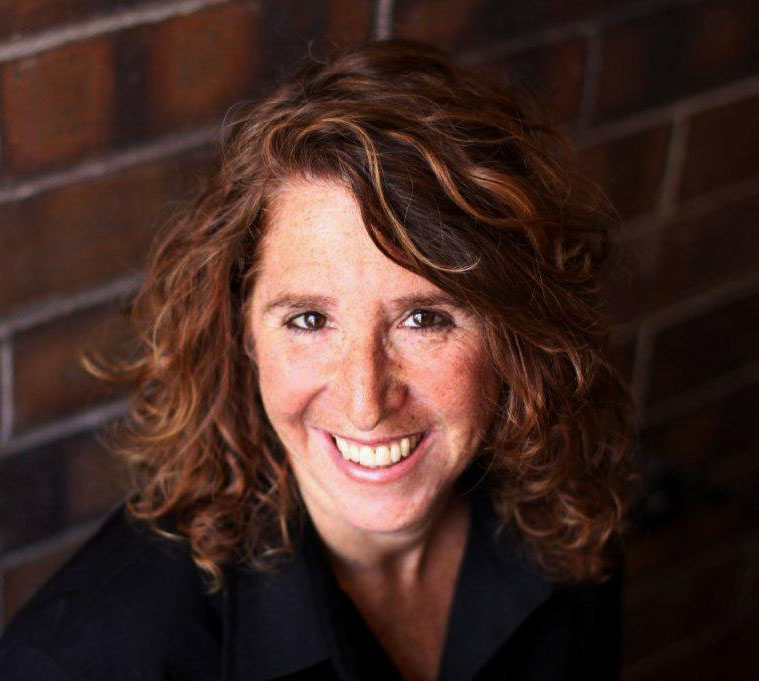
Mary Jo Barrett on the Collaborative Treatment of Incest and Complex Developmental Trauma

Lawrence Rubin: Hi, Mary Jo, thanks for joining me today and sharing your clinical expertise in the systemic treatment of incest and complex developmental trauma. Just before we went live, you were sharing an experience you had while giving a webinar this last weekend, and something caught my ear that I wanted to ask you about. You suggested that there is something different between what is currently being practiced in the field of incest and complex developmental trauma, and what, in your experience, is correct, or what should be practiced.
Mary Jo Barrett: That’s a good place to begin. When I first started, which was 45 years ago, I was a worker for the state, basically doing in-home counseling. I discovered that in all these child abuse and neglect cases, there was a significant number of cases involving incest and sexual abuse — whether immediate family members or close family members or clergy or whatever. I would go to my supervisors for guidance, but no one really knew how to treat it.
For example, Minuchin told me that I didn’t need to focus on the incest. I just needed to look at restructuring and building a hierarchy, and that the incest would then be alleviated. Carl Whitaker, who I was madly in love with, basically said, “You know what? I don’t know what to tell you.” At least that was honest. He said, “I do schizophrenia. You better figure out how to do incest.” He was my teacher, so I decided I needed to figure it out.
And so, over the years, I started asking my clients more formally about incest and sexual abuse. I also had my supervisees ask their clients. And whether I was conducting training in Europe or here, I began to ask the clients what the most effective thing about their therapeutic experiences was, and what about the therapy they had received made it “good therapy.”
Basically, nobody said “techniques.” They said what we know they would say and did actually say. It was the relationship between the therapist and client. But they even said more specific things. And of the specific things they said, I narrowed the list down to what I call the five essential ingredients of trauma treatment. But what they said applies to all models of treatment. And as we know, none of these models are better than the other I developed what I call a meta-model that applies to any trauma protocol that exists based on these five essential ingredients. And so, whether you do IFS or CBT or SC or any of the alphabet soup of techniques or protocols that are out there, they will be successful if they have the five essential ingredients.   

The Key to Effective Trauma Treatment is Collaboration

LR: What exactly are these five ingredients for effective trauma treatment?
MB: People, especially those who have been abused, need to feel that they have value, power, control, and connection. So, these “ingredients” include the client:

  • feeling valued
  • learning specific skills in finding resources
  • understanding contextual variables needed for an engaged mind state
  • developing workable realities
  • building a hopeful vision for the future

When a therapist, case manager, or foster care worker gets stuck with a client who has been abused or neglected, I suggest that they don’t go back to the protocol, but instead to the relationship.

LR: Going back to the question that I opened with, how do you see what’s in the zeitgeist now, what’s popular now, as being lacking in comparison to this collaborative model that you developed?
MB: The basic essence is that I go to the client to tell me what to do, versus going to a model or technique to tell me what to do.
LR: Can you think of a recent clinical instance in which the relationship seemed that much more important in the moment than any technique or model?
MB: Larry, every day! That is my model. Every session. In every session when you’re talking about trauma, there will be an impasse. I call it differently. In any moment, there’s going to be what I call a traumatic stress, which means the client, because of their trauma, is going to experience therapy as dangerous.
As we always say, survivors often see danger where danger doesn’t exist. I mean, that’s a standard thing. But that happens in therapy all the time. That’s because the therapeutic relationship is based on hierarchy and attachment. There is a hierarchy, right? I mean the therapist has more power. And the therapist is often controlling the sessions or the direction or what’s going on. And there’s a necessary attachment. There’s going to be an attachment between therapist and client.
Abuse and neglect are embedded in hierarchical attachment relationships. Now, the thing is, every time I say abuse and neglect, people might go, “But we’re talking about trauma.” And I’m saying, again, almost all the trauma cases we talk about revolve around interrelationship violations.
LR: So, if we practice anything other than a collaborative model, then we may in some way be replicating the hierarchical violation in the family that contributed to that abuse.
MB: I’d say that a majority of these clients anticipate and experience, from time to time, that violation in the therapeutic relationship.
LR: So, if the therapist moves too quickly or dives right into the trauma narrative or says, “Tell me about this,” or, “I’d like you to do this,” they are abusing their power? Even using directive words or a tone of voice or body posture can trigger a client so that they feel unsafe. And that’s when you would be cognizant of that, hypersensitive to that, and readjust any of those facets of your approach?
MB: Correct. And the collaborative change model is exactly that cycle. What you just described. And what’s interesting to me is that the collaborative change model is a natural model. And when I describe it, folks at the clinic say, “Oh, my god, yeah!” And the good clinician says, “That’s what I do in my sessions anyway.” And all I’m saying is, make it conscious. It’s a natural cycle of change.
The first phase is creating a context — which is creating refuge, making assessment, figuring out what’s going on — then making a direction, deciding what kind of intervention to use. And then when we start doing our interventions, which is natural, we’re challenging, right? And the relationship becomes embedded in this hierarchy because I’m sort of pushing and challenging by asking them to do something different. And in that moment, the client might experience a moment of fight-flight-freeze-submit. Or fix! And I have to, as a clinician, recognize that.
And in that moment, instead of pushing harder to make an assumption of, “Oh, they can’t tell,” or whatever it is, I need to stop and recreate a context of change. So, at that moment, I stop and say, “What do you need now? What’s going on? How do you feel? Should I slow down? What’s happening?”
I’ll give you an example. I had a client who often during the sessions would say, repetitively, “You don’t get it. You don’t get it. You don’t get it.” And I’d often get defensive. I’d sometimes want to say, “Well, help me understand,” or, “Explain it.” And then one day after the session, I was thinking, “I think that’s a trauma response. So, I said, “I’m wondering if when I’m doing something that triggers you, you experience me as threatening and go into ‘You don’t get it’ as a repetitive response.” And she really thought about it and looked at it and she said, “You know, I’ve often felt there’s things you do that remind me of my mother.”
This client’s mother was like Joan Crawford’s character in Mommie Dearest, and we’re not just talking severely abusive. I asked her what reminded me in those moments of her mother. In response, she said that I talked loudly, and it was the way I dressed in skirts. She experienced me as dressing in a way that was, for her, reminiscent of her mother, which she experienced as provocative. I don’t know that it was, but she experienced it as such, so for her, it was.
So, when we then had that conversation, and from then on, I did consciously change how I dressed on the days I saw her. And I consciously changed my voice. And after that conversation, she never said, “You don’t get it,” again.
LR: So, when she emphatically repeated, “You don’t get it, you don’t get it,” it was metaphoric for something like, “You’re not hearing me, that hurts, stop it, you’re not hearing me, you’re dressing in a way that confuses me. You’re not hearing me. Daddy did this, or Mommy did this, or my brother did this.” It’s like this broad statement of, “I am feeling abused right now.” She may not have been able to put a finger on exactly what element of your relational moment was triggering her, but “You don’t get it,” meant, “I am feeling powerless and unsafe.”
MB: Violated. She was feeling violated.
LR: She was feeling violated. Because you’re much more cognizant about the relationship and the attachment, and breaches in the attachment, you were able to look inward and ask yourself, “What could I be doing? How could how I be talking? What would I be wearing? What might we be talking about? What is it about the way I’m asking questions that could be replicating at some level what happened in her family?”
MB: Yes.
LR: Did I get it right?
MB: You did get it. I should bring up my PowerPoint. You’re doing a very good job. I have three slides that I use in trainings, which I introduce by saying, “These are the three watchwords or phrases of my faith.” The first one is by Mandela that says, “A good head and good heart are always a formidable combination.” The second one was by R.D. Laing who talked about the importance of awareness by saying something like, “If you aren’t aware that you’re not aware, there’s nothing you could do to make change.” And the third one is by Jay Woodman which says that “Life is a series of cycles of getting lost and finding yourself.” And that each time you’re lost, if you look at it as a possibility, then you will find yourself in a new place. And so, my thing is, therapy is a cycle of getting lost and finding yourself again. And once you’re aware of that, you integrate your mind and your brain, your heart, and you’re golden.   

The Healing Power of the Therapeutic Relationship

LR: Is there something about trauma, and incest in particular, that drives clinicians to cleave to techniques and theoretical models; bypassing what they truly know to be effective, with is the relationship?
MB: It’s an integration of the two. When we spoke with these clients, it was clear that they did need new skills. It was the third most important thing, not the first. But the first thing they said was connection. The second thing they said was they had to feel valued, and they had to value the clinician. Then they said they had to feel empowered. And then they said skills.
Everybody that’s developed a protocol model is going to argue with me and say the relationship is the basis of all those protocol models. I would say I got you; I believe you. But if you ask the people who are trained in those models, they will say the emphasis is on the protocol and the interventions.
And they would also say that the difference is that when they’re stuck or a client gets activated, that it’s “go back to the protocol,” versus going to the client to collaborate.
LR: I wonder if there’s something about trauma, and particularly incest, that compels clinicians, especially those who aren’t experienced, to have to “do something.”
MB: A hundred percent! This is actually the new thing that I’ve added to the “fight-flight-freeze” paradigm, which is “fix.” So, I think what happens when a clinician becomes overwhelmed — I call it a place of traumatic stress — fix becomes part of a trauma reaction. The traumatic stress reactions.
When a therapist falls into a “fix-it” state, that should be an indication that they are in the trauma field and are feeling dysregulated. They then have to get re-regulated in order to move to a different place. And it’s the same with the client, who at that moment needs skills to re-regulate themself. I don’t believe when a client or a therapist is dysregulating, that’s the time to automatically use a technique.
LR: So, by jumping in with “a fix,” the therapist might be trying to regulate themselves at the cost of their client’s regulation.
MB: I want to say one other thing which is not going to be popular. I believe that when therapists jump in with a technique, they’re hoping it’s a solution for the consumer of their services.
LR: Giving them something.
MB: Giving them something, which is capitalism. Everything is an agreement in the contract with my clients.

The Importance of Working Systemically with Incest

LR: Someone reading this interview might say, “Well, it sounds like she’s working with the individual,” but I know you’re deeply systemic. So, I’m assuming that this collaborative model infuses your family work around complex developmental trauma?
MB: Yes. Most of the clinical work I do is with couples and families. And this goes back to the research we did with these clients who said that rarely, if ever, did other clinicians include their family. So, what would happen is that after those sessions with the “other” therapists, these clients would go home and have abusive fights or get hit. Or a parent would continue the abuse or violate.
Here, I go back to what I said earlier. Abuse, neglect, and childhood developmental trauma are embedded in a relationship of hierarchy and attachment. So, I believe healing should happen in a relationship.
I want the therapy to recreate some of the crisis right in the room with me. So, if there’s a fight, and dissociation, we all can witness it together and address it in the moment — together. If there’s eyeball-rolling that then triggers the other person, I want it to happen in the room, because those are the cycles that cause the traumatic stress at home.
Everything I’m saying to you here and now is what I say in the first session. When I start a session, I want the safety in our relationship to spill over into their relationship. I want their relationship to be a source of regulation. Not me. I don’t want to be the primary person in their lives.
LR: I can see how this would apply working with intimate partner violence. But are you saying that in cases where there is past or present childhood incest, that you would work systemically with either the current or past family members?
MB: Let me delineate two things. One; when the incest is currently happening and its children, yes, I include everybody. But I have all sorts of rules and boundaries. If it’s currently happening, and in most states, if incest is currently happening, then usually the perpetrator, whether it’s a sibling or a parent or not, is kept away from the child, right?
So, I don’t bring the alleged offender, or the offender, into the room with the victim until they’ve acknowledged facts. So, if they’re denying facts and saying, “She made me do it,” or, “He made me do it,” or, “It never happened,” I don’t do family with them. But I would do family with other family members. But I don’t bring the alleged offender into the room until after they’re no longer denying facts. 
LR: Is that enough? Just getting past the point of denial? Would they have had to have done some significant reparative work of their own before you brought them into the room with the victim?
MB: They are in therapy. Yeah. I mean if it’s currently happening, then the offender is in individual and group therapy, according to how I think good incest therapy should happen. And the rest of the family are either in individual, group, or family treatment for whatever their issues are. And the kids could be in individual concurrently with the family therapy.And then when the violator has met certain criteria, then they can start coming into the sessions.

LR: So, who’s your client? In a case of incest, where it happens currently, or even in the past, who do you identify as the primary client?
MB: The family. But/and my collaboration is with all. It’s a team. I mean it takes a village. Absolutely. When we’re talking incest, it can’t be done effectively by one therapist.
LR: Do you or can you even work effectively with adult survivors of childhood incest?
MB: I’ve developed what I call the “family dialogue program,” which is for adult survivors with their families. And so, I do bring them together but it’s different. I often do it in these intense weekend workshops because if people live all over the country, it depends on if we’re doing therapy about wanting to talk about the abuse and neglect or are we doing what I call the third reality, which is, let’s just focus on the future. Let’s not focus on, did it happen, didn’t it happen, what’s going on? Let’s just focus on, am I going to come to your funeral? Am I going to come to Passover? How can we be in the room together? Am I going to go to my niece’s wedding? Are you going to ever meet your grandchildren? That kind of thing.
LR: That presumes that the perpetrator must take responsibility. They must be willing to listen, at least. Be present and listen. In other words, if you want to ever see your grandkids, you’re going to listen to me. You’re going to hear me. And that perpetrator may leave not feeling very healed, but at least he or she will have given the opportunity to the victim to be heard.
MB: And that’s why I call it the third reality. Because we’re just focusing on, “it’s not about your reality,” it’s about if you want to see your grandchildren. If I want to come to your house, are you going to be able to tolerate me…you know, me believing this and being in the same room as you.
LR: In a sense, it’s a way for the victim to recapture some power.
MB: Oh, absolutely. And that’s what most survivors will say to me. I mean a lot of people have said, “I was in therapy for 10 years, and that weekend with my father was the most important thing in my healing.”

The Gratification of Working with Trauma and Incest

LR: Okay, okay. My guess is that many in private practice would run when they receive a referral for incest. But you seem to run toward it.
MB: I don’t think people in private practice run from the adult survivors, but they run from when it’s currently happening.
LR: Why is that?
MB: Because I think it is one of the greatest taboos. And they never learned how to deal with it. And I think they never learned how to manage. And they often don’t understand how anybody can even want to see their father or their brother or their mother based on what they’ve done to me. Or done to them. Done to the victim. And so, I think a lot of them experience transference and/or feel inadequate.

I don’t know if it was a particular case, and I said to my husband, “What kind of person likes working with sex offenders?”
And in terms of me, Larry, I supposed we could get me on a couch to figure out why. I do remember very distinctly one time bolting out of bed, like sitting up straight. I don’t know if it was a particular case, and I said to my husband, “What kind of person likes working with sex offenders?”
But I would rather work with incest any day of the week over depression because people I work with change. And I see that change. I have seen plenty of sex offenders change. And I’ve had the fortunate experience of being able to follow up on some of my very first cases. I’ve seen one of my first cases 40 years after they stopped. It was an unbelievable experience.
Well, partly it was fun because I got to ask them all sorts of questions. I’ve always been a very creative therapist, where I just make shit up as I go along, that seems to fit. I remember one of my cases — it was incest and domestic violence. The father was in supervision and was told he couldn’t be within 365 yards of his family when he first got out of jail. He actually parked a mobile home 365 yards from the family home. And he was something else.
About a year into it, maybe less, I went back to court to get permission to have him come to family sessions. And he did. And one time, I was doing a good old family therapy looking for strengths, and I said to them, “You’re not always abusing each other. There are times when you’re not. Let’s talk about those times.” And the kids were younger, like 16, 11, and 10. I handed out these little recipe cards where I asked each family member to write down the recipe for nonviolence. Like a cup of this, and 3 tablespoons of that.
I gathered them all and laminated them, and then had them talk about it. The mother said, “It’s half a cup of going to church, and another quarter of a cup is no alcohol.” I mean that kind of stuff. And so literally 30 years later, I interviewed the same family. And the woman, the daughter who was the incest survivor was 40-something. I asked her a couple questions, one of which was whether she had gone to any trauma therapy. She said, “Why would I? I already had it.” So, I asked, “When you were getting married, or dating, what was that like? Were you always anxious? Were you afraid?” She opened her purse and pulled out the laminated card, and said, “I only dated people that had the ingredients.”
LR: Talk about having an impact. Wow, that must have felt great.
MB: I burst into tears. I didn’t do the initial interview, one of my graduate students did. But I was behind a one-way mirror, because who wouldn’t want to see one of their first clients? I went in and I asked them questions. So, in fact, there’s an example of the use of a particular skill. I don’t know that- would it have been the same if it hadn’t really come from them? I don’t know.
LR: Had you not had a relationship, they wouldn’t have taken the cards to begin with.
MB: Right, right.
LR: Do you see yourself in charge of the treatment village when working with the perpetrator?
MB: I have a case right now of sibling incest, and one of the kids is a young adult, but not even, I mean probably a teenager still, 18, 19, who is in individual therapy. I’m trying to do a family session because the parents have two children. So, the parents are involved, and the son who offended his sister. And I’m trying to coordinate. And the sister’s therapist didn’t call me.
LR: What recourse do you have?
MB: Well, the recourse I have is the parents. He is still a teenager. So, the parents can call this person up and say, “Our daughter signed a release, we signed a release. You need to call.” I’m not saying it in a nasty way. But I try to avoid doing that because I don’t need to start an adversarial relationship. But that’s the recourse I have. If the person was an adult, I mean I’d still have the parents to talk to their child and say, “Look, we want to heal this.” As it turned out, the son’s individual therapist calls me and cooperates. We have a great working relationship.

The Complex Arena of Incest Work

LR: Earlier on in one of our conversations, you said, “Incest is virtually neglected in our field.” Clearly, incest hasn’t stopped.
MB: Incest hasn’t decreased at all since I started in the field in ’78.
LR: What do you mean it’s neglected? By clinicians? By researchers?
MB: : I think everybody’s neglecting it. I think that the problem is that we’ve lumped trauma into one thing — complex developmental trauma.

I think that there is something very important to calling violence or violations what they are. Incest is unique. It’s not just a sexual assault. It’s unique because this is often a relationship where the people also have a very positive connection. “This is my parent,” they might say. I had a client way back, I mean again, 30 or so years, who wrote a poem. The one line that sticks out into my head was — and I don’t think she was writing it just to me, it was in general — she said, “I asked you to put an end to the abuse, and you put an end to my family.”

LR: Oh! Did she write the poem to you?
MB: I don’t think it was to me because I asked her. It was to the system. She’s another one that I still have contact with because periodically she’ll write me and say things like, “I just had a baby, just won a marathon.” I mean that kind of stuff. I think professionals feel anxious. I think they feel traumatized. I think it feels like you said. It’s such a moral violation that, as clinicians, we don’t know how to manage. How do I manage that I care about somebody? How do I manage that this woman stayed married to somebody who sexually abused her child?

I just think the taboo is so deeply entrenched that it causes such distress to those who work in this area. I just was working with a family where one of the children was sexually abused. And the other two weren’t. And when I talked to all of them, I said, “All of you were abused. But what happened to Susie is more of a moral violation.” And so that’s why people can’t tolerate it. I think there’s something about not being able to tolerate it. Like I said, I can find something positive. It makes sense to me that someone can be abused by a family member and still care.

LR: The popularity of complex developmental trauma overshadows the clinical attention on sexual assault.
MB: All I know is that so many clients tell me that people either never asked them or understood it. So, it just gets lumped into a category of trauma. And all traumas are not created equal. I’m not saying incest is worse than being physically abused. I’m not saying it’s worse, I’m just saying it has its own unique connected relationship with somebody they cared about who I also had many positives. And it leaves me even in some ways more confused because it isn’t linear or simple. Even if the person was abused by somebody that came and left like a babysitter or Boy Scout leader, with whom they also had an intimate relationship, it’s very confusing. 
LR: The deepest form of betrayal.
MB: Yes. I think sometimes clinicians can’t manage that level of complexity. Which goes back to your question; “Give me some techniques, it makes things less complex. I can feel better about myself if I know how to do this. Do that.” Larry, every single day, I go, “Wait, I don’t know what I’m doing exactly. What do I do now? I just had this explosion.”

I was sitting in the room last week with somebody that got up, grabbed something off my table, threw it on the ground, and smashed it. “I got to go,” they said So, I said, “Wait a minute, okay, let me figure out.” What was I going to say in that moment? “Follow my finger?”

LR: What did you do? How did you handle the moment?
MB: What I did in that moment was said, “I need a drink of water. You need to sit down. I am feeling afraid. And I want to talk about this. But right now, I need to calm down. And you need to. We both need to.” I had been seeing this guy for a while. It made sense to say, “We need to regulate.”

Well, the wife was there, and they have a child. But the child wasn’t there. I had a separate session with the child. And I had a separate session with the wife. I did break them all up. And then I had a session with him, and we just talked about it. And I talked to him. And of course, like every other, he said, “This is what happens when she does blah, blah, blah.” “This is what happens when my child…” And I explained to him that acts of violence are linear. I don’t think I said “linear,” but… “I get it. It is all these other things that activate you. However, you have to make a decision about how you’re going to react to these things.”

LR: I would see where a younger therapist, or a frightened or threatened therapist might have ended the session immediately, out of fear for themselves, out of loss of control of the session. But you saw it as part of the way the system functions, and your role in that moment was to regulate. To me, the external regulator, the governor of sorts. Is apology critical?
MB: Acknowledgment is important, not apology. Because people say they’re sorry very easily.
LR: So, how do you know when an acknowledgment is sincere and productive, moving forward?
MB: So, when somebody is going to make a formal acknowledgment, it’s a planned session where they write a narrative. They write it down, they talk about… Basically, I have them talk about facts, impact, responsibility. So, they’re giving it to me beforehand. And that’s part of the therapy process. They’re writing their acknowledgement as a therapeutic technique. So, they’re writing this, and that’s how I know it’s sincere.
LR: What are some of the common presenting problems that people come to therapy with that raise your incest red flags?
MB: Well, on that level, they probably don’t look any different than any other form of abuse, neglect, or violation. They really don’t. Eating disorders, self-mutilating, suicide. Any of those things. Most of these are symptoms, I think are survival skills. I think they’re skills that people have used over time to survive their abuse and neglect. And now it’s become problematic. The skills themselves are problematic. The skills work. If I drank too much, if I cut, if I was sexually promiscuous, if I was suicidal, if I was dissociating. It might have worked to avoid memory and pain. That’s how I tell my clients; that most of their symptoms are utilized to avoid memory and pain until they don’t.

And now the symptoms themselves are causing the pain. To me, incest doesn’t look any different. What happens is, as I start my sessions by asking people how they heard about me.

If they didn’t know my name, they might have typed in “trauma, abuse, childhood something.” And it’s not just “therapy.” Usually, they got to me, somehow, they typed something else in. Or they got to me through a therapist. And so, when they say trauma, which is usually what it is, I then say, “Look, if we’re going to talk about it, we’re not going to talk about it now. But I need you to know I feel really comfortable talking about incest. I feel really comfortable talking about sibling abuse. I feel comfortable talking if you beat each other up.” So, I’m just saying, down the road, if any of those things come up, I feel comfortable.

LR: Has there ever been an instance where all roads pointed to incest and the person allowed you down that road, right up to the door, and then just closed it in your face?
MB: No. When I take a family history, when I do a genogram, and everything points to incest, I might just say, “You know what? I just need you to know from what you’re telling me; I’m not saying it was incest. But there might be, it could have been. It feels to me like emotional incest at least. Like you are hierarchically your father’s peer. Or it feels like you and your brother turned to each other in ways to get affection that you didn’t get from anyone else or your parent(s).”

So, it doesn’t have to be. And this isn’t your question. But it’s a question people often ask me. Do you need to know all the story to help? And the answer is no. 
LR: And I think clinicians sometimes may forget that incest is a violation of hierarchy. It’s a violation of trust. And not all incestuous relationships are sexual. Are there any questions I could have asked or should have asked?
MB: Well, I mean we have maybe a couple of million. But I think what I would say is, you know, we should talk again.
LR: I would like that. Thanks Mary Jo.

Containing The Adult ADHD Fad — With a Rejoinder from ChatGPT

A sad and fairly ubiquitous aspect of human fallibility is that we are extremely suggestable suckers for fashion. Psychiatry is no exception — its history is littered with recurrent fads. The specific details vary, but the pattern is always pretty much the same.

Dangerous Psychiatric Fads

  1. Charismatic promoters identify a new and plausible diagnosis; do some second-rate research suggesting it “exists,” write a lot of papers, and give a lot of workshops and conferences.
  2. Media picks up the story, sensationalizes the “new findings,” and transforms lousy evidence into a vital new discovery.
  3. Whenever a potential pill treatment is available, Pharma marketing goes into an extravagantly financed, high-gear marketing mode — enthusiastically hyping the diagnosis and the medication in every possible venue.
  4. Benefits of the new diagnosis and treatment are widely publicized; risks and harmful unintended consequences are neglected.
  5. Primary care docs are especially targeted because they do most of the prescribing of psych meds, have the least training, and aren’t given adequate time to do careful evaluations.
  6. Patients are seduced by drug ads to “ask your doctor” about the diagnosis and the pill to treat it. “Asking your doctor” usually results in getting the medication.
  7. These familiar patterns of fad development are now greatly speeded up and given immediate worldwide distribution via social networking on the internet.
  8. Diagnostic rates rise exponentially in a very short time.
Some dangerous fads in medicine have lasted thousands of years (e.g. bleeding, purging, popular meds that turned out to be poisons). But most fads come and go fairly quickly once the risks of treatment become obvious and the over-promised benefits don’t pan out. As the excitement surrounding one fad wears off, suggestible clinicians and patients become enthusiastic about, and eagerly await, the next fad.

Cold Hard Psychiatric Facts about ADHD

Why The Explosion of ADHD Rates in Kids? We are in the midst of a 30-year fad of excessive diagnosis of childhood ADHD. Rates have tripled to about 10% — partly because DSM definitions have gotten looser — mostly because of aggressive Pharma marketing to MDs, parents, and teachers. How Do We Know That Rates of ADHD are Wildly Exaggerated in Kids? Studies done in a dozen countries on millions of kids have returned a remarkably consistent and disturbing result. All over the world, the best predictor of ADHD is the child’s birth date — the youngest kid in the class is almost twice as likely to get an ADHD diagnosis than the eldest. There is only one possible interpretation of this powerfully robust finding: ADHD is being wildly over diagnosed — we have turned simple immaturity into a mental disorder. Does ADHD Ever Occur in Adults? Yes, of course — because many kids don’t outgrow their ADHD symptoms once they become adults. The rate of persistent ADHD into adulthood varies widely across longitudinal studies — but probably about half the kids who have a childhood ADHD diagnosis continue to have clinically significant symptoms in adulthood. When the symptoms do persist, they usually become milder with age (especially true of hyperactivity). Can ADHD Ever Have Its Initial Onset in Adulthood? The simple and very important answer is an empathic NO! By definition, ADHD has to have its onset in childhood. This requirement is absolutely necessary in order to distinguish true ADHD from all the many other causes of inattention and hyperactivity in adulthood. Why Is ADHD So Often Overdiagnosed in Adults?
  1. Almost all mental disorders and almost all substance addictions can perfectly mimic ADHD since they can cause its two classic symptoms — hyperactivity and trouble focusing attention.
  2. Real or imagined attention problems are a very common complaint among perfectly normal people.
  3. Getting an ADHD diagnosis is a gateway to legal speed — desired for performance enhancement, all-nighters for school tests or work assignments, recreational purposes, or for sale into the extensive secondary ADHD pill market.
  4. Careless diagnosis and prescribing by MDs.
  5. An inevitable consequence of overdiagnosing ADHD in kids is overdiagnosing ADHD in adults.
  6. Promotion via drug companies and social networking.
What Are Current Reported Rates of ADHD in Adults? In general population surveys, the prevalence of current adult ADHD is reported to be 4.4% (males 5.4%; females 3.2%). Estimated lifetime prevalence of ADHD in U.S. (United States). adults aged 18 to 44 years is 8.1%. These numbers are absurdly high — reflecting the fatal flaws in the survey method. These rates are determined by casual telephone interviews done by non-clinicians. There is no careful differential diagnosis to rule out all the many causes of inattention and hyperactivity that should not be labeled ADHD, and to ensure symptoms are of clinically significant severity and duration. What is The Real Rate of ADHD in Kids? The best guide to the “real” rate of ADHD is the view of Keith Conners, considered to be the father of the ADHD diagnosis. He did the first studies on ADHD (even before there was an official DSM diagnosis called ADHD), and continued throughout his long career, until his death a few years ago, to do the best studies and have the most influence on the field. Keith believed the most appropriate rate of childhood ADHD would be about 2-3% and about half that number in adults — just a very small fraction of the inflated rates now reported. Risks Of Overdiagnosing ADHD in Adults:
  1. Meds used for ADHD are usually quite harmful if the person’s symptoms are due to another psychiatric disorder that has been missed — especially bipolar disorder, depression, schizophrenia, eating disorders, or anxiety disorder.
  2. Overdiagnosis of ADHD results in over-medication with drugs that cause harmful side effects and can lead to or worsen addiction.
  3. There is now a huge secondary market for ADHD meds, especially on college campuses.
  4. There is also a nationwide wide shortage of ADHD meds for patients who really need them — because the meds are so often prescribed for those who don’t or diverted to the illegal market.
Proper Differential Diagnosis of ADHD In Adults Before ever making a diagnosis of adult ADHD, there must be a careful evaluation that:
  1. Rules out the possibility symptoms are caused by another psychiatric disorder, substance use, drug side effect, head trauma, or another neurological or medical illness.
  2. Determines that the symptoms had their initial onset in childhood — adult onset of symptoms rules out ADHD.
  3. Ensure that symptoms are severe and persistent enough to cause clinically significant distress and impairment. Most people worry about their ability to focus — this is not sufficient evidence to diagnose mental disorder. Many people have transient episodes of inattention or hyperactivity due to everyday stress — this is also not adult ADHD.
  4. Consider the risk of malingering to get legal speed for performance enhancement, recreation, or resale.

Bottom Line

Most of what looks like adult ADHD is not adult ADHD. Distractibility is ubiquitous in the general population — most of it is normal; sometimes it’s caused by another psychiatric or medical problem or substance use. People who didn’t have ADHD symptoms in childhood should not be diagnosed with ADHD as adults. ADHD drugs are unsafe except when carefully used for accurately diagnosed ADHD. They are currently in short supply for appropriate use because they are so often used inappropriately. ADHD drugs are useful when appropriately prescribed for the few, but harmful when carelessly prescribed for the many. It is past time to stop the adult ADHD fad before it gains even more traction. The harm caused by the adult ADHD fad is great, both for the individual and society. Easy access to legal “speed” has created a large illegal secondary market of diverted pills. ADHD drugs have become the campus recreational drug of choice at parties and the performance-enhancement drug of choice for all-nighters during finals week. Legal speed can cause many medical and psychiatric adverse effects, and emergency room visits for complications are skyrocketing. The Drug Enforcement Agency and the FDA are now trying to contain the epidemic — but their efforts are too little/too late. The adult ADHD fad will be stopped only if clinicians and patients fight against its seduction and insist on more careful diagnosis and cautious treatment.

ChatGPT Asked the Same Question

[Editor’s Note] Once again, Dr. Frances’ granddaughter posed the same question to ChatGPT with the prompt: “What are the dangers of diagnosing ADHD in adults and how best to avoid them (in 500 words)?” “Diagnosing Attention-Deficit/Hyperactivity Disorder (ADHD) in adults comes with its own set of challenges and potential dangers that need to be carefully considered. While accurate diagnosis can provide individuals with the appropriate interventions and support, the risks associated with misdiagnosis or overdiagnosis are significant. To avoid these dangers, a comprehensive and cautious approach is crucial. Dangers of Diagnosing ADHD in Adults
  1. Misdiagnosis: ADHD symptoms can overlap with those of other mental health conditions such as anxiety, depression, or even medical conditions like thyroid disorders. Misdiagnosis can lead to inappropriate treatments and exacerbate underlying issues.
  2. Stigmatization: An incorrect diagnosis can lead to stigmatization, where individuals might feel labeled or misunderstood. This can negatively impact self-esteem and overall mental well-being.
  3. Overmedication: Misdiagnosis may result in the unnecessary prescription of stimulant medications, which are commonly used to treat ADHD. These medications can have side effects and may be harmful if taken without a valid reason.
  4. Self-Fulfilling Prophecy: Once diagnosed, individuals might attribute all their challenges solely to ADHD, overlooking other contributing factors and hindering personal growth and development.
  5. Masking Other Concerns: ADHD symptoms might overshadow coexisting conditions like learning disabilities, which require specific interventions. Treating only ADHD could leave these underlying issues unaddressed.
How to Avoid These Dangers
  1. Comprehensive Assessment: A thorough evaluation by a qualified mental health professional is essential. This should include a clinical interview, medical history review, and collateral information from family members or close associates to ensure a comprehensive understanding of the individual’s history and current challenges.
  2. Consider Differential Diagnosis: Since ADHD symptoms can mimic other conditions, it’s crucial to explore the possibility of comorbidities. This might involve additional assessments, screenings, or consultation with specialists.
  3. Longitudinal Perspective: Assessing symptoms over time helps differentiate between chronic ADHD-related impairments and situational factors that might be causing temporary difficulties.
  4. Multimodal Assessment: Utilize a combination of assessment tools, such as self-report questionnaires, cognitive tests, and behavioral observations, to gain a holistic view of an individual’s functioning.
  5. Functional Impairment: Focus on the degree to which symptoms interfere with daily functioning in various domains, including work, relationships, and personal responsibilities.
  6. Psychoeducation: Educate individuals about the diagnostic process, potential pitfalls, and the multifaceted nature of their difficulties to prevent over-identification with ADHD symptoms.
  7. Second Opinions: Encourage seeking a second opinion, especially if the diagnosis or recommended treatment plan feels uncertain or uncomfortable.
  8. Collaborative Decision-Making: Involve the individual in the diagnostic process and treatment planning. Discuss the potential benefits and drawbacks of medication, therapy, and lifestyle modifications to make informed choices.
  9. Holistic Approach: Address physical health, sleep patterns, stress management, and other factors that can impact attention and focus. Sometimes, lifestyle changes alone can lead to significant improvements.
  10. Regular Follow-ups: Periodically reevaluate the diagnosis and treatment plan to ensure they remain appropriate as the individual’s circumstances evolve.
In conclusion, diagnosing ADHD in adults requires a cautious and comprehensive approach to avoid the potential dangers associated with misdiagnosis or overdiagnosis. A multidimensional evaluation, consideration of differential diagnoses, and involving the individual in the diagnostic process are key strategies to ensure accurate diagnosis and promote the well-being of those seeking assistance for their difficulties.”

***

Afterword from Dr Frances

The response from Chat-GPT is remarkably good, especially considering that it took it one second to produce while my piece took 90 minutes to write. But ChatGPT did leave out two critical issues:
  1. The requirement that ADHD cannot, by definition, be diagnosed in adults unless symptoms were present in childhood and why this is so critical.
  2. The societal impact of the adult ADHD fad.
All in all, I think my piece is better than Chat’s – but not by much!

How to Use Inference and Speculation for Psychological Assessment

Is it possible to conduct a psychological assessment and to offer treatment recommendations without ever communicating directly with a client? At the very least, aren’t interviews and history-taking minimum requirements to reach such important conclusions?

Like what you are reading? For more stimulating stories, thought-provoking articles and new video announcements, sign up for our monthly newsletter.

I experienced just such a dilemma when I was asked to provide temporary services at a nursing home in Boston. Thinking it an otherwise easy task, I was soon faced with impossible barriers to communication and was not able to conduct a full assessment — at least not in the traditional way. As it turned out, I could only privately speculate on what might lie beneath the limited information available to me at the time. As therapists, when faced with this type of perplexing clinical situation, it is natural to ask, “What else must be true for this to make sense?”

Psychological Assessment with Limited Information

The facility management were dissatisfied with the work of a prior psychiatric service provider. They wanted continued treatment services for residents already receiving them, an audit of the documentation done by the prior provider, and a review of all residents to identify who might need or be able to benefit from behavioral health services.

This was an old brick building in a residential neighborhood that was now a Catholic nursing and rehab facility, serving the needs of a diverse population. One unit was fully populated by American-Vietnamese citizens, half of whom were Catholic, and half were Buddhist. The TV and newspapers were in the Vietnamese language and there were many staff persons who spoke both English and Vietnamese. On several occasions, a bilingual staffer sat in to translate for my interview with a resident.

One day, I pulled out a new chart from the rack at the nurse’s desk and began reviewing the information. I sat next to the nurse and asked if she thought I could provide meaningful service to this resident. The nurse shrugged her shoulders and said, “They just want to know if each person might need psychiatric medication or anything else you provide.” So, I continued to read through the medical record.

This resident had been a single mother of one son, living in Vietnam during the war. According to the record, she had been “deaf and dumb” from birth. Current records described her as having advanced dementia. How might I communicate with a person whose native language was Vietnamese, yet who had major speech and hearing impairments throughout her life, and who was now incapacitated by dementia?

I walked down the hall to a day room where Mrs. Tran was seated in a wheelchair, wrapped with a colorful crocheted blanket, and her nurse’s aide sat quietly beside her. The aide was keeping an eye on Mrs. Tran and on a few other residents across the room watching TV.

I smiled and introduced myself and my role, and made comments to Mrs. Tran, even though I knew she was deaf. I gently placed my fingertips on her forearm as I spoke to her, yet she continued to sit unmoved, with her eyes closed. I asked the aide if Mrs. Tran was sometimes communicative, but the aide explained that Mrs. Tran did not make eye contact or display any direct type of communication.

“Does she show some communicative responses if you hold or stroke her hand?” I asked.

“No, not really,” the aide said.

“How was it to care for Mrs. Tran?” I asked. The aide smiled and spoke of her affection for Mrs. Tran. She enjoyed taking care of her.

“She’s never a problem,” she explained, and added that Mrs. Tran’s son was a frequent visitor, and that he would bring in things that might be needed for his mother’s care, and that he would often assist with feeding his mother.

Clearly, I could not document an assessment, but what personal speculations might help me peer behind the cloud of the unknown surrounding her history?

As it turns out, Mrs. Tran may have been a remarkably capable, resilient, and praiseworthy individual. She might have even had enormous emotional intelligence and social relationship skills. As a young, single mother raising a son during wartime, and burdened by severe speech and hearing impairments, she might have also been especially effective in connecting and somehow communicating with others in the “village” that it must have taken to successfully raise her son, get him to the United States, and help him obtain his education and develop a full life. The loving attachment and close involvement of her son seemed a clear testament to the success of those conceivable efforts.

But all that I was able to formally and ethically document was that Mrs. Tran was stable and quite well cared for, and that no psychiatric interventions were needed. I was satisfied with that outcome.

Questions for Thought and Discussion

How did the author’s account impact you as a clinician? As a person?

What might you have done in this circumstance?

Do you agree or disagree with the author’s conclusions?  

Narrative Therapy in a Cross-Cultural Conversation with Someone Approaching Death

Acknowledgements

T?na koutou, t?na koutou, t?na koutou k?toa

Ko Ben Lomond t?ku maunga

Ko Loch Lomond t?ku moana

Ko McAllum t?ku iwi

No Kotorana ?ku t?puna, engari I haere mai ?ku t?puna ki Aotearoa nei

No reira ka mihi hoki au ki te iwi M?ori

Ko James Copeland t?ku t?puna

Ko Hamish McAllum t?ku p?pa

Ko Jan Hutchison t?ku m?ma

Ko Gavin Pilkington t?ku tane purotu

E rua ?ku tamariki ko Tim r?ua ko Ella

Ko Sasha McAllum Pilkington t?ku ingoa

No reira t?na koutou, t?na koutou

Kia ora t?tou k?toa

Thank you, Huia Swann, for your encouragement and feedback through the many iterations of this story.  

An Unexpected Beginning (1)

It was a busy morning at the hospice. I made my way into the community team’s office and was greeted with a buzz of activity. One of the nurses called me and I turned to greet her. In her hand was a referral letter.  

“Sasha, I was wondering if you would see this woman for counselling? Her name is Louise, and she has advanced lung cancer. (2) Louise is refusing all treatment. It seems someone thought she was ‘in denial’ but I saw Louise yesterday and she told me she’s ‘not having any chemo’ because she doesn’t think she’s worth it. Louise is M?ori, but she’s refused cultural support. Could you see her?” she repeated, as she handed me the letter (3).

“Of course,” I replied, disturbed by the thought that Louise didn’t feel she was worth treatment, but grateful the nurse had looked beyond the judgement that Louise was “in denial.” Before I could say any more, the nurse was summoned to the phone and with a smile, I left to call Louise.

A few days later I pulled up in a beautiful driveway. Plants nourished by an attentive hand surrounded the house in front of me. As I got out of the car, I saw a slight woman emerge into the sunlight. Her dark hair gleamed as the rays of sun caught it and, as I came closer, I saw she was smiling. Louise welcomed me warmly and, after I had removed my shoes, guided me into the house. We sat down at the kitchen table. Nearby stood a large kete (4) filled with driftwood, each piece carefully placed to reveal a story. Woven mats hung on the walls and outside I could see clusters of red berries hanging below the fronds of a nikau palm. Artistry was evident in creating this home and I looked around with admiration.

After some further introductions, Louise eased herself back in her chair and looked at me expectantly. Tentatively I responded to her silent invitation with, “People are so much more than the illness they are living with and their current situation. Would it be OK to begin, maybe, with me asking you a bit about yourself…so that I might learn a little about who and what matters to you?” (5) I didn’t name the illness as I didn’t know what language she preferred to use or how she might wish to speak about her experience.

Louise responded immediately. “Sure! I’m married to Pete and we have three children. They’re all really supportive, in and out of the house every day…”

Louise continued to share stories of her day-to-day life and I listened attentively, occasionally asking her questions so that I could learn more of what was important to her. I quickly learnt Louise was a hard worker and a committed parent. She made no mention of where she was from or her t?puna (6).

After a time, Louise paused and reached across the table to pick up a piece of paper. “Well, it’s lucky you’ve come to see me on your own.

I don’t like groups because I lie in them. I’m a liar,” she stated in a forthright tone, waving what I now realised was a support-group invitation from the hospice.

Struck by her honesty and trust in me, a stranger, I replied, “Would it be OK to ask what you mean when you say you lie?” (7) In my mind was an awareness that some truths are more easily spoken than others, and for some people it was unsafe to voice or live their truth.

Louise responded, speaking in rapid buoyant tones, “Oh, I say what I think I should in groups…but then later I discover it would have been all right if I’d said what I really thought.”

With all the respect I could convey, I replied, “What is your understanding of why you say what you think you should?”

Immediately Louise explained, “Oh, I tell a story to fit in.”

I reflected that people usually have good reasons for what they do. “What is important to you about fitting in, do you think?”

Louise sat back in her chair looking thoughtful. “I like to fit in. When I’m in a community I’m proud of it. I like belonging to clubs. I wasn’t brought up to do any sport or anything, so it means I can choose. I’m not tied to one thing.”

Curious, I responded, “Would you mind me asking… how do you go about this fitting in?”

Louise paused. “I don’t know, but I’m really good at it,” she finally said.

“Are you a flexible kind of a person?” I offered.

“Sure am.” Louise nodded.

“Which kinds of communities or clubs do you like to fit in with?” I continued.

“I take the best of what’s around. People are good to me, kind,” Louise answered, as if she couldn’t quite believe her good fortune.

“Would you say you are someone who both accepts and appreciates the generosity and care of others?” I asked, noticing her gratitude. (8)

Louise began to tell me how she appreciated homemade gifts as opposed to bought ones. She elaborated on the care and effort in the presents people made and gave to her. Homemade fudge was so much better than a box of chocolates, she explained.

“Do you see the intention behind the gift, the love maybe?” I asked. Louise nodded as if this was obvious to her.

“What do you give to people in return when you accept their gifts, noticing the care and effort that has gone into making them?” I asked, highlighting the reciprocity in the way she received gifts. (9)

“They must feel the magic, because I do,” Louise answered matter-of-factly. “People are kind,” she reiterated. “I have lung cancer. It’s an ugly cancer. I was so happy when they included me in the make-up day for women with cancer. I didn’t think they would, what with me having a dirty cancer and them all having the pretty pink kind.”

Taken aback, I responded, “Would it be OK to ask what you mean when you talk about your cancer as being dirty and theirs as a pretty pink kind?”

Louise lowered her head as she answered me. “My cancer is dirty because it’s a smoker’s cancer. It’s my own fault.”

Infusing as much respect into my voice as I could, I asked her in a quieter tone, “Would you mind me asking you some questions about how you began to smoke?” I reflected on how hard it would be to be a smoker with cancer and not afforded the support that other people living with cancer are offered. I tried to imagine being shamed at one of the worst moments in life, not allowed to feel sad or angry but being repeatedly blamed both vocally and silently.

“It was the ‘in thing’ to smoke,” Louise explained. I nodded. Louise and I both came from a time when many people smoked.

“When I was 10, 11, 12 years old, I pinched my mother’s cigarettes for a naughty puff,” she told me with a mischievous glint in her eye, evoking glimpses of childhood fun away from the surveillance of adult eyes.

“When you were 10, 11, 12 years old, do you think it was possible for you to realise the full implications of the naughty puffs?” I inquired, hoping to lessen the harsh judgement she extended towards herself alone.

“No. I didn’t realise in my teens either. It wasn’t ‘till much later when I came to live around people who didn’t smoke,” she told me.

“How do 10-, 11-, 12-year-olds come to smoke, do you think? How do they come to think it’s a good thing?” I responded.

“It’s the way I was brought up. It was a hard life. It wasn’t ‘till I started playing sport that I realised there were different ways of living, that some kids had a bed each and enough to eat. (10) My parents were hard people. They smoked and drank,” Louise conveyed with a frown.

In my head I did a few calculations. Louise would have been growing up after the Second World War when many M?ori were living in poverty. I thought about her family and wondered if Louise had a grandfather who fought in World War One. I knew of P?keh? returning servicemen who had been allocated a farm in the ballot after fighting in World War One, while my friend’s t?puna (11) who fought in the M?ori Battalion returned to discover his ancestral lands had been confiscated. There were many possible reasons for why Louise’s family experienced hardship.

“What is your understanding of how they came to be like that?” I asked.

“Maybe it’s ’cos they grew up in the Depression. (12) It was a hard life, and they worked hard and partied hard. Yeah, they were hard people,” she repeated.

“Hard lives can have people turning to cigarettes and drink to ease things, especially when there is trauma and hurt that comes with it,” I commented. “What do you make of there being cigarettes for sale when we all know they kill people?”

We pursued this line of questioning for a bit longer, with me seeking to broaden the responsibility for smoking into our societal context so that Louise wasn’t left to shoulder it entirely on her own.

However, I noticed myself beginning to labour a little in the conversation and started to wonder if I might be more interested in taking such a direction than Louise was.

So, I listened harder for what was important to her.

“Yeah, well…” Louise pondered. “I left home at 13 to get away from it all. I knew I had to get out. The beatings, the life… My fault I smoked… Miracle I survived this far. The shame of it has been with me since I’ve had children.”

“What was important to you that you knew you had to get out?” I wondered.

“I wanted to get away from the cigarettes and the booze…” Louise elaborated.

“Do you know what it was that was important to you that you wanted more from life, that you didn’t just accept the cigarettes and booze?”

“I wanted a better life and to live it,” Louise explained.

“May I ask, what sort of better life did you want?” (13)

Louise told me how she wanted a home and security. “I wanted a bed of my own and to know where I was sleeping each night,” she explained.

“What steps did you take towards getting a better life?” I inquired.

“I went white.”

The words hung in the air, heightening my awareness that I, a privileged P?keh?, sat at her table. I wondered how I was selling her short.

Louise continued, “I knew I had to leave if I was to survive, so I hung around with my white friends. When I left, I got away from a lot. Not just the cigarettes. I made sure I fitted in, and it was my ticket out.”

“Would you say fitting in saved your life?” I asked her.

“Definitely, I had to get away from the other lot.”

She watched me, seeming to wait to see how I would respond. I reflected on Louise calling her own people “the other lot.” I could hear the racist discourse ringing in my ears, inviting the harshness to be because they were M?ori, rather than taking into account the devastating effects of colonisation on generations of M?ori people.

“Could you help me understand a little more of what you mean when you say ‘the other lot?’” I inquired. (14)

“M?ori,” she replied, sounding like she was repeating something rather than truly believing it.

Louise waited, her body tense and alert.

“Colonisation has been very hard on the M?ori people,” I ventured, thinking of the decades of injustices M?ori had endured. “Do you think that the drinking and smoking and what you went through was because they were M?ori, or do you think it could have been because of the hardness of life and what it did to the family?” (15)

Louise’s shoulders dropped and she was quiet for a moment. “I’ve forgotten who I am,” she rasped sadly. (16)

Before I could respond, she ploughed on, seeming to contradict herself with what could have been growing pride in her voice. “I do all the old stuff: knitting, cooking, sewing, carpet-making. I paint.”

“Are you a creative person?” I asked her, smiling. “And the garden?”

Louise enthused about her garden.

“Are there threads of who you are in the old arts?” I asked her.

Louise considered. “Yes, I think there are.” She seemed to meditate on this for a moment, then looked me in the eye. The corners of her mouth crinkled up as a smile formed briefly. “But then I forget,” she added, looking shamefaced again.  

“Colonisation can do that to people…get in the way of being connected to who you are… Not surprising when there were laws trying to do just that,” I said sadly. (17) I reflected on the children who had been beaten in school because of laws that forbade them to speak Te Reo M?ori and the efforts to suppress M?ori cultural practices. “There can be a heavy cost when you are forced to turn ‘white’ to survive. Would it be OK to ask if there has been a cost for you?” (18) I thought about what it might be like to forget who I was. Emotion stirred in my belly.

“I don’t have a belonging,” Louise confided. “I feel I’m a betrayer.”

Deep sadness leaked into the air around us. It hovered, seeming to draw us together. We sat in silence.

After a time, Louise gradually seemed to recover, and in a bright voice she said, “You know I’m Scottish. I identify as Scottish.” I looked into her beautiful brown face, with its broad nose and dark brown eyes, framed by the sweep of almost-black hair.

I responded then, not as I would to a P?keh? with a question, but in the way of M?ori who connect through the people and the land they come from, whanaungatanga (19). I adjusted my phrasing according to shades of tikanga M?ori (20) and said, “The people I come from are Scottish. They belong to the clan of Callum. They come from the highlands of Scotland.” My intention was to tell her we were connected, and in telling her this and in the way I phrased it, I wanted to say, “I also acknowledge your M?ori side and it is beautiful,” though this was implicit.

My disclosure resonated with Louise immediately. Laughing, she jumped out of her chair and rushed off to gather photos of all her grandparents who had died long ago. She introduced me to her Scottish grandmother, whom she loved dearly. “She taught me the old arts,” Louise explained.

“Were you a willing learner?” I asked her.

“Yes, I took in what I wanted and spat out what I didn’t.”

“May I ask what you value about your M?ori side?” I inquired, appreciating that the photos were of both sides of her family.

“M?ori love fully and unconditionally, no questions asked, no grudges.”

“How do you love?” (21) I asked, hoping to make visible a thread of whakapapa. (22)

Louise proudly announced, “I love like a M?ori!”

Warmly, I responded, “Can you tell me some stories of how you show that knowledge of loving?” I wanted to strengthen Louise’s description of herself as having the ability to love fully. It stood out in contrast to her sense of not being worth chemotherapy.

Louise was off, taking centre stage. I listened, grinning, delighted by her rich and lengthy stories of such loving. I then asked her questions of how she came to learn such loving and we tracked knowledge of love through the generations in some long-overlooked stories.

“Who in your life knows that you have this knowledge and way of expressing yourself?” I asked.

“All my friends!” Louise responded enthusiastically.

“Could it be that you have captured aspects you value from both worlds with your fitting-in ability?” I asked, after a moment’s reflection. Louise embraced this possibility seemingly for the first time. Her enthusiasm bubbled. We went over her mothering and loving of her children, with Louise adding details such as “…but the car is warranted.”

“Could it be you are not a betrayer if you’ve made the best of both your M?ori and P?keh? sides?” I slipped in the word P?keh?, the M?ori word for non-M?ori, to give weight to M?ori knowledge. “You’re right, I’m not,” she told me. Then, as she thought about it, her voice firmed. “No. I have been clever; I haven’t got off-side with anyone. I have danced on both sides of the fence.” Louise smiled fully at me. It was a beautiful sight.

Smiling back, I continued, “If you were to think of yourself as a person who can dance on both sides of the fence, what difference might that make to how you are living your life?”

“Well, just everything,” she exclaimed exuberantly. Idea after idea quickly followed.

“If this ability you have to dance in two worlds was one that you kept in your mind, what might it keep you in touch with that is important to you?”

“That I’m OK. Sasha, it’s going to change my life!” Louise’s joy once again spilled over. I was overwhelmed. How generous she is, I thought.

“Do you think it will make a difference to how you live with cancer?” I asked.

A little later, I started to draw the conversation to an end, mindful that we still had more to talk about.

“Sasha, I like this talking,” Louise exclaimed, with bouncing joy. “Today I discovered I’m not a liar!” (23)

I drove back to the hospice with sadness stuck to me rather than her happiness. All I could think of was Louise…a M?ori in a sea of P?keh?. I thought of the times when I have felt apart, out of step, disconnected and the only one. I tried to take myself there, but I knew it was not the same. When I arrived back at the hospice, I wondered what I might have missed, what I didn’t ask. Later, as I reflected with Niwa, my M?ori colleague and friend, I was reminded of the bridges that friendship, love, and respect can provide.

A few days later, I heard from the nurses that Louise had decided to have treatment for her cancer. Louise later explained to me, “I felt worth it after we talked.”

When Niwa and I met with Louise and her family a few weeks later, we heard the good news she was improving. A short time of respite from the cancer beckoned.

Postscript

This story illustrates one way a counsellor might go about such a conversation. It is not the only way to respond. I carry the knowledge that I have many blind spots, especially in conversations that are cross-cultural. I am also aware that I am the recipient of the kindness and generosity of the people with whom I meet. This story does not represent a “right way” to practice but rather is written in response to a question I ask myself: “What does my commitment to the principles of Te Tiriti O Waitangi (24) look like in practice?”   

Notes

(1) For those readers interested in the use of stories to learn or teach narrative therapy see Carlson et al (2018) and Heath et al (2022). For additional examples of stories illustrating narrative therapy see Epston, 1989; Heath, 2015; Ingamells, 2014, Ingamells & Epston, 2016; Pilkington, 2014; 2016; 2021; 2022.

(2) This story was written with the permission of the person in it. All identifying information has been changed.

(3) In Aotearoa New Zealand, M?ori have a higher incidence of lung cancer and poorer survival rates than P?keh? (non-M?ori. A number of barriers to early diagnosis and treatment have been identified including access to care, engagement with specialists, communication with specialist services, and lack of culturally appropriate services (Kidd et al, 2021). Even though Louise’s lung cancer was incurable, chemotherapy would offer her the chance of improved quality of life and an extended life span.

When someone responds in ways that others don’t understand, it is common for judgements to be made from a position of “knowing best” what is right for that person. I find it more helpful to be curious about another person’s world and to try and understand what is important to them. I also want to learn what they are taking into consideration that matters to them and is restraining them from taking a particular course of action. For example, what was Louise concerned about or prioritising that she had chosen not to accept chemotherapy? Often, when I have fully inquired into what matters to a person and what they are weighing up, their decision-making process and reasons becomes clear. At other times, the questions I ask can lead them to reconsider their decision and take another path. (See Chochinov, 2022)

(4) A kete is a basket usually woven from flax. M?ori words are in common usage in Aotearoa New Zealand. I have chosen to leave such words in this text out of respect for the person in the story, and to uphold the mana of Te Reo M?ori (the M?ori language).

(5) My intention in asking this question is twofold. I wanted to get to know Louise aside from the difficulties she was living with in ways that dignified her and brought forward her preferred stories of who she was. I also wanted to create space for culturally respectful ways of getting to know each other without assuming how she might wish to go about that. A broad question such as this one creates space for Louise to answer in ways that fit for her. In some instances, I may ask a person if there is a particular way they wish to begin, in order to create space for karakia (a ritual chant or prayer) or any other ritual that may be meaningful to them. Louise’s talk and refusal of cultural support led me to think such an invitation might be uncomfortable for her. I therefore held back on this occasion knowing I could raise it another time.

Building a relationship in ways that honour and create space for possible cultural identities a person may hold is important, especially if that culture has been oppressed. Such respect has effects on what kinds of conversations are made possible and can open areas that are often overlooked. For example, acknowledgement of tikanga M?ori (M?ori cultural processes) can underpin the engagement of M?ori in treatment (Kidd et al, 2021) and can be significant in generating a relationship in which stories of suffering can be told.

It was unusual for me to have this first meeting with Louise on her own. (It was Louise’s decision to do so.) I usually meet with many different constellations of families and most often see someone who is unwell with at least one other member of their family/wh?nau. Louise introduced me to her family after this conversation and later brought different members of her wider wh?nau/family in to see me when they visited from other parts of the country.

(6) The people Louise was descended from. For some M?ori, this is an important part of forming a connection and getting to know each other.

(7) This was a significant deconstructive question in our conversation. Deconstructive questions pull apart the threads of an idea so that a person can examine them. When we take up a stance of curiosity and ask a person about the particular meaning of common words and ideas to them, new therapeutic directions can open up.

(8) As I learn more about Louise’s life, I am listening for how she goes about what is important to her and whether that way of living expresses Aristotelian “virtues” that she values, such as for example; generosity, compassion, kindness, courage and love. I gather more stories of these expressions of goodness that are valued by Louise and these stories make up the backbone of the re-authoring process (White, 2007). I am mindful that ideas of what is important and considered virtuous sit inside cultural frameworks. Such themes of what people are engaged with in their life, and the virtuous ways they go about what engages them, are called “narrative values” by the philosopher Todd May (p. 73, 2015). May says it is these stories that can give a person a sense of living meaningfully. Such identity stories that describe valued qualities of a person are very helpful at the end of life. Not only do they lend meaning to a person’s life, but they offer a way of responding to illness, treatment and dying that is not reliant on a well body. They can give a person a sense of agency at a time when they may be experiencing a lack of influence over their life (see also Pilkington, 2022).

(9) Ideas that position a person who is unwell as “only receiving” can lead them to feel a burden on others. I often inquire in detail into how a person receives the care of others and the experience they generate in the carer with the intention of highlighting the reciprocity in the relationship. The way we receive can give another person an experience of themselves as generous, kind, significant, and worthy for example.

(10) Moana Jackson vividly describes the processes of how colonisation robbed M?ori of a sense of home in their own land and what was lost. “When you take away the whenua from a people who regard themselves as tangata whenua; when you take away their ability literally to touch the mountains; if you limit their ability to dream their own dreams; if you take away the earth upon which they stood with love; then you render them homeless in the most complete sense (Jackson, 2022, para 25).” (Whenua means land and tangata whenua means people of the land.)

(11) T?puna means ancestor in the M?ori language.

(12) During the depression M?ori were harder hit than P?keh?. M?ori were often the first to lose work and were paid lower unemployment benefits than P?keh?. The situation with benefits was only rectified in 1936 (Waitangi Tribunal, 2004, p. 659).

(13) I cannot assume I know what “a better life” means to another person.

(14) My intention in asking this question was to make the racist discourse visible so that we could examine it together.

(15) Note the way I scaffold my question with a statement. Louise immediately recognised how I was positioning myself and responded. Consider the harmful impact if I had let the moment pass without addressing such an idea and one that included Louise in its judgements. We could ask, what was made possible in the conversation following these moments when I sided with her and her wh?nau against racist discourses?

(16) This is an example of how meaning can be lost in translation (Mutu, 2004). When Louise referred to who she was, she was not speaking of an individual internal construct of self but a relational self. Included in who she understood herself to be were her connections to her t?puna, her wh?nau, the whenua (land), and moana (sea). In this conversation, Louise is considering the elements of whanaungatanga that she wishes to be connected to and that have been disrupted by colonisation. I, in turn, am referring to a relational self when I reflect on what has gotten in the way of her connecting to who she is. When I asked my colleague Barbara O’Loughlin of Marut??hu and Ng?ti Hau?, to describe her understanding of who she was, she answered me, “I whakapapa to the maunga (mountains), to the moana (sea), the awa (river), to my t?puna, to my whanau and to te ao M?ori (the M?oriworld), (personal communication, November 24th, 2022)”. There is no “I” or “self” t

Brief Therapy with Single Mothers: The Transformational Alchemy of Metaphor

Psychic Schemas and the Phenomenology of Being a Single Mother

There are over 9 million single mothers in the USA. Therapists working with these women hear stories of abandonment, disempowerment, loneliness, hopelessness, victimization, rage, and unrelenting stress.

Disturbing perceptions and emotions such as these, and the distorted interpretations that result, may, but more likely and typically, solidify into psychic schemas characterized by deeply embedded patterns of distorted thinking, dysfunctional reacting, and compromised coping.

Psychic schemas, themselves free of valence, can be understood as internal vehicles serving as repositories for what the individual notices, perceives, and catalogues — including feelings, thoughts, sensations, actions, experiences, and the ever-changing states of the Self. The way these phenomena of living are perceived — through thought, memory, imagination — and the linguistics of the internal narrative, provides the personal schema with its phenomenology, its valence, and its meanings.

As with any individual, what gets introduced and accepted into a single mother’s schema will affect how she thinks, what she feels, how she continues to live her life, and how she views herself. Her existing schema will influence content that continues to be incorporated. The phenomena that become absorbed will affirm or refute negative cognitions, support or refute distorted thinking, validate or dissipate painful emotions, increase or decrease stress, and affect choices of action, including decisions about the mother’s parenting — and about her sense of self.

Through listening to the single mother’s stories, and recognizing her interpretations about them, the therapist can become aware of and assess the possibilities for creatively crafting metaphors that can elicit cognitive shifts, emotional transformations, and behavioral change.

The Transformational Alchemy of Metaphor

The unconscious mind embodies a powerful potential to transform negatively charged schemas into more positive ones that embody uplifting themes and hopeful interpretations. The quiet mind, combined with the evocative and rhythmic language of hypnosis, can fuel a subconscious shift that can reduce stress, increase ego strength (including parenting skill), transform confusion into clarity, decrease stress, and increase a sense of strength and wellbeing.

Used in conjunction with trance, the mother’s personal metaphors become powerful tools that can reach beyond the didactic to tap the unconscious mind’s potential for reframing and restructuring the phenomenology of the single mother’s psychic schema. This potential to redirect focus, shift internal states and create change in the bio-psychosocial-emotional substance of the patient’s psychic schema constitutes the transformational power of metaphor.

Metaphors (and their cousins, simile, allegory and parable) contain rich sensual imagery that can gently and poetically focus attention to perceptions that can shift self-states and move patients toward changes they desire. When used with techniques of trance, such as tempo and attunement, metaphors drawn from patients’ stories constitute a power-filled therapeutic tool for anchoring change and growth in the body-mind with stability and durability that can successfully lead to increased resilience and coping strength.

Using brief, simple, and effective techniques, therapists can assist the single mother in imaging and identifying with new metaphors drawn from her own personal story. In trance, this “sympathetic identification” with new and transformed metaphors can lead to increased confidence, more solid self-esteem, greater ego strength, and a more integrated core of Self. When this positive enhancement becomes incorporated into the psychic schema, the psychosocial-emotional benefit to the mother can also benefit the health of her children.

In the following narrative, my work with “Queen Esta” demonstrates the way in which a carefully crafted metaphor has the power to shift the meaning of a personal and create a stronger sense of Self.

Queen Esta’s Story

“I just left my husband of 30 years!”

That was how Esta introduced herself, at the age of 83, knowing that she could have a future. Esta wanted to understand why she had spent thirty years with a second husband she did not love. To Esta’s credit, she had the wisdom to realize that at this critical turning point, it was important for her to understand the greater span of her life in order to accept her choice to leave her marriage.

As Esta’s story unfolded, it became clear to both of us that Esta’s acceptance of her current choices had everything to do with looking at a different piece of her story. Long before there were social supports and the stigma had faded, Esta had been a single mother. Esta soon came to realize that understanding the impact and meaning of her single motherhood would hold a key to the answers and comfort that she was seeking.

I discovered that Esta had married her first husband in the early 1940’s, shortly before he went into the service and, “when I was too young to know what love was.” The new husband had come home on leave and had left Esta again, pregnant. Esta’s husband was not pleased with the news. When he told her that he wanted her to have an abortion, she agreed it was a very good idea. “I did have one,” she enjoys saying triumphantly — “and it was him!”

After dismissing and divorcing her husband, Esta found herself a single mother of a very young son. In the mid 1940’s, widows, especially war widows, had some acceptance, but single motherhood was not as socially integrated as it is today. How had Esta coped? What had been her resources? Even so many years later, Esta did not fully comprehend how strong she must have been to grapple with the social context of the day and the great difficulties and isolation that single mothers faced.

As single mothers in every era must, Esta had to deal with her own fears and insecurities and raise her child at the same time. Esta had done both successfully, but she did not see the strengths she had drawn on or realize that they could add to her resilience in the present.

During her son’s early childhood, Esta had called upon her inner and outer resources. She had relied on her parents to take care of her little boy while she worked long hours, often traveling alone overnight. She remained mindful and grateful for the help she was getting from her family, feeling fortunate that she had this support. In this way, Esta did not see herself as a victim, but rather cultivated an attitude of acceptance that gave her strength to keep going.

“Esta,” I asked her, “Wasn’t it terribly hard to be a single mother in those days?”

“Yes, it was.” She assured me. “I did what I had to do, but there were others harder up than I was, with no families to help.

“What is the secret of this positive attitude you had?” (She still has it into her 90s!)

“I believe in God.” she said unhesitatingly. “This was the path he chose for me, and I had to accept that. I felt grateful to have my son. He was so precious, and my mother and father loved him as if he was their own. I accepted my decision to divorce and trusted that this was what God wanted for me. So, you see, I was lucky.”

As Esta continued to examine her life story, she came to realize that more than luck had been at work. She was able to see her courage and the intuitive wisdom that gave her the courage to banish husband number one. Finally, she could entertain the idea that there was also deep wisdom in her choice of husband number two. At a point where she no longer had family support, was weary from her grueling job, and had no financial base, Esta had married a man who could, and would, support her and her son.

Esta was now able to make sense of her past and present choices, comforted by knowing that they had been logical, born from a positive impetus. With this knowledge, she was able to accept the sadness of never having had the romantic union, but Esta was relieved of the stress caused by disappointment and regrets, and feelings of well-being replaced disappointment and regret.

Once again, Esta had “done what I had to do.” Realizing how strong she had been in the past helped Esta to see that her decision to leave her current husband was coming from an authentic core part of her Self which knew what was right for her now as it had in the past. As she achieved this wisdom, Esta’s feelings of sadness and self-doubt were replaced by a sense of well-being and an appreciation for her experience and her maturity.

In the throes of her single motherhood, Esta was too immersed in survival to see what she was accomplishing, and the era of self-help and therapeutic support had not yet dawned. Now, so many years later, ready to look back and see her success as a single mother, Esta embarked upon a review that allowed her to know how inner wisdom had directed her to cope and survive. Esta told me about the love of her life, a young man who had died before they were able to be married, almost 50 years ago.

Esta recounted the depth of that old grief, and how difficult life became then, and again when her parents, on whom she had so depended, died. Through all these losses, Esta had kept her sense of humor, her belief in God, and the persistent effort to give her son a good life. She maintained her dedication to him even to the day when this son, now a man, asked for her blessing to follow his destiny 3000 miles away. “My heart broke.” She told me. “But what could I say? This is what he wanted, and I wanted him to be happy.”

As she reviewed the events that required such pervasive and abiding courage, Esta was able to acknowledge that, indeed, life had been hard for her. She affirmed that trust in the will of her Higher Power had enabled her to embody the healthy attitude that had been with her into her 90s. When Esta started therapy, she was no longer the young mother with a little boy to bring up.

However, it meant the world to Esta to transform her doubts of having wasted her life into a view of herself that affirmed her strength, and the deep abiding soul Wisdom that guided her so many years ago, when she just “Did what I had to do.”

When asked how I should identify her in my book, Esta requested that she be called “Queen Esther.” Partly, she says, because Queen Esther in the Bible was a wise woman and a survivor; and partly because now Esta saw herself as “Esther,” a modern Queen, courageously having raised a boy into a good man.

Esther told me that she knows that the difficulties she faced as a single mother helped to make her into the Queen she is. She knows that she made choices from an inner truth that directed her to do the right thing.

Queen Esther was then, and will always be, truly a Soul Mother.

This story is excerpted and adapted from Soul Mothers’ Wisdom: Seven Insights for the Single Mother, by and with the permission of its author, Bette Jonas Freedson, and that of its publisher, Pearlsong Press.  

Providing Culturally Sensitive Narrative Therapy and EMDR to Original Peoples

Finding Strength through Connection in Counselling

We hope to help the reader understand one attempt of working in the most non-colonial way possible with the Onkwehonwe. In this story, playing a minor role, is how a settler of Irish heritage, Linda, committed to honouring the Onkwehonwe. Linda was assisted in her understanding of the Kanien'kehá:ka (Mohawk People), and in how to be helpful, by Juliette, playing the major role. Linda was Juliette’s helper/psychologist and Juliette was consulting with her.

Juliette: When I reflect on the beginning of our sessions doing NT/EMDR, I remember feeling that I would always suffer. I was unclear as to what might come of this type of therapy.

Linda: I was trying to integrate EMDR (1) into Narrative Therapy (NT) to work in a non-colonial way. EMDR uses bilateral movements to change the way memories are stored in the brain, allowing one to restructure trauma memories.

(In the work with Juliette, I asked her to reprocess negative memories and how they made her feel while trying to help her realize differences — for example, if she felt unsafe, she could try remembering experiences of feeling safe).

I tried to let you lead the way with EMDR and then answer NT questions to highlight non-problem stories. With NT (2, 3) the ethics provide a non-colonial way of working by flattening the hierarchy and being non-judgemental.

(NT works with the way people make sense of their lives with stories. Narrative therapists help people be other than what the problem stories would describe. These stories determine how we see ourselves. Narrative therapists believe that stories aren’t fixed. Problem stories pretend to be the truth, but they are not, as Maggie Carey, shared with me in a personal communication in 2018).

I am expected to write an evaluation for Kahnawà:ke Shakotiia’takehnhas Community Services-KSCS) when they refer someone to me. I use special knowledges discovered from the Tree of Life or Journey metaphor (4) as my report. People consulting can thus realize that they are not only their negative stories, but that their life stories can be retold in ways to transform their experience of life, understanding there ARE also non-problem stories.

Juliette: This experience with you would be the very foundation to what gave me the strength and encouragement to push through whatever came my way. Your compassion and technique allowed me to open to you. I could feel the beauty of your spirit.

Linda: I appreciate your comment about spirit.

Juliette: Everything happens for reason I believe. I know in my heart that the Great Spirit sent such a loving and gentle person as yourself to me. I honestly think he hand-picked you for me, since I had so much hurt and pain. I needed a sensitive, well experienced human-being.

Linda: I am drawn to NT because it suits MY spirit. It helps me be a sensitive human being for you.

Juliette: I felt very connected to you, considering your background of living off the land. We may be from diverse cultures and generations, but in some sense, we are the same.

Linda: I feel humbled that someone with your capacity to relate to nature, animals, and spirit could feel such a connection with me.

Juliette: I am the product of multi-generational trauma. With that comes many co-existing disorders. I felt no judgments with you. I could speak about my visions, dreams, and animal experiences. You were interested to hear about it. In the past we were not allowed to speak of such things for fear of being arrested or terminated. Blood memory is important in my People. Even though some of us have not directly experienced certain traumas, it is in our DNA.

Linda: I wonder if the words torture or violence might be more fitting than trauma, (inspired by Cathy Richardson’s work, [4]). If torture is in our DNA, are non-torture stories too?

Juliette: I found NT/EMDR to be immensely helpful in lifting the dark cloud that was hanging over me. It helped to open me up to even further healings. Most of all I think the way you did it and gave feedback, writing what came out of the sessions, was helpful. Three years later, I still have these notes to help me look back on how far I came.

Linda: I write notes for you to have nothing hidden. I give everyone my notes.

Juliette: I cherish the letter you gave me when we finished our sessions.

Linda: Therapeutic letters are a huge part of my work. They help consultees notice their revelations (5). I summarize changes noted in therapy. Now I often co-write letters with the person consulting, to co-construct counter-stories (6).

I love that you wrote back. I appreciate you describing me as medicine woman, mentor, and healer.

Juliette: I think what you are trying to do for Indigenous people is honourable. It is not an easy task to take on collaborating with people who have been so greatly affected by colonialism. I wonder if your background of living a simple life had anything to do with the paths you chose to take on helping people like me. I found you educated and knowledgeable in your field. You are hardworking and always striving to help others. That is a commendable characteristic to have. These qualities remind me of the seven grandfather teachings to live by: to have love, respect, truth, wisdom, honesty, bravery, and humility. You have all those qualities in your healing practices.

Linda: Wow! Thank you.

Juliette: Medicine people come in all forms with each bringing something that the client might need at that time. You were the first I had seen.

In June of 2019, three months after our sessions ended, my grandmother passed. I lost my Stepmother in a tragic accident. We lost our family pets. On July 4th, I had a hard delivery with an emergency C-section. I know that without our work, those hardships might have broken me for good.

I continued to see healers and came to terms with the fact that this will be a lifelong endeavour, considering what I have gone through.

Linda: If I could be considered to have contributed to the beginning of such a lifelong healing journey, I would feel fulfilled.

Juliette: I appreciated and found helpful that you shared some of your life story with me. That made me feel a connection. I felt I was not so alone in some life experiences. From the eating disorder I had, one thing stood out in my mind. You said, “bulimia seems a form of self-punishment.” That one sentence made me think twice about ever doing that again. Why punish myself for what others had done to me? Why give them that power? So, I never did it again.

Linda: I felt the unfairness of this.

Juliette: NT/EMDR is powerful. That helped me relook at my traumas in a different light, helping heal the little girl in me. Since then, I’ve been raising my three children. My son is now three. His name is Keenai (meaning black bear) and his Kanien’keha name is Takarihóntie (news travels fast). I was cleansed by a healer as I was under spiritual attack, which helped. I enrolled to become a traditional healer in mental health and Indigenous addictions counseling. We learn different resources and ways to help my people. We do land-based teaching where we take part in sweat ceremonies, singing our songs, making drums, etc. I kept a consistent A+ average. I am learning what was taken from my people.

Knowing who you are and where you belong is medicine. The more I learn and heal the better my confidence gets and the less the anxiety comes. I am no longer on medications.

Occasionally I need to take an anti-anxiety medication as the course can be heavy, speaking about residential schools and the many injustices that led to the situation we are in today. I have come a long way from where I was. I AM immensely proud of myself. I was told I am the medicine for my family and people.

So many people I met through this journey are medicine for the people. I consider you to be one of them. You gave me that encouragement to keep healing and advocating for my people. For that I will be forever grateful.

Linda: What you just said made me remember questions in the letter I sent you. “if we could invite your welcoming ancestors and your Creator here to be with us and we could have a conversation, how do you think they might express their pride in you?"

Juliette: They would give me a great big smile.

Linda: How would they want you to feel about the way that you were an advocate with me and about the way you have turned your life around?

Juliette: I think they would be so proud and hopeful that things are changing.

Linda: Do you think that they would be honoured?

Juliette: I know I am honouring them by healing and acknowledging their hardships, changing whatever I can to bring back what was taken from them/us.

Linda: I wonder if they might have advice about how to be even more of an advocate for your people and the land.

Juliette: I think they would tell me to be a warrior and to keep fighting for the ones who cannot.

Linda: Do you think that if you continue to speak out and be an advocate to those of your people in need, regarding how to transform a life from one of drugs and alcohol and violent partners like you have done, they would be happy to stand by your side?

Juliette: They are always by my side. I know they are happy with what I try to do.

Linda: Do you think they were at your side every day when you kept yourself safe?

Juliette: They guide me always.

Linda: Now, do you think they would be even prouder by your decision to become an Indigenous healer to those having challenges with mental health and addictions?

Juliette: They ARE proud. They guided me. They want me to help others. It is a part of our ways that if we are well, then we help those who are not so well. If I have a full plate of food and see someone with nothing, then I give them half of mine. That is the concept. Don’t let others suffer if you have the means to help; take my struggles and heal so I have that empathy to help others.

Linda: Interesting. My mother taught me with privilege comes responsibility to help those with less privilege.

Juliette: I have questions to ask. What drew your attention to helping my people and other people who have endured a terrible history?

Linda: Perhaps my mother’s teaching. Also, the stories my grandfather told of how the Irish were mistreated as they were colonized. It might be my wonderful experiences as a child and adult living on a farm and receiving community healing. Maybe, the appreciation I have of your culture bringing back community with the passion to get back to your cultural roots.

Juliette: Was there any moment in your work where you just knew you were doing what you needed to do and were in the right place?

Linda: Every day. Especially after this conversation with you. If any of the work we did together played even the smallest part in where you stand today, can you guess how proud I might feel of the work I do? I believe that you will help your people remember their roots, their strong culture, and what they can teach us non-indigenous people. If I played even the smallest part in this journey you have taken, I would know I am in the right place, doing what I need to do.

References

(1) Shapiro, F., Kaslow, F. W., & Maxfield, L. (2007). Handbook of EMDR and family therapy processes. John Wiley & Sons.

(2) White, M., & Epston, D. (1990). Externalizing the Problem In (Eds.). Narrative means to therapeutic ends. W.W. Norton & Company.

(3) Freedman, J., & Combs, G. (1996). Narrative therapy. The social construction of preferred realities. Norton.

(4) Richardson, C. (2021). Facing the Mountain: Indigenous healing in the shadow of colonialism. Charlton Publishing,

(5) Denborough, D. (2014). Retelling the stories of our lives: Everyday narrative therapy to draw inspiration and transform experience. W.W. Norton & Company.

(6) Ingamells, K. (2016). Learning how to counter-story in narrative therapy (with David Epston and Wilbur the warrior. Journal of Systemic Therapies, Vol. 35, No. 4, 58–71.

(7) McAllum Pickington, S., (2018) Writing narrative therapeutic letters: Gathering, recording and performing lost stories. Journal of Narrative Family Therapy: Special Release 20-48.  

Using the Filipino Practice of Shared Inner Perception in Psychotherapy

Pakikiramdam (Shared Inner Perception)

Shared Inner Perception is the essence of the Filipino core value of Pakikiramdam. It is the sensing and attunement that occurs when people interact. Although I speak of it within a Filipino cultural context, many other collectivistic cultures share a similar value. And from an ancestral anthropological viewpoint, we were all collectivistic at one point in our histories.

Like what you are reading? For more stimulating stories, thought-provoking articles and new video announcements, sign up for our monthly newsletter.

Pakikiramdam is a Filipino core value that is antithetical to the Western philosophy of directly stating what one feels or needs. The word “stating,” makes all the difference. Through Pakikiramdam, the Filipino — usually the immigrant or in the first-wave generation — is able to state or communicate far more without words than is typical or even comfortable for those solely dependent on the literal word for communicaion.

In mixed-generational or mixed-racial families, these two styles of communication often clash, leading to instances where the intent of the speaker becomes lost on the listener, while the listener feels out of touch with the speaker. In my clinical experience, this scenario often plays out in therapy with Filipino clients, leaving members of the family feeling unheard, mis-heard, or unvalued. If the therapist is not keenly attuned to the client, whether Filipino or not, the potential for miscommunication multiplies.

Shared inner perception in the therapy room starts with deep listening. It is using the therapist’s gift of intuition, attunement, collaborative projection, and co-transference. When the intuition channel of the therapist is clear, it’s like a light shone on a map that the client possesses. When the intuitive channels are unclear, ridden with ideologies and blind spots that belong to the therapist, intuition is instead like a broken compass, taking the client somewhere he intends not to be.

Pakikiramdam’s language relies on watching, listening for, and sensing non-verbal cues; paying attention to what is not said as much as to what is said. This includes paying attention to changes in vocal inflections, subtle facial and bodily movement, breathing patterns, and subvocal sounds, such as tsk, tsk, tsk.

This is not an uncommon scenario:

Ricky, a Filipino American son asked his elderly mother, “Do you want me to pass by your house before I head straight to work?” “His mother replied, “Oh no, just go right ahead.” And so the son did. A few days later, he realized that his mother experienced Tampo (having her feelings hurt, although not completely angry or upset, by someone they care about). Why?

Here’s the other part of the conversation from the mother’s perspective:

“No, just go right ahead. Oh, by the way, I remembered I have to call the plumber because I can’t flush my toilet. I had a stomachache yesterday, I guess I used too many toilet papers. Now, I don’t have a single roll. Gosh, I need to go because my neck is starting to ache holding onto the phone. Bye.”

It would’ve been more useful for the son if the mother had clearly and directly articulated her needs, even though he did repeat his request to her to stop by. Let’s explore this scenario.

Self-Soothing Versus Collective Coregulation

The “rules” for communication in individualistic and collectivistic cultures differ widely. Individuals and family members in cross-generational, or mixed cultural/racial families often experience scenarios similar to that of Ricky and his mother.

Systems of care in a particular culture are influenced, in large part, by the self-soothing strategies that are part of that culture’s value system. In America, grandparents can babysit their grandchildren but more formal out-of-home, out-of-family care, like daycare or school, provides American families with the stability and consistency of care that the parents need to manage their livelihood and parenting responsibilities.

In non-Western, collectivistic societies, cooperative care is the social norm, through which children are raised by non-family “trusted-others.” These informal resources allow primary caregivers to pursue much of the same goals parents have across cultures, that is, to pursue economic opportunities and navigate parenting with ease. In these collectivistic cultures, Filipino included, parents emphasize the importance of being part of a system, which includes relying on others and being someone to rely on.

In the Filipino culture (in the Philippines), preparing and rehearsing children to read non-verbal cues are taught almost instinctively by adults from birth. The words, iyak-iyakan (pretend crying), galit-galitan (pretend being mad), sakit-sakitan (pretend being hurt), may be used in a playful, teasing way with young children so they can read real situations when they arise.

I had the interesting experience of a being a kindergarten teacher both in the Philippines and in America. The stark difference in the use of teasing as part of the group dynamics with children and the adults was notable.

Teasing is defined as making fun of someone in the English language. While I am neither proposing or advocating for teasing, I am referring to a type of teasing where someone who is teased can tease back. In fact, this is not an uncommon strategy of parents in the Philippines to teach their children to tease back playfully when teased. In this instance, the teasing becomes a communal act, as does the soothing.

It’s also not uncommon that such teasing can be used to lighten up an embarrassing moment. For example, if a child trips in front of his friends, his friends might start laughing, not as a way to ridicule him entirely but to elicit laughter so that child does not feel embarassed. Again, rather than burdening the fallen child with soothing themself, that burden is shared by the group and soothing becomes an act of community based on that groups ability to sense or intuit that child’s distress.

Shared Inner Perception in Parenting

In the following illustration, I contrast the Filipino and American orientations to the goals of parenting.

The American parent’s goal is to teach their child to self-regulate, to be independent, and to be self-sufficient. In the individualistic, nuclear family system, there simply aren’t as many helpers that can assist in informally raising the child. A good child is one that can self-soothe, articulate their needs, and do things on their own.

The Filipino parent’s goal is to teach their child to enter group settings successfully. This means teaching children to read non-verbal cues, including watching for subtle changes in facial and bodily movement, as well as tone of breathing and voice. A good child is one who can collectively receive and give coregulation, can share their space, and do things with others.

To contrast self-regulation, coregulation, and collective coregulation (a term I made up to explain this phenomenon), I’ll use the umbrella metaphor:

In individualistic culture, it’s essential that an individual learns to build and toughen their own umbrella so that when rain comes, they won’t be drenched. This is self-regulation. When the rain turns into a storm that surpasses the umbrella’s protective capacity, the individual may seek the company of other umbrellas. After all, two umbrellas are better than one. This is coregulation.

In the therapy room, when trauma, or a client’s deepest hurt, is akin to the rain that turns to storm, deep attunement to that client’s need for the protective umbrella, so to speak, of the therapist becomes crucial. Self-regulation yields to coregulation.

Shared Inner Perception in the Therapy Room

Returning to Pakikiramdam, shared inner perception values the following for the purpose of connecting with others: Pangangapa (to grope), Pagtatantiya (to estimate), Tiyempuhan (to wait for the right time), Tiyakin (to ascertain), Pagsusuri (to investigate), Pakikibagay (to deal with), Pakikisakay (to catch/ride on), Timplahin (to blend or season to the right taste), Singhot (to smell or sniff).

It would be daunting to rely on the therapist’s intuition as a treatment plan. Intuition without a framework can put that therapist in a position of a guru who must rationalize that they were only following their intuition when they have led a client to themselves.

A useful tool is a sense of wonderment which gives way to collaborative projection. In that, the therapist’s projection is likened to a doctor who is giving an intravenous injection. The doctor has seen many veins, good and unsuitable candidates for a shot; they project based on their professional experience. When they finally choose a vein, that projection is essential, and yet they watch for a slight twitch and nuance because only the client can tell that a good vein is actually good.

The therapist who diligently engages in the practice of observing their clients can begin to wonder about the subtle unspoken reactions and changes in their client that serve as guiding cues for therapeutic involvement and intervention. This process of wonderment is not the same as interpreting, since the therapist must constantly check that their projections are in agreement with the client’s and not the other way around.

Shared inner perception is an openness to co-suffering, not just as a mere strategy for treatment but as a human experience that the suffering and the witness (therapist) are both touched by what was shared in the therapeutic relationship. As the client grows in therapy, so does the therapist and vice versa. It is a thread where the beginning and the end are indistinguishable.

It is a dance to take the experience of the client at face value, leaving space that there may or may not be more. In other words, that a no response from a client may be a camouflaged yes and a yes, a polite way of saying no. The therapist who hones their shared inner perception skills doesn’t read their clients like an x-ray, but understands that the x-ray may reveal very different results depending on how it is held.

Final Thoughts

Marco Iacaboni’s research on mirror neurons and the process of co-internalization distinguishes between the self and the other, suggesting that our neurobiology puts us “within each other.” In this vein, interpreting facial expressions and social exchanges becomes a mirroring process, a thread that connects both the therapists and the client, and not merely a strategy “done to” a client.

Although the concept of Pakikiramdam in this article was introduced through the Filipino cultural lens, its tenets are not exclusive to this culture. In addition, its therapeutic use is not reserved for this population. There are modalities in the Western culture that purport a similar framework to healing.

For example, J.L.Moreno’s work on psychodrama encourages therapist spontaneity and flexibility. The other characters in the drama can utter words that the protagonist (client) dare not speak, giving timely voice and necessary silence when appropriate.

Various other modalities rely on creative expression — the sand tray, movement, art, and music — all become powerful mediums through which to explore healing without tripping into the trappings of language that often mean different things to different people. Language in all its forms, spoken and otherwise, is at the heart of the therapeutic communication.

****

The therapist, therefore, listens deeply like a dancer listening to the rhythm of a tune for the first time, aligning her moves to the serenade of the music. Every beat counts and every beat missed becomes an opportunity to recalibrate the dancer to waltz back to the therapeutic relationship.

Makungu Akinyela on Testimony and the Mattering of Black Therapy

Lawrence Rubin: Hello, Makungu. I first became aware of your work through conversations with Drs. David Epston and Travis Heath, both of whom have worked clinically and written within the Narrative Therapy sphere. However, they've also made me aware of different approaches to narrative storytelling, including the oral tradition of West Africa, and your work. And that led me to an interest in Testimony Therapy. With that said, what is testimony therapy and what is testifying? 

Testifying and Testimony Therapy

Makungu Akinyela: Testimony Therapy is a discursive therapy, related to Solution-Focused Narrative Therapy, and any of those therapies that we think about that focus on privileging people's stories about their lives. I tell people that testimony is a narrative therapy with a small “n” because testimony and testifying come from my tradition — the Black cultural tradition, to testify. The way Black folk use it is to tell your story but also to tell the story that you want told about you, to give your testimony. It has some roots in the Black church experience. Folks who are from the South or have been to the South and maybe to a Black church, might have witnessed a testimony service or folks testifying in church where they get up and tell a story. There are parts to testifying it. Usually, a testimony starts out with what I call a doom-and-gloom story. For folks who are into Narrative Therapy, Michael White and David Epston used to call it a thin telling of the story.
testimony therapy is a discursive therapy, related to Solution-Focused Narrative Therapy, and any of those therapies that we think about that focus on privileging people's stories about their lives
So, it starts off with this real doom-and-gloom narrative that goes something like, “Well, I woke up, and the doctors told me that I had cancer and I was going to die. And I've been sick ever since and in bed and I couldn’t get up. And that’s what my life is about.” That's the doom-and-gloom telling. But then usually a testimony begins to sound like, “But if it had not been for my friend or my neighbor, who came to give me support and help…” The important thing about that testifying process — the dialogue — is in Black orality, which is that orality that we are grounded in, the oral telling of stories.
And that call and response becomes a community telling of the story. It's not just the storyteller telling the story
There's also call-and-response. As the “testifier” begins to tell that doom-and-gloom story, there is a response to the call. The “witnesses” let them know that they're listening. “Wow! Really? Well, okay. Amen. I get you.” And that call and response becomes a community telling of the story. It's not just the storyteller telling the story. The witness to the story, by engaging with the story, also helps to shape where the story goes. The testifying usually goes from doom-and-gloom to the call-and-response, and then all in the “community” begin to identify what I call the “victorious moments” in the story.

Narrative Therapy might say those victorious moments contradict the thin telling of the story. And as you get to those victorious moments — if it were in a church ceremony, as people begin to give that feedback, that response to the call — they begin to say things like, “Yeah, it wasn't so bad. It was good.” And then people might start seeing the blessings in their lives in the middle of the doom-and-gloom.

The story begins to become a little stronger and a little more positive. By the time the story finishes and all have experienced victorious moments, transformation has happened, and the testimony becomes, “This is the story that I want people to have of me. This is the story that I want.” It uses narrative ideas, and for folks who are familiar with Narrative Therapy, the preferred outcomes have replaced the doom-and-gloom, thin story.

the critique that testimony gives to narrative therapy is that all storytelling and all ways of telling stories are not grounded in the metaphor of literacy
The important thing about testimony therapy is that it is a discursive therapy. I consider it a narrative therapy in the sense that it's a storytelling therapy. I agree with the narrative therapist, that people use stories to constitute their lives, to describe and explain the meaning of their lives. The critique that testimony gives to narrative therapy is that all storytelling and all ways of telling stories are not grounded in the metaphor of literacy. Narrative therapy, the therapy that was developed by Michael White, David Epston, and that is contributed to so strongly by all those other great people — you know, Steve Madigan, Jill Combs, and Gene Freedman – all those ways of doing narrative therapy are particularly grounded in the metaphor of literacy.   
LR: Storytelling in a linear kind of way. 

Oral Culture: A Different Kind of Listening

MA: Exactly, in very linear ways, even the metaphors that are used such as “Turning over a new page, re-authoring our lives.” So, the metaphors reflect the culture that it comes out of, which is primarily a culture whose consciousness is developed through literacy. What testimony therapy says is, “What about those people who come from cultures that are predominantly oral cultures, grounded in orality?” Like the culture of Africans from West Africa, where my folk come from, the culture of so-called African Americans who, basically, trace our lineage and heritage back to West Africa?

Our cultures are primarily oral. So, the thing that shapes our thinking, the way we talk about and think about relationships is grounded in that orality. Storytelling will look different, and the meaning that's given to the story is different. And so, within testimony therapy, rather than being grounded in the metaphor of literacy, I ground it in the metaphor of orality and musicality. Does that make sense? 

LR: As a narrative therapist but also as a client-centered therapist, I would be validating. I would be using nonverbal gestures. I'd be highlighting unique outcomes. I would be listening to elements of the client’s story, which are doom-and-gloom-centered, and asking for counter-stories. What would I be doing differently if you were my therapist in this interaction and coming from that oral tradition? Now, what would we be adding as therapists in this moment? 
MA:
I'm paying attention to the rhythm and the beat of a conversation
I'm paying attention to the rhythm and the beat of a conversation. So, it's not just the words of a conversation that are important, right? It's not just listening to the words that are coming out of your mouth. It's how the words are coming out of your mouth. I'm paying particular attention to things like the relationship between bodily space and the words, the rhythm that's created through bodily space. I'm paying attention to things like the expression on your face because those are all things that also begin to define orality.

In other words, people from oral cultures don't just use the words out of their mouth. It's the tone of the word. You know, where there might be three or four ways that I can use the same word, depending on the tone, it means something different. Also, it might be even the way I might use my body. You know, sometimes people make jokes about Black women. You know, if a Black woman is talking to you and she starts snaking her neck…what's the meaning of that? So, no matter what the words are that she's using, that body motion, the way she takes up space, begins to define the rhythm of the conversation –   

LR: So, what feedback would you be giving me in the moment?  
MA: I would be getting in rhythm with you, right?  
LR: You would be mirroring? 
MA: I might be mirroring, or I might be thinking, “Wow, he's really agitated here. And I might even slow down my rhythm, and I might begin to speak more slowly. And I might even become a little more reserved, again, because I'm believing that the rhythm and the beat of our conversation is just as important as what you're saying. I might be taking note of and become curious about what the emotional content of your speech might be at that moment, and I’d bring that out.

I'm a testimony therapist whoever I'm working with, just like narrative therapists
I was talking to a couple just the other day. Now, this couple happened to be White, but I'm a testimony therapist whoever I'm working with, just like narrative therapists. A narrative therapist, whoever they work with, they're simply using their cultural understanding to engage the work. And that's what I talk about with this. I don't believe that “techniques” in themselves fix things or do things.

But with that couple, there was a conversation going on. In this case, it's a heterosexual couple. The husband listened to the wife say something, and it felt as if she was saying he was the problem. But he was his usual calm demeanor, almost a flat effect. But he began to describe how he was resentful that she was making him into the problem. Sometimes, not always but sometimes therapists are really afraid to engage emotion, particularly “negative” emotion, right?   

LR: I'm on the edge of my seat. So, how did you manage yourself with that White couple?
MA:
one of the things I point out is that oftentimes, particularly for Black people, we're encouraged to suppress our emotions
First of all, I validated what he had to say. And then I said, “You know — ” Let's call him George. Not his name. “George, I get the feeling that you are real pissed off about right now. And I'm really appreciating that. I'm really glad that you got pissed off enough to say that.” In other words, rather than running away from the emotion, to name the emotion — because I also believe that all our emotions are important. You may have read one of my articles, and one of the things I point out is that oftentimes, particularly for Black people, we're encouraged to suppress our emotions.
LR: Especially anger. Especially anger. 
MA: Right, especially anger! You're not supposed to do that. I believe that my work as a therapist is creating a space where all emotions are safe, and all emotions can be validated and understood and experienced. Because one of the things that I'm trying to do when I'm working with my clients is — and again, these are my philosophical understanding of this work — that, under conditions of oppression or suppression, people are alienated from their emotions.

A lot of the ideas that I work with come from the psychiatrist, Frantz Fanon. And Fanon talks about alienation, which comes with colonization. And when people are alienated from their emotions, they don't feel their emotions. They don't experience their emotions. So, the emotions control them rather than them being in control of their lives. And so, a lot of the work that I do is about helping people to feel their feelings, to experience their feelings, and to dis-alienate themselves from that.   

LR: So, going back to George and his wife, you highlighted what you surmised to be George's emotional reaction, his alienation from his emotions. And you helped encourage a conversation around that. How is that different from what a good Rogerian therapist or a linear narrative therapist might do? 
MA:
one of the big complaints that I often get if I am referred a Black client, who maybe has previously had a White therapist, is the cultural uncomfortability that they felt in those relationships
That's a good question. And one of the emphases that I make is that this is not about trying to find something that on the front looks like a radically different practice. It's about worldview and understanding. One of the big complaints that I often get if I am referred a Black client, who maybe has previously had a White therapist, is the cultural uncomfortability that they felt in those relationships. It's like that person just didn't seem to get them. They say, “Well, they just sat there and listened. They didn't say anything.” You know, they didn't say anything.” Sometimes they'll even say, “They didn't tell me what to do.” And I'll say, “Well, you know, I'm not going to tell you what to do either.”

But again, it's just that interaction, that responding in those conversations in oral ways as opposed to this kind of a linear conversation. I ask you a question, and then I quietly wait for a response. And then I assess that response. “Okay.” And then I ask another question. And then I wait for a response. That's that linear conversation. Even when I'm doing supervision, I don't want therapists to try to be like me. In this field, that's what a lot of people do, particularly from our generation. You know, we used to go to those demonstrations, and we would be mesmerized by the experts.

LR: Nobody could be Albert Ellis, regardless of how hard they tried.  
MA: Yeah. But, again, when I talk about Testimony Therapy, I'm talking about a conceptualization of the work that we're doing, which is grounded in a philosophy. In a very similar way, when Michael and David began to develop Narrative Therapy, for the most part, they were grounding their therapeutic work in the philosophies of Michel Foucault, in other words, a conceptualization of the meaning of the word. Does that make sense, what I'm saying?

So, you know, human interaction is human interaction whatever the culture, but there are conceptualizations that define the meaning of the interaction. There's a difference between people who come from oral cultures and, again, how stories get told and the meaning of those stories, and people who come from literary cultures.   

LR: What about when you're working with a Black client, a Black couple, a Black family who don't identify with their ancestral roots, who have no connection to the oral tradition of West Africa? Does that make a difference? 
MA:
I believe that when Black people say, “Hey, I know I'm Black. I'm Black,” that's not about having some deep sense of West African culture, because culture doesn't work like that. You see, the culture of African American people is African, I believe
I think you're asking a philosophical question. Just off the top, I say, okay, probably that couple that you're describing in that way wouldn't even be coming to see me, right? But also, I think this is about a perception of what culture is and what culture means. I believe that when Black people say, “Hey, I know I'm Black. I'm Black,” that's not about having some deep sense of West African culture, because culture doesn't work like that. You see, the culture of African American people is African, I believe.

It's African in the context of 300 years of colonization, but it's still African. And that doesn't mean that people go around every day thinking, “I'm African. I'm African.” They just are. They're being what they're being. Using Frantz Fanon once again, he once said, “A tiger doesn't have to proclaim its tiger-tude. It just is what it is.”

I described the whole idea of a Black church testimony service, right? That's African. Those are African ways of engaging. People don't name it that, but that's what it is. You know, the way that we talk, right? When we talk about Black ways of speech that we call Ebonics. I guess the more professional way is AAVE, African American Vernacular English. I'm speaking to you right now in pretty standard English. But if it wasn't you and it was somewhere else, I would be talking in Ebonics. But the thing about the way that I speak — I call it my grandmother's language — is that it’s grounded in a mixture of African and English vocabulary, but primarily West African syntax and grammar. It comes from there. 

And this gets far beyond therapy, but we've got tons of research that shows the continuities, the continuations, the relationships between the cultures of African people in the western hemisphere, who are here because of enslavement and other things, and Africans on the west coast of Africa. So, when I'm talking about culture, I'm not talking about something that's this kind of mechanical thing that is easily identifiable. I'm talking about what we understand about the nature of culture, which is constantly moving, changing, and growing. Does that make sense?  

Double Consciousness

LR: It does. Is there an implicit assumption or a presumption that an African American client, a Black client, has experienced or has internalized colonization and is living a story that really is one of adapting to those colonializing practices, whether or not they acknowledge it or feel it or resent White people?
MA:
every Black person has two souls in one dark body, an American soul, meaning White, and a Negro soul. And they're constantly fighting and struggling against each other
Absolutely. And, again, I ground my ideas in, like I said, Frantz Fanon and W. E. B. Du Bois, who was probably one of the greatest minds of the 20th Century — from the whole 20th Century because he wrote his first book in 1903, and he died in 1964. But he wrote a book called The Souls of Black Folk. In there, he defines this idea that's called double consciousness. Basically, he calls us Negros, but he says every Black person has two souls in one dark body, an American soul, meaning White, and a Negro soul. And they're constantly fighting and struggling against each other.

That's something that I could never explain probably to you because you've never been through that. But to be a Black person who is constantly doubting their Blackness but also affirming their Blackness at the same time, right? If I told you, as a little boy — we're about the same age — one of my favorite shows used to be Dennis the Menace. Remember Dennis the Menace?   

LR: I remember Dennis the Menace.  
MA: And wanting to be Dennis the Menace but also saying, “Wow. I wish I had hair like Dennis,” or, you know, “Wow. How come my mom doesn't stay home and bake cookies all the time? My mom is up working,” right? You know, “My dad doesn't wear a tie except on Sundays,” right? But it's also giving meaning to that. Or growing up — again, we're in the same age group – remember Tarzan on Sunday afternoon, the Tarzan movies?
LR: I do. Johnny Weissmuller, yep. 
MA: – and identifying with Tarzan more than the so-called natives? And, as a matter of fact, not wanting to be the native. That's the double consciousness that Du Bois talks about. Fanon calls it the zone of nonbeing.
LR: The zone of nonbeing? 
MA: And Fanon, going from Hegel's master-slave hypothesis. I don't know if you're familiar with that.
LR: Familiar only by name. 
MA: Fanon says that's about the idea of recognition and consciousness, that we become conscious of ourselves by being recognized by others. Now, that's fine, but Fanon says, in a colonial situation, the colonizer never recognizes the colonized as human, right?
LR: And the colonized don't recognize necessarily that they have been colonized. 
MA:
In the colonized relationship, the third person is always in the middle of the relationship
Sometimes. Exactly. But also, what he says, in the zone of nonbeing, the colonized is never able to have a “normal” relationship.” Because a normal relationship is this, Larry: I and thou. I see you. You see me. We recognize each other. We are conscious of each other. In the colonized relationship, the third person is always in the middle of the relationship. 

So, in describing another person, and this is using me hypothetically, I might say, “You know that guy over there? He's dark-skinned, but he's handsome.” So, in other words, there's another measuring stick to that person to help me describe that person. “You know that guy? He is really dumb for light-skinned dude.” So, there's always these relationships that are in the middle of our relationships. These are the things that affect relationships.

I'm a family therapist, right? These are the things that begin to affect relationships even when they're unspoken. And if you're not aware of the nature of those things, that's what testimony therapy brings to the forefront, that these are also things that are important to think about in these situations. When I've got a husband and wife come in, it's not just the problems they have. It's the problems they have that have been exasperated (sic) in the everyday lived experience of just being a Black person growing up in America.   

LR: Is there a presumption that all Blacks, all African Americans have this double consciousness whether they're aware of it or not? 
MA: Absolutely. Can you be Black in America and not always have this small voice in the back of your head? For Black women, the decisions about how they fix their hair is a political decision and not just a daily decision. The choice. How they do that. Decisions about how we speak and how we are heard, right? If we speak and our speech sounds too Black, or if we speak and our speech sounds too White, right?
LR: Or not white enough. 
MA: The clothes that we might choose to wear. All of those are decisions which are grounded in, “How will I be perceived?” And it's not just how I will be perceived. Also, I'm concerned about how other Black people are perceived because I'm afraid that how they're perceived also may have some effect on how I'm perceived.
LR: So, the Black person is always being evaluated. And if they're not receiving overt criticism, there is this other consciousness in which they're either comparing themselves unfavorably to other Blacks or unfavorably to Whites. So, your clients, to the one, your Black clients experience oppression whether they are conscious of it? 
MA: Even if it is not named that. There's always this question of… For instance, I was at a conference last week. And my wife and I were about to open our hotel door. I was kind of casually dressed, had a nice little jacket on. You know, my wife is super colorful and flamboyant. So, she had some colorful clothes on. There was a White family about three doors down, and I think they were locked out of their space. And we went to our door, and we opened it up, and one of the women said, “Oh, it's down here." She's telling us, “It's down here.” And we kind of looked confused. And she says, “Oh, never mind.” [laughs]
LR: They thought you were the help opening – 
MA: They thought we were the help. [laughs] You know, I wasn't dressed in any kind of uniform or anything like that. And so, now, the part of that is, you know, my wife kind of got a little… She's like, "Argh.” I said, “Look.” As I thought about it, I was like, “Wow. Why?” What was that about? Why would they assume that I was the help? What is there about me that looked like the help? I wasn't dressed like the help or anything else. But there was that quick assumption. That's what the young people call everyday microaggressions. It's like those things that make you wonder. Now, you're not quite sure, but it's, again, to always have those thoughts. It is not an unusual thing for me to have conversations with my clients, and in some way experiences like that come up in the conversation. Or ideas like that come up. And, again, this is not about people being hyper-politicized or understanding. This is the everydayness of life.
LR: Black life. 
MA: What testimony therapy is about is about having a framework to understand that and to understand the meanings of that and a framework that allows us to engage those conversations in ways that feel safe and also are not committed to having you just basically fit in. You know, our traditional training as therapists is to help people fit in. Do we really want people to fit in to that experience of life, or do we want to give them ways of challenging that and seeing themselves in more powerful ways? 

Therapy Embraces Culture

LR: Is psychotherapy with Blacks/African Americans diminished if the therapist does not take a testimony-oriented approach or that does not focus on that double consciousness?
MA:
I don't get into the wars about what approach to therapy is best
No. The reason I'm not going to say that is because I don't think just taking a testimony approach, even though I think that the things that I talk about are valid and should be dealt with, is critical because I don't get into the wars about what approach to therapy is best. But I do think that the dominant Eurocentric approaches to therapy are oppressive in that they try to force people to fit into a cultural context that is not their home. That is the subject of the book that I'm working on which is about decolonizing therapy, and that idea of decolonizing and dis-alienating the work that we do away from that kind of therapy which basically assumes Western ideas and cultural values. Eurocentric ideas are the norm and, in that context, the best way to help people's mental health is to help them better be able to fit into those norms. And so, we use those Eurocentric approaches to fit people in.
LR: I appreciate this and am very excited by this conversation, and I see how animated you’ve become — your gestures, your tone, your body movements. And I guess, if I was doing a testimony-type therapy, we would be talking about this experience between the two of us. 
MA: This is what I do in my therapy room.
LR: So, if you believe that all Black America has double consciousness, is therapy with Black folks less than good enough therapy if we don't touch on the issues of double consciousness and colonialization? Is it incomplete therapy by definition? 
MA: If we are not aware of that reality, yes! I believe that the reality of double consciousness, the zone of nonbeing, as Fanon calls it. But there has to be a consciousness of the lived experience of Blackness in the West.
LR: Living in a Black body. 
MA: – and how, as a family therapist and systemic therapist, that impacts relationships. That's always the undercurrent of relationships. Even when it's not spoken, even when it's not something that people are consciously aware of in sophisticated ways, it's impacting the way they think. 

There's always this comparison. When we talk about Black male and female gender relationships, there's always that under thing. You know, it's always racialized. When you have Black men who don't like Black women, they say specifically, “Black women ain't shit.” Black women may be thinking, “You know what? I can't stand Black men. I'm thinking about dating out of my race because these men…”

It's all of them, right? And the thing that defines them is their Blackness. That's what makes them Black. So, it defines those relationships. When people are afraid of how their kids look. “I don't want you braiding your hair like that. People are going to think you're a gangbanger or something.” 

LR: Or have “the talk” with them. 
MA: So, this lived experience shapes relationships. And, again, so th

Cognitive Reframing is the Key to Counselling High-Conflict Couples

It’s been my clinical experience that a majority of emotionally unravelled, destabilized couples present to treatment hamstrung by chronic, unresolved conflict. Some teeter precariously on the cusp of separation and/or divorce. In one recent case, the couple confessed to me, unsurprisingly, that “Our decision to come to therapy is a desperate, last-ditch effort to salvage our ‘war-torn’ relationship.” Sorrowfully, I’ve observed similar privations hovering menacingly over too many couples who come to treatment.

Being a Clinical First Responder in Couples Therapy

Often, in my efforts to help prevent the worst from unfolding, I’ve found it helpful to shoulder the exigencies of a first responder and lift the couple’s weighty emotional load by reassigning new meaning to their suffering. To do this, I’ll first administer a double dose of empathy, couched in caring authority, while delivering what I hope is a consolatory, reassuring, and reality-based perspective on the rigorous nature of the intimate relationship.

Then, if the couple appears amenable, I’ll gingerly introduce this complementary tongue-in-cheek, but important, cognitive reframe: “As painful as your emotional upheavals are, they reflect the steep price of admission to ‘intimacy land’s’ unsurpassed rewards and fulfilments, despite its topsy-turvy, rugged ride through what can sometimes be treacherous emotional terrain.”

As you might expect, my preliminary biddings at cognitive reframing often require me to periodically double back and re-apply a salve of empathy to obviate any appearance of downplaying or minimizing the couple’s suffering. Then, I’ll again underscore intimacy’s unrivalled complexities and the towering challenges that the couple surely must have wrestled with for so long and with so much accumulated frustration, dismay, confusion, and hurt.

Once the empathy appears sufficiently attuned and absorbed, I’ll ask the couple something akin to this: “Do you suspect, as I do, that your lamentable turmoil and the profound emotional pain that saturates it, are the hugely troublesome but expected outcroppings of these problematic complexities and challenges that commonly plague intimate relationships? However, notwithstanding these forbidding hurdles, here you are, willing to try to rehabilitate your relationship — I commend you!”

While the couple digests my efforts to impose new meaning on their grapples, I’ll ask them to carefully consider what they think stokes their fiery conflicts. As I weigh their responses, I’ll gently elbow them down another cognitive path by suggesting this: “Thoughtfully unpacked, your impassioned, outsized emotions can provide valuable ‘grist for the therapeutic mill’ because they expose a nexus of fundamentally valid personal needs and feelings, and importantly, your abilities to manage both.” I’ll stress, “It’s even intimacy’s ‘job,’ so to speak, to continuously unearth — throughout the countless interactions you have with one another — what your individual need management patterns or styles are like, revealing those that are well-developed, or functional and those that require further development.”

Pushing on, I’ll carefully warn the couple that despite intimacy’s tall promises of unequalled, incomparable personal fulfilments, one of its conundrums consists of a subtle but sinister “dark passenger” that is notoriously commonplace for weakening, even dismantling the individual identities of its constituents. This erosion of partner identity can easily be viewed as the direct, insidious consequence of the non or mismanagement of individual partner needs. Uncorrected, this loss of identity can gouge deeply at the core quality of the relationship.

When Couples Clients Dodge Conflicts

In many of my cases, I’ve witnessed the biting irony of partners who’ll myopically dodge even the slightest prospect of conflict and thus sacrifice themselves by under-managing or not managing their individual needs. Done with “golden intentions,” partners ofttimes deploy this misguided, potentially debilitating tactic for seemingly the “right” reasons: To be considerate of their partner’s differing needs, or to keep from rocking the interpersonal boat by avoiding the risk of conflict sparked by disparate individual needs and the regrettable upshot of painful emotional fallout.

However, I’ll point out that partners who attempt to duck, dance around, or otherwise evade their potentially conflict-generating differences — especially those who do so chronically — risk a nasty, backfiring accrual of metastasizing self and partner resentment.

I often have observed that when conflict-diffident partners opt to use this quick and easy out of conflict for the short-term gain of reducing tension, they paradoxically — and most often unwittingly — induce a downstream, longer-term escalation of couple tension. This proverbial “kick-the-can-down-the-road” pattern of conflict avoidance can diminish partner affection because it most often magnifies rather than lessens couple animosities, making them more pernicious and thus significantly harder to manage. Left untreated, unresolved conflicts create a fecund spawning ground of couple-crippling antipathy.

Conversely, well-managed needs can reduce, even eliminate long-term tensions, even though partners are often called upon to move toward rather than away from potential conflict. Further, well-managed personal needs can cleanse the emotional atmosphere of tension-preserving, lingering feeling debris by prophylactically applying the brakes to self and partner resentment that might otherwise ooze toxically into the partnership.

However, what happens when partners trend in the opposite direction and mismanage their needs by force-feeding their partners non-negotiated demands, manipulations, cajolery, or in some other manner, coerce, blame, or pressure their partners into gratifying their needs? For example, commonly, I hear partners grumble that they don’t feel heard or understood, often voiced as, “We don’t communicate,” or, “He/she never listens to me,” or some fault-finding variant on this complaint-driven, non-constructive relationship critique.

While the need to have one’s partner’s sensitive, respectful understanding is indisputably valid, when frustrated, it’s easily mismanaged with angry accusations and demands which then pulls the targeted partner’s attention away from the need’s legitimacy. Or very often because of a need’s fundamental validity, its gratification can be perilously taken for granted, meaning it’s not actively or effectively managed at all. Partners merely expect, often flutily, that their need for understanding will be met, especially when it’s perceived to be most needed.

I’ll reiterate that poorly managed or non-managed personal needs often become a couple flashpoint. For instance, a partner’s exasperated accusation, “You never listen to me!” most often immediately deploys the accused or “non-listening” partner’s defenses which can then lead to a galling and fruitless spinout in an emotional cul-de-sac of counter-attacking allegations.

Effective Need Management in Couples Counseling

By clear contrast, effective need management can look like this: “Your efforts to listen and understand me leave me feeling respected and cared for…thank you…this means so much to me…and I could sure use a dosing of it now…that is, if you have a moment.” Here, both partners are dealt an equal measure of respect. And while far less economic for time and/or energy, this investment in good need management can pay off in big emotional dividends, since it tends to pull partners toward one another.

Happily, neither partner is likely to be defensive. Instead, good need managers deliver a respectful compliment to their partners which, in turn, helps create a savory atmosphere of mutual respect. Surely, partners who respect one another are more likely to gratify each other’s needs.

Now moving ahead in a decidedly concrete fashion, I’ll encourage the couple to survey their shared history for “healthy exceptions,” that is, to search for instances when they may have effectively managed their personal needs and the feelings orbiting them. I’ll instruct the couple to meticulously and sensitively reference these noteworthy times, calling their attention to how they felt during this all-important personal obligation to themselves and the quality of their relationship, especially when it was done with little or no feather-ruffling.

I’ll encourage the couple to take a moment to reflect and comment on any residual or lasting glow of relational health they may now feel while recalling those moments of good personal need management. Equally important, I’ll ask the couple to try and identify the specific conditions which may have made these propitious partner exchanges possible for the clear therapeutic advantages of reinforcing, burnishing, or otherwise embellishing them.

Moreover, my hope is that this type of positive intervention will resuscitate at least a momentary tincture, if not more, of optimism in the couple. I’ve also discovered that periodic, well-timed infusions of hope can be an especially beneficial mode of intervention.

I’ve also found it helpful to dole out frequent reminders that effectively managing some individual needs may pose a temporary threat to the equanimity and stability of their relationship. I’ll frequently coach the couple to practice in session, with follow-ups at home, the calculated risks associated with the effective management of their needs. This entails summoning the courage to vulnerably enter the “emotional lion’s den.” I’ll promote this important step as key to effective personal need management, highlighting that it’s intimacy’s lifeblood — I risk therefore I am intimate.

Nonetheless, I’ll repeat, seemingly ad nauseam, that intimacy’s matchless portfolio of far-reaching, personally fulfilling enrichments are achieved in proportion to the couple’s efforts to acquire greater “intimacy intelligence” by intrepidly sharpening their skills of effective need management. Specifically, I’ll point out that these highly enviable rewards take their form in a gratifying uptick of self-esteem. Moreover, this uptick in self-esteem is usually accompanied by a flattering bonus — a commensurate boost in their partner’s esteem.

I’ll encouragingly describe how applying the orthodoxy of effective personal need management deepens the connection, or the integration, partners have within themselves, which is arguably a necessary precursor to a deep, meaningful connection between relating partners. I’ll be no closer to my partner than I am first close to myself. Again, I’ll stress that personal needs and feelings that are effectively managed ensure that partner identities are well-embroidered in a need-by-need, feeling-by-feeling fashion, a well-knit fabric of the self. I like to emphasize that the quality of the intimate relationship is a function of the quality of the partners who inhabit it.

As each session draws to its end, I’ll send the couple home with a small buffet of helpful maxims, like those just mentioned, “clinical love notes,” as it were. I’ll often remind the couple that the art of loving is rarely, if ever, perfected but it can be improved upon by taking on the lifelong prescription to hone the personal skills of effective need management. My intent here is to keep the work done in treatment fresh, alive, and well-practiced at home where it counts the most.