Cognitive Reframing is the Key to Counselling High-Conflict Couples

It’s been my clinical experience that a majority of emotionally unravelled, destabilized couples present to treatment hamstrung by chronic, unresolved conflict. Some teeter precariously on the cusp of separation and/or divorce. In one recent case, the couple confessed to me, unsurprisingly, that “Our decision to come to therapy is a desperate, last-ditch effort to salvage our ‘war-torn’ relationship.” Sorrowfully, I’ve observed similar privations hovering menacingly over too many couples who come to treatment.

Being a Clinical First Responder in Couples Therapy

Often, in my efforts to help prevent the worst from unfolding, I’ve found it helpful to shoulder the exigencies of a first responder and lift the couple’s weighty emotional load by reassigning new meaning to their suffering. To do this, I’ll first administer a double dose of empathy, couched in caring authority, while delivering what I hope is a consolatory, reassuring, and reality-based perspective on the rigorous nature of the intimate relationship.

Then, if the couple appears amenable, I’ll gingerly introduce this complementary tongue-in-cheek, but important, cognitive reframe: “As painful as your emotional upheavals are, they reflect the steep price of admission to ‘intimacy land’s’ unsurpassed rewards and fulfilments, despite its topsy-turvy, rugged ride through what can sometimes be treacherous emotional terrain.”

As you might expect, my preliminary biddings at cognitive reframing often require me to periodically double back and re-apply a salve of empathy to obviate any appearance of downplaying or minimizing the couple’s suffering. Then, I’ll again underscore intimacy’s unrivalled complexities and the towering challenges that the couple surely must have wrestled with for so long and with so much accumulated frustration, dismay, confusion, and hurt.

Once the empathy appears sufficiently attuned and absorbed, I’ll ask the couple something akin to this: “Do you suspect, as I do, that your lamentable turmoil and the profound emotional pain that saturates it, are the hugely troublesome but expected outcroppings of these problematic complexities and challenges that commonly plague intimate relationships? However, notwithstanding these forbidding hurdles, here you are, willing to try to rehabilitate your relationship — I commend you!”

While the couple digests my efforts to impose new meaning on their grapples, I’ll ask them to carefully consider what they think stokes their fiery conflicts. As I weigh their responses, I’ll gently elbow them down another cognitive path by suggesting this: “Thoughtfully unpacked, your impassioned, outsized emotions can provide valuable ‘grist for the therapeutic mill’ because they expose a nexus of fundamentally valid personal needs and feelings, and importantly, your abilities to manage both.” I’ll stress, “It’s even intimacy’s ‘job,’ so to speak, to continuously unearth — throughout the countless interactions you have with one another — what your individual need management patterns or styles are like, revealing those that are well-developed, or functional and those that require further development.”

Pushing on, I’ll carefully warn the couple that despite intimacy’s tall promises of unequalled, incomparable personal fulfilments, one of its conundrums consists of a subtle but sinister “dark passenger” that is notoriously commonplace for weakening, even dismantling the individual identities of its constituents. This erosion of partner identity can easily be viewed as the direct, insidious consequence of the non or mismanagement of individual partner needs. Uncorrected, this loss of identity can gouge deeply at the core quality of the relationship.

When Couples Clients Dodge Conflicts

In many of my cases, I’ve witnessed the biting irony of partners who’ll myopically dodge even the slightest prospect of conflict and thus sacrifice themselves by under-managing or not managing their individual needs. Done with “golden intentions,” partners ofttimes deploy this misguided, potentially debilitating tactic for seemingly the “right” reasons: To be considerate of their partner’s differing needs, or to keep from rocking the interpersonal boat by avoiding the risk of conflict sparked by disparate individual needs and the regrettable upshot of painful emotional fallout.

However, I’ll point out that partners who attempt to duck, dance around, or otherwise evade their potentially conflict-generating differences — especially those who do so chronically — risk a nasty, backfiring accrual of metastasizing self and partner resentment.

I often have observed that when conflict-diffident partners opt to use this quick and easy out of conflict for the short-term gain of reducing tension, they paradoxically — and most often unwittingly — induce a downstream, longer-term escalation of couple tension. This proverbial “kick-the-can-down-the-road” pattern of conflict avoidance can diminish partner affection because it most often magnifies rather than lessens couple animosities, making them more pernicious and thus significantly harder to manage. Left untreated, unresolved conflicts create a fecund spawning ground of couple-crippling antipathy.

Conversely, well-managed needs can reduce, even eliminate long-term tensions, even though partners are often called upon to move toward rather than away from potential conflict. Further, well-managed personal needs can cleanse the emotional atmosphere of tension-preserving, lingering feeling debris by prophylactically applying the brakes to self and partner resentment that might otherwise ooze toxically into the partnership.

However, what happens when partners trend in the opposite direction and mismanage their needs by force-feeding their partners non-negotiated demands, manipulations, cajolery, or in some other manner, coerce, blame, or pressure their partners into gratifying their needs? For example, commonly, I hear partners grumble that they don’t feel heard or understood, often voiced as, “We don’t communicate,” or, “He/she never listens to me,” or some fault-finding variant on this complaint-driven, non-constructive relationship critique.

While the need to have one’s partner’s sensitive, respectful understanding is indisputably valid, when frustrated, it’s easily mismanaged with angry accusations and demands which then pulls the targeted partner’s attention away from the need’s legitimacy. Or very often because of a need’s fundamental validity, its gratification can be perilously taken for granted, meaning it’s not actively or effectively managed at all. Partners merely expect, often flutily, that their need for understanding will be met, especially when it’s perceived to be most needed.

I’ll reiterate that poorly managed or non-managed personal needs often become a couple flashpoint. For instance, a partner’s exasperated accusation, “You never listen to me!” most often immediately deploys the accused or “non-listening” partner’s defenses which can then lead to a galling and fruitless spinout in an emotional cul-de-sac of counter-attacking allegations.

Effective Need Management in Couples Counseling

By clear contrast, effective need management can look like this: “Your efforts to listen and understand me leave me feeling respected and cared for…thank you…this means so much to me…and I could sure use a dosing of it now…that is, if you have a moment.” Here, both partners are dealt an equal measure of respect. And while far less economic for time and/or energy, this investment in good need management can pay off in big emotional dividends, since it tends to pull partners toward one another.

Happily, neither partner is likely to be defensive. Instead, good need managers deliver a respectful compliment to their partners which, in turn, helps create a savory atmosphere of mutual respect. Surely, partners who respect one another are more likely to gratify each other’s needs.

Now moving ahead in a decidedly concrete fashion, I’ll encourage the couple to survey their shared history for “healthy exceptions,” that is, to search for instances when they may have effectively managed their personal needs and the feelings orbiting them. I’ll instruct the couple to meticulously and sensitively reference these noteworthy times, calling their attention to how they felt during this all-important personal obligation to themselves and the quality of their relationship, especially when it was done with little or no feather-ruffling.

I’ll encourage the couple to take a moment to reflect and comment on any residual or lasting glow of relational health they may now feel while recalling those moments of good personal need management. Equally important, I’ll ask the couple to try and identify the specific conditions which may have made these propitious partner exchanges possible for the clear therapeutic advantages of reinforcing, burnishing, or otherwise embellishing them.

Moreover, my hope is that this type of positive intervention will resuscitate at least a momentary tincture, if not more, of optimism in the couple. I’ve also discovered that periodic, well-timed infusions of hope can be an especially beneficial mode of intervention.

I’ve also found it helpful to dole out frequent reminders that effectively managing some individual needs may pose a temporary threat to the equanimity and stability of their relationship. I’ll frequently coach the couple to practice in session, with follow-ups at home, the calculated risks associated with the effective management of their needs. This entails summoning the courage to vulnerably enter the “emotional lion’s den.” I’ll promote this important step as key to effective personal need management, highlighting that it’s intimacy’s lifeblood — I risk therefore I am intimate.

Nonetheless, I’ll repeat, seemingly ad nauseam, that intimacy’s matchless portfolio of far-reaching, personally fulfilling enrichments are achieved in proportion to the couple’s efforts to acquire greater “intimacy intelligence” by intrepidly sharpening their skills of effective need management. Specifically, I’ll point out that these highly enviable rewards take their form in a gratifying uptick of self-esteem. Moreover, this uptick in self-esteem is usually accompanied by a flattering bonus — a commensurate boost in their partner’s esteem.

I’ll encouragingly describe how applying the orthodoxy of effective personal need management deepens the connection, or the integration, partners have within themselves, which is arguably a necessary precursor to a deep, meaningful connection between relating partners. I’ll be no closer to my partner than I am first close to myself. Again, I’ll stress that personal needs and feelings that are effectively managed ensure that partner identities are well-embroidered in a need-by-need, feeling-by-feeling fashion, a well-knit fabric of the self. I like to emphasize that the quality of the intimate relationship is a function of the quality of the partners who inhabit it.

As each session draws to its end, I’ll send the couple home with a small buffet of helpful maxims, like those just mentioned, “clinical love notes,” as it were. I’ll often remind the couple that the art of loving is rarely, if ever, perfected but it can be improved upon by taking on the lifelong prescription to hone the personal skills of effective need management. My intent here is to keep the work done in treatment fresh, alive, and well-practiced at home where it counts the most.

Using Common Sense Problem-Solving and Worry Containment to Subdue Ruminations

The Devil of Rumination and Obsessional Thinking

I often wonder how I as a therapist can best help clients who torture themselves by overthinking and over-analysing in a cyclical manner that essentially gets them nowhere. If it is not possible to help them purge themselves of such burdensome thoughts, is it at least possible to help them make peace with the “unwelcomed devil” of rumination?

I’ll start by reframing rumination as the devil we know, which may still remain a devil, but maybe less scary than the devil we don’t know.

Rumination is a form of obsessional thinking characterized by excessive, usually unwanted, and repetitive thoughts or themes that hijack other mental activity and it is a common feature of obsessive-compulsive disorder and generalized anxiety disorder. It is also dwelling on negative feelings and distress, and their possible causes and consequences. Furthermore, the repetitive, negative aspect of rumination can contribute to the development of depression or anxiety and can worsen pre-existing conditions.

Ruminative states, even for non-depressed people, are directly associated with negative affect. In fact, the more clients ruminate, the more they are likely to throw fuel on the cognitive fire, so to speak, and become entrapped in a vicious cycle, making them feel even worse. My experience with these clients has been that they ruminate in all three time zones of their lives — past, present, and future — on events of both real significance and seeming significance.

A method for tackling rumination that I have found to be particularly useful with these clients is to use problem solving, pondering, and positive reflection. If rumination is overthinking a problem and worries related to that problem, it makes sense to take a positive stance and use problem-solving skills to find the optimal solution that rumination seems to seek, and that could put it to rest. Furthermore, problem-solving strategies can be even more effective when they actually aim to resolve the problem the rumination seeks to magically dispel.

Classic problem-solving models in organizational psychology suggest a series of stages in problem solving culminating in the implementation of action, which can help individuals to either confirm that they are moving in the right direction or think about what changes they need to make in their plans — the verification stage. I also believe that linking problem solving and positive reflection with the specific actions can help to enhance clients’ confidence and sense of efficacy and help them to break the repetitive cycle of rumination.

Applying a Solution Focus

Integrating the above perspective into Cognitive-Behavioral Therapy and Solution-Focused Therapy, I may ask my client to identify and engage in a (small and feasible) first task related to the content of their rumination and plan to complete it as soon as they realistically can. For example, if an individual ruminates about their upcoming “job performance,” they could identify one or two minor work-performance-related tasks and aim to complete them initially.

This first step would not necessarily mean that they have found all the answers to their worries, but it would help them feel that they have at least done something, even quite small, which brought them closer to the achievement of their goal (a positive job performance review in this example). Moreover, from a positive reinforcement perspective, they could also plan to reward themselves with something enjoyable that they “deserve to do” (since they will have managed to take some action, instead of overthinking or freezing).

For certain types of rumination (such as work-related stress or perfectionism), I have found this approach particularly useful as my clients find it easy to find a series of actions or tasks that help them develop a sense of moving forward — and slowly moving away from the gravitational pull of rumination. However, there are other frequent types of rumination that, by their nature and content, do not lend themselves directly to interlinked specific actions, such as “is this the right job for me or not?” or for those clients who don’t have the practical or mental resources at a given time to explore how their rumination could be translated to any specific plan.

In such cases, I invite them to “take a break” from their laborious, constant effort to find a “solution,” which would cease the seemingly incessant pressure to ruminate. This suggestion, of course, is often challenging for them as it directly opposes the very nature of rumination — the underlying implicit, irrational belief that “I need to keep analysing a specific concern, until I find an answer or a solution that I am completely happy with.”

The client’s resistance to pause their overthinking may be underpinned by another implicit belief that “there is no way I will be able to relax and find mental peace until I get everything outstanding done and dusted.” This notion is sometimes effective to help clients increase their motivation to fight procrastination and eventually solve problems and achieve their goals. Nevertheless, at other times, it will just not be possible to solve something as soon as possible, nor to even envision the solution — leaving the client feeling even more frustrated, anxious, and predisposed to continued rumination.

In these situations, the biggest trap is not that they will still have “unfinished, disturbing (pragmatic or emotional) business,” but that they will have trained their brain to believe that it is possible not to have any unfinished business, not to have any more intrusive worries and that “when there is a will, there is always a way.”

However, this otherwise helpful and motivating attitude can often just fuel further excessive worry and rumination. The curious question then becomes, “how can the normally reasonable aim to solve problems as quickly as possible become a problem on its own?”

A Pragmatic Approach to Rumination

In my experience, western culture values a proactive, problem-solving approach that rewards and encourages taking responsibility, a sense of agency, and ownership of our lives, as opposed to being passive and reactive. My aim here is not to explore this cultural notion as such (which would entail a much broader philosophical discussion), but rather to highlight its limitations and to reflect on the ways that we can contain our excessively proactive stance, and the worries and perpetuated rumination that often accompany it.

I have come to believe that as important as it is to be proactive and to take responsibility, it is equally important to fundamentally acknowledge that we only have certain emotional and pragmatic capacity at any given time to deal with our goals and our relevant worries. Thus, we may need to decide that we can only deal with just one of our concerns at a time, while we may also endeavour to teach ourselves to tolerate and bracket all other ones.

Rumination by nature “demands” immediate answers and solutions. In contrast, I encourage my clients to allow their intrusive thoughts to emerge and claim their space, while at the same time, challenge them to fight their urge to engage thoroughly with them in-the-moment (which only fuels further and futile rumination). I encourage them to slow down and allow some time to observe their worries as they emerge naturally and unfold in their mind. At the same time, I ask them to make an “appointment” with that urge a few days later, at which time they can, if they choose, respond to their demand for their attention. During that appointment, they can calmly reflect on which of their worries really matter, which ones require more time to ferment, and whether there is any proportionate course of action they can take (or not?) in response to them. When they manage to gain some distance from the urge to ruminate, or from the rumination itself, they may find out that — not surprisingly — several of their worries no longer claim much of their attention.

Of course, this is much easier said than done. Worries are unrelenting. They have their backhanded way of persevering and drawing clients into their dark, seemingly bottomless pit without offering even a glimmer of light or hope that might otherwise offer a solution that feels “good enough,” and without offering the slightest means of escaping their gravitational pull.

An additional strategy I have found useful to help my clients with rumination has been to invite them to implement an easy, positive distraction at the time when their urge to ruminate emerges. This is indeed one of the common techniques, along with other ones such as mindfulness. However, positive distractions seem to be most useful when they are combined with a “reassurance” to our worries that we will indeed come back to them at a more appropriate time, when we will be better prepared and have the mental space to deal with them.

In this context, I have had clients set an appointment with their worries and I actually encouraged them to take this appointment quite seriously. Thus, when clients actually engage in these appointments, they often find that some of these worries have been impatiently awaiting their arrival and are still adamantly demanding their attention, while others have not. At that point, and only at that allotted time, the client is better prepared to address those worries, having built the patience and mental space to do so. As therapy itself is an ongoing process as is problem resolution, clients come to appreciate that it is not necessary to respond to the siren call of worries when they first arise. Pandora’s box will always be there waiting for them in the therapy room, and they will choose when to open it or not.

Most of the above points were at play in the work I have done with one of my favorite and long-term clients. Stuart, as I will call him, was ruminating equally about “small things,” like the slight slope on the floor of his Victorian-age house; and big things, like the dilemma of whether he would ever find a more meaningful job and career. I knew that saying to Stuart something like, “don’t think about this,” would just make him think about these concerns even more.

Instead, I said to Stuart, “you can think about this as much as you want, but could you possibly give up on finding an answer to your worry in-the-moment? And maybe, as you will still be thinking about it, could you also try to do surface research online about any jobs that are out there, that could potentially be meaningful for you in the future?’’ This intervention was a combination of a positive distraction, patience, and looking forward. When Stuart came back for his next session, he told me that even though his ruminations were still there, he was much more able to contain them. Was he then able to “become friends” with them? Well, not necessarily, but by practising to sit with them, slow down, and possibly add a positive distraction in the mix, his ruminations certainly became a more familiar, less scary, and more tolerable devil.

Stuart was a willing worker, as are many of my clients. But it was as important to build a relationship of trust and hope with him as it was to help him build a sense of hope and confidence that he could eventually subdue his ruminations and live freely.

The Realm of Our Industry

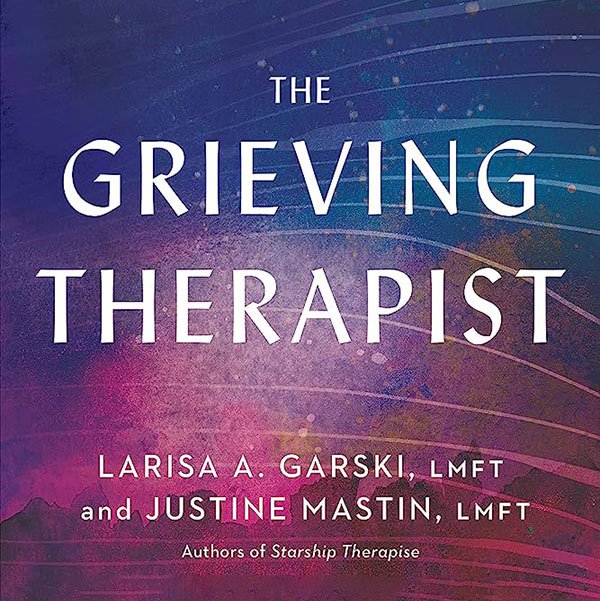
From The Grieving Therapist by Justine Mastin & Larisa Garski, published by North Atlantic Books, copyright © 2023 by Justine Mastin & Larisa Garski. Reprinted by permission of North Atlantic Books.

“In the beginning, we were all psychotherapists. And it was good.”

—Bruce Minor, Minnesota Member of the MFT Community

THE TIME HAS COME to face our industry and sit with the ways the therapy system in which we work helps us, hurts us, and holds us to a standard impossible to meet. Throughout this book we have touched on many issues facing our work; now we are looking specifically at the system in which we work. No longer a collection of individual practitioners who see each other as fellow members of a therapeutic federation, our industry (therapy) has become compartmentalized, industrialized, and controlled by third-party payers.

As you begin this leg of the journey, we invite you to pause and reflect on the mentors and experiences who supported you on your quest to become a therapist. We welcome you to reflect on mentors of both the past and the present, as well as those with whom you had a challenging or even fraught relationship. Even those mentors and supervisors who we experience as awful can teach us valuable lessons (though that does not exonerate them).

When it comes to mentors and supervisors, we, the authors, have had the best and the worst. For this chapter, we reflect on some of the greats from our local MFT community: Anne Ramage, PsyD, LMFT, our graduate school professor who taught us so much more than we ever realized there was to know about Carl Whitaker; and the collective of marriage and family therapists who have sustained the Minnesota field for decades, some of whom also became our supervisors and mentors: Ginny D’Angelo, LICSW, LMFT, Bruce Minor, LMFT, Briar Miller, LMFT, and Michelle Libi, LMFT.

You blink and end your repose to find that you’re alone. It feels as if you have awoken from a dream. You rise from your resting spot and begin to walk down the winding path toward the sound of a river. As you walk, you notice the crunch of twigs underfoot and hear distant birds. Is one of them the red-winged blackbird? Neither your bird friend nor the forest yeti are anywhere in sight. Perhaps you dreamed them.

You look up at the branches of a nearby tree and notice a small silver shape clinging to a twig. Pausing, you raise up onto your tiptoes and realize that this is a cocoon, perhaps belonging to a butterfly or a moth. You gaze at the cocoon for a moment longer, noticing it shake as the small creature inside struggles with its transformation. Change is such hard work, you muse, and resume the hike. As you walk you notice that you have many aches in your body. How long were you sitting in meditation? You stretch your neck from side to side as you continue to make your way down the mountainside.

As you breathe in, the air is fragrant with the scent of dried leaves and warm earth. You wonder at the way the seasons seem to have shifted around you on your travels. As you look around the forest bordering either side of the path, you notice hints of yellow and orange in many of the leaves. The wind shifts, blowing the undersides of the leaves up, causing them to shift and sway. It reminds you of a distant memory, but as you grasp for it, the memory skitters out of reach.

The path winds down the slope, and you lean slightly backward against the tug of inertia and gravity. The sun’s rays are just the right amount of warmth, offering a radiating blanket of heat against the cooler air temperature. You look down and slightly to your left, and you see a ribbon of blue snaking through the undergrowth far below: a river. It looks like a nice place to pause and rest. You estimate that you have at least another mile to walk down the mountain before you reach the riverbank. You walk down toward it.

Therapy’s Big Brother

Once upon a time, as Bruce Minor reminds us, we were all just psychotherapists. In the very, very beginning of our industry, there were just small- to medium-sized collectives of human beings throughout the American and European continents — composed mostly of wealthy men and a few audacious women — gathering together in an attempt to suss out the nature of the human mind and heart. From these meetings, the field of psychoanalysis was born.

While these early theorists and practitioners engaged in practices that we would gasp at today — Freud psychoanalyzing his daughter, Jung sleeping with several of his patients who then became therapists-in-training — their mistakes became the foundations upon which rules like “no dual relationships” were based.

These early therapists did not have insurance agencies or managed care with which to deal. But they also tended to focus on treating the bourgeoisie — the European upper middle class who could afford to pay for things like this newfangled “talking cure,” thanks to their monopoly on industry. Neither Jung, Adler, nor Freud himself (founding psychoanalysts all) had to consider whether high-quality psychotherapy happens in increments of forty-five, sixty, or ninety minutes. We bring you this abbreviated history lesson to remind us all that our present constructs have not always existed. Not only have they not always existed, but they might not actually be the most effective structure for treatment.

When family therapy was new, co-therapy and one-way mirrors with reflection teams were the standard of the day. When Justine tells graduate students about these once-standard training practices, they are in awe. “But how did that get paid for?!” they exclaim. The short answer is that decades ago, universities, particularly public universities, had more money in the humanities and social science departments.

Insurance once reimbursed for far more therapeutic services than they do now. Then Justine will often go on to tell her students about sitting in her own graduate school classroom at Hazelden Graduate School of Addiction Studies (now Hazelden Betty Ford) and hearing her professors talk about the changing landscape of drug and alcohol treatment.

Structured limitations are necessary for high-quality therapy (recall the example of sandtray therapy and the need for a literal box within which to put the sand, from chapter 2). Certainly, the case could be made that American psychoanalysis and drug treatment of the 1970s and 1980s was in need of a bit more clinical oversight. But the evolution that followed brings us to a dystopian present where third-party payers like insurance companies are dictating the terms and conditions of treatment. They’re also dictating the amount of money that the clinician receives for the work they do based solely on their licensure, rather than on the type of work they’re doing. These payouts are often inadequate at best and paltry at worst. Because of variable reimbursement rates, the amount of time and effort needed to handle billing issues, and the hoops clinicians need to navigate to get even the small amount of money they’re paid, private-practice clinicians are increasingly opting out of the insurance model. This causes frustration for would-be clients, and for other clinicians.

Licensure Drama

Have you ever had an issue with another clinician and thought, “Well, that’s just because they’re a Ph.D.; doctorate school sucks all of the fun out of you”? Or perhaps you’ve thought, “They don’t teach master’s-level clinicians anything about diagnostics.” Third-party payers and clinicians determine their reimbursement or compensation rates based on a number of factors, including education. Hierarchical thinking dictates that the more education and experience a person has, the more they should be valued.

The main way that we express or show value is through monetary compensation. However, this very quickly leads to confusion and resentment when master’s-level clinicians and doctoral-level clinicians are working at the same practice or agency, and are performing, at least on paper, the same job functions. Disparate training and licensure requirements can lead to differences in case conceptualizations, standards of care, and clinical interventions.

Certainly, these varied perspectives can be helpful if discussed and processed through open and honest clinical dialogue. But who has time for that? We don’t say this to minimize or undermine the value of care coordination. The reality, though, is that third-party payers don’t reimburse for care coordination. Contemporary clinicians are lucky if they can connect for five or ten minutes via phone either just before the beginning (seven a.m.) or just after the end (seven p.m.) of their clinical day. Thus, it’s no surprise that confusion and even infighting across licenses and education levels abound.

Justine recalls a question from a student about this infighting: “But who is actually above the others? There has to be a hierarchy, right?” Justine responded that while it may feel as though there is a hierarchy, the reality is that we’re a community with a variety of skills. We don’t need to fight among ourselves. She said that just because someone with a doctorate has more education than someone with a master’s degree, that doesn’t make them better than or above the master’s-level clinician. This is a social construct that we get to question and challenge, because it no longer serves us.

The tangible difference between master’s-level and doctoral-level clinicians lies in the area of assessment. Folks who complete doctoral programs are schooled in the practice of psychological assessment and usually graduate with the third party-payer reimbursable skill of psychological assessment.

With gravity on your side, you make it to the bottom of the mountain faster than anticipated. The sound of the river rings in your ears as you push through the bracken toward the riverbank. The grass along the shore is a deep green and only slightly prickly as you kneel down and bend over the water, cupping your hands to take a long, cool drink. Once you have quenched your thirst, you sit back on your heels and stare out across the blue water, leaning into the rays of the sun at your back. You notice a butterfly flapping its wings and landing on a nearby flower.

App Therapy Is the New In-Home Therapy

Newly-minted therapy graduates find themselves staring down the gauntlet of the licensure process, which usually entails several examinations, hours of supervision, and even more hours of direct client care. Depending upon the state where you live and the license you’re pursuing, you may find it very difficult to get a job that pays you money while you acquire hours you can count toward licensure.

Over the past few decades, the entry-level job for graduates in this predicament was in-home family therapy. Often considered the grunt work of the therapy industry, in-home family therapy requires practitioners to work long hours and drive long distances for very minimal pay. In 2014, when Larisa was working as an in-home clinician, she didn’t even make minimum wage, so she worked another job part time as an after-hours crisis counselor.

Today’s graduates have a new, additional option: they can become app therapists. Similar to other gig jobs like Uber Eats and Lyft, clinicians who work for therapy apps such as BetterHelp, TalkSpace, and Larkr are either populated by associate-licensed or fully licensed clinicians, and they work entirely through their company’s telehealth app interface. They tend to have very large caseloads (pitched to them as a “great opportunity to get your licensure hours”), minimal time with an assigned clinical supervisor, and demanding clinical expectations. Most therapy app jobs market their services to prospective clients with the promise of a readily available therapist, translating to the expectation that the therapist is available to the client at least via chat through most hours of the day and night.

Larisa vividly recalls many of her lectures with Dr. Anne Ramage for a number of reasons, not the least of which is that Dr. Ramage is an excellent professor and an enigmatic speaker. Among all of Larisa’s memories of Dr. Ramage’s Carl Whitaker quotes and experiential roleplays, she recalls the professor advising time and again that “in-home jobs will be waiting for you as soon as you graduate. They’re tough. You need to be ready. But they’ll give you excellent experience in working with families.” Then Dr. Ramage discussed the MFT techniques from that particular lecture that might apply to in-home work, and she explained the basic safety strategies of which in-home clinicians needed to be aware.

When Larisa graduated, she did indeed take a job as an in-home family therapist. The night before her first day, she reviewed the strategies she had learned from Dr. Ramage:

1. Arrive five minutes early and look up the homes you’ll be visiting in advance so you can plan your parking strategy. Never schedule sessions late in the evening or after dark.

2. Be ready to set clear and consistent boundaries, and for those boundaries to be tested.

3. Pack a change of clothes and hand sanitizer.

4. Review your agency’s privacy policies.

5. When you enter someone’s home, assess for safety and your own exit strategy. Although it is rare that clients will ever mean you harm, things can and do get out of hand when you are in the family’s own space. You get to protect yourself first.

This survival guide doesn’t apply to folks who are working for therapy apps, but the need for both support and coping strategies is no less acute. If you’re working for a therapy app, we, the authors, offer you deep compassion and the following tips:

1. Plan an exit strategy. What does this mean? It means a human being can’t sustain years of work at the rate demanded by therapy apps. So, it’s essential for you to decide how long you can sustain working for a therapy app before you go the way of a younger Larisa and start losing your hair and developing insomnia.

2. Find a supervisor outside the therapy app. Yes, you will probably have to pay for this supervision, and that will likely cause financial stress. However, it is crucial for you to have a guide whose sole investment is in you and who exists outside the system in which you work, to help you regain perspective and hold boundaries around things like time management and availability.

3. Remember that any symptoms of burnout (i.e., signs of physical or emotional distress) you’re experiencing are likely the cause of moral injury — harm caused by the system in which you work — rather than any fault of your own (we’ll discuss these concepts in more detail in the next section of this chapter).

4. Manage your expectations for yourself. However, you envisioned your therapy experience, it likely did not involve a smartphone application called “Better-something.” You can’t do depth psychotherapy in this kind of context; what you can do is help your clients with basic coping strategies and compassionate presence — sometimes, but not all the time. You’re not required to have 24/7 availability, no matter what your company tells you. Not even standard laptops can run constantly forever; they need to rest and update.

5. Reach out to your community. When you work in an online environment, it can be difficult to get your emotional needs met. Please remember to engage with other living beings outside your work environment who understand some of what you’re going through and who can show up for you.

Burnout and Moral Injury

The Realm of Our Work has changed in ways that we never imagined over the course of the collective traumas of the 2020s. Suddenly the norm is to work in a virtual therapy room, and some clients expect to have regular access to their therapist via text messages and video chat services. This isn’t what we thought the field would look like.

When Justine imagined her future as a therapist, she saw herself engulfed in a scarf, with a teacup in hand, sitting across from her client in an overstuffed chair near a small fire in a fireplace, surrounded by books. She envisioned herself helping people and feeling filled up by the work, then returning home to a pleasant evening all to herself — overall a very calm and steady way of life.

This is not reality. For a time, she did have the tea and the overstuffed chair, but the rest of the fantasy was just that — a fantasy. Justine now works behind a computer and sits in a rolling chair; her view is full of microphones, a ring light, and multiple monitors. For her, the change in our industry has been the death of a dream. The death of any dream is an ambiguous loss that even therapists are not always good at recognizing and finding compassion and ritual to help them move through it.

Of course, parts of what Justine imagined the life of a therapist to be all those many years ago, before she ever entered the field, were simply inaccurate. Even before teletherapy and therapy apps took over the field, the life of a therapist was rarely calm and steady. It had moments and longer periods of such calm, but the nature of therapy is to work with volatile emotions. The emotional intensity inherent to the profession impacts even the most experienced and boundaried of therapists.

Larisa’s experience differed in that she had a logical view of what life in the field would be like. She felt like she had prepared herself emotionally for the trials of holding space for people and their emotions day in and day out. She believed that this preparation would act as a shield against any future catastrophe. The sadness came when she realized that no matter how prepared she had been, the situation was worse, and far more unpredictable, than she could have imagined. She was ready for the stresses of people’s everyday lives and even for their great despair and trauma, but she was unprepared for the collective trauma of our age stepping into the therapy room and into her own life. She was totally unprepared for how political leadership would fail her and everyone else in her country during this time of great collective need.

In her younger and more impressionable years, she believed that even though power is corrosive and toxic to politicians, when they were faced with clear and present disaster, they would channel their highest selves and work to help people. Now Larisa realizes that America’s representative government has devolved into rule by the wealthy elite who use their resources to buffer themselves from the pain and the needs of their constituents. Sometimes the despair she feels is crushing. Perhaps you can relate.

As we sit with the tragedies that have befallen our profession, it is no wonder that so many therapists struggle with burnout. Burnout can be defined from many perspectives. For the sake of brevity and clarity, we offer definitions of both individualized burnout and systemic burnout. Individualized burnout occurs when a person is so emotionally exhausted that they chronically struggle with depersonalization, which is emotional, physical, and cognitive numbness that makes the person unable to feel present in their own body or life.

Systemic burnout is also known as moral injury, which is when a person experiences symptoms through no fault of their own; rather, the symptoms result from harm caused by the system in which they work. Moral injury was first defined by psychiatrist Jonathan Shay as a “betrayal of what is right by someone who holds legitimate authority in a high stakes situation.” Wendy Dean, Simon Talbot, and Austin Dean expanded upon this definition when they argued for clinician burnout to be redefined as moral injury:

Moral injury occurs when we perpetrate, bear witness to, or fail to prevent an act that transgresses our deeply held moral beliefs. In the health care context, that deeply held moral belief is the oath each of us took when embarking on our paths as health care providers: Put the needs of patients first. That oath is the lynchpin [sic] of our working lives and our guiding principle when searching for the right course of action.

But as clinicians, we are increasingly forced to consider the demands of other stakeholders — the electronic medical record (EMR), the insurers, the hospital, the health care system, even our own financial security —before the needs of our patients. Every time we are forced to make a decision that contravenes our patients’ best interests, we feel a sting of moral injustice. Over time, these repetitive insults amass into moral injury.

The article quoted above speaks solely to the experience of medical doctors, but its implications are clear for the chronic systemic burnout faced by so many in helping professions, including (but not limited to) therapists, medical technicians, nurses, and case managers. Helping professionals are increasingly placed in a double bind; that is, they’re being placed in situations from which there is no escape, and they’re being asked to perform at least two mutually exclusive actions simultaneously. They’re being asked to care for clients but also to please many other stakeholders, all without the amount or quality of support that they need. Just like all double binds, this is an untenable situation that causes distress within the clinician.

We, the authors, appreciate the distinction between burnout and moral injury. The concept of moral injury takes the onus off the individual, because there’s not enough self-care in the world to account for a system that’s set up as a no-win situation. When larger systems talk about “burnout,” that terminology allows them to let themselves off the hook for the clinician’s pain. The system can then pass the problem back to the clinician as a personal failing, rather than a systemic one. The therapy field is currently crying out for systemic change. We cannot do everything and be everything to everyone. It is impossible, and it is destroying us.

The butterfly’s orange and black wings flutter back and forth as it buries its face in a Black-eyed Susan. You contemplate the effort that it took for this butterfly to metamorphose from a caterpillar. It went through a violent transformation in the cocoon to become this creature. It’s not a pretty process. The butterfly must flap and flap and flap its wings inside the cocoon to strengthen them. It can be a difficult struggle to watch, and an onlooker often wants to help the butterfly be free from its enclosure.

But if it’s released from the cocoon early, the butterfly won’t have the strength to fly and survive. It must struggle to become strong. As you stare at the butterfly, considering its beautiful wings, you start to breathe into your own bodily awareness. You notice the many places where you’re holding tension and feeling stiff and sore. Perhaps you have also been flapping your metaphorical wings, becoming something new.

Grieving Tools — The Pain Paradox

As you might remember from chapter 2, pain can be a pivotal part of the meaning-making process. When paired with reflection time, pain can help us learn about our core values and live a life in accordance with them.

Yet because we work in a field that values sacrifice and the pain that entails, therapists are also far more susceptible to what Freud would call the martyr complex, and what we refer to as hero/savior/sacrifice syndrome. The pain paradox explores the tension between pain as both catalyst for change and a state of prolonged suffering. Particularly in helping professions, suffering for our work is often framed as positive, meaningful, or altruistic. This harmful social construct can lead clinicians to stay in harmful jobs “for the sake of the clients” and sacrifice their own health in the process.

The pain paradox invites clinicians to question their social constructs around both pain and meaning-making. In the therapy room, the pain paradox is a tool that clinicians can use to help clients who are themselves engaging in harmful behaviors for the sake of “meaningful pain.” Let us explore how you can use the tool of the pain paradox as you navigate your personal struggles outside of session, and how to use this tool with clients inside the therapy space.

Client

Pain is not the enemy, nor is it to be avoided at all costs. Sometimes what brings clients to therapy is the erroneous idea that we, their therapist, can help them learn how to disengage with their feelings entirely because these feelings are causing them pain. Of course, the reality is that we can teach them distress tolerance skills to be present with their pain and their feelings so they can learn to listen to the important messages carried by their feelings.

However, clients can sometimes mistake pain for purpose. We see this frequently with our creative clients. So often the idea of the “crazy artist” takes hold of clients. Several of Justine’s clients were terrified of feeling better. They believed that their sickness and the distress it caused fueled their art. But the reality was that after going through treatment, these clients were all able to continue making amazing art, and in fact they did so with more frequency and focus. Another part of the process of working with these folks is helping them see that they’re full human beings who are more than just the art they craft.

Many fear that if they lose the art then they lose themselves and they no longer matter. However, in our experience, part of their healing journey entails exploring areas of their life outside of art. Eventually, they come to see their art as but an aspect or a planet within the vast cosmos of their lives.

Therapist

For many of us, the desire to make meaning from our own pain drew us to the field of psychotherapy. Most therapists have experienced some type of mental distress, whether it’s childhood trauma, an eating disorder, bullying, discrimination, or an abusive relationship with chemicals. For many of us, surviving this kind of pain was only the first phase of the healing process, with the second phase being meaning-making.

The pain paradox is a gentle invitation for therapists to carefully consider ways to cultivate meaning and joy outside the therapy field. Although our work as therapists is absolutely meaningful, it is also back-breakingly painful at times. If you don’t have other avenues or ways to make meaning and find purpose, you’ll find it even more challenging to take breaks from the field, regardless of how long such a break lasts, because you struggle to see the “you” outside the office. You need not try something life altering or huge. When Larisa was recovering from a severe case of moral injury, she began making playlists, an activity she had not engaged in since her college days. This small daily activity helped her to begin to reconnect with playful and creative energies outside her clinical and professional work.

The difficult message that Justine received was that her time as a direct-care therapist was coming to a close. After over a decade of work, and so many clients helped, she began to feel that her meaning-making was now to be found in the classroom, on the stage, and on the page. She experienced a great deal of pain as a therapist during the pandemic and the social justice uprising, but the pain invited her to consider where new meaning could form. The answer was that it was time to guide the next generation of clinicians and to hold the hands of those who are still in the trenches. As of this writing, Justine is currently working on the slow transition out of direct client care.

Due North: Self of the Therapist

One of the struggles inherent in walking the dialectic between the system and the individual is despair. In the case of moral injury, which is caused by a series of broken systems subjecting clinicians to harmful double binds, it can feel like there’s little or nothing for a therapist to do beyond retiring from the field. While this certainly is an option, we offer you another one: harm reduction and intentional activism.

As you may already know, the harm-reduction model of addiction recovery focuses on making small, actionable changes that mitigate abusing behaviors, rather than prescribing total sobriety. Our intention is to invite you as a clinician to assess the harm you’re currently facing in your career and how it’s affecting you. You can’t immediately change the systems in which you practice therapy, but you can make a concerted effort to mitigate the negative impact that these systems have upon you.

Some ways that you might limit the harm you experience include limiting the number of hours you work or the types of clients or clinical presentations with which you work. Perhaps you currently work in a place with an unreliable schedule, and that causes you distress; is it possible to have a more structured schedule? If you’re not being given time for breaks or lunch, is this a conversation you can have and a boundary you can set with your site supervisor? These can be small or large changes, but any change can go a long way to help mitigate the harm you’re experiencing.

Seven Lessons for Making a Meaningful Life: A Therapist’s Guide

What makes your life meaningful? It is a question that I first asked myself in my late thirties after my partner died, and all the way through the difficult mid-life years in my forties and early fifties. I have also put the same question to over 130 other therapists, academics, and advocates for better mental health on my weekly podcast.

What I never expected was how fruitful the question would be for my own personal development or how asking it to other therapists would change my life. So, what are the seven things I have learned from other therapists that I wish I’d known years ago? And how have they changed how I look at myself, how I deal with my own problems, and how I work with my clients?

The First Four Important Lessons for a Meaningful Life

1. Therapists need therapy so much that they turn it into their profession, and in this way, can be in it full time.

When I interviewed the psychotherapist, Terry Real (the founder of an approach called Relational Life Therapy), he joked that, “therapists need therapy so much that we turn it into our profession so that we can be in therapy all the time.” We laughed but it is true. I came from a family where no one ever talked about emotions. Now, I talk about them all day with my clients and in my spare time started a podcast where I speak about, guess what, feelings! “Perhaps we should pay our clients for everything we learn from them,” Terry added.

2. Your earliest childhood memory is the key to the work.

Galit Atlas is a psychoanalyst, faculty member of the New York University Postdoctoral Program in Psychotherapy and Psychoanalysis, and author of “Emotional Inheritance.” One of her techniques is to unpack the first memory of her clients. I have yet to use the technique with a client, but I took it to my own psychoanalysis.

I have two memories from the same day. The first one is coming into my parents’ room on Christmas morning but finding that my mother was not there. My father reminded me that she had gone to hospital to collect my baby sister. I would have, therefore, been two and three-quarters years old. Later in the day, my mother came back from hospital, and I remember going to her bedroom, wanting to show her all my presents but she was too tired and turned her back to me.

So, both memories were about her being unavailable — which was a surprise because my mother was always there. I would come home for lunch from school (and so would my father) and she tried to be there when my sister and I got home, but the memories spoke to how I got my physical needs met but not my emotional ones.

A few months after taking my first memory to my analyst, I had a healing dream about my mother’s return from the hospital, but this time she pulled back the covers and invited me into bed for a cuddle.

3. Don’t take things so personally.

My witness on “The Meaningful Life” was Olivier Clerc, founder of an international programme called Circles of Forgiveness. His journey started when he translated Don Miquel Ruiz’s book “The Four Agreements.” These include the advice: Don’t take things personally.

Unfortunately, because we are at the centre of our own lives, we imagine that the actions of other people are all about us. In reality, we are often just collateral damage. Clerc got me thinking because he flew from France to Mexico to do one of Ruiz’s workshops because he wanted to meet someone who did not take things personally. I have spent a lot of time since the interview meditating on what it would be like to meet someone like that or to be like that myself. It would certainly make forgiveness easier.

I have started using one of Clerc’s forgiveness rituals. I ask my clients to look into each other’s eyes and repeat after me four sentences: “I’m sorry.” “Please forgive me.” “I love you.” “Thank you.” I have been surprised by how powerful this simple ceremony is — nearly every time one or both clients have cried. Secondly, it is not important as I imagined specifying what you are sorry about.

4. Understand your navigation principle.

When you have a difficult decision to make, how do you make your mind up? Matthew McKay, who is a clinical psychologist, couples therapist, and professor of psychology at the Wright Institute, talks about “Navigation Principles.” The most common ways of deciding “what next” include avoiding pain; going for power, control, or wealth; choosing the safe option or what other people want.

Some people try to be rational. Most of my clients have no idea what their navigation principle might be, but with a little delving, come up with answers that speak to their core beliefs. For example: growth, love, and curiosity. It helps them have confidence in their choices and when facing a blank page to know in what direction to head.

How to Mine the Unconscious Mind

5. I can ask my unconscious a question.

I can’t remember my training as a marital therapist covering the unconscious — beyond in passing. It was more focused on the argument between the couple on the couch in front of me, making certain both parties were heard, and helping negotiate change. So, the unconscious remained a shadowy presence, I never really thought I could ask mine a question until two different guests came up with two radically different techniques.

Machiel Klerk is a licensed mental health therapist, founder of the Jung Platform, and the author of “Dream Guidance: Connecting to the Soul through Dream Incubation.” Instead of waiting for a dream that might shed light on a current dilemma, he suggested putting a specific question to your dreams before going to sleep.

Meanwhile, William Pullen, a London-based psychotherapist, suggested asking my jog (or in my case the brisk morning dog walk) for advice when I was stuck or directionless. With both techniques, the conscious mind is off-line, and the unconscious has time to work on the underlying dilemmas. I have put together four steps from their advice and my own experiences to pose to clients:

Ask open ended questions. These start with who, why, what, where, and when. For example: what might be the consequence of putting all my money into buying this apartment? Rather than a leading question, would it be a mistake to buy this apartment?

Ask one question at a time. It sounds obvious because you don’t know which one your unconscious is answering, but this is something that I have to stop my clients doing with each other all the time. Another trap, according to Machiel, is asking a plural question for example, about “limiting beliefs.” A better option would be, “what belief is limiting me the most at the moment?”

Split big questions into smaller ones. With big questions like health issues, job changes, and finding love, it is better to start with diagnostic questions and then ask about steps along the way.

Look out for answers from other places. Once you have started meditating on a well-formulated question, there are others ways beyond dreams and exercise through which your unconscious can speak to you. There is synchronicity (meaningful coincidences) and one that works for me: certain sentences in a book I’m reading or a podcast that I’m listening to seem to light up or trigger a small click in my brain. Sometimes, they don’t always make immediate sense — a bit like a dream — but I write them down and look at them. More times than not, they are a response to my question.

Being Brave Opens the Door to Insight and Change

6. Be bolder.

It is easy to get stuck in a groove with clients, using the tools that have been proven to work and not questioning your underlying beliefs. But listening to how other people work has made me think about my own practice. I will give two examples.

Back to Terry Real who highlighted failing strategies that couples use to resolve disputes. These include, “I’m right and you’re wrong.” Neither Terry nor I have ever had a couple where one partner stopped a fight and said, “You know what, I’m wrong about this.” (If they feel they are losing, they just throw in some other dispute where they might have a stronger case.) While I have allowed couples to continue an “I’m right and you’re wrong” dispute — in the hope of finding a breakthrough into a third way — Terry just calls the game out straight away and saves lots of time. I immediately thought, “I’m fed up too.” I need to be braver and speak up.

The second guest who encouraged me to be bolder was Avrum Weiss, a psychotherapist and author of “Hidden in Plain Sight: How men’s fear of women shape their intimate relationships.” When Weiss’ male clients talked about their relationship problems, he was surprised not only to discover they had not told their wives about their grievances but gave him a look that suggested he was crazy to even to suggest it.

“You don’t casually suggest to another woman that he’s afraid of a woman,” he told me. “But each time I did, I got the same response. They would get defensive, but very quickly I would see the idea go across their face and they would say how that made a lot of sense.”

When I thought about my own experiences in the therapy room, I have spent 35 years seeing couples. I have often seen the dynamic where the man would go to extraordinary lengths to avoid his wife’s anger, but I had never had the courage to call it out. But since meeting Weiss, I had been bolder and helped several men understand their fear of being controlled by their wife and why they need her so much.

Between Trigger and Reaction Lies Choice

7. Mine the golden gap.

When an idea comes up from multiple guests, it must be good. In a nutshell, the idea is that we have automatic reactions to conflict or adversity — normally learned as a child (which sort of worked). For example, we will shut down, go on the attack, people please, get defensive, distract ourselves. The list is endless. We don’t consciously choose this reaction; it is like a whistle goes off and before we know it the train has left the station. We are stuck in the same reflex action and there is no going back. As I say to my clients, when the train has left the platform, have you ever seen it reversing back?

So the golden gap is the moment between trigger and reaction. With practice, you can stretch the gap. “Take a deep breath. Where is the feeling? What is it? Please name it.” At this point, the gap has become large enough to make a choice — and therefore has turned golden. Yes, you might want to do the same old actions, but you know where that ends. What might your well-adjusted adult self (rather than your frightened child state) decide to do? How can you experiment and break the old patterns?

***

These days, and perhaps most influential among the seven lessons is the golden gap technique which I use with all my clients. The feedback is that this is one of the tools which brings the greatest reward for their relationship. I am currently working on using it in my own relationship too.

Dead Basement: Opening a Family Therapy Time Capsule

It all started sometime last year when I began a quest to clean out my basement — I’d not seen the Swedish “Death Cleaning” shows yet, so I was on my own. I mistakenly thought I could just start tossing the mounds of journals, articles, books, and conference nametags so our kids could be spared the work after I died — but then…there it was…

Family Therapy History Makers

A December 1974 — Volume 13 Number 4 issue of Family Process. A Multidisciplinary Journal of Family Study Research and Treatment, with a faded stamp from the Library of the Philadelphia Child Guidance Clinic. An article by Mara Selvini Palazzoli, Luigi Boscolo, Gian Franco Cecchin & Giuliana Prata entitled: The Treatment of Children Through Brief Therapy of Their Parents. An asterisk: “Translated by Paul Watzlawick.” I smiled remembering a dinner with them, drinking, laughing, and telling jokes. Hmm, when was that…?

As I opened the journal to page 429, something happened. It was as if I were just teleported back 49 years, now the eager graduate school student who just got out of the Army. The moment even had a soundtrack — Amy Correia’s song, “The Bike,” in which she told the story reflecting on the life of her uncle Pat, from whom she’d inherited the bike. She sang that in his youth “… life was laid before him like a platter before a king/he was young, and he was handsome/and the world was alive with meaning…”

So, I re-read the article — a treat from my younger self. It reminded me of when I was in the service and smoked heavily doing mental health reports in the stockade. Cigarettes were 26 cents a pack on post. I remembered watching the puff of the clouds as I exhaled, which evoked another song — a commentary on aging — David Bowie singing, “Time may change me, but I can’t trace time…” So, I kept the journal, for now…. only a hundred or so other journals in the “Dead Basement” — waiting for the right music.

I felt like ditching these old journals would be the academic equivalent of tossing my Beatles albums because they’re “too old,” which is to say that my “toss-to-keep” ratio is terrible. I feel like I’m one of those seniors in an Atlantic City Casino — smoking, hunched over “my” slot machine, air tank and hose to my nose, my ciggy aglow, and hoping for the Triple Cherries that may never arrive. (BTW, the RTP — “Return to Player,” averages $90.00 on $100.00 of betting if you play long enough…)

I wonder if people in other professions hoard in the same fashion. Does a doctor flip through their stack of appendix pictures and say, “Yep, this one’s a keeper…?” And how does all this play out with our respective “bucket lists?” Are therapists really cool “bucketeers,” driving through national forests in their RV’s stuffed with journals, texts, piles of Family Therapy Networkers from the ‘80s (like the one with the EST guy, Werner Earhart on the cover) and plastered with bumper stickers that have the AAMFT logo, a Forest Gump, “Shit Happens” classic, and some retired social work humor, “Social Workers Work…But Not Any More ?” And then, the Fireside Chats — hopefully fascinating and diverse, or like listening to Dwight, from The Office talking about how much he misses his Beet Farm…

Today was rough — Trash Day. I managed to get four journals out. If Gregory Bateson were here, he’d say that I’m only reaching half of the what’s necessary and what’s sufficient equation. While it’s necessary to chuck the old journals, I’m not tossing enough to make a dent in the piles. It happened again this morning. The culprit: a journal with yet another Philadelphia Child Guidance cover, this time with the library stamp for library shoplifters: “Please Do Not Remove from Library.” At that moment, past became present and I could feel it — my personal time machine: “Volume 4 Number 1 January, 1978: A Structural Approach to a Family with an Encopretic Child,” by Maurizio Andolfi and then, “Struggling with the Impotence Impasse: Absurdity and Acting-In” by David Keith and Carl Whitaker.

I hadn’t thought about Carl in years. I was very lucky. I’d worked with him after Minuchin left for New York and started the Minuchin Center for the Family. Carl and his wife, Muriel, came to PCGC “in residence twice for months at a time.” During one of those residencies, he and I were seeing a family together and one of the kids was noisily zooming around the room. I whispered, “Dr. Whitaker, shouldn’t we do something to help quiet things down?” But I said it so quietly that he didn’t hear me, so I said it again, louder — all he said was, “Not my kid.”

The father heard him, got up, and caught his son on one of his noisy rotations and then gently put him in his lap and the session went on successfully. Whitaker had worked his magic in just three words. Today, staring at the journal, I heard him again, and again, he taught me to trust our unconscious, like when ET was leaving Earth to go home, touching Elliot’s forehead and saying, “I’ll be right there,” so too will our memories — even if we don’t have the prompts.

Love is Not All You Need: A Revolutionary Approach to Parental Abuse

The Referral Letter

The referral from Dr. Adams, the psychiatrist, read:

13-year-old young woman took an overdose of paracetamol 3 weeks ago. Called mother who took her to Accident & Emergency. Seen and followed up over last 2 weeks. No suicide ideation. Discharged to GP. Family issues. Please can you meet with this family this week?

Session One, Part One: Overdose and Desperation

A few days later as I (Kay) walked into the waiting room at the family medical practice where I worked, I saw Becca hunched over her cell phone, radiating animosity. Her mother Jane sat on one side of her, eyes on the latest New Zealand Woman’s Weekly story, but without the eye movement of a reader. Her father, Al, resigned, stared out the window at the dripping rain. Susie, Becca’s 15-year-old sister, picked absent-mindedly at her nail polish.

My step faltered as I sensed that the meeting ahead of me might be testing but I strode in, hand outstretched: “Hi! You must be Becca. I’m Kay.”

Temporarily startled, a reluctant smile escaped her as she awoke from cyber-land. “Hi, you must be Jane. Hi, Al. Hi, you must be Susie. Would you like to come up?” I gestured toward the stairs that led to my office stairs. As I reached the first landing, I noticed Becca glancing at herself with uncertainty in the floor-to-ceiling mirror that filled the stairwell. The family awkwardly found their way to their seats. I began my usual introductory patter but didn’t get far before Al expostulated, “Look, we need to sort this out! We can’t handle it any longer.” His eyes shot towards the brooding Becca. “She hit her mother in the face the night before last and then she locked herself in the bathroom for hours. We tried to get her to come out and talk but she just shouted abuse at us.”

Jane glanced towards me as she found some words.

“Becca went very quiet, and I got really scared. We thought we had taken all the medicines out of the cabinet after the overdoses, but we couldn’t help worrying after what happened the other week. We took turns sitting outside the bathroom door just listening in. Eventually, she came out and went up to her room. It all started when Al tried to tell her she couldn’t carry on talking to me like she was.”

“Becca,” I ventured, “did you realize that your parents are feeling so scared and don’t know what to do?” My question was met by a “no” that ricocheted around the room like a bullet. “Becca, would you be willing to help me understand what has been going on in your family?”

Becca’s reply began with a fake whine which escalated to foul-mouthed accusations. “She’s always saying, ‘Honey, what’s wrong?’ What’s wrong? What’s wrong? What’s wrong? What’s wrong? What’s wrong? What’s wrong? What’s wrong is that she’s annoying me. My mum is a stupid bitch with no life. That’s what’s wrong.”

I said, “Becca, is this way of talking the kind of talking that is causing trouble in your family?”

Becca said, “This is so fucking dumb.” Susie let out a protracted sigh.

“Becca, stop talking like that. It’s not fair. Mum and Dad have had enough and what have they done to you?”

The door slammed loudly as Becca made her exit. Jane leapt out of her seat, but Al caught her by the arm.

“Let her go. You always go after her. It’s no good. You can’t keep running after her like this.”

Concerned to sidestep the impasse between them, I spoke up.

“Okay, how about I go downstairs and find out what’s happening, and we can take it from there?” Al and Jane nodded, defeated. Susie was pale.

It turned out that Becca had found the back door to the building. I caught a glimpse of her crouched down with her back against her parent’s car, head between her knees. She looked up, saw me and went to sit on the other side of the car, out of view. I asked Emma, the receptionist, to keep a discreet eye on her. When I went back to the room, Jane and Al agreed to sit it out.

Al began, “It’s good you have seen her like this. We are falling apart. We can’t do this on our own.” There was a moment’s silence. Al looked to Jane. Jane’s shoulders began to rock as if she were holding back sobs. Al continued, “Becca doesn’t treat her mother like a parent. I mean she says things to me that I would never, ever have thought of saying to my parents. You just want to slap her face, but you can’t you know?”

Jane, her body stiff, said with a look of desperation, “The other night, Becca was screaming at me that the dinner was ‘crap’ and ‘shit.’ Adam, our 4-year-old, hid under the table. It broke my heart to see him so scared of her because he loves Becca. I feel like we are losing Susie too because she can’t stand it. She is staying ‘round at her friend’s house all the time.”

Al looked towards Susie, raising his eyebrows.

“You’re no angel either, Susie, but at the moment you come a long second to Becca.”

The story unfolded. It appeared that this was a long-standing pattern which had recently escalated from initial bad-tempered-ness to dramatic, life-threatening actions. I discovered that Al and Jane considered that they were being held hostage by Becca’s threats to harm herself, both subtle and explicit. Such threats followed any insistence that she carry out some duty that she didn’t wish to fulfill such as tidying her bedroom or if Jane said “no” to her persistent demands for money or to stay out late.

Jane had begun to fear returning home from work, anticipating that she would be met with yet more demands from Becca, and find herself caught once again between holding out against them or risking further threats of self-harm. Al was also finding home life unbearable. He longed to be able to “fix things” for his family but, in the face of Becca’s threats, had no idea what to do and couldn’t find words for the mixture of frustration, fear, and anger that preyed upon him. Al had started going around to his friend Mike’s house each night for a drink until what had started as occasional visits had become habitual. He felt guilty that he was not at Jane’s side but told himself and Jane, “I no longer have a place in this family. I am sick of being abused in my own home.”

Jane and Al had no idea what to do. Becca had been “seen” by Mental Health Service several times and, after the usual assessments (in which “mental illness,” abuse, and other possible sources of distress were excluded as a cause of Becca’s behaviour), the service had come to the conclusion that the overdose and threats of self-harm could best be explained by what was referred to as “family dynamics” and suggested that Jane and Al seek family therapy. That is how they arrived at my door.

How many parents, confounded by a family life that has become dominated by teenage tantrums, threats, violence, and the dread that their daughter might respond to any challenge to their demands with an overdose or violence, would be willing to talk about how they fear living in their own homes? How many would tell family and friends? Wouldn’t it be more usual for parents in this predicament to remain silent in their humiliation that their own child is abusing them? Of those family members and friends who had some knowledge of the situation, how many of them would be too respectful to speak up about this family’s predicament without being invited to do so?

Could these tantrum overdoses and the tyrannical threat of them instigate a servicing of young people’s every want? What might these young people be led to think about themselves if their each and every whim was serviced? Where would this lead? How might this have them lead their lives? How might this affect their family life? All these questions went through my mind as we reflected on this family and their tribulations; all these questions guided us in our considerations. This is the story of a family worn down by tantrums and abuse. This is also the story of a mother who decides to revolt.

Session One, Part Two: When Loving and Giving is a One-Way Street

“You know, Kay, we’ve always said, ‘love is all you need.’ It’s been our motto. I’m beginning to think we’ve made some big mistakes because I can’t understand why Becca is behaving like this. We have given them all so much love. We have always bent over backward to make sure that they are okay. It’s just so unfair. I try to listen and understand but she doesn’t want to talk to me anymore, and then she starts with her threats. I know I shouldn’t give in to them, so I try and hold my ground, but I feel like I have overreacted. Then I feel bad and give in. I know I shouldn’t. I just feel like I am stuffed!”

Jane’s voice faded into despair. As tears began to form in her eyes, she wiped them away hurriedly with the sleeve of her hoodie. Al chipped in, his voice weary with resignation.

“I just don’t know where we’ve gone wrong.”

I addressed the despairing Jane and displaced Al.

“Do you think it’s possible that all your loving and giving has become a one-way street, and that somewhere along the way your children’s wants have become confused with their needs?”

Jane swallowed hard.

“We’ve always tried to give them what they wanted. I always thought that if we respected them, they would respect us, but they don’t seem to. I just find it so hard to know what to do.”

I asked, “What do you think Al?”

Al shifted uneasily in his seat.

“What’s going to happen to them in the hard world out there?” he said wearily. I wondered if servicing their children’s needs had, contrary to their good intentions, been depriving their children of invaluable life lessons.

“Al,” I asked, “are you concerned in any way that unfairness has crept into the care of your children in that, by giving so much, your children may not have had enough opportunities to learn what they need to learn to live in the hard world out there?” Al had no trouble replying:

“Yep. I don’t think they have any respect for other people, and they don’t know how to be responsible.”

“Susie, what do you think of the idea that your parents have been unfair to you by not helping you to be ready for the hard world out there? Do you think that maybe, out of their love for you all, they need to find ways of mothering and fathering that might seem unfair to you now but may prove to be fairer to you in the long run?”

Susie stared at me, her eyes fixed in surprise, then she recovered herself. “I don’t think they’ve been unfair, but I suppose we have had it pretty easy. I don’t know, it’s getting me down too.”

“Susie, have you been worried about Becca?” Susie’s lip began to tremble. “Susie, how would it be if I carried on speaking with your mum and dad to see if we can find a way to help things be better for Becca and for you all? Would it be alright if I spoke with them without you present? I think your mum and dad need to find the way forwards on their own as your parents.”

Susie’s face softened with relief. Jane and Al agreed that the next time we met we would continue to explore how this habit of unfairness had taken root in the mothering and fathering of their children. I warned them that the road ahead might well be a rocky one and that other parents facing similar challenges are often met with intensified threats from their daughters or sons when they re-establish their parental authority. Jane and Al left our meeting, sobered by the realisation that they could go no further along the road that they had been travelling but relieved to be no longer standing paralysed at this crossroads.

Session Two: The Dif?culty of Knowing What’s Fair and What’s Unfair, What’s Unreasonable and What’s Reasonable?

Jane announced that there had been something of a turning of the tables. The day after our session she had decided that it was time the girls learned to do something for themselves. Instead of doing their clothes washing for them as she had always done, she had left their washing lying on their bedroom floors where they left it and stayed in bed herself for an extra hour. When later that day Susie asked where her clean washing was, Jane simply said, “Oh, I’ve given up doing your washing now.” Much to her surprise, Susie asked her to show her how to use the washing machine. Not surprisingly, Becca had left her dirty washing in a heap in her room.

Al, who was running late, joined us. I put him in the picture.

“We were talking about wants and needs and I was asking Jane about whether or not your parenting in the past has been about 'loving and giving?’”

“Well Susie has been getting too much until now,” Al responded. “My sister set her up with an interview as a summer lifeguard and she didn’t even bother to go. Lynette was really annoyed about it and had a real go at me. She said, ‘You two have to toughen up with those girls.’ I’ve realised she’s right.”

“What do you think you have been serving? Have you been serving her wants or her needs?”

“Her wants!”

“What do you think her needs are?”

“Her needs are to take some responsibility for herself. She hasn’t lifted a finger all holidays. She’s just sat at home emptying our fridge.”

“At what point do you think mothers and fathers should let their children know that if they as parents continue to take responsibility for them, they will be depriving them of taking responsibility for themselves?”

“Well, we do but we don’t stick to it,” Jane said.

“Yes. We lay down the law and then we give in,” Al replied.

“Looking ahead to when Susie is 40 years old, do you have any idea what she might wish you had done or said to her right now, aged 15?” I asked.

“She’d say ‘take responsibility for yourself’ wouldn’t she?” Al suggested.

“I suppose so, but we would have to make her do it and I would find that very difficult,” Jane responded.

“You said last time we met that you have a motto of ‘love is all your need.’”

“Yes, you know I have always thought that if we just loved our kids, it would all work out,” Jane said. “Last Sunday morning was a real low point. Becca started swearing at me when I got home from a late shift and was on my bed with all her friends drinking and eating. I found myself thinking ‘whatever happened to my lovely daughter?’”

“Do you think it’s possible that in the past, even though your intentions have been so very loving, love has been confused with giving in to what your children want?” I enquired.

“I guess so. I just thought they would love us if we loved them and that if we respected them, they would respect us,” she said.

“Are you coming to question how children learn love and respect for their parents and others?” I asked her.

“Yeah, I guess I haven’t made a point of them respecting me so maybe they haven’t learned it. I lose their respect for myself every time they say ‘no’ to me and I let it go,” she said.

“Al, what do you think about this? How do you think children learn to be loving and to practise respect?” I asked Al.

“Well, it’s been harder for Jane,” he said, adding, “I’ve always worked long hours and before we had Becca, we agreed that she would stay home and be a full-time Mum. We were really hanging in for Becca.”

“Yes,” Jane agreed. “You see Susie isn’t Al’s. I had Susie when I was 17 and I was a single parent until I met Al when Susie was 2. We had some problems and had IVF. Then she was preemie and we thought we were going to lose her. It was a terrible time.”

“Given you had to go through so much heartache to have her, did you ever think that Becca deserved special treatment in any way?” I suggested.

“We were just so thankful that she had survived,” Jane admitted. “Looking back now, I tried to give her the best of everything, and we doted on her.”

“Yeah, it was our one time away from her and she was all we could talk about,” Al said.

“Do you think that loving Becca so much has led you to be especially sensitive to her moods, wishes, and feelings?” I asked them.

“When I look back now, I think so,” Jane said.

“To be honest, she was very spoilt,” Al added after.

The Letter

The next day I wrote Jane and Al the following letter.

Dear Jane & Al,

It was good to meet you yesterday. As I mentioned, I often write to families after our sessions to ensure that I have adequately understood their situation and in addition to ask questions I wish I had asked during the session itself.

Sure, enough some questions came to mind whilst I was reflecting on your situation. I would be most interested to hear your answers or any thoughts you might have about these questions next time we meet. If you think that I have not described what we talked about fully or have misunderstood your situation in any way, could you also bring it to my attention next time?

Jane, before Al arrived you talked about some changes you had made. You said that a couple of days before we met, you had decided to have a ‘lie in’ and had resolved that you were no longer going to do the girls’ clothes washing. You also informed me that you felt you hadn’t had enough expectations of the children in the past and that you wished that you had started years ago. But you said that your lie-in was not as peaceful as you had hoped because you found yourself troubled, wondering whether or not your expectations of the girls were unreasonable or unfair.

Jane, do you suspect that your expectations may be having a late growth spurt but that perhaps, and very understandably, you are feeling a few growing pains? After all, have you ever noticed how overnight changes often feel as uncomfortable as a new pair of shoes to begin with?

Jane, do you have any ideas about why it was difficult for you to work out what expectations might be reasonable and fair? Do you think it may have been in part because your expectations of Becca at least, have been so shaped by the weight of your gratitude for her very existence?

Now that you have decided that your children can learn to serve themselves rather than being served, what kind of response do you think you might anticipate from them as time goes by? Do you think that they will take kindly to your new expectations which express your love for them in a way that serves their needs rather than their wants? Or do you think they might protest the changes in some way or other?

Jane and Al, towards the end of the session we talked about how separating your children’s wants from their needs had been especially hard with Becca.

Isn’t it understandable that if you have waited so long for a child and then when she is born and you are in fear for her life, you might want to treat her with especial care? Is it any wonder that your love and concern might leave you blinkered to some of her needs and sensitive to her wants?

Jane, do you think your ‘special care’ of Becca might have had a bearing on ‘giving in or setting boundaries and sticking to them?’ Thinking about it now, do you suspect that weak boundaries might be even more painful for you than for her in the long run?

You both told me that you don’t want to make your children unhappy, but then you talked about some realities that life holds. You said there was a difference between real unhappiness and tantrumming. If you always say ‘yes.’ if you’re always ‘manipulated.’ Where do your children hear ‘no’ from? What kind of lives will they lead if they never hear ‘no?’

Al and Jane, at what point do you think a mother or father should say to a young person: ‘I will not allow you to have such power over our family anymore; we are in charge, not you?’ Truth be told, what do you guess Becca would most like her parents to do right now?

I cannot believe that departing from the ways in which you have mothered and fathered your children in the past is going to be easy. In fact, would you consider that it might be one of the most difficult things you might ever take up in the course of your lives?

I look forward to meeting with you again on the 4th of March. Best wishes,

Kay Ingamells

Session Three: ‘Self Sensitivity’ 90%, Sensitivity to Others 10%

Jane came on her own to the next session. Although Al told her he was busy at work, she suspected that he had been overcome by his feelings of powerlessness and resignation. We began the session with my reading the letter aloud to Jane. Jane reported that the letter made her “realise I thought being a loving mother meant taking care of them in every way 100% of the time and this has made it difficult for them to respect me as well as for me to respect them.”

Once again, she reported some novel developments. Jane had “put her foot down” when Becca had decided at the last moment that she didn’t want to attend her surf rescue training.

“I said, ‘we are going in the car now,” Jane said. “And when we got there, she said, ‘Don’t make me go. You’re so mean, I hate you.’ I found it really difficult, but I insisted she stay. I went away feeling really upset but when I came to pick her up, she said she had enjoyed it.”

“Did you take a stand for what you knew in your mother’s heart was right only afterwards to be undermined by guilt for not responding to her wants?” I replied.

“Ummm I did.”

“How come you put your foot down even though the guilt was putting such pressure upon you to give in?”

“Well, I thought it was the best thing for her.”

“Does putting what was ‘best for her’ first rather than giving in to her wants say something about your wisdom as a mother?”

“Yes! That I know what’s right for her and it’s okay to say it and insist that she does what she says she will do.”

“Do you think guilt would have got in the way of your motherly wisdom in the past?”

“I think it would have. I wouldn’t have wanted the children to plead and cry. I wouldn’t have wanted them to be unhappy. I would have brought her home again.”

“What has enabled you to act on your motherly wisdom and use your motherly voice lately rather than be sidetracked by their pleading and crying?”

“I don’t know.”

“You’ve given me one example after another of how you have used that motherly voice very powerfully and afterwards.”

“And yet I don’t feel in control. I don’t feel in control at all.”

“Do you also think it is possible that using your motherly voice is uncomfortable because you are not that used to speaking with it yet?”

“I said to Susie when she butted in, I said, ‘I’m the mother. I’ll decide what Becca will do and what she won’t do. I don’t need input from you.’”

“Do you think that it’s possible that your children have developed over-sensitivity to themselves and to their own feelings and insensitivity to you and to your feelings?”

“Yes!”

“If you were to put that in percentages, what percentage of the time do you think they are sensitive to their feelings and what percentage of the time do you think they are sensitive to your feelings and the feelings of others?”

“They consider their own feelings 90% of the time. Al is really kind and generous and caring, but certainly he would put what he wants to do above anything or anyone else, especially me.”

“What happens to your feelings and to your needs?”

“They get forgotten.”

We talked about the effects this imbalance of sensitivity, e.g., self-sensitivity, versus other sensitivity was having in her relationships with her children and their relationships with her. Some of the questions I posed were:

“Would you be interested in restoring the balance between Becca’s over-developed sensitivity to herself and her under-developed sensitivity to others and in particular to you as her mother?”

“What kind of struggle would you expect if you were to pit your mother’s wisdom against the widespread mother guilt?”

“Overdoses as tantrums” and a big night out.

A month later, I had a call from a worker from the after hours Mental Health Crisis Team to report that Becca had taken another overdose. The overdose had followed an argument with her mother about tidying up her room in which Becca struck her mother in the face breaking her glasses. Jane had to go immediately to her optometrist as she was due to start work an hour later and could not work without them. Becca tried to stop her mother leaving the house, but Jane had no choice but to do so. Becca took the overdose as soon as Jane left. This overdose posed a greater risk than the earlier ones and it looked like she was, in a manner of speaking, “upping the ante.” Jane became concerned that Becca would take her own life and so arranged a safe haven for her at Becca’s aunt’s home for a few weeks.

Becca was seen for an urgent psychiatric review. The psychiatrist concurred that Becca’s overdoses appeared to be an extreme reaction to her parents attempting to set appropriate boundaries. A safety plan was put in place with the parents, and I met Jane and Al a couple of days later. To my surprise Al and Jane were not as shaken by the overdose as I had expected. Instead, they concluded that Becca’s extreme behaviour was her way of “testing us.”

We discussed how they had dealt with tantrums when their children were toddlers. On seeing the similarities between toddler tantrumming and Becca’s extreme form of teenage tantrumming, Jane and Al became inspired with a renewed courage and confidence. It now appeared that perhaps this was a problem that they recognised and not only had some experience in handling but could rightfully assume they might overcome. The next morning, I had a phone call from Jane. She had discovered from the mother of one of Becca’s friends that Becca was planning a big night out to a nightclub in the city with a group of teenage friends. The nightclub called Krave was in the heart of the city, an hour by bus from the suburb that Becca lived in. Jane and Al told Becca that she couldn’t go as she was underage. Becca was outraged and insisted that she would go regardless. Jane later discovered that $100 was missing out of her purse and challenged Becca who, as usual, denied taking it.

Jane and Al enlisted the help of Becca’s aunt, uncle, and elder brothers to come around that evening. Despite this, Becca made her escape out of her bedroom window.

The team hot-footed after her, combed the local mall and found her waiting at a bus stop with two friends. Al took hold of her arm and asked her to get in the car. Becca began to scream “blue murder,” shouting “you are not my parents. I don’t know you. Help someone! Help! Help!" The passers-by that had assembled called the police who arrived very quickly at the scene. The police believed Jane and Al’s version of events rather than Becca’s street theatre. Becca’s protest resulted in her being handcuffed, read her legal rights and taken down to the cells.

I asked Jane how she felt about the evening’s events.

“It’s good to be in charge at last. I have never seen Becca so demure. The police wouldn’t release her until she had promised not to harm herself.” Guilt had not had its way with Jane this time.

Session Four: Instigating the Revolution

While Jane and Al had begun to turn the tables on the habits of parenting which had flourished on their sensitivity to their children’s feelings and servicing of their wants versus their needs, I was concerned about the extreme nature of Becca’s actions and that Al and Jane’s newfound determination could be compromised in the face of them. Consulting with David in supervision, we decided that a community approach was needed to match the gravity of the situation and to provide sufficient reinforcement for Jane and Al’s fledgling initiatives. While no approach was without its risks, any alternative


Breaking the Rules: When Parroting is the Best Approach in Therapy

A Non-Directive Approach

Carmen is your new ten o’clock client. You are excited to be of assistance but you will soon discover that this enthusiasm is short-lived. You have decided to begin with a Rogerian person-centered approach since this is your typical modus operandi and is generally very effective in most instances.

The first rule that runs through your mind is that like virtually every other non-directive therapist, you were trained to employ paraphrasing and not parroting when responding to the client. Parroting refers to repeating back the exact words that the client has said, without any interpretation of evaluation.

After Carmen utters a few sentences, you respond. Secretly you feel greatly convinced you were hitting all the desirable keys on the Carkhuff Empathy Scale. But Carmen’s response was not even close to what you expected.

Her reply, “No that’s not what I’m saying, not at all. I believe you are missing the entire point of what I am attempting to convey.”

Okay, let’s try it again. Carmen tells you more and once again you paraphrase using fresh words only to hear, “Seriously! Are you listening to anything I am saying or am I just paying you to talk to the wall?” (Your thought, not verbalized, of course, is: Um, no, your insurance company is just paying me to talk to the wall.)

Focusing on the positive, I was convinced I would not need to spend a lot of time making Carmen more assertive.

This is déjà vu therapeutics. It immediately occurs to most helpers that on rare occasions, we have all experienced this dynamic with other clients. The dilemma is always the same: Is it truly the fact that your responses are pathetic or is Carmen (and similar clients) just the difficult, resistant clients from Hell?

Unfortunately, without running a complete battery of tests, consulting a string of experts, perusing a host of journal articles, and watching a video of the session again, it is next to impossible to know for sure. And yes, your own negative self-talk haunts you as you recall the sage advice of your uncle George who often quipped during your grueling time in graduate school, “Forget about this counseling and therapy graduate school stuff. Become a plumber like me.”

In essence, you really have no way to be 100% certain whether your therapy skills are a bit rusty, your uncle George was on to something, or if Carmen is just the resistant client your professors warned you about.

And surely you would never turn to parroting since your graduate faculty depicted the horrors of this evil technique. Moreover, every book, article, and mentor in the field insisted parroting was negative as well. In fact, it had to be true, since I have mentioned the dangers of parroting in my own books.

Even the ultimate expert Chat GPT AI says, “Parroting can be seen as invalidating and unhelpful for clients. Chat continues, “Parroting is condescending and dismissive to the client and does not allow the helper to add interpretation or elaboration.”

Does Therapeutic Parroting Work?

Having said that, ironically, I am going to suggest that the solution to your predicament with clients like Carmen lies in using a fool-proof intervention that can help you diagnose the situation virtually every time: parroting. Yes, parroting, the concept your professors warned you to avoid like the plague.

Your answer will become crystal clear when the client responds to your intentional parroting. Hence, if Carmen says, “I hate my mother,” and you violate the advice of your graduate faculty, and virtually all texts on the subject and say, “You hate your mother,” and Carmen replies, “No you really aren’t getting this, are you?” We can begin to suspect that her combative or perhaps clueless behavior is fueling the discord.

Assume Carmen’s next response was, “I had a terrible childhood,” and you come back without a shred of creativity with, “So you had a terrible childhood” only to see Carmen roll her eyes and say, “Where did that come from? I mean, really. No, I never said that. Are you really trained to perform therapy?”

Now you know Carmen has some issues and most likely your psychotherapeutic skills, although they may not be ideal, do not need a complete overhaul.

At this point, you can choose to confront Carmen either now or later or implement whatever strategy you deem appropriate, but at least you will have convinced yourself the issue is within the client and not you.

You may be asking if I have just invalidated a long-standing tradition in treatment. Well, not really. My guess is that in perhaps 99% of your interactions with clients, your graduate faculty got it oh-so-right when they recommended you refrain from parroting. Parroting is used for the 1% when a client has put your paraphrasing, summarizing, and reflective listening skills in a double bind.

I must disclose that I have a slight advantage over most therapists. On rare occasions when I need a little encouragement, I have my two pet African Grey parrots in the next room ready to help if I can provide a small treat.

Questions for Thought and Discussion

How effective has parroting been in your own therapeutic work?

What techniques do you find most effective in demonstrating that you are listening?

Are there particular clients with whom parroting is more effective? Less effective?

Satya Byock on the Search for Meaning and Stability in Quarterlife

The Journey of Quarterlife

Lawrence Rubin: Thanks for joining me, Satya. You're a psychotherapist in private practice and founding director of the Salome Institute of Jungian Studies in Portland, Oregon. Your newly released book, Quarterlife: The Search for Self in Early Adulthood, deals with the developmental and clinical challenges of people in this phase of life. What about this phase of life is important for clinicians to appreciate?
Satya Doyle Byock:
my interest in this time of life coincided with my desire to be a therapist, which is to say when I was in my early 20s
My interest in this time of life coincided with my desire to be a therapist, which is to say when I was in my early 20s. I could not find anything in the psychological literature to help me understand what was happening in my life. Developmental psychology has historically focused on childhood and the teenage years, and then there's a big jump to midlife and the midlife crisis, and increasingly into the older years of adulthood.

But whether you're a clinician or a person going through this time of life, those years of the first part of adulthood are historically synonymous with normalcy. With just being an adult, with just getting your life together and buying a house, getting married, and having kids. And so, it was very disorienting for me to be so confused and to experience anxiety, depression, and existential questions. I truly felt as though there was a vacuum of information that would either help me get oriented or make me feel better. So, my journey really came out of my own anguish in those years, my journey to be a clinician. 

LR: Is there such a thing as “normal” when referring to the quarterlife passage?
SB:
what I'm trying to get away from is the idea that there is one single picture of what “normal” looks like in adulthood,
It's a great question. In my book, I lay out two extremely broad types of quarterlifers, who I define as “stability” types and “meaning” types. What I'm trying to get away from is the idea that there is one single picture of what “normal” looks like in adulthood, which is to say that historically, that has primarily emphasized gaining stability. But that’s a very externally oriented goal. And so “normal” quarterlifers have been those who don't cause a fuss in quarterlife, those who are pretty comfortable adhering to economic goals and expectations of dominant culture, as well as to what are considered heteronormative gender roles. The expectations of a man to get a job, or a woman maybe increasingly to have a job and have finished college, but to be moving towards marriage and children.

And for a lot of folks, those normal goals have never worked, and they are increasingly feeling unsafe and uncomfortable. So rather than defining “normal,” I'm trying to define a broad spectrum where we can see our quarterlife clients, and quarterlifers can see themselves so they can better understand how to obtain a sense of balance, and how to get to an experience of wholeness in quarterlife, versus trying to be normal and just adhere to social expectations.

LR: “Normal” is such a moving target. Is it possible that a client could arrive at quarterlife stable, ducks in a row — house, job, relationships — but still be hurting because the meaning part is not yet in place?
SB: Absolutely, that's what I talk about in my book. The stability types may feel quite secure in the external world and in doing what society has asked of them, but at some point, they are going to ask, what else is there? Is this all there is? And theirs becomes the search for meaning in some way. Of course, that shows up differently for every individual, but that inner longing for something more tends to come for all of us.

but the so-called midlife crisis has always really been about people who I refer to as stability types — checking all the boxes, reaching midlife, and then saying, wait a second. is this all there is?
And so, I speak about stability types starting a journey towards meaning, as happening more often in quarterlife than it used to. But the so-called midlife crisis has always really been about people who I refer to as stability types — checking all the boxes, reaching midlife, and then saying, “Wait a second. Is this all there is?”  
LR: Peggy Lee couldn’t have said it better. Some might wonder if dividing quarterlifers into these two camps — stability types and meaning types — might be overly-reductionist. I think society is sort of plagued by binaries, anyway. Are you comfortable with the binary?
SB: Well, no, I'm not comfortable with binary. To write a book and to speak about any kind of theory we need to be as clear cut as we can be, but I try to indicate in the book that while I am doing my best to assert a theory and a system of working with folks — and a system in which quarterlifers can see themselves — I am not trying to introduce a strict binary. That was never the point.

So, I really try to emphasize in the book that the goal is wholeness. The goal is a unification of these opposites. It is a journey towards having stability and meaning. But clinically what frequently happens is that our understanding of quarterlife is reduced to a search for stability. When meaning types walk into our office — and you can see this in other books about this period of life — the focus just gets to be about how to get them stable. How to get them moving towards the normative goals. And very frequently they crumble as a result.

Meanwhile, if those are the goals for clinicians in quarterlife, and a stability type comes in, there's very little to explain what's going on with them, and they frequently leave clinicians’ offices with less understanding or with minimal understanding about why it is that they're suffering, because they “should” have everything and be happy with what they have.

I attempt to bring this spectrum of types into our discussion to say that the more we can locate ourselves on this sliding spectrum, between stability and meaning, the more we can understand what we are longing for, what our shadow is, and what our longings are about, and as a result get oriented.  

Province of the Privileged

LR: I imagine that the quest for stability and/or meaning are neither linear nor sequential. How does this show up in therapy with the quarterlifer?
SB: }That’s exactly right, and so that's the whole discussion, right? That is to say that both of these goals are part of quarterlife. It’s not just that stability is quarterlife and meaning is midlife. That's been the developmental psychological framework; whether we have spoken about it explicitly or not, that's what it's been. What I'm expressing is that the journey of quarterlife is like two strands of DNA; these two elements are what we are trying to weave together all through adulthood. And we need to speak about that up front, and orient quarterlifers to the fact that they are going to have existential questions, especially on a planet with so much overlapping crisis all the time. We can't just keep emphasizing trying to get them back to stability and normalcy. 
LR: With so much of our society in crisis, isn’t the pursuit of meaning the province of the privileged?
SB: No, we all seek meaning. We all seek meaning on this planet, whether you are a quarterlifer in a refugee camp, or a quarterlifer who has inherited millions of dollars. There are questions about why you are alive and in the circumstances you're in that you want answers to. And privilege is absolutely a part of what is possible for those two groups, there is no question about that. And I try to open that up much more in the conclusion of my book where I talk about the systemic issues and social issues that that can make a fulfilling journey of existence nearly impossible for, frankly, billions of quarterlifers. I don't know the literal numbers, but enormous numbers of quarterlifers around the world don't have their basic needs met.

refugees arguably are predominantly made up of quarterlifers — people who are trying to pursue their journey of existence and find a better life, a better adulthood
I don’t think that the search for meaning is something that only exists for the privileged. I think it's actually infantilizing, in the end, for us to say as much, because people in every circumstance want to know how to feel better and have the best, most enriching life they can have. Which is why, in fact, refugees arguably are predominantly made up of quarterlifers — people who are trying to pursue their journey of existence and find a better life, a better adulthood.  
LR: Irrespective of possessions or stability, this reminds me of the work of Viktor Frankl and how nothing is really stable about the life of refugees, of political prisoners, of prisoners and the oppressed or marginalized. 
SB: That's right. Well, they're overlapping — this need for survival, this need for safety and comfort, and this longing for a sense of purpose in the world. If we really see it as the physical needs for safety and comfort, and the emotional and existential and mental needs, they're just overlapping all the time no matter who we are.

Clinical Work with Quarterlifers

LR: Are there particular symptoms or diagnoses that quarterlifers will bring to you? 
SB:
we have wanted to reduce the quarterlife population to the complaints of millennials, say, or to social media issues, or to dating, or something
I think like any demographic, quarterlifers come into therapy with a wide, wide range of issues, complaints, and anguish. And so, I'm asked this question a lot, but I struggled to answer it, because I find that we have wanted to reduce the quarterlife population to the complaints of millennials, say, or to social media issues, or to dating, or something, that we want it to be concise. In fact, quarterlifers are having a human journey. And on that journey, there is grief. People lose parents, they’re sorting through adoption issues, they're simultaneously thinking about pregnancy and parenting, they're dating, they're seeking partnership, they're trying to understand their sexuality and sexual orientation, their gender, and they're making sense of their race and ethnicity. Sometimes they're dealing with immigration issues, and on, and on, and on. People, however, may very well call and say, “I’m depressed, and I don't know why. I'm extremely anxious. I'm having panic attacks. I’m having difficulties with my father. I'm having confusion with my mother.” There may be some initial presenting issues, just like any client who walks through the door, but of course we know the story grows from there once they get into our office.

I will also say that most people don't identify as quarterlifers. I'm really trying to introduce this term, because I find the other terms to historically be very pejorative and misleading. The idea is young adulthood versus a stage of adulthood, for instance, in which we need to see a whole person, not just a young person tripping and falling.  

LR: Does your therapeutic approach, technique, or techniques differ if you're working with a client who presents with, say, anxiety, and is really at a deeper level struggling with meaning? Or a client who is depressed and is seemingly struggling with issues of stability? I don't mean to be so reductionist.
SB:
stability types often really benefit from a more imaginal body, artistic approach, even though they resist it
Well, yeah, it's a good question. I will say, I think my techniques certainly are, well — let me start over and say — I approach each individual differently, certainly. But if we want to speak about broad strokes, I might say that stability types often really benefit from a more imaginal body, artistic approach, even though they resist it. That's what's in their shadow. That's very often what they are seeking, but don't know how to get there, to a more right-brained approach. And meaning types can very often benefit from a little bit more of the cognitive-behavioral approach, a little more of the left-brain structure.

Neither can be forced on them, and neither can be imposed on them. But while stability types need to deepen into a sense of meaning and kind of a holistic experience of the world, it's helpful for clinicians to give them a taste of what that feels like. And similarly, as meaning types are often kind of floundering with executive functioning and external world stuff, it can be helpful for clinicians to be gently introducing structure in that way within therapy.  

LR: As you were talking, it almost seemed antithetical to me. My first impulse is to think that stability types, as I understand them, would benefit from a more concrete approach, because they're anchored more in the world, in the present, and in the zone of achievement and acquisition. Whereas the meaning types might be ready for or open to more existential, right-brain, artistic, creative. Initially, I think CBT and all that stuff might be more applicable, but you're saying it's the opposite.
SB: Well, it's really a question of what they are missing and where they're headed, right? So, there's no question. I think stability types are much more comfortable with more of a CBT approach, typically, than an imaginal body, art therapy approach. And yet my experience is, they ultimately feel quite unsatisfied if they don't experience in therapy a sense of what it is that they're looking for.

If they come to therapy over a period of four or five weeks and then leave without a feeling of expansion or a feeling of that inner anguish being witnessed and being met, they're unlikely to continue coming back. And so, while they think what they want is structure and just a couple of checklists for what they can do at home, it's not ultimately solving the larger issue. Which is that there's a deep question of dissatisfaction happening in their souls, and that needs to be met. It's not just about typically — I mean, sometimes it is — but often it's not just about anxiety or depression on a surface level.  

LR: In this context, but on a side note, I think we diminish children when we fail to consider that children have existential needs.  
SB:
we're born with questions. that's our birthright, and it's sort of irrelevant what age you are, really
No, but that's exactly right. And I would say again, similarly, of people in lower socioeconomic circumstances or people in other parts of the world, it's the same thing. We're born with questions. That's our birthright, and it's sort of irrelevant what age you are, really. But you're absolutely right. We have been discounting that for decades. I mean, we discount that in most decades of life until people reach midlife or the elderly years, when we kind of sanction the search.
LR: I’ll jump from childhood to later life for a moment. I read an essay by social gerontologist William Randall, whose idea is that we can help the elderly by helping them re-narrate their story, rather than one of decrepitude and impending demise, to one of expanding and growing. So right here in the middle is this emerging adulthood.
SB: That’s right. And I will say again, just for the transcript really, I don't use the term “emerging adulthood.” That's a Jeffrey Jensen Arnett term, and I'm trying to get away a little bit from that as well. Because again, I think this isn't so much about emerging anything, as a stage unto itself.
LR: As a quick aside, did the pandemic alter the trajectory of your quarterlife clients in particular ways? Or did you notice how the how the pandemic left its imprint on quarterlifers?
SB: Sure, but again, it wasn't a singular experience. For some of my clients it was a huge blessing, in that for the first time they had adequate unemployment money coming in and weren’t feeling the pressure to hustle from one place to another all day long and feeling exhausted and feeling depleted and depressed. So, some of my clients finally addressed emotional or childhood issues that we couldn't find space for before. Or they were able to deepen into intimate relationships they didn't have space for previously. There were many blessings in that respect. Ironically, of course, the opposite was also true, which is that for many quarterlifers it was extremely isolating. Their symptoms of depression and anxiety increased. It absolutely had an impact, as it did on all our lives, right? But it wasn't a unilateral, monolithic experience. 

The Real is What Works

LR: Nothing is singular and monolithic. It's such a nice fantasy to think that things can be reduced. How does your own approach to therapy jive or not with the predominant contemporary quest for evidence-based treatment?
SB:
to quote Carl Jung, the real is what works
You'd have to ask the evidence-based people, I guess. To quote Carl Jung, “the real is what works.” And so, I am working all the time, in every session, to stay present with my clients and be in a deep relationship with them, to understand, is this working? Is what we are doing affecting your life? Is it having a healing effect? Is it having an enlivening effect? And if the answers to both of those questions are “no” or “maybe,” I want to do a deep check-in of what we're doing and how to reorient. Because for me, the real is what works. And that must be on an individual level, not statistically. That's not the work I do.
LR: Can you give me an example from your clinical work?
SB: In other words, what works is what works, you know? And so, for me, it's not the statistics of any given approach, because in any statistical analysis there's people for whom it's not working. And so, as clinicians, our work has to be exceedingly individual, as individual as it gets. So, if my techniques, if my approach is not working for one of my clients, that's an issue. That either means I need to reorient, or I need to refer them to somebody who is going to be able to support them. Because they're not statistics, right? What works is what works, and that's where I try to stay present.
LR: One of my dear friends and mentor used to say, “people are not evidence-based.” 
SB: I'm not a dogmatist. My clients don't have to buy anything. We're working together for their benefit.
LR: Do you use art, and mandalas?
SB: I’m not an art therapist. I have a strong Jungian background. My tool is largely — certainly, my training and my theories are useful — is me. It's my relationship with them, my presence with them, my understanding of them, and then the techniques, whether it's trauma-informed care, dreamwork, or any number of things that we might do together. That's sort of secondary to the deep relationship that we have.
LR: Does the course of your work tend to be longer or shorter?
SB:
I am allergic to stagnation
Well, I have a lot of very long-term clients. And for me, again, the goal is always to stay present with whether we are continuing to have value in their lives. I am allergic to stagnation, so if things are stagnant and uncomfortable, I try to adjust that. And if things are stagnant and comfortable, I suggest the possibility of ending our work together, so they can move out into the world and kind of shift our dynamic and relationship. But generally, my work tends to be longer-term than shorter-term. 
LR: Can you give an example of a client where stagnation had entered the therapeutic work, and something you did to “de-stagnate?”
SB: Well, I think there's a lot of ways in which busyness, but also dissociation, trauma, and the freeze state, are reflections of stagnation. There are different ways in which we can kind of get stuck as clients, and that clinicians can inadvertently perceive that as being done with therapy. There are ways in which stagnation and stickiness are defense mechanisms, you know? There are other ways in which stagnation can be manifest in compulsions or addictions, where the clinician is unable to have any kind of effect until the client chooses, really in some significant way, to shift their relationship with that compulsion.

I terminated with clients because I couldn’t find a way to motivate them to battle with those inner demons, at which time it felt like termination was the best intervention I could offer. And there have been other times when clients reached what they were seeking and felt done, and that was a cause for celebration. That felt less like stagnation to me than a genuine completion of therapy.  

LR: A rarity for many therapists, especially when there's issues of insurance and accountability to an external payor. Have you worked with suicidal quarterlifers?
SB: I think most clinicians have suicidal clients at some point or another, and I think there are more of our clients who are suicidal in some respect than we always know. But there's certainly clients who have been hospitalized, or who have been significantly suicidal, who I'm glad to say have felt significantly better and gotten to a place of thriving in my practice. And that's absolutely a goal for me, of course. 
LR: I imagine if a client was acutely suicidal, that might present different challenges for you given your orientation.
SB: Of course, but again, presence, care, relationship, and me modeling that life can be beautiful. all have a significant impact.

Unique Quarterlife Issues

LR: For those folks who are no longer able to see that life is beautiful or meaning is possible, it sounds like you're journeying with them. Have you found unique challenges around gender identity issues in quarterlifers that may be different from gender identity issues in adolescents or later life?
SB:
I think gender identity has always been a huge component of the quarterlife years
Well, I don't know that they're different at different stages of life, per se. I mean, I work with quarterlifers. Let me start there. You can scratch the first part. I work with quarterlifers, right? So, I think gender identity has always been a huge component of the quarterlife years, in that we have been historically trained towards extremely heteronormative gender roles in quarterlife, almost specifically. You know, we might jump from gender reveal parties to, okay, now you're a 25-year-old. Are you going to have babies, women? Are you going to get a big important career, men?

In other words, we've been trained towards these gender roles in these adulthood years with remarkable ferocity, and that's what so many quarterlifers are rejecting, and have been rejecting, from Sylvia Plath's The Bell Jar and the entire feminist movement to a lot of what we're seeing around the exploration of gender and attempting to break out of the gender binary now.

The question for clinicians in these years is to stay really present with that, in an utterly nonjudgmental way in a deeply curious way and invite and encourage our clients to explore whatever they need to explore around gender. Because it's a sticky and complicated issue of self-identity with a lot of social implications.

I have a number of trans clients. I have clients who identify as nonbinary. I have clients for whom gender has never really posed that much of a question, but it might be something we talk about as well. It’s critical and it's an especially important part of the quarterlife years. I will also say, the question of the masculine and feminine is core to Carl Jung's psychology, and that search for wholeness is core to Carl Jung's psychology, and that that really does also inform the stability type versus meaning type spectrum that I lay out in which, on some level, it's also still the question of masculine goals versus feminine goals, in extremely broad terms, but it's a search to have all these things. The extroversion and introversion, the masculine and the feminine, the stability and the meaning.  

LR: And I would imagine that there are trans clients who have made the, if you will, full transition to the gender that they desire and still seek meaning, who still feel perhaps that something is missing.
SB: I would say, of course that the human experience of the search for meaning is endless.
LR: Endless. What are some of the challenges when working with quarterlifers and their elder parents? Have you noticed anything unique or challenging there?
SB:
we’re walking, moving, and separating bit by bit from our parents in that way, but that continues in a significant way in quarterlife
Chapter six of my book specifically emphasizes this, although it's part of the entire journey. But I talk about four pillars of growth in quarterlife. These are nonlinear pillars, just like stability types and meaning types are a non-strict binary. But I talk about the first pillar being that of separation, and a very, very significant developmental step of quarterlife — which goes on for frankly decades, but certainly needs to be emphasized in these years — which is understanding who we are as separate from our parents. Both in terms of physical space, financially, but also in terms of values, belief systems, anxiety and depression, all the ways in which we find ourselves tied to our parents. And working on shifting those and separating that sense of self from our parents. It’s a continuation of the work we start when we were toddlers. We’re walking, moving, and separating bit by bit from our parents in that way, but that continues in a significant way in quarterlife.

And I do think clinicians would better serve all our quarterlife clients to understand the nuances of that, because we've really kind of emphasized that separation is a midlife thing. When our parents die, we do these layers of separation. And I think we're all better off the more we're consciously working on doing that decades prior.  

LR: That developmental task of separation appears in the beginning and end of life, both for the quarterlife and their elder parents. What about quarterlifers and their kids? Any unique challenges? 
SB: Well, most quarterlifers don't have adult children. They'd be mid-lifers then. So quarterlifers, historically, barring teenage and child pregnancies, the horror of young pregnancies — most parents are quarterlifers. Most are parents of young children.

When we talk about young parents, we’re talking about quarterlifers typically. And this is also a core tenet of these years. Often, they have historically really been viewed as the years of reproduction, which is why they became sort of so fixed in notions of just stability and kind of biological requirements — marriage, children — that the work of quarterlife has really been seen as being parenting. Make money, buy a house, raise the next generation, then search for meaning. That's been the kind of framework.

So, I can't say there's unique challenges for quarterlifers. Again, most people who have kindergarteners, fifth graders, or whatnot, are often in their quarterlife years. Less and less, I mean, as parents get older when they first have their first child. But I will also say that a huge challenge for this age group is socioeconomics and utter lack of support for parents and society, that we don't have universal preschool or child income support for low-income parents. There are countless issues quarterli

How to Use Inner Processes in Play Therapy to Help Traumatized Children

I am a Safe and Sound Protocol provider (SSP.) In my clinical experience with the protocol, I have worked with children who have experienced severe trauma including physical abuse, sexual abuse, neglect, disruptive behaviors, dysregulation, and the disparities accompanying rural living. I have also worked with individual/family needs associated with neurodivergence.

In this work, I have relied heavily upon Stephen Porges’ Polyvagal Theory because I have found that looking at behavior through this particular lens provides a framework that depathologizes clients and emphasizes safe relationships. This lens also promotes an understanding from within the client and between the systems in which the client is embedded. James is one such client.

Like what you are reading? For more stimulating stories, thought-provoking articles and new video announcements, sign up for our monthly newsletter.

A Tale of Therapeutic Attunement

Seven-year-old James (a fictitious name) was referred for his disruptive and aggressive behaviors. James was being raised by his paternal grandparents as his father died by suicide when James was young, and his mother was unable to care for him due to her complications with mental illness. James’ behavior with me was often the exact opposite of what the adults in his life reported.

Outwardly, he appeared calm, engaging, sociable, and playful. What, I wondered, was going on with this seemingly cherubic child to provoke him to rage and violence against his grandmother? What might be happening within the family system — within him?

James had experienced significant losses, so anger made sense. But, in spite of his placid and seemingly sociable demeanor, he was also quite emotionally disconnected; a protective strategy that helped him to feel safe and secure amidst all of the changes and losses he experienced. For many years, it was safer for James to simply not feel the pain of all these stressors. Not until we started play therapy, that is. James and I played together almost every week for many months.

Being a client-centered therapist and a play therapist, I allowed James to guide me in and out of his world, in his own time, with his own stories, items, and creativity. I noticed how he would go into a deeper part of himself, but only after many months of building emotional safety, and then it was only for a brief “nugget” of time. As I began to learn about James’ story, his past and his present, I learned to go with and trust the “ebb and flow” of the process that unfolded for him and between us in the playroom.

I recognized the importance of matching my pace to his, which can be difficult because there is a temptation to more immediately address the disruptive behaviors. I knew how vital it was for me to regulate myself so that both he and I could “dive deep” together into that private inner world he so fiercely protected.

As I worked with James, I often calmly and patiently reflected on what he was showing me through his chosen play activities which included Sandtray-world-making, art therapy, or even video games. Over the course of a few particular sessions, I noticed what is referred to in Polyvagal theory as Polyvagal countertransference — my own physiological response to the process between myself and James as we played together.

James might, for example, briefly create a sparse scene in the sand before abruptly bouncing to another activity. As this pattern continued, I patiently tracked him, monitoring my own internal physiological state so as not to become dysregulated or distracted by the rapidity of his changing play. In one particular session, a shift occurred. He created an elaborate, deep and lengthy sandtray scene, replete with a wide variety of miniatures.

I noticed myself becoming very excited, mirroring his own physiological state, and thought, “he is finally going to ‘let out’ a large piece of his trauma story.” For a brief moment, my own inner experience bordered on fight-or-flight, not as much because I felt fear or that I was scared, but because I was excited with and for James. I recall also sensing danger arising from his play, likely a mirroring of his own fear as the trauma story became revealed.

Fully connected and engaged in that amazing moment, our nervous systems met. He brought all of him, I brought all of me. If only for a moment, it was in that sliver of spacetime that healing was happening. In that space I could say to James, I see you. I see your pain, I see your loss. I see this anger, confusion. I see all of it in this story that you just told me. I see how this big storm came and wiped out the entire town, and how your mom was swept away. How you tried to save her, and how you still want to save her.

In that magnificent moment, all of James’ heavy and painful feelings finally surfaced. I was able to contain those emotions for James because my own nervous system was responding to his. And that level of attunement was not shown with words but through and with a shared energy. The within and between.

Questions for Discussion and Thought

How have you used the work of Stephen Porges in your clinical work with children? With adults?

What about the way the therapist worked with James do you appreciate? Why?

How might you have worked differently with James?

Do Clients Really Read Session Notes? The Truth Might Surprise You

“I’m old school, my job is to focus on what my client brings to me,” said my friend and colleague Joan, a social worker of over 35 years.

Having worked for decades in the public school system with some of the most challenging clients, many of whom were entangled in the state’s labyrinthine bureaucracy, Joan was familiar with the multiple levels and layers of accountability, and the importance of writing notes and sharing records. She also knew that there would always be eyes watching — eyes without faces, and faces without names, all looking to make sure that her T’s were crossed and her I's dotted.

Like what you are reading? For more stimulating stories, thought-provoking articles and new video announcements, sign up for our monthly newsletter.

Joan also appreciated the necessity of assigning an accurate diagnosis, and that doing so in a clinically and ethically correct manner meant taking time to get to know the client, their personal challenges, and their system of support. But Joan had also always believed that “my notes have never been problem-oriented,” and that “I want my notes to be about more than a diagnosis; something that actually helps my client.” Joan made it her policy to not be the one to initiate conversations with her clients about diagnostic impressions or diagnoses, current or past. For her, a diagnostic note was a clinical tool, much like mental status data, clinical impressions, or assessment results — and not within her clinical province to “bring up.” Doing so, she believed, would invariably shift the focus from what the client needed to what she needed to do as part of her job.

Discussing Diagnoses and Clinical Notes with Clients

So, it came as a resounding shock to Joan — now a teletherapist — when, at the start of their second online session together, her client proclaimed, “I read the document about my diagnosis of ‘adjustment disorder with mixed emotional features’ and it was right on!” Joan recalled thinking, “what the hell?!” She vaguely recalled the contract she signed with the teletherapy company specifying that clients could review their notes at any time. But after reviewing the contract following the revelation by her client, she could not find anything that specified the mechanism through which clients were alerted to the location of their notes on the platform, or whether they received some kind of alert when a new note was uploaded by the therapist, or if the actual diagnosis was available to them. She added, “Had I known that the company was sending an alert of some sort, especially about the notes from the initial session with the diagnosis I was mandated to provide for insurance purposes, I would have introduced and explained the process and my diagnosis with the client.” It was soon after that Joan wondered if her previous one-session-only clients never made it back for a second visit because they received her notes from that first meeting with a diagnosis or diagnostic impression that didn’t sit well with them.

It’s not that Joan was worried about how her notes — which were written in SOAP form — or even her diagnostic impression would be received, but that for those clients who read their notes and never addressed them in session, her observations and diagnosis would be the elephant in the room, and perhaps her responsibility to address if the client did not.

For Joan, it was always important that her clients “have someone who likes them, someone who finds them interesting, someone who can look beyond a diagnosis, someone who is willing to see their daily struggles and who could see them as a human being either caught in a moment of distress or battling demons that left them feeling ‘less than, unlikeable, unliked.’” She was concerned that by turning the conversation to one of diagnosis and notes that she would “no longer be talking with them, but about them.”

Toward the end of our conversation, I asked Joan how this scenario might impact her work with clients moving forward, particularly around discussions around notes and diagnoses. She reiterated that, “I am old school…I simply don’t want, nor do I feel it is important to ‘bring it up’ with clients.” But she added that she would give it some thought.

***

Joan later recalled a client with whom she worked for only one session and gave a diagnosis that included anxiety and depression. That client, through some mechanism unknown to her, then saw a psychiatrist who worked for the same teletherapy company as Joan did. She found out that the client had been subsequently diagnosed her with borderline personality disorder and prescribed medication after one visit.

Joan promised me that she would share her impressions of that scenario in a later conversation.