Internal Emigration & Online Therapy

“I was born in the wrong place,” one of my online clients told me. She is someone with fidgety feet and a knotty relationship with her homeland. Growing up she had felt out of place in her native town, tucked in the middle of Pennsylvania. I keep hearing different versions of this harsh statement, from clients from various cultures and social backgrounds.

Like what you are reading? For more stimulating stories, thought-provoking articles and new video announcements, sign up for our monthly newsletter.

The feeling of not fitting in, not belonging to their original environment, is shared by many emigrant writers. Edward Said’s account of this experience is probably the most quintessential: “There was always something wrong with how I was invented and meant to fit in with the world of my parents and four sisters. Whether this was because I constantly misread my part or because of some deep flaw in my being I could not tell for most of my early life. Sometimes I was intransigent and proud of it. At other times I seemed to myself to be neatly devoid of any character at all, timid, uncertain, without will. Yet the overriding sensation I had was of always being out of place¹.

Said’s experience of being deeply flawed, his constant uncertainty and confusion about his own worth, are all indicators of various degrees of feeling shame related at least in part to his sense of not fitting in.

Joe Burgo, a psychotherapist and the author of a recent book Shame, insists that: “Unreciprocated affection or interest will always stir emotions from the shame family. As part of our genetic inheritance, we want to connect with a loved one who will love us in return; when our longing is disappointed, when we fail to connect, we inevitably experience shame, however we name the feeling². The motherland, which does not love us back, is similar to a parent that fails to meet our expectations of love. Both unfortunate situations naturally result in feeling that something is deeply wrong with us.

One of the ways we can cope with such circumstances is by leaving our original place altogether. For some, the decision to emigrate, often a difficult one, is unconsciously driven by the need to avoid shame provoked by the discordance between who we are and who we are expected to be in order to fit in. In many cases, the choice to leave home is the best survival strategy. The most obvious examples are queer individuals from countries that pathologize and punish homosexuality: they flee their homes in order to be able to freely live their lives in the way that feels right to them.

But such physical escape is not always possible. Individuals who grow up feeling that they do not fit in countries that they cannot leave for various reasons (e.g., an iron curtain of any kind, family situation, physical handicap, economic dependence) feel trapped and disempowered in the face of such an unresolvable conflict. Not being able to escape the place that is rejecting them only reinforces the feeling of shame triggered by a constant experience being different and not fitting in, and of being excluded.

When emigrating outwards is impossible, the only way of fleeing such reality is inwards. My own Russian culture offers abundant examples of such a psychological strategy for subsisting in an unfriendly reality. Soviet history gave us not only the concept of internal immigration, as mentioned by Angus Roxburgh in a recent Guardian article on life in the 70’s, but also a rich cultural heritage, which thrived “underground” despite the intermittently tyrannical regime. Many artists—Shostakovich being probably the most striking example—lived a paradoxical experience of inner freedom in the middle of an oppressive outer reality.

Russian emigrant writers give us a powerful lesson of resilience in dealing with hostile but inescapable realities. Through their art, they created inner bubbles of freedom, and often had to evolve in parallel realities like Joseph Brodsky who, decades before emigrating, introduced the notion of an “indifferent homeland” in his early work inspired by the quintessential poet in exile, Ovid.

Emigrant writers such as Brodsky or Nabokov’s use of a foreign language for writing is emblematic and has deeper meaning: they claim a new freedom from constraints imposed by their culture. Committing to a chosen second language, despite the difficulties and losses that this choice implies, is a powerful affirmation of individual freedom. This second language, according to Kellman, becomes the tongue of the parallel inner world and a language of freedom.

The same is true for some of my clients living in the state of internal exile. They often reach out to a therapist who speaks English even though it is not their mother tongue. This choice certainly complicates their therapeutic journey, but also allows it some unexpected depth and richness.

When I meet with clients who evolved under an authoritarian regime (e.g., Saudi Arabia, Putin’s Russia, China), I recognize the strength of this coping strategy. Our sessions happen online through videoconferencing systems, as the clients are often unable to find a suitable support in their home countries. The regimes they live under have no love lost for therapy, which aims at empowering the individual; they usually opt for a kind of punitive psychiatry, which was so well developed in the Soviet Russia. Its aim was, in Brodsky’s words, “to slow you down, to stop you, so that you can do absolutely nothing…”

Evolving in self-created bubbles of parallel realities drives us even further away from those who share this harsh external reality with us. This further isolation can only deepen the shame that we already feel about being deeply flawed and not fitting-in. Those who are restricted to these self-created inner worlds often display some recurrent symptoms: depression, anxiety, low self-esteem, and constant self-doubt.

Online therapy can offer these inward emigrants a third space, located outside of their unfriendly environment, on the outskirts of their inner reality. In these two conflicting worlds, they are alone, but in the virtual space of therapy, they find a friendly person in front of them, open and curious to learn about their worlds. The online reality shared with their therapist eventually becomes a safe space to reflect on the painful discordance of their inner and outer worlds.

Communication media that online therapy actively uses for its own scope often play an important role in dealing with life in unfriendly inescapable surroundings. Many of my clients living in the state of internal emigration turn to social media on the internet to find like-minded peers and feel less alienated and less ashamed.

There is an intriguing parallel between the voices of the free radio that had offered an opening towards the other side of the curtain during the Soviet times, and the social media of today. The latter is more interactive by nature. During the Soviet times, one was only able to listen and feel connected by a stranger’s voice talking in one’s own language from the other side of the divisive wall, whilst modern technologies offer the possibility for a dialogue, often in English used as the lingua franca.

I have witnessed many situations in which such an outlet kept individuals sane: Saudi women who connect with each other in the ethereal space of freedom; a gay man from Siberia finding connection with those like him and acquiring some form of validation of his own experience; a queer young woman in Putin’s Russia working for a liberal news online platform and through her work connecting with those whose thinking she can share.

Online therapy with a transcultural therapist, who evolved on the other side of the wall, in a different and often freer reality, becomes an ultimate opening for individuals who experience their external realities as oppressive. In some lucky cases it can shake up the juxtaposition of the two incompatible realities the individual is locked in and offer something else—a less lonely space in which they can experiment with fitting in, belonging and imagining other, less lonely and shame-filled, and freer possibilities.

References

(1) Said, E.W. (1999). Out of place: A memoir. New York: Knopf.

(2) Burgo, J. (2018). Shame: Free Yourself, Find Joy, and Build True Self-Esteem New York: St Martins Pres. 

Addiction: What Glory in the High Recidivism Rate?

When I began my career as a psychotherapist, I was sure I would focus on addiction recovery. After graduate school, I ran into an amazing professor and took a year of courses with her on dual diagnosis. Thirty-six years sober, she was my guide to a world I hoped I would never enter personally, but would focus on professionally.

I proceeded to work at a number of drug and alcohol rehab clinics, from tony Malibu in-patient programs to down-and-dirty outpatient clinics for people fresh from prison or the streets. I was a “newbie,” one of the few working in these organizations that did not have prior addiction as one of my credentials. I talked my way into the jobs by stating that I could offer an alternative to the way people had been living. I had learned how to talk the talk, from AA to NA to no A’s at all. But I learned that as hard as I worked and as connected as I felt to clients, I was never going to lower that +70% recidivism rate reported by the National Center on Addiction and Substance Abuse. Success stories were rare. Those who emerged from a facility often found their way back in. I treated a 20-year old woman in her 10th rehab program. When asked the first thing she would do when she had completed this stint, she stated she would escape from her home and go straight to her dealer for ‘H.’

Like what you are reading? For more stimulating stories, thought-provoking articles and new video announcements, sign up for our monthly newsletter.

In private practice I continued working in addiction recovery. There was the shopping addict whose addiction not only emptied her pocketbook, but also derailed her marriage. I like to think out of the box, so we made a deal: she could shop till she dropped on Saturday, Saturday night she could try on her bounty, but on Sunday she had to return all of her purchases. This was monitored by mandatory photos sent of the purchases and returns. It became such a tiring process for this client that she eventually gave it up. When she needed something for a special event, she had to call me for permission. When she “graduated” from therapy, it was with a growing bank-account, sadly a divorce, but an understanding of her addiction and the knowledge that she could never go back to that behavior again. You might be saying, oh a shopping addiction is not as life-threatening as drugs or alcohol, but in another way it is. The depression precipitated by being broke and now divorced was mentally debilitating. Take gambling addiction. All you need to do is read former Good Morning America anchor Spencer Christian’s book, You Bet Your Life, about the thirty years of shame he hid and the near ruin he continuously faced, to know that addiction in almost any form is a health threat.

I also began to understand that giving up one addiction often leads to another. Why do you think that during AA breaks, so many people are outside smoking? The hole that created the addiction in the first place needs to be filled. So why not with something healthy? I began to find those “hole-fillers” for my clients. Exercise became the most successful. Hangovers and the day-after partying like a rock star are not feel good moments. Getting your health back, your body back, a clear mind—that became the goal.

One client was a law school student. After two years of Taco Tuesdays, Thirsty Thursdays, Freaky Fridays, Saturated Saturdays—and oh well, Sunday too, she was a full-blown black-out drunk; failing out of law school, sabotaging friendships, avoiding her family. When she came to work with me, eschewing AA, she had to come three times a week. She also had to pick a physical activity; her go-to instead of drinking. It was a long year. It became a long second-year of maintenance and on the anniversary of the completion of year two, her official graduation from therapy, I had baked a cake and had sparkling cider ready. She walked in, and to my shock, was followed by her parents, 2 sisters and her soon-to-be fiancé. There were hugs. There were tears. She was carrying a large wrapped photo.

I looked and said, “What a great picture of you and your Mom.”

“Susan,” she grabbed me. “That is me when I started seeing you and me now. I am sober and 60 lbs. lighter and a rockin’ marathoner.”

Did I move the needle on the overall recidivism rate? Probably not, but small successes are what makes this profession worth practicing.  

When the Grass Becomes Greener

I feel fortunate to live in a climate where four seasons prevail. The first having passed for the year (ski season), we are on the precipice of entering the second: lawnmower season. Spring has sprung! And, with the recent rains we’ve had, our grass is taking off to new and varied heights! It’s about time to unearth the mower from way back in the back of our garage, get dressed in some comfortable work clothes, put on some old tennis shoes, and officially commence lawnmower season, week after week, one hour at a time.

Like what you are reading? For more stimulating stories, thought-provoking articles and new video announcements, sign up for our monthly newsletter.

The usual routine involves noticing that the grass is starting to eclipse the stone borders around our blackberry and raspberry vines, and lamenting the development of dandelions and hard woody weeds that tend to shoot up above the rest. The latter of these are actually the persistent leftovers of a sour cherry tree that we used to have in our backyard, perennial manifestations of seeds haphazardly planted by the birds who used to steal the ripened berries straight off its branches.

After a long day of therapy, processing trauma with clients who have lived through the darker side of our shared humanity, I welcome the physical exercise that weeding and lawn mowing provides. With old volleyball kneepads pulled over my knees in homage to my favorite sport, I work at ground level, eye-to-eye with the garden nemeses that impede our barefoot backyard adventures. (If you’ve never stepped on a sprouted sour cherry tree root barefoot, it’s like traversing your living room and stepping on an errant Lego® block, randomly left behind, circle-side up! Ouch!)

While weeding, I enter the quiet space of a self-induced Eriksonian trance and process my day, thinking of clients’ stories, past and present, and their journeys to face the unimaginable to try to evolve beyond what they’ve experienced. I think of the importance of taking the time and putting forth the determination and commitment it takes to dig with my hand trowel to the bottom of those sometimes sprawling roots to carefully and tenderly lift them out of the ground so as not to leave a piece of them behind that can regrow and repopulate in their place. I meditate. If only the “errant” thought, belief, or behavior (their own or someone else’s) that caused or continues to cause them harm could be uprooted, whole and in its entirety, and cast away onto a compost pile to be transformed and recycled, seeped of its energy and sustenance and used to nurture a new thought, behavior, or self-affirming belief in its place. Perhaps the grass truly could be greener on the other side.

I continue my gardening from behind the lawnmower, upright and removed from the closeness of the weedy encounter, gear up to “rabbit” mode, and pull the cord until it sputters to a start. Although it sometimes takes a few tries to get our old mower going, once it is, we’re off and running steadily for about an hour together. I typically break a sweat as I push our mower back and forth, systematically turning around trees and our kids’ swing set, breaking down the task by completing small sections of the yard one at a time. Despite the heat of the day, I take comfort in the steady pace I can keep, guided by the mower’s propulsion system, and the constant hum of the engine in motion. I can more easily see the progress we make using the larger and more powerful tools of the trade. The tall and uneven blades of grass are trimmed for a fresher and more orderly appearance.

As I push the mower, it’s easy to set the direction. The machine, unthinking and unfeeling, willingly moves forward and turns under my guidance. Its ease of use allows me to enter the same unthinking and unfeeling space by the grace of our interaction, a welcome break after a hard day at work, providing therapy, then weeding. We only need to pause once or twice so I can empty the grass catcher and refill the gas tank, operations that are simple to complete and require no real brain power on my part. The wonderful part about mowing is how progress is steady and visible, and how it’s easy to estimate how far we’ve come and how much is left to go before it’s done.

As a therapist, I find it important to be able to do things in my personal life where the beginning and end are easily marked and where progress along the way is obvious and quantifiable. Systemic training has taught me to look for the smallest incremental measures of success, counting each little step as a victory, and celebrating each in turn. To have physical reminders of this progress and the success it implies is rare in the therapy room.

We need to concentrate and rely on our clients’ reports, drawing out the stories of their successes with our encouragement, questions, and genuine interest, because gardens invaded by weeds do not tend themselves. Neither do gardens of the mind invaded by psychological trauma. Left to fester, the deleterious effects that characterize what Judith Herman referred to as “the central dialectic of trauma”—simultaneously wishing to deny the existence of the events that underpin the trauma, and needing to uproot them from their nestled hiding places and expose them to the harsh light of day—require an experienced hand to contain and prune them until they can be thoroughly weeded. Gentle guidance, using the powerful tools of the trade and the established therapeutic relationship, can help our clients activate their own self-propelled encouragement engines, even if only for an hour a week, during a season that may be more—or less—long in their lives. I fervently guard the hope that with practice and over time, they will learn to operate at a higher gear, developing their own containment, pruning, and weeding skills, will recognize their own successes, and will notice the greener grass growing in their own backyards.

Reference

Herman, J. (2015). Trauma and recovery: The aftermath of violence – from domestic abuse to political terror. New York, NY: Perseus. (Original published in 1992)

Dual Aspect Monism: Centering Psychotherapy on Mind

“My brain needs to be fixed.” My prospective client looked down, then up, to search my eyes.

The statement is deceptive in its simplicity. I feel an involuntary retreat from almost all the multiple layers of meaning I can fathom for the utterance. I don’t think my client’s neuro-chemical functioning is the cause of his pain. I think I can help him more effectively if we explore his mind.

Back in the day, there was body, and there was mind. Medical practitioners treated bodies. Therapists and analysts treated minds. Every binary hides a hierarchy: the people who treated bodies were highly respected. Those who treated minds were considered, well, a little off.

Like what you are reading? For more stimulating stories, thought-provoking articles and new video announcements, sign up for our monthly newsletter.

Then people started realizing how much mental and physical functioning affected each other. They can’t be completely separate. The obvious solution (that preserved the hierarchy) was that mind must be an epiphenomenon of brain. Somehow, matter (brain) behaves in a way that creates a non-material phenomenon (mind). The battle cry became “mental illness is disease of the brain.” If you believe that mental illness is a disease of the brain, the way to fix it is to alter the brain. Chemically, surgically, magnetically, whatever. Talk therapy in this scenario is a poor substitute for direct neuro-chemical intervention, and one glorious day we will remember psychotherapy as a treatment analogous to applying leeches.

Except…logic dictates that the effect cannot impact the cause. The effect cannot precede the cause. So, if mind is caused by body, then mind cannot, logically, affect the body; a change in mind cannot precede a change in the body. And yet we know that it does. So maybe mind exists separately from the body after all? But if they’re separate, we’re still left with the problem of how two completely separate things can interact with and affect each other, as we know mind and body do.

As an ontological position (a statement concerning the nature of reality) offered by some philosophers of mind, Dual Aspect Monism offers a simple solution. The position is that there is a single reality that has two equal and irreducible aspects: mind and matter. Prior to the development of Dual Aspect Monism, there were basically three competing views concerning what is real. The dominant view today is Material Monism. From this perspective, reality is believed to be that which has physical properties. If you can’t measure it, it isn’t real. From this perspective, mind is the product of physical (neuro-chemical) activity. Idealistic Monism is the view that what is real is mind, and that matter is an illusion generated by mind. The third ontology is Dualism, which posits that mind and matter are both real, but they are completely separate realities. If they are completely separate realities, it’s hard to imagine why changes in one covaries with changes in the other.

According to Dual Aspect Monists, there is a single reality that is both physical and mental. Neither of these aspects is derived from or reducible to the other. These aspects are like two sides of a coin: you can’t make the head side of the coin square without altering the structure of the tail of the coin. But this does not mean that the change in the head caused the change in the tail. It is the change in the coin that changes both the head and the tail. When we use this analogy to understand humans, we see that some changes are more easily accomplished if we focus on body (I would not suggest that we focus primarily on mind to treat cancer), others may be more malleable by focusing on mind (I would not want to give a client a drug to help them develop a more fulfilling sense of self).

The implications are profound for psychotherapy: if mind is real and irreducible, we can legitimately aim our interventions directly at mind. We can use our minds to help clients change their minds. That means that our minds are the mutative factor in therapy. More precisely, the connection between our mind and the client’s is the mutative factor in therapy.

This means that some of the most profound changes our clients experience are changes in qualia (purely subjective experiences), and hence difficult to put into words, let alone observe from some outside objective position. It means that we know when our clients are improving because our minds are working together, and when their minds change, ours does too, a little bit. It means that what I do/say next is completely dependent on what my client and I are experiencing in the connection, not on some pre-determined protocol. That, in turn, means that my mind must remain attuned to the connection between our minds, not busy trying to problem solve, predict, or control the direction of the process.

We are psychotherapists. Many of us entered this field because the human mind is fascinating to us. Some of us have felt that the understanding of what we do has been slowly eroded as mind has become more and more devalued as an epiphenomenon of body. We always knew the two were connected (Freud was, after all, a neurologist). But many of us also know that what we do is not best captured by purely physical descriptions, or best understood using methods designed to understand the physical world. For us, dual aspect monism offers a way of understanding the world that explains what we do.

“Can you tell me what it feels like for your brain to be the way it is?” I try to join my client’s quale. By seeking to do so my mind reaches out, searching for, inviting a connection that can lead to change.  

It’s Time for Supervisors to Help Clinicians Marry Data with Intuition

“It’s easy to lie with statistics, but it’s hard to tell the truth without them.”
—Andrejs Dunkels

Nearly every therapist I ask says that they regularly monitor the progress of their clients. Besides, why wouldn’t therapists check in and ask for verbal feedback?

Yet, given our clinical expertise, how is it that the assessment of our client’s progress is often inaccurate? In addition, why is it that therapists’ view of the process of clinical engagement is less predictive of outcome than that of their clients?

I believe this is because of our over-reliance on clinical intuition. We are trained to listen and take heed of our gut sense. Don’t get me wrong; intuition is critical, as scores of studies on this topic will attest (see Gary Klein’s body of work). Yet, relying solely upon clinical intuition is like asking a physician to treat a patient without the use of a stethoscope, a thermometer and the results from a bloodwork.

Like what you are reading? For more stimulating stories, thought-provoking articles and new video announcements, sign up for our monthly newsletter.

From Assessment Thinking to Conversational Thinking

It’s time that practitioners learn to use outcome measures and engagement tools as part of regular clinical practice. And not merely as assessment tools, but as conversational ones. And to make this happen, clinical supervisors need to be on-board, trying it for themselves (especially if they are also practitioners), learning as much as they can about how to integrate measures as part of treatment and then teaching them to supervisees.

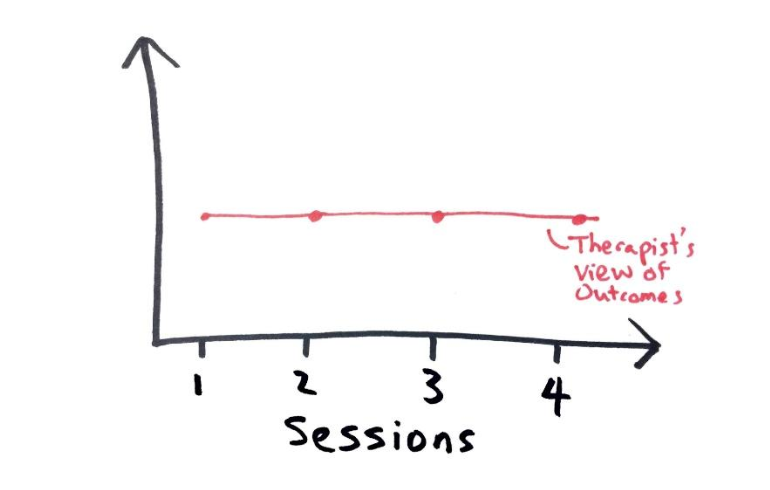
I once had a supervisee who wanted help getting “unstuck” with a client. We talked at length about the presenting concern, clinical background and what she had previously tried. The supervisee and client had just completed their 4th session when the therapist described that “things aren’t moving.” In other words, there was no discernable clinical progress.

Therapist View of Progress in the First Four Sessions.

I asked if she used any form of measures in her work. I learned that this therapist had been using outcome and alliance measures in her practice, but had not reviewed the graphic description of those measures. She was using the measures only because the management team insisted that she do so. I suggested that she bring the graphs to our next supervision meeting.

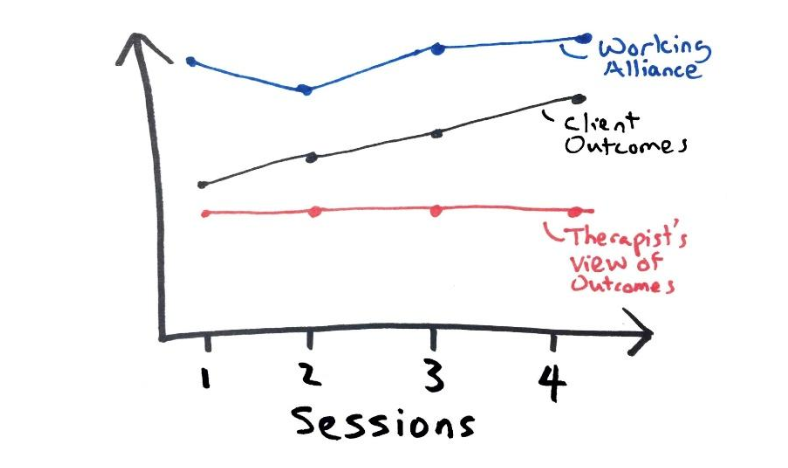
Here’s what the graph looked like:

Therapist View of Progress Alongside Client’s View of Session-by-Session Progress and Engagement

Even though there was a dip in the alliance at the 2nd session— a rupture from which the clinician was able to bounce back—contrary to her perception, this client’s experience suggested that outcomes were gradually improving. Not only was the therapist’s appraisal off the mark, but the plans we had devised with which to repair the perceived rupture were not right for the context. It was like wearing winter clothes in anticipation of being in the frigid Alaskan north, but instead finding ourselves baking on a beach in Bali.

We went back to the drawing board. We spent time working through the supervisee’s uncertainty and anxiety about her perceived lack of progress, while keeping in mind that the client was clearly perceiving and experiencing benefit from the engagement. As it turned out, the therapist was torn between addressing the psychiatrist’s referral concern of OCD, versus the client’s implicit desire to improve his relationship with his father. Thankfully, the therapist maintained fidelity to the client’s rather than the psychiatrist’s concerns.

In supervision, we re-focused our attention around attending not only to this particular client rather than the referral source, but how to do so with future clients so we could also address the perceived need of their referring sources. More importantly, the therapist needed to unpack and clarify some inferences about what she was doing and thinking that might have contributed to this gradual improvement, despite thinking that none was being made, so that she could continue doing so.

In this instance, thankfully, the client was improving. However, the opposite can just as easily happen, i.e., when we think that improvement is being made, but the client reports that “things aren’t moving.” When intuition and real-time data are either out of synch with each other or not taken together into consideration, clinicians (supervisees in this case) are prone to self-assessment bias. While we are re-playing mantras in our heads that say, “The clients will get worse before they get better,” we quickly realize that our client has dropped out of treatment.

Quick tip: In clinical supervision, make sure that supervisees bring in graphs of the client’s outcome and engagement. This is one critical way to privilege the client’s view of progress and engagement across time, while incorporating it into supervision. In turn, we can also monitor the impact of the “backstage” conversation of supervision on client outcomes.

But Why?

Here are two primary purposes for weaving ongoing measures into therapy and using them in clinical supervision:

1. At the Client Level

a. Guide the treatment process: “Are we on-track, or are we off-track?”

b. Use the feedback to feed-forward: Real-time feedback allows you to tweak the service delivery to fit each client, each step of the way.

2. At the Therapist-Level

a. Effectiveness: If used systematically, session-by-session with every client, the
therapist can figure out the nagging question at the back of all our minds: “How
effective am I?”

b. Individualized Development: Once you figure out where you are with the help of a
supervisor who is attuned to this type of process, you can start the journey of figuring out
“where you need to go” in your individualized professional development. (More on this in an upcoming blog post).


There may be many reasons not to use routine outcome measures in therapy, and only a few good reasons to do so. Personally, I am not a fan of numbers. The irony is not lost on me being Chinese and failing math (and Mandarin) in my early years. Besides, it is not as if therapists around the world need another thing to pile onto their existing and ever-growing paperwork! Yet, the benefits far outweigh the costs of not integrating some form of measures—tracking what is of value to the client.* A groundswell of studies now show that the use of measures such as a real-time feedback tool not only reduce deterioration in client well-being by a third, but doing so cuts drop-out rates by half, and as much as doubles the overall effectiveness of therapy.

The use of intuition without high-value data** is like trying to drive in a foreign country without a GPS or an old-school map. It’s possible to still get to your pinpointed destination—especially if your sense of North is better than mine—but the journey is likely to be mired in and derailed by unwanted detours. On the other hand, the use of data in the absence of intuition is like blindly following your GPS into a ditch, when the new road, which is just to your left, has simply not yet been updated into the system.

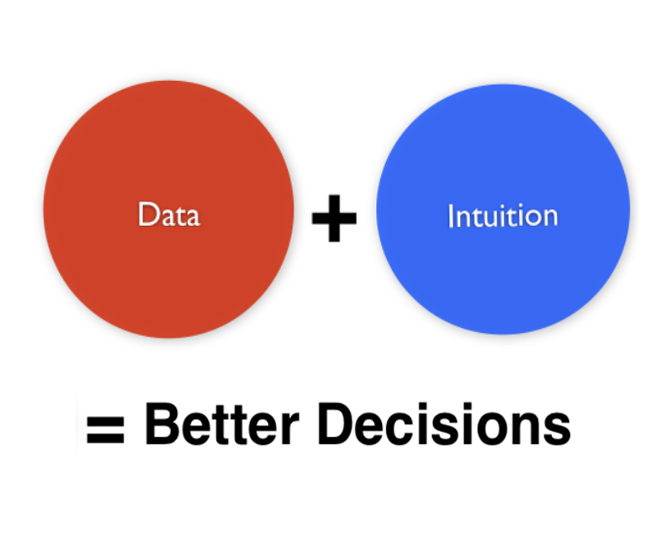
The knowledge gained from the marriage of data and clinical intuition contributes to a type of dialogue that is richer and aids clinical decision-making. Sometimes, client-reported data confirms what we intuit. Other times, the data contradicts our gut sense. The point of monitoring progress and weaving it into clinical supervision is not to defer all judgement to cold and unintelligent data. The point is to wrestle with this tension in order to see and think more clearly.

To learn more about becoming a better supervisor, check out the in-depth online course, Reigniting Clinical Supervision.

Notes:

*It is highly possible to be measuring something systematically that is not relevant to your client. For instance, capturing data without integrating the measures to inform the treatment process. Second, dogmatically using a symptom-specific measure that may not make sense for all your clients. This is why it makes more sense to be capturing information about a person’s global wellbeing.

** Data is only valuable when you are not valuing whatever you measure but measuring what is of value. 

Premature Endings: When Clients Leave Therapists

Premature Endings in Therapy

In this blog post, I consider the impact of premature endings of therapy on psychotherapists in general, and on myself in particular. I am focusing here on situations where a client leaves and breaks off therapy without giving the psychotherapist any preparation for the ending.

In my clinical experience, few scenarios have been as challenging as premature client termination, especially when I have not been prepared for that ending, and/or it was not foreseeable at the time. Certainly, many clients do not return after the first or a few visits, but others break off the relationship after considerable work has been done.

This may be years-long, ongoing treatment which involves complicated work around critical and aggressive transferences, and client concerns around trust. In such a case, a client may use attacking defenses to provoke reactions from the therapist, reactions that will serve to prove that the therapist cannot be trusted.

If we think of Freud’s 1912 Remembering, Repeating and Working Through, we have to work with our clients knowing that the therapeutic relationship may be part of a broken repetition of a previous relationship, rather than a more complete and healing experience that culminates in successfully working through the client’s issues.

When there is a premature ending, the therapist is often left with the sense that the client has used the work and the premature ending to remain fixed within their problems, rather than be able to work towards a better solution.

Because the premature ending of treatment is always an ongoing occupational risk, it is helpful for the psychotherapist to have come to terms with the way in which his or her own early environmental and attachment failures and problems exist as real and deeply felt experiences that may not have been healed but had to be painfully and quietly endured. There may be cases where we have become deeply invested in long-term therapy, where we may have worked, alert as possible, to projections and different transferences.

When the work breaks off suddenly, it can wound us deeply and leave us with grief and loss, along with a profound sense of failure, disappointment and rejection. Sometimes this occurs with a client who may have been overly critical and anxious about trusting the therapist throughout the work. This can be particularly so in treatment which has gone on for several years and in which the clinician worked hard on the client’s behalf.

The Pain of Premature Client Termination

Such a difficult client-initiated termination happened to me last year and I found the suddenness of the ending extremely hard to deal with. I felt myself overtaken by painful grief. I went over and over the final sessions questioning myself as to what I might have done differently.

What strikes me about these kinds of situations is the way in which, after the ending, the client remains in one’s mind, the way the transference remains alive. For example, on coming into my consulting room after a break, I tidied the place up a bit, and could vividly recall the way my client would often criticize my room.

In the end, and upon reflection, I don’t think there was anything I could have done. In one way, it could be said that my client broke off with me the way her father had broken off with her. This was a client who had particularly strong and unresolved attachment issues in her very early years, had gone through the breakup of her parents’ marriage at age four, and had then lived with her mother and brother. Her mother then remarried a very abusive man and the client witnessed as well as personally experienced violent abuse.

During our work, her capacity to trust me was the paramount cause of her recurring anxiety. Progress might have been made, but the question of trust would always hang over us, and in the end, the breaking off of the work, I think, had very much to do with the question of her not being able to trust me.

It is a difficult burden for us to carry when we are left suddenly in situations like these, when we are very invested in the work. In fact, we may not realize how much we are invested until the work has suddenly broken off and we are left dealing with the ending alone and/or in our supervision.

I am aware of my enduring sense of attachment to my client, and that for a long time I still thought of the 6 p.m. Monday time slot as “her” session. When I gave it to somebody new, I had the sense that they only had it on loan from her. The pain of the difficult ending remained in my mind, thoughts, and psyche. I wondered if it remained in hers, or if by ending with me, she found the freedom to be creative in another area of her life.

Therapist Growth Through Client Transference

I say this because I was recently teaching a seminar on Freud’s 1905 case of Dora. One of the key events of that case was that Dora broke off her treatment. It may be that the energy Freud was left with in the abrupt termination was part of what fueled him to write the case up. This in turn makes me think of the acrimonious split between Freud and Jung, and the creative energy that was released in each of them following the breakup of their work together.

One interesting thing about the ending of Dora’s case is what she did after leaving Freud. Because she returned to see Freud, we know that she confronted Herr K about his advances towards her and received an apology from him. For Dora, breaking off the work with Freud can be read as part of her way of escaping the abusive paternal transference. For Dora, the right to break off the treatment was crucial.

Could something similar have been provoked in my client? Could it be that in ending with me she was starting something that would lead to healthy creative expression? I like to think so. This abrupt ending may have felt premature from my side of the couch, but it might have been right for her. Nonetheless, I am still left working on the painful sense of loss, and perhaps abandonment, that her premature separation evoked in me.

Questions for Thought and Discussion

How did the author’s reflections on his case resonate with you?

How have you dealt with clients who have terminated without explanation or warning?

How would you like to use the information in this essay in your own clinical work?

Think Act Be: A Whole Person Approach to Healing

When John came to me for treatment, he’d lost his job a year earlier; at 58 years old he was not optimistic about finding a new one. Since then, he’d stopped exercising, his diet had deteriorated and he’d had a recent health scare. His relationships were also suffering, as he often argued with his wife, felt alienated from his adult children and rarely got together with his friends. He felt broken, and sometimes wondered if life was worth living.

Like what you are reading? For more stimulating stories, thought-provoking articles and new video announcements, sign up for our monthly newsletter.

John’s situation is not at all uncommon. As one part of our life suffers, others often go down with it. What might start as a physical illness soon affects our minds, just as a psychological stressor like losing one’s job can lead to physical exhaustion and poor health. The cascade can continue and affect us at our core, leaving us feeling lost and dispirited.

I’m well acquainted with this downward spiral not only from my clinical work but from my own extended physical illness that resulted in social isolation and a major depressive episode. Eventually I felt like a burden to everyone and wondered if my family would be better off without me.

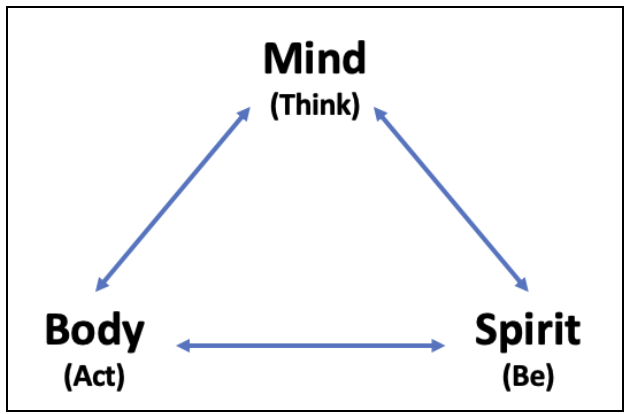
Just as our struggles often spread into many areas of our lives, our healing requires a multi-faceted response. My own approach as a therapist integrates cognitive behavioral therapy (CBT) with mindfulness, which I call “Think Act Be.” It’s a simple reminder of three interconnected paths to healing—Mind, Body, and Spirit (see figure).

When I’m working with clients I often ask myself which of these paths might be most helpful to them at this point in their treatment.

  • Are their thoughts serving them well?
     
  • Are their actions consistently rewarding them with enjoyment and a feeling of accomplishment?
     
  • Do they find meaning and connection to nourish their spirits?

Other clinicians before me have recognized the power of combining these three schools of thought (e.g., Mindfulness-Based Cognitive Therapy). Indeed, integrative approaches in general are commonly used by clinicians, whether or not they follow a CBT approach. Therapists of all stripes see the value in treating the whole person.

Bringing the Principles to Life

The principles of mindfulness-based CBT are very straightforward and easy to explain:

Foster healthy thinking.
Do life-giving activities.
Practice present awareness.


The challenge lies in bringing these principles to life, otherwise they’re no more effective than easy truisms like “be in the moment.” How do we retrain our minds? Which activities are the right ones for me? What are ways to practice mindful awareness?

In my experience, three ingredients are necessary to develop new and more effective habits that promote healing:

  1. A clear and focused plan
  2. Daily practice
  3. A wide range of practices
Without these three factors, we’re likely to slip back toward unhelpful thoughts and behaviors. Thus, each CBT session generally ends with planning for things to work on between sessions. This emphasis on consistent practice of new skills and techniques is part of what makes CBT effective.

In general, it’s best if the plan is written, which makes it much easier to remember and provides greater accountability. Some therapists write the plan on an index card so it’s easy for the client to carry it with them. That idea inspired me to develop The CBT Deck, a deck of cards printed with daily CBT and mindfulness-based practices. It includes many of the same techniques that John and I worked on during his treatment; example exercises from the deck are included in bold in the following discussion of his treatment and recovery.

John’s Recovery

In my work with John, we focused first on adding valued activities back into his life because this seemed like an area of “low hanging fruit,” and behavioral activation tends to pay off quickly. His activities included going on weekend adventures with his wife and doing fun things that also provided physical movement.

We also worked toward taking care of tasks around the house that he’d been putting off and on building positive interactions with others since his relationships had suffered. Given his health challenges, we worked on ways to improve his sleep and eat more healthfully.



Soon we began addressing his thoughts, starting with recognizing thoughts as thoughts. He identified an overly negative self-critical voice that told him he was “unwanted” and “useless,” which we worked to correct in various situations (see sample card).

Mindfulness became the third pillar of John’s treatment and recovery. Through different meditation practices he learned to quiet his mind and recognize its chatter, and could prevent himself from getting caught up in negative trains of thought. He also found relief from putting up less resistance to reality, instead opening to the unpredictability of life.

We worked together to bring these practices into his daily life and his interactions with others. Gratitude was also an important part of John’s recovery, as he started to notice how much was right in his life.

It was only a few weeks before John was feeling markedly better. That said, the improvements were somewhat delayed; he didn’t feel immediately better after the first weekend outing with his wife, and his mindset didn’t change miraculously after one week of working on his thoughts. Just as giving up life activities took a while to affect John’s well-being, so the effects of resuming them were somewhat delayed. This delay is part of why consistent practice is important; if a person stops the practice after a day or two, they probably won’t have gotten a sufficient “dose” to see real improvement—and may conclude prematurely that “it didn’t work for me.”

John and I met weekly for more than a year as the improvements continued. Eventually we tapered down to meeting about once a month, which John finds helpful to maintain the practices that keep him well.

Healing for All

After many rounds of inconclusive medical tests, I began to accept that a mind-body-spirit approach to healing was just as relevant for me as for those I was treating:

Think: I’ve found it extremely helpful to make simple adjustments to my mindset—for example, seeing myself as “still healing” rather than “still sick.”

Act: I threw myself into life-giving activities like gardening, where I can see the fruits (and vegetables) of my labor.

Be: I’ve given myself space to connect with deeper parts of myself that I’d forgotten about, including a renewed connection to sacred scriptures.

It might sound funny, but I plan to use The CBT Deck myself as a regular reminder of the kinds of practices that enrich our lives.

As you assist others in healing—or work toward your own—what framework do you find most helpful? In what way does your approach tend to the mind, body, and spirit?
 

Qualia and Quiddities in Psychotherapy

In this world of S.T.E.M. (science, technology, engineering, and math) education and careers, I’m an outcast. I’ve invented a new word for my position: “ascientism.” I am an ascientismist. It means that I do not believe that science can answer all of the important questions in life. Let me be clear: I am not anti-science. I am not a climate change denier; I am not an anti-vaxxer and I am not a flat-earther. In fact, I’m an academic who does research (albeit qualitative). I think most real scientists are also ascientismists. I think that an exclusive focus on STEM education may impair a generation of psychotherapists.

On a basic level, many of us who prize science (I really do) do not believe that the scientific method can answer all of the questions that are relevant to existence, and cannot in-and-of-itself provide for the quality of life of the planet and its inhabitants. The scientific method, like everything, is highly biased, and can only point toward a limited type of answer to the limited questions that can be processed through the method. This bias strangulates those of us who wish to help people who are suffering in multiple complex ways.

The answers you can get from the scientific method are answers to questions about amount: a quantity. The rise of scientism has thus contributed to the quantification of life. Culturally, we judge everything based on its number. How important are you? Well, how much money do you have? How much do you weigh? How many social media contacts do you have? The numerical bias inherent in scientism skews our values. This leaves clients unsure of their own relevance as humans and leave us therapists highly limited in terms of how we can understand and help our clients.

Like what you are reading? For more stimulating stories, thought-provoking articles and new video announcements, sign up for our monthly newsletter.

The skewing of values is exacerbated by the fact that the scientific method elevates “objectivity.” What objectivity suggests is that one can shut off things like feelings, desires and motivations in order to apprehend the world as it really is. This is neither possible, nor is it desirable. It has contributed to a culture that is affect-phobic. People think that they should somehow be able to free themselves of all difficult feelings. Don’t be sad, don’t be angry, don’t feel guilt. When we turn off our own feelings, we lose a great deal of important information about ourselves and the world. We also lose the ability to connect to the motivations and desires of others. This decimates relationships. How many of your clients have diagnosed themselves as socially phobic? Most of my late millennials and gen Z’s do. Scientism may contribute to this particular problem in living.

Scientism is not an alternative to fundamentalist beliefs, as so many of the social media memes suggest. It is one. And as a fundamentalist belief, it is not an appropriate belief system on which we should completely base psychotherapy. Do we need some science to help us understand problems in living and how to help people resolve them? Yes! And we need the humanities in equal measure. The branches of knowledge subsumed under the term humanities include art, literature, music, history, philosophy, religion and language. They are called the humanities because they all in their own ways explore what it means to be human and some of the variations in the human experience. One of the advantages they have over the scientific method is that they explore humanity in the particular (an ideographic view), versus humanity in the abstract (a nomothetic view). We don’t work with aggregated “humanity.” We work with actual, concrete people whose complexity and uniqueness cannot be captured by any nomothetic technique or description.

We help people whose lives have been so quantified that they have no idea who they are or why they exist. Then we ask, “what is the frequency, intensity, and duration of these specific symptoms of codified mental illnesses?” We put more numbers on them. A humanist-enhanced therapy explores qualia and quiddities over and above symptom counts. Qualia (singular, quale) are “what it’s like.” It is a subjective experience that is difficult to succinctly describe. What is it like to fall in love? There are times these experiences undermine one’s well-being and become habitual: all experiences generate the same qualia. This then becomes the focus of change in therapy. As difficult as these experiences are to put into words, the process of attempting to understand, and to a small degree share, someone’s qualia is at the heart of ascientismist therapies.

The word quiddity means “essence.” Quiddities are those things that make an individual unique among humans: their particularities. “Who are you? How are you special?” Therapy becomes an opportunity to help people celebrate those quiddities that enhance the client’s quality of life and alter those that contribute to problems in living. This is an old kind of therapy. Perhaps what is old can become new again.

Yes, use science! Read outcome studies and meta-analyses. They are helpful. Also read religion, philosophy and literature. Attend to your clients’ language. Ask about what music and other art forms they enjoy. You might even “prescribe” specific artistic expressions to open up your clients’ experiences and trigger specific qualia. By all means, inquire about your clients’ religious/spiritual beliefs. Much of therapy often becomes helping them develop or refine their beliefs in meaning-systems. The meaning system does not need to be any organized meaning system, such as a religion or specific philosophy, but it can be.

Life is more than numbers. More than how many symptoms you have, more than the number of likes you get on a social media post, and for us therapists, more than a client’s score on a diagnostic or even treatment rating scale. But the STEM wave has some serious shortcomings. The humanities are necessary areas of knowledge for psychotherapists who wish to help people free themselves from the quantification of their lives. The humanities help us understand and celebrate or contribute to change in our clients’ qualia and quiddities.  

Psychotherapy and Autism

I just finished writing a book for psychotherapists on helping teenagers and young adults with autism. This topic does not get much coverage in the clinical literature on autism, as treatment books focus most often on children. This blog post will share some major points from the book. Autism is a neurobehavioral condition impacting social comprehension. It is often described as impacting “social skills,” but that is much too limiting. Autism impacts how an individual perceives the social world and interacts with that social world. Individuals with autism literally have a different way of perceiving social relationships, and they use skills they find appropriate given those perceptions. Autism makes up “who the person is” and not just “what the person does.” Having Autism makes up a major part of the answer to the all-encompassing question teenagers and young adults ask: “Who am I?” Therapists can help older clients take on this challenging question by helping them answer more specific questions like: “What does being a person with Autism mean?” “How do I want to live my life as a person with Autism”? “How important is it to have friends and what sort of friends do I want to have?” “How much am I capable of doing on my own?” “How much independence can I hope for?” “Where do I agree and disagree with my parents and teachers in terms of what they expect from me?” “How much do I care (and why do I care) about how people respond to my Autism symptoms?” Applied Behavior Analysis (ABA), the primary treatment approach used for autism, emphasizes learning skills to replace behaviors that are causing problems. ABA still plays a major role in treatment for Autism for teenagers and young adults. Using the questions listed above is an effective way of determining what skills the teenager or young adult needs to learn. So, for example, once your client has worked with you on what sort of relationships he or she wants, you can use ABA approaches to help them learn skills needed for obtaining those types of relationships. But what you are making clear is that you are not taking a “one-size-fits-all” approach to what skills to learn. You are not telling your client “You need to have friends” or “You need to do more with other people.” You are helping your clients decide what they want, even if it is different from what their parents, teachers or healthcare providers think they should want. Addressing disagreements between what young clients and their parents want from therapy can be a real barrier to progress. Everyone wanting to have the final say in what gets addressed can be more challenging with this type of therapy than any others. You have parents who are used to guiding their child’s treatment, and then the child (now a teenager or young adult) who is tired of being told what they should want or what goals they should have. This is even more of an issue with autism because childhood autism treatment requires heavy parental involvement. Backing off on this involvement, so that their child can have more say over what gets addressed, can be difficult for parents. I remember one client, a teenage girl with autism just starting the 11th grade, whose main issue was disagreements with her parents. Her goal was to interact with her peers more at school, but she was not particularly interested in more social activities outside of school. But her parents wanted her to do much more socially. They had another daughter who they described as a “social butterfly” who was often at parties and out with her friends. When they saw that their other daughter (my client) did not have much interest in parties, they determined that something was “wrong” with her and that her autism symptoms, which she dealt with all her life and had been under control for years, were causing her problems that she did not see. My client had considerable disagreements with her parents about this issue and was really starting to resent them for it. She was comfortable with her limited social activities and did not want to do much socially outside of school (but did want to do more socially in school). Her parents disagreed and we had to address this issue before deciding what direction treatment would take. This sort of disagreement is not uncommon for families of a teenager or young adult with autism. Given how intense autism in childhood can be and how involved parents often are, they may come to expect their child will not fully understand what they need from treatment. Having family sessions, where everyone is given their say but the therapist makes clear that the young client must be listened to, can help parents recognize the validity of their child’s views. It can also give the therapist the opportunity to talk with the parents about how there are different perspectives on what makes social relationships meaningful and what to expect from friendships. When I had the chance to discuss these issues with my client’s parents over two family sessions, they were more receptive to considering what their child wanted socially. They were actually initially quite angry at me for “giving in” to their child and treating her too much like an adult. It was only after we discussed these issues in depth, and everyone had the opportunity to express their views without interruption or criticism, that the parents were receptive to allowing their daughter to set the goals for therapy. Therapy for autism in the teenage and young adult years is more individualized than therapy for autism during childhood. One example of how this works out is that “social scripts” are used as opposed to “social stories.” Social scripts are based on discussions during the therapy sessions specifically addressing what the person wants in terms of social relationships and what situations they find most difficult in reaching social goals. Social stories, on the other hand, emphasize more general rules that are used across a variety of social situations. Many types of therapy approaches used effectively for treating different conditions for teenagers and young adults can also help individuals with autism. Mindfulness, cognitive-behavior therapy and relaxation therapy all have been found effective for treating anxiety, depression and anger comorbid with Autism. T client can learn how to use these skills to reach the social goals they set for themselves. Perseveration and self-stimulatory behaviors are common problems in autism that need addressed. They typically get addressed as clients identify the negative responses they get from other people because of these behaviors. Using the “Red Card/Green Card” exercise is one effective approach for this problem. Essentially it involves helping the person practice suppressing their repetitive behaviors by allowing them periods of time to talk about whatever they want (including perseverative topics) without interrupting them when the “Green Card” is up, in exchange for focusing on specific topics the therapist brings up when the “Red Card” is up. I have also found reviewing material related to the “neurodiversity movement” to be invaluable for helping determine effective ways of helping teenagers and young adults with autism. This is not a therapy orientation per se, but is a philosophical movement emphasizing that autism, along with other neurobehavioral conditions, is best thought of as a “difference” and not a “disorder”. Reading material related to this movement can give you a different perspective on helping make therapy for someone with autism as beneficial and individualized as possible. Reference: Marston, D. (2019) Autism & Independence: Assessments & Treatments to Prepare Teenagers for Adult Life. PESI Publishing & Media: Wisconsin.

The Tiger Woods Analogy for Therapists Makes a Roaring Comeback!

On April 14th of this year, Tiger Woods won the 2019 Masters Tournament at age 43, creating a sports story which NBA legend Michael Jordan called, “the greatest comeback I have ever seen.” Just for the record, this was Tiger’s fifth Masters victory. This, mind you, after some of the top pundits predicted he would never win another tournament, much less the Masters.

But what, if anything, does this amazing accomplishment have to do with the practice of psychotherapy? Well grab a 9 iron, or preferably a putter, and indulge me while I explain. Also, you need not be a golfer or even a putt-putt mini-golf aficionado to benefit from this information.

Like what you are reading? For more stimulating stories, thought-provoking articles and new video announcements, sign up for our monthly newsletter.

In 2007 I wrote a brief chapter titled “The Tiger Woods Analogy: The Seven Minute Active Listening Solution,” for Lorna L. Hecker and Catherine Ford Sori’s wonderful book The Therapist’s Notebook. Volume 2. In the book I show precisely how to prove to yourself that the “Tiger Woods Analogy” I am about to describe impacts your therapy sessions. Using a trusted friend playing the role of the client, I share an experiential activity with two trials where the “client” provides you with a rating concerning your effectiveness as a helper. In this exercise, the “therapist” is first instructed to let their mind wander while listening to the “client”; following which, they are told to hang onto every word the “client” says. In such an exercise, you will discover that your helper rating is significantly higher when you are listening versus when you are contemplating the purchase of your next cell phone plan.

I will now share the rudiments of the analogy with you. Let us assume that I am faced with a four-foot putt. Is there a good chance I will miss it? Indeed, there is an excellent chance. Now, let’s challenge Tiger with the identical putt. Even as well as Tiger putts, he doesn’t sink them all, so yes there is a chance Tiger could miss it as well.

But the key difference will become clear if both of us are asked to attempt the exact putt once again. In my case, I will likely be clueless as to why I missed the first putt and I am afraid there is a very high possibility I will miss it once again. Well, how about Tiger? Could he miss it again? It is possible, but the odds of this occurring will be much lower. Why? Tiger will consciously or unconsciously say to himself, “Hit the putt a little more to the left,” or “loosen your grip on the putter,” or whatever.

Tiger is aware of why he missed it. He has insight into his behavior. He is constantly watching his performance and listening to feedback. Me, not so much or maybe not at all.

Now let’s apply this to a counseling or psychotherapy session. How many times when a client is talking, are you thinking about your daughter’s birthday party, your son’s soccer game, or your larger than life credit card bills? (And if you answered “never” then I know you are lying…at least to yourself.)

If you are beginning to think that the point of this blog is, “Oh Dr. Rosenthal, I get it. I promise, I’ll never zonk out, stop listening, and I’ll hang on to every word uttered by every client,” you are delusional. Sorry, that’s not going to happen. Albert Ellis reminded us for more years than we care to remember, that humans are fallible and are far from perfect.

There will be times when you are daydreaming and not totally listening to your client, merely because that is a part of the human helper’s psychotherapeutic experience. The point is that after reading this blog (and preferably performing the exercise fully explained in the Therapist’s Notebook with a trusted colleague who will be rating your effectiveness), I want you to be like Tiger attempting the putt for a second time—intensely aware, insightful, and fully cognizant of your behavior and therefore bringing yourself back to listening to your client ASAP.

Hence, in the future when you begin thinking about whether you should order the chicken or the beef fried rice after the client’s session ends, you will have this amazing larger than life insight that maybe you ought to recall the Tiger Woods analogy and pay a wee bit more attention to what the client is trying to convey.

No matter how you use it, knowledge of this analogy, even though it is extremely valuable, won’t transform you into a master therapist, and it sure as heck won’t allow you to putt as well as Tiger, but it will go a long way to improving your active listening skills.