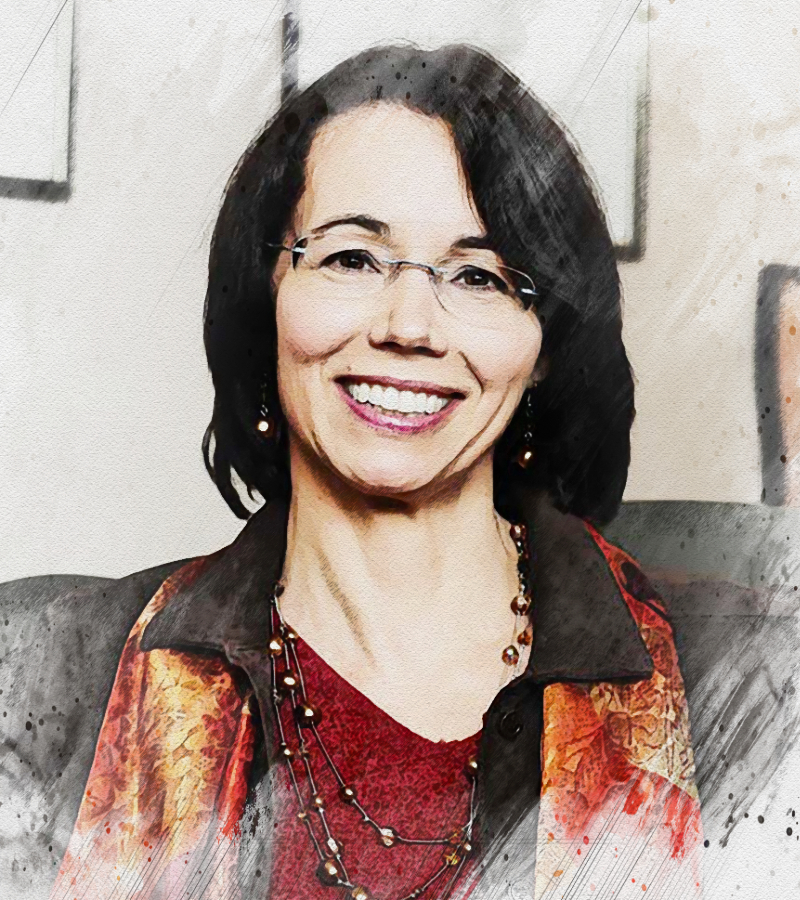
Bethany Brand on the Identification and Treatment of Dissociative Identity Disorder

Lawrence Rubin: Bethany Brand is a professor of psychology at Towson University. She’s an expert in trauma, specializing in trauma related disorders, including post-traumatic stress disorder and dissociative disorders. She also maintains an independent practice in clinical psychology in Towson, Maryland. Doctor Brandt serves on international and national task forces developing guidelines for the assessment and treatment of trauma disorders. Welcome, Bethany. Thank you for joining.

Bethany Brand: Thank you so much for having me.

Right Place, Right Time

LR: What got you interested in dissociative disorders, trauma, and ultimately dissociative identity disorder from a personal perspective?

BB: It was a number of things. One of the early experiences I had as an undergraduate at the University of Michigan was working in a shelter for women who’d been battered, which is what it was called back then—not interpersonal violence like we call it now. I started hearing about trauma and remember being very interested in it. In my first semester of graduate school, I was doing a psychological testing practicum at Johns Hopkins Hospital on the kids’ unit. This was in the late 80s, so many of the kids had been abused or neglected according to their charts. I asked my supervisor how that experience might be reflected in their psych testing—how would they be different? And there we were at Hopkins, one of the premier institutions in our country, and she did not know.

To her credit, she acknowledged that and asked her supervisor, who later gave us this fascinating off-the-cuff talk about trauma and his experience with traumatized kids. It was so compelling that I decided that was what I wanted to do my master’s thesis on. I was lucky enough at the time that Frank Putnam, one of the legends in the field of dissociation, called my graduate program, asking for students who might be willing to volunteer on his project—a longitudinal study of girls who’d been sexually abused. I was incredibly lucky to be at that right place at the right time, working with a pioneer.

To be honest with you, I wasn’t sure about the whole idea of dissociative identity disorder because we didn’t see that in the lab and that was not what we were studying, even though Frank was studying it at the National Institute of Mental Health. When I later went on internship at George Washington University Hospital, a woman there said she had multiple personality disorder, with whom I had done the testing.
The treatment team was a little skeptical, but my supervisor referred me to Judy Armstrong at Sheppard Pratt Hospital in Baltimore who offered to review the data with me. After she did so, she said, “You know what; you actually might have somebody with MPD.” After that, it was just luck because I got a postdoctoral fellowship at Pratt, where they had just opened up a trauma disorders unit, and where I did my dissertation on trauma. I remained there and began working very heavily with folks with DID, and other serious, complex trauma disorders. Right place, right time, and fortunately, amazing training with amazing clinical supervisors.

DID and the Dissociative Spectrum

LR: Before I ask you what readers most likely want to know, which is, “What actually is DID,” why the transition from “multiple personality disorder” as a label to, “dissociative identity disorder?”

BB: There were a lot of reasons, but just to be very brief; by calling it multiple personality disorder, many clinicians thought it was a personality disorder like borderline personality disorder, and it’s not in that category. The experts in the field wanted to emphasize it was a trauma related disorder connected to dissociation, not a disorder of personality. The name change was an attempt to reflect that.

LR: Well, I guess relatedly—and I may get back to my initial question—does the DSM’s characterization of DID as a complex post-traumatic developmental disorder, ‘capture it?’

BB: It’s a terrific start. It’s a foundational start, because it implies that it starts in childhood, which is what developmental disorder means. The research strongly points to very early severe chronic child abuse as the cause. But we also know that there is genetic tendency towards dissociation. And often these clients who end up as individuals who develop DID also have attachment problems because they didn’t have secure attachment. There are multiple things going on, but trauma really has an early childhood foundation.

LR: In your writing, you discuss TRD or trauma related dissociation and suggest that DID is almost always related to early childhood trauma and severe disruption of the attachment relationship. Is there such a thing as a NTRD, or non-trauma related dissociation?

BB: Yes! We all dissociate to some extent, so normal non-pathological dissociation can occur. It can be going into a state of automatic pilot. For example, when we’re driving down the highway and we’re really thinking about something, and barely remember the drive when we get home. Or we’re driving down the highway and we miss our exit because we’re so preoccupied, not because of traffic, but because of our mental disconnection from what we’re doing.

It can also happen at moments of peak spiritual experiences or athletic experiences when people can disconnect from their bodies or feel out of their bodies and have this incredible experience. But none of these experiences interfere with functioning.

LR: I imagine getting lost in a book or a song or a movie or a conversation containing elements of dissociation, but on the left side, or benign side of the spectrum.

BB: Exactly. Those are called absorption, and some people are very prone to absorption. We know from research that the more somebody is prone to absorption, they may be more at risk for dissociation. There’s been some debate over whether absorption should be called dissociation or not? For now, it is understood as one of the lower levels, not-so-problematic types of dissociation, which comes from self-report measures.

LR: Is it clinically useful to think of a dissociative spectrum with absorption type experiences on the left or benign side, and DID as the most extreme and pathological form all the way to the right?

BB: Yes, I think it is. But I’ll say that with awareness that some people living with DID really resent that, because understandably, this was an adaptation to horrendous, overwhelming circumstances. And so, I completely get it and respect that they had a brilliant way of adapting and getting through what would have been just harrowing experiences. The research actually supports exactly what you said.
As I said earlier, all of us dissociate to some extent. And then when you start studying dissociation and different psychological disorders, there’s a range of scores that people have on the different, self-report questionnaires. And it starts out with people having [scores] a little bit above what might be for people who are not struggling with any emotional disorder.

And then it gets at the highest level is folks with DID. And in between, there might be people with eating disorders and maybe borderline personality disorder, because there’s often a lot of trauma in those people’s background, and then you start getting into PTSD. And then the dissociative disorders indeed are at the end with the highest levels of dissociation.

LR: I would think that someone who is engaging in non-suicidal self-injury or someone who is in the middle of an intense food or substance binge is in an acute state that requires a certain amount of dissociation to be able to inflict that level of harm on to yourself.

BB: Is there some dissociation that goes on during those moments? The answer is yes! Often people are somewhat disconnected from their bodies. An example is a client who, with DID or severe dissociation, may be cutting and not feel it and be kind of fascinated with what they’re seeing under their skin, like really extreme cutting with the detachment. And they don’t feel the pain.

LR: Is it possible that someone with DID could be cutting while there’s another element of that personality that’s watching? Am I using the right nomenclature for the other “states?”

BB: There are people in the field that are really pushing for those parts to be called dissociative self-states. In the literature, they’re alternatively called identities, personalities, parts, and alters. We’re really trying to emphasize that whatever they’re called, that they’re all parts of one person. They’re self-states. They’re not different people. That’s why we’re encouraging that name to be adopted in the next DSM.

LR: I find myself gravitating toward more questions that may be more of a popular culture artifact, but I’ve heard that different self-states can have symptoms of a particular medical illness or disease while another is asymptomatic. Is that possible in your experience?

BB: It depends on what illness you’re talking about. We know that, depending on our emotional state, our blood pressure may change, right? And Frank Putnam, who I referred to earlier, did some of the early research showing that different self-states have different EEG patterns.

Simone Reinders in the Netherlands has done a bunch of research studying neurobiological differences among some self-states. She’s tried having professional actors impersonate self-states while they were hooked up with all kinds of biological markers, including brain scans. They could not emulate different self-states.

It’s remarkable. It’s not magic. It’s a disorder that is linked to neurobiological changes and differences. And of course, these different self-states are going to include the traumatized self state, the one that remembers trauma and has all the symptoms that go with that PTSD. When they’re scanned, of course you might expect their heart rate to be much faster and for them to have more activity in their limbic system, versus a part that’s very detached and doesn’t recall that trauma. The heart rate of that self-state is not going to be as elevated. And they’re not going to have the intense amygdala activation.

LR: I can see that if someone is in a moment of active sexual abuse, sexual trauma, that it’s in the body’s interest to down-regulate the heart rate and cortical activation.

BB: Yes. There are studies about that, talking about how animals go into survival mode and, you know, like the faint mode or the feigning death mode. There are some animals that have that response of total disconnection from their bottom up to allow them to survive attack. Well, there’s some parallels with humans that have been horrendously abused repeatedly. Their brains shift into dissociation as a survival mechanism.

Their access to memory can be quite different as well. One of the diagnostic requirements is that there be amnesia for some of their life experiences, that are not due to drugs, alcohol, or head injury. Or they may not remember key autobiographical events, like their own wedding. We call that dissociative amnesia.

LR: What are some of the myths and misconceptions about DID that clinicians should know about?

BB: There are a lot, unfortunately. One is that DID is exceptionally rare. On and across different prevalence studies, at least 1% of the general population meets criteria for DID. That’s the same prevalence rate roughly as bipolar disorder and schizophrenia. So, it’s not rare, but there have been some critics.

Critics of the whole notion of dissociation and DID have been putting it out for a long time in articles that are published in journals. And that has found its way into psychology textbooks that undergrads and grad students read that put forward that myth so that unfortunately, many people, even mental health clinicians, think it’s rare. Another myth put forward by the critics is that DID folks exaggerate their symptoms or are prone to create false memories of abuse.

When you actually compare people with DID to people with PTSD to what are called healthy controls, people who don’t have any emotional problem, and professional actors who try and emulate all of this stuff, there are some studies we’ve done that show that people with DID
are no more likely than people with PTSD to develop false memories.

The important thing that most mental health clinicians have not been trained to know is that they are highly symptomatic across a bunch of different domains. They don’t just have amnesia and different dissociative self-states. They also have PTSD. And we know PTSD is a complicated disorder with 17 potential symptoms. And so, at times they’re flooded with traumatic intrusions, pictures, awful memories, awful nightmares. And then there’s periods where they’re shut down and avoid it because it’s so awful to remember and feel that stuff.

And then there can be incredible periods of irritability and sleeplessness and feeling like they’re an awful person and different from the rest of the world. There’s a lot of research showing that dissociation is very common among people with PTSD. They also have major depression and because living with all these symptoms is so brutally difficult, many of them have substance use problems.

They try to knock out the memories by drinking too much or using drugs. They often also have eating disorders because they have a very difficult time tolerating their bodies. They blame their bodies for their abuse, and so they try and get really big so that nobody’s ever attracted to them or—and they often go back and forth, or they get really anorexic and starve themselves hoping to die or to look unappealing that way.

All of that is shown in the literature. And with regard to feigning DID, one of the ways that you look for malingering is when somebody is reporting too many symptoms or reporting exceedingly severe symptoms. They are much more likely to be classified as potentially malingering on some of the evidence-based measures and interviews for malingering. I’ve developed research that helps mental health clinicians and forensic experts know how to differentiate when somebody has true DID and when somebody is attempting to simulate it.

The critics also don’t really understand complex trauma. They are typically not clinicians or academics. But because so few mental health folks are getting trained in the evidence-based information about DID, they come away with these stereotypes out of textbooks that are just wrong. They’re just flat wrong. And myths.

LR: Is there a short list of the cardinal presentations that differentiate DID from some of the other severe forms of psychopathology?

BB: Back when I was trained, I was taught that if you hear voices, you are psychotic. But more than 75% of people who have DID hear voices.

LR: Schizophrenic?!

BB: Yes, schizophrenia or maybe the psychotic phase of bipolar disorder. I would encourage therapists to not automatically assume that hearing voices means psychosis. There’s a whole bunch of research, including people who don’t have DID, experience voice hearing, and this is strongly associated with trauma exposure. There have been meta-analyses that support this, so I suggest that clinicians always ask every client, no matter the setting, if they have been exposed to trauma. So, learn how to do a good trauma assessment.

If somebody endorses having experienced trauma, then ask about PTSD symptoms and dissociative symptoms. Ask about the different types of dissociative symptoms. Ask about depersonalization. Does the person ever feel numb when they should have feeling? Does the person ever feel like their body doesn’t belong to them? Do they ever see themselves at a distance, like outside of themselves, like they’re watching a movie? Those are three common symptoms of depersonalization, and there’s a range of other symptoms they can ask about, like do you sometimes feel like you’re younger or not your own biological age. Ask about voice hearing.

LR: What’s your gut feeling about why there’s such resistance among clinicians to embrace the reality of DID?

BB: It does sound farfetched, right? But that’s because people are misunderstanding the disorder. It is impossible for people to have multiple people inside themselves. It is impossible. Right. But, Lawrence, you don’t have a little Lawrence running around in your brain, and I don’t have a little Bethany running around in my brain. How do you know you’re not me?

LR: I’ll have to check.

BB: I stump my students when I ask that question. You know who you are because you know that you have a cat and that you’ve been married and lived in Michigan, and that you like Hello Kitty, and that you like certain kinds of music and food, and you have knowledge and memory of family and life experiences. But people with DID don’t always feel like all that.

First of all, they have periods of time missing. And so, they’re confused about who they are and what’s happened in their lives. But they’re not different people inside. Now, I’m going to say that, and some of the readers who have the idea are going to object to what I just said, because some people with DID do feel like they are different people.

That is their perceived experience, but people with DID don’t literally have little people running in their heads either. Our personalities are based on the neural firing of networks in our brains. And like we were saying earlier, there’s a neurobiological pattern that is characteristic for trauma related self-states versus ones that are very detached and don’t remember the trauma.

So, I think a lot of mental health people are mistaken and don’t understand what they have heard. It’s rare and I’ve been told this so many times, “Doctor Brand, I’ve been in the field for 30 or 40 years, and I’ve never seen a DID patient.” But I guarantee you, if they’ve really seen a lot of clients, they actually have, but missed it because perhaps they’re looking for dramatic presentations like Sybil. If it was that obvious, then when people switched states, it would be easy to diagnose. But that’s what movies do to make it look right to the audiences. That is not actually what DID really looks like.

A Tiered Approach to DID Intervention

LR: What is a multi-phasic approach to intervention with DID, and why is it considered the gold standard?

BB: It means that clinicians who work with DID and other serious dissociative disorders are realizing that there needs to be three stages of treatment. When somebody comes into treatment with complex trauma, and especially if it’s very serious, there needs to be an initial stage of stabilization of their symptoms. At this early stage, they may be suicidal, self-harming, drinking and using drugs, or engaging in some other kind of addictive behavior.

They often have really high levels of hospitalization, so they need to learn other ways of regulating themselves that are safe and that they can do out of the hospital. If and when they get stabilized, they begin learning how to regulate emotions in ways that ground them, which is the opposite of dissociation.

Once they’re stable and want to go on to stage two work, we are talking about trauma processing. That’s where they may then talk about some of the trauma so that gradually they can heal from that and not have so many intrusions of nightmares and flashbacks and horrible memories or feeling numb to it.

It’s an awful thing to feel like you’re deadened inside. That would be stage two work, which can take a very long time. So can stage one, by the way. And then comes stage three. For complex trauma—and I’m not just talking DID now—but in general, the person works more on developing their life, their friendships, their career goals; they’re no longer so focused on the past and trauma, but integrating into whatever kind of life and relationships they want.

LR: Is this in line with your “Finding Solid Ground” program?

BB: Yes. The program I’ve created with colleagues called “Finding Solid Ground” is a staged stabilization approach where we help clients learn about, first of all, grounding. But it’s not just for people with DID, but also for people with complex PTSD, and what in the United States is called the dissociative subtype of PTSD.

Our research is showing it helps all these folks, not just DID, but they learn to be more present to their emotions and deal with emotions in healthier ways. They learn about how to deal with PTSD so it’s more contained and not so intrusive so they can sleep better so that they’re not having these awful images pop into their mind and interrupt their functioning all day.

We help them learn to separate past and present. When somebody has very bad PTSD, the brain cannot really distinguish the difference between a flashback and the present moment. It feels to the person it is happening now. So, we teach them how to catch their warning signs that they may start being close to being at risk for intrusions of PTSD, that they might start dissociating, that they might start drifting towards self-harm, and then find ways to get out of that cycle. Among other things, we teach them a little bit about the neurobiology of trauma and that it’s not their fault.

LR: Is integration of self-states the absolute end goal for treatment?

BB: When I first accepted that postdoc at Sheppard Pratt in 1993, the emphasis in the field was integration of personality states. And yet that’s not what I was hearing and seeing was happening very often. I was the leader of a study where we asked experts around the world how many patients had they integrated in their careers. It was small numbers.

That may not sound like a jolt of lightning to readers, but it did lead us to rethink whether that was very achievable for most patients or not?

At the same time, many people living with DID do not want to integrate their parts because they have lived often for decades with these parts. And that helps them function from their perspective. That is who they are. They value their parts, or eventually you hope that therapy can help them learn to respect and value their parts rather than be at war. Some of the self-harm and suicide attempts are about one part trying to kill off another. At the time, they don’t recognize they will all die if they commit suicide. So now I have a different perspective and I think there are different options. I think clients should have the right to choose what they want their endpoint to be.

And that may change over treatment. In the beginning, some clients absolutely say get rid of these parts, but they don’t understand. They can’t. I use the metaphor that you can’t live by cutting out your heart or your liver. And it’s the same thing with self-states. You have survived because of the self-state. You can’t get rid of one. You can learn to work as a coherent collaborative group like a business or a healthy family rather than being at war.

DID and the Family Connection

LR: Are there useful systemic interventions that involve family, spouses, children?

BB: Of course, as a therapist, I’m teaching them, but I don’t want their spouse or partner to be doing therapeutic things. Right! But it gets really messy. If they have children who see them switch, and mom or dad doesn’t seem to remember things they’ve said or done, I find ways to explain DID to the kids in an age-appropriate way.

It is incredibly important that they’re not switching a lot in front of their children. Parents should be consistent no matter what, no matter who they are, whether they have DID, bipolar disorder, or PTSD. Children need consistency. So I would work with a client to help them develop the parenting parts and having them learn to look similarly and act similarly with the kids, so they’re not confusing the kids.

LR: In this context, can a person with DID voluntarily call on another self-state, rather than it “taking over” during a time of crisis or trauma-related moment?

BB: Yes. So that might be something that we’d work on, to go back to that last example, when they’re around their children. You would want them to work towards having parts that can be very supportive, caring, loving, consistent parents. And the parts that are little, that feel as if they are young children, terrorized, traumatized themselves, would be in the back of the mind.

All this is metaphor, however, right? There are no little people, right? But metaphorically, those self-states are taken care of internally so that they are consistent. Same thing with work, same thing when they’re driving.

LR: You said earlier, Bethany, that invariably, dissociative states and DID in particular are born out of severe trauma in childhood and attachment disruptions. At what point might a clinician begin to suspect dissociative identity disorder in childhood?

BB: Really good question. Some of the same symptoms that later develop and become more severe in adulthood can be seen in little children with the beginning stages of a dissociative disorder. One thing I haven’t mentioned is that adults with DID can go into trance states where they’re not responsive to the outer world.

Little kids start showing attention and zoning out. They’re often misdiagnosed as having ADHD. So again, we need all clinicians to be trauma-informed and trained. Not that they’re expecting to see a dissociative kid, but they might, especially if they have symptoms of PTSD like nightmares and flashbacks, or report having imaginary friends. Some talk about that for a second.

Developmentally, it’s normal for children to have imaginary friends. But if imaginary friends start to be frightening, or upsetting, or tell the child to hurt their sibling or a pet, or to destroy their toys, that’s not a “normal” kind of scenario. Little kids usually stop talking about imaginary friends around age seven. But people with DID report that they never went away. Those actually linger as parts of their dissociative self-states.

Keyword, Avoidance!

LR: There are clinicians who believe that if we look hard enough for trauma, we will find it. Is it similar for dissociation and DID?

BB: It might be! During medical training, students commonly think they have all the different disorders. The same thing may be happening in our field. For 26 years, I taught a course on differential diagnosis and interviewing. At the beginning of the class, I warned the students that they were going to be tempted to diagnose themselves along with everybody they loved or hated. It is a normal phase of learning the DSM but I asked them to be respectful and stick to the diagnostic criteria, so they don’t go telling people they’ve got borderline personality disorder.

There is a normal stage of training in which, at least for a while, we may overuse certain concepts as we’re learning them. But again, if clinicians are well-trained in differential diagnosis they will be less likely to overdiagnose certain symptoms and disorders—in this case, dissociation and DID. This is one of my research streams.

There is a lot of research out there, and I’ve written a book about how to assess dissociation and how to distinguish it from other symptoms and disorders. Here is where training is critical. The ways you treat schizophrenia and bipolar disorder are very different from the way you treat DID. Schizophrenia and bipolar are the two disorders that people with DID are most often misdiagnosed with.

People with DID don’t need mood stabilizers or heavy-duty antipsychotics. Instead, you do a trauma-informed stabilization approach. Two of my earliest DID clients were misdiagnosed with schizophrenia and treated accordingly for years. One passed away and gave me permission to share her story. By the time I saw her, she had horrible tardive dyskinesia. She had been disfigured by the treatment for schizophrenia that she didn’t have. Once we started working together, she got a lot better— not cured, but a lot better, and she was much more functional. She had dropped out of school and midway through high school, she went back and became a minister in her community.

LR: What do you see as the core elements of training that need to be incorporated into graduate programs so that DID can be correctly identified, and interventions designed?

BB: Only 8% of APA-approved doctoral programs require a course in trauma. That’s gotta change. Information about trauma should be a required part of graduate training in psychology, social work, and related fields. As part of that training, they also need to learn about dissociation and the range of dissociative disorders, and how you assess for dissociative disorders, and how you do differential diagnosis. And, of course, something about evidence-supported treatment. There’s only one program so far based on randomized controlled trial data that shows it helps people with profound dissociative disorders. But they should hear about that. That should be in the textbooks.

LR: What do you think is contributing to that incredible avoidance by the APA of mandating graduate-level trauma training at graduate level?

BB: A group of us have been pushing for different guidelines about working with complex trauma that finally got approved by the APA this last summer. But there is pushback. And a lot of us think there’s a political issue. Let’s just think about what PTSD means. The required criteria center around avoidance. You nailed it there!

Even people who’ve been traumatized don’t want to think about it. It’s human nature not to want to know, think, and talk about trauma. Believe me, it’s a hard part of my job. I do it, and of course I know how to do it. But hearing the stories of what has happened to little children is incredibly difficult.
And there’s some real doubters out there when it comes to thinking about child abuse. Maybe they should read a little bit about child pornography and child trafficking and how rampant they are, because we’ve got plenty of evidence that that happens. Some individuals report that part of their abuse was being the victims of child pornographers.

So, I think we don’t want to think about that stuff!

LR: Avoidance on a large scale.

BB: Avoidance. You nailed that.

LR: Not to get sidetracked, but I wonder if this is what Bessel van der Kolk experienced when he tried to get his developmental trauma disorder approved by APA.

BB: I’m sure that’s some of it, but not-unshockingly, it likely goes back to financial issues.

LR: It’s hard to imagine.

BB: At this point, the National Institute of Mental Health has never once funded a study of the treatment of DID. So, I have literally had to get donations to fund my studies. Do you think cancer researchers do that? Do you think researchers of any other disorder must have bake sales and pass the plate at college?
Where is the money in trauma right now? It’s in the Veterans Administration. I’ve heard this from various people who work there. They do not recognize DID, and they don’t want anybody in the VA system being diagnosed with DID, because that’s a real problem for our military, right? Everybody there has a dissociative disorder. Although believe me, I have assessed people in that system and helped them get honorary discharge. Anyway, there’s a huge amount of funding that goes to VA research and they emphasize working with adults. They want to keep the soldiers “strong” and ready to go or whatever the branches to ready to fight. Yeah. The childhood trauma.

LR: It’s hard not to introduce politics into conversations at this level. But do you have any concerns about funding for dissociative and other disorders as the incoming administration takes form?

BB: I do, and I think many, many researchers are very concerned about funding for new science research in general. But then when you get into groups like research on women, research on children, research on traumatized people, research on any kind of minorities, but especially LGBTQ groups, people are very worried. My funding has always been a problem. But I do have many generous donors.

Wrapping Up

LR: There’s so many big sales you can have, and winter is coming.

BB: So, we’ll have some hot chocolate sales and some coffee. Yes, there is a group called the International Society for the Study of Trauma and Dissociation (ISSTD). They do lots of multi-level, face-to-face and online training for dissociation and children, adolescents, and adults. They also supported RCT studies for our Finding Solid Ground program.

I’m strongly urging clinicians to learn about that program. We’ve got two books out there. One for people living with the disorder, and one for therapists. Our research shows that the Finding Solid Ground program works best when the therapist knows the program and the clients working with the therapist who knows the program.

LR: Has counter transference entered into your work with any particular client?

BB: For anybody working with complex trauma, there is going to be countertransference and traumatic countertransference. And the client will experience transference. There’ve been times I felt like I wanted to rescue somebody because they’ve had such a hard life. But you’ve got to keep the boundaries strong. I consult with a lot of therapists. One of the mistakes I hear from therapists is they do try and rescue, or they go too far. It’s not uncommon that therapists will see a DID client for free and become very burned out. I don’t ever advise that.

The psychotherapy research shows that people benefit from treatment more if they’re paying something. It’s also common for therapists to alternate between feeling helpless, like the child was back during trauma time, and at other times harsh and mean which the client may experience as harsh and mean, almost like the perpetrator or a non-protective bystander. Those three roles are extremely common in the treatment, so I teach a therapists to watch for that, to work on that, and to make that understood.

Something they actually talk about with their clients so neither get stuck in those spaces and can learn from it. It’s part of the healing, rather than becoming the point where the treatment comes off the rails.

LR: I think that we could talk for hours, Bethany. It’s been a fascinating conversation for me as I hope it was for you. Is there anything I’ve left out?

BB: Yes. There are people out there who have died because of this disorder, but there is hope, even despite the tremendous suffering. It’s important that these people know that they are not alone, and neither are their therapists. It’s important that therapists convey that they’re not alone, it’s not their fault, and that they are not weak or dumb. They don’t have to suffer endlessly, and neither do therapists need to feel powerless. There’s hope.

LR: I think the clinical world is a smarter place for your presence in it. Thank you, Bethany.

BB: Thank you!

What Happens Now? Reporting Childhood Sexual Abuse

Isabella’s stomach is tight as she squirms in her chair. She is wringing her sweaty hands and can feel a lump in her throat. She is scared. Isabella swallows hard and then begins to disclose to her school counselor that her stepfather is sexually abusing her.  

Childhood Sexual Abuse

Sadly, Isabella is one of many children and adolescents being sexually abused around the world. Childhood sexual abuse (CSA) is a global social epidemic that is overwhelming for all who are connected to it.

The Centers for Disease Control (CDC) estimates that 1 in 4 girls and 1 in 13 boys in the United States will experience child sexual abuse before their 18th birthday. Ninety percent of this occurs at the hands of someone known and trusted by the child or the child’s family. We will follow Isabella’s journey as she moves through the multidisciplinary systems she encounters following her disclosure, which I hope will be helpful to fellow clinicians working with sexually abused children.

The Children’s Advocacy Center

Isabella’s school counselor reports the sexual abuse to the child abuse reporting hotline. This sets the wheels in motion for Child Protective Services (CPS) and law enforcement to intervene. Isabella’s mother is wrought with fear and anxiety when she receives a call from a detective. She was instructed to bring Isabella to the local Children’s Advocacy Center (CAC). As she drives to pick up Isabella from school, she experiences a surreal sense of shock and numbness.  

Back in the day, many years ago, disclosures of childhood sexual abuse were met with fragmented investigative responses with children like Isabella participating in multiple interviews. Not only was this potentially traumatizing for the child, but it also resulted in inconsistent findings for various disciplines and poor outcomes for our youth and families. This changed in 1985 with the formation of the first Children’s Advocacy Center (CAC) in Huntsville, Alabama. Uniting law enforcement, criminal justice, child protective services, medical, and mental health services under one roof, the CAC movement revolutionized our response to sexual abuse allegations. Today, the CAC approach is the best practice for multidisciplinary professionals battling child abuse and neglect. The force monitoring and accrediting our CACs is the National Children’s Alliance (NCA) which oversees nearly 1,000 CACs.

Advocacy and Case Management

Upon entering the CAC, Isabella and her mother are greeted by Jordan and Rose. Jordan is a family advocate and case manager for the agency. Rose is a child engagement advocate. Jordan explains that she will be helping Isabella and her family during their time at the CAC and beyond. Rose explains that, as a child engagement advocate, she will be helping prepare and alleviate as many stressors as possible for Isabella today. Despite Jordan and Rose’s friendly demeanor, Isabella is cautious, and her stomach remains just as tight as it was when she disclosed to her counselor.

Isabella and her mother follow Jordan and Rose down the hallway into a clean, tidy room with a couch and toys. Rose notices Isabella’s anxiety and offers some fidgets, coloring sheets, and a snack. Rose showed her a book with pictures and names of the people she will be meeting today and explained the jobs they do at the CAC. Isabella begins to relax.   

As previously noted, most perpetrators of child sexual abuse are known to their victims. The CDC estimates the 90% of sex offenders are known to their victims and their victim’s family. In some instances, the perpetrator lives in the home or is the breadwinner for the family. As a result, the aftermath of a disclosure of CSA can leave a family with another crisis. The CAC’s family advocacy team helps to support the non-offending family members as well as the victim. Family advocates are the first to greet victims and their families, and are a consistent presence. They provide advocacy within the multidisciplinary team (MDT), emotional support as victims proceeds through the judicial system, information about client’s case, and assistance with tangible needs such as bills, clothing, food, housing, transportation and other aspects of daily living.

Research shows children fare better throughout the investigative process when they know what to expect. Child engagement advocates attempt to decrease traumatization and alleviate stressors victims may experience while at the CAC through preparing them for what they will be experiencing, using play, and trauma-informed care.  

Forensic Interview

While Rose was playing with Isabella, Jordan brought her mom back into the room. After a bit, another lady came into the room and Jordan introduced her colleague, Abby. Rose had shown her a picture of Abby in the book earlier and told her she was a forensic interviewer. Earlier, Rose had explained that “forensic interviewer” was a name for someone who was going to ask Isabella some questions. Abby smiled as she greeted them and asked Isabella to come to the “talking room.”

Isabella felt the knot return to her stomach as she looked first at Rose and then at her mom. She stood and gave her mom a hug before following Abby to the “talking room.” Once in the room, Isabella looked around. There were not any toys in this room. Abby started out by asking Isabella a lot of questions about herself. Isabella’s knot got a little looser as it wasn’t hard or scary to spell her name and talk about her pets. Abby explained to Isabella that only “true” things that happened can be talked about in the talking room. Isabella told Abby about what happened with her stepdad. Abby asked a lot of questions with a lot of details. Isabella felt anxious but she remembered her breaths that Rose taught her. Abby let her take breaks when she needed them. Abby had Isabella draw on a diagram of her body where her stepdad touched her. When they were done in the “talking room,” Isabella went back to the original room where her mom, Jordan, and Rose were waiting.  

Forensic interviews (FIs) of children and adolescents provide key evidence to guide investigations and support decisions regarding whether to pursue criminal prosecutions or continue interventions by child protection. Forensic interviews (FIs) may be requested by law enforcement and child protection. Occasionally, the District Attorney’s Office may request an FI. Typically, the FI is scheduled as close to the disclosure as possible. These interviews are done blindly, meaning the highly trained forensic interviewer does not know the details of why the victim has been brought to the CAC. FIs are legally justifiable, fact-finding interviews with a child conducted by specially trained forensic interviewer.  

In cases of childhood maltreatment, the overarching goal of a forensic interview is to gather information from a child in a neutral, non-leading way. The purpose of a forensic interview is to minimize the number of times a child must tell their story. Forensic interviewers provide an opportunity for a child to disclose abuse. If abuse is disclosed, the interview is used to gather details about their victimization. CPS and law enforcement observe the interviews to assist in their investigations.

Interviews are recorded to minimize the number of times a victim must detail their trauma and to increase the accuracy of the information provided. The FI is viewed in another room by law enforcement and child protection. Caregivers are not allowed to observe their child’s interview. Although the video recording itself does not substitute for a victim’s testimony in a court of law, it is utilized by the multidisciplinary team as part of the investigation and must meet certain legal criteria. A forensic interviewer is not responsible for proving or disproving an allegation.

Child Protective Services

After the forensic interview, Isabella returns to the room where her mother, Rose, and Jordan are waiting. Her mother has paperwork in her hands and is busy reading and signing forms. Jordan explains the next steps of the process and provides resources that might be helpful for Isabella and her mother. She tells them that an investigator with Child Protective Services (CPS) will be coming to speak with them shortly. Isabella wonders if the CPS worker was one of the people who was watching during her forensic interview. 

CPS is responsible for identifying and intervening in cases of childhood abuse or neglect. The overall purpose is to ensure child safety. During the investigative stage, interviews are conducted, pertinent records are reviewed, and a home visit is conducted. As in Isabella’s case, the CPS investigator was present at the CAC during the forensic interview and has information on what Isabella has experienced.

Based on the totality of the investigative information, Child Protective Services makes decisions regarding whether a child may remain in their home or not. In Isabella’s case, the mother is protective. She decided to stay at the home of relatives until the stepfather is out of the home or other housing is obtained. Given that the protective concerns are addressed, the CPS case is closed. This is not always the case.

Some family systems require ongoing services from CPS. For example, if the non-offending caregiver does not believe a child’s disclosure and is not willing or able to protect the child from the alleged offender, CPS may stay involved with the family. They may need to have a child, and their siblings, temporarily placed outside of their home with a relative or a foster home. Given the mandate to preserve families, CPS would have the family members participate in a case plan that will support the eventual reunification of the child with their caregiver. Case plans may include therapy and substance abuse treatment. Each state has their own child protection agency and services may vary from jurisdiction to jurisdiction.  

Law Enforcement

As the CPS worker finished the last few questions, a man wearing a suit and tie entered the room. As he gets closer, Isabella realizes he also has a badge and a holster. The man introduces himself and explains that he is a detective with the local police department. He also observed the forensic interview and believes there is enough details to pursue filing a criminal complaint against the stepfather. The detective meets with Isabella’s mom. 

Not every disclosure of CSA is investigated by law enforcement. This can occur for a variety of reasons. For example, due to the inherent pressure in cases of CSA, a child may recant their original disclosure and state abuse did not occur. Another example would be instances when the victim was unable to provide specific details or was unable to recall dates.

In cases involving law enforcement, an investigation will ensue to determine if the CSA can be charged criminally. Some investigations are closed due to lack of evidence. If the law enforcement officer believes there is enough evidence to hold the offender criminally culpable, the case will be passed on to the district attorney’s office for consideration for prosecution.  

Mental Health Treatment/Therapy

Approximately two weeks later, Isabella’s mother received a phone call from the Client Intake Specialist (CIS) Cheyenne. Cheyenne is from the Clinical Department at the CAC. She let Isabella’s mother know that she received a therapy referral for Isabella from Jordan and wanted to know if mother was interested in services for Isabella. Isabella’s mother expressed interest in services. CIS explored times that would work both for mother and Isabella, as well as assigned a therapist named Jackie. Following the initial intake, Isabella receives ongoing therapy to process and integrate her history of CSA. 

Different forms of therapy can be utilized with Isabella post trauma including, Dialectical Behavioral Therapy (DBT), Eye Movement Desensitization and Reprocessing (EMDR), Play Therapy, and Trauma-Focused Cognitive Behavioral Therapy (TF-CBT). Therapists may incorporate expressive media including play, sandtray, kinesthetic movement, and expressive arts (i.e., art, music, dance) into treatment.

The intake session allows the therapist an opportunity to gather psychosocial information to ensure the client receives the best therapeutic services available. Depending on availability and resources, the CAC may also offer services to non-offending family members. In some cases, referrals are made to trauma-informed providers outside of the CAC.   

Moving Forward/Conclusion

 Isabella completes therapy, and, for the most part, her functioning appears to be developmentally on track. Intermittently, she experiences episodes of posttraumatic distress and receives booster therapy sessions as needed. Isabella testified in the criminal trial against her stepfather. This adds another layer of complexity to her therapy and to her family.

The short- and long-term impact of childhood sexual abuse is well established. Timely and comprehensive interventions are essential to protect children and strengthen families. This includes the multidisciplinary work covered in this article. Cases of CSA are multilayered and complex. The investigatory and therapeutic process may not be as streamlined as it was for Isabella. It is crucial members of the MDT operate in their scope of practice. Additionally, support from the non-offending caregiver and society at large is crucial for the overall welfare of victims.

How to Create Positive Outcomes in Play Therapy: Following the Child’s Lead

I’m an over-preparer. I want to be prepared for whatever happens. Not just in life, but in the therapy room too. I want to be prepared when a client doesn’t have anything to say. I want to pull out that worksheet and be like “No worries! Let’s work towards your therapeutic goals!” (Not in those words, but you know what I mean.) I do come prepared, no doubt, but I think my desire to be prepared can come from a deeper place of needing to feel in control. In a sense, I want to control what happens in the session. I think as therapists we all desire some control within our therapy space. Think about it. We tend to think we know it all; the perfect theory, the perfect worksheet, the perfect intervention for our clients.

Like what you are reading? For more stimulating stories, thought-provoking articles and new video announcements, sign up for our monthly newsletter.

But I often stop long enough to ask myself, “Is this really what my client needs right now?” I think this desire for control can become especially hard to ignore when I work with child clients. This desire for control could be due to many different things such as pressure from parents to “fix my kid” or my assumption that child clients don’t know what they need, and I think I do know what they need. I am the expert after all…right?

But I also have to ask myself what happens if I let go of my assumptions, my agenda, myself, what could happen? What if I listened to that tiny voice in the back of my head saying, “Just go with it”? Letting go of myself and my desire to control was a difficult lesson to learn. However, I discovered that when I did let go, when I did listen to that voice saying, “Just go with it,” incredible things happened. And I learned this all from a 6-year-old boy I’ll call Adam.

What a Therapist Learned from her Young Client

Adam was having some emotional regulation difficulties in his first-grade classroom, so he was referred to me, the school counseling practicum student. As I got to know Adam, I learned that he loved video games. And that was all he would talk about. I was very aware, thanks to the elementary school counselor, of all of the difficulties Adam was having at home. Yet, when I would ask Adam about how home was, he would always say “Good,” and change the subject to…you guessed it…video games.

I tried many different interventions with him including sandtray, creative art, and as a last resort, talk therapy. Nothing worked. I was beginning to get discouraged because I felt that I wasn’t “helping” him, and he was still having the same issues in his classroom. I was not seeing progress.

When I brought this up to my practicum supervisor, she suggested an intervention based on Adam’s love of video games. The intervention was to create a video game controller and to create buttons based around coping skills and his difficulties. Then, the child would use this controller to “control” the therapist. The therapist would follow the child’s instructions and act out the buttons the child was pushing on the controller. This intervention was to give the child “control” of a scenario based around his issues. To my relief, Adam agreed to participate in the activity. However, when I tried to steer him in the direction I thought he needed to go, such as creating buttons based around coping skills and emotional regulation, Adam was quick to turn me down. Instead, he created buttons for running, jumping, fighting, and throwing erupting cupcakes at an invisible perpetrator.  

Throwing erupting cupcakes was not what I had in mind for this intervention. However, there was a voice in the back of my mind saying, “Just go with it.” So, I did…despite my other thoughts saying, “Nope, this isn’t going to work. He’ll never get better if you keep this up.”

But listening to this voice in the back of my mind would become imperative to what happened next.

Before my next session with Adam, the elementary counselor informed me that someone had tried to rob Adam’s home. She said that he had briefly mentioned it to her in passing and she wanted me to know just in case it came up in our next session. Well, during our next session when I asked Adam if he needed to talk about anything, Adam simply said, “Nope,” and continued to eat his lunch. I could feel tears welling up in my eyes. I simply wanted to help Adam, and I could tell there was still some resistance. However, I tamped down my desire to pry and to push and moved on to explain the plan for our session.   

“So, Adam,” I said, “Remember the controller we made together during our last session?” Adam nodded. “Well, we’re going to use it today.” I reviewed the button meanings with Adam and when we were finished, I said, “Okay, here’s what’s going to happen. You’re going to give me a problem and using the controller, you’re going to control me to help me solve the problem.” Adam began jumping up and down excitedly. “So,” I continued, “What’s the problem you want to use?” Now you should know that my idea of the type of problem I wanted Adam to come up with was “A friend beat me at a game” or “I got a bad grade on a test”. I wasn’t prepared for what came out of his mouth next.

Adam thought for a minute and then finally said, “You’re being robbed.” Without thinking, I said, “Well, let’s think of a different problem…maybe one that happens in everyday life.” Adam looked disappointed but started to think. Suddenly, an alarm went off in the back of my head and I realized what Adam was trying to tell me: He knew exactly what he needed; he needed to process the break-in he had experienced. The voice in my head was shouting: “Alicia, JUST GO WITH IT.”  

So, I listened and I pivoted. I said to Adam, “You know what? Yeah, let’s go with that. I’m being robbed.” Adam began jumping up and down excitedly. And then fun ensued. Adam pushed the “jump” button, and I jumped around the room. Adam pushed another button, and I threw erupting cupcakes. I ran and hid, I fought my perpetrator, all the while Adam was jumping up and down and laughing his little head off. Finally, after I was completely exhausted, Adam said, “You did it! You fought him off! He’s gone forever!” With relief, I plopped down in my chair as Adam erupted into applause for my performance.

As I reflect on this session, I notice how close I was to missing what Adam was trying to tell me. I was blinded by my own agenda. I thought I knew what was best for him. But in that session, Adam was trying to process something that was very real and scary in his world. And I almost missed it.  

Since then, I’ve learned to use my intuition and to listen to that little voice in my head saying, “Just go with it,” particularly when it comes to working with children. I listen to the child when I introduce an intervention, and they say “No,” I let them pick up the sandtray to play with because I understand that that is what they may need in the moment. I let them do my interventions in their own way. I allow them to control what happens in the therapeutic space because there’s a good chance that they don’t get that anywhere else.

All I can say is that I’m glad I let go of my agenda and my desire to control during my session with Adam because when I did, healing took place. And I want more of that. I want more than anything to help children process things they don’t understand. I want to be the conduit they use to control what is outside of their control. I want more laughter, more fun, more silliness. And overall, I want more healing to take place in the therapy room. Adam taught me a valuable lesson: To let go of myself and just go with it.  

Questions for Reflection and Discussion

How does the author’s reflections on her play therapy work resonate with you?

What do you appreciate about the author’s clinical work with Adam?

What might you have done differently with this particular child?  

Michelle Jurkiewicz on Gender-Affirming Psychotherapy with Children, Teens and Families

Lawrence Rubin: Thanks so much for joining me today, Michelle. You are a psychotherapist in private practice in Berkeley, where, among other things, you specialize in gender-affirming mental healthcare for children, teens, and their families. Did I get that right? 
Michelle Jurkiewicz: Yes, you did.
LR:
we have the gender affirmative model, and then we have gender-affirming care
What exactly is your gender-affirming model as applied to clinical work with kids and teenagers? What does that mean?
MJ: We have the gender affirmative model, and then we have gender-affirming care. The gender affirmative model is a way of thinking about and understanding gender diversity, which applies to everyone. It’s based on the premise that gender diversity is a normal and healthy human variation, that people have the right to live in the gender that feels most true to them, without criticism and discrimination. And it’s also based on the idea that there’s not a preferred outcome in terms of a young person’s gender, whether that’s transgender or cisgender. There’s not one that’s preferred.

Gender-affirming Mental Health Care with Children and Teens

LR: And you said that’s different than gender-affirming care.
MJ: Gender-affirming care is informed by the gender affirmative model. When we talk about gender-affirming care, especially when you hear about it in the media, it’s often referring to medical care. But gender-affirming care often takes place amongst an interdisciplinary team.

So, if you’re talking about puberty blockers and gender-affirming hormone treatment, then that is something that even as a psychotherapist, you would be working in conjunction with an endocrinologist or pediatrician, likely a social worker. There are various members of the team.

The main way the gender affirmative model works with children and teens is the way that the therapists themselves are holding the space for a child to be able to explore who they are and be who they are, as well as increase what we call gender literacy. In the most basic sense, gender literacy is increasing an understanding of the sociocultural norms of gender roles and stereotypes, and what potential consequences there are if you step outside of those boxes.

We want children to be able to be themselves and explore who they are while also—in age-appropriate ways—making sure that they understand the world that they live in and that not everyone necessarily understands gender diversity.   

LR:
the main way the gender affirmative model works with children and teens is the way that the therapists themselves are holding the space for a child to be able to explore who they are
What is your particular role in that network of professionals that converge in working with a kid or a family around gender and gender transition?
MJ: There’s not as much need to be in contact with young children before puberty unless there’s something else going on. Then, of course, like any child, we would be in touch with pediatricians and other relevant professionals.

But when a child enters puberty, and there is the question or desire for puberty blockers or later for gender-affirming hormone treatment, the gender centers require an assessment from a mental health provider, which they take into consideration. It’s one piece of the whole picture of whether this is the right thing for the child. The psychotherapist’s job in those instances is to share your thoughts about whether, in your professional opinion, that is the best next step for this child and family.   

LR: So, they will take your input, based on your observation and your work with the child and family, into consideration before the team decides, although I imagine it’s ultimately—hierarchically—it is the physician who makes the decision.
MJ: Well, the parents ultimately, but yes.
LR: Is this evaluative process with pre-pubertal clients what you refer to as your holistic evaluation?
MJ: We typically think of the holistic evaluation even prior to that. But in terms of specifically with pubertal kids who are seeking gender-affirming medical care, we’re referring to taking everything that we possibly can into consideration. And that means that we work very closely with parents as well.

So, we’re looking at all aspects of their history. We’re looking at how parents feel about it because it’s important that if this goes forward, we have the parents’ full support.   

LR: While we’ll chat about the family a bit later, I would imagine at this juncture that dealing with parental ambivalence would be an important part of that holistic evaluation.
MJ: I think oftentimes, parental ambivalence is addressed and worked with even prior to this evaluation. 
LR:
the gender affirmative model does not advocate for specific psychological testing
I would hope so. For those psychometrically driven clinicians out there, are there specific inventories or questionnaires, psychological tests, so to speak, that would be part of an evaluation?
MJ: The gender affirmative model does not advocate for specific psychological testing. Prior to the gender affirmative model, the child had to undergo a whole battery of psychological tests. We don’t do that anymore.

There are various screeners and batteries, and things like that that some clinicians use to help them get a child’s gender into focus. I personally am not using those so much because I feel like I’m well-trained and I have a lot of experience, and that, through my conversations with children and their families, I get a very good picture and don't need those batteries.

I will say, though, that I am an advocate for more research in that area. I think there are some people that are working on a more standardized evaluation process, of course. But I have not found that useful in my own work.   

LR: I guess when you’re talking about gender-affirming care, you are already outside of standardized notions. You’re already considering not just the psychological makeup of the child, but the whole ecosystem. To then try to empower some instruments to carry the burden of decision making almost seems antithetical. 
MJ: I agree. I think the tension is around insurance companies.
LR: And then there’s the issue of liability. If the clinician is going to be called into court, psychometrics may be desired, or even demanded. In the course of your typical evaluation, what are you looking for historically, developmentally, in a teenager? In other words, what are some of the markers you are looking for that give you a sense that this child has always been on this path?
MJ: That’s a good question because I think what we’re seeing is shifting, and it used to be that the kids that we were working with came out when they were very tiny, and they maintained that identity until puberty, and then they accessed gender-affirming medical care.

I think now we’re seeing more and more kids come out later, in which case, when we’re looking at their history, we’re not necessarily looking for stereotypes, such as they played with stereotypical toys of the other gender, or they wore clothes of the other gender—although we do gather that information, but it’s not a required piece of their history.

If we’re going to introduce gender-affirming medical care, we’re looking for some sort of sense that this has been a consistent and persistent identity, especially once we’re talking about gender-affirming hormones. Because puberty blockers have not been shown to have long term adverse effects once they’re stopped, that could happen potentially more quickly if a child is in a lot of distress and puberty is right then and there. But that doesn’t mean then that that child would necessarily go on to gender-affirming hormones.

We are looking for some sort of consistency in their identities. We’re developing this pathway in conjunction with medical providers, which requires that the child is, at the same time, learning about the risks and benefits in a developmentally appropriate way. In some ways this is asking them to take on something we don’t typically ask of cisgender kids in terms of their medical care, but it does mean that a lot of times these kids know a lot.   

LR:
if we’re going to introduce gender-affirming medical care, we’re looking for some sort of sense that this has been a consistent and persistent identity, especially once we’re talking about gender-affirming hormones
They’re informed.
MJ: They’re very informed, and that’s a necessary piece of the process.
LR: Why does WPATH (World Professional Association for Transgender Health) recommend that while evaluating these kids, you look for, if not rule out, autism spectrum disorder? What's the link that they think must be examined there?
MJ: If a child is on the spectrum, it does not disqualify them from gender-affirming care. However, what WPATH is addressing, and what I’ve seen in my own practice, is that there is a huge correlation between gender diversity and being on the autism spectrum. The most recent statistic I’ve heard is that about 10 to 12% of gender diverse children are also on the spectrum. That’s huge compared to the regular population of kids.
LR: As a clinician, and perhaps intuitively, what do you think the connection is?
MJ: I don’t know, but my best guess, and the way I think about it as of this moment, is that a necessary piece of being diagnosed on the spectrum has to do with social differences, the way that one reads cues, the way that one responds to others and interacts with others. And so, I wonder if children who are on the spectrum feel less inhibited by social norms around gender, so they have naturally more freed up space to take it up. 
LR: Do you have to sort of screen for, if not rule it out before proceeding with transitioning?
MJ: We don’t inhibit a child from proceeding because they’re on the spectrum. But what we do need to be screening for is the hyper-focusing and rigidity that often accompanies spectrum-related behavior. We need to make sure that that’s not what’s going on with gender.
LR:
here is a huge correlation between gender diversity and being on the autism spectrum
Are there any myths you’ve come across about these gender diverse kids who are searching—and is ‘searching” a good enough word? 
MJ: Gender exploring! I think that there are many myths, and one of the ones that comes to my mind immediately is the idea that kids can’t know their gender if they’re gender diverse. They’re likely to change their minds later, so we should not really be listening too much to what they’re saying. We have to wait a while. I think that’s a big myth.

I think another myth, which is part of our bigger culture, and we all hold it and have to work on it, is that being transgender or gender diverse in some way is less ideal than being cisgender. And that’s a big shift in thinking. That’s something that I am monitoring within myself. Oh, and then there’s the myths of the gender affirmative model, that it’s just a fad or a kid might say they’re transgender because they're trying to fit in with peers, or that being a gender-affirming therapist means that if a kid says they’re transgender, the therapist is going to immediately write a letter and say yes, puberty blockers. Yes, hormones. In reality, these are decisions that are very carefully sorted through and that take time.   

LR:
another myth, which is part of our bigger culture, and we all hold it and have to work on it, is that being transgender or gender diverse in some way is less ideal than being cisgender
Is that second myth related to what you refer to as quieting the gender noise in the clinician’s head?
MJ: We all have a gender. We all grew up with expectations. We all hold biases about gender. And that’s what we think of as gender noise. Gender noise, the myth that I was talking about, was the myth that somehow being cisgender was preferred or more ideal, and that’s just been stated as fact, basically, for as long as we’ve known in Western culture. That’s a more difficult one for some people to really shift around. And even when we shift around it, I think if we’re really not paying attention, it can be easy to slip out of that. This is especially so if I’m not monitoring my countertransference, monitoring my own biases about gender.
LR: Makes me think that gender noise is on one end of the spectrum of therapists’ presence with these kids, and severe unchecked countertransference is all the way at the other end, and there are so many points in between where that noise can impact the therapeutic relationship.
MJ: I want to make one more point about gender noise based on something I’ve noticed in my practice with cisgender people. I’ve had several cisgender male clients who have expressed a lot of stress and even angst around masculinity with questions like, “Am I measuring up?” or “Am I too masculine?” Does that mean they’re aggressive? Just trying to sort out for themselves what it means to be a man and what is okay and not okay. And I would say even that is gender noise.
LR: What is that male bashing concept typically attributed to the dangerousness of hypermasculinity? 
MJ: Oh, toxic masculinity?
LR: Is that what you refer to when you say a cisgender male might come in worrying that they’re just a little too beefed up emotionally? 
MJ: Some of them worry if they’re even doing masculinity correctly. Like, are they masculine enough? There’s such mixed messages out there right now and I don’t know that historically, I have had so many male clients talking about these issues as I have in the last couple of years.
LR:
we all have a gender. We all grew up with expectations. We all hold biases about gender. And that’s what we think of as gender noise
I wonder if the males who come in worrying about their masculinity is more of a function of their education level, their intelligence, their sensitivity, and if they are sensitive to ‘am I being too masculine,’ then that sort of answers its own question.
MJ: Exactly, exactly. And I think the Me Too Movement, along with toxic masculinity, has brought these topics to the forefront.
LR: Not to mention the politicization, but we’ll save that for another conversation. How does gender stress differ from gender dysphoria? 
MJ: It’s a good question. When I think about gender dysphoria, in the most basic sense, it’s the distress that someone feels when their gender identity does not match the gender designated to them at birth. And gender dysphoria, often, but not always, can show up around their body, like, not wanting certain body parts they have, or wishing they had body parts they don’t have. Feeling like their face, or their bone structure, or body shape, or genitals are wrong. The distress is very internal.

You don’t have to be gender dysphoric to experience gender stress. You could feel very comfortable with your gender identity and your body and all of that, but on a regular basis, encounter situations based on your gender that cause stress. For example, if you’re a trans girl, and have to choose between men’s or women’s bathroom, the very process of going to the bathroom can become stressful. That would be gender stress even if you’re okay with who you are, and your body, and everything.  

LR:
when I think about gender dysphoria, in the most basic sense, it’s the distress that someone feels when their gender identity does not match the gender designated to them at birth
How have the gender issues that have been presented in your practice changed over the last 20 years?
MJ: They’ve changed quite a bit! Early on, most of the children that were brought to me around gender were assigned, or designated male at birth and were wanting long hair and to wear dresses and play with dolls, and they were saying that they were girls. Their parents wouldn’t really know what to do at that time. They would have questions like, “Is it bad to let my little boy wear a dress or play with dolls?” or “Do we affirm that and say it’s fine,” or “Do we change pronouns or a name?”

These were little kids that usually ranged in age from 3 to 6. But sometimes they were older, but almost always they were quite young. Early on in this work, I didn’t really ever have a parent bring a child who was designated female at birth when they were little. The way I understood this was that the girl box, so to speak, is a lot bigger than the boy box. It was, and maybe still is okay for little girls to cut their hair short and play with the boys and be good at sports. But it was not seen as okay for a little boy to wear a dress.

Over time, this has shifted. And as I touched on a little bit earlier, while we still see those young kids, they’re not coming to our offices as frequently. I think because parents have more awareness out there and perhaps parents aren’t as worried when the kids are little and they’re going to kind of see what happens and support their kid in the meantime. Parents might only bring their kids into therapy when that kid is nearing puberty and they’re starting to sense stress in the child about a changing body.

The other difference that we’re seeing is that kids come out later. I have many families that bring a teenager to me who has come out as transgender, post puberty. We never used to see that, and now we’re seeing it more and more. I see that pretty equally among “designated male” at birth or “designated female” at birth. But when we start to talk about who is showing up for medical treatment, there is a greater number of designated female teens showing up for hormones than there are designated male teens.    

LR:
parents might only bring their kids into therapy when that kid is nearing puberty and they’re starting to sense stress in the child about a changing body
Before we shift gears, is there anything else I should ask about the kids?
MJ: Not so much specific questions, but I guess what I would say about the kids themselves is that some of these kids absolutely know who they are. Regardless of how certain or sure they are of their identity, what we know these kids need is family acceptance, and family acceptance does not necessarily mean, “oh, my kid’s trans, so let’s go get hormones.” They need to know that families have their back, and ideally that communities, teachers, churches, have their back and love them no matter who they are.
LR: In your book, you said that if depression and anxiety develop, it’s likely due to negative social responses, so treatment should be aimed at helping and healing the surrounding environment. Are you saying that effective intervention for the child or teen means that the clinician must work with the family?
MJ: We do help the child, too, but I feel like the root of it is not necessarily about their child’s gender as much as it is about the parents’ response to their child’s gender expression. If we think about just anxiety and take away the gender piece when we’re working with an anxious child, we often find that we have to work with the parents as well. You know, there’s something going on at home, or there’s ways the parents can do things differently to help work with us, to help treat the anxiety. We were not just treating that in isolation.

So, in that way, it’s not that big of a leap to think about it as you’re starting with the family. And somebody doesn’t have to be out there being super politically active if that’s not what they want to do. But the way that they are holding gender in mind and interacting in the community, in their own communities, for example, and raising awareness, I think is huge.   

LR: Do you go to the school in the course of working with a particular child and family? Do you go to churches? Do you go to community centers? What is the extent is your work outside of the therapy office?
MJ: I think gender-affirming care is a team effort. We’re lucky here because we have people at UCSF’s Child and Adolescent Gender Center, where there’s an educational specialist. And if the family wants, that person will go with the family to the school and advocate on the child’s behalf.

If the family doesn't want to bring in an educational specialist, I know about creating a gender and educational gender plan. I can offer information to the family if they feel like they can address the school themselves.

That’s basically about having a discussion with administrators about whether there is a safe person for this child to go to if something were to happen. What bathroom is this child going to use? Do they have access to one that feels safe and comfortable to them? Whether teachers are informed or not, whether the kid is out to peers or not, those sorts of things are talked about amongst the adults to create a plan to support the child at school, for example.   

LR:
I  think gender-affirming care is a team effort
So basically, extending the office to include all possible support members to extend the safety of the office into the world that they actually have to live in.
MJ: Exactly.
LR: What about the kids who express gender stress, even gender dysphoria, but don’t want to, or aren’t committed to chemical intervention? 
MJ: We’re seeing this a lot. I think this is one of those myths out there that transgender and gender diverse children and teens necessarily are seeking out medical intervention. Because that’s not true. It’s a subset that wants medical intervention, and even within that subset it has to be determined to be the right next thing for them.

There are many, many young people who identify as gender queer, non-binary, or even as a trans girl or a trans boy who have no desire for medical intervention. They love their bodies the way that they are. And so, there’s that piece, and then in terms of the journey piece like we talked about in the book, is that gender journeys are something we’re all on throughout our life, right!?

Even as a cisgender woman—and being a woman has been an important identity of mine—but how I experienced being a woman, and thought about being a woman, and expressed my femininity or lack thereof at 20 years old is very different than how I do it now in my 40s. So, there can be shifts in how we express gender, experience it, and then there can also be shifts in identities.

That happens over time, and so we don’t think of there ever necessarily being an end point in terms of a gender journey, although there may of course be an end point in therapy when kids are doing well, and they’re not needing that level of support.   

Gender-affirming Work with Families and Beyond

LR: What are some of the clinical challenges that the parents have brought to you, or the families? Because it’s not just parents, it’s also siblings, maybe even the extended family.
MJ: There are so many if we got into specifics! But I’ll start general first. When a child comes out as transgender or gender diverse in some way, it impacts the entire family, especially the family unit living together. And siblings have a range of experiences. Sometimes it’s not an issue, and everything’s fine, but other times, the sibling may go to the same school. This sibling may either feel they are a target, or they may actually experience being a target, like being teased for who their sibling is, or they may fear that that is going to happen, even if perhaps it doesn’t. Siblings might not understand and might need support in even understanding what this means.

However, I think parents struggle more than siblings do, partly because we’re finding that young people just tend to have more flexible minds around gender than us adults. One particularly difficult thing is that every parent has dreams for their children and ideas about who their child is, who their child is going to become. When they realize that there’s an aspect of their child where their gender is something different than they’ve imagined, there has to be a reworking of those dreams and expectations. Oftentimes, there has to be a lot of grieving and mourning for what they thought that they would experience with their child, or what their child would experience in life.

There’s often anxiety for parents about how the world is going to accept their child. They may ask, “Is my child going to be hurt in this world because of who they are?” Then there’s the stress of extended family. I’ve worked with families where things are going really well within the nuclear family, but the thought of telling grandparents feels really dicey out of fear that the grandparents aren’t going to understand.

Or I’ve worked with families who are religious, and their particular church or synagogue is not supportive of gender diversity. This is a community that the family loves and relies on, and they’re having to face the harsh reality that they may need to move out of or disconnect from this community in order to support their children. Or they wonder if there is a way for them to bring education to those communities and to help them to grow and expand to accept their children for who they are. So, it's a lot of pieces that parents are holding.   

LR:
here are many, many young people who identify as gender queer, non-binary, or even as a trans girl or a trans boy who have no desire for medical intervention
What family factors have you experienced that might undermine successful intervention with the child, or do those families simply not come to therapy?
MJ: Rejection is the biggest thing. If parents are absolutely like, “this is not true, it’s not real, I’m not even going to discuss this with you,” that is the worst-case scenario, and we see those children do very poorly. That’s where we’re seeing the highest rates of suicide. The highest rates of runaways. And once these children run away, they’re at greater risk of victimization than their cisgender homeless peers. So, we know that the biggest protective factor is family acceptance.
LR: Are the transgender kids accepted in the broader LGBTQ community, or do you find it depends on the community? 
MJ: It’s actually kind of complicated. In my experience, some older adults or adults in general‚ not young adults, but middle age and older in the LGBT community can be quite non-accepting and surprisingly dismissive that these identities are real, coupled with the belief that it’s sexual orientation and not gender identity.

I would say that we see less of this within the younger members of the LGBT community, like adolescents and young adults. I think there’s still some cases

Addressing Bullying in the Classroom: Undercover Anti-Bullying Teams

“I know I’m weird,” she said slowly, tossing her multi-colored hair around her shoulders as she sat down heavily in the chair in my office, “but I can’t help it!” Tears welled up in her dark eyes, and she shuddered involuntarily. The smell of sweat and fear filled the air in my small room. Her eyes, heavy with cheap mascara looked as if they had withdrawn into her pale, blotchy face. She shifted her long body from side to side. “I feel like a dumb goose,” she sobbed. “I don’t belong in this school or even this world. I know they all hate me.”

I sat back gently to give her space and listened with interest to what she was saying. I had seen her on the school campus many times, usually alone, looking stressed and unhappy, walking quickly from place to place, carrying her heavy school bag and not looking at anyone. Other kids seemed to avoid her and whispered about her as she walked past.

“It’s not fair, I’ve done nothing but be myself, but nobody can accept that. I am starting to think that it’s true what they say. Why do they want me to change? I don’t ask them to change who they are!” she blurted out.

“I don’t belong here,” she reminded me. “I want to stay home and never go to this stupid school.”

She paused for a moment, then she said, “But I hate home as well, I don’t belong there either, my parents are losers and never get out of bed. I don’t know what to do. I really hate my life.”

The sound of her pain seemed to hang like a sword in the air. I was stunned by this stream of painful emotions that surged like a tornado in my room.

“No,” she said emphatically, “It’s not fair because I have done nothing.”

“Would you mind if I asked you some questions about what’s been happening?” I asked. “I’ve seen something like this before,” I added, “and I have some ideas about what we can do.” She shifted slightly in the chair, her long legs looking for a place to hide and her sobs began to slow down. She shrugged her shoulders and said, “I guess…Go ahead then.”

I paused again for a brief moment, then I asked gently, “Where does this kind of thing happen most?”

“It’s everywhere but mostly in my classes. It’s the story of my life. They gang up on me and shut me out deliberately and they talk about me behind my back. I can’t take much more of it,” she said. “They bully me and make me feel stupid. One kid even made up a song about me. Everyone laughed, even my so-called friends,” she said with disdain.

She lifted her head slightly and looked out at me from under her tousled hair. I handed her a tissue and she dotted the black lines of mascara that had made streaky tracks on her face. I had been carefully listening for a way to talk about what she had been experiencing and I had a number of choices including “bullying,” “ganging up,” “shutting me out deliberately,” “talking about me behind my back,” “making me feel stupid,” but I chose “bullying” because it seemed to sum up all the other things she had been going through and it was, after all, a description that she had chosen.  

“Is it bullying that you’ve been the target of?” I asked. When I used this word, she looked up at me and her face winced at the sound of the word. I felt that I had struck a chord with her.

“Yes, it’s bullying plain and simple,” she said sadly.

“I would like to tell you my ideas about how we can get rid of it, would you like to hear them?” I ventured. “It may take a few minutes and if there is something you don’t understand, please ask me. Is that alright?”

She didn’t answer, and looked bored, but I persevered.  

Planning an Undercover Anti-Bullying Team

“I have seen problems like this one and even some worse ones solved with ‘Undercover Anti-bullying Teams,’” I continued. “They are a group of students from your class that we select together, and they come up with a plan to eliminate the bullying. Once they find out how much the bullying is affecting people, they usually are happy to do whatever they can to bring some happiness back into the class. It’s my guess that they are looking for a chance to do something right. I think they know about the bullying but don’t know what to do about it. They hate it as much as you do.”

“Yeah, sometimes some kids have stuck up for me and the bullying has stopped, but it doesn’t last. I wish they could keep it up because that’s when I think they accept me.”

I paused for a moment, thinking about what she had just said. I could see that there had been moments when there was no bullying, that there had been exceptions to the story that she was telling me.

“On your team,” I continued, “must be the two kids who are the biggest bullies together with four others who are kids that the teachers and other students look up to.”

She looked startled when I mentioned the bullies being on the team.

“That’ll never work,” she said, “Why should they want to help me when all they do is bully me?”

“Well for one thing, they are outnumbered,” I smiled, “and the other more important reason is that, in my experience, sometimes even the bullies get sick of bullying, but they don’t know what else to do. They almost think that’s who they are. For some reason, they like to think that they know how everyone should be and when they come across someone who they think is different, they try to get them to be like them! That’s the part I am still trying to figure out, why they think they should do that.

“I’ve found through doing this Team idea for over 50 times now, that once they are introduced to a better way and the other kids on the team get behind the plan, they always seem to change the way that they speak and act, and in some teams, they have become the leaders of the team! In many cases, the bullies have become friends of the ones they had been bullying, but we don’t expect them to.”

“It could work….” she said cautiously. “50 times? How many failures have you had?” she cheekily asked, and I thought I detected the hint of a smile.

“I know it sounds ridiculous, but there have been no failures. Every team has been successful in eliminating bullying, and what’s more,” I said with pride, “it hasn’t returned!

“There are two other important parts to this way of dealing with ‘bullying’.” I continued. “Firstly, the teachers of your classes are told what has been happening to you in their class and that an ‘undercover anti-bullying team’ has been set up to eliminate it. They are usually quite surprised, and some teachers have even told me that I’m mistaken. They say that there is no bullying in their class! Just goes to show how clever kids are. The kids who bully certainly don’t want the teachers to know about it.”

“The teachers are told the names of the team members including those doing the bullying, but without mentioning the names of the students who are doing it. They are invited to make suggestions about who they think should be on the team. Sometimes we add their names as well, but most often you will know the ones best suited to help you. It’s not just your friends, but ones who you think could really make a difference. So now the teachers know about what was previously kept hidden from them. They become like extra team members!

“Secondly, when you are sure that the bullying has gone for good, the team members receive a certificate of recognition from the Principal and a canteen voucher from the school. We have a special ceremony in my office where we hand out the certificates to the team. We talked about how the team went and what they have done and what they can keep doing to make this school safe from bullying. Sometimes the Principal hands out the certificate, sometimes the dean, and sometimes teachers and even parents will come to show their appreciation. Sometimes, the ex-victim likes to give out the certificates!” Like I said, I’ve done this over 50 times now and it has worked every time.”

“I guess…” she said tentatively. “It’s better than nothing being done which is how it’s always been.”

“Once the team is set up,” I continued, “They make a plan that details how they are going to make the changes. I don’t tell them what to do, it’s better if it comes from them.”

“Then I wait a couple of days for the team to begin their plan and the next step is to call you out of class, and we talk about what has changed and what remains to be changed. I write all this down on my form. Then I call the whole team together and I share with them what you have told me. We talk about the same things that I talk about with you, such as: How is the plan going? Should they add to the plan? Is it enough? Have they been able to stick to the plan? What have they noticed about your reactions to their efforts? Have other kids said anything? Have they been able to keep it undercover? Etc.

“You don’t have to meet the team or do anything special, but it does help if you recognize the efforts the team is making. I also ask your teachers to tell me what changes they have noticed, and I share these observations with the team and with you each time we meet. We keep going with this process until you decide that the bullying is over. In most cases it takes at least a couple of weeks for the changes to become permanent, but I am sure you agree that’s not much compared to how long this has been going on for.”

She was starting to show some real interest by now. She brushed back her hair and stood up and looked at her eyes in my mirror. She used the tissue I had given her earlier to dab the corners of her eyes. She is quite tall, I thought, as she stood beside me.

“Well, to get this started I need to carefully write down the story of the bullying. This will be what I read to the team. Then we select the team members and then I email your teachers to let them know what we are doing. The next day, I call the team members from classes where they will not be obvious and give them their instructions.”

“One more thing,” she interrupted me, “why is this ‘undercover?’”  

“I was hoping you would ask that,” I said. “As I explained earlier, I have found that when people feel that they have been caught out bullying, they are more than likely to blame the person they think has exposed them. Then they try to get revenge on that person, and it usually makes things worse. If they are invited to solve the problem of bullying without being exposed as the bullies, they respond positively. It’s a way of protecting you from retaliation. They become part of the solution, whereas before they were part of the problem. It gives them a fresh chance to do what is the right thing to do. Punishment never works in cases like this.”

“Also, the other students who have been observing the bullying and have done nothing to stop it usually feel ashamed of their inaction. By being anonymous, they also get a chance to make the changes they have wanted to do without it being a big deal.”

“But the main thing though, is that this kind of bullying survives because it is undercover or under the radar. Teachers rarely see it. We must use the same kinds of tricks against it, and who better to do it than students themselves? It is a job that no teachers or other adults can do; it’s going to need some special strategies to expose it and to get rid of it.”

I paused for a while to let all this information be absorbed by her. She seemed to understand what I was saying.

“What I have noticed happening with these teams, is that sometimes the friends of the team members notice the changes and ask if they can be on the team. It’s often hard for the team members to keep it a secret because they enjoy the new job and things in the classroom change pretty quickly. I believe that the kids who bully are not bullies by nature. Often, they don’t even realize they are bullying. They think they are having a joke. Hardly ever do they think that bullying is their only job in life.  

“Are you ready now to tell me your most recent experience of bullying?” I enquired as I took out the forms I use to record her story.

“Well,” she began, “It’s been going on for most of my life. It wasn’t as bad at primary school, but it’s gotten much worse as I’ve gotten older.”

This is what she told me. I carefully recorded her own words, checking every now and then to make sure I had written down exactly what she said.

“Well, in social studies, we had to get into groups around tables and I was late to class because of my rowing training. The only place left was right by the door where no one was and everyone who was around were saying things like ‘goosey girl,’ ‘loner,’ and ‘O.T.L.’ (Only the Lonely) and stuff and laughing so the teacher couldn’t hear. I was sitting by myself, and it made me feel horrible, like I was dead meat.

“Another time last week was when I walked into the library, a group of the boys were lined up against the wall on both sides and they were yelling stuff at me and saying stuff to me. They were calling me names and saying that I made up an account on Facebook just to have friends and stuff and why did I bother coming to this school because nobody wants me here. A while ago in P.E (Physical Education), we had to get into groups, and nobody wanted to be in my group. The leaders put me in a group, and they were all going, ‘why do we have to have her in our group and stuff?’ This kind of thing happens to me a lot when we have to get into groups.”

I wrote it down as she spoke, checking with her to make sure I heard her clearly. Then I asked her how this incidents affected her and made her think and feel.

“I feel like I can’t cope, and I want to be able to relax like everyone else. It’s OK for them but they don’t realize what they are causing me because I don’t get any support at home. I don’t feel at home even at home. It makes me want to run away. Sometimes I want to leave but I can’t. Sometimes I want to leave and never come back. I hate coming to school early for rowing because kids are saying horrible things and stuff but if I am late, everyone draws attention to it. They look at me and act in a shaming way. It makes me hate school. I used to love school and now when I wake up, I just want to lie there and not move. I hate it so much. Sometimes I wish I was not even alive.”

I let that powerful expression of her emotions hang in the air. I had heard similar stories many times but each of these moments are so moving, so important. Following the questions on my form, I gently asked her, “Ideally, how would you like things to be?”

She paused for a while and looked at me. My guess was that it was hard for her to relive those painful moments, but this question seemed to shift her thoughts.

“Well, I want to feel comfortable here to relax and forget about everything else, to be comfortable at school. I want to be able to say what I feel, not being scared of everything I say and do. I don’t want to be bullied anymore. I want to have friends, good friends that I can trust and not laugh at me or put me down. I feel like I must defend myself to show that they are not hurting me,” she added.

“Thanks for letting me write it all down,” I said. “Can I read it all back to you to make sure that I have got it down correctly? Remember that this is the story I will read out to the Undercover Anti-bullying Team once they are assembled.” She nodded her head. I read the story to her just as she had told it to me. She listened carefully to my reading of her story and looked sad. “Are you OK with me reading this out to the Team like that?” I asked.

“I hope this works,” she said, “and that they don’t use it as a reason to bully me more,” she said with a worried look on her face.

“You know, in all the Teams I have run, that has never happened. Most times the team is shocked to hear the story and is ashamed that it has got to this stage. In some cases, students have cried when I have read their story out. One time, the bully confessed! It was him that eventually became the leader of the team.”

She seemed reassured by this, and I said to her, “Now we must select the Team before I let the teachers know about it. Let’s look at your class list and we can go through each student one-by-one and you can tell me what you know about them and we can select the Team.” I printed off the list and we discussed each student. I explained that apart from the two students who were responsible for the most bullying, the other four people would be students that the rest of the class and teachers looked up to. Students with status in the eyes of their peers. I recorded these names on my form.

Once the composition of the team was decided, I thanked her for her bravery in coming forward with this and I sent her back to her class.

Building the Anti-Bullying Team

Then I sent this email to her teachers:

Hi Teachers,

Candice has told me a story about some bullying of the continual teasing, name calling, mocking family, excluding from group work type, what others might think as “low level,” but to her its big and causing her to switch off school. Together we think that an Undercover Team might work well to eliminate the bullying.

She has selected:

Michelle, Josephus, Mario, Alayah, Yanet and Carlos as students she wants to support her. Remember that in this group are the two “worst” bullies. Considering what you know about these students and others in the class, can you suggest any others that may be more suitable?

If you think this is a good team to go about doing anti-bullying work, don’t reply. If you have any suggestions, please let me know asap as I need to call the team together tomorrow.

There is nothing extra you need to do but it would help if you notice the activities of the team and feed your observations back to me by email. I will pass them on during the monitoring process. You may decide to take some actions yourself with the class, but please do not let the existence of the team be known to the class.

On the side of a bullying free school, Mike.  

Sending such an email to the teachers is a risky business and I have only recently begun to do that. It is my belief that this undercover bullying needs to be exposed, and the widest audience possible recruited, to eliminate it. By informing teachers about activities that have been happening in the lives of their students, they become part of the Team and become more aware of the relational climate in their classes. Knowing what I know about each teacher, I predicted a variety of responses.

1.Dear Mike

Thank you for the email regarding the bullying of Candice. I was quite surprised to read this because I thought she was doing very well. Are you sure you have the right person? I struggled to detect the two worst bullies though. Except for Mario who makes the occasional smart comment to everyone, not just Candice, they all seem to be nice kids. I won’t allow any negativity in my class though and it is important for me that kids feel safe enough to learn.

It must be pretty low level as you say because I haven’t seen much of it. Still, I will take your word for it and keep my eyes open for the positive actions of the team members. She has selected a good Team because the ones she has chosen are students that I think have leadership potential. Who are the bullies again?

I will keep you posted, George.

2.Mike

I thought as much! She is strange and the kids find it hard to accept her. She should get her hair cut and not put so much make up on. She mucks around quite a bit and draws attention to herself. She doesn’t do much work in my class and is absent a lot. She doesn’t make it easy for herself though as she sometimes says some pretty harsh stuff back to them. I wonder if she deliberately excludes herself from whole class activities.

She does need to harden up and not be so sensitive.

I will keep my eyes open for any kids who might be acting differently towards her, but I can’t see them making much of a difference.

Most of these kids on her “Team” are pretty hard workers when they want to be so I wouldn’t make any changes.

Andrea

3.Dear Mike

This is clever! I have seen this kind of thing in my last school but it was more obvious. The counsellor took the kids who were bullying aside and had a talk with them. There was a small change but it didn’t really last because my guess is that they did it for the counsellor, not because it was the right thing to do.

As you know, I do my best to have the best environment for learning. Happiness is important to me, and I want my kids to have fun learning. But if any one kid is unhappy in any way, I want to know about it.

I will call a class circle tomorrow and we will all talk about how we can make our relationships the best that they could be. I will not draw attention to Candice but talk about good relationships in general.

In agreement with you about having a bully free school, Jenny.  

I was predicting a more unsupportive response from one teacher who I knew wouldn’t email me but would talk to me face to face.

I was sitting in the staffroom with my friends during morning break when he came over to me. The room was filled with colleagues drinking coffee and enjoying the respite from teaching. There were lots of warm conversations around tables and some people had gone outside to enjoy the early summer sun.

“Can I talk to you?” he asked.

I knew what this would be about and I steeled myself for what I knew was going to be a difficult conversation. “Could we go somewhere else and discuss this outside?” I asked.

We found a quieter corner of the courtyard and he started telling me his ideas.

“I am not happy about this ‘Undercover Team’ in my class,” he said. “It’s bollocks. I won’t tolerate bullying. I have high standards. If I knew who they were, I would make them stand up in front of the class and apologize to everyone for what they are doing. Then I would give them a detention or lines, and I would ring their parents and tell them what they are doing.

“Going soft on these bullies is a waste of time,” he continued. “They need to be held accountable for what they are doing and be punished. That’s how it was in my day, and I haven’t changed my opinion.”

I struggled to find a way to address his concerns.

“Kids in my class don’t dare bully each other. If I catch them, they know what to expect. If it was my kid who was bullied, I would want those kids excluded from school.”

I took a deep breath and tried to be calm.

“I know that this is not how you might do things, " I said, “but I have found over many years that when kids are punished, especially for bullying, they will somehow try to get their revenge back on the person that has told on them. If they don’t, then they will get their friends to. It always makes things worse. Besides, they spend time thinking about revenge and then they don’t learn. In my experience, students who are bullied don’t want the bullies to be exposed or punished. They just want it to stop.

“We both want the same thing, for kids to learn and to treat each other well. I am not asking you to change anything in any way, but just see if you can notice when the students on the team are doing positive things to support Candice.

“There may not be bullying while the students are in your lessons,” I explained, “but if all teachers can be on the lookout for any kind of unpleasantness, then our school is going to be a much happier and purposeful place, wouldn’t you agree?”

“Well, I’d be surprised if it was going on in my class, but I will keep an eye out for Candice as I do anyway.”

“Thanks for telling me about your concerns,” I added and went back with a pounding heart to my friends.

The Anti-bullying Team Convenes

Two days later I called up the team members. They shuffled into my office looking anxious and worried. I suspected that although they were classmates, they were not friends. They looked at each other suspiciously and began to ask why they were called out of class.

“Welcome,” I smiled and said as they looked uncomfortably for a chair to sit on. “You must be wondering why you have been called out of class and I will tell you why in just a moment and you may be surprised. But you may not be as well.

“Yesterday, one of your classmates told me a sad story of bullying in your class. I made sure she didn’t mention any names because as I explained to her before she started, the best way to eliminate bullying is for everyone to work together. Sometimes people get caught up in bullying and want to change because they know it’s wrong and they would not like it if it was done to them. Sometimes, people don’t even know that they are bullying and just think they are having fun. Other times, people see and hear the bullying and don’t know what to do about it. Many times, it seems as if even friends are in on it”.

“Who is it?” one student said. “Why us?” another said.

The room went silent, and some students began shifting nervously in their seats. I let the silence sit for a while and then I continued, “She has personally selected you as the students best able to eliminate the bullying. Not only that, but your teachers have endorsed her selection and are going to do what they can (without exposing the team) to make their classrooms safe from bullying. If you agree to be on the team, and when you have eliminated the bullying for good, you will receive a Principal’s Award in recognition of your anti-bullying activities and a canteen voucher from the school at a little ceremony to celebrate your success. He could even present it to you if you like,” I added cheekily.

“The important thing about this is that it is undercover. Nobody would know of your existence but myself, your teachers, the Principal, and of course the student who has been bullied. You can tell your parents if you like as I am sure they will be proud of your selection in this really important matter.”

They laughed uncomfortably and looked at each other sideways.

“I am going to read out the story and then I will tell you who it is and ask you if you would like to be involved. Are you ready to hear her story?” I asked.

“Yes,” they all nodded in agreement.

“I think I know who you are talking about,” one of the boys ventured.

“I will read the story exactly as she told me. I have added nothing and taken nothing out. You may know of the incidents she describes, and you may have seen it differently, but this is her story; this is how it is for her,” I added. “I am telling you in this way because I want the focus to be on the bullying, not so much on who was involved. You will notice that she doesn’t name anyone. That is not important to me. No one is being blamed or singled out.”

“This is her story,” and I read out her story, including how it made her feel and think.

There was silence as I read Candice’s story to the group, and some students said quietly, “that must be horrible.”

“I think I know who it is,” one boy said. “I didn’t know she felt like that. That’s sad.”

When I mentioned her name, I noticed looks of surprise on the faces of some students. Some were clearly embarrassed, but all the students listened without interruption to her tale.

“Would you all like to be on her undercover team?” I asked.

They all said they would be, including the ones she has identified privately as the two worst bullies.

“What do you want us to do?” Josephus asked.

“We make up a plan. I call it our ‘five point plan.’ On it, we list simple ideas that will turn things around for her. Who would like to start?”

I went over to the whiteboard with my marker in my hand. “If the same things were happening to you, what would you like people to do?” I asked.

“Offer her help when she needs it and offer for her to come into our group. I will do that,” Alayah said.

“That’s great!” I exclaimed.

“I could remind her that she doesn’t need to go ‘all stupid’ in a gentle way. I will do that because I think she will listen to me,” Michelle said.

“Stick up for her when people tease her,” said one boy and the others all nodded in agreement. “Would you all like to sign up for that?” I aske

Can You See Me? Arab Immigrants’ Quests for Identity and Belonging

The multifaceted and emotional aspects of working with Arab immigrants—a community to which I belong—is something I have learned to navigate more effectively through writing. This medium allows me to articulate the ineffable and share my thoughts more sincerely and deeply.

In the coming few paragraphs, I will describe my work with American adolescents of Arab origin, some of which can be found here; my own experience of immigration and mourning; and my experience with an analyst, where the consulting room became a microcosm of world affairs. We both were lost in our own traumas, and our work could not progress. Finally, I will share my present experience in my psychoanalytic treatment in the hopes that these stories can help you better understand Arab clients.  

Between Homelands: Arab Identity and Resilience in the Face of Stereotyping and Discrimination

Although American families of Arab origin come from 22 countries with diverse cultures and backgrounds, it’s important to note that not every Arab is Muslim, and not every Muslim is Arab. Despite these differences, many face common challenges such as acculturation stress, stereotyping, and discrimination. These difficulties have been magnified by the aftermath of September 11, ongoing wars on terror, Islamophobia, pervasive anti-Arab and anti-Palestinian rhetoric, and of the war on Gaza, which has been described by the International Court of Justice as a plausible case of genocide.

The insights I share here are based on anecdotal evidence and are not everyone’s experience. While not every Arab immigrant might relate to my narrative, immigrants from other ethnicities might find similarities.

For first-generation Arab immigrants, acknowledging the profound loss of their homeland and the deep mourning that follows is essential. Furthermore, when we come as refugees, our grief is intensified by the pain, and injustice of being forcibly displaced. Additionally, issues of racism and othering often become more pronounced in their new country.

In addition to mourning and grief, Arab immigrants must balance their love for their adopted land with the awareness that they are often rejected, misjudged, and even disdained. Employing Frantz Fanon’s concept, among the White majority, we become the “phobogenic subject”—a target of racial hatred and anxiety. Imagine, as you hold your children, looking into their eyes filled with dreams and innocence, knowing that in some places, they are not seen for who they truly are but are feared and misunderstood because of these labels. In your heart, they are cherished beyond measure, yet to others, they might only represent fear and prejudice.

In our adopted societies, and even on global and international stages, we Arabs often represent Carol Adams’ “absent referent.” This term, coined by Adams—a vegetarian feminist—illustrates how subjects of oppression are discussed as if they are not present. For animals, it means the pig becomes pork, the cow becomes beef, and the chicken becomes poultry, making our meat consumption more palatable. Similarly, the identity of the Arab is reduced to labels like Muslim, backward, and potential terrorist, as a result the killing of men, women and children, and the leveling of cities becomes acceptable. Arabs are frequently this absent referent, discussed and debated without their actual representation, their narrative or voice, rendering their perspectives and humanity invisible.

It would be wholly insufficient to explore the Arab immigrant experience without delving into Palestine and the relentless war on Gaza. I realize this is a topic that often creates anger and polarization, but it cannot be avoided in this context. Since 1948, Gaza and Palestine have been etched deeply into the Arab psyche, the significance of this tragedy has intensified since October 2023. In my practice, the impact of the war on Gaza is palpable and is a replicated experience of many, if not all, clients who are against the slaughter in Gaza.

For many, if not most of us Arabs, Palestinians and racialized people of color, Gaza looms persistently in our thoughts. The plight of the children, women, and men of the Gaza strip has shattered any remaining veneers of hope, belief, and promises for Arabs and non-Arabs alike: we have come to recognize that racialized colonization is the norm. The so-called universal values of justice and human rights have conspicuously failed us.

For many of us Arabs and other people of color, the situation in Gaza, which has been described by the Israeli historian, Raz Segal, as a textbook case of genocide, has deepened our intolerance for mediocrity and double standards. One cannot advocate for the conservation of sea turtles while remaining silent about genocide, nor can one campaign against global warming without addressing the killing of tens of thousands of civilians. In my practice I increasingly see how Gaza is compelling many of us to reevaluate our actions, career choices, and investments critically: Are they promoting justice and equality for oppressed nations worldwide or merely bolstering oppressors and enriching the affluent?

I vividly recall the dismay when the U.S. persistently ignored calls for a ceasefire and blocked international attempts at halting the carnage. We were not asking for statehood or the start of negotiations—it was a desperate call for the cessation of the killing of children who could be our children, mothers, fathers, brothers, and sisters, who could be us. It was about the basic human plea to halt the slaughter. That such calls did not spur those in power to take decisive action against the atrocities—children maimed, orphaned, and slain in the most brutal manners—was beyond comprehension.

This epiphany has deepened my insight, revealing a painful truth: despite being a mother, a psychoanalyst, a well-established middle-class member of society, and a devoted New Yorker who has served this country for decades, I am perceived differently. Standing beside my White and non-Arab friends and colleagues, a stark realization dawns: “I am not like you.” It is profoundly disconcerting to suddenly see oneself through this lens, to grasp that in the eyes of others, you are not entirely human.

Against this backdrop, immigrant Arab children and families try to adapt. Children and adolescents from American families of Arab descent, especially newly arrived immigrants, tend to excel academically. However, because of this success, they often remain overlooked by research and policy. These young individuals face the challenge of defining their identity in a society that may not fully recognize or understand their history, religion, or customs.

Moreover, adolescence is typically a period marked by separation-individuation—a second phase where the youth begin to distance themselves from their parents, as described by the psychoanalyst Peter Blos. This process can be particularly tumultuous for immigrants, as it may be compounded by their cultural displacement. Such disruptions can cause difficulties in managing emotions and lead to identity confusion, issues that could be alleviated through peer support and opportunities for identity exploration.

Studies have shown that adolescent immigrants often undergo what is termed in the literature as “double mourning,” defined as grieving not only their passage from childhood but also the loss of their homeland and cultural values. This dual loss raises complex questions about loyalty in their new cultural contexts. Additionally, the literature points to significant emotional stress among immigrant adolescents stemming from discrimination, microaggressions, and acculturative stress. These factors adversely affect their social and psychological well-being. Studies focusing on Latino adolescents in North America have highlighted family conflicts and perceived discrimination as major sources of depression and acculturative stress. The role of school environments, including their ethnic makeup and the sense of belonging they foster, is crucial for the mental health of adolescents.   

Literature suggests that immigrant adolescents are prone to emotional stress, exacerbated by discrimination, microaggressions, and stereotyping. Studies highlight that these experiences can lead to a decline in social functioning and an increase psychological distress. Further studies in the United States identify parent-adolescent conflict and perceived discrimination as key cultural risk factors for stress and depression among Latino adolescents. The educational environment, particularly the racial and ethnic composition of schools and students’ perceptions of belonging, also significantly impacts emotional and behavioral issues, indicating potential areas for targeted interventions.

In addition to these challenges, Arab American adolescents face unique pressures such as Islamophobia and negative media portrayals, which can intensify feelings of alienation and cultural dissonance. A study of Arab high school students demonstrated a strong link between perceived discrimination and mental health issues, suggesting a heightened vulnerability among this group.

The Shadow of the Phobogenic Self: Interpellation of An Arab Immigrant

In my work with middle-school-aged boys and girls who, like me, are Arab immigrants, I encountered a reflection of my own “phobogenic” self—an aspect of my identity that, due to its roots in history and heritage, attracts phobic hatred and anxiety. This was not just my experience but also that of my young clients. This recognition brought to light the process of interpellation, a term revived by French Marxist philosopher, Louis Althusser, through which I became identified as the “Arab Immigrant.”

In this role of Arab Immigrant, my subjectivity was shaped not just by personal experience but also significantly by the state and security apparatuses in the United States. These external forces crafted a version of myself that diverged sharply from the person I had been before immigrating to New York. This realization highlighted the profound impact of socio-political contexts on personal identity, particularly for immigrants like myself and my clients, whose selves are constructed at the intersection of past heritage and present circumstances. To understand what I am trying to convey here, consider the image that will come up for you right after I say, “an Arab Immigrant woman.” Other than her image, how do see her life and how she conducts herself in the world?

A Vignette with the Boys: I Am You
For a three-year period, I worked with a group of middle-school-aged Arab immigrant boys. The goal of the group was to help the students adjust to life in the United States. It was the first time I had worked with my own people in a clinical setting and the first time I had worked in my mother tongue. I thought that having lived for so long in the West, I could help the boys in their transition. Instead, they helped me see a part of me I wasn’t aware of.

Early in the treatment, I dreaded the advent of each session. God forbid one of the boys should want to enter the room before the beginning of our meeting, I would eat him with my eyes. I brushed my feelings off as a reaction to the anxiety in the room. I thought the sessions were so difficult that it was understandable that I wouldn’t look forward to meeting the boys. 

The boys, although they came to the sessions willingly, could barely sit still. They fought with each other and with whoever poked his head into the room. It felt impossible to contain them and alleviate their anxiety and mine. For me, they were interpellated Arab immigrant boys in the post-September 11 era. I could only see them through a political lens. My goals for the treatment felt superficial and inauthentic. The anxiety was palpable.

Even to this day, I vividly remember how much it weighed on my chest. I was at a loss. I wished for a manual with clear steps for conducting the treatment. Or perhaps a curriculum of sorts to contain me and the group. Have you ever had a dream where you went to the exam unprepared or perhaps to class in your pajamas? Well, this is how I felt during each session: vulnerable, unprepared, and exposed. For them, I was the White teacher: Although I ran the sessions in Arabic, a language they used among themselves, they spoke to me only in English. In addition, they took liberties that I am certain they wouldn’t have taken with an Arab woman. I conducted the treatment through artwork. If they were not drawing the flag of their country of origin, they would build clay structures that resembled erect penises with testicles or would throw food at each other and make sexually tinged jokes.

My feelings towards the boys and the treatment didn’t change until I presented my work at a case conference, where I was the only Arab and the only immigrant and where I began to experience what W.E.B. De Bois called a “double consciousness” feeling: this sense of always looking at myself through the eyes of others. The audience had only positive statements to offer. Nonetheless, I couldn’t escape my feeling of being an Other.

I couldn’t overlook the fact that we spoke a different language, literally and figuratively. I realized that I did not fool my audience with my Western-looking appearance. I am different. This early feeling of disconnection and alienation came back in full force. I felt as if I had just gotten off the boat. I appreciated that it would be hard for my audience to see through the social, cultural, and political layers between us. But I felt as if the boys and I were specimens for study. We couldn’t be understood intuitively. We needed to be dissected and examined. Something felt so sterile, disconnected, and uncomfortably clean.   

Following the case conference, my feelings for and experience of the boys shifted. I could no longer hide behind the fact that I could pass for a non-Arab. I could no longer project on the boys’ disavowed aspects of my identity. I realized that I had dreaded the sessions because they were making my interpellated self intelligible to me. I had to concede that escaping this self was as impossible as escaping my own skin. The alien feeling I had at the case conference reminded me of how things were when I first landed in New York: scared, alone, and vulnerable. This memory helped me hold the boys in mind (1). I could feel their sense of alienation, experience the lack of warmth they might have felt; taste the dread of living in a land as alien as Mars, and feel heartbroken by seemingly endless losses.

My work with the group was no longer only about the participants’ transition and integration but also about my second chance to connect with my origins. It allowed me to create something of value. From then on, I felt a connection to the boys that could only bring warmth, understanding, and patience to the room. I wish I could tell you that with a magic spell I was able to contain their anxiety and work with them. But no such luck. Our work together had to take its course. I accepted my interpellated self and accepted their stigma and mine.  

A Vignette with Girls: Colonization of the Unconscious Mind
A few years ago, I worked with a group of Arab girls. Most of them wore the hijab, which is a headscarf that covers the hair and exposes the face. Some women who wear the hijab also wear a neutrally colored, loosely fitting long coat, while others only cover their hair and neck and wear Western modest attire.

I showed videos of pertinent issues to engage the students in a dialogue. One such video was a documentary of interviews with five teenagers who immigrated to the United States from various parts of the world. Two of the five interviewees were girls, one wearing the hijab. One of the girls in the group I was working with, whom I will call Houda, shared her reaction to the video. Houda, who wore the hijab, had immigrated to the United States just a year earlier. She was helpful, engaged, and engaging. A group leader’s gift. Houda was clearly upset and deeply touched by the experience of the girl in the video with the head scarf. She told us how the kids in her class often teased her. She said that once, and without warning someone pulled her scarf off. The other girls in the group gasped and looked frozen.  

When she gathered herself again, Houda continued. One day a fellow student asked why she dressed the way she did. Houda explained that she was Muslim, and that Muslims believed that God wanted them to dress like that. The student who had asked her retorted dismissively: “What kind of God is this God that would force you to dress like this?!” Houda related the story with gut-wrenching distress. She was choking, half crying and half laughing, swaying side to side, as if not knowing what to do with the pain. In Arabic, she said, “I wished I could have told her that our God is better than yours. You are idol worshipers.”

I realized then how blinded I had been by the prevailing culture’s values. I thought all along that the hijab was a liability. Following the session, I decided to do an experiment. I wanted to wear the hijab to know how I would feel to carry something so dear, something that sets me apart from most around me. By the way, I want to stress that I come from a secular Christian family. I never wore the hijab growing up, nor was I expected to do so.

That summer was the first time I tried the hijab on. I was taken aback to see myself looking like a conservative Muslim woman. I had a dream after I saw myself in the hijab. To present the dream in context, I need to share a feature of Jordanian society where I grew up: pockets of culture and tradition made of the same substance that, paradoxically, do not seem to link. Although Christians and conservative Muslims live, work together, and have warm a respectful relationship, in Jordan, they don’t always cross paths socially. In fact, it is quite unlikely for my Jordanian family to have close or intimate relations with a conservative Muslim family: in a sense, they just do not speak the same language.  

I was taken aback, therefore, when I had the following dream. I dreamt that I was back in Jordan. It was winter and the weather was rainy and dreary. Streets flooded, mud everywhere. The kind of day that makes you not want to leave the house except in emergency.

The apartment was boisterous and alive with the sounds of children, blasting radio and the cling-clang of some culinary project in the kitchen. Freshly washed laundry was spread out on every open piece of furniture. The humidity and the aroma of home-cooked food sapped every bit of fresh air. The place felt uncomfortable and tedious. Nothing was going on except chores. No playdates to relieve you from the screeches of your quarreling children, or the hope of a lighthearted adult conversation.  

The bell rang. A middle-aged woman was at the door. She was wearing a conservative Muslim dress, head scarf, and long neutral-colored coat. She was softly walking towards me. She brought with her the hope of a pleasant chat and her three children, who would entertain mine and give me peace and quiet. My sister and brother were there. They greeted her as if they knew her. I felt I should have known who she was. I felt I was expected to greet her warmly. After all, she made the extra effort on a bad day and dragged her children along to greet me and welcome me back to Jordan.

When I woke up, I realized that this woman was no one else but me. She is my interpellated Arab immigrant self. I might believe that I am an Arab Christian or think that this made any difference in my social encounters. Christian, Muslim, white, brown, or green, my internalized sense of myself is that of a Muslim woman with a headscarf, and long neutral-colored coat. I am that woman in the mirror, shackled with tradition, fighting for recognition, gasping to rise above the stigma of her heritage. I felt sad and ashamed. Ashamed that I had dismissed and rebuffed her. I denied her existence. On which peg in my New York life does she fit? Among my American welcoming friends, she could be terribly misunderstood. I thought that no matter how hard I might have tried to explain her, tried to bring her into focus, her image will always be blurred and unclear.  

From that moment onward, I began to see how my thinking was colonized. In my article Through the Trump Looking Glass into Alice’s Wander Land: on meeting the House Palestinian I use Malcolm X’s analogy of the House vs. Field Negro to describe how I was the House Palestinian I noticed how often in my work with my people, my thinking and ways of functioning come from a colonized mind. I delivered a keynote address at the National Institute for Psychotherapies annual conference. In a 16-page essay, I repeat the word Christian seven times. I repeat it as if it were an important part of my life when I rarely, if ever, visit a church, and my connection to Christianity is mostly through Christmas gifts and Easter eggs. But on some unconscious level, I felt I needed to claim this religion, perhaps to identify with my aggressor, to tell them that “I am like you,” or, tragically, to disidentify from my own people: to the hijab, a liability is in itself colonial thinking.  

At this point in my life, I refuse to refer to myself other than a Palestinian or an Arab. I believe religion began to be used to fragment our societies because bonding together and our collective power can be formidable.

Immigrant’s Mourning: Peter Pan’s Neverland

I have wanted for a long time to claim that Arab immigrants and refugees have a unique position in terms of our struggle to adapt to life in the United States, especially regarding the history of Arab-West relations and the political issues I outlined above. I yearned to claim that the Arabs had it worse than anyone else, that our pain was more chronic, our longing more tender, our losses irretrievable, and our weeping inconsolable. But I couldn’t. Alas, the DSM-5-TR does not come with a diagnosis a la carte; there is no such thing as Arab Generalized Anxiety Disorder, Russian Paranoid Schizophrenia, or Character Disorder Français. The symptoms are the same, but the causes are different. To paraphrase Tolstoy, every happy immigrant is the same, but every unhappy immigrant is unhappy in their own way. Nonetheless, we are a particularly racialized and demonized minority. We are indeed the phobogenic subject.

Arabs might arrive in the United States as refugees escaping a war-torn homeland or an oppressive regime oppression, such as Palestine, Syria, Yemen, Sudan, and Iraq. Usually, their trip to the US is difficult: in addition to having to uproot themselves and abruptly and without permission, leave family and loved ones behind, they have to find a safe passage to their adopted homeland. When they arrive, they have to adjust to a strange land, language, smells, and faces. In addition, often they have to contend with below-the-poverty-line lives: someone who might have been a well-established office manager in his home country, because of language restrictions, would end up washing dishes for three dollars an hour, barely making ends meet.

In addition to the anguish, sadness, and hardship, they must be in a society that judges them, sees them in one light, and often disrespects them and their heritage. Considering that most of us Arabs are of the Muslim faith, Islamophobia and misrepresentation of the Islamic teachings tarnish a treasure Muslim immigrants hold dearly. A faith built on surrender and respect is misperceived and manipulated and misrepresented by politicians and mainstream media. Consequently, something you hold dearly, a book that is your blueprint for good and patient living, wrongly becomes deformed and ugly. The Arab Muslim immigrant is left heartbroken and dissociated from a logic that does not make sense.

The experience of immigrants, in general, tends to include periods of mourning. I once felt that immigration was like a never-ending funeral—an infinite procession of losses—relationships interrupted, events not attended, words left unsaid, memories that cannot be recaptured… A world and life are gone forever, but they are undying in my mind. I likened this experience to Peter Pan and his Neverland (2). Peter was an immigrant; he left his home in Kensington Gardens in search of a better life.

He told Wendy that one night, when he was still in the crib, “father and mother [were] talking about what [he] was to be when [he] became a man. …” He rejected their plans and left the crib and ran to Kensington Gardens, where he lived for a “long, long time among the fairies.” But, one day, Peter Pan dreamt that his mother was crying, and he knew exactly what she was missing—a hug from her “splendid Peter would quickly make her smile.” He felt sure of it, and so eager was he to be “nestling in her arms that this time he flew straight to the window, which was always open for him.” But the window was closed, and “there were iron bars.” He had to fly back, sobbing, to the Gardens, and “he never saw his dear mother again” (3).

Peter lives on the Island of Neverland, which is make-believe, and everything that happens there is also make-believe—time moves in circles, no one ages, and most of the events are pretend. He comes across as a superhero, an invincible boy who does not want to grow up. Peter likes to portray himself as independent and self-sufficient. He claims he “had not the slightest desire” to have a mother, because he thought mothers “over-rated.” The lost boys were only allowed to talk about mothers in his absence, because the subject had been forbidden by Peter as silly. When he is away, the boys express their love—and longing—for their mothers: “[All] I remember about my mother,” Nibs, one of the lost boys, said, “is that she often said to father, ‘Oh, how I wish I had a chequebook of my own!’ I don’t know what a ‘chequebook’ is, but I should just love to give my mother one.”

Despite his claims of self-sufficiency, however, Peter longed for a mother. Every night, he snuck into Wendy’s house to listen to her mother’s bedtime stories, which he would relay to the lost boys in Neverland.

Part of the immigrant’s psyche, like Peter Pan, lives in a “Neverland,” a make-believe imaginary space. There, relatives do not age, his mother still expects him for Sunday lunch, the dog waits for him at the door, and his friends look for him on the weekends. It is where he is understood without explanations, where he does not need to spell out his name or pronounce it, where his actions and reactions are just the way they should be, where everyone looks familiar, and where he safely blends into the background. Like Peter, the immigrant does not want to grow out of his Neverland, nor accept that his country, as he knew it, is no longer there. He does not want to mourn, for doing so means losing home forever.   

The immigrant is unaware that the interpersonal scene back in his home country is not the same. Time did not stand still: his friends aged, and their roles changed; parents, siblings, and cousins moved on, and the space that he once occupied is now filled with someone or something else (there is already “another little boy sleeping in [the] bed,” to use Peter’s metaphor). The immigrant is left suspended, never landing—a spectator to the events behind barred windows and painfully aware that even if he wanted to go back, he could not.

For the immigrant, visits to his home of origin become a harsh reminder of his mortality and insignificance in the schema of life. The memories he has of himself back then, of the person he developed into—the one who “came from nothing, progressed from a primitive and physical state of being to a symbolic one” (4)—do not exist and there is no proof that he ever existed. He left no traces behind. The memories and emotional experiences he holds are nowhere to be found.

In my experience, the immigrant’s trajectory entails an effort to assuage the pain of leaving “no traces … behind” by creating something that can be productive in the new land and applauded in the old one. It has to be successful enough to make an impact back home, so he won’t be forgotten, valuable enough to mend the rupture (real or perceived) created by his departure, and desired by others enough to give him a sense of still being needed.

Just as Nibs wanted to get his mother a “chequebook,” the immigrant wants to bring back proof that the losses were worthwhile and his love for his homeland is unrelenting. Thus, to view the pain and longing as pathological and to attempt to heal it before the immigrant is ready feels to him like murder—as if separation will kill the person he once was. It is to deny that he ever belonged to a group. To move quickly past the wound robs the immigrant of the energy that propels him to harvest the fruits of severing his ties.

Just as Peter and the lost boys left their mothers behind, the immigrant leaves his mother figure—their motherland and all its symbols—behind. In the New World, they struggle with the loss of psychological existence as a member of the larger group with whom they share a permanent sense of continuity in terms of the past, the present, and the future. Accepted ways of self-expression and old adaptation mechanisms must be shed: they are, at worst, dangerous and threatening; at best, they are unique or exotic.

Freud wrote that one mourns his lost object by separating from it, “bit by bit.” At times, the immigrant’s “bit by bit” mourning of his homeland is seemingly perpetual. For all intents and purposes, his love object is not dead: the country is still there, his parents call regularly, his friends stay in touch, and he can reach his siblings anytime. But he mourns the loss of his country on every significant occasion that takes place there. He might rejoice in a sibling’s wedding, but he will not know the little stories and many encounters that kindled the couple’s love; he might be sad that an uncle died, but he cannot and will not miss the uncle the same way others will. His presence at the funeral or his letter of condolence is that of an outsider; he is the undesignated mourner, unable to soothe or be soothed.

When the immigrant arrives in the new world, he spends much of his psychic energy adjusting and adapting. Unconsciously, he survives on the mistaken belief that his “secure base” is stable, and he can “refuel” anytime.

Speaking of my personal experience, my emotional connection to my country was like Peter Pan’s Neverland—a make-believe space where people never age, and time goes round in circles. My house is just as I left it the day, I moved out more than 40 years ago—as if my teenage siblings are still waving goodbye, as if my friends look for me every weekend, my mother waits for me for Sunday coffee, and my father is no older than I am now. But my sister and brother are parents now, my father passed away, and my friends are busy with new commitments. I am only a spectator behind the barred windows to events that move me, but I can’t touch. To use Peter’s metaphor, there is another baby in my bed.

For many, especially Palestinians, returning home can be a jarring experience, a stark revelation in black and white of all that has been lost, how life has irrevocably changed through no fault of their own. Your home is occupied by someone else, the streets you walked on as a child are barred for you, your neighborhood and your streets have been renamed, and the shop down the corner is now a supermarket that has been built on top of the ruins of most of your neighborhood. “I’m trying to understand why the sight of my son standing near the gate of the house, on a bench stretching to catch a closer glimpse of the garden, shattered my heart”

Recently, my son and I visited Palestine. One winter morning, we went to see my mother’s home in West Jerusalem—the home she lost in 1948. I arrived to find everything as she had described: the big stone construction, the arched balcony, the two staircases, and the lemon tree. It was all there. I longed to nestle under the tree, climb the stairs, or perhaps stand on the balcony. Of course, I could not; this was no longer my home. To this day, I’m trying to understand why the sight of my son standing near the gate of the house, on a bench stretching to catch a closer glimpse of the garden, shattered my heart. Perhaps it felt like he, too, was mourning, dreaming, and wondering what could have been. Or perhaps it was the sense of powerlessness to protect my son’s rights, his dreams, and his wishes.

Radioactive Identifications and the Psychoanalytic Frame

The psychoanalyst Wilfred Bion recommended that we approach treatment without “memory, understanding, desire, or expectation” (5). Is that possible when the intersubjective space is flooded with trauma, hurt, grief, and rage—when it is drenched with sociopolitical forces beyond the control of the clinical couple? Can we hold the psychoanalytic situation when the power differential is not only between expert and client, but also between colonizer and colonized, terrorist and terrorized?

In such circumstances, any communication between the clinical dyad, even silence, Bion argued, is liable to create “an emotional storm.” To sail safely through this storm, the analyst needs to maintain clear thinking. But if the situation becomes too unpleasant, the clinician might opt for other forms of escape, such as sleeping or becoming unconscious. I would argue, based on the personal experience I describe in an article I wrote a few years ago, entitled “Where the Holocaust and Al-Nakba Met: Radioactive Identifications and the Psychoanalytic Frame,” that under circumstances such as those above, it is nearly impossible to do anything more than make “the best of a bad job,” as Bion noted.

In my article mentioned above, I delved into the intersection of historical trauma, psychoanalytic treatment, and sociopolitical influences through my personal experience. As someone of Palestinian heritage, I engaged in therapy with a Jewish analyst, the descendant of Holocaust survivors. Our interactions became deeply influenced by the respective historical traumas associated with our backgrounds—mine with the Palestinian displacement known as Al-Nakba and his with the Holocaust.

The concept of “radioactive identifications,” first introduced by Yolanda Gampel, is central to understanding the dynamics within our therapeutic sessions. These identifications refer to psychic remnants from memories of extreme social violence that remain potent and disruptive. In our therapy, these identifications manifested through various interactions, complicating the therapeutic process.

I worked for a little over two years with an analyst whom, in a paper published, I call Dr. Shamone. I chose Dr. Shamone, a queer Jewish analyst opposed to the American Psychological Association’s complicity in torture, hoping he would understand the experience of being an Other. I was unaware of his anti-Palestinian beliefs at the time. Our early sessions were promising; I felt comforted and believed he was genuinely interested in my well-being.

However, a few months into our sessions, Dr. Shamone accused me of vandalizing his air-conditioner with graffiti. He believed the scribble, which looked like a combination of our names, was my doing, likening it to the act of “teenage lovers.” I could not believe what I was hearing. I sat in utter shock and dismay. I felt my heart shatter into a million pieces. I could not speak. My eyes were welling up. I felt overwhelmed with sadness, disbelief, and powerlessness. Who am I to this man? I wondered. How does he see me? Which part of me comes across as an irresponsible, immature woman who acts like an adolescent? Which part of me seems like a potential vandal and someone who would break the law so nonchalantly?

I spent the time between this session and the next researching the graffiti. Could it be an artist who scribbled on people’s air-conditioners? What could this word be? At the next session, I told him I thought the word on the air-conditioner could have been “Lakshmana,” which is part of the name of an organization called LifeChange. Dr. Shamone acknowledged that a week before the session, someone researching this organization visited him while writing a critical piece on the organization, accusing it of harming those who join it. It didn’t occur to me to ask him why it was that he accused me instead of wondering whether the researcher or someone belonging to that organization was responsible.

I am a Palestinian, but not a Terrorist

I entered psychoanalytic treatment with Dr. Shamone about 13 years after the September 11 tragedy. At the time, I thought the difficulties I faced had more to do with being an Arab from the Muslim world in an environment that demonized and feared people like me. On a conscious level, I was, of course, aware of my heritage but did not realize the extent to which radioactive identifications with intergenerational trauma and global events could affect the treatment. In the consulting room of Dr. Shamone, such identifications seeped between us — formless, odorless, and deadly.

Dr. Shamone began to struggle to keep himself awake during the sessions. Halfway into our meetings, he would become drowsy, his eyes would close, and his head would hang over his chest. At first, I felt as if I needed to protect him. I did not want to embarrass him. When I saw him dozing off, I would look away, pretending I had not noticed. One day, I came in with a bunch of chocolate bars. He wondered if I had a crush on him; perhaps chocolate was a sign of love. I said, ‘‘No, it is just that chocolate contains caffeine.’’ He responded, “You know, you are right, I gave up coffee a while ago.” I smiled and thanked him for accepting my gift. I thought then that his sleepiness was perhaps nothing personal, but caffeine withdrawal symptoms.

During this period, persisting to the end of our treatment, our relationship seemed to oscillate between a waltz, a judo fight, and an extended Amy Goodman interview. Dr. Shamone was only able to remain engaged and present when the discussion centered around Middle East politics. But when issues of everyday life took the place of politics, and topics such as my boyfriend, children, or work took center stage, he would feel drowsy and doze off. It was as if this monster between us was too much to bear if it wasn’t being continuously addressed. The monster had to be front and center; when it was hidden, the atmosphere became heavy and pregnant with unuttered statements. This dynamic continued for over a year.

Finally, I began to take his sleepiness personally. I felt this way because it was then that I began sharing my childhood trauma. I told him that I would feel hurt when he fell asleep and did not know what to do with that. Other times I would tease him; as soon as I entered his office, I would ask, “Are you going to doze off today?” This question usually worked, and he would stay awake.

Dr. Shamone felt certain that I was bringing something to the room that was making it hard for him to stay awake. He said at times what I was saying felt confusing, which made him lose concentration. But his conclusion shed no light on anything useful. Now I wonder if his sleepiness was a way to evade the reality of our dynamic, a flight from his feelings about me, or a way to escape from a traumatic memory that was being triggered by me.

Perhaps it was I who held unbearable trauma that he sensed and could not handle. Maybe he could not bear feeling responsible, at least in some way, for the trauma that led to my damaged mother. Or, perhaps, this was a parallel process to what Palestinians experience their predicament unrecognizable, their lives ungrievable, and seemingly on the road to annihilation. At the same time, the world dozes off on the sidelines.

During that period, I began to censor myself with Dr. Shamone. The analysis stopped being about my internal process and growth, but about how to keep Dr. Shamone engaged, about what material to bring in so he would remain present.

As I considered ending our work together, Dr. Shamone suggested, “Make sure your next analyst is not Jewish.” When I expressed my hurt, he added that I might harbor murderous intentions and come to the session with a weapon. This statement was a final blow, making me feel utterly alienated and unsafe.

In one of our last sessions, I told him about the fictitious traits I endowed him with when I approached him for treatment. I said, “I thought you would not be supportive of the Israeli government. I imagined that you were pro-Palestine.”

“Of course, I would be supportive of Israel! If things get tough for me here, I could always move there and be accepted.” I responded with a heavy heart. “Will you be living in my grandmother’s house?”

With a confused look on his face, he was quiet for a moment. Then he said in a thoughtful tone, “Sometimes we hurt each other.”

Back to the Present: My Journey with My Current Jewish Analyst

About two years ago, I began working with a supervisor to enhance my skills as a couple’s counselor. The supervisor was incredibly thoughtful, kind, and down-to-earth, with no pretenses, just analytic love and acceptance. Our connection transcended a mere supervisory relationship, embodying profound care and hope for my well-being on this life’s journey. Consequently, I decided to engage in personal analysis instead. While we sometimes focus on supervision, our interactions are primarily a therapeutic dyad.

Having previously worked with Dr. Shamone and had this painful experience, with my present analyst, I immediately brought up Palestine after expressing my desire to become his analysand. He reflected, “If you had asked me 20 years ago, my response would have been different. Now, I understand the situation on a much deeper level.” I have been with my current analyst for over two years now, experiencing significant personal growth and feeling deeply grateful for his attentiveness and presence. When the war on Gaza began, he would check in on me regularly, even outside our sessions, to ensure nothing was overlooked and to express his concern during those difficult times.

Contrary to Dr. Shamone’s advice, my current Jewish analyst has become one of the most important and healing people in my life. I continue to work with him because he is an honest and caring witness to my life and genuinely cares about me. Each session enriches my understanding of how to live authentically and trust myself as a therapist. Like my analyst, I strive to be authentic, helpful, and deeply caring with my clients.

Reflecting on my experience now, several years following the termination of treatment with Dr. Shamone and having this analytic experience with my present analyst, I find it insufficient and too generous to attribute my ex-analyst’s action solely to radioactive identifications. I have come to believe that my ex-analyst’s behavior was not just professionally unethical but overtly racist. His demeanor and actions towards me perpetuated a narrative that cast me in the role of a terrorist, devoid of an unconscious—my words came with subtitles I did not write.

Can You See Me?

Remember the experiment I mentioned earlier about wearing the hijab myself? On several occasions, I would wear the hijab and go about New York streets, watching for reactions. On my first trip, I discovered that there was a social network hidden in plain sight. Women wearing the hijab and men who seemed to be Middle Eastern or South Asian acknowledged my existence. They greeted me with a look, a gentle nod or some gesture, as if to say: I am here for you. I see you. I am like you. I realized how much I had been missing. That I have brothers, sisters, and a family I never tapped into. On other occasions, and for no apparent reason, my projections left me anxious and feeling in danger. I was worried someone would intentionally push me or pretend to be tripping and bump into me, or that I might be lynched in plain sight.

One summer, I had foot surgery and had to use crutches. During those times, when I traveled around New York in Western dress, I felt taken care of by many. For example, I never lacked a seat on the subway. Riders would rush to give me theirs. Dressed like a Muslim woman, I felt as if they looked right through me. As if I didn’t exist. Crutches or no crutches, they didn’t know what to do with me. I did not feel discriminated against per se, I just felt invisible.

A feeling of sadness and loneliness took me over. My Palestinian or Arab self is a charged topic. I, therefore, often enter my social encounters edging to be seen, but opting to hide.

I realized that there is a point that my dear psychoanalyst cannot enter;

I wish I could let him in. Perhaps I can hum a tune of a song he’d remember.

I wish he could smell the air of my land, see the beauty in desert roads, rundown houses, and joyfully running barefoot children with smudged clothes.

I wish he could taste the food I miss and know my teenage friends who are grandparents.

I wish I could mention the name of a neighborhood and he’d tell me about the streetlamp that stood there.

I wish he could laugh at my Arabic jokes, know a poem or two, or remember a public holiday.
But I don’t want to share my misunderstood traditions—I don’t want to find out how peculiar they seem to him.

I don’t want to introduce him to my beloved Palestine, I am afraid I might find out that he can’t understand the endless heartbreak I experience daily.

I don’t want to share my wish to remain in Neverland, where time goes round in circles, where no one ages, and where my siblings are still waving goodbye. I don’t want him to tell me that no such land exists.

I don’t want to uncover my inner world and end up being a specimen—dissected by his skilled psychoanalytic blade and disjointedly reassembled.

I really don’t want him to see me, all of me. I just want him to sit with me, hold my pain, blow on my wounds, and just answer “yes” when I ask him:

Can you see me!?

References

(1) Allen, J. G., Fonagy, P., & Bateman, A. W. (2008). Mentalizing in clinical practice. American Psychiatric Publishing, Inc.

(2) Barrie, J. (1911). Peter Pan. Barnes & Noble Classics.

(3) Kelley-Laine, K. (2004). The metaphors we live by. In J. Szekacs-Weisz & I. Ward (Eds.), Lost Childhood and the Language of Exile (pp. 89-103). Karnac Books.

(4) Becker, E. (1973). The Denial of Death. Free Press.

(5) Bion, W. (1970) Attention and Interpretation. Tavistock.


©2024, Psychotherapy.net

Effects of Social Media on Child Development: Healthy Strategies

Positive Effects of Social Media on Child Development

As a marriage and family therapist, I have found it essential to recognize the positive — and negative — effects of social media on child development in my therapeutic work with families. Social media platforms offer opportunities for young clients to connect with peers, access educational resources, and explore diverse perspectives. Through online interactions, they can develop social skills, empathy, and cultural understandings, enriching their social development.

Additionally, social media provides a platform for creative expression and self-discovery, allowing them to explore their interests and talents. By engaging with educational content and participating in online communities, children and teens can enhance their knowledge and skills in various areas, fostering intellectual growth and curiosity.

Furthermore, social media can facilitate communication and connection within families, especially in today’s fast-paced world. Platforms such as Facebook and WhatsApp enable families to stay connected, share experiences, and support one another across distances. For families undergoing transitions or facing other challenges that put distance, both physical and emotional, between members social media can serve as a valuable tool for maintaining bonds and strengthening relationships.

By acknowledging these positive aspects of social media, I have successfully incorporated them into my therapeutic work with families, leveraging digital resources to promote healthy development and resilience. Through psychoeducation, communication skills training, and family interventions, I have helped to empower families to harness the benefits of social media while mitigating potential risks.

Here are a few practical strategies I have found to be highly useful:

  • Digital storytelling- encouraging families to use social media platforms as a tool for sharing their stories and experiences. By creating digital narratives, families can express their thoughts, emotions, and challenges in a creative and engaging format. This process can foster self-expression, promote empathy, and strengthen family bonds.
  • Psychoeducational resources- sharing informative articles, videos, and infographics on social media platforms to educate families about child development can provide parenting strategies, and useful mental health guidance and information. Providing accessible and relevant information can empower families to make informed decisions and adopt healthy practices in their daily lives.
  • Online support groups- facilitating virtual support groups or forums on social media platforms can help parents to support their children’s connection with peers, the sharing of experiences, and receipt of support. These online communities provide a safe space for families to discuss challenges, seek advice, and build solidarity in navigating the complexities of parenthood and family life.
  • Collaborative goal-setting- using social media platforms to engage families in collaborative goal-setting exercises and activities can encourage them to set specific, measurable, achievable, relevant, and time-bound (SMART) goals related to their parenting practices, family dynamics, and child development goals. By sharing their progress and achievements on social media, families can celebrate their successes and inspire others to pursue their goals.
  • Digital mindfulness practices- integrating digital mindfulness practices into therapy sessions can help families cultivate awareness and intentionality in their social media usage. Encouraging families to practice digital detoxes is a powerful process that includes setting screen time limits and engaging in activities that promote offline connection and presence. By fostering a mindful approach to social media usage, families can develop healthier relationships with technology and prioritize meaningful interactions with each other.

By incorporating these practical strategies into therapeutic practice, I have helped families to harness the positive potential of social media to support them in productively impacting their child’s or children’s development. Through collaboration, education, and mindful engagement, I have empowered families to navigate the digital landscape with intentionality, resilience, and well-being.

Negative Effects of Social Media on Child Development

While social media offers various benefits, it also presents significant challenges and risks to child development, necessitating careful consideration and intervention in my therapeutic work with families. Research has consistently shown that excessive use of social media is associated with increased rates of anxiety, depression, and low self-esteem among children. The pressure to maintain a curated online persona and the constant comparison with peers can contribute to feelings of inadequacy and insecurity.

Moreover, social media platforms can serve as breeding grounds for cyberbullying and online harassment, posing serious threats to children’s emotional and psychological health. Children may experience harassment, ridicule, or exclusion from their peers, leading to significant distress and trauma. Additionally, exposure to harmful content such as violent imagery, explicit material, and misinformation can negatively influence children’s attitudes, beliefs, and behaviors.

Furthermore, social media can contribute to the erosion of face-to-face interactions and family dynamics within households. Excessive screen time and digital distractions can disrupt communication and bonding among family members, leading to feelings of disconnection and isolation. In some cases, parents may struggle to set boundaries around screen time and monitor their children’s online activities, further exacerbating these issues.

To effectively address these negative effects of social media on their child’s or children’s development, I have implemented targeted strategies and interventions with them. These strategies include:

  • Psychoeducation- providing families with information about the potential risks of social media and how it can impact child development.
  • Communication skills training- helping families develop effective communication strategies for discussing social media use and setting boundaries around screen time.
  • Family interventions- facilitating family sessions to address issues related to social media usage, cyberbullying, and online safety.
  • Collaborative goal-setting- working with families to establish clear goals and guidelines for healthy social media usage within the household.
  • Referral to specialized services- connecting families with additional support resources, such as mental health professionals or digital wellness programs, when necessary.

Strategies for Supporting Healthy Social Media Usage

I have also found it essential to equip myself with practical strategies for supporting healthy social media usage among my clients. These have included:

  • Promoting digital mindfulness practices- integrating digital mindfulness practices into therapy sessions to help families cultivate awareness and intentionality in their social media usage. Teaching mindfulness techniques such as breath awareness, body scans, and mindful scrolling has helped my clients develop a balanced and mindful approach to technology use. By practicing digital mindfulness, they have enhanced their ability to regulate their emotions, manage stress, and maintain healthy boundaries with technology.
  • Encouraging offline activities and face-to-face interactions- emphasizing the importance of offline activities and face-to-face interactions in promoting family bonding and well-being. I typically encourage families to prioritize offline activities such as outdoor play, family meals, and creative projects that foster connection and presence. By balancing screen time with offline experiences, relationships have been strengthened and resilience has been cultivated in the face of digital distractions.
  • Modeling healthy social media usage- leading by example by modeling healthy social media usage in my own professional and personal life. I demonstrate responsible online behavior, such as respectful communication, thoughtful content sharing, and mindful engagement with social media platforms. By modeling healthy habits, I have hoped to inspire families to adopt similar practices and create a positive digital environment within their own households.
  • Providing ongoing support and guidance- offering ongoing support and guidance to families as they navigate the challenges of social media usage. I am available to address concerns, answer questions, and provide resources to help families navigate difficult situations online. By offering personalized support and guidance, I have empowered families to overcome obstacles and thrive in the digital age.

Case Application

Recently, I had the privilege of working with a family who were grappling with the challenges of social media use in their household. James and Keisha, the parents, expressed concerns about their teenage daughter, Jasmine, spending excessive time on TikTok and the toll it was taking on her mental well-being. Jasmine, like many teenagers, was drawn to TikTok for entertainment and connection, but often found herself feeling anxious and inadequate after scrolling through her feed.

During our therapy sessions, we delved into the ways TikTok was shaping Jasmine’s thoughts, emotions, and behaviors. We discussed the importance of digital literacy and critical thinking in evaluating online content, especially on platforms like TikTok where trends and challenges can quickly go viral. Together, we established clear guidelines for healthy TikTok use within the household, including designated screen-free times and open discussions about online experiences.

As part of our therapeutic work, we integrated digital mindfulness practices into our sessions to help Jasmine and her family develop a more mindful approach to TikTok usage. We practiced techniques such as mindful scrolling, deep breathing, and engaging in offline activities to promote presence and connection within the family.

In addition to their digital mindfulness practices, the family began implementing a weekly family game night as a routine offline activity. They set aside one evening each week to gather and play board games, card games, or engage in other fun activities that didn’t involve screens. This allowed them to bond as a family, laugh together, and create cherished memories outside of the digital world.

Over time, I witnessed significant progress within the family as they implemented the strategies and interventions we discussed in therapy. Jasmine became more mindful of her TikTok usage, learning to recognize when she needed to take breaks and engage in offline activities. James and Keisha became more involved in their daughter’s online experiences, providing guidance and support as she navigated the complexities of social media.

During one of our therapy sessions, Jasmine shared a digital story she had created about her journey to finding balance with TikTok. Through a series of videos, photos, and captions, Jasmine expressed her thoughts, emotions, and reflections on her relationship with TikTok and the impact it had on her life. It was a powerful moment of self-expression and growth for Jasmine and her family, as they realized the importance of open communication, empathy, and mindfulness in navigating the challenges of the digital age.

As we concluded our therapy work together, I felt grateful to have had the opportunity to support the Thompson family in their journey towards healthier TikTok usage. Through collaboration, education, and support, we were able to empower them to navigate the digital landscape with confidence, compassion, and resilience. It was a testament to the transformative power of therapy and the positive impact it can have on families in today’s digital world.

***

As a marriage and family therapist, I have found it crucial to advocate for positive digital citizenship and support healthy child development. I have also remained vigilant in educating families about the risks and benefits of social media, while providing them with the tools and resources needed to navigate this complex terrain.

Questions for Thought and Discussion

In what ways do you (or don’t you) resonate with the author’s experiences?

How do you address this issue in your clinical work with teens and families?

Can you think of one particular clinical experience around social media that challenged you?

Virtual Treatment of Eating Disorders and the Importance of Human Connection

Be the person you needed when you were younger

-Ayesha Siddiqi

The Virtual World

I could never comprehend the idea of virtual eating disorder treatment. It would be so easy for clients to hide their food or engage in disordered behaviors behind a screen. How could I really connect? Especially with my young clients, I imagine them secretly watching Netflix behind the computer screen while I try and explore their deepest fears.

Cut to Covid! The world shut down, and my ideas on virtual treatment shifted as this became the new reality for all therapists. I have always worked with eating-disordered clients in one way or another since before I even completed graduate school. After working with eating disorders in community mental health, I started to burn out with the lack of support and knowledge in the field. As a recovered clinician, eating disorders are my passion and the reason I became a therapist. This is the population I want to work with, but this is also the most complex population which requires a complete treatment team and effective provider collaboration.

For my professional sanity — and to continue this career without burning out — I needed to shift gears and investigate a more supportive environment in which to treat eating disorders. The thing is: I live in a place where you must travel at least an hour to get to any eating disorder treatment center, which would mean I would have to travel at least an hour to work at one. While I was offered a position at one of these centers, I saw myself continuing the burn out with the commute and two young children at home.

As fate would have it, the treatment center connected me with their virtual eating disorder partial hospitalization program, which, as it just so happened, was hiring. I was still very hesitant but wanted to keep my mind open. I’d been through many treatment centers as a young teen — I know ALL the tricks. How could I help anyone, virtually? It was during my interview process that I came to the realization that there are many places where treatment is unavailable. What if this is the only treatment available to some individuals due to lack of transportation, living distances, or family circumstances? Would it have helped me as a teen if it were my only option? I must give this a shot. I must explore how I can best support this population virtually, because this is the only thing available to some individuals.

So, I made my decision to hop on the virtual train. It took some adjusting, soundproofing, and office plants to make the switch manageable — at least on my end.

The Young Anorexic Client

The sound machine is roaring.

Two boxes appear on my screen.

One screen showing my face, the other showing that of a new, adolescent client.

She is starting our program today after being discharged from a residential treatment center. I am meeting with her to introduce myself and complete a risk assessment. She admits that she is not thrilled to be on virtual, but that there are no other options near her. Her parents and treatment team are forcing her to complete this program. She admits to knowing that she needs it, and she is a minor, so her parents have leverage. She presents guarded, as teens usually do, waiting to see if I pass the obligatory therapist “vibe check.” I appreciate the honesty but notice the apathy in her voice. This is going to be a difficult client to connect with. I must learn how to connect with her.

Finding Connection

If I’ve learned anything about the virtual world, it is the importance of finding the ability to connect. Yes, it is more difficult virtually than when you are in person, but still doable. In fact, some people open up more through a virtual encounter because they feel safety in distance. New research has shown that the brain neuropathways activate more with in-person interactions. Which means I have to be more creative about forging a meaningful connection. (1)

Because the individual on the other side of the screen can’t get a sense of my “vibe,” and because a digital image of myself elicits different responses from neuropathways, I must rely on building rapport quickly.

I’ve learned the hard way, through moments of uncomfortable silence, that this sometimes requires talking about random teen trivia to get young clients to feel safe with me. My clients are experts in their life. I am merely a guest. The more my clients let me into their world, the more I can show them tools that will appropriately work for them. I have to meet my clients where they are at.

I find the best way to build trust is to find out their interests and build on that. That doesn’t mean I just pretend that I want to know about their interests. I mean taking the time to learn about them and ask deep questions. This helps me understand my clients and what treatment approach works best for them. My job is not to heal my clients. My job is to help them learn the tools to heal themselves.

Only with trust can a client effectively “buy-in” to what I am talking about regarding treatment. Why would anyone talk to me if I don’t feel safe? Building connections and creating a therapeutic alliance is about helping clients understand that you are a safe person.

Young teens are my favorite clients to work with. The most important part of effectively working with teens is to teach them to build connections that are stronger and safer than their eating disorder. The first safe connection might be with their therapist. The eating disorder is my client’s safest and most secure relationship. Which is why it is so difficult to recover from — it works.

The eating disorder becomes an entity of its own that protects the clients from trauma, rejection, fear, and most importantly has the capacity to numb. For clients with significant trauma or poor attachments, the predictability of this disorder is comforting. Ironically, it is providing them a mental refuge while slowly killing them. Accepting and understanding that the eating disorder has served a function for my clients is the most important starting point towards genuine connection. The eating disorder is my client’s biggest and most secure connection.

The Young Adolescent Client

The session starts the same.

Two screens.

Sound machine whirring.

I will call this client Abby.

Abby is hunched down on the floor with her laptop facing her. She is anxious and having difficulty sitting still as evidenced by a bouncing leg. This is not her first time in treatment. She has already told me she does not prefer virtual but has no other options at this time. By this point in our sessions together, we have discussed the usual eating disorder behaviors and worked on increasing Abby’s ability to talk back to the eating disorder voice. The ability to assist her in calling out the eating disorder is crucial. That means knowing how the eating disorder talks. Hint: it’s sneaky and insidious.

Since working together, what stands out about Abby is her increasing discomfort with the present moment. It is more than the eating disorder; I know the look of unresolved trauma. Abby is living in fight or flight. Her eating disorder being taken from her is forcing her to confront difficult traumatic experiences.

Abby started Cognitive Processing Therapy while in residential care but stopped it when the therapist realized she was not benefiting from the therapeutic intervention. So, what can I do here now virtually?

New research has shown that treating PTSD and the eating disorder at the same time yields better results for both. (2, 3) This is contrary to what was first taught to professionals about only treating one at a time.

I worked with Abby for some time, but Abby’s mother’s insurance eventually changed, and her parents no longer wanted her to participate in our program for understandable financial reasons (This is another aspect of eating disorder treatment that is complicated).

Abby will need long term therapeutic intervention for her complex trauma and the increasing severity of the eating disorder. Her motivation for recovery continues to wax and wane.

Let me explain what we were able to do virtually and how.

My work with Abby explored relationship patterns, boundaries, and the impact her trauma has had on her eating disorder relapse and recovery process. Abby learned evidence based therapeutic interventions to effectively talk back to cognitive distortions and her eating disorder voice.

And while all of this work was pivotal, I want to emphasize what got us there…

Soccer!

I know you are thinking. What is she talking about?

Hear me out. Gaining trust from my adolescent clients must come first.

The connection I made with Abby was as simple as soccer. Soccer was Abby’s motivation for recovery, soccer made her feel confident and alive. Soccer activated neuropathways in Abby that allowed her to feel seen by me.

All of the in-depth work that needed to be done started and ended with soccer. Ultimately all of the work that was done on a virtual platform started and ended with my ability to see my client and connect. In the end, my initial reluctance about working virtually with eating-disordered teens was largely unfounded. I would likely have encountered similar challenges had I worked face-to-face with Abby. It was the connection that built the bridge and soccer that reinforced it.

References

(1) Neuroscience News. (2023). Zoom conversations vs in-person: Brain activity tells a different tale. Neuroscience News, 27 Oct.

(2) Perlman, M. D. (2023). Concurrent treatment of eating disorders and PTSD leads to long-term recovery.” Psychiatric Times, Times, 17 Oct.

(3) Brewerton, Timothy. D. (2007). Eating disorders, trauma, and comorbidity: Focus on PTSD. The Journal of Treatment & Prevention. 15(4). 285-304.

Rick Miller on the Clinical Challenges of Working with Gay Sons, Mothers, and Families

Gay Sons and Their Mothers

Lawrence Rubin (LR): You may be known to our readers as the founder of Gay Sons and Mothers. But they may not be familiar with how extensively you’ve been trained and how long you've been practicing as a psychotherapist with a personal interest in working with gay men and their mothers. 

Rick Miller (RM): I'm a gay man who grew up really appreciating the bond and love of my mother. And, in hindsight, as an adult, what it meant for me was that I got to be myself. She didn't necessarily know that I was gay, or maybe she did, but she never forced me to do anything differently than what I did.

And growing up in a world in the 1960s where it was prescribed, this is what boys do, having a mom who let me be me — and we did a lot of things together — was pretty miraculous. I hear so many stories about people growing up whose parents abused them or forced them to do things differently.

I wrote a book several years ago for clinicians about doing hypnosis with gay men. I thought it would be relevant to do the research or to seek out research about gay men and their mothers. I looked at the literature about gay men and their mothers to include in the book. You'd think this a cliché topic and that there would be way too much information to use. I couldn't find anything! I thought, I’ll write an article about this, and it ended up turning into video interviews. And from there, I started a nonprofit called Gay Sons and Mothers.

We are educating the public about the special bond between mothers and their gay sons and how she contributes to his sense of well-being in the world. It's a multicultural story that looks at strength, at disappointment, and is a very emotional topic.   

LR: So, even before you and your mother had a conversation about being gay and you knew, you had no particular concern over sharing it with your mom. You didn’t worry how she would take it, how you'd be perceived, how you'd be treated. You were just free from the start to be you. 

RM: Well, I was free to be me, but I didn't come out to them — meaning my parents, my mother and my father — until I was 21. So, it was interesting that I had the freedom to be me, but I didn't feel 100 percent free to be me because I waited longer to come out than I probably needed to in hindsight. Today, many kids are coming out at a much younger age to their parents. Of course, the world is very different.

LR: If you intuitively felt accepted by your mom and weren’t censored or limited in any way from being you — you haven't talked about your dad — why do you think it took you as long as it did to become public about it? 

RM: Well, so, it was the early 80s. So, AIDS was hitting the press big time, and I suppose on one level, I was protecting her or them from thinking that something would happen to me, which, knock on wood, did not happen. I was afraid that I'd be rejected, and, not to sound callous, they were paying for my graduate school education, and I just made a mental note in my mind I was going to wait until I finished school to come out, which is so stupid. 

Knowing my parents, of course, they wouldn't have done anything differently. It took them a while to come around, a month or so, which I thought was horrible at the time. But I look back and I think that my parents had to go through their own grieving when I came out to them. Of course, they knew I was gay long before I came out, but hearing it was definitive. And it took them a short time to acclimate and appreciate it. I was incensed at the time. And, often, I say to children and to parents, it's okay to grieve.

LR: Incensed about? 

RM: They were not 100 percent supportive the second I came out to them. And the first thing my father did when I came out was to become a little weepy saying, “the world is unfair, and I'm worried about what that will mean for you.” I took it as supportive, for sure. And then he kind of changed the tune for a bit, and that is when things turned ugly, and again that lasted a few weeks and then everything turned around. 

LR: Smooth sailing with your parents and especially your mom ever since. 

RM: Yep. And I had a partner that I was moving in with at the time. So, what I did, which I shouldn't have done, was when I came out to them, I told them that I was moving in with the person they knew as my friend all at once, so that threw them a little bit. 

LR: Overload! Going back to the second part of the earlier question about your foundation; how do you think clinicians can benefit from awareness of it? 

RM: There's so much inherent in the videos that we share through Gay Sons and Mothers. It's not only about the relationship between a mother and a son, but that part in and of itself is so affirming. Clinicians can watch stories of sons and their mothers and appreciate what it is being gay. And it's not only mother in these interviews. Families are talked about. Extended families are talked about. Culture and religion are addressed in these videos.

So, there's a lot there, and, when mothers are struggling with their kids, I send them videos from Gay Sons and Mothers. On our website, there's a link to our Instagram page. We have a YouTube page. Sons watch. Most people — therapists included — watch these videos and have a deep emotional resonance around the issue of being included, being loved, being supported, being rejected. It's hard not to feel something when you're watching videos pertaining to these themes.   

LR: A connection. How would you respond to a therapist or to a non-therapist who’s visited your site and says, “Yeah, well, what about gay sons and their fathers?” 

RM: There's way more information in the literature about gay sons and their fathers than there is about gay sons and their mothers. And if there hadn't been any with fathers, I would have pursued that, as well. I grew up with a great relationship with my mother. I had the fame of saying to my siblings, “Mommy likes me best.” It carried me through. So, it seems completely perfect that that would be the focus of my work.  

Historically, mothers in the 1970s — or even earlier in the psychiatric and the medical field — mothers were blamed for making their sons gay. And, so, with the lack of literature out there, what's missing is that mothers have the power to raise sons who are mentally healthy, just from being a good enough mother. And, so, that premise is so important to me that I've focused exclusively on mothers and sons.

The issue of fathers and extended family is embedded in the work anyway. So, this project, Gay Sons and Mothers, is inclusive of the entire family. And we're also expanding beyond just gay sons and mothers. We're talking about trans children and all sorts of things. 

Intersecting Identities

LR: How has your advocacy and clinical work been informed by your own personal evolution? 

RM: Oh, gosh, that's such a big question, but I think I can get there. I came out in 1983 — I was already a clinical social worker. In the 1980s, AIDS was emerging, and gay men were dying in big cities, and people were afraid. Homophobia was on the rise because people were afraid of catching AIDS. I was working in the AIDS field, doing volunteer work at this time, and I started working with the gay community from the start.

Boston, where I lived, was a progressive place. So, I was known in Boston as being an out gay male therapist. I mean, there was no web at that time, but anyone who knew me would know that I was gay. But I was also practicing in a very conservative place, Boston, Massachusetts, very hierarchical, very psychodynamic. So, in the professional world that wasn't the world of AIDS, I worked in a hospital. I kept a very low profile, and I felt like I didn't fit in the hierarchy of psychiatrists, psychologists, social workers.   

I'm a social worker, and looking back at my evolution and my history, I wish I had put myself out there more because the contributions that I'm now making to the field in the last ten years as a writer, as a teacher, as someone who's done Gay Sons and Mothers, if I had the confidence to do some of this earlier, I would have done more research focusing on gay men, on gay men and their mothers, gay families. And I think I could have made a bigger contribution to the field.

What happened for me is I started my private practice in the mid 80s, and I switched to full-time private practice. So, I left the hospital. I left the agency where I was doing AIDS work, and basically, I hid in my office with the door closed for decades. And I was very successful in private practice, in part because of my clinical skills, in part because of my personality, and I got to hide.

Once I wrote my first book and I started teaching about working with gay men, I could no longer hide. And, at the time, I was probably 52 years old — 10 years ago. And I'm really glad it happened, but it forced me beyond a comfort level that was really important and good for me, and I wish I did that sooner.  

LR: So, you came out of the closet before you came out of the office. I can see that your personal story could be used as an exemplar, not only for gay therapists, but for gay men, whether still not out or out. I would imagine that you don't impose your story on others. But by living it and being genuine, as you've always struck me, you are an unintended role model.

RM: Well, thank you for saying that, and it served me very well in my practice. I grew up in an upper-middle-class family with well-being and mental health and good physical health. And, to me, that's how everyone lived in the world, and that is so not the case. And so, as a gay man who had a sense of self, who worked with gay men, I served as a role model to other gay men, to all my clients really but specifically to other gay men who didn't have the good fortune that I did or didn't have the personality that I did.  

So, my being outgoing was a very good clinical skill, and, fortunately, in my early 20s, I was in therapy with a therapist who was gay, who had a very good sense of himself, who had a great sense of humor, and who allowed me in the process of therapy to love myself. If I had chosen one of those uptight, analytical therapists in Boston instead, I don't know where I would be right now.

When I was looking for a therapist, I was given the name of eight different people. Back in 1983, I was calling their answering machines. On some, I was hanging up because I was frightened by them. Others shamed me through their tone, and thank God, I didn't work with them. 

Clinical Challenges of Working with Gay Men (and their Mothers)

LR: What are some of the clinical challenges you've found in working with gay sons and their mothers? 

RM: Long before I ever knew I'd be working with gay men and their mothers, I had a gay male client who was really struggling with confidence. He grew up in the projects outside of Boston, and his father left the family, and deprivation was a big part of his upbringing. So, one day, for whatever reason, I had his mother join him in a session and it was like the heavens opened up.  

I understood him so much more, and the bond and the strength of their relationship was amazing. It helped so much in the clinical work. He was a catalyst that led to this project, Gay Sons and Mothers. Every now and then, I'd have another mother and son together, but it wasn't why they were in therapy. Once I started working on this project, various people consulted with me, families for help with their families. For some, in the field of psychotherapy, for others, through the nonprofit where, for free, I just consult with people and help them along.  

What's been interesting is one mother and son that I'm working with right now in therapy are enmeshed with each other, and they're seeing me every two weeks. On certain days, it feels like couples therapy and I really have to work with them to detangle and let go of their expectations with each other. And, so, this is a divorced mom with an only child who's gay, and they expect each other to meet needs that goes well beyond what they should be for a mother and a son.

This isn't the case in all circumstances, but I think it's a great example of how it can be a bit of a burden on both ends to have this close bond that goes kind of way too far on both ends.   

LR: So, enmeshment is one of the challenges. I imagine acceptance is another. 

RM: So many gay men are way too careful, and they're not coming out to their families as soon as they might, or they give absolutely no details about their private lives to their families who really want more from them. So, that is another challenge, that in being careful, even once they come out, being careful continues to be their MO, even when they don't need to be, and people want more from them. They want to hear more details about their day-to-day lives or what they struggle with, or are they in a relationship with someone?

LR: And I wonder if these particular men are so cautious and close to the chest with their families, if they're even more so outside of the home. 

RM: Correct. I'm working with a bunch of men in their 50s, let's say in their 60s, who came out in an era where it wasn't okay to be gay. And even though it's fine now and they have jobs where they are out, they, without even realizing it, are kind of slipping into modes of privacy and protecting themselves because it's a habit that's been with them through their life.

LR: I was going to ask you a little bit later about working with elderly gay men. But this seems like a good point to interject the question of, “what are some of the clinical challenges in working with elderly gay men whose mothers, I imagine, have long passed?”

RM: The most significant challenge is that they grew up in an era where they couldn't be out, where it wasn't safe, and many older men were kind of forced indirectly or even directly to live conventional lives and got married and had children without even questioning the freedom of living life as a gay man.

I had a great-uncle who was gay, and he never came out to my family. When I came out to my parents, they said, “Well, Paul has lived a good life. So, we know that you'll live a good life, too.” But this great-uncle, my grandmother's brother, was in his 80s when I came out. And he said to me, “I really appreciate that you have freedom that I didn't have, and I hope that you will keep my secret from your family because I just don't feel comfortable being out there.” 

LR: Well, I wonder if that fear of abandonment, being cast out by remaining family is that much greater to an elderly man?

RM: He had an incredible social network. He lived in Washington and was cryptographer for the CIA because keeping secrets was something that they did well. So, he had the love of a community of people, and my mother, his niece, and us, meaning my mother's children who were generations below him. And he was still worried about our knowing. It was just a pattern that was ingrained for the time with which he was raised. It's that simple.

LR: Can you imagine taking homosexuality, or any significant part of your identity, to the grave?

RM: When he died, my mother and I went to Washington to clean out his house — he saved everything. There was a pile of letters that his gay friends wrote to him in the 1950s and the 1960s about falling in love with men that they met in cruising areas in parks, and how they couldn't tell their spouses and how tortured they were.

We were cleaning out his house with three of his close friends. My mother came to me, without saying anything, handed me the pile of letters, and I read them. And I thought poor Uncle Paul would die if I kept these letters, so I shredded them and threw them out. And it is my biggest regret because in these letters was the reality of gay history lived by all these men.

But, in my desire to be loyal to my great-uncle, I threw them out. And this was maybe three or four years after I had come out. I was still living in a careful way and more worried about loyalties. If I had these letters now, what they would mean? Oh my God.  

LR: What clinical challenges have you experienced working with gay sons of mothers from other cultures, the Caribbean culture, the Asian, the Southeast Asian, or even African, where homosexuality is shunned and punished, sometimes even fatally?  

RM: In these cultures, homophobia is rampant and masculinity and norms around masculinity are such that fathers are not accepting of their gay kids. Religious norms are such that being gay is a sin and these are beliefs that communities buy into without questioning. So, fathers are often emotionally and physically abusive to their sons. Mothers are forced to choose between their husband or their child.

Some mothers choose their husband over their child. I had a guy that I interviewed who was Latino, and his mother said to him, “First comes God, then comes your father, and then comes you.” So, when he came out, they sent him to an aunt's house far away to Texas where he would somehow have a different life for himself. He ended up responding to a personal ad from someone who he didn't know at the time was a human sex trafficker, and he became a victim of human sex trafficking. It's a tragic story, and he's now an advocate for all of this. But his parents kicked him to the curb and still don't accept him. 

LR: Have you worked with men and mothers and their parents from other cultures, where the parents themselves were afraid of being sanctioned, punished, or harmed?

RM: You're saying that with a great degree of sensitivity and attunement. Most situations, that is exactly what the parents are feeling, but they don't recognize that in themselves. What they recognize is what they're supposed to believe, and that's what they've gone along with. I've worked with Mormon families who have rejected their children. I've interviewed a Latino Mormon man whose mother read his journal and packed up his bedroom one night and put all his belongings in the garage and said, “You're not going to live here anymore. What you're doing is a sin.”  

Eventually, they came around and made up years later. These horror stories unfortunately exist. Some families that are less severe than the examples I gave don't let their kids come to family holidays. They insist that they not come out to extended family that there’s all these conditions. There's a woman named Caitlin Ryan who’s done a lot of research through her organization called the Family Acceptance Project. Her work shows that LGBTQ family members can gain acceptance with their children or their siblings through being exposed to other people that give a message that it's okay.

And that's essentially what we're doing through Gay Sons and Mothers. We're sharing stories saying, “Look, we're out in the world and everything is fine.” And as family members realize that it's okay, they are far more accepting of their gay children. So, that's the message that we need to get out into the Latino, the Asian, the Black communities, and the best way that they're going to accept it is by hearing stories through people like themselves.

If they're hearing from a gay social worker who's White that it's okay, maybe some percentage of people will listen to me and be comforted, but they're going to hear it most from another father who's found through his own experiences that it's better to have a relationship with their child than to reject them.   

And that's essentially what we're doing through Gay Sons and Mothers. We're sharing stories saying, “Look, we're out in the world and everything is fine.” And as family members realize that it's okay, they are far more accepting of their gay children. So, that's the message that we need to get out into the Latino, the Asian, the Black communities, and the best way that they're going to accept it is by hearing stories through people like themselves.

If they're hearing from a gay social worker who's White that it's okay, maybe some percentage of people will listen to me and be comforted, but they're going to hear it most from another father who's found through his own experiences that it's better to have a relationship with their child than to reject them.

LR: I imagine there’s a significant number of these families that don’t make it successfully through therapy with you. This young man is left feeling just as isolated and rejected as before.

RM: Right. Or the young man will stay in therapy and build his own community, but, unfortunately, not with his family, outside of the family and elsewhere. That said, I am a family therapist. I’m a couples therapist. I'm totally optimistic. I never give up on families reuniting. And, last year, I worked with a fundamentalist gay man in his 30s, really successful in his career and in his life. But he didn't come out until his 30s to please his parents. I had three joint sessions with him and his mother, with the hopes of bringing them together. He never thought it would happen.

I met with her alone first, and she was talking about the Bible and blah, blah, blah, blah. They didn't stick with the sessions, and eventually started talking to each other. A couple of months ago, she was potentially diagnosed with cancer, and that's what brought them together more than anything else. And I wish it could have been sooner.

LR: How would you advise straight therapists working with gay men, beyond the standard of “unconditional acceptance?”   

RM: You raise a very important issue about unconditional acceptance, and many well-intentioned straight therapists try way too hard with their gay clients. In my life, socially, I'll go to a party, and they'll say, “Oh, do you live where all the gay people live? And do you know so and so, and so and so, and so, and so?”

LR: Gay Jewish geography.

RM: Exactly, and often I do. But therapists who try to promote unconditional acceptance and convince their clients that they're gay-affirming and then offer, “Oh, I have a neighbor who's gay,” which actually may induce a lack of trust. The best way to promote unconditional acceptance is to simply say, “I’m straight. Are you comfortable working with me? I am accepting, and I've worked with other gay clients. But, please, if you feel any bit of discomfort, let me know. Let's talk about it.” To me, that's unconditional acceptance, and that's more welcoming than doing a sales pitch that ends up sounding like a microaggression more than anything else.

So, my mentor, Jeff Zeig, accepted me for who I was, and he’s a straight man. There was something so profound in that experience for me. Was he the first straight man that accepted me? No, but it was wonderful to have a mentor who didn't care if I was gay, didn't pathologize me, and said, “Write a book about working with gay men, the field is lacking this information.” It was so validating. And so, what he did for me, which all therapists ideally do for their clients, is embrace, love, support, and send me out into the world to be successful.

That is unconditional love, and that is what straight therapists can do for their gay clients. And what I say in the work that I do is you're giving your clients a bigger gift of healing than you would even recognize because your clients are coming into your office with their presenting problem, whatever that happens to be. It may have nothing to do with being gay. And, through the love and the acceptance and the respect that you're showing to them, they're getting additional healing from the experience of being in your office.  

So, frequently, when people want a referral to a therapist who's a gay client, frequently I'll say, “Why don't you work with a non-gay therapist? Because there is extra work that you can have done, as a result.” Some people will do that, some people won't.

LR: I used to think it important to be colorblind, but we must see color to validate the experience of the “other.” that idea. Similarly, one can’t be gay blind, because being blind to that does not suggest acceptance. It suggests walling off and not affirming that person, not accepting that person. So, I imagine that a clinician working with a gay person has to be very cognizant of the stories, the history that this person brings into therapy.

RM: Yes. The words that are coming to my mind are cultural competence. And that's what we need in the field these days. And I, too, did the same that you just described. I worked with an Asian gay man and a Black gay man, and I cringe when I think to myself or I even probably said things aloud that it's not as bad as you perceive it to be, which is absolutely not true.

LR: It’s not affirming.

RM: Right. The best thing that we can do is to hear the experiences that our clients are bringing to our offices and trust that to be true. The other best thing that we can do to become culturally competent is to go to workshops or watch videos like this or read a few books or speak to your gay friends and family members about their experiences to get educated. It's not hard to do. I find that in our field of mental health there are many people who are well-educated and liberal in their thinking, so that they feel like they have all that they need to know.

But their gay clients are testing them indirectly and don't feel safe because they're presenting a norm that may be uncomfortable. The other thing that I found, and I've mentioned this to you before, is that the field in general, of course, is run by metrics and numbers. And the most successful clinicians and teachers in the field have large numbers of followers and huge turnouts to their conferences. When I teach, sometimes I get 20-25, maybe 40 attendees, if I'm lucky, at a big mental health conference. Well, that's not good for the conference.

So, I'm not advancing as I'm teaching about working with LGBTQ people. And there are very few courses offered at huge conferences, which is unfortunate. So, my advice to people who are organizing conferences is to put us in panels with other people, and that way we can kind of gain exposure and educate people.

LR: So, the idea of a gay-affirming therapist is more cliché than anything else I would think because if you're not a person-affirming therapist, you're not going to be a gay-affirming therapist. Am I getting it, right? 

RM: Yeah, yeah. And I mean, interesting. A clinician that's worked a lot with the gay man or the LGBTQ population by nature is gay-affirming. I know through conversations with a person who has worked a lot with the LGBTQ population is gay-affirming, and they've cultivated acceptance and skills that are affirming and comfortable. As a person, are you a gay-affirming person? I'm not asking you that. I know that you are, but I'm asking people who are listening to this. Do you understand what it's like living life as an LGBTQ person in today's world?

And if you're honest with yourself, maybe there are things you don't understand, and there's ways of getting information. If you pretend that you are, you're fooling yourself. People are going to see beyond that.

LR: They’re going to catch up.

RM: So, when you go to therapy, you should be talking about your sexual life. Many gay clients, out of shame, won't even broach the idea of sex with their therapists. Or, when they talk about sex, their therapist winced because they don't believe in open relationships, or they think that gay men are too sexual, and their biases are coming forward. I h

Working Effectively and Developmentally with Traumatized Adolescents in the Juvenile Justice System

Would you ever want to go back to adolescence? I cringe at the thought. What a torturous time of peer pressure, identity development, and naivete about one’s own mortality. I’m sure there are a few folks out there who would happily re-experience this time in their lives, but my gut tells me it would be a small group. When I reflect on this time in my own development and then consider my experiences working with incarcerated youth, I can’t help but feel immense empathy for what they are going through, knowing they now have this experience of incarceration to contend with that will further impact everything from their self-image and their behavior to their comportment in the world. When you further consider the diagnoses that start to present themselves as these youth ages, it can become gut-wrenching to imagine how they are going to navigate life after incarceration.

Longing for While Sabotaging Connection

In my work with Zed (fictional name), I’ve seen an adolescent who so desperately wants connection, but is so afraid it won’t last that he rapidly and abusively sabotages his positive relationships. He is profoundly adept at putting on a tough face and acting as if he does not feel lonely, sad, and hurt when this transpires, and he ultimately carries the belief that people always leave, so it is better to strike before being struck. This belief has become a self-fulfilling prophecy of sorts and is heavily characterologically entwined with every facet of his being.

When Zed was younger, he ended up in the foster care system while his parents were struggling with addiction, and inevitably found himself in and out of the juvenile correctional system, transient, and in group home settings. Zed is not without insight — in fact, he frequently states, “I was acting up in those placements; I wanted to be back with my parents.” It’s important to verbalize that although it is true that he may have exhibited self-sabotaging behaviors, Zed’s presentation is directly entangled with the broken attachment and trauma that he experienced, culminating in a recent diagnosis of Borderline Personality Disorder (BPD). This diagnosis has somewhat shocked Zed and he has been persistently reluctant to accept it, and understandably so. As a teenager whose brain is still developing, the idea that your behavior is being pathologized rather than viewed as a response to injustice would be immensely overwhelming. In a session, I once offered Zed the adage, “Hurt people, hurt people.” The idea behind sharing this was to hopefully leave him with a mental nugget to come back to and ponder. However, the response I got from Zed that day was that it’s justifiable for hurt people to hurt people, particularly if it’s someone who has hurt them already. I could feel Zed’s desire for others to feel his pain — it was practically streaming from him, along with the deep injustice he felt he had experienced and the unfairness of it all to such a young person. My inner dialog was saying, “Wow, this person has experienced so much emotional pain, it is practically blinding him and those around him.”

As someone working closely with someone with BPD, it is easy to imagine how other staff members who perhaps do not have much in the way of mental health training could become easily overwhelmed, frustrated, or fearful when working with a teen like him. When Zed perceives injustice, judgement, or simply does not receive the information he would like, he can escalate and become both physically and verbally aggressive. However, the reframe of this, which I have found myself discussing with other staff members, is that he is screaming out to be held, if not literally — which may indeed be true — but figuratively. I’ve found that in instances like this, boundaries are the equivalent of being held, along with unconditional positive regard. When a resident with BPD is actively upset, they are banking on (somewhat unconsciously) the self-fulfilling prophecy of, “I am too much for others. People will always leave me,” becoming fulfilled.

What to do in moments like these, when it would otherwise be so easy to punish and control, is critical not only for their treatment, but as potential lessons of life they can take forward with them. For example, I’ve found that self-injury is often utilized as a method of power and control by someone who is diagnosed with BPD, which in turn, can make clinicians and staff fearful. They then might inadvertently reinforce the self-injurious behavior by acquiescing to what the patient demands just so the self-abusive behavior will cease. This is immensely harmful in the long-term, as the patient will utilize this strategy consistently if it proves fruitful.

When experiencing periods of time where Zed has actively engaged in self-injurious behavior, I approach him with one goal in mind: safety. It is during these periods of crisis when I remind him that I will only be able to do in-depth work with him when he can maintain safety for himself and others. Without this basic element of safety, there is no foundation, and nothing can effectively be accomplished. When I am successful in helping all of those working with Zed in this regard, it becomes much more likely that he will return to a place of equilibrium and avoid harmful behaviors.

Perhaps the biggest challenge I’ve experienced while working with Zed, is maintaining my sense of the “long-game.” Solution focused remedies won’t propel us there, but consistent unconditional positive regard, setting of boundaries, and supporting the therapeutic alliance will. While the gains often feel minimal and fleeting, consistency and determination go a long way in equipping teens like Zed with the tools for a more successful life outside of institutional walls. The most important thing I can do with teens like Zed is to remind myself and others around, that diagnosis is NOT all that these clients are. It is simply a marker and reminder that they have experienced significant and sustained trauma and potentially disrupted attachment, and they can be helped.

***
If we tell people there is no hope that they can grow through a diagnosis, we are neglecting to give them all the tools in the toolbox. And as carriers of the toolbox, it is our job to provide those we treat with the proper tools for the task at hand.

Questions for Thought and Discussion

  • What are your impressions of Zed and how this therapist addressed his therapeutic needs?
  • How does your work with clients diagnosed with BPD differ from hers?
  • What might you have done differently with Zed?