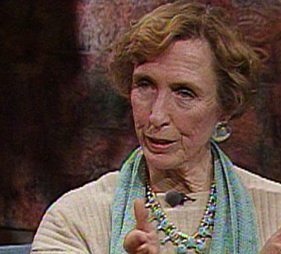
Josh Coleman on the Roadmap to Healing Family Estrangement

Lawrence Rubin: I’m here today with Joshua Coleman, a psychologist in private practice in the San Francisco Bay area, and a senior fellow with the Council on Contemporary Families. He’s the author of numerous articles and book chapters, and has written four books, the most recent of which is The Rules of Estrangement. Welcome, Josh.
Joshua Coleman: Thank you for having me. Pleasure to be here.

The Face of Family Estrangement

LR: I’ll just jump out of the gate by asking you, why do you describe estrangement within families as an epidemic?
JC: Well, there’s a variety of reasons for that. One is, and I don’t know about you in your practice, but in the past few years, my practice, as well as those of my colleagues, has become flooded by clients dealing with this estrangement. Another reason comes from a recent survey by Rin Reszek at Ohio State, who found that 27% of fathers are currently estranged from a child. That’s a new statistic. While we haven’t really been tracking these statistics, non-marital childbirth is also a big cause of estrangement, which is 40% currently compared to 5% in 1960.Divorce is also a very big pathway to estrangement, especially in the wake of more liberalized divorce laws. When you look at the effect of divorce on families once there’s been a divorce, the likelihood of a later estrangement goes way up. This is especially so when you add social media as an amplifier, our cultural emphasis on individualism, influencers talking about the value of going ‘no contact’ after the divorce, and family conflict around politics, especially in the recent election. All these point to a rise in family estrangement, particularly parental.
LR: in the past few years, my practice, as well as those of my colleagues, has become flooded by clients dealing with this estrangementI know the there is a historical rise in divorce. Is there a parallel rise in estrangement with the rising divorce rate?
JC: I don’t think it’s a 1 to 1 relationship, but I think both occur in the culture of individualism, which prioritizes personal happiness, personal growth, protection and mental health. Prior to the 1960s, people would get married to be happy, but more often for financial security, particularly for women as a place to have children. But today, people get married or divorced based on whether that relationship is in line with their ideals for happiness and mental health and the like.The relationships between parents and adult children are constituted in a very similar way, people don’t stay in touch or close to their parents unless it’s in line with their ideals for happiness and mental health. It’s what the British sociologist Anthony Giddens calls pure relationships. Those are relationships that became purely constituted on the basis of whether or not they were inline with that person’s ambitions for happiness and identity. So, it’s a parallel process. I don’t think it’s completely dependent on divorce because there’s many pathways to estrangement.
LR: if the adult child cuts off the parents, they also cut off access to the grandchildren which can cause marital tensions for couples that are still marriedWhy is estrangement so different from other problematic family dynamics?
JC: Because of how disruptive it is to the adult parent and because of the cataclysmic nature of event and its consequences for the rest of the family. Once there’s an estrangement, it isn’t just between that adult child and that parent. It also can cause one set of siblings, or one sibling, to ally with the parent, another with the adult child. Typically, if the adult child cuts off the parents, they also cut off access to the grandchildren which can cause marital tensions for couples that are still married. So, it’s really a cataclysmic event in the whole family system.
LR: In your clinical experience, are there identifiable risk patterns for the eventuality of estrangement?
JC: Divorce is a huge risk, especially when it is accompanied by parental alienation, where one parent poisons a child against the other parent. Untrained or poorly trained therapists sort of assume that every problem in adulthood that can be traced back to a traumatic childhood experience. There seems to be no shortage of those therapists who think everything that is problematic in adulthood is due to some kind of family dysfunction or trauma.Another pathway to estrangement is when the adult child married somebody who’s troubled and says, “choose them or me.” Mental illness in the adult child is also potentially destructive. And last, when parents have been doing something much more psychologically destructive over the years, certain adult children just don’t know any other way to feel separate from the parent beyond cutting them off.
LR: Before we move forward, can you give us a clear definition of estrangement?
JC:  It’s when there is little to no contact. If we’re just thinking of the parent-adult child relationship where there’s little to no contact, and underlying is some kind of, complaint or disruption in the relationship, the adult child is typically the one initiating the estrangement. They determine that it’s better for them not to be in contact with the parent or to grossly limit the contact. Maybe they send a holiday card or something, otherwise they have no contact with their parent.
LR: t’s a complete cut off.
JC: Complete cut off, or a nearly complete cut off. Exactly.
LR: the adult child may not be as motivated to solve the problem as the parent isAnd is the focus of your clinical work mostly on estrangement between adult children and their parents?
JC: Typically, because they’re the ones who are reaching out to me. Occasionally, I’ll have siblings reach out to me, but more typically it’s the parents who are estranged. From their perspective, they’re the ones who are in much more pain. The adult child may have cut off the parent because of their pain, but by the time the parent reaches me, the adult child has concluded that it is in their best interest to estrange their parent. So, the adult child may not be as motivated to solve the problem as the parent is.
LR: Do you have estranged grandparents reaching out to you?
JC: Yeah, and a lot of grandparents say, ‘look, I could probably tolerate estrangement from my child, but not from my grandchildren.’ This feels intolerable, particularly for those who have been actively involved with their grandchildren, as many of these grandparents have been.
LR: This “grandparent alienation syndrome” must be particularly tormenting for them. Have you experienced different cultural manifestations of estrangement?
JC: The data from the largest study, which was by Rin Reczek at Ohio State, found that, for example, Black mothers were the least likely to be estranged. White fathers are the most likely to be estranged. Latino mothers are also less likely to be estranged than White mothers. Fathers in general are very much at risk for estrangement regardless of race.There’s relatively low estrangement in Latin American families as well as Asian American families. And similarly, within Asia, we assume that there’s not a lot of estrangement because the culture of filial obligation is still quite active. So, estrangement tends to predominate in those countries and cultures, like ours, that have high rates of individualism and preoccupation with one’s own happiness and mental health.

Detachment Brokers

LR: That’s interesting. So, there’s a parallel between estrangement and the value particular cultures place on either individualism or commutarianism.
JC: Exactly. Some are much more communitarian, emphasizing the well-being of the family and the group, while others are much more individualistic, like we are here. The sociologist Amy Charlotte calls American individualism ‘adversarial individualism,’ which is the idea that you become an individual through an adversarial relationship with your parent, or you rebel against that. But not all cultures have that kind of adversarial positioning as the way that you become an adult.
LR: You had mentioned earlier that some therapists can actually make things worse.
JC: I think that all therapists want to do good, but some simply don’t think through all of the factors. We have to not only think about the person in the room, but also the related people, because estrangement is a cataclysmic event that affects many beyond the person sitting in front of you. Grandchildren are involved and get cut out from their grandparents’ lives. Siblings typically get divided into those who support the estrangements and those who don’t. It’s also very hard on marriages. It’s easy to get sidetracked into focusing on the mental health of the adult child who is cutting off their parent(s) in the name of self-care and self-protection. We have a rich language in our culture around individualism, but a poverty of language that’s oriented around interconnectedness, interdependence, and care.It’s easy to pathologize someone’s feelings of guilt or responsibility for a parent that may just be a part of their own humanity. By giving them the language and moral permission to cut off a parent without doing due diligence on whether or not that parent really is as hopeless as their client is making them to be, contributes to this kind of atomization.Therapists can contribute to the tearing apart of the fabric of the American family, acting as accelerants to that process. We become what the sociologist Allison Pugh calls detachment brokers in her book, Tumbleweed Society. When we support clients’ absolute need or desire to estrange their parents due to their need for happiness and personal growth, we help them detach from the feelings of obligation, duty, responsibility that prior generations just assumed one should have.

LR: Do you ever encourage or facilitate estrangement as a solution?
JC: The same way that I would never lead the charge into divorce with a couple with minor children because of the long-term consequences, I wouldn’t charge ahead with estrangement either. But I do try to help the person to do their due diligence on the parent. Let’s say the parent who is completely unrepentant and constantly shames the adult child about their sexuality, their identity, who they’ve married, or what their career is every time that adult child is around the parent. It’s sort of hard for me to ethically say, “give them a chance!”But I do think it’s our responsibility to ask them: what other relationships will be impacted if you decide to go no contact, is there some way to sort of have some kind of a relationship where you are protected from their influence, or why don’t we think about why is it so hard on you? A newly reconciled adult child recently suggested to me that, ‘if the adult child is insisting that your parents are the ones that need to change to have a relationship, maybe you’re the one that needs to change.’ I liked that because I don’t think everybody has to stay involved with their parents.I do think parents have a moral obligation to address their children’s complaints and empathize with them and take responsibility. Just like the adult children have a moral obligation to give their parents a chance. I work with parents every day who are suicidal or sobbing in my office, and that really gives you a different view of this.
LR: I imagine the most deeply wounded adult children are the most difficult ones to work with around reconciliation. Can countertransference enter the clinical frame at that juncture?
JC: There have been a few occasions where the adult child was so self-righteous and contemptuous of the parent, despite the parent’s willingness to make amends for their so-called crimes––which were more on the misdemeanor side than the felony side––they remained unforgiving. Even when the parent showed empathy and took responsibility in the ways that I insist that parents do, the adult child remained in this very censorious, self-righteous, lecturing place.There haven’t been very many times when I felt provoked on the parent’s behalf, but there have been a couple times where the adult child was earnest, open and vulnerable, and the parent was not willing to do some basic things at the request of the adult child, like accepting basic limits. The parent was insistent. I just felt like you can’t have it both ways. I remember thinking, ‘You can want to have your child to be in contact with you, but you’re going to have to accept the limits that your child is setting, otherwise, I can’t really encourage your child to stay in contact with you in the way that you want me to.’ The transference is worked on both sides of the equation.

A Roadmap for Change

LR: Is there a roadmap for healing estrangement as you suggest in your book?
JC: Typically, if the parent has reached out to me for the reasons I was just saying, the roadmap begins with taking responsibility and the willingness to make amends. I ask that they try to find the kernel, if not the bushel of truth in their child’s complaints. They can’t use guilt or influence or pressure in the way that maybe their own parents might have used with them, and they can’t explain away their behavior. They have to show some dedication to reconciling. It must come with some sincerity. The challenging part for parents is often that they can’t really identify with what they’re being accused of, particularly since emotional abuse is the most common reason for these estrangements.A lot of parents say, ‘wow, emotional abuse, I would have killed for your childhood.’ The threshold for what gets labeled as emotional abuse is much lower for the adult child than it is for the parents. So, a lot of the roadmap for the parent is just accepting that difference and learning how to understand why the adult child is labeling it as such and not really debating it with them or complaining about it. Instead, that roadmap includes a way to empathize with that and understand that those are the most key aspects.
LR: What about when the road to reconciliation has been damaged by physical/sexual abuse?
JC: You have to go there if you have any chance of healing the relationship. If a parent is lucky enough to get an adult child in the room after that child being a victim of more serious traumas on the parents part, the parent has to be willing to sit there and face all the ways that they have failed their child and how much they hurt and wounded them.And it’s not an easy thing to do, typically, because hurt people hurt people. There is high likelihood that the parent who did the traumatizing was traumatized themselves, but if anything is going to happen, it’s going to be because the parent can take responsibility and do a deeper dive and not sweep it under the rug. And that’s very hard work, especially for the adult child who must expose themselves.
LR: Would you work with the adult child separately from the parent and then together by collaborating with all the players in the same room?
JC: Typically, I will meet with each side separately because I want to see what the obstacles are, what each person’s narrative is, assuming that I think everybody’s ready to go forward, I’ll bring everyone together. I usually don’t keep them separate for more than one session, but not everybody is ready to go forward at the same time. If I think that people are sort of ready to engage, then I’ll do a session separately and then everybody together. I tell parents that this is not marriage therapy. The therapy is around helping the adult child feel like their parent is willing to respect their boundaries and accept versions of their narrative sufficiently that they feel more cared about and understood. It’s not going to be as much about the parent getting to explain their reasons or decisions, at least not early into the therapy. If therapy goes on long enough, and people are healthy enough to have that conversation, then it can happen. But it doesn’t always.
LR: What do you consider to be a successful outcome, and at what point do you say that’s enough for now?
JC: I think when they’ve all had enough time outside of therapy, and they were able, to debrief if there was conflict, and if I feel confident that they have the tools to walk them themselves through the conflict and resolve it. I try to help each person set realistic goals and let them know that they are going to make mistakes going forward. The goal isn’t to be perfect, but instead to communicate around feelings and taking each other’s perspectives so all members feel safe and skilled enough to overcome whatever conflict arises. I don’t want anyone feeling discouraged and helpless.
LR: What protective factors do you look for when working with estrangement? The glimmers of hope that you search for with your therapeutic flashlight?
JC: The biggest one is a capacity for self-reflection on the part of both the parents and the adult children. In the parent, I look for a willingness to take responsibility, the capacity for non-defensiveness, vulnerability, and tolerance for hearing their child(ren)’s complaints without being completely undone. For the adult child, I look for acknowledgment that what they’ve done is difficult for the parent, and that their own issues might have contributed to their decision to estrange them.I look for an adult child to say things like, ‘I acknowledge that I was a really tough kid to raise,’ ‘I’ve been a tough as an adult,’ ‘I can give as well as I get,’ or ‘I know that I have an anger issue.’ Those help me, as the therapist, to feel like, ‘okay, you’re not just here to blame and shame the others.’ It’s about a willingness and ability to come to a shared reality, which is important for these dynamics.
LR: At what point might you suggest stopping with a client?
JC: I’ll keep working with people as long as they want to get somewhere. I don’t usually fire clients. But, for example, if I have an adult child who is just insisting that their parent has to change, and it’s clear to me that the parent has changed as much as they’re going to, my goal would be helping them shift towards radical acceptance, rather than to keep beating their head against the wall. And similarly with a parent, if their adult child is just not willing to reconcile, then it isn’t useful for the parent just to keep trying and banging their head against the reconciliation wall either.
LR: Recognizing not only your own limitations, but those that the family system brings to you.
JC: Exactly! I think an important part of our work is to help people to radically accept what they can’t change and influence. As painful as that is to reckon with.
LR: What does radical acceptance mean in this context?
JC: The term came from Marsha Linehan who developed Dialectical Behavior Therapy. It’s not sort of a soft acceptance, but instead a deep dive that you have to do. She has a great quote that says, ‘the pathway out of hell is your misery.’ It’s a great quote because you must first acknowledge that you’re miserable and accept it and maybe not even hope for change. But it does mean you have to acknowledge that you’re currently in hell. And unless you can really accept that reality, nothing good is going to come of it. The other saying that I like that comes from mindfulness or Buddhism is that pain plus struggle equals suffering. That the more you fight against the pain, the more you’re going to suffer. So, I think those are useful concepts.
LR: In this context, at what point does grief and loss work enter the clinical frame?
JC: Grief work is really part of it. Even if I can’t facilitate a reconciliation, it is important helping parents to feel like, ‘yeah, I think you’ve turned over every stone here.’ At that point, it is important to help them accept it and focus more on their own happiness and well-being, and on other relationships. This would include working on self-compassion while mourning the loss of the relationship that may never be.
LR: In closing, Josh, can someone who’s trained in individual therapy do this kind of work?
JC: If you are an individual therapist, you can’t just sort of suddenly start doing couples therapy. You have to have some facility at keeping two subjectivities in your mind at the same time. You know, being able to, to speak to both people in a way that shows that you’re neutral, even when you’re temporarily siding with one person over the other. I think it’s important to have a sociological framework for this part. You also need to set your own limits and boundaries. Doing family work is a very different sort of orientation and requires a unique skill set.
LR: On that note, I’ll say thanks. Josh, I appreciate the time.
JC: It was my pleasure, Lawrence.
*******
Joshua Coleman, PhD, is a psychologist in private practice in the San Francisco Bay Area and a Senior Fellow with the Council on Contemporary Families, a non-partisan organization of leading sociologists, historians, psychologists and demographers dedicated to providing the press and public with the latest research and best practice findings about American families. He is the author of numerous articles and chapters and has written four books: The Rules of Estrangement (Random House); The Marriage Makeover: Finding Happiness in Imperfect Harmony (St. Martin’s Press); The Lazy Husband: How to Get Men to Do More Parenting and Housework (St. Martin’s Press); When Parents Hurt: Compassionate Strategies When You and Your Grown Child Don’t Get Along (HarperCollins). His website is www.drjoshuacoleman.com/.


Brief Therapy with Single Mothers: The Transformational Alchemy of Metaphor

Psychic Schemas and the Phenomenology of Being a Single Mother

There are over 9 million single mothers in the USA. Therapists working with these women hear stories of abandonment, disempowerment, loneliness, hopelessness, victimization, rage, and unrelenting stress.

Disturbing perceptions and emotions such as these, and the distorted interpretations that result, may, but more likely and typically, solidify into psychic schemas characterized by deeply embedded patterns of distorted thinking, dysfunctional reacting, and compromised coping.

Psychic schemas, themselves free of valence, can be understood as internal vehicles serving as repositories for what the individual notices, perceives, and catalogues — including feelings, thoughts, sensations, actions, experiences, and the ever-changing states of the Self. The way these phenomena of living are perceived — through thought, memory, imagination — and the linguistics of the internal narrative, provides the personal schema with its phenomenology, its valence, and its meanings.

As with any individual, what gets introduced and accepted into a single mother’s schema will affect how she thinks, what she feels, how she continues to live her life, and how she views herself. Her existing schema will influence content that continues to be incorporated. The phenomena that become absorbed will affirm or refute negative cognitions, support or refute distorted thinking, validate or dissipate painful emotions, increase or decrease stress, and affect choices of action, including decisions about the mother’s parenting — and about her sense of self.

Through listening to the single mother’s stories, and recognizing her interpretations about them, the therapist can become aware of and assess the possibilities for creatively crafting metaphors that can elicit cognitive shifts, emotional transformations, and behavioral change.

The Transformational Alchemy of Metaphor

The unconscious mind embodies a powerful potential to transform negatively charged schemas into more positive ones that embody uplifting themes and hopeful interpretations. The quiet mind, combined with the evocative and rhythmic language of hypnosis, can fuel a subconscious shift that can reduce stress, increase ego strength (including parenting skill), transform confusion into clarity, decrease stress, and increase a sense of strength and wellbeing.

Used in conjunction with trance, the mother’s personal metaphors become powerful tools that can reach beyond the didactic to tap the unconscious mind’s potential for reframing and restructuring the phenomenology of the single mother’s psychic schema. This potential to redirect focus, shift internal states and create change in the bio-psychosocial-emotional substance of the patient’s psychic schema constitutes the transformational power of metaphor.

Metaphors (and their cousins, simile, allegory and parable) contain rich sensual imagery that can gently and poetically focus attention to perceptions that can shift self-states and move patients toward changes they desire. When used with techniques of trance, such as tempo and attunement, metaphors drawn from patients’ stories constitute a power-filled therapeutic tool for anchoring change and growth in the body-mind with stability and durability that can successfully lead to increased resilience and coping strength.

Using brief, simple, and effective techniques, therapists can assist the single mother in imaging and identifying with new metaphors drawn from her own personal story. In trance, this “sympathetic identification” with new and transformed metaphors can lead to increased confidence, more solid self-esteem, greater ego strength, and a more integrated core of Self. When this positive enhancement becomes incorporated into the psychic schema, the psychosocial-emotional benefit to the mother can also benefit the health of her children.

In the following narrative, my work with “Queen Esta” demonstrates the way in which a carefully crafted metaphor has the power to shift the meaning of a personal and create a stronger sense of Self.

Queen Esta’s Story

“I just left my husband of 30 years!”

That was how Esta introduced herself, at the age of 83, knowing that she could have a future. Esta wanted to understand why she had spent thirty years with a second husband she did not love. To Esta’s credit, she had the wisdom to realize that at this critical turning point, it was important for her to understand the greater span of her life in order to accept her choice to leave her marriage.

As Esta’s story unfolded, it became clear to both of us that Esta’s acceptance of her current choices had everything to do with looking at a different piece of her story. Long before there were social supports and the stigma had faded, Esta had been a single mother. Esta soon came to realize that understanding the impact and meaning of her single motherhood would hold a key to the answers and comfort that she was seeking.

I discovered that Esta had married her first husband in the early 1940’s, shortly before he went into the service and, “when I was too young to know what love was.” The new husband had come home on leave and had left Esta again, pregnant. Esta’s husband was not pleased with the news. When he told her that he wanted her to have an abortion, she agreed it was a very good idea. “I did have one,” she enjoys saying triumphantly — “and it was him!”

After dismissing and divorcing her husband, Esta found herself a single mother of a very young son. In the mid 1940’s, widows, especially war widows, had some acceptance, but single motherhood was not as socially integrated as it is today. How had Esta coped? What had been her resources? Even so many years later, Esta did not fully comprehend how strong she must have been to grapple with the social context of the day and the great difficulties and isolation that single mothers faced.

As single mothers in every era must, Esta had to deal with her own fears and insecurities and raise her child at the same time. Esta had done both successfully, but she did not see the strengths she had drawn on or realize that they could add to her resilience in the present.

During her son’s early childhood, Esta had called upon her inner and outer resources. She had relied on her parents to take care of her little boy while she worked long hours, often traveling alone overnight. She remained mindful and grateful for the help she was getting from her family, feeling fortunate that she had this support. In this way, Esta did not see herself as a victim, but rather cultivated an attitude of acceptance that gave her strength to keep going.

“Esta,” I asked her, “Wasn’t it terribly hard to be a single mother in those days?”

“Yes, it was.” She assured me. “I did what I had to do, but there were others harder up than I was, with no families to help.

“What is the secret of this positive attitude you had?” (She still has it into her 90s!)

“I believe in God.” she said unhesitatingly. “This was the path he chose for me, and I had to accept that. I felt grateful to have my son. He was so precious, and my mother and father loved him as if he was their own. I accepted my decision to divorce and trusted that this was what God wanted for me. So, you see, I was lucky.”

As Esta continued to examine her life story, she came to realize that more than luck had been at work. She was able to see her courage and the intuitive wisdom that gave her the courage to banish husband number one. Finally, she could entertain the idea that there was also deep wisdom in her choice of husband number two. At a point where she no longer had family support, was weary from her grueling job, and had no financial base, Esta had married a man who could, and would, support her and her son.

Esta was now able to make sense of her past and present choices, comforted by knowing that they had been logical, born from a positive impetus. With this knowledge, she was able to accept the sadness of never having had the romantic union, but Esta was relieved of the stress caused by disappointment and regrets, and feelings of well-being replaced disappointment and regret.

Once again, Esta had “done what I had to do.” Realizing how strong she had been in the past helped Esta to see that her decision to leave her current husband was coming from an authentic core part of her Self which knew what was right for her now as it had in the past. As she achieved this wisdom, Esta’s feelings of sadness and self-doubt were replaced by a sense of well-being and an appreciation for her experience and her maturity.

In the throes of her single motherhood, Esta was too immersed in survival to see what she was accomplishing, and the era of self-help and therapeutic support had not yet dawned. Now, so many years later, ready to look back and see her success as a single mother, Esta embarked upon a review that allowed her to know how inner wisdom had directed her to cope and survive. Esta told me about the love of her life, a young man who had died before they were able to be married, almost 50 years ago.

Esta recounted the depth of that old grief, and how difficult life became then, and again when her parents, on whom she had so depended, died. Through all these losses, Esta had kept her sense of humor, her belief in God, and the persistent effort to give her son a good life. She maintained her dedication to him even to the day when this son, now a man, asked for her blessing to follow his destiny 3000 miles away. “My heart broke.” She told me. “But what could I say? This is what he wanted, and I wanted him to be happy.”

As she reviewed the events that required such pervasive and abiding courage, Esta was able to acknowledge that, indeed, life had been hard for her. She affirmed that trust in the will of her Higher Power had enabled her to embody the healthy attitude that had been with her into her 90s. When Esta started therapy, she was no longer the young mother with a little boy to bring up.

However, it meant the world to Esta to transform her doubts of having wasted her life into a view of herself that affirmed her strength, and the deep abiding soul Wisdom that guided her so many years ago, when she just “Did what I had to do.”

When asked how I should identify her in my book, Esta requested that she be called “Queen Esther.” Partly, she says, because Queen Esther in the Bible was a wise woman and a survivor; and partly because now Esta saw herself as “Esther,” a modern Queen, courageously having raised a boy into a good man.

Esther told me that she knows that the difficulties she faced as a single mother helped to make her into the Queen she is. She knows that she made choices from an inner truth that directed her to do the right thing.

Queen Esther was then, and will always be, truly a Soul Mother.

This story is excerpted and adapted from Soul Mothers’ Wisdom: Seven Insights for the Single Mother, by and with the permission of its author, Bette Jonas Freedson, and that of its publisher, Pearlsong Press.  

Spitting Truth from My Soul: A Case Story of Rapping, Probation, and the Narrative Practices- Part I

The Rap That Binds

“This kid really doesn’t get it,” a clearly frustrated voice blared so loudly that I moved the phone’s speaker a couple of inches from my ear to avoid any future hearing loss.

“He just won’t take any responsibility for his actions, and he doesn't give a shit…and he has 16 more months until he’s off probation! I just don’t think he’s going to make it. I don’t even think you want this one!” I recognized this voice as that of a probation supervisor I had worked with a number of times over the years, but never had I heard frustration get the better of him in such an obvious way. “I’d be happy to see him,” I said. “Send him my way.”

When I put the phone down, I wondered if my enthusiasm might have been misplaced and I would have been wiser to tell him I was overloaded and couldn't take on any more work at this moment. No more than 24 hours later I received a phone call from Ray, a 24-year-old young man who told me his probation officer had passed on my phone number to him. I was intrigued by how polite and soft-spoken he sounded over the phone, and we set up an appointment for later in the week.

My work with people involved with the justice system, whether on probation or otherwise, began nearly 13 years ago when I was just a 22-year-old graduate student in Los Angeles, California. After years of agency work, I now operate a small private practice where probation officers, schools, and word of mouth drive young people like Ray to my door.

In community agencies I had worked in the past, I met with people twice a week as mandated by their sentences. More recently, I have started getting short-term referrals, which often allow for between 4-8 meetings with people. In the case of Ray, we ended up seeing each other 9 times. Probation assumed responsibility for payment for 5 meetings only.

After that, our time was up. However, Ray indicated that he wanted to continue to attend on his own volition. This is something that happens with a surprising number of cases. I have learned that if we call the probation officer on the case, the Department of Justice will usually pick up at least half of the cost for the remaining number of sessions, something they were willing to do for Ray.

Three days after first talking to Ray on the phone, he walked into the office wearing blue jeans, a red hoodie, and had headphones dangling around his neck. As he sat down across from me, I had an intuition that he was not a stranger to this process often called “therapy,” a fact he would confirm as we began talking.

It was as if he was bracing himself for what was to come. He sat back in his chair, both of his hands tightly grabbing on to an arm almost as if he was at the mercy of a neophyte airline pilot preparing to practice landing a massive 747 for the first time. Perhaps he was expecting a barrage of advice disguised as “psychoeducation?” Or was he steeling himself for inquiries about what might be neurochemically “wrong” with him? Everything about how he was composing himself suggested to me that this young man had heard it all before.

My first query was clearly not one he was expecting. “Do you mind if I ask what you are listening to?” gesturing to his headphones. Ray raised his head up to look me in the eyes for the first time since walking into the room, his gaze a blend of skepticism and curiosity. “Styles P and Pharoahe Monch,” he replied.

“How old are you again?” I said as a smile crept on to my face.

“Why?” he inquired.

“It’s just that most 24-year-olds I have spoken with aren’t keen to the ways of Styles P and Pharoahe Monch,” I said still smiling knowing the album he was referencing was over a decade old and was not one many young men of his age were typically in step with.

“A lot of this new shit ain’t real. I can feel what Styles and Pharoahe are saying,” Ray declared.

And with this, we were off. I had been granted the great privilege of riding shotgun in Ray’s lyrical journey. For the next forty-five minutes we listened to music on his phone and critically examined the verses he found most meaningful. What follows is an example of one such verse:

I Supreme Lord and Master (ISLAM)
But at times,
The words ring empty
When I see another homie blood splattered
Dreams get shattered
Family fractured
Ugly reputations is what give television ratings
Problem story plastered
Learn the science of our plight
These depictions keep penitentiaries packed tight
But only God can judge me
Once I fade away from life.

Yet another example:

How many Super Bowls passed
My mind’s eye showing possibility so I grasp
Of a hood block,
With no patrolling cops
No empty baggies once holding rocks
Shells from a glock
But the wisdom I've acquired allows us to question what was taught
Pause in the moment
The impulse can be stopped.

During the conversation that followed I learned that not only did Ray have an affinity for rap music, but he also wrote some rhymes of his own.

A Voice to the Voiceless

Travis: Listening to you today, Ray, I have a hunch that you and rap music have been homeboys for a long time and you both share a long and storied history together. Am I right or wrong?

Ray: Yeah, I mean, I can’t remember my life without rap. It’s like it was with me from the moment I came out of the womb. You know, I’m sure that’s not true, but that’s what it feels like.

T: Wow! Are you telling me that no one has been a friend to you longer than rap has? (He nods his assent) This seems like a really important relationship. Would it be okay with you if I tried to understand the relationship you and rap share a bit better?

R: Sure, go for it.

T: I’m curious to know if anyone has ever asked you about your relationship with rap before?

R: (pauses 10 seconds or so) I mean, not really. My homies and I cypher back-and-forth about it, but… you know… I haven’t really broken down my relationship with it if that makes any sense.

T: It does make sense. Thank you. Other than your homies, does anyone else ask you about your relationship with rap?

R: No, except for like teachers and probation and other adults throughout my whole life trying to tell me it’s violent and the music of the devil (takes his index fingers and makes horns over his head) and shit like that (laughs).

T: So, if I’m hearing you correctly, Ray, those adults don’t really ask you about your relationship with rap, but rather tell you the sort of relationship you should have with it?

R: Exactly! It’s like they don’t know shit about it but want to tell you it’s the root of all evil.

T: This is really remarkable to me, Ray! Would it be okay if I asked you a few more questions about it?

R: Oh yeah, no problem.

T: If it gets boring to you or you would rather go in another direction just tell me, okay?

R: Word (a hip-hop phrase that in this context verbalizes agreement).

T: What do you think the adults you just mentioned, like former teachers or people involved with probation, could stand to learn from your relationship with rap?

R: They would never learn anything because they won’t listen. Their minds are already done made up.

T: Do you mind if I ask what kind of headphones those are, Ray? (pointing to his neck).

R: These? Oh, man, these are Beats (a popular brand of headphones).

T: Now I heard you say that those folks wouldn’t listen, and I want you to know that I absolutely believe you. Even still, I want to invite you to imagine for a second that we could take a pair of Beats, maybe even magic Beats, and slip them on to the people that can’t or won’t hear while they were sleeping, and the message would sneak through their ears and permeate their minds whether they wanted it to or not. Imagine now that they have woken up. What education would rap have given them?

R: Man, I wish you could pick me up some of those headphones (said laughing)!

T: That would be pretty cool, right? Maybe that’s a project we can work on later (both of us laughing).

R: For real! What I think they would learn is that there are a lot of people in the world who don’t have a voice. If you are someone in the world who does have a voice, you know, that’s great. Good for you. And by voice I mean, you know, we all have like a voice box that works. What I mean when I say voice is a voice that others can hear or will really listen to. My whole life I’ve never really had that voice because I’m poor and black… except when I rap. This is true, you know, for like pretty much my whole crew in my neighborhood, too. Rap is our voice.

T: Are you of the opinion that the people who won’t listen that you referenced earlier would learn from the “magic Beats” that rap could serve as a voice for the voiceless?

R: Exactly. I mean, if everyone listens to everything you say anyway, then fine, you don’t need something like rap. (Begins rapping):

The more I wild out
Allows me to achieve that street clout
While lives are turned into tools
Did dominant narratives actually raise a bunch of fools?
Our escape from a jumpshot or a hip-hop plate?
While theirs is school?
But either one of us can lose
Trying to chase what Lupe articulated as The Cool,
White men in suits don’t have to jump
Still a thousand and one ways to lose with his shoes

R: You know, that line, “White men in suits don’t have to jump,” that’s what I’m talking about.

T: Right, there’s that old saying, “White men can’t jump,” when it comes to basketball. Did those lyrics do something clever with it?

R: For sure. White men don’t have to jump to make money and white men don’t have to rap to be heard. Don’t get me wrong, I write rhymes because I love to. Sometimes when I write it’s just about partying or females or something light. But I also write because it allows me to have a voice. You know, it’s like rap says to the world I’m going to say shit how it is whether you like it or not.

Of Protest and Freedom

It was becoming increasingly clear that Ray’s relationship with rap, and the hip-hop culture in which it resided, was one of protest, freedom, and inspiration. As our conversation continued to traverse the electrifying and winding roads of rap music, we alternated between listening to songs on Ray’s phone and discussing, almost philosophizing, at the conclusion of each. That served as inspiration for the following exchange:

T: Do you think rappers are philosophers?

R: No doubt. Rap is philosophy but without all the old white cats (said laughing).

T: Socrates is not the father or first philosopher of rap?

R: No! (Laughs harder)

T: Who do you think is?

R: Probably KRS-ONE.

T: What in your opinion is the job of a philosopher?

R: To make people think, like hold a mirror up to the world so they can see how foolish they are. (Begins rapping):

Peep the crucifix
Comes across mysterious
With I(j)ehova hanging from the partisan nails of politics
The origins
Governing men of Romans
Did agree to its means justifying capital punishment
For the minds
They despised
To keep all the sheep in line
While revolution sparked divine
Christ
But check the rhyme
What if they lynched him hanging from the branch of a tree
Then burned him half alive
Peep manipulation B
We would pray to a tree
Then human torching eventually
Fire associated with hell
Overstand irony
When a bullet burns its way into your brother's physical
Laid to rest in a wooden casket
Damned its cyclical.

T: What do you hear in these rhymes?

R: It’s like it exposes hypocrisy, you know what I mean? People believe things about God or religion or whatever without even opening up a book or thinking. They just accept a history they like or feel comfortable about or that some cat on TV tells them is right.

T: Are you of the opinion that there are multiple histories?

R: Oh yeah, no doubt. The history that you get in history books is the only one most people read, though.

T: Where do these histories come from?

R: Usually from your teacher and books in school.

T: Where does the information in those books come from?

R: I mean, that mostly comes from white people and their ancestors. You know, I took a philosophy class in college like 4 years ago and I don’t think we talked about one brother the whole time. That’s part of the reason I never fit in there.

T: And the fact that the only history that was discussed was from a white perspective, what does that mean for the other histories?

R: You see them in like Roots (a television mini-series from the 1970’s depicting the life of a black slave in the United States) and shit (laughing). We had to watch that in high school. That shit is so weak.

T: What would be a stronger portrayal?

R: You just heard one (in the previous rap). But it’s like I told you earlier, people don’t want to listen to those.

T: Do you believe you are a philosopher?

R: I never really thought about it like that. I know I’m a writer. But I guess that means I am a philosopher.

T: Do you mind if I tap into your own philosophical expertise?

R: Sure. I know what you’re go to say next (said with a wry smile). You are going to ask me about my philosophy on shit.

T: You know me too well already, Ray!

R: My philosophy is simple. It’s to see the truth even when they try and obscure it. It’s to go deeper. If you don’t, you’ll believe a lie.

T: How do you see deeper?

R: You have to do what my grandmother says: ignore the noise. You can’t believe everything you hear. You can’t even believe everything you think you see.

T: Is your grandmother a wise philosopher, too?

R: She’s the wisest person I know.

T: What has her philosophy taught you about the person you want to be?

R: She always says I didn’t raise no fool.

T: Would you say that your grandmother’s philosophy and the philosophy of KRS-ONE are similar?

R: Hmm… (pauses for 10-15 seconds) that’s crazy, bro. I never thought of it like that, but I guess so.

T: In what ways would you say they are similar?

R: Both of them are encouraging me to think in my own way. To be my own person. Basically, just be wise to the ways of the world.

T: Do you think that it would be helpful in our work to call on the ideas of great philosophers like your grandmother and also KRS-ONE as we try to navigate the situation that brought you to see me?

R: Yeah, it’s just crazy though because my grandmother hates rap. Like she thinks it “corrupts the youth” (fingers on both hands raised to make air quotes).

T: If only we had those “Magic Beats.” Do you think she would be more open to it then?

R: (Smiles and then laughs) Yeah, and maybe she would see that I’m rapping about like the same shit she’s saying but in my own way.

T: Have you ever thought that maybe the spirit of your ancestors and their struggles can be channeled through your raps? Maybe rap is like your history book?

R: I mean… that’s deep! I ain’t never thought of it quite like that, but yeah, my raps are about me, where I came from, and where my people came from.

T: Would it be okay if we cracked open your rap’s history book in our work together?

R: Yeah.

T: Do you think it might provide us with some stories that the regular history books miss?

R: Oh, no question! Stories that regular history books wouldn’t even touch!

So engrossed did we both become in the progression of this conversation that time itself seemed to melt away. Ray continued writing his own history through various rhymes and interpretations of them.

Removing the Shackles

At one point Ray could not conceal his enthusiasm for a verse he located on his phone. He said he had been listening to it for a few weeks with a great deal of frequency. It moved him so much that he immediately stopped the music after it had played and rapped the verse himself again.

With these I see
Crimson stains on this project concrete
Yellow tape barricade
Homie wrapped in white sheets
It's a struggle just to eat
So how the fuck do they rationalize judging me or my deeds
Grab a pen
Clear the phlegm
Then commence to bless the beat
Give ya'll a tour of my life
Without walking on my streets
It's my life!
Being scribbled on they college ruled pages
Escape when we cipher up
That type of freedom is amazing
My life!

I watched him intently and took a few deep breaths before breaking the silence we had both fallen into by my first query.

T: Ray, I noticed that you listened to this verse and then stopped the music and rapped it. Were you, by any chance, deepening your relationship with the lyrics by rapping it yourself?

R: I do this all the time. What I like to do is take a verse that someone else wrote and then just add my own flavor, kind of like sampling (a hip-hop term for taking an older song and mixing it with a new one) or remixing.

T: Do you mean that you take the original rhyme and add your own story?

R: Exactly.

Ray was so engaged that by the end of our conversation it was as if he were a different person than the one who walked through the door an hour before. Certainly he was a poor match for the description of the detached and uncaring young man who lacked any semblance of motivation that the probation officer had provided for me earlier in the week.

The fact there wasn’t much sand left in the hourglass of our first meeting had sneaked up on both of us. My mind was left spinning with possibilities for where our future conversations could go. With just five minutes remaining, I invited Ray to reflect with me on what had transpired which broke us both out of our enthrallment.

Travis: Would it be all right if I asked you a little bit about how our meeting today is going?

Ray: That’s cool.

T: Thank you, as I know I have asked you a lot of questions today. I appreciate you hanging in there with me. I’ve noticed that it’s very different when we are just speaking as opposed to when we invite rap to the party. Have you noticed this?

R: Yeah, for sure.

T: How do you understand this?

R: It’s like when I rhyme… I spit truth from my soul.

T: How is rapping with your soul different than talking with your mouth?

R: When I talk, I think. I thought that’s what we’re supposed to do in therapy, anyway. That’s what all those other fucking shrinks did.

T: Would it be all right if we made up our own therapy and put aside other kinds of therapy you have been through or heard about?

R: Yeah (said with a chuckle and skeptical eyes).

T: What can your soul rhyme that your mouth sometimes might have trouble saying?

R: Freedom. It’s like when I’m rapping I can feel the words come through my body. It’s natural, like I don’t have to think about it.

T: By that do you mean to say that rhymes remove the shackles that are attached to your soul?

R: Right (said turning his head to one side as if in deliberation and then nodding).

T: I saw your face light up. I wonder if inspiration is brewing in your soul this very moment? I know I am guessing so I could very well be wrong.

R: No, it’s just that I thought of a verse. (Begins rapping):

It's like we being played
When they say
Strive for a slice
Of they cake
They filthy hands holding hate
Choke out fate
But the rhyme melts the shackles
Oppression disintegrates
Even just for one moment
When we flowing on stage
It goes on and on and on…

T: Have you had shackles on your soul that rap music helps you break free from?

R: Yeah, sometimes it feels like rap is my only way to break free.

T: I notice when you rap that your whole body changes. For example, when we were just talking earlier you were kind of slumped down in your chair. But when you rap, your back straightens up, your face lights up, and your hands are active. It’s almost like I can see you breaking free right in front of me. What do you think would happen if rap made more frequent visits to your life?

R: I would feel more alive and like I have a voice, you know what I mean? Like being on probation it feels like I have no voice. I just get told what to do and it’s like they tell everyone the same thing and don’t really care what really makes someone tick. It’s like we are cattle just being pushed through the gates.

T: Do you think Rap music could be a great way for us to understand what makes you tick?

R: The best way!

T: I get the sense you have many important stories to rap about. Would you be willing to write a song between now and next time that paints the part of the picture that probation and maybe other people in your life don’t get about you?

R: (Nods affirmatively)

T: Do you know what I mean?

R: Oh yeah, for sure. I already feel a couple of ideas (pointing to his head). Like people automatically assume I’m stupid and like I’m some kind of bad person or criminal or something. They don’t even know me.

T: Might writing a rhyme about the parts they don’t know release the shackles from your soul?

R: Yeah, but not all the way.

T: It might take more than one rhyme to release them all the way?

R: Yeah.

T: Do you have many stories to tell?

R: Oh yeah!

T: I want you to know that I will support you in writing as many rhymes as it takes.

R: You’re the weirdest shrink they have ever sent me to. Not weird like bad, not bad at all, but does probation know you do this?

T: Do what? Ask people to rap?

R: Yeah!

T: They know I help people find the kinds of therapies that best work for them. Do you think this one we’ve come up with today might work for you?

R: Oh yeah, but I don’t even know if this is really therapy.

T: What would you call it?

R: It’s like a studio session where I’m making beats with my homies or something.

T: Should we have a studio session once a week together?

R: (Smiles and laughs) For sure.

Spitting From My Soul

Ray returned for our second conversation with his black New York Yankees hat turned to the side looking somewhat, but perhaps not yet completely relaxed as he sat down. He reached into his pocket and pulled out a folded piece of paper as his right leg bounced up and down. He quickly unfolded it and scanned over its content. “Here are a few lyrics,” he said quietly but with conviction as he handed the document to me. I was feeling a bit caught off guard that Ray had picked up so quickly where we left off in our last conversation.

T: Ray, I have to be honest, I feel so privileged to hold this is my hand right now. I wonder if I am holding a gift from your soul?

R: You could say that (kindly smiling at me).

T: I just had an idea and I’m curious if it would be okay if I shared it with you? (Ray nodded in the affirmative). Last week you told me that rhymes come from your soul when they are rapped. I could be wrong here, but I’m just wondering if I read the rhyme on the paper if it might lose some of its soulfulness? And the last thing I want to do is strip the rhyme of its soulfulness.

R: I’ve got a baseline for this (pointing to his phone). It’s dope (a hip-hop term that means good or of high quality) You want to hear it?

T: I would be honored, Ray.

As the music percolated through the small speakers on his phone I noticed I couldn’t help but bob my head. I looked up and Ray was doing the same. Our eyes caught and Ray smiled slightly with the left side of his mouth. In this moment I pondered whether or not I should invite him to rap, but I hesitated not wanting to make him feel uncomfortable in our second conversation. A few seconds later, Ray reached his hand out indicating he wanted the document with the lyrics on it back from me. I obliged. Ray bobbed his head a few more times and said, “This still needs a little more time in the lab, but…”

What happened next as Ray began to “spit truth” was almost like a detonation. The words rhythmically rolled off his tongue with an intensity that made me suspect something important was transpiring. I didn’t just listen to what he said, I felt it. Ray’s passion was palpable, and I could feel its infusion through my body. We now bobbed our heads in unison and for a brief time it was as if the world had shrunk and we were the only two people that now could fit in it. It was the kind of attunement and connection with another person that was equal parts mysterious and exhilarating.

Grandma said I should reconsider law school
That means I wear a suit and bend the truth and feel awful
Hell no, got a degree but what that cost you
You make a good salary just to pay Sallie Mae
That's real as ever
Ducking bill collectors like a Jehovah's witness
When they showed up at your door at Christmas
Praise God it's hard to stay spiritual
How they got these people on the TV selling miracles
You mean to tell me everything gonna be fine
If I call your hotline and pay 29.99
Well damn, why didn’t you say so
Take this check and ask God to multiply all my pesos

T: I am so captivated by what just happened, Ray! Would it be alright if I tried to understand your rhyming genius a little better?

R: For sure.

T: May I ask what is it about this rhyme that reveals a part of yourself that other people often fail to get?

R: People think that because I don’t have a college degree I’m stupid. They make that judgment up front. Now I’m not trying to say that college is always a bad thing (said looking at me knowing that I’m also a college professor), but, you know, sometimes it’s like a scam. Like, I'm a poor kid. Think about how much debt I would rack up by going to college. Dude, it’s astronomical. I tried community college for a year. Is that even a good investment? You know, I think a really good rhyme exposes the way people think. So that first part is just like a challenge. You know, just because these are the rules you play the game by doesn’t mean they are the only rules.

T: Do you think rhyming helps you create your own rules while also challenging the rules people tell you that you should follow?

R: No doubt. And sometimes you challenge rules in rhymes just to make people think.

T: Is that like what you were saying last week about rap as a philosophy (I asked Ray this very much hoping the conversation meant as much to him as it had to me).

R: Exactly, like KRS-One!

T: (Feeling relieved that we seemed to be catching up right where we left off last week, I continued) Can I tap a bit further into your rhyming knowledge here, Ray?

R: Sure.

T: Are you of the opinion that challenging rules is a good thing? (Ray nods in the affirmative) And why do you think it’s a good thing to challenge rules?

R: If no one challenges rules, shit gets stale. You know what I mean? Like people start to take things for granted. Sometimes a good rhyme is just like grabbing someone and going (pretends like he’s physically shaking someone). It’s like, wake up, yo!

T: Do you believe there are different ways to challenge rules?

R: A lot of different ways.

T: Are some ways of challenging rules more effective than others in your experience?

R: Yeah, I mean, look how I ended up here on probation.

T: How do you mean?

R: Ever since I was a kid, I would find myself in certain situations where I would get angry and step (a hip-hop term that means to challenge someone physically, often to a fight) to someone. Yeah, and it’s stupid, I know. I’ve been getting that lecture my whole life.

T: How do you understand the relationship between rap and anger?

R: When I would write rhymes, they would keep me out of trouble. Like if someone was pissing me off, I would just go home and make a beat about it. It’s like my anger would leave my mouth through my rhymes.

T: Let me see if I’m hearing you correctly, Ray, because I don’t want to get this wrong. Are you saying that rap is able to put anger in its place?

R: Yeah, I don’t end up doing something stupid.

T: Maybe this is a long shot, Ray, but do any rhymes come to mind that capture what we are talking about here?

R: No, not really… (pauses in a pensive fashion for 30 seconds or so)…actually, yeah, one does (he composes himself and then begins rapping):

References

In the Same Leaky Boat: Being a Parent and Therapist

I have some new career goals that have been taking a great deal of my attention and time lately. They’re exciting, but intense and demanding. I also have two little ones tugging at my clothes at all times. Sometimes I feel split in a million directions with my time, my attention, and my emotional and physical energy. I wonder why I’m working so hard and why it never feels like it’s enough (and feel that it’s all my fault). For what? Where did I get these ideas of what it means to be a successful parent and a productive therapist/business owner? And why do I feel so alone in all of it?

Like what you are reading? For more stimulating stories, thought-provoking articles and new video announcements, sign up for our monthly newsletter.

When I’m reviewing my photo reel on my phone at the end of a day (a modern habit any parent will attest to doing), an unconscious smile on my face as I scroll through my kids’ smiling goofy faces and chubby limbs, I often feel content, relieved to some degree. I made it through another day.

But I also feel guilty and like I’m falling short, sad that I’m always hurried and tired. I feel worried that I’m not soaking up the time with my small kids thoroughly enough, whatever that means. “They grow so fast!” we’re often told, as if that’s a helpful thing to hear when we're already crushed under the weight of perfectionism, guilt, a barrage of unrealistic goals and expectations, financial burdens our parents were not saddled with, and a list of other maddening external constraints.

I know my clients feel this, too. I work with many new parents and I think frequently about how best to support these clients—the ones with babies and toddlers, who feel barely human, disconnected from themselves, like they’re forever flailing, convinced they’re failing at everything.

Caroline, for example, is a client I’ve been seeing since the spring of 2020. It took a pandemic for her to feel justified in reaching out for help. When we first started working together, her baby was four months old. She had recently left her job (after a brief return following a mere eight weeks of maternity leave) to stay home with her daughter. She’d like to work again, to connect with aspects of her identity that feel distant right now, but the cost of childcare is nearly equivalent to her former salary. Additionally, she found that her workplace was too inflexible about scheduling and not supportive of pumping.

Caroline has no family nearby, and the pandemic pushed her further into introversion and isolation. She has no real “tribe” or community of other parents with which to commiserate, share information, or get her out of the house. She scrolls Instagram and feels inadequate when she sees the slim bodies of celebrity and influencer moms, the perfect plates of cut up fruit and toast for babies, the inventive sensory activities, the families out in the world doing fun things, the informative posts from child psychologists, or the quotes from other mothers that are meant to be inspiring but just reinforce her sense of failure and defeat.

She spirals into panic when she thinks something might be wrong with her daughter’s development or health. She feels responsible for carrying the weight of all of the researching and decision-making regarding various aspects of care for the baby. Her husband doesn’t see or appreciate the mental labor and intense pressure she puts on herself to make sure their daughter is fed, clothed, entertained, and developing appropriately. Their relationship has suffered significantly.

Caroline feels beaten down and trapped. All the days bleed together, and there’s nothing she really looks forward to. She loves her baby and feels connected and attuned to her but is not enjoying motherhood in the way she had hoped, which makes her feel tremendously guilty.

Sometimes we’ll be in session and all of a sudden, the baby appears, finishing up a nursing session I didn’t even know was occurring off screen. Caroline will stroke her daughter’s back while she gazes off exhaustedly and says, “No one prepared me. No one told me how hard this would be.”

We’re in this boat together, me and my clients. It has a ton of holes, and we’re constantly exhausting ourselves scooping out water with our feeble buckets and trying to keep ourselves afloat. But the truth is we didn’t build this boat. We also didn’t break it.

The more I work with clients like Caroline and go through my own experiences balancing work and life with small children (an intense phase I’m aware will be over before I know it—I don’t need the reminder), the more convinced I am that our self-blame and the pressures we put on ourselves are absurdly misplaced.

When I take the time to question the metrics I use to evaluate myself and their origins, I start to see the cracks in a society that by design provides little support to parents (mothers especially) in the workplace and beyond, reinforces impossible standards through social comparison, and isolates us from support and community (to say nothing of the deeply problematic inequities baked into all of it). We are not doing anything wrong. The system itself is broken.

And recognizing this, making this mental shift of externalizing some of the perceived failure I experience, allows me to be a bit kinder and more realistic with myself. The more that I acknowledge how broken the system is, the more I can comfortably eschew its standards.

When I’m with clients like Caroline, struggling in similar ways with expecting too much of themselves and feeling the pressure to do everything (and do it “right”) and to enjoy every second of parenthood, I can invite them to examine the larger context of these expectations. I can affirm and normalize slowing down, practicing acceptance, and embracing rest and self-compassion as an act of defiance and empowerment.

We have done enough. We are doing enough. Let’s just float for a bit.

Tokophobia: Recognizing the Multifaceted Fear of Pregnancy and Childbirth

“The pregnancy test was negative,” Gretchen recounted through tears. Her tears were not a straightforward reflection of disappointment and longing, as one might assume. They accounted for a complex stew of relief, guilt, and shame about the relief and fear of this ongoing cycle that was proving to be torturous and emotionally exhausting due to Gretchen’s unmanageable anxiety.

Like what you are reading? For more stimulating stories, thought-provoking articles and new video announcements, sign up for our monthly newsletter.

Gretchen and her partner had been trying to get pregnant for several months. Having a biological child was something they both very much wanted. Each month, in the weeks leading up to a possible positive pregnancy test, Gretchen would be excited about the prospect in theory, but utterly terrified about the reality. She often had panic attacks, was inundated with worries about the ways pregnancy and childbirth can go wrong, and was physically repulsed by the idea of a human life growing inside her. The idea of pregnancy made her feel trapped—the state being inescapable and the thought of that, unbearable.

Even before trying to get pregnant, Gretchen had struggled for years with tokophobia, an intense fear of pregnancy. Her extreme difficulty with managing even the process of trying to conceive reinforced Gretchen’s belief that she certainly couldn’t handle an actual pregnancy.

Another client, Octavia, had also been struggling with tokophobia, although hers looked quite different. In our most recent session, she was also in tears. After hooking up with a man she’d gone on a few dates with, Octavia had “spiraled” for days after. “I just couldn’t stop thinking that I’d somehow gotten pregnant,” the notion of this outcome intolerable to her. She was consumed with fear, despite the fact that they hadn’t had sex, let alone gotten fully undressed in their encounter.

Octavia recounted to me the hours she’d spent researching obscure ways of getting pregnant and the repeated phone calls to friends and family seeking reassurance. She knew logically, somewhere in her brain, that it was impossible and felt embarrassed, but Octavia couldn't shake the fear. In the end, she cut things off with the guy.

***

Pregnancy understandably creates a certain amount of anxiety (with a whole extra layer heaped on top given current pandemic circumstances), but for some, the concept itself prompts excessive fear, strong physical responses of anxiety and repulsion, and behavioral avoidance that is debilitating and outside the norm.

Tokophobia wrecks a person’s ability to move forward with their life goals or get close to people—or allows them to do so only under extreme and unrelenting distress. Both Gretchen and Octavia exist in a state tinged with deep pain and impairment—a life not quite lived.

Unfortunately, although this phenomenon is widely experienced, it is not thoroughly researched. There are some, but not enough, comprehensive studies and little in the way of specific treatment guidelines. People are suffering and likely not getting much help—or even realizing that what they are experiencing has a name.

In the literature, tokophobia is broken down into two main types: primary (fear of pregnancy/childbirth without having direct experience) and secondary (fear following a traumatic pregnancy or childbirth experience). In doing more reading and reflecting on my clinical observations of clients like Gretchen and Octavia, I came up with the following distinctions, or subtypes, with the idea that each requires a tailored therapeutic approach, and therefore it’s important to make the distinction.

  • Reluctant: A person with tokophobia who wants to get pregnant
  • Avoidant: A person with tokophobia who avidly does not want to get pregnant and experiences obsessive and extreme worry as well as significant OCD-like avoidance and compulsions.
  • Ambivalent: A person with tokophobia who is uncertain about whether to pursue pregnancy.

For an avoidant tokophobic like Octavia, it wouldn’t make sense to delve into the meaning and source of each of her thoughts or try to dispute each specific worry, when an approach like Exposure and Response Prevention (ERP)—the most effective treatment for OCD—is more likely to ultimately bring some relief. And while it is tempting to treat Gretchen’s reluctance as ambivalence, helping her explore alternative options for growing her family, she is clear in her conviction, but unequipped to manage her physical and psychological anxiety.

Most importantly, I think our job as therapists when working with a client with tokophobia is to 1) take it seriously and 2) conceptualize and treat it appropriately.

My sense is that those struggling with phobic fear of pregnancy and/or childbirth typically feel dismissed, confused, and ashamed (related either to the fact that they feel such fear and aversion to something they expect “should” come naturally to them or to their avoidance and rituals that they recognize as embarrassing/extreme/out of touch with reality).

So when I encounter a client with tokophobia, I often say something like, “Yes, this is a real thing, you are not alone, and furthermore, we can take steps to reduce the shame and nudge you towards the life you want.”

I can offer legitimacy to their experience and compassion to their suffering, while paying attention to the distinct ways tokophobia can manifest person to person. Clients like Gretchen and Octavia don’t have to feel so isolated or hopeless.

Family Therapy in the Age of Zoom: What a Long Strange Trip It Has Been

If there is no plan, nothing can go wrong
Kim Ki -Taek — Parasite

It’s not the strongest of the species that survive, nor the most intelligent, but the one most responsive to change.
Charles Darwin

It’s recycling day, can’t we just put the kids outside on the curb?
Parent — Pandemic, week five

Dude!…You’re Glitching!
Fourteen year old girl on Zoom session

Long Strange Trip

The pandemic has changed the larger world forever and will forever change the world of therapy. Our therapeutic ecology — how we practice our craft, where and with whom — will never be the same. It’s as if we’ve clicked into a science fiction show and can’t change the channel because we’re in it — clients and therapists have become talking heads, connecting as best we can and collectively feeling the fatigue attrition that accompanies the absence of being in person. The Grateful Dead were right: it’s been a long strange trip, especially for the empaths.

Michael is a single man in his thirties. He’s suffered a lifetime of painful shyness and being overweight. His job requires computer skills, so he spends most of his time in his cubicle, with little socialization on the phone or with co-workers. He’s described breaks and lunch as “torture.” Prior to lunch, he would get revved up with good intentions and then, he said, “I’m like Wile E. Coyote chasing the Roadrunner — I hit the wall.” One time, he got the gumption to attend a meet-up group for shy people, and no one showed. Yet, despite these challenges, he’s determined to be more social. Then, something happened. At our last Zoom therapy meeting, he was more confident and relaxed, like he’d just put on old slippers — smiling and even cracking jokes. For me, it was a kind of optimistic disorientation. At first, I thought that it was the combination of medication, his Wile E. Coyote resolve and hopefully some of the therapy that, like the British Baking Show, had produced a slice of Magic Pie. It wasn’t — it was the pandemic.

Because of “social distancing,” Michael paradoxically experienced being together with people while he was apart. Everyone now shared his life — now he could enter conversations with the knowledge that others also shared the taut, jangled wiring of his interior. It was as if he became an Italian apartment-dweller sheltering in place with his neighbors and singing together with them off their shared community of balconies, everyone listening with hearts joined in the absence of judgement and the voices of hope. Better still, because of the imposed distancing, Michael could now be safely social.

The Zoom Era

And what about therapists — what is this doing to us? Many are working from home. Those of us with children, pets or partners and who don’t have a home office have to find a “quiet space.” Ha! Good luck with that basement, people! Or, if we’re lucky and the landlord isn’t banning entry, we can go into our off-site office space — but that, too, has its own set of Zoomy consequences, not the least of which is “Zoom Fatigue.” By day’s end, sessions can feel like you’re in the front row at a lecture on sofa cushions where the speaker can see you. Just as you start to blissfully nod off, your head suddenly jerks back, and you snort loudly and say something weakly therapeutic like, “really..?” and then wipe the drool onto your sleeve — très embarrassing.

Zooming our client’s home space is not without merit. Back in the day when I was a probation officer in Cabin Creek, West Virginia, and then a social worker doing school evals, and then a research therapist on a project with heroin addicts and their families, I was blessed with being both witness and participant in the amazing diversity of the human condition. You learned to go with the flow and, you swam in the deep end of the family pool — dogs, cats, kids, babies, ferrets, frogs, multiple TV’s, radios blaring, grandparents, people who just showed up whom you didn’t know, dinner on the stove, or a silence that also spoke to you — all this before the age of the Internet. It was so powerful that when I first started my private practice, I would ask families to invite me to dinner and a family session at their home. “Now, we have Zoom — welcome to the shallow end. But we can all still learn to swim.”

You can observe a lot by watching.
Yogi Berra
Peter Lopez, a family therapist on the board of The Minuchin Center for the Family, is a home-based family therapist. On one of his Zoom visits, he wanted to speak to both parents and have an enactment with them that would increase the parent’s executive capacity and demonstrate to themselves and their kids that Mom and Dad were on the same page. In a moment of inspiration spurred by there not being enough headphones for everyone, he asked the parents to “move closer together so you can share…”

Another family therapist, a young woman who works with a diverse population of low-income families and mandated, substance-abusing high-risk teenagers, finds that being “in & not in” someone’s house can diminish her connection and, in some cases, embolden teens to challenge her — like the fifteen year old teenager who greeted her on FaceTime lying in his bed with his shirt off. “Would you do that in my office?!,” she asked, incredulous. “Uh, no, but I’m not in your office….” “Well, when we meet on Facetime, you are in my office!” And then, softer — “So when you put your shirt on we can start, and you can tell me how you’re doing.”

She still delineates the boundaries — for the kids she sees, her office is their safe space. To compensate for the in-person absence, she’s upped the amount of between-session “homework” that she and her clients then share at the next session. Trauma and disconnect are prevalent. A young girl being raised by her grandmother whose mother is absent provided a path in between sessions. Together they came up with an assignment to come to sessions with a weekly playlist of songs that emotionally spoke to the client. The girl picked “How Could You Leave Us?” by NF, which should come with a warning label and tissues — it’s remarkable.
We have to be inter-connected with everyone and everything.
Thich Nhat Hanh

You cannot solve a problem from the same level of consciousness that created it.
Albert Einstein

An informal survey asking therapists to describe their experience of practicing Zoom therapy in the pandemic seems to break into two distinct groups: one, maintaining a kind of Buddhist perspective of acceptance –— that life is suffering and impermanence in which every day is an opportunity to practice mindfully — to another, a bit less accepting — “I fucking hate it!”

A Third Way?

Which begs the question — is there a third way? The short answer is “Yes.” And it’s not without precedent. Einstein’s quote is like learning a brilliant escape trick from a gifted magician. The magic is not what is seen or said but in what he doesn’t say. What he omits is the specificity of consciousness — it does not have to be higher or lower, just different. And we therapists are all about being different. To be effective, we access different aspects of ourselves that then activate different and more adaptive aspects of our clients. It’s what Minuchin described as the “differential use of self.” If we want others to be different, then we have to be different. For systems thinking and for family therapy, in particular, those differences in thinking were already in the works well before the pandemic.

Lynn Hoffman pointed out in Foundations of Family Therapy (1981) that “the advent of the one-way screen, which clinicians and researchers have used since the 1950s to observe live family interviews, was analogous to the discovery of the telescope. Seeing differently made it possible to think differently.” And by circular extension, thinking differently also comes from acting differently.

Up until now, we’ve relied on our in-session felt experience, one-way mirrors and videotaping to guide ourselves as instruments of change. One recursive emotional and visual distinction between the now and the then of the one-way mirror’s transformative introduction, is that families could not see the people behind the glass, nor could the people behind the glass see themselves being seen. Videotaping sessions, however, offered a “third” answer, giving therapists the capacity of “seeing” themselves and the family’s patterns in context. It shined a light on how to experiment with adapting interventions systemically and collaboratively. While inventing Structural Family Therapy, for example, Minuchin, Jay Haley and Braulio Montalvo invited family members behind the mirror. They recognized cultural and class differences between themselves and the “natural healers” from the minority community that they were training to be therapists. Minuchin realized that “in order to join, we needed to change.”

“With Zoom however, there is a binding irony that holds therapists and clients in its’ grasp. It is as if we share front row seats watching a mystery play”. The opening scene’s roiling dense fog and dim lights mask the fullness of detail, so we squint, holding our breath hoping to see what’s really there. We’re doing our parasympathetic best to figure out the plot. It’s the work of it that fatigues us and leaves us wondering if this is as good as it gets.

Therapy is therapy as therapy does, but how we use ourselves in this new environment re-boots an age-old clinical question; what exactly is both necessary and sufficient to produce change? Montalvo called the position from which we work “The possibilistic premise.” Meaning that regardless of the location of the family’s pain, we are still faced with respectfully challenging the system’s homeostatic “stuckness.” We know that we can effect those changes in person. When Zooming, however, it can sometimes feel as if we’re “Major Tom,” floating in space, attempting to weld the hull as we circle the earth.

So, as Bowlby, Susan Johnson, the Gottmans and our own families have shown us, the quality and kind of our earthly and relational attachments are important. While we may feel even more like Russian Dolls, breathlessly stacked within each other’s context and the context of the world writ large, it’s not a question of “if” we adapt and attach in different ways, it’s more a matter of “How?” Perhaps as Theodore Reik suggested, we should listen with greater clarity, not just with a “Third Ear,” but now with ear buds. We are finding ways to compensate for what’s lost with diminished sight and the absence of physical presence. Our adaptive make-up is yielding results. However because we are inherently empaths, we feel the absence of presence. But we shouldn’t feel bad entirely. Rumi’s poem, “Love Dogs,” reminds that “the howling necessity” implores us to “cry out in your weakness,” such that “the grief you cry out from, draws you toward union.”
It’s the end of the world as we know it, and I feel fine.
R.E.M.

Postscript from the Bunker

After not seeing our granddaughters at our house for eleven weeks, my wife and I share a grandparental Folie à Deux — an ache like an old injury that we’d come to accept, now reawakened with every primitively crayoned coloring book that hung on our walls like an in-home Children’s Louvre. As grandparents of a certain age, now when my wife and I see all their stuffed animals in a pile, we silently share the Buddhist themes of impermanence and suffering. It feels like a Christmas Story staging of Toy Story — our precious time together is ghosted in front of us as a reminder to our mortal selves that “this is it.” This perfect time of their lives, full of wonder and imagination, is just another pandemic curtain closing on the “Duck Duck Goose” show. Now our own mortality is awaiting, as quiet mourners do when “joining” family and friends on a Zoom funeral.
Alone together.
Dave Mason

Then there’s this — amidst all the noise, people find themselves and others. I see a recovering alcoholic/substance abuser in his thirties. He’s been in recovery for seven years. He has a great sponsor and a solid home group. As the pandemic continued, he began to miss the in-person connection with his group and his sponsor. So last week, with the intent of doing “Step work,” he and his sponsor sat safely apart on his sponsor’s back porch. As night began to fall, he said that without any cues, they both simultaneously became silent and quietly surveyed the backyard as darkness fell. He said it was one of the best conversations that he’d ever had.

Like the scene from Little Miss Sunshine, when on their way to the “Little Miss Sunshine” contest, Dwayne flips out after finding out that his color blindness has just destroyed his dream of joining the Air Force, getting away from the “fucking losers” that constitute his family and having a life of his own. He’s profanely inconsolable. His mother says, “I don’t know what to do!” Then his stepfather says to Olive, “Olive, do you want to try talking to him?” Without a word or hesitation, Olive gingerly makes her way down the embankment, ignoring the dust scuffing up her red cowboy boots, and squats down next to her big brother. She puts her arm around Dwayne, leaning her head onto his shoulder. She doesn’t say a word. They both sit together as one in the silence. Quietly, as if whispering a confession, Dwayne says, “O.K., I’ll go.” He then helps Olive up the hill and says to his family, “I apologize for the things that I said, I didn’t mean them.” They load in the van and continue on.

“Off in the distance is a billboard, the message faded but visible, “United We Stand.” We can hope”.

The No-Fee Session

I live in a neighborhood in New Jersey where people say hello to one another in the street even if they don’t know each other well. One man stood out for me in the many years I am living here: He doesn’t say hello even though he sees me several times a week. He doesn’t even bother to nod his head. I could never understand what I had done to him, but I just felt as if he hated me.

One day not too long ago I was surprised to get a telephone call from him. “I really need your help, he said. “I need to talk. My son who is in his early 20's punched me in the face – lightly, but still a blow.” I understood very quickly that though he wasn’t injured physically, to be attacked by one’s son had to be a trauma. I gave him an appointment – a midday hour the following day and he showed up at the given time.

He went into detail about the incident and asked me all kinds of questions. His main purpose was to be helpful to his son, get him “the right medicine” as he called it. He wanted to know who I could recommend that might “help him.”

“Does your son feel he has a problem,” I asked.

“No, he thinks I have the problem.”

And then the man gave even more detail about a long and somewhat tortured relationship with his wayward son. “I could never give him what he needed.” He described his son as “lost and adrift” and again asserted that his son was in great need of “psychological help.”

“What does your son want from you?” I asked him.

“I don’t know,” the man said. “I don’t think I ever knew. All I know is that I have got to send him somewhere to get help.”

I can’t put my finger on exactly when, but I had the distinct feeling somewhere within the first 20 minutes of the session that this man had no intention of paying me for the session. He was going to take and take. He asked question after question about my experience. He sighed and talked, sighed and talked. The idea occurred to me that just as he had failed to say hello to me all these years and perhaps just as he had failed to give to his son, he would fail to give to me. Although it was hard to tell from one session, it seemed that he had little interest in knowing anything about himself and evinced even less interest in knowing something about his son. He wanted a 'solution.' At the same time as this realization dawned on me I threw myself into the work, giving him the best possible session I could give, listening and feeling the feelings as if he were giving me a million dollars.

As I listened to him, I saw the lines of trauma etched on his face. He was 57 years old, but looked somewhat older. I caught a glimpse of him as he walked toward my office. He didn’t walk so much as trudge as though he were walking through invisible snow drifts even though it was summer. Further discussion revealed that he was the son of elderly holocaust survivors. His relationship with neither his mother nor his father was what you would call “loving” or even “pleasant” in his words. “They are very bitter, un-giving people,” he explained. Apparently, he had inherited and internalized one thing from his parents: the idea that “nothing good can or ever will happen to you” and he lived his life accordingly, investing as little as he possibly could get away with.

It was not long before the session time was used up and beyond. Even as I rose to signify the end of the session, he remained seated, being both talkative and acquisitive. It felt that he was trying to extract as much as he possibly could from me.

It would have been tempting to broach the fee with him then. After all, he wanted something from me, wasn’t I entitled to “get” something from him. Quid pro quo, give something, get something. Isn’t that an idea that everyone can understand, even one with a distorted sense of entitlement?

I have come to understand, however, that often people’s sense of entitlement stems from not from evil or even greed, but is a maladaptive way of addressing their traumas. They are still angry about the long-ago past, but they don’t know that. Instead, they seek reparations perversely — through something that feels like exploitation to the other, but they are unaware. For such damaged, wounded people, the language of quid pro quo, though utterly reasonable to you and me, can be experienced as a trauma. It is especially ironic (and enraging) because his own stance with the world is far more exacting and exploitative than the language of even exchange. It was more like: do for me and maybe, just maybe I will do for you.

Finally, he got up at the end of the session and weakly thanked me for my time. He made no mention at all of payment and neither did I make mention of it. We shook hands and he left.

When he walked out of the office, surprisingly, I did not feel the way I thought I would feel. Oddly, I felt enriched. He had given me a chance to understand him even as his view of the world and his son were distorted. I had made up my mind that my only objective was to provide him with a healing experience. Under no circumstances would I allow him to be re-traumatized even as he was a traumatized man who unconsciously traumatizes others, I knew he could only ingest kindness. Nothing else.

I had honored our profession and was nourished by the feeling of having done the right thing.

A few weeks later I saw him in the street. To my utter surprise he said hello to me for the first time. He updated me on his son’s status and then said, “You can send me a bill for the session.” He said it half-heartedly, I think, hoping that I wouldn’t actually do it, but there was a trace of sincerity there. It gave me cause to feel that perhaps with my kindness, I contributed a little bit to his healing.

Violet Oaklander on Gestalt Therapy with Children

An Unorthodox Notion

Rafal Mietkiewicz: Violet, what makes me curious is that you are trained as a Gestalt therapist and people connect you with Gestalt therapy, but Gestalt therapy was mainly considered, at least here in Europe, to work primarily with adults. How did you find your way to do Gestalt therapy with the kids?
Violet Oaklander: I was already working with emotionally disturbed children in the schools when I got interested in Gestalt therapy. One of my children became very ill and died. I was very depressed. My friend was going to Esalen Institute to be in a group for a week with Jim Simkin, so I went with him, and I was so impressed with what happened to me. It made such a difference for me that when I came back, I started training in the Los Angeles Gestalt Therapy Institute, and while I was training, I thought, “How could I apply this to children?”It seemed very organic to me. Fritz Perls talked about the body and senses and all of that. I found that it fit my work with children and child development. And of course, over the years, I started using a lot of creative media, like drawing and clay and puppets and music, because that’s the only way it would interest children. But behind that, the basis of my work was Gestalt therapy theory and philosophy. And I developed it more and more as time went by. That’s how it got started.

RM: That’s what you wrote in your book—that children already know, but they are wearing special glasses, so you just take the glasses off?
VO: Yeah. I have many stories working with kids. I’m trying to think of when I first started. When I first began, I was working in the schools with maybe a group of 12 children. And they were older—maybe 12 and 13 years old, all boys. These were kids that didn’t make good contact; they didn’t connect very well with other children.I started doing things that were sort of different. I would have them finger paint. I’d line up the desks so it was like a table, and they’d stand around the table finger painting. At first, they didn’t want to do it. “It’s for babies.” But while they were finger painting, they would talk to each other, make really good contact. And of course it was important to establish boundaries—what they could not do and what they could do. So that was very clear.

Another thing I started doing was bringing in wood, and they would build things. These were children who weren’t allowed to hold a hammer or a saw because they were very disturbed children—it was dangerous. But I saw other classes had wood and got to build things, so I got that. And they had rules: they couldn’t swing the saw or the hammer, or else they had to sit down that day.

I wouldn’t let them build guns, but they could build boxes and birdhouses, and they would work together because they had to share the tools. You would not believe they were emotionally disturbed children. They were making such good contact and really enjoying this. I did many things like that.

RM: You look like you really enjoy your work.
VO: Oh, yeah. I even had the old empty chair. I had two chairs in the front of the room, and when a kid would get really upset and angry, I would have him sit in the chair and talk to the empty chair.And the child that he was angry at might be in the room there, but he would be talking to the empty chair. And then I’d have him switch and say, “Well, what do you think he would say back to you?” and it was so amazing because he would realize that he was projecting. They didn’t know that word—they didn’t have that insight. But they could see that they were projecting their own stuff on the other boy.

It would be so amazing. They would come into the room and say, “I need the chairs.” They would talk to a teacher who had yelled at them outside. They would talk to that teacher, and then they would begin to see that the reason the teacher yelled at them is because they did something they weren’t supposed to do. They knew this, but when they sat in the empty chair, they’d say, “Well, I yelled at you because you hit this other boy!” And then I’d say, “Now, what do you say to that?” They’d say, “Yeah, I guess I did. I did do that, yeah.” It was just little things like that that I began to do, to experiment with some of the techniques.

After I left teaching and I was in private practice, I thought a lot about what I was doing, and I started developing a therapeutic process that was based on Gestalt therapy, beginning with the “I-thou” relationship, and looking at how the child made contact, and then building his sense of self and helping him to express his emotion.

RM: It seems like you combine a bunch of techniques and approaches in your work—like expressive art therapy or child group therapy.
VO: Yeah. We do a lot of sensory work. I mentioned finger painting—anything they can touch. Clay is incredibly sensory and evocative. If it seems like they need to do some movement, we do that. Sometimes we play creative dramatics—charades—because to show something, you have to really be in touch with your body. We might start with fingers: “What am I doing? Now, you do something.” And they think of something and they have to use fingers to act it out.And then maybe we do a sport—they have to show with their body what sport they’re playing, and I have to guess. It might be obvious, but they enjoy doing that anyway—maybe catching a ball or hitting with a bat or tennis racquet. They have to get in touch with their body to do that.

The projective work with drawings and the clay is also very important, because this is how they can project what’s inside of them and then own it. One example is a boy who had a lot of anger but he kept it inside. He presented himself as just very nice and sweet, and nothing was wrong with his life. It was only after I asked him to make something, anything—I usually say, “Close your eyes and just make something, and then you can finish it with your eyes open”—he made a whale, and told a whole story about how the whale had a family—a mother and a father and sister.

What I always do after they tell the story is try to bring it back, so I said, “Well, does that fit for you? Do you have a family like that?” He said, “No, my father lives far away because he and my mother don’t live together. I never see him.” “Well, how do you feel about that?” And then we started talking about his father, which he would never have mentioned, and all this feeling came up. It’s very powerful.

The First Session

RM: How do you approach the first session with a child?
VO: I always meet, if possible, with the parents and the child the first session, because I want the child to hear whatever the parents tell me. I don’t want the parents to tell me things and have the child not know what they told me.Even if the parents are saying bad things about the child, the child needs to hear what I hear from the parents.

Usually in the first session, I have a checklist, and very often I would put it on a clipboard. First I would say, “Why are you here?” and all that. Then I would ask the child these questions. “Do you have a good appetite? Do you have bad dreams?” A whole list of questions.

Sometimes the parent would chime in, but mostly it’s to the child. It was a way of really making a connection with the child. Of course, if they were very, very young, four years old, maybe I’d still ask these questions, but not everything—and use language they could understand.

That’s always pretty much the first session. But if there are no parents involved—because I saw many kids who were in foster homes or group homes—the first session is an important one to establish some kind of connection or relationship. Sometimes I’d ask the child to draw a picture on that first session. I’d ask them to draw a house-tree-person. But I wouldn’t interpret it. It’s not for interpretation. It was to say to them when they were done, “Well, this picture tells me that you keep a lot of things to yourself. Does that fit for you?”—because maybe they wouldn’t draw many windows. And they usually would say “yes.” Or, “This picture tells me that you have a lot of anger inside of you. Does that fit for you?” If they’d say, “No, I’m not angry,” I’d say, “Oh, okay. I just need to check out what I think it tells me,” and we would have that kind of a session.

I did that once with a very resistant 16-year-old girl who at first said she wouldn’t speak to me. And when we finished, she wanted her sister and her mother to come in and do that drawing. So it’s a way of connecting.

But we don’t always do that. If it’s a child who is very frightened—I had a girl, for instance, who was very severely sexually abused for many years, and it finally came out when she was about 11, and she was removed from the home. So she was in a foster home, but the foster mother was very devoted to her and came in, too.

But she was very, very frightened and didn’t want to talk to me. So in the beginning we would take a coloring book, and we’d both color in the book. And we wouldn’t really talk about anything. I’d say to her, “Should I use red for this bird? What do you think?” and just begin to connect with her that way. Pretty soon I was asking her, “Well, what do you think the bird would say if it could talk?”—that kind of thing.

Pay Attention

RM: It’s my guess that you don’t really diagnose kids in clinical terms.
VO: No. I mean, sometimes I would have to for an insurance company. But it’s a matter of seeing where they’re at, where they’re blocked. I had one boy who walked very stiffly all the time. He was 11 years old. And I thought, “Maybe we need to do something to help him loosen up before we even talk about his feelings”—that kind of diagnosis.
RM: So, you don’t find clinical diagnosis useful in therapy?
VO: Not very much, no.
RM: You trust in what you see and what you feel about the kid.
VO: What I see, yeah.If, for example, the child has a lot of difficulty making a relationship with me, that’s what we have to focus on, because I can’t do anything unless we have that relationship. Sometimes children have been very hurt and damaged so early, they have trouble making a relationship. So we have to figure out how we could do that.

I used to see a lot of adolescents who were arrested by the police because they had committed a crime. I was involved in a program where they would send these children to counseling. It was a special program they were trying. So this one girl came in. She had to come—she had no choice. She was 14. She wouldn’t look at me, she wouldn’t talk to me. She just sat there. Naturally when a child does that, it makes you have to come forward more. Well, it didn’t work. So I thought, “Maybe I cannot see this girl. Maybe I have to refer her to another person.”

I went out into the waiting room the next time she came, and she was reading a magazine. I sat down next to her and I said, “What are you reading?” She flashed the cover at me. I said, “I didn’t see it,” so she held it up.

RM: And that was the beginning of contact.
VO: Yeah. Already we were making contact. And it was a music magazine about different groups. I said, “I don’t know anything about that. Could we look at it together?” So we went into my office and looked at the magazine, and she was telling me about the different groups. It was mostly heavy metal. And she was all excited, telling me about the groups and which ones she liked.We tried to find the music on the radio because I said, “I don’t know what it sounds like.” We couldn’t find it, so she said she would bring in a tape. The next week, she brought it in and we listened together. Some of the songs were so amazing—all these feelings and anger. So we just started working with that. And we had a relationship.

But we need to do that—start with where they are. Pay attention. I wasn’t paying attention in the beginning. It was only when I thought, “What am I going to do?”

RM: So apparently the child therapist must be very in touch with his own senses. I guess it’s more important than clinical knowledge.
VO: I think you’re right. You have to know things, but that’s most important—to be in touch with yourself. It’s not easy to be a child therapist. An adult comes in and says, “This is what I want to work on,” or, “This is what’s happening.” When a child comes in, she doesn’t have a sense of what she needs to do. And you have to talk to parents, and you have to talk to teachers, and that kind of thing, too. So it’s different.
RM: Do you do something particular to help bring each session to an end—to help bring the child back to “regular life?”
VO: I think the job of the therapist is to help the child express what’s going on inside. But I notice that most children will only express what they have the strength to, and then they get resistant or they close down. They take care of themselves better than adults that way.But if they do open up a lot, we have to pay attention to what I call “grounding” them. I have a policy that children have to help me clean up whatever we’ve used. So we start cleaning up and then I’ll say, “Well, that was hard. Maybe we’ll talk some more about it next time, but where are you going now?” or “What are you having for dinner?” or “What did you have for dinner?” We talk about regular things to help them come back to ground.

RM: I know that Gestalt therapists hate “shoulds,” but using a paradox, are there any “shoulds” that a good child therapist should obey?
VO: Nothing comes immediately to mind, other than things I’ve already said. But speaking of “shoulds,” it’s worth noting that children have a lot of “shoulds.” People don’t realize that, but children are very hard on themselves. They’re split—there’s a part of them that’s very critical of themselves and then a part of them that, of course, rebels against that. Sometimes we help them understand that, especially if they are adolescents.
RM: Do you touch or hug your clients?
VO: Sometimes, but I’ll always ask them. I might say, “Can I give you a hug?” I don’t just do it. I have to ask them. Or I might put my hand on their shoulder. I can tell if they pull away that that’s not a good thing to do. Or sometimes we shake hands. We do a little bit—not a lot.

Working with Parents

RM: Do you often talk to parents?
VO: Oh, yes. This girl that I just mentioned, she lived in a foster home, and they didn’t care about her, so they weren’t interested. They just did what they had to do. But yes, parents come in. Every three or four weeks they have to come in with the child. Sometimes we just have a family session and I don’t see the child individually. It depends. You have to just decide which is the best way to go.
RM: We have agreed that it’s important for therapists to be in touch with their own feelings. What other qualities should one have to be a good child therapist?

VO:

You have to understand child development so you have a sense of if the child is not at the level she needs to be at. You have to understand the process. You have to be in touch with yourself. You need to know when your own buttons are being pressed—in psychoanalytic vocabulary, they call it transference. You have to understand when you have some countertransference, and to deal with that and work with that.

RM: In your Child Therapy Case Consultation video, a therapist is presenting a case of a child who is acting aggressively. You state at one point that kids can’t change their behavior with awareness. Is this why you often use art or have kids smash clay or other activities, versus just talk therapy?
VO: Yeah. What I mean is children don’t say, “This is what I’m doing to keep me from being happy or satisfied.” Even adults have trouble being aware of what they do to keep themselves stuck. So, with children, these drawings and clay are powerful projections. And it’s the way they can articulate what’s going on with them, without bypassing the intellect, but coming out from a deeper place. And at some point, they will own it. They will say, “Oh, yes, that fits for me.”When children feel stronger about themselves and they express what’s blocking, their behaviors change without having to force it or say anything. I mean, what makes children do what they do? All the behaviors that bring them into therapy are really ways of not being able to express what they need to express—of not being heard or not feeling good inside themselves.

RM: How do you measure progress in your work with children?
VO: It’s important to help the parents see the small changes, and not to expect complete reversal. And, of course, we have to work with the parents, too. Often the parents have a lot of difficulty with their own anger, and we have to work to help them understand how to express these feelings without hurting people around them. We can often do that in family sessions—help them to express what they’re feeling and what they’re wanting and what their sadness is about.One of the things I’ll say to parents is that I don’t fix kids. But what I do is I help them feel better about themselves. I help them express some of their deeper feelings that they’re keeping inside, and help them feel a little happier in life. We do many things to make this happen. And that’s what you have to look for. So when a parent comes in a month later and I say, “How are things going at home?” and the father says, “I think he’s a little happier,” then I know that this father has got it, and he’s seeing some progress here.

I am thinking of this was a boy of maybe 14 who was stealing, and the father wanted to send him to a military school because he couldn’t control him. There was a lot of reason the boy was like that, but that doesn’t help to understand the reason. It’s good to understand the reason why he’s like that, to help him change and be different.

So that’s how I look at progress. When they’re doing better out in life, they’re going to school and have some friends, and doing some of the things they have to do at home, and doing their schoolwork, then you’re seeing progress. They may not be altogether different, but they’re functioning in life.

The other thing that’s important is that it has to be at their level. Children can’t work everything out. They have different development levels. So the girl who was very severely sexually abused, we did a lot of work about that. But when she was 13, she had to come back into therapy for more work—things came up. They reach plateaus. They have to go out and be in life, and then maybe more things come up.

Becoming a Child Therapist

RM: Does it happen often that, when therapists work with a kid, the therapists’ trauma from childhood appears?
VO: Absolutely. That’s something one has to really know about—be in therapy, have a therapist. I have several people who come to me for supervision who are very experienced therapists, and that’s the reason they come. I think it’s really good for a child therapist to have somebody to talk to and consult with because it’s very difficult sometimes. You can’t always see what’s going on.
RM: How long does it take to be fully trained as a child therapist?
VO: Oh, gosh. For many years, I did a two-week training. People would come from all over the world. And sometimes they would get it in those two weeks, and other times they didn’t, so I don’t know. Two weeks is not enough, but it was the most that people could give of their time. Sometimes they’d come back two or three times to the training, but those were people who actually got it the most, because they were so committed to learning more.I can’t define a time. They have to have the experience of working with children first, I suppose, and understand about children. You have to have patience when you work with children. If one thing happens in a session—if they say, “I’m like that lion. I get so angry, just like that lion,” or whatever—if they say one thing, sometimes that’s it for a session. You have to be patient.

RM: What are the most frequent mistakes that therapists make when they work with kids?
VO: Usually what happens is therapists get stuck. They don’t know where to go next or what to do next.
RM: But why do they get stuck?
VO: Maybe they’re just not able to stand back and look. Sometimes, in a supervision or consultation, I’ll give a suggestion, and they’ll say, “Oh, of course, why didn’t I think of that? Of course, I know that.” They get too close to it and worry about doing the right thing. They’re afraid to make mistakes, really. I always tell them, “No matter what you do, you can’t really go wrong.”
RM: If you were to give the best advice to the young therapists about working with children, what would be this advice be?
VO: I might say if you’re working with children, you have to like children!

If you’re working with children, you have to like children!

What Keeps Me Going

RM: My last question is personal. How do you manage to keep so vital?
VO: You know, I’m 84.
RM: You don’t look it.
VO: I don’t know. I am who I am, I guess. I’m still working some. I have this foundation (The Violet Solomon Oaklander Foundation), and we’re having a conference this weekend at a retreat center, and I’m going to do a keynote. So every now and then I still do something like that, or conduct a supervision. That’s what keeps me going. I do a little writing. I read a lot.I lived in Santa Barbara, California, for 21 years. And my son, who lives in Los Angeles, decided I was getting too old to live there by myself. So he tore down his garage and he had a little cottage built, and that’s where I live now, in this little cottage behind their house.

I miss Santa Barbara. I had a lot of friends. I’d be more vital if I was back in Santa Barbara. But I am getting older, and I had a little heart attack this year—little. I’m okay. But I was in the hospital a few days. So it’s good that I’m near my son and my daughter-in-law.

RM: It is obvious for me that you, at 84, have still have so much to give to the others.
VO: Thank you very much for those nice words. I will, as long as I can.That’s what keeps me vital: just doing as much as I can, as long as I can. I just have to learn to take it easy.

The Path to Wholeness: Person-Centered Expressive Arts Therapy

When art and psychotherapy are joined, the scope and depth of each can be expanded, and when working together, they are tied to the continuities of humanity’s history of healing. —Shaun McNiff, The Arts and Psychotherapy

Part of the psychotherapeutic process is to awaken the creative life-force energy. Thus, creativity and therapy overlap. What is creative is frequently therapeutic. What is therapeutic is frequently a creative process. Having integrated the creative arts into my therapeutic practice, I use the term person-centered expressive arts therapy. The terms expressive therapy or expressive arts therapy generally denote dance therapy, art therapy, and music therapy. These terms also include therapy through journal writing, poetry, imagery, meditation, and improvisational drama. Using the expressive arts to foster emotional healing, resolve inner conflict, and awaken individual creativity is an expanding field. In the chapters that follow, I hope to encourage you to add expressive arts to your personal and professional lives in ways that enhance your ability to know yourself, to cultivate deeper relationships, and to enrich your methods as an artist, therapist, and group facilitator.

What is expressive arts therapy?

Expressive arts therapy uses various arts—movement, drawing, painting, sculpting, music, writing, sound, and improvisation—in a supportive setting to facilitate growth and healing. It is a process of discovering ourselves through any art form that comes from an emotional depth. It is not creating a “pretty” picture. It is not a dance ready for the stage. It is not a poem written and rewritten to perfection.

We express inner feelings by creating outer forms. Expressive art refers to using the emotional, intuitive aspects of ourselves in various media. To use the arts expressively means going into our inner realms to discover feelings and to express them through visual art, movement, sound, writing, or drama. Talking about our feelings is also an important way to express and discover ourselves meaningfully. In the therapeutic world based on humanistic principles, the term expressive therapy has been reserved for nonverbal and/or metaphoric expression. Humanistic expressive arts therapy differs from the analytic or medical model of art therapy, in which art is used to diagnose, analyze and “treat” people.

Most of us have already discovered some aspect of expressive art as being helpful in our daily lives. You may doodle as you speak on the telephone and find it soothing. You may write a personal journal and find that as you write, your feelings and ideas change. Perhaps you write down your dreams and look for patterns and symbols. You may paint or sculpt as a hobby and realize the intensity of the experience transports you out of your everyday problems. Or perhaps you sing while you drive or go for long walks. These exemplify self-expression through movement, sound, writing, and art to alter your state of being. They are ways to release your feelings, clear your mind, raise your spirits, and bring yourself into higher states of consciousness. The process is therapeutic.

When using the arts for self-healing or therapeutic purposes, we are not concerned about the beauty of the visual art, the grammar and style of the writing, or the harmonic flow of the song. We use the arts to let go, to express, and to release. Also, we can gain insight by studying the symbolic and metaphoric messages. Our art speaks back to us if we take the time to let in those messages.

Although interesting and sometimes dramatic products emerge, we leave the aesthetics and the craftsmanship to those who wish to pursue the arts professionally. Of course, some of us get so involved in the arts as self-expression that we later choose to pursue the skills of a particular art form. Many artist-therapists shift from focusing on their therapist lives to their lives as artists. Many artists understand the healing aspects of the creative process and become artist-therapists.

Using the creative process for deep inner healing entails further steps when we work with clients. Expressive arts therapists are aware that involving the mind, the body, and the emotions brings forth the client’s intuitive, imaginative abilities as well as logical, linear thought. Since emotional states are seldom logical, the use of imagery and nonverbal modes allows the client an alternate path for self-exploration and communication. This process is a powerful integrative force.

Traditionally, psychotherapy is a verbal form of therapy, and the verbal process will always be important. However, I find I can rapidly understand the world of the client when she expresses herself through images. Color, form, and symbols are languages that speak from the unconscious and have particular meanings for each individual. As I listen to a client’s explanation of her imagery, I poignantly see the world as she views it. Or she may use movement and gesture to show how she feels. As I witness her movement, I can understand her world by empathizing kinesthetically.

The client’s self-knowledge expands as her movement, art, writing, and sound provide clues for further exploration. Using expressive arts becomes a healing process as well as a new language that speaks to both client and therapist. These arts are potent media in which to discover, experience, and accept unknown aspects of self. Verbal therapy focuses on emotional disturbances and inappropriate behavior. The expressive arts move the client into the world of emotions and add a further dimension. Incorporating the arts into psychotherapy offers the client a way to use the free-spirited parts of herself. Therapy may include joyful, lively learning on many levels: the sensory, kinesthetic, conceptual, emotional and mythic. Clients report that the expressive arts have helped them go beyond their problems to envisioning themselves taking action in the world constructively.

What Is Person-Centered?

The person-centered aspect of expressive arts therapy describes the basic philosophy underlying my work. The client-centered or person-centered approach developed by my father, Carl Rogers, emphasizes the therapist’s role as being empathic, open, honest, congruent, and caring as she listens in depth and facilitates the growth of an individual or a group. This philosophy incorporates the belief that each individual has worth, dignity, and the capacity for self-direction. Carl Rogers’s philosophy is based on a trust in an inherent impulse toward growth in every individual. I base my approach to expressive arts therapy on this very deep faith in the innate capacity of each person to reach toward her full potential.

Carl’s research into the psychotherapeutic process revealed that when a client felt accepted and understood, healing occurred. It is a rare experience to feel accepted and understood when you are feeling fear, rage, grief, or jealousy. Yet it is this very acceptance and understanding that heals. As friends and therapists, we frequently think we must have an answer or give advice. However, this overlooks a very basic truth. By genuinely hearing the depth of the emotional pain and respecting the individual’s ability to find her own answer, we are giving her the greatest gift.

Empathy and acceptance give the individual an opportunity to empower herself and discover her unique potential. This atmosphere of understanding and acceptance also allows you, your friends, or your clients to feel safe enough to try expressive arts as a path to becoming whole.

The Creative Connection

I am intrigued with what I call the creative connection: the enhancing interplay among movement, art, writing, and sound. Moving with awareness, for example, opens us to profound feelings which can then be expressed in color, line, or form. When we write immediately after the movement and art, a free flow emerges in the process, sometimes resulting in poetry. The Creative Connection process that I have developed stimulates such self-exploration. It is like the unfolding petals of a lotus blossom on a summer day. In the warm, accepting environment, the petals open to reveal the flower’s inner essence. As our feelings are tapped, they become a resource for further self-understanding and creativity. We gently allow ourselves to awaken to new possibilities. With each opening we may deepen our experience. When we reach our inner core, we find our connection to all beings. We create to connect to our inner source and to reach out to the world and the universe.

Some writers, artists and musicians are already aware of the creative connection. If you are one of those, you may say, “Of course, I always put on music and dance before I paint.” Or, as a writer, you may go for a long walk before you sit at your desk. However, you are not alone if you are one of the many in our society who say, “I’m not creative.” I hope this book entices you to try new experiences. You will surprise yourself.

I believe we are all capable of being profoundly, beautifully creative, whether we use that creativity to relate to family or to paint a picture. The seeds of much of our creativity come from the unconscious, our feelings, and our intuition. The unconscious is our deep well. Many of us have put a lid over that well. Feelings can be constructively channeled into creative ventures: into dance, music, art, or writing. When our feelings are joyful, the art form uplifts. When our feelings are violent or wrathful, we can transform them into powerful art rather than venting them on the world. Such art helps us accept that aspect of ourselves. Self-acceptance is paramount to compassion for others.

The Healing Power of Person-Centered Expressive Arts

I discovered personal healing for myself as I brought together my interests in psychotherapy, art, dance, writing, and music. Person-centered expressive therapy was born out of my personal integration of the arts and the philosophy I had inherited. Through experimentation I gained insight from my art journal. I doodled, let off steam, or played with colors without concern for the outcome. Unsure at first about introducing these methods to clients, I suggested they try things and then asked them for feedback. They said it was helpful. Their self-understanding increased rapidly and the communication between us improved immensely.

The same was true as I introduced movement, sound, and freewriting for self-expression. Clients and group participants reported a sense of “new beginnings” and freedom to be. One group member wrote: “I learned to play again, how to let go of what I ‘know’—my successes, achievements, and knowledge. I discovered the importance of being able to begin again.” Another said: “It is much easier for me to deal with some heavy emotions through expressive play than through thinking and talking about it.”

It became apparent that the Creative Connection process fosters integration. This is clearly stated by one client who said, “I discovered in exploring my feelings that I could break through inner barriers/structures that I set for myself by moving and dancing the emotions. To draw that feeling after the movement continued the process of unfolding.”
It is difficult to convey in words the depth and power of the expressive arts process. I would like to share a personal episode in which using expressive arts helped me through a difficult period. I hope that, in reading it, you will vicariously experience my process of growth through movement, art, and journal writing in an accepting environment.

The months after my father’s death were an emotional roller coaster for me. The loss felt huge, yet there was also a sense that I had been released. My inner feeling was that his passing had opened a psychic door for me as well as having brought great sorrow.

Expressive arts served me well during that time of mourning. Two artist-therapist friends invited me to spend time working with them. Connie Smith Siegel invited me to spend a week at a cottage on Bolinas Bay. I painted one black picture after another. Every time I became bored with such dark images, I would start another painting. It, too, became moody and bleak. Although Connie is primarily an artist, her therapeutic training and ability to accept my emotional state gave me permission to be authentic.

Also, I went to a weekend workshop taught by Coeleen Kiebert and spent more time sculpting and painting. This time the theme was tidal waves—and again, black pictures. One clay piece portrays a head peeking out of the underside of a huge wave. My sense of being overwhelmed by the details of emptying my parents’ home, making decisions about my father’s belongings, and responding to the hundreds of people who loved him was taking its toll. Once again, my art work gave free reign to my feelings and so yielded a sense of relief. Coeleen’s encouragement to use the art experience to release and understand my inner process was another big step. I thought I should be over my grief in a month, but these two women gave me permission to continue expressing my river of sadness. That year my expressive art shows my continued sense of loss as well as an opening to new horizons.

As is often true when someone feels deep suffering, there is also an opening to spiritual realms. Three months after my father’s death, I flew to Switzerland to cofacilitate a training group with artist-therapist Paolo Knill. It was a time when I had a heightened sense of connectedness to people, nature, and my dreams. Amazing events took place in my inner being. I experienced synchronicities, special messages, and remarkable images. One night I found myself awakened by what seemed to be the beating of many large wings in my room. The next morning I drew the experience as best I could.

One afternoon I led our group in a movement activity called “Melting and Growing.” The group divided into pairs, and each partner took turns observing the other dancing, melting, and then growing. Paolo and I participated in this activity together. He was witnessing me as I slowly melted from being very tall to collapsing completely on the floor. Later I wrote in my journal:

I loved the opportunity to melt, to let go completely. When I melted into the floor I felt myself totally relax. I surrendered! Instantaneously I experienced being struck by incredible light. Although my eyes were closed, all was radiant. Astonished, I lay quietly for a moment, then slowly started to “grow,” bringing myself to full height.

I instructed the group participants to put their movement experiences into art. All-encompassing light is difficult to paint, but I tried to capture that stunning experience in color.

Reflecting on these experiences, it seems that my heart had cracked open. This left me both vulnerable and with great inner strength and light. A few days later another wave picture emerged. This time bright blue/green water was illumined with pink/gold sky.

These vignettes are part of my inner journey. I share them for two reasons. First, I wish to illustrate the transformative power of the expressive arts. Second, I want to point out that person-centered expressive therapy is based on very specific humanistic principles. For instance, it was extremely important that I was with people who allowed me to be in my grief and tears rather than patting me on the shoulder and telling me everything would be all right. I knew that if I had something to say, I would be heard and understood. When I told Paolo that I had the sensation of being struck with light, he could have said, “That was just your imagination.” However, he not only understood, he told me he had witnessed the dramatic effect on my face.

Humanistic Principles

Since not all psychologists agree with the principles embodied in this book, it seems important to state them clearly as the foundation for all that follows:

  • All people have an innate ability to be creative.
  • The creative process is healing. The expressive product supplies important messages to the individual. However, it is the process of creation that is profoundly transformative.
  • Personal growth and higher states of consciousness are achieved through self-awareness, self-understanding, and insight.
  • Self-awareness, understanding, and insight are achieved by delving into our emotions. The feelings of grief, anger, pain, fear, joy, and ecstasy are the tunnel through which we must pass to get to the other side: to self-awareness, understanding, and wholeness.
  • Our feelings and emotions are an energy source. That energy can be channeled into the expressive arts to be released and transformed.
  • The expressive arts—including movement, art, writing, sound, music, meditation, and imagery—lead us into the unconscious. This often allows us to express previously unknown facets of ourselves, thus bringing to light new information and awareness.
  • Art modes interrelate in what I call the creative connection. When we move, it affects how we write or paint. When we write or paint, it affects how we feel and think. During the creative connection process, one art form stimulates and nurtures the other, bringing us to an inner core or essence which is our life energy.
  • A connection exists between our life-force—our inner core, or soul—and the essence of all beings.
  • Therefore, as we journey inward to discover our essence or wholeness, we discover our relatedness to the outer world. The inner and outer become one.

My approach to therapy is also based on a psychodynamic theory of individual and group process:

  • Personal growth takes place in a safe, supportive environment.
  • A safe, supportive environment is created by facilitators (teachers, therapists, group leaders, parents, colleagues) who are genuine, warm, empathic, open, honest, congruent, and caring.
  • These qualities can be learned best by first being experienced.
  • A client-therapist, teacher-student, parent-child, wife-husband, or intimate-partners relationship can be the context for experiencing these qualities.
  • Personal integration of the intellectual, emotional, physical, and spiritual dimensions occurs by taking time to reflect on and evaluate these experiences.

The accompanying figure shows the Creative Connection process and principles, using expressive arts therapy. It shows how all art forms affect each other. Our visual art is changed by our movement and body rhythm. It is also influenced when we meditate and become receptive, allowing intuition to be active. Likewise, our movement can be affected by our visual art and writing, and so forth. All the creative processes help us find our inner essence or source. And when we find that inner source, we tap into the universal energy source, or the collective unconscious, or the transcendental experience.

Come with me, if you will, on a journey of inner exploration to awaken your creativity. Perhaps you are a writer who shies away from visual art, or an artist who says,”I can’t dance,” or a therapist who would like to discover methods for enhancing the counselor-client relationship. I invite you into your own secret garden.

Psychotherapy for Oppositional-Defiant Kids with Low Frustration Tolerance – and How to Help Their Parents, Too

Childhood temperament is the elephant in the living room of child psychotherapy. Just as the influence of substance use and abuse on clients' behavior problems was often minimized by psychotherapists before the 1970s, the importance of temperament in children's behavior problems is becoming an increasingly essential part of child and family therapy.

After 30 years of working with children and parents, I am convinced that, barring developmental disorders or a major family tragedy, most children who come to therapy have higher-maintenance temperaments (i.e., frequently described as difficult, spirited, or challenging) that frustrate typical parenting approaches.1 Some parents are unable to effectively deal with certain children who try their patience despite having no such difficulty with their other children. Here I will focus on one aspect of childhood temperament, frustration tolerance, its relationship with Oppositional Defiant Disorder (ODD), and how such concerns can be worked on in therapy with children and their parents. I will also examine the important role played by the therapist's inevitable personal reactions in the therapeutic process.

ODD and Children's Frustrations

When I worked with James R. Cameron, Ph.D. at the Preventive Ounce2, we observed that children with low frustration tolerance are at risk for becoming oppositional. We saw that parents often responded to these kids in ways that exacerbated their problematic behavior. ODD has also been related to the child's temperament and the family's response to that temperament. This model helps therapists work with the child's temperament, the parent's style, and the interaction between the two.

In the same vein, Barkley3 states that "children who are easily prone to emotional responses (high emotionality) are often irritable, have poor habit regulation, are highly active, and/or are more inattentive and impulsive and appear more likely . . . to demonstrate defiant and coercive behavior than are children not having such negative temperamental characteristics." He also notes that "immature, inexperienced, impulsive, inattentive, depressed, hostile, rejecting, or otherwise negatively temperamental parents are more likely to have defiant and aggressive children."

DSM-IV-TR4 (2000) and ODD

  • ODD . . . is a pattern of negativistic, hostile, and defiant behavior lasting at least 6 months.
  • In males, the disorder has been shown to be more prevalent among those who, in the preschool years, have problematic temperaments (e.g. high reactivity, difficulty being soothed.) ODD . . . usually becomes evident before age 8 years and usually not later than in early adolescence . . .
  • The oppositional symptoms often emerge in the home setting but over time may appear in other settings as well. Onset is typically gradual, usually occurring over the course of months or years..Often loses temper, often argues with adults, often actively defies or refuses to comply with adults' requests or rules, often deliberately annoys people, often blames others for his or her mistakes or misbehaviors, is often touchy or easily annoyed by others, is often angry and resentful, and is often spiteful or vindictive.

ODD and Low Frustration Tolerance

Children with low frustration tolerance are adamant in wanting to end the cause of their frustration as quickly as possible. When they are having a hard time with a task (e.g., homework, some tasks they don't immediately understand, or a toy or game that they can't make work the way they want), they find that the best way to eliminate their frustration is to stop trying and do something else instead. If they want to do something and their parent (or another adult) won't let them do it, the best way to eliminate their frustration is to act in ways that might get the adult to change their mind and leave them to their own desires and interests.

“It is worth noting that except for being spiteful and vindictive, ODD traits and behaviors listed in the DSM represent how many children usually act when they don't want to do what they are told to do.” The children that meet DSM criteria are diagnosed with ODD, but they could also likely be children with low frustration tolerance who are acting oppositionally in an effort to eliminate their frustration. The behavior that a parent or adult calls oppositional may also, in fact, be a child's age-appropriate response to a developmentally inappropriate limit set by the parent or environment.

How Parents Make it Better or Worse

How do parents make their kids' frustration tolerance better or worse? Note that it is important to allow the child to be frustrated with life pressures and stresses rather than preventing age-appropriate frustrations. Indeed, a key task of parenting is to help children gradually take on more difficult tasks so they learn how to tolerate frustration as well as regulate emotional reactions. The work on how optimal levels of frustration relate to learning,5 how attachment develops,6 and how managing affect in disorders of the self7 point to the importance of parents helping children learn how to manage frustration. Clearly, parents make the situation better or worse by how they interact with their child. Parents make things better by setting appropriate limits, managing their own anxiety, reinforcing positive behaviors, and understanding the motivations of the child. Certainly, parents can behave in ways that make matters worse via what I call the Argument Trap and the Overly Helpful Parent.

The Argument Trap!

One way a parent can worsen the situation is by arguing with the child too much when the child doesn't do what he is asked. Here, the parent, after setting a limit for their child, keeps responding to the child's objections in an effort to have the child understand the parent's logic. This attempt to explain the limit and convince the child of its necessity often results in the child becoming more upset. The parent may then even punish the child for not complying with the limit. But since the child's goal is to remove the frustrating limit, as long as the parent and child are arguing, the child can hope that the parent changes their mind. If the parent gives in, the child is being taught to argue again next time. If the parent punishes the child, then the child has an additional reason to blame their parent for not removing their frustration.

To help a child with low frustration tolerance accept limits, the parent needs to let the child complain about the limit and have the last word, even if the last word is provocative. The parent needs to stick to the limit (unless there is good reason to give in) and not try to convince the child to agree with the limit. The child is less likely to keep arguing if the parent is not responding in kind. The parent ideally needs to set a limit, repeat the limit in as calm a voice as possible, suggest alternatives for the child, and then stop talking about the limit. Restrictions and/or time-outs can be helpful in calming the child, but when the child becomes highly agitated, these methods are often ineffective. In this case, the parent's goal is to shift the child from complaining about a limit to finding something else to do since the child can't do what they want. Thus, the argument is avoided, the child is re-engaged in an activity, and the child learns to better cope with their reactions and emotions.

The Overly Helpful Parent

Another way that parents inadvertently increase their children's low frustration tolerance is by helping their children too much when their children are faced with challenging tasks. Parents naturally help their children countless times each day. But low-frustration-tolerance children will often ask for help without trying enough on their own before seeking help. They tend to give up too soon without really testing themselves, and want the adult to jump in and solve the problem or complete the task at hand. When the parent helps too quickly, the child learns to immediately resort to fussing when frustrated, because this yields the desired results. Remember: removing the frustration is the primary goal for the low frustration tolerance child; solving the problem itself takes on secondary importance.

To help the low-frustration-tolerance child persist at a task such as homework, the parent needs to answer the child's questions when the child is able to listen to the answers. The parent also needs to help the child learn skills for dealing with frustrating situations, such as taking a break or dividing up the homework in smaller chunks and doing one part at a time. When children are upset and frustrated, they don't listen well (if at all!) until they have calmed down. “The parent's role is to help the child learn how to handle frustrating situations, not to quickly solve the frustrating situation for the child.” For example, when a parent has been helping a low-frustration-tolerance child too much with his homework, backing off from helping may lead to the child receiving worse grades for a while. But when a parent takes too much responsibility for getting homework done, the child doesn't take enough responsibility and does not learn how to cope with frustration. It is more important to teach the child to take responsibility and to learn how to do homework than it is to help the child complete any particular assignment.

Psychotherapy with ODD Children and their Parents

My hypothesis for why oppositional behavior develops in this fashion is that “parents who don't understand how to handle typical low frustration tolerance behavior have inadvertently reinforced that behavior many times over many years before that behavior becomes oppositional.” Many parents of children who meet the criteria for ODD could actually be diagnosed as having Argumentative Punitive Disorder (or APD—this is not an actual diagnosis, by the way) because they often lose their temper, argue with their children, blame their children for their ineffective parenting, are easily annoyed by their children, and are angry or resentful toward their children. One of the main goals of therapy is to help parents manage their frustration when their children become frustrated. Below, I present several therapeutic guidelines for working with these kids and their parents.

  • Who to meet with? Therapists need to work with the parents as well as the children on a constituent basis, preferably every session. I generally meet with the parent (or parents) before I see the child. We discuss what has happened since the last appointment, how to understand what has happened, and how the parent might try to work with the child before the next appointment. Then I meet with the child alone. Sometimes I meet with the parent and child together—after seeing each of them separately—if there is some issue I think we need to discuss.
  • Breaking the Cycle of Arguing: Parents need help learning how to avoid being argumentative-punitive. They need assistance finding the middle ground between too many limits/not enough limits and too much help/not enough help. This takes time and work to find an approach that is tailored to particular parents and their child.
  • Encouraging Parents: Since one of my therapeutic goals is to increase the parent's ability to help their child gain more frustration tolerance, I continually encourage parents and reinforce their attempts to find more effective ways to work with their child. I keep reminding parents and children that they are meeting with me to learn new ways to deal with their family problems because the way they are handling matters is not working. It is crucial to encourage and engage the child's parent since they are the ones who usually bring the child in, pay for the sessions, and do the majority of the work every day.
  • Validation of Parent Frustration: It is also crucial to validate the parents' feelings of exasperation, anger, and frustration. I empathize with the parents and acknowledge that I would feel similarly if I were parenting their children. I explain again how low frustration tolerance works and encourage the parents to handle their children's oppositional behavior differently even when they feel angry, exasperated, and/or frustrated.
  • Talking to the Child about being Responsible: I find it helpful to talk with the children (in language that makes sense to them) about being more responsible for what they are supposed to do instead of complaining so much about what their parents are doing or not doing. I often remind children that if they do as they are told, even if they don't want to, their parents are more likely to let them do more of what they want to. Learning how to negotiate effectively with parents is a valuable tool for any child, and particularly for these children.
  • How long is therapy? The length of therapy is highly variable depending on the age of the child, the extent of the child's low frustration tolerance, and the parent's ability and motivation to understand how they have been contributing to the problem. If the parent-child dynamic changes quickly and the child is able to respond, treatment may be briefer, but often there are entrenched problems in the family that are best worked on over a longer course of consistent therapy.

Making Use of the Therapist's Experience and Personal Reactions

Working with oppositional low-frustration-tolerance children and their parents has also frequently left me feeling exasperated, angry, incompetent, and . . . you guessed it, frustrated. For instance, when a parent and I discuss at one session how important it is not to argue and yell at the child about homework, and then the parent comes to the next session and reports another escalating homework argument that ended with the child swearing at the parent and the parent calling the child derogatory names, I sometimes feel like arguing and yelling myself. I start thinking: the parent is provoking the child's defiant behavior, the child is not being responsible about homework, I am not facilitating positive change in the family, etc. It is very easy to get sucked into this escalating family system.

I have come to see my reactions to the parent and child as similar to the reactions the parents and child are having to each other. “My feeling that I am not a competent therapist mirrors the parents' feelings that they are not competent parents. My feeling of exasperation parallels the parents' feeling of not knowing what to do when their children continue to be oppositional.” My angry feelings mimic the children's feelings at their parents' inability to manage their own behavior or their not getting their own way all the time.

Understanding and managing these personal reactions help me understand the child and their parent's frustrations more fully, making my limit-setting and direct intervention more empathic. It also helps prevents a critical or punitive therapeutic approach which mirrors the parent's approach, which is both ineffective and off-putting to the family.

I invite psychotherapists who work with children to consider the possibility that ODD is temperament-based low-frustration-tolerance behavior that well-meaning but uninformed parents have inadvertently mismanaged. I believe that psychotherapists who add this approach to their work with oppositional children will increase their effectiveness and be better prepared to manage their own personal reactions to this most difficult yet worthwhile endeavor.

Questions to ask Parents

Does Your Child Have Low Frustration Tolerance?
There is no valid and reliable test that can definitively determine whether a child has low frustration tolerance. Temperament questionnaires, observation and reflection, comparison with other children's behavior in the same situation, and parents' willingness to examine their own feelings about a child can help parents and therapists reach an informed opinion about a child's level of frustration tolerance. Here are some questions for parents to consider:

  • What is your child's temperament? Energetic-positive, energetic-difficult, passive-low energy, easy going?
  • Does your child get frustrated more easily than other children the same age?
  • Does your child get easily frustrated when you set limits? O, does your child get easily frustrated when you want your child to stop doing what they are doing and do something else instead? (Note: Some children are slow to adapt to transitions, changes and intrusions, and are likely to get frustrated when asked to stop what they are doing and do something else. Their response should not be confused with that of children with low frustration tolerance, who will complain when a limit is set but may generally not complain when a family routine is changed, the day's schedule is changed, or if you interrupt them when they are doing something. Of course, a child can be slow to adapt to changes and also have low frustration tolerance.)
  • Do you give in more often than you think you should when your child complains about a limit? Do you find yourself getting annoyed because your child keeps testing limits?
  • Is your child able to play alone or with friends in their own room or do they always have to be with you? Do you often tell your child to "go play" while you try to finish a task?
  • Has your child's frustration tolerance decreased suddenly? Has something happened recently (e.g., the birth of a sibling, a change in teachers, a death, a divorce, an illness) that could have upset your child and made your child more easily frustrated about things than previously so? If so, your child's frustration tolerance should improve as you both deal with the feelings associated with the event or change that has occurred.

References

1Chess, S., & Thomas, A. (1989) Know your child: An authoritative guide for today's parents. (New York: Basic Books)

2Cameron, J.R. & Rice, D. (2000). The Preventive Ounce Web Site. www.preventiveoz.org. (Oakland, CA: The Preventive Ounce)

3Barkley, R. A. (1997). Defiant Children, Second Edition: A Clinician's Manual for Assessment and Parent Training. New York: The Guilford Press

4American Psychiatric Association, (2000). Diagnostic and Statistical Manual of Mental Disorders, Fourth Edition, Text Revision. (Washington, D.C.: American Psychiatric Association)

5Stern, D. (1985) The Interpersonal World of the Infant. (New York: Basic Books)

6Hughes, D. (1998) Building the Bonds of Attachment. (Northvale, NJ: Jason Aronson)

7Schore, A. (2003). Affect Dysregulation and Disorders of the Self. (New York: W.W. Norton)