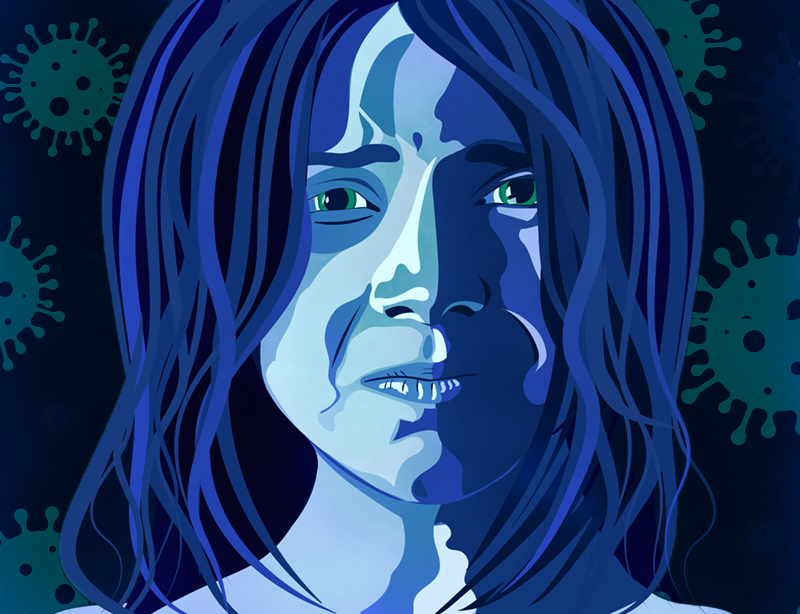
Imagine If We Could All Love This Way: Connection, Healing and Love in the Therapeutic Relationship

People Fascinate Me

Stories fascinate me. The mind, spirit, and the richness of the human condition have always captivated me. I came into this field at a unique time in my life — I was older, with a different life behind me of working in advertising and media for 10 years, a marriage and three children. My childhood was that of an immigrant with extraordinarily devoted parents who gave me a lot of love and nurturance, a good education, and a zest for helping others. Yet the loneliness that accompanied me as an only child often felt overwhelming. I created a vast, imaginary world from my yearning to understand, love, and connect with other humans. I had a deep, intrinsic ache in my soul that made me want to look at the horrors of the world and not turn away, but instead to try to “love it away.” There was, and is, so much love in my heart that it hurt. I wanted to give it to as many people as I possibly could — almost in desperation — constantly questioning if this was some unmet need longing to be filled. I still question this sometimes.

If we really think about it, we will never truly know the internal climate of any other human being. “I often wonder, does anyone get to witness or know the innermost thoughts or feelings of another?” Can we know what somebody is thinking as they drift off to sleep? Can we step into their deepest longings and most genuine desires? Do we get to witness their silent tears and harrowing, aching pain? Can we understand how they look at a sunset and appreciate the beauty of its rays? Can we feel the love they experience when their cup is so full that their heart is about to burst? What are they afraid of? What do they search for? What do they experience? The work of therapy is the closest I have come to truly understanding another’s heart. It is the closest thing that I have come to finding a pure, soul-to-soul connection. When this happens, it’s magical. I can feel the energy shift and, for that moment, come to understand why we are all here: to connect and be seen — truly seen.

Human beings are born into this world to connect. The autonomic nervous system is a relational system tuned in and to experience others. Throughout the course of our lifetimes, we rely on connections with others to find meaning in our lives (Dana, 2018). In his work on attachment theory, John Bowlby masterfully explains that human beings have an innate need and instinct to attach and form bonds and relationships with those closest to us. These bonds become a mirror for all the interactions we have later on in life. And what happens when this innate need and biological longing are unmet and there are various forms of mis-attunement? If the very people who are supposed to love and nurture you are seen as a source of terror and neglect, the impact is profoundly shattering. Hence, we cannot look at the darkest and deepest pain outside of human relationships and the wounds they cause in human connection. At its very core, trauma involves incredibly painful relational loss (Perry, 2006).

A Very Personal Journey

This was the reason why I changed my life and decided to become a psychotherapist. I went through my schooling eating up all the knowledge and information I could gather, breathing into my internships, feeling anger, frustration, pain, and sorrow for the system, my clients, the calamities of the world, and sometimes my utter helplessness to stop it all. But above all else, I felt an immense love — a love for the people I treated, who were brave enough to share their stories and trust me to walk beside them through their journey. I moved through my clinical hours at hospitals, private practices, intense higher level of care at an IOP/PHP, and finally owning my own group practice. I met amazing and wonderful people in the field who are dedicated and loving and want to help the ones they so diligently serve. But more often than not, I felt outside of it all — an ode to my childhood feelings of “aloneness.” I felt my ideals and ideas were out of the box; my perception of healing was not always in line with what the majority was prescribing as adequate care. I questioned, scratched my head, and felt confused by the notion of the us vs. them attitude that so many in the field still seemingly live by. In essence, the very core of the social work profession is equality — so how could we possibly think we know more about people’s lives, experiences, and what they need to heal than they do? Evidence-based practice, boundaries, protocols, treatment plans, and so on. I came into the field having been drilled with these teachings — entering treatment spaces robotically, feeling that if I followed this script of CBT, or that script of DBT, or any other three or four letter abbreviation for a theory, that I would somehow magically be able to do my job and change people’s brain chemistry. But how does that constitute the essence and core of what we are actually supposed to do?

Thankfully, I discovered wonderful theories and “giants” I felt aligned with — the work of Irvin Yalom, Diana Fosha and her AEDP model, Daniel Siegel, Daniel Gottlieb, Relational-Culture Theory, to name just a few — which gave me the platform to understand my own deep instincts around what helps people heal. I went to work at an IOP/PHP, treating individuals with substance abuse and mental health concerns. Working there often felt like a free fall. Running multiple groups per day with a variety of individuals who often didn’t even fit in with one another, intakes, evaluations, family sessions, and crisis, crisis, crisis. Every day, my fellow colleagues and I had to follow the check-in script during group sessions — “What is your mood? Do you have any suicidal thoughts? Homicidal thoughts? What was the time of your last use?” Intake evaluations asked questions like “Have you ever been sexually, physically, or emotionally abused?” This, after meeting the person 10 minutes ago. I had to get as many people in and out as I could — individualized care was looked down upon, and if I spent too much time with a client, I was somehow “over-involved.” I felt confused and bewildered practicing something I felt innately in my heart was wrong to do. My heart told me to sit and listen to these people’s stories, to move my chair closer to them, look into their eyes, hold their hands, and listen — sometimes not asking any questions at all, but just holding space when tears fell, anger erupted, or laughter ensued. “The Zulu term Ubuntu perfectly describes the importance of relationships in helping us thrive. Ubuntu means that a person becomes a person only because of other people”. I am human because I belong. As a result of decades of studies, we know that being separated from social connection and isolated from other people is a lifelong risk factor affecting both physical and emotional health. We live in a culture that encourages autonomy and independence, and yet we need to remember that we are wired to live in connection (Fosha, 2000). I felt guilty that I wanted to sit with these people and hear their stories, to pay a little closer attention to them, to tell them I cared, to show them love, compassion — to go the extra mile. After all, we aren’t supposed to do that. It shows poor boundaries and can cross ethical lines. Our administrators instructed us to limit the amount of time spent with our people and abide by clinically sound evaluations. I once snuck a tea kettle and put it in my office. What would one simple gesture of asking somebody if they wanted some tea mean to another human soul? It meant that “somebody actually cares about me.”

There was a thread that ran through almost every story that I heard — unimaginable trauma. To this day, I am still shocked and surprised to witness and hear about the triumphs of the human spirit and what people can live through. Don’t get me wrong, there were some people (and still are) who completely infuriated me. It seemed like it was the same problems over and over again, the same excuses, consistent behaviors that had no end in sight. I fought hard to fix them because I thought fixing it for people was what would make it better. I thought fixing it was the right thing — but it was the very thing that actually went against what I intuitively knew was the cornerstone of healing: connection. Why did I fight against this so? Why was I so afraid that my love for my clients was wrong? That being tenderhearted was a weakness and not an asset? I examined my own psyche and self, judging myself for feeling deeply and knowing all too well that I was doing something that I told my clients not to do: harshly judging myself.

Not Afraid to Love

Once, a client I had been working with for a long time and was going through a particularly difficult moment became extraordinarily physically sick in my office, in front of me. It was at night, when the only other staff members were the receptionist and another clinician running group. My client was evidently not well. She had recently been through a series of incredibly difficult traumatic incidents in the span of several days, was temporarily homeless, and was now vomiting profusely into any and every garbage can I could find, incoherent, barely able to stay awake. I did not know what was going on, but I knew I needed to get her to the hospital. I called an ambulance, and they arrived through the back door to take her to the nearest emergency room. After the ambulance took her, I noticed one of her bags left sitting in my office. I grabbed it and, without thinking, got in my car to take it to the hospital. As I was walking out the door, I told my fellow counselor where I was going — she looked at me and nodded — I still think of that and thank her in my heart for not questioning my intentions. I got to the hospital and sat with my client while she lay on a gurney until one of her family members arrived. I sat with her mostly while she slept, but I still sat with her. As Bonnie Badenoch so eloquently stated in The Heart of Trauma, “the essence of trauma isn’t the events but our aloneness with them.” I am not afraid to say I loved her, and I did not want her to be alone.

It is during these types of “ethical dilemmas” not taught in school that we must decide how we are to proceed when we enter the real world of the client. When I told a couple of my friends in the field about the incident, I got a few raised eyebrows and snide remarks, which of course made me question my own judgment. Boundary crossing. Went too far. But when I go back to that incident, I know that the only place it came from was from a place of love, from a place of humanity — that in that moment, the boundary separating client and therapist had no meaning. It was purely two people being human. Always, human first.

Don’t get me wrong — I don’t approach any situation with my clients lightly. I theorize, ponder, contemplate, go to supervision, examine and think about some things before and after they happen. I can utilize the most up-to-date techniques and skills, the most provocative questions, and evidence-based treatment that is “proven” effective for the specific issues the person is facing. Do they have results? Absolutely. But do they resonate? It is attunement that is the real language of love. Having another person deeply feel that they are not just understood, but that the other feels with them, and can internalize them, as Diana Fosha explains “existing in the mind and heart of the other.” I have found that the great difference for our people is knowing that somewhere out there is another soul that sees them and is ok with it. This person (therapist) cares deeply, is brave enough to talk about anything, can call you out but not make you feel small, and can sit with the darkest demons and still stick around. It’s this feeling that resonates — that feeling of being gotten and understood. Those are truly the moments that envelop the therapy relationship with healing.

“And yet there are some of our people whose wounds run so deep that even our best efforts can’t seem to penetrate”. Day after day, year after year, the magnitude of the experience, the heaviness of the ghosts don’t go away. At this moment, I often break down and sob for my own limitations in helping others move out of grief — for thinking I had some omnipotent cure that will rescue them. It’s ok to have those moments. Having them means I’ve been human. Having them means I have love in my heart. I think when we start to push them away and resist the feeling — even towards our client — is when we deny the very essence of the complexity of every human relationship. I hate to admit that I often still want to find a way to “fix it,” thinking that if I do then everything will be ok. But I have found that this is not what my people need. Instead, even after months or years have passed and I feel like I am stuck and question my own competence, they communicate growth, resilience, and gratitude for my simple act of being a witness to their stories and not turning away in fear, not giving up, and not looking away.

As I look at my clients and myself in the context of relationships, I realize the process of both our spirits, not just theirs. Therapy is as much my own journey as it is that of my clients. I would be foolish to say that my clients do not deeply impact me, change me, make me grow, and play a profoundly important part of my life. As a clinician, I must be expertly aware of my emotions, body sensations, and reactions to and from the people I sit with day in and day out. I don’t always hit the mark — I often mis-read, mis-attune, and just don’t get it. My hope is when I realize these things, that I have the courage to share them with my people. After all, where else than within this relationship do we get to talk about it, all of it, and still go on? The great dance of rupture and repair is some of the most impactful work I do in therapy. The social construct of the relationship between therapist and client is that of power. I set the limits of what I want to share and when, what I am willing to give or not. Does that not defeat the entire purpose of healing? If I am mad and frustrated with my clients, am I to hold back or to be open with the feelings and sensations that are evoked, to notice how we each conduct a dance, how we both have to shift to come to connection? How both of our vulnerabilities often get in the way of moving forward in the work we are entrusted to do. Furthermore, I worry over getting stuck in “cookie cutter therapy” — one glove fits all approaches, evidence-based practice, staying within the lines of “normal practice.” This may work for some, but in recognizing the truly complex nature of every individual that walks through my door, I see that the needs and wants of what will facilitate their healing may be different for all of them. To practice “in the box therapy” is unethical — there, I said it.

And what about love? I love my people, I truly do. Do I say this to all of them? No, I don’t. Have I said it to some of them? Yes, I certainly have. Why wouldn’t I? If we are free to express anger, frustration, concern, and all the other things within the therapeutic relationship, why not love, the most powerful force on this planet? And yet, as I write these words, I fear the judgement and criticisms of so many who are probably reading this — my own insecurity I guess, I’m working on that. I’m working on knowing it’s ok to feel and give love to somebody purely for being human, especially in this work.

One of the most amazing and painful realizations I’ve had while doing this work is that “I get to see people as they really are — in their rawest, purest form, in anger, in tears, in laughter, and in pain”. I see them like most people in their lives do not. I so long for others to see these humans as I do. To me, the unfairness of this situation and the mourning I have learned needs to happen when entering this relationship is the fact that this type of connection can only exist in this sort of vacuum. This place where the storms and influences of the outside world don’t have as much influence to touch the sacred resonance that is often created. This makes me incredibly sad for the world we live in — that some of the most authentic relationships we can have with another human being have to be sealed in this cup and tucked away far from anyone else to actually know about. That these powerful moments of painful magic and deep connection only live in the safe confines of this relationship. I sometimes long to scream from the rooftops, “Look at all these amazing people I know!!! They are breathtaking! Look at the courage they have to take me into the depth of their souls and trust me to hold their stories!” I only get to scream this inside my own heart. Perhaps these moments only have the capacity to survive within this type of safety — but, just like John Lennon, I’m a dreamer, imagining a world where everyone gets to be seen and to connect on that level. How would things be different?

References

Badenoch, B. (2018). The Heart of Trauma: Healing the Embodied Brain in the Context of Relationships. Norton & Company, Inc.

Dana, D. (2018). The Polyvagal Theory in therapy: Engaging the rhythm of regulation. Norton & Company, Inc.

Fosha, D. (2000). The Transforming Power of Affect: A Model for Accelerated Change work. Basic Books.

Perry, B. (2006). The boy who was raised as a dog. Basic Books Hachette – Book Group.

Center of the World

“She tells me I’m completely self-absorbed, that I’m acting like I’m the center of the world. I’ve spent our last three years trying to figure HER out and how to connect with her! How on Earth is that self-absorbed?”

Like what you are reading? For more stimulating stories, thought-provoking articles and new video announcements, sign up for our monthly newsletter.

David Burns, creator of TEAM-CBT (which stands for Testing, Empathy, Agenda Setting, Methods), teaches us that a key moment in diffusing a conflict comes when we use the Disarming Technique. Instead of defending ourselves, we lay down our shields and find something to agree with in what the other person has said. But however much we may tell ourselves we want a good relationship, many of us find this step challenging. How can we agree with something that feels so wrong and unfair? And what happens when we see the kernel of truth in an accusation?

“It wouldn’t be honest for me to agree with her that I’m completely self-absorbed.”

“I have to agree with you,” I tell my patient, and we both smile as he recognizes me using the disarming technique with him. “You aren’t completely self-absorbed, or you wouldn’t be trying to improve the relationship.”

He sits back in his chair, tilts his head and motions for me to keep talking.

“So, is there anything you could find to agree with in what she said. I mean, really whole-heartedly agree with?”

“Well, I can agree that she seems to think I’m self-absorbed!”

He’s making a common mistake in the disarming technique—we call this a ‘faux disarm.’ “How would you feel hearing that from someone?” I ask him. “Suppose I said to you, ‘Dave, I can see that you really seem to think I’m self-absorbed.’ Would you feel heard and validated?”

“Um, no,” he said with a touch of sulkiness. “I just don’t feel like I’m being self-absorbed! I’ve been working so hard to figure out how to connect with her. When she throws that at me, I feel so taken for granted.” The muscles in his jaw tightened. I see I may have pushed him too far. In TEAM-CBT, the correction for this is to ‘fall back’ to empathy and what is called ‘paradoxical agenda setting’ in which we support someone’s good reasons not to change.

“You have been working really hard on this,” I agree. “You said you feel taken for granted. I can imagine you must have felt pretty hurt and angry when she said that to you. And maybe you are also feeling hurt and even a little annoyed with me right now. Am I reading you right?”
He nods, silent, his face shifting from anger to sadness; his jaw relaxes. “I was a little annoyed at you, but I get it, you are trying to help me. It’s okay, let’s keep going.”

I’m hearing that he’s trusting me, so I move forward, but rather than continuing to push him directly as I did before, I shift to using paradox to support his resistance, and give voice to what I think is holding him back. “Maybe at a moment when you are feeling that hurt and angry, it’s understandable that you aren’t wanting to get close to her or see where she is coming from. Your priority is to protect yourself.”

This seems to have landed. He nods ruefully. “That’s right.” He puts his hands over his eyes for a moment, turns inward. “When she hurts me like that, I do want to defend myself.”

I stick with supporting his resistance. “Ouch. That makes sense to protect yourself from that pain.”

He doesn’t respond right away. I let the pause linger, sensing that something is shifting. “But I care about her, and I do want to understand where she is coming from, not just protect myself.”

He’s starting to convince me that he is ready to lay down his defensiveness, but I stay paradoxical to see if he’s really committed to working in that direction. “But is that wise? You said she hurts you.”

“It does hurt, but I don’t think she really wants to hurt me.”

“Where does the hurt come from?”

He makes a face. “Oh, you’d probably say it’s because I’m stuck on the idea that I should never be self-absorbed.”

I shrug an acknowledgment, “Yup, I probably would say that a belief like that would cause pain.”

He gives me a small smile. “Thanks, as it happens, I agree with you. And I get it. Of course, she’ll experience me as self-absorbed if all I’m doing is defending myself. But I don’t always do that. Isn’t she giving me one of those distortions you talk about, all-or-nothing thinking? I still don’t want to agree that I am completely self-absorbed.” He chews on this for another moment. “Maybe I don’t have to agree that I’m completely self-absorbed, just that I’m being self-absorbed at that moment?”

“I like where you are going with this—it sounds like you have found a kernel of truth in what she said. What would that sound like if you told her that?”

“Well, how about ‘Samantha, you are right, I’m being self-absorbed right now.’”

“Nice,” I respond. “How does it feel to imagine saying that to her?”

“It’s humbling,” he replies, and I see a mix of feelings on his face. “I feel sad realizing how many times I’ve been too busy defending myself to hear what she’s saying. No wonder she feels like I’m always being self-absorbed. And at the same time, I’m noticing that I’m actually starting to feel curious about what is going on with her. And that feels much better than defending myself.” His face opens as he looks at me. “Have you ever heard that expression, ‘I’m the piece of crap at the center of the world?’” I give a laugh, and he continues, “It’s a relief not to be the center of the world!” 

Family Therapy in the Age of Zoom: What a Long Strange Trip It Has Been

If there is no plan, nothing can go wrong
Kim Ki -Taek — Parasite

It’s not the strongest of the species that survive, nor the most intelligent, but the one most responsive to change.
Charles Darwin

It’s recycling day, can’t we just put the kids outside on the curb?
Parent — Pandemic, week five

Dude!…You’re Glitching!
Fourteen year old girl on Zoom session

Long Strange Trip

The pandemic has changed the larger world forever and will forever change the world of therapy. Our therapeutic ecology — how we practice our craft, where and with whom — will never be the same. It’s as if we’ve clicked into a science fiction show and can’t change the channel because we’re in it — clients and therapists have become talking heads, connecting as best we can and collectively feeling the fatigue attrition that accompanies the absence of being in person. The Grateful Dead were right: it’s been a long strange trip, especially for the empaths.

Michael is a single man in his thirties. He’s suffered a lifetime of painful shyness and being overweight. His job requires computer skills, so he spends most of his time in his cubicle, with little socialization on the phone or with co-workers. He’s described breaks and lunch as “torture.” Prior to lunch, he would get revved up with good intentions and then, he said, “I’m like Wile E. Coyote chasing the Roadrunner — I hit the wall.” One time, he got the gumption to attend a meet-up group for shy people, and no one showed. Yet, despite these challenges, he’s determined to be more social. Then, something happened. At our last Zoom therapy meeting, he was more confident and relaxed, like he’d just put on old slippers — smiling and even cracking jokes. For me, it was a kind of optimistic disorientation. At first, I thought that it was the combination of medication, his Wile E. Coyote resolve and hopefully some of the therapy that, like the British Baking Show, had produced a slice of Magic Pie. It wasn’t — it was the pandemic.

Because of “social distancing,” Michael paradoxically experienced being together with people while he was apart. Everyone now shared his life — now he could enter conversations with the knowledge that others also shared the taut, jangled wiring of his interior. It was as if he became an Italian apartment-dweller sheltering in place with his neighbors and singing together with them off their shared community of balconies, everyone listening with hearts joined in the absence of judgement and the voices of hope. Better still, because of the imposed distancing, Michael could now be safely social.

The Zoom Era

And what about therapists — what is this doing to us? Many are working from home. Those of us with children, pets or partners and who don’t have a home office have to find a “quiet space.” Ha! Good luck with that basement, people! Or, if we’re lucky and the landlord isn’t banning entry, we can go into our off-site office space — but that, too, has its own set of Zoomy consequences, not the least of which is “Zoom Fatigue.” By day’s end, sessions can feel like you’re in the front row at a lecture on sofa cushions where the speaker can see you. Just as you start to blissfully nod off, your head suddenly jerks back, and you snort loudly and say something weakly therapeutic like, “really..?” and then wipe the drool onto your sleeve — très embarrassing.

Zooming our client’s home space is not without merit. Back in the day when I was a probation officer in Cabin Creek, West Virginia, and then a social worker doing school evals, and then a research therapist on a project with heroin addicts and their families, I was blessed with being both witness and participant in the amazing diversity of the human condition. You learned to go with the flow and, you swam in the deep end of the family pool — dogs, cats, kids, babies, ferrets, frogs, multiple TV’s, radios blaring, grandparents, people who just showed up whom you didn’t know, dinner on the stove, or a silence that also spoke to you — all this before the age of the Internet. It was so powerful that when I first started my private practice, I would ask families to invite me to dinner and a family session at their home. “Now, we have Zoom — welcome to the shallow end. But we can all still learn to swim.”

You can observe a lot by watching.
Yogi Berra
Peter Lopez, a family therapist on the board of The Minuchin Center for the Family, is a home-based family therapist. On one of his Zoom visits, he wanted to speak to both parents and have an enactment with them that would increase the parent’s executive capacity and demonstrate to themselves and their kids that Mom and Dad were on the same page. In a moment of inspiration spurred by there not being enough headphones for everyone, he asked the parents to “move closer together so you can share…”

Another family therapist, a young woman who works with a diverse population of low-income families and mandated, substance-abusing high-risk teenagers, finds that being “in & not in” someone’s house can diminish her connection and, in some cases, embolden teens to challenge her — like the fifteen year old teenager who greeted her on FaceTime lying in his bed with his shirt off. “Would you do that in my office?!,” she asked, incredulous. “Uh, no, but I’m not in your office….” “Well, when we meet on Facetime, you are in my office!” And then, softer — “So when you put your shirt on we can start, and you can tell me how you’re doing.”

She still delineates the boundaries — for the kids she sees, her office is their safe space. To compensate for the in-person absence, she’s upped the amount of between-session “homework” that she and her clients then share at the next session. Trauma and disconnect are prevalent. A young girl being raised by her grandmother whose mother is absent provided a path in between sessions. Together they came up with an assignment to come to sessions with a weekly playlist of songs that emotionally spoke to the client. The girl picked “How Could You Leave Us?” by NF, which should come with a warning label and tissues — it’s remarkable.
We have to be inter-connected with everyone and everything.
Thich Nhat Hanh

You cannot solve a problem from the same level of consciousness that created it.
Albert Einstein

An informal survey asking therapists to describe their experience of practicing Zoom therapy in the pandemic seems to break into two distinct groups: one, maintaining a kind of Buddhist perspective of acceptance –— that life is suffering and impermanence in which every day is an opportunity to practice mindfully — to another, a bit less accepting — “I fucking hate it!”

A Third Way?

Which begs the question — is there a third way? The short answer is “Yes.” And it’s not without precedent. Einstein’s quote is like learning a brilliant escape trick from a gifted magician. The magic is not what is seen or said but in what he doesn’t say. What he omits is the specificity of consciousness — it does not have to be higher or lower, just different. And we therapists are all about being different. To be effective, we access different aspects of ourselves that then activate different and more adaptive aspects of our clients. It’s what Minuchin described as the “differential use of self.” If we want others to be different, then we have to be different. For systems thinking and for family therapy, in particular, those differences in thinking were already in the works well before the pandemic.

Lynn Hoffman pointed out in Foundations of Family Therapy (1981) that “the advent of the one-way screen, which clinicians and researchers have used since the 1950s to observe live family interviews, was analogous to the discovery of the telescope. Seeing differently made it possible to think differently.” And by circular extension, thinking differently also comes from acting differently.

Up until now, we’ve relied on our in-session felt experience, one-way mirrors and videotaping to guide ourselves as instruments of change. One recursive emotional and visual distinction between the now and the then of the one-way mirror’s transformative introduction, is that families could not see the people behind the glass, nor could the people behind the glass see themselves being seen. Videotaping sessions, however, offered a “third” answer, giving therapists the capacity of “seeing” themselves and the family’s patterns in context. It shined a light on how to experiment with adapting interventions systemically and collaboratively. While inventing Structural Family Therapy, for example, Minuchin, Jay Haley and Braulio Montalvo invited family members behind the mirror. They recognized cultural and class differences between themselves and the “natural healers” from the minority community that they were training to be therapists. Minuchin realized that “in order to join, we needed to change.”

“With Zoom however, there is a binding irony that holds therapists and clients in its’ grasp. It is as if we share front row seats watching a mystery play”. The opening scene’s roiling dense fog and dim lights mask the fullness of detail, so we squint, holding our breath hoping to see what’s really there. We’re doing our parasympathetic best to figure out the plot. It’s the work of it that fatigues us and leaves us wondering if this is as good as it gets.

Therapy is therapy as therapy does, but how we use ourselves in this new environment re-boots an age-old clinical question; what exactly is both necessary and sufficient to produce change? Montalvo called the position from which we work “The possibilistic premise.” Meaning that regardless of the location of the family’s pain, we are still faced with respectfully challenging the system’s homeostatic “stuckness.” We know that we can effect those changes in person. When Zooming, however, it can sometimes feel as if we’re “Major Tom,” floating in space, attempting to weld the hull as we circle the earth.

So, as Bowlby, Susan Johnson, the Gottmans and our own families have shown us, the quality and kind of our earthly and relational attachments are important. While we may feel even more like Russian Dolls, breathlessly stacked within each other’s context and the context of the world writ large, it’s not a question of “if” we adapt and attach in different ways, it’s more a matter of “How?” Perhaps as Theodore Reik suggested, we should listen with greater clarity, not just with a “Third Ear,” but now with ear buds. We are finding ways to compensate for what’s lost with diminished sight and the absence of physical presence. Our adaptive make-up is yielding results. However because we are inherently empaths, we feel the absence of presence. But we shouldn’t feel bad entirely. Rumi’s poem, “Love Dogs,” reminds that “the howling necessity” implores us to “cry out in your weakness,” such that “the grief you cry out from, draws you toward union.”
It’s the end of the world as we know it, and I feel fine.
R.E.M.

Postscript from the Bunker

After not seeing our granddaughters at our house for eleven weeks, my wife and I share a grandparental Folie à Deux — an ache like an old injury that we’d come to accept, now reawakened with every primitively crayoned coloring book that hung on our walls like an in-home Children’s Louvre. As grandparents of a certain age, now when my wife and I see all their stuffed animals in a pile, we silently share the Buddhist themes of impermanence and suffering. It feels like a Christmas Story staging of Toy Story — our precious time together is ghosted in front of us as a reminder to our mortal selves that “this is it.” This perfect time of their lives, full of wonder and imagination, is just another pandemic curtain closing on the “Duck Duck Goose” show. Now our own mortality is awaiting, as quiet mourners do when “joining” family and friends on a Zoom funeral.
Alone together.
Dave Mason

Then there’s this — amidst all the noise, people find themselves and others. I see a recovering alcoholic/substance abuser in his thirties. He’s been in recovery for seven years. He has a great sponsor and a solid home group. As the pandemic continued, he began to miss the in-person connection with his group and his sponsor. So last week, with the intent of doing “Step work,” he and his sponsor sat safely apart on his sponsor’s back porch. As night began to fall, he said that without any cues, they both simultaneously became silent and quietly surveyed the backyard as darkness fell. He said it was one of the best conversations that he’d ever had.

Like the scene from Little Miss Sunshine, when on their way to the “Little Miss Sunshine” contest, Dwayne flips out after finding out that his color blindness has just destroyed his dream of joining the Air Force, getting away from the “fucking losers” that constitute his family and having a life of his own. He’s profanely inconsolable. His mother says, “I don’t know what to do!” Then his stepfather says to Olive, “Olive, do you want to try talking to him?” Without a word or hesitation, Olive gingerly makes her way down the embankment, ignoring the dust scuffing up her red cowboy boots, and squats down next to her big brother. She puts her arm around Dwayne, leaning her head onto his shoulder. She doesn’t say a word. They both sit together as one in the silence. Quietly, as if whispering a confession, Dwayne says, “O.K., I’ll go.” He then helps Olive up the hill and says to his family, “I apologize for the things that I said, I didn’t mean them.” They load in the van and continue on.

“Off in the distance is a billboard, the message faded but visible, “United We Stand.” We can hope”.

Tools to Help My Patients

Coping Strategies and the Paradox of Change

When patients come to me, they are already using various coping strategies to regulate their emotions, improve their mood and deal with challenges. Their strategies—such as drinking, withdrawing, gambling, eating, or hoarding, as maladaptive as they might be—are seemingly essential to their survival. And they are effective… until they aren’t, which is generally the point at which I meet many of my patients for the first time. In fact, their coping strategies can and often do become the major source of their adjustment problems.

Like what you are reading? For more stimulating stories, thought-provoking articles and new video announcements, sign up for our monthly newsletter.

The paradox of change—“Doc. Please help me to change, but change is scary so I’m going to stay put. Accept me as I am.”—can be more readily seen when viewed in this context. It is vital for the therapeutic relationship to recognize that I am essentially asking my patients to strip away the very things that they have been clinging to for survival.

Among other goals for therapy, such as learning to manage emotions, making sense of their past, and assisting with the other changes they desire, therapy is also about “tool replacement”: I’m helping people replace harmful coping strategies with new, healthier ones.

However, if patients have experienced a great deal of trauma, I must sometimes collude with my patients’ denial to maintain their existing coping strategies before beginning to help dismantle them. To illustrate, I must first work with a patient who has experienced complex trauma to resolve some of the trauma while they continue to drink. Otherwise, a premature referral to AA could be a set-up for therapeutic failure.

Reducing the Layer of Judgment

Not only do my patients have various coping strategies, but they often judge themselves harshly for having to rely upon them. A way of explaining the layer of judgment is to use the metaphor of the panopticon, Jeremy Bentham’s 18th century semicircular prison design that allowed one guard to simultaneously watch all prisoners without their awareness of being watched. In the case of therapy, the all-seeing guard is also the patient. The layer of judgment that patients see as they look down on themselves from the guard tower includes:

“What’s wrong with me?”

“Why can’t I be like other people?”

“Why can’t I just get over it?”

There is a common emotional thread woven through these self-statements, and it is often shame. Therefore, I have to help them identify how they feel. Also, I try to help them understand what shame feels like and what it is. I tell patients that shame feels like “embarrassment times 10.” I also distinguish guilt from shame: “Guilt is feeling bad for what you do. Shame is feeling bad for who you are.”

These self-statements, along with embarrassment, remorse, and shame, create the layer of judgment that can make their difficult situations worse. This layer is like a lid on a pressure cooker: it keeps the entire mechanism in place.

To illustrate, I often use the example of obesity. Obese people generally know about the mechanics of weight loss better than people who have never struggled with weight gain. But if weight loss were about simple mechanics, no one would be obese. For that matter, no one would engage in any unhealthy activity.

But obese people often use food as a coping strategy to regulate their emotions. When they subsequently tell themselves how awful they are, it generates more emotions that they have to manage. And how do they best know to do it? By consuming more comfort. The next day they are filled with remorse and shame—which then needs managing. The result is a vicious cycle: the very coping strategy they feel ashamed of is prolonged.

So, for change to occur, this layer of judgment must be challenged with as much compassion I can offer and self-compassion they can muster. Change comes not from self-condemnation, but from greater acceptance and higher self-regard.

Achieving the “No Wonder” Goal

To achieve greater acceptance while reducing self-condemnation, my role is to help patients find healthier coping strategies both through the process and from the material. One way to ease the layer of judgment and reduce the concomitant shame is to propose working toward what I call the No Wonder Goal.

The aim of the No Wonder Goal is to have an emotional understanding of how and why their coping strategies picked them. Please note the specificity of the language. I often tell my patients, “You didn’t pick your coping strategies. They picked you.” In other words, no one starts out drinking to become an alcoholic or begins collecting to become a hoarder. Rather, the psyche says, “Aha—relief! I found what I need to calm down.” What starts out as a social activity, a hobby, or an adventurous undertaking can turn into a destructive addiction, compulsive activity, or manic behavior.

The purpose of working toward this emotional understanding is to thin the layer of judgment and to soften their self-condemnation. I recently had a patient who developed a driving phobia who was condemning herself for her irrationality. I said to her, “It makes no sense that you’re afraid to drive. It used to be no problem. However, these days, just going to the store can be scary! Your psyche is trying to protect you from harm, perhaps even trying to save your life from COVID. What a better way than to stop going places. Your home is where you are safe, so it’s no wonder that this particular coping strategy picked you.”

I also try to transform what has been concretized back into a metaphor. As an example, a porn actor with severe OCD went through an entire bottle of hand soap daily and washed his face at least 25 times per day. During one session, I said, “Could it be that you wash so much because you feel ‘dirty’ being a porn actor?” Through the No Wonder Goal process, he realized that he felt dirty inside, and no amount of washing would make him clean. He was then able to transform the concretized activity back into a metaphor, and as a result, became less judgmental about his OCD.

Of course, it takes months and possibly longer for this idea to sink in (to be an emotional understanding). But many patients have mentioned without solicitation that in the one session when I introduced the No Wonder Goal, they felt a sense of relief and a little less shame.

For greater acceptance, I can also ask, “Does this self-condemnation sound like someone from your past?” Most of the time, patients will tell us that it sounds like their mother or father. Let’s say the patient’s mother’s name is Katie. I will say something like, “OK, so this is your Katie-brain talking to you. Katie was trying to protect you, but in a misguided way.”

The other intervention is to call the self-condemner a committee member (with a caveat for dissociative patients). “What is this committee member saying to you? Can you let the committee member know that you appreciate the protection but that you don’t need it right now?”

Over time, patients realize that this part of their psyche serves a very important function, and its purpose is to protect them against a real or perceived threat. And how can they hate themselves for that?

Tool Replacement

I’m not going to elaborate on the actual tools, since they are generally known—avoiding withdrawal or being controlling, asserting themselves more, connecting with others, expressing emotions, just to name a few. However, it would not be therapeutic nor practical to try to dismantle patients’ coping strategies without helping them build healthier ones or build onto the ones they already have in place. Sometimes I provide them with new tools while their old coping mechanisms are still in place. At other times, as they use their new tools more, the older ones organically diminish.

One tool that I value is to ask patients to use their feelings. Frustration and anger can be transformed into determination, jealousy can produce striving, and sadness can be used to find acceptance. The example I like to give is MADD, Mothers Against Drunk Driving. They gathered their anger, pain, and despair to become the most effective group to educate others and strengthen drunk driving laws.

Recall that tool replacement exists in the process as well as in the material. The process of opening up about their shameful coping strategies, crying over them, and acknowledging missed opportunities and lost relationships is a form of grieving. Grief must happen for greater acceptance. This process, plus exposing their vulnerability as we accept them as they are, can lead them to feel better about themselves, have greater peace of mind, and enjoy more satisfying relationships.

Reducing harsh self-judgment, knowing how they got to the place where they were when they walked through my door for the first time, and managing their emotions with new coping strategies can truly be transformational.  

Treating the Somatic Sequelae of Moral Injury

Moral Injury

I recently read a terrific Psychotherapy.net article about moral injury entitled “Beyond Resilience: Addressing Moral Distress During the COVID-19 Pandemic,” and it resonated with me in a way few articles have lately. It was an interoceptive resonance that was simultaneously cognitive, emotional, visceral, kinesthetic and proprioceptive. Some of these words are quite new to my vocabulary, as I am a clinical psychologist trained in the depth psychology traditions of classic and modern psychoanalytic thought — Gestalt therapy and Jungian analysis. But more recently, I was trained in a 3-year program of trauma resolution developed by Peter Levine called Somatic Experiencing, and I began to develop some powerful new perspectives on the human condition that, in this piece, I would like to apply to the understanding of moral injury.

Moral injury is a term coined by Jonathan Shay¹ that describes a traumatic act of omission or commission that crosses a personal boundary of conscience. Shay, a psychiatrist, developed the concept of moral injury through his long and meaningful work with Vietnam veterans and other combat veterans at the Department of Veteran Affairs. The primary feelings of moral injury are shame, dishonor and ignominy. Frequently cited examples of how moral injury can occur include military personnel electing to follow an illegal or immoral order, law enforcement officers engaging in the use of deadly force, people participating in state-ordered executions, doctors and nurses involved in end-of-life decisions or with a decision to save one?s own life while another?s is lost.

Shay?s writings and perspectives are compelling and contribute immensely to broadening our understanding of trauma. His conceptions have developed almost exclusively from his work with adults, but the psychological literature on child development is replete with evidence that conscience and the “moral self” develop at a very early age, primarily from the internalization of parental values and the quality of the parent-child relationship. Studies have shown that infants as young as 3 months can show a preference for shapes that behave “prosocially” to ones that behave “antisocially.”

Two distinct dimensions of conscience have been identified: a) one relating to the emotional capacity to experience guilt and to be empathic to others and b) one relating to rule-oriented compliance to authority and authority figures. The child?s sense of themself as a moral being — with feelings of pride, guilt, shame, and embarrassment — is believed to be clearly developing by the age of 5. Findings like these from developmental psychology become especially important when considering the impact that incidents of childhood trauma can have on the delicately budding moral self. For example, research has shown that Adverse Childhood Experiences (ACEs) are predictive of moral injury in adulthood. Furthermore, survivors of childhood abuse may seek out positions in the military, law enforcement and other danger-filled professions in order to escape the perpetrators of their abuse, making them more likely to expose themselves to life-threatening situations and consequentially to exacerbation of their original trauma.

“The spiritual, emotional, or physical scarring of a child wounds their conscience as well and is deeply damaging”. Endemic to these woundings are important somatic sequelae that bind the guilt- and shame-filled experiences, making them long-lasting and difficult to undo later in life. It is my proposition that a somatic examination of these sequelae can enhance our understanding of moral injury, how to ameliorate it and how to help resolve it. After providing a brief overview of a somatic approach to healing trauma, I would like to discuss a case that I hope will bring to life the application of somatic psychotherapy in resolving the wounds of shame and injury to the moral self.

A Somatic Approach

For years, somatic practitioners like Peter Levine², Pat Ogden and Bessel van der Kolk³ have appreciated that the wounds of trauma do not linger simply in the form of cognition or within the limbic system, but are also stored in the body in muscular, skeletal and visceral forms and structures — stored in what is commonly known as “muscle-memories.” And while there has been a great deal of research supporting the perspective that trauma takes a cognitive-emotional form and can be resolved through a process of exposure and catharsis, the conceptualization of how human beings retain and reenact past trauma took an evolutionary leap forward with the development from neuroscience of Stephen Porges? polyvagal theory?.

Up to this point, we had believed that the autonomic nervous system had two functions operating in two branches: the sympathetic (energizing) branch and the parasympathetic (calming) branch. Polyvagal theory states that there are actually two branches to the parasympathetic nervous system that are activated during the threat response that developed in evolutionary sequence. The most primitively formed of these parasympathetic branches defends the organism by simply shutting down, immobilizing and conserving its energy to survive — death feigning, “playing possum,” thanatosis, or “freezing.” Co-developing in early vertebrates and reptiles was the capacity for the fight/flight response — defensive responses activated by the sympathetic nervous system. Finally, the “social engagement system” developed, through which mammals became capable of identifying areas of danger and safety and communicating this information about what was safe and what was unsafe to others. This second branch of the parasympathetic system gave mammals an additional way of managing their threat response. What was revolutionary about Porges?s work was that it identified two distinct anatomical structures of the vagus nerve corresponding to each of these parasympathetic functions. What was previously thought of as a single parasympathetic system was actually two separate structures and functions — each of which plays their own essential role in the management of threat.

“Whenever we are threatened in any way, our body goes through a rapid sequence of automatic responses that are hard-wired into our nervous system”: a) movement stops, b) we orient ourselves to the environment and begin scanning it, c) we evaluate whether it?s safe or dangerous, d) we begin to initiate protective responses, if needed, like flight, fight, freeze, or reaching out to others for help, and e) when the danger has passed, the arousal dissipates and we naturally discharge our excessive energy and begin to settle. Based on millions of years of evolution, the human body knows how to do this automatically. This defense cascade — arousal, intentional motionlessness, flight, fight, tonic or collapsed immobility (freeze), and then rest — corresponds to unique neural patterns in the amygdala, hypothalamus, periaqueductal gray, ventral and dorsal medulla, and spinal cord.

When it comes to everyday experiences, we have long known that they are stored in two ways: in explicit memory and in implicit memory. Explicit memory stores the general knowledge of facts, ideas, and concepts (semantic memories), and it stores the memories of event locations, times, and sensory images that can be explicitly stated (episodic memories). Implicit memory stores things like how to ride a bike, use a hammer, walk, or button our shirt — what are called procedural memories. Explicit memories are available for conscious recollection; implicit memories are not, and it is in these implicit procedural memories where trauma is stored. With experiences that feel life threatening, we can become stuck somewhere in the defense cascade and procedurally fail to complete it. Implicit memory is where the memories associated with these incompletions are stored, and they are out of our conscious awareness. By attending to the somatic sequelae of a traumatic event, a client is able to gently release the somatic constriction and associated emotion-laden reminders of the experience by completing uncompleted defensive action sequences.

“While somatic trauma practitioners may vary in the particular categories, they all typically encourage their clients to notice their own bodily experience” — what?s called interoceptive awareness — they all try to attend to a derivative of the following somatic aspects of humanness:

a) sensations coming from inside the body (kinesthetic awareness of muscle tension, movement impulses, bracing, involuntary sensations like heart rate and respiration, and awareness of posture, balance and other proprioceptive processes)

b) inner images (memories, dreams, symbols, and input from the five primary senses)

c) behavioral movements (facial gestures, rocking, emotional expressions, postural shifts, yawning, tearing, swallowing, trembling, shifts in breathing pattern and stillness)

d) emotions (including those expressed and unexpressed by the client and those sensed by the therapist)

e) meaning-making (beliefs, judgments, thoughts, analyses, and interpretations)

To illustrate some examples of the interoceptive awareness integral to somatic trauma therapy, I would like to describe some of my somatic reactions while reading the essay “Beyond Resilience” mentioned at the outset of this essay. As I began reading, I quickly noticed a heaviness developing in my chest and a feeling that my face and shoulders were opening. An image of a butte or plateau came to mind, where I was imagining a new level of understanding, and the thought came to me, "What a fascinating line of thinking about something I have been familiar with for years but never really thought about in this very succinct way." I found myself leaning into the computer screen, my back arching backwards, and I noticed feelings of excitement emerging from within me, especially in my cheeks and jaw, where I felt a subtle tingling sensation. I began to feel grateful to the authors and to Psychotherapy.net for publishing their piece. I could also feel little micro-movements, movement impulses really, in my arms and hands, which were anticipatory responses later manifesting when I wrote Victor Yalom to tell him how much the article deepened my understanding of this very important aspect of trauma. As I noticed the richness of my own internal life, a memory came to mind. It was of Jessie.

Jessie

Jessie was 38 and had been raised by a family in the Ku Klux Klan. He was the oldest of three children and had been conscripted to parent his younger siblings in his parents? frequent absence. He also was a survivor of severe childhood physical abuse, which he had been indoctrinated to believe was his fault. Somehow he survived and, in his teens, managed to escape the family clutches, learning a specialized trade in healthcare and, remarkably, developing and maintaining, by the time he came to me, a healthy marital relationship of some 18 years.

When Jessie first came to my office, you could feel the frozenness in his gait. As he told his story, there was a stiffness in his posture and there were very few facial movements, but I could see, almost imperceptibly, the muscles in his lower legs flexing and tightening with a kind of rhythmic regularity. His authenticity about the life he had lived was both touching and tragic. As I took comfort in developing my bond with this man, I could feel my own visceral reaction to his story, which elicited my empathic responses while simultaneously interfering with my ability to do so. My own humanness was on full display.

Despite all that he had been through, Jessie was remarkably adept at learning how to reflect on his own somatic experience. While a client?s narrative themes are essential to track, a greater emphasis in somatic trauma work is placed on the story that the body tells. Two fundamental principles guided my somatic work with him: a) to focus first on what traumatic material was most available and accessible and b) to titrate and process only small changes in arousal level before proceeding to deeper levels of emotion. This is one of the biggest distinctions between somatic approaches to trauma work and exposure therapy. Somatic psychotherapy pays meticulous attention to taking small but manageable steps in order to avoid excessive cathartic releases that, while seemingly helpful, can themselves be retraumatizing. The goal of somatic trauma work is to assist the client in learning how to reregulate their own nervous system in the context of their traumatic memories.

Like all other psychotherapeutic approaches, somatic psychotherapy does not progress linearly, and there were ups and downs in my work with Jessie. At one point, though, we began to deal directly with more of the core of his moral injury, which for Jessie was two-layered: a) the stubborn belief that because he did not fight back against his father?s physical abuse, he was a living betrayal of what it meant to be a man and b) his belief that he had betrayed his younger siblings by failing to protect them from their abusers. As a society, as a culture, and even cross-culturally, we tend to shame others who don?t fight back, who cry for help, or who run away. We are expected to fight our perpetrators (or at least flee from them) but never cower, collapse, or freeze. This is consistent with Porges? notion that survivors are shamed and blamed because they didn?t mobilize, when in actuality, their bodies were involuntarily incapable of movement.

When we have transgressed, episodic shame is a healthy response. Awareness of our shame motivates us to apologize, to acknowledge our wrongdoing and to repair the injury we may have inflicted on another. Likewise, when we witness someone doing something harmful to another, we call it out. We inform them of their wrongdoing. Their momentary shame is healthy because it encourages peaceful cooperation and fosters a sense of social fairness. But when we call out someone?s wrongdoing, it is imperative that we also exercise our responsibility to repair their momentary shame by honoring and reinforcing their human dignity—to communicate to them that they are much more than the identified transgression. For example, when we interrupt a child from intentionally hurting their sibling, we are guiding them about what is acceptable in a family and in a society. But we must also commit ourselves to repair their shame by letting them know we continue to love and respect them. It?s chronic shame — the kind of shame we stay stuck in and can?t shake — that?s not healthy. Chronic shame demeans, degrades and obliterates human dignity — it kills the spirit. “Many clients who have been chronically shamed carry these wounds with them…and this was true for Jessie”.

My therapy with Jessie progressed, and in a particularly important session I noticed he began it with his eyes looking downward, his head lowered, his back curved forward and his breathing shallow. This kind of kinesthetic and postural presentation is typical of the shame-based, collapsed immobility (freeze) characteristic of moral injury. I asked Jessie if he noticed that his gaze was averted, which he acknowledged, so I asked him if he could become curious about it and see what might happen next. At first, he was out of touch with what he was introceptively trying to observe, until he said, “It?s kinda comfortable to look down … and not be judged for it.”

I asked Jessie how it might be for him if we were to just sit with and notice the comfort together. As we did, his breathing became fuller, which we both acknowledged. When addressing such potentially powerful traumatic states — which are being expressed somatically and almost certainly out of the awareness of the client — it?s so important to help them first establish a strong-enough connection with their own inner resources — what one of my Somatic Experiencing teachers described as “islands of safety.” Pausing on these soft places to rest and to moderate and titrate traumatic pain is essential to anchor and center a client and to stay off, for the moment, the rush of feeling overwhelmed that is almost certainly waiting in the wings.

I then asked Jessie if he noticed his downturned posture and invited him to take his mind?s eye and go into his curved back and see what he noticed. After a time, he said, “It feels dark … I know this feeling, but I can?t name it … I don?t like it.” Because traumatic emotions are stored in implicit memory and not readily accessible to awareness, they often cannot be identified with semantic labels like anger, sadness or shame. As I mentioned earlier, emotions are only one of the critical memory elements of trauma. Equally important to somatic trauma work is accessing the procedural memories themselves — those kinesthetic, proprioceptive and neuroceptive containers of trauma. I sensed Jessie was adequately tolerating his discomfort, but I asked him anyway to be sure, which he confirmed. I then suggested a little experiment to see what might happen if he were to curve his back downward a little further, but only just a very small amount. As he did so, a memory emerged of himself kneeling, pleading with his father not to beat him as his father yelled, “You?re a pussy! Quit your cowering! Take it like a man!”

As he recalled his humiliation, Jessie became aware of greater tension in his back. I asked him, “If your back could move in any way it wanted, what might it want to do right now?” When he said he didn?t know, I invited him to become curious about what it might be like if he were to very slightly lower his head even further. As he did so, his hand became tremulous as he said, “He hurt me so badly!” I wondered if I might have been pushing him past his window of tolerance, so in order to lower his activation level, I then empathized with his pain. This is a good example of an important choice-point in psychotherapy, and in somatic work in particular — that is, I made the decision to go a little deeper into what Peter Levine calls the “trauma vortex.” This is reliably going to raise the client?s level of arousal and can be quite helpful, but a) only when it?s done slowly and in small steps and b) only when the client is ready and able to contain the added arousal. To gauge the appropriateness of this kind of intervention, the clinician must rely on their observations of their client?s somatic markers and the clinician?s own felt sense.

I asked Jessie to consider what it might be like to raise up his head and back a bit. Doing this calmed his tremble, more color returned to his face, and his breath became more regular as he stated clearly and with some conviction, “I wish I would have stood up to him.” “I asked him what it felt like to raise his head and back, and he said that it felt “freeing” and that he “felt taller.”” We took the time for his nervous system to reregulate to what he had just experienced, and we just sat with his calm sense of freedom and taller-ness for the rest of the session. This was a big part of Jessie?s moral injury — the notion that he had abandoned being true to himself by not confronting his father and not fighting the abuse he was forced to endure. For years, he had worn his valueless humiliation as a scarlet letter of his own worthlessness, until he returned to an essential element of his trauma that was yet to be completed — physically embodying the posture of standing up for himself.

As my sessions with Jessie proceeded, he became better able to honor and stand up for his own moral beliefs of fairness and respect. He also became more comfortable with articulating his belief that what his father had perpetrated against him and his siblings was wrong, while moderating his nervous system activation and later feeling the calm and peaceful presence of embodying his budding moral convictions.

* * *

Everything in the universe oscillates — the tides come in and they go out, day turns into night and into day again, the seasons change, the breath goes in and the breath goes out. This is the natural way of things. With trauma though, that pendulation — the natural flow between physiological polarities — gets shunted and needs to be repaired. With Jessie, there was much work that followed, but a key to his recovery was embedded in his newly acquired ability to regulate his arousal and return to a safe-enough place so he could repair and repair again what he had been forced to internalize.

References

Shay, J. (2011). Casualties. Daedalus, 140, 179-188.

Shay, J. (2014). Moral responsibility. Psychoanalytic Psychology, 31, 182–191.

(2) Levine, P. (2015 June 10). Peter A Levine, PhD on Shame – Interview by Caryn Scotto D?Luzia [Video]. YouTube.

(3) Van der Kolk, B. A. (2014). The body keeps the score: Brain, mind, and body in the healing of trauma. New York: Viking.

(4) Porges, S. W. (2001). The polyvagal theory: phylogenetic substrates of a social nervous system. International Journal of Psychophysiology, 42, 123-146 

I’m So Glad My Parents Are Dead

“I’m so glad my parents are dead,” he casually offered, as if telling me the day’s weather forecast or some similarly innocuous and inconsequential news. Raising more than a little bit of concern in my mind that was already reeling with possibilities, all of them quite dark, I decided to sit back, breathe, and let him lead the conversation. This, despite bursting with questions, centering mostly on the possible ill fate of this new patient’s deceased parents. “All things considered,” he said, without discernible affect, “I’m glad it’s over… I’m glad they’re dead, and I’m not afraid or ashamed to say it.” This is the kind of stuff that patients save for the doorknob experience; you know, that profound, therapy-altering utterance the otherwise reticent, resistant, or un-ready patient leaves you with on their way out of session, leaving you wondering if they will return to complete the story. However, this was clearly not one of those mysterious or seductive therapeutic mic drops designed to keep me wondering what would come next, nor was it a planned device strategically designed to keep me at therapeutic bay. This was an opening to, or perhaps an invitation from this 60-something man, who seemed to have his act together—except, of course, for this most disturbing utterance. So I wondered silently, at least for now, “How and when did his parents die, why was he glad they were dead, what role if any, did he play in their deaths, and why did he so quickly and emphatically share that relief over their deaths with me, a stranger?” Murder, suicide, murder-suicide, euthanasia? Was he the culprit, the victim? The greatest challenge for me in the moment was trying to quiet my mind and let him share his story, which I was sure was going to be a whopper. Surprisingly, he went on to talk not about his parents, but about the pandemic, which he said initially “hadn’t really hit me in any significant way.“ He was a late-career professional with a few stable income streams that allowed him to work remotely. He said he and his family were healthy, and that he had not taken any hit in income or status. He seemed content in the telling, but considering the opening salvo about his parents, I felt the need to dig a little further. Anxiety, perhaps, or maybe a masked depression because, after all, this pandemic infects everyone at one point or another, in one way or another; perhaps not physically, but emotionally. As his story unfolded, and however much I tried to ferret out this man’s hidden symptomatology, I was left with a nagging question of “Why is he here?” As the session ended, I was left with more questions than answers, which is probably a good thing because it left me in a state of curiosity, looking forward to the next visit when more would hopefully be revealed about this man who clearly was carrying a great burden with him. But in what form and to what extent was he burdened? That was the $64,000 question. The next session came, and as it began, I broke with my own personal and professional protocol by deciding to lead the session with a question. I asked him what he meant when he said that he was relieved that both his parents were dead. He seemed to look past me, fell into his chair as if a great weight were pulling him backwards, and then released what seemed to be a years-long held breath. His parents, as it turned out, had died of natural causes four and eight years ago; first his father and then his mother. He spoke with neither sadness nor regret, spending little time relaying the details of their passings. As much as I wanted to ask him, I refrained. It seemed that his relief came from the fact that his parents, who lived to 97 and 98 respectively, had passed well before the COVID pandemic, not only freeing him of the burden of their care during its clutches, but also without concern of having to do so during this period of quarantine and forced isolation. He recalled how important it was for him to be at their sides during their final descents, and how grateful he was to have been there with and for them to usher them out of their lives with the same constant and gentle compassion with which they had ushered him into his. He had become painfully aware of how families had not only been ravaged by the deaths of loved ones during the COVID pandemic, but tortured by their inability to visit family members in hospitals, convalescent homes, and hospices. Unlike his own parents, these people were dying in the care of strangers. While these events deepened the relief he expressed when we first met, his life had recently been upended when he and his wife took over the care of her 91-year-old parents, who now resided at two different extended-care facilities; neither of which allowed visitors. Unlike his own parents for whom he and his wife had cared up to their deaths, his in-laws might very well spend their last months or years in the care of strangers—isolated from family. The relief he felt at the passing of his parents, and the gratitude he harbored over being able to care directly for them, was slowly being eclipsed by profound sadness, anger, impotence and fear. That is why he came to see me, and it now made perfect sense. He hadn’t come to share his relief, but to express a deep guilt over abandoning his in-laws, even though that abandonment was compelled by circumstances beyond his control. When possible, phone calls, the occasional Skype, and window visits dulled the pain, but could not replace the care and comfort that comes with holding hands, hugging, caressing, bedsides visits, and vigils. His forced inability to attend directly to his in-laws had also rekindled the fears of mortality that he thought he had buried along with his parents. His personal narrative around dying while he was caring for them was one of hope, because he envisioned that like them, he would pass in the arms of loved ones. Now, that narrative had shifted, and death seemed to be a dark and lonely place, and the path towards it frightening. And that was where our therapeutic journey would begin.

Beverly Greene on Race, Racism and Psychotherapy

Race, Racism, and Privilege

Lawrence Rubin: At this particularly charged moment in the history of race relations in our country, what is the primary message you want to share with psychotherapists, particularly white psychotherapists working with clients of color?
Beverly Greene: I think one of the charged characteristics of this particular time, and thereʼs a corollary to this in our history, the Civil Rights Movement and the marches during the Civil Rights Movement, is the way technology affects a movement.At that time, it was television. Many people across the country probably didnʼt believe that black people were being brutalized just because they were trying to register to vote until it was in everybodyʼs living room on television and being beamed all over the world. This beacon of democracy, the United States, held a group of its own citizens hostage in terms of civil liberties that are presumably granted to everyone. So I think it pushed some legislation along because it was an embarrassment to the government. It also became undeniable when it became visible over over and over again to people sitting at home in the middle of Paducah or wherever, who were not surrounded by that kind of activity, or hadnʼt previously had contact with black people.

And weʼre in that moment now, in terms of cell phones. Suddenly, if you step outside your house, YOUR privacy is gone. Everybody has a camera, and all these things are recorded. I think the sort of synergistic effect of all these killings and the power of George Floydʼs murder has resulted in an unambiguous, unassailable level of evidence that says, this is a serious problem, and this is real.

One of the challenges that people of color often face is that when they talk about their encounters with racism, theyʼre not believed, or itʼs minimized, even in therapy

One of the challenges that people of color often face is that when they talk about their encounters with racism, theyʼre not believed, or itʼs minimized, even in therapy. Therapists may want to explore all the other things that could have been going on in addition to, rather than race, which may seem so completely foreign in the life of a white therapist. In actuality, racism is an everyday occurrence for a black person or another person of color. The existence of racism is a real social phenomenon and not just something black people make up to make white people feel guilty or uncomfortable.

It is something that is connected to real challenges and obstacles that people of color must negotiate both practically and psychologically. In order to fully understand their patients of color, therapists need to appreciate that racism, as a form of social inequity, may be an unrelenting challenge to that client.

LR: What personal barriers might stand in the way of a white therapist fully grasping the reality of living as a black person in a racist society?
BG: Well, I think that we live in a society that is, in some ways, dominated by race, but also surrounded by a denial of that fact. I still see discussions on news programs in which leaders of various parties and contingencies are asked, “Do you think there is systemic racism in policing? In criminal justice?” Well, if anybodyʼs still asking that question, hello, where have you been?
LR: Theyʼre not getting it.
BG: I think the simple answer is that many people donʼt want to get it because it makes them feel uncomfortable, and this includes therapists. I donʼt know that all institutions do an equally good job at training prospective therapists to have that conversation. It can be highly variable. Even though race is a clear and evident social phenomenon in this country and has been for 400 years, there is a mutual denial of it, and so there is a pressure to not talk about it. Itʼs a difficult dialogue. Itʼs not something people have learned to have conversations about. If anything, itʼs something about which conversations are avoided. And so,

in therapy, many therapists donʼt know how to have that conversation, and are not comfortable with the notion; what if they say something that may be racist?

in therapy, many therapists donʼt know how to have that conversation, and are not comfortable with the notion; what if they say something that may be racist?

LR: Or offensive.
BG: Yes, but those are things therapists need to be addressing in their own professional development. If youʼre not having that conversation, why arenʼt you? What does it mean to the therapist to have that conversation? What if you do say the wrong thing? I mean, as therapists, sometimes we donʼt always get it right. So, what does that mean to the therapist? Itʼs about looking at, as you would many other issues, why would the therapist need to avoid that? Why might the patient have reluctance raising it? Patients may expect that theyʼre going to be told, “Itʼs you. There must have been something else going on. You must have done something wrong because people donʼt behave that irrationally.”Therapists must be able to confront their own reluctance or unwillingness to engage with a patient of color who has had experiences that are very different from their own.

LR: Why is race that much more of a challenging issue than some other ones like sexuality, gender, or religion? They are all important.
BG: I think that for many therapists, discussing matters of sexuality is fraught with challenges as well, but therapy is a place where we discuss difficult things. I mean, we discuss things that one would think are much more emotionally laden than race. Perhaps therapists are afraid of finding something in themselves that they donʼt want to see. Racism, despite its ubiquity, along with racist beliefs and practices, is not something people want to cop to. Even people who in fact are, will say no, theyʼre not racists, they just believe in white supremacy, or that theyʼre some other thing, but no one wants to be considered racist. For the most part, thatʼs not something you want to be. Thatʼs not a positive thing. Thatʼs not a neutral thing. And so, if people are afraid that it may be in them and itʼs going to slip out, what does that make them? Psychoanalyst Kirkland Vaughans observes that race has the capacity to evoke so much anxiety that it blocks the capacity to think. If the therapist is blocked in this way, a productive exploration cannot take place.But again, exploring difficult material like race is part of the work of being a therapist; you do so as you would any other tender or charged issue. We are obliged to ask, what is there that we fear finding in ourselves that is triggered by what the patient is raising? We are responsible for putting our own needs or distress on hold and exploring that which is in the patientʼs interest, regardless of how it makes us feel in the moment. We must ask ourselves, what is there that youʼre afraid of finding in yourself that may be raised by a patient? And some of that gets back to the practice issue. Typically, there isnʼt enough practice in having that conversation.

LR: You have quoted Cornel West who says, among other things, that “The challenge of being elite is to avoid the practice of elitism.” This seems to be related to what youʼre saying now because for a therapist, especially a white therapist, to acknowledge that they are an elite just by virtue of the color of their skin may be very, very difficult and uncomfortable for them; so much so that they avoid the conversations completely, and in turn, minimize their black clientʼs experience.
BG: Well, he was using the terms “elite” and “elitism.” One could say that

no matter what color you are, if youʼre a therapist, youʼve benefited from a level of education and opportunity that probably puts you in a group of, you know, maybe less than 10% of the general population

no matter what color you are, if youʼre a therapist, youʼve benefited from a level of education and opportunity that probably puts you in a group of, you know, maybe less than 10% of the general population. And that is a kind of eliteness, because youʼve had access to things that many people donʼt have access to, some being knowledge, but also just the ability to access certain institutions and the resources of those institutions.

I think heʼs talking about acknowledging having a certain level of privilege, which is the ease of access that one did not deserve, that one acquired by simply having a characteristic that the world values for probably the wrong reasons, but which just makes life easier. I donʼt think that most, not just white therapists, but that most white people donʼt walk around thinking about being white and what thatʼs apt to trigger in someone, and what they may need to do to manage that.

In contrast, people of color have developed an anticipatory intelligence, they are socialized to develop a kind of anticipatory intelligence around being very aware that they are people of color—which may exist at various levels of consciousness. For some people, it may operate on an unconscious level, while for others, itʼs the very conscious and deliberate practice of considering what their skin color is going to evoke when they walk into a room or when theyʼre interacting with white people. What is it your race is going to evoke in someone? What will you have to manage in response to that which gets evoked?

Thatʼs what having “the talk” is about among black families. Itʼs understanding what your children evoke in a police officer that their white counterpart does not evoke. Black children are often socialized around the notion of, “Youʼre as good as anybody, but you canʼt get away with what white kids can get away with, so remember that. If you do something, itʼs going to be seen and judged differently, and the punishment may be much harsher.”

All that highlights the difference between being privileged and not.

If youʼre privileged around something, you donʼt have to think about it

If youʼre privileged around something, you donʼt have to think about it. You donʼt have to think about how thatʼs going to negatively affect something youʼre about to do, or how it could get you hurt, or how itʼs going to transform an understanding of how youʼre responding to something. For example, during the initial COVID crisis back in March, I remember seeing some articles in response to the requirement to start wearing masks. What happens if you are a black person wearing a mask and you go into a store, or youʼre out in the street? How are you going to be perceived? Might you be perceived as suspicious? Might you be perceived as a criminal? Something that in a pandemic is a perfectly appropriate thing to do, may be seen differently if that mask is on a white face or a black face.

Hated, Unsafe, Unprotected

LR: I went into a gas station wearing a mask in a very white North Carolina town a few weeks ago, and the white guy behind the counter raised his hands in mock surrender and said, “Donʼt shoot.” I know he was being facetious, but maybe not. It went right through me in a way that I couldnʼt even comprehend. I knew it was a joke, but there was this bizarre presumption that because I had the mask, I was up to no good. So, I imagine that if I was a black man walking into that same gas station in that same town, I might have carried the additional burden of fear. Thatʼs the closest Iʼve come to being identified in that way.
BG: To being niggerized?
LR: Please say more.
BG: One could say, based on Cornel Westʼs use of that term and definition, that you were niggerized in that moment. You can take a mask off, but you canʼt take your skin off, and skin color for black folks leads to the presumption that youʼre up to no good all the time. You never have the benefit of the doubt. Your skin color says to them, “This is somebody whoʼs up to no good.” So you get followed around stores, or you get treated differently if youʼre asking to see certain merchandise.I think itʼs important to be aware of the intersections of class and other identities around race,
and how it can transform that experience, but the notion that social class and having money means people no longer experience racism is nonsense. Nobody knows how much money you have when you walk into a situation. The first thing they see is your color, and a range of judgments are made about that which supersede other considerations, and which can trigger behavior that you then have to manage, you know, whether you have other resources.

LR: So, what would a white therapist experience working with a black client who has been niggerized have to be aware of and look for, so they can respect and address it?
BG: First, let me explain what I think West meant when he coined that term. He first used that term in the aftermath of the 9/11 attacks, and the way the country was reeling in shock; feeling frightened, taken off balance, feeling unsafe. He said, “America has been niggerized.” Because

to be niggerized is to be hated, to be unsafe and unprotected

to be niggerized is to be hated, to be unsafe and unprotected. But thatʼs the status under which black people have lived in America for 400 years. And suddenly, America was made to feel hated, unsafe, and unprotected. He suggested that America could learn something from black Americans about how you manage being hated, unsafe, and unprotected. Because that is a part of the socialization of black folk, and thatʼs what black families do with their children. Theyʼre teaching them, “Thereʼs this thing youʼre going to have to manage.” Every black parent knows that they cannot protect their child from it, but they teach them how to recognize it, how to manage it, when you do something, when you donʼt, what you can do, and all those things.

But black Americans have survived. I often look at the ways that black people are vulnerable to less than optimal health and mental health outcomes, and I think itʼs important to flip that question and ask, “Why isnʼt that more so?” Because if you look at the kinds of challenges that black Americans face, many of them are the same that were faced in the past. Why are they not more damaged or riddled with problems?

In ʼ68, not long before his murder, Martin Luther King gave the keynote address at the annual meeting of the American Psychological Association, and everything he talked about in that keynote speech in terms of things that we needed to address at that time, a series of social problems, could have been written two weeks ago. On the surface, there is a great deal that has changed, but systemically, many of those things have not changed.

LR: So, when a black client comes into the office of a white therapist, they may carry with them a history of feeling hated, unsafe, and unprotected. Are they at further risk by a white therapist of being pathologized for those very characteristics that are part of having been niggerized?
BG: Well, yeah. Iʼve heard therapists in training incorrectly presume a level of paranoia on the part of the patient, a black patient, who was responding to what it is like to walk around as a black man, in ways that the therapist was clueless about. They werenʼt paranoid, they were appropriately vigilant. There is a difference between fearing something that isnʼt there and being appropriately vigilant about something thatʼs real, that you have to manage, and that your patient has had experience having to manage.I think itʼs also important to not disregard indications of potential pathology, because you donʼt help patients by doing that either. But you also have to look at every patient in terms of the nature of the social milieu that they walk around in. What happens when they walk around your neighborhood, as opposed to when you walk around your neighborhood? Thatʼs something that should be understood before the patient walks through the door.

You donʼt assume that whoever walks into your office is you or a reincarnation of your experiences

You donʼt assume that whoever walks into your office is you or a reincarnation of your experiences.

But when we view a patient, a posture of ignorance is where you should be. You donʼt know this person. You have everything to learn, and the more you assume you know about them or the more you assume you know about their experience, the fewer questions youʼre going to ask. And the questions you ask people are, I think, what is most important in therapy, not the answers that you come up with for them.

Presumptions and Pitfalls

LR: Is that what you refer to as the clinical pitfalls of assuming homogeneity among black clients?
BG: Well, thereʼs an assumption you make about a person when you say they are “overly suspicious.” Compared to what and whom? If you live in a country that is as racist as this one, how much suspicion is warranted? For a therapist to make uninformed assumptions about that, I think, is already an error. It depends on that personʼs life. What is that personʼs milieu like? What is their history? And, in some ways, what is their parentsʼ history? If youʼre dealing with someone whose parents have had really traumatic experiences around racial discrimination, around police brutality, or other kinds of things, we know damn well thatʼs going to affect parenting. So how did it affect the parenting of your patient? What kinds of things or strategies have they internalized that may be useful or may be less useful?Black patients address a real phenomenon in racism. But like any other thing that people address in therapy, some forms of solutions that theyʼve derived can be useful; some may not be. And so thatʼs kind of what youʼre looking at. And good racial socialization in families addresses that. Youʼre helping kids figure out, well, in Situation A, what do you do if that happens? How do you have a template for figuring out when you say something and when you donʼt? What does it mean if you let it go? What is it going to mean if you say something? Who are you saying it to? Does this person, if theyʼre made uncomfortable by your challenging them, do they have the power to hurt you? If itʼs a police officer, they do, so you donʼt challenge them. You become obsequious and compliant.

Thatʼs just one example. But thatʼs what “the talk” is about. Itʼs like in this situation, you may be in the right, but this person has the power to hurt you and, as weʼve seen in the legacy of this country, take your life and get away with it. And I hear that in conversation weʼre having in our family with my fatherʼs great-grandson, that my grandmother had with him. So, even in terms of the post-traumatic stress model of understanding racism, itʼs not post.

Racism is an ongoing stressor and potential trauma for people

Racism is an ongoing stressor and potential trauma for people. Itʼs not like a discrete entity or experience, and now itʼs over, and youʼre not going to have that again. Itʼs part of a way of life. Managing it is part of a way of life.

LR: We started this piece of the conversation around white therapistsʼ assuming a certain level of paranoia in a black client if theyʼre not aware that itʼs frightening and life-threatening to live as a black person in our society. Might a white therapist make similar presumptions around depression or trauma?
BG: Well, you know, I think some of the questions youʼre asking are relevant in terms of what good therapy is, and what is sort of symptom-focused….
LR: Diagnostic?
BG: Reductionist, lazy kind of therapy. I donʼt treat depression. I treat a person who is depressed. And that means learning everything about that person to understand what this means in that personʼs life. Because what it may mean in another patientʼs life may be completely different.
What does it mean to be depressed? When I see black women, for example, who often feel like they have to be ubiquitously strong all the time for everybody—well, you know, if thatʼs kind of their model of what they need to be, then it becomes important to address their depression in that context in order to understand what that means in terms of that personʼs inability to function in their milieu. Itʼs not just, “Okay, youʼre depressed, hereʼs the prescription.”In therapy, Iʼm trying to understand that personʼs experience of the world. What is it like for them to navigate the world every day? To get up, to do whatever it is they have to do, the challenges they face. What do they have to do to negotiate those challenges? To what extent is the external world helpful and supportive? To what extent is it part of the problem? To what extent are familial and community relationships helpful and supportive? To what extent are they part of the problem?

I guess one of the earliest things that I learned in psychology courses, probably before I necessarily thought I wanted to become a psychologist, was that you donʼt analyze behavior outside of understanding its context. Behavior is contextual. And the notion that this thing is a thing thatʼs located in the person and itʼs their defect, I think is the hallmark of what is problematic in what has been the history of institutional mental health.

We problematize the person and fail to try to understand how this person is interacting with the social world at many different levels. And sometimes, what people of color are doing is trying to cope with social pathology. Theyʼre not pathological. Theyʼre trying to cope with pathological situations in which they may have an inadequate range of resources. And so their solutions are not optimal. Or they may be trying to cope with social racism or something in a workplace and have a certain amount of baggage that theyʼve accumulated from a family where they didnʼt really get helpful instruction around how to manage these things and how to recognize them, or they have been complicated by family pathology or dysfunction.

All these things are going on, and they go on differently for every individual. Even when people belong to the same racial group, pretty much any black person I see, I assume theyʼve been confronted with racism at some point. It doesnʼt mean that I know anything about how they experience it, what they attribute it to, how they understand it, what they think theyʼre supposed to do about it; all those things are different for every individual.

Thereʼs no cookie-cutter kind of assumption that you can make that says, “Okay, now I know about that.” You must ask patients about their experiences in that way. Even if youʼre not a white therapist, it is important to ask patients if they think you can understand what the world is like for them? And if they think you can, why do they think you can? And if they think you canʼt, why do they think you canʼt? And itʼs not for the purpose of convincing them that you can because there are going to be things that you wonʼt understand because nobody understands anyone perfectly. But it helps to say, “What is the world like for you? What would having my understanding of that look like? What are the things you think I wouldnʼt understand, and why is that?”

Because the assumption is that a black therapist will ipso facto understand. Well,

if youʼre a black therapist, you understand racism, because youʼve seen it. That doesnʼt mean it gets experienced in the same way in the patient

if youʼre a black therapist, you understand racism, because youʼve seen it. That doesnʼt mean it gets experienced in the same way in the patient. And youʼre trying to understand the patientʼs experience, you do not impose your idea of their experience onto a patient.

LR: So, a black therapist may misread a black client, just as a white therapist may misread a black client, out of failure of curiosity, out of failure of empathy, out of their own internalized messages of racism. It cuts across races.
BG: Yeah. Or a black therapistʼs own internalized sense of what one is supposed to do when one encounters racism. That may range for some people from nothing and just keep moving along to the other extreme, which may be, “Well, you have to confront it every single time.” There is no one size fits all solution to addressing social inequity when you encounter it. It always is situational. It always depends on who you are, what your resources are, what youʼre up against. And at some point, do you want to do this?Itʼs like, okay, how much do you have to do today? Do you want to exert the time and energy on responding to this thing? Because at some point, in any patientʼs life or in any therapeutic moment, you make decisions about what youʼre going to respond to and what youʼre not. This is where location and context are important for someone, letʼs say, who was living or working in a really racist environment. If a person feels compelled to respond directly to every single racist thing that happens in their life, itʼs exhausting. And whatʼs going to be accomplished?

But then, the therapist needs to understand also, what does it mean to that person if theyʼre not responding? Why do they think theyʼre supposed to respond to every single thing? Again, the sense of, well, what do people think theyʼre supposed to do, and why do they think that? Where did they learn that? And if they learned it from family members, you know, was there a discrepancy between what family members told them theyʼre supposed to do and what they saw family members doing? That sort of “Do as I say and not as I do,” as we all know, doesnʼt work so well because kids see what you do before they understand anything you say.

A Way of Knowing

LR: Where do you fall on this so-called debate over whether a white therapist should bring up the issue of race with their black client?
BG: I never get why thereʼs a debate. The question is how you explore it. Because if you were seeing a transgender client, why wouldnʼt you ask any questions about that? Wouldnʼt you think that has some relevance to this personʼs experience? We ask LGBTQ clients about when they first experienced their sexual orientation, what they think it meant. We ask about coming out stories and the like. But

we make the assumptions about race that because people are born black, theyʼre born with a black identity, when in reality, theyʼre born with a black demographic

we make the assumptions about race that because people are born black, theyʼre born with a black identity, when in reality, theyʼre born with a black demographic. Theyʼre not born with a black identity. Identity takes time to develop and does so in interaction with the environment.

I think itʼs appropriate to ask questions like, “What was your earliest experience knowing you were a black person? When did you understand what that meant, and was there a connection between the two? Or do you ever remember not knowing? How old were you? What was the situation? What was the experience? What was the experience that you connected that gave race meaning? This thing, being black, means something. Itʼs connected with, among other things, subordinate social status. That means there are limitations on you in some way. How did you find out? Were you able to talk to anybody in the family about it? What did they tell you? What had their experiences been like? What was the most transformative experience youʼve ever had around race or racial inequity? What encounter really sticks out in your mind in terms of when you were growing up?”

When youʼre taking a personʼs history, itʼs important to be asking questions about family and who the family was, where the family came from, what their experiences were like. I am still an old school therapist who believes you want to understand something about somebodyʼs history and their family before you jump in talking about symptoms and what youʼre going to do ostensibly to address the “problem.” Part of it is understanding the history of the problem. Itʼs understanding the history of the person and how thatʼs related to this thing that theyʼre bringing in as the problem. What, if any, are the connections there? What was the most recent experience or encounter with racism? What was it like for them?

You had asked earlier whether the therapist should raise the issue of race when the patient walks in the door the first time you start talking about it. Well, you donʼt do that with a lot of things that you think are important to raise in therapy. You look for natural openings to do that. Itʼs reasonable to ask those kinds of questions when youʼre doing a history. The notion of whatʼs it like working with a white therapist? Thatʼs not the first question Iʼd ask someone. That may or may not be the issue for them. So you ask a broader question first about being understood. “What things do you think Iʼll understand? What things do you think I wonʼt understand? Would you be willing to tell me at times that you think I donʼt understand, or I donʼt get it?”
The patient may say something about race, and if they do, you can follow that up. And if they donʼt, there may be other opportunities to raise it around the general issue of difference. But I think an important thing is that often

when black people have been asked questions about race and racism by a white person, not just in therapy, but in their life experience, they never know if that person really wants to know the answer, because sometimes the answer is not pretty

when black people have been asked questions about race and racism by a white person, not just in therapy, but in their life experience, they never know if that person really wants to know the answer, because sometimes the answer is not pretty.

If what that person wants is for the black person to say something that makes them feel better about who they are, then if they talk about how painful it is, and it makes them uncomfortable, are they then going to want to argue with you about, “Well, but itʼs really not that…”; are they going to get angry with you? We are often asked this question, but people really donʼt want to hear the answer. Not the truth, anyway. Because the truth is often painful, and it may evoke feelings of guilt or shame. And when people feel guilt or shame, they seek to do what they need to do to get rid of that as quickly as possible. In a therapist, thatʼs dangerous. When these feelings of guilt or shame get evoked in a therapist, it is their job to understand why thatʼs happening. If the white therapist is feeling uncomfortable, they need to figure out why; and not with the patient, but in their own therapy, supervision, consultation, or in other ways.

LR: I was going to ask you about racial countertransference and transference, but as you speak, I realize that whether it is about race, the therapistʼs own discomfort or unresolved issues must be addressed—period.
BG: What youʼre saying is, one of the things you donʼt get to be if youʼre a therapist is lacking in self-awareness. And that kind of goes with the job. If youʼre not willing to do that, then probably another line of work is more suitable for you. Our obligation is to understand how weʼre being affected by the process, what thatʼs evoking in us and why, and to be aware of those things and not just act on them. It involves the capacity for self-reflection and restraint. You donʼt just act on your feelings, but you have to be able to recognize them.Therapy is a complex process. Youʼre monitoring whatʼs going on between, but you also have to monitor whatʼs going on within and have some sense of what can get evoked in you and why it gets evoked, and in this case, it is about race and racism. How much of whatʼs going on is really about a response to the patient or how the patient evoked something in you that you struggle with?

What is often surprising to me is when I started my career, it was around having this discussion. And now, you know, 30 years later, itʼs sort of like weʼre still debating talking about race in therapy? Really? How do you not? It also, by the way, presumes that white patients donʼt have feelings about race. When you ask “What do we do with black patients?” thatʼs important, but I

donʼt think you can assume that white patients donʼt have feelings of all sorts about race, many of which the therapist may not share and may not like

donʼt think you can assume that white patients donʼt have feelings of all sorts about race, many of which the therapist may not share and may not like.

Fishing with a Net

LR: So we canʼt presume that a black patient does have feelings about racism, and we canʼt presume a white client doesnʼt. Just like we canʼt presume a straight person doesnʼt have feelings about homosexuality and vice versa. Itʼs about good solid curiosity, appreciation for context and good tracking, the same basic skills that go into any type of therapy.On a related note, Monica McGoldrick recently interviewed Elaine Pinderhughes, a prominent black social worker, on the intergenerational legacy of slavery. Iʼm wondering whether and how this should be a part of the conversation with black clients.

BG: Well, youʼre talking about history. What is the nature of this patientʼs history? Who is their family? Where did their family come from? Where did people grow up? Something I learned from Nancy Boyd Franklin is that “Who raised you?” may be a more relevant question than “Who are your parents?” “Who did you go to when you were in trouble?” That gets at something more basic than who you were biologically connected to, which is important, but it may not have the kernel of emotional significance for everyone in the same way.Any patient that I see, Iʼm thinking, who was their family? Who were their parents? What kind of struggles did those people have raising them? Did they have enough or sufficient resources? Did they get, when they were growing up, some sense of how to help that patient understand who they are as a black person and what racism looks like; how you determine when itʼs racism as opposed to when itʼs something else? How deeply were they loved and cared for, and by whom…

Again, what do you do in response to encounters with racism? When do you respond? How do you respond? How do you figure all of that out? Well, how those parents were raised and what they experienced is going to affect that. How their parents were raised and where, and what kinds of choices they had or didnʼt have, is going to affect your client as well.

All of that is part of the transgenerational process of racial socialization. But it also includes other kinds of socialization within a family. Were people struggling to barely make ends meet? Because the more tangible tasks a family has to do to have basic resources, the less time and emotional wherewithal parents may have to look at the picture of, “Well, was your teacher mean because youʼre black?” They may respond poorly by dismissing their childʼs concerns, e.g., “I donʼt know. Just ignore it. Go watch TV. Go do whatever.”

So all those things matter. The history of the patientʼs relationships with their parents and other significant figures. Were those generally positive and beneficial connections? Were they fraught with conflict? All those things are part of the picture, and so I would think you donʼt have to ask about slavery.

LR: Itʼll come up.
BG: Yeah, youʼre asking about a familyʼs history, so you will get something that will lead you to ask other questions, or youʼll have the question answered. But you donʼt start there because not every black personʼs family goes back to slaves.
LR: I wonder if white therapists can fumble over their lack of racial awareness by presuming the inevitable presence of niggerization, by presuming slavery, by presuming transgenerational trauma; and in doing so, stack the interview with such racially charged questions that it becomes assaultive and oppressive to the black clients rather than illuminating, safe, and engaging?
BG: Thatʼs why Iʼm saying

you ask about history, not about slavery

you ask about history, not about slavery. Whatʼs your familyʼs history? Of any patient. Because often if you donʼt ask a question you donʼt get an answer, but ask a question, and you get information that you hadnʼt expected to get. At least thatʼs often been my experience. My assumption about what the answer would have been is not what it was. Even with patients who have specifically asked for a black therapist, I ask them why that was important. The reasons that I thought might be? That has never been so.

Once I start exploring that, I learn that sometimes itʼs not really about race per se, thatʼs not where itʼs at. That thing about blackness means something different to different people. It means something different to those who felt theyʼd be better understood. Once weʼre exploring the why, often the why doesnʼt necessarily mean the client feels better understood. The therapist may mistakenly presume that because they and the patient share a skin color that they also share a narrative around blackness. While all black folks share aspects of history and treatment, every personʼs individual narrative is unique. As a therapist, it is the patientʼs unique narrative that you seek to understand.

LR: So a black client might presume a certain level of safety with a black therapist that is as unwarranted, perhaps, as a feeling of unsafety they feel about a white therapist. Itʼs what the black client brings in that the therapist must be curious about, rather than just accept.
BG: You canʼt assume that you know anything. Be curious. I know when patients have asked for a black therapist, thatʼs the route that got them to me. And so I know that was a request, and I can ask about that. But again, it goes back to that question of “Do you think I can understand what the world is like for you? And in what ways, what kinds of things will I understand? What kinds of things wonʼt I understand?”Youʼre getting at whatʼs most important to the patient in terms of how they need to be understood. For some patients, it may not be their blackness that their concerns about being misunderstood are organized around. It could be their sexual orientation. It could be their class background and the way it intersects with their blackness. So you donʼt assume. You ask a question. Itʼs kind of like youʼre fishing. If you just want one fish, you use a line and a pole. If youʼre fishing and you donʼt know what youʼre going to get, but you want to get as much as possible, you use a net, and then youʼll get something. And what you get may then tell you what other kinds of questions you need to ask.

Working with the Family

LR: In working with black families, especially those with young children, how would a white therapist help that family to have “the talk” when the caretakers may not be willing, ready, or able to have that talk?
BG: You start with broader questions. I would ask parents about their relationship with their kids and what they want to see for their children. What are their fears for their kids? What are their concerns about their growing up? What are the things that they think are really important for them to know? How do they communicate that? Have they talked about that? Sometimes parents think they are communicating something to their kids that is not so clear, and sometimes itʼs their discomfort around not knowing how to do it.You can ask, “Do you think your parents had those concerns for you? How did they communicate them with you? Was that helpful? Would you choose to do that in the same way? Or would you think, ʼI need to do this differentlyʼ?” Because everybody has feelings about things their parents did when they were raised that they thought were helpful, or things they thought were less helpful and they thought something else would be more helpful. So you can get at it in that way.

In working with black parents, you do start getting their fears for their kids around race and whatʼs going to happen to them

In working with black parents, you do start getting their fears for their kids around race and whatʼs going to happen to them. For some parents, you may hear, “Well, I donʼt want them ever to use race as an excuse for not being successful.” Thatʼs valid. How might that happen? Letʼs look at that. How might that happen? How would we tell the difference between when itʼs them or when itʼs somebody or something else? Is there a sense of how to do that? How do they do it when theyʼre in the workplace or whatever?

And sometimes what you may hear from some people is their defensive way of managing racism, which is to be in denial about a certain level of it. Well, what is that? Itʼs a defense. So you try to understand what the defense is protecting them from, although in some cases, itʼs fairly obvious. Is it control? If you allow that thereʼs this thing out there that can have such a powerful effect on oneʼs life that you canʼt control, do you assume more responsibility for what happens to you than is necessarily yours because that feels better than acknowledging there are these places where you really donʼt have control? And that depends on who the individual is and what makes them feel more vulnerable. Because we know that certainly in some people who are traumatized or abused, early on in treatment, their understanding is often, “Well, I permitted that to happen. I brought it on myself.” There is a way that they take inappropriate levels of responsibility for something that happened to them. Because that may feel safer than the feeling that you were helpless and you could not have stopped it. But in fact, it highlights a way in which youʼre vulnerable in the world that for some people may be less tolerable than saying, “I was responsible for this bad thing that happened to me.” At least that gives a person a feeling of agency.

LR: You have written about narrative development among black children on their road to becoming adults. What are the therapeutic tasks for helping black families raise their children?
BG: Well, you have to understand how the parents have done that, and what they learned from their own parents about doing that. Did they get the message that this is a crazy world, and sometimes we have to negotiate things that are unfair? But in those moments, we canʼt change that. So the question is, what we do that leaves us with as much agency as possible while also keeping us safe? “Is this a situation that you can leave? Whatʼs the price of leaving? Is this a place that is hostile, but youʼre stuck there? Then how do you figure out how to manage that hostility so that you donʼt internalize it and minimize the injurious effects of it?” And anywhere in between.
LR: And thatʼs a privilege of being a white parent—never having to have those conversations with their kids. Never having to prepare their children to live in a hostile world.
BG: Thatʼs one of the privileges, yes. I read someplace in the family therapy literature that

one of the challenges for black families is to raise their children to live among white people without becoming white people

one of the challenges for black families is to raise their children to live among white people without becoming white people. That theirs is not a dominant cultural narrative, and how to hold both of those narratives in your head but understand and appreciate the difference and hold your own narrative in as high esteem as possible. We know that people who belong to marginalized groups often can see the center and the dominant group more clearly than it sees itself, because itʼs at the center of itself. Itʼs like you donʼt have to think about whiteness if it doesnʼt get in the way for you.

People are more aware of the identities that are apt to cause problems for them when they interact with broader society. Itʼs not unlike the way sexual minority individuals—although they donʼt have the benefit of getting that socialization from their families—understand how to be in a world that has a different narrative than their own. It is about being able to hold on to your own narrative, see the flaws in the dominant cultural narrative, understand when and how to challenge it, and when not to.

But therapists can help black parents who, if they can express trepidation or apprehension or concern about having “the talk,” can have it in therapy with that parent. “What would you want your child to know? What would you say to them? What is it that makes you apprehensive? What is it that somehow you think youʼre not going to get right? What would getting it right look like?”

You can roleplay in those situations. I have a colleague who was working with an adolescent black male and his grandmother. The teen was getting his driverʼs permit, and, of course, she was apprehensive about that but couldnʼt quite articulate that it was about more than just driving. Her unspoken message was that “You can get into an accident if youʼre driving.” It was about now heʼs in the crosshairs of the police. Heʼs out there exposed to danger in a different kind of way.

LR: Vulnerable.
BG: Yes. Some of the challenges for black families are heightened during adolescence, when there is a natural move towards autonomy in children.

Some families, in this instance black families, may appear to be overly protective or intrusive during these periods because theyʼre scared for their children

Some families, in this instance black families, may appear to be overly protective or intrusive during these periods because theyʼre scared for their children. There are realistic dangers out there for their children around which the parent may have apprehensions and fears due to lack of preparation.

That tendency to be seen as overprotective, to be interfering with a normal developmental move towards autonomy, has to be understood in terms of each individual family. For some families, there may be overprotectiveness that has other kinds of dynamics attached to it, but one of the things that happens in black families is that their fears are realistic. There are realistic things that happen to your kids if theyʼre out there driving that have to do with police brutality, that sometimes I donʼt think some white therapists recognize. Having an appropriate level of concern for your children but allowing them age-appropriate autonomy is a difficult balance to strike under normal circumstances. And for black parents, it can be particularly fraught, because there are other dangers out there that are real for black kids because they are seen as older than their chronological age, more aggressive, and possessing other kinds of negative traits that put them at risk.

This colleague of mine asked this grandmother what she was afraid of. I think in this instance she was talking about him getting his driverʼs permit. As the therapist asked what was going on and what were her concerns, the grandmother started to weep and said, “The police.” The therapist then said, “Have you had that talk with him about how to conduct himself when he encounters the police? This is likely to happen. This is something that happens to young black men. It may be that heʼs stopped unfairly…” and she said no. She just didnʼt even know how to approach that. The therapist said, “We can talk about it here. Would you like to have that talk with him here?” So thatʼs also another thing that therapists can do.

LR: So a white therapist might falsely interpret a black parentʼs efforts to protect their children as stymieing their autonomy, and that would not be a sensitive way to make that interpretation.
BG: No, nor is it an accurate interpretation. Itʼs not motivated by an attempt to stymie autonomy. Itʼs motivated by, for some parents that Iʼve worked with, an abrupt realization that when a child is a certain age, itʼs like, “Oh, this is what you look like out in the world, and this is whatʼs going to be made of that, and people are going to try to hurt you.” Particularly as boys move from childhood to adolescence and start looking more like young men than boys. But even as boys, black boys are adultified. In much of the research,

black children tend to be seen as more sexually precocious, aggressive, and older than their chronological age and less worthy of protection

black children tend to be seen as more sexually precocious, aggressive, and older than their chronological age and less worthy of protection.

Training Better Therapists

LR: What must clinical educators of all races do to better prepare therapists to work with black clients…to be better therapists?
BG: I often say to my students that the very thing required of us to reach a high educational/professional status is the same thing that undermines being a good therapist. To get into a clinical Ph.D. program in psychology requires demonstrating how much you know and how smart you are. But in therapy, youʼre not so smart. The patientʼs the one who has all the information about who they are. You donʼt. And

the more you can tolerate your own ignorance, the better the therapist youʼll actually be

the more you can tolerate your own ignorance, the better the therapist youʼll actually be, because youʼll ask questions as part of that process to help give your patient an organized way of understanding things and problem-solving so that they begin to ask themselves those questions.

As therapists, we have to be comfortable not having the answers, not needing to be right. Sometimes weʼll get it wrong. Part of what weʼre also modeling for patients is humility. That none of us gets it right all the time and that they donʼt have to either. There can be self-forgiveness for making mistakes. Thatʼs part of being human. That doesnʼt mean you can just do sloppy half-assed therapy and say, “Oh well, I made a mistake. Thatʼs okay.” We have a certain responsibility to our patients. But the sense that we should have the answers? Well, we donʼt have the answers.

Thriving Through Adversity

LR: It seems that traditional western medicalized psychotherapy is an oppressive ideology, or an oppressive regime designed to subordinate marginalized people.
BG: Historically, if you think about sexual minority group members and African Americans, three of the major institutions in our society have been used to maintain their subordination and to maintain the domination of the groups that are dominant. Thatʼs religion, law, and medicine. In religion, if youʼre deemed a sinner, youʼre regarded as defective or deficient, and itʼs okay for people to ill-treat you. If a person is legally deemed a criminal, then things can be done to that person that canʼt otherwise be done in a civilized society. And medically, when the person is deemed ill, they are pathologized. The illness is in this person rather than in the interaction between the person and society. Often, it is not that the patient is pathological, but theyʼre in an environment thatʼs pathological, and they donʼt always have the resources that they need to fulfill social contracts. By not fulfilling those contracts, then theyʼre seen as defective or pathological in some way.In the history of mental health, those two groups (sexual minorities and African Americans) have been subordinated through each of these dominant institutions. And if you look at immigrants and the history of psychological testing, there is sufficient evidence that they, too, have been marginalized as being intellectually sub-standard. Letʼs not talk about restricted educational opportunities or any of those things. Letʼs just pathologize the person. Itʼs a way of avoiding looking at systemic inequity. Itʼs rather saying, “This person is the problem,” or “The problem is in them.”

LR: It seems that psychotherapyʼs salvation lies in postmodern approaches, narrative approaches, that allow for a real hearing of the clientʼs narrative, the clientʼs history, and how they interact within the contexts of their lives, rather than a top-down reductionistic way of pigeonholing people.
BG: These groups of subordinated people have had to come up with solutions to problems that are very real and make us wonder, “Why isnʼt it much worse than this?” Because

if you look at all the systemic assaults that have taken place on African Americans from the inception of slavery, there was never a respect for the integrity of the African American family

if you look at all the systemic assaults that have taken place on African Americans from the inception of slavery, there was never a respect for the integrity of the African American family. Social policy has been organized around the kinds of practices that are destructive to black families. And so, if you look at slave families, you are compelled to ask, how did they manage to survive in situations in which their children were literally taken and sold, never to be seen again? Well, somehow informal adoption became this thing that black families did to claim children beyond biological ties and protect their groupsʼ children from this practice.

In slavery, the children on the plantation found parents among other slaves whose children had been given away. There have always been these kinds of adaptive mechanisms within African Americans that have never received much attention, that Robert Hill and Nancy Boyd Franklin later studied. Despite all the destruction, they wondered, how was it that African Americans in many cases not only survived but thrived?

I donʼt mean that they were unaffected by the destructive aspects of racism, but despite that, they thrived. Despite prohibitions against learning, people were determined to learn how to read. They were determined that their children would get an education. Why do we see that? That points to understanding the strengths of people as well as understanding their vulnerabilities. Thatʼs important and other groups can learn from it.

LR: Especially white therapists working with black clients.
BG: We can learn something from black clients about how to negotiate hostile environments. Successful black people have negotiated hostile environments. Theyʼve had to get to where they are, for the most part. And so, in terms of mental health as an institution, we might want to understand something about how survivors and thrivers in marginalized groups manage to do that and what the constituents of that were to help other people who have not.

Despite all the assaults, African Americans are not inevitable psychological cripples

Despite all the assaults, African Americans are not inevitable psychological cripples. The question then is, well, why is that? Given everything, why wouldnʼt they be? Why wouldnʼt people have just given up? Why did slaves have hope, for Godʼs sake? What was there to be hopeful about? Certainly there were some who did give up, but for the most part, weʼre all here because mostly they didnʼt. But why didnʼt they? There was no sign that there was any reason to be hopeful.

I think another important piece is, given what weʼre seeing in terms of this movement against police brutality, therapists need to understand this is not new for black folks. This is a long continuation of something, and the constant exposure to this may impact black clients differently than white clients for whom itʼs like, really? This really happens?

Black folks have been living with this interminably. For us, this keeps happening. This is kind of a pile-on, and it might help people to better understand that thereʼs perhaps a different response taking place among black people. This isnʼt new. So why is it that this has come up before, itʼs been discussed before, and itʼs dropped?

And is that going to happen again? Are those new-found coalitions really going to hold when the people who join us in those coalitions become niggerized, when they begin to be treated, you know, in destructive ways, as we are often used to being treated? When they begin to be negated in ways that weʼre used to being negated. Are those coalitions going to hold? Because we know what to expect. We know how bad it can get. People who are just joining these coalitions may not fully appreciate that. Is that clear?

LR: Depending on their history. Depending on how they were raised. Depending on their personal experiences. Yes, it is. Am I hearing you?
BG: This is something black families prepare their children for. This isnʼt new. So, what are the implications of that? Again, when the stress trauma isnʼt post, but itʼs ongoing.
LR: Ongoing. Continual. As we close, I am wondering if I did a good enough job of listening to you? Not as a black woman, not as a psychologist, just as a person in conversation.
BG: Yeah. Do you doubt that you did? Are you feeling reasonably satisfied?
LR: I am. This is so much bigger than I could have imagined. I mean, I havenʼt been a recipient of racism, and I see whatʼs going on, and I want this to be an important conversation, and I want the therapists to really get these messages, so I guess Iʼm carrying the burden, not for white therapists per se, but for therapists in general who arenʼt aware yet. I came into this interview with the greatest sense of burden on my shoulders.
BG: When you say youʼve never experienced racism, youʼve never experienced anti-Semitism?
LR: Perhaps I have somehow skirted it. Maybe one or two comments somewhere. People have told Jew jokes to me. And Iʼve sort of laughed them off or corrected them.
BG: Did you think they were funny?
LR: No.
BG: Then youʼve experienced a microaggression of anti-Semitism. Did you feel you could say, “Thatʼs not funny, and Iʼd rather you didnʼt tell me those kinds of jokes”?
LR: Yes.
BG: Did you feel you could say that?
LR: I did. Because itʼs usually some white person, whom I disregarded because of their ignorance, and I did feel powerful enough to say that. So, I havenʼt felt that I didnʼt have the right to say that.
BG: Well, but that was nevertheless a form of microaggression. That person was in the wrong. But if you were the dominated one, you would have to not say anything because their dominance in some way would be likely to prevail. Theyʼre small examples, but nonetheless, that is a form of anti-Semitism.
LR: Yes. So I have.
BG: And what made it OK for someone to think it was OK to say that to you…?


Helping Domestic Abuse Victims During Quarantine

In a time when most Americans have been asked to stay home in an attempt to control the spread of the novel coronavirus, many domestic abuse victims are finding themselves trapped with their emotional, sexual, financial or physical abusers. Distance is the primary strategy for many victims of domestic violence. For them, shelter-at-home means no shelter at all. They cannot leave home to go to jobs, to work out at gyms, visit friends or family, attend regular therapy sessions or join support groups.

During this pandemic, most therapists are adjusting to online therapy and all the challenges it presents. Many client populations lend themselves well to telehealth options. One that doesn’t is victims who are stuck at home in abusive relationships. Confidentiality and privacy are challenging when someone lives with an abuser. But services for those stuck at home in volatile environments are essential. Finding a private place at home or in their car to participate in online therapy is only one of the many difficulties in providing help to those isolated with their abusers.

Clinical Challenges in Domestic Violence

As a therapist, one of the most challenging populations for me to work with has been victims of domestic violence. I still remember the client I treated in a psychiatric hospital 37 years ago. She’d agreed to inpatient treatment for her depression and severe PTSD and to an escape plan, only to leave the hospital AMA and be picked up curbside by her abuser.

I was young and idealistic. I could not understand how this was possible after all our work together.

I now know that domestic abuse is an extremely complicated dynamic. One complication is that those close to a victim, as well as the victim themselves, often minimize the abuse and blame the victim for what is happening. Their friends and family are unlikely to know the extent of the abuse, and the few who may are so tired of hearing the same old story that they begin to blame the victim for not leaving. “If you’re not going to do anything about it, quit talking about it,” I often hear victims report their friends and family having said to them. This only adds to the guilt and feelings of worthlessness. Victims then feel more alone and emotionally dependent on their abuser. Worse still, it can lead to a victim’s not talking about the abuse all together.

Another challenging aspect of domestic violence is that the abuser often holds a past mistake or shortcoming over the victim’s head. This past error or genetic weakness (i.e., “Your family is full of deadbeats”) is often embarrassing and leads the victim to doubt their own worthiness. Often, an abuser will convince a victim that no one else will ever love them and life with the abuser, however painful, is as good as the victim can hope for or deserves. If the victim feels guilty or indebted, escape is even more unlikely.

Many abuse victims have been raised in abusive childhood homes where belonging, food, clothing and shelter were inextricably interwoven with emotional, verbal, sexual and physical abuse. Many of these childhood norms and assumptions retreat to the unconscious. They may never have been revisited, questioned or replaced with more healthy internal models of "family.” If an abuse victim was told repeatedly throughout their childhood, “I do this because I love you,” the confusion of that message may not even be in their awareness. Part of effective therapy with abuse victims is examining these toxic, yet impactful, childhood messages.

Victims of abuse who have children at home are truly in a double bind. Staying in the volatile environment is damaging to children, but leaving often presents even scarier situations. If they leave and divorce, the odds are, with a couple parenting classes, an anger management course, a few monitored visitations and an expensive attorney, their children will be spending half the time with the abuser without supervision. Just the thought of their children being unprotected with an abusive parent can keep many victims immobilized. Supportive education and legal representation can help mitigate some of these terrifying possibilities.

Another disturbed and disturbing aspect of these toxic relationships that keeps friends and sometimes therapists and law enforcement from intervening is that after a well-intentioned person assists the victim in getting away, the recently escaped is highly likely to return to the abuser. After this occurs, both the victim and the abuser turn on the helper as a way of re-establishing the bond in the abusive relationship. This can leave those who have sacrificed time, emotions and finances feeling used and resentful. Many friends and family members of abuse victims distance themselves from the person who needs them most, because they are just exhausted and discouraged.

It is important that as therapists, we try to remember that the victim is not staying in the relationship because they like the abuse. They are staying in the relationship for the upside (extended family, the “honeymoon” phase after a fight, the generosity, the flattery, the social community, the hope of a better future and stability for the kids), not for the downside. Many abuse victims are enticed by the kindness shown them after an abusive episode. They believe if the abuser can be nice for a short period, it may be in them to really change and show long-term kindness in the relationship. “Victims often believe they can influence the abuser into this state of kindness permanently”. They hope that if they accommodate enough, provide adequate logic, apologize sufficiently, and anticipate the wants and needs of the abuser, then they will be able to have the emotional safety and generosity they have only experienced periodically. In chasing this idealized fantasy, victims find themselves trying to take responsibility for the actions and emotions of their abusers.

Assisting a client in learning that they can survive, even thrive, without the upside of the abusive relationship will go further than continuously trying to get them to view the painful aspects of their circumstances. They are aware of the pain in the relationship. What they need to know is they can create or replace the good parts of the relationship.

Therapists who are working with abuse victims must focus first on immediate safety. This is not always easy to determine, as abuse victims often know the keywords that would trigger a mandated report. At times, I have called colleagues or even the attorneys through my professional organizations and professional liability company to ask questions about what is reportable and what would be breaking client privilege. These parameters are different in each state, and it is important to stay current with reporting laws. If I must make a report, I always tell a client that I am going to, why I must, and what they might expect from social service and law enforcement.

If the victim is not in immediate danger and nothing has recently happened that a therapist needs to report, the therapeutic focus then needs to be on increasing self-confidence and self-trust and creating a plan of safety for the victim.

While developing self-confidence, a sense of efficacy and self-worth are important parts of treatment, these may take time. “One way for a victim to work on these is to establish relationships with other survivors”. This may include reading others’ stories online or in books, feeling a sense of community by following social media dedicated to domestic violence, or joining web-based support groups for domestic abuse victims. Knowing that they are not alone and that others have found ways out are essential parts of treatment for victims. Reading that others have found ways of forgiving themselves for things that were held over their heads, or have learned that they are not worthless even though their heritage or pasts were not perfect, are emotional doors to freedom.

While building a support system and gathering other victims’ success stories, a therapist can help a victim develop practical plans. Strategizing is an important aspect of leaving, but also of staying safe before they leave. Plans can cover emergency shelter, food, money, and safety for themselves and their children.

Pandemic-Related Challenges

While providing treatment to victims of domestic violence is always challenging, the current pandemic exacerbates treatment issues. Not only are victims trapped in a confined space with their abusers, but financial issues, job loss, social isolation, loss of access to outlets like sports or hobbies, and an unpredictable future can increase the acting out behavior of an abuser who already does not possess good strategies for coping with stress. When important aspects of life are actually out of control, people who blame others for their emotions and behaviors are less equipped to problem-solve in healthy ways. Abusers who feel this loss of control may actually become more volatile and hostile.

“Victims also have fewer options during this pandemic”. They have fewer job choices, fewer treatment options and more financial and social restrictions. They may fear that domestic violence calls will not be a priority for law enforcement and the courts will not issue restraining orders. The choices for alternative residences with children may seem impossible. With so much uncertainty and schools and businesses closed to in-person contact, victims may feel hopeless to change their unsafe situations.

A client whom I am treating during this pandemic (details have been changed) must meet for our video therapy sessions locked in his car to keep his partner from listening through a closed door in the house. He and his partner have been together for five years. When my client’s partner found out the venue and caterer would not refund the money for their upcoming wedding after shelter-in-place orders made the event impossible, the partner became enraged, broke valuables in their home and threatened their dog. The partner blamed my client for the financial hit and took his anger and feelings of loss of control out on my client. My client was raised in a household where he was beaten and eventually thrown out due to his sexual orientation. His fears of abandonment and history of violence added to his tolerance of his current abusive situation. My client quit his job six months ago to help his partner start a new business, a business that is not viable in the current climate. He has tried to leave several times; after the most recent time, his partner promised to change and proposed marriage. Now with no job, all finances gone, isolation from friends, and a family that offers no safe haven, my client feels trapped and hopeless.

The following list contains strategies I use when working with domestic violence victims during the COVID-19 crisis.

Therapeutic Planning

I have found the following to be highly effective when planning with my clients impacted by domestic violence.

1. Seek shelter with someone else. “If possible and safe, find an excuse to stay with another close family member or friend”. Maybe they need help working from home or with their children or pets. Maybe the neighbor’s dog needs to go for a walk. Maybe your kids need a playdate with another child. Maybe you need to take food to someone who cannot cook for themselves. Find a reason to get out, at least for a while.

2. Stay prepared. Hide an extra car key, jacket, credit card and walking shoes. Keep your phone charged. If things escalate, you need a way to leave. Planning is essential because when you are under pressure with adrenaline pumping through your brain, you may not be able to think as clearly.

3. Avoid escalating things with your abuser. Many arguments escalate faster (and may become violent more quickly) when you try to explain yourself. Let your abuser believe false things about you, i.e., “You always…,” “You never…,” “You think that…,” “You didn’t keep your word about…,” “I always give you…” “I do everything for you, you don’t…,” etc. Let them view you incorrectly, at least for the time you are stuck at home. Note: If your abuser has ever been violent, or you think they may become violent, this is not a suggestion to allow or put up with harm. If you are in danger, leave the situation and/or seek help from someone you trust as soon as you judge it safe to do so.

4. Don’t try to resolve this fight. Remember that this won’t be your last fight. Often abusers rope victims into arguments threatening that “this is your last chance, or…” You will most likely have this argument again. If they threaten to leave or divorce, remember they will probably say it again in the future. This will not be the last argument. Allow the tension to not be resolved. Do not chase them to “understand” you or your perspective.

5. Reach out to people you can trust. Tell people who care about you. This is the time to reach out to those who love you. “If you don’t have trusted friends or family, call the National Domestic Violence Hotline” at 1-800-799-7233. If your abuser forbids you to continue therapy with your current provider, there are other therapists offering phone or video sessions during this crisis. Some counselors are even offering discounted therapy sessions during the pandemic. If for any reason you can’t continue therapy with your current provider, search for a trustworthy therapist here. If you feel suicidal or have thoughts of hurting yourself, call the National Suicide Prevention Lifeline at 800-273-8255, call 911, or go to a local emergency department for help.

6. Practice self-care. Take care of your emotions. Switch activities up if your abuser clamps down on one or two. Exercise, listen to music, play video games, go for walks/bike rides, garden, do creative projects, or join online groups. Your feelings are legitimate. You are not overreacting. Pour your emotions into a healthy activity.

7. Avoid being trapped. Try not to be stuck in a car with your abuser. Try to avoid confined places where you cannot leave. Make excuses to get away or take separate cars. Call 911 if you feel in danger.

8. Don’t let your abuser pull you back into an argument. When you stop responding in an argument, don’t get pulled back in by “See, you don’t care, you’re just walking away,” “There you go giving up on us,” “Come back here, I’m not done talking to you,” or “See, you’re not interested in resolving this!” Walk away anyway. Don’t explain why. Remember that you can tell your therapist about this in your next session. You don’t have to process it with your abuser.

9. Remember the abuse is not your fault. Remember that “an abuser isn’t abusive because they don’t understand you or the facts, they are abusive because of who they are”. And no matter what you do or don’t do, say or don’t say, you can’t change them. This is extremely difficult; it may seem like you caused their anger and are responsible for it, but you didn’t and you aren’t.

10. Get help if you feel threatened. Go to a neighbor’s home or call 911 if you feel threatened. There are many domestic violence safe houses that can pick you up and keep you safe from your abuser and help you with legal issues like restraining orders. Many have accommodations for children as well.

***
 

Let your clients know they deserve to be compassionate to themselves even if they feel they are not making progress fast enough. Remind them that they did not cause anyone to treat them in an abusive way. They are never to blame for someone else’s behavior. They deserve respect, no matter how they have reacted in the past. As their counselor, you can model this and help build their sense of self-worth in therapy.

As a therapist, you have a unique role. In that role, you may be able to demonstrate compassion and kindness the victim has never experienced before. Even if you feel disappointed that the victim has once again returned to their abuser, demonstrate that you believe they will eventually leave and that you are there to support them on their journey. Don’t be discouraged. The seeds you plant may grow to fruition long after your client has discontinued therapy with you.
 

Psychotherapy with Coronavirus: A Novel Experience

A Very Strange Referral

When I first met Corona (“©”) in my psychotherapeutic practice early in 2020, I was struck by a contradictory impression. On the one hand, he was almost invisible, with a timid appearance. He was so small that I seemingly had to look at him through a transmission electron microscope. On the other, he had an impressive, crown-like outer shell. It resembled a round naval contact mine with spikes that could explode if one bumped into them. But ©, a master of disguise and transformation, was trying to evade any scrutiny. It was only when he presented himself as the silent killer responsible for the COVID-19 pandemic that he evoked my curiosity.

Despite being retired for years, I decided to accept © for immediate treatment. It was not an easy decision. In the past, I had worked with clients for whom I felt some amount of sympathy and whom I wanted to help. Now I was faced with an adversary I might ultimately want to eradicate.

When © entered my office, I immediately felt nausea and had difficulty breathing. I didn’t make much of it until I gradually became aware of the various symptoms he caused me — fatigue, sore throat, dry cough, and fever. These were not the common countertransference responses all therapists have with their patients. They were warning signs that I might need to develop a deeper appreciation and understanding of who he actually was. Being suspicious of his motivation for coming to therapy in the first place, I decided to keep some distance from him to safeguard my own health, both physical and emotional.

It turned out that people keeping a distance from him was his main “presenting problem.” As a result, he felt chronically lonesome. “Everyone relates to me as if I were some kind of pest,” © said, “as if I have no birthright.” Sobbing heavily, he added, “Nobody has ever told me they love me.”

Not being in close contact with others also made him feel detached from himself. He said that as long as he could remember, he had searched for his real identity and for his genuine “self.” There was no “core” within him, no nucleus that gave him a sense of grounding. He was merely a string of RNA with 29 proteins that had to hijack living cells to replicate. “Sometimes, I even doubt if I am alive at all,” he said. “I feel so empty by myself and thrive only when I can merge with another person’s cells through my spike protein. That is when I obtain some sense of self-actualization. At that moment, I get a kick out of causing a kind of blast in myself and the other person.” It took some time before I understood he was talking about the cytokine storm when the immune system starts to attack its own cells and tissues rather than just fighting off the virus. “Every time this happens, I feel euphoric and am willing to do anything to feel it again.”

The Assessment Phase

Before starting treatment, I sent © for a few confirmatory medical tests to assess his physical functioning. First, he underwent a basic medical examination with the PCR test which confirmed he was indeed made up of the SARS-CoV-2 virus. Then I conducted a psychosocial evaluation to learn more about his childhood history, recent life experiences, and family background.

“© told me he was a child of the animal kingdom. His ancestors had lived a comfortable life within bats and other creatures for centuries”. “When stray dogs had bats for lunch, we lived in them for a while. Then, some hungry dudes made raw hamburgers of the dogs and consumed them with sauce,” he said. “We suddenly found ourselves within the cells of human beings. It took some time for us to adapt to these new surroundings, because they were very different from what we had been used to. The bodies of human beings were so much more vulnerable to illnesses, especially in their respiratory systems. I wish we had stayed within animals, because we had a good life there.”

© was the heir of a long lineage of imperial families who each had a history of causing pandemics. “Some of my predecessors from the SARS and MERS families have told me all about you people long before I came here,” he said in a scratchy voice. “I am a descendant of these prominent protein lines and carry their legacy with pride.” Clearly, there was more than just a slight hint of narcissism at work.

To learn more about his unconscious, I tried a few projective tests. When asked to make up stories about the ambiguous pictures in the T.A.T. test, © expressed considerable emotional agony. An unlucky serial killer being hunted by crooked police in white uniforms evoked anger and fear. A wonderful world without human beings was presented as “heaven on earth.” The common themes typically displayed some kind of paranoid fantasies.

Next, I administered a Rorschach test, which © seemed to enjoy tremendously, as if identifying with and recognizing each picture. Watching the inkblots, he often responded with loud laughs. He saw a lot of animals, but also many details of inner organs. In Card 8, he was visibly thrilled when he recognized some bats. They were at the center of his most burning desires. Overall, his responses revealed a complex personality structure with a multitude of internal conflicts.

Much of ©’s psychopathology was exposed during these intake sessions, and it helped me to suggest a tentative diagnosis. Being a virus, he was addicted to spreading his vibes around, contaminating as many people as possible. “Besides his psychopathic and sociopathic behavior, he was also suffering from a severe narcissistic personality disorder”. To emphasize his superiority over others, he had taken the name “Corona,” which means “crown” and implies sovereignty. He even liked to label himself as © so that he could not be illegally reproduced in any form. Apparently, © had an inflated sense of his own importance, a deep need for admiration, and a lack of empathy for others. All these traits created troubled relationships. In short, he was a genuine example of an insidious egotistical parasite, someone who clings to another for personal gain without giving anything in return.

In addition to these personality characteristics, © had higher than normal intelligence. He was so clever that he had been able to outsmart the most known drugs and vaccines. He presented a completely new kind of psychopathology that nobody had previously encountered. What was most obvious was that he appeared to be more contagious and more deadly than others of his kind. © had already infected millions, and he had killed hundreds of thousands. The consequence of his activities had also caused catastrophic worldwide economic damage.

Researchers from all over the world were searching for ways to crush ©. They sought to understand how to block his proteins from trapping, overpowering and invading the cellular machinery of human beings. Hundreds of experimental antiviral drugs and vaccine candidates were investigated. These would either prevent © from entering a cell or stop the human immune system from going wild when © was inside. Alternatively, doctors would take the blood from recuperated survivors and give it to those who were ill to utilize the antibodies that had developed.

On a molecular level, some of the researchers targeted one of ©’s most precious spike protein receptors — the ACE-2 — but with little success. Epidemiologists had no clue as to when (or if) societies could reach sufficient population immunity to prevent further spread of the pandemic.

Being invisible evidently gave © an upper hand, and he succeeded in escaping being caught. As a result, there was an overwhelming sense of powerlessness among governments worldwide. “I was well aware of the urgent need to find better ways to cope with the threat he posed”.

Treatment Options

I contemplated what to do with ©. Exceptional measures were called for. Should I commit him to a closed ward and isolate him? Should I refer him to a medical specialist? Should I let him out among the people? Would I be able to cure him of his ailment with my psychotherapeutic arsenal? Would psychological techniques help him in his struggle? Did I want to help him? Or, as things developed, would I rather prefer to destroy him?

Despite all efforts to eliminate ©, nobody had sat down to listen carefully to what he had to say. Nobody had tried to understand with an open mind what he was actually up to. That is what I wanted to do.

I had misgivings from the very beginning. I thought an individual approach would perhaps be insufficient in dealing with a global problem that demanded a worldwide concerted struggle. Even if I succeeded in curing ©, contamination would continue to be spread by his offspring.

©, the silent serial killer I was reading about in the media, was now in my clinic, and I felt something needed to be done. My hope was that if I could understand him better, I could perhaps help to end his lethal mission. If I could let him feel what he did to others, he might be able to gain some insight and change his ways.

Alternatively, I wanted to find the best plan to wipe him out.

Therapeutic Process

Even though I tried to establish a therapeutic alliance with ©, the sessions remained scary. When getting close to him, I was afraid he might infect me, and it was hard to build a sense of trust between us. Concurrently, I felt sad for the people who were dying and for their loved ones who could not be with them when they passed away. Being empathic with © was especially difficult when I imagined an apocalyptic world without a future.

Numerous unanswered questions about him remained: How exactly did he infect people and how long did it take for him to do it? Why was he affecting various people in distinctive ways? Was it possible to become immune to him? Did he have a conscious or an unconscious agenda? These questions crossed my mind as I started to meet regularly with him.

Working with clients to help them develop a relationship of mutuality was something I had done before. If I could help them differentiate and integrate their self- and object-representations, their self-confidence would increase. However, I was not sure I wanted © to become more self-assured. Who knows what he could turn into at the end of such a process? The last thing I wanted to do was to help © strengthen his self-esteem and to “find himself” within a relationship of “unconditional positive regard.” I felt it was more important to promote some amount of reality-testing in him. I therefore decided to focus on his identity by asking him, “Who do you think you are?”

Every time I asked © that question, he had a different answer. One day, he said, “I am the Angel of Death to some. To others, I just come and visit with a breeze. Most children don’t sit still long enough for me to get under their skin.”

Another day he bragged, “I am Corona! Nobody knew my name only a few months ago. Now, I am world-famous, and everybody knows me. I am a celebrity, with pictures shown on all TV-stations, and everybody talks about me. Is there someone more recognized than I at the moment? Should I not be proud of my achievements?” He had been quite offended when they called him a “normal flu” at the start of the pandemic. ““There is nothing ‘normal’ about me,” he said”. “I am more contagious and much more dangerous than the unsophisticated viral mutations people are vaccinated against every year.” I looked at him with bewilderment but had to agree.

That made him continue with renewed enthusiasm, and he exclaimed, “You still relate to me as if I was a person, like your next-door neighbor. You cannot accept the fact that I am something else. I am not a human being! I am much smaller than you and much less sophisticated in terms of my genetic setup. That doesn’t mean I am less intelligent than you, however. You still can’t stand this fact. With all your 20,000 genes or more, and your big brains, you are still incapable of realizing the fact that I am more powerful than you. It blows your mind that I can kill you with a simple burp!” He was truly frightening in his sense of omnipotence and clearly was off the charts when it came to lethality.

Enraged, I repeated the same question again with a fiercer tone. “Who do you think you are? What gives you the right to spread your poison around and harm people? You are just a dangerous, cruel organism, for God’s sake! What gives you the right to play God? You can’t do that! Don’t you have any sense of compassion?” He looked at me as if he was unable to understand what I was talking about.

It became more obvious to both of us that I now related to him more as a foe than a friend. But as I looked for the best strategy to get rid of him, it struck me that his existence was ultimately based on a very basic (and eternal) question of survival, adaptation, and evolution that had always found a battlefield within biochemistry. And it was now materializing in my treatment room. I had read somewhere that parasites are intrinsic to biological evolution and that they drive its complexity at multiple levels. All living things are trying to survive and multiply either through fight or through cooperation, and they change a little during this process. Taking this aspect into consideration made me a little more accepting of him.

“As I had now expressed some of my anger, it became easier for me to continue to stay in contact with ©”. The next time I asked him, “Who do you think you are?” it was in a more friendly voice, and he became willing to open up more.

“I do not think who I am. I just exist. I am a chemical structure with a set of proteins that perform specific functions. It is not something I decide to do, and neither is it something I have any conscious control over. In fact, I am not sure if I am conscious of anything at all. Consciousness is a privilege for humans and not for viral beings like me. You know you exist, while we just exist. At the end of the day, that’s why I came to you for treatment. I also want to think and know I have a self. I get so tired of just floating around and multiplying.”

To my surprise, © turned his head towards me and added an important piece of information. “Look at me, doctor…” I looked at © and saw that he was choked up with emotion. “Self-replication is a central part of being me. I am, after all, just a virus.”

That was a smart thing to acknowledge, I thought, for such a primitive molecular creature. He began to recognize he felt bound by his body and had no conscience, no free will, and no self-control. Self-replication was apparently an expression of his libido, his fundamental life instinct. Gaining a sense of self in the form of an inner nucleus would perhaps help him to better control his previously destructive behavior.

It seemed as if we were making some progress in the therapeutic process.

In the Here and Now

From this point on, my respect for © gradually grew. Discovering new parts of his personality also helped me ask © more frankly about his motives for killing so many people. He assured me, “I don’t kill the people who die. I just enter their organs to multiply. When that happens, some of them can’t tolerate it. They can’t breathe and their lungs stop functioning. Or their cardiovascular systems go caput and they develop blood clots. It is just a sad result of my being there. But it’s not my original purpose.

“What I want is simply to multiply; to stay ‘virulent,’ and to be able to co-create. When people get too sick and especially when they die, I cannot use them anymore, and I die with them. That is who I am. I have to find a suitable balance between the infection I spread and the damage I cause to the body I enter. It’s an ongoing process I am still working on.”

My tentative diagnosis of © as a psychopathic killer was obviously incorrect. As therapy progressed, I gained more of his trust. He started sharing some of the techniques he used to spread himself around the globe. “People are so easily infected, you can’t believe it! If I leave a small trace of myself on a doorknob for example, and someone touches it and also touches his mouth, I will be able to get in through the respiratory tract and start my journey to the lungs. It’s so easy!” He was clearly pleased with himself. Then he added, “You should try it once yourself! You will be surprised at how easy it is.”

I had never thought about contagion in this way.

He continued, “What makes infecting more difficult, however, is with people who are too scared. People who have OCD, for example, are really difficult to infect. They clean everything they touch all the time, “and often I am washed away with soap or some ugly disinfectant spray! That’s very cruel! Don’t you think so?””

I understood that contagion for © was equal to ego-building. He was literally strengthening his sense of self whenever he succeeded in multiplying. And in each such multiplication, he was trying to imitate and learn from the host cell, and to change his ways accordingly. I wondered if this was also happening during our sessions but didn’t want to ask him directly. I was afraid of discovering that he was already floating around inside the cells of my body.

Instead, I asked © to describe how he was entering the cells of another body to perform his multiplication strategy. “You must understand,” he said, “I am just an assembly of malicious nucleic acids that infiltrates and burglarizes cells. I am therefore on a constant search for unsuspecting people with immune systems that are unable to detect me. I first disguise myself – into ®, so the watch dogs can’t notice me. That is not so difficult, because they are naïve and usually have no memory of having seen someone like me before. So, I am just let in without any problems.

“Inside the cells, I must prevent being discovered by all kinds of informants who are constantly looking for foreigners like me. But every time I enter a new cell, I am most terrified of the executioners in white T-shirts who want to get rid of me,” he howled. But then he added with an innocent grin, “When I manage to bribe them and encourage them to join me in my revolution, all hell breaks out.”

Envisaging the havoc © wrought inside cells made me feel uncomfortable. But my curiosity grew from his apparent understanding of what was happening in the immune system of human beings, and how to manipulate its white blood cells. I wondered if he was also aware of what was happening in the world. Had he noticed the chaos his pandemic rampage had done to the human population?

His answer to this question surprised me more than anything he had previously shared. © looked at me with distrust, as if he were unsure of how much to reveal. Hesitantly, he said, “While you are looking at me with your fancy electron microscope, you don’t realize I am also looking at you with my own viral magnifying glass.”

A Sudden Role Reversal

Taken aback, I asked him disbelievingly, “So what do you see in your magnifying glass?”

“I see you are scared of me and you try to keep a safe distance from me,” he replied.

Somewhat embarrassed, I nodded and asked in as casual a way as I could, “And…?”

““I see the chaos I have created in your world — the social distancing, the lockdowns, and the panic all around”…I see how you struggle with existential dilemmas, with protecting your health, or saving the economy.”

He smiled at me briefly, and added in a stammering, low voice, “Well, what I see… what I also see when I look at you human beings…” He closed his eyes and opened them slowly as if trying to recollect something. “I see what you are doing. I see what you do all the time, even when you try to hide behind your silly face masks. I see what you are doing with everything around you, with nature, with the planet, with the earth. I see how you contaminate the air we breathe and poison the water we drink. I see how you destroy nature at a faster pace than it can restore itself. I see how you burglarize its resources, and how you fail to give it back.”

I kept silent, waiting for him to continue.

“I also see how you spread your kind all over at the expense of others — the mass extinction of other creatures, all the mammals, the birds, the reptiles, and the fish that have been killed by you people.” He paused again and whispered with his eyes closed as if he doubted I would understand what he talked about, “You assume supremacy over all kinds of biological organisms you relocate and annihilate.”

Then he added, with a more accusing tone, “Who do you think you are?” referring to humankind in general. “What do you think you are doing to the Earth where we all live?”

With those words, he suddenly disappeared in a droplet carried away by the wind. I was left not only with a loss of smell but also with a new awareness. By trying to answer his question, “Who do we think we are?” “I realized human beings are not so different from the Coronavirus. We are only considerably more destructive”. I wonder if the present pandemic will become a “corrective emotional experience” for those who survive it.
 

Countertransference: How Are We Doing?

The subject of countertransference, or the sum total of our conscious and unconscious emotional responses to our clients, has fascinated me since I first learned about it in graduate school. Our instructors repeatedly emphasized the importance of self-care, but their focus was more on burnout and compassion fatigue than active engagement with our countertransference.

Most clinicians have some way that they unwind after a day of intense sessions. Perhaps they get some exercise, read a book, binge watch their favorite show, or spend time with loved ones. All these activities feel good, help us to rest and stay connected to our sense of peace or calm, and keep us stable enough to continue to do the hard work of being a therapist. For many practitioners, this will be enough to sustain them for many years in the field.

But how do we therapists continually manage our own emotional responses to the myriad of clients and stories we hear day in and day out? Should we have better systems in place specifically for the management of countertransference? “Traditional self-care activities, which are usually focused on relaxing, reducing stress, and increasing our joy, may be inadequate in and of themselves for managing countertransference”.

That we would have emotional responses at all to our clients is natural. Human beings are social and relational animals, and when we work in such proximity to one another, dealing with such intensely personal subject matter, countertransference is inevitable. These responses in clinicians can be constructive when they are recognized and contextualized, but they can become obstacles to good treatment when they are ignored, devalued, or isolated in our psyches. Countertransference has valuable lessons to teach us if we pay attention. The question is… are we?

Unrecognized Countertransference

Unrecognized countertransference may not be just a barrier to doing great clinical work; perhaps it is the barrier. I should ask myself: Who am I attending to? When I do or say anything in session, For whose benefit is it? I have found that when I can quickly answer, “For the client,” I am generally on the right track. If that answer comes more slowly or with more hesitation, it usually cues me to look inward at my own feelings and motivations.

We have all had clients who trigger an emotional response in us. If I am working with someone who is intimidating to me, I may be more hesitant to challenge that person or hold professional boundaries when appropriate. If I am working with someone who is experiencing something similar to what I have gone through, I may suggest that they do what I did, or do the thing that I failed to do. This is one of the most classic examples of countertransference, wherein I attempt to resolve conflicts in myself via my work with the client. In another example, when I am more interested in a particular aspect of the client’s story, I will probably focus on it more, and when I am less interested, that experience will receive less focus. In all these instances, the direction I take is informed by my own feelings rather than the client’s needs.

To use a real example from my own practice, some months back I found myself feeling impatient with one client in particular and was frustrated that he was not applying the skills and concepts we were practicing in session. I had a very difficult time getting him to engage with nearly anything I thought was indicated. He would almost exclusively recount stories in which he was the hero. In his narratives, he always did the right thing, made the hard choice, and overcame the villains. I was aware of my impatience and frustration, but at the time I still attributed my feelings to his lack of engagement and insecurity. In other words, with all my education, training and experience, I was inwardly blaming the client for my emotional state. “I began to dread sessions with him” and engaged in avoidant behaviors while working with him. I fell into a pattern of offering tepid, half-hearted validation instead of addressing his avoidance and hesitation. My approach served more to make the sessions bearable to me by reducing my frustration, and less to help him reduce his chronic PTSD symptoms. He didn’t seem to be making progress, so what did that say about me? Sound familiar?

Is Self-Care Enough?

At around this time, I attended a workshop on trauma treatment. I asked the facilitator how he stayed calm and well-adjusted while doing so much trauma work. He responded that positive self-care was critical to this process; he did not elaborate further. He clearly knew something, because he has been doing trauma treatment for decades. He was a wonderful clinician and trainer and I suspect that at that moment, he just did not want to get sidetracked on that issue. But I found the response for my own training and understanding to be inadequate. You might be surprised to hear how many times I have received this response from the numerous professionals I have asked. As clinicians, I think we need to have a collective strategy for countertransference, and one that has an active dialogue around it.

There are many skilled clinicians who specialize in working with countertransference issues; the problem for me is that they are not getting much notice or airtime in the profession. When I have spoken about this issue with colleagues, I have encountered a wide range of responses. Usually, what I find is that they have a basic familiarity with the concept of countertransference but no actual working tools for recognizing, addressing, and resolving it. We teach our clients that we are emotional beings, and that we are experiencing some level of affective response throughout the day. Is it possible that countertransference is taking place with our clients all or much of the time, whether we notice it or not? The critical aspect of this is how and when we begin to notice that it is occurring.

In Ernest Hemingway’s novel The Sun Also Rises, the character Mike Campbell is asked, “How did you go bankrupt?"

“Two ways,” he replies. “Gradually, and then suddenly.”

So, “it is in that way countertransference starts to impair our clinical work: gradually, and then suddenly”. Like any problem, it is always best to catch it early, when it is a small and manageable issue.

The Solution Must Be Social

Experienced clinicians can teach and model that self-care is not the miracle cure that will resolve countertransference. Taking a bath or watching Netflix will not resolve countertransference, because these activities do not address some of the underlying mechanisms through which it takes place. Stress and fatigue are important factors, but they are not always the principal engines that drive our experience of countertransference. It arises from a very complex set of interpersonal and neurobiological factors. As such, simply relaxing more often or more effectively is not always an appropriate solution by itself. A close friend and colleague of mine once said to me that “social problems require social solutions.” Much of my self-care is not sufficiently social in nature; being in such a social job, my reset button often involves solitary pursuits like playing music, writing, and woodworking — all things that I do by myself. Perhaps a social phenomenon like countertransference can only be resolved in a social situation. We need other people to help us get through it.

Given the appropriate limitations of confidentiality in our profession, this leaves the earnest clinician with a few viable options. Much has been written about the benefits of social relationships, personal therapy, supervision, and consultation, and I agree with many of these points. All of these provide a social experience to solve a social problem. There are, however, some limitations to regular socializing, supervision, and therapy for resolving countertransference.

Social Relationships

Our social relationships with friends and family should provide us with outlets to find support, reduce our stress, and feel a sense of community. Sometimes our friends and family are not as equipped to hold the enormity of what we might have to share. Therapists tend to develop a fairly thick skin for hearing about truly awful human experiences. It is not that we are numb to them, it is probably more the case that experience in the profession has allowed us to develop the proper cognitive and emotional mechanisms to deal with them on a daily basis — just as the trauma surgeon is not probably too distressed by what she sees on a regular day, but her neighbor might not be able to handle the details of what her job requires her to see and experience. This leaves us with the option to share some feelings, perhaps, but not the intimate aspects of our experience with our friends and families.

Supervision

A supervisory relationship offers support, is social in nature, and is often accepted as the place for clinicians to deal with countertransference. Numerous therapists receive effective support and leadership from very capable and experienced supervisors. For everyone to work through countertransference in this way presumes every therapist’s having access to a very competent supervisor. For my colleagues who place their trust in statistics, an analysis of any bell curve should suggest that supervisor competency follows the same statistical rules as nearly anything else in the natural world. There will be exceptional supervisors who can hold and handle anything, and there will be supervisors who are not equipped for the challenge of addressing therapist countertransference effectively. In many situations, the supervisee often does not feel free to authentically share an experience of countertransference, and for good reason: it could easily be perceived as a limitation, and therefore hinder advancement opportunities. It can result in very real consequences.

Imagine a supervisee reporting experiencing a romantic attraction to the client. The supervisee finds her or himself trying to impress the client, or to be seen as funny. He or she notices that being liked has suddenly become a distraction and wants to work through this. In clinical work, scenarios like these happen from time to time. In the best-case scenario, the supervisor would help the supervisee address this countertransference, work through it, and hopefully resolve it. It is possible that they would agree that referring the client out to another therapist is necessary; it is also possible that they would not come to this conclusion, if the supervisee can effectively work through their emotional responses to the client. But what if the supervisor is incredibly stressed out because his agency is currently being sued for malpractice? What if the supervisor is dealing with the same issue with one of her clients? What if her name is on the building? A supervisor, by definition, is in a position of power which is greater relative to that of the supervisee. It is not hard to imagine scenarios where a supervisee could be negatively affected by sincerely trying to seek out help in resolving countertransference, which is an ethical thing to do.

There is a time in most clinicians’ development where supervision often sounds like, “Have you tried this intervention? Have you tried that technique?” As clinicians progress in their skill development, if and when they get stuck, supervisors can assume that they have tried their usual go-to stock of interventions and tools. While training therapists in new techniques and interventions has a large role to play, they may also search for emotional barriers in their supervisees to carrying out good clinical work. The Discrimination Model of supervision in particular allows that sometimes, the supervisor will act as your counselor in the process. As stated above, many experienced and skilled supervisors can expertly help their supervisees navigate countertransference issues. The problem is that supervisees will not know who can and cannot do this until they have truly put ourselves out there. “Revealing our struggles with countertransference can be a deeply vulnerable experience”. It must be held in a safe and supportive environment. While supervision is enormously helpful, it has limitations for addressing countertransference. I write this as a supervisor myself, and someone who has had some truly phenomenal supervisors.

Personal Therapy

Doing our own personal therapy will certainly help us recognize our patterns of relating and certain triggers that may set us off. It is invaluable for our overall health and well-being. It seems fair to say that anything I do in my own personal therapy is about me, and therefore when I bring things from that personal therapy into my working sessions with clients, I will at least sometimes be dealing with my own issues. This is not black and white; some countertransference is diagnostic in the sense that I may infer that if I feel a certain way around the client, then others likely feel the same. From there, I can make educated guesses about the client’s social world and ways of relating. I may gather additional psychosocial information based on this. And then there is the kind of countertransference that has little or nothing to do with the client but is based on my own history and experiences. In short, just because I am frustrated in session with a client does not mean that everyone gets frustrated when interacting with this person. It is critical that we are able to separate these two ideas.

A psychologist whom I greatly admire once told me that he works through countertransference in his own personal therapy. While I do not begrudge him that preference and have done so myself, there is potential for us to muddy the personal and professional waters there. I may end up setting goals in my own personal therapy, such as being more assertive or holding better boundaries, and I may then bring those ideas into the professional session with my clients. These are fine things to work on and have obvious application in therapy. But there will be times when those pursuits have absolutely nothing to do with my clients. I will refer to earlier questions I asked in this article: Who am I attending to? For whose benefit is this? In my previous example about the client who only wanted to tell stories that bolstered his sense of personal power, suppose my well-meaning therapist encourages me to name this behavior and challenge it, even if gently. Perhaps I will return and in the next session challenge the client on his avoidance. In response, he stops showing up to sessions with me. On one hand, I overcame my own hesitance and mustered the courage to challenge him. On the other hand, a traumatized client who was in therapy is now not in therapy. Have I, in a stroke of clinical genius, revealed the client’s lack of readiness for treatment? Is it possible that if I were simply more patient, this client would come around in time, even absent any challenge or confrontation from me?

Consultation

Consultation, in my opinion, holds more promise than supervision or personal therapy for addressing countertransference, for several reasons. These groups can be set up so there are not marked power differentials. Given the reduction in power dynamics in a consultation group, it follows that each attendee incurs less risk by sharing authentically. In addition, the group’s diversity of experience, perspectives and opinions can offer any therapist increased response flexibility for countertransference when compared with the judgement of almost any lone supervisor or therapist. A consultation group of peers can be more objective, explorative, and therefore helpful, given that they also do not incur any personal risk based on what they hear. I should note the exception, of course, is when unethical or negligent behaviors are revealed in a consultation group. Then the members of that group will need to decide if they should report that behavior to their state licensing board, just as a supervisor or therapist might.

Returning to the example discussed earlier, simply experiencing a romantic attraction to a client is not in and of itself unethical. Whereas a lone supervisor with a large personal stake in the clinician’s performance may have a disproportionate reaction to that, a consultation group made up of peers is less likely to have the same response. They are more likely to consider the times they may have experienced this and what might have been helpful to them at the time. “The consultation group format also provides a social solution to the social problem”.

As part of this exploration, some colleagues of mine formed a consultation group that was focused on countertransference. I have found it enormously helpful to share my own internal conflicts in the profession with a group of trusted professionals. They help to normalize and contextualize my experience, while showing me where my blind spots are and where there is room for growth and development. Because these clinicians are not signing my paychecks, I feel a certain freedom to share openly. And in doing so, I have found that countertransference really can be addressed, processed, and resolved.

Regarding the client I was working with, the consultation group helped me to recognize that my impatience had more to do with my own desire to be competent and achieve some specific result. I needed to solve the client’s problem to end my frustration and thereby feel effective. How much more cliché could I get? My peers helped me to see that this client has lacked safety most of his life. As a result, he has crafted an internal narrative where he occupies a position of power and influence. I can reduce my frustration outside of session and work to increase my sense of competence on my own time. I now have more confidence that I can thread the needle by being patient and allowing him to establish safety and comfort with me, while also moving in the direction of gently prompting him to engage more with working to reduce his symptoms. My personal feelings are not all tied up in this client’s progress now. I was lucky to have a community of knowledgeable and supportive clinicians with whom I could consult. These friends and colleagues were able to create a helpful container in which I could safely discuss this issue and ultimately resolve it.

Flexibility is Key

Examining our own countertransference regularly and often is an important part of being an effective clinician.

I wholeheartedly believe that self-care is a critical aspect in maintaining one’s own wellness and longevity in the profession. We all encourage our clients to reduce their stress and to engage in hobbies and activities that bring them peace or joy, and we should absolutely walk the talk. When we are calm, healthy, and centered, we can do our very best work. As countertransference is a social and relational issue, the more solitary pursuits involved in self-care may not be of much help in recognizing and resolving it. This was true in my case.

“Friends and family can be an outlet for support, although we may feel limited in what we can share” by their lack of familiarity with the profession’s norms and difficulties. Capable and experienced supervisors can provide a wonderful space for working on countertransference. But there is usually a power differential, and with natural variability in supervisor’s competence, these factors can become limits. For those of us who examine countertransference in our personal therapy sessions, I hope we can recognize our patterns and responses, and apply those lessons to our work somewhat dispassionately. Otherwise we run the risk of inadvertently playing out our own therapeutic goals with our clients and will continue to experience unresolved countertransference. Consultation would seem to offer positive support in addressing countertransference, both in the variety of opinions that can be expressed and the potential for reducing or removing power differentials among the participants. I would recommend doing all the above. The important thing is that we keep looking at our countertransference and keep paying attention to what it is telling us.