Anxiety Management: It

Les relâches is a winter break that every Swiss public-school system takes in February, though the actual dates vary from canton (state) to canton. In French, “la relâche” means “rest,” but as this week usually involves skiing in Switzerland, it is the least restful week of my year! Personally, I call it anxiety management week. It is the one week every year that this psychotherapist becomes her own private client. I set a goal each time to try to keep up with my family on the trails for at least a couple of hours during the week. Sometimes I succeed, but, mostly, I just keep trying.

Like what you are reading? For more stimulating stories, thought-provoking articles and new video announcements, sign up for our monthly newsletter.

During ski week, my empathy skyrockets for past and current clients who combat anxiety on a daily and sometimes hourly basis. I join their ranks in that need for anxiety management anytime my personal context intersects with a few notable laws of physics that involve speed and momentum. I employ copious doses of the cognitive, behavioral, and affect regulation strategies I often prescribe to the people I work with. These strategies become my lifelines on those steep mountains, which are crowded with other skiers who could literally carve laps around my effort-filled descents. My five-and-a-half-year-old daughter and my eight-year-old son are two of them.

I recognize that real danger is inherent in practicing a sport in which momentum is needed to perform accurately, and where the physical environment often includes steep, rock-and-tree-filled obstacles, much less the human-made ones. Learning to ski involves mitigating the risks of navigating changing terrain and conditions, avoiding falls and collisions with stable objects or other skiers, and maintaining one’s personal equilibrium within the bounds of one’s own ability and limits, all while attempting not to become the obstacle in other skiers’ paths! (From this angle, it actually sounds a lot like practicing therapy!)

This constant processing of rapidly evolving environmental data can frankly be quite physically and mentally exhausting! However, the rewards of learning to synchronize with oneself, with nature, and with others can also be quite rewarding, sometimes comical, and usually humbling.

My daughter and I had the makings of a beautiful mother-daughter moment together one afternoon on a blue trail when she decided to ski beside me, about three feet away. She excitedly exclaimed, “Mommy, you’re going fast now!” Her broad smile showed me that she meant this as a compliment and was proud of the progress I had made through the daily lessons I had been taking during the week. Several thoughts traversed my mind in rapid succession as I processed her spontaneous and heartfelt gesture and as my anxiety welled:

“Why are you looking at me and not straight ahead where you are going?”
“How on Earth do you ski without looking where you are going?!”
“How do you manage to get so close to others and not veer into their path?”
“Oh Heavens, you are close!”

As much as I was in awe of her ability to remain calm, cool, collected, and courageous in her posture (as we were speeding downhill, nonetheless), I began to have palpable concerns for her safety in skiing so close to me. Instead of relishing that beautiful mother-daughter moment she created, my thoughts raced, my anxiety overflowed, and I awkwardly blurted out, “Honey, please ski a little further away (so that if I crash and burn with the newfound awareness your astute speed observation evokes, I won’t be able to take you down with me)! I need a little more room to turn here.” She shrugged, then proceeded full speed down the mountain, making perfect “S” turns with her skis in parallel, catching up easily with her brother and father below.

My speed on skis, and my ability to go with the flow of it (instead of fighting it), is usually a great source of vexation for me and my family. My “pilates” approach to finishing a trail involves turning with intention, methodically repeating to myself, “Up… turn… down,” and mechanically pacing my breath to the piston-like movements I consciously will my knees to make. My family is greatly annoyed about the mid-trail wait times this entails for them, especially when we agree to stay together.

When in difficulty, staying together comprises part of the rules and common-courtesy practices that skiers adhere to for safety, along with signaling dangers to others and calling for or providing help. For the most part, I have been on the receiving end of those practices. But, with a few more ski weeks and the mental and emotional strategies I employ to stave off full-blown panic attacks, I may someday be able to help others as they have helped me on the trails. Until then, skiing with anxiety will continue to be downhill all the way.

Helping clients manage their anxiety through a caring counseling relationship allows them to see that they, too, can benefit from employing strategies discussed in session on their own slippery slopes. We can help them to categorize situations like ski trails to understand how steep the slope (and the learning curve) feels for them: blue for low anxiety, red for mounting anxiety, or black for high anxiety. We can accompany them in using their available and developing resources to recognize the thoughts that make their slopes feel dangerous to them and to process how their body captures, holds, and releases their anxiety, much like skiers must do to evaluate how their skis react to shifting environmental conditions throughout the day. We can urge them to consider how their anxiety affects them and their loved ones, and to call upon those loved ones for support when needed. With time and practice, they will hopefully learn to navigate those more difficult trails with greater agility, crossing their own finish lines in their own time and on their own two skis.

Advanced Harm Reduction: Managing Intoxicated Clients

First there was abstinence, then it was abstinence versus harm reduction. Now, “it appears that intoxication management is becoming a necessary skill for therapists”. With the ubiquity of alcohol use and its presence as an increasingly high-end activity, the growing legalization of marijuana, mini-dosing, psychedelic therapy and the ever-growing use of psychiatric drugs at younger ages … what’s a therapist to do?

The Goal of Abstinence

Abstinence has traditionally been the goal of treatment for substance use disorders. And while many therapists, particularly those with 12-step backgrounds, continue to tout abstinence, several factors have challenged its once hallowed position at the top of the treatment goal hierarchy.

Abstinence supporters and opponents alternately argue on the following grounds (supporters in plain type, opponents in italics):

  • Abstinence provides a clear and unambiguous target
  • People will refuse treatment altogether if they must quit entirely
  • In order to participate constructively in therapy, the mind and body must be clear of intoxicants
  • While living in a monastery or being in rehab encourages abstaining, living in the real world requires some substance exposure and use
  • Some drugs create such an intense rush that users must dissociate themselves in order to recalibrate their pleasure responses
  • Those on antidepressants, as well as medications for bipolar and other prescribed medications who encounter problems with using the drug, on the other hand, court lethargy and possibly intolerable dysphoria by quitting
  • While avoiding one substance may be called for, there may be little cross tolerance or susceptibility to problems with use of another
  • Giving in to the urge to use one drug reduces overall willpower strength, according to Roy Baumeister and John Tierney’s best seller on the topic

A Self-Labeled Alcoholic

Joyce drank heavily as a teenager, quitting in her early 20s. She attended AA, remade herself, and moved far away from her home state. Over the years, she smoked pot, and took medication as indicated for pain or sleep or anxiety, but with a wary eye on her penchant for addiction. She succeeded in not using anything excessively or addictively.

Along the way, Joyce developed severe depression, which antidepressants relieved. Eventually, she worried that she had become dependent on the medication, which caused her to stop. But, “when Joyce renewed use of the drug, she had a frightening suicide-ideation reaction”. She has been terrified of that medical category of drug since then. Joyce is prescribed and occasionally takes anti-anxiety medication, which she uses sparingly due to her fear of addiction. She has found opiates very helpful for her moods but understands that they should not be used that way and mindfully avoids traveling too far down that road when prescribed opioids for pain. She continues to consider reintroducing a depression medication into her life if she can get past her fear of them.

Although some cannabis advocates would say that she is using marijuana therapeutically, Joyce views her use of that drug as strictly recreational and restricts her use to evenings. Using the drug in this way doesn’t interfere with her work or other life functions, and she feels she can take the drug or leave it on any given night depending on her mood and what she’s doing. Keep in mind that Joyce remains completely “sober” with regards to alcohol, per her AA experience, though she occasionally uses Nyquil or cooks with alcohol. Many people in her current social group drink moderately, so that Joyce understands such drinking is readily possible.

Drug Use by the Formerly Addicted

An acknowledged “recovering” alcoholic, Joyce is far from being sober by strict 12-step standards. According to her former AA cohort, Joyce is living in dangerous territory. She uses mood-altering substances for fun, and she continues to take a variety of psychoactive medications. She also no longer attends meetings. Yet she is solid in her conviction that she is now a sober individual, and proud of it.

Joyce is in many ways a prototype of the modern American polydrug user. Her life calls into question the meaning of the terms abstinence, sobriety, and recovery. Of course, even the most hard-core abstinence proponents often don’t include cigarettes and coffee in their sobriety calculus, although both are addictive and can have serious negative health consequences. “There is still heated debate among 12-step adherents about taking medications”—their allegiance to abstinence precepts ranges from scorning all medication including not even taking an aspirin under any circumstances, to accepting prescribed medications, to believing use of anything that isn’t your drug of choice is okay (like Joyce’s easy use of cannabis). And this is before even considering the modern harm-reduction movement’s scope, including moderate use of a formerly abused substance, substituting a safer version of an addictive drug like taking suboxone or methadone in place of heroin and even continuing addictive or binge use under safe conditions (e.g., using heroin with clean needles or in a supervised consumption site).

Here are what we believe to be the underlying, fundamental guidelines for discussing continued substance use with people who have been diagnosed with or who themselves believe, as Joyce does regarding alcohol, that they have a substance use disorder:

  • Be open minded and willing to consider all substance use options: abstinence, substitution or replacement with other substances, moderation, safer use, occasional or regulated addictive or intense use.
  • Remain mindful of—and review—experienced outcomes with clients (this opposes the idea of “denial,” taken to mean that clients cannot accurately report their substance-use experiences).
  • Measure the success of treatments against actual life functions—work, family and friends, and especially subjective client feelings.
  • Avoid labeling the client or his or her substance use pejoratively as addictive, bad, or equally as harmful in all forms or methods of use.
  • Consider first and foremost client values and preferences by using motivational techniques in use decision-making.
  • Change is part of the process—the person, their situation, and the interchange between them are always in flux. There is no permanent solution.
We are in a sense in the new frontier of almost infinitely available substance use, considering that illicit opiates and other drugs can be ordered over the “Dark Web.” It does no good to regret or bemoan this reality. “In a sense, we are at the final societal stage of what therapists should regard as the goal in all therapy”—realizing the clients’ agency and freedom of choice in devising their best selves.

Rethinking Non-Problematic Substance Use

The 12 steps can be seen as one expression of American temperance attitudes that consider all forms of intoxicant use and intoxication to be bad or wrong—or, in modern terms, problematic, disordered, or addictive.

Consider Mary, who LOVES to smoke pot. She smokes it all day long, whenever she can, and she always strives to have a supply available. She also drinks, not heavily, but she likes to go out and get a little fuzzy and sparkly with alcohol once or twice a week. Do you think Mary has a substance problem? On the face of it, she uses substances regularly, heavily, and possibly dependently or addictively in the case of marijuana.

Mary owns and manages a local restaurant where she is beloved by workers and customers alike. She is responsible for its financial success as much as the hands-on and the public-facing part of the business. Mary also organizes large rallies and fundraisers for community causes. She is a good citizen. She is strong-willed and plain-spoken. She has a positive marriage. And she is happy with her lifestyle as it is, thank you very much.

“Mary knows something about addiction”. She used to do cocaine heavily, with terrible consequences for her and her husband’s lives. But that was many years in the past. Today, she seems dependent on pot, while her drinking is generally moderate and she doesn’t overdo her use of any other substance, including occasionally prescribed medications. Yet she rejects and is alarmed by destructive substance use, as occurred in her own life with cocaine.

Mary, like Joyce, expresses several contemporary trends in substance use attitudes and practices. She doesn’t accept standard substance use disorder definitions and recommended usage levels. She accepts, even welcomes, mood modification—a.k.a. intoxication when substances aren’t prescribed for therapeutic purposes. And she doesn’t feel limited by her intensely negative, i.e. addictive, former use of cocaine.

Consider Greg. He was a heroin addict in the late ‘60s, long before so much awareness and availability of opioids use had developed. He shot up, lived on the streets, the whole nine yards of addiction. He was lucky because he had a strong family (parents and siblings), and after many years of addiction, he went to a TC (therapeutic community) and finally quit heroin.

Those communities, at that time, allowed clients to reintroduce moderate drinking after a period of abstinence. That idea worked for many TC adherents, although Greg’s idea of moderation seriously exceeded recommended amounts for safe use. Greg drank to intoxication, specifically, two nights a week, although he never touched any other drug. He was positive that if he ever smoked a joint that he would go right back to heroin, and cocaine was just not his thing. But Greg put alcohol in a completely different category.

As he aged, Greg continued to drink two nights a week, but much less heavily. In many ways he followed a typical pathway of natural recovery with alcohol, even as he was a fully recovered heroin addict. And, we should also note, Greg identified personal emotional issues, made substantial changes to his life and created a life he could better live with than when he had been addicted to heroin.

Regarding Greg’s dual pathways to sobriety—one with opioids, one with alcohol—”do we really think that someone who has, for instance, kicked a 10-year heroin habit has relapsed if they have a beer on a hot summer day?” Greg didn’t fit this mold. He was a heavy and, for a time, potentially harmful drinker. But what if a formerly addicted person gets drunk at a class reunion every year? Should we perform an intervention? Or are these simply life events, rather than cases requiring a clinical consult?

We as Americans think use of some substances is more acceptable than others: antidepressants are consumed in enormous amounts, along with Adderall, sedatives, and anti-anxiety drugs (benzodiazepines) and other psychiatric medications. What about coffee, colas, and energy drinks? Now marijuana, depending on your residence, is used both recreationally and as medicine.

As for painkillers, we love them and we hate them. Americans have a strong urge to eradicate pain. It is normal to seek relief from pain. Yet we now have become overwhelmed by our quest for pain relief, including, seemingly, relief from the mental and emotional distress of daily life. We need to look seriously at what this need for escape says about society, particularly in areas characterized by little education, high unemployment, and so-called crises of despair.

Empowering People to Find Purpose

Allowing people to feel safe in openly discussing their lives with their counselors and providers, to convey what it is they think they are doing rather than what their counselor thinks they are or should be doing, increases trust and allows for a collaborative therapeutic relationship. This open process must include acknowledgment of and handling intoxicant use.

Such a therapeutic alliance encourages the client’s sense of agency. “A path of empowerment by clients’ self-identification of their individual values and goals is the ultimate objective” in this conception of therapy and helping. It is not a therapist’s job to identify how someone should live, but rather to explore and to help illuminate what is their best way in life, their unique purpose, with and without regard to their substance use profile.

Perhaps we should celebrate the availability of a modern cornucopia of substances for driving this point home.  

Talkspace: The New Therapy Room

I am always on the lookout for new opportunities and exciting options through which to share my mission of promoting positive mental health. I have been a psychotherapist for over 31 years. Working with adolescents has taught me many things, foremost among which is to expect the unexpected and be open to whatever is happening in the digital world. And it’s not like I’m a dinosaur who’s ignored trends in the digital world, but when did texting become the new form of talking, and can it possibly be an effective form of communication? For therapists?

Like what you are reading? For more stimulating stories, thought-provoking articles and new video announcements, sign up for our monthly newsletter.

Along came Talkspace (TS), a highly sophisticated digital therapy platform which provides for communication with clients through audio and/or video messaging and live video sessions. I thought it was an opportunity, but even more so, a resource, I could not ignore. The “on-boarding” process, as it is called, required a significant commitment including providing my professional credentials, proof of liability insurance and completion of their comprehensive Talkspace University+ training, so that I could understand and effectively use their digital platform. Yes, it is HIPAA compliant.

Clients provide informed consent along with emergency contact information. One hopes to never have to use the emergency contacts, yet it is reassuring to have them readily available, if needed. Talkspace handles all financial transactions, including insurance, private pay and EAP (employee assistance program) fees. Clients are paired with therapists or can choose their own clinician. They complete a general application outlining their presenting problem(s) which triggers an assessment designed to establish a baseline of the frequency and or intensity of the presenting problem(s). Once client and therapist are paired, the therapeutic relationship begins. Rapport building beings and expectations related to frequency and mode of communication are agreed upon. For me, it involves five twice-daily visits to my “room” each week. The client has 24/7 access to their “client room” which is where we maintain contact. The relationship can form surprisingly quickly compared to some of the typical live sessions I have had in my on-ground or in-school clinical work.

Has it been significantly different for me from the traditional face-to-face therapy that I have practiced for so long? Yes and no! The convenience for myself and my clients is incredible. If you have an iPhone or iPad with a wireless connection, you can provide psychotherapy through the Talkspace platform. Italy, here I come! Yes, that does make it sound easy, however just as I have in my on-ground office, it has been important to trust in and use the experience I have accumulated to read through the message in the messages. Do I miss the nonverbal cues? Well, yes! This introduces the challenge of asking additional questions that I might not otherwise ask in my face-to-face work. For example, “What are your feelings about this? How are you processing all of this?” Yes, you ask these questions in face-to-face therapy, however it is typically more in the flow while you are reading the client’s nonverbal cues that insight into their feelings is acquired.

Most of us do not audiotape/review our sessions, we use notes and memory, right? Think about what YOU use to recollect your session. The nature of this digital therapeutic communication is very similar to in-person communication, but the entire exchange is right there on the screen. Client and therapist can read re-read the entire communication. This has allowed me to use the CBT model with greater impact. I encourage my TS clients to reread and review some of our previous messages to reinforce interventions, sometimes cutting and pasting in order to highlight and reinforce a concept. Here is an example of part of an interchange I had with a client:

Client: “I value my friends a lot and I genuinely do whatever I can to make them feel as good as I can get them to be.”

Me: “I am wondering if you can apply that thought/ideal to yourself. I value me a lot and genuinely do whatever I can to make me feel as good as I can for myself. How would that statement/thought feel? Try it on.”

Of course, I asked my client permission to use this. Within my message to ask permission, I once again copied and pasted the previous message for the client—an effective way of reinforcing and restructuring some of the negative thinking that occurs for her. One of the advantages of this platform is the ability to go back with accuracy to reinforce while highlighting the possibility of change. Additionally, I like the use of visuals in therapy such as the CBT triangle (thought, behavior, emotion), but as yet, it has been a challenge to bring these into the Talkspace room. I’ll get there.

The one constant in life, and no less in my evolving professional role, is change. Talkspace has challenged my preconceived ideas about digital therapy and enabled me to bring my clinical skills into the digital sphere. I welcome the research and data to support this work. I recently asked one of my digital international clients to articulate their experience with me on Talkspace. She said, “I don’t know if this could be of any use, but face-to-face therapy here in Saudi Arabia is really limited…I was faced with ignorance and people didn’t know how to handle me.” She continued, “With Talkspace, I truly felt heard and comforted in ways I couldn’t in face-to-face therapy. I’m sure professionals here are extremely good at what they do, but I was blessed to have you as my therapist and like I’m taking a huge step into bettering myself.”

Face-to-face and digital therapy both include rapport building, the establishment of baseline through careful assessment, the development of treatment goals, the creation and implementation of interventions and assessment of treatment outcome. Talkspace has brought me and my therapy room to clients who I, more than likely, would never have had the opportunity to work with. The clinical effectiveness, affordability and accessibility of Talkspace have worked for both me and my clients, allowing me to continue my mission to promote positive mental health. Therapy is not about a room, it is about creating a space for connection and healing. Welcome to the new therapy room. 

Male Survivors of Sexual Abuse: The Prelude to Healing

Researcher and clinician Bessel van der Kolk reminds us that when it comes to the immediate and long-lasting impact of trauma, “the body keeps the score.” Psychic and somatic pain are stored, ever-present, ready to break through into consciousness—keeping the survivor in a state of high alert for danger—all the time, everywhere. Helping clients make connections between these painful states and the trauma memories allows them to begin the process of healing and grants the clinician access to this hidden painful domain. In this way, client and therapist can begin to loosen the hold of the trauma, free the victim of its insidious and regressive pull, and help them live less painfully in the present and move less encumbered toward the future.

Like what you are reading? For more stimulating stories, thought-provoking articles and new video announcements, sign up for our monthly newsletter.

Sexual abuse is one form of such trauma that is surprisingly common in my practice with men, and that is associated with painfully held secrets and a seemingly desperate attempt to minimize both psychic and physical pain. In my work with these men, I have found that when the trauma narrative is produced and the pain can be present simultaneously, the healing is (in part) automatic. Surprisingly, in men who have had little if any vocabulary for emotions, words to describe painful and long-buried emotions materialize.

I had the opportunity to work with Mike, a large, burly tattooed man in his early 40’s. Tortured by his excessive masturbation, a pattern of frequency that exceeded his already high-baseline, he self-referred, with trepidation. Shortly into the therapy, as the topic shifted from his repetitive sexualized behavior to a challenging relationship with his son, the product of a recent divorce, things shifted. As he recited both his internal and external struggle, things calmed down. Not coincidentally, with a heavy heart, he revealed that his son was the same age as he was when he was abused for a short period by his then 12-year-old brother, a memory that held not only pain but intense shame, guilt, anger and remorse.

Then there was Gabe, a middle aged man with two young-adult children from his first, somewhat unhappy, marriage. As he reluctantly approached therapy, he talked about a recent episode of sexual acting out during his current, second, much happier marriage. With his ultra-conservative Italian Catholic background, he was perplexed with his actions and the lies he employed to shield them. His behaviors had not yet taken full form, as he had only “flirted” with the notion of being with others. Gabe shared that as a young boy, he was repetitively used as a tool for his much older, post-pubescent sister’s masturbation. There was no penetration and he was not asked to do anything specific to satisfy her. Telling the secret was painful for Gabe, who, as his repressed rage was given voice, allowed the pain as well as the tears to flow.

Raymond held his secret for 50 years in a secluded psychic compartment, a private underground space in his life disguised largely by his out-of-control sexual behavior, never changing despite his 15-year marriage, 2 children, house, successful career and twin dogs. Held under wraps inside this man born of two German parents, this classified information was made known one moment after 5 years in therapy that had included couples therapy for his wife to work through the complex partner trauma, and intermittent individual sessions. With an outpouring of pain he cited a now-conscious awareness of a few sexual incidents during childhood with his older brother, a prodigy who was favored by the parents. This new awareness opened a space to create an honest account and narrative of his pain.

The stories seem never ending as is the pain locked within them, until it is finally released. I am not inferring that with the telling or retelling of the event, all will be cured. Yet, the changes I’ve witnessed that accompany the release of the traumatic stories have been profound and have provided an opening for deeper work. Insight was seemingly insufficient. Access inside the mental network housing the injury and its memory was critical.

One of the greatest, if not primary, clinical challenges I’ve experienced is the inability or difficulty for these men to use words to define their experience. Finding a voice for their wounds began a movement towards healing. Still, not all trauma survivors remember their incident that clearly, cannot report it as such, and many become traumatized by the retelling. In these cases, clients need a safe holding space in order to proceed and a skilled process consultant (a.k.a. therapist) to help work through the emotions as they emerge so they may re-weave a self-affirming and empowering life narrative that is neither permeated nor defined by the pain of trauma.

Resources:

APA Guidelines for Psychological Practice with Boys and Men

Male Survivors of Sexual Abuse

Betrayed as Boys, by Richard Gartner
 

Michael Gurian on Masculinity, Neuroscience and Psychotherapy

Psychotherapy and the Brain

Lawrence Rubin: You are a prolific author and experienced clinician who's best known for your work at the intersection of gender and neuroscience. As you know, there's a fierce debate in both fields about the relative influence of genetics and culture on the experience and expression of gender. What does a psychotherapist need to know about both sides of this debate when it comes to working with boys and men?
Michael Gurian: As you know, my work focuses on nature, nurture and culture. So, I and my team work in all these areas. On the nature side, the brain differences are quite robust, and it's important for psychotherapists to consider this when working with male clients. In the psychotherapy profession, it’s, “come in, sit, talk for 50 minutes,” and that may be a beautiful match for the female brain in the aggregate, and in general a beautiful match for a brain that does words on both sides, that connects words to feelings and memories on both sides.

It's not as good a match for male clients, who only do words on the left, mainly the front left; who only connect words to memories, are sensorial, and who need more movement, more cerebellum involvement. So,

the male/female brain differences, I think, are one of the most important and underutilized parts of our profession
the male/female brain differences, I think, are one of the most important and underutilized parts of our profession. And when we do use them, when we do train people, like when I speak at psychotherapy conferences or do trainings with psychotherapists, their minds are blown when they see the brain scans.

And they say, “Oh. Okay. We'd better take this into account.” And they alter their practices and succeed more with boys and men. So, I would say that's a primary thing. And it doesn't negate LGBTQ clients. Those groups are set up ideologically by people as if they're in opposition, but they're not and their experiences are well-integrated into neuroscience. 

LR: So, you say that language is differentially represented in the brains of boys and girls, men and women. And for that reason, we must consider gender and age when planning our psychotherapeutic approach and techniques. It sounds like you're saying you just can't sit with boys and say, “Tell me about your childhood.” You advocate a peripatetic approach.
MG: The sit-and-talk method will work with about one out of five males darn well. It sure works with me because I like to sit and talk when I'm in therapy. But we've got to always remember that we also only have about one out of five males in general staying in therapy, boys or men. So, it can work with some, but no. We must expand and use peripatetic methods.
LR: I associate peripatetic with movement, perhaps taking a walk, maybe some sort of sports activity. What about the use of the different methods of art and play, music and dance—the expressive therapies? Do you find that boys and men, maybe more so boys, are amenable to these expressive, creative modalities?
MG: Yes, they're all within that range. Prior to writing Saving Our Sons, I wrote, How Do I Help Him?, which is a practitioner's guide for psychotherapists. And all those methods you listed are featured in that book because I have had success with all of them. They all come within the range of expressive modalities, and I have found that boys and men really like working with sand and art. I've even expanded it to looking at the use of video games in treatment. Graphics allows movement, so yes, all of those are great.

Video Games and Violence

LR: Do you have any clinical examples of using any of these movement-oriented modalities with a specific male client?
MG: I work with adolescents, puberty onward – 10, 11, 12. I worked with one such boy whose father fought over in the Middle East in Iraq, came back and was struggling with a lot of issues. The boy, therefore, was having issues as well. And we used video games including Halo, and we looked at what were the messages in Halo and what was Halo trying to do for soldiers. He really got into that. And at a certain point I was able to work with the whole family. The dad and the son, who was 13, had a session in which they were working through what the father had experienced in Iraq and his own PTSD using Halo.
LR: Over the history of media from radio through comics, television, movies, and now videogames, there's been a concern with the potential impact of violence and aggression on the development of boys, especially teens. On top of that is the notion of toxic masculinity. Doesn’t playing violent video games with an adolescent whose father is in the military just stoke the potential for aggression?
MG: I think you know from reading my other work that I have a different vision of male development. Let me preface it by saying that I always caution males and families about videogames. But videogames, even more than the violence in them, are fantasy and not as causal in my mind—
and there have not actually been causal links proven between violent video games and violent behavior
and there have not actually been causal links proven between violent video games and violent behavior.

And one of the ways we know that is we look at how violent the videogames are in Japan where there's very little violence. And so, we can do cross-cultural studies and try to really figure this out. For me, the bigger worry is how these games may desensitize kids to violence even though it hasn't been causally proven. The thing that worries me the most about videogames is the whole way that the dopamine system is getting messed up. That's harming male development even more.

For instance, I'm begging parents, “No videogames on school nights—only a couple hours on the weekends.” And I show them the scans and all the research about how this goes. And I show this to therapists too. I'm not a huge fan of video games. I also don't overreact to them. I try to use them. So, if it's a good link to something like for the kid with the dad who returned from war, there was useful language in Halo that I could use in therapy to help both father and son communicate better. I worked with that family to cut back on the videogames out of concern for his brain development even more than out of concern for violence. 

Toxic Masculinity

LR: In light of this particular discussion, can we circle back to toxic masculinity?
 
MG:  I don't do much with that. By focusing on toxic masculinity every ten years or so, our culture is recycling an anti-male movement. And we've done this for all the decades that I’ve been in the field, 30 years, and each one has some merit. None of us like bad men doing bad things. I was a victim of sexual abuse as a boy and I certainly am very clear on males who abuse and who rape. None of us want that.

The issue and the reason I don't use the concept of toxic masculinity much in my work is that it's based on a conceptual structure which we would never apply to females. We don't talk about femininity anymore and we don't talk about toxic femininity. Well, with males, what we do is we say, as the APA just said, “Well, you know, masculinity is the problem, especially traditional masculinity. And then it becomes toxic masculinity.” Well, masculinity is not a problem. And, in fact, masculinity is crucial for male development.

And masculinity does include, even though it's a culture construct, male/female brain difference. It includes the male development arc, which is different than the female development arc. It includes all the necessity for males of rites of passage. All these things that come under “masculine,” we simply should not condemn. And one of the primary ways we know that masculinity is crucial to male maturation is through father and absent father studies. So, we can directly link male disturbance, discomfort, difficulties later in life—and a lot of female issues as well—to lack of a father.

What the father transmits to the child is masculine development. So, I think the problem is with the word and what people think is masculine or isn't masculine. And then, of course, we add on “toxic masculinity” whenever we see a guy do a bad thing. And I think it's the wrong frame, and what it does is disallow what I think is the most necessary, which is to figure out what males and masculinity really are and to work with those.

By focusing on toxic masculinity every ten years or so, our culture is recycling an anti-male movement
For instance, there are more than 100 brain differences that all of us as psychotherapists have to integrate. If we're arguing about masculinity and toxic masculinity, we're not going to integrate those. We're going to be saying, “Well, guys should be crying like girls do. They should be talking about their feelings in the same way. Why can't they just sit down in my…” And then, “They shouldn't be stoic because stoic is toxic,” which, of course, has been disproven. Stoicism is not toxic. You know, on and on that goes.

I'm very vigilant about male behavior and male accountability. But I don't use that frame, and I think the APA used the wrong frame.
 

LR: You vociferously critiqued the new APA guidelines for working with men and boys based on it ignoring hard science and its stance, as you said, that masculinity is toxic. If you were to rewrite or be asked by the APA to write an addendum to these guidelines directly for therapists, what would that be and what do we really need to do in therapy with boys as we help them move toward mature male adulthood?
MG:  The good thing about the APA guidelines is that our profession has stepped up and said, “Okay. The world isn't a zero-sum world in which girls and women are victims and are struggling and boys or men have privilege and they're doing fine.” In fact, as all of us have been saying for decades, boys and men are behind girls and women. They're not doing fine. They need a lot of help, and they need help from our profession. We are in the trenches as a profession to help them.

as all of us have been saying for decades, boys and men are behind girls and women. They're not doing fine
I love that the APA did that—it is great and a long time coming. But once they go with a pure psycho-sociology approach in which they never mention the male brain—they just don't mention it—then we're back in the big problem. So, the rewrite for me would be, “Look at all the great stuff in these APA guidelines, but you're not going to change male lives, you're not going to save males, you're not going to help males heal by constantly talking to them about how bad masculinity, and that they shouldn’t be stoic, and shouldn't be aggressive.”

And males are simply not going to stay in our profession. And once they hear it—their wives drag them in, their moms drag them in for the first two or three sessions, they just keep hearing this stuff—they're going to find ways to leave. They're going to say that the therapist doesn't understand them. So, what we have to do is understand them. I would say rewrite the guidelines to spend more time now on understanding how important masculinity is to their development and their maturation, how to work with them based on the way the male brain is set up. 

Males Need a Nudge

LR: So, what does this mean for working with boys and men therapeutically?
MG: I gave one example about verbals. You talked about expressives. I'll give another example, which is aggression and a strategy that's a great with males. We're taught not to interrupt, to use our cognitive behavior strategies and to elicit from the client what's going on inside through a lot of listening—a little bit of guidance but a lot of listening.

Well, a lot of guys need us to interrupt them when they go off on tangents, and/or they need us to interrupt them and/or prompt them because they don't have access verbally to the feelings that we are asking them to access. A male brain can take an hour, two hours, a day, two days longer to access that thing we're trying to get them to access in our office. If we prompt them some, we can help them. We were really trained to work with females but weren't really trained to work with male brain.

And, in fact,

most or all of us were not given anything in grad school to prepare us to work with males in particular
most or all of us were not given anything in grad school to prepare us to work with males in particular. We came out of grad school thinking males and females are basically the same. Well, now what we do is we practice this strategy. And as they go tangential or as they are trying to figure out the feeling or the memory we're trying to get them to access, we prompt.

And so I will prompt and say, “Okay. So, it sounds like you're saying you got really angry right then,” or, “it sounds like you're saying that actually made you feel ashamed,” something like that, to help them. And then they say, “Yeah. Yeah, yeah.” Or they'll say, “No, no, no,” but then about 30 seconds later, they'll say, “Yeah, and then I felt really bad.” And so, the biggest thing we can do for males is to not see the 50 minutes as a pure listening environment or a mainly listening environment with the assumption that they'll get there themselves.

A lot of guys won't get there themselves. And if we don't prompt them, interrupt their tangents, get them back on track, they won't respect us as therapists. Guys are task-focused, and they want their mentor, who is their counselor now, to really help them. And they don't respect someone sitting there for 50 minutes, listening to them go off on tangents. They just don't respect that. 

LR: You are clearly a very passionate advocate for masculinity.
MG: Well, male development, because masculinity is such a charged word, you know? I'm an advocate for everyone understanding male development, and I do think our profession isn't as good at that as I wish.
LR: You say that because of the way boys and men are wired and then socialized, that they may need some prompting to develop a language around what we might call the anti-male feelings, such as vulnerability, fear, insecurity and weakness. Are we putting words in their mouths when we're pushing them to reflect on those feelings or incorporate those feeling words? Might that be a little too aggressive?
MG: I don't think so. Everyone should be case-by-case. We were talking about the brain spectrum and the one-in-five males, like myself, who can just come in and sit and talk. And then my therapist says a little something. Then I go off on a deep tangent. You know, there are a lot of guys who do that, and they don't need what I'm talking about here. But for the majority of guys, I would not say it's too aggressive. And what it will do is it will keep them in therapy.

I also use spatial and motor activities to get the right side of their brains working
I also use spatial and motor activities to get the right side of their brains working. I'll throw a ball back and forth and, as I talk, I'm squeezing the ball. Obviously, most of the talking should be going on with my client. I throw the ball to the client. That excites the right side of the brain, which is completely dormant when all we do is sit and talk. That can create more connectivity. So, then it's his turn. He's got the ball. More of his brain is already active.

He throws the ball back to me. He didn't quite get at it. I say, “I think what you're saying is you were really scared right there. Is that what you're saying?” I throw the ball back to him. About half the time, he'll say, "No. I wasn't scared," because that's a vulnerable feeling. “No. I wasn't scared.” But he'll process. We'll go back and forth.

By prompting him to try to understand that he was scared or for him to say, no, he wasn't scared, he will ultimately say something that's got emotionality to it and maybe he will link to a memory. And then we can get back to the root feelings like fear. We can get back to shame. It may be too aggressive for some clients. I'm case-by-case, for sure. But since we're talking in the aggregate, I think, for males, it keeps clients sitting in our chairs. 

Boys, Men and Depression

LR: On the heels of this discussion about boys, men and their feelings; what about toxic and unfettered masculinity, and the belief that if you don’t “tame” boys, they will go out and shoot up schools?
MG: Unfettered masculinity! Boys don't shoot up schools because of masculinity, right? They're mentally ill, depressed. I was asked to look at all the profiles of all the school shooters around 1998 to 2003. I'm going to speak in the aggregate because there's confidentiality there. Basically, all those guys were depressed.

The key element is, when males get depressed, they tend toward withdrawal and/or toward violence. The AMA has worked with this for 25 years. So, I don't bring masculinity and toxic masculinity into my practice. I'm not talking to my male clients about toxic masculinity. It's not my area.

Boys don't shoot up schools because of masculinity, right? They're mentally ill, depressed
If they're doing something that is wrong behavior—you know, adultery or some kind of violence—of course, I'm pointing that out and I'm working with that. They don't need a frame that says that it’s toxic masculinity. That's not really going to help them anyway. What they need is help with depression. They need help with understanding why they don't have the impulse control to not hit, what is chemically going on for them. That's what they need.

The masculinity/toxic masculinity thing is more a public frame that folks can use, and I believe to a great extent, to avoid what is going on inside male development. It avoids the depression. It avoids all these developmental issues males face by attaching it to a culture construct. So, no, I don't use it much in my practice. 

LR: Are we as a culture afraid of masculinity, and for that reason have vilified it and toxified it? Is there something about those characteristics of boys and men that you think are very positive that society and perhaps the APA is not comfortable accepting?
MG: Absolutely. We have a bunch of guys, and right now it's mainly white guys, who are at the top. They control a lot at the top. So, there's one set of optics that really helps push the concept that males inherently have privilege, especially white males. And that creates then a war—a gender war and a race war—because, of course, tens of millions of males and white males don't have privilege. They are depressed. They're struggling. They can't find jobs. So, we have that mythos and the optics that white males control everything and have everything.

we have that mythos and the optics that white males control everything and have everything
Then we've got the other set of optics, which is a bunch of bad guys who do bad things. Their numbers are not actually very high. If we look in the aggregate of males, it's not very high, but they're constantly reported. None of us like that behavior. And so, the academic universe said, “Come up with a concept.” And that concept was toxic masculinity.

And then we run with that when, in fact, the real life that's lived in the trenches is males of all colors who are struggling, in the aggregate. Absolutely more black and Latino males when we proportionalize that out. But we still have at least nine million white males right now who are without work and who've stopped looking for work and they're not even counted in the unemployment rolls. So, we've got the reality of that.

And then the reality with our male clients is that very few if any of them are becoming violent because of masculinity. They're becoming violent, again, because of mental illness, lack of impulse control, self-regulation—all of these things that are not cultural constructs but rather have to do with the way the brains work and issues that have arisen for them in their family systems
And then the reality with our male clients is that very few if any of them are becoming violent because of masculinity. They're becoming violent, again, because of mental illness, lack of impulse control, self-regulation—all of these things that are not cultural constructs but rather have to do with the way the brains work and issues that have arisen for them in their family systems. So, as you know, when I'm looking at violent clients, I'm looking for the three actual causes of male violence, none of which are masculinity.

The three actual causes are: 1) neurotoxins affecting cells in the brain, 2) trauma, and 3) under-attachment, especially in infancy, to a primary caregiver. Those three are proven causes of male violence, and those would be the ones that I would be trying to help them with. And in all these cases, they become depressed, and they tail toward withdrawal and/or violence. So, that's really what I work with.

For actual male clients in the trenches, I don't see a lot of gain by us spending a lot of time with cultural constructs that are not causal. Just like I wrote quite a bit in my books on girls, I don't spend a lot of time arguing that girls become anorexic or bulimic because they see images of thin women. That is not causal, right? That is something we've got to get them away from—we've got to get them to stop looking at those images of thin women. 

LR: So, it's not toxic masculinity that we need to worry about. It's addressing depression, the sense of powerlessness, and the brain's impact on their behavior—as you say, the neurotoxins.
MG: Oh, yeah, especially the male brain.
LR: What does the depressed brain look like in boys and men, what should therapists need to be aware of?
MG: Therapists may think of male aggression, even male anger as covering up fear, right? Therapists are often trained to see that as something to avoid or something that may show defect whereas I look for depression. It's not always there, but I know that aggression is one of the ways that the male brain masks depression.

aggression is one of the ways that the male brain masks depression
Guys are covert in their depression, and females are more overt. When covert, it hides under anger and aggression. It can also hide under substance abuse. One of the ways that covert depression manifests for males is through substance abuse—they're medicating depression. They may also be genetically predisposed to addiction , and so arises the need to medicate depression. 
LR: Has the male brain become predisposed to depression over the course of evolution?
MG: The reason it crosses cultures is that it comes in on the Y chromosome. In utero, the brains differentiate male and female, even including the whole gender spectrum. But they still differentiate male and female in utero. So, as these kids come out, yeah, we've got a much more fragile male brain than we realize.
LR: A fragile male brain! What does that mean?
MG: Both brains can be fragile, meaning that they can be vulnerable to neurotoxic effects and trauma. Social-emotional development is tougher for males, especially tougher if they don't have fathers—another Y chromosome in there helping them, and/or male role models throughout the lifespan, but especially ten to 20.

What the male brain tends to sacrifice is social-emotional. It'll retain things like spatial, but we don't have as many brain centers and connectivity. Females do that on both sides of the brain and are oxytocin-driven which is the so-called bonding chemical. If males don't have key relationships early on in life and are then impacted by neurotoxic effects too early, their brains tend to sacrifice social-emotional growth at the cortical level, and it then manifests behaviorally. 

Mentoring our Males

LR: Many boys grow up without male role models. Some are raised exclusively by their mothers or grandmothers while others are raised by lesbian or transgendered couples. Where do boys find mentors outside of male therapists and what does it mean for a boy to have a male role model or mentor?
MG: If their role models are bad males, obviously, we don't want them, but most men can provide good mentoring. Coaches can be mentors. Faith communities are systematically set up for mentoring. If kids are in school, we can become citizen scientists and watch them gravitate at five, at six, at seven, at eight to whoever is the male teacher. We also want to remember that female therapists and women are mentors too. This is not either/or. And gay couples can raise great kids.

Many boys grow up without male role models
I beg therapists to create academic systems that support more males so that they can become therapists. A lot of these guys who are raised by single moms and grandmas would benefit from a male therapist. As a profession, we have got to generate more male therapists to be these mentors and then generate more information to female therapists so they understand guys so that they can be mentors too. Again, it's not an either/or. You don't absolutely have to have a male therapist. At a certain point, you're going to need a one, but you don't absolutely have to have a one right now. A woman therapist could do it right now too if we train her in it. 
LR: It's an interesting irony, perhaps paradox, that a disproportionate number of clinicians, especially for boys and teens, are female. Does that mean that boys and men in therapy are being mentored by clinicians who may not be as adept around masculinity issues Are boys at risk by being treated predominantly by women?
MG: I love the women who are treating boys, but yeah, it's a systemic problem that started around 50 years ago, assuming and remembering that before between 30 and 50 years ago, most psychologists and psychiatrists were male.

But as we moved toward more verbal literacy and the notion of “use your words” that is practiced in both these professions, we set the profession up to be a verbal literacy platform without neuroscience to understand male/female brains differences. So, males are pulling out and pulling away in stages.

Fewer males than females move into our academy. They're not going to graduate school. They're not going to become therapists. And more males will become psychologists and psychiatrists, but far fewer become therapists. The males know that the academy is doing this—it's inchoate for them; it's unconscious. I don't think they've studied brain science, but they know, “Wow! Am I going into a profession where I'm going to be sitting there with a client for 50 minutes, trying to get this client to say stuff, knowing that for many clients, especially males, it won't work? And for me as a guy, I need to be a certain kind of guy to be able to sit eight hours a day, 50 minutes per hour, in that chair,” right?

So, I think that to some extent, we're losing them at the academy level. And then as they come out, we start losing the men as clients and as patients because there isn't academic training for most of the therapists, who are female, in understanding the male brain. And, we lose them in our therapeutic work with couples as it is generally the wife or the partner who brings the guy in, and it's clear the therapist doesn't know how to work with him. So, he pulls out of treatment as well. He's seen as a failure. So, from the academy to the therapy office, we are losing males because of systemically pervasive attrition. 

Which Therapy is Best?

LR: Have you found that there are therapeutic models that are more effective with boys and men? A client-centered approach, I consider a more-traditionally-feminine approach. It's about listening and reflecting feelings whereas a solution focused approach seems to fit more the male stereotype. “Let's

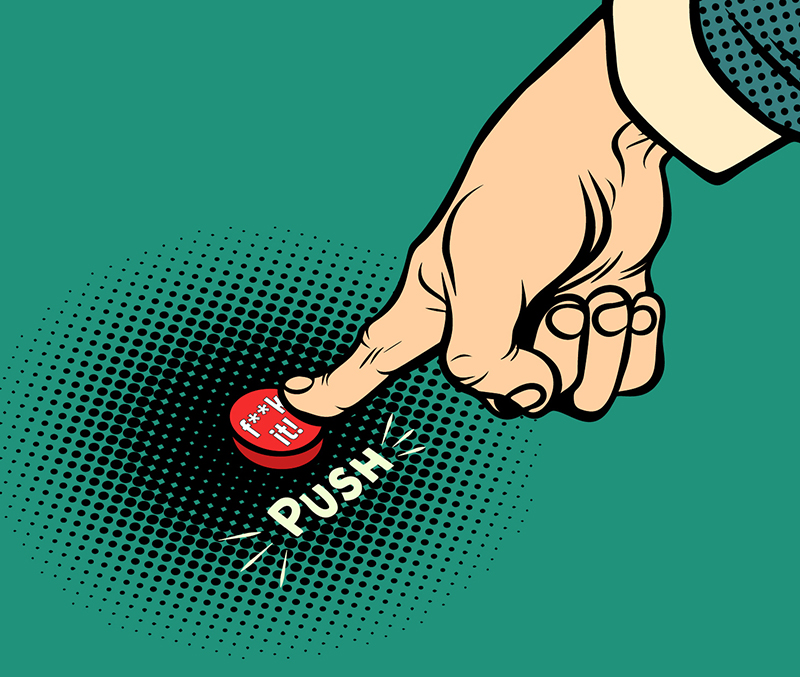
The F**k-it Button in Clinical Practice

A patient who worked as an airline cabin-crew described how she used to look after passengers in a placatory and compliant manner. As long as people were nice to her she felt effective and benevolent. However, when conflicts arose and she felt attacked or harassed, she was unable to produce any assertive response. Instead, she would remain overtly compliant whilst covertly humiliated, furious and vengeful. As soon as a cabin-incident would end, she would press the f**k-it button in her mind, secretly aware that she was now “doomed” to go through a familiar escalation that was unavoidable and inevitable. This led to an immediate relief; the reality of conflict, humiliation, rage and aggression was deleted and replaced with toxic excitement. Later, at her first opportunity, she would take her phone out of her pocket, go on a sex-dating app, and swipe many profiles looking for someone to fit her need to “hook up with the sleaziest man in the bar.” She would arrange to meet, get intoxicated and have unprotected sex. This was later understood as her need to feel both harmed and harmful—an aggressive aim camouflaged and equilibrated by self-harm.

Like what you are reading? For more stimulating stories, thought-provoking articles and new video announcements, sign up for our monthly newsletter.

As a side note, before going back to the main argument, I would like to make a general observation here: Mobile phones are hives of f**k-it buttons for those who need them. As such, people hold the gate to a highly addictive world of potential toxic enactments in their pockets. Clearly, most people might not feel compelled to press these buttons but I suspect that many would do so anyway, just because the buttons are there, whilst those who rely on a f**k-it buttons for psychic survival would find not pressing them very difficult to avoid.

Most of my patients press the f**k-it button when they need to transition from a passive state into action. Once the button is pressed, the reflective and pained part of the personality takes a backseat from which it can only watch the unfolding enactment, usually rehearsed, ritualized and harmful. Significantly, the passive backseat observer is not an innocent victim. Instead, it is often the part of the personality that secretly presses the button in order to summon the enactment demon. It might then proceed to passively watch in horror (or voyeuristic excitement), later to report what happened with shame and guilt, projecting helplessness and asking for sympathy and protection.

People with whom I have worked who have been groomed and abused, or those who had to endure other chronic and oppressive relational trauma, rely on internal structures that helped them survive their experiences moment by moment. I often imagine these structures as protective systems that have been hacked into, their codes and algorithms changed from within, allowing access to intrusion, neglect and abuse by disabling or perverting benign protective aggression.

Like many of my patients who rely on f**k-it buttons and enactments, the airline crew worker I described was unable to use aggression in a protective, self-preservative way in the moment. It is hard to be anything but compliant and kind when all eyes and ears are on you in a closed cabin at 35,000 feet. Instead, she pressed the button, re-evoked the old hacked-into structure of her traumatic past, and transformed her aggression into a toxic, harmful and sexualized mix that she psychologically depended on in order to survive moments of intrusion and humiliation.

Most of my patients are initially surprised to find that they press the button a long time before they actually act destructively. Tracing it back to that point rather than focusing on the action at the end is very helpful. It usually shows that the button is pressed with great relief and even excitement, very different to the patient who later describes his actions with shame, guilt and regret. Rewinding a bit more usually leads to the emotional level of unbearable rage, humiliation or at times depression. Further rewinding often leads to an original relational trauma that needs to be explored in order to understand the creation of the initial structure.

Tracking the route back allows for a truthful path into the core, one that does not neglect collusion, sadomasochistic excitement or other addictive and gratifying states of mind. Clinically, I try to make sure that all parts of the patient’s personality act as my guides on this journey back, not just the shamed victim or the callous perpetrator. Exploring the f**k-it button, which part of the personality presses it internally, when and why, makes this therapeutic journey very accessible.

Lately, when I talk about this dynamic to other professionals, they often associate it to the political and social parallels of the current era: fake news, hacking, collusion and pressing the f**k-it button as a political choice–watching with glee at the destruction that follows. F**k-it buttons are in the mind. However, their concrete representations are abundantly available and easy to use in order to distract from any sense of oppression and convert aggression into excitement, envious attacks or sadism. Harmful aims are easy to hide behind screens, swiping and clicking away.

I believe that avoiding the buttons has become much harder these days. Spotting them in the consulting room and using them as a metaphor to enhance thinking and reflection is very helpful. One of my patients summed it up very effectively when he said, “So really, what you are actually saying is that I should stop pressing the f**k-it button and take the difficult way in rather than the easy way out.”  

Therapeutic Fanfiction: Rewriting Society

In our work as geek narrative therapists, we’re often asked if we actually use fanfiction in session, and the answer is yes, we really do! For those who are unfamiliar with the term, “fanfiction” refers to creating one’s own stories based on beloved characters from existing pop culture narratives. Using fanfiction in therapy enables clients and therapists to rewrite the hero’s journey using narrative techniques. Since fanfiction is most often character-driven—getting inside the head of a character and asking “what if”—we can do the same with our clients, asking them to explore “what if” scenarios for themselves. For many clients, seeing themselves as the hero feels unfamiliar, and this is where fandom attachment or parasocial relationships can be uniquely helpful. Clients can use their emotional connection with fandom characters to create therapeutic fandom avatars and craft a fanfiction story that mirrors their own lives. With therapeutic support, they can begin to see their own heroism from the perspective of these beloved characters.

Like what you are reading? For more stimulating stories, thought-provoking articles and new video announcements, sign up for our monthly newsletter.

Such was certainly the case for Cas (an amalgamation of several actual clients), a 25-year-old gender non-binary individual (biological gender female) of Ashkenazi Jewish descent, struggling with anger management issues and the fear that they would always be other. During our first session with Cas, they verbally noted our Adventure Time BMO, short for ‘BeMore’ tea mug, commenting that they had never seen a tea mug that was “quite so square.” We took this as an invitation to begin using therapeutic fanfiction early in our work. We shared that BMO, the gender nonbinary robot and video game console, was one of our favorite characters in Adventure Time, and asked Cas if they, too, enjoyed this cartoon. Cas eagerly explained that they loved this cartoon and that BMO resonated with them because BMO is on a journey to be “both a little living boy and girl who drinks tea.”

In the next few sessions, we fully employed the narrative tool of externalizing a problem via everyone’s favorite green superhero, The Incredible Hulk. This conversation was again initiated by Cas who remarked on the Hulk painting displayed on our wall: “Ha! That’s really true: mad does make sad.” We engaged Cas in a narrative therapy discussion around Bruce Banner, a.k.a. The Incredible Hulk, explaining to Cas that just as Bruce was not Hulk, they, i.e. Cas, were not their anger. We explained that understanding themselves as both connected to, but distinctly different from, their anger, might help them start to understand anger’s presence and reason for being in their lives. We then used the language of the Hulk comics to process their recent angry outbursts.

In subsequent sessions, we used the increased insight that Cas was gaining around both anger and the events that trigger anger to help them create a fanfiction action plan using Bruce Banner/Hulk as a stand-in for Cas. As part of this work, Cas was to pay mindful attention to their mood state, and when they noticed that they were beginning to feel angry, to place themselves into an Avengers fanfiction story in the role of Bruce Banner. They were to imagine that the team was working on a case and to ask themselves who was needed most—Bruce Banner or Hulk—playing out both scenarios to determine who would be best equipped to resolve the situation at hand. If the answer was Hulk, then they were to give themselves permission to feel anger without shame. If the answer was Bruce, then Cas was to engage in deep breathing and call upon their inner Black Widow to say soothing words to calm the inner Hulk. This was effective not only because this type of verbal play added a feeling of fun and whimsy to therapy, it also helped Cas maintain enough distance from anger so that shame was not triggered. Over the next three months of weekly sessions, Cas was able to continue the use of therapeutic fanfiction to both develop and implement strategies to de-escalate feelings of anger and to increase their frustration tolerance. They felt more in control of their inner Hulk.

At first blush, fanfiction and the hero’s journey may feel like disparate concepts for clinical work, but we have found that these concepts are not only congruous but incredibly healing in a therapeutic setting. Because there are fewer pop culture narratives made specifically for queer audiences, and because of queer marginalization in general, these conversations are all the more important and powerful. Therapeutic fanfiction allows queer clients to pick up the red editor’s pen and begin to adapt the story of their lives, creating a narrative in which they are the hero.   

What Do I Say Now? Coping with Uncertainty in Unstructured Psychotherapy

Come On, Be Helpful!

“I’ve been thinking about what we discussed last time,” the client began. “I think it would be best if I came here for long term therapy and I have to leave in half an hour.”

For a moment I was mind boggled by this dramatic expression of ambivalence. But I shouldn’t have been entirely surprised. The client, a 23-year-old woman named Sandra, had been disconcertingly difficult to pin down in the previous session, our first. She had come to therapy at the suggestion of other people, had described vague symptoms, and, when questioned about issues that sounded significant, had consistently denied that they troubled her much.

My work with Sandra occurred while I was in graduate school, and relatively new to doing therapy. At that time, I was still struggling with a problem that many of us experience early in our careers, especially when doing unstructured and/or non-behavioral psychotherapy: anxiety about how to respond to a client who gives you no clear focus and leaves you feeling increasingly lost.

I had encountered several such clients. Unlike the “easy” clients I’d always imagined and sometimes actually gotten—that is, clients who responded readily to questions and who moved quickly into important issues—many other clients were not so easy, and some especially not. For example, they might have trouble articulating their concerns, or, after articulating them, might find it hard to talk. Or, they might become superficial or tangential, or might seem unable to voice any clear focus or sense of what I could do to help them. “I knew it was my job to find the right questions to clarify their issues”. I was committed to exploring their concerns from a humanistic and psychodynamic perspective because I knew from my own experience how valuable such exploration could be. But this approach to psychotherapy rarely gives definite answers; rather, it emphasizes the importance of gradual self-discovery. And my training in these orientations now seemed hopelessly abstract and irrelevant in the face of these more difficult clients, and of their confusion—and my own—about what exactly we needed to do. My confusion was often accompanied by a nagging feeling of anxiety that sometimes bordered on a panicky sense of paralysis: Come on, Michael, do something helpful! But what?!

At the time, I did not know how common this anxiety is among inexperienced therapists—especially those of us who are inclined toward hyper-responsibility. In his excellent book Restoring Mentalizing in Attachment Relationships: Treating Trauma with Plain Old Therapy, Jon Allen recalls how lost and anxious he felt when he treated his first patient with systematic desensitization only to find that the patient was not satisfied with structured treatment and just wanted to talk about his problems. Allen went on to describe how he spent much of his early career hoping to find a clear-cut structured procedure for working with such patients, only to realize, eventually, the “utter folly” of his quest.

Exhausting Learning Curves

Much later in my own career, I saw the same struggle in many of my students when I taught an undergraduate course in elementary counseling techniques. The students were eager learners, and many had been in therapy themselves. When I cautioned them early in the semester that good counseling cannot be achieved simply by applying rules and techniques, they expressed understanding and agreement. But when they embarked on regular practice sessions in which each of them had to counsel another student about a real issue, these students had to face, for the first time, something that every counselor and therapist has to confront at one time or another: the anxiety of sitting face-to-face with another human being who is struggling with a real issue, and realizing that you haven’t the faintest idea what to say or do next. A few of the students had impressive natural skills and took to unstructured work like ducks to water; but most of the others experienced varying degrees of anxiety, sometimes expressing intense frustration that they were not learning enough.

I tried to explain to them that there is a learning curve and that as you increase your knowledge and experience in counseling, your anxiety is gradually replaced by a disciplined sensitivity and intuition that begins to guide your exploration. But the problem with this kind of reassurance is that the learning curve to which it refers is maddeningly difficult to describe. I will attempt to do so below, but it may be helpful to start by telling a story that clarifies the kind of learning curve I am talking about.

A few years ago, a young woman approached me in a coffee shop and identified herself as a student who had taken my counseling class ten years previously. She told me that she had gone on to attain a masters degree in a mental health profession, and she said that she wanted to thank me because my undergraduate counseling class had taught her more about doing psychotherapy than any of the courses she had taken in her graduate program. Naturally, I was delighted to learn that she had gotten so much from my class. But what really surprised me was that I remembered this student quite well, and that her course evaluation, which I still have, had expressed great anger about how little she had learned in my class!

So, what is this mysterious learning curve to which I refer? Well, it involves a number of things: learning how to create a supportive atmosphere; learning how to draw the client out with the right kind of questions; learning how to listen—really listen—to what the client is saying; and learning how to follow the many hints and leads in what the client is saying that may not be entirely obvious to the client himself or herself. Of course, these “hints and leads” are different for every client, which is why they cannot be specified in advance. But it is possible to show examples of this discovery process by looking at specific cases; and this brings me back to the client I described at the beginning of this article, Sandra.

An Introspective Swamp

As I have already mentioned, Sandra had presented in her first session in a way that was elusive and confusing. She had voiced vague complaints of anxiety and a general sense that she did not know if she could open up to a therapist. She was equally vague about the history of her anxiety, stating that both her mother and a friend named Matt had encouraged her to seek therapy after she had experienced abusive treatment by a man she had dated briefly. When I asked her about this and other experiences in her life, she had touched on several apparently important topics, including a sense that her relationships with men never seemed to work out; yet she denied that any of these issues had troubled her much. She expressed a feeling that it would be nice to talk to a therapist about these things, but she also questioned whether therapy might just lead into unnecessary rumination and depression. Given her ambivalence, I had suggested that we meet for three to five sessions to evaluate her concerns and then decide about possible further therapy.

As noted at the start of this article, she had begun her second session with the disorienting announcement that she had decided on long-term therapy and that she had to leave early. The remainder of this session did little to clarify where she was coming from. I began by asking her what had made her decide she needed long term therapy. She replied that she had had a long and intense conversation with her friend Matt in which they had discussed her personality. Matt had told her that she was “neurotic,” that she had “the worst self-image of anyone that he had ever met,” and that she needed therapy. After this, “Sandra had fallen into an “introspective swamp” and had been depressed for most of the week”, eventually concluding that she must be “messed up” and in need of long-term therapy.

Remembering that she had wondered in her first session about therapy leading to unnecessary rumination and depression, I reflected that she seemed to have mixed feelings about therapy. On the one hand, she felt she needed long term therapy, but on the other hand, she worried that too much introspection might lead into a “swamp” of depression, as had apparently happened with Matt. She quickly dismissed this possibility, however, and said that therapy once a week would not be too much introspection. Her dismissal seemed a little too easy.

Since I wanted to determine if her wish for therapy was coming primarily from her—as opposed to Matt—I asked if she could tell me which areas of her life might be problematic.

“Define problematic,” she said.

“I’d rather leave that to you to define.”

“Well, do you mean my childhood, or what?”

“I wasn’t necessarily thinking of your childhood. I was wondering about problem areas in your present life.”

“I’m not sure. I can’t think of any.”

“Well, last time you mentioned that your present life is not too happy in certain areas”

“True, but they’re not that bad. They only seemed that way when I thought back on them.”

“My confusion was increasing rather than decreasing”. She wanted therapy but seemed to be saying that she had nothing to work on. I tried again.

“How was it that Matt convinced you that you were neurotic?”

“Why do you ask?”

“Well, I understand that Matt thinks you’re neurotic, but I don’t know how you see yourself, what you think your problems are.”

“I don’t know what my problems are. That’s why I’m here!”

My head was starting to spin. I tried a different tack.

“What do you want in life?”

“Well, I’d like to graduate, to get good grades, to get a good job that pays well, and to have happy relationships.”

“Are you getting what you want?”

“Academically, yes. I have friends, and I’m getting along with my parents all right.”

“What about happy relationships?”

“Well, my love life is not perfect. But I believe it will get better.”

“What do you suppose is interfering in your love life right now?”

“I really don’t know,” she said. “Maybe it’s just a coincidence that nothing has worked out so far.” As I was pondering this, she added, “Is this normal?”

I observed that she seemed to be concerned about the process of the evaluation. She replied “Yes, you’re right. I shouldn’t do that.” I replied that there was nothing wrong with being concerned about it but that it might be helpful if we talked about it more in our next session. She said “No, that’s okay. I promise not to ask so many questions next time.” As our time was up, the session ended on this note.

Managing Uncertainty

Over the next week, I thought a lot about this case. I was baffled by Sandra, and frankly had no idea where to go from here. It wasn’t even clear to me that she needed therapy or, if so, why, since she was unable to identify a focus and seemed to have come to the clinic under significant pressure from her friend Matt.

I was starting to experience some of the anxious confusion described above—the kind of distress that early-career therapists experience, particularly in sessions where the client’s concerns seem persistently vague and elusive. Like Jon Allen, I could feel myself longing for reassuring structure. I considered referring Sandra for psychological testing, but as I thought about it I realized that this was more to still my own anxiety than to aid in evaluating her. I thought about doing a more traditional evaluation, asking her about various areas of her life (work, family, friends), but we had already done some of this and it appeared to be leading nowhere. I thought about focusing further on her feelings about being evaluated, but there was a very real possibility that we might end up spending the rest of the evaluation talking about the process of us talking about the evaluation!

As previously mentioned, this case occurred while I was still in graduate school, and I can add now that it was at just the point when the learning curve was beginning to bend for me. I had experienced confusing clients before and knew that the anxiety they evoked in me could signal important dynamics, both within our interactions and within the client. I knew that if I could read these signals correctly and use them to guide further therapeutic actions, they could become an aid rather than a hindrance in the treatment. I had absorbed a significant amount of clinical theory that had helped to guide this process. And one theoretical insight that had struck me as particularly relevant to coping with my own anxiety in doing unstructured psychotherapy was a central tenet of existential psychotherapy—the idea that every act in life, and in psychotherapy, is, in some sense, a “leap of faith,” a “jump from being into nonbeing.” There is no way of knowing where it will lead; what really matters is how we handle the uncertainty.

I thought about this now and realized that the most important thing that I could give this client was the willingness to continue the unstructured work, to step once again “from being into nonbeing” with her, and to see where it led.

Sandra arrived early for our third session. When we met, I began by asking if she had had any thoughts about our previous meeting. She said that she had. She had decided that Matt’s “thing” was therapy and that he had influenced her too much. She had also thought about the questions I had asked about her life and her relationships and had decided that most of her questions were “Dear Abby type questions,” like how to act on a date and when to kiss someone. She said that she would like to have a longer-term relationship, but she added that her relationships were not too brief and that brief relationships could be fun too. When I asked about the anxiety she had mentioned before, she said that she did feel “sort of” anxious at times, but “not too often,” and she speculated that maybe she just got too wrapped up in thinking about it.

At this point she suddenly asked, “What do you think of me?” I replied that she seemed concerned about being analyzed and noted that she had wondered about normality in our last session. She agreed that she had wondered about this—especially when she was in high school, a time when she had been shyer and more introverted—but that this was not much of a problem anymore. I said that I had the impression, however, that there was something attractive to her about the idea of therapy. She admitted there was, and asked what other people talked about. I replied that they talked about a wide variety of things and that I wondered if she was concerned, again, about whether she was normal.

“Yes, I probably am,” she replied. “I’m only here because of Matt. He called me just before I came today and said, ‘Don’t back out.’ I told him “Now listen, I’m going to go by whatever the counselor says. It’s up to him.”

“Why didn’t you tell him it was up to you?”

“Matt would never accept my judgment.”

“Suppose he didn’t. What would happen then?”

“He would say ‘You’re making a big mistake, you’ll be sorry!’ Then I’d have to defend myself to him, especially if things went badly and I became upset later.”

“Wow!” I said. “That sounds pretty uncomfortable. You’d have to defend yourself, maybe at a time when you were already feeling upset about something else. I can understand why you wouldn’t want to be in that position.”

“Yes, it would be uncomfortable! “I don’t know why I’d have to defend myself to Matt. It’s not up to him. We’re not doubles”.”

“What do you mean?”

“He seems to regard us as emotional doubles. When I first told him about the abuse I experienced, he described how he had been in a similar situation once. But we’re not that much alike. He doesn’t necessarily know what’s best for me. No one knows everything.” She sounded a little surprised by this insight.

At that point, I reminded her that when she had first come to the clinic she had said that her mother had also recommended that she come in for counseling. She said that that was true, that her mother had also felt that Sandra had been traumatized by her recent experience of abuse. When I asked why, Sandra explained that her parents had known she was upset and that her mother had attributed many little reactions of Sandra’s to the abuse. She added that her parents were surprised that the abuse had not “blown her away” or “freaked her out.” She had always been “sort of high-strung” and they had expected her to react a lot more negatively than she had. I commented that sometimes people in families fall into certain roles; the family expects them to be a certain way and then they begin to see themselves that way. I wondered if this had happened in her family and if it had had anything to do with her concern about how normal she was. She seemed quite interested in this idea and said that it might. She said that her whole family was somewhat volatile and that she was just a little more open about her feelings than the others.

By this time, we were nearing the end of the session and she said to me, once again, “What do you think of me?” It seemed appropriate to give her more feedback at this point. I told her that I thought she was very influenced by other people’s evaluation of her. I added that I suspected this had something to do with her experiences in her family and that it had operated regarding Matt. She said “Well, Matt is kind of a unique case” and then stopped mid-sentence and corrected herself, saying that a boyfriend she had had in the past had done the same thing. I suggested that we discuss this further in our next session. She said thoughtfully, “Yeah, they don’t have divine inspiration.”

Lessons Learned

Sandra and I met two more times. During the first of these sessions, Sandra reported that she was in a good mood and felt good about our previous session. But, she had realized that her parents had imposed labels on her many times, such as “hyper” and “emotional.” We explored her relationships with men and how she might better, or at least differently, handle feelings of insecurity. We also discussed whether further therapy would be helpful. I emphasized that her own judgment about this was most important.

In our final session, Sandra said she had been feeling good and that she had been taking things more in stride since our sessions. She had tentatively decided not to pursue longer term therapy, but she asked if she would be able to see me if she decided to come back later. I said she could, and we decidedly left the door open; however, she expressed satisfaction with things at present and a sense that she could deal with things on her own. She did not return.

I have described this case in some detail because it embodies a moment when I became particularly aware of how one can manage one’s anxiety about doing unstructured treatment while feeling lost at sea in a complicated therapeutic dynamic. Sandra’s presentation, particularly during her first two sessions, had evoked significant anxiety in me due to its elusive and confusing character. Before our third session, I had given much thought to this and realized that “I had to accept my anxiety, recommit to the unstructured approach, and follow it through to increasing clarity about Sandra and her concerns”. Reflecting on the case now from a more experienced vantage point, I see three factors that made this possible.

First, I had already accumulated a degree of confidence from my previous experience working as a volunteer counselor and a graduate intern. Of course, confidence is a double-edged sword. It does not always match good performance and can even reinforce poor work, a fact which therapists—especially new therapists—cannot afford to ignore. But in my previous work, I had gained real experience and had supportive supervision that had taught me a great deal. Looking back on my work with Sandra, I now see that even amidst the confusion of our first two sessions, I had laid more groundwork with her than I had initially realized—if nothing else than by taking her concerns seriously and working hard to understand them. And Sandra’s movement toward greater openness, her willingness to revisit material I had not understood, her remaining in the session she had planned to leave early, her arriving ahead of time for her next session and her increasing interest in therapy all suggested that she was feeling a greater sense of trust in our work. I believe, therefore, that some confidence was justified. But perhaps more importantly, if this had not been the case—if things had been moving in the opposite direction toward greater confusion and discomfort in the sessions—I believe I had also acquired some justified confidence in my ability to recognize when these kinds of problems develop, to point them out, and to carefully engage her in an exploration of why.

Second, by this time in my career I had studied a variety of theoretical perspectives on psychotherapy and I was able to draw on several of them during my work with Sandra. Having these perspectives available gave me the tools to ask questions that seemed to move the process forward; and furthermore, they had sensitized me to important clues in what Sandra had already said—the “hints and leads” to which I alluded above. In the third session, particularly, I can now see that—while I was not conscious of it at the time—I drew on several different theoretical perspectives in the following interventions to better understand and work with Sandra: (1) Rogerian reflection (to deepen our understanding of her concerns about normality, rumination, depression and social influence); (2) existential confrontation (to point out that the decision about further therapy was hers, not Matt’s or mine); (3) Rogerian empathy (to validate her concerns about Matt’s criticism); (4) psychodynamic exploration (of the childhood sources of her self-doubts), and (5) systems theory (to consider the role she might have fallen into within her family).

Though I drew on diverse perspectives, “I believe I escaped the dangers of shallow eclecticism” and/or using various techniques mechanically (as I was later to warn my students against) because I was also developing my own overarching theoretical perspective, which was primarily psychodynamic. From this perspective, I was forming a rudimentary sense of Sandra which could point the way forward in using these interventions productively and which was roughly as follows: She was a young woman whose family circumstances and social experiences had left her with some issues of hurt, shame and over-reliance on the opinions of others; but her inherent strengths and intelligence were also enabling her to develop an increasingly strong sense of autonomy. Her ambivalent presentation in therapy reflected feeling caught between, on the one hand, wanting to explore in detail the sources of her insecurity; and on the other hand, wanting to assert her autonomy and move on with her life. Between the second and third sessions, I came to realize that the most helpful thing I could do for Sandra was to sideline my own anxiety, to stay with her exactly in the middle of her ambivalence, and to use what I knew about psychotherapy to help her discover precisely what she wanted to do.

The third and most important factor that made this possible was the inherent strength of the client herself. Even though she was, at times, exasperatingly vague and ambivalent, she also showed a consistent commitment to hang in with the therapy and continue exploring her concerns. In fact, Sandra’s investment in the treatment and her ability to use it successfully highlight a crucial truth for me about psychotherapy, one that should be both sobering and reassuring to any relatively new therapist: in the final analysis, the most important factor in successful treatment is not the work of the therapist but rather the work of the client.

This point can hardly be overemphasized. Anxiety in new therapists is almost always accompanied by an overestimation of the importance of their own interventions. Of course, interventions are important, but not as important as the client’s ability to use them. This fact may be a blow to our therapeutic egos, but it should also be deeply reassuring. My students sometimes feared that they would make a mistake that would damage the client. I assured them that all therapists make mistakes and that these mistakes, in themselves, are rarely damaging. What is truly damaging is when we fail to realize that we have made a mistake and go on to make it again and again—usually as a result of inadequate training, impaired self-reflection, narcissistic overconfidence, or some combination of the three.

Barring serious mistakes by the therapist, most clients will get better if they are motivated to do so. Even without psychotherapy, most people who suffer from psychological problems will tend to show improvement over time. But competent psychotherapeutic help from any number of theoretical orientations can significantly strengthen and reinforce this process, especially when the relationship and fit between the client and the therapist is good. And in unstructured psychotherapy, the commitment of the therapist to step with the client “from being into non-being” can play an important and helpful role.  

Listening Up and Leaning In: Active Listening in Therapeutic Relationships

As a brand new, inexperienced first year medical student, I took the required patient interview course. Actors were hired to portray patients with a variety of medical conditions. On my first day, dressed in my short white coat, notebook in hand, I entered the exam room. “Hi, my name is Dr. Anthony (I was a young, single student at the time),” I began. “What brings you into the office today?” As soon as my patient began her story, I started to formulate my next question while anticipating her possible responses. I heard everything she said, evidenced from the copious notes inked in black on the pages in my hands. But, I really didn’t listen to a word she said. Over the years, I have learned the importance of active listening. As a student, I focused on hearing my patient’s account of her illness, allowing me to gather pertinent details. Now, as an experienced clinician, I have come to appreciate how active listening serves the additional goal of helping the listener gain understanding and trust. I have also come to realize that in most circumstances, how the patient experiences our interaction is as important as what he or she tells me. While my training taught me how to gather details, it did not teach me the practice of active listening. Studies suggest that the brain’s reward system is triggered during active listening. In a 2015 study published in the journal Social Neuroscience¹, researchers selected 22 participants who were video recorded while reading essays they wrote about a variety of their life experiences. Evaluators (actors hired for the study) were instructed to view these videos and demonstrate either active or non-active listening behavior. Researchers then conducted functional magnetic resonance imaging (fMRI) on participants while they viewed the evaluators assessing their video clips. Participants rated both the evaluators who showed active listening and the episodes where there was active listening more positively. The results also showed enhanced neural activation in both the ventral striatum and the right anterior insula when active listening was perceived. These brain areas are associated with motivation and reward. Both results suggested that the active listening process was rewarding in the truest sense of the word. Active listening allows us to gain a deeper understanding of our patients. When we understand our patients, we gain insight into their complex lives. We begin to see beneath the layers of their narrative to the “real” story. When we give our full attention to a person, we are able to maximally receive his or her message while decreasing the interfering “noise” of our own thoughts. The noise is all those activities our brains engage in when we are not listening to the person who is speaking. With active listening, our focus centers on truly and deeply knowing the other, instead of being known. A patient labeled as ‘non-compliant’ for not taking their medication becomes a patient who, after losing his job, is too depressed to get out of bed in the morning and muster the energy to take their medication. When we build trust with our patients, they find comfort and safety as they reveal their concerns. We trust that what they are telling us is their best understanding of what they are experiencing. We are not imposing our agenda on them and are able to receive what they have to share with us. Of course, there are times when our agendas are important as certain details must be clarified and understood in order to allow us to do our jobs. However, active listening helps us forge more holistic relationships with our patients, giving us a clearer picture of the individual sitting across from us. With intention and practice, active listening helps us become attentive and receptive to what another has to say. Your own emotions might shift in response to what is being shared. You will know another person in a way that you didn’t previously, increasing your capacity for sitting in his or her experience or emotions. Active listening engages empathy, also housed within the brain. How good of a job are you doing at bringing active listening into your conversations? The International Listening Association suggests asking yourself these questions to understand whether you are engaging in active listening: Are you giving the speaker 100% of your attention? Are you listening to understand, rather than listening to respond? Have you opened your mind to receive what is being said? Have you rejected the temptation to prepare your response while the other person is speaking? Are you open to changing your mind? Are you aware of what is not being said as well as what is being said? Are you taking account of the degree of emotion attached to the words? Are you aware of any differences, and similarities (such as culture, age, gender) between you and the speaker which may influence how you listen? Are you giving signals to the speaker that you are listening? Are you valuing the speaker and the experience they have gathered in their life so far? Active listening is an important tool in every doctor and therapist’s toolbox. It can help facilitate more trusting and deeper therapeutic relationships. In our professional and personal lives, active listening can lead to more connected and rewarding interpersonal interactions allowing us to experience even greater fulfillment. Resources

  1. Perceiving active listening activates the reward system and improves the impression of relevant experiences. (2015). Kawamichi, H., Yoshihara, K., Sasaki, A T., et al. Social Neuroscience.

Advocating for the LGBTQIAA in Psychotherapy

I trace my commitment to serving underserved communities to my Jewish heritage. As a Jewish person, I am a member of a resilient minority group that experienced centuries of oppression and genocide. This cultivated inside me a sensitivity to discrimination and connected me to a passion for social justice. I have become active in my university’s LGBTQ+ club and feel that it is my civic duty to advocate for LGBTQIAA+ (lesbian, gay, bisexual, transgender, queer, questioning, intersex and allies) clients so they can be better served.

I’m also sensitive to others’ suffering because I grew up with a speech impediment. As a child, most people didn’t understand that my stutter was involuntary; peers told me to “slow down,” and “just relax and speak.” People didn’t understand my suffering, and I agonized in silence until I learned how to mostly overcome it. Since overcoming it, I’ve hoped to prevent similar suffering in others.

Like what you are reading? For more stimulating stories, thought-provoking articles and new video announcements, sign up for our monthly newsletter.

How would you feel if the general public regularly imposed a gender and/or sexual orientation on you that did not accurately represent who you feel you are?

You don’t have to have suffered like I did to make a difference for the LGBTQ+ community, which is estimated to be 10% (and this only reflects those who feel safe to report) of the world’s population. We all have experienced a little taste of what it feels like to be discriminated against. This community has been fighting an uphill battle for their lives, with their jobs, families, and interpersonal relationships constantly at risk. They endure constant mislabeling, violence and judgment. The most covert, perhaps, is people assuming it to be a choice when it's not. Here are some questions to think about in your practice:

Do you assume couples are monogamous? Do you assume all your clients are cisgender? Do you assume heterosexuality if someone is currently in a heterosexual relationship? Do you assume the client you’re talking to is heterosexual? For example, have you, knowingly or unknowingly, asked if a female client has a boyfriend instead of a “partner(s)?”

The he-she binary inadvertently erases trans people. There is more variation to human gender than merely “ladies and gentlemen” or “men and women.” Since the vehicle of change for psychotherapists is primarily language, we can start by using inclusive, respectful, and empowering language. You can start by using person-first language, identifying your pronouns, calling out the use of terms like “mankind” and “he/she” and the existence of mostly binary bathrooms (unlike other gender-inclusive countries like Canada with primarily unisex public bathrooms). There’s even a case to call history [his-story], “her-story,” “their-story,” or our-story.” No wonder LGBTQIAA+ youth have a high suicide rate. Here’s a case example.

Al is a 14-year-old, assigned female at birth, but who identifies as a male. He has a pronounced trauma history; his father abandoned him to raise another family and, at 5 years old, his mother left him with his grandmother. He was placed in homeschool in 2017, has been isolated, and voiced suicidal ideation in the initial assessment. Virtually all his social contact has been online chatting with other trans youth.

Early in treatment, Al mentioned wanting a doctor’s note for hormone therapy. Not infrequently, psychotherapists working with trans clients receive requests for documentation that a trans person has diagnosable gender dysphoria that has caused substantial mental health issues such as suicidal ideation, and is “mentally fit” for hormone therapy and to make decisions about their own body. This helps doctors/insurers understand that hormone therapy and gender reassignment surgery can support, instead of hinder, a client’s mental health. Insurers and/or doctors may request them.

Contrary to traditional belief, I considered that it was both ethical and empowering to provide Al with this note sooner rather than later in the therapy. Here’s why.

We are not gate-keepers who decide what clients can do with their bodies. We shouldn’t block Al’s access to resources that a cis-person could access without a therapist’s permission. Best practice for me is that if a client wants a letter, I give them one. If a cis-male came in asking for a letter for their doctor to be on hormones and had limited social support, we would not impose stipulations. A trans person is equal to a cis-person and already has enough challenges to overcome to be who they are and have control over their body.

A therapist’s role is to not stigmatize. For example, if we require Al have 6 sessions before writing a hormone letter, it would be stigmatizing something that has nothing to do with mental illness. It would also be operating outside of the scope of our practice because we wouldn’t be determining if their mental stability is interfering with their identity. It is also not our role to determine if Al is sane to make the hormone decision, even if he’s a minor, without his prefrontal cortex fully developed. After we write the letter, it is the role of the medical doctor to determine if the client is medically able to start hormones and the doctor’s job to monitor the client’s physical body.

Al and I agreed that he is likely avoiding social situations because of the chronic mis-gendering he endured, and the invisibility of his identity navigating the world as a trans-person who is not presenting nor is perceived the way he desires. Hormones may be the catalyst that would help Al to make friends once he starts feeling comfortable in his own skin. Isolated, experiencing oppression, lack of control, depressive symptoms and desiring hormones (probably to look a certain way)—not accessing hormones could likely increase depression symptoms and suicidal ideation. After writing the letter, I provided Al with ample resources to connect with other trans-youth.

My role was to support Al where he was at, not dictate where he should be. Since Al was able to make decisions, there was no reason to limit when he started hormones.

I cannot emphasize enough Dr. Martin Luther King’s timeless notion that “our lives begin to end the day we become silent about things that matter.”

* I consulted on this case with Van Ethan Levy, Associate Marriage and Family Therapist, Associate Professional Counselor, and member of the community, who uses the pronouns Van/they.