Where You

Aimee (an amalgam of several of my patients), came into session, plopped onto the couch and said, “It happened again. Just like I knew it would.” Aimee was a 35-year old woman who came into therapy over a year ago, describing a series of failed relationships with men. She wanted to understand why it never worked out.

It can be a quandary for therapists to distinguish between outside, uncontrollable circumstances, and the patient’s participation in creating the opposite of what they consciously want. There are no absolutes. We have to understand each individual story and the patient’s unique psychology.

Like what you are reading? For more stimulating stories, thought-provoking articles and new video announcements, sign up for our monthly newsletter.

Intimacy is scary. Letting someone see behind the walls we use in everyday life is scary. Sometimes people protect themselves by continuing to choose relationships that are destined to fail over and over–different bodies, same problems.
Aimee went on, “He gave me another excuse as to why he couldn’t see me this weekend. I knew he was blowing me off, so I asked him what was going on and he said, ‘I don’t think this is going anywhere. It’s the same sentence the last five guys have said to me. What’s wrong with me?” She buried her head in her hands.

Let’s face it, relationships are complicated. It’s hard to meet people who we want to be with, and who also want to be with us. Some parts of this we have no control over. What we do have control over is removing our own obstacles to finding the love, the commitment and the relationship we want.

Having seen this dynamic so many times in therapy, I decided to write a novel exploring this very theme. I began the story, as I do with all of my fiction writing, with a question. In this book called, Where You’ll Land, the question was: Can we choose who we love?

Alex Daily, my protagonist and a psychology graduate student, meets Will. The relationship is filled with passion but is quite tumultuous; the angst from both characters, as well as some of the secondary characters, forces them all to look at the obstacles that are in their respective ways.

As psychotherapists, we all know that we don’t see things about ourselves until we are ready. It can be a nail biter to sit with a patient, observe their conflict and self-sabotage, and know that the patient is in their own way, while also knowing they are not ready to garner the awareness that leads to change.

Timing of interpretive comments is vital for insight. We have to respect patients’ defenses and we can only guide them toward the awareness they are ready to have. Our job is often clearing out the weeds (defenses) so that the flowers can be seen, while watering the flowers (fostering innate strengths) so that the patient can grow into who they really are.

Toward the latter part of the book Alex has an insight, “She kept making the same mistake over and over until she realized that if she wanted a different ending, she had to have a different beginning.” This was also my client Aimee’s dilemma.

There is an irresistible draw toward the familiar, even when we say we want to change. If we hope for a different ending, sometimes we have to rework the beginning.

But where is the beginning? For Aimee, it began with not feeling her needs were met as a child. Whenever I explored how she didn’t feel taken care of in her relationships with the men she dated, she associated that to similar dynamics in her family. She’d choose men who reconfirmed that her needs were either too much or that she wasn’t good enough.

I redirected the session. “Maybe we can talk about what Jake wasn’t giving you throughout the relationship. What you don’t get from each of these men.”

“I feel like they could leave at any moment. I’m always anxious. I want someone who will be there.”

“Could you be confusing anxiety for attraction? Maybe the anxiety has to do with knowing they can’t meet your needs, the way you felt sometimes when you were younger.”

She contemplated. “That makes sense, intellectually. But it doesn’t feel that way. I can’t make myself be attracted to the guys I’m not attracted to.”

When it comes to feeling those emotional sparks – chemistry – understanding these conflicts is a dense conundrum. We have to create curiosity. We have to ask different questions.

“True. But I think we have to start asking what you’re actually attracted to, since you’re choosing men who make you feel on edge. How is that attractive?”

She flitted her hands around. “I – It’s not.”

“Let’s try looking at the anxiety as a sign that something’s wrong, not that something’s right.”

“OK,” she said.

We spent many sessions discussing how when there was anxiety, it was usually a sign that her needs were not being met. And we talked about her right to have needs and to allow someone who wanted to meet them, close.

I don’t believe we can control physical attraction entirely, but we can change some of what we are drawn to and we can control the decisions we make regarding who we allow ourselves to open our hearts to. If we are being open to people who continually disappoint and frustrate us, who perpetuate narratives from our life that are painful, then we need to ask why we are deciding to fall for the same type of relationship. And as therapists, we need to guide our patients to be curious about these questions. Because as Alex comes to understand in her story and as Aimee came to understand after a few more failed relationships:

Maybe we can’t decide who we fall for, but we can decide who we want to be with when we land. 

Hotel Room Therapy

As I offer therapy online, many highly mobile and displaced individuals naturally drift into my practice. “We meet in a couchless space unattached to any physical location”, or rather suspended in between the two places—my office perched below the Parisian rooftops and the often-fluid, ever-changing locations of my fidgety clients.

Sometimes they connect for our sessions from a hotel room. I always pay attention to my client’s surrounding—and when an unfamiliar background sparks my curiosity, I naturally inquire into this new place, and we spend some time locating ourselves. The client might tell me about the country or town they are currently in, about this particular hotel or the area.

These “hotel sessions” tend to bring up “a sense of discomfort that resembles lostness—a feeling of displacement, of not-quite-being there,” in the striking words of a wandering writer Anna Badkhen. As a displaced person myself (I grew up in Russia but now live in France), I can easily relate to this feeling, and every time I notice an anonymous hotel room behind my client’s back, my heart sinks in recognition.

Lorraine

One day I stumbled on an essay by Suzanne Joinson dedicated to “hotel melancholia”, and the author’s experience reminded me of so many of my mobile and displaced clients; especially, Lorraine.

“Lorraine’s consultancy work made her travel constantly”. She would usually spend a four-month period in a country, only to then move to the next assignment, always located in a different country, often on a different continent. I cannot remember ever seeing her connecting from any other place than a hotel—she was my quintessential ‘hotel room client.’

Lorraine was in her mid-30s, bright, successful, and extremely lonely. After a few sessions, I finally asked about whether she had a “base.” Lorraine marked a short silence—her beautiful pale face rarely showed any emotion: she did not. Her very few belongings were stored at her parents’ basement in Canada. She had given up on having a home years ago. She travelled light; just a big suitcase and a laptop.

Lorraine lived in hotels, usually big chains—comfortable, impersonal and exactly as Suzanne Joinson describes “it was fun, for a few years, until suddenly it wasn’t.” I came into the picture when the fun had gone. However, Lorraine never complained—it was “not too bad”, and, after all, every couple of months she would be allowed a break to spend a few days elsewhere. These short trips would be just enough to keep her sanity.

In our co-created placeless bubble, we communicated in English—a second language for both of us. We also had French in common, but Lorraine had unequivocally chosen English from our very first email exchange. She confided that she felt more comfortable in this language that she acquired as a teenager when her family relocated to Canada.

“Lorraine was a Third Culture Kid”—brought up by a biracial family in a country that was neither of her parents’ original home. She was half-Korean, half-French.

Why was she in therapy? Sometimes I wondered, as she seemed rather content with her transient life. Talking with her often created a strange cognitive dissonance—I sensed her distinct unhappiness, but she would never verbalize it, never express any deep dissatisfaction or nostalgia for a home or a relationship.

She had friends of course—mostly dispersed all around the globe. She would visit them during her breaks, sometimes for an adventurous holiday, sometimes in their homes in case they were freshly settled and building a family. Strangely, after these trips Lorraine would not express any more desire to settle or to attach than usual. “It was nice,” she would comment.

Lorraine seemed attached to her itinerant lifestyle more than to anybody or anything else. She did not seem to miss her parents. Their presence in her adult life seemed to create more hassle than anything, as they got used to asking her for help in doing their paperwork, relying on their daughter’s indisputable competence. In her constant relocating from one place to another, being able to deal with paperwork efficiently was a question of survival. Efficiency was something Lorraine valued highly. I learned that in her vocabulary “being inefficient,” meant many other things too; like being overwhelmed, exhausted, or emotional.

When she was a child, her family moved a few times for her father’s professional assignments. I never really got a sense of how it was to grow up in her family. She was an incredibly docile child and later a very capable adolescent, never creating problems for her parents. She simply did what she was supposed to do and did it well. She worked hard at school, gained a commendable degree and went on to take a lucrative job. It seems that in her family everything was about efficiency. Her Korean mother was a perfectionist and would get very upset if something was not done exactly how it should be, whilst her French father was hard on people who did not live up to his expectations.

Emotions had little or no place in this family. For somebody as well educated as Lorraine, she had little awareness of her emotions and struggled to name her feelings, usually using the words “bored” or “frustrated” to cover up other emotional experiences.

In therapy, she was hard work for me.

Holidays and Homes

Of course, occasionally she would travel back to Canada to spend Christmas or Easter with her parents. Every time I offered to maintain our session during those holidays, she would decline—too busy with playing catch-ups with family and friends. So, I never had an opportunity to have a glimpse of her childhood home, and my attempts to suggest that such session ‘from home’ would be interesting, never produced results. This house in Canada that she never really described felt ghostly to me, and I wondered if she had the same feelings about it.

Interestingly enough, when her parents retired and decided to sell their family house, Lorraine seemed indifferent. They bought an apartment in the South of France, in the village they used to visit during their European holidays. Wasn’t she sad about her childhood home which contained her memories, her things in the basement, disappearing forever? No, she was not. After all, she always knew her family would never settle there forever. Almost all of her friends from that place had already left and had either settled elsewhere or were travelling around the globe.

Would I feel the same numbness if I was to lose connection with my original town? This thought only fills me with sadness. Even after living all my adult life abroad, I still feel attached to my native Saint Petersburg, where all my childhood memories reside. Lorraine’s displacement was of a different nature; she grew up out of place, with no deep roots in any of the cultures she was surrounded by. The Korean world was only barely familiar to her; she identified herself as French, but even that belonging had some clear limits.

This state of things was going on for quite a while. Lorraine moved from one country to another a few times, and I grew more and more frustrated with the lack of depth that our work was presenting.

Occasionally, I would be travelling too, and also connect for our sessions from a hotel room. The first time this happened, Lorraine looked strangely annoyed. She was even less talkative than usual, and I could sense that something was going on, but as usual she resisted my questions.

“Would your bad mood be linked to my being elsewhere than in my office?” I asked.

She paused, seemingly perplexed. “Maybe.” She was used to seeing on her screen my now familiar background, filled with bookshelves and artwork. The consistency of place that our sessions offered her was actually something that meant a lot to her. That ‘double hotel session’ was not a breakthrough in any spectacular way, but something had shifted, allowing more awareness into her displaced condition.

Several weeks after that session, Lorraine passed through Paris, and we were finally able to meet in person. I always feel a mixture of excitement and apprehension when an online client of mine visits my city, and we plan for an in-person session. Not having a screen between us breaks the settled frame; with some clients it feels like a welcomed change, with others less so. In Lorraine’s case, I was hoping that the encounter could bring some interesting grist to the mill.

Facetime

She sat in front of me; composed, pale as usual and much smaller than I had ever realized—a not unusual surprise of screen relationships. All the semblance of closeness we were able to build online seemed to dissipate. Lorraine was back to her shell.

She was between two assignments, but not for long, and seemed ready, almost eager, to move into the new hotel located somewhere in the Southeastern Asia that was soon to become her “home” for the next four months. She had already checked its situation—it was one of her favorite chains and was equipped with a decent size gym and a swimming pool. She seemed a bit lost, homeless for real, without the hotel room that usually would contain, at least temporarily, her belongings and her life. She made no comments about the area of my office, or about the room that she had seen only on her screen before.

“How do you feel about us being in the same room?”

“Not much, maybe a little uncomfortable.”

She was not used to sharing her room with anybody; she actually never had. Her childhood family home was big enough for everybody to have their own bedroom. They rarely spent time together downstairs, as both parents had their own office space. When she would come home from school, she would usually grab something from the fridge and retreat upstairs, directly to her bedroom.

This was actually the first time Lorraine was sharing some tangible details about her childhood. As she spoke, I could finally picture this big, perfectly organized house surrounded by snow. Her mother loved white lacquered furniture and was always preoccupied about keeping everything in perfect order and maintaining all the surfaces spotless. This was probably the reason why Lorraine was never allowed to invite friends to her house; and none of her birthday parties took place at her home. Her home had always felt like a hotel to her—it was comfortable, clean and temporary. Since a very young age, Lorraine knew that she would leave and go elsewhere. Her childhood was about waiting for this to happen, and now that it had finally happened she did not really know how to live any differently.

Now, as an adult, she had to learn how to develop an attachment, to a place, to a person. Our shared online space was a tentative model; a little relational bubble in which this process hopefully could begin. At this point Lorraine was not ready to fully grasp that the life she had built was as dysfunctional as her childhood. The defensive walls that she had built in the past were still in place, protecting her from the terror of her attachment-less reality.

I chose not to accompany her there, not yet. 

What Blocks Creativity

Was our original creative project the wish to love and be loved by our mothers?

What happens if that creative project failed and your mother wasn’t able to acknowledge, respond to, and reciprocate your love?

I like Harold Searles’ writing. One of his papers, ‘The Patient as Therapist to His Analyst’ from Countertransference and Related Subjects (1979), deals specifically with Searles’ idea that the patient is unwell in relation to how their original therapeutic strivings (In Searles’ view, the wish to love our mothers) failed.

Searles’ paper came to mind recently in my work with trauma survivors.

In my private practice, I have worked with a number of people who have suffered early and sustained trauma. The psychotherapy often succeeds in helping these clients build up more of an understanding of what happened to them in their early life. It enables reflection and the construction of ideas and thinking that goes some way to explain what happened to them. It frequently throws light upon why they have been attached to self-destructive behaviours throughout their life.

In the psychotherapy, periods of self-limiting and self-destructive behaviour are explored and the client often becomes more relaxed and confident. They become better able to think and reflect on themselves and to collaborate constructively in the work. But when the session ends, they retreat, withdraw and often fail to build on what they have been doing in the therapy.

When we meet for the next session, they explain that they have not wanted to think between sessions about the work we were doing in case the work did not have its intended or hoped-for positive effects. Instead, they retreat or shut down.

One client, a particularly creative woman I will call Mo, had wide-ranging ideas and a number of projects that interested her that she would have liked to develop and work on. But, the pattern Mo was attached to was that she would go no further than to think briefly about her projects and then shelve them. Mo’s attitude toward her creativity contained a powerful repressive dynamic.

I came to think about this repressive dynamic, this limiting attitude to herself and her ideas as reflective of the failure of her first creative project—Mo’s wish to love and be loved by her mother. Mo’s relationship with her mother never developed into a loving reciprocal one. Her sense was that her mother may have been in a state of undiagnosed post-natal depression. It seems there were particular problems in Mo’s early home life. Partly as a result of this she was often left neglected and abandoned for long periods. Mo’s wish to love was met with anger, rejection, and resistance.

I came to understand this as part of the transference to the therapy and then began to see that it might be understood as describing the relationship Mo had with her own creativity. Though Mo could have very interesting ideas that captured her imagination in her sessions, she would later abandon them and leave them ignored, only to hesitantly pick them up again in the next session.

This led me to think about the way our creativity, not just our capacity to have an idea, but more particularly the possibility of following our ideas through, might be bound up with our original maternal relationships.

In psychotherapy, a client starts to develop a greater understanding of themselves and what they went through early in life. They become better able to reflect and to develop more benevolent and caring attitudes to themselves and others in the sessions. But outside of the therapy, they do not manage to sustain these attitudes. They return to a position in which they put themselves down at the expense of others and remain fixed to limited expression of creativity. The attitude they express to their own creative ideas contains thwarted, complicated and destructive impulses.

Have they transferred to their own creative selves, expressions of the sense of failure and disappointment they experienced in their original maternal relationship? Do they treat their creativity as an inferior object to abandon at will? My work with Mo has led me to think that a consequence of early trauma and abandonment may be reflected in the way people struggle to pursue their creative projects in later life.

Could this apply to your patients? Has their creativity become caught up in the pattern of their original creative failure(s)? Instead of writing their novels or memoirs or even other less lofty creative projects, do they continue to struggle with failed beginnings? Is the repressive early relational world that they experienced what they become destined to locate and repeat in their attitudes to you and their therapy?

Is it possible that through the shared creative therapeutic venture that you can both come to see the problems they experienced in their relationship with creativity as reflective of problems in their earliest relationships? Could you use that information or insight to help them change and improve their relationship with their creativity? 

Shame Part 4: I Deserve to Feel Bad, Because I am Bad

In my previous blog posts, I discussed the difference between shame and guilt; both of which are painful, self-evaluative affects. Guilt involves the evaluation of a specific behavior and therefore, offers the opportunity for reparation. If Gary fails a test and feels guilty, he believes he can do things—like study harder—that will relieve some of his guilt. Even the thought that he is able to do something, alleviates some of the distress from his self-evaluation.

Like what you are reading? For more stimulating stories, thought-provoking articles and new video announcements, sign up for our monthly newsletter.

If Gary perceives himself to be a loser who can never do anything right, then he is experiencing shame. Although shame can be transient, there are people whose experience of shame (shame-proneness) is pervasive; meaning that at the very core of their sense of self is the feeling of being small, insignificant and/or bad.

In my most recent blog post in this series, I discussed how shame-proneness compromised empathy, causing conflict and turmoil in relationships. Another lasting and painful consequence of unresolved shame is shame-based depression.

Depression is at best, an umbrella concept, not easily understood or reducible to a diagnostic label. Just because people share symptoms does not mean the cause is the same. Think of all the different underlying reasons for a headache. If we are to hope for good psychotherapy outcomes, we need to understand the causes of the symptoms, not an easy endeavor with distress as broad as depression.

When depression is shame-based, it is not only the symptoms that debilitate, but also the ingrained belief that the person does not deserve to feel better. Because fundamentally they feel bad, small, unimportant, the suffering feels congruent. Relief feels foreign and undeserved. If the shame basis of the depression is left unidentified, improvement will be a tortuous, uphill battle for both you and your patient.

Take Madeline (an amalgam of patients suffering from shame-based depression), for example. She’s a 39-year-old woman who came in for depression and reported a lifelong history of related symptoms. She described apathy, anhedonia, problems with motivation and concentration, appetite and sleep disturbances as well as feelings of worthlessness. As the therapy progressed over the first year, it became clear that Madeline experienced deep-rooted and chronic shame.

She regarded herself as unintelligent, unattractive and uninteresting. In response to these feelings, she developed grandiose aspirations to compensate for her supposed deficiencies that no one could ever live up to. Consequently, she experienced continuous and inevitable failures which confirmed and perpetuated her shame-narrative.

“I’ll never be intelligent. Everyone knows more than me,” she said, averting my gaze.

“Can you tell me more about that?”

“I need to read every single book on a particular topic before I’ll feel knowledgeable enough to have a conversation about it.”

“Does that seem a realistic endeavor?”

“I have to. It’s the only way I’ll feel smart enough,” she said flatly, fighting a frown.

“I worry that you are setting yourself up to fail by having expectations that are impossible to reach.”

“I never meet any of my goals, anyway.” She crossed her arms.

“You’ll never find a feeling of accomplishment or meaning if you keep setting insurmountable goals. I’d like to understand why you’re doing that. What would happen if we worked together to set realistic goals, things you can accomplish?”

“Well, then I might feel better.” She released a sarcastic laugh. “I wish that was a joke. I don’t feel like I deserve to feel better.”

“Tell me more about that.”

“No one ever supported me or any of my interests. I was told I wasn’t good enough. And it’s the truth, isn’t it? Look at my life. I’ve done nothing to be proud of. Failed at everything I ever tried or ever wanted.”

After I better understood her shame, I realized that despite our seemingly strong relationship, Madeline continually undermined the therapeutic process. Every time she started to feel better, she’d set these impossible standards, which ultimately confirmed her feelings of not being good enough, of being a failure. Of not deserving any relief.

Madeline knew nothing but her depression. She held onto it as if without it she would descend into an unfathomable void without it. When patients have a history of emotional abuse, as she did, where disparaging statements are woven through the fabric of their identity, the depression is often shame-based. And the treatment is extremely challenging. We have to help our patients to find ways to question, then challenge and finally close the book on their shame-narrative.

To some degree, all depressions contain an element of shame. But in Madeline’s case, it was pervasive, evolving more like a personality trait than a cluster of symptoms, making it harder to treat. Her shame caused her to perpetuate her own distress.

I combined humanistic, psychodynamic and cognitive-behavior therapy for Madeline. Psychodynamic, to help her understand how the shame evolved through her childhood experiences of emotional abuse; humanistic to focus on helping her identify and foster the many strengths she did have and to help her find meaningful pursuits where she could feel her endowments; cognitive-behavioral to help her with her thought distortions. I had her keep a journal of the false narratives. Every time she had an experience that disconfirmed them, I had her write it down. For example, she thought no one liked her and as a result, she was socially isolated. Every interaction where someone complimented her or showed interest in her, every time someone asked her for advice, she wrote it down. This was to reinforce different statements about who she was.

The more Madeline discovered her unique strengths and used them and felt them, the better she became at recognizing the falseness of her narratives. And the more she understood the distortions, the better she became at pursuing goals that were attainable.

I also did some psychoeducation in the second year of our treatment. I explained the shame and tried to help her understand her depression. Madeline had become curious and open and was able to introspect even in areas that were very painful.

Madeline developed an observing ego. She became more cognizant of her distortions and began to question their validity. In order to help patients recognize their shame, we need to listen closely to these narratives. We need to identify the shame. And then, we can adjust our therapeutic techniques to meet our client’s unique needs. We need to believe they deserve to get better and can get better, even when they are undermining every step of the process. But for the deepest and most lasting change to occur, they need to believe in a narrative free of shame.  

Janelle Johnson on College Counseling

The Clinical Landscape

Lawrence Rubin: You’ve dedicated your career to college counseling, working with students who appear to experience many of the same problems clinicians encounter in outpatient clinics, crisis centers, and substance abuse facilities. Are college counseling centers microcosms for the clinical world outside of the campus?
Janelle Johnson: I would definitely say what we’re seeing at community colleges and at universities around the United States is reflective of what’s going on in the nation
LR: Can you give me some examples?
JJ: There has been a trend where colleges have been able to provide more support services so students can attend. In the past, these students were not able to attend because of a diagnosis or not having the right medication. They couldn’t perform in college. But now we see a lot of students coming that have schizophrenia or bipolar disorder and we have disability accessibility services to help them. Here at our college,
one third of the students we see are diagnosed with a mental health disability rather than a physical or learning disability
one third of the students we see are diagnosed with a mental health disability rather than a physical or learning disability.
LR: So, they come in with previously diagnosed mental health conditions which may run the gamut from adjustment and anxiety disorders all the way out to schizophrenia?
JJ: Absolutely. We see students every day that may have a lifelong diagnosis, who are able to come to college now, but they need resources around their diagnosis. Student counseling services often try to work with their outside providers because we see ourselves as providing supportive counseling. At larger universities, there is access to medical providers to help with monitoring medications. It depends on what your setting is at your school. If a college center does not have a medical provider, then we obtain a release, so we can actually work with a psychiatrist or a therapist that’s not on the campus, especially when it comes to monitoring medications for more serious diagnoses.

Emerging Adults

LR: So, these students that you’re seeing who have come with diagnoses are accustomed to being in treatment, are they open to being referred back into the community, even after they’re in a college counseling setting, or do they hope the counseling center will give them all they need?
  
JJ: That’s a very interesting question. It depends on their maturity level and how they’ve worked with medications in the past. Even with a seemingly simple diagnosis like ADHD students will often say, “I had these accommodations in high school. They sent me to a counselor.” Perhaps they had more of a medical professional do an assessment. But they come to college with the idea “well I’m in college now, I don’t need any of this.” I think most colleges experience students who come to college and try to maintain, but whatever their diagnosis is we also know that this is an age where certain mental illnesses start to show up.

Sometimes there’s an incident that brings a student like this to the counseling center where, depending upon its size, they may be able to receive an assessment. Large schools like the University of North Carolina has around 30 people on staff with psychiatrists, licensed psychologists and licensed counselors. But in a smaller private school or community college, we send them out into the community for some type of assessment or we refer them back to professionals they may have seen in the past

LR: So, a third of the students who visit the counseling center come with a previous diagnosis and may be accustomed to treatment, and they may be receptive to referrals back out into the community. What about the other two thirds? The ones who come to you and may not realize that they’re struggling or may have an emergent psychiatric disorder. How do you hook them?
JJ: What we see, especially with younger students, is emerging adulthood—that transition where they’re starting to be responsible for themselves. We try to talk to them about how they want to live their lives and how they want to express themselves as adults. In the past, when there have been mental health issues, a lot of that push either came from the parents or the school. Whereas in college, I think one of the mental health hooks that we offer them is saying, “you know, these are decisions you can make yourself. How do you want to be?” We give them some options as compared to the past where they were told what to do.

I’ve met a lot of students who were actually on medications for ADHD or who were taking antidepressants. Their parents said to them, “oh, you don’t need this anymore” and took them off. They were in that gray area of not functioning that well but having that parental oversight to get things done. And

then they come to college, and without their medications or follow up, the parents just expect them to do well, but they don’t
then they come to college, and without their medications or follow up, the parents just expect them to do well, but they don’t.
LR: So, these are emerging adults with whom you try to work developmentally around taking responsibility and seeking resources, which sometimes helps them to reach out for and effectively use treatment.
JJ: Yes, and at the community college level, we try to partner with community agencies so oftentimes, we can make those referrals right in our office with the student sitting here. We can put the student on the phone and facilitate appointments.

Getting Them Hooked

LR: So, you may actually be the frontline for these kids. Do you find that some of these students are resistant to the services that you provide? Or resistant to being referred out for more serious problems that they may not even think they have?
JJ: Yes, I think that we do see some resistance. The BITs (behavior intervention teams) or campus care teams sometimes need to intervene when students become disruptive in the classroom learning setting. We talk to them and try to engage them in counseling. Faculty and other students try to be patient, but I think when a student becomes disruptive, we try to figure out what’s going because we tell them that they are jeopardizing their ability to be on campus.
LR: It sounds like you have to be a little more heavy-handed or hope that the campus support teams can build enough of a relationship with the student and walk them over to the counseling center.
JJ: That’s absolutely true. You know, some people are very compliant. Other people are interested in finding out what’s going on with them because they may have that feeling like, “I don’t want to keep living like this. I don’t feel good.” But, then other students have a hard time recognizing that their behavior is disruptive or that there’s any issue. It really depends on how they’re supported when they’re at home and then how they’re treated. Sometimes I find students with very high intellectual functioning have their own unique mental health issues. It’s really difficult with some of those students because you can talk to them very intellectually and they can process what you’re saying, but
they feel like treatment is going to somehow interfere with their creativity or their ability to perform in school
they feel like treatment is going to somehow interfere with their creativity or their ability to perform in school.
LR: Is there a specific student that comes to mind?
JJ: A young male student I recently spoke with had a bipolar-one diagnosis and had recently received an ADHD diagnosis. He was watching his peers advancing on to their master’s degrees while he was struggling to complete school—but having this very fatalistic attitude about himself and about his ability to complete. But when you speak to him, when you look at his courses and grades, he’s got As. Schoolwork is not an issue but he lives in this sort of fatalistic place. “Why am I doing this? I’ll never amount to anything. I always fail at everything. Look what all my peers have already done.”

I think oftentimes a student feels overwhelmed on the campus and sort of wanders into our area hoping that someone will speak with them. What we usually do in that case is to obtain a release. We try to follow up to let the outside providers know that perhaps the student is in a downward spiral and perhaps he needs his medications checked.

That’s also where Cognitive Behavioral Therapy (CBT) comes in. It helps the students to look at thoughts that really aren’t helpful—the misconceptions that they have about themselves which sometimes can be very challenging. 

LR: Do you get a sense, at least on your campus, that there’s a stigma associated with going to the counseling center or being seen coming out of the counseling center? And if so, how do you address that on campus?
JJ: I have a sense of that most campuses are working really hard with different kinds of programs to remove that stigma around coming to the counseling center. We see different initiatives like the JED and Active Minds programs and peer support groups. I could give an example like suicide prevention. Some campuses do things where they lay out backpacks in the quad for how many students have been lost. And then they have a place where you can come out to honor somebody you’ve lost or write something about yourself—some kind of thing where you can participate. I feel like there is increasing recognition of mental health on campuses and getting help if you need it.

On our campus, in particular, and I think on a lot of campuses, we do classroom outreach. We appeal to students to refer other students to us. Sometimes we find that’s even better than faculty referring students. Staff bring students over. But we find sometimes if your peer, another student says to you, “Oh my gosh, you’re just going through a horrible time. You know there are counseling services here on campus? You know, let me walk you over there or let me show where that’s at.” We find that’s really beneficial. 

Challenges of Dual Enrollment

LR: Yours is a two-year college. But there are also high school students on campus. Do you find that these young people have unique clinical problems and challenges?
JJ: We’re seeing a lot of early admission, college dual-credit high schools on campuses. And at Santa Fe Community College we do have a high school right on our campus. It’s even happening at some four-year schools where there’s a high school house. They have some high school teachers and some high school curriculum, but almost immediately students are being placed into college-level classes. What you see happening is
they’re graduating from high schools one day and then receiving either a certificate or an associate’s degree the next
they’re graduating from high schools one day and then receiving either a certificate or an associate’s degree the next.

Regarding the mental health of these particular students, some are very high functioning, very motivated, but some of these students are in this fast-track program because they’ve not done well in the traditional public high school. They’ve had conduct problems or social interaction problems. The parents think, “we’ll take you over here to our college so you’ll be able to take college classes and you’ll be in this high school but it’ll be a lot more flexible for you.” But these students who haven’t performed well in the past may have an inability to follow through and can’t really manage themselves in college. One of our counselors in particular had a student with a very high level of ADHD who didn’t come to the counseling appointments on time. This sort of high school/college program can actually create more anxiety and more unmanageability and adjustment disorders for students.

LR: So, these kids may not be in an appropriate fit for college life just yet?
JJ: Perhaps, but it’s hard to say. What schools are doing with this early college high school programs are really a positive move for a lot of students because I think high school has let a lot of them down. I think high school is a really difficult time for a lot of students because of pressures around social media and bullying. So, being on a college campus really helps them be with other college students who are motivated to get a degree. But there is always the question of whether they are developmentally ready or mentally ready. And while there is a high school counselor here for those particular students, they are spending a lot of time on other things like scheduling and achievement testing.

Addressing Suicide on Campus

LR: Suicide rates are very high in the college-age demographic. How are college counseling centers set up to address that? 
JJ: I think a lot of college counseling centers are trying to address that with different kinds of programming. The JED foundation, for example, offers programming for college campuses. Active Minds is another one that offer all kinds of wellness programming for campuses that also addresses suicide prevention. Also the American Foundation on Suicide Prevention in New York.

Suicide is the second-highest cause of death for our demographic.
Suicide is the second-highest cause of death for our demographic. Even if you go up in age a little bit, which is the demographic for a lot of community colleges, then suicide is the third-highest cause of death. So, I think on most campuses we are all actively working with programming and bringing support.

At Santa Fe Community College we actually have a certified faculty member do Mental Health First Aid Training. Mental Health First Aid is a program that originally came out of Australia that has been embraced in the United States. It’s a day-long program for people in the community who are not mental health professionals. Here at Santa Fe, it would be our campus community—our faculty, staff, other students who take the training. 

LR: So, when it comes to the more serious disorders, and suicide in particular, it’s critical that college counseling centers work in conjunction with community agencies and have programs on campus so that students are never alone. And neither are college counselors alone because they’re always linked to other resources?
JJ: Right. College counselors work with these different available resources, create their own programming or belong to these organizations that provide free programming.
The idea is to eliminate the stigma, raise awareness and have people participate.
The idea is to eliminate the stigma, raise awareness and have people participate. The campus is a community and we encourage students to participate in these suicide prevention programs and to be part of a campus community that supports helping students reach out. People need to recognize the signs and to be comfortable approaching people.

Disconnected from Families

LR: On a related note, we know that LGBT youth are at particularly high risk for suicide. How do you address the needs of these students?
JJ: A lot of campuses are looking to find ways to support students who are in the process of self-identifying or have someone on their staff assigned to programming in that area who works on removing stigma. In New Mexico, which is a very Catholic state with a lot of immigrants, some of these families persist in saying to their children, “your religion doesn’t accept this. You can’t do this. If you do this, you can’t live with us.” So, we try to work on that by asking these students, “How can you speak with your family? How do you want to live your life?” These students still recognize their religious teachings but don’t want that being used against their identity.
LR: So, you try to work within their families and with the cultural issues that impact their emerging LGBT identities?
JJ: Campuses will either look for programming or design their own programming around supporting these students, and then work with them on these issues in counseling.
A lot of these students actually feel safer on campus than they do at home.
LR: Speaking of unique challenges, what about first-generation college students.
JJ: I do believe they have unique clinical challenges because many of them do not have a history of going to college. Additionally, many of these young people also have to help out financially in their homes. So they live at home, come to college but also work to help pay the rent, the utilities and the car payments. And then there are issues around their transition to adulthood. We help them speak to their parents about what they need to be a successful college student.

Some of them will say “my parents are making me feel like I’m crazy because I need more time to study and I can’t take care of my little brother or pick him up from school every day.” It’s an interesting dynamic that plays into their mental health because when they don’t feel supported or understood at home, they experience anxiety, depression and acting out behaviors. It’s not that families don’t support going to college—they absolutely do. But they don’t know what that means or what it looks like.

Raising Awareness

LR: There’s a lot of research into the short and long-term effects of adverse early childhood experiences and the need for trauma-informed education. The idea is that some of these kids are coming to school with such a heavy trauma burden that they can’t concentrate, can’t relate and are at high risk for drinking or self-harm. Have you seen this on your campus and how do you deal with that?
JJ: There are different kinds of trauma. Here
in New Mexico, we have a lot of Native Americans, so we talk about historical trauma
in New Mexico, we have a lot of Native Americans, so we talk about historical trauma. In addition to these historical events, some of our students come from a background of trauma in their home or in their childhoods. In the college counseling setting, we work with these students around issues of safety, peer support and collaboration—empowering the student to have a voice while they are exploring their issues. We are not dismissing what has happened to them but we’re looking at how the therapy works for them, helping them to move forward with that trauma and not to feel re-traumatized by being in our college setting.
LR: Are drinking and substance abuse significant problems on college campuses?
JJ: We’re not seeing it as much on commuter campuses like ours that do not have housing, although I do think it is a presenting problem in our counseling centers. It’s different on residential campuses, and particularly in the dorms. But we do see students coming to campus who are inebriated, or who have problems that other students are reporting. They may be coming to class and they sound like they’re drunk or other students can smell it on them.

I do think it is an issue that is hard issue to address. College counseling centers try to work with students on maintaining their sobriety. I think if they’re actively using or they can’t even function then it is critical to refer them to treatment center. Another student may binge drink only on weekends and otherwise be high functioning, but it also starts to catch up with them. They may not be getting proper nutrition, or may be having problems with sleep, hygiene or relationships. These effects of drinking begin to interfere with their functioning in the college setting. With these students, we try to talk more about responsible drinking and help them to understand how their drinking interferes with their learning and progress and help them explore how they can be more responsible. 

Serving our Veterans

LR: You had mentioned that you have a veteran’s program on campus? Are there unique clinical needs for these students?
JJ: Often college campuses have veteran support centers which provide resources for veterans and their families. These resources include counseling services. Although we are not housed with the veteran’s service center on our campus, veterans know about our counseling services. We also have a veteran’s hospital in Albuquerque, New Mexico, which is about 60 miles away and a veteran's counseling center in Santa Fe.

Our veteran’s center also brings counselors onto our campus about once a week to meet with the veterans. This is not to say that some of the veterans don’t come to our regular college counseling center. Having served first and then coming to college can be a challenge and clinical needs depend on whether or not they are a combat veteran. The

combat veterans may feel that there is a stigma around coming to the regular college counselor
combat veterans may feel that there is a stigma around coming to the regular college counselor who hasn’t experienced what they have or have a military background. Larger campuses actually hire counselors who have served in the military. This can be helpful because veterans have trauma about reintegrating. They’re used to following authority and a more established and structured day. Sometimes they have difficulty with younger students who aren’t respectful. 
LR: Or knowledgeable!
JJ: Sometimes, these younger, less sensitive or aware students don’t conduct themselves very well in class which is very troubling for veterans. And then of course, we do have veterans that have PTSD or depression; situations that require more treatment. But a lot of times, I think it is more about adjustment, depending on how long they served and the college program they’re in.

CBT and Beyond

LR: We’ve been talking about various treatment needs of college students and I know that CBT and other empirically supported treatments are the rage these days. I’m wondering if it also dominates the college counseling landscape.
JJ: I think there is a lot of support on college campuses to use research-supported therapy modalities. CBT has a lot of related therapies including DBT, solution focused and even positive psychology. The reason it works in our setting is because we’re tasked to triage students that come in. There can be a high need for services and students oftentimes wait to get in to see a counselor or a mental health provider. So, I think we want to use therapies that we know can assist with more immediate behavior change.

We don’t have the luxury for long-term care with students.
We don’t have the luxury—and I don’t know if it is a luxury—for long-term care with students. So, those kinds of therapies can really be useful. You can give the student homework and worksheets—something they can hold onto so that they can feel like they’re moving forward and like they’ve accomplished something. I’ve even had students with whom I’ve suggested a reward system to help when they were struggling with something and want to see improvement. Larger campuses can even incorporate these kinds of therapies into a group setting and can direct students to be part of therapy groups.
LR: Would you say that college counselors are pressured to use these proven methods and not encouraged to use creative-expressive modalities that incorporate art, play and music? 
JJ: We’re not forced to do that—it would depend on the counseling center and how many staff members they have. I do see the creative going on as well. In New Mexico, Southwestern College offers a master’s degree in art therapy and I’ve had interns from there on my campus who have done art therapy with our students and they’ve really liked that.

There is some room for creativity, but you have to be working to move the student forward especially because you’re working in a limited timeframe; a college semester or a college quarter and then there’s a break and they go home. I am at a community college where we are looking toward a goal-oriented type of therapy. If they bring in extreme trauma or are in an abusive relationship or are fighting an addiction, treatment is better is referred to a community partner. We use whatever modality is supportive of their counseling and helps them to meet their goals.

And for most of them, their goal is to complete college, find a career and move forward. So, we try to facilitate that. If there is a major mental illness diagnosis, we make sure that they have a community provider who may be doing something like DBT groups. I don’t feel like college counseling can replace that.

College Counseling Competencies

LR: With regard to the provision of treatment, what are some the unique competencies that a college counselor should possess?
JJ: At the university level, a lot of schools hire licensed doctoral-level clinical directors. The counseling staff is sometimes made up of licensed counselors. In New Mexico, I’m a licensed clinical mental health counselor. Some college centers hire licensed clinical social workers who are in clinical practice. That’s is the more traditional set up. Our organization, the American College Counseling Association expects that any counselors working in a college setting be licensed.

What we see in California is an interesting example where most of the universities are using doctoral level licensed psychologists in their counseling centers. In their community colleges, they are using master’s level clinicians. But they don’t have licensure at that level. It’s hard for me to talk across the board, however the American Counseling Association has been working on licensure portability along with licensure accountability.

I would say that if you’re going to work in a college setting, you should be licensed in the same manner that you would to work in a private practice or at any other clinical facility—you need the degree and the experience that comes from practicum and internship to do this work. Unless, that is, you’re in a college where they’re calling you a counselor and you’re doing academic advising or something like that. If you’re in a college mental health counseling center, you’re doing the same kind of work anybody would be doing as a mental health professional anywhere else. The scope of your practice may be limited in that you have to do more community resource referrals. But, your knowledge and ability including understanding the DSM, various diagnoses and treatment modalities fully impacts your work every day. You need to be able to do it.

LR: Do college counselors need to like teenagers and emerging adults? Wouldn’t that be a prerequisite?
JJ: I think that you want to be able to work with that population. Three years ago, I started an internship program here at Santa Fe Communi

Treating the Physical Effects of Depression

The quick deterioration of our bodies following severe flu, broken limb or difficult surgery is often surprising. We quickly and abruptly transition from feeling strong, energetic and balanced with a full capacity to eat, walk and climb stairs, to feeling weak, exhausted and frail with little appetite or mobility. In short, debilitated. A close relative recently had pneumonia; fortunately, the wonders of modern antibiotics brought about a quick end to the chest pain, fever, and coughing. But more than a week later, this normally athletic, fast-moving individual was having trouble climbing stairs and walking long distances. It took him weeks to regain his physical strength and overcome the fatigue that had him longing for a daily nap. Indeed, it may take several weeks or even months of physical therapy and rehabilitation programs to regain strength and stamina after the end of an acute or severe illness.

But what if the deterioration of the body is due to mental illness? What if the severely depressed individual stops eating and rarely moves from her bed in a darkened room for days at a time? What happens when anxiety is so pervasive that chronic gastrointestinal disturbances and sleep disruption result? What about a person with bipolar disorder who cycles into depression with such frequency that there is little time for recovery from the previous depression? Wouldn’t such circumstances bring about reduced nutrient intake, loss of weight due in part to loss of muscle mass, difficulty with balance, and overwhelming exhaustion—similar to that seen after a physical illness such as pneumonia or severe flu?

Like what you are reading? For more stimulating stories, thought-provoking articles and new video announcements, sign up for our monthly newsletter.

Several years ago, a client with bipolar disorder who had been coming weekly to our weight-management center at a Harvard University-affiliated psychiatric hospital suddenly disappeared. Phone and email attempts to remind her of the meetings and to check on her well-being were ignored. Weeks later, she appeared and told us that she had been severely depressed and unable to get out of bed to answer the phone. She had lost weight due in part to muscle loss because of her inadequate nutrient consumption and inertia. The clinic’s exercise physiologist noted that our client’s physical stamina and balance had declined significantly, and her balance was precarious.

Fortunately, we were able to establish a meal plan and exercise routine to compensate for the days in which she was inadequately nourished and inert. But what happens to other patients whose mental illness, whether acute or prolonged, causes periods of almost total physical inactivity, inadequate nutrient intake, even lack of exposure to sun and fresh air? They may be as debilitated at the end of their episode of depression or anxiety as someone recovering from injury, infection, or a broken limb. Who recognizes their fragile physical state and takes steps to ensure their physical rehabilitation?

Therapists may play a crucial role in facilitating the help these patients need to bring about an improvement in their physical as well as mental state. They may be able to encourage the patients to seek out medical attention if needed, to consult with a dietician about restoring adequate nutrient intake, or to suggest using physical therapy to restore lost muscle mass and stamina. Moreover, with the permission of the patient, it might be useful to bring the caregiver into this discussion to help make appointments with these health care specialists and to discuss ways of preventing the physical decline when or if the depression recurs. It makes good clinical sense that the psychotherapist might just be that person.    

That’s Child Abuse

“She can’t come today. I’m actually not really sure where she is.”

Little did I know, this would be the opening line to a new chapter in my nascent counseling career. Every therapist remembers their first child abuse report, and on an overcast day in central Massachusetts, this was about to be mine.

As the phone call continued, I learned that during a particularly heated argument, this mother had struck her daughter, and the teen had run away as a result. Although it was clear to me that mom’s blow to her daughter’s head constituted child abuse, when I consulted with my supervisor, his questioning was along an entirely different line. How long had my client been missing? Had her mother filed a missing person’s report with the police? 

Like what you are reading? For more stimulating stories, thought-provoking articles and new video announcements, sign up for our monthly newsletter.

I informed him that my client had been missing for over two days, and during a second, very awkward phone call, we learned that although she had called the homes of several of her daughter’s friends, my client’s mother had not contacted the police. To my surprise, my supervisor informed me that the mother’s failure to make timely and reasonable efforts to locate her child also constituted child abuse, because being missing put my client at risk of imminent harm.

For new and seasoned clinicians alike, the line between what is and is not legally considered child maltreatment can be difficult to distinguish. Laws vary widely from state to state, and are frequently updated to reflect new findings in abuse and neglect research. The best way to familiarize yourself with your state’s laws is to read the relevant statutes yourself from beginning to end. The U.S. Department of Health and Human Services maintains an excellent search engine through which you can look up your home state’s child maltreatment laws in a matter of seconds.

Although some behaviors clearly constitute child abuse or neglect, other instances of child maltreatment are not as obvious. For example, making believable threats to kill, disfigure, or severely harm a child is considered child abuse in many states, even if the caregiver never acts on them. And many forms of punishment that may not leave physical injuries—such as excessive physical restraint and extended periods of isolation—also fall under legal definitions of child abuse. Additionally, a wide variety of parental inactions are considered child maltreatment, such as failing to establish a significant relationship with a child, failing to seek assistance with school refusal, or engaging in sexual activity with reckless disregard as to whether or not a child is present. Other unconventional forms of child maltreatment include encouraging a child to engage in criminal activity, knowingly exposing a child to sex offenders, and driving under the influence with a child in the car.

The criteria for neglect can also be difficult to navigate, as laws vary significantly from state to state. In some states, a caregiver is not considered neglectful if they are unable to meet their child’s basic needs due to financial inability, unless that caregiver has previously declined public assistance that would have allowed them to meet those needs. In other states, however, a caregiver’s failure to meet a child’s basic needs is considered neglectful regardless of the caregiver’s financial ability to meet those needs.

Similarly, there is wide variation among states in laws related to children’s exposure to illegal drug use. In some states, the issue is not directly addressed in current law, leaving mandated reporters to simply report the emotional or physical injury caused by parental substance abuse. Other states, however, have extensive and detailed legislation on this topic. For example, many states specify that child maltreatment includes knowingly exposing a child to drug paraphernalia, bringing a child to a location where drugs are manufactured, allowing a child to witness a drug sale, placing a child in a vehicle where drugs are being stored, and exposing a child to the materials necessary to manufacture drugs, even if no illicit substances are actually used or manufactured at the time the child is present.

Additionally, increased awareness about abuse to elderly, intellectually disabled, and physically disabled persons has resulted in mandatory reporting laws for these populations in several states. If it has been years since you read your state laws, I encourage you to review them the next time a client no-shows and you find yourself with an unexpected hour. You may be surprised at what has changed!

When in doubt, consult your supervisor and err on the side of caution. It’s always better to report an incident and weather the damage to your therapeutic alliance than to not report one and go home with an uneasy conscience.

In my client’s case, I was surprised at how little changed between her mother and me following my call to the Department of Children and Families. Mom was fully aware that I would be required to report her physical altercation with her daughter, so it made very little difference that her limited attempts to locate her child would also have to be reported. In fact, my call improved my client’s outcomes because being involved with DCF allowed the family to access in-home therapy resources that had been previously unavailable. Although I was terrified of alienating a family in need, reporting this mother’s struggle to discipline her teen turned out to be my most helpful intervention. 

Deliberate Practice in Psychotherapy

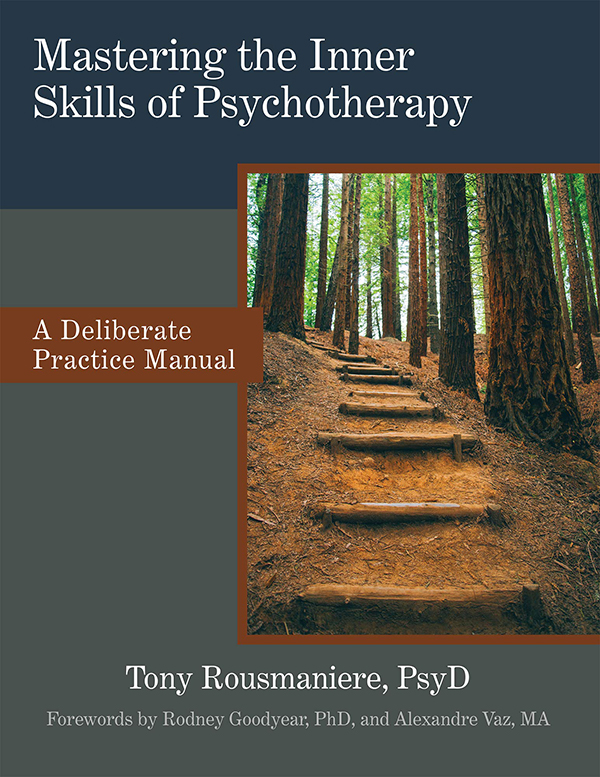
Editor’s note: The following is an excerpt taken from Mastering the Inner Skills of Psychotherapy, by Tony Rousmaniere, published by Gold Lantern Books © 2018 and reprinted with permission of the author.

“Could there be a better way for therapists to acquire the inner skills of psychotherapy?” To explore this question, let’s look to other fields. Most professions have developed specific exercises that help trainees acquire the capacity necessary for professional performance. For example, musicians rehearse challenging pieces repeatedly, so they will sound effortless during the actual performance. Pilot trainees spend hours intentionally stalling their plane, so they can practice recoveries. Athletes engage in physical conditioning, so they will have improved performance in competitions. In deliberate practice, therapists use practical exercises to build their inner skills and psychological capacity to improve their psychotherapy performance.

Deliberate Practice

I lead deliberate practice workshops around the world on developing therapists’ psychological capacity. Participants who are new to the idea of psychological capacity often ask, “How can this help me be more effective with my clients?” To answer this question, let’s begin with a case example of how deliberate practice helped me with a challenging case a few years ago.

My client was a man in his early twenties. He had recently been fired from his job and was discouraged about applying for work. He struggled with depression and had started to have thoughts of suicide. His goal for our work was to improve his mood and morale so he could find new employment.

My client and I formed a good working relationship in our first few sessions. However, despite my best efforts, he did not improve. Over the following weeks his mood gradually worsened, and he became more socially isolated. The outcome monitoring software I was using indicated that he was at a high risk of deterioration and possible suicide. With the client’s consent, I recorded a video of one of our sessions and showed it to my supervisor.

When we reviewed the video together, my supervisor noticed that the client looked disassociated during our session. He said, “Notice that after you ask your client a question, his eyes glaze over and he is slow to respond? Notice how he is nodding his head but not really engaging your questions? This could be a sign that your client is experiencing so much anxiety that he is disassociating. He may be politely going along with you but not fully understanding what you are asking him or benefiting from the therapy.”

As I watched the video closely, I could see what my supervisor was pointing out. My client’s eyes were unfocused, and his speech was slow. Although he was able to follow our conversation, his comments seemed superficial or compliant, like he was going along with me rather than really expressing himself.
I was surprised that I had not seen these obvious signs of disassociation in session with my client. I had learned about disassociation years prior and had successfully helped many clients with these symptoms. “Why was I unable to help this client?”

I said, “It’s so strange that I didn’t see these symptoms in session with my client. They seem so obvious when you point them out right now.”

My supervisor replied, “I wonder if you may be having an unconscious internal reaction that is blocking your conscious awareness?”

I said, “How can I tell if I am having such a reaction?”

He replied, “They often are accompanied by thoughts, emotions, physical sensations or behavioral urges. You can look for these as signals.”

“How?” I asked.

“I’ll show you,” he replied.

Seeing in Real Time

My supervisor said, “Play the video again. Turn the volume down low so you can hear the sound of your client’s voice but not get caught up in the content of the conversation in the video.”

I did as my supervisor instructed. It felt strange to watch the video without following the content of the conversation.

He continued, “Now, try to notice any thoughts, emotions, physical sensations, or behavioral urges you may feel while watching the video.”

I tried this for a few seconds and noted that paying attention to my internal experience while simultaneously watching the video was hard. I said, “My attention keeps trying to follow what the client is saying.”

“That’s normal,” he replied, “just keep trying.”

I watched the video while trying to tune in to my internal experience. After a few moments, I noticed I was clenching my fists. I told my supervisor.

“Great,” he said, “what else do you notice?”

“My chest feels tense,” I replied.

“What else?” he asked.

“I’m holding my breath.”

“What else?”

“As I tuned in to my internal world, I realized that I was having many uncomfortable reactions I had previously not noticed”. “My legs are tense, my mouth is dry, and my palms are sweaty. There’s also a slight ringing in my ears.”

He said, “Great that you can see all of these reactions within you. Let the video keep playing so you can continue. Do you notice any thoughts? You don’t have to tell me the details, but it’s important for you to see them.”

I noticed I was having strong doubts about myself as a therapist. How could I be effective if I was having all these unconscious reactions? Was something wrong with me? Should I give up and leave the profession? I felt some shame and didn’t want to reveal the details of all these thoughts to my supervisor. Instead, I simply said, “I’m having negative thoughts about myself.”

My supervisor could probably tell that I was experiencing some shame. He looked at me with kind eyes and normalized my experience, saying, “Great that you can notice those thoughts. Self-doubt, shame, or other negative thoughts about yourself are a normal and very common response to reaching your own psychological capacity limits. Consider these thoughts to be like how an athlete will sweat or get out of breath during a tough workout. It’s just part of the process.”

He continued, “Do you notice any behavioral urges? Again, you don’t have to tell me the details. Just try to notice them within yourself.”

I noticed I felt the urge to stop following his instructions. I was glancing at the clock out of the corner of my eye and hoping our consultation would end soon. I was also surprised to notice that I was starting to feel frustrated with my supervisor. This felt awkward, as I liked him a lot personally and trusted his advice. I didn’t feel comfortable telling him all of this, so instead I just nodded my head.

My supervisor paused the video. “Congratulations,” he said, “you were able to observe your own experiential avoidance in real time as you had it. This is not easy! However, it is a very important skill for effective psychotherapy.”

I took some deep breaths. I felt shaken from this experience and a bit confused. “How can this help me with my client?” I asked.

He replied, “Your ability to be empathic and attuned with this client is being limited by the discomfort and experiential avoidance that he stirs up in you. To address this, we need to increase your ability to see your own experiential avoidance in real time. This will let you downregulate your emotional state, so you can be more empathic, attuned and helpful.”

He continued, “You know how to assess and treat disassociation. You could write a paper about it. You can perform it proficiently with many of your other clients. You could teach it to beginning trainees. However, we have discovered that your proficiency in this skill is conditional on your psychological state. When you have particularly strong experiential avoidance—such as with this client—you lose your ability to be helpful. We call this your psychological capacity threshold.”

“How can I increase my threshold?” I asked.

He replied, “By practicing therapy skills with stimuli that provoke your experiential avoidance. This is called state dependent learning. For example, this video will work well for practice. I’ll show you how.”

Engaging the Client

My supervisor said, “You are going to practice engaging the client with anxiety regulation techniques while simultaneously noticing your experiential avoidance. Do you remember the somatic anxiety regulation techniques we reviewed last week?”

I replied, “The technique where I ask the client where he notices his anxiety in his body?”

“Yes, we’ll use that,” he said, “Start the video again at low volume. Now, while watching the video, take a moment to notice your internal reactions. Raise your hand when you notice any experiential avoidance.”

After a few moments watching the video, I noticed my chest tightening and breath restricting. I raised my hand.

“Good,” he said, “now use the first technique we discussed last week.”

“Just say it to the video?” I asked.

“Yes,” he replied, “just say it to your client in the video.”

Looking at the video, I said, “Right now, where physically do you notice any anxiety in your body?” I felt strange talking to the video.

“Good,” said my supervisor, “now watch the video for about twenty more seconds while noticing your inner reactions.”

My supervisor used his watch to count down twenty seconds and then said, “Now use the anxiety regulation technique again.”

“The same one?” I asked.

“Yes,” he said, “you can play with the words if you like.”

Looking at the video, I said, “Right now, where do you notice any anxiety, physically in your body?”

“Good,” said my supervisor, “do this process again: twenty seconds of self-observation, followed by engaging the client.”

I watched the video for twenty seconds while noticing my inner reactions and then said, “Do you notice any anxiety physically in your body right now?”

“Good,” my supervisor said, “again.”

I repeated the process.
“Again,” he said.

As I repeated the process, I noticed I had conflicting feelings toward my supervisor: I was simultaneously frustrated at him and appreciative of his help.
“Again,” he said.

I repeated the process and noticed I was starting to feel fatigued.

“Okay, pause,” he said. “What did you notice while repeating the exercise?”

“It got easier,” I replied.

“Great!” he said. “”You are building your psychological capacity to engage the client” while you have experiential avoidance.”
I asked, “Why does this client provoke such a strong reaction in me?”

He replied, “We don’t know yet. I’ll give you some deliberate practice exercises to do as homework, and maybe you’ll find out.”

Doing the Homework

My supervisor said, “Between now and our next supervision session, try to do an hour of the same deliberate practice exercise we just did together. Doing these exercises on your own may be more challenging than it was here with me, so try to be patient and self-compassionate. Remember that the goal is just to notice your reactions and practice engaging the video. Do not try to change or ‘fix’ any of your reactions.”

Over the following week I did the deliberate practice homework in three sessions of twenty minutes each. Doing it myself was much harder than it had been with my supervisor. I had to fight strong urges to avoid it. I scheduled practice in the morning but put it off until the afternoon. When I sat down to practice in the afternoon, I felt tired and decided to do it the following morning. The next morning, I was tempted to put it off yet again. However, I summoned the willpower and did the exercise.

When I started the video, I noticed a general tension throughout my body and fogginess in my mind. I kept losing track of time, so I set my phone to count down in twenty second intervals. I found it hard to say the anxiety regulation words out loud to the video. I felt awkward and had strong thoughts of shame and self-doubt. When I stopped after about twenty minutes, I felt discouraged by how much harder it had felt doing the exercise on my own rather than with my supervisor.

Two days later I did the exercise for a second time. Like my first practice session, this took considerable willpower. However, this time I had less fogginess and noticed more distinct internal experiences, including dry mouth, sweaty palms, and ringing in my ears. I felt clearer when saying the anxiety regulation words out loud. My shame and self-doubt were less pronounced. I ended the practice after about twenty minutes feeling more optimistic.

Three days later I did the exercise again. This time felt very different. As I watched the video, I noticed strong waves of tension rising from my stomach through my chest to my throat. I almost choked as I said the anxiety regulation words. The waves increased in intensity as I repeated the exercise. With surprise, I noticed tears forming in my eyes. “I felt a sharp spike in my shame and self-doubt and a strong urge to end the exercise”. However, I gathered my willpower and persisted. As I watched the video, I realized my client reminded me of times as a teenage boy when I had felt anxious and disassociated. I remembered the pain of those days, along with the social isolation and confusion. As I spoke the words of anxiety regulation to the video, I pictured saying them to myself as a teenager. I started crying out of sadness for my younger self as my shame melted into self-compassion. Resisting the temptation to stop the video, I continued with the exercise. I cried throughout the last ten minutes of the practice session.

Deliberate Practice Helped

This experience helped in multiple ways. First, my effectiveness as a therapist improved dramatically. I felt less tense and foggy sitting with the depressed young client whom I had videotaped. I was better able to help him see his own disassociation and use anxiety regulation techniques to reduce his anxiety. Over time, his mood improved, and he became more socially engaged. My effectiveness with other clients improved similarly.

Second, my morale and confidence as a therapist improved. I experienced less shame and self-doubt in my work. I felt optimistic about resolving other clinical impasses I was encountering and enthusiastic to practice more.

Third, the effects of the practice carried over to my personal life. I grew more open and engaged with my friends and family. I felt like I had further healed an old wound.

“The impact of deliberate practice on my personal life has been surprising”. I had previously done years of my own therapy, in which I had talked extensively about my teenage years. I assumed I had finished processing these old wounds. However, empathizing with this client stirred up painful memories that I had not recalled in my own therapy. Deliberate practice with my session videos helped me process those memories. After having many similar experiences myself and hearing of many from my trainees, I have come to see that deliberate practice with session videos can be a valuable tool for therapists’ personal growth. Deliberate practice helped me build my psychological capacity to be more effective with this client—and with my other clients.


The Internal Critic: Friend or Foe?

Harsh, hurtful, degrading and depleting are just a few ways to describe the all-too-powerful words of our internal critic. We all have a critic, but the ferocity and loudness varies. As an EMDR and EFT-oriented psychotherapist, I am privileged to have a front and center view of just how universal and common the internal critic can be and the opportunity to confront that voice with my clients.

“You’re so stupid, incompetent and useless.”
“Why would you do that? You can’t do anything right.”
“That was a huge failure, you should have walked away.”
“You’re so ugly and fat.”
“You’re just not good enough.”

Like what you are reading? For more stimulating stories, thought-provoking articles and new video announcements, sign up for our monthly newsletter.

Not surprisingly, my most compassionate and caring clients will say these things, never to others, but often to themselves. To put it simply, the critic is one component of our personality. The critic is also alternately referred to as an ego state, or a state of awareness. It is one member of our internal system presumably developed to help us make decisions, keep us safe and progress in life. The cohesion and integration of our system of parts varies depending upon our life experiences and relationships. Our attachment to our caregivers, experiences in school, successes, failures, mistreatment, trauma and adverse life experiences all impact the growth and development of this internal system.

Fortunately, the critic isn’t the only player on the internal mental team. Other characters may include the professional, nurturer, survivor, child, friend and parent, to name a few. The list is potentially exhaustive and unique to the individual. When working with my clients, I often reference my own rebellious teenager part that most mornings tries to induce me to skip work and sleep in. It takes a lot of energy from this professional part to push (or pull) me out of bed, but this daily internal struggle pales in comparison to the battles we have with our critic.

Through therapy, my clients begin the daunting challenge of identifying these core negative messages from the critic and discover what makes them tick. Often, I find that the critic develops at a young age, and often results from an internalization of negative messages from parents, coaches or other authority figures. I often find that the critic has good intentions and often has the same goals as the adult which is happiness, success, and safety from potential threats. Unfortunately, the critic’s approach to helping to meet these goals is ultimately misguided and damaging. After the all-too-frequent and ongoing critical barrage, my clients weaken, feel less confident, safe, secure or motivated to do the things that could otherwise propel them forward in life. The critic’s initial good intentions are inevitably thwarted, leaving clients feeling stuck, insecure, unmotivated and depleted.

So what is the therapist to do in order to befriend and redirect this formidable foe? My own therapeutic efforts begin with the practice of mindfulness—I ask clients simply become aware, to notice the voice. It helps to ask them to move to a different chair and speak the critic’s words out loud. In EFT we call this “chair work” and through this practice the client can begin to separate the critic from that part of their inner system that is not critical. By doing so, clients can better connect with the critic and begin to identify the triggers and needs of the critic that give this voice its power.

My clients notice that the critic often raises its voice prior to a challenging task, after they have made a mistake or when they fail to achieve a goal in their life (referring to when they notice it outside of the therapy office). When my client and I can hone in on those times when the critic is using a megaphone, so to speak, we are able to identify and tap into more supportive parts of their inner chorus. This often has the effect of subduing the critic—removing its bully pulpit. Doing so makes room for these other characters—the nurturer, the advocate, the cheerleader and all of those other softer and kinder empathetic elements of self that are crucial and necessary for healthy emotional survival. Calming, motivational and compassionate messages and affirmations are helpful tools which over time and hard work in therapy have helped my clients to manage, quiet and even befriend their inner critic.

By assisting my clients to increase their capacity for self-compassion, kindness and self-empathy, I have been able to help them move closer to the therapeutic goal of self-acceptance. I often ask them to consider that if self-kindness seems like a foreign concept, they think of something their nicest friend or family member might say to them, in other words, “What would ___________ tell you in this moment?” My clients will often laugh and say that they can picture their sweet grandmother comforting them during these times. In EMDR therapy, we would identify this as a new resource and the image of the grandmother’s comforting presence would come along for the therapeutic journey towards healing. Regardless of the therapeutic modalities utilized, identifying, connecting and working with the critic is crucial in helping our clients find inner peace and acceptance.
 

Uncovering and Intervening in the Narcissistic Abuse Cycle

“You’re an #@^ liar! I can’t believe I married such an insecure person! I deserve better,” my client, Jared, stood up screaming at his spouse Margret after she confronted him. Then, Jared stormed out of session only to return a few minutes prior to the end of our time. “Well, have you learned?” he sarcastically asked Margret. “Did she tell you how wrong you were and how you hurt my feelings?” Much to my surprise, Margret apologized to Jared. Then he sat down and gave me a look like the cat who ate the canary. They left much as they came in. Nothing that was discussed with Margret in Jared’s absence seemed to have sunk in. He still was dominating, manipulative and controlling. She was passive, voiceless and exhausted. Our hour seemed wasted. What did I witness? It felt all too familiar since narcissism was the crazy glue that held my own family tree together. That moment was a turning point for me both personally and professionally. It changed how I dealt with my family and, more importantly, opened up a career opportunity. I now specialize in personality disorders with a heavy concentration on narcissistic, borderline and antisocial individuals and their partners. Jared and Margaret are my typical clients. So, what did I observe? The typical cycle of abuse is comprised of tension building, acting-out, reconciliation/honeymoon, followed by a period of calm before the cycle begins again. However, when the abuser is also a narcissist, this downward spiral looks different. True to their personality style, the narcissist is compelled to up the ante. Narcissism changes the back end of the cycle because the narcissist, perpetually self-centered, is unwilling or perhaps incapable of admitting fault. Their need to be superior, correct and/or in charge limits the possibility of any genuine reconciliation. Instead, it is frequently the abused partner who desperately utilizes apology and appeasement while the narcissist switches into the role of victim. This switchback tactic emboldens the narcissist’s behavior even more, further convincing them of their faultlessness. Any threat to their authority repeats the cycle. This describes what I have now witnessed hundreds of times. By teaching my non-narcissistic clients this cycle, they are better able to stop it and have greater control of the downward spiral. Here are the stages in the narcissist’s cycle of abuse I have witnessed in my practice: Feels Threatened. An upsetting event occurs in which the narcissist feels threatened. It could be the rejection of sex, disapproval at work, embarrassment in a social setting, jealousy of another’s success or feelings of abandonment, neglect, or disrespect. The abused partner, aware of the potential threat, becomes nervous. They know something is about to happen and begin to walk on eggshells around the narcissist. Most narcissists repeatedly get upset over the same underlying issue whether it is real or imagined. They also tend to obsess over any perceived threat. Abuses Others. The narcissist engages in some sort of abusive behavior which can be physical, mental, verbal, sexual, financial, spiritual or emotional. The abuse is customized to intimidate the abused partner in an area of weakness, especially if that area is one of strength for the narcissist. The abuse can last for a few minutes or as long as several hours. Becomes the Victim. This is when the switchback occurs. The narcissist uses the abused partner’s reactive behavior as further evidence that they themselves are the ones being abused. The narcissist believes their referential victimization by bringing up past defensive behaviors perpetrated by the abused partner—as if it were the cause of the conflict. Because the abused partner has feelings of remorse and guilt, they accept this warped perception and try to rescue the narcissist. This might include giving in to what the narcissist wants, accepting unnecessary responsibility, placating the narcissist to keep the peace and/or acting as if the narcissist’s lies are the truth. Feels Empowered. Once the abused partner has given in or up, the narcissist once again feels empowered. This is all the justification the narcissist needs to prove that they were right in the first place. The abused has unknowingly stoked the narcissist’s already fiery ego. But every narcissist has an Achilles heel and the power they have temporarily re-claimed only lasts until the next threat. Once the narcissistic cycle of abuse is understood by the abused partner, the therapist can intervene at any point. This may include developing strategies for future confrontations, understanding how much abuse the recipient is willing and able to tolerate in the relationship, or developing an escape plan. The next time Jared exploded, Margaret immediately defused the situation through the use of diversion which stopped the cycle—at least for that moment. Recognizing and effectively intervening around the narcissistic elements of the cycle of abuse changed my practice. I transitioned from mismanaging conflict to de-escalating the tension while maintaining complete control. Couples embroiled in the cycle of narcissism benefitted in that some could remain together while others could not. Empowerment is as important for therapists as it is for the clients, particularly the ones caught up in this cycle.