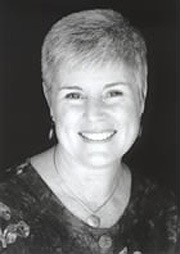
Bessel van der Kolk on Trauma, Development and Healing

Talking About it Doesn’t Put it Behind You

David Bullard: Bessel, you are the medical director and founder of the Trauma Center at Justice Resource Institute and professor of psychiatry at the Boston University School of Medicine. You have been one of the most influential and outspoken clinicians, educators and researchers contributing to our understanding of trauma and its treatment.
I don’t remember reading a professional book in several intense sittings like I just did with your new book, The Body Keeps The Score: Brain, Mind, and Body in the Healing of Trauma. It’s been praised by everyone from Jon Kabat-Zinn and Francine Shapiro to Jack Kornfield, Peter Levine and Judith Herman, who called it a “masterpiece that combines the boundless curiosity of the scientist, the erudition of the scholar, and the passion of the truth teller.” (Read an excerpt from the book accompanying this interview.)
Let me start with some basics: Could you say something about why talk therapy alone doesn’t work when treating trauma?
Bessel van der Kolk: From my vantage point as a researcher we know that the impact of trauma is upon the survival or animal part of the brain. That means that our automatic danger signals are disturbed, and we become hyper- or hypo-active: aroused or numbed out. We become like frightened animals. We cannot reason ourselves out of being frightened or upset.
Of course, talking can be very helpful in acknowledging the reality about what’s happened and how it’s affected you, but talking about it doesn’t put it behind you because it doesn’t go deep enough into the survival brain.
DB: Would you say that is one of the distinctions between your work and Edna Foa’s “prolonged exposure therapy”? In a New Yorker article on trauma, Foa talked about rewriting memories, rather than destroying them, and describes her work with a patient with PTSD who had been raped years before: “We asked her to tell the story of that New Year’s Eve (when the rape occurred) and repeat it many times….to distinguish between remembering what happened in the past and actually being back there…and when, finally, the woman did that she realized that the terror and her rape were not her fault.”That sounds like cognitive learning.
Bv: That’s a lovely example of the ability of talk to get a better perspective. But there is a mistaken notion that trauma is primarily about memory—the story of what has happened; and that is probably often true for the first few days after the traumatic event, but then a cascade of defenses precipitate a variety of reactions in mind and brain that are attempts to blunt the impact of the ongoing sense of threat, but which tend to set up their own plethora of problems. So, trying to find a chemical to abolish bad memories is an interesting academic enterprise, but it’s unlikely to help many patients. It’s a too-simplistic view in my opinion. Your whole mind, brain and sense of self is changed in response to trauma.
In the long term the largest problem of being traumatized is that it’s hard to feel that anything that’s going on around you really matters. It is difficult to love and take care of people and get involved in pleasure and engagements because your brain has been re-organized to deal with danger.
It is only partly an issue of consciousness. Much has to do with unconscious parts of the brain that keep interpreting the world as being dangerous and frightening and feeling helpless. You know you shouldn’t feel that way, but you do, and that makes you feel defective and ashamed.

EMDR and Body Awareness Approaches to Trauma Treatment

DB: You are a big proponent of body awareness approaches to trauma treatment—and for a fully lived life. For example, you’ve done research on yoga for trauma survivors and recommend yoga for patients. I saw recently that your Trauma Center offers trainings to yoga teachers in working with the trauma of their students. You also speak very highly of the body-oriented therapies of Peter Levine and Pat Ogden, and especially of EMDR. You devote a whole chapter to your learning EMDR and examples of your use of it.
Bv: We have done the only NIMH-funded study on EMDR. As of 2014, the results of that study were more positive than any published study of those who developed their PTSD in reaction to a traumatic event as an adult.
There are opinions and there are facts.
Traumatized people often become insensible to themselves. They find it difficult to sense pleasure and to feel engaged. These understandings force us to use methods to awaken the sensory modalities in the person.
The facts are that the EMDR study was spectacularly successful in adults, a bit less with childhood trauma–at least not in the short period of time (eight 90-minute sessions) in the research protocol. But our research found that the impact of trauma is in the somatosensory self, trauma changes the insula, the self-awareness systems. Traumatized people often become insensible to themselves. They find it difficult to sense pleasure and to feel engaged. These understandings force us to use methods to awaken the sensory modalities in the person.
DB: The following quote from your book beautifully addresses some of this:
“The neuroscience of selfhood and agency validates the kinds of somatic therapies that my friends Peter Levine and Pat Ogden have developed…. [In] essence their aim is threefold:

  • to draw out the sensory information that is blocked and frozen by trauma;
  • to help patients befriend (rather than suppress) the energies released by that inner experience;
  • to complete the self-preserving physical actions that were thwarted when they were trapped, restrained, or immobilized by terror. 

Our gut feelings signal what is safe, life sustaining, or threatening, even if we cannot quite explain why we feel a particular way. Our sensory interiority continuously sends us subtle messages about the needs of our organism. Gut feelings also help us to evaluate what is going on around us. They warn us that the guy who is approaching feels creepy, but they also convey that a room with western exposure surrounded by daylilies makes us feel serene. If you have a comfortable connection with your inner sensations—if you can trust them to give you accurate information—you will feel in charge of your body, your feelings, and your self” (p.96).

EMDR trainers now seem to be focusing more on sensory modalities than when I first was taught about EMDR, and they also use “resource installation” (Leeds) and more recently “dyadic resourcing” (Manfield). But if there has been an identified single trauma that doesn’t resolve after several sessions, they look for an older “feeder memory,” and get there by asking the patient to focus on body sensations to see if he or she has ever felt those sensations before. It often is a gateway to an earlier trauma.
Bv: A lot of different schools do that, where the body is a pronounced part of therapy. My own teacher, Elvin Semrad, in the early 1970s in Boston, was very somatically oriented; same thing for Milton Erikson and many schools of hypnotherapy. Most people I hang out with who work with traumatic stress are somatically oriented.

The Limits of CBT

DB: The popular media are often puzzlingly ignorant about the nature of trauma and its treatment. You are very well aware of this, but an otherwise interesting article in the May, 2014 issue of The New Yorker magazine stated that a study “published in Nature in 2010, offered the first clear suggestion that it might be possible to provide long-term treatment for people who suffer from PTSD and other anxiety disorders without drugs.” That article never even mentioned EMDR, which was listed in a 1998 task force report of the Clinical Division of the American Psychological Association as being one of three psychological therapies (together with exposure and stress inoculation therapy) empirically supported for the treatment of PTSD. How could they miss that?
Bv: Well, they often get things not quite right! It intrigues me how the public is much more fascinated with the potential of false memories in patients than in the gross distortions of our society’s memory of trauma.
Articles like the one you cited often relate to the study of memories in mice. It is a huge leap, of course, from rodents to human beings, which not only leads to misinformation about the nature of traumatic stress and its treatments, but also about the rather trenchant differences between humans and mice. Humans are profoundly social animals—everything we do and think is in relation to a larger tribe. Our brains are cultural organs. It probably has something to do with people’s temperaments; people who do rodent research are drawn to the simplicity of rodent brains. In order to work with humans you need to have a taste for culture, complexity and uncertainty. People would be astonished if a psychotherapist gave advice to rodent researchers on how to run their labs! But the popular press takes the liberty of making these misinformed leaps with the general public all the time.
DB: How best to treat trauma is a crucial question, of course. You saw CBS’ 60 Minutes television show that first aired in November, 2013, describing a Veterans Administration program treating war veterans using “cognitive processing therapy” and prolonged exposure treatment methods. Your understanding of and approach to treating trauma is very different. Can you address a couple of points that distinguish your views from those presented by that VA treatment program?
Bv: Cognitive Behavioral Therapy (and “Trauma Focused CBT”), talk therapies, and prolonged exposure therapies can make some changes in people’s distress, but traumatic stress has little to do with cognition—it emanates from the emotional part of the brain that is rewired to constantly send out messages of dangers and distress, with the result that it becomes difficult to feel fully alive in the present. Blasting people with the memories of the trauma may lead to desensitization and numbing, but it does not lead to integration: an organic awareness that the event is over, and that you are fully alive in the present. The VA seems to be surprised by how many veterans drop out of prolonged exposure therapy. It would be helpful for them to find out why, but the likely answer is that it is re-traumatizing them.
DB: More recently, there was the profile of your work with trauma in the Sunday Magazine of the New York Times (May 22, 2014). The author shadowed you for a month, and it seemed to me that the article minimized the outcome of the clinical demonstration you did with an Iraqi war veteran at an Esalen Institute workshop.
Bv: The current Family Therapy Networker magazine just ran a piece about all the inaccuracies in that article, and the difficulties journalists have in getting the story straight. “Eugene” was the participant in the workshop, and he said “The takeaway when I read [the New York Times article] was that I was confused by the experience and that it didn’t help, which just isn’t true…When I spoke with the reporter, I said very positive things about the concrete ways that it helped me in terms of physical symptoms that disappeared, and also the fact that Dr. van der Kolk recommended people for me to work with afterward. He really spent some time finding a good recommendation for EMDR, and it really helps.” He wrote a letter to that effect and they wouldn’t publish it. I just got an email from him with a picture of my new book saying, “Thank you for helping me to regain the capacity for calmness and focus to be able to engage, and read books again.”
DB: The New York Times article also quoted sound bites from some other researchers, seemingly questioning your work, but later corrected some misinformation.
Bv: That’s another intriguing issue. There seems to be a tendency among therapists to become very religious about their own particular method—some seem to be more committed to their method than to the welfare of their patients. When patients don’t improve, they blame their resistance, and slam the people who point out that one size never fits all. The New York Times article also alluded to the Roman Catholic Church’s problems with clergy abuse and trying to defend itself by claiming that these plaintiffs suffered from “false memories,” and were the victims of “repressed memory therapy.” Testifying on behalf of pedophiles became a whole industry that seems to have entirely disappeared now that these trials are over.
DB: The newspaper did publish your brief (and, I thought, restrained!) rejoinder clarifying the issues presented, and you received an overwhelmingly supportive response in other letters to the editor and online comments. Here’s an excerpt from your letter to the New York Times:
Trauma is much more than a story about the past that explains why people are frightened, angry or out of control. Trauma is re-experienced in the present, not as a story, but as profoundly disturbing physical sensations and emotions that may not be consciously associated with memories of past trauma. Terror, rage and helplessness are manifested as bodily reactions, like a pounding heart, nausea, gut-wrenching sensations and characteristic body movements that signify collapse, rigidity or rage…. The challenge in recovering from trauma is to learn to tolerate feeling what you feel and knowing what you know without becoming overwhelmed. There are many ways to achieve this, but all involve establishing a sense of safety and the regulation of physiological arousal.
Bv: I also mentioned in the Networker article, “What happened …is a reflection of the incredible difficulties society has with staring trauma in the face and providing people with the facts of what happens, how bad it is, and how well treatments work.”

Talent and Compassion Aren’t Enough

DB: I appreciate your emphasis on research and fact-based discussions versus theoretical ones. Along those lines, George Silberschatz, a past-president of the international Society for Psychotherapy Research, said in a recent interview that the between-therapist effects were as large if not larger than the between-treatment effects in current psychotherapy research, and this is perhaps from non-specific treatment effects.
Bv: Well, talent and compassion are central elements of being an effective therapist, but learning to feel your feelings and be in charge of your self, and working with someone who knows how to deal with bodily sensations and impulses can make all the difference between visiting an understanding friend once a week, and actually healing your trauma.
DB: Could it relate to Stephen Porges’ description of the Polyvagal Theory and the social engagement system? The nonspecific treatment effects from psychotherapy research seem to be powerful about the therapist helping to create a safe environment.
Bv: I have been very much inspired by Porges’ work. The reason that Porges has become an important part of our world is his finding that trauma interferes with face-to-face communication. It is very important how you get regulated in the presence of other people. We need to learn very specific ways to activate the social engagement system. Sitting in your chair and chatting might not always be the most effective way of doing that.

Porges’ work was very helpful and clarifying about where in the brain trauma makes it difficult to feel comfort, to feel intimate and connected with other people. Knowing those things can help therapists to become more conscious about the specifics of their interactions, and should become part of the training of therapists. For example, I recently took a month-long intensive training course for Shakespearean actors to learn how the modulations of my voice, the configurations of my facial muscles, and the attitudes of my body affect my self-experience, and that of the people around me.
Porges’ work points to the importance of working with the reptilian brain—the brain stem, as well as the limbic system. We need to teach breathing and movement and work with the parts of the brain that are most impacted by trauma—areas that the conscious brain has no access to.
So I am dubious about the nonspecific relational impact of treatment on benefiting traumatized individuals. Seeing someone nonspecifically does not help the fear circuits and that collapsed sense of self. We need to learn very specific ways to activate the social engagement system. Sitting in your chair and chatting might not always be the most effective way of doing that.
DB: A colleague of yours from your Harvard days, neuroscientist Catherine Kerr, recently writing about mindfulness research, said:
The placebo effect is usually defined, somewhat tortuously, as the sum of the nonspecific effects that are not hypothesized to be the direct mechanism of treatment. For example, having a face-to-face conversation is not hypothesized as what makes psychotherapy work—you could have a face-to-face conversation with anybody. But for some reason, if you go every week to therapy, you are going to get better. But you could talk about the weather! When we perform these rituals with a desire to get better, we often do. We now know that a lot of the positive therapeutic benefit from psychotherapy and from various pain drugs may come from that initial context; it often has nothing to do with the specific treatment that is being offered. It is really just about the person approaching a situation with a sense of hope and being met by something that seems to hold out that hope (October 01, 2014, Tricycle Magazine).
And I think Allan Schore at UCLA would say that there is “unconscious right brain to unconscious right brain communication” going on, between therapists and patients, or between any of us in close relationships that might be what is otherwise thought to be “nonspecific” in therapy research. A deep ability to be present and connect empathically with patients is easier for some individual therapists than for others. Perhaps we are discussing a situation in therapy of “necessary, but not sufficient!”
Bv: I can’t really comment on all that—you’ll have to ask Catherine Kerr and Allan Schore. I have always been a bit puzzled about that “right brain to right brain” stuff. The research shows that the part of the brain most impacted by trauma is the left hemisphere, and I would imagine that every single part of the brain is necessary for effective functioning and feeling fully alive in the present.
DB: Well, I will be interviewing Schore next month, so we now have some good material to discuss!
Bv: I’ll look forward to reading that.

Neurofeedback & Yoga

DB: Is there anything in your own thinking that you feel has significantly changed in the last couple of years due to your continuing growth in the work and in all you are exposed to?
Bv: The biggest has been my exposure to neurofeedback (a type of biofeedback that focuses on brain waves, instead of peripheral phenomena like heart rate and skin conductance). In neurofeedback you change your brain’s electrical activity by playing computer games with your own brain waves. Learning how to interpret quantitative EEG’s helped me to visualize better how the brain processes information, and how disorganized the brain becomes in response to trauma. What made it necessary to look for other, non-interpersonally-based therapies was the realization, followed by research that dramatically illustrated how being traumatized may interfere with the ability to engage with other human beings to feel curious, open and alive.
Learning how to interpret quantitative EEGs allowed me to actually visualize what parts of the brain are distorted by traumatic experiences, and this can help us target specific brain areas where there is abnormal activity and where the problem actually is.
The trauma is not the story of what happened long ago; the long-term trauma is that you are robbed of feeling fully alive and in charge of your self.
For example, for the part of the brain supposed to be in charge, after trauma it will have excessive activity, keeping people in a state of chronic arousal—making it difficult to sleep, hard to engage and to relax. We find neurofeedback can change the activity in parts of the brain to allow it to be more calm and self-observant.
In another example, the frontal lobes of traumatized people often have activity similar to that of kids with ADHD, which makes it difficult to attend with the subtlety that we need to lead nuanced lives.
DB: So would the neurofeedback be with or without exposure to a particular traumatic memory?
Bv: Again, traumatic stress results in not being able to fully engage in the present. The trauma is not the story of what happened long ago; the long-term trauma is that you are robbed of feeling fully alive and in charge of your self.
DB: You would say that also is a positive outcome from yoga and other body awareness exercises, activating and strengthening the parasympathetic nervous system?
Bv: In our NIH-funded yoga for PTSD study we saw people did considerably better after 8 weeks of yoga. It can make a contribution to help people be more present in the here and now. The whole brain gets reorganized. Some quotes from participants in that study included:

  • “My emotions feel more powerful. Maybe it’s just that I can recognize them now.”
  • “I can express my feelings more because I can recognize them more. I feel them in my body, recognize them, and address them.”

This research needs much more work, but it opens up new perspectives on how actions that involve noticing and befriending the sensations in our bodies can produce profound changes in both mind and brain that can lead to healing from trauma. When we understand these things about the brain, how it works, we learn more about how to adjust our treatments.

DB: I’ve heard you say that you do not identify as belonging to any one particular school of therapy; that you do not even identify as an EMDR therapist even though you often utilize it.
Bv: Well, that would be like a carpenter saying he was a “hammer carpenter.” We need many different tools that will work for different patients and different problems.

Meaningless Pseudo-Diagnoses

DB: Can you talk a bit about your battles to get deeper and more sophisticated understandings of trauma treatment into the professional arena? Your book recounts the research you did that identified a traumatized population quite distinct from the combat soldiers and accident victims for whom the PTSD diagnosis had been created.
Bv: Yes, well, in the early 1990’s our PTSD work group for the Diagnostic and Statistical Manual of Mental Disorders voted nineteen to two to create a new diagnosis for victims of interpersonal trauma: “Disorders of Extreme Stress, Not Otherwise Specified” (DESNOS), or “Complex PTSD” for short. But when the DSM-IV was published in May 1994 the diagnosis did not appear in the final product.
Fifteen years later, in 2009, we lobbied to have “Developmental Trauma Disorder” listed in the DSM-5. We marshaled a lot of support, such as that from the National Association of State Mental Health Program Directors, who serve 6.1 million people annually, with a combined budget of $29.5 billion.

Everybody who holds forth should have a practice, otherwise you get seduced by your ideas and don’t get confronted with the limits of your ideas in clinical practice.
Their letter of support concluded: “We urge the American Psychiatric Association to add developmental trauma to its list of priority areas to clarify and better characterize its course and clinical sequelae and to emphasize the strong need to address developmental trauma in the assessment of patients.”
It was turned down also, and a lot of criticism of DSM-5’s approach has since been levied and they have lost credibility from a variety of professional sources.
DB: You recently published the results of an international survey of clinicians on the clinical significance of a Developmental Trauma Disorder diagnosis. Can you tell us why it might be so beneficial to have such a diagnosis?
Bv: Because it would help us to start focusing on helping kids feel safe and in control , rather than labeling them with meaningless pseudo-diagnoses like oppositional defiant disorder, impulse control disorder, self-injury disorder, etc.
DB: A significant part of your career at the Trauma Center has been working with traumatized children. There is a lot in your book relevant to work with children.
Bv: Yes, with Joseph Spinazzola and Julian Ford, we are involved in studies through the Complex Trauma Treatment Network of the National Child Traumatic Stress Network, which now is comprised of 164 institutions in almost all States.
DB: You are doing so much traveling with international teaching, you are involved in ongoing research, and you have quite a large staff at the Trauma Center in Boston to manage.
Bv: About 40 people are working at the trauma center now.
DB: Are you still personally able to do one-on-one clinical work or only have a supervisory role?
Bv: Everybody who holds forth should have a practice, otherwise you get seduced by your ideas and don’t get confronted with the limits of your ideas in clinical practice.

Posttraumatic Growth and Aliveness

DB: I’ve always liked the subtitle of Peter Levine’s book Waking the Tiger: Through Trauma Into Aliveness. Others are talking about “posttraumatic growth.”
Bv: That’s what the New York Times article should have been about. The guy they described so poorly actually recouped his life. People get better by befriending themselves. People can leave the trauma behind if they learn to feel safe in their bodies—they can feel the pleasure to know what they know and feel what they feel. The brain does change because of trauma and now we have tools to help people be quiet and present versus hijacked by the past. The question is: Will these tools become available to most people?
DB: You are certainly doing your part, Bessel, by being so very active and productive. I counted 35 workshops out-of-town on your calendar for 2014, in addition to your teaching at the various medical schools in Boston, at the Trauma Center and a new certification program. Right now you are about to embark on a 10-day bo

Complex PTSD: From Surviving to Thriving

Editor’s Note: Following is an adapted excerpt from Pete Walker’s latest book, Complex PTSD: From Surviving to Thriving—A Guide and Map for Recovering from Childhood Trauma. For more information about treating Complex PTSD (CPTSD) and managing emotional flashbacks, read a previously published article by Pete Walker here

Attachment Disorder and Complex PTSD

Many traumatologists see attachment disorder as one of the key symptoms of Complex PTSD. In the psychoeducational phases of working with traumatized clients, I typically describe attachment disorder as the result of growing up with primary caretakers who were regularly experienced as dangerous. They were dangerous by contemptuous voice or heavy hand, or more insidiously, dangerous by remoteness and indifference.

Recurring abuse and neglect habituates children to living in fear and sympathetic nervous system arousal. It makes them easily triggerable into the abandonment mélange of overwhelming fear and shame that tangles up with the depressed feelings of being abandoned.

A child, with parents who are unable or unwilling to provide safe enough attachment, has no one to whom she can bring her whole developing self. No one is there for reflection, validation and guidance. No one is safe enough to go to for comfort or help in times of trouble. There is no one to cry to, to protest unfairness to, and to seek compassion from for hurts, mistakes, accidents, and betrayals. No one is safe enough to shine with, to do “show and tell” with, and to be reflected as a subject of pride. There is no one to even practice the all-important intimacy-building skills of conversation.

In the paraphrased words of more than one of my clients: “Talking to Mom was like giving ammunition to the enemy. Anything I said could and would be used against me. No wonder, people always tell me that I don’t seem to have much to say for myself.”

Those with CPTSD-spawned attachment disorders never learn the communication skills that engender closeness and a sense of belonging. When it comes to relating, they are often plagued by debilitating social anxiety—and social phobia when they are at the severe end of the continuum of CPTSD.

Many of the clients who come through my door have never had a safe enough relationship. Repetition compulsion drives them to unconsciously seek out relationships in adulthood that traumatically reenact the abusive and/or abandoning dynamics of their childhood caretakers. For many such clients, we are their first legitimate shot at a safe and nurturing relationship. If we are not skilled enough to create the degree of safety they need to begin the long journey towards developing good enough trust, we may be their last.

Emotional flashback management, therefore, is empowered when it is taught in the context of a safe relationship. Clients need to feel safe enough with their therapist to describe their humiliation and overwhelm. At the same time, the therapist needs to be nurturing enough to provide the empathy and calm support that was missing in the client’s early experience.

Just as importantly, the therapist needs to be able to tolerate and work therapeutically with the sudden evaporation of trust that is so characteristic of CPTSD. Trauma survivors do not have a volitional “on” switch for trust, even though their “off” switch is frequently automatically triggered during flashbacks. In therapy, the therapist must be able to work on reassurance and trust restoral over and over again. I have heard too many disappointing client stories about past therapists who got angry at them because they would not simply choose to trust them.

As the importance of this understanding ripens in me, I increasingly embrace an intersubjective or relational approach. That means that I believe that the quality of the clients’ relationship with me can provide a corrective emotional experience that saves them from being doomed to a lifetime of superficial connection, or worse, social isolation and alienation.

Moreover, I notice that without the development of a modicum of trust with me, my CPTSD clients are seriously delimited in their receptivity to my guidance, as well as to the ameliorative effects of my empathy. In this regard then, I will describe four key qualities of relating that I believe are essential to the development of trust, and the subsequent relational healing that can come out of it. These are empathy, authentic vulnerability, dialogicality and collaborative relationship repair.

1. Empathy

I used to assume that the merits of empathy were a given, but I have sadly heard too many stories of empathy-impoverished therapy. In this regard, I will simply say here that if we are hard and unsympathetic with our clients, we trigger the same sense of danger and abandonment in them that they experienced with their parents.

In terms of a definition, I especially like Kohut’s statement that: “Empathy involves immersing yourself in another’s psychological state by feeling yourself into the other’s experience.”

When I delve deeply enough into a client’s experience, no matter how initially perplexing or intemperate it may at first seem, I inevitably find psychological sense in it, especially when I recognize its flashback components. In fact, I can honestly say that I have never met a feeling or behavior that did not make sense when viewed through the lenses of transference and traumatology.

Empathy, of course, deepens via careful listening and full elicitation of the client’s experience, along with the time-honored techniques of mirroring and paraphrasing which show the client the degree to which we get him.

Noticing my subjective free associations often enhances my empathic attunement and ability to reflect back to the client in an emotionally accurate and validating way. When appropriate, I sometimes share my autobiographical free associations with the client when they are emotionally analogous. I do this to let her know that I really empathize with what she is sharing.

Following is an example. My client tells me with great embarrassment that she stayed home all weekend because she had a pimple on her nose. She is ashamed of the pimple and of her “vanity’’ about it. She moans: “How could I be so stupid to let such a little thing bother me?” I suddenly remember cancelling a date once when I had a cold sore. At the time, I also got lost in a toxic shame attack. I share this with her, minus present day shame about it. She tears up and then laughs, relieved as her shame melts away. Months later, she tells me that her trust in me mushroomed at that moment. Guidelines for being judicious about this kind of self-disclosure will be discussed below.

Of the many benefits of empathy, the greatest is perhaps that it models and teaches self-empathy, better known as self-acceptance. To the degree that we attune to and welcome all of the client’s experience, to that same degree can the client learn to welcome it in her- or himself.

2. Authentic Vulnerability

Authentic vulnerability is a second quality of intimate relating which often begins with emotionally reverberating with the client. I have found that emotional reflection of the client’s feelings is irreplaceable in fostering the development of trust and real relational intimacy.

Emotional reflection requires the therapist to be emotionally vulnerable himself and reveal that he too feels mad, sad, bad and scared sometimes. Modeling vulnerability, as with empathy, demonstrates to the client the value of being vulnerable and encourages her to risk wading into her own vulnerability.

I came to value therapeutic vulnerability the hard way via its absence in my own therapy with a therapist who was of the old, “blank screen” school. She was distant, laconic and over-withholding in her commitment to the psychoanalytic principle of “optimal frustration.” Therapy with her was actually counter-therapeutic and shame-exacerbating for me as we reenacted a defective child/perfect parent dynamic.

Therapeutic Emotional Disclosure
Thankfully, I eventually realized that I had unresolved attachment issues, and sought out a relational therapist who valued the use of her own vulnerable and emotionally authentic self as a tool in therapy. Her tempered and timely emotional self-disclosures helped me to deconstruct the veneer of invincibility I had built as a child to hide my pain. Here are some examples that were especially helpful. “God, the holidays can be awful.” “I get scared when I teach a class too.” “I’m so sorry. I just missed what you said. I got a little distracted by my anxiety about my dental appointment this afternoon.” “I feel sad that your mother was so mean to you.” “It makes me angry that you were so bullied by your parents.”

“My therapist’s modeling that anger, sadness, fear, and depression were emotions that could be healthily expressed helped me to renounce the pain-repressing, emotional perfectionism in which I was mired.” With her, I learned to stop burying my feelings in the hope of being loved. I renounced my just-get-over-it philosophy and embraced vulnerability as a way of finally getting close to people.

I needed this kind of modeling, as so many of my clients have, to begin to emerge from my fear of being attacked, shamed or abandoned for feeling bad and having dysphoric feelings. In order to let go of my Sisyphean salvation fantasy of achieving constant happiness, I needed to experience that all the less than shiny bits of me were acceptable to another human being. Seeing that she was comfortable with and accepting of her own unhappy feelings eventually convinced me that she really was not disgusted by mine.

The therapist’s judicious use of emotional self-disclosure helps the client move out of the slippery, shame-lined pit of emotional perfectionism. Here are some self-revealing things that I say to encourage my clients to be more emotionally self-accepting. “I feel really sad about what happened to you.” “I feel really angry that you got stuck with such a god-awful family.” “When I’m temporarily confused and don’t know what to say or do, I…” “When I’m having a shame attack, I…” “When something triggers me into fear, I…” “When my inner critic is overreacting, I remind myself of the Winnicottian concept that I only have to be a ‘good enough person.’”

Here are two examples of emotional self-disclosure that are fundamental tools of my therapeutic work. I repeatedly express my genuine indignation that the survivor was taught to hate himself. Over time, this often awakens the survivor’s instinct to also feel incensed about this travesty. This then empowers him to begin standing up to the inner critic. This in turn aids him to emotionally invest in the multidimensional work of building healthy self-advocacy.

Furthermore, I also repeatedly respond with empathy and compassion to the survivor’s suffering. With time, this typically helps to awaken the recoveree’s capacity for self-empathy. She then gradually learns to comfort herself when she is in a flashback or otherwise painful life situation. Less and less often does she surrender to an inner torture of self-hate, self-disappointment, and self-abandonment.

My most consistent feedback from past clients is that responses like these—especially ones that normalize fear and depression—helped them immeasurably to deconstruct their perfectionism, and open up to self-compassion and self-acceptance.

Guidelines for Self-Disclosure
What guidelines, then, can we use to insure that our self-disclosure is judicious and therapeutic? I believe the following five principles help me to disclose therapeutically and steer clear of unconsciously sharing for my own narcissistic gratification.

First, I use self-disclosure sparingly.

Second, my disclosures are offered primarily to promote a matrix of safety and trust in the relationship. In this vein my vulnerability is offered to normalize and de-shame the inexorable, existential imperfection of the human condition, e.g., we all make mistakes, suffer painful feelings, experience confusion, etc.

Third, I do not share vulnerabilities that are currently raw and unintegrated.

Fourth, I never disclose in order to work through my own “stuff,” or to meet my own narcissistic need for verbal ventilation or personal edification.

Fifth, while I may share my appreciation or be touched by a client’s attempt or offer to focus on or soothe my vulnerabilities, I never accept the offer. I gently thank them for their concern, remind them that our work is client-centered, and let them know that I have an outside support network.

Emotional Self-disclosure and Sharing Parallel Trauma History
Since many of my clients have sought my services after reading my somewhat autobiographical book on recovery from the dysfunctional family, self-disclosure about my past trauma is sometimes a moot point. This condition has at the same time helped me realize how powerful this kind of disclosure can be in healing shame and cultivating hope.

Over and over, clients have told me that my vulnerable and pragmatic stories of working through my parents’ traumatizing abuse and neglect gives them the courage to engage the long difficult journey of recovering. But whether or not someone has read my book, I will—with appropriate clients—judiciously and sparingly share my own experiences of dealing with an issue they have currently brought up. I do this both to psychoeducate them and to model ways that they might address their own analogous concerns.

One common example sounds like this: “I hate flashbacks too. Even though I get them much less than when I started this work, falling back into that old fear and shame is so awful.”

I also sometimes say: “I really reverberate with your feelings of hopelessness and powerlessness around the inner critic. In the early stages of this work, I often felt overwhelmingly frustrated. It seemed that trying to shrink it actually made it worse. But now after ten thousand repetitions of thought-stopping and thought-correction, my critic is a mere shadow of its former self.”

A final example concerns a purely emotional self-disclosure. When a client is verbally ventilating about a sorrowful experience, I sometimes allow my tears to brim up in my eyes in authentic commiseration with their pain. The first time my most helpful therapist did this with me, I experienced a quantum leap in my trust of her.

3. Dialogicality

Dialogicality occurs when two conversing people move fluidly and interchangeably between speaking (an aspect of healthy narcissism) and listening (an aspect of healthy codependence). Such reciprocal interactions prevent either person from polarizing to a dysfunctional narcissistic or codependent type of relating.

Dialogicality energizes both participants in a conversation. Dialogical relating stands in contrast to the monological energy-theft that characterizes interactions whereby a narcissist pathologically exploits a codependent’s listening defense. Numerous people have reverberated with my observation that listening to a narcissist monologue feels as if it is draining them of energy.

I have become so mindful of this dynamic that, in a new social situation, a sudden sense of tiredness often warns me that I am talking with a narcissist. How different than the elevation I sense in myself and my fellow conversant in a truly reciprocal exchange. Again, I wonder if there are mirror neurons involved in this.

I was appalled the other day while perusing a home shopping catalog to see a set of coffee cups for sale that bore the monikers “Designated Talker” and “Designated Listener.” My wife and I pondered it for a few minutes, and hypothesized that it had to be a narcissist who designed those mugs. We imagined we could see the narcissists who order them presenting them to their favorite sounding boards as Christmas presents.

In therapy, dialogicality develops out of a teamwork approach—a mutual brainstorming about the client’s issues and concerns. Such an approach cultivates full exploration of ambivalences, conflicts and other life difficulties.

Dialogicality is enhanced when the therapist offers feedback from a take-it-or-leave-it stance. Dialogicality also implies respectful mutuality. It stands in stark contrast to the blank screen neutrality and abstinence of traditional psychoanalytic therapy, which all too often reenacts the verbal and emotional neglect of childhood. I believe abstinence commonly flashes the client back into feelings of abandonment, which triggers them to retreat into “safe” superficial disclosure, ever-growing muteness and/or early flight from therapy.

Meeting Healthy Narcissistic Needs
All this being said, extensive dialogicality is often inappropriate in the early stages of therapy. This is especially true, when the client’s normal narcissistic needs have never been gratified, and remain developmentally arrested. In such cases, clients need to be extensively heard. They need to discover through the agency of spontaneous self-expression the nature of their own feelings, needs, preferences and views.

For those survivors whose self-expression was especially decimated by their caretakers, self-focused verbal exploration typically needs to be the dominant activity for a great deal of time. Without this, the unformed healthy ego has no room to grow and break free from the critic. The client’s healthy sense of self remains imprisoned beneath the hegemony of the outsized superego.

This does not mean, however, that the client benefits when the therapist retreats into extremely polarized listening. Most benefit, as early as the first session, from hearing something real or “personal” from the therapist. This helps overcome the shame-inducing potential that arises in the “One-seen (client) / One-unseen (therapist)” dynamic. “When one person is being vulnerable and the other is not, shame has a huge universe in which to grow.” This also creates a potential for the client to get stuck flashing back to childhood when the vulnerable child was rejected over and over by the seemingly invulnerable parent. Consequently, many of my colleagues see group therapy as especially powerful for healing shame, because it rectifies this imbalance by creating a milieu where it is not just one person who is risking being vulnerable.

In this regard, it is interesting to note a large survey of California therapists that occurred about fifteen years ago. The survey was about their therapy preferences, and upwards of ninety percent emphasized that they did not want a blank screen therapist, but rather one who occasionally offered opinions and advice.

For twenty-five years, I have been routinely asking clients in the first session: “Based on your previous experiences in therapy, what would you like to happen in our work together; and what don’t you want to happen?” How frequently clients respond similarly to the therapists in the survey!

Moreover, the next most common response I receive is that I don’t want a therapist who does all the talking. More than a few have used the exact phrase: “I couldn’t get a word in edgewise!” “How I wish there was a way that our qualification tests could spot and disqualify the narcissists who get licensed and then turn their already codependent clients into sounding boards.” This is the shadowy flipside polarity of the blank screen therapist.

Psychoeducation as Part of Dialogicality
Experience has taught me that clients who are childhood trauma survivors typically benefit from psychoeducation about Complex PTSD. When clients understand the whole picture of CPTSD recovery, they become more motivated to participate in the self-help practices of recovering. This also increases their overall hopefulness and general engagement in the therapeutic process. I sometimes wonder whether the rise in the popularity of coaching has been a reaction to the various traditional forms of therapeutic neglect.

One of the worst forms of therapeutic neglect occurs when the therapist fails to notice or challenge a client’s incessant, self-hating diatribes. This, I believe, is akin to tacitly approving of and silently colluding with the inner critic.

Perhaps therapeutic withholding and abstinence derives from the absent father syndrome that afflicts so many westernized families. Perhaps traditional psychotherapy overemphasizes the mothering principles of listening and unconditional love, and neglects the fathering principles of encouragement and guidance that coaching specializes in.

Too much coaching is, of course, as counter-therapeutic and unbalanced as too much listening. It can interfere with the client’s process of self-exploration and self-discovery as described above. At its worst, it can lure the therapist into the narcissistic trap of falling in love with the sound of his own voice.

At its best, coaching is an indispensable therapeutic tool. Just as it takes fathering and mothering to raise a balanced child, mothering and fathering principles are needed to meet the developmental arrests of the attachment-deprived client.

The sophisticated therapist values both and intuitively oscillates between the two, depending on the developmental needs of the client in the moment. Sometimes we guide with psychoeducation, therapeutic self-disclosure and active positive noticing, and most times we receptively nurture the client’s evolving practice of her own spontaneously arising self-expression and verbal ventilation.

Once again, I believe that in early therapy and many subsequent stages of therapy, the latter process typically needs to predominate. In this vein, I would guess that over the course of most therapies that I conduct, I listen about ninety percent of the time.

Finally, I often notice that the last phase of therapy is often characterized by increasing dialogicality—a more balanced fluidity of talking and listening. This conversational reciprocity is a key characteristic of healthy intimacy. Moreover, when therapy is successful, progress in mutuality begins to serve the client in creating healthier relationships in the outside world.

Dialogicality and the 4F’s (Fight/Flight/Freeze/Fawn)
Because of childhood abandonment and repetition compulsion in later relationships, many 4F types are “dying” to be heard. Different types however vary considerably in their dialogical needs over the course of therapy.

The Fawn/ Codependent type, who survived in childhood by becoming a parent’s sounding board or shoulder to cry on, may use her listening defense to encourage the therapist to do too much of the talking. With her eliciting defense, she may even invoke the careless therapist into narcissistically monologuing himself.

The Freeze/Dissociative type, who learned early to seek safety in the camouflage of silence, often needs a great deal of encouragement to discover and talk about his inner experience. Psychoeducation can help him understand how his healthy narcissistic need to express himself was never nurtured in his family.

Furthermore, freeze types can easily get lost in superficial and barely relevant free associations as they struggle to learn to talk about themselves. This of course needs to be welcomed for some time, but eventually we must help him see that his flights of fantasy or endless dream elaborations are primarily manifestations of his dissociative defense.

“Freeze types need to learn that emotionally disconnected talking is an old childhood habit that was developed to keep them buoyant above their undealt with emotional pain.” Because of this, we must repeatedly guide them toward their feelings so that they can learn to express their most important concerns.

The Fight/Narcissistic type, who often enters therapy habituated to holding court, typically dodges real intimacy with her talking defense. Therapy can actually be counterproductive for these types as months or years of uninterrupted monologuing in sessions exacerbate their sense of entitlement. By providing a steady diet of uninterrupted listening, the therapist strengthens their intimacy-destroying defense of over-controlling conversations. Sooner or later, we must insert ourselves into the relationship to work on helping them learn to listen.

As I write this, I remember Harry from my internship whose tiny capacity to listen to his wife evaporated as my fifty minutes of uninterrupted listening became his new norm and expectation in relationship. I felt guilty when I learned this from listening to a recorded message from his wife about how therapy was making him even more insufferable. I was relieved, however, a few years later when a different client told me that Harry’s wife eventually felt happy about this “therapeutic” change. Her husband’s increased self-centeredness was the last straw for her and she finally, with great relief, shed herself of him.

“A therapist, who is a fawn type herself, may hide in a listening and eliciting defense to avoid the scary work of gradually insinuating herself into the relationship and nudging it towards dialogicality.” If we do not nudge the client to interact, there will be no recovering.

The Flight/Obsessive-compulsive type sometimes presents as being more dialogical than other types. Like the freeze type, however, he can obsess about “safe” abstract concerns that are quite removed from his deeper issues. It is therefore up to the therapist to steer him into his deeper, emotionally based concerns to help him learn a more intimacy-enhancing dialogicality. Otherwise, the flight type can remain stuck and floundering in obsessive perseverations about superficial worries that are little more than left-brain dissociations from his repressed pain.

It is important to note here that all 4F types use left- or right-brain dissociative processes to avoid feeling and grieving their childhood losses. As dialogicality is established, it can then be oriented toward helping them to uncover and verbally and emotionally vent their ungrieved hurts.

4. Collaborative Relationship Repair

Collaborative relationship repair is the process by which relationships recover and grow closer from successful conflict resolution. Misattunements and periods of disaffection are existential to every relationship of substance. We all need to learn a process for restoring intimacy when a disagreement temporarily disrupts our feeling of being safely connected.

“I believe most people, if they think about it, realize that their best friends are those with whom they have had a conflict and found a way to work through it.” Once a friendship survives a hurtful misattunement, it generally means that it has moved through the fair-weather-friends stage of relationship.

Synchronistic with writing this section, my son uncharacteristically got into a conflict at school. During third grade recess two of his good friends, also uncharacteristically, started teasing him, and when they would not stop he pushed each of them. This earned them all a trip to the principal’s office. The principal is a strict but exceptionally wise and kind woman. My son’s offense, using physical force to resolve a conflict, was judged as the most serious violation of school policy, but his friends were also held responsible for their part and given an enlightening lecture on teasing.

My son, not used to being in trouble, had a good cry about it all. He then agreed that a one-day loss of recess plus writing letters of apology to his friends were fair consequences. Two days later, I asked him how things were going now between him and the two friends. With a look of surprise and delight, he told me: “It’s really funny, daddy. Now it feels like we’re even better friends than we were before.”

Rapport repair is probably the most transformative, intimacy-building process that a therapist can model. I guide this process from a perspective that recognizes that there is usually a mutual contribution to any misattunement or conflict. Therefore, a mutually respectful dialogical process is typically needed to repair rapport.

Exceptions to this include scapegoating and upsets that are instigated by a bullying narcissist. In those situations, they are solely at fault. I have often been saddened by codependent clients who apologize to their bullying parents as if they made their parents abuse them.

In more normal misattunements, I often initiate the repair process with two contiguous interventions. Firstly, I identify the misattunement (e.g., “I think I might have misunderstood you.”) And secondly, I then model vulnerability by describing what I think might be my contribution to the disconnection.

Abbreviated examples of this are: “I think I may have just been somewhat preachy…or tired…or inattentive…or impatient…or triggered by my own transference.” Owning your part in a conflict validates the normality of relational disappointment and the art of amiable resolution.

Taking responsibility for your role in a misunderstanding also helps deconstruct the client’s outer critic belief that relationships have to be perfect. At the same time, it models a constructive approach to resolving conflicts, and over time leads most clients to become interested in exploring their contribution to the conflict. This becomes an invaluable skill which they can then take into their outside relationships.

As one might expect, fight types are the least likely of the 4F’s to collaborate and own their side of the street in a misattunement. Extreme fight types such as those diagnosed with Narcissistic Personality Disorder have long been considered untreatable in traditional psychoanalysis for this reason.

With less extreme fight types, I sometimes succeed in psychoeducating them on how they learned their controlling defenses. From there I try to help them see how much they pay for being so controlling. At the top of the list of debits is intimacy-starvation. Consciously or not, they hunger for human warmth and they do not get it from those whom they control. Victims of fight types are too afraid of them to relax enough to generate authentically warm feelings.

Finally, I believe one of the most common reasons that clients terminate prematurely is the gradual accumulation of dissatisfactions that they do not feel safe enough to bring up or talk about. How sad it is that all kinds of promising relationships wither and die from an individual or couple’s inability to safely work through differences and conflict.

Earned Secure Attachment
In therapy, clients get the most out of their session by learning to stay in interpersonal contact while they communicate from their emotional pain. This gradually shows them that they are acceptable and worthwhile no matter what they are feeling and experiencing.

As survivors realize more deeply that their flashbacks are normal responses to abnormal childhood conditions, their shame begins to melt. This then eases their fear of being seen as defective. In turn, their habits of isolating or pushing others away during flashbacks diminish.

Earned secure attachment is a newly recognized category of healthy attachment. Many attachment therapists believe that effective treatment can help a survivor “earn” at least one truly intimate relationship. Good therapy can be an intimacy-modeling relationship. It fosters our learning and practicing of intimacy-making behavior. Your connection with your therapist can become a transitional earned secure attachment. This in turn can lead to the attainment of an earned secure attachment outside of therapy. I have repeatedly seen this result with my most successful clients, and I am grateful to report that my last experience with my own therapy lead me to this reward.

Verbal Ventilation: The highway to intimacy and the key process of therapy

I was standing in the waiting room before my first session with a new therapist some twenty years ago, when I perused a cartoon that she had displayed on her bulletin board. In panel 1 of the wordless cartoon, a woman with a dark cloud over her head is talking to a friend who has a shining sun over hers. In panel 2, as the first woman gestures in a way that indicates complaining, the cloud covers her friend’s sun. In panel 3, the cloud emits a bolt of lightning, she angrily catharts, and her friend glowers along with her. In panel 4, the cloud rains on them as they embrace, commiserating in the rain of their own tears. In panel 5, relief spreads on their faces as the cloud moves away from the sun. In panel 6, the sun shines over both of them, as they smile and slip into pleasant conversation.

I have come to call this process verbal ventilation, and I believe it is a key healing process in therapy and a key bonding process in intimacy. Verbal ventilation occurs when an attunement to our feelings guides us in choosing what we say—a powerful enactment of Jung's dictum that feelings tell us what is important to us.

In therapy, verbal ventilation is the penultimate metabolizer of emotional pain. It is speaking or writing in a manner that airs out and releases painful feelings. When we let our words spring from what we feel, language is imbued with emotion, and pain can be released through what we say or write.
When my wife and I join each other on the couch after one of us has put our son to bed, we often reconnect via some version of this process. Spontaneously taking turns checking in with our feelings to use them to tell us what is most important right now, we share and process the ups and downs of our day.

Many times like my clients, what seems to arise in each of us is the need to share about what was most difficult, before the lighter stuff naturally arises to the forefront of our consciousness. Perhaps this is a reflection of a reality that the novelist David Mitchell describes thusly: “Good moods are as fragile as eggs, bad ones as fragile as bricks.” I once had an ex-priest client who called verbal ventilating traveling through the catacombs to get to the cathedrals.

I specialize in working with clients who were extensively traumatized in their childhood families. Many of them present as developmentally arrested in their ability to relationally regulate their emotional stress through verbal ventilation. Their parents routinely attacked, shamed or abandoned them for emotional expression. Now, whenever they have the urge to verbally ventilate, the critic steps in and slaughters their self-expression with self-contempt.

Neuroscience research increasingly suggests, perhaps through the vehicle of mirror neurons, that human interaction is a powerful process for helping us work through states of hyperarousal and intensely dysphoric emotion.

A key therapy task for my traumatized clients is the practice of verbal ventilation. While the client vents, we work together to deconstruct her critic. It seems that as I compassionately respond to her painful disclosures, we are engaged in a process of co-regulating her emotional pain. Perhaps mirror neurons are also the circuitry behind the process of modeling.

The cartoon described above also reminds me of my archetypal, favorite session, which fortunately occurs increasingly with my clients. Here is an example of it: A well-practiced client begins his session lost in an emotional flashback to his painful past. He verbally ventilates about it. He is the regressed hurt child, feeling bad, and part of him is sad and part of him is mad. He has lost the experience of feeling whole and integrated, and this loss is like a death that responds well to grieving.
As he cries and angers out his pain from his right brain, he is welcomed by my right brain commiserating with his grief. Our dialog also helps him to connect his feelings with an integrating, left-brain understanding. Typically, during the hour he moves back from the past to the knowing and integration he normally has when he is not regressed or in a flashback.

And typically, this is accompanied by an authentic return of his sense of humor (Duchenne laughter*), not the sarcastic, bullying, non-Duchenne* humor of his critic, with which he prefaced the session. He laughs with the surprised relief of having been released from what moments ago felt like interminable suffering.

Finally, I also notice that in the most successful therapies, my clients move on when they have formed a primary relationship in which reciprocal verbal ventilation is well established.

*See Judith Kay Nelson’s excellent book, What Made Freud Laugh, for an excellent exploration on these two types of laughter.

Transforming War Trauma: The Healing Power of Community

"What's the matter? The war's over," someone said to a veteran. "Yeah, over and over and over," he replied.

Coming Home

It’s January, 2007, the first moments of the Coming Home Project’s first retreat for veterans and their families. Kenny Sargent and Rory Dunn are Iraq veterans who both sustained traumatic brain injuries (TBI). One was shot in the head, one was hit by an improvised explosive device (IED); both suffer from post-traumatic stress. As people mill around, Ken and Rory meet for the first time, up close and personal. Since neither can see very well, they touch each other’s wounds, comparing scars and experiences. They are like long-lost brothers. The process of making palpable emotional connections has begun.

We gather for our first circle—33 vets and family members from seven states, with four facilitators. In the opening moment of silence, as we remember those unable to be with us, Stefanie and Michael’s three-year-old son, Ben, is playing around the edges of our circle with Isaiah, his new three-year-old friend. Amidst the reverent quiet, we all hear Ben say, “My daddy died in Iraq.” We learn later from Stephanie that “Michael committed suicide six months after returning from Iraq.” Out of the mouth of babes, the first words spoken at a retreat have their own truth: something inside Michael died in Iraq.

We go around the circle, introducing ourselves. Stephanie, Ben’s mom, feels isolated in Houston, where she lives with the heavy legacy of Michael’s suicide. Her church has ostracized her. The group’s reaction is palpable: Stephanie is taken in like a family by a swarm of other spouses and parents.

At the end of the workshop, as we are saying our goodbyes, Rory gets up, makes his way over and we hug. He was angry and bitter at the outset, not just about his injury, but about failures in leadership and his friends who died in the IED attack and. “No one but a vet can understand another vet” were his first words. I am not a vet myself but a Zen master, psychologist-psychoanalyst, and the son of a combat vet.

After we hug, Rory says, “You’re alright.” Near his seat I notice a scrap of paper on the floor, pick it up and ask if it’s his. “Yeah, it’s nothing,” he says. I look at it and see quite a legible note, with three family trees. I ask him about it. “It’s all the people blown away by my buddies’ dying,” he replies. I ponder it: girlfriend, baby, church members, mother, father, sister, and so on—three little stories, three little family trees radiating impacts that eat at him. I offer him the scrap of paper and he gently reclaims it.

Love is a Force for Change

After the attacks of September 11, like so many others I felt that if we, individually and as a country, could withstand and reflect on the dreadful trauma we were experiencing, and not react in a blind knee-jerk fashion, we could bring the perpetrators to justice and at the same time forge alliances and communities of nations that would provide a strong foundation for genuine security for all going forward. Many were thirsty for revenge, but many in the peace community were calling for love. I gave some talks that presented love as a force for change, not some naive fantasy that ignored the powerful forces that had been unleashed. I was disheartened and frustrated that, despite the voices of millions here and around the world, and the counsel of seasoned military leaders, the drumbeats to war were impermeable to reflection, forethought, and considered wise action. Knowing the carnage that was to come, I felt helpless and angry thinking of the great damage our country would inflict not only on this generation, but on generations to come.

Rather than stew in this state, it dawned on me that, given my experience with meditation, healing communities, and trauma, I could join with others and make a difference. It was 2006. Troops were returning stateside in droves and, along with their family members, they were falling through the cracks of the unprepared, overtaxed and outmoded healthcare systems of the Veterans Administration (VA) and the Department of Defense (DoD). If we waited for the government to do something, anguish would only intensify and tens of thousands would fail to receive the care they desperately needed and had earned. Most service members who needed treatment, especially for unseen injuries such as post-traumatic stress and mild to moderate closed head traumatic brain injuries (TBIs) were loathe to come forward—afraid of losing their security clearances, their promotions, and, most of all, the respect of their buddies. I sensed that a compassionate, non-judgmental and welcoming community that included families could be an inviting and healing resource for them.

I gathered a cadre of San Francisco Bay Area therapists who began to provide free, confidential therapy for veterans and their families. We soon began offering retreats for veterans and their families—which we distinguished from psychotherapy so as to counteract the stigma of mental illness—that provided small peer support groups, expressive arts, wellness practices such as meditation and qigong, and vigorous recreational activities in the great outdoors. After a few retreats, we began to incorporate secular rituals into the program, and I enjoyed the dawning realization that the five elements that organically came to comprise the retreats were not a new “quick fix,” but were instead rooted in how we humans have, since time immemorial, worked to transform overwhelming trauma: Sharing stories in a safe environment (healing dialogue), resilience exercises such as meditation, yoga and qiqong (spiritual practice), expressive arts, being active in beautiful places (the healing power of nature), and secular ritual (adapted from reverent religious experience). Four core human capacities also emerged from these retreats—aliveness, bonding and closeness, self-regulation, and a sense of meaning and purpose—elements that help create a life worth living.

For veterans, the stigma of needing help is a major obstacle to getting help, but we noticed it evaporate by the end of our retreats, as isolation lifted and they experienced a sense of being in this together, of belonging. We knew we were onto something when, during the closing circles, participants’ comments began to echo across retreats. They said they’d never experienced an environment this safe, this trusting, where they could be real and reconnect with their fellow vets, their families, and themselves—where they could experience the belonging and camaraderie of service again, and feel free to open up, as much or as little as they were ready for.

Since beginning in 2007, the Coming Home Project has offered 25 retreats and workshops for families, male and female veterans, student veterans, and caregivers. We have brought in local health, education, employment, housing, legal, financial and other services so participants can connect with needed resources, and we recruited local volunteers to be part of our logistics team, enabling the veterans and civilian communities to get to know one another better. In their 2012 review of post-deployment reintegration programs, The Defense Centers of Excellence, a joint VA-DoD agency mandated by Congress to identify, study, and disseminate best practices for psychological health and traumatic brain injury, stated that “the Coming Home Project helps rebuild the connectivity of mind, body, heart and spirit that combat trauma can unravel; renew relationships with loved ones and create new support networks.” We were the only reintegration program of thousands studied that met all their criteria (successfully integrating psychological, behavioral, social-family and spiritual dimensions) that also had significant outcome data and whose pioneering research on post-traumatic growth with veterans and their families and caregivers was published in a peer reviewed journal of the American Psychological Association.

Stephanie
It’s March, 2007, and we’re preparing for our second retreat. Former Marine officer and Zen priest, Colin, and I pick up the van and await the arrival of several families in a Hawaiian barbecue restaurant near the Oakland airport. Fifty people from twelve states gather. 

Later in the day, in the safety of the small veterans group, 15 vets meet. Stephanie tearfully shares how she feels like a failure: as a soldier (she served as a Captain in the Army herself), as a wife, as a mother, as a person—in every way. She didn’t appreciate the gravity of her husband’s distress and couldn’t prevent him from killing himself. Sadness and self-reproach run deep. Several jump in to reassure her: “You have not failed.” They offer good points: God had other plans for you; you now can be of help in ways you couldn’t have before, and so on. But Stephanie’s expressiveness and emotion dry up as she seems to compliantly agree. When a third person prefaces his remarks by saying that he will offer something to lift the mood, I say, “That’s okay,” trying to keep alive the space for acceptance and disclosure that reassuring and uplifting comments often unintentionally foreclose.

Rory
In a pre-retreat roundtable Rory expresses how betrayed by the government he felt after he was injured—by their lack of responsiveness and accountability. His anger is powerful, but rather than being transformative, it seems to progress into a loop of escalating rage. The more angry he gets, the more the energy of the group intensifies, amplifies. Two people leave the room—one takes issue with Rory’s facts, another feels his comments are too polarizing. Rory, of course, has every right to express his outrage and sense of betrayal, and yet as his complaints become increasingly politicized, he alienates himself from the group. His TBI makes it especially difficult for him to regulate his emotions.

Over the course of the retreat, however, Rory begins to shift in a way I’ve never seen. Through frequent, long conversations with a high-ranking officer and fellow vet, one of the facilitators, he becomes noticeably lighter, more open to hearing others’ stories. He begins to share his experiences with a sense of measure, calibrating his impact, modulating it and bringing it to a close. The recognition and containment that his fellow vets give him is deeply moving to witness. Maybe Rory doesn’t have to repudiate everything about his military experience after all.

Claudia
Claudia is a female Iraq veteran who came with her 18-month-old daughter and her sister from Tucson. She had met Tonia and Ken, fellow veterans on the retreat, while on the TBI ward at the Palo Alto VA. She is friendly and sincere but appears vacant and taciturn. During a breakout group she stands around the perimeter, but toward the end she beings to speak, tentatively. Although she says she doesn’t want to read what she had written earlier during a journaling exercise, it seems that a part of her longs to do so. With a little encouragement, she begins to read: “My world has narrowed from what it was….” Her voice trails off. She describes her TBI and the difficulty she has remembering simple but important elements of her past. She feels that a crucial piece of who she was has been taken from her: she can’t even remember her daughter’s birth. She needs her sister’s help with tasks of daily living, as her short-term memory is also impaired. She is battling to retain custody of her daughter. Claudia’s reading has a palpably catalytic effect on everyone. When families gather later, the aliveness of her young daughter, the glimmer in her eyes, juxtaposed with Claudia’s memory impairment, her sense of vacancy and helplessness are striking, poignant and sad.

Mauricio 
At the big morning group early in the day, Mauricio provides comic relief when he states that of the two master sergeants in the group, he is on top of Ken. Everyone laughs about who is on top and who on bottom. He kids us about status and rank and we all laugh harder. In the smaller vets group, however, he is quiet. After Claudia reads, Mauricio opens up about how difficult it is to not be himself in mind and body. He can’t remember important parts of his childhood and it is a continuing blow to his esteem and to his view of himself, particularly given his role as master sergeant of the men under his command. It is an identity crisis of a different order from the normal developmental kind. It isn’t what he says as much as how he says it that makes an impression. He speaks slowly, with an undercurrent of deep emotion, but shows few visible signs of feeling, save a slight crack in his voice.

Jessie
Jessie was a sergeant major in the Army, blinded in an IED blast while serving in Iraq. He speaks with gravity and conviction, conveying a deep sense of betrayal that, after all he’s endured, offered, and sacrificed, he’s had to do it all himself, become his own advocate, find the services and the help he needs. A covenant has been broken. He asks if I will request that folks say their names before they speak. I invite him to make the request himself. He speaks simply and with dignity. After that, when people begin to speak they stop, remember his request, and say, “Sergeant Major, this is Jim,” addressing Jessie by his title.

We usually leave rank and degrees at the door, but this is different: it is an expression of deep respect. When people forget to identify themselves, Jessie gently reminds them, and later on, when Jessie begins sharing, someone says, “You forgot to say your name.” Jessie laughs and everyone cracks up, the role reversal incongruous, funny and poignant all at once.

“There are times during the day when we laugh until we cry, and laugh and cry both, sometimes not knowing which is which.” Our laughter helps us bear the pain and is good for the soul. Everyone knows that by asking people to say their names, Jessie wants to communicate and feel part of the group, wants to hear and recognize everyone, and in turn be recognized by all of us. Though he feels invisible to the institutions entrusted with his care, here among friends his desire for mutual recognition comes across loud and clear. And he is seen.

Paul
Paul comes in toward the end; he’s been resting. Given their brain injuries, some tend to get tired and nap in the afternoon. Paul had been feeling things out around the edges, beginning with the roundtable on Friday. He became upset with the figures Rory quoted during the roundtable, thought they were inaccurate, misrepresentative and needlessly polarizing. He struggled to stay open, thought about leaving, but finally decided to stay. When Paul and I first met, it was difficult to follow what he was saying since the injuries he sustained affected not just his appearance but also his speech. But by now, after two days, I and others can hone in and understand most of his words as well as his feelings. In the small group, he pours out feelings about how he was treated upon his return, and his struggles with physical, emotional and relationship challenges. We hear him.
 
The Children
In the small teen group, Mark, a Marine helicopter pilot during the first Gulf War, now Buddhist priest and facilitator, began begins with a moment of silence and then asks, “How are you doing?” Tasha is quick to respond, “You really want to know?” and immediately starts to cry. Her sister Alishya, strong like their mom, warns Tashsa not to open things up, but when they share their drawings in the closing circle, they also share how isolated they feel and how hard it is to speak their thoughts and feelings to their parents. With some difficulty, their parents, Tonia and Ken, listen and take in what they hear.

When the workshop ends, Tonia and Ken renew their wedding vows. Her eyes reach out for Ken’s, while Ken strains to respond and to make eye contact with Tonia, in spite of being unable to see much. It is heart-wrenching and heart-warming. After the ceremony, outside the room in the hallway, Tasha begins to cry. As Mary Ellen, a family friend and service provider, holds her, Tasha sobs and cries it all out. What is striking is that no one interrupts the pair; everyone recognizes the outpouring of feeling and lets it be.

Jesse’s daughter, Brittney, is feeling isolated, has no one to talk to, and doesn’t want to burden her suffering parents with her own feelings. “Brittney mentions that her father can’t see her face and therefore doesn’t know if she is sad or happy.” His blindness allows her to hide her feelings, but she feels guilty about doing so. She is afraid that expressing her true feelings will be too upsetting for her father.

At dinner on Saturday, Ben, now four, looks my way; he’s restless. I suggest we trace one another’s hands with crayon. He quiets for a while. I give him my drawing of his hand and he gives me his drawing of mine. We take them with us as we part. Claudia’s 18-month-old girl is dancing with exuberance. Paul’s son, Sebastian, three, calls my name several times. Each time I respond. He wants the give and take. I enjoy the call and response. Two days earlier I was an as-yet-unknown quantity, not safe.

As the retreat comes to a close, everyone is so thankful for the opportunity to meet one another in safety, trust and acceptance. I think about the flexibility of roles: now sharing one’s anguish and small triumphs; now helping another with his. And the humor—it rises up in a flash and fades again, sustaining us as we delve more deeply. Laughing and weeping at the same time. These qualities—flexibility, range of emotion, and sense of safety and trust—reflect the health and healing nature of the community. Such a community brings out the best in us, helping us grow emotionally, interpersonally and spiritually, as it offers a collective space to transform trauma.

We Become That Village

Claudia’s little girl, without her father; Ben without his; Sebastian without his mother. And the teenagers, Brittney, Tasha and Alishya, with loving parents both present, yet struggling with the dramatic and rippling impacts of their fathers’ injuries. Mothers, fathers, sisters, brothers; we all step in to fill the gaps. If it takes a village, we become that village.

What drives this remarkable opening to connection? It is the power of compassion that creates a field of unconditional acceptance and love—each of us supporting and being supported. That field becomes the vehicle, the “bigger container” that holds the grief, the loss, the anger, the powerlessness, the damage. And the precious shards of hope. Everyone can feel its power: the trust, the safety, the deep care. This collective field of compassion grows capacities for withstanding, regulating, expressing, and representing inner anguish. “The dynamic beloved community helps transform trauma, turning inner demons, ghosts that haunt the present and foreclose the future, into ancestors.” Real people and real inner capacities we can access when we need them. We take in and make our own the comrades, the camaraderie, and their beneficial qualities. We enjoy being and learning together. New possibilities for being alive open up. All this is the activity of healing.

As children we are taught to be aware of the consequences of our actions. Actions have impacts that ripple out in many dimensions and last a long time. These effects manifest in ways we did not anticipate. Being aware of and anticipating the consequences of our actions is a developmental achievement. Being responsible for the web of impacts that has ensued from our actions, intended or not, is, likewise, an ongoing achievement.

As a society, we don’t take very good care of one another. Our children, our elders, our natural resources are often ignored, overlooked, forgotten or mistreated. Ours is a disposable culture. But what we do not include, recognize and care for does not go away. The impacts last for ages, and they affect everyone. The web of life is our connective tissue: human, animal, mineral and vegetable. What we discard or fail to adequately care for, we do so at our own peril. Our veterans and their families unfortunately have too often fallen into this category. Their suffering, their humanity, their dignity and their sacrifice often go unrecognized.

Since we are interconnected at the core, what happens here impacts what happens there; even if there is no visible or logical link. Almost three million service members have been deployed to Iraq and Afghanistan. Factor in the children, parents, partners, grandparents, brothers, sisters and so on, and that’s a lot of people who have been directly impacted by these wars. As we learned from Vietnam, unattended to, the wounds of war fester and deepen, wreaking havoc on individuals, families, and communities.

"When the Hair Grows Over"

The impacts of war are legend. Some are visible but many are not. There are injuries we can see and injuries that are invisible to the eye but nonetheless radiate deep and wide into a person’s life, health and web of relationships. TBI patients and their families have a saying: “When the hair grows over.” When the visible injuries heal, the unseen wounds to mind, heart, soul and spirit often go ignored. I am not only referring to post-traumatic stress. There are many veterans whose problems do not meet the criteria for a diagnosis of PTSD, but who nonetheless experience profound disturbances in functioning and well-being, as do their families. The ever-present traumatic past crowds out the open present, collapsing hope and possibility. I don’t believe that post-traumatic stress should be classified as a “disorder,” although our inner experience does become disordered, and we ourselves can be temporarily disabled. But I see the loose constellation of clustered symptoms organized by psychiatry manual-makers as the psyche’s means of trying to recover from the shock and chronic helplessness of unimaginably overwhelming circumstances.

Post-traumatic stress and war’s other wounds are not just stress and anxiety problems; they impact our identity, our self-regard, sense of purpose, and our entire worldview. Sometimes war shatters it all. “Rebuilding damaged connectivity among body and mind, heart and soul, among thoughts, feelings, actions, beliefs, and relationships is critical.” There is also a cultural dimension to healing the unseen wounds of war. Although it is important to learn skills to reduce stress and anxiety and rebuild the brain’s capacities to modulate and manage strong emotions—to rebuild internal connections—it is equally important to rebuild connectivity among family members and within communities.

What we cannot hold, we cannot process. What we cannot process, we cannot transform. What we cannot transform haunts us. It takes another mind to help us heal ours. It takes other minds and hearts to help us grow and regrow the capacities we need to transform suffering. This is done in concert, reweaving the web of connective emotional, relational and spiritual tissue that cumulative trauma tears asunder. With another mind and heart, and an informed, compassionate culture, it is possible, to transform ghosts into ancestors.

Concealed within damage often lies great strength. Resilience runs deep but its resources need to be nurtured. It is like a seed that has been buried in a disaster; it needs tending, attending. When the great redwoods are damaged in a fire, their seedpods are not destroyed—there is devastation, but often the forest can return to health, with protection, care and skill. If we cultivate the intention to be of help, if we take the time and energy, if we realize that the responsibility for healing the impacts of war is collective, the seeds of renewal and transformation await us just beneath the charred wounds of war. It takes a village and it begins with each of us.

Irrespective of political or religious beliefs, each veteran, each partner, child, sibling, parent and grandparent, deserves our loving, skillful, attentive care for the visible and invisible injuries from serving in Iraq and Afghanistan. They don’t only need a new set of techniques or new understandings. They need us to harness our own humanity—head, heart, body and spirit—our native connectivity and capacity to respond, in order to make a difference. They need us to participate in creating a culture in which the wounds of war are lovingly and skillfully enveloped as part of a welcoming community, where they can heal and be transformed. Fundamental interconnectivity takes the form of a responsive community that holds the vets and their families in its attentive, loving embrace.
 

Vanquishing the Inner Critic

In my work with clients who were severely traumatized in childhood, I sometimes feel hopeless in helping them to address and deconstruct their inner critics. I feel daunted by the viciousness and incessancy of their self-attack.

When a child is relentlessly rejected by contemptuous parents, she mimics them and learns to obsessively scorn herself. Like them, she focuses only on her defects and deficiencies; like them she radiates hate and scorn at herself. Her superego grows into an outsized critic as she, like them, blames and shames herself in a thousand different ways. Over time, she so thoroughly identifies with her aggressors that her critic rebukes her in the first person.

In her first session she may tell me: “It wasn’t disgusting. I’m disgusting!” Her inner critic virtually is her Self. In such cases standard tools, such as interpretation, mindfulness and unconditional positive regard barely make a dent in the critic. After numerous futile attempts to stir the client into resisting the critic, my urge to give up sometimes feels irresistible. Early in my career, I would think: “This critic stuff is so Psych 101. I have addressed the client’s critic issues so often that we’re both clearly sick of it. If I don’t back off soon, she’s going to leave. She’s just not going to get it. Her critic’s just too big for her to see. It’s a forest of self-hate camouflaged by the trees of this particular moment’s worries.”

Eventually, I learned that nothing would change for this type of client until we reduced the totalitarian hold the critic held on her psyche —until we eked out some psychic space for her ego to grow into a user-friendly manager of her psyche. Until this was accomplished, we would never awaken her developmentally arrested need to cultivate an attitude of self-support.

I now rely a great deal in early therapy upon psychoeducation and family of origin exploration. Out of an ongoing elicitation of the client’s childhood trauma, we weave an accurate narrative of how she was inculcated to habitually attack and scorn herself. I help her see that she was a tabula rasa as a child, and that her toxic “care”-givers brainwashed her into routinely hating, shaming and abandoning herself.

Psychoeducative interpretation about the genesis of the traumatizing inner critic is, in my opinion, a step that cannot be bypassed, and with such clients, I do it as much as they can tolerate. Sometimes, I derive motivation to persist with this very slow, repetitive process by garnering the energy of other countertransferential feelings that I have. For example, I now typically feel guilty and neglectful when I let the inner critic—the internalization of the parents’ contempt—get away with abusing my clients. At such times, I feel derelict in my human and professional duty to bring attention to how they are hoisting themselves on their parents’ petard.

I find now that I can no longer passively collude with the internalized parent by failing to actively notice it, as various adults typically did while he was growing up. If an adult does not protest when a child is being attacked with destructive criticism, s/he tacitly approves it. The child is forced to assume that contempt is normal and acceptable, as the witnessing adult forsakes her/his tribal responsibility to protect the child from other adults who perpetrate child abuse.

When I label the traumatizing behavior of the client’s parents as egregious, I begin the awakening of his developmentally arrested need for self-protection. I model to him that he should have been protected, and that he can now resist mimicking their abuse in his own psyche. With most of my clients, this eventually encourages disidentification from the aggressor and weakens the internalization of the attacking parent as the locus of the critic.

In my own case, I felt loved by my grandmother who lived with my family, but she failed to tell that my parents’ vitriolic rages were wrong and not my fault. In retrospect, I believe that her neglect crystallized my belief that I totally deserved their abuse. The stage was then set for me to morph their contempt into self-loathing, chapter and verse, for nearly two decades.

I have also noted that clients, who had one influential adult in their childhood who helped them to see that the destructive behavior of a toxic caregiver was wrong and not their fault, do not seem to develop such a ferocious, self-annihilating critic.

As therapists, we often have the unique opportunity to become the first person in such a client’s life to help him see how horribly and unfairly he was indoctrinated against himself when he was too young and impressionable to resist. Let me paraphrase Milton Erickson’s challenge to us all: We must remain resolute, brave and creative about repetitively confronting key deeply imbedded pathologies that do not easily resolve from our attempts to treat them.

Tara Brach on Mindfulness, Psychotherapy and Awakening

What is Mindfulness

Deb Kory: In this day and age a lot of people are throwing around the term mindfulness. Many therapists—particularly in the Bay Area—describe their approach as “mindfulness-based,” but I have a feeling that most people don’t actually know what that means. What exactly is mindfulness? What does it mean to be a mindfulness-based therapist?
Tara Brach: Mindfulness is a way of paying attention moment-to-moment to what’s happening within and around us without judgment.

Mindfulness is a way of paying attention moment-to-moment to what’s happening within and around us without judgment. So, said differently, when we attend to the moment-to-moment flow of experience, and recognize what’s happening…fully allowing it, not adding judgment or commentary, then we are cultivating a mindful awareness.

DK: So, it’s non-judgmental awareness of the present moment?
TB: That’s another way to say it, yes.
DK: How does that relate to being a mindfulness-based psychotherapist? What does that mean?
TB: It means that intrinsic to the psychotherapy is a valuing of cultivating that kind of attention, and an encouragement of the person you’re working with to cultivate it, and a use of it yourself. It can be sometimes formally woven into the therapy, but sometimes it’s just implicit.

Meditation and Psychotherapy

DK: Where does meditation come in? Is that a necessary part of mindfulness work?
TB: Meditation is the deliberate training of attention. So, when you do a mindfulness meditation, you are deliberately cultivating mindfulness by using strategies to enter the present moment and to let go of judgment and so on.
DK: So, it’s a way to help cultivate awareness of the present moment, and I would imagine that’s especially important for therapists. Does that mean that you actually do meditation in your sessions with people?
TB: Well, some people do, and some people don’t. I’m not in active clinical practice right now. I was, for several decades, seeing clients regularly and then turned to mostly writing and teaching and training therapists in how to weave mindfulness into their practice. So, I’m no longer seeing clients myself, but when I did see clients and when I work with people and do sessions that are related to meditation training—I would often, as part of a process of them getting in touch with what was going on inside them, invite them to pause and just simply use a period of time to quiet the mind, to just notice the changing flow of experience, or maybe to do a particular compassion practice. So, I would weave particular styles of meditation into a therapy session.
DK: Would you suggest that people do it in their day-to-day lives also?
TB: It very much depends on the client that you’re working with. For some people, talking about meditation, suggesting that they meditate, is a set-up for failure and shame. They’ll try to comply because they think, “Oh, Tara is this well known meditation teacher and this is what she’s into, so I should do it,” and so on; whereas it’s not a fit for them at that particular time.

Many therapists already, just by the nature of who they are, have a natural sense of coming into presence and a deep sensitivity to other people, but all of us get help by training.

So there were many people I would see where it would be much more of an implicit part of the process. I’d be encouraging attention to what was going on in the moment, encouraging them to just notice their experience without adding any story—all things that we would associate with meditation practice without saying, “Hey, we’re meditating.” What makes meditation meditation is that it’s an intentional process of paying attention on purpose to the present moment.

DK: And it doesn’t necessarily mean sitting in the lotus pose, right? It’s something that you can do in your daily life walking out in the world?
TB: Absolutely. Meditation is a training of attention that you can do in any posture, at any moment, doing anything that you’re doing on the planet. In fact, for us to have the fruits of meditation, we have to be able to take it out of a compartment or a particular context and have it just be, you know, here’s Deborah and Tara doing a Skype call. So, we’re not leaving meditation behind just because we’re in the midst of an activity.
DK: Thanks, that helps me relax a little bit!
TB: Yeah, it helps to name what we’re doing. I think psychotherapy and meditation are incredibly synergistic and they fill in for each other in some important domains. There are many things that come up when we’re meditating that we really actually don’t have the resilience or the focus to untangle, and a therapist can help us do that. The relationship itself, a trusting respectful relationship, creates a sense of safety that can enable us to unpack things that we might not be able to work on when we’re on our own, especially if there’s trauma.There are increasing numbers of people who are recognizing they have trauma in their bodies, and when they start to meditate and feel like they’re kind of coming close to that, they can get flooded, overwhelmed. In therapy it’s possible for people to establish safety and stability so that they can just begin to put their toe in the water and go back and forth between being with the therapist and touching into their resourcefulness and then dipping a little into the places in their body and their heart where they’re feeling this more traumatic wounding. That kind of a process, if we tried it on our own just in a meditation setting, could potentially re-traumatize us.

DK: So the therapist offers a safe container for the traumatic feelings.
TB: Yes, and the relationship that really enables a person to have the support in untangling. What meditation offers to therapy is a systematic way of training the attention. Where the therapist might help a person focus and stay focused on the present moment when encountering a painful issue, meditation training teaches us to do it on our own. It builds that muscle of being able to come back to this moment, even if it connects us with something we have habitually resisted.Meditation also trains us to, on our own, get the knack of offering ourselves compassion or forgiveness so that we can leave the therapy setting and continue in a kind of transformational way to be with the contents of our own psyche and wake up from limiting beliefs and the painful emotions.

DK: It seems at least as important for the therapist to have that ability to stay present, because there’s a transmission that happens. There is an energetic quality to what we do.
TB: Exactly right. Many therapists already, just by the nature of who they are, have a natural sense of coming into presence and a deep sensitivity to other people, but all of us get help by training. All of us.

The Alive Zone

DK: One of the things I was going to ask you was about how you differentiated your roles as psychotherapist and spiritual teacher, but you’ve said you actually are no longer in clinical practice. What led to that decision to leave that particular role and go more into teaching and writing?
TB: Well, I had done clinical practice for many years and, I think, the place where I felt most needed and most alive is in the process of teaching people how to wake up their hearts and minds, and with that I mean both the practices and the whole inquiry about what really serves freedom. That realm was much more alive for me. For many, many people—most of us I’d say—meditation and therapy are incredibly juicy. They weave together beautifully. So it wasn’t that I was thinking therapy wasn’t an alive zone—it was just that I had put my energies really into the teaching side of things, and I was writing and that took a lot of time.
DK: Aren’t there some areas of the profession that are a little bit deadening though? I’m just about to get licensed myself after an 8-year-long process, and I have been somewhat disheartened at times by the way the profession is organized—its restrictions, the whole 50-minute-hour, the billing and diagnosing, the legal and ethical structures that can at times seem very fear-based and a bit paranoid. I’m curious about what might have felt restricting to you.
TB: Well, the culture does not support the kind of processes of transformation that I’m most excited about, and they take time and immersion. I love retreat settings where people can really give themselves to a very deep attention. I like working with people when there is a longer period of time for people to be together and really have the inquiry and the experience, have the time to unfold. So, as you mentioned, with the slot of a 50-minute-hour, there’s a kind of rigidity that is necessary in some ways, but not so much to my liking.
DK: In my experience—and I live in Berkeley, CA, which is considered progressive and rather “woo woo”—spirituality and religion were not incorporated into our professional training. We aren’t taught to value it except in a kind of multicultural, “let’s be tolerant of other points of view” kind of way. There’s an emphasis on scientific methodology, assessment, empirically validated research, etc., that feels very split off from what you’re talking about. I wonder if that was your experience at all?
TB: Well, what’s alive about therapy is the therapeutic relationship and, like any other two humans connecting, nothing can really flatten that. If you know you want to show up and be with somebody and really know that you’re there to see the goodness in the other person, you’re there to help recognize the patterns that are getting in the way, you’re there to hold a container moving through difficult material—that all is beautiful, and that can happen regardless of the structure around it.That said, I find that I do that more effectively with people in sessions that are more focused on how to bring meditation to difficult experiences. My interest is not so much to do with coping strategies or too much emphasis on the storyline;

I’m more interested in our potential to realize the full truth of who we are beyond the story of a separate self. Most therapy is not geared in that direction. People that end up working with me, or working individually with me doing what I might call spiritual counseling, are kind of a self-selected group of people that are interested in a more transpersonal kind of work–not in any way to ignore the issues of the personal self, but to have the personal be a portal to the universal, and an expression of our awake heart and awareness.

DK: Where did you go to get your degree in clinical psychology?
TB: I did my undergraduate work at Clarke University, and I did my graduate degree at Fielding Institute, which is out on the West Coast in Santa Barbara.
DK: What was your plan at the time?
TB: Well, even then—I had lived in an ashram for 10 years—I was approaching psychotherapy in a very holistic way. I was doing yoga, teaching yoga, and weaving yoga and meditation into any work I did with people. So I’ve always been blending East and West together, right from the get-go.My plan was to keep doing this, to be able to have a degree so I could afford to have this as a profession. I have a fascination with the psyche. I mean, I’m totally interested in how we create limiting realities about ourselves, and our capacity to see beyond the veil to the vastness and mystery of who we are. So my plan was just to keep on weaving these worlds together in whatever way would be most alive.

The Trance of Bad Personhood

DK: I read somewhere that you wrote your dissertation on eating disorders?
TB: Yeah. I had struggled with an eating disorder for a good number of years—probably 5 years—and meditation was really helpful; basically, it taught me how to pause. There’s a wonderful saying that between the stimulus and the response there is a space, and in that space is our power and our freedom. That’s Viktor Frankl. So the practice of meditation taught me how to pause and open mindfully to the space so that there’d be a craving or fear, but there would be some space between that and action.It also taught me a lot about self-compassion. I found that addiction is fueled by blaming ourselves. In Buddhism, they call it “the second arrow.”

The first arrow is the craving or the fear or whatever; the second arrow is, “I’m a bad person for having these feelings or doing these behaviors.” The “bad person” arrow actually locks us into the very behaviors that are causing suffering. So, in both Radical Acceptance and True Refuge, I emphasize a lot about how to wake up from that trance of bad personhood.

DK: One of the things I like about your work is that it’s very integrative. I get a sense that you’re really open to cognitive science, to philosophy, to various wisdom traditions, to 12-step programs—essentially to whatever seems to work for people. As someone who has benefited a great deal from the twelve-step model, I’m also well aware that it doesn’t work for everyone and that we have to have a big tool box available to help clients—particularly those struggling with powerful addictions. What’s your approach when working with addicts?
TB: Well, my inquiry is always, what have you been exploring and what helps? Humans are really resourceful, so I always try to find out what works for you. Of course, there are so many different approaches. I did my dissertation on binge-eating and meditation practice, but it became very clear to me that without having a relational component, without having a group and people to support you, nothing would hold. Whether it’s a 12-step group or in the Buddhist communities we have the kalyana mitta groups, or spiritual friends groups—the great gift is that we really get that suffering is universal, that we’re not alone in it, that it’s not so personal, that there’s hope, there are ways that we wake up out of it, and that we’re there for each other. We’re kind of in it together.
If there’s any medicine in the whole world, it’s that sense of belonging, of connection with others.I think that on the spiritual path, meditation—learning to be here in the present moment—is critical; but equally essential and interdependent is the domain of sangha, or community. We need to discover who we are in relationship with others. Whether it is addiction or any other form of suffering, a mindful relationship with our inner life and with each other is what de-conditions the contracted beliefs, feelings and resultant behaviors.

What gives hope is described in recent science as neuroplasticity. The patterns in our mind that sustain suffering can be transformed. And how we pay attention is the key agent. A kind and lucid attention untangles the tangles!

Will This Serve?

DK: In your work, you really make a concerted effort to share your own fallibility, and I think that for psychotherapists that’s a really tough one. I feel quite committed to that in my own practice, and yet I notice that I’m often pulled to frame things as, “long, long ago, when I was sick,” you know? But I’m not that old, so it couldn’t have been that long ago.
TB: Right…as long as there’s a 10-year gap between now and when I was really confused…
DK: Exactly. So it’s something I really try to work on, because I know in my own experiences as a client in therapy and in supervision, that I feel safest and most connected when people are willing to share with me not just that they were screwed up in the past, but that they’re still screwed up, because we all are.
TB: Yeah, the vulnerability, the fear, the shame—it all continues to rise throughout life. I’ve made that kind of vulnerable sharing a deliberate practice for a few reasons. One is, it’s the truth. I mean, there’s no way there’s not going to be projection when you’re a teacher or a therapist, but I really feel like mindfully sharing about our personal foibles serves. I regularly get caught up in self-centered thoughts, impatience, irritability, anxiety, the whole neurotic range. And…the truth is that I’ve been blessed to have increasing freedom, you know? That pain and difficulty and stuff keeps arising, but so does a mindful, compassionate way of relating to what’s happening. The result is there’s less and less of a sense that it’s happening to a self or caused by a self. I know how valuable it is for people to see that as a therapist or as a teacher that you have a certain amount of happiness or freedom in your life and that you’re still working on things. It gives hope.
DK: Yes, it’s a fine balance.
TB: It’s a fine balance. I think the inquiry is always, will this serve? We’re not doing it to unload; we’re not doing it to be a certain kind of person. It’s just, will this serve? But, I have found for myself that leaning in that direction is usually beneficial.

What We Talk About When We Talk About Love

DK: You also talk a lot about love. I felt very clearly that I came into the profession in order to practice love—to practice it and to practice it, learn about it. But in my training, I literally never heard the word uttered. I made a point to bring it into discussions at school and at training sites, but in my experience it was a lot easier for people to talk about hate—“hate in the counter-transference” and love as just “positive countertransference.” Obviously there have been terrible abuses of power by therapists in the name of love, but it seems like the response has been an over-correction, and has left us without a proper vocabulary for what we are actually doing.
TB: Well, as you were speaking, I was thinking that it’s beginning to change. That’s the good news, Deborah. I mean, there is so much research now on self-compassion and compassion for others. There are universities like Stanford, which has a whole institute—The Center for Compassion and Altruism Research and Education (CCARE)—dedicated to compassion studies. Compassion is love when we experience another person’s vulnerability or suffering. Love, in terms of loving-kindness, is described as love when we see the goodness in what we cherish. Gratitude and appreciation and love and beauty are all words and places, domains of attention that are actually becoming more common in the psychotherapeutic community.And I feel like it’s really important that we consciously take this one on. For instance, I have made a point of talking about prayer and talking about calling on the beloved and calling on loving presence when I feel very, very separate…really reaching out to that which feels like a source of loving presence and then discovering it wasn’t outside of me, but I first have to go through the motions. So it starts with a dualistic sense, and then it ends up revealing unity. I’ve made a point of talking about that when I’m doing keynotes at professional conferences, because I really want there to be an increasing acceptance and comfort with the language of prayer.

How could it be that we all have these longings? I mean, every one of us longs to belong. Every one of us longs for refuge. We long for feeling embraced. We long to feel bathed in love. We long to touch peace.

That’s prayer. That longing, when conscious and expressed, is the fullness of prayer, and for us to acknowledge the poignancy of it and invite people to recognize it and have it arise from a depth of sincerity, actually is a very powerful part of healing. Prayer is a powerful part of healing. It helps us step out of a small and separate ego kind of sensibility, and recognize a larger belonging.

So I feel like we’re at a very juicy kind of era in psychotherapy where more and more of the profession is opening itself to intentional training and training in self-compassion. It has definitely opened its doors to that. It’s opened the doors to mindfulness in a big way, and when you open those doors, people become more embodied and there’s more creativity, more possibility.

The Squeeze

DK: The title of your new book is True Refuge, and it speaks to, I think, both the longing and the possibility for refuge inside of ourselves that we create in relation to others, as part of the human community. What’s the relationship between this new book and your first book, Radical Acceptance?
TB: Well, I wrote Radical Acceptance because I was aware in my own life and with most everybody I connected with that probably the deepest, most-pervasive suffering is that feeling that something is wrong with me.I called it the “trance of unworthiness,” because most people I know get it that they judge themselves too much and they’re down on themselves, but are not aware of how many moments of their life that assumption of falling short is in some way constricting their behaviors and stopping them from being spontaneous. You know, it could be that here we are doing this interview, but there’s some nagging sense of, “Oh, I should be doing this better,” and how that in some way blocks the heart from being as open and tender. It’s just, we’re not aware of how many parts of our life are squeezed by a sense of deficiency.

I’ve found that until we are aware of that squeeze, we’re caught in the trance. So I wrote the book because I wanted to say, “hey guys, we’re all going around feeling bad about ourselves,” and explore how practices of freedom—cultivating a mindful awareness, cultivating compassion, cultivating a forgiving heart, learning to turn towards awareness itself to begin to recognize its formless presence that’s always here—help to dissolve the trance and reveal who we are. This vastness and this mystery is looking through our eyes right now, even though we’re just looking at a computer screen—there’s this sentience and it’s so cool. So the purpose of Radical Acceptance was to very much draw attention to that trance.

DK: And what was the purpose of writing True Refuge?
TB: In True Refuge, I enlarged the scope because in addition to unworthiness, our basic trance of separateness gives us a very profound sense of uncertainty and loss. I think it becomes more vivid as we age that, “okay, these bodies go, everyone we love goes, these minds go.” Right now, for example, I’m watching my mother lose her memory as dementia is setting in. Just watching that happen is painful and sad.But what directly motivated me to write True Refuge was a period of about 8 years of a steady decline in physical health. There was a time that I had no idea whether I’d regain any of my capacities I had lost. I have a genetic disease that affects my connective tissue, so I had to give up running, give up biking, and give up a lot of the recreational activities I most love. I remember at one point being completely filled with grief at the loss and sensing this deep longing, a very poignant longing, to love no matter what. Really I just wanted to find some refuge, some sense of peace and okay-ness, openheartedness, in the midst of whatever, including dying. That feels important to me. So True Refuge was approaching a broader domain: How do we find an inner sanctuary of peace in the midst of all the different ways that life comes and goes? How do we come home to that?

DK: When the pain of life brings you to your knees…
TB: Exactly. I remember being very struck by William James, who wrote that “all religions start with the cry, ‘help.’” Somehow deep in our psyches there is always some part of us that’s going, “Okay, how am I going to deal with this life? How am I going to deal with what’s around the corner?” What happens for most people—and this is kind of the way I organized True Refuge—is that we develop strategies to try to navigate life that often don’t work. I call these false refuges. This is in all the wisdom traditions. We know that the grasping and the resisting and the overeating and the over-consuming and the distracting ourselves and the proving ourselves and the overachieving… just don’t create that sanctuary of safety and peace and well-being. It just doesn’t work.So in the book I talk about our false refuges and then explore what are really three archetypal gateways to homecoming. You can find them in all the different world religions including Christianity, Judaism, Hinduism, and it’s most clear for me through Buddhism. These three gateways are: truth (arising from mindfulness of the present moment), love and awareness. In Buddhism these are ordered differently and called Buddha (awareness), Dharma (truth) and sangha (love).

So the architecture of the book is based on that, and I used a lot of stories—my own stories, and other people’s stories—to address the pain of feeling deficient, but a lot of other struggles also.

No Mud, No Lotus

DK: The parts of True Refuge that were most moving to me were the descriptions of your struggle with your disease, because there is just no getting around how painful and difficult that must be. You really share your cry for help and the fact that you’ve been able to make some peace with it is both awe-inspiring and hopeful, since all of us, as you say, will face our own physical demise. But it does seem like living with chronic pain that severely limits your mobility is one of the deeper sorts of spiritual challenges that we face. Do you feel grateful for what it’s taught you?
TB: Yeah, I do. You know, I’ve heard many, many people say from the cancer diagnosis or the heart wrenching divorce or whatever it is that they wouldn’t trade it for the world. I feel the same way. “No mud, no lotus,” as the Buddhist saying goes. We wake up through the circumstances of our life, and the gift is that when it gets really hard you have to dig very, very deep into your being to find some sense of where love and peace and freedom are. Our experience of inner freedom is not reliable if it is hitched to life being a certain way. If I’m dependent on my body being able to run to feel good, I’m going to be in trouble. I’m actually better than I was before physically, but there were times when I couldn’t leave my house. I couldn’t do much of anything, and there was a growing capacity to come into a beingness and an openheartedness that allowed me to feel just as alive and present and happy as if I could have been romping around outside and running through the hills.I think of that as freedom. I think of freedom as our capacity to be openhearted and awake and have some spaciousness in the midst of whatever is unfolding. The gift of it is that we start to trust who we really are. There’s a sense of trust in the awareness that is here, the tenderness of our heart, the wakeful openness of our being. This becomes increasingly familiar, rather than the identify of a self-character that is able to do this and doesn’t do that and is great or terrible at such and such. We are living from a sense of what we are that can’t be grasped by words or concepts, but can be realized and wholeheartedly lived.

So, that is the fruit of True Refuge—that our true refuge is our true nature. Our true refuge is our true nature. It’s none other. The three gateways are just different energetic expressions of true nature.

DK: How did getting a degenerative chronic pain disease change your work with people?
TB: Before this happened, I was pretty much an athletic jock type that had some vanity around my fitness. And I’ve emerged much more humble, and also much more compassionate towards others. I know what loss is. There’s something I sometimes call the “community of loss,” where each of us has lost something deeply important—whether we’ve lost a partner, or lost a job, or lost our health, our home. I just got back from teaching a weekend at Kripalu Retreat Center in Western Massachusetts, and a number of people there had been hit by hurricane Sandy. One woman was telling me what it was like to have her home totally demolished. The community of loss. The more awake we are to realizing we’re part of it, the more we’re holding hands with others, really the more compassionate a world we have.

Awakening to the World’s Suffering

DK: Speaking of which, I know that political activism has been a big part of your work. You bring issues of social justice into your teachings. One of the things that comes to mind is a talk that you gave about racism within your spiritual community—not overt racism, but a more subtle but nonetheless insidious kind of racism that we find just about everywhere in our culture. It was painful for you to be made aware of it and you shared it as a way to bring awareness into your community. I have also appreciated the way that you struggle with modern politics in your work—trying to remain open-hearted but still having a coherent political voice. How important is it in the work that you’re doing? How has that changed over time?
TB: Well, it only becomes increasingly clear to me that the awakening of our heart and mind means awakening to our belonging to the world and that there’s not a spiritual path that can be extricated or isolated from that belonging. This means that not speaking is in fact making a statement. Our thoughts, our speech, and our actions in terms of the broader community completely matter. They matter. They express our awakeness and then they affect what happens in the world.It feels essential that those who value being spiritually awake recognize that that includes being engaged consciously in our larger world, wherever it is that we feel particularly drawn.

We have to recognize that our earth is dying, that denial is the biggest danger in the world for our planet. We have to be willing to be touched by the suffering of the earth, the air, the creatures that are going extinct, to be touched by the pain that people experience when they’ve been discriminated against and shamed and isolated in different ways, marginalized in our culture—that’s part of being awake and open in the world.

DK: What kind of social or political activism are you currently involved in?
TB: I try to respond to what goes on in our own community, and our community is involved with a number of domains. There are some green activities that are, I think, pretty cool. We’re fumbling around on the diversity front, sometimes in a painful way. Like most communities that have a majority of white people, the big question is how to wake up and be more responsive to the racism that is just naturally there. It’s just part of the culture. I’m also very much supporting getting the mindfulness curriculum and mindfulness in schools around here. And we have a lot of activity around teaching in prisons. So the best I can do as a leader in the Washington area is to support those kinds of activities. As you can tell, I do feel passionately that it’s not meant to be just on the cushion.
DK: So it’s not separate at all—any of it.
TB: Nothing is separate. We belong to this world, and it’s part of the way we’re trying to bring compassion to these bodies and hearts and minds. We need to bring compassion to those that are suffering from an unjust society, and we need to bring compassion to the earth.
DK: Is there a place for anger in this struggle?
TB: Absolutely. We all are wired to have a range of emotions that are just life energies, and to not regard them as wrong or unspiritual is really important, to respect them. They all have an intelligent message, we wouldn’t have been rigged with them if they didn’t. Our work is to learn how to be in relationship with them in a way where we can listen, where we can embrace the life energy and not get identified with the storyline they may elicit.What happens with anger is we can get fixated on, “You did something wrong to me.” When this happens, the practice is, instead of believing the story, to instead see if we can honor the energy and feel what’s going on inside us.

This usually involves bringing real kindness and mindfulness to the feeling of being hurt, the feeling of vulnerability, the feeling of fear, but not buy into the storyline of, “you’re bad and I need to get you back.” Because if we can pay attention to the message of anger—“there’s some threat, I need to take care of it”—and feel where we feel threatened inside, we’ll reconnect with the natural intelligence and compassion of our own heart-minds, and then respond with more wisdom. So go ahead and create boundaries, go ahead and speak your truth, but from a place of presence and intelligence and kindness, not from a burst of reactivity.

DK: Which takes a lot of practice over a lot of time.
TB: Huge practice, because we’re basically moving against our more primal reflexive reactivity, and learning to cultivate a response from the more recently evolved part of our brain. Our conditioning is to have an impulse arise and act out of it, so as to release the tension and feel soothed. It’s coming back to that quote from Victor Frankl. This is saying, “Pause….First come home to the experience that is here and pay attention.” That is the heart of the training, and it takes practice. In True Refuge, I use the acronym RAIN, and I’ve added some different dimensions than are usually emphasized in much of the Buddhist teachings. It’s a really simple and powerful handle to, instead of react, come into a relationship with what’s going on in a much more wise and balanced way.

RAIN

DK: Can you briefly go through what you mean by RAIN?
TB: Sure. RAIN is an acronym to support us in cultivating mindful awareness, and the basic elements of mindfulness are to recognize what’s going on in the moment and to allow it. That’s the core of RAIN: to Recognize and Allow. What happens often is we’ve got a tangle going on—let’s say it’s anger. We’ve got a storyline of the anger, and we’ve got the feelings, and we’re wanting to do something, and it’s all jumbled up. What we’re doing with RAIN is saying, “Okay, I Recognize anger is here and I Allow it.”But it’s still feeling very sticky and very demanding of attention. So we deepen attention with the “I”—Investigate. But it has to be a compassionate investigation because if we investigate as a detached observer, or we investigate and there is some judgment and aversion, then the more vulnerable places within us will not reveal themselves to the investigation. For investigation to unfold to truth, we need to bring real compassion. I sometimes think of it as the rain of compassion or self-compassion, because we really need that quality.

DK: Yeah, it’s so easy to bring a subtle kind of judgment into that kind of investigation. Like, “why do I always trip out on this?” or “here’s my damn depression again.”
TB: If you think of a child who’s upset and you want to find out what’s going on, if there’s not a sense of caring, if you just ask questions, it’s not going to work. So we begin to investigate within ourselves, ”Okay, anger. What am I believing right now?” If we ask that question, it can easily veer off into concepts. But the more we bring a gentle presence, a caring presence, a clear presence to the actual experience of what’s going on, the more there is a shift in a sense of our identity. If you’re very, very present with the anger, you’re no longer the angry person believing in the story; you’re the presence that’s present. You are the awareness that’s noticing. That shift in identity is the whole key to the transformation that Buddha talked about in awakening to freedom. And the body is the major domain of investigating—the throat, the chest, and the belly. Just really arrive and sense, “how is this experience playing out through this body?”After the “I” of RAIN gives us that presence, the “N” is “Non-identification.” Another way to say it is the “N” is “Natural awareness.” We are re-embodying or reestablished in our natural, vast, compassionate awareness.

DK: So, it’s really the opposite of dissociating?
TB: Exactly right. Neither dissociating nor getting possessed. When we’re identified with an experience, either it grabs us and we become the angry person, or we disassociate and become kind of numb and cerebral. Either one of those is, in a way, moving away from the reality of the present moment. RAIN is the way to come into the present moment. We can bring it into our relationships so that when there is conflict with another person, or with another country, or with some “other” that we consider kind of unreal or bad, if we’re able to first bring RAIN inwardly and just sense what we’re feeling and be with that presence and open up our sense of identity, we can then look at another person with the possibility of inquiry. What is really going on here? What is the unmet need? What is your vulnerability? What are the fears or hurts that might have led you to that behavior? We get to see through the eyes of wisdom. RAIN, or more broadly speaking this capacity for mindful awareness, is actually the grounds of compassion for ourselves and each other. It gives us a chance to really sense who we are beyond the mask.
DK: Thanks so much. It has been a joy to talk with you.
TB: Thank you.

Encounters with Suicide: A Psychotherapist Remembers Not to Forget

Forgetting Begins

Back when phones had cords and I was sixteen, my mother’s friend called our house one afternoon and told me that she had a shotgun across her lap and asked me if I could give her one good reason why she shouldn’t blow her head off with it. I was alone in the house because I had not joined my family that year on our annual summer vacation in Maine. Instead, I was flirting with an eating disorder by trying to live on iceberg lettuce with low-fat blue cheese dressing and getting up each morning at 4:30 to ride my bike two miles to the Holiday Inn just outside town where I was working as a waitress on the breakfast shift. So there I was, all by myself, trying really hard to think of the right good reason. Already I was imagining the explosion roaring through the headset, the result of my inadequate and faulty answer.

I am quite certain that I did not give her one good reason, but I must have said something that furthered the conversation, because I remember her saying, “Do you know what it is like to live with a man who hasn’t touched you in years?”

Well, no.

I think we talked for a while. I tried to imagine what a compassionate adult would say to her, and tried saying it. I offered her my mother’s phone number in Maine. There was not a telephone in the cabin, but the owners could deliver a message. My mother’s friend refused. “Oh no, I couldn’t bother her on vacation.” I was thinking that bothering my mother on vacation was the best possible idea under the circumstances, but clearly it was not going to happen. My mother’s friend told me that she was feeling desperately lonely now that her youngest child had gone to college. She told me her husband of thirty years was having an affair with a woman in her twenties. I did not want to know any of this, at least not first hand.

Gradually she came out of herself and seemed to remember that I was the kid her daughter used to babysit for. “I shouldn’t be saying all this to you,” she said. I couldn’t disagree. I made her promise that she would not shoot herself.

“You don’t need to worry,” she reassured me. “I’ll be fine. It has been a really bad couple of weeks, but I’ll be fine. My neighbor will be home from work soon. I’ll go see her.” I felt a lack of sincerity in this. “It is quite a distance from blowing your head off to visiting a neighbor, and I was quite sure our conversation had not traversed it.” But there was nothing I could do, so I said, “I’ll tell my mother to call you when she gets home.”

“Don’t call her,” she said. “Don’t bother your mother. I’ll be fine.”

I hung up the phone and put this conversation so thoroughly out of my mind that I nearly forgot to mention it to my mother when she returned from vacation, and when I did tell her I found myself experiencing a sort of delicacy and shame that precluded any mention of the shotgun. I suspect I did not even mention the threat of suicide. I can’t quite remember, but I imagine myself saying that her friend seemed unhappy.

Forgetting Returns

I remembered this incident only recently when I was sitting in session with a client who was telling me about how she was going to buy a gun in order to shoot herself. This client, now in midlife, has been suicidal to varying degrees since she was sixteen, so her thoughts were not new, but the method she was proposing was far more likely to be lethal than anything she had considered before. At one level, I was working hard to assess her immediate safety and devise a plan. At another I was aware that I was feeling oddly wooden, disconnected, and ashamed. I knew I was irritated with her, as well as anxious. She is coy, deceitful, challenging—there is a way in which she teases me with the drama of her death, a drama she has been crafting with loving care for decades, a narrative in which her final explosive act of rage sears all of us who know her. It is a story she caresses like a beloved, spoiled pet, but also one that frightens her, and I have found over the years that she is readily diverted by small gestures of empathy on my part, or that she inserts her own delaying tactics, such as the need for a pretty death dress, or her plan to be honest on the permit application for the gun regarding the purpose of her purchase.

What she will not do is explore how this story serves her, what its purposes are in her life, what it helps her to avoid. I struggle to find some way toward this conversation, but as often happens, my own thinking is muddled by anger, anxiety, and that odd sense of shame. The only question I seem to be able to articulate clearly to myself is, “Will she kill herself now?” I believe she would not, and extract a promise to that effect. The promise comes easily, almost too easily, and prompts a new discomfort: I worry she is lying because, after many years of experience, she knows what would happen if she acknowledges an active plan. In the end, we contact her husband together, and afterward I let her leave.

And when she leaves, I forget completely—not about her, but about her thoughts of suicide. At our next session, fortunately before I have a chance to reveal my forgetfulness, she reminds me, but I forget again anyway. Or maybe forgetting is not quite the right word. It just seems to fall out of my mind. I start having defensive little conversations with myself about this forgetfulness. Maybe, I tell myself, it is because I am not really worried. After all, I am as confident as I can be when she leaves that she will not kill herself. She has been doing this for over 30 years. She can’t live in a hospital. But then I worry that I should be more worried. And then it falls out of my mind again, until our next session.

Of course it is hard for all of us who are clinicians to think about suicidal clients. It is frightening. It is a sad, hostile, violent act, in which we stand to lose a great deal at many levels: most importantly our client, but also self-esteem, self-trust, and professional reputation. We fear losing our livelihood if we fail these clients. We fear blame from ourselves and others. We choose not to think about it in many ways, including by resorting immediately to hospitalization as a way of ensuring not only our client’s physical safety but our own emotional safety. We insist on safety contracts before exploring deeply with the client. We find excuses and the means to get rid of them. “We rush to make repairs before we have the courage to examine the injury, slapping bandages on wounds so deep we are afraid to see them.” We increase medications, we loosen boundaries, we are afraid to ask questions, we demand answers we want to hear. With those who make chronic threats, we can become impatient and irritated. Some of these actions are of course sometimes necessary and desirable. But often what we are feeling first and foremost is a need to put a lot of distance between ourselves and the thought of a client’s suicide. These intense feelings and avoidances are common in one way or another at one time or another to all of us as clinicians, and certainly in this case they were part of mine, but I was beginning to suspect that for me, there might be something else coming up as well.

The Roots of Forgetting

On the surface, it seemed obvious. My father’s family worked very hard to forget my grandfather’s suicide. This dramatic issue, however, seemed so far from my direct experience I wasn’t sure if I could legitimately connect it in any way to what I was noticing about my feelings and behavior with my client. On the other hand, it seemed risky to assume my own even indirect personal experience with suicide was irrelevant, so I gave it some thought.

“My grandfather hanged himself when my father was four, and my grandmother did all she could to erase every memory of him.” I know a couple of things about my grandfather that I am pretty sure are true. He was a rumrunner in Pennsylvania during Prohibition, and he brought big bands like the Dorsey brothers to local hotels and night clubs. I have seen only one photograph. He is a broad-shouldered, dark-haired man standing next to a three-year-old version of my father on a merry-go-round horse. Once after my grandmother died I went on a search of her house for evidence of his life. I thought I had hit the jackpot with a pile of photo albums in the closet of an extra bedroom. It turned out that in each of the scalloped-edged photos from the 1930s, every one held carefully in place with little black corner pockets glued to the page, she had ripped out the images of my grandfather, leaving the others standing and laughing and smiling in front of buildings and cars, unaware of the torn edges framing the emptiness where he had been.

My grandmother lied about her husband’s death for more than 30 years, claiming he had died of a variety of unlikely ailments, including back problems. Nonetheless, her feelings of abandonment, rage, and shame were palpable to everyone who knew her. Even once she had admitted the real cause of his death, her explanations were dislocated and strange, and for me, always at least secondhand. In one version my grandfather was in a mental hospital and had what we now call bipolar disorder. In another, less likely but still my preferred version, he was also in a hospital, but possibly hiding from mob associates who murdered him.

There is no one left now who knows what really happened to my grandfather, or who can really even guess why. Like in the children’s game of telephone, the stories I have heard are probably distorted beyond recognition from their original source as they have been whispered down an almost century’s long lane. Even my own memory is confused by odd and inexplicable distortions and images. I remember with crystal clarity, for example, driving with my father and hearing him tell me that my grandfather probably had an affair with one of my grandmother’s many older sisters. I remember seeing the colors out the passenger side window, rural New York in the fall: the fields yellowing, bark darkened with rain, leaves brown and drifting, hints of lavender and red, the steady green of conifers. There was only a little gray in my father’s beard. I remember not just envisioning but knowing, remembering, the dark-haired older sister I never met, more settled than the younger, more beautiful red-haired one my grandfather married. I imagined her specifically. I could see her hanging laundry on a warm day in her flower-patterned dress. I could see the intense sexiness of the seam of her stockings drawn along her slim calves from the fall of her skirt to her square-heeled shoes.

But my father is bewildered by my memory of this conversation and has no recollection of any such affair. Why have I imagined it? Why has he forgotten? I am reminded of another children’s game, where one child draws a head and folds the paper over so the drawing can’t be seen, another draws the arms and folds her part in turn, another the legs, another the feet. Once unfolded, a figure is revealed, a crazy patchwork of imaginings. This is my portrait of my grandfather.

He is for me essentially fictional, his only reality in my life the shadow he cast on those he chose to leave behind. There is no pain in his release of any claim on me, although the long, slow-burning coals of the suppressed rage that were his legacy have in their way come down to me. Yet I think that in these odd moments—with my mother’s friend, with my client—I become aware of something else my grandfather has left with me. He lives with me in my unreasonable, inherited loyalty to my cranky little gnome of a grandmother, who demanded that my father never remember, never even try to remember, his father. He lives with me when my client’s words obediently fall out of my mind. In my father’s family, it is an act of loyalty to erase my memory and bury my anger and fear. Even though he died 20 years before I was born, my own memory of my grandfather is in its way constant and precise: “I remember him by forgetting.”

Awareness and Remembering

As so often happens in therapy, it is hard to be certain that this subtle, internal shift in awareness that I experienced thinking about my inability to hold my client’s suicidality in mind produced a change in my client. The role of therapist self-knowledge and self-awareness in the course of therapy is really immeasurable, in both senses of the word—certainly not readily quantified, but equally certainly a source of lasting, profound growth for ourselves and for our clients. I know it has become easier to get past my anger, fear, and denial when my client is suicidal, and this has created a change in the quality of our conversations about it. We are less focused on management and more focused on meaning. Usually by the time we wrap up with a safety plan it has become unnecessary, more of an addendum than a centerpiece of our conversation. Between sessions, I do not forget how she has been feeling. I know I will feel deeply angry, sad, betrayed and, yes, guilty, if she kills herself one day, but whatever happens, it will not be because I have allowed that possibility to fall out of my mind. She still holds on to her fantasy of killing herself, but for some time now speaks of it not as a plan, but as a feeling. “I am feeling suicidal” for her is no longer a threat of immediate action, but a description of despair. Like partners in a dance, we have both taken steps away from the concrete and into the symbolic, for I have replaced the concrete act of forgetting with engagement and curiosity.
 

Cathy Cole on Motivational Interviewing

Talking About Change

Victor Yalom: I think a good place to start would be to define and describe exactly what Motivational Interviewing is.
Cathy Cole: Motivational Interviewing is a counseling approach that has a very specific goal, which is to allow the client to explore ambivalence around making a change in a particular target behavior. In Motivational Interviewing, the counselor is working to have clients talk about their own particular reasons for change and, more importantly, talk about how they might strengthen that motivation for change and what way making that change will work for them. It’s a way for the counselor to guide a conversation toward the client’s goals, making the choices that are going to work for a particular person.
VY: I know the founder of this, Bill Miller, started in the field of addictions, where, at least for many counselors, there is a very different model of change, which is that the counselor needs to somehow break through the client’s resistance or denial about their drinking problem. In that context, MI has a very different philosophy.
CC: We really wouldn’t view that as resistance. In Motivational Interviewing, we’re listening very closely to what the client says and, more importantly, how the client is saying it. We’re listening for two kinds of language with clients: either sustain talk or change talk. What we might have considered resistance or what had been called denial in the past would actually just be consider sustain talk—reasons not to do something different, like reasons why stopping drinking would not be important, or reasons why, even if it’s considered important, the client doesn’t think they’re capable, or reasons why the client says, “I’m not ready to do this.”
VY: So in traditional alcohol counseling, for example, reasons why they don’t want to change are seen as resistance or denial.
CC: That was considered denial in the past. And it was viewed as the client not having paid enough attention yet to what the professional said they need to take a look at.
VY: So the professional is really the expert.
CC: That’s right. And in Motivational Interviewing, the client is considered the expert.
VY: Miller gives a lot of credit to Carl Rogers’s person-centered therapy in that regard.
CC: He does, and the basic conversational methods that are used in Motivational Interviewing came out of some of the client-centered work, particularly the use of reflective listening. When Bill Miller began to discuss this, he talked about the client being the expert. The clients are the ones who know themselves better than anyone else. The clients have strengths and capabilities, and clients have the ability to decide if making a change is important to them and why, and what would work best for them in terms of going about that change.

This is quite different from the traditional model of, “Here’s your problem. Here’s what you need to do. And if you don’t do it, that’s your problem, too.”

Of course, the counselor has an important role with this, because sometimes clients want to make change but they don’t really know how. So if, after fully exploring clients’ ideas about making change and what would work for them, the client still feels lost, we’re able to come in and provide some ideas for them to consider—things that we know have been helpful to other people or specific ways of approaching, say, stopping drinking. But ultimately, the clients are the ones who decide what they’re going to do. So this was quite different from the traditional model of, “Here’s your problem. Here’s what you need to do. And if you don’t do it, that’s your problem, too.”

VY: That’s the underlying philosophy of it, and then there are a lot of specific techniques. It’s very strategic, from my understanding. You mentioned one idea of sustain talk, and that is the clients telling you why they want to sustain or continue what they’ve currently been doing.
CC: Right. They’re telling you why they’re not going to do something different.
VY: When you’re hearing sustain talk, your goal is not to try to argue them out of it. You’re not trying to show them that they have some irrational thinking or beliefs. What’s your goal in listening to sustain talk?
CC: To me, there are two goals in listening to sustain talk. The first goal is for me to listen so that I really understand the client’s perspective and of why they are where they are with this particular behavior, and what might be interfering with them considering making a change. So I want to first really work on understanding that. And the way that I’m going to convey that I’m understanding that is by the use of reflection. The next thing that I want to do is to use various kinds of open questions to help the client completely explore the sustain talk, again, toward the goal of the client being able to make an informed choice about whether or not they’re going to change.
VY: And the other type of talk, to call it that, is change talk. That’s a really interesting idea, I think, especially for therapists. What is change talk?
CC: Change talk is when the client begins to shift and say that perhaps making change is important, or perhaps they are able to do it, or perhaps they are ready to do it. They begin to shift away from the reasons not to and they move into the direction of the reasons to make change, or the capability of making change, or that readiness to make change. And that change talk can be very subtle; it can be something that we have to really listen for. It may not be the dramatic, “Yes, I have changed my mind. Now I am definitely going to start losing weight or stop drinking or making a change in my drinking.” It could be as subtle as, “Maybe I should start thinking about that.” And the moment that that occurs, we want to then change what we’re doing in relation to that change talk.
VY: I know that Motivational Interviewing is used in a wide variety of settings, from addictions to healthcare, medicine, the criminal justice system. But just to keep things simple for now, let’s use the example of addictions, where it started. Can you give me an example of someone is struggling with drinking and give an example of sustain talk and change talk, and how you might listen for the change talk, and what you might do with it?
CC: The sustain talk might be something like, “My drinking is no worse than any of the other people I hang around with. In fact, sometimes I don’t think I drink as much as they do.” So that’s saying this is no big deal.A shift of that might be, “Well, when I think about it, I realize that some of the people I drink with actually do say ‘I’ve had enough’ and they quit. And I don’t always do that. Even if I feel like I’ve had enough, I just keep on drinking.” Many people might not hear that as change talk, but I hear that as change talk because the person is beginning to take a look at this and the drinking in a different way. I would really want to attend to that very carefully, and then help the client expand on that.

VY: How do you help them expand on it when you first hear that subtle shift?
CC: Continuing this example, my first response would be to do a reflection. I might say, “You’re beginning to pay attention to how your drinking pattern is not the same and realizing that there could be some pretty important differences.” I’m reinforcing the beginning of the client looking at this in a different way. By doing the reflection, that then provides the opportunity for the client to expand on what he’s beginning to think about.
VY: But you’re not jumping on it.
CC: No, I’m not jumping on it like, “Okay, so you really want to do something different,” because I’m just hearing the beginning of it. Again, MI is very client-centric, so I am helping the client move forward just a little bit, and I’m letting him now expand on this little bit of daylight that has started to show up here in terms of him thinking, “Maybe this is something I could look at in somewhat of a different way.” I want to help him move that along. But if I get too far ahead by saying, “Okay, so you realize that you have a problem,” the client will probably immediately push back to sustain talk because I will have gotten ahead of the client or really created some discord in the relationship at that point. So it’s very strategic in terms of how far ahead I’ll actually move.
VY: I know it’s a really important concept in Motivational Interviewing, for the therapist or counselor not to be the one arguing for change.
CC: Absolutely. The clients are always the ones that argue for change. We set the stage for them to be able to do that, should they want to, but they always present the argument for change.
VY: What is the rationale behind that?
CC: The rationale is if we have decided on our own that making a change is important, we’re far more likely to do it. And it’s also human nature that if someone else tells us that we have to make a change, even if we know we need to do that, we argue against it. We push back.
VY: So with this hypothetical client, say you reflect back the early change talk. How might it progress from there?
CC: Then the client says, “Yeah. I realize that if we go out drinking on the weekends, my other friends know that maybe they can drink a little bit more on a Saturday night, but when it comes to Sunday that they need to cut back and maybe not drink at all, or just have one drink. And they go to work on Mondays. I often don’t really slow it down. I continue to drink just as much on Sunday, sometimes maybe even a little more. And I sometimes don’t end up going to work. So I’m a little bit different than they are with my drinking.”To that, I might actually say a reflection back: “Your drinking takes on a life of its own. It actually gets ahead of you.”

VY: Okay, you summarize what they’re saying. You say you don’t want to get too far ahead of the client, but sometimes you might amplify their reflection?
CC: I’ll amplify that a little bit more. I took a little bit more of a step out this time, a little bit more of a risk, because the client actually started giving me more information. He started to have a different perspective. So I edged it out a little bit and really did a metaphor: “Your drinking has a life of its own, and sometimes it moves ahead of you.” I started to help the client really compare and contrast his drinking with other people’s drinking and just expanded, really, on what the client has said.
VY: It’s really a conversation between the two of you. The therapist does a lot of reflection and trusts that ultimately it’s the client’s decision whether they’re going to stop drinking, start exercising, manage their diabetes better, or whatever the behavior is. Does this tend to go on for a long period of time throughout a course of counseling? Is it very focused on a specific behavior?
CC: Motivational Interviewing the way that we’re using it is focused on a particular target behavior. It’s something that the client is talking about with a sense of, “I need to figure out how to deal with this.” Motivational Interviewing is actually considered a somewhat brief way of working with people in that the person is deciding whether they’re going to do something and then what they’re going to do.Let’s say the drinking from our earlier example is the target behavior. The client decides over the course of a couple interviews that this is a bigger deal in life than he had looked at before, so he’s saying, “Now I’m going to do something about this.” Now we’re getting a clear message of, “Yes, I want to move ahead.” So we begin to take a look at how capable the client feels of doing something about this and what it is he wants to do.

Let’s say I’m an outpatient therapist and doing a specific alcohol treatment is not necessarily my strong suit, but I have this client who comes in and that’s what the client wants to explore. It could be that in the course of that conversation, the client decides, “I’m going to do something about this. I’m going to go to a specific center or perhaps even an inpatient program that deals with alcohol problems.” Or let’s say that it’s a brief intervention to help the client get to the place of saying, “Yes. Now I’m going to do something about it,” and then he moves into planning how he’s going to do something about it. That might mean that the person moves away from me and that I’m not working with him any longer.

But let’s say that I am comfortable working with an alcohol problem. So now we have resolved that initial ambivalence. We’ve moved toward, “Yes, this is what we’re going to work on together.” At this point, we’re going to be working with whatever the client needs to take a look at: for instance, is he planning to try to moderate, or is he planning to try to stop altogether? If he’s going to stop altogether, what do we need to address with that? What might be barriers for him in continuing to maintain abstinence once he’s established it? So we’re not into the nuts and bolts of how he’s going to do it. I’m still not telling him what to do, but I’ve shifted away from that first part of Motivational Interviewing, which is just to resolve that ambivalence about doing it in the first place.

But let’s say that client is continuing along in therapy and with this change plan, and couple of months down the line, the client now says, “I don’t know. Maybe I don’t really need to continue to do this any longer.” So now we’re just going to explore that again. I’m always listening for where the client might become uncertain about continuing to work on this particular behavior. Then we’re going to come back and use Motivational Interviewing to work with that ambivalence.

Stages of Change: Importance, Ambivalence, Confidence

VY: Coinciding with this interview, we’ve just completed a series of Motivational Interviewing videos with you. The first one lays out the general principles, and then the next three address different stages in the change process. It’s an interesting way of thinking about the process of change in general. The first one deals with the idea of increasing importance. Can you just state briefly what is meant by that?
CC: When we talk about increasing importance, we are basically talking about the client’s buy-in around making change. The client has to decide, “Why is this an important issue for me in the first place? Why is it important for me to take a look at the role of drinking in my life? In what ways might it be creating problems for me? In what ways would taking a look at this and making some changes enhance, perhaps, parts of my life or what difference does it make for me to actually control my diabetes when I’m going to have it forever anyway? Why would I stop smoking? Why would that be important?” That’s the first thing when we’re talking about making a change. First, we have to believe that making the change is important, because if we don’t believe that it’s important to make a change, then we’re really not going to do anything.
VY: So first the client has to at least consider that it is important for them to change. And even when they consider it’s important, the idea that they might change is often counterbalanced by inertia or sustain talk—they still might be ambivalent about actually going ahead with it.
CC: Exactly. If we think about it, probably one of the most common questions that the majority of people deal with is, “Is it important that I eat in a certain way so that I maintain the health that I currently have? Is it important that I have a regular exercise routine?” And a lot of times, clients don’t actually realize that it is important for them to make a change.Let’s take an example of a client who has had a yearly physical with routine screenings, lab tests, things like that. The doctor points out that some of her lab values are off. Let’s say liver enzymes are off or cholesterol is high. The client has really not even considered that she needs to make any kind of a change, and now the doctor is saying, “These are indicators to me that you should take a look at these things in your life—that you should take a look at your diet, you should take a look at your drinking, you should take a look at the use of exercise to have an impact on these particular health issues that I have a concern about.”

VY: So this is all new information to the client. For the first time, she thinks, “Gee, maybe it’s important that I make some lifestyle changes.”
CC: Exactly. And other times clients have sought counseling about something that they think might be important, but they’re not sure yet. So they’ve come to sort that out for themselves. Or perhaps someone is saying, “I’ve really always identified myself as a person who speaks my mind. I want to express myself honestly, but I’m beginning to get some feedback at work from my boss that that is really not going to help me advance in my career. So I’m thinking maybe I should take a look at that, but I’m not so sure.” So he’s trying to figure out if changing something about the basic way that he has been interacting is important for him to work on.Or perhaps a young mother has been following the ways that female relatives have been telling her she needs to be dealing with her newborn baby, but she’s read some literature that maybe that’s not quite the right thing. So she wants to talk to the baby’s pediatrician about whether or not she should do something different, because she’s getting conflicting information.

VY: We’re moving into territory where the client is aware that there’s some potential need to change, reason to change, but they’re ambivalent. There might also be a reason not to change.
CC: Right. It’s so much easier to do things the way that we’ve been doing them all along. In the case of the young mother, it could be that going against the grain of what she’s being told by these other significant people in her life is something that, while she might think it’s important, maybe she doesn’t think she can pull it off. Maybe she thinks she’s not really capable of standing up to them and saying, “I’m going to bring my child up in a different way,” so it’s easier for her to say, “No, I don’t think it’s that important.”
VY: Throughout the course of counseling, assume you resolve this ambivalence in one way or other and the client decides, “Yes, I do want to cut back on my drinking,” or, “I want to quit my drinking,” or, “I want to lose some weight.” Then you move into the territory of whether they have the confidence to make that change.
CC: Exactly—whether they feel that this is something that they’re capable of actually doing. And if we look at, say, people who have decided that they want to stop smoking, many, many people can say, “I know it’s important not to smoke, but I have tried and failed so many times to stop smoking that I’m just not sure that I can actually do it. So maybe I should just keep on smoking because I really don’t want to fail again.” Now we’re now helping them take a look at the issue of confidence and capability.
VY: What is MI bringing to the table there? How do you help increase someone’s confidence or likelihood of making that change?
CC: One of the things that I would do is explore with these people any past attempts that they’ve had. If they’ve had any success at all, even if it’s just been for a day, I’d like to find out what helped them, or what happened that they were able to be successful even for a short period of time. I’d also want to explore with the person other areas in their lives where they have actually tackled some sort of challenge or made a change successfully, and help them talk about what helped them be successful at that time. Perhaps it was outside support from another person, or it was buddying up with a person to be able to pull off an exercise routine.I also help them determine what natural traits and characteristics they possess that help them tackle things in life that could be difficult, and how could they use those particular traits to help them in this particular area.

Another thing that helps with confidence is actually giving people sufficient information about how they might go about making this change, and helping them explore whether or not they think that would work for them.

Most of us are not going to step out into making a change unless we think we can pull it off, so to actually have an idea of how to go about it can be very helpful.

Offering Advice and Information

VY: As I said, Motivational Interviewing is widely used in healthcare and medicine, although our audience for this interview is mainly counselors and therapists. I think it’s just important to note that, say, in a medical setting, a healthcare provider might have very specific information about managing diabetes or quitting smoking. But also in counseling, if we have particular expertise in addictions, again, we might not tell them what to do, but we might say, “Based on our experience, this is going to be more likely to be successful than this.”
CC: If a person is saying, “I want to do this, I just don’t know how, and therefore I’m not confident,” we might say, “If it’s okay, I can give you some information on what has been helpful to other people, and from there we can see what you think about that in terms of it being useful for you.” I might present two to three ideas, then stop and go back to the client and explore again. “What do you think about that?” And see how they would work with that.So in addictions, I might say, “Some people find it helpful to do things like 12-step recovery and others find it helpful to go to specific treatment kinds of programs, while still others use things like web-based programs to help them deal with establishing abstinence and getting support. Other people have turned toward their faith, if that’s been something that’s important. So I’m just wondering, out of some ideas that I’ve presented, what ideas that brings up for you or what other questions that you might have.”

I’m always coming back to the client and checking in again, because ultimately the client is the one who’s going to decide.

VY: That again, is quite different from an approach where you say, “You really need to go into an inpatient program.”
CC: It’s very different from a prescriptive approach. I want to make sure, though, that folks listening to this don’t misunderstand: the counselor can actually provide specific recommendations, but it’s done in a way that ultimately our clients still know that they are the one making the choice. We’re reinforcing our clients’ autonomy.Let’s say that I have done an assessment with someone in relationship to drinking patterns and what kind of impact drinking has had in this person’s life. And let’s say that the client is now trying to decide whether or not he wants to do some harm reduction, or whether he wants to be completely abstinent. The client might ask me what I think, and it’s perfectly okay for me to give my point of view, but I would say it perhaps in this way: “Ultimately, you’re the one that’s going to make your choice. But from my review of your history and from what I hear about you trying to do moderation in your past attempts, it looks for me like going for abstinence is the right thing for you to do, certainly at this time. That’s my professional recommendation based on what I learned from your history. But again, I want to know what you think about that. Ultimately, you have to make the decision.”

What’s New About MI?

VY: It sounds very consistent with how a lot of therapists work in general. We generally don’t tell the client what to do. We think that we’re listening to them and being supportive. For the therapist who wants to integrate this into their general work with clients, what’s most new about this? When you are training counselors, what do you find really stands out for them about this approach?
CC: Particularly with seasoned counselors, what stands out as new for them is listening for when the client becomes uncertain again about addressing their target behavior—when they begin to shift and begin to have some doubt, perhaps, that they are capable of doing this or that it. It remains important to listen for that and realize that when we begin to hear that, we now need to shift and start to explore that uncertainty again and not act as if we’re continuing to move forward, because then we’re not really in sync with the client any longer.
VY: By that, you mean the client has been exploring the possibility of change but then hit a roadblock and start to get stuck back into ambivalence.
CC: Yes. They go backwards. They shift directions and move back into sustain talk. Let’s stay with the drinking example: say your client has decided that he wants to establish abstinence and he’s done that, and he’s been abstinent for three months and continued to work on possible barriers in supporting that.Then he comes in one session and says, “I’m doing really well with this, but I’m beginning to think that I just needed a break. I just needed to stop for a little while. I could probably go back to drinking again.” So he’s shifted directions. He’s said, “I’m thinking about this in a different way” which means that we have to now shift and begin to explore what’s happened and see where they want to go with this. Perhaps he has decided that the break is what he’s had and now he would like to try harm reduction or moderation. So now we’re attending to this in a new way.

VY: And the therapist needs to watch out for that tendency to want to kind of jump on the client, saying, “But you already decided this.”
CC: That’s exactly right.The temptation is to come in and try to convince the client, “You’ve made this decision. You shouldn’t turn back. You should keep going with this decision.” But then we will have moved into a position with the client where we’re not partnering with him any longer. We’ve decided that we’re the expert and we’re going to tell him what to do.

The other thing I think is new, in terms of really attending to it, is this difference between sustain talk and change talk. Motivational Interviewing really emphasizes that in a way that other counseling approaches doesn’t, and we’re really explicit about this. I find that this is new territory for counselors, to think about client language in this way.

In the years that I have been doing training, I have found that it’s challenging for people to pick up on change talk and to reinforce it. Counselors have to really start to tune the ear to pick up on change talk, to notice when that occurs and then shift direction and actually start to reinforce that change talk. Counselors often know the good client-centered skills, as you have mentioned. But listening for that change talk and beginning to reinforce that is often novel.

I think there’s something about us as therapists, and I think it’s our desire to know, and to know more detail. We get really seduced by the detail. We want to keep hearing more about the why-nots that are on the side of sustain talk. Our curiosity about knowing everything on that side of the world gets us in trouble sometimes, because when that change talk occurs, we really need to abandon everything that has occurred up until that time that has to do with sustain talk, and move ahead. It doesn’t mean that we don’t come back later and explore some of the barriers that the person might have talked about. But we do that once we’ve moved ahead and we’re saying yes to change. Now we may look at what gets in the way. But actually hearing the change talk and, when we hear it, immediately moving with it, can be a challenge.

VY: One way I’m hearing what you’re saying is, as therapists, we often like to look at people’s struggles and how they get stuck. It reminds me of an interview we did with Martin Seligman on positive psychology and psychotherapy, where he said that most traditional psychology is focused excessively on pathology and not giving equal focus on positive factors, on our strengths. So I’m thinking of it in that light, that therapists may get stuck on wanting to explore people’s challenges and problems and not give equal weight to hearing about people’s motivations for change and exploring that equally.
CC: I think you’re absolutely right. And in some ways, I think our initial training may have set us in that direction. To look at the positive side of this for us, we are really good at sitting with the struggles that a client has, at being able to understand it. And sometimes I think that strong capability that we have in that area might get in the way of us hearing those subtle changes of, “I don’t want to struggle this way any longer.” So we have to be very tuned into that.
VY: And sometimes therapists think, “Well, if you’re moving into just supporting them to change, that could be superficial.” I’ve seen you work, and I’ve seen videos of Bill Miller as well. And what strikes me is it sounds simple, but to do it well it’s really very nuanced. It’s very subtle and very strategic.
CC: Yes, very strategic. And there’s nothing more exciting to me than to have a client begin to embrace the changes possible and begin to believe in the capability that they can have in making that change and just watching that deepen. That, to me, is an extremely exciting thing to see happen. And I’ve equally seen the same thing when a client is with a counselor and they have started to say, “I’m really tired of talking about why I wouldn’t change. Now I would like to talk about why I would change and what I’d like to do about it.” When the counselor doesn’t listen to it, the light goes out of the client and the interview. It’s like the client gives up. So it’s a very special way of working with people, to reinforce client autonomy and to realize the extremely valuable role that the therapist has in guiding this process. If clients already knew what to do to make change, they wouldn’t be sitting in our offices in the first place.It’s very rewarding to work in this way and to watch clients become excited about themselves and what they can do. They often will say, “Thank you so much for telling me what to do,” when we’ve not said anything about what to do. They’ve come up with those ideas themselves, but they kind of think that we have. It’s a very fascinating thing for me to watch, and I often will say, “No, you’re the one that came up with that. I didn’t tell you what to do at all. You came up with that idea.” But they appreciate the process.

VY: Again, the counselor or the therapist has expertise in the process of change but they’re not the experts on clients’ lives and what clients should do to live their lives.
CC: That’s exactly right. Our role is to help our clients figure that out and to put words to that, so that they can really solidify that and deepen it.

MI with PTSD

VY: You work in the VA, where of course they’re very concerned about treatment being effective and using empirically validated approaches. I know there’s been a lot of research on Motivational Interviewing. Are you familiar with the research?
CC: I’m familiar with the research on Motivational Interviewing. There’s lots of evidence that clients make more changes in whatever the target behavior is when Motivational Interviewing approach is used rather than some other standard approach. Motivational Interviewing has a specific niche, and that niche is resolving ambivalence to change. I can give a brief example of how I use that in my work.I work with folks who often have had long histories of problems related to trauma, particularly sexual trauma in my line of work. They have posttraumatic stress disorder and have developed a number of behaviors, primarily avoidant behaviors, to help themselves feel safe in the world. And at some point in time they’ve come to my office, either self-selected or by a referral from someone else in the hospital, because they’ve screened positive on a PTSD score or they’ve said something to their doctor, and the doctor has encouraged them to see me. So now they’re in my office and we’ve done some history. We’re now at the place of the client deciding, “Am I going to do something about it?” The target behavior is this avoidance behavior, perhaps, that’s come from the PTSD, and clients now have to consider, “How important is it for me to actually do something about this? What’s that going to mean for me and my life? Am I willing to go through what might be a painful process to address this? Am I willing to face these fears in order to make some changes in my behavior?”

I’m using Motivational Interviewing at that point toward clients letting me know yes or no. “Am I going to work with this or am I not going to work with this?” That’s the engaging, the focusing, and the evoking part of Motivational Interviewing processes that we use.

Let’s say a client comes to a clear yes: “I really need to get on top of this because my 25-year-old son is saying to me, ‘I won’t leave home until you are less fearful,’ and it’s not okay for me to hold my son up in his life.” So the importance is not based so much on what the client wants for herself; it’s based on what the client wants for that son. It’s a clear value issue around the son. The client is now saying, “Okay, I’m willing to do this because it would benefit my son. And perhaps I’ll get some benefits, too, but it’s really so I don’t hold my son up in life.”

Now I have a clear yes, and we’re going to move into talking about the possible ways that this client can actually go about doing this work. And that’s where I can then present the evidence-based therapies that are available, either through me or through our institution, so that the client can then decide which of those evidence-based therapies she will use. So I have done the first task of Motivational Interviewing, which is resolving ambivalence, and now the person moves into some other specific form of therapy.

VY: Which you might provide or someone else might provide.
CC: Exactly. I can then review what we currently offer. I’m still using Motivational Interviewing because I’m letting her know the possibilities, and then she can decide from those possibilities which one do she thinks she would like to try, what might work best for her.
VY: It’s a nice example because it shows how you can integrate MI into a traditional course of therapy and also shows how you can use it with a problem. It’s not as circumscribed as a drinking problem or a specific healthcare issue. It’s a psychological problem that results from PTSD and fear. But it’s circumscribed enough that you can use MI to decide whether or not a client wants to tackle it or not.
CC: Right. So then the client has made a clear, informed decision. I continue to talk about Motivational Interviewing as informed consent. The client is thoroughly exploring the issue and making the decision, and that’s informed consent.

Teaching MI Skills

VY: Another thing that’s impressed me about it from what I’ve heard primarily from you, Cathy, is the training in Motivational Interviewing is very detailed. A lot of training in our field is more theoretical or overview focused, but from what I understand, to be certified in MI or as a trainer, people really look at your work and you get very specific feedback.
CC: Right. I always speak to the certification issue. There’s no particular certification process for people learning Motivational Interviewing, but many people go through training with folks like myself who provide training in MI. And it’s not just coming and sitting through a lecture; it very much involves practicing all the parts of Motivational Interviewing. Then, working with a person who can provide feedback and coaching by actually listening to interviews is what increases trainees’ competency in using Motivational Interviewing.
VY: When you’re listening to someone’s interview, what are you listening for?
CC: Actually, there’s a particular scoring guide that many of us use who provide coaching and feedback. I’m listening for whether or not the person is using what we call MI-adherent behaviors, using open-ended questions, using a higher reflection-to-question ratio, avoiding telling the client what to do, working fully to understand what’s happening with the client’s point of view.We’re listening for whether or not the therapist is keeping the focus on the direction in the interview; focusing on the target behavior, helping the client fully explore and understand the current issue, allowing the client to explore their own ideas about change, and helping the client deepen the meaning of making change.

There are many counselors who are very good at guiding the direction of an interview. They can keep a client on target. But they don’t necessarily do very well at exploring the client’s understanding, exploring the client’s own ideas for change, really validating. They might hear a client’s idea and immediately say, “Yeah, that’s a good idea, but let me tell you a better one.” That statement is completely non-adherent.

We’re listening for all of those things in an interview and providing very direct feedback on what the counselor’s doing. We know that the only way to really develop skill in Motivational Interviewing is to get feedback.

VY: I think we’ve really covered a lot of material here, at least to introduce people to some of the core concepts of MI. If folks are interested in learning more, where would you direct them?
CC: There’s the Motivational Interviewing website, and trainings are listed there. I certainly provide training myself. The trainings that I provide throughout the year are all listed on my website. There are a number of trainers who provide workshops throughout the United States. It’s also possible to engage a trainer to come to an area and provide a two- to three-day training for a group of people that someone organizes locally. So there are a variety of ways to go about getting training.
VY: You’ve been training therapists and counselors in MI for a long time. How have you evolved personally in your understanding and skills?
CC: Yes, I’ve been practicing Motivational Interviewing since 1992 or so, and I’ve been training since 1995. It’s changed me as a therapist very much in terms of my ability to listen, to not judge the client, to really be accepting of the client and the struggle that the client is bringing to the table. Again, that’s basic Rogerian counseling, and it sounds simple. You can spell out the principles in a couple sentences. But it’s very subtle and it’s not easy to do.
VY: Are there gradations in that ability to accept clients where they’re at? Do you see yourself doing that more, better, deeper now than you did 10 or 15 years ago?
CC: Yeah, I do. I think that when I became aware of Motivational Interviewing and I began to learn the very specific ways to have a conversation with a client using MI methods, I became even more aware of the strengths that clients bring to the table, and I became even more appreciative of clients knowing what is right for them, when it’s right for them, and accepting choices that clients make, whether or not I thought they were the right choices for the client or not.

I feel calmer as a therapist working in this way. I’m not disengaged from the process or detached from it at all, but I’m fully appreciative that responsibility for change lies with the client and that I have a very important role to help that client fully explore this possibility, but that ultimately, I’m there to respect the decision the client makes. It’s a very refreshing and calming way to work. I think the feedback from clients really reinforces that for me. It’s not a struggle.


Techniques, Therapeutic Relationship and the Importance of the Body

Throughout my career as a psychotherapist I struggled to find the right balance between using specific techniques and the importance of establishing a safe therapeutic relationship. Toward the end I veered more to the latter as I realised, rather belatedly I admit, that people sought therapy not necessarily to get better but often just to be heard. A safe haven and a sensitive, empathic and caring individual can be enough; specific techniques can get in the way. Of course this is hard to square with the demand for evidence-based psychotherapy where therapy is defined as applying identifiable techniques and improvement seen in terms of symptom reduction. This quasi-medical model is rightly seen as simplistic, ignoring both individual meaning and the influence of socio-economic factors on mental health. Nevertheless, it has certain virtues. It enables those who know very little about psychotherapy to grasp what is supposed to be happening, something that both clients and commissioners of psychotherapy legitimately wish to know. Seeing a CBT therapist, for example, means that the approach is likely be collaborative, problem-focussed and address the client’s thoughts, feelings and behaviour in an open, adult and rational way. Seeing a psychodynamic therapist, on the other hand, means the therapist is likely to be passive, say relatively little, attend to underlying meanings and dynamics and use the therapeutic relationship as the main vehicle of gaining understanding from which change may or may not happen. Neither of these descriptions captures the subtlety and complexity of psychotherapy, nor the uncertainty that is part of all therapies. But they are not unimportant especially when it comes to making useful distinctions to those who know very little about what goes on behind the therapist’s closed doors.

In researching a book about peoples’ response to major traumas, I discovered some interesting and new (to me) therapies, ones that worked primarily through the body. I watched a DVD in which therapists trained in Emotional Freedom Techniques worked with highly disturbed combat veterans with strikingly positive results. I read up on the many and varied somatic therapies and began to understand how therapists who attend to the physical body gained much from not having to work verbally or at least not as the primary means of intervention.

Peter Levine is one of the best known exponents of “somato-sensory psychotherapy,” an approach that sees traumatic reactions as largely due to undischarged energy. Therapy is geared to enabling the person to discharge energy through more sensitive and balanced physical actions. Levine is adept at seeing the embodied person in a way that most psychotherapists are not. It is easy to equate the somatic therapies with their striking physical techniques. Tapping pre-defined meridian points in a particular sequence and in relation to a particular phrase or thought is clearly one such technique. But it also reflects a general therapeutic approach, one that conceptualises the psychological impact of trauma not in terms of trauma narratives or past history but in terms of physical experience. If, as seems to be the case, people can recover remarkably quickly, sometimes in a single session, then this different approach deserves to be taken seriously.

EMDR, essentially the precursor of the somatic therapies, was very critically received precisely because it seemed too good to be true. But it has proved its worth since. Similarly, it is easy to dismiss therapies as ‘wacky’ if they draw on traditional Chinese Medicine, focus on acupressor points, use an uncertain and vague term like “energy,” and involve rather simple physical actions like tapping. Beware of not seeing the wood for the trees. Energy psychology and somatic therapies offer something radical and different. Traditional (verbal) therapists would be well advised to keep an open mind. Seduced by our Freudian heritage, we plunged into the complexities of the mind and, with some notable exceptions, forgot the body. Isn’t it about time we brought the body back?

Psychotherapy with Former Cult Members

Two years ago, I received a late-night telephone call from a man who would give me only his first name. Bill said that he’d recently moved to Oakland and had been referred to me by a cult awareness organization in Florida. I get calls like this a few times a year—sometimes a referral from the cult awareness network, occasionally from the internet, and once in a while from someone I’d already met with. Because I was working full time as a clinical psychologist and lecturer at the university, I told Bill that he’d likely be better served calling a county psychological association for a referral to a private practice psychologist. “I’ve done that already,” he replied irritably. In fact, he had already tried therapy with both a psychologist and an MFT, but neither seemed to understand what he’d gone through. ““They couldn’t tell me what happened.””

Relenting, I told Bill that I’d be happy to meet with him, and suggested a coffee shop in Berkeley. As with each of these referrals, I was curious to hear Bill’s story. Although I would not provide psychotherapy to him, I hoped to explain to him how cults operate. Once he understood the powerful techniques of persuasion that were used against him, perhaps at least some of the guilt and foolishness he might be feeling over his cultic involvement would decrease.

The next morning I arrived in the crowded coffee shop 15 minutes early. Bill was there already, sitting at a small corner table in the Phillies baseball cap he told me to look for. He was a tall, red-faced man in his mid-thirties, with the kind of physical build that suggested a retired athlete. I introduced myself and he nodded, his eyes tight.

As I sat down across from him, he launched right into his story. “It’s about a church I joined in college,” he began. “I think it’s a cult—I read up on cults, but I just don’t know. The group I belonged to doesn’t sound like any of those famous ones, like Heaven’s Gate or Jonestown, and it’s not big or anything. But it’s a bad place.” He shook his head, gaze focused on the Formica tabletop. “I’m kind of a loss as to what exactly happened,” he continued. “I’m not a stupid man. I’m not, really. And I just can’t seem to figure out what went wrong.”

Bill's Story

Though Bill’s story was unique to him, it followed a pattern I was familiar with. He had been raised in a devout Lutheran family. As a freshman in college and far from home, he had been approached one day in the quad by a woman named Sarah. “She was real pretty and so nice to be around. She told me she was a student and we talked about school and God—we were both Christians.” She ended up inviting him to a prayer meeting that night at her church. Grateful for the attention of an attractive woman when he was struggling to find new friends, he went along.

The prayer meeting was held in a storefront church a few blocks from the campus. “Bill began attending weekly services there, and was made to feel so welcome that within a month he was visiting the church daily.” There always seemed to people there, no manner when he dropped by, and they were always glad to visit with him. The pastor, Brother Jacob, was an inspiring teacher who seemed to know just about everything about Bill, “or it seemed to me then that he did! About my spiritual struggles and my loneliness, about my trying to figure out what I was supposed to do with my life and wondering if I was even a good man.”

By the end of his freshman year, Bill had dropped out of college to live with the group. “School just didn’t seem that important to me anymore,” he explained. “I was more concerned about the spiritual crisis in America.” As he became immersed in his new church family, he was persuaded that the Lutheran religion he’d been raised in was a false religion and that his only hope for salvation and peace of mind was with Brother Jacob’s church family.

Over the next several years, Brother Jacob’s small, insular spiritual group moved often, eventually settling in Sonoma County, California. By the time they arrived, they included over 40 members. The theology of the group, as espoused by Brother Jacob, gradually morphed into an amalgam of fundamentalist Christianity and nebulous New Age teachings. In his daily sermons, Brother Jacob reinforced the belief that he was a divinely appointed prophet chosen by God to usher in a universal spiritual awakening.

Despite Bill’s initial infatuation with her, he never became romantically involved with Sarah, the girl who introduced him to the church. Once he was firmly ensconced with the group, she distanced herself from him. Only belatedly did he learn that the other members considered her and Brother Jacob a married couple.

The church members were forbidden contact with family or past friends without Jacob’s explicit permission, and the church community did not have television or radio and did not subscribe to newspapers. Bill and the other congregants relied solely on Jacob for outside news. Five years after his recruitment into the church, Bill married a church member new to the group, and they had a daughter together, six years old at the time I met with Bill. Brother Jacob officiated at the wedding and no marriage license was filed.

“It got really bad after that,” Bill told me. “I didn’t have an education and mostly did construction work, odd and ends—grunt work like everybody else.” He turned his paychecks directly over to Brother Jacob.

“I started thinking that this was pretty bad—and my wife and I weren’t getting along so good. I just prayed harder. Jacob preached to us every night for hours, and God help any one of us who fell asleep while he was talking. Mostly I was just tired all the time.” Bill couldn’t sleep and started losing weight. It was about then, around six months before he phoned me, that Brother Jacob began the ordeal he called “confession and redemption.”

Brother Jacob would choose a member of the community to be criticized and belittled by the entire community for hours at a time, rationalizing this exercise as a way to rid the community of sin and temptation and put the sinner on a strong foothold to spiritual purity. It was at one of these group confessionals, when Bill was on “the hot seat,” that he finally “cracked up. My wife went after me, along with everybody else. Brother Jacobb egged her on until she ridiculed our sex life and made fun of my unspiritual, lustful attitudes and my shortcomings as a husband. Nobody there seemed to care how horrible that was for me. I was shamed in front of everybody.” At the end of that meeting, which seemed to go on for hours, Brother Jacob ordered Bill to maintain chastity until he’d worked through all his sins and worldly thoughts—until the spiritual welfare of the planet became his overwhelming desire. He was ordered to live in the garage until further notice.

“It was then that I realized it was all like a really bad nightmare and I’d just wasted thirteen years of my life,” Bill told me. “I hadn’t spoken to my parents or brother in years, had no friends, and never finished school.” Bill was now working at two low-paying jobs and had hired an attorney to try to get custody of his six-year-old daughter, whose mother had remained in Jacob’s church. His attorney warned him to prepare for a long legal battle—he and his wife had never been legally married, and his wife disavowed his paternity of the child.

Cult Recruitment Tactics

Bill’s story illustrates perfectly the classic cultic recruitment and retention process. Margaret Singer, a preeminent 20th-century authority on cults, wrote in her definitive Cults in Our Midst about the six stages of cultic recruitment and retention.

1. Keep the person unaware of what is going on and the changes taking place.
 Bill was recruited as a college student, when he was most vulnerable. He was away from home, far from his social support system, emotionally insecure, and lonely. It’s likely that Sarah had spent days recruiting on the campus and had approached dozens of solitary students before finding Bill. When he initially became involved with Brother Jacob, Bill thought he was joining a Christian church with spiritual and ethical beliefs much like his own. He had no inkling that Sarah had been trolling for new members and that the initial stages of his involvement with the group were carefully orchestrated to reinforce the commonalities Bill felt with the cult members.

2. Control the person’s time and, if possible, physical environment.
 Once Bill actually moved in with Jacob’s group, his time was rigorously controlled as he worked multiple physically exhausting jobs. Bill relinquished his income to Jacob, had no meaningful emotional contact with anyone outside the church community, and was dependent on Jacob and the other congregants for shelter, emotional support, and food.

A cult could be in your own neighborhood and you might well not know it because the members have such superficial social interaction with nonmembers. If a cult member were to have outside interests, meaningful contact with friends and family outside of the cult, or personal interests not specifically tied to the cult, it would be a whole lot easier for him or her to just walk out when things got bad. Recruits are not allowed exposure to any people, situations or ideas that might help them look at the situation objectively; the consequence is that the ideas of the cult gradually replace independent thought.

3. Create a sense of powerlessness, covert fear, and dependency.
One of the unbending tenets of cults is the “us versus them” mentality. Cult leaders justify this insularity in innumerable ways. In Bill’s case, Brother Jacob convinced his followers that his was a divinely directed spiritual path and that all other religions, Christian or otherwise, were either well meaning but false, or were diabolical. Citing the danger of “contamination,” Brother Jacob instructed his followers that to maintain their spiritual purity and avoid damnation, they needed to avoid as much as possible all contact with persons outside the community. To do otherwise would mean impeding God’s design for world spiritual harmony.

4. Suppress much of the person’s old behavior and attitudes.
In his groundbreaking book on “brainwashing” techniques used by Communist prison guards during the Korean War, Dr. Robert Jay Lifton points out that

“Whatever its setting, thought reform consists of two basic elements: confession, the exposure and renunciation of past and present ‘evil,’ and re-education, the remaking of a man in the Communist image. These elements are closely related and overlapping, since both bring into play a series of pressures and appeals—intellectual, emotional, and physical—aimed at social control and individual change.” (5, 1961)

This is certainly what happened to Bill. He had renounced his past beliefs and affiliations, but in this case the “confession and redemption” exercise that he participated in finally caused him to metaphorically snap. Years of hard physical labor, a failed marriage, and humiliation from his wife, Jacob, and the other cult members caused such emotional exhaustion that he fled the cult to try to recoup his sanity.

5. Instill new behavior and attitudes.
With cults, the goal is to take whatever sense of morality or personal identity the person originally had and replace it with the leader’s own vision. Cultic indoctrination is gradual and incremental, just like the mind control described by Dr. Lifton. Everything happens in small, sometimes seemingly inconsequential steps. Had Bill been told at the first service at Brother Jacob’s church that he would have to disavow his family, drop out of school, perform mind-numbing physical labor for years, accept Jacob as a prophet, and be subjected to continual emotional abuse, it is unlikely he would have attended a second service. Jacob and his followers, however, kept hidden the central precepts of Jacob’s message.

6. Put forth a closed sense of logic; allow no real input or criticism.
Brother Jacob continually reminded his congregation that to desert the group was tantamount to eternal damnation. Members of the community were taught that temptation was everywhere and could come from anyone and everyone not associated with Jacob. For hours each evening, Jacob lectured on theology, the evils of modern society, and the hypocrisy of organized religion. He warned his congregation that to lose sight of his message, even for a minute, would be tantamount to suicide.He urged them to report any doubts or negative thoughts to Jacob immediately, and to assist each other in remaining spiritually pure by informing Jacob of any concerns they felt about the purity and purpose of their fellow congregants. Bill tried his best to live up to these strict rules; in doing so, he came to unquestionably accept the belief that Jacob was a prophet appointed by God.

Exploiting Vulnerability

Despite decades of research on cults, there is no typical personality that is particularly susceptible to cult involvement. You can’t say, for instance, that cults recruit only timid, uneducated, or naïve people. But one thing that continually comes up is that most people who become involved with a cult are going through a vulnerable time in their lives. In the 1960s and ‘70s, the most typical recruits were young, which makes sense as there were thousands of young people adrift looking for a sense of direction and purpose.

Today, college campuses remain good recruiting spots with young students away from home for the first time, vulnerable and lonely. But life transitions make us vulnerable at any age, and a cult can present itself favorably as a support network during these times. You might think of a woman whose husband divorces her after a 30-year marriage—her identity and sense of purpose have been focused on her family and now the family is gone; or a single parent whose children go away to college; or someone who has had a catastrophic death in the family; or a 50-year-old man who just lost his job of 20 years. These people bring job skills and potential earning power to the group. The elderly have become particularly good recruits because they have assets. If they own their own homes, the homes are probably paid off, they have Social Security and pensions, and they have free time to devote to the cult. Cults need these recruits to ensure their financial and social sustainability.

During my predoctoral internship at a day treatment facility in the San Francisco Bay Area, I came to learn that one of my co-interns, doing her postdoctoral internship, had suffered a series of personal tragedies on the East Coast and had moved to California to start her life over. There had been a lapse of a few years before she felt organized enough to finish up her internship hours. One of the personal tragedies she was running away from was an abusive sexual relationship. She settled in Berkeley and, feeling the need for friendship and quiet reflection, she joined a free spiritual meditation group. At first they met twice a week, but gradually these meetings became more frequent and took up most of her free time. When I met her, the only people she really knew in California were the therapists at the day treatment center and her new friends in the meditation group.

The group was part of a national spiritual organization controlled by a self-described guru. I realized early on that she had joined a cult, but my attempts to talk to her about it failed. She had a stack of cards on her desk, each printed with a quote by her guru. When I tried to talk with her about my research on cults, she would pick up one of the cards and read its message to me. These messages were innocuous, cloying, vaguely spiritual sayings. She was doing something called a thought-stopping technique. Followers of charismatic leaders are often taught that when they are faced with adversity, doubt, or challenge, they’re to say a specific mantra or prayer or do some specific activity that will bring the cult and its leader to the front of their minds and drive doubt away.

Since she wasn’t open to my concerns about the group she’d joined, I stopped mentioning them. I figured that if she ever did decide to leave the group, she would know that she could talk to me. The other therapists avoided her. They found her smugness, her meditating during breaks, the photo of her guru on her desk, and the little aphorism cards irritating and troubling.

When her postdoctoral internship was completed and my predoctoral internship was finishing up, she and I had the opportunity to receive funding to start a small drop-in clinic for runaway teenagers. For the first time in the 15 months I’d known her, I met with her outside the clinic. She refused to meet either at my home or at hers, so we arranged to convene at a picnic spot in a Berkeley park. When we met, she was flustered and nervous; she revealed that the local leader of her spiritual group had told her she shouldn’t trust me. We were writing out the rough draft of our proposal when it started raining. She suggested that, after all, it was okay to meet at her apartment.

We hadn’t been at her apartment three minutes when her local spiritual leader phoned and informed her that he was holding an emergency mandatory meeting for the entire group. So much for that; I left. The next Monday, she left me a voicemail message stating that she had no interest in running a clinic with me. A month later, this woman who had a Ph.D. in clinical psychology was working at the cult’s San Francisco restaurant 12 hours a day, five days a week for $280 a month, while living in a group home owned by the cult. “There was no way the group she belonged to was going to let her act independently.” She was too valuable to them. At the restaurant, they could watch over her.

Treating Former Cult Members: Common Issues

Very few of those who briefly become involved with a cult will stay. As a PhD candidate I studied a small cult for my dissertation. Along with 18 other people, I attended a free introductory psychic healing offered by a local group. Six of us signed up and paid for a psychic healing class. When I finally stopped attending the group’s services eight months later, only one other person from the original 19 was still involved with the group.

But the damage done once someone decides to break away can vary tremendously, and the challenges of providing to psychotherapy to ex-cult members can be daunting. There is no one-size-fits-all strategy for former members, and there’s no reliable data I am aware of that indicates success rates using any specific psychotherapeutic tool. Each client brings his or her own personal issues to the therapy session, which will vary depending on variables such as duration of involvement, age, educational background, and whether sexual abuse was part of the cult’s practices. Along with collaboratively developing a treatment plan that is unique to that client and which most clearly addresses the client’s pain and sense of loss, the most reasonable and helpful psychotherapy for a former cult member will involve education, patience, and case management when it’s needed.

Although I wasn’t in a position to offer psychotherapy to Bill when he contacted me, I will use his case as an example to highlight many of the issues to consider when providing psychotherapy to a person who has left a cult. When Bill exited the cult, he was 33 years old. He had dropped out of college in his sophomore year and worked as a construction laborer. He had acquired no job skills that could pay him much above the minimum wage, and now faced the daunting tasks of supporting himself, paying child support, and somehow earning enough money to finance what looked to be an expensive child custody legal battle. He was estranged from his biological family and had no friends outside of the cult.

Social Services Referrals

It is important that the therapist learn the specifics of Bill’s current living situation. Bill has met with two psychotherapists already and psychotherapy is not cheap; he may have paid a third or more of his weekly income for each visit, and clearly he can’t do that indefinitely. It’s quite possible, too, that Jacob placed little priority on his followers’ physical health; it may have been years since Bill visited a medical doctor or dentist. As a first step in the psychotherapeutic process, it may be necessary to assist Bill with basic case management services. Bill said that he’s working at two low-paying jobs, but does his income disqualify him from food stamps or Medi-Cal eligibility? And where is Bill living? He may be staying in a homeless shelter or in his car. In order to be helpful to Bill, the psychotherapist needs to know the answers to these questions and be prepared to refer him to county agencies that can assist him.

Assessing Risk of PTSD, Depression, and Other Diagnoses

For years, Bill was subjected to ongoing emotional abuse from Jacob. The consequences of that abuse, coupled with his current poverty and the dissolution of his marriage and loss of meaningful contact with his daughter, is likely causing overwhelming psychological pain. He may be experiencing difficulty sleeping and have an accompanying high startle response. Christian symbolism might remind him of Jacob’s theology. Even driving by a church with the congregation mingling outside could trigger unpleasant memories. His self-esteem was still forming when he met Jacob, and will almost certainly be low; he’s without friends and lives in poverty. All of these factors put him at risk for depression. It was already noted that Bill is quite thin. Does he have an appetite? It’s understandable that he may be feeling guilt about having abandoned the only friends and family he has known in the past decade, but is the guilt overwhelming? Does he do anything at all that gives him pleasure, or does he spend all of his time working and worrying?

At intake, the therapist should do a Mental Status Exam and perhaps use other assessment measures such as the Beck Depression Inventory screening to determine Bill’s level of concentration, document his physical appearance and affect, and determine whether Bill is experiencing depressive symptoms. The results of these screenings will indicate whether formal psychological testing is advisable. In eliciting his life story from Bill and the diagnoses based on the initial screening and psychological testing, the therapist can then formulate a treatment plan that prioritizes Bill’s problems and the diagnoses determined by the psychological testing.

While it is common for ex-cultists to experience posttraumatic stress disorder, not all of them will, any more than will all soldiers who experience combat. Depression and anxiety are very frequently found in persons who have left a cult, but it is an error to automatically assume that all former cult members suffer from these dysfunctions. Shame, low self-esteem, and anger, however, are nearly always present.

In these cases especially, journal keeping can become an important adjunct to therapy. Bill should be encouraged to keep a daily journal as a way to document his feelings and reactions to stressors. If, for example, he feels a surge of anxiety when driving past a church or seeing a parent and child, Bill and the therapist can collaboratively develop coping strategies to lessen the chances of Bill reacting adversely to such stimuli. He should also be encouraged to write down his feelings about his future and the impediments he sees as preventing him from more fully taking advantage of his intellect and ambition. Journaling will allow the therapist to better understand Bill’s dilemma as Bill views it.

Life Decisions

As an adult, all of Bill’s meaningful life decisions had been made by Jacob; Bill had no say in his education and employment and had limited say in his own marriage. Now all decisions are his. After viewing what he sees as a waste of 13 years of his life, he may feel either like he needs to make up for lost time and immediately “jump back into” the life he put on hold when he was 19 years old, or, conversely, believe it’s too late for him to make the needed changes in his life.

Although Bill is in his thirties, emotionally in many ways he is still an adolescent. While with Jacob, he’d learned to suppress doubt; now he is likely overwhelmed by doubt. Does he fear that if his decision to leave Jacob was the wrong decision, he will be damned? Does he believe that he has offended God?

In addition to focusing on Bill’s immediate psychological dysfunction, the therapist should also assist him in realizing what his long-term goals are, something that was never addressed while he was with Jacob. At some point, he may want to look beyond remaining a laborer. The therapist can assist Bill in expressing his interests and hopes for the future. Because Bill’s self-esteem is almost certainly poor, he may be timorous in talking about what he would like to do; he may feel that he is not smart or worthy enough. The therapist can help Bill past his timidity and low self-regard. Bill is an intelligent man and there are a myriad of options available to him; finding the confidence to speak to his therapist about his goals will be of great emotional benefit.

Social Reintegration

Because of the cult practice of social isolation, Bill will now almost certainly feel alienated from just about everybody. He’s left the only people he’d known for over a decade, and he has no one to replace them. As a result of his isolation as well as the cult’s “us-versus-them” mentality, he may view people with distrust, fearing that they’ll take advantage of him. Because he was also taught to harshly judge “outsiders” who did not conform to the cult’s standards of conduct, he may need help developing a less judgmental and more open approach when interacting with other people as a way to more fully re-integrate himself into society.

Finding a way to fit into a mainstream that he has spent nearly his entire adult life viewing with suspicion and judgment will be difficult. What will he talk about with people he meets at work? “How can he explain his involvement with the group without provoking ridicule and disbelief? If he chooses not to talk about his cult membership, what will he say he’s been doing for the last 13 years?”

For these reasons, group psychotherapy is often useful when working with former cult members. For Bill, group therapy would allow him to hone his social skills, which have been dormant for over a decade; he may not even know how to speak to people in a friendly, unassuming manner. Additionally, receiving feedback from the other group members will assist Bill in thinking about his experiences in the cult from a different standpoint. Good group therapy creates a safe environment Bill for to learn socially appropriate ways to assert himself. By interacting with peers in the group, Bill will learn coping skills and reframing strategies, and improve his ability to speak about his experiences and hopes for the future. Group therapy will also assist him in realizing that he is not metaphorically alone, that the turmoil he is experiencing is not unique.

Challenges in Reconnecting with Family

Bill has had no contact with his biological family in over a decade. It is not uncommon for cult leaders to persuade followers to borrow money from their families, most often by promising to use the money to return home or return to school. If this happened with Bill, the therapist should know about it; it might make reconciliation more difficult, and the shame of having stolen from his family may be a contributing factor to Bill’s emotional problems. Reconciling with his family could both decrease Bill’s isolation and ease some his guilt. His parents might not know that Bill has left the cult; they might not even know he has a daughter, and learning of a grandchild could make reconnecting with his family easier.

The therapist will also want to explore Bill’s current disenfranchisement from his family and his reasons for avoiding contact with them. Bill can be encouraged to talk to the therapist about the worse-case scenarios he envisions might happen if he attempts reconciliation. Rejection? Anger? Legal action to recover unpaid debts? If Bill is prepared to reach out to his family, the therapist can offer to meet with them together, to act as a sort of referee and to explain to Bill and his family the forces that were put into play by Jacob that led to Bill’s recruitment into the cult. It could be healing for the family to learn about tools of undue influence used on Bill, and understand that Bill’s cultic involvement was not due to Bill’s upbringing, but were rather a result of Jacob using remarkably successful tools of persuasion on a particularly vulnerable young man.

Managing Self-Blame with Psychoeducation

Persons who leave cults, or any abusive relationships for that matter, very often feel foolish and angry for having been so badly manipulated. It’s important that Bill knows that the techniques used against him by Jacob were not Bill’s fault. It wasn’t weakness on Bill’s part that caused him to join Jacob’s cult; rather, it was his innocence and Jacob’s pathology that were ultimately responsible. There is a genuine sense of empowerment when a former cult member understands the tools of manipulation that were used against him or her. While bitterness and anger may linger, the former cultist no longer feels somehow defective. This goes a long way in eliminating feelings of low self-worth.

Follow-up: A Slow Recovery

Over the next several months, I heard from Bill occasionally. At his suggestion, about a year later, I met with him again at the same coffee shop. This time he was more relaxed but still maintained a reserved, moderately nervous affect. He told me that although he had met with three more psychotherapists, he’d been unable to find one he believed understood his experience well enough to be able to help him. He mentioned that he’d joined a psychotherapy group a month earlier and felt that he was receiving support from the other members of the group, who do not see him as weak or foolish. He was hopeful that the group therapy would work out.

He still worked in construction and paid monthly child support. The courts had determined that he was the biological father of his daughter, and he’d been granted visitation privileges with her, which his ex-wife was contesting through an attorney hired by Jacob. In response to my question, he said that he still considered himself a Christian but, despite attending several churches, had not found one where he felt he belonged. He added that he still had difficult mentally separating Christian theology from Jacob and what Jacob had done to him. Bill remained quite bitter over having lost so much of his life to the cult.

I hope Bill’s story makes clear that ex-cult members are a traumatized segment of the population that needs more therapists who are educated about and sensitive to their particular experiences. Patience is a necessity in doing this work, but it is often helpful to remember that while these individuals suffered extreme measures of manipulation, their susceptibility to such influence is not surprising, or even necessarily difficult to understand. As Dr. Margaret Singer was fond of saying, anybody is capable of cultic recruitment if approached at the right time—a time when they are most vulnerable. That was certainly the case with Bill; he was young and naïve with minimal life experience, and he was lonely and cut off from his family. Jacob used an attractive woman as the initial bait and then played into Bill’s isolation, Christian beliefs, doubts about his direction in life, and his yearnings to be part of a community of friends who shared his principles.

Sources:
Lifton, R. (1961). Thought Reform and the Psychology of Totalism. New York: W.W. Norton and Company, Inc.
Singer, M. and Lalich, J. (1995). Cults In Our Midst. San Francisco: Jossey-Bass Publishers.