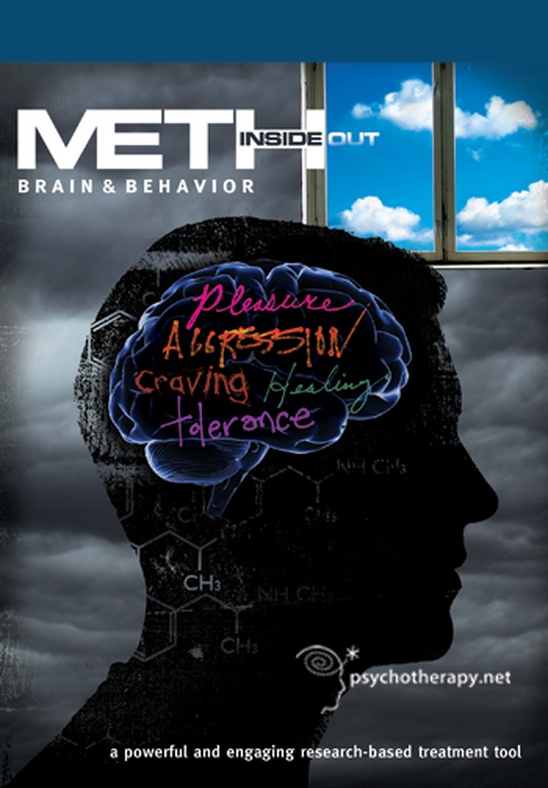
Meth Inside Out: II. Brain & Behavior
Video
with
UCLA & Eyes of the World Media Group
Video

Meth Inside Out: II. Brain & Behavior

Meth Inside Out is a groundbreaking video-based treatment curriculum on methamphetamine addiction and recovery. The series is designed to equip meth users, their families, and the professionals who assist them with a solid understanding of the biological basis of addiction, effective tools for recovery, and, most important, hope for the future. Video Length: 34m
Buy a Membership
COURSE DETAILS

Overview

Meth: Brain & Behavior equips viewers with an understanding of how meth changes the brain and, consequently, behavior. 3D animations of changes in the brain, accessible explanations, and personal accounts of use and recovery help viewers understand the complex effects of meth use on the brain. Meth users often come to believe that their lack of impulse control and decreased pleasure from ordinary life are permanent. From this video, users learn how to better cope with the stages of meth addiction and recovery by gaining an understanding of the biological underpinnings of the high, tolerance, craving, paranoia, aggression, anhedonia, and healing.

About the Experts

Creator

UCLA & Eyes of the World Media Group

UCLA Integrated Substance Abuse Programs (ISAP) is known to be the world expert on methamphetamine research. ISAP’s mission is to reduce the extent and impact of substance abuse by improving the understanding of substance abuse and the care of afflicted individuals. The work of ISAP faculty have yielded results that significantly advanced the knowledge base regarding substance abuse, its consequences, and its treatment, with salient impacts on practice and policy at local, regional, national, and international levels. Specific information on…

View full profile


Disclosures

UCLA Integrated Substance Abuse Programs (ISAP) was compensated for their contribution. None of their books or additional offerings are required for any of the Psychotherapy.net content. Should such materials be referenced, it is as an additional resource.

This Disclosure Statement has been designed to meet accreditation standards; Psychotherapy.net does its best to mitigate potential conflicts of interest and eliminate bias in all areas of content. Psychotherapy.net offers training for cost but has no financial or other relationships to disclose. Additionally, there is no commercial support for this activity. None of the planners or any employee at Psychotherapy.net who has worked on this educational activity has relevant financial relationship(s) to disclose with ineligible companies.

Psychotherapy.net defines ineligible companies as those whose primary business is producing, marketing, selling, re-selling, or distributing healthcare products used by or on patients. There is no minimum financial threshold; individuals must disclose all financial relationships, regardless of the amount, with ineligible companies. We ask that all contributors disclose any and all financial relationships they have with any ineligible companies whether the individual views them as relevant to the education or not. Each experts’ specific disclosures can be found in their biography.

Cognitive Behavioral Therapy for Depression
  • Video

Cognitive Behavioral Therapy for Depression

Mindfulness-Based Relapse Prevention for Addictions: Volume II
  • Video

Mindfulness-Based Relapse Prevention for Addictions: Volume II

A Strategic Approach to Treating Social Anxiety Disorder
  • Video

A Strategic Approach to Treating Social Anxiety Disorder

FOAT®: Focusing Oriented Art Therapy: An Introduction
  • Video

FOAT®: Focusing Oriented Art Therapy: An Introduction

  • Premium
Resolving Trauma in Psychotherapy: A Somatic Approach
  • Course

Resolving Trauma in Psychotherapy: A Somatic Approach