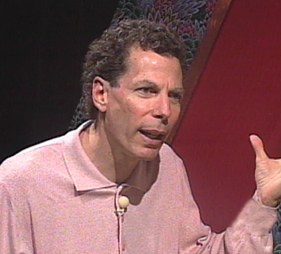
David Wallin on Attachment and Psychotherapy

Only connect

Randall C. Wyatt: It’s good to be here with you, David, to talk about Attachment in Psychotherapy, which is also the title of your new book. We want to focus on the clinical meanings of attachment, and how focusing on attachment and mindfulness makes psychotherapy different—for the therapist, for the client, for change.
David J. Wallin: Gotcha.
RW: But let’s start with a quote from the very beginning of your book, from E.M. Forster: “Only connect. That was the whole of the sermon.” Can you speak to what this quote means to you?
DW: When I first read the quote and was drawn to it, I thought what it meant was “only connect to other people,” but actually, I think what Forster had in mind was to connect the various parts of oneself. I liked the ambiguous, double meaning of that: how we connect or don't connect to other people, but also the ways in which we connect or don't connect to various aspects of our own personalities.

RW: How did you first come to be interested in how attachment ideas affected psychotherapy?
DW: My own development as a therapist traced a pretty common pathway from a classical psychoanalytic approach, then to ego psychology and object relations theory, self psychology and the intersubjective and relational perspective. I felt I'd found a home when I'd found relationality and the intersubjective perspective, because it seemed to speak to the essentially relational quality of the practice of psychotherapy.

I'd read John Bowlby as an undergraduate, and I'd probably dipped into Bowlby at various points along the way, but I was not terribly familiar with attachment theory. Then I began subletting hours in my office to Nancy Kaplan, who happened to be one of the three authors of the Adult Attachment Interview. I went out to lunch with her one day and said to her, “I wonder, is there a particular book or an article that you would recommend to me to begin to wrap my mind around attachment theory? Because I'm very interested in it.”

And Nancy said, “Well, I can't really think of a particular book, but let me pull some stuff together for you.”
The next day I came to my office and there was a grocery bag full of books, a stack a foot and a half high of chapters and articles.

So I started reading, and very quickly I realized that intersubjectivity theory and attachment theory were a conceptual marriage made in heaven. Attachment filled in the largely missing developmental and diagnostic dimension of intersubjectivity theory, and intersubjectivity filled in the largely missing clinical dimension of attachment theory. So wedding the two provided a framework for understanding what goes on in development, psychopathology, and psychotherapy.

Intersubjectivity and attachment

Victor Yalom: What was missing in attachment theory that intersubjectivity provided and vice versa?
David J. Wallin: Attachment theory was and is primarily a theory of development. Secondarily, it's a theory about how development goes awry and results in what we might call psychopathology. It's also generated a lot of research. But it's not primarily a clinical theory.

Bowlby had written a book called A Secure Base, where he talks about attachment theory in relation to psychotherapy, but he doesn't go that far with it. Attachment theory is a relational theory about how we develop in the context of relationships. Intersubjectivity theory and the relational perspective are theories about how people change in psychotherapy. If you transpose a lot of what the relational, intersubjective theorists have to say about how the therapy process works to the developmental context provided by attachment theory, you've got an extraordinarily rich framework for guiding your interventions in psychotherapy. At the same time, that way of putting it, I think, makes it sound like one's work as a therapist is probably more guided by theory than in fact it is.
RW: In a certain way, both intersubjectivity and attachment ideas are about two-person relationships, whereas initially in psychoanalytic thought, there was the idea of the blank screen, one patient projecting onto the neutral therapist. The mother/child and the therapist/patient, they’re both about very close relationships that seek to facilitate development of the child or patient.
DW: Precisely. I think that's part of the important meaningfulness of both theories. Indeed, Bowlby was very discontent with the analytic explanations of his day, which seemed to explain development and psychopathology exclusively on the basis of what went on inside people, and their fantasies about what went on between them and other people.
RW: Intrapsychically more than interpersonally.
DW: Exactly. The focus was on the child's fantasies and how those shaped the course of development, and the focus in psychotherapy was on the patient's fantasies and how those shaped the unfolding transference-countertransference situation. Bowlby realized that that was a ridiculously incomplete way of thinking about what actually happens in relationships between parents and kids, or patients and therapists. Similarly, intersubjectivity theory is a very lengthy retort to Freud's notion about the necessity that the therapist function as a blank screen, surgeon-like, staying above the fray, which I think is impossible.
VY: I think many people have a general sense of attachment theory in Bowlby’s ideas or attachment work, but didn’t delve into a whole shopping bag. When you did, what were some of the ideas that excited you?
DW: I think the short version is that it was the research that I found interesting. It wasn't so much Bowlby's books as the work of people like Mary Main, Peter Fonagy, Mary Ainsworth—others who were testing Bowlby's ideas and extending them, in ways that had tremendous clinical usefulness.

Mary Ainsworth initially identified two ways in which development goes awry in childhood, what she called avoidant attachment and ambivalent attachment. Mary Main discovered a third way in which development goes awry: disorganized attachment. And those scientifically researched variations on the developmental theme I found very compelling, and certainly more compelling than conventional diagnosis, which had once been very interesting to me.
VY: You’re talking about DSM-type diagnosis?
DW: I'm talking about hysterics, obsessives, borderlines, schizoids, paranoids, and so forth.
VY: The DSM point of view is pretty descriptive, where attachment categories are more of an underpinning to what forms these take in relationships.
DW: The attachment categories gave me a way to both understand the states of mind in which my patients seemed to be lodged at particular times, or the states of mind in which I seemed to be lodged at particular times—and also to imagine something about the childhood relationships that might have given rise to those particular states of mind.

For example, I began to think about the patients in my practice who might be described as dismissing. The dismissing state of mind is the adult corollary to the avoidant attachment classification in infancy. I found myself thinking about these patients who seemed to be remote from themselves and remote from other people as adults, who as children had needed to remain at something of a distance from their parents, but also from aspects of their own internal experience that might have driven them to try to get closer to their parents.

I was able to look at my patients' experiences through a theoretical lens that was orienting and helpful—and, ultimately, in my thinking through of this whole matter, allowed me to come up with some theoretical guidelines for how one might helpfully intervene with a patient who's in a particular state of mind with respect to attachment. I also had to think about my own states of mind with respect to attachment, in ways that seemed to have some implications for how I might attempt to conduct myself.

Putting words to our experience

RW: So you’re saying that certain states of attachment—dismissive, avoidant, disorganized—or secure, for that matter—point to different ways to intervene with patients based on this way of looking at them? Can you give an example of a dismissive patient and what you might do?
DW: That's right. For example, somebody who is fairly dismissive, seems very cool, who begins the session, by saying, “How are you doing?” “I'm okay. And yourself?” “Fine. Doing fine” despite things going poorly in their life. With somebody who's really at a distance from his or her own internal experience, emotions, bodily sensations, and so on, I tend to assume that I'm going to have to learn about what's going on in the patient in significant measure on the basis of what I become aware of going on inside myself.
VY: I notice you gesture a lot, which the readers won’t be able to see, but when you gesture with your hands that your patient is pushing you away, is there a visceral sense that you often get?
DW: I think that's true. I think with a patient in a dismissing state of mind—I notice I'm making that same gesture—I think one can feel pushed away. This might be somebody for whom connecting in psychotherapy to what's going on inside is going to be very important to the patient, but the patient is often not going to be able to do that on his own. Everything inside the patient and in the patient's history works against making those connections between their conscious self and their internal experience.

I also tend to assume that what we can't allow into our awareness of our experience—which also means what we can't talk about, what we can't think about—we tend to evoke in other people. So I'm inclined to believe that by paying attention to what's going on inside myself, I may get some clues as to what's going on that is most salient inside them.

I might be feeling pushed away because the patient's pushing me away. But this is, I guess, that old standby, projective identification. Often what I find myself experiencing is in some way a reflection of what the patient is really experiencing, in Freudian terms, in a kind of a preconscious way. In other words, it's kind of on the tip of the patient's tongue, emotionally speaking, but he or she is out of touch with it.
RW: And you think there’s great value in speaking what’s preconscious or preverbal for the patient. Why, or how, do you think that’s valuable?
DW: I think that when we lack words for our experience, our experience tends to be much more gripping, much more overwhelming. I think having words is a way to communicate about our experience, so that putting hitherto unverbalized experience into words allows us to feel less alone with it. And feeling less alone helps us to feel less overwhelmed.
Putting experience into words is a part of how we integrate experience.
RW: I think most therapists would go with that. The traditional therapist, over time, would ask the client, “Well, what are you feeling? What are you thinking? What are your free associations? Tell me your dreams,” to get at that. But you are clearly saying that the therapist should voice some of those thoughts and feelings. What’s behind that?
DW: Number one, it creates an emotionally live exchange, which is a big part of what I think can be missing in the therapy with patients in this dismissing state of mind. Therapy can be a conversation of talking heads—low on life, low on emotion. So when the therapist leads with his or her own emotional experience, that can open things up for the patient. I think there's a kind of modeling there: it may be safer for the patient to think and feel, or safer to feel certain things, than he or she may have thought possible. And if the therapist models that, it opens up possibilities for the patient.

There's this great quote from Bowlby, where he quotes Freud saying that, for the patient who is discovering what he previously believed forgotten, there's almost always the same sensation, or the same words might be spoken, which are I've always known that, but I never thought it.
RW: Kind of knew it pre-verbally, bodily.
DW: Yes. Christopher Bollas, with his book, The Shadow of the Object: Psychoanalysis of the Unthought Unknown, may well have read that same passage in Freud. In any case, the idea there is that patients often know more than they can put into words about their internal experience. So when the therapist articulates some aspect of what's going on in experience, the patient often recognizes it.
RW: Can you give us an idea of a particular patient that this was relevant for?
DW: I remember talking to this one patient—this was a guy who had me feeling, first of all, like he was about to walk out the door any minute. He was only in therapy because his wife insisted that he get into therapy.

Virtually from the beginning of therapy, I had had this sensation that I was only able to describe to myself by the third session. The sensation was that
I was on the witness stand dealing with an exceptionally brilliant and aggressive prosecutor, and my language had, consequently, to be bullet-proof.
I was on the witness stand dealing with an exceptionally brilliant and aggressive prosecutor, and my language had, consequently, to be bullet-proof. At a certain point, I felt like the patient was probably going to quit anyway, so I might as well say what was on my mind. So I told the patient that this was my experience. And he said something like, “That's incredible. You're describing my experience.” But he had never been able to put anything remotely like that to me previously, so that was the point at which something clicked in the therapy, and the patient wound up sticking around for a couple of productive years.
RW: It reminds me of hearing a song that really connects about loss, love or life and feeling like the singer knows just what you feel, that is powerful, it means a lot. More to your point, the therapist’s subjective experience can be a valuable part of the equation in the client’s understanding their subjective experience.
DW: Absolutely. I think the therapist's subjective experience when working with patients is almost always a valuable resource.
VY: Whether it’s spot-on or not.
DW: Yes, whether it's spot-on or not.
VY: If it’s not quite right, they can say, “Yeah, that doesn’t feel quite right; that’s not quite my experience,” and then elaborate.
DW: Exactly. And sometimes what I have to say really rings a bell, strikes a responsive chord, and other times, although more rarely, it doesn't seem to fit. It's my sense that there is almost always a meaningful, rather than an accidental, relationship between what the therapist is experiencing in the session and what the patient is experiencing.
VY: Now, going back a bit, when you told that story, that was a great image about the patient as a prosecutor. I think these images come up all the time to therapists, whether we express them or not. But you said he was about to leave anyways, so you didn’t have anything to lose. And then you say, “Well, I might as well take a risk.” And yet, why does it have to get to that point? Why not express those feelings more freely? I think there’s been a bias in our profession not to show that.
DW: Yeah, that's a good question. That's for sure. And I think that, as time has gone on, I've been personally less and less gripped by that bias, but there are certainly times when I'm still enthralled by it and may hesitate to disclose something of my own experience.

For what it's worth, I have found that when I have disclosed my experience, far, far more often than not, it seems to have a fruitful outcome. In other words, the emotional involvement of the patient and me seems to deepen, or we get into some material around which some meaning seems to emerge that hadn't previously been apparent to either of us.

I must say, though, that
there have been a handful of occasions on which it's kind of blown up in my face
there have been a handful of occasions on which it's kind of blown up in my face, but generally that's happened when the disclosure has come out without the slightest reflection and bursts forth, perhaps angrily, from my side. And there have been a couple of occasions when that's turned out to be extremely problematic.
RW: I guess that’s where clinical judgment will come in. Because sometimes you disclose—any of us, any therapist—and it could be a mistake or not have the intended effect, and how to deal with that is part of it too.
DW: But of course that's true of any intervention.
RW: It’s true of being silent and listening and not saying anything.
DW: Or interpretation, or a joke, or advice, anything.
VY: Yet the most common complaint I hear about clients who have seen previous therapists is they didn’t say enough.
DW: “You're not one of those therapists who never says anything, are you?” (laughter)
RW: “Do you interact with your clients?” they ask.
DW: I've heard that question before.
RW: Do you have any rules of thumb for self-disclosure or judgment in that respect?
DW: The primary criterion for me is, “Do I think this is going to be in the patient's interest?” How I gauge whether or not it's in the patient's interest is probably difficult to say.

Certainly there are some disclosures where you blurt something out. And sometimes that's okay and then comes spontaneous interaction; it's probably a healthy feature of many successful therapies. But I think if I'm considering in my own mind, “Is it going to be useful to say something about my experience here with a patient?” generally the criterion is, “Can the patient make use of this? Do I expect that the patient will be able to make use of my experience? How is the patient going to be able to make use of this?”
RW: That is part on an intuition developed over time, or personal experience, in life and therapy.
DW: I think there's a real skill involved in presenting one's experience to the patient in a form that's usable. I think there are the nuances of language that come pretty automatically to me, which I think wind up having the patient feeling that what I'm contributing, what I'm disclosing, is not a threat. It's not a criticism.
It's not a demand. It's something for the two of us to see together if we can make use of or not.
It's not a demand. It's something for the two of us to see together if we can make use of or not. But I think those same nuances in language are probably vitally important when you're making an interpretation or asking a question, or whatever. There's ways to talk that are more or less easy to listen to.

How is a therapist like a parent?

RW: Let’s move to another key attachment idea, expressed where Bowlby wrote, “The therapist’s role is analogous to that of the mother who provides her child with a secure base from which to explore the world.” Jeremy Holmes (John Bowlby and Attachment Theory) wrote from a bit of a different angle, “So what good therapists do with their patients is analogous to what successful parents do with their children.” These seem to be foundational to your applying attachment theory and research to psychotherapy. How do you think about this connection?
DW: When you write a book, it can be a wonderful magnet for other people's responses. I got an email out of the blue from Louis Breger, whose book, From Instinct to Identity, I had read when I was a graduate student at The Wright Institute in the ‘70s. He liked my book very much, but he raised the question,

“To what extent do we make the mistake of assuming that there's no difference between the adult patient and the baby?”


My response was that if we think about therapy as kind of a new attachment relationship, it's a new attachment relationship that's between two adults, but also a relationship between the therapist as parent and the patient as baby. Or maybe, in some ways, it's also a relationship between the therapist as baby and the patient as a baby—in other words, those baby parts of our selves. You know, we don't leave those behind entirely.
RW: The vulnerabilities, certainly.
VY: Fears, anxieties.
DW: And the preverbal experience that remains inside us undigested. We bring those yearnings, those fears, to adult relationships. I think it's meaningful to think of that as, in a sense, the baby part of us. When that very young part of us can come alive in the relationship with a therapist, there's an opportunity for that part of us to change and to develop.

The other thing that I have found useful is to think about the research on the features of the most developmentally facilitative parent/child relationships, and use that research as a springboard to some ideas about what's most developmentally facilitative to bring to the relationship with the adult patient. There are lots of other writers—Holmes, Allan Schore, Winnicott—who've pointed to the symmetry between what we provide as good parents and as good therapists.
RW: A good-enough mother. A good-enough therapist. In what sense do you as a therapist try to embody that connection, that idea? I mean, you’re not a parent in this role, you’re a therapist.
DW: Yes, of course. In my book I lay out four ingredients of growth-promoting relationships in childhood from which one can draw lessons for psychotherapy. One of them is the fact that the relationships between parents and kids that seem to generate the healthiest, the most flexible, the most secure, the most resilient offspring, tend to be relationships that are maximally inclusive. In other words, they make as much room as possible for the depth and breadth of the kid's feelings, desires, views, behavior. The kid is allowed to experience a whole lot of himself in the context of a relationship with a parent who is curious about that kid's experience and is making room for that kid's experience.

I think the same thing is true of psychotherapy. You can look at psychotherapy as a relationship in which the therapist, as an attachment figure, is attempting to make room for experiences the patient's original attachment figures couldn't make room for. So to that end, I'm interested in getting to know as much as I can about what the patient is feeling, hoping for, afraid of; what the patient wants from me, what the patient's sense of our relationship is at any given moment, what's going on inside the patient's body. I just want to make as much room for that as possible, because I think it's conducive to the integration of previously dissociated experience.
RW: Previously dissociated experiences… Can you talk about that and how it might play out in therapy?
DW: Mary Main as well as Bowlby and a host of psychoanalysts makes the clinically useful point that we can think of the internal world as a registering or duplicating of what has occurred in our first relationships. But Main goes on to add that there's another way to think about the internal world, which is as a registering of rules for processing information.

In our first relationships, we learn what's ruled in and what's ruled out: what we can safely feel, speak, and want. I think of dissociated experience as experience that has been ruled out on the basis of what's occurred our early relationships. It is also a consequence of experience that is traumatic, whether it occurs in the context of early attachment relationships or later attachment relationships or, for that matter, outside the context of attachment relationships.

A lot of us are most profoundly affected, although often in ways that lie outside our awareness, by dissociated experiences that we've never been able to fully know
A lot of us are most profoundly affected, although often in ways that lie outside our awareness, by dissociated experiences that we've never been able to fully know, experiences that we've never been able to fully think about or feel, or be articulate about. Dissociated experience often really has a grip on us. It determines a lot of what we do and don't do, say and don't say, feel and don't feel, think and don't think. So as a therapist, I always have my eye out for what the patient doesn't seem free to think, feel, want, know and so forth.

In therapy, dissociated experience is often an experience the patient can't put into words, or an experience that can't even be put into thoughts or feelings. My attention often is on what is being evoked in me, because I think what people can't own and articulate, they often evoke in others. I've also got my attention on what's being enacted between me and the patient, since that's another way in which dissociated experience gets expressed.

Finally, I've got my attention on what's going on in my own body and what's going on in the patient's body, because I think often what can't be consciously known, the body knows. In some way, it becomes part of the person's somatic experience: the way he carries himself, the sensations in his body.
RW: It’s pretty profound, that is, your attention to the therapist’s experiences as an important source of information about what is dissociated in the patient related to attachment, their past, and therapy.
DW: I refer to it as somatic countertransference—what's going on in the therapist's body. I think these categories—what's evoked, what's enacted, what's embodied—tend to overlap. Sometimes what's evoked in the therapist, what the therapist experiences is a bodily sensation.
VY: And some therapists are much more in tune to their body, some are more in tune to their emotions, and some their thoughts.
DW: Yes. I remember a number of years ago, I went to a presentation by Elizabeth Mayer who died a few years ago. She was making the point that different therapists have different resources, as you say. Some are really good at paying attention to what's going on inside the bodies in the room, and some are really good at paying attention to dynamics of transference and countertransference, and others are really, really good at working with dreams. And whatever your resources are, that's what you bring to bear on the encounter.

Psychotherapy with an attachment focus

RW: Your work is focused on how to enhance and increase one’s skill and engagement in this attachment world. So what is different about your work?
VY: Another way to ask this might be, “If you’re a fly on the wall watching an attachment-oriented therapist, would it look any different?”
DW: That's sort of a hard question to answer because I don't know how other therapists work.
VY: That’s the mystery of our profession.
DW: So, in a way, all I can say is how I work.
RW: A very honest answer. Let me thank you for not acting like you know distinctively what’s so different. That said, something guides you and makes you attend to different things than others.
DW: Right. I think there's probably a pretty close relationship between what an attachment-oriented therapist, on the one hand, and a relational, or intersubjectively oriented, therapist, on the other hand, might do. The primary similarity is that there's a lot of attention to what's going on in the here-and-now relationship, what's going on in the patient right here, right now, and what's going on in the therapist right here, right now.

When I'm working at my best, I'm very inclusive and integrated. There's a focus on my own internal experience. There's a focus on the patient's internal experience. There's a focus on evocations, enactments, embodiments. And then there's also a focus on this whole matter of my relationship to my own experience as I'm sitting with a patient and the patient's relationship to his or her own experience as we're sitting together. The whole question of mentalizing and mindfulness is one that's very often on my mind as I'm sitting with and working with a patient.
RW: Now, you said a lot of things there: the client’s experience, your experience, our experience. To raise a more practical question, are you also working with the person on their divorce, or job loss, or panic, and so on? How is the content or context of the patient’s life brought in?
DW: Of course. I have a couple thoughts about that question. One is, as a therapist, I'm sure I have a lot in common here with psychoanalysts like Owen Renik (see Interview with Owen Renik) or Michael Bader, who write about the importance of symptom relief in therapy.

Very often, I'll find myself saying to the individuals or couples with whom I'm working that I tend to work at two related levels. One is a practical level: what's troubling you? What's getting in the way? What's bothering you? What can we do about that together?

And then there's another level which is more psychological, having to do with the relationship between what you're experiencing that's difficult and what you've experienced growing up, the ways you've learned to think and feel, and what you've come to believe about yourself and other people. I think if I'm leaving one or the other out, I'm not doing you any favors. So I'm going to be trying to focus on both of those goals.
RW: To go a step further, your assumption—and your experience, I would think—is that focusing on the psychological, the interpersonal, the intersubjective affects the patient’s lives in terms of depression, panic, relationships.
DW: Absolutely. I think of these as two intertwining braids of the same rope.

I always feel like I have to start where the patient is, so I'm trying to get a sense, sort of intuitively throughout any given session, what's most emotionally salient for the patient? What's most interesting or troubling? Or if the patient seems far away from any experience, as if nothing is interesting or nothing is troubling, that gets my attention. But I think the focus on starting where the patient is at means that you're focusing largely on what's bothering people.

The therapeutic relationship and the patient’s relationships

RW: How does the therapeutic relationship get translated to their own relational world—in their relationships, in love, in parenting?
DW: I think there are probably a bunch of ways in which the practical level of things is ameliorated through a focus on what's going on in the therapeutic relationship. For one thing, we're talking about somebody's relationship to himself or somebody's relationship to other people, generally, that's what bugs people. That's what troubles people.

It's my relationship with myself: I'm feeling depressed, I'm always getting anxious. Or it's my relationship with other people: I'm always feeling insecure with other people, or I just feel really distrustful of other people, or I'm angry at other people, or I feel let down by other people, or other people seem more important and smarter than I am, or whatever it might be. It seems like people are bugged by aspects of their relationships with themselves or relationships with other people.

If I, as a therapist, start to pay attention to what's going on in my relationship with a patient, it provides a kind of here-and-now experience of aspects of the patient's relationship to other people, or the patient's relationship to himself, that are troubled.
RW: Can you give us an example of this from your work?
DW: I am thinking of man who has a hard time feeling close to his wife and I notice is somewhat remote from me and remote from his own feelings. If I can find a way to talk to the patient about the fact that—for example, “God, we're talking about this very troubling stuff and you seem utterly unaffected. I asked you what you're feeling about it and you say ‘I'm thinking' or ‘I'm reflecting,' but you're not feeling it. I just have to wonder what's going on there; whether you don't feel safe to have your feelings when you're with me or whether you are having a hard time connecting with what you're feeling generally.”

And then later I might say something like, “If you're not feeling a whole lot about some stuff I've been saying that I would imagine would evoke a whole lot, it leaves me feeling sort of disconnected from you.”
VY: What happens when you make those kind of statements?
DW: Ideally, I think the patient gets really interested: “Wow. God, I seem to be emotionally cut off from experiences that, at least according to you, ought to be really getting to me. I wonder what that's all about?”
VY: And after they get interested?
DW: As time goes on, often bridges are made between what goes on in the therapy relationship and what goes on in other important relationships the patient has; some of those bridges are made to the past. As the patient talks about his or her experience, the therapist has ways of being with that experience, tolerating that experience, that allows the patient's experience to deepen.
RW: So that’s the secure base that the therapist is seeking to provide in the relationship with the patient.
DW: That's a part of it, providing a secure base. I think that means generating a relationship in which the patient feels both safe enough, challenged enough, engaged enough, understood enough, accepted enough to venture where he or she has previously felt it was too dangerous to go.
RW: I had a client who, in the first few sessions, revealed a lot of painful stuff about trauma and childhood and abuse in his family, and then soon after, he told me he was just horrified that week, from nightmares, everything…
DW: As he connected with his traumatic experience.
RW: As he connected to the traumatic experience, which was very overwhelming. And then he wrote a song about it, starting out, “I was born in living hell” and it sounded like it. At first he felt he just wanted to run away from the therapy: “This therapy thing is too much. Hey, I had a few sessions of therapy and now I’m overwhelmed.” He stuck with it, though, and explored his life, which was, for him extremely risky, and I certainly sought to provide a space to do this.
DW: Right. I think patients have to sort of figure out, on the basis of their experience with us, whether, in fact, it is safe. Do our responses allow the patient to feel understood, accepted, or not? There is a kind of common experience with patients who have been traumatized, that it's extraordinarily difficult for them to feel safe, and I think they often manage to find unsafety in situations that we might imagine are safe. For example, they might feel that we're seducing them into a relationship with us, which they expect, on the basis of their own experience, to actually and inevitablybe a dangerous experience, a dangerous relationship.
RW: So it’s a real risk they’re taking that needs a lot of safety to dive in—not to be underestimated.
DW: Based on my experience with a lot of different patients, confronting trauma almost invariably raises questions about the safety of the relationship with the therapist. Often these are two intertwining processes: so when you're dealing with the question of safety or danger in the relationship with the therapist, that regularly reels in issues of past trauma.

I think there's a common model, which has some meaningfulness, that we create a relationship of some safety, which provides a container within which, at some point, the patient will feel appropriately secure enough to confront the traumatic experience of the past. But I think that that model makes a whole lot more sense if you think of this not as two-stage process but rather as two facets of one process that you're going through over and over and over and over again.

In other words,
if you're paying attention, you are repeatedly noticing the patient's concern with issues of safety and danger in a relationship
if you're paying attention, you are repeatedly noticing the patient's concern with issues of safety and danger in a relationship with you on the one hand, and you're repeatedly either hearing echoes of or explicit references to the patient's traumatic history on the other hand, and you're going to be touching on one and then the other, for a good long time.

The role of mindfulness

RW: You’ve made mindfulness central to your work with patients. Let’s focus on the important role you see for mindfulness in therapy.
DW: When I first contemplated writing this book, mindfulness had no place in my thinking whatsoever. And it was only very accidentally—or maybe there's some synchronicity at work here, or grace, or God knows what—that i stumbled upon the whole matter of mindfulness. I just happened to be thinking one day about some of the ideas that I was writing about at the time. I was thinking about some of Fonagy's ideas…

I remember I was sitting out on my deck and I was feeling very relaxed when I had this fanciful image of three concentric circles. The outermost circle represented external reality. Within that, there was a second circle representing the representational world of mental models, and so on. And then within those two circles was a third, which stood for what Fonagy calls the reflective self, which is that part of the personality which is capable of reflecting on the relationship between the representational world and external reality.

And as I was thinking about these three circles, what seemed like the inevitable questions came to mind: Who or what is it that is doing the reflecting on the relationship between the representational world and external reality? What is the reflective self? Who or what is doing that reflecting? What's the reflective self made of?

And as I asked myself these questions, I got an answer, not in the form of a conceptual understanding but an experience.
I had this sort of dizzying sense of an imploding self.
I had this sort of dizzying sense of an imploding self. It's very hard to describe, but it was as if my ordinary sense of self was collapsing down to a single point, which represented nothing but impersonal awareness. And so it seemed like the answer to the question, “Who's doing the reflecting?” was, no one, or no personal self.

Maybe a year after this, I was watching this movie, Fierce Grace, which is about Ram Dass post-stroke. He talked about his first psychedelic experience in which he'd had an almost identical implosion of self, a disappearance of a sense of personal identity, personal history, in which his self seemed to be reduced to nothing but awareness.

As I was having this experience, I also felt this tremendous sense of well being, a much-enhanced feeling of connection to other people. I began to feel like, you, I, and everyone we know, and maybe our pets, are all basically the same at their core. So there was this much-enhanced sense of connection to other people. There was much-reduced defensiveness.

All in all, it was a powerful and liberating kind of awareness that I was able to hold onto for probably a couple of weeks; at first I couldn't stop talking about it because it was so compelling. And it seemed like the people who understood what I was talking about were people who were meditators or had some kind of spiritual practice, as it's called. And so I ended up becoming a committed meditator because it seemed to me this state of mind was devoutly to be sought. It also seemed to me that this state of mind I experienced was associated with what in the Buddhist tradition, is called mindfulness.

Meditation seems like a route to that awareness of awareness, and it seems to be a route to a capacity to be present with a modicum of acceptance. Mindfulness also fits in perfectly with the whole idea which has been so thoroughly researched in the attachment field: the idea that people's experience is changed to the extent that their relationship to their experience is changed.
VY: What was the link, then, from this amazing experience to attachment ideas?
DW: In the attachment research, there's been a lot of work done on the impact of the development of what's called a reflective stance–what Mary Main calls a metacognitive, and Peter Fonagy calls a mentalizing stance—toward experience. And what seems to be true is that
a reflective stance toward experience buffers one against the worst impacts of trauma.
a reflective stance toward experience buffers one against the worst impacts of trauma. This stance also seems to ultimately be capable of allowing those of us who have experienced inauspicious beginnings of the sort that might be predicted to lead to insecurity, to raise secure kids.

So a big part of the thinking that went into my book on psychotherapy and attachment was around this whole concept of a reflective, mentalizing or mindful stance as one that transforms our relationship to our experience in such a way that we are liberated from many of the constraints that are generated in the course of our personal histories. So I'd refer sort of fancifully to mentalizing and mindfulness as the double helix of personal liberation or psychological liberation.
RW: Is that something that you talk to clients about or you just use it indirectly—mindfulness and mentalizing?
DW: Mostly I use it indirectly. There are a handful of patients at any given time in my practice with whom I begin each session with maybe five minutes or so of meditation. There's a somewhat larger number of patients to whom I suggest that meditative practice might be of use.
RW: How do you approach your own sense of mindfulness in the session?
DW: I think the whole matter of mindfulness is one that's almost always with me in any given session. I'm thinking about the extent to which I'm actually capable of being present with a patient at any given moment, or am I somewhere else. Is the patient present or is the patient somewhere else? I'm attempting to do what I can to be present, and I'm attempting to be mindful. And I'm attempting to do what I can to help the patient be present—also known as helping the patient to be more mindful—in the same way that I'm attempting to help people become more effective mentalizers of their own experience.
VY: Certainly this idea of mindfulness is present in many schools of psychology. I studied very closely with James Bugental, and what he called presence in the client and the therapist seems quite similar.
RW: I would agree, as in presence, or being versus becoming, noticing versus evaluating. But it goes even further, I believe. Mindfulness seems to have roots in every major religion in a way—thinking of Islamic surrendering, Christian grace, mystic prayers, Buddhist acceptance, Jewish sense of God’s will, or Hindu karma. There seems to be something really powerful about a client accepting, “I was traumatized,” or “I’m experiencing something in my body now” or “I’m depressed and afraid”—just noticing and being with whatever is.
VY: Or “I’m feeling right now, in this relationship, x and y.”
RW: While I think it is all good and fine to learn and grow, it seems to be freeing to be here now, as Ram Dass used to say.
DW: Yes. Yes. Yes. It's very interesting to me that, even as we speak about mindfulness, I feel more present with the two of you.
RW: Yes, I noticed.
DW: Isn't that remarkable? And when I teach about this stuff or focus in this way with a patient, it's like once I start talking about it, if I can get mindful, things change. It's a little magical.
RW: There’s something freeing about it; it loosens up possibilities to accept life as is.
DW: When I get mindful or when you guys get mindful, I think part of what happens is we get present. And what that means is that, among other things, subjectively speaking, the past and the future are sheared away, which I think tends to reduce a lot of anxiety, depression. Because often, where we are in the present moment is not that bad. It's not that dangerous. It's okay. So I think there's a measure of emotional or internal freedom that comes with this presence.
RW: I’m thinking now that such mindful living and being able to be present might actually increase the secure base?
DW: Oh, exactly, precisely. I tend to think that as you meditate, or just have the experience over and over and over again of being present and noticing, and especially when you become aware over and over again of awareness, that has the potential to become a version of the internalized secure base.
VY: I think for some clients—the withdrawing, schizoid person—meditation doesn’t always help. They can retreat into that world of meditation and it does not necessarily help them connect more with others.
DW: I think you'd have to look at the nature of their meditative practice. Yet, I do think that what you're talking about is a reality. In certain communities, that's talked about as spiritual bypass: they're bypassing their own internal experience by spacing out or dissociating. That's a different animal, it seems to me.
RW: You address spiritual bypass well in your book—that it’s about a yin and yang balance. You’re not suggesting mentalizing or mindfulness so you can avoid life. It is the engagement and connection to oneself and others. As you said, you had your experience and then you were very connected. It wasn’t an escape. If it is merely an escape, that is another matter.
DW: Yes. Sometimes what I'll do actually between sessions is meditate for even just a few minutes. That often grounds me in such a fashion that I'm actually capable of being more present with the people with whom I'm working.

Three pearls for therapist practice

VY: I know you do a lot of teaching these days. Before we wrap this up, what are the important points about your work that are most crucial to convey to those you are teaching about an attachment approach?
DW: There's a book that I've been asked to be part of that is going to be coming out in the future, which is called something like Clinical Pearls of Wisdom: Essential Insights from Leading Therapists, and I was asked to offer my own clinical pearls.
VY: We want a preview, then.
DW: Okay, here you go. For me, the clinical pearls are as follows: First is that the therapist's own attachment patterns are frequently, if not always, the primary influence shaping his or her potential to be of help as a therapist. In other words, our own attachment histories and the dissociations they have imposed, and the way that we have worked through some of those dissociations—all of that generates the therapist's potential to be insightful as well as vulnerable to being stuck in an impasse with a patient. So I'm talking about the centrality of the therapist's own psyche as both a facilitator of and a constraint upon what he or she is capable of doing with patients that's going to be helpful. Secondly…
VY: Would you be willing to share one thing about yourself—in understanding this better—that helped you be a better therapist?
DW: Sure. And I'll try not to cry. This idea became extremely vivid for me in the context of work with a particular patient with whom I had felt myself to be stuck. This was a patient with a history of trauma and some very serious obstacles that he was introducing into his own life that were very much limiting his capacity to have a decent relationship and to know himself.

At roughly the same time, I was working in my own personal therapy, in such a fashion that I bumped up against some extremely painful, difficult feelings about myself that had to do with experiences I had when I was very young—experiences that left me with a set of feelings about myself that were profoundly shameful and practically unbearable, and had me thinking some very self-destructive thoughts. And in the course of working through this experience in my own therapy, I've gotten somewhere that's been very useful.

Around the same time, I was in a peer consultation group describing my feelings of anger and envy in relation to this traumatized patient. He happened to be an extraordinarily wealthy guy who could just about do whatever he wanted to do. And one of my consultants said, “Okay, we really have a sense of what it's like for you to be with this patient, and we have a sense of who the patient is today, but you haven't said a word about his childhood, how he got to be the way he is.” And it was that question that prompted me to make bridges between my own experiences and the experiences of this patient.

As I talked about the trauma this patient had experienced as a child, I started to cry. I became aware of the ways in which I identified with this patient—how the impasse in which I found myself with him was in some ways a product of my own experiences.
I didn't want to drag the patient into that particular torture chamber that I was getting to know so well.

And the rather remarkable thing is that the next time I saw the patient, practically before I could say a word, I had a sense that the encounter that we were having was occurring at a deeper level. I was able to see the patient not as somebody toward whom I felt angry and envious and whose power I was very much aware of, but instead, I was able to see the patient as a kind of scared, humiliated young kid.

The awareness of the ways in which I was avoiding—I mean, this is the nutshell version—inviting this patient into an encounter with his own feelings of shame as a function of my own difficulty moving into that terrain—that was keeping our therapy stuck. And once I began to integrate that part of myself, I was able to make room for that part of the patient in the therapy.
RW: Beautiful and poignant. Two other pearls?
DW: Okay. So the second pearl is a question to ask when you are trying to figure out how your own attachment patterns are having an impact on the therapy. The question to ask yourself is extraordinarily simple: “What am I actually doing with this particular patient?” It's not always a question that you can get a complete answer to, because the answer is often hidden in the foggy realm of the dissociated, but I think you can certainly see the tip of the iceberg when you ask yourself, “What am I actually doing with this patient?”

I think the literature on enactments often focuses on what it is about the patient that is being enacted that's hooking something in the therapist. What I'm suggesting is there's a much more direct route to understanding what's going on in our enactments with our patients, which is simply to ask ourselves, “What am I actually doing with this particular patient?”

And then the third pearl is that often getting into a mindful state of mind is an aid to answering that question in a productive fashion. If you can actually get present and ask yourself, “What am I doing with this patient?” often there's a clarity that wouldn't otherwise be available to you.
RW: Thanks for sharing your pearls with us today. We didn’t get a chance to get to everything about your work today, but quite a bit, I’d say.
DW: Thanks, yes, we got to a lot.
VY: Thanks for sharing this wealth of knowledge and wisdom.
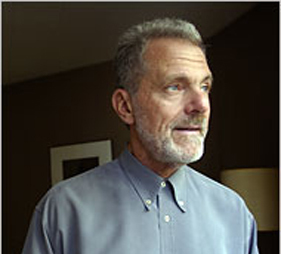
Owen Renik on Practical Psychoanalysis and Psychotherapy

Randall C. Wyatt: Any interesting cab experiences?
Owen Renik: Oh, many, it was a wonderful job.
Driving a cab is kind of like being a shrink, except that you sit in front of the patient.
Driving a cab is kind of like being a shrink, except that you sit in front of the patient. You know what people are like; it's like strangers on a train, people open up. It was a different New York then. There was no plexiglas between you and the customer. You flipped the arm down and you split the paid miles with the owner of the medallions and after about 10 o'clock at night it was all making deals about going to Brooklyn. I drove anywhere in the city then—not without fear—but without restraint.

Driving a cab in NY

RW: Let’s start, Owen, with the story that has circulated around that you drove a cab to pay your way through medical school; some people wonder if that’s how you got your start in therapy.
OR: I drove a cab in New York for several years while I was doing what we called post-bac or pre-med requirements. When I got out of Columbia I didn't have any of those requirements. And, no, no, I knew I wanted to be a shrink before I drove the cab. When I went to medical school, I stopped driving a cab and I missed it. For years, if I came into New York, like on New Years' eve, and nobody could get a cab, I would go with my date and pick people up and take them where they wanted to go, actually play cabbie for a while.
RW: There’s a reality TV show on cab rides where the customers tell the cab driver all kinds of things.
OR: Oh yeah, I saw an episode. This lesbian couple gets in the cab and one of them says, "This is my girlfriend, and this is the toy we use in bed ," and so on. Wild.
RW: When there’s a little distance people will tell their stories. And they really don’t expect the cab driver to tell anybody because who is the cab driver going to tell?
OR: It's anonymous. One doesn't give names. It's a cash business. It was a lot of fun.

Don’t be a schmuck, go to medical school!

RW: You were trained as a psychiatrist and a psychoanalyst. What first stirred your interest in psychiatry and psychoanalysis?
OR: Well, I began by wanting to be a therapist. I was going to get my PhD in psychology and was accepted to graduate school. They gave me some scholarships but I didn't graduate from college on time so I couldn't go that year. There were a few glitches. I was not wrapped too tight in those days. So, I took a job at Paine-Whitney, a freestanding psychiatry hospital in New York as a psych. tech, midnight 'til 8 am, to see what the deal was working with very disturbed patients.
I saw immediately what the pecking order was at the hospital and I figured I wouldn't last thirty seconds taking orders from some schmuck with a stethoscope.
I saw immediately what the pecking order was at the hospital and I figured I wouldn't last thirty seconds taking orders from some schmuck with a stethoscope. I saw what the realpolitik was.
RW: Were you interested in psychoanalytic thinking yet?
OR: No, I was not interested in psychoanalysis because the little contact that I had with the New York psychoanalytical community was, you know, these people were undertakers. I mean they were like the walking dead. I couldn't imagine it. I went to medical school to become a psychiatrist.
RW: Let’s go back a few steps, how did you end up in med school?
OR: At the time I didn't think I could sit still long enough to get through medical school. When I say I wasn't wrapped too tight, I really wasn't wrapped too tight. I didn't know what to do and I didn't know anybody to ask. You know, my mother graduated high school and my father dropped out of manual trades high school after two years. Nobody in my family had been to college, let alone medical school.

So I looked up Rose Franzblau in phone book; she wrote a psychology column for the New York Post, that for the liberal and the Jewish community was the paper. It's now a rag, but in those days everybody worshiped it. The publisher, Dorothy Schiff, was like the Virgin Mary. So I called Rose up and said, "Look, I'd like to talk to you about going to graduate school in psychology versus medical school. Could you see me? I know you from your column. " And she said, "No, you don't want to talk to me. You want to talk to my husband, Abe. He's Chair of Psychiatry at Mount Sinai Hospital." So I called him up the next day and he says, "Oh, yeah, Rose said you were going to call. Could you come over this afternoon to see me?" So he cuts me an hour and a half out of his day.
Abe was a sweet guy, real caring, a mensch. I go over there and after talking with him for an hour or so, he says "Go to medical school. Don't be a schmuck."
Abe was a sweet guy, real caring, a mensch. I go over there and after talking with him for an hour or so, he says "Go to medical school. Don't be a schmuck." (laughter all around)
RW: That would be hard to refuse.
OR: I said, "Yeah, but I'm not," He interrupts me, "It's not so hard. Don't worry. You'll get there." So I went 'cause Abe told me to go. (laughing exuberantly) But, anyhow, that's how I got involved in all of this stuff.

I went to the upstate medical school in Syracuse. Then I did my psychiatry internship at Denver General Hospital, a real knife and gun club, you know, real down amongst 'em county hospital internship which I enjoyed thoroughly.
RW: Then, how did you end up in San Francisco?
OR: I visited friends in California in the late 60s and I loved it. I wanted to go to the Stanford residency psychiatry program, which would have been a hilarious mistake for me. Irv, pace Irv. (laughter) I didn't interview with Irv. It was Khatchaturian I was speaking to then. I liked the place and the people that I met. But I had no idea how research-oriented it was. And I don't need to tell you how different being in Palo Alto is from being in San Francisco. But Stanford couldn't tell me yet whether I was accepted and Mount Zion in San Francisco had offered me a place. I had no idea what I was stepping into; it turned out to be a great, great department. I wanted to be in San Francisco, so I came. That's where it was happening. But this was 1969, the summer of '69.
RW: That was quite a time, the ’60s in San Francisco was thriving place to be.
OR: Yeah. I thought I died and went to heaven. (laughter from all)
RW: You started getting interested in psychoanalysis then?
OR: Yeah! Because of the people I ran into at Mount Zion. I came out here just to be a psychiatrist. And I ran into wonderful people like Eddie Weinshel, he died recently, Vic Calif, and Bob Wallerstein, and Norm Reider. They're all mavericks who thought for themselves and they were real people. I became interested in psychoanalysis through them.
RW: And what did you notice about changes in psychology and psychoanalysis then?
OR: But I was not sophisticated, Randy. It's not as if I was aware of the changes at the time. I didn't know beans about it. I had read Freud in college and the idea of becoming a shrink seemed great to me.

How therapy saved Renik’s ass

RW: Had you been in therapy yourself yet?
OR: I'd had therapy in New York that had saved my ass, really, with an analyst, although that did not convince me that analysis was worthwhile because I didn't think she was being very psychoanalytic.
RW: You said that therapy “saved your ass.” How so? And you said she was quite an analyst. What do you think she did to help you?
OR: Yeah it did. I didn't think she was being very analytic per se yet what she did was extremely helpful to me. It's not always so easy to be able to put your finger on how a treatment helps you, but, in this case, I really could. She permitted me to understand something and that made an enormous difference in my life. When I say I wasn't wrapped too tight, I mean from a very early age I was really scrambling in life because I felt very guilty about not being able to help my mother. And, eventually, when I left the family in order to survive, I felt really bad about that.
RW: Your mother was quite ill and depressed.
OR: Yeah, she was, very. My understanding of it up until I had this therapy was that her physical illness had been the cause of it. She had a very bad case of myasthenia gravis, which is a terrible illness when it's not treatable; it was the very early days—they didn't know much about it then.
Victor Yalom: What was the illness again?
Owen Renik: Myasthenia gravis. It's a neurological illness. It's essentially a disorder of the way the nerves innervate the muscles. You become weak, atrophied, even flaccidly paralyzed. It was horrible. But I recognized and learned, with my therapist's help, that the real problem had been my mother's reaction to her physical illness. She could have made a much better life for herself and for our family had she had a different attitude. She didn't cooperate with the medical treatment. It was catastrophic. Realizing that was enormously liberating for me. Years after my mother died, I was eventually able to confront my father about this. And I learned from him that she had been psychotically depressed prior to ever becoming physically ill. I had screen memories that came from having been shipped out of the house for months before I was two years old, while my mother was in the hospital getting shock treatment. So, it was an enormously important therapy for me. I have sent many, many patients to my therapist, Hanna Kapit, in New York. And we remain friends to this day.
VY: In what way wasn’t she psychoanalytic?
OR:
Well, she did not fit the stereotype of a psychoanalyst that I had in my mind at the time. She was personal. She was friendly. She was not lowered by a string into the session, in a lotus position.
Well, she did not fit the stereotype of a psychoanalyst that I had in my mind at the time. She was personal. She was friendly. She was not lowered by a string into the session, in a lotus position. (laughs) I remember once, and by the way, we're going back forty-five years now, guys…
RW: We’re going through the screen.
OR: Well, you know, when something is important, it sticks. I remember I was feeling very humiliated about having feelings for my therapist because I couldn't imagine that she had feelings for me. I'm not even talking about sexual desire. I'm just talking about loving feelings. And she said, "What makes you think I don't have feelings about you?" Oh, it was a big revelation for me.
VY: And why shouldn’t the therapist reveal those feelings?
OR: Right. Well, all I knew was the stereotype and Hanna didn't conform to it. She's a good example of why psychoanalysis has lasted, despite a really pretty cockamamie theory.
There are really good people who are analysts, who, despite the theory, they find a way to be helpful to patients.
RW: Can you isolate it a little more? What are you saying that she did that helped?
OR: Well, the one that stands out for me is helping me realize that my mother was not simply the helpless victim of this physical illness, but that there was some kind of choice there. That it was a psychological problem. I don't want to over-dramatize it but the psychology that I was suffering from was essentially that of, like, the child of a holocaust survivor. You've got a parent who is a completely helpless victim, without any choices, of this external thing. It changed my whole view of my parents and my relationship with my parents, and myself, essentially. I calmed down enormously, actually. I was less anxious and therefore less defended against anxiety. And my defenses against anxiety had been quite costly for me. I mean I was really out there and moving pretty quickly.
RW: So, you came out here to San Francisco, became a psychiatrist, and then got trained as an analyst. Where?
OR: I got my training at the Institute (The San Francisco Psychoanalytic Institute).
RW: And when did you first become disillusioned with traditional or orthodox analytic practice? Do you remember what set you off?
OR: It didn't happen like that, Randy. I didn't become disillusioned since I never had illusions to begin with. It's a little bit deceptive, because I had such a successful career within the ranks. I have all the merit badges. I was Editor of the Psychoanalytic Quarterly for 10 years and Chairman of the Program Committee of the American Psychoanalytic Association, etc. But it was never because I bought in. I was always thinking for myself about what seemed sensible and what didn't. I never drank the Kool-Aid, but I was respectful of what I was taught. And I didn't just decide sittin' in the armchair. I mean it was after doing analyses for quite some time and seeing what seemed to be useful or not that I reached my conclusions.

So, it was really a gradual evolution that I moved farther and farther away from standard psychoanalysis. I just questioned more and more and more things, as time went on. The way I see it, I evolved during the thirty or so years after I graduated, while psychoanalysis remained at a standstill. It's not that I became disillusioned, I was always wondering.
RW: People call you a maverick analyst or a rebel, unorthodox. You’ve heard these terms.
OR: Oh, sure, sure.
RW: And what do you think people mean by these things they say about you?
OR: These terms only apply if you have an orthodoxy. In science, which is what psychoanalysis began as, and ought to have remained, which it did not. In science, there's no such thing as being anti-, there is no such thing as being a maverick or a rebel. You're not only entitled to question even the most basic assumptions of the discipline, you're encouraged to question the most basic assumptions. So, the term, maverick, or rebel, in itself contains the answer to your question. It's because psychoanalysis is a faith-based movement, at this point; it's a sect. It perpetuates received wisdom which is not really, despite claims to the contrary, open to question. Psychoanalysis is no longer a scientific enterprise. So people who, for whatever reasons, don't hew to the established received wisdom, are labeled as heretics. That's the reason I'm called a maverick, and a rebel.

Many of the best and the brightest were really excluded from becoming analysts because they were sorted out in the admissions process. Or they took one look at the orthodoxy of it and did not run into the few, sort of exceptional people that I did, and then said, "Who needs this?"

The crux: Self-awareness and symptom change

RW: So what are some of the key ingredients of the orthodoxy, the traditional psychoanalysis that you challenged?
OR: Jeez, it's so much, at this point that you can dip in wherever you want. First and foremost, the clinical method is really screwy, in my opinion. It's very self-deceived. And, without realizing it, it's at the patient's expense.

I would say the most fundamental problem is that psychoanalysis, the professional community, has drifted away from and has essentially abandoned symptom relief as the criterion for whether treatment is working. Freud never did, by the way. That was Freud's criterion, right up till the end. Freud only considered treatment to be working when symptoms got better, when there started being a therapeutic benefit. He often warned against therapeutic zeal saying he was a researcher and not a healer. But, as a scientist, he recognized that you need to have a dependent variable to track this that is separate from the hypotheses being tested. All this stuff that psychoanalysts now prize as evidence of good treatment, Freud recognized as unreliable—the patient's insight, increased self-awareness. That's all stuff that is shaped by the analyst/patient dialogue. Using it as an outcome criterion gets circular because you find what you believed to exist a priori.

Even when interesting new material comes to the fore, if the patient's symptoms are not changing, there's something wrong. Why do we have these twenty-year-long treatments during which the patient's life isn't really changing very much? The only way for an analyst to square that for himself or herself is to have outcome criteria other than symptom relief.

That's the fundamental issue. When you're no longer submitting your hypotheses to systematic empirical investigation then you can cling on the basis of conviction to any old method that you like that you get married to in your mind. 
RW: The term, symptom relief, which is bandied about in different ways, can you describe that more? Because it could be from, on one end, a narrow view of symptoms, meaning panic and depression, all the way out to meaning and life and relationships and satisfaction with relationships, expanded choices, a sense of self, which gets more abstract.
OR: Right, right. Well, that's a crucial question, Randy. What I mean by symptom is something about the way the patient functions, which bothers the patient, which leads the patient to be distressed, which the patient identifies as something troublesome. The patient decides, not the analyst. An analyst can decide that something is all screwed up about a patient. If the patient doesn't experience it as being screwed up, then it can't be treated. So, of course, depression, impotence, hand-washing compulsions, bridge phobias are symptoms. But, for example, somebody walks in and says, "I have not been able to maintain a romantic relationship in my life." That, per se, is not a symptom. That is a complaint that may indicate a direction that needs to be explored in order to identify a symptom. But the patient and the therapist need to understand what, if anything, it is about the way the patient operates that seems to have led to the inability to maintain a relationship. Is it, for example, that the woman who is complaining of this really has an anxiety that she won't be satisfactory to the kind of man she'd really like to be with? So she keeps picking guys that are sort of damaged goods—and then, lo and behold, she becomes unsatisfied with the relationship and has to dump him? If so, then that way of operating and that anxiety become her symptoms. So, not infrequently, the patient's view of what his or her symptoms are evolves in the treatment.

And, often enough it's really pretty straightforward. Somebody comes to see me because they're depressed—they don't want to get out of bed in the morning, they're not enjoying anything, they want to kill themselves. I don't care about how self-aware they get. All I care about is: Do they feel like getting up in the morning now? Are they enjoying things? Do they not want to kill themselves? I've seen too many treatments, my own and other people's, in which—what do they say?—greater choices, awareness, insight, and so on, has blossomed, and the symptoms have not been changed. And I have seen too many treatments in which the symptoms have changed and no self-awareness has arrived. The truth is that we're not really very clear on the mechanism of action of psychotherapy. And we're not going to get clear if we cling to received wisdom about what's supposed to be the mechanism of action.
RW: Certain research on psychotherapy outcomes has put change into three phases: First, symptom relief is the relief of symptoms, and change in the basic things, depression, mood, energy, panic, and so forth; second, increased coping, skills, where people are more resilient to face their problems the next time around and; third, personality or character change, transformation of the self, resolving underlying conflicts and wounds, the more amorphous abstract things. Certainly the latter are more difficult to measure. What do you make of all this?
OR: Symptom relief, that's something that can be measured independently of theories. I don't care what your theory is. If the patient wants to get up in the morning, that observation is not related to any theory. Coping mechanisms? Insight? How do we judge those, exactly? Who was complaining of them being absent? Those are all constructs by the therapist. If they turn out to be steps in a process that leads to symptom relief, fine. But, if not, and the patient's symptoms are gone, we have to consider that treatment has worked in a way we don't necessarily understand. Then it's time to ask: "Do we need to continue the treatment any longer?" If the patient says, "I don't know if I have enough coping mechanisms to make sure that these symptoms don't come back," the therapist can answer, "Well, let's see. Let's stop for the moment, and we'll find out how things go. Let's keep in touch about it…"
RW: Ok, certainly it’s easier to measure symptom changes compared to personality change, but I think strides have been made with coping and resilience, but that is debatable. Well, let’s take that a step further. Let’s think in terms of an analogy from physical illness, like a muscle problem or hurting your knee. I go to the physical therapist after I hurt my knee. They can give me some medication and tell me to ice it to reduce the swelling, some pain medication for the acute pain. But I haven’t built up the muscles around it. So I go to a sports medicine doc and physical therapy. They help stretch it out, give me some exercises, I lift some weights, and I build up the muscles around it to prevent re-injury. I can cope better, I am more resilient and I have learned some things as well.
OR: That's true. That's right. That's a very apt, I think, analogy, and it goes to the heart of the matter. The difference there is if you scrub your ACL (the anterior cruciate ligament) and you get arthroscopic surgery, and then you need to rehab and strengthen the quadratus muscle in order to stabilize the joint, there are objective measures that indicate whether that's happening. You know, it's how many leg presses you can do, how many repetitions, and so on.

If we had those kinds of measures about coping, resiliency, all the rest of it, we could do that in therapy. I mean, you're very to-the-point, Randy. Let's say I come to you, and we're just complaining about, "Hey, I don't, I can't maintain romantic relationships." You and I dig into it and we discover that actually I have a big performance anxiety, so I've been picking these ladies that I feel secure with but who are never going to satisfy me. And we get into this and we find out that my father was really a very overpowering figure and I never could live up to him. And now I feel a lot better about myself and I don't have the performance anxiety. Now, the question is: am I going to be in shape to deal with a relationship? And how do we judge? Well, should I keep being in treatment with you until you decide or I decide that? I mean we wait and we keep in touch and when I get into a relationship, or if I meet some lady that scares the shit out of me cause she's so hot, the heavy-hitter of the world, and I'm nervous and I can't ask her out, then I'm giving you a phone call. Well, if I do ask her out, and I feel like I'm stepping on my dick every time I talk to her, I'll give you a phone call.
VY: Someone might want to stay in treatment until they are in a relationship and are able to be in a successful relationship.
OR: That's right. Those are interesting judgment calls, Victor. And I don't think that it is so easy to decide, because sometimes, that's an extremely constructive game plan. And, other times, it's a hideout and making a career out of therapy. And how do you decide that? As long as that question is really on the therapist's mind and the therapist is not clinging to some kind of Procrustean bed that he is forcing on the client, that's fine with me. It's not like I'm saying this is a perfect and easy-to-apply system.
RW: Well, in grad school, we were trained fairly psychoanalytic, and it was rare that that…
OR: Which school?
RW: CSPP, Berkeley (California School of Professional Psychology, now in San Francisco). It was rare that in supervision, which was often psychoanalytic for the most part, that anybody would say, “You know, the patient is ready to go.” The client would come in, and say “I think I’m done” and the supervisor and therapist would think of ways of getting them to stay in therapy: “Maybe they should be in therapy longer, there are still some things to resolve” instead of “Well maybe, let’s talk about it. Let’s think about it.” We would jump to the ideas that it was a premature ending. Most of my colleagues reported the same thing when they went for their own therapy or analysis. We even had terms for it which still persist like dropouts, flight into health, and acting out, which was not always the case in retrospect. In group meetings, it seemed it always came to an assumption, that there was a resistance in the client and they did not know what they were talking about.
OR: That's right. That's exactly the point of view that I think has resulted in the demise of psychoanalysis.
VY: And, usually, it seemed, a successful therapist is seen as someone who is able to keep their patients, which has a mixed meaning as well.
OR: You bet. I don't nail my patient's feet to the floor as you can see but I don't have any problem keeping a full practice. There is a hilarious irony, because when you stick a straw into the patient's vein and continue to drink as long as you can, but they are not getting better, it becomes an ever more convoluted and unsuccessful way to do treatment and attract new referrals.
RW: How long do you mean? What is long for you may not be for someone else? We’re talking about an analyst who was seeing people four times a week for years versus many therapists who see people one time a week for much briefer periods.
OR: Well, first of all, I don't see anybody four times a week anymore—not for the reasons that analysts see people four times a week. Actually, the only people that I think need that kind of treatment are people who are very disturbed and/or in a crisis and need the contact. I see lots of people once a week, once every other week, whatever it is. And there's a huge range. I mean you read the book (Practical Psychoanalysis), there are people I see one session! And then, people who may come for years. But in terms of what Victor was saying, I think it's in batches, very often. In the book, I try to give some feeling for this. Somebody will be in treatment and it's sufficient unto the day and then they come back if they need to.
RW: I have heard it called intermittent therapy across the lifespan, a phrase I like. Freud spoke of analysis as interminable versus terminal in that he suggested people come back in for tune-ups.
OR: Yeah, or not.
RW: Or not, of course. I think the key to what you’re saying—to avoid becoming polarized between the question of people staying too long in therapy or not staying in therapy long enough—is that you focus on the dialogue between therapist and patient and taking the patient seriously, having the patient as a main player in the conversation. I think this shift of focus is profound in its implications.
OR: That's very true. I think that is right, Randy. But, when you do that, very few people don't stay in long enough. Impatience has not been a problem that therapists have suffered from, because, after all—think about it—it is correctable. If, indeed, somebody goes too soon, he or she can turn around and come back, whereas, if you keep somebody around too long, you can't give them back that time.
VY: Usually, the way I think of it with people I work with is not so much whether their symptoms are there or not, but are they benefiting in concrete ways from continuing to come? People can stay in therapy to make positive gains, as well as to get rid of problems.
OR: Yeah. Right. That becomes a semantic matter since you could also describe that from the point of view of what they feel unable to achieve. As long as it's the patient who makes that call. In other words, people certainly come for one purpose, hopefully achieve it, and develop other purposes—
so long as those are purposes relate to the patient's judgment about his or her own well-being and not some bill of goods that they're sold by the analyst based on the analyst's judgments or theories.
RW: Let’s say there’s an idea that the analyst or therapist has about the patient from their own judgment. “So, you’re not depressed anymore, and you’ve developed a healthier relationship, but you haven’t really worked things out with your mother. And that’s really going to get in the way in the future.”
OR: I think the point here, for me, Randy, is I think that dialogue of that sort can be useful depending on how it's done. I think the question of this patient's state of well-being is fine for that to be a dialogue into which the therapist has input. I think that the kind of judgments that you're describing are, in the main like: "I see a dynamic issue with you. I see something psychological in you that isn't worked out. It's going to cause you trouble even if you don't feel like it's causing you trouble now." I think that's 99%-100% of the time bullshit.

I think if the analyst sees something that the patient appears to be denying or overlooking that pertains to the patient's state of well-being, that's fine. Here's a classic, right? Let's say the patient, in God's eye, is getting very uncomfortable because they're attracted to their therapist and they want to get the hell out of therapy because it's a very threatening situation. So, the patient says, "Well, I'm fine. I think it's time to quit now." And the therapist says, "Really? I mean, you know, it's true that when you came in you were washing your hands 200 times a day and now you're only washing them 100 times a day. But is that really a satisfactory outcome to you?" That's fine to say.

But, for the analyst to say, "You know, I think your conflicts over your homosexual feelings are unresolved and I'm not sure that you've really touched those yet." "And your relationship with your sister, you know, I don't think we've really gone into that sufficiently." The person is going, "What the hell can I tell you? You know, we're not that close, but it doesn't bother me." 
RW: This reminds me of a supervision I had in post-grad training. The supervisor told me, “You’ve got to assign some homework to this patient, a reading assignment about what is going on with her.” And I’m all for homework when it fits the patient and makes sense so I talked to the patient about it. She was hesitant but agreed to do it. She came back the next week saying she had not done it and was not really into it. My supervisor said with exasperation, “She’s being resistant. She’s not following the treatment plan and she is being non-compliant. So, you’ve got to go in and tell her this, it’s a real problem.” And I did this, foolishly. The client was just beside herself: “Well, I didn’t want to read that book. I didn’t think it would be helpful. I looked at it. I didn’t like it.” And I pursued it. The client quit therapy. My supervisor was no help saying okay, so be it. She ended up writing me this brilliant letter criticizing what I had done. I called an old supervisor, Sohan Sharma, a wonderful psychologist, mentor and friend, who said, “She’s right on everything she said. You’re putting your stuff on her, you should call her and tell her.” I called the patient back, admitted everything.
OR: And you apologized to her.
RW: Yes, and she called me in a few weeks, came back in and we ended up having another good round of therapy which was much more beneficial for her.
OR: Yeah. Good. I agree. You know, I need not tell you what has been pointed out so many times by so many people.
The concept of resistance is itself flawed because of that problem. The concept of resistance presupposes that the therapist has a superior knowledge of what is going to be good for the patient, that trumps the patient—which is disastrous—rather than constantly negotiated for the best in a dialogue between patient and therapist.
The concept of resistance is itself flawed because of that problem. The concept of resistance presupposes that the therapist has a superior knowledge of what is going to be good for the patient, that trumps the patient—which is disastrous—rather than constantly negotiated for the best in a dialogue between patient and therapist. A therapist may have brilliant ideas and have a lot of expertise but it is one contribution to the dialogue. You know, as you've pointed out, the crucial thing is that it is, after all, it is the patient's treatment, and that the patient's voice must be given full authority. The concept of resistance essentially already, from the get-go, denies that.

What makes it Practical Psychoanalysis?

RW: You have made it a point to say that psychoanalysis should not be defined by its techniques, but a way of looking and understanding people, and indeed you are quite critical of the traditional analytic approach to the relationship with the patient.
OR: The concept of analytic neutrality, or anonymity, the use of the couch, free association. These are all tools, all techniques. And their validity, or their utility, should be measured by their ability to produce effective treatment. Once you don't have a scientifically honest methodology, a way of evaluating treatment, then you can perpetuate this stuff and convince yourself that it's very important and the basis of treatment; that is what goes on at psychoanalytic institutes. The reality is that that stuff doesn't work, which is why people don't come for psychoanalysis worldwide; it is a movement that is in decline. And when they do come to analysts, many analysts don't practice what they're taught in the institutes. They do what's known as psychotherapy. These theories of psychoanalysis actually don't work. That's what is going on.
VY: So in your approach you are not only distinguishing from traditional psychoanalysis, but also from much of traditional psychotherapy, in terms of some of your egalitarian ideas.
OR: Yes, I think that that's true, Victor. One way we can look at it, and you might ask, why did I, hey, hey look at these guys [seeing the window washers out the 9th floor window], why did I call the book Practical Psychoanalysis? Well, what's psychoanalytic about it? One of the distinguishing features of psychoanalysis historically, and it has remained true, is that it is a treatment method that places a priority upon the most thorough and searching examination of the treatment relationship itself. Cognitive-behavioral therapy, Dialectical Behavioral Therapy, are interesting and very useful treatment methods. They have protocols and methods that are applied to the treatment that the patient is asked to comply with. And, at least in principle, it's not a negotiation. Now, in fact, if you look closely at it, the way it's applied and the way it's done, the best of these therapists do, in fact, practice in a flexible way.

Yogi Berra is reputed to have said, "In theory, there's no difference between theory and practice, but in practice, there is."
Yogi Berra is reputed to have said, "In theory, there's no difference between theory and practice, but in practice, there is." In practice, many of these therapists and analysts, in fact, are very sensitive to the relationship, and are very interested in the patient's input, and don't just try to override it, and do take it into account. But, as you say, those therapies, in the theory of treatment, do not allow for the patient determining, in a lot of ways, how you're going to proceed—that there is a priori a way to proceed that is understood by the therapist. That, of course, is a killing flaw in traditional psychoanalysis. Because the way to proceed that is in the theory, it's not only that it's doctrinaire, but it's also not a particularly good way to proceed.
RW: Well, the difference between the analyzing the transference from on high versus it being part of the dialogue, part of the relationship, which you encourage, is quite different.
OR: Analyzing the transference suggests that you can somehow separate yourself from what's taking place and identify what is going on inside the patient, and that is a presumptuous error. If I come to see you as a therapist and I find you overbearing and critical, and you feel like, "Come on. I like this guy, and I'm just trying to be nice to him." And you say to me, "You're experiencing me like your father. You're hearing perfectly innocent remarks that I make as putdowns of you, 'cause that's what your father did to you." That's called analyzing the transference.

Now, in reality, all we can decide is: does that interpretation on your part help me? Do I then find myself more comfortable with you? Am I not getting into arguments with my boss at work? It's not like that establishes, in fact, the truth that you weren't putting me down and I only experienced this because of my father. Who the hell knows? You could have been putting me down. You could have been competitive with me in subtle ways that you were unaware of.
VY: How would you be more likely to articulate your feelings in a situation like that?
OR: Well, the difference between the way I would articulate them, and the way the traditional psychoanalyst would articulate them, is that it would be abundantly clear to the patient that I was only expressing an opinion. I might say to the patient something like, "You know, I gotta tell you, my experience of it is that I don't feel like I'm critical of you. In fact, I like you. I mean it's always possible that I'm being competitive or something in some way I don't understand—but my experience of it is that you're really hypersensitive here. Unless I'm outright telling you you're great, then you feel like I'm looking to put you down. Now, that's my experience of this. And I can't help but think that you're expecting me to be the way you describe your father having been." That's the distinction; it's not necessarily that I wouldn't be looking for what we could call transference.
I would recognize that transference is not something that can be definitively identified and separated from the relationship; it is a hypothesis based on one subjective person offered to another subjective person.
VY: A couple of differences I hear between that and a more traditional analytic interpretation is that you are stating it as a hypothesis, emphasizing my experience, not the definitive experience.
OR: That's right.
VY: And you’re also willing to share, “Hey, I like you.”
OR: Yes. Those are two very crucial differences that bear upon a number of the concepts that Randy alluded to before that are traditional psychoanalytic concepts, neutrality and anonymity, the whole position of objectivity. Those are all called into question through exactly what you put your finger on.

Playing your cards face-up

RW: One point related to what you are saying, it’s a quote from your book Practical Psychoanalysis, which I’m sure you know.
OR: Let's hope so.
RW: You’re talking about playing your cards face-up and subjectivity: “The only thing an analyst really has to offer, and the only thing a patient can really use, is an analyst’s account of his or her experience—especially an analyst’s account of his or her experience of the events of the treatment.”
OR: Yes that's very apropos. That's bears exactly on what Victor was just talking about. That's what it means. That's why you say, "This is how I feel about your experience of me as critical of you. It's that my experience is different from yours. I'm offering you my experience. The traditional analyst says, "You are distorting reality. You are seeing me as critical, when I'm not. I'm the arbiter of reality, and therefore free of distortions." And, by the way, this is a critique that is shared by many analysts and therapists, although I think there's a lot people who even make the critique and yet don't follow through on it and take it to its ultimate implication in their technique.

The therapist has no right to say, "I'm not criticizing you. That's a distortion of reality." The therapist can only say, "Well, let me tell you what my experience of this situation is. From my point of view, I experience it totally differently than you do."
VY: From your writing, you’re saying not only is it important to phrase it this way if you make a process comment, or a comment about the relationship, but that it is fundamental to the therapy.
OR: Yes.
VY: Everyone says, yes, the therapeutic relationship is important. Research has shown that out. But I think it’s still fairly radical or not fully understood how to really work in the here-and-now in a way that is central to the therapy.
OR: I agree with that. I agree completely with that.
VY: Can you summarize how you see the therapeutic relationship being central to the therapy in terms of the goals of therapy—symptom-relief?
OR: It is an omnibus question since it touches on so many issues. I think it is the ultimate question. Let's take one example. There is a traditional concept of analytic anonymity that says, I, the analyst am not going to tell you, the patient, how I experience anything because you need a blank screen upon which to project yourself.
Well, the typical contemporary analyst says, "No, no, no, no, no, no—we realize that it's not a process of projecting onto a blank screen." Meanwhile, they're still, to a great extent, reluctant to be revealing.
Well, the typical contemporary analyst says, "No, no, no, no, no, no—we realize that it's not a process of projecting onto a blank screen." Meanwhile, they're still, to a great extent, reluctant to be revealing. They worry about it, "Yeah, I'm not a blank screen, but how much should I reveal? I don't know. I don't know."

Whereas, as you say, if you really look at it as a dialogue, then self-revelation is not the issue. Reveal whatever the hell seems appropriate to reveal. Categorically, self-revelation is not a problem. It doesn't mean you free associate. It doesn't mean you walk in and the patient goes, "Hi, how are you doing?" And you answer, "Oh man, you can't believe what happened to me this morning on the way to work." The same rules apply as any ordinary conversation. You say what you think is useful. You ask about self-revelation, and how that relates to the goal of symptom relief. There's a mediating step there in our understanding and that has to be addressed. I mean, namely, how does treatment achieve symptom relief?
RW: Yes, how does it?
OR: In order to say how a particular technique contributes, we have to ask, well, what is the mechanism of action of therapy? And I think I have to say this at the onset that I think we should regard this matter as a work in progress. I would say, to my mind, on of the most important concepts we have, and I try to touch upon this in the book, is that of a corrective emotional experience. So that, one answer to your question, if the treatment works by actually providing for the patient salutary experiences with the therapist, whether these are recognized and discussed explicitly or not, then we need to create conditions in which these experiences are most likely to happen. And, if the encounter is an encounter between two subjective individuals, then
the best prospects for negotiation of the corrective emotional experience occur when the subjectivity of the therapist and the patient is, as far as possible, placed in the center of the table for examination, so that running repairs can be made. To the extent that the analyst retreats to a position of pre-ordained authority, the analyst is not available to negotiation.
the best prospects for negotiation of the corrective emotional experience occur when the subjectivity of the therapist and the patient is, as far as possible, placed in the center of the table for examination, so that running repairs can be made. To the extent that the analyst retreats to a position of pre-ordained authority, the analyst is not available to negotiation. It diminishes the likelihood that they will be able to negotiate a corrective emotional experience. I would say that is one way of thinking about how what we're talking about contributes to symptom relief.

Turning it upside down: Therapist self-disclosure

RW: Let’s talk more about the items you talked about earlier, therapist self-disclosure, for one. A lot of people think there is some room for that. And then the question is: what, when, and how much? But you take the position that advocates much more self-disclosure about your own subjective experience of the treatment. What guides you? And can you give any examples of how that works?
OR: You know, Randy, this is an issue that really comes up only because of traditional psychoanalytic theory, which touted analytic anonymity.
RW: The blank screen, the anonymous analyst.
OR: Yes. Otherwise, the answers to the questions would be obvious. I tried to take this up in the book. Actually, I would say two things that bear on your question. One is that the relationship between therapist and patient, in many ways, is no different than any other relationship. In fact, the whole idea to make it precious and special is really very destructive and takes it away from its utility. What makes the therapeutic relationship distinctive is that the patient is asked to pledge to an unusual degree candor. Well, if you're going to expect that from the patient, the best way to help that happen is for the therapist to be equally candid.

The other thing that can be said about self-revelation by the therapist is that the guidelines are not matters of analytic technique; they're matters of common sense. In other words, I may arrive to the therapy session being really annoyed with my wife. I'm not going to start telling the patient about that, because it's not to the purpose. Or a woman patient may walk in and she may look sensational. I may not tell her that she's looking hot. Why? Because I calculate that the effect of the remark is likely to be one that I would not like to have happen. These are common-sense judgments.
VY: Some common sense should be part of what determines it, as well as tact.
OR: Right. That's right. It's not a technical rule. The other thing I have said in the book is about what to do when you reach an impasse in treatment. I know there are all kinds of reasons for impasses and it's not one-size-fits-all. But if there is any generalization that could be made about working with impasses, in my opinion, it is that the situation could benefit from the therapist being as candid as possible and turning all his cards face-up. I gave some examples of that in the book.
RW: Can you give us one now?
OR: Yes. There was one patient—I was really pissed off at him. He had two previous treatments that ended disastrously. He was really dishonest and slippery, and couldn't get pinned down about anything. And he would lie and double back on himself and bullshit. That was ultimately very frustrating for the therapists he saw. When the therapists would try and pin him down he would get into a fight with the therapist instead of seeing that the therapist was trying to help him see about, how he was operating in his life. And after awhile, I'd finally had it with him about that too. I told him he was really getting' up my nose and he kept coming back to me with, "We'll you're being narcissistic?" I said, "Maybe. But I don't think it's our main problem."
RW: That’s a separate issue. (laughter)
OR: It may be, what can I tell you man?! Ultimately, it wound up very well, because he felt like as long as I was swallowing that stuff and trying to keep it out, he knew I was not being authentic.
RW: You were just BS-ing him as well, so to speak, until you began telling him how he was affecting you.
OR: That's right. In essence, that's right. In terms of what Victor said, there is tact.
VY: One obvious difference in a therapeutic relationship is that in other relationships you’re out there trying to get your needs met in addition to being sensitive to others. Whereas the primary focus as a therapist is the patient.
OR: Oh, that's absolutely right. That is of fundamental importance, that the therapeutic relationship is for the benefit of the patient. And that it's the therapist's duty to try and keep his or her needs subordinate to that. Absolutely.
RW: At the same time, attend to your own feelings. For example, traditionally, countertransference is seen to be something you notice, it is the therapist’s own feelings triggered from the patient, from your life, your past, buttons pushed, and so forth. You try to analyze yourself, or with your colleagues, your supervisor, consultants, and keep it out of the work. Some of it may be helpful and help you understand something about the patient. But, for the most part, you don’t share much of it. You’re turning that upside down and saying, “Sure, keep your junk out…”
OR: To the extent you can, yes.
RW: To the extent you can, keep your junk out, but also, that not sharing yourself in the therapy may very well be hurting the therapy.
OR: That's right. And you gotta be very careful, because it's very difficult to keep your junk completely out of the therapy.
RW: Okay.
OR: So if your junk is in there, when it gets in the therapy, then you gotta cop to it. You gotta be aware of the fact that your junk can always be getting in, in ways that you would not prefer, in ways you're not readily aware of, and cop to that. As you did with your patient, Randy.
It was, as it goes, rather innocent junk, it was misdemeanor junk, you were obeying the orders of your supervisor and doing a dumb thing.
It was, as it goes, rather innocent junk, it was misdemeanor junk, you were obeying the orders of your supervisor and doing a dumb thing. And eventually you call the patient up and brought her back and say, "Hey, look, I'm sorry. I did a dumb thing, it was a mistake." In many little ways, that happens all the time.

In the example Randy was asking about before —and there are many examples in the book about this— "Look, I'm not aware of being competitive. What can I tell you? I understand your point, but I don't think I'm being competitive with you. You know, maybe I'd be the last to know." You gotta acknowledge that possibility. That's another aspect of what's called countertransference. The problem of countertransference as a concept is the same as the problem of transference. It implies that there are personal aspects of the therapist's relationship that can somehow be identified and separated from the non-countertransferential aspects of the therapist's functioning, which can then be left relatively countertransference-free. In reality, every moment of every session, and everything that the therapist does is saturated in what we call countertransference. That has to be taken into account in our principles of technique. 
VY: Back to my question a while ago, the purpose of this intense examination of the therapist-client relationship is a corrective emotional experience. And, I guess, another way to think about it is it’s a corrective interpersonal experience.
OR: Yes. Right. It's a vehicle for the corrective experience. As we've been saying, Victor, I mean it's for the patient, so it's the patient's experience and the benefit that accrues from it that counts. But the vehicle for that is certainly, as many people have recognized, the relationship. I'm not advancing this concept of the mechanism of action of therapy as a perfected and all-inclusive formulation. I think we should regard this problem of understanding how therapy works and what kind of technique is going to optimize therapy working as a work in progress.
VY: I think you’ll agree that many therapists, not only analytically trained but therapists trained in other orientations as well, have great difficulty in really working in a transparent, here-and-now fashion.
OR: Well, do you mean, why is that?
VY: Do you think it’s true and why?
OR: Yes, I think it's definitely true. I think that there are, in broad strokes, two kinds of reasons. One is you cannot overemphasize the influence of what has been taught—that whole misguided idea of the therapist's objectivity—and still is taught.
Even though there are disclaimers and caveats issued, that dogma is still a tremendous influence and impediment to effective work with patients.
Even though there are disclaimers and caveats issued, that dogma is still a tremendous influence and impediment to effective work with patients. It's like Catholics who claim to no longer be believers and practitioners. At the same time, come Friday, "Man, I don't think we should have the roast beef. I think it would be nice if we had some salmon, you know." (laughter all around)

The other thing, and maybe the more important thing, is that to really get in there with a patient is a perilous business. You're presenting yourself as somebody who can be helpful and you're charging money for that. Now, that means you gotta deliver. It's very threatening to feel like you might not be able to deliver. Traditionally, one way of protecting yourself against that threat is to retreat to a position in which your accountability is diminished, and in which you are personally not so exposed. You've got a group of people, therapists and analysts, who have their own struggles, and undertaking a task, which, in principle, requires a great deal of personal courage and skill. 
RW: Well, maybe, until a person becomes self-aware enough, you have to be a little more careful about what is shared of a personal nature. And that is one of the growth things in therapists, becoming self-aware, self-reflective—as much as possible. So that when you do share more, you can own your own stuff, you can speak for yourself. Speaking for yourself as a person, let alone as a therapist, I think, is an accomplishment that takes work.
OR: Truly. But it doesn't work to begin by being anonymous. I mean you don't get better, you don't learn to swim outside the water. You learn to swim in the water by trying your best.

Flying blind and the corrective emotional experience

RW: In your book, you emphasize that we don’t know everything that is going on within the patient, that we can’t have a total plan: “As far as the corrective emotional experiences are concerned, an analyst never knows ahead of time exactly where he or she needs to go or how to get there. In that sense, an analyst is always flying blind.” Can you say what you mean by flying blind and give an example?
OR: Flying blind, that you don't know where you are going in the terms that we have just been discussing. If you hypothesize that the purpose of the treatment is to provide corrective emotional experiences for the patient, you don't know what they consist of. The term corrective emotional experience fell out of favor and has gotten a bad rap. Alexander and French were the first to promote the concept, and, later, Hal Sampson and Joe Weiss, in Control Mastery theory. Control Mastery is sort of a derivative of the corrective emotional experience and there are many great things about it. They agree that the purpose of therapy is to provide a corrective emotional experience for the patient. But the problem with those approaches was they went an extra step and diagnose what kind of corrective emotional experience is required, and then attempt to provide it. Alexander and French did this in a very rudimentary way, and Hal and Joe in a much more sophisticated way. But both approaches suffer from the same problems, which are, number one, that to think that you cannot fly blind, and think that you can diagnose what kind of core issue the patient is facing: "Your father was very cold to you, so I'm going to be warmer in each session".
RW: Or “If you have a fear of abandonment, I’m not going to abandon you.” But deciding it a priori is your point, right?
OR: Deciding it period. The therapist deciding it is presumptuous. A priori, or three-quarters of the way into the treatment, it's a presumption. That's one problem. And, then, the therapist providing it is an artificial. Therapist role-playing it is an inauthentic, disingenuous thing. And, by the way, analysts recognize that. That's why Alexander and French's ideas were originally dismissed. Too bad 'cause they had a very good theory of how things work. The proposed technique was not so great. So we need to have the theory which takes into account that there is no way of knowing, that the therapist does not decide what the patient needs. And there's no way to provide that that isn't artificial.

You have to find a way of bring it into dialogue, just what you were emphasizing before, Randy, of giving the patient full voice in working out with the therapist, conjointly, the treatment method. You gotta acknowledge that you're flying blind. Otherwise, you'll be presumptuous.
RW: Acknowledge to who, yourself, the client?
OR: Both. Obviously, if you don't acknowledge it to yourself, you won't acknowledge it to client.
RW: Obviously. (laughter)
OR: Well, but that's what happens. Even people who think they're acknowledging it may not be.
There's a lot of, "Yes, I believe, oh, I believe in the patient having a voice. Of course, anonymity is passé, we've given that up." But the patient says, "Do you have any kids?" and the therapist says, "Well, why are you asking that?"
RW: “Why are you asking me if I am married? What would it mean if I was or wasn’t, and why are you asking?”
OR: "Have you ever been depressed? You're telling me about my depression and what you think. Have you ever been depressed?"
RW: You answer in a straightforward fashion?
OR: Sure. Now, if I get the feeling that the patient is just feasting off it for whatever reason and finding out about me, I say, "Listen, I don't understand what all this is and how this is helping you." Or, "I certainly hope you're not trying to be me—because I haven't told you about the other parts of my life yet." But, seriously, basically, yes, I answer them.
VY: It’s easier, in retrospect, to say when you were depressed in the past, and then you can talk about it. It’s hard while stuff is going on. What happens if you are going through a divorce, or you’re depressed right now? What do you say?
OR: Well, for example, I did go through a divorce while being a therapist, and as you can imagine, I had many patients that came in who knew I was going through a divorce and wanted to talk a great deal about it, and had ideas about it. It turned out differently with each patient that brought it up, but first of all, for example, I might say, "Well, look, I'm happy to tell you whatever is going to be useful. But I think we should think carefully about what that is. What would you like to know?" and I would tell them.

At a certain point, and this gets to another thing Randy mentioned before about your own junk and keeping it out. There are certain things that I decline to tell the patient, not for the patient's good, and I didn't hide behind it, but for my own reasons. A patient would say, "Well, why did you blah-blah-blah?" I'd say, "Look, that gets into my view of Lisby (my ex-wife) and she's not here to speak for herself. So, I don't really feel comfortable giving you my thoughts on that without her being there. I'm sorry. I understand I'm not saying that this is for your good." There may be limits about what, for example, you are willing to disclose to a patient that's got zip-all to do with the patient. You don't hide behind it and say, "Well, for the good of the treatment, I think."
RW: You are not advocating that you must reveal because you can reveal.
OR: Yes. "Look, I'm not going to tell you what my favorite sexual position is. I don't feel comfortable doing that. You know, it might be very helpful to you. I don't know. But I'm sorry, I'm not going to tell you." (laughter)
RW: In this era of the Internet and everything, therapists are freaked out—”Oh my God, they’ll know something about me!”

The much talked about APA plenary speech

RW: I know we don’t have much time but I want to get to a few more questions.
OR: Okay.
RW: I know you spoke at the plenary of the American Psychoanalytic Association meeting in 2003. This talk has been published in the journals and is widely referred to. You said what some consider to be challenging things about psychoanalysis and training. Yet, it has been reported to me by a friend in attendance that you received a five minute standing ovation and it was quite well-received. How do you make sense of this, you are a maverick and your ideas are well received, yet not necessarily accepted?
OR: There are a couple of things that I would say about that, candidly. First of all, these issues that I'm touching on, many analysts and therapist are very conflicted about them. They have questions, and they appreciate a chance to dialogue about them. And they're good people. Even people I disagree with fundamentally are very nice people. The other thing is I think, for myself, I'm not in this to put other people down and to say, "I'm smarter than you, and you're such a jerk." I've got a lot of friends that I disagree with completely about this stuff and I love those people!
RW: I have one last question. What do you enjoy most in your work with patients? And what keeps you alive and vital in your work?
OR: Oh man, it's been the same thing since day one, which is the whole reason I began as a therapist and became an analyst: If I can help people. You know, despite these treatments, I really wish I could have saved my mother.
To the extent that I could help anybody who comes in feeling terrible and walk out feeling great, it makes my day. And that's what I'm in business to do. So, that's what I love.
To the extent that I could help anybody who comes in feeling terrible and walk out feeling great, it makes my day. And that's what I'm in business to do. So, that's what I love. That's what it's all about. That's why I continue to work. I mean I'm not that interested in speaking any more, and I'm not that interested in writing anymore. But what I do, and will do as long as I am able, is work with patients. That's what keeps me going. Helping others in therapy, that's always been the engine for me. And that's it, still. So, gotta go guys. Thank you very much for taking the time.
RW: Well, thank you Owen.
VY: Thank you.
OR: Oh, yeah, a pleasure! Say hi to your dad. I haven't seen him in a while.
VY: Alright.

Erving Polster on Gestalt Therapy

The Interview

Victor Yalom: We could get started by asking how you got involved in this business of psychotherapy, many years ago.
Erving Polster: Oh, I don't know where to begin on that.
Randall C. Wyatt: What first sparked your interest in psychology itself?
Erving Polster: I started college as journalism major. I had no thought of psychology but several things led me there. In high school I was a doorman in a movie theater in a very tough neighborhood in Cleveland. I came from a very lower middle class neighborhood, but there was no crime, and it was scandalous to do anything against the law. These kids at the theater were juvenile delinquents, yet they were terrific kids; I just really enjoyed them, and they enjoyed me, and we had a good time together. I got this sense of how different people actually are from what we might think they are. Later, I took a course in juvenile delinquency in the sociology department as a sophomore and really liked it. I realize now that the course in juvenile delinquency tapped into that same quality of how people may be different than they appear. I switched my major from journalism to sociology. I took a course in personality theory with Calvin Hall and he just flipped me over with his ideas, particularly his views of psychoanalysis, and the incredible power of the inner experience. I then went to graduate school in Hall's psychology department… so that's how I got into psychology.
RW: What then stirred your interest in Gestalt, what drew you in?
EP: In graduate school, I was psychoanalytically oriented as was the department and Calvin Hall. As a matter of fact I wrote my dissertation on ego functioning in dreams, which was previously said to be only for super-ego and id. I got involved with a workshop with parolees in New York, and it was really eye-opening about what you can do in therapy without being the distant intellectualizer pedantic. It showed me how to get down to the basics, to the raw experience that people have. And it also introduced being open in a group. These groups were very early in the game, I'm talking about 1953, and it was long before the encounter movement was in full swing in the sixties. It was a very eye-opening group experience, hearing people's internal experience, which was unheard-of in those days, except in very intimate situations.

RW: What was your initial reaction to that?
EP: Oh, I was spellbound by the possibilities of human experience. And it happened very quickly too, because the leader was very skilled in knowing where to go. There was one patient that I'd worked with before I got involved in Gestalt therapy. He was still working with me and our worked had changed, so I asked him, "What seems different in being here?" And he said "It's not so lonely anymore." And that was really a very eye-opening feeling as well, about the importance of the connectedness between the therapist and the patient, which was then quite rare.
In fact, I think when I started doing psychotherapy, I sat behind a desk. Coming out from behind that desk was a big change, metaphorically and literally.
VY: Was there some loneliness for you though in abandoning the bastion of psychoanalysis, and doing this on your own?
EP: It wasn't lonely because I was joined with a group of people. I loved being with those people and so, no, quite the contrary, it expanded my community, rather than subtracting from it.

Learning from Fritz Perls

RW: So, looking back, what contributions did you pull from Perls? What nuggets still stick with you?
EP: One thing I got from Perls is the power of simple continuity; if we stay with somebody step-by-step, and heighten their awareness so that there is an accumulation of vitality, that leads toward very strong and revealing experiences. That process is not required for depth, but depth comes through sequentially, rather than through proof and interpretation. Not that I think that one should never interpret, but I was impressed with how much leverage that continuity and heightening of experience had on the work.
RW: What are some memories and impressions of Perls as a person?
EP: Well, he was a very unique person. I was not accustomed to a person so full of uniqueness: how a person can be really clearly differentiated from others and still have some connectedness, some offering, some contribution.
Perls was a very brilliant demonstrator of therapy. There was a strange sense of daring and safety joined together. Perls was radar; he just knew where to go.
Perls was a very brilliant demonstrator of therapy. There was a strange sense of daring and safety joined together. Perls was radar; he just knew where to go. And he had a presence which was very supportive. There was a sense that, if you went where he wanted to go you would never be in trouble. He could be supportive, kind, and resonant, as well as opinionated and impatient. Perls was a "my-way-or-the-highway" kind of guy.
RW: It must have been quite different coming from traditional analytic training. Did he work with you in a group or individually?
EP: Well, when I rolled in, I had never seen anything like this. Many people in the group had been to Moreno's Psychodrama workshops. But it seemed valid and not out of tune with the people and where they were ready to go. So I felt very excited, but with a certain fear inside. It was very illuminating to experience within myself and see what was happening within others. In the beginning I thought "Hey, what's so new about this; this isn't all that different from psychoanalysis," but the more I could see it, the more I could differentiate it. It just "grew me up" as a professional, and expanded my sense of what could happen in people's minds.
VY: Do you have any specific memories of working with Perls that still stand out for you?
EP:
Well, I remember that I reached way inside myself, and wound up in a deep cry, and not just tears, but crying. And it's like the whole world was in there, and suddenly I felt his hand holding my hand, and it was Fritz.
Well, I remember that I reached way inside myself, and wound up in a deep cry, and not just tears, but crying. And it's like the whole world was in there, and suddenly I felt his hand holding my hand, and it was Fritz. It's a very touching thing to feel this kind of sense of appreciation of what I had been through, and not keeping his distance. It was a very mind-changing realization of people's need to connect, getting a feeling of interactive connection.
RW: So these experiences you had in the group with Perls and with others, I mean I’m not exaggerating, it transformed your work and you personally?
EP: Yes it did transform me. And I love psychoanalysis, don't misunderstand me. I was really taken with the theory; it just opened me up tremendously.

The Contact Boundary in Therapy

VY: You talk a lot about making contact, and you delved into that in your writing as well. Can you say more about the centrality of contact in Gestalt therapy?
EP: Well, there are a number of central principles, but that's as central a principle as any from my standpoint. For me it's the one that was the grounding through all the rest.
VY: Why is it so important to your work, and so important to you?
EP: I'm not exactly sure why it became so important to me. I just gravitate more to that concept than to others that are also very important to me-like awareness, experiments, and helping people to act their directionalism, to really behave in ways, rather than just knowing about something. But you are right that it is key to my work.
VY: Help us get a sense, or a picture of what contact boundary means?
EP: Well, contact boundary is said-by Gestalt therapy in particular in those days-to be almost like an organ of personality. Psychology deals with the interaction between self and other. Psychology is where the two meet, where the person and the universe meet, where the person and otherness meet. Contact boundary is where the person and world meet. The concept of "boundary" says that at the meeting point there is no distinguishing between self and others.

If you look at the real estate space between two properties… that boundary line does not belong to either side, yet it belongs to both, but it is such a narrow boundary, nobody cares about owning the boundary; the boundary merely delineates what is on each side of it. With human beings, the boundaries are a little looser, but it's still a matter of the rhythm between individuality and relationship.
RW: How does that contact boundary work between people?
EP: The contact boundary means there are two individuals on each side of the boundary; they're individualized, but they unite.
It is at that point of union that you get the fundamental of existence that is to be nourished by relationships. So it's built into the nature of people to have that point of meeting: the illumination of what life is about.
It is at that point of union that you get the fundamental of existence that is to be nourished by relationships. So it's built into the nature of people to have that point of meeting: the illumination of what life is about. So the quality of the contact is very important, because contact itself is inevitable. But you can have a lot of variations in the quality of the contact. That is going to be a survival factor in anybody's life: to relate to the universe through others.
RW: How does that contact play out, then, in the therapy? And what does it mean in therapy?
EP: Oh that's such a broad thing. Let me, I'll tell you the first thing that comes to my mind… which may not be representative at all. One client really, really liked me, and admired my way of thinking and things like that, but I said to him one day, "How does it happen that you admire me so much yet nothing that I ever say to you is right." He was a little stunned by that comment, yet the fact was that his contact with me was a very narrow contact; he couldn't accept anything I would say even though his evaluation of my "rightness," if he had to evaluate it, would be "good." But for a specific engagement he could not allow that "rightness" to exist. So that's a deficiency in the quality of the contact.
VY: So you’re always paying a lot of attention with clients to what the nature of the contact is.
EP: A lot of attention. But one doesn't have to pay attention to everything. I mean, it would be very self-conscious to do that. But in key moments you say, "Look now, somehow or another you say you are accepting what I'm saying, but there's nothing in you that makes me feel that you're feeling it, that you know about it. Rather it seems to be passing right through." So, we could examine what is present or lacking in the contact. That's not the best example at all, but my mind is blocking on giving you a good example. Maybe I will think of one later….
VY: So what about you draws you so much to the immediate contact?
EP: I don't know, I can tell you that I grew up very shy, very silent. I always had friends, but I wasn't the life of the friendship, and I wasn't the instigator. I was more of the reactive person. I'm still a silent person somewhere inside but I've gone beyond it. I can talk for hours if I have to lecture which still surprises me. My mother was a very loving woman and our family was very close. I saw people around me were in very good contact with each other even though I myself was very silent. And I must say that silence is not necessarily poor contact because I think people always thought of me as a good listener. I can remember my mother and my sister talking to me at great length while I listened to them. Somehow, they wanted to talk to me. I just listened. I didn't have that much to offer, but somehow they wanted to talk to me. So I don't know the answer to your question.
VY: You obviously…you really like the contact.
EP: Oh, I love it… I love it!
RW: You also talk about the concept of, I think you use the phrase “Healing through meeting.”
EP: Well, that's a Buberian concept. I've never used the word "healing" in particular, not that I'm against it!
RW: You’re not against healing, that’s a definite.
EP: No, no! (laughter) Buber used to talk about "healing through meeting." But yeah, the idea is to restore full function. The basic thing people have to do is to integrate with the world they're in. There's no way to be isolated and still live well.

What were you guys doing in the sixties?

VY: Let’s get back to the zeitgeist of the sixties and seventies that was kind of a formative time in your professional career. I’m sure there was a lot going on there.
EP: Yes, there was. I suppose you're asking, what was going on?
RW: What the heck was going on? I mean it was…
EP: What were you guys doing over there?!
RW: …it was rather revolutionary.
EP:
Yes, it was. It was a natural extension of the power of psychoanalysis, but put in a non-pathology setting, and among people who were joined together rather than only in a private relationship. So the encounter group movement threw the whole aura of psychotherapy into the public at large, and a certain portion of the public became interested and very aroused by it. Sometimes with great expansion of mind there came harm because of premature changes in life that couldn't be assimilated easily: people being too impulsive about their careers, their marriages, their relationships. I think there were some people for whom it didn't work well, but I think for most people that I've known about, it worked very well in terms of freeing their minds to see beyond the ordinary privacy arrangements people have about living. Their internal experiences became more acceptable by being acceptable to others.
RW: Was there was some sense that you were changing the world?
EP: There was some sense to that, but you would have to be megalomaniacal to believe that.
VY: Did you have that sense?
EP:
No, I didn't have that interest in changing the world. I was aware of the changes that were very big. I think I've probably thought about it in terms of "could we live better in this world?" I didn't think of it in terms of political change which you usually think of when you talk about changing the world. I thought about it as a developmental difference, an evolutionary thing, in terms of what people could accept within themselves. I thought people might become kinder to each other, have more creativity, enjoy sexuality more fully. I felt there was a better way to be in the world.
VY: In 1978 you wrote in Gestalt Therapy Integrated, “The times are right for change. The magnetic force of immediate experience is hard to beat.”
EP: That was 1973.
VY: Ok. So if times were ripe for change, looking back from this vantage point, did anything change?
EP:
Oh, yes. I think a lot changed. But unfortunately I don't see a shift in some of the fundamentals, with crime still very much a problem, terrible wars, violence between people. Yet we do have a lot of changes.
I think fathers became better with their children, more available and open. I think women are more assertive, more "self-actualizing", more happy sexually. When I see women run on the beach nowadays, they run with full grace and force, and freely.
I think fathers became better with their children, more available and open. I think women are more assertive, more "self-actualizing", more happy sexually. When I see women run on the beach nowadays, they run with full grace and force, and freely. And that was never true before; women's physical abilities were largely dismissed. There are a lot of changes: a lot more awareness of what's going on in the world, a lot less taking for granted. Even though in the general population we still have a tremendous amount of conformity, being led by the nose, not really examining the situations in terms of more than the symbols they represent, not getting down to the real causes. So when you ask is there any change, yeah, there is change, but a lot of things haven't improved; some have gotten worse.

I think every generation has its own view of its own problems. If you think you passed an old one, there's a new one, and we're challenged to stay up-to-date with what matters.
RW: So many changes happened in the sixties, all around the world. The changes which swept across our culture, like openness, freedom, authenticity-but then taking responsibility for that authenticity and freedom is another matter.
EP:
That was a big problem in the sixties. People didn't understand about responsibilities.
There was a certain anarchistic quality to it, as if "If I can do it, it must be okay." Well it's not!
There was a certain anarchistic quality to it, as if "If I can do it, it must be okay." Well it's not! There are lots of things that people do naturally and with full backing of their personalities that are exactly wrong for somebody else, and in the long run, wrong for themselves because they don't take account of the consequences.
RW: Do you think Gestalt therapy and Gestalt practices sometimes led to that kind of impulsivity: that whatever you feel is right, so just do it?
EP:
I think we had a hand in it. And I'm sad that that's true. But I think what a beautiful theory, there is much room for compassion and community, things most of us would want in a society. It very often got out of hand because it is very hard to coordinate freedom with taking account of the other. There's a basic paradox, like when I talked about the contact boundary before; the sense of union and the sense of separation. How do you coordinate those? It's hard to do simultaneously. If you are going to be free, where is there room in your mind to take account of the other? Well, there is room, but it's not easy to do it. It's very easy for people, whenever faced with paradox, to choose one side of the paradox over the other, so they become totally free and not care about anybody else, or else become conformist and lose their own direction.

Insight and Awareness

VY: Lets back up a bit and try to find out a little bit more about what Gestalt therapy is, or what it is today to you. You gave us some indication of the difference between Gestalt and psychoanalysis back in the fifties. Is there some way you can give us a summary of what distinguishes Gestalt therapy?
EP: When you have a broad theory, different people will take different things out of it, so you get a lot of variety. We have that in psychoanalysis too. The way I see Gestalt therapy is that it is a system that deals with contact, and therefore with how to join with others, how to coordinate with them, how to form community. And it deals with awareness, which unearths what people's needs and possibilities are. It nourishes their activity. Awareness is not only a confirming experience; it is also an inspirational experience, in terms of leading people into their behavior. I don't think of Gestalt therapy as programmatic as many people took it in the beginning-for example, that people in Gestalt therapy group members were not allowed to ask "Why?"
RW: Right. What? How? but not Why? Why is that?
EP: Yeah, no Why? They did that because Fritz Perls was aware of the intellectualization, of de-personalizing relationships. And the word why is one of the instruments of intellectualization. You ask why? and it leads you to intellectual answers. It doesn't have to, but it often does. Why? is a perfectly natural question to ask. Every child would ask Why? and Why not?-I mean, it's just stupid to exclude Why from one's repertoire.

Early on, Perls was against interpretation. But to explain things is a perfectly human thing to do. Why would you exclude that? You don't want to rely on it. Psychoanalysis went the other way, they did it too much. They didn't deal with the basics of experience as Gestalt therapy did. So for example, psychoanalysis was interested in insights; Gestalt therapy was interested in awareness. Now an insight, to me, is one form of awareness, but awareness goes beyond insights.
VY: How so?
EP: Well, like we're aware of talking to each other now, but that's not an insight, it's an awareness. I'm aware of moving my hands now. I'm aware of the words I'm saying. I'm aware of your smile. I'm aware of how you changed your smile. But I wouldn't call those insights. They're going on all the time. Insights go on occasionally, and are valuable, but not something to base a whole system on.

Punctuating Client Experience in Therapy

RW: In your therapy videos, I notice that you tend to punctuate client insights and awareness, at times dramatically. What is your thinking about that? Is that your natural style or a technique?
EP: Well, probably it's my own natural style, but it has a theoretical base in the sense that the registration of experience matters in terms of the experiencing having an impact. What you register matters in terms of how you relate to the world, and how you see yourself. There are some people where you don't have to say a word, and you know they're registering what is happening. So I wouldn't always punctuate, but there are certain times when I think punctuation is an amplification of what happens, so they really feel what is happening, and it is part of themselves, rather than a casual thing that went on.
RW: You wrote a book entitled Every Person’s Life Is Worth a Novel that makes the point of helping people fully appreciate the drama and experiences in their own lives.
EP: That's right: to recognize what is interesting in their lives, and not to take on somebody else's standards for what is worthwhile. So that's the idea of every person's life being worth a novel. Novelists base their work on what all of us actually are; they're not making it out of whole cloth. They're recognizing the nature of people's lives, and we ourselves tend to attribute to them the skill that would make our lives interesting. But the fundamentals are within us. And when we can recognize that we are living our life, that's very crucial for self-appreciation to come to fruition, because if we don't feel that value, then all the rest just dissipates. That's not an all-or-none matter of course for most people.
VY: I think you have a skill in conveying to people this kind of enthusiasm and interest in their own creativity and strength without being Pollyannaish.
EP: I don't feel like a Pollyanna. I'm particularly enthusiastic when I'm permitted that luxury of paying attention to what they're saying, and see that they're open to my paying attention. That's what they come for. Some people would not be open to my focused attention, so in another situation a person might wish I would get off their back. There are a lot of things I would say in a therapy setting that I wouldn't say to somebody at a dinner table. It reminds me of the time I did some work in a coffee house a long time ago at a church function. The guy who ran it said, "Here, just do whatever you do." He introduced me as a psychologist, and people gathered around. Some stayed for awhile, and others left, and some more would come; we had very interesting conversations. The main difference is that I would call their attention to what they were doing, which you would not do normally. It's too interruptive; it's not a good way to live. But the therapist has that invitation to pay attention to what's going on, rather than just living through it.
RW: At times, I imagine you might…
EP:
Let's suppose I said to you, "Randy, what are you aware of now as you're about to ask me these questions?" You'll say "Back off, I just want to ask you a question." That's perfectly how people live; it's the right way to live.
Let's suppose I said to you, "Randy, what are you aware of now as you're about to ask me these questions?" You'll say "Back off, I just want to ask you a question." That's perfectly how people live; it's the right way to live. But the therapist has the special permission to make up for the losses that come from those everyday things, so you can recover some of the awareness of what is not being expressed and make it a part of yourself. Excuse me for interrupting you.
RW: Well, I will tell you anyways. I was thinking that I wanted to know what happens when you are enthusiastic, when you say “Fantastic!” to clients, or when you punctuate their experience and help a client register something… and their response to that is to brush it away, they don’t take it in: how do you attend to that?
EP: Well, I don't expect people to fall into line right away (laughs). I don't make that kind of demand of them. If they want to pass it off, they pass it off.
RW: You will come back to it.
EP: Yeah. Look, I could imagine saying to somebody later on, "Every time I praise you, you seem to go dim in your face. You don't like my praise?" And maybe they'll tell me, or maybe they wouldn't, but it has to be well-timed. You would have to do it with the right person at the right time.

Beyond Technique-Driven Therapy

RW: You’re called a Gestalt psychologist, a Gestalt therapist, yet in many of the interventions in your psychotherapy video you come across as very different than what most people think of as Gestalt work. When you’re doing therapy, it doesn’t seem so cloaked in formal Gestalt technique, role playing, dream work, empty chair, and so on.
EP: To me, those formal techniques are scaffolds. They're very important in building the building. When the building is built, you take away the scaffolds. I think theories are a way of orienting yourself to what you do, and they help in directing you. But I could see somebody doing a psychoanalytic session, and explaining it in Gestalt terms or vice-versa. Yet, you would certainly distinguish between a Gestalt and a psychoanalytic session. So for me, my orientation is to the principles of Gestalt therapy. That guides my mind, so if I do something which is similar to what somebody else would do, that's no problem to me, because the theory doesn't decree the repertoire. No, that's wrong, the theory gives you a repertoire. It doesn't tell you what to choose out of the repertoire. So if I know that a part of my repertoire is to have a dialogue between two parts of the person's self, that's a part of my repertoire. Now I pick that out of the bag when it feels right for whom I'm working with. If I'm doing a dream, I may want somebody to play some part of the dream, or I might just say, "What does this dream remind you of in your everyday life?" Or, "Is there any more you want to say about the dream, or do you like the dream?" I wouldn't necessarily go through that rigmarole about playing out the parts.
RW: In the room with the client you seem to be tuned into the immediacy between you and the client. That seems to be much of the guiding force, as opposed to a series of techniques.
EP: Yeah, it is for me. But there will be other Gestalt therapists who'll be very distant in their actual relationship with the client, but they are very tuned into the awareness of that person — "What are you aware of now? What do you want now?" they can do very well, but it's a different way of operating.

Wise Words for Therapists

RW: Let’s shift to another track, which is that you consult with a lot of therapists. What do you see lacking in therapists’ work when you train them? What do you push them on? What do you seem to be returning to again and again to help them become better therapists?
EP: I see a lot of therapists falling back on the stereotypes of what a psychotherapist does. They are unwilling to say what they know, unwilling to develop their own way of doing things, their own style-to be idiomatic, in other words.
VY: What do you mean by idiomatic?
EP: Idiomatic meaning only that person can do it. That's an exaggeration, because after all, we do have much in common with each other. But still you get a feeling like "Alvin is the one doing that; that's the way he does it" versus a generic therapist.
VY: Therapists really sticking their neck out in showing themselves.
EP: Well, that wouldn't be necessarily sticking your neck out. Some things come naturally, but don't fit their image of what a therapist should be doing. Like Miriam, my wife. She taught a course where she asked the therapy students to list a set of characteristics of themselves that are characteristics of them as therapists. And they would usually give a very straight list, very technical, empathy, and so on. Then she would ask for another set of more personal characteristics. And they responded with things like "fresh and lively" or "enterprising in new things." And when they saw that list, it became apparent that the best part of themselves were kept out of the therapy.
How can you get by in any field if you hold out the best parts of your self? Do we have that much good going on that we can hold out our best parts and still do well?
How can you get by in any field if you hold out the best parts of your self? Do we have that much good going on that we can hold out our best parts and still do well? So the question is how to incorporate the best parts of your personal style into the technical knowledge; because there is technical knowledge. At times of course, one needs to hold back parts of one's personality which could be over-stimulating, or dominating, or too intrusive, for example. There are all kinds of problems in therapy which anyone's natural self has to take into account or make use of depending on the situation and people involved.
RW: It’s not just a matter of learning the techniques of therapy. It’s personal too.
EP: Yes, that's the work. I mean, that's what we have to learn: how to do that. It's a matter of how you learn the technique and bring your personhood in. I'm reminded of a friend of mine who has a cousin who's a well-known concert violinist. Her cousin was performing that night and was practicing all day long. My friend asked her, "Why do you do that all day long?" and the musician responded, "The reason I do that is because I want it to be part of my reflexes, so when I'm on stage I have room left over for my emotions."

And I found over the years that what improves my therapy a lot is trusting my reflexes, not trusting them cavalierly, but trusting them through habits, through experiences. I began to trust what I would have to say, and I didn't have to think, "Is this right?" all the time. But it has to be built into your system so that you have room left over for your idiomatic qualities.

Religion, Psychotherapy and Community

RW: Let’s talk about your new writings on life-focused communities, spirituality and everyday life. You have stated that psychoanalysis and other traditional therapies left out everyday life in their therapeutic work. Can you speak to that?
EP: Freud developed psychoanalysis as a physician. He dealt with pathology; that was his game, rightly so. But he happened to build principles in a way that dealt with how people's minds work. He also had guidance for them through the therapeutic process that was generally related to the pathology. He basically invented another religion. What it lacks for as a religion is the sense of community, the lifetime commitment. But how do you take it beyond pathology? There are a lot of ways to do it, but my contention is that what I would see as an extrapolation, a rightful extrapolation, would be to have large segments of people meeting for a lifetime. Not that everybody has to come all the time, but much like churches and temples, there would be that process that is fundamental in orienting them about life, and then guiding them through it.
RW: Well, how do you do it? What makes it different or similar to traditional communities?
EP: Yes, how do you do it? We have very different methods than the familiar religions do. First of all, you don't have to believe in God. You could if you wanted to, but it won't be based on God-orientation. It would be based on what God probably represents to most people, which is an indivisible union with otherness, the ubiquitous other, that also has guiding impact on the community in a way that can have some of that force. I mean the poetry of God is really quite magnificent. I don't know whether we can ever duplicate anything at that level. But the community — if it can be hallowed, if we could see the sacred aspects of psychotherapy — would be a step toward a very orienting and guiding system. There are things psychotherapists do which I call "in the sacred realm." because they are limited to what happens in psychotherapy, and they're dear to people. And religion does the same thing; it has sacred things, but our sacred things are different from theirs. So I proposed a number of qualities which represent part of the sacred experience, and showed how religion does it, and how psychotherapy does it. I just finished my new book on this which I'm sending off to my agent on Monday.
RW: When you were just speaking there about your recent work, you really came alive… (Polster’s laughter fills the room) …much more than talking about the zeitgeist. Did you notice that?
EP: Okay… no, I didn't notice.
RW: This whole concept of spirituality—which all the big theorists have either avoided or dismissed: Freud, Ellis, Skinner, and so on, you are trying to… (Polster’s laughter fills the room) …much more than talking about the zeitgeist. Did you notice that?
EP: I don't think "spirituality." That's the term I don't use.
RW: What would you use?
EP: Religion. "Spirituality" has a lot of airy-fairy qualities to the term, and I never know what people are talking about. I like to know what I'm talking about. "Religion" I know is a community of people that is oriented and guided in their lives in very concrete ways and with very concrete beliefs, that can be defined. Spirituality – I don't know what that means. When I talk about some things, spirituality would probably be included, but I don't use the word. I'm talking about the natural quality that we seek in life of indivisibility from otherness, and I'm sure some neurological findings would support that experience. So would meditations, and deep relationships, sexuality, that sense of indivisibility, but I don't think of that as spiritual; I think of it as indivisibility. The term spiritual is too broadly-used for me to know how to use it.
RW: What is the most satisfying, the most meaningful part of your career and your therapeutic work? What keeps you going?
EP: Well, so many things: engagement, absorption, and a way of making new things happen over and over again. Also, there is the sense of impact, the sense of being important to other people, mattering to them. I'm very absorbed with writing and love doing workshops. I become just so totally absorbed by it that I just go and go.
RW: I’m sure we could go on and on right now, but you have a flight to catch.
EP: That's right!
VY: So thanks for taking the time.
EP:

Monica McGoldrick on Family Therapy

Monica’s Coffee Shop Transformation

Randall C. Wyatt: Monica McGoldrick, LCSW, family therapist, teacher, writer, and so much more, that’s what we’re here to talk about. Good to have you here.
Monica McGoldrick: Glad to be here.
RW: Monica, how did you first get into the field of psychology and social work?
MM: Well, I was studying Russian in graduate school and then I kind of dead-ended because I didn’t see myself becoming an academic. The day I finished the program, I met a guy in a coffee shop who was studying psychology, and I thought, “Wow. That’s the perfect field for me. I could study the life of Dostoevsky, my hero, and then could do something with it.” I really do think you could study Dostoevsky and learn most of what you would ever need to know about human psychology.
Victor Yalom: Who was this guy you met?
Monica McGoldrick: Yeah, actually, you probably know him. His name is Lowell Cooper.
VY: Lowell Cooper, of course. He was a professor at the California School of Professional Psychology where we both went to school. He teaches group theory and Tavistock groups.
MM: So, he was studying psychology at Yale, and we just started talking. And before the day was out, I went home and told my parents that I wanted to study psychology. My mother had always wanted to be an anthropologist but her mother wouldn’t let her do it. She was otherwise very difficult but when I told her about psychology, she just said, “If that’s what you want, you just have to pursue what you want. Do it.”I met with a psychologist, Jack Levine, who also part of the Yale system. And he said, “To make sure you really want to do this, why don’t you go work at the mental health center?” It was 1966, and they were just opening the first community mental health center in New Haven. I went and applied for the job with a nurse named Rachel Robinson who was the wife of the first African American ballplayer named Jackie Robinson. He was my hero from childhood because I come from Brooklyn and Rachel became my first boss.

All the boundaries were down. I was a psychiatric aide working on this brand new unit in the mental health center. And during the time there were quite a few people who said, “Why don’t you think about social work? It’s a lot more practical.”

The psychologists didn’t seem to do anything very interesting. They wrote psychological reports that nobody read.

VY: What do you mean nobody read them?

MM: Anytime we had a really hard patient, we’d send them to psychologists for a report. We had a really famous psychologist who did the assessments. A client would be raging around the clinic and after two weeks the psychologist would pass out the copies of the test report which said how rageful the patient was. There’d be some discussion about how messed up the client was; then the psychologist would leave and we’re still be left with the raging patient. What good was that? (laughter)
VY: Right. What are you going to do now? We know he’s raging? He’s a 4.9 on the test and we know his IQ. Hopefully, we have come forward from those days.
MM: And the psychiatrist would be there in the morning for the sort of group psychotherapy with the patients and would act very important and we’d have big meetings discussing what that person thought. But the psychiatrist had not seen the patient all day, the psychiatrists would know very little.
RW: So the people who knew the least and did the least had the most power, the psychiatrists and the evaluating psychologist. What a system!
MM: That’s right. Finally an overwhelmed social worker who had responsibility for all the clients and families on our unit, said, “Any psych aide who wants to help me, I’ll supervise you.” And I was like, “Me!” All afternoon and evening we would see the patient, and then we’d see the patient when the family came to visit. And it would be just unbelievable the things you would learn.And then the next morning, the psychiatrist would appear again knowing nothing about the patient and just spout off again about what he thought was going on. And I thought, “God. I don’t get it.”

RW: It’s obvious now why being a social worker was so attractive to you.
MM: Exactly. The social worker had the most interesting work because they got to actually work with families. So, I signed on to work with families and I just never looked back. I thought, “I’ll be a social worker and I’ll work with families.” So, I went to Smith College for social work and I worked. But in order to stay in New Haven, I had to either be married or in therapy. And I wasn’t married and had no prospects.
RW: Why did you have to be married?
MM: Well, if you were married they wouldn’t separate you from your husband. If you were not married, they could send you away for a summer program and they might send you to Denver or anywhere in the country.
RW: I see, but where does therapy come in?
MM: Psychotherapy was the other best alternative. I signed up for therapy, telling the guy the very first session, “I need a letter telling them that I need at least two years of your help, and that I can’t leave New Haven.” He agreed to do it. And I had a great social work experience because I worked at the Yale-New Haven Hospital unit, which was absolutely fabulous. Very family oriented.
RW: At that time, what was the state in the ’60s of family therapy when you entered into it?
MM: It was the most exciting time. And on this unit, probably of all the places I could have ever been, families were seen three times a week. This was for the rich and famous as well as anybody else. It was remarkable and it was totally integrated into whatever happened with the patients.

Where Have All the Families Gone?

RW: Nowadays, it seems like – at least in California, Northern California – it’s not easy to get a family in. Parents, even those who are together and have kids, they’re running around so much. Oftentimes it’s hard to get everybody in at once. What does it mean for family therapy, that it’s hard to get everybody in?
MM: I think what’s really made it terribly hard for family therapy, in my own experience, is not the families themselves. It’s what’s happened with managed care, insurance, the drug companies. The drug companies have totally taken over psychiatry. And managed care has totally taken over how mental health services take place, and they have no interest whatsoever in family therapy because it is not as short and sweet as seeing one person three times. Or, you know, medicating them up and being done with it. Yes, it’s true that we do have a high rate of divorce, and we do have parents who are working in different places. Nothing supports paying attention to the family issues that contribute to kid’s problems.
RW: So it’s much different than the heyday of family therapy when the idea of treating families was the way to go. There’s one or two managed care companies in California that actually support couples therapy and family therapy. And they actually have it in their manuals. Basically, most companies seem to support medication or groups, many of which can be helpful, of course, but nowhere near the gold standard of caring for people.But lets move to what you love, and that is family therapy. What kind of therapy practice are you doing now?

MM: About 14 years ago, 1991, I basically got kicked out of the medical school, you might as well say. I mean, they couldn’t exactly fire me because it’s a faculty position I had. But they took away my secretary. They told me I was going to have to see 28 clients a week in the emergency room.So the training program in family therapy was just basically moved out of the system. And in its own very small way, it still survives. We have a small family institute in the town where I live. A very little house in a very little town. We’re a very small group, and we have very small classes also of people who want to study family therapy. And every year we wonder, “Are we going to have a class?”

RW: So, how would you characterize how your work is similar or different to other family therapists? Your approach, your ideas?
MM: Okay, well, along the way—and this is probably important in terms of where I ended up—in 1972, I went to a family therapy conference where I heard Murray Bowen. And I was completely blown away. He was talking about getting a relationship with your mother, and I just thought that was ridiculous because my mother was so impossible. Even though I was into family therapy, I wasn’t into family therapy for my family. So, I really could hardly hear what he said, but he was basically saying as strongly as he could express it that you’re nowhere if you haven’t worked it out with your mother. And I kept thinking, you know, “This guy is a real idiot.” Because he certainly never met my mother.
RW: What was your mother like?
MM: She was very difficult, very difficult. And anyway, during that conference, I met one of Bowen’s students, a guy named Phil. And we hit it off very well. And he was just starting a family institute, and I asked him if he would coach me on working on my family. And he asked me if I would work at that institute. So, I really became a Bowenite and I would say that I’m still very much of a Bowenite. And there aren’t too many of us. I don’t think I have met any Bowenites on the West Coast. But, you know, you recognize them when you hear them talk about families.
RW: What’s a giveaway?
MM: Well, they don’t believe in cut-off. They pay a lot of attention to family of origin. They do genograms, for example. I mean, I’m known for genograms.
RW: Can you explain cut-offs?
MM: Cut-off.We don’t believe that if you don’t like your mother you should just say, “Enough of this. I’ll find somebody else.” They believe that everybody should try to work it out with their mother. They basically believe that you never give up.

RW: So, did you work it out with your mother?
MM: I did work on it a good while. It changed my life.
RW: How so?
MM: Well, the power of being able to think systems and realize that we are all part of the system. So I kept trying to change my mother, and really, I was trying to get her to change her relationship with her mother who she had hated before. I stopped… I learned that you can’t change the person. You can only change yourself. And so to change how I was in relation to her and also to change other relationships in the family… to just change.Now I would think of it as taking my power back. That if I gave her the power to put me down and feel put down by her, that was something I actually had control over. And so if I flipped that around and did something different with it, instead of feeling wounded every time, and thought about what might lead her to do that, that it might be her problem, not my problem. It just transformed everything.

Bowen and Haley Throw Stones at McGoldrick

So I did change my relationship with my Mother. And I just saw systems through that lens. Some years later Bowen didn’t like a lot of my ideas although I liked all of his ideas.

RW: Do you recall the ideas of yours that Bowen didn’t like?
MM: We got into doing work on the life cycle and he didn’t really think that that was a very good idea. Betty Carter and I wrote a book in 1980, The Expanded Family Life Cycle (Third Edition). And he did it sweetly, but Bowen basically said, “Eh, this is kind of an… eh idea, but hey, you could read it, whatever.”
RW: Did you keep the foreword?
MM: Oh, yeah. We did. Yeah.
RW: Your ideas certainly got a reaction worth noting instead of being ignored.
MM: Well, his wasn’t the worst reaction, actually. Jay Haley was even more critical. You see at that time nobody had written anything on the life cycle from a family therapy point of view. And so we searched the literature for anybody who had ever said anything about the life cycle.But Jay Haley had written this thing about Milton Erikson (though it had little to do with the family) which was about a life cycle perspective. So we thanked Jay Haley for his contribution to our thinking in life cycle terms. And after we published that book on life cycles and families, Haley wrote a nasty article on the right to choose your own grandchildren, saying that he rejected us as his grandchildren. He had nothing to do with us or our ideas.

RW: You were kicked out. Seems Haley was into cut-offs.
MM: Yes, Haley kicked us out. Yeah, he was.
RW: Well, it’s good to see that the old Freudian idea of just getting rid of all competition was alive and well in the family therapy world!
MM: But later on, Bowen didn’t like the culture stuff, either. He didn’t like the gender stuff. He didn’t like any of it.

Never Run Logic Through an Emotional System

RW: Let’s come back to that later, for now, lets go more into the work itself, working with families. How do you or Bowen see the idea of cut-offs with families and dealing with your parents in adult life? Should you just confront your parents like some therapists suggest?
MM: Your parents always matter. Bowen felt so strongly that it’s all about getting a personal relationship with your parents. But you have to pay exquisite attention to what’s going on in the emotional field, because to do exactly that, write a tell-all letter to your parents disregarding, you know, where you are with them—what’s the possibility they could possibly hear such a message and not feel hurt and insulted or shot down by it? He would say that’s outrageous. And you’re going to cause years of conflict.
RW: That’s good to hear, since I am certainly an advocate of not just wailing on parents without dealing with the complexity of the situation and the likely consequences.
MM: Well, you should read our paper that we wrote on coaching. Because we lay out Bowen’s theory as well as we can. I mean, I lay it out every chance I get.
RW: Well, I want to see that. Most parents are defensive anyways, to say the least, since they often, rightly or wrongly, feel unappreciated and blamed for their kids problems.
MM: One of the rules of thumb is never run logic through an emotional system. If your family is in an emotionally reactive place, why in the world would you take what we would call an “I” position and say, “This is where I stand.” He would say that is outrageous and abusive to your family to do that.
RW: I may be a closet Bowenian then.
MM: Well, you just might be, so here we go. You’d be the first west coast Bowenian we ever had! (laughter)
RW: Perhaps it’s because I am in California or because of my upbringing, but I have always been troubled by theories and practices of therapists who so easily suggest that clients individuate from their families, without considering the many layers and meanings of family relationships. Of course autonomy and individuation have their central place in life, but so do connection, family, community and the like. It seems western psychology too often forgets this part of the life equation.
MM: Absolutely.

Genograms: More Than Just Squares and Circles

RW: What is the importance of genograms in your work with families or individuals?
MM: A genogram is just a map. You know, squares and circles. But what’s important is paying attention to where people come from, who they are, where they’ve been, where they’re coming from. And genograms are just a way to map that. So the point is, it’s important to consider people in historical context. That’s why genograms are important. It’s just to say, “Who are you? Where did you come from? What was it like?”
RW: What are your roots?
MM: Yes. Exactly. And to be respectful of that.
RW: And not going into one’s history, what is the problem with not doing it?
MM: We would say there’s no way to understand who a person is if you take an ahistorical approach to it. If you don’t say, “Where have you been? Tell me about yourself. Who’s your grandfather? When did your family come to this country? What struggles have you had?” To know if your father committed suicide or something. I mean, how could that not be relevant about a person?
RW: It makes sense. If somebody knew me, and they didn’t know about my grandfather who came over from Italy at the turn of the century or my other family roots, then I would not feel that they really knew me well. We don’t want to be reduced to our roots, but we like them to be appreciated as part of us.
MM: Exactly.
RW: It’s not rocket psychology.
MM: Exactly. It’s just common sense. Anybody would know that. (laughter)
VY: Monica, I want to ask about the work you did in your video. A lot of therapists focus on the past, in almost a stereotypical way, but it often stays up in the head. It stays intellectualized. And what impressed me in your video, is that you use that information, but it’s all about connecting with the family in the moment.
MM: That helps change the future. I really believe it. I recall that the first time I heard Bowen speak, he said: “It doesn’t matter how much you’ve analyzed your mother’s psychological problems or whatever, if you can’t sit in a room with her and be generous, you’re not there. So, don’t kid yourself.” But it is all about what are you going to do now.
RW: Right. You’re saying that understanding the past can help you connect in the present and vice versa.
MM: I think so. Well, and also think about what’s your responsibility to the future. It might not be too apparent on that video, but I really think that we as therapists can help people position themselves to make choices about what they are going to do in life. And that we make the best decisions if we pay attention to where we’re coming from and we pay attention to what’s ahead. So, you know, what do we owe to our children’s children? As well as what do we owe to our ancestors who struggled before us?

Autonomy and Connection

RW: It’s a very honoring position and approach, and refreshingly so.
VY: It’s hard to find anybody who doesn’t want to be honored.
RW: You use the concepts of love, respect, honor, forgiveness, spirituality. These aren’t words that are commonly used to talk about goals in psychotherapy. Where do you come from in using these kinds of words?
MM: I think it resonated in me. I got it from Bowen. You know, the basic Bowen theory is that differentiation for the mature person means getting our connectedness to everyone and everything. And respecting that. That it’s about making our own decisions about how we are going to relate. That I have to go into my heart and choose my relationship, choose how to relate to you.But Bowen’s idea was also about the autonomy part, in that you don’t live your life according to anyone else’s values. That you have to go into your own heart and figure out what your own values are and then live it out. But that we are all connected. I mean, that’s totally basic to Bowen’s theory, and it’s so different from those who focus on autonomy as, ” I’ve got to do for me.” But I’m in it with you. We’re in life together. That’s just the deal.

RW: This is not some abstract idea, but a reality that exists in our lives. It seems every therapist we have interviewed here has approached this idea: We are connected, we are separate, both are true and how we deal with it is everything.
MM: It’s not that I can only pretend that I’m not connected to you because I am actually. Something could happen right now and I could this minute be dependent on you to save my life because you’d be the one here. And if I do something to hurt you, that could come back to hurt me. Because that’s just our nature, that we are interdependent.
RW: But then how does autonomy play into this for you?
MM: In a way, it is a philosophical stance that there is no such thing as autonomy. The only autonomy is about our decisions of how to live. You know? So, it’s so basic to our way of thinking, systemically, about our connectedness. Respecting each other in some kind of spiritual understanding that we are a part of something larger than what we can see, including our ancestors, including those who are going to come after us, all that.
RW: This must be the kind of approach you use with clients, too. Talking this way, and sharing these things with them.
MM: It is. I do. Yeah.
RW: Do they ever want to rebel against it?
MM: Oh, sure. Yeah.
RW: Can you think of an example?
MM: Oh, not my clients. They just come in. I say, “Listen, you have to get a relationship with your mother first thing. Could you bring her in next time?” And they say, “Oh, sure. That sounds good.” (laughter)They say, “Go fuck yourself. I told you, my problem is I want you to fix my wife.”

RW: Or my mother or my father or…
MM: My mother. Yeah. You get them to stop drinking, no problem.

McGoldrick’s Work with Families

RW: How do you get people to turn to themselves and what they can do? Can you give an example of how a person starts with the position of “it’s them, it’s not me,” and you get them to turn it around?
MM: Well, if you take the example of the video I did with that family. I think that’s a good example where he wanted me to fix the daughter and, for many reasons, wanted to push away his part in that because of his own grief about the wife and the other things he didn’t deal with in his own way. And something about getting the stepmother out of the way to focus in on the daughter, to really hear her, and then also bringing in the son because that I see as relevant, too. That sometimes, as with that guy, a person can hear it more powerfully if two of the children say that it matters. And that something makes a person hear it differently.
RW: Any other examples of this playing out in therapy?
MM: I was thinking of one guy; he was very negative, sort of talking suicidally. I raised questions about that. And he’s says, “How else is there to be?” And I said something about culture, and he says,

“Oh, don’t give me that bullshit. If you’re going to tell me that this is about culture, then I’m out of here.”

RW: What was his background?

MM: Irish. And then, he said… It was all his mother’s fault. Blah, blah, blah. And she was this witch who had been controlling, you know, whatever. So, I said couldn’t we talk to her? Because she was alive and around. And he said, “No, we’re not doing that, and I’m not coming back if we even think about that. I came here to solve my marital problems with my wife and this is it.” A number of months later I was at it again: “You tie my hands behind my back and then you’re frustrated that I haven’t helped you yet. Bring in somebody. Who would you be willing to bring in?” So he brought in his brother, which was really interesting. I learned a lot about the family, and we talked about the sort of suicidal feelings and whatever.
RW: And what about the mother, did you ever get her in?
MM: Eventually, somewhere we had a big argument about his mother and I said, “You know, well, I hate to be a broken record, but we could go back to that?” And he says, “If you had her in, what would you say to her?””I don’t know what I’d say to her. I’d have a chat with her about whatever’s been bothering you. Or you’d have a chat with her.”

“No, but I want to know what would you’re say to her.” “I don’t know,” I told him. And then I remembered. I had just been looking in this book that I wrote, You Can Go Home Again, this is a book for the public. At the end of the chapters, I actually have questions that you could ask you parents. So I said, “Well, come to think of it, you know, if you asked 100 therapists they wouldn’t be able to tell you, but I actually wrote a book and there you can see the type of questions I might ask her.”

“No, I want to know the exact questions.”

Whatever…

RW: The whatever approach.
MM: So, I said, “You know, you do whatever you want to do.” And finally he said, “Next week I’ll either bring in my mother or I won’t.” So, I said, “Well, that’ll be good. Okay.” So the next week he brought in his mother, and it was the most amazing thing. I don’t think I said a word the whole time, and he worked out so many things with her. It was so interesting. She was phenomenal.
RW: You being there helped. And she was phenomenal.
MM: Well, you can’t count on the parent being phenomenal. But that he did it would have been good enough because he took all the responsibility. It’s like he knew what he had to talk to her about. He said to her, “I’m a 51 year old man. I feel like I have to talk to you about some things that happened so long ago, and I feel like it’s stupid but these things are kicking my ass, and I’m taking it out on my wife and my two year old and I don’t want to be like this. I’ve got to talk to you.” And she just listened which worked out so well.
VY: What I really like about such stories is that on so many videos or therapy stories, they show the therapist being brilliant and making great interpretations, but instead sometimes it is best to shut up and listen.
RW: Anti-brilliant. Just to be there.
MM: Get out of the way.
VY: Get out of the way. When the clients are doing the work, you don’t need to be there, you go to the background.

Jackie Robinson’s Wife, Culture and Family Therapy

RW: Lets go back to something you brought up earlier. What led you to get into culture and ethnicity and why are these so important in your work?
MM: I suppose at some emotional level, I was raised by an African-American caretaker who worked for our family and was the person I was closest to growing up, I am sure at some level—because I loved her—at some level what was wrong there about race was at the interior of my own family. I’m sure that had an impact. But I don’t know really.
RW: You noted earlier that Bowen did not like your cultural work either. How come?
MM: Well, it was kinda surprising that Bowen did not like these new ideas about culture, but he came at it from another angle. Bowen had this idea about triangles and family. And then he took it to the level by analyzing societal level systems in terms of triangles. We feel better if the enemy’s a really good enemy, but if the enemy’s not a really good enemy then we start fighting with each other. This is the process by which nations and social systems basically join together and scapegoat a third party.So culture would make great sense from that point of view. And Elaine Pendehughes, an African-American therapist, took his theory and used it to analyze slavery and how that system operated. And she did a really brilliant, basically Bowenian analysis of slavery.

RW: What was his critique of your work then?
MM: I remember one conference where he chose to speak out against my work on culture. He could be an ornery person at times. We had recently published the ethnicity book, Ethnicity and Family Therapy and Bowen said, “Those people who want to waste their time studying, you know, the differences between the Irish and the Italian, let them waste their time.” And he was talking to me, clearly. And everyone in the room who knew anything about it, I’m sure, knew just who in that room was wasting their time studying the difference between Irish and Italians.
RW: Back then there were not as many ways to talk about culture in psychology. To bring this home, I’m teaching a course in ethnicity, diversity and psychotherapy next semester for the first time. What kinds of things do you think would be important to attend to? I’m going to use your book as one text, so I’ve got that going.
MM: Well, this is a whole subject in itself. Because I think there is a lot about white privilege, heterosexual privilege, gender privilege that really we need to pay attention to and think about how it organizes us. And that would be good to deal with in your class. I think it important to deal with it multi-dimensionally. That ethnicity most of the time, not always, helps people get centered a little bit if you urge them to think about what it means. Who we are culturally and what are the values we grew up with and so forth.I didn’t grow up thinking anything about any of that. I didn’t know I was Irish, never mind, you know, white. I mean, honestly, I knew nothing. I was just a regular person, or so I thought.

RW: You found out you were white later?
MM: I found out I was white really later. I didn’t know I was a woman, never mind that. I mean, I just thought I was a person. And I never thought about gender. I never thought about race. I didn’t think Irish meant anything. It was not even a category.I knew my name was Irish. If you asked me, I could have told you that my ancestors came from Ireland. But if you said, “Does that mean anything?” It’s like, “No. That was like 150 years ago. It’s like, it means nothing to me.”

Now I would say, it has organized my family for that entire 150 years, and right now many things about how I react to a situation have to do with the power of that history. Only just recently, maybe like the past year or so, I started thinking about some of my experiences in college and realizing that I think now it probably had to do with being Irish. The ways in which being at an Ivy League school, Brown—I knew I didn’t belong, and I knew I didn’t fit. But I didn’t know what the rules were and I didn’t know that that was because I wasn’t a WASP. I didn’t get that. I was very naive about it. So I think there were all kinds of things that I didn’t understand.

RW: And at that time there were few women in the therapy world. How did that work out for you?
MM: There were lots of things in family therapy that I didn’t understand about being a woman; there was so few male mentors who could take me. I was quite a follower of Virginia Satir. She was the only woman. And I would go anytime she was going to be there.
RW: So you went from all that to writing a book on ethnic diversity in family therapy. That’s quite a ways.
MM: Well, ethnicity came first. Ethnicity came in by doing my own genogram there came a point where it was like, “Yeah, but what does it mean to be Irish?” And my family never wanted to talk to about it. They could pass for the dominant group. They had gone to Ivy League schools. They were pretending they weren’t Irish, you know. And so they taught us that. And so when I started asking questions, my mother, especially, was distinctly uninterested.My mother kept saying, “We’re Americans, Monica. Leave it alone. What do you care where we came from? We’re Americans.”

And because I hated her I would always pursue anything that she didn’t think was good like asking her about our background. She would say, “They were just peasants. They were just peasants. Could you just leave it alone? They were nothing. Here we are. We’re fine now.” You know, but then that got me interested. And that book came out of going to Ireland in 1975. It totally transformed my life. I was already married to a Greek, so I knew ethnicity meant something.

RW: What do you mean about his being Greek?
MM: They do maintain it. My husband grew up in Greece, so he was seriously ethnic. But you know, that didn’t relate to me. But we went to Ireland and it was like, “Oh my god. Everybody’s like my family.” And I had four years of psychotherapy where I had analyzed the shit out of my family of origin and thought about it differently. But nobody said, “It’s culture!”My mother would make fun of people – that was her typical way. It wasn’t really an angry thing; it was subtle. So, humor was a way that she would put you down. She would make you feel stupid. She would make a joke. She’d wait for someone else to come into the room and then she would make a joke about you. So, you would just feel humiliated.

Well, going to Ireland I saw that that’s what the Irish do. The Irish wait until another person comes into the room and they make a joke at your expense. And yet, the way humor operates, I thought that that was just my fucked-up mother. But it’s like, oh my God, they all do this. How come nobody talks about these things? I came back to the medical school and I couldn’t stop thinking about it.

One of the First Diversity Classes

RW: Did you ever talk about culture and ethnicity in your training?
MM: Yes, we did these little presentations, six of us, 15 minutes a piece on different ethnic groups: Irish, Jewish, Italian, African American, Puerto Rican, and Asian. It was very short, 15 minutes each. And even in the 15 minutes, we’re be, “Well, I can’t speak for all Irish, but-” And then say a few stereotypes. And it was mind blowing to me.I remember the Jewish one and the WASP one. The WASP one went first and she makes all the apologies and then she says, “Well, you know, if I’m going to say something about WASPs, they kind of believe everything in moderation and decorum and they’re not too big on expressing any feelings too strongly. Everything in moderation. Leave a little on your plate. Never get too enthusiastic about the food.”

And her best friend was this Jewish therapist who went next and she said, “Well, you know, you can’t speak for all Jews because…there are German Jews and there’s European Jews and anyway, you know, Hungarian Jews are completely different. Then you have Los Angeles Jews and they’re different from New York Jews. And Brooklyn Jews are different from, you know, Bronx Jews,” and so forth. Then she finally said, “But anyway if you are going to say something, Jews kind of believe in expressing your feelings and actually talking a lot about analyzing your feelings and expressing them. And food is very important, and guilt is very important. And eating more and getting your children to eat more is very important.”

Then we had a little conversation, and so the Jewish woman said to the WASP, “I’ve always liked you, but I have to say that I’ve always found it a little irritating that you’re so smart but you never speak up in a group. It’s really like you are withholding. And now when you’ve expressed this about how, you know, in your culture, it’s like in moderation and you shouldn’t…it’s like you hide your light under a bushel, and I never really understood that. I just found it irritating.”

So the WASP woman says, “Well, okay, if we’re going to be sharing like this. Actually, I’ve often wished you would hide your light under a bushel, because you never hesitate to say what you think in a group.”

RW: And what did all this mean to you at the time?
MM: My thought was that even though I had worked with them for several years, I had reacted to them both in terms coming from my Irish point of view, which is different, and I had just judged them as if they were wrong and I was right. Why did one always speak up? And why did the other always seem to hide her light under a bushel? And I never thought before that moment, wow, this is really cultural meaning.
RW: Well, that makes sense then. What you’re also saying is that it is a good idea to get in touch with your own roots. And that enlivens you and engages you.
MM: Right.
RW: I was also concerned more about how early multicultural ideas seem to use stereotypes or oversimplifications. Say Asians are just into shame or Blacks feel suspicious in society because of oppression, and so on.
MM: My thought would be to use the ethnicity book to help people understand something about where they might be coming from, because what we tried to do is lay out caricatures that help, you know, tell the story. And to try to tell it so that the characteristics are put into some kind of historical context of why Italians might be suspicious and why African-Americans might be a certain way and why the Irish might have developed the characteristics that they have.
RW: So, instead of just the trait outside of history.
MM: Right. Because if you think systemically, of course, there has to be a reason why people would develop these different ways. But one thing that I do think is very important and I think is very hard to teach about is, when you come from a place of privilege, it is so hard to be aware of what the implications are of that in the interactions with the other. It would be easier for me to tell you about the ways that I felt inadequate as a woman, and didn’t know about it. Or felt inadequate as Irish and didn’t realize it.It’s harder for me to talk about—which I’m struggling to be aware of—the ways in which as a white person, I have so many privileges. And feel free to talk about so many things in a context without even realizing that others don’t. I don’t think the issue is apologizing for it. It’s getting conscious of it and the doing work and then following it through. What are the implications of that?

“I Feel Like I Fell Into Heaven”

RW: A wrap up question. You’ve been practicing quite awhile. What keeps you going as a therapist? What still juices you?
MM: I love it. You can probably tell. I feel like I stepped in, that day when I met Lowell Cooper, I feel like I fell into heaven. I love what I do. I love these ideas. I feel like family therapy may be dead here in this country because of all the things that we talked about, but family in all different forms is still there.
RW: And family still matters whether they all come in or one at a time.
MM: Yeah. How do you help people and what can we do and what makes a difference. And every family is a great challenge. And I love mentoring students, and trying to put ideas together… I love all of it.
RW: Well, I wish we had time to go into a lot more. Maybe another time. Some of them we only touched on, because your background is so rich and your ideas are a piece of heaven. Thanks so much for sharing them with us today.
MM: Thanks for talking to me.

Peter Levine on Somatic Experiencing

An Unconscious Image

Victor Yalom: So Peter, you’ve spent most of your life working with trauma and traumatized patients, and have developed an approach called Somatic Experiencing® that focuses on including, and putting emphasis, on the physiological aspects of trauma. You believe that working with the trauma through the body is necessary to any trauma resolution and a required step before addressing emotional and cognitive issues. We’ll get into this in more detail, but let’s first start with: What got you there? How did you get interested in trauma in the first place?
Peter Levine: My career began somewhat accidentally. In the 1960s I started a practice in the fledgling field of mind-body healing. Around that time it was completely in its infancy. I had been developing a protocol to use body awareness as a tool for stress reduction. I would teach people how to relax different parts of their body and they would have a very deep relaxation that was much deeper than I had expected. And so I was referred a patient—I’ll use the name Nancy—by a psychiatrist, and she had been suffering from a host of physical symptoms including migraines, severe PMS, what would now be called fibromyalgia and chronic fatigue, pain in most of her body. And the psychiatrist reasoned that if I could help her with some of my relaxation techniques, it could help with her anxiety or at least with her pain.
VY: Now, were you a psychologist at that point, Peter?
PL: At that time I was finishing a degree in medical biophysics. And again, there was not a field of bodywork at that time, but I had met some influential people including Ida Rolf and Fritz Perls, and I was hanging out at Esalen—I took a leave of absence—and that’s where I really got exposed to these different mind-body approaches.
VY: And this was a heyday where all sorts of things and discoveries were happening?
PL: Crazy stuff. Yeah, exactly. It was both exciting and a chaotic free-for-all in some ways. So anyhow, this psychiatrist sent this woman, Nancy, to see me, and she was extremely anxious. And she was with her husband because she couldn’t go out of the house alone. She had, again what would be called now, severe agoraphobia. So anyhow, she came into my office and I noticed her heart rate was really quite high—it was probably about 90, 100 beats per minute. So I did some work with her breathing and then with the tension in her neck. And her heart rate started to go down. And I thought, “Oh, okay, this is great.” And it went down and then all of a sudden, it shot up to, I don’t know, 140-150 beats per minute. I could see this from her carotid pulse.
VY: Not what you were going after.
PL: Not exactly. I had gone from success to abject failure and, really, fear of putting her into extreme panic attack. So I said something, probably the most stupid thing anybody could say. I said something like, “Nancy, just relax. You need to relax.” And her heart rate started going down. And it went down and down and down. And it went to a very low level, probably in the mid-50s. And she looked at me. She turned white, and she looked at me, and she said, “I’m dying, I’m dying. Doctor, don’t let me die. Help me, help me, help me.” And at that moment of stress, I kind of was prompted by an unconscious image, a vision of a tiger crouching at the other side of the room and getting ready to spring. And I said, “Nancy, Nancy, there’s a tiger, a tiger’s chasing you. Run, climb those rocks, and escape.”
VY: And this was just a spontaneous kind of image that came from your imagination or unconscious?
PL: This was a spontaneous image. My unconscious. Yeah, because I had really, truly no idea what to do. I was in a state of, well, near panic myself. So to my amazement, to both of our amazement, her legs started moving as though she were running. And her whole body started to shake and to tremble. And this occurred in waves. And she went from being very very hot to extremely cold. Her fingers turned almost blue. And the shaking and the trembling and the waves of coldness and heat went on for almost 30-40 minutes, maybe. And after that, her breathing was free and spontaneous. She opened her eyes and she looked at me and she said, “Do you want to know what happened, Doctor? Do you want to know what happened to me?” And I said, “Yes, please.”This was one of the first patients. This was certainly the first one where something like this had happened. I worked with a lot of people in getting them to relax, and there were some kinds of things like that, but never anything nearly as dramatic. So anyhow, she reported how during the session she remembered a long forgotten event: as a four year old child, she was given ether for a tonsillectomy—at that time, ether was routinely used for tonsillectomies—and she remembered feeling suffocated and completely overpowered by the doctors and nurses who were holding her down to put on the ether mask while she was trying to scream and get away. As I discovered later, many people who had anxiety disorders had also had tonsillectomies as children with ether. So anyhow, that was the last panic attack that she had. And many of her symptoms abated. Others disappeared completely. We did a few sessions after that where I was actually able to do different relaxation procedures with different muscles and different parts of her body. So of course I was curious about the image—where did that come from?

Marie-Helene Yalom: The tiger image?

The Polyvagal Theory

Peter Levine: Yes, the tiger image. At that time, I was taking a graduate seminar, and some brief mention was made of a phenomenon called tonic immobility. If animals were physically restrained and frightened, they would go into a profoundly altered state of consciousness where they were frozen and immobilized, unable to move. And it turns out that this is one of the key survival features that animals use to protect themselves from threat—in this case from extreme threat. Actually there are three basic neural energy subsystems. These three systems underpin the overall state of the nervous system as well as the correlative behaviors and emotions, leading to three defensive strategies to threat.
MY: That’s the polyvagal theory developed by Stephen Porges?
PL: Yes. These systems are orchestrated by the primitive structures in our brainstem—the upper part of the brainstem. They’re instinctive and they’re almost reflexive. The tonic immobility is the most primitive system, and it spans probably over 500 million years. It is a combination of freezing and collapsing—the muscles go limp, the person is left without any energy. The next in evolutionary development is the sympathetic nervous system, the fight-or-flight response. And this system evolved from the reptilian period which was about 300 million years ago. And its function is enhanced action, and, as I said, fight-or-flight. Finally the third and most recent system is the social engagement system, and this occurs only in mammals. Its purpose is to drive social engagement—making friends—in order to defuse the aggression or tension.
VY: So this is when we’re feeling threatened or stressed we want to talk to our friends and family?
PL: Yeah, exactly. Or if somebody’s really angry at us, we want to explain what happened so they don’t strike out at us. Obviously most people won’t strike out, but we’re still hardwired for those kinds of expectations.
VY: Most people have a general sense of the fight-or-flight, but would you just say a few words on it?
PL: Basically, in the fight-or-flight response, the objective is to get away from the source of threat. All of our muscles prepare for this escape by increasing their tension level, our heart rate and respiration increase, and our whole basic metabolic system is flooded with adrenaline. Blood is diverted to the muscles, away from the viscera. The goal is to run away, or if we feel that we can’t escape or if we perceive that the individual that’s trying to attack us is less strong than we are, to attack them. Or if we’re cornered by a predator—in other words, if there’s no way to escape—then we’ll fight back. Now, if none of those procedures are effective, and it looks like we’re going to be killed, we go into the shock state, the tonic immobility. Now the key is that when people get into this immobility state, they do it in a state of fear. And as they come out of the immobility state, they also enter a state of fear, and actually a state in which they are prepared for what sometimes is called rage counterattack.
MY: Can you say more about that?
PL: For example, you see a cat chasing a mouse. The cat catches the mouse and has it in its paws, and the mouse goes into this immobility response. And sometimes you’ll actually see the cat bat the mouse around a little bit until it comes out of the immobility, because it wants the chase to go on. Now, what can happen is that the mouse, when it comes out of the immobility state, goes into what is called nondirective flight. It doesn’t even look for where it can run. It just runs as fast as it can in any direction. Sometimes that’s right into the cat. Other times, it will actually attack, in a counterattack of rage. I’ve actually seen a mouse who was captured by a cat come out of the immobility and attack the cat’s nose. The cat was so startled it remained there in that state while the mouse scurried away. When people come out of this immobility response, their potential for rage is so strong and the associated sensations are so intense that they are afraid of their own impulse to strike out and to defend themselves by killing the predator. Again, this all goes back to our animal heritage.So the key I found was in helping people come out of this immobility response without fear. Now, with Nancy, I was lucky. If it were not for that image, I could just as easily have retraumatized her. As a matter of fact, some of the therapies that were being developed around that time frequently retraumatized people. I think particularly of Arthur Janov’s Primal Therapy, where people would be yelling and screaming out, supposedly getting out all of their locked-in emotions, but a lot of times they were actually terrorizing themselves with the rage and then they would go back into a shutdown, and then be encouraged to “relive” another memory, and then this cycle would continue.

MY: It becomes addictive sometimes, right?
PL: That’s correct. It literally becomes addictive. And one of the reasons is that when you do these kinds of relivings, there’s a tremendous release of adrenaline. There’s also a release of endorphins, which is the brain’s internal opiate system. In animals, these endorphins allow the prey to go into a state of shock-analgesia and not feel the pain of being torn apart. When people relive the trauma, they recreate a similar neurochemical system that occurred at the time of the trauma, the release of adrenaline and endorphins. Now, adrenaline is addictive, it is like getting a speed high. And they get addicted not only to the adrenaline but to the endorphins; it’s like having a drug cocktail of amphetamines and morphine. So when I was at Esalen I actually noticed that people would come to these groups, they would yell and scream, tear a pillow apart that was their mother or their father, and they would feel high. They would feel really great. But then when they would come back a few weeks later, they would go through exactly the same thing again. And that’s what gave me a clue to the fact that this might be addictive.

Releasing Trauma from the Body

VY: So getting back to Nancy, from what you observed and what you learned from the animals’ various responses, what was your understanding of what happened with Nancy and what you did that was actually helpful?
PL: What was helpful is that her body learned that in that time of overwhelming threat she could not defend herself. She lost all of her power. Her muscles were all tight. She was struggling to get away—this was the flight response—to get out of that, to get away from those people who were holding her down and to run out of the room and back to her parents. I mean, that’s what her body wanted to do, her body needed to do—to get out of there and get back to where she could be protected. So what happened is all of this activation, this “energy” that was locked into her body when she was trying to escape and then was overwhelmed, was still there in a latent form. When we’re overwhelmed like that, the energy just doesn’t go away—it gets locked very deeply in the body. That’s the key. It gets locked in the muscles.
MY: And that’s the foundation of your understanding of trauma—this locking of energy?
PL: That’s right, exactly. How the energy, how this activation gets locked in the body and in the nervous system.
MY: And so your objective is to help the person release that energy?
PL: Yes, to release that energy, but also to re-channel that energy into an active response, so then the body has a response of power, of its own capacity to regulate, and the person comes out of this shutdown state into a process in which they re-own their own vital energy—we use the term “life energy.” It’s not generally used in psychology but I think it’s a term that is profound in people’s health, that people feel that they have the energy to live their life fully, and that they have the capacity to direct this energy in powerful and productive ways.
VY: Now obviously you’re just giving a snapshot of the case and we can’t capture the depth and the nuances of it. But someone who doesn’t know about this could think it sounds a little simplistic. This woman had a tonsillectomy decades ago, and you’re having this one session with her and somehow you’re freeing up some energy that was trapped back then. How would you respond to that?
PL: Well, it was simplistic, and of course I was to learn that one-time cures were not always the case. However, over the years I started to develop a systematic approach where the person could gradually access these energies and these body sensations—not all at once, but one little bit at a time. It’s a process that I call titration. I borrowed that term from chemistry. The image that I use is that of mixing an acid and a base together. If you put them together, there can be an explosion. But if you take it one drop at a time, there is a little fizzle and eventually the system neutralizes. Not only does it neutralize but after you do this titration a certain number of times, you get an end result of salt and water. So instead of having these toxic substances, you have the basic building blocks of life, I use this analogy to describe one of the techniques I use in my work with trauma patients.
You’re not actually exposing the person to a trauma—you’re restoring the responses that were overwhelmed, which is what led to the trauma in the first place.
VY: And you’re doing it very slowly, one little step at a time.
PL: Very slowly.
VY: Would you say that is the key?
PL: That’s the key. So you get a little bit of discharge, you get a little bit of a person’s body, like their hands and arms, feeling like they want to hold something away from them, that they want to push something away. So they feel that energy, that power into the muscles in their arms. If they want to run they feel the energy, the aliveness in their legs. The ideas are extremely simple, but the execution of them is much more complex. Actually we have a training program and the training program is a three-year program.

Working with an Iraq Vet

VY: I think this is really nicely demonstrated in the video that we’re just releasing at the time of this interview, where you demonstrate five sessions with Ray, who’s an Iraq vet, who was in an IED explosion. And when he first presents, his body is visibly twitching every few seconds, and you came up with an explanation that he’s actually trying to reorient himself to the original trauma, that he was never able to face the trauma.
PL: Yes, well, exactly. This was a young Marine. While he was on patrol two explosive devices blew up right near him and he was thrown into the air, and woke up two weeks later in Landstuhl, at the military hospital in Germany. Afterwards he was diagnosed with traumatic brain injury and PTSD and also Tourette syndrome, and this was, I think, because of this extreme twitching. You saw this kind of twitching, these neurological presentations in the World War I soldiers. Some of them could barely walk, and they were twitching and in near convulsion. And I think these people who are exposed to these bombs actually have similar presentations. But let’s go back to the day when he’s on patrol. The bomb blows up. Now what happens whenever there’s a loud sound is that it startles us, right? And we arrest what we’re doing and we try to localize that sound because that sound could be a threat. That’s something that’s hard-wired in our bodies. These responses were actually discovered by Pavlov in the 1920s. So there’s an explosion and what we do is we turn toward the source of the explosion.
VY: That’s how we know where it’s coming form.
PL: Exactly. And so what we do is we start to turn our eyes, our neck and head, turn towards that source to try to localize it. In Ray’s case, as soon as his eyes and head began to orient, in milliseconds, he was thrown up into the air and this defensive response, this orienting response became completely disorganized and kept repeating itself. It’s what many psychologists see in people who are perseverating. They’ll go over something…
VY: So your understanding of his constant visible twitching which presented in the first few sessions was that he was still trying to orient himself to the trauma. He’d never been able to complete that orienting response.
PL: Exactly. Because as soon as he began to orient, as soon there was that pre-motor impulse and before that orientation could be felt—much less executed—he was thrown into the air, and in the air his whole body was trying to say, “What can I do?” And so all of his muscles contracted together. Again, this is an archaic response that we’ve inherited from monkeys. For example, if a monkey falls out of a tree, its whole body flexes. And it does that to protect the vital organs. So in a situation like this, if we’re thrown into the air, or even with extreme startle, all the muscles in the front part of our body, the abdomen and the leg flexors and so forth, go into this protective response. So that also contributed to Ray’s symptoms, to his chronic pain, because his whole body was locked to protect himself from falling. And of course there were also many emotional issues, such as a tremendous amount of loss and survivor’s guilt—he saw many of his best friends killed—that grafted themselves onto the physical trauma.
VY: So in terms of titration that you were talking about, your goal initially in therapy, in the treatment, is to do what?
PL: The goal is to very gradually help him get in touch with the sensations that precede the twitching and that will eventually enable him to complete the orienting responses that were interrupted. It wouldn’t have worked if I had said: “We’re going to work on controlling the tics.” If you tell somebody with Tourette, for example, to not twitch, they may be able to control it for a while, and they do it generally, because in social situations they don’t want it to happen. But then the more they try to control it the more explosive it becomes. It is similar to glowing embers—if you blow on the embers, it ignites into a flame. So the key is to cool the embers before they ignite into flame. The flame is this convulsive response.This is a concept that exists in migraines or epilepsy. Before a seizure, a person experiences prodromal symptoms. So for example, before they get the migraine attack, they may see flickering lights or they may have a particular smell or a body sensation. And they know when they experience those symptoms that they will go into a seizure or a migraine or even an anxiety attack. I focus on something I call the pre-prodromal, because once the person experiences the prodromal, then they go into the attack, the paroxysm. So if you are able to get them to just feel before that—in the pre-prodomal stage, they can redirect that energy, and as they do so they begin to complete the orienting responses that were overwhelmed by the trauma. And in the video, you see Ray little by little begin to reestablish his orienting responses, and this triggers very profound sensations of cold and heat, coolness and warmth, tingling and relaxation.

MY: And that’s the energy being released.
PL: Yes, that’s the energy being released that’s shifting from one system to another.
VY: And you gradually help him to spread that energy, rather than just being in the neck or head, so he experiences it going through the rest of his body.
PL: Exactly, exactly. At first these sensations are only local, mostly in the head or the neck. Then as we do this repeated times, and you’ll see this is done several times in each of the first four sessions, gradually the convulsive reaction attenuates and then almost disappears. And in its place he feels pleasure in his body. I was able to invite him to Esalen at one of the workshops I give once a year titled “Awakening the Ordinary Miracle of Healing.” By then he had been able to resolve the physiological aspect of the trauma, he was able there to address the emotional aspects of it. Two things happened in that workshop. First of all, he dealt with the different emotions—his loss, his anger, and his guilt that he survived and that many of his comrades did not. But he was also able to reenter and engage with a group of people around feelings of goodness and of social engagement, of hunger for being able to relate to people in a non-aroused….
MY: In a nonviolent way.
PL: In a nonviolent way, exactly. And you see so many vets now—when they come back, they go into maybe not complete convulsions like he did, but into an exaggerated fight-flight-freeze response which can lead to attacks on their children or their spouses. And they do it in an involuntary way, and are helpless to change that. And unfortunately there’s little help available for these soldiers to resolve their trauma reactions and be able to reintegrate….

Emotional Processing with Trauma Survivors

MY: Peter, you talked about how it’s only in session five that Ray started expressing his emotions. You approach trauma in a very different way than most traditional psychotherapists would, where they would focus probably sooner on dealing with emotions.
PL: Yes.
MY: And you have strong feelings about that.
PL: Actually, what you are alluding to is the whole idea of bottom-up processing. So maybe let’s get back to that, okay? In top-down processing, which is normally what we do in psychotherapy, we talk about our problems, our symptoms, or our relationships. And then the therapist often tries to get the client to feel what they’re feeling when they talk about those kinds of things. Or they try to work with them to become more aware of their thoughts so that they can change their thoughts. In this model the language that you’re talking with the client is in the realm of symbols, of thoughts, of perceptions. The language of the emotions is the language of the emotional brain—the limbic system. And in order to change emotions, people have to be able to touch into the emotions, to express the emotions.In the case of trauma patients, we have a person who is locked in the fight-or-flight response and as I explained earlier in the Polyvagal theory, a person who is functioning primarily in the brainstem, and the language of the brainstem is the language of sensations. So if you are trying to help the person work with the core of the trauma response, you have to talk to that level of the nervous system.

MY: So what you’re saying is a person who has been traumatized cannot really process emotions if they are in the early stages after the trauma until they have dealt with their physiological traumatization.
PL: Right, until the person has dealt with and sufficiently resolved the physiological shock, they really can’t deal with the emotions because the emotions actually will throw them further back into the shock, if the emotions occur at all. Many of these people are so shut down that it’s very difficult to get at any emotion. But if some kind of therapy forces them into the emotions, that can have a deleterious effect. That can cause them to further withdraw into the immobility, into the shock reaction. So you have to dissolve the shock first.
VY: What you’re saying, though, flies in the face of most of conventional therapy, which goes straight for the emotions. Do you think that most therapies are actually not helpful, or is something else happening during that time?
PL: Many therapists are doing something different from what they think they’re doing. And if you’re working with emotions in a very titrated way, then you can actually go from the emotions to the sensation, and begin to resolve things at a sensation level. But therapies that really work to provoke emotions or the exposure therapies… I know that they do get some results, but I think that they can easily lead to retraumatization.
VY: How so?
PL: One of the things that Bessel van der Kolk showed when he first started to do trauma research with functional MRIs is that when people are in the trauma state, they actually shut down the frontal parts of their brain and particularly the area on the left cortex called Broca’s area, which is responsible for speech. When the person is in the traumatic state, those brain regions are literally shut down, they’re taken offline. When the therapist encourages the client to talk about their trauma, asking questions such as, “Okay, so this is what happened to you. Now, let’s talk about it,” or, “What are you feeling about that?” The client tries to talk about it. And if they try to talk about it, they become more activated. Their brainstem and limbic system go into a hyperaroused state, which in turns shuts down Broca’s area, so they really can’t express in words what’s going on. They feel more frustrated. Sometimes the therapist is pushing them more and more into the frustration. Eventually the person may have some kind of catharsis, but that kind of catharsis is due frequently to being overloaded and not being able to talk about it, being extremely frustrated. So in a sense, trauma precludes rationality.
MY: So what do you think is the hardest thing for traditional talk therapists to learn when dealing with trauma patients?

Experiencing the Body

PL: I think the most alien is to be able to work with body sensations. And again, because the overwhelm and the fight-or-flight are things that happen in the body, what I would say is the golden route is to be able to help people have experiences in the body that contradict those of the overwhelming helplessness. And my method is not the only way to do that. It’s certainly one of the most significant. But many therapists, for example, will recommend that their clients do things like yoga or martial arts.
MY: Or meditation?
PL: The thing about meditation, though…. With some kinds of trauma, meditation is helpful. But the problem is when people go into their inner landscape and they’re not prepared and they’re not guided, sooner or later they encounter the trauma, and then what do they do? They could be overwhelmed with it, or they find a way to go away from the trauma.
And they go sometimes into something that resembles a bliss state. But it’s really an ungrounded bliss state. I call that the bliss bypass. It’s a way of avoiding the trauma. It was very common in the ‘60s when people were taking all of these drugs, and a lot of these people were traumatized from their childhood. And what they would do is they would go into these kinds of dissociated states of bliss and different hallucinatory imageries, but in a way it was avoiding the trauma. So in a way the trauma became even a greater effect, and then often people would then wind up having bad trips in which they would go into the trauma but without the resources to work them through.
MY: I guess that’s what I find inspiring about your approach. Ultimately you really want to enable the traumatized person to regain their autonomy, not just find palliative methods of dealing with their trauma.
PL: Yes. One thing therapists are really good at, I think, is they’re good at helping people calm. We set up our offices so they’re conducive, so they’re friendly, they’re cheerful, there are things in the room that would evoke interest and curiosity. And many therapists can actually help calm the traumatized person. This is something that’s a necessary first step, but if it’s the only thing that happens, the clients become more and more dependent on the therapist to give them some sense of refuge, some sense of okayness. But when therapists are helping the clients get mastery of their sensations, of their power in their body, than they are truly helping them develop an authentic autonomy. And from the very beginning, the client is beginning to separate.So this is a gradual process, where the client really becomes authentically autonomous, authentically self-empowered. And if we don’t do this, the client tends to become more and more dependent on the therapist, and this is when you see these transferences where all of a sudden the client depends on the therapist for everything. At this point the therapist can go from being the god or the goddess up on this pedestal to being thrown down and the client having rage about the therapist for not helping them enough. So the key out of these conundrums is through self-empowerment, and I know of no more direct and effective way of doing this than through the body.

A Personal Experience of Trauma

MY: You use an accident that happened to you—you were hit by a car—and your own experience of trauma as a way to demonstrate some of the principles of Somatic Experiencing®. You describe how some people were helpful to you and some were not. It seems like a good example to illustrate what to pay attention to when interacting with a traumatized person. Would you say more about that?
PL: Actually I got a good dose of my own medicine. Thankfully. I was walking a crosswalk five or six years ago, and a teenage driver went through the stop sign. I didn’t see her because there was a large truck parked waiting at the stop sign and she didn’t see the stop sign and she was passing the truck. So she hit me at about 25 miles an hour, and I was splatted out on the pavement. And in shock, disoriented, I didn’t know what had happened. And at that moment, or probably shortly thereafter, an off-duty paramedic came and he sat by my side and said, “Don’t move.” Now remember how previously I was talking about Ray, and his orientation to the explosion when he heard the blast. Well, similarly my survival response is to orient towards where that command came from. But then he’s telling me, “Don’t move.”
MY: So it’s a contradiction.
PL: Exactly, it’s a complete contradiction. So I go into a freeze, into a panic. And at that moment, I dissociate from my body—it’s like I’m out of my body and I’m looking down and seeing this man kneeling by my side and seeing me in this frozen state. Of course, somebody called on their cell phone for an ambulance. But then after a little while, he kept asking me questions, and I was able to get enough orientation to say, “Please just give me time, I won’t move my neck,” and I didn’t want to answer questions about what my name was, where I was going, what the day was. I needed to collect myself, and all of those things were making things much worse. So I was able to set enough of a boundary to have him back off. Then miraculously, serendipitously, a woman came, much calmer, sat by my side, and she said, “I’m a doctor. I’m a pediatrician. Can I do anything?” And I said, “Please just sit here by my side.” And she touched my hand with her hand, and we folded our hands together.
VY: She worked with kids so she probably knew how to calm children down.
PL: Exactly. And that’s what we need when we’re traumatized. We need that kind of direct contact where we know somebody is protecting us. Because when we’re in trauma, we go back to a pretty infantile state of feeling completely unprotected. So it was really, really important, and I know I couldn’t have done what I did without her being there. I could have done some of it, but her presence really was very important. And then what I was able to do was recollect myself. I was actually able to experience being hit by the car, being thrown in the air, how my arms and hands went out to protect myself first from the window of the car, and then protect my head from getting smashed on the road.
MY: When you say experience, do you mean mentally, or do you mean literally by moving your arms?
PL: I literally experienced my arms as though they were moving. I mean, you could barely see it. These are what are called micro-movements. But as I felt that, I felt that instead of my body becoming limp, I started to get more strength in my body. As I started to get more strength in my body, my physiological systems started normalizing. When the guy first took my blood pressure it was about 170, and my heart rate was 100 beats per minute. When I was in the ambulance, by re-experiencing those movements and letting my body shake and tremble and feel the different emotions—one was the rage at this woman, the desire to kill this girl—I was again able to ground these feelings in my body. That was the key. I could ground them in my body. And by doing this, my heart rate and blood pressure went to a normal level when I was in the ambulance—it dropped to 120/72.
MY: And you said to the paramedic “Thank God, I won’t be getting PTSD.”
PL: There was actually some research done in Israel with people who went into the emergency room. Of course, everybody’s heart rate and blood pressure is recorded. And people who had a normal heart rate and blood pressure when they left had a very low likelihood of developing PTSD. Those who left with a high heart rate and blood pressure were very likely to develop PTSD.
MY: So what caused some of them to leave with a lower heart rate versus high?
PL: Well, that’s hard to know, and unfortunately this wasn’t studied. It could have been that somebody there actually helped them calm down, saying things like, “It’s okay, I’m here to help you, we’re going to take care of you, we’re going to help you.” I mean, I don’t know that. That’s a guess. These people may have been more resilient; the other people may have had more trauma. These variables weren’t controlled for. But the basic idea is that if we’re able to reset our physiological system, able to reset our nervous system, then we don’t develop the symptoms of trauma. That’s a little bit of oversimplification, because some people, instead of going into the sympathetic response, go into the shutdown state more directly. That’s a little bit more complicated. But in my case, by being able to reestablish that my body knew what to do—to protect itself—I&allowed my body to come back into present time, to re-orient and to get through this unscarred. And I’m sure if I hadn’t been able to do that, I would have been highly traumatized from that event. I have no question about that.
VY: You mention in the ambulance trembling and shaking. What’s the significance of that?
PL: That was similar to what I described with Nancy, my first client. The shaking and trembling has to do with the resetting of the autonomic nervous system. I was so curious about this that I interviewed a number of people who work with capturing animals and releasing them into the wild. And they described to me very much the kinds of shaking and trembling that I see with my clients and that happened to me. A number of these folks said that they knew that if the animals didn’t go through this kind of shaking and trembling when they were captured and put in cages, they were less likely to survive when released into the wild. So it appears to be a way in which the physiological autonomic nervous system resets itself. Very often this shaking and trembling can be so minute that you barely perceive it from the outside. And the client or the person experiencing it, experiences it in a very subtle, nonthreatening way. As a matter of fact, after a short period of time, they often experience it as being pleasurable. Exactly what it is, we don’t know, but again, I’ve talked to Stephen Porges, who is probably the preeminent psychophysiologist working with these kinds of nervous system states, and it does appear that this occurs as the autonomic nervous system shifts, particularly out of the shutdown states into the mobilization states and then into the social engagement states. So it’s something that goes on as the nervous system comes out of shock.

PTSD & Medication

MY: Peter, you mentioned PTSD earlier. You’ve worked with numerous clients who had PTSD. Many of them heavily medicated. Has there been any research done about the impact of somatic therapies versus medication, and what is your experience of the effect of medication in cases of PTSD?
PL: Well, first of all, I’m not against medication.
MY: Sure. And actually, Ray is taking quite a lot.
PL: He was. But he felt like he was just completely blotted out. He was put on an antipsychotic medication and antidepressant medication. Medications that help stabilize clients enough so that you can begin to access and work with them can be important. For example, the SSRIs are sometimes helpful in that regard. However, with many of these people, most of the SSRIs are so activating that it actually makes things worse. But if it works, if it helps a person even a small percentage, that can be of real value.Benzodiazepines, which are often prescribed, in my experience, interfere with the healing process. Some psychiatrists have prescribed very small doses of the atypical antipsychotic Seroquel to help PTSD people sleep. And that seems to be helpful, —because if the person can get some restorative sleep, then they can begin to process the trauma. But just drugs by themselves—the person will very often have to take the drug basically forever. There’s a saying: meds without skills don’t do the trick. So the key is for the person to be self-regulating.

Comparison to EMDR

VY: How would you compare Somatic Experiencing® from EMDR?
PL: Well, EMDR basically works with one technique. And actually, many of the people who have studied EMDR have trained with us, and vice versa as well. The key here, and nowadays I think EMDR is doing this more, is to reference things as sensations in the body. Again, I think without the body things are limited. It’s really, really key to work with the body, or to reference in the body. I do some work with the eyes, but I do it in a different way from the EMDR movement—it’s actually quite different. And EMDR has had research, and they have often had good results. We haven’t had the same kind of extensive research that EMDR has. My approach is a much older approach—I developed that in the late ‘60s and early ‘70s—but we haven’t had the extensive research.
VY: We’ve covered a wide span of your fascinating career. What’s exciting you now? What are you working on now?

Current Work

PL: I just completed two books on preventing trauma in kids—one for therapists and medical workers and teachers, and the other for parents. The one for parents is called Trauma-Proofing Your Kids: A Parents’ Guide to Instilling Confidence, Joy, and Resilience. And the book for therapists, teachers and medical people is called Trauma Through a Child’s Eyes. And then I am just in the process of completing my main work, really. It will be released in September. It’s called In an Unspoken Voice: How the Body Releases Trauma and Restores Goodness. So those are my big projects right now, and I’m actually kind of under piles of chapters right now doing the final completion on that book.
MY: Do you still have time for patients?
PL: Not really. Most of my time is with teaching. I do see people… Occasionally people will come from out of town or out of the country and then I work with them for a few days, I do intensive work with them. But I don’t have any kind of a regular practice anymore.
MY: I have one more question for you, Peter. You were telling us before this interview that you are coming back from Esalen where you were teaching a group of therapists who were primarily talk therapists with little somatic therapy experience. And you said they were like kids. What was so exciting for them?
PL: Actually this is a class I teach with Bessel van der Kolk, and Bessel is one of the leading researchers in the field of trauma research. He’s done some of the main core studies in the neuroscience of trauma. He and I teach a workshop together every year. I think we’ve done it for ten years. In the group we had this time, there were about 60 to 65 people, and almost all of them were talk therapists of one kind or another. And it was really tremendously exciting and gratifying for both of us, for Bessel and me, and also of course for the students, for them to realize, “Oh my gosh, there’s a whole other universe beyond just using talk.” And I think we also gave them some simple tools that they could begin to incorporate into their conventional psychotherapy practice. And that’s another thing that we’re doing with my institute— programs for different kinds therapists where they don’t have to have full training for working with trauma, but they begin to get some simple tools that they can incorporate into whatever kind of therapy they do, whether it’s cognitive therapy, psychodynamic therapy…
MY: You think it works with most therapies?
PL: Yes. There’s no therapy that can’t be made better by referencing the body. Actually Eugene Gendlin, who coined the term “the felt sense” in his seminal book, Focusing, did his PhD thesis on what therapies worked best. And he found that there was very little correlation between whether a patient improved and what kind of therapy he had. So he said, “Well, maybe it’s the experience of the therapist.” Well, there was a small correlation. “Well, maybe it’s the relationship between the therapist and the client.” And again, there was a small correlation, but really nothing that explained why some clients really got well in therapy and others didn’t. And what he discovered was that the single variable that was the most robust was whether clients were able to reference different changes, different experiences they had in their bodies. So any kind of tools that therapists have to be able to help clients reference their body, and particularly to find the ways that their body experiences power and mastery, are going to dramatically inform the type of therapy they’re doing.

VY: Well, I understand that talk alone cannot heal all, but certainly our talk has been tremendously informative to us and hopefully to those who have a chance to read this. So thank you very much for taking the time to explain this all to us.
PL: Gladly. I hope it was of value.

Hanna Levenson on Time Limited Dynamic Psychotherapy

The Interview

Randall C. Wyatt: Good morning Hanna, nice to have with you with us. Did I pronounce it right?
Hanna Levenson: Either way. My real first name is Hanna-Mae. It’s a hyphenated first name. Hardly anyone knows that.
RW: I like that name, now we all know it. Let’s get right to the work you are most known for, Time Limited Dynamic Psychotherapy, otherwise known as TLDP. Usually when people think of psychodynamic psychotherapy, they think long term, psychoanalysis, or at least that the therapist wants it to be long-term. So it almost seems like an error, a typo or something.
HL: Yes, people do sometimes have trouble putting those two together, although Freud certainly did very, very brief therapies when he first started, and many were quite effective. His length of the therapy elongated as the theoretical parameters became more and more encumbered. So, it doesn’t have to be an oxymoron.
RW: Right. How did you first discover that it wasn’t an oxymoron, Time Limited Dynamic Therapy?
HL: My original entrance into the field is kind of indirect. I was originally trained as an experimental psychologist with emphasis on social psychology and personality theory. And then later on, as my interests and responsibilities grew more and more clinical, I, what they called, retreaded – lovely term – I retreaded into clinical psychology. So I didn’t become steeped in the tradition of long-term analytic therapy. I was used to working with groups, with individuals in a much more pragmatic way, more from a research standpoint than from an academic standpoint. But the whole arena of psychodynamics fascinated me. The emphasis on the unconscious, on conflict, and on transference and countertransference. So it just seemed natural to take that and adapt it to my understanding of social contexts. Plus my own style, I think, is more of a pragmatic, impatient, let’s-get-to-it style so that led me to the brief part.
RW: Impatient? What do you mean, impatient?
HL: It can cut both ways, because I often get feedback that I’m very, very patient in the clinical work, or when I’m teaching, but I’m impatient in that I’m really looking to make every session count. How can I get the most mileage, whether I’m teaching or doing clinical work? How can I help someone get from A to B in an efficient and yet as respectful way as possible? So I like seeing results, but I’m also fascinated with the process, so when I seek results I don’t necessarily mean just focusing on the end point. In those micro-interactions, can I see that the work has deepened? Can I see that the work is furthering?
RW: Well, impatience is a word that generally isn’t used in therapeutic lingo, not that I’m against it, since sometimes patience has its limitations as well. But I imagine you’re using impatience in the sense that it’s a good thing.
HL: Absolutely. I mean, people come in and they’re suffering; that’s the major reason people come in to therapy. They’re suffering, they’re in pain. And how can we be of help to them as soon as possible? Yet also having respect, not just for symptom relief, but for the bigger picture.
RW: What’s the bigger picture to you?
HL: The bigger picture to me includes what is the context in which the person lives? The social milieu? What is their personal background? What are the stressors that they’re dealing with? So, all of that.
Victor Yalom: You focus a lot on their long-term interactional or interpersonal patterns.
Hanna Levenson: Right. What is there about those that might cause someone to come in with symptoms of depression, anxiety or emptiness?

An Integrationist Point of View

VY: So it seems like you try to do two things. You’re trying to cover both bases – you’re trying to work with symptom relief, which there’s a lot of emphasis on in cognitive therapy. But you also try to do some structural personality changes.
HL: Right, and I also should say that originally I was very enamored of cognitive-behavioral techniques, as well as systems theory, which I come by legitimately with my interest in social psychology. So I don’t see these all at variance with one another. It somewhat puzzles me, to tell you the truth, that so many of my colleagues identify with a kind of strict orientation. So there’s the cognitive behaviorists, and then there’s the psychoanalysts, the humanists, and people who are interested in systems. And for me it all kind of really flows together, that these are all valuable orientations, ways of looking at the person, and all orientations are trying to be of help.And so it seems natural for me to look at schema theory. It makes a lot of sense when you’re talking about someone’s pervasive dysfunctional style. It certainly makes sense to look at conflict and unconscious processes. It certainly makes sense to look at the system which might maintain that dysfunctional way of being. So it all just makes sense to hold it together in a more integrationist point of view.

RW: I certainly know what you mean, that a lot of people identify very closely with their own church be it CBT or psychoanalysis, or existential. Well, everybody has a favorite, but do you sense that they aren’t open to other theories, or they’re only open to one?
HL: I have a colleague who very much identifies as a cognitive therapist, but I tease her that she’s a psychodynamic therapist in cognitive clothing. Let me back up. If you open up the door of the experienced therapist and listen in, it’s often very hard to actually discern their orientation. Because I think we all get to be rather flexible and pragmatic and tuned in to what the client needs, with more and more experience. So I think it’s more the neophyte therapist that kind of latches onto a more rigid adherence to a theoretical orientation, and appropriately so, developmentally. Don’t get me wrong. I think that’s an important way of learning – to really steep oneself in one approach, and really push the limits of that approach.

The Essence of Time Limited Dynamic Psychotherapy

VY: Before we start comparing your approach to other approaches, what is the essence of Time Limited Dynamic Psychotherapy?
HL: The way I practice it, I really see it basically as psychodynamic in orientation, which is to say, looking at things like transference, countertransference, conflict, processes that are out of awareness, and combining that with aspects of cognitive and systems orientations. I don’t view people as being fixated in some early intrapsychic stage which is unchangeable. The person may develop a style, a way of being early in life, but that’s always open to change, depending upon other people, other social environments, other trauma that they might come in contact with, or other healing environments, and in my case, psychotherapy. I’m also very interested in the affective component of how someone puts their world together, and very much from attachment theory. So it all just makes sense that it hangs together for me.
RW: What do you take from attachment theory?
HL: I take from attachment theory that basically what drives human beings is not sexual and aggressive impulses, nor how to construe the environment in a more cognitive way, but rather the need to attach to other human beings, the need to be accepted, the need to feel close, and especially the need to feel secure. But that is inborn, and we all seek that. It’s just that things might go awry in that process.
RW: So how does this need for relationships play out in therapy, then, for you?
HL: Well, the person enters therapy and has a way of interacting with me, as well as what they tell me about their past way of interacting with others. I try, from those two sources of information, to formulate what have been some difficulties with attachment in the past, what kinds of security operations might the person need to have developed in order to stay as much connected as possible, and what might be necessary experientially and cognitively that would help them shift from maybe this lifelong dysfunctional pattern in life.
RW: Can you give an example of that?
HL: Let’s say there is a boy who was raised by very authoritarian, dogmatic, punitive, harsh parents. And so he develops a style, a way of being that is subservient, anxiety-ridden, placating. It makes sense given the pushes and pulls from his parents. It might be the only way for him to stay safe in that family, since at a very young age he’s totally dependent on them. He needs to come up with some kind of compromise – compromise on maybe his true emotional feelings, so that the more angry feelings, the more assertive feelings get suppressed. So he goes through his childhood in that way, and then in adulthood, since he’s now got a well-ingrained style and pattern, he continues to manifest this anxiety-ridden, placating way of presenting himself to others, and may even, unconsciously, seek out people who are more punitive, arbitrary, superior — not because he’s masochistic, but because it’s what’s comfortable. It’s what he knows. So then he enters the therapy room, again being this placating, subservient, anxiety-ridden man.
VY: So what do you do about that, and how do you use the therapeutic relationship? How do you address these issues?
HL: In the sessions, I, the therapist, might find myself becoming more the expert than usual. I might find myself becoming more reassuring, maybe more advice-giving. Already I am adopting a style that would be the reciprocal, the complement, of this patient’s style. So, I not only observe his style and way of being and formulate according to that, but I’m also very cognizant of my own reactions to him, what I call interactive countertransference. And then by being aware of seeing how his behavior and interactions affect my own interactive countertransference, I think about what would need to shift in the here-and-now, in the therapy room, that could give him a new experience of himself, that could give him, perhaps, in this case more a sense of being assertive, more a sense of being angry even, and certainly more a sense of me as the therapist as not having all the answers, of not thinking less of him, of not shaming him.
VY: How am I going to do this with a client?
HL: So that’s one thing. This is keeping me on my toes. Secondly, I would want him to have some insight into what’s going on. I want him to have a kind of cognitive understanding—
VY: From the experience and the insight or understanding?
HL: Exactly, both of those. And that makes my approach somewhat different than the traditional psychodynamic approach that is more insight-oriented. You know, the belief that insight will set you free. Well, we know now that insight unfortunately doesn’t set us free. I think it helps a lot, and it’s very interesting, but it doesn’t necessarily mean we’re going to be less depressed and less anxious, and so forth. So I want to go an experiential route, because nothing succeeds like having a new experience of something. And the truth be known, these are two sides of the same coin. It would be very hard to have a true new experience without some understanding and very hard to have a true insight without having an affective component.
VY: I always refer to a quote by Frieda Fromm-Reichman that patients need an experience, not an explanation.
HL: Right. Right, exactly. I’m very fond of that quote. I’m fond of a quote from Hans Strupp, “The supply of interpretations far exceeds the demand.” Speaking of Hans Strupp, it’s very sad, he died last week. A real pioneer in our field. Eminent researcher, theoretician, but also just a mensch. Just a very decent human being. I was very saddened to hear it, he had such an impact on my work.
RW: You studied with Strupp?
HL: I didn’t study with him per se. He was doing his NIMH study in the mid 1980s, and I had read a draft of his book, which came out later in 1985, Psychotherapy in a New Key. Wonderful book. And so I had the chutzpah at the time to just invite myself to Nashville and say, “I think I’m doing something similar to what you’re doing. Can I come and take a look?” And at that point no one had done that, so they were a bit intrigued and very open. And I went, and had the chance to sit in on all of their training groups that were going on, and it was the beginning of a wonderful collegial relationship. And then we ended up publishing some papers together and some chapters together, and so we had a 20-year relationship.
RW: Do you see your work as similar to Strupp’s and his colleague’s work, or different?
HL: Yes, it’s similar in that the way I formulate is very much an adaptation of their way, really looking at what the interpersonal story is that the person is telling and the way he or she acts in the world. Where I differ is what I mentioned previously, is that they were emphasizing that if you have a good enough relationship, a good enough alliance, then go for the insight, go for the understanding. And I’m saying yes, a good enough relationship is of course critical no matter what kind of therapy you’re doing, but above and beyond that, I think you can be more focused in the experiential learning part. I don’t think it’s one size fits all. I think we can really hone in and be much more specific, kind of like an experiential version of insight. Something very unique to the individual.
VY: This might be a good segue back to the case you were presenting on, how you would do something experientially to address the interpersonal problems and patterns.
HL: Right, and in fact, Victor, you just nicely demonstrated one of the ways I do it, which is to maintain a focus. You got us back on the focus where we had left off, after a little side trip, and by your saying that, you bring me back to where we left off. This focusing is an extremely important factor in how most brief therapists work; bringing the person back to a central theme. And so that’s one of the ways I would do it in treating this anxiety-ridden man, for example.One way I would keep a focus is to look for themes. What am I hearing about the redundancies in the way he acts in the world: what are his thoughts, his feelings, his wishes, his behaviors, chiefly of an interpersonal sort, since this is an interpersonal model. Second, what are his expectations about how others will behave? Third, what is the behavior of others? Of course, as seen though the eyes of a patient, we don’t have the others there, except for the therapist. How do they respond? And then fourth, how does that leave the person feeling about themselves? What is that person’s introject? How do they treat themselves? And then that, in turn, causes them to act, think, feel, etc, so we really have described a story about the person interpersonally.

RW: Where does the cyclical part come into play?
HL: I act, think, feel in a certain way and expect other people will treat me in such and such a way. In fact, they treat me in this way, and all of this leaves me feeling X about myself, which causes me to act, feel, think, and then what we have is a cyclical maladaptive pattern.It’s cyclical; it feeds on itself. It’s maladaptive because it doesn’t work well for the person, and it’s a pattern because it occurs over time, over place, over people. So that’s what I’d be trying to do, from an insight-oriented place, help this client see this pattern. At the same time, I will be experientially working on reinforcing and highlighting those places where he is behaving differently, where he is moving out of this rut, and I’d be very mindful of myself and my own reactions, to see if I end up reenacting something dysfunctional with him, or can I step back and help provide him with some new experiential learning?

Working Psychodynamically in the Here-and-Now

VY: One thing I recall from the video that you made, Time Limited Dynamic Psychotherapy was that you actually articulate, put into words, your awareness about your own reactions. And I think that’s different, at least, from people’s stereotype of how more psychodynamic or analytic therapists use countertransference. That you really engage in the here-and-now with the patient, rather than kind of making a transference or countertransference interpretation that is more distant or in the third person, or leaves the therapist out of the equation.
HL: Right, for example, I might say to a patient, “You know, I notice I’m telling you a lot of what to do, and I seem overly sure of myself compared to how I usually am. I’m wondering what might be going on.” And in doing that, I not only allow us to take a look at the here-and-now situation between the patient and myself, but I’m also saying, “I’m contributing to this dynamic between us.”So this is perhaps another, different point of view from the caricature of the analyst, which is that I’m not neutral. I’m not this benign, neutral, mirror representation. I am someone who gets hooked into acting and reacting to the pushes and pulls of the client.

VY: Well, I think it’s a really key point, because I think some of the modern dynamic people, the intersubjective folks, certainly the Gestalt and the existential and humanistic therapists, have talked for years about working in the here-and-now in the relationship. And I think one of the things therapists have the hardest time is really learning how to do that. Do you agree with that?
HL: Yes. I think somewhere students learned either at their parents’ knee or from their supervisors or teachers, if you can’t say anything nice, don’t say anything at all. And of course one always has to be tactful, in therapy as well as in life, because you want to be heard. But we are really depriving our clients of such critical, important information if we don’t share: “Well, this is what I’m struggling with as I interact with you.” And clients are often very grateful for that feedback given all the usual caveats about the timing of it and the nature of the alliance, and all those things we need to be mindful of. But yes, I find it’s hard for beginning students to do that, and sometimes it’s hard for advanced therapists to do that, because what it does mean is you enter the fray.You have to get down into the trenches with the client. You can’t stay up here in a lofty position, and it’s dirtier down there. It’s messier down there, and you don’t know exactly what’s going to happen down there.

VY: And you have to be more vulnerable as a therapist.
HL: Absolutely.
RW: So during the session as a therapist, you’re feeling more vulnerable. In what ways does that serve or not serve the therapy.
HL: Yes, in a healthy, open way. I don’t mean vulnerable in like, “Oh my goodness, I need to become protective. I need to erect a wall because I’m going to be hurt.” That kind of vulnerability would not be helpful, and in fact sometimes I think the therapist seeks the expert position from on high because the therapist does feel too vulnerable. And then you have a defensive or what I call a security operation that sets in, that actually promotes keeping that distance. Rather, I am speaking of an open vulnerability. It’s a trust in the process – let’s put it that way. It’s a trust in the process.
RW: I’m thinking of the intersubjective wing of psychoanalysis and the well-known and prolific analyst Roy Schafer who talked about changing how we therapists speak about ourselves and our clients. Certainly there’s this line of thinking going on in a lot of existential-humanistic, and definitely psychoanalysis, as well. Can you give an example of any time recently where you’ve felt something in the room and you’ve shared it with a client, and it was either negative or difficult to say?
HL: Yes. There are many. Let’s see. A woman I saw, who was rather egocentric, and if one were to diagnose her, they would probably say that she has a narcissistic style.
Early on in our work she found that most everything I said was ineffective to her and sadly lacking. She said my comments were not deep enough, not on point, not psychoanalytic enough. This was a woman who had been in analysis.
VY: She was critical of you?
HL: Yes, she was quite critical of my interventions and of me; she wouldn’t broach it directly, but indirectly with side snide comments and a heavy hand. But of course this was one of the reasons that she had come into therapy. She was having significant difficulties with her daughters and her husband. One of her agendas in coming to therapy was to really shape up her daughters and her husband.But as I was feeling this barrage from her, I could feel myself moving further and further back in my chair and becoming more and more unable to say anything. Certainly I was trying to get a good alliance with her, but it was becoming increasingly difficult.

So I finally said to her, “You know, you’re a force to be reckoned with, aren’t you?” And it kind of startled her. She said, “What do you mean?” And I described my reaction and that I was very aware that I was feeling very ineffective and not competent. Well, this came as a complete surprise to her. She had no intention of wanting to do that, and it was very useful information and something we referred back to time and time again in our work.

Those moments become earmarked, which allows me to say another aside, that I’ve often found that being this open about my countertransferential reactions, can actually build an alliance. It isn’t like you have to wait to have a good alliance before you could say something like this, but like with this woman, you need to find a way to bring yourself back into the room, find a way to bring yourself back into relationship with the person.

VY: It’s hard to genuinely engage her if you’re feeling like you have to stifle all these negative feelings you’re having.
HL: Absolutely.

Becoming Aware of and Using Countertransference

VY: Given that you agree that this is a hard skill for therapists to learn, other than having personal supervision with you, for example, what are some ways that you find that are helpful for therapists to learn how to do this? Because it’s very different than what therapists usually learn in grad school or most post-graduate education.
HL: That’s a great question, Victor. I find that if you can record, preferably videotape, but at least audio-record your work, it’s enormously helpful. When we’re in the therapy room, especially for beginning therapists, it is so difficult to keep track of all that is happening: one’s own feelings, what’s going on in the transference, what’s going on affectively with the client, nonverbal information, etc. So being able to listen to an audiotape after a session, or even better yet watch a videotape of what goes on while the therapist or trainee as observer is in a different emotional state, really allows therapists to see all kinds of things.
VY: And what do you listen for, or watch for?
HL: The therapist’s nonverbal behavior. I might wonder: What am I doing? Why am I doing that, rubbing my hands a lot? What’s going on there? I’m having trouble looking at the client. What’s going on there? What’s that tone in my voice? I sound tremulous. I sound angry.
RW: It sounds like the first step is to be more aware of what kind of countertransference reactions are getting engendered. So then the second step is how to find a way to put those feelings into words in a way that’s going to be helpful.
HL: Yes, and also acknowledging that there is a reality to the client’s perception. That’s another thing. So that when the client says, “Well, am I boring you?” Rather than saying “Well, what makes you say that?” And then they’ll say, “Well, you’re yawning and your eyes are at half-mast.” Then what do you say? “Do other people always look bored to you?” Do you take it out of the room? Do you take it to a safe place distant from you, or do you say something like, “You know, I think you’re right. I wasn’t aware of it but I think I was drifting off. Can we go back and take a look at what was just going on between the two of us? When did you notice that I was not as present? When did you notice that I was looking bored?” It is giving some validity, as an interpersonal slice of life, to the client’s perceptions. It isn’t all projection.
RW: That’s an amazing, amazing concept in itself, which I say with some irony, that the therapist will acknowledge that the client’s perceptions are accurate or have some validity, and aren’t just something to be questioned and wondered about.
VY: In fact, to deny what actually is, is anti-therapeutic in a sense. If they are having an accurate perception and you’re denying it, well, that’s no help to them.
HL: Right, and you said, “If they’re having an accurate perception.” From an interpersonal therapist’s point of view, you would not even wonder right there about the accuracy.
RW: There’s no one objective reality. There are two interpersonal realities.
HL: Right, because if I say they’re having an accurate perception, that means that I have to be all-knowing. I have to know all of my unconscious processes, I have to be aware of everything, and I can determine as the therapist on high what is accurate and what isn’t. So my assumption is that maybe it doesn’t fit for where you are. I know sometimes when I’m listening very intently, I can look angry. I might furrow my brow, and so I know enough about myself that when I’m really looking and listening intently, it can come across as angry.So when the person says, “Gee, you look angry with me,” I may know there’s something being misperceived. But nonetheless, I take what they’re saying as important, and we can explore that and we can process that, and maybe at some point it gets to my actually sharing with them, “I’m really listening very intently, but I know I can come across as angry, and what’s that like for you?” And I can also say to them, “You know, I’m not feeling angry at all, but I really appreciate your courage, your willingness to take the chance of letting me know that.”

What to Self Disclose and what to Hold Back

RW: Let’s go to another level of self-disclosure. How do you decide what to disclose to the client or to keep hidden? Obviously you don’t say every single thing on your mind. You don’t do that with anybody.
HL: Right.
RW: What guides you in disclosing to the client about your own process?
HL: Excellent question. What guides me is the formulation. In fact, the formulation guides me in everything. The formulation leads to my goal, the goals lead me to my interventions. So that in getting that formulation, going back to that cyclical maladaptive pattern, if I have an idea about what is the style, what the person invites in others, what is their own self-concept, etc., then that is going to allow me to devise some experiential and insight oriented goals, and then that is what’s going to guide me.So for example, with the person who comes in who’s placating and subservient, I’ll be listening for any opportunity where he might say something assertively. Anything where he might say, “I want,” especially if it might seem to contradict something I’m saying, for example. So I would want to highlight those times, capture those times, elongate those times, dwell on those times. However, let’s say there’s someone who comes in who is quite hostile, that that’s part of their cyclical maladaptive pattern, and in reciprocation they invite hostility or subservience, and that’s what gets them into difficulty. Then if they keep challenging me, then that might not be something that I’d want to reinforce, that I might want to focus on.

VY: You might instead reinforce the time when they’re more vulnerable or softer.
HL: Exactly, exactly. So what happens in a session is really driven from how I am formulating the case, and what are my goals. So I really need to keep those at the forefront. This also gives me the opportunity to maybe make a little segue in this interview and say that I use this approach even when I’m doing long-term therapy, and I enjoy doing very long-term therapy, as well as briefer therapies. But I do tend to keep a more focused approach when I’m aware of the formulation and my goals.
RW: And so what’s the difference? The way you practice sounds not so different than the way I practice, using insight, experience, here-and-now work, transference, and countertransference. What makes it short term? What makes it time-limited or long?
HL: In general, and a gross overstatement, I try and make every session count, because I don’t know how long I’m going to see the person; that’s up to the client, for the most part. So we know that 80 to 90 percent of clients drop out before the 12th session, whether or not they’re in managed care. People stop when they have gotten enough out of therapy, or it’s reached that kind of threshold between cost-benefit, it wasn’t what they had in mind, they’re not being helped and so forth.So people drop out of therapy and therapists frame it as a premature termination, which again is a little presumptuous. I’m trying to make every session count, not knowing if I’ll see them for five sessions or five years, at the outset. Certainly as time goes on, you have a better idea if you’ll be seeing them longer term or not. So for me there isn’t so much of a clear dividing line between brief and long term therapies.

VY: How do you decide? Do you decide in advance, this is going to be a time-limited therapy?
HL: For some modes of brief therapy, Mann’s model for example, the time-limited nature of the therapy is very critical. In TLDP, it’s not critical. In fact, I think if Hans Strupp and Jeffrey Binder had a chance to rename their approach, it would be something more like “Focused Dynamic Therapy.” And take the “time-limit” out of it, because it doesn’t so much weigh on the brevity of time. Really what heats up the session is the focus on what’s happening in the here-and-now, and being very aware of that in the here-and-now.To get to your question, Victor, about do I decide ahead of time or do I decide as the person comes in, it’s a mutual decision. Again, it’s not a unilateral decision. So what is the person interested in? Where do they see they want to go? I do believe in having windows of opportunity where we might stop the ongoing process of the work and reflect, where are we? Are we at an ending place? Or a client might say, “Gee, I think I’m at a place where I can end.” Or we might just say, “So where are we and what have we gotten out of our work?” There should be windows of opportunity all along the way to reevaluate. It helps keep everyone on the same page, and I think also helps us put our clients’ needs first.

VY: So we’re not just assuming longer is better.
HL: Definitely not assuming longer is better. As my colleague Michael Hoyt has said, “Better is better.”
RW: Better is better, Hoyt can make that a book title.
HL: I think he has. Yes, better is better, not longer is better!

Is Cognitive Behavioral Therapy the Gold Standard?

VY: In the media, almost every time there’s an article now – somehow brief and cognitive therapy especially, seem to take all the limelight. It’s referred to repeatedly as the gold standard, proven, that it’s empirically validated. Psychoanalysis is often set up as the straw man, where Woody Allen goes forever and never gets better. You’ve been involved in lots of research, and my sense is that good therapy is always good therapy, regardless of these orientation differences. Do you agree that the research shows that cognitive therapy is so superior, and if not, why is it getting all the attention?
HL: Well, it certainly is getting a lot of attention. I do keep up on this literature and I write an updated review chapter on cognitive therapy about every ten years for the Review of General Psychiatry. One of the reasons that the research is coming out favoring cognitive therapy has a lot to do with NIMH funding. NIMH uses the medical model and experimental design as the gold standard and cognitive therapy certainly lends itself to discreet interventions that are made in experimental control designs. In addition, the research design often involves having patients who do not suffer from any other condition other than one diagnosis. So no complex cases, you must find subjects who have an anxiety disorder but who are not addicted to substances, who are depressed but don’t have marital difficulties, who do not have a medical problem, and so on.
VY: Pretty hard to find.
HL: Yeah, pretty hard to find, but you can find them for research purposes. So while the studies are easier to do, easier to analyze, and the results can be shown in a clear-cut way, the transition for the practicing therapist dealing with the populations in the real world, is problematic and might not hold much water. The studies do not generalize or apply readily to real clinical populations. However, I also want to say it could certainly lead to wondering about certain interventions that could be incorporated into messy or real clinical situations.I should note that I’m very impressed by the research of Louis Castonguay and Marv Goldfried who have done a beautiful job of really looking at a more sophisticated version of cognitive therapy which takes into account factors such as the therapeutic relationship, the alliance. Safran’s book on interpersonal processes and cognitive therapy is also one of my favorites.

RW: It is my read that APA’s position on evidence based interventions, in particular, Norcross’ work, has room for the therapeutic alliance and relationship as part of these protocols and manuals in addition to the more CBT technique like approaches.
HL: Unfortunately, the evidence based focus on the therapeutic relationship had to come up as a reaction to much pressure — it would have been nice if we could have been more proactive and been out in front of the curve.
VY: Back to the protocols, I’m interested. From your experience in the CBT world, do CBT therapists follow the protocol, perhaps, that’s not “better” to them as well.
HL: Right, that would not be the best approach for their clients. You have to do an idiosyncratic formulation. You have to know when, for this particular individual who’s sitting across from you, when to follow the protocol and when not to, or when the protocol must be adjusted. Jackie Persons’ work in this area is superb.
VY: So I take it you’re not a big fan of manualized treatment?
HL: I’m not a big fan of rote manualized treatments. I think manualized treatments can be wonderful to teach from but not with the point of view of follow it exactly, do this, then this, then this – kind of in a robotic fashion.
VY: Unless you’re treating robots. Even in these severe research conditions you describe, is it in fact the case that cognitive behavioral approaches show superior results to just an experienced, integrated eclectic clinician?
HL: Depends on the study. Some of them show clear-cut advantage. For others the results are more complex. I’m also very mindful as a researcher that who conducts the outcome research, is very critical – that one of the best predictors of the outcome of the study is the theoretical allegiance of the investigator.
VY: So when you read these same articles that I do in Newsweek and the popular media referring to CBT as the gold standard in therapy, what’s your reaction to that?
HL: Take it with a grain of salt. I’m going to have to leave soon, just to give you a head’s up.

Running out of Time

RW: What time to you have to be out of here?
HL: I probably should leave here at noon.
RW: So, can we ask a few more questions? Seems there is a limit on our time here as well.
HL: Please.
RW: What types of client is TLDP intended for? Adults, kids, couples, families?
HL: Good question. Yes, it can be done with individuals, couples, families and groups because of the systems orientation, so it’s going to be looking at interpersonal interactions. It was designed for individuals. I have taken it to the level of dealing with couples, and I know others talk about the similarities with Irvin Yalom’s approach to group therapy, but I don’t know anyone who is purposefully looking at a TLDP perspective within groups per se.
RW: What’s the most satisfying part about doing clinical work for you?
HL: Just the honor of being let into people’s lives. It is really so phenomenal to be let into the depths of their lives like so few people are, and I feel very honored by that.
VY: You’ve obviously been practicing for a few years now, and you’ve trained hundreds of therapists. What are some things that you know now about doing therapy that you didn’t know originally or when you were younger? What are some key points for young or developing therapists that you could pass on to them?
HL: Don’t be afraid. Don’t be afraid to share who you are, to really make who you are work for you. Yes, the theories are important, the expertise is important, the learning is critical, but that which is uniquely within you, make that work for you. If you have a good sense of humor, make that work for you. If you’re more reserved, make that work for you. Whatever it is, that’s what makes for the best therapy possible.
RW: That’s a very good point. Some theories of therapy are extroverted therapies in what they call on the therapist to do. Psychoanalysis pulls for a more of an introverted approach, meaning the therapist is more reserved and less interactive. CBT is a more of an extroverted approach, where you’re coaching more, and so forth. Yet some quiet CBT therapists are wonderful, and some analysts find a way to practice using their extroverted personality.
HL: Yes, make it work for you.

If you can bring the combination of who you are and your unique gifts combined with the expertise, that’s unbeatable.

If you can bring the combination of who you are and your unique gifts combined with the expertise, that’s unbeatable.

RW: I think you’re right. Many of the master therapists that we’ve interviewed have focused on the therapist bringing themselves to the encounter of psychotherapy. That whatever you do–the more you can bring yourself into your work, the better it is. And I think it has a lot to do with countering much of what we have been taught, but also it has to do with being vulnerable and being willing to take risks. Well I see we’re at the limit of our time today, so I want to thank you for engaging in this thought-provoking discussion.
HL: I’ve enjoyed it myself. Thank you.

Jeffrey Kottler on Being a Therapist

The Therapist's Experience

Rebecca Aponte: In your book, On Being a Therapist, you talk about some of the challenges and personal fulfillment that come from being a therapist, as well as the need of therapists to embrace the ambiguity of human experiences and the process of the therapy itself. What did you mean by all that?
Jeffrey Kottler: I don't know.
RA: That’s a great answer!
JK: I've just always been fascinated with the therapist's experience of doing therapy—what that feels like, how it changes us, how it penetrates us. I see the job, or the profession, or the calling, as just being this amazing gift for those of us that are privileged enough to do this work, because of these gems and things that we learn. And I know there are people who do therapy differently than this, but it's just a very weird, strange enterprise, therapy. I mean, trying to describe to your own children what you do is bizarre.

I don't really have a lot of faith that we understand how therapy works.
I don't really have a lot of faith that we understand how therapy works. One thing we're clear about is that therapy does work, but there are just so many competing explanations for that. With that said, what the client brings to us in a session is so overwhelming and so full of content and feeling that we can't hold it. So we have to find ways to live with that—to live with all this uncertainty, and all this mystery, and all this ambiguity. At the same time, our clients are demanding answers and solutions, preferably in this session—if necessary they'll come back a second time, but that's about it. Part of the job of inducting someone into the role of being a good client is teaching them a little bit of patience, and teaching them how to work the process. But all the while we're saying this to our clients, we're talking to ourselves, too, about how to live with the ambiguity of our own lives, trying to make sense of what it is that we do and what we're on this planet to do.

I find it more than a little hysterical, more than a little amusing, the different perceptions that therapists and clients have about their sessions. A couple of my Ph.D. students have done qualitative interviews where they interview the therapist and interview the client, and it's as if there were different people in the room, or different sessions. That's the thing that's so crazy: that we can't even tell when we did a good job. The session is over and we're flying high, and the client never comes back again! What's that about? We delude ourselves: "Oh, they must be cured. It was so good they didn't need to come back!" I remember Albert Ellis told me that in the interview for Bad Therapy: "When they don't come back, it's just because they don't need it anymore; they're cured." Well, good on you that you can delude yourself with that.

Victor Yalom: Do you have any idea what draws you to the experience of being a therapist?
Jeffrey Kottler: I'm interested in the taboo, in the forbidden, in the things that we don't talk about, related to therapy. When I was learning to be a therapist, there were just so many questions I had about things that I was too afraid to even ask because I didn't want people to find out how stupid I was, or to realize that I don't belong in this club. "If people find out what I'm really like, I'm going to get kicked out! I'd better keep this stuff to myself." I would sit in classrooms, and then in case conferences and workshops, and want to scream questions, like: "Do you really think that's what therapy's about?" Or, "What you're saying doesn't make any sense!" I think I read in a book review or something that someone once called me the conscience of the profession, and I'm very flattered by that. But I prefer to think of it more as the role of the little boy in The Emperor's New Clothes: not to expose, but rather to uncover the unsaid. And for me, the unsaid is the experience—not the perverse, but the wonderful, amazing joy that's involved in this journey that we're privileged to be on with people, if not as guides, then as companions on this journey.

We Feel like Frauds

VY: What are some of the questions you have asked or explored in your writing that other people might think of as taboo?
JK: Like, that much of the time we feel like frauds. That we can't do the things that we ask our clients to do. That we lie. That we can't walk the talk. That we don't understand what we're doing and why it works. That our own issues are constantly coming up. Oh, a really good one: that we're not listening to our clients half the time—half the time we're in the room we're somewhere else, while we're nodding our heads and pretending to listen.
VY: And preaching mindfulness.
JK: Preaching mindfulness when we're planning what we're going to make for dinner. And I don't mean to make fun of that. I don't think human beings can stay present. I've been doing this survey for 20 years when I do workshops, asking, "What percentage of the time would you estimate that you are present with your clients on the average, keeping in mind that there are some clients who are so riveting that we really are there almost all the time?" And I've gotten answers between 20 and 70 percent, but the average really is about 50 percent, and I think that's pretty darn good!
RA: That sounds about right.
JK: I think that's a high exaggeration. But I monitor this in myself and I'm kind of amused by it. I'm amused by it right now—as I'm talking to you, I'm somewhere else. I have to go onstage in an hour and there's a part of me that's still planning what I'm going to do in an hour at that stage, all while I'm saying this. And I don't want us to be ashamed of that. I just want to talk about it, because I need to talk about it. In the early part of my career, I was never fortunate enough to be in a very supportive working environment where I could trust my supervisor or my colleagues. They felt competitive; it felt like it just wasn't safe. So because I had to hold onto this in the early part of my career, maybe that's why I had to write.Aponte: It's interesting to use the metaphor of the emperor's new clothes, because there is a nakedness in the way that you write—this insecurity about what kind of a job you're doing, and what kind an impact you're having, if you're having any impact at all.

Yesterday, I was doing a workshop on relationships in a therapist's life, and I was talking about the work I do in Nepal with young girls at risk to be sold into sex slavery; we give out scholarships to keep them in school. It costs a hundred dollars to keep one little girl out of sex slavery, to keep her in school for a year. So it's redefined how I think about money. I was using an example of how my belt broke two days ago, so I went to the mall to look for a replacement belt and saw this amazing alligator belt—$400. And I thought, "That's four girls! That's four girls' lives. So if I could find a belt for $60, then I can…" Even though I don't take the $350 and give it to the girls, I still think that way.

So anyway, someone came up to me after the workshop and she said, "God, it must be so hard to be you, to be so hard on yourself all the time, if that's how you really think about money! You must be in anguish." I had forgotten to mention the other side: that, maybe because I was a cognitive therapist early in life, I don't do guilt. I am really just a peaceful, calm person almost all the time. And I hardly worry about anything that I can't control or do something about. So I forgot to mention that other thing! The way that woman perceived me is that I must be very troubled to talk about this, and think about this morbid stuff all the time, and I must be so hard on myself—all the stuff I write about fear of failure and perfectionism and all that.

There are two themes that live within me. One is that I really am never good enough. After every performance, including this interview, I think about what I could have said, what I should have said, what I wished I'd said. "I can't believe I didn't say that; oh, I forgot that." And then the other part is total and complete forgiveness within five minutes, like, "Okay, on to the next thing. What can I learn from that interview that's going to help me to do that better and be more responsive next time?" So those are the two. And this woman yesterday helped me by asking that question, because I haven't really talked about that—the two, the yin and the yang, both of them living together.
RA: It sounds like the relationship that you have with that part of yourself recognizes that as part of your driving force to constantly get better. And that was the whole point of your book, Bad Therapy: that we can learn this way. It sounds to me like that’s the way that you learn, and that’s the way that you continue to grow—rather than controlling that inner critic, it’s really more like embracing it.
JK: And honoring it, and really feeling grateful for it. I don't learn very much about therapy anymore, reading books or whatever. But I learn so much watching people who are just good at anything they do. I've been reading Gladwell's new book about what leads to success—and it's ten thousand hours of experience. Gladwell's point in The Outliers is that people who are extraordinary in their fields just work harder at it than anyone else. They work at it so hard that it looks easy. And I embrace that idea.
VY: So how do therapists work hard at being better therapists?
JK:
The single best thing that predicts excellence in what we do is how we respond to our consumers.
The single best thing that predicts excellence in what we do is how we respond to our consumers. My consumers are mostly students and readers because I don't do that much therapy anymore. But I want to be a much better teacher that I am. I think I'm really, really good, but not nearly as good as I want to be. And I think that's why, after almost 35 years of teaching, I'm still so incredibly excited about what I'm doing.

Yalom, to get back to your question about what therapists can do, I have friends that have been practicing for decades that see anywhere from 25 to 50 clients a week, basically following the same theoretical orientation they've always used. They report to me that they still very much enjoy their work, and still feel enlivened by it, and I have to tell you that I don't understand that. I believe that they believe it—I think I believe that—but a part of me says it's impossible.

But maybe that's a statement about my own needs for change. I reinvent myself at least every five years because—here's my neurosis right out here—I get so bored with myself. I'm tired of my own stories. I get tired of doing things. I've taught the group therapy course well over a hundred times, and the reason I like teaching group therapy is that it is always different, it is never the same. You can change one person in the group and it's different. That means I'm always challenged and always stimulated.

I think therapists get lazy. I think we've got our favorite stories, we've got our favorite techniques and metaphors that have been tested in the trenches for years. They produce predictable outcomes, so we just go on cruise control: "Oh, here's another one of those." And it works. But I just get bored with myself if I don't feel like I'm learning something new or I'm out on the edge, on a learning edge to get better. But that is more than a little exhausting.
RA: Where do you source your change from? Do you feel that you change in response to what your consumers—students or clients or readers—are wanting from you?
JK: I change everything I can that's within my power to change. For a while I used to change jobs. That was somewhat self-destructive because I had a family and a young son at the time, and my wife and son would always come with me. We lived in Peru and Iceland and Australia, and we lived in five different universities in the United States. I was moving every five years just because I was hungry for something new. And while I don't believe in regret, there's a part of me that feels a little wistful about what it would have been like to be in one place for long enough that I would actually see my students around town as they became professionals. This might be my seventh university or something like that. It's my last one; I'm at an age now where I know this is where I am. And I love that feeling, too. I've changed my theoretical orientation, or at least it's evolved, every two years. I'm amused that when a client comes back to see me after five years, they think I do therapy the same way, and I don't anymore.
VY: Who’s the judge of that? You think you don’t…
JK: I'm pretty sure I don't. Because they expect certain things of me and I sometimes have to explain, "Oh, by the way, I don't do that anymore. I approach it this way. I still remember how to do it if that's what you want, but I've got some new stuff here that's kinda cool; maybe you'll like this too."
VY: Of course. But so much about therapy is the relationship. Although you may feel you’ve changed, do they experience you differently as a person?
JK: Actually, another one of the cool things about aging, at least in the literature I'm aware of in men—but I'll just talk about me—is, as I've aged, I think I've become even more transparent, more authentic, and more willing to take interpersonal risks with clients in session to help them feel safe. I was a therapist when I was 21—and I look young now, but I am going to be 58. But boy, did I look young then.
RA: 21—that’s quite young!
JK: Yeah, it was quite young. So, early in my life, I had to devise ways to get respectability so people would take me seriously. And even when I was in my 30's, I looked like I was in my 20's. I looked in the mirror recently, and I think I'm old now: I have gray hair! I think people look at me as old. Actually, I know they do, because my students now look at me as their father, which is a little depressing. But I like that I've finally reached a point where I look like what a therapist is supposed to look like.

Maybe Doubt isn’t such a Bad Thing

VY: Do you think it’s really important that therapists are honest with themselves about their doubts, about themselves and their work, the variety of their desires?
JK: No, I don't think it's good for all therapists to open up that can of worms if that's not some place where they want to be or some place they want to go, or maybe that's just not their experience. I meet and know therapists that say they don't have doubts. I envy that—I think. No, see, that's a lie! I don't envy that. See, that's one of the lies I mean: I catch myself saying things like that that I don't really believe, but they're the kinds of things I'm supposed to say.
I don't envy therapists who don't have doubts; I mistrust them
I don't envy therapists who don't have doubts; I mistrust them—maybe because it's so far from my experience, and because I think that doubting and questioning lead me to be more of an explorer of things

So I don't think I believe that's the case with all therapists. But the ones who come to my workshops or my classes came there for a reason, so there's a level of informed consent. If someone comes to a workshop or picks up a book that has a title like Clients Who Changed Me or Bad Therapy or whatever, then they're saying, "Okay, I'm open to this." But one of the beautiful things about our work is that there are just so many ways to do this that fit different personalities and different styles.

I go to a lot of programs where experts stand up with total and complete certainty and they say, "This is truth, this is the way it is." And it might often be prefaced with the statement, "The data supports blah blah blah." Or they'll say, "The empirical evidence supports blah blah blah and it follows that…" Because you say, "That's The Data, The Evidence; therefore, there it is," then it ends the conversation. What makes it especially funny is that then you go into the next room and the next conference, and someone says, "The evidence supports…" and then the exact opposite of what you just heard.


RA: So how do therapists bring that ambiguity into the room, or bring their own doubts into the room? Because I imagine that’s part of what makes them human.
JK: You know, I don't bring it into the room. When I and a couple of colleagues about fifteen years ago were looking at all the research on therapeutic relationships—and this was in a book called The Heart of Healing: Relationships in Therapy—I remember what we considered groundbreaking at the time was that there is no "Therapeutic Relationship." The best therapeutic relationship is one that's individually designed and tailored for each client, not for the therapist's convenience. My fantasy is imagining my clients in the waiting room comparing notes about what my therapy is like, and they think they're seeing different therapists. And they are, because I'm not the same with any. If I'm seeing a working-class man who's skeptical of therapy, works in construction and is not sophisticated about the emotional work, we would work in a very different, concrete, specific, goal-focused, male-respectful way.
RA: So it sounds like you actually do bring the ambiguity into the room, but maybe not in a way that your clients would tell. You might bring it by responding differently to each client.
JK: For some clients, I think the source of their anxiety or their depression or their helplessness is that their lives feel out of control because there is too much ambiguity in their lives. So the whole idea of doing a personalized assessment for a client is, if you have too much ambiguity in your life then you need more structure and an illusion of certainty.
VY: So, for you, being comfortable and exploring your own ambiguity feels right, but it’s not something you’re going to share with your client if it’s not helpful to them.
JK: That meets my needs, not the client's needs. I have preferences, as all therapists do, about the kinds of clients I like to work with. My perfect client is me—someone like me, that's got my unresolved issues, so that I get to do my work.
If I had my way, I'd prefer to do a Yalom-esque, existentially based, search-for-meaning long-term relationship, probably with a professional male. If I had my druthers, that's my YAVIS client, my perfect client who would come in. But I get a couple of those in a lifetime.

And, with managed care and all the other kinds of things, if I have a client who comes in and says, "I have one session with you, this is all we have," I'll do brief therapy like the best of them. I will rise to the challenge, because that's what the client needs. But I can't say I like that as much as I would if I could do relational-oriented work with someone that wants to do some deeper explorations into what gives their life, and all lives, greater meaning. I get off on that, because that's my journey.

I suppose what I teach my students is that it's fine to pick a theory, any theory, doesn't matter which theory—pick a theory to start with or, pick a theory that your supervisor likes because you've got to make your supervisor happy—and then over time you're going to have your own theory, your own way of understanding what this work is about. And that's the growth edge that we were talking about earlier.

I feel sorry for therapists that come to workshops like this to get their CEUs. I see that because I do so many of those workshops. And I can see people sitting in the audience that have this huge sign on their forehead: "I am only here for my CEUs. Entertain me, damn it, because I don't want to be here, and you're not going to teach me anything I don't know, anyway." I might agree with that last statement, and I will entertain them, but I think that's a bit sad that they really think they've got it already.

Integrative Therapy: Replacing “Or” with “And”

VY: When you’re training students and trying to in some way mold the next generation of therapists…
JK: Or grow, instead of mold.
VY: Sure. What do you do to help make it safe for them to explore, to be aware of their own inner world as therapists?
JK: All the things that I'm doing with you right now—that is,transparency and the most brutal honesty that I'm capable of. And modeling for them, as much as I can, that I'm not afraid, and I'm going to show you the parts of myself that I think are least likable. And what do you notice happening when I show you that? My hypothesis is that you like me more—that the more I show you the parts of myself I don't like, the more you respect me and the more you like me. Isn't that interesting?
VY: What you’re advocating is still counter to, I think, the basic framework that we have as therapists.
JK: Is it?
VY: You know, people talk about countertransference, but it’s still almost as if, well, you’ve got to resolve your countertransference.
JK: I believe in countertransference; I believe in projective identification. I believe that those are phenomena that exist. I'd been classically trained in a strong psychodynamic background, a strong cognitive-behavior background, a strong person-centered background. I went through all of those stages and a dozen others in my career. So I honor all of those concepts. I think they exist; they exist within me; I recognize them with me. But it's not either/or, it's and:
the feelings that we have for our clients or our students are both real and projections, not one or the other.
VY: Sure. I like what you’re saying. I think there’s still a bias in our profession that we work these things through quickly to become “mature” therapists.
JK: I sure don't believe that. But what I love that's happening: it feels like there are other people that are, if not joining me, going way ahead of me in this regard. The whole constructivist movement, narrative therapy movement, and feminist therapy movement, and relational cultural therapy are now all about honoring the egalitarian relationship between therapist and client: therapist not as expert, but as partner, as collaborator.

Therapy was dominated by men and male-oriented thinking for the first century. But now, because my students are mostly immigrants and minority students in Southern California, a lot of the traditional white-man theories don't really fit their client populations. Most of my students are immigrants who work in their own communities. You can't do cognitive-behavior therapy or existential therapy, or person-centered, or Ericksonian, or any of these mainstream therapies—you can't do them as they were designed when you're doing it in Vietnamese or Mandarin or Spanish.
VY: Why not?
JK: Well, I guess you can. My point is there's a tremendous cherishing and honoring of difference, and the idea that you adapt what we do as therapists, not just for that individual client but for the cultural context of their experience, the community in which they live and function. So it feels like there's much more respect for the therapist's experience.

For my next book on creativity, which I'm writing with Jon Carlson, we interviewed a number of therapists, but a couple that stand out are Laura Brown, a feminist therapist, and Judy Jordan, who's a relational cultural therapist. And they both use the four-letter word when they describe their relationship, that is, love: that therapy is about love. And
I believe that it's a non-possessive, non-exploitative kind of love that our clients feel for us and that we feel for them.

I've been doing qualitative research my whole life, and I had to do it in the dark because it was never respected as legitimate research. Now qualitative research is one of the preferred methods. When I first started doing this, everyone was doing grounded theory, which is ex-quantitative researchers doing qualitative research but being uncomfortable with it, so they do all this coding. Most of my students are doing narrative analysis now, which involves preserving the stories, the lived experiences, the phenomenology of the people they're talking with—being able to do a thematic analysis of it, not the same way that therapists do, but in a parallel process. "What is the meaning of this?" And, "What are the intersections between the lives of these different people I've spoken to?" The last study one of my students has done is with therapists who had clients who committed suicide and who were marginalized afterwards—could never speak about it, could never talk about it.
VY: The therapists?
JK: The therapists. And what's so forbidden about this is that therapists are not allowed to grieve or express their own loss of a client.
RA: It sounds like you get really energized by the exploration of the tremendous variability of human life.
JK: I get excited when I learn something I don't already know; that really gets me going. I like working with therapists and working with students—and for that matter, working with clients—who bring something in that I've never thought about before, never encountered before. It's my fault because I get lazy. Someone comes in and they say, "I'm depressed because I don't have a job," and I think, in a lazy way, "Oh yeah, you're another one of these."
VY: You’re 58 and you’ve written about 75 books, so laziness is the last attribute I would think to describe you.
JK: I meant laziness in my therapy, where I put someone into a category instead of honoring the uniqueness of what they're bringing. Every client really is unique. This kicks in that perfectionistic stuff again—the voice: "Kottler, it's you! You're the problem, not what your clients are bringing you. And if you stop looking at them as being similar, they wouldn't be similar." Then that forgiveness voice says, "Yeah, but you do the best you can. You're busy; you're writing five more books. So give yourself a break."
VY: What it seems you were speaking to is the fundamental trait of curiosity about others and about yourself, which I think is a great trait in a therapist: to be genuinely curious.
JK: Maybe about some kinds of therapists, but I'm imagining people reading this that don't think that way, and I want to honor their experience too.
That's another one of the things that's so great about being a therapist: you can be a therapist so many different ways.
That's another one of the things that's so great about being a therapist: you can be a therapist so many different ways. And it's much harder work for me to do this, but I like helping each therapist develop their individual style rather than trying to be like me or someone else. But it's much easier to teach people, "This is the way." There are some really good habits and skills and knowledge-base kinds of things that everybody must learn and get down before we let you loose to start doing this with other people. Everybody has to start with all these generic skills, and the basic research and theory in a field; developing your own voice is something that happens years later.
VY: It is. I think, unfortunately, people get professionalized and homogenized in graduate school and have to unlearn a lot in order to find their own voice ten, fifteen years later.
RA: Yeah. I’m wondering whether you’ve found that there’s a way to circumvent this. Are you helping students to find their own voice, or to maintain their voice, earlier in their training?
JK: Yeah—back to something we talked about earlier—by modeling the doubts and uncertainties.
RA: Right.
JK: And that's a huge feature of what I write about and teach: "Why would you want to be like me? You might say I'm ahead of you in some areas, but I'm still questioning, still trying to make sense. That's what I want to model that you do, because we never become this finished product." That's another one of the taboos we mentioned earlier. We never—I'm saying we—
I will never get to the point where I think I know what I'm doing.
I will never get to the point where I think I know what I'm doing. And for students to hear me say that out loud, they just eat that up.
RA: It’s liberating.
JK: Yeah! And—now I have to remember the second part of that, the second thread that that person told me earlier—and I'm not bothered by that. I don't worry about it, I don't feel ashamed of it, I don't think about it. It's really good to be me. It's really good to be calm and accepting about the things I don't know and understand.

The Secret to Writing: Just Do It

VY: When you’re working with a client, there must be some times when you feel like you know more, and sometimes you know less.
JK: Yes, of course. And with teaching it's like that as well. But—back to that theme about being bored with myself, bored with my stories—I've repeated some of them in this interview that I've written about in books. And I feel badly about that, because I don't like to repeat myself. And when you've written 75 books, how much experience could a person have to put in 75 books? It's really hard work to go out and find new experiences for the next interview or the next book. And I feel bad about that. Audiences and readers are very forgiving. They say, "Oh, but it was such a good story, it bears repeating." That's so kind, but I hated when my teachers would repeat a story that we already heard before.
VY: I imagine people frequently ask you how you have written 75 books. You probably have some standard answers for that, but could you come up with a new answer?
JK: Here's the new answer, because I've been thinking about this: it's really, really easy. Because people ask me all the time, "How can I write one book, or how do I become a writer?" It's easy: write!
VY: For you it’s easy.
JK: No, it's easy for anyone! If you write, then you're a writer. It's like, I don't decide in the morning when I wake up that I'm going to brush my teeth. I just brush my teeth; it's something that I do. Live, breathe, keep good dental hygiene. So I don't decide I'm going to write everyday. I just write everyday. It's part of who I am, and it's so intrinsically satisfying. I love it so much because it's part of my curiosity. I write about things to try to make sense of the world, and I just love it. There's sex, there's skiing, there's surfing, there's being with my family, and there's writing. And that's what I love. So it's not work. I don't ever have to make time for it. It's just there. It's just what I do. And I'm a really good writer because I've found my voice. People tell me all the time I write just like I speak. So I don't have to rewrite anything that I write. It comes out beautifully in a first draft; when I see editors, they don't have anything to do with my stuff.

I never had a good foundation; I needed glasses. Up through junior high school, my dumb parents never got my eyes tested. I memorized the eye chart in school because I was embarrassed. But the whole world was foggy. I could never see anything. I used to sit right in front of the television to watch cartoons. My dumb parents didn't say, "Duh, this kid can't see. Why do you think he's right in front?" So I could never see the board in school. What that means is I never learned grammar. So I don't have the basics, but I think I learned to write because I just love to write, and I do it everyday.
VY: Well, you have a natural ability. Some musicians can hear a tune and play it on the piano; most people can’t do that. They have to learn the music.
JK: I don't know. You say it's a natural ability. I think I worked my ass off to be able to do this. I think I just flat-out worked harder than anyone else I know to do this. And I still work harder than anyone else I know to do this.

And, by the way, let me just put this qualifying thing: I save so much time in my life for play. I will not do a workshop or a presentation in a place unless there's fun associated with it, or it's someplace I want to go or want to be. I find time for myself. I read a novel a week.
VY: How much do you sleep a night?
JK: That's the thing: I don't sleep very well. But that's bladder-related. And my wife is the same age, so we kid each other that we only need a single bed because one of us is up… including last night. Last night I got up at three and that was it.

I think we're going to have to end here.
RA: Any last comments?
JK: I think the bladder one was a great last comment.
VY: I don’t think we could top that one. Thank you very much for taking the time to talk with us.
JK: This was fun. You got a good interview out of me because it was fun, dynamic and interactive. And I said some new things, so that's good.
RA: Good, I appreciate it. Thank you very much.

Mardi Horowitz on Psychotherapy Research and Happiness

The Interview

Victor Yalom: You had the audacity to write a book entitled A Course in Happiness. I guess this begs the question: as a psychiatrist and therapist, do you really know something about happiness that’s teachable?
Mardi Horowitz: I think so. And it took me a few decades to feel that that was the case.
VY: Say more.
MH: Well, I have always had a philosophical bent; I studied Zen Buddhism in my early 20's.
VY: Before it was fashionable.
MH: Well, I think that was the start of the fashion–not with me, but with my teachers.
VY: I guess it’s been fashionable for thousands of years, but before it was fashionable in mainstream psychology.
MH: Then Suzuki and Erich Fromm wrote a book on psychoanalysis and Zen. I was also reading Freud at the time—I was reading Freud in high school—so my professors really directed me to the big questions of the human predicament. I'd also always been struck by the line in the Declaration of Independence: "the pursuit of happiness." I'd seen an earlier copy in Washington, D.C., and it said "the right to happiness." There's a little insertion there—probably it was Thomas Jefferson—"the pursuit of happiness." And I sort of pondered that: Well, how do you pursue it? That is, you can't have it—that was the idea. It was the journey, rather than the arrival, that might give you contentment.

That notion persists in my use of the word "course" in A Course in Happiness. It means two things. One: navigating. I'm a sailor, and the practice of sailing teaches you very quickly that you can't sail into the wind, even if that's where you want to go. So if you want to go to San Francisco from Sausalito, you have to hit the winds coming from San Francisco, which, fortunately, it rarely does. You can't just point to the Trans-America Pyramid to get there. You have to go back and forth. But you need to chart your course so you get there with the most economical and speedy means.

The second meaning of "course" is a course that's full of lesson plans and teaching points. My years professing and being a bit of a pedant, I think, have a practical payoff in that I know how psychotherapy trainees learn. And I think those lessons for psychotherapy clinicians, and those lessons learned by psychotherapy patients over a period of time, can be translated so that people can use them on their own if they have the motivation—hence A Course in Happiness.

VY: You’re a psychiatrist by training as well as a researcher, but also a therapist. We therapists tend to think we know techniques to help people explore things and understand themselves better, but I’m not sure we’re all on board with the idea that we actually have content to teach them.
MH: Yes. I'd say that's been the topic of my clinical research for my career—content can be determined using empirical research. For instance, my 1976 book, Stress Response Syndromes, laid out the information-processing model that then defined the symptoms that became the criteria for PTSD. It wasn't that people didn't know about those symptoms, but there were a variety of conflicting theories of what caused the symptoms. And by doing clinical, field and experimental studies, we could nail it down enough to settle the controversies.

So I think, by using empirical work, we can find that working clinicians agree on how contents change—that's the critical thing. How does the mind's narrative about self and others, for example, change in therapy so the person's able to make more reasonable plans?

That's not how psychotherapists are taught, however, and it took a few decades for me to learn how people learn to be psychotherapists. For example, a young teacher who's really bright and a good clinician will come in and tend to teach theory. Then the trainees will complain because they're not emotionally ready for the theory of how things work. They want to know, how do they even survive with their cases? They want to know how to do it right away. So I think we have to go with what people are motivated to learn. The first thing we teach people so they're less frightened when they're doing therapy—which is scary at first, as you know—is, "Borrow from me these techniques, these rules of thumb. Later on, I'll tell you why you don't always use this rule of thumb, and when this technique can be harmful, or at least not helpful." Then, after a year or two, when they feel comfortable, you can start teaching them how people change.

There tends to be a Y in the road because some therapists feel so confident in themselves, once they're able to establish a trusting, calm relationship with disturbed people, that they just go and do it by intuition. And their patients get better, so they have feedback that they're doing a good job. But they don't understand what's possible for the person.

That's where the content comes in: what are change processes? For example, grieving is a change process that occurs on both conscious and unconscious levels, to change the narrative of life so the person can accept a loss and move on.

Defining Happiness

Rebecca Aponte: Getting back to happiness, how do you define this? What is your definition of happiness as something we could train people toward?
Mardi Horowitz: Very often, the really big concepts that have been around since words were first written on tablets are very hard to define. Justice, truth, happiness are those kinds of words. So it has to be kind of broken down into its components. The components that I deal with in A Course in Happiness are pretty long-range components like contentment, satisfaction with yourself articulated in your life—rather than joy, which might be when you open a birthday present and it's what you wanted.
VY: So that’s shorter term.
MH: That's pretty short term. You can say, "My dog is happy if I give him a bone," but it's a state of mind rather than an enduring life skill.
RA: I see.
VY: Martin Seligman takes the stance that, as therapists and psychologists and psychiatrists, we’ve tended to focus over the years on psychopathology, on the negative emotions—stress, anxiety, depression, and the like—and the assumption was that if you get rid of the negative emotions, what you’re left with is happiness. He’s taken the stand that that’s actually not the case—that’s really more like neutrality—and happiness, as he’s researched in positive psychology, is a whole other set of things. I’m wondering what your stance is on that.
MH: Well, A Course in Happiness is, in a way, taking that stance and going pretty well beyond it. I think the stance is correct as far as it goes, like Norman Vincent Peale's The Power of Positive Thinking. There is the power of positive thinking, and I think the positive psychology theory, like evolutionary psychology and self-psychology, are all really excellent additions to theory. But it's very hard for people to inhibit attention to negative topics. That's the essence of the critical symptoms for PTSD that we have studied experimentally as well as in clinical subjects, which is that they have intrusive thoughts. So you can say, "Don't have intrusive thoughts." And, as you know from other research, that tends to increase them rather than decrease them. So a big message in A Course in Happiness is to pay attention to where you're paying attention, and that there's a lot of work in addition to focusing on having more positive experiences—for example, developing more reflective self-consciousness and reducing harsh self-criticism, a source of negative feelings.
But you don't get into positive emotions by telling yourself that you're just a grand, creative wonderful person who's always compassionate, when that isn't true.
RA: Right.
MH: Reality is the enemy of an enduringly positive frame of mind. The Dalai Lama's Art of Happiness, Seligman's research in positive psychology, or Daniel Gilbert's book Stumbling on Happiness—I think it's really good research, and it's really good philosophy, and it's really good spirituality. But along with being positive and doing all the things that are in those writings, people also have to review memories of traumatic experiences. They have to recover from losses. They have to encounter grievances that have endured since childhood and given them a chip on the shoulder. They can, in a realistic way, focus their attention on positive things. That's good. But they have to have times when they focus their attention on the negative things in the right state of mind—calm, often alone, maybe with a trusted confidante—and then review these memories so as to bring their life narratives into more harmony with what's approaching in the near future, so they have plans. So A Course in Happiness deals with a systematic approach to that, derived from our studies of change processes in psychotherapy.

An Integrative Approach to Case Formulation

VY:
MH: One of the things in psychotherapy that our group has done is we've developed an empirical basis of case formulation, which allows an integration across different brand names in psychotherapy.
VY: Now, case formulation is an old concept, but I think you have a particular way of approaching that.
MH: Yes—standing on the shoulders of not only the old psychoanalytic and psychodynamic concepts, but also of people like Aaron Beck and Albert Ellis and Bugental, who were taking out of the 1960's psychoanalytic mode of formulation those things that were changeable. I don't think they disrespected the idea of unconscious dynamics, but they were saying, "Well, what can change?" If we really clarify it, change is going to take place through the use of consciousness as a tool.

We know from psychotherapy research that the relationship is the most important factor, but in our research studies we examined some additional variables.
The reason that specific techniques didn't seem to come out in many different psychotherapy studies is that it's different strokes for different folks
The reason that specific techniques didn't seem to come out in many different psychotherapy studies is that it's different strokes for different folks–a technique that's focusing on deeper emotional values may be good for some people, but actually may be even harmful and disorganizing for other people. If you don't get into the dispositional variables, then you get a washout.
VY: It seems like you always hear those questions in research: what techniques are good for what clients in what circumstances? But you never really hear the answers to that. You always hear, “It would be good if we could tailor treatment to people, but…” You hear things like, “CBT is good for depression.” But then you look at studies that say it’s no better than anything else.
MH: That doesn't mean it's not effective.
VY: Sure.
MH: And there's a huge fallacy out in the field that people don't even acknowledge. Once I say what it is, everyone will say, "No, no, no, no, no, of course we don't believe that." But there still seems to be a prevailing fallacy, which is that more studies of effectiveness means the therapy is more effective. It's simply not true. I mean, everyone knows that's not true. Psychotherapy has been very well established to be effective in general. But that doesn't mean it's effective for every case, and certainly we see negative therapeutic outcomes in some people. Some people start psychotherapy and you end up having to hospitalize them. So there's a lot to the technique; it's not that they have a toxic therapist.

A Case Study: Clone One and Clone Two

VY: Can you give an example of how a case formulation for a specific client may give an indication of certain techniques or approaches for them?
MH: Actually, right now I'm writing a paper for the American Journal of Psychiatry on exactly this topic.
VY: Okay, great. Good timing.
MH: So I'll give you the case example. It's a young woman whose mother has recently died. But the patient is in her 20's—she's been very dependent on her mother for guidance. She would probably diagnostically fit into a category of major depressive disorder a year after her mother's death, along with dependent personality disorder. So let's say she's put into therapy. It would be a focal therapy aimed at her in relation to her mother's death, and why she was not depressed beforehand, and why she's now depressed. Let's say she goes into therapy with a female therapist of an older, warm, trustworthy nature. So she sort of has a replacement, and her symptoms get a little better right away. But she comes in and starts expecting guidance from the therapist on what her decisions should be. And let's just leave out the issue of antidepressants and overmedication, which tends to occur with the simple cases.

Now, the therapy techniques that would be optimum for this patient will focus on helping her stabilize her states of mind, develop new relationships, modify her sense of identity, and develop better plans for the near future. This is kind of simple and obvious. That's what the patient would say she wanted, if she could articulate it.

Now, in the condensed, teaching form of this article, I start with Clone One and then go on to Clone Two of this exact story.
VY: What do you mean?
MH: Clone One is the person who, before the death of the mother, had a relatively coherent and well-developed sense of identity, but had role relationship models requiring guidance from her mother. She'd grown up in that container, but now the death has occurred and the container is broken. She feels more fragile, has a regression, and hasn't replaced those functions either by her own growth or in relationship to another person.

Now, let's say the techniques in Clone One's case are successful: they involve just being clear that that's her life story in a way; that she has, for the time being, the safety of a container with a good therapist; that in this container she's going to work through any sense that she's been shattered or abandoned; and that she's going to be helped to develop near-future plans in being more assertive, going out and forming relationships, and not being so frightened, hopeless and helpless. She gets better and lives happily ever after, because those techniques were very helpful and just what she needed, from just the right person, at just the right age milestone for that kind of development. So she's gone through a maturational path. And those techniques tend to be pretty interpersonal in discussion; we're looking at the repetitive, maladaptive interpersonal patterns, like excessively needing guidance from another person, being exploited by another person because she's seen as a sucker, and so on.
RA: Right, she’s sort of handing over control.
MH: She's handing over control and someone says, "Okay, you do this and this and this and this for me, and I'll tell you what to eat for dinner."

On to Clone Two: this patient has not had a chance in her previous development to develop a coherent self-organization, so she has dissociative fragments of identity—not only in conflict, but segregated in terms of memories. She may even have different memories of a relationship with her mother in different states of mind. So when the therapist is interpreting something in one state of mind, the patient may shift to another state of mind and be misinterpreting the interpretations.

States of Mind

VY: You refer to this idea of states of mind a lot. Can you briefly state what you mean by that?
MH: States of mind is one of the big concepts I refer to in formulation. And the reason for it has to do, again with the training of psychotherapists, which in the last 25 years has emphasized diagnosis.
Diagnosis is an actuarial thing: it's good for accountants and insurance companies, and for questions like, "How many cases of schizophrenia did we have in Africa in the last decade, and how does that compare with China
Diagnosis is an actuarial thing: it's good for accountants and insurance companies, and for questions like, "How many cases of schizophrenia did we have in Africa in the last decade, and how does that compare with China, and what does that indicate about…"

Also, diagnosis stemmed out of research: the DSM in 1980 was a drastic revision saying, "Okay, we don't have a theory of mental disorder and what causes symptoms, so let's just describe it."
VY: “Let’s just categorize the symptoms.”
MH: "Let's categorize by what we can find out in maybe a half-hour interview." So that's all that is, but of course the students think it's something real. I was on the committee for PTSD , anxiety disorders, and borderline, narcissistic, and histrionic personality disorders. And I'm the world expert on at least two of those things. They're my criteria—they're the best I could do at the time—but they're not etiological entities, and they're treated as if they were.

And the worst thing about the use of our product in making DSM III and then IV, and now V—the same arguments, by the way, are taking place—is that they're committee judgments. The committee knew there was a dilemma. Ultimately it came down on static descriptions, in part for some forensic reasons. So now you have to have five of these eight depressive symptoms for three months in order to qualify for major depressive disorder—something like that.

But if you have the passionate aim of teaching therapists, then after you say, "Here are the diagnoses, here are the rules of thumb," you have to say, "Now let's go back to the symptoms. What causes each symptom? Where do those different causes converge? And of those causes, where can we change things?"

So the states-of-mind concept was a way of dislodging the rigidity of static memorization of the diagnostic criteria. The idea is that
people aren't always despairing if they have despair. Or if they have a phobic symptom, they may not always be phobic.
VY: Or dysthymia says you’re kind of blue most of the time, more days than not—so you can be quite depressive, but not blue all day long.
MH: Right. What are your other states of mind? And then the critical issue around states of mind is: how much in control are they?

The Dissociative Patient

RA: Right—which goes back to your second subject, the dissociative woman.
MH: Right. She was not in conscious control of where she was focusing her attention, nor was the therapist of the second woman able to draw her attention and keep it in a state of mind. She was flip-flopping in different states of mind.
RA: Was the therapist able to see it, at least?
MH: Well, with my fictional therapist and for the journal article, of course! But she uses a different technique from the first case. She observes that there are shifts in states of mind, and that this person is a very dysregulatory one, and begins to say, "Now, what's happening here?" Then the technique shifts more to helping the patient focus attention on her sense of self, her bodily self, her sense of self in the room with the other person, her sense of what was happening, and learning a kind of reflectiveness on these things that the person had not acquired before. And developing that skill helped the patient get a sense of pride that they were able to do that. So it's a different set of techniques.
VY: So in the second case, it’s much less focused on the disruption from the death of her mother. You deal primarily with the organization of her self that was a problem beforehand, but was exacerbated when her mother left the picture.
MH: Exactly right. So instead of coming back relatively swiftly from her regression to where she'd been in terms of her identity structure, in Clone Two it's going to be a longer therapy and a larger growth, ending up maybe five years later, where Clone One and Clone Two can sort of converge—they both have the capacity for intimacy, for interdependence rather than dependence, and they have integrity as well as control over their states of mind to a larger extent. But it may take longer and require different techniques—not totally different, because they overlap to some extent.

Configurational Analysis

VY: How do you teach your method of case formulation to psychotherapy trainees?
MH: For some reason, early trainees often come in with a kind of pseudo-psychoanalytic, excessively deep idea of what formulation is, and it's all based on projecting theory into whatever clinical material comes into the room. And it's often whatever theory they read that they thought applied to themselves. So they say, "Oh, this is what it all is," and then they just see this everywhere. Like spots in the visual field, they're illusions about patients. In fact, even seeing experienced therapists on videotapes with different cases, you sometimes see what I would frankly call errors, because they're applying the same segment of theory to every case.

So I developed a system called configurational analysis—which is based on four formal categories or levels of formulation—in part to help both students and colleagues think about cases. Here are the categories. One: Just describe what you observe, and select the phenomena you're trying to explain. Not everything—it could be one, two, or three symptoms, for example.
VY: So depression, anxiety, or disorganization, something like that.
MH: Right, exactly. So if the phenomenon one's trying to explain is depression, the second category is: what are the states of mind? What do you mean by depression? You're saying the person has the same prevailing mood that, if you were to generalize, is "depressed for weeks." What are the person's states of mind? The person may have the state of mind of piercing sorrow with pangs of yearning, and illusions that a divorced person is now coming back into the door.
VY: Much more specific descriptors of how the client experiences depression in that moment.
MH: Right. So that might be a state. It would probably be only a minute or two. And it might uncontrolled, too; it might be undergoverned. Then the person might have a state of kind of apathetic boredom with some tinge of restlessness and aimlessness, and feeling just kind of gray. And they might be able to rouse themselves from that, so it's a little bit more in control. Then they might have a state of agitated, restless urgency in which they engage in frenetic and fruitless activities. They might also have a state of irritation and anger. And then they might have a state of relative repose.
VY: And they might have several hours a day where they’re at their job and be very competent and feeling good about themselves.
MH: Right. And then you say, How do they shift in cycles of these states?

What triggers each state? "Well, when I get absorbed in my work, I get into a state of relative less-depression." What triggers the pining and yearning? And so on. So it's only one level down, but it's still observational.

What's more, you can share this language with the patient, so the patient can begin to examine their states of mind and look for the triggers, just like in positive psychology. You can say, "Well, how can I feel a little bit better right now? Maybe instead of criticizing myself for being lazy and having screwed up all my relationships, I should look at my achievements: I've done the architectural plans for three new buildings. I've made a living somehow. I've not gotten in car accidents. I'm taking care of my parents"—or whatever the person might say. So that's states of mind.

And even at the states level, you get a psychodynamic configuration right away with the patients. "What states are you frightened of entering that you can't prevent yourself from? What states would you like to enter and can't get into? And what states are you using to avoid the dilemma of trying to get into a good state but then you're afraid of a bad state?" So, you might hear, "I don't ask people out for coffee because they might reject me." You're then getting into the next level of formulation, which is: what are the themes that are related to these state transitions? And the themes are certain topics like, "Do people like me?"
VY: Fear of rejection.
MH: Yeah, and so forth and so on. So the topic might be impoverished relationships. And when they're on this topic, does that trigger them getting into the sorrowful state when they're thinking about a lost relationship, and a hopeless state when they're thinking about the possibility of avoiding rejection because they've been repeatedly rejected? Then, also, when you're talking about these topics, that's where you get into content: What are the topics of concern? What's unresolved? People may have big events but they've sort of reached resolution on them, so you don't talk necessarily about the biggest event. You may be talking about some little, trivial insult.
VY: Okay, so just clarify the third box again, it’s…
MH: It's the topics of concern. And it's what operations the person's deploying in order not to progress adaptively to a resolution on a topic. What are the obstacles to actually thinking that through in a realistic way and making good plans for the near future? So it's looking at what, in psychodynamics, would ordinarily be called defenses. But all therapy models recognize obstacles. A person paradoxically wants to inhibit, avoid or distort the very topic they're there to discuss. Once you recognize how are they doing that, then that's where a therapy technique will be deployed.

But the question will be, what will happen if you counteract their inattention and focus attention?
What therapists do, mostly, is tell patients where to pay attention.
What therapists do, mostly, is tell patients where to pay attention. And part of that is paying attention to their own attention, so this system of formulation helps. Really, micromoments of therapy decide what to do next, once the person has learned it.

But the fourth level is often what beginning therapists plunge down to with their theory prematurely, which is the self-and-other configurations. That's why this system of formulation is called configurational analysis: it gets down to the level of the self-and-other attitudes and beliefs, but then organizes state of mind. So when you have a patient who's flip-flopping to different states of mind, even in the relationship with you as the therapist, you often can then see, once you're looking at it, the difference of states, the different topics, the obstacles. You often can say, "Ah, here is a recurrent attitude—the patient's flip-flopping. Either they're the aggressor and I'm the victim, or I'm the aggressor and they're the victim." Once you see these role relationship models and each person as having a repertoire of role relationship models, of different self-images, then you can see a recurrent pattern.

On each of these levels, we've shown that you can get empirical, reliable, and valid predictive agreement between clinicians if you define the labels—so configurational analysis is an empirically based system of case formulation. It is psychodynamic in that it deals with wish, fear, defense, unconscious processes and stuff, but it's integrative in that you could take a cognitive behavior therapy clinician and see if they formulate their cases this way (we just published a paper on this; they do), if you enable them with a system. They're making the same observations. And the systems of cognitive behavioral formulation and configurational analysis and psychodynamic—they're all containable under the circus tent of these formal properties. But the stories they focus on tend to be different.

Focusing on Now

RA: How has all your research influenced or informed the way you think about happiness and about how happiness can be attained?
MH: Over my lifetime as a psychoanalytic psychotherapist, I shifted from what I was taught to focus on—which was mostly the developmental past and how it led to the character of a person, including character distortions and layers of the onion and that sort of thing—to seeing that as being important only if it's related to the near future. So my time frame as a therapist is: What's going to happen in the next minute with me? What's going to happen in 10 minutes? What's going to happen in two or three weeks with this patient? And what's going to happen to this patient over the next year or two? That's why the focus is on what can change. The questions in my mind, using the states of mind and other concepts, is: what's happening right now?

So the patient's telling me some story about some grievance that they have or a stressor event that's coming up that they're trying to prepare for, and I'm listening for how they're processing it in their mind.
I'm paying attention to the transactional music between us: are we getting closer, or are we in union of some sort, or are we getting further away?
I'm paying attention to the transactional music between us: are we getting closer, or are we in union of some sort, or are we getting further away? What's the state of mind of us as a pair? What's the state of mind of the patient? What's my state of mind? Am I getting bored? Why am I getting bored? Am I getting scared? Why am I getting scared? If I'm getting eager to make an interpretation, why am I so eager? Should I keep my mouth shut? Should I open it up? Should I be intuitive? Should I not? So I'm thinking about those things. But I'm also going to the past if it's going to help us understand why the patient's about to make the same mistake again.
VY: If you think that’s going to be helpful to them.
MH: If I think that's going to be helpful. Because I'm thinking, how can this patient change?

A Calm, Rational Approach

VY: Some patients who come into outpatient therapy are already very intellectualized and use intellectualization as a defense. I notice your work tends to take a fairly intellectual approach to analyzing everything. In the Course in Happiness, for instance, you advise a lot to people kind of step back a bit and take a look at their life and make some rational decisions. But I’m wondering, with some patients who are already trapped by their own overrationalization, whether…
MH: Yes, but often you find with the kind of patient you're talking about—it really is a very common obstacle—the person says, "Life is so full of predicaments," or, "How does this relate to what Nietzsche said in Fundamentals?" And of course, that's getting away from the heart of the matter. So with different patients, I might say different things. To one patient, I might say, "What do you think's happening between us?" Or to another patient I might say, "Seems to me this isn't the heart of the matter. We're talking about your decision whether to quit school or stick with your very delayed graduate thesis, which I know makes you feel either ashamed or scared and confused. And here you're talking about… What do you think's happening here?" And the patient would say, You know, it is a little scary," or "I'm a little confused." And I may say, "I am too, on your behalf!" That's what I mean by focusing attention.

Also, there's a difference between what I'm encouraging the reader to learn to do in A Course in Happiness and what the reader's going to do. I'm calm about the reader's pain. And I'm trying to say, "Try and be as calm as you can, which doesn't mean go write a philosophical essay on your predicament. Try and be as calm as you can, and allow yourself, in a safe moment, to consider your emotional distress." That's the difference between A Course in Happiness, which takes on a stress mastery approach, and a book on happiness that says, "Don't worry, just be happy"—like the Bobby McFerrin song.

I say worry, but have productive worry, and learn to stop worrying when it's not productive.
I say worry, but have productive worry, and learn to stop worrying when it's not productive. That would mean paying attention to states of mind. Is your state of worrying like going through the rosary beads of your worries? Are you repeating it and repeating it and repeating it, which is only etching in a source of negative feelings? Or can you get into a different state of mind where you're able to look at this catastrophic view of your life, and you're able to look at your excessive feelings of entitlement and expectation that life will shower you with an ever-expanding stock market? And can you get in a state of mind where you can begin to realistically look at it between these two extremes? I'm saying, "Don't avoid these things, but have tolerance for the negative feelings. Feel your feelings." But you don't get through mourning by crying ten thousand tears.
VY: But if you don’t shed any tears, that’s usually a problem.
MH: And you're going to cry, or feel like crying, when you examine some of the aspects of what you lost that got you into this stressful thing. But you have to tolerate it. The point is not only to feel anger or sorrow or shame or guilt or fear or all the negative feelings. Your aim is not to be so frightened of them, so that you can use consciousness for what it's really best at: it's a special tool for resolving problems. If it ain't a problem, we don't have to be too conscious of it. It's like driving a familiar route—you sort of find you got there and you didn't remember, "Turn left and turn right and turn left. Watch out for cars." That's automatic after you learn to drive.
VY: But if you spent hours driving circles getting lost, that’s the time to pull over and look at the map or GPS and chart a new course.
MH: Right. And sometimes you have to note when the GPS is wrong and you have to pay attention, yourself.

Research on Stress and Trauma

VY: I want to shift gears a bit. You’ve spent a great deal of your career researching stress and trauma. What got you interested in that?
MH: Well, I had my own traumatic experiences, which I remembered more and more as I began to study trauma. But what really got me started was dissatisfaction with the theory I was taught as a psychiatric resident. I kept asking my teachers, "What's the evidence for that?" I didn't want randomized clinical trials. What I wanted was to have them tell me a case where they saw that to be true, and what they observed, and what made them think that was what was going on.
VY: What were you taught that didn’t make sense to you?
MH: I was taught standard ego psychology and psychoanalysis, and the emphasis was on people who were repeating aspects of an Oedipus complex. Now, I had cases and I saw them pretty frequently, and I listened very carefully, I think. It's not that I didn't see any cases with triadic conflicts—it's that I saw a lot of other stuff too. I said, "Well, what about this, what about that?" And they kept saying, "Pay attention to the Oedipus complex. Interpret defense, interpret defense, interpret defense." It wasn't wrong; it just wasn't complete. It seemed to be applied by my supervisors to some cases where, in retrospect, I would say, for example, they had borderline personality disorder, and that caused fundamental distrust in the transference—not necessarily competitive rivalry.
VY: So when you were taught, psychoanalysis was still the dominant model.
MH: Back in the ‘60's.
VY: Right. And it was before the pendulum swung in psychiatry to be all about the brain and medication.
MH: Right.
Now we're in the decade of the brain, which seems to have gone on for 30 years!

One of my colleagues calls me an in-betweener: I don't seem to accept the biological approach and I don't accept the psychological approach. Well, I'm a scientist. I'm a scientist, physician, clinician, psychiatrist—I want to understand how it works. And it doesn't work just biologically, and it doesn't work just psychologically, and it doesn't work just socially. It's an interaction of complex patterns, and we need research methods that focus on complex patterns. That means an uphill fight with study sections that give grants, because they want homogeneous groups by diagnoses. And since I contribute to the diagnoses, I'm entitled to say they're too static. I'm trying to work to redefine post-traumatic stress disorder, even though the criteria are right out of my book on stress response syndromes. And I'm at work to see us go beyond brand names in psychotherapy towards an integrative approach, which I've tried to simplify in my books States of Mind, Understanding Psychotherapy Change, and Cognitive Psychodynamics. But economics is what drives a lot of the field. So it's big pharma; it's simplified randomized clinical trials with very simple, cheap, inexpensive treatments that can be done by people who don't have much training.
VY: This is good to hear from an insider, from a psychiatrist who’s done a lot of research.
RA: Yes, it is.
MH: Yeah. Psychiatry is a complex field. And there was that big hope for a single gene for every major mental disorder.
VY: It’s always on the first page when they find it, and then six or nine months later there’s a little article on page 20 that says that the gene for schizophrenia or alcoholism wasn’t confirmed. “The Norwegians weren’t able to replicate the study….”
MH: Right. And negative studies, even those little paragraphs, are usually rejected. It's very hard to get a negative study published. Everyone likes positive studies. It's understandable because everyone wants solutions to really big problems. But the big problems are complex, so we probably need a methodology that deals with the interplay of five or six variables, not the correlation between two variables. But if you want your PhD, you'd better correlate two variables, because you'll get it done.
VY: It already takes long enough to get a PhD. We obviously don’t have time to even scratch the surface on all your research, but what are a few of your findings on stress and trauma over the years that have really stood out?
MH: Well, I think the information-processing model really holds up for stress and trauma, which is that the catastrophic event, in a way, shatters expectations. If we were all like good boy scouts, truly prepared, we would just enjoy stressors like a rough and tumble game, because we knew what to do. When we're tackled in football, or a fly ball is coming to us in baseball, we know how to handle that. We may lose, but we aren't traumatized by the loss. But an unexpected event, or even an expected event—to the extent that any expected event still has unexpected aspects—leaves an active memory in mind that is stored and has to be processed, and will come back intrusively, even if we don't want it to be processed.

The interesting thing in starting to focus on intrusive thinking is: when does it occur? I would get calls from mental health professionals who'd say, "You're an expert on trauma. I was just in an automobile accident and a passenger was injured, and it's three days later. I'm not upset. Is that okay?"
VY: And what would you say to them?
MH: I'd say, "Too bad you asked, because the fact that you're troubling to call me up and ask means you have an intuitive sense it's not processed yet. Just wait. But don't then be frightened that you're going crazy when all of a sudden, three months from now, you have a bad dream. Very often, paradoxically, you start processing a difficult experience you've had only when you feel safe. You're too close to the accident to feel safe, so you are restoring your equilibrium by waiting. But it's still there, it's in your mind, it's unconscious, and it will come back to you when you're ready. And if you have trouble with it, call me again. But, in other words, it's not abnormal to know you're in denial and numbing, which is why you're calling. If you were really okay, you wouldn't call."
VY: So your advice might be, “Wait, and when it’s a problem, that’s the time to deal with it”—not to rush in with the critical incident stress debriefing and have everyone talk about something they experienced, whether they want to or not.
MH: Right. Well, critical incident stress debriefing was really oversold, as are certain other techniques. And the word I want to emphasize is "sold." It's the economic driver that makes people want to stay within their brand names of psychotherapy, because that's how they think they're going to attract patients—because they've got the gold dealie that says, "I trained in, you-name-it, ear-twitching therapy." And probably almost anything can be helpful. In fact, therapists wouldn't do it if they didn't know it was helpful.
VY: For some people, sometimes.
MH: For some people sometimes. But they don't want to leave their economic niche until there are no patients for it.
VY: Right! Who does?
MH: Exactly.
VY: You’ve done research for decades on this topic. Were there any findings that surprised you or were counterintuitive, or that therapists, don’t know or get about stress and trauma?
MH: I think clinicians tend to underemphasize the patient's potential for growth. And the growth is going to be in terms of identity coherence and harmony. So when a person is coming out of a loss—the loss of a job or home, for example—they have to work through the meaning of that loss to themselves and their loved ones. That's top priority. They have to sustain the negative feelings. And there are sources of positive feeling that they can get, like pride and the respect of others, for handling a loss with courage and stamina—and that, itself, can change negative attitudes about identity. So instead of the person feeling, "This happened to me because I'm so worthless, or I'm so incompetent, or because I can't cope, or because I'm dependent," they can now feel, "I'm a human being. I got through this dark passage. This is a sign of real, authentic strength. I made some poor decisions, but then, who am I to predict the future? If I made a poor decision, it doesn't mean that what Uncle Charlie said about me being so stupid is how I need to see myself."
VY: So one thing is to see stress or trauma as a potential for growth; the goal is not just to return to baseline.
MH: Right.

Where Therapists Get Stuck

VY: You run a second-opinion clinic for psychotherapists, where therapists bring cases that they are feeling stuck with. Obviously every case is different, but in terms of dealing with stress or trauma, are there ways that you see clinicians get stuck or make mistakes, other than not seeing the potential for growth?
MH: Clinicians get stuck in their own attitudes.
VY: For example?
MH: For example, they've made an initial formulation of the case. They've been treating the case. And they didn't reformulate. At our second-opinion clinic, we give them a written report, sometimes a dozen single-spaced pages long. We go through the phenomenon, we go all the way through states, and then we end with technique, and we buttress this with the empirical literature where we can. So there are concrete suggestions like, "Why don't you say this?" Then we get the response from the patients and clinicians. It's extraordinarily successful.
VY: How do you know it’s successful?
MH: Well, they say so. But how we really know is that the clinician then sends another case.
VY: Could you give an example of some of the types of suggestions? Therapy is so complex and so personal that I’d think a lot of therapists would be skeptical that you can get enough accurate information. How do you really know what’s going on in the room so that you, as an outsider, could be helpful?
MH: We do two-hour interviews with the patient—you can do quite a different interview when you're a consultant than you can as a therapist. Where we have permission to, we record the interview and go over it again afterward. Then we discuss it with five senior faculty and a bunch of presidents, and then we boil it down. The patient's not paying for all that—they're paying for about 90 minutes of it, and we're spending six or seven hours as an intellectual and teaching enterprise. Then we give the written report to the therapist.

When we interview the therapists afterward, They say, "I kind of knew that—but I didn't know I knew it." They say, Yeah, now I see it!" So they had bits of it, but they didn't see how it fit together, and they didn't see where to go with it as a practical suggestion.
VY: So one way they get stuck, you’d say, is they don’t reformulate the case. How else?
RA: It sounds like what you were just speaking to is that they’re not taking that little blip of intuition seriously enough to truly consider it and to use that as a starting point to reformulate their original opinion.
MH: Right. One example (I'm fictionalizing, of course) is a case who was chronically suicidal to the point where they would get hospitalized—just from suicidality, not for psychosis. And yet the patient in therapy sessions was rational, presenting emotional topics. And the therapist, by the therapist's report and by the patient's independent report, was sort of hammering away at structuring current time, because the therapist felt that was disorganizing for the patient…
VY: Helping them structure the time in their life.
MH: Right. "What are you going to do this week? What did you do last week? Did you do your homework? Didn't you do your homework?" Giving them homework to do. Having phone calls: "If you don't call me by five o' clock, I'm calling the police," and that kind of thing. The patient definitely felt the therapist was very caring, no question. (In our second opinions, by the way, we're not referring the patient to another therapist.) But they were feeling stalemated, because while that was a little stabilizing for the patient—
VY: They weren’t getting better. They were still chronically suicidal.
MH: Right. So in our formulation, we put together a number of pieces of evidence and said, "Look: This patient has two forms of confusional states. Even though they're not manifesting their confusional states in the therapy hour, we can infer that they are having confusional states when they're not with you. And here's what's happening in those confusional states." We were specific about it, but I'll be general: They're confusing thought and action, so they're weighing, in terms of their deeply held emotional values, certain things critical to the self, when they were thoughts, not actions, and they're treating the thoughts as if they were actions. And they're confusing self and other—so they don't always know whether you said something or they said something, or you think this about them or they think this about themselves.

And those are two things that you can tell the patient about in a sympathetic way, that they do this. Then the focus of the therapy becomes: "What's the difference between thought and action, and what's the difference between you and not-you?" And, You have some vulnerabilities here, and we need to address them, very patiently, very slowly, very repeatedly."

Then the patient would say, "This is terrible"—there would be obstacles to hearing that. But once the patient realizes that you're really sticking with them like you have stuck with them, and that you are examining this together, then when they're having these confusional states outside the therapy, they can say, "Oh, I'm going to talk about this with Dr. So-and-so. I don't have to do anything about it right now."
RA: And they can know what it is, at least.
MH: Yeah. And we said, "Well, this is going to be scary for you because you think maybe if you talk about confusional states, they'll get more confused. But states are unlikely to get worse. So this is an experiment; see if they get better."

The Near Future: Research Directions in PTSD

VY: We’ve covered a wide range of topics because you’ve had a wide-ranging career with many accomplishments and contributions. What’s of interest to you now? What are you working on these days?
MH: Well, I'm trying to deal with what you might call personalized or individualized choices of psychotherapy techniques in PTSD. I don't think PTSD is treated as optimally as we can do it. And I don't think some of the manualized treatments, while they're effective, are effective enough.
VY: Say a little more—what do you mean by personalized?
MH: Decision trees. We're trying to write up a fifth edition of Stress Response Syndromes. Everything has held up pretty well in that book and successive editions, but the fifth edition will have more on how you make decisions at critical moments in therapy—like when to use exposure techniques, and when not to use exposure techniques because they're likely to retraumatize the person rather than desensitize them. So I hope that will be helpful, because a lot of people are just taught, "In Session One, give them education for 20 minutes. Then get the story of the stress event for 20 minutes. Then assign homework. In the next session, review the homework for 10 minutes, then do a gradated exposure treatment, then assign more homework, then give more education. Then in the third session…"
VY: That sounds like bad therapy.
RA: Listening to that, it’s very easy to see how so many therapists would end up underestimating the potential of their clients.
MH: Yeah. But if you want to hire somebody with one year of training and pay them a little less than you'd pay an experienced clinician, and have them be helpful to people, that will be helpful. It's just that it won't be as helpful as that patient might need. So you could start with that, and if the patient has a remission of their disorder, fine. "Come back if you have trouble." But if they don't have remission or if they've dropped out, then you have to make some new decisions. Or if you have an experienced clinician, you can make decisions all along and decide when to do what.
VY: Well, I think this has been a great discussion. Thank you so much for coming and talking with us.
MH: You're welcome. It was a pleasure.

Lisa Firestone on Psychotherapy with Suicidal Clients

Something to Lose

Rebecca Aponte: One thing that I’m really interested to know is: what are the rewards of working with suicidal clients?
Lisa Firestone: Wow. Well, obviously, the ultimate reward is if you can make somebody's life worth living so that they're no longer feeling suicidal. But it's often a real struggle—often, people who are suicidal have complex problems that are not easily solved. They also have issues with being able to regulate their emotions and tolerate strong negative emotions. While it's a diverse population of people who become suicidal, they seem to have those two things in common. Those issues have to be addressed to have any long-term effect. You could ride out crises, but they will resurface if the person doesn't learn some basic ways of dealing with their emotions.
RA: How do you stay motivated as a therapist working with these sorts of very complex issues?
LF: There's nothing like working with a suicidal patient to make you feel motivated, because there's so much concern and fear involved in what the outcome can be if it doesn't go well. Israel Orbach, who we interviewed for our film on suicide, talks about how it's really important to find something that you'll lose if the patient would die, and I think that's a really powerful idea. He's not talking about losing in terms of your status or professional or legal liability—he's talking about what you come to value in that person.
A lot of suicidal people are brilliant, funny, charming in various ways; there are a lot of positives there, too. One of the last suicidal patients I worked with was a brilliant young student. It's easy to see the things to admire from the outside. It's helping the person see themselves in that perspective, because they're seeing everything through a very negative filter.
A lot of suicidal people are brilliant, funny, charming in various ways; there are a lot of positives there, too. One of the last suicidal patients I worked with was a brilliant young student. It's easy to see the things to admire from the outside. It's helping the person see themselves in that perspective, because they're seeing everything through a very negative filter. They're not seeing their positive attributes, or potential positives in their life, very clearly.

Victor Yalom: It sounds like you’re emphasizing the importance of finding a way to connect to aspects of that client.
Lisa Firestone: Aspects of the client—the part of them that wants to live.
All suicidal people are ambivalent: part of them wants to die, but part of them wants to live as well.
All suicidal people are ambivalent: part of them wants to die, but part of them wants to live as well. And if you can connect with and help strengthen that part of them that wants to live, then you're on the right track. The trick is to not do anything to support the negative side. I just consulted the other day for a man whose wife is very distraught because her adult son committed suicide. =The night before he did it, she went from having been catering and caretaking, to blasting him. And of course now she feels very guilty about that, and is experiencing a lot of self-recrimination. She's also suicidal, herself, at this point. The husband reported that a famous drug and rehabilitation counseling center counseled the son, saying basically, "You can't even take care of yourself; how do you expect to take care of your family?"—which is actually a voice on our scale for predicting suicide risk. That's what he reported their counselor said to him the night before he died!
RA: Wow.
LF: So that's siding with the part of the person that wants to die. And it's easy to get caught up in those kinds of statements or sentiments, because the client will provoke those kinds of reactions. And I'm sure he may have precipitated that reaction, but it still was not a very therapeutic way to respond to him.
VY: So the whole idea of suicide and working with suicidal clients, as you said, brings up a lot of fear—it’s very threatening to therapists.
LF: Absolutely—especially in our litigious society, where wrongful death cases do happen. And especially with suicide, because when somebody dies by suicide, there's a lot of anger, but there's a lot of reluctance to direct that anger at the person who is primarily responsible: the person who died. So there's a lot of anger on the part of families, of wanting to accuse therapists of being the problem. There's a lot of anger on the part of therapists, of wanting to accuse families of being the problem. There is a lot of anxiety around it. And most people going into to our field are not looking to be dealing with life-or-death situations. They want to help people, have a feeling for people, and yet with suicide we are dealing with a life-and-death situation where somebody could actually lose their life. So that in itself is anxiety provoking.

Suicidal patients tend to provoke negative countertransference feelings, as well. They tend to make therapists feel like getting rid of them, just like they feel like getting rid of themselves. And they do that with friends and family members, as well. That's part of what I mean by complex problems: because they've been interacting with people in ways that reaffirm their own negative view of themselves.

Bending the Rules

RA: When you’re forging a therapeutic alliance with these types of clients, how do the normal boundaries come into play? Do you bend the rules? Are you self-revealing? Certainly the stakes are significantly higher.
LF: The stakes are significantly higher, and the need to connect with them in a manner that inspires hope, and to keep that connection with them, is crucial. When they looked at people who committed suicide while they were in treatment, there was some breakdown in the relationship where the suicidal person felt like, "Even this person can't help me." This reinforced the hopelessness and helplessness that they were feeling, as well as the desperation, which was found in the same study to be the strongest negative emotion associated with suicide. So keeping that connection is really important. But it's a complex process, and certainly
if you talk to people who are specialists in suicide, they will all tell you about times that they did things that were outside the boundaries of what we usually consider the limits of psychotherapy.

Edwin Shneidman, the father of suicidology, talks about a student at UCLA who came to see him ready to kill herself over an A-. He needed to buy time to form a relationship with her, so he went to the teacher and got the grade changed. He decided the difference between an A and an A- to UCLA was nothing; the difference to this girl was life and death at that moment. Now, we wouldn't do that with most of our clients, and I'm not suggesting that we always should, but there is a need to build and maintain that connection. And if you look at Dialectical Behavior Therapy—one of the therapies with the strongest research track record in terms of affecting people who are suicidal, particularly those with Borderline Personality Disorder —there is an emphasis on maintaining the connection through phone contact between sessions, frequent sessions, and skill building classes. As Marsha Linehan describes it herself, it's shepherding them through, checking up on them, and teaching them how to regulate and tolerate their emotions.
VY: I had a client who was suicidal in a somewhat unusual way. This was maybe 10 years ago, and AIDS was more of a death sentence. He was talking about actively going out and having unprotected sex to infect himself. I was quite concerned about him and ended up driving him to the hospital in my car because it seemed like the best alternative. I thought he needed to be hospitalized and he agreed to that. I didn’t want to call an ambulance and have him strapped into that. So I just walked down with him to the garage and got him in my car and drove him to the hospital. That certainly is not something I would normally do with a patient, but it felt right and I think it was helpful.
LF: Yes. I think, in each case, we just have to reflect on what's in the best interest of the client. And we're going to end up doing things that are, like you said, not what you would do with every client, but that are important for this particular client at this point in time. John T. Maltsberger, who is a suicidologist in Boston, talks about a client he got just prior to Christmas break, during which he usually took a skiing vacation. She was suicidal, and he was really torn: “Do I go and feel guilty the whole time and worry about her, and ruin my vacation? Do I not go and resent her for having interrupted my vacation, which will come out in the countertransference, or one way or another in the therapy?” The agreement they made was that they would have a phone call every morning at 7:00 a.m. during that vacation. She felt very cared about and contained by that intervention. He felt relieved at the end of those phone conversations: he could go skiing and enjoy his day knowing he was going to talk to her the next morning. And it worked.
RA: Is it common to collaborate with the client in figuring out what kind of things can work like that?
LF: I think working collaboratively in the relationship is the most important thing. And there's actually a group that meets in Switzerland every two years that is devoted to working on that issue of collaborative, relationship-oriented work with suicidal clients. At this conference, I have experienced a psychoanalytic person speaking right before a behaviorist, and they're saying the same thing about what you do with a suicidal client. So it's really interesting—even though the presenters represent the theoretical spectrum, they're talking about the relationship being primary.
VY: I think most of the research shows that if you really dig deep and tune into the client’s perspective, you find it’s their sense of you—that you really do care about them, that you’re willing to go outside the normal boundaries if necessary—that is what’s ultimately important to them.
LF: Certainly in some cases, and often these are people for whom the attachment relationships they had early on were not secure, and were not such that they were able to learn to either tolerate or regulate their emotions. These are things that an infant originally needs from the outside. An attuned parent provides these functions, but a parent who is depressed, substance abusing, or who can't regulate their own emotions is going to have a hard time filling that function for a young baby.
RA: And then there’s a fear to get attached to these people because, should they commit suicide, that’s a great loss to whoever is attached.
LF:
That's the thing about suicide: there's no suicide without other people being hurt.
That's the thing about suicide: there's no suicide without other people being hurt. It's not a private act between a person and themselves. Nobody's an island unto themselves enough that their suicide doesn't affect other people. Certainly, when you're the therapist, you get hurt if it happens, but also the family members, the loved ones. No matter how complex their relationships to the individual might have been, they get hurt.
VY: One of the first clients I ever saw, his father committed suicide when my client was a child. I think for children, as in this case, the sense that a parent would take their own life rather than being there for them is intensely damaging.
LF: I don't think anybody's fully studied the impact on children of losing a parent to suicide, and I think it's huge. I don't think there's a simple way to deal with it. But that's a very understudied population, and a high-risk population for suicide. Losing a parent during childhood puts somebody at greater risk for both suicide and violence.

Finding the Family

RA: Do you often bring the family into the therapy session? If you have someone coming to you who is suicidal, do you talk to their family or friends?
LF: Ideally you talk to the people on the ground, and that could be the family, spouse, or roommate. The subtle changes in behavior that are going to alert you to the likelihood of an actual suicide attempt are going to be noticed even better by the people who are seeing the person daily than by the therapist.

Some families are too toxic; they're not going to be helpful. It's going to make the situation worse. Sometimes there are a lot of complex dynamics going on in the family, so it's not an absolute given that you're going to want to involve them. But you certainly will learn information about your client that you do not know. And if you're dealing with a younger person who's still in a lot of contact with their parents, it makes a huge difference to have the family on board to understand both the level of risk and what the management and treatment plans entail.
VY: I think many of us are still overly influenced by this neutral, passive role of the therapist with the focus on boundaries. I think for almost any client it’s helpful to be in touch with family and friends. If a client’s siblings are in town, I bring them in for a session. I find out so much more about my client every time I do this—things I might have never expected.
LF: Their support system can strengthen what you know and how you can intervene. I also tell family members, if you're concerned about your loved one being suicidal, and they're in therapy, you've got to advocate for them. You have to call the therapist. Even if the therapist can't talk to you because of confidentiality, they can listen. They don't even have to acknowledge whether this person is their patient or not. But say, "I think this is really important for you to know." I had a mother contact me in Santa Barbara whose daughter was in another state and in therapy and was not doing well on her antidepressants: she was sleeping 20 hours a day on them.
VY: That’s one indication of not doing well.
LF: Right, but she wasn't telling her psychiatrist this. So how was he supposed to know? It's very hard to adjust somebody's medication if they're not giving you the feedback you need in order to do that. Families can have some power, but they can't ultimately necessarily save the person's life any more than you can as the therapist. There still is frustration because the final decision is going to be up to the person, but there's also a lot families can do.

When possible, therapists should really communicate with the family and make them part of the treatment team. I see therapists very resistant to that, like you said. Even though they may not see themselves as Freudian, they see themselves as having good boundaries, even with children. You would think that anybody who was seeing somebody under 18 would obviously be letting parents know this, but
I've heard stories over and over again of people who wanted to pull their kids out of therapy for whatever reason, and the therapist said, "Oh, no, you can't do that—this child is suicidal."
RA: And that’s when the parent finds out?
LF: And the parent says, "Wait a minute, you never told me that before? How could you be treating my child and not letting me know that you thought that?"
VY: It sounds like you’ve done a fair amount of consulting to other therapists with suicidal clients.
LF: Yes, I have. That's one of the things that I do: people call me when they're concerned.

Suicide is an Acquired Ability

VY: Of course, every case is different, but do you find that there are some common types of advice you give, or some common types of problems you see in the way that therapists approach or deal with suicidal patients?
LF: Yes. Unfortunately, I think one of the problems is that, because it causes therapists so much anxiety, they tend to minimize or want to think the person is less suicidal than they are. And I think families do that too.
VY: Any examples of that pop into your mind?
LF: A therapist from the East Coast, who was seeing an adolescent boy, called me. He was sixteen at the time, and he made his first suicide attempt when he was fourteen: he took a very minor amount of medication, not even very serious. Second suicide attempt happened about a year later: he took a more significant amount of medication, but told his mom. He got taken to the hospital, and had his stomach pumped. In therapy, the day before his third suicide attempt, he basically said that he felt suicidal; he felt unloved and uncared for by his mom, who was there in the session. His mom had a new baby, was distracted as well as sick, and hadn't been paying as much attention to him as a result. The next day, he jumped off a low bridge and broke every bone in his body. He has minimal brain damage and will survive—miraculously. But everything he said the day before in therapy should have told the therapist what was coming.
There's a tendency to minimize or to think, "Well, his past attempts weren't serious." There's a tendency to not want to think that this could really happen.
RA: I read an autobiography about a woman who had dissociative identity disorder and had also attempted suicide. The author wrote that as she kept talking about suicide, she was getting more comfortable with the concept, while everyone else around her was beginning to tune out what she was saying. Do you find that that’s common?
LF: Yes. And there's a desensitization process to suicide attempts that makes the person feel like, "This is a course of action I could take." It gets easier and easier to do as they make attempts. And people do get tuned out to it, because they think, "Oh, they're just trying to manipulate us," especially with kids or teenagers. They downplay the risk and don't really hear it. I also think the therapist or the family member sees all the good traits in this person. It's hard to realize that they could really feel the way they do about themselves.
VY: So one obvious implication of this is to take people’s threats seriously.
LF: Absolutely. Take people's threats seriously. You're better off overreacting than underreacting. When a therapist seems panicked or made afraid by the patient's suicidality, it often increases the patient’s sense of hopelessness. It's experienced as basically admitting defeat or lack of ability, which makes them feel more helpless and hopeless. So it's not that we need to panic about it, but we do need to take it seriously and do whatever we need to do to make them safe, including hospitalization when that's necessary. And also really following up closely when they get out of the hospital, because that's the highest risk time: the three weeks post-hospitalization.
VY: But don’t you think it’s helpful, if you’re really concerned—if you’re scared, even—to share that with the client? Isn’t that being real?
LF: Absolutely. But not in a manner as to communicate that you are helpless to help them. Instead, what you want to communicate is that you want them to be safe, so whatever is necessary to keep them safe needs to be done.
RA: And you have to monitor how it’s impacting you.
LF:

Some Uncommon Advice


Absolutely. Making yourself a real person to them is important because that strengthens the connection. What you're trying to build is trust: you want them to see you as a safe haven, as well as the attachment for them that they may never have had.

I think another problem is trying to get a client to stop behaviors that are self-destructive but that are helping them manage their emotions, like self-harm behaviors. Many therapists just want it to stop. Many parents just want it to stop when it's their teenager. But you don't want to rip that away from somebody for whom that's a self-soothing behavior that's working, until you replace it with a more healthy coping strategy.

We have a mother whose son committed suicide days after his 15th birthday. The year before, he started to cut himself, and she took him to therapy. The therapist got him to stop, and he spent the next six months searching the attic for the bullets to the gun in the house. And the day he found them, he died.

You don't want them to just stop.
RA: Wow. I don’t think that’s advice you hear everywhere.
LF: No. I think it's hard because to most people, self-mutilation behaviors seem horrifying and painful. But to people who use them, they are very soothing. You want them to develop healthier coping strategies, certainly, but you want to do that before you just say, "Stop." So you're really looking into how they cope:
what works for them when they're stressed? Maybe that's cutting themselves, or maybe that's burning themselves. That may not sound very good to you, but for them it's working. And when it's working is not when they're going to die. It's when things aren't working.
VY: But what does the therapist do with that? If you don’t urge them to stop, then what?
LF: I think you want to slowly replace it. You want to work with them on developing healthier strategies so that those other behaviors can fall out. But you have to respect what works for them when they're in distress, and what worked for them in the past. Then, how can we move to something that would be even a better strategy for them? But you don't want to do things to expose them more to their pain—you want to help ameliorate that pain. You've got to deal with their pain. The deep underlying psychological pain they're experiencing often has to do with their early pains and hurts, and feeling that they don't deserve to live—these core beliefs that they basically should be dead, that they shouldn't have been born in the first place.

The Power of Dissociation

VY: Sometimes. And maybe sometimes it’s just real-life crises that trigger vulnerabilities.
LF: They trigger vulnerabilities, but those vulnerabilities are there. And you talked about somebody who has dissociative identity disorder.
Certainly dissociation, I think, is a key piece in suicide, and this is one of the under-researched issues.
Certainly dissociation, I think, is a key piece in suicide, and this is one of the under-researched issues. The role that dissociation plays in violent behavior is much better researched and more spoken and written about than it is with suicide, and yet I think it's a key component to the acquired ability to kill yourself. We have some clients that feel very suicidal, but they don't have the acquired ability to do it, so it's not going to happen. But that desensitization of making attempts, of physically experiencing or being exposed to a lot of pain, of being able to dissociate… I don't think you get suicide without that ability to dissociate. And I don't mean having to have full-blown dissociative identity disorder, but certainly, having the ability or tendency to dissociate is there in people who complete suicide.

If you think about it, just on a basic animal level, an animal that's injured gasps for every last breath; so do human beings. But with people who are suicidal, they have to go so against that to actually take actions against their own body that they have to be in a pretty disconnected state. And the suicide attempt often reconnects them to themselves. They snap back to themselves.
RA: Yes, I remember that from Voices of Suicide.
LF: Kevin Hines talks about that: how he felt like he was worthless, he didn't deserve to live, he was a burden to his friends and family. He jumped, and the minute he lost physical contact with the bridge it was, "Wait a minute, I don't want to die. Wait a minute! And these people love me!”
RA: Not dissociated anymore.
LF: Not dissociated anymore—reconnected, whole different perspective. And that's one of the problems with suicide: when people use not-so-lethal means like pills or things like that, they can call somebody—they can potentially save themselves, and people can potentially find them and have time to save them. The problem with very lethal means like guns, which are the number one method here in the United States, is it's over in a second. You have to have sustained intent for such a brief period. Jumping off a bridge takes moments of sustained intent. And there's no going back, in most cases.

A Personal Philosophy on Suicide

VY: What’s your philosophical stance on suicide? Do you make any distinctions? For example, certain states are talking about the right to die if you have a physical illness. Where do you draw the line between “someone is insane” or “it’s a permanent state of pain”? What happens if someone has been chronically depressed for twenty years, and they’re miserable and they’re unhappy, and they just want to end the pain?
LF: It's a very hard one for me, because I generally believe people should have the freedom to make decisions about their life and live in any way that is meaningful to them. The problem around suicide, for me, is that the person is almost never in a rational state of mind. Even in research that has been done with terminal cancer patients, those who wanted to hasten their death were in a depressed state. Depression is treatable, even for those at the end of their lives.

We don't have optimal end-of-life care here. We do for some, but we don't for all. So there are people who feel like they're a burden to their family or they're going to eat up all the family's money, because they are. That's what will happen. That puts outside pressures on the situation, certainly, so I think it's very difficult. And I think it's a kind of slippery slope issue. Even in countries and states where it's legal, there are cases of people who have been depressed for short periods of time who get assisted in killing themselves, and I have a lot of trouble with that—people who have not had a chance to receive adequate treatment. And with optimal pain management, I don't think people generally want to hasten their own deaths. I don't think we should make people be in pain. Currently, when a person speaks up and provides feedback to their doctor, we can have optimal pain management for most situations. So I hate to make it a moral issue, but I do think that suicide always hurts other people, so I think that does make it a bit of a moral issue. It's not just between the person and themselves. And I've heard Thomas Szasz speak on this; I've heard very reasonable researchers on the other side who have reached a different conclusion. I heard somebody present on it at the International Association of Suicidology once who said, "Any doctor who feels good about assisting somebody in their own suicide shouldn't be doing it." That should be one of the qualifications: that you don't feel good about it. And who does those evaluations that decide that somebody's in the right state of mind to do that? What does that even mean?
My belief is that when anyone is in a suicidal state, they are not thinking rationally, they are at the mercy of a destructive thought process
My belief is that when anyone is in a suicidal state, they are not thinking rationally, they are at the mercy of a destructive thought process, what we refer to as the “voice.” These voices are tormenting them, causing the psychological pain they are expressing, and encouraging them to get out of the pain by killing themselves. These voices represent the “antiself,” which is opposed to the person’s going on being.
RA: You mentioned earlier that the role of the therapist in helping the suicidal person is to help them find ways to alleviate their psychological pain. Do you get to a point that you do start to explore the pain and start to work through it?
LF: You want to get to the bottom of the process that is causing the pain. You want to bring to the surface these destructive thoughts or voices, challenge them, separate from them, and act against them, helping the client to take his or her own side. You want to help make life worth living to them. So what gives them meaning? What lights them up? What matters to them? That's strengthening that self system, so from the beginning you're wanting to connect with that and support that. What you don’t want to do is anything that sides with the ways they've turned on themselves and the ways they're thinking negatively about themselves, the antiself. And it's easy to do in those moments. Even saying things like, "How could you do this to your kids?" can be interpreted as, “I really am a bad parent.” What you want to communicate is, “People really need you to stick around, and your kids need you to stick around.” It's choosing your words. It's thinking through what you're communicating or how it's coming across to that person in that moment in time. It's the same content in both of those statements, but they come across very differently.

Keeping it Real

VY: Someone reading this interview might get a little concerned that they have to weigh their words too carefully—like if they say the wrong words, suddenly they could be responsible for having their patient commit suicide.
LF: I don't think anybody can be completely responsible for another person's suicide, first of all—and
I caution therapists against thinking either that they can save every patient or that they're going to be responsible.
I caution therapists against thinking either that they can save every patient or that they're going to be responsible. But it's having the right intent to what you're trying to do with the person, and knowing where you really sit in your feelings. And trying to communicate that: that you really do care about them, that you really do want to see them be able to live and to feel better than they do now, and offering that hope that they can feel better than they do now. And when you recognize that there has been a misattunement or the client has taken something you said wrong, you admit your mistake and repair the relationship. And really helping them develop the skills and the ability to get there, partly by looking at what is driving them to feel suicidal in the first place, and unearthing the negative thoughts that they're experiencing and what behaviors they engage in when they're thinking that way. Often, when they're thinking negatively about themselves, they isolate themselves. That's when these negative thoughts take more hold over them. So getting them out of their isolation is huge.
VY: So you take a very active advice-giving role when you think someone’s at risk.
LF: No, you are active and engaged, but you are not advice-giving. When somebody's in suicidal crisis, I think they do really need you to provide the structure. It's not that you're the expert telling them how they should live their lives, but you're collaborating with them on how you can make this work.
VY: Maybe it’s a dirty little secret that I think almost all of us at some point in our lives have felt some level of despair that may involve some vague, or not so vague, suicidal thinking. This includes therapists, of course.
LF: Oh, absolutely. And having tolerance for that and for those feelings is really important. But I think for therapists it can be very scary, because any of those feelings in them could get stirred up in sitting with somebody who is really feeling that way so strongly.
VY: Do you think it’s helpful for therapists to share that they’ve had experiences like that—that they can really relate?
LF: I think it can be helpful. Again, it's how you use it and how that's going to be received by that individual. If you have somebody who's on the brink of suicide, who's really in suicidal crisis, and you say, "I know how you feel," they're often going to feel like you just obviously aren't paying attention, because you haven't had that experience. Even if you've been there, they're going to have a hard time believing that you were there and that you got where you are now. It's going to be hard for them to really feel it. So it's important not to minimize it. It's like saying to a parent who's lost a child, "I know how you feel." If you haven't had that experience, you probably don't really know how they feel. You can empathize with it—you can think about what it would be like to be in their shoes—but that's a bit different. And I think people in suicidal crisis can be very sensitive to that. So I just think it's important not to overstate it, because it will be experienced as disingenuous.
RA: It’s kind of like what you were saying earlier—that you just have to be so real, and that even amongst the different disciplines of therapists who work with suicide, it’s so incredibly obvious that it’s the relationship that matters. It sounds like that honesty is crucial.
LF: I think it's huge and yet I think there are plenty of therapists out there who do not realize this.
And I think, in managing our own anxiety about dealing with suicidal clients, it's a very good idea to get consultation.
And I think, in managing our own anxiety about dealing with suicidal clients, it's a very good idea to get consultation. It puts another person's perspective on it that can be helpful. And from a legal perspective, it's also very important because it's like taking a biopsy of the standard of care. If you consult with somebody and they agree with your treatment approach and you document that, that's also very protective. But it's also helpful for your client because if you get too distressed or feel overwhelmed by it, I don't think that's helpful for them.

And I think it's important not to have too many suicidal patients in your practice at any one time; it is just much too stressful for anybody. When we were doing testing for our suicide assessment, we were in therapists' offices all over the country, and in one case a woman had seven people in her practice that tested as being highly suicidal. She didn't intend to get in that situation. It had just sort of happened that she had taken on that much, and it was probably not the right thing to do, for her or for the patients.

Identifying Suicidal Thoughts

RA: Let’s talk about the assessment. There’s the FAST (Firestone Assessment of Self-Destructive Thoughts) that you and your father worked out. Can you describe that briefly?
LF: Sure. We started to look at what we knew about suicide, and at a continuum of negative thoughts that contribute to suicide in particular. We looked for statements from people who had made serious suicide attempts and were in the voice therapy groups we were doing at the time. All of the statements that we put on the scale were taken directly from the clinical material—things that people actually voiced. And we looked at the whole continuum of self-destructiveness, from mild self-critical thinking that we all have at one time or another, to extreme self-hatred, all the way up to suicidal thoughts. We took statements from 11 levels along that continuum and determined the statements that best fit their category based on expert reviewers. We then looked at those that distinguish between suicidal and nonsuicidal people in our pilot study. Then we tested people all around the country who were in outpatient psychotherapy, and then we did the second study of people who were in inpatient psychotherapy and had been diagnosed with the disorders most associated with suicide risk. We found that you really could distinguish between people who are very depressed and are suicidal from those who aren't, or people who have bipolar disorder and are suicidal from those who have bipolar disorder and are not. We found that people who have borderline personality disorder endorse more negative thoughts than any other group. Still there are very different negative thoughts for those who are suicidal than those who aren't suicidal.

It's interesting that cognitive-behavioral therapists focus on negative thoughts as being the underlying driver of a lot of self-destructive behavior, including suicide, but the tests that they've developed are not based on thoughts.
We ask people directly: “Do you have these thoughts toward yourself?” And we have found that people are a lot more honest about their thoughts than about their behavior.
We ask people directly: “Do you have these thoughts toward yourself?” And we have found that people are a lot more honest about their thoughts than about their behavior. For instance, there's a whole subset of items on the FAST that have to do with the kind of thoughts that lead to addictive behaviors. "Do you have an alcohol problem?" That's an opinion question and most people will say no to it—even people whom you might consider as having an alcohol problem. We're not very good at opinion questions. But if you ask them specifically, "Do you have this negative thought, or that negative thought…" They're more likely to say, "Oh yeah, I have those thoughts."
VY: So the thoughts that they identify through the FAST can reliably predict suicidality?
LF: Yes. Suicidality, substance abuse, self-harming behavior—all can be identified by the FAST. We've found that in half the cases in which a patient had a history of suicide attempts, they hadn't told their ongoing therapist. Same with self-mutilation behaviors: in half the cases, their ongoing therapist didn't know about these behaviors.
VY: What does that tell you?
LF: Well, in the case of suicide, one thing it tells you is that therapists aren't asking. The patients weren't hiding it; they just had never been asked about it. They don't want to burden their therapists with the anxiety of having to feel that they're suicidal or that they're engaging in self-mutilation. And yet, as a therapist, as much as it might cause you anxiety, you want to know those things.
RA: There may be some level of shame associated with it for the patient.
LF: There is some level of shame, and there is a level of protectiveness toward the therapist, too. And I think it's really important to draw those things out and to ask. And then I think we need to really address them as well.
RA: And take it seriously.
LF: Yes, take it seriously. And it's interesting—if you sit there with somebody while they take the FAST, when you get to the items they think only they have, they sort of startle, or they almost laugh. People will say, "Wow, where'd you get that thought?" A lot of people say things like, "I'm talking to myself a lot more than I thought I was." They start to self-identify their patterns of negative thoughts: “I can see that when I get stressed I start to isolate myself.” This is very helpful because it moves things forward in the therapy.

The reason we put these thoughts on a scale is because we've found in our research that these thoughts that people verbalize are not just thoughts, unfortunately.
The thoughts actually direct how people live their lives day to day, and how they conduct their relationships. That's why tapping into these thoughts, and really getting to the bottom of them seems so important to us.

Who’s Calling the Shots, Anyway?

RA: I hear what you’re saying. Watching some of the voice therapy that I’ve seen—and we’ll get into voice therapy in a second—a lot of the thoughts that people voice in these sessions sound more like commands or directives.
LF: They often are more like directives and commands. And they really do direct how these people are living their lives. For instance, the voices in the film about relationships [make a link to this DVD], you look at how a man who has a voice telling him that he needs to take care of women marries someone who can barely get across the street by herself, and then he takes care of her and resents her. Or a woman who feels like she has to get a man and hang onto him marries someone who's a child molester and stays with him. It's just really powerful how much people live out these thoughts.
VY: Maybe it would be helpful if you said a little bit about what voice therapy is.
LF: Voice therapy is really a process of giving language to the defensive process that we see the voices representing. So it's a way of getting people to verbalize their negative thoughts, and we have them do it in the format of putting it in the second person. So instead of, "I'm no good," "I'm a failure," "I'll never amount to anything," we have patients put their negative thoughts toward themselves in the second person, as though they were another person speaking to themselves. "You're no good." "You're a failure." "You're never going to amount to anything."
VY: Why do you do that?
LF: For two reasons: One is it helps to start to separate this very negative point of view from a more realistic, compassionate point of view toward the self. The other is that it brings to the surface the affect that goes along with these thoughts. This is not just a cognitive process. These thoughts have a lot of affect associated with them, so a lot of strong anger, rage toward the self, and a lot of pain and sadness come up as well. And even when we have people pair up in adult education classes and say some of their negative thoughts to each other in the second person, the emotion starts to come to the surface.

Patients also find that they start off with the thoughts that they're aware of on the surface. As one therapist described it in our workshop in LA, “You read the ones you wrote down on the paper, and then you just sort of get into a flow with it. And then all this stuff comes out that I didn't even know I really thought.” And what quickly come are the very core beliefs that they have about themselves. Often people will do this and they'll say a number of statements, and then they'll pause. And if you just leave it alone and sit with it, what come next are much stronger core beliefs about the self. So it very quickly brings that material to the surface. Also, when people are verbalizing it in that way, we encourage them to say it with the full emotion associated with it, maybe to say it louder. Often there's a very derogatory, taunting, sarcastic kind of tone to these negative thoughts as they occur. We encourage them to say it with the full feeling behind it, maybe to say it louder. And often, as they're saying it, they take on the accent, the body posture, or the tone of voice of their parent. Their vocabulary changes. Sometimes they change into their language of origin. Someone whose parents came from Eastern Europe switches into their parents' accent. It's a very powerful process. So that's the first step in voice therapy.

The second step has to do with really looking at: where do these thoughts come from? And this is not a therapy where we interpret to the person. We don't say, "Oh, this must be your father's voice; this must be your mother's voice"—first of all, because we don't know; they're the expert in this. Secondly, it's much more powerful for them to make those connections.

Talking Back

RA: And how does that then shift from recognizing where the attitudes about the self come from to actually formulating new attitudes?
LF: I think it's a really important process, because that accountability of knowing where that came from really helps the person get some compassion for themselves. It's not that we want to blame parents. Often, if you really look at it, it came from your parent, and it came from their parent; it goes generations back. And sometimes it's their peers that taunted them, or their sibling who was particularly cruel to them.
RA: So the self-compassion is the first step. And the next?
LF: In starting to break with this way of thinking about oneself, I think it's a very important step. The next step really is answering back. And sometimes if they've gotten into it emotionally, the person will have a very strong feeling of wanting to get angry back at those voices. Often a lot of interesting material about what life looked like from their perspective as a child will come out in their answering back, as well. You get a real picture of what the parent looked like to them when they're verbalizing the voice, and what they experienced as a child in answering back.
VY: This sounds somewhat similar to what occurs in psychodrama, except in psychodrama, rather than saying voices that your parents said to you, you actually roleplay being the parent, or talking to your mother, and then being your mother talking back to yourself.
LF: Right. We try to separate it not so much as a conversation, but really to just have the person fully verbalize the negative thoughts first and go through all of what's there—and then, after making the connections about where they come from, really answering back, emotionally at times. An important part of the answering back, though, is just objectively stating what's true about yourself.
RA: And is that typically when the clients begin to learn how to self-regulate their emotions?
LF: It's a helpful piece of it—and starting to really say who they are and what's true about them. Seeing ourselves as divided is an unpleasant thought, and people often side with their voices, and side with the negative part, and that's their identity: "I really am stupid," or "I really am unattractive," or "I really am" whatever. And answering back can be very difficult.

Starving the Monster

RA: I have a personal question from watching one of the videos. I think that what I was seeing was the first stage—I was seeing a lot of speaking in the second person…
LF: The voices, yes.
RA: …and a lot of encouragement to stay in that voice, to keep speaking in that voice. I’m curious, and I imagine some of our readers might be curious, too: Does that shift in another stage? Does the encouragement for them to speak in the second person and to go to that place, does that shift as the client begins to build their own boundaries around becoming vulnerable and choosing to be vulnerable in that way?
LF: It can shift. The next step in Voice Therapy is to look at how these voices are affecting your life. What actions are you engaged in based on these thoughts? And the next step in Voice Therapy is to collaborate with the person on changing their behavior, to act in their own self-interest, and resist acting on the voices. I think that what happens initially—if they start to act in their own self-interest, or refrain from the self-destructive behaviors so they're acting against the voices—is the voices are going to get louder. That's the first thing that's going to happen. And I always educate people about that. First, they're going to get louder. It's almost like it’s this monster inside of you. Every time you give into it, you're feeding it, and the monster gets stronger and takes more and more control over your life. You want to starve the monster. But the monster's not going to be happy about that. It's going to throw a tantrum. It's going to get louder. And it's almost like a parent yelling at you to get you back into line.
RA: Do you find that the ferocity of the voice dies over time?
LF: If you can stay with that behavior and go through that anxiety, which you're going to feel, the monster is going to get weaker and weaker—almost like a parent that gets tired of nagging and sort of fades into the background.

And it doesn't mean you'll never have that thought again. Particularly, either at times of stress or, conversely, at times when you're acting the most different from the parent in positive ways—out of nowhere, some of those self-destructive thoughts will come up. Something can happen in the person's current-day life, a particular stressor. I think about this financial crisis we're currently facing: somebody who has underlying self-destructive thoughts but has come a long way from that in their life could get triggered back to feeling like a failure, for instance, because their stock went down or they lost all their retirement funds or they lost their job.
VY: In the Great Depression a lot of people jumped out buildings, but most people didn’t.
LF: Yes. And that's actually probably a misconception. According to the research that's been done on it, there were a couple of high-profile suicides you could really link to the Great Depression, but the suicide rate didn't go up dramatically at that time. It was rising slowly at that point and it continued to rise slowly after that, when things got better, too. But certainly when a person has underlying vulnerability… And then there are people that have what David Rudd would call fluid vulnerability for suicide. These are people who have usually had a lot of trauma in their early lives, and they can easily get triggered back into that state of being suicidal, even from things like seeing a method. He talks about a business executive who had had some very serious suicide attempts, but who was doing really well in his treatment and was feeling a lot better. But then he went on a business trip out of town, and the hotel room happened to have a balcony that was over a great height. He went out on it and he had the thought, "Just kill yourself, just jump." And he was like, "Oh, no, my treatment isn't working; I'm a failure." And Rudd said no, you are doing fine in therapy, but even just seeing a method can trigger somebody who has a lot of fluid vulnerability back into that vulnerability.
RA: That coping mechanism’s still alive.
LF: Yes. I would say that self-destructive, incorporated parent is still alive. And it's like somebody with a substance abuse habit who encounters one of their triggers: it can start a whole thought process that could go down that road.

The Impact on Therapists

VY: Have there been studies on what the effect is on therapists who have clients that have successfully committed suicide?
LF: There's not a whole lot of research. There are now support groups online for therapists who've lost clients to suicide. It can be really beneficial for therapists to talk to other therapists who've had that kind of loss. It happens to one in seven people in their training years. One in five clinical psychologists will lose a client to suicide in the course of their clinical career, one in two psychiatrists. And it's not because psychiatrists do a worse job; it's that they tend to see more disturbed patients.
VY: So what have you found in terms of effects it has on therapists?
LF: I think it's all the same kind of effects that there are on surviving family members. I think there's first the shock: it is hard to believe that somebody you care about could actually do this. And if you've been working with the person for a while, there’s often a lot of care and concern you've had for this person, and involvement with them. I think there is a lot of self-recrimination that people go through: “If only I'd done this. What if I had done that? I should have said this.” There's also a lot of anger, of wanting to blame it on somebody else, too. And that can be the family; it could be somebody else in the person's life who did something that wasn't helpful.

For a family member,
if somebody killed your loved one, you'd clearly be angry at the murderer. But when the murderer and the victim are the same person, it's very confusing.
if somebody killed your loved one, you'd clearly be angry at the murderer. But when the murderer and the victim are the same person, it's very confusing. And then there are often fears about, “What does this mean about me and my confidence? What does it mean about me? Could this happen to me?” Family members feel that a lot. Or, “Should I kill myself because I didn't do this or that?” And then there can be a slow process of resolving it, but I don't think it's something you can rush or say it should just be over. It's a process. It's worth getting help with that process, because it is really difficult on an emotional level to lose a client.
RA: And as you said earlier, and I’m sure the support groups would really help with this, but you can’t take responsibility when someone else does it.
LF: Ultimately, you can't. I think there's an idea that therapists can foresee these things with some kind of magic lenses. And about violence potential of clients, too—that somehow, magically, we can do that. I don't think that the research shows that we're necessarily very good at either of those things. But I think we can really be listening and we can be paying attention and take action to help prevent a client’s suicide. And when we have clients that feel like they're a burden, and when they feel like they don't fit in anywhere, and when they have that acquired ability to commit suicide because they do dissociate or they do disconnect from themselves, then you've got a high-risk mixture of somebody who's likely to actually do it.

What’s Up Next, Doc?

VY: Well, we’ve covered a lot of ground today.
RA: Yes.
LF: We have.
VY: And you’ve covered a lot of ground in your career. What’s currently interesting you most?
LF: We’re currently going to write a book about couple relationships—well, about individuals, about learning to love and develop yourself in your capacity to be close and vulnerable and giving in a relationship. People will pick it up because they want their partner to learn how to do all those things.

We have learned the form that these negative thought processes take in relationships—that the voice is really almost like a coach: coaching you to protect yourself, coaching you to take a certain stance toward your partner, not to be too giving, to take control of the situation and not be too vulnerable, to look at all your partner's potential flaws as opposed to focusing on their good traits. And this coaching sounds friendly to yourself—it sounds self-protective as if you're taking care of yourself—but it's often destroying your relationship. And it's really based on a posture of defending yourself and maintaining your original fantasy bond or connection with your parent, and being self-parenting; listening to this voice is really destructive to having the satisfaction and closeness and fulfillment you really could have in a relationship. It's often what destroys relationships. People who are perfectly good choices for one another often play this out in such a way as to destroy the relationship, or to make it a whole lot less satisfying than it could be even if they stay in it. We really want to try to help people with that. We have a couples group we're doing now with some young couples, trying to help them earlier on in their relationship life to be able to stick in there and take back the projections they make onto one another that really have to do with the people they grew up with and not with the person they're with.
It's amazing how much, as partners in relationships, we take on the projections of our partner and really feel like we are that way. And pretty soon we’re reenacting that person for our partner.
VY: So projective identification doesn’t happen only in therapy.
LF: Unfortunately, no. Wouldn't that be nice if we had to walk into a therapist's office to do that? I think we do that with our partners, certainly, because, if you think about it, all the same emotions are triggered. If you look at the attachment research on how early attachments affect your later adult attachments, and if you look at just biochemically what's going on, it's the same kind of hormones and neurochemicals that are being released in long-term relationships as in parent-child bonding. All of those neural pathways get triggered in a close relationship where we want to make ourselves vulnerable, but we're very afraid to make ourselves vulnerable, too. But if people can think about these thoughts that they have, which seem self-protective, as a coach that's actually out to destroy your relationship, not to help you, I think it can be really helpful for people to start to catch on to what they're doing. I think it's a tool that therapists could use to help couples understand themselves better, too, and understand what's going on in the relationship.
VY: Speaking of attachment, it’s time for us to detach.
LF: Yes. I will let you detach. I will go teach.
RA: Thank you so much.
VY: Or as they say in this field, “Our time is up.”
LF: Yes, our time is up, right.

Stephanie Brown on Treating Addictions in Psychotherapy

What happens when people stop drinking?

Randall C. Wyatt: How did you first get into working with people with all different kinds of addictions?
Stephanie Brown: Oh my (laughs), you jump right into it. Okay (sighs). I got in because of my own personal experience with alcoholism and recovery. I come from a family with two alcoholic parents. So I was born and bred in a family of alcoholism and therefore extremely interested in the subject because of my own personal experience.
RW: What experience was that?
SB: I grew up thinking about my parents' alcoholism and worried about them. As a teenager and then as a young adult I got to live out my own addiction and eventually entered recovery. Then I really looked around and asked what's going to happen to me now that I've stopped drinking. I began asking research questions when I was in graduate school in the early 1970s and in my doctoral thesis I asked questions about what happens to the individual who stops drinking.

RW: What kinds of questions did you ask?
SB: I asked: What happens to the children of alcoholics? How do we understand their development? Living with addiction, growing up with addiction, what happens to their normal developmental tasks? What's the impact on them of growing up with addicted parents? What is it like to be psychologically addicted? And then finally, I asked, what's the process of recovery for the alcoholic family, the addicted family, the one in which the alcoholic parent stops drinking?

I entered my own recovery in 1971. I've been very interested in the developmental process that occurs for people once they stop drinking. I developed the Dynamic Model of Active Addiction and Recovery through my doctoral research, which was finished in 1977.
RW: We’ll get back to that in a minute. When you started looking at your own addiction, did that affect your relationship with your parents and their drinking?
SB: Yes, it did. My recovery certainly had an impact on my relationship with my family. It was perhaps the caliber of a seven-point earthquake! There was a breach in my relationship with my family from that point on. I entered my own recovery when my family was still drinking and both my parents were severe alcoholics. My brother was an alcoholic. He's not drinking any longer but both of my parents died drinking. Not quite true. My mother stopped drinking in 2000 when she was 86 years old.
RW: Did you tell them you were going to stop drinking?
SB: When I stopped drinking, I told them what I was doing. They were supportive of me, which was really quite wonderful, especially my father. I think he knew something intuitively and he couldn't articulate it consciously; he knew, even though he couldn't get it for himself.

But what I felt was this radical breach because alcoholism for me and my family was the glue of attachment. It was the umbilical cord for my relationships with all of my family and extended family members. I felt like an orphan and I was treated like one.
But what I felt was this radical breach because alcoholism for me and my family was the glue of attachment. It was the umbilical cord for my relationships with all of my family and extended family members. I felt like an orphan and I was treated like one. Nobody knew how to relate to me since I was no longer drinking; it was the currency of relationship exchange; everybody drank together. Emotionally I was still connected with my parents and cared deeply about them but the bond was severed through my choice to be abstinent. My father died suddenly when I had nine months of abstinence; it was a real trauma for me, the loss of my father.
RW: How difficult it must have been to stop in a system that reinforces drinking and doesn’t encourage stopping.
SB: There was never any acknowledgement in the family that anyone else had any problem with alcohol;
I entered a different reality when I recognized my own alcoholism. Then, my entire world and my reality, the way I looked at myself and others, changed.
I entered a different reality when I recognized my own alcoholism. Then, my entire world and my reality, the way I looked at myself and others, changed. Everything I've written about for all these years has a very central focus on reality and what is reality. In the actively addicted person and family, there is such a distortion about what's real.

The Addiction Accounting System

RW: What do you mean by distortion of reality?
SB: There's a distortion about what's real in relationship to drinking, and therefore everything else. The family needs to protect the drinking in order to be able to maintain and sustain it. So when I stepped out of my family and determined that I was an alcoholic, I entered a different reality and have lived in a different reality for 36 years, in the sense that I could love my parents, I always did, but not share their world anymore. I needed to make that breach in order to survive and progress with my own development and my recovery.
Victor Yalom: You said that by implicitly supporting your abstinence your father had some awareness that his drinking and the family’s drinking was a problem.
Stephanie Brown: I did conclude that. It was never verbalized. I could indeed feel the connection with him and feel the support and later he encouraged me to seek support, to seek help and to stay close to my sobriety support networks.
VY: I think that’s often something that’s confusing to most therapists who don’t come from a background of addiction – that there’s a different reality for alcoholics. Like your father who had some awareness that he had a problem yet did not change.
SB: Correct. That's correct.
VY: So it’s not an either/or situation in the addicted person’s mind.
SB: Oh, that's right. Actually, for years I've taught the concept of "doubling" where you live with two different realities. Doubling is different than denial where you block out one part of reality. Here you live with opposing realities. "I have a problem with alcohol and I don't have a problem with alcohol. I'm fine living with both those identities and realities." And that's what makes working, living, and relating to people who are addicts or alcoholics crazy-making! It's crazy-making because the alcoholic is simultaneously saying,
"Yeah, I probably drink too much, but I'm not out of control and I don't have a problem with drinking."
RW: It seems like there’s a tendency of alcoholics and drug addicts to say, “Well, I have somewhat of a problem, I can handle it, and I’m not an addict since others are worse than me,” and there usually is somebody worse.
SB: Right. I think of it as an accounting system. Every alcoholic has a definition of what it would mean for me to think, "I am an alcoholic."
RW: For example?
SB: For example, an alcoholic is somebody who drinks before five o'clock in the afternoon; many people have that definition to this day. Well, I don't drink before five so therefore I'm not an alcoholic. There are others who say, "Well you know, an addict is somebody who gets admitted to the psych ward; I've never been admitted to the psych ward, I'm perfectly sane so I'm not an addict!"
RW: “I drink beer but I don’t drink hard stuff.” Or, “I drink wine only.”
SB: Exactly! Yet almost every single person on the planet of a certain age knows what an alcoholic or an addict is. Every year I teach elementary age kids and eighth graders and I say,
"What's an addict?" All the kids' hands go up and they say, "You've lost control, and you can't stop." They know what craving is, everybody knows what's an alcoholic and it's "not what I do."
RW: What else do the kids say? Sometimes kids speak the truth in simplest terms.
SB: Yes, the kids say, "You can't stop, you've lost control, you've got to do it over and over again." I ask them, "Who here has had a craving?" All the hands go up. "I crave Coke (the soda) and chocolate." I ask them, "What does craving feel like?" and they say, "It hurts." I say, "Is craving painful?" "Yes! It hurts physically because you've got to have it."
RW: And even though you know the alcohol and the drug is messing up your life, ruining your relationships, and hurting your job, you keep doing it.
SB: Correct. You keep doing it. What is, is! You really don't want to do it but you have to do it and you tell yourself that you like it. You tell yourself that you're choosing to drink, that it tastes good, that you love it, that the drugs help you. You tell yourself that it makes you funnier, wittier, sexier, more charming; they keep you going. You keep reminding yourself and telling yourself that you don't have a problem, that you can stop any time, when the reality is that you can't. That's what addiction is.
RW: It’s really not as complicated as we often make it out to be.
SB: And everybody knows it and everybody will tell you why it doesn't apply to them.
In my technical definition, the addicted person denies that he or she has any problem with a substance and then explains why he or she needs it in a way that allows them to maintain the use. You deny, you explain, so that you can maintain using, so you don't have to stop.
VY: So for you, that’s the hallmark of an addict, the loss of control.
SB: The hallmark is the loss of control.

Binge Drinking

VY: So how do you think about situations like college binge drinking? I don’t know the figures but a high percentage of college students go through a period where they exhibit a loss of control of their drinking and it causes problems for them. So by that definition, these people are addicts and alcoholics and yet most of them don’t become chronic alcoholics.
SB: What we're seeing is epidemic numbers of college kids and younger who are out of control.
In many young people, there is no inner mechanism in place to moderate their drinking and they're ending up with the most severe advanced consequences of alcoholism at a young age.
In many young people, there is no inner mechanism in place to moderate their drinking and they're ending up with the most severe advanced consequences of alcoholism at a young age. Not only are they binge drinking but there's so many other drugs on board that tend to create more severe consequences sooner.
VY: But not for all of them.
SB: Not for all of them, correct. So what happened? Why is that?
VY: Well, I guess that is my challenge to you. It seems that in some recovery circles the idea is once someone is out of control with drinking he is an alcoholic. And once an alcoholic, always an alcoholic. But I’ve certainly worked with a lot of patients who report to me that in their college, or younger days, they were drinking excessively. They were binge drinking and they may have frequently drank to an excess in their early 20’s, but they’ve grown up in their late 30’s and 40’s and aren’t alcoholics.
SB: Yep, I've seen it too and I think there are a number of ways to explain it. Some people merge with what others are doing around them, into the social norm like eating, smoking, drinking or drugging and the situation triggers them.
RW: It’s a social thing for some people.
SB: Yes, but it's as if it's a social merger phenomenon. There are patterns, in relationships you watch this, where a partner will say "Well, I never used to drink at all but my partner was drinking and I started drinking to keep up. It was going to be drinking with him or get a divorce." So that person becomes addicted out of a need to join with the other. Yet, when the one partner dies of addiction and the survivor stops drinking then that points to it being more social. But just the same they were drinking or using addictively that entire time.
RW: It seems that there is a gradation from a person who is a social drinker, a problem drinker and then an alcoholic. Some kind of 1 to 10 scale. Do you have any thought processes like that?
SB: By the time they are seeking help for it, by the time it's been identified as a problem they are way over the line. Are there gradations? Yes, there are beginning, middle, and late advanced stages and phases and signs and symptoms of alcoholism that have been identified for 75 years. Yet, a lot of what I might be able to identify as a problem with alcohol, most people would say, "That's not a problem, everybody drinks that way."
RW: What is an okay way in your mind for people to drink alcohol that would not be considered alcoholism?
SB: For me, well again, alcoholism is the loss of control so I am not so much into the exact number of drinks as a determining factor. Rather, I look for the signs of people becoming out of control. I look at what people's relationship is to alcohol. Alcoholism is a key primary attachment to the drug, more important than any other attachment the individual has.

If you watch a person's focus on alcohol they turn psychologically, emotionally towards the attachment to the substance. People talk about alcohol as their best friend; people take it to bed with them. They have their primary relationship with their bottle, with their Jack Daniels, with their Jim Beam. Alcohol becomes the central organizing principle for the alcoholic and then it operates in the same way for the family or friends. Getting it, having it, drinking together, sharing it, stopping it, starting it again, and so on.
RW: It’s a way of life.
SB: It's a way of life.
Sometimes you can recognize alcoholics by watching their attachment to the glass in hand. Then it's possible to identify alcoholism before some of the more obvious signs become visible.
VY: We live in the Bay Area where wine is such a big thing. How would you distinguish between someone who really loves and appreciates wine from an alcoholic? There are certainly a lot of wine connoisseurs who enjoy wine that are not alcoholics.
SB: That I believe is true, it may be true. What I find, actually, is that sometimes being a wine connoisseur is a wonderful cover for alcoholism. Many people who love wine and have wine collections come in to my office. Do I say that if you're a wine connoisseur, it means you are an alcoholic? Absolutely not! But there is the strong attachment to the alcohol and organizing your life around tasting and having alcohol and socializing with alcohol. So you're going to have a much higher likelihood statistically of alcoholism in a group that is organized around it.

Addiction to Drugs, Prescription Meds, Food, Gambling

RW: I want to ask a few questions about drugs. In what way are drug addictions similar? Take speed for example, or heroin. Do you think of yourself as treating all addictions in a similar manner, or do your ideas just apply to alcoholism?
SB: Everything, absolutely everything. All addictions. In fact, I don't use the word alcoholism as much anymore as I do addiction.
Addiction is substances, behaviors, and relationships. The addiction is behavioral addiction, the loss of control in relation to substances of all kinds.
Addiction is substances, behaviors, and relationships. The addiction is behavioral addiction, the loss of control in relation to substances of all kinds. Legal, which is alcohol or prescription medications; illegal, which are many others such as speed, cocaine, heroine, pot. Legal and illegal drugs can be used together, increasing the dangers of overdose.

Prescription medication is both legal and illegal actually because you're supposed to have prescriptions for them but they are available illegally on the streets, over the internet, on school and college campuses. For many people, OxyContin and Vicodin have become drugs of choice. People are ending up in emergency rooms with dangerous overdoses.

Tobacco is an addictive substance. The behaviors: gambling, out of control sexual behaviors, specific kinds of sexual addictions to pornography and the internet are all kinds of loss of control.
RW: An excessive psychological attachment to these things is an addiction, which is like a relationship. And it becomes bigger than the other things in life.
SB: Correct. It becomes bigger than the other things. You've got to have it. You can't stop. It's repetitive, it becomes a compulsion that drives it and you repeatedly seek the substance or the behavior, the gambling, the pornography, the sexuality, the food and eating behavior that gets out of control. At a certain point addiction becomes almost normative in the culture.

Sentenced Treatments and Addiction Outcomes

RW: Recently California passed a law that said people with drug and alcohol related legal problems can, should, or must undergo treatment before going to jail; do you think that has an impact for the good?
SB: I love intervention at the judicial system level that first focuses on treatment. I think that's excellent, it's outstanding. As far as I know, the programs have been very successful in these first five to eight years. You especially see success when the Justices are on board and have educated themselves. Some of the Justices in Santa Clara County are phenomenal. They're intervening right there with the addicted person and the family and children.
VY: How are the outcomes looking?
SB: In the beginnings of this it would be its own revolving door and the treatment was not particularly informed or sophisticated. It's gotten better. The longer the treatment is the better the outcomes. You're seeing very good outcomes now.
RW: You used the word “sentenced” to treatment but usually in psychologically based therapy we think if the person is involuntary and isn’t motivated, it’s not going to be very useful. How does that affect treatment of substance abusers?
SB: I used to take a stance against anybody being sentenced to anything, but now I'm a convert. I have been converted.
RW: You have had a conversion experience!
SB: Well, because our culture is out of control. They're coming in every door, usually massive numbers of young people coming in through juvenile justice. But so many more people are having criminal contact first because of illegal drug use or the damage and consequences of use. I see that for many people it's the sentencing that speaks the loudest, that carries the biggest stick. If the consequences and the sentences are severe enough, this gives people time in treatment to find their own motivation, and many people do.

More people are coming in my door who are out of control. They're dominated by impulse disorders and they're not functional anymore. Their lives are falling apart and they are trying to get their lives back.
VY: What’s an example of that?
SB: Their everyday lives are so dominated by needing to drink, needing to use drugs, where the compulsion is overwhelming to them 24 hours a day. They may still be working in good jobs but they are careening to the bottom much faster than we've ever seen before. They've got stimulants on board, depressants on board. They have so many medications and they are often prescribed. They're using alcohol and they're out of control. I see people in their 40's, 50's who have up to eight medications and they're drinking. They've got medications to wake them up in the morning, medications to go to sleep at night.
These are people who have lost any sense of who they are apart from their addiction. They have lost any kind of a center of their self that is not connected to their compulsive and impulsive driven behavior.
These are people who have lost any sense of who they are apart from their addiction. They have lost any kind of a center of their self that is not connected to their compulsive and impulsive driven behavior. It's a phenomenon.

What do therapists who don’t specialize in addictions need to know?

VY: As a psychologist and a therapist who doesn’t specialize in addictions, just hearing that sounds overwhelming. What are some basic things that therapists who don’t specialize in addictions need to know?
SB: Well to start, I don't use the term "problem drinking." People often use the term "problem drinking" as the biggest defense. Many therapists who are undereducated about addiction actually collude with their clients. If therapists take a drinking history they will often conclude, "Oh, this person is a social drinker. This person doesn't have a problem with alcohol, this person drinks like I do, maybe a bit too much and needs to cut back some."
There's a long-standing joke in the therapist community that the definition of an alcoholic is someone who drinks more than I do.

The therapist says, "Okay, how much do you drink?" and the person says, "I have a couple of glasses of wine a day." I always put down a "couple of glasses of wine" in quotes because that is everybody's favorite quote.
RW: Or everybody says “a couple of beers,” “couple of martinis” and so on. But one has to distinguish between those that really have a couple and those that have more.
SB: Certainly, but let me give an example. A patient comes in and says, "I have a couple of glasses of wine." I ask, "When do you have that?", and they say "With dinner, I have it to wind down, to relax." The typical therapist makes a note on alcohol, "no problem."

Does the therapist say, "Tell me some more about how you drink, tell me some more about these couple of glasses of wine, how do you think about it, what's been your history with alcohol" and begin to use that first question as a starting point for a much more in-depth assessment of attachment? What you want to find is not just how much the person drinks but what their relationship to alcohol is.
VY: Can you say more about what you mean by attachment to alcohol and how one can discern this in therapy?
SB: Very few therapists will understand that you're looking for the attachment rather than the amounts. What you're going to be listening for are the ways in which the individual focuses on alcohol day to day. Let me play it out here in a conversation so you can see what I mean.

A client comes in one day saying "Jeez, I'm late today" or "I was late to work."

Therapist: Well what made you late?
Client: Oh, I overslept.
Therapist: How come you did that? Is that typical for you?
Client: Well I had a big weekend.
Therapist: Oh, what happened?
Client: Well we partied.

But don't stop there!

Therapist: Tell me more, what do you mean partied?

And later, Therapist: Give me a sense of a day in your life.

Now watch as the addicted client will eventually begin to include alcohol or drugs or whatever their addiction is in their daily activities and way of thinking. People who have an attachment to alcohol tell stories to friends and families about their lives that include alcohol, hoping to see if anyone wants to join them.
VY: Okay, let’s say the person comes in and it’s clear that they have a problem with drinking. There’s enough data that it can’t be hidden. What are some other common mistakes or deficiencies therapists have when moving forward in treatment with addicted clients?
SB: Therapists tend to think, "If I recognize that this person has a problem with alcohol or other substances, that this person is alcoholic then I have to do something about it and I don't have a clue what I as a therapist can do." Most therapists come to me for consultation asking, "How do I make this person stop drinking?" That's the wrong question, the codependence stance, and it makes the therapist want to turn away from the addiction or person. What if you say to this person, "I think you have a problem with alcohol. What do you think about that?" and the person may say, "Well, I'm not coming back here anymore, thank you very much."

So we'll collude together here, agreeing that there is no problem with alcohol and we'll have a very fine psychotherapy and avoid the tough issues.
VY: Again, say we have gotten past this point. The therapist is savvy enough to see that the patient does have a problem but does not have a great deal of training in addictions. Obviously you can’t do an in-depth training in this interview, but what are some pointers that you can share?
SB: On a similar thread, therapists have mistaken beliefs about what the role of the therapist is, the responsibility, or the terrible word, the obligation. And most of the errors occur around that mistaken view that that you're supposed to do something about it once it's diagnosed. You do want to have an awareness about the addiction in the room together. And yet you don't have to make the person do anything.

The therapist's job is to keep the focus on the reality of the addiction and what the person wants to do about it.
The therapist's job is to keep the focus on the reality of the addiction and what the person wants to do about it. How your patient feels about it, sees it, what that person wants to do about it, what is most frightening. Often times a person's family history comes in at this point: "Well, I hate to see myself as an alcoholic, I don't want to be one, and I don't want to go to AA. I'm not going to stop drinking because that would make me like my father."
VY: Okay, then how does the therapist work with this type of client? What do we do when resistance to change inevitably comes up?
SB: In good intensive psychodynamic therapy mode you notice resistance at many levels. The client may resist the identity of being an alcoholic: "Okay I know I have a problem with alcohol, I should stop, I don't want to. I don't want to be an alcoholic." People show resistance to action: "I know I am an alcoholic, but I'm not ready to do anything about it." Then there is the resistance to changing behavior: "Okay, I'm an alcoholic but I'll take care of it myself, and I don't really want to stop, I want to be able to drink now and then." Getting through these resistances one by one to get to abstinence is a process that may take some time in psychotherapy. Now, there are many people, particularly in San Francisco, at the heart of Harm Reduction School who think about this differently.

Brown on Harm Reduction Recovery Models

RW: What are your thoughts on Harm Reduction models of recovery?
SB: Harm Reduction is great; it is an intervention that works in the active addiction stage. My model is the Developmental Model of Addiction and Recovery – that is recovery based on abstinence and abstinence only. So my theories are based on people who belong to AA, who have total abstinence and total sobriety, who are not drinking or using anything, so it's a much longer developmental process. Harm Reduction is an intervention in active addiction that is helping people who are continuing to use. It's a completely different theory, a completely different treatment and it can also be incredibly useful and helpful to people.
RW: Can you describe, basically, what Harm Reduction is, since it has become much more popular than in past years in the recovery world?
SB: Harm Reduction is intervening in a way to help people, with all kinds of drugs including alcohol, but it started with methadone maintenance. It aims to help somebody change the level of substance use but not become totally abstinent. You're going to substitute something else that will reduce the harm and enable people to function, to perhaps get off the street, to be in better communities. Many people who have been in Harm Reduction have also used 12-steps, which is inconsistent—they are contradictory, but that is the real world people live in. They are using less of their substances. In a sense, they are reducing the harm; they're reducing the self-destruction, the harm to themselves and others. It's really a terrific help on the way for many people to full abstinence and a 12-step recovery, yet for many people it's not on the way.
RW: It’s where they’re going to stay.
SB: It's where they're going to stay but it's helpful and how could I be against it? I absolutely am an advocate for all of the different kinds of recovery. Now, my definition of recovery includes the 12-step recovery model.
RW: It’s my sense that Harm Reduction could be of use to help some people become social drinkers or less self-destructive drinkers. But for others with chronic alcoholism, in my experience, the Harm Reduction route is just tantamount to pouring the drink for them. It seems like for some people that are in the chronic stage of addiction, their health is affected and their brains are deteriorating, or their life is just so messed up – it just seems like a cycle. It seems like part of that game of addiction.
SB: Well, that's the dilemma for the helper and the person seeking help for anybody at any time in any model.
RW: Good point. That can apply for Harm Reduction or your abstinence model in the real world of people with complex lives.
SB: Absolutely. And the helper at any point should be asking "Am I helping, am I contributing?" In my model, the psychotherapist is always asking, "Am I colluding with the denial here, should I be more challenging?" The therapist is always in the position of not knowing.
We don't get to know whether our particular point of view and our particular intervention is going to be beneficial or not for the person in front of us. We just don't get to know in the moment.
We don't get to know whether our particular point of view and our particular intervention is going to be beneficial or not for the person in front of us. We just don't get to know in the moment. So we have to be maintaining integrity by being willing to ask, "For this particular person, am I helping or harming them?"

The Developmental Model of Addiction and Recovery

RW: Well said, let’s go to AA now. For you, psychotherapy with an addict seems to naturally involve a recommendation for the patient to be in an AA or a 12-step group of some kind. Can you explain the rationale for that?
SB: My developmental model is a theory of how people change, what happens to people who belong to a 12-step program.
VY: It would be very helpful to briefly state what your developmental model is.
SB:
The Developmental Model of Addiction and Recovery is a model of transformational change. It's a model of radical change.
The Developmental Model of Addiction and Recovery is a model of transformational change. It's a model of radical change. The individual comes to recognize "I have lost control," and that recognition is at a deep level. We can call it an emotional level; we can call it a psychological level of knowledge, an epistemological sense of knowing the self or spiritual experience. The person comes to know, "I have lost control" and simultaneously if all goes well, the person says, "I'm an alcoholic."

If those experiences happen, the person may very well be moved via that experience into asking for help. It is the asking for help, reaching outside of the self, no longer saying "I've got to get control of myself" or "I've got to learn how to drink."
The person says, "I can't stop, I need help." It is in the actions of accepting loss of control – I can't stop – and then reaching out for help that the change process begins.
RW: Is this what people refer to as hitting bottom, or surrendering somehow?
SB: That's the first experience – to hit bottom, to surrender, and to reach outside the self. So people seek help, they go to 12-steps. They then shift their object attachment from alcohol to a 12-step group, or to a treatment or mission- based center. They shift to whatever substitute will take the place so that they are still taking in, they still have an attachment. They begin to go to meetings; they'll get a sponsor. They begin to take in the new object replacement for the substance.
VY: Why do you think this shift is so crucial to recovery?
SB: It is important so that you are not asked to give up your substance for nothing. The recognition is that you need a substitute attachment, so you get it. When you reach out for help, you're going to reach out for a new object that represents recovery. It represents abstinence in the 12-step model and so the process of transformational change is under way with the shifted object attachment and the substitute new behaviors. What are the new behaviors? Going to the meetings, reaching for the phone, being in action to substitute something that represents recovery.
RW: How much does it matter what that attachment is?
SB: I now see a lot of people going into treatment for addiction who are taking so many legal medications. They're making their object attachment to the medication, instead of, "I have hit bottom. I am attaching to recovery." These people are struggling in AA and NA. They're sitting at meetings thinking about, "How's my level of medications, should I up my antidepressants?" They're talking all about the new object attachment to their medications.
RW: Well, I recall that in years past, many in psychology and psychiatry and the AA world would say, “Keep psychiatric drug use in recovery to a minimum and only when necessary,” and it used to be discouraged and used only in particular cases with caution. Now only-when-necessary seems to be almost-all-the-time.
SB: The addiction treatment centers by and large have been wary of medications from day one. And often when somebody enters a formal treatment center, mostly private, they will be taken off as many of the psychiatric medications as possible. Most patients entering any addiction treatments are already on multiple medications. They've been prescribed by psychiatrists, by internists, by family physicians. That's what we see as normative.
RW: Why do they do take patients off their medications in treatment centers?
SB: Because they want to see who's there in the person. They want to start with removal of all mind-altering substances. Then the person will be taken through a medical detoxification, which may or may not include some detoxification medicines. And they go through the assessment process and may be prescribed medication at that point if indicated.

Understanding Therapist Impatience and Frustration in Addiction Work

RW: Most therapists get very impatient with a patient who goes back and forth between quitting alcohol or drugs and using again. How does the psychodynamic, existential or CBT therapist with some training in addictions deal with the impatience and frustration inherent in this work?
SB: I think that, as you said, many therapists get impatient with addictions. This is one of the reasons why therapists would often rather not see people with addictions. Therapists think they have to do something once they diagnose it, but also therapists many times really look down on addicts for their lack of self control or they may simply not understand what is happening.

Therapists, then, may tend to get impatient because they really do sense that the client is shining them on, and it's true that many clients will be in denial and distort and deceive. The therapist needs to look at what is going on in the patient and not act it out in a countertransferential way.
A therapist will get mad at the addicted patient, confront the patient, yell at the patient; tell them to stop doing it, which is an over-reactive countertransferenece response.
VY: What should they say instead?
SB: I might say something like, "I can hear your deception. Can you hear it? I hear it day after day. You want me to agree with you. I don't agree. You want me to say, " Yeah there's no problem here.' I hear the problem. You've got so much invested in not seeing what you're doing. You're drinking yourself to death. I'm wondering, what's in the way of your getting this? That you're going to want to do something?" And then I might say, "Here we are looking at it and you don't want to see it; what's it going to take for you to want to deal with it?"
RW: Where is the therapeutic alliance in all of this? How does that play into the work?
SB: This is a therapist who is confronting within a therapeutic alliance. "I am not going to collude with you. I am going to confront you." I'm not going to bash your head in and scream at you, but I am going to challenge you. I'm going to tell you that I'm impatient. I sit here and I hear you being so self-destructive and I hear your deception, your distortion and you want me to go along with it? Can't do it! Not getting on board with it. I'm worried about you. What's it going to take?"

And that's the way in which the therapist maintains the alliance while working with someone who is conning and deceptive and manipulative. If the patient keeps coming to you, that person wants help. Let me add, there are many people who are not conning, deceptive or manipulative. Many people want help and can't see clearly what is wrong and what to do. They need support for seeing clearly and guidance in the next steps. They have to feel safe enough to recognize their loss of control.
RW: So the therapist is confronting by coming alongside the patient by giving the message that “I am for you, yet I’m not going to go along with your self-destructive behaviors and self deceptions and say nothing.”
SB: Exactly. With many people you're dealing with resistance and defense. And the defenses are the thinking distortions, the self-deceptions. The way a person with an addiction says, "I don't have a problem with alcohol, I can stop any time I want, I don't drink before five, and I'm perfectly fine. My problem is my wife, my problem is you, and every time I come in here and every week you want to talk about alcohol. You're my problem."

And I say, "Yep, I'm your problem alright because I'm going to keep talking about alcohol. I think it's your main attachment. I think it's the center of your life. You don't want to see it that way, but I hear it and I see it."

Psychotherapy, AA and Spirituality

RW: Do you think psychotherapy alone can help the person get out of a strong addiction to drugs or alcohol? Or do you think they need a group, AA, or something like that to get attached to?
SB: Therapy alone can help a person make a determination.
Psychotherapy is in fact terrific because people will come through the therapy office door sooner than they will go to AA or go to treatment.
Psychotherapy is in fact terrific because people will come through the therapy office door sooner than they will go to AA or go to treatment. All therapists should be able to help that person coming in the door recognize, "I am an alcoholic. I've got a problem with alcohol." Therapy alone can be incredibly helpful to the person making the decision to stop. I recommend to all people that they use AA, Al-Anon, NA, all the 12-step programs.
RW: What do you value so much about AA?
SB: AA has something that psychotherapy doesn't have. It has the most fundamental shared experience of equality. I think there is nothing like AA for an experience of an equal and shared humanity.
RW: So more in real or everyday terms, what does that mean?
SB: When you come to AA, you find you are an alcoholic amongst other alcoholics, addicts. There is no hierarchy, there's no governing force, there's nothing. You walk in the door and you belong, you walk out the door, you come back. You can attend meetings worldwide. And within that framework, equality is absolutely astounding.

In psychotherapy it's an unequal structure. It's not equal, we're not peers. In any kind of help-seeking framework with the exception of peer counseling there is still the helper and the "helpee", as I call it. Within AA, every single person sitting together is both a helper and a helpee at the same time. You get to experience yourself as being the dependent person needing the help of others and the one who shares your experiences to help others in the same moment.
RW: Now, a lot of people object to AA and they have their reasons; “It’s too public, it’s too religious,” and so forth. But also it seems a certain group of people don’t do well in a group setting like AA where it’s so uncomfortable for them; not just resistance, but they say it doesn’t meet with their mindset, their worldview, or their way of relating in the world. What about those people who it doesn’t seem to work with?
SB: Well, you know what, you said it like most people who are skeptics say it. I hear researchers say, "Well, AA or 12-steps doesn't work for everyone." I want to say, "Wait a minute, it is possible." AA doesn't see itself as trying to be a fit for everyone. It's not AA's job. AA sits there waiting for people to find a way to let AA work for them and it does in fact. It's everywhere in the world. AA is working who can become engaged in allowing it to work for them. So I ask people to reframe the way they think about it. What's in the way for this particular person? What is the individual's resistance to AA?

I tell patients that people are not standing in line waiting to get into AA. No one wants to go to AA. So then how is it that millions of people have found a way to let AA work for them? It's in the individual; it's not in AA.
RW: I would agree with you, I could say much the same thing to that resistance. But at the same time, I think certain people who go to AA hear other people’s stories and it triggers their wanting to drink. If they don’t go, then it doesn’t trigger it. The therapist would be wise to notice these triggers.
SB: I let people know that there are all kinds of meetings and some that just work on steps where no stories are told. I teach people how to use AA. I suggest that everyone has difficulties. I suggest that they go to a meeting, sit by the door and if they can't tolerate it, they should leave. But then come back. It's like desensitization. Come back again and leave when you can't tolerate it. It's recommended that you come in early and stay after because that's how people start to talk to one another. But if you can't do that, don't do it. And as you're sitting in a meeting, listen for what fits for you. Pick out the people that you liked, what they said and don't take anything else. And then go to many different meetings and you're going to sit in a meeting and say, "Well this one feels right," or "I really like that person but I didn't like that meeting."
RW: Some people object to the question of a higher power, some people object because there is a God. And some people say the opposite, that they feel others demean God by saying it’s a door handle, you must have heard that one, but I doubt many people see their God as a door handle.
SB: Yeah, I have heard that one. Let me give you the theoretical view about transformational change and why and how it works. Let me step back a bit to make this clearer.

I define spirituality as dependence; that's what it is to me within the framework of thinking about addiction and recovery. Spirituality is dependence, and the god of the addict is the alcohol. The dependence, the spirituality, is invested in the attachment to alcohol. When that person comes in to AA, the dependency, the attachment is changed to the meeting, to a new sponsor, to the people of AA, to the ideas espoused in AA, to the books and readings. The dependence is transferred to a new object representing recovery.
RW: How does a person’s sense of attachment and spirituality change over the course of their recovery in this model?
SB: Dependency is gratified; spirituality is gratified for you right away. Over the course of the stages of recovery the longer people are in recovery, they move in their development through concrete object representation into much more abstract substituted object relationships. Through working with the steps, perhaps through being in psychotherapy, a lot of people in recovery begin to develop a more abstract concept about what a higher power will mean for them.

So that dependency moves over time, developmentally from concrete object representation to abstract concepts of God. And it's a developmental process.
AA based recovery is organized by the individual at a pace that works for them. All under the control of the alcoholic in recovery. There is no defined God, there is no set scripture, and there is no theology in AA.
AA based recovery is organized by the individual at a pace that works for them. All under the control of the alcoholic in recovery. There is no defined God, there is no set scripture, and there is no theology in AA. There is nothing but the concept of God as the person defines God. It is paradoxically the most control and autonomy possible for most people in the world.
RW: “Academic psychology has believed in the power of self, the power of the ego, the will.”
SB: In terms of the profession of psychology and psychotherapy and spirituality, Freud said religion is an illusion, Skinner and Ellis said belief in a higher power is a neurosis and irrational, and humanists basically said that humans are God in full control of their own destiny, though there is some room for a person to freely choose to believe or not believe. Basically, the three major psychologies have traditionally been highly critical of spirituality and criticize any traditional semblance of a higher power in general.
RW: In terms of the profession of psychology and psychotherapy and spirituality, Freud said religion is an illusion, Skinner and Ellis said belief in a higher power is a neurosis and irrational, and humanists basically said that humans are God in full control of their own destiny, though there is some room for a person to freely choose to believe or not believe. Basically, the three major psychologies have traditionally been highly critical of spirituality and criticize any traditional semblance of a higher power in general.
SB: Absolutely, psychology as a mental health discipline has been more anti-AA than any discipline across the board for the last 50 years. Psychology in the past has worked very hard to disprove and to challenge AA. Nowadays many more of the academic people would like to understand AA and bridge the gap. In my opinion, academic psychology has believed in the power of elevating the ego, elevating the self, the human, to be the ultimate source of power.
RW: Beyond other people, community, and family, let alone spirituality or a God.
SB: Academic psychology has believed in the power of self, the power of the ego, the will. And therefore any human being ought to be able to control their own drinking and that's what academic psychology and psychotherapy have supported.
I look at the addict as the ultimate leveler for all of humanity because addiction says we have limits. Psychology basically has said that human beings don't have any limits. The God of academic psychology is the self.
RW: “You are the captain of your own ship. Chart your own course. Do it yourself with will power.” It is as if therapists and psychologists become do-it-yourself motivational speakers.
SB: That's right! And we will teach you how. So there is a terrific egotism that has grown up within psychology that believes in the elevation of the self and ego as the ultimate change agent.

Integrating Addiction and Psychotherapeutic Work

VY: Well one nice thing about your work and an important one is that you try to bridge the gap between psychologists, psychotherapists and the 12-step world. And you have offered some ideas about what therapists can learn from the addictions world. In that regard, I think it’s also fair to say that a lot of addiction counselors in treatment programs have not taken advantage of the teachings and skills that psychotherapists have developed. What do you think addictions counselors can learn from psychotherapists?
SB: I've said for 35 years, I have a foot in both fields; one foot in psychology as a mental health professional and one foot in the addiction community as an addiction professional. So I live and breathe both and I have tried to be the interpreter back and forth because I believe the fields have been antagonistic when they didn't need to be. For many years in the 70's and 80's the addiction counselors had no training at all and were simply using their own experiences to become counselors. There was a lot of animosity in the 70's and 80's against psychotherapy.

They were right, in many cases, but that has changed dramatically. Addictions counselors, starting in the 80's and 90's, now have to have academic training. There are addictions certification programs that are very solid and based on a lot of mental health training as well as addiction training. They're becoming psychologists and marriage family therapists. So, we're getting a larger and larger group of people who wear both hats.

Yet, where psychology has been willing to say, "Why don't the addiction counselors want to know more about psychology, we'll teach them" – would psychotherapists go to a residency and treatment program for a week to learn about recovery? No, I don't think so.
RW: I think another element to this issue is how therapists view the differences in working with addicted and non-addicted populations. For example, take a neurotic person, or person who is not addicted to anything but is anxious or depressed. They don’t have impulse problems, but they may be overly self-critical and self-conscious and act punitively against themselves, or they may worry too much or be worn down by life. Therapists are used to seeing these types of clients. Whereas the addict is often a person who has impulse control problems and is acting out into the world, is blaming, can be deceptive, destructive and so forth. So for the therapist this is a different world. One requires soothing, comfort and explanation, insight, perhaps transference work, and the other may need confrontation, boundaries, reality work, and direction. They are two very different ways of doing therapy.
SB: That is so well put! That's just a gem the way you stated it. Really nicely put. (I would venture to tell you that you're seeing less and less of that neurotic that you just described coming into anybody's door since the culture is so out of control.) The way you describe it is so useful, that therapists are used to seeing people who are more self-destructive but the addict is acting out externally. Being addicted is the highway of destruction.
RW: The typical psychotherapist knows something about addictions but tends to think that working with people with addictions is very different.
SB: You know what, it's really not that much different. Therapists may think so. If the person has an addiction and some capacity for self-reflection, I'm going to be working in the psychotherapeutic frame and I can work very similar to how you might work with the anxious or depressed person. The same reflection, what it means, how you think about it, what's going on for you; it's the same frame.

With every single person, no matter how out of control they are, I'm sitting they're saying, "What's that about, what do you think is going on?" I never leave the frame of listening and trying to make sense of what is happening in the room. Now, with a particular person who walks in my door, there may be more issues of containment and boundary setting. You have to come back to the addiction if they don't. You have to wonder how it serves them. I may say, "You're drinking the way you're drinking because it's helpful to you in some way. What does it do for you? How does it function for you?"

It's a very similar type of frame to most therapies, but often the countertransference, as I noted, is quite different in the therapist.

The Most Rewarding Part of Addictions Work

RW: We have time for a few more questions only since we know you must get to a dinner. In your experience, do people coming in with addictions to alcohol or drugs get better?
SB: Through these doorways, yes it works. My job and any therapist's job is to recognize when it's not working, when the person is so out of control that they can no longer utilize psychotherapy, which requires the capacity to reflect. Sometimes people are so impulse disordered that there's no reflection, then you can't use psychotherapy anymore, certainly not without more support and structure. Then you have to up for a more intensive level of treatment very quickly. You have to have interventions like treatments programs or through the justice system.
RW: What’s the most rewarding thing to you about working with people who are addicted?
SB: (big sigh, long pause)
RW: Did I shock you with the question?
SB: Yeah (tears up).
RW: Well, I’d like to know.
SB: I'll tell you in a sec. I'm not sure if I have just one thing.
RW: One or more if you like.
SB: This is just the most profound gift for me to work with somebody who wants to change so deeply and is willing to take the steps despite the difficulties. I am moved over and over and over again that anybody ever gets in the door (tears up again). I believe anyone coming in this door wants help and it's my job to not get in their way. So the best gift to me is when they find in themselves the desire and the willingness to take the next step even though they don't know where it's going.

It's all steps of faith and trust and not knowing. You just don't know every single step you take where you're going. I tell you, these people take these steps and are willing. People get well and they trust in me and I always feel moved by that trust. And staying with them to hold the space where they can find it in themselves is just profound.
RW: That is truly profound, and reminds me of what you called the radical transformation.
VY: We wish we could go into more depth into all of your works, but another day, thank you so much for sharing your work and yourself with us.
SB: This has been an amazing conversation, thank you.
VY: Thank you. You have tremendous passion.
SB: I always say I'm the luckiest person in the world.
RW: I can see why.