The 7 Ways Psychotherapists Undermine Psychotherapy

We evaluate. That’s what we do. We ask question after question after question, and when we’re not asking questions, we’re noting answers to questions we haven’t asked. We’re so curious, professionally curious. It’s a trained curiosity, and if we’re not careful, a habitual curiosity, a distractive curiosity, a harmful curiosity.

Like what you are reading? For more stimulating stories, thought-provoking articles and new video announcements, sign up for our monthly newsletter.

Psychologist James Hillman (1967) warned: “Curiosity awakens curiosity in the other. He then begins to look at himself as an object, to judge himself good or bad, to find faults and place blame for these faults, to develop more superego and ego at the expense of simple awareness, to see himself as a case with a label from the textbook, to consider himself as a problem rather than to feel himself as a soul.”

There is often a contradiction between my image of a person in therapy through their self-assessment of their issue and my actual experience of the person. There is also a vast gulf between the diagnosable issues as seen through the lens of psychological expertise and the essence, identity, strengths, and hopes of the person before me.

Therefore, I must cultivate space to come to know the whole person. This begs the question of what “knowing the whole person” entails. But let’s be clear: trained curiosity and assessment are not the soul of psychological change. Therapists mean well, but at times we all stray outside of the bounds of helpfulness.

Here are seven ways psychotherapists get in the way of psychotherapy—

Interrogating

When people come into session in the midst of an emotional storm, the last thing they need is to be inundated with endless questions on the basis of an agenda that is likely intended more to fulfill organizational protocols than to promote a foundation of therapeutic empathy and rapport.
Questioning always runs the risk of interrogation. The details learned about people’s lives ever tempt helping professionals toward distraction. There is a distinct difference between a personality and a person, a diagnosis and a destiny. It is our responsibility to stir hope and catalyze strengths rather than to stew history and analyze at length.

Pathologizing

The concept of “mental disorder” is rigid and misleading. In short, diagnosis is description, and by and large, mental health diagnosis provides description of “software” issues rather than “hardware,” so to speak. It’s a language of understanding what type of struggle a person is experiencing. When therapists refer to people by these diagnostic labels, we overgeneralize a person’s experience and distance ourselves from a critical resource: the powerful, complex, and fluid process of therapeutic understanding, the power center of effective therapy.

One of my professors, Bill Collins, taught me “pathology” is a dangerous categorization of a person’s experience. He contrasted “providing treatment to people” with “puzzling through a process with someone.” He told of one friend whose father, growing up, would never let him finish anything without taking over. His friend would, as his father asked, begin to screw in a nail with a screwdriver, and before he could finish, his father would grab it from him and say, “Oh, just give me that.” Those kinds of experiences, he noted, leave long-lasting impressions on a person regarding self-worth and competencies. Bill said we are to “help others to unpack their conclusions about who they are.”

Shaming

We ever risk a false sense of expertise about people’s lives against the backdrop of anxiety about our own. If we’re not careful, we may find ourselves reinforcing the tyranny of the perceived should. Should is shame's accomplice, and therapists must take care not to aid and abet them.

Sympathizing

Researcher Brené Brown (2010) rightfully proclaimed, "Empathy fuels connection, while sympathy drives disconnection.” Saying you understand is unhelpful and probably not true. And let’s be honest—it’s usually a ploy to rush people out of their emotionalism, which sends the message, “I really don’t care enough to walk with you through your suffering.”

Lecturing

Psychologist and psychotherapy researcher Les Greenberg (2002) wrote, “Darwin, on jumping back from the strike of a glassed-in snake, having approached it with determination not to start back, noted that his will and reason were powerless against even the imagination of a danger that he had never even experienced. Reason is seldom sufficient to change automatic emergency-based emotional responses.”

With a surge in cognitive therapies, there has been a surge in their wrongful implementation, with many therapists engaging in power struggles to convince people of faulty beliefs in order for new, more positive truths to simply work some magic ripple effect into their lives.

As an emotion-focused therapist, I have been prone to, for instance, encourage couples to engage in safer, softer, and more emotionally responsive interactions, yet when I have stood on my own soapbox, encouraging them to do so out of pace with their own readiness, I have violated my own guidance. Miller (1986) observed that people will “persist in an action when they perceive that they have personally chosen to do so.”

Babbling

Silence can provoke anxiety, even for therapists, who think they should surely be redirecting, conjecturing, advising. I find myself observing people in therapy watch me watch them watching me watch them. And I have found a power in it. Like a Rorschach ink blot, presence has power in and of itself to nudge a person’s anxiety, so it presents and speaks up for itself.

My former colleague, Blanche Douglas (2015), wrote: “There was a method in Freud's madness when he prescribed the analyst be as undefined as possible, not disclosing details about his life and sitting behind the patient out of sight, saying little. This forced the patient to make meaning out of an ambiguous situation, and the only way he could do this was by recourse to his own experiences.”

Methodologizing

If a psychotherapist is lifeless or their technique too technical, their efforts to help may be worthless. Therapy, in this case, is not a relationship but a poor excuse for scientific experimentation. The mechanisms of some psychotherapies undermine their therapeutic value. When we fixate on therapeutic modality, we run great risk of missing prime opportunities to interject the most valuable therapeutic tool we have to offer—ourselves.

Conclusion

As a new therapist, I remember trying hard to demonstrate my own capacity for psychological insight—even though, I must confess for my wise professors’ sake, I was certainly not trained to be an egotistical show-off. Fortunately, somewhere along the way, I started to better understand and experience the disparity between knowing and being. All these years, I am still learning each day how to lean into the latter. There is something powerful in it, not just in the experience of the therapist but in the experience of the therapy.

The family therapy pioneer Lynn Hoffman, who sadly died in 2017, gave a language of values for sitting with clients—the non-expert position, relational responsibility, generous listening, one perspective is never enough.

If a therapist is not fully present as a warm, accepting, genuine, caring, and appropriately vulnerable person, the power center of therapy remains turned off. Whatever insight may come along the way, meaningful, sustainable change requires transformative experiencing. Analysis without encounter is nihilistic, all the apparatus of thought busily working in a vacuum. Far from data to be interpreted or even a patient to be treated, we are heart and soul, of the same essence, both facing existential predicament.

Only in the context of authentic relationship and therapeutic alliance can I grasp and catalyze the breadth and depth of formidable resources already existing within my clients. 

———
 

References

Brown, B. (Speaker). (2010). Brené Brown: The power of vulnerability [Video file]. Retrieved from https://www.ted.com/talks/brene_brown_on_vulnerability?language=en

Douglas, B.D. (2015). Therapeutic space and the creation of meaning. Context. Warrington, England, United Kingdom: Association for Family Therapy and Systemic Practice. [Edited by Edwards, B.G.]

Greenberg, L.S. (2002). Emotion-focused therapy: Coaching clients to work through their feelings. Washington, DC: American Psychological Association.

Hillman, J. (1967). Insearch: Psychology and religion. New York, NY: Charles Scribner’s Sons.

Miller, W.R. (1986). Increasing motivation for change. In W.R. Miller & N.H. Heather (Eds.), Addictive behaviors: Processes of change. New York, NY: Plenum.

Coping with Infidelity in Professional Couples

Couples seek therapy for many reasons, but among the thorniest issues are those involving infidelity. Of course, circumstances vary widely, so it’s difficult to isolate causes that are equally relevant for all. Given that, I’ll focus on themes that have emerged with some professional couples with whom I have worked that have been married for some time (10+ years), with demanding careers, and for whom these issues arise after having children.

Like what you are reading? For more stimulating stories, thought-provoking articles and new video announcements, sign up for our monthly newsletter.

They may have met in college or graduate school. They became fast friends first, and they never imagined that would change. Both were career-minded and imagined living a life of significance, healthier and happier than that of their parents. They recognized one another as good, bright and hard-working persons. They felt heard, understood, and supported. They shared a vision of life.

Then, as the demands of their careers pulled them into individual tracks of ambition and responsibility, and as they began to have children, their friendship suffered—intimacy too. It wasn’t fully conscious yet, but they had become rutted in role-based “necessities” of duty and obligation. A shift occurred from a vital pursuit of happiness to accountabilities to children, home, and career—life felt burdensome.

The Sources of Disenchantment

The relative ease with which life’s demands were managed in the early, pre-parental years were gone. Back then, there was more time, unpressured and less distracted opportunities to talk. Everything was easier then, even though financial resources were limited. So, what had their success really purchased?

The couple was left feeling that life had somehow gotten away from them. They were overwhelmed and learning that feelings are a complex and nuanced form of meaning, confusing enough to experience let alone to articulate. It was easier when there was more breathing space, when they could get away for a weekend of hiking or big-city stimulation. Sometimes that alone, without talk was enough.

Taking on work-related duties, struggling to realize career aspirations, life became more serious. Then, with kids and parenting added to the mix, along with the financial demands of mortgage, child care, and interruption to a second income; it all added up to a loss of the enchanted vision of life they had in the beginning. Exchanges became strained. Soon they decided it just wasn’t worth the effort to argue.
They began wondering “is this all there is?” Exhausted by work strain, stressed by unrelenting demands, and lacking the friendship they once provided one another, they began to foreclose on the possibility of making things better. But settling is not very satisfying is it? Thus, arises the restless yearning.

Desperate Delusions

For these couples there is seldom a desire to abandon one’s partner. Very few had seriously considered divorce even as they began to look elsewhere for affection. Intact bonds remained that coexisted with urgent needs for emotional intimacy. They could not see a way to reconnect within the marriage. It’s a cognitive, emotional, and moral quandary that they’re unable to resolve, it looks impossible.
That’s where the desperation comes in. It may be equally felt by both members of the couple. But neither is able to frame the issues, broach the conversation, and make them “discussable.” They’ve learned (come to believe) that contentious tones, demanding voices and fault-finding quickly follows. So, they conclude, “I can’t meet my needs here; the situation won’t allow it.”

What they believe they cannot achieve in reality, they seek to address through fantasy and delusion, or perhaps more benignly framed—wishful thinking. Yes, there’s also the sense that they deserve something more and better given how hard they’re working. So, they seek “justice” through a kind of “let’s pretend.” They want to believe that there’ll be no harm as long as no one finds out. Sometimes drinking helps contain the cognitive dissonance. It’s regression in service of play, to invoke Freud, and a symptom of arrested development in the marriage.

The Bubble Bursts, Work Begins

When the truth comes out, a period of crisis ensues. Soon it becomes clear that the act of infidelity only ruptured a relationship that was already suffering from deep, long-standing strains. Upon reflection, both knew things were not going the way they wanted them to. In some cases, partners had even taken separate bedrooms, started vacationing separately, becoming more roommate than spouse.
But the initial disclosure brings jolting pain. Anger, embarrassment, and betrayal are only a few of the emotions that should be expected. It’s not a victimless act. The aggrieved party is deeply hurt. And the unfaithful party frequently suffers a different shame and loss of self-respect that he or she must endure without much sympathy while seeking redemption and forgiveness.

The saving grace for many of these couples is that they usually have reason enough to at least attempt reconciliation and repair. And if they seek help soon enough, before acting out their emotions in ways that make their problem even more difficult to address, their odds improve immensely. Because they are bright and hard-working, they may be able to use that ethic to persevere with the task at hand in some or all of the following ways.

Containment. The couple must have a safe place to process their feelings, and therapy must help them learn how to do even more of this outside the consulting room. Initially, they’ll struggle with managing the intensity of their exchanges outside of therapy.

Learning. The couple must now acquire the interpersonal communications skills to navigate emotionally charged conversations that they had earlier concluded were not possible. They will learn that doing good in their relationship requires knowing how to do good.

Forgiveness. Learning that infidelity is at least partly attributable to arrested development as a couple, a lack of insight, knowledge, skill, and hope concerning what was missing and how to correct it, helps both find a way to forgive.

Forgiveness is something we do for ourselves as much as for our partner. When we lose our capacity for the love, openness, and honesty to discuss the divide that is growing between us, it is not because we willfully intend to do harm to one another. We fail due to our fears and ignorance, our desperation and loss of hope. We lose the ability to focus more on coulds than shoulds.

This is what they learn in therapy.  

Finally Getting Sober

The email from my former client arrived on a recent Wednesday morning.

I smiled as I read it, “Just thought you would like to know that I’m celebrating my first year of sobriety and with no slips! Thanks again for all your help.”

Pausing to reflect on our work together over a three-year period of regular and very challenging therapy sessions, I marveled at his present sobriety, given how severe his drinking had become. When he had arrived at my office in early 2016, he was consuming up to two bottles of wine a night and was often experiencing blackouts.

Like what you are reading? For more stimulating stories, thought-provoking articles and new video announcements, sign up for our monthly newsletter.

As with all my clients who struggle with substance abuse and related issues, we had started our work by examining the criteria for a substance use disorder, and in his situation, an alcohol use disorder. He had met 6 of the 11 criteria, including some of the most common issues I look for including tolerance and experiencing regular cravings for alcohol. It had helped my client build his motivation to change when he realized that his drinking habit was actually a diagnosable disorder, and it had allowed him to puncture some of the denial he was experiencing about the severity and destructive nature of his alcohol use.

Once we had established that he did indeed have an alcohol use disorder, I had asked about his drinking goals. I have learned that it is important to not assume a client wants to get sober. In fact, most clients, even those with severe substance issues, generally want to strive for moderation rather than abstinence. If they sense I have an agenda for them to quit, they often withdraw from therapy prematurely. Thankfully, my client had recognized that he was unable to drink moderately and was committed to finally getting sober–complete abstinence.

We had started our work with the goal of gradually reducing his drinking, with the idea that if he was unable to significantly alter his intake through individual therapy, we would consider outpatient treatment centers to further support his recovery. We aimed to reduce his drinking by 25% each week, as this would be sufficiently challenging while not overwhelming. I had asked him about his daily drinking patterns, and we paid special attention to his triggers. For him, fights with his partner would leave him feeling frustrated, angry and alone, and would inevitably lead to heavy drinking that night. He would also associate arriving home from work with going directly to the fridge to pour a sizable glass of wine, often before he had even removed his coat. Another potent trigger was social functions associated with his job—he would often drink too much and not remember much from the previous night.

“The key to getting sober is to anticipate which evenings will be threatening to your sobriety and then develop a concrete plan to get through them,” I had told him.

Each week, we spent time talking about upcoming events that worried him because there would be alcohol present. We worked out how many drinks he could have based on our reduction goals. We also reduced the window of time where he would be out of the house, thereby giving him less time and opportunity to drink. He would arrive late to the various events and leave early. We also discussed some effective strategies he could use, such as having a big glass of water between each drink, eating a meal before going out to slow the absorption of the alcohol, and only bringing the necessary cash to buy our predetermined number of drinks—he would leave his cards at home to reduce temptation.

At the beginning of each session, we would review how the previous week had transpired and we would adjust our goals or strategies accordingly. I would often remind my client that getting sober is not a linear process, there will be inevitable slips and even potentially full relapses. I assured him that this was normal and reminded him to not be too critical of himself if he drank too much one night. He just needed to continue moving forward, learning from his slips and applying that knowledge to the next experience.

My client had struggled in those initial months to meet our goals for reducing his drinking, so we had agreed that he would also start attending Smart Recovery, a weekly support and psycho-education group. This additional support was what he needed, and we began to see a steady decline in his overall drinking.

Several months into our work, I recall him arriving at our session one morning and he was beaming. He sat down, stared at me and waited for me to ask, “How did it go this week?”

“I didn’t drink a thing,” he reported through a smile. “I can’t believe I actually did it.” My client was ready in every possible way to change his relationship with alcohol and worked diligently toward that goal.

I was brought back to the present moment with the sound of my kids demanding something from upstairs. I quickly reread his email, felt quietly proud for his recovery, and continued with my day, a bit lighter. 

That Certain Feeling: “How Ya Gonna Keep ’em Down on the Farm (After They’ve Seen Paree?)”

I used to drink bad coffee. Growing up with canned Maxwell House, how would I have known any better? Coffee shops at college served percolated coffee, which wasn’t any better. The paper filter and easy access to whole roasted beans changed things. I didn’t really want to taste the difference, because I thought the procedure of grinding and pour-overs was snooty, and because in fact the flavor (which I now recognize as “coffee”) set a new standard of expectations. It wasn’t only that I knew that from then on that there was something I had been missing; it was also that I knew not to be satisfied with less. I suppose I might move to an even higher standard someday, if exposed to something even more delicious and not too expensive.

Like what you are reading? For more stimulating stories, thought-provoking articles and new video announcements, sign up for our monthly newsletter.

One thing all kinds of therapy have in common is that they produce and consolidate certain feelings and psychological states that clients are not used to experiencing. For example, a depressed client might have a moment of joy, or an anxious client may feel serene. Technique aside, if the therapy dyad or the couple or the family can appreciate the moment, a number of positive consequences may follow. The client might have proof that she is capable of serenity, for example, or a couple may recognize that they are capable of making each other laugh, or a family may see that a disruptive child is capable of cooperation. The focus then turns from whether the client is capable of positive behavior to when, under what circumstances, this occurs, and how to reproduce it.

Once a desirable feeling or psychological state occurs, clients can see what they are missing and begin to insist on it. The depressed person becomes motivated to change not by a promise of paradise but by a taste of honey. Parents relinquish the self-protection of “nothing works,” and they try to reproduce the cooperation they experienced firsthand. Just as I never knew what good coffee tasted like, some people go on dates and don’t know what curious attention feels like. They don’t then insist on it (by not continuing to date someone who doesn’t provide it). They also drive away people who do provide it, since their prospective partner’s curious attention falls on deaf ears, and the partner feels the way talented baristas feel when they prepare a delicious cup and the customer gulps it down without tasting it.

Virtually every client can be construed as wrestling with aspects of themselves that don’t fit the narrative they are promoting, internally and externally, about who they are. In whatever manner those ignored aspects of the self eventually get integrated into the total self, it goes more smoothly if they are seen as natural and welcome facets of the human condition. Thus, the feeling of being understood is central to therapeutic growth. Once the marginalized aspects of the self learn what this feels like, they can insist on it. (I’m talking about feeling understood, which is different from being catered to). Clients are then likely to stop doing things that defensively drive away other people, because the feeling of being understood undermines a sense of being repulsive or unacceptable. Clients who feel understood are likely to seek opportunities to feel it again, and collaborative, mutual relationships follow.

Therapists are people, too. No therapist can provide a collaborative mutual relationship if they don’t know what it feels like, and no therapist can provide it in therapy if they know only how to provide it in romance or friendship. You don’t necessarily need to have felt truly understood in your own therapy to become a good therapist, but it helps, just as drinking great coffee is a good foundation for becoming a master roaster. Therapists can also feel understood in supervision or peer consultation groups, where showing mistakes plays a role similar to revealing marginalized aspects of the self in therapy.

Tips for Working with Vegan Clients

What do you do when a potential new client calls and asks if you work with vegan clients? Perhaps you say no because you never have before (or didn’t know you had) and don’t know much, if anything, about veganism. Maybe you say yes but are not sure what working with a vegan client might entail and figure you’ll wing it and hope for the best. And then it’s highly possible that no one has ever asked you that question. I think it’s fair to say that most of us don’t have experience working with every issue nor with every population that contacts us. However, as veganism continues to grow, it’s increasingly likely that we’ll be finding more vegans reaching out to us.

Like what you are reading? For more stimulating stories, thought-provoking articles and new video announcements, sign up for our monthly newsletter.

The one question I am continuously asked is, does eating a diet free of animal products in itself make a person vegan? The short answer is no. The longer answer is eating plant-based is a major part of being vegan, but veganism isn’t just about what people eat; it’s about the way one views and treats all animals, human and non-human. People following a vegan lifestyle can’t help thinking about the exploitation of animals because they’re continuously confronted with it. Sitting next to people eating meat, walking behind someone wearing fur or leather, or overhearing conversations about hunting and fishing trips or visits to circuses and zoos, are all constant reminders. In my clinical experience, the thought of institutionalized animal exploitation is what prompts many vegans with whom I have worked to seek therapy for depression, anxiety, relationship issues and sometimes, trauma. How these issues may manifest in a session can be illustrated in my work with Tessa, a former client.

When 32 year-old Tessa contacted me, she announced that she was vegan and had been searching for either a vegan therapist or, she quipped, one who was “vegan-friendly, like a restaurant.” Consequently, I had a hunch her issue(s) would be vegan-related. However, I had worked with individuals requesting a vegan-friendly therapist where that wasn’t the focus-?they just wanted assurance I would be supportive, if the issue came up. And it did come up with Tessa. Parenthetically, my therapeutic style is direct and eclectic. I have been influenced by various therapeutic approaches, including psychodynamic, Somatic Experiencing, hypnotherapy, cognitive/behavioral, ecotherapy, Internal Family Systems, and Existentialism. I believe we must look not only inside ourselves for what ails us but also to our relationship with the world around us. In this context, I work with individuals who are grappling with a wide variety of issues including, but not limited to relationships, life transitions, animal bereavement and ethical veganism, which is both a mindset and lifestyle practiced by people who care deeply about all animals and oppose harming them in any way.

Tessa smiled weakly as she slumped onto my couch, silent for a few moments. She had been feeling “very low, very anxious. My heart races or my stomach feels like someone’s on a trampoline.” Her difficulties began after watching two videos detailing animal exploitation–she used the words, “animal abuse.” She transitioned to a vegan lifestyle after seeing the second video. Tessa felt immense guilt “that she had been part of the problem,” chastised herself for “not knowing sooner,” and felt “hopeless about the situation.” When confronted with the frequent images of animal abuse on social media, she’d break down. Often these images would spontaneously pop into her mind.

When discussing this subject with family and friends, responses were dismissive of her and/or the issue: “there are more important things to worry about”, “you’re being way too sensitive”, “get a life!”

Before reaching out to me, she had been seeing another therapist. While the “person was very nice,” her questions repeatedly intimated that the root of Tessa’s problems lay elsewhere. Consistently feeling misunderstood, Tessa ultimately decided to find a therapist “who got that someone could be depressed thinking about all the abused animals in the world.”

In working with Tessa, I took a three-prong approach. My first goal was validation that sensitivity to animal exploitation could lead to depression and anxiety. She also needed to trust I could handle her intense emotions, without judgment.

My next objective was helping her find effective ways to calm herself when triggered by disturbing images, thoughts, or conversations. I used various techniques, including several from somatic experiencing and hypnotherapy. For example, I helped her transform distressing images into ones less fraught. Intrusive thoughts about animal abuse were attenuated by both diverse breathing techniques and anxiety-reducing visualization exercises. To recharge and reset, she created a mental image of a special place, one filled with calming images, sounds, and smells. Formerly a meditator, I suggested she resume her practice to help let go of unwelcome thoughts. Reducing her time on social media was also discussed.

The third prong was to address her hopelessness by exploring options for helping animals. Because everyone has different talents, interests, and time constraints it was important that whatever actions we came up with were realistic. Being a “people person”, she decided to research animal welfare groups whose focus was public outreach. Tessa loved planning and hosting parties so organizing fund-raising events for animal organizations sounded appealing.

Within a few months, Tessa began feeling better. She now had tools for calming her mind and nervous system and strategies for advocating for animals. Perhaps most importantly, she felt she had been understood.

As you can see, the techniques for working with vegan clients are the same we’d use with anyone else. So with this newfound knowledge and an open mind, the next time someone calls and asks if you know anything about working with vegans, you can say, absolutely!  

Anxiety Management: It

Les relâches is a winter break that every Swiss public-school system takes in February, though the actual dates vary from canton (state) to canton. In French, “la relâche” means “rest,” but as this week usually involves skiing in Switzerland, it is the least restful week of my year! Personally, I call it anxiety management week. It is the one week every year that this psychotherapist becomes her own private client. I set a goal each time to try to keep up with my family on the trails for at least a couple of hours during the week. Sometimes I succeed, but, mostly, I just keep trying.

Like what you are reading? For more stimulating stories, thought-provoking articles and new video announcements, sign up for our monthly newsletter.

During ski week, my empathy skyrockets for past and current clients who combat anxiety on a daily and sometimes hourly basis. I join their ranks in that need for anxiety management anytime my personal context intersects with a few notable laws of physics that involve speed and momentum. I employ copious doses of the cognitive, behavioral, and affect regulation strategies I often prescribe to the people I work with. These strategies become my lifelines on those steep mountains, which are crowded with other skiers who could literally carve laps around my effort-filled descents. My five-and-a-half-year-old daughter and my eight-year-old son are two of them.

I recognize that real danger is inherent in practicing a sport in which momentum is needed to perform accurately, and where the physical environment often includes steep, rock-and-tree-filled obstacles, much less the human-made ones. Learning to ski involves mitigating the risks of navigating changing terrain and conditions, avoiding falls and collisions with stable objects or other skiers, and maintaining one’s personal equilibrium within the bounds of one’s own ability and limits, all while attempting not to become the obstacle in other skiers’ paths! (From this angle, it actually sounds a lot like practicing therapy!)

This constant processing of rapidly evolving environmental data can frankly be quite physically and mentally exhausting! However, the rewards of learning to synchronize with oneself, with nature, and with others can also be quite rewarding, sometimes comical, and usually humbling.

My daughter and I had the makings of a beautiful mother-daughter moment together one afternoon on a blue trail when she decided to ski beside me, about three feet away. She excitedly exclaimed, “Mommy, you’re going fast now!” Her broad smile showed me that she meant this as a compliment and was proud of the progress I had made through the daily lessons I had been taking during the week. Several thoughts traversed my mind in rapid succession as I processed her spontaneous and heartfelt gesture and as my anxiety welled:

“Why are you looking at me and not straight ahead where you are going?”
“How on Earth do you ski without looking where you are going?!”
“How do you manage to get so close to others and not veer into their path?”
“Oh Heavens, you are close!”

As much as I was in awe of her ability to remain calm, cool, collected, and courageous in her posture (as we were speeding downhill, nonetheless), I began to have palpable concerns for her safety in skiing so close to me. Instead of relishing that beautiful mother-daughter moment she created, my thoughts raced, my anxiety overflowed, and I awkwardly blurted out, “Honey, please ski a little further away (so that if I crash and burn with the newfound awareness your astute speed observation evokes, I won’t be able to take you down with me)! I need a little more room to turn here.” She shrugged, then proceeded full speed down the mountain, making perfect “S” turns with her skis in parallel, catching up easily with her brother and father below.

My speed on skis, and my ability to go with the flow of it (instead of fighting it), is usually a great source of vexation for me and my family. My “pilates” approach to finishing a trail involves turning with intention, methodically repeating to myself, “Up… turn… down,” and mechanically pacing my breath to the piston-like movements I consciously will my knees to make. My family is greatly annoyed about the mid-trail wait times this entails for them, especially when we agree to stay together.

When in difficulty, staying together comprises part of the rules and common-courtesy practices that skiers adhere to for safety, along with signaling dangers to others and calling for or providing help. For the most part, I have been on the receiving end of those practices. But, with a few more ski weeks and the mental and emotional strategies I employ to stave off full-blown panic attacks, I may someday be able to help others as they have helped me on the trails. Until then, skiing with anxiety will continue to be downhill all the way.

Helping clients manage their anxiety through a caring counseling relationship allows them to see that they, too, can benefit from employing strategies discussed in session on their own slippery slopes. We can help them to categorize situations like ski trails to understand how steep the slope (and the learning curve) feels for them: blue for low anxiety, red for mounting anxiety, or black for high anxiety. We can accompany them in using their available and developing resources to recognize the thoughts that make their slopes feel dangerous to them and to process how their body captures, holds, and releases their anxiety, much like skiers must do to evaluate how their skis react to shifting environmental conditions throughout the day. We can urge them to consider how their anxiety affects them and their loved ones, and to call upon those loved ones for support when needed. With time and practice, they will hopefully learn to navigate those more difficult trails with greater agility, crossing their own finish lines in their own time and on their own two skis.

Talkspace: The New Therapy Room

I am always on the lookout for new opportunities and exciting options through which to share my mission of promoting positive mental health. I have been a psychotherapist for over 31 years. Working with adolescents has taught me many things, foremost among which is to expect the unexpected and be open to whatever is happening in the digital world. And it’s not like I’m a dinosaur who’s ignored trends in the digital world, but when did texting become the new form of talking, and can it possibly be an effective form of communication? For therapists?

Like what you are reading? For more stimulating stories, thought-provoking articles and new video announcements, sign up for our monthly newsletter.

Along came Talkspace (TS), a highly sophisticated digital therapy platform which provides for communication with clients through audio and/or video messaging and live video sessions. I thought it was an opportunity, but even more so, a resource, I could not ignore. The “on-boarding” process, as it is called, required a significant commitment including providing my professional credentials, proof of liability insurance and completion of their comprehensive Talkspace University+ training, so that I could understand and effectively use their digital platform. Yes, it is HIPAA compliant.

Clients provide informed consent along with emergency contact information. One hopes to never have to use the emergency contacts, yet it is reassuring to have them readily available, if needed. Talkspace handles all financial transactions, including insurance, private pay and EAP (employee assistance program) fees. Clients are paired with therapists or can choose their own clinician. They complete a general application outlining their presenting problem(s) which triggers an assessment designed to establish a baseline of the frequency and or intensity of the presenting problem(s). Once client and therapist are paired, the therapeutic relationship begins. Rapport building beings and expectations related to frequency and mode of communication are agreed upon. For me, it involves five twice-daily visits to my “room” each week. The client has 24/7 access to their “client room” which is where we maintain contact. The relationship can form surprisingly quickly compared to some of the typical live sessions I have had in my on-ground or in-school clinical work.

Has it been significantly different for me from the traditional face-to-face therapy that I have practiced for so long? Yes and no! The convenience for myself and my clients is incredible. If you have an iPhone or iPad with a wireless connection, you can provide psychotherapy through the Talkspace platform. Italy, here I come! Yes, that does make it sound easy, however just as I have in my on-ground office, it has been important to trust in and use the experience I have accumulated to read through the message in the messages. Do I miss the nonverbal cues? Well, yes! This introduces the challenge of asking additional questions that I might not otherwise ask in my face-to-face work. For example, “What are your feelings about this? How are you processing all of this?” Yes, you ask these questions in face-to-face therapy, however it is typically more in the flow while you are reading the client’s nonverbal cues that insight into their feelings is acquired.

Most of us do not audiotape/review our sessions, we use notes and memory, right? Think about what YOU use to recollect your session. The nature of this digital therapeutic communication is very similar to in-person communication, but the entire exchange is right there on the screen. Client and therapist can read re-read the entire communication. This has allowed me to use the CBT model with greater impact. I encourage my TS clients to reread and review some of our previous messages to reinforce interventions, sometimes cutting and pasting in order to highlight and reinforce a concept. Here is an example of part of an interchange I had with a client:

Client: “I value my friends a lot and I genuinely do whatever I can to make them feel as good as I can get them to be.”

Me: “I am wondering if you can apply that thought/ideal to yourself. I value me a lot and genuinely do whatever I can to make me feel as good as I can for myself. How would that statement/thought feel? Try it on.”

Of course, I asked my client permission to use this. Within my message to ask permission, I once again copied and pasted the previous message for the client—an effective way of reinforcing and restructuring some of the negative thinking that occurs for her. One of the advantages of this platform is the ability to go back with accuracy to reinforce while highlighting the possibility of change. Additionally, I like the use of visuals in therapy such as the CBT triangle (thought, behavior, emotion), but as yet, it has been a challenge to bring these into the Talkspace room. I’ll get there.

The one constant in life, and no less in my evolving professional role, is change. Talkspace has challenged my preconceived ideas about digital therapy and enabled me to bring my clinical skills into the digital sphere. I welcome the research and data to support this work. I recently asked one of my digital international clients to articulate their experience with me on Talkspace. She said, “I don’t know if this could be of any use, but face-to-face therapy here in Saudi Arabia is really limited…I was faced with ignorance and people didn’t know how to handle me.” She continued, “With Talkspace, I truly felt heard and comforted in ways I couldn’t in face-to-face therapy. I’m sure professionals here are extremely good at what they do, but I was blessed to have you as my therapist and like I’m taking a huge step into bettering myself.”

Face-to-face and digital therapy both include rapport building, the establishment of baseline through careful assessment, the development of treatment goals, the creation and implementation of interventions and assessment of treatment outcome. Talkspace has brought me and my therapy room to clients who I, more than likely, would never have had the opportunity to work with. The clinical effectiveness, affordability and accessibility of Talkspace have worked for both me and my clients, allowing me to continue my mission to promote positive mental health. Therapy is not about a room, it is about creating a space for connection and healing. Welcome to the new therapy room. 

Male Survivors of Sexual Abuse: The Prelude to Healing

Researcher and clinician Bessel van der Kolk reminds us that when it comes to the immediate and long-lasting impact of trauma, “the body keeps the score.” Psychic and somatic pain are stored, ever-present, ready to break through into consciousness—keeping the survivor in a state of high alert for danger—all the time, everywhere. Helping clients make connections between these painful states and the trauma memories allows them to begin the process of healing and grants the clinician access to this hidden painful domain. In this way, client and therapist can begin to loosen the hold of the trauma, free the victim of its insidious and regressive pull, and help them live less painfully in the present and move less encumbered toward the future.

Like what you are reading? For more stimulating stories, thought-provoking articles and new video announcements, sign up for our monthly newsletter.

Sexual abuse is one form of such trauma that is surprisingly common in my practice with men, and that is associated with painfully held secrets and a seemingly desperate attempt to minimize both psychic and physical pain. In my work with these men, I have found that when the trauma narrative is produced and the pain can be present simultaneously, the healing is (in part) automatic. Surprisingly, in men who have had little if any vocabulary for emotions, words to describe painful and long-buried emotions materialize.

I had the opportunity to work with Mike, a large, burly tattooed man in his early 40’s. Tortured by his excessive masturbation, a pattern of frequency that exceeded his already high-baseline, he self-referred, with trepidation. Shortly into the therapy, as the topic shifted from his repetitive sexualized behavior to a challenging relationship with his son, the product of a recent divorce, things shifted. As he recited both his internal and external struggle, things calmed down. Not coincidentally, with a heavy heart, he revealed that his son was the same age as he was when he was abused for a short period by his then 12-year-old brother, a memory that held not only pain but intense shame, guilt, anger and remorse.

Then there was Gabe, a middle aged man with two young-adult children from his first, somewhat unhappy, marriage. As he reluctantly approached therapy, he talked about a recent episode of sexual acting out during his current, second, much happier marriage. With his ultra-conservative Italian Catholic background, he was perplexed with his actions and the lies he employed to shield them. His behaviors had not yet taken full form, as he had only “flirted” with the notion of being with others. Gabe shared that as a young boy, he was repetitively used as a tool for his much older, post-pubescent sister’s masturbation. There was no penetration and he was not asked to do anything specific to satisfy her. Telling the secret was painful for Gabe, who, as his repressed rage was given voice, allowed the pain as well as the tears to flow.

Raymond held his secret for 50 years in a secluded psychic compartment, a private underground space in his life disguised largely by his out-of-control sexual behavior, never changing despite his 15-year marriage, 2 children, house, successful career and twin dogs. Held under wraps inside this man born of two German parents, this classified information was made known one moment after 5 years in therapy that had included couples therapy for his wife to work through the complex partner trauma, and intermittent individual sessions. With an outpouring of pain he cited a now-conscious awareness of a few sexual incidents during childhood with his older brother, a prodigy who was favored by the parents. This new awareness opened a space to create an honest account and narrative of his pain.

The stories seem never ending as is the pain locked within them, until it is finally released. I am not inferring that with the telling or retelling of the event, all will be cured. Yet, the changes I’ve witnessed that accompany the release of the traumatic stories have been profound and have provided an opening for deeper work. Insight was seemingly insufficient. Access inside the mental network housing the injury and its memory was critical.

One of the greatest, if not primary, clinical challenges I’ve experienced is the inability or difficulty for these men to use words to define their experience. Finding a voice for their wounds began a movement towards healing. Still, not all trauma survivors remember their incident that clearly, cannot report it as such, and many become traumatized by the retelling. In these cases, clients need a safe holding space in order to proceed and a skilled process consultant (a.k.a. therapist) to help work through the emotions as they emerge so they may re-weave a self-affirming and empowering life narrative that is neither permeated nor defined by the pain of trauma.

Resources:

APA Guidelines for Psychological Practice with Boys and Men

Male Survivors of Sexual Abuse

Betrayed as Boys, by Richard Gartner
 

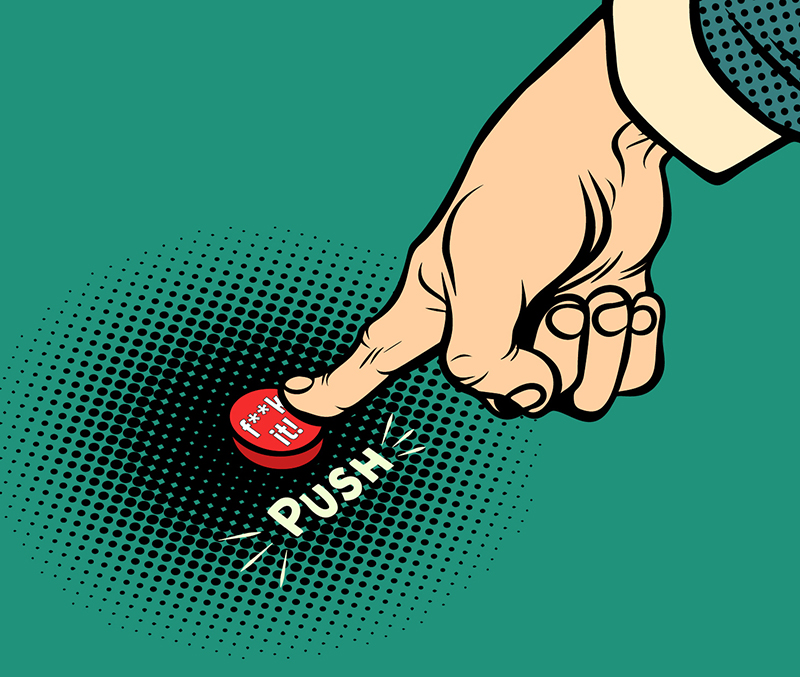
The F**k-it Button in Clinical Practice

A patient who worked as an airline cabin-crew described how she used to look after passengers in a placatory and compliant manner. As long as people were nice to her she felt effective and benevolent. However, when conflicts arose and she felt attacked or harassed, she was unable to produce any assertive response. Instead, she would remain overtly compliant whilst covertly humiliated, furious and vengeful. As soon as a cabin-incident would end, she would press the f**k-it button in her mind, secretly aware that she was now “doomed” to go through a familiar escalation that was unavoidable and inevitable. This led to an immediate relief; the reality of conflict, humiliation, rage and aggression was deleted and replaced with toxic excitement. Later, at her first opportunity, she would take her phone out of her pocket, go on a sex-dating app, and swipe many profiles looking for someone to fit her need to “hook up with the sleaziest man in the bar.” She would arrange to meet, get intoxicated and have unprotected sex. This was later understood as her need to feel both harmed and harmful—an aggressive aim camouflaged and equilibrated by self-harm.

Like what you are reading? For more stimulating stories, thought-provoking articles and new video announcements, sign up for our monthly newsletter.

As a side note, before going back to the main argument, I would like to make a general observation here: Mobile phones are hives of f**k-it buttons for those who need them. As such, people hold the gate to a highly addictive world of potential toxic enactments in their pockets. Clearly, most people might not feel compelled to press these buttons but I suspect that many would do so anyway, just because the buttons are there, whilst those who rely on a f**k-it buttons for psychic survival would find not pressing them very difficult to avoid.

Most of my patients press the f**k-it button when they need to transition from a passive state into action. Once the button is pressed, the reflective and pained part of the personality takes a backseat from which it can only watch the unfolding enactment, usually rehearsed, ritualized and harmful. Significantly, the passive backseat observer is not an innocent victim. Instead, it is often the part of the personality that secretly presses the button in order to summon the enactment demon. It might then proceed to passively watch in horror (or voyeuristic excitement), later to report what happened with shame and guilt, projecting helplessness and asking for sympathy and protection.

People with whom I have worked who have been groomed and abused, or those who had to endure other chronic and oppressive relational trauma, rely on internal structures that helped them survive their experiences moment by moment. I often imagine these structures as protective systems that have been hacked into, their codes and algorithms changed from within, allowing access to intrusion, neglect and abuse by disabling or perverting benign protective aggression.

Like many of my patients who rely on f**k-it buttons and enactments, the airline crew worker I described was unable to use aggression in a protective, self-preservative way in the moment. It is hard to be anything but compliant and kind when all eyes and ears are on you in a closed cabin at 35,000 feet. Instead, she pressed the button, re-evoked the old hacked-into structure of her traumatic past, and transformed her aggression into a toxic, harmful and sexualized mix that she psychologically depended on in order to survive moments of intrusion and humiliation.

Most of my patients are initially surprised to find that they press the button a long time before they actually act destructively. Tracing it back to that point rather than focusing on the action at the end is very helpful. It usually shows that the button is pressed with great relief and even excitement, very different to the patient who later describes his actions with shame, guilt and regret. Rewinding a bit more usually leads to the emotional level of unbearable rage, humiliation or at times depression. Further rewinding often leads to an original relational trauma that needs to be explored in order to understand the creation of the initial structure.

Tracking the route back allows for a truthful path into the core, one that does not neglect collusion, sadomasochistic excitement or other addictive and gratifying states of mind. Clinically, I try to make sure that all parts of the patient’s personality act as my guides on this journey back, not just the shamed victim or the callous perpetrator. Exploring the f**k-it button, which part of the personality presses it internally, when and why, makes this therapeutic journey very accessible.

Lately, when I talk about this dynamic to other professionals, they often associate it to the political and social parallels of the current era: fake news, hacking, collusion and pressing the f**k-it button as a political choice–watching with glee at the destruction that follows. F**k-it buttons are in the mind. However, their concrete representations are abundantly available and easy to use in order to distract from any sense of oppression and convert aggression into excitement, envious attacks or sadism. Harmful aims are easy to hide behind screens, swiping and clicking away.

I believe that avoiding the buttons has become much harder these days. Spotting them in the consulting room and using them as a metaphor to enhance thinking and reflection is very helpful. One of my patients summed it up very effectively when he said, “So really, what you are actually saying is that I should stop pressing the f**k-it button and take the difficult way in rather than the easy way out.”  

Therapeutic Fanfiction: Rewriting Society

In our work as geek narrative therapists, we’re often asked if we actually use fanfiction in session, and the answer is yes, we really do! For those who are unfamiliar with the term, “fanfiction” refers to creating one’s own stories based on beloved characters from existing pop culture narratives. Using fanfiction in therapy enables clients and therapists to rewrite the hero’s journey using narrative techniques. Since fanfiction is most often character-driven—getting inside the head of a character and asking “what if”—we can do the same with our clients, asking them to explore “what if” scenarios for themselves. For many clients, seeing themselves as the hero feels unfamiliar, and this is where fandom attachment or parasocial relationships can be uniquely helpful. Clients can use their emotional connection with fandom characters to create therapeutic fandom avatars and craft a fanfiction story that mirrors their own lives. With therapeutic support, they can begin to see their own heroism from the perspective of these beloved characters.

Like what you are reading? For more stimulating stories, thought-provoking articles and new video announcements, sign up for our monthly newsletter.

Such was certainly the case for Cas (an amalgamation of several actual clients), a 25-year-old gender non-binary individual (biological gender female) of Ashkenazi Jewish descent, struggling with anger management issues and the fear that they would always be other. During our first session with Cas, they verbally noted our Adventure Time BMO, short for ‘BeMore’ tea mug, commenting that they had never seen a tea mug that was “quite so square.” We took this as an invitation to begin using therapeutic fanfiction early in our work. We shared that BMO, the gender nonbinary robot and video game console, was one of our favorite characters in Adventure Time, and asked Cas if they, too, enjoyed this cartoon. Cas eagerly explained that they loved this cartoon and that BMO resonated with them because BMO is on a journey to be “both a little living boy and girl who drinks tea.”

In the next few sessions, we fully employed the narrative tool of externalizing a problem via everyone’s favorite green superhero, The Incredible Hulk. This conversation was again initiated by Cas who remarked on the Hulk painting displayed on our wall: “Ha! That’s really true: mad does make sad.” We engaged Cas in a narrative therapy discussion around Bruce Banner, a.k.a. The Incredible Hulk, explaining to Cas that just as Bruce was not Hulk, they, i.e. Cas, were not their anger. We explained that understanding themselves as both connected to, but distinctly different from, their anger, might help them start to understand anger’s presence and reason for being in their lives. We then used the language of the Hulk comics to process their recent angry outbursts.

In subsequent sessions, we used the increased insight that Cas was gaining around both anger and the events that trigger anger to help them create a fanfiction action plan using Bruce Banner/Hulk as a stand-in for Cas. As part of this work, Cas was to pay mindful attention to their mood state, and when they noticed that they were beginning to feel angry, to place themselves into an Avengers fanfiction story in the role of Bruce Banner. They were to imagine that the team was working on a case and to ask themselves who was needed most—Bruce Banner or Hulk—playing out both scenarios to determine who would be best equipped to resolve the situation at hand. If the answer was Hulk, then they were to give themselves permission to feel anger without shame. If the answer was Bruce, then Cas was to engage in deep breathing and call upon their inner Black Widow to say soothing words to calm the inner Hulk. This was effective not only because this type of verbal play added a feeling of fun and whimsy to therapy, it also helped Cas maintain enough distance from anger so that shame was not triggered. Over the next three months of weekly sessions, Cas was able to continue the use of therapeutic fanfiction to both develop and implement strategies to de-escalate feelings of anger and to increase their frustration tolerance. They felt more in control of their inner Hulk.

At first blush, fanfiction and the hero’s journey may feel like disparate concepts for clinical work, but we have found that these concepts are not only congruous but incredibly healing in a therapeutic setting. Because there are fewer pop culture narratives made specifically for queer audiences, and because of queer marginalization in general, these conversations are all the more important and powerful. Therapeutic fanfiction allows queer clients to pick up the red editor’s pen and begin to adapt the story of their lives, creating a narrative in which they are the hero.