“Play genograms put children at an advantage because they require adults to move to the child’s level of play, rather than forcing the child to behave in the constricted ways adults generally operate.” –Monica McGoldrick.
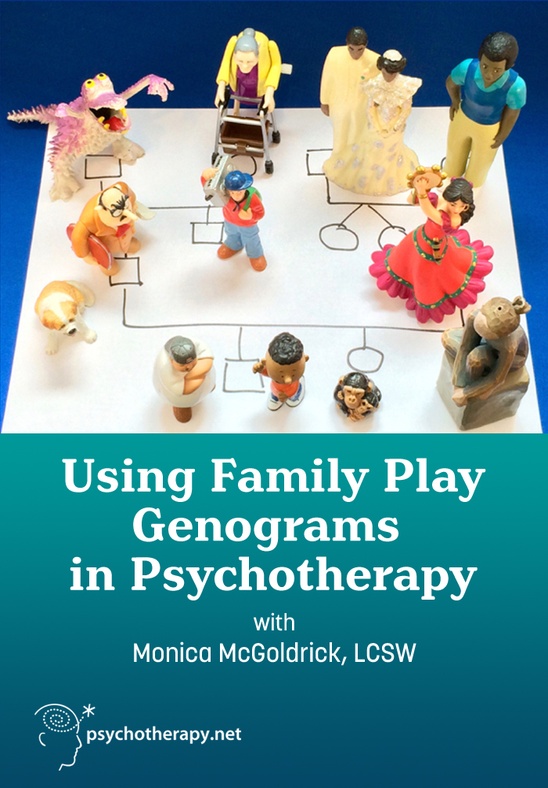
The play genogram, using small toy figures to represent different family members, borrows from play therapy and is especially suited to families with young children and teens.
Watch as McGoldrick demonstrates the approach in a case study exploring the conflict between Denise, a stressed-out single mother of three, and her smart but angry daughter, Kayla.
You’ll see how a collaborative play genogram can diffuse tension with humor and open up communication. You’ll also learn how to use the information uncovered by each family member’s choice of figurines to build compassion, deepen connection, and accelerate change.